Archive Page 39


Make This: Cosplay Armor and Accessories

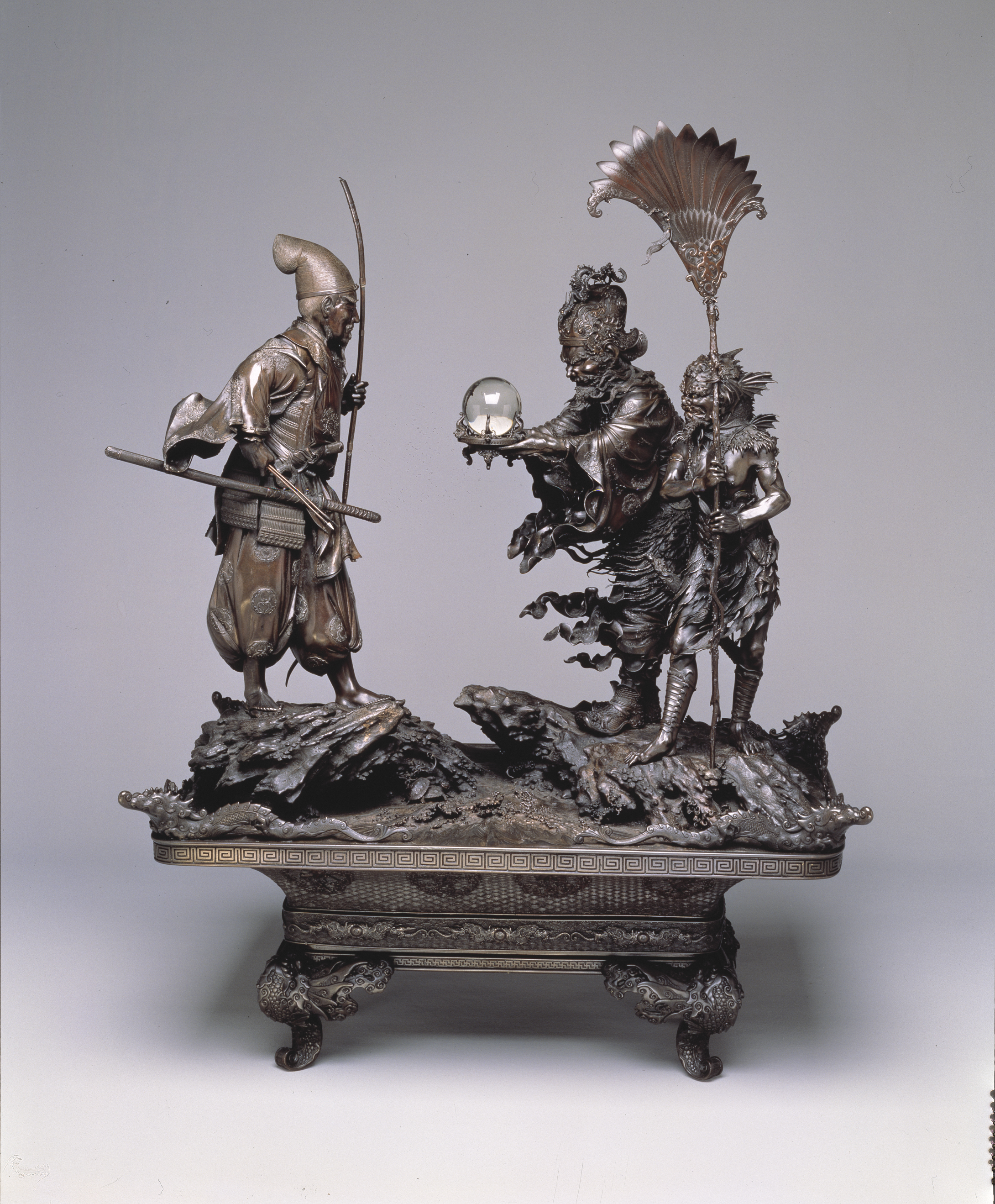
Takenouchi no Sukune Meets the Dragon King of the Sea, Japan, 1875-1879, Dallas Museum of Art, Foundation for the Arts Collection, The John R. Young Collection, gift of M. Frances and John R. Young

In thinking of an activity relating to the sculpture above for our June Studio Creations workshops, I kept coming back to the idea of costumes. The outfits, armor, and accessories worn by each of the three figures is amazingly detailed, and with Dallas Comic Con on the way, making cosplay accessories seemed like a really fun project. I’m going to show you how I made a “fin”-style gauntlet. But you can apply these directions to make whatever you want: helmet, tiara, jewelry, cape, etc.

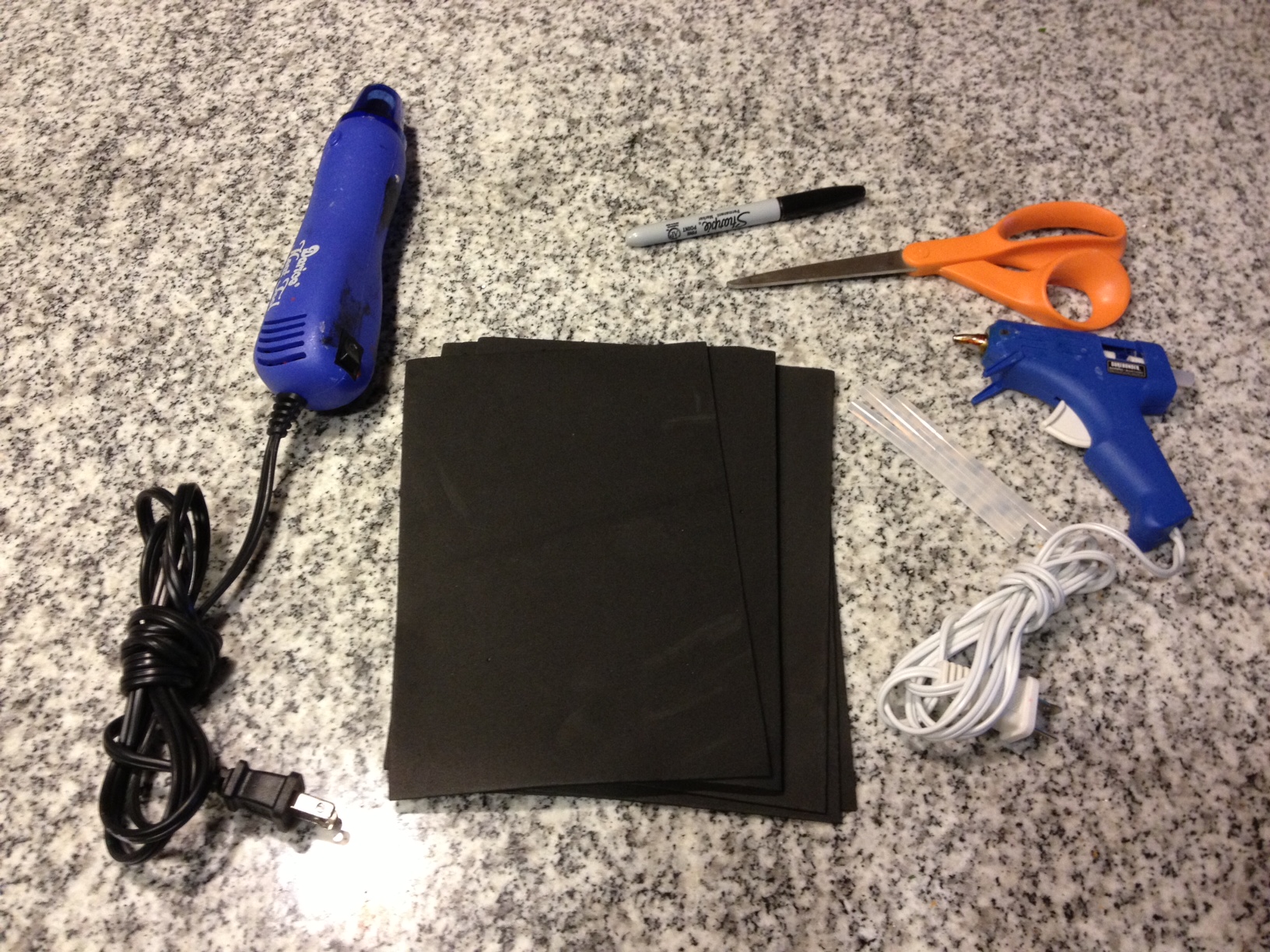
What you need:

  • Craft foam sheets (available at any craft store)
  • Self-adhesive foam stickers (optional)
  • Hot glue gun
  • Hair dryer or heat gun (optional)
  • Scissors
  • Sharpie marker
  • Scrap paper
  • Velcro (optional)
  • Elastic or rubber bands (optional)
  • Double-sided tape (optional)

photo 1

Steps

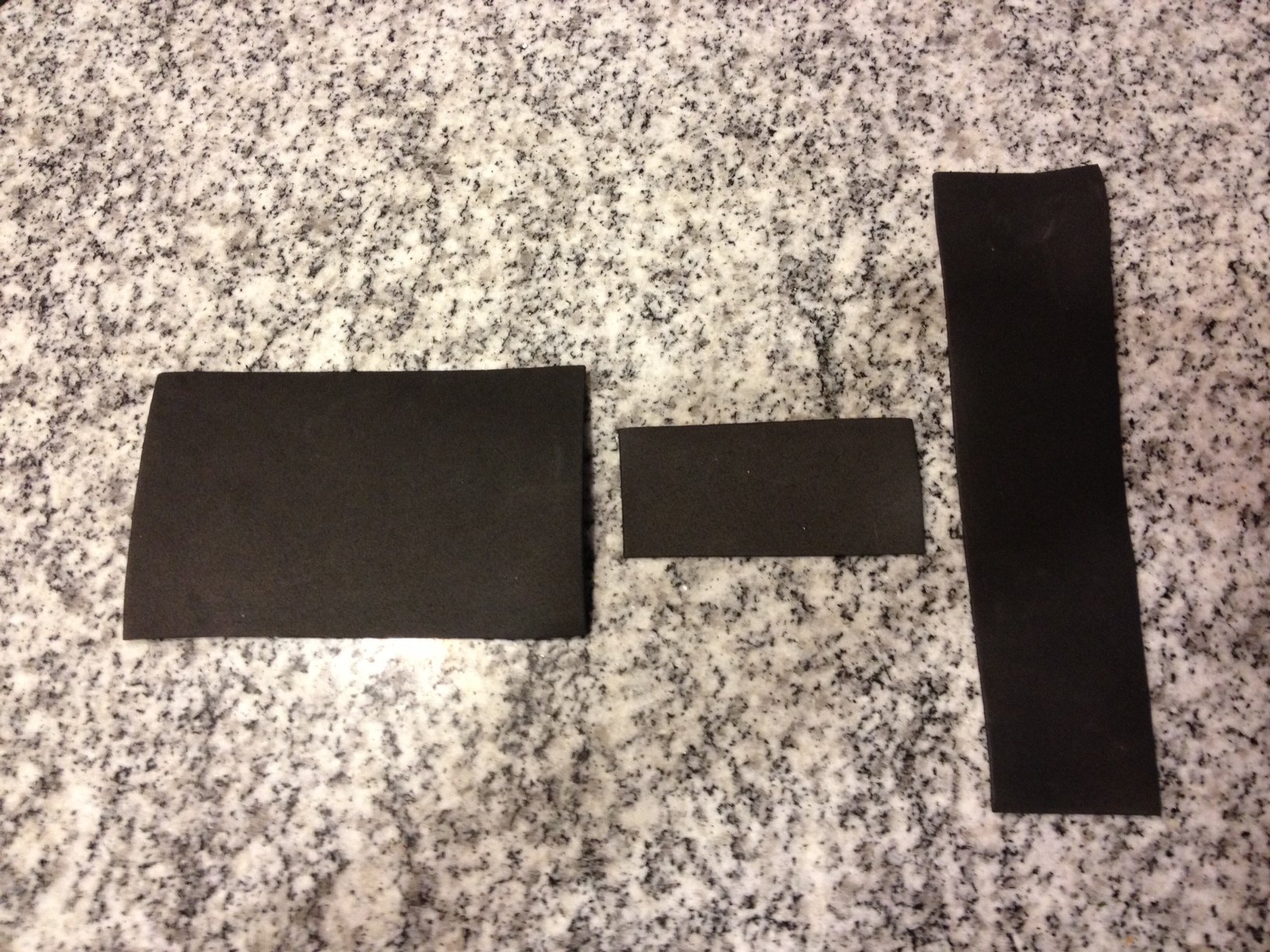
photo 2

Pieces for the base of the gauntlet

For the base of the gauntlet, I cut a piece of craft foam to fit the back of my forearm. I made a similar piece to encircle the back of my hand and palm.
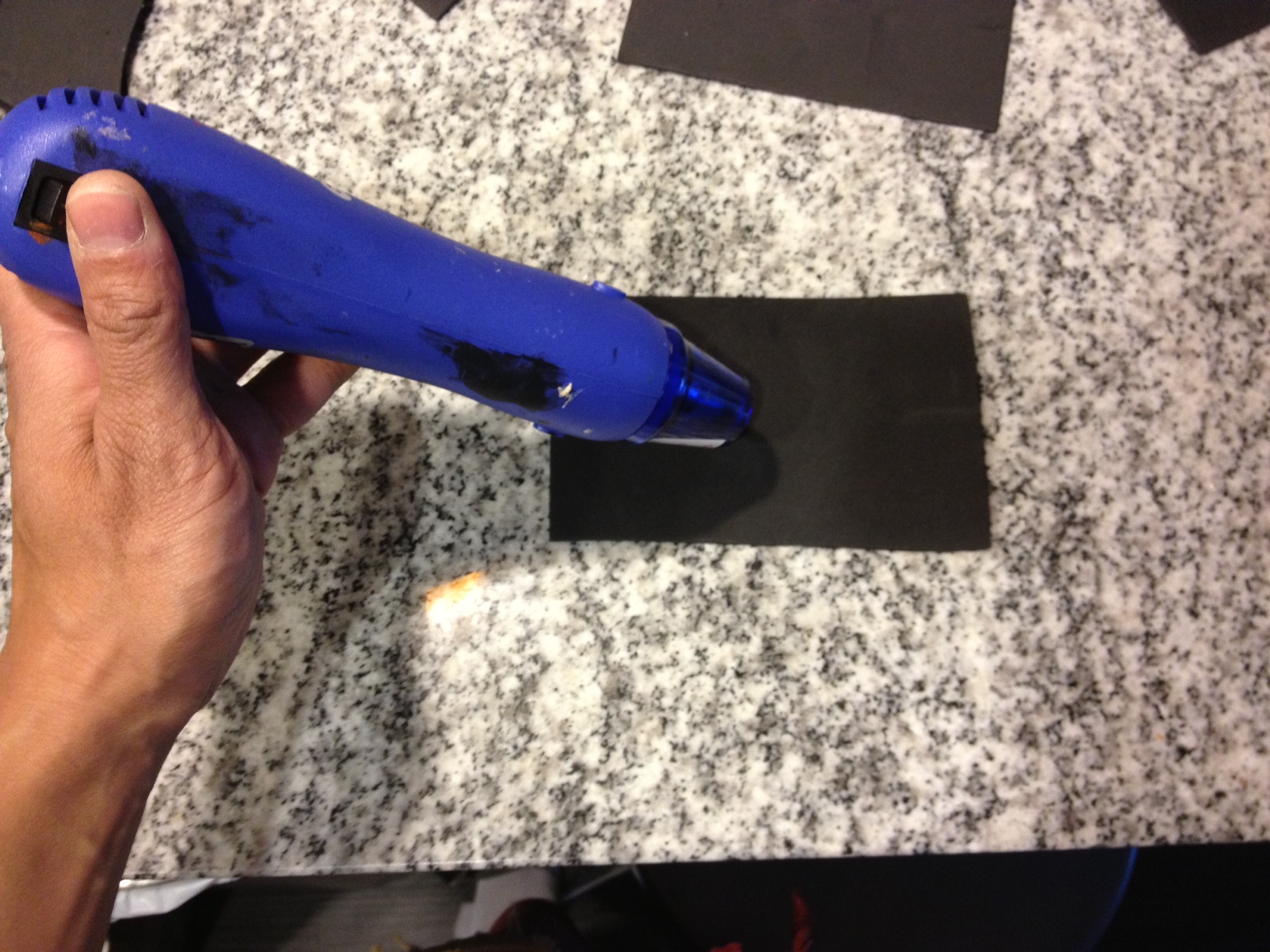
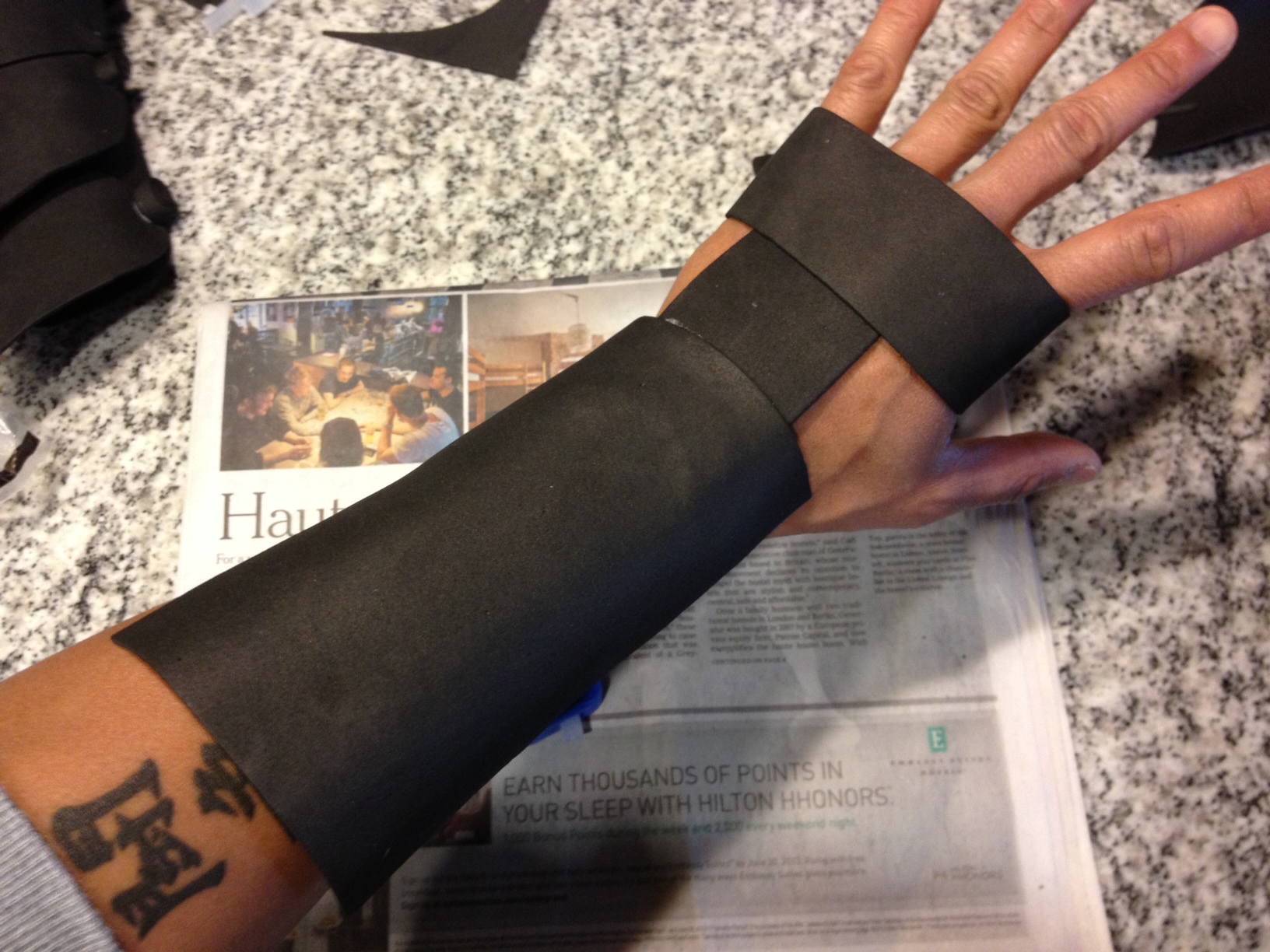
photo 3

Heating the foam

Optional: I used a heat gun to carefully heat and shape the foam. While it was still warm, I formed the pieces around my forearm and hand. You could also do this with a glass, tube, etc. If you want to skip this step, you can curl the foam without heating it–it just doesn’t hold its shape as well.
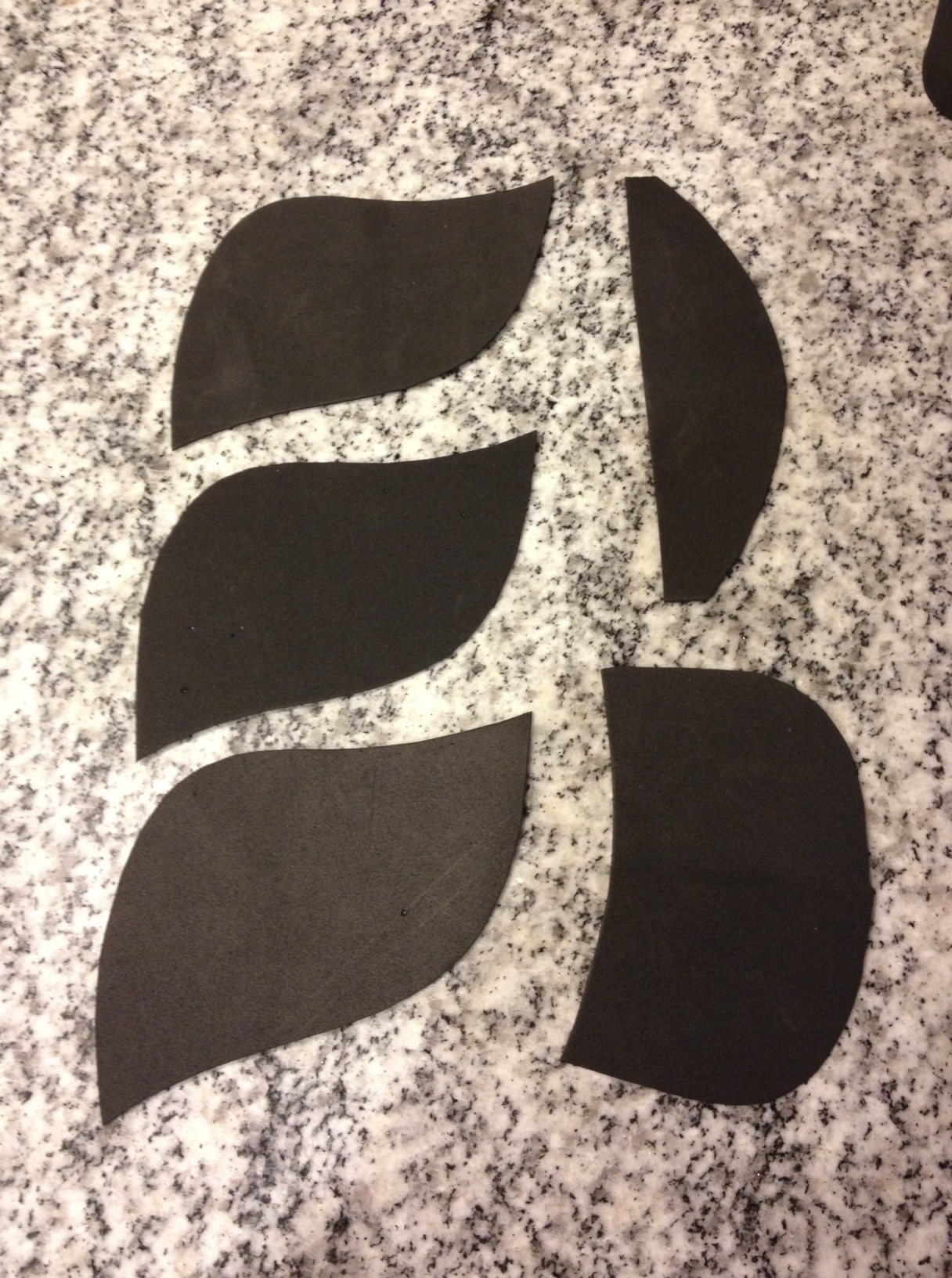
photo 5

“Armor” pieces

I then cut more foam pieces for the armor plating. You can draw the shape directly on the foam with your sharpie or you could cut out a template to use from your scrap paper.

Save the scraps of foam that are left over–these can be used for decorations later! Self-adhesive foam shapes work well for decoration, too.
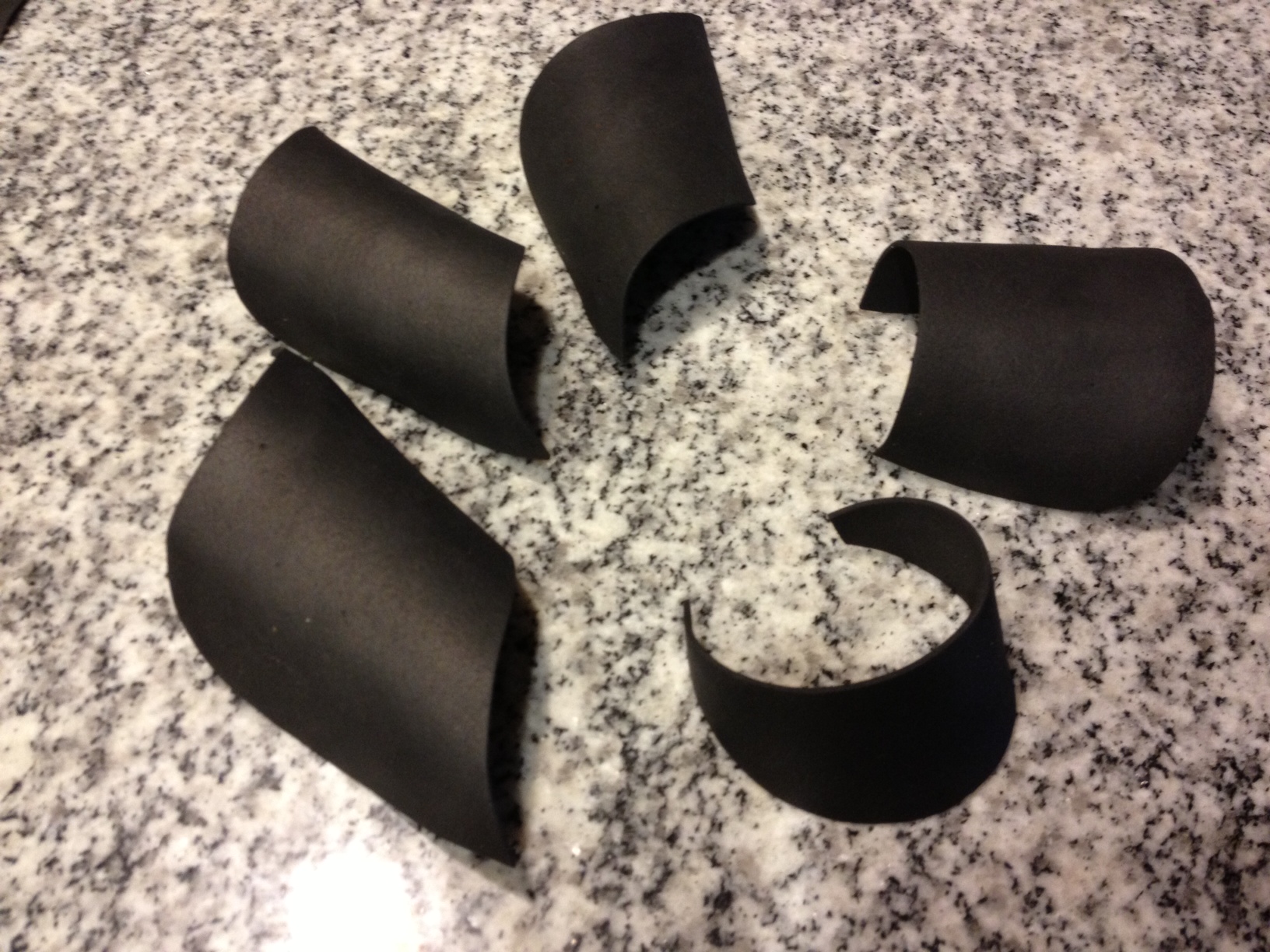
photo 1

Pieces after being heated and shaped

photo 2

Gluing the base together

I then used a hot glue gun to put all of the pieces together. Double-sided tape works, too.
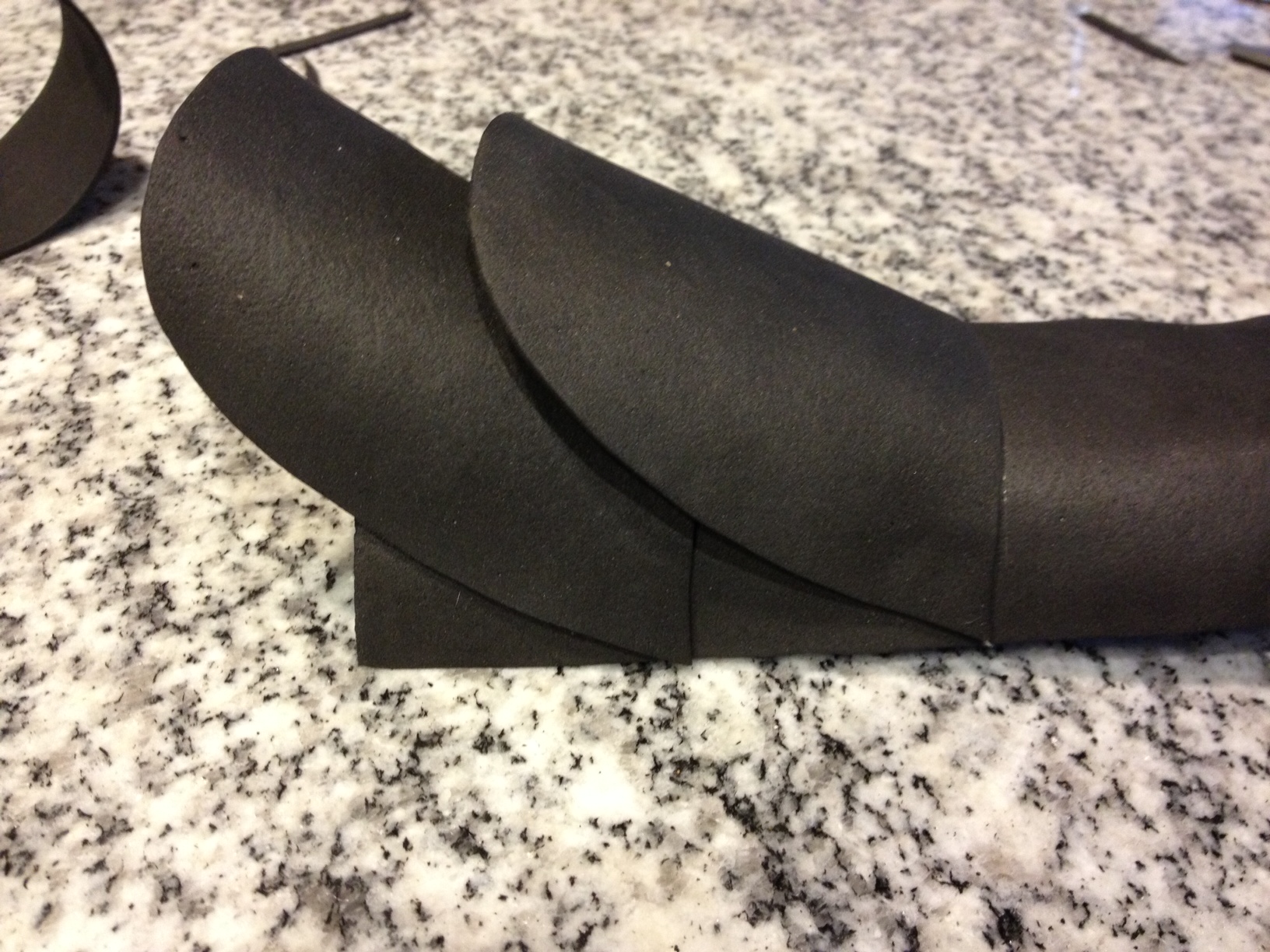
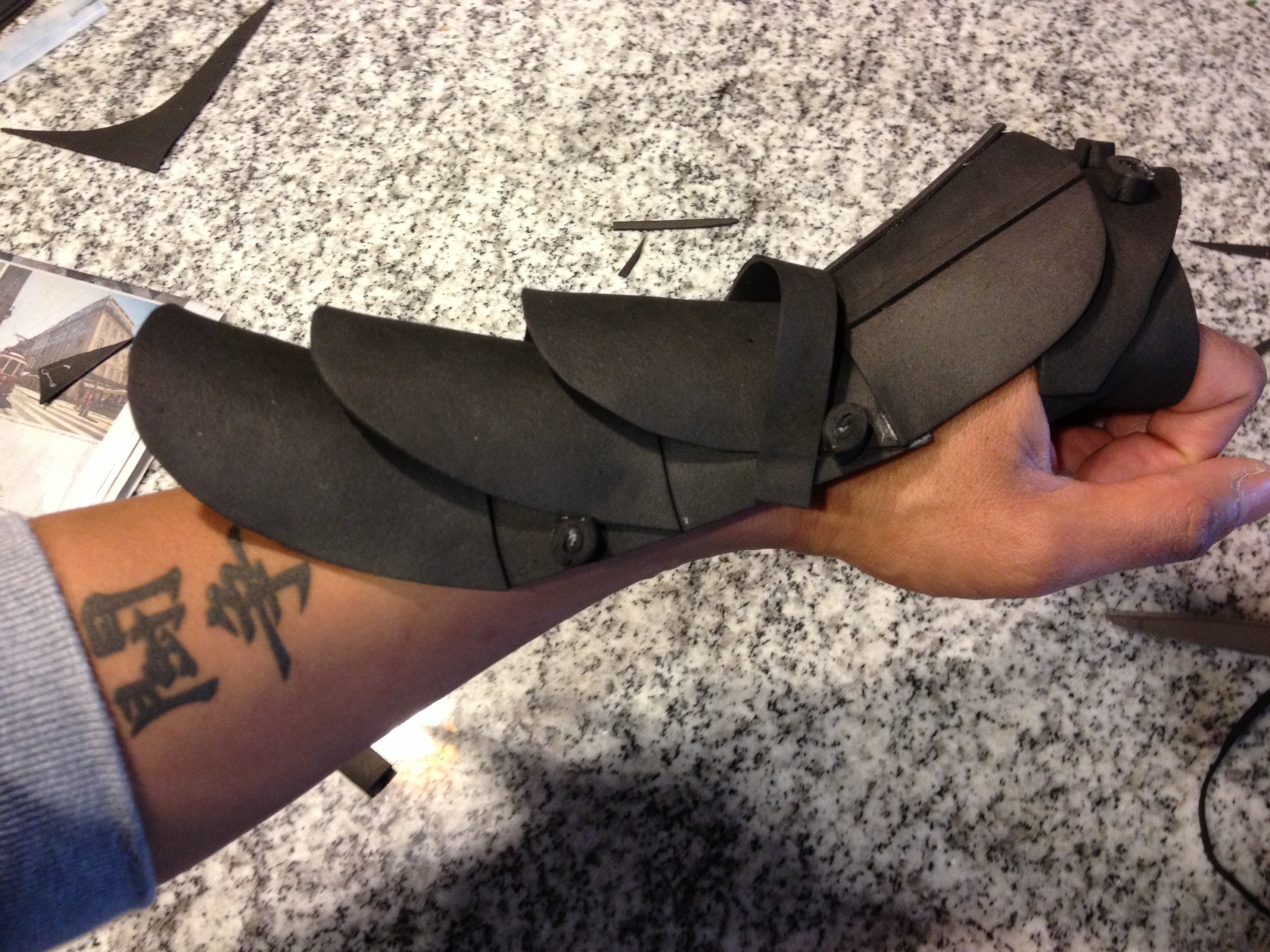
photo 3

Armor pieces glued at an angle to make them pop out

You could use velcro or elastic to make a closure for the glove so that it stays on your wrist. In this case, I used the scrap foam to make some small studs that I will stretch rubber bands across to hold it in place.
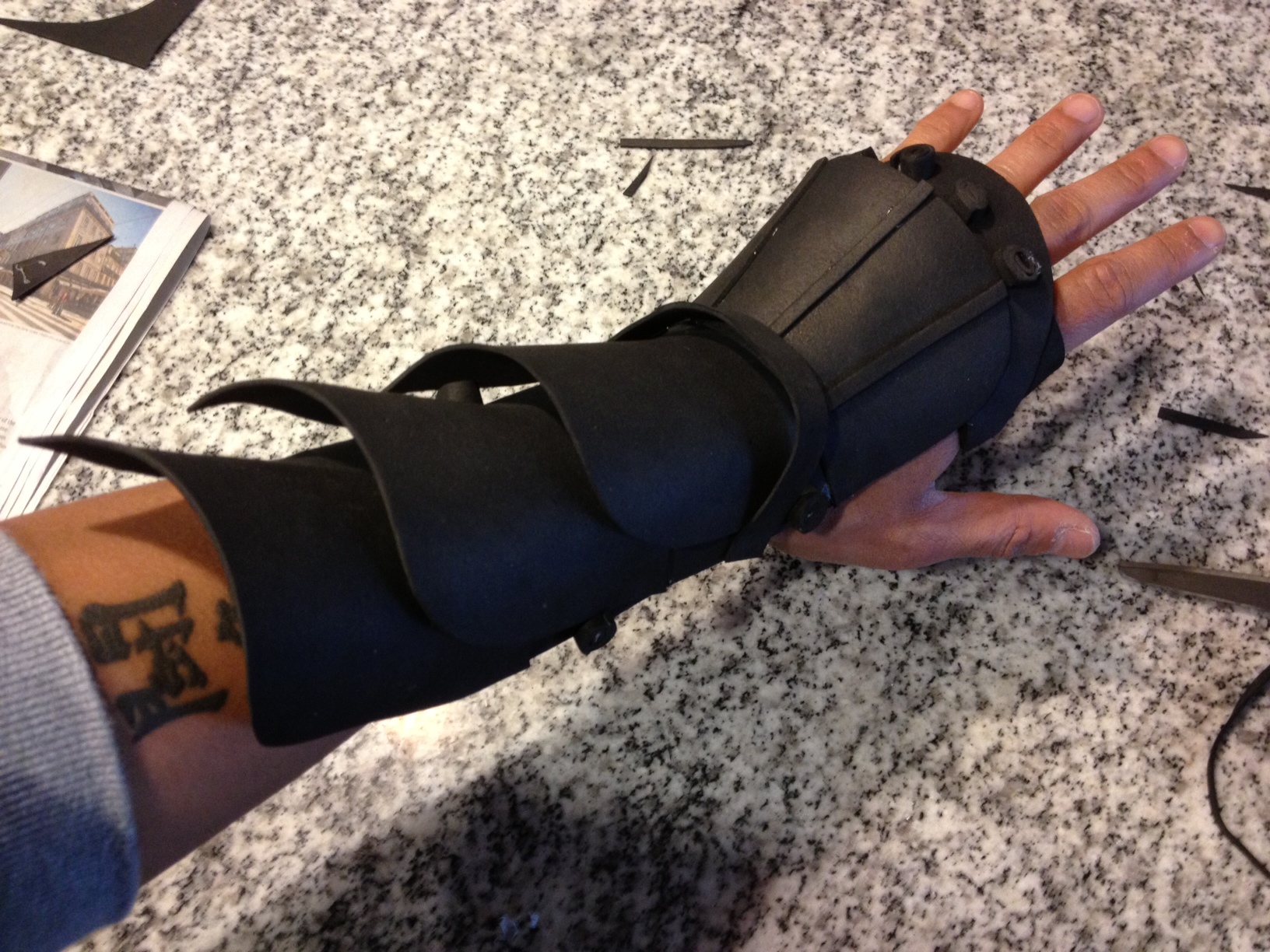
photo 4

Finished glove

photo 5

Close-up of the stud attachments

Keep in mind that craft foam is very thin, so this armor is purely for show! And again, you can make almost anything you can imagine with these materials. For more ideas,  search “cosplay diy” and also check out this amazing tutorial.

And don’t forget to come to the DMA to see Takenouchi no Sukune Meets the Dragon King of the Sea and to participate in Studio Creations!

JC Bigornia
C3 Program Coordinator
The Spot for Art

Over the last few years, DMA visitors may have come to know the drop-in art making area in the Center for Creative Connections as the Space Bar, a name that corresponded with our Encountering Space exhibition. If you’ve come into C3 lately, you probably noticed that we like to make strong connections and keep things fresh. When it was known as the Space Bar, this area offered materials loosely based on works of art in the C3 Gallery. Every month we changed the materials to focus on a new theme related to the concept of space.

2001_358_A_F

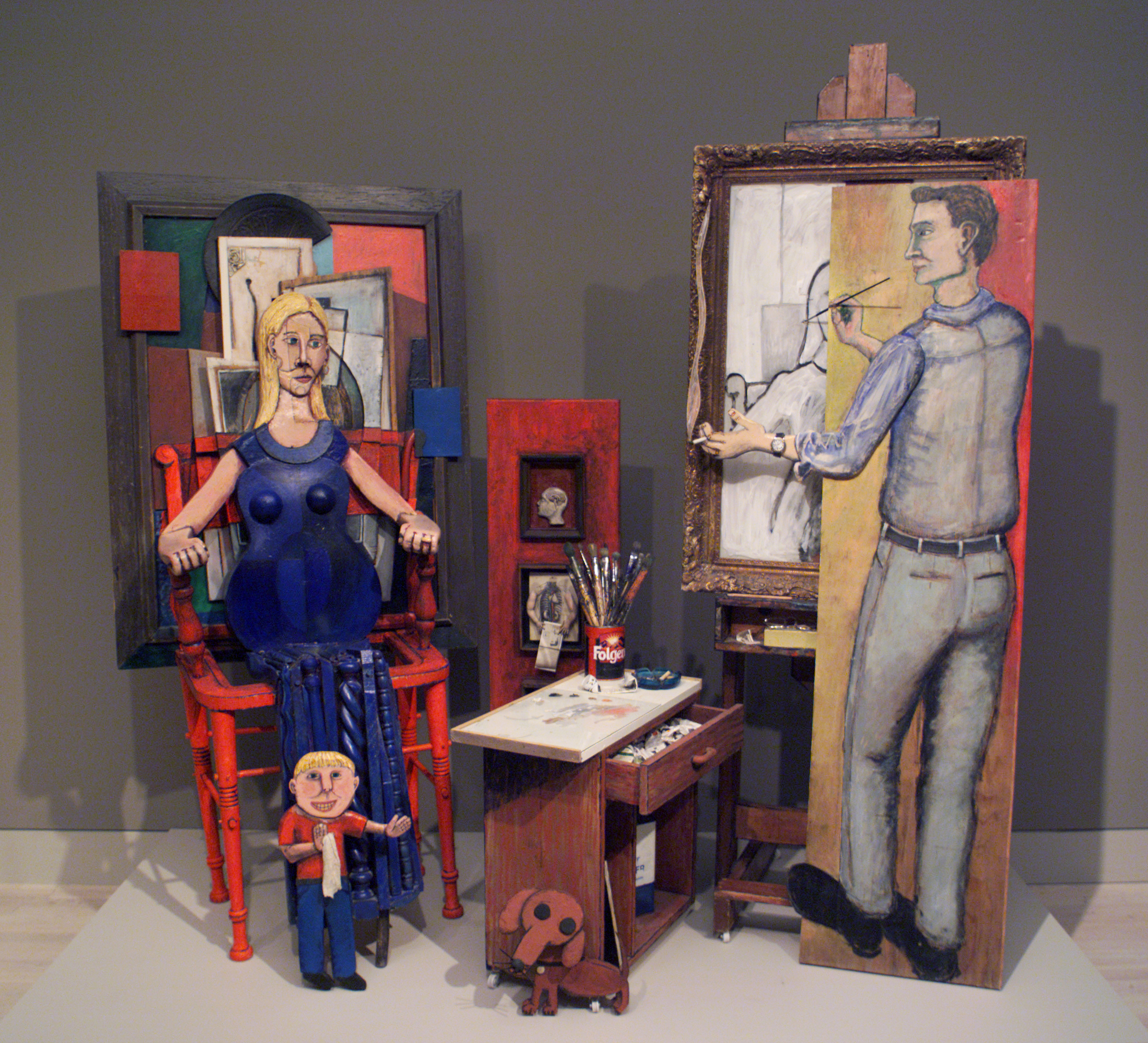
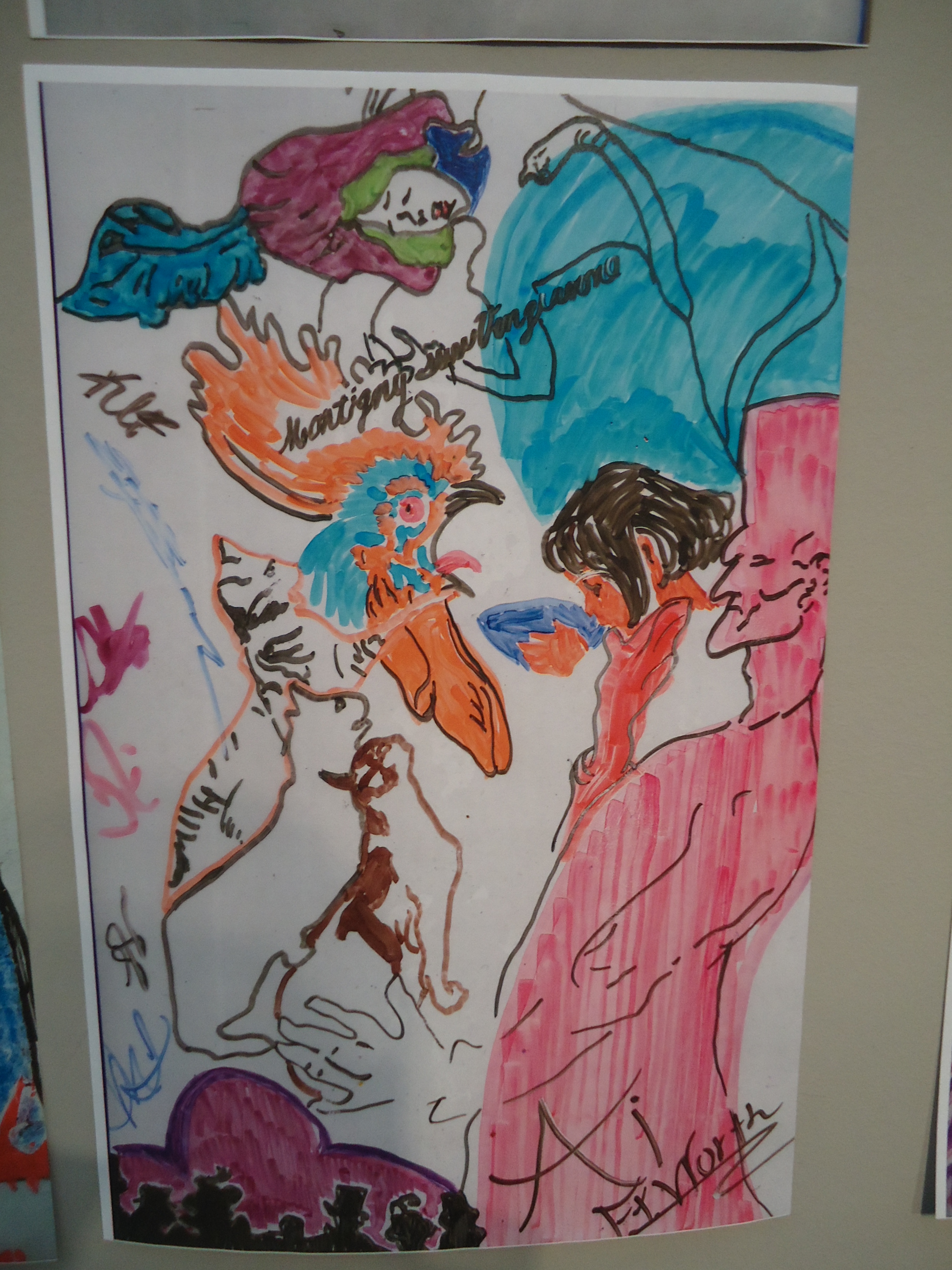
Martin Delabano, Family Portrait 1963, 2001, Dallas Museum of Art, gift of Mr. and Mrs. Bryant M. Hanley, Jr., Lorine and David H. Gibson, and Sonny Burt and Bob Butler

Now known as the Art Spot, this area still offers art-making for anyone, anytime, but the focus is now on a specific artwork. Since November 2012, Martin Delabano’s Family Portrait 1963 has provided inspiration for our visitors. The complexity of this piece allows us to explore various themes over an extended period of time.

In November and December, we encouraged visitors to better understand the characters within the sculpture and consider the clues the artist has given us by the items associated with each family member. Visitors could use the materials provided to create their own 3D Family Portrait.

During January and February, we focused on the sculptural aspect of this piece and the assortment of materials the artist used.  Our visitors used materials ranging from buttons to wood scraps to create Found Object Sculptures.

In March and April we took a closer look at the four-legged family member, Crackers, and asked visitors to make their own pet or an imaginary Pet Pal for the Delabano family pet.

Next month our theme changes once again. This time we are taking the perspective of the artist, who in 2001 portrayed his family and himself as they were in 1963. Martin Delabano isn’t the artist at the easel, rather he’s the young boy posing like our beloved “Big Tex” from the State Fair of Texas. Come by C3 in May and June to see Family Portrait 1963 and make a Past or Future Self-Portrait of your own.

Jessica Fuentes
C3 Gallery Coordinator

Friday Photos: Featuring Texas

Today’s Friday Photos features a selection of pieces from the Dallas Museum of Art’s permanent collection that were purchased with the Texas Artists Fund. The DMA is dedicated to supporting Texas artists through acquisitions, Awards to Artists grants, and exhibitions such as the upcoming DallasSITES: Charting Contemporary Art 1963 to Present, a show that celebrates the history of the North Texas art scene and opens here at the DMA on May 26, 2013.

Featured Works:

  • Helen Altman, Pig, 1995, Dallas Museum of Art, Texas Artists Fund and gift of Karol Howard and George Morton.
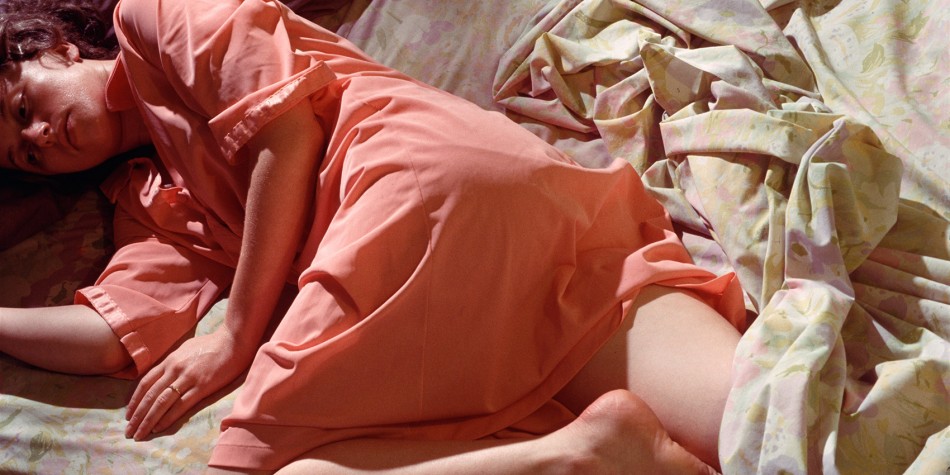
  • Kelli Connell, Giggle, 2002, Dallas Museum of Art, Texas Artists Fund.
  • James Drake, Valley of the World, 1994, Dallas Museum of Art, Texas Artists Fund.
  • Adrian Esperanza, Here and There, 2002, Dallas Museum of Art, Texas Artists Fund.
  • Patrick Faulhaber, Glo, 1997, Dallas Museum of Art, Texas Artists Fund.
  • Sam Gummelt, Jacksboro, 1971, Dallas Museum of Art, Texas Artists Fund
  • Benny Joseph, Couple Dancing, Eldorado Ballroom, Houston, negative 1962, print 1988, Dallas Museum of Art, Texas Artists Fund.
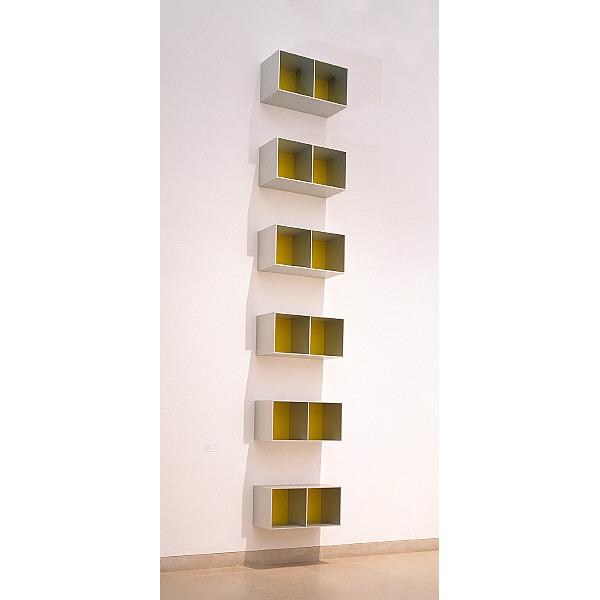
  • Barbara Maples, Plastic Boxes 2, c. 1967-1968, Dallas Museum of Art, Texas Artists Fund.
  • Nic Nicosia, Untitled (Floor Painting), 2009, Dallas Museum of Art, Texas Artists Fund.
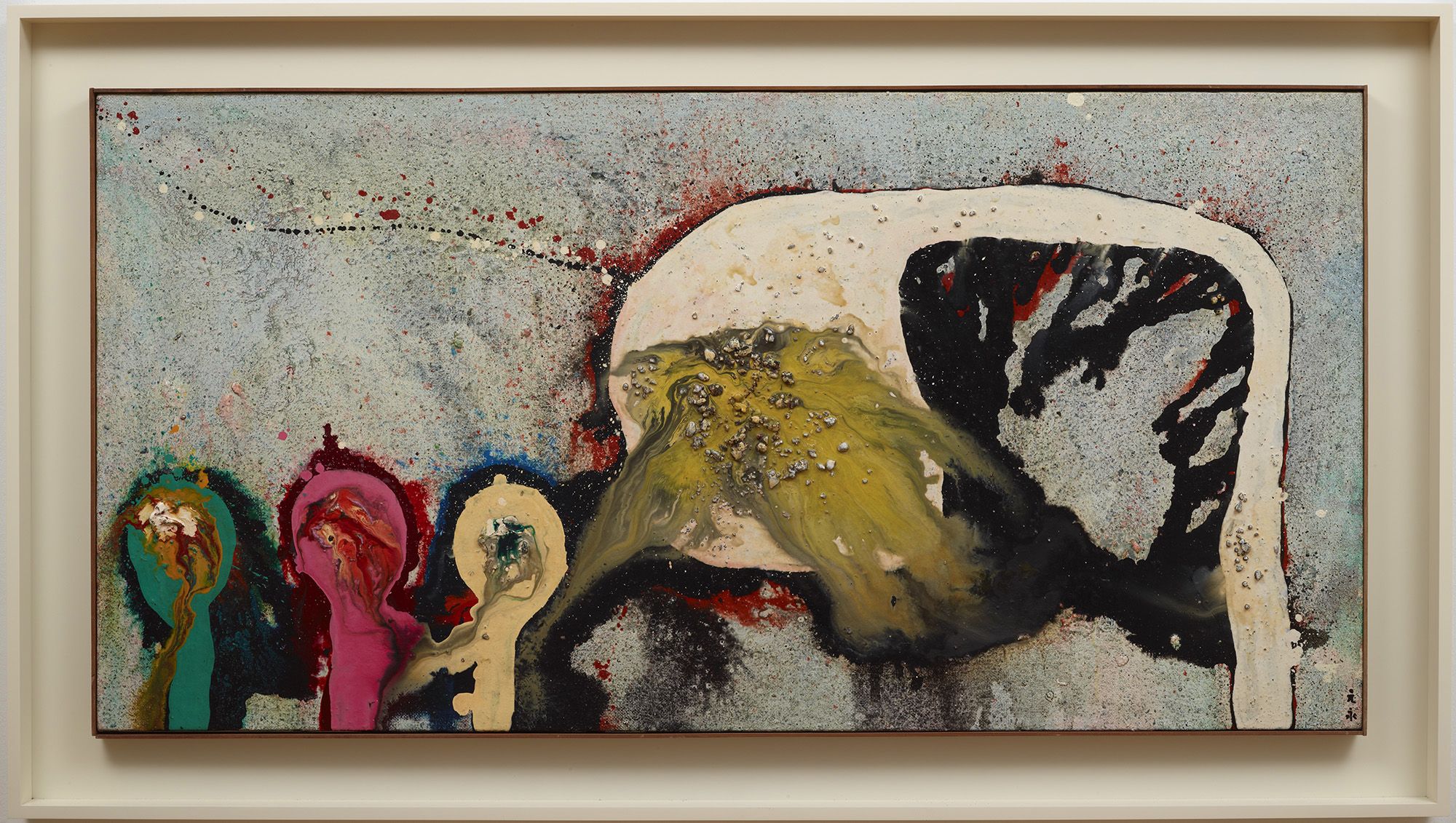
  • John Pomara, Deadline No. 5, 2001, Dallas Museum of Art, Texas Artists Fund.
  • Allison V. Smith, Hall Pass. February 2006. Marathon, TX, 2006, Dallas Museum of Art, Texas Artists Fund.

Alex Vargo
McDermott Intern for Gallery Teaching

What the NAEA Means to ME!

The Mission Statement:
“The National Art Education Association (NAEA) advances visual arts education to fulfill human potential and promote global understanding.”

“Founded in 1947, The National Art Education Association is the leading professional membership organization exclusively for visual arts educators. Members include elementary, middle and high school visual arts educators, college and university professors, researchers and scholars, teaching artists, administrators and supervisors, and art museum educators, as well as more than 45,000 students who are members of the National Art Honor Society or are university students preparing to be art educators. We represent members in all fifty states plus the District of Columbia, U.S. Possessions, most Canadian Provinces, U.S. military bases around the world, and twenty-five foreign countries.”

[quotes from the NAEA Website]


The NAEA Student Chapter

I joined the National Art Education Association in 2007 when I was an art education student at the University of North Texas and was instantly welcomed into a membership of 17,170 art educators who would mentor me along my educational journey. Membership and attendance to the national conventions truly made an impact on who I am today. By constantly being filled with current research, discovering the various ways to put educational theory to practice, giving presentations, hosting students, having numerous networking opportunities and by creating countless friendships—I became a stronger art educator. As I became more active in the organization, I was granted the opportunity to hold two leadership roles within the NAEA structure and just recently concluded my term as the NAEA Student Chapter President this past March at the 2013 Annual Convention in Fort Worth.

As of June 2012, 2,633 members classified themselves as students and testified to the need for an active voice in the organization. It was my duty over the past four years to serve the university student population to make their voices heard to the board of directors and to be an advocate for pre-professionals.

NAEA Governance Structure

NAEA Governance Structure

At the beginning of the 2013 NAEA Convention, Past-President Dr. Bob Sabol addressed the Delegates Assembly to propose a change to the current governance structure.  That change was voted on unanimously and can be seen in the following video. Some new and exciting things are in the works, and Bob can express it better than I can. I am still speechless!

[vimeo 64564970 w=500 h=281]

NAEA from amanda Batson on Vimeo.

Don’t miss out on an opportunity to be a part of the NAEA and the 2014 National Convention in San Diego, CA. The NAEA is currently accepting applications for proposals. See you there!

naea5

Amanda Batson
C3 Program Coordinator
Friday Photos: Eccentric Silver

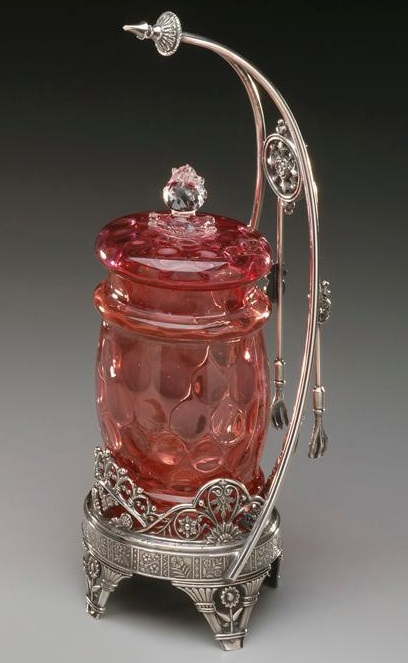
One of my favorite games to play is “Guess the function of a decorative arts object!” This Friday, I’ve included some of the most eccentric tableware pieces in the DMA’s silver collection, like this epic pickle jar, stand, and tongs!

James W. Tufts Co. (manufacturer), Pickle jar on stand with tongs, c. 1885, Dallas Museum of Art, gift of W.C. and Sally Estes in memory of Dr. and Mrs. T.G. Estes

Click on an image to uncover the unique purpose for which it was originally intended.  Enjoy!

Pilar Wong
McDermott Intern for Community Teaching

Cindy Sherman: An Actor’s Perspective

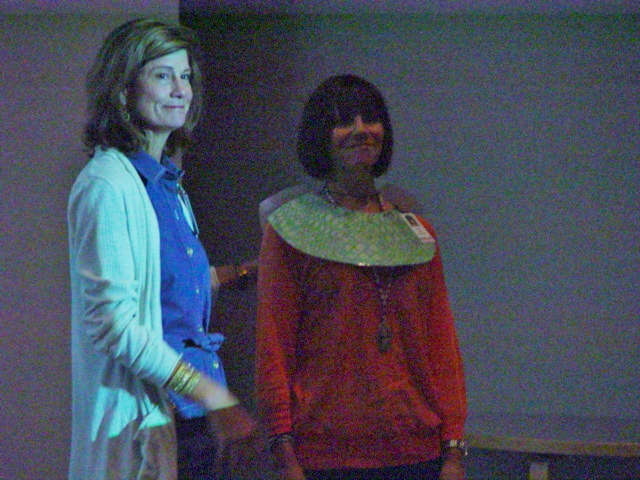
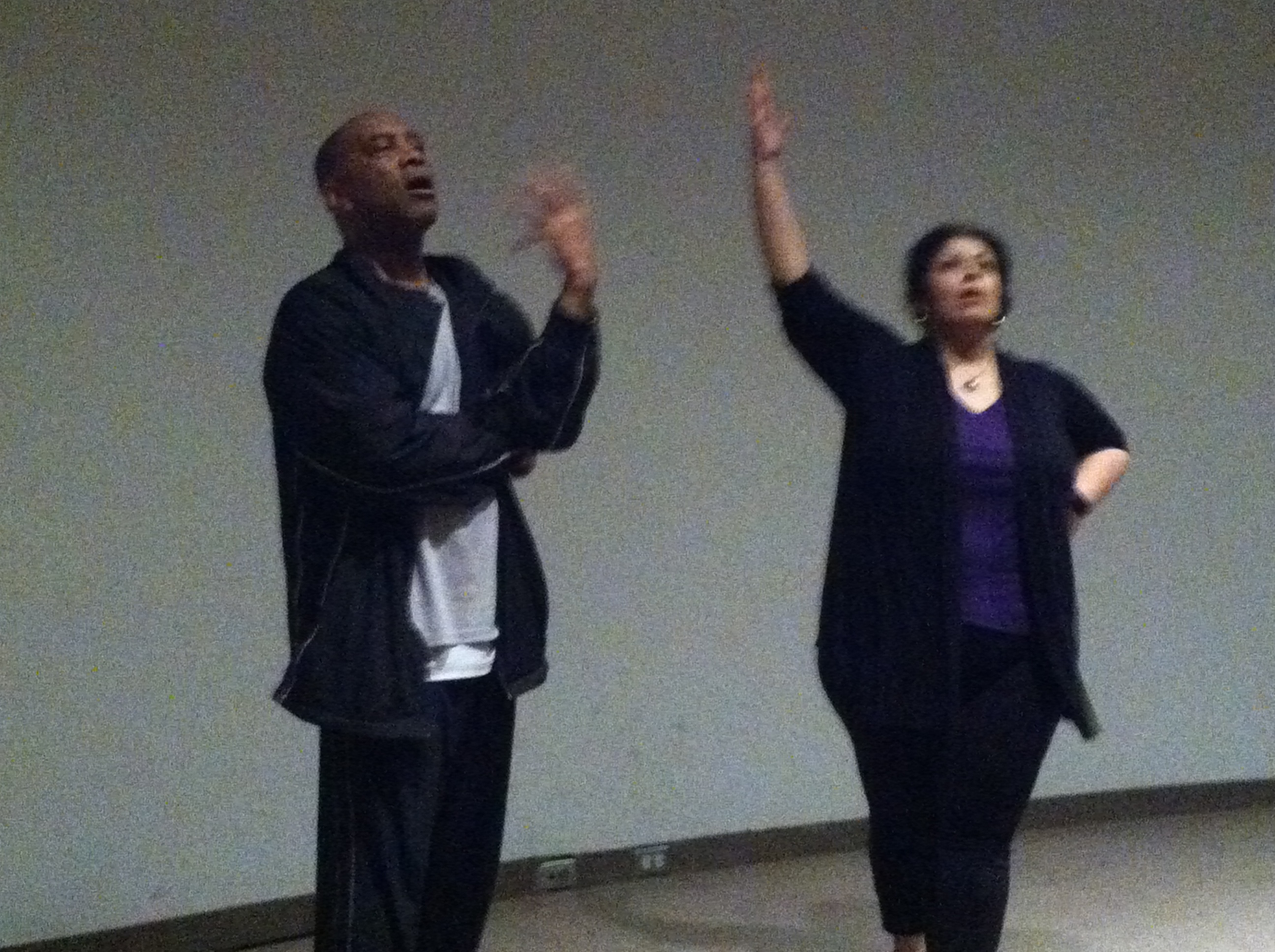
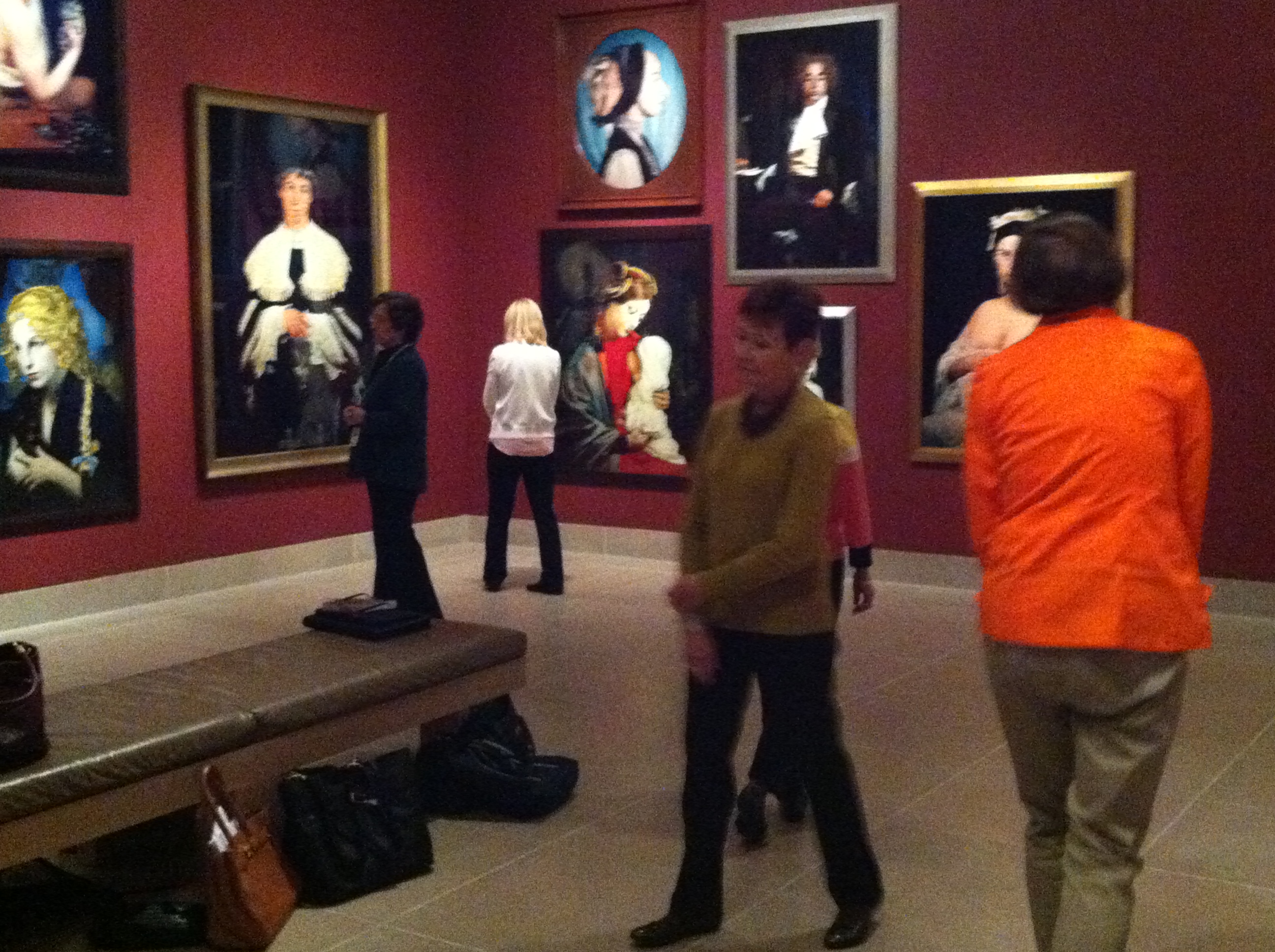
The DMA has had several exciting opportunities to collaborate with the Dallas Theater Center in 2013. Last Monday, two of DTC’s fabulous actors joined our docents to share their perspectives on the Cindy Sherman exhibition. Hassan El-Amin and Christie Vela talked about the ways in which they transform themselves as they prepare to take on new roles. This also helped docents think about Cindy Sherman’s process, which includes using make-up, costumes, and props to alter her appearance for photographs.

Christie and Hassan both mentioned that sometimes it’s the little things that help them figure out who a character is. A pair of glasses, a silly vest, or a wig can make you act differently, and that may be just what’s needed to define a character. They also discussed how a costume can serve as a visual cue to the audience about a character’s personality. That costume tells us something about a character from the first moment we see it–Hassan described it as the “pop and sizzle.”

Actors Hassan El-Amin and Christie Vela lead training for the DMA's docents

Actors Hassan El-Amin and Christie Vela lead training for the DMA’s docents

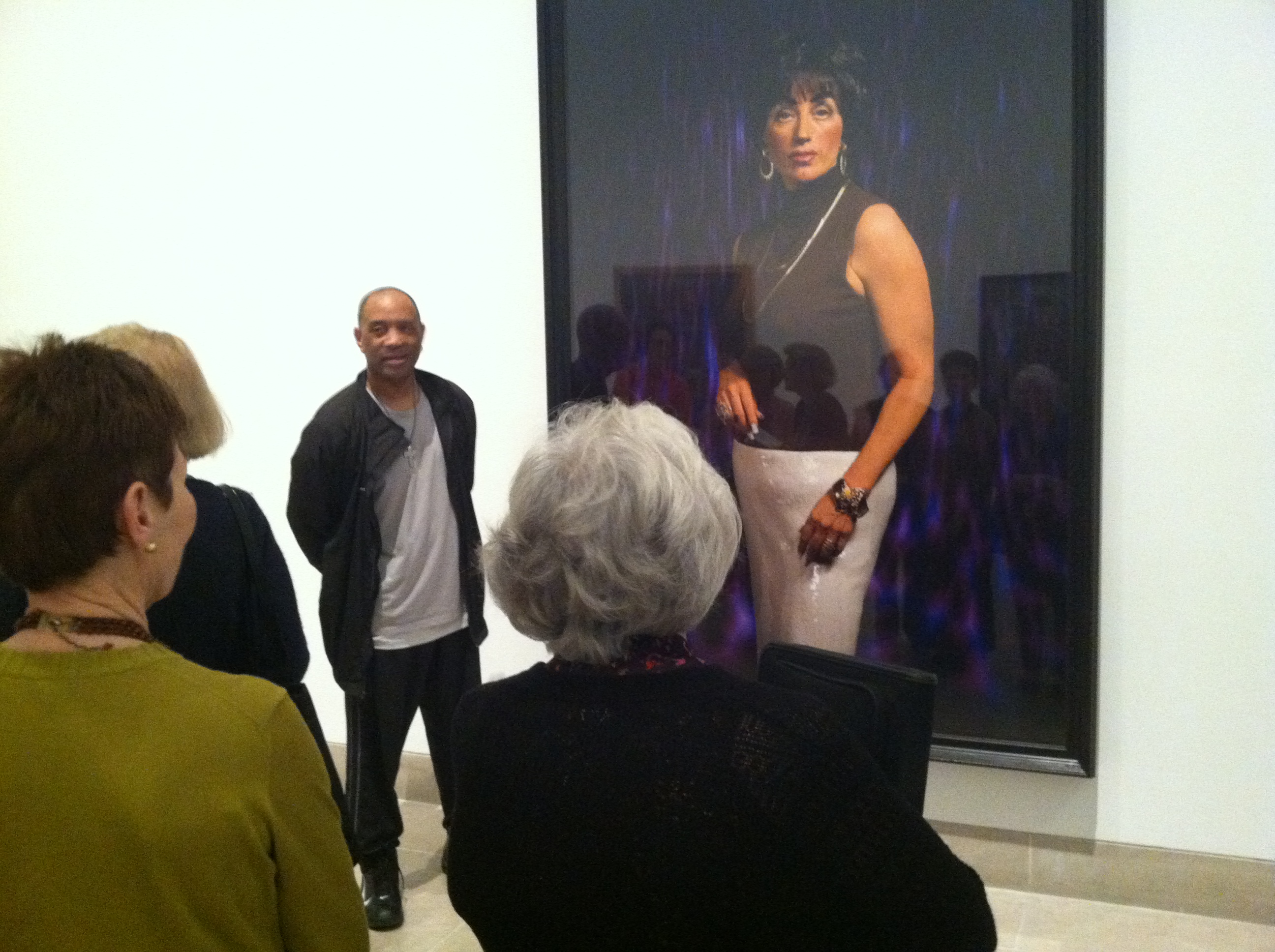
The docents had a lot of questions about how Christie and Hassan mentally prepare for a new role. In a sense, they take on a new persona each time they prepare for a new production. They did say that they have fun inventing a back story for each character–they create little stories that help to explain a character’s personality traits or appearance. Christie described them as “little secrets” that she keeps for herself and maybe doesn’t tell the rest of the cast. The docents had an opportunity to explore this process while looking at Cindy Sherman’s Society Portraits, a series from 2008.

Inventing a persona for one of Cindy Sherman's Society Portraits

Inventing a persona for one of Cindy Sherman’s Society Portraits

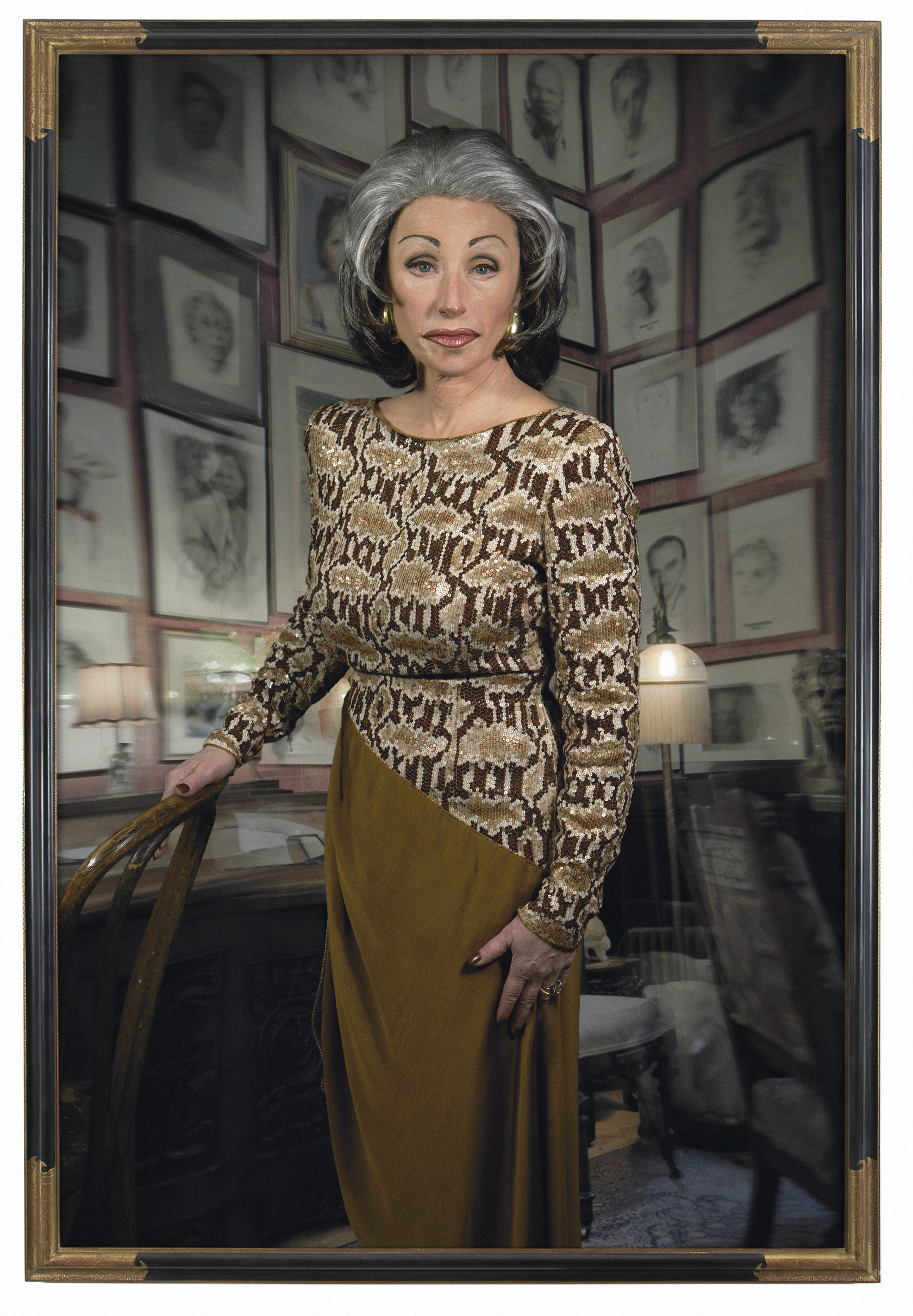
Hassan led the docents through the galleries and asked them to describe the women in the series. Our best conversation was about Untitled #474. The group decided that this looked the most like a real society portrait. This woman has put forth a lot of effort with her outfit and makeup, so we know she cares about her appearance. Perhaps she is a woman who knows a lot of famous people, based on the wall of portraits behind her. They finally decided that she was an old-time movie starlet, and she had just had her third facelift in an effort to keep up her good looks. We were able to create a life for her just by looking deeper into what Cindy Sherman was presenting to us in the photograph.

Cindy Sherman. Untitled #474. 2008. Chromogenic color print, 7' 6 3/4" x 60" (230.5 x 152.4 cm). The Museum of Modern Art, New York. Courtesy the artist and Metro Pictures, New York © 2012 Cindy Sherman

Cindy Sherman. Untitled #474. 2008. Chromogenic color print, 7′ 6 3/4″ x 60″ (230.5 x 152.4 cm). The Museum of Modern Art, New York. Courtesy the artist and Metro Pictures, New York © 2012 Cindy Sherman

Christie then led the docents in a simple actor exercise. Each docent was asked to select one History Portrait and look at the details that Cindy Sherman has provided for us. Christie pointed out that in theater, everything actors need to know is in the text of a play. We can look at these photographs as a text as well–everything that we need to know is there, and everything has significance. Docents were then asked to think about how this person would walk. Would she lead with her nose, her chest, her hips? Docents walked around the gallery in character, and we tried to guess which photograph they were bringing to life. Once again, the emphasis was on slowing down and looking deeper to discover the hidden traits of these people.

Docents walking like figures from Cindy Sherman's History Portraits

Docents walking like characters from Cindy Sherman’s History Portraits

It was so interesting to hear Hassan and Christie talk about how important the audience is to a performance; I think that’s something a lot of us take for granted. They said as actors, they think of the audience as a partner and they’re interacting with us just as much as they are the other actors on the stage.  It’s interesting to think about how important the viewer is to Cindy Sherman’s photos, too.  Without our interpretations and invented narratives, the photos would just be untitled images in the gallery. Our relationships–either with photos or with actors on stage–help to complete the viewing process and make it fulfilling for everyone involved.

Shannon Karol
Manager of Docent and Teacher Programs

Friday Photos: Emotional Performances

Last month, Shannon Karol and I led a group of K-12 teachers through the Cindy Sherman exhibition.  The goal of this teacher workshop was to encourage educators to explore the artistry of both Cindy Sherman and photography by examining works of art spanning Sherman’s forty year career. We investigated themes of identity and performance as we considered Sherman’s role as photographer, model, art director, make-up artist, and stylist.

We concluded the workshop with a performance-based activity that shed light on Sherman’s artistic process.  Each teacher was given an emotion card and–without revealing their specific emotion–was asked to direct a partner to convey this emotion through facial expressions, body language and costumes. Everyone had a great time dressing up and playing director–take a look at the entertaining results!

Danielle Schulz
Teaching Specialist

What I Learned from the Stark Museum

Last week, I traveled to Beaumont with Jessica Harden, the DMA’s Director of Exhibition Design, to present at the Texas Association of Museums Annual Conference.  Together, we presented on the topic of Building an Interactive Art Exhibition with two colleagues from the Stark Museum of Art: Allison Evans, Registrar, and Elena Ivanova, Chief Educator.

Hands-on spaces and interactive art exhibitions have been on the rise in art museums. In 2008, we launched the Center for Creative Connections (C3), a permanent space dedicated to providing interactive learning experiences for visitors of all ages. Our portion of the presentation addressed the changing nature of the C3.  Over the years, the space has evolved and transformed, bringing in new works of art and offering a variety of experiences. The Stark’s portion of the presentation spoke to their experience of developing a temporary interactive exhibition called Explore Art: Materials and Methods Revealed. From July-September 2012, this exhibition enabled visitors to “discover the techniques and tools artists use and have the opportunity to create their own art in hands-on areas.”

When gauging the success of these types of exhibitions, art museum educators are hoping visitors will slow down, spend time looking, and have a meaningful experience with works of art. On average, visitors to the Stark spent thirty minutes in the exhibition. 57% of visitors stopped and looked at works of art for a significant amount of time and 48% of visitors were able to mention a specific work of art that they remembered from the exhibition.

Being a smaller institution, the Stark cannot dedicate a permanent space like C3 within their museum. However, they have been able to implement some of these interactive aspects into their new exhibitions. Take a look at some of the recent interactives they have integrated below.

Many museums look to us at the DMA as an example of how to achieve this type of exhibition. We are fortunate to have supportive staff and donors who believe in the mission of C3, and enable us to continually offer these types of experiences to our visitors. What I learned from the Stark Museum was that small institutions are also prime places for similar initiatives, on a smaller scale.

Jessica Fuentes
C3 Gallery Coordinator

Collection Connections: Cindy Sherman

Cindy Sherman, the groundbreaking artist’s retrospective that spans her career from the mid-1970s to the present, is currently on view at the DMA through June 9, 2013. Her photographs derive inspiration from a myriad of sources, including television, film, art history, high society, and cultural stereotypes. These themes, influences, and connections that run throughout her work can also be explored in many seemingly unrelated artworks in the DMA’s permanent collection.

Photography
Like the work of many of her contemporaries, Sherman’s photographs operate in opposition to her modernist predeecssors, like Alfred Stieglitz, Paul Strand, Edward Weston, and Ansel Adams, who elevated form over content. Sherman, on the other hand, is more interested in how photography and images shape and exist within contemporary society. In fact, instead of identifying as a photographer, she sees herself as an artist who uses photography.

  • Cindy Sherman, Untitled Film Still #28, 1979, Dallas Museum of Art, gift of Fredericka Hunter and Ian Glennie, Houston. (left)
  • Paul Strand, Abstraction, Porch Shadows Connecticut (1915), negative 1915, print 1976, Dallas Museum of Art, gift of Joseph W. Gray, M.D. (right)

Female Contemporaries
Sherman cites several women artists, including Hannah Wilke, Lynda Benglis, Eleanor Antin, and Suzy Lake, as role models for bringing their own female bodies into their artistic practice. She also acknowledges the leading role that females, herself included, played in the formation of postmodernist work, observing: “In the later ’80s… what probably did increase the feeling of community was when more women began to get recognized for their work, most of them in photography: Sherrie [Levine], Laurie [Simmons], Sarah Charlesworth, Barbara Ess… There was a female solidarity.”
  • Sherrie Levine, After Man Ray (La Fortune): 6, 1990, Dallas Museum of Art, anonymous gift. (left)
  • Lynda Benglis, Odalisque (Hey, Hey Frankenthaler), 1969, Dallas Museum of Art, DMA/amfAR Benefit Auction Fund. (upper right)
  • Hannah Wilke, Pink Champagne, 1975, Collection of Marguerite Steed Hoffman. (lower right)

Portraits and Self-Portraits
Though Sherman serves as the model as well as the artist, director, and producer for all her photographs, she is adamant that none of her photographs are self-portraits. In fact, she feels rather detached from the characters she portrays: “It’s not like I’m method acting or anything. I don’t feel that I am that person… I don’t become her.” Along with the varied works below, Sherman tests the traditional definition of portraiture and self-portraiture.

Cindy Sherman - Untitled #89

  • Cindy Sherman, Untitled #89, 1981, Dallas Museum of Art, General Acquisitions Fund.
  • Jackie Saccoccio, Portrait (Hermetic), 2012, Collection of Marguerite Steed Hoffman. (left)
  • Jackson Pollock, Portrait and a Dream, 1953, Dallas Museum of Art, gift of Mr. and Mrs. Algur H. Meadows and the Meadows Foundation, Incorporated. (upper right)
  • Jim Dine, Self-Portrait Next to a Colored Window, 1964, Dallas Museum of Art, Dallas Art Association Purchase, Contemporary Arts Council Fund. (lower right)

Rococo Influences
Through her partnership with a Limoges porcelain house, Sherman produced a dinnerware and tea service set inspired by Madame de Pompadour. On the DMA’s soup tureen pictured below, Sherman appears dressed up as this famed and influential mistress of King Louis XV. The Museum’s Abduction of Europa was painted by Jean Baptiste Marie Pierre, the Rococo artist who was named First Painter to King Louis XV in 1770.

  • Cindy Sherman, “Madame de Pompadour (née Poisson)” soup tureen with platter, 1990, Dallas Museum of Art, DMA/amfAR Benefit Auction Fund. (left)
  • Jean Baptiste Marie Pierre, The Abduction of Europa, 1750, Dallas Museum of Art, Foundation for the Arts Collection, Mrs. John B. O’Hara Fund.

Film
Sherman states: “Film has always been more influential to me than the art world.” In fact, her seminal body of work–the Untitled Film Stills produced from 1977 to 1980–visually recalls 1950s and 1960s Hollywood, film noir, B-movies, and works by directors such as Alfred Hitchcock, Michelangelo Antonioni, and Douglas Sirk. The two artists whose works are shown below found a similar inspiration in film.

  • Marlo Pascual, Untitled, 2009, Dallas Museum of Art, Lay Family Acquisition Fund. (left)
  • Luc Tuymans, The Man from Wiels II, 2008, The Rachofsky Collection and the Dallas Museum of Art through the DMA/amfAr Benefit Auction Fund. (right)

Alex Vargo
McDermott Intern for Gallery Teaching

Friday Photos: Science + Art

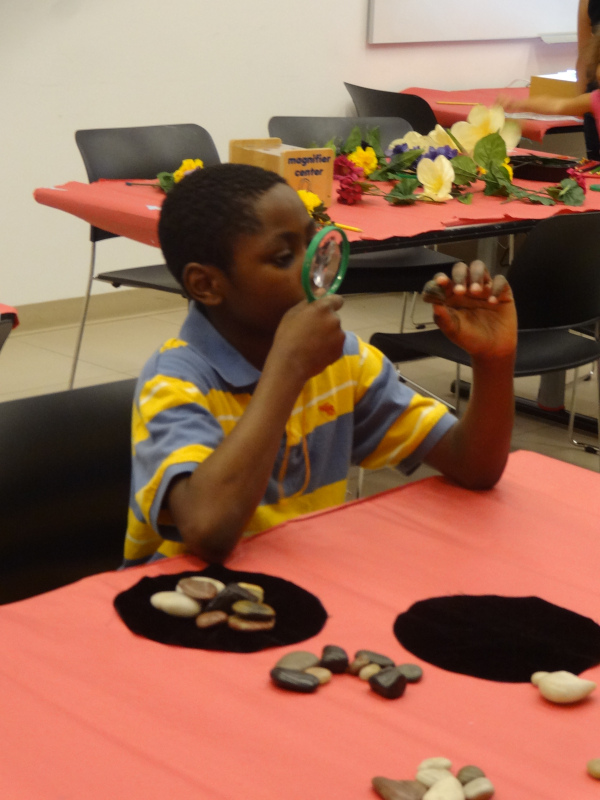
Using science to take a closer look at nature

Using science to take a closer look at nature

We usually think of scientists and artists as working in completely different spaces: a white coat-clad researcher gazes into a microscope in a sterile lab while a painter wearing a paint-smeared apron brushes color onto a canvas in a cluttered studio.

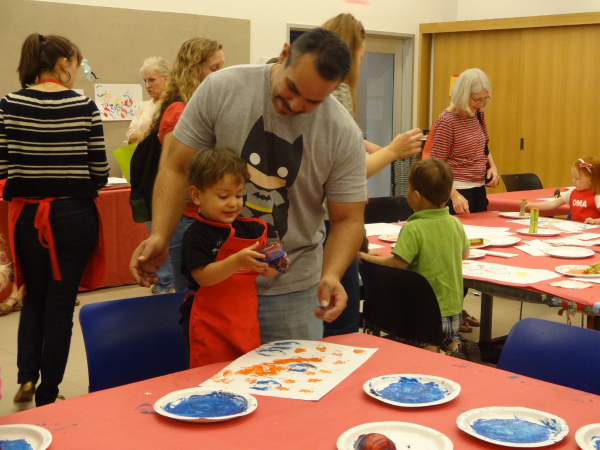
But this past First Tuesday, families tried their hand at becoming science-artists and investigating nature through both a scientific and artistic lens. In the art studio, children used celery, bell peppers, zucchini, apples, and oranges as their art tools to create one-of-a-kind nature prints. The unique patterns and shapes of the food we eat everyday make surprisingly beautiful images.

Using natural materials to create art

Using natural materials to create art

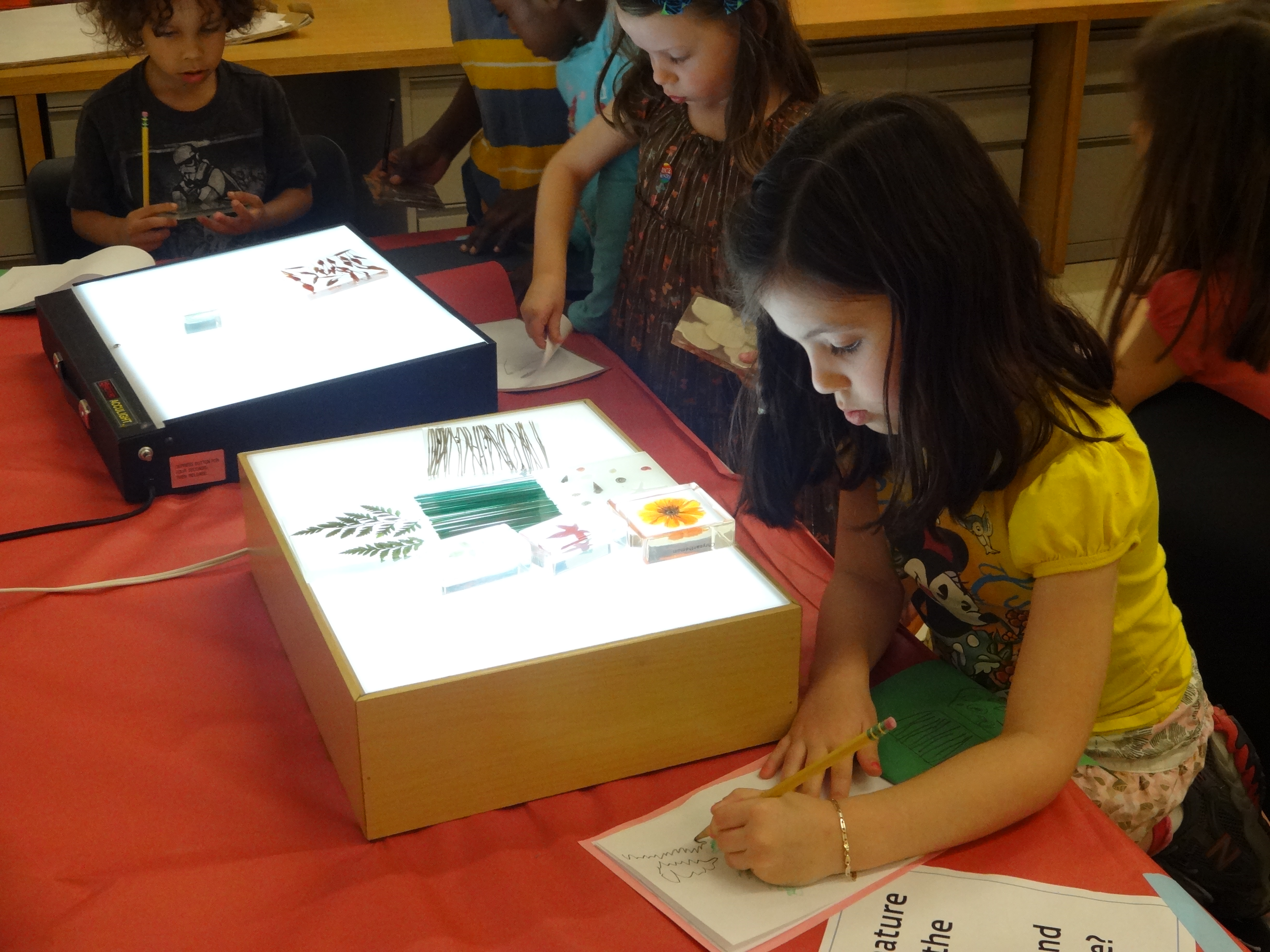
Meanwhile in the tech lab, aspiring scientists used magnifying glasses to take a closer look at shells, rocks, flowers, and leaves. Looking at nature samples on the light box was illuminating in more ways than one!

Investigating nature samples on a light box

Investigating nature samples on a light box

Spring is the perfect time to head outside with your sketch pad and magnifying glass to explore nature as a science-artist!

Leah Hanson
Manager of Early Learning Programs


Archives

Categories