Archive Page 27


Conservation Time Travel

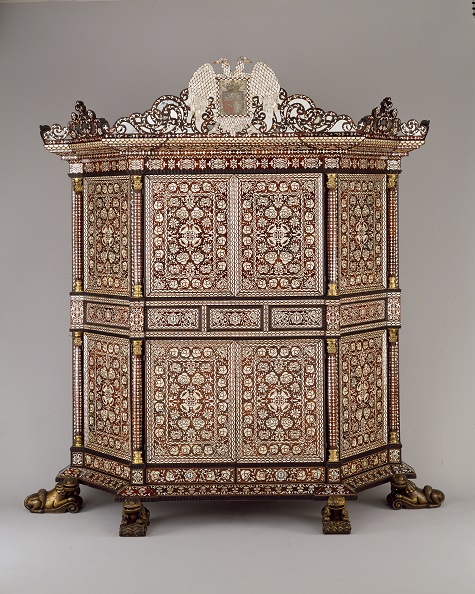
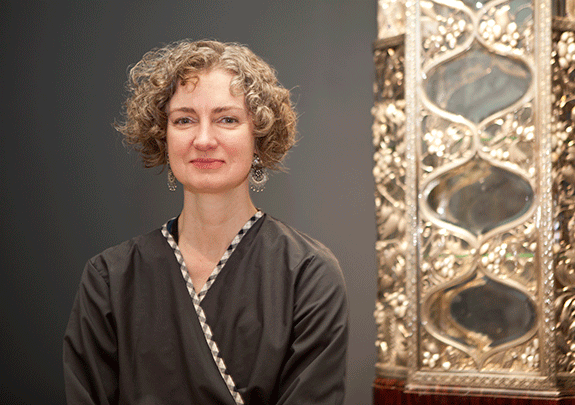
Uncrated recently caught up with the DMA’s  associate conservator, Fran Baas, who joined the Museum in November. This summer, you can find her working on the 1908 Viennese Wittgenstein silver cabinet, pictured below.

FranBaas

Describe your job in fifty words or less.
My title is Associate Conservator, and I oversee the activities involved in the long-term preservation of the DMA’s permanent collection of objects and textiles. This comprehensive approach includes treatment, research, and analysis, and the preventive care of the collection.

What might an average day entail?
Each day is very different and has me running around all over the Museum. I might be assessing objects as potential loan candidates, responding to e-mails, writing reports, and doing actual benchwork. 

For example, recently, over the course of two days, I treated three plaster “pears,” dehydrated a SCOBY (a colony of bacteria/yeast that is part of a contemporary piece), conditioned silica gel, cleaned a few inches of an intricate early 20th-century Viennese silver piece, discussed with curators and collections staff the “inherent vice” of an extremely fragile piece, helped identify materials in an African headdress, and assisted in the treatment of some large oversized paintings. My job keeps me hopping across decades, centuries, and millennia . . . not to mention across the world geographically!

How would you describe the best part of your job and its biggest challenges?
 I absolutely love my job. It’s a huge responsibility, but a privilege that I do not take lightly. The biggest challenge is never having enough time!

Growing up, what type of career did you envision yourself in? Did you think you’d work in an art museum?
For a long time, I struggled with where I fit. I am very “left-brained, right-brained,” as they say. Not only do I love working with my hands and looking at art, but I love science and the process of discovery. It took me awhile to find a profession that combines art and science. Conservation is a field where I get to do my favorite things in an effort to preserve art and artifacts for future generations to appreciate. I have the best job in the world.

Do you have a favorite work in the DMA’s collection yet?
As cliché as this sounds, I fall in love with whatever piece I am currently working on. Getting to work with a piece up close, in conjunction with the material analysis and background historical research, allows me to really “get to know” a piece . . . and as a result fall in love.

What are you looking forward to in your future here at the DMA?
I look forward to getting to know each and every object and textile in the DMA’s encyclopedic collection!

World War I Through the Eyes of Käthe Kollwitz: One Hundred Years Later

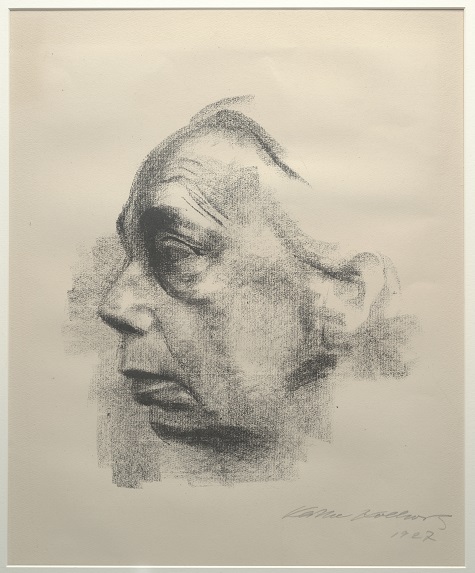
A new installation in the European Works on Paper Gallery contemplates the life and work of the German artist Käthe Kollwitz (1867-1945). For Germans born in the latter half of the 19th century, life was in a constant state of chaos. Immigration to America was at an all-time high, and World War I would soon be on their doorstep only to be followed by the destruction of World War II. For Kollwitz, the impact of these grave events became the inspiration for her artwork.

Käthe Kollwitz, Self Portrait, 1927. Lithograph, 12 5/8 x 11 ¾ in. (32.068 x 29.845 cm.), Gift of Mr. and Mrs. Alfred L. Bromberg, 1953.37

Käthe Kollwitz, Self-Portrait, 1927. lithograph, Dallas Museum of Art, gift of Mr. and Mrs. Alfred L. Bromberg

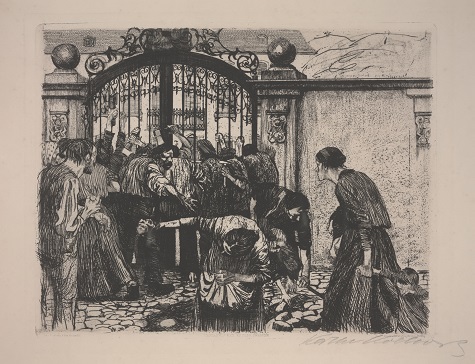
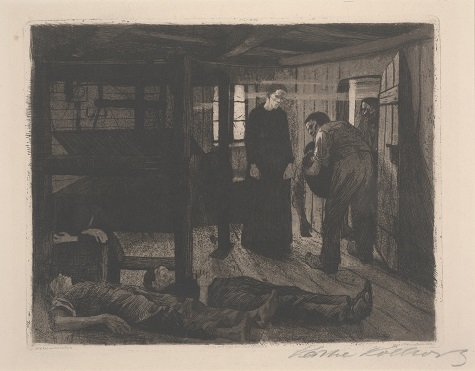
As a graphic artist and sculptor, Kollwitz was widely popular in Europe and America throughout her long life. Kollwitz had always been drawn to representing the working classes. But it was with a cycle of six prints documenting the Weaver’s Revolt of 1844 that she achieved instant fame. The DMA owns the last two prints in the series, Revolt and End.

Käthe Kollwitz, Revolt (Sturm), 1897. ink and etching on paper, Dallas Museum of Art, Foundation for the Arts, The Alfred and Juanita Bromberg Collection, bequest of Juanita K. Bromberg

Käthe Kollwitz, Revolt, 1897. ink and etching on paper, Dallas Museum of Art, Foundation for the Arts, The Alfred and Juanita Bromberg Collection, bequest of Juanita K. Bromberg

Käthe Kollwitz, End (Ende), 1897. aquatint and etching on paper, Gift of Mr. and Mrs. Alfred L. Bromberg

Käthe Kollwitz, End, 1897, aquatint and etching on paper, Dallas Museum of Art, gift of Mr. and Mrs. Alfred L. Bromberg

Together these works document the uprising of peasant workers and the resulting death and destruction. This series was so popular that Kollwitz was awarded a gold medal at the Great Berlin Exhibition of 1898, but the Prussian emperor Wilhelm II refused to award it to her, fearing her striking images would spark rebellions among the working classes. Nevertheless, it was this subject matter that would carry throughout her life’s work. She became dedicated to advocating for the lower classes and the downtrodden in society.

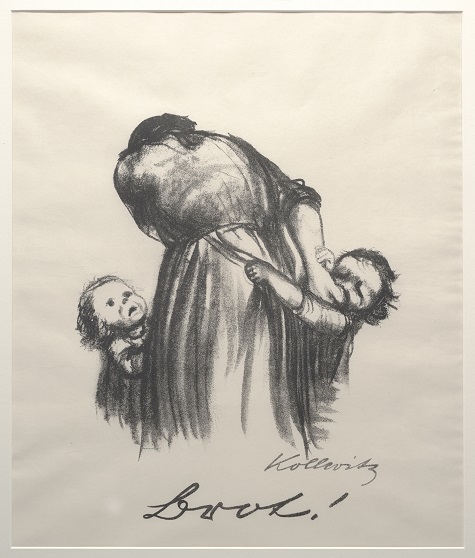
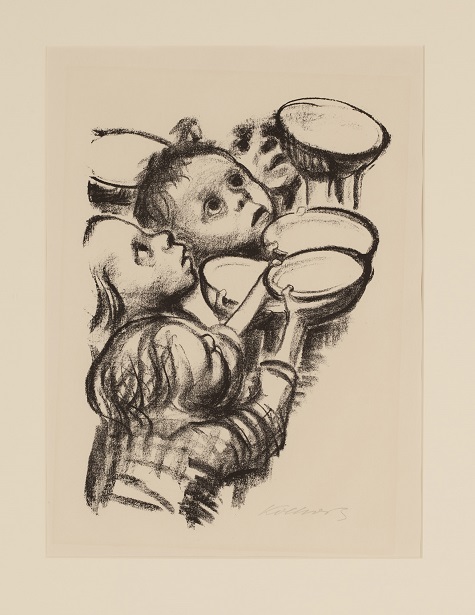
After the war, Kollwitz created many lithographs of women and children, such as Bread! and Hungry Children. These images were widely popular and circulated throughout the country. Kollwitz intended to draw attention to the starving working class and the impact of World War I on the nation.

Käthe Kollwitz, Bread! (Brot!), 1924. lithograph, Gift of Mr. and Mrs. Alfred L. Bromberg

Käthe Kollwitz, Bread!, 1924. lithograph, Dallas Museum of Art, gift of Mr. and Mrs. Alfred L. Bromberg

Käthe Kollwitz, Hungry Children (Deutschlands Kinder Hungern!), 1924. lithograph and ink, Dallas Museum of Art, Foundation for the Arts, The Alfred and Juanita Bromberg Collection, bequest of Juanita K. Bromberg

Käthe Kollwitz, Hungry Children, 1924. lithograph and ink, Dallas Museum of Art, Foundation for the Arts, The Alfred and Juanita Bromberg Collection, bequest of Juanita K. Bromberg

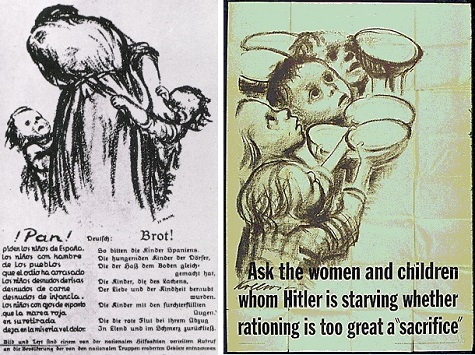
These two works were reprinted nearly a decade later. During World War II, Bread! was published in the National Socialist women’s magazine, Warte, as pro-Nazi propaganda, with the forged signature of St. Frank. Kollwitz was outraged, as she was a staunch opponent of Nazism and another world war. The United States appropriated Hungry Children as a propaganda poster to encourage rationing for the war effort.

After Käthe Kollwitz (German, 1867-1945), Brot!, reprinted by the Nazi Party in NS Frauen Warte, the National Socialist Women’s Paper, photo credit Elizabeth Prelinger, Käthe Kollwitz (Washington: National Gallery of Art, 1992), pg. 122. After Käthe Kollwitz (German, 1867-1945), Ask the Women and Children Whom Hitler is Starving Whether Rationing is Too Great a “Sacrifice,” 1942-1945, Photomechanical print, 55 ¾ x 39 13/16 in. (141.6 x 101.2 cm.), National Archives at College Park, MD, ARC Identifier, 513836

After Käthe Kollwitz, Bread!, reprinted by the Nazi Party in NS Frauen Warte, the National Socialist Women’s Paper, photo credit Elizabeth Prelinger, Käthe Kollwitz (Washington: National Gallery of Art, 1992), pg. 122. After Käthe Kollwitz , Ask the Women and Children Whom Hitler Is Starving Whether Rationing Is Too Great a “Sacrifice,” 1942-45, Photomechanical print, National Archives at College Park, MD, ARC Identifier, 513836

The works are currently on view in the Museum’s European Works on Paper Gallery on Level 2 and are included in the DMA’s free general admission.

Update September 5, 2014:
Listen to an interview with Michael Hartman discussing the exhibition on Tyler Green’s The Modern Art Notes Podcast here.

Michael Hartman is the McDermott Intern for European Art at the DMA.

Celebrating Mexico in the DMA Collection

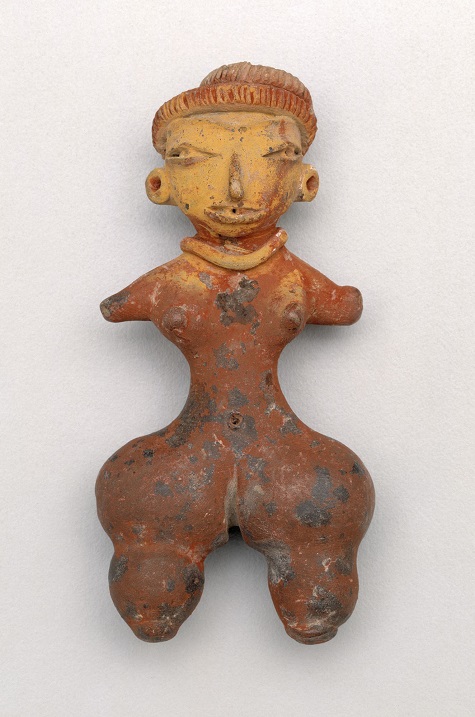
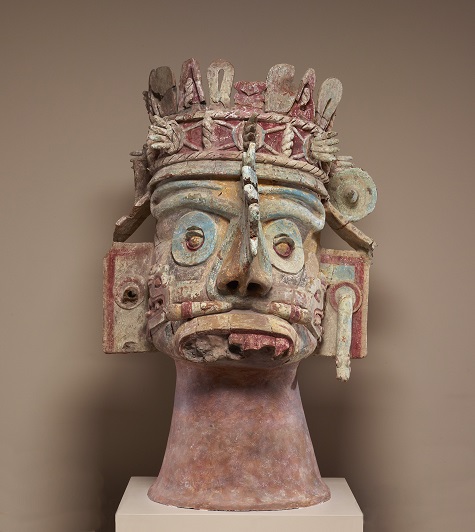
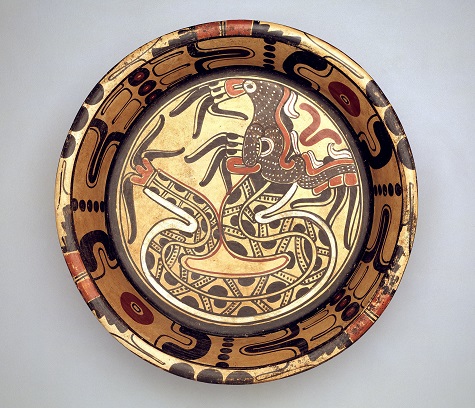
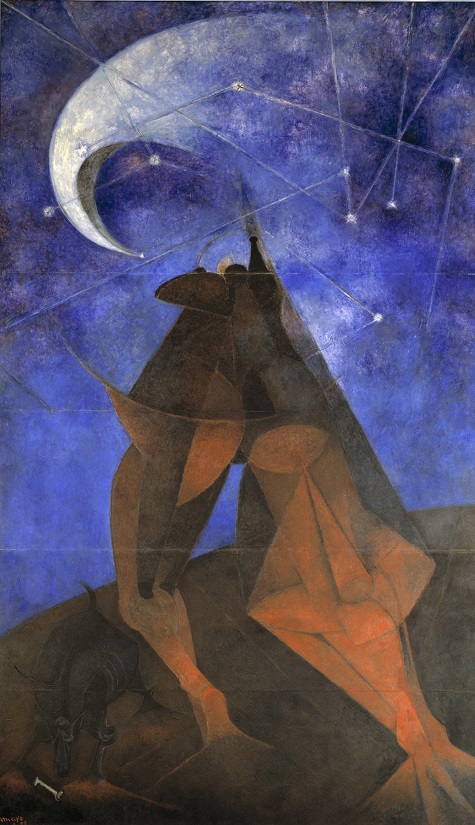
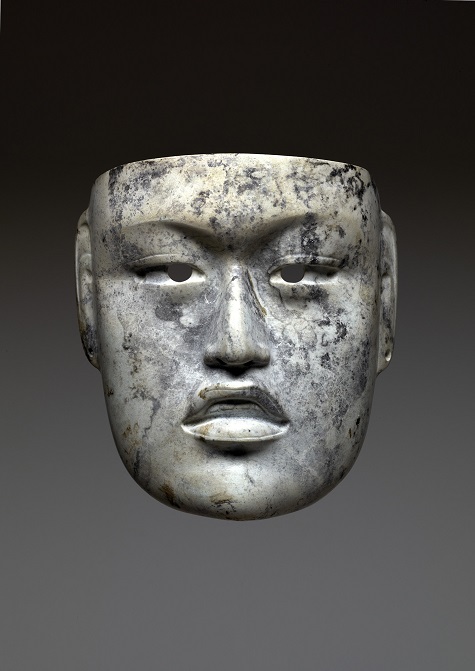
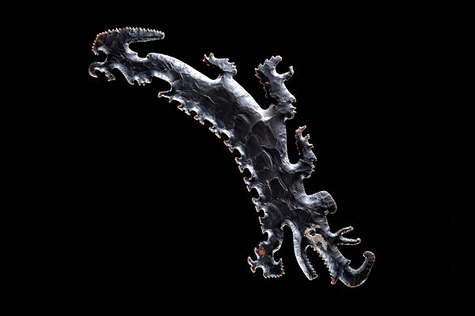
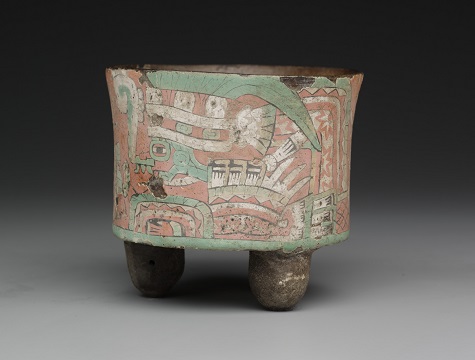
El Dallas Museum of Art es poseedor de excepcionales obras de arte mexicano, desde esculturas olmecas tempranas hasta instalaciones artísticas contemporáneas. La colección mexicana del Dallas Museum of Art, de casi mil piezas, cubre más de tres milenios de historia del arte mexicano. Desde escultura hasta impresiones, de terracota a oro, el Museo cuenta con la capacidad de exhibir una increíble variedad de objectos.

Explora las obras muestradas abajo, , y más, gratuitamente en la DMA en celebración del Cinco de Mayo.

The Dallas Museum of Art has exceptional holdings of Mexican art, from early Olmec sculptures to contemporary art installations. The DMA’s Mexican collection, with almost a thousand pieces, covers more than three millennia of Mexican art history. From sculpture to prints, from terracotta to gold, the Museum is able to display an incredible array of objects.

Explore the works shown below, and more, for free at the DMA in celebration of Cinco de Mayo.

Planes, Trains, and Automobiles: The Overseas Adventures of an Artwork Courier

In the art museum world, couriers are often sent to accompany artwork in transit for loans. At the DMA, we elect to send an escort if the artwork is of high value, particularly fragile, and/or difficult to install. Couriers oversee the artwork every step of the way, ensuring its safe packing, transit, and installation. Oftentimes, these trips are not as glamorous as they initially appear, as they mean many long hours of waiting, uncomfortable travel conditions, and little sleep (but, sadly, no being handcuffed to a briefcase like in the movies). Nevertheless, they can sometimes be quite the adventure. Here is a timeline of a trip I recently took as a courier with our Matisse collage, Ivy in Flower, to the Tate Modern in London:

April 1, 2014
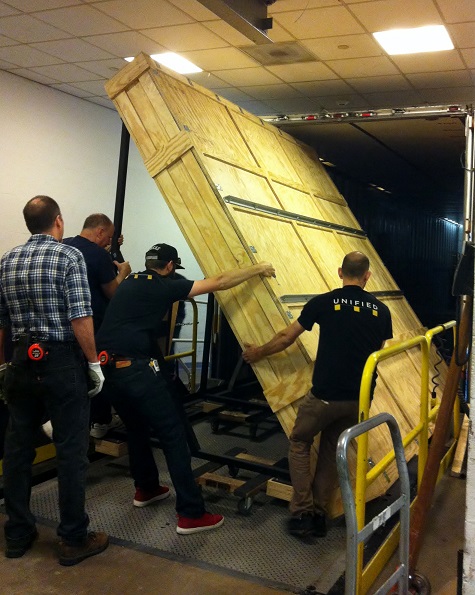
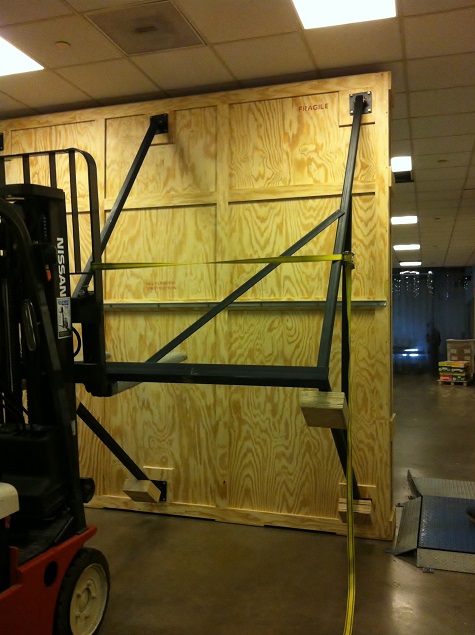
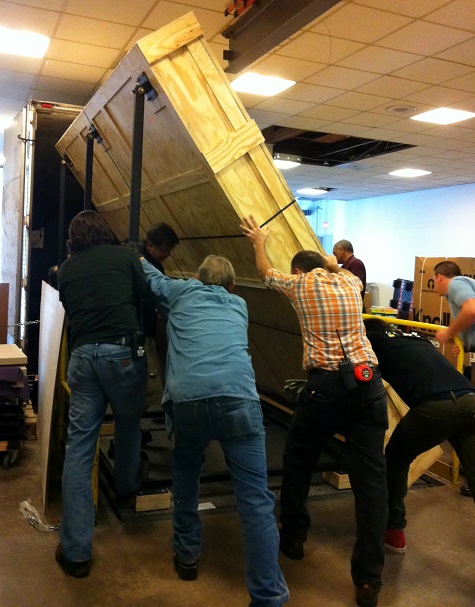
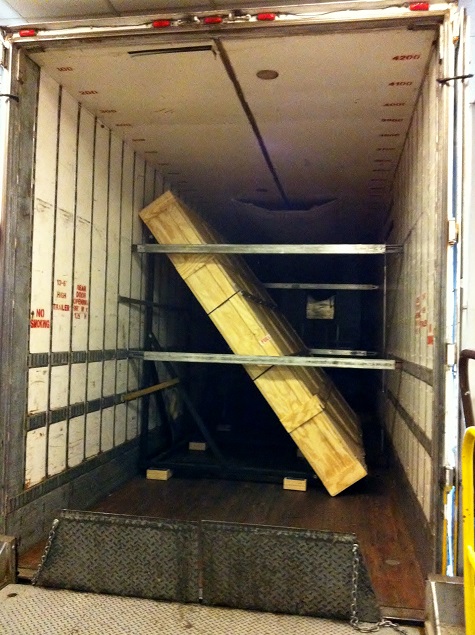
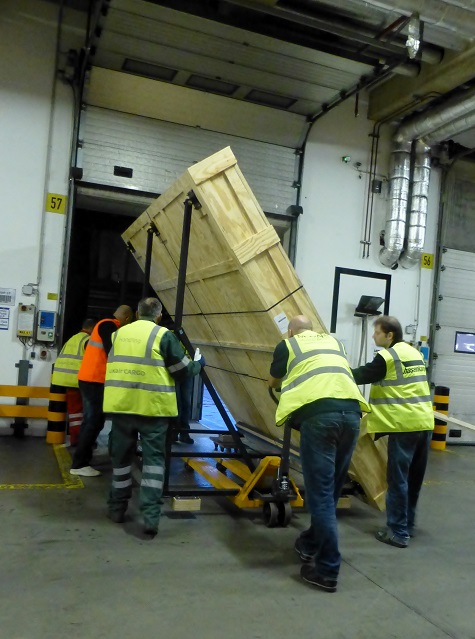
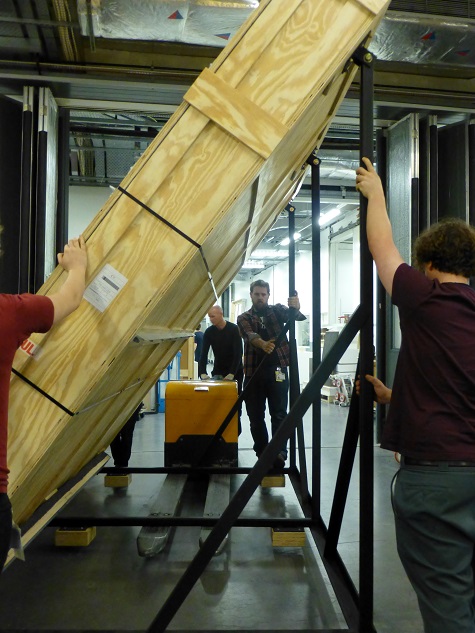
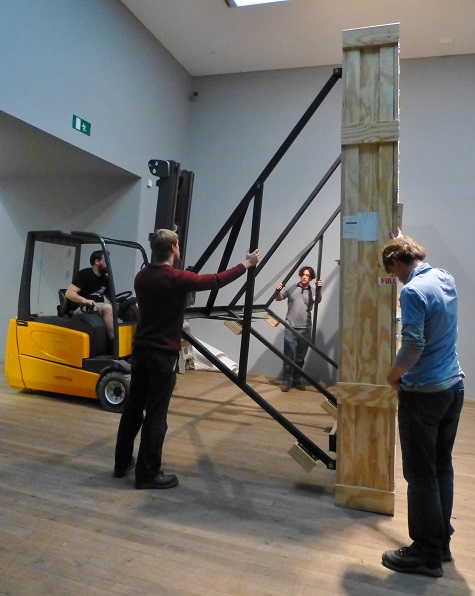
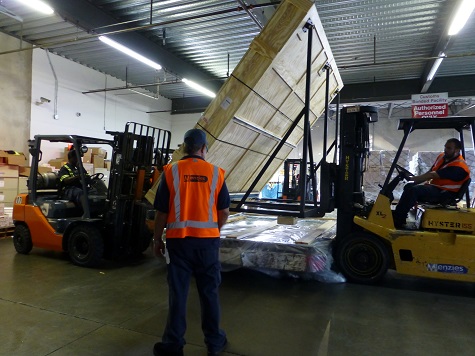
10:12 a.m. – Unified Fine Arts delivers the crate to the DMA. Due to the large size of the artwork, it was necessary to build an A-frame crate with a steel support structure. The artwork travels at an angle; otherwise it would be too tall to fit inside a truck or airplane cargo hold.

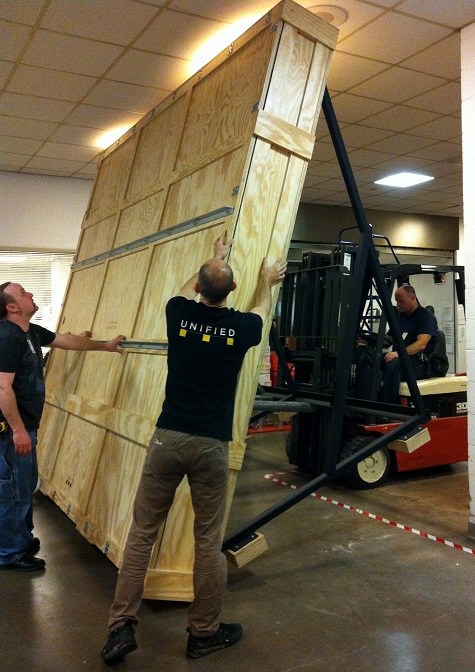
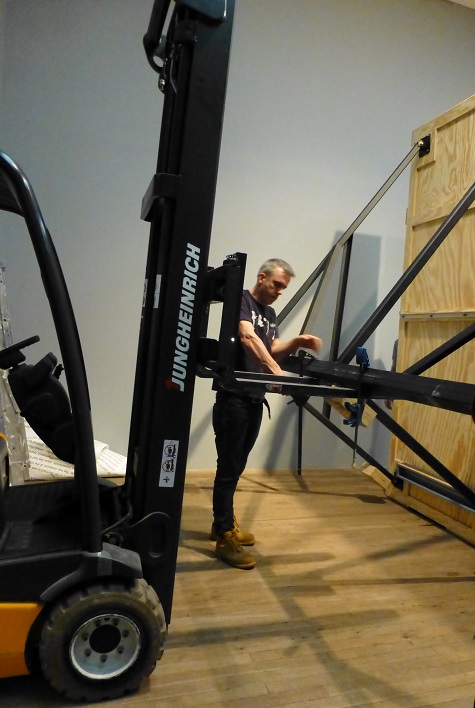
Art handlers strap the crate to the forklift so it can be upright for packing. Thankfully, it clears the ceiling with just an inch or two to spare.


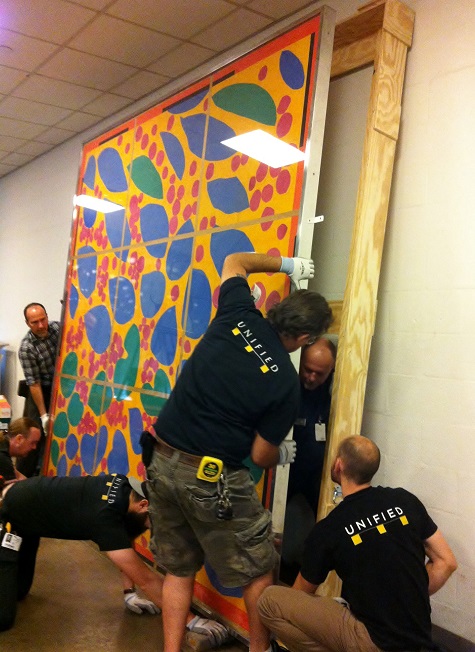
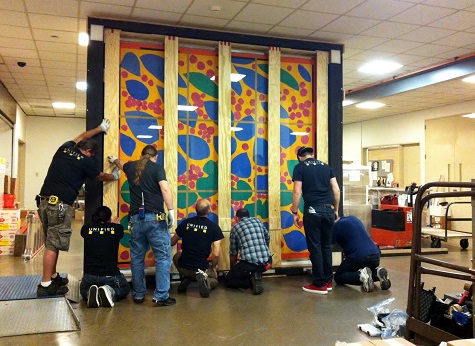
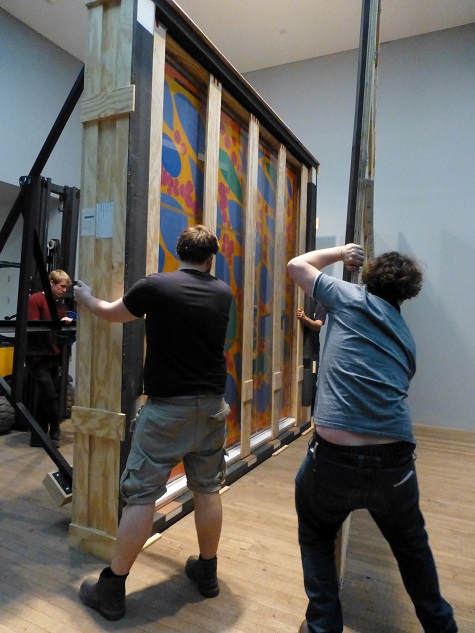
Brackets on the artwork’s frame are used to attach it to the interior travel frame, which then fits snugly into the foam-lined crate.


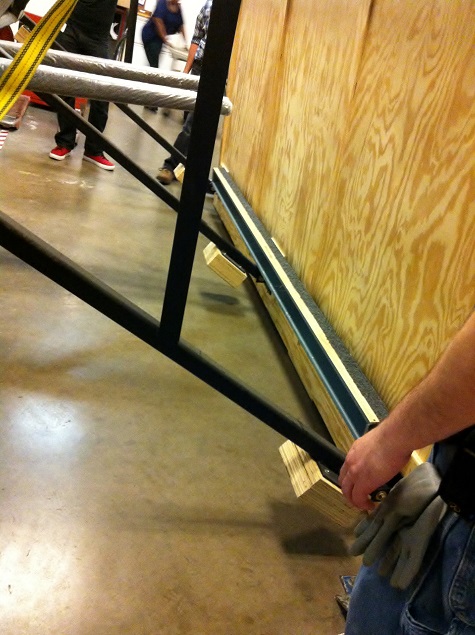
12:17 p.m. – Although there is no room inside for the custom-built cradle used to maneuver the heavy artwork, the preparators screw it to the outside of the crate to be kind to the backs of their counterparts on the other end.

April 3, 2014
1:45 p.m. – The loans registrar and I learn that the cargo flight is delayed and will depart early the next morning rather than that evening as scheduled. After quickly consulting with our conservator about the climate conditions in the airport warehouse and confirming that there will be on-site security, we decide to proceed with loading the truck as planned.
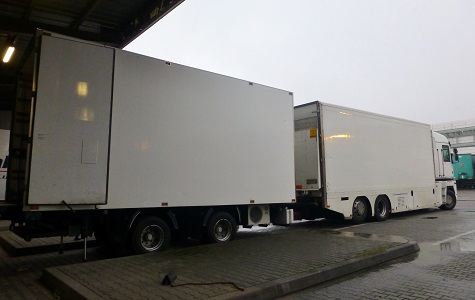
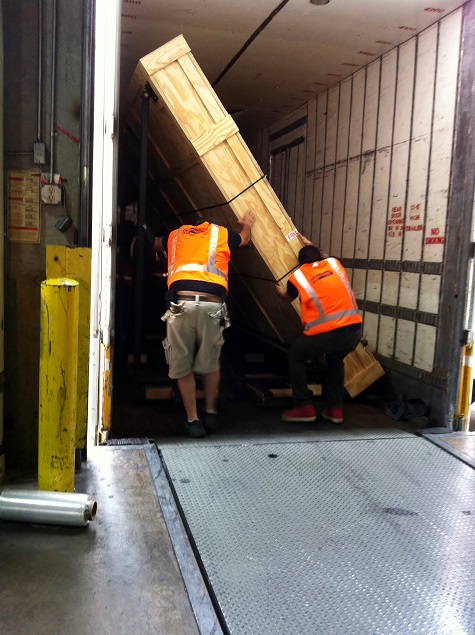
3 p.m. – Lots of manpower, strategically placed dollies, and careful angling are used to load the crate onto the high-cube tractor trailer truck via the narrow dock plate.


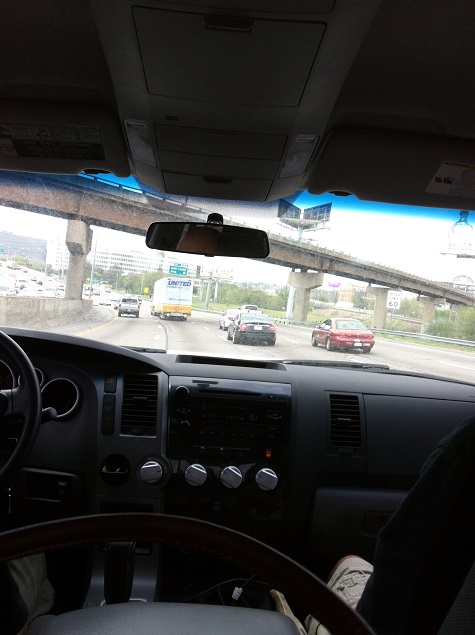
3:42 p.m. – I climb into the backseat of a follow car that tails the truck carrying the artwork to the airport.


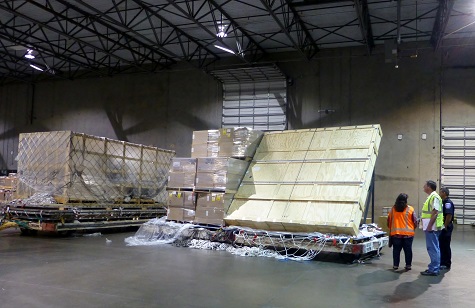
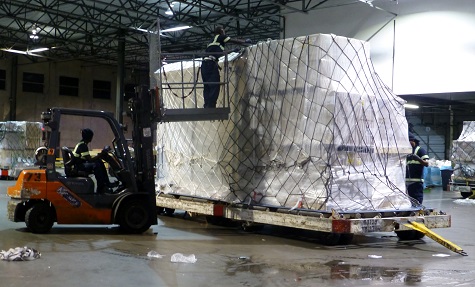
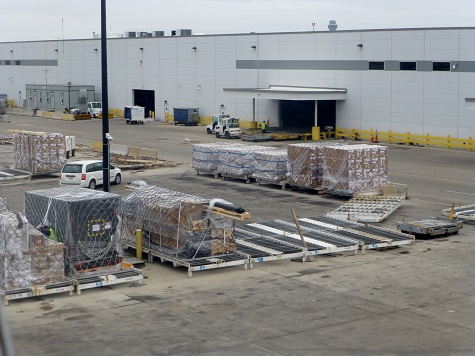
5:07 p.m. – The wider dock at the airport cargo area makes it much easier to offload the crate. A few more gray hairs appear on my head as I watch three forklifts, operating in tandem, raise the crate so a pallet can be slid underneath.


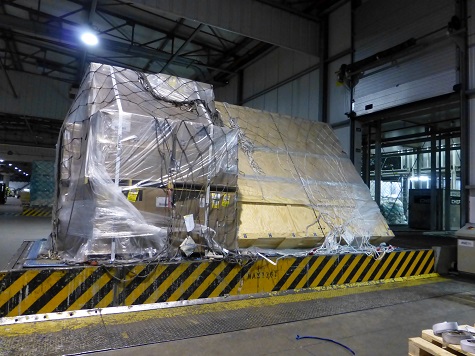
8:53 p.m. – Artwork couriers are very well acquainted with the “hurry up and wait” concept, as it is several hours later that additional cargo arrives to be loaded onto the same pallet. The entire structure is then wrapped in plastic (to protect from the elements) and secured via netting. It is a courier’s responsibility to make sure that cargo added to the artwork’s pallet does not contain live animals, anything perishable, or hazardous materials.


9:56 p.m. – After verifying the pallet was properly packed, security surveillance is in place, and paperwork is in order, I crash at a nearby hotel.

April 4, 2014
6:56 a.m. – My chariot awaits (bright and early!)—the customs agent from Masterpiece International drives me from the hotel to the DFW cargo hanger.
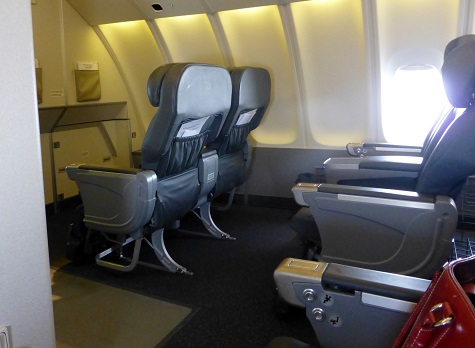
8:27 a.m. – The pallet is loaded and I board the cargo plane. Rather than the usual flight attendant spiel on how the seat cushion can be used as a flotation device, the pilots point out three possible escape hatches. As the only passenger, I settle into a row of business-class seats.


9:15 a.m. – Flight departs Dallas/Fort Worth International Airport.


11:02 a.m. – Flight arrives in Chicago to take on additional cargo. I experience a minor moment of panic when I overhear the load supervisor say, “The animal’s not breathing and you have to sign all these papers and a waiver for them to do CPR.” I breathe a sigh of relief when I realize he is on the phone talking about his girlfriend’s cat (having ridden on planes with horses, chickens, and monkeys, you just never know).
1:01 p.m. – I inspect the pallet to make sure it is still secure after the extra cargo was loaded (thankfully no monkeys in sight).
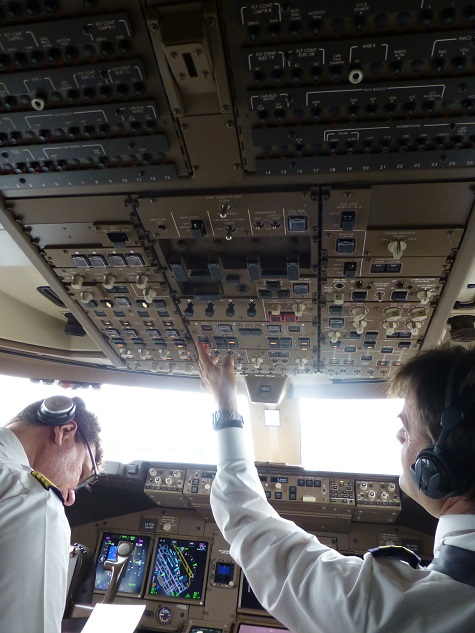
2:15 p.m. – The pilots invite me into the cockpit for takeoff from Chicago.


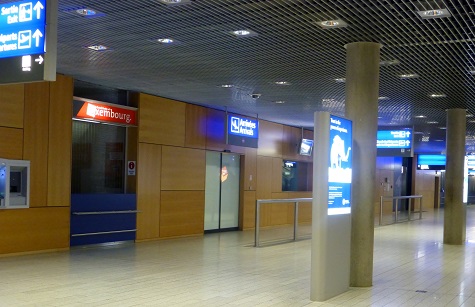
9:46 p.m. Dallas time/5:46 a.m. local time – The plane touches down in Luxembourg (while London is my final destination, its airports don’t accept large cargo planes).


The airport is deserted at this early hour, and the pilots have to call for customs clearance. A bleary-eyed agent comes out of a nearby office, unceremoniously takes a stamp out of his pocket, marks our passports, and we are on our way. I manage to find a much-needed caffeine fix.


6:20 a.m. – Representatives from the art-freight forwarders Hasenkamp drive me to the cargo area and help secure my clearance (an ID badge affixed to a sexy green vest). Two drivers from the British fine art company MOMART meet us to help with the depalletizing and loading the crate onto their truck.


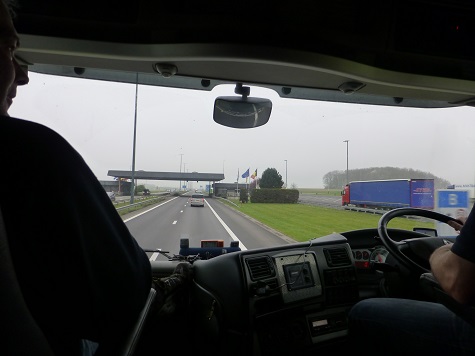
8:03 a.m. – The paperwork is finalized, the truck is locked and sealed, and we set out on the road to Calais, France.


8:40 a.m. – I pass into my third country of the day as we cross the border into Belgium.


12:53 p.m. – We drive into France and I jam with the drivers to Pharell Williams’ “Happy” and Elton John songs on the French radio.
1:39 p.m. – The customs agents in Calais ask for copies of all my documentation, including my e-ticket for the return trip to Dallas.
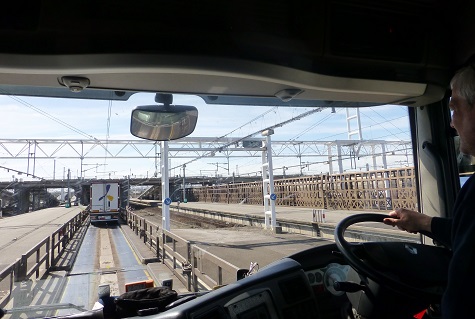
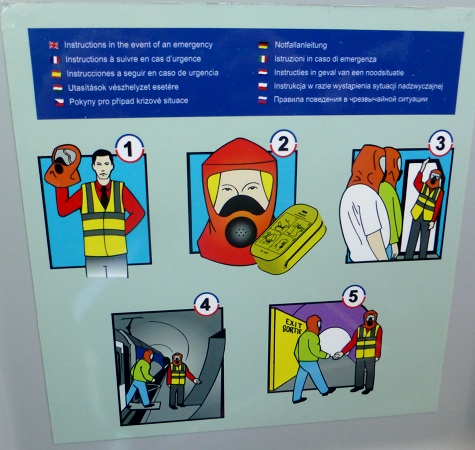
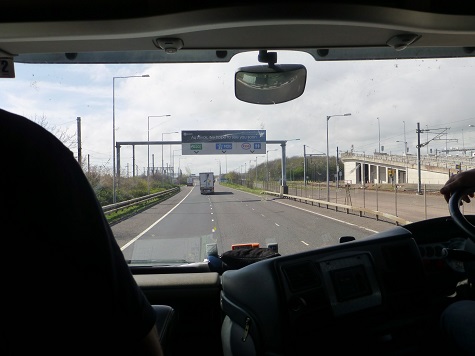
2:07 p.m. – MOMART drives the truck onto the Eurostar train flatbed, the wheels are locked, and the drivers and I board a bus for the passenger car. The drivers warn me of the potential stench of the train car and its scary bathrooms. I’m not sure what the warning instructions are about on the seat back—possibly what to do in the event of a nuclear holocaust or alien invasion.


2:54 p.m. French time/1:54 p.m. local time – The train arrives in England via the tunnel under the English Channel.
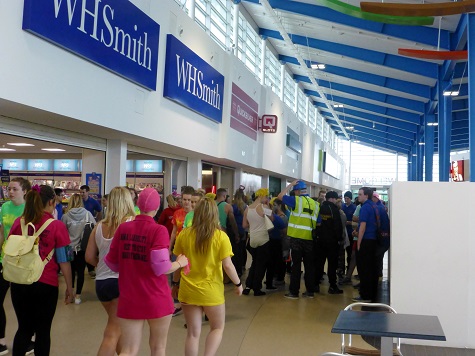
2 p.m. – While we are waiting to clear customs at the truck stop, we are engulfed by a tidal wave of drunk college students in body paint and various states of dress (or lack thereof), apparently en route to a big sporting expo. I am grateful for “Horatio Hornblower” on the lounge television . . .


4:30 p.m. – Customs are finally cleared and we depart for London.


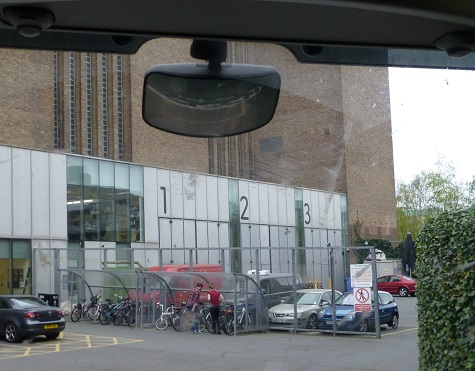
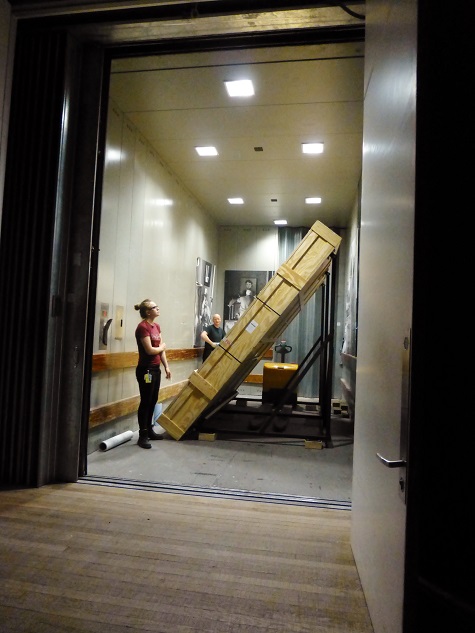
6:15 p.m. – The Tate Modern loading dock is a most welcome sight. The crate is taken up in a massive elevator to be stored in the exhibition gallery because it is too large for their storage facilities.


7:10 p.m. – A taxi spirits me away to my hotel for a much needed shower and night’s sleep.

April 6, 2014
Acclimatization day (24 hours’ acclimatization is the museum standard to allow artworks to adjust to their new surroundings before they are unpacked. We couriers are grateful for these days so our bodies can also “acclimatize” and recover from jetlag.)

April 7, 2014
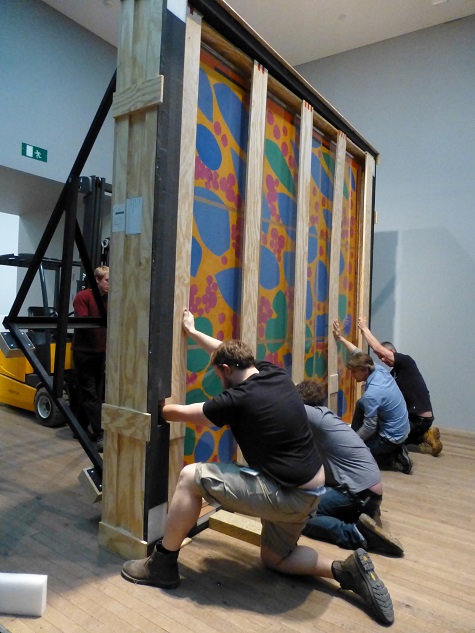
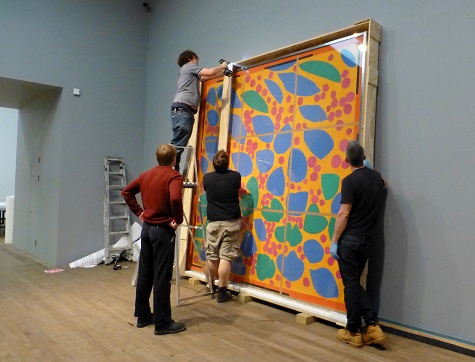
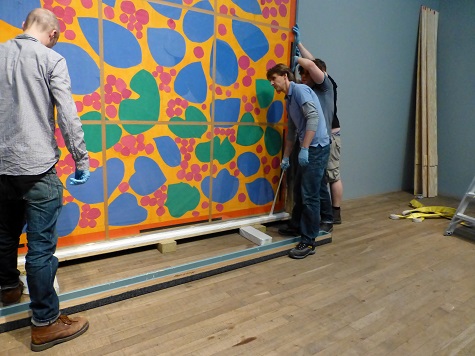
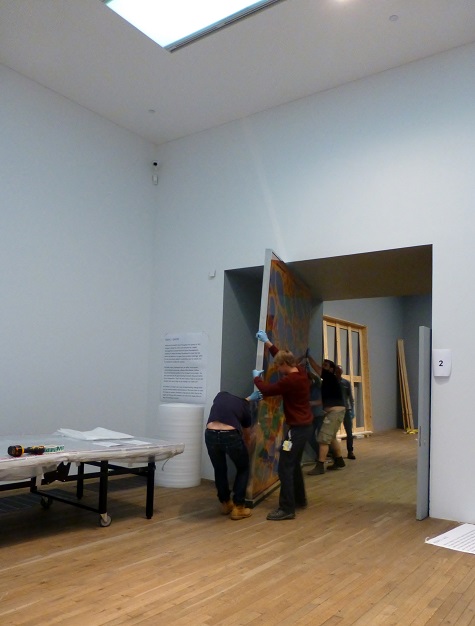
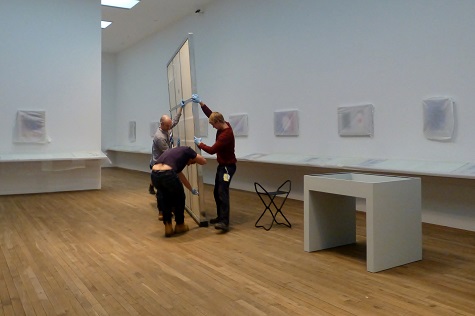
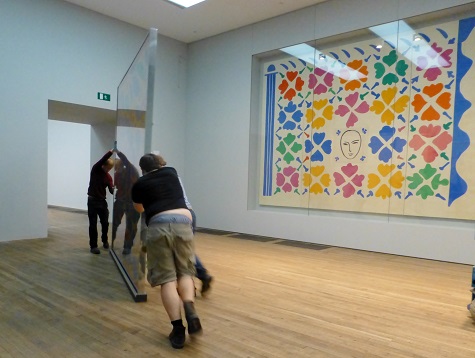
8:30 a.m. – I report to the museum for my unpacking appointment. The technicians clamp the crate to the forklift for extra stability and security. The cradle is used to slide the collage through the galleries, since (naturally) it is to be installed in the last one.Preview


9:50 a.m. – Sir Nicholas Serota (Tate Modern’s director) and Nicholas Cullinan (exhibition curator) work with the art handlers to place the artwork.


10:03 a.m. – I thoroughly examine the collage with the Tate’s conservator for the condition report and to verify it traveled safely overseas. The artwork is compared to the outgoing report and the photos taken before it was packed at the DMA.


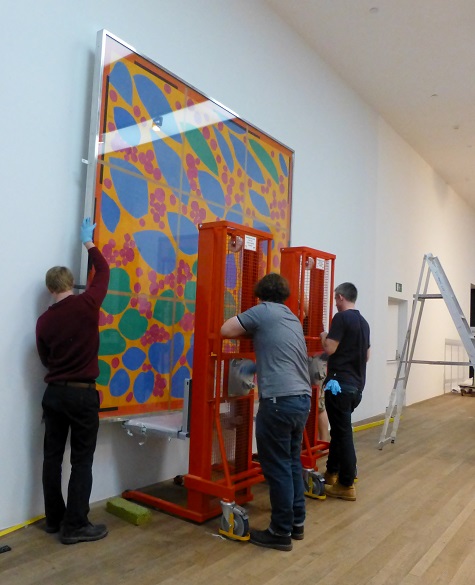
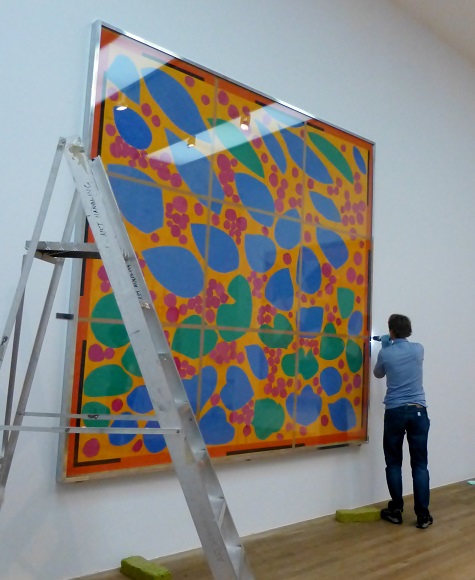
11:28 a.m. – The frame is lifted into place and hardware is attached to secure it onto the wall.


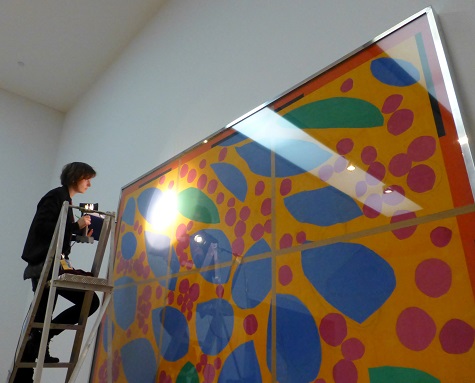
11:52 a.m. – I request that a reading be taken with a light meter since there are skylights in the galleries. Works on paper are very susceptible to light damage, but thankfully the levels were low enough to meet our standards.
12:09 p.m. – I can now breathe a sigh of relief that everything is as it should be and set out to explore London.
IMG_53

Reagan Duplisea is the Associate Registrar, Exhibitions, at the DMA.
The Outsiders

The DMA will host acclaimed author S. E. Hinton as part of its Arts & Letters Live series this Thursday, April 24. Hinton gave a fresh and multifaceted voice to the renegade, rebel, and rogue characters in her popular young-adult novels such as The Outsiders and Tex. Generations of readers have embraced her books for their themes of loyalty and perseverance in the face of classist and social injustice, and have projected them into Americana icon status.

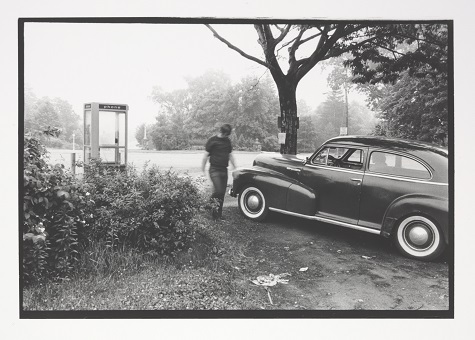
Hinton’s best-selling and most well known novel is The Outsiders, about two rival gangs of upper-class and “greaser” teens in the 1960s, inspired by her own experiences growing up in Tulsa. The book was published when she was just 18 years old. Twenty-thousand copies of the book will be distributed throughout Dallas this month as part of “Big D Reads,” a community reading project. Michael Kostiuk’s Untitled from 1973 in the DMA’s collection reminded us of the backdrop for The Outsiders.

Michael Kostiuk, Untitled, 1973, gelatin silver print, Dallas Museum of Art, Polaroid Foundation grant

Michael Kostiuk, Untitled, 1973, gelatin silver print, Dallas Museum of Art, Polaroid Foundation grant


Reagan Duplisea is the associate registrar, exhibitions, at the DMA.
 

America the Beautiful

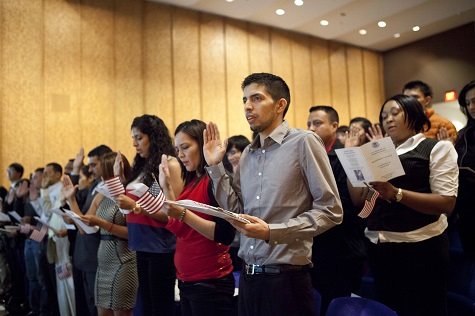
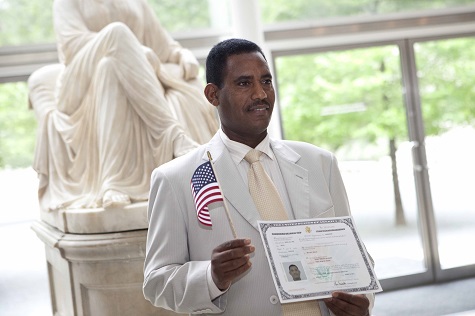
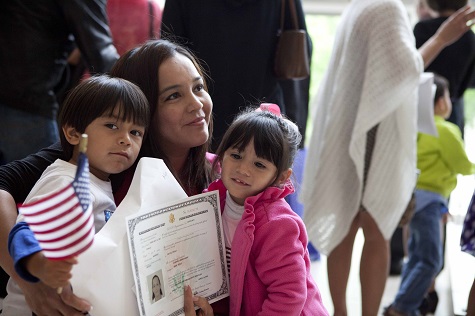
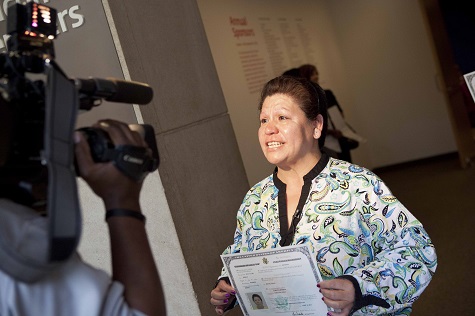
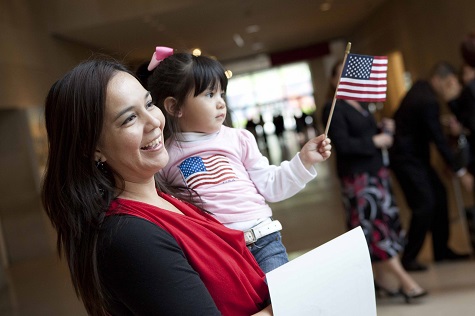
Yesterday, the DMA had the honor of hosting 49 individuals from 18 countries during the second annual naturalization ceremony in the Museum’s Horchow Auditorium, where they took their oath of allegiance and became the newest citizens of the United States. Akron Watson, a member of the Fortress of Solitude cast from the show’s recent debut and run at the Dallas Theater Center, capped off the event with an inspiring rendition of America the Beautiful. Following the ceremonies, candidates and their families enjoyed refreshments in the Atrium, posed for photos, had a chance to become our newest DMA Friends, and toured the Museum’s American art collection.

Art Everywhere US: A Very, Very Big Art Show

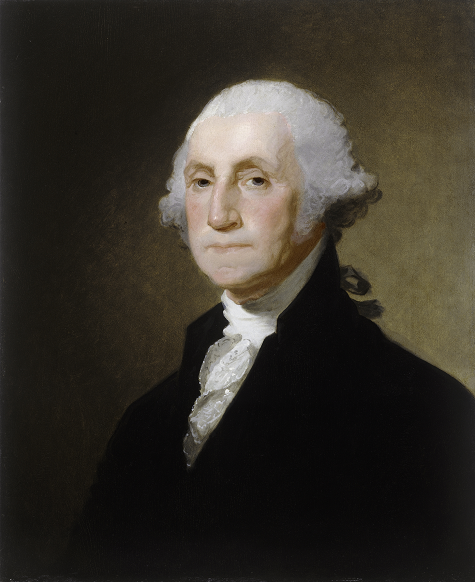
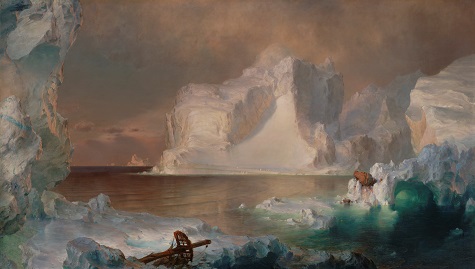
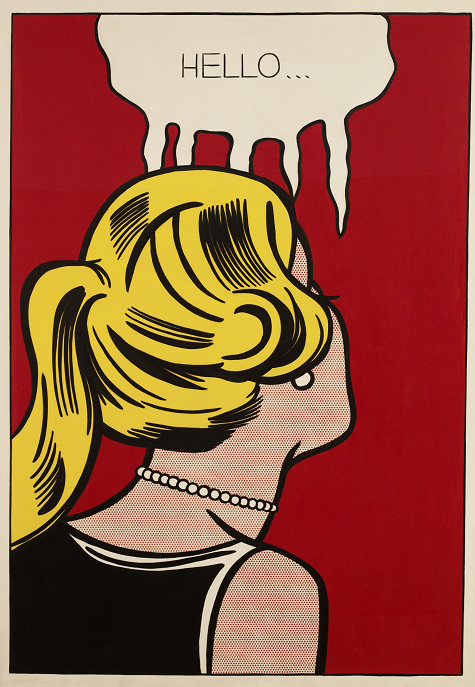
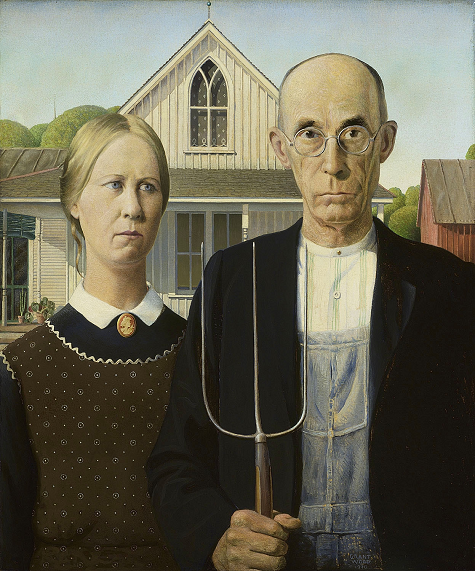
Be a guest curator for the largest art exhibition in America! Beginning today, you can vote for your favorite American artworks from art museums across the country, including the DMA. Art Everywhere US is a public celebration of great American art.

art everywhere jpeg

The process to create this celebration began this past New Year’s Eve, when I e-mailed the directors of four leading U.S. museums—the Art Institute of Chicago, the Los Angeles County Museum of Art, the National Gallery of Art, and the Whitney Museum of American Art—asking if they would jump in feet first with the DMA and the Outdoor Advertising Association of America to create a 100-work synopsis of American art history. I was thrilled when everyone agreed right away, and by January 2014 we were off to the races.

I asked each museum to submit 30 works, yielding 150, and I had the unenviable task of winnowing the list down to 20 each to reach 100. We were seeking a balanced result, representing every period of American art from across the nation, with attention to ethnic and gender diversity, and the inclusion of iconic works alongside whimsical ones. We stuck to two-dimensional works given their planned reproduction on out-of-home media.

It is now up to you to help decide which of these 100 works will be part of the first Art Everywhere US project.

From now through May 7, you can vote for your favorite 10 works daily to help inform the final 50 works. The final works will be reproduced this August on as many as 50,000 outdoor displays from coast to coast. Make sure you get to see your favorite work of art on a billboard during your commute this summer, whether it’s the DMA’s The Icebergs, the Art Institute of Chicago’s American Gothic, the Los Angeles County Museum of Art’s Campbell’s Soup Can, the Whitney’s Little Big Painting, or the National Gallery’s George Washington. We aren’t trying to stack the deck in the DMA’s favor, but instead are enjoying the playful spirit of this massive endeavor. Vote early and vote often! And please share your votes with #ArtEverywhereUS and connect online.

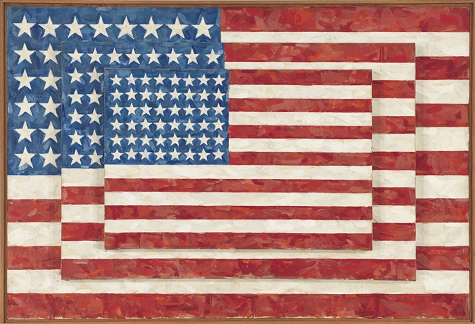
(Images in slide show: Jasper Johns, Three Flags, 1958. Encaustic on canvas. 30 5/8 x 45 1/2 x 4 5/8 in. Whitney Museum of American Art, New York, Art © Jasper Johns, Licensed by VAGA, New York, N.Y.; Gilbert Stuart, George Washington, c. 1821. Oil on wood. 26 3/8 x 21 5/8 in. National Gallery of Art, Washington, Gift of ThomasJefferson Coolidge IV in memory of his great-grandfather, Thomas Jefferson Coolidge, his grandfather, Thomas Jefferson Coolidge II,and his father, Thomas Jefferson Coolidge III.; Frederic Edwin Church, The Icebergs, 1861. Oil on canvas. 64 1/2 x 112 1/2 in. (1 m 63.83 cm x 2 m 85.751 cm). Dallas Museum ofArt, gift of Norma and Lamar Hunt.; Roy Lichtenstein, Cold Shoulder, 1963. Oil and magna on canvas. 68 1/2 x 48 in. Los Angeles County Museum of Art, Gift of RobertH. Halff through the Modern and Contemporary Art Council (M.2005.38.5). Photo courtesy of the Roy Lichtenstein Foundation, by Kevin Ryan.; Grant Wood, American Gothic, 1930. Oil on Beaver Board. 30 3/4 x 25 3/4 in. (78 x 65.3 cm). The Art Institute of Chicago, Friends of American Art Collection.)

Maxwell L. Anderson is the Eugene McDermott Director of the DMA.

The Nur Dialogue Experience

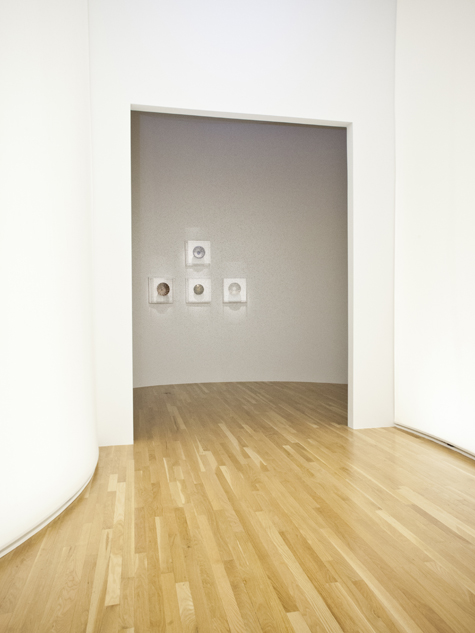
As the senior advisor for Islamic art at the DMA, my responsibilities include engaging with institutions worldwide to create dialogue on behalf of the Museum. The most recent project involved curating the exhibition Nur: Light in Art and Science from the Islamic World, which itself required many complex negotiations! The project started in Spain four years ago, when I was asked by the Fundación Focus-Abengoa in Seville to develop their first Islamic art exhibition. Seville is no stranger to Islamic history. Almost 800 years of Islamic rule in Spain resulted in a strong presence of Islamic culture, which survived beyond 1492, when Muslims lost Spain to Christian forces. As an Islamic art exhibition in Seville, Nur was particularly significant, being paradoxically a first of its kind, yet, naturally at home. In Dallas, the Nur exhibition holds another great significance, as it is the first major exhibition of Islamic art in the 111-year history of the DMA. So, there is a great deal to learn about Islamic culture. But first of all, there is a great deal to “unlearn.” For this reason, the exhibition journey starts with a white entrance space, which aims to give the visitor a sensation of light, and is also a white slate, which prepares us to see for the first time. White light holds the full spectrum of colors.
Nur image1

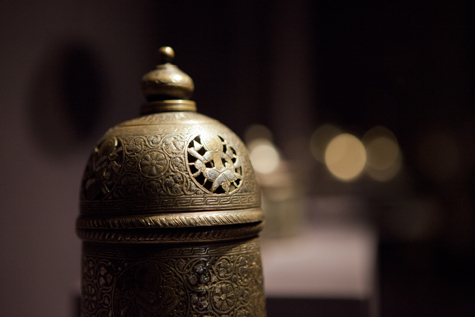
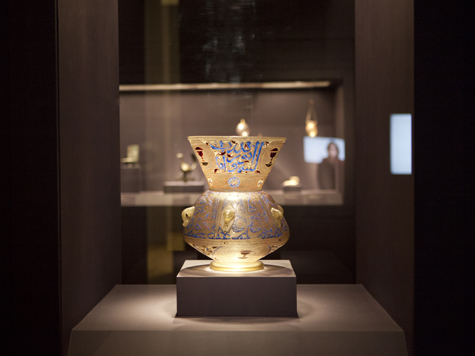
The Nur exhibition is at the heart of the cultural exchange venture at the DMA. With Nur, the dialogue starts with the silence of a white space, suggesting that listening is key in any dialogue. There is dialogue between the objects themselves as they link different cultures living within one culture. An example of this is a Torah case from 16th-century Syria, which is made of copper and decorated in the typical Islamic style of silver inlaid arabesques.
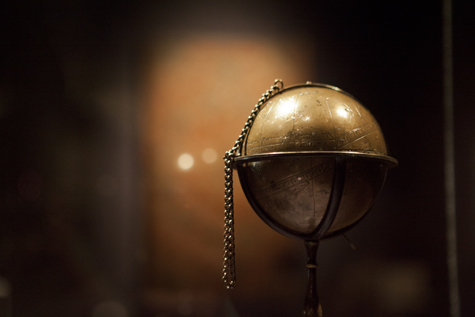
There is a strong connection between these objects that come from places as far apart as Spain and Asia, brought together in a configuration that creates a dialogue with the visitor. Islamic art objects are often small and they require us to humbly come close and look. They are filled with details. In the exhibition space, these details are brought to the fore by virtual screens (I prefer to call them virtual screens rather than videos!), which create other planes. They are positioned in such a way in the exhibition space so as not to interfere with the objects, but they complement the display, attract attention to some of the key aspects within the objects, and invite us to look at the objects again and again. They reveal the immense world within, sometimes, the tiniest of objects. And sight becomes insight.

Nur004 Nur001

The exhibition journey reflects content and container being one; without props, the exhibition provides an experience of a different way of seeing the world. Through aspects such as reflection and attention to minute detail, a harmonious musicality is created. The exhibition concepts and design were shaped closely together to create an experience of a multilayered reality. For example, this is suggested by the openings in the walls between sections that allow us a glimpse into the next space as we make an enjoyable journey of discovery through the exhibition. Passing one of these openings, we sense the presence of another world, suggesting that what see is only part of the whole.
Nur002

Sabiha Al Khemir is the senior advisor for Islamic art at the DMA.
Take Me Out to the Ball Game

We’re cheering on our Texas Rangers during Opening Day!

Nic Nicosia, Bobby Dixon & the Texas Stars, 1986, screenprint, Dallas Museum of Art, gift of the Pepsi-Cola Bottling Group, Dallas, Texas

Nic Nicosia, Bobby Dixon & the Texas Stars, 1986, screenprint, Dallas Museum of Art, gift of the Pepsi-Cola Bottling Group, Dallas, Texas

Nothin’ Beats the Cookie Season, and That’s the Truth

It wasn’t enough that I had purchased a flight to Dallas that arrived and departed within the same 24 hours just to see B. J. Novak at the DMA’s Arts & Letters Live event; I knew that if I wanted to thank B. J. Novak properly, I had to do just a bit more.
8

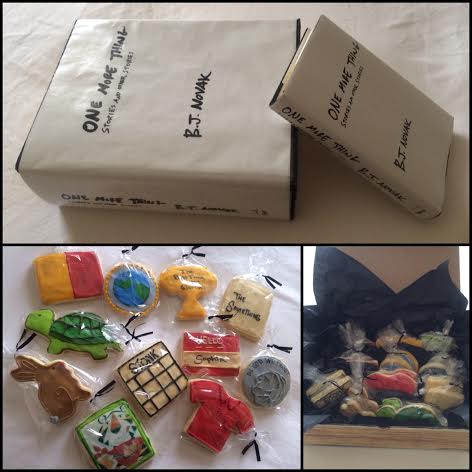
As an avid baker, the decision to make him cookies wasn’t a difficult one. After deciding to theme the cookies after stories from his book, I started planning. I spent hours at kitchen stores gathering supplies and ingredients; two days before I left, I started on the big project. With minutes to spare until I had to leave my home in Utah to catch my flight, I finished them. Wrapped securely in bubble wrap and placed in a box fashioned like the book jacket for One More Thing, I lugged them through the airport.
cookies

After a couple of stressful layovers, I was finally in Dallas! At the hotel, I met my friend Cherokee, who traveled from Oklahoma. We made our way to the Museum, even though it was early, Having traveled so far, we didn’t want to take the chance of getting “bad” seats. The entire day, my stomach was in knots, not only at the thought of being in the same room as someone I’ve long admired, but also about how my gift would be received. I remember relaying my story to a few individuals, Before I knew it, pictures were being sent to his publicist and the knots in my stomach got even tighter. When Cherokee and I were let inside the auditorium, we sat up front and center, not thinking it’d get any better.

After a few minutes, a woman with the Museum’s Arts & Letters Live series approached us and asked if we had the cookies. Assuming she wanted to see them, I pulled them out. She kept talking but all I remember were my eyes glazing over when she said, “He wants to invite you backstage.” Nervously, we followed her to a holding room, knocked on the door, and from around the corner came B. J. Novak.

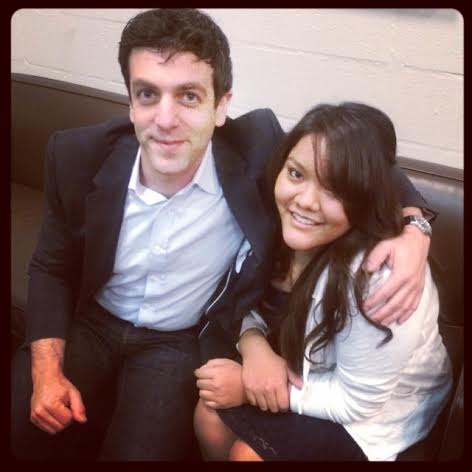
For the next twenty minutes, words like “blown away” and “impressive” escaped his mouth to describe my cookies. I was in awe. He had learned about my travels and went on to ask what I did for a living, why I chose Dallas, and where I learned to bake. B. J. and the other guests in the room were very gracious toward methis fan that I’m sure was coming across as a nervous mess. He indulged my requests for pictures and took many himself. We talked a bit more with him about his career and thanked him for taking time out for us, and then it was time for the event to begin.

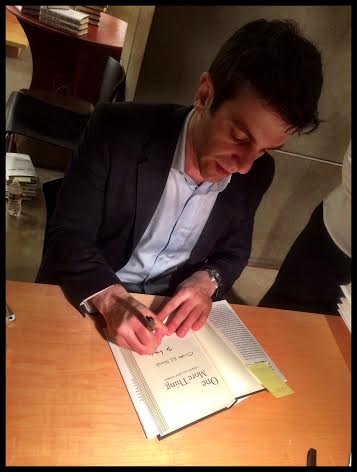
We took our seats and B.J. killed it onstage, doing readings and answering questions from the audience. Rounding off this perfect evening, he signed our books and I was sent floating home with a hug and thanks for “making his day.”

At most I wanted him to think the cookies were fun. NEVER did I think they would receive this type of reception. B. J. Novak has inspired a lot of happy memories for me; the projects he’s contributed to have influenced relationships and formed bonds. Most recently, his book has been a light during a difficult time in my life. To borrow his words, I continue to be “blown away” by what happened. I chose Dallas because it was closest, but I see now that I wouldn’t have had this experience if it weren’t for the unbelievably kind staff at the DMA. My sincerest thanks to all involvedit meant more than I could ever put into words.
2
Click here to discover where our title inspiration came from.

Jen Jake is a manager at a group home for adults with mental disabilities in Utah and an avid B. J. Novak fan.


Archives

Categories