Archive Page 25


Friday Photos: C3 Summer Interns

The Center for Creative Connections (C3) staff was fortunate to receive help from two high school students this summer.  Sophie Anthony, a rising senior at Booker T. Washington High School for the Performing and Visual Arts, spent eight weeks working with us through the Mayor’s Intern Fellows Program.  Chloe Barreau will be a junior at the Chinese International School in Hong Kong.  She worked with C3 during a month-long visit with family.  Below are some of their experiences from this summer.
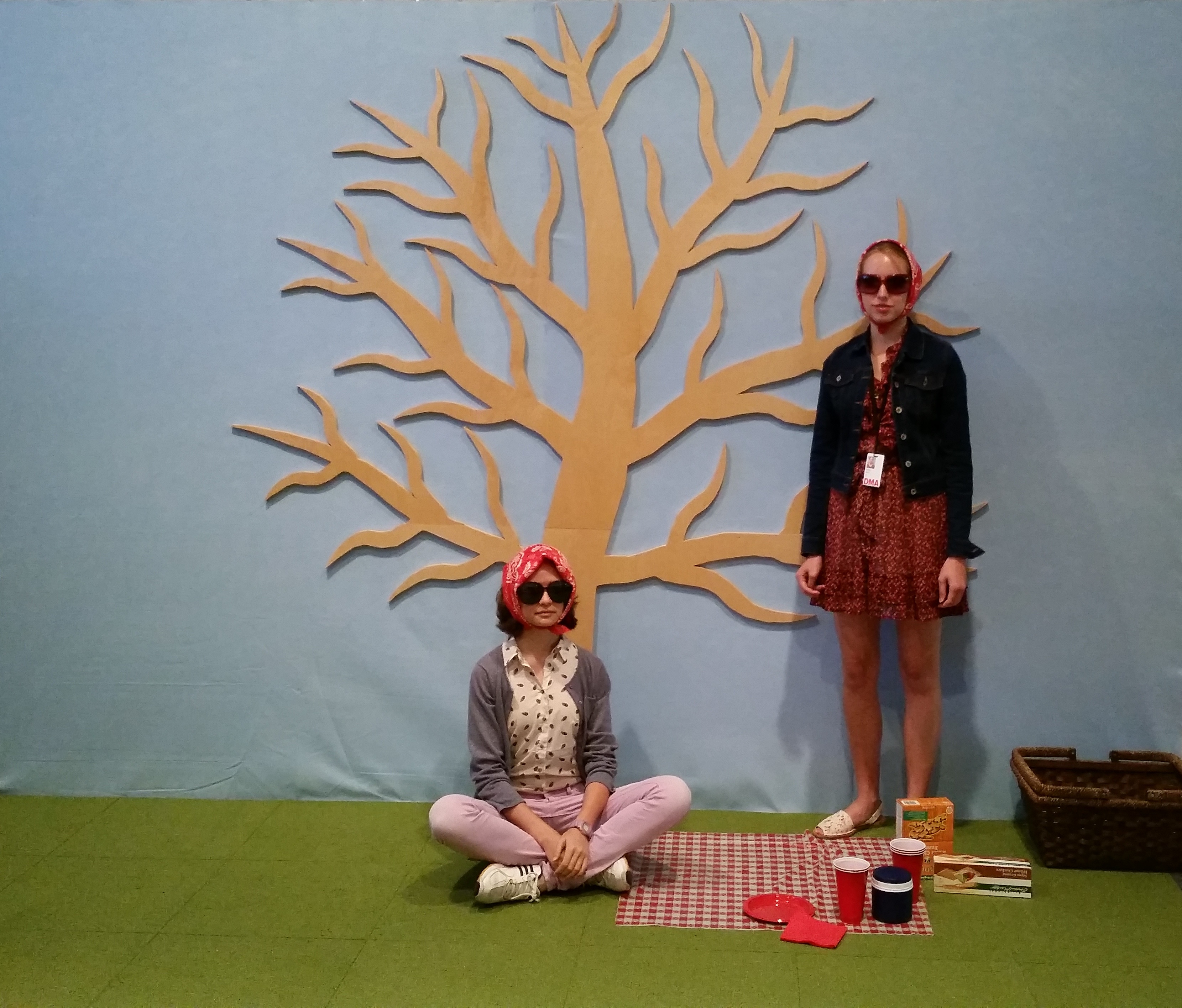
A good sense of humor is a requirement for interning with C3

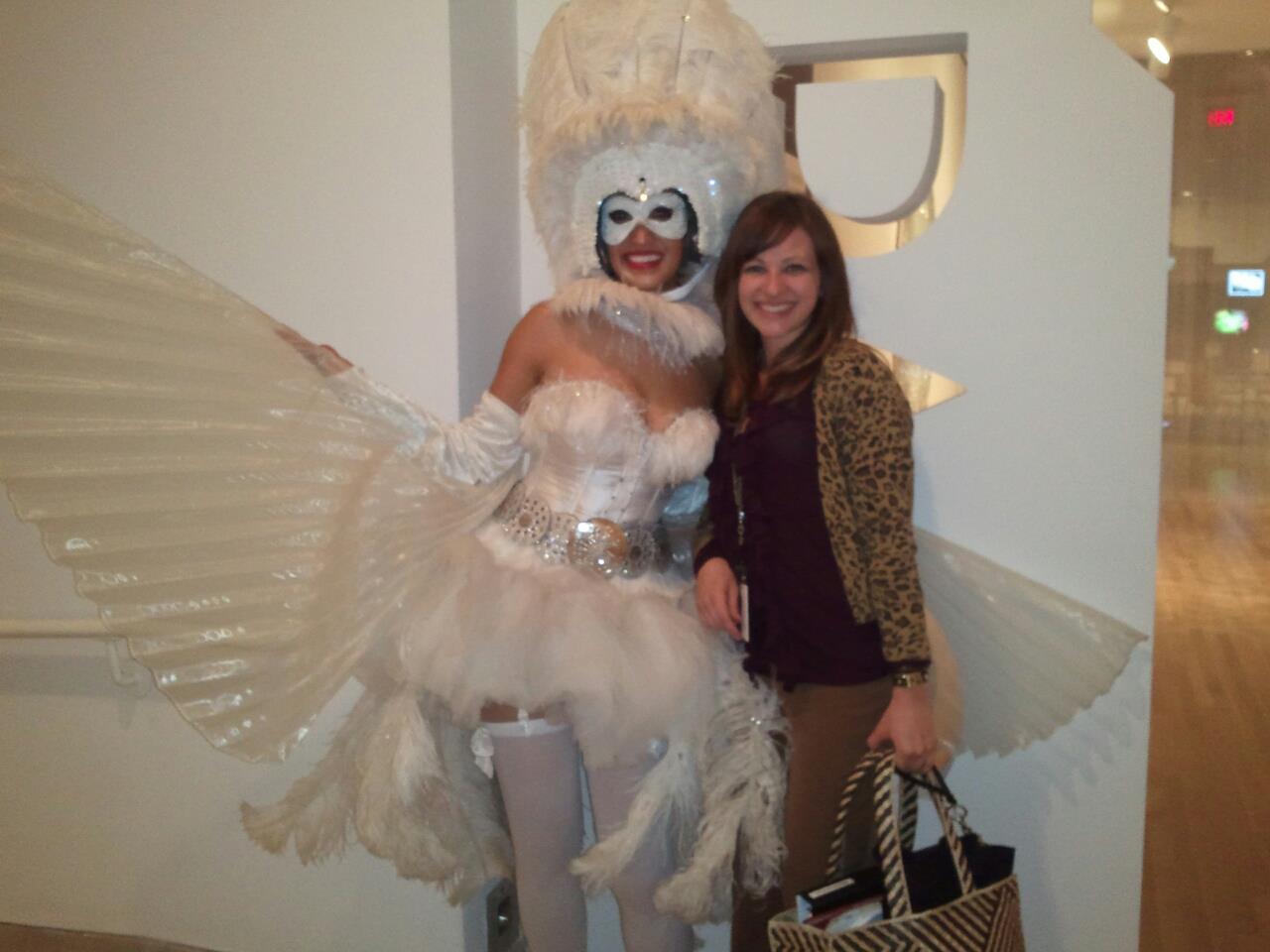
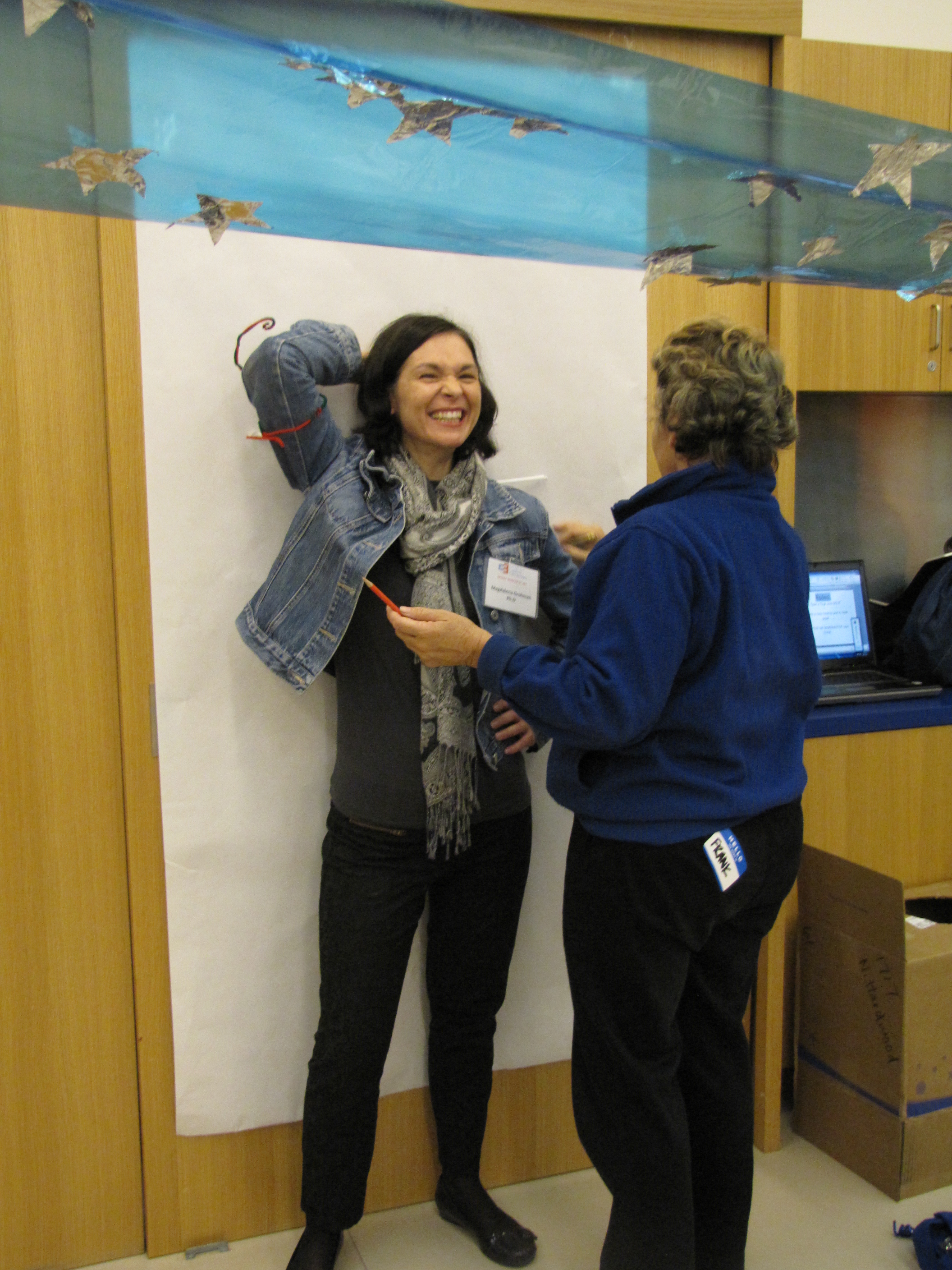
Sophie and Chloe served as the first models for a photo backdrop that connects to Nic Nicosia’s photograph titled Vacation, currently on view in C3

Sophie:

Wow.  I did not realize how fast eight weeks would fly by. My internship at the DMA has been amazing — art-filled and action-packed.  Through the Mayor’s Intern Fellows Program, I got a behind-the-scenes peek into the day-to-day running of the biggest (and still expanding) art museum in town.  What a thrill!  As a high school art student, it was exciting just to be in the same building as some of the beautiful and breathtaking masterpieces housed in the Museum, not to mention the opportunity to enhance visitors’ experience with these works.  Working with visitors in C3  and behind the scenes gave me the chance to assist and interact with regular art patrons and newcomers alike, as well as see firsthand the DMA’s commitment to art education and visitor participation.

A lot of my time spent as a C3 intern was, of course, spent in C3!  C3 is a hotspot for most Museum visitors — nearly everyone who enters is excited by the relaxed and hands-on atmosphere, and leaves with their own Art Spot creation.  An extension of the C3 atmosphere is the Pop-up Art Spot, a cart filled with activities that moves through the galleries on a weekly basis.  It allows museum-goers a chance to participate with works of art more closely and see things they might not have noticed before.  Both C3 and the Pop-up Art Spot were a lot of fun because I was able to chat with visitors and learn their thoughts and perceptions on art pieces and the DMA.  I met people who had been going to the DMA for the past twenty years and people who had never visited an art museum before.  But it wasn’t all conversations — there are always plenty of supplies to be prepped!

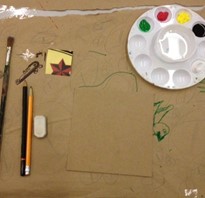
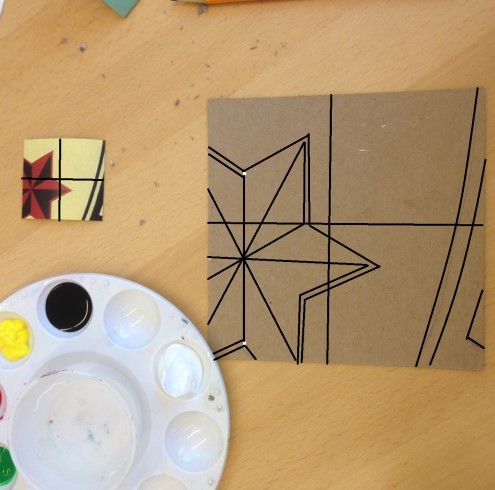
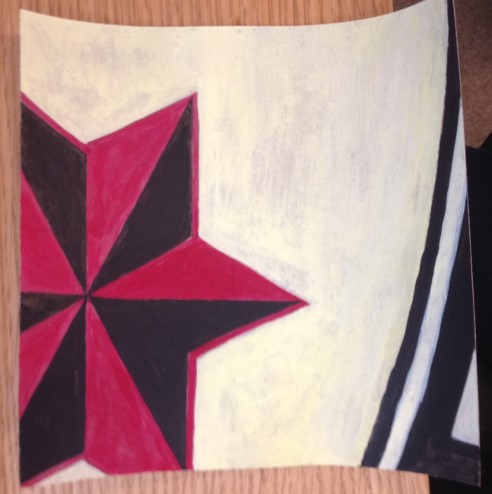
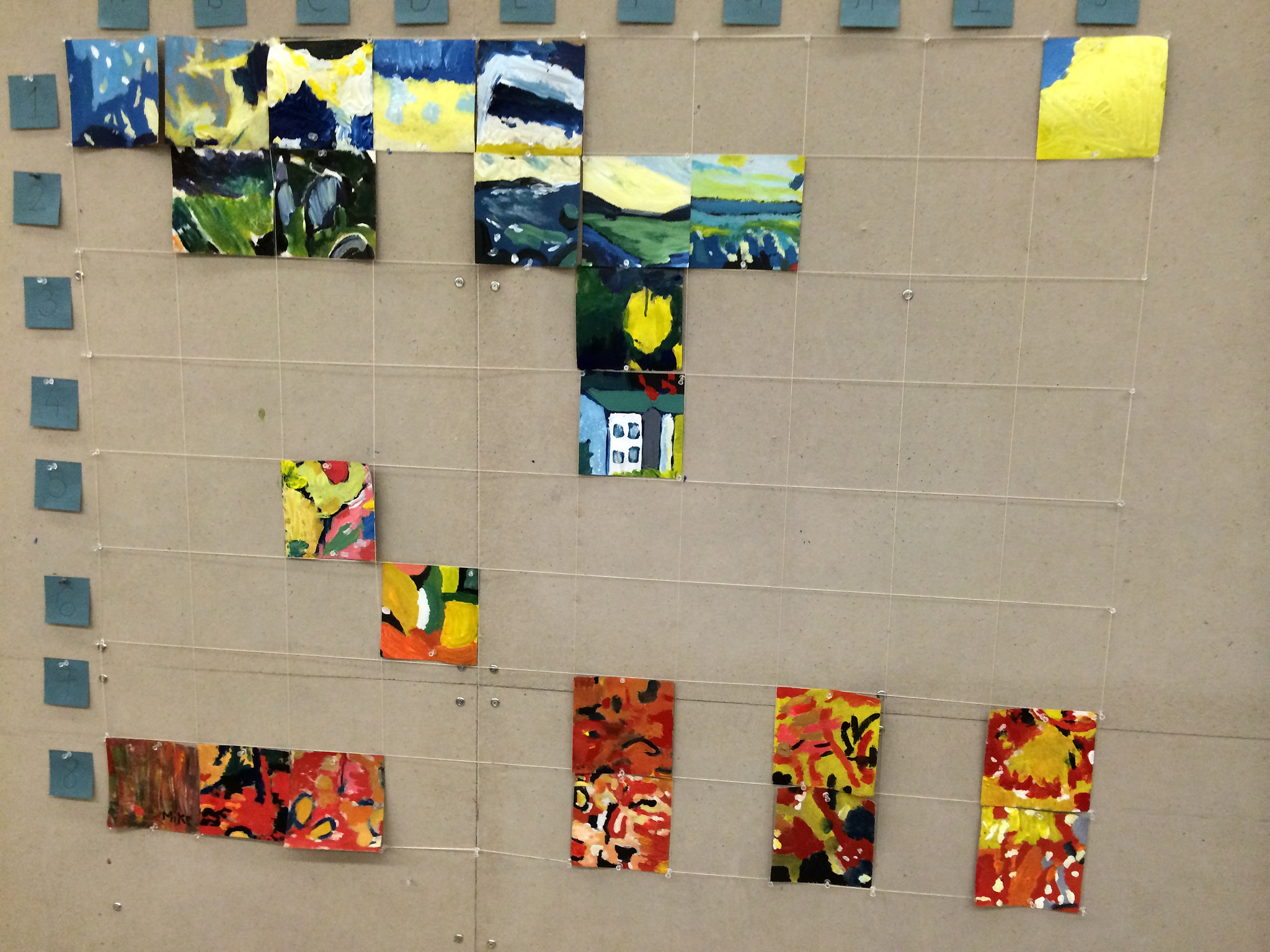
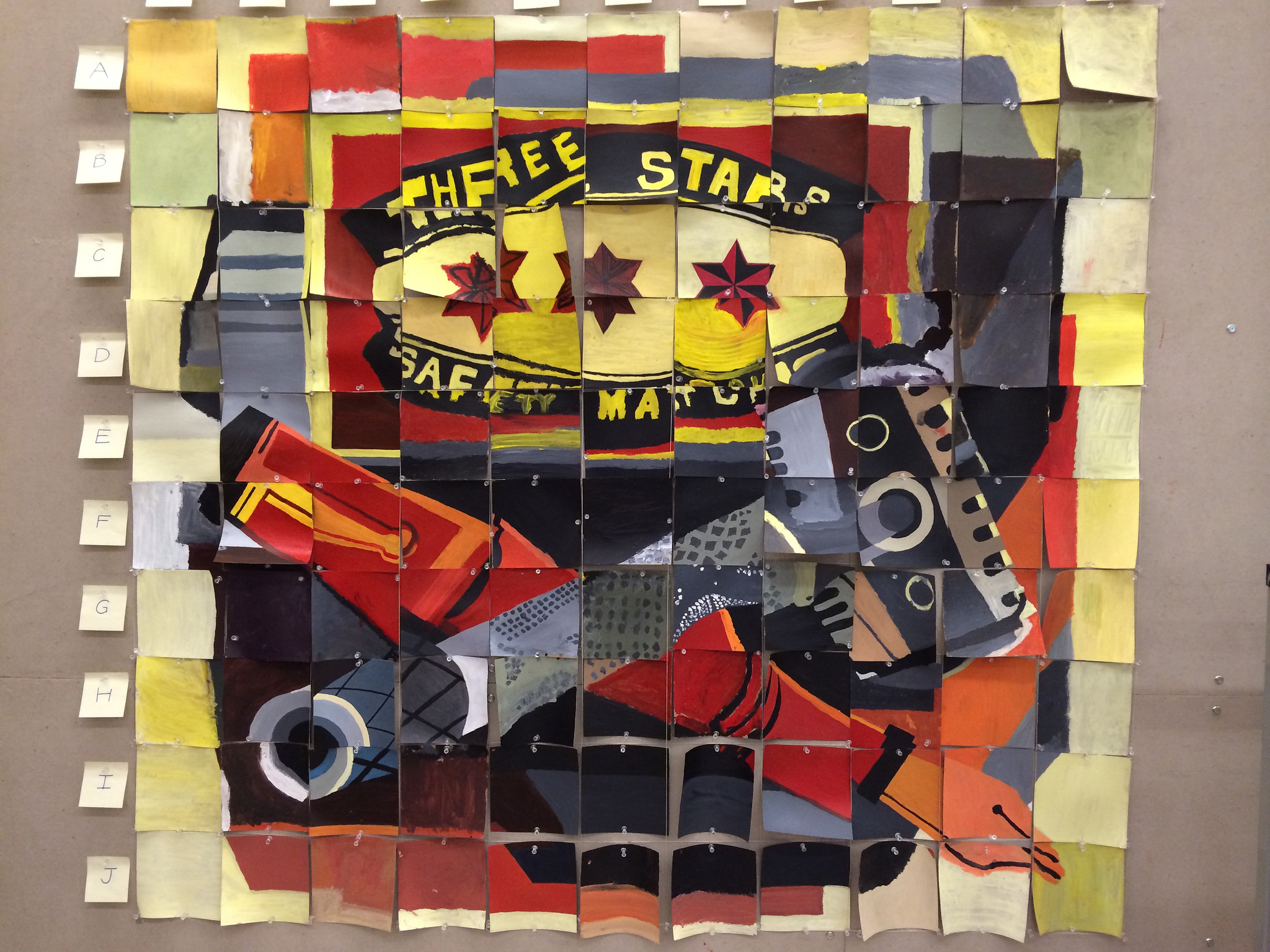
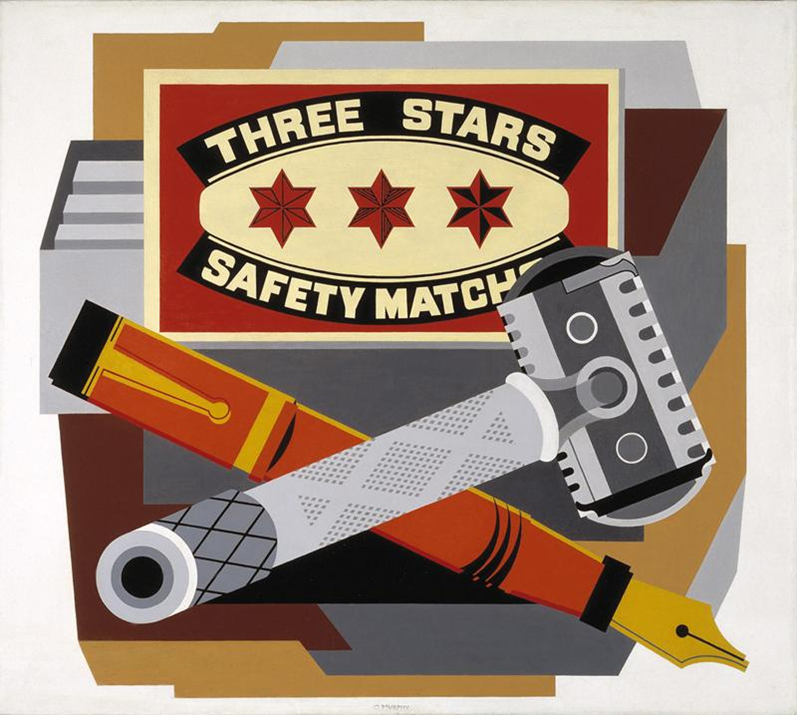
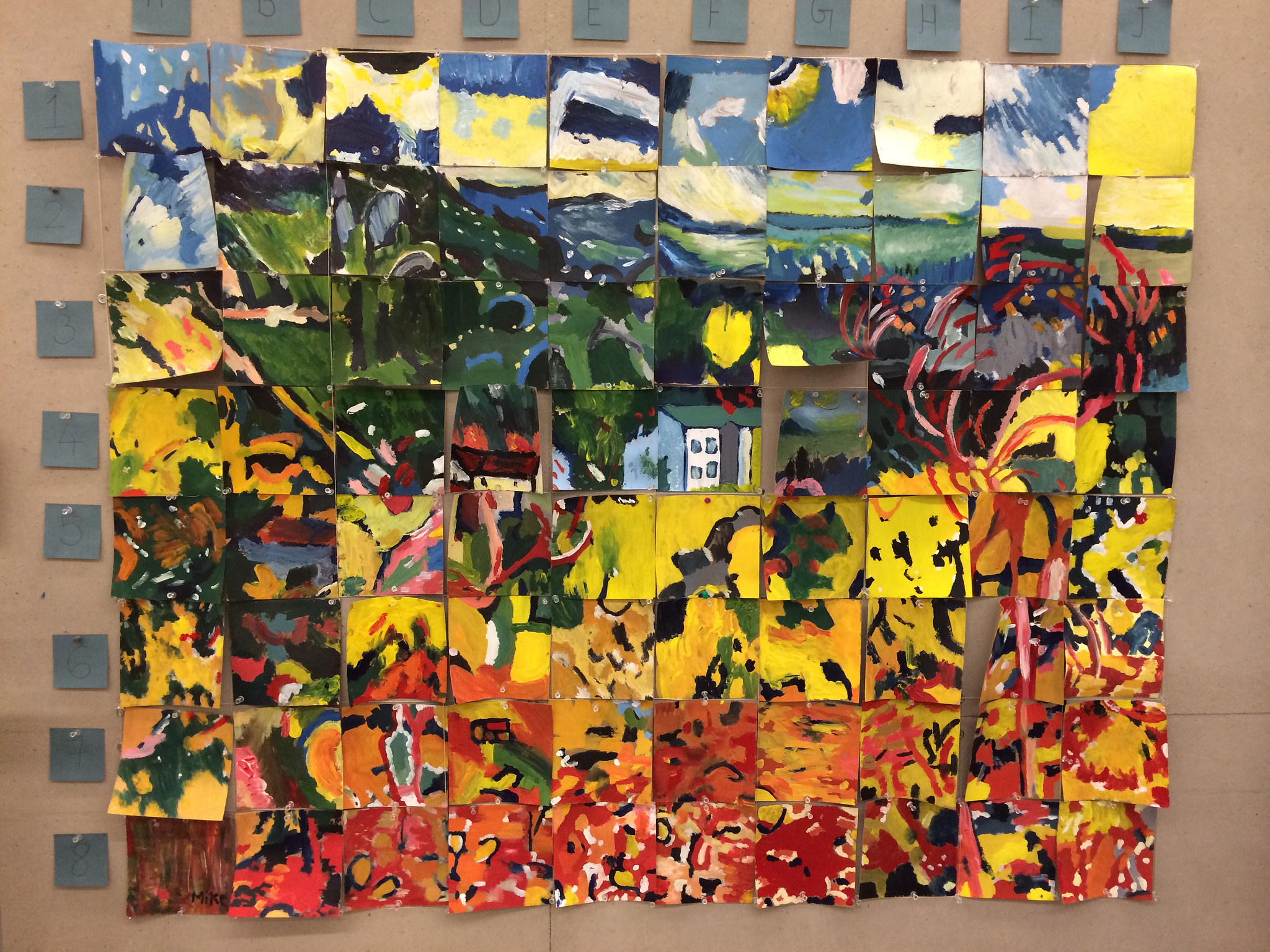
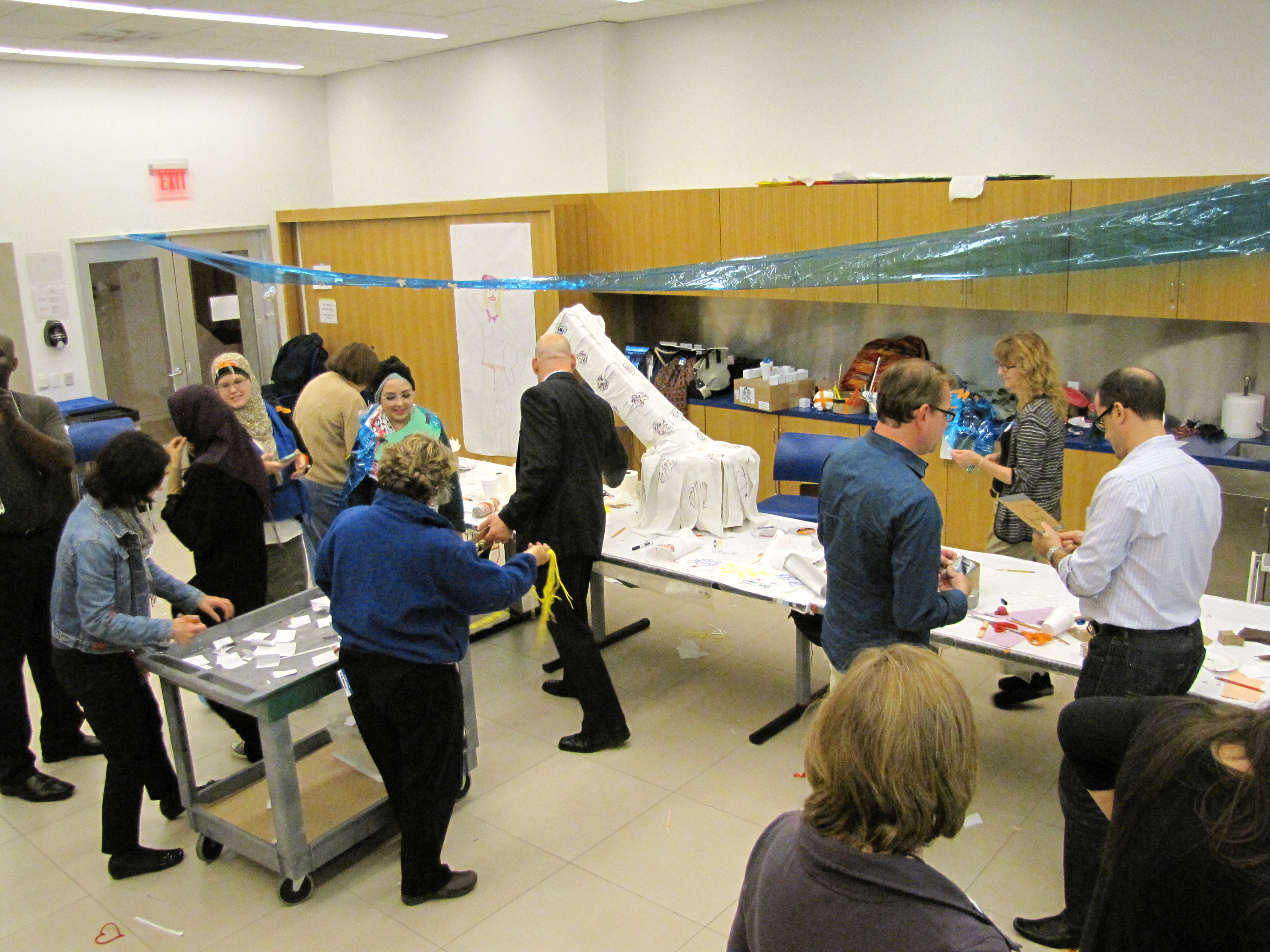
One of my favorite projects was the July Late Night Creations activity, the “Curious Case of the Mystery Painting.”  Chloe and I made and designed the materials for the activity and wrote (not to mention re-wrote) the instructions for this mystery-themed collaborative art project.  We chose the two “mystery” paintings that would be recreated and then, after much multiplication, we gridded out the artworks into two-inch squares, which would be “clues” that participants would recreate on bigger pieces of cardboard.  Slowly, piece of cardboard by piece of cardboard, the paintings would be revealed.  The hardest part of creating this project was writing the instructions.  Chloe and I quickly learned the value of one word instead of two, realizing that the shorter and more concise, the better.  We wrote and rewrote numerous drafts until we eliminated all extraneous details and arrived at the instructions used during Late Night Creations.  When I came to work the next day and saw the final masterpieces, I was astounded.  The visitors did an amazing job in recreating the mystery paintings!  Below are the activity instructions; scroll down to see the activity in progress and completed.

All too quickly these past eight weeks have sped by.  I can’t believe how much I’ve learned, how much I’ve seen, how much I’ve done here at the DMA.  My experiences have been widely varied—I now know both how to write a set of instructions for a community art project and the most efficient way of cutting cardboard for the Art Spot.  I helped individuals with Alzheimer’s discuss pieces of art in Meaningful Moments and went behind the scenes to see exhibits go up and come down.  I became an old pro at screenprinting T-shirts through assisting with the Design Studio summer art camp and listened as teens made soundscapes based on The Museum is History exhibition during a UA Maker Club workshop.  I am so appreciative and thankful for my internship—the DMA, specifically C3, gave me a wide and varied experience in a field of work I would love to pursue.  I learned so much this summer and I’m looking forward to volunteering in C3 soon!

Chloe:

My internship experience at the DMA this summer has taught me so much about different ways in which we can enhance our appreciation of art.

I first spent two weeks assisting the New World Kids 2 summer art camp.  The classes encouraged children to create art books and stop-motion clips as well as develop back stories behind why their characters lived where they lived and the motivations behind what their characters were doing.  It was exciting for me to see how the program inspired children to construct elaborate plots and plan out each scene as if they were budding directors or playwrights.  I believe that walking children through the process of creating a story is an effective way to introduce them to the appreciation of art.  In thinking about how they would design film sets, direct the acting, and develop the characters and sub-plots, children open their minds to a wider breadth in their interpretation of art.

All great artworks have a background story, a history to the subject matter, and a thought process behind the composition. This was illustrated in the European gallery, where I had the chance to admire the art alongside our visitors, thanks to the new Pop-up Art Spot. There, visitors have fun dressing up in costumes, making gesture drawings and writing dialogues for characters using magnetic words. Each painting presents a narrative, and the visitors participate in this narrative by coordinating their facial expressions, clothing, body pose, and setting with the artwork’s composition. At this Pop-up Art Spot, I saw how these activities enlivened the experience of visitors viewing the art pieces and inspired them to imagine the story behind the art.  I see that art is not only to be admired, but to be experienced in full immersion.  We are not only audiences, but participants.

Speaking of participation in art – at July’s Late Night, Sophie and I were excited to see visitors’ reception to the “Curious Case of the Mysterious Painting” activity we worked on together.  We were thrilled that people enthusiastically lined up for their turn to contribute a clue by taking a section of an artwork poster and enlarging it on a piece of cardboard using paint. The next day I saw the mystery artworks that were recreated with the public’s contribution – the mosaics of the pieces came to life, with a beauty that can only come from a community of “artists” collaborating together for a night!
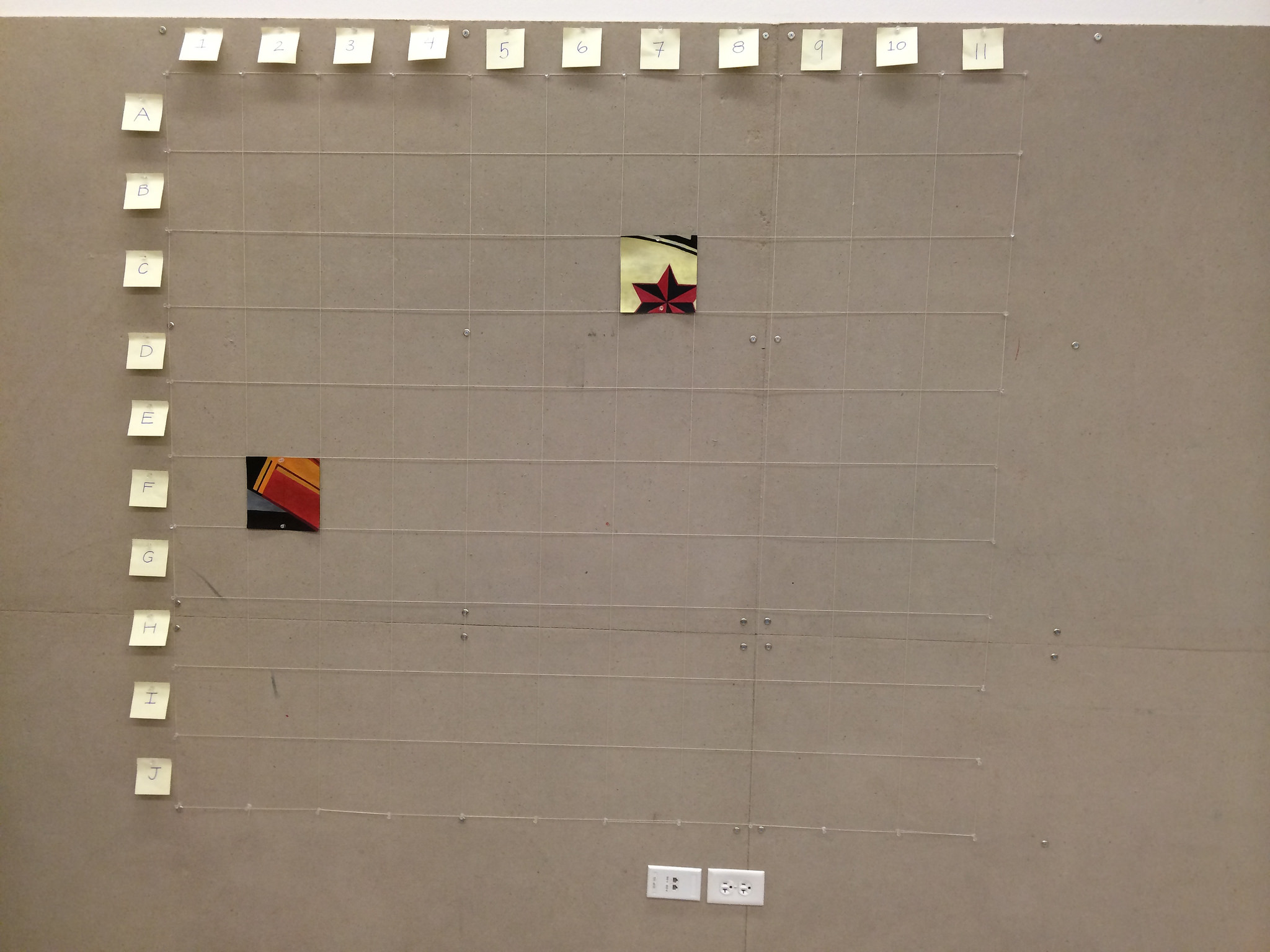
Razor LNC grid

The grid for one painting with a few squares to get it started
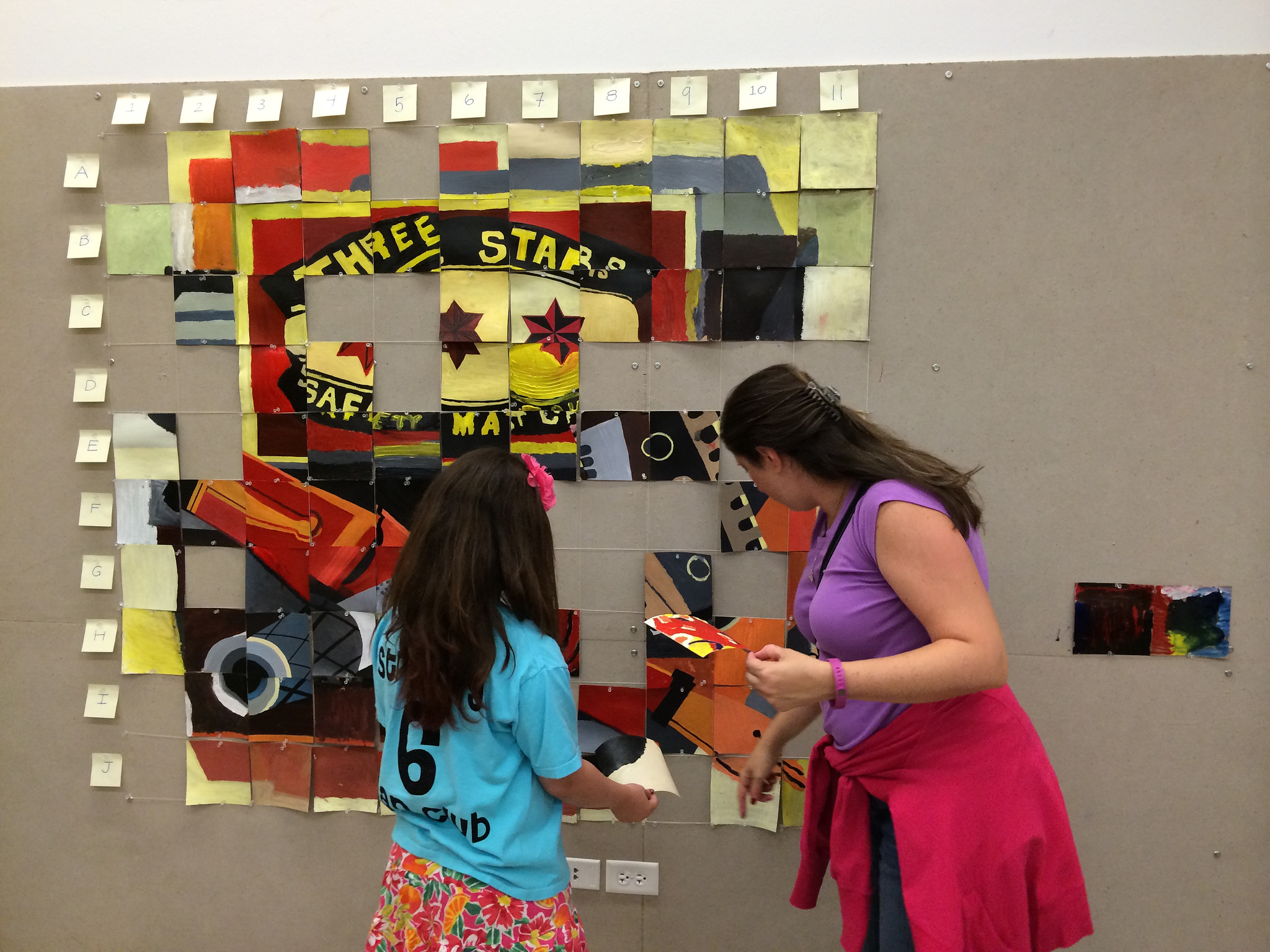
Visitors LNC

Visitors add to the grid


Bougival LNC in progress

The other painting grid, in progress


I have discovered that telling a story is core to the purpose of art. An artwork is a mode of communication across time, even across dynasties and cultures, and artists create an extension of themselves and share with us a part of their being.

I am really grateful for the opportunity this summer to intern at C3! The department was very welcoming, and the staff took care to educate us while giving us leeway to express ourselves and take initiative.  I loved meeting diverse people, from the speakers to the audience and members of the museum – everyday was a pleasure, and I have fond memories of my interactions and experience to bring home with me back to Hong Kong!

Thank you, Sophie and Chloe, for your very hard work this summer!  We will miss seeing your smiling faces every day.

 C3 Staff
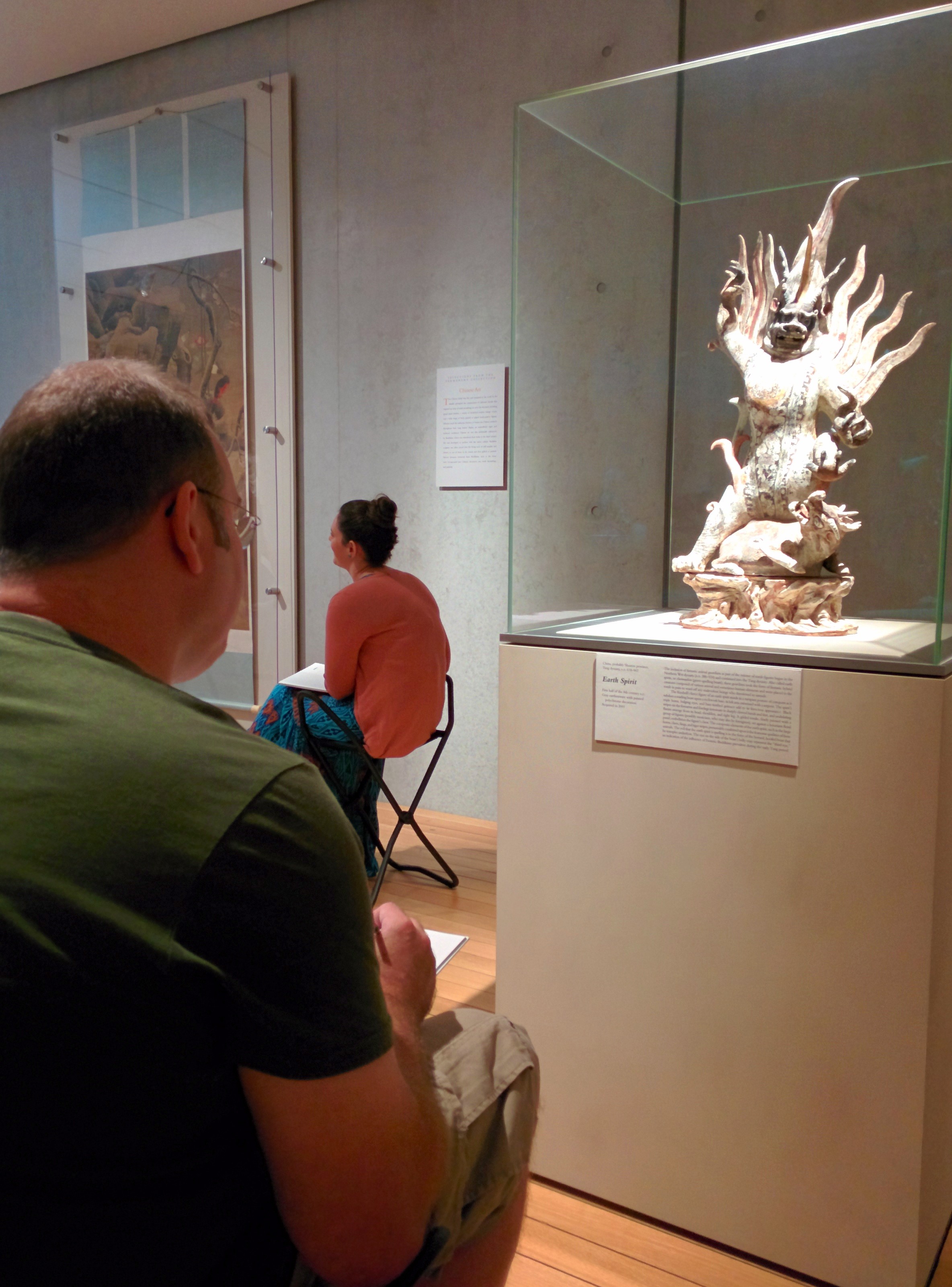
 

Friday Photos: Museum Forum For Teachers

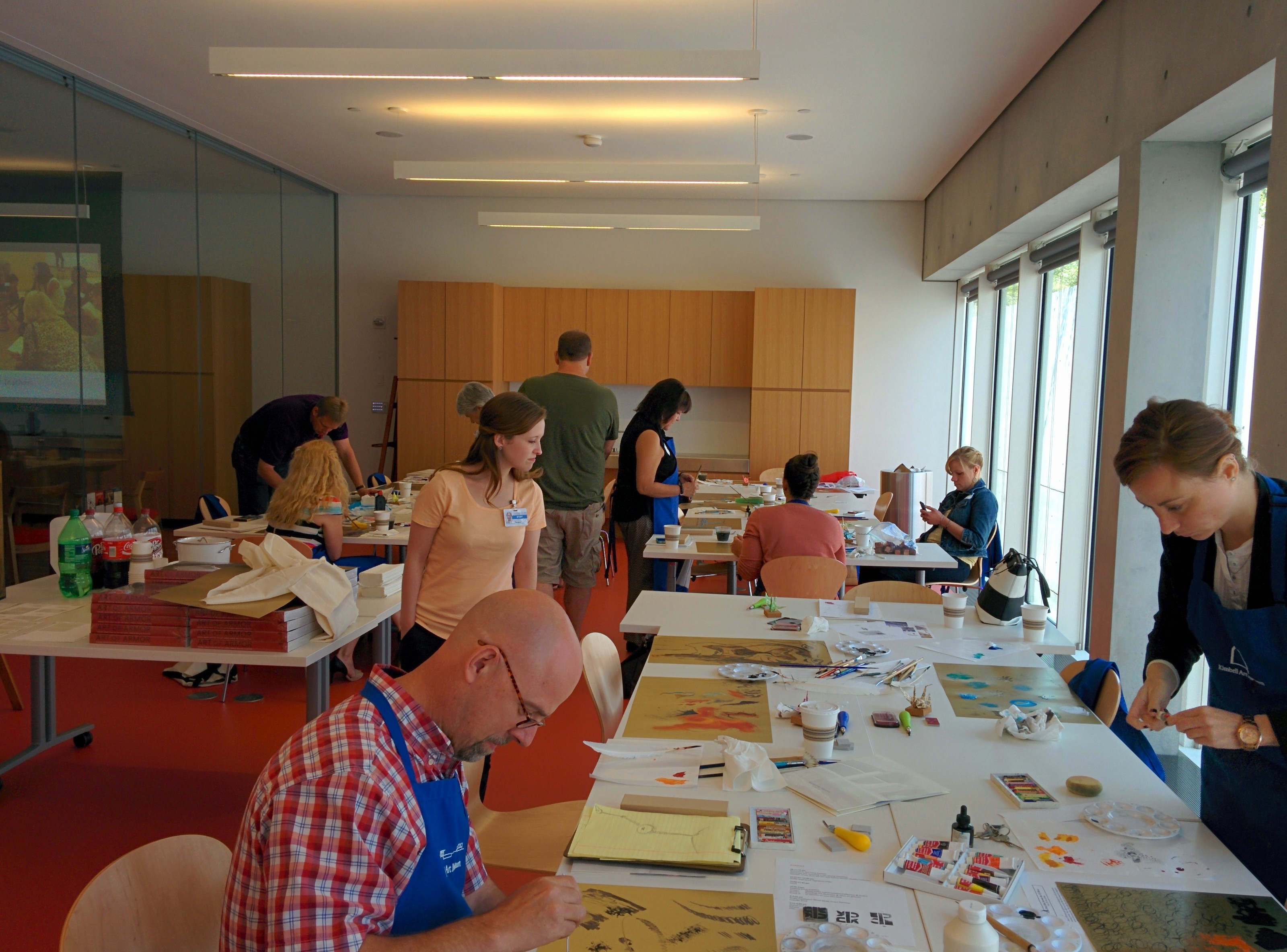
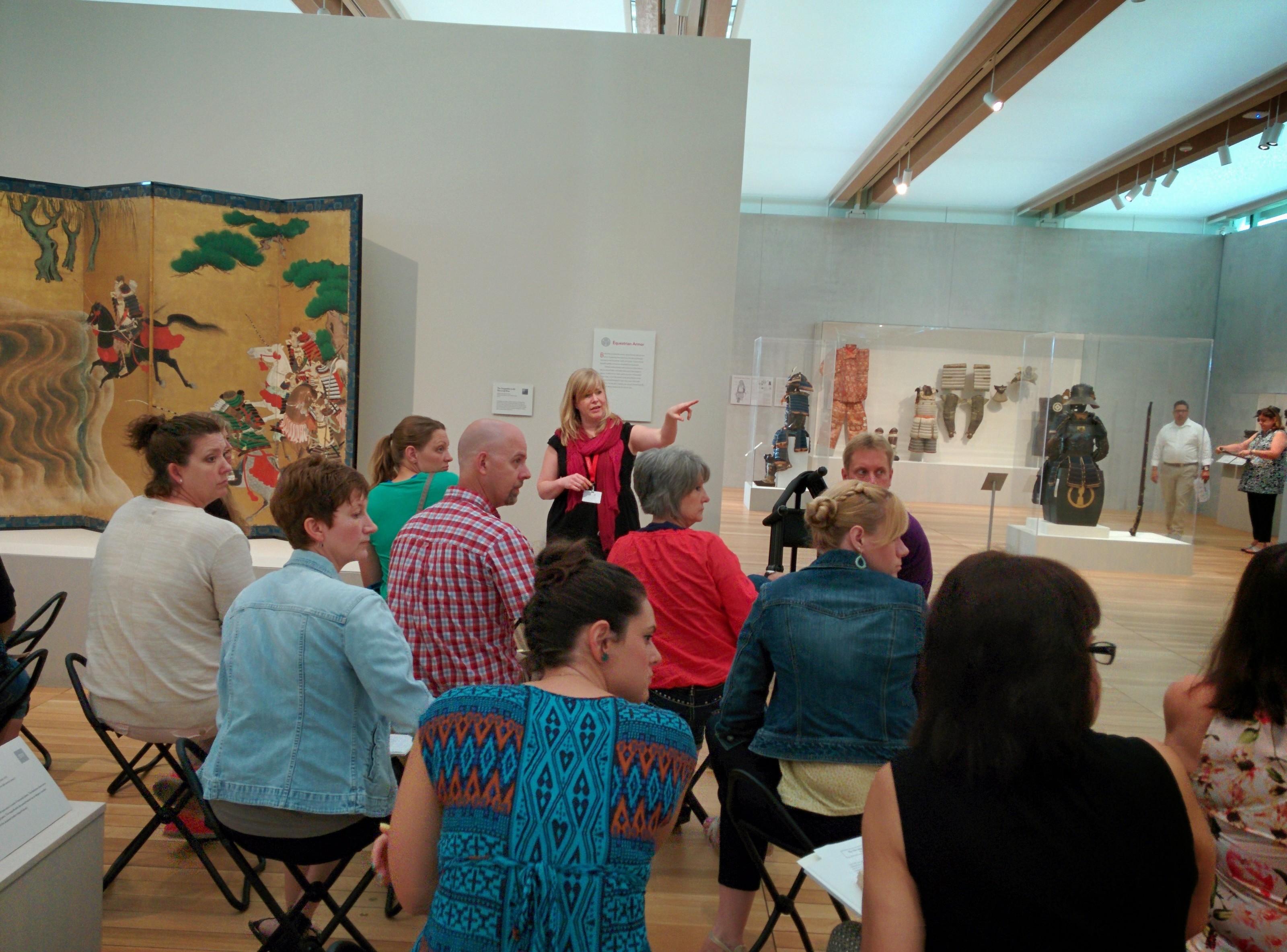
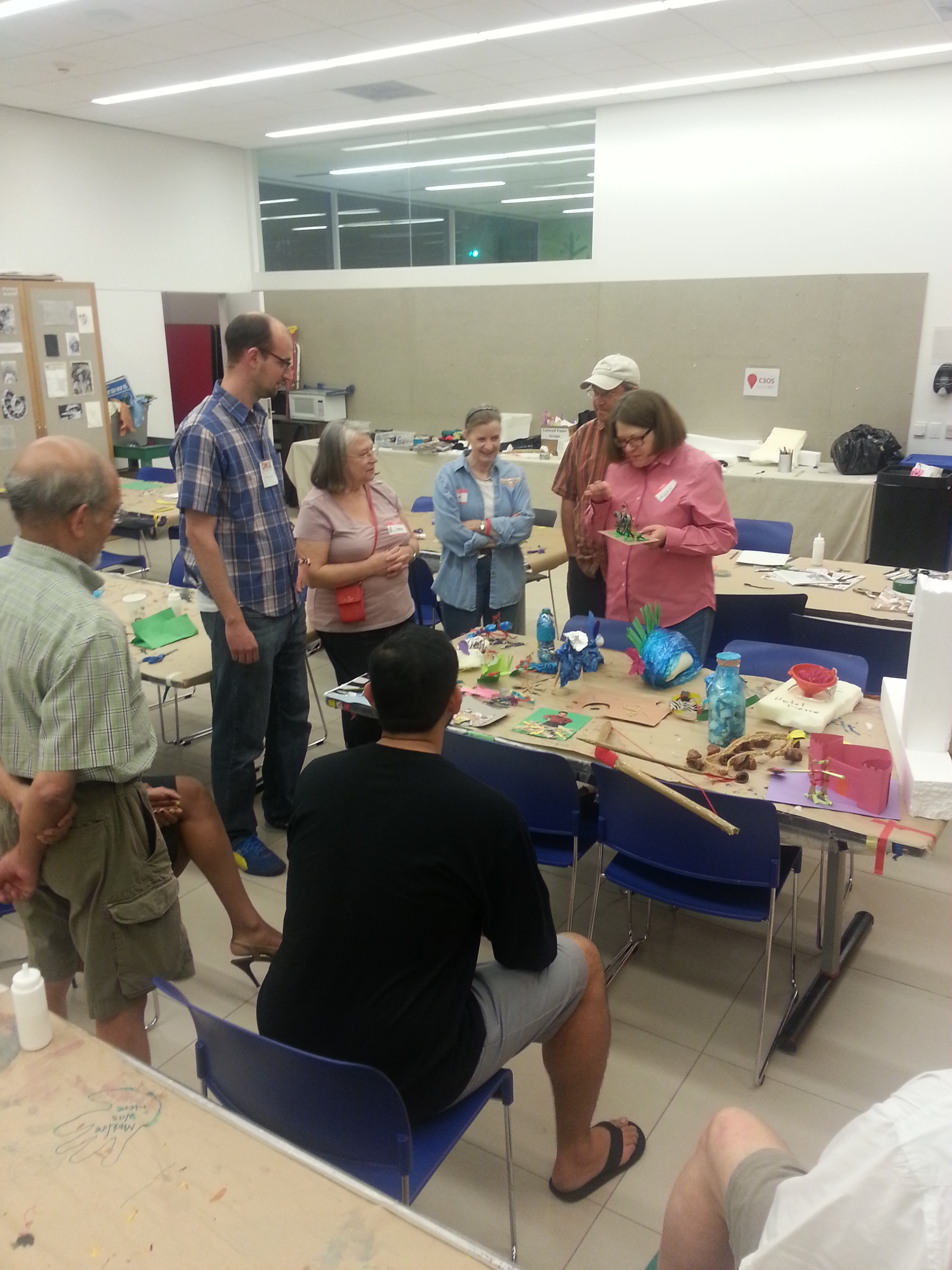
Last week, I had tIMG_20140725_130701he pleasure of spending my time with teachers and colleagues as part of the annual Museum Forum for Teachers.  This week-long teacher workshop focusing on modern and contemporary art is a collaboration between multiple DFW museums, including The Warehouse, the Nasher Sculpture Center, the Modern Art Museum of Fort Worth, the Kimbell Art Museum, and the Dallas Museum of Art.
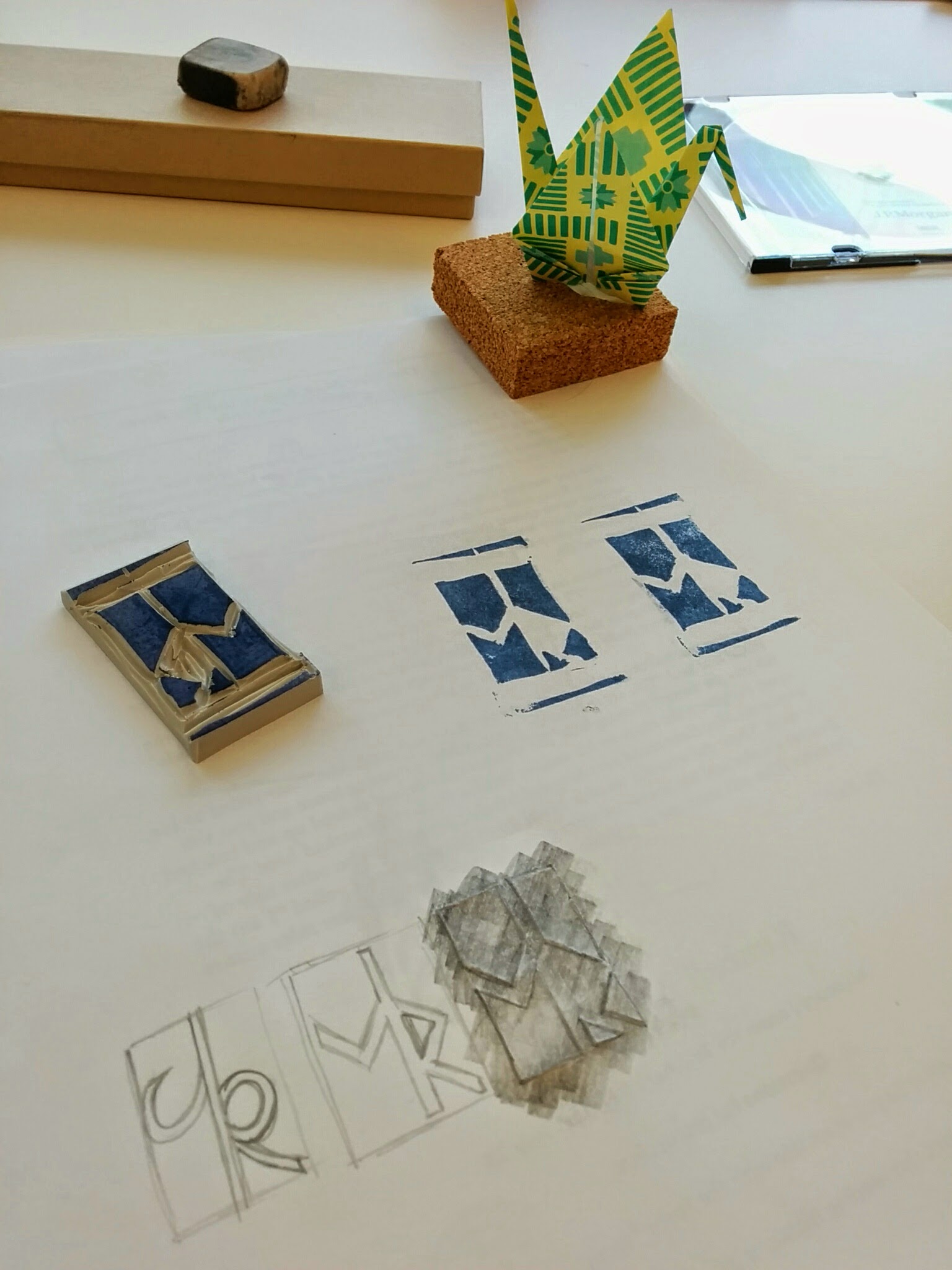
During the week, each location hosts a group of twenty-five instructors for one day of discussions and projects for CPE credits.   It was a fun, thought-provoking, and intense experience!  Everyone made two dimensional works of art using only cloth, plastic, paper, stitch witchery, and heated irons at the Warehouse.  Teachers toured an installation project in the Vickery Meadows neighborhood with the Nasher Artist-In-Residence, Rick Lowe.  At the DMA we explored artist-induced meaning through blurring images in the style of Gerhard Richter, and examined institution-created meaning by becoming curators.  In Fort Worth, we created grid-like Minimalist art at The Modern, and painted Japanese screens at the Kimbell.

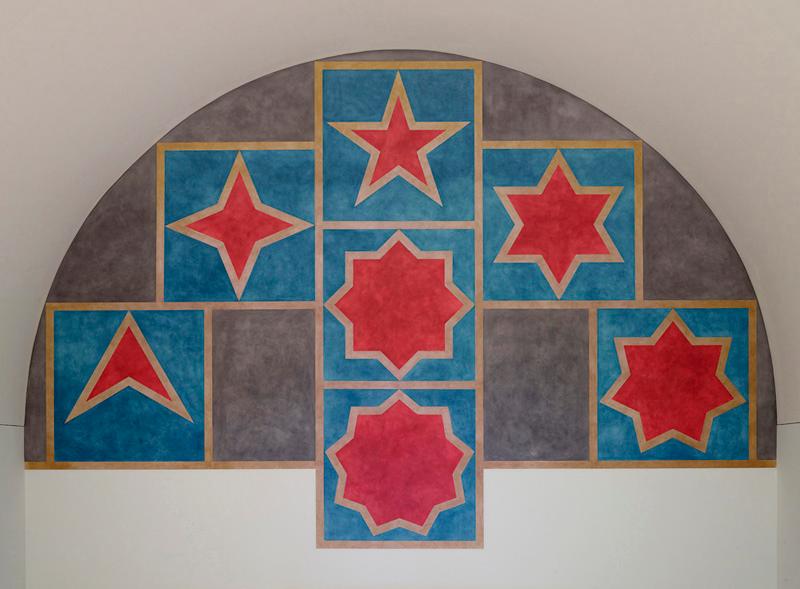
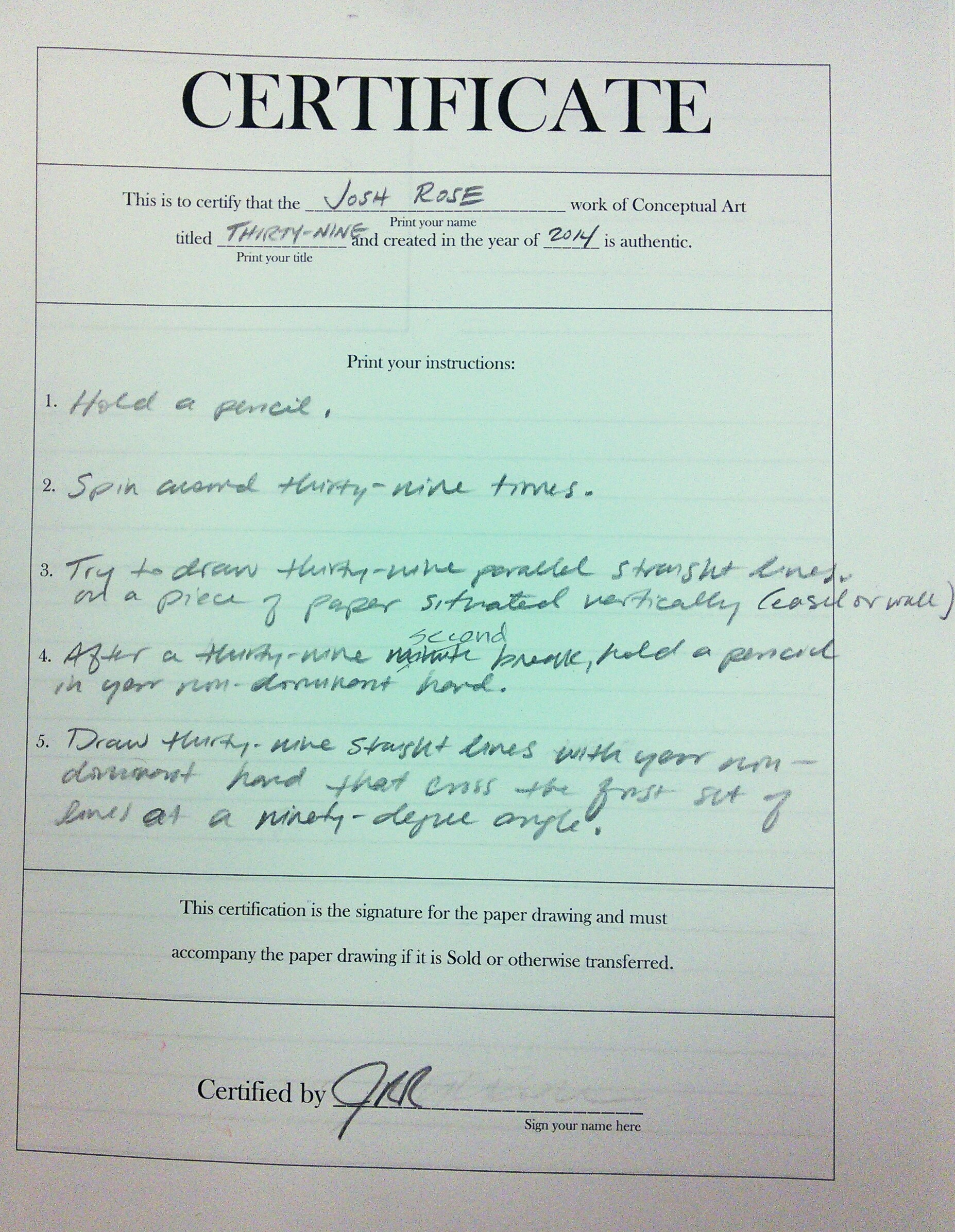
The results of one activity were quite interesting: during our day at the Modern we examined Sol LeWitt’s Wall Drawing #50, in which the artist created a drawing and set of instructions for any installers to finish the work at a different location.  In this work of conceptual art, the instructions themselves are the work of art; the installation of it is simply an extension and realization of this idea.  (While visually very different from the Modern’s, LeWitt’s process here is similar to the one he used in the DMA’s Wall Drawing #398, installed in the barrel vault.)

Sol Lewitt_Wall Drawing 398_1983_1985_3

Sol LeWitt, Wall Drawing #398, 1983 (installed 1985), Dallas Museum of Art, gift of The 500, Inc., Mr. and Mrs. Michael J. Collins and Mr. and Mrs. James L. Stephenson, Jr.

We were inspired to create our own work of conceptual paper drawing by creating a set of instructions resembling an “official” certificate designating the instructions as the work of art.  Then we handed our instructions to another participant who had to become the “installer” and draw our image based on the instructions.

IMG_20140731_085544~2For my instructions, I decided to play around with LeWitt’s geometric rigidness by applying it to a negation of bodily control and precise mark-making:

1. Hold a pencil.

2. Spin around thirty-nine times.

3. Try to draw thirty-nine straight parallel lines on a sheet of paper situated vertically (on a wall or easel).

4. After a thirty-nine second break, hold a pencil in your non-dominant hand.

5. Draw thirty-nine straight lines with your non-dominant hand that cross the first set of lines at a ninety-degree angle.

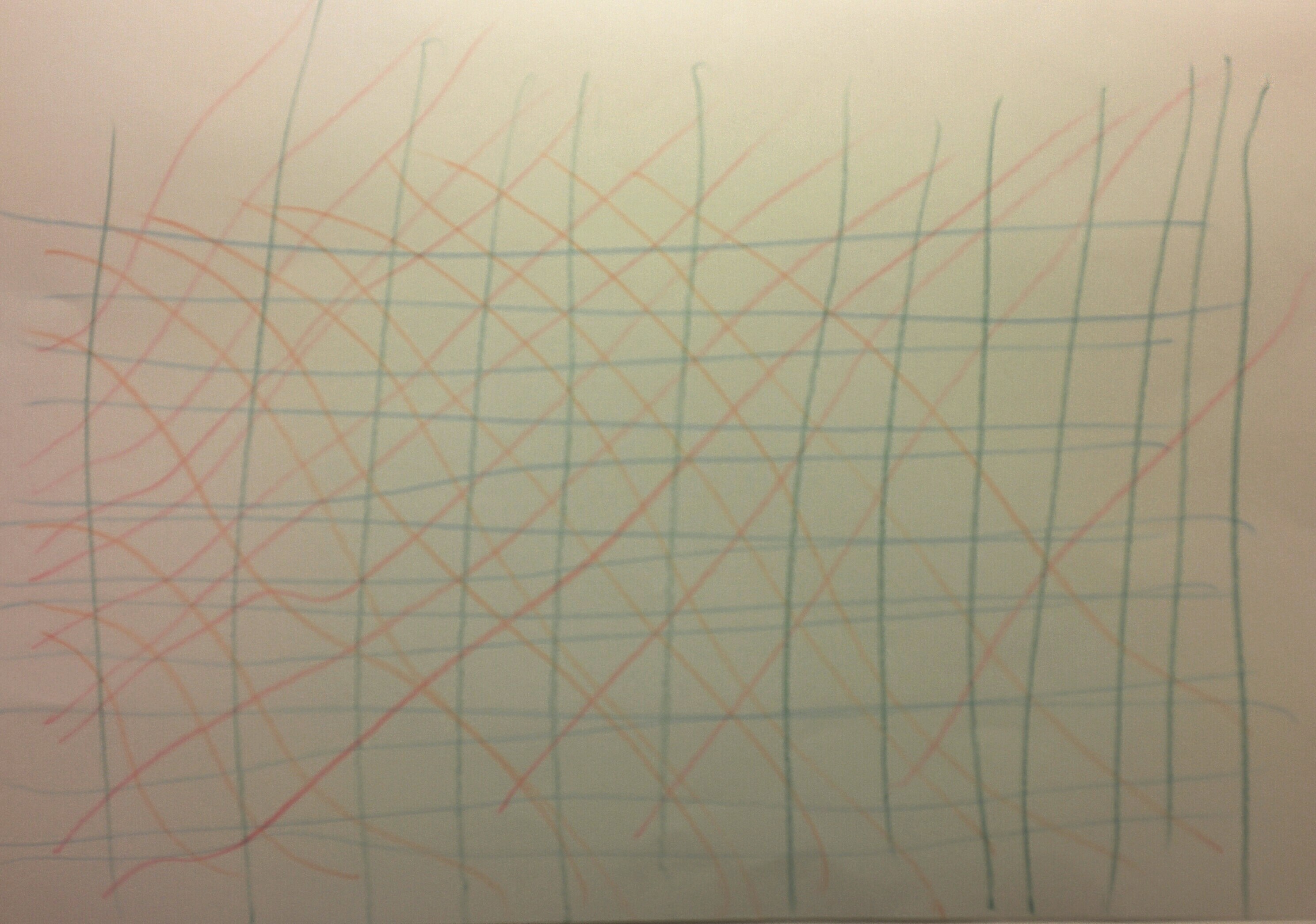
IMG_20140730_160528~2~2Susan, one of the workshop participants, did an amazing job interpreting these instructions.  This was the third of a set of drawings she did based on my instructions, all very different in appearance!  (Although she correctly pointed out that thirty-nine lines were perhaps too many.)


If you are interested in applying for next year’s Museum Forum for Teachers, sign up for our educator email newsletter, where we will post information next spring once it has been announced!

Artwork shown:

  • Sol LeWitt, Wall Drawing #398, 1983 (installed 1985), Dallas Museum of Art, gift of The 500, Inc., Mr. and Mrs. Michael J. Collins and Mr. and Mrs. James L. Stephenson, Jr.

Late Night Technology Test Run


photo7

The chance to intern at the Dallas Museum of Art this summer has been incredible, and the work done in the Center for Creative Connections creates the perfect opportunity to apply my specific research interests. I’ve been studying what’s typically called “cultural capital” for several years now, and it refers to individuals’ accumulation of literacies, skills, and privileges that result from economic status, education levels, or race. This concept is thought to permeate all aspects of society, particularly in institutions as established as the museum, and holds implications for the equitable treatment of visitors and the validation of their experiences. A guiding question for my own work is: How can all visitors overcome the expectations created by cultural capital and bring their own experiences to the interpretation of works at the museum?

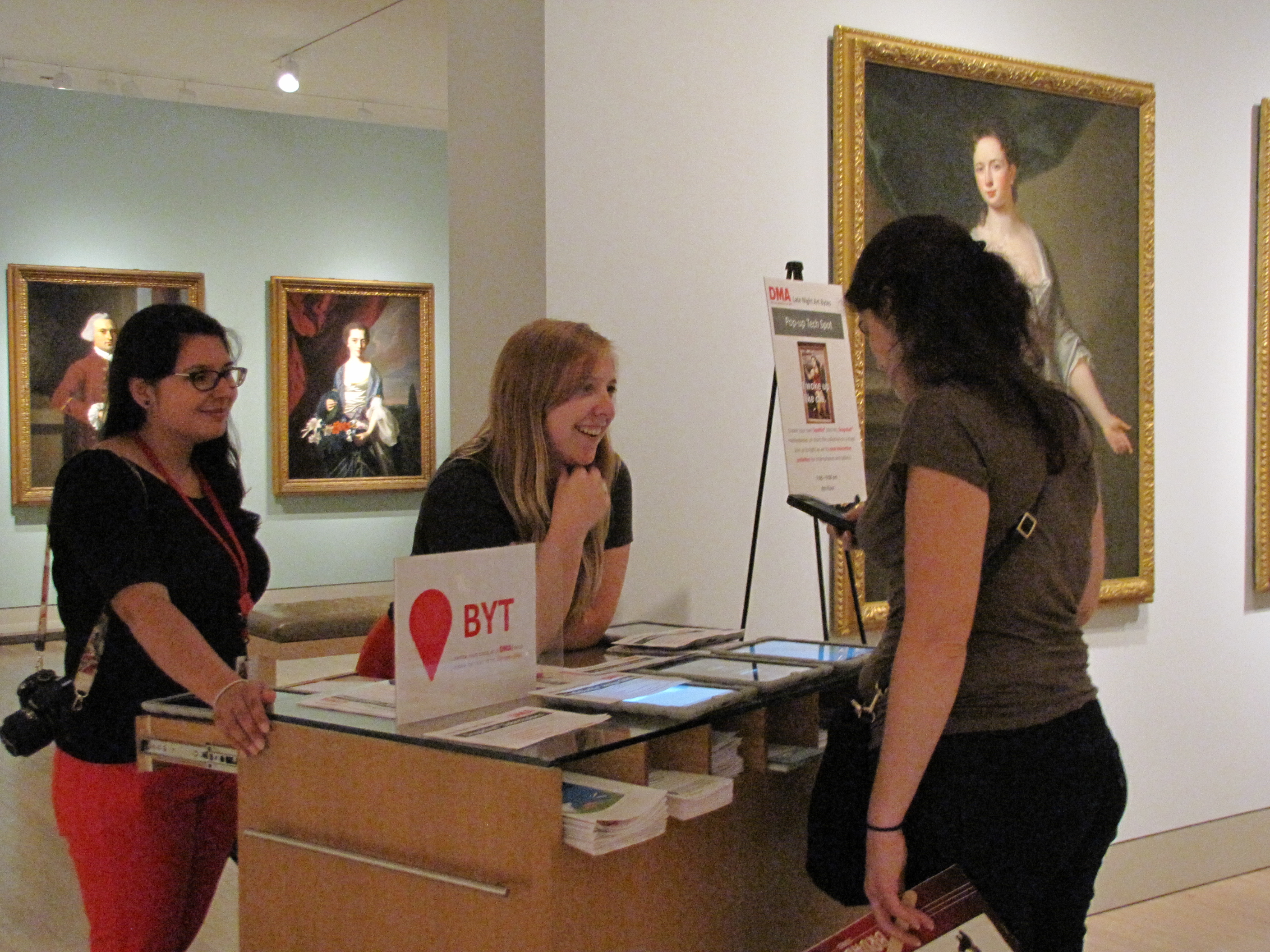
In recent years, many websites and software applications (apps) have been created to allow for unhindered cultural production by users from all walks of life. Often these programs also allow for social media interactions, creating unique communities bound by technology. If this user-friendly type of creativity could be adapted to gallery activities, it may spark the interest of underserved visitors. As part of my summer project, we held a trial run of these activities as part of a “Pop-Up Tech Spot” for 2 hours during July’s recent Late Night Art Bytes program.


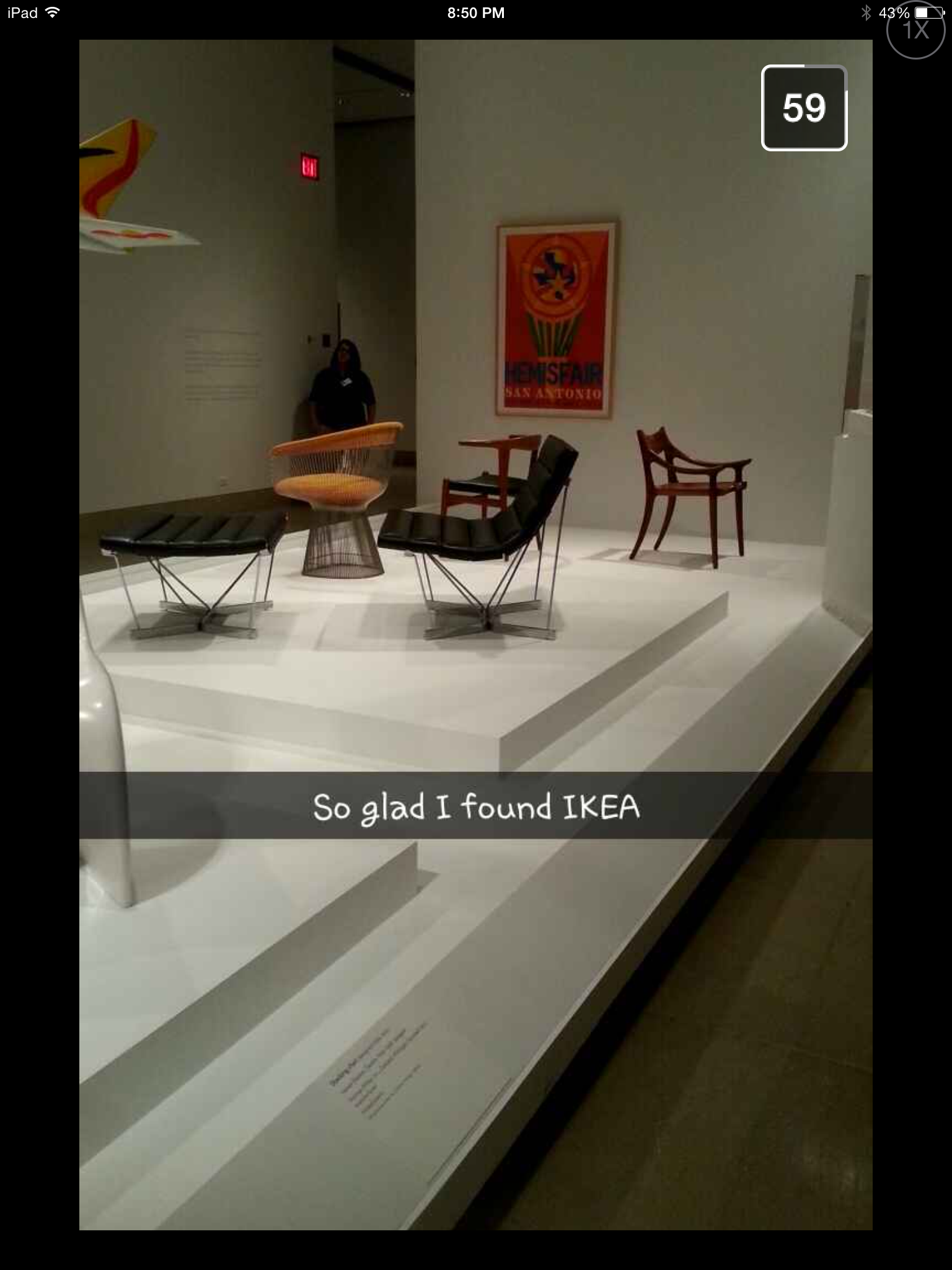
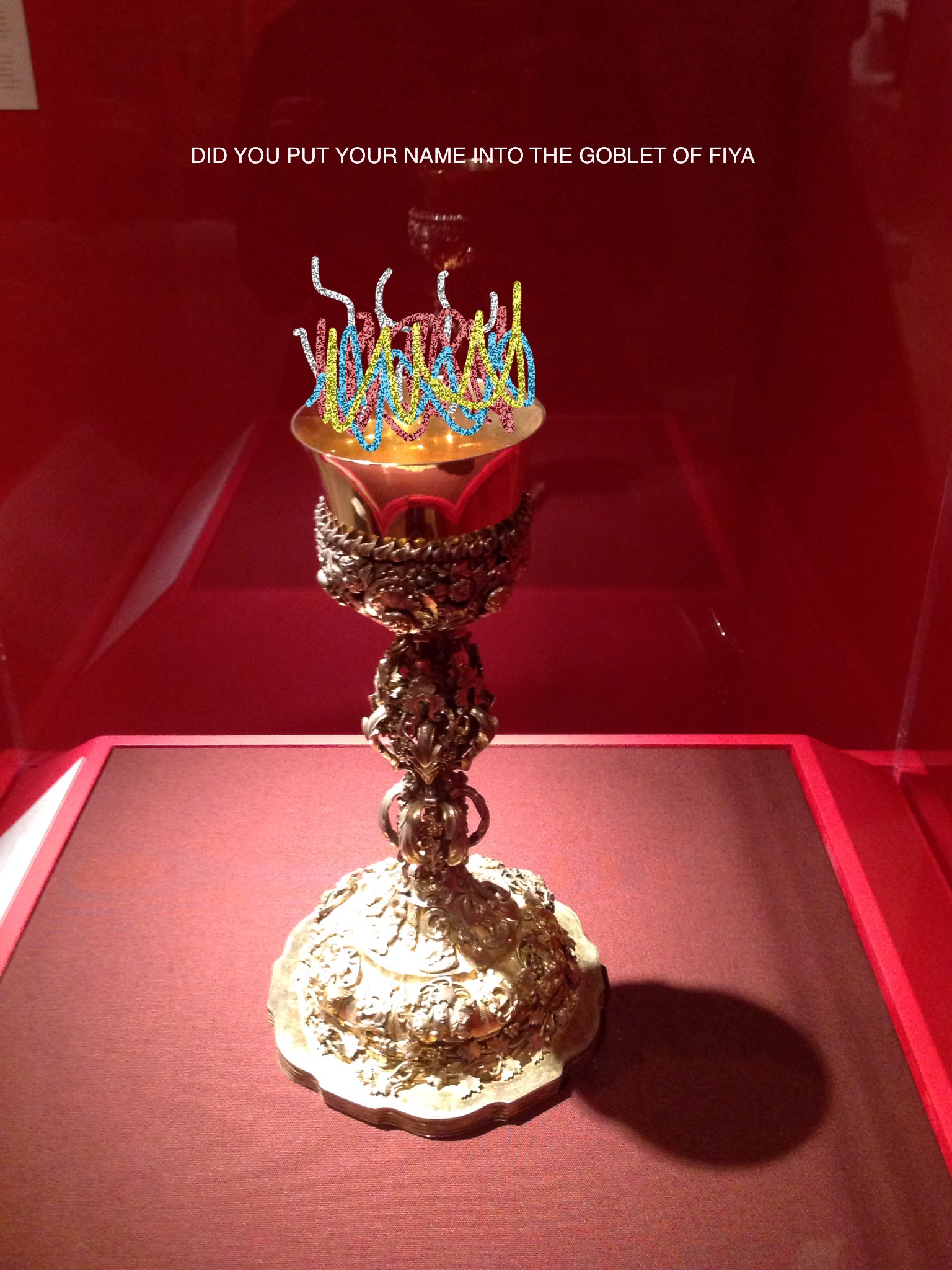
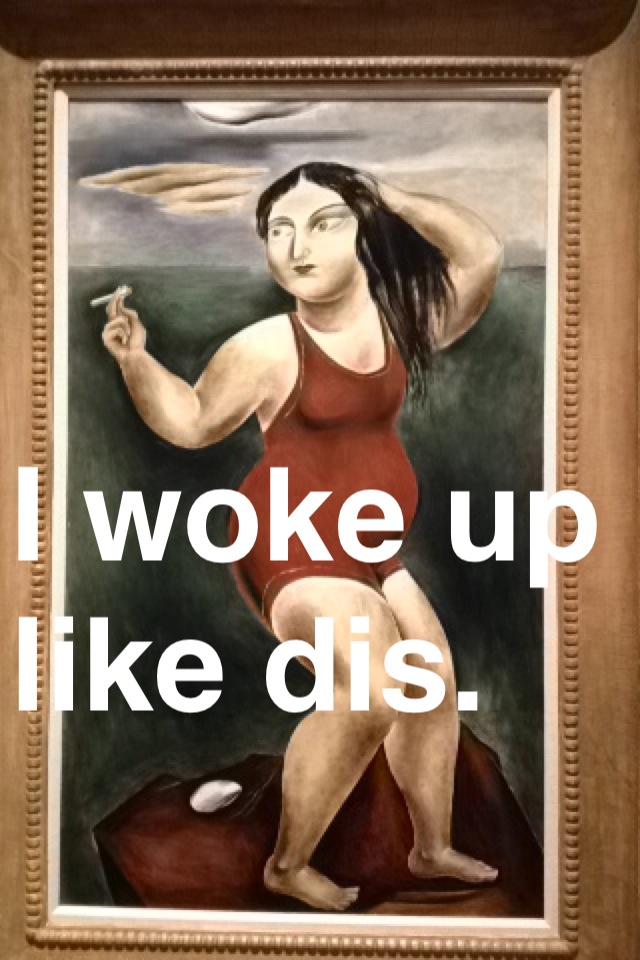
Snapchat

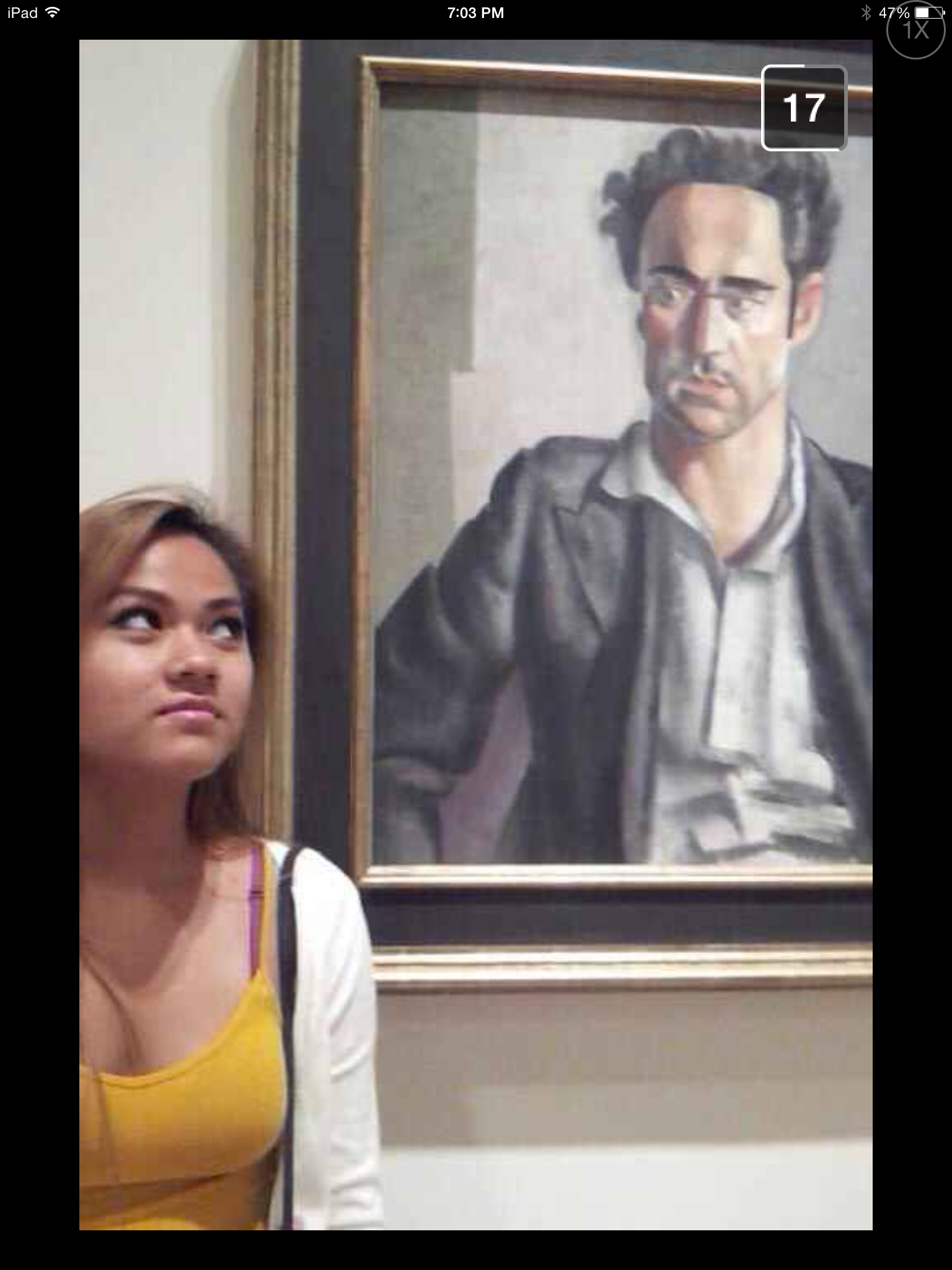
To capitalize on smartphone technologies and trends in social media, we created a Snapchat activity that allows visitors to recontextualize the works on display at their own pace.

Snapchat 1(snapchat20

Visitors were invited to take photos with their smartphones using the app, and then to draw or type atop the images to make it their own. By setting up an account for the museum (add DallasMuseumArt as your friend), we were able to receive and save visitors’ submissions. The evening yielded 28 different photos created by 10 visitors, many of which were entertaining interpretations of the permanent collections.


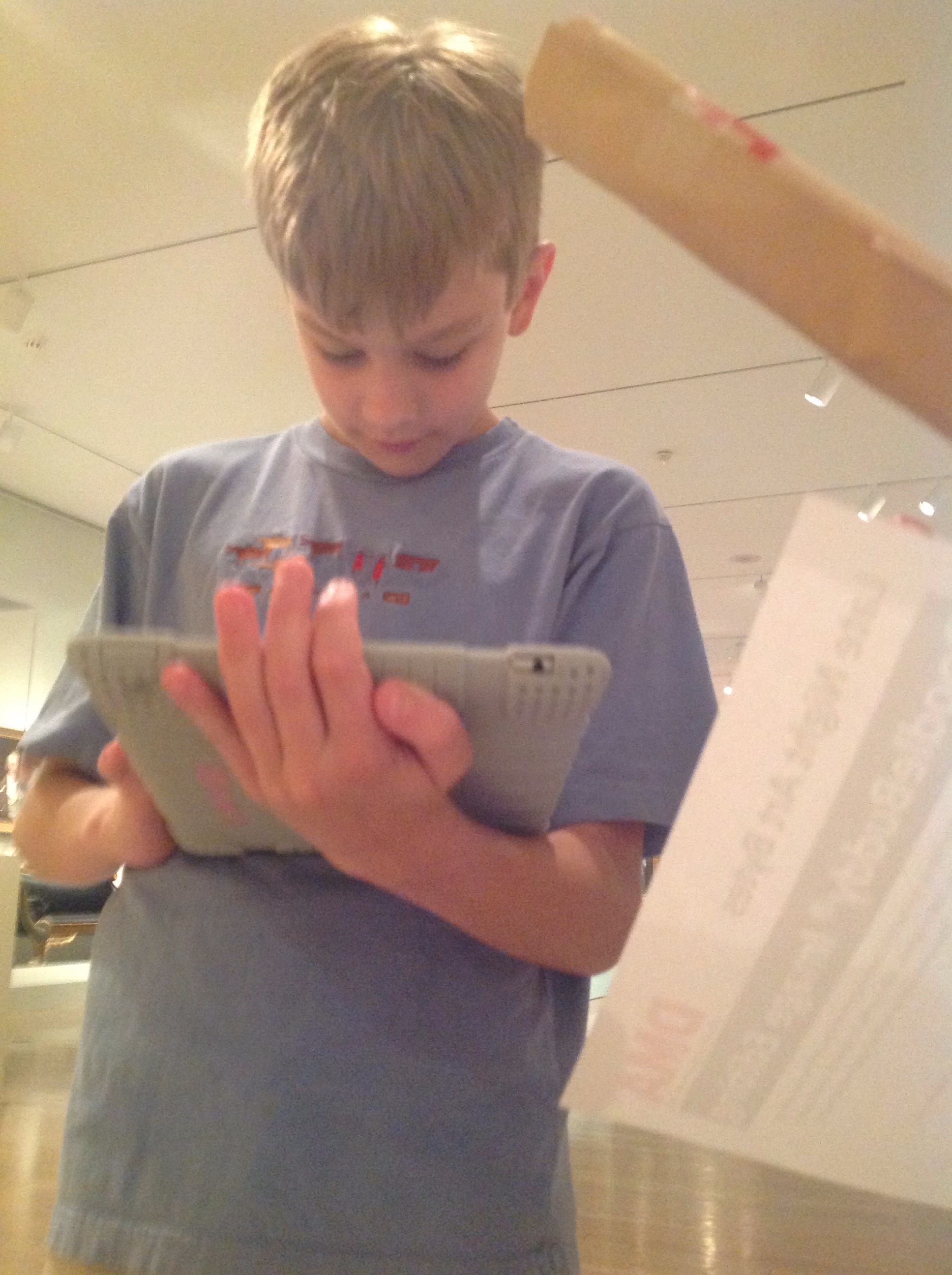
DoodleBuddy

For those who were uninterested in maintaining a Snapchat account, there was an alternate option for editing photos of works on display. The DoodleBuddy app in place on the iPads was available for visitors to borrow from the activity cart, and had similar creative capabilities. Users could snap a picture and then add their own touches to a work.
db2   db7

This activity was the most popular that evening, as some 22 visitors worked individually or in pairs to create and save 14 new images. When finished, masterpieces could be saved to the museum’s iPad (to be later uploaded to Flickr) or emailed to the visitor for their own use.


Map the Collection

The least popular activity for the night was a mapping activity that utilized other capabilities of the DoodleBuddy app on the iPads. Visitors could borrow the iPads with the program, this time drawing and/or typing atop a preloaded map, to chart the works within a particular gallery. Because of its proximity to the cart’s location near the entrance to the American gallery, the trial program utilized the works from a gallery of Colonial Art of the Americas, allowing visitors to find the origins of works from Central and South America. One enthusiastic visitor was able to use the map to teach a friend about her home in Paraguay, and pointed out political and economic tensions that continue to this day.


Spotify

The use of music in the galleries is nothing new, but allowing visitors to create playlists that is accessible both within and outside of the galleries was a novel opportunity for most. Familiarity with the app was likely a hindrance for many who stopped by the activity cart, but 5 visitors decided to opt for the musical program on their smartphones or the provided iPads. When creating the playlist, users simply included “DMA Late Night” in the title to allow other Spotify members the chance to search, play, or follow playlists created in the museum. Gallery experiences translated through song can be accessed from anywhere, or even played back in the galleries to create a community of listening visitors.

photo4

Overall, the evening was a bustling hit. The activities piqued the interest of several disengaged visitors, and allowed them their own space to create something new. Passersby received handouts about the Snapchat submissions to allow their continued access to the activity, and the iPads were put to excellent use by up to 5 visitors at once. Difficulties encountered included the length of explanation required for several of the apps (many visitors were unfamiliar with Spotify), and some troubles using the DoodleBuddy camera feature. Better instructions or fewer choices should help minimize these issues.

Testing these activities also allows us to consider how–or if–these programs could be utilized in conjunction with the Pop-up Art Spots already in place in the galleries. For example, the mapping activity could easily be translated into an activity for the Indonesian galleries, while the Spotify app may be put to better use in the contemporary collection. Snapchat and DoodleBuddy image editing activities may also benefit from utilizing more focused prompts, inviting visitors to submit photos for a single object or particular theme.


July LN 1

I’ve had a blast adapting apps for gallery activities. Hopefully this is just the beginning of “share-able” cultural production used in the galleries, and I’d like to extend a huge wave of gratitude to all those who helped me get things in motion!

Brittany Garison
C3 Graduate Intern

Goodbye for Now

It has been my great pleasure to work in the education department at the Dallas Museum of Art for the past three years. My position as the Program Coordinator for the Center for Creative Connections (C3) has been such a huge opportunity to expand my K-12 art education and museum studies masters degree. I have had the great challenge to expand my knowledge in the classroom by leading the hands-on adult workshops in C3, working with local artists on the development of programs, leading programming for hundreds of people,  mentoring young artists, and working with amazing people who have helped me grow as an educator. And now, I am thankful for a new opportunity to teach K-6 art for Richardson Independent School District and will forever be grateful to the DMA for my experience.

C3 Adults

C3 Adults

To close, I would like to say goodbye by remembering some of my favorite times at the museum. There are far more experiences to remember, but thought I would count just thirty-six–one experience per month of working at the DMA.

My top thirty-six (my three years x twelve months) memories from the DMA:

  1. Meeting many artists and working with them to create dynamic workshops in C3.
  2. Co-teaching a creativity program for adults.
  3. Becoming friends with Meaningful Moments attendees John and Sue, and receiving my very own squirrel foot necklace!
  4. Coming up with crazy Creativity Challenges for Late Night.
  5. Working with studio art students from the University of North Texas to train them how to expand their practice by teaching workshops for adults.
  6. Being the loudest one in the Center for Creative Connections office.
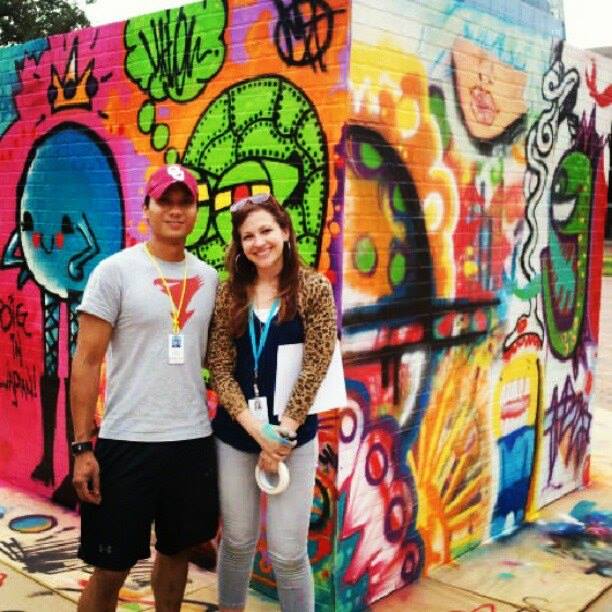
  7. I loved being part of the Urban Armor graffiti camp with our teen specialist JC Bigornia and guest artist IZK Davies.
  8. Teaching Terrific Textiles summer camp with 6-8 year olds
  9. Developing educational components for DMA’s Available Space project
  10. Meeting one of my favorite pop-up artists Robert Sabuda, during a Late Night Creativity Challenge.
  11. Teaching a Think Creatively class and instructing  participants to draw a work of art they hated.
  12. Reading my favorite Fancy Nancy book during summer story time.
  13. Leading a Creativity Challenge for our Meaningful Moments program.
  14. Sitting in front of Orange, Red, Red  by Mark Rothko when I need to think about something important.
  15. Seeing people drop things into a work of art by Nobuo Sekine.
  16. Going bowling for our education retreat.
  17. Having a Task Party with the C3 Adults.
  18. Doing yoga after hours in the Cindy Sherman exhibition with Melissa Gonzales!
  19. Meeting so many talented adult visitors who have helped mold me into a better educator.
  20. $1 coffee
  21. Leading Creativity Challenges for J.P. Morgan; making them create a love story between two works of art and crafting what the baby would look like!
  22. My incredible work-pal who brightened my day by leaving notes, gifts, and encouraging words on my desk weekly.
  23. Giving impromptu tours to visitors of works of art in our collection.
  24. Hosting Wayang Kulit artists in C3.
  25. Holding Life Drawing classes in the DMA galleries.
  26. Meeting Taye Diggs and helping Shane Evans lead a drawing workshop in C3 during the BooksmART festival to promote their children’s book Chocolate Me!
  27. Hosting a poetry showcase with The Spiderweb Salon of Denton, Texas. I was able to hear many musicians and writers (many of whom were C3 visitors) respond through words and songs to an exhibition at the DMA.
  28. Taking creativity breaks in the Crossroads Gallery.
  29. Working with C3 Volunteer Robert Opel to create the vision for the C3 Adult Programs promotional flyer.
  30. Receiving a phone call that Think Creatively changed one of my visitor’s lives and he will never be the same.
  31. Having an incredible boss who took many chances by letting me run with my ideas!
  32. Making new friends and being challenged by my colleagues.
  33. Having access to see the Jean Paul Gultier exhibition anytime I wanted to.
  34. Meeting many new people every day.
  35. Working with Maria Teresa and experiencing how important art is to the community.
  36. Working with Lesli Robertson and Natalie Macellaio on The Motherload installation (opening September 2014) and the launch of parent and child summer camp called Side by Side.

Thank you DMA for all the amazing memories.

Signing off for the last time as:

Amanda Batson
C3 Program Coordinator


Summer Art Camp Interns: Their Perspective

Each summer, the DMA is lucky enough to have a group of wonderful interns to help coordinate the Museum’s numerous Summer Art Camps. This summer is no different; we have a fantastic group of ladies that have worked extremely hard the past thirteen weeks! The summer can be a bit crazy at times, but our wonderful interns always seem to keep their heads on straight. I invited them to be guest bloggers this week, and to share their summer camp experiences so far as well as some other interesting tidbits. Enjoy!

Wilhelmina Watts

Wilhelmina in the Terrific Textiles camp.

Wilhelmina in the Terrific Textiles camp.

Interning at the DMA art camps this summer has been one of the best experiences I could have asked for. As an aspiring art historian, working in the same building where so many masterpieces are housed is already a dream come true; but even better than looking at the artwork is helping the kids interact with it. I believe that a passion for anything starts from a place of having fun, so my number one goal is always to make learning about art and creating works of art as fun as possible. Working with one of the classes in the contemporary gallery pushed me to find fun and interesting things about artworks that I had never had an interest in before. I know it may sound cliché, but the kids are the ones teaching me, and getting to know each new group of campers is always the best part of camp.

Denise

Denise in the Saturated: Dye-decorated cloths from North and West Africa exhibit.

Denise Sandoval

These past weeks at the DMA have been fantastic. I have enjoyed assisting the children and teachers during each camp. I find that helping one another is great and brings happiness to all, and that is what makes each week of camp a success. At times the work may be tiring, but it is so much fun to create works of art. I love that each week of camp is a different topic, because it gives me and the campers a chance to create difference types of art, which is really exciting. Personally, it’s a pleasure to not only see the children grow, but also the adults. The teachers and interns are experiencing success for their future by being involved in these summer camps.

Laila Jiwani

Laila working with a camper.

Laila working with a camper.

It is amazing to see these campers unleashing their artistic potential and showcasing their personalities. As part of the New World Kids 2 summer camp, we had guest speakers come into the studio and talk about their jobs. By the end of the week, one kid decided she wanted to become a director when she grows up, another created his own stop-motion film, and another made a two-story model dollhouse inspired by a visit from our exhibit designer. One of the the greatest perks of this internship is that, in a way, we get to attend the camps with the kids. We are learning about instructional strategies while we experience them ourselves as we help with daily activities. I am also learning so much more about art and its history than I had expected! It seems like an adventure every time we explore the galleries with the kids for inspiration, especially in the early mornings when we have the museum all to ourselves.

Ashley Ham

Ashley in The Museum is History exhibit.

Ashley in The Museum is History exhibit.

Living out of a suitcase and couch-hopping around Dallas is an adventure of the best kind. Normally, you will find me in a land of weird people in burnt orange (hook ‘em horns), but for this summer, I find myself learning from the best at the DMA! As an aspiring art educator, assisting with summer camps has been a recent check off my bucket list. Every week a new teacher steps in, bringing interesting projects and showcasing different techniques in classroom management, and I feel like a sponge soaking up as many great teaching tips as I can! While I am a proponent of any and all fine art summer camps, one thing that I have enjoyed immensely (and something that I believe sets these DMA camps apart) is the ability to take campers through the wonderful art galleries right outside our camp studios. The opportunity to stroll down a corridor and show campers the artists that inspire their projects is matchless. The drive up I-35 from Austin to Dallas isn’t always my favorite way to spend 3… or 4… or 5 hours, but for the DMA I’ll make it any time.


Miyoko Pettinger

Miyoko in the Never Enough exhibit.

Miyoko in the Never Enough exhibit.

During my time at the DMA, my awareness of art history has increased along with my understanding of children with various interests, backgrounds, and personalities. One of my favorite experiences has been accompanying teachers throughout tours in the galleries, which provided the children with historic context and inspiration from pieces held in the DMA’s collection. In addition to expanding my scope of art history, I also observed the children directly applying the artistic styles and techniques they learned. Whether dancing to music while creating quick-gestured, improvisational Jackson Pollock-style pieces or implementing Paul Signac’s meticulous method of Pointillism, the children brought an impassioned joy, focus, and energy to the studio. Additionally, I have enjoyed building relationships with the children, interns, and teachers, all of whom have been exceedingly kind, encouraging, and hardworking. Each week, the classmates quickly bonded with each other over various projects and group activities. The teachers and interns have shown to be some of the most supportive people with whom I have ever worked.  They possess selfless, uplifting attitudes and created a warm and safe environment. Children were always encouraged and never told they were doing art “the wrong way.” Instead, they were given a success-rendering balance of structure and creative liberty. I have gained an indispensible understanding of art and children along with treasured experiences that will prove invaluable in my future career as an art therapist.

Many thanks to Ashley, Denise, Laila, Miyoko and Wilhelmina for acting as guest bloggers and being a part of the DMA Family Programs team this summer!

Danielle Schulz
Teaching Specialist

Friday Photos: Autism Awareness Family Celebration

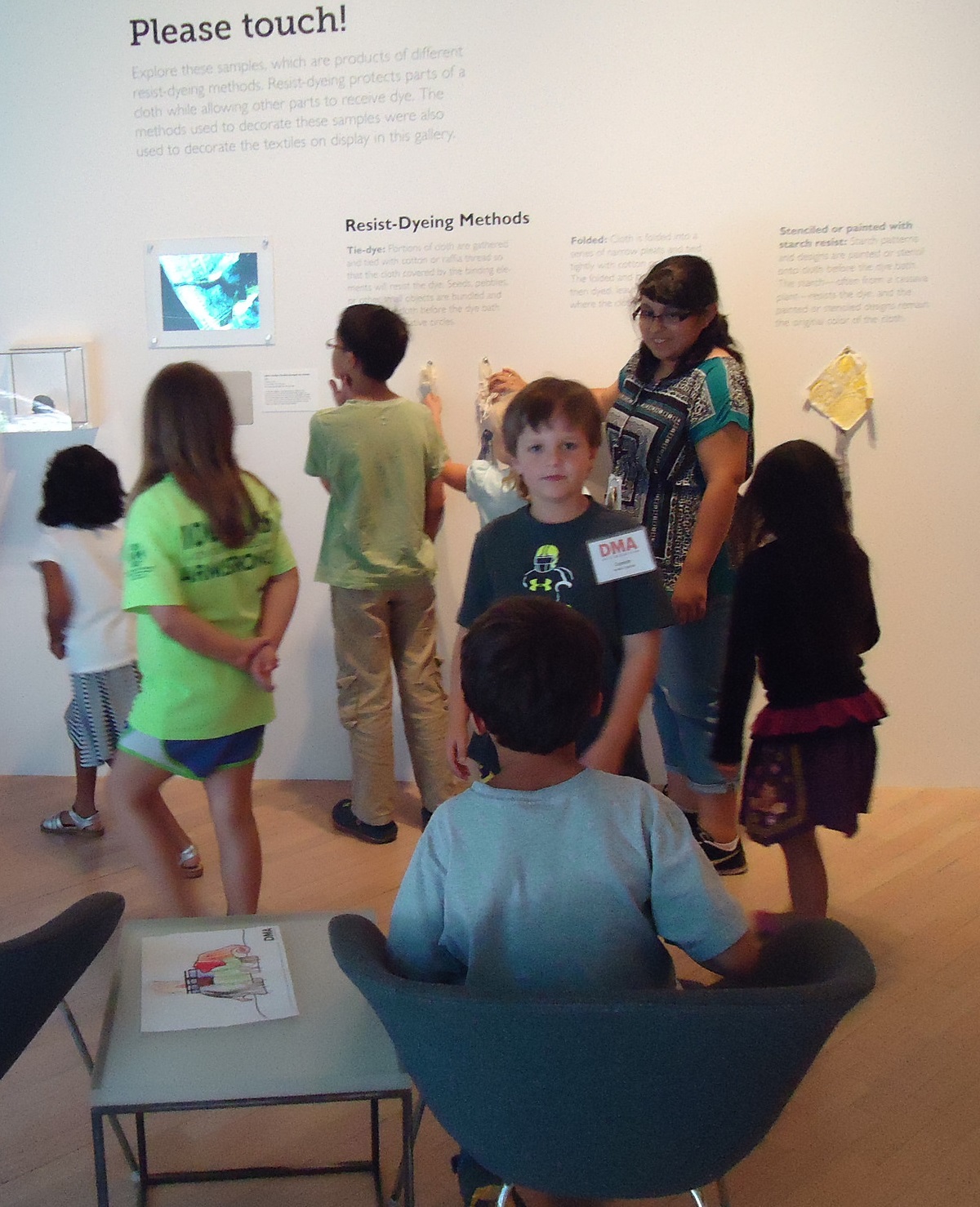
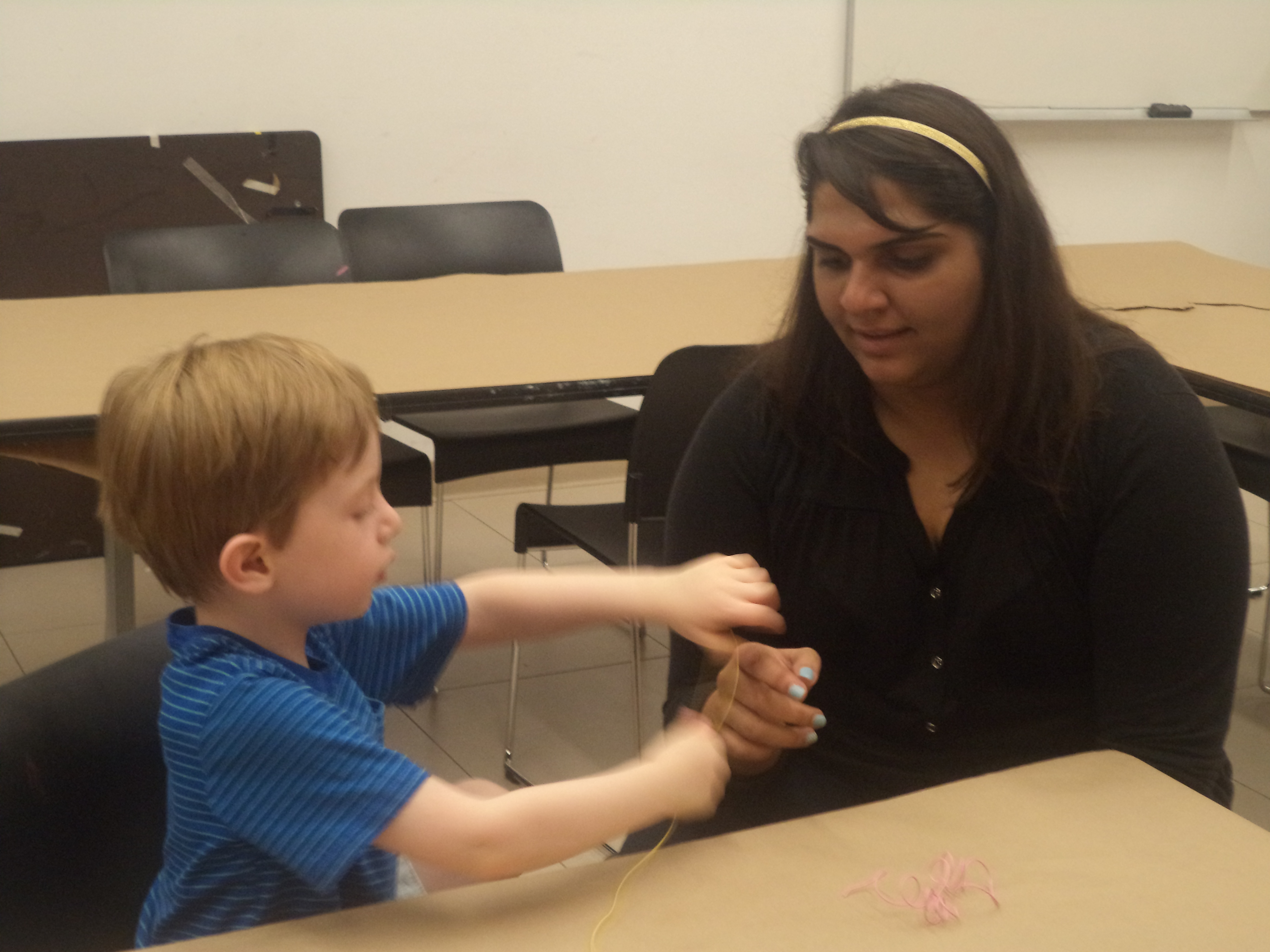
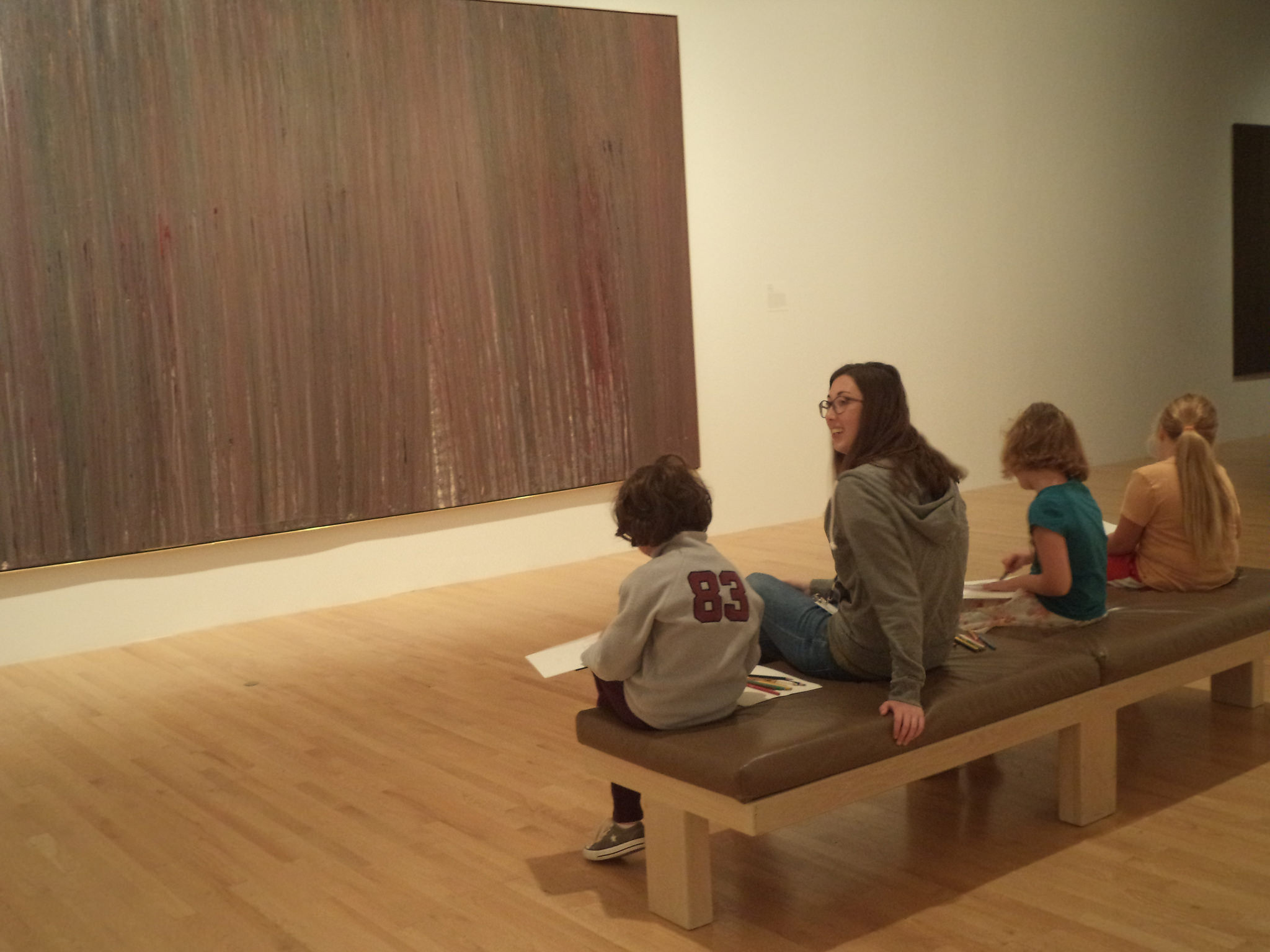
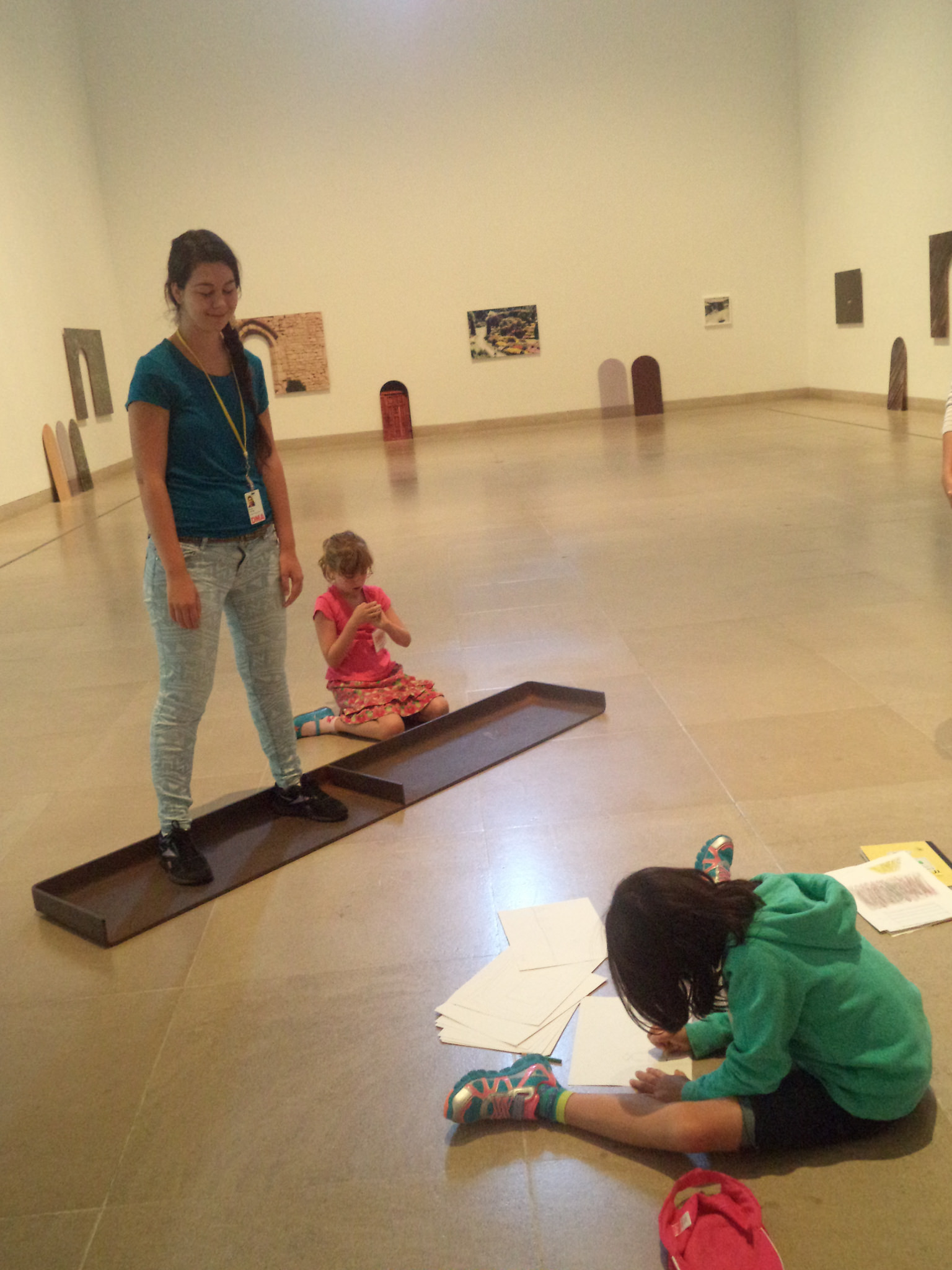
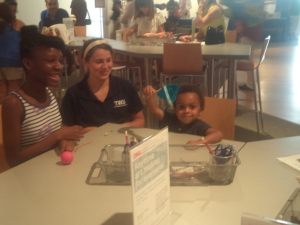
Happy, sad, angry, or excited – we all have feelings and emotions. During our July Autism Awareness Family Celebration, families explored moods and expression at the DMA before public hours.

Hands-on art making in the Center for Creative Connections

Hands-on art making in the Center for Creative Connections

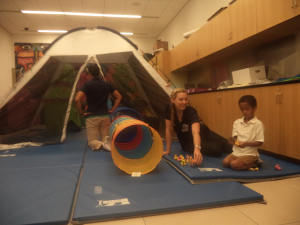
Relaxing in the sensory room with occupational therapy students from Texas Women's University

Relaxing in the sensory room with occupational therapy students from Texas Women’s University

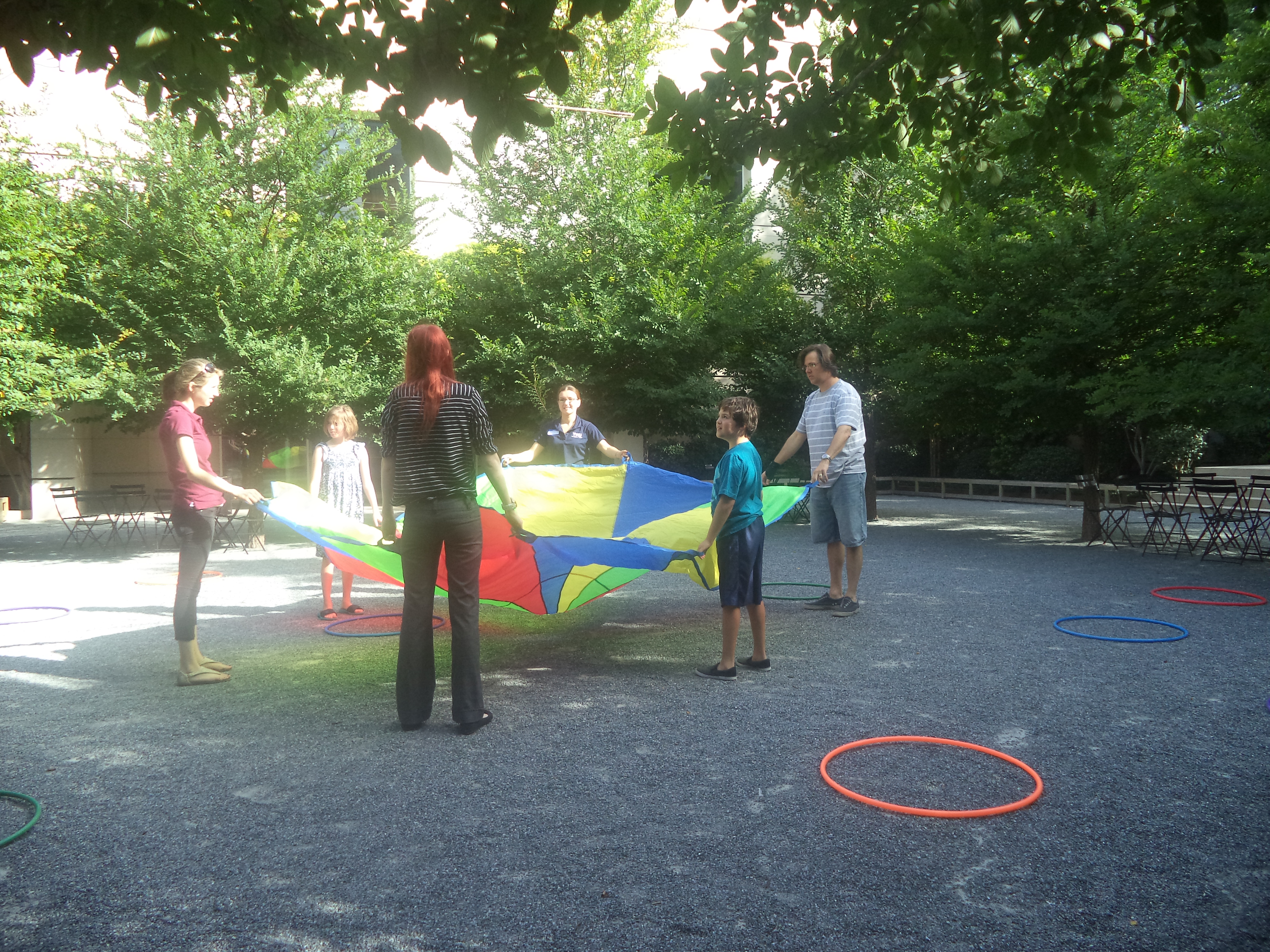
Play time with hula hoops, streamers, and parachutes in the courtyard

Play time with hula hoops, streamers, and parachutes in the courtyard

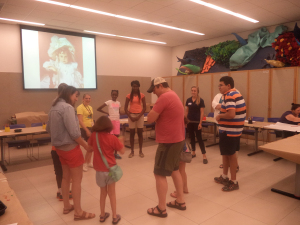
Acting out different emotions with an actor from the Dallas Children's Theater

Acting out different emotions with an actor from the Dallas Children’s Theater

Check out our website for information about the next Autism Awareness Family Celebration!

Emily Wiskera
Graduate Intern for Family and Access Teaching

Teen T-Shirt Design Contest Kicks Off This Friday!

This month’s Late Night on July 18 marks the beginning of our very first t-shirt design contest for ages thirteen to nineteen! Participants have two months to submit a design inspired by a work of art in the DMA’s collection, with a chance to have their design reproduced and sold in the DMA store. More information, including submission guidelines, will be provided on the teen workshops section of the DMA website in the coming weeks; you can also send an e-mail to JBigornia@DMA.org.

Drop by the Tech Lab in the Center for Creative Connections this Friday between 9:00 and 11:00 p.m. to hang out, hear more about the contest from DMA staff, brainstorm ideas, and sketch from works of art in the galleries.

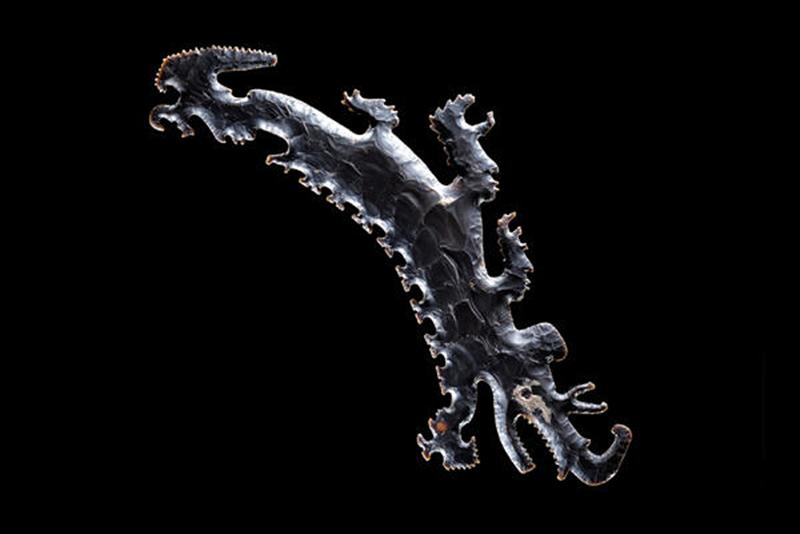
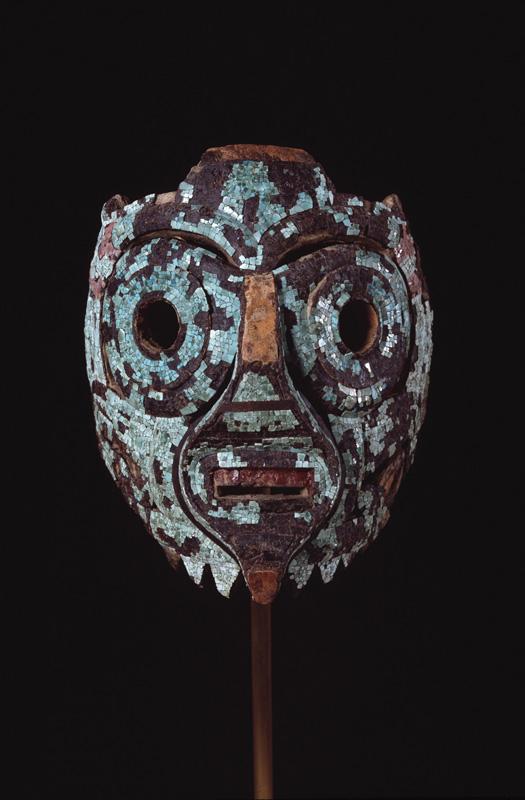
Here are some works of art from the Ancient American collection that may inspire you…what work of art will you choose for your design?

Guatamala, Maya culture, Eccentric flint depicting a crocodile canoe with passengers, A.D. 600-900,  Dallas Museum of Art, The Eugene and Margaret McDermott Art Fund, Inc., in honor of Mrs. Alex Spence

Eccentric flint depicting a crocodile canoe with passengers, Guatamala, Maya culture, A.D. 600-900, Dallas Museum of Art, The Eugene and Margaret McDermott Art Fund, Inc., in honor of Mrs. Alex Spence


North America, Mexico, Mixtec-Aztec culture, Mask, possibly of Tlaloc, c. 1350-1521, Dallas Museum of Art, The Roberta Coke Camp Fund

Mask, possibly of Tlaloc, Mexico, Mixtec-Aztec culture, c. 1350-1521, Dallas Museum of Art, The Roberta Coke Camp Fund


JC Bigornia

C3 Program Coordinator

Touch Tour for Students with Vision Impairment

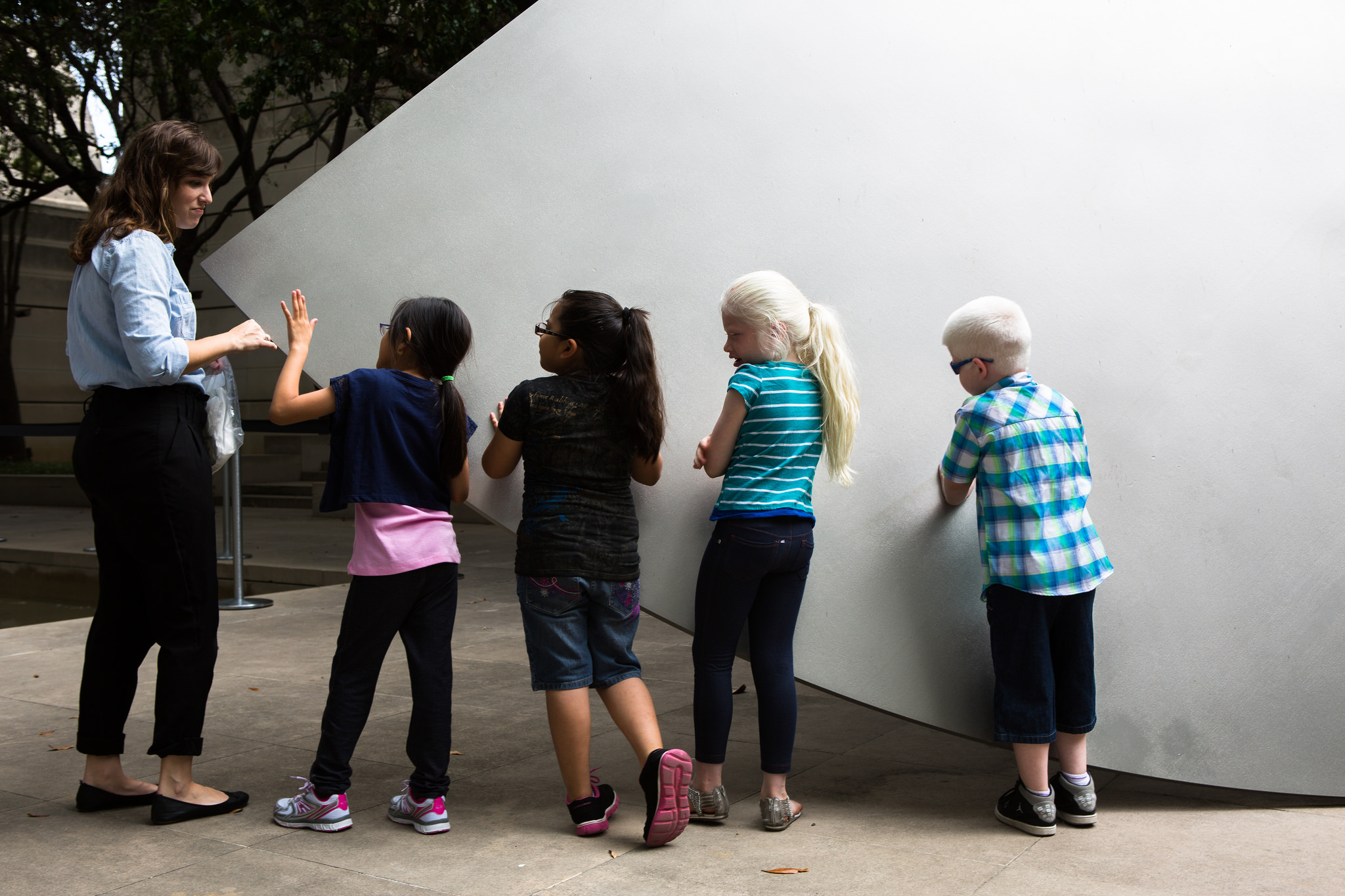
Many people may not think that of an art museum as the ideal field trip location for a group of children with visual impairment, but when the Dallas Independent School District (DISD) contacted the DMA earlier this summer with such a tour request, we were eager to provide the best experience possible. When discussing the visit with vision teachers at DISD, they felt it was important to expose their students to art and wanted an experience that would illustrate to the students that they too have the ability to create and appreciate art just as well as any other student.

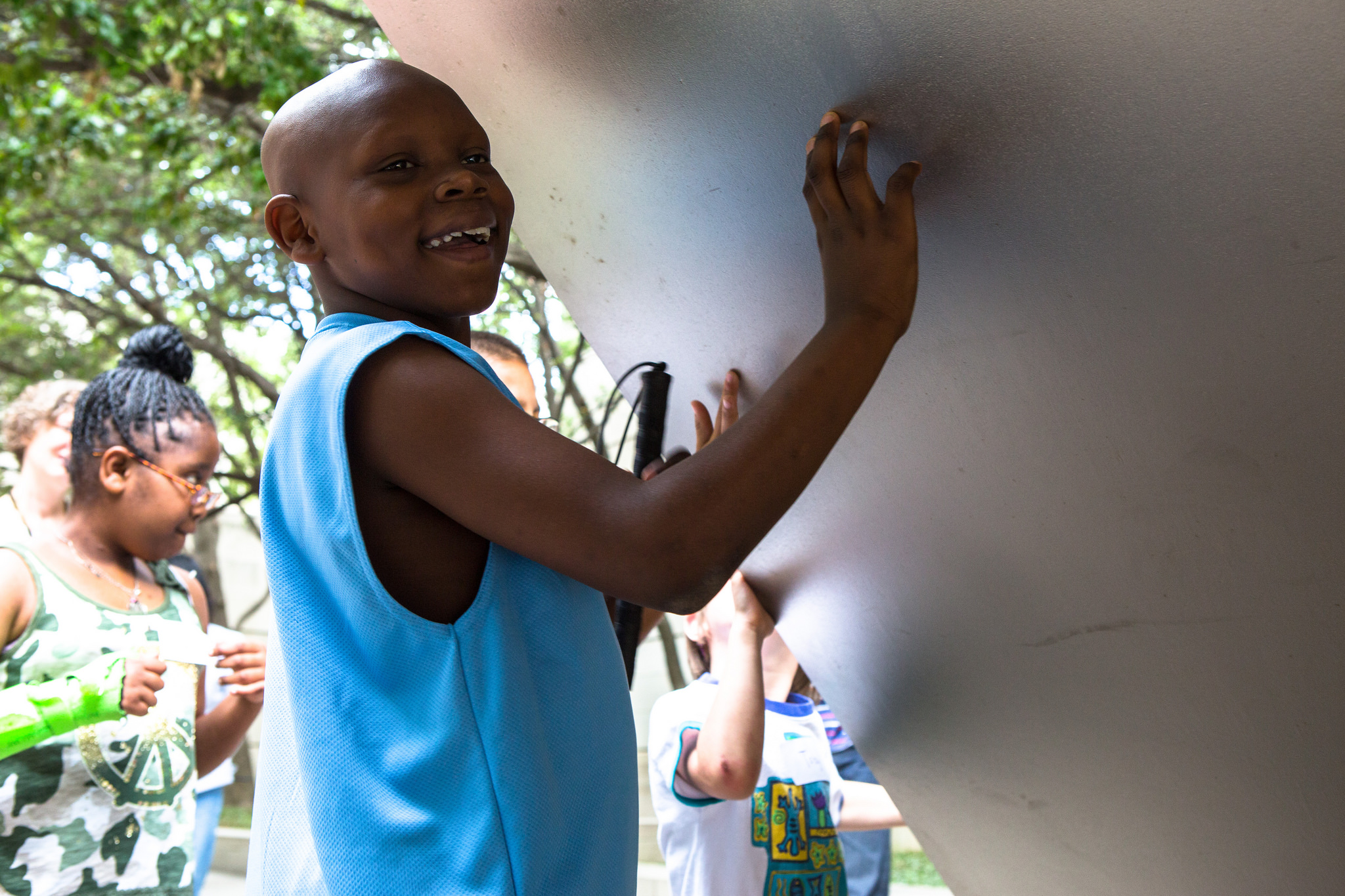
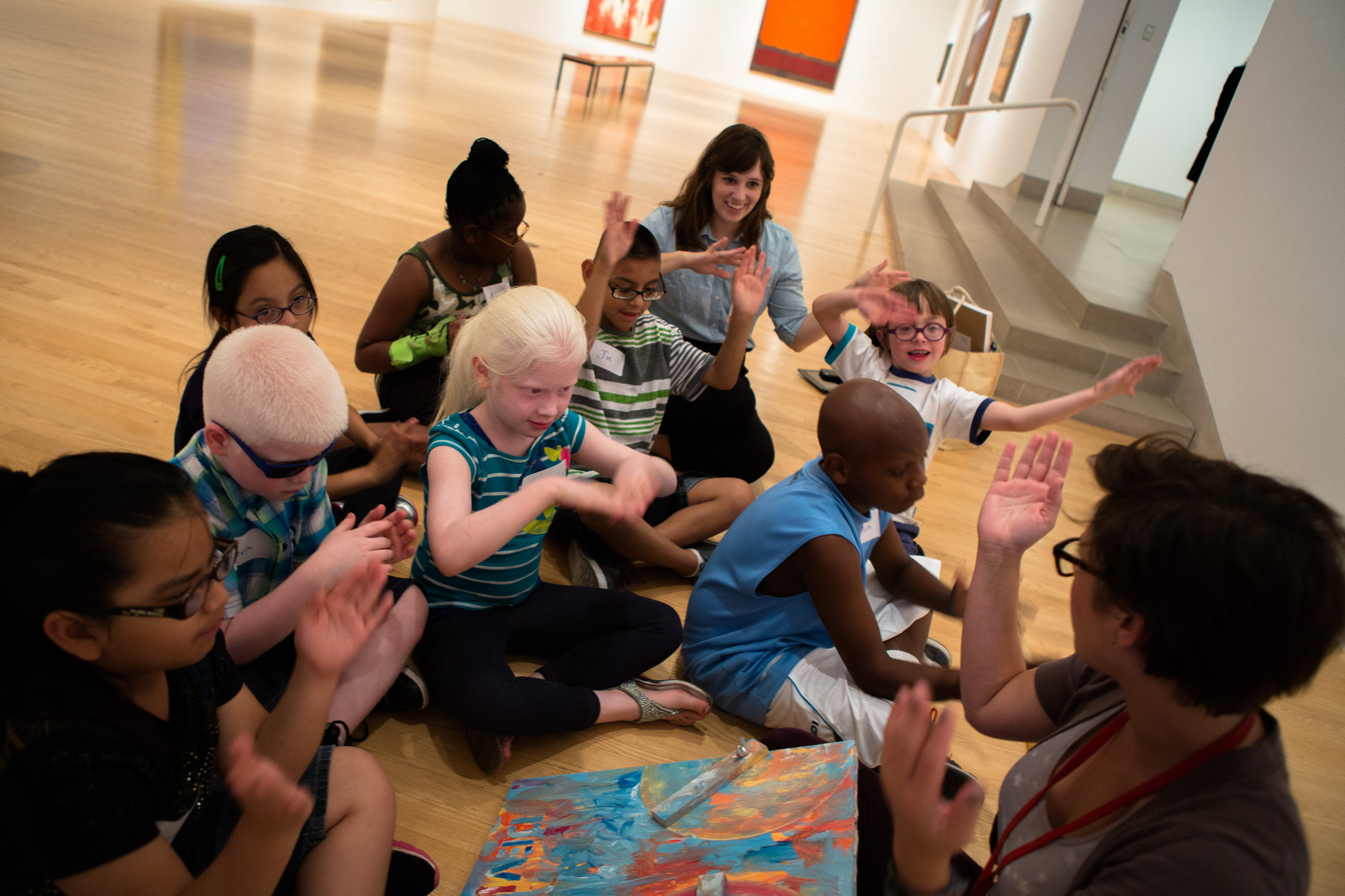
DISD students with vision impairments visiting the DMA.

DISD students with vision impairments visiting the DMA.

The Planning Process
The Dallas Museum of Art has never before offered guided touch tours to visitors with visual impairment, but after speaking with our Director of Exhibition Design, we learned that she fully supports inclusive gallery teaching, and thus was open to supporting the Museum’s first ever touch tour. We talked with our colleagues in the exhibitions and conservation departments and found that they too were fully supportive of trying out a touch tour with the DISD students. The DMA Sculpture Garden was identified as the best place for our inaugural touch tour, since the objects in the garden are designed for an outdoor space and are thus subject to (and able to withstand) a variety of natural elements. We also felt that it was essential for the students to have the galleries to themselves during the tour, so as not to confuse other visitors about the acceptability of touching works of art, as well as for the overall comfort of the students with vision impairment. We therefore decided to schedule the touch tour for a Monday, when the Museum is closed to the public.

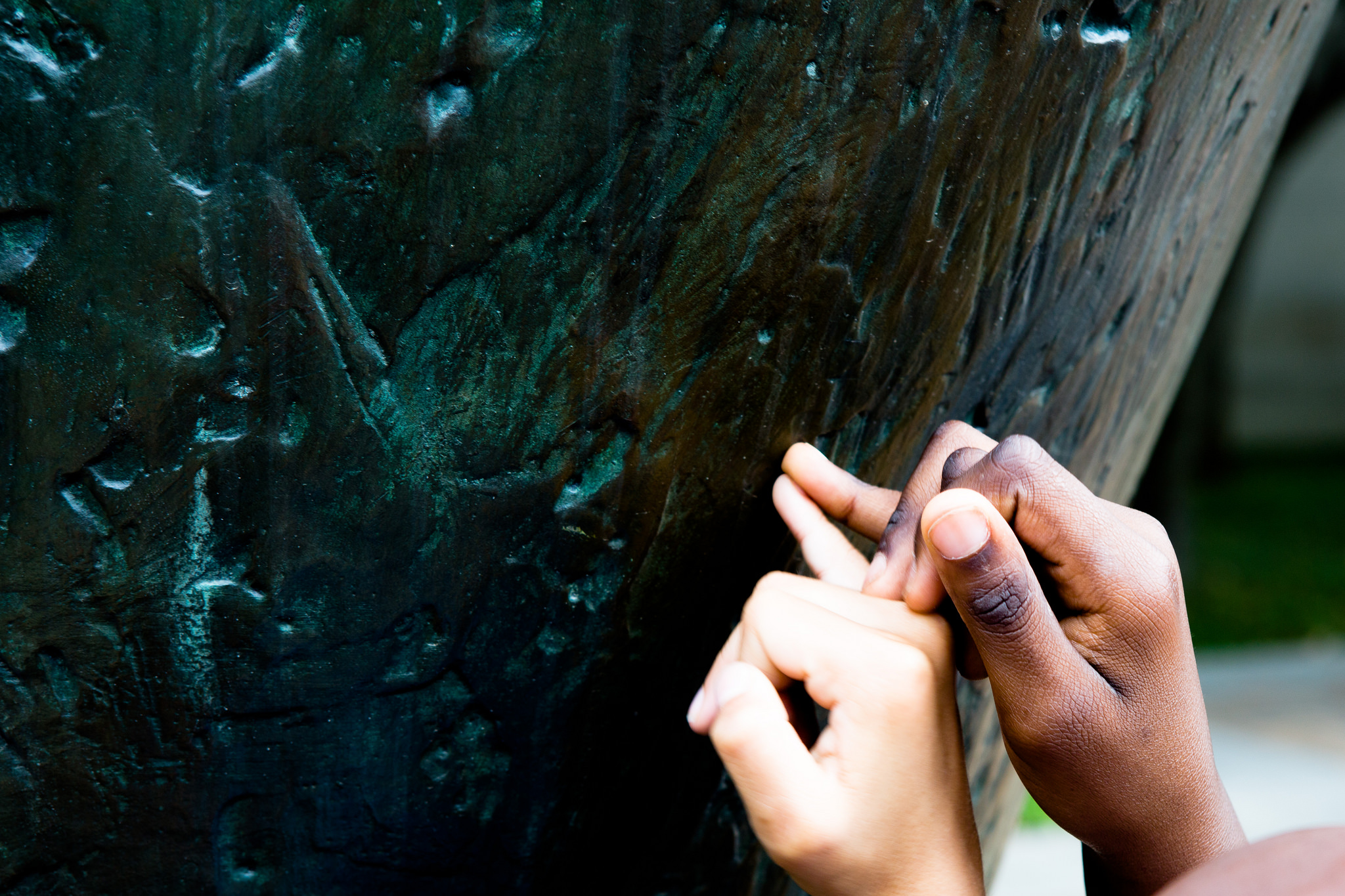
Our next step in the planning process was to walk through the space as a group, making note of areas that may be problematic for someone with vision impairment to navigate. The team was comprised of education, conservation, and exhibitions staff, and everyone on the team raised thoughtful questions and contributed wonderful ideas! We discussed which works of art may be the best for a tactile experience, and our conservators suggested that the kids have the chance to touch the works of art without gloves (which is usually unheard of in other touch tours!). Our exhibitions team offered to wash and hand-clean the works we selected so that they would be nice and clean for the experience. And one conservator suggested we select works of art that were large enough to be touched by more than one student at a time, so that the students could talk to one another about what they felt as they each touched the artwork.

After squaring things away with the exhibitions and conservation teams, the education team began planning the educational experiences of the tour. We prepared for twenty-five students, ranging in age from six to thirteen years, all with a range of visual impairment. The majority of students in the group had some residual vision, while two students were very photophobic, and two were blind from birth. Due to the range of abilities of our tour group, our education team knew it was important to include a variety of artworks in the tour (in addition to those on the touch tour), integrate many descriptive explanations of works of art and hands-on activities, and to have numerous tactile objects available.

In the Galleries
When designing the overall tour, we selected a variety of objects that spanned time periods, artistic techniques, and geographic locations. We visited two contemporary art sculptures in the Sculpture Garden for the touch portion, two Abstract Expressionist works in the contemporary gallery, and a mask in the African gallery. Our aim was to engage all of the senses throughout our tour, as we believe that presenting multiple representations of content would effectively cater to the different learning styles of the group. We created a multi-modal experience by collecting auditory clips for sound stimulation, tactile materials and replica objects for touch, Jelly Belly jelly beans for taste sensations, and essential oils and scented colored pencils for olfactory information.

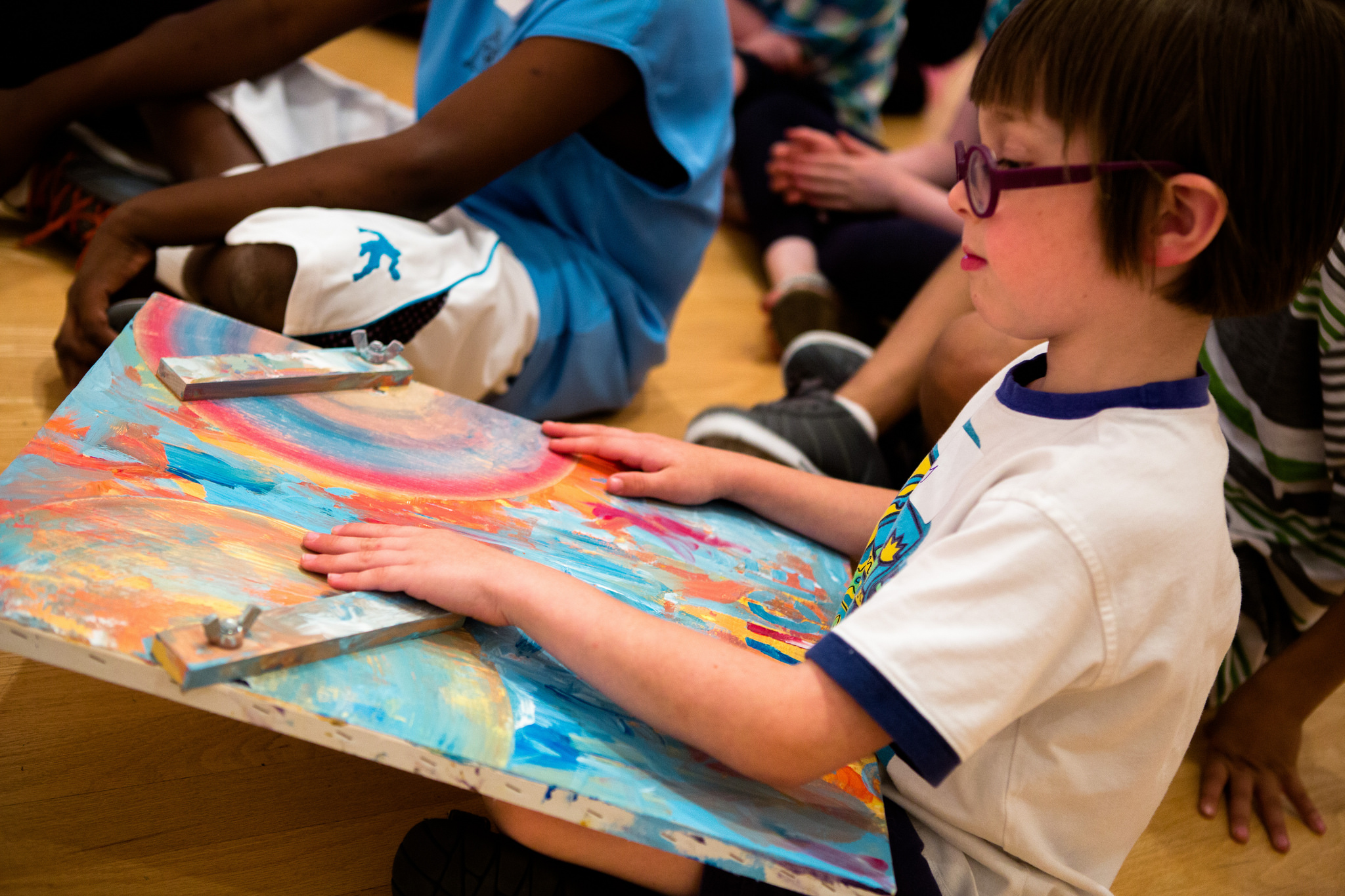
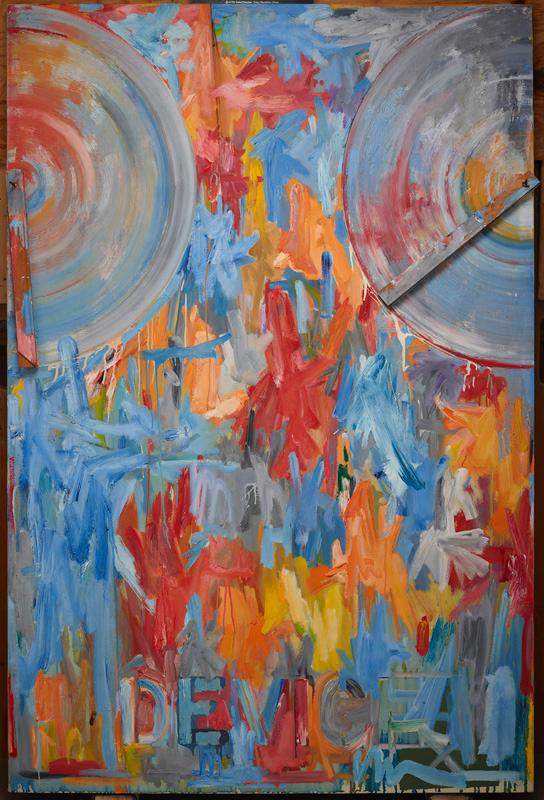
Each stop on the tour had a visual description of the gallery space and of the works of art we focused on, because it was important for us to situate ourselves, the children, and the art in space, as the sense of bodily awareness in space is something that many people without vision impairment may take for granted. Much of our time in the galleries was spent guiding students in tactile looking activities connected to specific works of art and facilitating conversations about texture and form. For instance, we created a reproduction of Jasper John’s Device so that the students could not only touch canvas and feel layers of paint, but they could also replicate moving the wooden stretchers back and forth across the canvas, while imagining the technique in which Johns spread the paint back and forth.

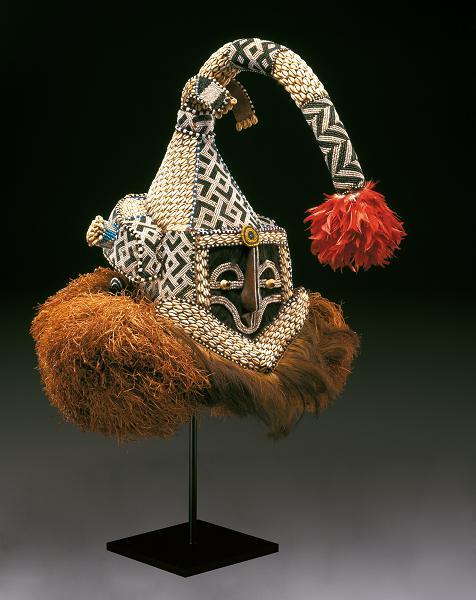
In the African galleries, we focused on a helmet mask made by the Kuba people of the Democratic Republic of the Congo, and passed around raffia, cowrie shells, feathers and other materials found in the mask. Additionally, we played sound clips of the various animals that related to the mask.

Helmet mask (Mukenga), Kuba peoples, mid-20th century, Dallas Museum of Art, gift in honor of Peter Hanszen Lynch and Cristina Martha Frances Lynch

Democratic Republic of the Congo, Kuba peoples, Helmet mask (mukenga),  mid-20th century, Dallas Museum of Art, gift in honor of Peter Hanszen Lynch and Cristina Martha Frances Lynch

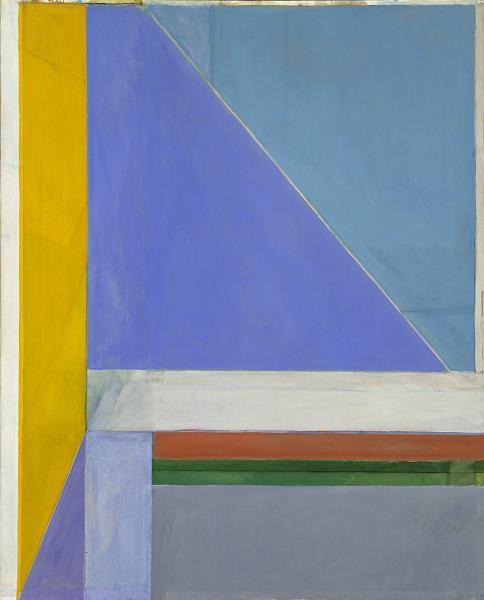
Relating to Richard Diebenkorn’s Ocean Park No. 29, we discussed how an artist could depict a place using sounds, smells, and taste. The students each ate a jelly bean and imagined the color they believed the flavor might represent. Next, they used a scented colored pencil to illustrate a place based on that smell. We also played sound clips of ocean waves and boat horns to recreate the Santa Monica locale that inspired Diebenkorn’s Ocean Park series.

Richard Diebenkorn, Ocean Park 29, 1970

Richard Diebenkorn, Ocean Park 29, 1970, Dallas Museum of Art, gift of the Meadows Foundation, Incorporated

Our tour concluded with a sensory drawing activity that took place at the large fountain outside the Museum’s Flora Street entrance. The students listened to the sounds created by the water in the fountain, and considered how the water (and space around it) might appear, what color the water would be, even how the smell would be rendered. We gave each student a piece of thin Styrofoam and a pencil to create their drawing of the fountain; the students were able to feel the indented lines they drew onto the Styrofoam and took turns sharing their creations with one another.

Until Next Time
This was an exceptional experience for DISD students, teachers, and DMA staff alike. One teacher who helped to organize this visit said that this experience “might be the only time this whole summer [the students] get this opportunity to learn tactually, through their auditory channels and their residual vision, which sighted people take so much for granted.” It was a transformative experience as well for our Museum. We are honored to have been a part of this experience, and cannot celebrate enough the fantastic support and collaboration exhibited by DMA staff from many different departments. A huge thank you to DISD for bringing their students, and a thousand thank you’s to the DMA’s conservation, exhibitions, visitor services, and security teams. This was a team effort and we appreciate the unified support and assistance—let’s hope this is the first of many touch tours to come!

Amanda Blake
Head of Family, Access, and School Experiences

Danielle Schulz
Teaching Specialist

Friday Photos: Welcome Baby Rhys!

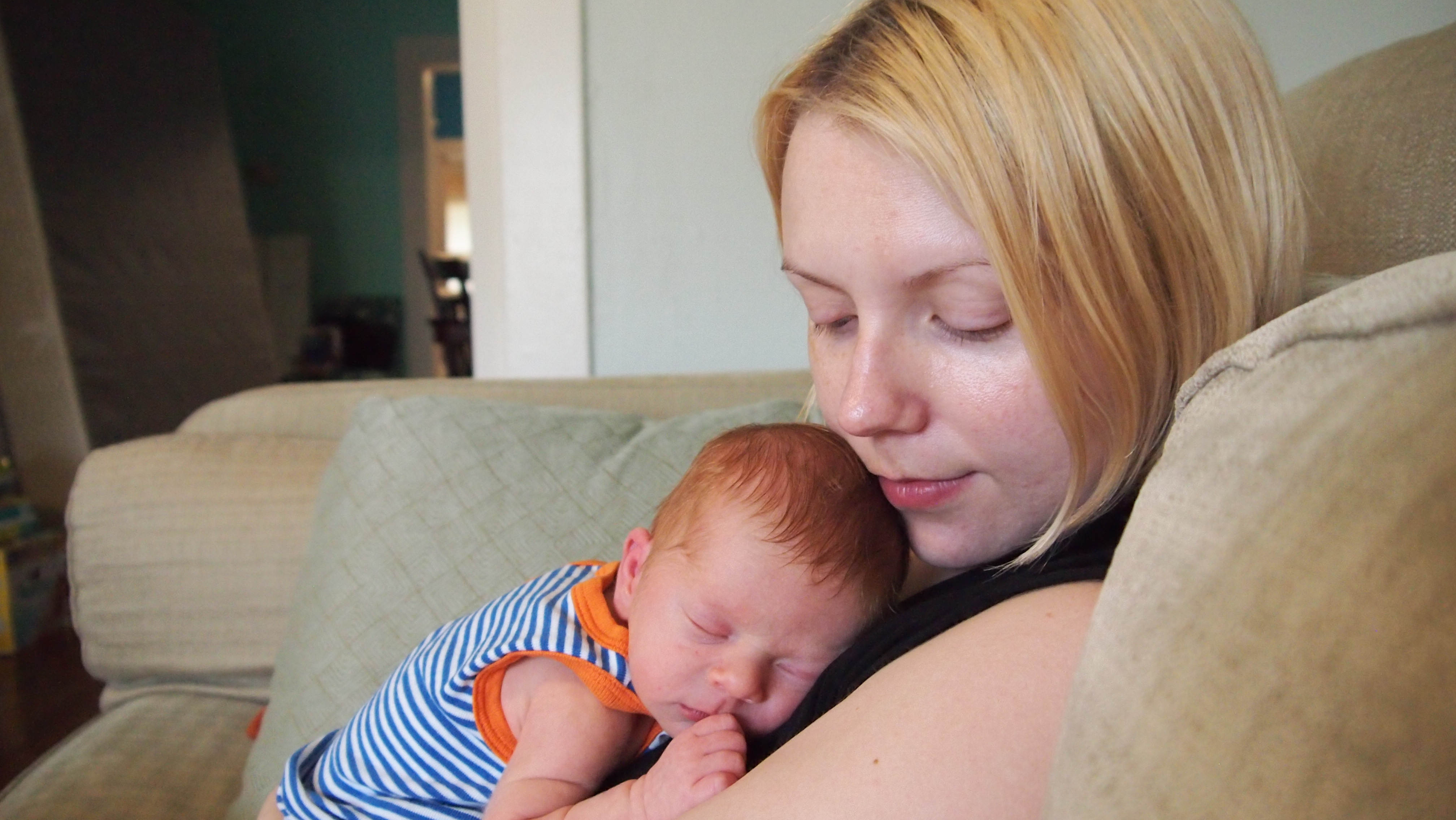
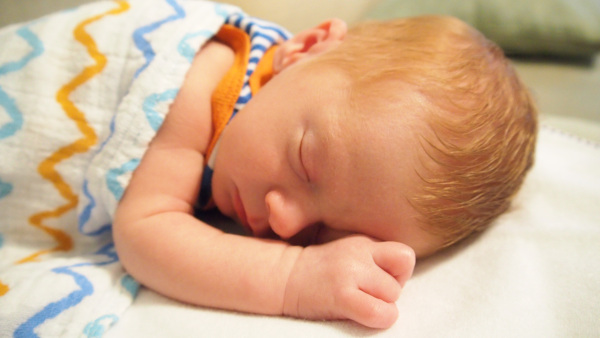
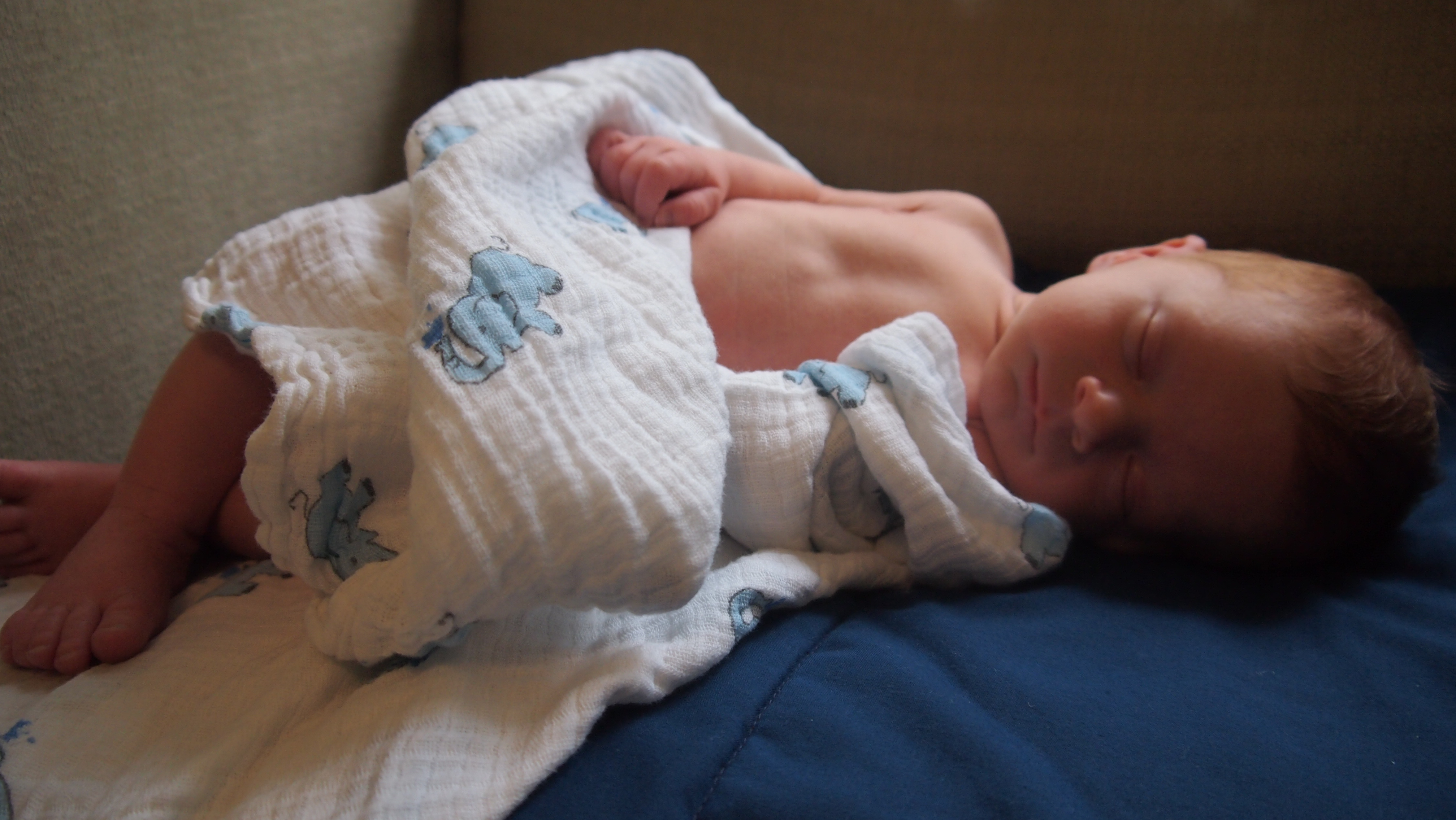
I am delighted to introduce you to baby Rhys Amann Coffey, born to Sarah and her husband Todd.  Rhys made his debut on June 9 at 12:57 p.m., weighing in at five pounds and twelve ounces.  Mom, dad, and baby are happy and healthy.  We will miss Sarah while she is on maternity leave, but can’t blame her for wanting to spend as much time as possible with this handsome little guy.

OLYMPUS DIGITAL CAMERA

OLYMPUS DIGITAL CAMERA

OLYMPUS DIGITAL CAMERAMelissa Gonzales
C3 Gallery Manager


Surreal Play: Group Exploration with Surrealist Games

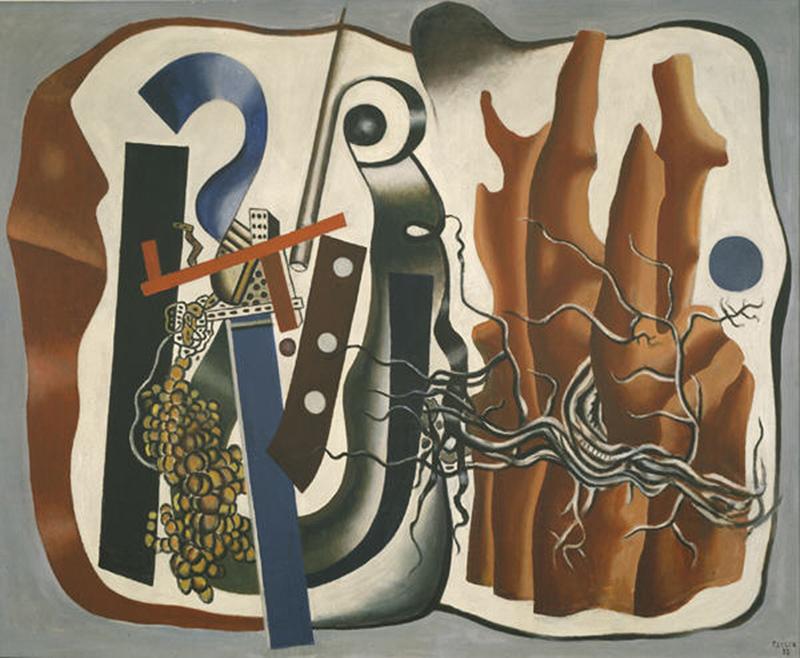
1982_28_FASurrealism is typically regarded as an art movement dedicated to personal exploration by tapping into a person’s subconscious. This was certainly an important component, but Surrealism was also focused on group activity, ranging from the creation of Surrealist journals, to collectively written statements, to unfettered discovery through group play and games.

Many of the games the Surrealists played together were derived from the types of parlor games they learned as children or still enjoyed as leisure.  Such activities, while fun, were also meant to spur creativity and subvert the psychological conditioning of society. Sometimes these games resulted in finished works of Surrealist art and writing.  As the movement’s self-proclaimed leader, André Breton, described their game playing in 1954: “Although as a defensive measure we sometimes described such activity as ‘experimental’ we were looking to it primarily for entertainment, and those rewarding discoveries it yielded in relation to knowledge only came later. […] It is clear that to shut oneself off from game-playing […] is to undermine the best of one’s own humanity.”  (Brotchie and Gooding, 1991, 137-138)

Perhaps one of the greatest benefits for educators using Surrealist games in the classroom is how the activities offer a set of tools to get learners conceptualizing critically and playing with images, words, and ideas where the purpose is surprise, delight, and creativity. For the Surrealists, the fact that games had rules or instructions that mandated how they were played, but the end-goal was itself unstructured, illogical, and messy, was representative of their own world-view.

Let’s briefly explore two games the Surrealists used in group settings that might be fun to apply to classrooms and museum teaching. My descriptions of these games has been adapted from Alastair Brotchie and Mel Gooding’s delightful Book of Surrealist Games (Shambhala Redstone Editions, 1995).


The Exquisite Corpse
Perhaps the best known Surrealist drawing game, the Exquisite Corpse was actually born out of a writing activity. Surrealism’s roots are in writing and poetry; its earliest practitioners and founders were all writers.  Games like the Exquisite Corpse (the name is taken from the poetic results of the first game played) were later modified into a visual variant.

Exquisite Corpse by Breton-Knutson-Hugo


Group size: Typically three-to-four players, or any size up to how easily one sheet of paper can be folded.

Instructions: A piece of paper is folded so that the number of creased sections matches the number of players, usually horizontally or in quarters for four players.

The first player takes the folded paper with the top fold exposed and draws anything that comes to mind. (Note: In it’s purest incarnation, as a reference to the name of the game, the players are to base their portions of the drawing on the portions of a human body, but this is by no means a hard-and-fast rule!)

She then extends some of her drawn lines across the fold into the next blank section, and refolds the paper so only the second section is exposed, and the next player cannot see what she drew in the first section.

The re-folded sheet is passed to the second player, who bases his drawing on the few exposed lines provided. After completing his section, he also extends a few of the bottom-most lines across the fold, refolds to hide his portion and expose the next, and passes to the next player.

This process continues until all players have a turn to draw a section, when it is unveiled and unplanned, group-designed drawing is revealed. An added variation involves the last player handing the folded drawing to the first player again, who must conceive of a title before the full drawing is shown.

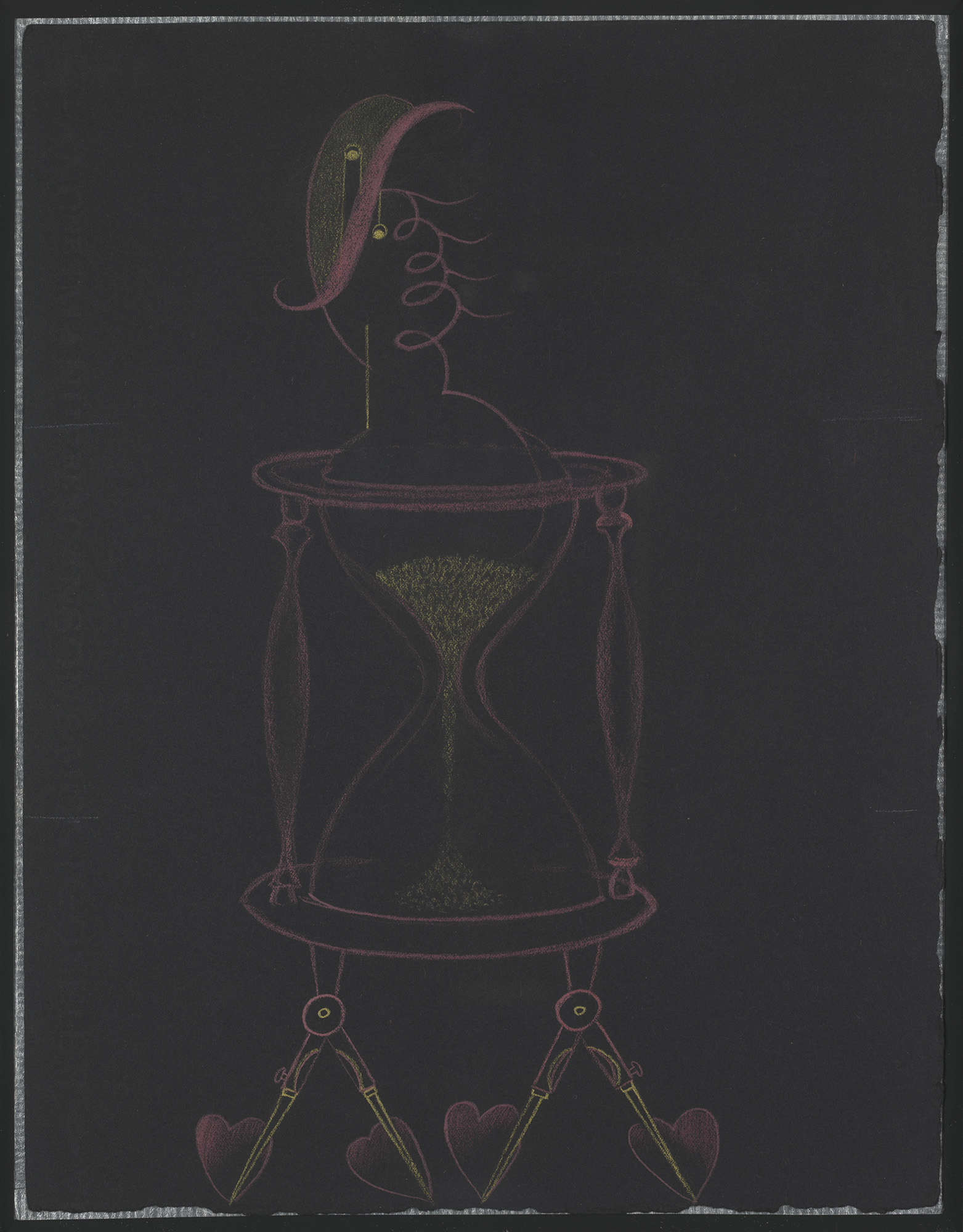
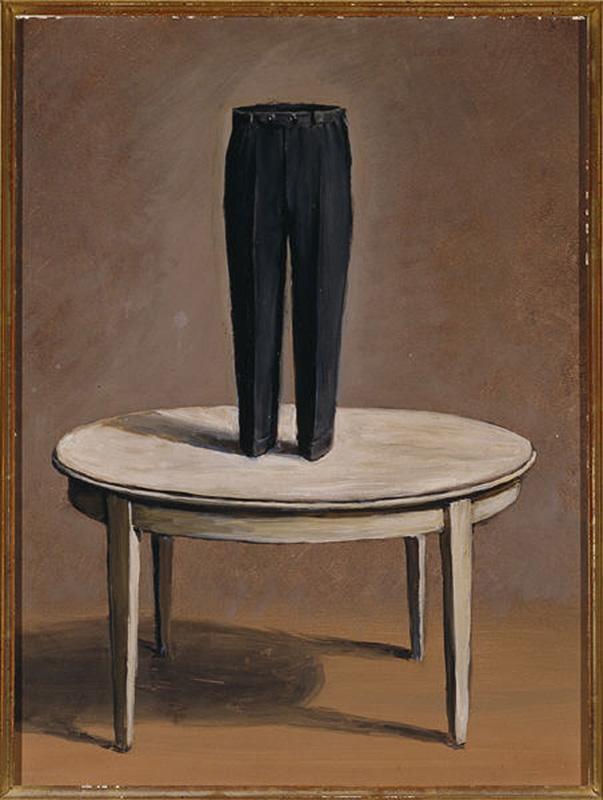
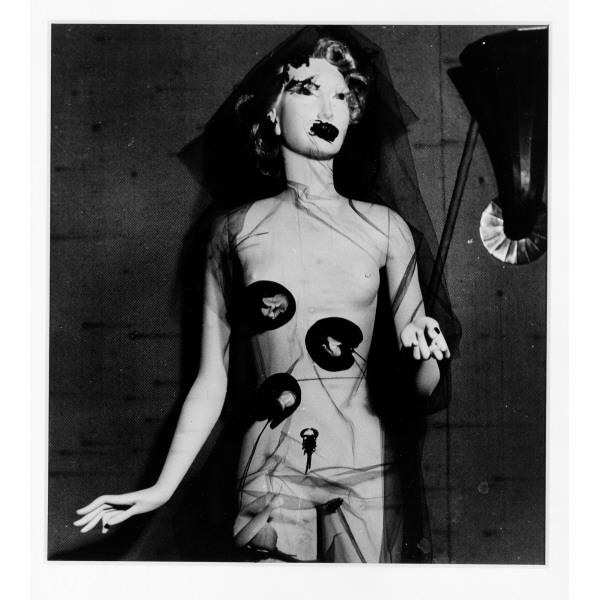
Outcome: An example of an Exquisite Corpse can be seen above, created by André Breton, Greta Knutson, and Valentine Hugo, where the “head” is a florid, calligraphic design, the “torso” is an hourglass, and the “legs” are heart-footed compasses. The surprising and seemingly unnatural conjunctions of objects in these drawings are similar to the visual juxtapositions presented in many Surrealists’ work.  Examples include the René Magritte’s Persian Letters, and Surrealist objects, such the one below by Sonia Mossé, both in the DMA’s collection.

Magritte - Persian Letters - 1958

Gaston Paris - Photograph of Sonia Mosse mannequin from International Surrealist Exhibition - 1938


The Game of Variants

This is essentially the traditional “whisper” game of Telephone. The group sits in a circle, and the first person conceives of a phrase, then whispers it to her neighbor. The second person whispers the same sentence to his neighbor, and so on, through the entire group. By the end, the beginning and ending phrases are compared.

An example:
Starting Phrase: “You must dye blue the pink bags fathomed by orange parapets.”
Ending Phrase: “At all costs forget the fifth paragraph of ‘Paradise Lost’.”

While not practiced by the Surrealists, I have used a fun visual variant of this game in teaching.

Group Size: Best suited for groups between ten and thirty players.

Instructions: Take a piece of paper and fold it horizontally then vertically in an accordion-style (front-over-back) into quadrants that add up to the number of players. (So, with twenty-five players, fold a typical sheet of paper four times horizontally, then four times vertically.)

Present the folded up paper so only one folded quadrant is visible, then have the first player draw a small simple, linear image.

She then presents the drawing to the next player, who looks at it, folds the paper over to the next blank quadrant, then redraws the image from memory. He then passes his version of the drawing on, and the process is repeated until the last player finishes her drawing.

Once finished, unfold the entire sheet, and marvel at the evolution of the image as it transforms from one recognizable thing into something else altogether!

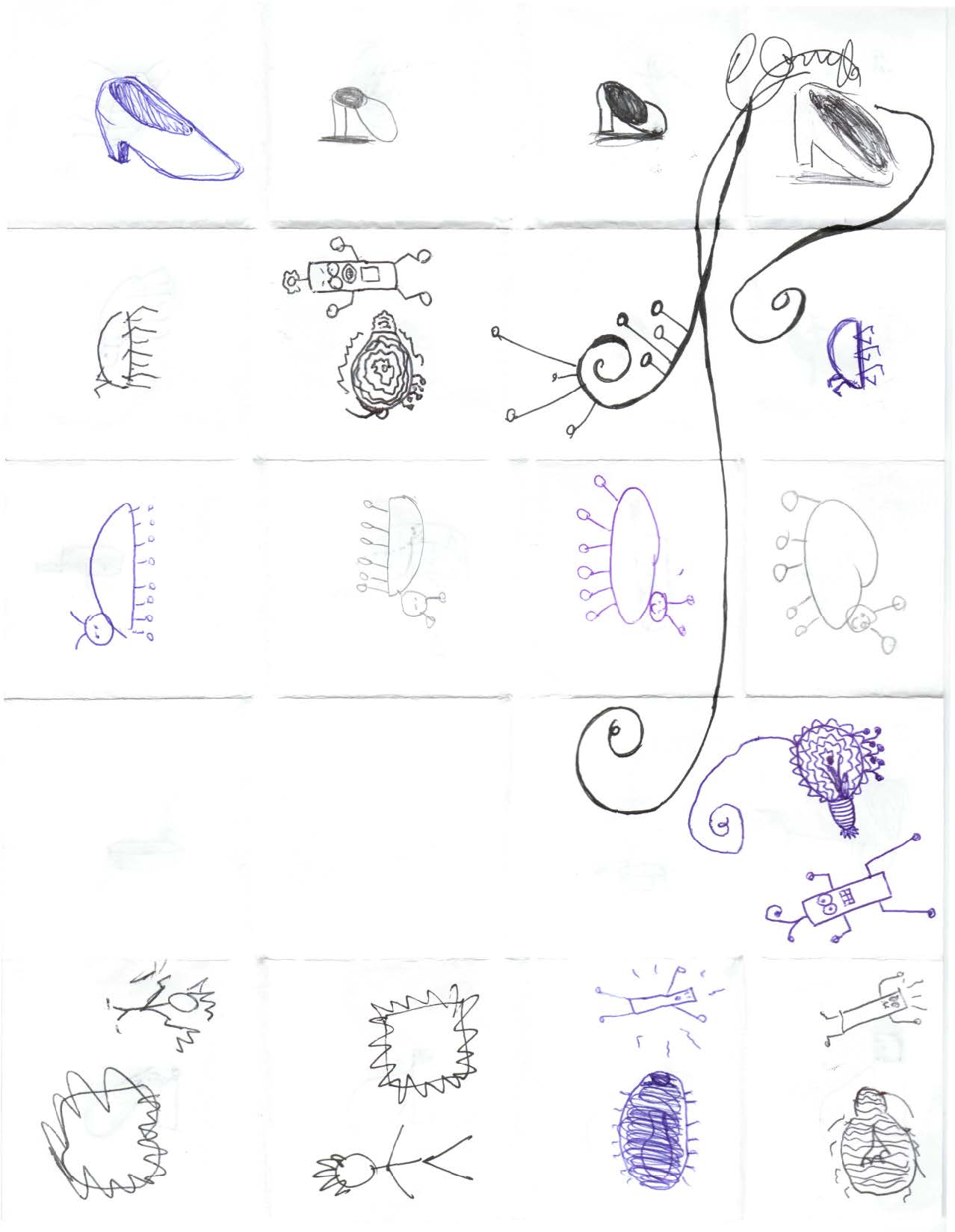
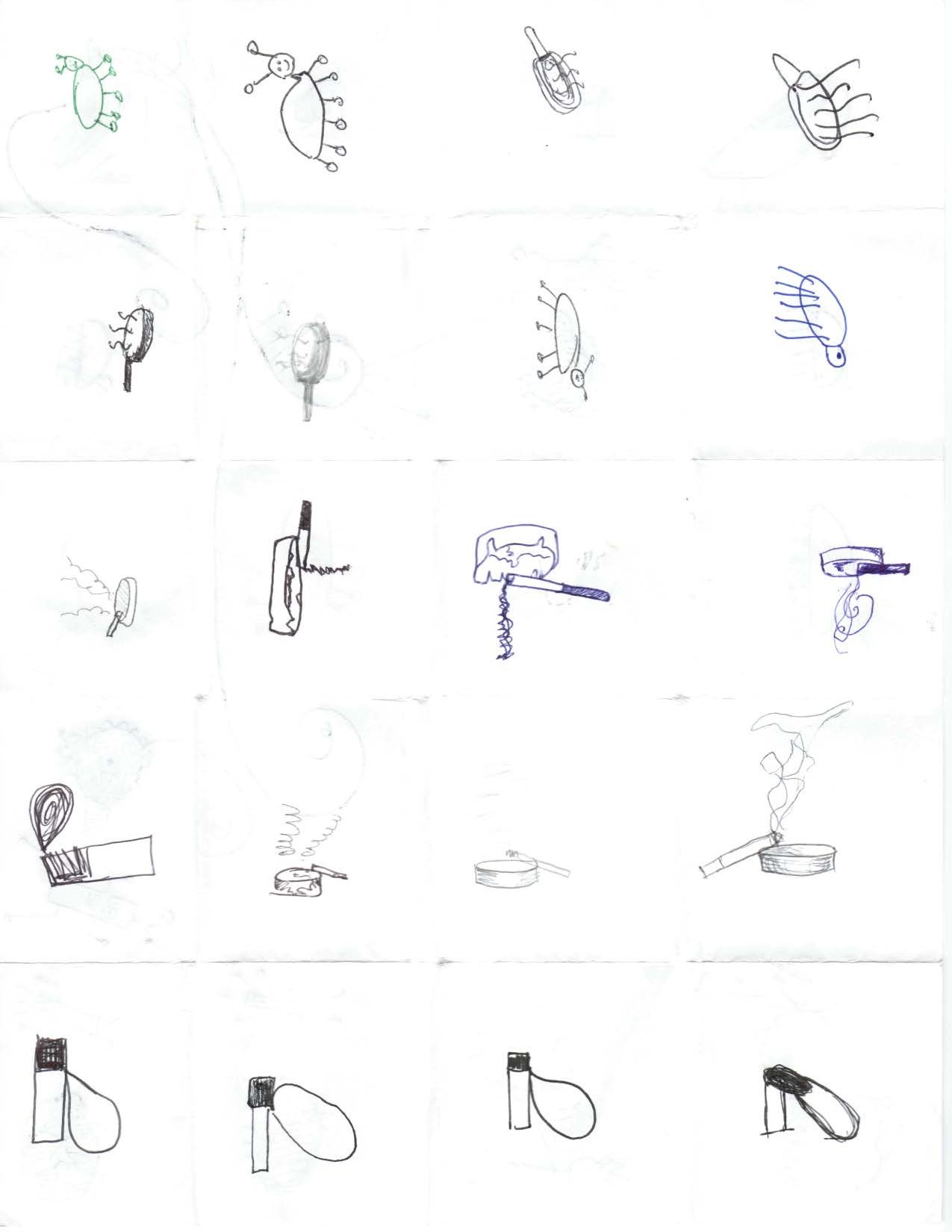
Outcome: Just as the results of the Telephone game are remarkable for the dissimilarity between starting and ending phrases, the results of this visual variant are similarly startling, but the sheet also becomes a visual record of the transformation of starting image into something else entirely.  In the example below completed during a class I taught in 2009, the starting image of a shoe transforms multiple times, into a cigarette and ashtray, a frying pan, a robot, and a bug.

Successive Drawing In-Class_Page_1_2009

Game of Variants Drawing (recto), 2009

Successive Drawing In-Class_Page_2_2009

Game of Variants (verso), 2009


Have you tried using Surrealist games like these in your teaching or for fun?  Please leave your experiences and ideas in the comments below!


Artworks shown:

  • Ferdinand Léger, Composition with Tree Trunks, oil on canvas, 1933, Dallas Museum of Art, Foundation for the Arts Collection, gift of the James H. and Lillian Clark Foundation.
  • André Breton, Greta Knutson, Valentine Hugo, Untitled (Exquisite Corpse), Colored pencil on black paper, c. 1929, Private Collection.
  • René Magritte, Persian Letters, oil on canvas, 1958, Dallas Museum of Art, gift of J.B. Adoue, III.
  • Gaston Paris, Untitled (Mannequin by Sonia Mossé), Gelatin silver print, 1938, Dallas Museum of Art, gift of the Junior Associates and an anonymous donor.

Sources:

Brotchie, Alastair and Mel Gooding.  A Book of Surrealist Games.  Boston & London: Shambhala Redstone Editions, 1995.


Josh Rose
Manager of Docent and Teacher Programs


Archives

Categories