Archive Page 84

Camp and Community

photo (1)

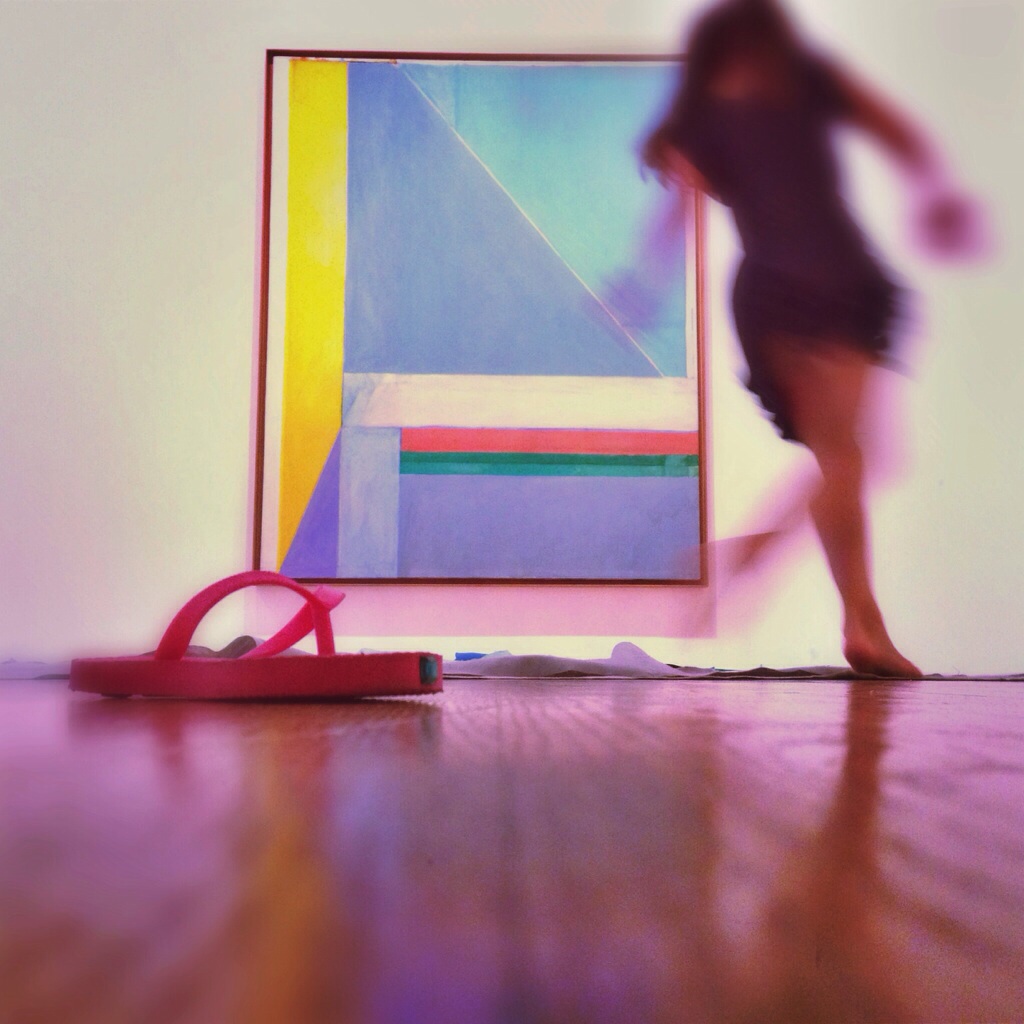
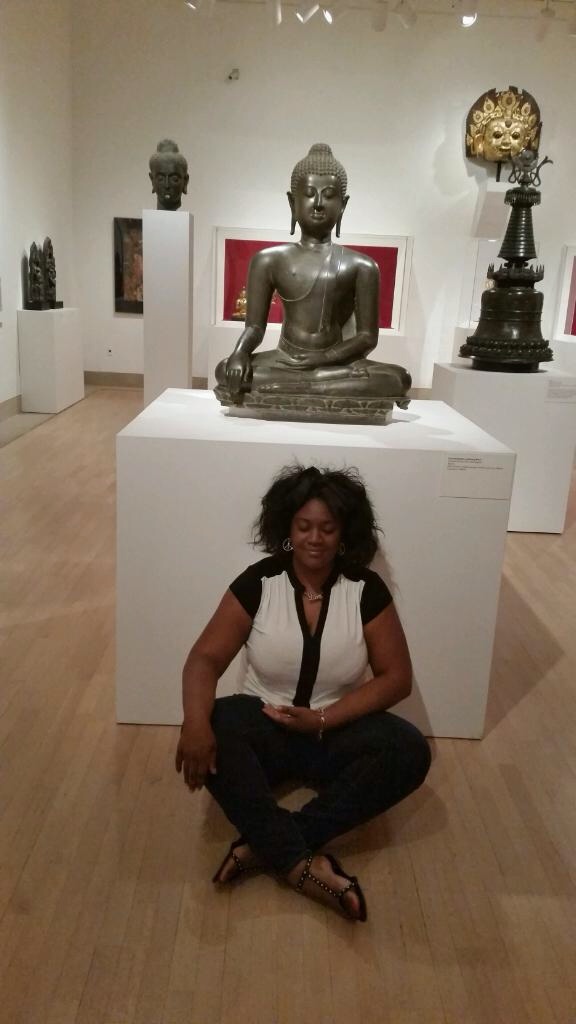
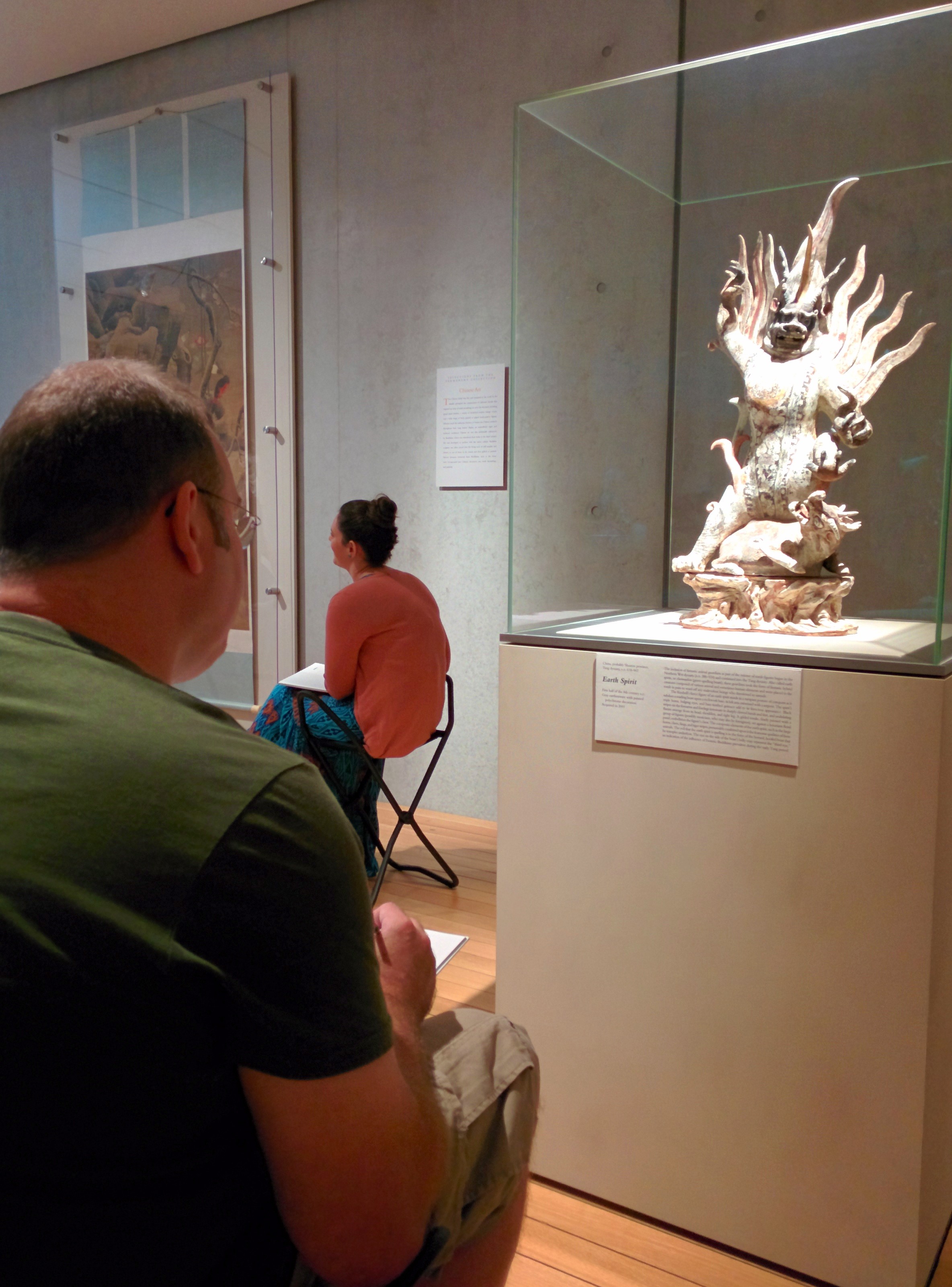
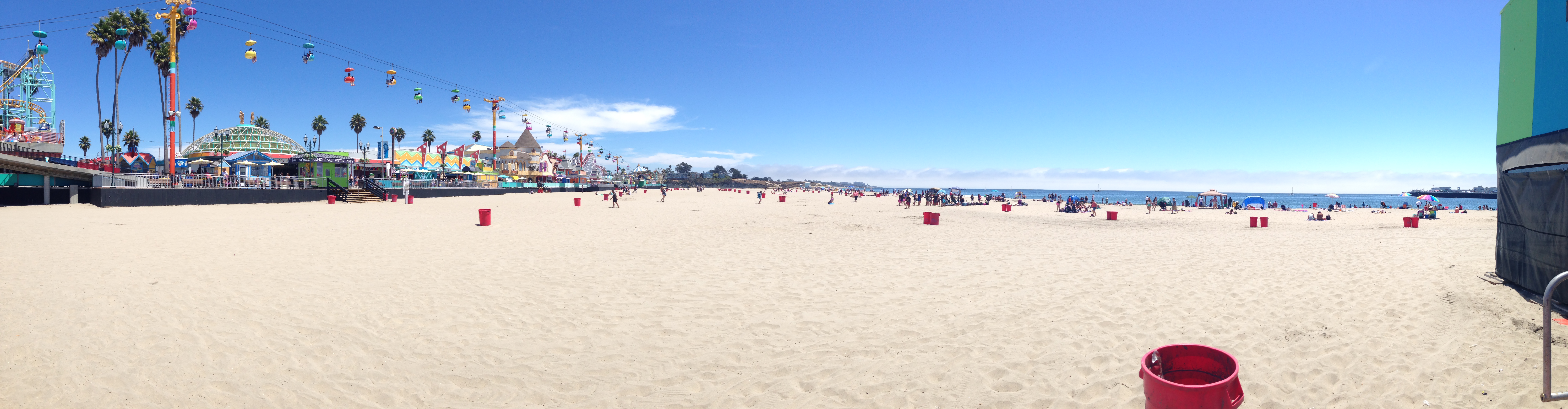
I spent the last week in July in sunny California. Though I divided my time between walks on the beach, wandering the bustling boardwalk, and exploring the Santa Cruz Museum of Art & History (MAH), this was no beach vacation, but rather an intense seventy-two hours at Nina Simon’s Museum Camp 2014.  Even with the itinerary, I honestly did not know what to expect as I walked up to the MAH, feeling like a true camper toting my loaded backpack and refillable water bottle attached to my purse.  As a museum educator, this was a dream come true.  Not only has Simon influenced the way we think about and create programs and interactives in the Center for Creative Connections (C3), but I also used her book in the literature review of my Master’s thesis.  As relevant professional development can be hard to come by as a museum educator working in an interactive space, this Social Impact Assessment themed camp seemed to be what I was looking for to give me some direction in the evaluation of the C3 and specific activities within our space.

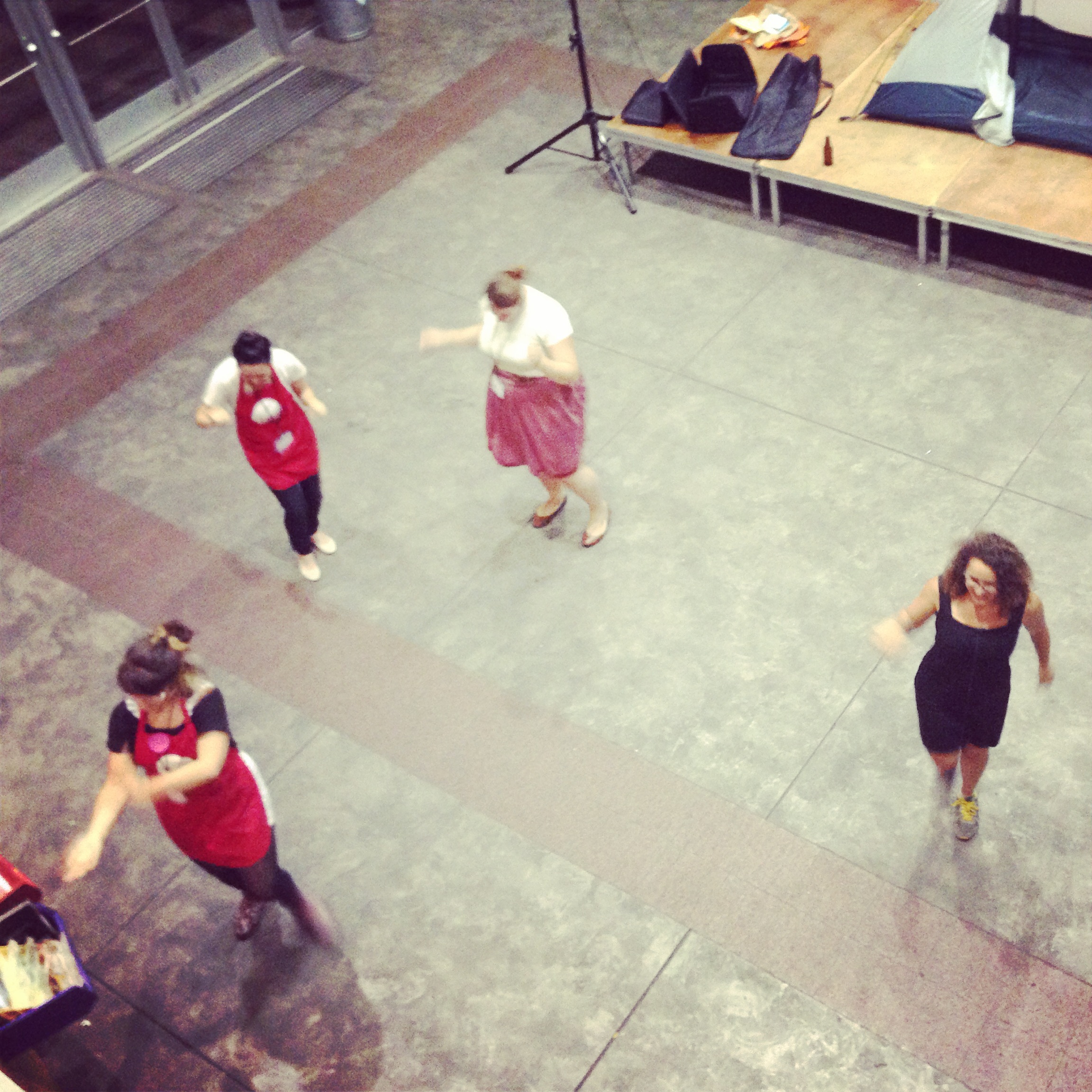
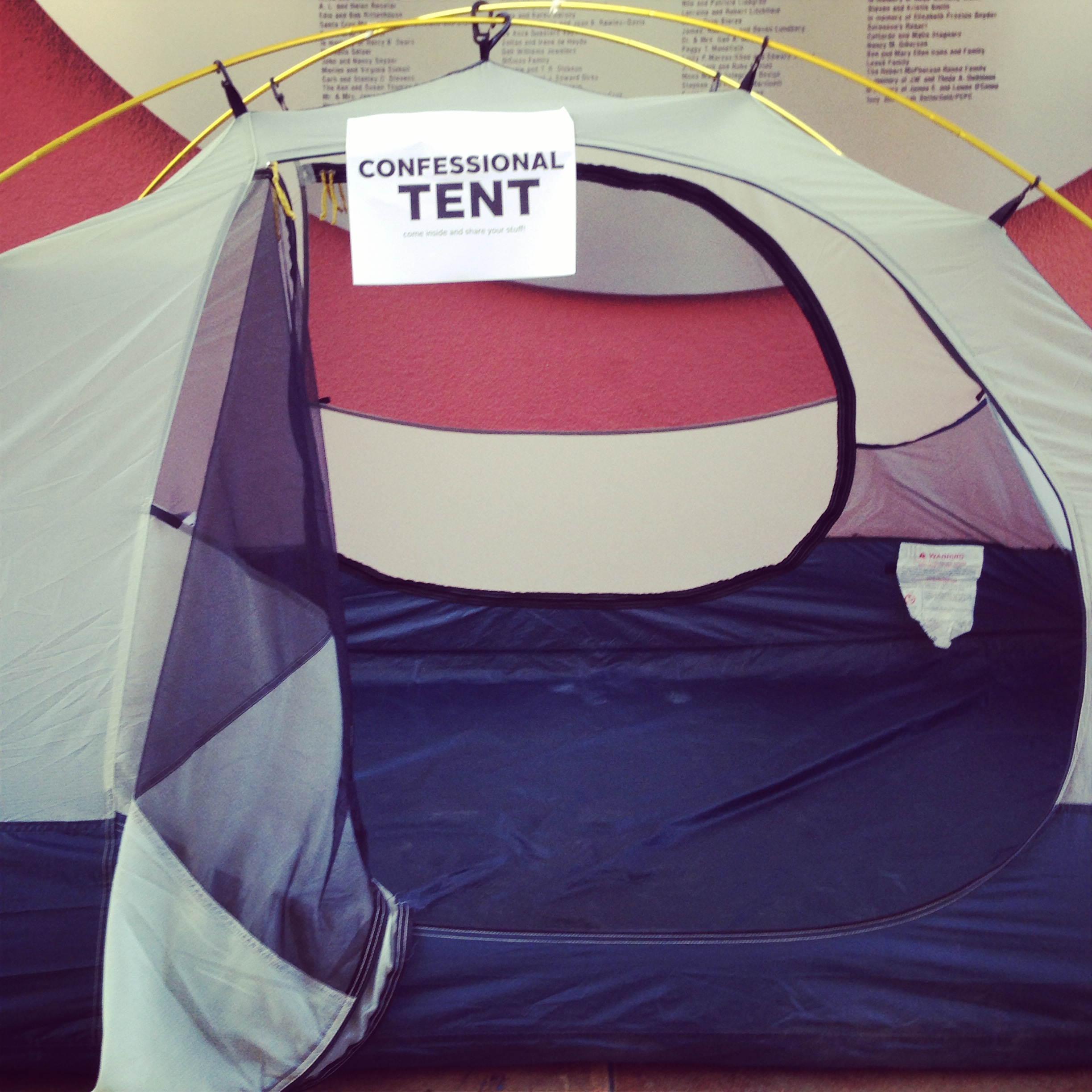
Overnight camp as an adult is a unique opportunity, so when I was offered the chance to attend Museum Camp and sleep over at the museum, I was all in.  There is a special bond that is formed by spending that kind of concentrated time with a group of people.  That bond is reinforced by going through certain trials and tribulations together, like searching for a comfortable spot to sleep, waking up and walking through a foggy Santa Cruz morning to the gym to take a shower, or late night revelations in the Confessional Tent.  Though not all the campers opted to stay the night at the Museum, there were other opportunities for bonding, like karaoke night, mess-hall style dinners, swimming in the Pacific, and of course the fast-paced group research projects that were at the center of our camp experience.
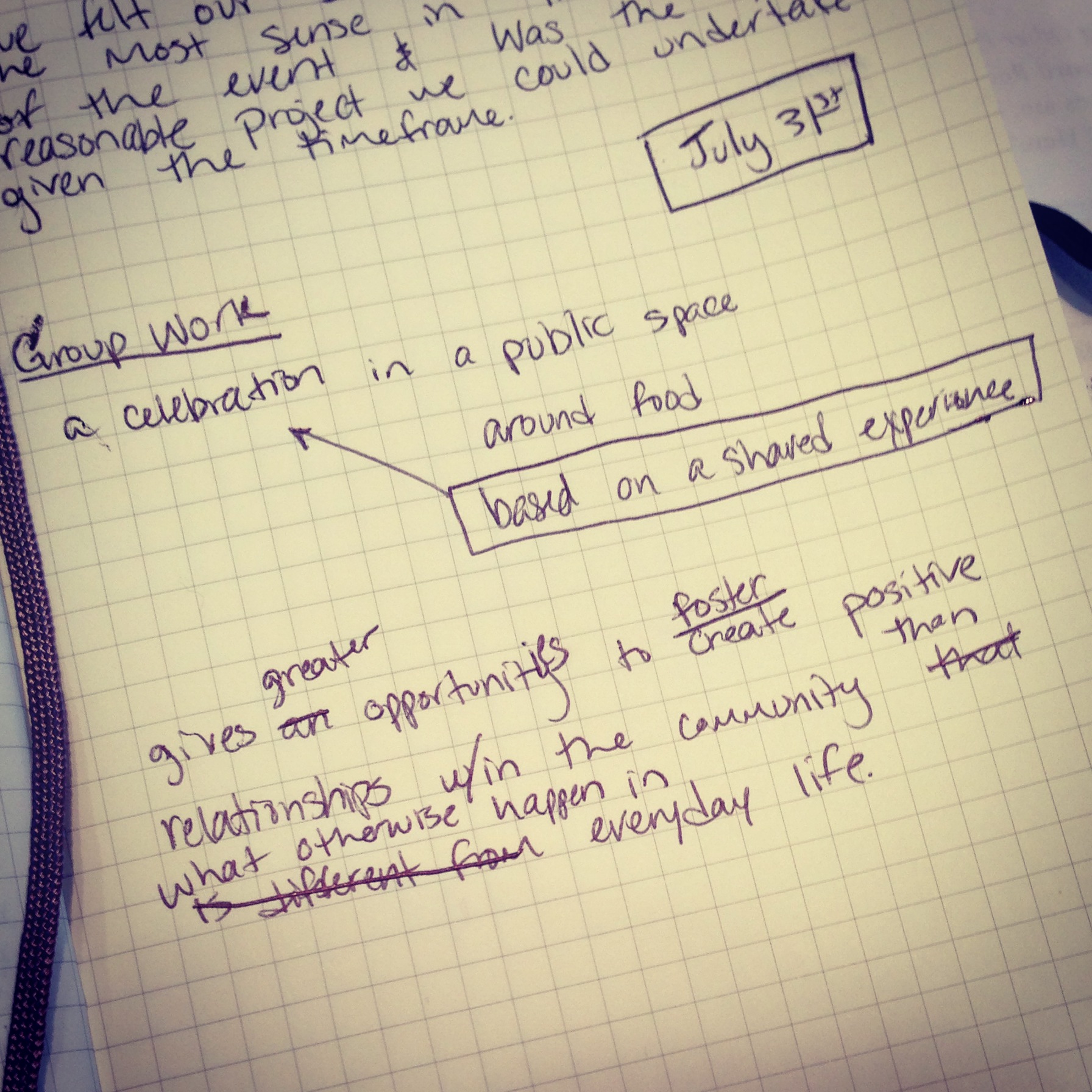
 

We met our group members at the end of the first day of Museum Camp and, through a tumultuous game of White Elephant, our research locations were determined.  Over the next few days we developed a research question, hypothesis, and indicators, then carried out our research and compiled our findings. The goal was to use unconventional methods of data collection to gather information regarding social impact. My group, the Metacampers, had a more sensitive location than most because we were attending a private rather than public event. The event was hosted by the Beach Flats Community Center for a small group of Latino families. Since we were all outsiders, we found it important to gather as much information as possible before engaging in our research.  We visited both the community center that was hosting the event and the park where the event would take place. Yet, we still came to our project with a handful of assumptions both about the community and the location. We planned our methods so as to be as natural as possible at the event; our Spanish-speaking group members engaged in informal interviews with adult participants, our non-Spanish-speaking members made observations of both adult and youth participants, and towards the end of the gathering we asked the youths to each take a photograph of  what they found most fun at the event. We expected to be greeted with some amount of skepticism, but were surprised to find the community was quite welcoming. The key to this was our Spanish-speaking group members; they were able to become ingrained in the event as participants, and holding informal interviews was a natural aspect of that.
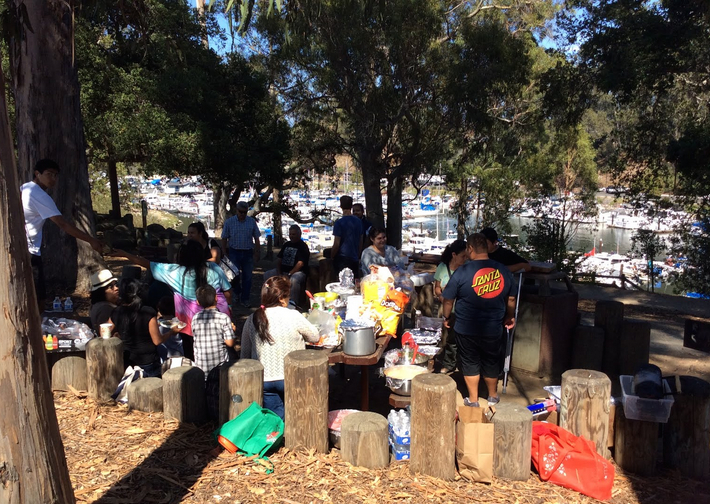
This brings me to my biggest take-away from Museum Camp.  While undertaking the research project and learning about the other groups’ methods was interesting and insightful, my biggest take-away has more to do with the idea of community.  Time and again throughout camp, I was surprised by how immersed Nina Simon is in her city.  Clearly, whether the camp was going on or not, Simon would have had dinner at India Joze or gone to karaoke at I Love Sushi or walked to the beach to go swimming in the Pacific. As a cultural and educational institution, connecting to the community is an important aspect of the Dallas Museum of Art’s mission. What I learned at Museum Camp is that rather than seeking to connect to the community we must be embedded in it; we must be active participants in our own communities.
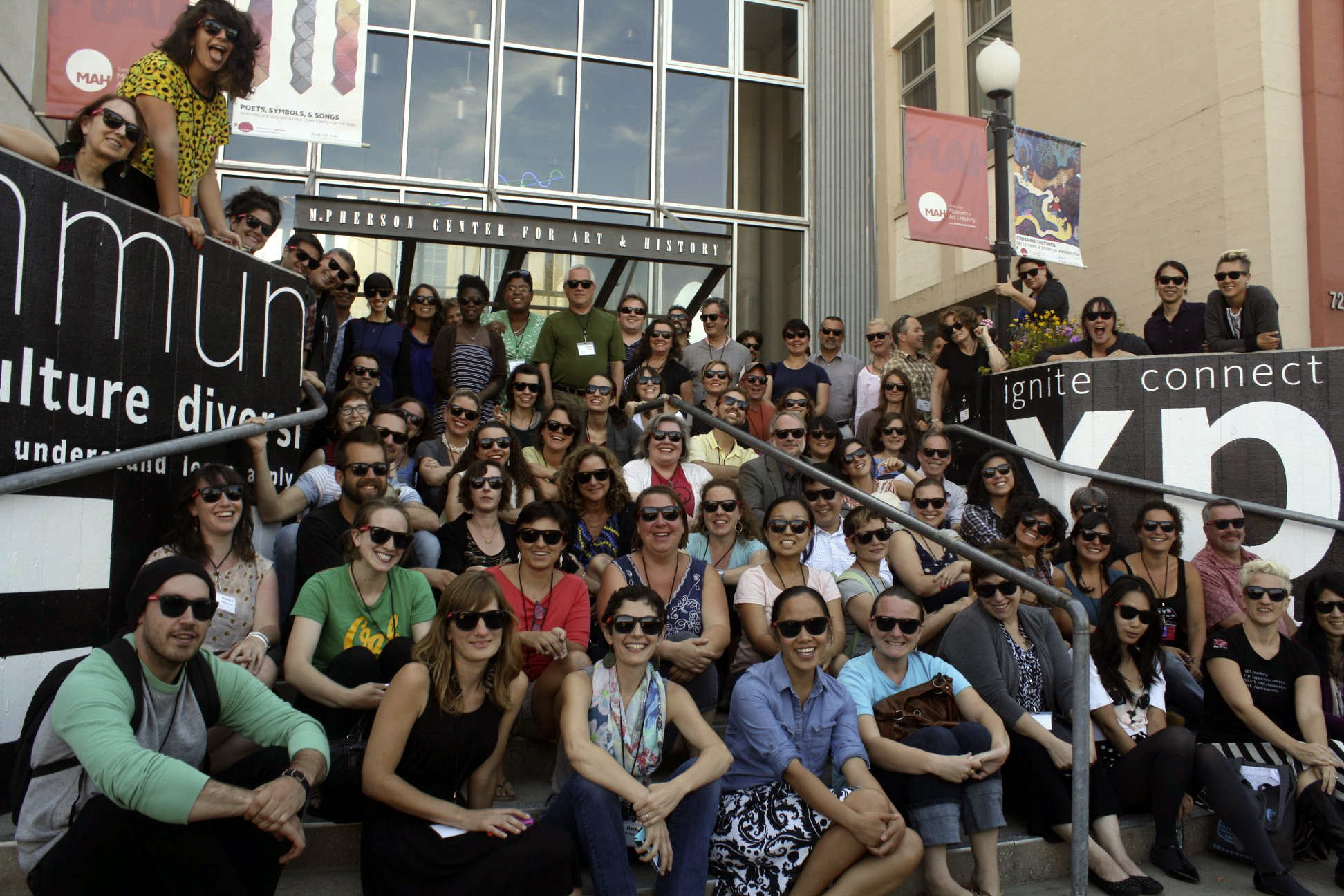
If you’re interested in learning more about the Museum Camp 2014 experience, take a look at these resources from camp and reflections by other campers.

Jessica Fuentes
C3 Gallery Coordinator

ARTifacts: A Trip to the Moon and Beyond

From 1953 to 1956, the Dallas Museum of Fine Arts had something few other art museums did . . . a planetarium.

Planetarium equipment, circa 1953 [The Jerry Bywaters Collection, Southern Methodist University]

Planetarium equipment, circa 1953 [The Jerry Bywaters Collection, Southern Methodist University]

The planetarium’s first show, “A Trip to the Moon,” was held during the 1953 State Fair. The Model A-1 Spitz planetarium, with 24-foot dome, would go on to enthrall thousands of visitors—over 10,000 in the first six months—with shows such as “Star of Bethlehem,” “Skies over Dallas,” “Reasons for the Seasons,” “The Sun and Its Family,” “Seven Wonders of the Universe,” and “The Greatest Show Off Earth.”

Shows were scheduled for the public on weekends and for groups during the week, for the low price of 50 cents for adults and 25 cents for children and students. The State Fair was the most popular time for the planetarium, entertaining 4,000 people over 69 shows in 1954 and 5,665 people over 80 shows in 1955.

In early 1956, the planetarium was transferred to the Health Museum, which was later called the Science Place and is now closed.

Hillary Bober is the Archivist at the Dallas Museum of Art.


Stick to It!: Five Ways to Use Contact Paper for Art-making

As August heats up, you might find yourself retreating to cooler climes, and you can only spend so long at the pool before the kids shrivel up! Beat the heat and keep the kids busy with creative art-making using one of my most favorite unconventional art materials—contact paper.

Contact paper is most often used to line shelves in the kitchen, but take it into the art studio, and you can create some art magic. Here are some of my go-to projects using this surprisingly versatile material.

Texture Collage

Use a piece of contact paper (sticky side up) as the collage base, and encourage your child to create using a variety of collage materials—cotton balls, feathers, sandpaper, tissue paper, sequins, felt, and more. This project works really well for toddlers because they don’t have to worry about managing glue in order to get their materials to stick to the paper. Older children might want to use some glue if they build up layers of materials on top of one another. The finished product is a touchable work of art!

Beach scene created with sand paper, tissue paper, cotton balls, and foam shapes

Beach scene created with sand paper, tissue paper, cotton balls, and foam shapes

Stained Glass “Windows”

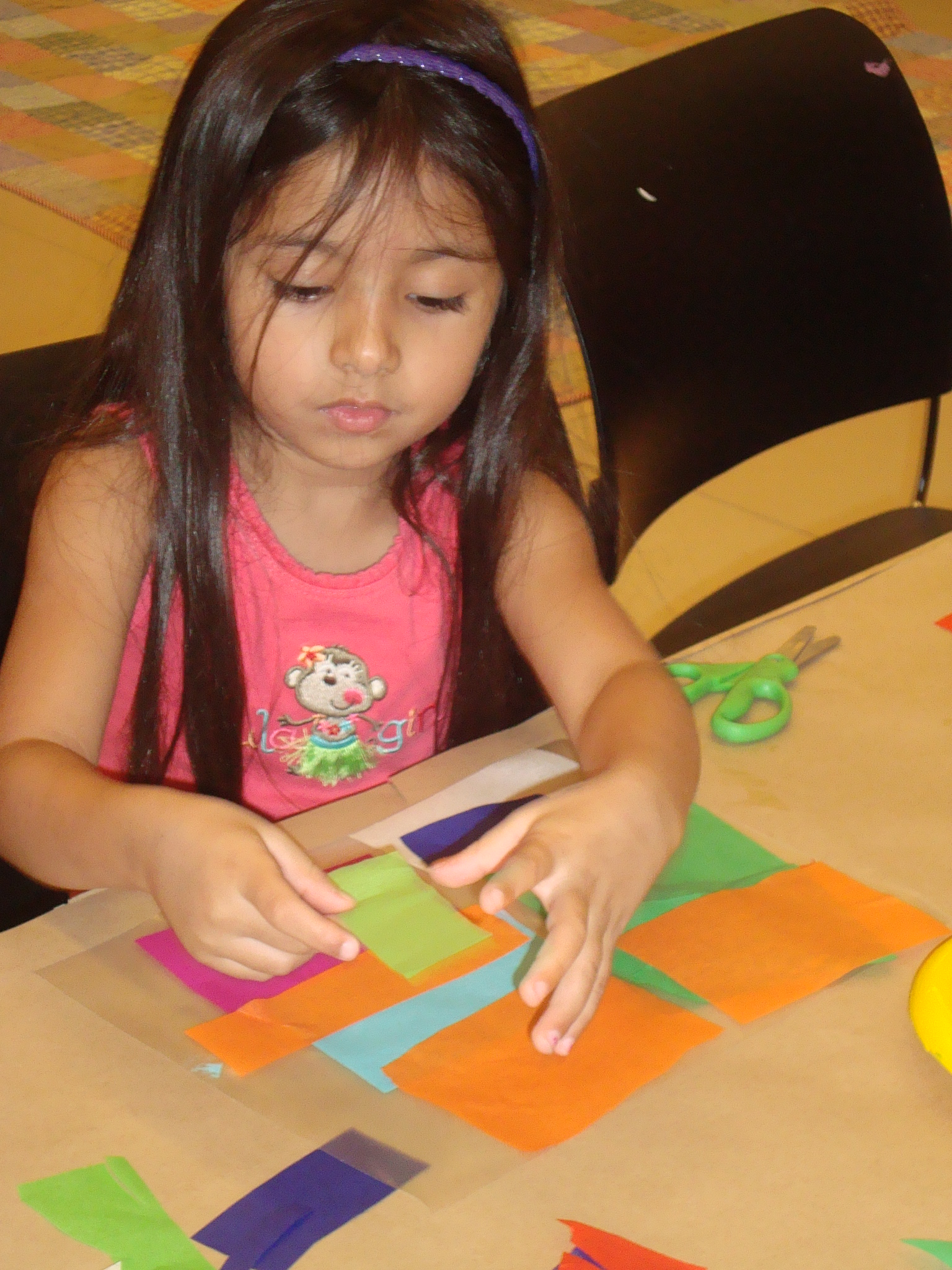
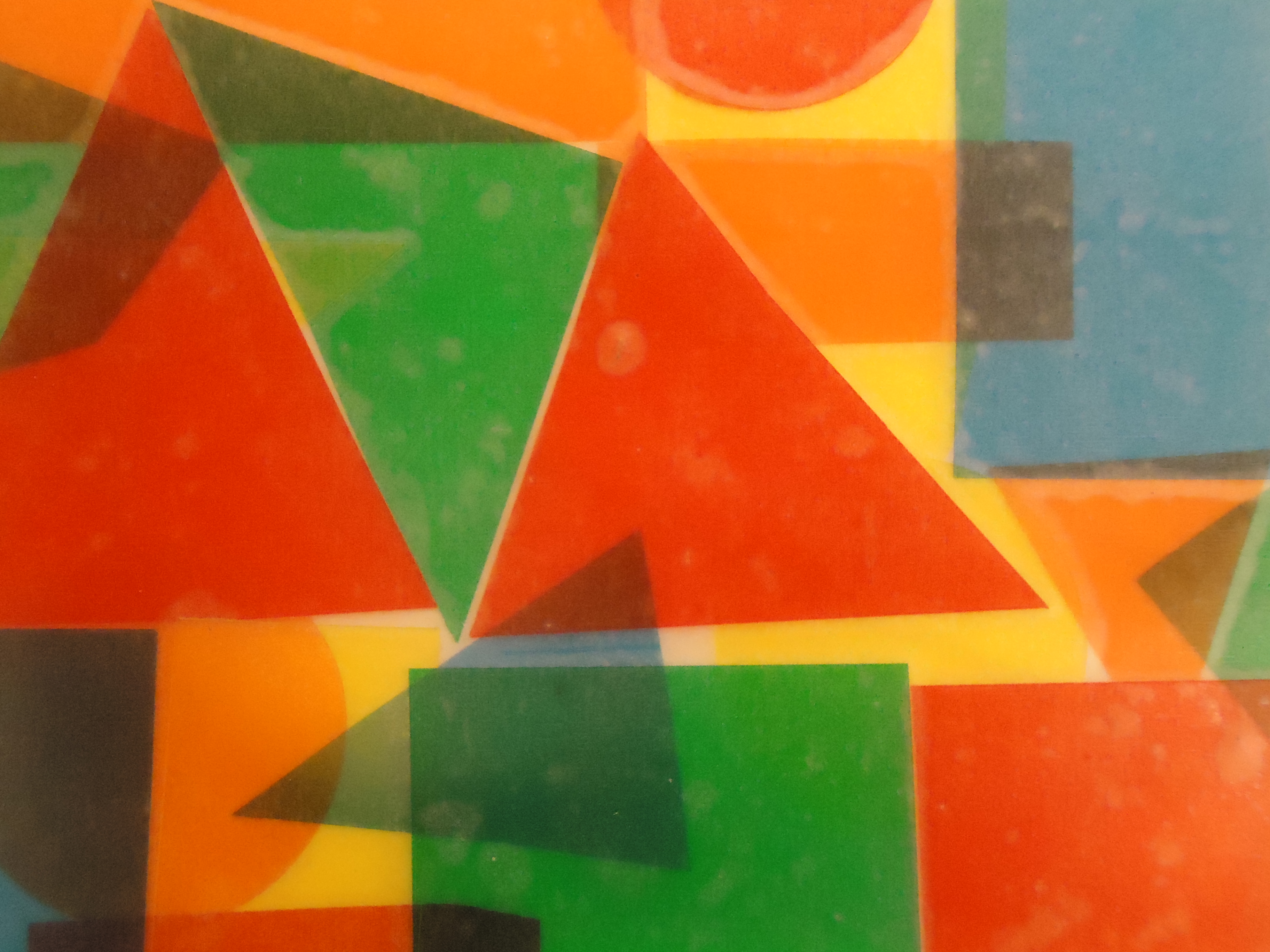
One of my favorite art projects to do with kids here at the Museum is inspired by the Tiffany stained glass windows. We use clear contact paper and tissue paper or transparency film to create a stained glass window-effect. Cut two squares of contact paper and arrange pieces of colored tissue paper or transparency film on one contact paper square, sticky side up. The tissue paper and transparency film can be layered to create a variety of colors; tissue paper can also be crinkled and squished to add dimension and texture. When your window is complete, carefully stick the second contact paper square on top, sealing the materials in. Hang in a window to allow light to shine through.

Make Your Own Stickers

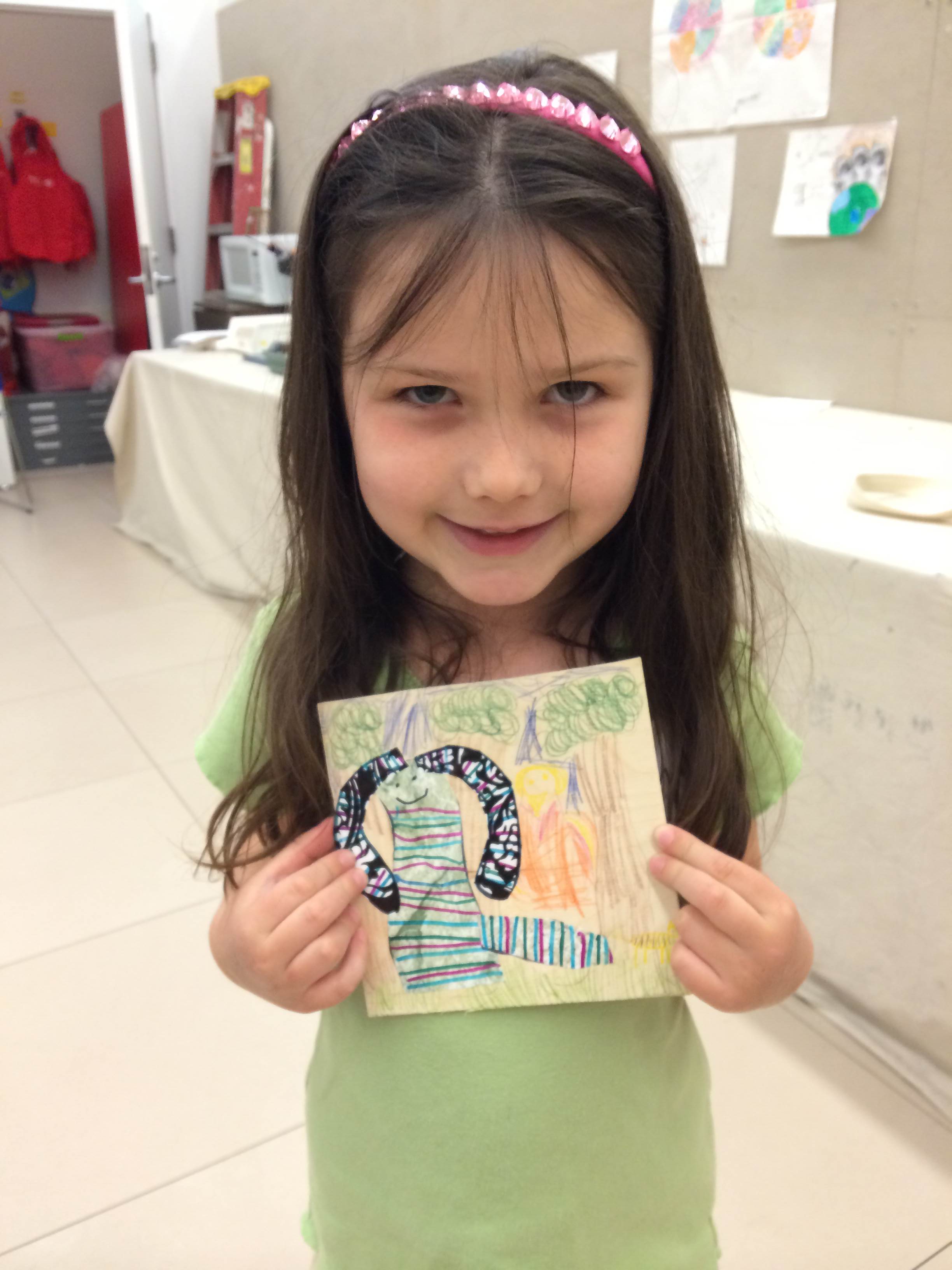
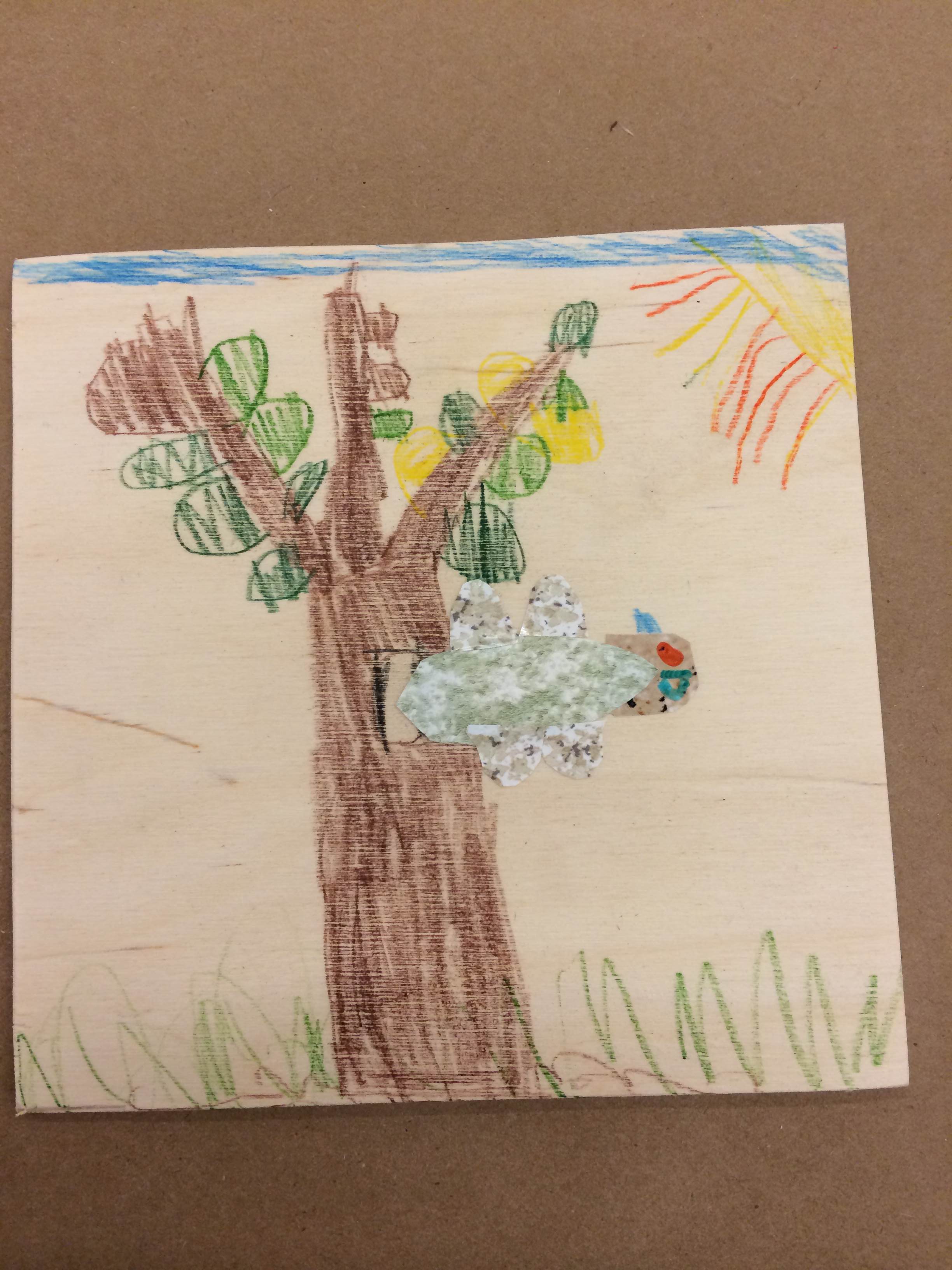
Contact paper comes in a variety of designs, making it the perfect medium for creating your own stickers. A few months ago in the Arturo’s Art & Me class, children made up their own imaginary creatures. They used permanent marker to draw the different parts of their animals on different kinds of contact paper. These pieces were then cut out, the paper backing removed, and the newly created stickers were stuck to a landscape drawn on wood. Contact paper stickers will stick to paper, wood, and glass.

Sand Paintings

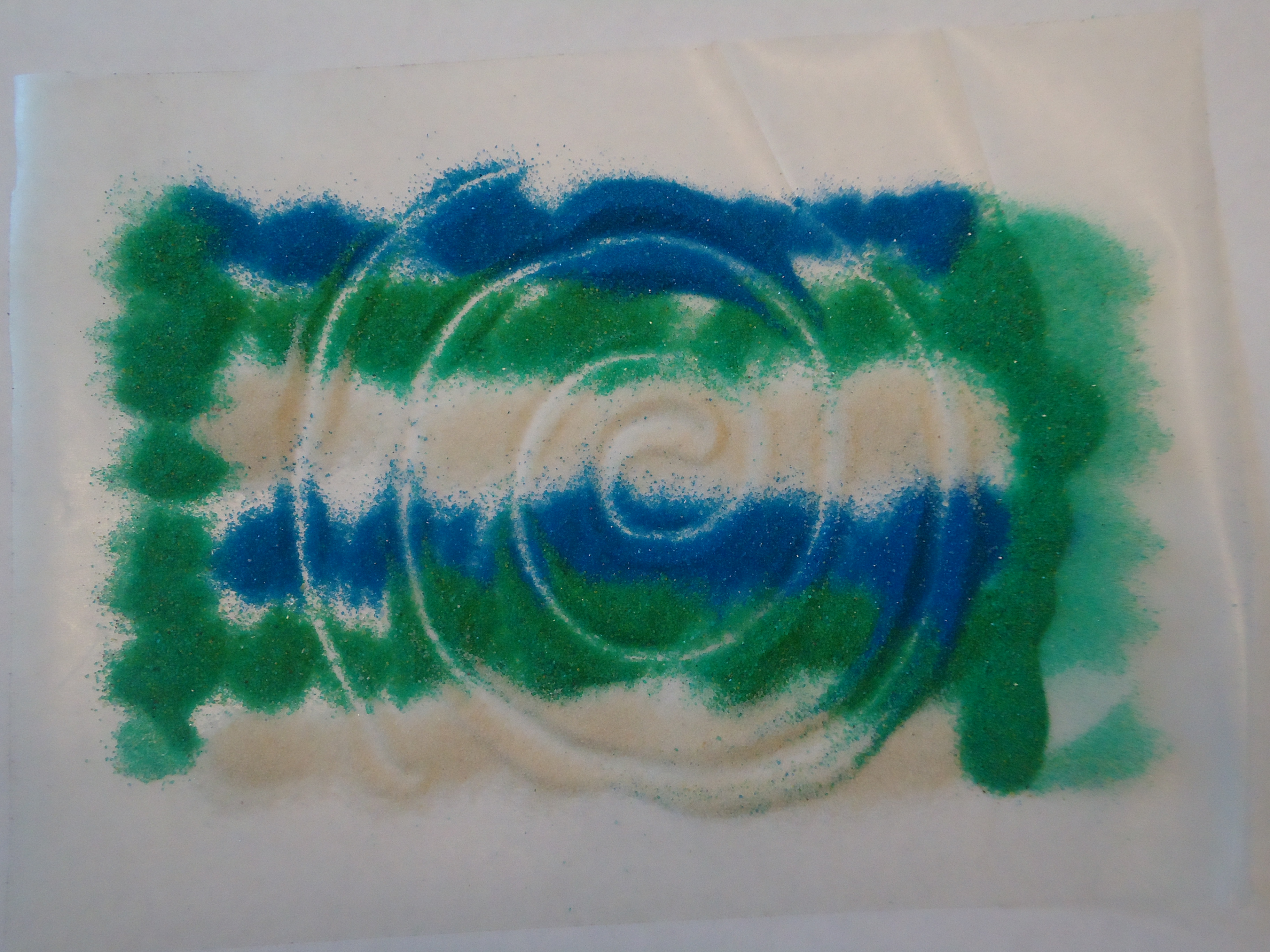
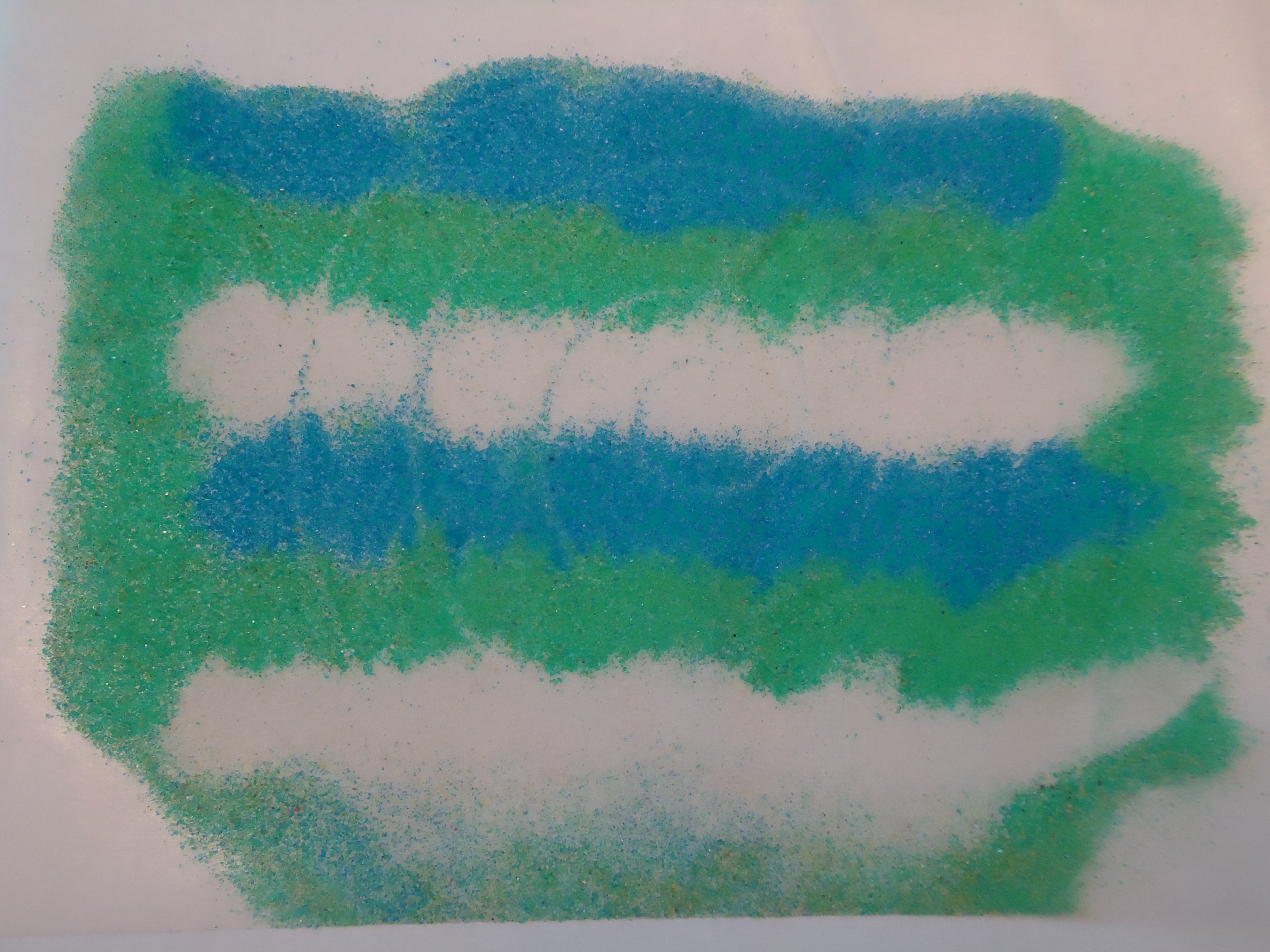
Try your hand at “painting” with sand! Use a piece of contact paper as the base for the painting, sticky side up. Sprinkle colored sand onto the contact paper to make interesting designs and shapes. For more control over the sand, use small funnels. You can also draw directly in the sand using a dull pencil. Shake your painting around, and watch how the design shifts and changes. You can also add a piece of colored paper as a backing to add even more color.

Dry Erase Drawings

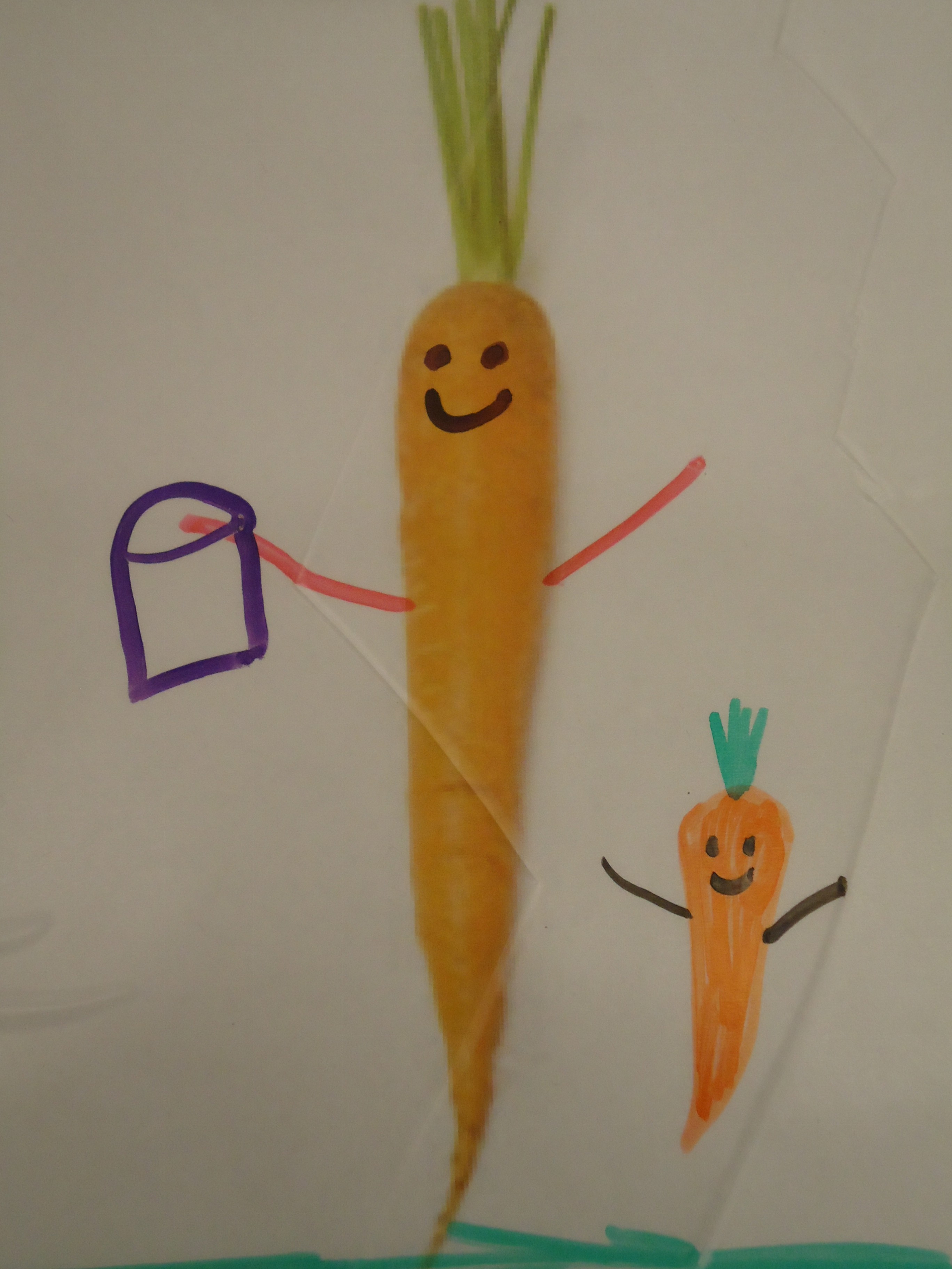
Contact paper can turn any printed image into a re-usable drawing board. Print out images of landscapes, faces, or objects on cardstock and then cover the image with clear contact paper. Give your child dry-erase markers and challenge them to add to the picture. They could add figures to a landscape, add accessories to faces, and transform everyday objects into crazy characters. Use a damp paper towel to erase the drawings and use again and again!

Find even more ways to use contact paper here and here!

Leah Hanson
Manager of Early Learning Programs


Friday Photos: C3 Summer Interns

The Center for Creative Connections (C3) staff was fortunate to receive help from two high school students this summer.  Sophie Anthony, a rising senior at Booker T. Washington High School for the Performing and Visual Arts, spent eight weeks working with us through the Mayor’s Intern Fellows Program.  Chloe Barreau will be a junior at the Chinese International School in Hong Kong.  She worked with C3 during a month-long visit with family.  Below are some of their experiences from this summer.

A good sense of humor is a requirement for interning with C3

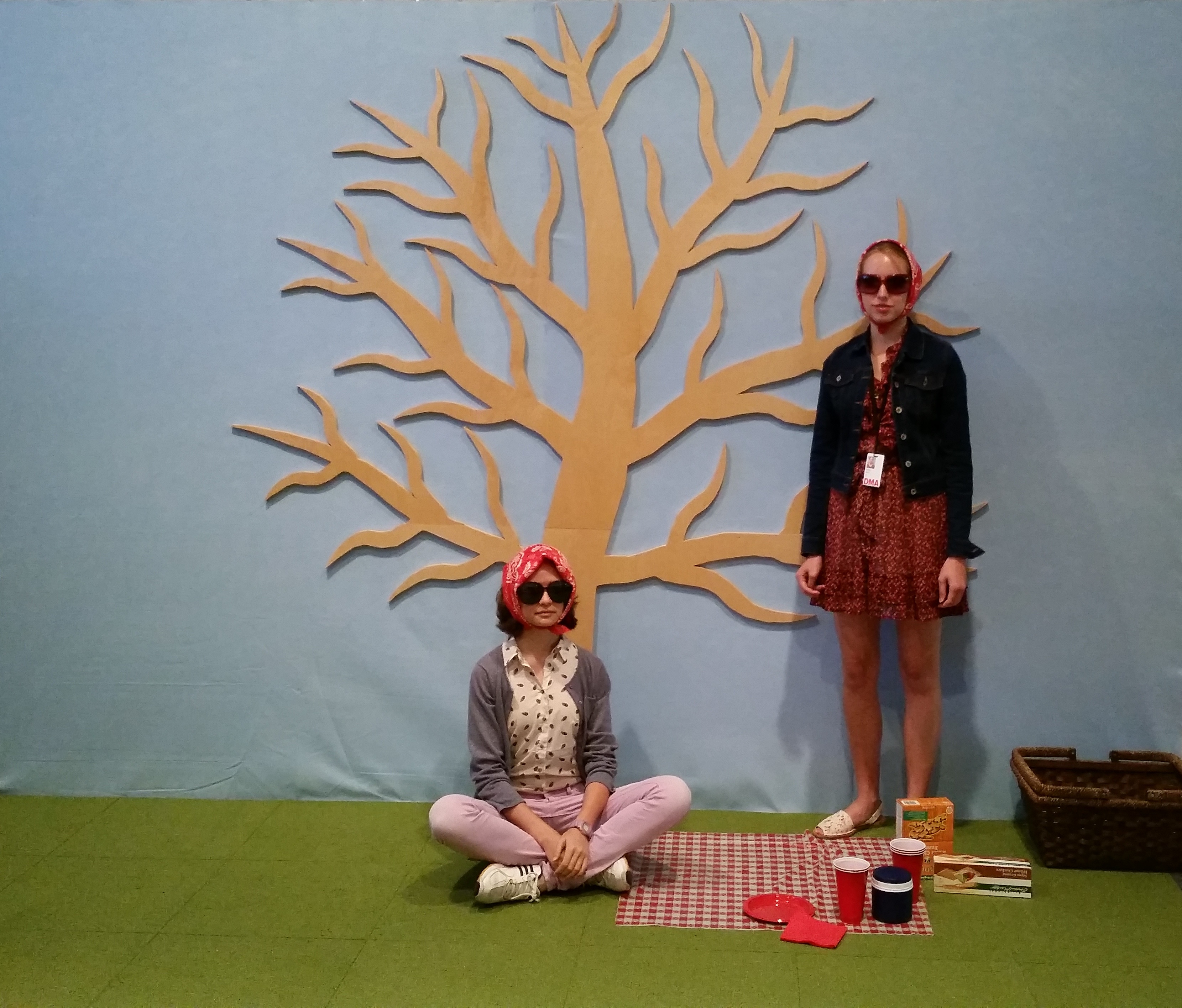
Sophie and Chloe served as the first models for a photo backdrop that connects to Nic Nicosia’s photograph titled Vacation, currently on view in C3

Sophie:

Wow.  I did not realize how fast eight weeks would fly by. My internship at the DMA has been amazing — art-filled and action-packed.  Through the Mayor’s Intern Fellows Program, I got a behind-the-scenes peek into the day-to-day running of the biggest (and still expanding) art museum in town.  What a thrill!  As a high school art student, it was exciting just to be in the same building as some of the beautiful and breathtaking masterpieces housed in the Museum, not to mention the opportunity to enhance visitors’ experience with these works.  Working with visitors in C3  and behind the scenes gave me the chance to assist and interact with regular art patrons and newcomers alike, as well as see firsthand the DMA’s commitment to art education and visitor participation.

A lot of my time spent as a C3 intern was, of course, spent in C3!  C3 is a hotspot for most Museum visitors — nearly everyone who enters is excited by the relaxed and hands-on atmosphere, and leaves with their own Art Spot creation.  An extension of the C3 atmosphere is the Pop-up Art Spot, a cart filled with activities that moves through the galleries on a weekly basis.  It allows museum-goers a chance to participate with works of art more closely and see things they might not have noticed before.  Both C3 and the Pop-up Art Spot were a lot of fun because I was able to chat with visitors and learn their thoughts and perceptions on art pieces and the DMA.  I met people who had been going to the DMA for the past twenty years and people who had never visited an art museum before.  But it wasn’t all conversations — there are always plenty of supplies to be prepped!

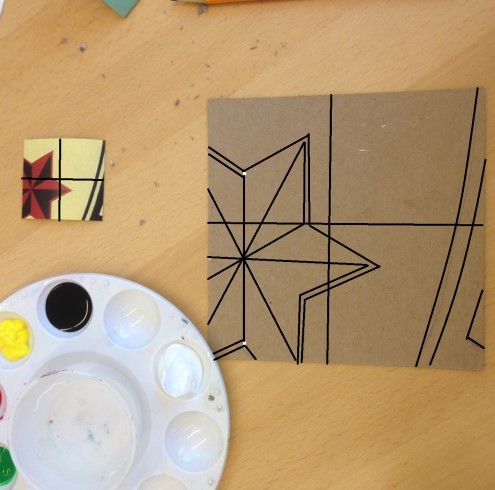
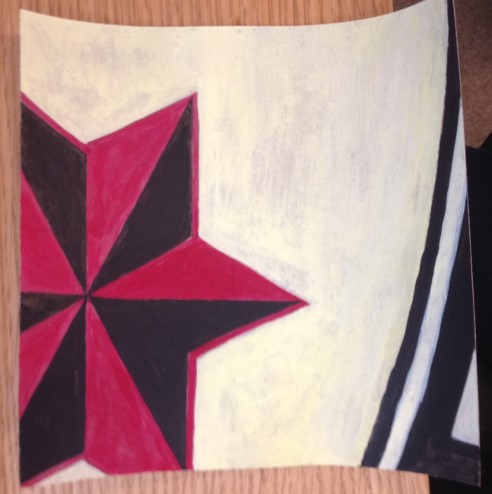
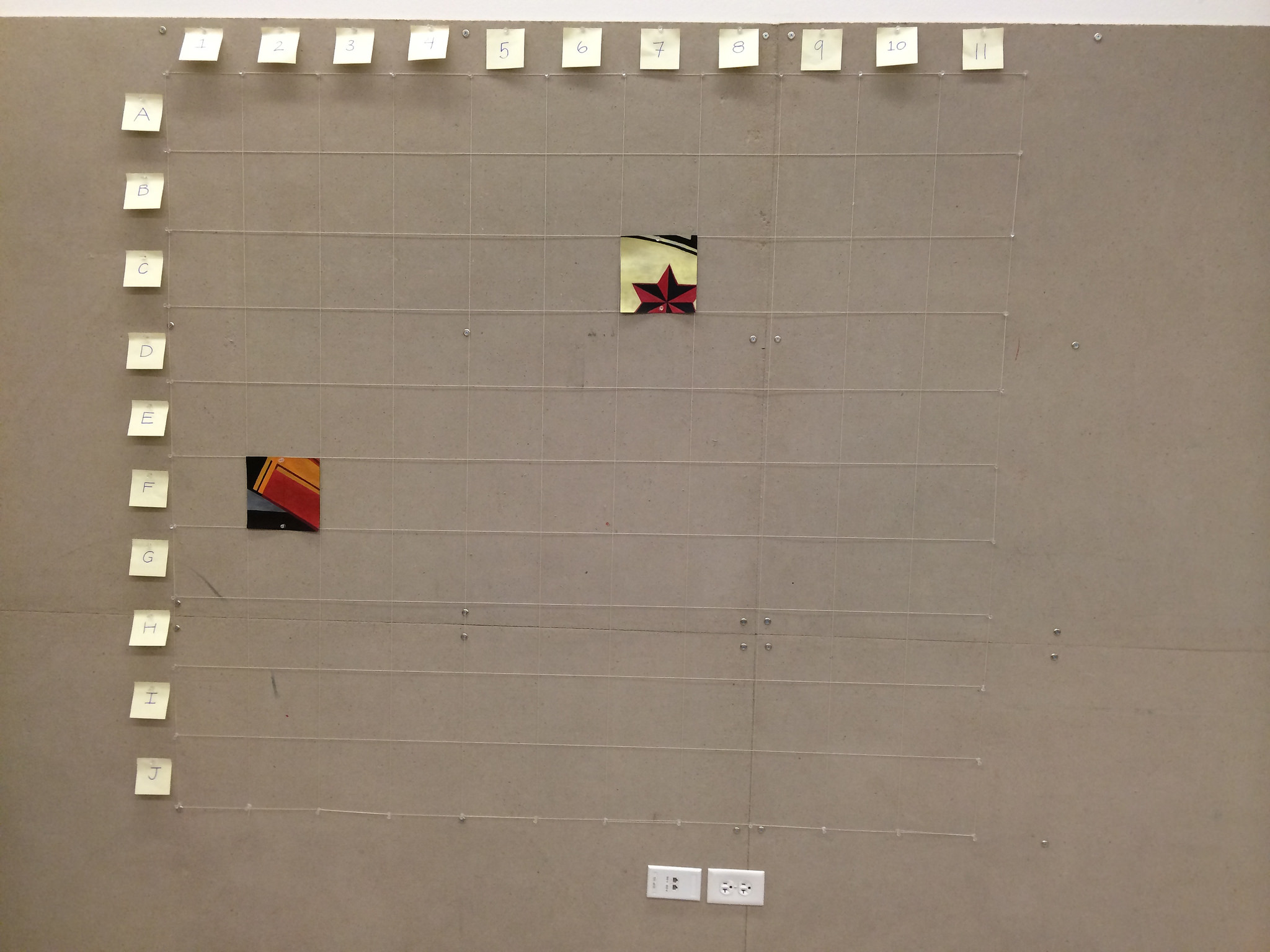
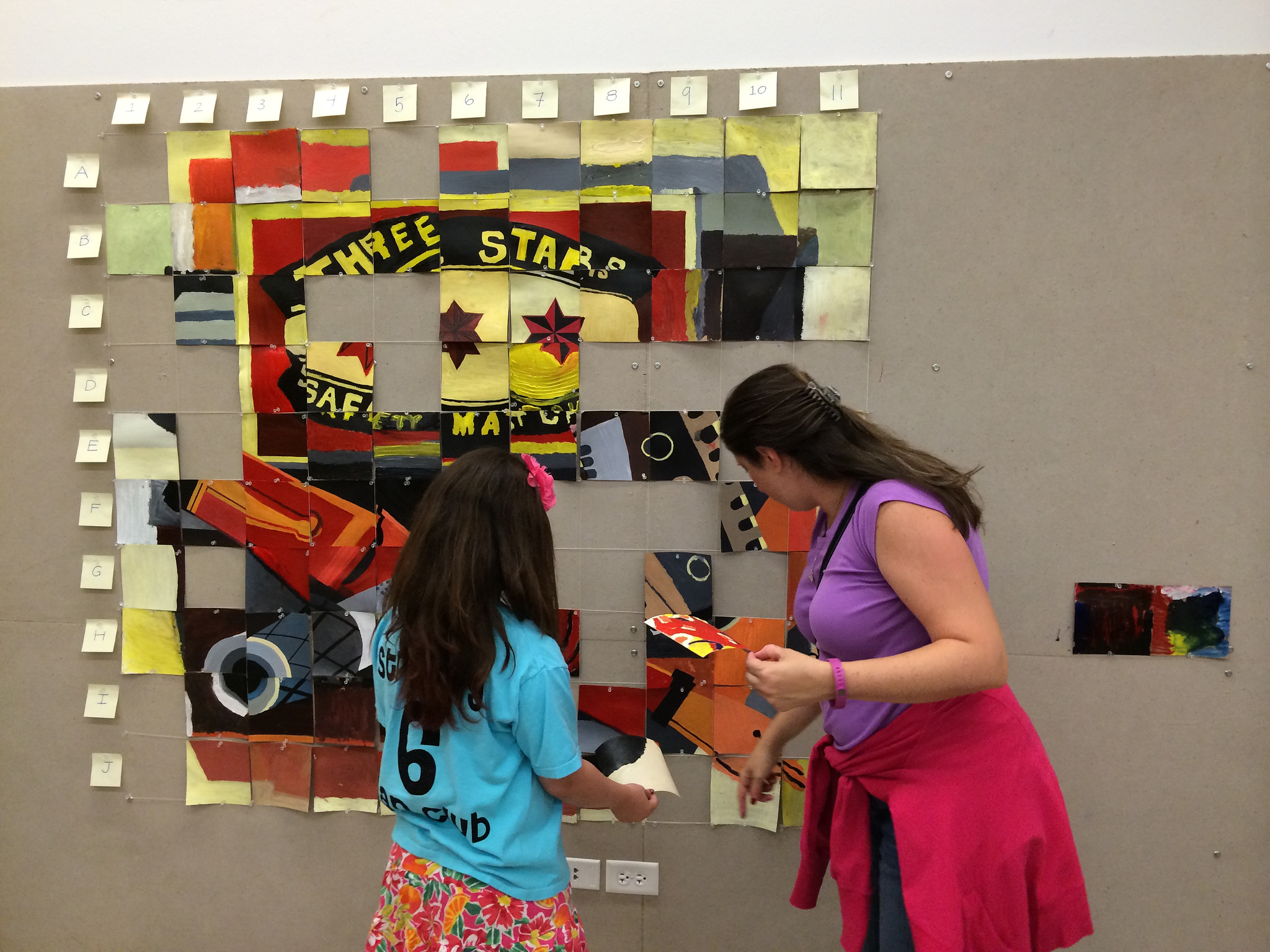
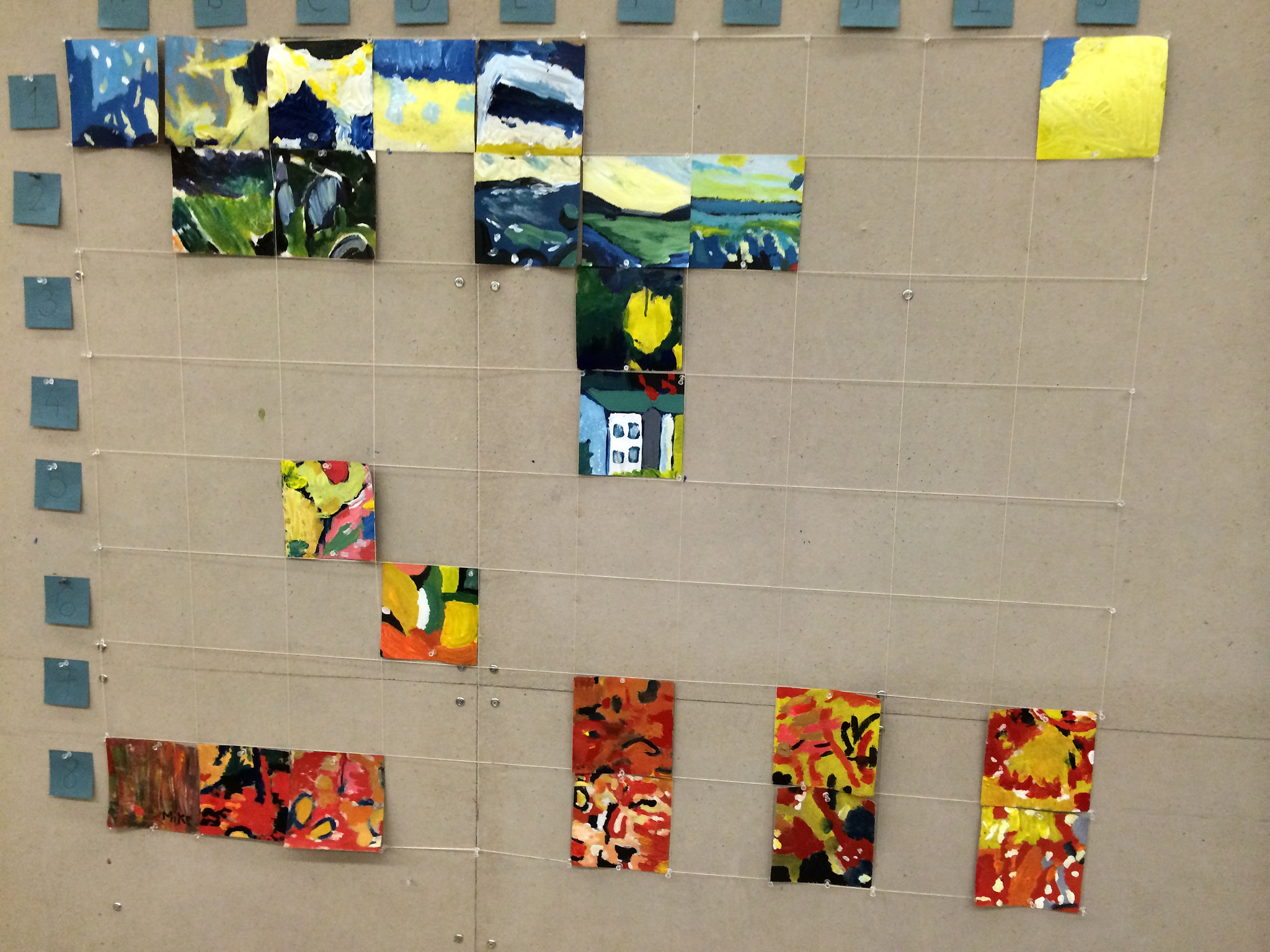
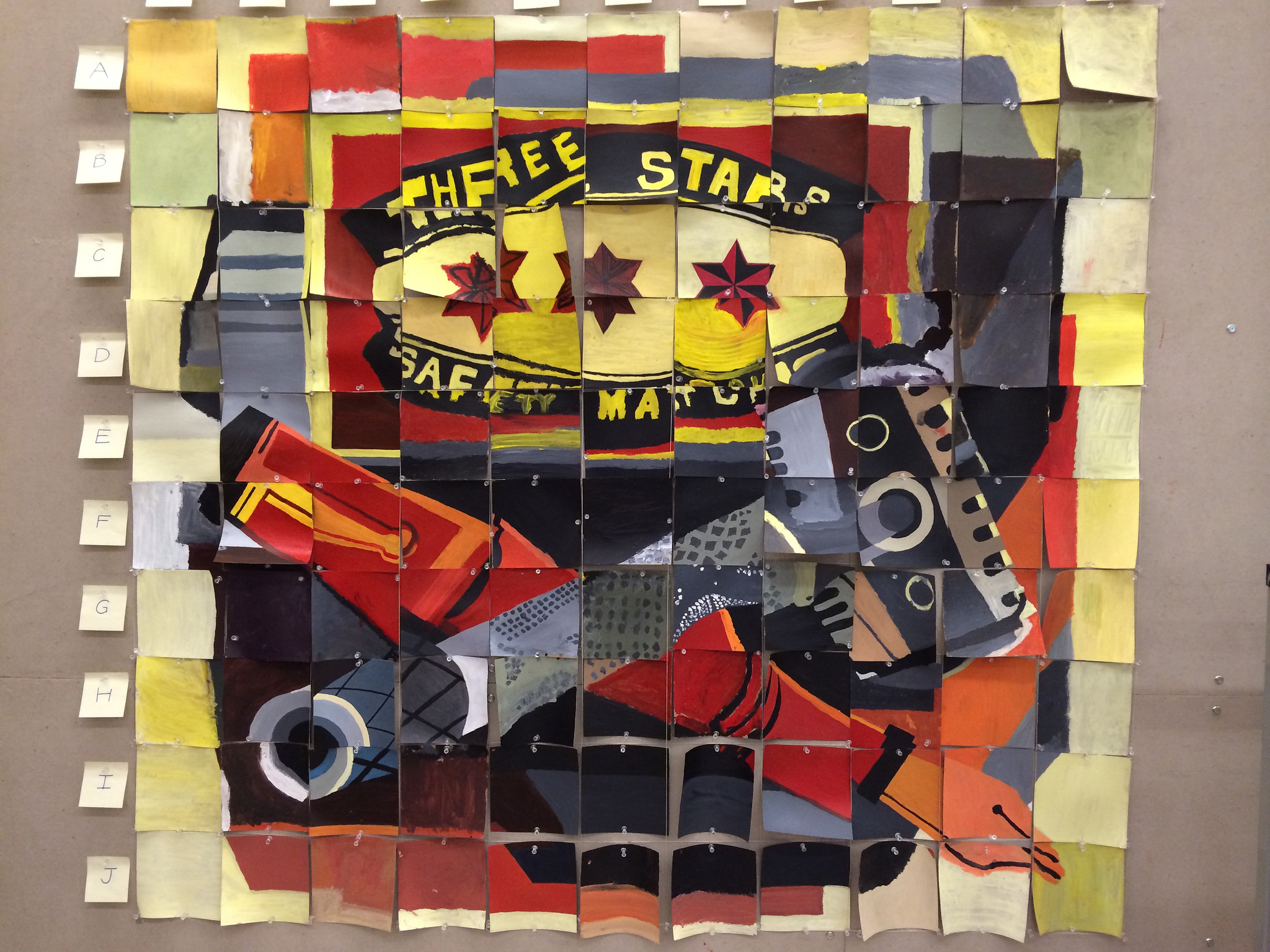
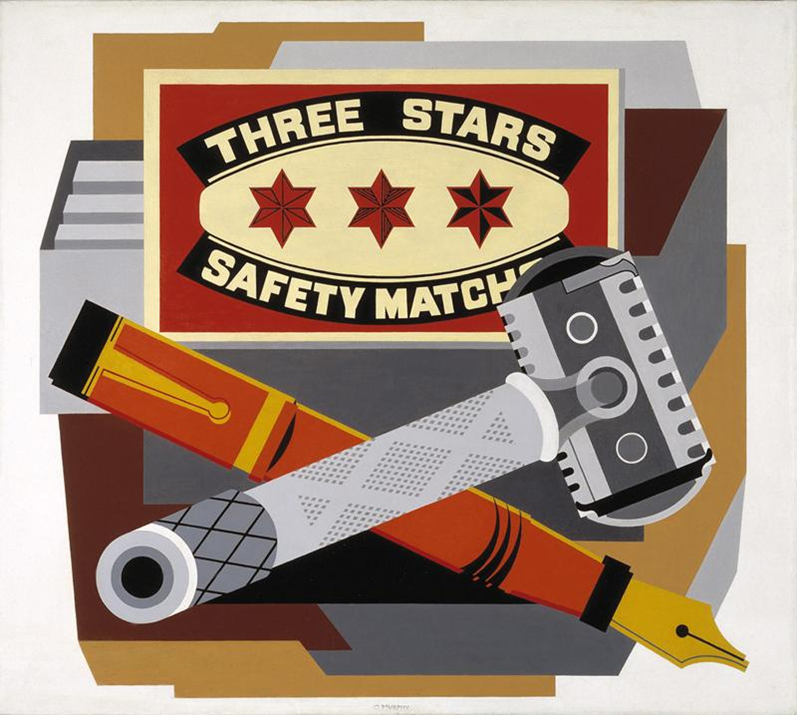
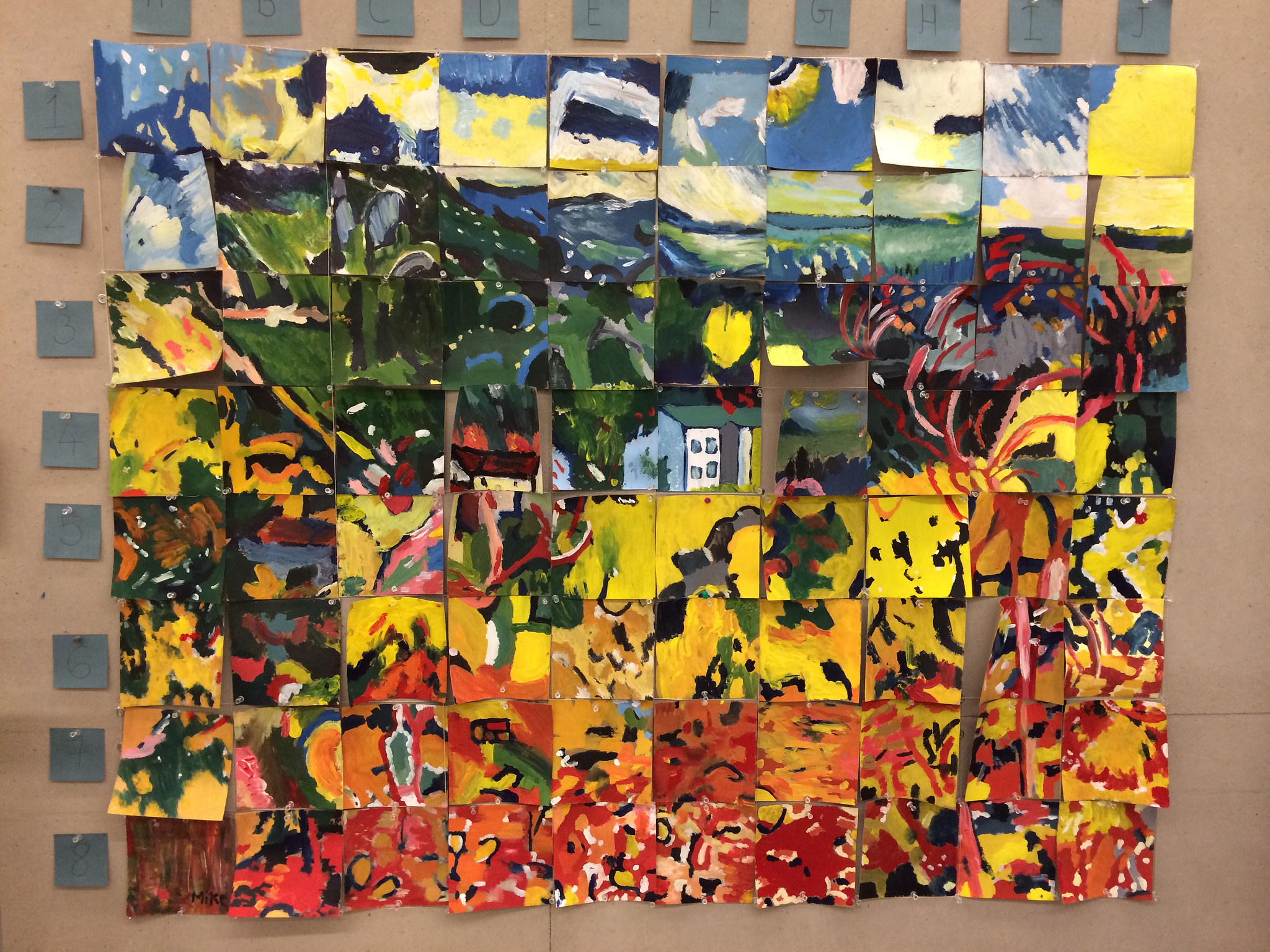
One of my favorite projects was the July Late Night Creations activity, the “Curious Case of the Mystery Painting.”  Chloe and I made and designed the materials for the activity and wrote (not to mention re-wrote) the instructions for this mystery-themed collaborative art project.  We chose the two “mystery” paintings that would be recreated and then, after much multiplication, we gridded out the artworks into two-inch squares, which would be “clues” that participants would recreate on bigger pieces of cardboard.  Slowly, piece of cardboard by piece of cardboard, the paintings would be revealed.  The hardest part of creating this project was writing the instructions.  Chloe and I quickly learned the value of one word instead of two, realizing that the shorter and more concise, the better.  We wrote and rewrote numerous drafts until we eliminated all extraneous details and arrived at the instructions used during Late Night Creations.  When I came to work the next day and saw the final masterpieces, I was astounded.  The visitors did an amazing job in recreating the mystery paintings!  Below are the activity instructions; scroll down to see the activity in progress and completed.

All too quickly these past eight weeks have sped by.  I can’t believe how much I’ve learned, how much I’ve seen, how much I’ve done here at the DMA.  My experiences have been widely varied—I now know both how to write a set of instructions for a community art project and the most efficient way of cutting cardboard for the Art Spot.  I helped individuals with Alzheimer’s discuss pieces of art in Meaningful Moments and went behind the scenes to see exhibits go up and come down.  I became an old pro at screenprinting T-shirts through assisting with the Design Studio summer art camp and listened as teens made soundscapes based on The Museum is History exhibition during a UA Maker Club workshop.  I am so appreciative and thankful for my internship—the DMA, specifically C3, gave me a wide and varied experience in a field of work I would love to pursue.  I learned so much this summer and I’m looking forward to volunteering in C3 soon!

Chloe:

My internship experience at the DMA this summer has taught me so much about different ways in which we can enhance our appreciation of art.

I first spent two weeks assisting the New World Kids 2 summer art camp.  The classes encouraged children to create art books and stop-motion clips as well as develop back stories behind why their characters lived where they lived and the motivations behind what their characters were doing.  It was exciting for me to see how the program inspired children to construct elaborate plots and plan out each scene as if they were budding directors or playwrights.  I believe that walking children through the process of creating a story is an effective way to introduce them to the appreciation of art.  In thinking about how they would design film sets, direct the acting, and develop the characters and sub-plots, children open their minds to a wider breadth in their interpretation of art.

All great artworks have a background story, a history to the subject matter, and a thought process behind the composition. This was illustrated in the European gallery, where I had the chance to admire the art alongside our visitors, thanks to the new Pop-up Art Spot. There, visitors have fun dressing up in costumes, making gesture drawings and writing dialogues for characters using magnetic words. Each painting presents a narrative, and the visitors participate in this narrative by coordinating their facial expressions, clothing, body pose, and setting with the artwork’s composition. At this Pop-up Art Spot, I saw how these activities enlivened the experience of visitors viewing the art pieces and inspired them to imagine the story behind the art.  I see that art is not only to be admired, but to be experienced in full immersion.  We are not only audiences, but participants.

Speaking of participation in art – at July’s Late Night, Sophie and I were excited to see visitors’ reception to the “Curious Case of the Mysterious Painting” activity we worked on together.  We were thrilled that people enthusiastically lined up for their turn to contribute a clue by taking a section of an artwork poster and enlarging it on a piece of cardboard using paint. The next day I saw the mystery artworks that were recreated with the public’s contribution – the mosaics of the pieces came to life, with a beauty that can only come from a community of “artists” collaborating together for a night!

Razor LNC grid

The grid for one painting with a few squares to get it started

Visitors LNC

Visitors add to the grid


Bougival LNC in progress

The other painting grid, in progress


I have discovered that telling a story is core to the purpose of art. An artwork is a mode of communication across time, even across dynasties and cultures, and artists create an extension of themselves and share with us a part of their being.

I am really grateful for the opportunity this summer to intern at C3! The department was very welcoming, and the staff took care to educate us while giving us leeway to express ourselves and take initiative.  I loved meeting diverse people, from the speakers to the audience and members of the museum – everyday was a pleasure, and I have fond memories of my interactions and experience to bring home with me back to Hong Kong!

Thank you, Sophie and Chloe, for your very hard work this summer!  We will miss seeing your smiling faces every day.

 C3 Staff


A Very Big Outdoor Art Show

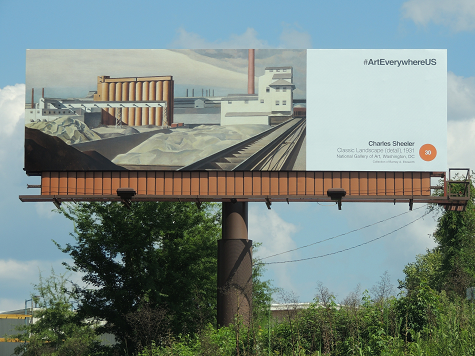
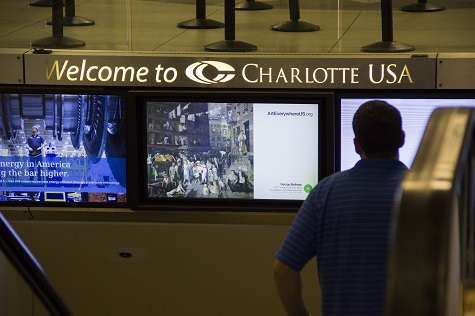
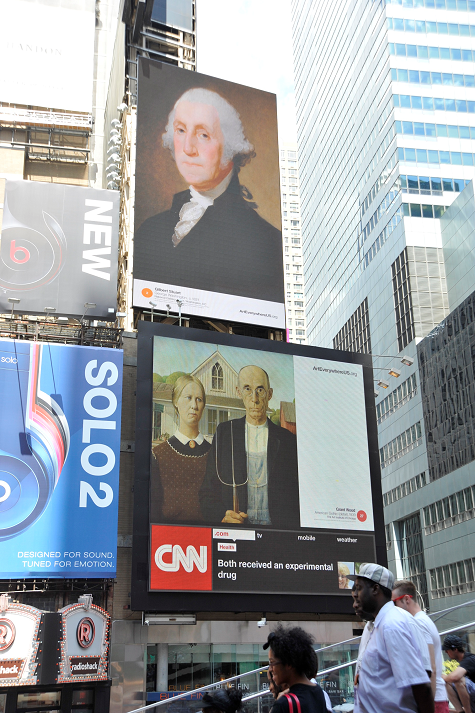
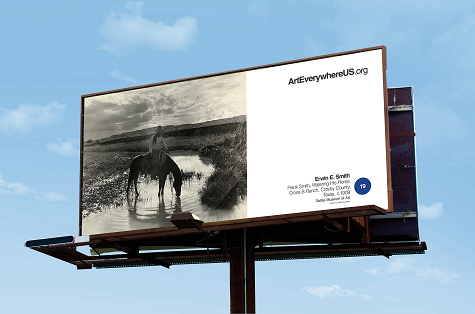
This week Art Everywhere US launched onto billboards, bus stops, digital screens, and more across all 50 states and the District of Columbia. Keep your eyes peeled while road tripping and commuting for some of your DMA favorites, including The Icebergs and The Peaceable Kingdom, when you are out on the town. Check out some photos from across the country below and share your finds on Instagram with #ArtEverywhereUS. If you are ready for an art hunt, discover the locations on the Art Everywhere US interactive map.

Art, Camera, Selfie!

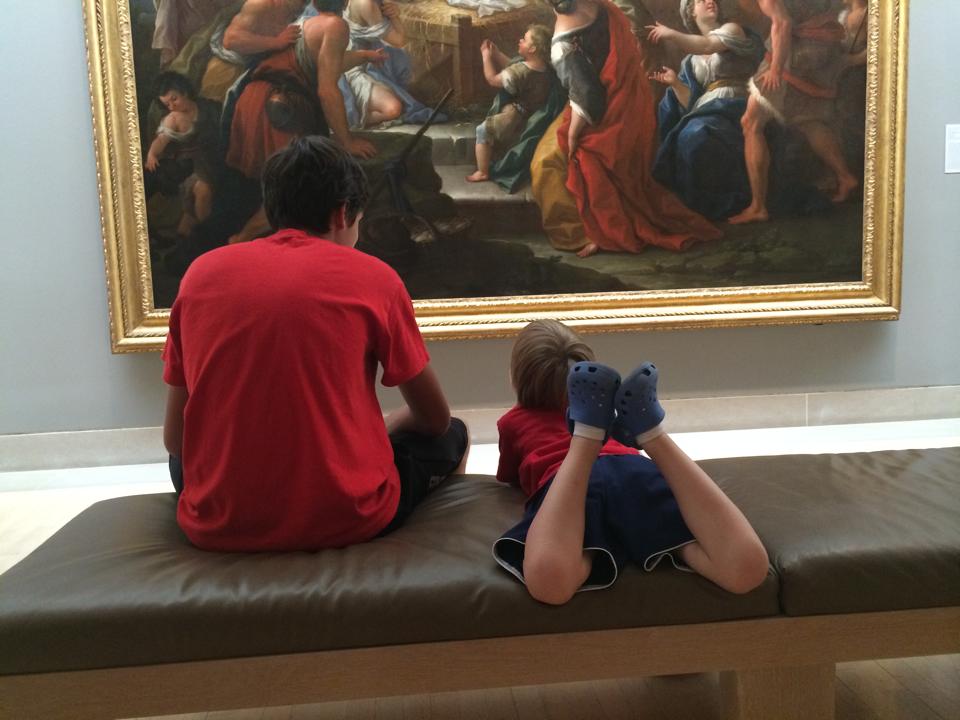
We love seeing the creative photos that our visitors take with our collection, so we’re turning the spotlight on you. This summer, feel free to explore, and share your fun with us!

Now through Labor Day, visitors who submit their creative DMA photos will receive a chance to win a private tour of the DMA with curator Olivier Meslay, and everyone who participates receives a free ticket to Mind’s Eye: Masterworks on Paper from David to Cézanne.

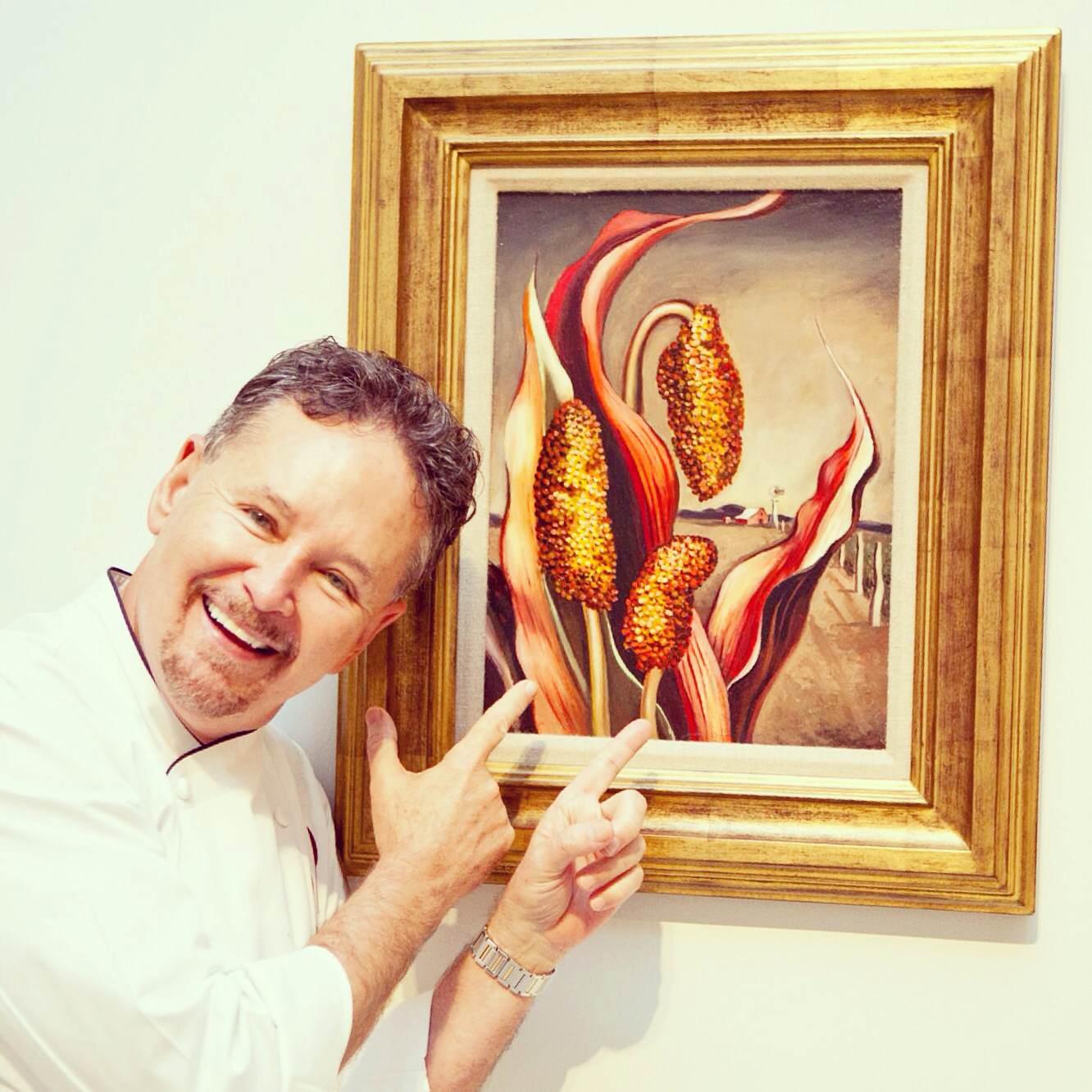
Enter your own DMA snapshot here and enjoy some of the great photos that we’ve already received – even Chef Stephan Pyles got in on the action!


Anthea Halsey is the Senior Marketing & Social Media Manager at the DMA

Friday Photos: Museum Forum For Teachers

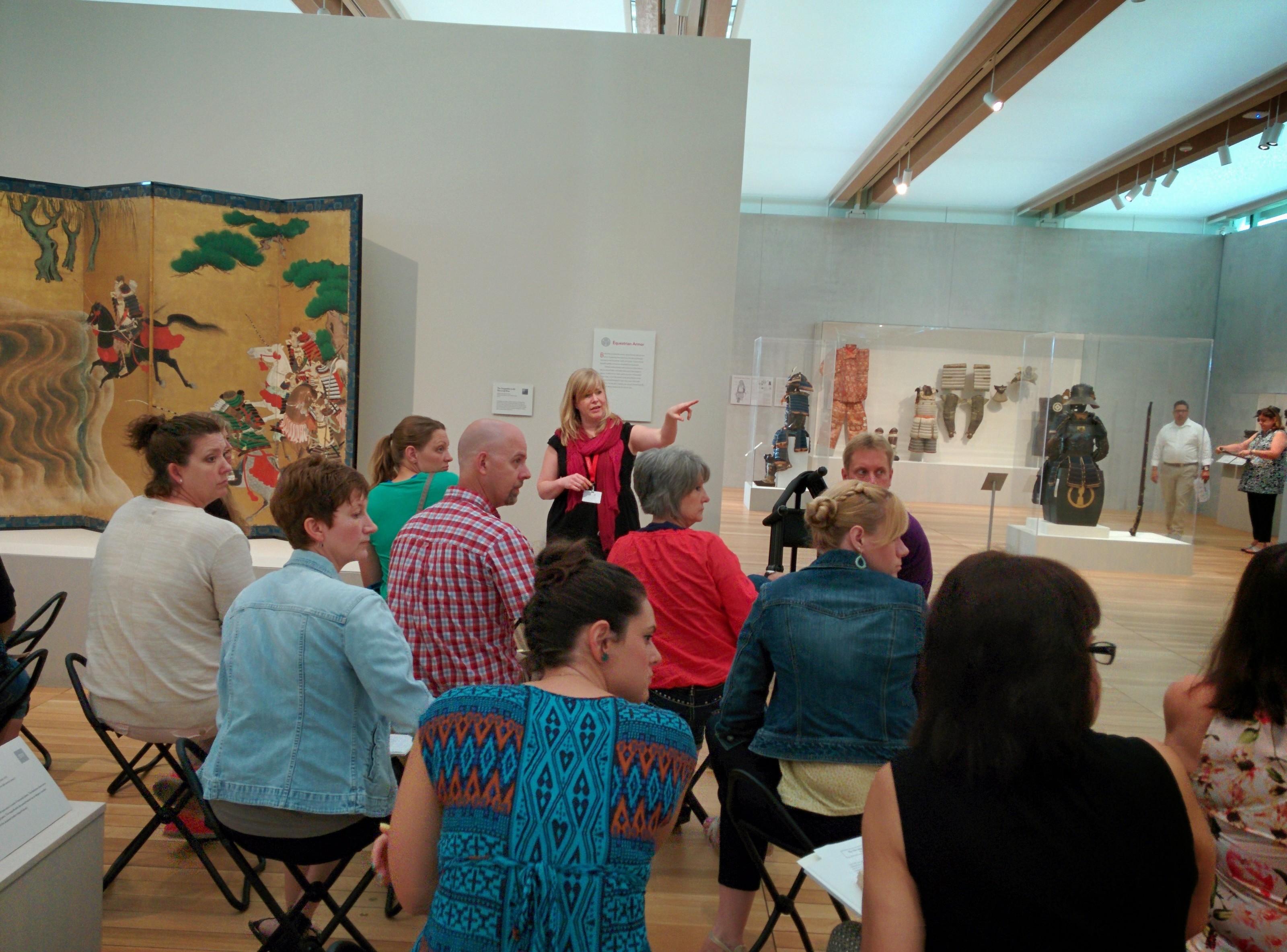
Last week, I had tIMG_20140725_130701he pleasure of spending my time with teachers and colleagues as part of the annual Museum Forum for Teachers.  This week-long teacher workshop focusing on modern and contemporary art is a collaboration between multiple DFW museums, including The Warehouse, the Nasher Sculpture Center, the Modern Art Museum of Fort Worth, the Kimbell Art Museum, and the Dallas Museum of Art.
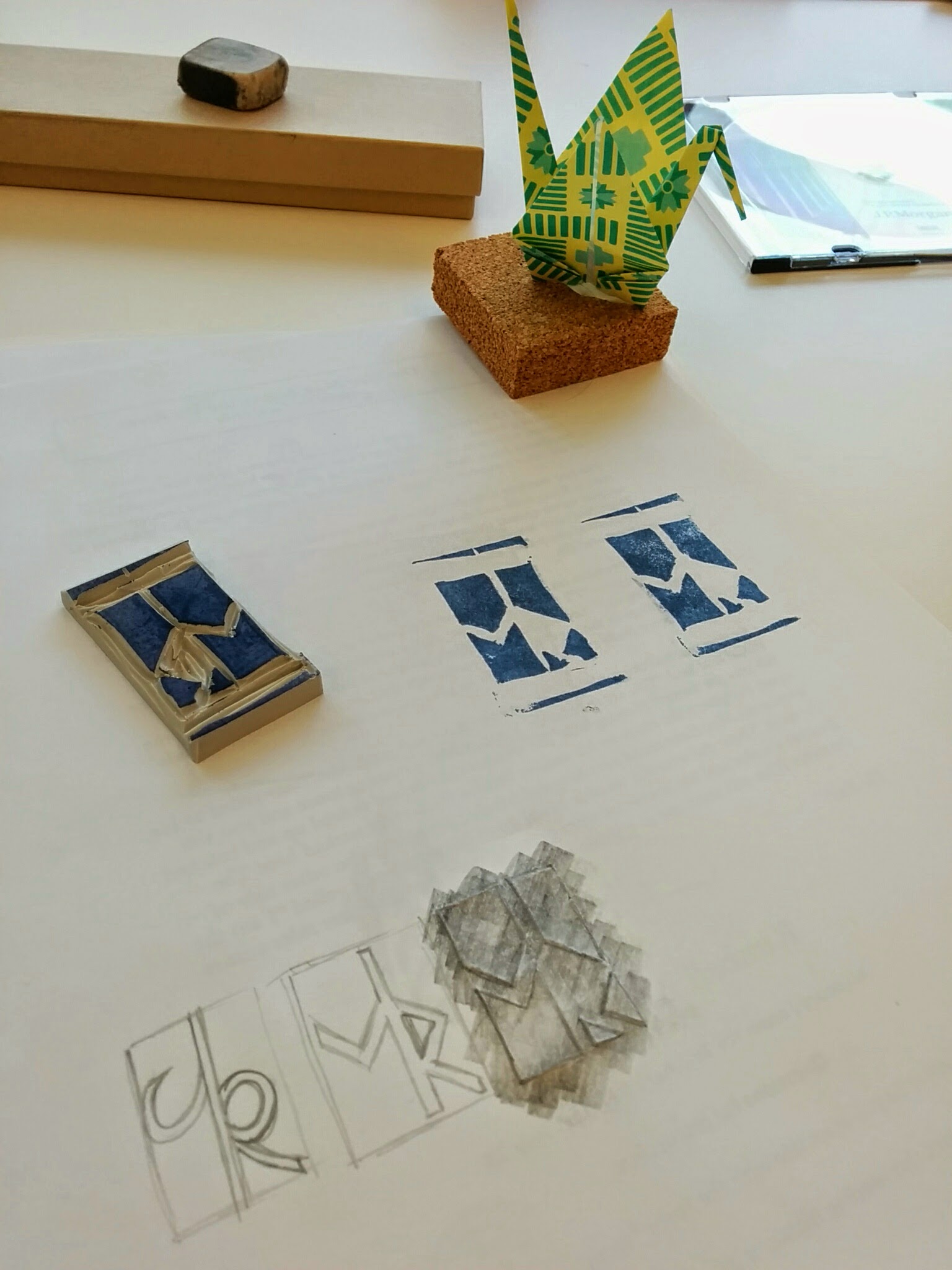
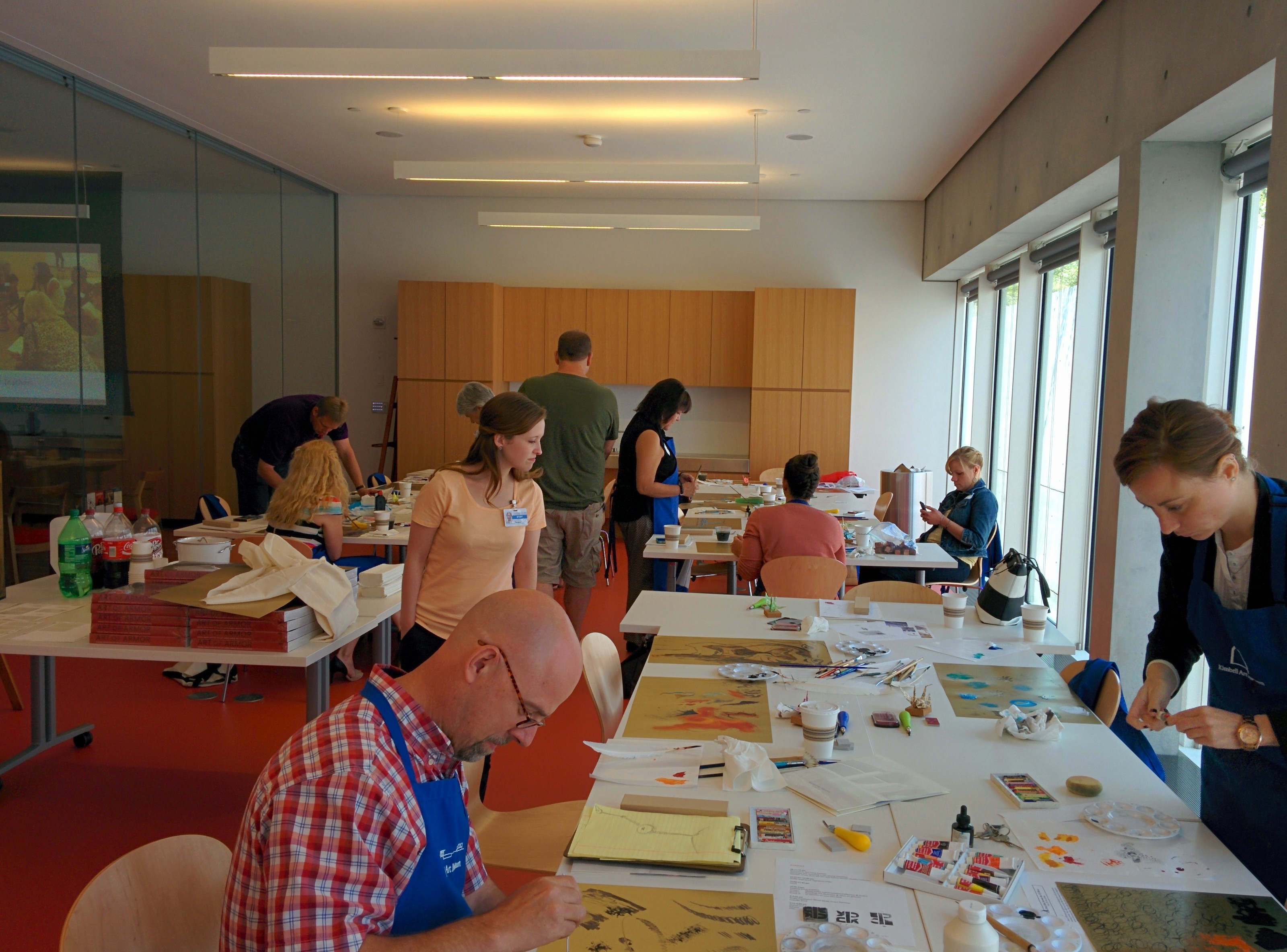
During the week, each location hosts a group of twenty-five instructors for one day of discussions and projects for CPE credits.   It was a fun, thought-provoking, and intense experience!  Everyone made two dimensional works of art using only cloth, plastic, paper, stitch witchery, and heated irons at the Warehouse.  Teachers toured an installation project in the Vickery Meadows neighborhood with the Nasher Artist-In-Residence, Rick Lowe.  At the DMA we explored artist-induced meaning through blurring images in the style of Gerhard Richter, and examined institution-created meaning by becoming curators.  In Fort Worth, we created grid-like Minimalist art at The Modern, and painted Japanese screens at the Kimbell.

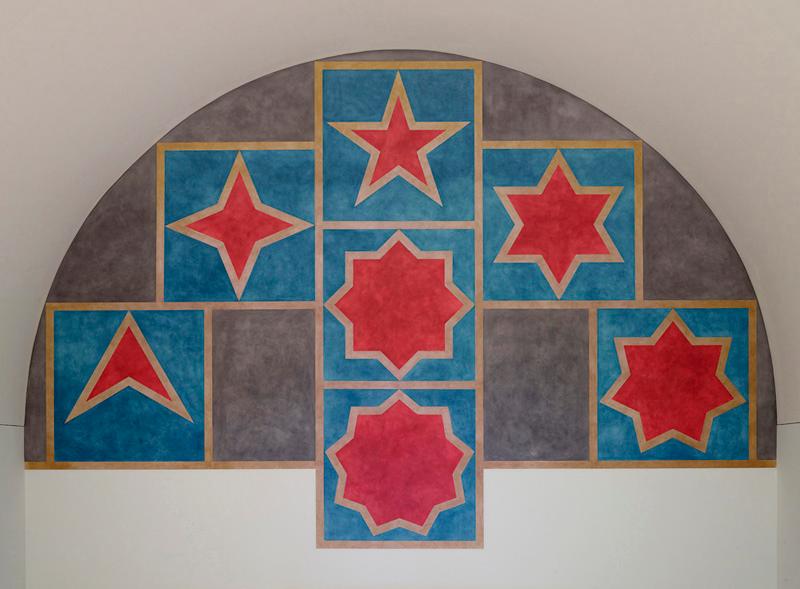
The results of one activity were quite interesting: during our day at the Modern we examined Sol LeWitt’s Wall Drawing #50, in which the artist created a drawing and set of instructions for any installers to finish the work at a different location.  In this work of conceptual art, the instructions themselves are the work of art; the installation of it is simply an extension and realization of this idea.  (While visually very different from the Modern’s, LeWitt’s process here is similar to the one he used in the DMA’s Wall Drawing #398, installed in the barrel vault.)

Sol Lewitt_Wall Drawing 398_1983_1985_3

Sol LeWitt, Wall Drawing #398, 1983 (installed 1985), Dallas Museum of Art, gift of The 500, Inc., Mr. and Mrs. Michael J. Collins and Mr. and Mrs. James L. Stephenson, Jr.

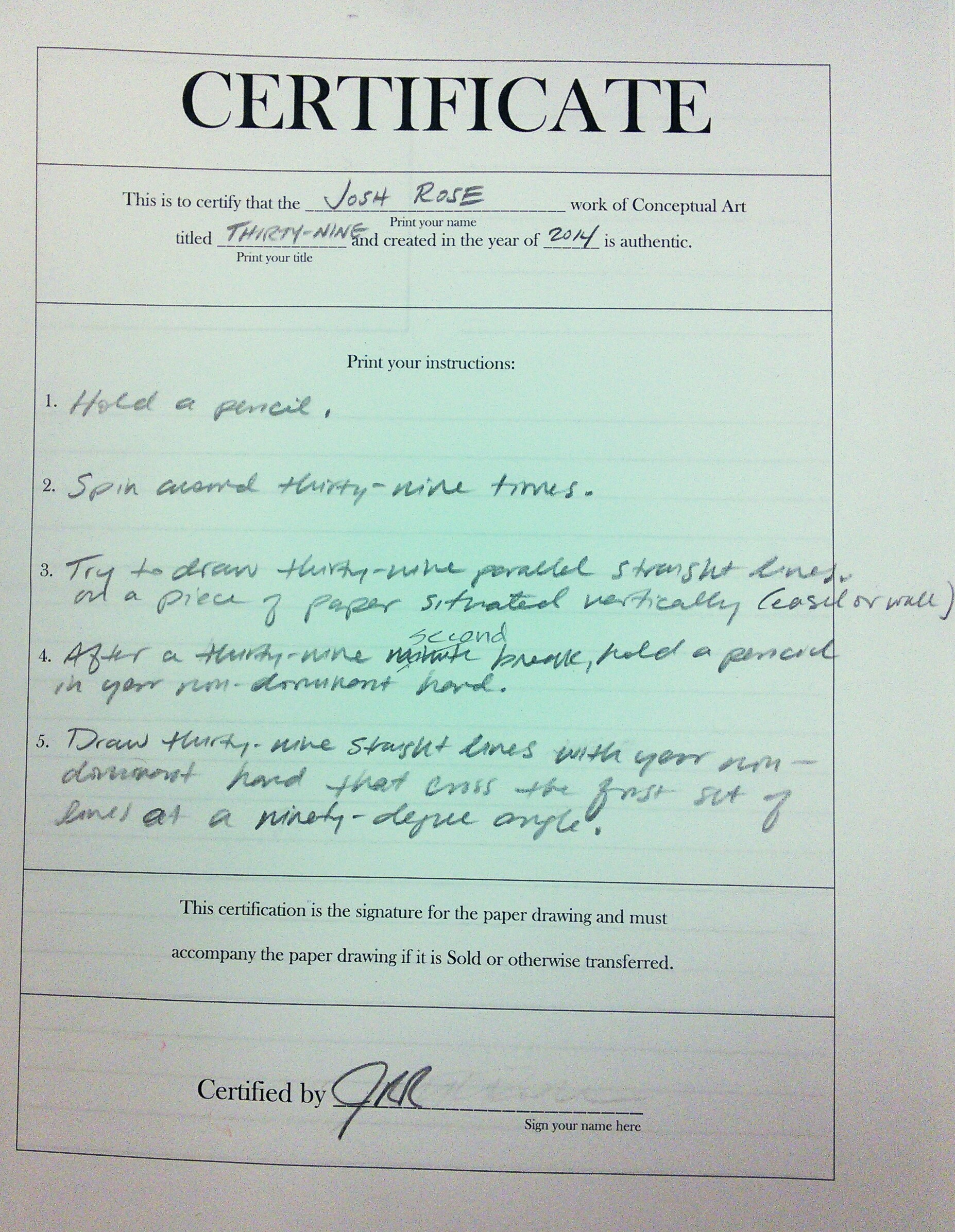
We were inspired to create our own work of conceptual paper drawing by creating a set of instructions resembling an “official” certificate designating the instructions as the work of art.  Then we handed our instructions to another participant who had to become the “installer” and draw our image based on the instructions.

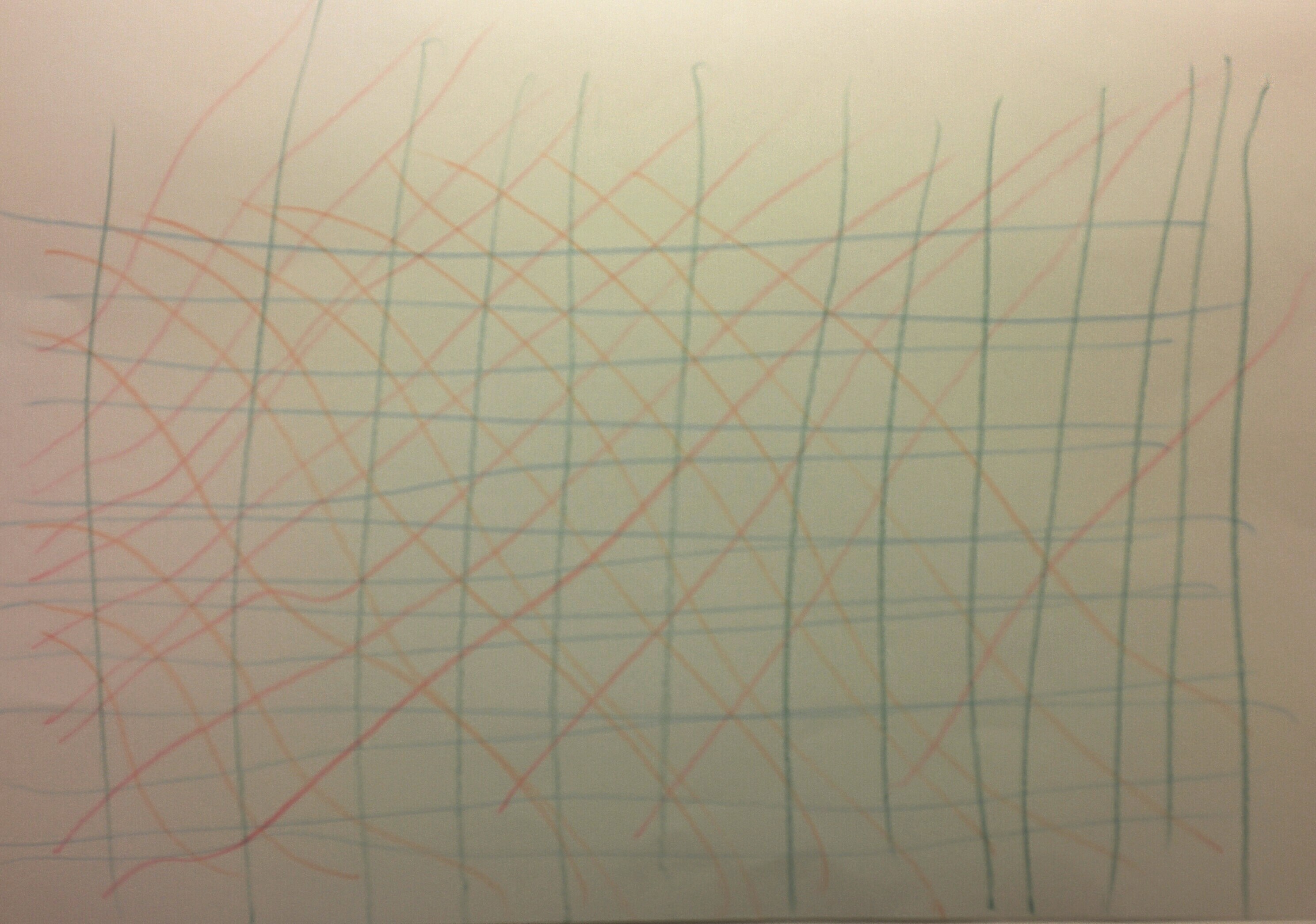
IMG_20140731_085544~2For my instructions, I decided to play around with LeWitt’s geometric rigidness by applying it to a negation of bodily control and precise mark-making:

1. Hold a pencil.

2. Spin around thirty-nine times.

3. Try to draw thirty-nine straight parallel lines on a sheet of paper situated vertically (on a wall or easel).

4. After a thirty-nine second break, hold a pencil in your non-dominant hand.

5. Draw thirty-nine straight lines with your non-dominant hand that cross the first set of lines at a ninety-degree angle.

IMG_20140730_160528~2~2Susan, one of the workshop participants, did an amazing job interpreting these instructions.  This was the third of a set of drawings she did based on my instructions, all very different in appearance!  (Although she correctly pointed out that thirty-nine lines were perhaps too many.)


If you are interested in applying for next year’s Museum Forum for Teachers, sign up for our educator email newsletter, where we will post information next spring once it has been announced!

Artwork shown:

  • Sol LeWitt, Wall Drawing #398, 1983 (installed 1985), Dallas Museum of Art, gift of The 500, Inc., Mr. and Mrs. Michael J. Collins and Mr. and Mrs. James L. Stephenson, Jr.

Jazz and Jewelry: Celebrating Art Smith in August

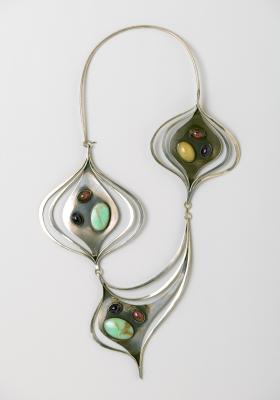
In June, the DMA opened the beautiful exhibition From the Village to Vogue: The Modernist Jewelry of Art Smith, featuring 26 dynamic pieces of silver and gold jewelry created by artist Art Smith. 


To celebrate this show, we are making August the month of all things Art Smith. You can explore the show with a metalsmith during a  Gallery Talk; stop by the Center for Creative Connections to look at Smith’s tools; listen to the jazz that inspired Smith, every Thursday evening during Jazz in the Atrium; or, if you’re a teen, sign up for the Urban Armor Maker Club to create a programmable piece of jewelry. Be sure to check out the full schedule of events for more information.


Jazz in the Atrium


In addition to being one of the leading modernist jewelers of the mid-20th century, Smith was an avid jazz enthusiast and a supporter of early black modern dance groups. This inspired us to commission a new dance from our Arts District Neighbors, Dallas Black Dance Theatre, accompanied by a new jazz suite composed by jazz drummer Stockton Helbing.


First, we met with Nycole Ray, Artistic Director for Dallas Black Dance Theatre II, and Stockton to discuss the format of the piece—how long would the entire piece be, how many dances would comprise the whole performance, does there need to be transition music between the dances, what tempo would be best for each dance, what style of jazz would fit the feel of the piece, and more. We also agreed that a jazz trio would be best so the band and the dancers could all fit on stage together during the live performance.


Once those questions were answered, Stockton began composing an original piece of music he titled On 4th Street, after the location of Art Smith’s studio in New York. Stockton created MIDI demos of his music for Nycole to review before he went into the studio to make the final recording with other musicians.


We now have the final masters of the music, and Nycole has begun choreographing the dances and working with the dancers on the piece she titled Art on 4th Street.


Dallas Black Dance Theatre II

This dance will have its world premiere during the Friday, August 15 Late Night. In addition to Art on 4th Street, this evening will feature live jazz, jewelry making, a film screening of Paris Blues, tours, and more—all inspired by Art Smith!


Stacey Lizotte is Head of Adult Programming and Multimedia Services at the DMA.


Late Night Technology Test Run


photo7

The chance to intern at the Dallas Museum of Art this summer has been incredible, and the work done in the Center for Creative Connections creates the perfect opportunity to apply my specific research interests. I’ve been studying what’s typically called “cultural capital” for several years now, and it refers to individuals’ accumulation of literacies, skills, and privileges that result from economic status, education levels, or race. This concept is thought to permeate all aspects of society, particularly in institutions as established as the museum, and holds implications for the equitable treatment of visitors and the validation of their experiences. A guiding question for my own work is: How can all visitors overcome the expectations created by cultural capital and bring their own experiences to the interpretation of works at the museum?

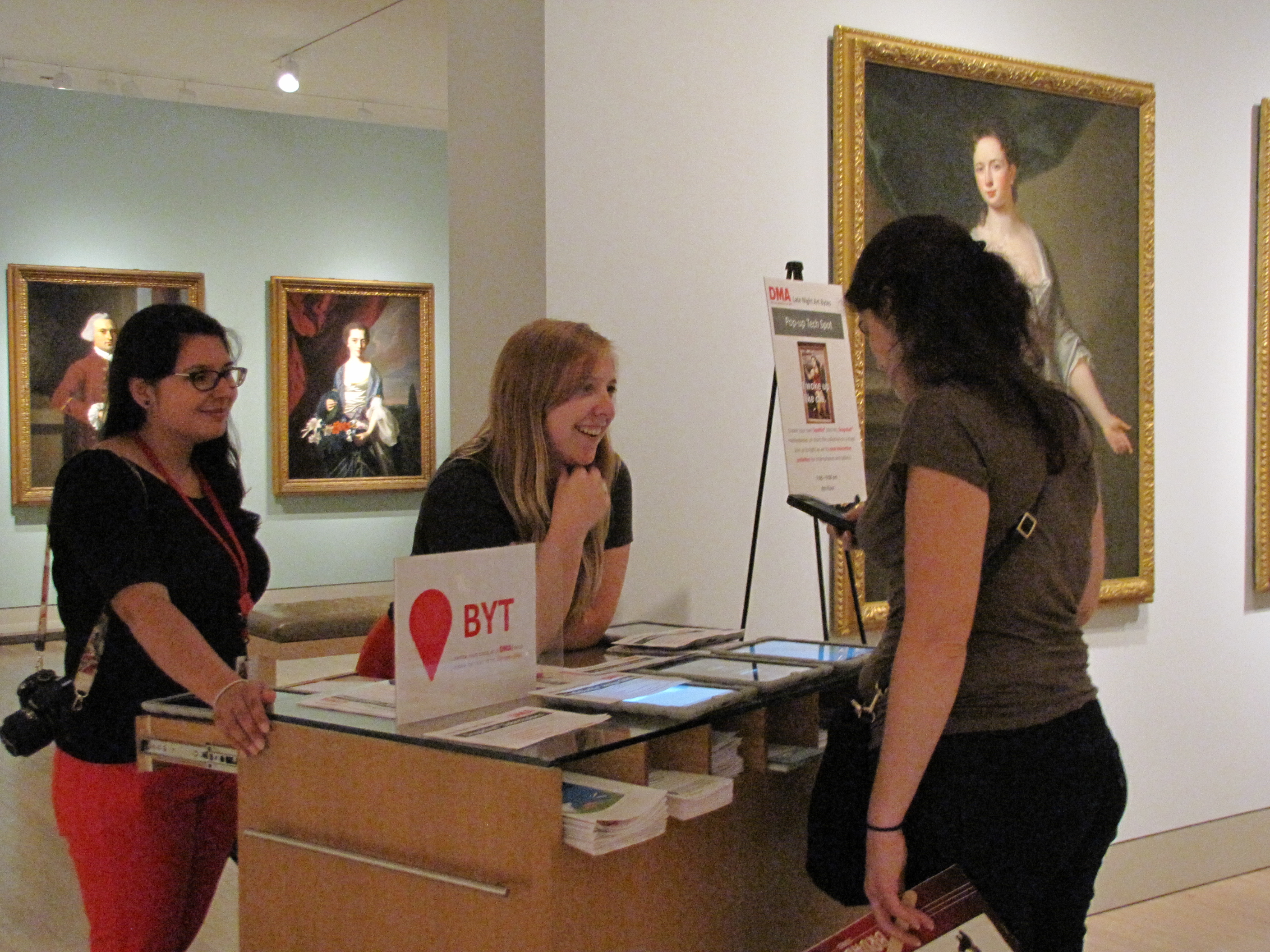
In recent years, many websites and software applications (apps) have been created to allow for unhindered cultural production by users from all walks of life. Often these programs also allow for social media interactions, creating unique communities bound by technology. If this user-friendly type of creativity could be adapted to gallery activities, it may spark the interest of underserved visitors. As part of my summer project, we held a trial run of these activities as part of a “Pop-Up Tech Spot” for 2 hours during July’s recent Late Night Art Bytes program.


Snapchat

To capitalize on smartphone technologies and trends in social media, we created a Snapchat activity that allows visitors to recontextualize the works on display at their own pace.

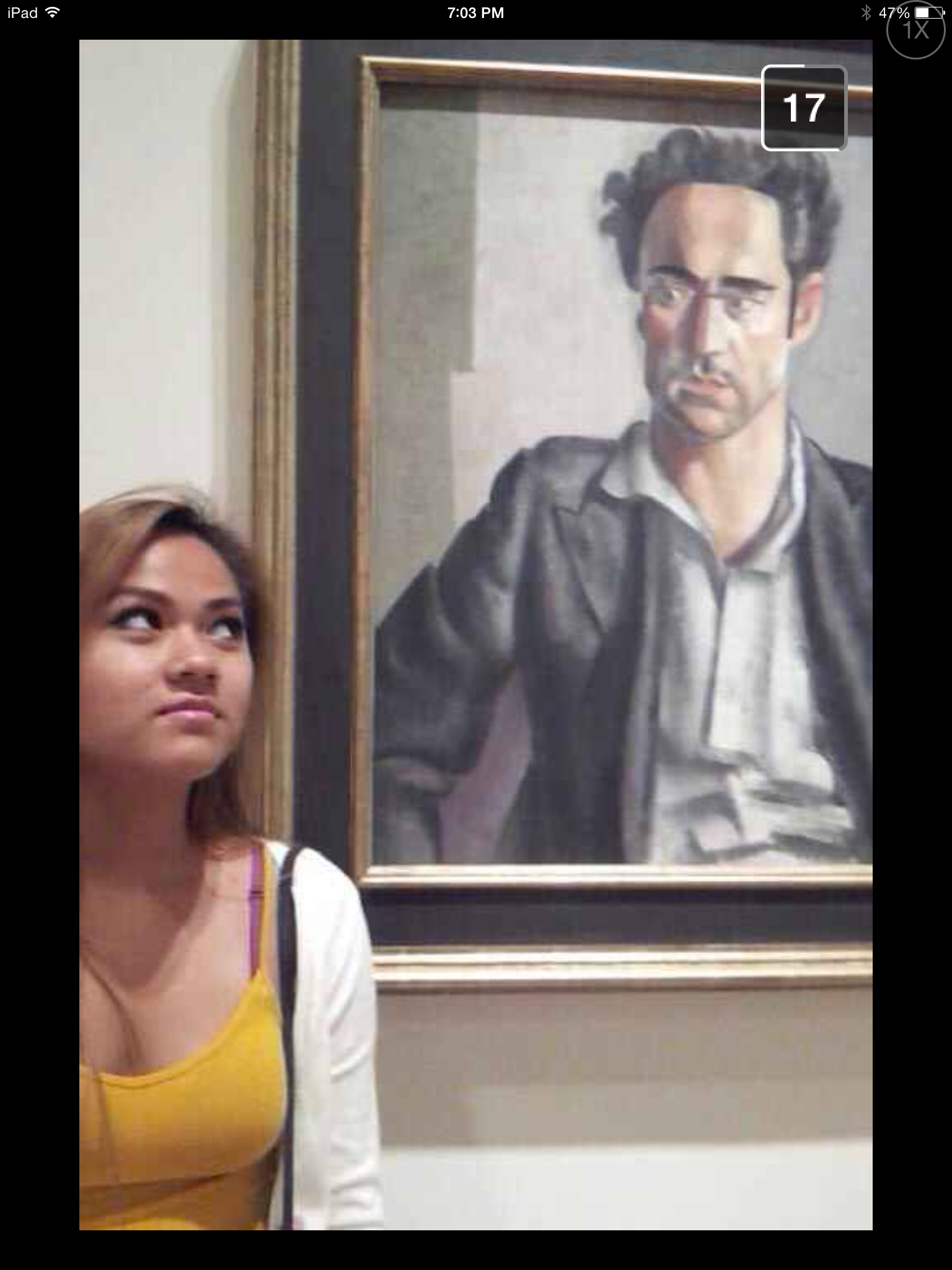
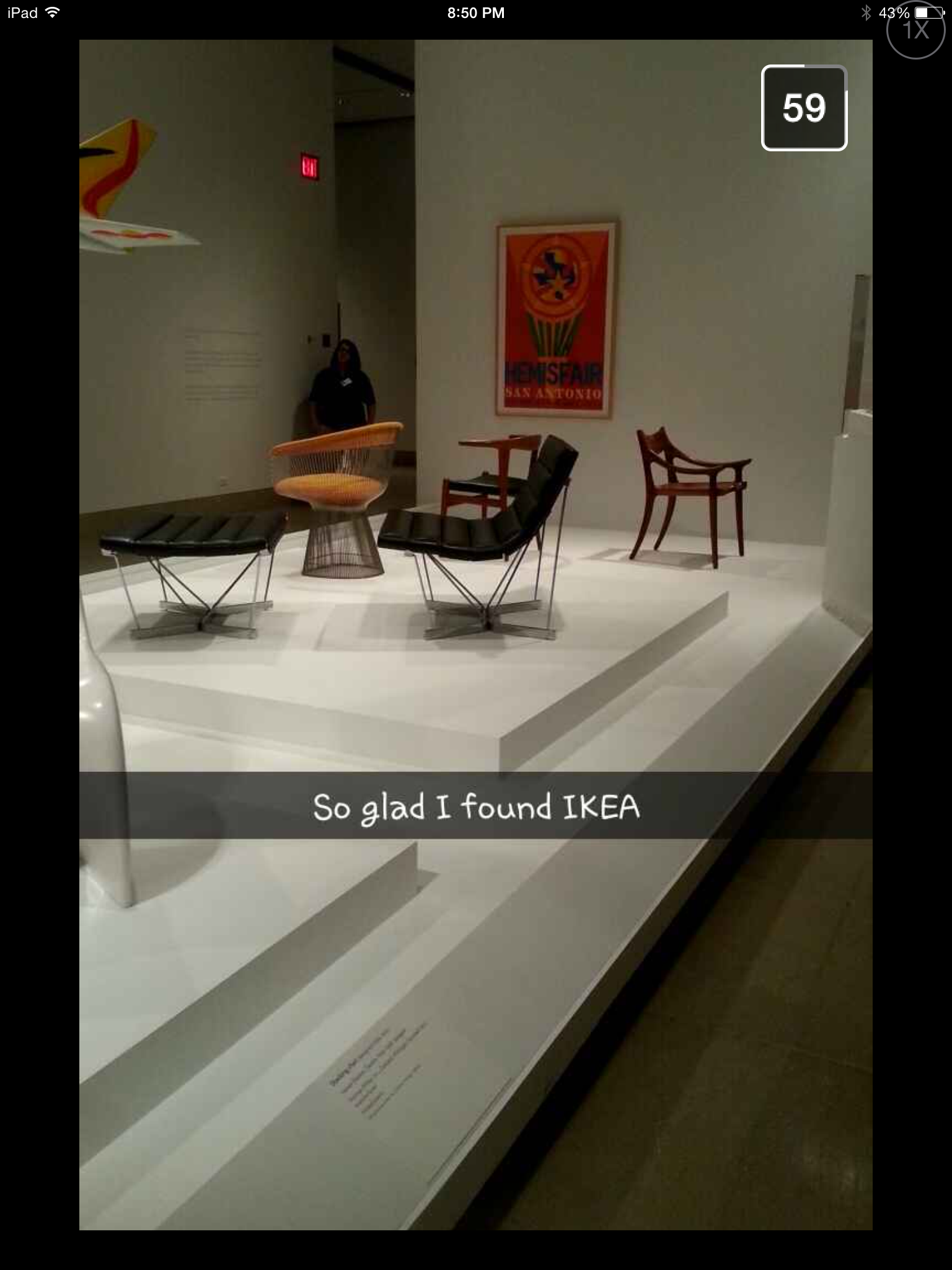
Snapchat 1(snapchat20

Visitors were invited to take photos with their smartphones using the app, and then to draw or type atop the images to make it their own. By setting up an account for the museum (add DallasMuseumArt as your friend), we were able to receive and save visitors’ submissions. The evening yielded 28 different photos created by 10 visitors, many of which were entertaining interpretations of the permanent collections.


DoodleBuddy

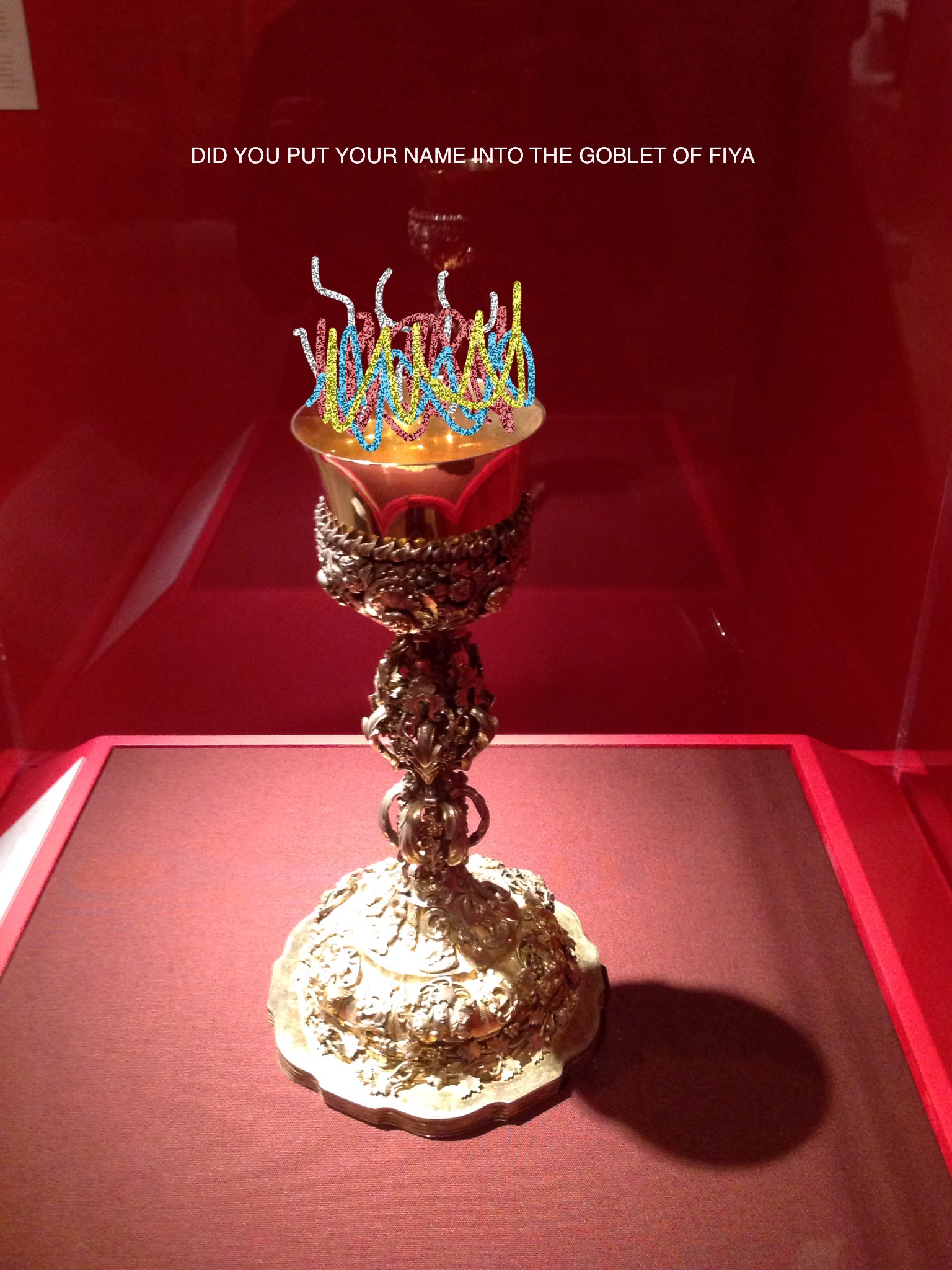
For those who were uninterested in maintaining a Snapchat account, there was an alternate option for editing photos of works on display. The DoodleBuddy app in place on the iPads was available for visitors to borrow from the activity cart, and had similar creative capabilities. Users could snap a picture and then add their own touches to a work.
db2   db7

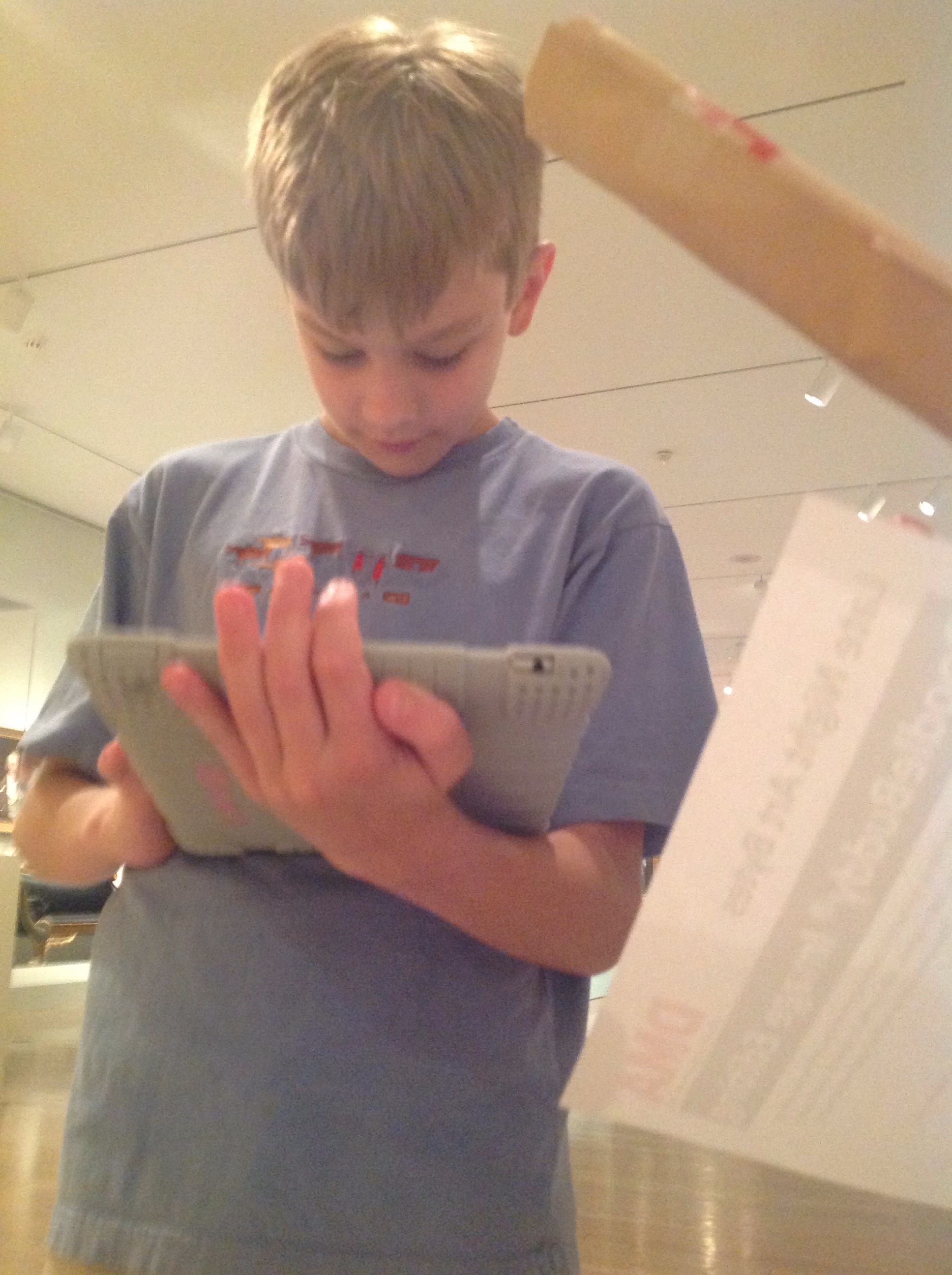
This activity was the most popular that evening, as some 22 visitors worked individually or in pairs to create and save 14 new images. When finished, masterpieces could be saved to the museum’s iPad (to be later uploaded to Flickr) or emailed to the visitor for their own use.


Map the Collection

The least popular activity for the night was a mapping activity that utilized other capabilities of the DoodleBuddy app on the iPads. Visitors could borrow the iPads with the program, this time drawing and/or typing atop a preloaded map, to chart the works within a particular gallery. Because of its proximity to the cart’s location near the entrance to the American gallery, the trial program utilized the works from a gallery of Colonial Art of the Americas, allowing visitors to find the origins of works from Central and South America. One enthusiastic visitor was able to use the map to teach a friend about her home in Paraguay, and pointed out political and economic tensions that continue to this day.


Spotify

The use of music in the galleries is nothing new, but allowing visitors to create playlists that is accessible both within and outside of the galleries was a novel opportunity for most. Familiarity with the app was likely a hindrance for many who stopped by the activity cart, but 5 visitors decided to opt for the musical program on their smartphones or the provided iPads. When creating the playlist, users simply included “DMA Late Night” in the title to allow other Spotify members the chance to search, play, or follow playlists created in the museum. Gallery experiences translated through song can be accessed from anywhere, or even played back in the galleries to create a community of listening visitors.

photo4

Overall, the evening was a bustling hit. The activities piqued the interest of several disengaged visitors, and allowed them their own space to create something new. Passersby received handouts about the Snapchat submissions to allow their continued access to the activity, and the iPads were put to excellent use by up to 5 visitors at once. Difficulties encountered included the length of explanation required for several of the apps (many visitors were unfamiliar with Spotify), and some troubles using the DoodleBuddy camera feature. Better instructions or fewer choices should help minimize these issues.

Testing these activities also allows us to consider how–or if–these programs could be utilized in conjunction with the Pop-up Art Spots already in place in the galleries. For example, the mapping activity could easily be translated into an activity for the Indonesian galleries, while the Spotify app may be put to better use in the contemporary collection. Snapchat and DoodleBuddy image editing activities may also benefit from utilizing more focused prompts, inviting visitors to submit photos for a single object or particular theme.


July LN 1

I’ve had a blast adapting apps for gallery activities. Hopefully this is just the beginning of “share-able” cultural production used in the galleries, and I’d like to extend a huge wave of gratitude to all those who helped me get things in motion!

Brittany Garison
C3 Graduate Intern

Installing Slavs and Tatars

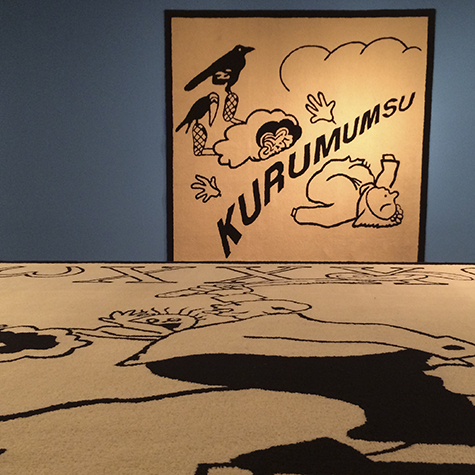
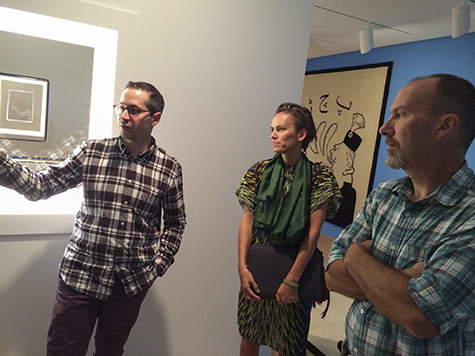
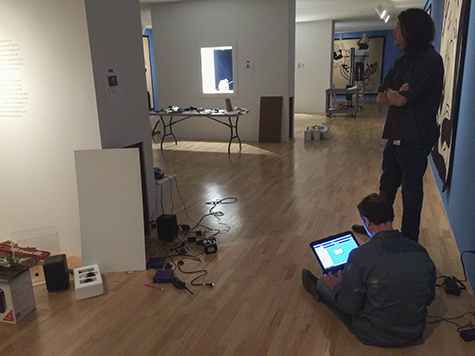
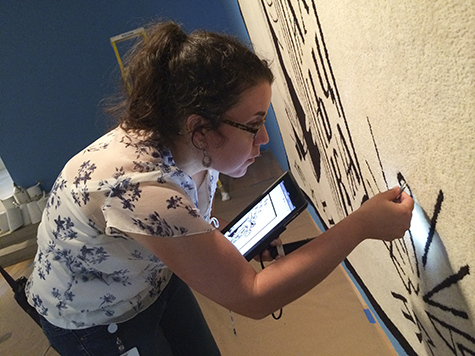
Concentrations 57: Slavs and Tatars opened two weeks ago at the DMA. Part of the DMA’s ongoing Concentrations series, which began more than 30 years ago, the exhibition features new work from the art collective Slavs and Tatars, including the first-ever full presentation of their Love Letters carpet series. See how the installation came together below, and then visit the free exhibition in person through December 14.
EP-62_07_15_14_AG_001


EP-62_07_15_14_AG_003


EP-62_07_15_14_AG_006


EP-62_07_15_14_AG_007


EP-62_07_15_14_AG_009


EP-62_07_15_14_AG_010


EP-62_07_15_14_AG_002


Archives

Categories