Archive Page 31

The Impact of Printmaking

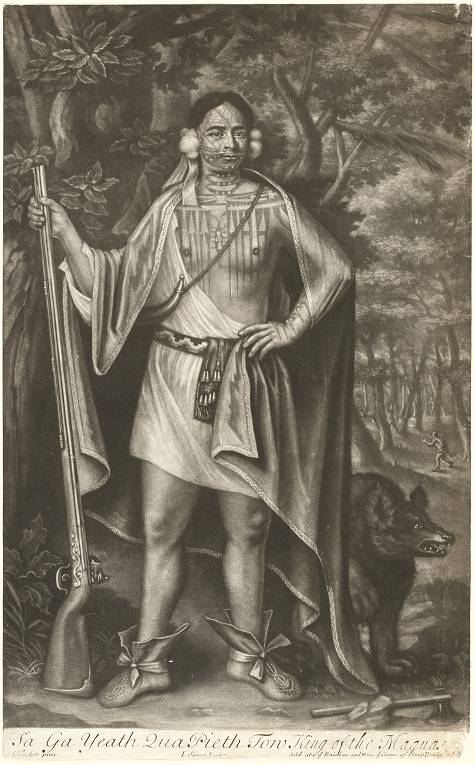
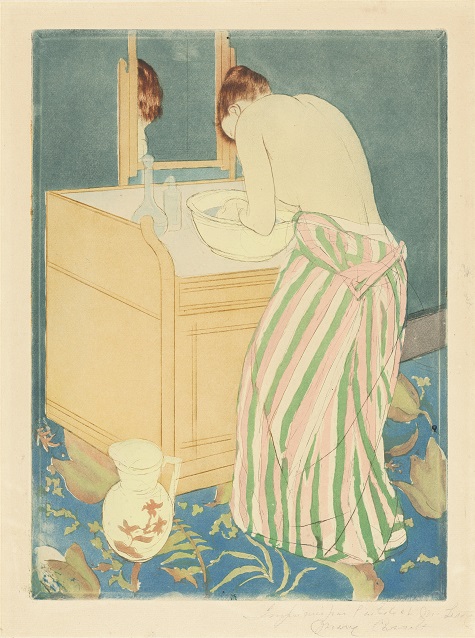
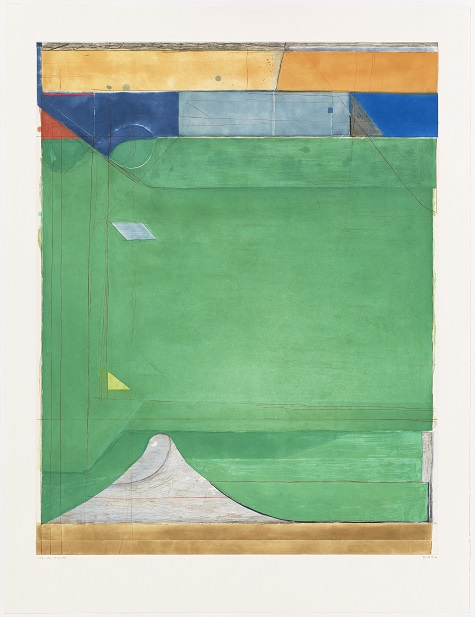
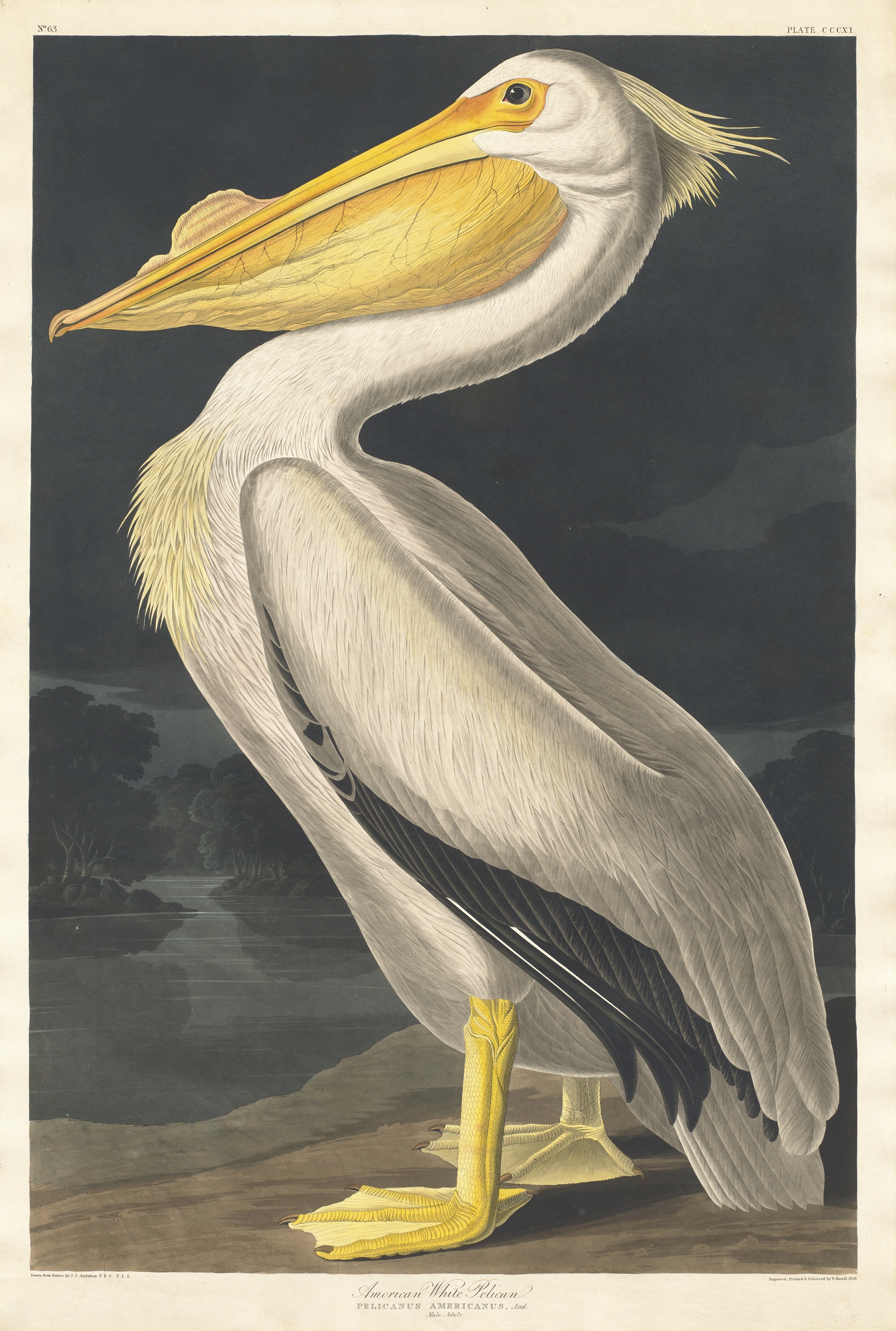
Industrious civilians, corrupt politicians, taxonomies from the frontier, fame and infamy; all have been and continue to be depicted in the American print. This democratic nature of printmaking’s subjects has often drifted into the processes themselves. For example, Paul Revere’s contributions to print greatly surpassed those of a simple image-maker. He also industrialized copper plate manufacturing thereby giving a much larger group of artists access to the technology.

Print has often transferred its technologies from the forefront of industrialization into the realm of fine art as processes advance. As digital printing becomes cheaper, faster, and more accessible it pushes out more antiquated technologies, and then those technologies are turned by artists towards fine art applications.

Print has often simultaneously bucked and embraced its utilitarian roots. This can be seen in Robert Rauschenberg’s attempts to push print processes far past their traditional capabilities into almost another medium entirely. His monolith in black Accident occupies a space between print, drawing, and collage. Rauschenberg’s method was a precursor to the current and common practice of reassembling proofs and ephemera. This method of repurposing material that was once considered worthless allows contemporary print artists to complete individual works of art where print is the language and repetition is no longer a factor. The prints also give a much larger audience access to his work. They can easily travel, be shown in multiple locations at the same time. It can even be argued that they offer a wider conceptual accessibility than his paintings and assemblages simply through the widely understood aesthetic properties of paper and ink.

Whereas other mediums have been more subject to the wills of those with means, print has catered to a wholly different crowd, often the same one depicted in its imagery. Bellows’ lithograph, A Stag at Sharkey’s, invited wide audiences of the day into a seedier closed realm outside their normal comfort zone to witness a less accessible form of entertainment, illegal prize fighting. One could argue that the original spirit of dissemination represented by the Gutenberg press continues to spring forth from online mediums such as YouTube, which has become a university for the everyman. In addition to representing the most current philosophies and aesthetic possibilities in contemporary art, print is unique in its unfiltered articulation of whatever artistic expressions are evident in the culture at large.

Portions of this article appeared in the Spring/Summer 2017 issue of the DMA Member Magazine Artifacts

Steven Foutch is an artist and assistant professor of painting and printmaking at University of Dallas
Elements of Beauty: Studying Steichen’s Technique

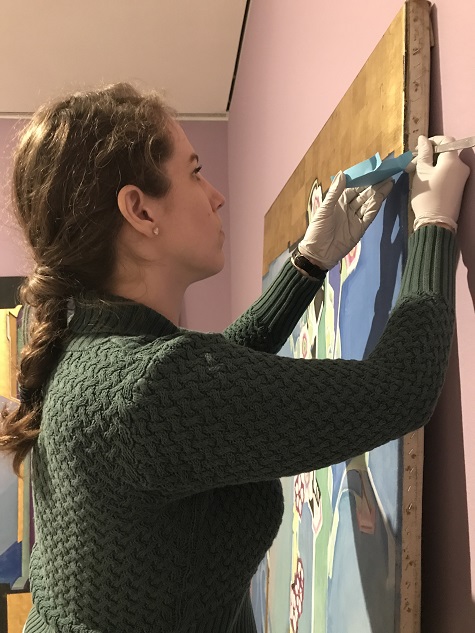
Over the past several weeks, a series of seven murals entitled In Exaltation of Flowers by painter and photographer Edward Steichen have been undergoing conservation treatment in the Barrel Vault Quadrant Galleries. The first step to any conservation treatment is the careful examination of the artwork. This gives a conservator insight into the condition of the artwork, and allows for a better understanding of the artist’s materials and working methods. A thorough examination provides invaluable information, which a conservator uses to plan the best conservation treatment.

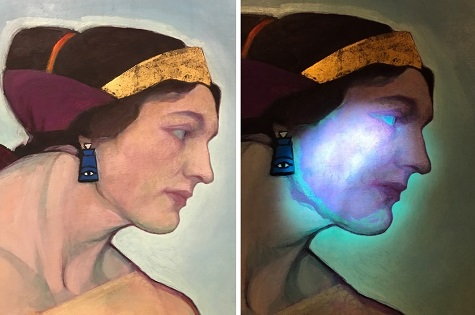
Fig. 1-2 Left: photographed under visible light Right: Photographed under UV. When viewed under UV, different pigments used to paint the sitters face become apparent based on their characteristic fluorescence.

The conservation team has been examining and documenting the front and back of each mural. To better understand their painted surfaces, the team is using different types of surface imaging techniques incorporating the use of visible light, raking light, and ultraviolet (UV) radiation. The information gained from these different light sources provides a better understanding of the structure and condition of the murals. For example, viewing the murals under UV can give information regarding pigments, surface coatings, and previous restoration (fig. 1-2).

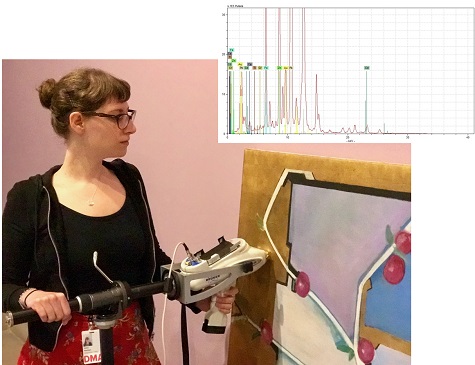
Fig. 3 Conservation intern Diana Hartman positioning the XRF spectrometer on an area of metal leaf in preparation for analysis. The XRF spectrum above is an example of the data collected from this analytical technique.

More in-depth elemental analysis using x-ray fluorescence spectroscopy (XRF) has also been carried out to help determine the types of pigments and metal leaf present on all seven murals (fig.3). This non-destructive technique uses an x-ray beam to excite electrons causing different atoms to emit energy characteristic of specific elements. By detecting these elements, XRF provides information a conservator can use to identify the pigments present.

Fig. 4 Conservation intern Keara Teeter collecting a sample from an area with gilding

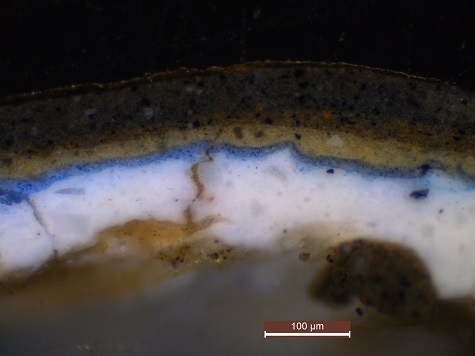
Microscopic samples were taken to better understand the layered structure of the murals starting from the ground layer, priming layer(s), paint layer(s), and in some areas metal leaf (fig.5). These cross-section samples are viewed at high magnification with both visible light and UV, which allows for a close look at the type of pigments, adhesives, and coatings present and the order in which the artist applied them.

Fig. 5 Cross-section sample magnified 200X, photographed with visible light. Description of the layers from the bottom up: canvas glue sizing, white ground, blue paint, light yellow paint, dark yellow paint, black paint, adhesive, gold leaf.

Diana Hartman is a Conservation Intern at the DMA

D2R 2.0

35742822370_64110ec43d_k

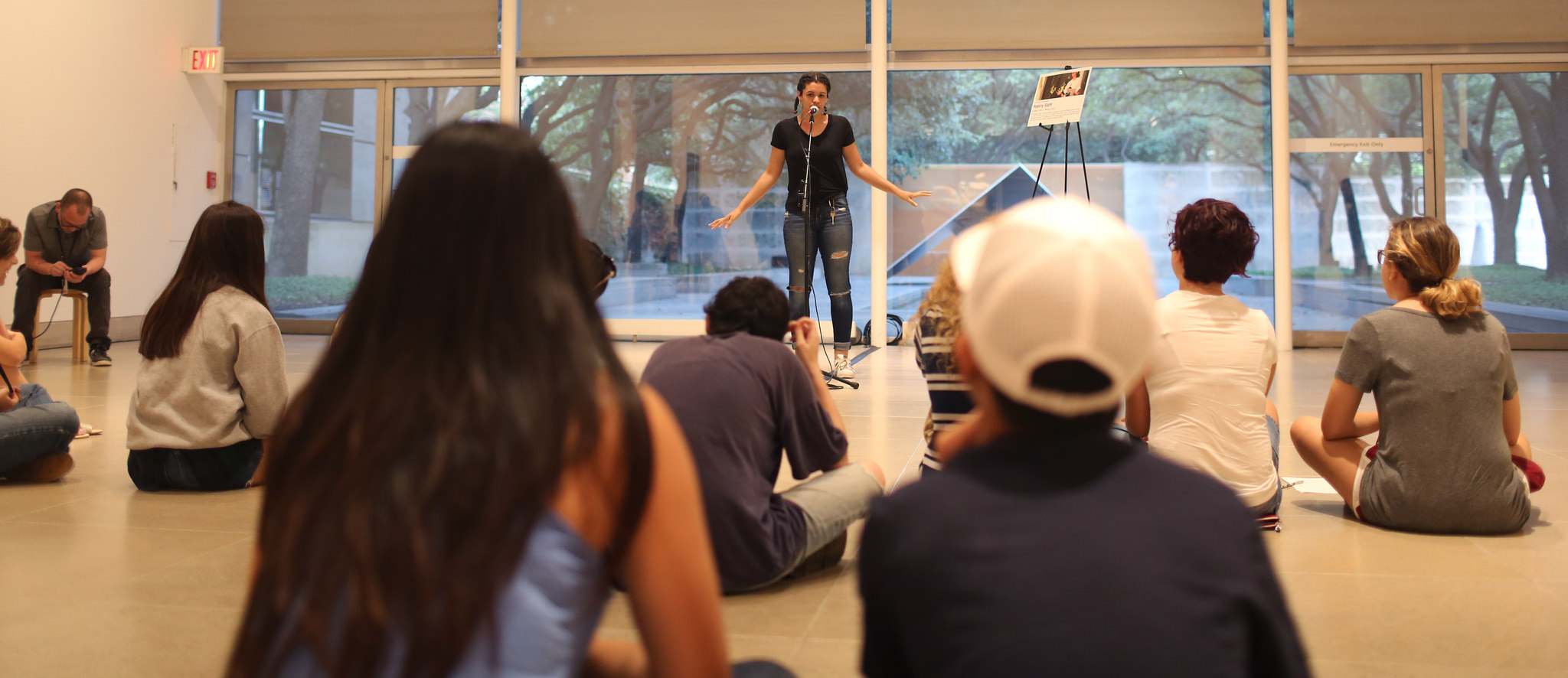
Disconnect to Reconnect’s open-mic poetry slam.

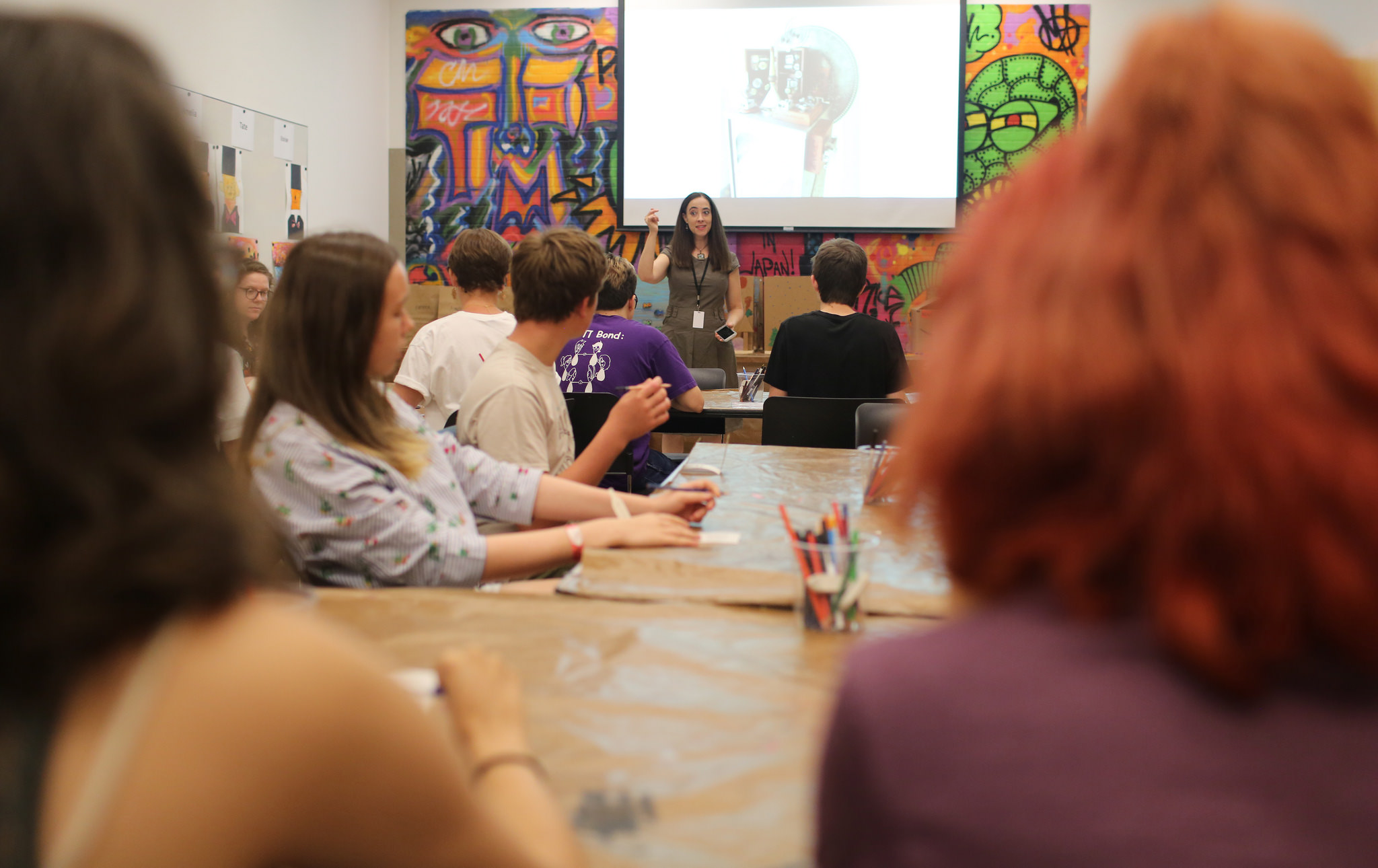
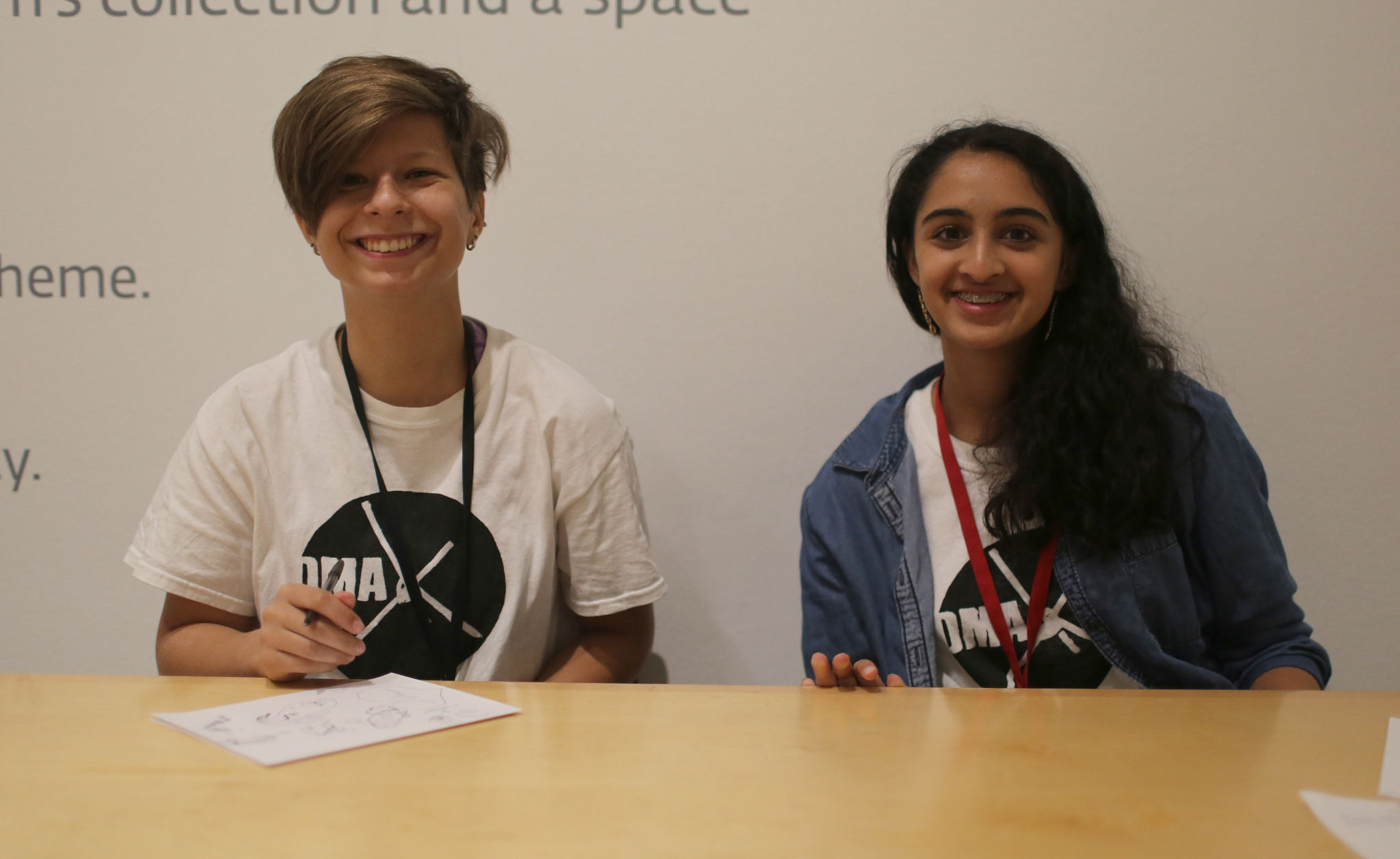
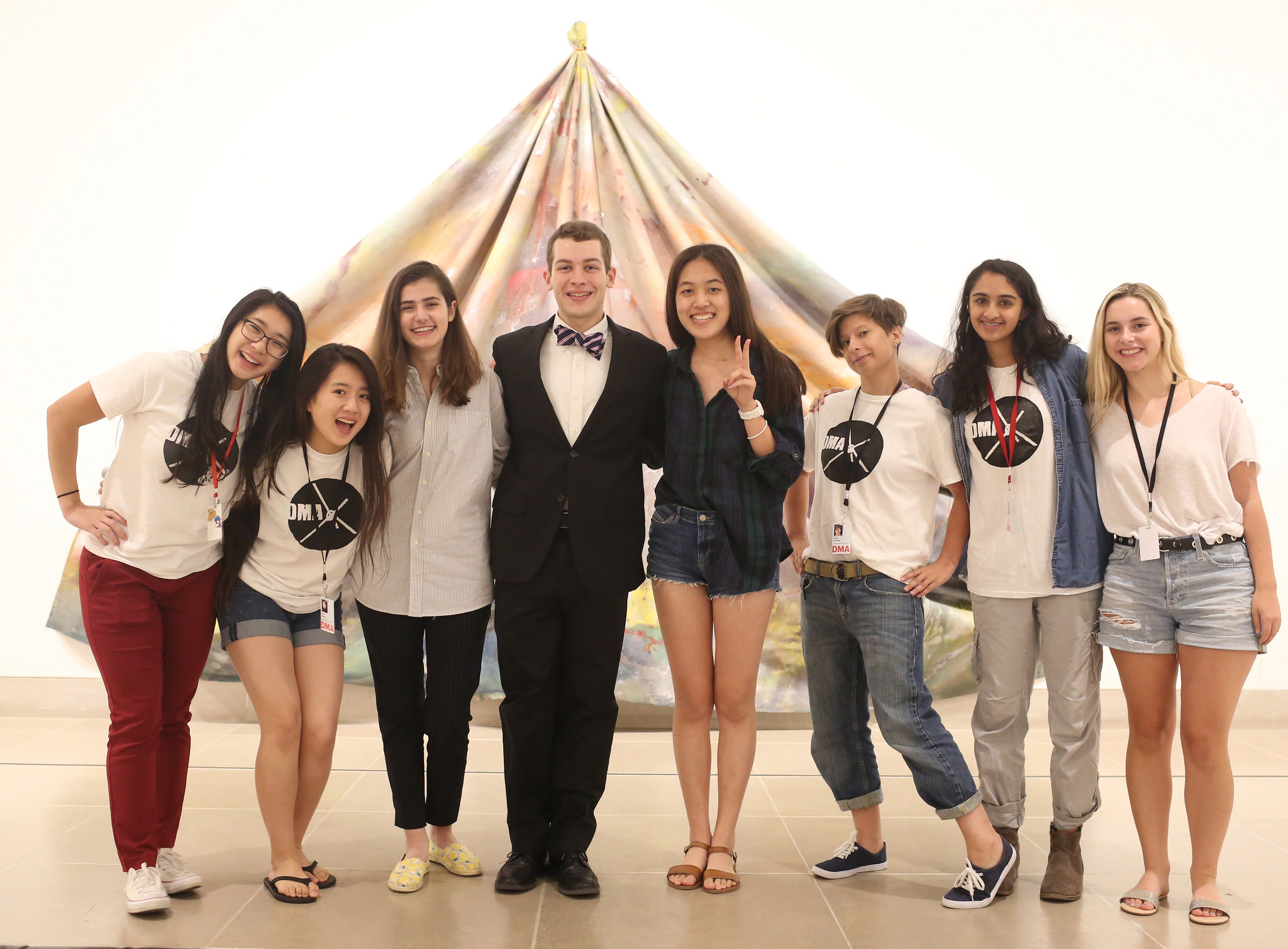
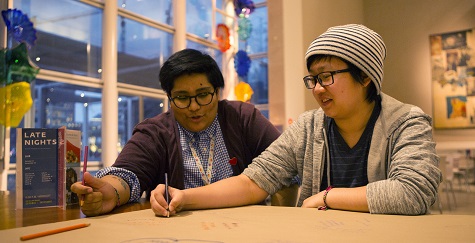
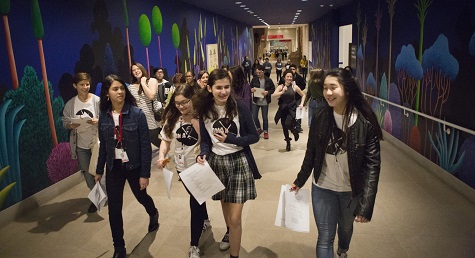
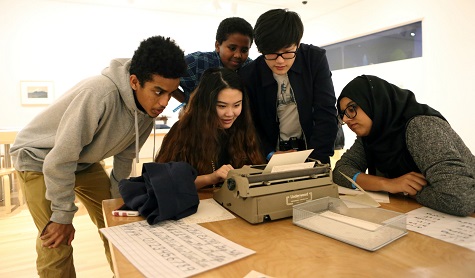
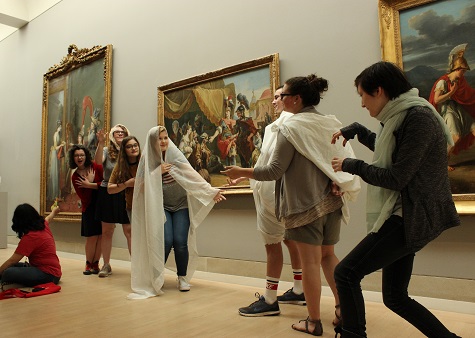
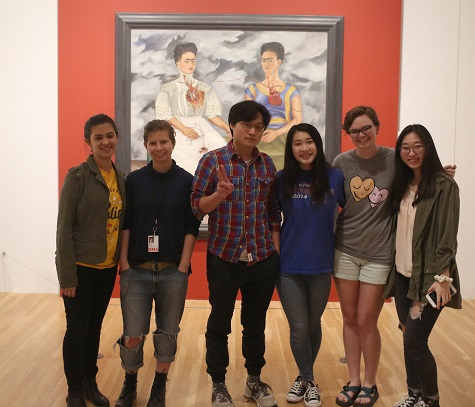
Last Thursday, our Teen Advisory Council took over the Museum for their second Disconnect to Reconnect night for teenagers. Seeking ways to make the DMA more accessible and fun for their peers, Council members created Disconnect to Reconnect to encourage visitors to put away their cell phones and engage with the art and each other.

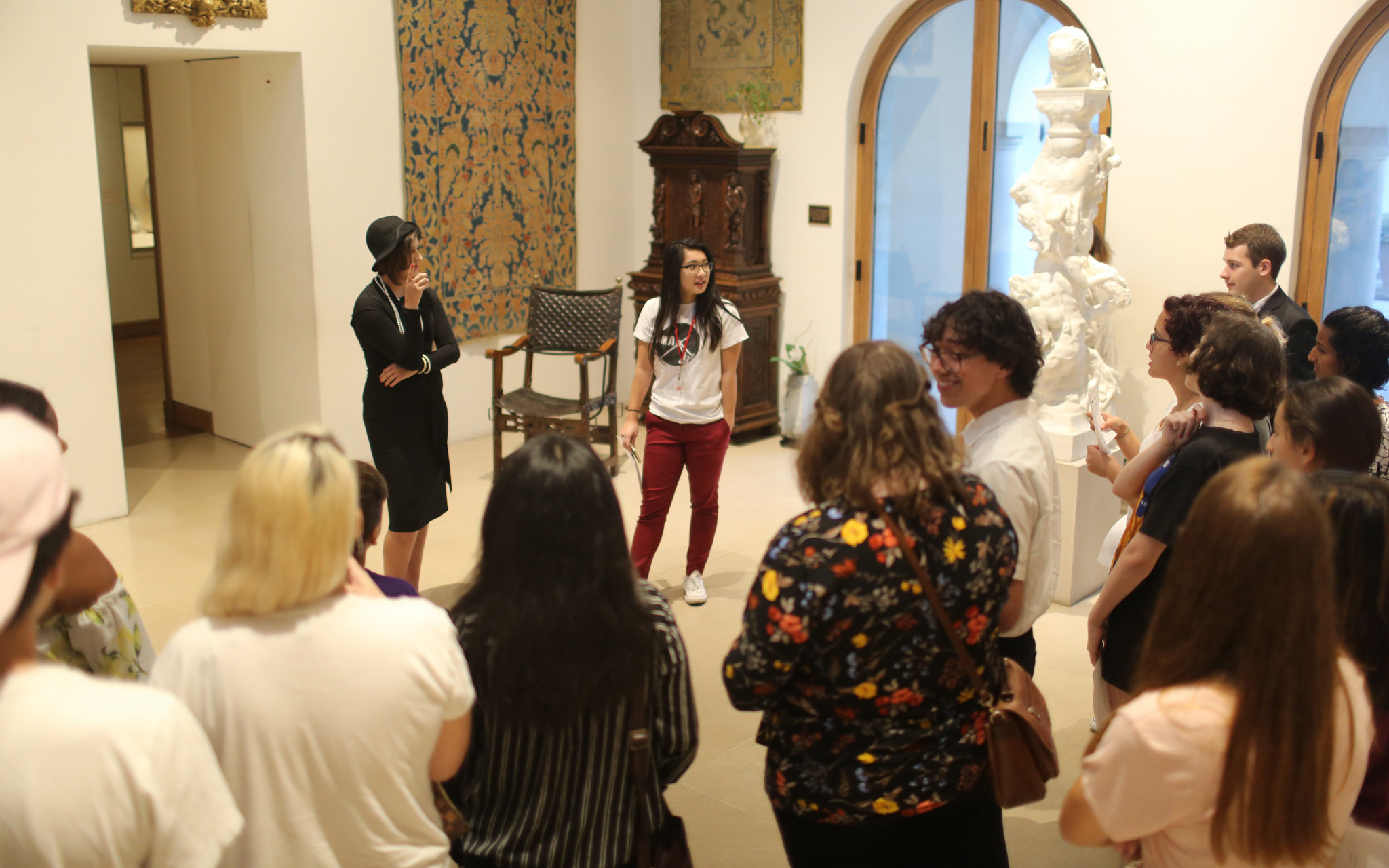
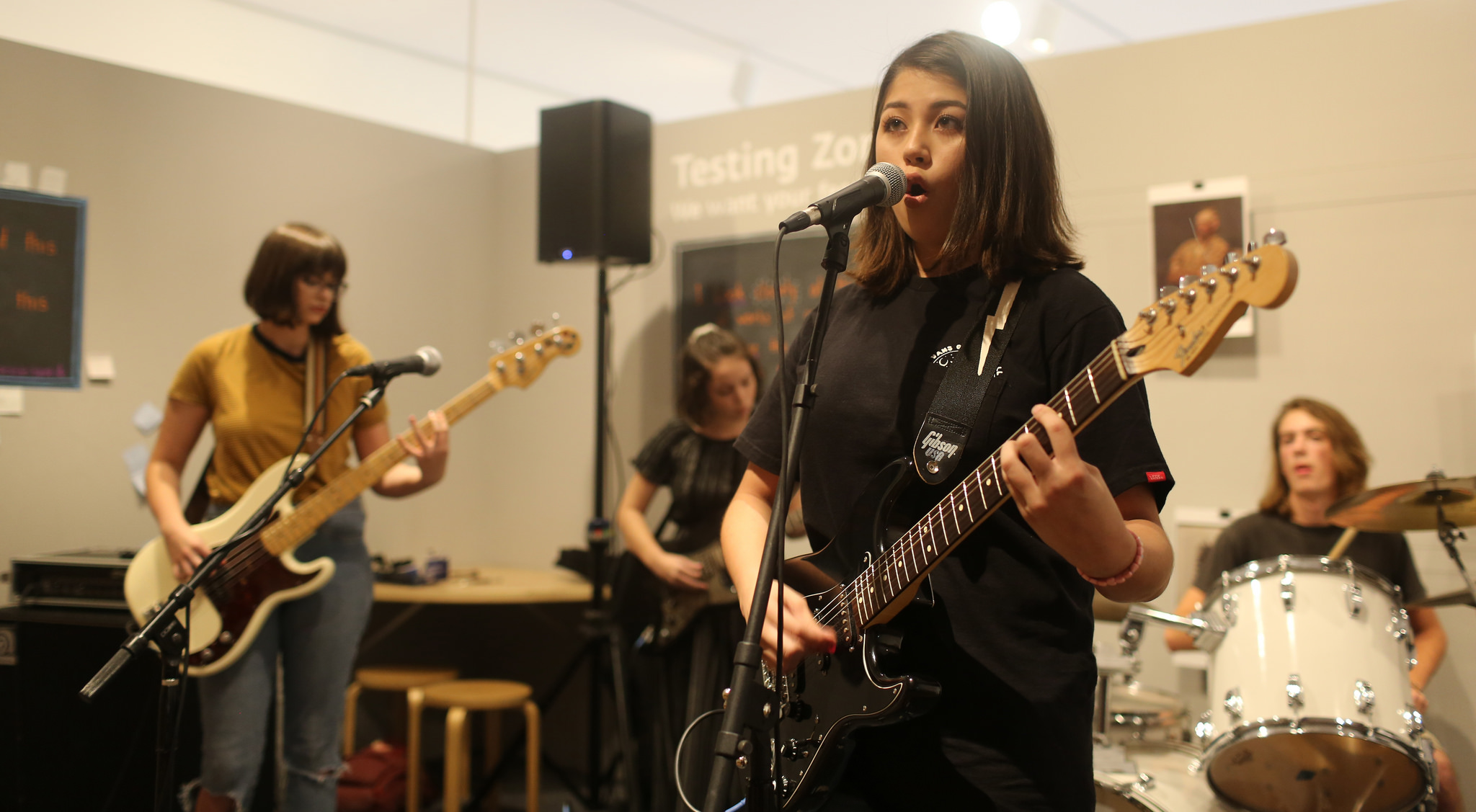
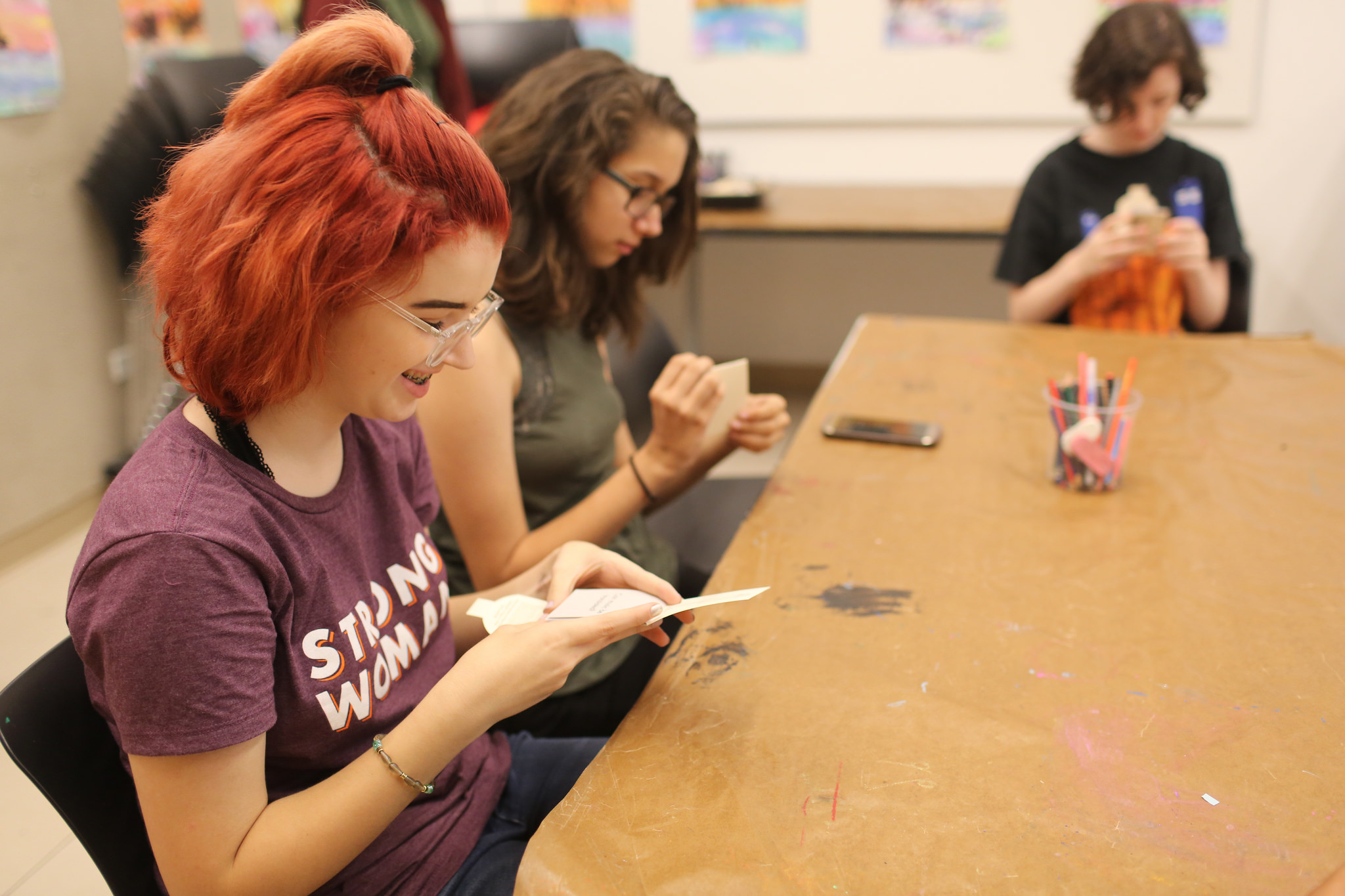
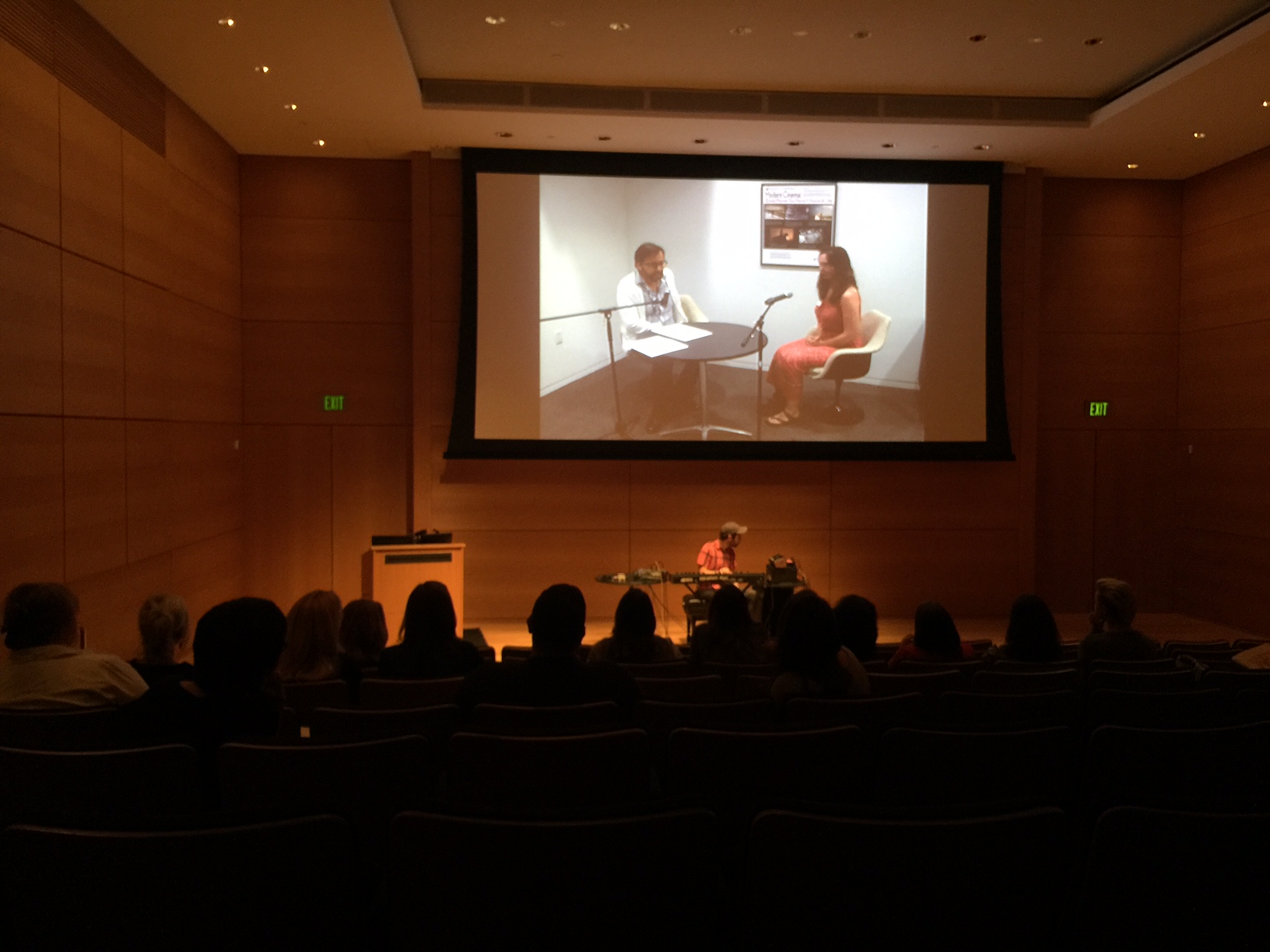
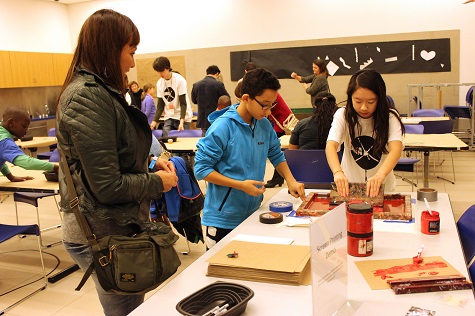
For this iteration of D2R, the Council wanted to highlight local teens, inviting musicians, filmmakers, thespians, and writers to shape the event with their talents and interests. Musical acts R.A.G. and Aloe Sara provided a soundtrack for the evening and a rotation of student films screened in C3 Theater, while C3 Visiting Artist Lisa Huffaker led a zine-making workshop related to her work on display at the Museum. The Council presented an escape room-style mystery in the Reves Collection, and hosted an open-mic poetry slam in the Museum’s Barrel Vault galleries. Teen Ambassadors were also there to lend a hand, making this Disconnect to Reconnect a true team effort.

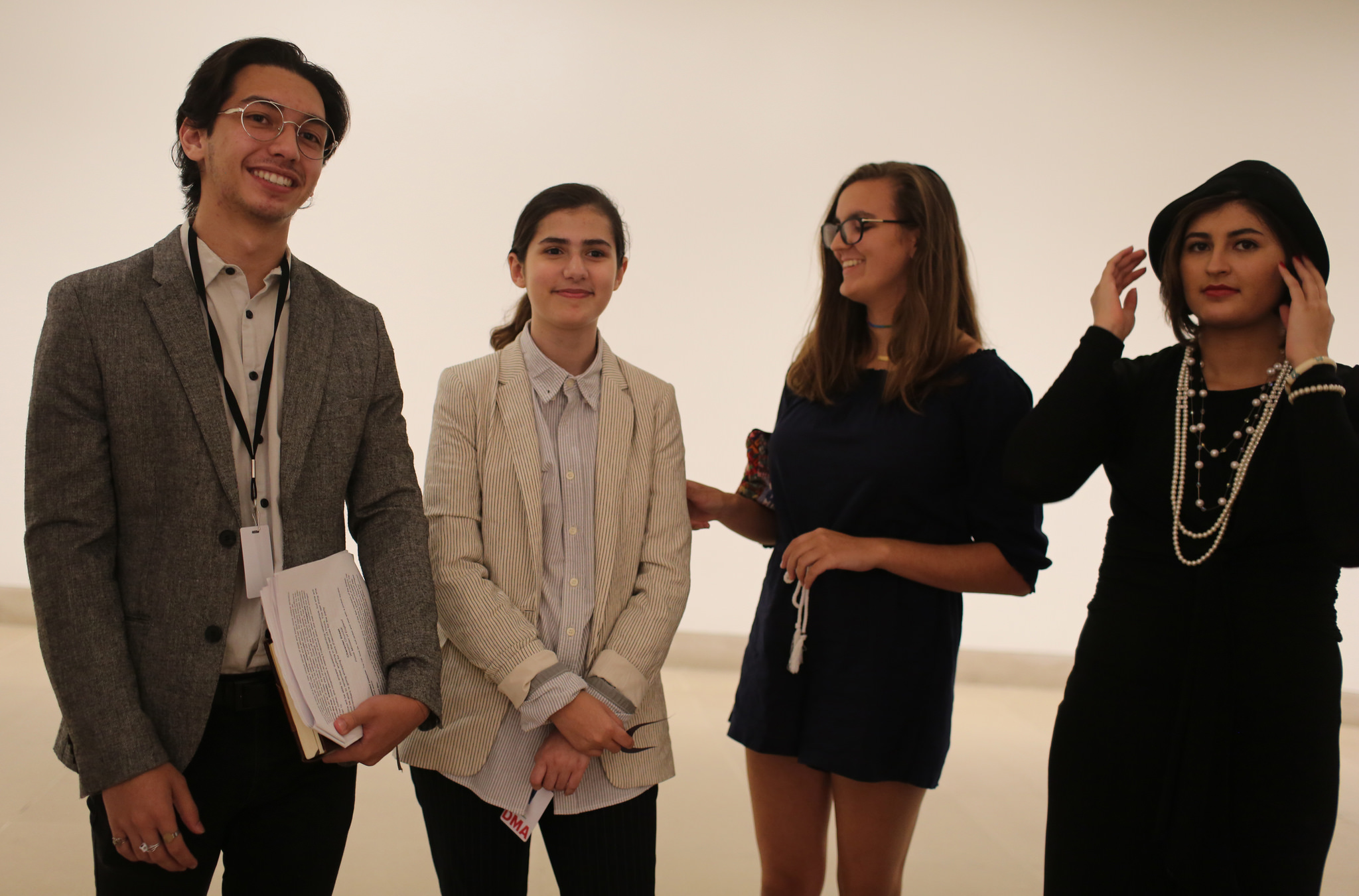
I caught up with a few Teen Advisory Council Members, as well as a few assisting Teen Ambassadors, at a planning meeting before the big day to ask them about their goals and the planning process.

Q: What activity has been the most fun or challenging to plan?

“The Reves Murder Mystery was probably the most intense activity to plan.” Emma, Teen Advisory Council

“There were so many things that went into it. We had to research the history of the Reves collection, come up with a story, and find actors.” Claire, Teen Advisory Council

“I think that the process of constructing some kind of murder mystery-type scenario is a lot more involved than you might think, just because you want to know how the crowd will respond and a lot of thinking goes into it. But I think it will be really rewarding!” Anastasia, Teen Advisory Council

Q: Why do you think it’s important to have programs like this for teens at a museum?

“Going to art museums is seen as an old person thing to do, but if there are programs for teens, it shows young people that there are things for them to do here too.” Shirui, Teen Advisory Council

“I think that teens are just as interested as older people, they just don’t know the museum is an option for them to be interested in going to, so if we have programs specifically for teens, it makes it a better place to be.” Anastasia, Teen Advisory Council

“I feel like teens aren’t given a platform to express themselves in a way that’s official or endorsed, so usually teens have to start from scratch and overcome a lot of challenges if they find a place where they can. It’s really nice to have a place that wants to hear what you have to say and a place for you to say it, and share that with others.” Claire, Teen Advisory Council

“It’s also a place for different kinds of people to be united under one umbrella and become a community, and meet people with different experiences than you.” Wolfgang, Teen Ambassador

Q: What do you hope visitors take away from Disconnect to Reconnect?

“I hope it inspires them to share their life and experiences more – maybe sharing it more with people, face-to-face, instead of just on social media.” Claire, Teen Advisory Council

“I hope that people leave knowing that the DMA is for anyone and everyone, with any interest – it’s not just about art! We have a lot to offer.” Tori, Teen Ambassador

“I hope they take away some sort of connection and know that there are things for them here at the Museum. Museums are not some sort of elitist, high-society places, and we do have programs and activities for all ages. There’s a spot and a place here for them.” Arik, Teen Ambassador

After six months of planning, Disconnect to Reconnect went off without a hitch. Over 250 teens participated throughout the night! We’re very proud of the Teen Advisory Council, and look forward to what they will bring to the Museum next.

Jessica Thompson
Manager of Teen Programs

Museum Forum for Teachers 2017

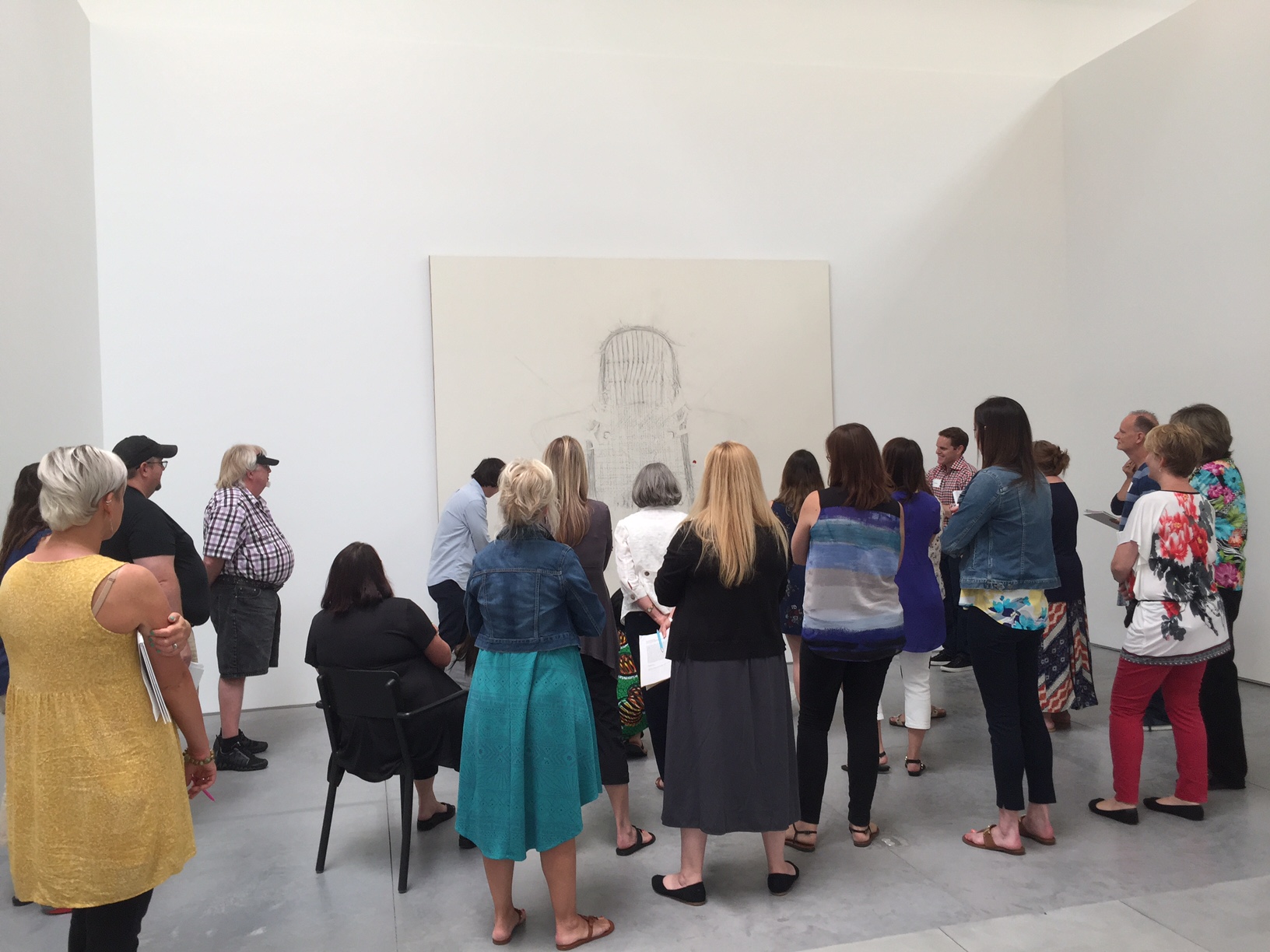
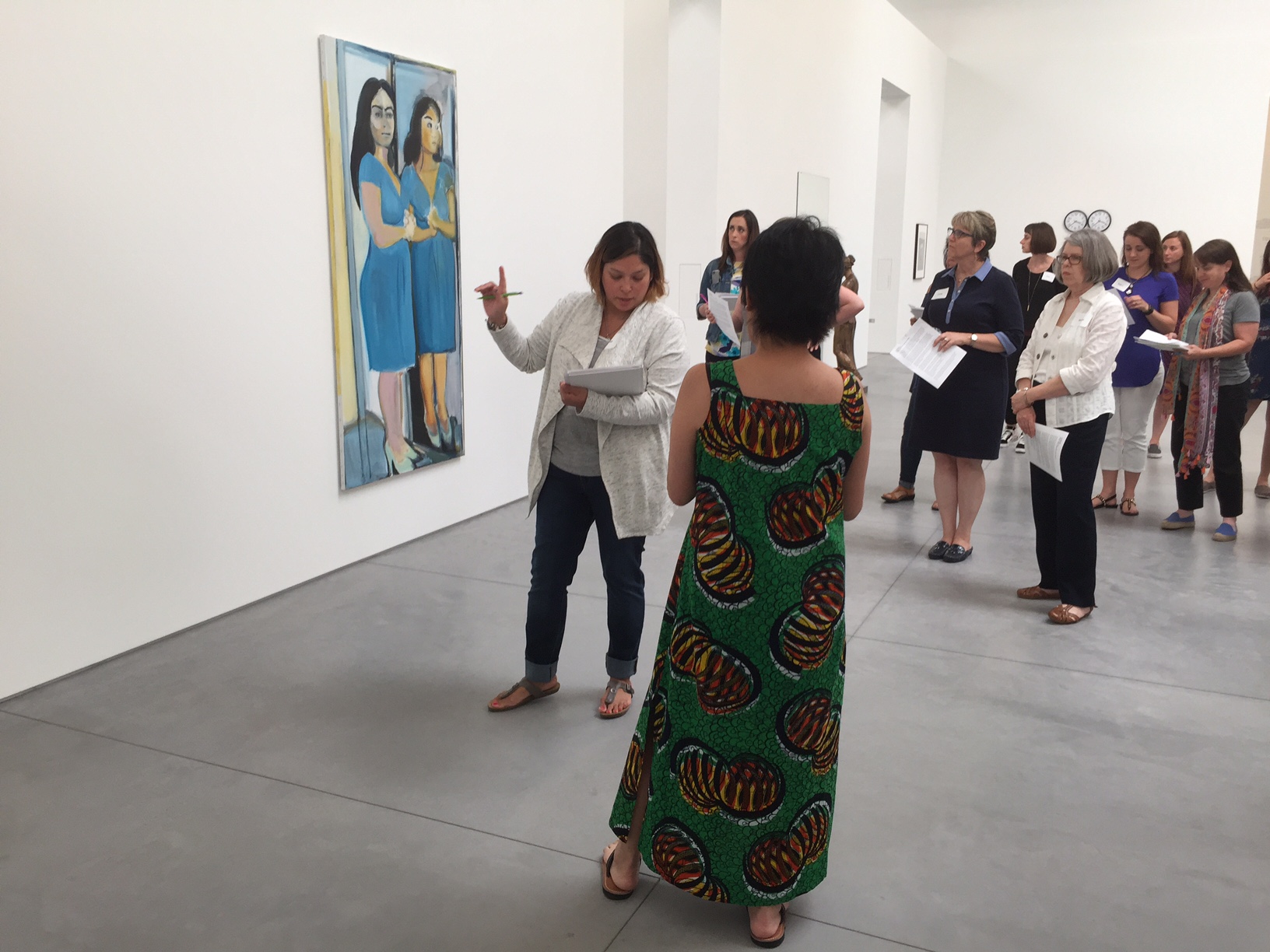
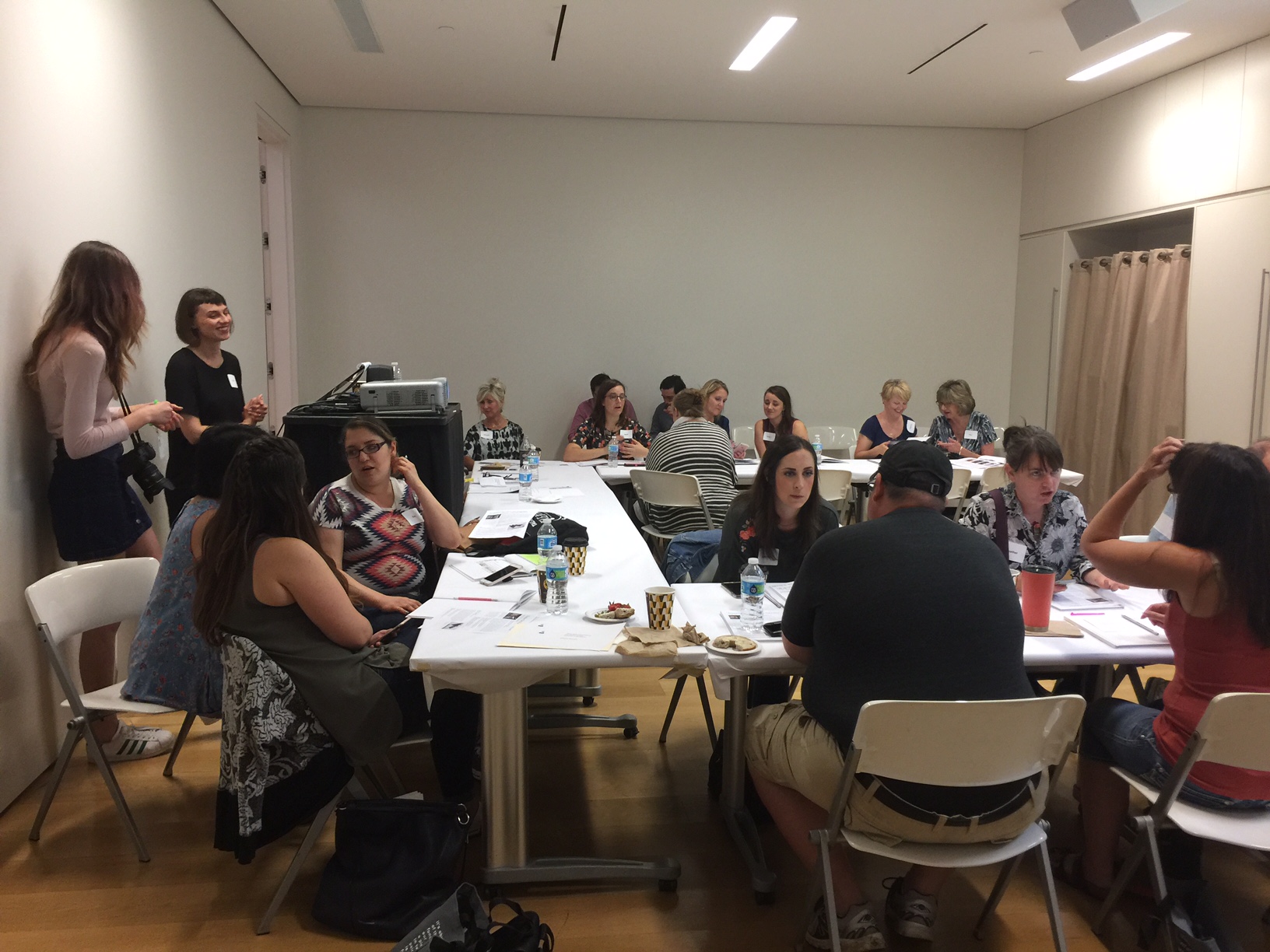
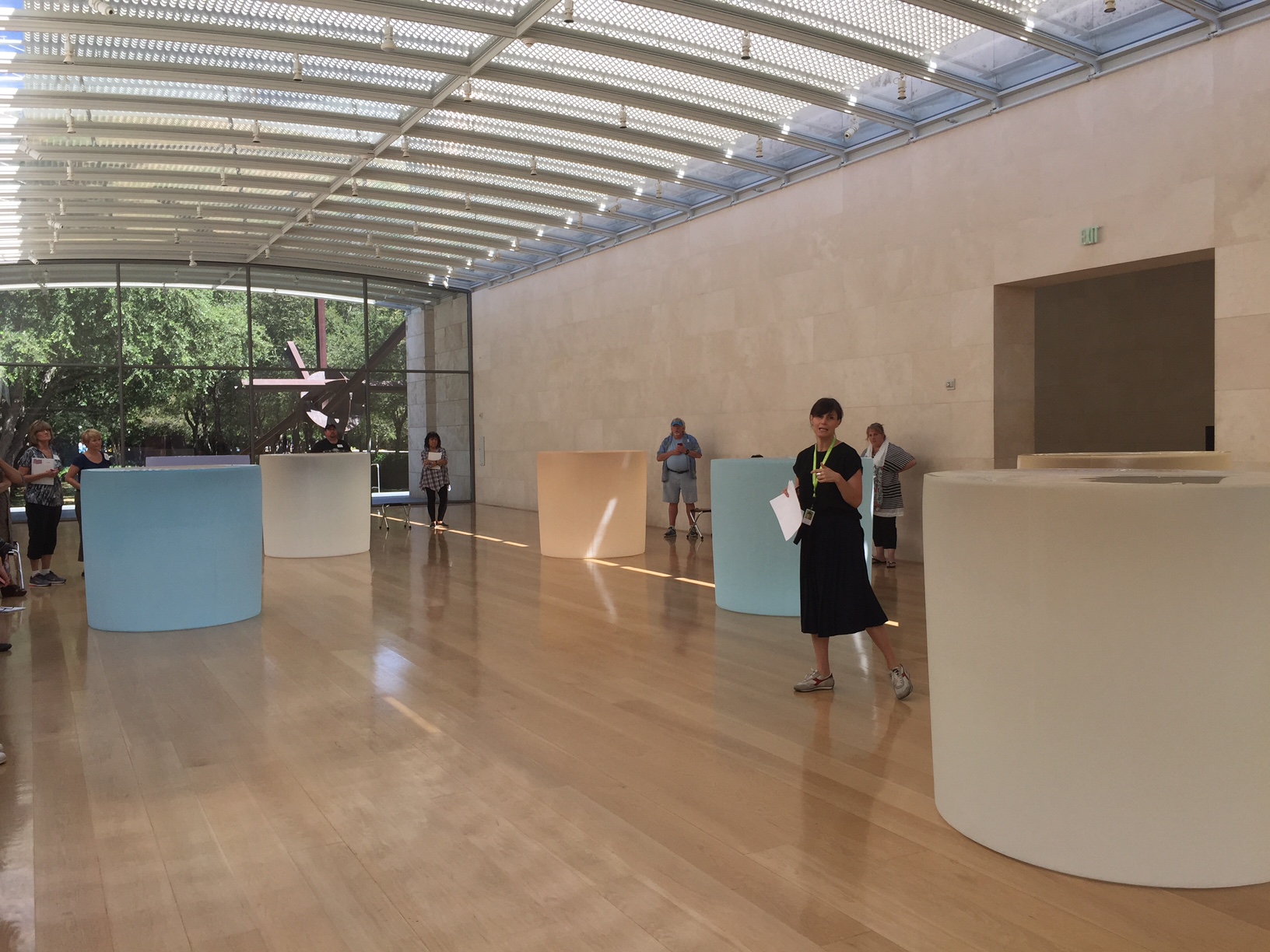
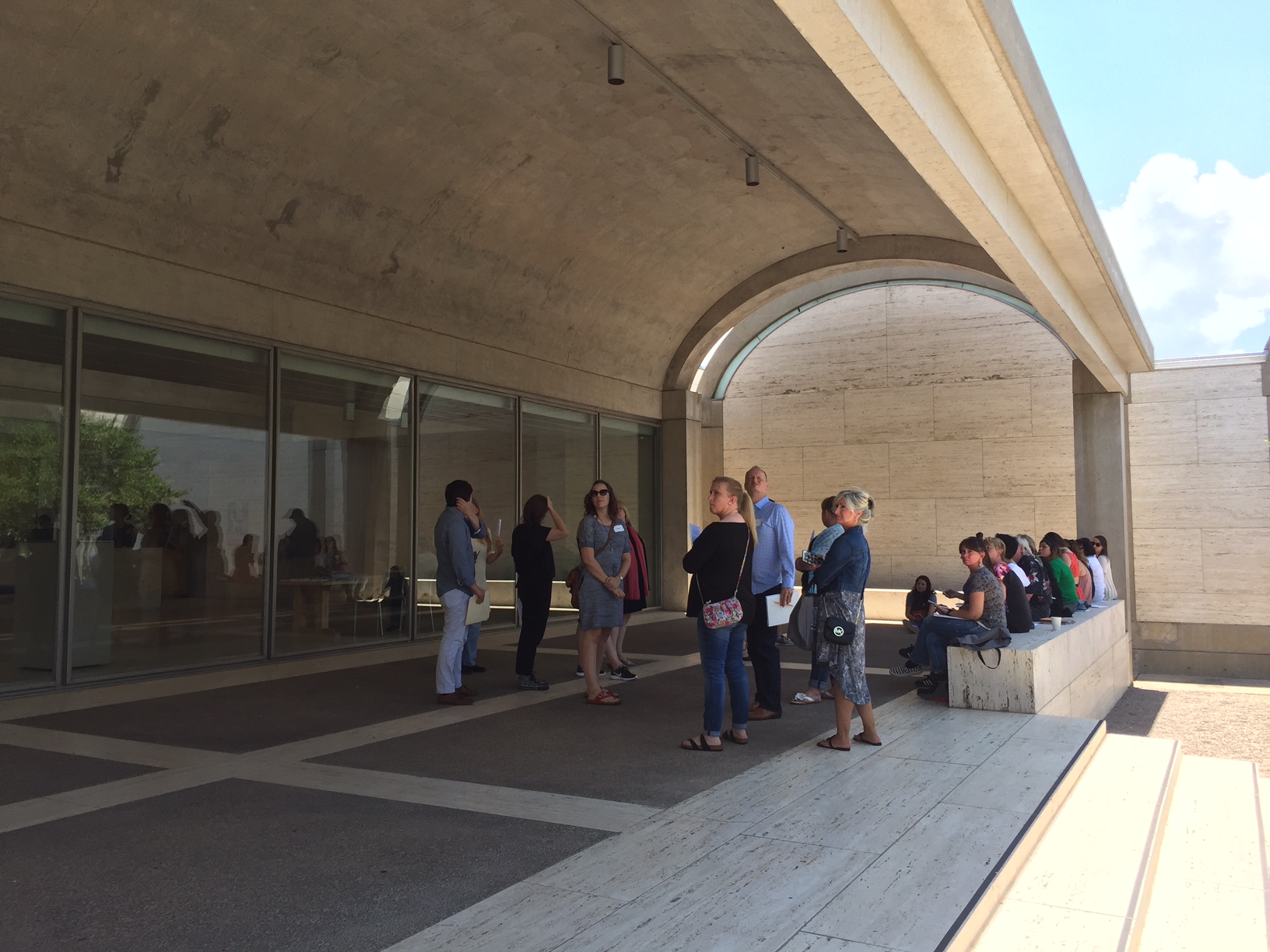
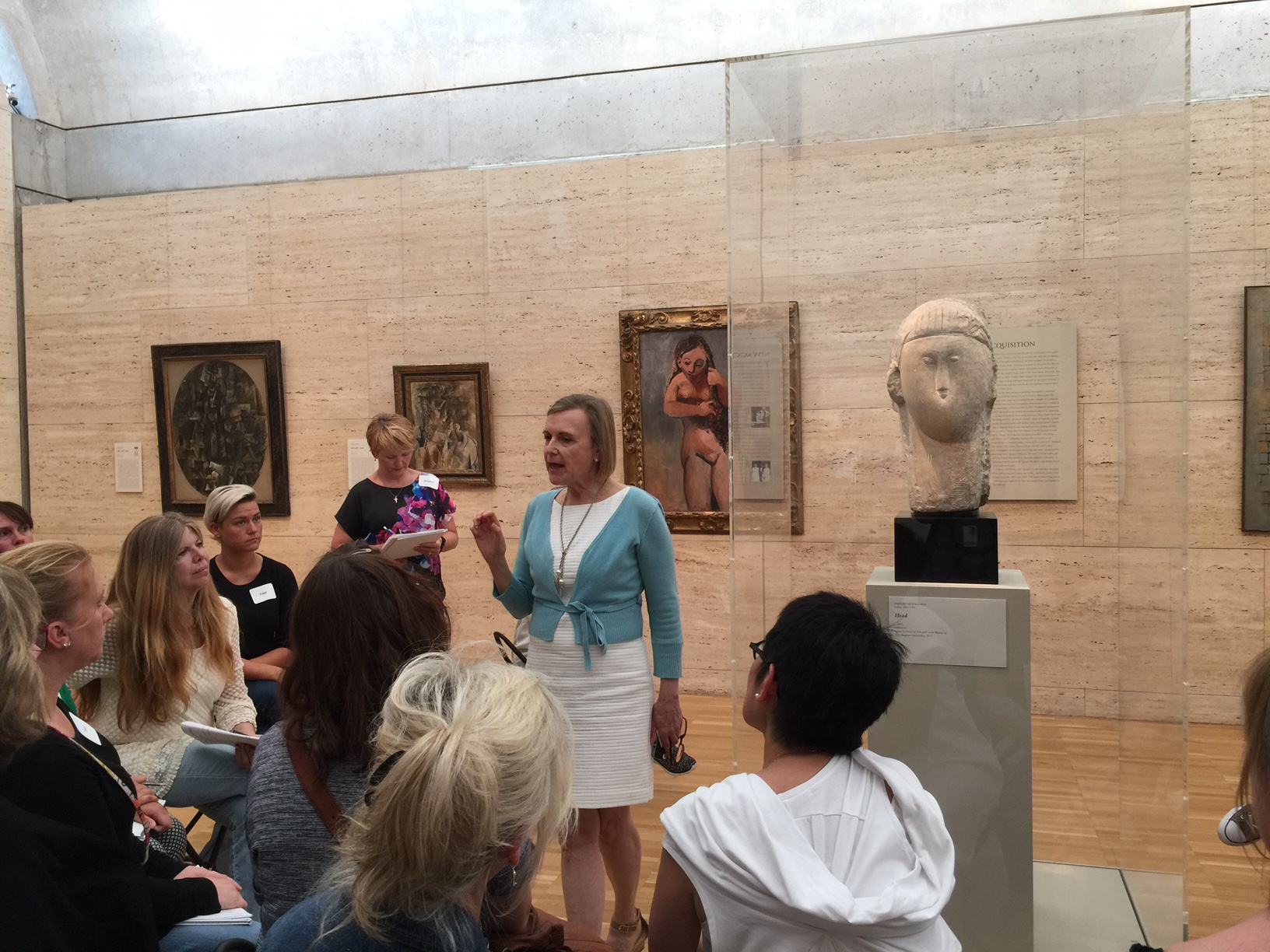
The art education-extravaganza that is Museum Forum for Teachers holds the distinction of being one of my favorite weeks of the summer. Each year, The WarehouseNasher Sculpture CenterModern Art Museum of Fort WorthKimbell Art Museum, and the Dallas Museum of Art work together to coordinate a week-long workshop dedicated to helping classroom teachers deepen their understanding of modern and contemporary art and develop strategies to teach, interpret, and use works of art in the classroom and in museum galleries. Best of all, each institution hosts one day of the week giving participants and fellow museum educators the opportunity to explore a variety of special exhibitions, collections, and experience different teaching styles. It’s well worth braving traffic across the Metroplex to experience the richness of DFW’s museum community!
The Modern_1

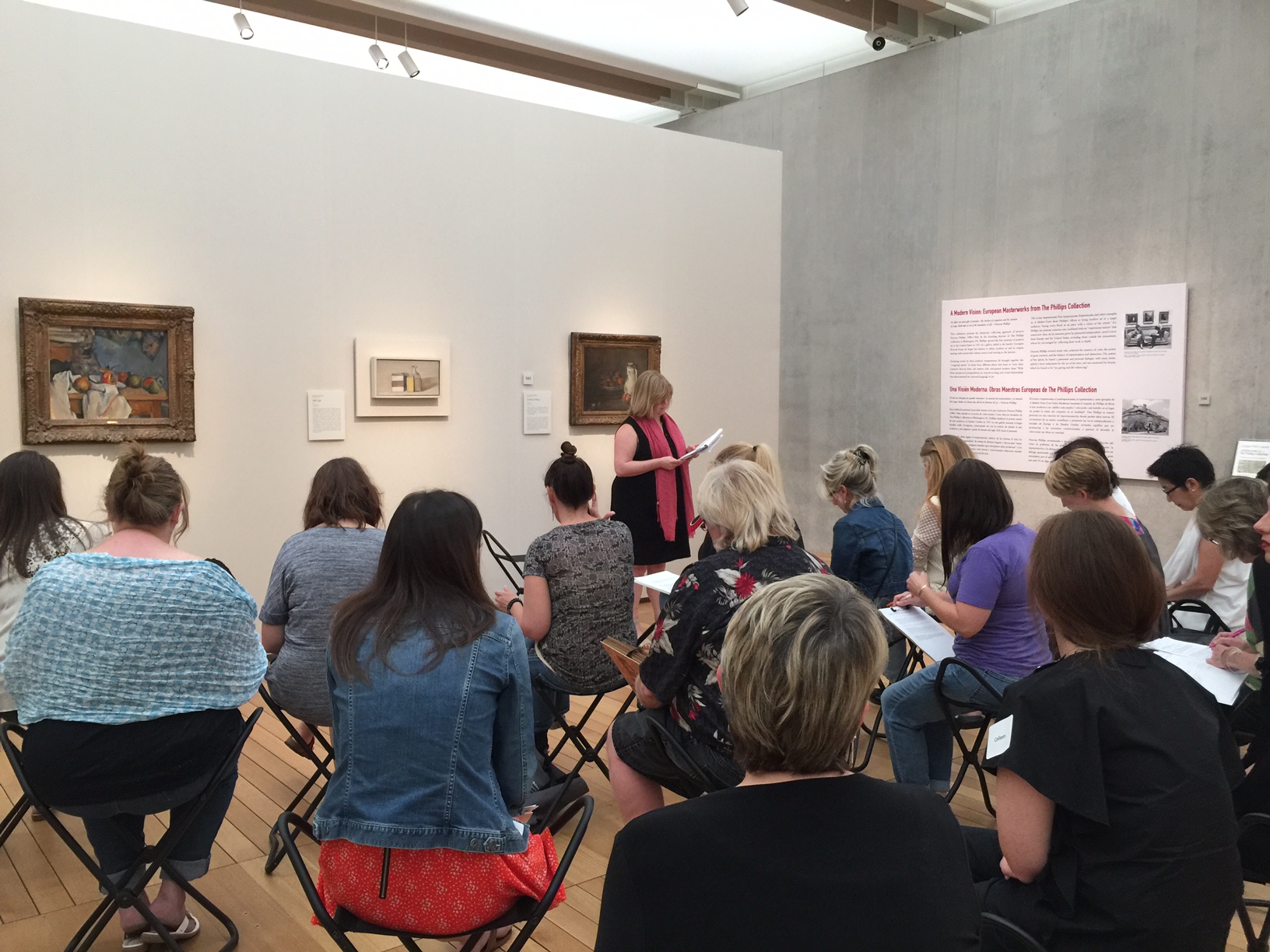
Discussing Doug Aitken: Electric Earth at the Modern Art Museum of Fort Worth.

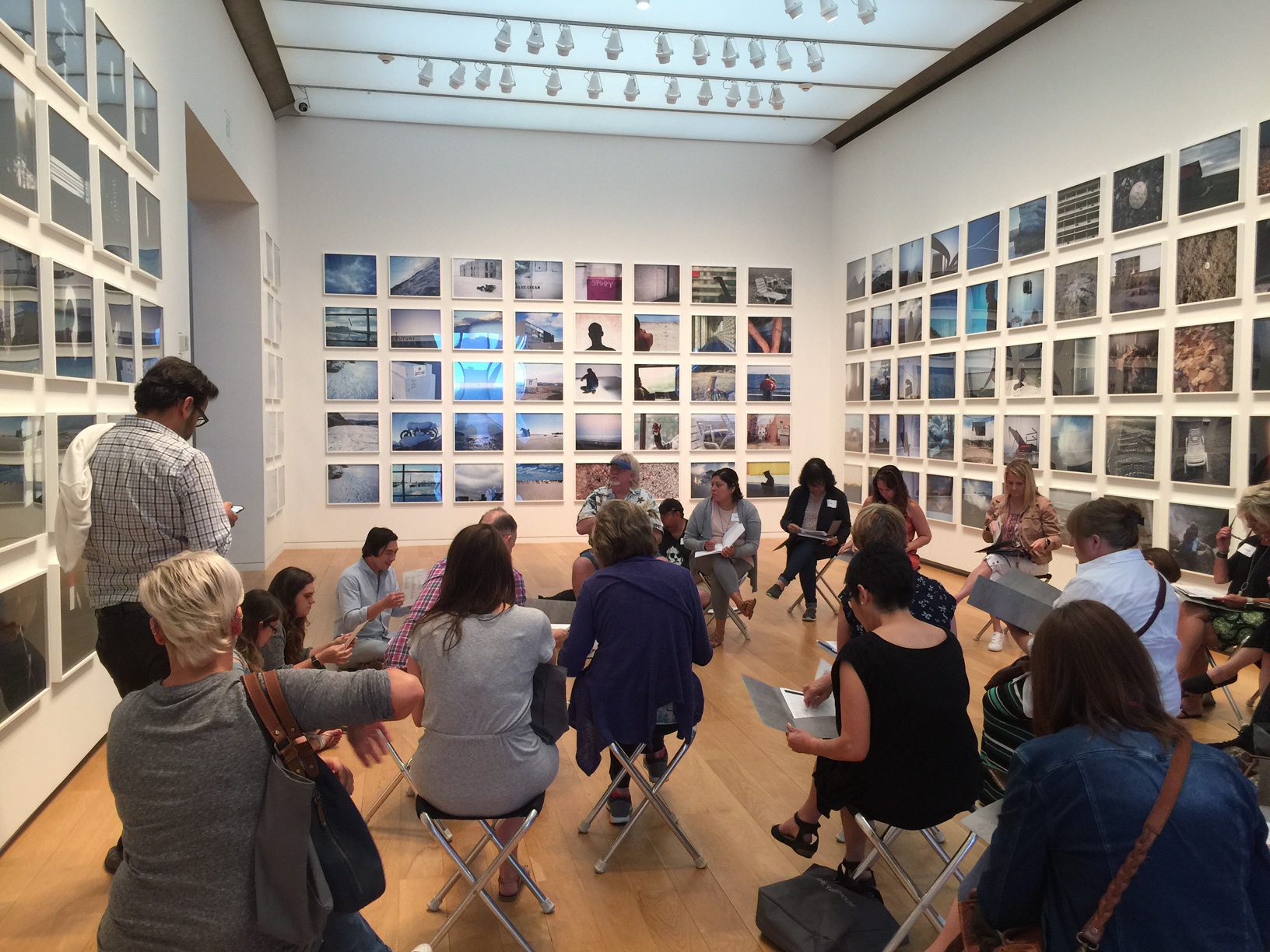
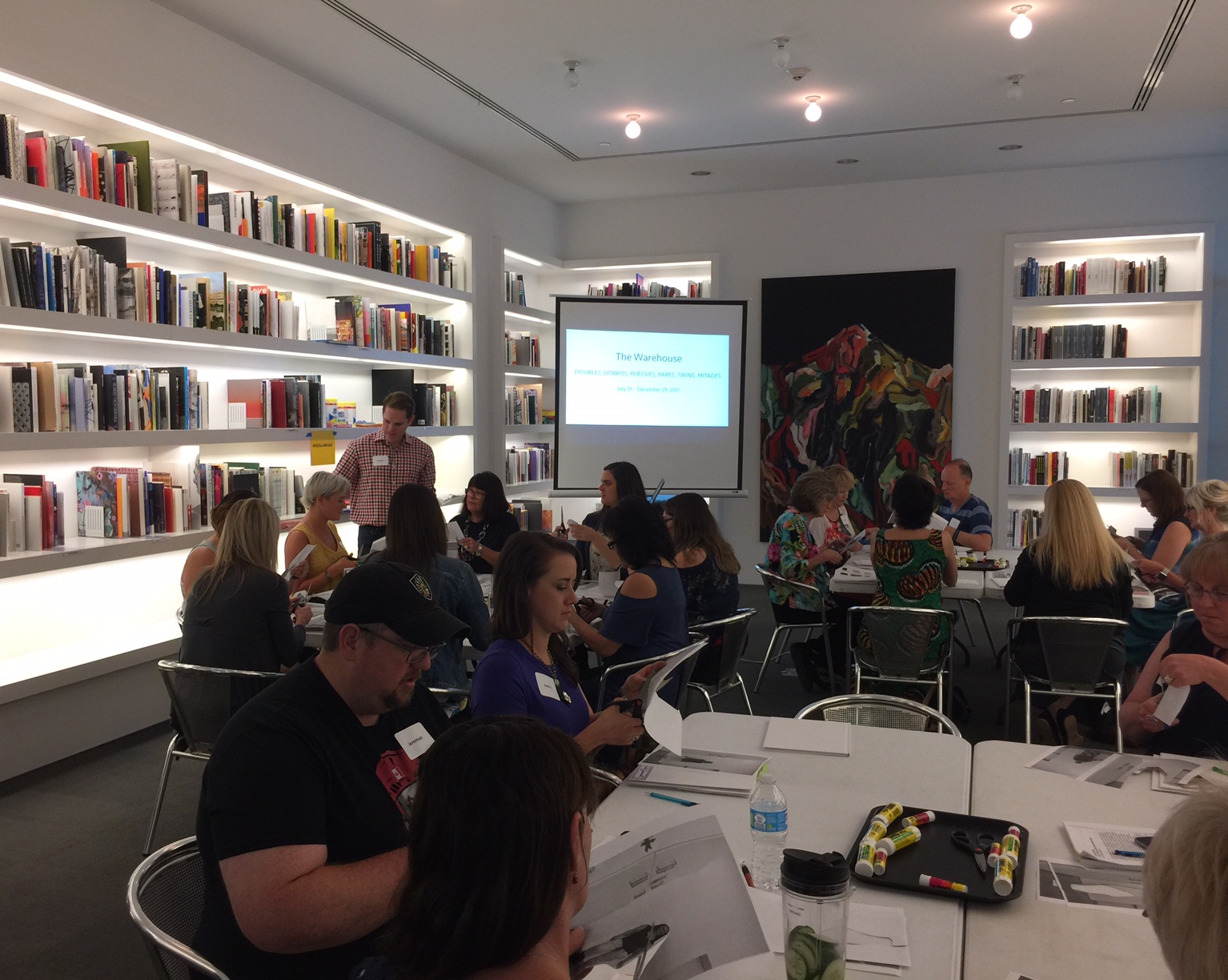
This year, twenty-three educators embarked on a week of museum experiences, gallery discussions, and studio projects for CPE credit. Not every educator who participated has a background studying art, and the variety of perspectives enriched the quality of our discussions. In the spirit of highlighting different approaches, the museum educators brought back the “Educator Exchange” from last year and each led a session at one of the other institutions. I always find that I come away from the week inspired and energized for the upcoming school year. Check out some of our highlights from this year:

And what do our participants have to say about their experience at Museum Forum for Teachers?

This week has felt like a vacation. It’s as though I have been on guided tours on location by Rick Steves every day. I’d love to attend next year…Well planned. Well done.

This was my favorite year so far…I don’t know how all of you manage every year to make this event a week of so much learning and fun. I can’t wait to get to each museum each day. Absolutely my favorite thing I do all year! Thank you!

This was my first year and I hope to be back! Art camp for teachers is how I will explain it when I am asked about the highlight of my summer.

I feel inspired, charged up again, and optimistic about the new ideas I’ll bring to my students. Thanks!

Once again, this Forum has completely exceeded my expectations. The content was rich, insightful, and relative, the projects were fun and accessible, and everyone on staff is an absolute joy to work with. This Forum is not only the cornerstone of my upperclassman content, but a week for me to reconnect with art and truly be myself. Thank you all so much for what you do!

Sign up to receive our emails and check the box for Information for Teachers, so you can stay connected to exciting professional development opportunities here at the DMA and join us for Museum Forum for Teachers next year!

Lindsay O’Connor
Manager of Docent and Teacher Programs

Teen Time

It’s a Thursday night at the DMA, and conversations fill the galleries. A group of friends joins a discussion led by a Visiting Artist, who is hosting a workshop later that evening. Total strangers are chatting in front of their favorite work of art, bonding over shared thoughts and interests. A great band is playing in the Center for Creative Connections, and a small crowd is jamming along with them. Upon closer inspection, all of these visitors are teenagers, and – remarkably – there’s not a cell phone in sight!

This is the vision of the DMA’s Teen Advisory Council, a group of highly motivated students from around Dallas-Fort Worth. Since 2013, the Council has worked with DMA Education staff to develop programs and activities for visitors. If you’ve attended a Late Night in the last few years, you’ve likely experienced their work firsthand. From scribbling robots to life size board games, they never fail to creatively interpret the Museum’s collections and exhibitions in new and exciting ways.

This year, the Council has turned their focus toward their peers in an effort to share the Museum with their fellow teens. At a brainstorming meeting earlier this year, the discussion turned toward a common stereotype of young people: that they are glued to their cell phones 24/7. There are benefits to being connected all the time. In my experience, teens today are much more involved and knowledgeable about current affairs than I was at their age, thanks in part to having information so easily accessible. However, teens know there are consequences: a friend is just a text away, but so are bullies, school pressures, and global politics.

Because Teen Council members are at the Museum so often, they know it as a place where they can take a break from being connected. It’s a place where they can learn at their own pace, find calm within themselves, and open up to new perspectives and experiences without being judged. To share that feeling with others, the Council has worked hard planning Disconnect to Reconnect, a night of free, fun activities for teens.

Disconnect to Reconnect invites teens to discover what the DMA can offer them, from solving an Escape Room themed after the history of the Reeves Collection to creating art with Visiting Artist Lisa Huffaker in the Center for Creative Connections. The Teen Council also invited teens to showcase their own talents – the two musical acts of the evening, R.A.G. and Aloe Sara, are high school students, and short films made by local teens will also be playing in the C3 Theater. All of the Council asks is that visitors be fully present, with cell phones silenced and put away while participating.

We hope you’ll be able to join us this Thursday, July 20th for Disconnect to Reconnect from 5:00-9:00 p.m.!

Jessica Thompson is the Manager of Teen Programs 

Our Harp’s Delight

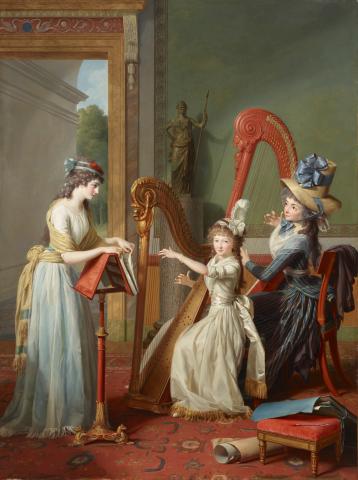
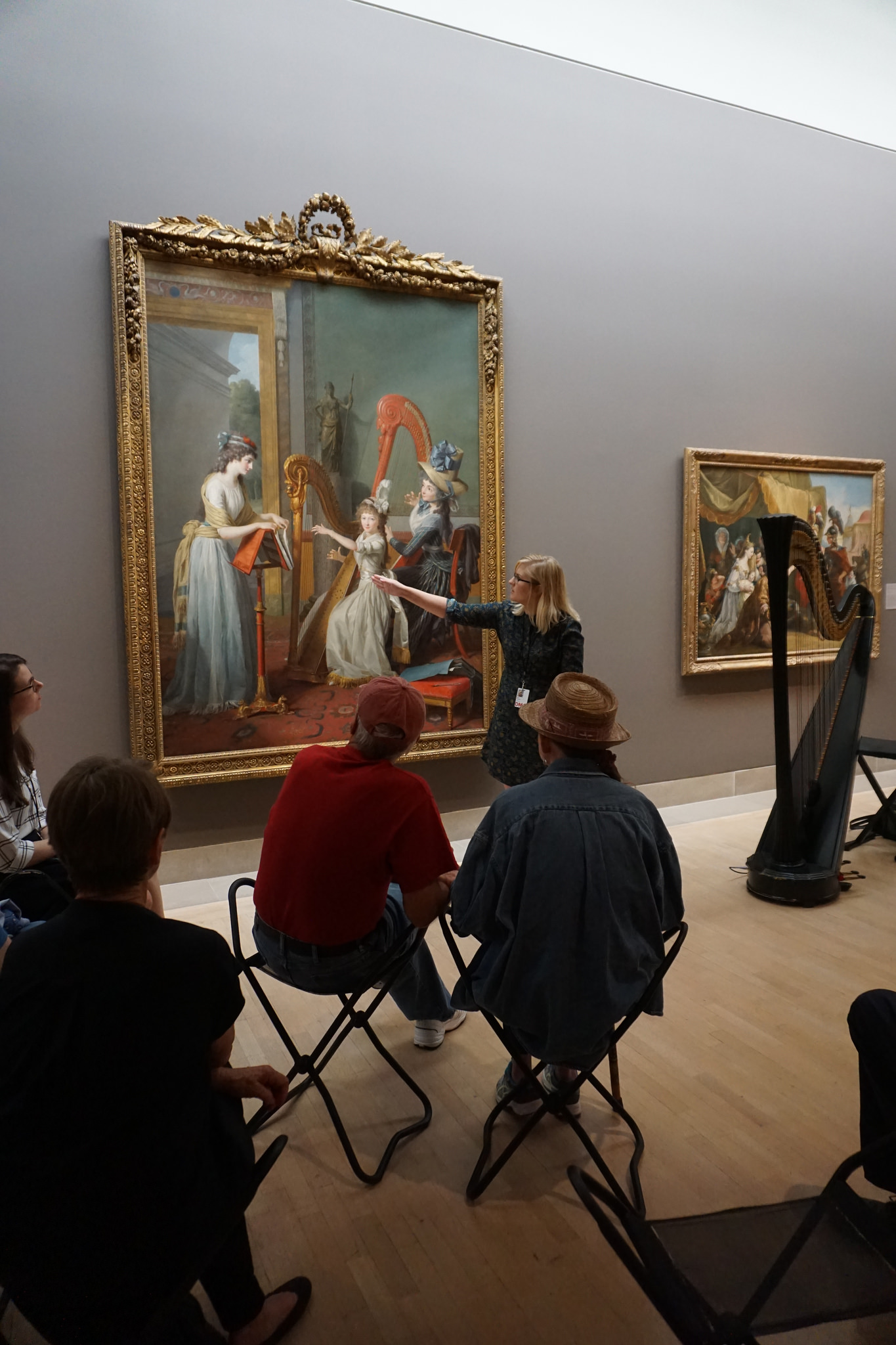
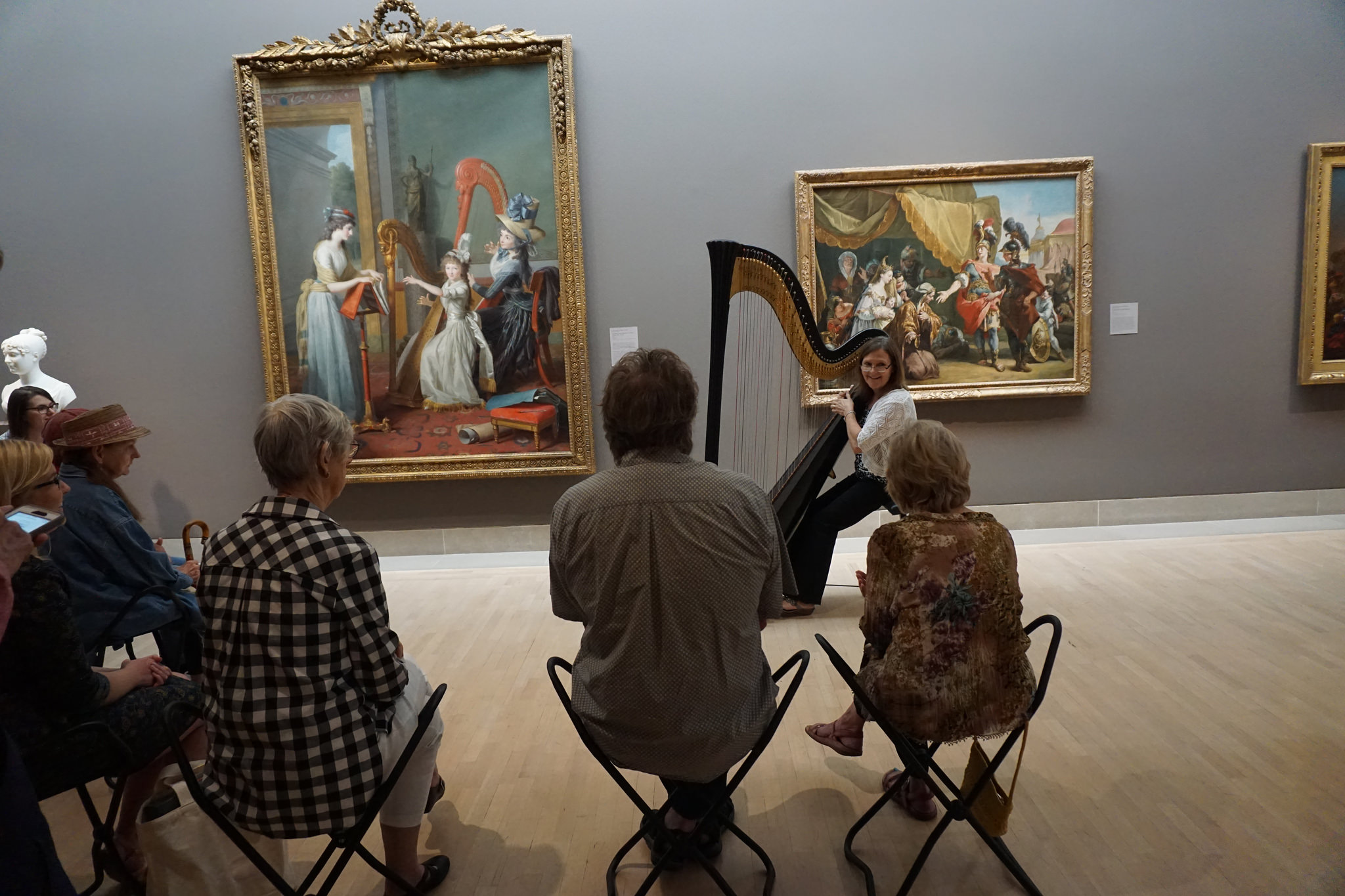
July’s Meaningful Moments program was all about music as participants explored The Harp Lesson by Jean Antoine Théodore Giroust. While closely examining the 18th century French painting, participants shared their memories related to learning to play a musical instrument.

We were joined in the galleries by harpist Cindy Horstman, who shared her own experiences of learning the harp in college and becoming a professional musician. Cindy brought The Harp Lesson to life as she plucked away at her harp, filling the gallery with music.

35618284220_a986f1612c_k

Cindy began by playing “Jesu, Joy of Man’s Desiring” by Johann Sebastian Bach, a piece of music that was popular during the time The Harp Lesson was painted. She also wowed us with a wide-ranging assortment of music including “Norwegian Wood” by the Beatles and “Summertime” by George Gershwin, all played from memory!

At the end of the program, participants were already asking when Cindy could return again.

Emily Wiskera
Manager of Access Programs

New Conservator in our House

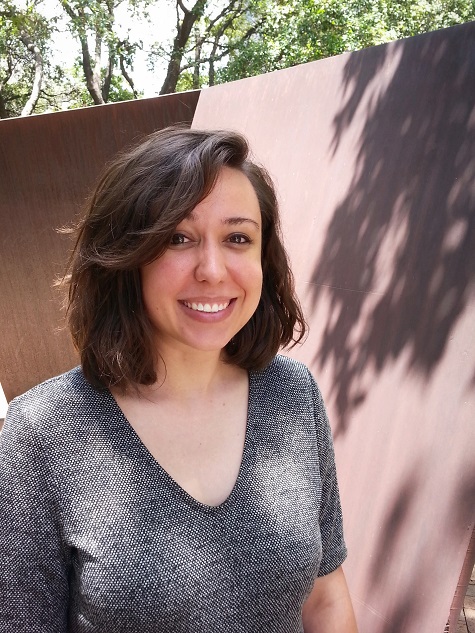
Recently we welcomed Elena Torok to the DMA’s Conservation Team! She joins us in the new role of Assistant Conservator of Objects. With over 24,000 objects in our encyclopedic collection,  an active acquisition program, busy exhibition calendar, and  increasing analytical/research needs, this additional staff member will assist with the growing demands on conservation.

She will work closely with the Collections and Exhibition Teams – and looks forward to sharing her holistic and scientific knowledge of materials with the larger team – creating a care plan for the collections.  She will dive immediately into the treatments of several objects for upcoming rotations.

Below, Elena answers a few brief questions for Uncrated to introduce her to you.  Welcome Elena!

Before joining us at the DMA, where did you work?
Before joining the DMA, I worked for just over four years as a conservator at the Yale University Art Gallery (YUAG) in New Haven, CT. Most recently, I worked on YUAG’s large-scale storage move of 35,000 objects to the new Margaret and Angus Wurtele Collection Studies Center, a brand new visible study and storage center at Yale’s West Campus. I also assisted with the treatment and scientific analysis of a range of different types of objects (including decorative arts, modern and contemporary sculpture, and archaeological materials).

Prior to my time at YUAG, I earned my M.S. from the Winterthur/University of Delaware Program in Art Conservation in 2013 with concentrations in Objects Conservation and Preventive Conservation. During and before my graduate studies, I also completed internships at The British Museum (London, England), the American Museum of Natural History (New York, NY), the Philadelphia Museum of Art (Philadelphia, PA), and the Colonial Williamsburg Foundation (Williamsburg, VA).

Growing up, what type of career did you envision yourself in? Did you think you’d work in an art museum?
In college, I actually majored in Neuroscience! I thought for a very long time that I wanted to be a scientist or a medical doctor. But as soon as I learned that the field of conservation existed (which combines many different types of science with art and art history in very exciting ways), I completely changed paths.

What skill set are you most proud to bring to the DMA?
I have really enjoyed the work I’ve done in preventive conservation (or the prevention or delay of deterioration of cultural heritage). I look forward to continuing this work at the DMA. Recently, I have participated in research related to Oddy testing (used for selecting materials for an object’s storage or display that have the most ideal ageing properties), anoxic treatment methods for pest management, and environmental pollutant monitoring.

What is your favorite thing about being a conservator?
I love that my job allows me to interact with collections in ways that often shed new light on an object’s history or an artist’s work, which continually enables me to keep learning. I feel lucky to be part of a field that also serves to share this information and connect the public with cultural heritage and works of art. I am so thrilled to work at the DMA and I very much look forward to working with and learning from the staff and the collections!

Fran Baas is the Associate Conservator at the DMA

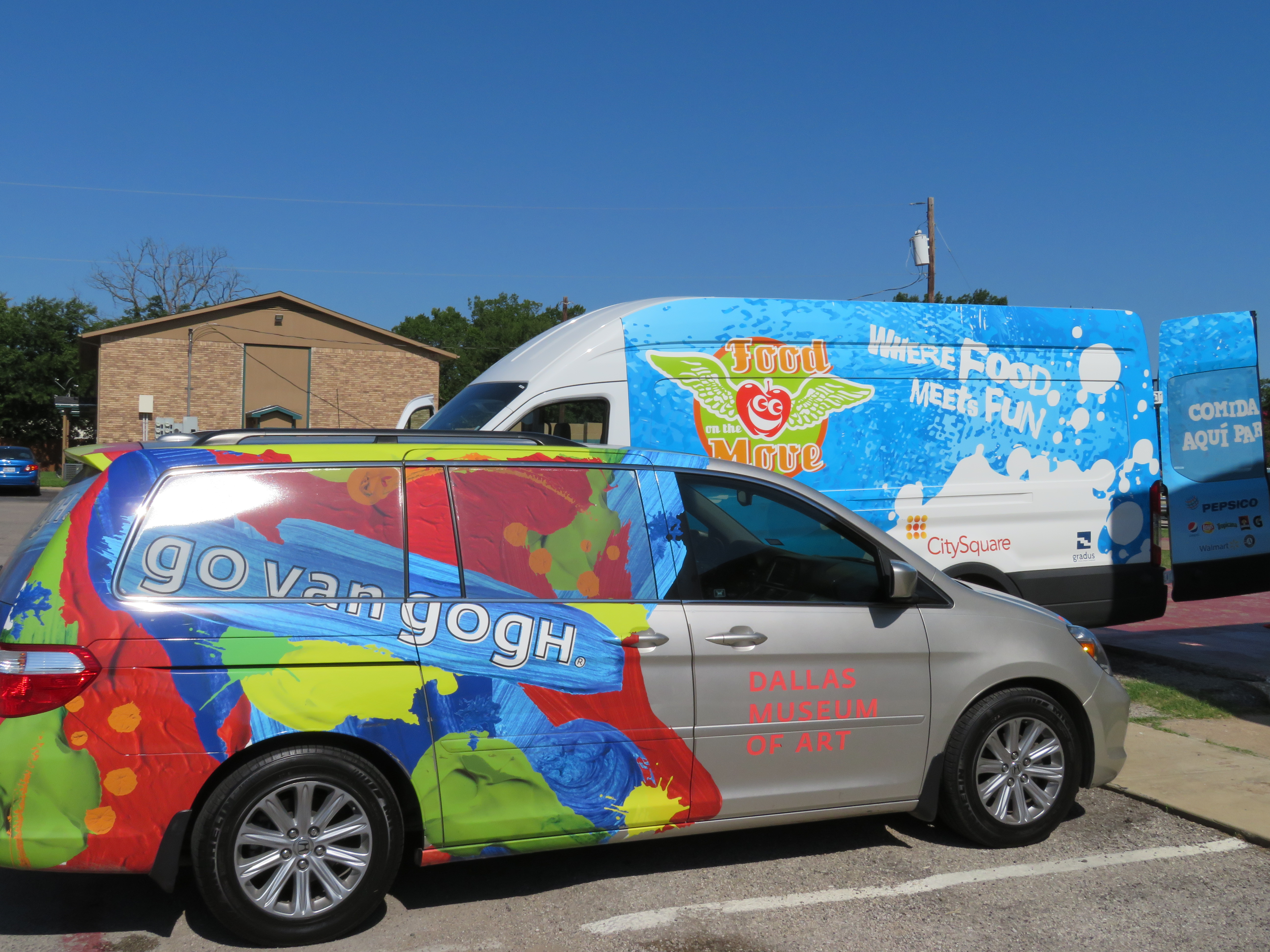
Food on the Move + Go van Gogh: A Meeting of the Vans!

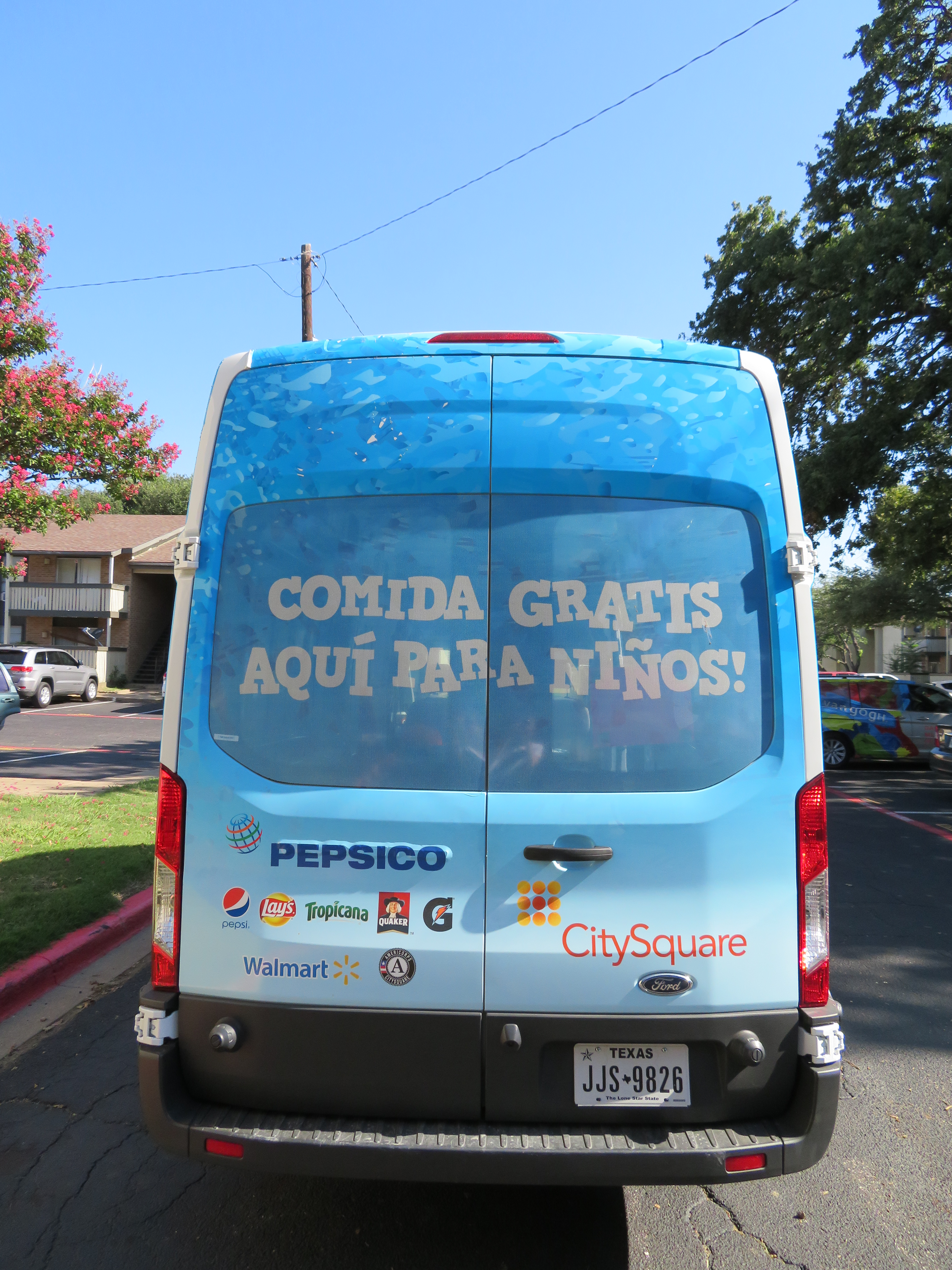
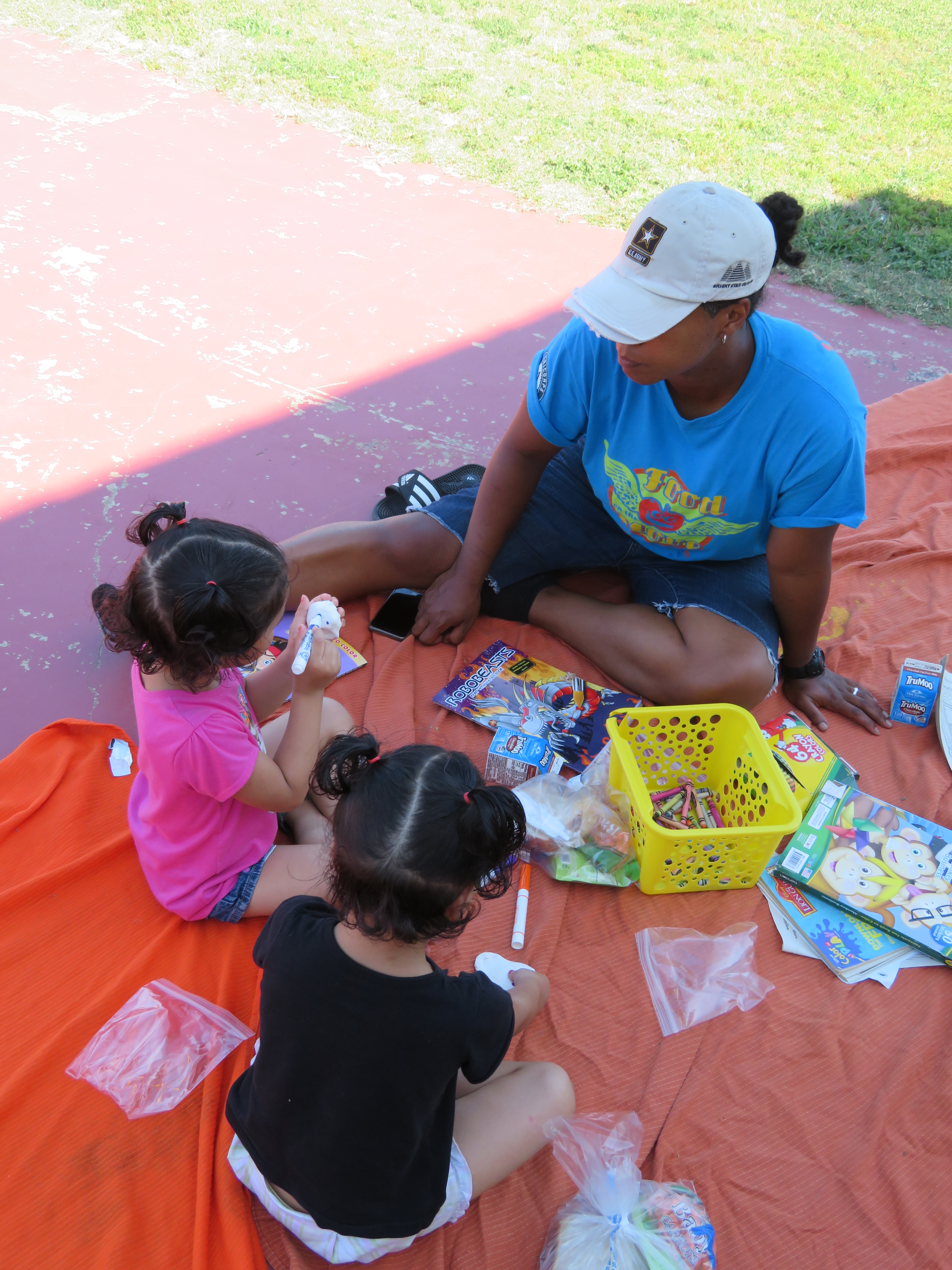
This week Go van Gogh staff, volunteers, and summer interns packed up the Go van Gogh van and spent a few days with our friends from Food on the Move. Food on the Move is a mobile meal program delivering free breakfasts and lunches to non-traditional sites like apartment complexes across the Metroplex. CitySquare’s AmeriCorps members pull out blankets and tables at each site, setup activities and games, and pass out meals from the back of their great big van.

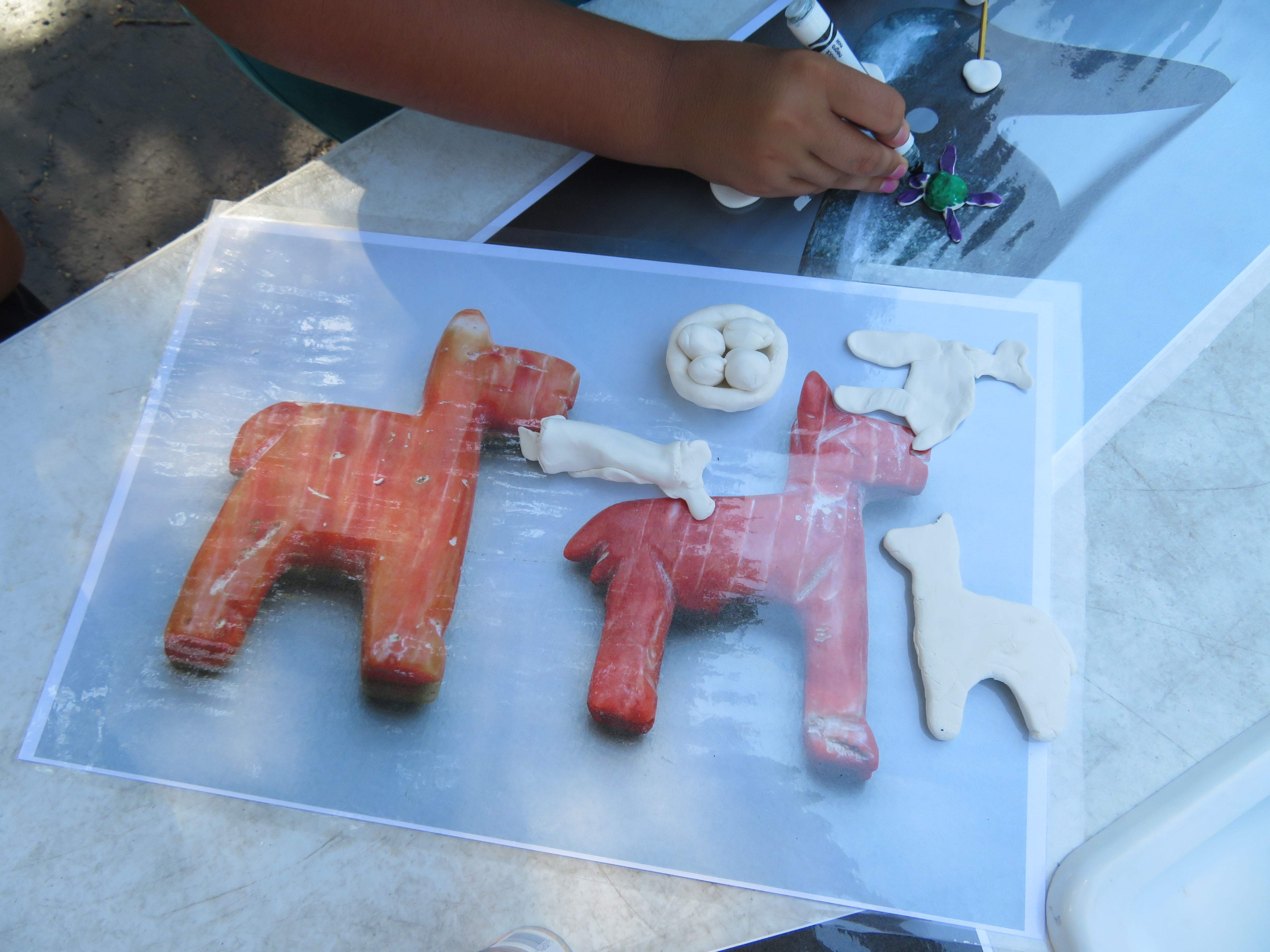
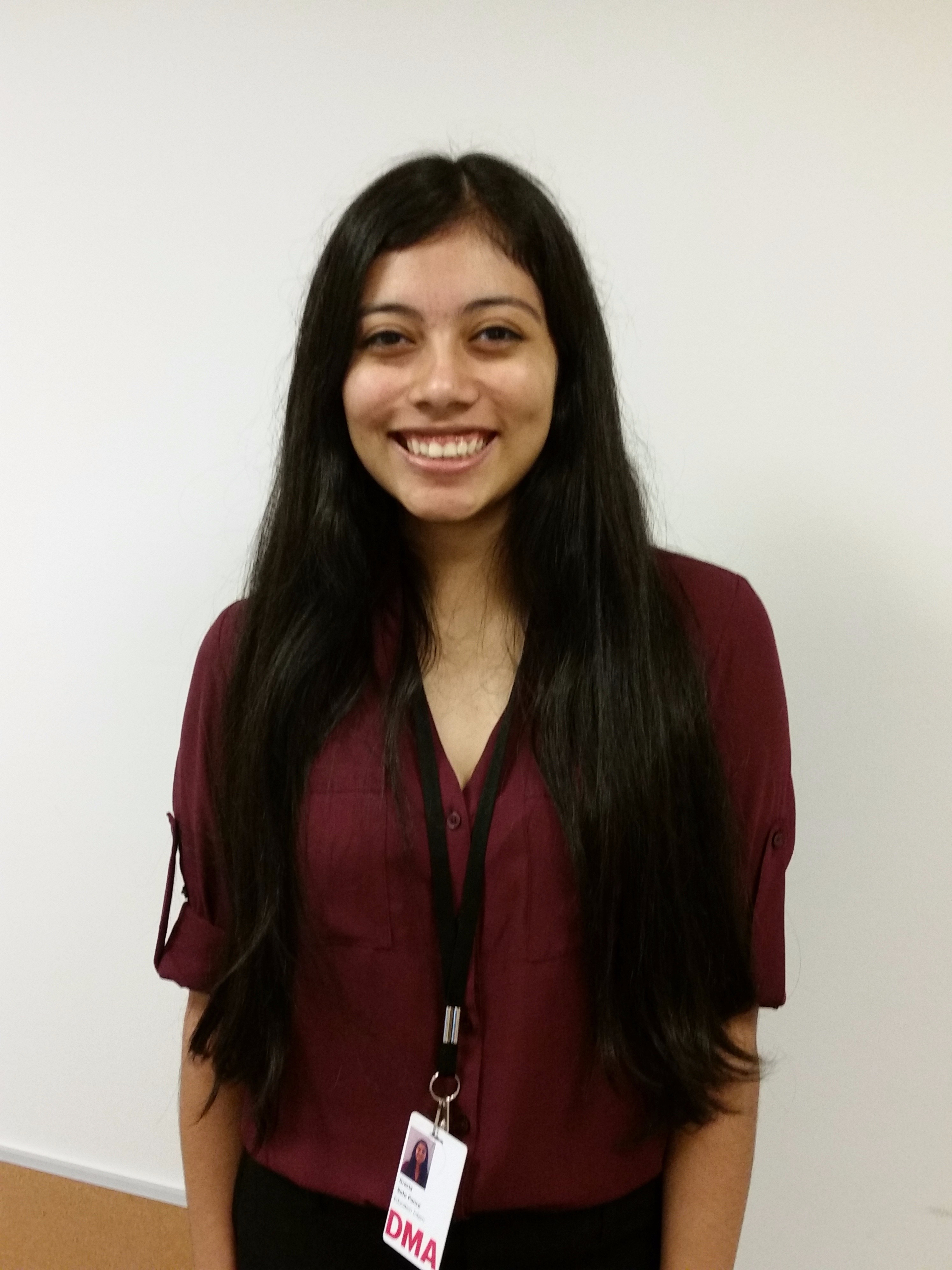
To this already rich program, we brought art activities developed by this year’s Mayor’s Intern Fellow, Grecia Soto. Inspired by objects in our Ancient American collection, Grecia developed an activity that had us making miniature sculptures out of Model Magic clay.

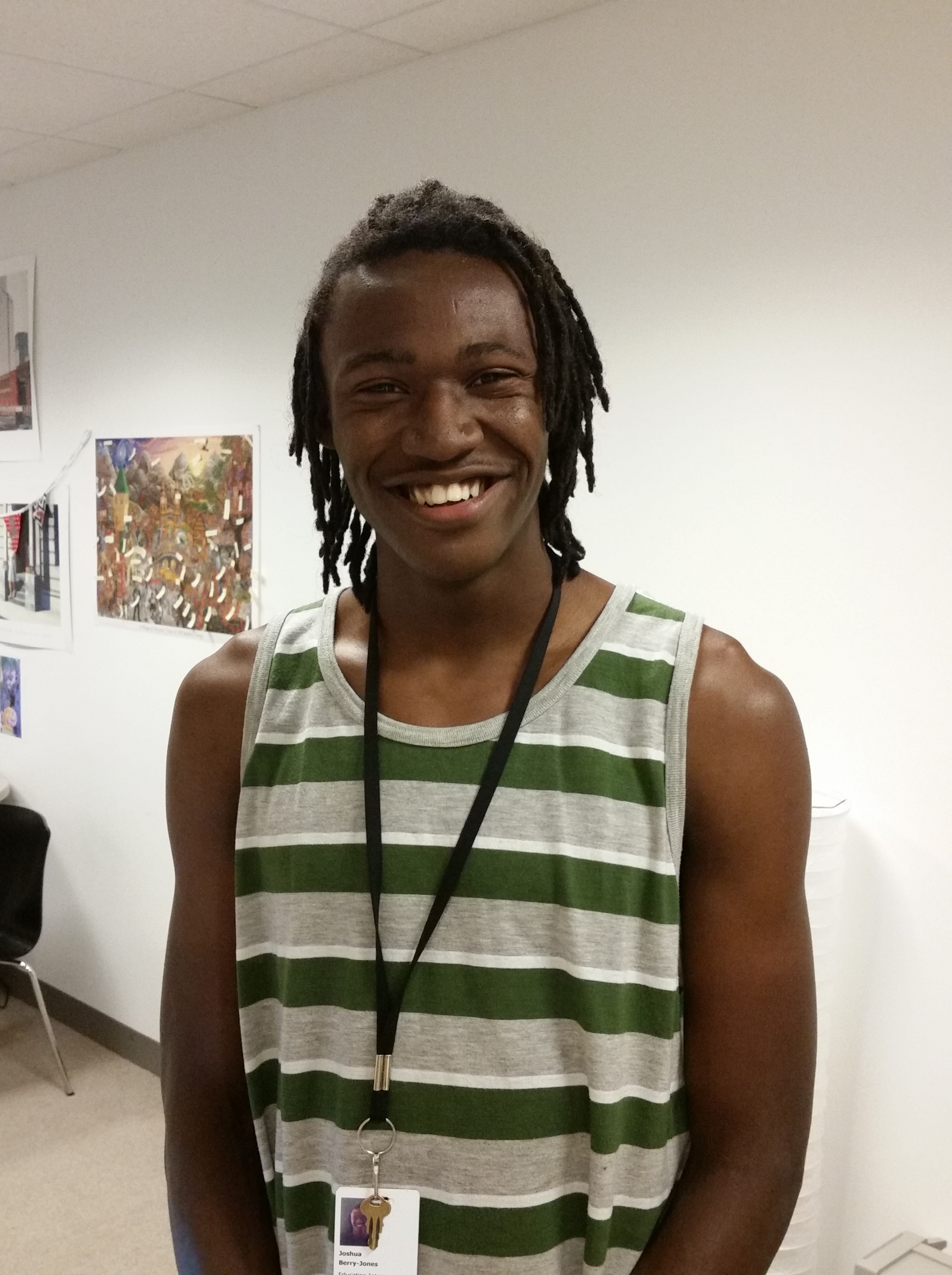
Imagine our surprise when we heard an old friend was sporting new wheels! Last summer, our Mayor’s Intern Fellow Joshua Berry-Jones developed our project for the then brand new CitySquare partnership. This summer, Josh has switched flashy outreach vehicles, and is an Americorps member working for CitySquare on Food on the Move!

Amy Copeland
Manager of Go van Gogh and Community Teaching Programs

Once Upon a Time in Mexico

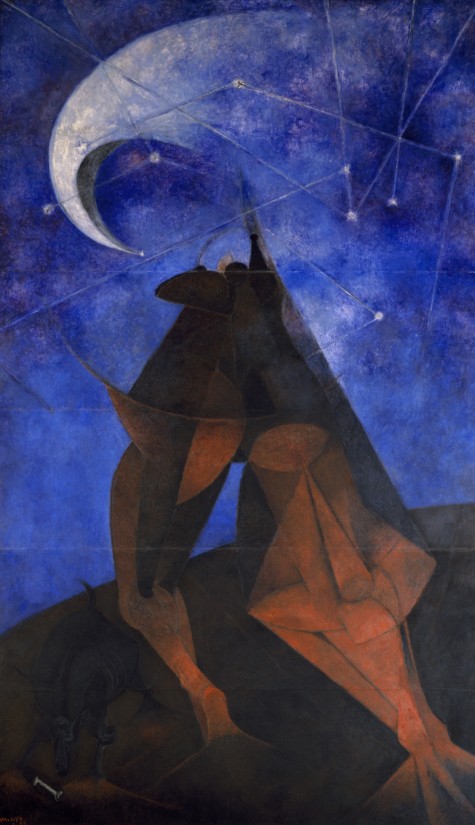
Tomorrow night, July 13, we are celebrating Mexico of the past and present with our Second Thursday program, Off the Wall to kick off our closing weekend of Mexico: 1900-1950. Since this exhibition is all about telling the stories of Mexico and the artists who documented its history and people, we thought Once Upon a Time in Mexico would be the perfect way to encapsulate the evening. We have so much going on all evening, tours, music, crafts, and more and each activity connects back and tells a story about an artwork in the exhibition.

Murals are such a large portion (literally) that connects the exhibition together, so we wanted to highlight murals as an art form. All night you will be able to watch as the artist collective Sour Grapes create a mural inspired by the exhibition on Eagle Family Plaza. Sour Grapes has been around since 2005 and you can’t drive around Dallas without seeing their work on walls and buildings. Even though we have a few murals to choose from, this one was a visitor favorite and with its bold colors and the scale of the work, you can see why.
Diego Rivera, Juchitán River (Río Juchitán), 1953–1955, oil on canvas on wood, Museo Nacional de Arte, INBA, Mexico City Assigned to the Instituto Nacional de Bellas Artes through the Sistema de Administración y Enajenación de Bienes of the Secretaría de Hacienda y Crédito Público, 2015 © 2017 Banco de México Diego Rivera Frida Kahlo Museums Trust, Mexico, D.F. / Artists Rights Society (ARS), New

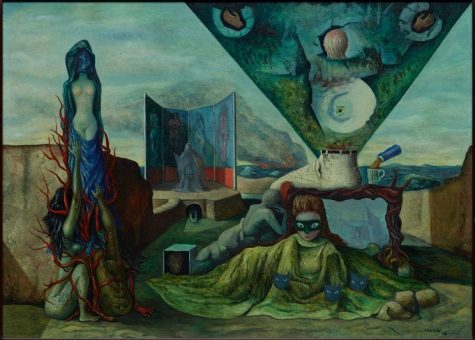
Artists like, Gunther Gerzso, Leonora Carrington, and Alice Rahon, all featured in the exhibition, were important players in the Surrealist movement in Mexico. This movement encouraged artists to unlock their subconscious and use their imagination to create a new world on the canvas.  Spend a few minutes with friends putting yourself into the minds of the Surrealists with the game, Exquisite Corpse. In the game, a piece of paper is folded into sections and passed around; the challenge is that each artist must work on one particular segment without having seen the others. The results are sometimes crazy and monstrous but always hilarious.

Gunther Gerzso, The Days of Gabino Barreda Street, 1944, oil on canvas, Lent by private collection

On the Before Mexico, was Mexico tours, we have Dr. Kimberly Jones the DMA’s Assistant Curator of the Arts of the Americas speaking on our Pre-Columbian collection in English and Spanish. Pre-Columbian art was an enormous influence on many of the artists represented in the exhibition. Just one example is the mural by Saturnino Herrán entitled Our Gods, which shows a group of Aztec people during a ritual to the god, Coatlicue.

To finish up your night, don’t miss Mariachi de Oro performing the upbeat music of Western Mexico. Mariachi has been around since at least the 18th century and is a large part of Mexico’s cultural history. Around the 1920’s when the piece below was painted, Mariachi music was being broadcast on the radio for the first time, and instruments like the trumpet were being infused into the arrangements because of the growing popularity of jazz and Cuban music.

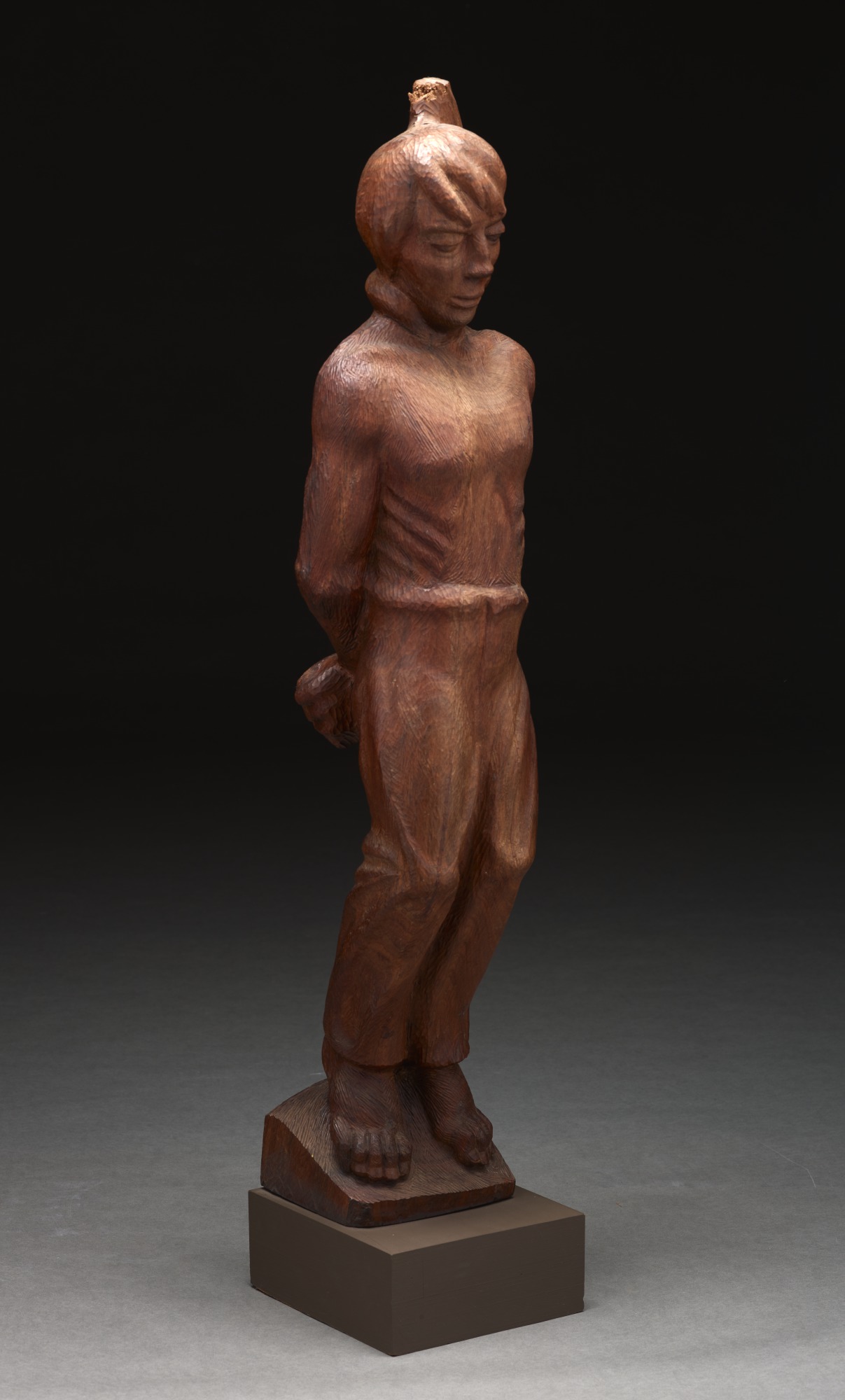
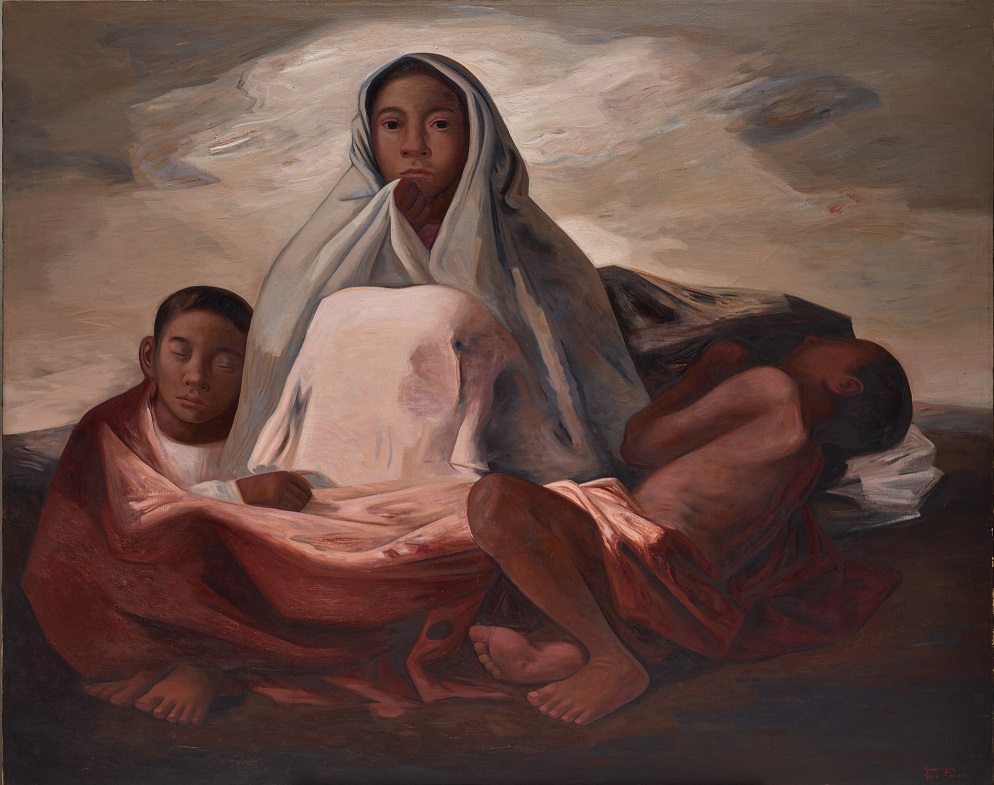
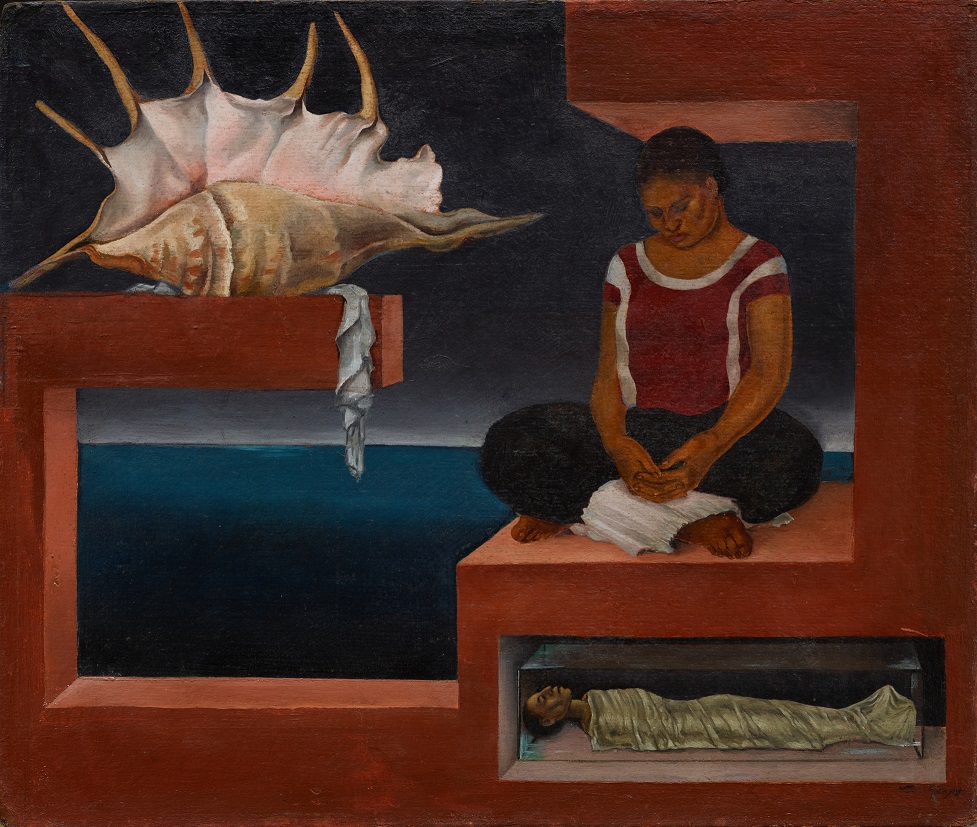
Don’t miss out on a fun filled evening celebrating the closing weekend of Mexico: 1900-1950. We are going to miss this exhibition once it is gone next Monday, but thankfully, we have a few pieces that are staying with us! These images below among others will still be in the DMA’s collection and can be enjoyed many times to come after Mexico is over.

Don’t forget to join us tomorrow from 5:00-9:00 p.m. for July Off the Wall: Once Upon a Time in Mexico. The cost is $5 for the public and free for DMA Members. An additional $10 ticket is required to see the exhibitions that evening.

Katie Cooke is Manager of Adult Programming at the DMA

See What’s New in C3!

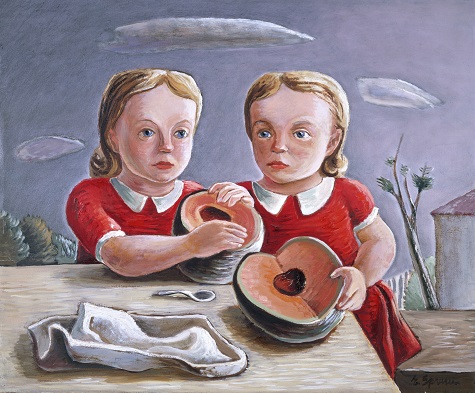
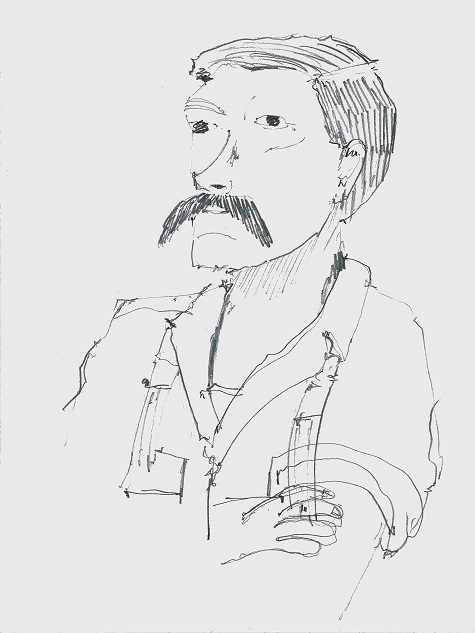
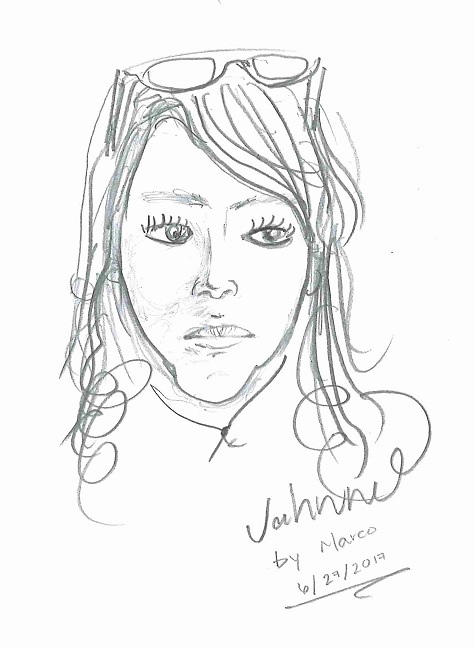
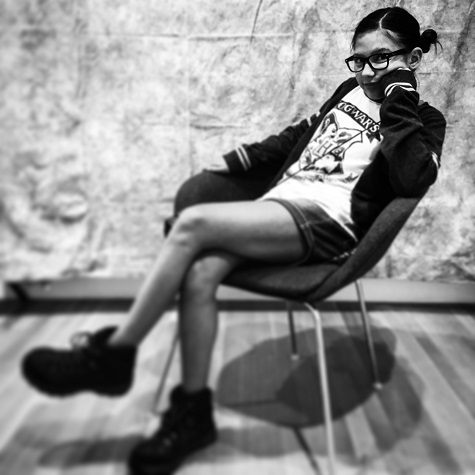
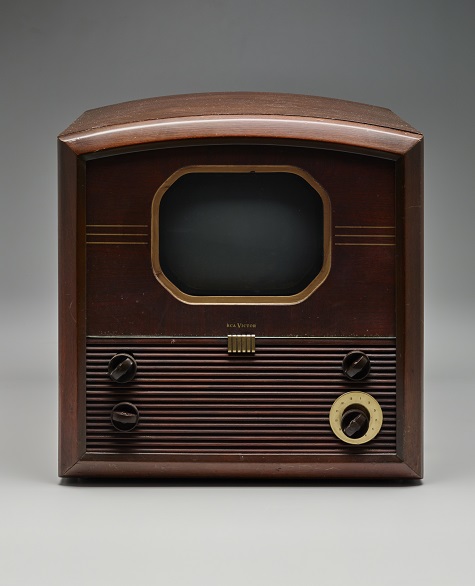
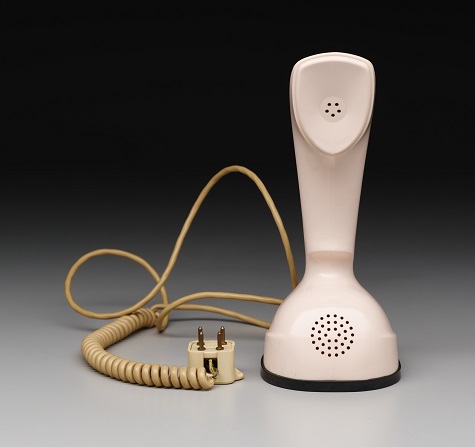
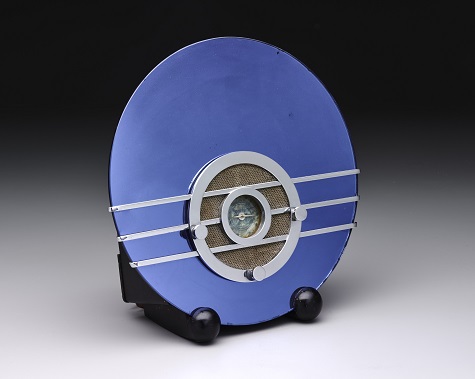
Stop by the Center for Creative Connections (C3) this summer to see the newly installed exhibition, Art of Communication. Bringing together works from the Museum’s decorative arts and design, American, contemporary, European, and Latin America art collections, this exhibition explores some of the ways visual art serves as a tool for communication. Explore objects arranged in three categories: Communication Through Portraiture, Communication Through Design, and Communication Through Narrative. Each section has a corresponding activity so you can take a moment to draw, create, or write inspired by the works of art on display. Here’s a peek at some of the works of art on view and visitor creations:

Communication Through Portraiture

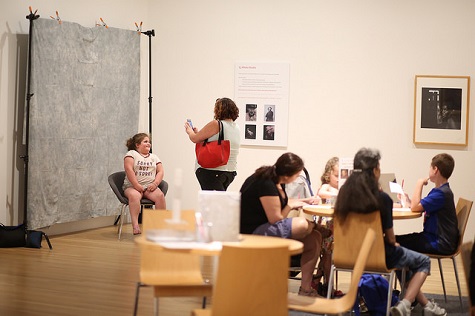
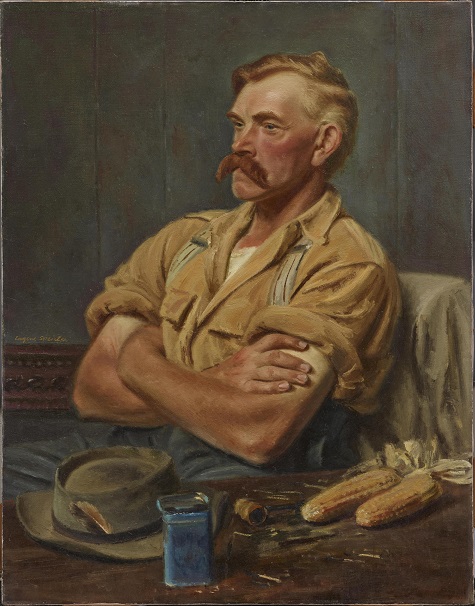
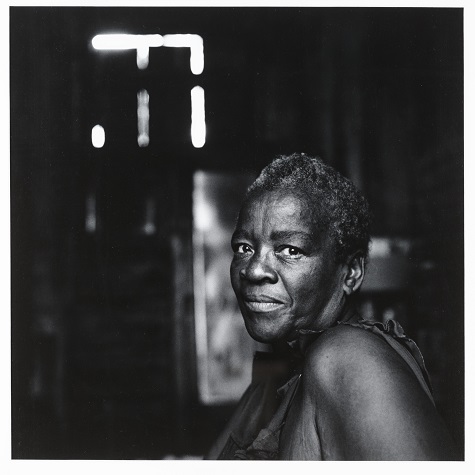
Sit at the drawing horses and sketch the portraits on view, take a seat at the table and try your hand at drawing a self-portrait or a portrait of a friend, or take turns being the artist in the Photo Studio and pose a friend for a photo portrait.

Communication Through Design

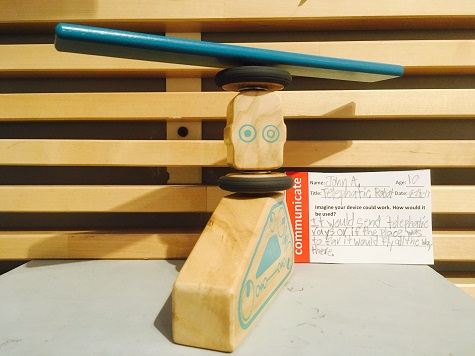
Get inspired by these works of art designed for communication and create your own communication device. Fill out a label and display your device on the shelves at the C3 Art Spot.

Communication Through Narrative

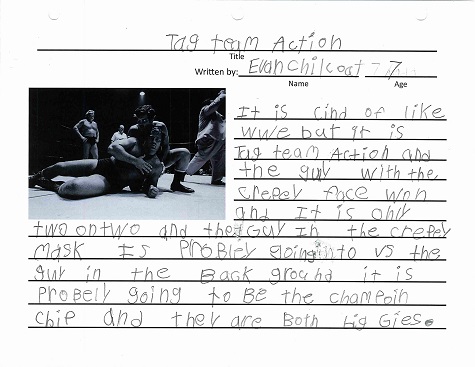
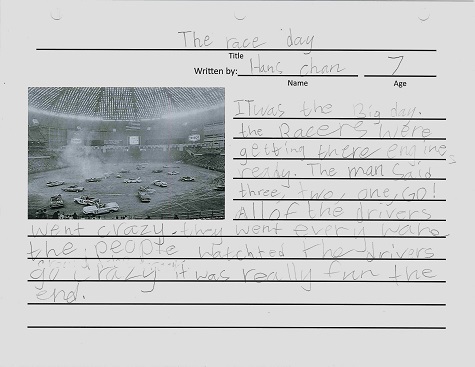
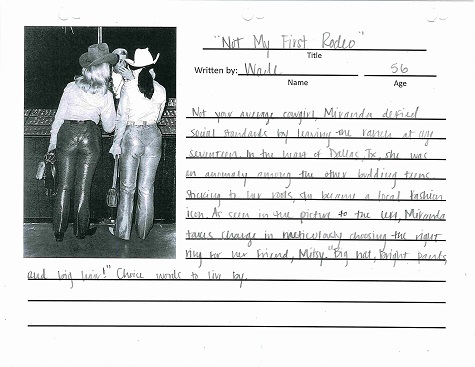
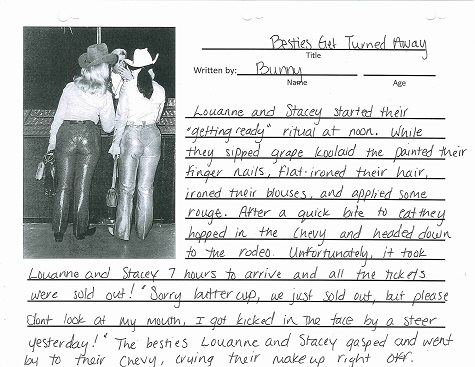
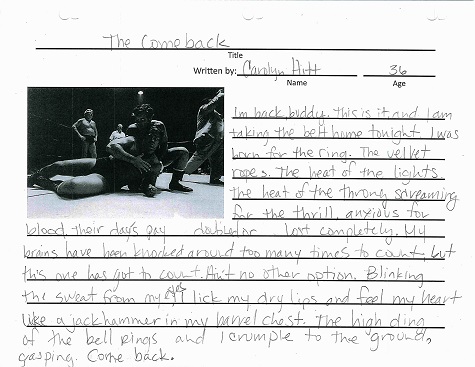
A Texas Dozen is a photographic portfolio by photographer, filmmaker, and journalist Geoff Winningham. From Dallas to Houston, Winningham captured the life and regional rituals of Texans in the early 1970s. These photographs tell a multitude of stories from events across the Lone Star State. Choose one photograph that catches your eye and write a story inspired by the characters and scene.
Remember, the Center for Creative Connections is open anytime the DMA is open and is always free! Stop in, enjoy the art, and get creative. All ages welcome!

Images: Eugene Speicher, The Farmer, c. 1923, oil on canvas, Dallas Museum of Art, Dallas Art Association Purchase; Debbie Fleming Caffery, Looking at Me (Polly), 1984, elatin silver print, Dallas Museum of Art, Jackson, Walker, Winstead, Cantwell & Miller Fund 1998.186;Everett Spruce, Twins, 1939–1940, oil on canvas, Dallas Museum of Art, Dealey Prize, Eleventh Annual Dallas Allied Arts Exhibition, 1940 1940.21; Nam June Paik, Music Box Based on Piano Piece Composed in Tokyo in 1954, 1994, Vintage TV cabinet, Panasonic 10 TV model 1050R, Panasonic mini video camera, incandescent light bulb and 144-note music box mechanism, Dallas Museum of Art, bequest of Dorace M. Fichtenbaum 2015.48.113; “Ericofon” pattern telephone, Telefonaktiebolaget L M Ericsson, designed 1949–1954, plastic, metal, molded, Dallas Museum of Art, 20th-Century Design Fund 1995.118; “Bluebird” radio (Model 566), Designer: Walter Dorwin Teague, c. 1934, glass, chrome-plated metal, fabric, and painted wood, Dallas Museum of Art, bequest of Sonny Burt, Dallas 2014.60.4; Geoff Winningham, The Cronin Gallery, Tag Team Action, Wrestling, negative 1971, print 1976, gelatin silver print, Dallas Museum of Art, gift of Prestonwood National Bank 1981.36.1; Geoff Winningham, The Cronin Gallery, Lamé Pants, Houston Livestock Show and Rodeo, negative 1972, print 1976, gelatin silver print, Dallas Museum of Art, gift of Prestonwood National Bank 1981.36.13
Jessica Fuentes is the Manager of Gallery Interpretation and the Center for Creative Connections


Archives

Categories