Archive Page 178

Foursquare perks

We adore our visitors and we enjoy connecting with them through Facebook, Twitter, Uncrated, and Foursquare. It is a great way for us to hear directly from you, like on Ask a Curator Day on Twitter, and now, we want YOU to help us pick our special on Foursquare.

Specials can be for the Mayor (the person with the most amount of check-ins at one location, for more info click here), a certain number of total check-ins, and maybe even for a particular badge.

We will accept suggestions for a week on Facebook, Twitter, and our blog, and then we will let you vote on the top four suggestions. It needs to be something special since it is a special, but it also has to adhere to a few guidelines. We encourage you to use your creativity when coming up with specials, but we request that you keep in mind our social media guidelines. Also, we won’t be able to include requests like hanging your art in the Museum galleries or behind-the-scenes passes to our art storage in the running for the special. Some examples of things we would be able to do are discounted admission for certain badge holders (the Warhol badge is pretty cool), discounts at the store after a certain number of check-ins, and Sneak Peeks for the Mayor.

We can’t wait to hear what you come up with!

Spotlight on Denise Ford, DMA Docent

Today is our first day of tours for the 2010-2011 school year, and we are excited to share our collections and our new exhibitions–Arts of Mexico and African Masks: The Art of Disguise–with teachers and students from across the Metroplex.  Our tour calendar is filling up quickly, so if you want to schedule a DMA visit for your students, fill out our Online Visit Request Form soon.

With the start of tours comes the return of our fabulous docents.  This year, we have 108 docents who will give tours to K-12 and Higher Education students, as well as to adults.  I thought I would give you a chance to get to know one of our brand new docents, Denise Ford.*  Denise joined the DMA docent program last year, and this is her first year as a full-time touring docent.  If you bring your students for a tour on a Tuesday afternoon, you just might have Denise as your guide!

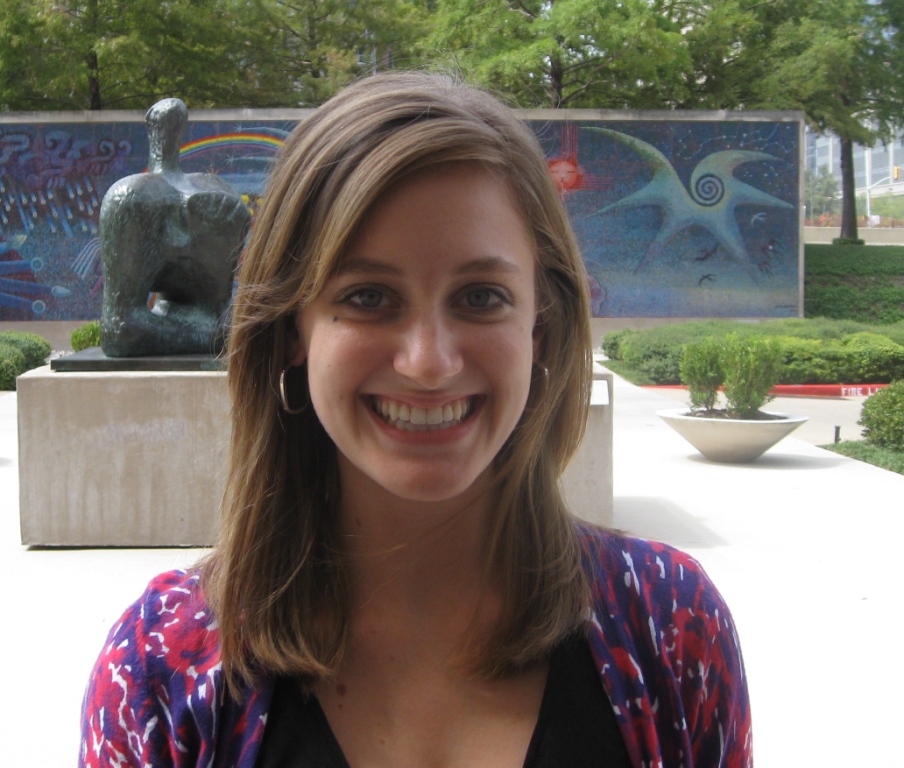
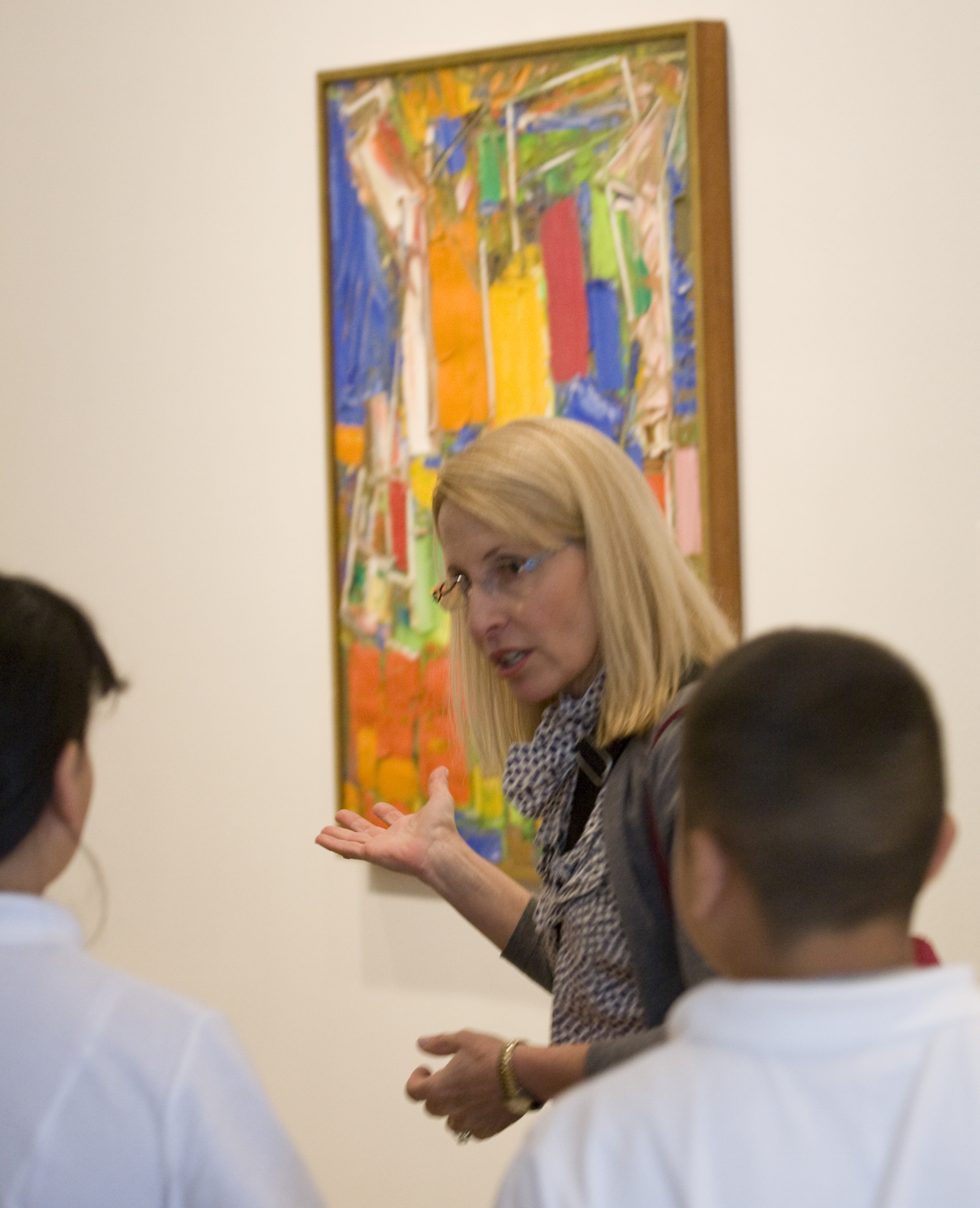
Docent Denise Ford in front of Hans Hofmann's Red and Blue Harmony

How long have you been a DMA docent?
I have been a docent for one year.

Why did you become a docent?
I became a docent because of my interest in art, my desire to interact with other people (especially students), and my desire to give back to the Dallas community.

Tell me about your experience in the docent program.
In the short time that I have been a docent, I have learned so much about art and how history and culture are such vital parts of art and artists.  I have met all kinds of people from all walks of life.  I have enjoyed spending time in the Museum with students, many of whom are new to the Museum.  I particularly like to encourage the students to develop ideas about the objects they are looking at.

What is your favorite work of art in the DMA collection?
My favorite work of art in the DMA collection is The Eye by David Altmejd.  The Eye was an object all students loved to see and interpret.  I also enjoy the Reves Collection , especially touring students because it helps them understand art outside of the museum and in someone’s home!

Share your best tour experience.
I had many memorable experiences and am trying to keep a tour journal.  Two experiences stand out from this past year.  The first was a male student who was somewhat quiet and stayed a little distant from the rest of the class.  After fifteen minutes or so, he warmed up and said, ‘You have a nice smile.’  The second was a group who was interested, informed, and welcomed challenging ideas.  One girl in this group latched onto my arm about halfway through the tour and never left my side until it was time to board the bus.  When she left, she said, “Before I came today, I did not think I liked art and museums.  I thought it was boring.  But I loved this, and want to bring my mom back with me.”

Docent Denise Ford with a group of 4th graders

Denise also understands how important teachers are in the lives of their students.  She says: “Although I have never taught school, I really appreciate the teachers who bring their students to the Museum.  Teaching requires a gift of patience and a kind spirit.  It is apparent when there is positive interaction between teachers and their students.”  I couldn’t agree with her more!  We hope to see you and your students at the DMA this year.

Shannon Karol
Coordinator of Museum Visits

*If you would like to learn more about our docents, visit the DMA’s new blog Uncrated, which features an interview with docent Tom Matthews.

From Idea to Exhibition

There are few moments in a curator’s career more thrilling than the realization of a major exhibition project. While more modest exhibitions may take months of development, others require curators to commit years of their professional lives to researching the topic, seeking loans of works of art, and bringing together the necessary participants and funding to craft a touring exhibition and a substantial scholarly catalogue.

Following my organization of the DMA’s last major decorative arts exhibition, Modernism in American Silver: 20th-Century Design, in 2005, I began work in earnest on a topic that I had considered years earlier, that of the work of one of the leading figures of the American Arts and Crafts movement, Gustav Stickley (1858-1942). In recent decades, Stickley’s name had become nearly synonymous with the boldly functional Craftsman furniture more broadly known as “Mission furniture” (a term that he despised), and examples of his factory’s works had been included in major Arts and Crafts survey exhibitions in New York, Boston, Los Angeles, and elsewhere. Given this, I found it curious that no museum had yet undertaken a monographic study of Stickley’s production for a major touring exhibition. As I later discovered, some colleagues had pondered the topic but for various reasons were unable to pursue it. It was, for me, and for the DMA, an opportunity to forge another strong link between the Museum’s development of its 20th-century decorative arts and design collections and an exhibition idea that seemed to resonate with possibilities. Stickley, as an orchestrator of design and a proselytizer for the simple life – he even published a magazine, The Craftsman, to promote his progressive ideas – was far more than an owner of a furniture factory. In the first decade of the 20th century, he sought to change the way Americans thought about the home, machine-made goods, craft, and, ultimately, their lifestyle. The subject was about not only furniture as design but the very art of how one could, or in Stickley’s mind, should, live.
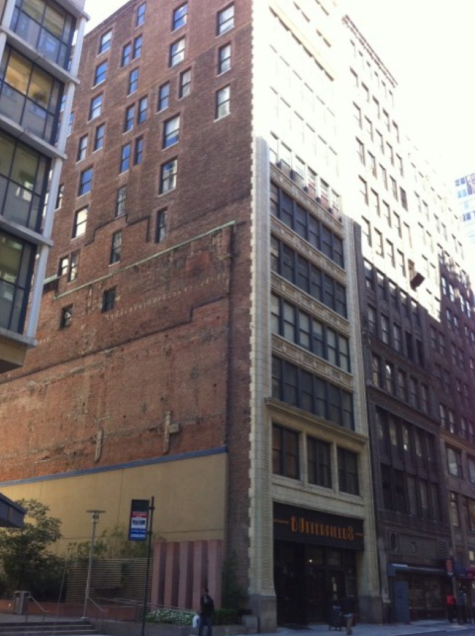
An appointment in Manhattan provided me with an opportunity to walk by Stickley’s Craftsman Building, which still stands right off of 5th Avenue and 38th Street (it’s now a restaurant and offices). He leased the entire 12-story structure in 1913 and used it as a headquarters and a department store. Furniture, garden supplies, household equipment, rugs, and a host of goods were sold here; there was even a “Craftsman Restaurant” on the top floor. What exactly was in a Craftsman fruit cocktail anyway?
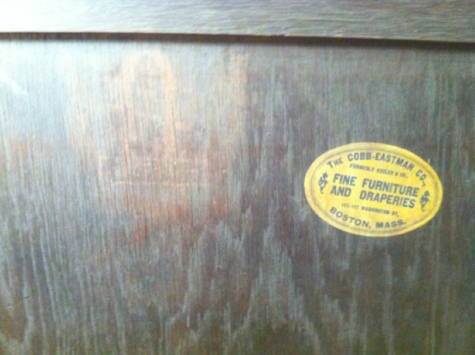
On the left, one can just barely make out the Stickley mark as a red decal on the back of this desk. A joiner’s compass (an archaic woodworker’s tool used to lay out circles) surrounds his borrowed motto “Als ik kan” (If I can) and below is a copy of his signature. While subtle differences in this mark can tell us what year this piece may have been made (this work is from 1903 or 1904), the paper label to the right is especially interesting to me – it indicates where the piece was originally sold. Surviving retailer tags such as this one are far rarer than Stickley’s own mark. Dallas had two retailers of Gustav Stickley’s Craftsman furniture between 1902 and 1916.
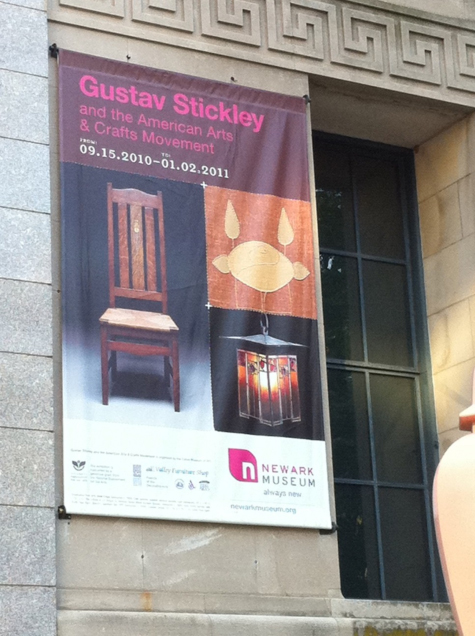
Stickley comes to Newark.

Five years later, on September 15, 2010, we celebrated the public opening of the exhibition Gustav Stickley and the American Arts & Crafts Movement at the Newark Museum. Although it is unusual to premiere an exhibition at a museum other than the organizing one, there was a happy synchronicity in that Craftsman Farms, once Stickley’s New Jersey home (and located a mere twenty minutes from Newark), is celebrating their centenary. The night before the public opening, lenders, colleagues, museum members, press, and other guests convened at the museum for the usual slate of honorific speeches, convivial chats, and a sneak peek at what would be revealed when the doors officially opened the following day. Arriving at this point required hundreds of hours of research into Stickley’s career, pouring over surviving business papers at Winterthur, examining original sales catalogues, advertisements, photographs, inventories, and other documents, and, with this information in mind, reviewing the actual pieces of furniture, metalware, textiles, and architectural drawings that are included in the exhibition. This research is the very heart of such exhibitions and associated catalogues and not only allows us to satisfy our curiosity as scholars – the why, when, and how these works were made and for whom – but also provides us with the knowledge for shaping a new and compelling story for our visitors and readers.
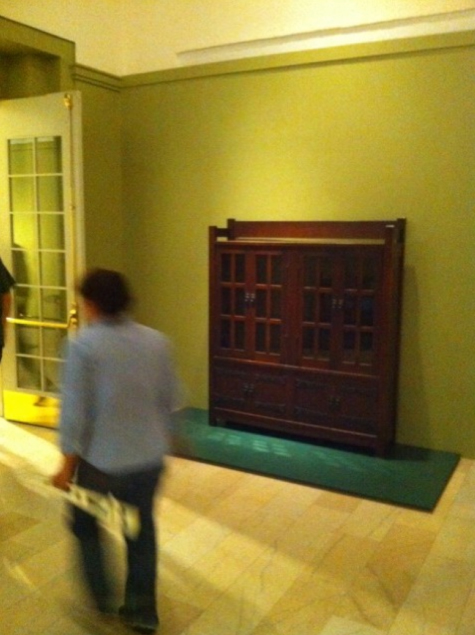
The Newark Museum’s staff never slowed down for a moment – preparing for an opening, especially one with large pieces of furniture and a recreation of an entire dining room, is not a simple matter. Each work must be handled with care, its condition well documented, labels written by the curator and placed by the preparation staff. That’s the condensed version. One of Stickley’s rectilinear oak bookcases from 1901 looms in the background, awaiting its public premiere.
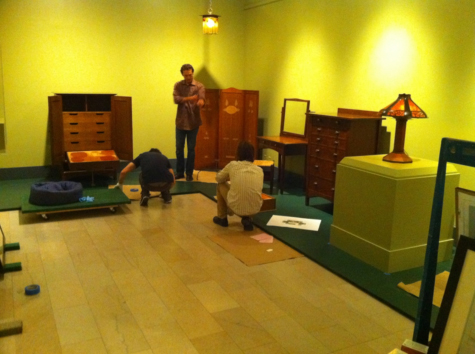
DMA registrar Brent Mitchell consults with Newark’s team as we prepare to install Stickley’s own chest of drawers (far left). The best laid plans must always be adjusted to accommodate those unexpected challenges.

After spending nearly two weeks supervising the installation of the exhibition with DMA registrar Brent Mitchell and the dedicated staff at the Newark Museum, including Ulysses Dietz, their curator of decorative arts, I at last felt a sense of relief and exhilaration as the last object was placed. The exhibition is done, at least for now – come February 13, 2011, the doors will open to the DMA’s presentation of Gustav Stickley and the American Arts & Crafts Movement.
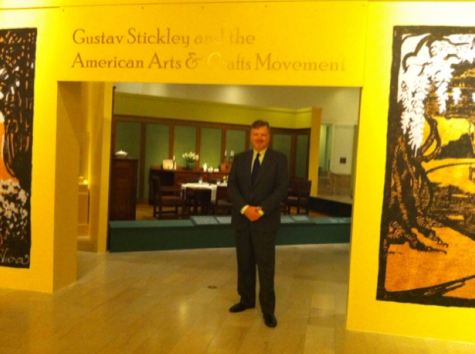
Done!
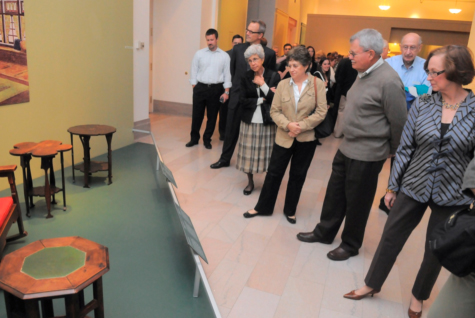
Opening night.

Kevin W. Tucker is the The Margot B. Perot Curator of Decorative Arts and Design at the Dallas Museum of Art.

Friday Photo: Inside Scoop from New Interns


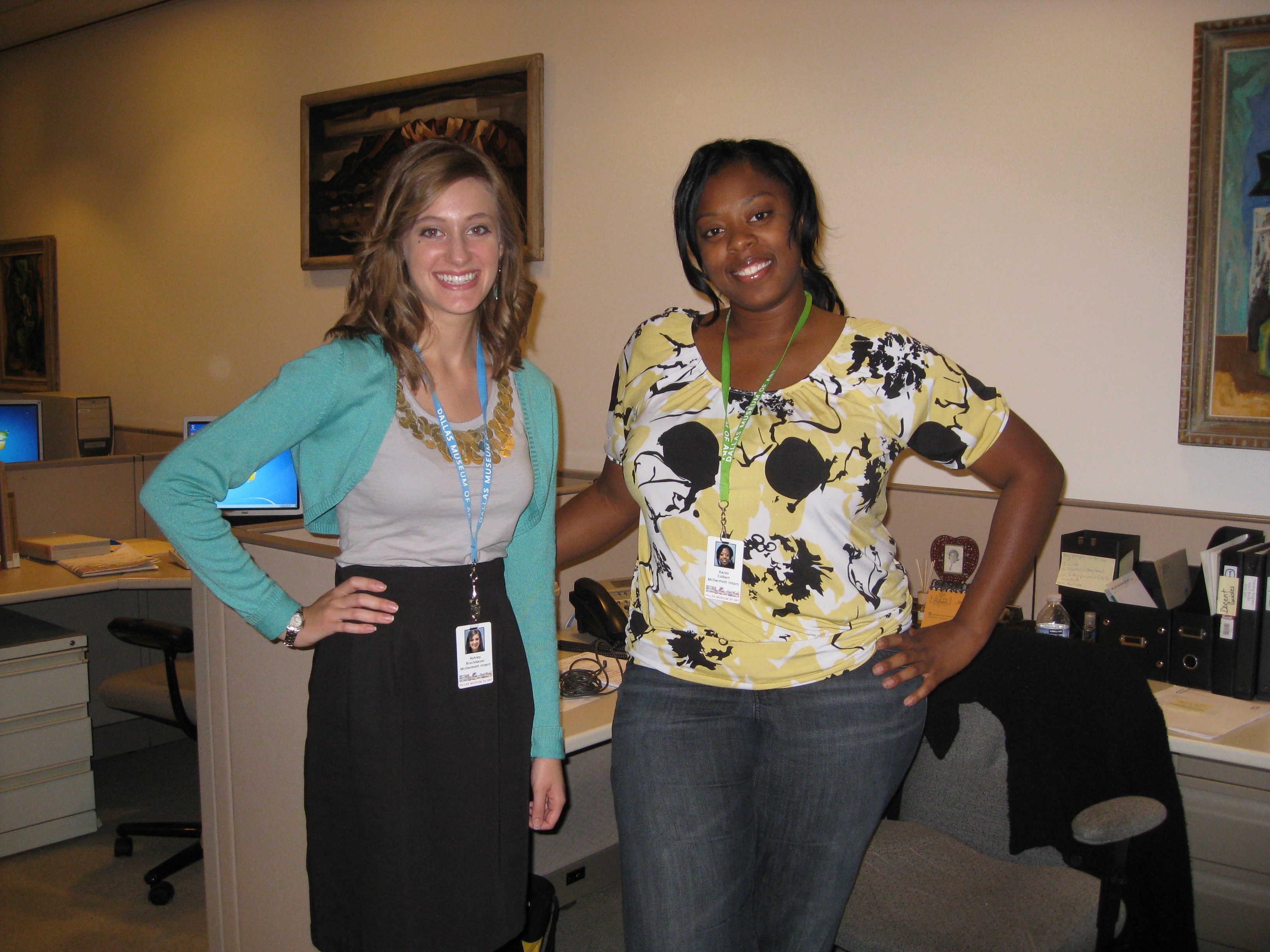
Ashley and Karen: 2010-2011 Education Interns

Hello all!  I am Ashley, the new McDermott intern for Programs and Resources for Teachers.  I graduated from SMU with a B.A. in Art History and Advertising Management.   I have a deep-rooted interest in Asia and a passion for everything French, and my area of focus, Asian influence on European art in the 18th and 19th centuries, allows me to explore both simultaneously.  In pursuit of these interests I’ve worked as an intern at the Crow Collection of Asian Art, studied and researched in France, and lived in China.  My ultimate goal is to obtain a Ph.D. in French art history and become a university professor.  I am thrilled to be at the DMA this year working with the Education Department, where I can both utilize and cultivate my skills.

[slideshow]

The first week in the office has been hectic to say the least, with lots of meetings and an overload of information and little details.  That said, I can already tell this is going to be a fabulous environment in which to work.  Every day I feel that I am learning an immense amount about the collection and special exhibition objects by attending docent trainings, gallery talks and sessions with the curators.  I’ve also already attended my first teacher workshop and am excited to participate and take a more active role in those throughout the school year.  I think this will be a fantastic year and look forward to sharing my experiences through the blog!

Hello Everyone!  I am Karen Colbert and I am excited to be the new McDermott Teaching Programs Intern this year. I enjoy visiting museums, dining with friends, reading, and traveling. The best experience I have had traveling is working with students at the Mahenzo Mission School in Kenya, Africa. 

My first week at the Dallas Museum of Art has been exhilarating.  I have had the opportunity to hear Dr. Roslyn Walker, Senior Curator of the Arts of Africa speak about the current African Masks: The Art of Disguise exhibition during docent training and currently working on a text label project for Gail Davitt, Dallas Museum of Art League Director of Education.  As the year progresses, I will have more opportunities to lead tours in the galleries, teach the Go Van Gogh outreach program with partnering school districts, and participate in many other projects. I look forward to this year of discovery and will keep you posted with “A Day in a Life”.

Ashley Bruckbauer, McDermott Intern for Programs and Resources for Teachers
Karen Colbert, McDermott Intern for Teaching Programs

Late Nights: Celebrating Mexico’s Bicentennial til the Midnight Hour

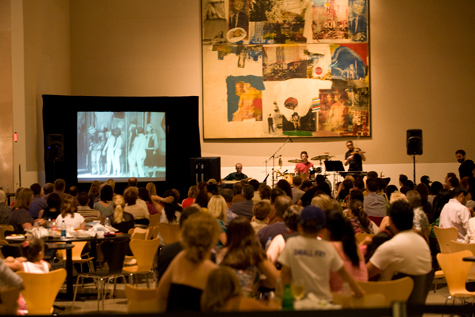
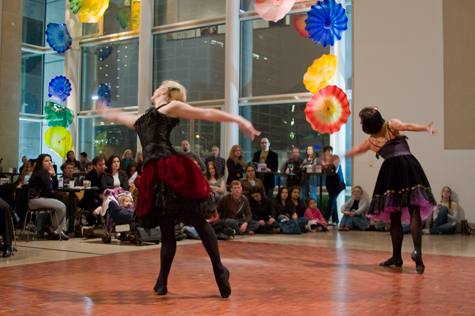
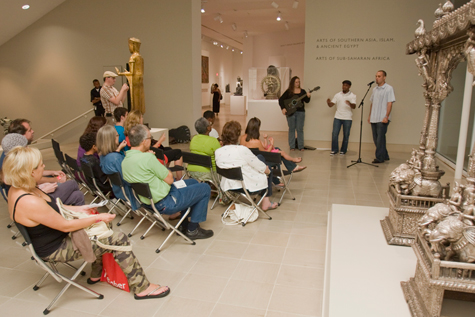
Late Nights at the Dallas Museum of Art take place on the third Friday of every month (except December) and can bring up to 5,000 visitors to the Museum in just one evening. With eleven Late Nights to plan each year, we are constantly brainstorming program ideas and themes.

The process starts with coming up with a theme for each Late Night month. These are usually decided a year in advance by looking at our upcoming exhibitions, works of art in our collection, or other special events and occasions like the Museum’s annual birthday celebration in January.

We have three Late Nights left in 2010 and each one will celebrate a different exhibition on view this fall. The next one, on September 17, focuses on our México 200 exhibitions: José Guadalupe Posada: The Birth of Mexican Modernism and Tierra y Gente: Modern Mexican Works on Paper. These two exhibits, which showcase Mexico’s long tradition of exquisite artistry, were planned as a way to commemorate the Mexican bicentennial.

Once the themes of each Late Night are chosen, the programming team decides which performers, speakers, and programs to schedule, making sure there is a mix of live music and performances, lectures, tours, films, family activities, Tech Lab programs, and other special events. Through our own research, recommendations from colleagues, and old-fashioned word-of-mouth, we choose the Late Night performers and speakers who we feel tie into the main theme of the evening while also offering something new and interesting for our visitors to experience. These special guests come from all across Texas, often from across the country, and once in a while, from abroad.

We also collaborate with other organizations in our North Texas community to present joint programs at Late Night. In September the acclaimed Mexican poet Homero Aridjis will be at the Museum to give a reading in both English and Spanish. This program is hosted in partnership with the Center for Translation Studies at UT Dallas.

We’ve just finished deciding on our themes for the 2011 Late Nights, and while we’ll keep them a secret for now, we hope to see you at one or maybe even all of them!

Stacey Lizotte is Head of Adult Programming and Multimedia Services.

Celebrating Mexico's Bicentennial

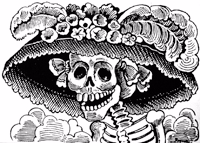
José Guadalupe Posada, La calavera catrina, 1889-95, woodcut, anonymous loan

The Dallas Museum of Art is celebrating the bicentennial of Mexico’s independence with a special project called Mexico 200.  This project includes a bilingual brochure that highlights works of Mexican art throughout the collection, including Maya, Spanish Colonial, and modern Mexican artworks.

Additionally, two special exhibitions of works on paper are on view this fall. Jose Guadalupe Posada: The Birth of Mexican Modernism showcases prints by this prolific artist who is considered the most influential Mexican artist of the early 20th century.  Tierra y Gente: Modern Mexican Works on Paper is installed in the Concourse and features works of art by Diego Rivera, Rufino Tamayo, and other 20th-century Mexican artists.

Check out our Online Teaching Materials to learn more about Mexico 200, or participate in the Late Night on Friday, September 17.  The theme is Mexico 200, and teachers get in free with their educator ID!  Share the arts of Mexico with your students by scheduling a Museum Visit or Go van Gogh Outreach Program

Molly Kysar
Head of Teaching Programs

Q&A with a DMA Docent

We have a corps of over one hundred volunteer docents who lead tours for students K-12 as well as for our adult visitors. They play an important role at the DMA, introducing our collections to museum-goers and sharing their passion for the beauty and importance of art. We are proud of their hard work and dedication and would like to introduce you to several of them over the coming months.

First up, meet Tom Matthews. Who knows, you might even run into him the next time you’re in the galleries. Rumor has it that he and his fellow docents spend a lot of their free time enjoying the art.

Number of years as a docent at the DMA: 10

A little bit about me: When I was a boy, my father piqued my interest in art by taking me to the Art Institute of Chicago. Though not trained in art, my father – an attorney – had a keen eye and did much reading on his own. His comments about art and artists stirred a life-long fascination for me. In my adult years, this interest continued. On family vacations, we usually stopped – often despite the protest of our daughters – at museums. My understanding was deepened by a twenty-five-volume series the Met in New York did for the public on art history and appreciation. While I was serving as pastor of a church in the coal fields of western Pennsylvania, a highlight of the month would be the arrival of one of these volumes. My wife alerted me to the docent program by referring me to an article in the Dallas Morning News.

My favorite experience as a docent at the DMA: I feel I have succeeded as a docent when I have “opened” a piece of art for the viewer. What does it feel like to be a griever in Jacob Lawrence’s Visitors or to “walk” as one of the figures in Giacometti’s sculpture? Assisting others in engaging with a work of art brings me satisfaction.

My three favorite works of art to share with visitors at the DMA:


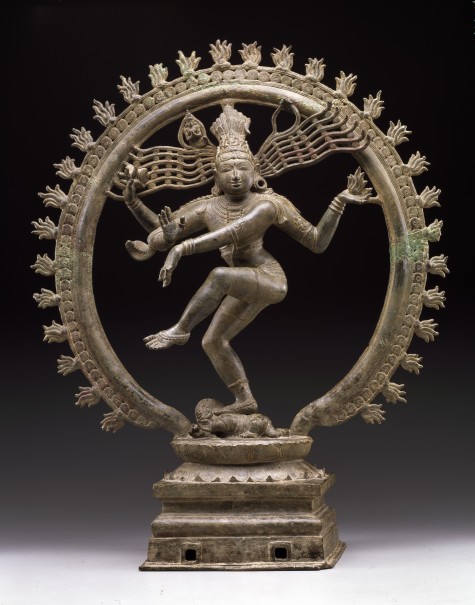
Shiva Nataraja, India, 11th century: The dancing figure, holding strange objects and surrounded by a ring of fire, mystifies and entices.


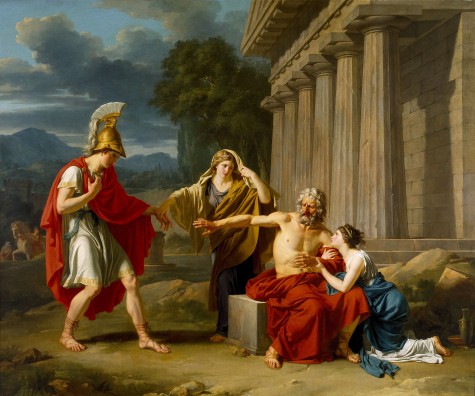
Oedipus at Colonus, Jean-Antoine-Theodore Giroust, 1788: The story of Oedipus always commands attention. Giroust captures the pathos of the final moments.


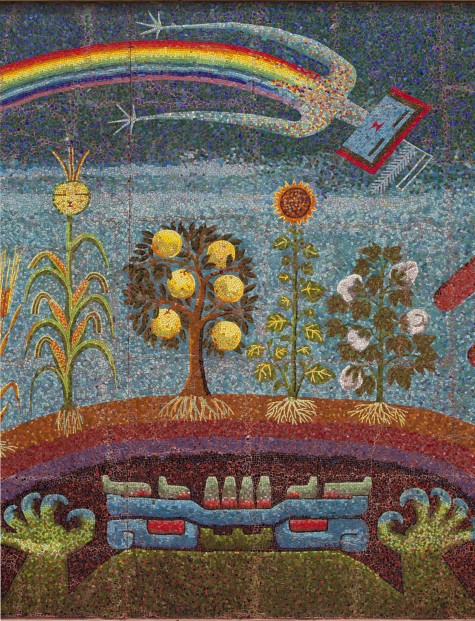
Genesis, the Gift of Life, Miguel Covarrubias, 1954: Viewers are fascinated by the colors, imagery, and technique of mosaic making.

If you would like more information on the docent program at the Dallas Museum of Art, click here.

Intern Update

postcard from Justin Greelee's travels in Italy

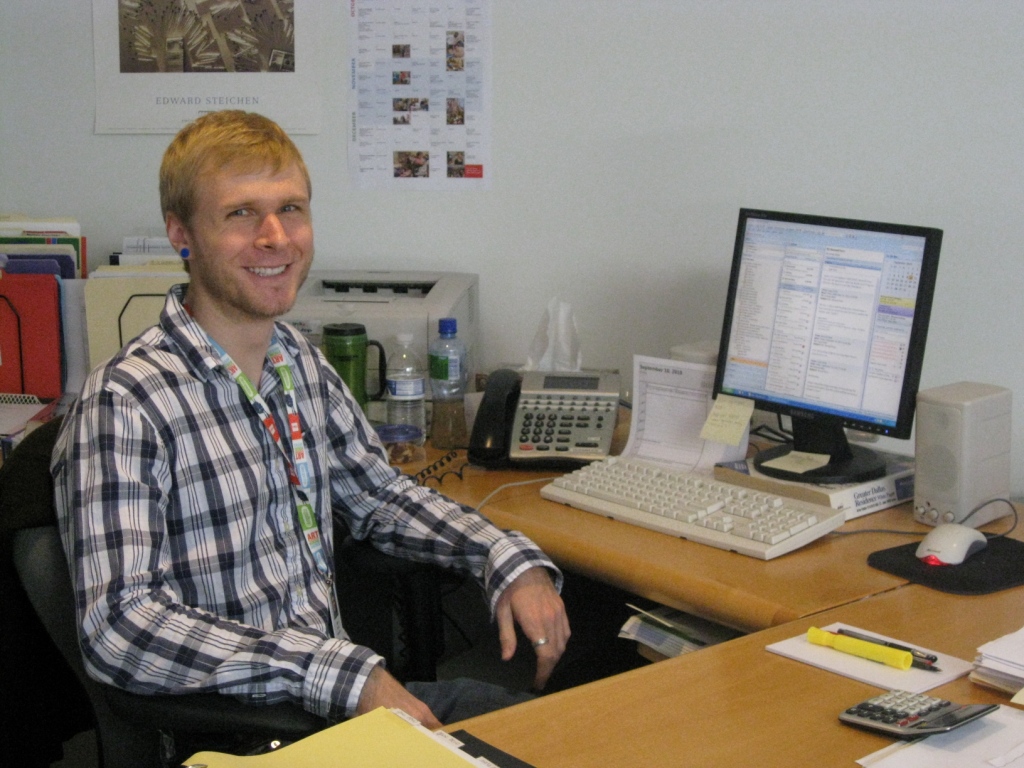
 A few short months ago, we said farewell to our interns Logan Acton and Justin Greenlee, and last week we welcomed our new interns for 2010-2011, Karen Colbert and Ashley Bruckbauer.   

Logan Acton, Assistant to the Director of Education

Since wrapping up their internships, Justin and Logan have both been very busy. Justin left the States for Italy to work for a study abroad program run by his alma mater, Kenyon College.  He’s had the chance to do a lot of traveling — mostly art-related — including an amazing trip to Assisi.  

Logan completed his M.A. in Aesthetic Studies from The University of Texas at Dallas and was hired in August as a full-time DMA staffer. He is now the Assistant to the Director of Education, and we are thrilled to get to continue working with him.  

Ashley Bruckbauer, McDermott Intern

 Ashley Bruckbauer is the new McDermott Intern for Programs and Resources for Teachers. She received her B.A. from Southern Methodist University in Art History and Advertising Management. Her experiences prior to joining the DMA are graduate-level research in France, an internship at the Crow Collection of Asian Art, and teaching abroad in Shanghai, China.  

Karen Colbert, McDermott Intern

 Karen Colbert is the new McDermott Intern for Teaching Programs. She is currently completing her Master’s degree in Art Education, with a focus on museum education and arts leadership, at the University of North Texas. Before joining the DMA staff, Karen was an educator at the Women’s Museum in Dallas and an art teacher with the Dallas Independent School District. 

 We are excited to have Ashley and Karen on our team for the 2010-2011 school year! Keep an eye on this blog for upcoming posts about their experiences as DMA interns. 

Molly Kysar
Head of Teaching Programs

Uncrating Stickley: A Registrar’s Report

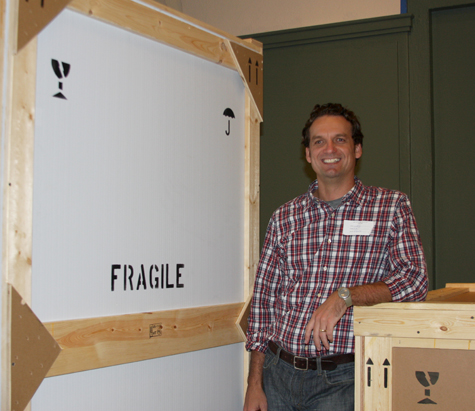
Just before Labor Day I left Dallas for New Jersey to be on-site for the uncrating and installation of the exhibition Gustav Stickley and the American Arts & Crafts Movement. Organized by the DMA, this exhibition opens at the Newark Museum of Art next week, and as the DMA’s Registrar, it is part of my job to help in the moving of these works to ensure proper handling.

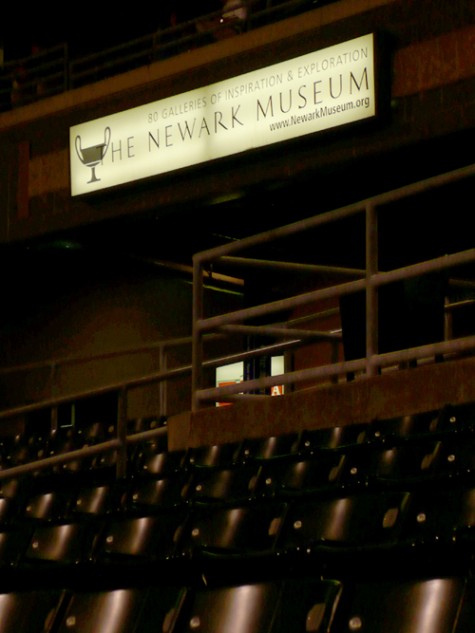
It's nice to see a museum being promoted at a sporting event. I noticed this sign for the Newark Museum while watching the Newark Bears play the Bridgeport Bluefish.

It’s early September and the ideal weather makes this a great evening to catch a minor league baseball game in Newark. After working all day installing the exhibit at the Newark Museum, this is a nice change of pace. Even the annoyingly loud music that plays every time a batter steps up to the plate can’t ruin the great atmosphere.

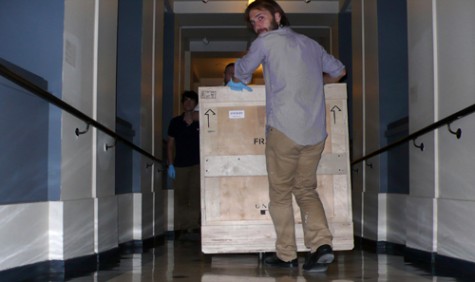
Daniel Brophy makes sure he doesn't run me over as he helps David Bonner and Seth Goodwin move a crate into the galleries for unpacking.

It’s proving to be a challenge installing an exhibition at another museum as the opening tour venue–usually the organizing institution opens the show but in this case it premieres in Newark to coincide with the 100th birthday of Stickley’s home, Craftsman Farms, in Parsippany-Troy Hills, New Jersey. But the Newark Museum exhibition team and registrars are working hard to make sure we unpack, condition report (as a registrar, it is also part of my job to carefully document any change in condition or damage that might occur), and install the 100-plus objects before the first opening event on September 14.

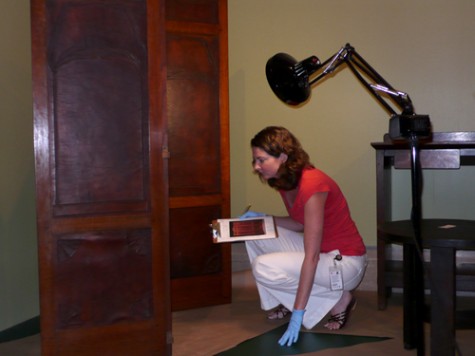
One of the specific challenges revolves around the fact that this is the first time I’ve seen the majority of the objects in person. This adds to the amount of packing documentation and condition report notes that must be made before the objects can be finally installed. But we’ve worked out an effective system where Newark Museum registrars Antonia Moser and Amber Germano have been completing many of the condition reports while I update packing notes and direct the art handlers (Seth Goodwin, Daniel Brophy, Diane June, and David Bonner) on the order of crate unpacking. It’s vital to keep the unpacking and condition reporting process moving smoothly with as little down time as possible in order to meet our deadline.

Newark Museum Associate Registrar Antonia Moser performs a condition report on a folding screen in one of the museum galleries.

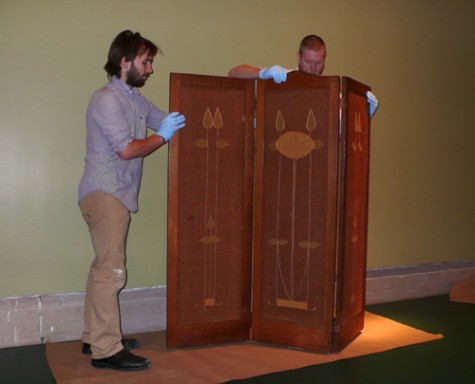
Daniel Brophy and Seth Goodwin install a folding screen after unpacking it. Gloves are required when handling works of art to protect the surface of objects.

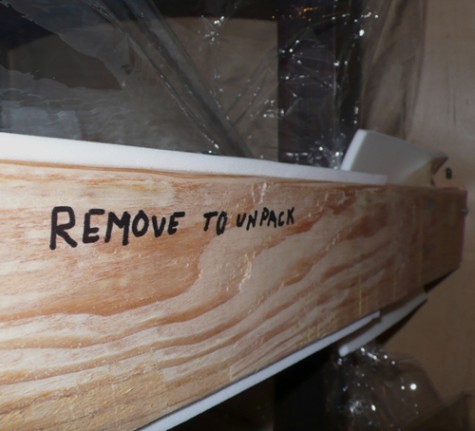
While crates look like simple wooden boxes on the outside, their interiors can be filled with numerous braces and other packing features to ensure the safety of the artwork while being transported. It's vital to follow any instructions provided by the various craters, who often write directions and registration marks directly on the crate and crate components for easy visibility.

And while every exhibition installation has its fair share of bumps in the road and unique challenges, it’s what makes my job as a registrar so appealing. There’s not much that beats opening crate after crate of fine art and making sure it’s installed safely for museum visitors to enjoy. And as a bonus, I’ve discovered that Stickley’s ash furniture pieces are quite beautiful. Be sure to check them out if you’re in Newark, Dallas, or San Diego during the exhibition dates in those cities.

Oh, and here’s a double bonus: the home team Newark Bears have erased a 4-1 deficit and now lead the Bridgeport Bluefish 7-5 in the bottom of the fourth inning. Go Bears!

Brent Mitchell is the Registrar for Loans and Exhibitions at the Dallas Museum of Art.
Friday Photos: The Dallas Arts District

Last year, the AT&T Performing Arts Center opened in Downtown Dallas, and everyone celebrated the completion of the Dallas Arts District.  October marks the one-year anniversary of the ATTPAC, and a month-long celebration has been planned throughout the Arts District, including performances, festivals, and more.    Art in October will end on October 31st with a Closing Celebration, including free admission to the DMA.  A complete calendar of events is available online.

Not only is the Arts District a great place to experience art and culture, but it’s also a wonderful place to explore architecture.  Below are some photos that I took between rainstorms this week of some of my favorite sites in the Arts District.  I hope you’ll bring your students down to explore the Arts District, too!

Shannon Karol
Coordinator of Museum Visits

[slideshow]


Archives

Categories