Archive Page 25


Conservation Timeline

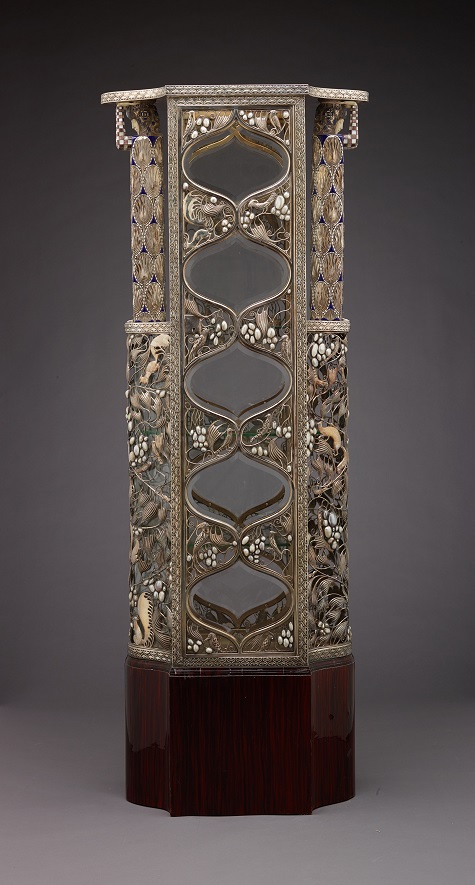
Silver Vitrine (for the 1908 Kunstschau), 1908, Wiener Werkstätte (Vienna Workshops), Vienna, Austria, 1903-1932, maker; Carl Otto Czeschka, Austrian, 1878-1960, designer; Josef Berger, Austrian, 1874/75-?, goldsmith; Josef Hoszfeld, Austrian, 1869-1918, Adolf Erbrich, Austrian, 1874-?, Alfred Mayer, Austrian, 1873-?, silversmiths; Josef Weber, dates unknown, cabinetmaker; Wabak, Albrech, Plasinsky, Cerhan (unidentified craftsmen), silver, moonstone, opal, lapis, lazuli, mother-of-pearl, baroque pearls, onyx, marble, ivory, enamel, glass, and Macassar ebony veneers (replaced), image courtesy of Richard Nagy Ltd, London, Dallas Museum of Art, The Eugene and Margaret McDermott Art Fund, Inc.

The Wittgenstein Vitrine (from the 1908 Vienna Kunstschau), 1908, Wiener Werkstätte (Vienna Workshops), Vienna, Austria, 1903-1932, maker; Carl Otto Czeschka, Austrian, 1878-1960, designer; Josef Berger, Austrian, 1874/75-?, goldsmith; Josef Hoszfeld, Austrian, 1869-1918, Adolf Erbrich, Austrian, 1874-?, Alfred Mayer, Austrian, 1873-?, silversmiths; Josef Weber, dates unknown, cabinetmaker; Wabak, Albrech, Plasinsky, Cerhan (unidentified craftsmen), silver, moonstone, opal, lapis lazuli, mother-of-pearl, baroque pearls, onyx, ivory, enamel, glass, and Macassar ebony veneers (replaced), Dallas Museum of Art, The Eugene and Margaret McDermott Art Fund, Inc.

With fall just around the corner, here’s a brief sneak peek into the conservation treatment, made possible through the Art Conservation Project grant from Bank of America, of the DMA’s recent acquisition, a masterpiece of Viennese design known as the Wittgenstein Vitrine.

An exhibition dedicated to this spectacular addition to the DMA’s collection, Modern Opulence in Vienna: The Wittgenstein Vitrine, opens November 15 in the Conservation Gallery. The display will examine the historical significance of the Wiener Werkstätte vitrine and include other examples of Viennese art and design from the period. It will also highlight the conservation treatment and technical analyses carried out during the past year.

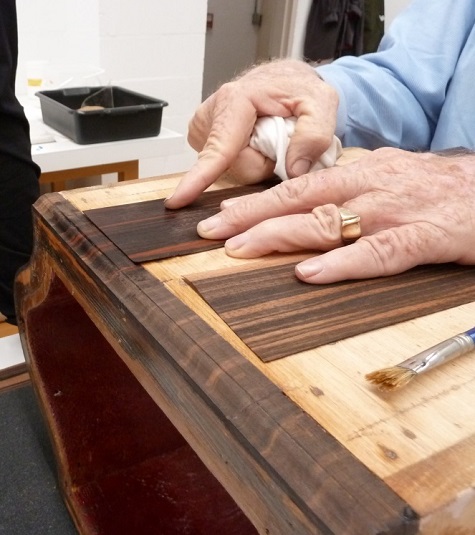
Collaboration between curator and conservators – a discussion on original wooden base height, veneer, and finish

Collaboration between curator and conservators – a discussion on original wooden base height, veneer, and finish

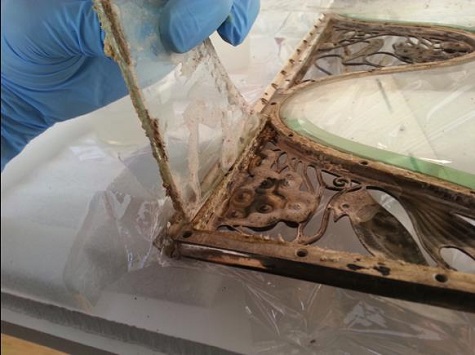
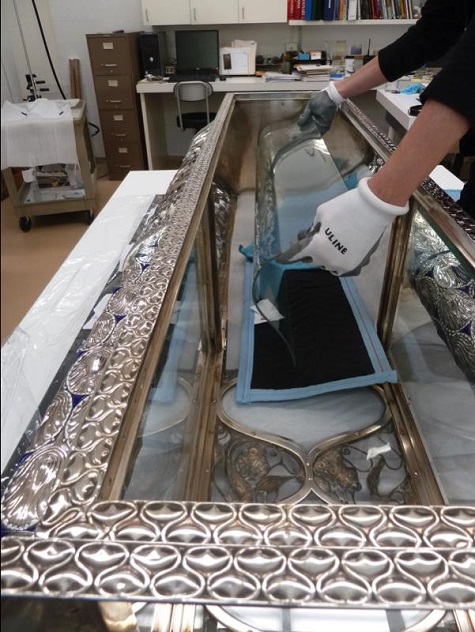
Fitting the new curved glass side panel – the replacement of a missing element

Fitting the new curved glass side panel, replacing a missing element

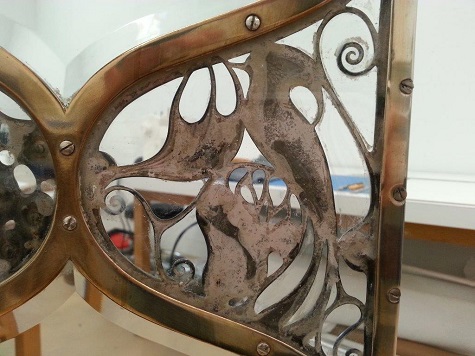
The elaborate silver vitrine (or display case) stands roughly five feet tall and is encrusted with pearls, lapis lazuli, opals, onyx, and other gemstones. Each of these materials requires different conservation approaches and solutions. The overarching goal of the treatment has been to bring the piece closer to its original 1908 appearance, as well as to stabilize a number of fragile elements. The most stunning transformation has resulted from the reduction of blackened tarnish and the removal of layers of old silver polish residue trapped within the intricate metalwork.

Detail of old polish residue trapped between glass and metalwork

Detail of old polish residue trapped between glass and metalwork

Detail of old polish residue caught between the glass panes and silver decorative elements

Detail of old polish residue caught between the glass panes and silver decorative elements

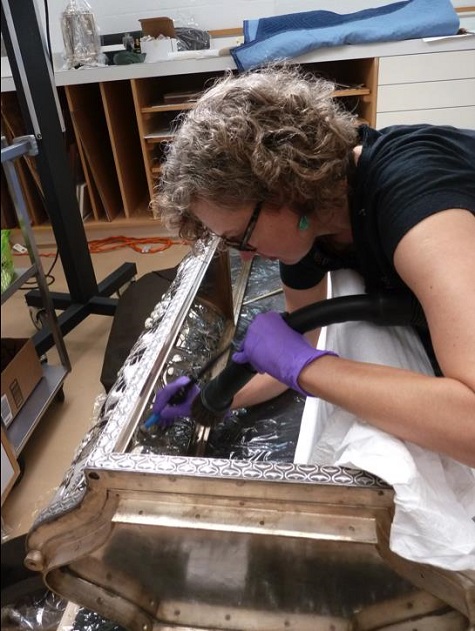
Many painstaking hours of old polish removal and reduction of silver tarnish.

Engaging in many painstaking hours of old polish removal and reduction of silver tarnish

Conservation treatments do not take place within a vacuum, and an exciting part of the project has been the interdepartmental collaboration between the curatorial, conservation (including myself), and collections staff at the DMA. Kevin W. Tucker, The Margot B. Perot Senior Curator of Decorative Arts and Design at the Dallas Museum of Art, and I have also been working with outside consultative experts, including silversmiths, specialty glassmakers, gemologists, research scientists, and even an ornithologist (to help identify the various birds depicted on the vitrine).

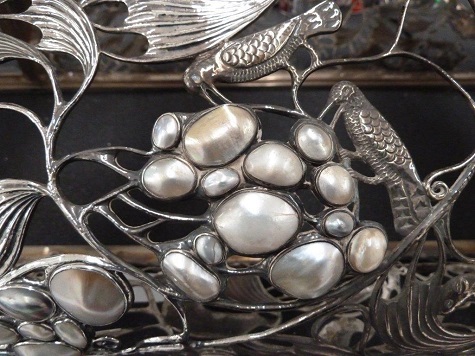
Detail of a pearl cluster with two birds.  Notice the old polish residue in the interstices surrounding the cluster.

Detail of a pearl cluster with two birds. Notice the old polish residue in the interstices surrounding the cluster.

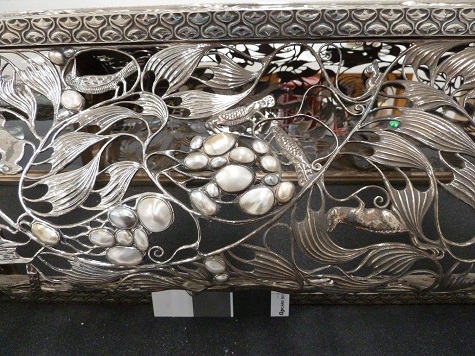
During removal of silver tarnish, as seen in this image from left to right.

During removal of silver tarnish, as seen in this image from left to right.

Working almost daily on an intimate and intense level with an object has resulted in many discoveries, which we look forward to sharing with the public in both the exhibition and the opening symposium on November 15, 2014.

Fran Baas is the Associate Conservator of Objects at the DMA.

My Meaningful Moments at the DMA

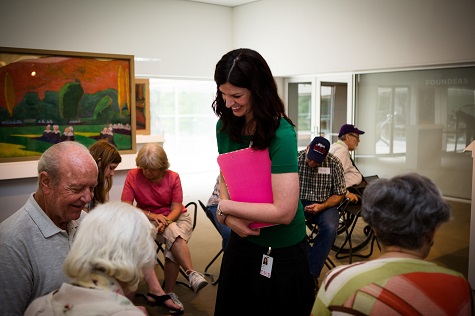
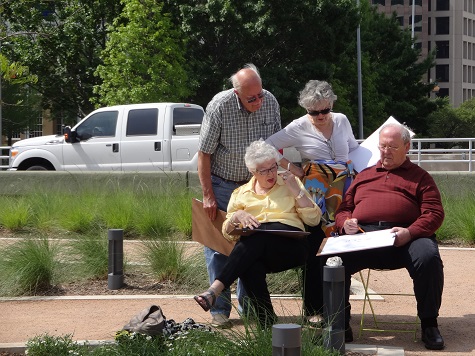
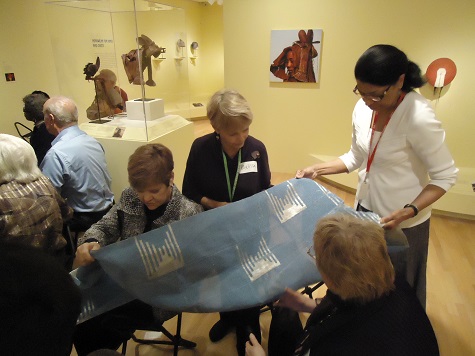
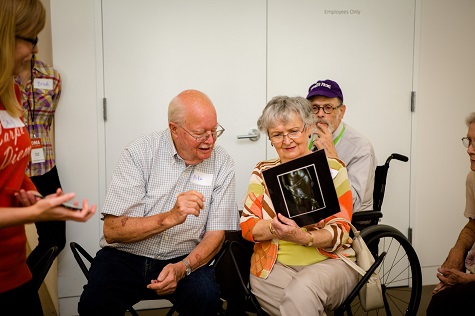
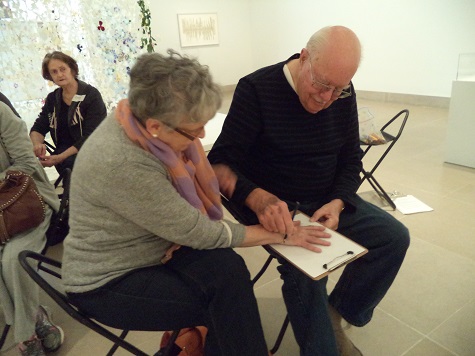
Amanda Blake, Head of Family, Access, and Scholl Experiences at the DMA, during a Meaningful Moments program.

Amanda Blake, Head of Family, Access, and School Experiences at the DMA, during a Meaningful Moments program

There are many reasons I enjoy working with our Access Programs here at the DMA, but one of the big ones is the chance to form relationships—relationships with participants and, in turn, their relationship with works of art in our galleries. The Meaningful Moments program for visitors with Alzheimer’s disease and their care partner (usually a spouse or family member) creates opportunities for people to have transformative experiences with works of art and with one another. I feel lucky to be a part of this each month. As I have gotten to know the participants over the years and spent time with them each month, I am reminded of the importance to live in the moment and to cherish each day that we get to spend with our loved ones. The Meaningful Moments program reinforces my belief in love and in the kindness of humanity.

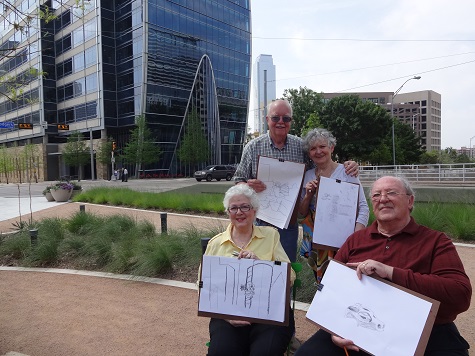
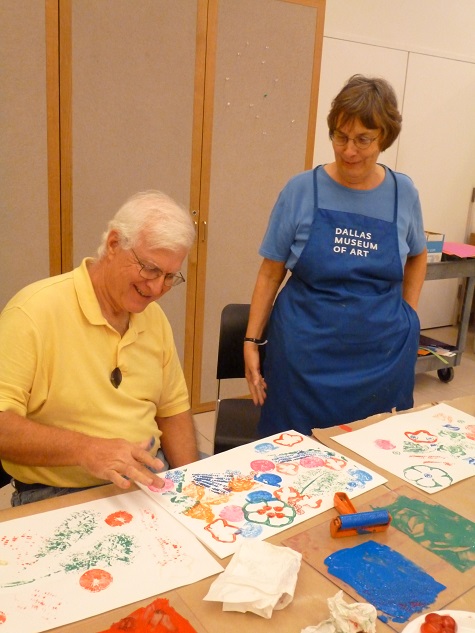
If someone were to pass by our group in the galleries, it would appear as if longtime friends were chatting and reminiscing. In the studio, there is often laughter and joking as participants create and share their artwork. Many of the participants get together outside of the program, for lunches or support groups. I have received gardening tips and holiday cards from individuals in the program, and I have even visited the woodworking shop of a participant to learn how to use a lathe. The group is social and very welcoming to newcomers, but is also a supportive bunch of familiar faces.

Viewing and talking about works of art can unearth past memories, especially those still accessible to a person with Alzheimer’s disease. I have witnessed this many times during Meaningful Moments. From a Native American cradle sparking recollections about vacationing with young children, an exhibition with a beautiful wedding gown triggering detailed stories about participants’ wedding days, impressionist works reminding attendees of a favorite nature spot from their youth, or a print by Andy Warhol generating a lively discussion of life in the 1960s, artwork often serves as a catalyst to connect with the stories from the past and with loved ones in the present. During our gallery conversations, spouses (even those married more than fifty years) occasionally learn new things about their loved one’s past.

Crucial to the Meaningful Moments program, socialization and simulation play a key role and have been proven to help improve mood and behavior, as well as dramatically enhance quality of life. The social interaction and exploration of works in the collection are as gratifying to the spouse or family member as it is to the attendees with Alzheimer’s disease. I have seen care partners lean on one another for support and bond over shared experiences. One woman who used to bring her husband to the program still occasionally attends, even though her husband passed away two years ago. A couple who has attended the program since the beginning even schedules their doctor’s appointments and vacations around the program dates. A wife who brings her husband has told me that she needs the program, as it is a time when she can connect emotionally with him and not think about the disease for the two hours that they are in the Museum.

Since the program began four years ago, two of my favorite people in my life have been diagnosed with Alzheimer’s disease. I know how heartbreaking it can feel for this disease to affect someone you love, let alone how scary it must feel for the person diagnosed. The Meaningful Moments program is one of the best parts of my job and means so much to me as an educator—it is an honor to be welcomed into the circle of this small group of people and to become part of their experience as they journey through life navigating such a devastating disease.

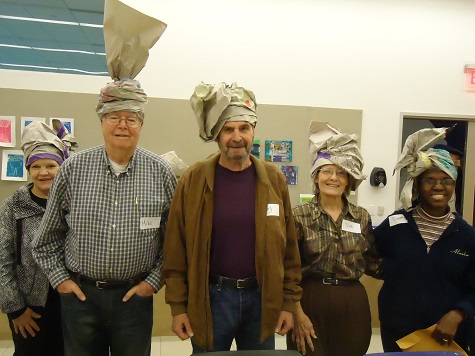
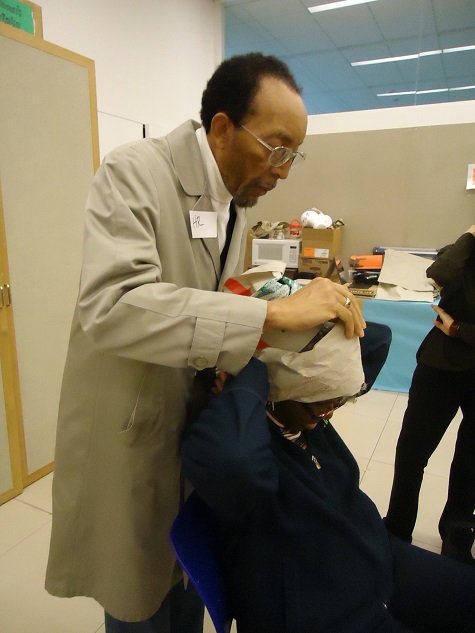
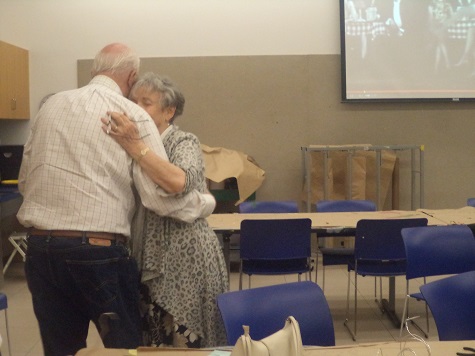
Getting to know program attendees and seeing how much the couples genuinely and patiently care for one another, I have witnessed true love in action. To watch a husband gingerly fit a headpiece he designed around his wife’s head, to catch couples married fifty years holding hands in front of a Jackson Pollock, to be in the studio immersed in jewelry-making with attendees while listening to Duke Ellington and suddenly looking up to see an impromptu slow dance take place by one of the couples in the program are just a few of the many truly memorable experiences for me, and ones that I will always cherish.

To learn more about the DMA’s Meaningful Moments program, or for information on how to schedule a group from assisted-living facilities specializing in memory care, visit the Museum’s website or e-mail access@DMA.org.

Amanda Blake is the Head of Family, Access, and School Experiences at the DMA.

DMA Works at Work

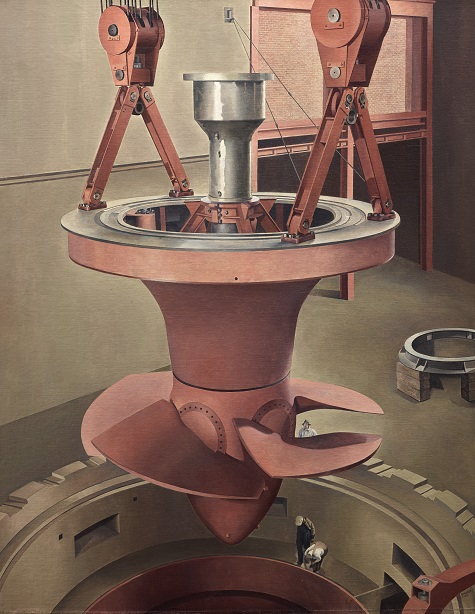
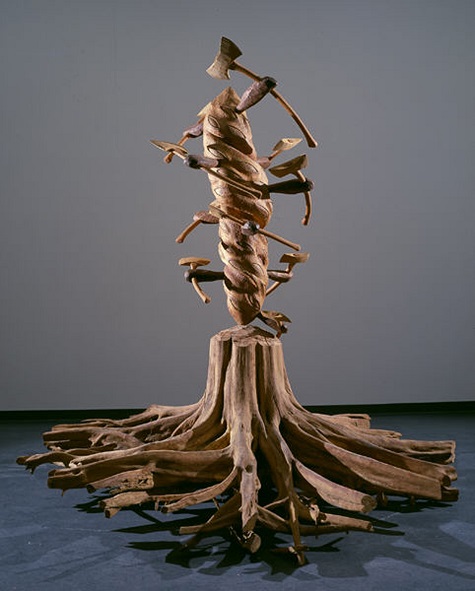
We hope you have a relaxing break this Labor Day and aren’t hard at work like these pieces in the DMA’S collection.

Hot Dogs at the DMA

Hot dog – tomorrow is National Dog Day! What better way to celebrate man’s best friend than to have an entire day devoted to our canine companions? We love dogs here at the DMA and have a paws-itively delightful variety of works of art depicting them. Grab your furry friend and have a tail-waggin’ good time as you celebrate National Dog Day with the top dogs of our collection.

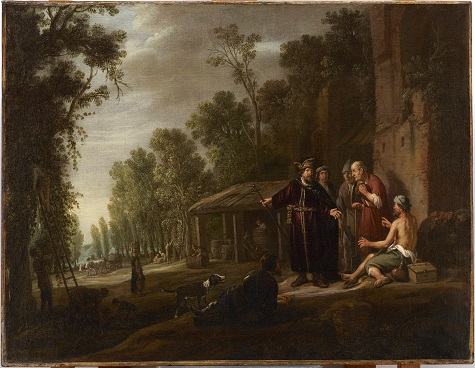
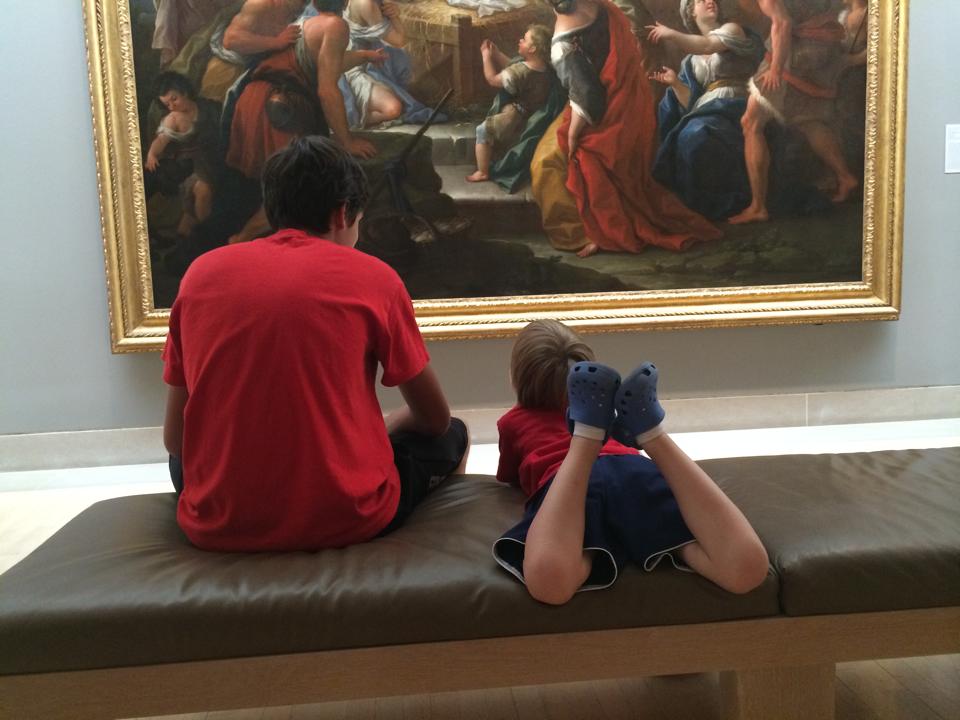
Nicolas Mignard, The Shepherd Faustulus Bringing Romulus and Remus to His Wife, 1654, oil on canvas, Dallas Museum of Art, gift of Mr. and Mrs. Algur H. Meadows and the Meadows Foundation, Incorporated

Nicolas Mignard, The Shepherd Faustulus Bringing Romulus and Remus to His Wife, 1654, oil on canvas, Dallas Museum of Art, gift of Mr. and Mrs. Algur H. Meadows and the Meadows Foundation, Incorporated

Home is where your dog is, and this home is about to welcome two new babies to the family. This painting tells the story of a shepherd who found two babies—Romulus and Remus—in the woods. They were abandoned by their family and had been living with a she-wolf who took care of them. Luckily the babies have a four-legged family member to help watch over them!

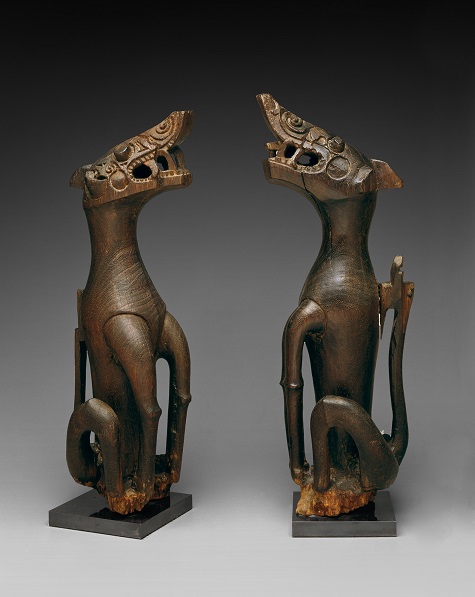
Mythical aso (one of a pair), Borneo, Greater Sunda Islands, Kayan people, 19th century, wood (kayu tapang or Koompassia: Excelsa), Dallas Museum of Art, The Roberta Coke Camp Fund and the Museum League Purchase Fund

Pair of Mythical aso, Borneo, Greater Sunda Islands, Kayan people, 19th century, wood (kayu tapang or Koompassia: Excelsa), Dallas Museum of Art, The Roberta Coke Camp Fund and the Museum League Purchase Fund

Beware of dog! Their bark may be louder than their bite, but these two creatures certainly look strong and fierce. This is a pair of asos, a mythical animal that is a mix of a dog and a dragon. Dogs and dragons both guard and protect and for the Kayan people of Borneo, asos protected the most important people in their society.

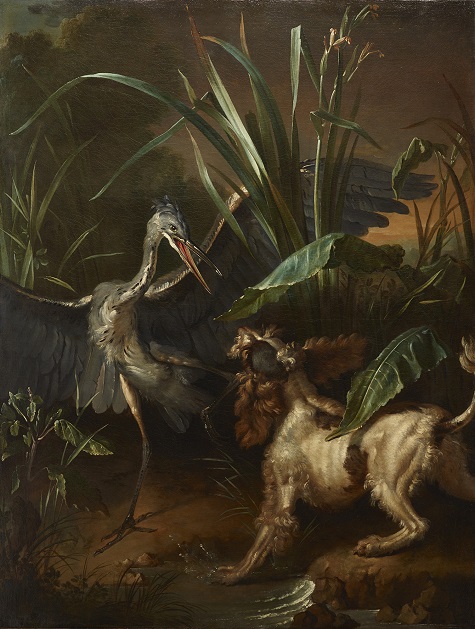
Jean-Baptiste Oudry, Water Spaniel Confronting a Heron, 1722, oil on canvas, Lent by the Michael L. Rosenberg Foundation

Jean-Baptiste Oudry, Water Spaniel Confronting a Heron, 1722, oil on canvas, Lent by the Michael L. Rosenberg Foundation

Friend or fowl? Jean-Baptiste Oudry was known for painting hunting scenes, but there is a question about who is hunting whom in this picture. It looks like this bird is barking up the wrong tree. My money is on the mutt!

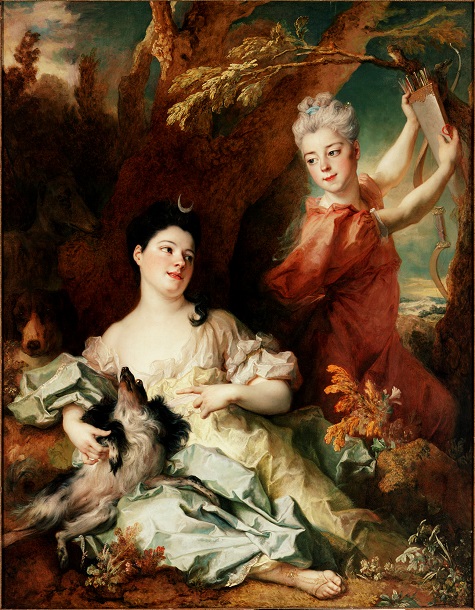
Nicolas de Largillière, Portrait of the Comtesse de Montsoreau and Sister as Diana and an Attendant, 1714, oil on canvas, Lent by the Michael L. Rosenberg Foundation

Nicolas de Largillière, Portrait of the Comtesse de Montsoreau and Sister as Diana and an Attendant, 1714, oil on canvas, Lent by the Michael L. Rosenberg Foundation

These girls are dressed up to have their portrait painted with their two pampered pooches – who wouldn’t want a painted portrait with their dog? The girls are dressed as the Goddess Diana and an attendant; Diana is the Goddess of the Hunt and her symbol is a crescent moon.

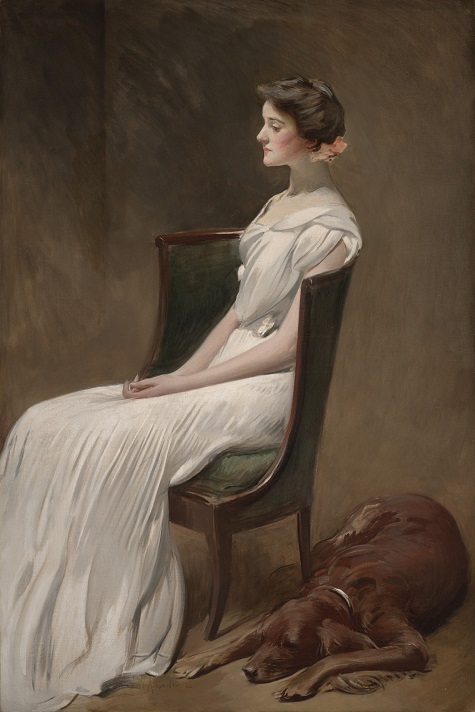
John White Alexander, Miss Dorothy Quincy Roosevelt (later Mrs. Langdon Geer), 1901-1902, oil on canvas, Dallas Museum of Art, gift of the Pauline Allen Gill Foundation in memory of Pauline Gill Sullivan

John White Alexander, Miss Dorothy Quincy Roosevelt (later Mrs. Langdon Geer), 1901-1902, oil on canvas, Dallas Museum of Art, gift of the Pauline Allen Gill Foundation in memory of Pauline Gill Sullivan

This pup looks dog-tired! Dogs can say a lot without ever barking—just look at their ears and tail! This dog, Shamrock, may be taking a cue from his owner as they sit and stay to have their portrait painted. The woman in this portrait is Miss Dorothy Quincy Roosevelt, cousin to President Theodore Roosevelt. As a teenager, Dorothy visited the White House often for parties and events. One might say that Shamrock is one fashionable dog, check out his elegant gold collar!

The next time you feel like drooling over paintings depicting pups, take a two-legged visit to the DMA to search out the hounds.

Amanda Blake is the Head of Family, Access, and School Experiences at the DMA

Of Jewelry and Jazz

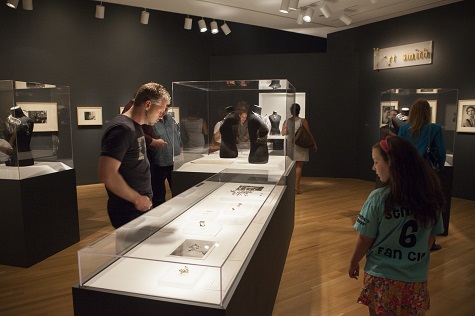
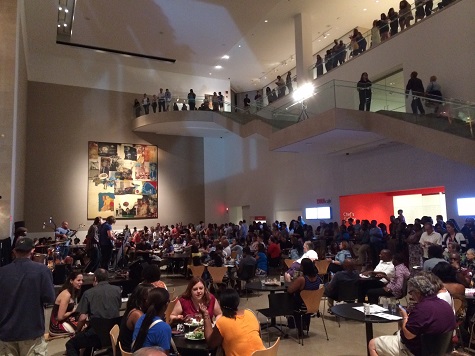
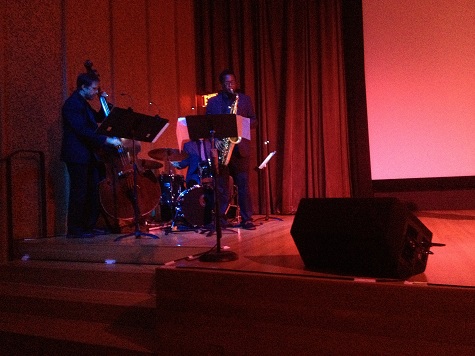
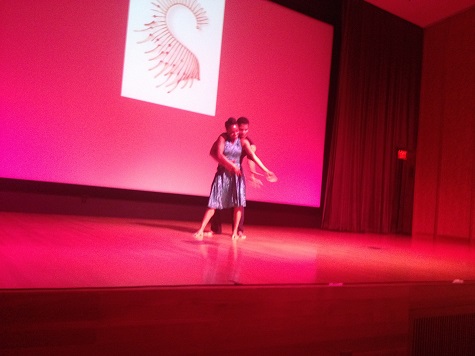
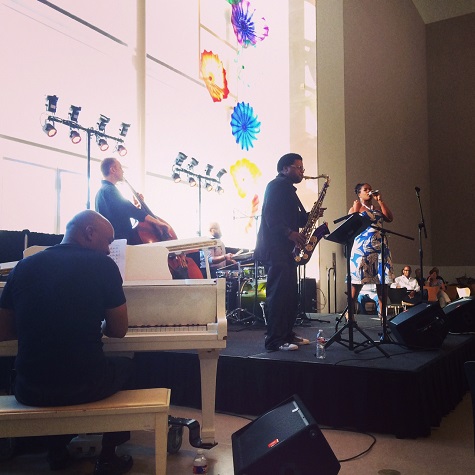
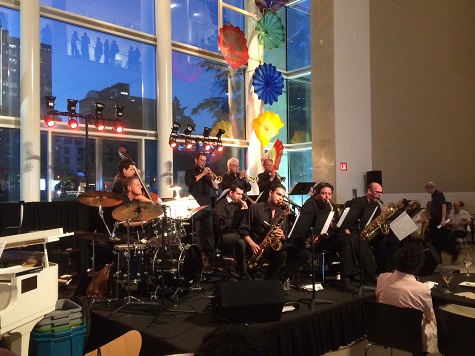
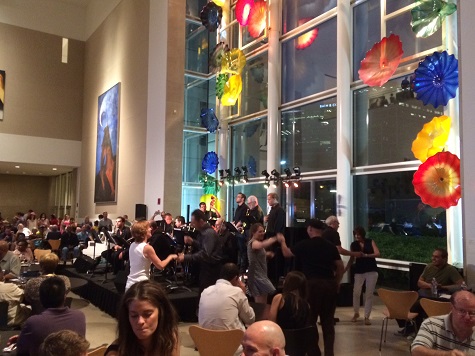
On Friday night we celebrated the exhibition From the Village to Vogue: The Modernist Jewelry of Art Smith with a night of performances, talks, art making, and more inspired by Art Smith during the busiest August Late Night we’ve ever had, with more than 5,500 visitors! The Dallas Black Dance Theatre, along with the Stockton Helbing Trio, performed a premiere of a new work to a full house in a piece inspired by the jewelry of Art Smith. Visitors lined up throughout the evening to create their own jewelry in the Center for Creative Connections, there were plenty of human pretzels in Yoga for Kids, and the Atrium was alive all night with music from Mahogany the Artist, Rebel Alliance Jazz Ensemble, and The Funky Knuckles.

If you missed Friday night’s fun, you can still celebrate Art Smith throughout August (all for free!); check out the events online, including Thursday’s Jazz in the Atrium with Mahogany the Artist.

A Very Big Outdoor Art Show

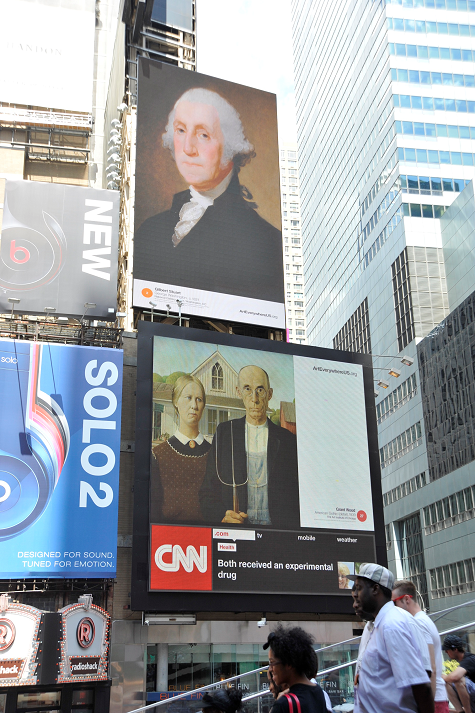
This week Art Everywhere US launched onto billboards, bus stops, digital screens, and more across all 50 states and the District of Columbia. Keep your eyes peeled while road tripping and commuting for some of your DMA favorites, including The Icebergs and The Peaceable Kingdom, when you are out on the town. Check out some photos from across the country below and share your finds on Instagram with #ArtEverywhereUS. If you are ready for an art hunt, discover the locations on the Art Everywhere US interactive map.

Art, Camera, Selfie!

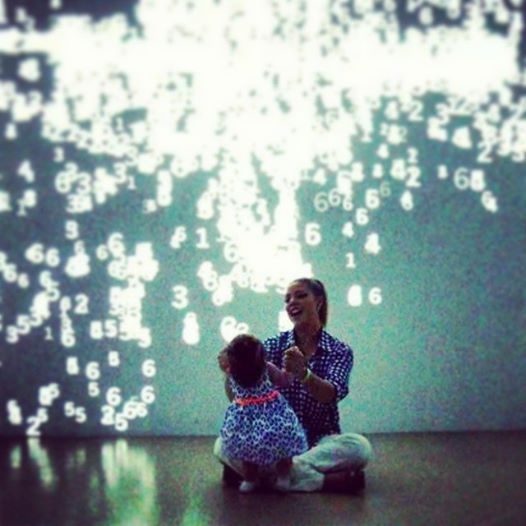
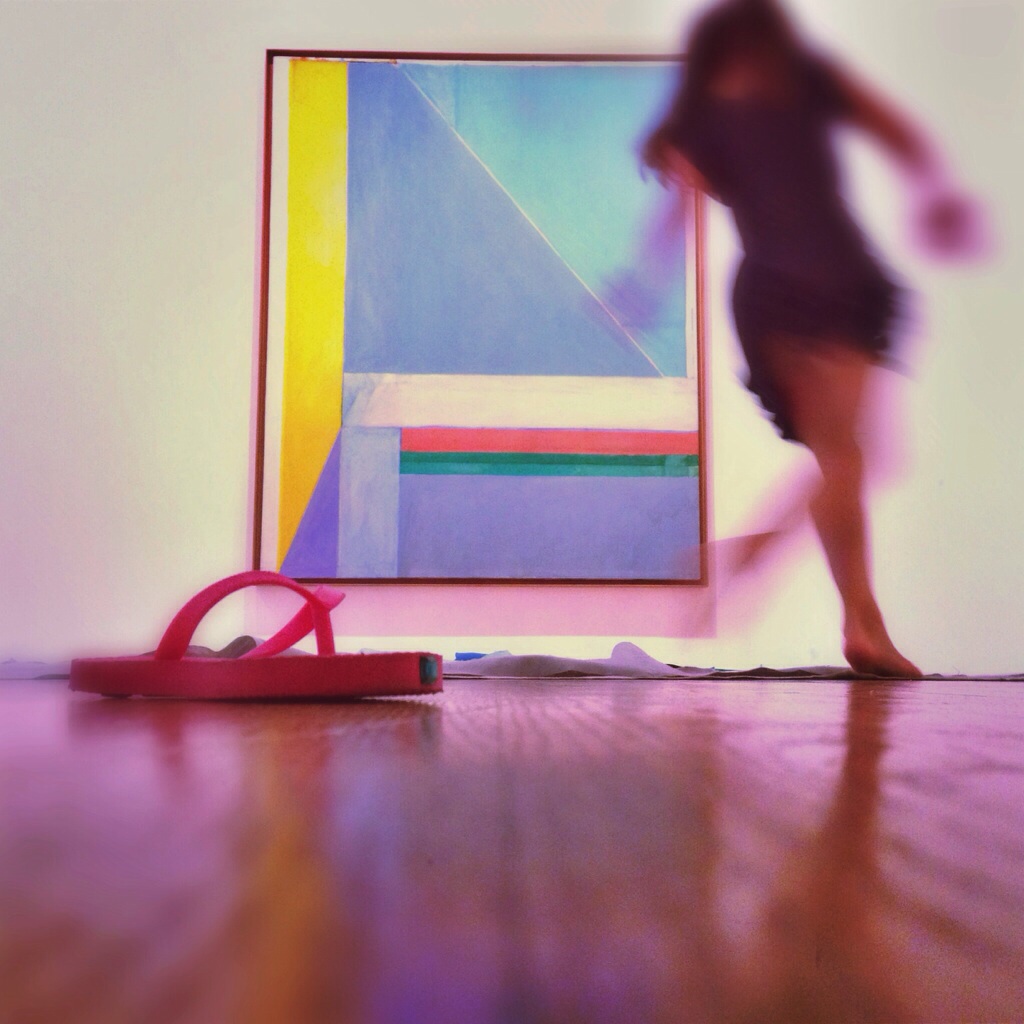
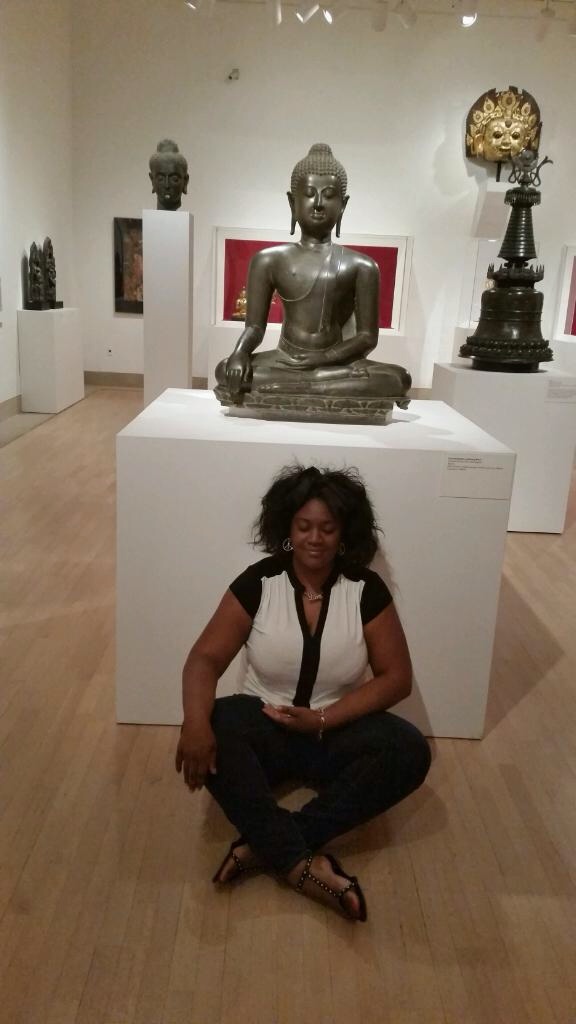
We love seeing the creative photos that our visitors take with our collection, so we’re turning the spotlight on you. This summer, feel free to explore, and share your fun with us!

Now through Labor Day, visitors who submit their creative DMA photos will receive a chance to win a private tour of the DMA with curator Olivier Meslay, and everyone who participates receives a free ticket to Mind’s Eye: Masterworks on Paper from David to Cézanne.

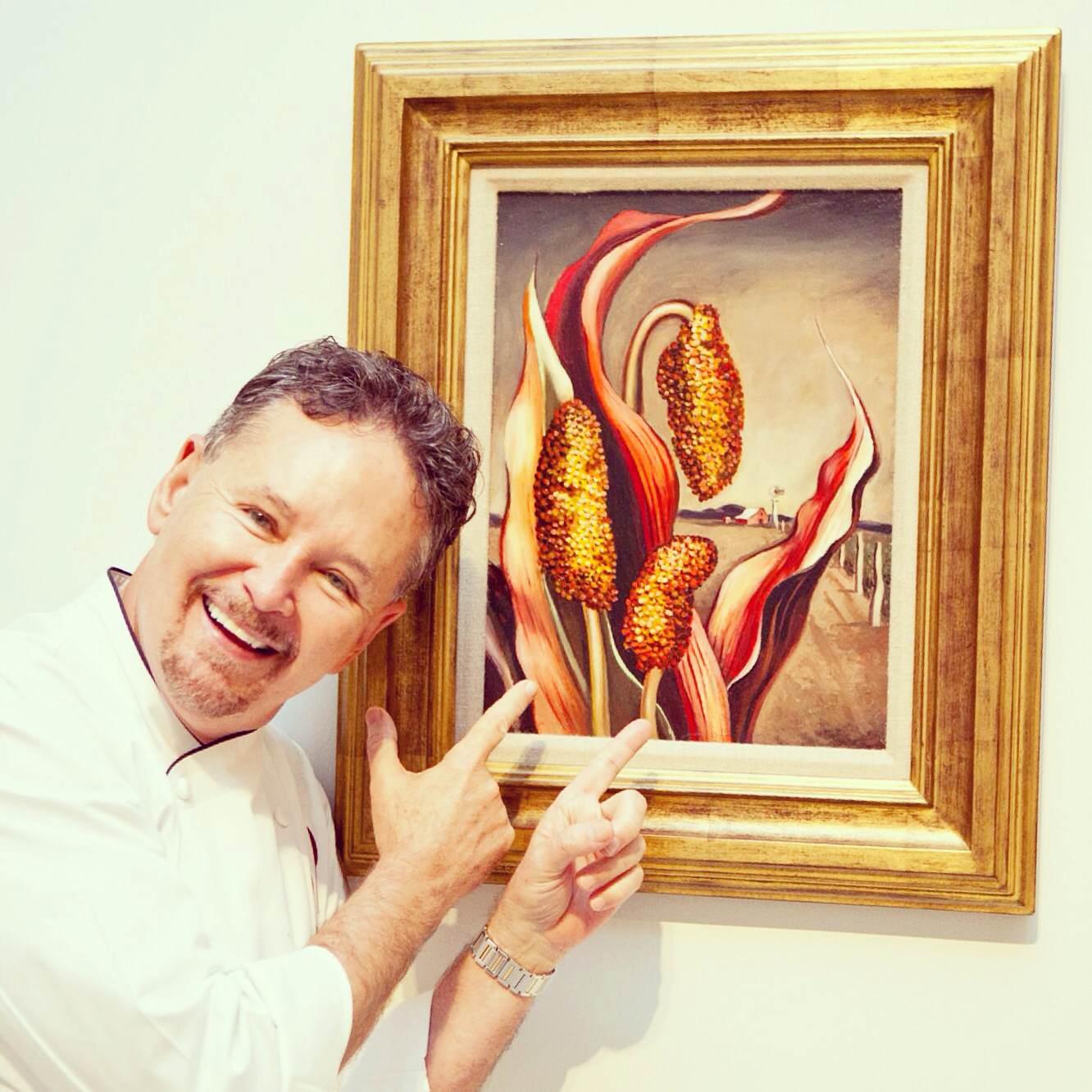
Enter your own DMA snapshot here and enjoy some of the great photos that we’ve already received – even Chef Stephan Pyles got in on the action!


Anthea Halsey is the Senior Marketing & Social Media Manager at the DMA

#DMAVacation

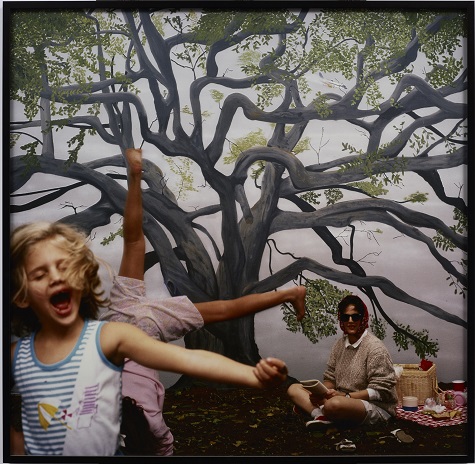
Nic Nicosia, Vacation, 1986, cibachrome photograph, Dallas Museum of Art, gift of Meisel Photochrome Corporation © 1986 Nic Nicosia, Dallas, Texas

Nic Nicosia, Vacation, 1986, cibachrome photograph, Dallas Museum of Art, gift of Meisel Photochrome Corporation, © 1986 Nic Nicosia, Dallas, Texas

Earlier this month, the large photograph Vacation by Nic Nicosia was installed in the Center for Creative Connections (C3). Vacation is one of seven photographs that comprise Nic Nicosia’s Life As We Know It series. In this series depicting contemporary American life, Nicosia plays with everyday topics such as fashion, youth, and violence. Through his use of fabricated environments and staged scenes, Nicosia blurs the line between illusion and reality. This surreal atmosphere is enhanced by the ironic twists, such as the burning plane in the background, on what would otherwise be ordinary situations.

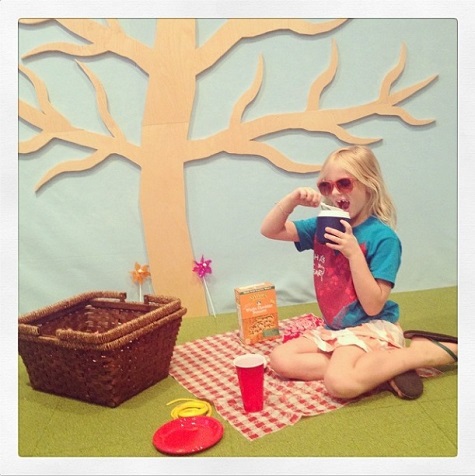
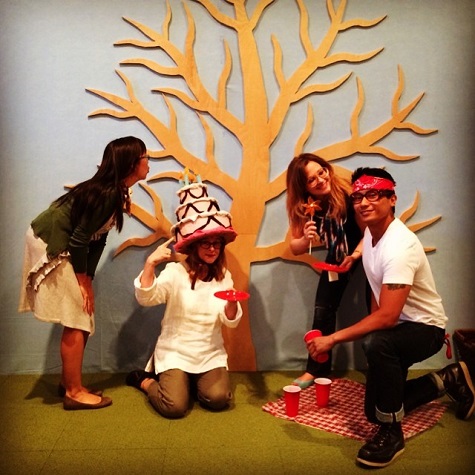
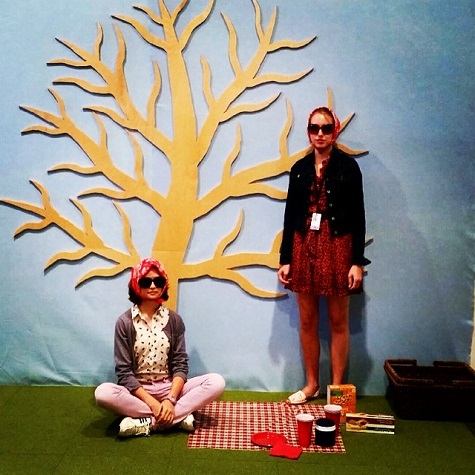
Inspired by this work of art, the C3 team created a photo station where visitors can pose for their own staged picnic-themed photograph. Some have embraced the surreal nature of Nicosia’s work more than others. Check out our visitors’ photographs and stop by C3 to snap a photo of your DMA vacation.

Jessica Fuentes is the C3 Gallery Coordinator

The Welcoming Party: A Van Gogh Returns

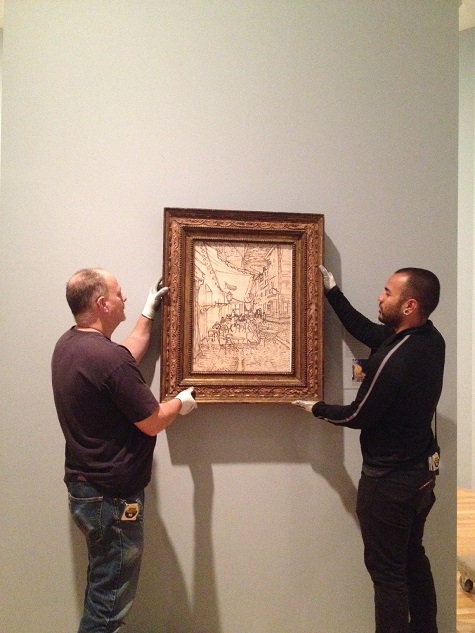
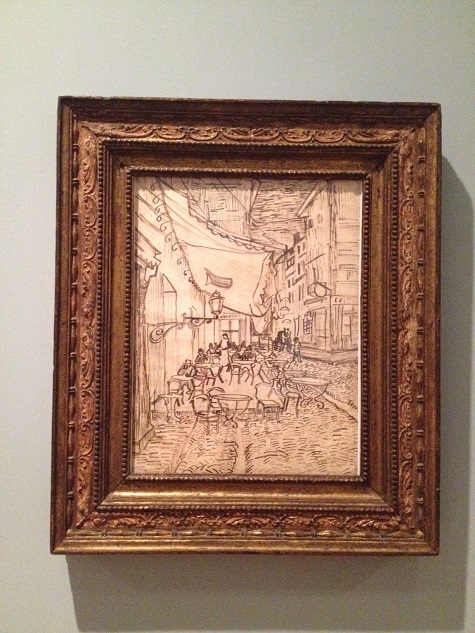
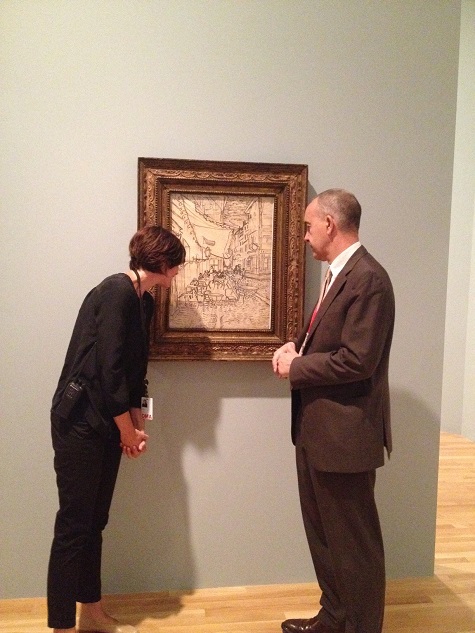
Today we at the DMA are excited to welcome home after a “sabbatical” in Paris one of our masterpieces, van Gogh’s work on paper Café Terrace on the Place du Forum. On tour at the Musée d’Orsay, this magnificent work of art was one of only seven drawings featured in Van Gogh/Artaud: The Man Suicided by Society. This exhibition was seen by nearly 655,000 visitors over the course of four months, making it the highest-attended exhibition in Musée d’Orsay history. Now prominently and proudly on view in our special exhibition Mind’s Eye: Masterworks on Paper from David to Cézanne, Café Terrace on the Place du Forum joins other masterworks by van Gogh’s peer artists including Manet, Degas, Cézanne, and Renoir. Say “bonjour” and see it now through October 26 on a visit to Mind’s Eye.

[youtube https://www.youtube.com/watch?v=vEzmOov6zdU]

Painting Without the Point: Pissarro’s “Apple Harvest” Unvarnished

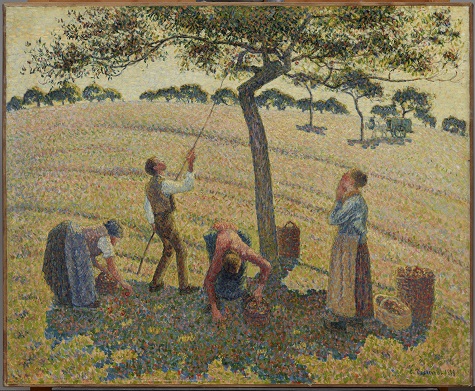
A long-time favorite in the DMA’s European galleries, Camille Pissarro’s Apple Harvest of 1888 has returned to view this month after a visit to the Painting Conservation Studio.
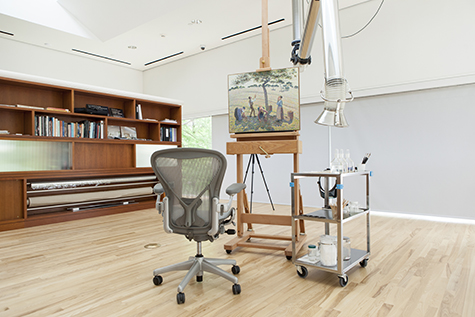
Camille Pissarro’s Apple Harvest (1888), on Mark Leonard’s easel, in the DMA’s Painting Conservation Studio

Camille Pissarro’s Apple Harvest (1888) on Mark Leonard’s easel in the DMA’s Painting Conservation Studio
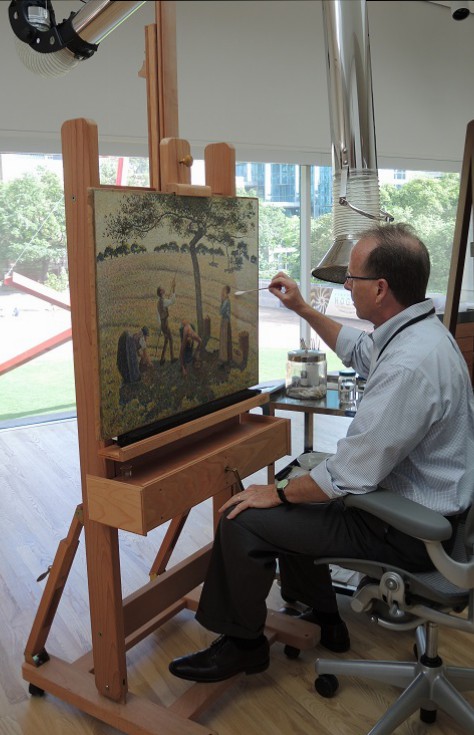
Removal of the old varnish layer began at the right side of the picture, as is seen in this image taken during the cleaning process.  Soft cotton swabs and a mild organic solvent mixture were used to remove the discolored resin.

Removal of the old varnish layer began at the right side of the picture, as is seen in this image taken during the cleaning process. Soft cotton swabs and a mild organic solvent mixture were used to remove the discolored resin.

The painting, which has been at the Museum since 1955, is in very good condition, but it was brought to Chief Conservator Mark Leonard to determine whether it was in need of cleaning. He opened a small “cleaning window” along the right side of the canvas, removing the layer of protective varnish. The bright pigments revealed by this small test confirmed that the varnish had become dark and yellowed over the past half-century, masking the true colors of the painting. It needed to be removed. The painting was carefully cleaned and its original vibrant tonality has been rediscovered.


Pissarro actually made three different paintings of this subject: a group of peasants gathering apples in the shade of an apple tree. The first version dates back to 1881, when Pissarro was one of the leaders of the impressionist group, and is painted in a classic impressionist style, with open brushwork describing the dappled sunlight that falls on the figures.
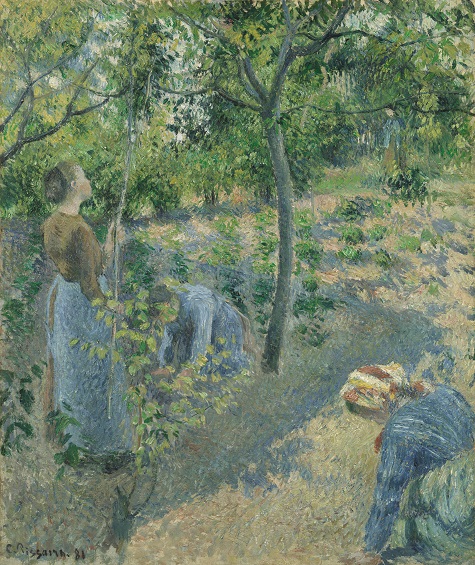
Camille Pissarro, Apple Picking, 1881, Oil on canvas, 25 5/8 x 21 ¼ in. (65 x 54 cm), Private Collection

Camille Pissarro, Apple Picking, 1881, oil on canvas, 25 5/8 x 21 ¼ in. (65 x 54 cm), Private Collection

The same year, Pissarro started another, larger version of the subject, but did not complete it until 1886, when he showed it at the eighth and final impressionist exhibition.
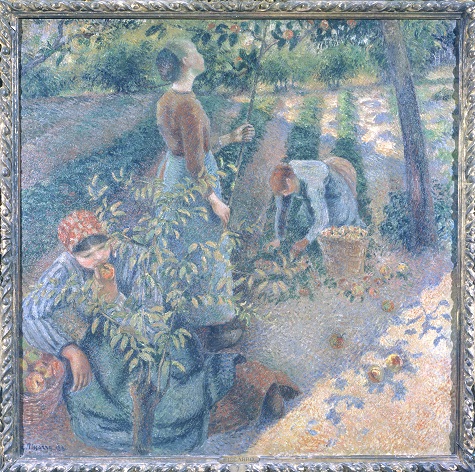
 Camille Pissarro, Apple Picking, 1881-1886, oil on canvas, 49 5/8 x 50 in. (126 x 127 cm), Ohara Museum of Art, Kurashiki, Okayama Prefecture, Japan

Camille Pissarro, Apple Picking, 1881-1886, oil on canvas, 49 5/8 x 50 in. (126 x 127 cm), Ohara Museum of Art, Kurashiki, Okayama Prefecture, Japan

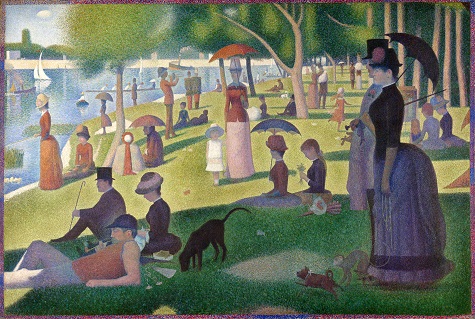
At that exhibition, Pissarro championed the participation of the young pointillist painters, Georges Seurat and Paul Signac, and Seurat showed his “manifesto painting,” A Sunday Afternoon on the Island of La Grande Jatte1884.

Georges Seurat, A Sunday Afternoon on the Island of La Grande Jatte—1884, 1884-86, oil on canvas, 81 ¾ x 121 ¼ in. (207.5 x 308.1 cm), Art Institute of Chicago, Helen Birch Bartlett Memorial Collection

Georges Seurat, A Sunday Afternoon on the Island of La Grande Jatte—1884, 1884-86, oil on canvas, 81 ¾ x 121 ¼ in. (207.5 x 308.1 cm), Art Institute of Chicago, Helen Birch Bartlett Memorial Collection

Pissarro had recently adopted Seurat’s neo-impressionist method as the approach to painting that was “in harmony with our epoch” and an evolution from the older, “romantic” impressionism of artists like Monet. When he began work the next year on the DMA’s Apple Harvest, Pissarro was returning to a familiar subject, but armed with the new, “scientific” principles he had learned from Seurat.
Pissarro prepared the painting with a number of drawings, oil studies, and a full compositional watercolor, which he squared for transfer.
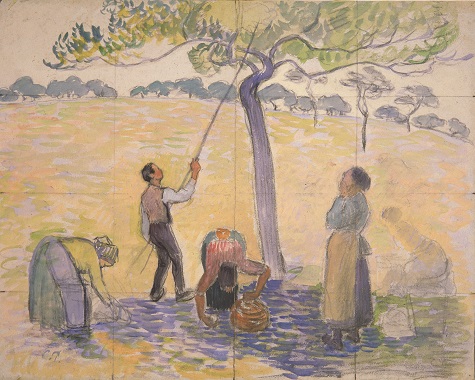
Camille Pissarro, Compositional study for Apple Harvest, c. 1888, watercolor on paper, 6 5/8 x 8 ½ in. (16.7 x 21.5 cm), Whereabouts unknown

Camille Pissarro, Compositional study for Apple Harvest, c. 1888, watercolor on paper, 6 5/8 x 8 ½ in. (16.7 x 21.5 cm), whereabouts unknown

In one drawing for the apple tree, Pissarro carefully noted the local colors he observed in the grass while sketching in the apple orchard: “yellowish red-orange,” “green,” “violet,” and “pink.”

Camille Pissarro, Study for Apple Harvest, c. 1888, graphite and colored pencil on beige paper, 7 x 9 in. (17.8 x 22.7 cm), The Eunice and Hal David Collection

Camille Pissarro, Study for Apple Harvest, c. 1888, graphite and colored pencil on beige paper, 7 x 9 in. (17.8 x 22.7 cm), The Eunice and Hal David Collection

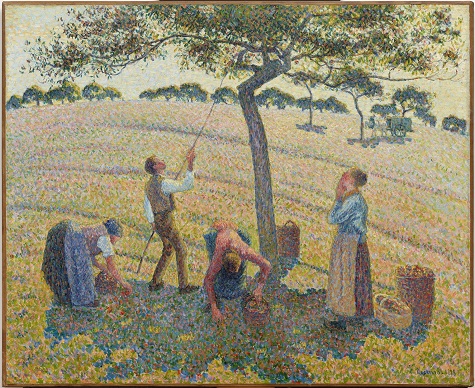
In the final painting, these colors were evoked optically through a flurry of carefully selected and painstakingly applied flecks and dots of pure, unmixed color.
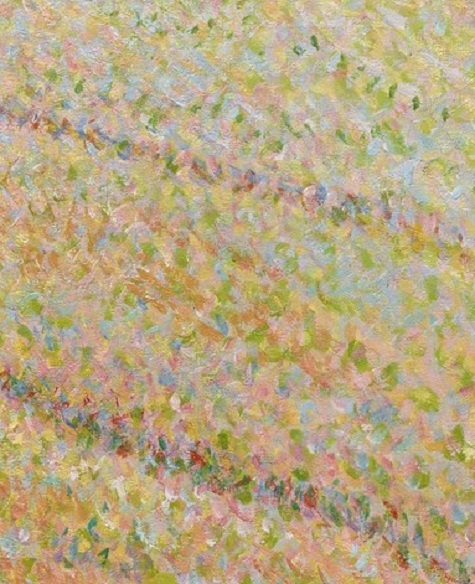
Camille Pissarro, Apple Harvest (Cuillette des pommes), 1888 (detail)

Camille Pissarro, Apple Harvest, 1888 (detail)

The pointillist method was a source of ongoing internal debate for Pissarro during these years. Despite his methodical preparatory studies, Pissarro placed a very high value on freedom and improvisation in painting. In September 1888, around the time he was completing work on Apple Harvest, he wrote to his son Lucien, a fellow neo-impressionist: “I am thinking a lot here about a way of producing without the point,” he reported. “How to attain the qualities of purity, of the simplicity of the point, and the thickness, the suppleness, the liberty, the spontaneity, the freshness of sensation of our impressionist art? That’s the question; it is much on my mind, for the point is thin, without consistency, diaphanous, more monotonous than simple.”

In Apple Harvest, Pissarro went to great lengths to avoid the monotony of pointillism, and his dots are surprisingly active and diverse, fracturing and curling to define form as well as color.

Camille Pissarro, Apple Harvest (Cuillette des pommes), 1888 (detail)

Camille Pissarro, Apple Harvest, 1888 (detail)

Robert Herbert, one of the great 20th-century historians of impressionism, described Pissarro’s complex approach to describing the deep shadow under the apple tree at the center foreground of the painting with a myriad of colored points: “The shadow has brilliant red, intense blue, intense green as well as pink, lavender, orange, some yellow, and subdued blues and greens. The pigments were not allowed to mix much together, and preserve their individuality which, because of the high intensity, results in an abrasive vibration in our eye that cannot be resolved into one tone. In order to make the contrast still sharper, Pissarro strengthens the blue around the edges of the shadow, a reaction provoked by the proximity of the strong sunlit field.”
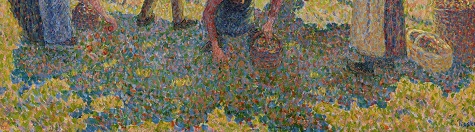
 Camille Pissarro, Apple Harvest (Cuillette des pommes), 1888 (detail)

Camille Pissarro, Apple Harvest, 1888 (detail)

By February of the next year, Pissarro informed his son that he was still “searching for a way to replace the points. Up until this moment, I haven’t found what I desire; the execution doesn’t seem to me to be quick enough and doesn’t respond simultaneously enough to sensation.” Pissarro sought nothing less than translating the immediacy of his optical sensations into the solid fact of paint on a canvas. Throughout the late 1880s, he was testing the capacity of the neo-impressionists’ methods to sustain this personal artistic goal.
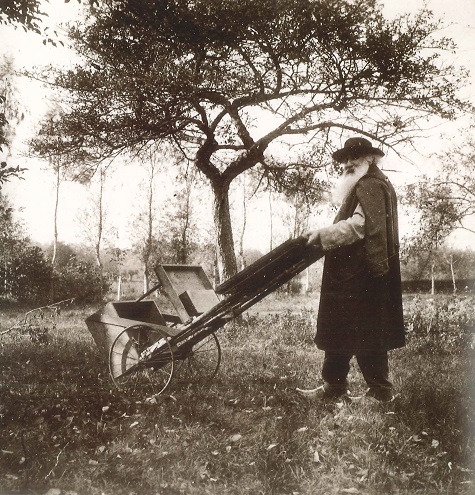
Camille Pissarro taking his rolling easel outdoors to paint near his house in Éragny, France, c. 1895

Camille Pissarro taking his rolling easel outdoors to paint near his house in Éragny, France, c. 1895

The first critics who saw Apple Harvest in 1889 and 1890, when it was shown at important exhibitions in Brussels and Paris, were profoundly impressed with how Pissarro managed to convey the experience of sunlight using the pointillist approach. One early critic wrote, “Truly, the canvases of M. Pissarro are today painted with the sun.” Later writers have agreed, pointing out how Pissarro “directed the light so that it appears to radiate from the depths of the scene, to activate with color everything along its path and then to issue forth in to the viewer’s space.”

How, then, does the painting’s recent cleaning alter our understanding of Apple Harvest? For many decades, the painting has appeared more yellow than Pissarro intended because of the darkened layer of varnish on its surface. This change has no doubt influenced viewers of the painting who noted the “warm” palette of the canvas, which “positively throbs with the heat of a late summer’s afternoon.” The intensely sunlit effect of the painting was, it seems, given an additional golden glow by the amber hue of the darkened varnish. But, the dazzling luminosity of Apple Harvest—its “powerful fiat lux,” in the words of one early critic—was no accident of time. It was apparent to viewers as soon as the painting left Pissarro’s easel, and now, 125 years later, the painting’s brilliant colors and lighting effects have been restored to their original, white-hot intensity.
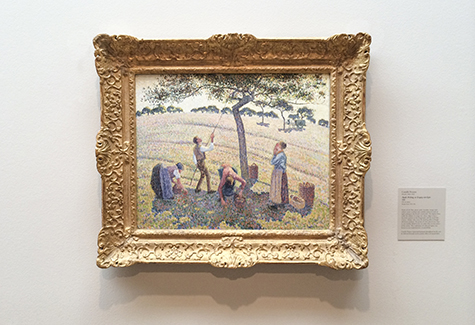
Camille Pissarro, Apple Harvest (Cuillette des pommes), 1888, oil on canvas, 24 x 29 1/8 in. (61 x 74 cm), Dallas Museum of Art, Munger Fund

Camille Pissarro, Apple Harvest, 1888, oil on canvas, 24 x 29 1/8 in. (61 x 74 cm), Dallas Museum of Art, Munger Fund

Celebrate Camille Pissarro’s birthday on July 10 with a visit to the newly conserved work on Level 2.

Heather MacDonald is The Lillian and James H. Clark Associate Curator of European Art at the DMA.
Archives

Categories