Archive Page 48


Friday Photos: Welcome, Juniper!

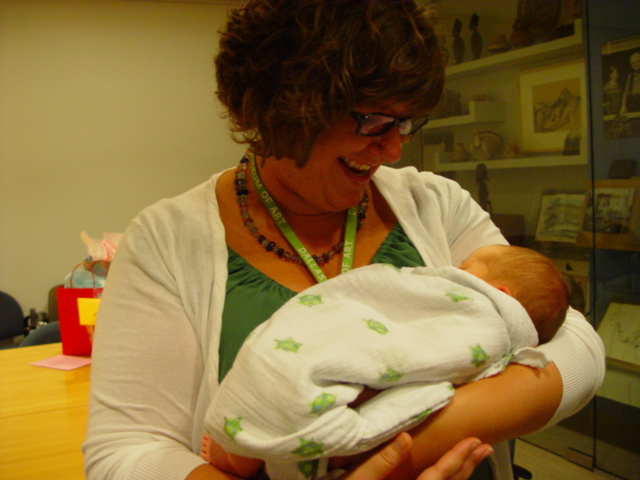
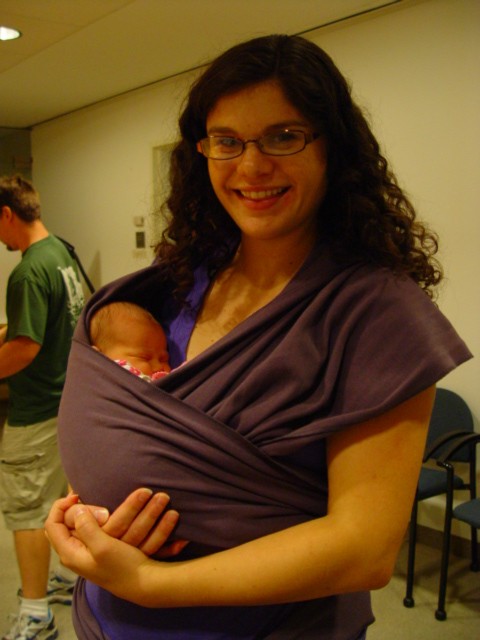
Mommy and baby Juni

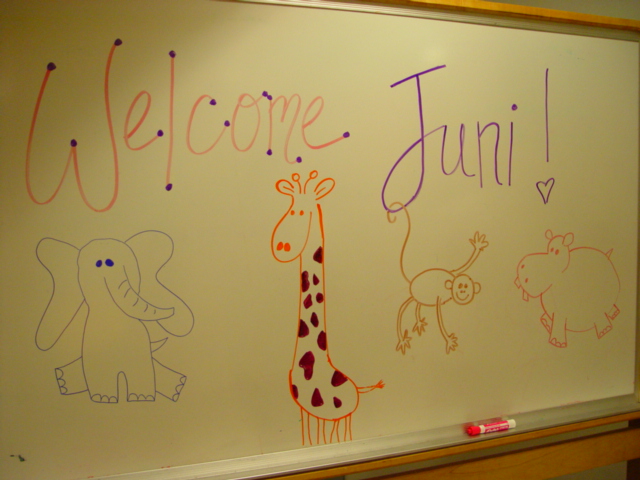
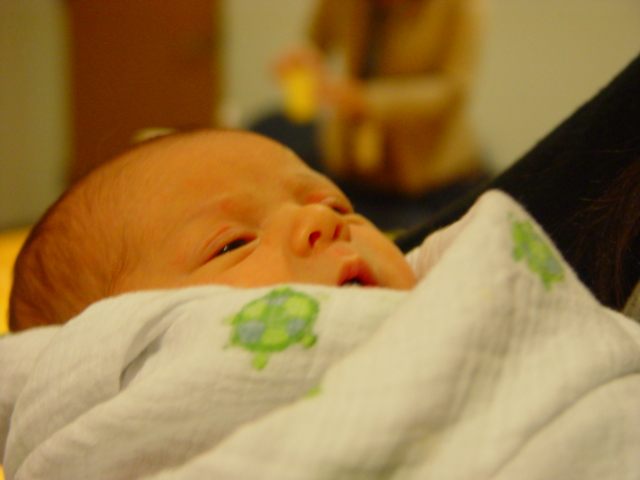
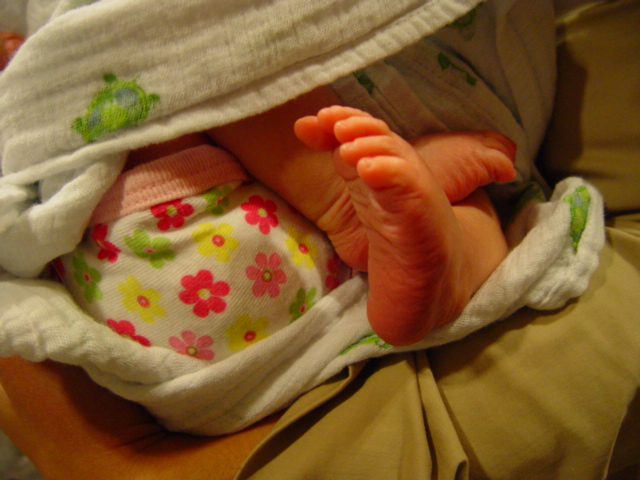
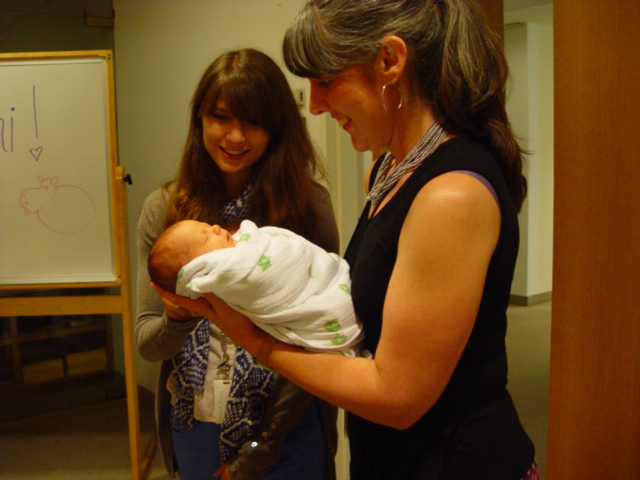
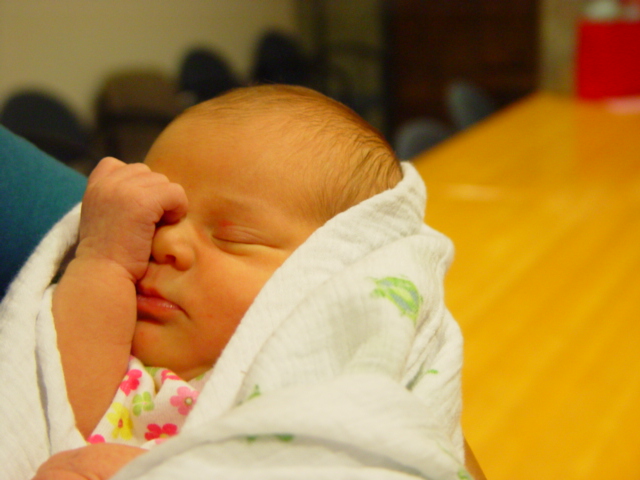
We are delighted to welcome little Juniper Leonard to the DMA community!  Juni made her debut Monday, August 6.  Loryn and baby are happy and healthy, and we were thrilled to have them visit the DMA last week.

Shannon and Juni

Hannah, Nicole, and little Juni

With the arrival of Juni comes a change to our department: Loryn has resigned from her position as the DMA’s Coordinator of Museum Visits in order to take a teaching job at Howard Junior High in Waxahachie ISD.  Her new job will leave her with a one-mile commute to work, rather than a thirty-mile commute to the DMA.

Loryn began working at the DMA in June of 2011 and scheduled Museum visits for over 50,000 students during her time here.  On top of that, she also coordinated the schedules of the DMA’s 120 docents.  She has been invaluable to our department, and we will all miss her when she leaves.  Help us wish Loryn and Juni well in the exciting months to come!

Melissa Nelson
Manager of Teaching in the Community

Teaching for Creativity: A Conversation Between Artworks

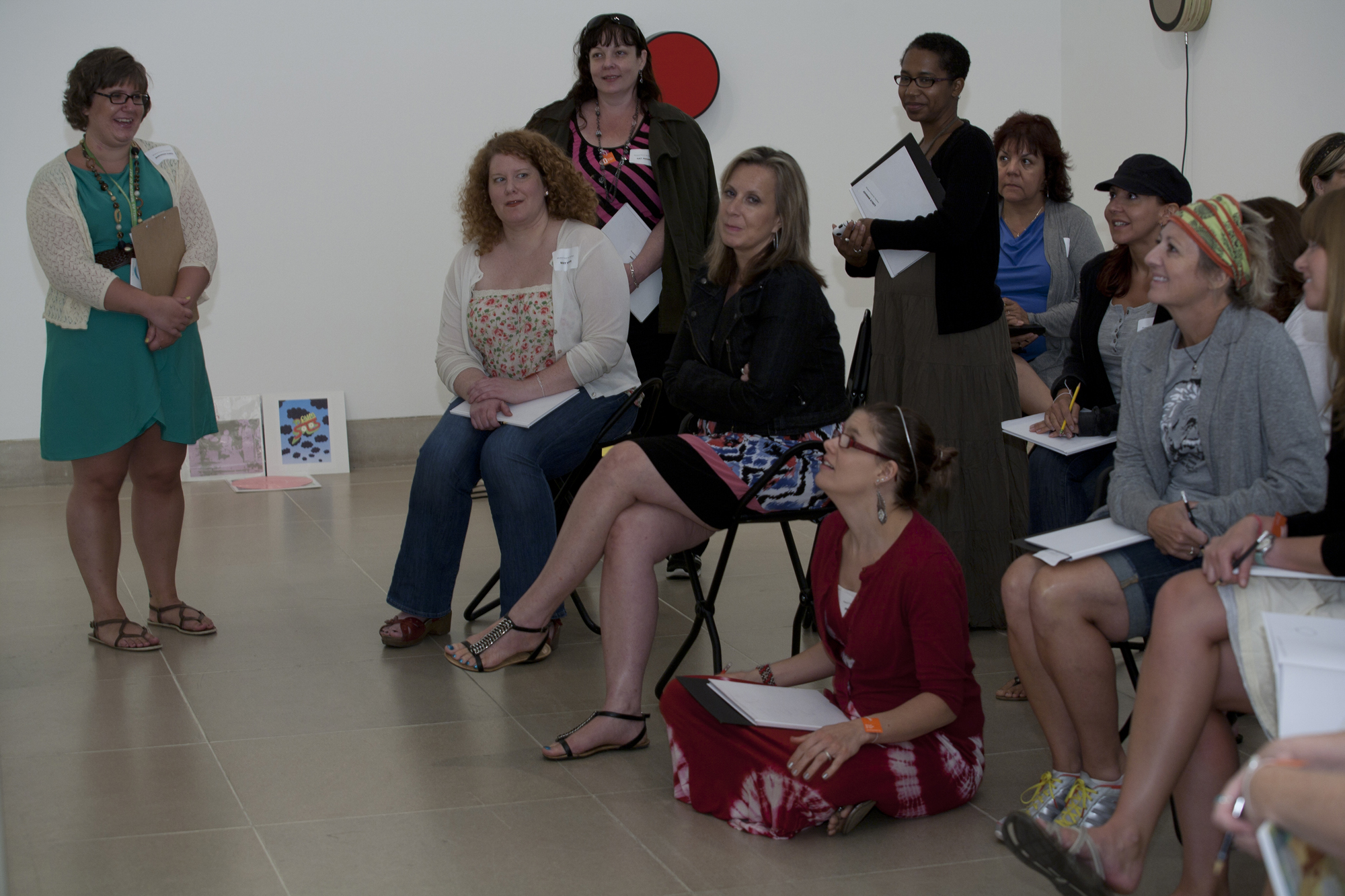
Have you read Shannon’s post about our gallery experience with ­­­Anytown, USA during Museum Forum for Teachers? After we imagined businesses, shops, and restaurants inspired by typography, we moved into a gallery in Variations on Theme with figural works of art. In this fun, creatively-charged gallery experience, we projected character traits and narratives onto the ambiguous figures.

To warm up, we created scribble characters and characterized one as a large group. Then, small groups of four or five people turned their attention to the artworks in the gallery. Each group chose two figures to explore and characterize. Then, each group wrote a short piece of dialogue between the two figures. To add a little challenge, each group randomly chose one line of dialogue to incorporate. Though it may seem counterintuitive, limitations within a lesson actually inspire more creativity than a completely open assignment.

These dialogue lines included:

  • What is that smell?
  • You are never going to believe what just happened…
  • I have never been so embarrassed.
  • No, I’m not kidding.
  • Tell me it isn’t permanent!
  • Did you get dressed in the dark?
  • Happy birthday!
  • I tried everything I could…
  • What’s on your face?
  • I heard it on TV…
  • I’m telling you…it won’t work.

Most of the groups’ conversations between artworks were light-hearted and humorous. However, each conversation was diverse with rich characterization. I really enjoy experiences when art-viewers combine what they see visually with their own experiences and ideas to create unique interpretations.

It would fun to tweak the creative twist for a classroom experience. Instead of incorporating a specific line of dialogue, try assigning the students a specific historical era or geographic location to research as a setting for a conversation between two artworks. Or, ask the students to create conversations between a figure in a work of art and a historical or literary figure. One of our Museum Forum participants suggested that students research artists and write hypothetical conversations based on what they discover of those artists.

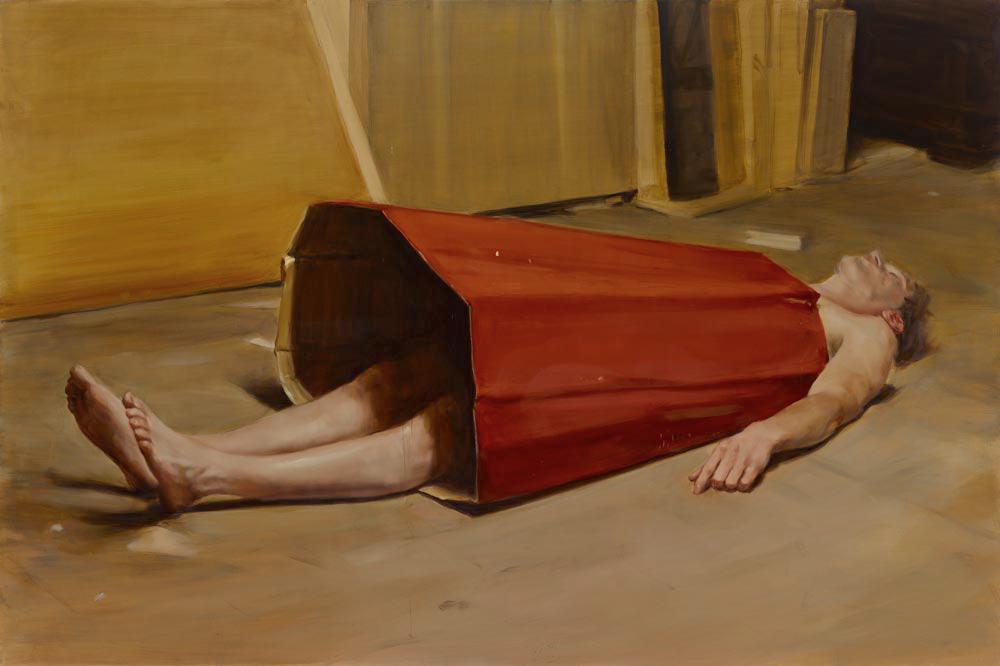
What might a conversation look like between these two figures?

Andrea V. Severin
Coordinator of Teaching Programs

Destination: Anytown USA

Our annual Museum Forum for Teachers has come and gone, and this year was another rousing success.  Twenty-two teachers participated in the week-long program, and spent a full day at each of the following Museums: The Rachofsky House, the Nasher Sculpture Center, the Modern Art Museum of Fort Worth, the Kimbell Art Museum, and of course the DMA.

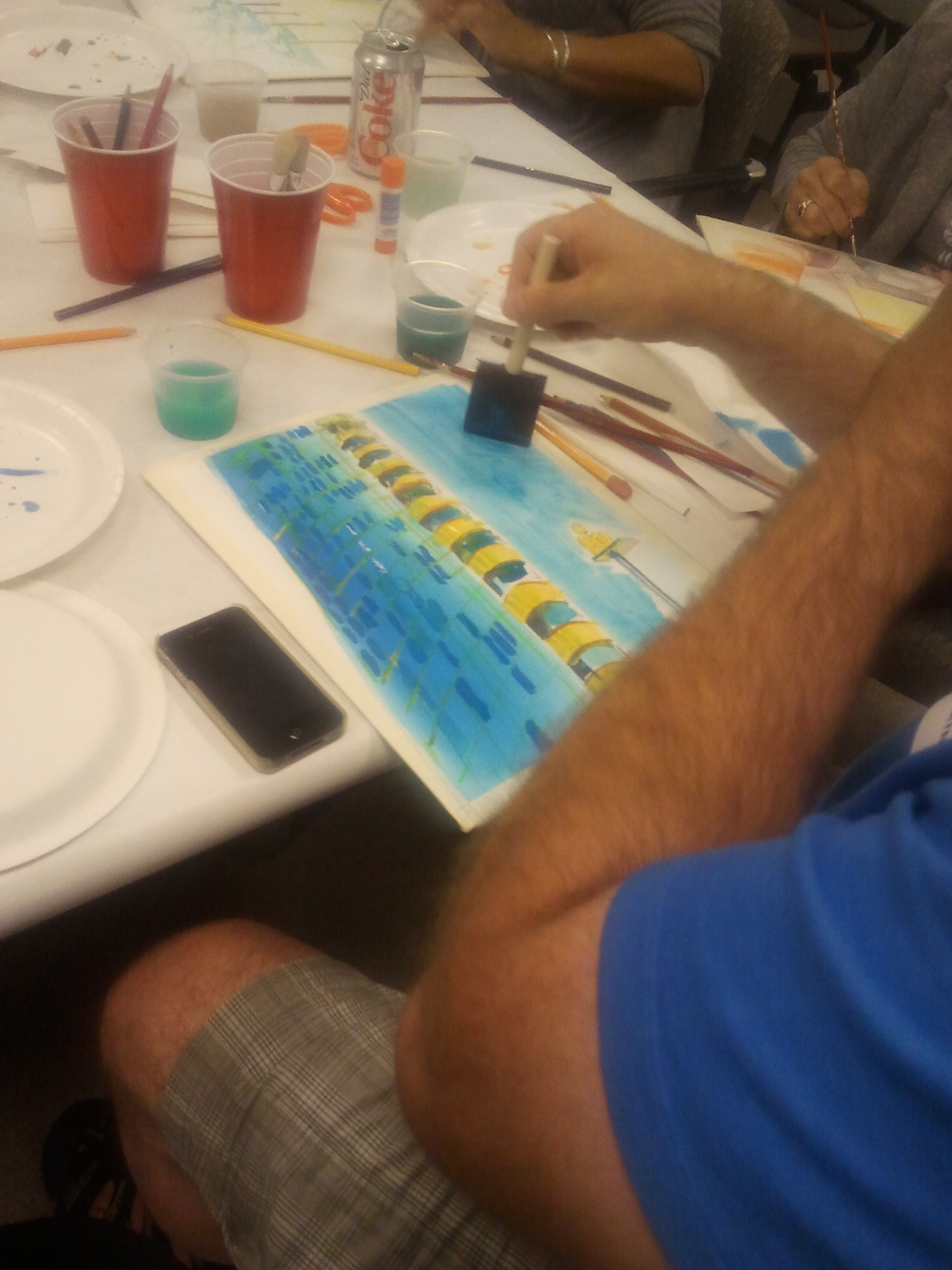
During their time at the DMA, the teachers went on a walking tour of the Arts District before spending time in Flower of the Prairie: George Grosz in Dallas.  Both of these experiences led to their afternoon art project: creating a watercolor painting of their impression of Dallas.

One teacher’s watercolor showed the Nasher Sculpture Center and Museum Tower.

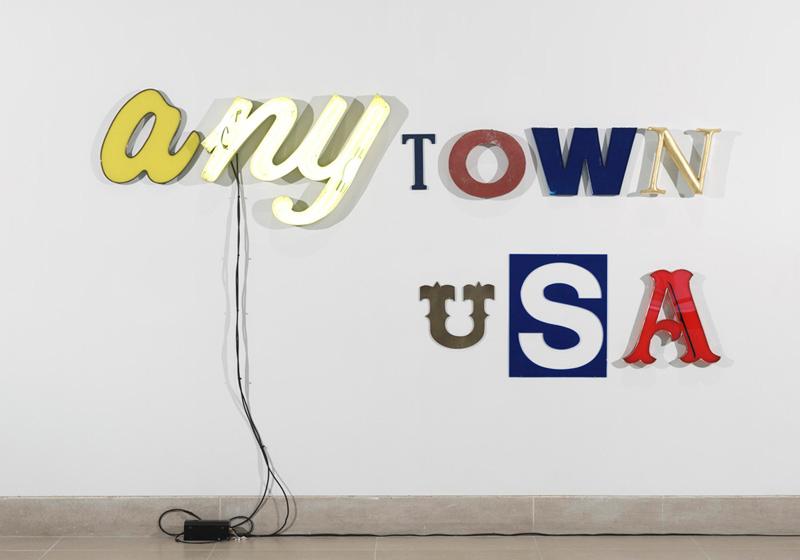
Teachers were also able to spend time in a brand new installation, Variations on Theme: Contemporary Art 1950s–Present.  While we were in the exhibition, we focused on the themes of the figure, vanitas, and place.  The idea of place was one of our key themes for the day, and we spent quite a bit of time looking at Jack Pierson’s Anytown USA.

Talking with teachers during the 2012 Museum Forum for Teachers

I always love when Anytown USA is on view.  There’s something nostalgic about it, and I always wonder just where “Anytown” might be.  The general consensus among the teachers was that Anytown was a small town that probably looked a lot like Mayberry.  As we looked at the artwork, the teachers were given the following prompt:

The letters that make up this sculpture come from a variety of places. Imagine that each of the letters came from signage on buildings in Anytown USA.  Select one letter and write a description of the business you think used that letter in its signage.  Remember, your response must be inspired by the look and feel of the font/letter you select.

Jack Pierson, Anytown USA, 2000, Dallas Museum of Art, gift of the Junior Associates, 2004.10.A-I, © Jack Pierson

Based on the teacher’s responses, it sounds like Anytown USA would be a wonderful place to live!  Here are some of their ideas:

NY: A coffee shop where everyone goes to hang out.  Every town has to have a coffee shop.  Or,  a deli run by a transplant from New York.  All of the sandwiches are named after local celebrities.
T: An antique or curio store, and all of the employees are eclectic, just like the goods they sell.
O: A donut shop where grandparents spend weekend mornings with their grandkids.  A city is defined by its donut shops.  Or, it’s an old gas station that is practical, functional, but a little bit dirty.  They don’t care about the aesthetics of their business, they just want to get the job done.
W: This W looks very commercial and slick, like it came from a Walden Books.  Or, it could be from a Woolworth’s Five and Dime.
N: A feminine upscale hotel, or maybe a newspaper printing office.  Or, maybe it’s for a fine art framing shop that has a Thomas Kinkade painting hanging in the window.

U: This belongs to a Western store called “Boot Country.”
S: This S looks universal and simple–it belongs to a store called Supermart that sells everything.
A: This could be part of the sign of a ball park.  Or, it’s the sign for a bar called BAR that’s full of smoke and beer, but is a place to escape.

Surprisingly, none of the teachers selected to write about the first yellow A.  What type of business do you think that A might represent?  I would love to hear your ideas!

Shannon Karol
Manager of Docent Programs and Gallery Teaching

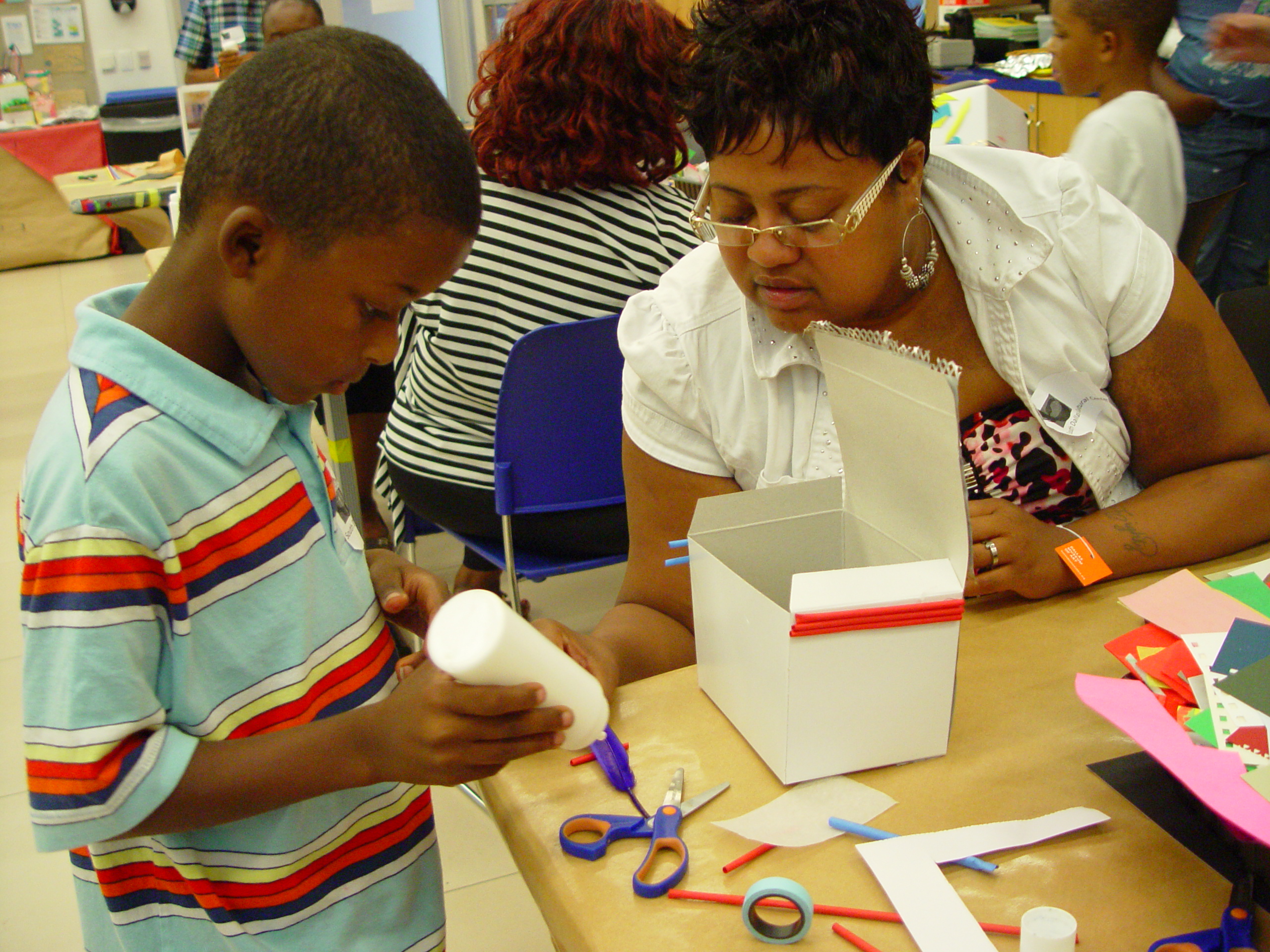
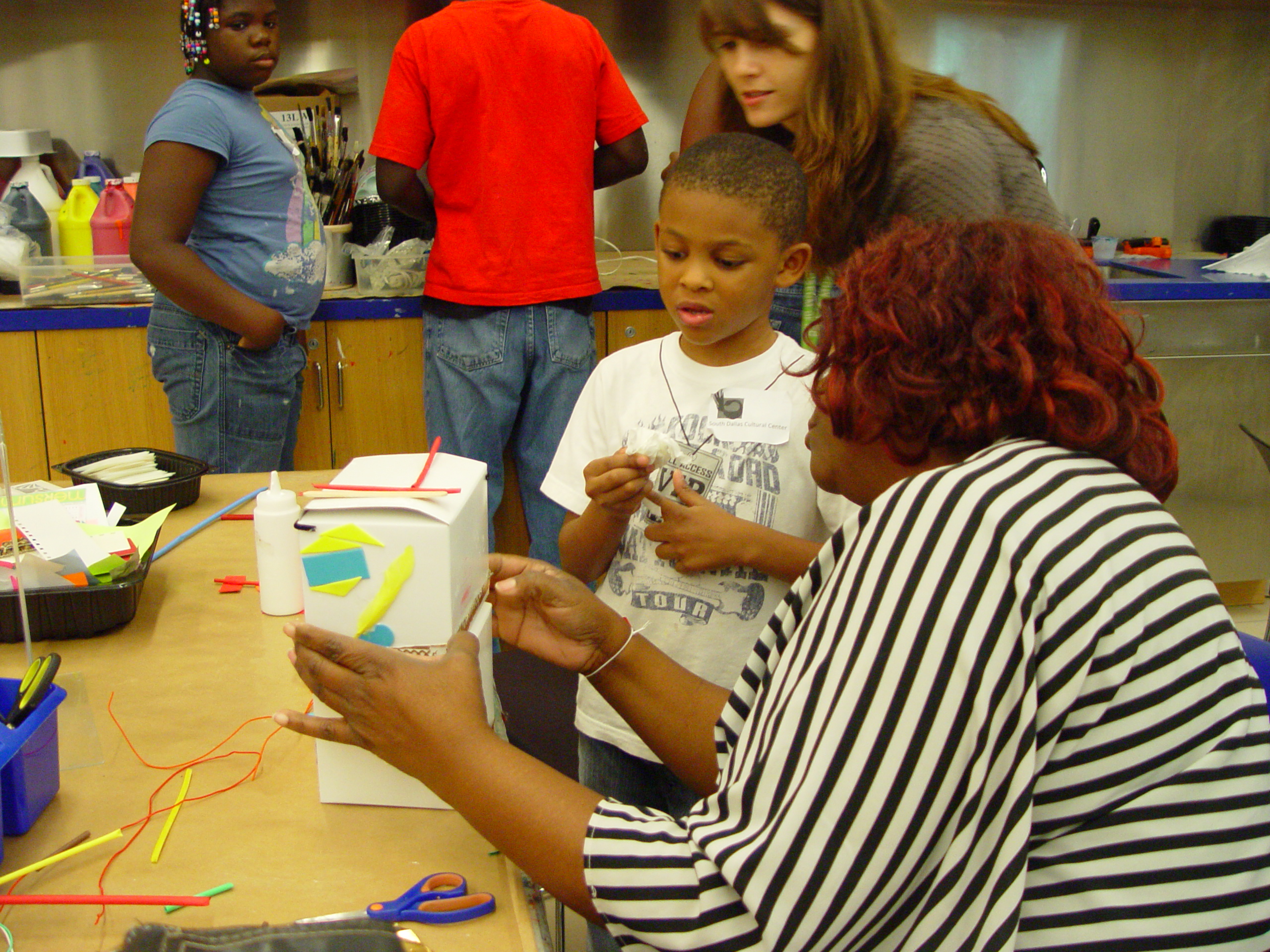
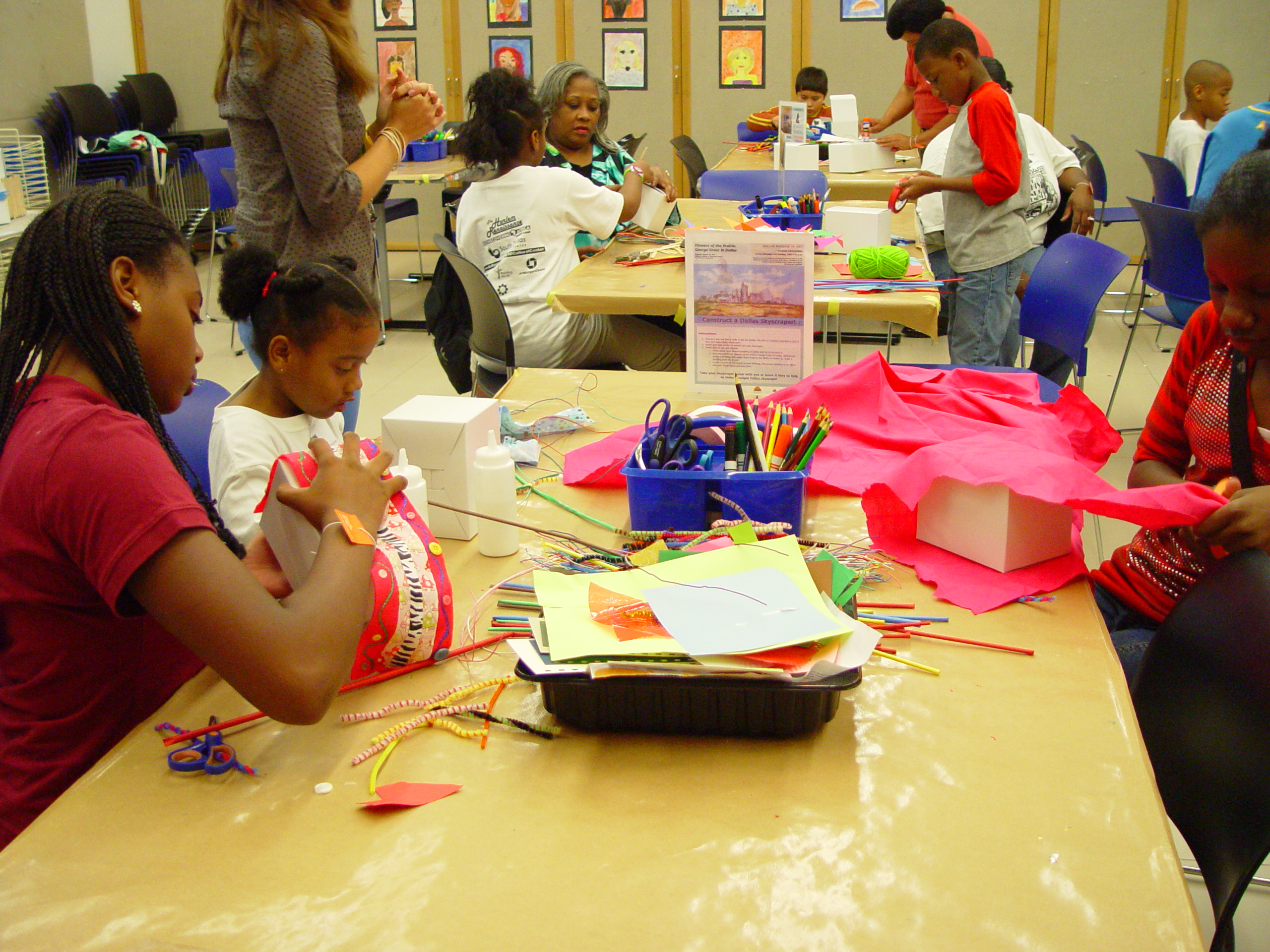
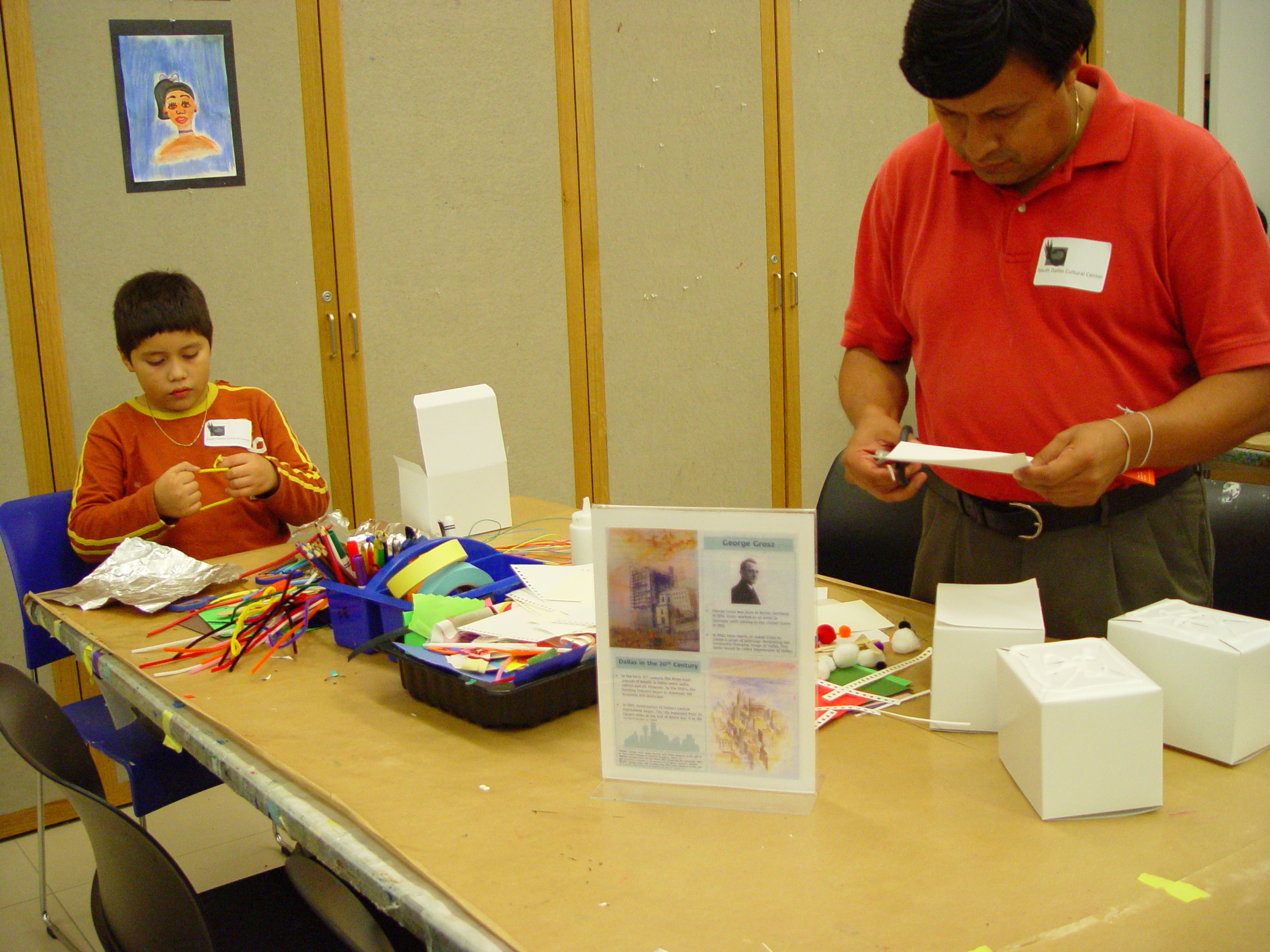
Friday Photos: South Dallas Cultural Center Family Night

Tuesday’s blog post highlighted our partnership with artists associated with the South Dallas Cultural Center.  However, this was not our first time to work with the Center.  For the past eight years, we have worked with students from the Center during the five-week Summer Arts at the Center program in a variety of ways.  Students view works of art in the DMA’s collections or special exhibitions that relate to the rotating program theme as a part of projects like online presentations created by teens and watercolor drawings with first-third graders.

A newer aspect of this annual partnership is the South Dallas Cultural Center Family Night at the DMA.  This is the second year that Thriving Minds generously provided buses to transport families from the Center to the DMA for an evening of exploring the galleries and artmaking.

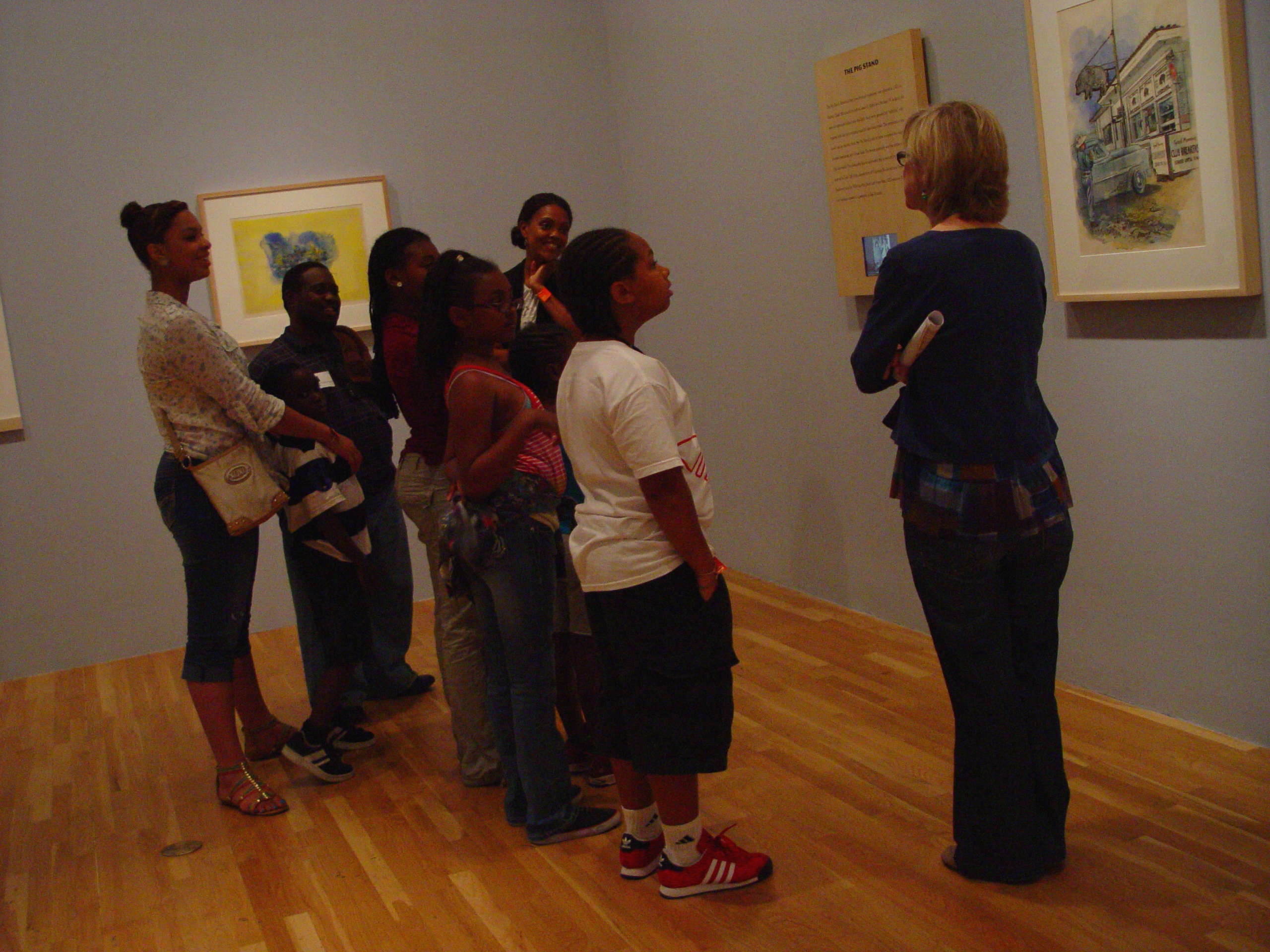
Docents lead families in a tour of the Flower of the Prairie: George Grosz in Dallas exhibition.

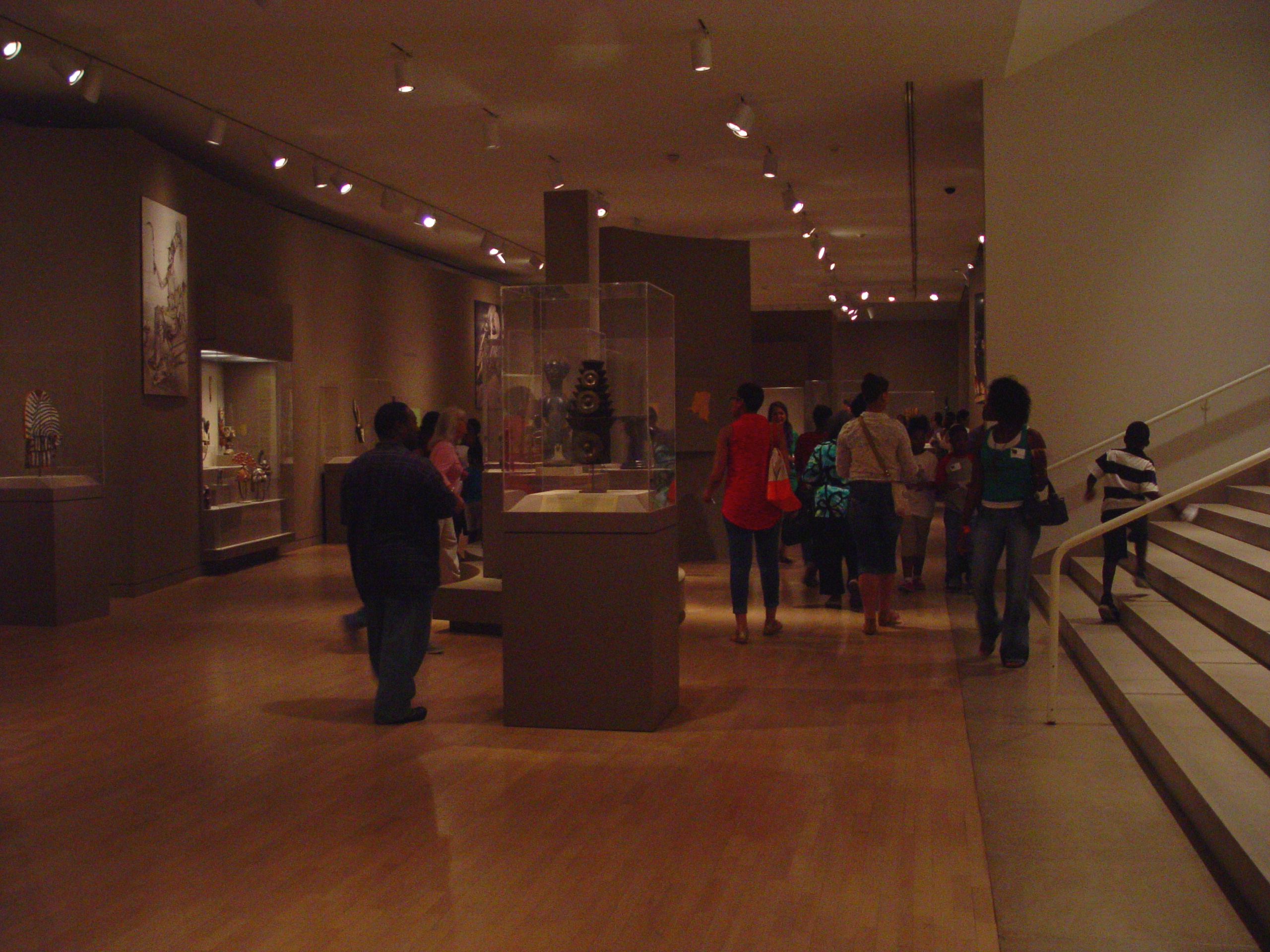
Families work together to find patterns in a scavenger hunt of the African galleries.

Families create buildings inspired by paintings in the George Grosz exhibition using cardboard boxes and other fun materials.

The Family Night was a great opportunity for students to see the actual works of art that they discussed with DMA staff using color printouts at the Center, and they were excited to share with their parents and siblings what they had learned about these artworks.  We are especially grateful to include families in our annual summer partnership with the Center in these special evenings, and thank the Center and Thriving Minds for making them possible!

Melissa Nelson
Manager of Teaching in the Community

Tour and Outreach Scheduling Begins Today

Teachers, grab your calendars: tour and Go van Gogh outreach scheduling for the 2012-2013 school year begins today.

As always, all outreach programs and tours booked in advance are free of charge.  Go van Gogh outreach is offered to grades 1-6 in the Dallas area.  Programs include conversations about artworks and an art-making activity, and are designed to dovetail with school curricula, per grade level.  Visit our web site to learn more about the Go van Gogh programs offered this year.

Self-guided or docent-led tours of the Museum’s collection and special exhibitions are available to K-12 students and higher education audiences.  Of special note this fall is our Legacy of the Plumed Serpent in Ancient Mexico docent-guided tour, which will feature outstanding works of Mesoamerican art.  Visit our web site for a full list of tours offered this year.

To submit on online request form, visit the tour and Go van Gogh sections of our web site.

We look forward to seeing you and your students this Fall!

Amy Copeland
Coordinator of Go van Gogh Outreach

Community Connection: Free Association

The current Community Partner Response Installation in the Center for Creative Connections invites visitors to contemplate space in relation to the African American experience.  Titled Free Association and designed by artists associated with the South Dallas Cultural Center, the installation provides a variety of experiences that include sound, poetry, media, and movement while exploring the notion of limitations of space.

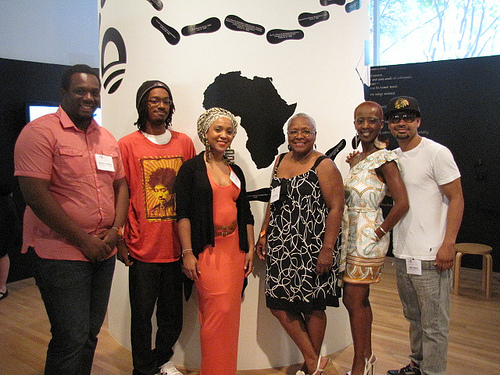
South Dallas Cultural Artists. From left: Harold Steward, Patrick Washington, Ava Wilson, Vicki Meek, Michelle Gibson, Malik Dillard.

Collaborators on this project and their areas of expertise include Malik Dillard, media; Michelle Gibson, dance; Vicki Meek, visual; Harold Steward, theater; Patrick Washington, media; and Ava Wilson, poetry.  Read their perspectives on the installation below, along with their free association responses to the words community, creativity, and art.  

Vicki – What was your vision for this project?  Free Association was created around the concept of limited space and how such limitations can either contain you or spur you to stretch beyond them. The general idea was to explore the history of African Americans within the context of this concept, paying close attention to how African Americans have used creativity to transcend societal constrictions. The more specific idea was to explore the performing, visual, literary & media arts as means of expressing the transcendence of limitations.

Inspired by the installation title Free Association, what is the FIRST word or phrase that comes to mind when you read the following terms?

Community = Essential
Creativity = Boundless
Art = Life 

Harold – How did you integrate theater with the other components of the installation?
More than theater, I was working with some of the components of performance studies. In particular, I wanted to look at the ways in which people naturally operate in “open space” and how that differs when space is confined. One of the many attributes of people of African descent is that we have historically found ways to work within the confines forced upon us when we are taken outside of the continent of Africa, and held on to some cultural traditions while creating new ones in very limited physical and sociological spaces.  The guiding question I had was, “What cultural practices and survival techniques did descendants of Africa keep or create once they arrived on the American shore, and where do they intersect?” The workshop that I offered in conjunction with the installation used Theater of the Oppressed games to cause the participants to be conscience of things that they feel, hear, and see, and the effect these things have on the individual or groups of people when they go unrecognized.

Community = Web- to destroy the community you destroy the web, to build a community you build the web
Creativity = Kuumba –The Kwanzaa principles that demands that we leave our community better than we found it
Art = Knowing what beauty to keep and what issues to call out

Ava – How did you connect poetry to the ideas of free association and space?
The written word is very powerful.  Through the use of several literary devices – metaphor, allusion, symbolism, etc. –  tethered specifically by imagery, I wanted to allow the reader to visualize what enslavement may have been like.  I wanted to create a “free association”, if you will, for the reader.  As for space, I wanted the taut nature of the language and the use of references to shape and dimension to show the vastness of the universe and in the African world in contrast to the narrowness that was the dungeons, slave ships, and realities that the African faced in the west.

Community = Family
Creativity = Spirituality
Art = Life

Patrick – How did you use media to enhance the installation?
We used digital photography, streaming video feed, and an electronic music production program to enhance our installation.

Community =  UNITY
Creativity = ART
Art = LIFE

Malik – How did the use of media enhance the installation? I feel that the media side of the installation creates interaction and gives a great visual for dance instruction.

Community = People coming together
Creativity = Music/Art
Art = Dance/Spoken Word/ Music

Explore Free Association and your own creative responses in the Center for Creative Connections through October 12.

Melissa Nelson
Manager of Teaching in the Community

Texas Late Night

Howdy, y’all! This past Friday, the DMA showed folks a rootin’ tootin’ good time at our Late Night celebration of the Flower of the Prairie: George Grosz in Dallas exhibition. With a theme as big as Texas, you can bet that there was lots to do here at the Museum. With live folk bands playing in the Atrium Cafe and in the galleries, visitors could hear old-time, toe-tapping, traditional Texas music almost anywhere they went. Adult crowds could be seen gathering for tours of the exhibition and  surrounding the watercolor demonstrations led by artist Scott Winterrowd. Lectures, talks, and films throughout the night also kept the adults scurrying from one program to the next. Families had a rip-roaring time in the Center for Creative Connections studio constructing their own Dallas building to contribute to a three-dimensional city skyline. Also in C3, kids created Texas-inspired bandanas and participated in Yoga for Kids. To get a peek at all the festivities, check out the slide show below.
.

[slideshow]

.
One of my favorite moments from the night was bumping into a family I had taught during a Go van Gogh Summer Library Program. When I stumbled upon them, they were in C3 doing yoga and discussing what kind of building they would create in the studio. They excitedly told me all about going into the Flower of the Prairie: George Grosz in Dallas exhibition to see all of the works of art we had talked about during the Impressions of Dallas library program. “They know everything!” the kid’s impressed dad exclaimed. It is always a joy to see familiar faces in the Museum. To learn a little more about the Go van Gogh Library Program, check out Amy’s blog post from last week. Every participant receives a free family pass, which you could use at the next Late Night on August 17.

What was your favorite moment from the Late Night?

Hannah Burney
Go van Gogh Programs Assistant

Collection Connections: Jersey Boys

I adore spending my day at the Dallas Museum of Art. But in the evenings, I also love exploring beyond the museum’s perimeters and checking out what our neighbors in the Dallas Arts District are up to. Last week, I thoroughly enjoyed swaying along to Can’t Take My Eyes Off You, Walk Like a Man, and some of my other favorite songs during Jersey Boys at the AT&T Performing Arts Center. I thought about the legacy of Frankie Valli and the Four Seasons. Their music and lyrics are everywhere!  I started to think about where we could find a little bit of Jersey Boys in our collection…

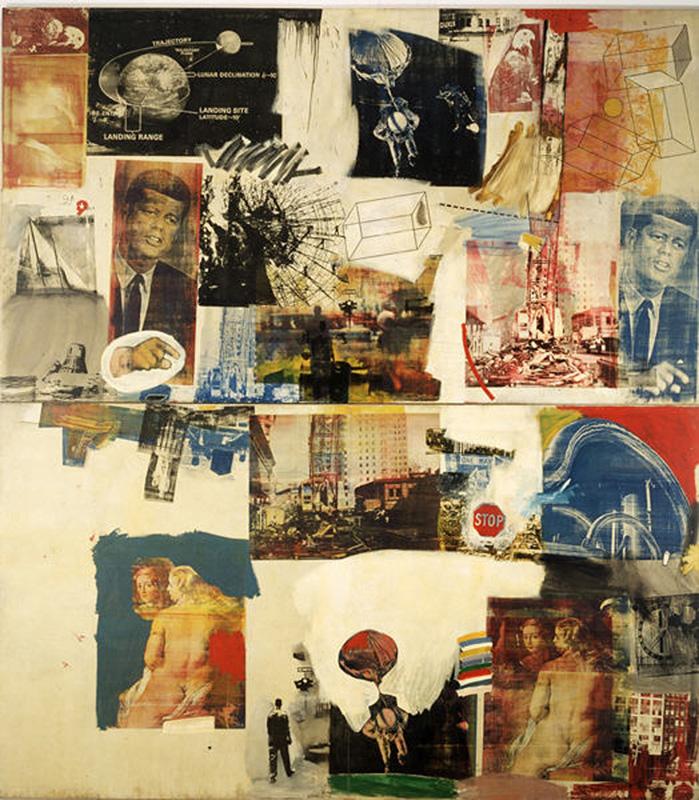
  • Robert Rauschenberg, Skyway, 1964, Dallas Museum of Art, The Roberta Coke Camp Fund, The 500, Inc., Mr. and Mrs. Mark Shepherd, Jr. and General Acquisitions Fund

While I was not alive during the 1960s, Jersey Boys transports you back in time, immersing the audience in the dynamic, diverse, and high-energy culture of 1960s America. In the same way, Skyway is a giant collage of imagery representing 1960s American culture.

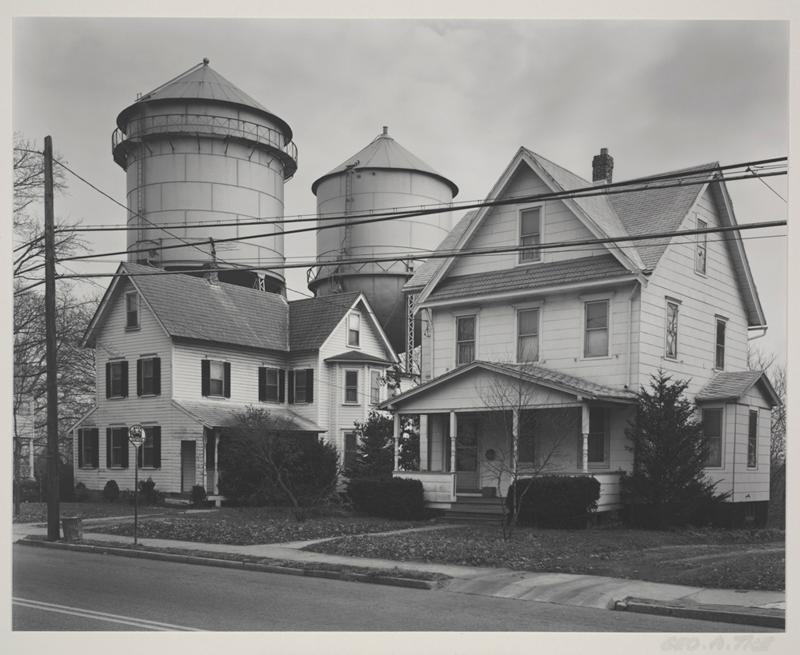
  • George A. Tice, Houses and Watertowers, New Jersey, 1973, Dallas Museum of Art, Polaroid Foundation grant

This photograph reminds me of the New Jersey neighborhood of Frankie’s childhood from which Frankie was so determined to escape. In Jersey Boys, Frankie’s buddy and fellow Season says, “If you’re from my neighborhood, you got three ways out. You could join the army. You could get mobbed up. Or,you could become a star.”

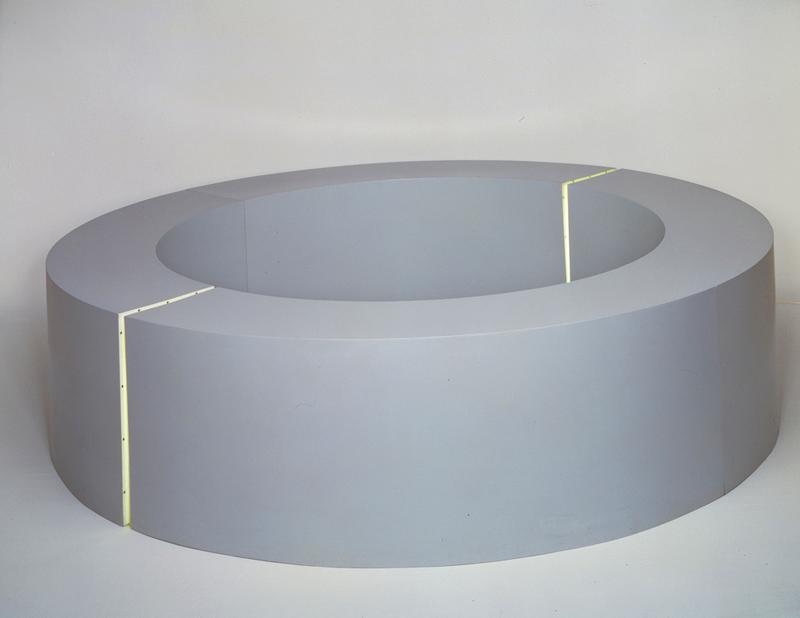
  • Robert Morris, Untitled, 1965-66, Dallas Museum of Art, General Acquisitions Fund and matching grant from the National Endowment for the Arts

The concept of gestalt refers to a structure composed of individual parts that cannot be expressed in terms of those parts. (A song, for example cannot be recognized as a list of it individual notes.) Gestalt is important in understanding Morris’ sculpture. In this work, two semi-circles together create a full circle. Gestalt also relates to the success of the Four Seasons: their working-class roots, their resolve to leave New Jersey, Bob Gaudio’s songwriting skills, and Frankie Valli’s unique voice.

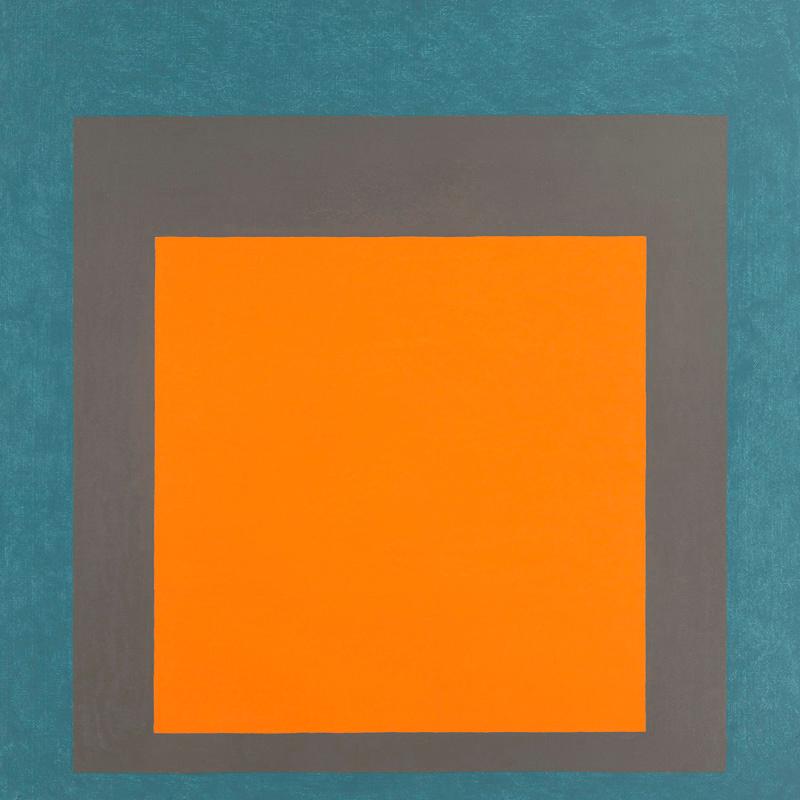
  • Josef Albers, Homage to the Square: Straight,1962, Dallas Museum of Art, bequest of Louise W. Kahn and Edmund J. Kahn

The clean lines and strict geometry of Albers’ Homage to the Square: Straight reminds me of the Four Seasons’ clean-cut stage appearances: clean-shaven, slick-back hair,  matching suits and ties, and perfectly in-sync dance moves. Homage to the Square was also painted the same year that the Frankie Valli and Four Seasons came to fame.

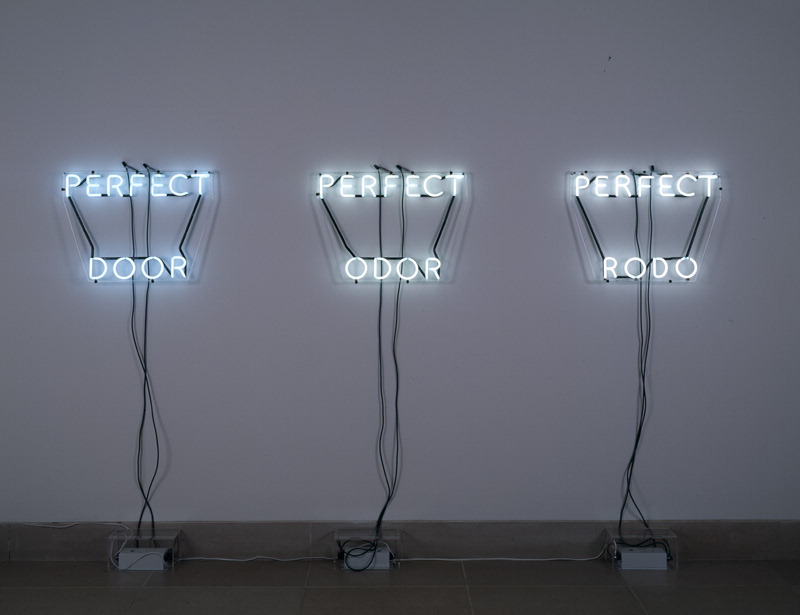
  • Bruce Nauman, Perfect Door/Perfect Odor/Perfect Rodo, 1972, Dallas Museum of Art, General Acquisitions Fund, The 500, Inc., Dorace M. Fichtenbaum, Deedie and Rusty Rose, an anonymous donor, the Friends of Contemporary Art and a matching grant from the National Endowment for the Arts in honor of Sue Graze

Many scenes in the Act I take place in seedy lounges and clubs where Frankie and his band mates performed. Neon signage is often the focal point of the set design, referencing the dark and smoky atmospheres of such places. A play-on-words, Perfect Door/ Perfect Odor/ Perfect Rodo, radiates a similar vibe.

Andrea V. Severin
Coordinator of Teaching Programs

Free Summer Fun at Dallas Public Libraries

[slideshow]If you’re looking for a way to entertain the kiddos this summer free of charge, we’ve got just the thing!

For the next few weeks, the Go van Gogh team will be heading out to local Dallas libraries to present free art programs for kids ages 5-12.  The hour-long programs include interactive conversations about artworks and lots of time to dig into a fun art-making project.  Best of all, participants receive a free family pass to the Museum.

This summer, we are offering two different programs—Searching for Faces and Impressions of Dallas—and we’re criss-crossing the metroplex, visiting most of Dallas’s public libraries.  Below are descriptions of the programs, and below that, a schedule of our upcoming programs.  You can also find the programs here on our website.  Be sure to contact the library in advance; to confirm space availabilty.

Searching for Faces
Look for clues—including faces, clothing, and gestures—that tell us about figures in works of art. Then, create your own self-portrait that tells us about you. For children ages 5–12, recommended for ages 5-9.

Impressions of Dallas
Explore Dallas’s past through the watercolor paintings of German artist, George Grosz. Then use watercolor pencils to create your own artwork! For children ages 5–12, recommended for ages 9-12.
This presentation highlights artworks in the Dallas Museum of Art’s special exhibition Flower of the Prairie: George Grosz in Dallas, on view now through August 19.

JULY
Tuesday, July 17, 2:00 p.m.
Prairie Creek, 9609 Lake June Road, 75217
214-671-0410
Searching for Faces

Wednesday, July 18, 2:30 p.m.
Audelia, 10045 Audelia Road, 75238
214-670-1350
Impressions of Dallas

Thursday, July 19, 2:00 p.m.
Lochwood, 11221 Lochwood Boulevard, 75218
214-670-8403
Searching for Faces

Friday, July 20, 2:00 p.m.
Kleberg-Rylie, 1301 Edd Road, 75253
214-670-8471
Searching for Faces

Tuesday, July 24, 2:00 p.m.
Timberglen, 18505 Midway Road, 75287
214-671-1365
Impressions of Dallas

Wednesday, July 25, 2:00 p.m.
Dallas West, 2332 Singleton Boulevard, 75212
214-670-6445
Impressions of Dallas

Thursday, July 26, 2:00 p.m.
Park Forest, 3421 Forest Lane, 75234
214-670-6333
Searching for Faces

Friday, July 27, 2:00 p.m.
Oak Lawn, 4100 Cedar Springs Road, 75219
214-670-1359
Searching for Faces

Tuesday, July 31, 10:30 a.m.
Children’s Center at the J. Erik Jonsson Central Branch, 1515 Young Street, 75201
214-670-1400
Impressions of Dallas

AUGUST
Wednesday, August 1, 2:00 p.m.
Highland Hills, 3624 Simpson Stuart Road, 75241
214-670-0987
Impressions of Dallas

Thursday, August 2, 2:30 p.m.
Skillman Souwestern, 5707 Skillman Street, 75206
214-670-6078
Searching for Faces

Friday, August 3, 2:00 p.m.
Fretz Park, 6990 Belt Line Road, 75254
214-670-6421
Searching for Faces

Tuesday, August 7, 10:30 a.m.
Preston Royal, 5626 Royal Lane, 75229
214-670-7128
Searching for Faces

Wednesday, August 8, 2:00 p.m.
Highland Hills, 3624 Simpson Stuart Road, 75241
214-670-0987
Searching for Faces

Thursday, August 9, 10:30 a.m.
Hampton-Illinois, 2951 South Hampton Road, 75224
214-670-7646
Impressions of Dallas

Friday, August 9, 2:00 p.m.
White Rock Hills, 9150 Ferguson Road, 75228
Impressions of Dallas

Friday, August 10, 2:00 p.m.
Kleberg-Rylie, 1301 Edd Road, 75253
214-670-8471
Impressions of Dallas

Amy Copeland
Coordinator of Go van Gogh Outreach
Friday Photos: Summer Inspirations

If you haven’t already, you should take the advice of my colleague Hannah and Vacay at the DMA.  Not only are there family-friendly experiences to uncover, there are lots of works of art to inspire your summer vacation.  For example:

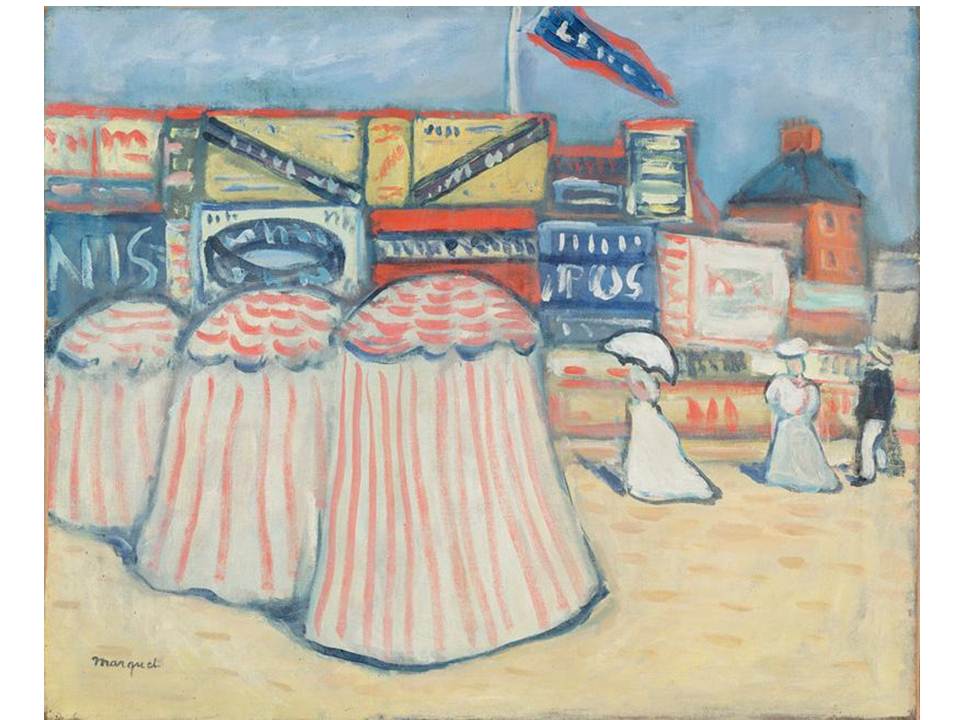
Soak up some sun on the beach.

Albert Marquet, The Beach at Trouville, c. 1906, Dallas Museum of Art, gift of the Meadows Foundation Incorporated

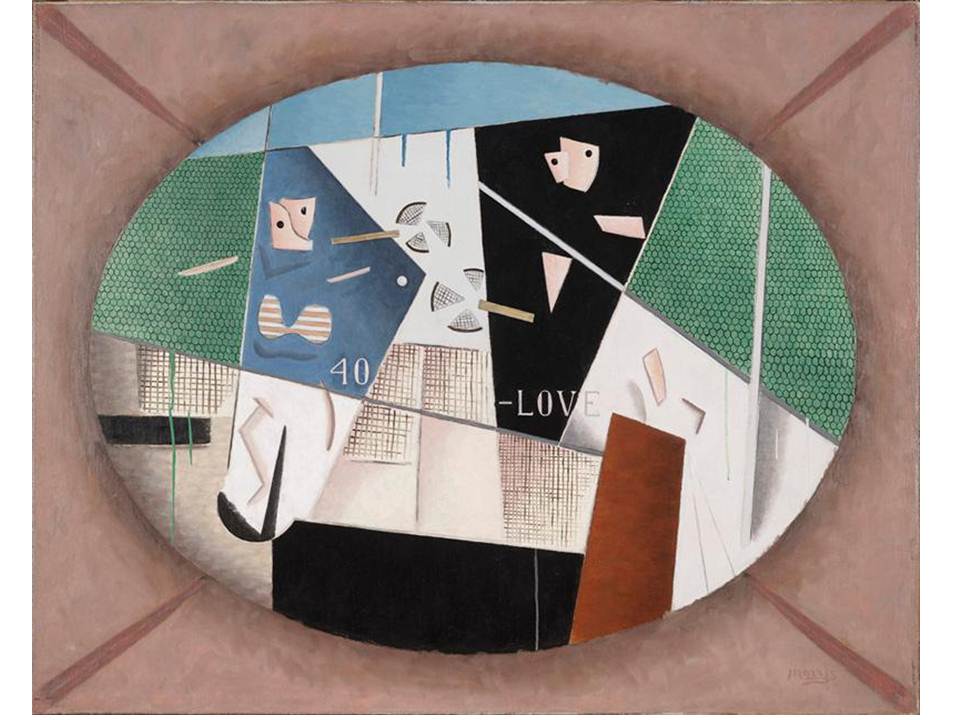
Spend the afternoon playing tennis.

George L.K. Morris, Mixed Doubles, c.1948, Dallas Museum of Art, gift of David T. Owsley via the Alvin and Lucy Owsley and Alconda-Owsley Foundations

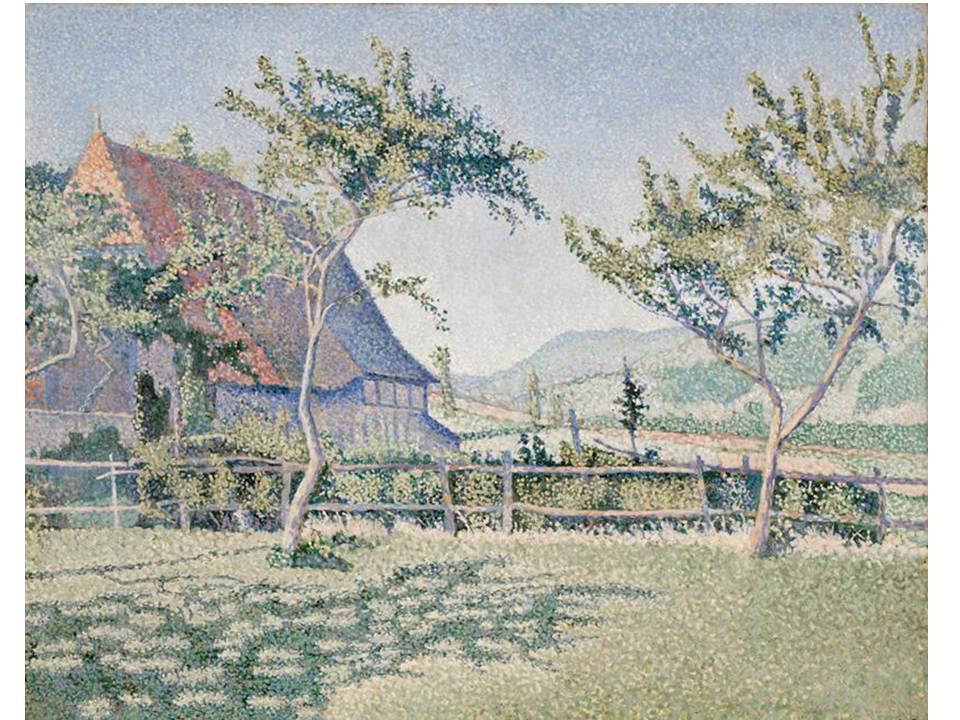
Paint en plein air in France.

Paul Signac, Comblat-le-Chateau, the Meadow (Le Pre), Opus 161, June-July 1887, Dallas Museum of Art, The Eugene and Margaret McDermott Art Fund, Inc., in honor of Bonnie Pitman

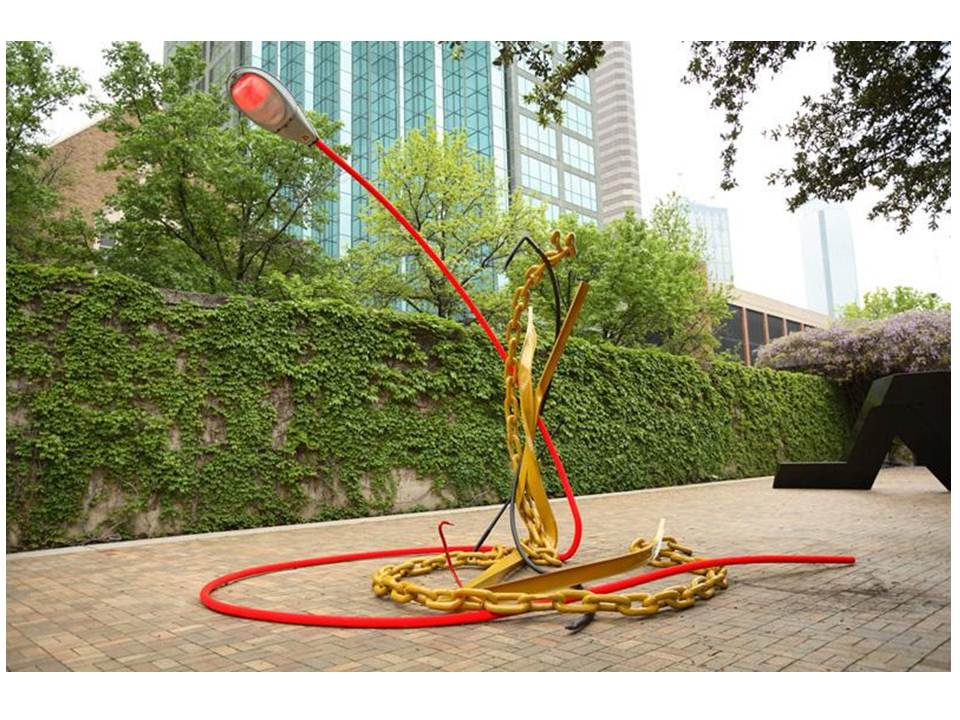
Do some gardening…but beware of those pesky garden snakes.

Mark Handforth, Dallas Snake, 2007, Dallas Museum of Art, DMA/amfAR Benefit Auction Fund and Lay Family Acquisition Fund

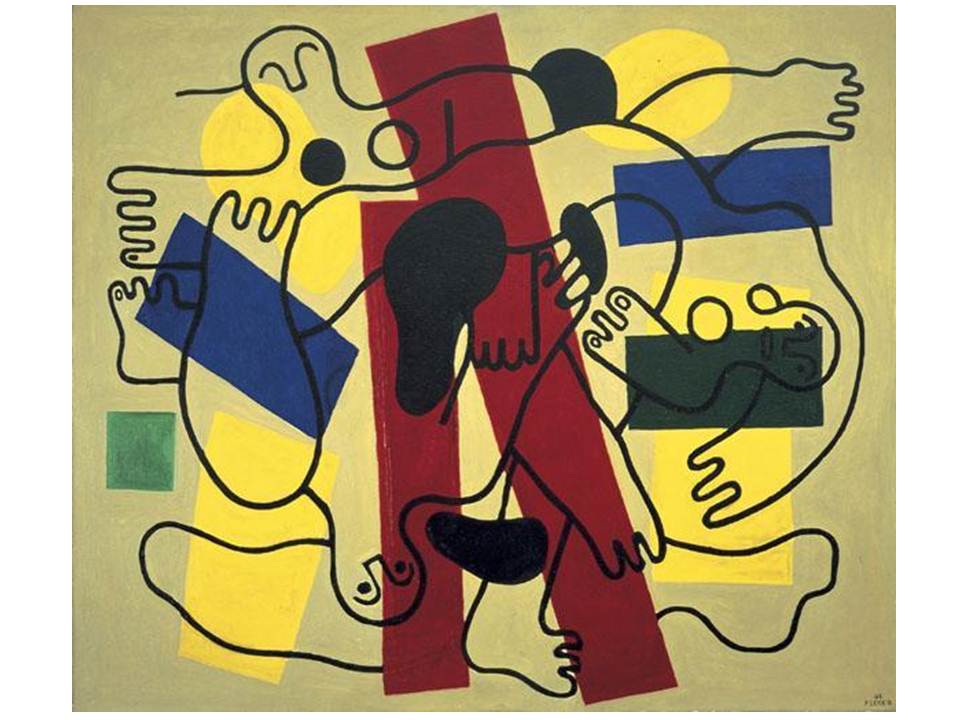
And when the heat becomes too much to bear, go swimming.

Fernand Leger, The Divers (Red and Black), 1942, Dallas Museum of Art, Foundation for the Arts Collection, gift of the James H. and Lillian Clark Foundation

Enjoy the rest of your summer!

Loryn Leonard
Coordinator of Museum Visits


Archives

Categories