Archive Page 33


I Thank My Lucky Stars

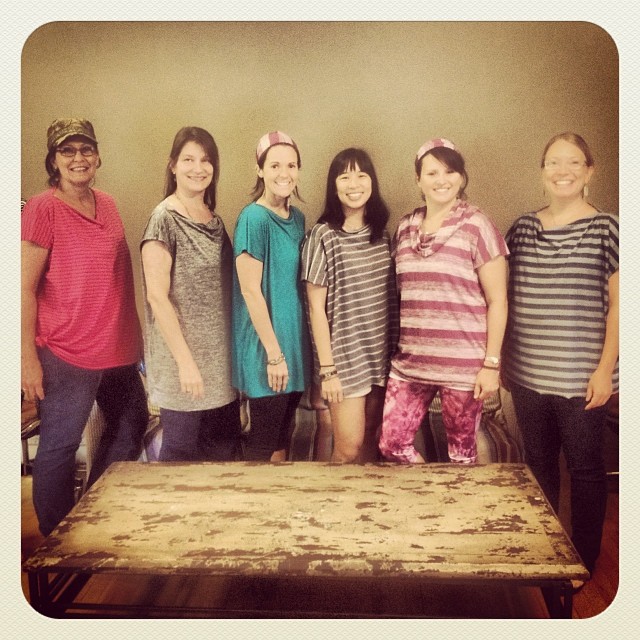
As a child, I never attended sleepaway camp. My idea of summer camp was largely shaped by a few books I had read and (to be honest) the movie Dirty Dancing. So when a dear friend told me she had registered for an art camp exclusively for women, I was immediately intrigued. Once I looked at the Lucky Star Art Camp website, it didn’t take long for me to follow suit. The camp promised five days of creative workshops, nightly guest speakers, and a gaggle of like-minded women, all during the best weather of the year in the most beautiful area of Texas (in my opinion).
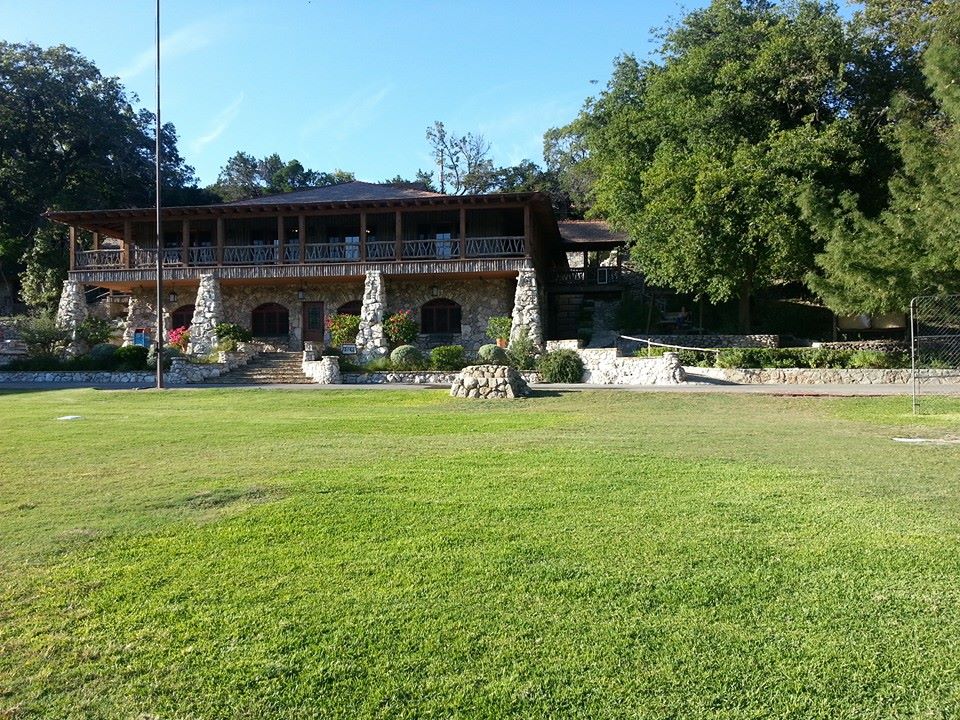
Camp Waldemar

Camp Waldemar

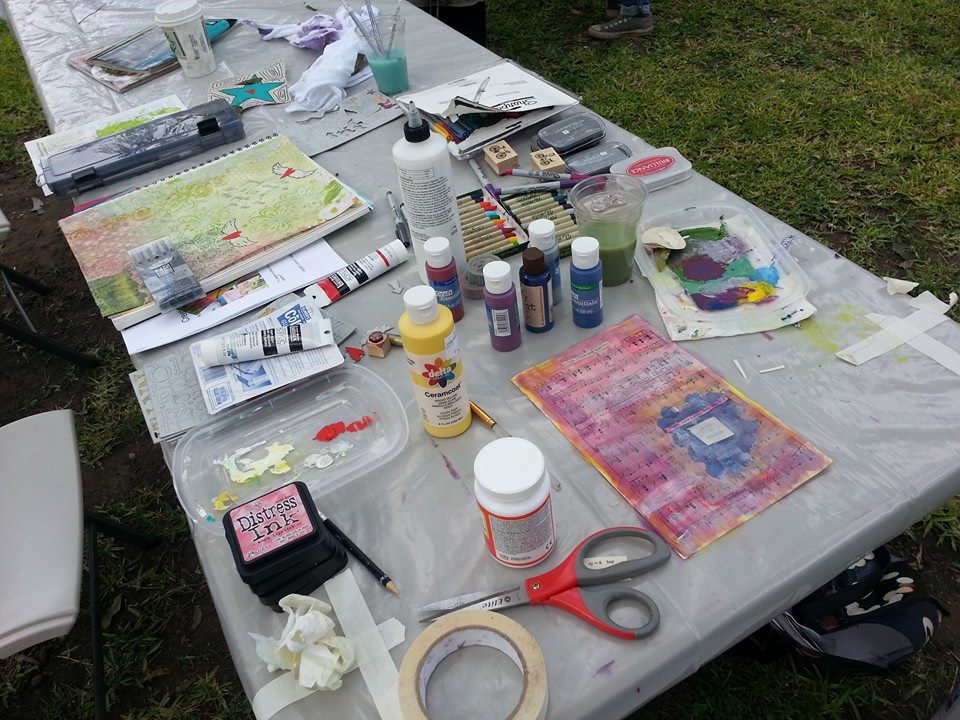
Lucky Star offered a wide array of workshops you might expect at an art camp: painting, creative writing, photography, and jewelry-making. It also offered sessions on cheese-making, canning and preserving, and yoga. My personal background is in art history rather than studio art, but I do love to make things and would practice yoga every day if I could. This led me to sign up for activities that I would do more often if I had the time: a sewing class, a jewelry class, an art and yoga class, and a creativity free-for-all workshop.

In the days (and hours) leading up to camp, I will admit I had a few doubts. It’s funny, even as an adult I’m pretty sure I experienced some of the same fears and concerns I would have felt as a child: Will our cabins and beds be clean and comfortable? Will I be eating “camp” food, like hot dogs, all week long? And, perhaps most scary, will I like my classes and make friends with the other campers, roughly seventy-five in all?

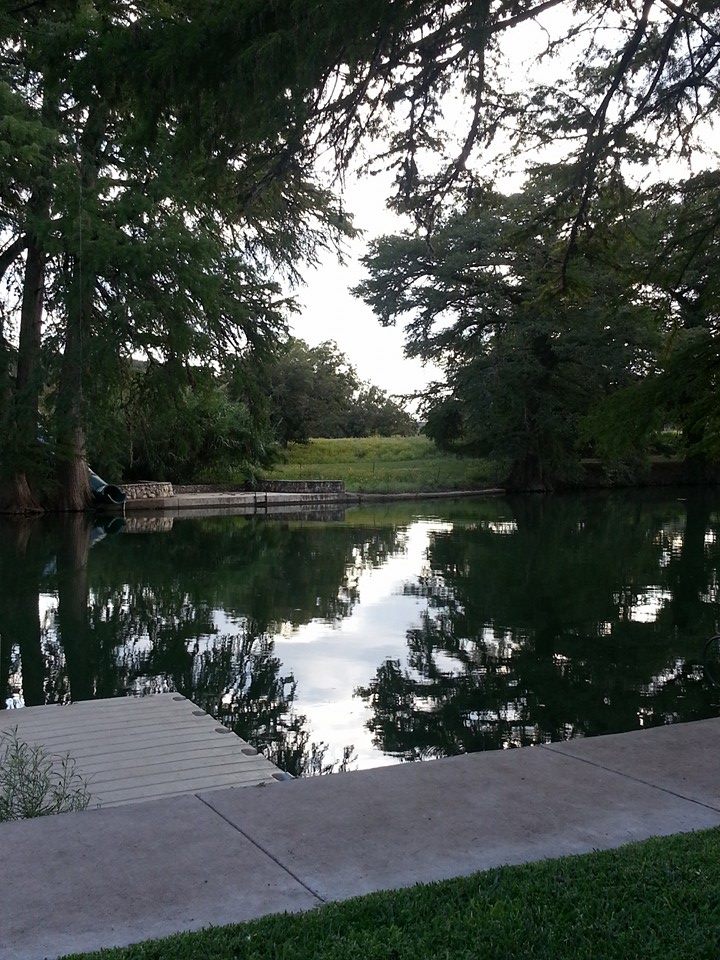
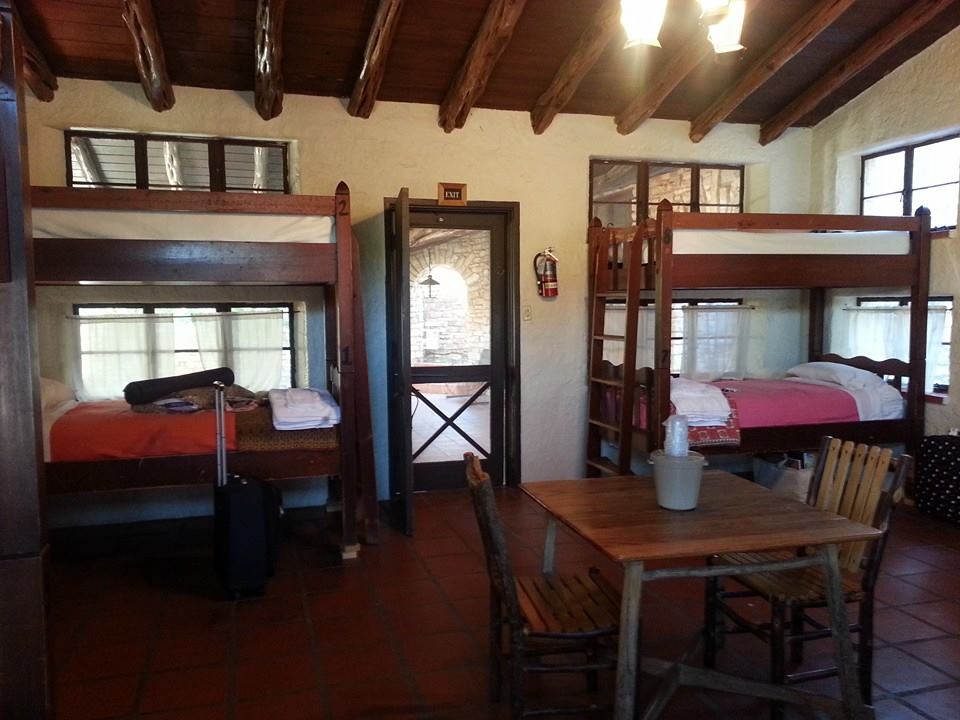
Pretty much all of my concerns were dispelled within the first few hours of arrival. I can emphatically and ecstatically say that Lucky Star far exceeded ALL of my expectations. First question: Will our cabins and beds be clean and comfortable? Here are a few views of the gorgeous Camp Waldemar, which hosted Lucky Star.
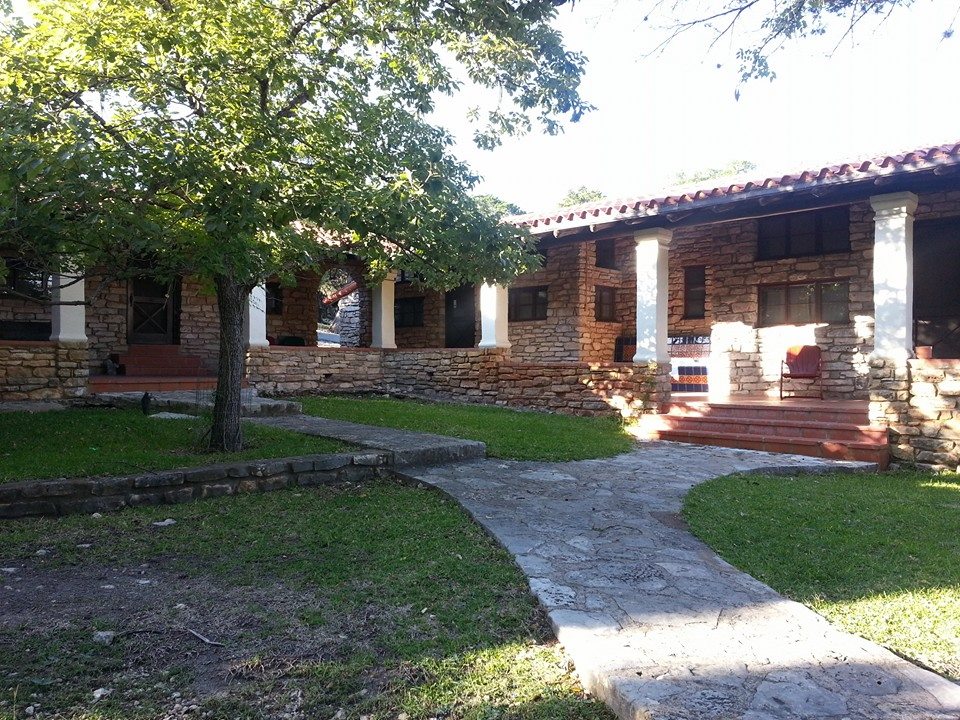
Cabin exterior
Cabin exterior

Cabin interior

Cabin interior

The Guadalupe River runs through Camp Waldemar.

The Guadalupe River runs through Camp Waldemar
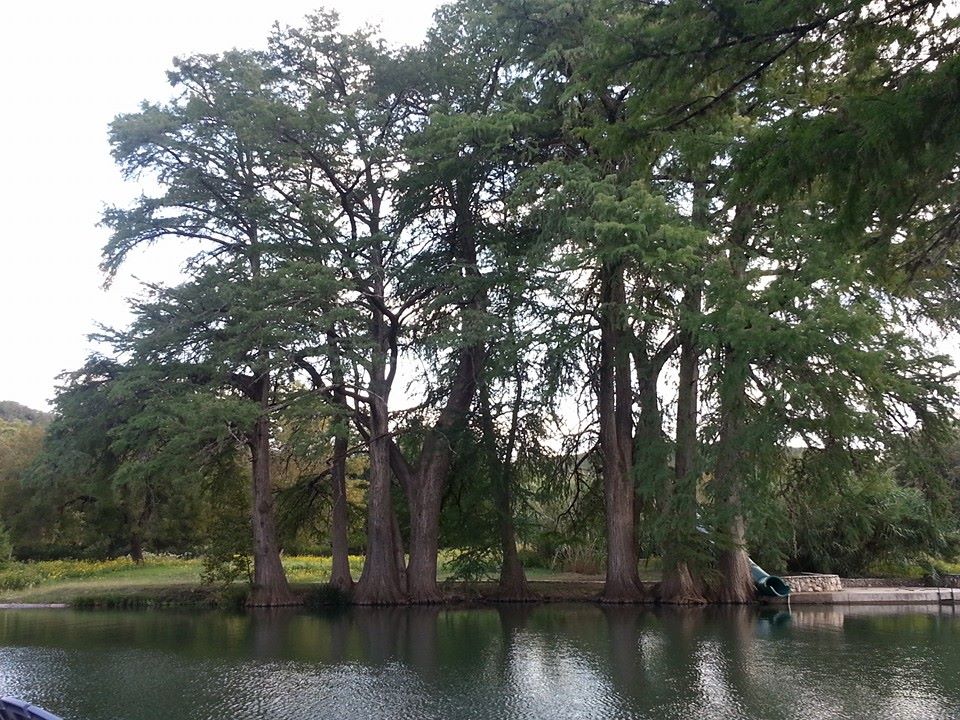
Beautiful cypress trees along the river

Beautiful cypress trees along the river

Second question: Will I like the food? As it turned out, every single meal was delicious, healthy, and made with fresh ingredients. Among the highlights were bright and crunchy salads every day for lunch, a sweet treat at every meal, and the warm hospitality of Chef Laura and her staff.

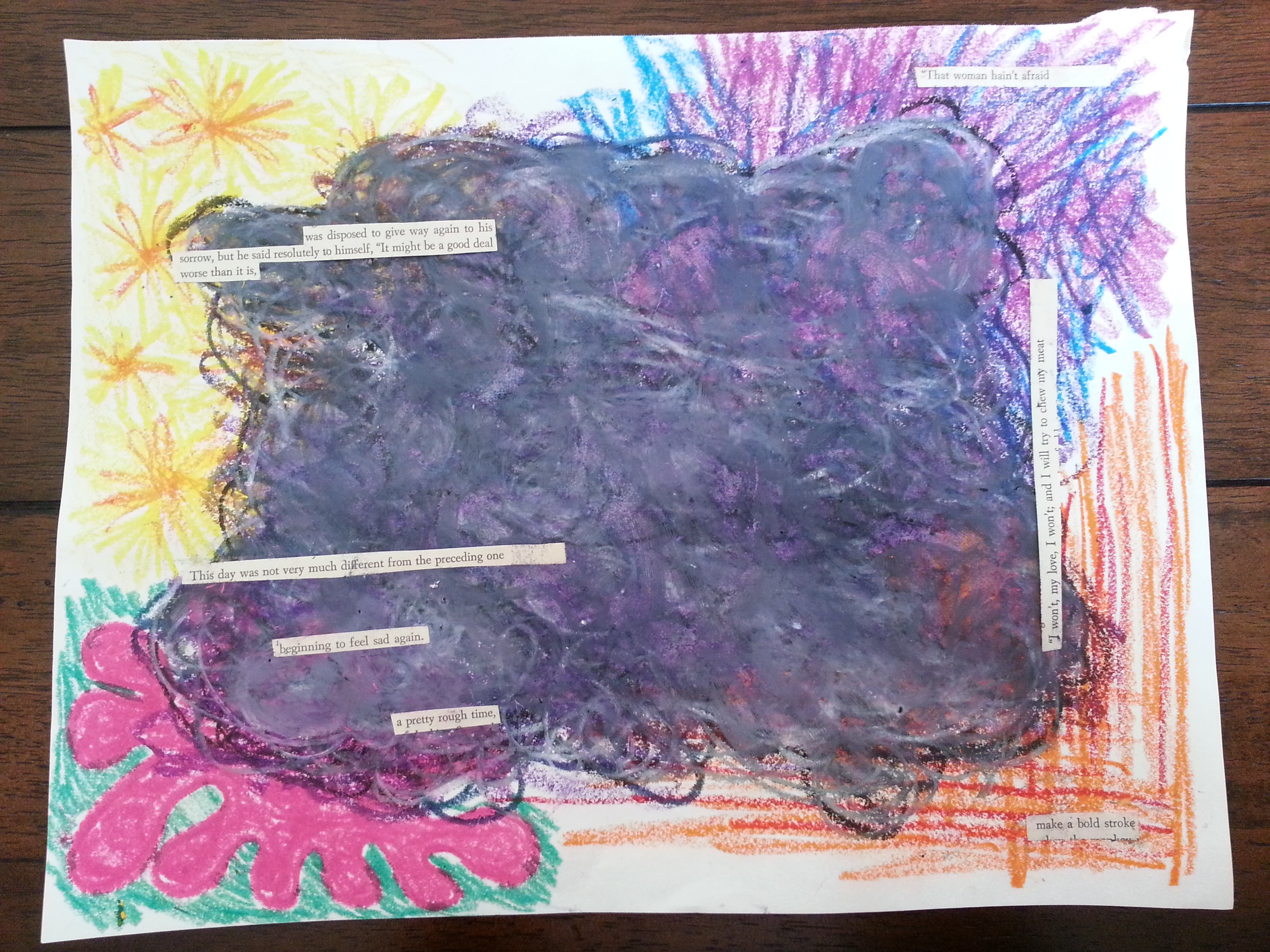
Third–and biggest–question: Will I like my classes and make friends with the other campers? The answer? YES! I loved all of my instructors–four talented, creative, funny, and generous women. I learned something new in each class and walked away feeling happy, renewed, and inspired. Each class offered just enough structure and instruction blended with freedom to take our projects in the direction of our choice. I also enjoyed chatting with and getting to know my fellow campers, who were all wonderfully different, creative, and talented in their own ways. During mealtimes, we would sit and chat excitedly about the class we had just taken. We could also view and display projects from different classes, which inspired a lot of “Ooh, I want to take that class next year!”

Each evening after dinner, a different speaker shared with us her personal and professional passions and creative ideas. Bernadette Noll, author of Slow Family Living and co-creator of the Slow Family Movement, shared wise words related to the time that we give to our family and to ourselves to be creative. We were privileged to get a sneak preview of Lisa Seeger’s TED talk (fast forward to the three hour, fourteen minute mark) about Blue Heron Farm, the goat dairy she runs with her husband, and their strong beliefs about the food we eat and how it is grown and raised. And Shawn Strattman shared her inspiring story of achieving her creative dream, and gave us practical, tangible advice for pursuing our own creative dreams.

But that’s not all! After dinner, after our evening speakers, and after the stars came out, we gathered around the campfire for the lovely musical stylings of Austin-based guitarist and songwriter Mandy Rowden. Mandy charmed us all with her wit and musical talent, and was generously kind and supportive during our sing-alongs.
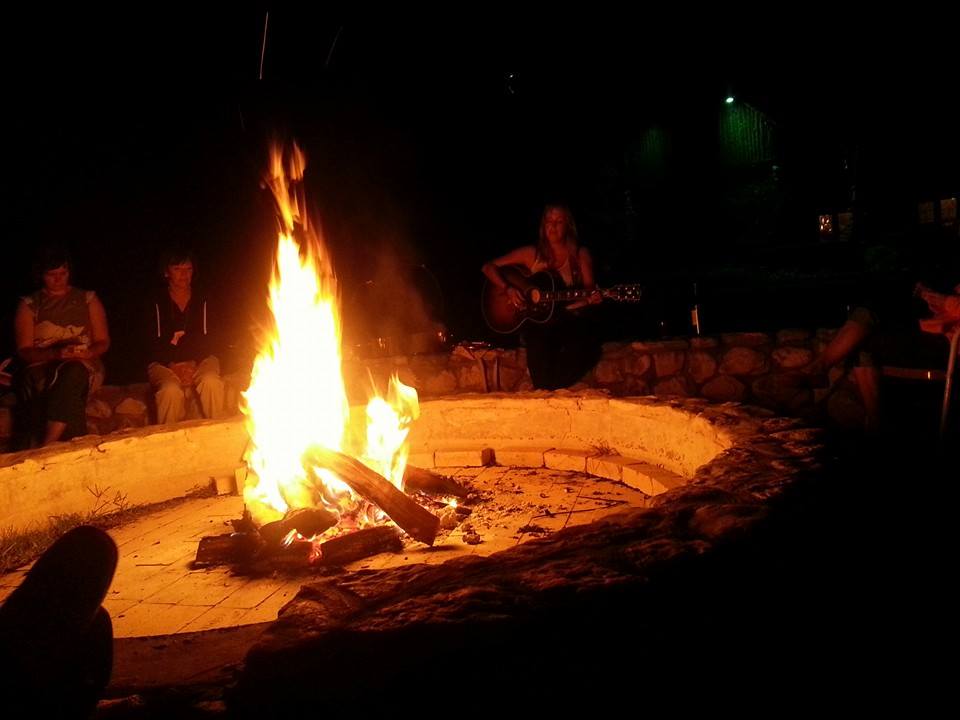
Campfire music with Mandy

Campfire music with Mandy

At the end of camp, I felt blissfully happy, relaxed, and refreshed. Working at the DMA,  I am surrounded by art and creative people. People sometimes assume that I am also an artist, or at least a creative person. While working in a museum environment can definitely be inspiring, it can also be intimidating. I learned many things during my time at Lucky Star, but I walked away with two simple, yet important lessons that I can apply both in my professional and personal life:

  • Make time for yourself to be creative. It doesn’t have to be a huge chunk of time, working on a big project with lots of materials. It can be as simple as doodling on a postcard-sized piece of cardboard, writing a message on the other side, and sending it to a friend. Or, you can keep a journal of daily musings, drawings, mixed-media collages – whatever you want. You can even set a timer for five minutes if you want to keep your creative time short and focused.
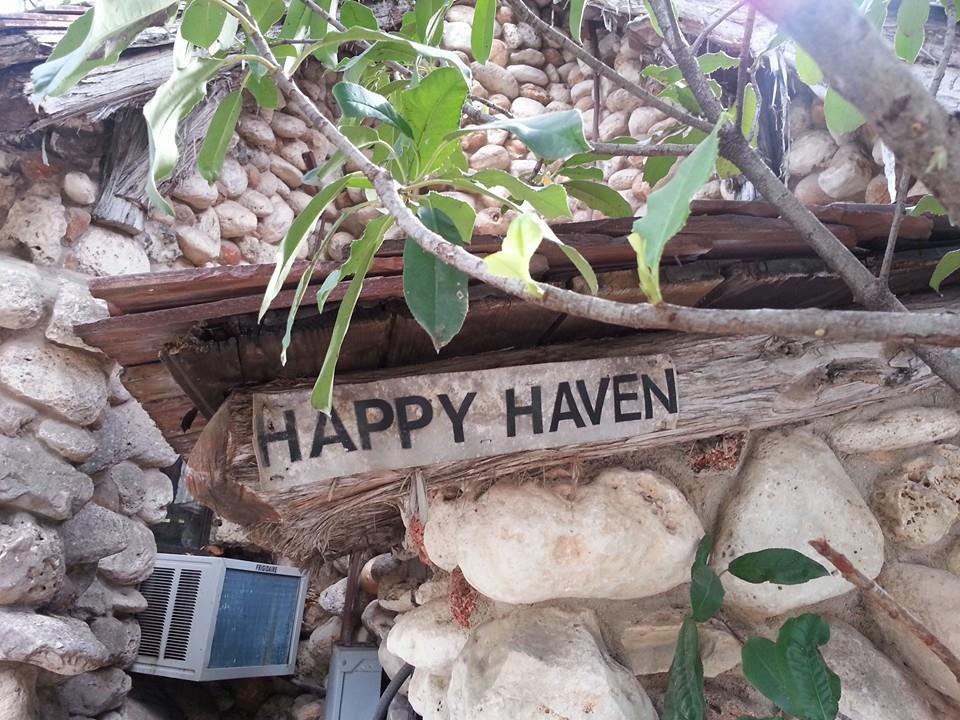
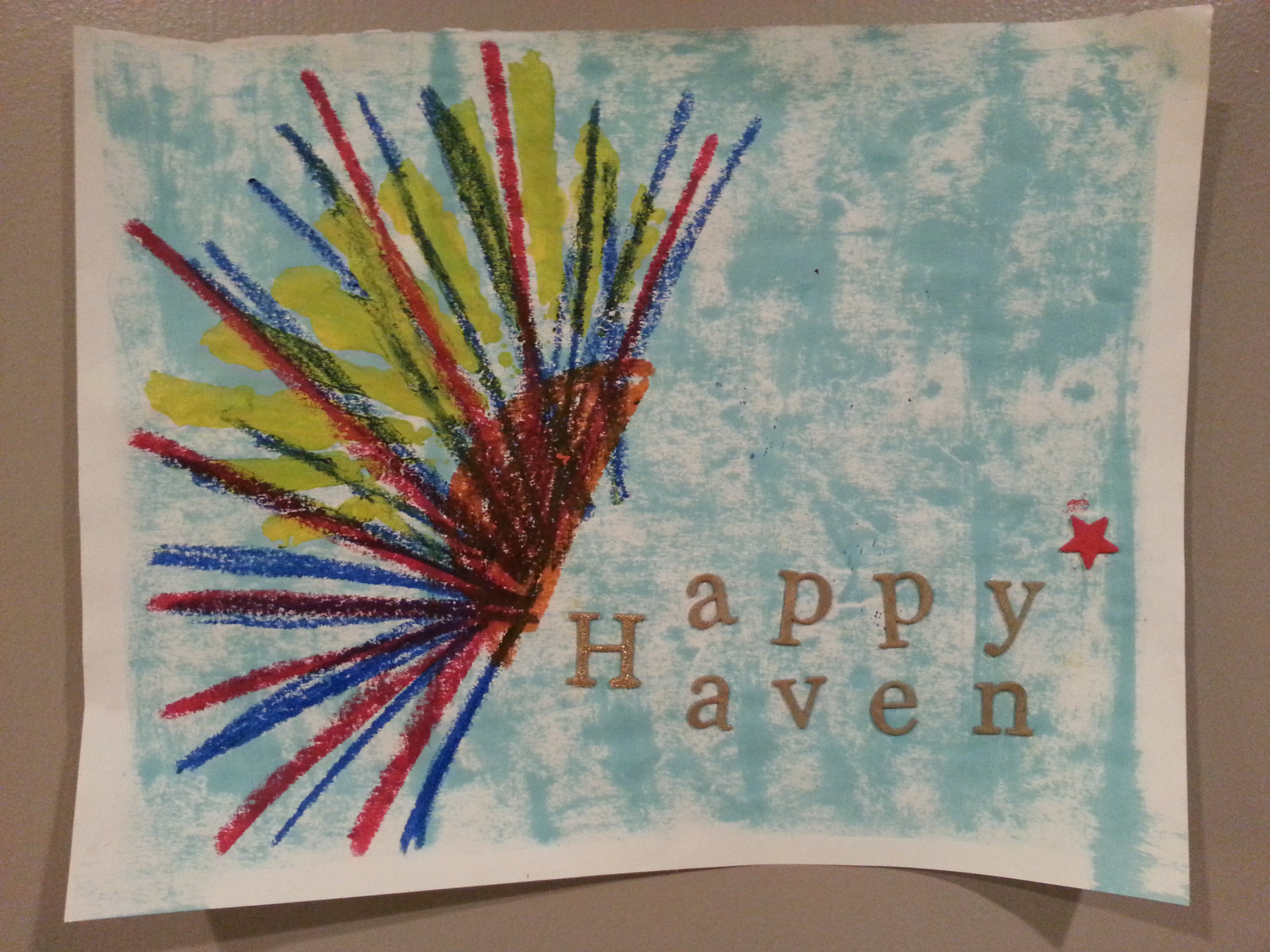
  • Give yourself a break. I hit a creative wall during a class, and my instructor suggested I take a walk. I strolled by the river, relaxed on a hammock, and explored the campgrounds. Much to my delight, I discovered a cabin called “Happy Haven.” When I returned to class, I felt like a weight had been lifted, and I channeled my Happy Haven feeling into my artwork.

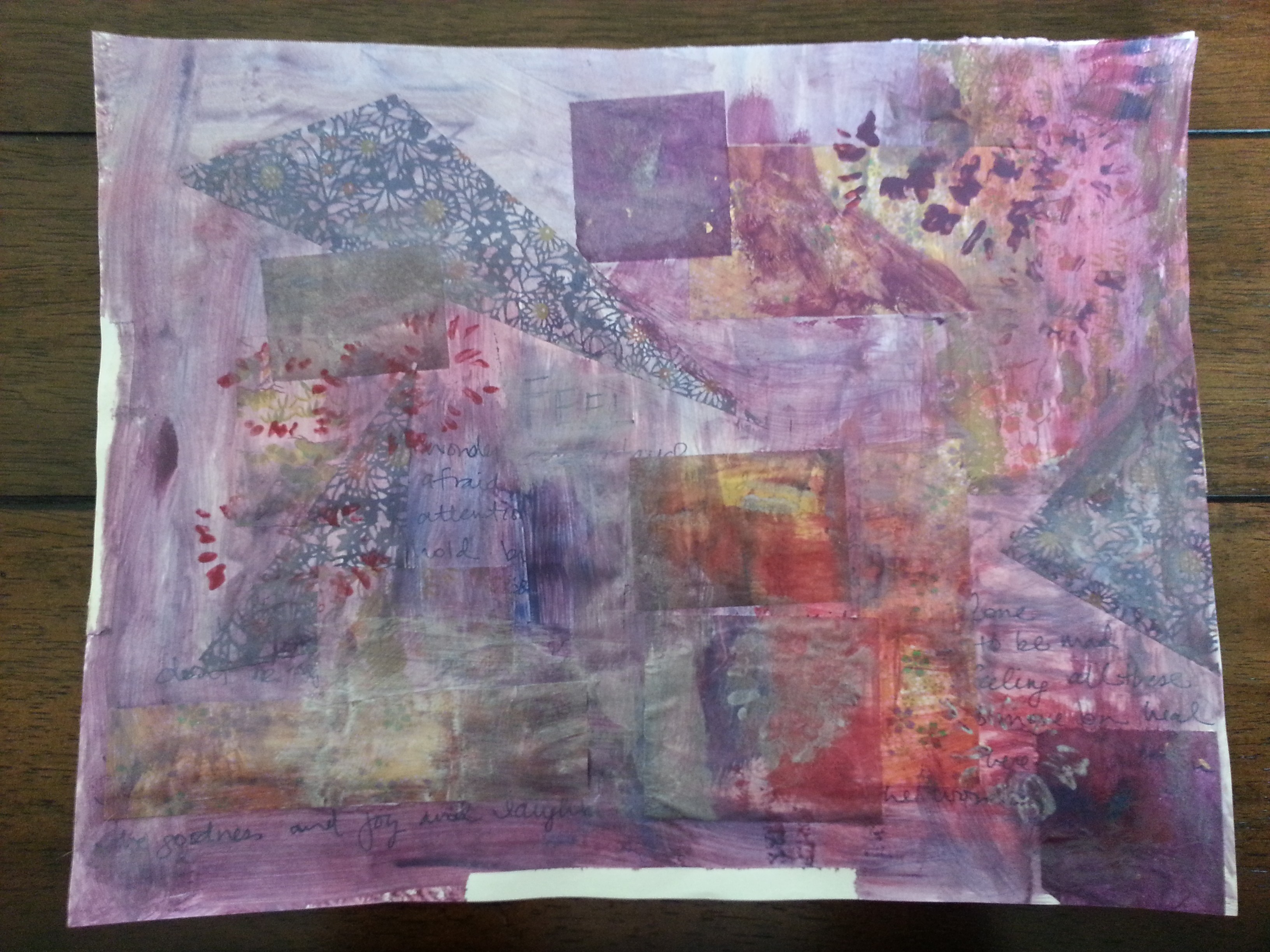
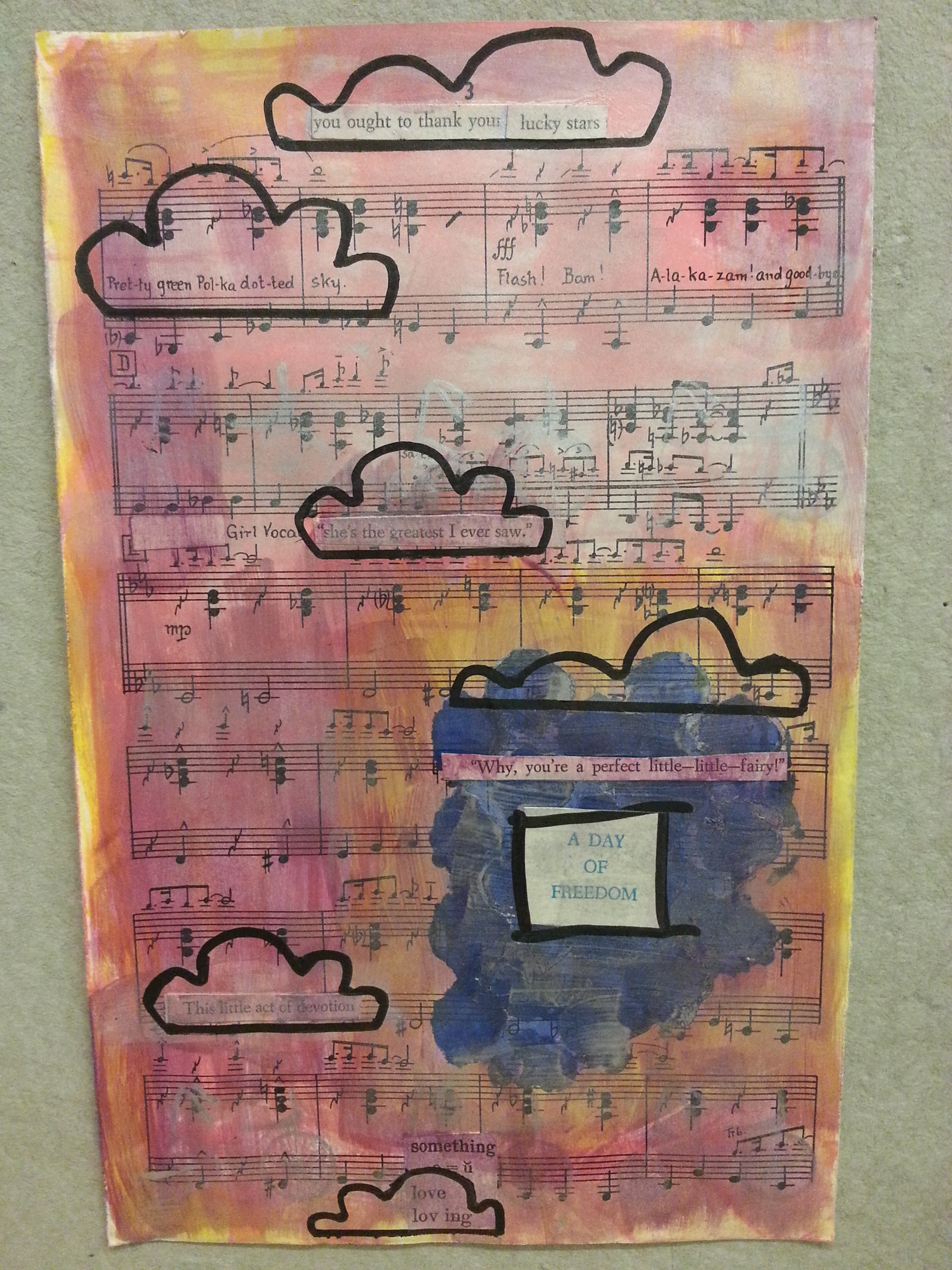
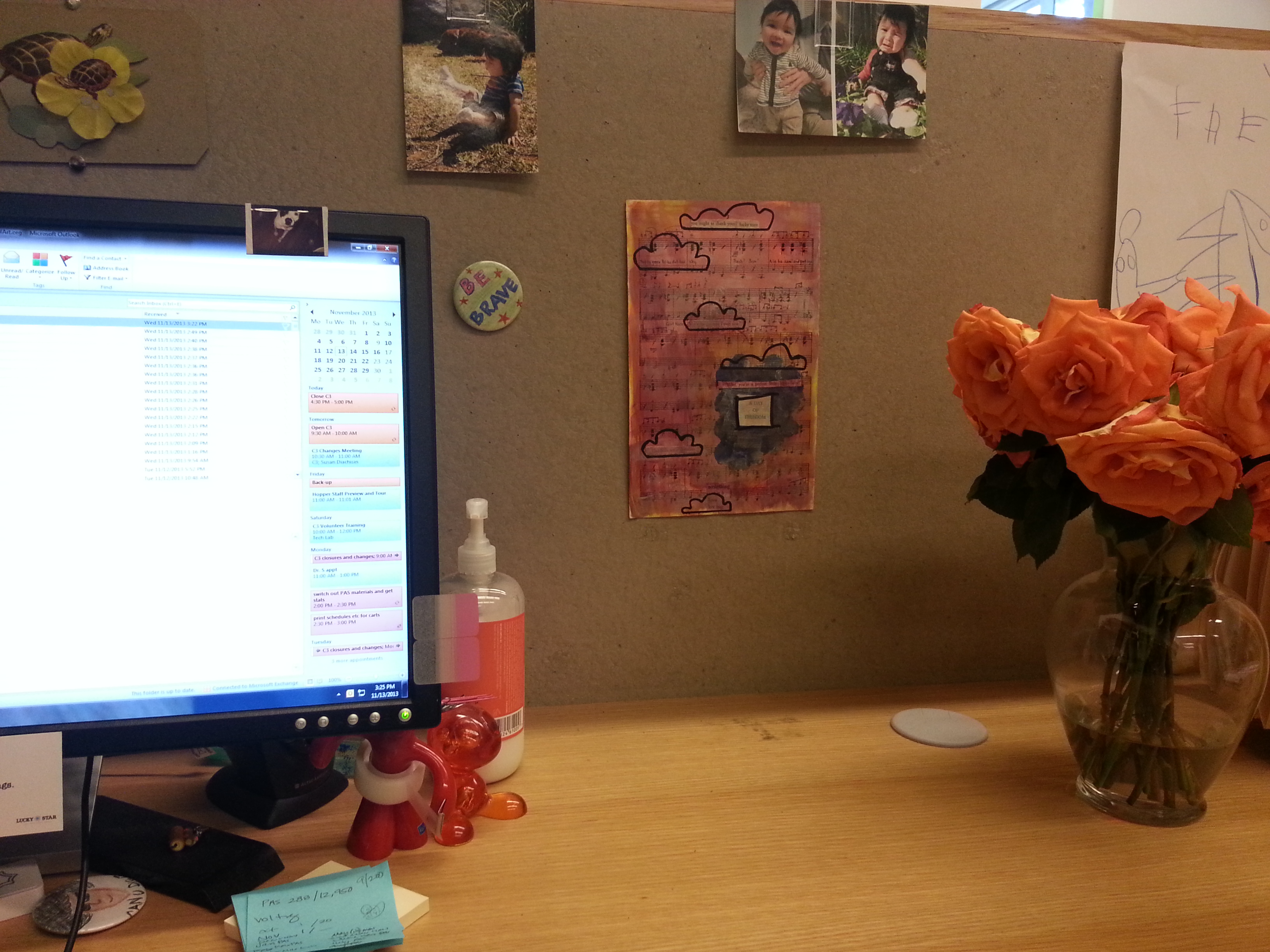
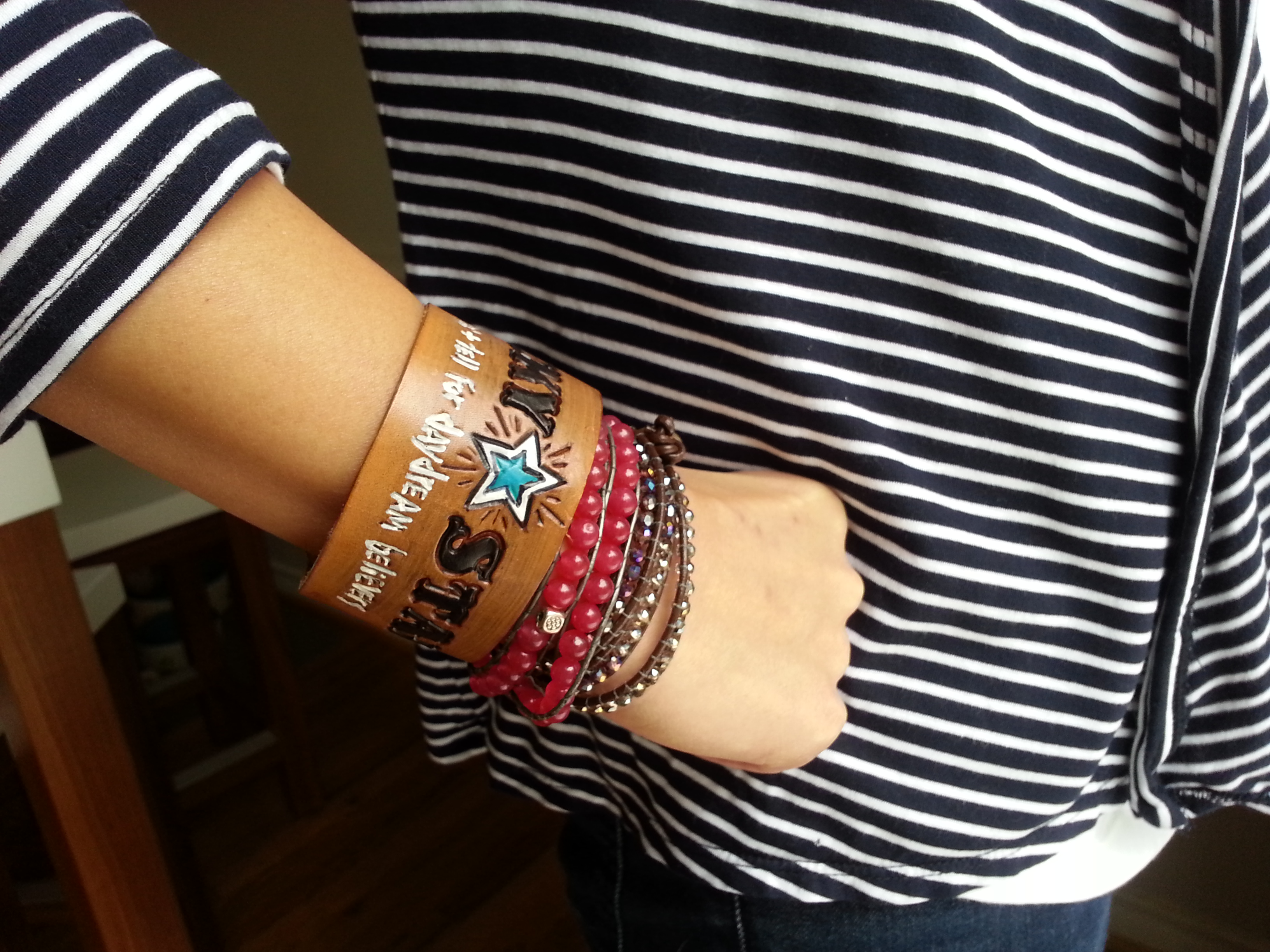
I’ve surrounded myself with little reminders of my classes and my new friends, such as the collage I hung in my office and the wrap bracelets I made during and after camp that I now wear daily. A few weeks ago, Mandy happened to come through town and I was thrilled to introduce her to friends during a fun potluck dinner and house concert. My friends and colleagues are probably tired of hearing my many art camp stories, but I cannot emphasize enough the incredible and, yes, life-changing experience I had during those five days in Texas Hill Country at Lucky Star Art Camp.

Melissa Gonzales
C3 Gallery Manager
Work Pals with Wendell

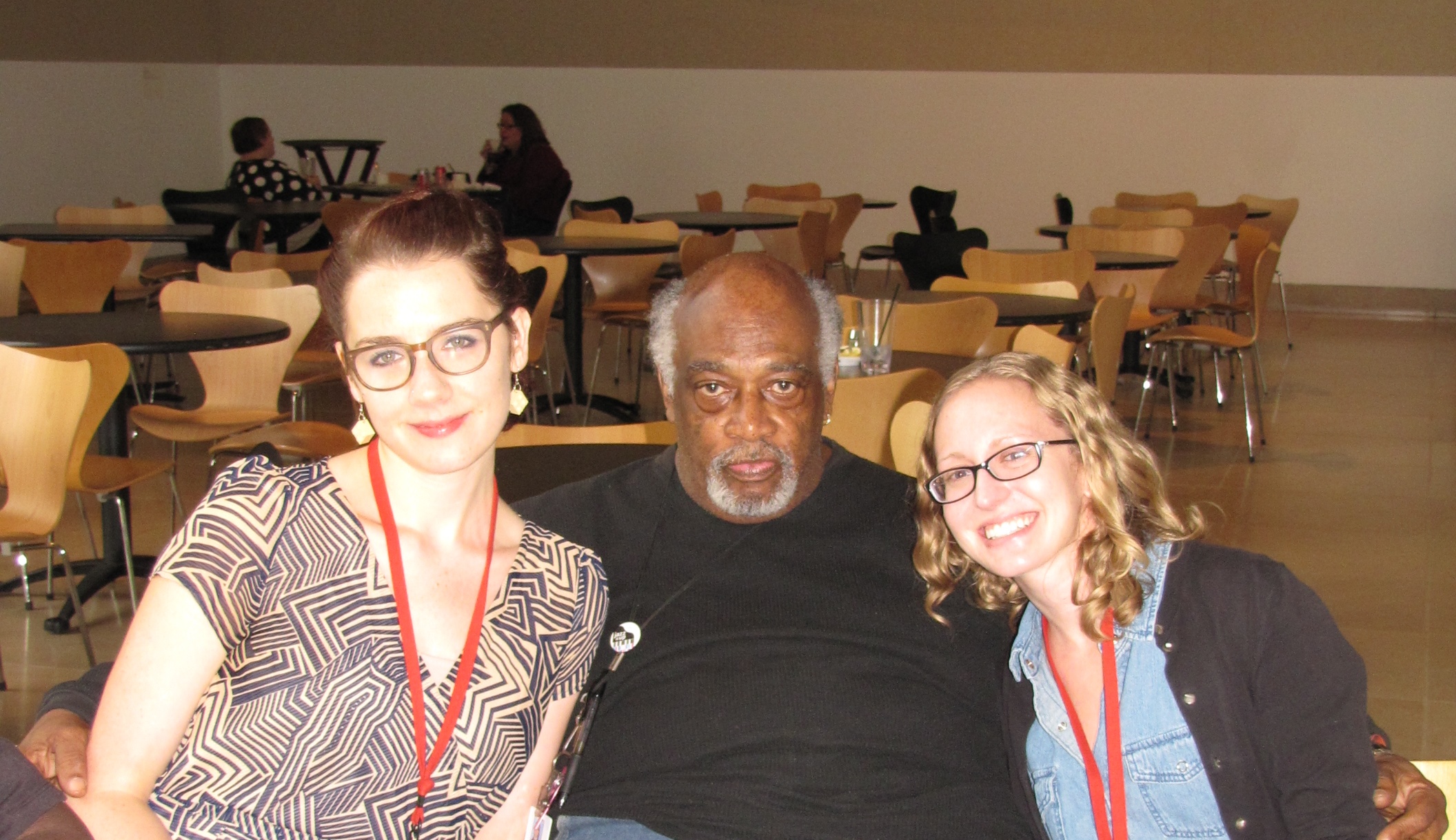
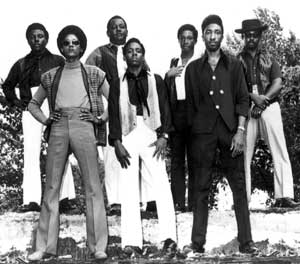
When we were assigned work pals, Amy and I were both intrigued and excited about being matched up with Wendell Sneed. Although we had seen him around the Museum, we didn’t know a lot about him or the work he did at the DMA. Following the meeting, several coworkers also shared their excitement about our partnership with Wendell- sending links that revealed his role in the Dallas jazz and funk scene in the 1960’s and 70s. Although black musicians in Dallas at that time struggled with segregation, Wendell, a drummer, and Roger Boykin, a guitarist, organized the first and only South Dallas Pop Festival and founded Soultex Records.

Wendell with Soul Seven, who performed at the South Dallas Pop Festival.

Wendell with Soul Seven, who performed at the South Dallas Pop Festival.

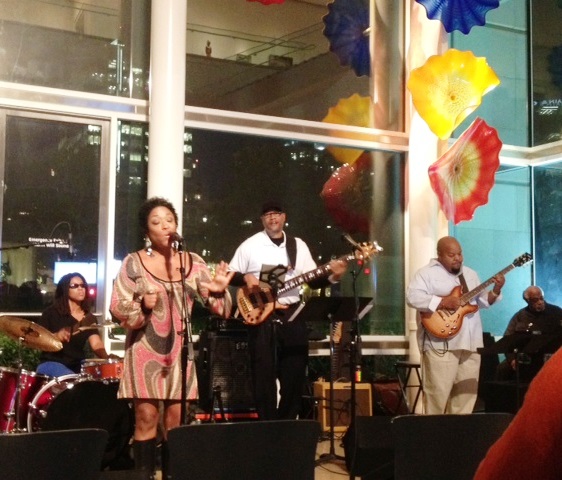
Today, Wendell, who has worked at the DMA for over twenty years, is the Program Coordinator for Jazz in the Atrium, a free event every Thursday night during which visitors enjoy food, drinks, and live jazz performances. Before we became work pals, we were unfamiliar with the process of how Jazz in the Atrium is organized, but after getting to know Wendell a bit more and enjoying our own night of jazz, we were able to better understand all the hard work that goes into organizing such a lively Museum event.

Jazz in the Atrium brings in large crowds to the Museum every Thursday and as Wendell explained to us, many families and couples have been attending for years. He also revealed that prospective artists often approach him at the event about their interest in performing. Wendell welcomes this interest and invites artists to send him a press pack and a demo. He then does research to find out if the artist is performing in the Dallas area. If they are, he makes an effort to listen to them live. He sometimes he doesn’t let the artists know that he is planning on attending and stands somewhere in the venue where they can’t see him. This helps Wendell to get a good feel for the artists’ ‘true sound.’

Wendell’s favorite part of organizing Jazz in the Atrium is when his chosen artists finally perform. The night that we attended, we had the privilege of listening to jazz artist Breggett Rideau. A 2009 Grammy Nominee for Best Jazz Vocal Album, Breggett is a New Orleans native who now resides in the Dallas area and performs at the DMA multiple times a year.

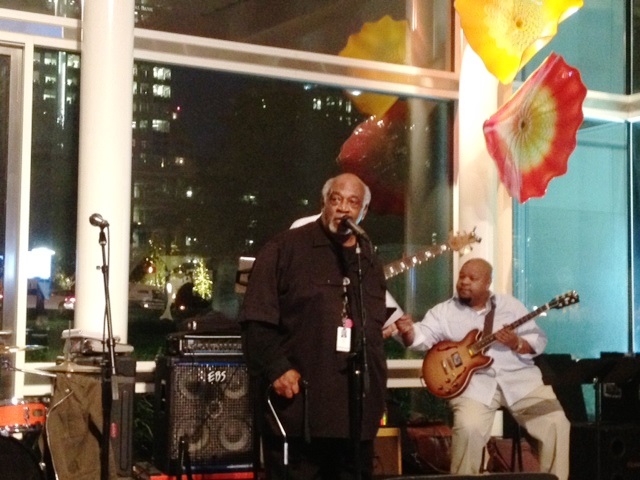
Wendell welcomes jazz lovers and introduces Breggett Rideau.

Wendell welcomes jazz lovers and introduces Breggett Rideau.

Breggett Rideau impresses the crowd last Thursday night.

Breggett Rideau impresses the crowd last Thursday night.

Throughout the past two months, we have truly enjoyed the time we’ve spent with Wendell. His passion for music is contagious and he enjoys sharing it with everyone he meets. We look forward to learning more from him during the rest of our internship at the DMA and encourage everyone to check out a night of Jazz in the Atrium this holiday season!

Amy and Amelia

Amelia Wood
McDermott Intern for Family and Access Teaching

Amy Elms
McDermott Intern for Visitor Engagement

Accessible Teamwork

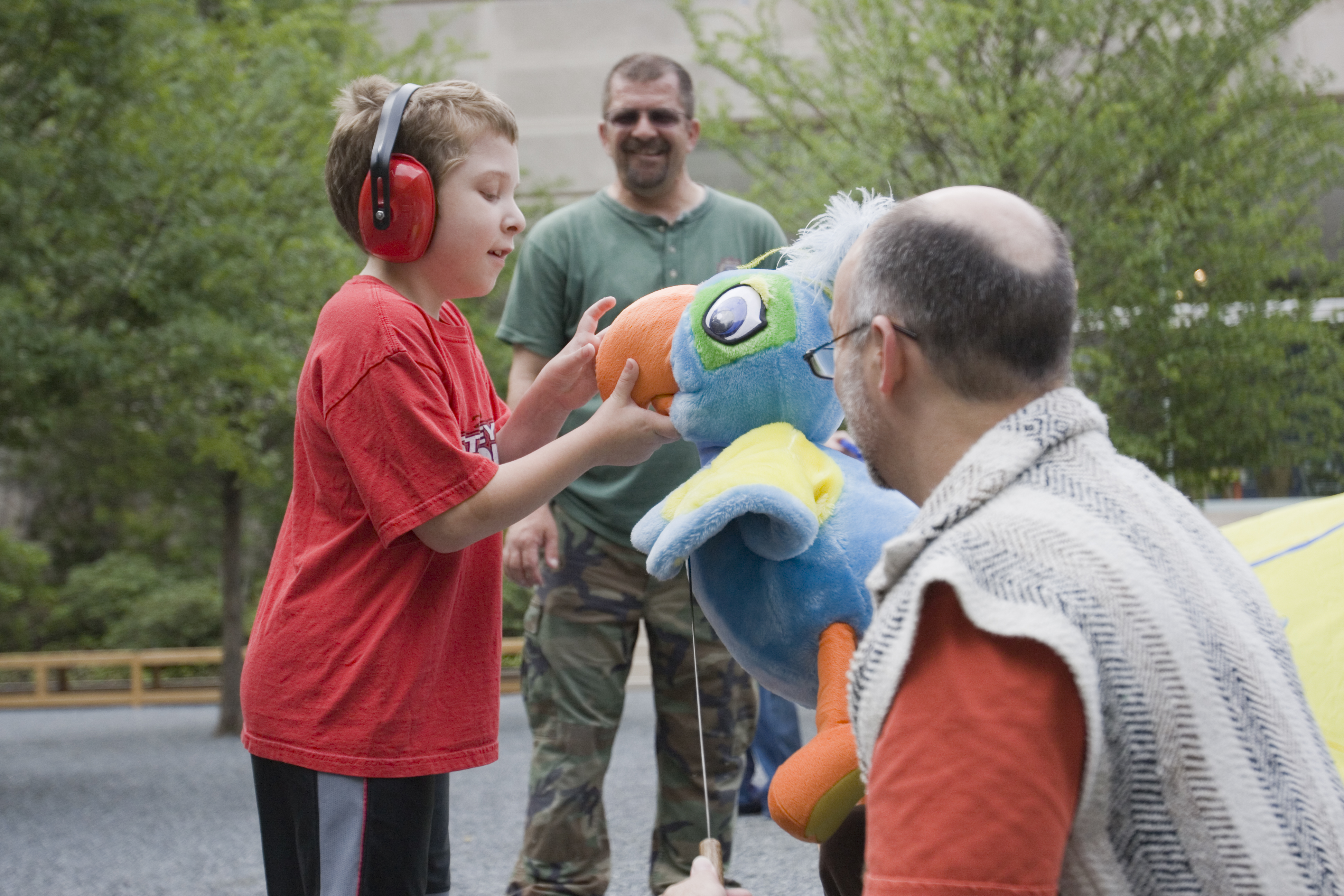
We love collaboration here at the DMA, and when it comes to teamwork, Texas Women’s University occupational therapy students are fantastic additions to our team! Since 2009, the DMA has held quarterly-occurring Autism Awareness Family Celebrations for children with autism and their families to enjoy activities in the Museum before it opens to the public. For the past two years, we have been lucky to partner with TWU’s occupational therapy students led by Dr. Tina Fletcher, OTR, EdD, MFA. The students host the TWU Sensory Room during every Autism Awareness Family Celebration and they transform our Tech Lab into a quiet space filled with weighted vests, therapy balls, tunnels, and resources for families.

Dr. Fletcher is an invaluable partner to the Museum’s Access Programs as she attends the Meaningful Moments program as well as every Autism Awareness Family Celebration and advises us on best practices. Dr. Fletcher is unique in that in addition to being a professor of occupational therapy, she is also an Autism Specialist as well as an artist – she brings many perspectives to our Access Programming! This year three of Dr. Fletcher’s students are working with us on research and evaluation related to our Autism Awareness Family Celebrations – their projects involve creating and testing social stories, creating and testing gallery guides written specifically for children with sensory issues, and researching the way that parents think about the Museum.

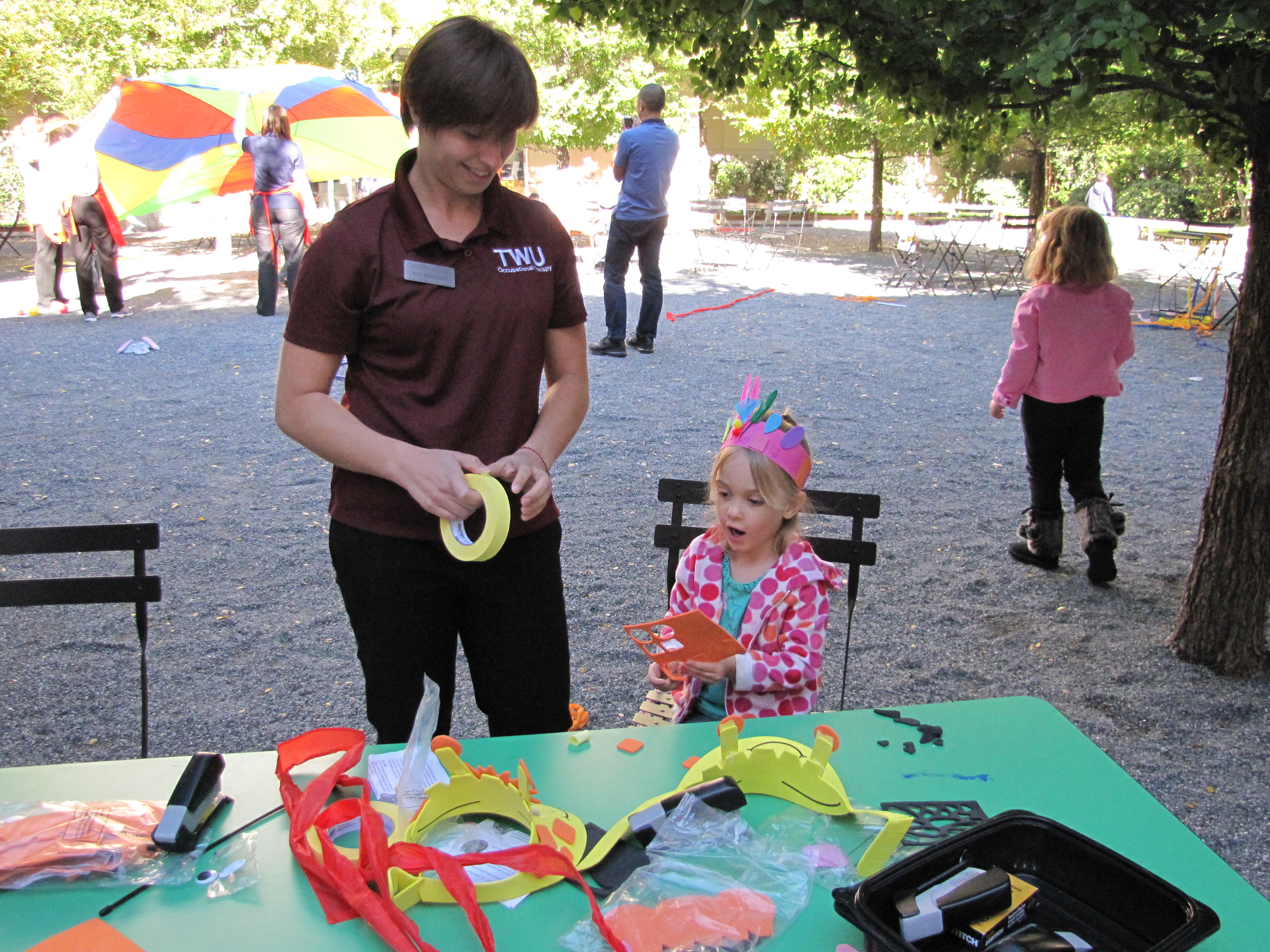
TWU Occupational Therapy student Ana Antonetti volunteering at our recent Autism Awareness Family Celebration

TWU Occupational Therapy student Ana Antonetti volunteering at our recent Autism Awareness Family Celebration

One of Dr. Fletcher’s students, Ana Antonetti, is conducting research about parents’ perceptions of the DMA. Ana has been a part of recent Autism Awareness Family Celebrations and we are excited to learn about her research results. We would love to have your assistance in helping us to improve on our programming for children with autism! Please see details below from Ana about how you can help:

The Dallas Museum of Art is collaborating with Texas Woman’s University to conduct a study comparing the perceptions of parents of children with and without autism spectrum disorders about participation in museum activities.

The information gathered will be used to help the DMA with program development and accessibility.

To be able to participate in this study you must be a parent of a child that has participated in activities at the DMA in the past OR a parent who is interested in having their child participate in Museum activities. Your child must be age 18 or younger.

Please follow this link to complete the questionnaire: https://www.psychdata.com/s.asp?SID=156983

Thank you!

Amanda Blake
Head of Family, Access, and School Experiences

Artist Astrology: Scorpio

There must be something in the water, LITERALLY, since many of the most recognized artists of the 19th and 20th century are born under the sign of the Scorpio–whose zodiac element also happens to be water! The birthdays of Pablo Picasso, Claude Monet, Roy Lichtenstein, and Georgia O’Keefe, just to name a few, all fall between October 24 and November 23. So what is it exactly that makes these Scorpios so artistically inclined?

Scorpios are considered one of the most fierce and determined zodiac symbols. Their strength and independence commands attention and they are known to possess the ability to manipulate and hypnotize. The intensity of the Scorpio spirit is often misunderstood as insincerity, but beneath their cool exterior their emotional side runs deep. In relationships, Scorpios set high expectations of themselves and expect the same commitment in return. This loyalty and passion carries into all aspects of their lives and, at times, their desire for perfection can make them obsessive, demanding, and obstinate. While these characteristics might deter others, Scorpio’s thrive on a challenge and will see a task through no matter the obstacles–often to great success. Scorpio’s live life to the extreme and banality is never an option!

Using this description as a guide, it is no wonder that these savvy Scorpios developed and practiced a style all their own! Backed by their passion and determination, they explored new mediums, scientific developments, styles of representation, and ideas.

1987'371

Pablo Picasso – October 25

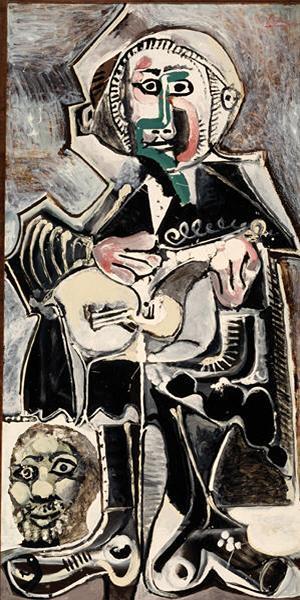
Because of Pablo Picasso’s innovations and contributions to the history of art, he has become one of the most recognizable artists in the world. This status is not unjustified as his work truly defined an era, changing art and artistry forever. Together, Picasso and Georges Braque developed Cubism, a style that radically re-structured the practice of painting. In both his life and his work, Picasso exhibited many of the signature traits of a Scorpio: he was intellectually rigorous, indulgent (both personally and artistically), and often obsessive. Later in life, this obsession manifested into a superstition in which he believed he could prolong death through artistic production. The all-knowing eyes of The Guitarist, above, also has connotations with Scorpio astrology. Eyes are a Scorpio’s most powerful physical trait and have been said to have the ability to hypnotize. This characteristic was not missed by Picasso, whose friend stated that he observed “the eyes of the canvases, by the way they had of staring into ours from deep inside those painted heads…never ceased asking us questions…We would look at the canvases straight in the eyes.”

1974_23_1 1974_23_3

Roy Lichtenstein – October 27

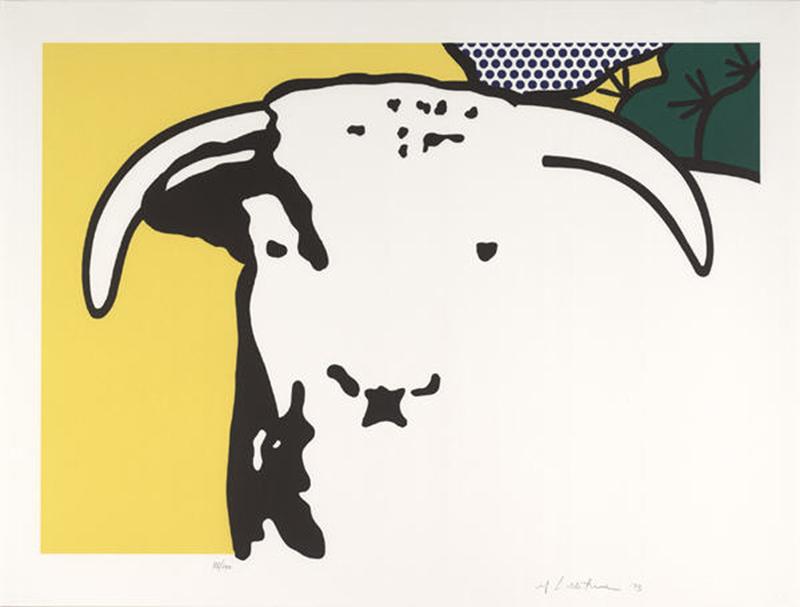
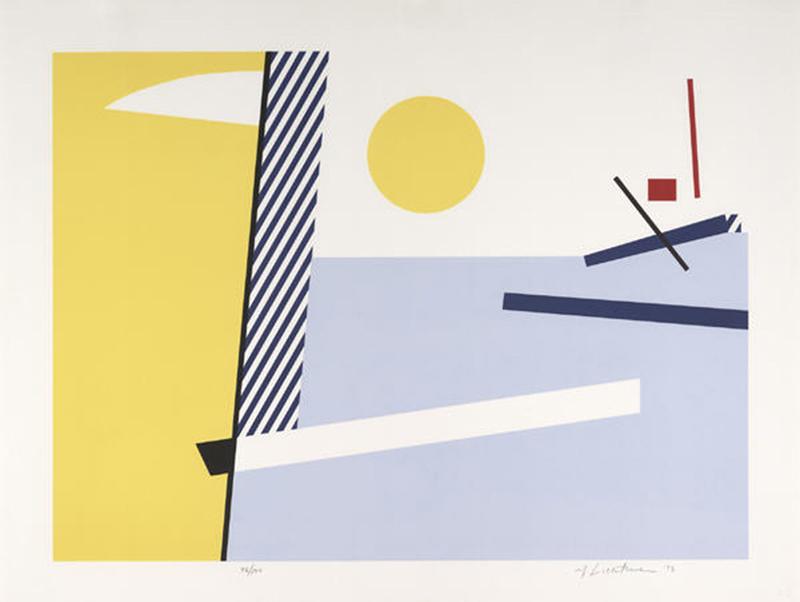
Roy Lichtenstein’s Bull Heads series directly challenges and satirizes the art historical practice of Cubism. The emblem of Pablo Picasso’s Spanish roots–the bull–becomes increasingly unrecognizable as the prints progress into further simplified geometric shapes. Lichtenstein frequently consulted art historical tradition to inform and direct his works. He is largely recognized for his appropriation of the style and content of comic strips, a focus that again derived from his interest in how subject matter is not only depicted, but digested. This acuity reveals Lichtenstein’s interest in the past as a vehicle to explore new ideas and concepts.

1964_77~F

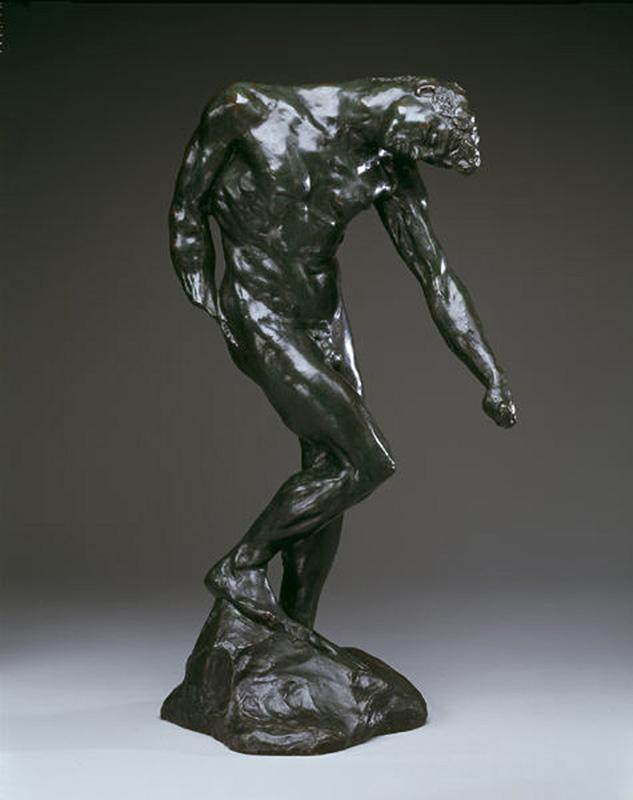
Auguste Rodin – November 12

Rodin realized his passion for art at a young age, and his talent was highly regarded during his adolescent years. He faced a humiliating defeat, however, when he was declined admission to the Ecole des Beaux-Arts three consecutive times. In order to make a living, Rodin worked for 20 years as a craftsmen and ornamenter. Throughout this time, he remained determined to further develop his passions and talents, attending classes, shadowing artists, and renting small studios in order to produce large figures. Now hailed for the materiality and dignity of his works, Rodin’s Scorpio characteristics of self-determination, willfulness, and originality pushed him to overcome obstacles and become one of the most recognizable and popular sculptors of the modern era.

1994_54

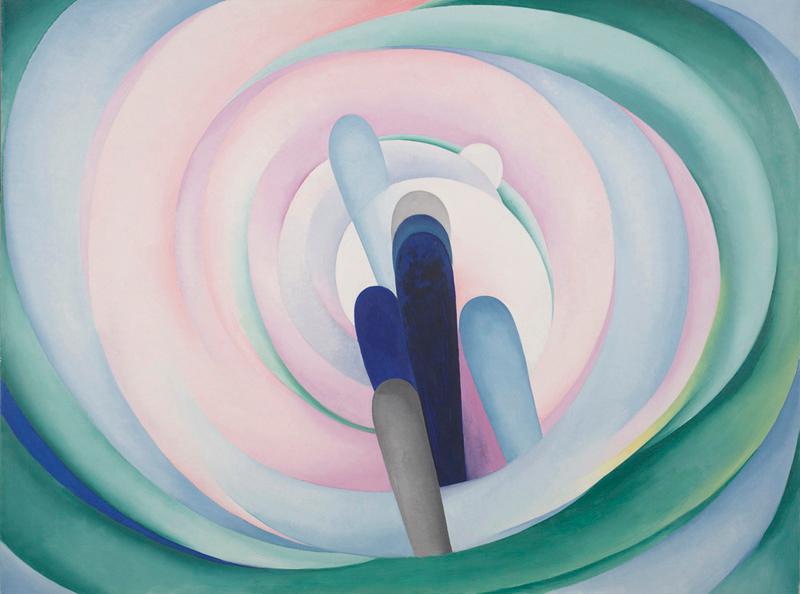
Georgia O’Keeffe – November 15

Georgia O’Keeffe is not only hailed for her work as an artist but also for her feminist and self-reliant character. O’Keeffe unapologetically pursued her artwork and her life as she pleased. She is quoted to have said, “I have but one desire as a painter:  that is to paint what I see, as I see it, in my own way, without regard for the desires or taste of the professional dealer or the professional collector.” O’Keeffe’s vision is evidenced in her abstracted, yet acutely attentive representations of singular elements, such as her iconic paintings of flowers and desert-bleached skulls. She depicted her unique worldview in paintings of both natural and urban landscapes.

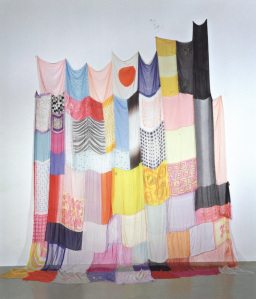
Here's where we will stay, 1995, JH1995-016

Jim Hodges – November 19

The work of Jim Hodges exemplifies the passion and loyalty of the Scorpio spirit. Our current exhibition, Jim Hodges: Give More Than You Take, speaks to Hodges’ commitment and generosity as an artist, a friend, a son, and a partner. Most of the works in the exhibition make direct or indirect reference to his interactions with loved ones, including Here’s where we will stay. This piece alludes to Jim’s mother and great-grandmother, who taught him how to sew and cultivated his understanding and patience for craft arts. Jim sewed each of the scarves together by hand, purposefully elongating the experience to allow time for meditation and reflection.

For more splendid Scorpios, check out the work of Johannes Vermeer (October 31), Robert Mapplethorpe (November 4), Paul Signac (November 11), Claude Monet (November 14), and Rene Magritte (November 22)! And don’t forget to tune in next month for some of our favorite Sagittarius artists!

Artworks Shown:

  • Pablo Picasso, The Guitarist, 1965, Dallas Museum of Art, The Art Museum League Fund
  • Roy Lichtenstein, Bull Heads I, 1973, Dallas Museum of Art, gift of The 500, Inc.
  • Roy Lichtenstein, Bull Heads III, 1973, Dallas Museum of Art, gift of The 500, Inc.
  • Auguste Rodin, The Shade, or Adam from “The Gates of Hell”, 1880, Dallas Museum of Art, gift of Mr. and Mrs. Eugene McDermott
  • Georgia O’Keeffe, Grey Blue & Black—Pink Circle, 1929, Dallas Museum of Art, gift of The Georgia O’Keeffe Foundation
  • Jim Hodges, Here’s where we will stay, 1995

Hayley Prihoda
McDermott Intern for Gallery and Community Teaching

UA Maker Club

???????????????????????????????

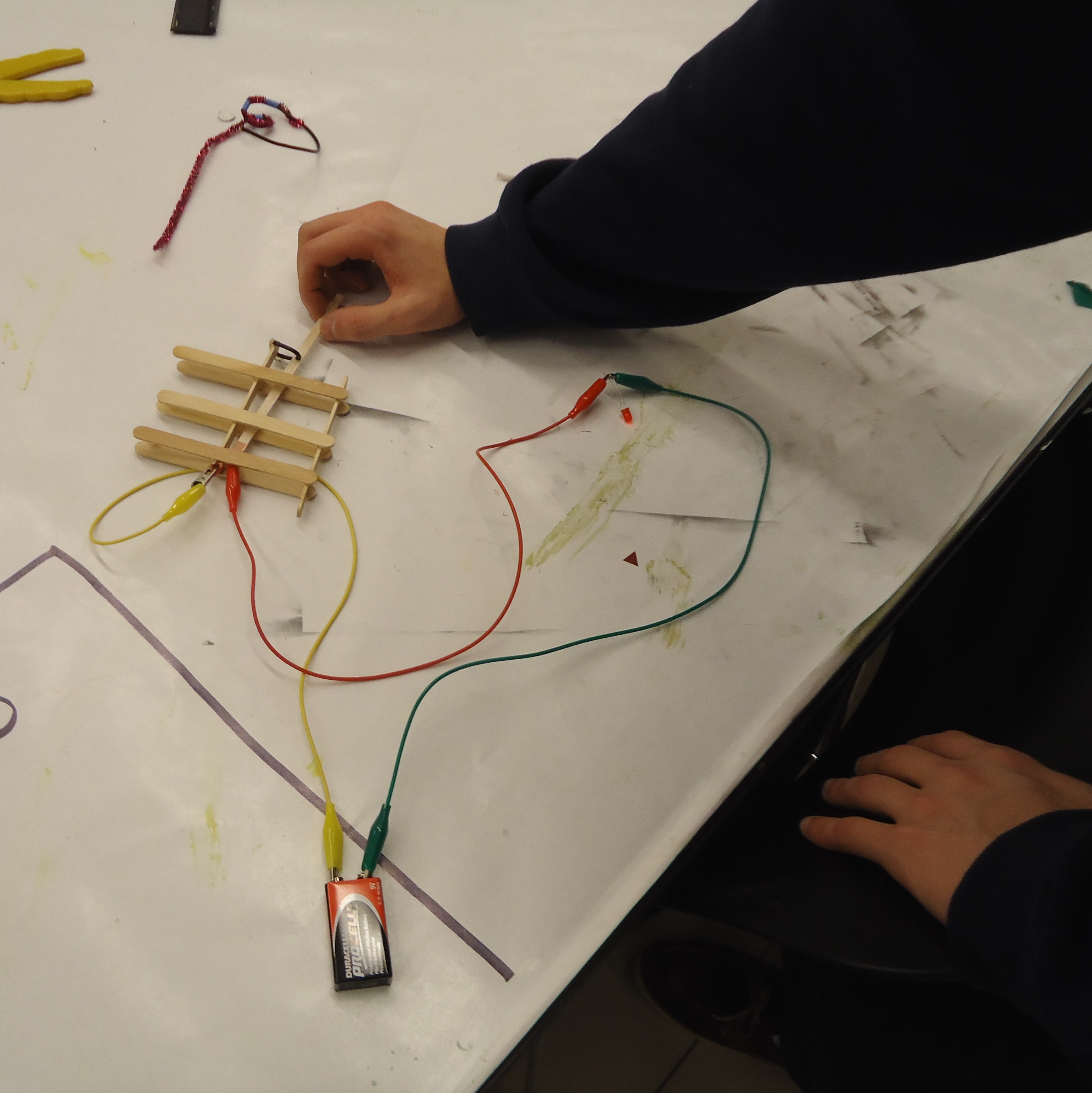
What do you get when you put art and technology together? The UA Maker Club! A mash up between led workshop and open studio, the Maker Club combines traditional art supplies with tech-based materials and asks participants to explore the resulting possibilities. It’s a place for people to experiment, make mistakes, and have fun through tinkering. The Maker Club is also a place where collaboration rules: everyone can share their knowledge and learn from each other–students and staff alike! Because we (the staff) are not experts ourselves, it’s a great opportunity for us all to exchange ideas and gain new skills.

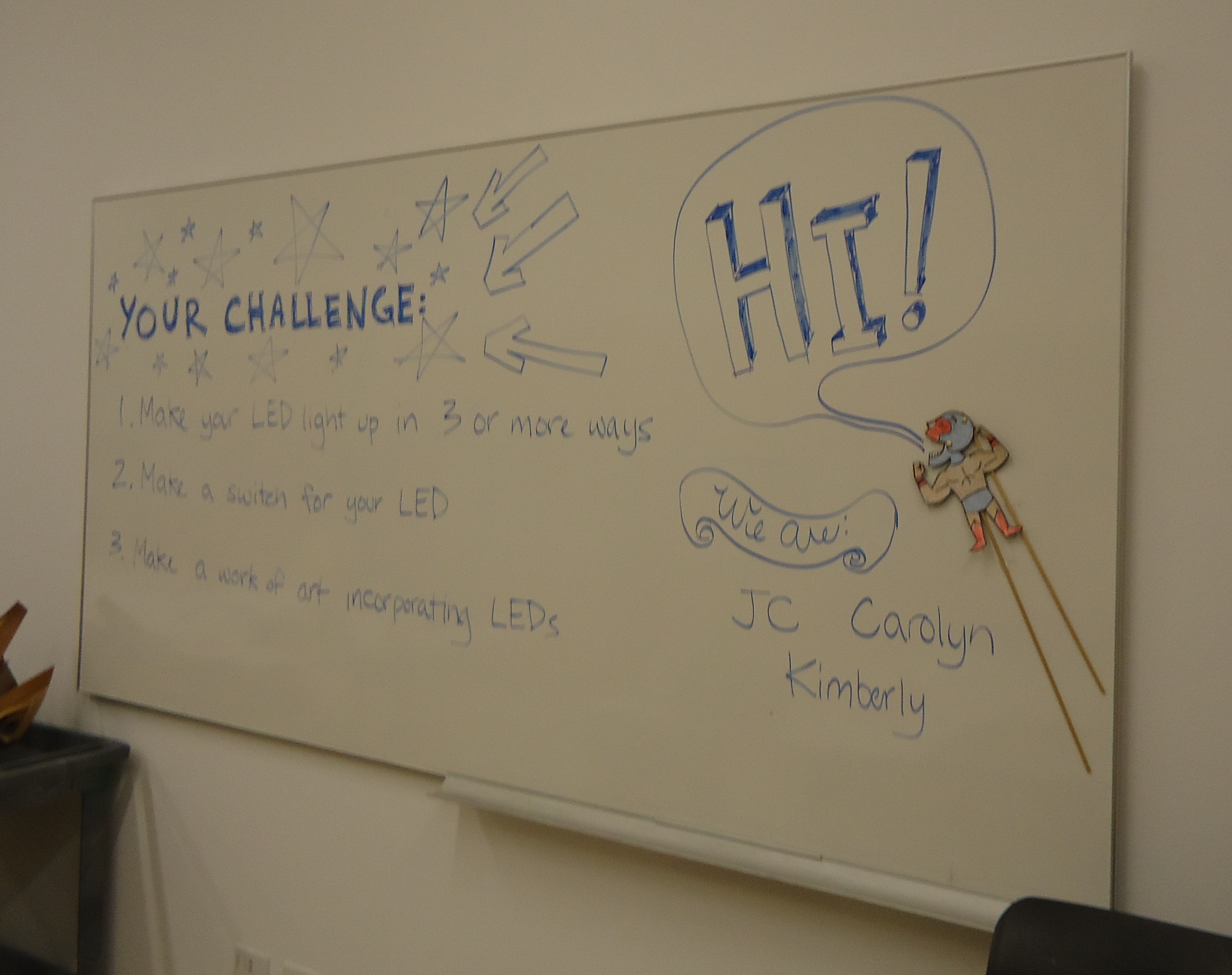
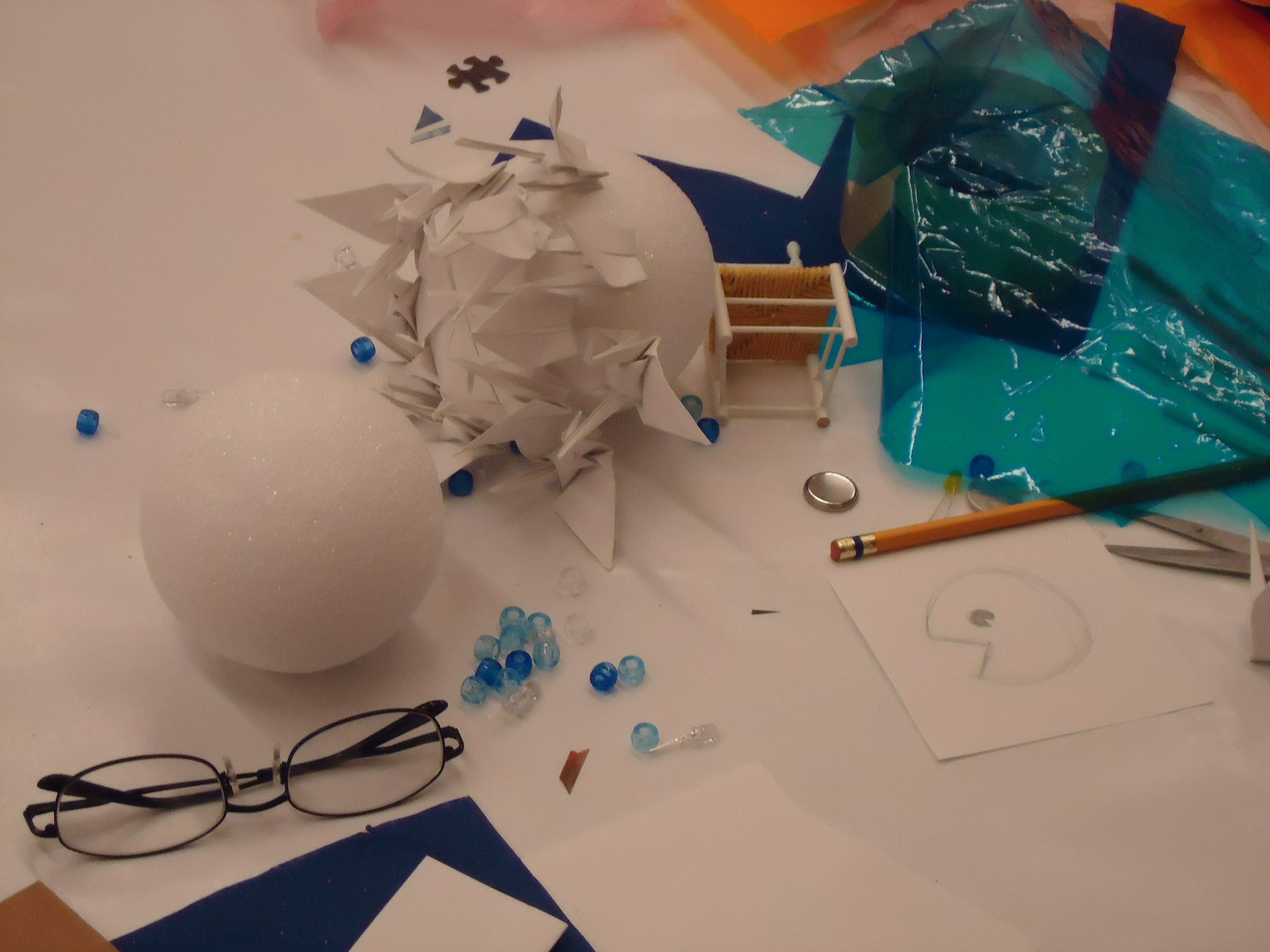
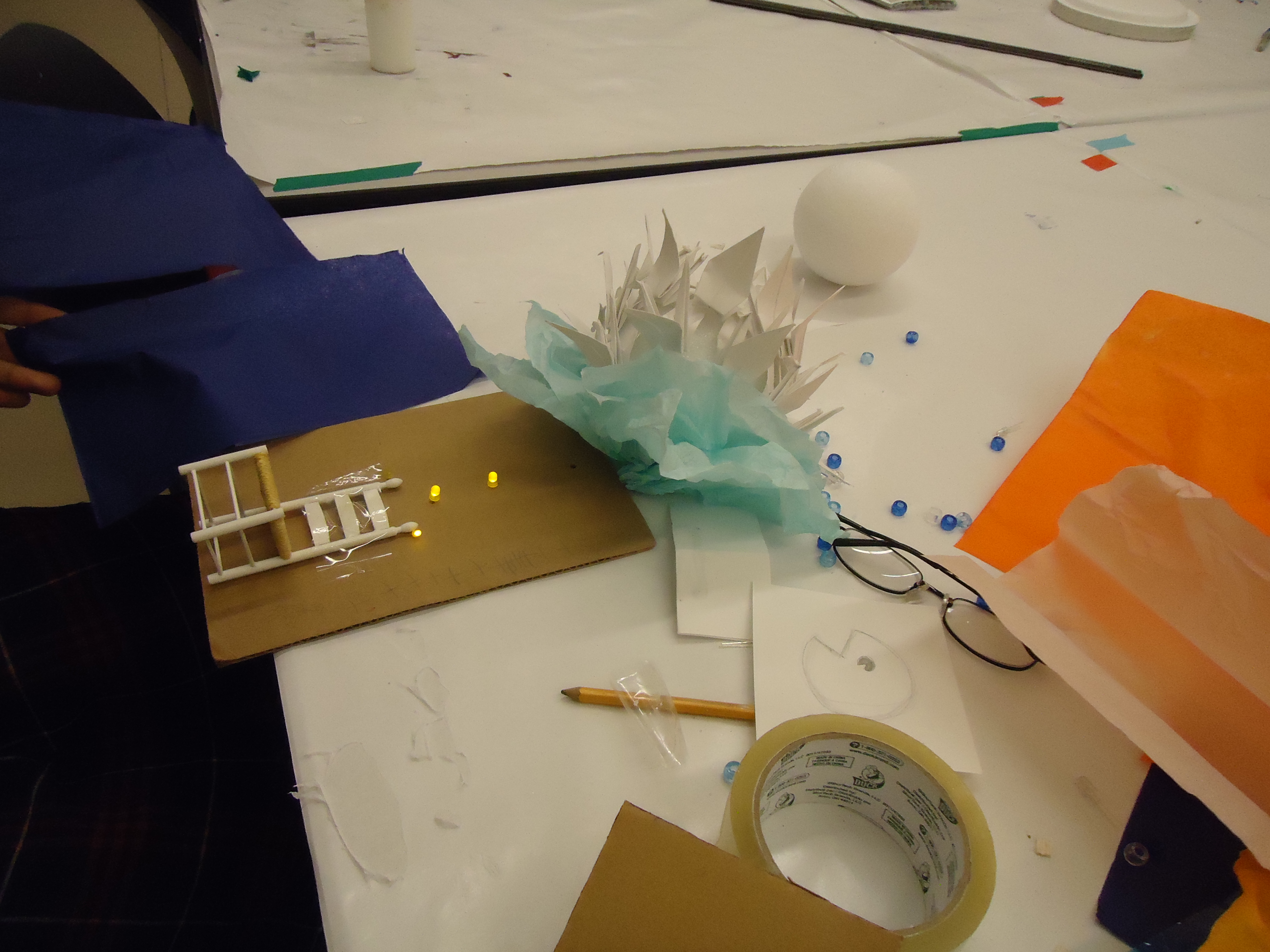
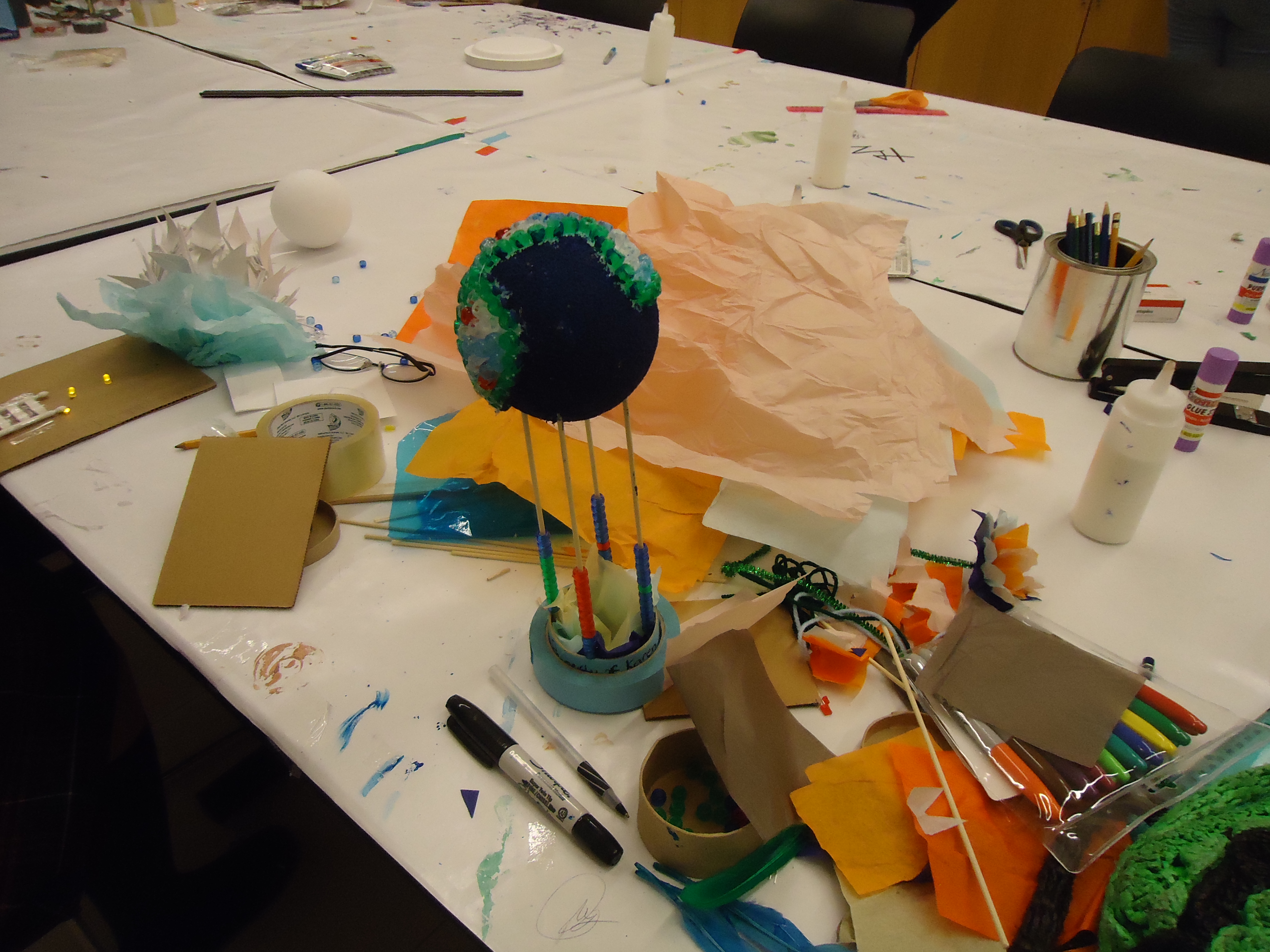
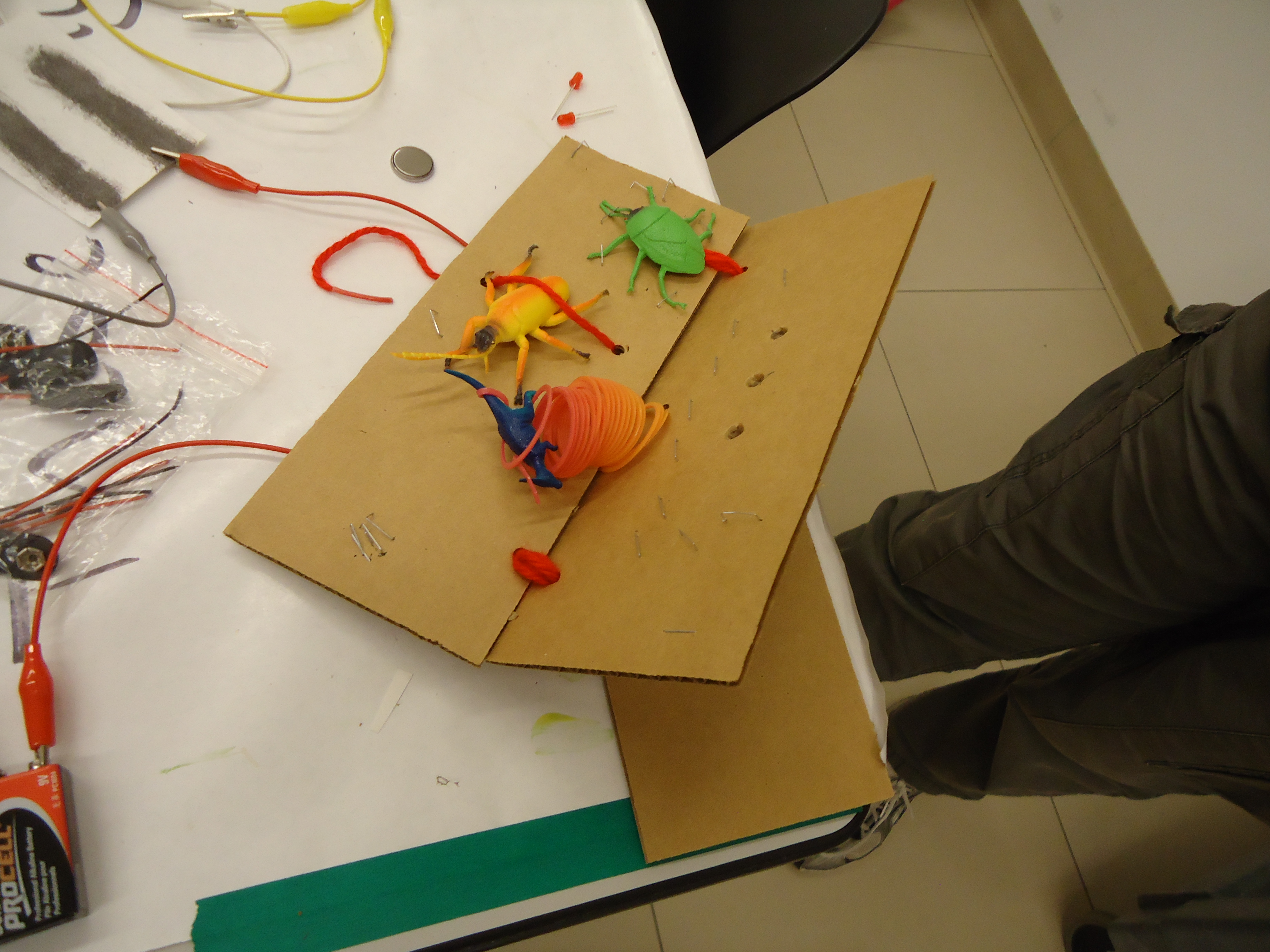
For our very first meet up last Thursday, students explored simple circuits through the use of mini LEDs. Through a series of challenges, teens learned how to light up their LEDs using a variety of conductive materials: copper tape, wire, foil, graphite, and conductive tape. They then had to come up with various ways of making their lights turn on and off by constructing a switch. Finally, they were to create a work of art that incorporated LEDs in some way. We had a great group of teens with a wide range of interests–art, science, even robotics. As you can see, all of the creations were unique and varied:

Take two: Jared made this incredible switch for his LED after shorting out his first one 🙂

DSC04710

A shot of Pamela’s elaborately constructed diorama–in progress

DSC04717

A second shot showing her LEDs

DSC04716

Holy Light-Brite, Batman! Rosa’s fantastic globe

DSC04715

Preparing to add some twinkling lights to Lugosi’s sculpture

The UA Maker Club meets every month and is open to anyone between the ages of 13-19. No prior experience is necessary and all materials are provided. Drop in to this month’s workshop on November 21 to make glow-in-the-dark clothing and accessories using electroluminescent wire and screen printing ink!

Glow_Stix__Does_a_body_good_by_realdaguru

JC Bigornia
C3 Program Coordinator

Feliz Dia de los Muertos!

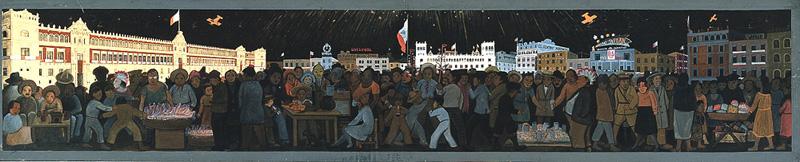
One of Mexico’s most important holidays is upon us–Dia de los Muertos or Day of the Dead! This popular holiday began centuries ago, and, although a celebration based on skulls and skeletons may appear a tad morbid, Dia de los Muertos is actually quite a festive and joyous time. Many of the Mesoamerican civilizations that flourished hundreds of years ago (like the Olmecs, Mayans, and Aztecs), believed strongly in the cyclical nature of life and death. This ancient belief resulted in a celebration of death, rather than a fear of itDeath is viewed as simply a continuation of life, and holidays like Dia de los Muertos are observed in order to celebrate and honor those who have passed away.

Máximo Pacheco, The Zocalo, 1929-1936

Máximo Pacheco, The Zocalo, 1929-1936

There are many things you can do to join in on the celebration this weekend.

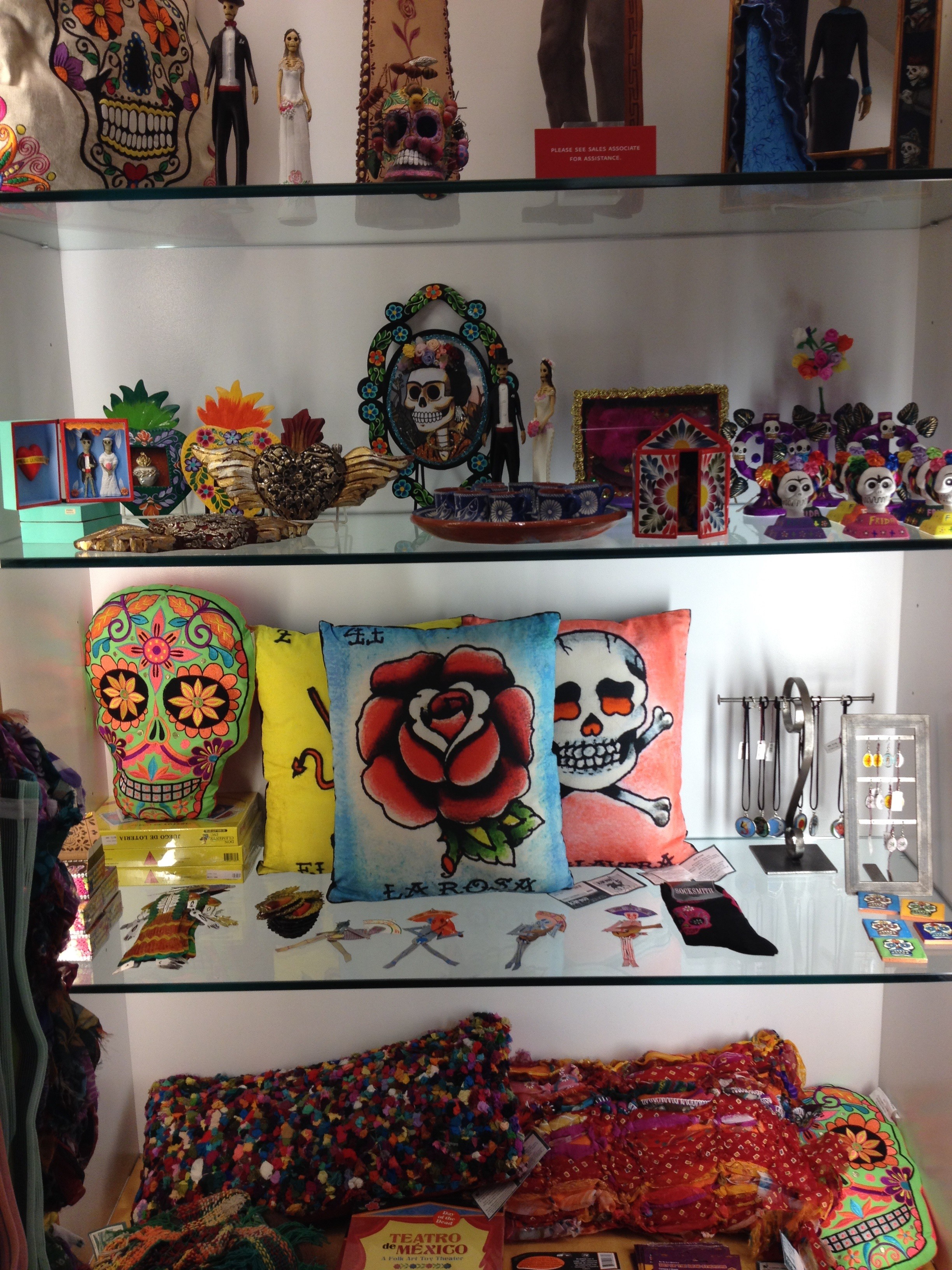
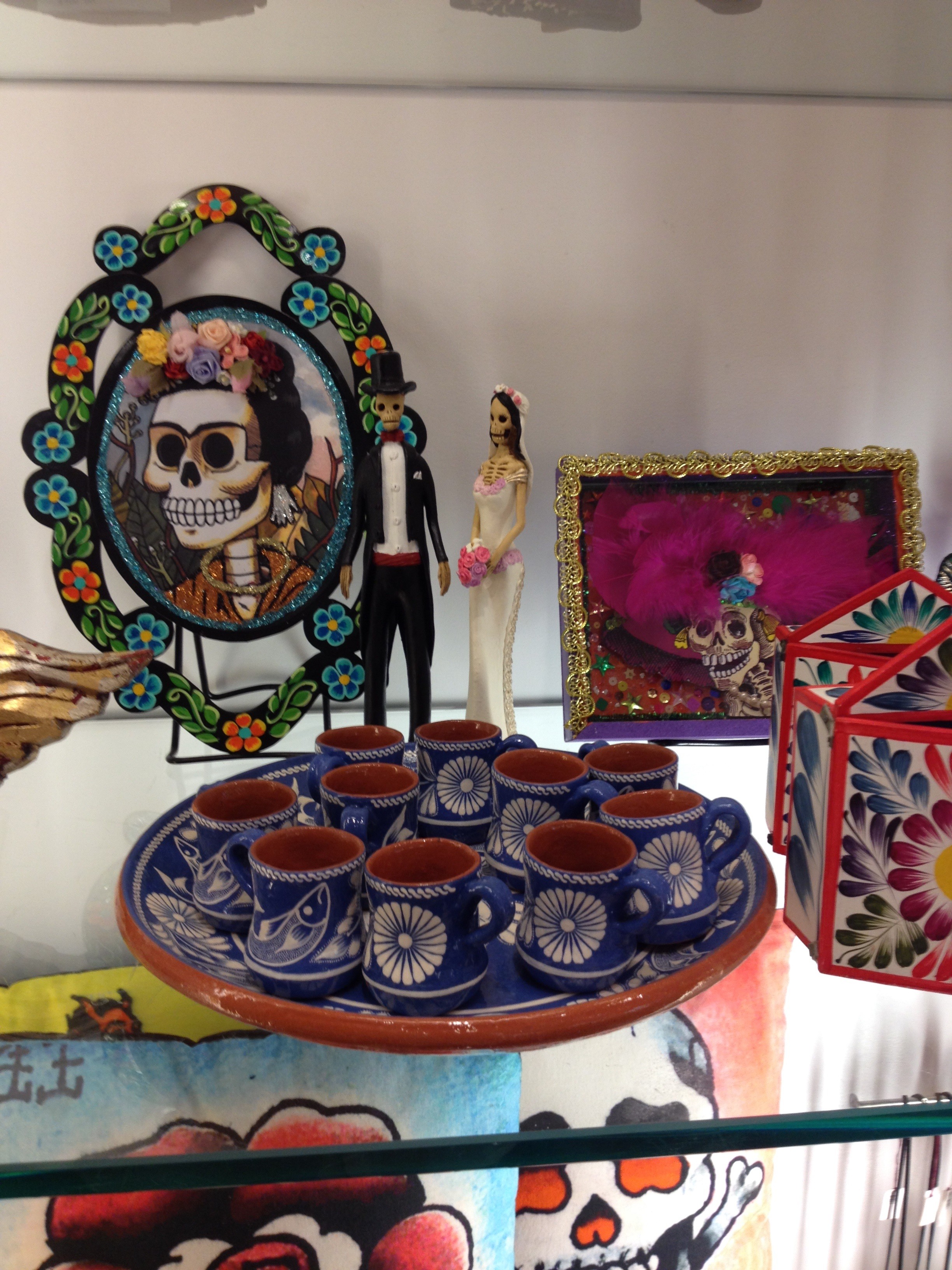
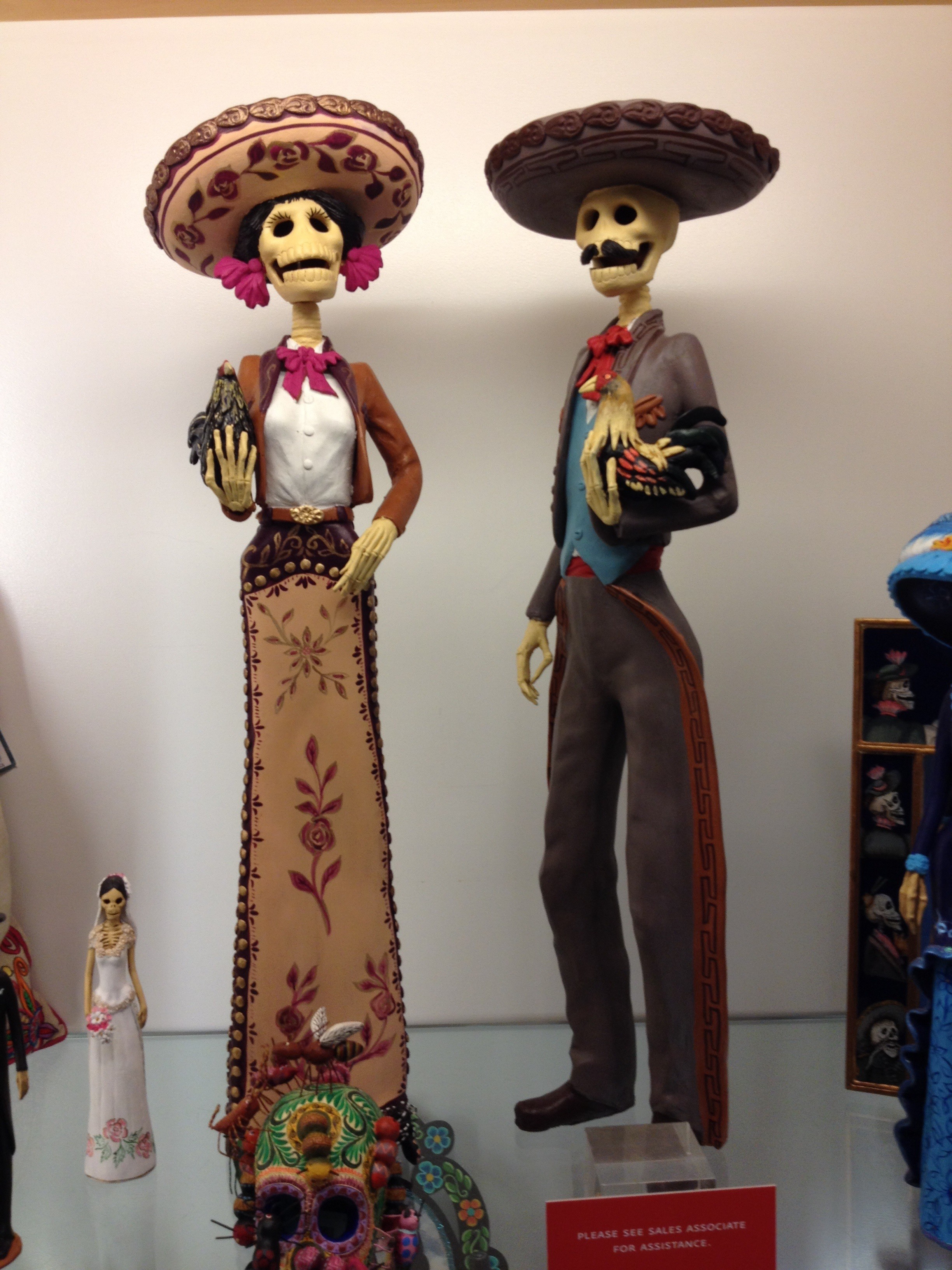
Creating an Ofrenda – These small, personal altars honor loved ones who are no longer with us. They are decorated with flowers, candles, food, drinks, photos, and personal mementos of the person being remembered. Luckily the DMA store has many items that can beautify any ofrenda.

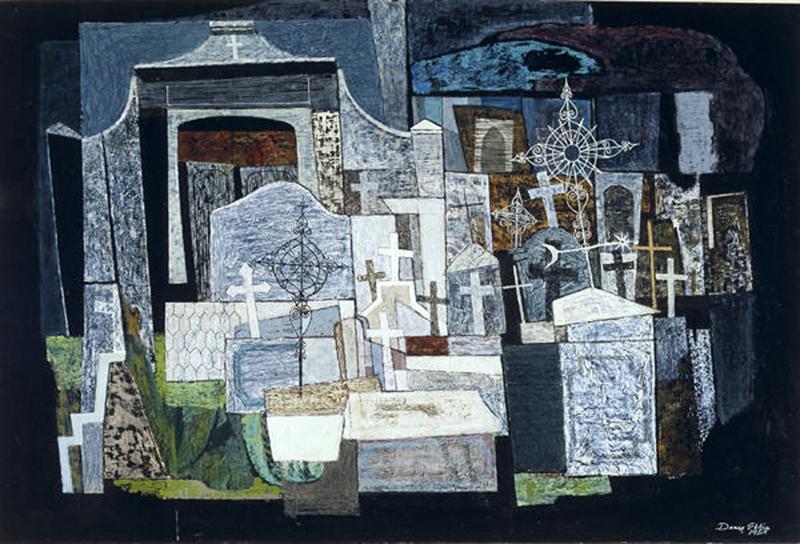
Decorating Gravesites – The activity of cleaning and decorating the graves of deceased loved ones has become a festive tradition, with family members congregating to adorn the sites with photographs and flowers as well as the person’s favorite food and drink. Many artists are captivated with the beauty of Mexican cemeteries and have included them in their artwork over time.

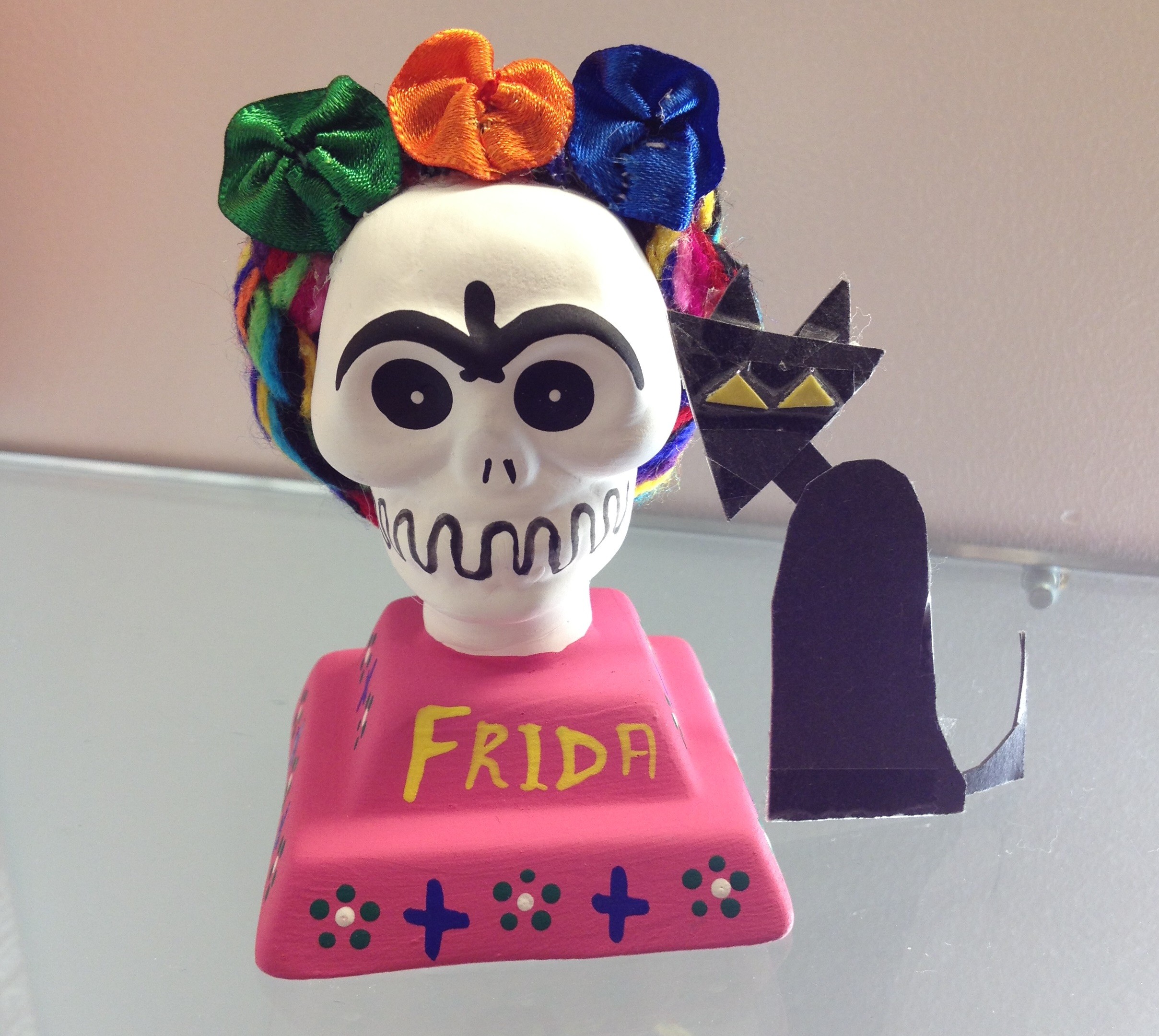
Sharing Stories about the Deceased: Part of honoring the dead is sharing stories about their life, particularly funny anecdotes. It is believed that the dead do not want to be thought of in a sad or somber way, but instead remembered and celebrated. So in this light, I wanted to celebrate and shed some light on the artist Frida Kahlo. Kahlo is most well known for her self-portraits. But of her 143 paintings, did you know that 55 are self-portraits that feature her treasured animals? After her life-changing traffic accident, Kahlo channeled her energy and emotions into her artworks and her many pets–monkeys, dogs, birds and a fawn–which lived at her home, in Coyoacán, Mexico City. To celebrate her love of animals, I placed a representation of my cat next to a bust of Kahlo.

Whether as a personal experience, family event, or social gathering, I hope that you are inspired this weekend to celebrate your loved ones as part of the Dia de los Muertos holiday!

Artworks shown:

  • Máximo Pacheco, The Zócalo, 1929-1936, Dallas Museum of Art, Dallas Art Association Purchase
  • Dean Ellis, Aspect of a Mexican Cemetary, 1950, Dallas Museum of Art, Dallas Art Association Purchase
  • Jerry Bywaters, Mexican Graveyard, 1939, Dallas Museum of Art, gift of A. H. Belo Corporation and The Dallas Morning News
  • Frida Kahlo, Itzcuintli Dog with Me, 1938, Private Collection

Danielle Schulz
Teaching Specialist

Friday Photos: The Art of Sahrawi Hospitality

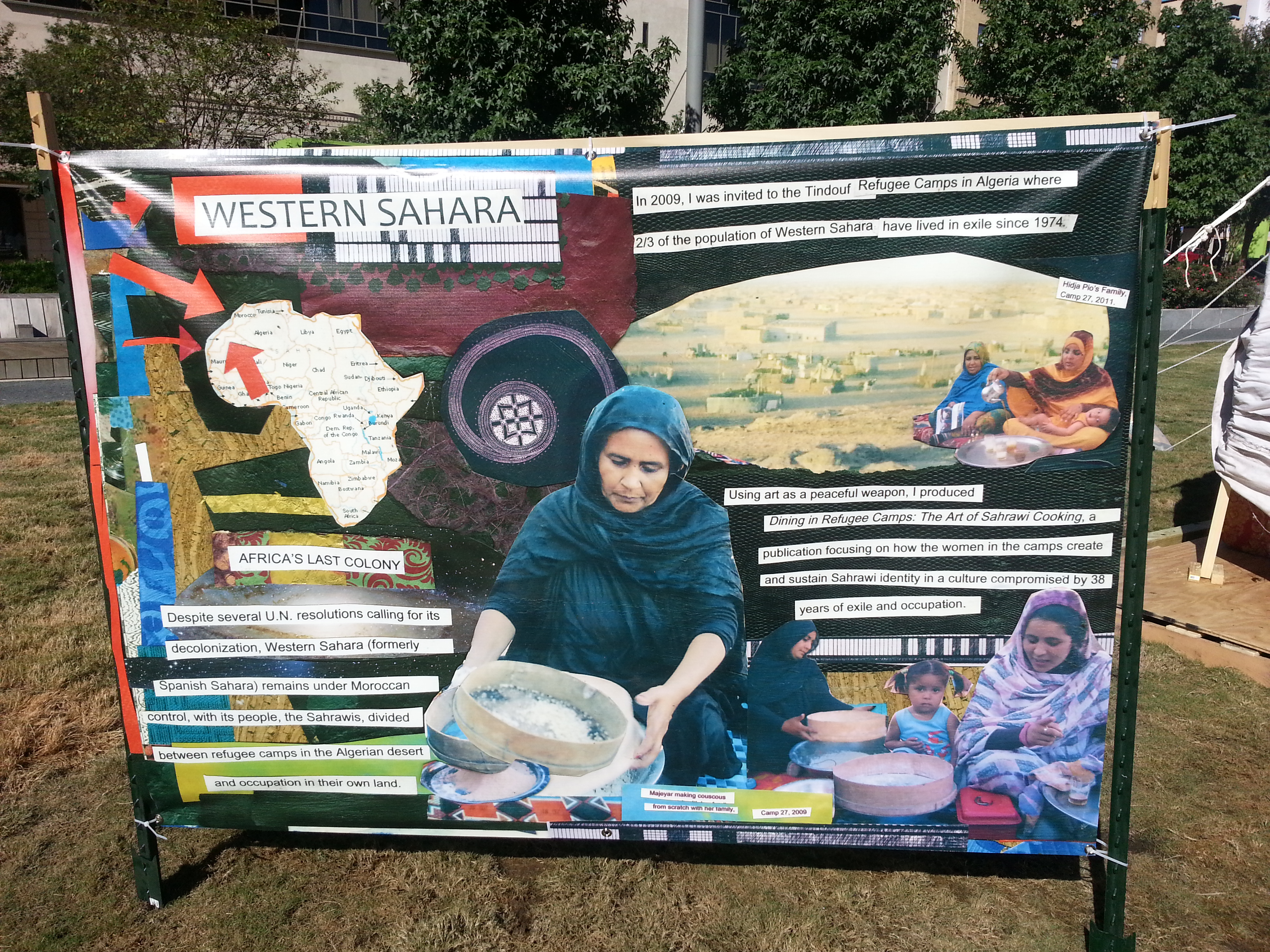
Last month, I wrote a blog post about a project the DMA co-led with MAPMake Art With Purpose, an organization that seeks to transform the world in positive ways. I can personally attest that my world was positively impacted by our community partnership program with AVANCE – Dallas, and through collaborating with MAP’s founder Janeil Engelstad and speaking with her about the impressive and inspiring work that MAP is supporting throughout DFW and around the world.

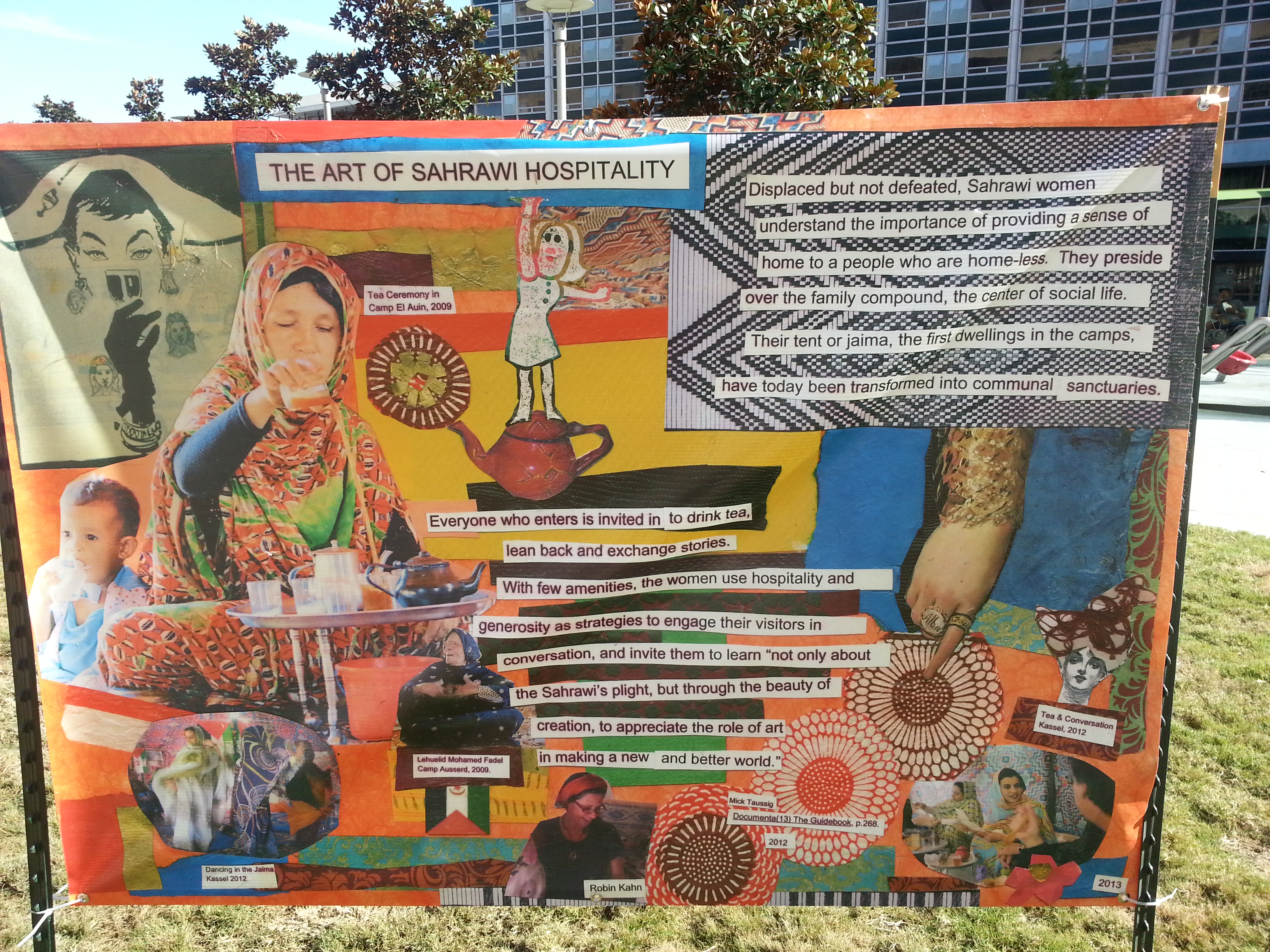
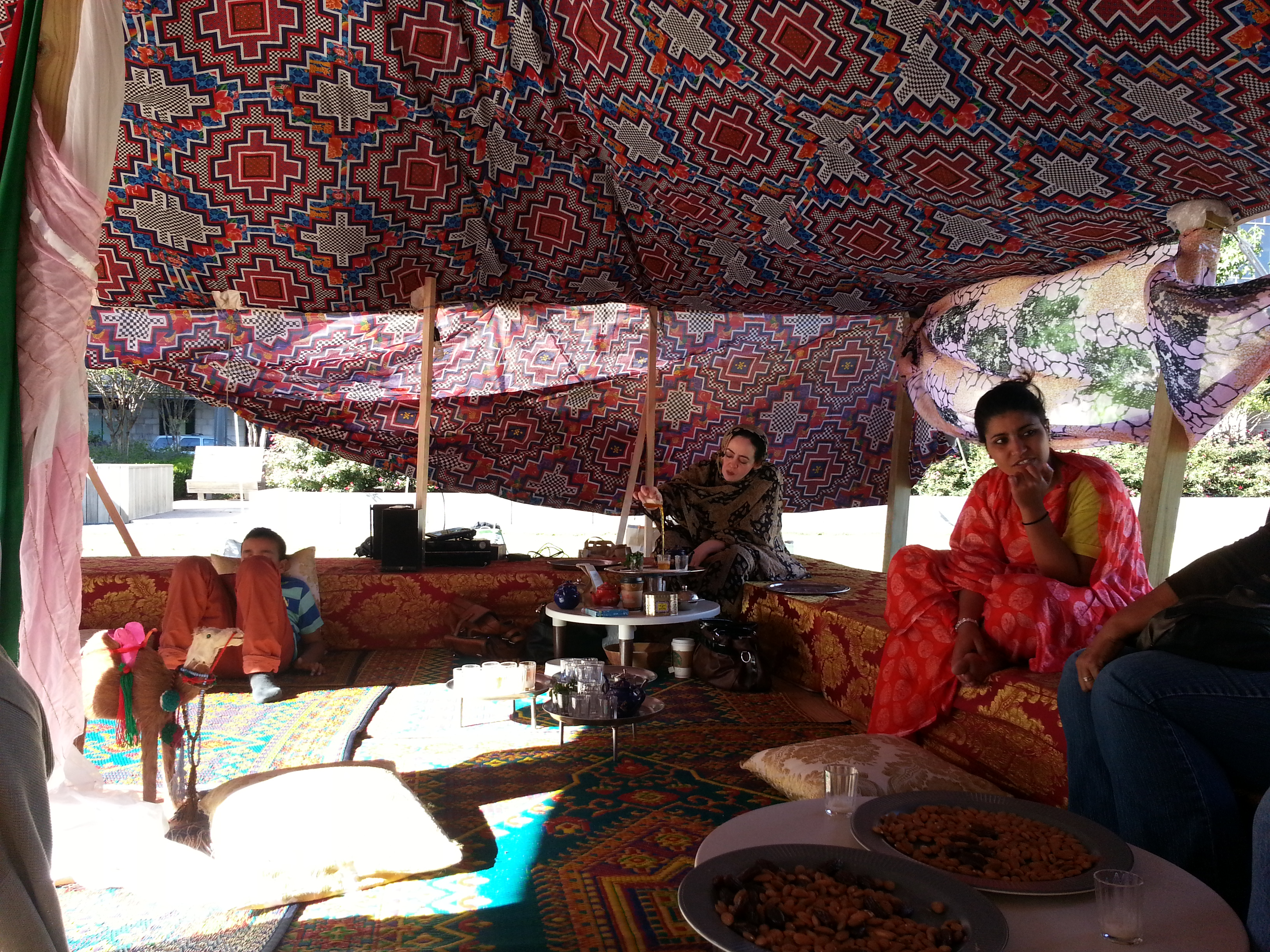
MAP 2013 – a festival and exhibition of social practice projects – launched October 1 and extends through November 24, 2013. Some of the C3 staff took a walk through downtown to visit one of the MAP projects called The Art of Sahrawi Hospitality. This project was inspired by artist Robin Kahn’s month-long visit with Sahrawi families living in the Tindouf Refugee Camps and within the “Liberated Territory” of Western Sahara.

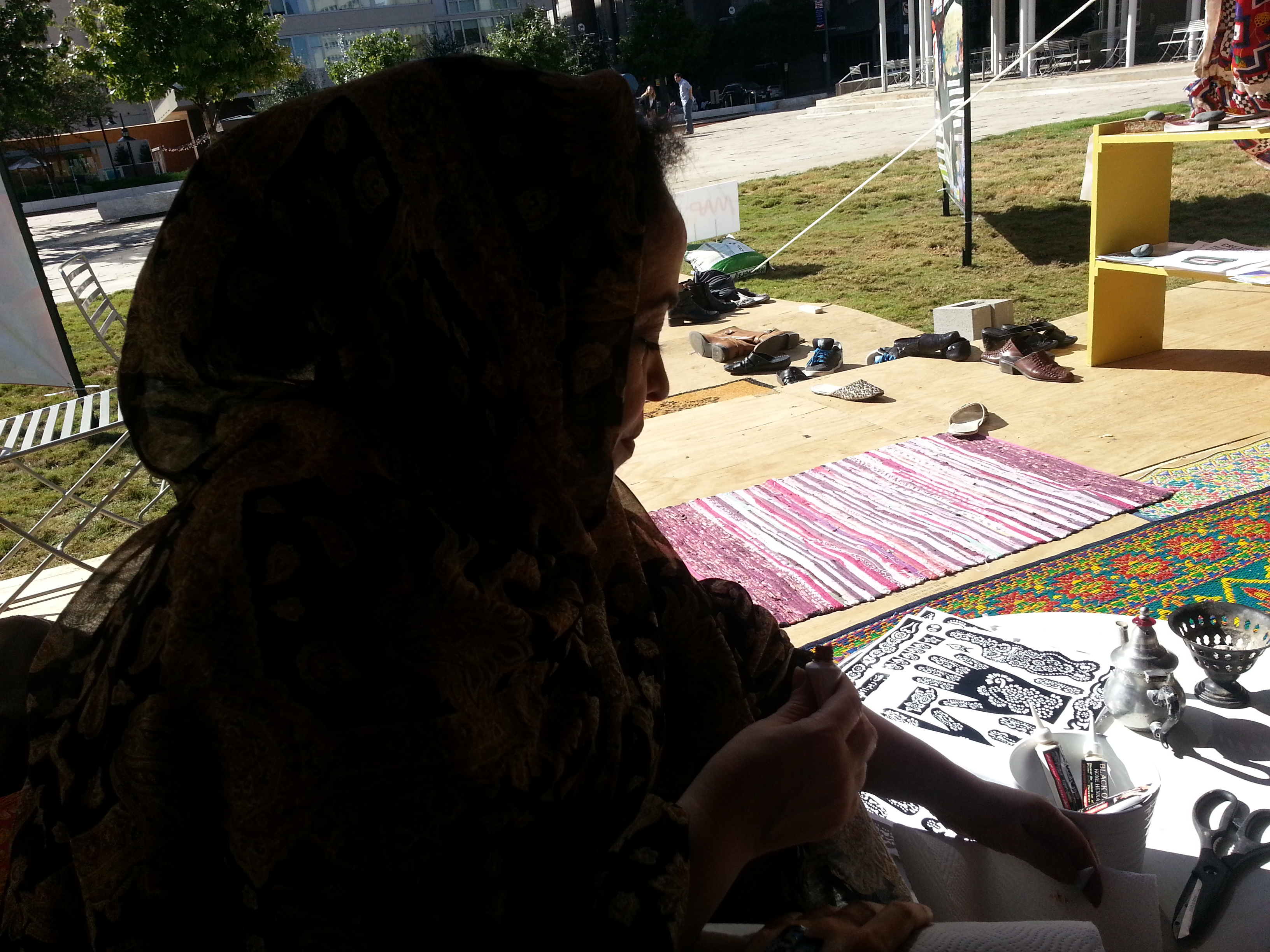
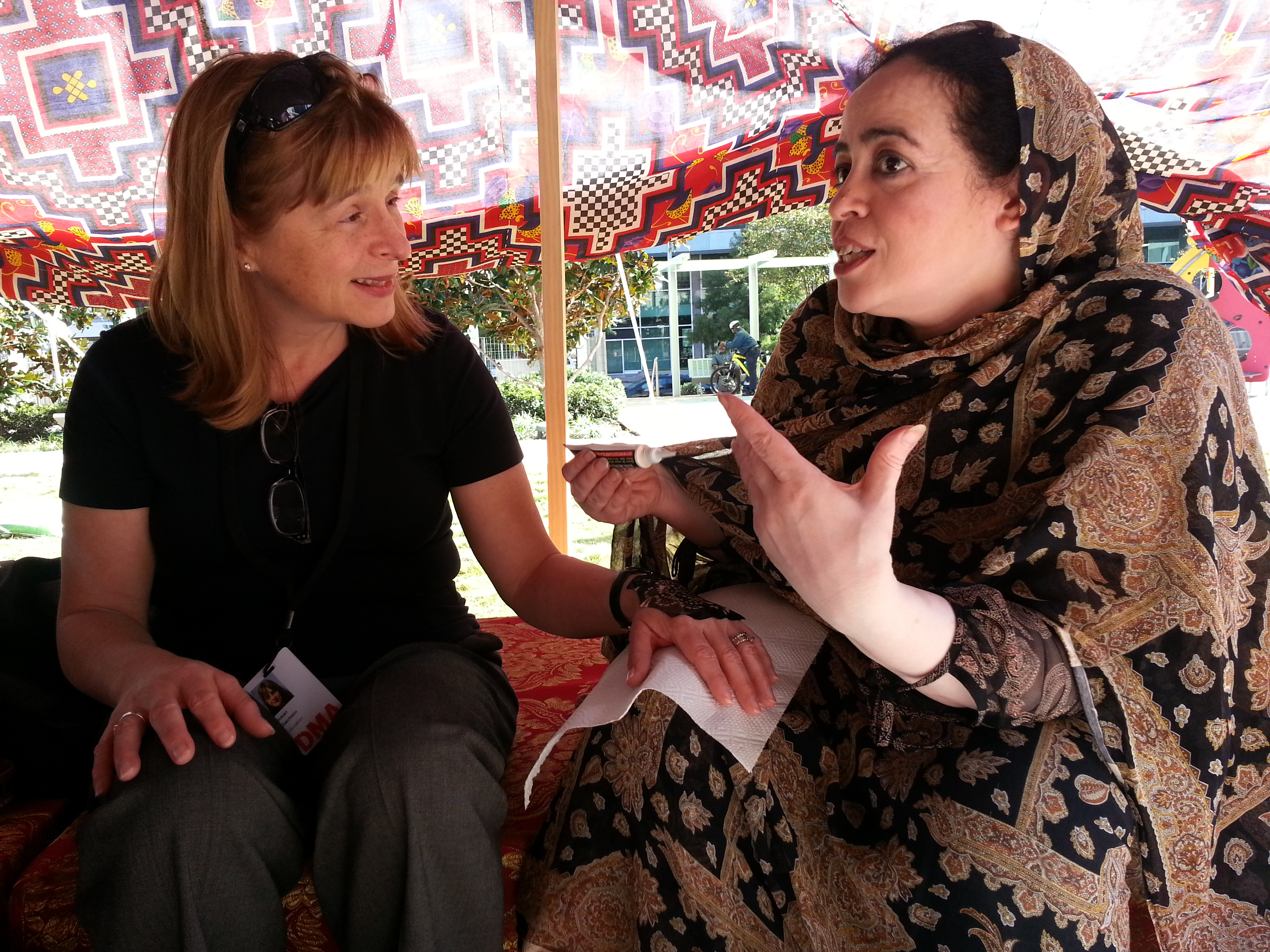
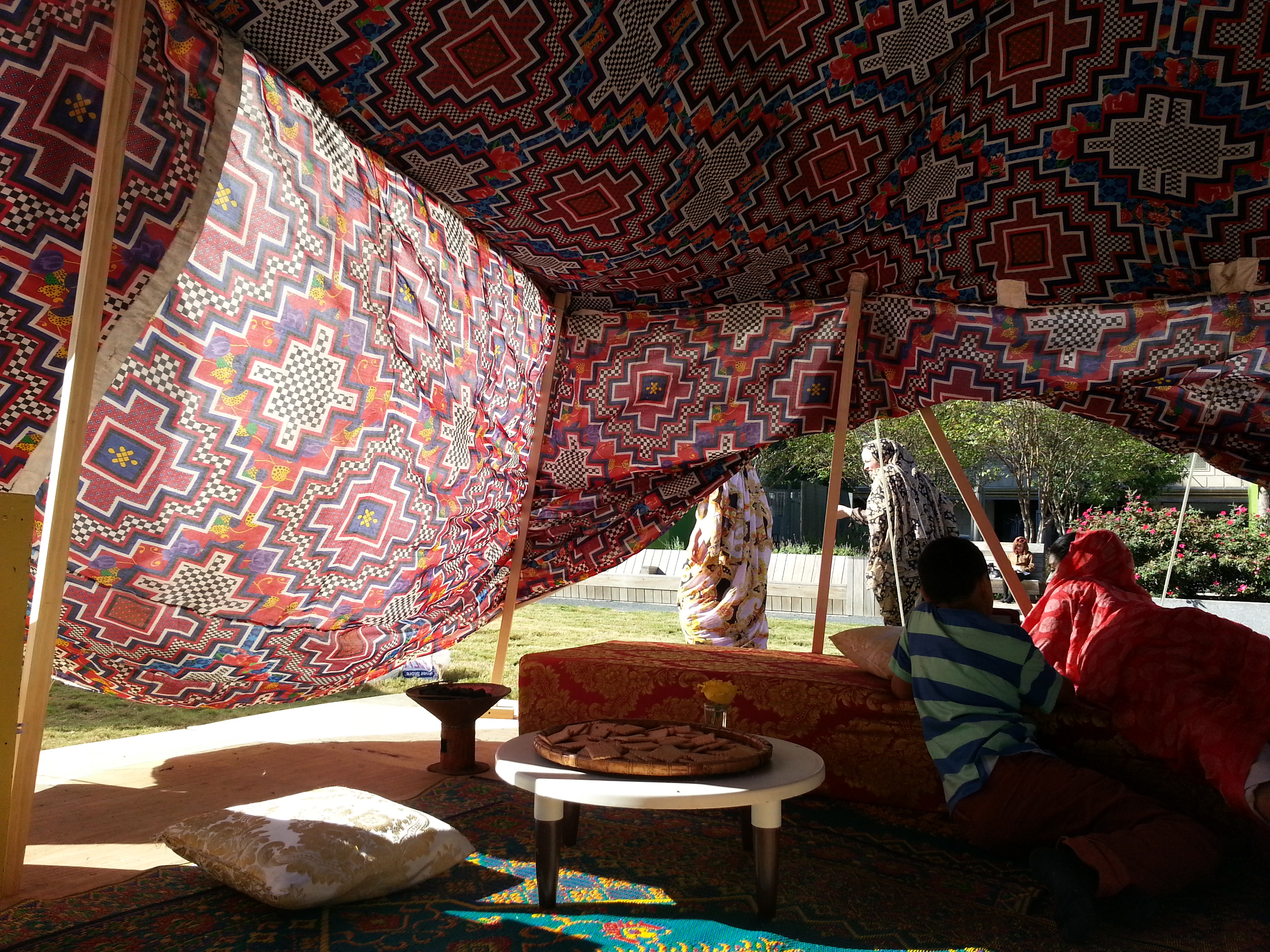
From October 16-20, any and all passersby could enter a large traditional Sahrawi tent and experience Sahrawi hospitality firsthand with Kahn and six Sahrawi women. Inside the tent, the women women were talking, dancing to traditional music, serving tea, and applying henna tattoos.  Susan, Amanda, and I each got tattoos on our hands.

right entrance

entrance to tent

entrance to tent

entrance to tent

Najat prepares the stencil and henna ink for tattoos.

Najat prepares the stencil and henna ink for tattoos.

Susan and Najat chat as Susan gets her henna tattoo.

Susan and Najat chat as Susan gets her henna tattoo.

The tent was constructed with beautiful traditional fabric.

The tent was constructed with beautiful traditional fabric.

Najat prepares the tea.

Najat prepares the tea.

test

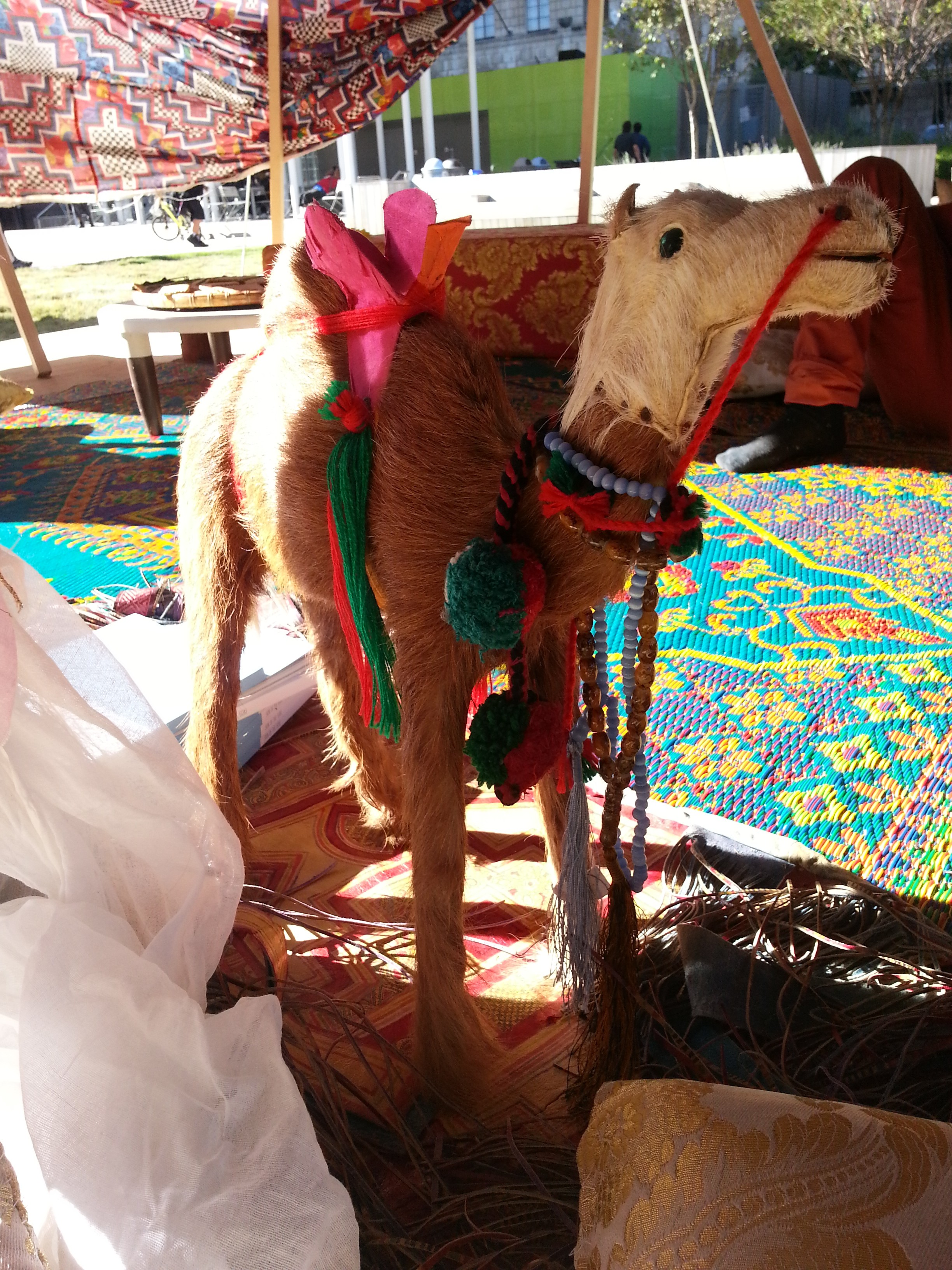
A friendly camel greets you inside the tent.

This wonderful project has already ended, but please check out the other MAP events and programs scheduled through November 24 on MAP’s online calendar.

Melissa Gonzales
C3 Gallery Manager
What is Accessibility?

The DMA, as well as other museums and cultural institutions across the country, have been tackling this question in the hopes of creating environments that are safe, open, and comfortable for a wide variety of people. Primarily, accessibility is thought of as a physical construct: a museum is deemed accessible if it holds no physical barriers to entry. Ramps, elevators and similar architectural structures are essential components for accessibility, providing individuals with and without mobility issues easy entry into any type of building. Removing physical boundaries is a key first step towards addressing the accessibility question.

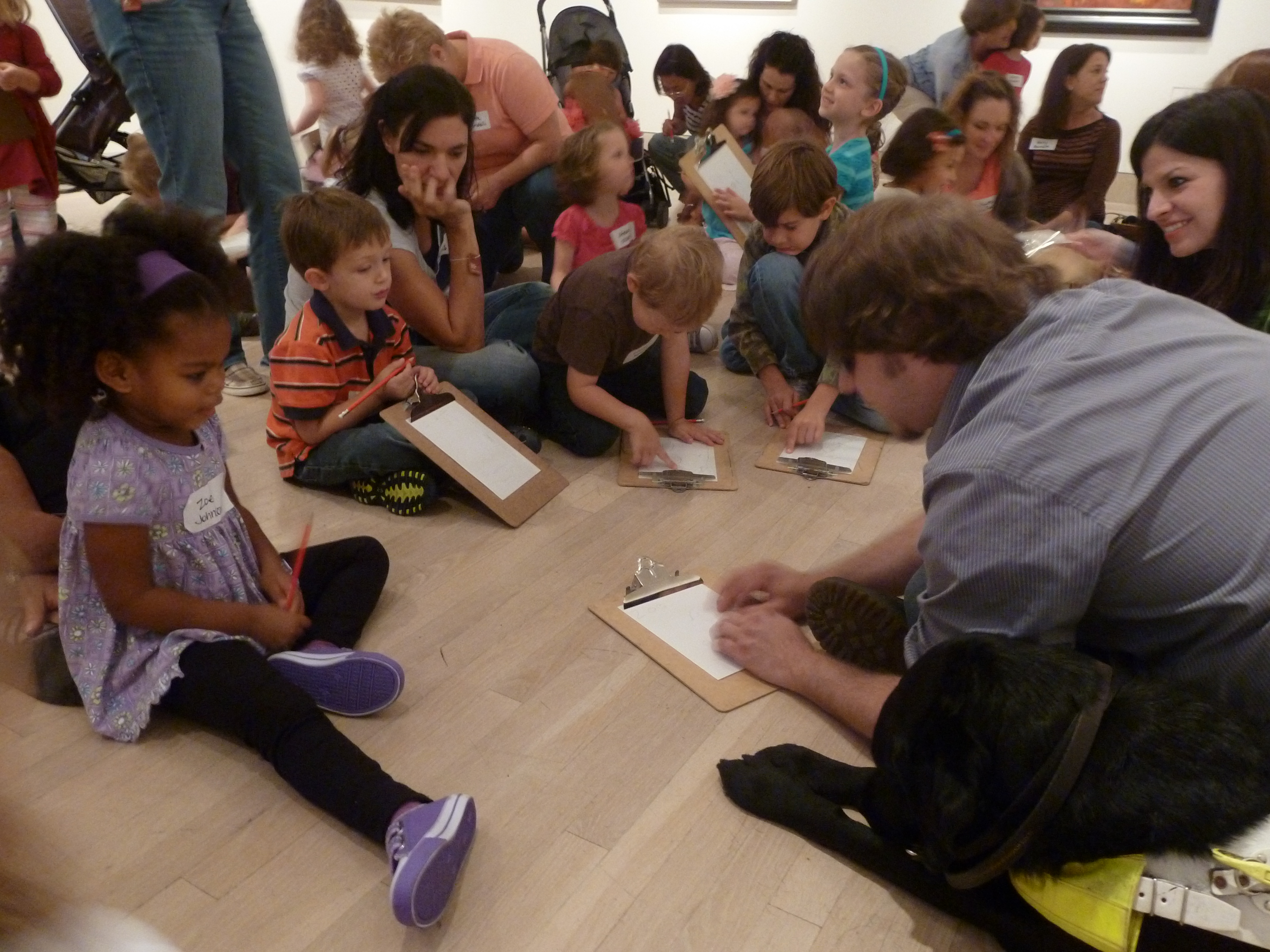
A family participating in an Autism Awareness Family Celebration at the DMA

A family participating in an Autism Awareness Family Celebration at the DMA

But then what? How does accessibility extend inside museum walls? Museums strive to ensure that their collections, programs, and services are accessible to all audiences, often by providing diverse educational programs that cater to visitors of varying abilities. When we think about teaching at the DMA, we think about inclusive experiences that are open to everyone, regardless of a person’s ability. While making learning experiences at the DMA open and accessible to all is important, we also believe that designing individualized experiences for a range of needs is important too. And we hope these special programs raise the awareness that art is for everyone, though some visitors may need to work in different ways to see and enjoy it.

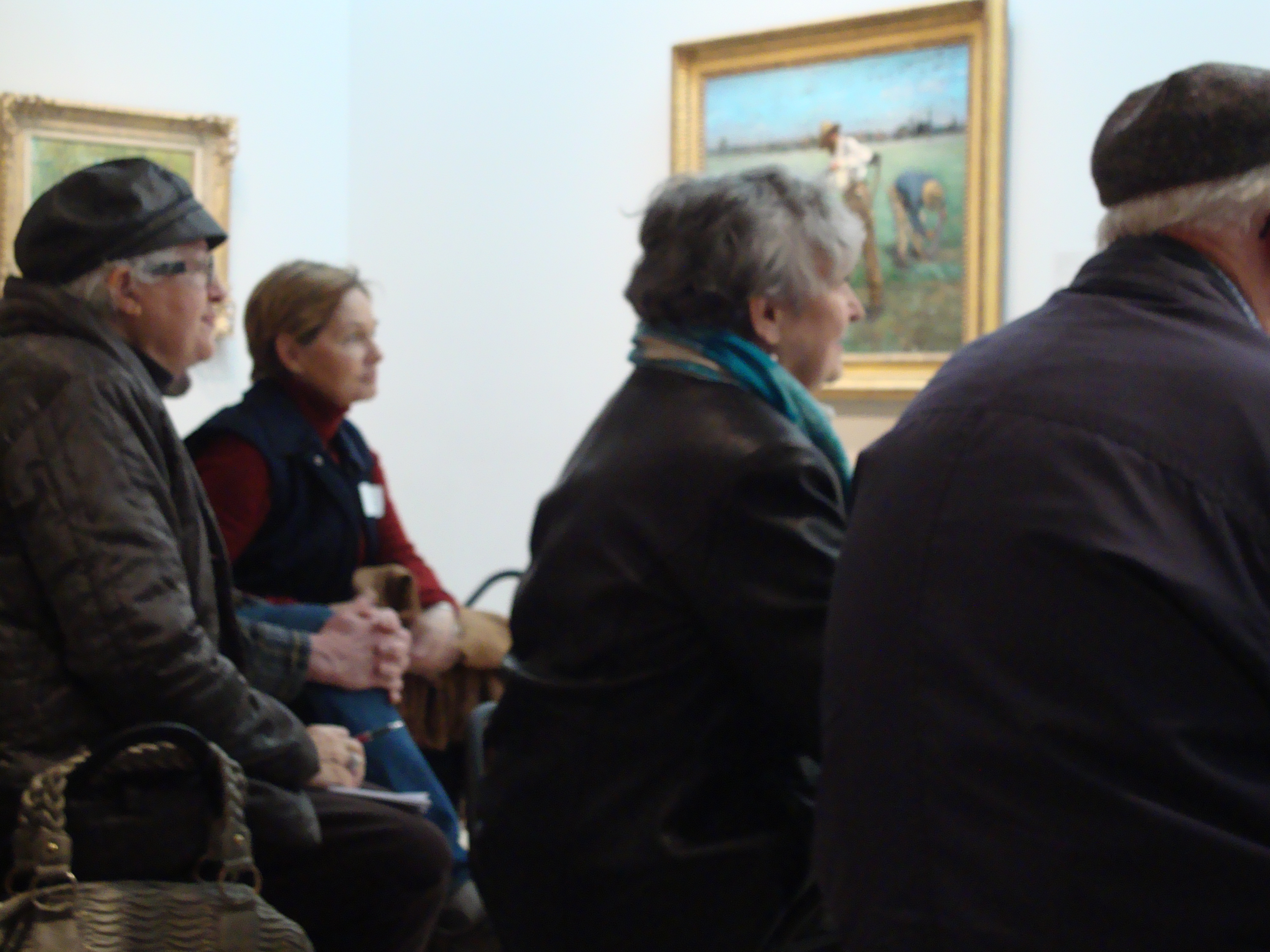
Meaningful Moments participants in the gallery

Meaningful Moments participants in the gallery

Our Access Programs provide these individualized experiences for visitors with special needs. Interactive gallery experiences and hands-on art making opportunities are available for adults with developmental disabilities as part of our partnership with The Arc of Dallas, as well as for adults with dementia and their care partners during our Meaningful Moments monthly program. For families and visitors with autism spectrum disorders, we organize a specialized summer art camp for children as well as Autism Awareness Family Celebrations throughout the year. These multi-sensory programs and events involve tactile opportunities and art-making activities that enable visitors of varying abilities to discover and appreciate artists and their works of art. During the month of October, we participate in Art Beyond Sight Awareness Month and focus on helping visitors enjoy art using senses beyond eyesight.

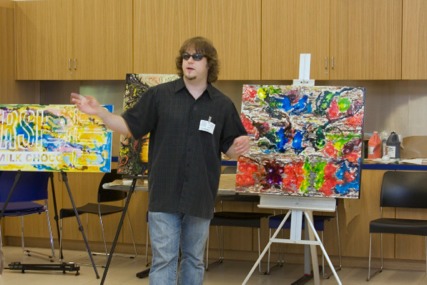
John Bramblitt talking about his works of art to summer campers

Artist John Bramblitt talking about his works of art to summer campers

The DMA is an Art Beyond Sight Partner and is proud to have participated in programming for Art Beyond Sight Awareness Month each October since 2007. Composed of leading institutions in 35 states and 25 countries, Art Beyond Sight Awareness Month is an outreach effort dedicated to promoting art education for people with vision impairment and building an inclusive society with improved access for all. This year, we were excited to expand our offerings to include programs for adults.

John leading a homeschool class for ABS month in the DMA's galleries

John leading a homeschool class in the galleries

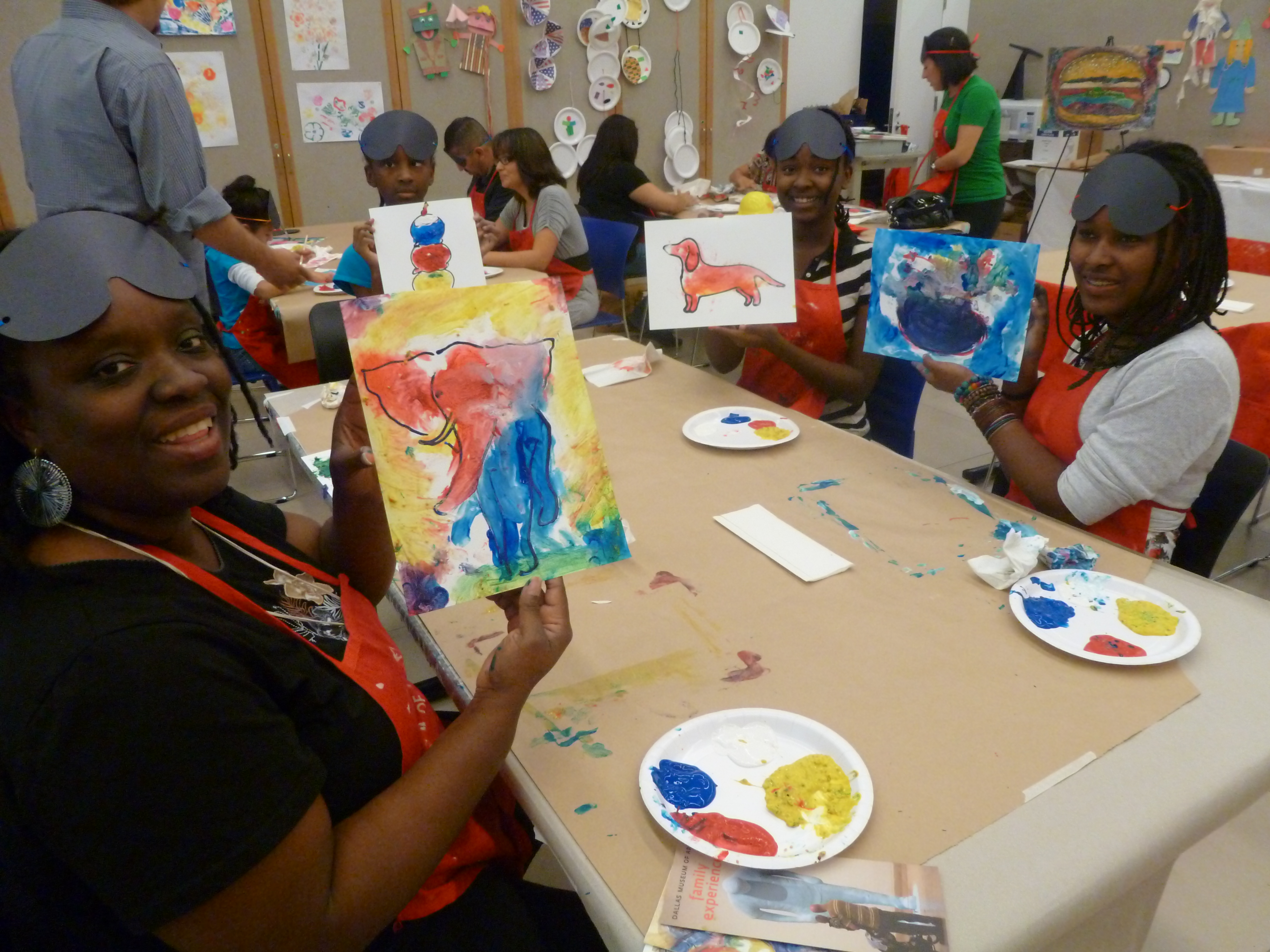
Artist John Bramblitt joined several ABS programs this month to talk about his process as a blind painter. Our October First Tuesday was focused on the senses and the Museum’s youngest visitors had the chance to immerse themselves in a sensory experience in Arturo’s Nest, our space for children under the age of four. John led Studio Creations in early October to kick-off a month of ABS-themed weekend art-making. He also led this month’s Meaningful Moments for visitors with Alzheimer’s disease and he will close our month of experiences by teaching our homeschool class. In our Arturo’s Art and Me class for children aged 3-5, kids got to paint in the dark to experience sightless painting and our Arc participants had the chance to wear blindfolds to paint with their fingers!

Visitors experience John Bramblitt's Sightless Painting activity

Visitors experience John’s Sightless Painting activity

In addition to these experiences, John led a public gallery talk for adults, during which he shared images of his artwork, talked about his process, and provided insights into his subject matter. And during Late Night last Friday, John teamed up with Stephen Lapthisophon in an artist’s lecture. Both artists have visual impairment, and both approach painting in a completely different way.

John’s process is very detailed and planned out, with various techniques that he employs for raised lines. John uses raised lines to sketch the base of his drawing first – some of the lines are raised for only a short period of time while others remain raised to allow John to feel the contours of his drawing for a longer amount of time. After he drafts his lines, John adds many, many layers of paint. For Stephen on the other hand, art-making is a social art and isn’t highly technical.

Both artists have varied creative inputs as well. Much of John’s artwork is representational and a reflection of an internalization of his sensory world, while Stephen’s artwork is more about the experience of his senses as he is creating (often with food and text) which could be a reflection of society and the associations of his materials. Each artist spoke a bit about his process and then each had the chance to sit down for a conversation together before taking questions from the audience. The artists had the chance to ask questions of one another and it was interesting to hear them contrast their processes and to get their takes on how other senses play a strong role in their own art. This program was an opportunity for visitors with visual impairment to meet and talk with John and Stephen. The lecture ended with a woman who has been blind for five years asking advice from the artists about her own art. Each artist gave her some ideas and encouragement before meeting with her after the lecture to continue the conversation.

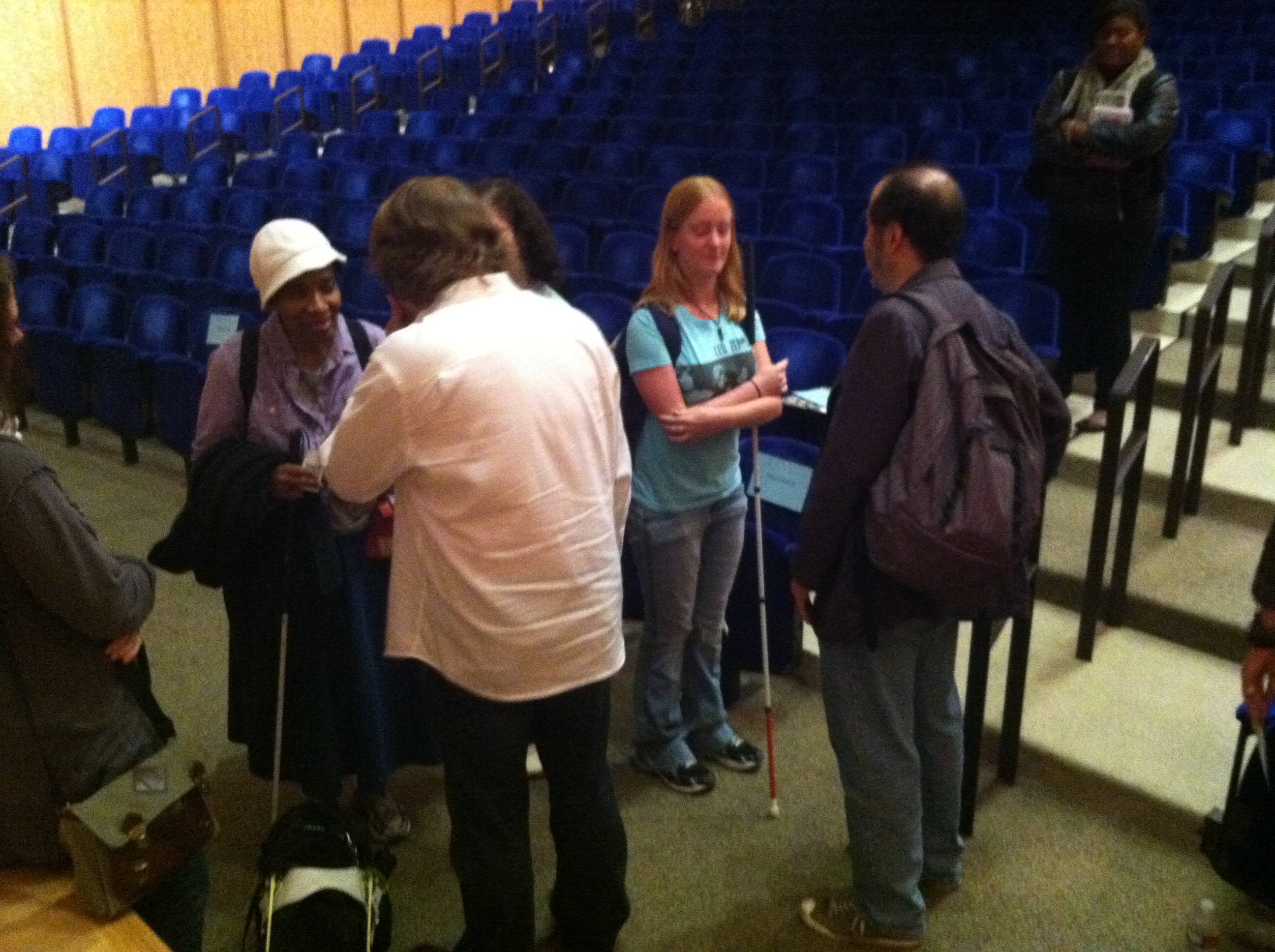
Visitors with vision impairment talking with John Bramblitt and Stephen Lapthisophon after their Late Night artist lecture

Visitors with vision impairment talking with John and Stephen after their Late Night artist lecture

The Access Programs offered by the DMA are essential components in creating welcoming, accessible environments, but there is still more to be done. What other types of resources can and should be made available to visitors?  Let us know what you think and be sure to check back in the future as we delve deeper into this matter.

Danielle Schulz
Teaching Specialist

Amanda Blake
Head of Family, Access, and School Experiences

Friday Photos: Work Pals on the Job!

In an effort to build relationships, mutual understanding and internal support, the Education Division decided to institute work pals. Check out some of the new confidants and buddies that have been formed by just drawing names from a hat! Think about ways that you can boost morale, have fun, and establish these types of working relationships in your workplace.workpal

Work pals Rhiannon and Amanda love sending notes of encouragement and fun gifts throughout the week. Rhiannon is our Volunteer Coordinator and Amanda is the C3 Program Coordinator.

amandaandandi

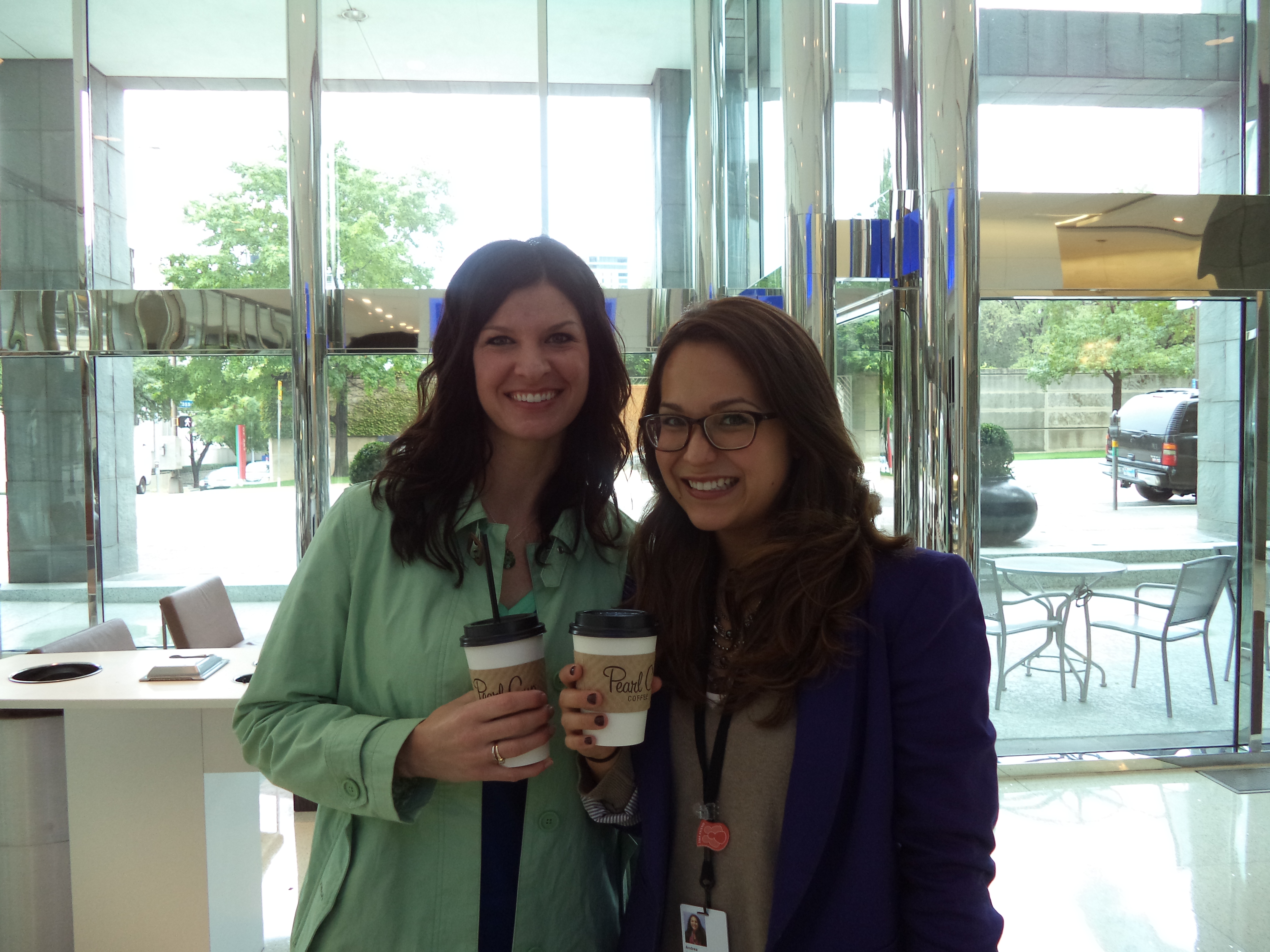
Amanda, Head of Family, Access, and School Experiences, and Andrea, Interpretation Specialist, bond by grabbing a cup of joe. They make the perfect work pals! Amanda said, “something I found out about Andrea is that she loves color, interior design, and I am super impressed by her crafting abilities. She is making all of the bouquets and centerpieces for her upcoming wedding! We of course both love dogs and talked about a future work pal dog date!”

leahmelissa

These two share a love for family and togetherness! Melissa, C3 Gallery Manager, and Leah, Manager of Early Learning Programs, really enjoy their time together exploring the collection!
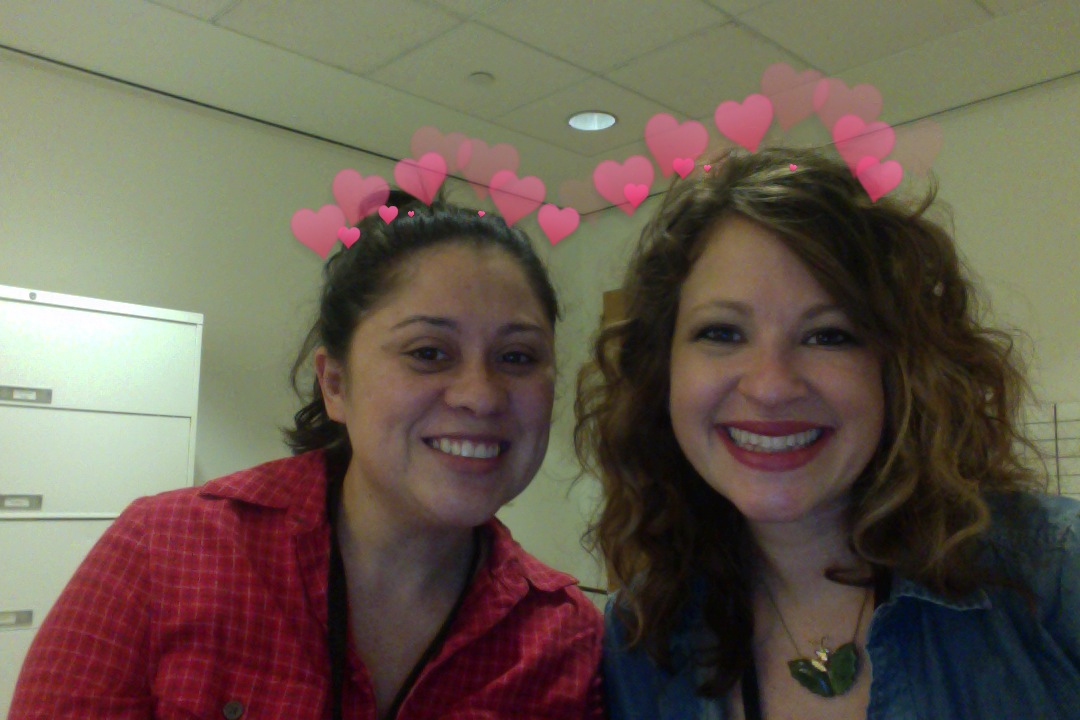
Amy and Amelia

McDermott Interns Amy and Amelia have been spending a lot of quality time with Wendell, our Jazz in the Atrium Program Coordinator. Amy and Amelia are planning to shadow Wendell during Jazz in the Atrium and learn all about what he does in the Adult Programming department. These two admire Wendell and say that he is a very funny and humble man.
staceydani

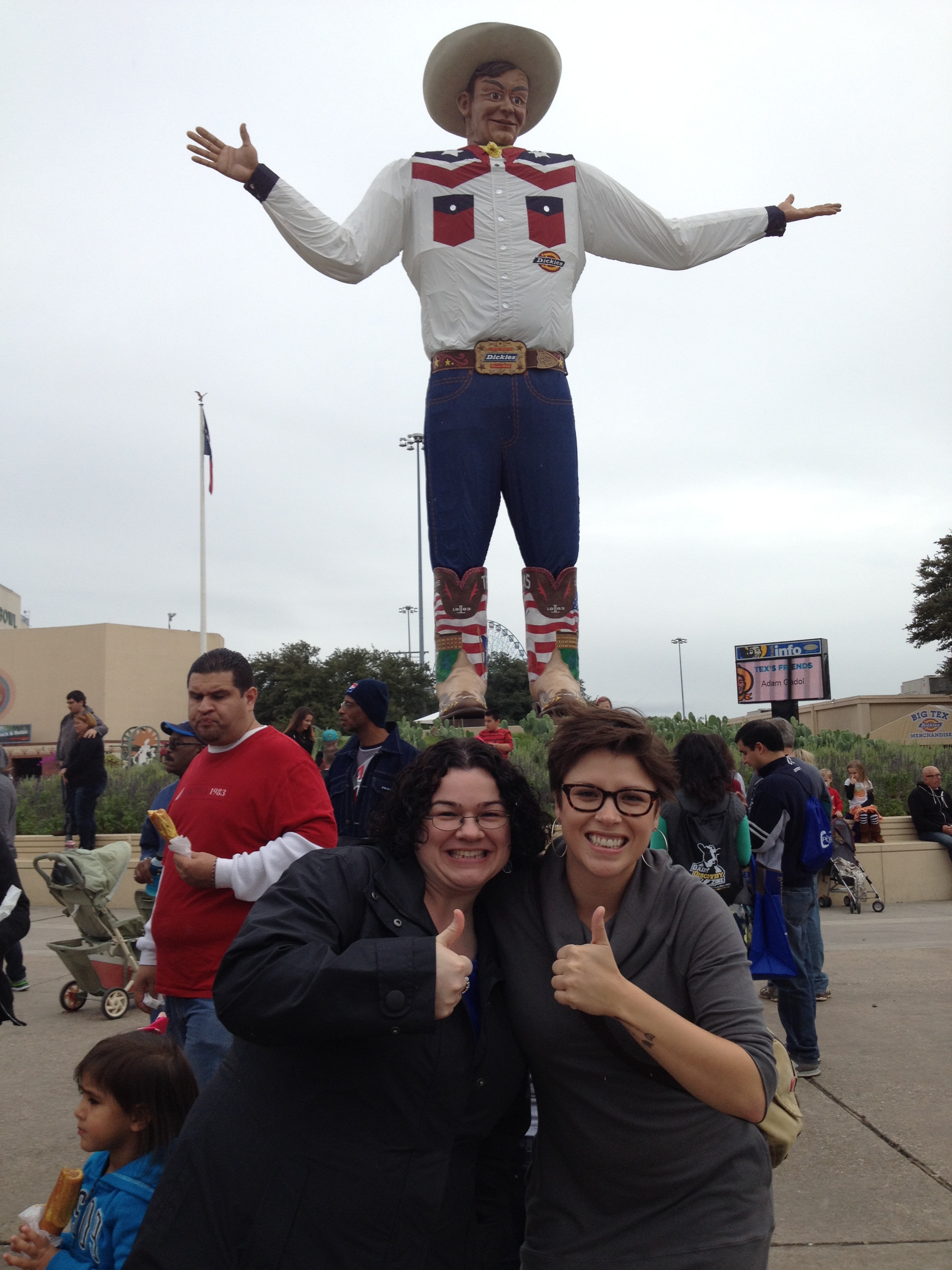
Our Head of Adult Programming and our Teaching Specialist decided to get to know each other better while they attended the State Fair of Texas during our annual Education Fair Day. Stacey and Danielle give a big thumbs up as they said howdy to our very own Big Tex!

Sarah and Hayley

And here’s Sarah, Assistant to the Chair of Learning Initiatives, and McDermott Intern Hayley, also enjoying the State Fair of Texas! They tried the 2013 Big Tex Choice Award Winner for Most Creative: Fried Thanksgiving Dinner. They also discovered that they are both Anglophiles who love the Royal Family. But while Sarah dreamed of marrying Prince William, Haley had her eyes on Prince Harry!

Here are a few suggestions to do with your work pal:

  • Meet for coffee/tea to learn more about your duties or role.
  • Brainstorm together on future projects–It’s a great opportunity to gain a fresh perspective.
  • Send each other encouraging emails or handwritten notes!
  • Shadow each other for a few hours to gain more knowledge of your respective positions.
  • Take some tips from my co-workers by getting to know one another and having a little fun on the job!

Amanda Batson
C3 Program Coordinator

Artist Astrology: Libra

Whether or not you believe in astrology, it’s fun to read about your zodiac and the characteristics that are associated with your sign! As I was thinking about this fascination of my own, I began to wonder what artists shared my sign and whether their artwork aligned with the traits of their zodiac. So I decided to research the birthdays of some of the prominent artists in the DMA Collection to explore the relationship between their zodiac and their art. Tune in every month to find out what artists share your zodiac!

This first month of Artist Astrology will focus on the balanced, intellectual Libras (September 24 – October 23). Libras are represented by the symbol of a scale. They are often defined by their intellect and, as a result, make great problem-solvers. Although Libras posses great mental capacity, they are also extremely social and very communicative. They have the ability to look at a problem from multiple perspectives, often acting as mediators in a disagreement. Libras lead harmonious, balanced lives and seek to create peace and harmony in their surroundings, including their relationships. They are also creative spirits and their imaginative nature is often represented in their style, interior decoration, and hobbies. Libra’s are said to bring a bit of art into everything they do and enjoy creating new and unusual things. Some of our favorite DMA Libra’s include:

1968_9

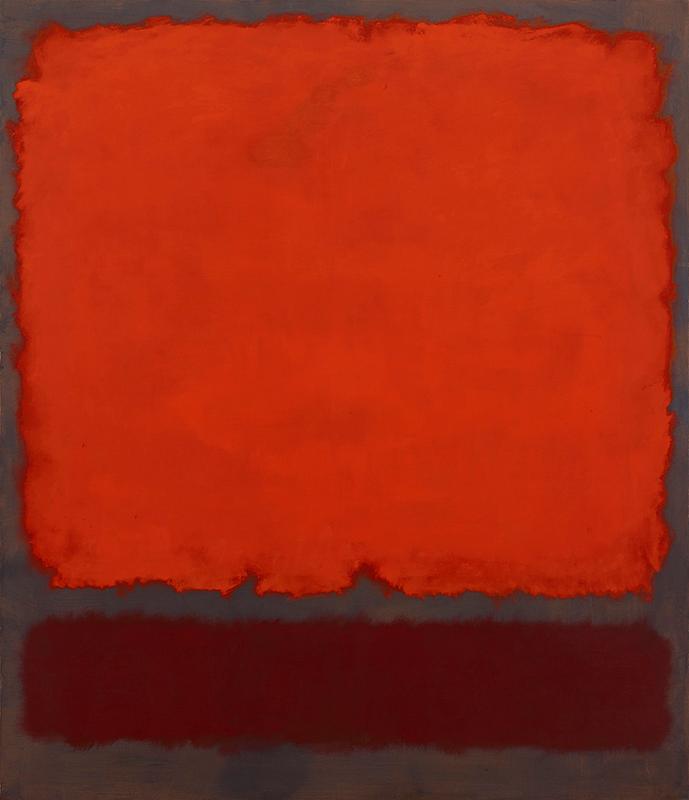
Mark Rothko – September 25

Communication is a central element in Mark Rothko’s work. In the late 1940s, Rothko removed figural representations from his work, believing that a universal representation of human drama was better conveyed through large masses of color which for him suggested concrete human emotions. An intellectual thinker, Rothko stated in an interview with Tiger’s Eye magazine in 1949, “The progression of a painter’s work…will be toward clarity; toward elimination of all obstacles between painter and the idea, and between the ideas and the observer.” Rothko’s attention to the reaction of the viewer demonstrates his Libra sensibility for clear thought and observant social prowess.

1975_86_FA

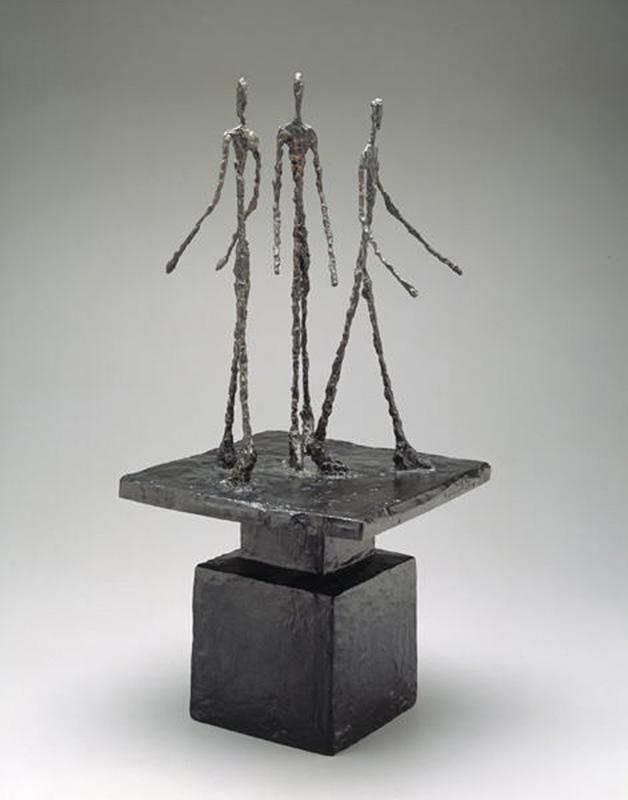
Alberto Giacometti – October 10

Throughout his career, Alberto Giacometti primarily worked in portraiture. His mature style, as seen in Three Men Walking from 1948-49, was especially popular and hailed as a symbol of the isolation and anonymity of the post-war period. Three Men Walking is demonstrative of Giacometti’s keen ability to observe humanity from an impartial and fully-encompassing perspective. Interestingly, this period also coincided with the renewal of his relationship with his brother and marriage to his long-term domestic partner, Annette Arm, in 1949. Socially active individuals, Libras are said to only achieve peace and satisfaction through loving and supportive relationships.

1951_41

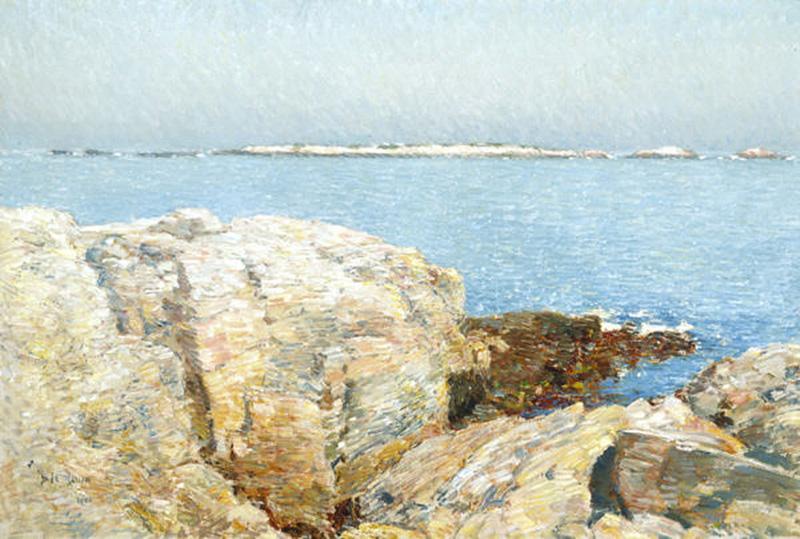
Childe Hassam – October 17

Childe Hassam is typically identified as an American Impressionist. His style features soft brush strokes and an attentive perception of the atmospheric qualities of light and air. In fact, Hassam encouraged this label and considered himself a painter of “light and air” rather than solidly an Impressionist. Paintings, such as Duck Island above, demonstrate his tendency to present his surroundings in a peaceful, harmonious composition. Interestingly, the Duck Island coast, one of the Isles of Shoals near Portsmouth, New Hampshire, was known among sea captains for its treacherous waves and dangerous reefs. Hassam avoids this dark reference in favor of a restful representation of this popular vacation spot.

1986'8'A-B

Robert Rauschenberg – October 22

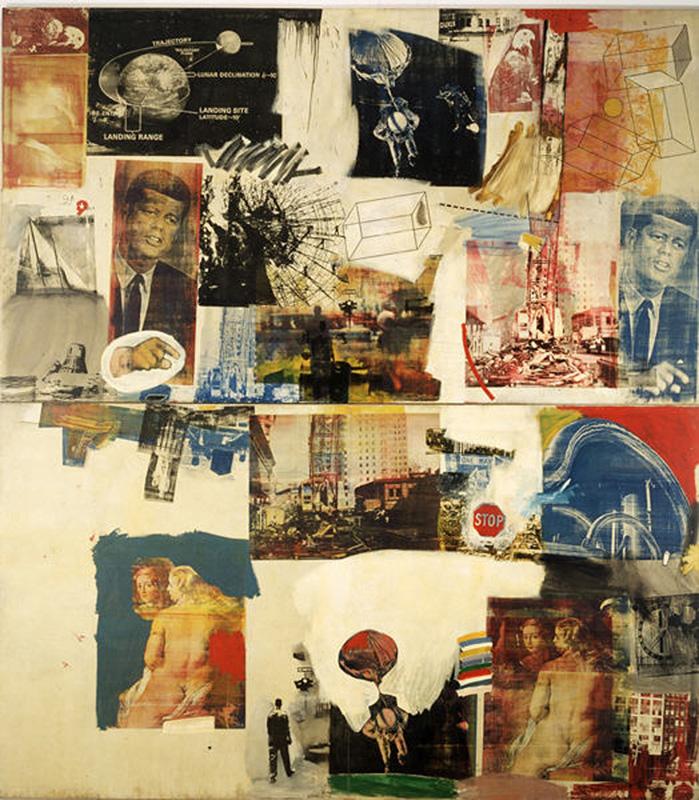
Robert Rauschenberg collected the source material for his silkscreen prints from a variety of sources, including newspapers, Life magazines, personal photographs, and New York Times archives. His attraction to such various sources demonstrates his active engagement in current and past historical events. Having collected his varied materials, Rauschenberg successfully organized his images to present one cohesive, effective image. Produced for the 1964 New York World’s Fair, Skyway is emblematic of the optimism and expansionism of the early 1960s, featuring images of President John F Kennedy, the space race, urban construction, and the American bald eagle. The title is suggestive of the “New Frontier” of American expansion as space became labeled the ‘highway’ of the future.

A few other lovable Libras include Jean-Francois Millet (October 4), Frank Duveneck (October 9), Jean Antoine Watteau (October 10), and Maurice Prendergast (October 10). Tune in next month for some of our superb Scorpios!

Artworks shown:

  • Mark Rothko, Orange, Red and Red, 1962, Dallas Museum of Art, Gift of Mr. and Mrs. Algur H. Meadows and the Meadows Foundation, Incorporated
  • Alberto Giacometti, Three Men Walking, 1948-49, Dallas Museum of Art, Foundation for the Arts Collection, gift of Mr. and Mrs. Stanley Marcus
  • Childe Hassam, Duck Island, 1906, Dallas Museum of Art, Bequest of Joel T. Howard
  • Robert Rauschenberg, Skyway, 1964, Dallas Museum of Art, The Roberta Coke Camp Fund, The 500, Inc., Mr. and Mrs. Mark Shepherd, Jr. and General Acquisitions Fund

Hayley Prihoda
McDermott Intern for Gallery and Community Teaching


Archives

Categories