Posts Tagged 'Center for Creative Connections'


Urban Armor Street Art Camp with Isaac Davies

Guest Artist Isaac Daniel Davies

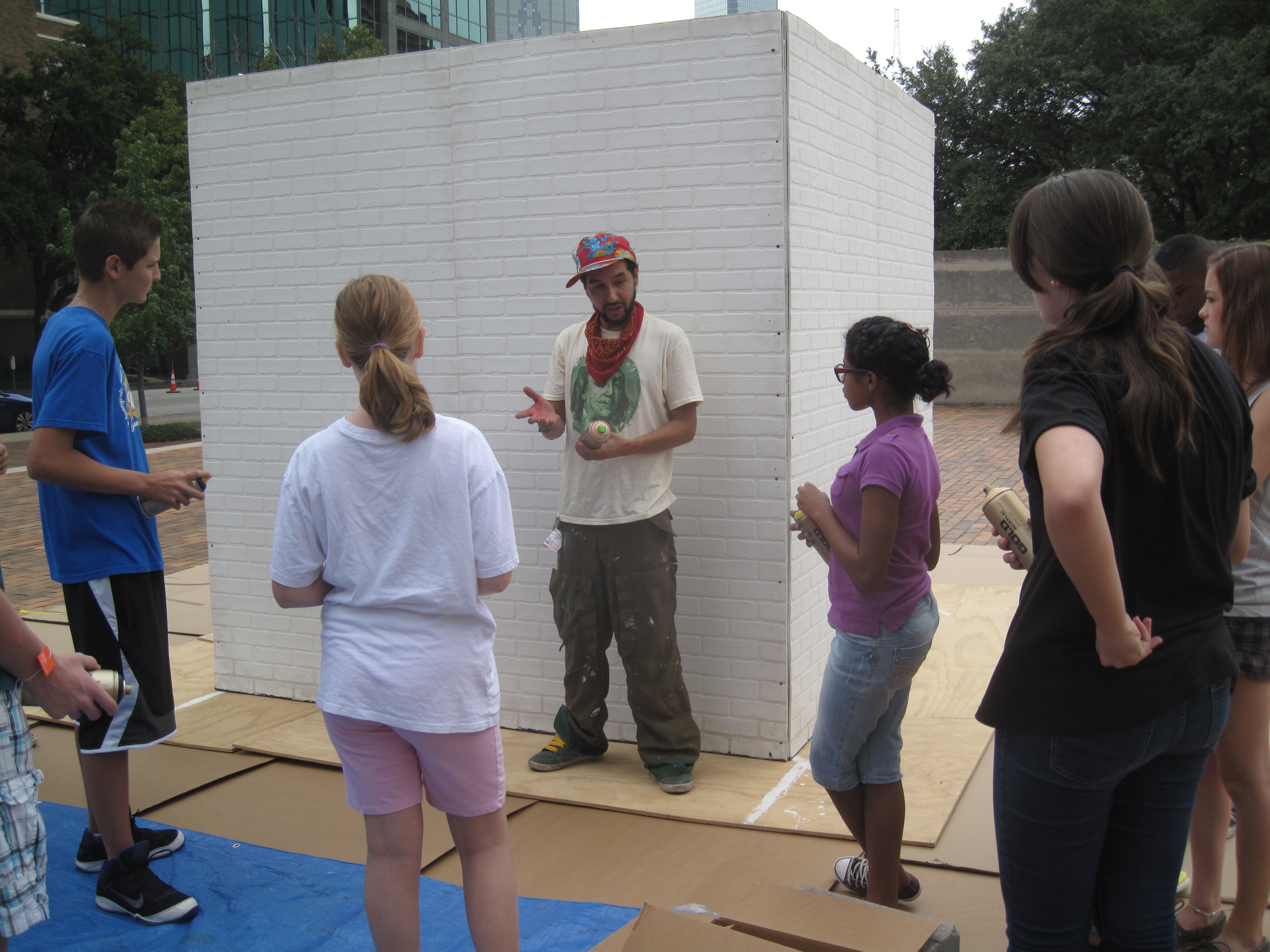
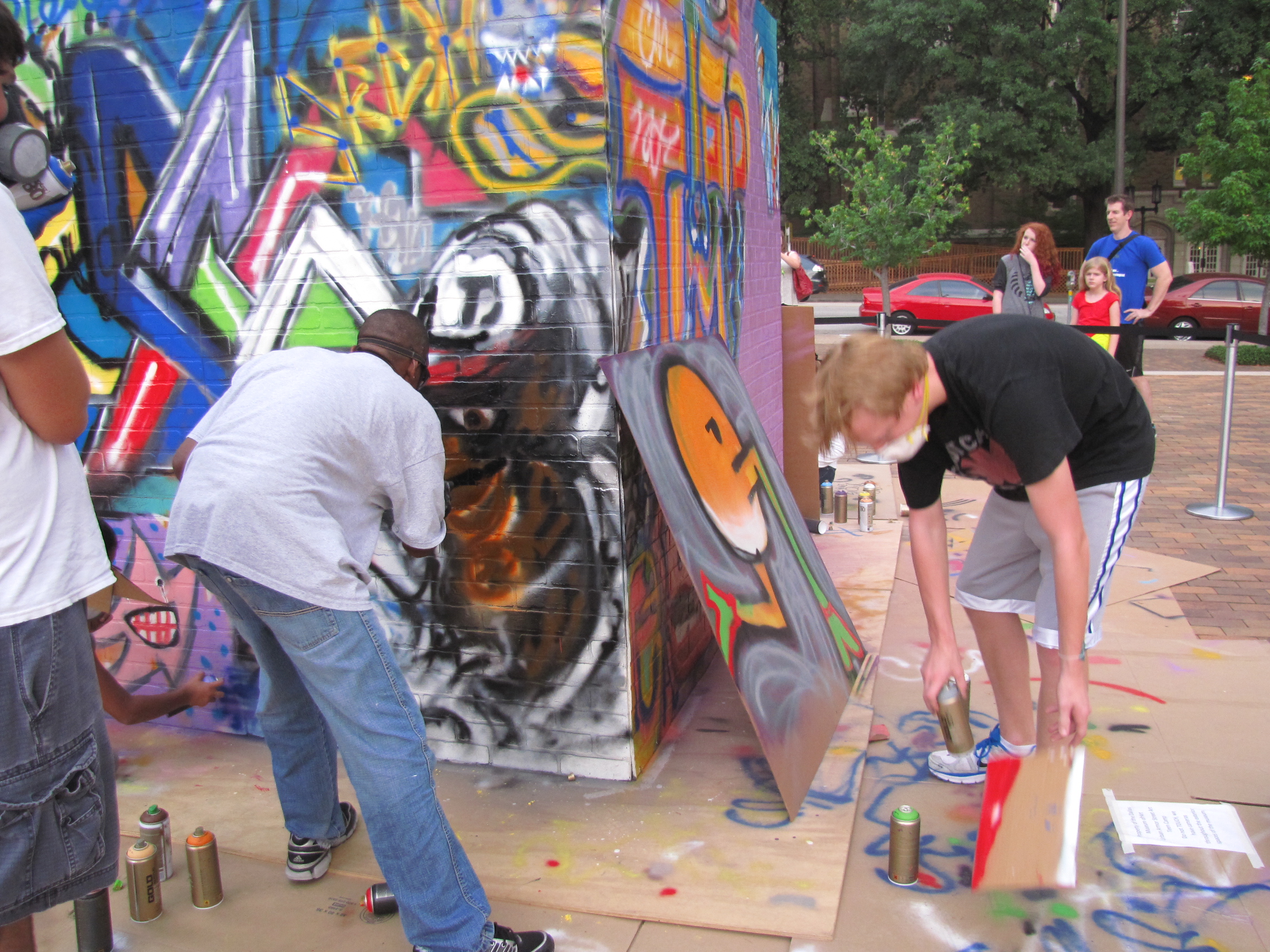
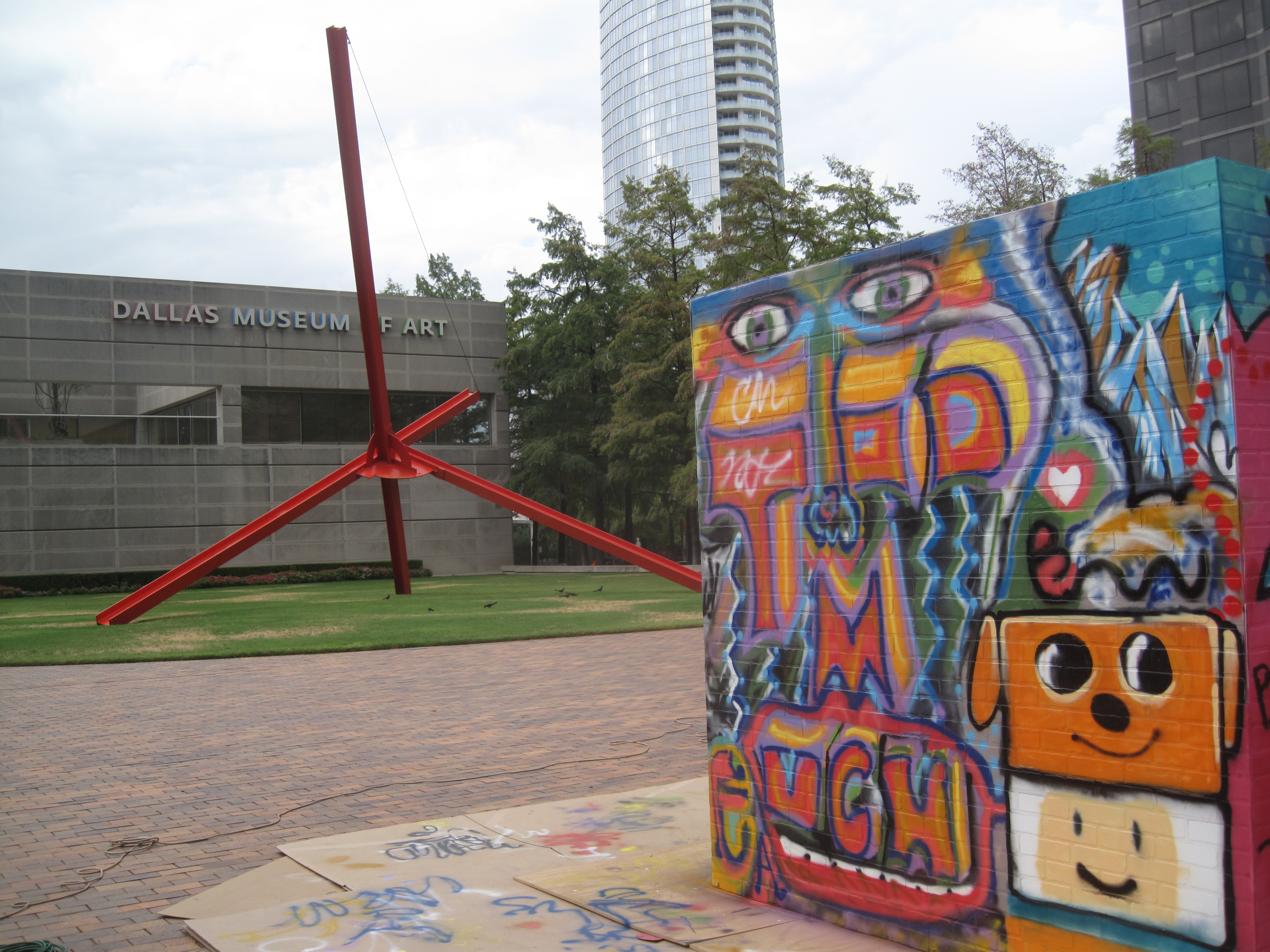
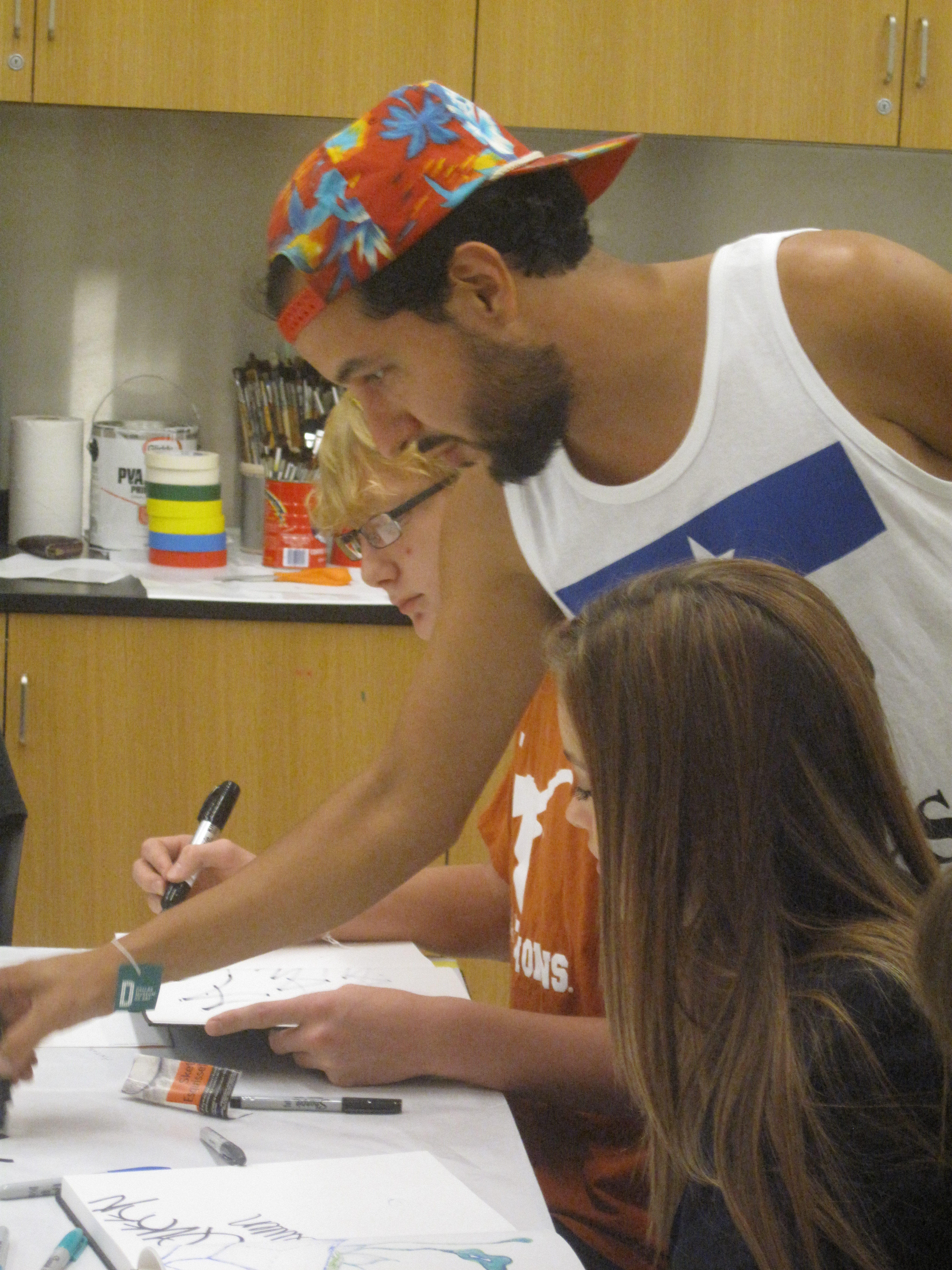
Urban Armor is the Dallas Museum of Art’s unique program for tweens and teens.  These photos highlight the first summer camp  for this age group focused on identity through street art.

During this camp, students developed new ways to express themselves with the assistance of our Urban Armor teachers Amanda Batson, JC Bigornia and guest artist Isaac Davies.

Teens Working

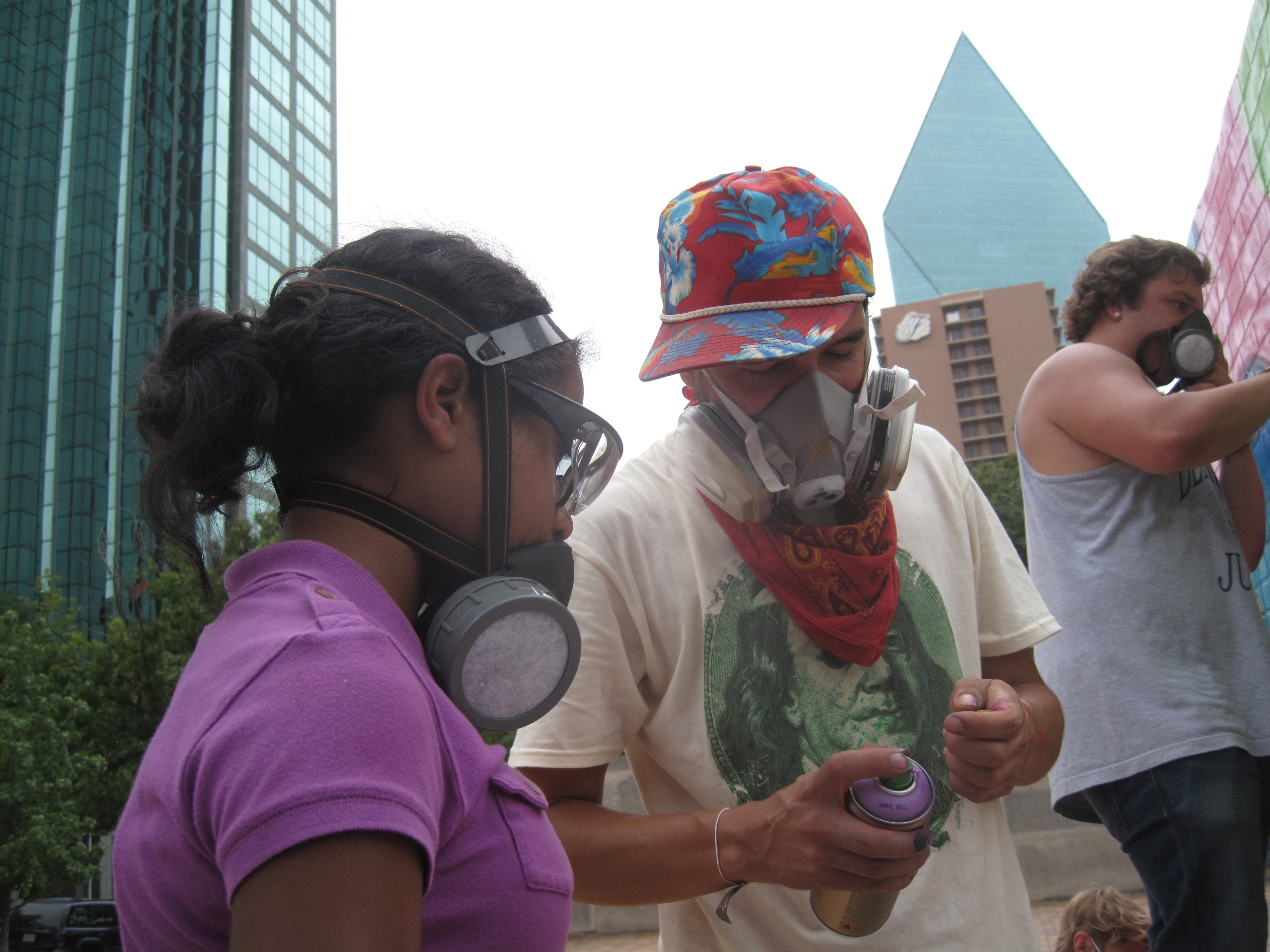
Isaac Daniel Davies and Urban Armor student

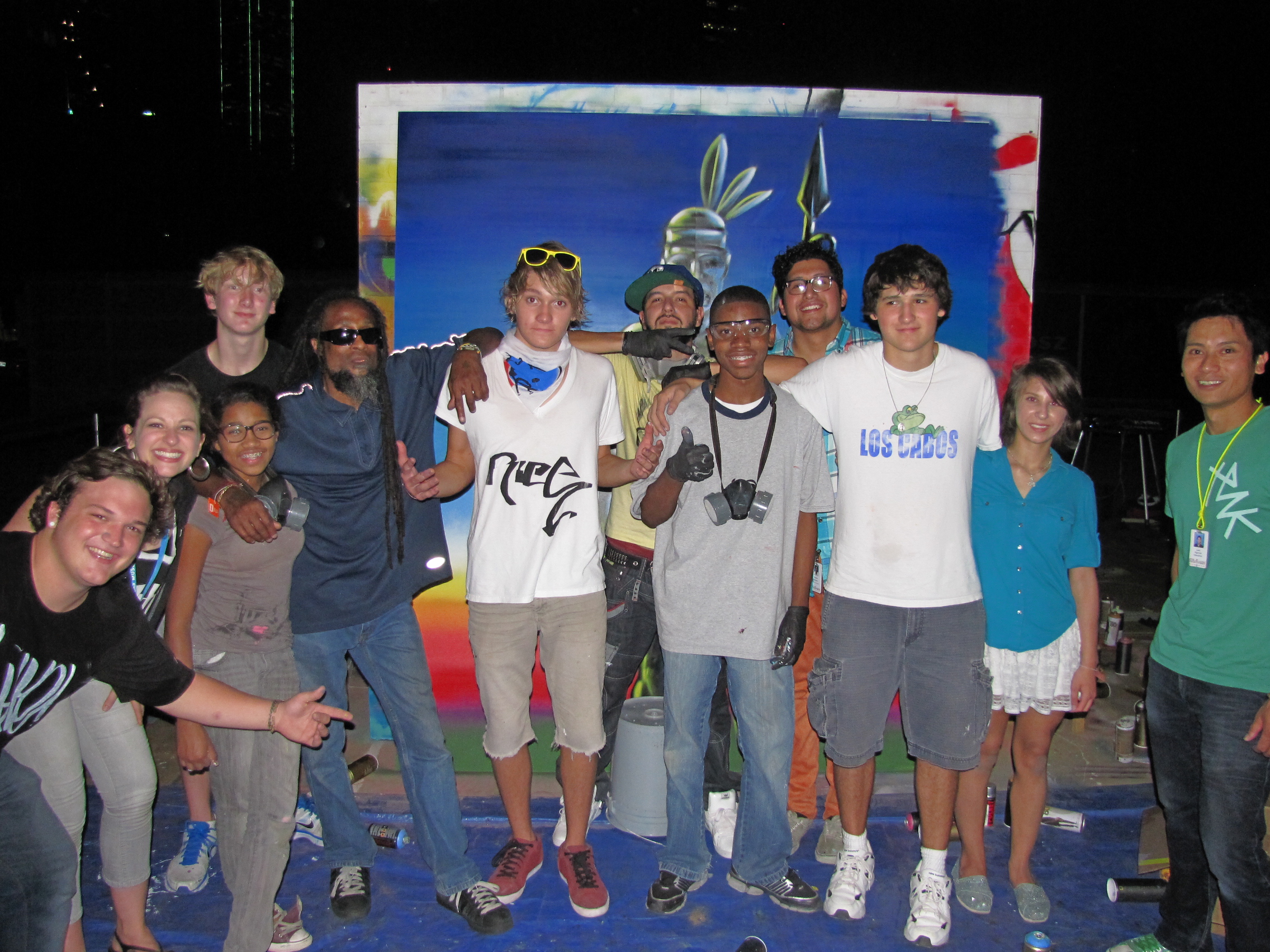
Late Night Camp Demo with Isaac Daniel Davies, Anthony Gonzales,  DJ EZ Eddie D, Amanda Batson, JC Bigornia, and Urban Armor students

Completed

For upcoming Urban Armor programs, please visit our website.

Amanda Batson
C3 Program Coordinator

Top Ten List of New and Upcoming Programs and Events

  1. iMuseum 2.0 Late Night:  Our September 21st Late Night is a not-to-miss night of new, experimental, and interactive programs.  Among them are a Choose Your Own Adventure tour and your chance to text a work of art with your questions.
  2. New acquisitions on viewCurrent exhibition Variations on Theme: Contemporary Art 1950s-Present features more than a dozen of the Museum’s 2011 and 2012 new acquisitions.  Check out online versions of the Museum’s Annual Reports and What’s New to keep up with our recent acquisitions, and then come see them at the Museum.
  3. Art-making in Posters of Paris. An art-making area in the upcoming Posters of Paris: Toulouse-Lautrec and His Contemporaries exhibition will provide visitors with everything they need to create their own artistic poster.  Leave a copy of your creation at the Museum (to be posted on a wall in the exhibition), and take the real thing home for the fridge!
  4. Staff Art, Staff Selections.  Visit in November to see an exhibition with artworks created by staff members.  Also on view in the Center for Creative Connections is our Personal Point of View series where a Museum staffer is invited to select and respond to an artwork for the main gallery space.
  5. Book Talk.  A book club-style event, Book Talk brings together Museum members (Sustainer level and above) for exhibition-inspired book discussions, exclusive lectures and tours, and author meet & greets.
  6. Klyde Warren Park Opening & Art Beyond Sight.  On Saturday, October 27th and Sunday, October 28th, the DMA takes art-making activities into Klyde Warren Park for their grand opening.  In honor of Art Beyond Sight Awareness month, we are focusing on experiencing art with senses other than vision. Sketch a nature scene, and then use scented paint to create your scene based on how it might smell.
  7. Karla Black: Concentrations 55:  As part of Concentrations—a series of project-based solo exhibitions by emerging artists— artist Karla Black will transform our Hoffman galleries with a sculptural installation.
  8. Urban Armor: Programs for Teens & Tweens.  As someone who discovered her love of art as a teenager, I’m pretty excited about the new suite of programs we offered are offer for a teen/tween audience. Urban Armor recently wrapped up a two-day graffiti project with a local artist and will kick off its Open Lab program this Sunday, August 26th, from 1:00-3:00pm.
  9. Arts & Letters Live presents Chris Cleave. On Tuesday, October 9th, the New York Times bestselling author of Little Bee will discuss his newest novel.  Chris Cleave’s Gold is a tale of friendship between two female cyclists and how they traverse the shifting sands of ambition, loyalty, and love on the eve of their last Olympics.
  10. Thinking Creatively Workshops.  I’m cheating a little with this one; it isn’t new to us, it’s just a great program. Starting September 13th, creativity expert Dr. Magdalena Grohman will lead a monthly Thursday evening Thinking Creatively workshop. The experience will begin with creative thinking exercises and conclude with a making activity that builds on ideas generated during the exercises. Workshops will be held on October 11th, November 8th, and December 6th, all from 6:30 p.m.-8:30 p.m. in the Center for Creative Connections.  To get a taste of what you can expect, check out our Teaching for Creativity series; many featured activities are inspired by Dr. Grohman’s past workshops.

Amy Copeland
Coordinator of Go van Gogh Outreach

Community Connection: Free Association

The current Community Partner Response Installation in the Center for Creative Connections invites visitors to contemplate space in relation to the African American experience.  Titled Free Association and designed by artists associated with the South Dallas Cultural Center, the installation provides a variety of experiences that include sound, poetry, media, and movement while exploring the notion of limitations of space.
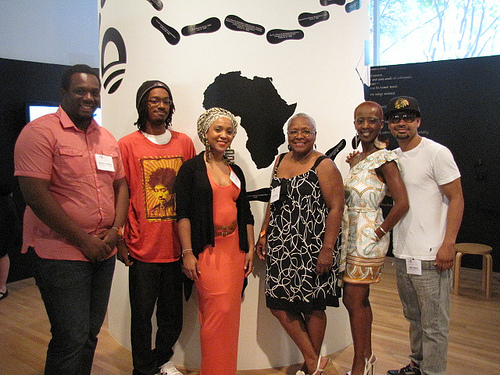
South Dallas Cultural Artists. From left: Harold Steward, Patrick Washington, Ava Wilson, Vicki Meek, Michelle Gibson, Malik Dillard.

Collaborators on this project and their areas of expertise include Malik Dillard, media; Michelle Gibson, dance; Vicki Meek, visual; Harold Steward, theater; Patrick Washington, media; and Ava Wilson, poetry.  Read their perspectives on the installation below, along with their free association responses to the words community, creativity, and art.  

Vicki – What was your vision for this project?  Free Association was created around the concept of limited space and how such limitations can either contain you or spur you to stretch beyond them. The general idea was to explore the history of African Americans within the context of this concept, paying close attention to how African Americans have used creativity to transcend societal constrictions. The more specific idea was to explore the performing, visual, literary & media arts as means of expressing the transcendence of limitations.

Inspired by the installation title Free Association, what is the FIRST word or phrase that comes to mind when you read the following terms?

Community = Essential
Creativity = Boundless
Art = Life 

Harold – How did you integrate theater with the other components of the installation?
More than theater, I was working with some of the components of performance studies. In particular, I wanted to look at the ways in which people naturally operate in “open space” and how that differs when space is confined. One of the many attributes of people of African descent is that we have historically found ways to work within the confines forced upon us when we are taken outside of the continent of Africa, and held on to some cultural traditions while creating new ones in very limited physical and sociological spaces.  The guiding question I had was, “What cultural practices and survival techniques did descendants of Africa keep or create once they arrived on the American shore, and where do they intersect?” The workshop that I offered in conjunction with the installation used Theater of the Oppressed games to cause the participants to be conscience of things that they feel, hear, and see, and the effect these things have on the individual or groups of people when they go unrecognized.

Community = Web- to destroy the community you destroy the web, to build a community you build the web
Creativity = Kuumba –The Kwanzaa principles that demands that we leave our community better than we found it
Art = Knowing what beauty to keep and what issues to call out

Ava – How did you connect poetry to the ideas of free association and space?
The written word is very powerful.  Through the use of several literary devices – metaphor, allusion, symbolism, etc. –  tethered specifically by imagery, I wanted to allow the reader to visualize what enslavement may have been like.  I wanted to create a “free association”, if you will, for the reader.  As for space, I wanted the taut nature of the language and the use of references to shape and dimension to show the vastness of the universe and in the African world in contrast to the narrowness that was the dungeons, slave ships, and realities that the African faced in the west.

Community = Family
Creativity = Spirituality
Art = Life

Patrick – How did you use media to enhance the installation?
We used digital photography, streaming video feed, and an electronic music production program to enhance our installation.

Community =  UNITY
Creativity = ART
Art = LIFE

Malik – How did the use of media enhance the installation? I feel that the media side of the installation creates interaction and gives a great visual for dance instruction.

Community = People coming together
Creativity = Music/Art
Art = Dance/Spoken Word/ Music

Explore Free Association and your own creative responses in the Center for Creative Connections through October 12.

Melissa Nelson
Manager of Teaching in the Community
Texas Late Night

Howdy, y’all! This past Friday, the DMA showed folks a rootin’ tootin’ good time at our Late Night celebration of the Flower of the Prairie: George Grosz in Dallas exhibition. With a theme as big as Texas, you can bet that there was lots to do here at the Museum. With live folk bands playing in the Atrium Cafe and in the galleries, visitors could hear old-time, toe-tapping, traditional Texas music almost anywhere they went. Adult crowds could be seen gathering for tours of the exhibition and  surrounding the watercolor demonstrations led by artist Scott Winterrowd. Lectures, talks, and films throughout the night also kept the adults scurrying from one program to the next. Families had a rip-roaring time in the Center for Creative Connections studio constructing their own Dallas building to contribute to a three-dimensional city skyline. Also in C3, kids created Texas-inspired bandanas and participated in Yoga for Kids. To get a peek at all the festivities, check out the slide show below.
.

[slideshow]

.
One of my favorite moments from the night was bumping into a family I had taught during a Go van Gogh Summer Library Program. When I stumbled upon them, they were in C3 doing yoga and discussing what kind of building they would create in the studio. They excitedly told me all about going into the Flower of the Prairie: George Grosz in Dallas exhibition to see all of the works of art we had talked about during the Impressions of Dallas library program. “They know everything!” the kid’s impressed dad exclaimed. It is always a joy to see familiar faces in the Museum. To learn a little more about the Go van Gogh Library Program, check out Amy’s blog post from last week. Every participant receives a free family pass, which you could use at the next Late Night on August 17.

What was your favorite moment from the Late Night?

Hannah Burney
Go van Gogh Programs Assistant

Off the Wall: BOOM

In our Center for Creative Connections we ask visitors to reflect on their responses to the spaces they encounter in art, as well as those they encounter in their everyday life.

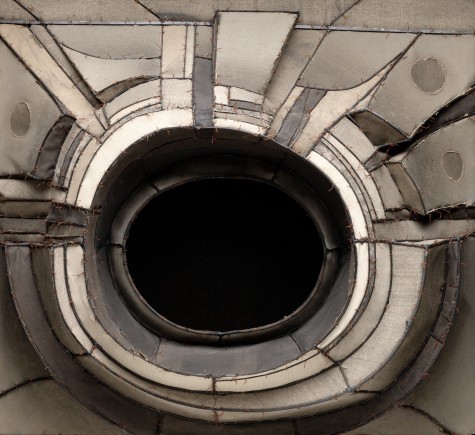
For one work of art specifically, Lee Bontecou’s Untitled, we ask visitors to respond to one of three prompts:

  • To me, sharing space with this work of art feels like…
  • The words or pictures that come to mind when I look at this work of art are…
  • If this work of art was part of something larger, describe what it would be.

Untitled (35), Lee Bontecou, 1961

We have gotten a lot of great responses from visitors and want to share a few with you. Once a month we will have an “Off the Wall” post featuring three responses left by visitors.

Next time you are in the Center for Creative Connections add your contribution to the wall and maybe you will see it on Uncrated!

Vacay at the DMA

Well folks, we have officially broken one hundred degrees, which means that the Dallas summer is really here. You may get a chance to escape the weather with a trip to cooler climates. But I am here to tell you that it is possible to beat the heat and enjoy a fun-filled day of play right here in Dallas! At the Dallas Museum of Art you can travel all over the world, eat any type of food your heart desires, and participate in creative activities without ever leaving downtown.

Here are some great ways to enjoy a DMA get-away:

Self-Guided Tours

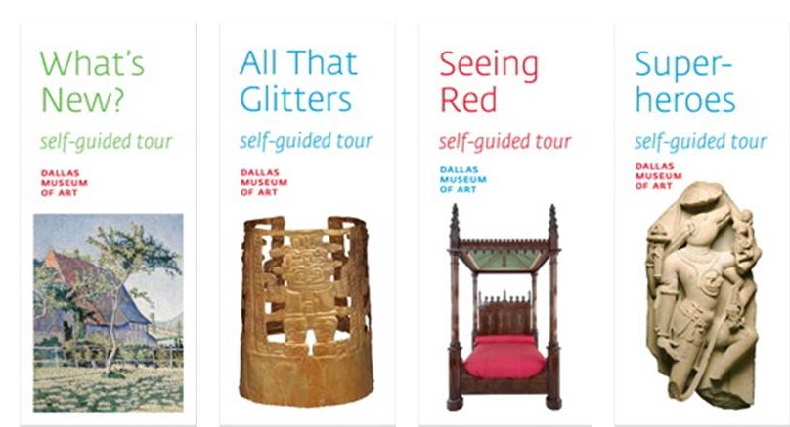
With over 25,000 works of art at the DMA, chances are that you won’t be able to see everything in one day. But don’t worry, any of our bite-sized tours will show you how to have a quality experience at the DMA instead of a quantity one. You can choose from four different themes to match your interests, either by downloading and printing them at home or by asking the Visitors Service Desk for a copy.

smARTphone Tours

For a more customized experience, use your smartphone to access interactive content specific to each gallery.

Lunch

  • With a variety of lunchtime favorites, the bright and open Atrium Cafe is a great place to have a meal.
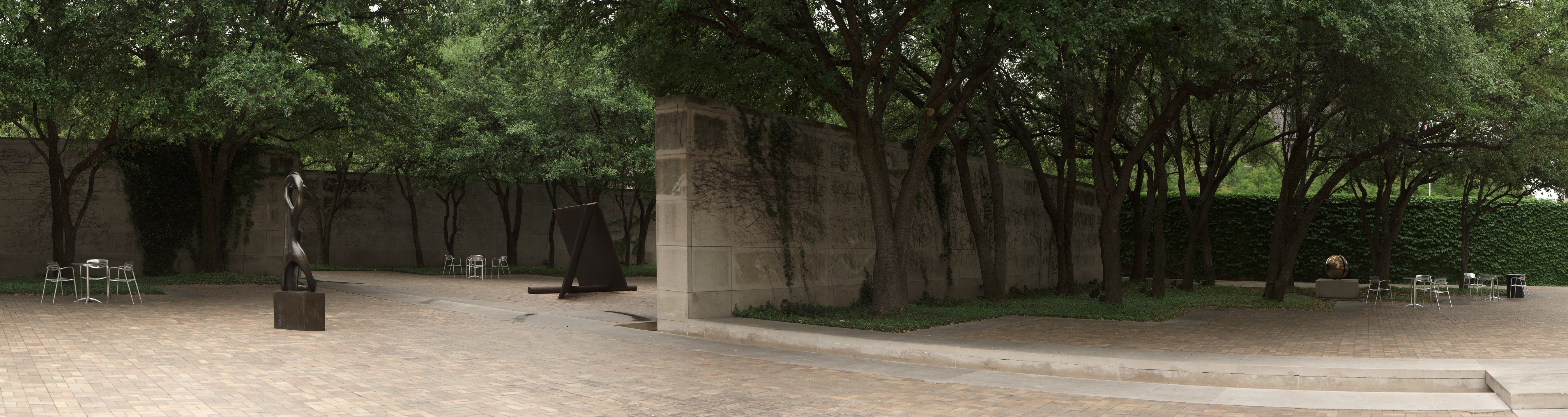
  • The Sculpture Garden is a perfect spot to relax, soak up some sun, and enjoy your lunch while surrounded by art.
  • Or try any one of the tasty and affordable food trucks just a couple of blocks away; they have something for everyone!

After Hours

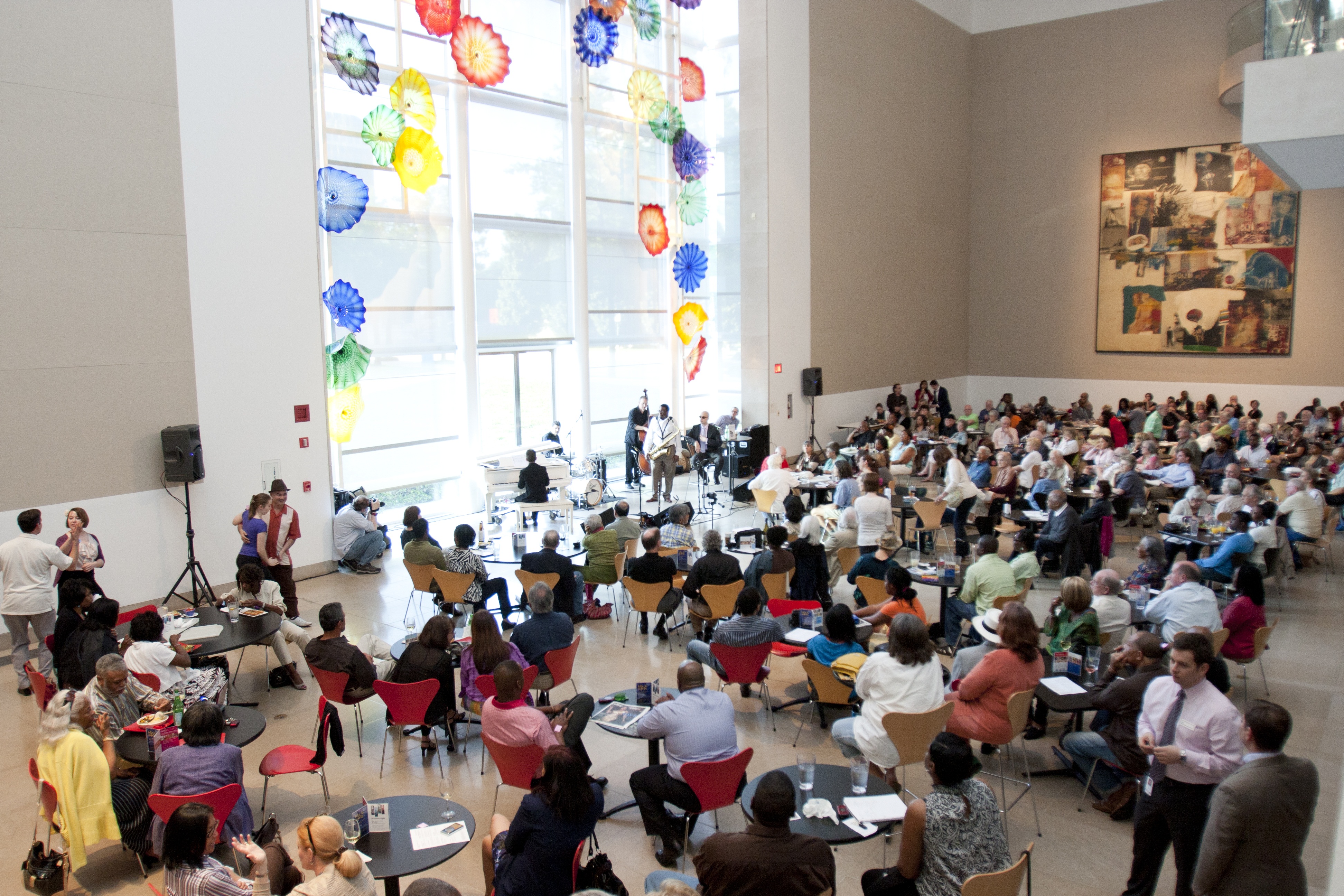
  • If you are a late-nighter, you are in luck, because every Thursday Night the Museum stays open until 9:00 pm. You can enjoy a cocktail while listening to jazz music in the Atrium Cafe, or create an original work of art in the Center for Creative Connections.
  • Every third Friday of the month the Museum stays open until midnight, offering a variety of fun and free programs inspired by the Late Night theme of the month.

Need more ideas for engaging with the collection? Check out our list of 100 Experiences.

I’ll see you at the Museum,

Hannah Burney
Go van Gogh Programs Assistant

We’ve Looked at Clouds

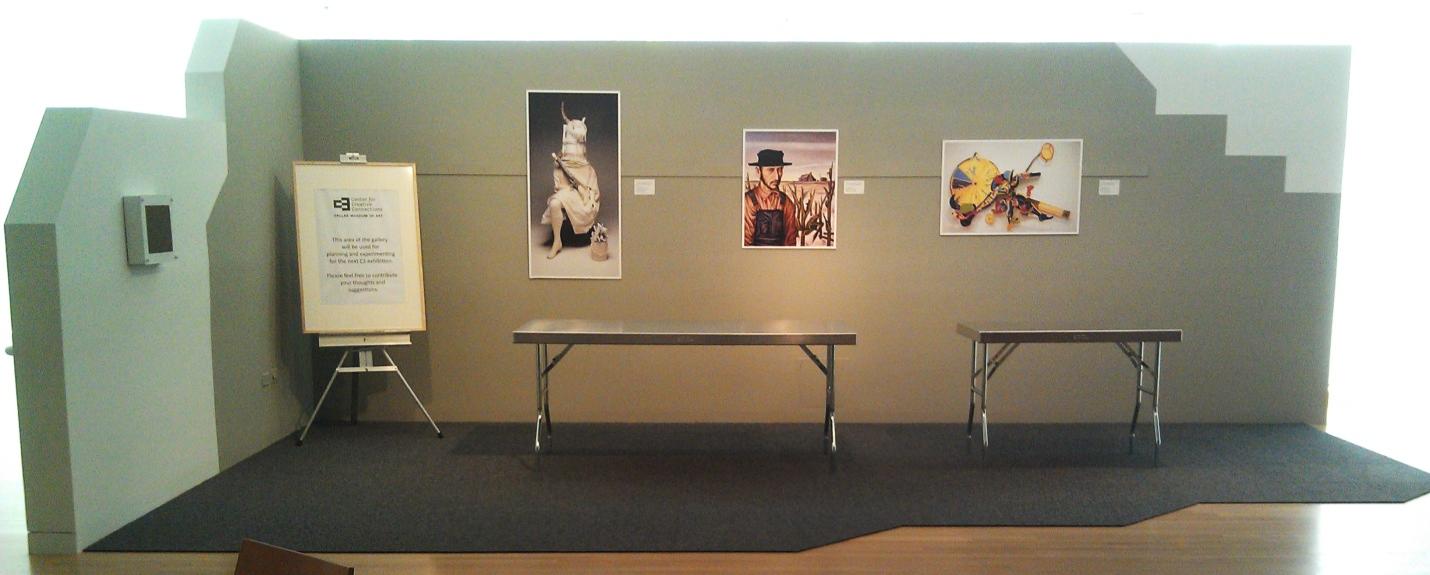
If you’ve come into the Center for Creative Connections (C3) within the past month you may have noticed a few changes in our space. Aside from new artworks in our Encountering Space exhibition, we have transformed one area into a Prototyping Station. What does that mean exactly? Well, in this space we use reproductions of works of art to engage our visitors in conversations. These conversations allow us to better understand visitors’ perspectives and inform our thinking in the development of exhibitions. For the past month, we have focused on three works of art from our collection.

We often have so much background information about a work of art that it is difficult to decide how much of it visitors need to know. There is a delicate balance between providing information and allowing visitors to learn through their own observations. While we did these tests, we only provided a minimal amount of information besides the image.

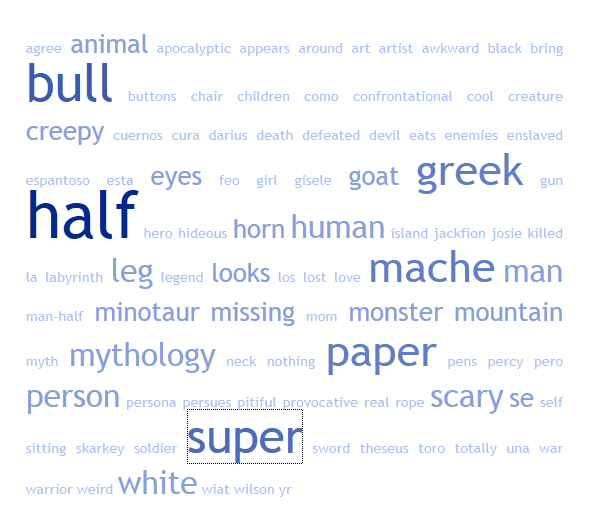
Our dialogues have included both face-to-face conversations and written responses to questions we’ve posed. We have documented these responses and decided to make word clouds to show you what we have received so far. Word clouds, or tag clouds, are a way of visualizing data. You enter text into a computer program, and it generates a visual representation of which words are repeated most often. The words that are used most often appear larger. Take a look at the following word clouds we generated based on visitors’ responses to the following:

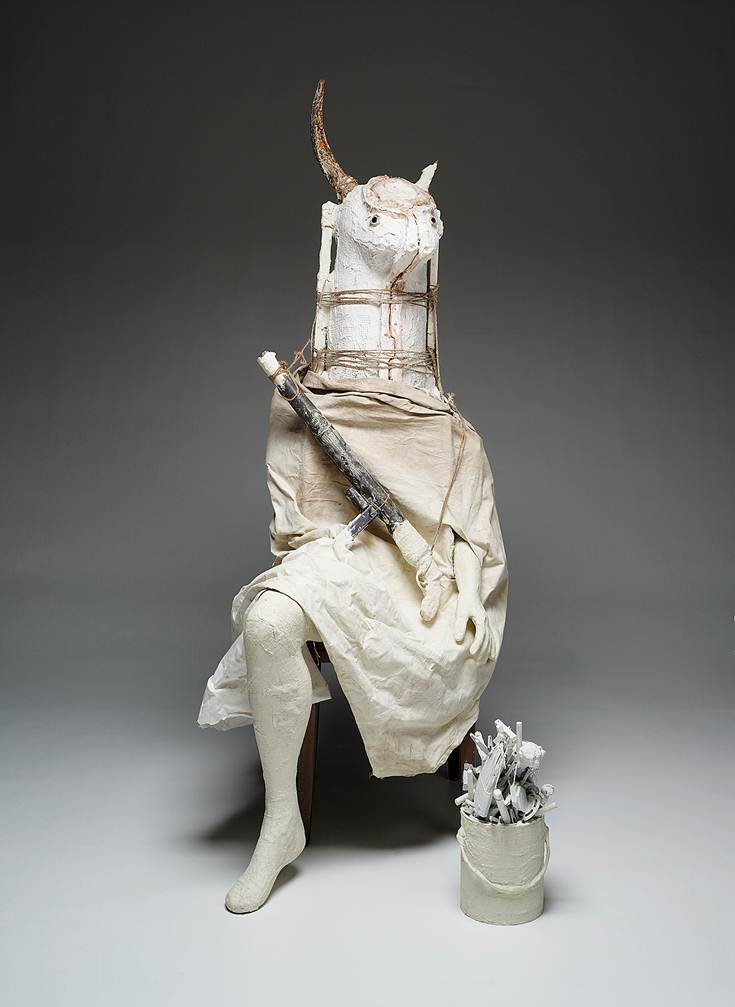
“The title of this work of art is The Minotaur. Tell us what you know about the Minotaur.”

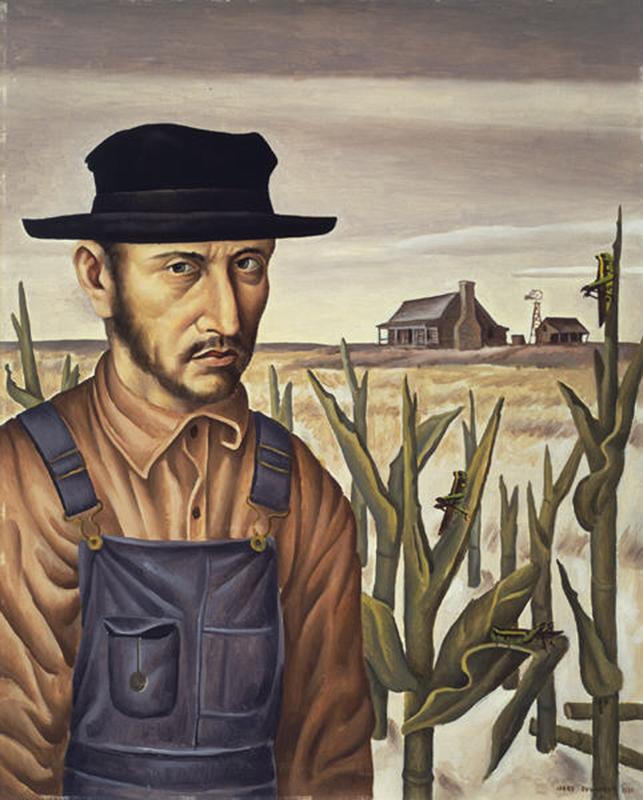
“We are looking for descriptive words for this work of art. List what comes to mind when you look at this picture.”

Marcel Dzama, “The Minotaur,” 2008, plaster, gauze, rope, fabric, chair, bucket, and paintbrushes, Dallas Museum of Art, DMA/amfAR Benefit Auction Fund, 2008.43.2.a-e, (c) Marcel Dzama

Jerry Bywaters, “Share Cropper,” 1937, oil on Masonite, Dallas Museum of Art, Allied Arts Civic Prize, Eighth Annual Dallas Allied Arts Exhibition, 1937.1

Visitors noticed many things, ranging from objects to emotions.Why is this process important? We want to gather input from visitors. Putting this testing area in the middle of the gallery allows visitors to see the process we use to develop interpretive components for a work of art. It also gives Museum-goers a chance to contribute information and a perspective that may be different from the staff’s, which is an important component of the C3 mission.

The next time you are at the Museum, stop by the C3 and share your responses in our new prototyping area.

Jessica Nelson is the C3 Gallery Coordinator at the Dallas Museum of Art.

Off the Wall: An Underground City

In our Center for Creative Connections we ask visitors to reflect on their responses to the spaces they encounter in art, as well as those they encounter in their everyday life.

For one work of art specifically, Lee Bontecou’s Untitled, we ask visitors to respond to one of three prompts:

  • To me, sharing space with this work of art feels like…
  • The words or pictures that come to mind when I look at this work of art are…
  • If this work of art was part of something larger, describe what it would be.

    Untitled (35), Lee Bontecou, 1961, Dallas Museum of Art, Foundation for the Arts Collection, gift of an anonymous foundation

We have gotten a lot of great responses from visitors and want to share a few with you. Once a month we will have an “Off the Wall” post featuring three responses left by visitors.

Next time you are in the Center for Creative Connections add your contribution to the wall and maybe you will see it on Uncrated!


South Dallas Cultural Center in the C3 House

If you have stopped by the DMA’s Center for Creative Connections recently, you might have noticed our fourth Community Partner Response Installation near the Space Bar. The South Dallas Cultural Center (SDCC) created Free Association, a 12-foot-tall multimedia, interactive installation that includes a music composition station and a choreography instructional video. You can experience the installation through October.

[slideshow]

Friday Photos: Peaceful Space

Imagine you are in a peaceful place.  What does that place look like?  Is it a serene hillside, a secluded beach, or even just the comfort of your home?  Images on the Center for Creative Connection’s Monitor Wall explore the idea of peacefulness through photos in the latest installation: Peaceful Space.  To find out more about the Monitor Wall in the Center for Creative Connections or C3, I’ve asked C3 Specialist Jessica Nelson about the project.

The Monitor Wall in the Center for Creative Connections

Who are the artists behind the artwork?

The images on the Monitor Wall fall into three different categories.  We have images submitted by our visitors, images from the DMA’s collection, and images from around the DMA.  Knowing the “artists behind the artwork” can be a little tricky because our visitors submit their entries on our Flickr page.  However, I do know that we have some DMA employees who contribute regularly such as Amanda Blake, Jonathan Toles, and myself.

What was the inspiration for the C3 Monitor Wall?

So, in relation to those three different categories of images, there were a few different things that inspired the creation of the Monitor Wall.  First, we wanted to have the ability to show more works of art from the DMA’s collection, and in doing so create a connection between the C3 theme Encountering Space and the rest of the collection.  Also, we wanted to provide an opportunity for visitors to participate in the content of the exhibition.  We see the Monitor Wall as an opportunity to take the idea of “programming” and move it beyond the museum walls, in the sense that our visitors are participating in the exhibition by contributing their photographs, and this participation happens after they have left the physical space of the museum.

How often do you change the images?

The theme for the Monitor Wall changes every six months.  Previous themes include: Texas Space, Filled Space, and Designed Space.  Throughout those six months, we add images that our visitors submit every month.

[slideshow]

Capture your peaceful place and submit your photograph to the Dallas Museum of Art’s Flickr page! 

Wishing you all a peaceful weekend,

Loryn Leonard
Coordinator of Museum Visits


Archives

Categories