Archive Page 39

Sounds of the Middle Ages

Take a walk through the DMA’s Art and Nature in the Middle Ages exhibition and you’ll see beautiful paintings and tapestries, pieces of architectural wonder, and some ancient oddities from the Middle Ages and early Renaissance. But looking only gives a bit of the story. What would people back then not only see but hear?
img_6136
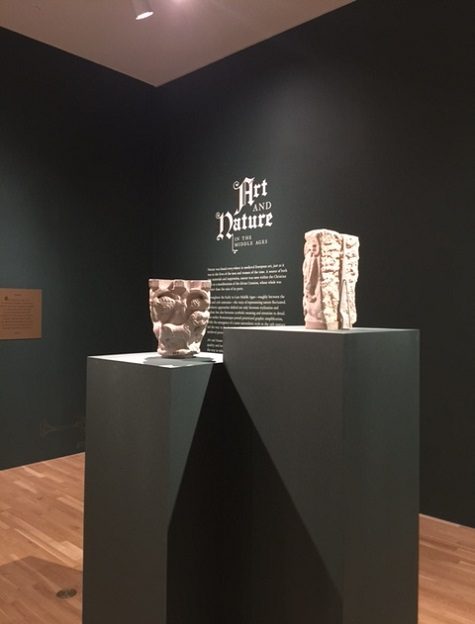
By way of introduction, let’s start with the architecture. Looking at the capitals that once sat atop soaring Gothic structures is a sight for the eyes. But what would the music be like inside, say, a great cathedral? Here’s a musical example from around the year 1200 that might have been heard inside Notre Dame in Paris one joyous Christmas night. The piece is by the composer Perotin.
img_6137
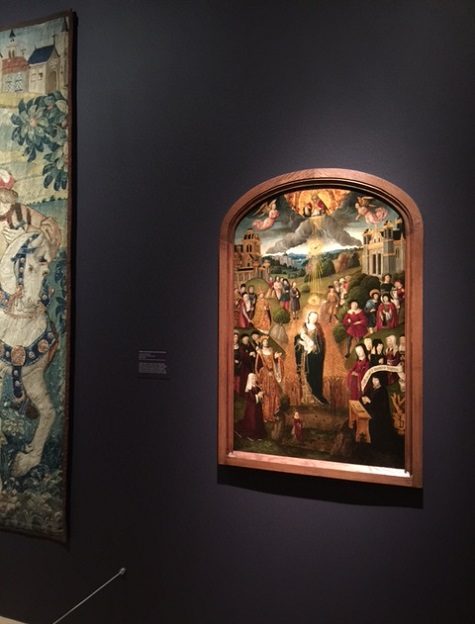
Coming around the corner to the right we see a vibrant painting from about the year 1500 called The Virgin of the Wheat.  The work comes from northern France around Amiens. The Virgin Mary has long been a favorite topic for composers. Here we have one of the most famous examples from this era, Ave Maria, virgo serena by the Franco-Flemish master Josquin des Prez.
img_6138
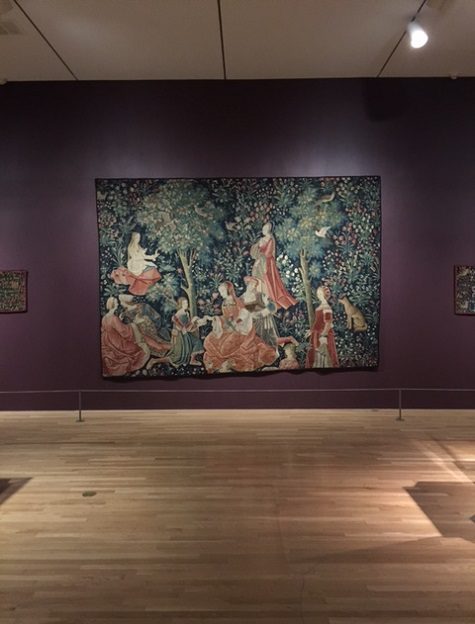
Secular music was an equally important part of life in the Middle Ages and Renaissance. The tapestries in this exhibition show everyday scenes of love and romance. Chivalry and knighthood meant not only bravery and codes of conduct but also courtly love. One of the most popular instruments of the time was the lute.

Before the printing press, books were also works of art. Monks created illuminated manuscripts from which they would sing their daily prayers. Smaller versions called Books of Hours would be sold to wealthy people so that they could take part in monastic prayers in their own homes. Pages from the Litany of the Saints can be seen on the interactive tablet in our exhibition. This is what it might have sounded like.
img_6140
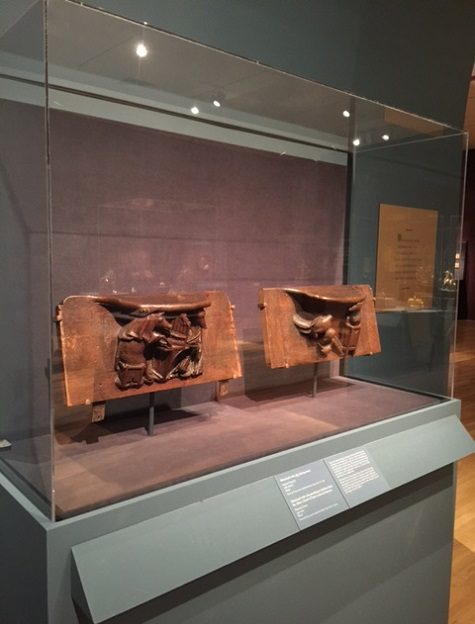
come into the next room and we see an odd wooden carving called a misericord, or, “act of mercy.” What’s funny about this piece is the carvings depicting, among other things, laughing pigs playing an organ. You’ll also notice a little shelf on top of the piece. So what’s going on here? This is actually from a section of choir stall where monks or choir singers would have to stand for hours at a time during church services. When the seats were flipped up for standing, the little shelf allowed them to discreetly rest their tired rear ends without anyone really noticing.
img_6143
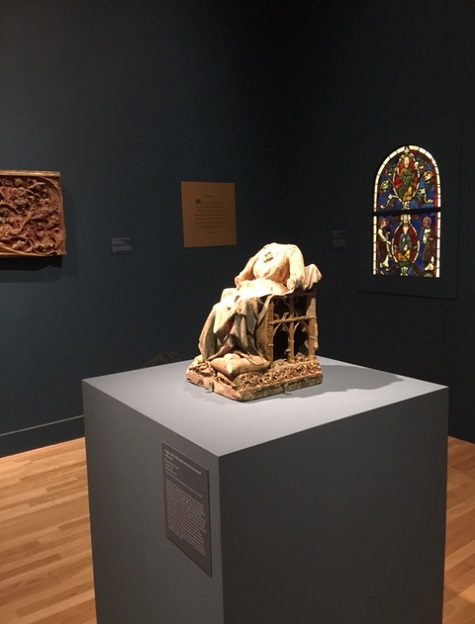
Continuing on, we see a small 14th-century carving of the Virgin Mary, whose seat is covered with roses. The rose was a common metaphor for Mary, the rose without thorns. Here we have an English medieval carol, “There is no Rose of such virtue.”
img_6145
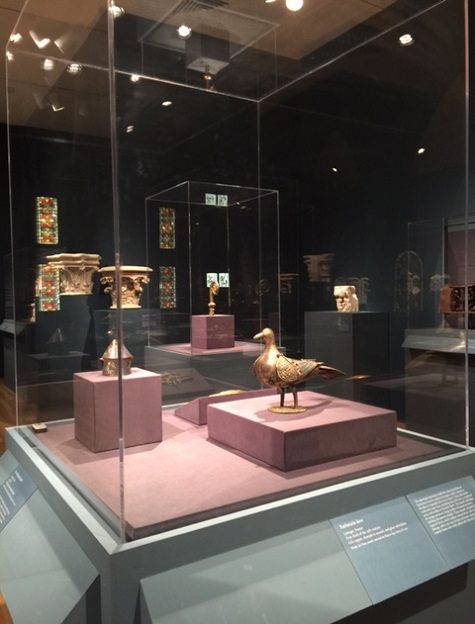
Finally, we see some interesting metal work. Tabernacles and monstrances were used to house the consecrated bread of the Mass, which Catholics consider to be the actual body of Jesus Christ. Therefore, it was kept in special vessels. One to take note of is the bird, which would have been understood to be the dove of the Holy Spirit. Here is some music from a Mass by the 15th-century composer Ockeghem.

Rather than being a “dark” period, the Middle Ages was actually a vibrant time of creation, both visual and aural. Don’t miss the DMA’s exhibition Art and Nature in the Middle Ages.

Dr. Alfred Calabrese is Director of Music at St. Rita Catholic Church in Dallas and Music Director of the Denton Bach Society.
Blast Off Art for All!

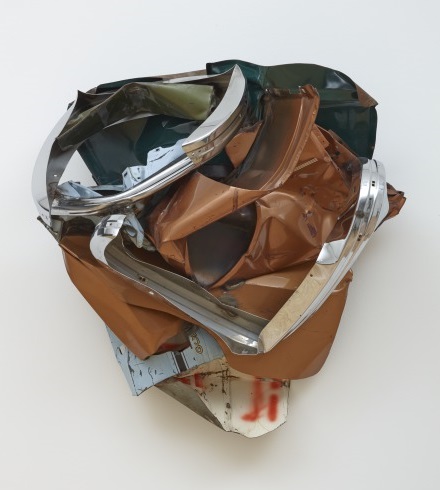
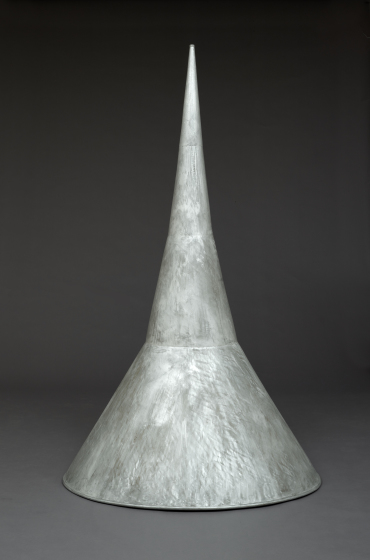
Throughout January, our preschool visitors went on an imaginary space journey through the contemporary galleries where they learned about outer space and the roles of astronauts. We pretended Martin Puryear’s Noblesse O. was our rocket ship as we blasted off to look for new planets in the Museum. Some of the planets we discovered were John Chamberlain’s Dancing Duke and Alejandro Puente’s UntitledThe kids were asked which planet they would live on, and what else they would find there. Lots of young explorers said Dancing Duke would be full of robots and skyscrapers, while Untitled would be very cold and icy!

32372253082_dc012da363_z.jpg

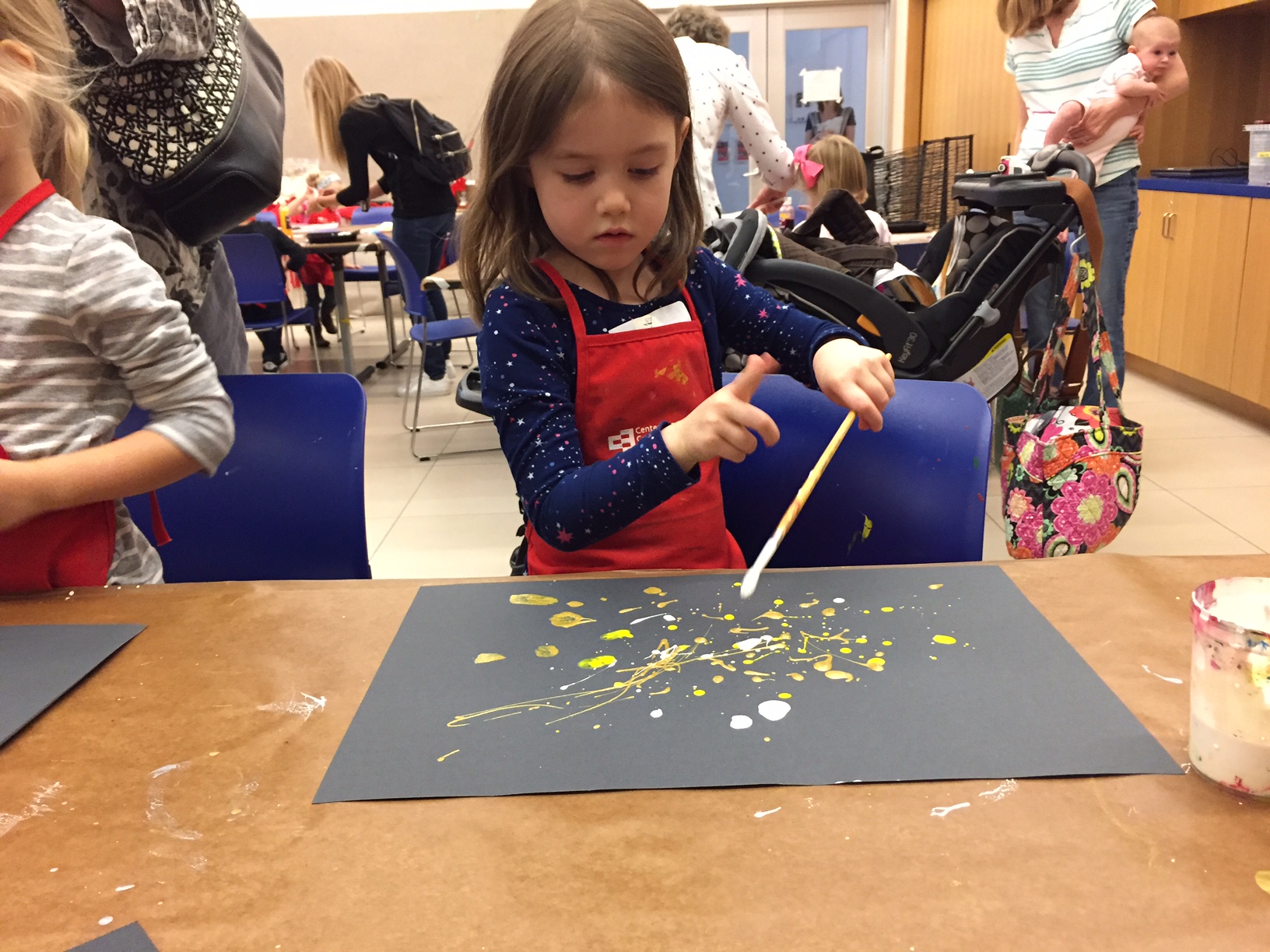
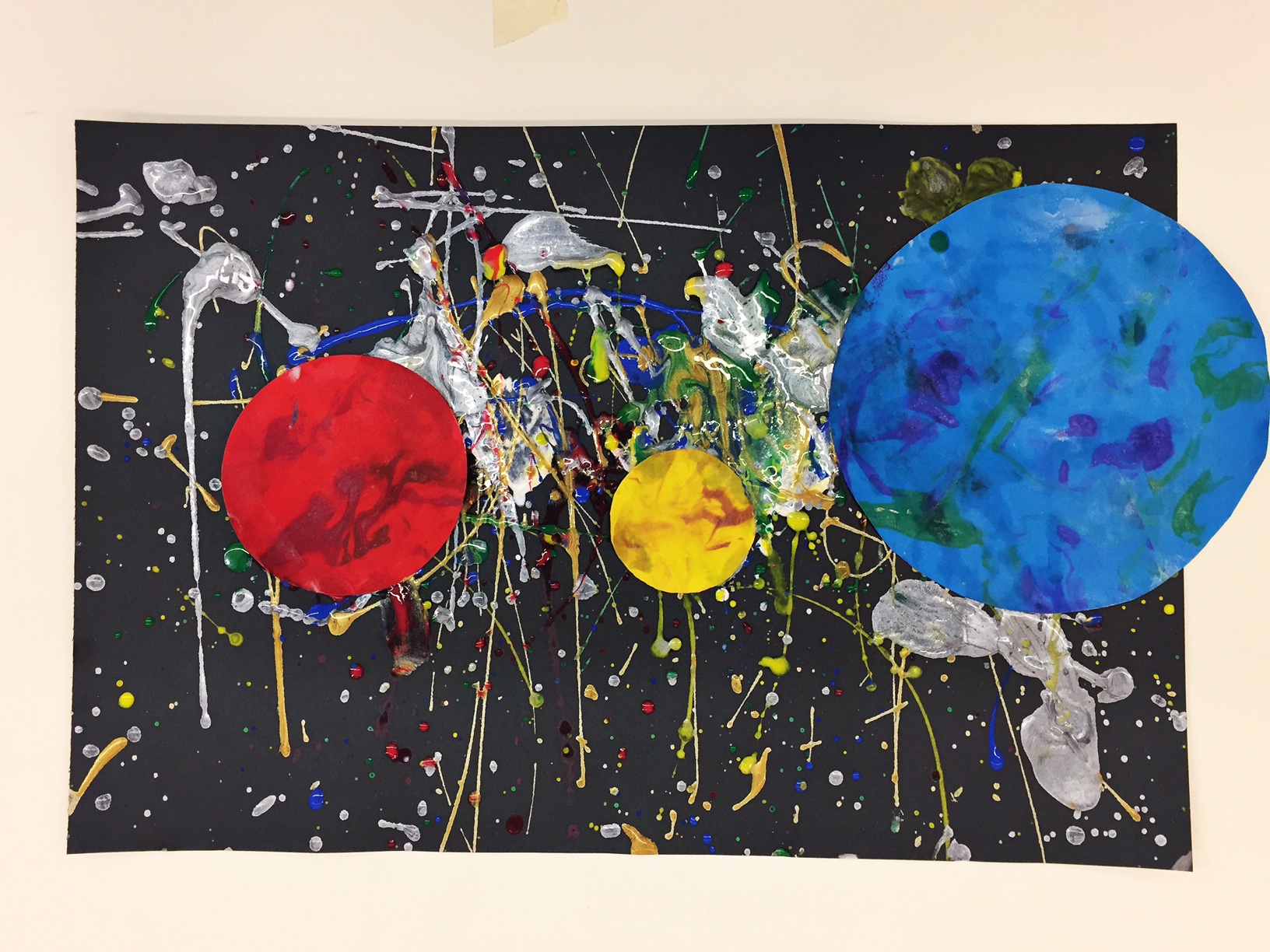
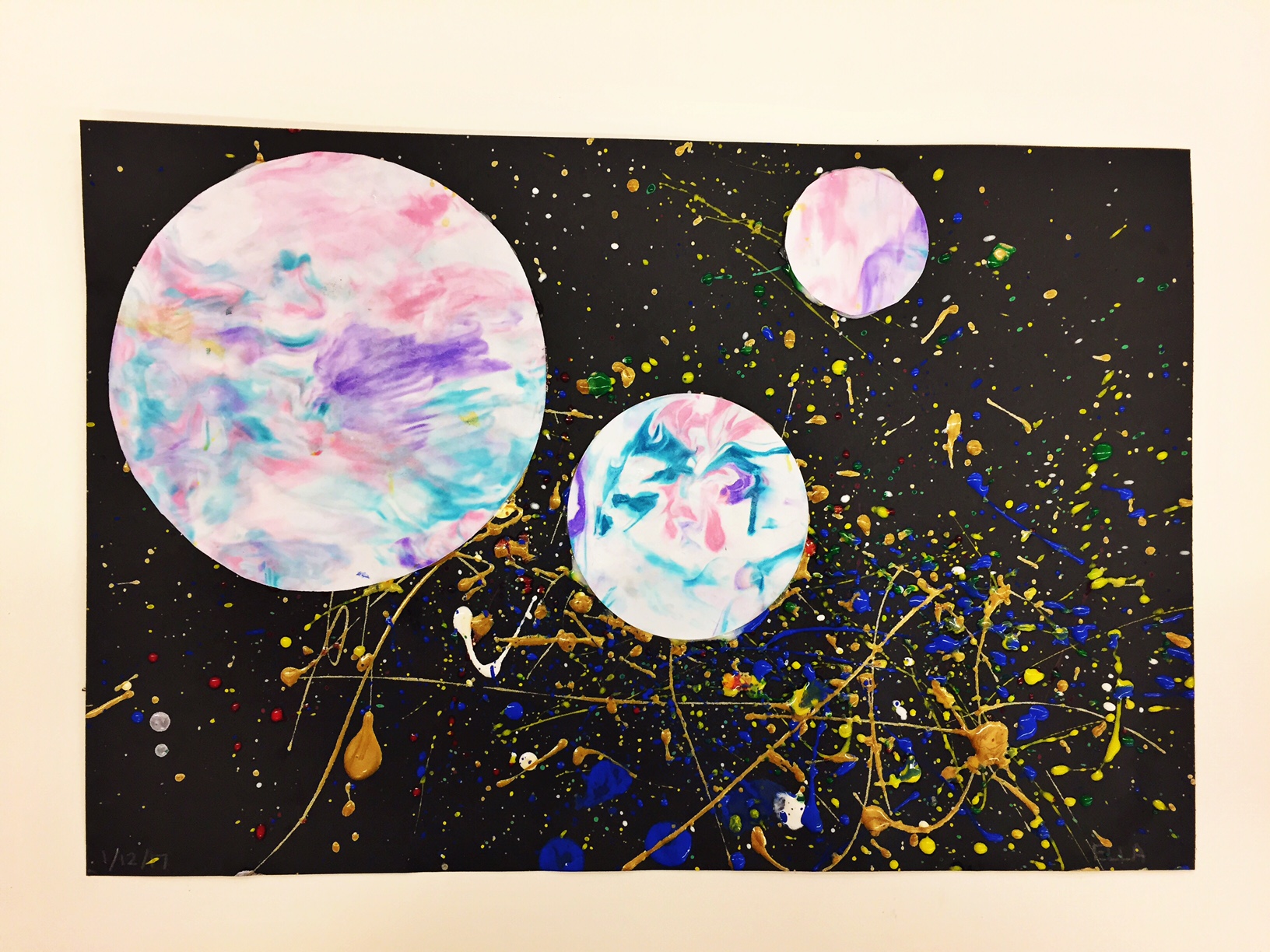
After our gallery adventure, the kids went to the art studio to make some outer space art to take home. For Arturo’s Art and Me classes, the young space explorers made galaxy paintings. The studio was split into two stations: the first was a splatter paint station to fill up their night sky canvas with colorful stars, and the second, a shaving creme station where they made planets for their galaxy.

IMG_7002.JPG

The young artists gently dipped, dabbed, and dripped onto their backgrounds.

IMG_7149.JPG

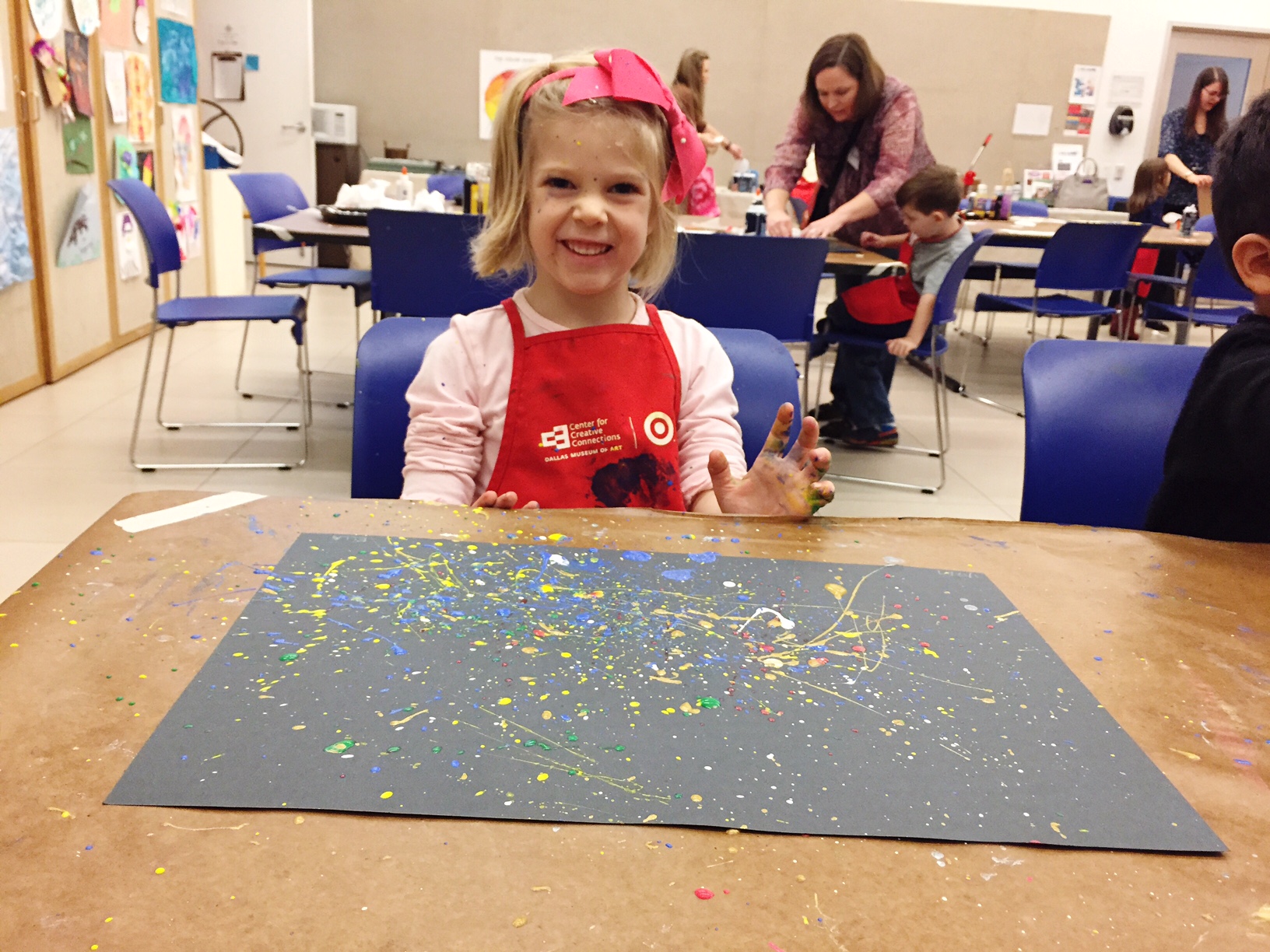
(Some not so gently…Our friend here doesn’t seem too upset about the paint on her face and hair bow though!)

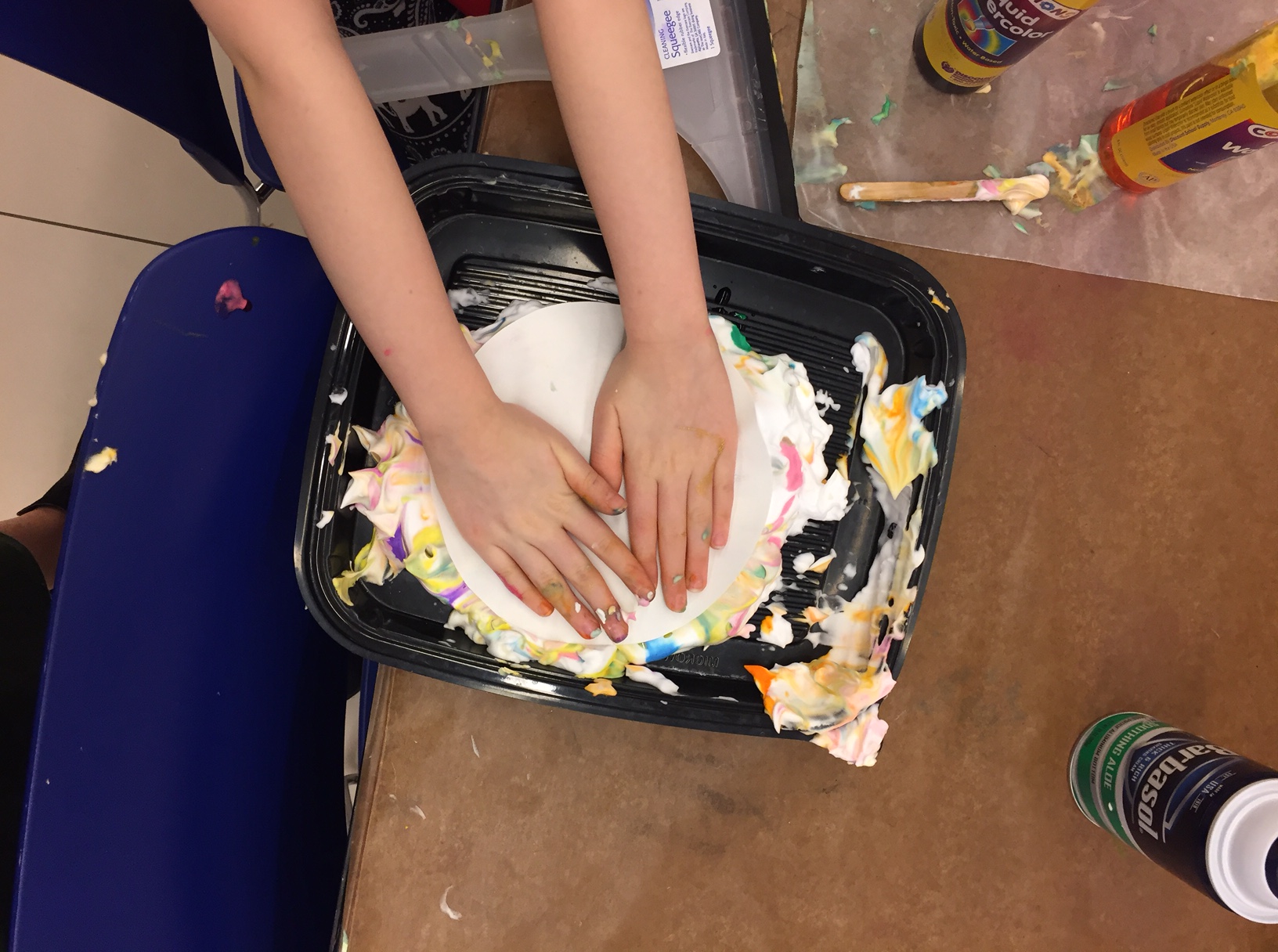
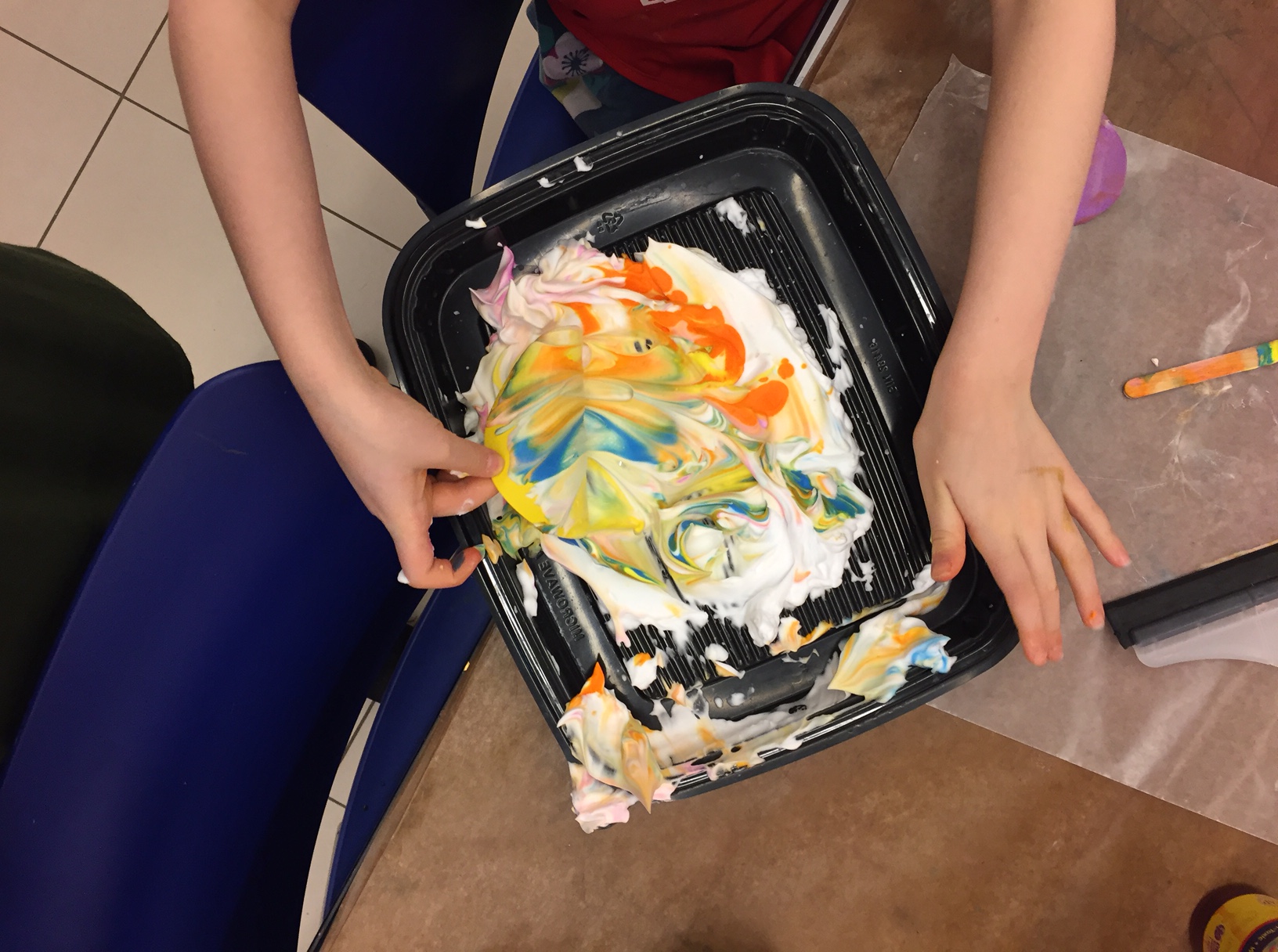
Once their backgrounds were completed, it was on to the shaving creme station. Here, kids dripped vibrant liquid watercolor into trays of shaving creme, then swirled it together to create a beautiful planet pattern. Next, they pressed pre-cut circles into the shaving creme, then squeegeed off the excess creme to reveal a beautiful intergalactic swirl left below!

Next, the young artists glued their planets onto their backgrounds, and viola! A whole new out of this world galaxy painting. Their work speaks for itself, I think!

IMG_6992 (1).JPGIMG_7148.JPG

This activity is super easy to do at home! If you don’t have liquid watercolor to add to the shaving creme, food coloring works great too! If you need some more instructions on the shaving creme prints, check out Jennifer’s great blog post on the topic, and if you are interested in attending Arturo’s Art and Me or any of the other great classes at the DMA, click here!

Grace Diepenbrock
McDermott Intern for Family and Access Teaching

Intern Insights | Megan

Meet Megan Zembower.

As the McDermott Intern for African Art working with Dr. Roslyn Walker, Megan participates in a variety of learning experiences, including acquisition preparations, gallery installations, and research and documentation projects involving the Museum’s collection of African art. Check out our interview to hear more about what she’s been up to during her internship.

Are you interested in becoming a McDermott Intern for the 2017-2018 year? Applications are now open! Visit the Internships page of our website for more information.

Angela Medrano
McDermott Intern for Gallery and Community Teaching

Mask Mysteries

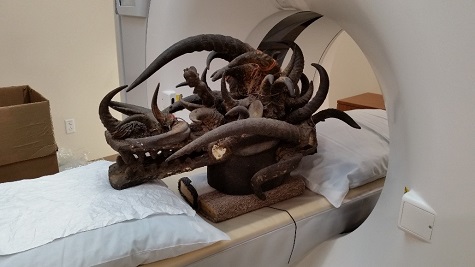
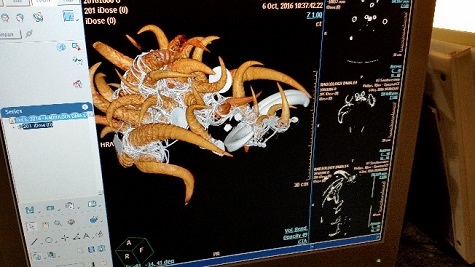
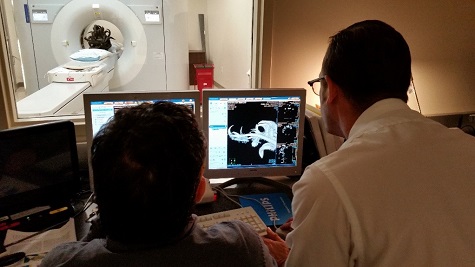
Before I arrived at the DMA, I wasn’t quite sure what my daily tasks as the McDermott Intern for African Art would entail. I certainly never expected to be sitting in on a biomedical engineering lecture at UT Southwestern studying a CT scan—but this was no ordinary CT scan: it was a scan of the DMA’s helmet mask (komo) from the Senufo peoples of Côte d’Ivoire.

1

The purpose of this scan was to discover the contents of the horns that decorate the mask, as well as any other ritual materials that may have been placed within the structure. The scan showed the horns contained many small objects, including animal jaws and a variety of organic matter. With this information in hand, I hit the books in an attempt to understand why these objects would be chosen for use in a mask such as this one. As the Komo society is a secret knowledge society, details of masking traditions are not frequently shared; however, I was able to compile some information from Boureima T. Diamitani, scholar and Komo society member, to help contextualize the mask and the mysterious contents of its horns.

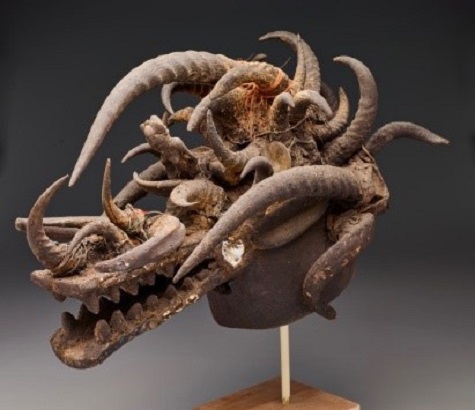
Helmet mask (komo), mid–20th century, wood, glass, animal horns, fiber, and mirrors, Dallas Museum of Art, gift of David T. Owsley 1997.24

Helmet mask (komo), Cote d’Ivoire, Senufo peoples, mid-20th century, wood, glass, animal horns, fiber, and mirrors, Dallas Museum of Art, gift of David T. Owsley, 1997.24

The komo is believed to be a spirit above humans who possesses supernatural powers and is sent by God (Kle) to protect members of the secretive Komo society. The komo performs a masquerade that today functions as both a divination ritual and a form of entertainment.
The origin of the Komo society is found in a story in which a hunter and his dog encountered and killed a frightening beast in the forest. The hunter brought the beast’s head back to the village to entertain the townspeople, thus becoming the first komotigui, or owner of the Komo. The mask form is taken from the appearance of the beast killed by the hunter. Today, the mask is most often worn during performances by the son of the komotigui or the son of the blacksmith who carved it.

3

Blacksmiths carve komo masks from one piece of bugusulu softwood, a tree used exclusively for this purpose. As females and uninitiated males are not permitted to see the mask, the blacksmith must himself be a member of the Komo society and must carve the mask in the forest, out of sight of the village. The mask, carved over the course of three days, is sculpted with small wooden horns, which are then fitted with animal horns. The choice to carve the mask with horns is an important one: since relatively few animals have horns, the addition of horns emphasizes the strangeness and power associated with this creature. Upon completion, the carver relinquishes all responsibilities for the mask to the new komotigui, who may choose to add porcupine quills, more horns, feathers, or any other element he chooses; these additions distinguish particular masks from one another. A competitive spirit between komotiguis is a catalyst for artistic production and the various styles of many komo masks.

Due to the personal preference involved in decorating the mask, we cannot be sure of the significance of each element that was found in the horns. Many komotiguis chose to place powerful substances such as medicine or poison inside of the horns due to the aggressiveness and fear associated with them. This implies that the substances that filled the horns likely held some type of ritual significance to Komo society members and were believed to increase the potency of the Komo society as well as the mask itself.

Although we do not yet have all of the answers regarding the materials contained in this mask, or the reason that each specific item was chosen, we are on our way to a better understanding of the context of this mask’s creation. Further, this experience has immensely broadened my outlook on the ways in which science, technology, and the arts can work together to draw important cultural conclusions.

4

Megan Zembower is the McDermott Intern for African Art at the DMA.

References:
Diamitani, Boureima Tiekoroni.  1999.  Identities, Komo Societies, and Art Among the Tagwa Senufo of Burkina Faso (Doctoral Dissertation).
Diamitani, Boureima T.  “The Insider and the Ethnography of Secrecy:  Challenges of Collecting Data on the Fearful Komo of the Tagwa-Senufo.”  The African Archaeological Review 28, no. 1 (2011):  55-70.
Diamitani, Boureima Tiékoroni.  “Observing Komo among Tagwa People in Burkina Faso:  A Burkinabe Art Historian’s Views.”  African Arts 41, no. 3 (2008):  14-25.

2017 Goes Medieval

mm1

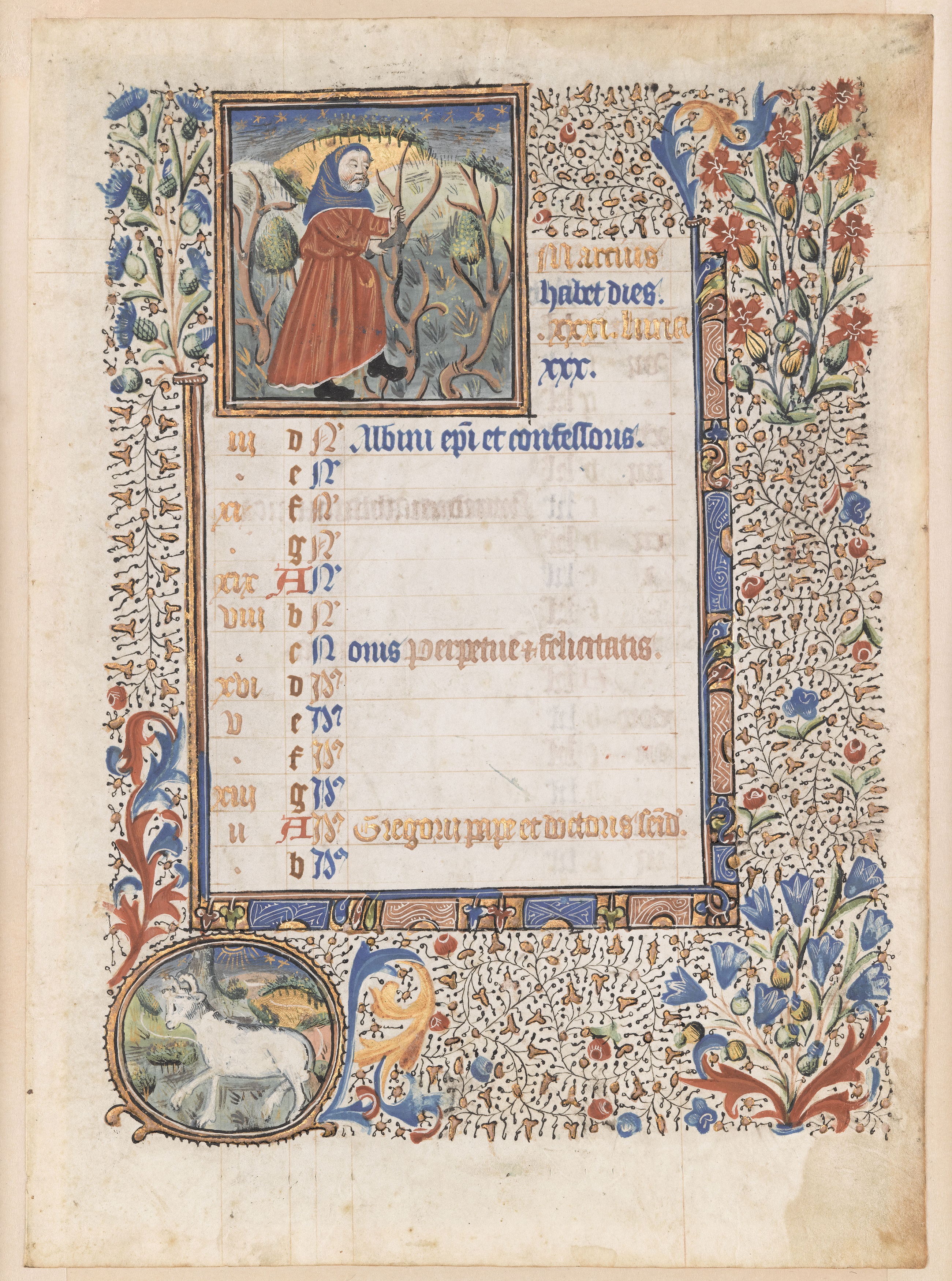
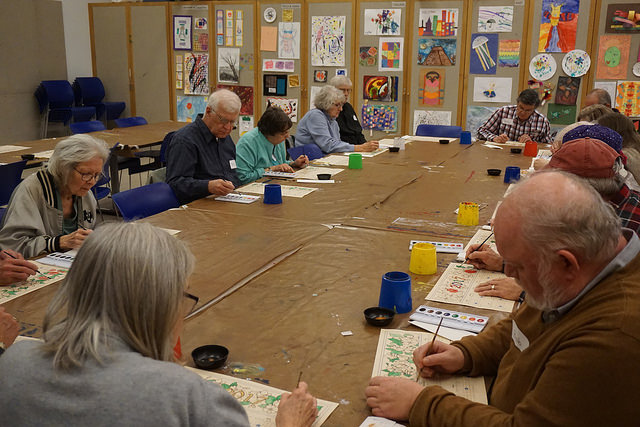
This month, our Meaningful Moments participants had fun exploring medieval art in the exhibition Art and Nature in the Middle Ages. We were especially impressed by the richly illustrated and intricately detailed pages of the medieval prayerbook, called the Book of Hours.

Calendar page from a Book of Hours: June France c. 1500 Tempera and ink on parchment Overall: 8 3/4 x 6 1/2 in. (22.2 x 16.5 cm) Musée de Cluny, musée national du Moyen Âge, Paris, Cl. 22715 g © RMN-Grand Palais/Art Resource, NY. Photograph: Jean-Gilles Berizzi

Calendar page from a Book of Hours: June
France
c. 1500
Tempera and ink on parchment
Overall: 8 3/4 x 6 1/2 in. (22.2 x 16.5 cm)
Musée de Cluny, musée national du Moyen Âge, Paris, Cl. 22715 g
© RMN-Grand Palais/Art Resource, NY. Photograph: Jean-Gilles Berizzi

The Book of Hours was the bestseller of the Middle Ages and Renaissance, from about 1250 to 1550. The core of the Book of Hours is a set of prayers, called the Office of the Virgin Mary, which are to be recited at home at eight different hours of the day. A calendar typically prefaces each Book of Hours, listing the important feast days throughout the year, and is illustrated with the common activities that characterized each month.

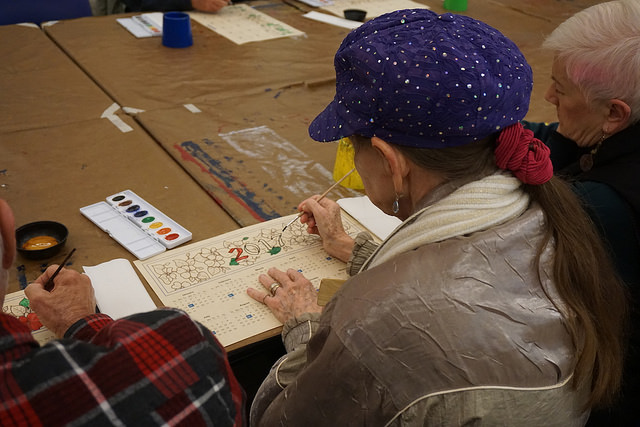
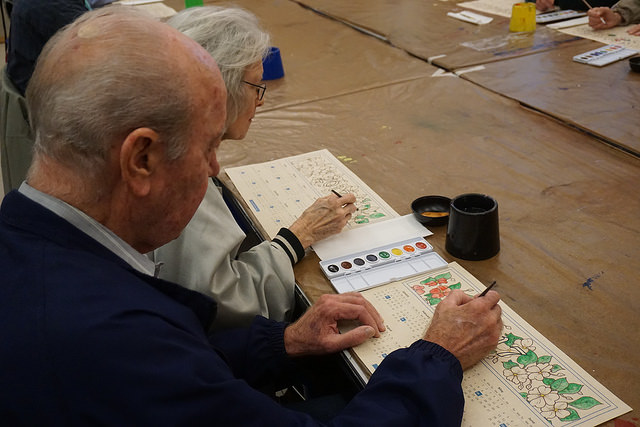
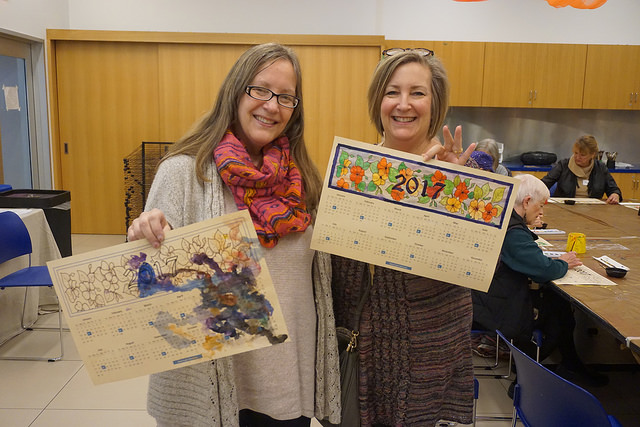
Inspired by Books of Hours, participants returned to the studio to create their own illuminated calendars using watercolor and gold paint. What better way to kick off 2017?

Download a PDF of our medieval style calendar to make your own at home! We printed ours on cream colored paper to mimic the look of parchment, but any 11″x17″ paper will do.

Happy crafting!

Emily Wiskera
Manager of Access Programs

Let’s Dance

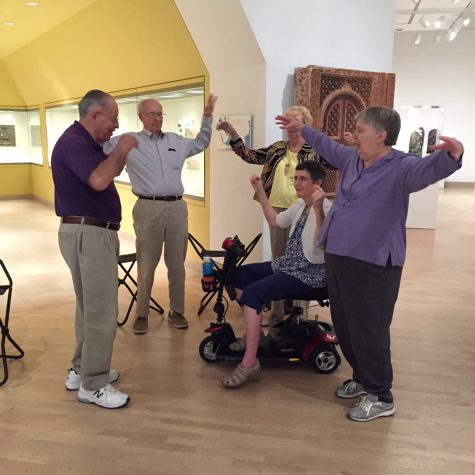
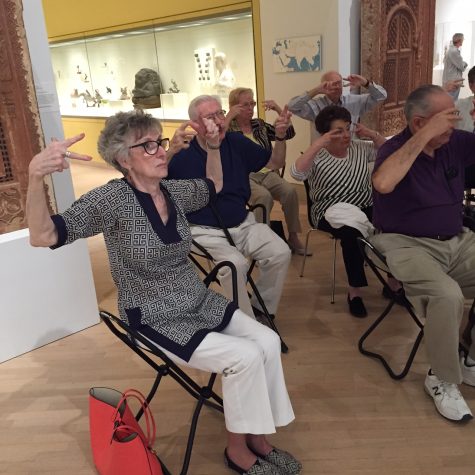
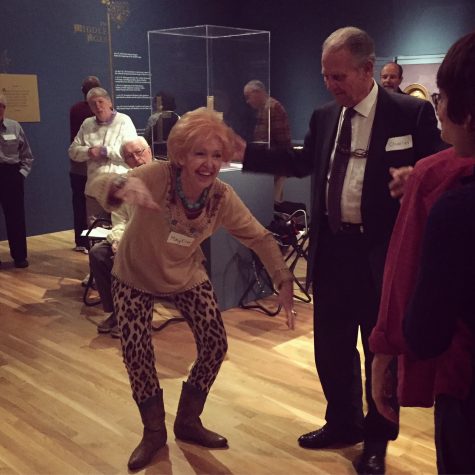
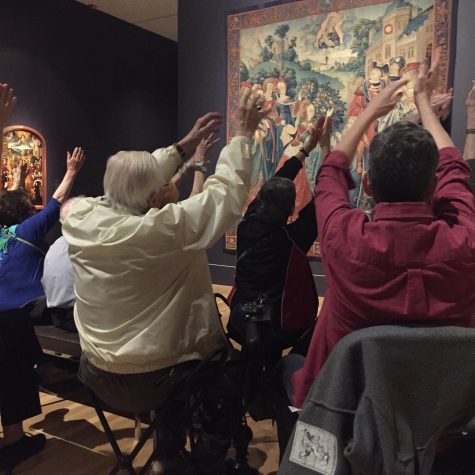
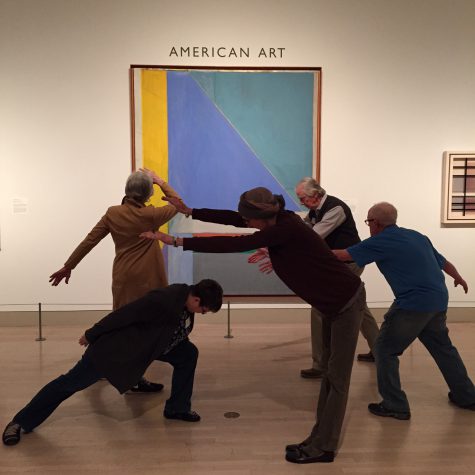
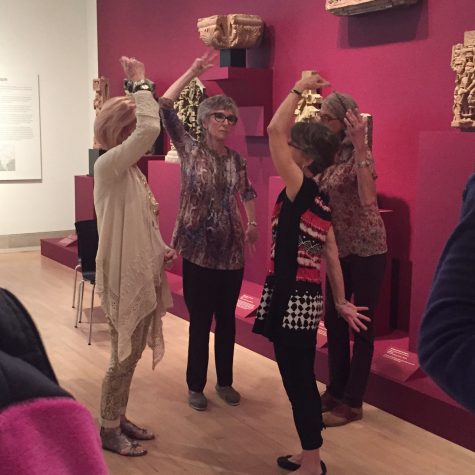
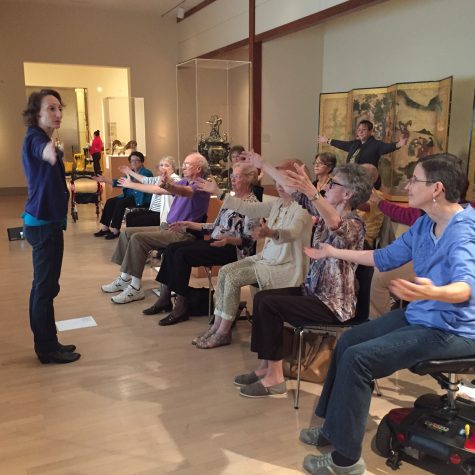
We’ve been lucky over the past year to partner with Dance for PD® on a collaborative program offered each month here at the DMA in which members of the local Dance for PD/Movement Disorders class have been immersed in gallery discussions, interactive dance, and movement. To facilitate the program, DMA educators team up with Misty Owens, a Dance for PD® founding teacher at the Mark Morris Dance Group, who has been teaching the specialized classes since 2003 in Brooklyn, New York, and locally throughout the Dallas Metroplex since 2011.

img_4928

img_4918

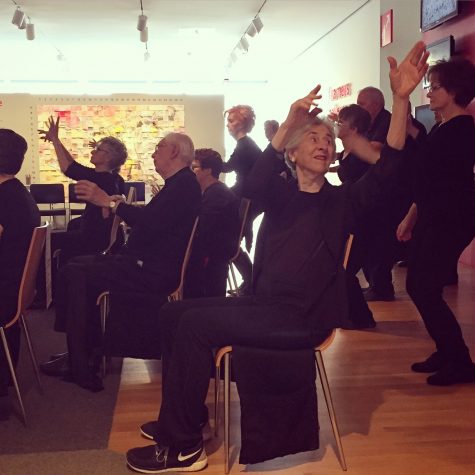
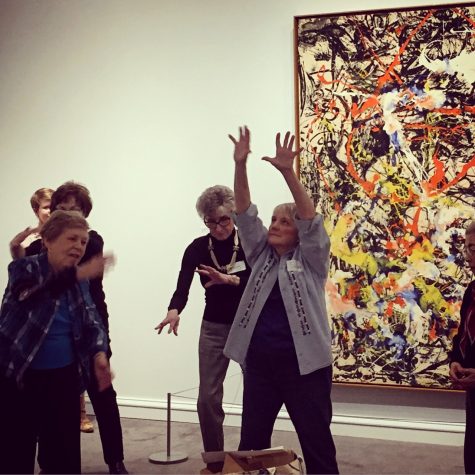
Parkinson’s disease is a neurological disorder that affects up to one million people in the United States. Someone with the disease may have tremors, slowed movement, rigid muscles, and impaired posture and balance. While there is no cure for Parkinson’s disease, one of the most important recommendations is to stay active, focusing on balance and flexibility. Dance for PD® engages the participants’ minds and bodies, and creates an enjoyable social environment that emphasizes dancing rather than therapy. Owens’ expertise in dance allows for active demonstration to inspire participants to recapture grace, while guided improvisation inspired by works of art in the collection fosters creativity and experimentation with movement. Participants not only have the chance to learn and talk about art, but to move their bodies and dance in the galleries!
img_3598

img_3272

Pat Goukler, one of the Dallas dancers, said of her experience, “I don’t have PD, but my husband does, so I do this with him. I’ve seen him develop a creativity that I hadn’t seen in 48 years of marriage. He looks at a piece of art and interprets it with his body. It is phenomenal; he has developed rhythm. It has been a joy to watch him experience a new way of expressing himself through art.”

img_2021

img_1977

Another member of the class said the Dance for PD program at the DMA “gave us all a new lease on life WITHOUT Parkinson’s. Yes, that’s possible!” Another stated that the experience “made my body feel so free. There were moments (quite a few, actually) when my body and mind felt so graceful and calm. The beauty of art and movement go together so well—I was surrounded by a joyous feeling!”

img_1684

img_0472

The opportunity to collaborate with Owens has allowed the DMA to engage with people from the Parkinson’s disease community in a way that we’ve never done before. The participants in the program are already focusing on movement, flexibility, and balance, which are essential to those with Parkinson’s disease, but having the class in the DMA galleries enables them to connect their dancing to visual works of art, providing them another avenue of inspiration—a meaningful experience for all involved!

img_0438

Amanda Blake is Interim Director of Education and the Head of Family, Access, and School Experiences at the DMA.

DFW Faves

Have you ever explored your own city as if you were a tourist? While the Dallas Museum of Art will always be my number #1 spot to spend time in the Metroplex, I thought I would share a few of my favorite places alongside works from the DMA’s collection. You might just discover a new hangout in your hometown!

Klyde Warren Park

Located right across the street from the DMA in Downtown Dallas, this amazing urban park is built over the Woodall Rodgers Freeway. Pick up something tasty from one of the many food trucks, take a stroll with your pup to My Best Friend’s Park, or enjoy free public programming ranging from dance classes to outdoor concerts and films. What I love most about Klyde Warren Park is how it serves as a gathering space for the community.

Dallas Farmers Market

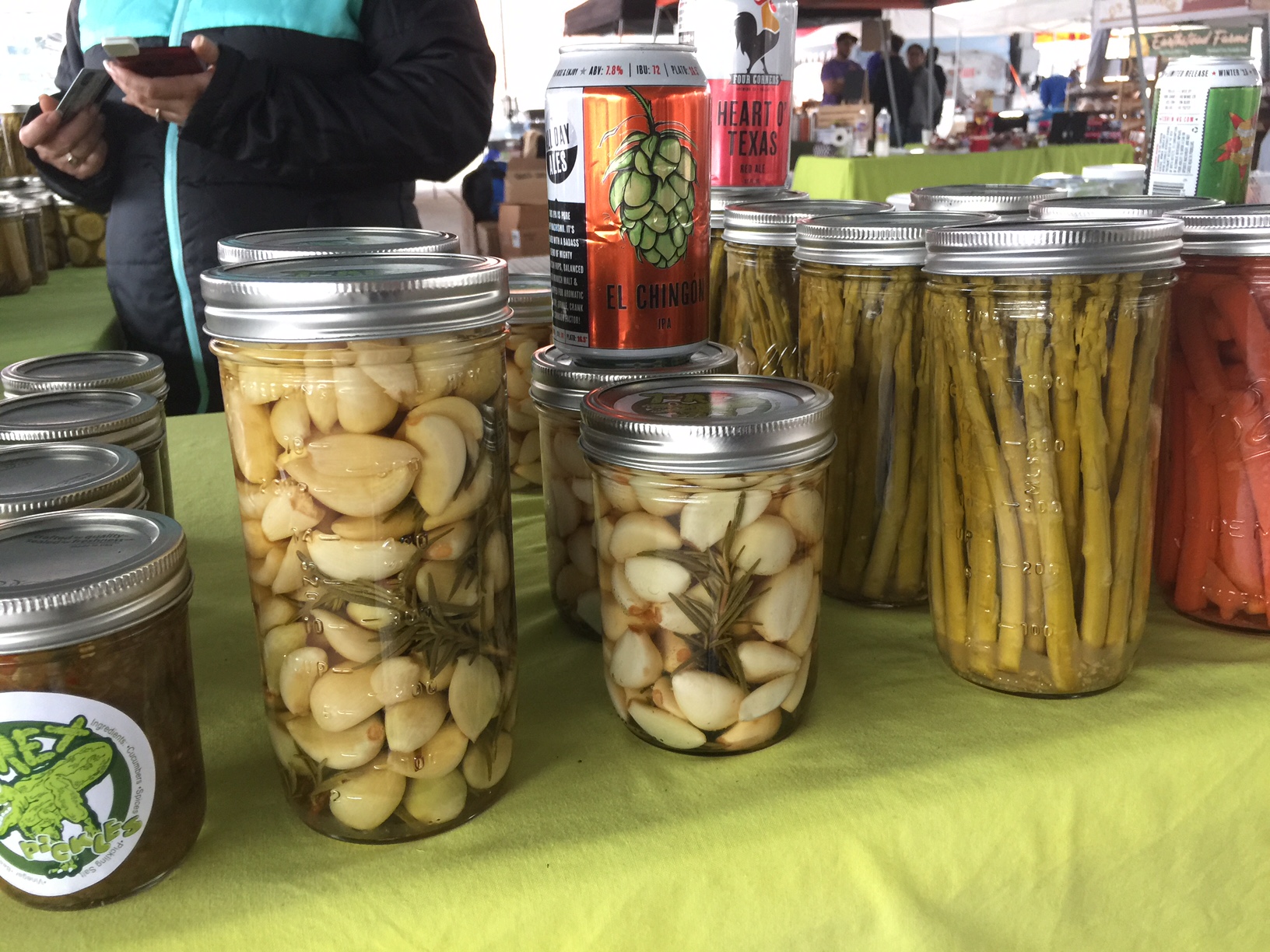
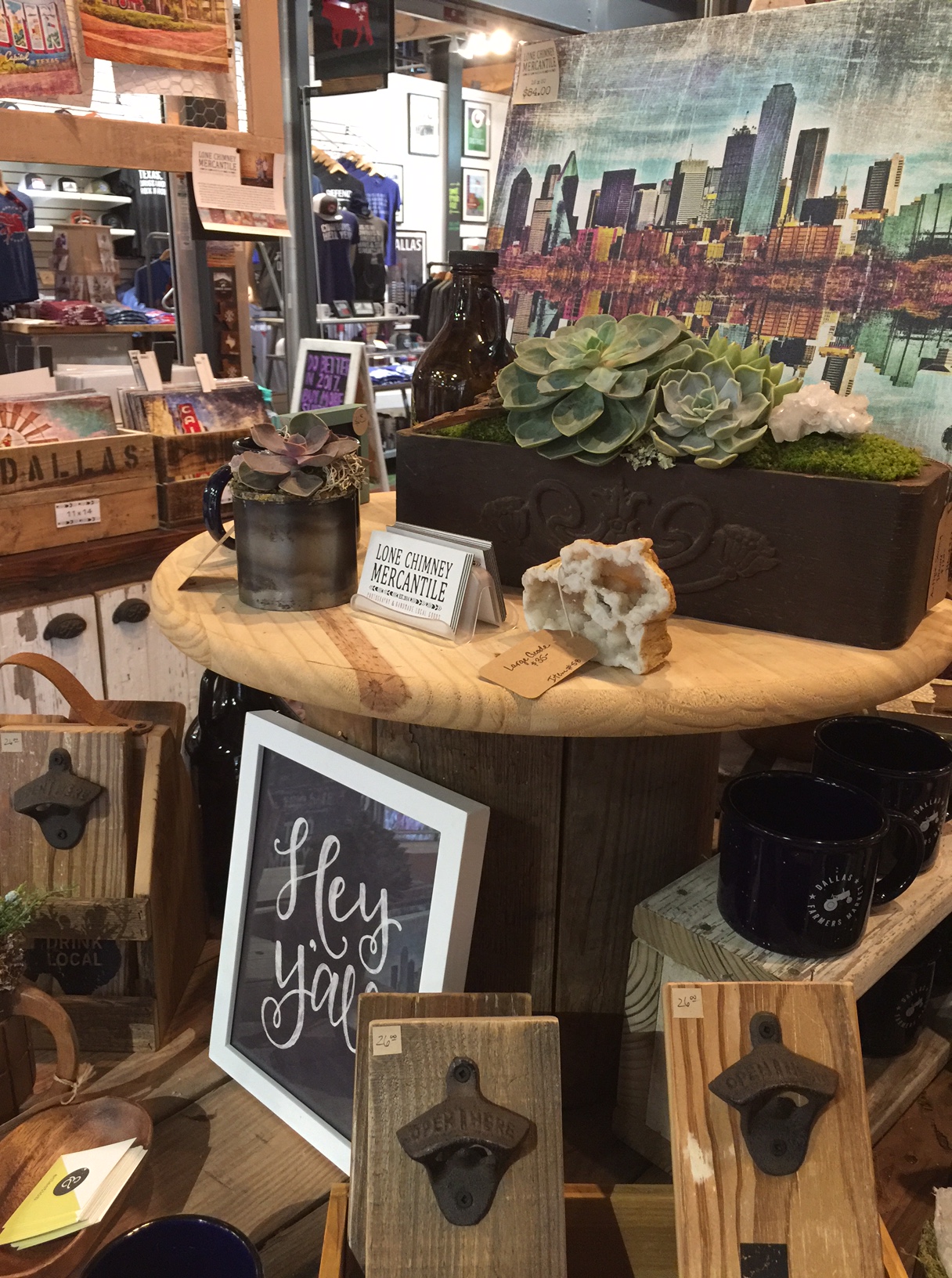
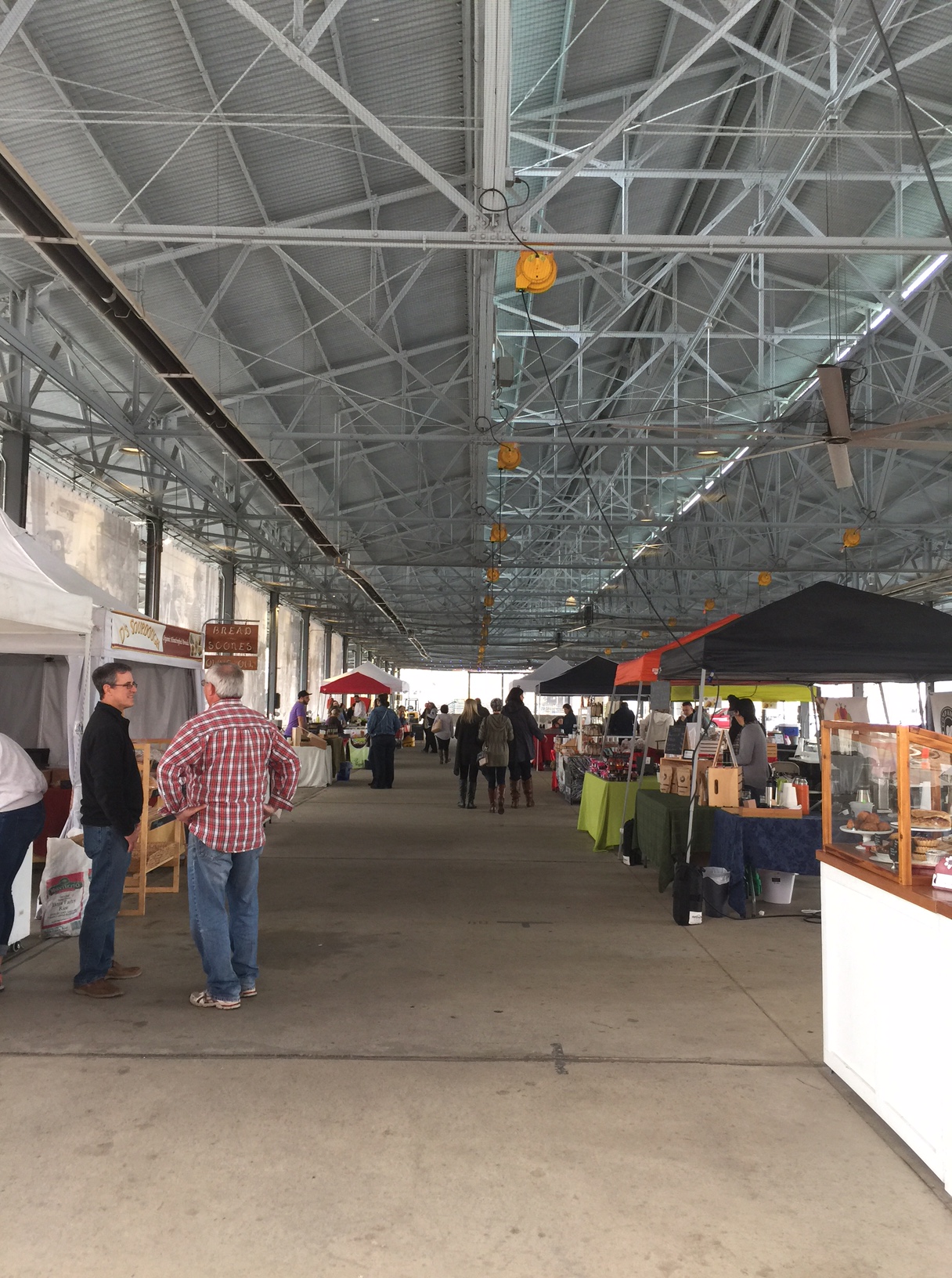
When I travel, one of my favorite things to do is visit the local market. Happily, the Dallas Farmers Market is one of my all-time favorites with seasonal fruits and veggies, local goodies, and fun events. Visit The Shed at the Dallas Farmers Market on Friday, Saturday, and Sunday to buy directly from farmers, ranchers, and artisans (if you’re lucky, you can also enjoy some samples!) The Market is open daily and offers local specialty foods and artisanal vendors. Where else can you pick up locally grown produce, honor Texas music with a Willie Waylon George & Beyonce t-shirt, and take a wine and cheese appreciation class?

The Foundry & Chicken Scratch

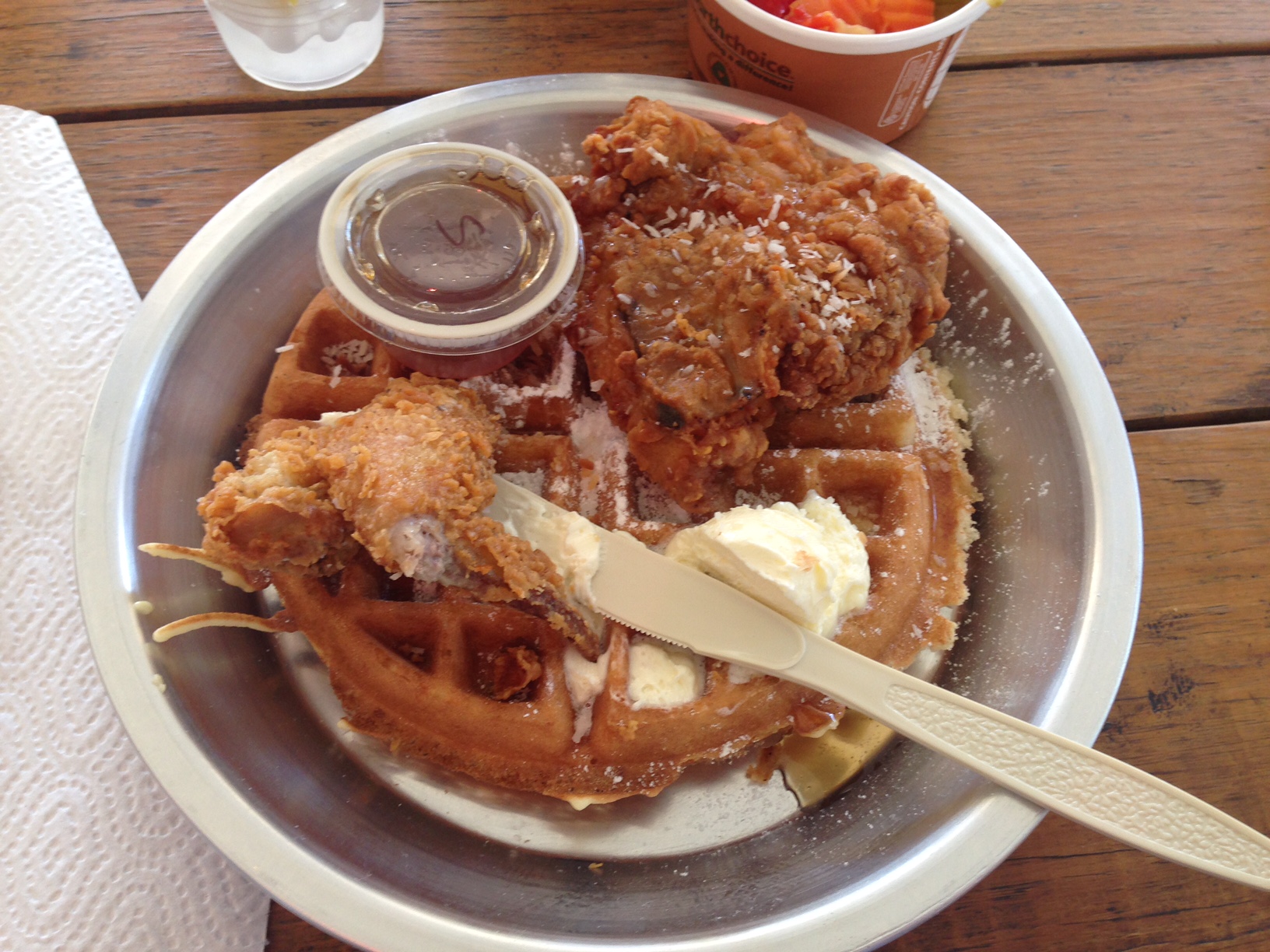
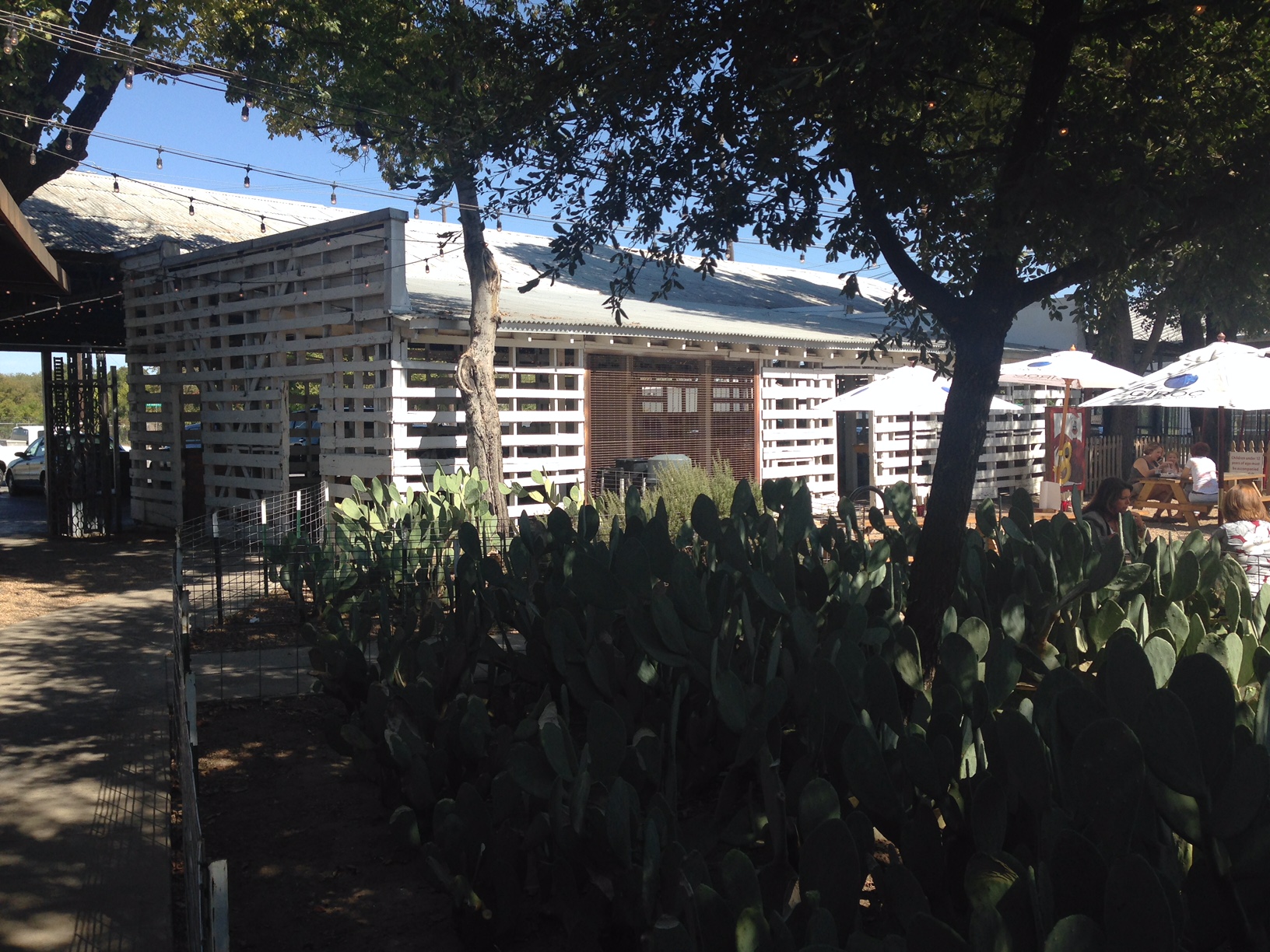
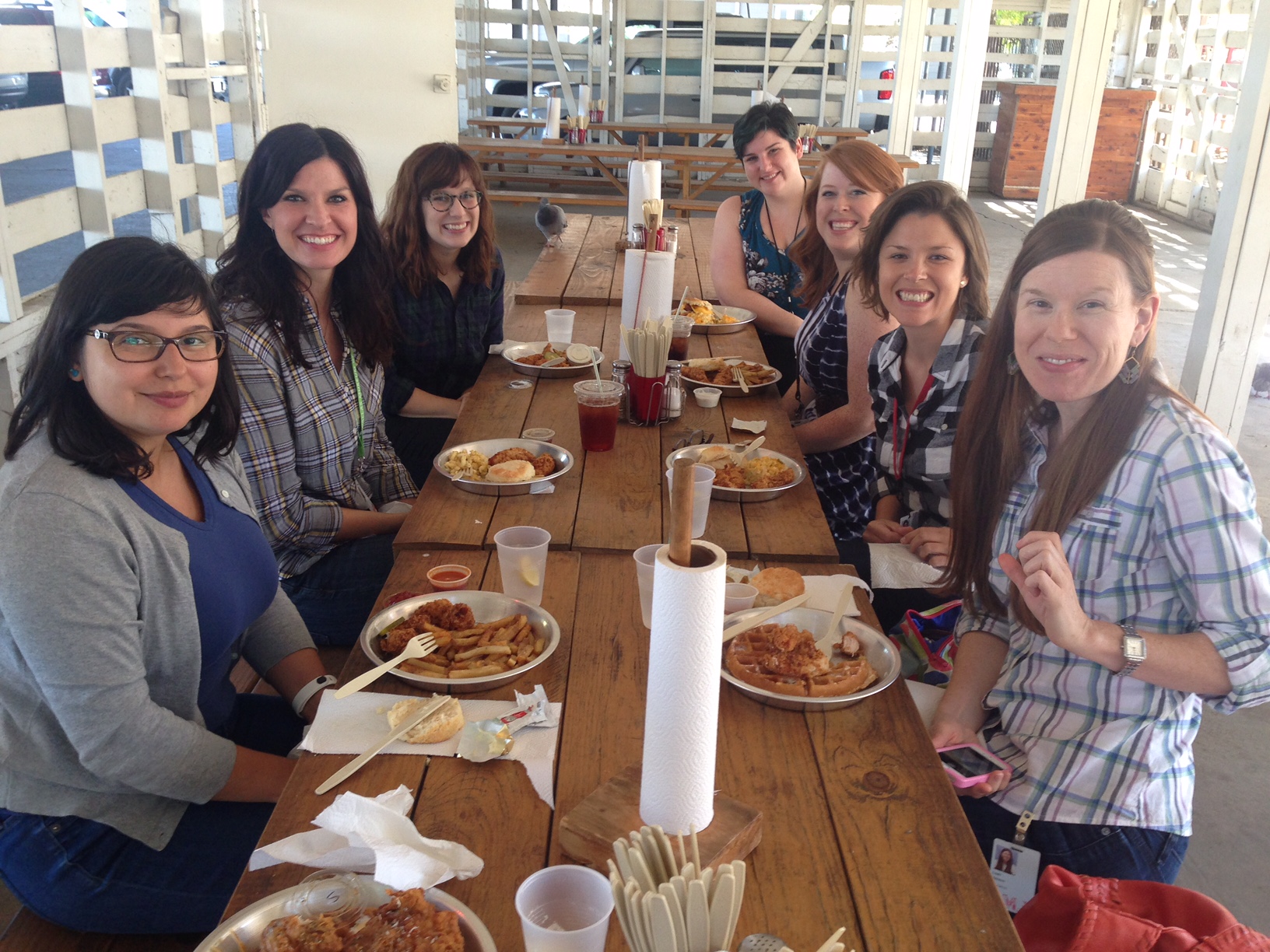
I might be in hot water with my colleagues for revealing our favorite lunch spot, but Chicken Scratch is too good to miss! The fried chicken, biscuits, and coconut waffles are all a special treat (we’ve contemplated, but never ordered their big salad bowls…we’ll try them next time…maybe), and the design of the space is comfy and eclectic: shipping containers delineate the boundary of the patio and a stage made out of reused pallets created by Gary Buckner of Stash Design sits outside of The Foundry, the laid-back bar next to Chicken Scratch. Definitely give Chicken Scratch a try – just be sure to leave us a table!

As we move into the new year, I’m looking forward to visiting old favorites and playing tourist while exploring more of the Metroplex. What are your favorite places to visit in DFW?

Lindsay O’Connor
Manager of Docent and Teacher Programs

Volunteer Spotlight: Go van Gogh-ing with Terei

With school back in session, we are so excited to jump into a brand new season full of Go van Gogh fun! And we’re very fortunate to have a group of extremely dedicated and talented volunteers who help make these programs possible. This month, we want to shine the volunteer spotlight on Terei Khoury, one of our fabulous Go van Gogh volunteers! Here is Terei in her own words:

How long have you been volunteering at the DMA?  I’ve been on-board volunteering at the DMA for Go van Gogh about a year and a half! I love working with children and tying-in art, creativity, imagination and joy is right up my alley! I’ve also started helping with the Meaningful Moments sessions. My father has fallen victim to Alzheimer’s disease, and helping in the Meaningful Moments program allows me to make a difference in another significant way.

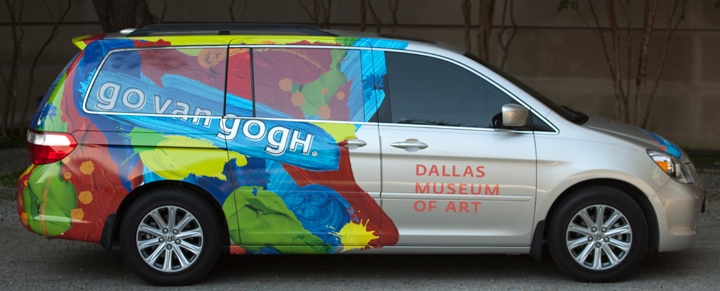
Go van Gogh van

What do you enjoy most about volunteering with Go van Gogh?  It’s hard to say what is most delightful, maybe ALL of this:

  • The DMA staff and their ENTHUSIASM & CREATIVITY
  • The other volunteers and their COMMITMENT & CARE in offering a meaningful program in our schools and summer camps
  • The JOY and ENLIGHTENMENT we see on children’s faces (especially the special-needs children) as they listen, absorb and TAKE CREATIVE action!

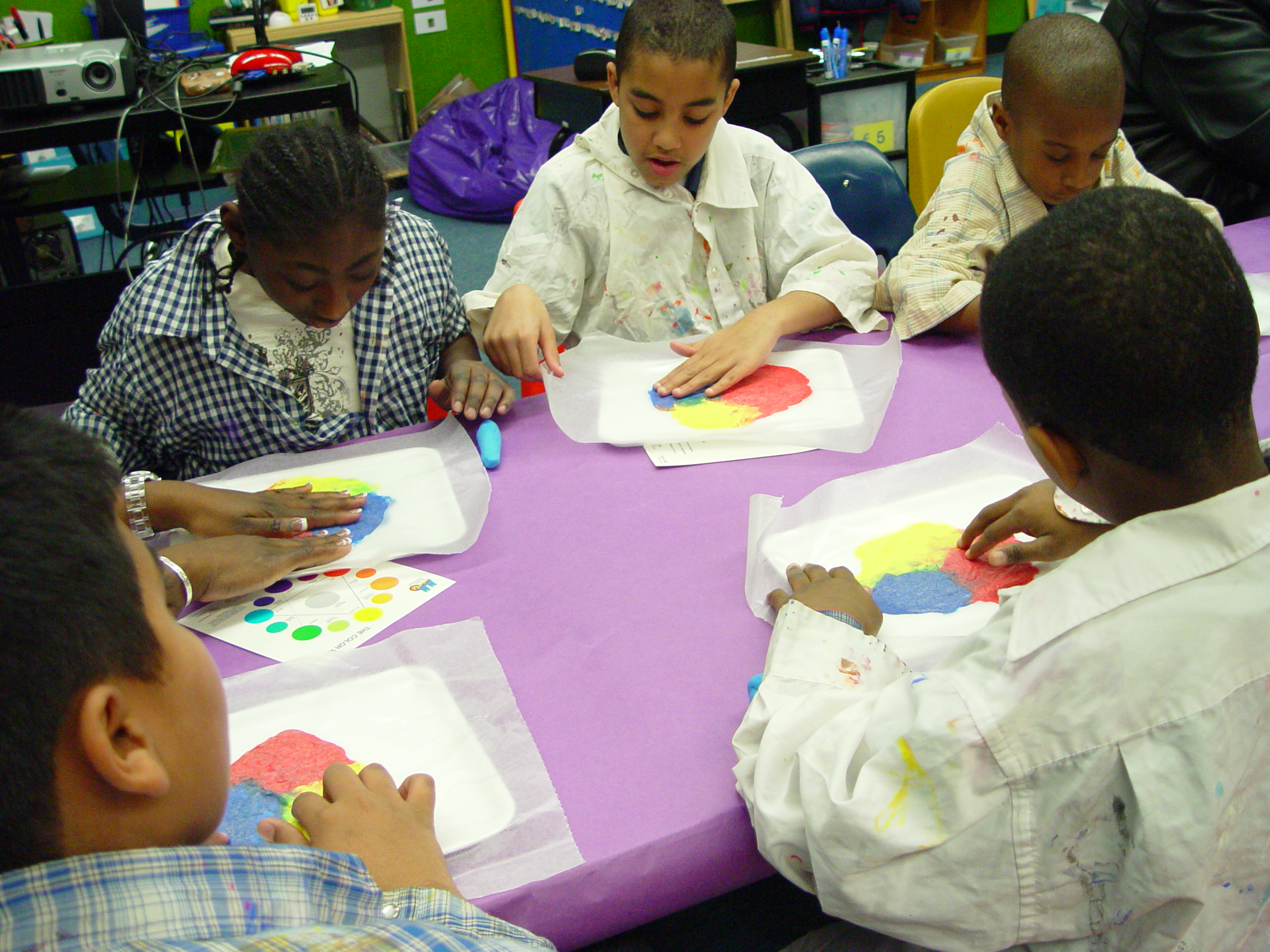
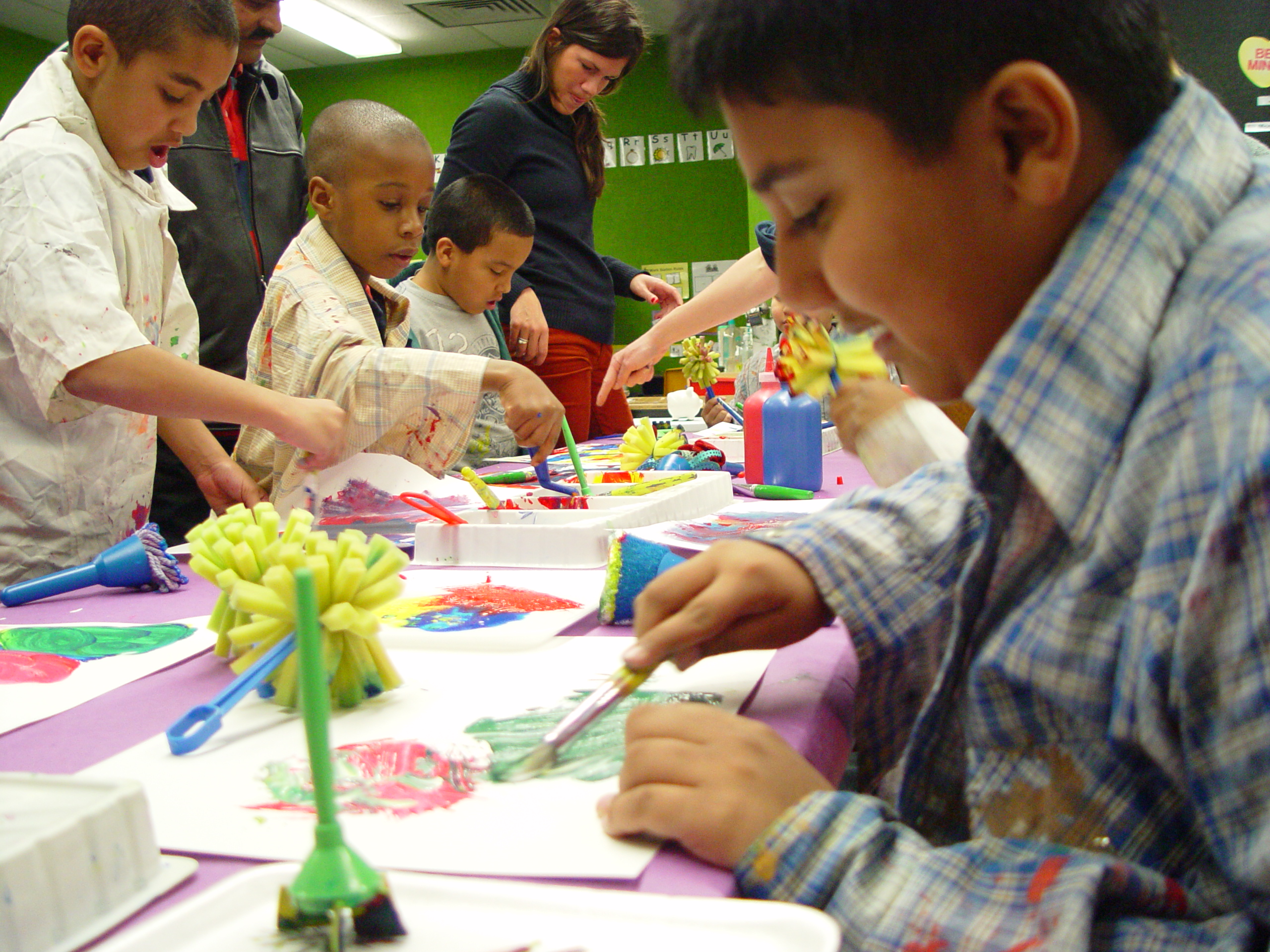
What is your favorite Go van Gogh program and why?  Hands-down, it’s “Color My World,” followed closely by “Ordinary to Extraordinary.”

  • In Color My World, it is absolutely extraordinary to see our special needs children experience the hands-on work with clay, paint and tools… it’s just amazing to see the level of excitement and joy this program can bring to some of the children!
  • It’s the thought process and creativity in Ordinary to Extraordinary that is exceptional, and the opportunity to stretch the mind to “go beyond the tube sock”!!

What are some of your other hobbies?  I do a number of volunteer activities: Habitat for Humanity (I’m a Core Volunteer!), Austin Street Center (dinner-coordinator), Reading Partners for DISD helping young readers hone their reading skills, HobbyCrafters creating dolls for holiday distribution, and a bunch of other things like gardening, sewing, and stuff!  I also, most importantly, care for my father who has Alzheimer’s. He’s my priority. I have a wonderful son and husband who also require a bit of attention!


Thank you so much for sharing your time and passion with us, Terei! We’re so thankful to all of our Go van Gogh volunteers for their commitment, time, and energy in bringing art programs to Dallas schools.

If you are interested in getting involved with this exciting volunteer opportunity, please visit the DMA website or email volunteers@dma.org for additional information. We’ll begin recruitment for Go van Gogh summer outreach programs in the coming months, and we’d love to Go van Gogh around Dallas with you!

Andi Orkin
Volunteer Coordinator for Programming


Friday Photos: Medieval and Marvelous

Mesmerized by the Middle Ages? Stop by the Dallas Museum of Art now through March 19 to explore Art and Nature in the Middle AgesPick up the Medieval and Marvelous Scavenger Hunt when you visit and use clues to search the exhibition for textiles, jewelry, stained glass and more!

Jessica Fuentes
Manager of Gallery Interpretation and the Center for Creative Connections

Genre Bending

Walter De Maria

“Every good work of art should have at least ten meanings,” remarked Walter de Maria, one of the major figures in the history of Minimal, Conceptual, Installation, and Land, in 1974. One thing I admire about his work is how complex and multifaceted it is (literally and figuratively); it invites us as viewers to hold in mind a few ideas at once and to consider it from a variety of perspectives.

Mark your calendars for Wednesday, January 18 to do exactly that, and to celebrate the DMA’s recent co-acquisition with the San Francisco Museum of Modern Art of Large Rod Series: Circle/Rectangle 5, 7, 9, 11, 13 by De Maria at a DMA Arts & Letters Live event.

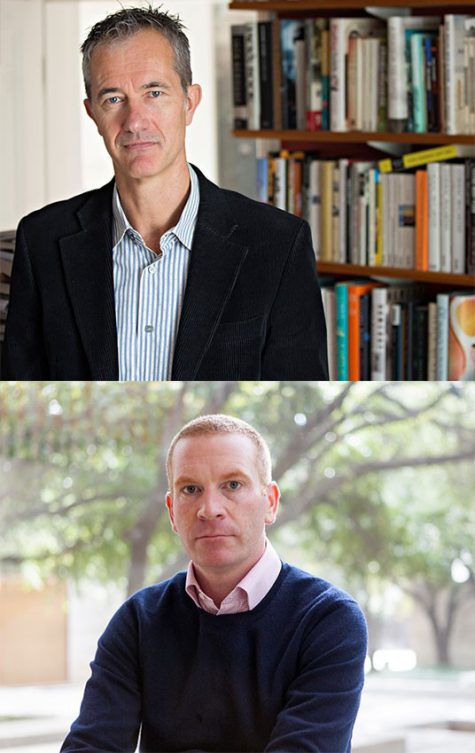
Top: author Geoff Dyer Bottom: DMA curator Gavin Delahunty

Top: author Geoff Dyer
Bottom: DMA curator Gavin Delahunty

This Artful Musings event will feature senior curator Gavin Delahunty who organized the Walter De Maria: Counterpoint installation and will provide an overview of the artist, his work, and importance; award-winning author Geoff Dyer who has written about De Maria’s work in his newest book White Sands; and percussionist Stockton Helbing, who will perform some of the artist’s rare musical compositions.

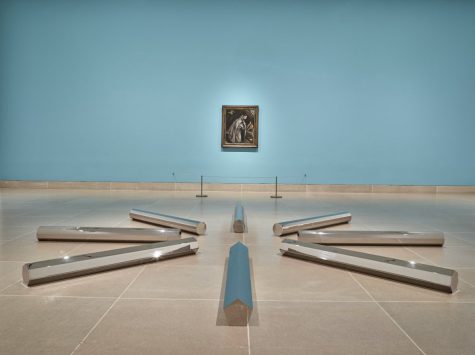
After 5:00 p.m., you can linger in the installation before it goes off view on January 22 — it’s the perfect opportunity in a quieter setting to experience the artist’s work. As Caitlin Haskell notes in her catalogue essay, “it takes time to come to know them.” There is rich resonance between El Greco’s painting of Saint Francis Kneeling in Meditation (1605-1610, on loan from the Meadows Museum) and De Maria’s sculpture. The juxtaposition of these two works creates a rich meditation on the themes of minimalism, mathematics, progression, and sensory perception.

Walter De Maria, Counterpoint

Walter De Maria: Counterpoint, 2016

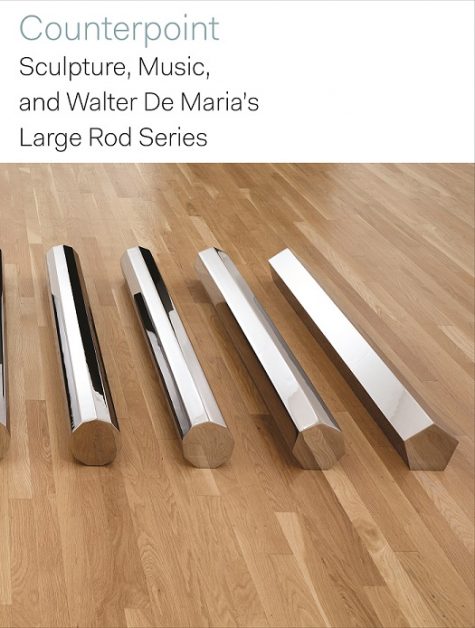
Shortly after 7:00 p.m., percussionist Stockton Helbing will perform of one of De Maria’s musical compositions, with Gavin Delahunty’s and Geoff Dyer’s insights and conversation kicking off at 7:30 p.m. Dyer will then sign copies of his books, and Delahunty will sign copies of the newly published exhibition catalogue.

demaria-jackets-05

Both artist and author defy easy classification or categorization in their respective fields. De Maria was a painter, sculptor, illustrator, and composer. The New Yorker calls Dyer “a restless polymath and an irresistibly funny storyteller. . . . adept at fiction, essay, and reportage, but happiest when twisting all three into something entirely his own.”

Dyer’s newest book, White Sands: Experiences from the Outside World, showcases his series of fascinating adventures and pilgrimages across the globe. They range from searching for Gauguin’s notion of exotic paradise in Tahiti to nearly freezing and being trampled by a dog sled on a quest to see the Northern Lights. Weaving stories about recent travels with images and memories from his childhood, Dyer tries to discern what a certain place and, like De Maria, what a certain way of marking a landscape, means; he explores the power and attraction that certain places hold and what we seek in them.

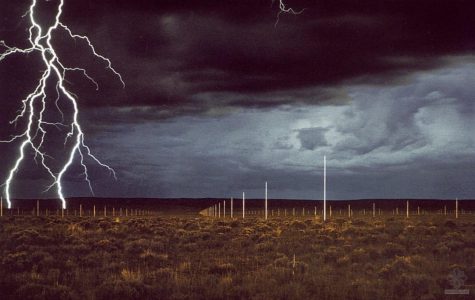
My favorite chapter in White Sands is the one in which Dyer, his wife, and friends experience De Maria’s The Lightning Field in western New Mexico, where the only way to visit is to reserve a cabin on the property and stay overnight, allowing you to experience the 400 rods in at various times of day and in varying degrees of sunlight.  Reading it made me want to prioritize this as my next road trip.

Walter De Maria’s The Lightning Field, Quemado, New Mexico

Walter De Maria’s The Lightning Field, Quemado, New Mexico

For those who want to delve further into this topic and artist, don’t miss the opportunity to hear Walter De Maria in his own words about his land art installations as part of a free film screening of The Troublemakers: The Story of Land Art on Saturday, January 21 at 2:00 p.m. at the DMA. Explore Arts & Letters Live’s lineup of more than 30 events over the next six months here.

Carolyn Bess is the Director of Arts & Letters Live at the DMA.


Archives

Categories