Archive Page 44


Collection Connections: Jekyll & Hyde

What I like most about the story of Jekyll & Hyde is the timeless theme of duality—the two-fold, dichotomous nature of all things. It’s a story in which the good (Dr. Jeykll) and the evil (Mr. Hyde) within one human being are constantly at odds with one another.  Last week at the Winspear, I watched Jekyll and Hyde the Musical and thought about the idea of duality in the visual arts.

Duality refers to a whole that is composed of two opposing or opposite parts. While Jekyll and Hyde references the duality of good and evil, artists in our collection present varying kinds of dualities:

Light and Dark
Image

Big and Small
Image

Male and Female
Image

Organic and Geometric
Image

Natural and Manmade
Image

Reality and Dreams
Image


I challenge you to post a comment with an example of a work of art that presents some kind of duality!

Andrea V. Severin
Interpretation Specialist

Artworks shown:

  • Jackson Pollock, Cathedral, 1947, Dallas Museum of Art, gift of Mr. and Mrs. Bernard J. Reis
  • Tom Friedman, Untitled (big/small figure), 2004, The Rachofsky Collection and the Dallas Museum of Art through the DMA/amfAR Benefit Auction Fund
  • Male and female ancestor figures, Indonesia, North Sumatra, Lake Toba Region, Toba Batak People, Dallas Museum of Art, The Eugene and Margaret McDermott Art Fund, Inc.
  • Constantin Brancusi, Beginning of the World, c. 1920, Dallas Museum of Art, Foundation for the Arts Collection, gift of Mr. and Mrs. James H. Clark
  • Robert Smithson, Mirrors and Shelly Sand, 1969-1970, Dallas Museum of Art, gift of an anonymous donor; the Vin and Caren Prothro Foundation; an anonymous donor in memory of Vin Prothro and in honor of his cherished grandchildren, Lillian Lee Clark and Annabel Caren Clark; The Eugene McDermott Foundation; Dr. and Mrs. Mark L. Lemmon; American Consolidated Media; Bear/Hunter; and donors to the C. Vincent Prothro Memorial Fund
  • René Magritte, Persian Letters, 1958, Dallas Museum of Art, gift of J.B. Adoue, III

Friday Photos: Drawing with Light

8245745662_cb52b5115e_o

photo

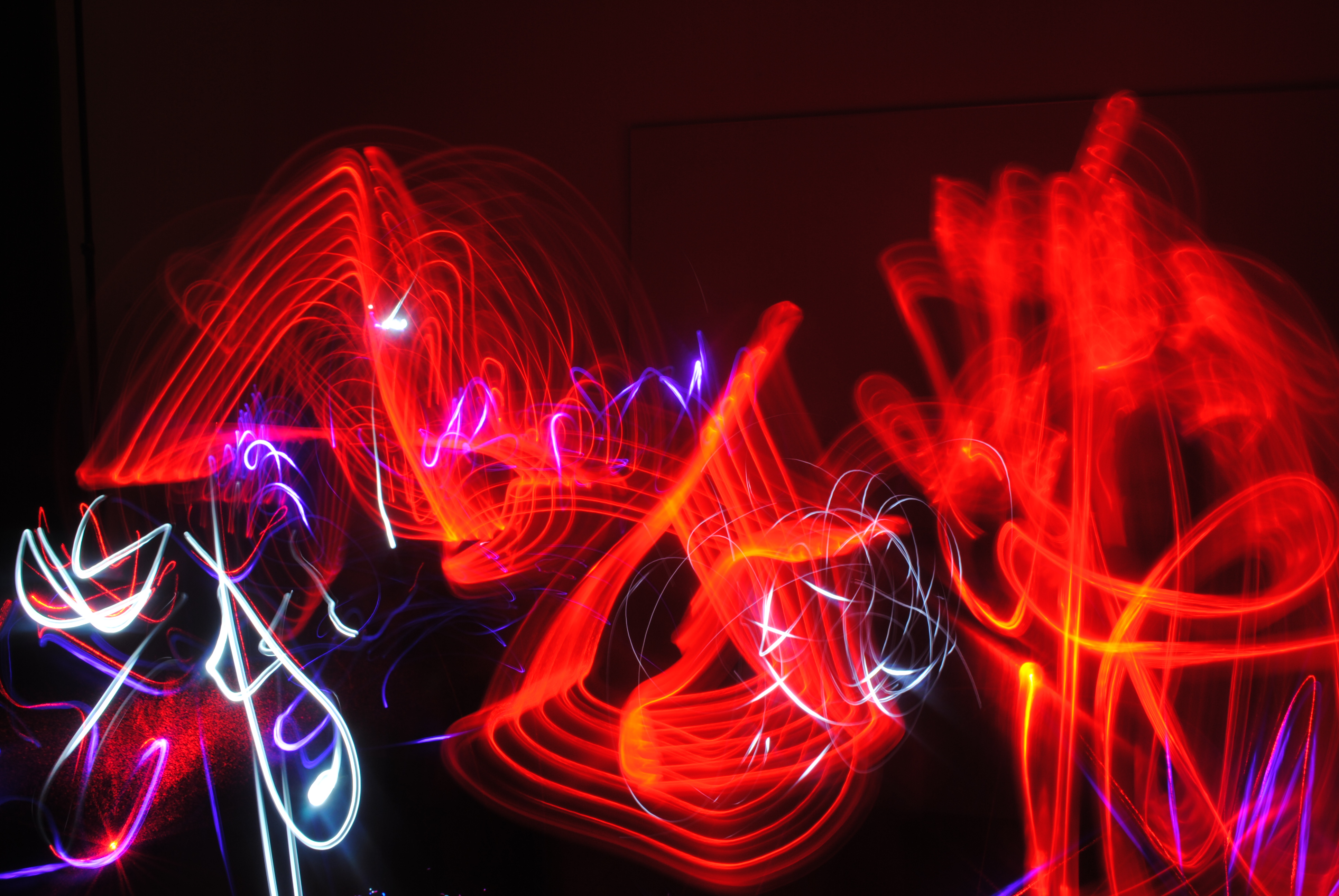
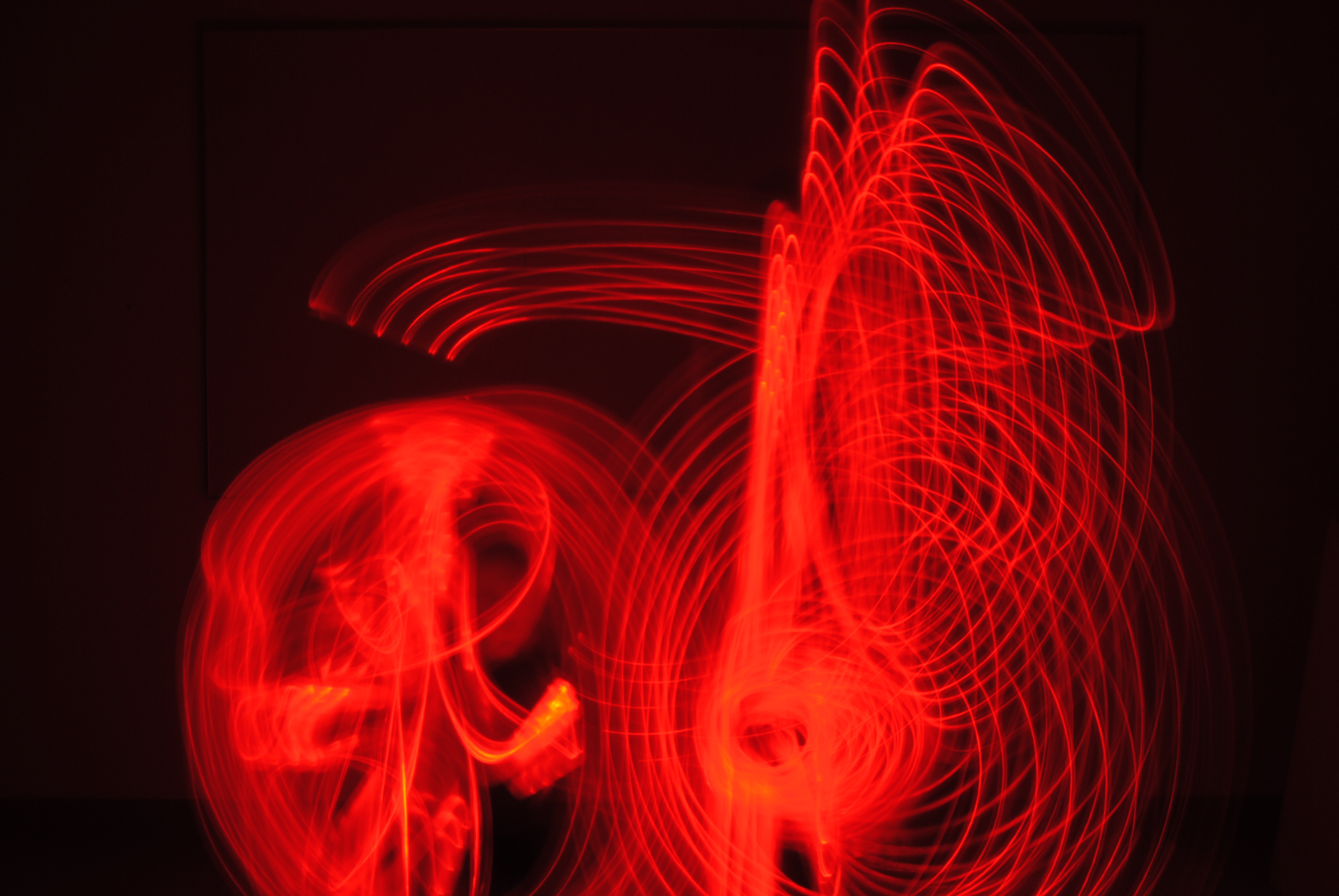
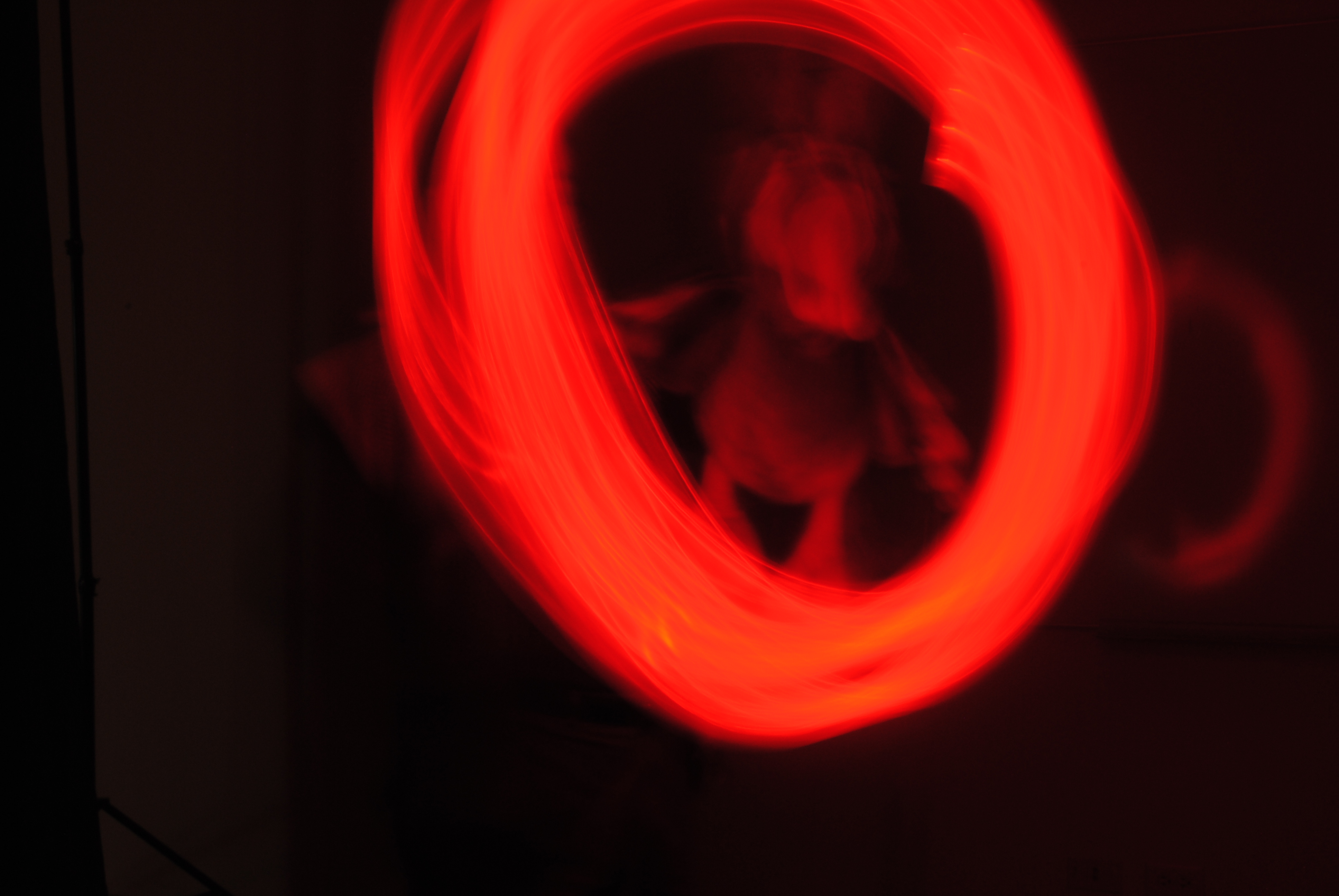
The theme for December’s First Tuesday program was City of Light, inspired by one of the Dallas Museum of Art’s current exhibitions, Posters of Paris: Toulouse-Lautrec and His Contemporaries. One of the exciting activities offered was Drawing with Light.  Families experimented with flashlights, laser pointers, and traffic wands to create a drawing in the air with light. The drawings were created using digital SLR cameras set on 15 second exposure time, which enabled all of the movements to be captured. All of the photographs taken during this activity were posted to the Center for Creative Connections’ Flickr account.  The activity was a great success and even Arturo, the Museum’s family mascot, took part!

Arturo making his own drawing with light!

Arturo making his own drawing with light!

Danielle Schulz
McDermott Intern for Family Experiences

Paris Calling!

DSC_8711
Calling all art enthusiasts!

We are in need of volunteers for a hands-on, art-making area in our Posters of Paris: Toulouse-Lautrec & His Contemporaries exhibition.

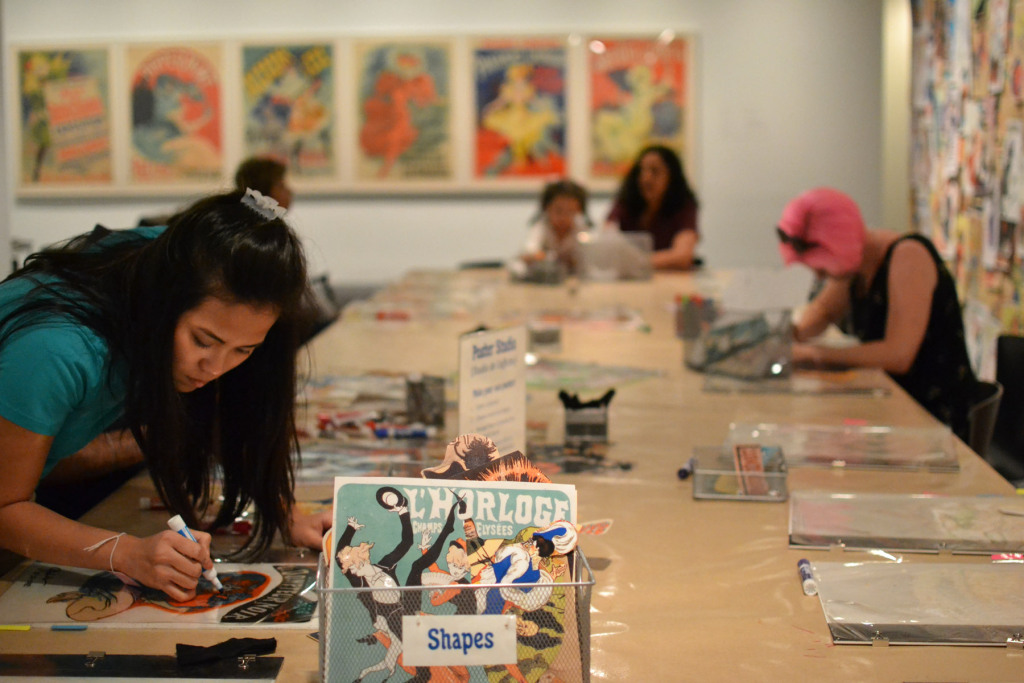
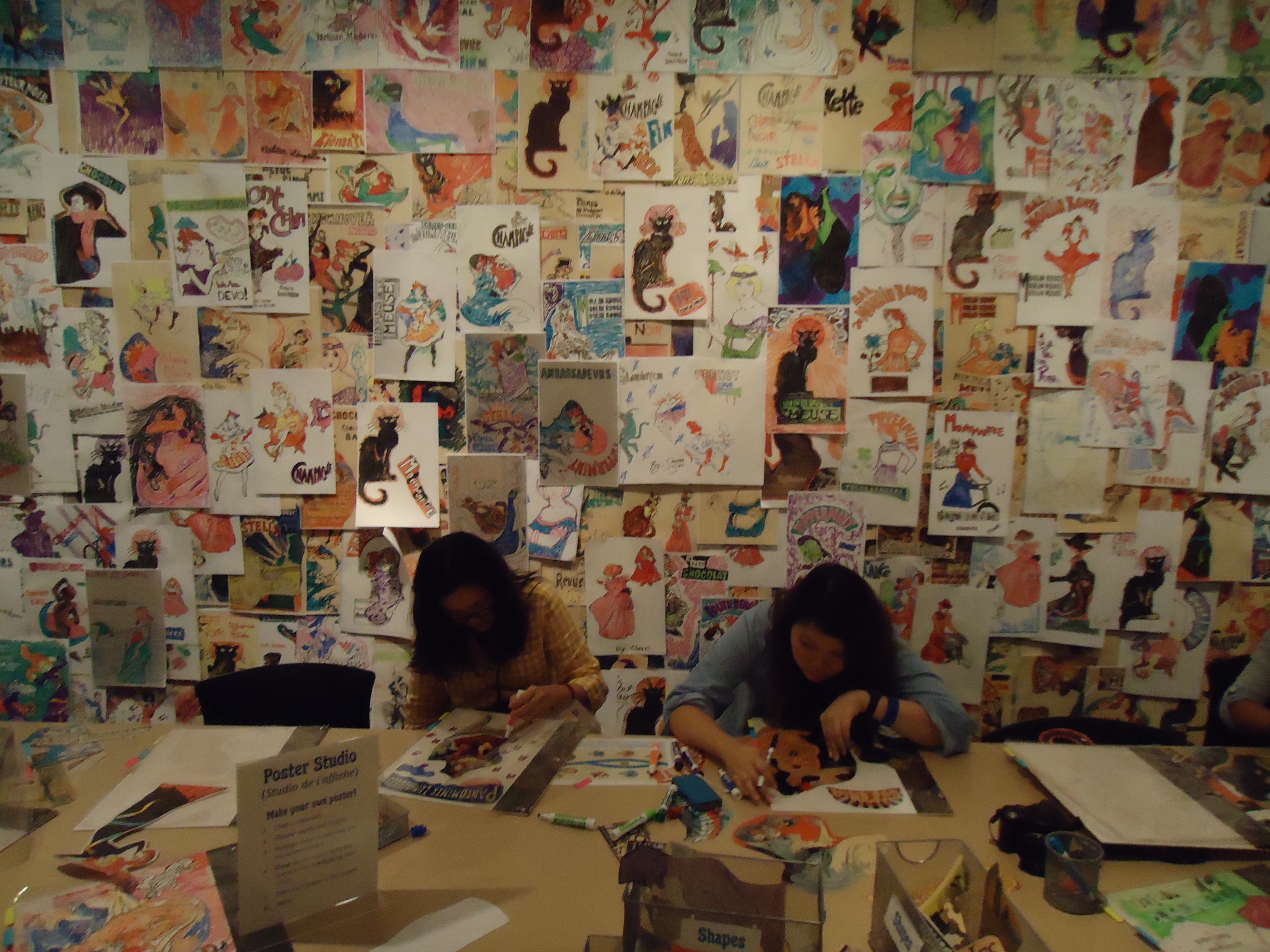
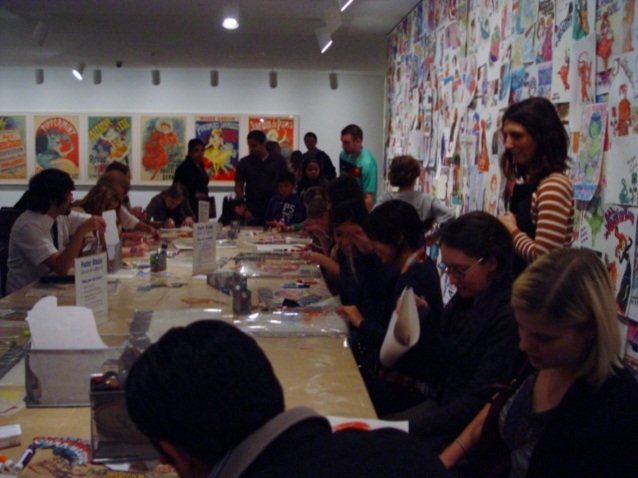
During the run of Posters of Paris: Toulouse Lautrec and His Contemporaries (on view through January 20, 2013), the Museum is offering a drop-in art-making activity within the exhibition gallery space. For the activity, visitors create their own posters using text and images from the exhibition. Poster-makers layer text and images in between layers of acetate and trace their compositions with dry erase markers. After completing poster designs, visitors bring their finished product to a volunteer, who photocopies the image, creating an 11”x17” poster.  Visitors receive a copy of their posters to take home and the Museum keeps a copy to hang in the Poster Studio space.

DSC01421
Poster Studio volunteers will be on their feet, interacting with visitors, making copies, and stapling posters onto the wall in the space.  Shifts are two-hours in length during open hours.  Volunteering in the Posters Studio is a fun way to spend two hours of your day—when I work the space, I usually have time to create a poster myself.

We are in great need of volunteers to help during the final weeks of December.  As our way of thanking you for volunteering, we will provide all volunteers with an extra ticket to the Posters of Paris exhibition.

For more information about being a Posters Studio volunteer, or to sign-up for a shift, please visit our website.

Happy Holidays,

Amy Copeland
Manager of Go van Gogh Outreach and Community Teaching

Reading the Cards: Part 3

This post is the third in a larger series finding connections between the ever-mystical tarot cards and the extraordinary collection of the Dallas Museum of Art. Head over to the first and second posts for an introduction and earlier connections.
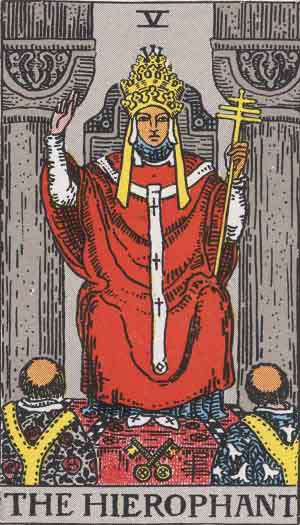
The Hierophant is the fifth trump card and is occasionally referred to as the Pope.  The term hierophant literally means one who teaches holy things.  With two fingers pointing skyward and two downward, the Hierophant’s hand raised in benediction forms a bridge between heaven and earth.  This card represents seeking guidance from positive role models as the Hierophant is seen as a pillar of the community.
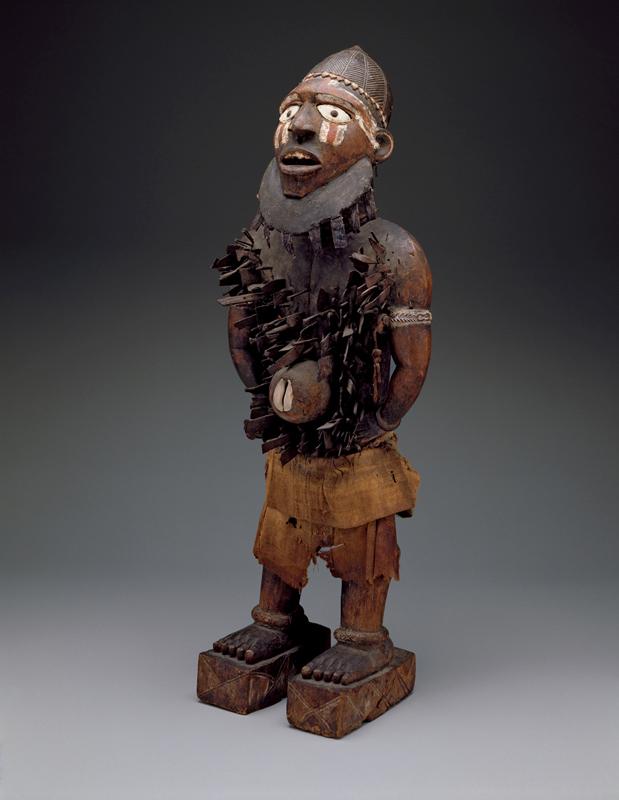
Standing power figure (nkisi nkondi),Yombe peoples, late 19th to early 20th century, Dallas Museum of Art, Foundation for the Arts Collection, gift of the McDermott Foundation

Minkisi (the plural term for nkisi) are containers for magical substances or medicines that empower them to protect the community against negative forces.  This standing power figure belongs to a class of minkisi called nkondi.  The term translated is “hunter” of wrongdoers in matters of civil law.  Truly a pillar of the community, the hunter is simultaneously chief, doctor, priest and judge.
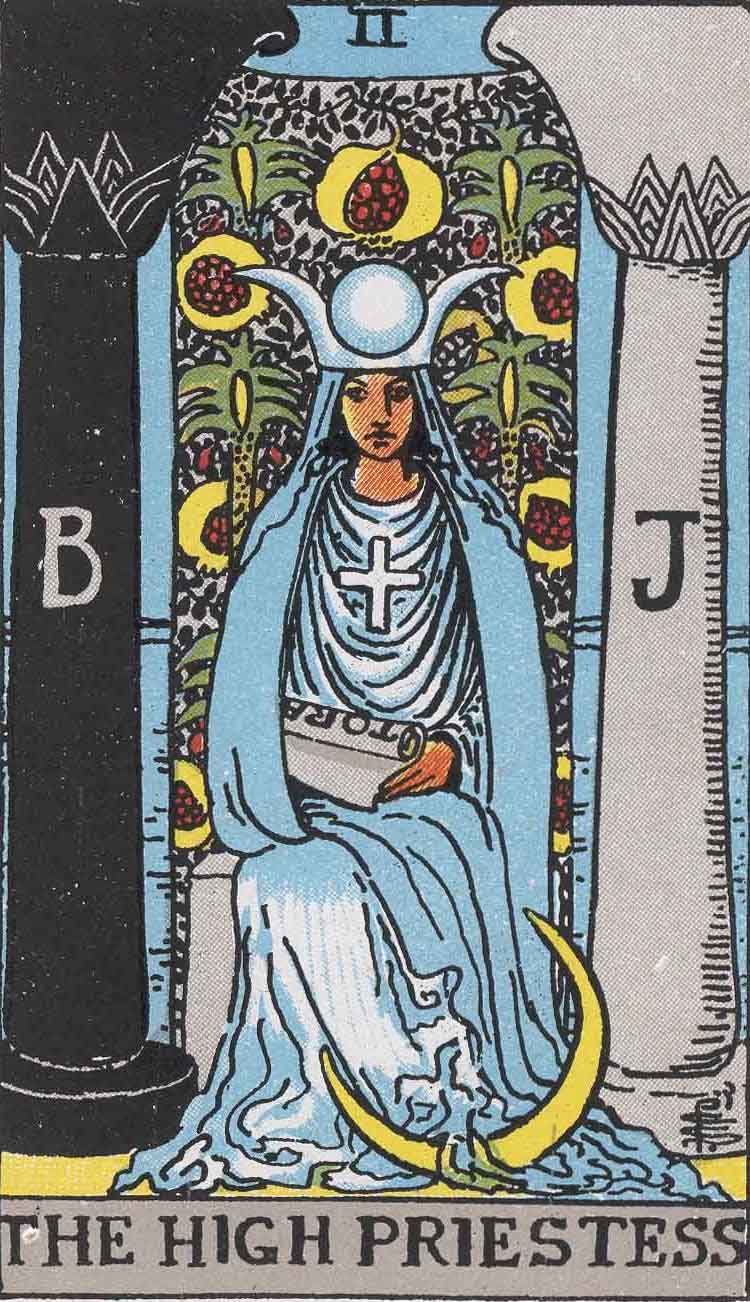
The High Priestess is the second major arcana card in a tarot deck.  She is represented in plain robes wearing a horned diadem on her head and a large cross on her chest.  The High Priestess is always shown between two pillars- one white and one black.  Labeled “B” and “J,” the columns represent Boaz and Jachin of the mystic Temple of Solomon.  This card is associated with knowledge, love, and common sense.
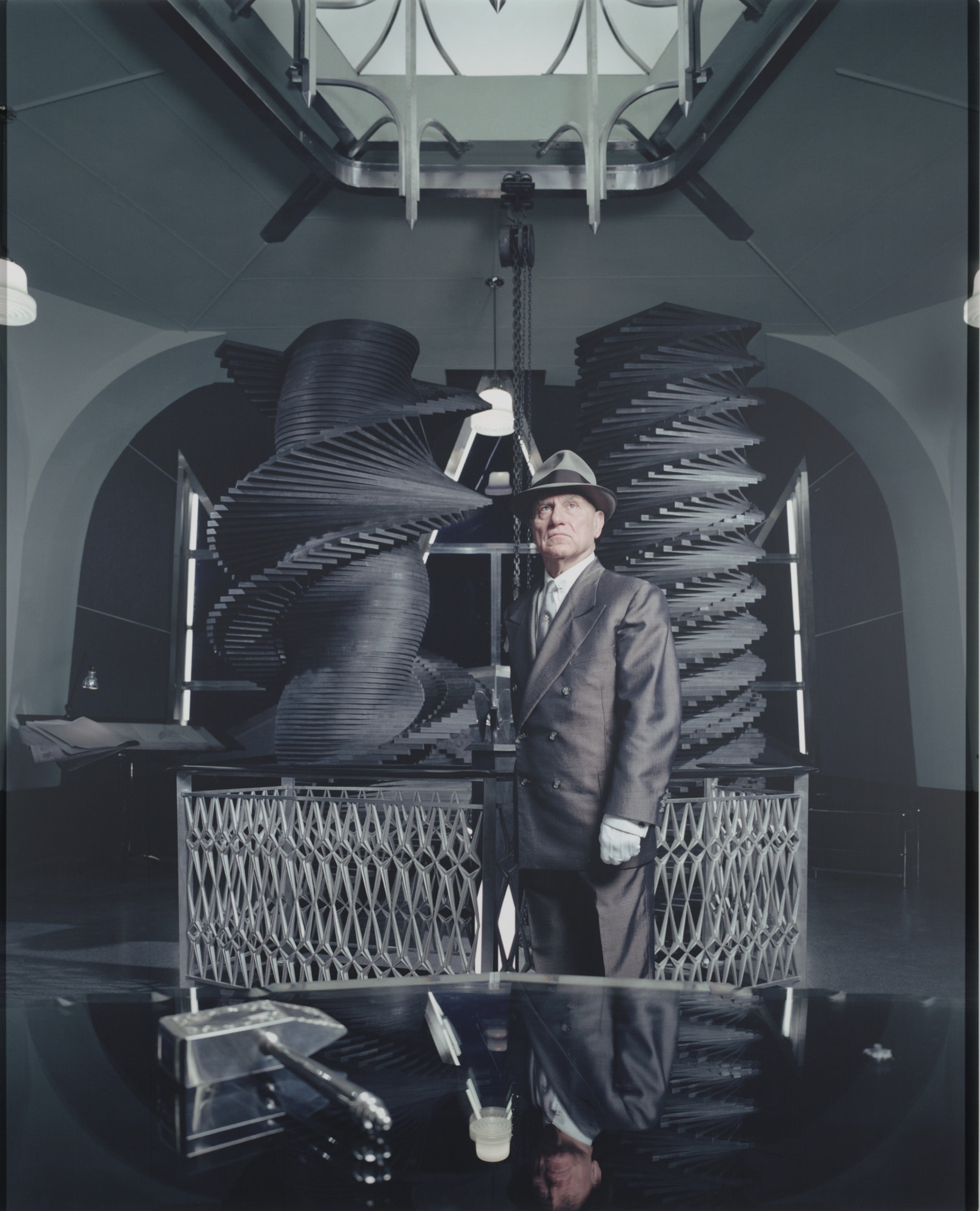
Matthew Barney, CREMASTER 3: Hiram Abiff, 2002, Dallas Museum of Art, Contemporary Art Fund: Gif of Arlene and john Dayton, Mr. and Mrs. Vernon E. Faulconer, Mr. and Mrs. Bryant M. Hanley, Jr., Margurerite and Robert K. Hoffman, Cindy and Howerd Rachofsky, Deedie and Rusty Rose, Gayle and Paul Stoffel, and three anonymous donors; DMA/amfAR Benefit Auction Fund; and Roberta Coke Camp Fund

Cast by Matthew Barney in the film CREMASTER 3, American sculptor Richard Serra portrays the master architect of the Chrysler building.  In this freeze frame, Serra stands in front of two industrial columns, a reference to two pillars designed by Hiram Abiff, the mythic architect of Solomon’s Temple, who possessed knowledge of the mysteries of the universe.
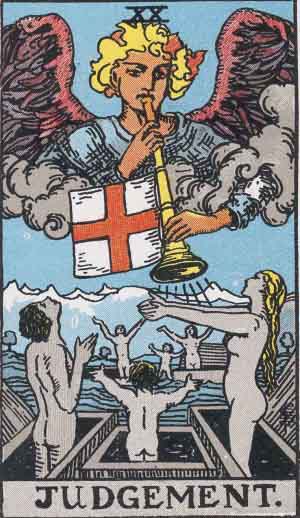
Judgement is the twentieth trump card in the tarot deck.  Modeled after the Christian resurrection prior to the final judgmenet day, the scene depicts an angel, likely Gabriel, descending to earth sounding a trumpet.  Below, grayish men, women, and children celebrate the angel’s arrival with open arms as they emerge from crypts and graves.  When used for divination purposes the card signals an impending judgement or the resurrection of past errors.
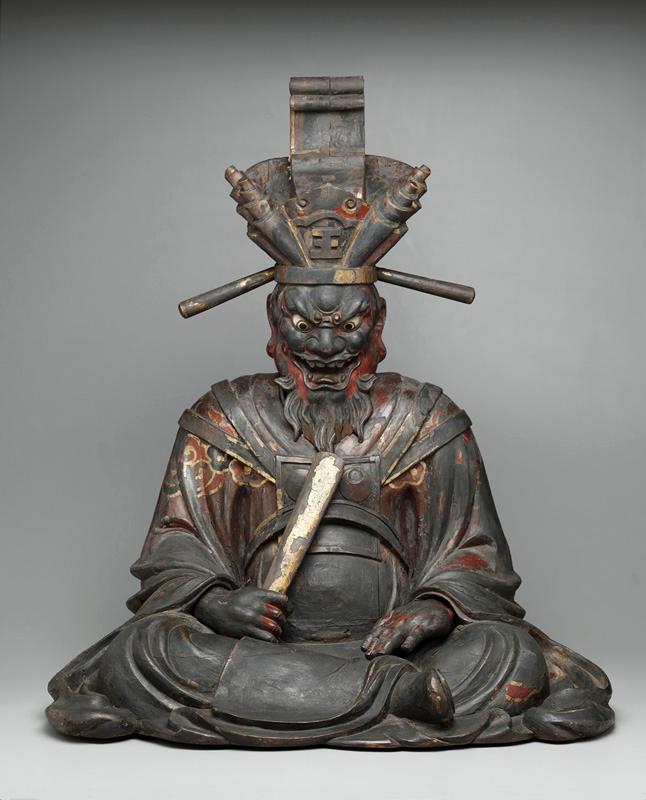
Emma-O, late 16th-early 17th century, Dallas Museum of Art, Wendover Fund in memory of Alfred and Juanita Bromberg an dthe Cecil and Ida Green Acquisition Fund

The title Emma-O is the Japanese translation of Yama, the Hindu god of death.  Based in Buddhism, the idea of Emma-O as the King of Hells originated in China before spreading to Japan.  Wearing the costume of a Chinese judge, Emma-O was thought to determine how your spirit would be reincarnated in your next life.  He was seen as a beneficient power despite his snarling face, which was thought to avert evil.
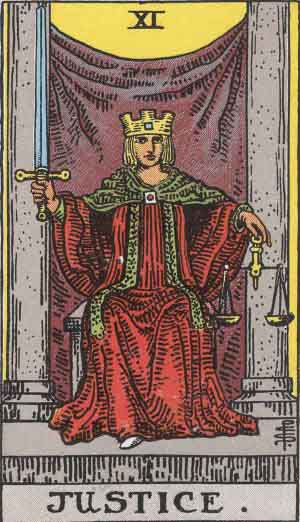
Justice is numbered either eight or eleven depending on the deck .  Shown seated and holding the scales of justice and the equalizing sword aloft, Justice meditates on various claims of right, morality, and duty.  When Justice appears in a spread, the card signals an injustice that requires righting.
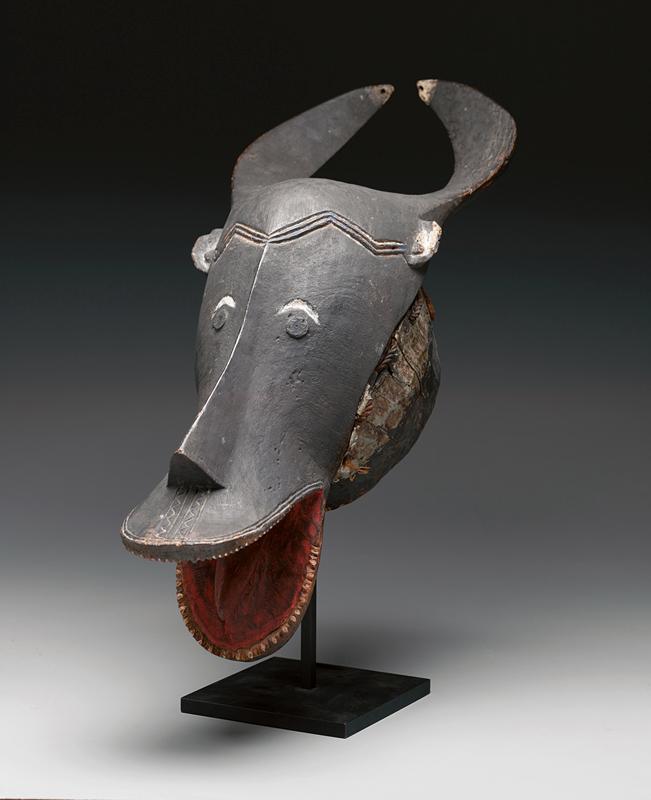
Helmet mask (gye), Guro peoples, mid-20th century, Dallas Museum of Art, The otis and Velma Davis Dozier Fund

The most powerful of masks, gye represent the highest judicial authority.  A person wearing such a mask can judge disputes, negotiate peace treties, and make momentous decisions on behalf of the community.  Worn while dancing atop burning coals, this mask depicts the trustworthy and loyal African buffalo.
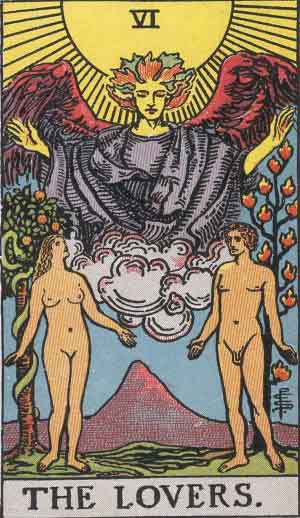
The Lovers is the sixth trump card in a tarot deck.  Still nude, Adam and Eve flank the cherub that is presumably ordering them from the Garden of Eden.  Representing the impulse that drove Adam and Eve from the Garden, the Lovers exemplify the transition from innocence to experience.  This transition could manifest due to curiosity, desire, or duty.
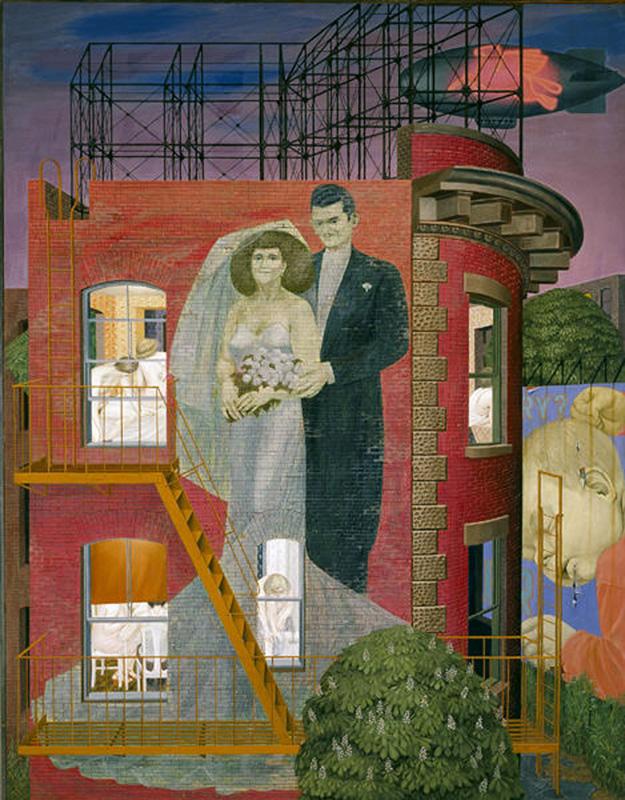
Henry Koerner, June Night, 1948-1949, Dallas Museum of Art, Foundation for the Arts Collection, gift of Joshua L. Logan

An example of magic realism, Henry Koerner’s June Night is a glance at life after leaving the garden.  Contrasting blissful wedding connotations with the harsh qualities of a brick apartment building, this painting comments on the realities of married life, post-honeymoon phase.  The crying child painted on the lower wall brings to mind late night feedings and diaper changes.

Stay tuned for my next post featuring the Magician, the Moon, the Star, Strength, and the Sun.

Pilar Wong
McDermott Intern for Community Teaching

Bon Voyage!

new 024

Our amazing Hannah Burney is spreading her wings and flying away from us today on her way back to San Francisco. Hannah has worked as the McDermott Intern for Teaching Programs and the Community Teaching Programs Assistant in the Education department for the past fourteen months, and we are going to miss her! If she had her very own trading card, she’d have some pretty impressive stats:
  • created 2 new Go van Gogh programs
  • assisted with 16 volunteer trainings
  • clocked more than 1,000 miles in the Go van Gogh van
  • taught over 100 classes to school children all around the DFW metroplex
  • shared countless numbers of fun, innovative ideas for engaging with art
  • laughed at least once a day

We wish her the very best and know that her future is bright!

Leah Hanson
Manager of Early Learning Programs

canvas: a blank slate of possibilities

Welcome to Canvas! We are so excited to announce that we are merging the DMA’s family blog with the DMA’s educator blog – what better way to canvass new ideas on a blank canvas? Whether you are a teacher, parent, grandparent, artist, or just all around fan of the DMA, we hope that this newly merged blog will quench your thirst for knowledge and creativity. From week to week, we will have posts highlighting fun things to do at the Museum, studio insights, interdisciplinary ideas, and inspirations from works of art in our galleries.

Canvas now features even more DMA authors! Check out the author page to meet some of our new writers. Staff from the Center for Creative Connections (C3) will post monthly with details about visitor interactions in C3, cool teen programs, artist workshops for adults, and gallery insights. Interpretation staff will share exciting ways that visitors are connecting with works of art and all of the ways that interpretation merges with audiences of all ages. Staff who work closely with families will share ways to connect kids to art, nifty art activities for kids, and artsy ways to make connections to holidays, kid-friendly books, and even the weather! But don’t worry, you’ll still find all of the creative and resourceful ideas geared towards students and teachers that this blog has always had (including a monthly art recipe from our resident baker, Sarah).

We hope that by joining forces, Education Staff here at the DMA can bring you even more ways to celebrate the power of art!

Amanda Blake
Head of Family, Access, and School Experiences

Thanksgivingtime

I always look forward to Thanksgiving, as it kicks off my favorite time of year. I also love spending the day watching parades and eating delicious food with my family and friends, while acknowledging the people and things for which I am grateful. (I am thankful for so many things this Thanksgiving!) What I really look forward to each year, however, is indulging in one specific dish…

This poem is titled after my favorite Thanksgiving food. Can you guess the title (and my favorite dish)?

The potato that ate all its carrots,

can see in the dark like a mole,

its eyes the scars

from centuries of shovels, tines.

May spelled backwards

because it hates the light,

pawing its way, padding along,

there in the catacombs.

The poem is titled Yam by Bruce Guernsey.

I found this poem and many others through a great poetry resource: The Poetry Foundation website. A  sorting feature helps users browse through poems by poet, subject, occasion, or even holiday!

Poetry can be a great vehicle to connect with artworks. Take the following stanza from John Greenleaf Whittier’s poem, The Pumpkin. Think of a work of art that resonates with the poem. Why did you make that association?

Ah! on Thanksgiving day, when from East and from West,
From North and from South come the pilgrim and guest,
When the gray-haired New Englander sees round his board
The old broken links of affection restored,
When the care-wearied man seeks his mother once more,
And the worn matron smiles where the girl smiled before,
What moistens the lip and what brightens the eye?
What calls back the past, like the rich Pumpkin pie?

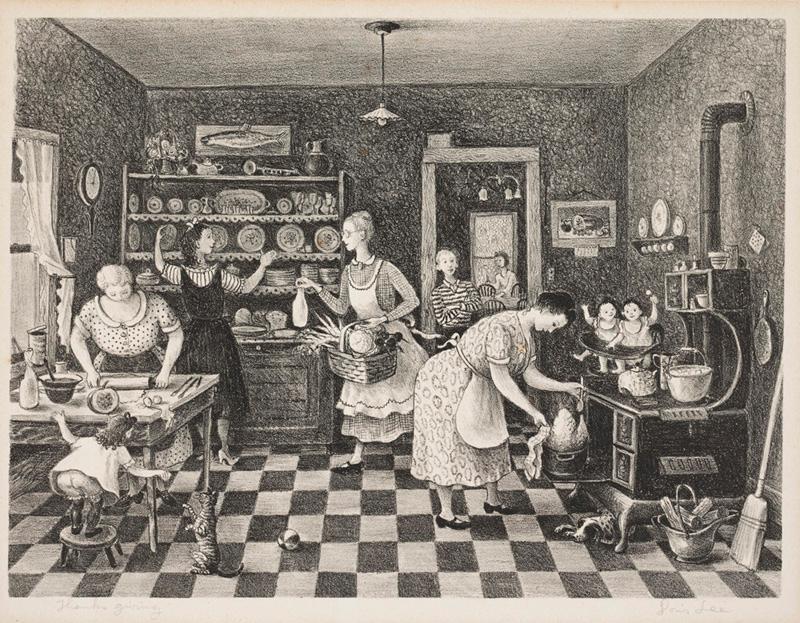
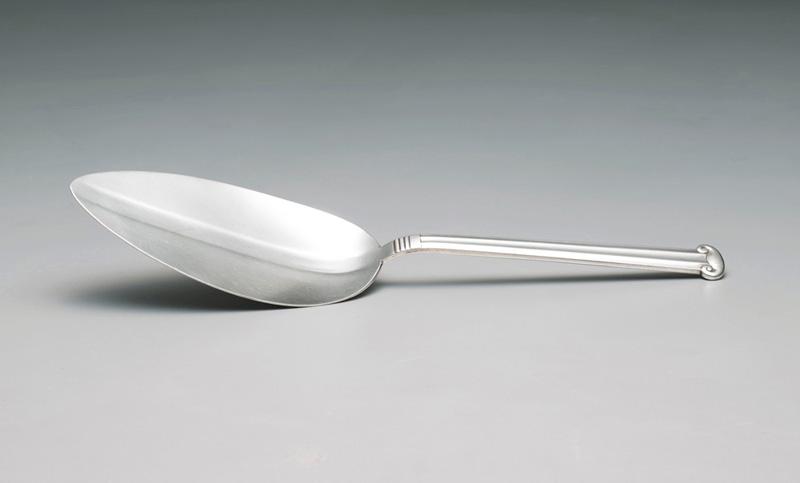
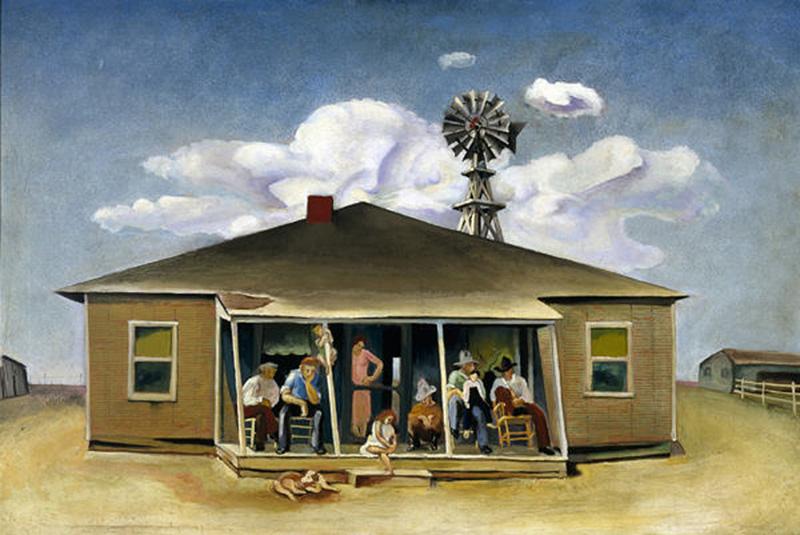
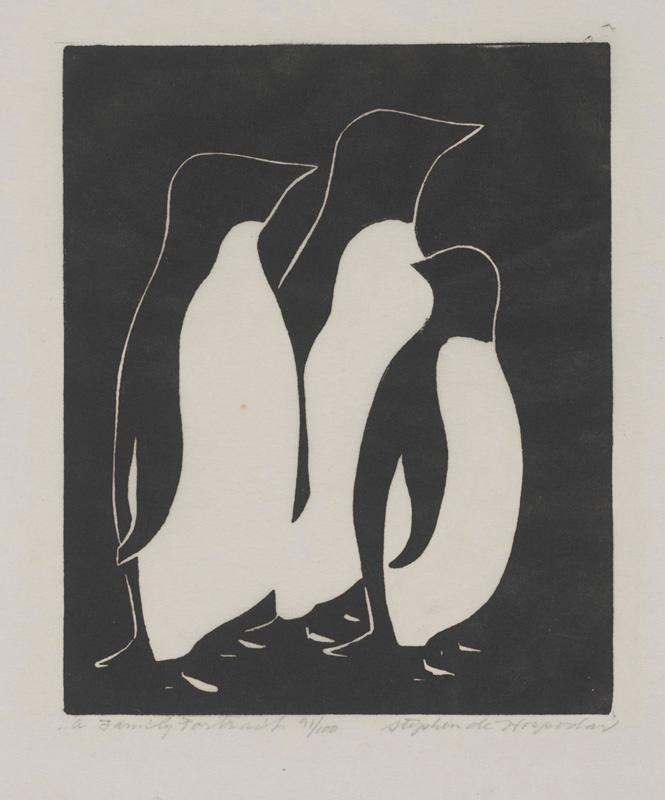
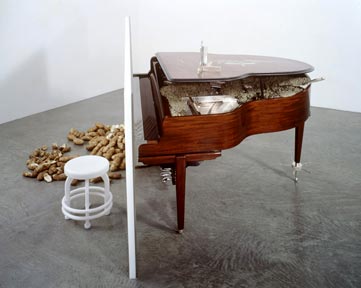
Here are some works of art that I associated with Whittier’s stanza.

Happy Thanksgiving!

Andrea V. Severin
Interpretation Specialist

Artworks shown:

  • Matthew Barney, The Cloud Club, 2002, Mason and Hamlin Symetrigrand piano with stainless steel, silver, white mother-of-pearl, gold lip mother-of-pearl, black lip mother-of-pearl, green abalone, quartersawn Honduras mahogany, lacewood, walnut, ash burl, redwood burl, madrone burl, and Chilean laurel marquetry; internally lubricated plastic; potatoes; concrete, and sterling silver, Dallas Museum of Art, Contemporary Art Fund: Gift of Arlene and John Dayton, Mr. and Mrs. Vernon E. Faulconer, Mr. and Mrs. Bryant M. Hanley, Jr., Marguerite and Robert K. Hoffman, Cindy and Howard Rachofsky, Deedie and Rusty Rose, Gayle and Paul Stoffel, and three anonymous donors; DMA/amfAR Benefit Auction Fund; and Roberta Coke Camp Fund
  • Stephen De Hospodar, Family Portrait, 1932, Linoleum cut, Dallas Museum of Art, gift of the artist
  • Russel Vernon Hunter, Sunday after Dinner, 1943, Oil on masonite, Dallas Museum of Art, Dallas Art Association Purchase
  • Doris Lee, Thanksgiving, 1942, Lithograph, Dallas Museum of Art, Foundation for the Arts, The Alfred and Juanita Bromberg Collection, bequest of Juanita K. Bromberg
  • William S. Warren (designer), “Vogue” pie server, 1935, Wallace Silversmiths (manufacturer), Dallas Museum of Art, The Jewel Stern American Silver Collection, gift of Jewel Stern

Late Night on the Streets of Paris

Last Friday, the Museum kept its doors open until midnight celebrating Posters of Paris: Toulouse-Lautrec and His Contemporaries. During this special Late Night, visitors went on tours of the exhibition, attended lectures about the Parisian celebrities featured on the posters, learned a few French words and phrases, and much much more! Check out some of the highlights of the evening below.

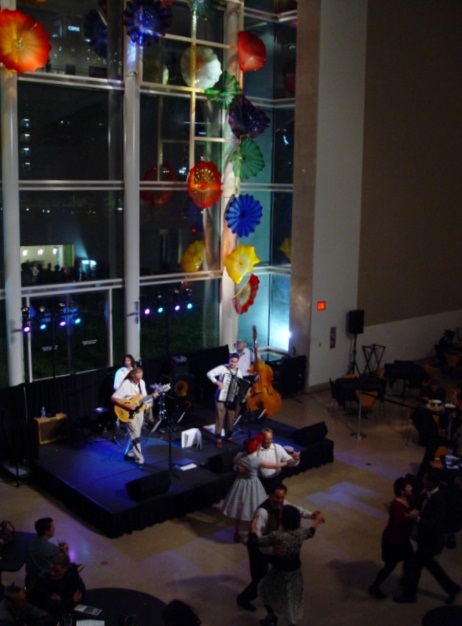
The Matt Tolentino Band created a Parisian ambiance with their French mussette style, getting couples on their feet dancing.

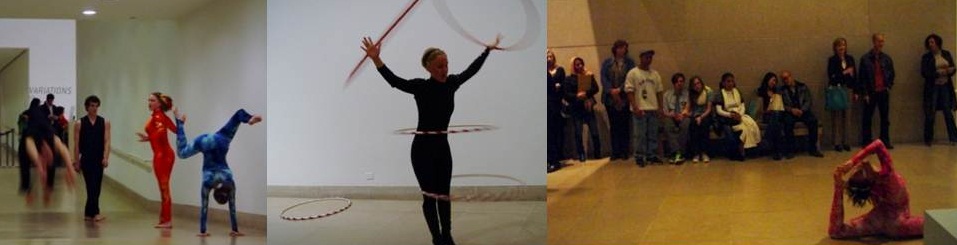
About every hour, an energetic and impressive crew of acrobats, contortionists, and circus performers from Lone Star Circus amazed visitors up and down the Concourse.

Throughout the night, the Poster Studio at the end of the exhibition remained packed with visitors creating their own posters to take home and display on the Poster Studio wall.

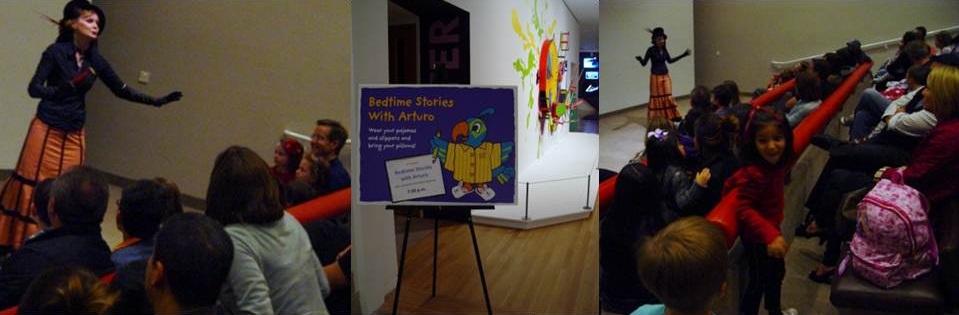
From art-making in the Center for Creative Connections to yoga with our resident yogini, there were plenty of activities available for kiddos. One of my favorite family programs is Bedtime Stories with the award-winning storyteller Ann Marie Newman. She always comes dressed in character with props, images, and incredibly creative interactive stories. On this occasion she based her stories on posters from the exhibition. While she animatedly told the tales, images were projected on the wall behind her and kiddos were invited to act out the stories all around her. It was quite a sight to see!

Did you miss all the Late Night Friday fun? Not to worry! The exhibition is open through January 20th and there are plenty more Posters of Paris inspired programs scheduled, including a City of Light free First Tuesday, Gallery Talks, and art-making activities for your littlest learners. We also have some ongoing activities available for anytime you visit the exhibition. As you enter, pick up a Posters of Paris Scavenger Hunt to guide your journey through the streets of Paris, then before you bid us “adieu” create your own poster in the Poster Studio. If you’re still feeling inspired after your visit, use our Culinary Canvas recipe to bake your own Sarah Bernhardt cookies or download our poster-making activity to try at home.

Amusez-vous, mes amis!

Hannah Burney
Community Teaching Programs Assistant
Getting Inside the Teenage Brain

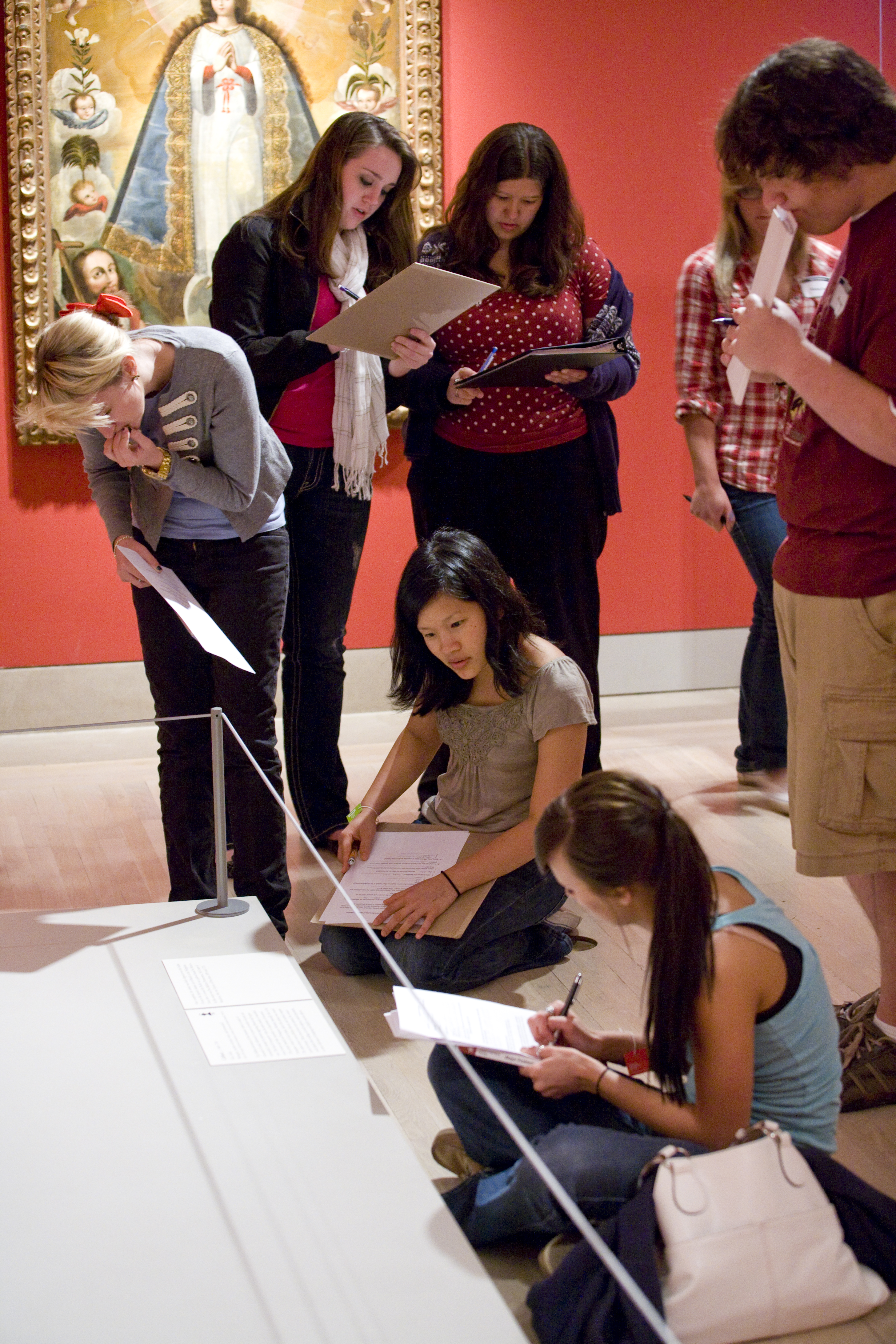
Last month, Shannon and our colleagues at the Nasher Sculpture Center decided to bring together our respective teen groups so they could get to know each other.  The DMA Teen Docents met with the Nasher’s Student Advisory Board for an evening of art-making, food, and conversation.  Our main conversation point centered on things docents should (and shouldn’t) say or do on high school tours.  Our docents often have a hard time connecting with our teenage visitors, so we thought that sharing advice in the teens’ own words would be the first step in helping our docents feel more comfortable with these groups in the galleries.  Some of the comments that resonated with docents were:

  • I really don’t like when docents treat you like children or assume that you don’t know anything and are very momish around students.
  • Make it not just guiding us around like sheep, but know really interesting facts about that artist, the time period, the technique, or that specific work of art.  Like what makes it really cool or unique and why does it deserve to be at the Museum.
  • Show respect towards the artist and be open-minded about the work.
  • Pay attention to your group.  If they’re not engaged or interested, move on so they don’t zone out for the rest of the tour.
  • Make it cool and interactive and not just looking at the works of art.

A group of teens in the DMA’s galleries

Our docents also read an article written by a 15 year-old titled Why Museums Suck.  Howard Hwang visited six museums in Los Angeles and shared his frank opinions about what made each Museum so terrible.  Hwang isn’t shy about voicing his distaste for art museums, labeling them as boring, places for “old people,” and even describing docents as “answering machines.”   His opinions brought a bit of levity to our discussion, but a lot of his comments really did hit home with our docents.  How can we connect with someone who hates old, boring art and is most concerned with what he’ll buy for lunch?

We talked a lot about how we can make make teenagers feel comfortable in the Museum, and we agreed that a tone of mutual respect needs to be set at the very beginning of a tour.  Many docents felt that we need to set up the expectation that the students will be engaged in the tour, but also that they’ll have fun while they’re at the Museum.  One docent mentioned that we need to “pop the bubble of pretention” and remind students that we’re all looking at works of art and learning together.  Docent-guided tours are not intended to be lectures–as Hwang put it, that type of tour “is like being in a locked room with Oprah talking constantly.”  Instead, tours should be conversations with docents and students both contributing to the dialogue and moving the conversation forward.  By helping students feel comfortable and welcome, they’re more likely to want to engage in these discussions.

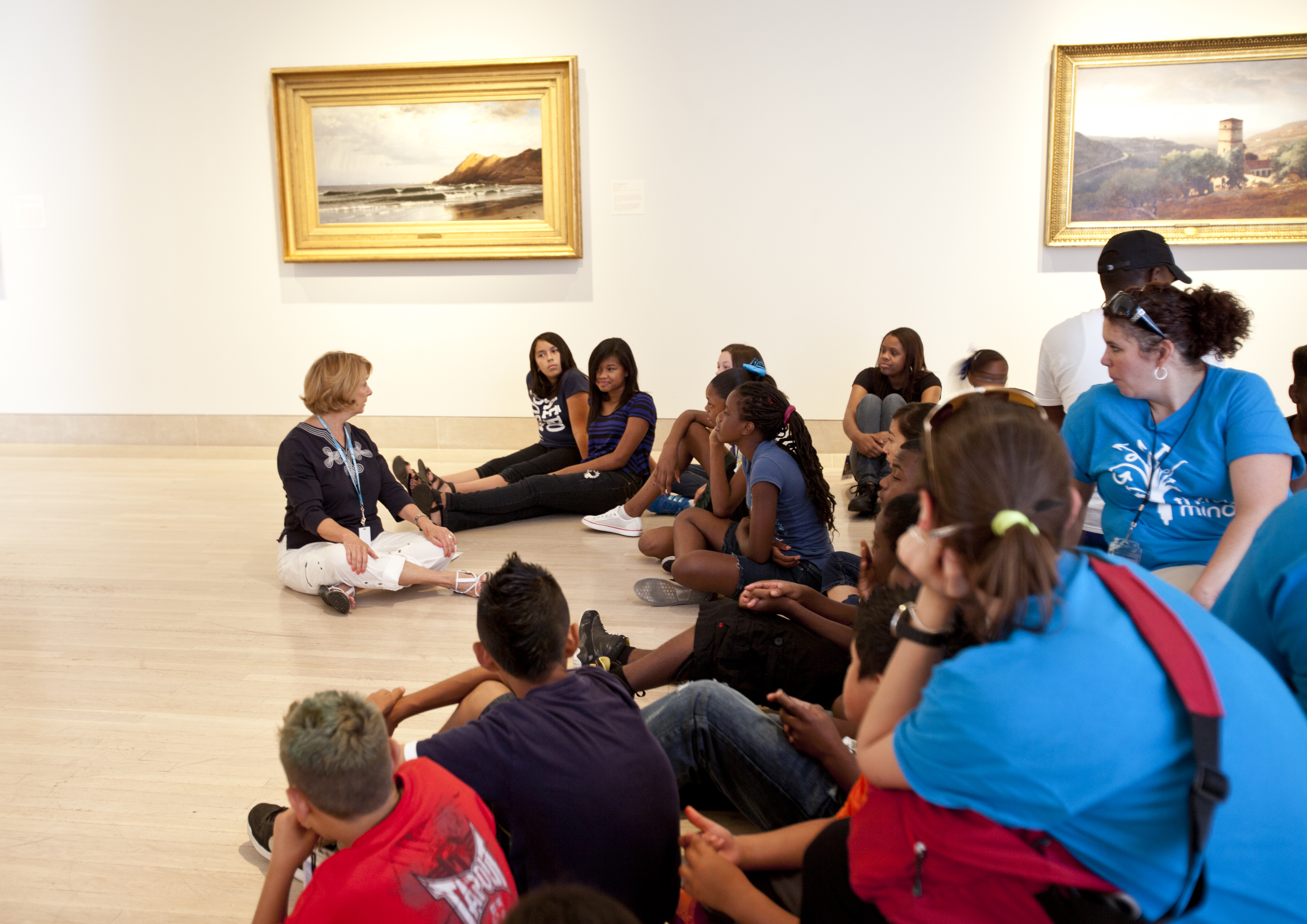
A DMA Docent discusses American art on a guided tour

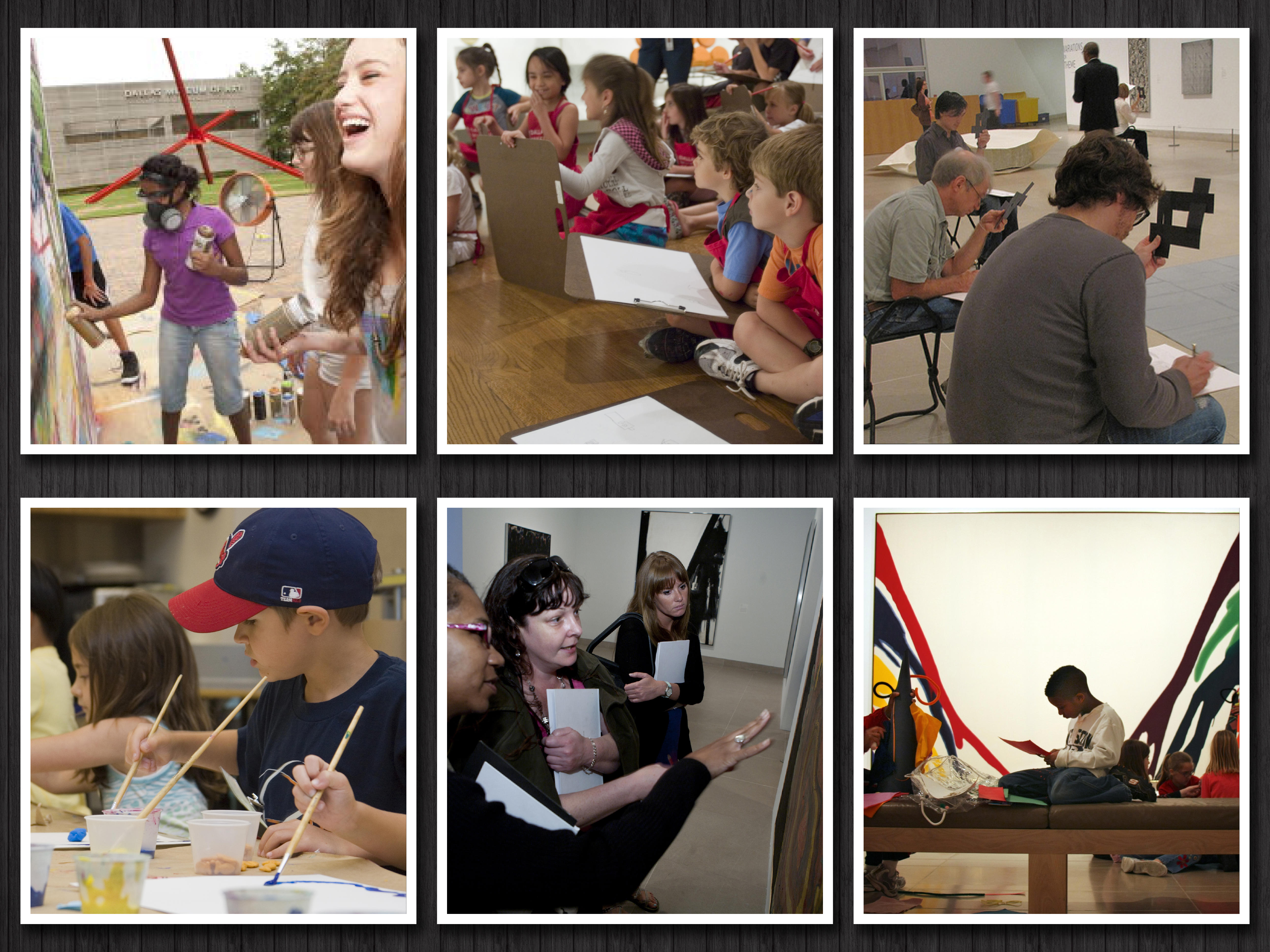
Another of Hwang’s directives to museums was decidedly simple: “You have to make it hands-on and interactive.”  At the DMA, the Center For Creative Connections (C3) is answering this call, and cultivating an interactive space where visitors can look, touch, listen, read, make and talk about art.  C3 endeavors to inspire and engage audiences through unique programming, like our Urban Armor workshops.  This distinctive program for tweens and teens offers students a chance to meet, relate, and investigate themselves and the world around them.  Classes are designed in a way that the concept of identity is the heartbeat of each workshop.  Teenagers are at a critical age of self-discovery, so each Urban Armor workshop is designed to promote decision-making, critical thinking skills, and self-determination.

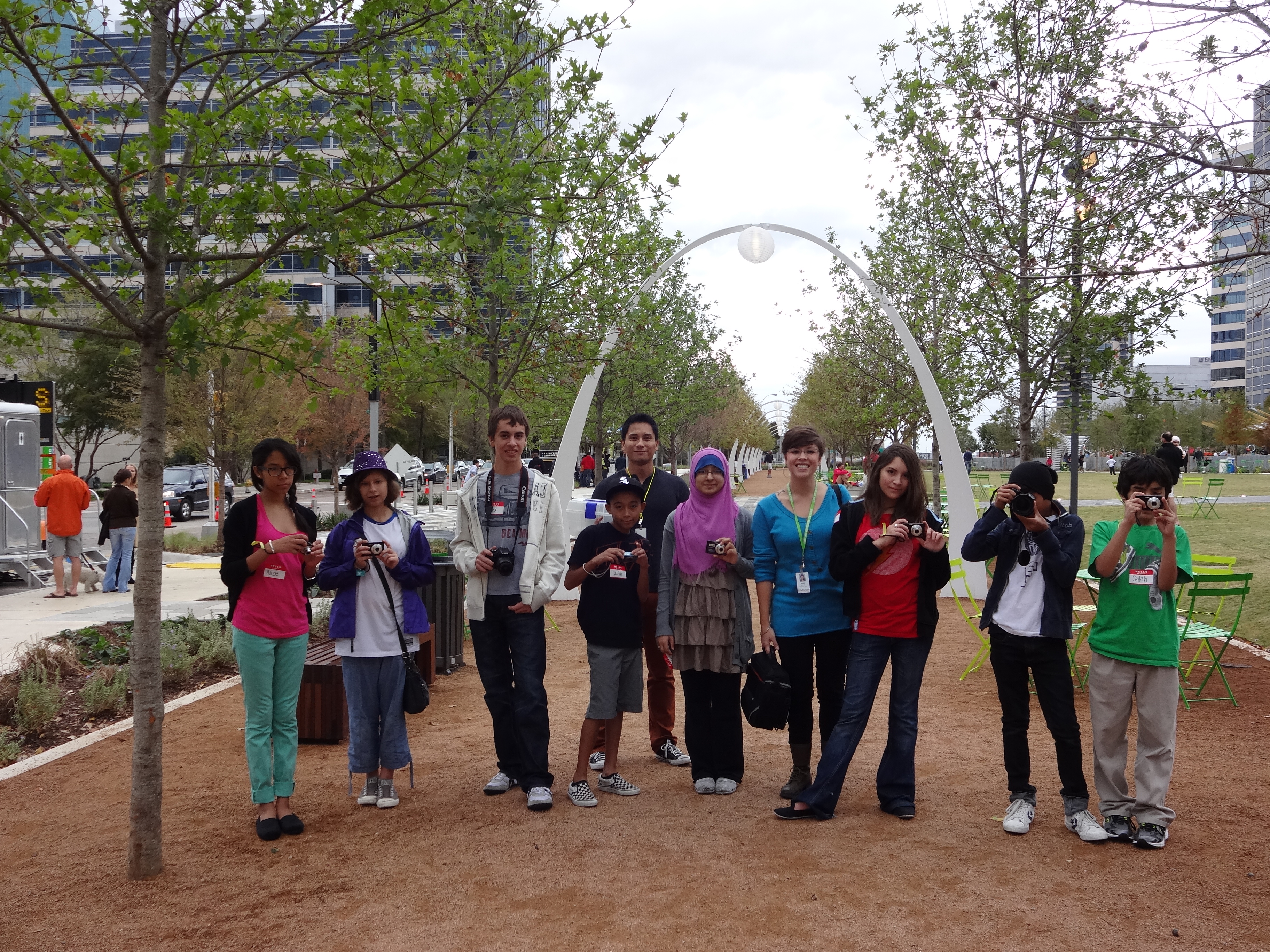
A photograph from the most recent Urban Armor workshop at Klyde Warren Park

This past Sunday, Urban Armor took teens on a photography walk through Klyde Warren Park.  The workshop focused on using positive and negative space in environmental photography, and encouraged students to reflect on the individual choices they make when taking a photograph.  Armed with a camera, each participant explored the Park on their own, with DMA staff acting as facilitators.  This time of autonomous art-making is a central component of each Urban Armor workshop.  The final portion of class was dedicated to discussing what each student had captured during their photo walk.  It was important to encourage the teens to reflect upon and discuss the individual decisions made during each photograph, so that their individual choices could be linked to tangible outcomes.  Each student’s collection of photographs was uploaded to the DMA’s Flickr account, where they are able to view their own and other’s images, and share with the public.  The most exciting outcome of the workshop will come a few weeks from now, as each student enters his or her photographs into the C3 Encountering Space photography exhibition.  Teens have an opportunity to see their artwork publicly displayed in the C3 space!

The Urban Armor participants in Klyde Warren Park

At the DMA, we are working to cultivate spaces and programs that engage teens and involve them in the Museum.  Maybe teens like Howard Hwang would think differently about museums if they could see their artwork hanging on the wall.  We are also continuing to work with our docents to provide tips to better engage with teens on tours.  For now, we’re going to turn the conversation over to you.  If you’re a teacher, what tricks do you use to get teens talking about art?  If you’re a teen, what would you like to see happen at the DMA that might make you want to spend more time here?  We look forward to your responses!

Shannon Karol
Manager of Docent Programs and Gallery Teaching
Danielle Schulz
McDermott Intern for Family Experiences

Special thanks to Amanda Batson and J.C. Bigornia.

DMA Staff Art Show

Last Friday, the Dallas Museum of Art Staff celebrated the opening of a new show, Crawl Space: Within the Walls, which features works of art by our very own staff. Crawl Space turns the spotlight around onto those who make possible the other wonderful exhibitions on view here at the Museum. In this show, you will find a myriad of subjects and media by representatives from many of the DMA’s departments, from curators to grant writers to the gallery attendants who insure the safety of our collection.

I asked the participants to consider their pieces in relation to the DMA’s permanent collection by responding to the question: “If you could have your work installed next to something from the DMA, what would it be?” Here is a sampling of the responses:

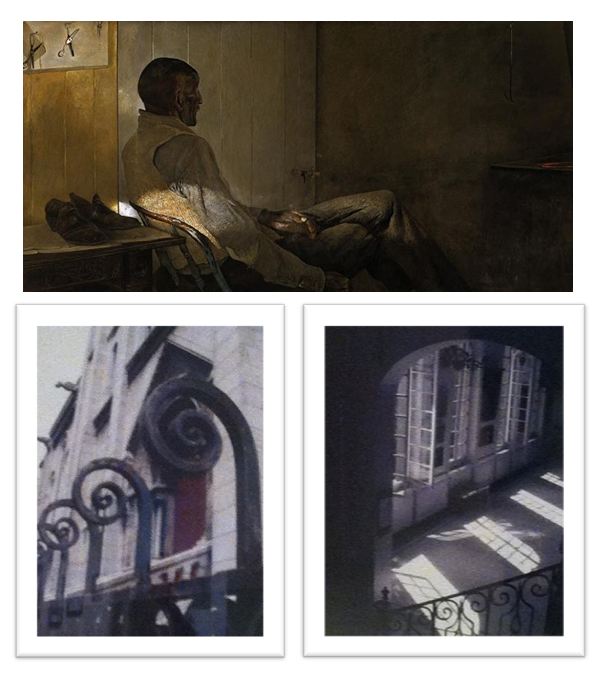
“I would love it if my two photographs could flank [Andrew Wyeth’s That Gentleman]. I believe the images all have similar tones that reflect stillness, reflection, and solitude.” – Reagan Duplisea, Associate Registrar for Exhibitions, 4 years at the DMA

  • Andrew Wyeth, That Gentleman, 1960, Dallas Museum of Art, Dallas Art Association Purchase.
  • Reagan Duplisea, Ascendez (Tribute to Madame J, I), 2010
  • Reagan Duplisea, Descendez (Tribute to Madame J, II), 2010.

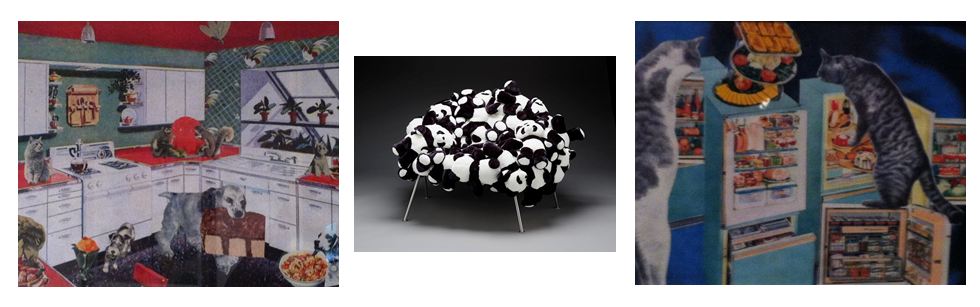
“I would like to have Banquete Chair with Pandas installed next to my collages. My collages are playful and speak to 1950s consumer culture while the Campana chair does something similar with a 21st century sensibility. Also, both may be said to deal with the theme of animals run amuck.” – Dana Harper, Assistant Librarian, 4 years at the DMA.

  • Dana Harper, Dream Kitchen #1, 2012.
  • Fernando and Humberto Campana, Banquete Chair with Pandas, designed 2006, Dallas Museum of Art, DMA/amfAR Benefit Auction Fund.
  • Dana Harper, Dream Kitchen #2, 2012.

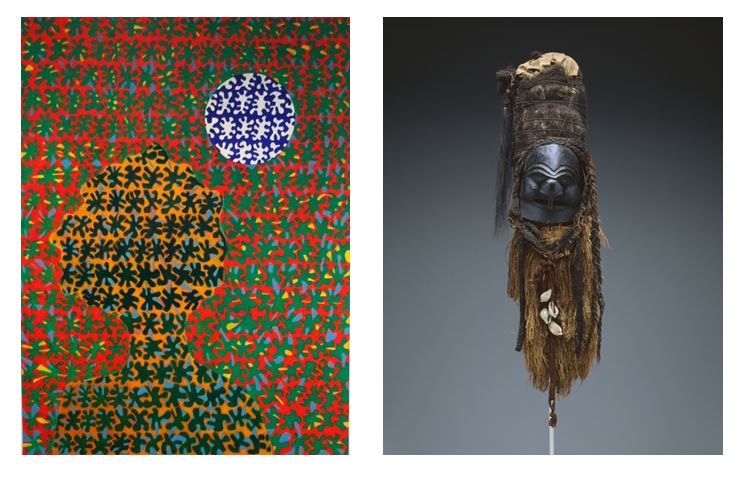
“I would love to see my painting, Garden of Earthlike Planet Delights, paired with this mask. The mask is primal, dark, mysterious, and speaks of danger and tribal ritual. I love listening to the big three Diaghilev-era Stravinsky ballets in sequence and on ‘repeat all’ while I paint. For me, it isn’t hard to imagine some faraway, earthlike, but strange world in our galaxy where there may exist primitive humanoid tribes experiencing life in ways similar to our own prehistoric times.” – David Caldwell, Gallery Attendant, 1 year at the DMA.

  • David Caldwell, Garden of Earthlike Planet Delights, 2012.
  • Northern New Caledonia, Mask, late 19th – early 20th century, Dallas Museum of Art, The Roberta Coke Camp Fund.

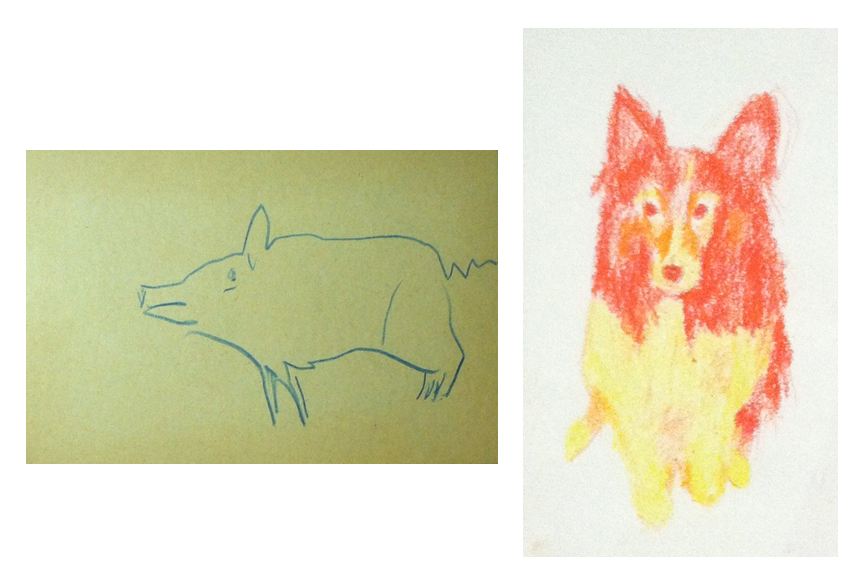
“I would want my drawing to go next to Sir Winston Churchill’s Self-Portrait from the Reves Collection. It’s a very simple colored pencil drawing of a pig. I think my drawing (of my dog, Cooper) would have a lot of fun hanging out with Churchill’s drawing.” – Hayley Dyer, Teaching Specialist, 2 years at the DMA
  • Winston Churchill, Self Portrait, Dallas Museum of Art, The Wendy and Emery Reves Collection.
  • Hayley Dyer, Mon Petit Chien, 2012.

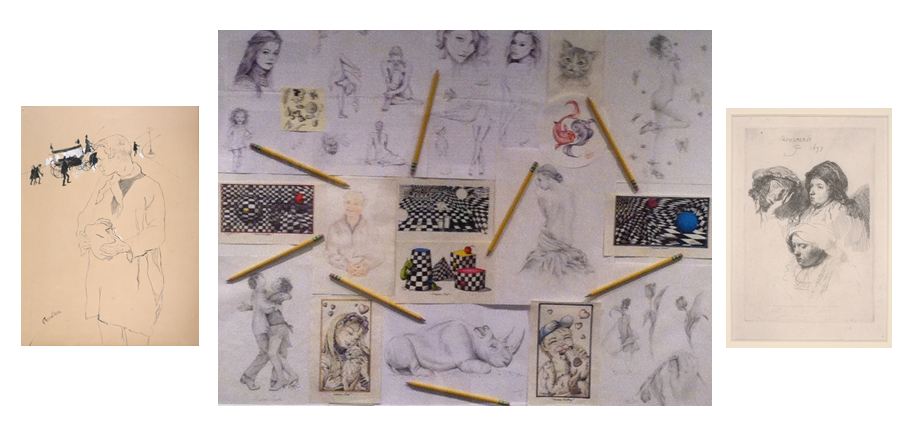
“I have always been fascinated with using people as my subject matter, because from a simple gesture, expression, attire, or scene, there is almost always a story behind them.” – Kay Sims, Lead Security Supervisor, 15 years at the DMA

  • Henri de Toulouse-Lautrec, The Last Respects, 1887, Dallas Museum of Art, The Wendy and Emery Reves Collection.
  • Kay Sims, Sketchy Doodles, 1989-2011.
  • Rembrandt van Rijn, Three Heads of Women, One Asleep, 1637, Dallas Museum of Art, gift of Calvin J. Holmes.

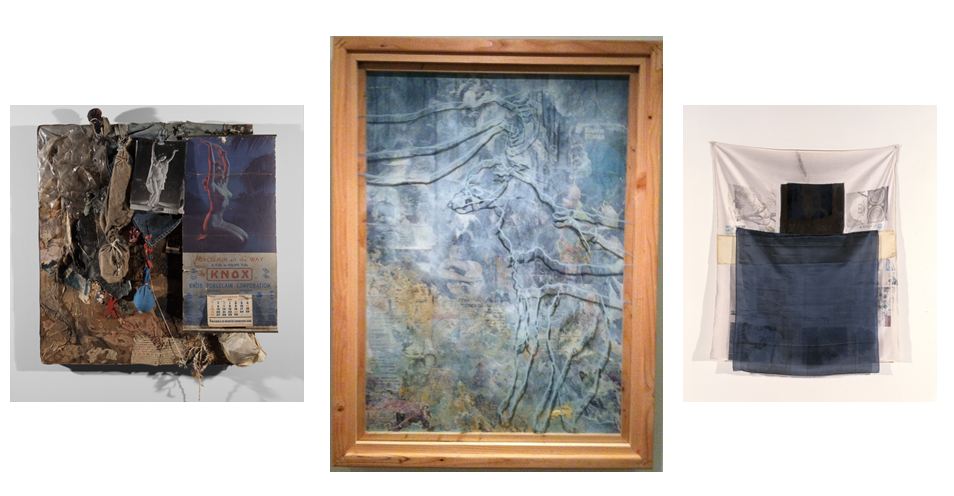
“If my piece, Tie Down Thoughts with a Culinary Flair, could be installed next to something from the DMA’s collection, I would imagine it flanked by Bruce Conner’s Knox and Robert Rauschenberg’s Night Hutch. Both of these artists layer found images and objects, resulting in a uniquely recontextualized composition. The layers range from subtle, delicate pieces of cloth referencing “hoarfrost” to attention-grabbing objects protruding from the surface of a chunky assemblage. The layers in my work are meant to mimic the inner layers of the subconscious and how they relate to our outward perceptions. Both of these artists have greatly influenced my understanding of creating a language through mixed-media.” – Nicole Norton, Visitor Services Assistant, 1 year at the DMA.

  • Bruce Conner, Knox, 1963, Dallas Museum of Art, DMA/amfAR Benefit Auction Fund.
  • Nicole Norton, Tie Down Thoughts with a Culinary Flair, 2012.
  • Robert Rauschenberg, Night Hutch, 1976, Dallas Museum of Art, gift of the artist.

Crawl Space will remain on view through January 6, 2013 in the Mezzanine 2 hallway.

Alex Vargo
McDermott Intern for Gallery Teaching

Archives

Categories