Archive Page 11


Brush it Off

Director, writer, and artist Jean Cocteau is famous for saying “An artist cannot speak about his art any more than a plant can discuss horticulture” (Newsweek, 1955). Though Cocteau suggests that artists are not the best verbal communicators, many artists include words, characters, and writing into their works. Here at the DMA, we have many examples of handwriting and calligraphy in our collection.

Last month I took an introductory calligraphy class with my friend and fellow intern Emily Wiskera at Wildflower Art Studio. I learned a lot from our teacher Emile, and have not been able to stop practicing since! I thought it would be fun to give you guys a quick and basic tutorial on brush pen calligraphy. You can add calligraphy to your art, you can address a letter, write your name, or make a fancy grocery list! For this tutorial you will need a brush pen in the color of your choosing (which can be bought at any craft store) and a piece of paper. I have used scraps of watercolor paper for this tutorial.

Tip #1
Pressure makes perfect. When writing, upward strokes require a light amount of pressure and downward strokes require firmer pressure. Practice using different amounts of pressure by drawing straight lines. Once you feel comfortable with straight lines, try drawing loops while applying the same pressure techniques.

BP002

BP003

BP001

Tip #2
Practice your alphabet. Brush lettering should be fun! I like to practice writing the alphabet using variations in the thickness of the letters, with assorted flourishes, and in different styles. Develop a style of your own or find a template (like this one) of a calligraphy style you like. Now practice, practice, practice! Whether you use a found template or your own, you can use tracing paper and pencil to trace over the letters.

BP000

Tip #3
Take your time! Calligraphy takes concentration, but it can also be very soothing. You want to write at a pace that is not too fast and not too slow so that your letters are nice and smooth.

Tip #4
Put it all together. Once you are comfortable with your loops and alphabet you can now combine the two! Try to write the alphabet with the brush pen calligraphy technique. Once you have gotten the hang of it, writing your name can be a fun way to practice your letters, too.

BP004

Tip #5
Make it your own!
Keep it simple or add flourishes— it’s up to you. Your calligraphy style is as unique as you are! I went back and added a few little hooks at the top of my capital letters “R” and “M.”

BP005

Show us your samples by using the hashtag #dmabrushtips on your social media sites. I’ll-pha-bet they look great! Make sure to check out our C3 gallery and Spirit and Matter exhibition to see more examples of writing and calligraphy on display at the DMA.

Whitney Sirois
McDermott Graduate Intern for Gallery and Community Teachin

The Day the Crayons Came to the DMA

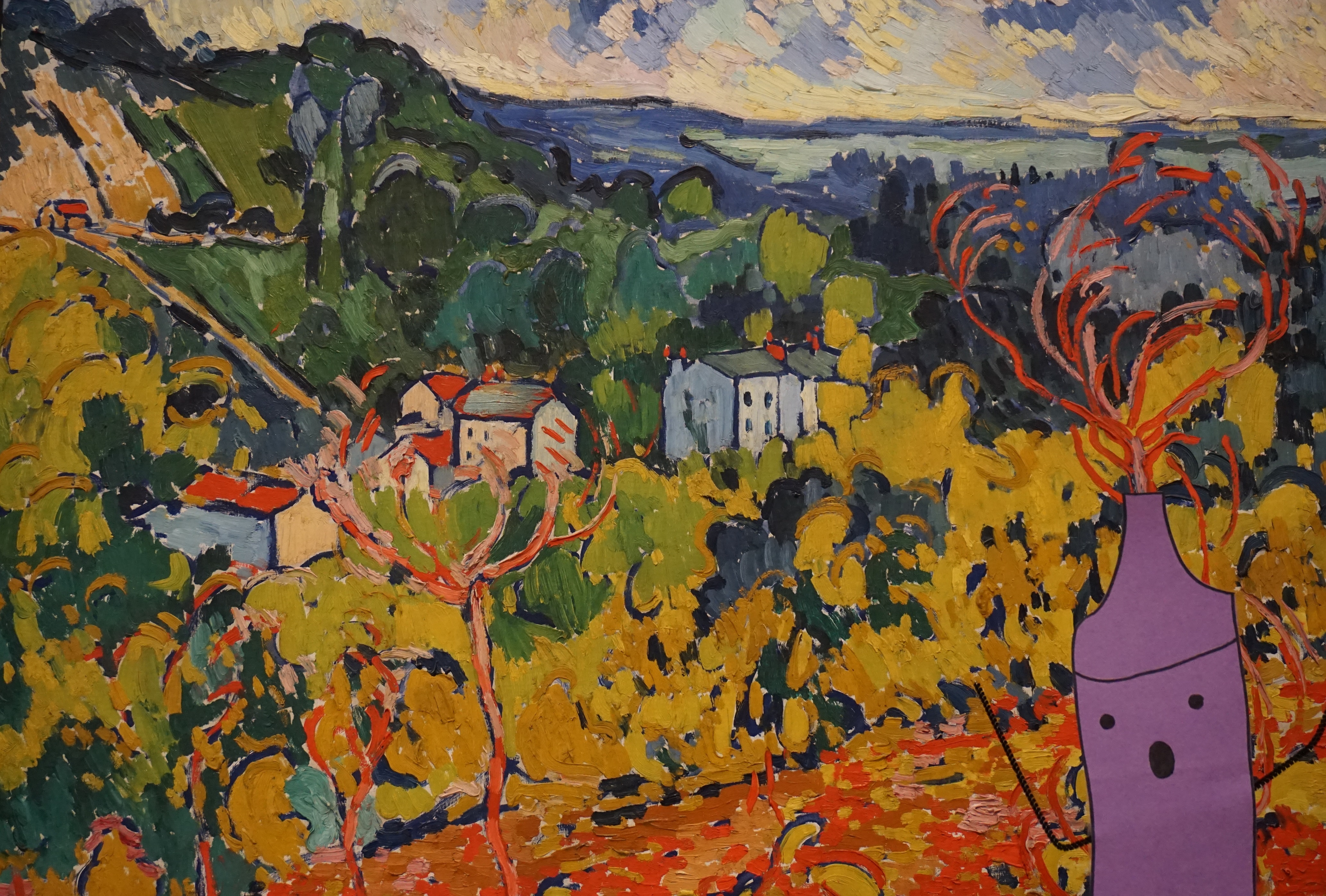
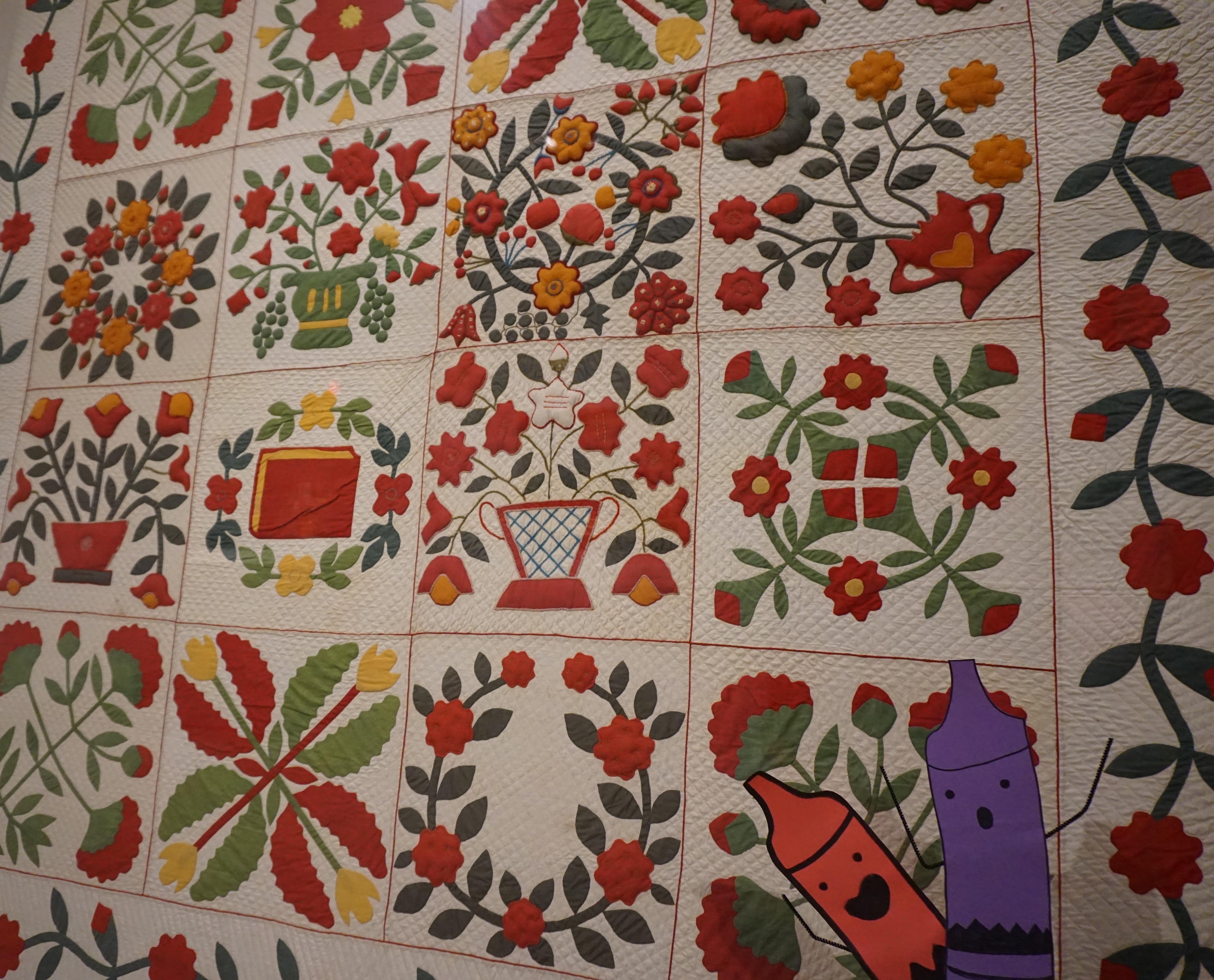
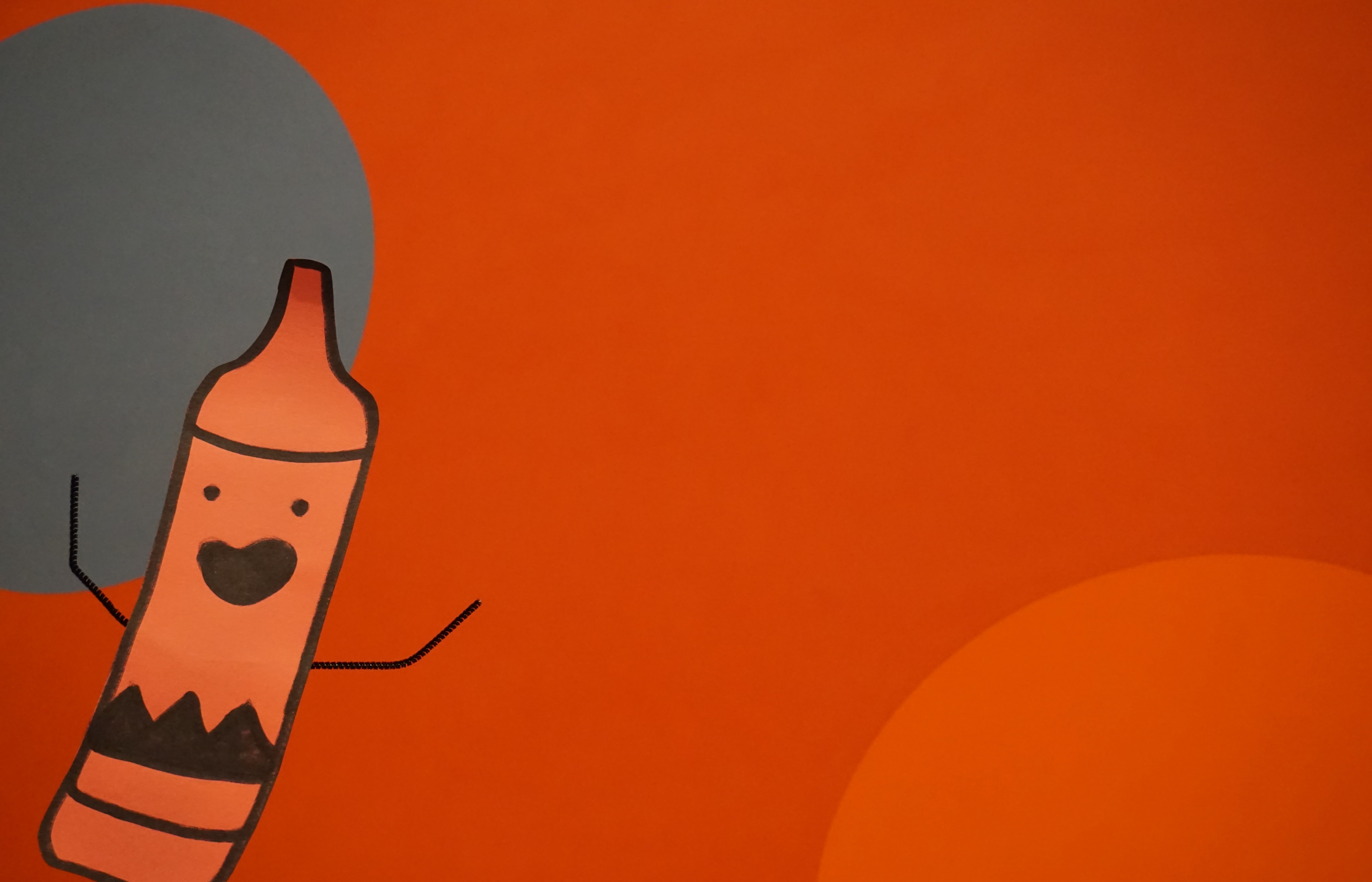
Earlier this week, we had some very special guests visit the Museum! Drew Daywalt, author of the book The Day the Crayons Quit and The Day the Crayons Came Home, will be coming to the Museum on May 22 for some family fun as part of the Arts & Letters Live BooksmART lecture series. We were able to snap some behind-the-scenes pics as Orange Crayon and Purple Crayon scouted out the galleries, and we even caught a glimpse of some of their top secret correspondence. If you haven’t already, get your tickets to see Drew in person and hear more about these crazy crayons and their colorful adventures!

The Day the Crayons letter

Artworks shown:

  • Maurice de Vlaminck, Bougival, c. 1905, Dallas Museum of Art, The Wendy and Emery Reves Collection.
  • Martha E. Keech, Baltimor, Maryland, “Album” quilt, c. 1861, Dallas Museum of Art, anonymous centennial gift.
  • Claude Monet, Water Lilies, 1908, Dallas Museum of Art, gift of the Meadows Foundation, Incorporated.
  • Egungun costume, Republic of Benin: Yoruba peoples, Late 20th century, Dallas Museum of Art, gift of Pace Primitive Gallery, New York.
  • Buddha, Thailand: La-na, 15th century, Dallas Museum of Art, gift of David T. Owsley via the Alvin and Lucy Owsley Foundation.
  • Oli Sihvonen, Matrix – Red, Gray II, 1967, Dallas Museum of Art, Dallas Art Association Purchase, © Oli Sihvonen / Licensed by VAGA, New York, NY.

Leah Hanson
Manager of Family and Early Learning Programs

Madeleine Fitzgerald
Audience Relations Coordinator

Art Enthusiasts & Summer Adventurers–We Want You!

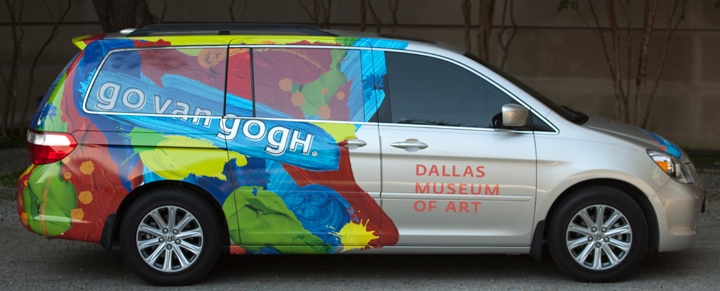
Summer is a great time for starting new adventures—be it diving into a new hobby, taking a day trip to a new place, or just spending an afternoon doing something new to you. This summer, the Go van Gogh outreach team would love to invite you to make one of your summertime adventures be volunteering to help us bring art experiences to children across the Dallas community!

What we do:

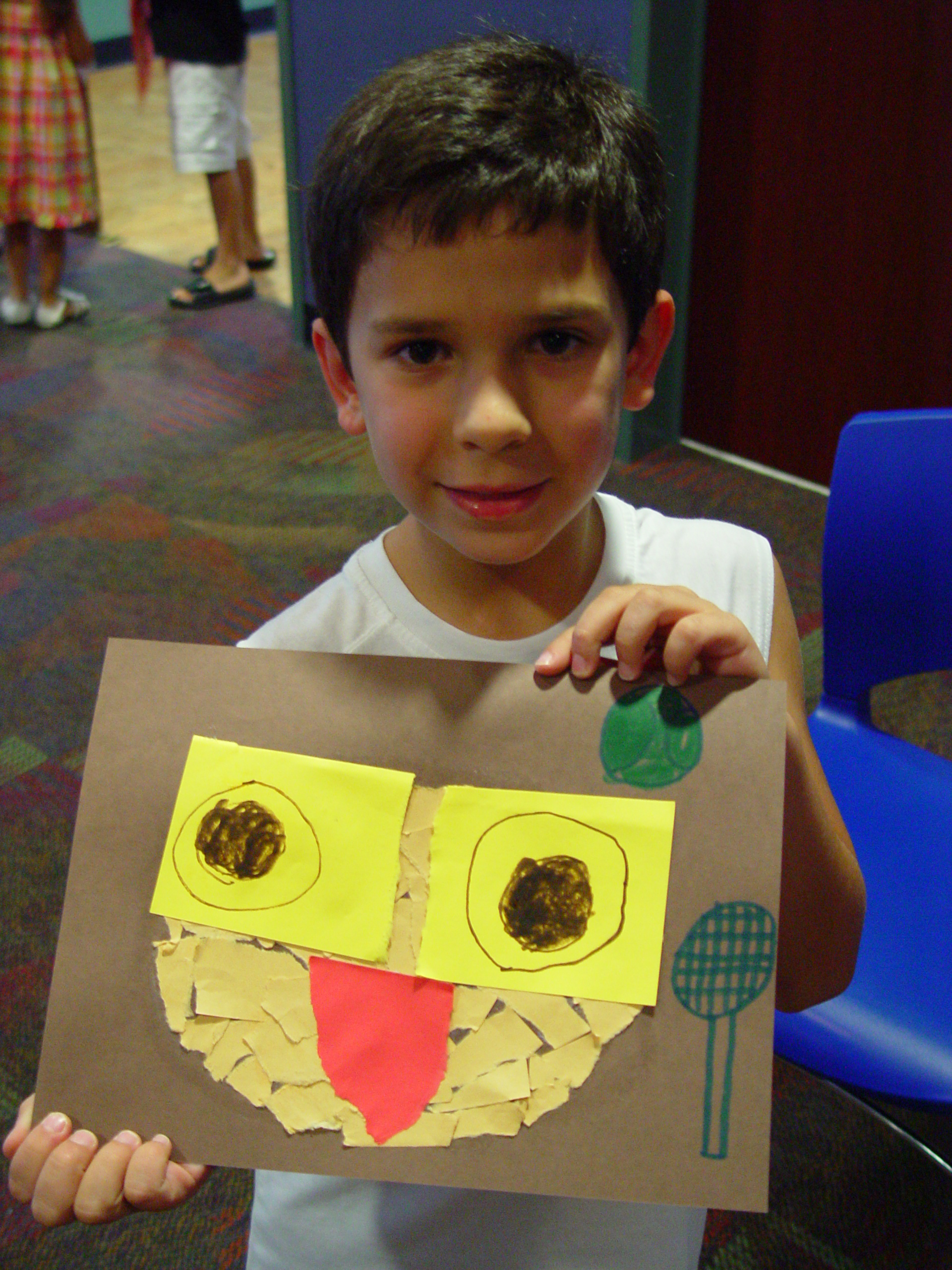
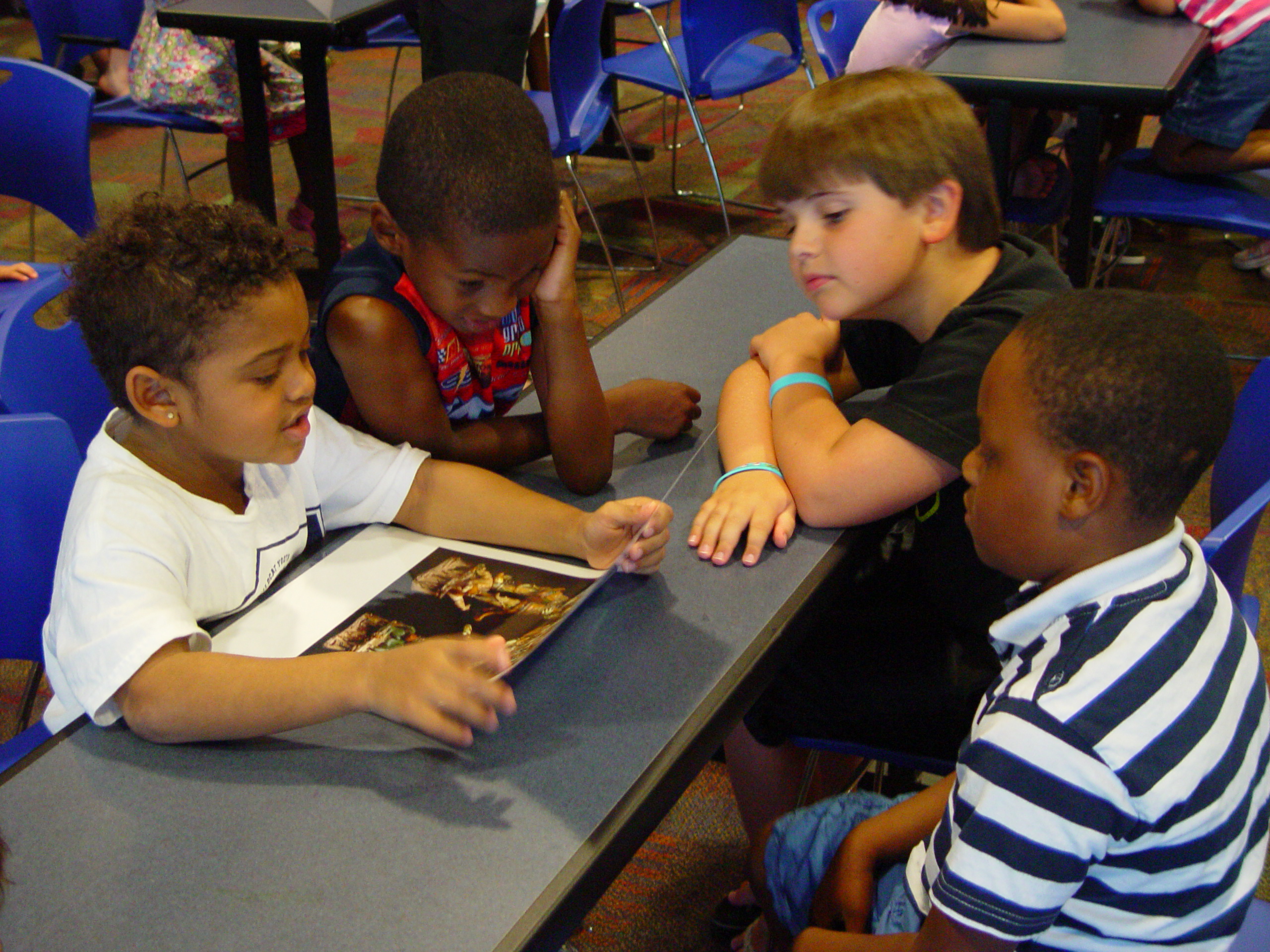
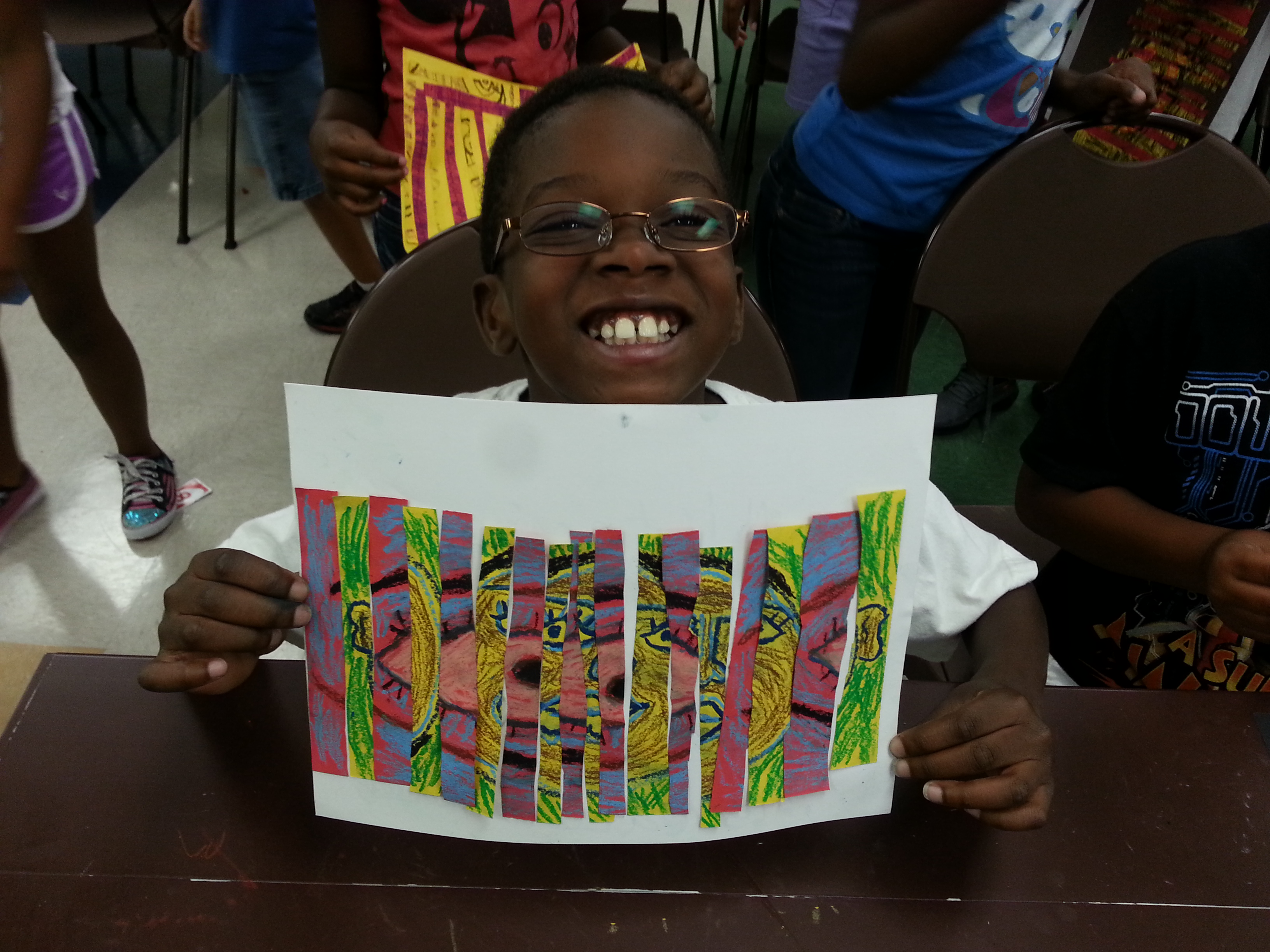
The Go van Gogh summer outreach program brings hour-long FREE art experiences to children in local libraries, recreation centers, Boys and Girls Clubs, and YMCAs.  Our summer Go van Gogh volunteers, who lead these programs, spend thirty minutes guiding students in interactive conversations about several artworks from the DMA’s collection that promote discovery and wonder. The second thirty minutes is all hands-on making—volunteers lead students in an open-ended art activity related to a theme from the program.

What can you expect from your summertime adventure?

  • Meeting other wonderful, like-minded passionate volunteers;
  • Learning about artworks in the DMA’s collection;
  • Flexing your art-making muscles (don’t worry, we’re not all artists ourselves!);
  • And–most rewardingly–spending fun-filled hours sharing your passion for the arts with children across the city.

So, why make this your summer adventure?

Museums are treasure chests that can teach us about the world we live in, and help us understand peoples across cultures and time. (Way to go, museums!) But museums are also places that can be difficult for everyone to get to, and therefore, difficult to discover and know (and love).

This is where Go van Gogh (and you!) come in! Our program, both during the school year and in the summertime, brings the fun experience of the Dallas Museum of Art to locations all across the city, and to students who may not (yet!) know what treasures there are to be found here. So spend your summer with us, and help introduce students to the adventures they can have at the DMA.

For more information about becoming a summer volunteer, and to submit an application, visit our web site.

Amy Copeland
Manager of Go van Gogh and Community Teaching Programs

Friday Photos: April Showers Bring…

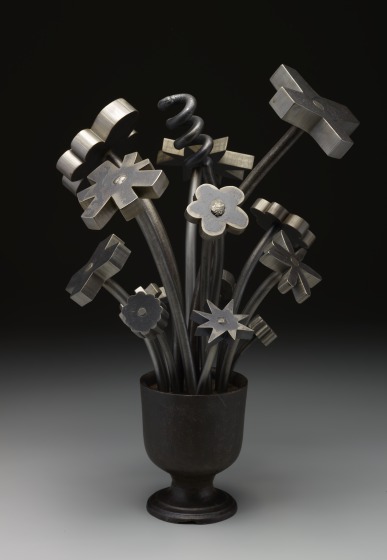
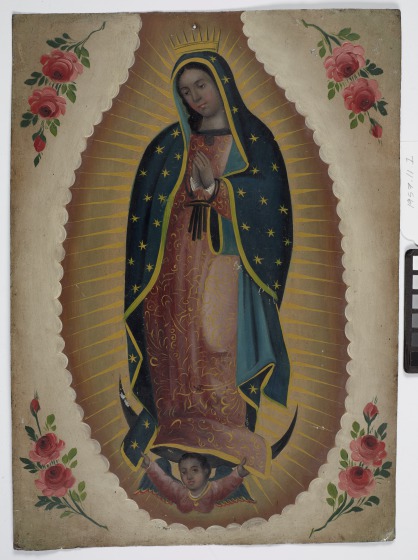
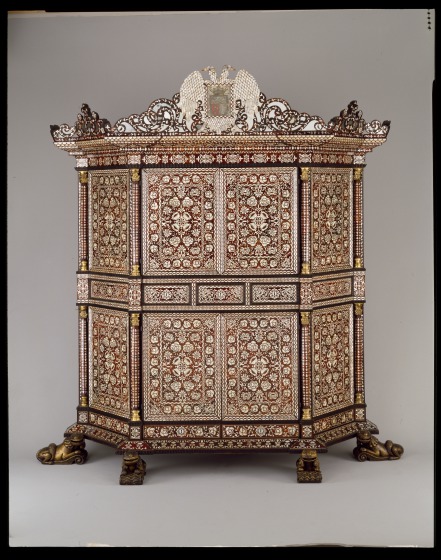
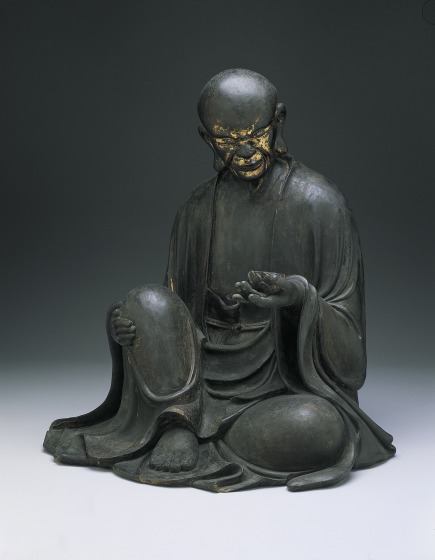
May flowers, of course! So we’re hoping that this stormy day is a good sign for the plants on our grounds in the upcoming month! In the meantime, we’ve been enjoying our flowers blooming in the galleries. Come to the DMA today to see these works of art that are sprouting with petals and leaves, without having to reset your perm!

Whitney Sirois
McDermott Graduate Intern for Gallery and Community Teaching

Playful Learning with SPARK!

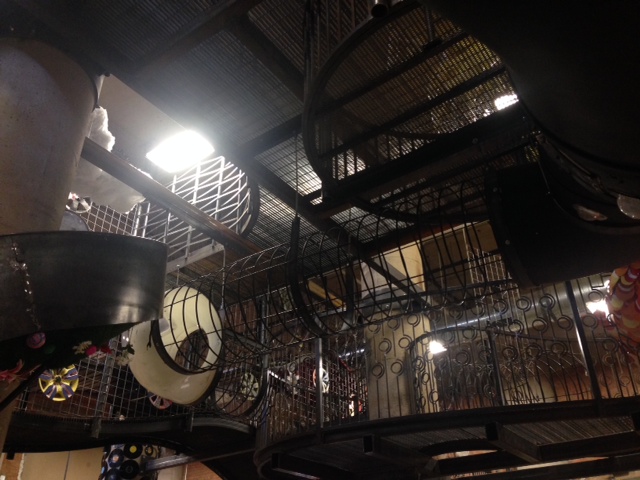
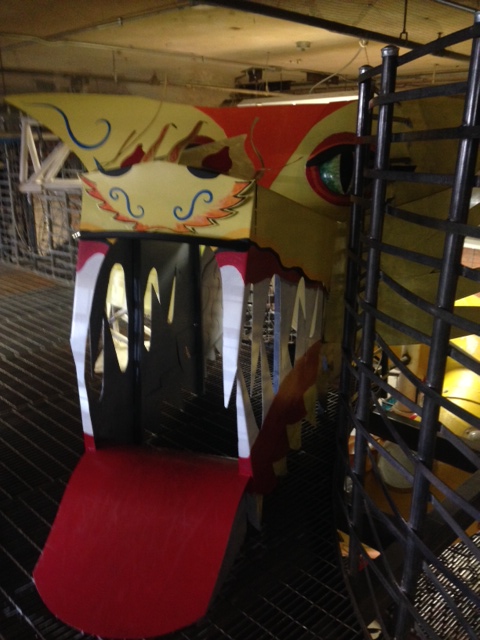
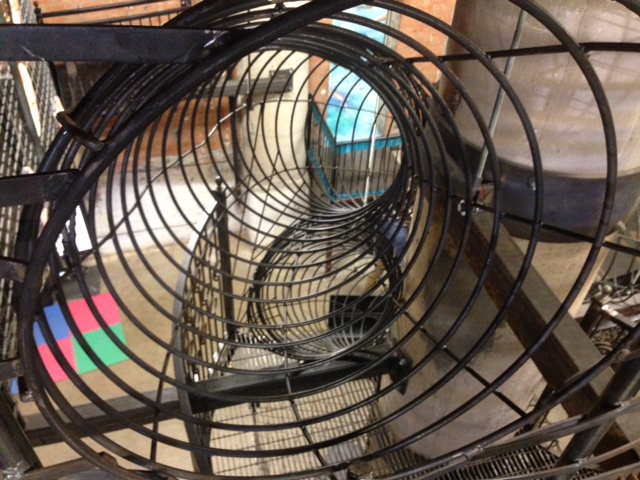
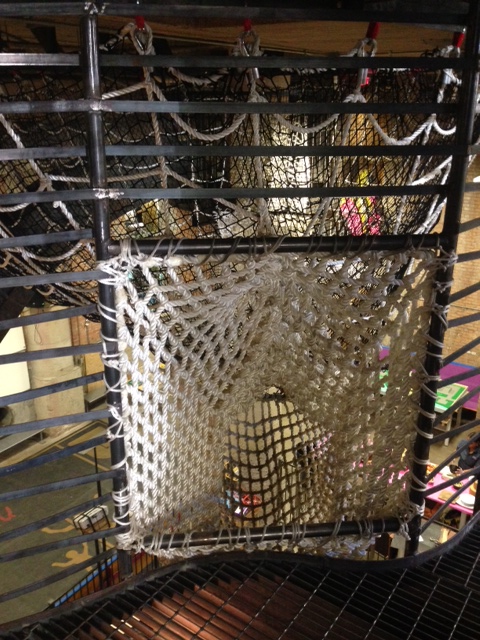
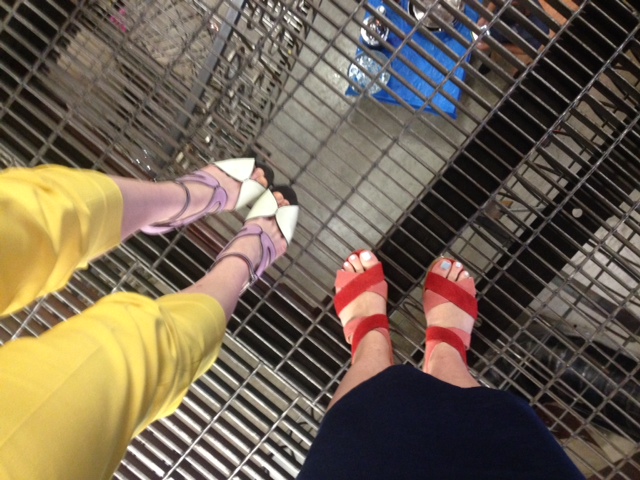
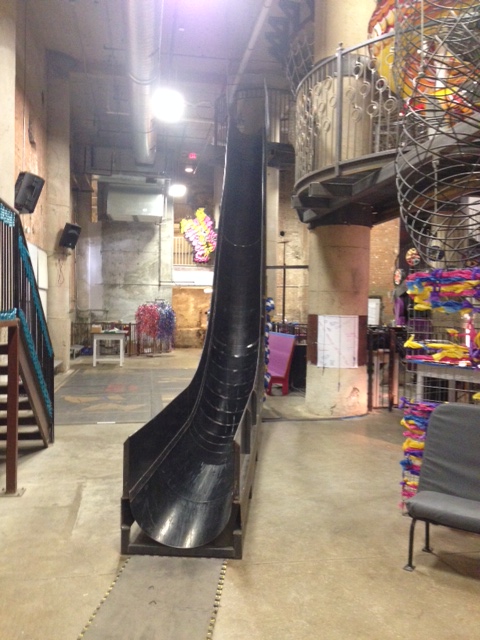
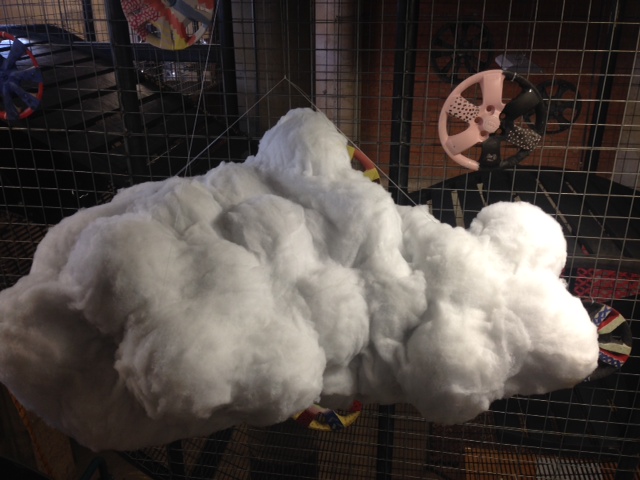
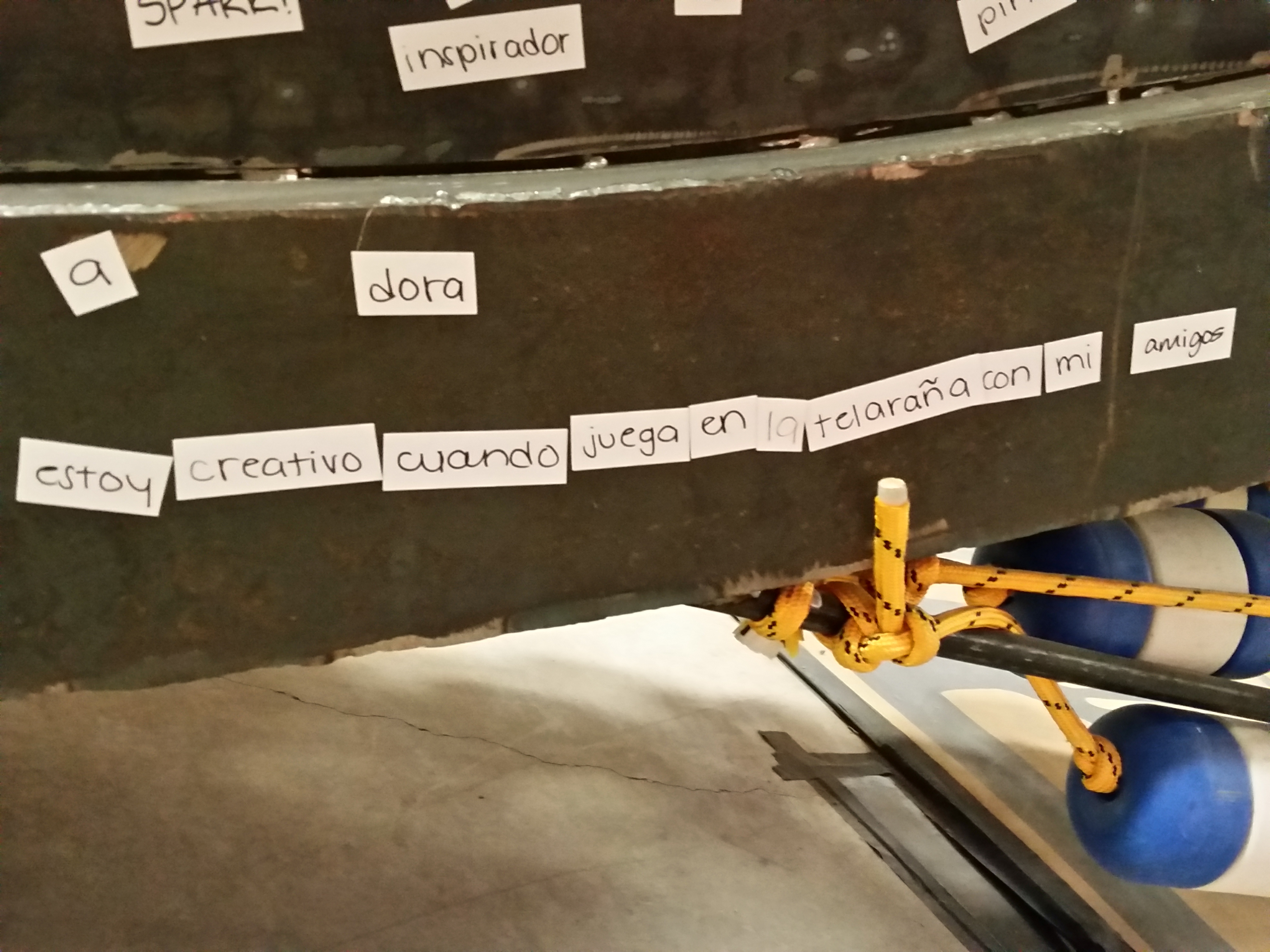
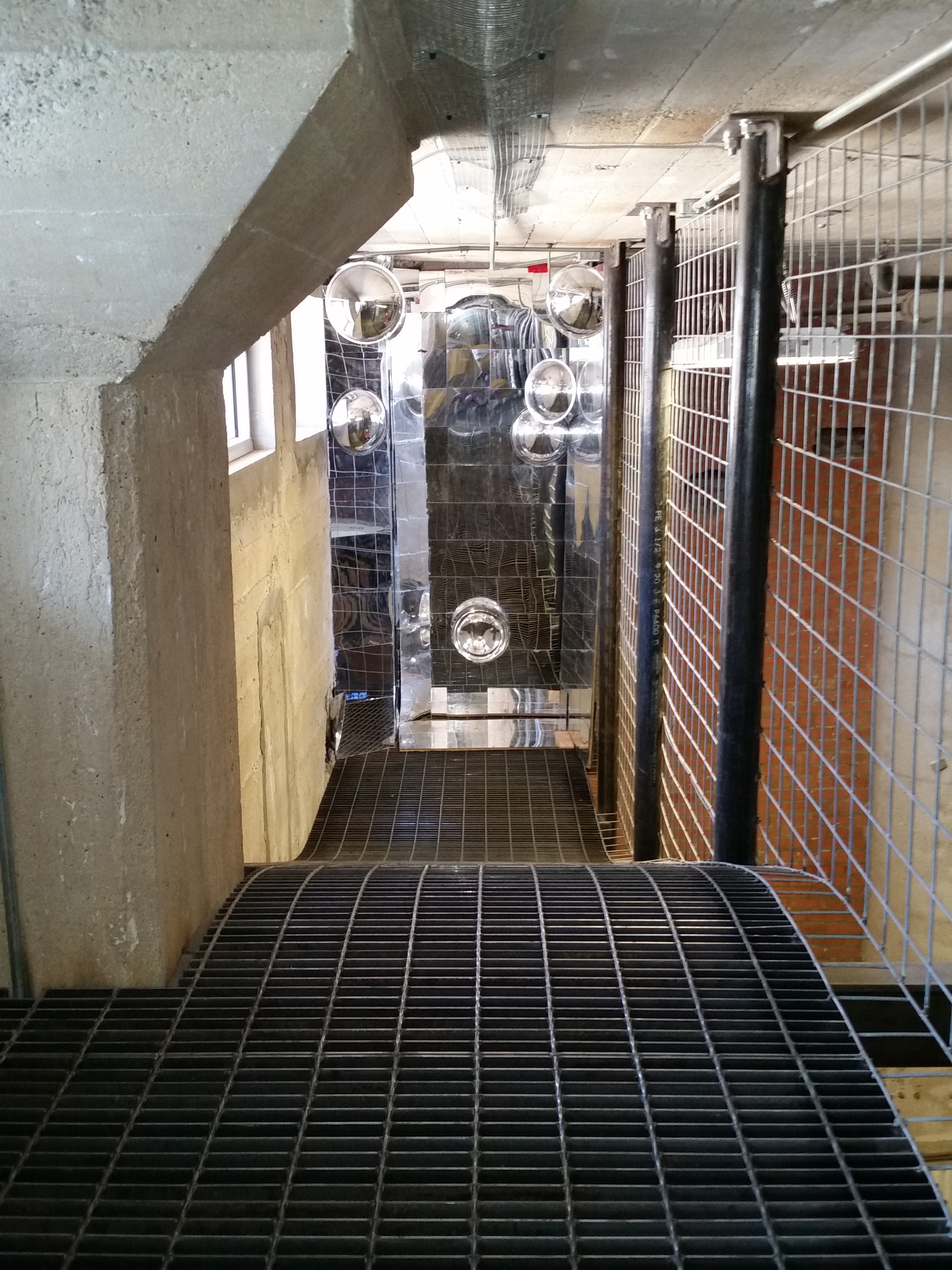
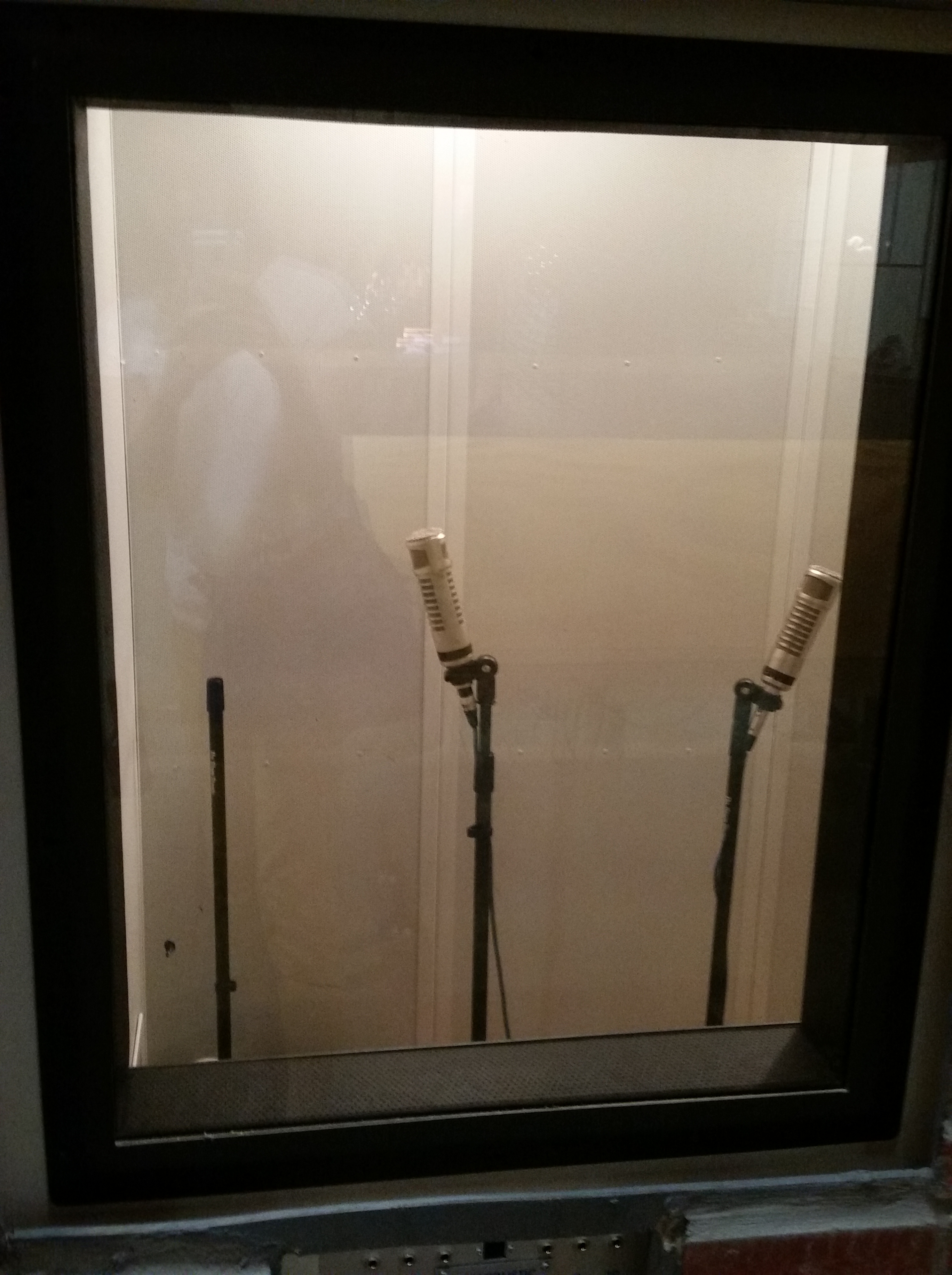
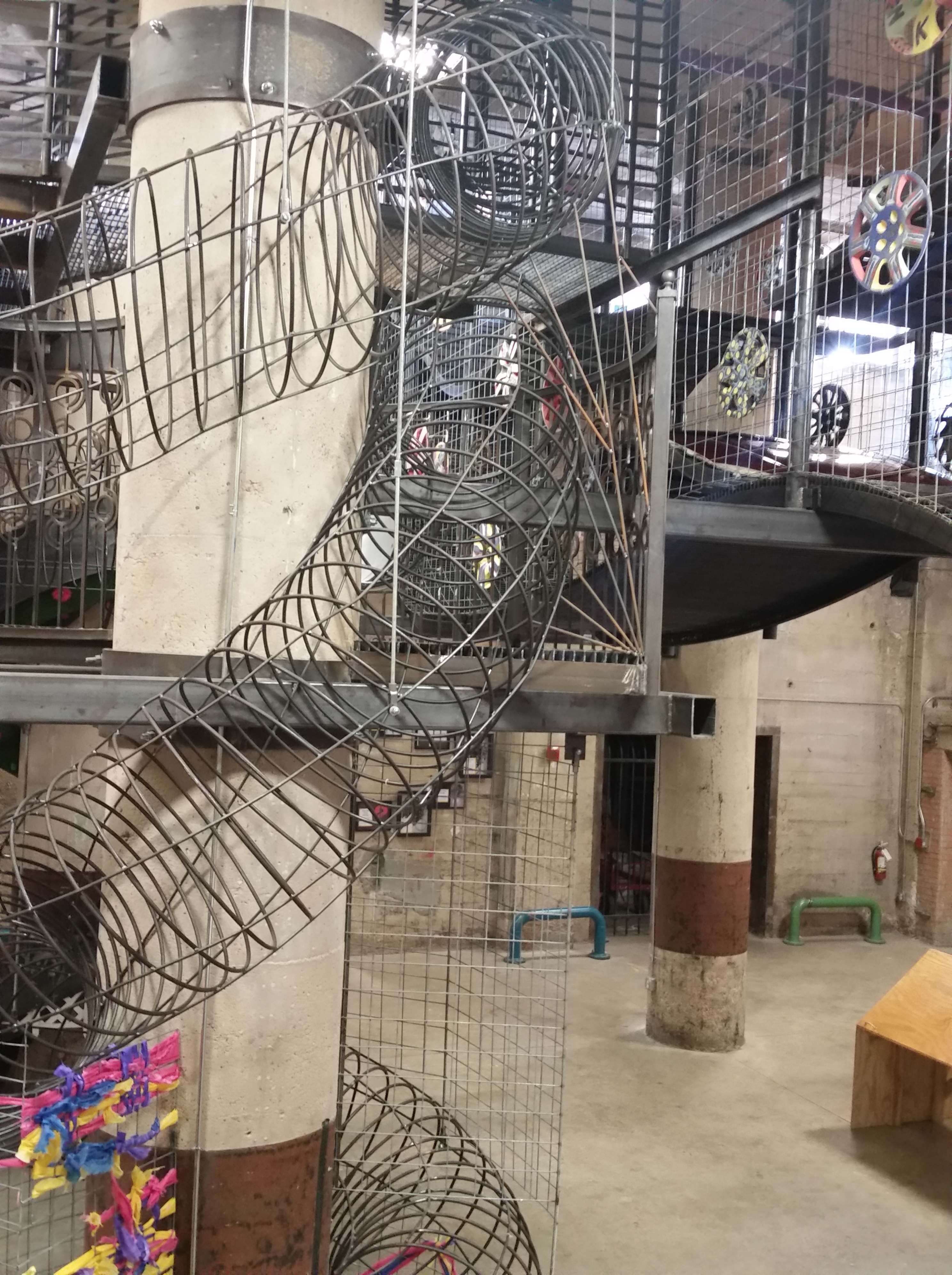
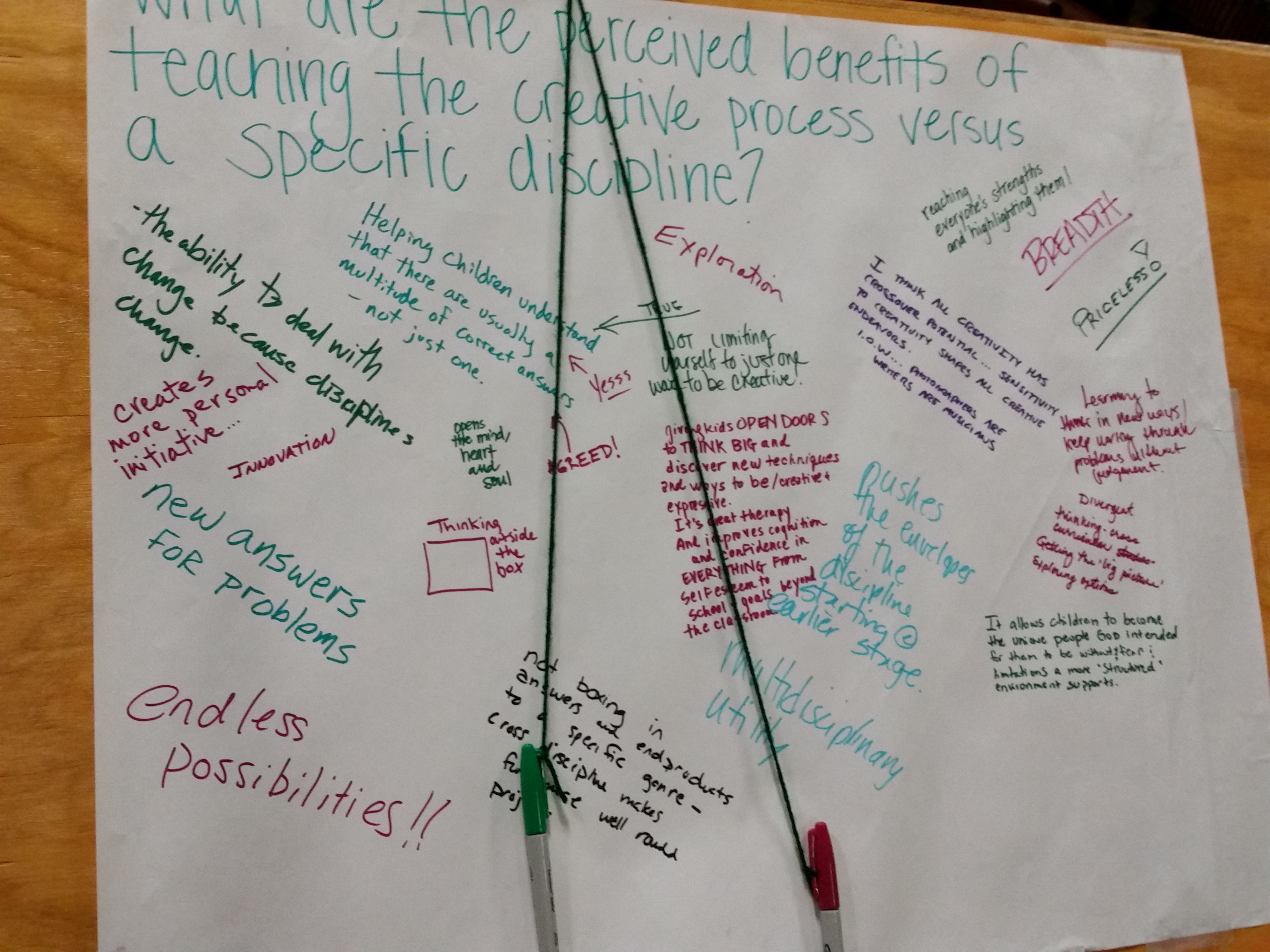
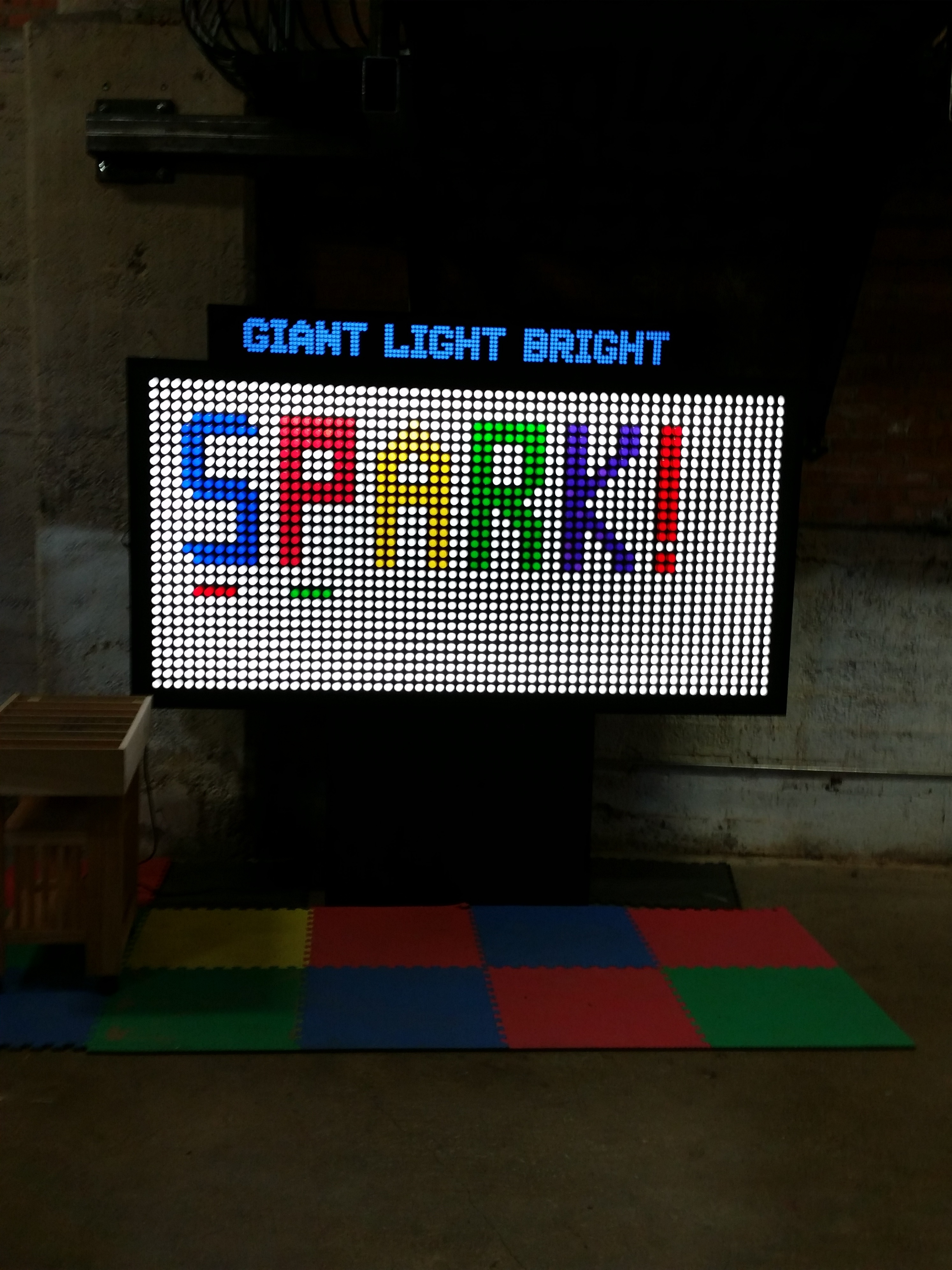
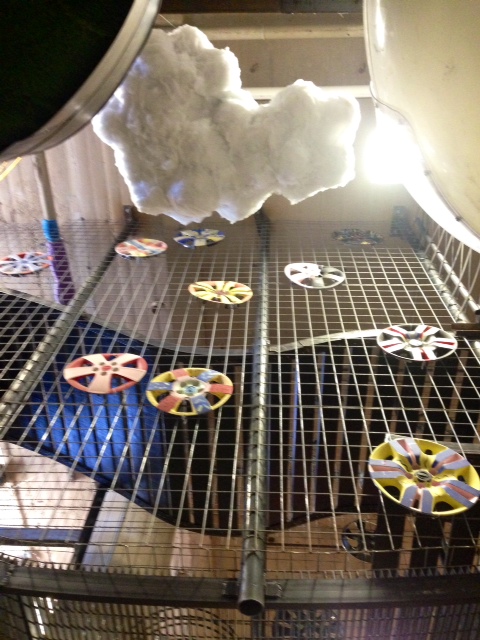
Why teach the creative process? Last week, my amazing colleague Amy Copeland and I drove the Go van Gogh van (say that three times fast!) to the historic South Side on Lamar building to take part in the 2016 Creativity Confab hosted by SPARK!. We arrived excited to hear some of the city’s most creative minds participate in a panel discussion on the importance of creativity in a child’s education, and were greeted with an inviting maze of slides, “slinky” tubes, catwalks, and creative play stations, including a giant Lite-Brite and a recording studio. Needless to say, not even our inappropriate choice of shoes could keep us from joining in on the fun and exploring!

Inspired by the City Museum in St. Louis, SPARK! was founded in 2010 to teach the creative process and empower children through playful learning. Student visitors are invited to first fully immerse themselves in the space and loosen up by playing. Fred Peña of Booziotis and Company Architects, the space’s designer, says that his favorite part of the project is watching a cautious student finally work up the nerve to tackle the floor to ceiling slide, and then repeat the adventure again and again. After playing, the students move on to an art activity geared to teach the creative process and encourage collaborative problem solving.

photo 3 (1)

While the facility has only been open since June 2015, preliminary research reflects that students are more likely to describe themselves as creative and more likely to believe they’re capable of coming up with a valuable new idea after a visit to SPARK!. Significantly, about 57 percent of the children served by SPARK! come from low-income communities, reflecting the organization’s commitment to offering creative learning programs to underserved groups.

The panel’s consensus? Access to creative learning programs help children develop self-reliance, confidence, and resilience. They’re more like to perform better academically and in their future careers. As with sports, the arts teach children teamwork and help them develop confidence in their own abilities. Moreover, children learn not to fear failure and discover that problems often have more than one solution.

As a museum educator, my visit to SPARK! served as an inspiring reminder of how playful learning can help students make meaningful connections to the arts and tap into their own creativity. I look forward to my next visit, sans the wedge sandals.

tengo

Lindsay O’Connor
Manager of Docent and Teacher Programs

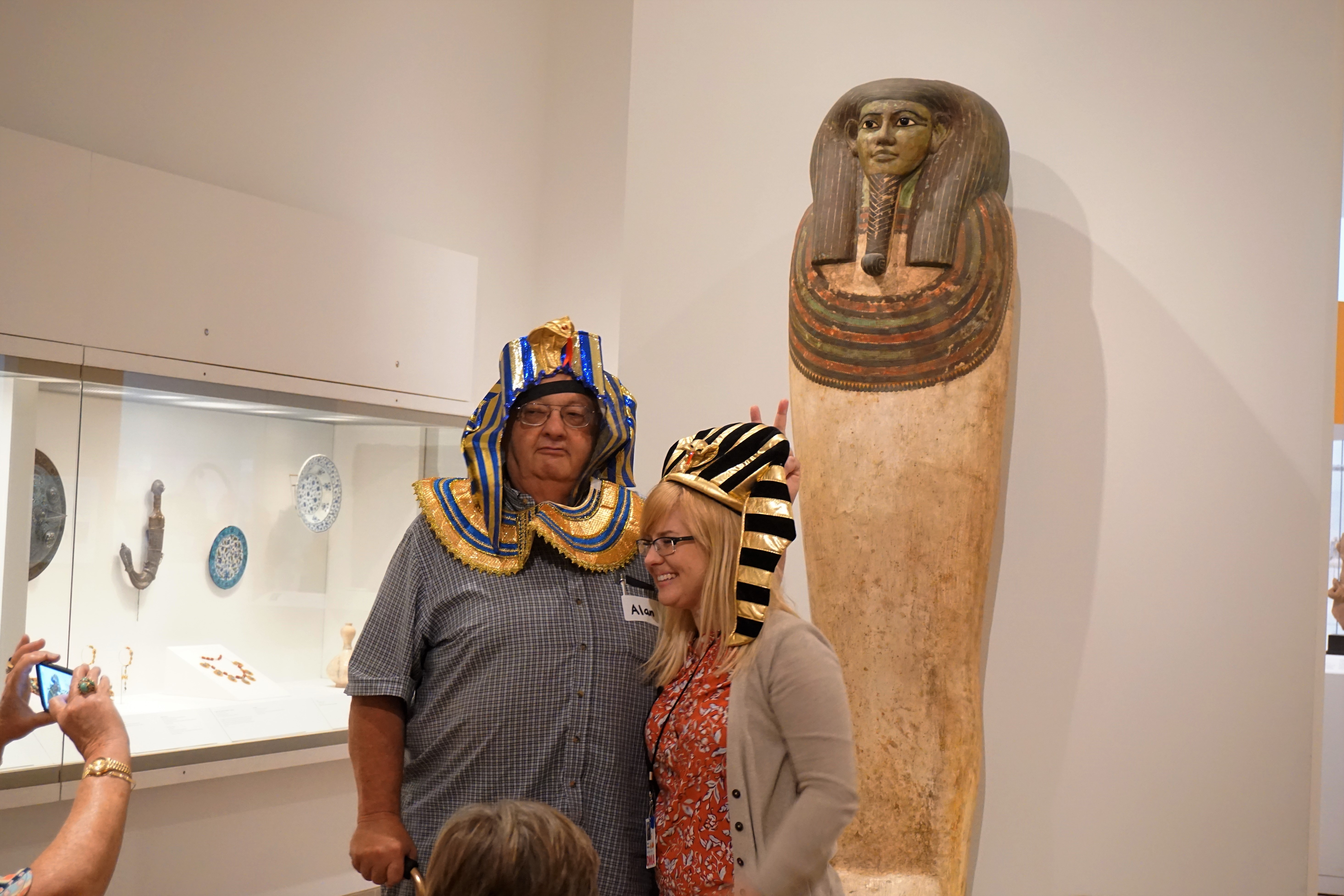
Friday Photos: Dress Like an Egyptian

Ask any member of our Education Department: we love our props, and we LOVE dress-up! Luckily for us, our visitors do, too! No matter the age or the stage, we all have a blast getting into the spirit (and outfits) of our art.

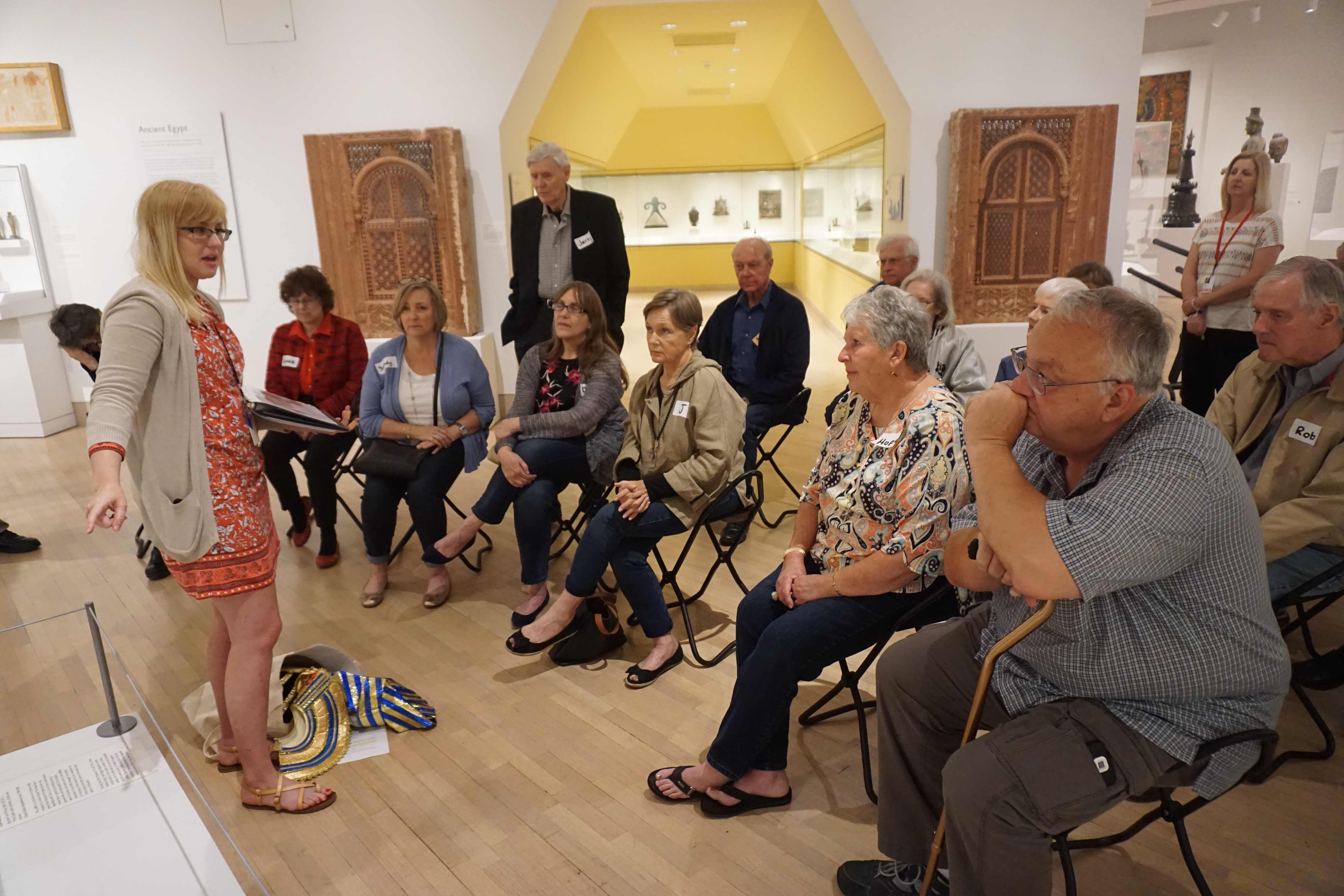
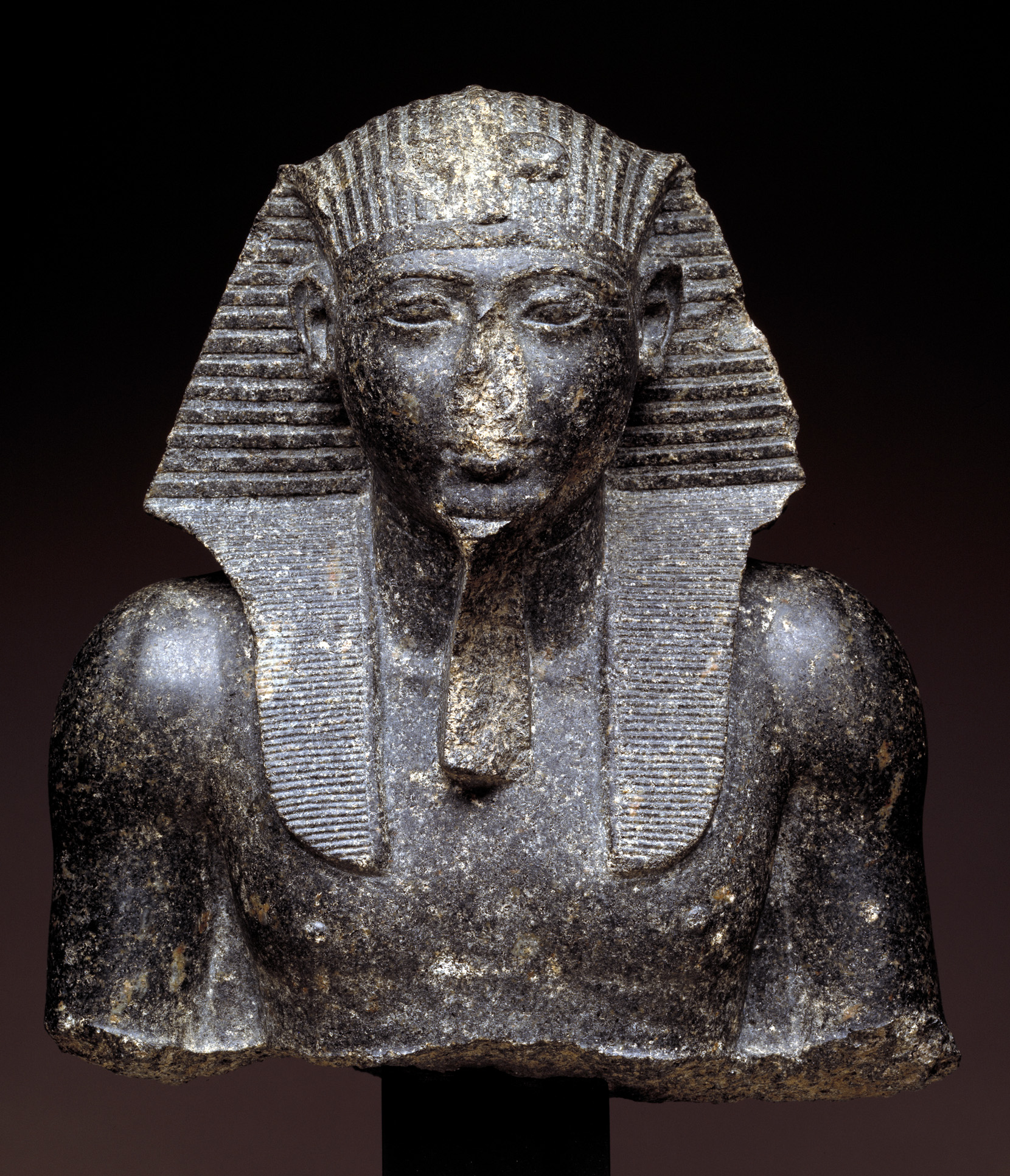
Just this week, our Meaningful Moments group, led by our wonderful McDermott Intern Emily, got funky with the pharaohs in some hip headwear. Take a look!

Did you catch Pharaoh Alan putting bunny ears on Pharaoh Emily?

Jennifer Sheppard
Teaching Specialist

High School Film Day

Lights, Camera, Action! On Friday at the DMA, we welcomed hundreds of North Texas students for DIFF 2016 High School Day. Organized by the Dallas International Film Festival, the annual event takes place in the Dallas Arts District and gives future filmmakers the opportunity to participate in discussions and workshops about creating and marketing independent films at the DMA, the Nasher Sculpture Center, the Crow Collection of Asian Art, and Kyde Warren Park.

Here at the Museum, students participated in an Animation 101 workshop with Reel FX Creative Studios and learned about “old school” FX for the digital age with MediaTech Institute’s Eric Jewell. You can check out Eric’s workshop on forced perspective from last year’s High School Film Day here!

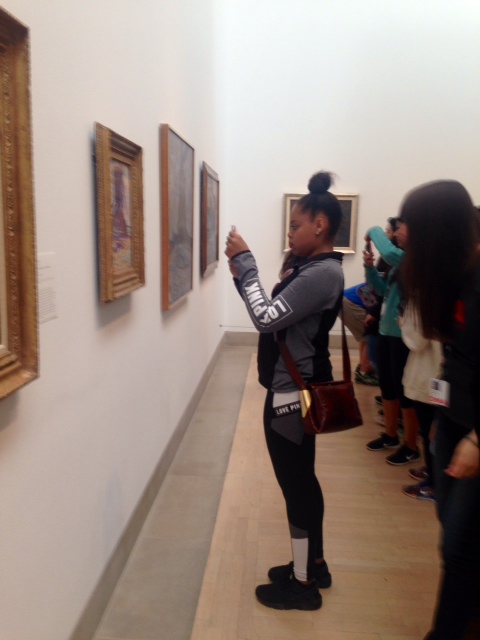
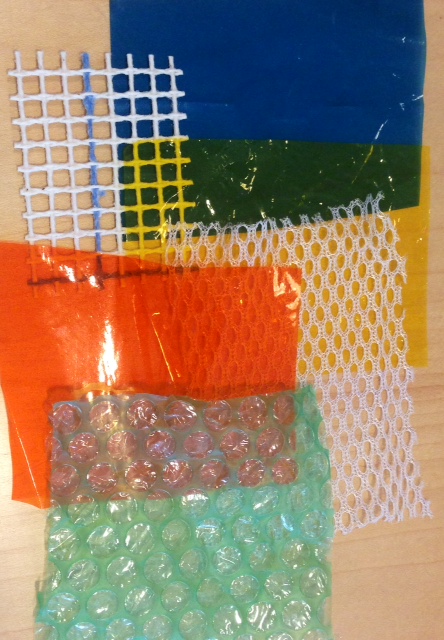
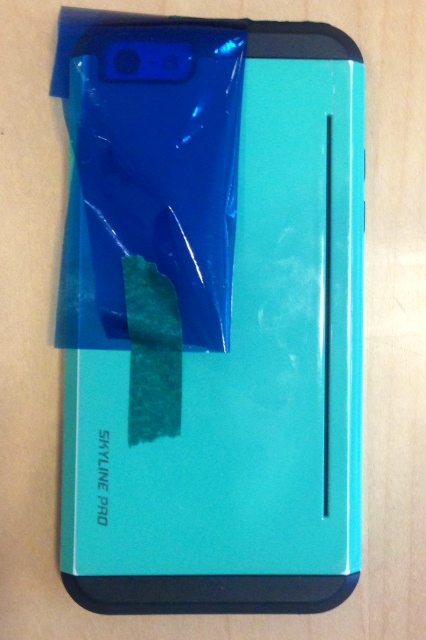
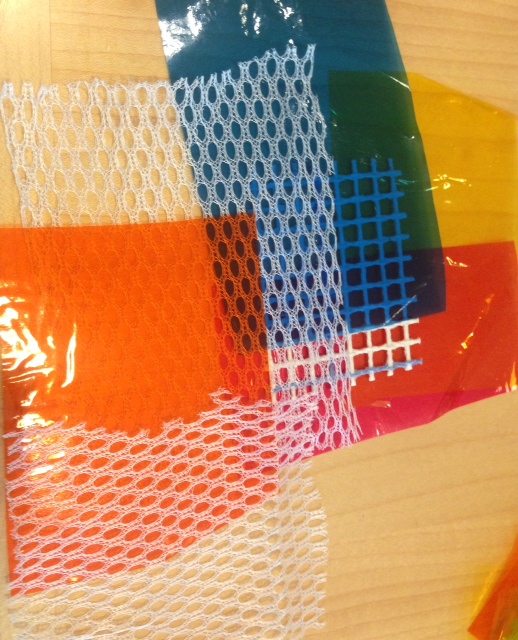
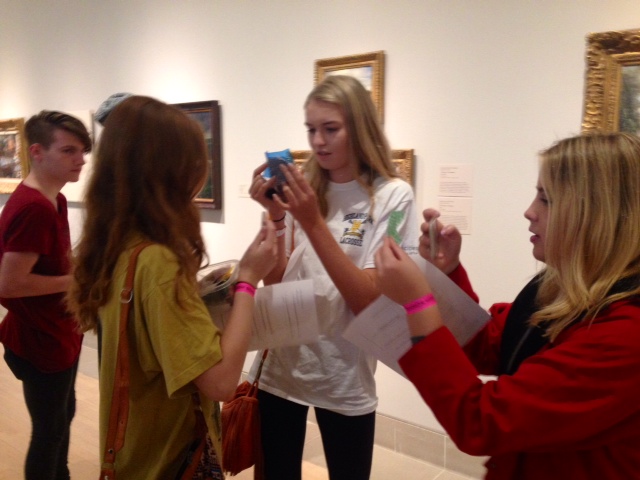
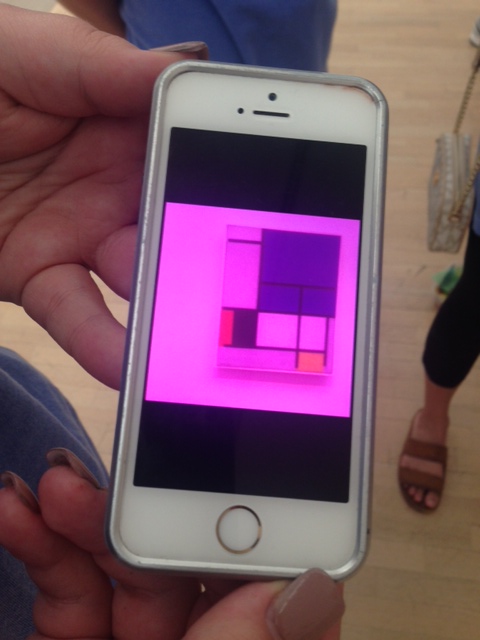
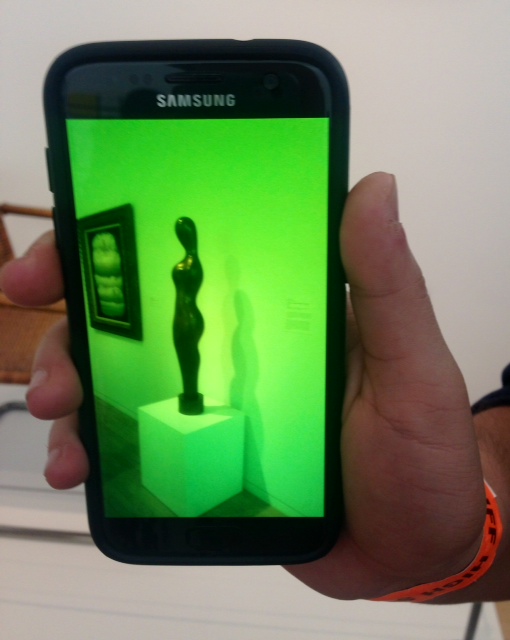
To top it off, the DMA Education team led sessions in the galleries exploring how artists relate to filmmakers, and experimented with DIY photo filters created with everyday objects to mimic different film genres.

Are you inspired to get behind the camera? Experiment with your own DIY photo filters and submit your creations to the Center for Creative Connections #DMAdigitalspot’s current visitor photo prompt, Beauty Redefined!

Lindsay O’Connor
Manager of Docent and Teacher Programs

Make This: Camera Obscura

Johannes Vermeer, star of the eponymous Vermeer Suite: Music in 17th-Century Dutch Painting, is famous for his illusionism. Vermeer’s small, gem-like paintings are little windows into 17th century Dutch life. Instead of composing his images from naked-eye observation, however, some art historians believe that Vermeer used a device called a camera obscura.

A camera obscura, Latin for dark chamber, is the precursor to the modern camera, and has been known to artists, scientists, and philosophers since the time of Aristotle. At their most basic, they are made from light-tight boxes with a tiny hole on one side. Light enters the hole and casts an inverted image on a screen inside the box. Its earliest uses can be traced to astronomers, who used the camera obscura to safely view eclipses. However, it didn’t take long for artists to use it as a drawing tool. Camera obscuras can be built to reflect that image on a drawing surface, which artists can trace over to create compositions.

Although early camera obscuras were made from finely crafted wooden boxes, you can make one out of everyday materials. Here’s how to do it.

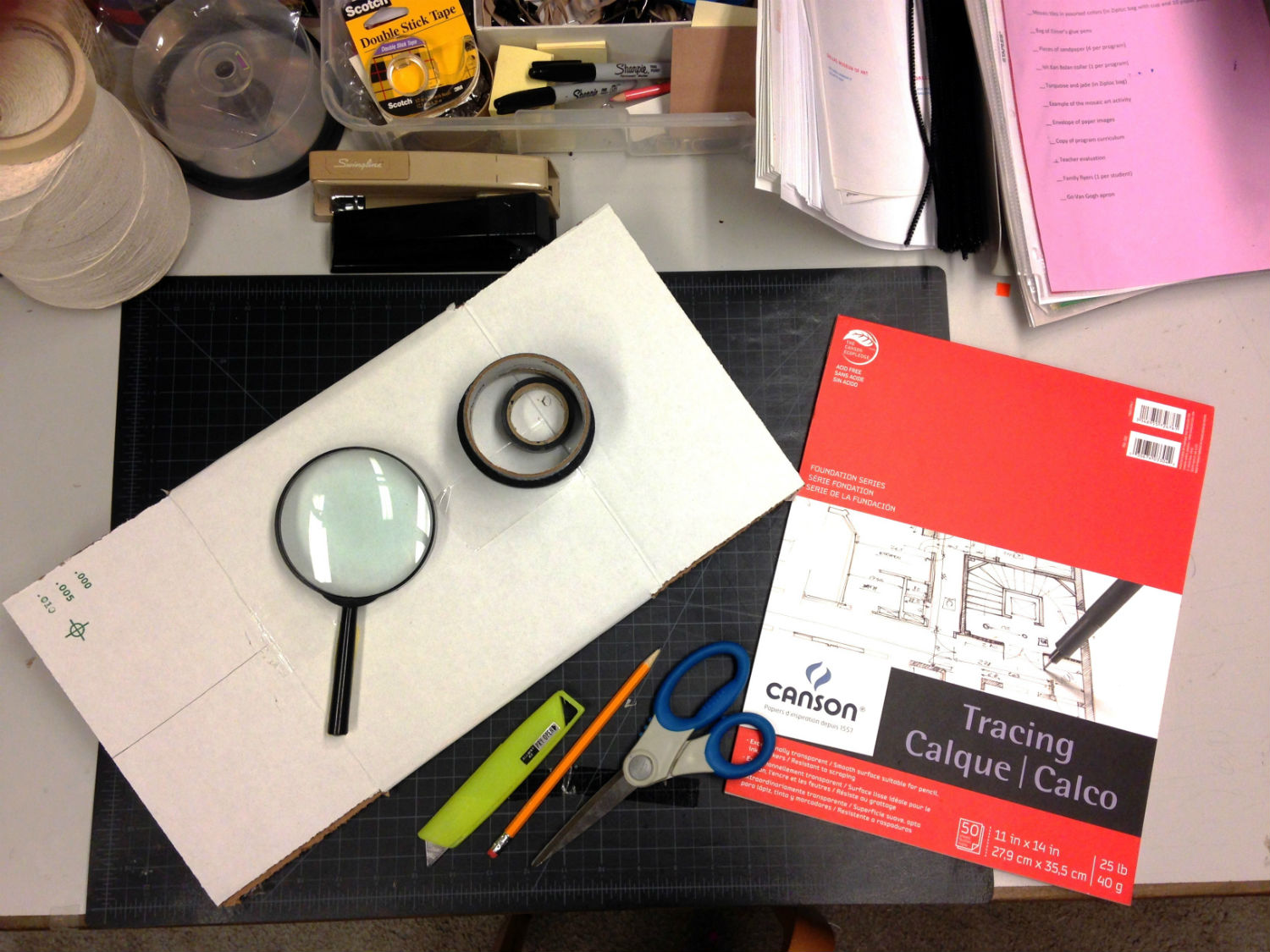
Supplies:

IMG_8716

  • Cardboard box
  • Black tape (duct tape is the best, but I used a little black masking tape too!)
  • Masking tape/painters tape
  • Magnifying glass
  • Tracing paper or vellum
  • Box cutter
  • Scissors
  • Pencil or sharpie

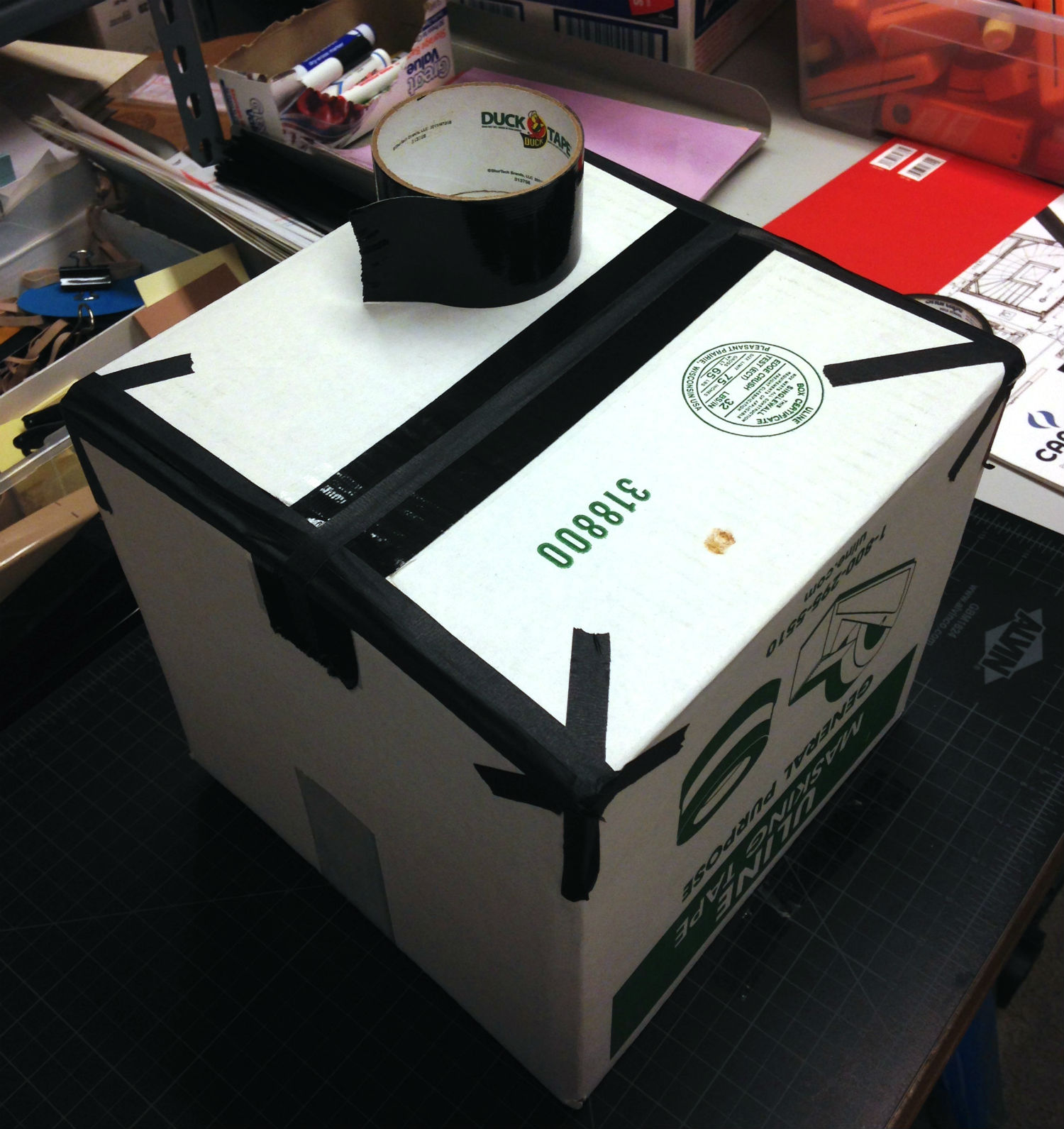
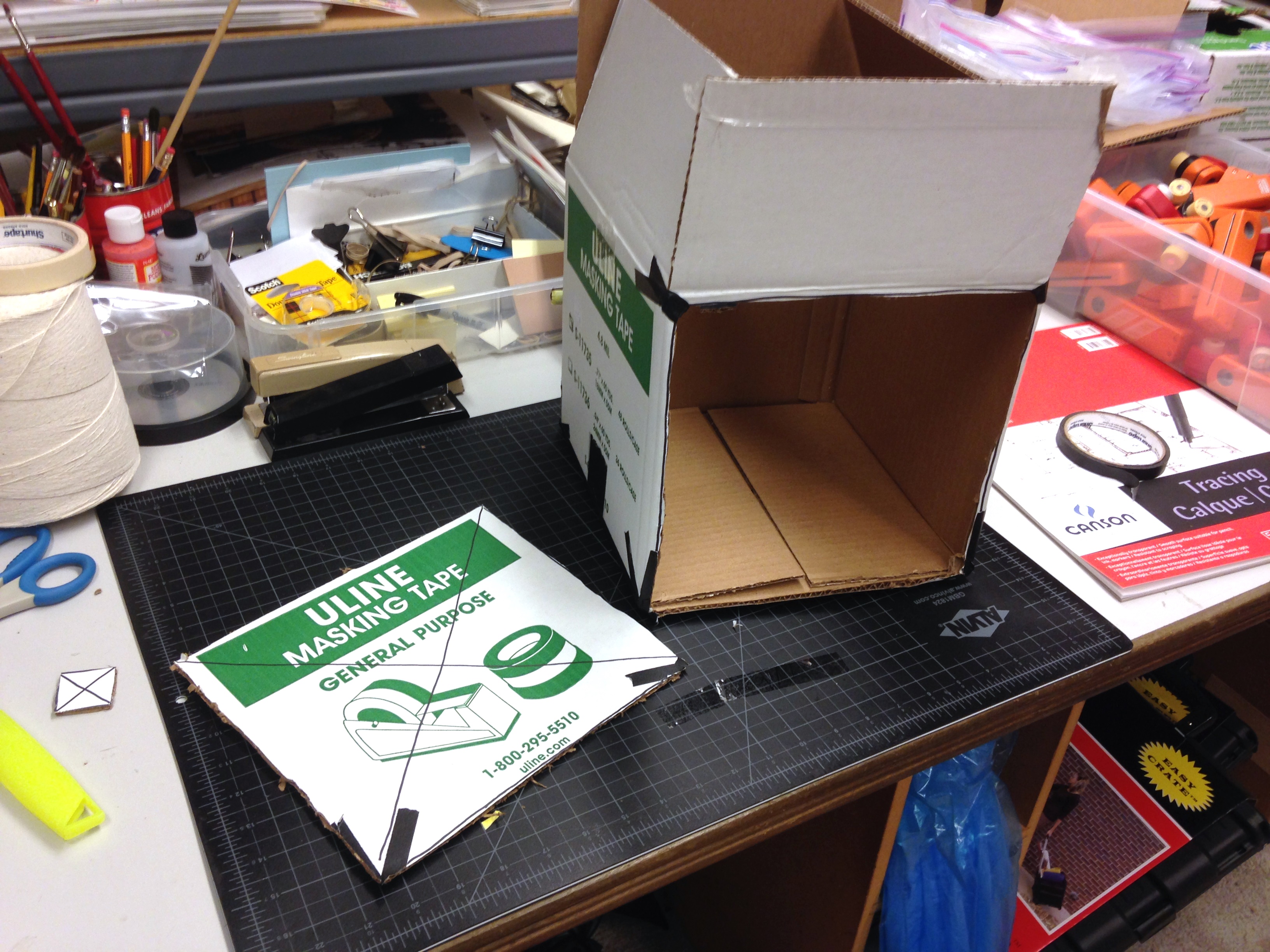
Step 1: Fold down the flaps on one side of your box and tape them down with black duct tape. This will be the bottom of your camera obscura. Remember that camera obscuras need to be light-tight, so make sure to tape down the sides and corners of your box too! I make sure that I have the bottom sealed tight by holding the box up to a light.

IMG_8717

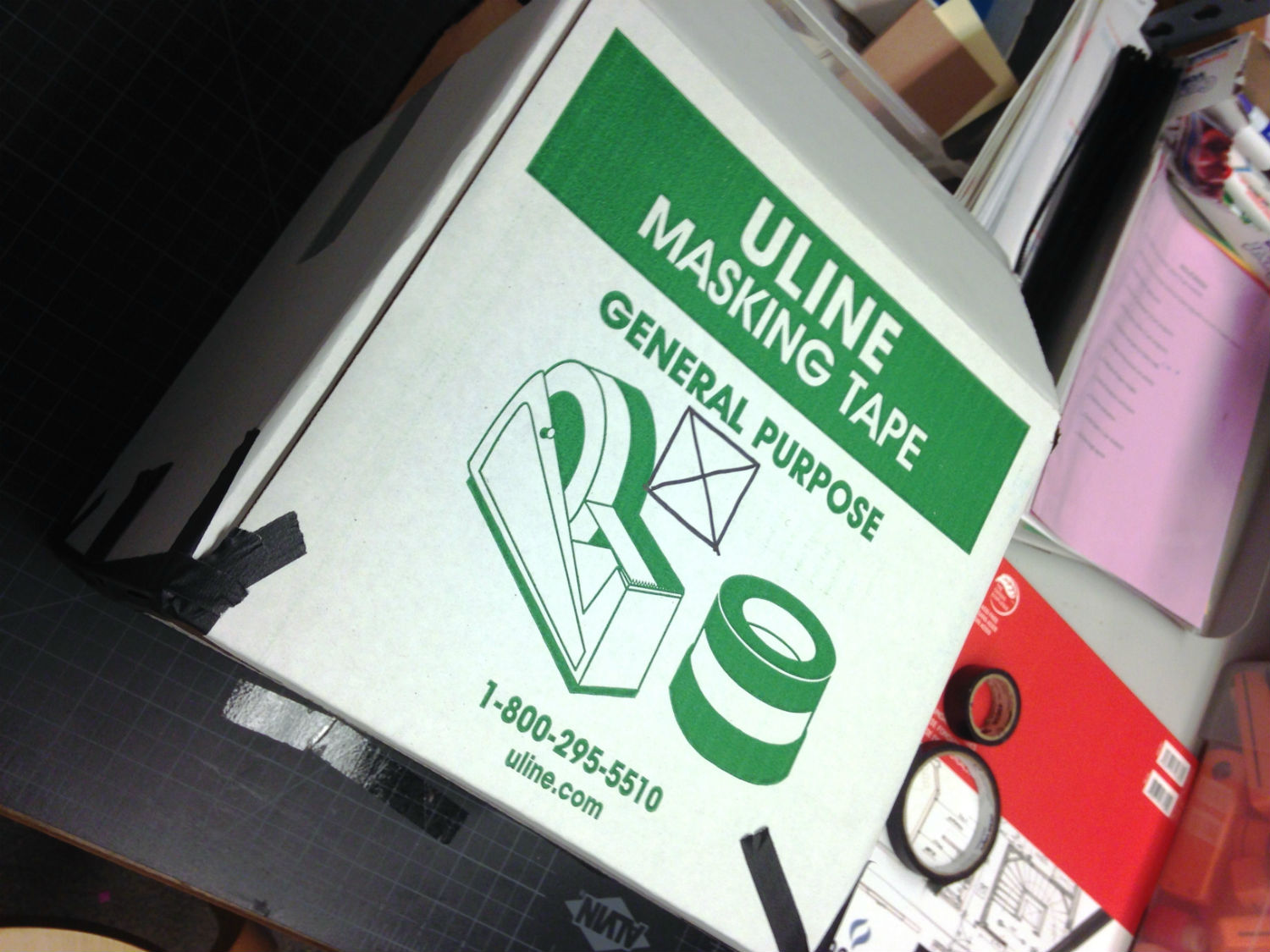
Step 2: Draw a small square in the middle of one of the sides of the box and cut it out with a box cutter. A 1-1 ½ inch square is a pretty good size to shoot for. Remember that the sides of the box with flaps, including the one you just taped down, should be the top and bottom of your camera obscura–don’t cut those!

IMG_8718

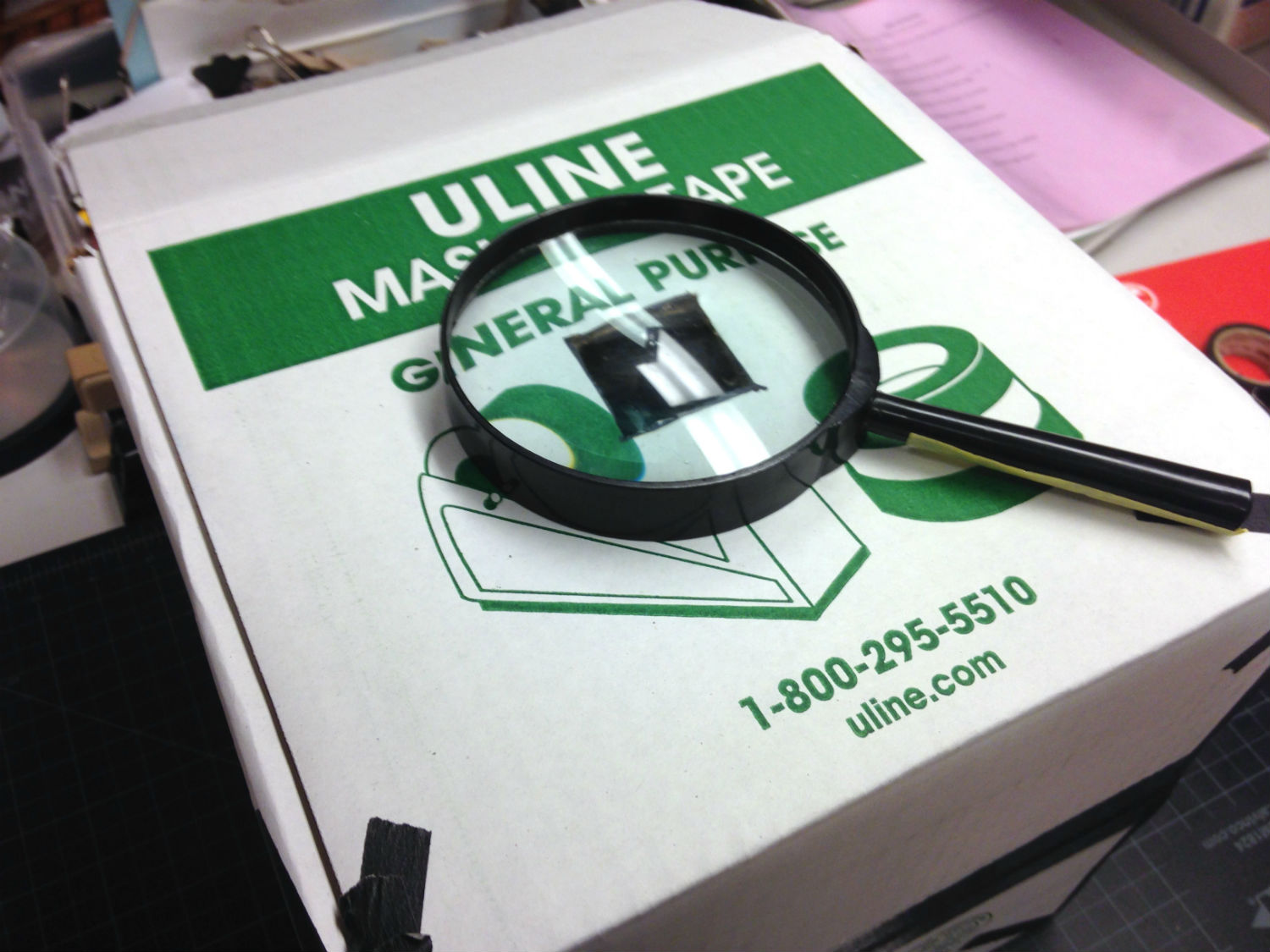
Step 3: Tape a magnifying glass over the small hole. This will be the lens for the camera obscura. My magnifying glass was pretty heavy, so I used a lot of tape to make it secure.

IMG_8721

Step 4: On the opposite side of the box from the lens, cut a large hole out of the box. This hole should be nearly as large as the side of the box. If cutting out this side weakens the box or one of the top flaps falls off, don’t worry–just reinforce the box with some tape! It should look like this when you’re finished.

IMG_8724

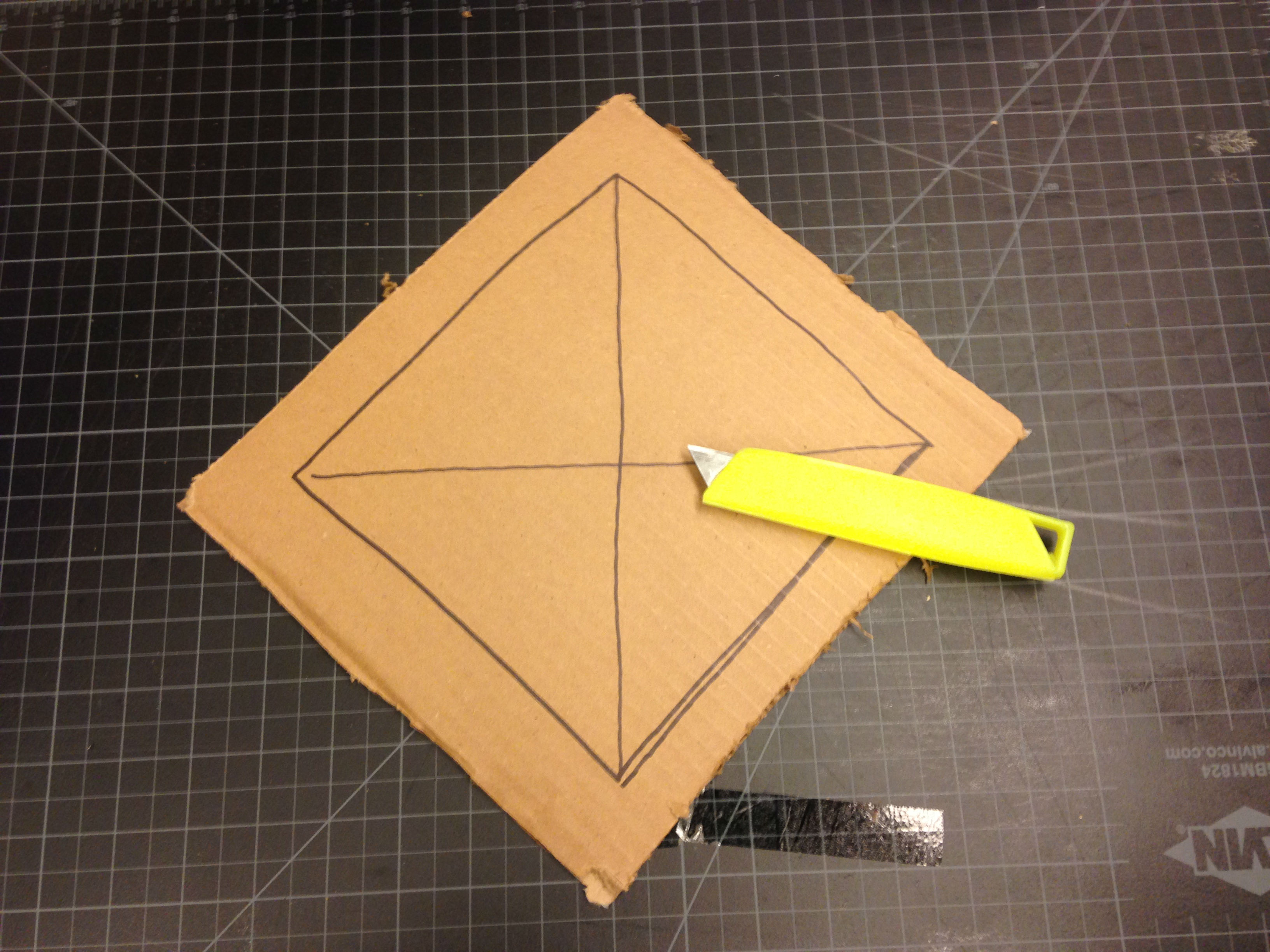
Step 5: Leaving about a 1 inch margin around the sides, cut a smaller hole from the piece of cardboard that was just cut out. This will be used to create a frame for the screen on which the image will be reflected.

IMG_8727

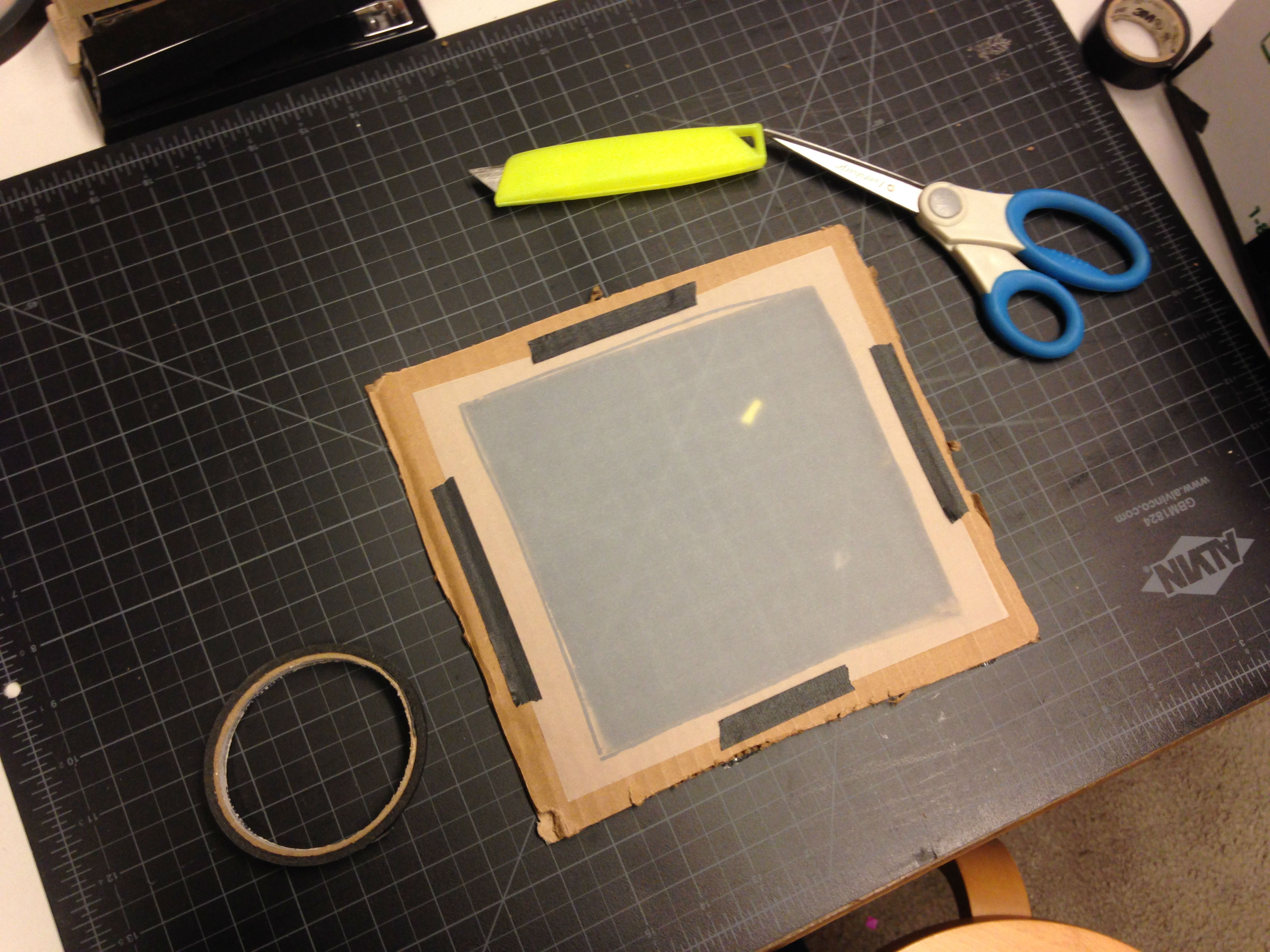
Step 6: Trim a piece of tracing paper and use four pieces of masking/painters tape to secure it to our frame. This is the screen for our camera obscura!

IMG_8729

Step 7: Now for the exciting part–time to test! Find a brightly lit window in front of which to set your device. I chose a window overlooking our Sculpture Garden in the Barrel Vault, which is one of my favorite places in the Museum.

IMG_8730

Step 8: Slide your screen through the top of your camera. An image should appear! Slide the screen closer or further away from the hole in the box to focus your image, or make it sharper. Once you’re satisfied with how the image looks, tape down the top flaps to keep the light out.

IMG_8733

And viola! You have your own camera obscura. You can use a pencil to trace what you see on the tracing paper. The best part about this variation on the camera obscura is it’s reusable. Simply tape a new piece of tracing paper on the frame when you want to make another drawing.

Whether Vermeer used a camera obscura to compose his beautiful images is still up for debate. Historians often cite the blurry highlights on metallic objects in Vermeer’s paintings as evidence that he used the tool. These kinds of highlights, called halations, are typical of lens-based devices. However, it’s important to remember that a camera obscura is just another tool in an artist’s toolbox. Tools don’t make art–artists do! There’s no denying the skill it took to represent the tiny details in Vermeer’s paintings, even if he did use a camera obscura.

Try making a camera obscura of your own and see how it fits into your artistic practice. Report back with your findings – we’d love to see what you create!

And don’t forget to stop by the Museum to check out Vermeer Suite before it closes this summer!

Jessica Thompson
Manager of Teen and Gallery Programs

Interviews with Young Masters

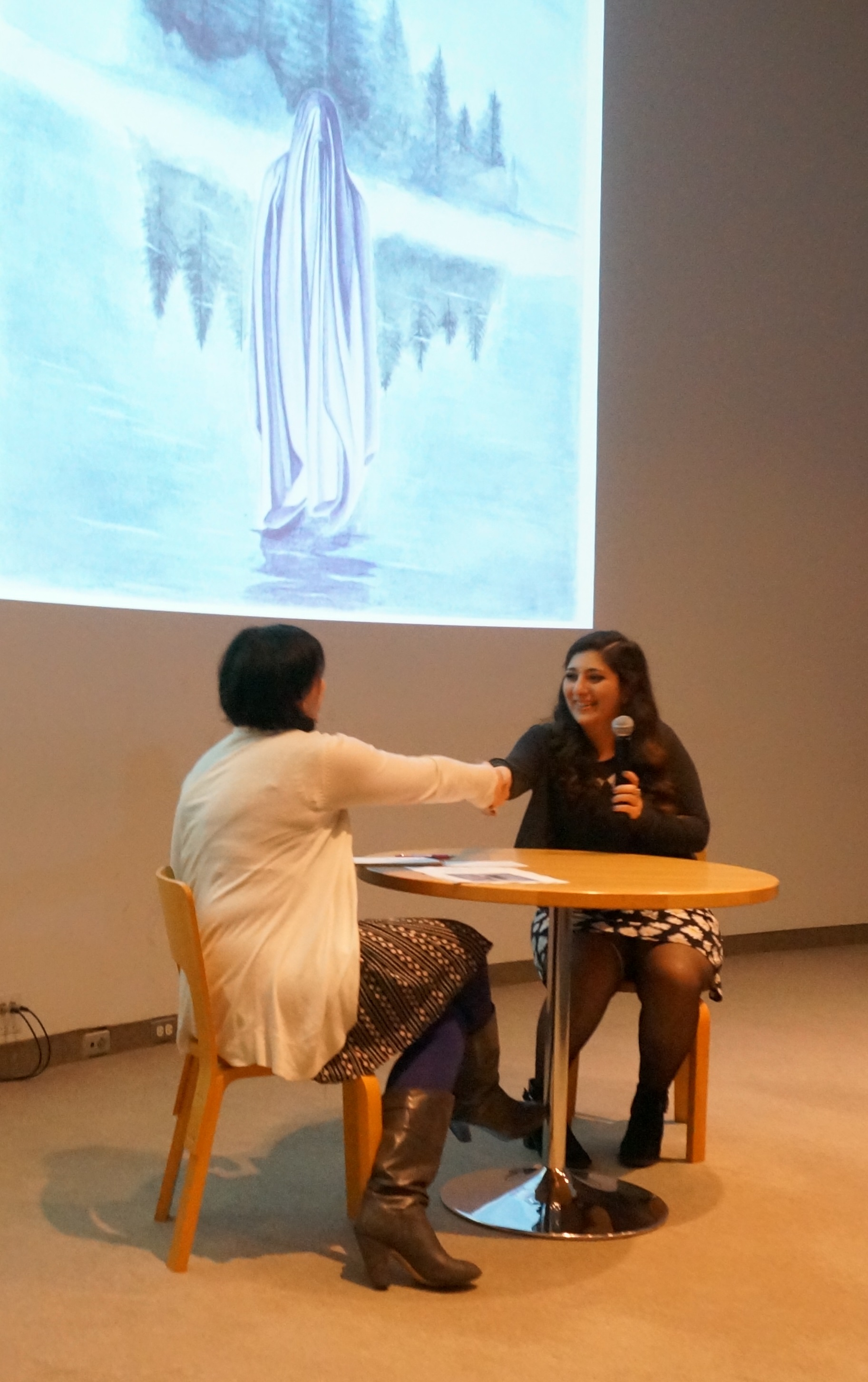
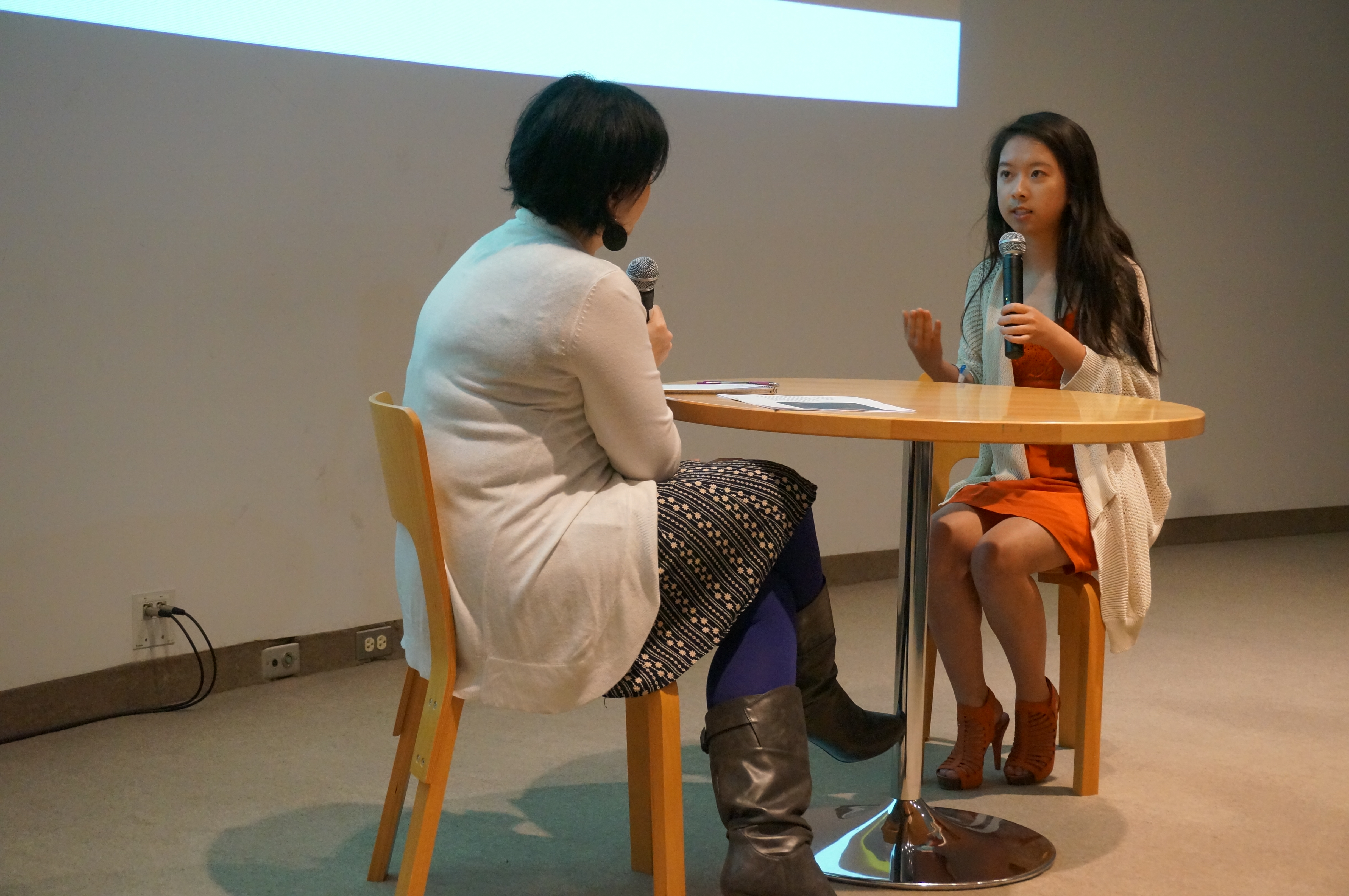
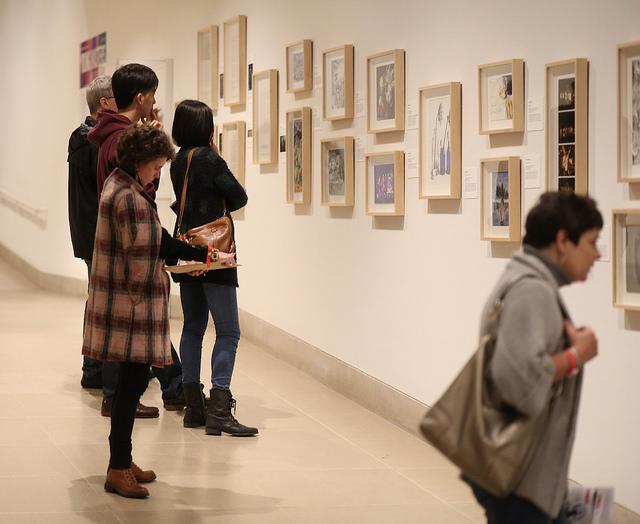
It isn’t every day that we’re able to peek into the minds behind the artworks on view at the DMA. Earlier this month, KERA announcer Shelley Kenneavy interviewed some of the teens whose work is currently on display in the concourse as part of the 2016 Young Masters exhibition. The students gave us a bit of insight into their sources of inspiration—ranging from the Star Wars musical score to insecurities about personal appearances—and shared their hopes as future artists, engineers, art historians, and musicians.

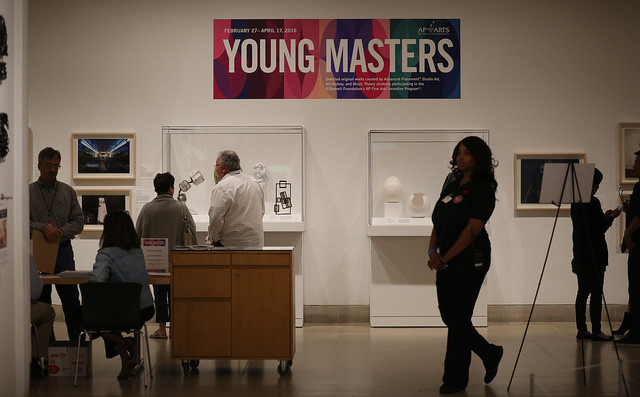
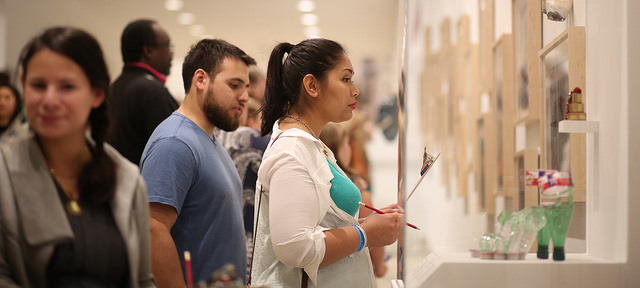
This year’s exhibition features sixty works selected from 858 submissions by AP Fine Arts students from ten local area high schools. Sponsored by the O’Donnell Foundation and on view through April 17, the exhibit includes forty-nine 2D and 3D works of art created by AP Studio Art students, five essays analyzing works of art in the DMA’s permanent collections by AP Art History students, and six original compositions by AP Music Theory students. The essays and compositions can be heard through the DMA’s mobile site here.

One of this year’s participating students is Allison Li, whose piece is titled Passing Tranquility. I first met Allison when she began volunteering at the Center for Creative Connections earlier this year, and was thrilled to see her digital photography installed as part of the Young Masters exhibition. To learn a bit more about the exhibition from the student’s perspective, I asked Allison a few questions about her influences, challenges, and takeaways as a 2016 Young Master.

AllisonLi

Allison Li, Passing Tranquility, Coppell High School

Who are some of the artists you admire? What draws you to their work?

I admire many artists, some include Monet, Nguan, Sachin Teng, and many more. Many of the artists I like, I found online through their various social media accounts. I’m mainly drawn to artist’s works because of the color they use in their pieces, especially Monet and Nguan; I really like the pastel and light colors they use for their pieces. Also, the subject matter of what artists portray in their pieces is a big factor.

How would you describe your creative process? What is most challenging about creating work? What is most rewarding? 

My creative process usually starts with a vague idea or concept in which I try to define it more in detail in my own head before I put anything on paper. Drawing ideas or sketches sometimes helps me better visualize what I want in a piece. After coming up with an idea, I will usually figure out what materials I need and how I want to create the artwork. I think the most challenging and most important part of creating art is coming up with the idea. It usually takes me a very long time to come up with ideas that I like and exactly how I want to execute the idea. I think the most rewarding part of this process is either having an idea you feel confident in or the final piece; both feel rewarding depending on the outcome.

What motivated you to submit your artwork for consideration in the Young Masters exhibition?

My art teacher at school informed us of this opportunity and gave us class time to create a piece to submit to the exhibition. My mom also really encouraged me to pursue my passion for art and thought it would be great and an honor if I was in the Young Masters exhibition.

Your work in the exhibition, Passing Tranquility, invites viewers to consider moments of peace in otherwise hectic environments. Where do you find tranquility in today’s fast-paced atmosphere?

I find the most peace when I am at home and don’t have homework to do. Those times are the most relaxing as I don’t have any lingering tasks that need to be done right away, and instead I get to enjoy my free time.
25894016601_265c837a95_z

How does participating in Young Masters change the way you approach other art exhibitions as a visitor?

After going to the DMA and seeing my artwork hung up on the Museum’s walls with other great pieces, I felt very humbled and amazed that my piece was up there. Now seeing other artworks in the Museum makes me have much more respect for all the artists that are in museums.


Do you see yourself continuing to make artwork like Passing Tranquility in the future?

I am actually making similar pieces to Passing Tranquility as it is part of my concentration that I am doing for my AP 2D Design class right now. This piece was actually the first piece in a series of twelve works that I am creating for my portfolio.

What advice do you have for other young artists?

I think that the best thing to do as a young artist is to keep practicing and try not to get too discouraged if things don’t always go as planned. I believe practicing will definitely pay off in the future and seeing the improvement you have made over the years will be very rewarding. I also think that seeing other artists and artwork besides your own is important; I look at many artworks online created by various artists that post their work on social media, such as Instagram or Twitter.

If you’re curious about what some of the other Young Masters have to say about their experience, don’t miss the second round of interviews with the teens at the upcoming Late Night on April 15. For a blast from the past, check out the video recordings of previous Young Masters interviews.

We can’t wait to see what Allison and the other Young Masters create next! Cast your ballot in the People’s Choice Award at the April Late Night to vote for your favorite studio art, art history, and music theory work in the Young Masters exhibition.

Paulina Lopez
McDermott Graduate Intern for Visitor Engagement

On the Bookshelves

IMG_8200

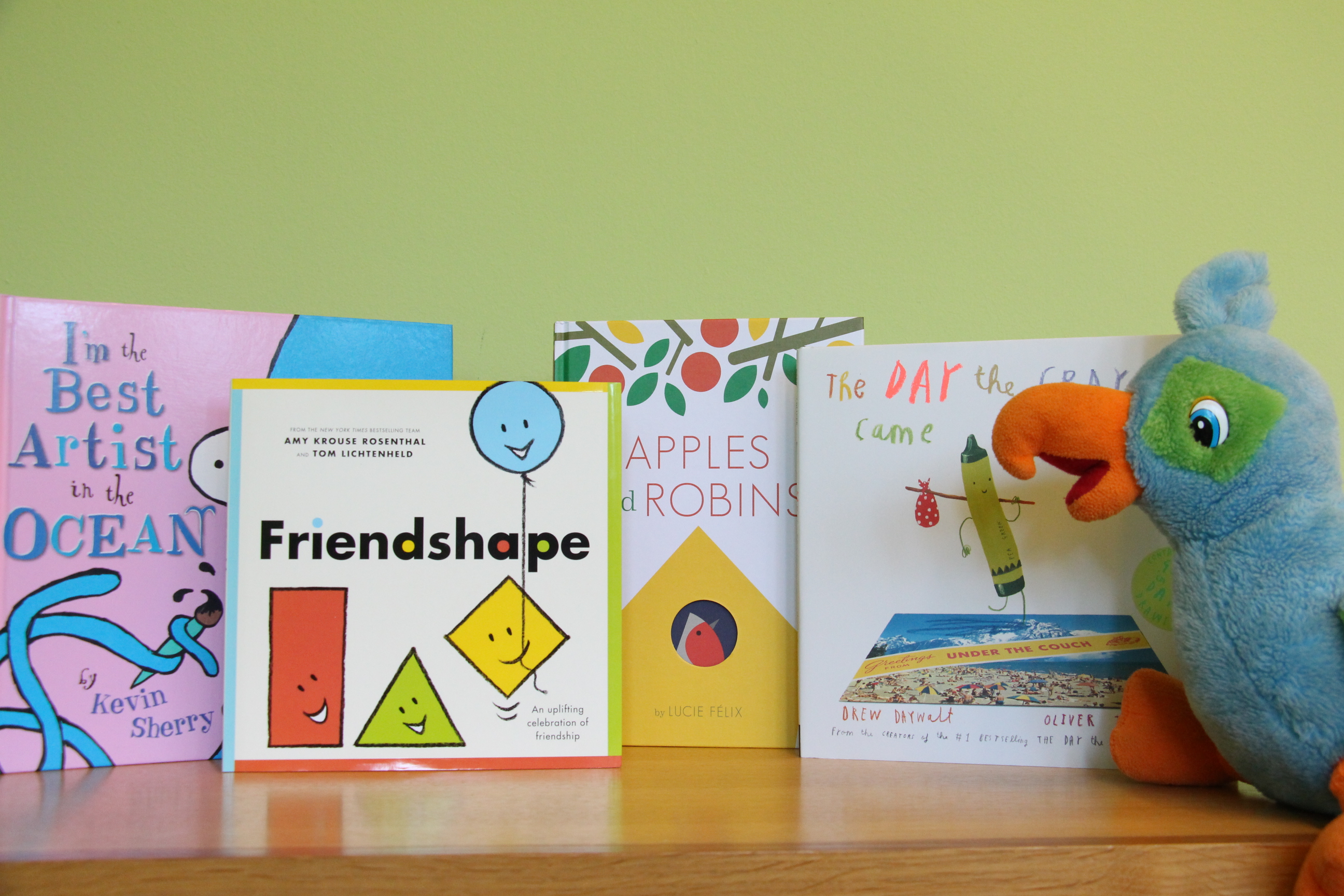
Flowers are blooming, buds are popping out on the trees, and I’ve rounded up a fresh crop of excellent picture book art pairings that will put a spring in your step! From a blissfully confident giant squid to those witty talking crayons, here are four must-reads to add to your bookshelves. Each has Arturo’s seal of approval!
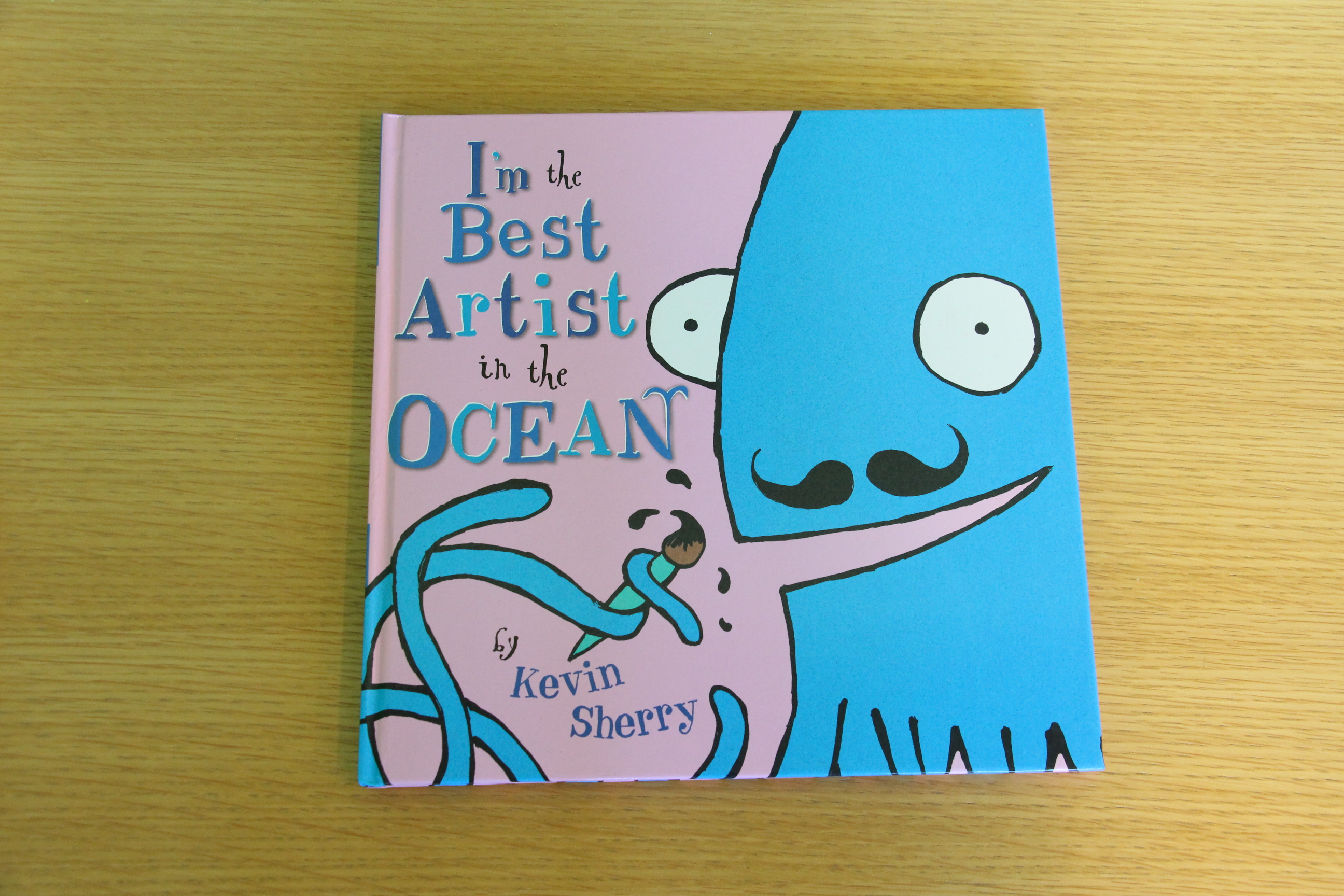
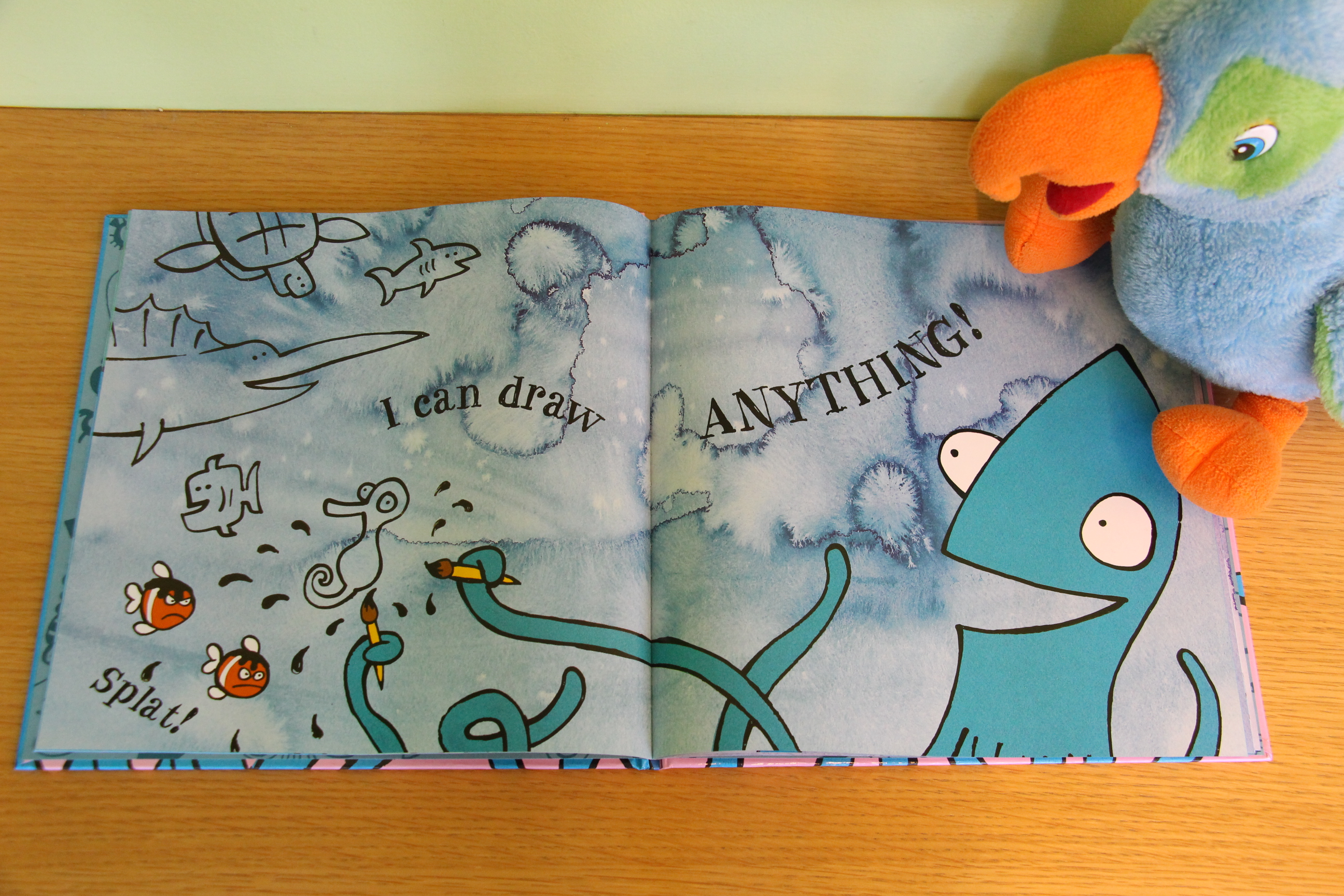
Giant Squid is pretty proud of everything he can draw. In fact, he thinks he is the BEST artist in the ocean. But a grumpy shark has a very different point of view. Squid’s clever solution to what could be a (shall we say uncomfortable?) situation will make young readers laugh, while caregivers may notice the illustrator’s sly nod to Picasso’s cubist style.

IMG_8202

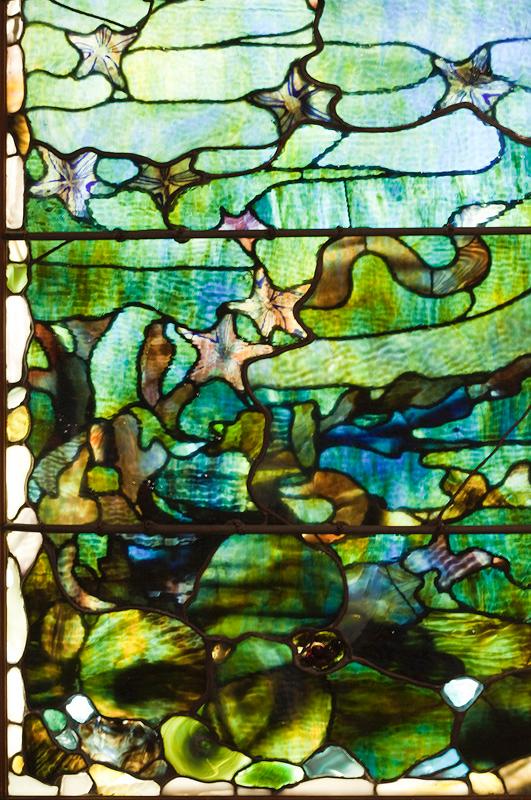
I’m the Best Artist in the Ocean by Kevin Sherry is a perfect pairing with our beautiful Tiffany windows. Search for starfish, sea anemones, jellyfish, and even eels, while imagining what Giant Squid would think of the jewel-like glass. At home, make Giant Squid proud with your own squid art!

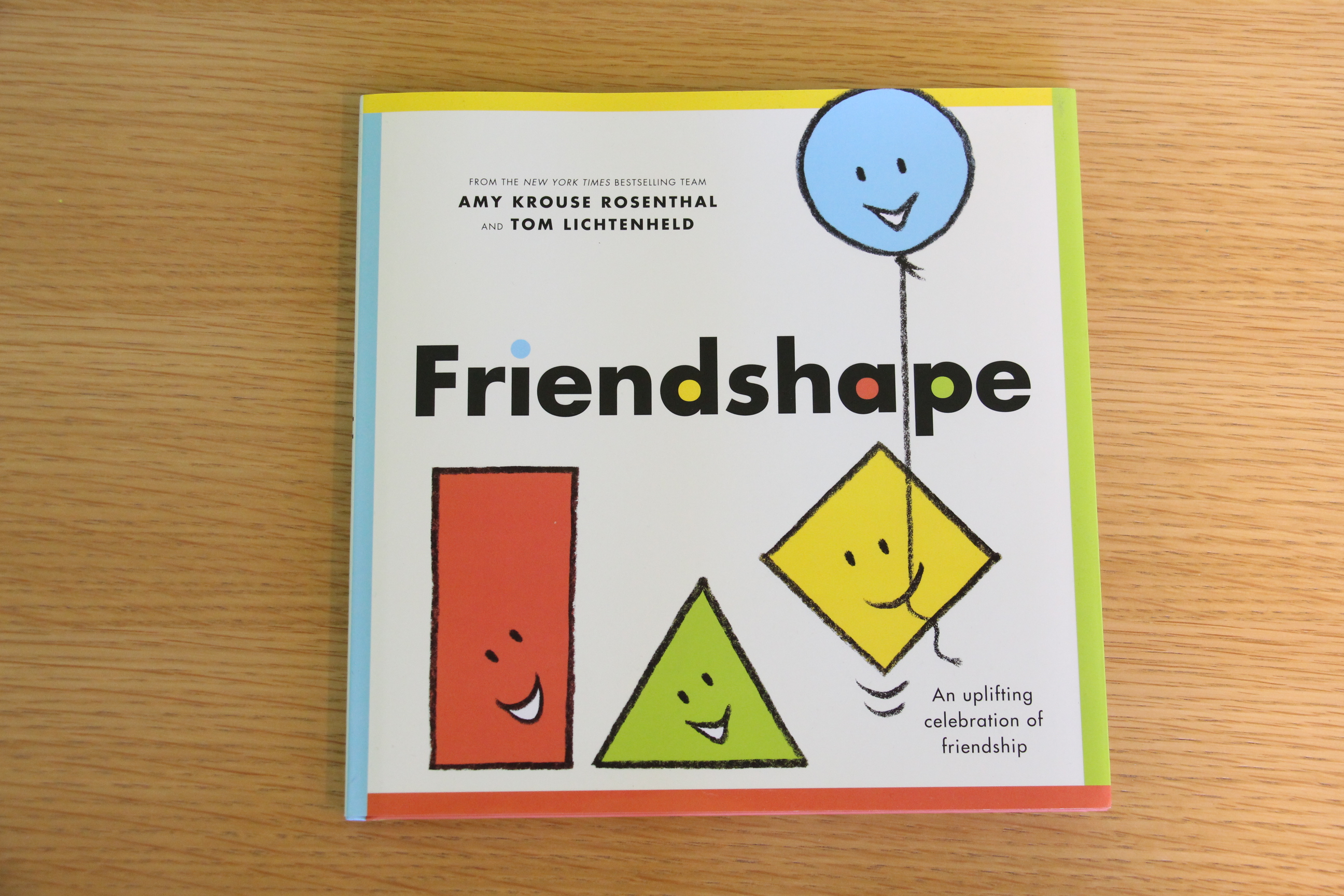
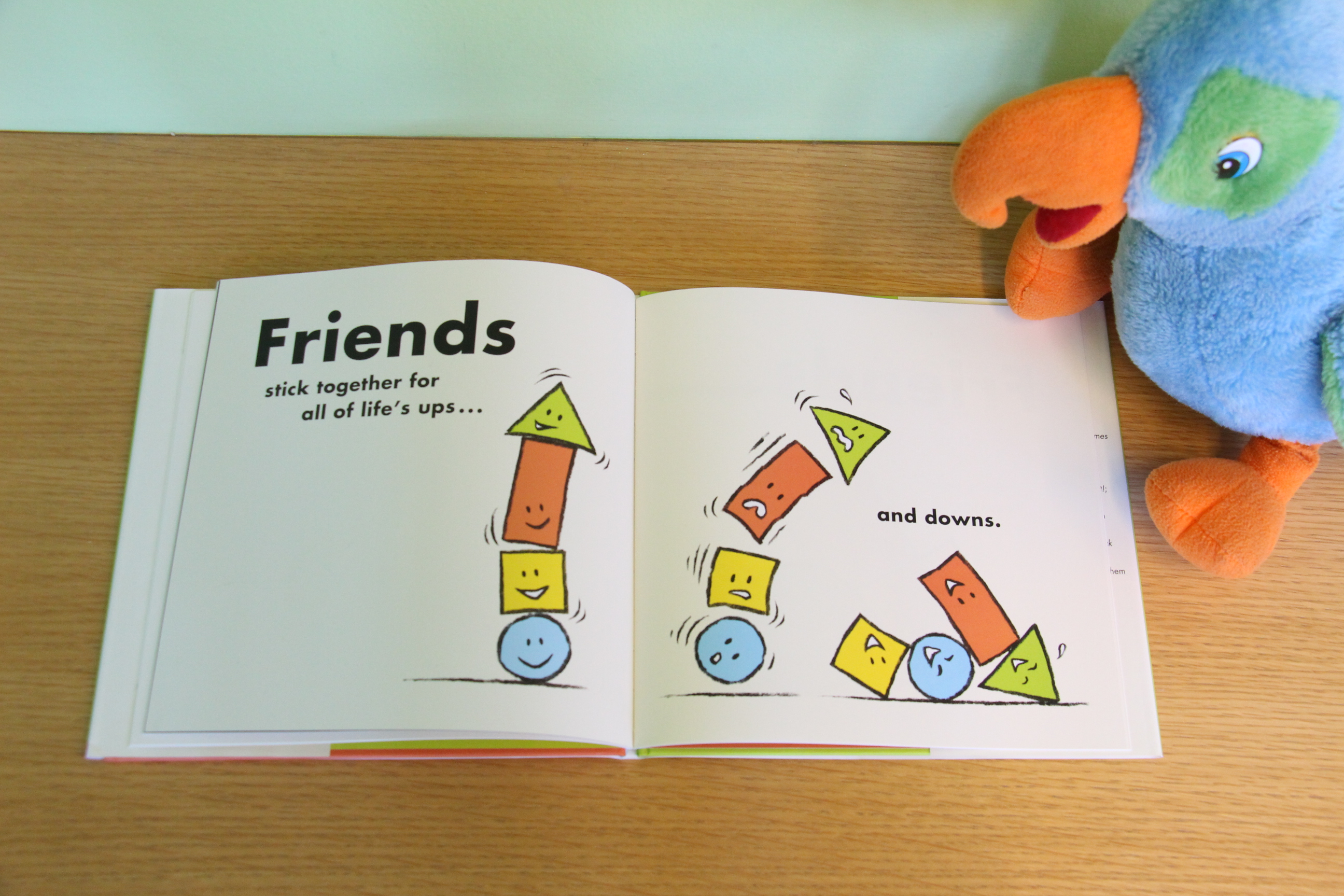
“Friends shape who we are,” and square, rectangle, circle and triangle are the best of pals. They play together, they support each other, and even when they squabble with each other, they know that their friendship is what matters most.

IMG_8203

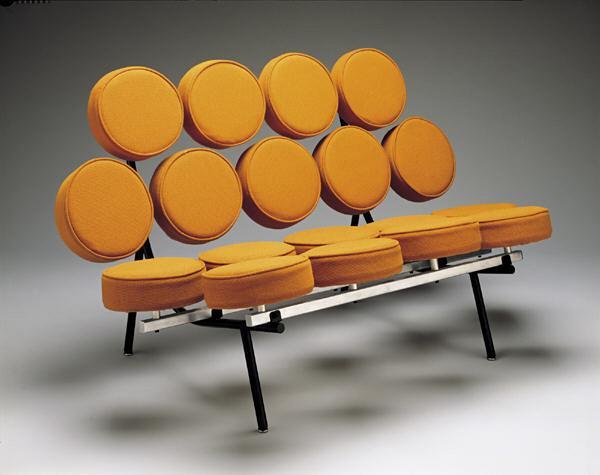
Friendshape by Amy Krouse Rosenthal and Tom Lichtenheld is one of those books that puts a smile on your face and warms your heart. The seemingly simple illustrations are bursting with personality and are a perfect way to show young artists how shapes can work together in different configurations to create all kinds of pictures. One particular page spread shows the friends as a rocket blasting off to the moon, and even without the text, children instinctively understand what the illustrator has done. Read this delightful book in the Decorative Arts gallery and take a closer look at the Marshmallow sofa to see how circles have been transformed into a stylish place to sit. At home, download this printable and make your own shapes into the loveable characters from the book.

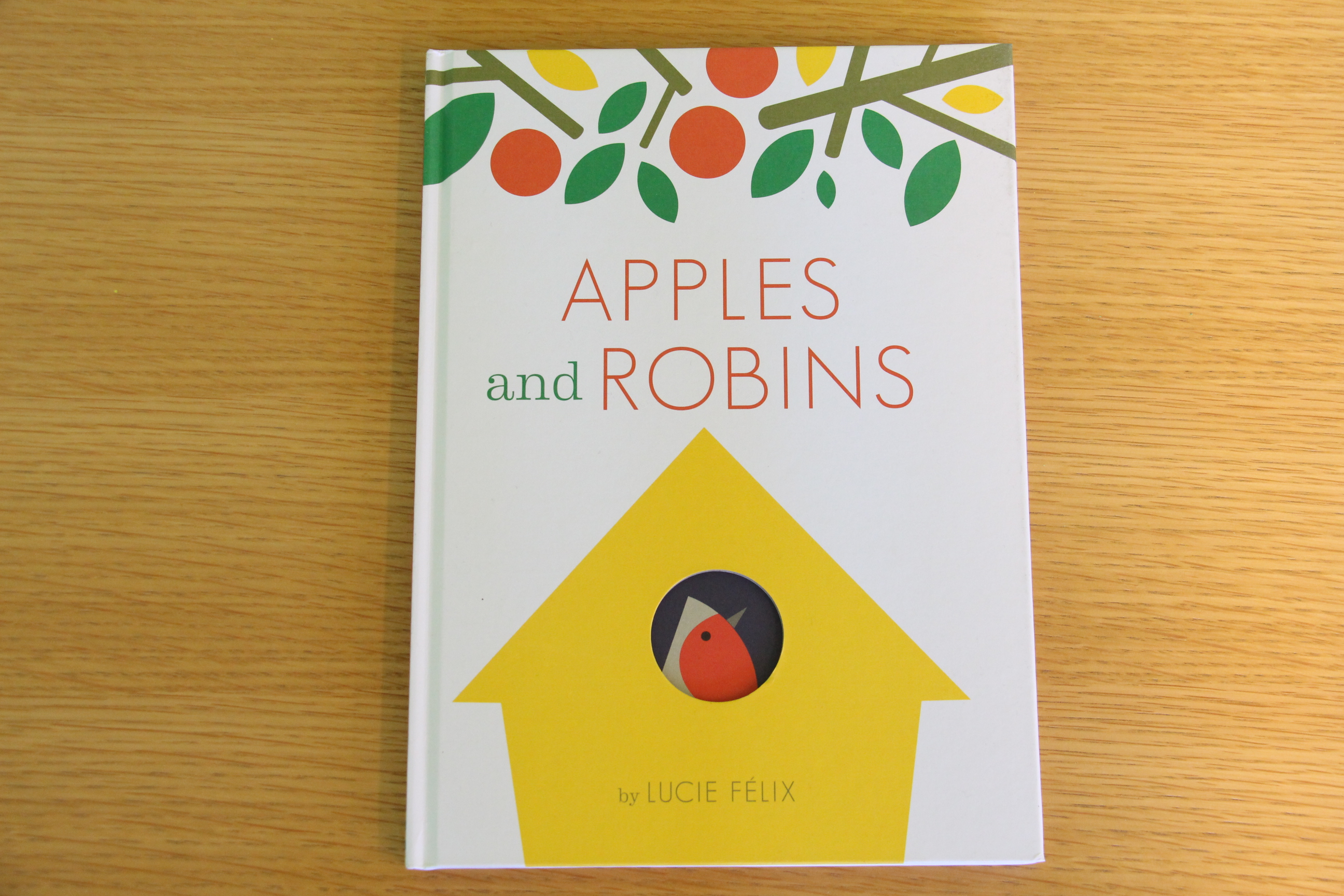
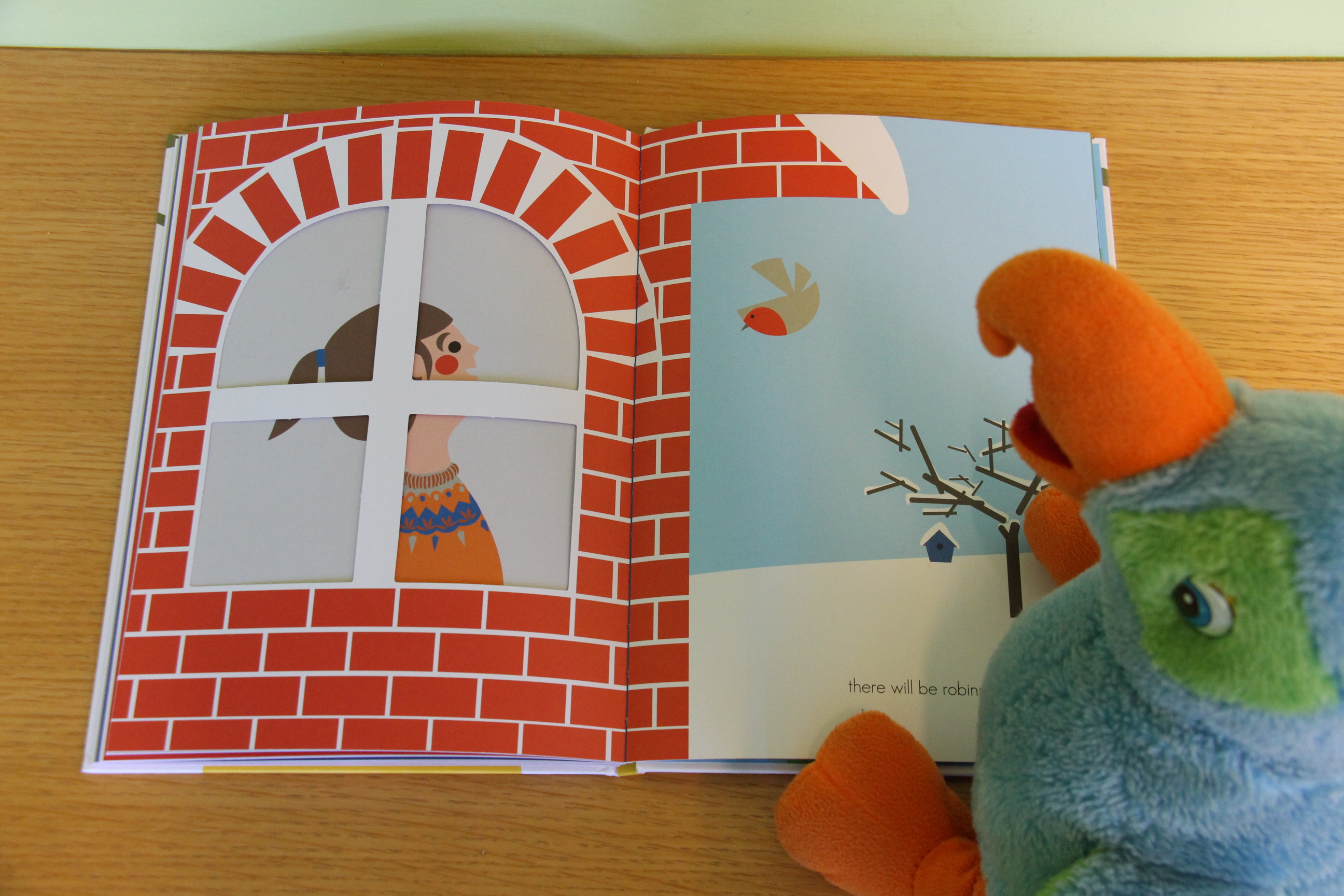
One of my favorite signs of spring is the birds chirping outside my window each morning. In Apples and Robins by Lucie Felix, we see not only birds outside the window, but apples hanging from the tree, worms munching through an apple, a birdhouse being built, and a basket for gathering apples.

IMG_8205

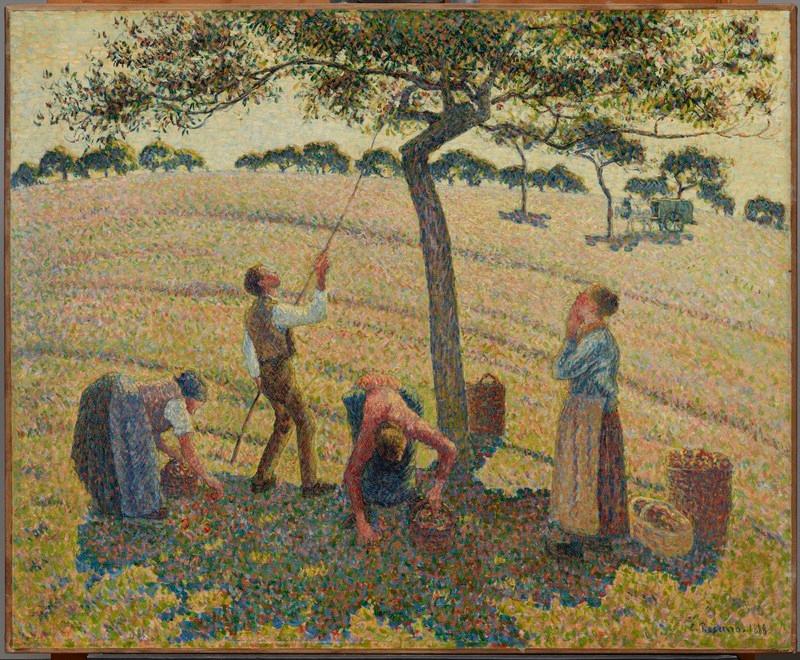
The genius of this book is clever cut-outs that transform into new pictures with the turn of a page. As with Friendshape, readers will discover how shapes become something more with a little bit of creativity. The bold, bright illustrations are inviting and the cut-outs will have children eagerly turning the pages to see what happens next. Why not bring this book along with you for a quick visit to Apple Harvest by Camille Pissarro? Then at home pull out the tried-and-true apple printing project to create your own apple art. This helpful post from the TinkerLab blog has great suggestions for setting up an apple printing station at home.

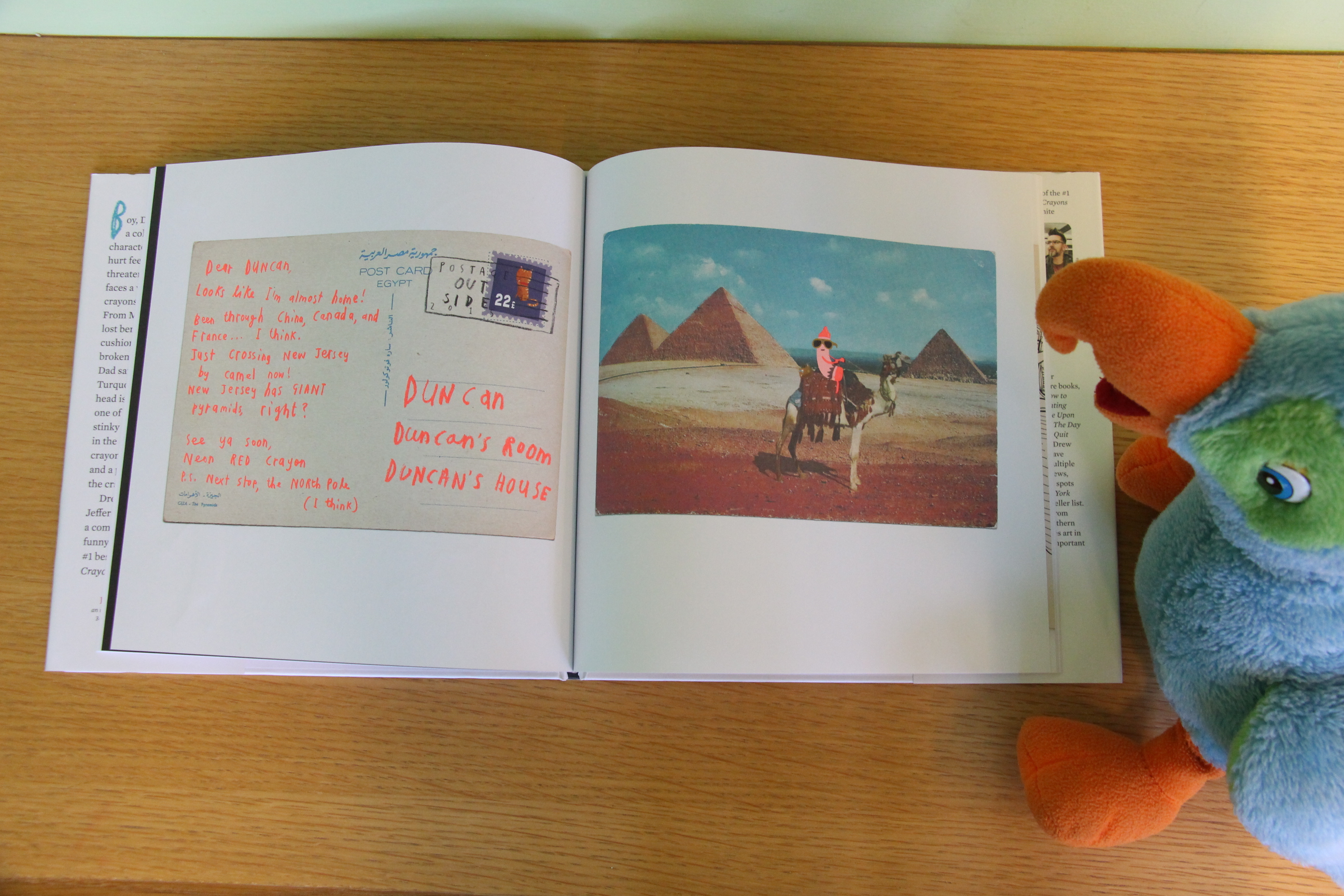
You might have thought that after Duncan’s crayons famously quit, that would be the last we’d hear of them. But they are up to their crazy antics again, and this time, all they want to do is come home! Tan crayon was eaten by the dog, Maroon crayon got lost in the couch, and Neon Red crayon was left behind at a hotel on summer vacation. In their postcards to Duncan, each crayon laments their troubles and either whines, wheedles, or begs for him to rescue them. Well, all except Neon Red who has set out on its own to find a way back in The Day the Crayons Came Home by Drew Daywalt.

IMG_8206

I’d like to think that the crayons would have a ball anywhere in the Museum, but it would be especially fun to visit places Neon Red sees on the journey home. New Jersey (according to Neon Red) has some great pyramids, but we all know that Ancient Egypt is the place to be for pyramids, mummies, and more. Visit our Ancient Egypt gallery and imagine Neon Red roaming through on a camel!

And for all the crayon-lovers out there, don’t miss the chance to hear Drew Daywalt talk about his colorful characters in person here at the DMA on May 22–get your tickets here!

Happy reading!

Leah Hanson
Manager of Early Learning Programs


Archives

Categories