Posts Tagged 'DMA'


Jazz and Jewelry: Celebrating Art Smith in August

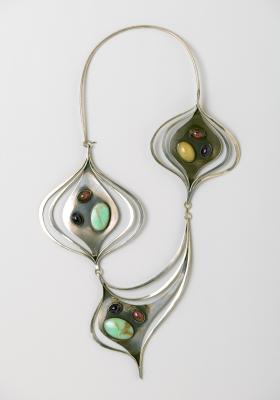
In June, the DMA opened the beautiful exhibition From the Village to Vogue: The Modernist Jewelry of Art Smith, featuring 26 dynamic pieces of silver and gold jewelry created by artist Art Smith. 


To celebrate this show, we are making August the month of all things Art Smith. You can explore the show with a metalsmith during a  Gallery Talk; stop by the Center for Creative Connections to look at Smith’s tools; listen to the jazz that inspired Smith, every Thursday evening during Jazz in the Atrium; or, if you’re a teen, sign up for the Urban Armor Maker Club to create a programmable piece of jewelry. Be sure to check out the full schedule of events for more information.


Jazz in the Atrium


In addition to being one of the leading modernist jewelers of the mid-20th century, Smith was an avid jazz enthusiast and a supporter of early black modern dance groups. This inspired us to commission a new dance from our Arts District Neighbors, Dallas Black Dance Theatre, accompanied by a new jazz suite composed by jazz drummer Stockton Helbing.


First, we met with Nycole Ray, Artistic Director for Dallas Black Dance Theatre II, and Stockton to discuss the format of the piece—how long would the entire piece be, how many dances would comprise the whole performance, does there need to be transition music between the dances, what tempo would be best for each dance, what style of jazz would fit the feel of the piece, and more. We also agreed that a jazz trio would be best so the band and the dancers could all fit on stage together during the live performance.


Once those questions were answered, Stockton began composing an original piece of music he titled On 4th Street, after the location of Art Smith’s studio in New York. Stockton created MIDI demos of his music for Nycole to review before he went into the studio to make the final recording with other musicians.


We now have the final masters of the music, and Nycole has begun choreographing the dances and working with the dancers on the piece she titled Art on 4th Street.


Dallas Black Dance Theatre II

This dance will have its world premiere during the Friday, August 15 Late Night. In addition to Art on 4th Street, this evening will feature live jazz, jewelry making, a film screening of Paris Blues, tours, and more—all inspired by Art Smith!


Stacey Lizotte is Head of Adult Programming and Multimedia Services at the DMA.


Installing Slavs and Tatars

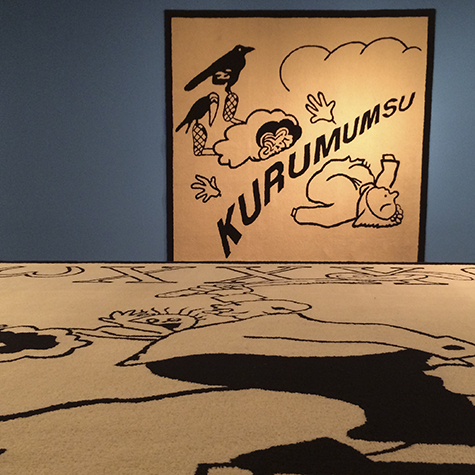
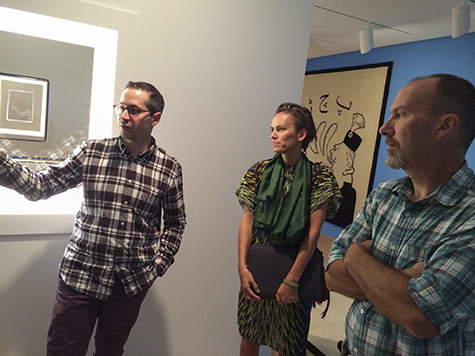
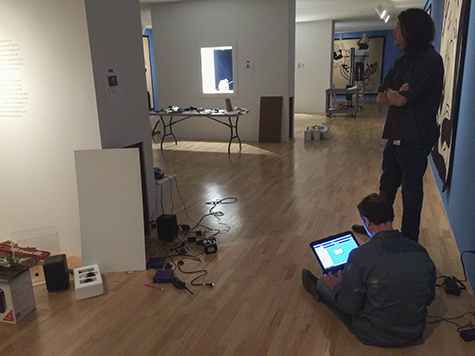
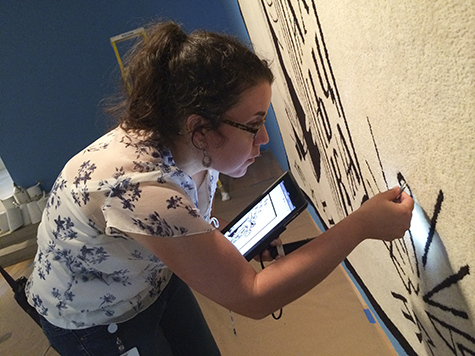
Concentrations 57: Slavs and Tatars opened two weeks ago at the DMA. Part of the DMA’s ongoing Concentrations series, which began more than 30 years ago, the exhibition features new work from the art collective Slavs and Tatars, including the first-ever full presentation of their Love Letters carpet series. See how the installation came together below, and then visit the free exhibition in person through December 14.
EP-62_07_15_14_AG_001


EP-62_07_15_14_AG_003


EP-62_07_15_14_AG_006


EP-62_07_15_14_AG_007


EP-62_07_15_14_AG_009


EP-62_07_15_14_AG_010


EP-62_07_15_14_AG_002


Summer Art Camp Interns: Their Perspective

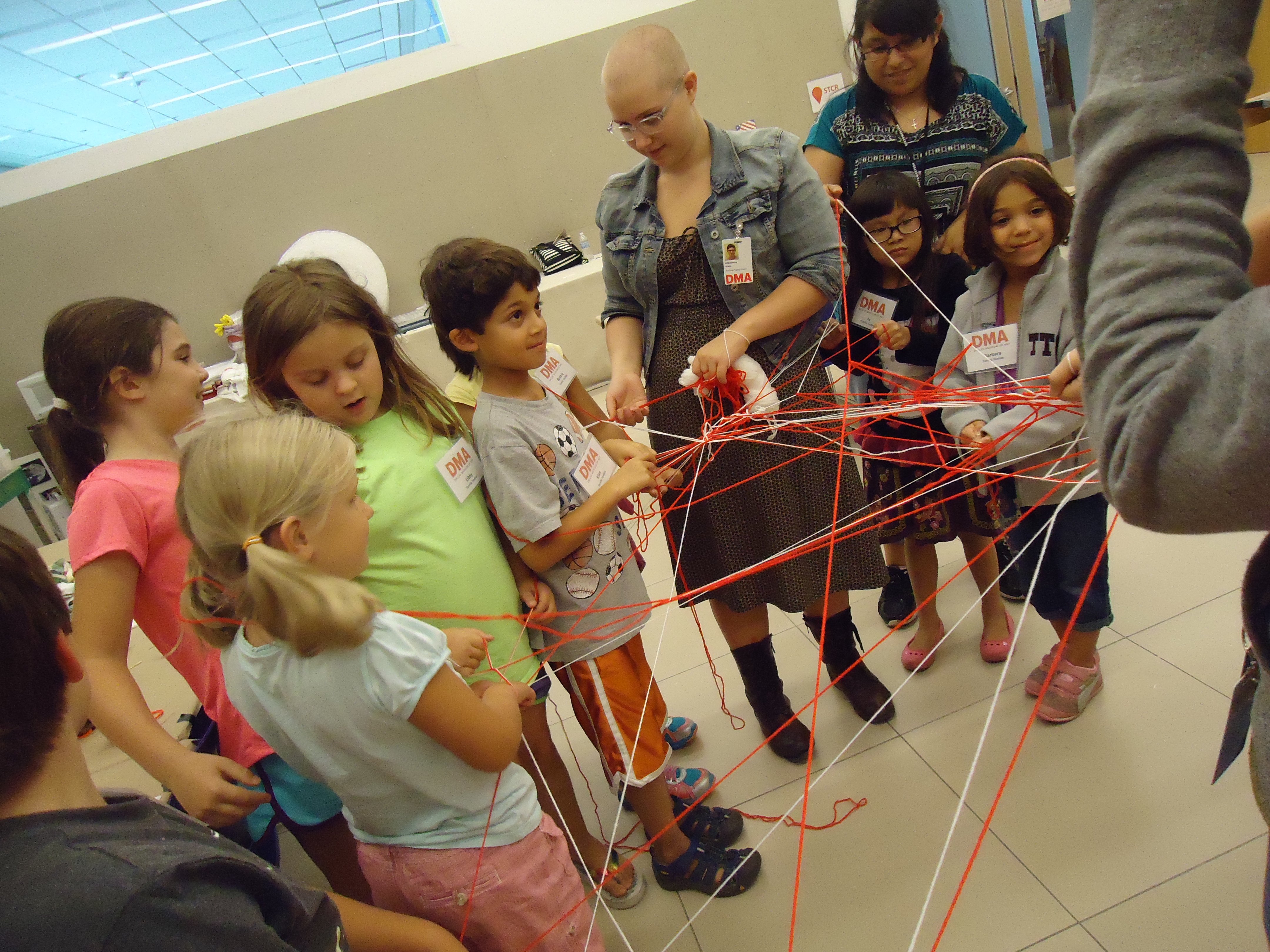
Each summer, the DMA is lucky enough to have a group of wonderful interns to help coordinate the Museum’s numerous Summer Art Camps. This summer is no different; we have a fantastic group of ladies that have worked extremely hard the past thirteen weeks! The summer can be a bit crazy at times, but our wonderful interns always seem to keep their heads on straight. I invited them to be guest bloggers this week, and to share their summer camp experiences so far as well as some other interesting tidbits. Enjoy!

Wilhelmina Watts

Wilhelmina in the Terrific Textiles camp.

Wilhelmina in the Terrific Textiles camp.

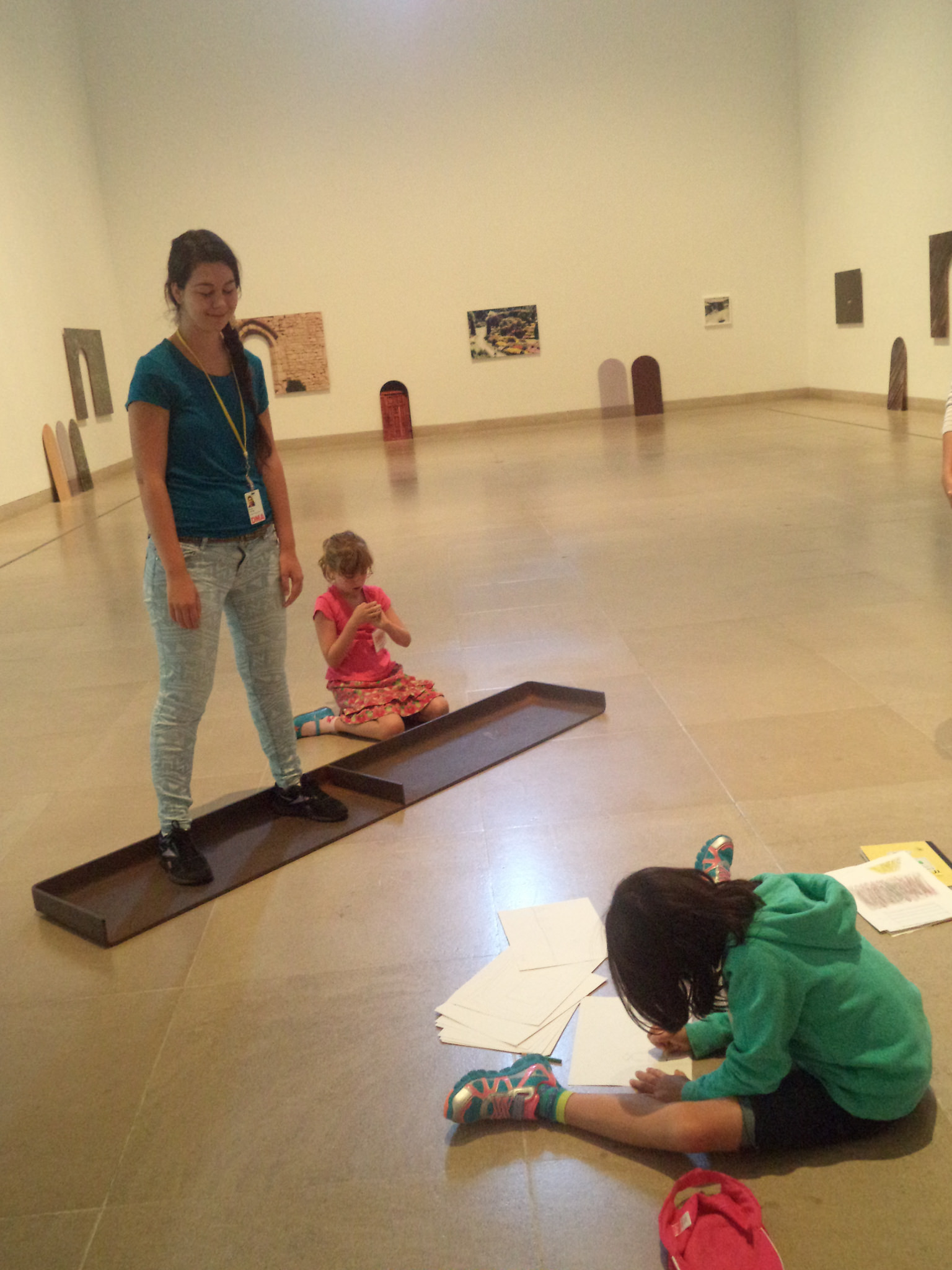
Interning at the DMA art camps this summer has been one of the best experiences I could have asked for. As an aspiring art historian, working in the same building where so many masterpieces are housed is already a dream come true; but even better than looking at the artwork is helping the kids interact with it. I believe that a passion for anything starts from a place of having fun, so my number one goal is always to make learning about art and creating works of art as fun as possible. Working with one of the classes in the contemporary gallery pushed me to find fun and interesting things about artworks that I had never had an interest in before. I know it may sound cliché, but the kids are the ones teaching me, and getting to know each new group of campers is always the best part of camp.

Denise

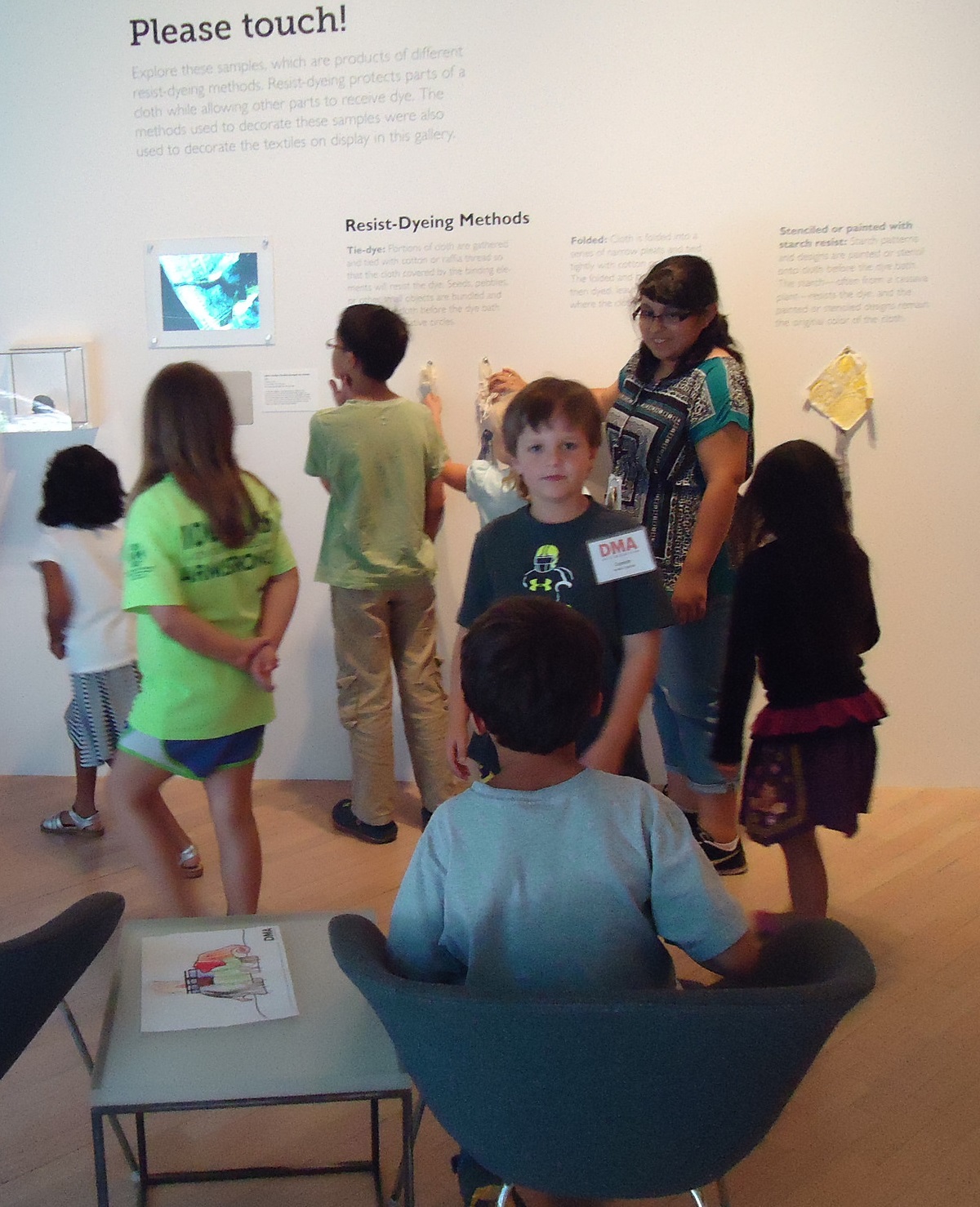
Denise in the Saturated: Dye-decorated cloths from North and West Africa exhibit.

Denise Sandoval

These past weeks at the DMA have been fantastic. I have enjoyed assisting the children and teachers during each camp. I find that helping one another is great and brings happiness to all, and that is what makes each week of camp a success. At times the work may be tiring, but it is so much fun to create works of art. I love that each week of camp is a different topic, because it gives me and the campers a chance to create difference types of art, which is really exciting. Personally, it’s a pleasure to not only see the children grow, but also the adults. The teachers and interns are experiencing success for their future by being involved in these summer camps.

Laila Jiwani

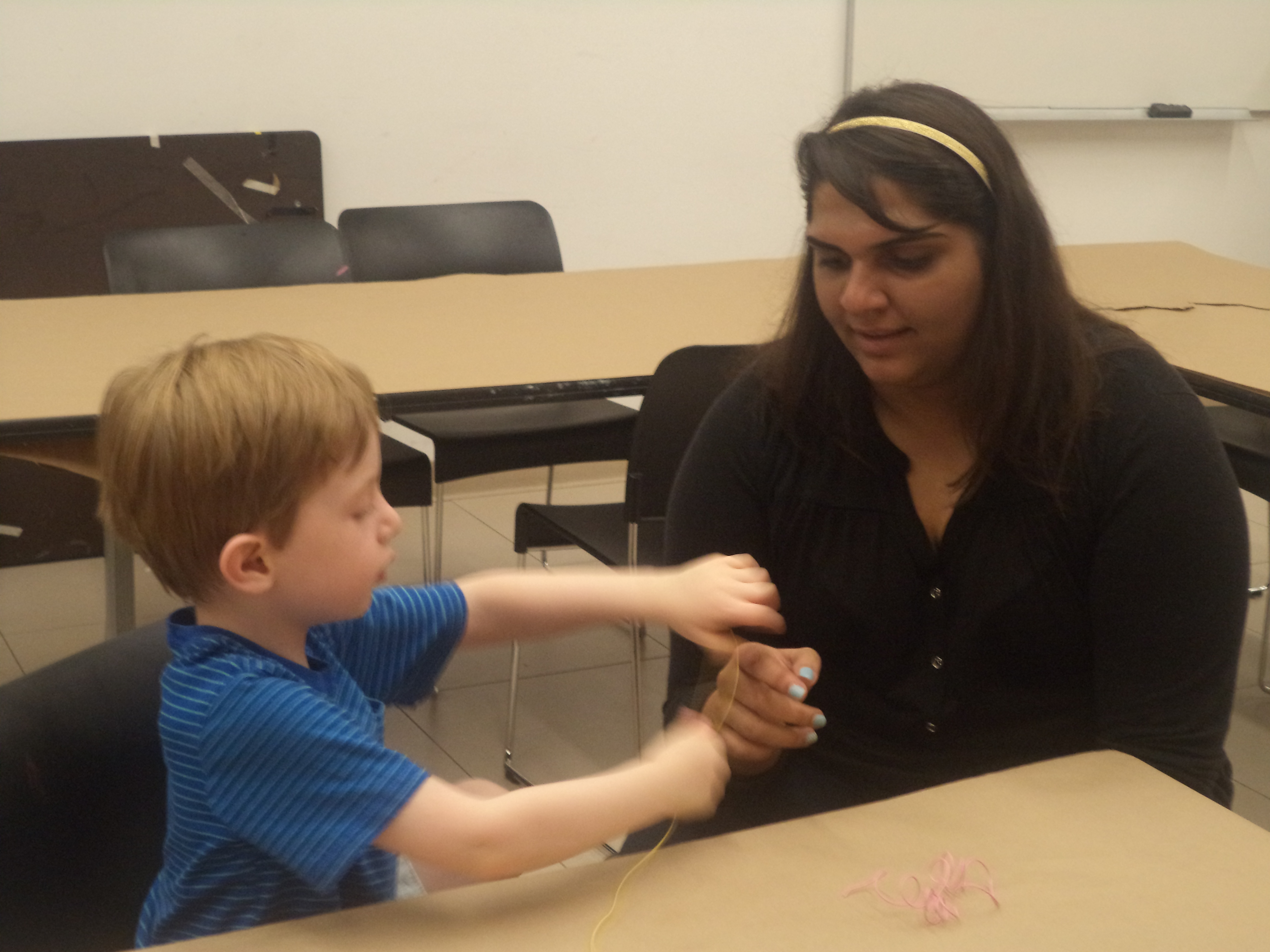
Laila working with a camper.

Laila working with a camper.

It is amazing to see these campers unleashing their artistic potential and showcasing their personalities. As part of the New World Kids 2 summer camp, we had guest speakers come into the studio and talk about their jobs. By the end of the week, one kid decided she wanted to become a director when she grows up, another created his own stop-motion film, and another made a two-story model dollhouse inspired by a visit from our exhibit designer. One of the the greatest perks of this internship is that, in a way, we get to attend the camps with the kids. We are learning about instructional strategies while we experience them ourselves as we help with daily activities. I am also learning so much more about art and its history than I had expected! It seems like an adventure every time we explore the galleries with the kids for inspiration, especially in the early mornings when we have the museum all to ourselves.

Ashley Ham

Ashley in The Museum is History exhibit.

Ashley in The Museum is History exhibit.

Living out of a suitcase and couch-hopping around Dallas is an adventure of the best kind. Normally, you will find me in a land of weird people in burnt orange (hook ‘em horns), but for this summer, I find myself learning from the best at the DMA! As an aspiring art educator, assisting with summer camps has been a recent check off my bucket list. Every week a new teacher steps in, bringing interesting projects and showcasing different techniques in classroom management, and I feel like a sponge soaking up as many great teaching tips as I can! While I am a proponent of any and all fine art summer camps, one thing that I have enjoyed immensely (and something that I believe sets these DMA camps apart) is the ability to take campers through the wonderful art galleries right outside our camp studios. The opportunity to stroll down a corridor and show campers the artists that inspire their projects is matchless. The drive up I-35 from Austin to Dallas isn’t always my favorite way to spend 3… or 4… or 5 hours, but for the DMA I’ll make it any time.


Miyoko Pettinger

Miyoko in the Never Enough exhibit.

Miyoko in the Never Enough exhibit.

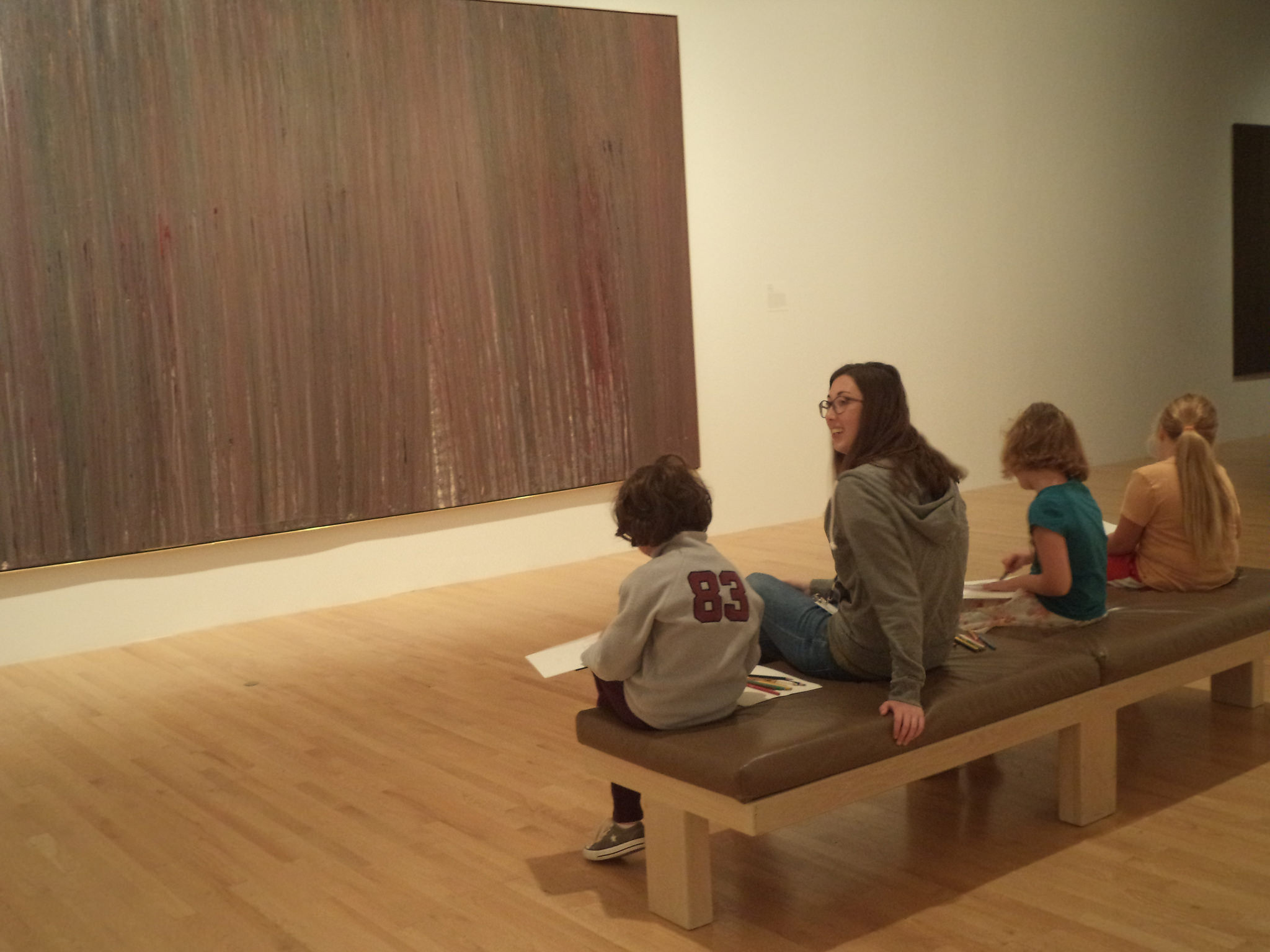
During my time at the DMA, my awareness of art history has increased along with my understanding of children with various interests, backgrounds, and personalities. One of my favorite experiences has been accompanying teachers throughout tours in the galleries, which provided the children with historic context and inspiration from pieces held in the DMA’s collection. In addition to expanding my scope of art history, I also observed the children directly applying the artistic styles and techniques they learned. Whether dancing to music while creating quick-gestured, improvisational Jackson Pollock-style pieces or implementing Paul Signac’s meticulous method of Pointillism, the children brought an impassioned joy, focus, and energy to the studio. Additionally, I have enjoyed building relationships with the children, interns, and teachers, all of whom have been exceedingly kind, encouraging, and hardworking. Each week, the classmates quickly bonded with each other over various projects and group activities. The teachers and interns have shown to be some of the most supportive people with whom I have ever worked.  They possess selfless, uplifting attitudes and created a warm and safe environment. Children were always encouraged and never told they were doing art “the wrong way.” Instead, they were given a success-rendering balance of structure and creative liberty. I have gained an indispensible understanding of art and children along with treasured experiences that will prove invaluable in my future career as an art therapist.

Many thanks to Ashley, Denise, Laila, Miyoko and Wilhelmina for acting as guest bloggers and being a part of the DMA Family Programs team this summer!

Danielle Schulz
Teaching Specialist

#DMAVacation

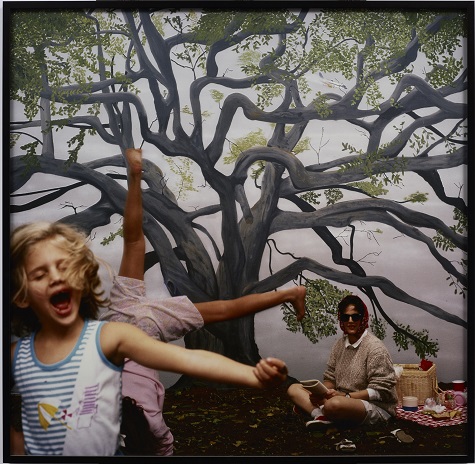
Nic Nicosia, Vacation, 1986, cibachrome photograph, Dallas Museum of Art, gift of Meisel Photochrome Corporation © 1986 Nic Nicosia, Dallas, Texas

Nic Nicosia, Vacation, 1986, cibachrome photograph, Dallas Museum of Art, gift of Meisel Photochrome Corporation, © 1986 Nic Nicosia, Dallas, Texas

Earlier this month, the large photograph Vacation by Nic Nicosia was installed in the Center for Creative Connections (C3). Vacation is one of seven photographs that comprise Nic Nicosia’s Life As We Know It series. In this series depicting contemporary American life, Nicosia plays with everyday topics such as fashion, youth, and violence. Through his use of fabricated environments and staged scenes, Nicosia blurs the line between illusion and reality. This surreal atmosphere is enhanced by the ironic twists, such as the burning plane in the background, on what would otherwise be ordinary situations.

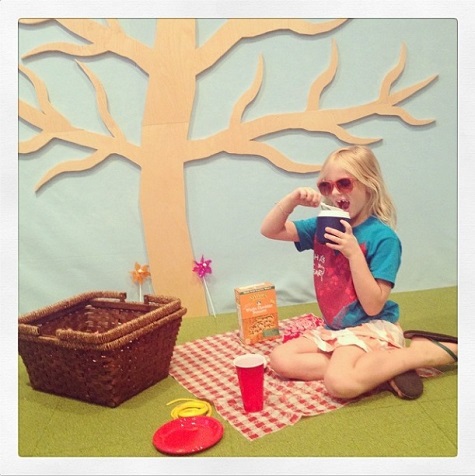
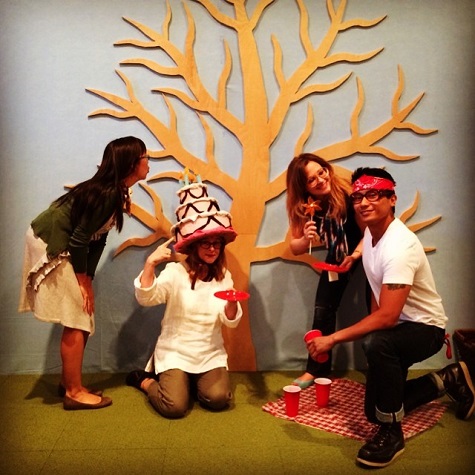
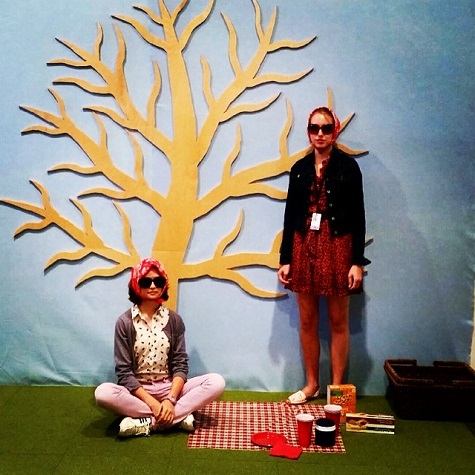
Inspired by this work of art, the C3 team created a photo station where visitors can pose for their own staged picnic-themed photograph. Some have embraced the surreal nature of Nicosia’s work more than others. Check out our visitors’ photographs and stop by C3 to snap a photo of your DMA vacation.

Jessica Fuentes is the C3 Gallery Coordinator

The Welcoming Party: A Van Gogh Returns

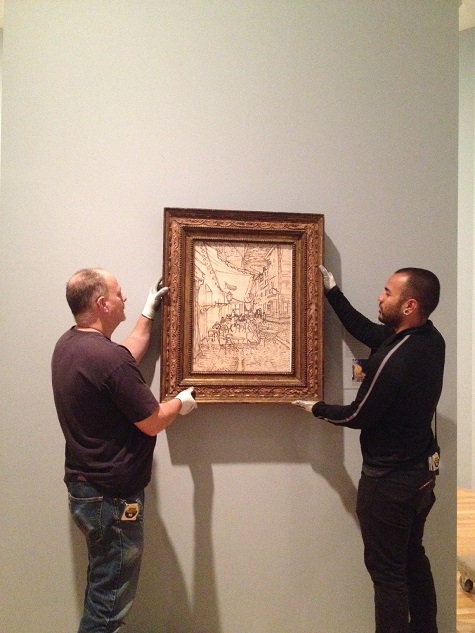
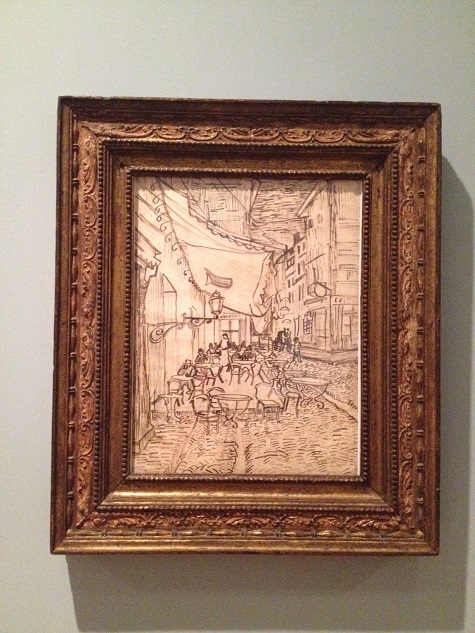
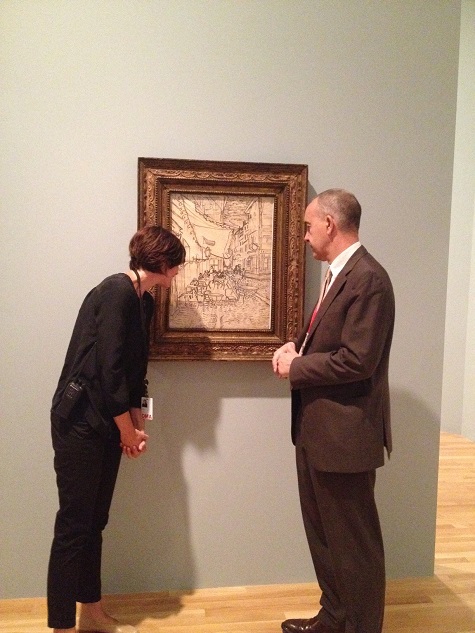
Today we at the DMA are excited to welcome home after a “sabbatical” in Paris one of our masterpieces, van Gogh’s work on paper Café Terrace on the Place du Forum. On tour at the Musée d’Orsay, this magnificent work of art was one of only seven drawings featured in Van Gogh/Artaud: The Man Suicided by Society. This exhibition was seen by nearly 655,000 visitors over the course of four months, making it the highest-attended exhibition in Musée d’Orsay history. Now prominently and proudly on view in our special exhibition Mind’s Eye: Masterworks on Paper from David to Cézanne, Café Terrace on the Place du Forum joins other masterworks by van Gogh’s peer artists including Manet, Degas, Cézanne, and Renoir. Say “bonjour” and see it now through October 26 on a visit to Mind’s Eye.

[youtube https://www.youtube.com/watch?v=vEzmOov6zdU]

Touch Tour for Students with Vision Impairment

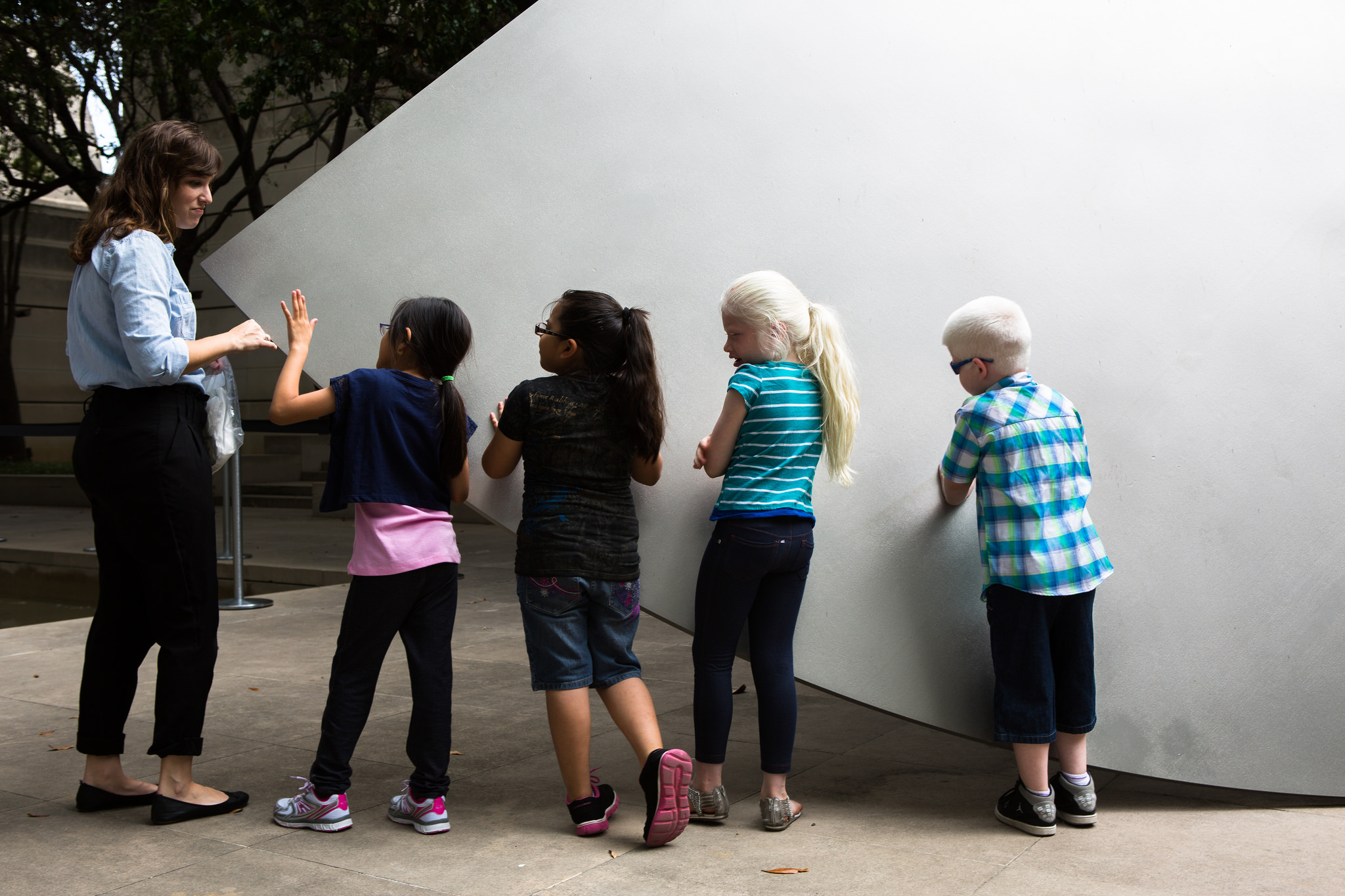
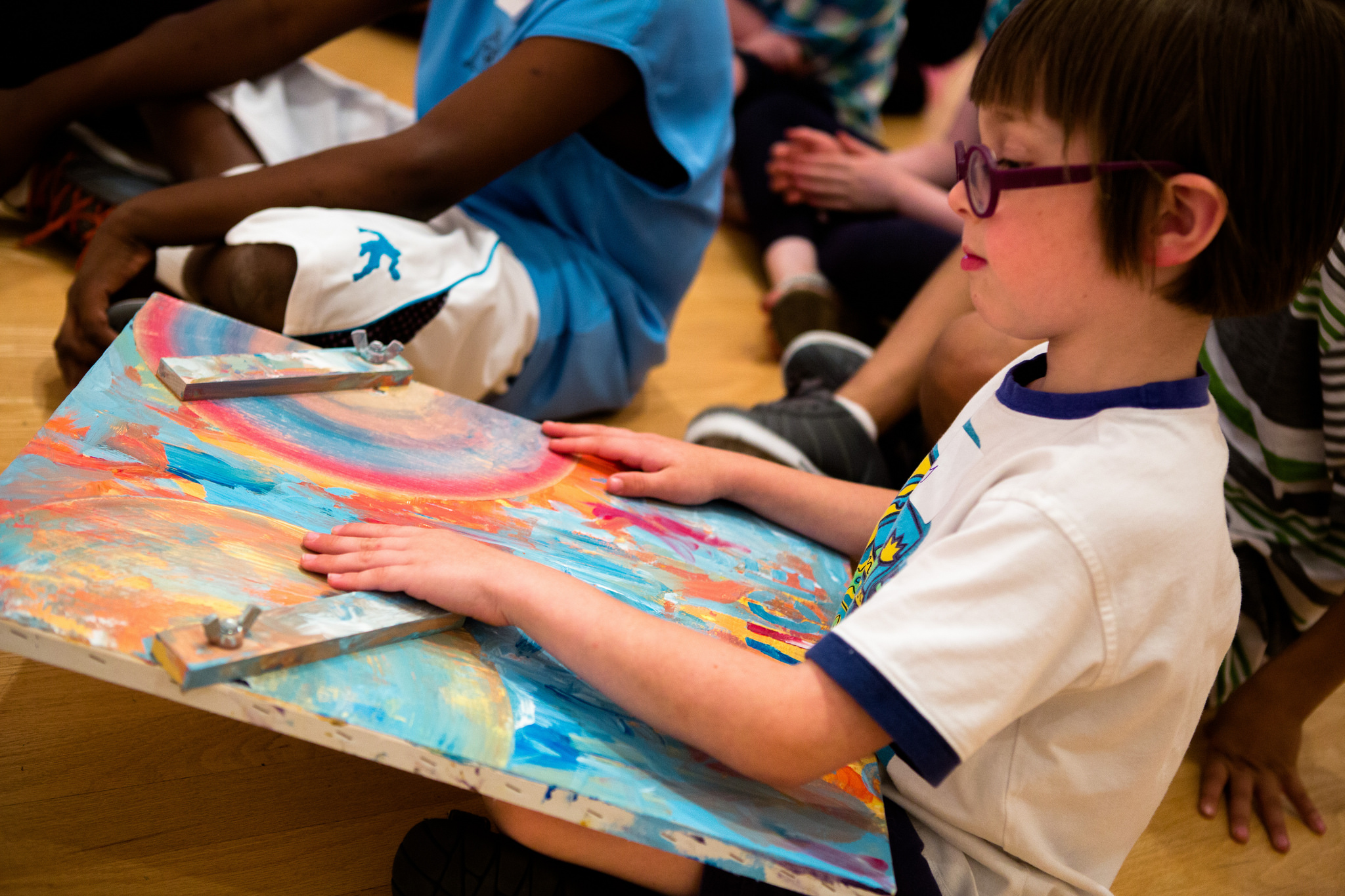
Many people may not think that of an art museum as the ideal field trip location for a group of children with visual impairment, but when the Dallas Independent School District (DISD) contacted the DMA earlier this summer with such a tour request, we were eager to provide the best experience possible. When discussing the visit with vision teachers at DISD, they felt it was important to expose their students to art and wanted an experience that would illustrate to the students that they too have the ability to create and appreciate art just as well as any other student.

DISD students with vision impairments visiting the DMA.

DISD students with vision impairments visiting the DMA.

The Planning Process
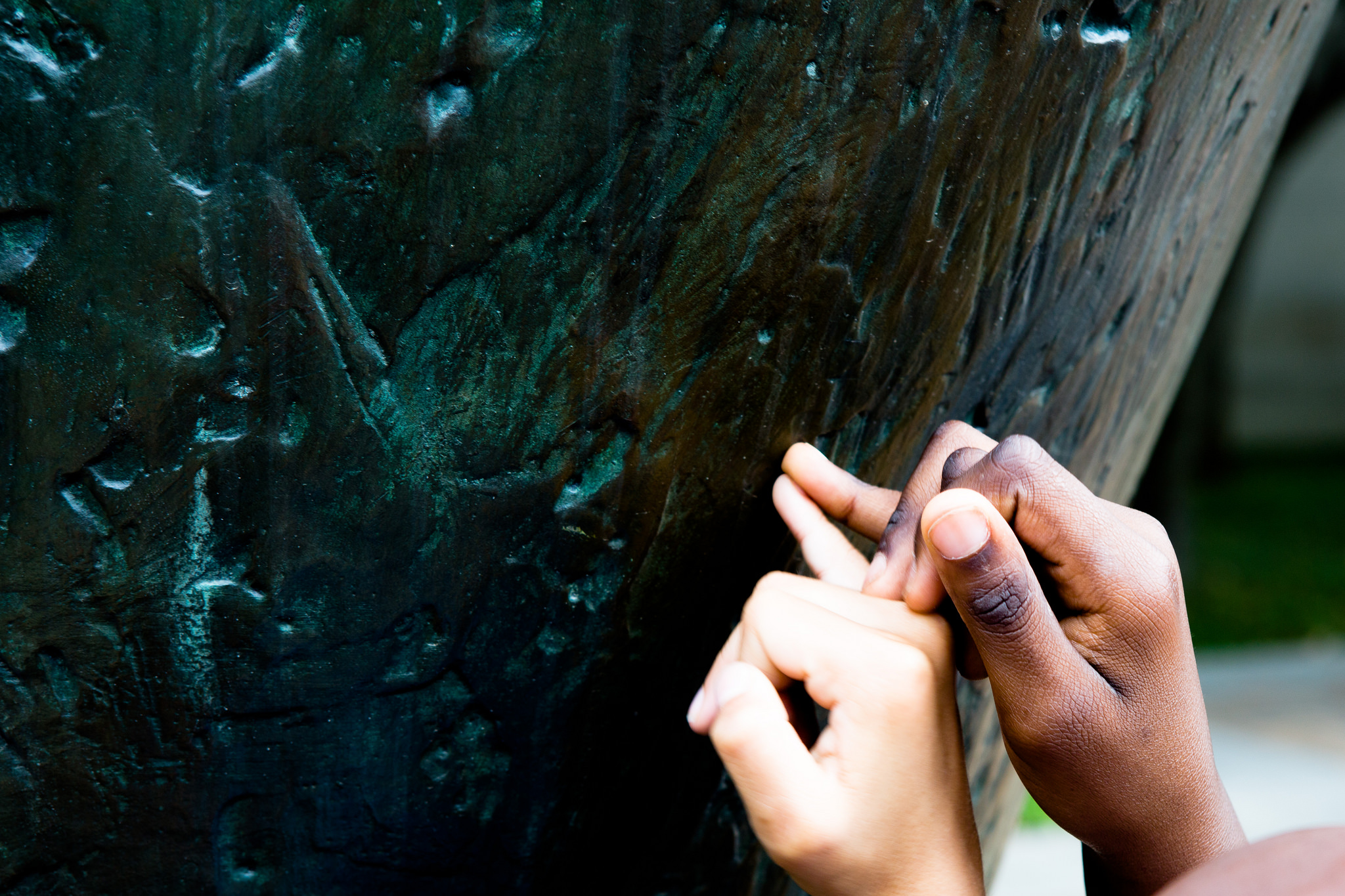
The Dallas Museum of Art has never before offered guided touch tours to visitors with visual impairment, but after speaking with our Director of Exhibition Design, we learned that she fully supports inclusive gallery teaching, and thus was open to supporting the Museum’s first ever touch tour. We talked with our colleagues in the exhibitions and conservation departments and found that they too were fully supportive of trying out a touch tour with the DISD students. The DMA Sculpture Garden was identified as the best place for our inaugural touch tour, since the objects in the garden are designed for an outdoor space and are thus subject to (and able to withstand) a variety of natural elements. We also felt that it was essential for the students to have the galleries to themselves during the tour, so as not to confuse other visitors about the acceptability of touching works of art, as well as for the overall comfort of the students with vision impairment. We therefore decided to schedule the touch tour for a Monday, when the Museum is closed to the public.

Our next step in the planning process was to walk through the space as a group, making note of areas that may be problematic for someone with vision impairment to navigate. The team was comprised of education, conservation, and exhibitions staff, and everyone on the team raised thoughtful questions and contributed wonderful ideas! We discussed which works of art may be the best for a tactile experience, and our conservators suggested that the kids have the chance to touch the works of art without gloves (which is usually unheard of in other touch tours!). Our exhibitions team offered to wash and hand-clean the works we selected so that they would be nice and clean for the experience. And one conservator suggested we select works of art that were large enough to be touched by more than one student at a time, so that the students could talk to one another about what they felt as they each touched the artwork.

After squaring things away with the exhibitions and conservation teams, the education team began planning the educational experiences of the tour. We prepared for twenty-five students, ranging in age from six to thirteen years, all with a range of visual impairment. The majority of students in the group had some residual vision, while two students were very photophobic, and two were blind from birth. Due to the range of abilities of our tour group, our education team knew it was important to include a variety of artworks in the tour (in addition to those on the touch tour), integrate many descriptive explanations of works of art and hands-on activities, and to have numerous tactile objects available.

In the Galleries
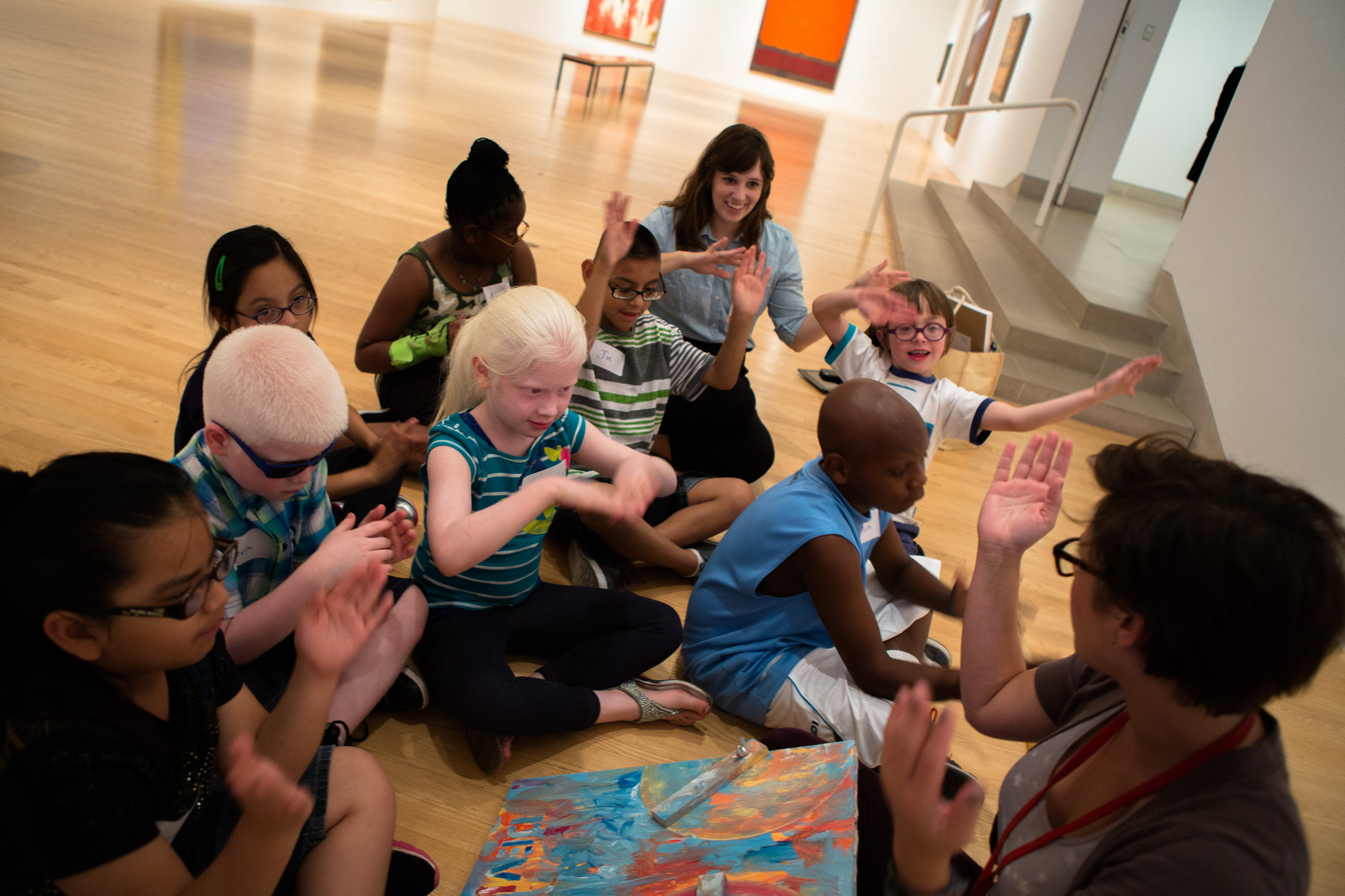
When designing the overall tour, we selected a variety of objects that spanned time periods, artistic techniques, and geographic locations. We visited two contemporary art sculptures in the Sculpture Garden for the touch portion, two Abstract Expressionist works in the contemporary gallery, and a mask in the African gallery. Our aim was to engage all of the senses throughout our tour, as we believe that presenting multiple representations of content would effectively cater to the different learning styles of the group. We created a multi-modal experience by collecting auditory clips for sound stimulation, tactile materials and replica objects for touch, Jelly Belly jelly beans for taste sensations, and essential oils and scented colored pencils for olfactory information.

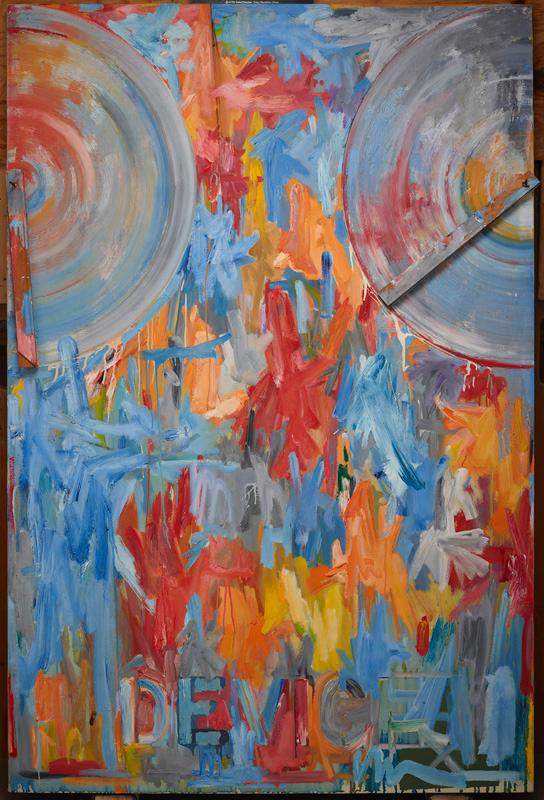
Each stop on the tour had a visual description of the gallery space and of the works of art we focused on, because it was important for us to situate ourselves, the children, and the art in space, as the sense of bodily awareness in space is something that many people without vision impairment may take for granted. Much of our time in the galleries was spent guiding students in tactile looking activities connected to specific works of art and facilitating conversations about texture and form. For instance, we created a reproduction of Jasper John’s Device so that the students could not only touch canvas and feel layers of paint, but they could also replicate moving the wooden stretchers back and forth across the canvas, while imagining the technique in which Johns spread the paint back and forth.

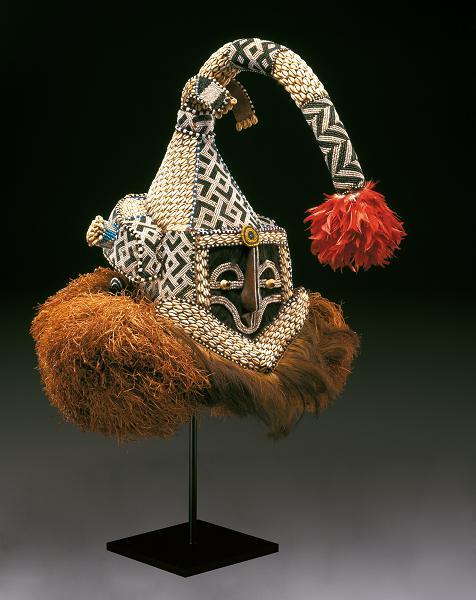
In the African galleries, we focused on a helmet mask made by the Kuba people of the Democratic Republic of the Congo, and passed around raffia, cowrie shells, feathers and other materials found in the mask. Additionally, we played sound clips of the various animals that related to the mask.

Helmet mask (Mukenga), Kuba peoples, mid-20th century, Dallas Museum of Art, gift in honor of Peter Hanszen Lynch and Cristina Martha Frances Lynch

Democratic Republic of the Congo, Kuba peoples, Helmet mask (mukenga),  mid-20th century, Dallas Museum of Art, gift in honor of Peter Hanszen Lynch and Cristina Martha Frances Lynch

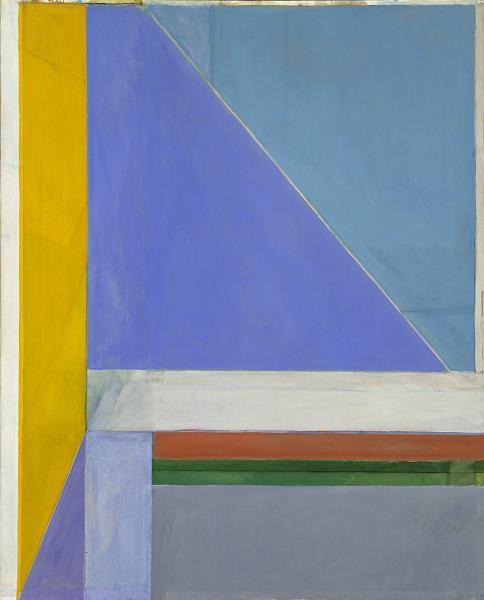
Relating to Richard Diebenkorn’s Ocean Park No. 29, we discussed how an artist could depict a place using sounds, smells, and taste. The students each ate a jelly bean and imagined the color they believed the flavor might represent. Next, they used a scented colored pencil to illustrate a place based on that smell. We also played sound clips of ocean waves and boat horns to recreate the Santa Monica locale that inspired Diebenkorn’s Ocean Park series.

Richard Diebenkorn, Ocean Park 29, 1970

Richard Diebenkorn, Ocean Park 29, 1970, Dallas Museum of Art, gift of the Meadows Foundation, Incorporated

Our tour concluded with a sensory drawing activity that took place at the large fountain outside the Museum’s Flora Street entrance. The students listened to the sounds created by the water in the fountain, and considered how the water (and space around it) might appear, what color the water would be, even how the smell would be rendered. We gave each student a piece of thin Styrofoam and a pencil to create their drawing of the fountain; the students were able to feel the indented lines they drew onto the Styrofoam and took turns sharing their creations with one another.

Until Next Time
This was an exceptional experience for DISD students, teachers, and DMA staff alike. One teacher who helped to organize this visit said that this experience “might be the only time this whole summer [the students] get this opportunity to learn tactually, through their auditory channels and their residual vision, which sighted people take so much for granted.” It was a transformative experience as well for our Museum. We are honored to have been a part of this experience, and cannot celebrate enough the fantastic support and collaboration exhibited by DMA staff from many different departments. A huge thank you to DISD for bringing their students, and a thousand thank you’s to the DMA’s conservation, exhibitions, visitor services, and security teams. This was a team effort and we appreciate the unified support and assistance—let’s hope this is the first of many touch tours to come!

Amanda Blake
Head of Family, Access, and School Experiences

Danielle Schulz
Teaching Specialist

Murder Revisited

Last year, over 700 visitors participated in our Museum Murder Mystery Game during Late Night! If you were one of those determined detectives, you found out that it was Winston Churchill who killed Eros, the God of Love, in the Silk Road gallery with the Scepter from the Asian galleries.

And while justice was served last year, we have it on good authority that during our next Late Night on Friday, July 18, there will be another murder!

It will be up to our visitors to solve this third Museum Murder Mystery by figuring out who the murderer is, the weapon he or she used, and the room where the murder took place.

For one night only, the seven works suspected of the murder will come to life and answer your questions. Without revealing who the suspects are, as they are innocent until proven guilty, these photos will give you a clue to their identities.

In addition to the Murder Mystery Game, there will be a lot more mysterious and fun things to do during the Late Night; be sure to check out the full schedule of events.

Stacey Lizotte is Head of Adult Programming and Multimedia Services at the DMA.

Painting Without the Point: Pissarro’s “Apple Harvest” Unvarnished

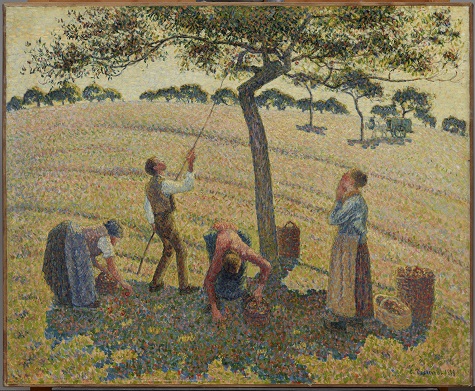
A long-time favorite in the DMA’s European galleries, Camille Pissarro’s Apple Harvest of 1888 has returned to view this month after a visit to the Painting Conservation Studio.
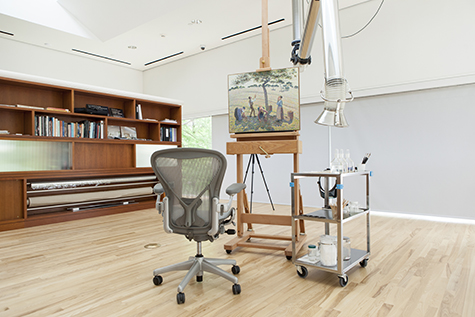
Camille Pissarro’s Apple Harvest (1888), on Mark Leonard’s easel, in the DMA’s Painting Conservation Studio

Camille Pissarro’s Apple Harvest (1888) on Mark Leonard’s easel in the DMA’s Painting Conservation Studio
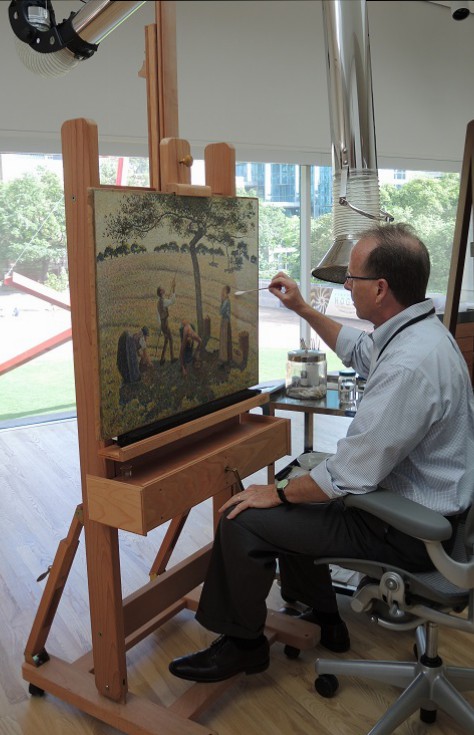
Removal of the old varnish layer began at the right side of the picture, as is seen in this image taken during the cleaning process.  Soft cotton swabs and a mild organic solvent mixture were used to remove the discolored resin.

Removal of the old varnish layer began at the right side of the picture, as is seen in this image taken during the cleaning process. Soft cotton swabs and a mild organic solvent mixture were used to remove the discolored resin.

The painting, which has been at the Museum since 1955, is in very good condition, but it was brought to Chief Conservator Mark Leonard to determine whether it was in need of cleaning. He opened a small “cleaning window” along the right side of the canvas, removing the layer of protective varnish. The bright pigments revealed by this small test confirmed that the varnish had become dark and yellowed over the past half-century, masking the true colors of the painting. It needed to be removed. The painting was carefully cleaned and its original vibrant tonality has been rediscovered.


Pissarro actually made three different paintings of this subject: a group of peasants gathering apples in the shade of an apple tree. The first version dates back to 1881, when Pissarro was one of the leaders of the impressionist group, and is painted in a classic impressionist style, with open brushwork describing the dappled sunlight that falls on the figures.
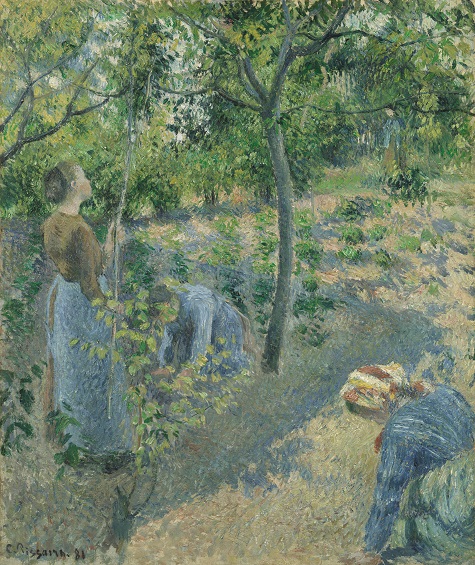
Camille Pissarro, Apple Picking, 1881, Oil on canvas, 25 5/8 x 21 ¼ in. (65 x 54 cm), Private Collection

Camille Pissarro, Apple Picking, 1881, oil on canvas, 25 5/8 x 21 ¼ in. (65 x 54 cm), Private Collection

The same year, Pissarro started another, larger version of the subject, but did not complete it until 1886, when he showed it at the eighth and final impressionist exhibition.
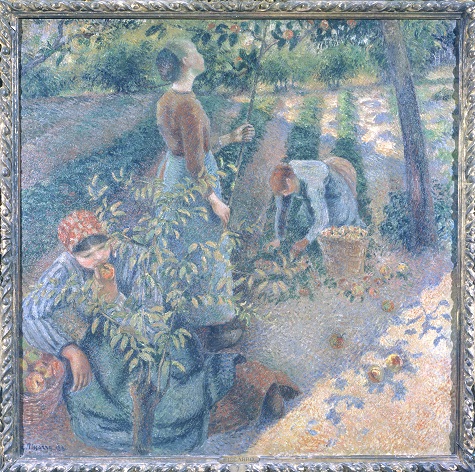
 Camille Pissarro, Apple Picking, 1881-1886, oil on canvas, 49 5/8 x 50 in. (126 x 127 cm), Ohara Museum of Art, Kurashiki, Okayama Prefecture, Japan

Camille Pissarro, Apple Picking, 1881-1886, oil on canvas, 49 5/8 x 50 in. (126 x 127 cm), Ohara Museum of Art, Kurashiki, Okayama Prefecture, Japan

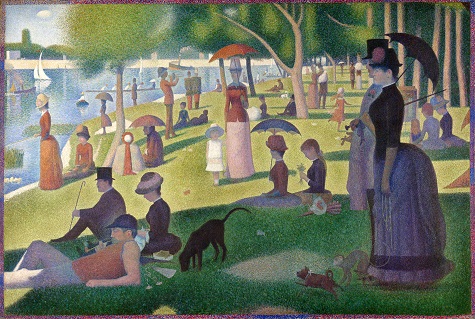
At that exhibition, Pissarro championed the participation of the young pointillist painters, Georges Seurat and Paul Signac, and Seurat showed his “manifesto painting,” A Sunday Afternoon on the Island of La Grande Jatte1884.

Georges Seurat, A Sunday Afternoon on the Island of La Grande Jatte—1884, 1884-86, oil on canvas, 81 ¾ x 121 ¼ in. (207.5 x 308.1 cm), Art Institute of Chicago, Helen Birch Bartlett Memorial Collection

Georges Seurat, A Sunday Afternoon on the Island of La Grande Jatte—1884, 1884-86, oil on canvas, 81 ¾ x 121 ¼ in. (207.5 x 308.1 cm), Art Institute of Chicago, Helen Birch Bartlett Memorial Collection

Pissarro had recently adopted Seurat’s neo-impressionist method as the approach to painting that was “in harmony with our epoch” and an evolution from the older, “romantic” impressionism of artists like Monet. When he began work the next year on the DMA’s Apple Harvest, Pissarro was returning to a familiar subject, but armed with the new, “scientific” principles he had learned from Seurat.
Pissarro prepared the painting with a number of drawings, oil studies, and a full compositional watercolor, which he squared for transfer.
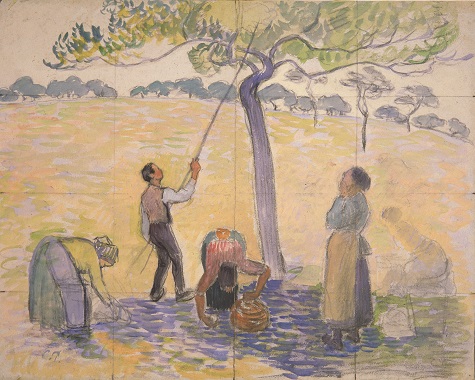
Camille Pissarro, Compositional study for Apple Harvest, c. 1888, watercolor on paper, 6 5/8 x 8 ½ in. (16.7 x 21.5 cm), Whereabouts unknown

Camille Pissarro, Compositional study for Apple Harvest, c. 1888, watercolor on paper, 6 5/8 x 8 ½ in. (16.7 x 21.5 cm), whereabouts unknown

In one drawing for the apple tree, Pissarro carefully noted the local colors he observed in the grass while sketching in the apple orchard: “yellowish red-orange,” “green,” “violet,” and “pink.”

Camille Pissarro, Study for Apple Harvest, c. 1888, graphite and colored pencil on beige paper, 7 x 9 in. (17.8 x 22.7 cm), The Eunice and Hal David Collection

Camille Pissarro, Study for Apple Harvest, c. 1888, graphite and colored pencil on beige paper, 7 x 9 in. (17.8 x 22.7 cm), The Eunice and Hal David Collection

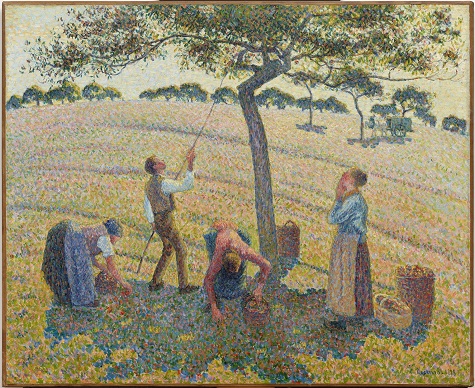
In the final painting, these colors were evoked optically through a flurry of carefully selected and painstakingly applied flecks and dots of pure, unmixed color.
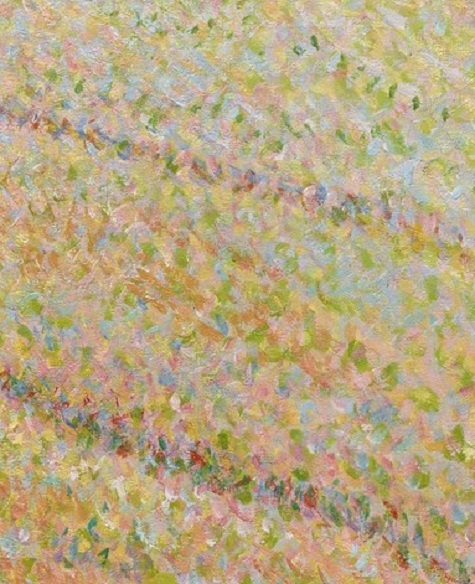
Camille Pissarro, Apple Harvest (Cuillette des pommes), 1888 (detail)

Camille Pissarro, Apple Harvest, 1888 (detail)

The pointillist method was a source of ongoing internal debate for Pissarro during these years. Despite his methodical preparatory studies, Pissarro placed a very high value on freedom and improvisation in painting. In September 1888, around the time he was completing work on Apple Harvest, he wrote to his son Lucien, a fellow neo-impressionist: “I am thinking a lot here about a way of producing without the point,” he reported. “How to attain the qualities of purity, of the simplicity of the point, and the thickness, the suppleness, the liberty, the spontaneity, the freshness of sensation of our impressionist art? That’s the question; it is much on my mind, for the point is thin, without consistency, diaphanous, more monotonous than simple.”

In Apple Harvest, Pissarro went to great lengths to avoid the monotony of pointillism, and his dots are surprisingly active and diverse, fracturing and curling to define form as well as color.

Camille Pissarro, Apple Harvest (Cuillette des pommes), 1888 (detail)

Camille Pissarro, Apple Harvest, 1888 (detail)

Robert Herbert, one of the great 20th-century historians of impressionism, described Pissarro’s complex approach to describing the deep shadow under the apple tree at the center foreground of the painting with a myriad of colored points: “The shadow has brilliant red, intense blue, intense green as well as pink, lavender, orange, some yellow, and subdued blues and greens. The pigments were not allowed to mix much together, and preserve their individuality which, because of the high intensity, results in an abrasive vibration in our eye that cannot be resolved into one tone. In order to make the contrast still sharper, Pissarro strengthens the blue around the edges of the shadow, a reaction provoked by the proximity of the strong sunlit field.”
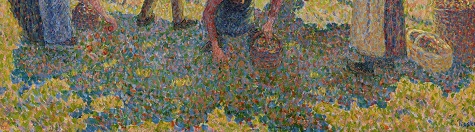
 Camille Pissarro, Apple Harvest (Cuillette des pommes), 1888 (detail)

Camille Pissarro, Apple Harvest, 1888 (detail)

By February of the next year, Pissarro informed his son that he was still “searching for a way to replace the points. Up until this moment, I haven’t found what I desire; the execution doesn’t seem to me to be quick enough and doesn’t respond simultaneously enough to sensation.” Pissarro sought nothing less than translating the immediacy of his optical sensations into the solid fact of paint on a canvas. Throughout the late 1880s, he was testing the capacity of the neo-impressionists’ methods to sustain this personal artistic goal.
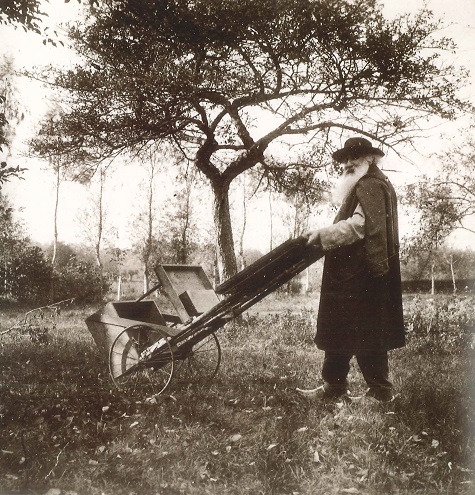
Camille Pissarro taking his rolling easel outdoors to paint near his house in Éragny, France, c. 1895

Camille Pissarro taking his rolling easel outdoors to paint near his house in Éragny, France, c. 1895

The first critics who saw Apple Harvest in 1889 and 1890, when it was shown at important exhibitions in Brussels and Paris, were profoundly impressed with how Pissarro managed to convey the experience of sunlight using the pointillist approach. One early critic wrote, “Truly, the canvases of M. Pissarro are today painted with the sun.” Later writers have agreed, pointing out how Pissarro “directed the light so that it appears to radiate from the depths of the scene, to activate with color everything along its path and then to issue forth in to the viewer’s space.”

How, then, does the painting’s recent cleaning alter our understanding of Apple Harvest? For many decades, the painting has appeared more yellow than Pissarro intended because of the darkened layer of varnish on its surface. This change has no doubt influenced viewers of the painting who noted the “warm” palette of the canvas, which “positively throbs with the heat of a late summer’s afternoon.” The intensely sunlit effect of the painting was, it seems, given an additional golden glow by the amber hue of the darkened varnish. But, the dazzling luminosity of Apple Harvest—its “powerful fiat lux,” in the words of one early critic—was no accident of time. It was apparent to viewers as soon as the painting left Pissarro’s easel, and now, 125 years later, the painting’s brilliant colors and lighting effects have been restored to their original, white-hot intensity.
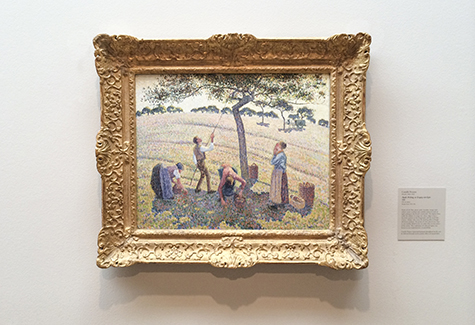
Camille Pissarro, Apple Harvest (Cuillette des pommes), 1888, oil on canvas, 24 x 29 1/8 in. (61 x 74 cm), Dallas Museum of Art, Munger Fund

Camille Pissarro, Apple Harvest, 1888, oil on canvas, 24 x 29 1/8 in. (61 x 74 cm), Dallas Museum of Art, Munger Fund

Celebrate Camille Pissarro’s birthday on July 10 with a visit to the newly conserved work on Level 2.

Heather MacDonald is The Lillian and James H. Clark Associate Curator of European Art at the DMA.

Alles Gute Zum Geburtstag Käthe Kollwitz

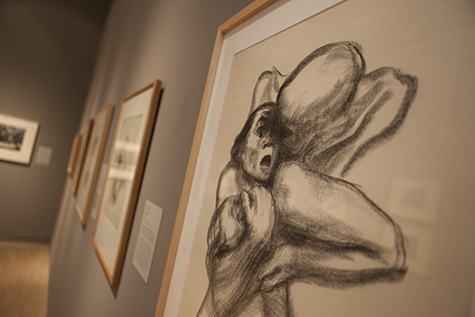
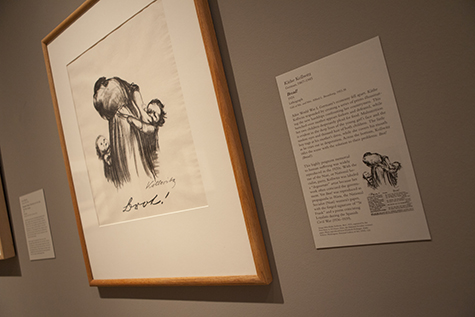
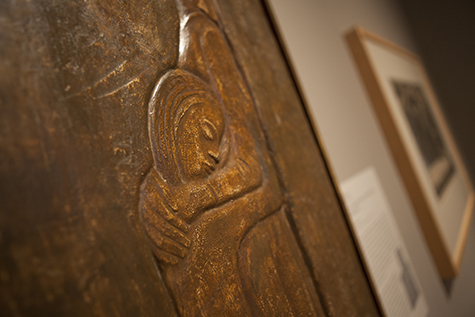
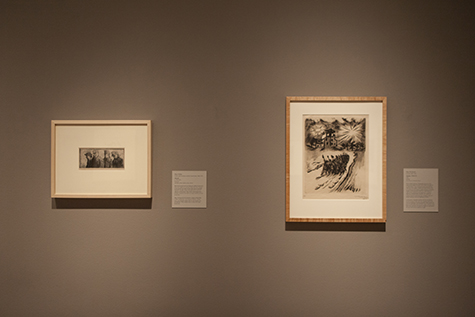
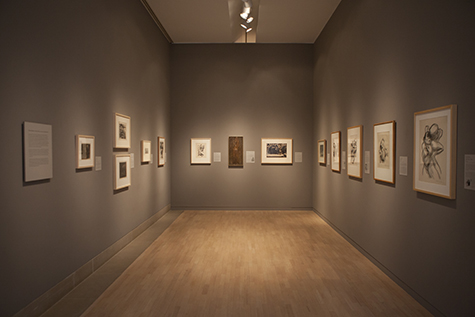
Popular throughout Europe and the United States during her career, German artist Käthe Kollwitz (1867-1945) captured images of life and the tragedy of war during the first half of the 20th century. Commemorate Kollwitz’s July 8 birthday with a visit to the free focus exhibition Käthe Kollwitz: A Social Activist in the Era of World War I in the Museum’s European Art Gallery on Level 2.


IMG_9211041


IMG_9213042


IMG_9220043


IMG_9225044


IMG_9226045


Kimberly Daniell is Manager of Communications and Public Affairs at the DMA.
DMA Snapshot: American Portraits

2014-06-14 15.14.42

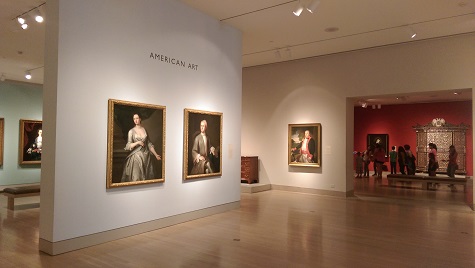
Sometimes visitors will ask me what they should see if they don’t have much time to spend in the galleries. Generally, I like to tailor my suggestions to the visitors’ preference for a particular style of art, but sometimes I just really like to show off a few of my favorites. One of the sections that I like to visit is the wonderful (and impressive) portrait collection on Level 4 in the American Art Galleries. During a quick visit  you can see celebrities such as George Washington, whose portrait was painted in 1795 by Rembrandt Peale when the artist was only seventeen years old. It wasn’t until 1823 that Peale decided to improve on the original painting.

Rembrandt Peale, George Washington, c. 1850, oil on canvas, Dallas Museum of Art, The Karl and Esther Hoblitzelle Collection, gift of the Hoblitzelle Foundation

Rembrandt Peale, George Washington, c. 1850, oil on canvas, Dallas Museum of Art, The Karl and Esther Hoblitzelle Collection, gift of the Hoblitzelle Foundation

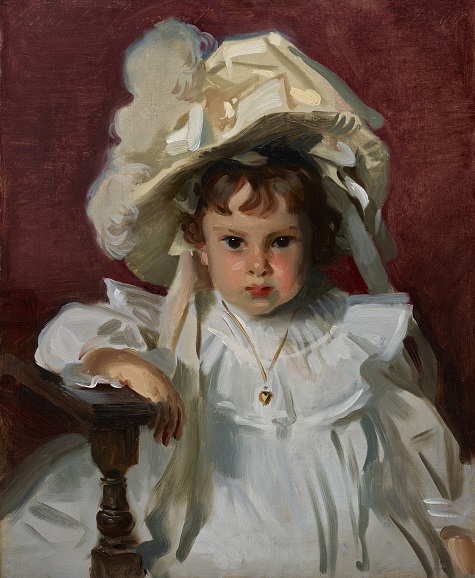
The sitter in John Singer Sargent’s Dorothy was the granddaughter of one of Sargent’s first American patrons, George Millar Williamson. Dorothy was selected to be a part of the Art Everywhere US campaign to celebrate American history and culture nationwide. Be on the lookout for her on outdoor displays this August.

John Singer Sargent, Dorothy, 1900, oil on canvas, Dallas Museum of Art, gift of the Leland Fikes Foundation, Inc.

John Singer Sargent, Dorothy, 1900, oil on canvas, Dallas Museum of Art, gift of the Leland Fikes Foundation, Inc.

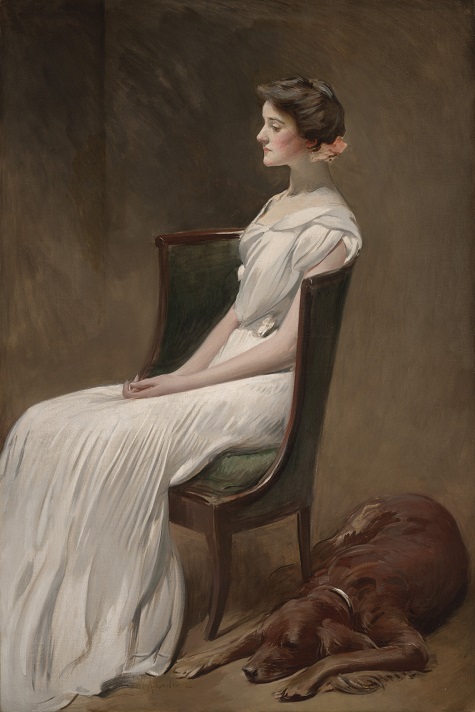
You don’t want to miss the beautiful portrait of Theodore Roosevelt’s first cousin, Miss Dorothy Quincy Roosevelt (later Mrs. Langdon Geer).This portrait is stunning and perfectly exemplifies the practices of John White Alexander that put him on the map, not just as a portrait artists but also as a muralist and illustrator.

John White Alexander, Miss Dorothy Quincy Roosevelt (later Mrs. Langdon Geer), 1901-1902, oil on canvas, Dallas Museum of Art, gift of the Pauline Allen Gill Foundation in memory of Pauline Gill Sullivan

John White Alexander, Miss Dorothy Quincy Roosevelt (later Mrs. Langdon Geer), 1901-1902, oil on canvas, Dallas Museum of Art, gift of the Pauline Allen Gill Foundation in memory of Pauline Gill Sullivan

The American Art Gallery features the finest portraits and decorative arts from the 18th and 19th centuries that America had to offer and is a definite must-see. If you’re yearning for more information, visit the DMA.mobi tour to learn interesting facts about more works in the collection, like John Singleton Copley’s portraits Woodbury Langdon and Sarah Sherburne Langdon. Then don’t forget to check in to the DMA Friends program to get your points!

Maegan Hoffman is Assistant Manager of the DMA Partners Program at the DMA.

Archives

Categories