Posts Tagged 'Dallas Museum of Art'


Jack and His Goat

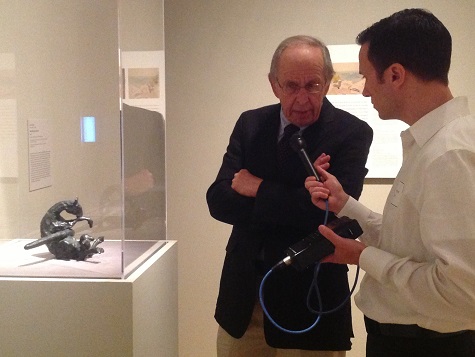
Artist Jack Zajac discussing his sculpture, Small Bound Goat, with KERA’s Stephen Becker at the opening of Hotel Texas in May 2013.

Artist Jack Zajac discussing his sculpture, Small Bound Goat, with KERA’s Stephen Becker at the opening of Hotel Texas in May 2013

Hotel Texas: An Art Exhibition for the President and Mrs. John F. Kennedy, currently on view at the DMA, brings together thirteen of the sixteen works that were installed in Suite 850 at the Hotel Texas for the Kennedys’ visit in 1963. The works of art included pieces by van Gogh, Picasso, Kline, and Monet and were drawn from Fort Worth’s public museums and private collections. Jack Zajac, an American artist whose bronze sculpture Small Bound Goat was displayed in the hotel suite’s living room, is the only living artist of the sixteen featured in the private art exhibition in 1963. Not until the DMA invited Zajac to the opening of the Hotel Texas exhibition did he learn that his work of art spent the night with the Kennedys. Find out from Zajac what it was like to discover his sculpture was on view in the Hotel Texas suite and how he feels about being reconnected with his work of art fifty years later:

[youtube=http://www.youtube.com/watch?v=VZZ8An978hQ&w=560&h=315]

Visit Zajac’s Small Bound Goat through September 15 in Hotel Texas and see it for free; the exhibition is included in free general admission to the Museum.

Have Fun While Staying Put

Staying in town for vacation? Spend a day or two in the Dallas Arts District experiencing the rich cultures of the world and have lots of fun while doing it! Here’s our lowdown for how to have a great “staycation” in the Arts District.

At the Crow Collection of Asian Art
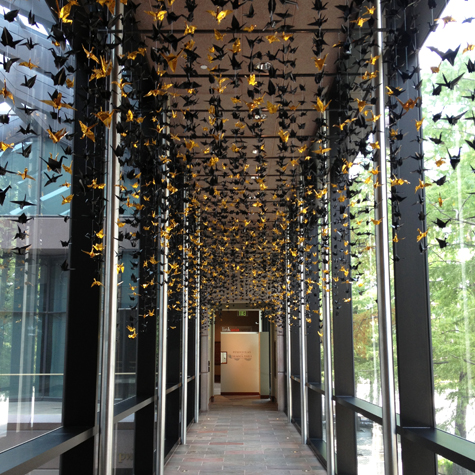
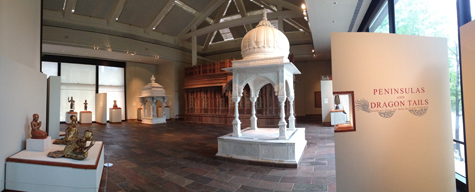
Visit the Far East and the cultures of China, Japan, India, and Southeast Asia. The display of paper cranes is rotated annually and incorporates over three thousand hand-crafted cranes. Admission is free and the Museum opens at 10:00 a.m. on weekdays (closed on Mondays).
4
5
At the Nasher Sculpture Center
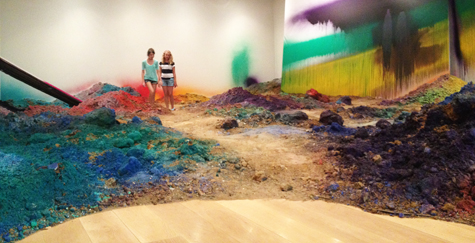
Check out Berlin-based artist Katharina Grosse’s exhibition, including the interactive piece in the Lower Gallery. Katharina painted walls and mounds of dirt that visitors are able to enter and walk through. While carefully stepping through her work, one gets the feeling that they are out of this world–now talk about a vacation!
1
2
At Klyde Warren Park
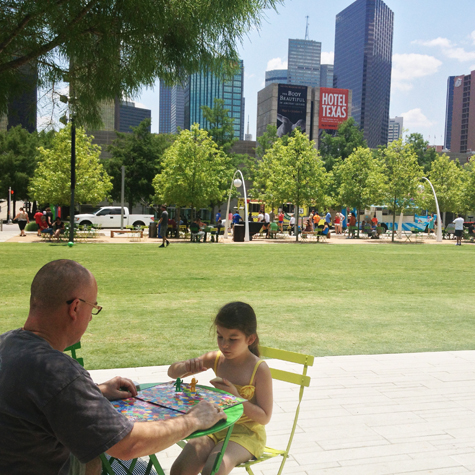
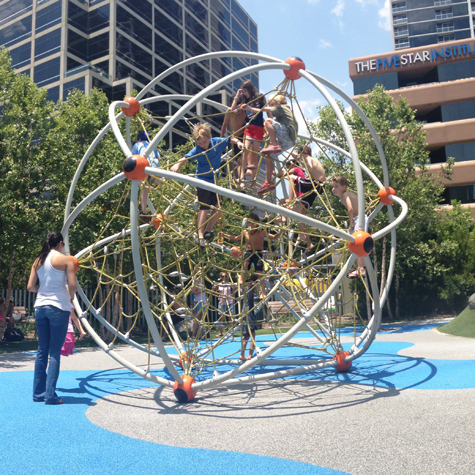
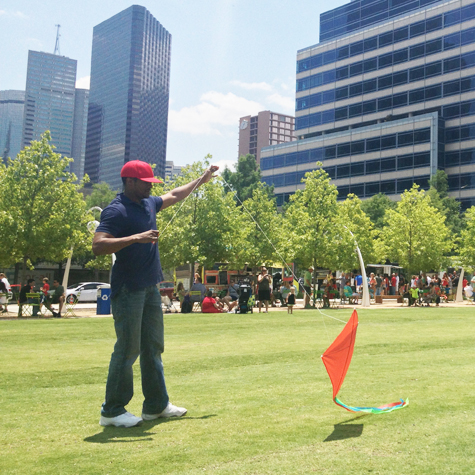
Stretch your legs and grab some lunch at the food trucks. There is something for everyone at the Park: ping pong, chess, jungle gyms, fountains, and an outdoor library. Located in the heart of Dallas and the Dallas Arts District, it’s just a short walk from the museums.
6
8
9
Finally, walk over to the Dallas Museum of Art!
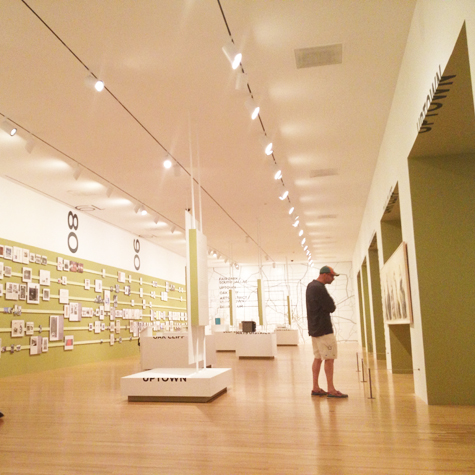
In addition to free general admission offered every day during Museum hours, the DMA is currently hosting two free exhibitions about art in North Texas. DallasSITES: Charting Contemporary Art, 1963 to Present is an exhibition celebrating the history of North Texas’s bold and distinctive art scene. Looking back over fifty years, DallasSITES examines the moments, people, and organizations that helped shape our area’s incredibly vital relationship with contemporary art. Be sure to check out the timeline wall (pictured) and the collage of posters at the opening of the exhibition! Did you know we have so many artists living and working in Dallas!
Hotel Texas: An Art Exhibition for the President and Mrs. John F. Kennedy is another show you won’t want to miss. This exhibition brings together the works of art installed in the president’s suite at the Hotel Texas during his fateful trip in 1963. The original installation, orchestrated by a small group of Fort Worth art collectors, was created especially for President Kennedy and the First Lady in celebration of their overnight visit to the city and included paintings by Vincent van Gogh, Thomas Eakins, Lyonel Feininger, Franz Kline, and Marsden Hartley, and sculptures by Pablo Picasso and Henry Moore, among others.
10
11

From all of us at the DMA, we hope that you are having a wonderful summer, and we look forward to seeing you in the Arts District soon!

Hayley Dyer is the Audience Relations Coordinator for Programming at the DMA.

Making Use of Available Space

This Friday, July 19, we are opening the experimental project DallasSITES: Available Space to the public. The monthlong exhibition is intended to give local emerging artists, curators, collectives, and art educators a platform to connect with the DMA’s general audience. In doing so, it also establishes a dialogue between the local arts community and the Museum by opening the DMA’s galleries to exciting new art installations and programming. Below is a quick update on what’s been going on behind the scenes as we get ready for Friday’s unveiling.

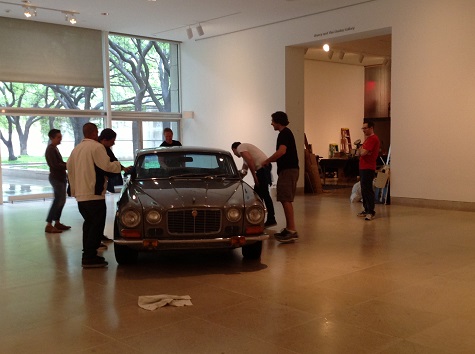
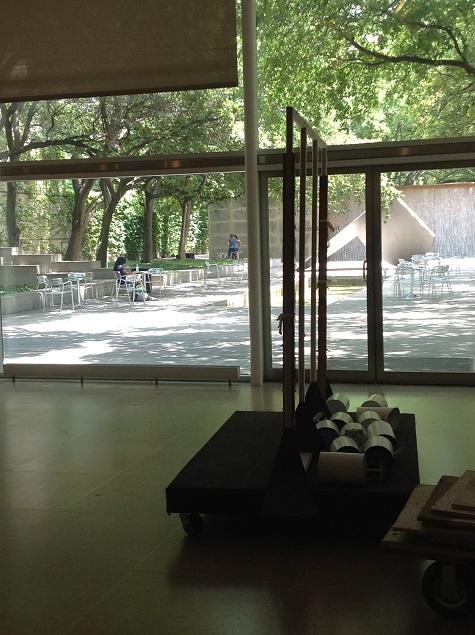
On Monday, The Art Foundation wheeled a pristine 1973 Jaguar XJ6 into the galleries for the artist Brandon Kennedy’s work titled NFS. (2013). In order for the car to be gallery-approved, it was first drained of all fluids and the battery was disconnected. Since the car was too wide to be brought in through any of our public entrances, we had to bring it in through a side door accessible only through the DMA’s Sculpture Garden. Below is a short snippet showing the artist, curators, and registrar maneuvering the car through the Sculpture Garden:

[youtube=http://www.youtube.com/watch?v=eu3XMgOA5-U&w=560&h=315]

Brandon Kennedy’s work titled NFS in the DMA's Barrel Vault.

Brandon Kennedy’s work titled NFS. in the DMA’s Barrel Vault.

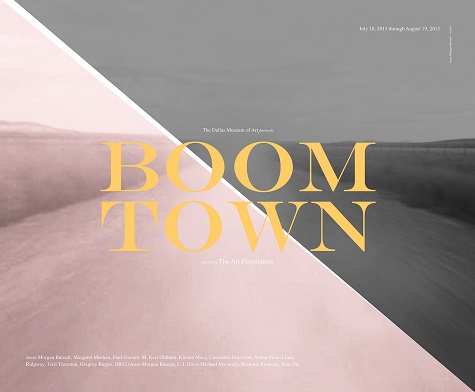
This work is one of eighteen artworks by Dalllas-based artists included in The Art Foundation’s curated group show, Boom Town. The exhibition addresses the long-standing gap between the artist and patron classes of our city and explores how artists who live and work in Dallas negotiate this complicated terrain. In addition to Kennedy’s car installation, the group show will feature a wide range of works including painting, sculpture, digital prints, works on paper, and an audio installation all located throughout the Barrel Vault.

The Art Foundation

The Art Foundation

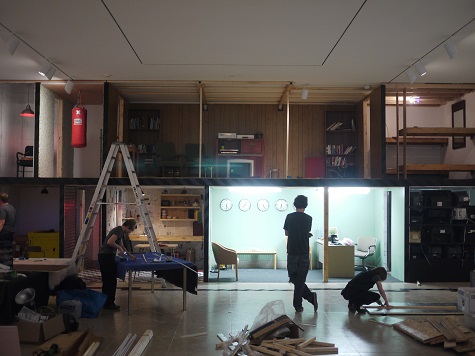
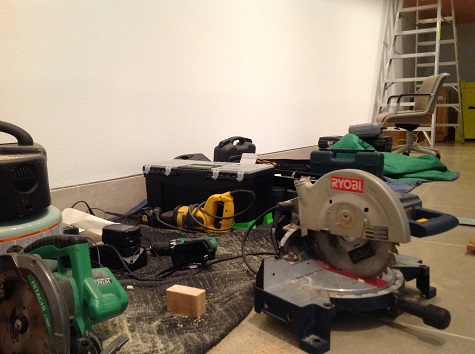
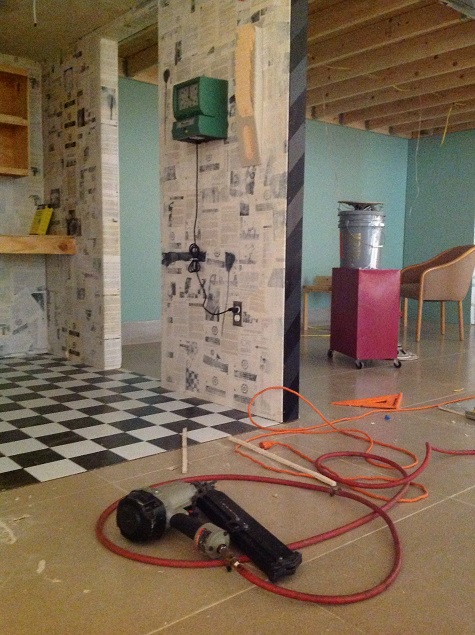
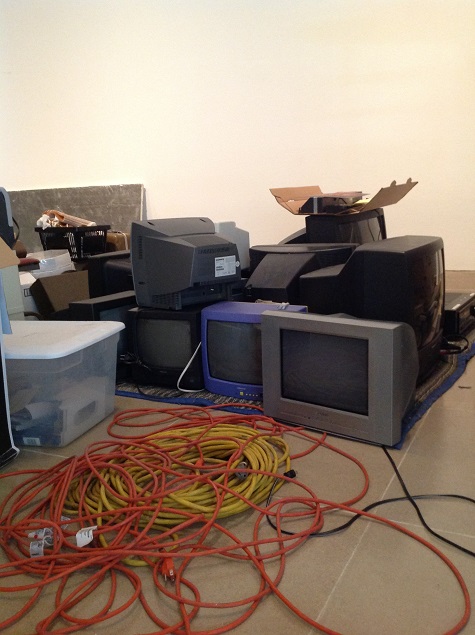
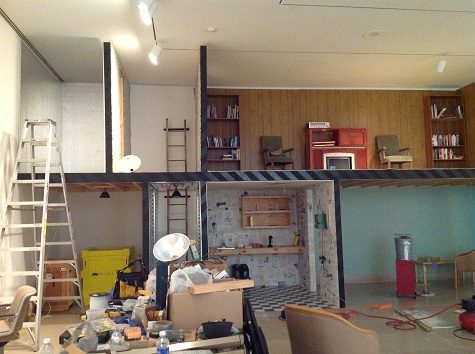
Another participant in Available Space is the Fort Worth-based collective HOMECOMING! Committee. For their installation, titled Post Communiqué, the group has taken over the entire Hanley Gallery, transforming it into the collective’s new headquarters. The headquarters comes complete with its own interrogation room, workout room, library, storage, breakroom, and sleeping quarters. Members of HOMECOMING! will be activating the space throughout the run of the exhibition, so be prepared for the unexpected. Audience members are invited to interact with the first floor of the two-story installation, and the TV wall in the “Deprogramming Room” is not to be missed. Below are some pictures of the space during construction, along with a trailer the artists have put together to promote the project:

HOMECOMING! Committee, Post Communiqué

HOMECOMING! Committee, Post Communiqué

[vimeo 68707380 w=500 h=281]

Post Communiqué 2013 from HOMECOMING! on Vimeo

This blog post just scratches the surface of what you can look forward to experiencing in Available Space, which also includes contributions by Dallas VideoFest, Brookhaven College, Oil and Cotton, and PerformanceSW. All of these projects will continue to evolve over the course of the month, and visitors are encouraged to check back for new ways to engage and interact with the space. For a complete list of programs and events during the run of Available Space, visit the DMA’s website.

Gabriel Ritter is The Nancy and Tim Hanley Assistant Curator of Contemporary Art at the DMA.

Open Office: Public Relations

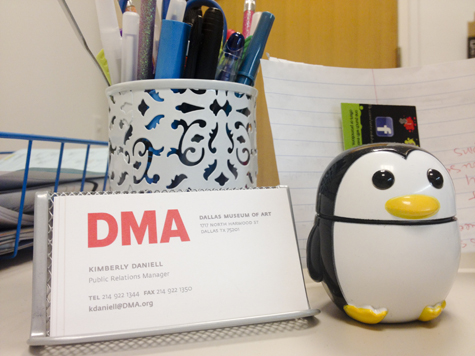
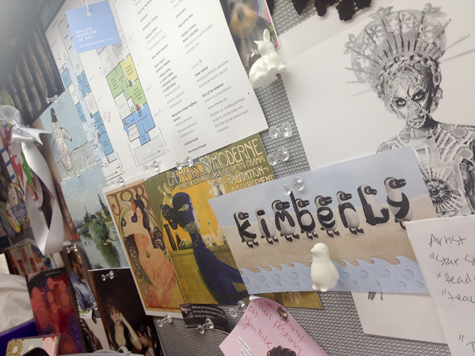
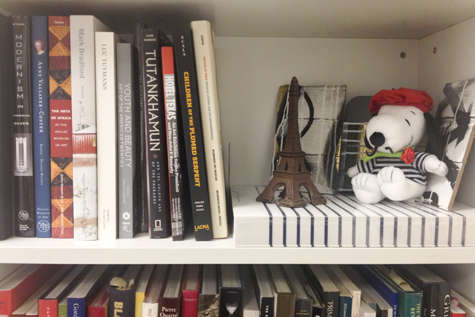
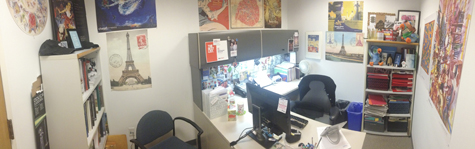
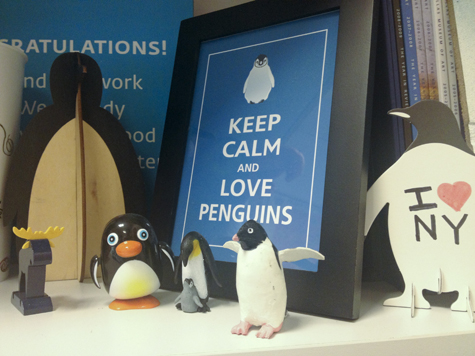
I’m the Public Relations Manager at the Dallas Museum of Art, and in my job I get to share information on all the fun and wonderful exhibitions, events, and art at the DMA with the public and press. You may have guessed from my office décor that I love penguins, Paris, and art. In the past few years, we have had three exhibitions that combine two of my favorite things, Paris and art: The Fashion World of Jean Paul Gaultier: From the Sidewalk to the Catwalk, Posters of Paris: Toulouse-Lautrec and His Contemporaries, and Chagall: Beyond Color. All we need now is an exhibition – and requisite poster – involving penguins, maybe themed around the DMA’s “Penguin” cocktail shaker (seen here).

2

1

4

5

3

Kimberly Daniell is the Public Relations Manager at the DMA.

Creating an Available Space

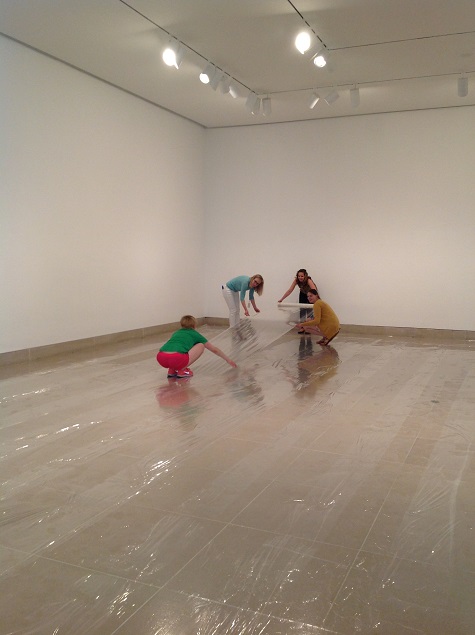
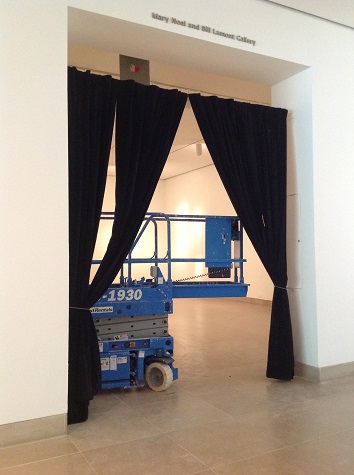
The Barrel Vault and Quadrant Galleries have a very different look. We’re preparing them for the DMA’s first experimental project space featuring Dallas-area artists, collectives, and art educators. Want to find out more about what’s to come? Join us next Friday, July 19, for a Late Night celebrating the opening of DallasSITES: Available Space and read a bit more about the creative space here.

DMA Summer Free-for-All

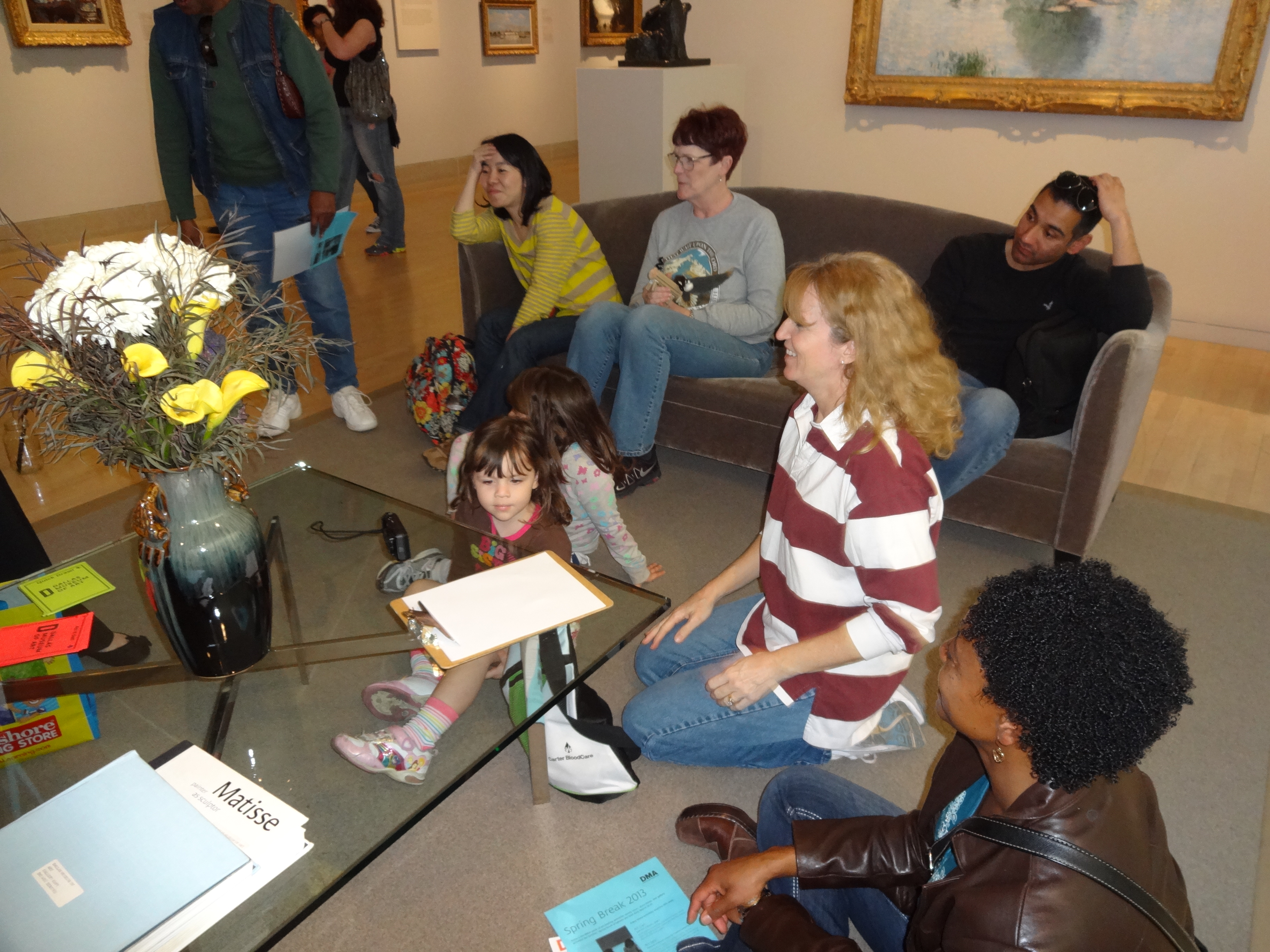
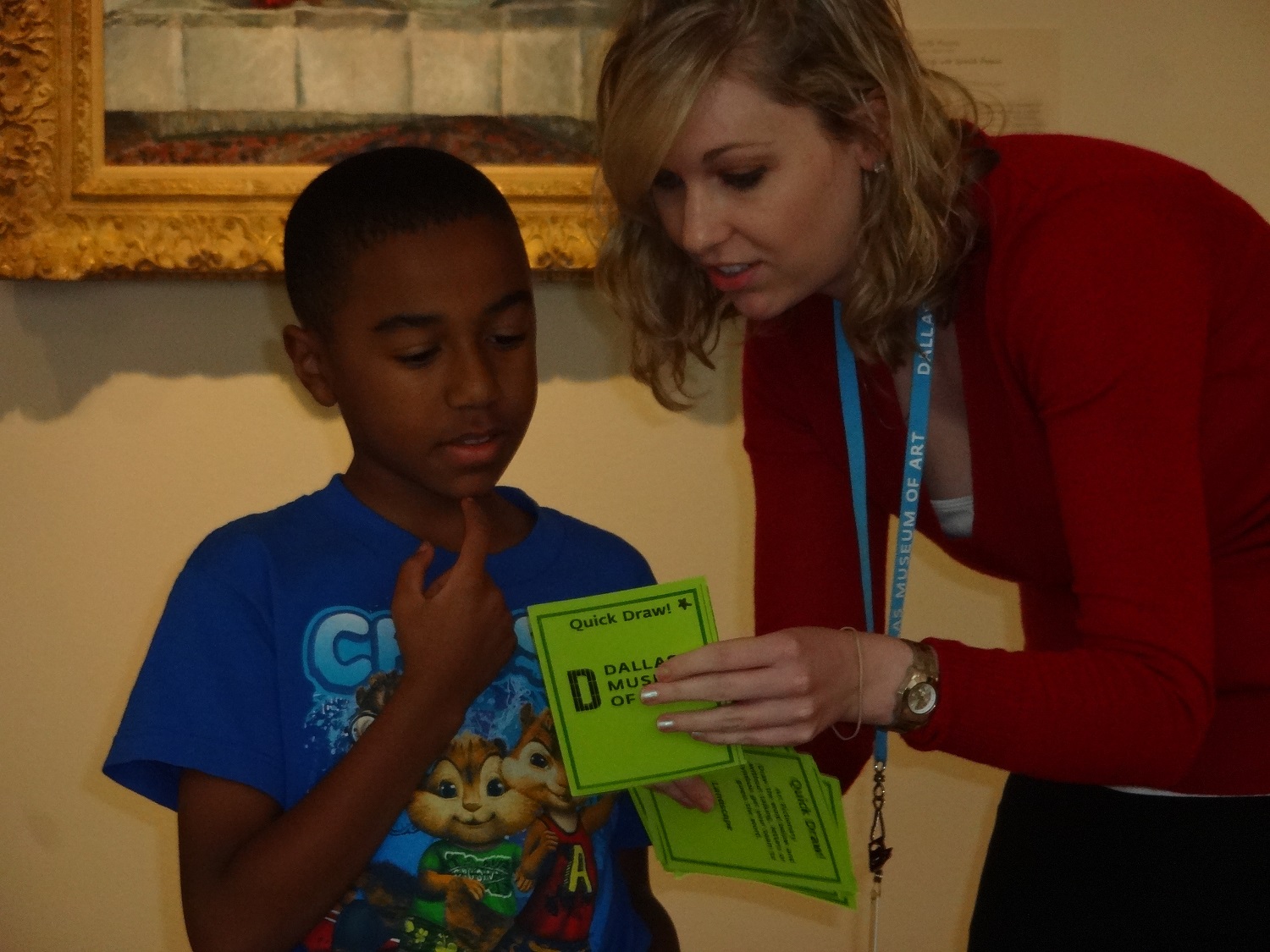
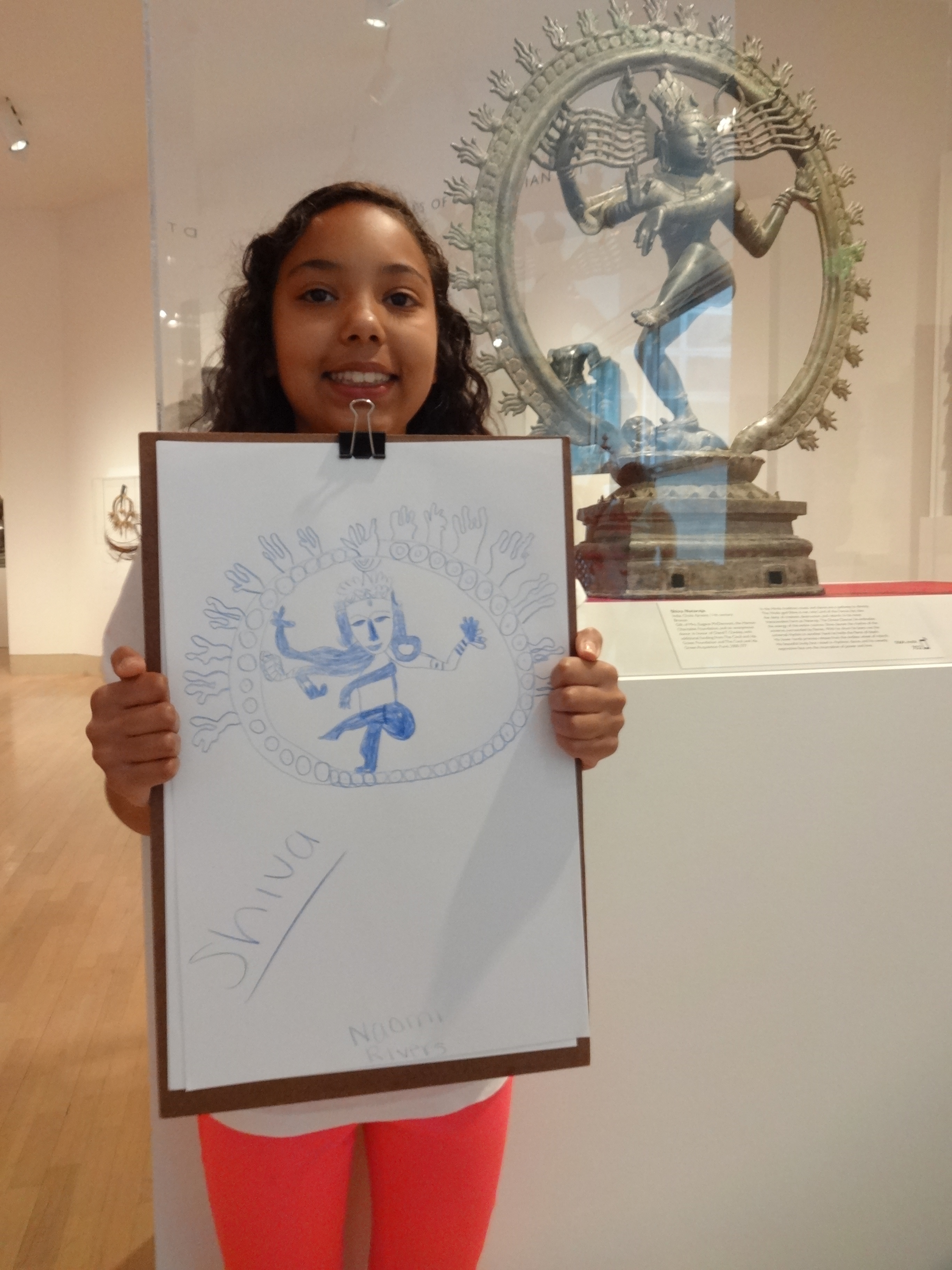
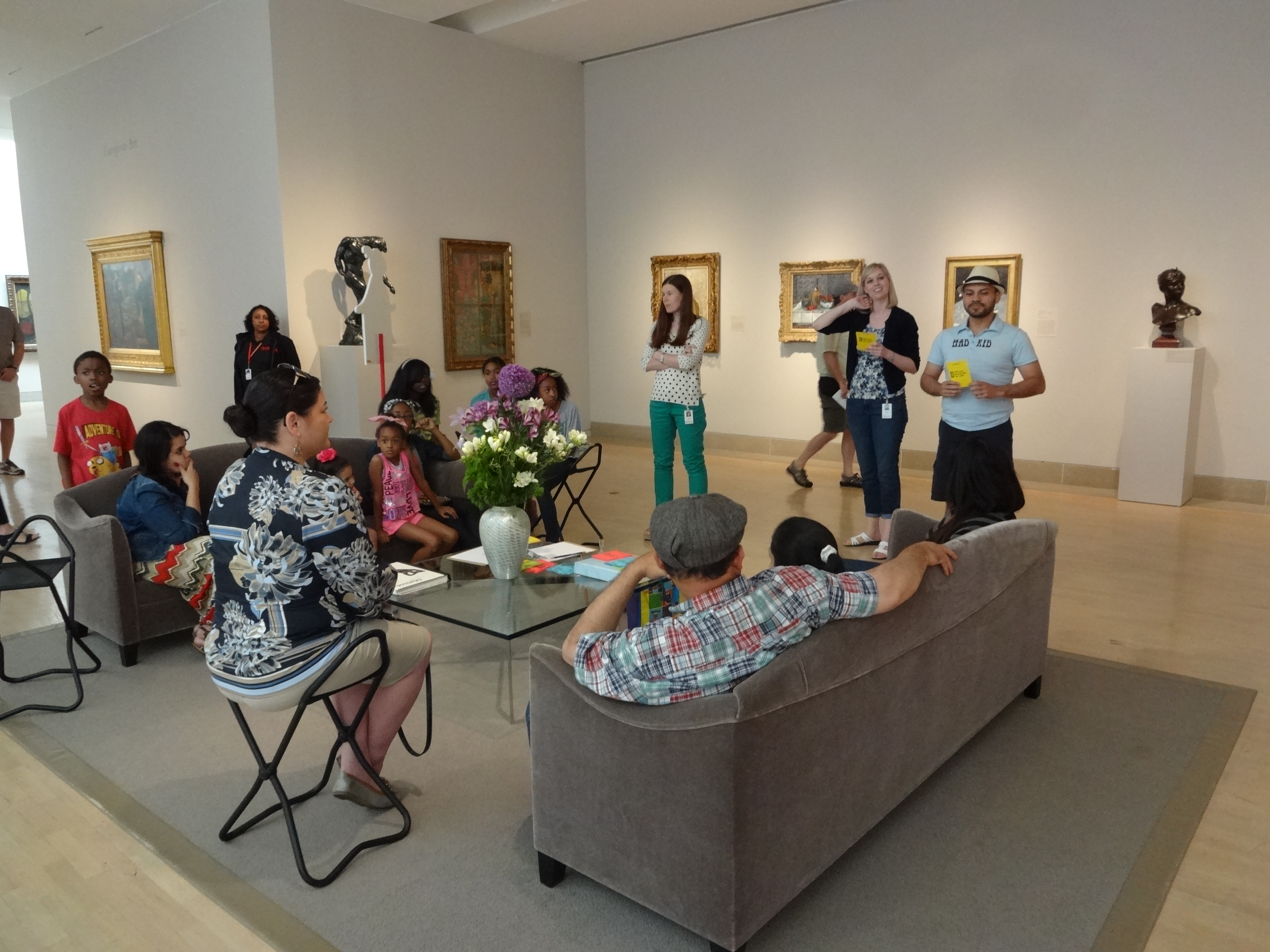
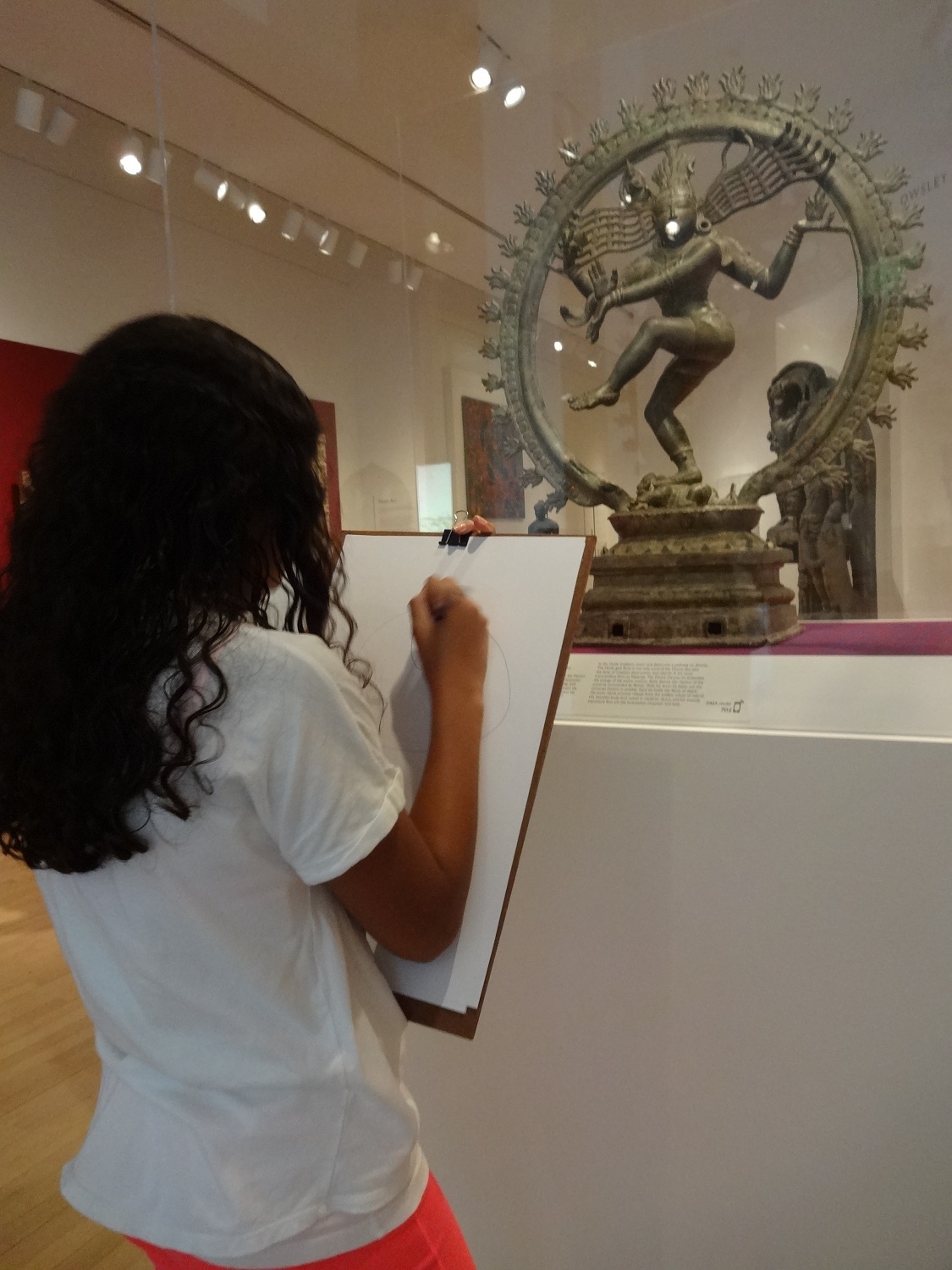
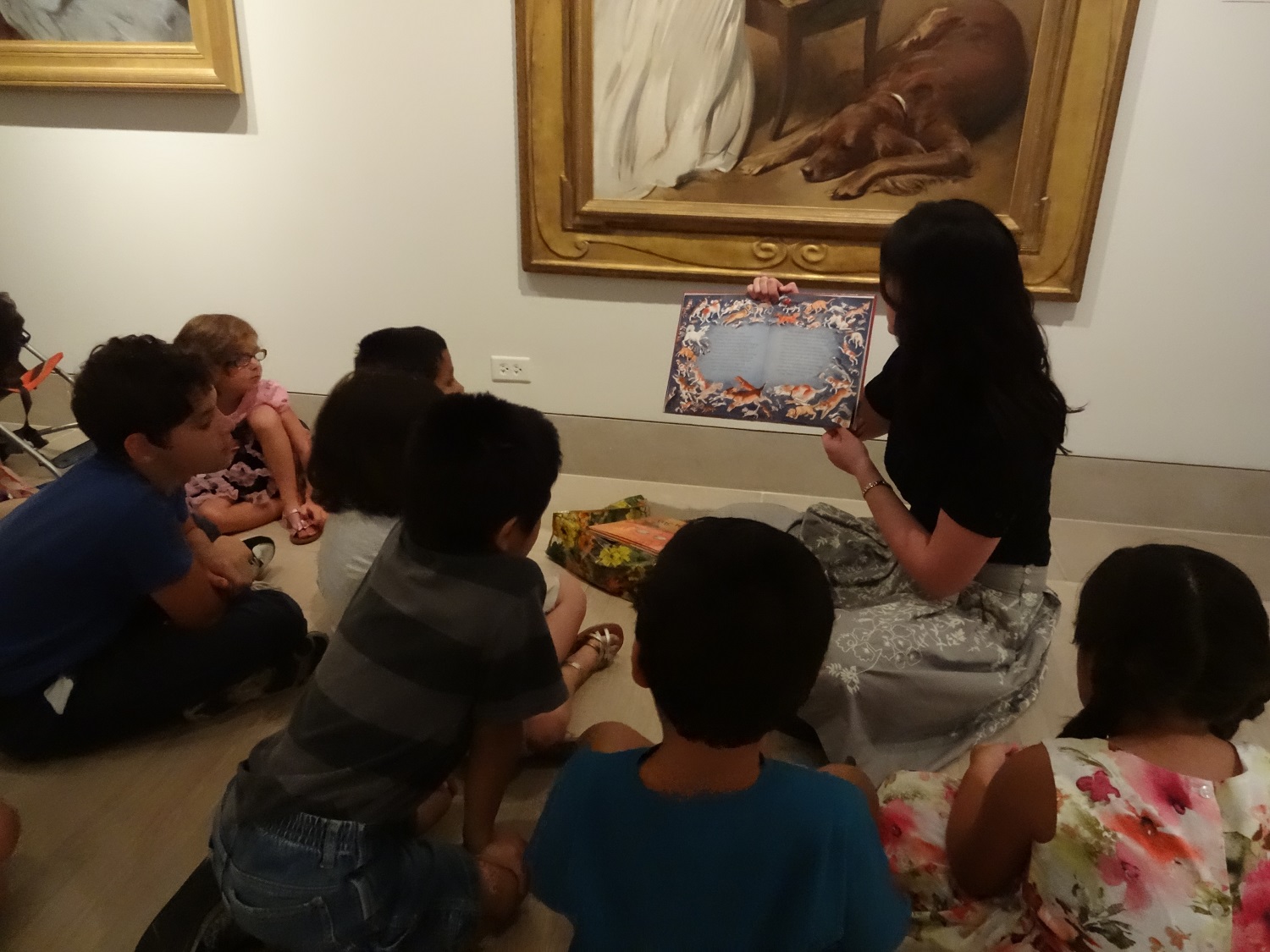
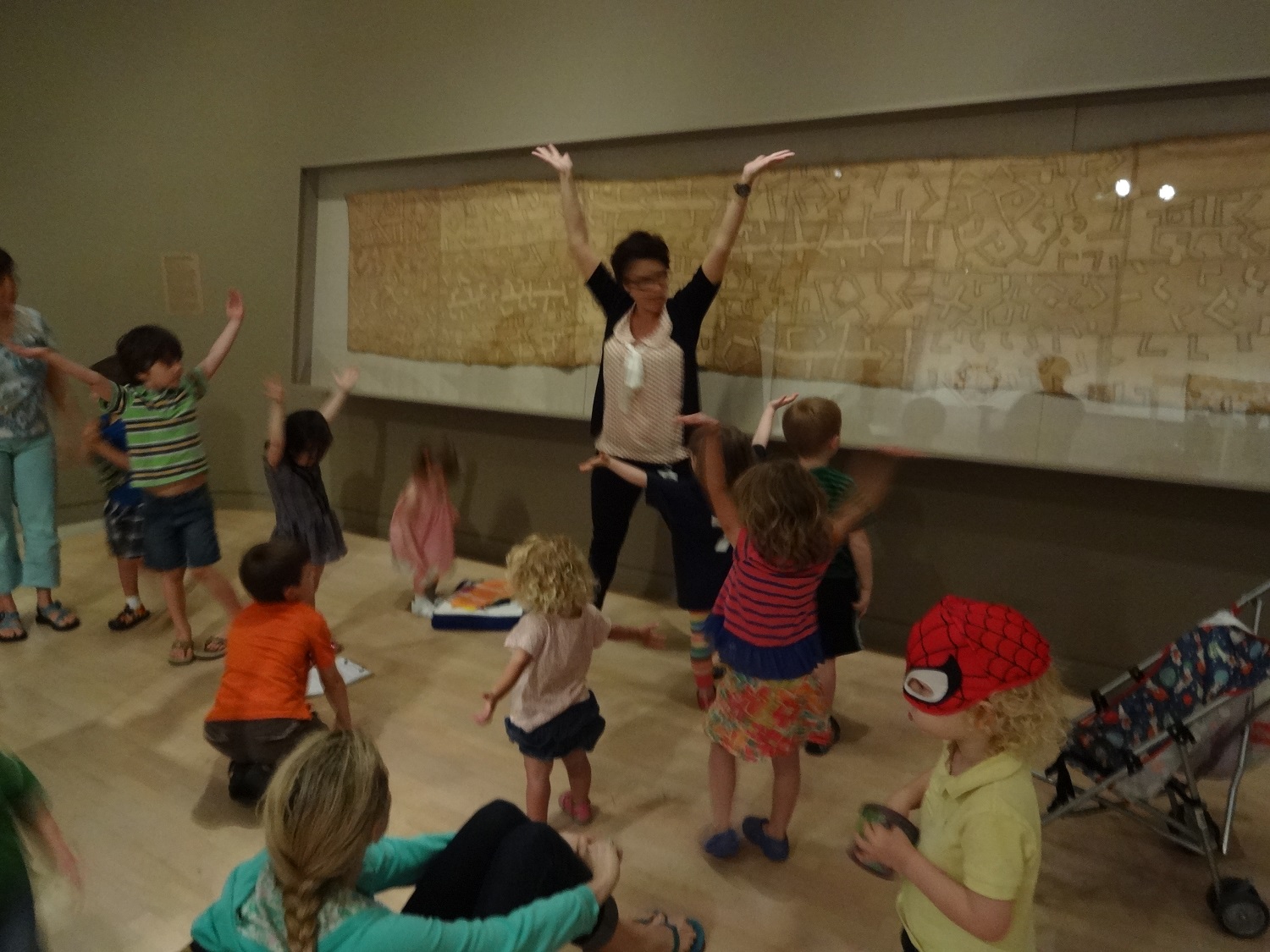
Join in the free fun this summer at the DMA. Throughout the week, we’re offering free family programs–story time, sketching in the galleries, art making, family game day, and more. How many ways can your family have fun at the DMA? Visit our Summer Family Programs page to start planning. Enjoy free general admission every day the DMA is open (Tuesday-Sunday 11:00 a.m.-5:00 p.m.; Thursday 11:00 a.m.-9:00 p.m.).

From Sea to Shining Sea

In celebration of the Fourth of July, we thought it might be fun to spotlight some of the great American artworks in our collection that have been created in the 237 years since our nation’s founding.

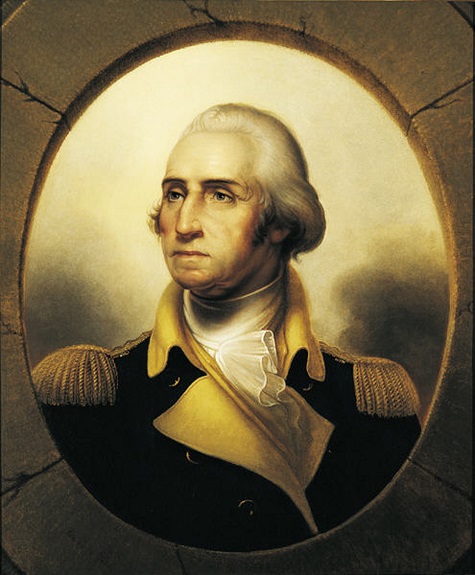
Rembrandt Peale, George Washington, c. 1850, oil on canvas, Dallas Museum of Art, The Karl and Esther Hoblitzelle Collection, gift of the Hoblitzelle Foundation

Rembrandt Peale, George Washington, c. 1850, oil on canvas, Dallas Museum of Art, The Karl and Esther Hoblitzelle Collection, gift of the Hoblitzelle Foundation

What better way to start than with the Father of Our Country? This portrait, completed fifty-one years after Washington’s death, was created by an artist who had met George Washington on several occasions. His first encounter with the president occurred when Rembrandt Peale was just seventeen years old. He painted a portrait of the president that would serve as the inspiration for countless additional portraits over the years. Peale shows Washington in his later years, perhaps reflecting back on his time as a surveyor, general, and president. When you visit the galleries, you might compare this painting with Jean-Antoine Houdon’s bust of George Washington, which is located right around the corner. Which one do you think is a more accurate likeness?

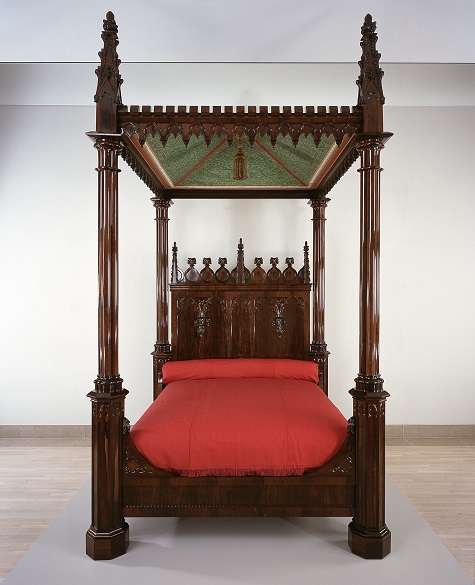
Crawford Riddell, Bed, c. 1844, Brazilian rosewood, tulip poplar, and yellow pine, Dallas Museum of Art, gift of three anonymous donors, Friends of the Decorative Arts Fund, General Acquisitions Fund, Discretionary Decorative Arts Fund, and the Boshell Family Foundation

Crawford Riddell, Bedstead, c. 1844, Brazilian rosewood, tulip poplar, yellow pine, and polychromed textile, Dallas Museum of Art, gift of three anonymous donors, Friends of the Decorative Arts Fund, General Acquisitions Fund, Discretionary Decorative Arts Fund, and the Boshell Family Foundation

It’s impossible to lead a tour through our galleries without stopping at the Gothic bedstead. As beautiful as this work of art is, I think its history is even more fascinating. This bed was commissioned by a group of Whig party supporters who were convinced that Henry Clay was finally going to win an election and become President of the United States. Unfortunately for those eager supporters, Clay lost the 1844 election to James K. Polk, and the bed never made its way into the White House. It’s always fun to hear from our visitors who they think might have slept in a bed this grand.

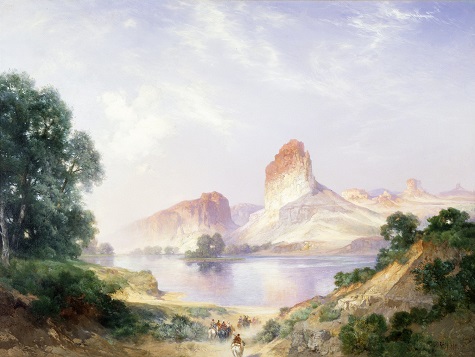
Thomas Moran, An Indian Paradise (Green River, Wyoming), 1911, oil on canvas, Dallas Museum of Art, Munger Fund

Thomas Moran, An Indian Paradise (Green River, Wyoming), 1911, oil on canvas, Dallas Museum of Art, Munger Fund

In the late 19th and early 20th centuries, American artists headed West to explore new territories in the United States. Many of them were captivated by the natural beauty of the landscape—especially areas like the Grand Canyon, Yellowstone and Yosemite Parks. These artists began to think of such awe-inspiring locations as our cathedrals and monuments. By capturing their beauty and grandeur on canvas, they celebrated the landscapes that make our country unique. What natural wonders are your favorite American landscapes?

Our collection provides many wonderful primary sources that relate to key events in American history. We hope that you’ll come visit them in person on July 4—the DMA will be open (with FREE general admission) from 11:00 a.m. until 5:00 p.m.

Shannon Karol is the Manager of Docent and Teacher Programs at the DMA.

Indiana Jones in the Digital Age

Uncrated stopped by the IT Department and caught up with Jessica Heimberg, Senior Developer, to learn more about her role here at the DMA. She can typically be found hiding behind two large monitors on her desk.

Jessica Heimberg

Describe your job in fifty words or less.
I work in the Information Technology Department. My official title is Senior Developer, but I am more like the MacGyver of tech projects and all things IT. (For those of you who missed this TV series, MacGyver was a non-gun-toting secret agent who improvised gadgets to solve crimes.)

What might an average day entail?
It could start with an update meeting and nice espresso, courtesy of DMA Deputy Director Rob Stein, or it could start with a flooded closet and fried switches. Depending on the day, I may be writing code, managing a project, creating documentation, trouble-shooting software, (politely) arguing with a vendor, walking with the cable dudes through a dusty construction site, or trying to figure out why someone’s e-mail worked on their iPhone yesterday but not today. Actually, I think I just described my Tuesday a few weeks ago.

How would you describe the best part of your job and its biggest challenges?
The best part of my job is that by helping create new programs, and supporting the DMA and its staff, I get to play a public service role in my city, and that makes me proud. I feel more than ever that people need art, music, playgrounds, and parks.

One of the more challenging and equally exciting effects of working in a small department is that we have to manage a lot of IT without a lot of staff. This definitely forces efficiencies, and we get to apply real creativity to problem solving. By nature and training, I tend to create schedules and plans. I like to maintain order and do my best to make working on projects as low stress as possible, but as anyone who’s ever worked on ANYTHING knows, even best-laid plans can get monkey-wrenched, and I have learned that some of the best ideas come out of the rubble of an initial plan.

Growing up, what type of career did you envision yourself in? Did you think you’d work in an art museum?
I was going to be Indiana Jones—am I dating myself here? In a past life (yes, I am older), I worked in the fashion industry, and then in corporate settings, but always gravitated toward the arts, science, and nature to find balance and inspiration.

What is your favorite work in the DMA’s collection?
Just one? Not possible to pick just one.
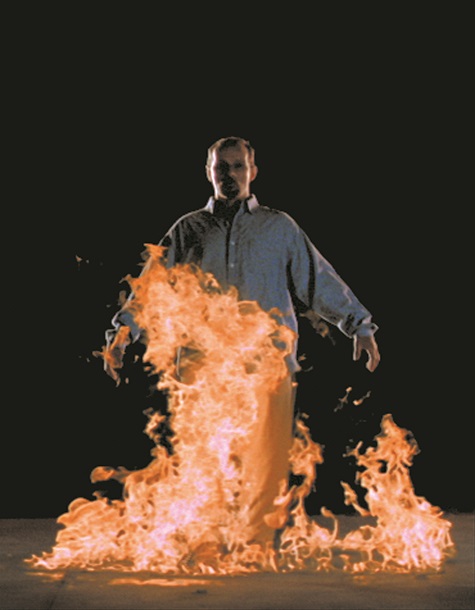
Bill Viola, The Crossing, Chanel 1 - "Fire," 1996, two-channel video/sound installation, Dallas Museum of Art, Lay Family Acquisition Fund, General Acquisitions Fund, and gifts from an anonymous donor, Howard E. Rachofsky, Gayle Stoffel, Mr. and Mrs. William T. Solomon, Catherine and Will Rose, and Emily and Steve Summers, in honor of Deedie Rose

Bill Viola, The Crossing, Channel 1 – “Fire,” 1996, two-channel video/sound installation, Dallas Museum of Art, Lay Family Acquisition Fund, General Acquisitions Fund, and gifts from an anonymous donor, Howard E. Rachofsky, Gayle Stoffel, Mr. and Mrs. William T. Solomon, Catherine and Will Rose, and Emily and Steve Summers, in honor of Deedie Rose, (c) Bill Viola, Long Beach, California

I have always loved The Crossing, by Bill Viola. At my last job, at least once a week I would take lunch at the DMA and wander the galleries for an hour just to clear my head. I remember when the Viola was installed and how exciting it was to walk into this big, dark space and stand in front of the projection, watching. I visited the thing three or four times before realizing it had a whole other side! I fell in love with it a second time. I know it is a digital piece, but something about the scale and pace of it strikes me as very human, and it is comforting to me.
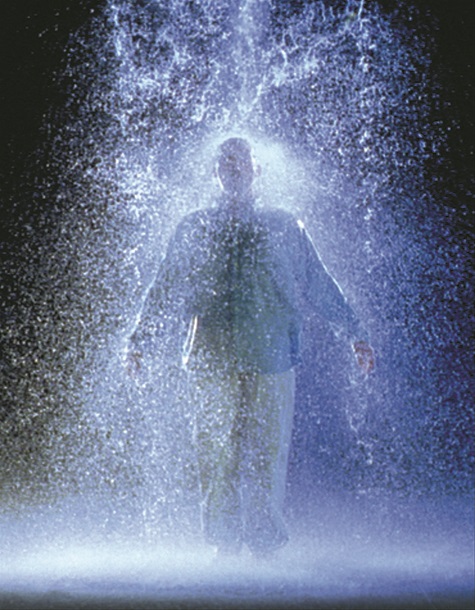
Bill Viola, The Crossing, Chanel 2 - "Water," 1996, two-channel video/sound installation, Dallas Museum of Art, Lay Family Acquisition Fund, General Acquisitions Fund, and gifts from an anonymous donor, Howard E. Rachofsky, Gayle Stoffel, Mr. and Mrs. William T. Solomon, Catherine and Will Rose, and Emily and Steve Summers, in honor of Deedie Rose

Bill Viola, The Crossing, Channel 2 – “Water,” 1996, two-channel video/sound installation, Dallas Museum of Art, Lay Family Acquisition Fund, General Acquisitions Fund, and gifts from an anonymous donor, Howard E. Rachofsky, Gayle Stoffel, Mr. and Mrs. William T. Solomon, Catherine and Will Rose, and Emily and Steve Summers, in honor of Deedie Rose, (c) Bill Viola, Long Beach, California

Is there a past exhibition that stands out in your mind as a favorite, or is there a particular upcoming show you’re looking forward to seeing?
Oh, gosh – so many! I thoroughly enjoyed the “blockbuster” exhibitions like Tutankhamun and the Golden Age of the Pharaohs and especially The Fashion World of Jean Paul Gaultier: From the Sidewalk to the Catwalk, but most of my favorites have been mounted by our own curatorial staff. I loved Coastlines: Images of Land and Sea, The Mourners: Medieval Tomb Sculptures from the Court of Burgundy, African Masks: The Art of Disguise, Omer Fast: 5000 Feet Is the Best, and the telling of a chunk of American history through Modernism in American Silver: 20th-Century Design. I think Nur: Light in Art and Science from the Islamic World, the Islamic art and culture exhibition opening in 2014, will be a stunner.

Jessica Heimberg is Senior Developer, Information Technology at the DMA.
Reclining Nymph Gets a New Name

You may have heard that we recently reattributed a Baroque sculpture in the Wendy and Emery Reves Collection to the artist Giovanni Bonazza. Here’s an interview with Olivier Meslay, associate director of curatorial affairs at the DMA, explaining how he discovered the true artist of Reclining Nymph:

[youtube http://www.youtube.com/watch?v=YNc_m3gkjK8]

For additional information on the sculpture and its reattribution, you can read the full press release here or see the work up close, and for free, on view in The Wendy and Emery Reves Collection on Level 3.

Listening Hard: Remembering JFK on Record

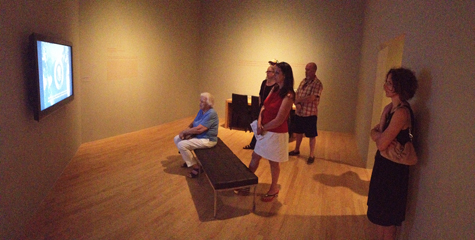
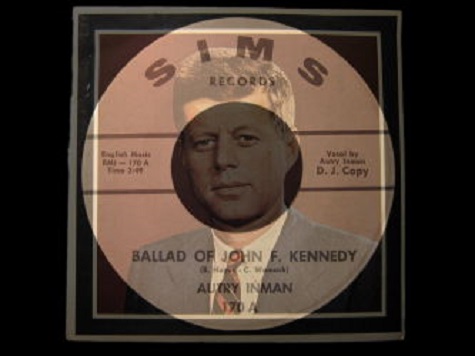
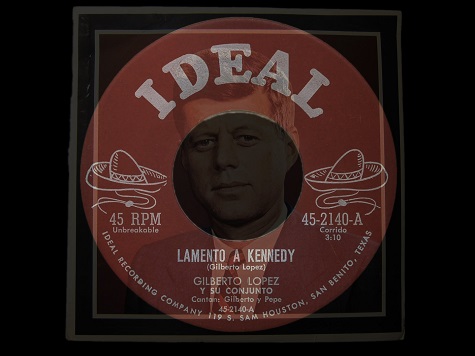
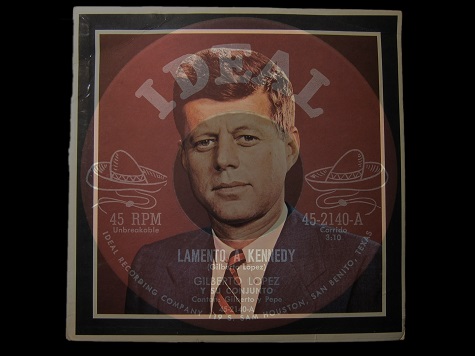
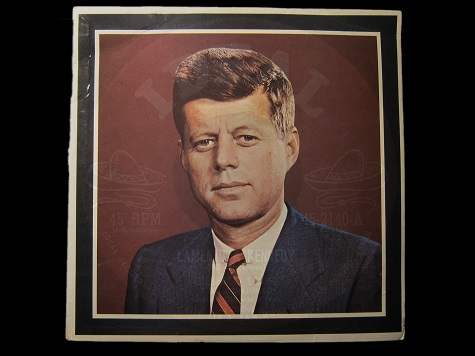
The tragedy surrounding President John F. Kennedy’s 1963 trip to Texas inspired many songwriters to remember and honor JFK through song. Listening Hard: Remembering JFK on Record is an audio-video installation produced by Alan Govenar featuring songs of a variety of genres produced in the months after Kennedy’s assassination. Swing by the C3 Theater during the run of Hotel Texas: An Art Exhibition for the President and Mrs. John F. Kennedy to experience these songs.*

Listening Hard: Remembering JFK on Record, Alan Govenar, © Alan Govenar

Listening Hard: Remembering JFK on Record, Alan Govenar, © Alan Govenar

Uncrated chatted with Alan, founder and president of Documentary Arts and the installation’s producer, to pick his brain about his creative process and vision for this work. Join us at the DMA during our July Late Night on Friday, July 19, at 7:00 p.m. to hear Alan discuss his installation.

When did you begin researching JFK memorial songs?
It was 1975, so nearly forty years ago. I had heard about the Mexican-American corridos and started gathering the records when I could find them. I had written a lot about blues and jazz, and this was part of it.

What was the impetus for this project?
The piece was originally commissioned by the International Center of Photography. Brian Wallis, Chief Curator at the ICP, has organized a show of photographs, JFK November 22, 1963: A Bystander’s View of History,  that look at the assassination from the viewpoint of bystanders.

All of the singers are in a way personalizing their relationship with President Kennedy, either as friend or savior, champion of the downtrodden, the advocate for the forgotten or the disenfranchised. The songs juxtapose that sense of feeling a personal relationship with the president and the great sense of loss, the tragedy of his killing.

You’ve referred to this installation as an “experience.” How do you envision DMA visitors experiencing this installation?
All of the songs are topical. All were released on record. Most were written within days of the assassination. The installation is an audio loop, and the anchor, or punctuation point, is an eyewitness account released on an LP within days of the assassination. A man just saw the assassination, and someone put a microphone in his face and asked him what he saw. He was panicked, on the verge of crying. He had his five year old standing next to him. He was ready to pounce on top of him to protect him because he thought there was a maniac on the loose. That sets a certain stage for the rest of the piece, which is startling and haunting. But, there’s an aspect of the songs that has you smiling. It throws you back in time and place. Much of what the piece is about is perception and memory.

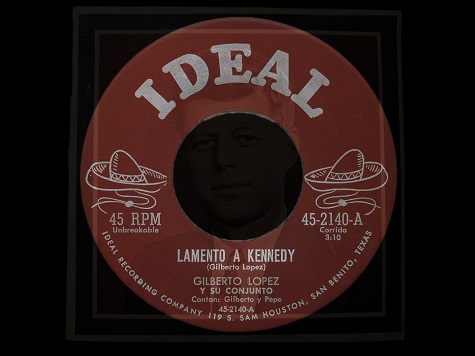
What was your creative process behind the image of JFK that continuously dissolves into images of record labels?
It has a meditative kind of effect, seeing that image reappearing. In some senses, I intended it to be reassuring, comforting, but also, it’s a memorial. It’s like looking at a tombstone. Those slow dissolves into the record labels that go in and out of JFK’s face are haunting, I think because of the idea that he was shot. It’s a complex, emotive kind of experience.

What was the most surprising thing you discovered?
The most surprising part of my research was the sheer vastness of songs written about John F. Kennedy in so many musical genres. People felt compelled to write them. People felt like their feelings needed to be expressed. A song in the installation called The Tragedy of Kennedy, by the Southern Belle singers recorded in December 1963, ends with:

Let me tell you people what we better do,
Keep our minds on Jesus for he’s a President, too.

It identifies Kennedy in that role, as a great savior who was martyred.

Why do you think Kennedy was memorialized through such diverse musical genres?
Corridos extol the virtues of the president who excited our passion to bring equality to all. The blues singers could identify with the sadness everyone was feeling. Country songs are often about mortality. It fit neatly into traditional music forms, where the way people were feeling could be expressed.

* “Listening Hard” runs in the C3 Theater at designated times during Museum hours and is included in free general admission.

Andrea Vargas Severin is the Interpretation Specialist at the DMA.

Archives

Categories