Posts Tagged 'Dallas Museum of Art'


Speakeasy Star

This Friday we’re traveling through the 20th century during Late Night with a different decade highlighted every hour. We asked one of our favorite costume gurus, Breanna Cooke (you may remember the amazing Greek Hero look she created inspired by The Body Beautiful), for tips on how to dress for a time traveling evening.

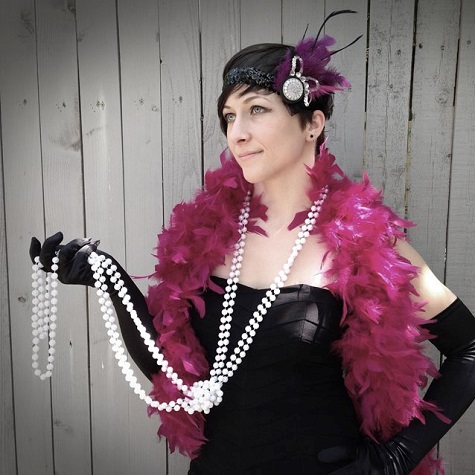
The evening kicks off with a tribute to the 1920s-30s, so here’s how you can make a flapper headband and then put together an outfit.
4

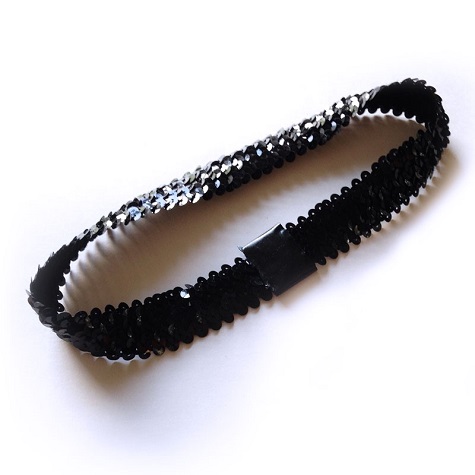
What you’ll need for the headband:

  • Long piece of sequined elastic, or stretch fabric, or other headband
  • Craft foam or a large button
  • Hot glue
  • Duct tape (optional)
  • Feathers
  • Bits of lace, ribbon, fringe
  • Rhinestones, buttons, brooches, or even pieces from broken earrings
3

  1. Make a headband
    Measure a piece of elastic or fabric to fit around your head. Then use hot glue, tape, or needle and thread to attach the ends together. If you’re taping or gluing it together, overlap the two ends. Don’t worry about the seam—you’ll glue your embellishment on top of it.
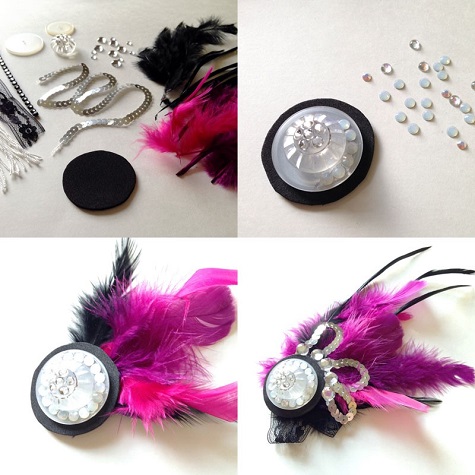
2

  1. Make an embellishment
    Using a small circle of craft foam (or a large button) as a base, start gluing rhinestones, sequins, and buttons on top. Get creative and use what you have lying around at home. Then glue some feathers or fringe to the back of your craft foam base.
 

1

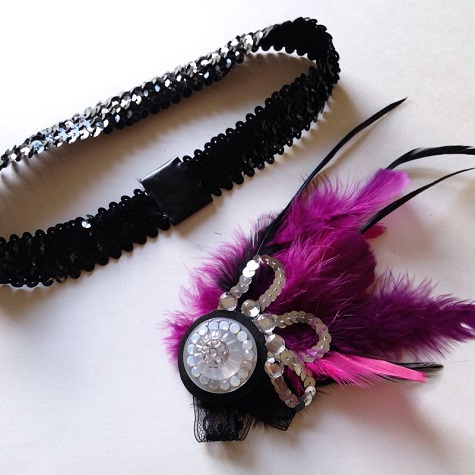
  1. Put it together
    Using hot glue, attach your embellishment to your headband. Be sure to stick it on top of the seam to hide it.

Ideas to complete the outfit

  • Gloves
  • Feather boa
  • Long string of pearls (Hint: Mardi Gras beads work great! If you don’t have the right color, just paint them with spray paint or acrylic paints)
  • Sleeveless dress
  • Black fishnet stockings

For the gentlemen
It’s still hot in Texas, but a suit is a great accompaniment to your flapper friends. Find a bow tie, grab your fedora, shine your shoes, and we’ll see you at the DMA!

Once you have your costumes complete, come kick up your heels with the Matt Tolentino Band, who will be performing songs from the roaring 20s and 30s at 6:00 p.m. Check out the full night’s lineup online at DMA.org.

Breanna Cooke is a Graphic Designer, Costume Creator, and Body Painter living in Dallas. To see more of her work, visit breannacooke.com. Check out progress photos of her latest projects on Facebook.
Pint-Size Sous Chefs

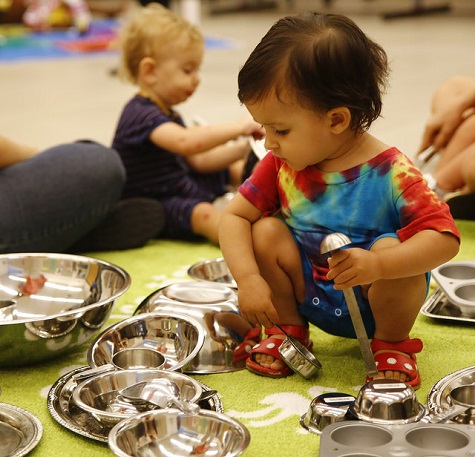
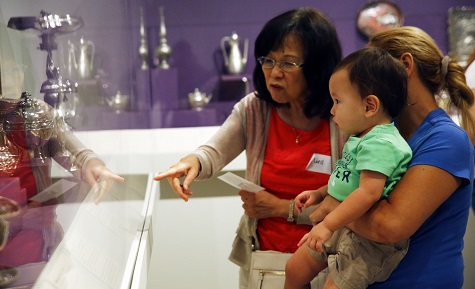
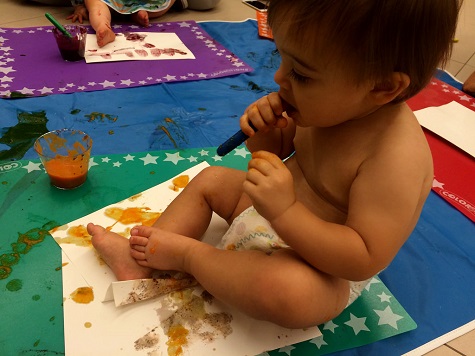
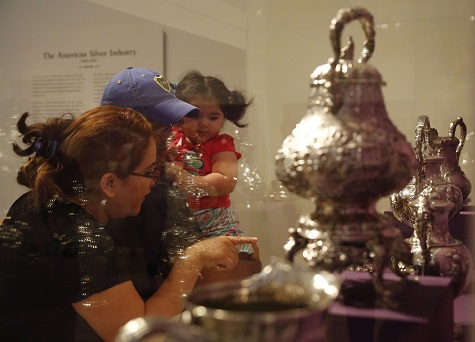
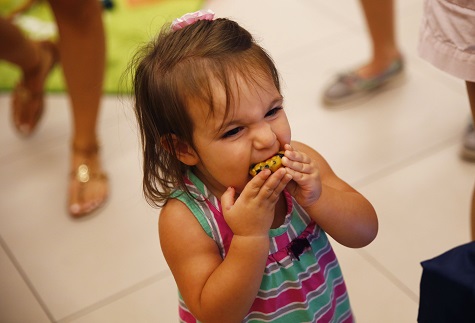
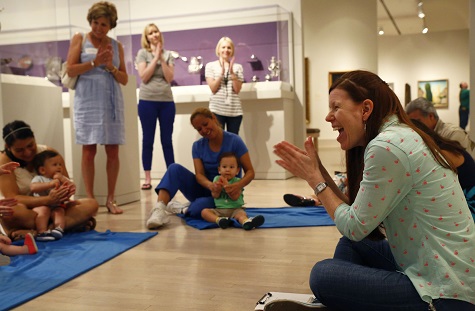
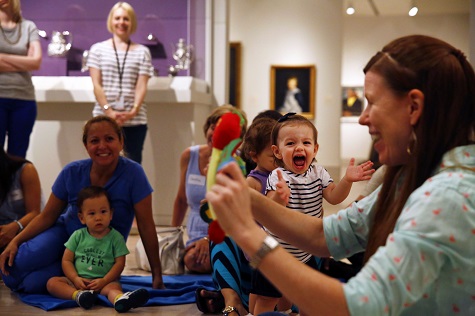
During this month’s Art Babies, our mini museum-goers joined a hungry caterpillar at an imaginary dinner party to explore the sense of taste. Armed with their very own—Museum staff approved!—silver spoons, they goo-ed and gah-ed over the shiny silver serveware on Level 4. Their appetites primed with art, we then headed to the Art Studio, which was transformed into a smorgasbord of color, texture, and even flavor! Our petite Picassos used vibrant food puree “paint” to create their own masterpieces, taste-testing encouraged. Class ended with a colorful, baby-approved snack of blueberry carrot oat mini muffins, which you can try out at home:

Blueberry Carrot Oat Mini Muffins
20438306986_fd529afecc_k
1 cup rolled oats
½ cup whole wheat flour
½ cup all-purpose flour
1 tsp baking powder
½ tsp baking soda
½ tsp salt
2 eggs, room temperature
½ cup sugar
6 oz vanilla Greek yogurt, room temperature
½ cup carrot puree
1 tbsp vegetable oil
2 tsp vanilla
1 cup fresh blueberries

Preheat oven to 375° F.

Line mini muffin pan with paper liners or spray with non-stick cooking spray. In large mixing bowl, stir together oats, both flours, baking powder, baking soda, and salt. In medium bowl, whisk eggs and sugar until pale and frothy. Add yogurt, carrot puree, vegetable oil, and vanilla, whisking until fully combined and smooth. Add carrot mixture to flour mixture and stir with rubber spatula until flour is mostly incorporated. Gently fold blueberries into batter with a few revolutions, just enough to incorporate remaining flour and distribute berries evenly throughout.

Divide batter into muffin cups, using a tablespoon scoop to fill them almost to the top. Bake about 10 minutes, or until a toothpick inserted in the center comes out clean. Note: A regular muffin pan can be used instead, increasing the baking time to 20 minutes.

Tickets for our fall classes go on sale September 3—we hope to see you then!

Sarah Coffey is the Education Coordinator at the DMA.

Our Portal Into Publishing

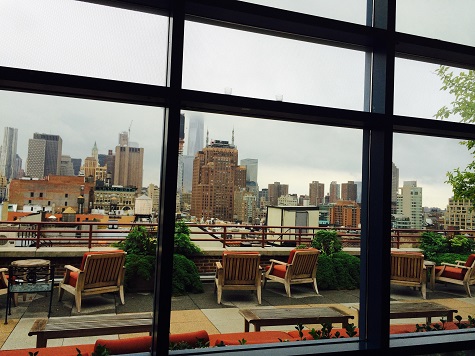
View from Macmillan Children's Publishing Group located in the famous Flatiron Bldg

View from Macmillan Children’s Publishing Group located in the famous Flatiron Building

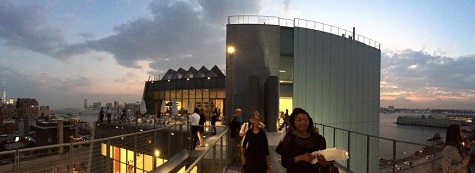
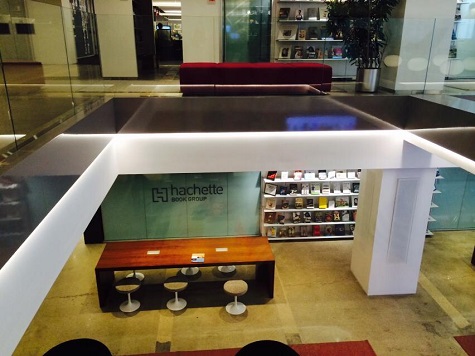
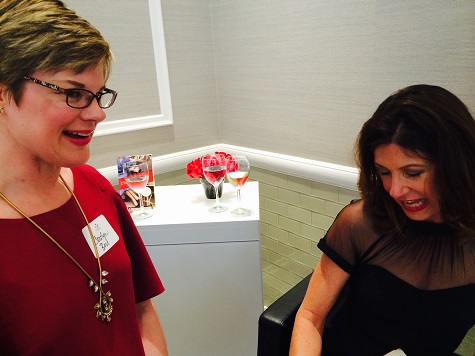
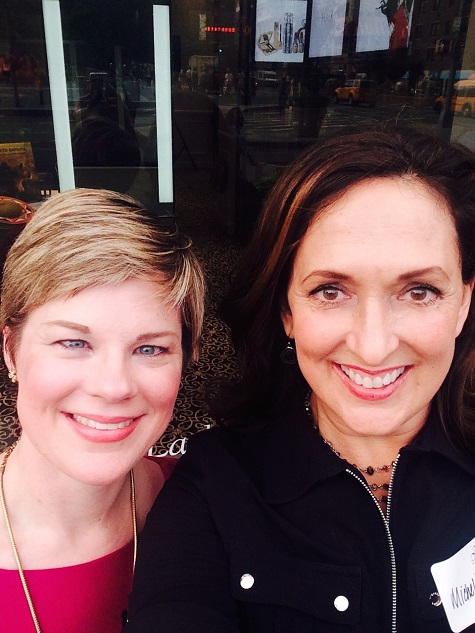
The annual DMA Arts & Letters Live planning trip to New York provides the foundation for each season of the DMA’s literary and performing arts series. During more than 30 meetings in five days at the end of July, Carolyn Bess and I learned which authors are generating a lot of buzz for their new books, and who will be on tour during our 25th anniversary season. These meetings provide a portal into the publishing world not yet revealed to the media or to the public. Here begins the dialogue regarding the authors and books publishers want to catapult into public conversation. We share statistics and successes from our recent events as we attempt to woo such “wish list” writers as Donna Tartt, Bill Bryson, and Nick Hornby. Authors often tour to a predetermined number of cities and only for a short time following their book release date, so there can be significant competition when it comes to securing them for Arts & Letters Live. We seek to balance the type of books, speakers, and performances we feature in each season to construct a mix of literary and historical fiction, poetry, memoir, nonfiction, pop culture, and emerging authors.

Though our meeting schedule certainly kept us busy, we managed to squeeze a few excellent cultural outings into our visit. The Tony Award-winning Broadway musical adaptation of Alison Bechdel’s acclaimed illustrated memoir Fun Home: A Family Tragicomic was excellent and would fit nicely into our Artful Musings category (if only Alison weren’t in such high demand these days!). We enjoyed seeing Gerald Murphy’s Cocktail on view in the glorious new Renzo Piano building of the Whitney Museum of American Art as we look forward to hosting Liza Klaussmann tomorrow night at the DMA for her new fictional account of Sara and Gerald Murphy in Villa America. On a Friday evening visit to the Metropolitan Museum of Art, we joined the Museum Hack tour for what their brochure terms “a highly interactive, subversive, fun, non-traditional museum tour.” Their strategy did not disappoint. During our three-hour tour, we learned obscure and whimsical tidbits about a select number of pieces in the Met’s collection and wandered the galleries after hours, inciting childhood fantasies of spending the night in the Met like Claudia in E. L. Konigsburg’s iconic novel, The Mixed Up Files of Mrs. Basil E. Frankweiler.

One of the things that impressed me most during these meetings was the number of times publishers commented on the excellent reputation of the Dallas Museum of Art and Arts & Letters Live. After working on events with publicists all year via phone and e-mail, it is gratifying to meet with them in person and to hear how much they appreciate the quality of events that we host at the DMA. The professional relationships built and fostered during this New York trip are a key component to Arts & Letters Live’s success.

Michelle Witcher is the Program Manager, Arts & Letters Live, at the DMA.

Summer Interns: How Time Flies!

I cannot believe that this summer is already coming to a close. It is true that time flies when you are having fun! I have had a great experience interning here with the DMA’s summer art camps and am extremely grateful for the opportunity.

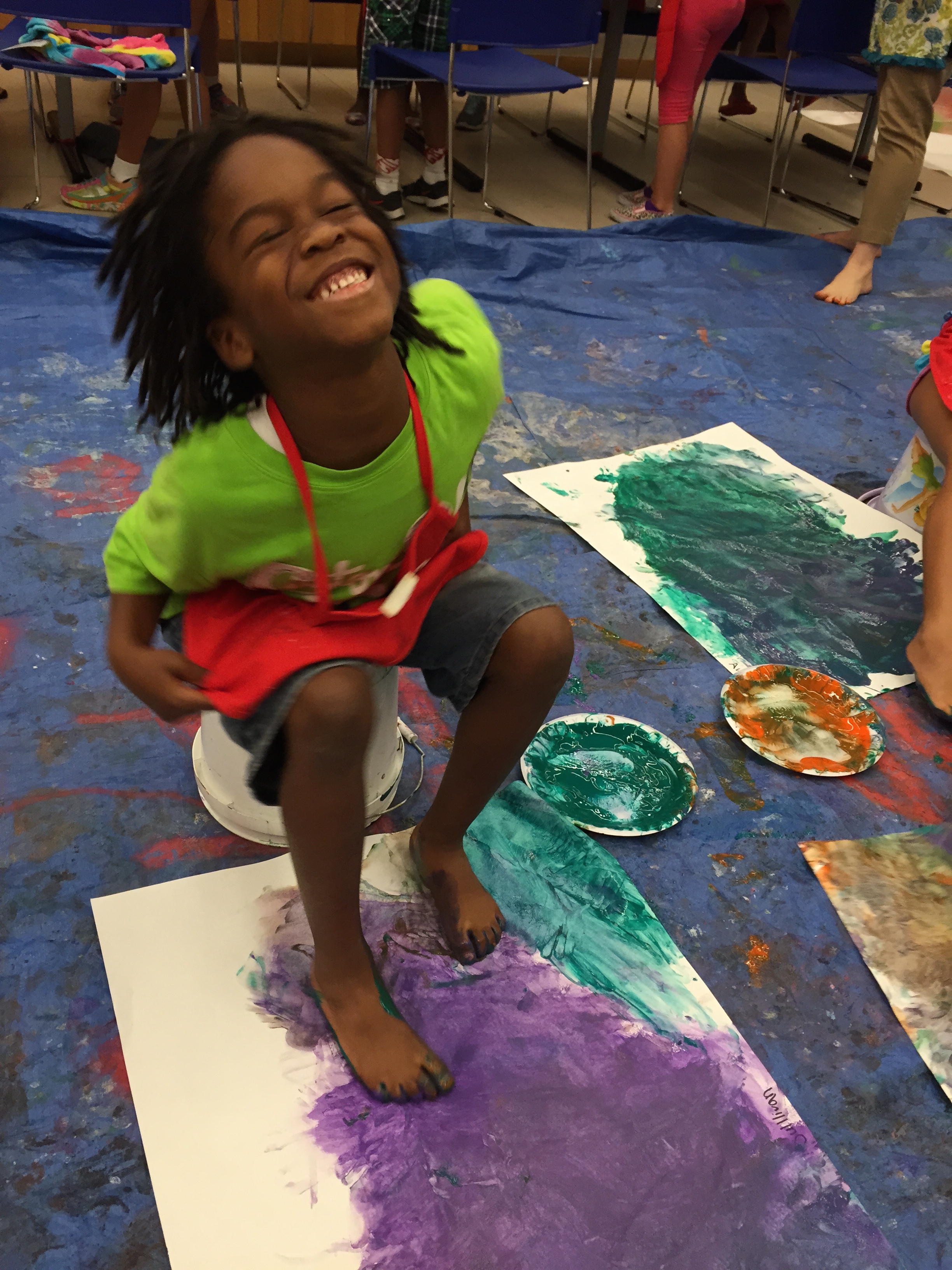
As the summer has progressed I have come to know so many different children, each with a distinct personality and story. Realizing that I have been given the opportunity to be a part of their lives–even if only for a week or so–is such a special privilege. I can only hope that I have helped the children develop their artistic and social skills, and that when they are world famous artists they will remember Miss Anna from summer art camp.

As an artist myself, the campers have taught me a lot about accepting the fact that we are not all Michelangelo or Monet and that, even though our artwork may not be “perfect,” creating something from only our imaginations is awesome. I know that this experience will forever be in my heart, and I really have had an excellent summer working with children.

Anna Galluzzi
Summer Art Camp Intern

Chasing Waterfalls

This month, the Dallas Museum of Art debuts a new acquisition in the American galleries that highlights the work of Henrietta Shore (1880–1963), an artist who made a significant contribution in the development of American modernism. While she and her work were held in high regard, by the 1940s both had fallen into obscurity. Fortunately, the artist is now undergoing rediscovery, as well as a long-overdue reassessment of her impact on American art of the 20th century.

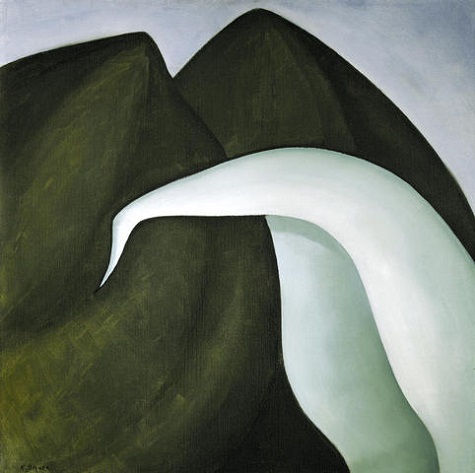
Henrietta Mary Shore, Waterfall, c. 1922, oil on canvas, Dallas Museum of Art, Foundation for the Arts Collection, Boeckman Mayer Family Fund 2015.24.FA

Henrietta Mary Shore, Waterfall, c. 1922, oil on canvas, Dallas Museum of Art, Foundation for the Arts Collection, Boeckman Mayer Family Fund, 2015.24.FA

Waterfall is a remarkable product from one of the most innovative periods of Shore’s long career, when she visually interpreted the natural world into its most essential and abbreviated forms. These “semi-abstractions,” as she called them, were an attempt to convey in a symbolic way the underlying spiritual forces she sensed in nature rather than a literal transcription of the visual phenomena she observed. In Waterfall, pure line and the juxtaposition of positive and negative shapes laid down with the sheer application of pigment are the means the artist employed to render visible the dynamic power of the eternal. Color is the emotional key she wielded to unlock the visual impact of the whole.

Although she was born in Toronto, the key portion of Shore’s artistic training was acquired in the United States, most significantly under Robert Henri in New York. After several years in California, she returned to New York City in 1920 and, forsaking narrative subject matter and the loaded-brush paint application she had learned from Henri, developed the stripped-down modernist approach demonstrated in Waterfall. The inspiration for this bold composition came, most likely, from her explorations of Maine and Canada during the summer of either 1921 or 1922. When her semi-abstractions debuted in a New York gallery in January of 1923, they were widely discussed by critics, who immediately and positively compared them with works by Georgia O’Keeffe then on view at another gallery across town.
On Wednesday, August 19, learn more about the newest addition to the DMA’s American Art Galleries during our lunchtime gallery talk.

Sue Canterbury is The Pauline Gill Sullivan Associate Curator of American Art at the DMA.

30-Minute Dash: Reagan Duplisea

In our second installment of 30-Minute Dash” DMA Registrar Reagan Duplisea shares her solution to the tough task of only 30 minutes in the DMA.

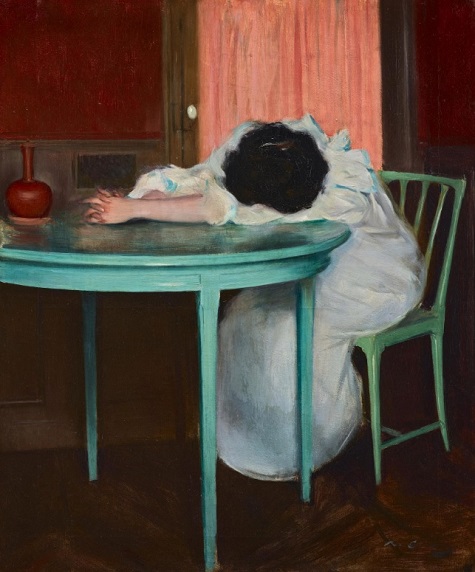
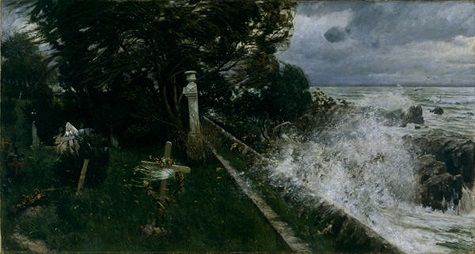
A DMA highlights tour for me would begin by taking the elevator to the second floor galleries and turn left to be met with a wall of compelling and dramatic emotion and color, which begins with the despair of Ramon Casas’ Tired, the treacherous sea-swept cemetery of Adolf Hiremy-Hirschl, and ends on the idyllic pastoral note of Hans Thoma’s Olive Grove at Lake Garda.

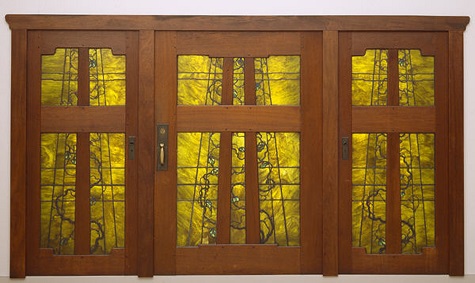
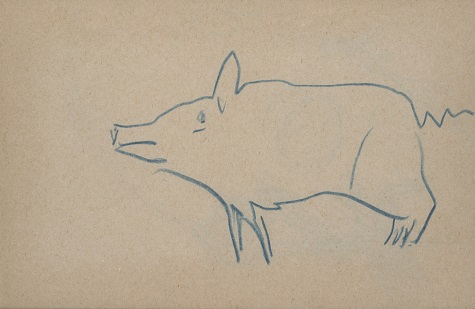
Take the small staircase up to the third floor and take a quick turn through the Northern Decorative Arts gallery. Bask in the glow of the Tiffany windows and Front doors from the Robert R. Blacker House and admire the sturdy yet stunning craftsmanship of the Stickley workshop. Then take a few more steps into the light-infused foyer of the Reves period rooms. Don’t miss the Winston Churchill room, especially his oversized brandy glass and self-portrait in the guise of a portly pig.

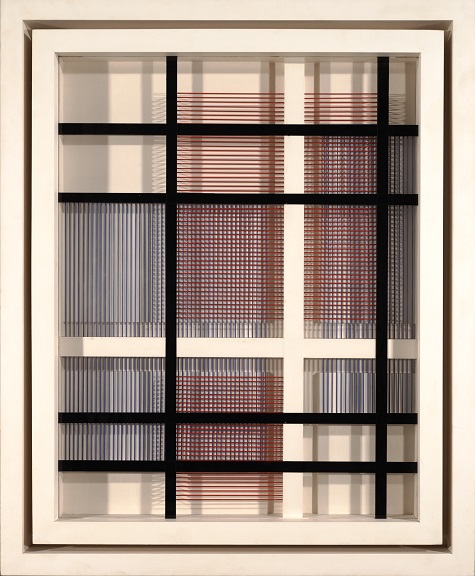
As you exit the decorative arts galleries, make a right to marvel at the delicate Japanese ceramics, pause for a contemplative moment in the calming ambiance of the gallery of Japanese screens and take a quick wander amidst the sly smiles of the Oceanic figures. Take the stairs to the fourth floor and veer left on a path that will lead you past the harmonious and fine lines of Charles Biederman’s Work no. 3, 1939, the Viktor Schreckengost Jazz Bowl and Charles Sheeler’s Suspended Power.

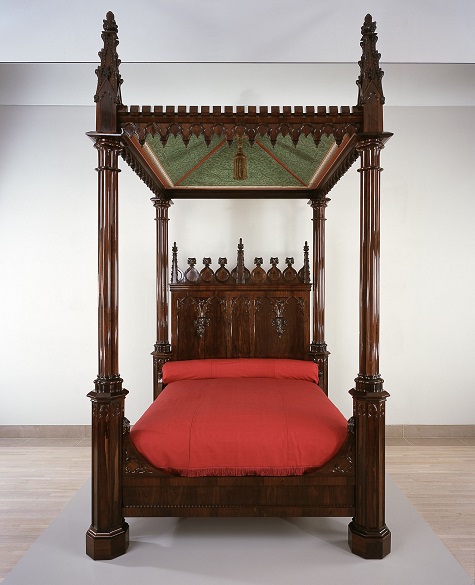
This reverse route through the American galleries will ensure that you pass by the majestic Gothic bed before you exit and make a quick beeline for the Ancient Arts of the Americas. The first gallery features objects of jade, in amazing shade variations, and the second will dazzle you with an array of gold. As you leave the final gallery, throw a glance over your right shoulder to catch a glimpse of the charming Yup’ik Mask with seal or sea otter spirit. The Mixtec Crouching frogs outside the galleries will stick their tongues at you, playfully suggesting that you didn’t allot nearly enough time for your visit and goad you into planning another, longer visit soon.

Reagan Duplisea is the Associate Registrar, Exhibitions at the DMA

Moore on the Move

Photos showing the North Entrance of the museum prior to the start of renovation efforts.

The North Entrance of the Museum prior to the start of renovation efforts.

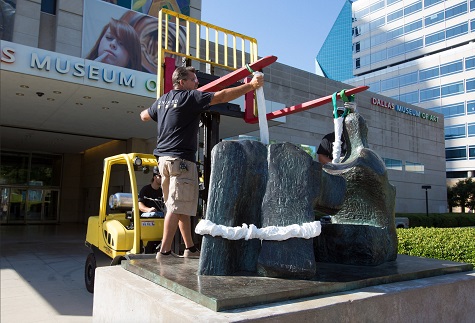
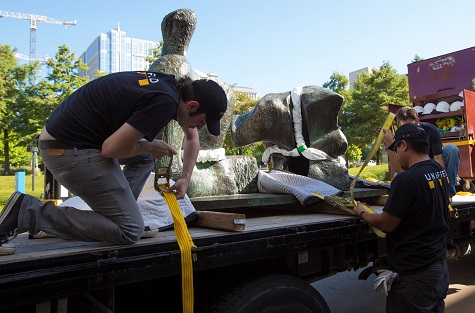
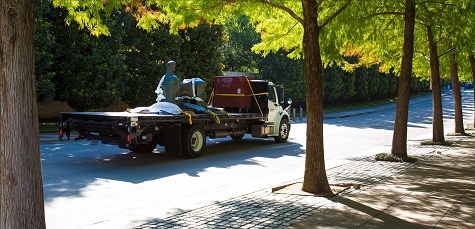
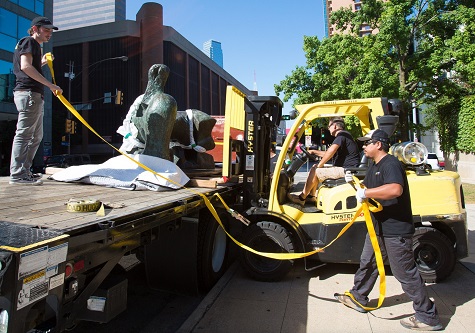
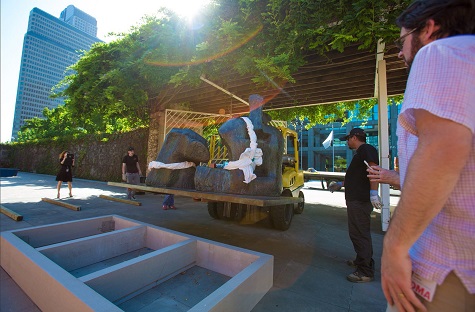
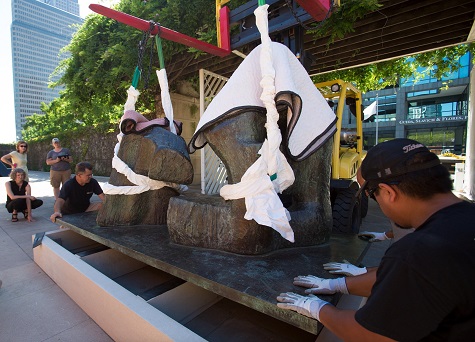
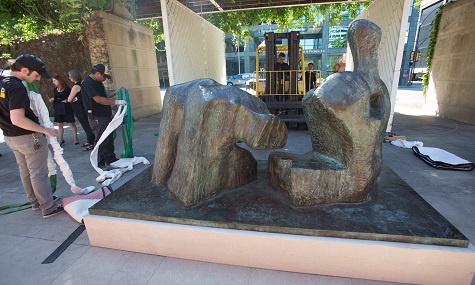
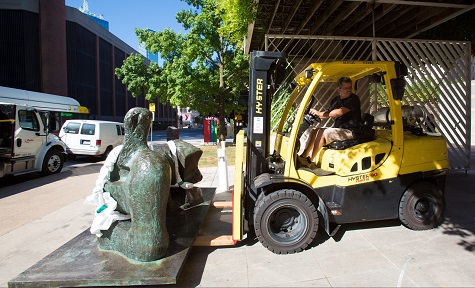
Henry Moore’s Two Piece Reclining Figure, No. 3 has greeted visitors at the Museum’s North Entrance for many years. Last week, Moore’s sculpture moved to a new home on the south side of the building, where it will welcome visitors into the Sculpture Garden. The move involved a lot of planning, and many precautions were in place to move the 2,200-pound bronze sculpture. Follow the sculpture’s journey below:

African Art Sketching Party

Full wall

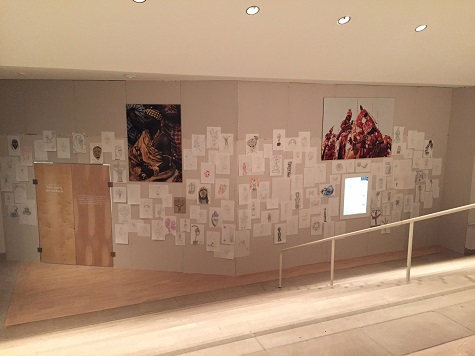
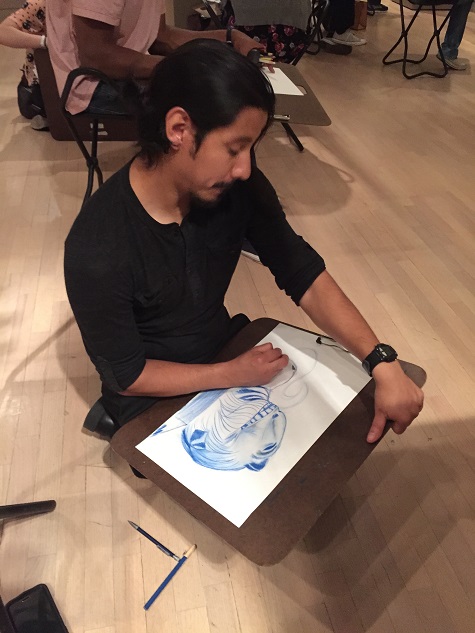
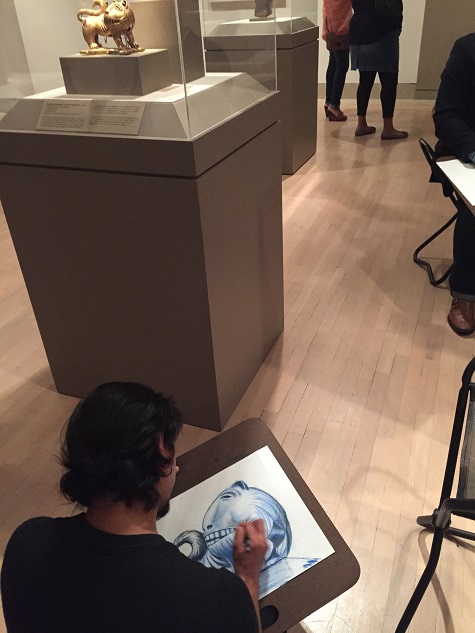
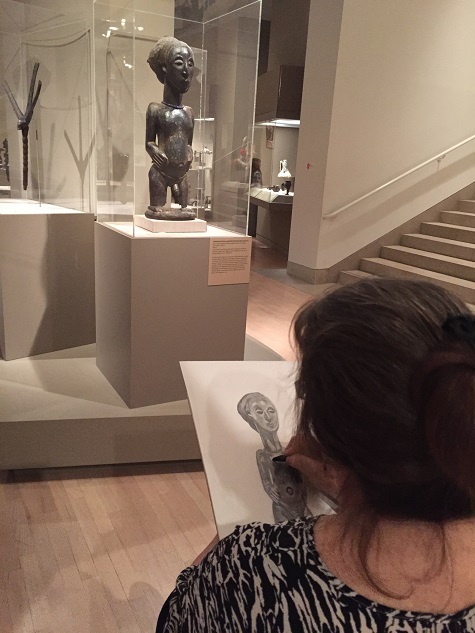
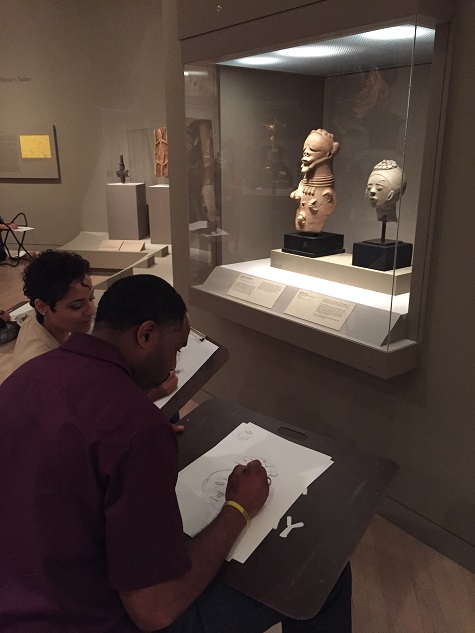
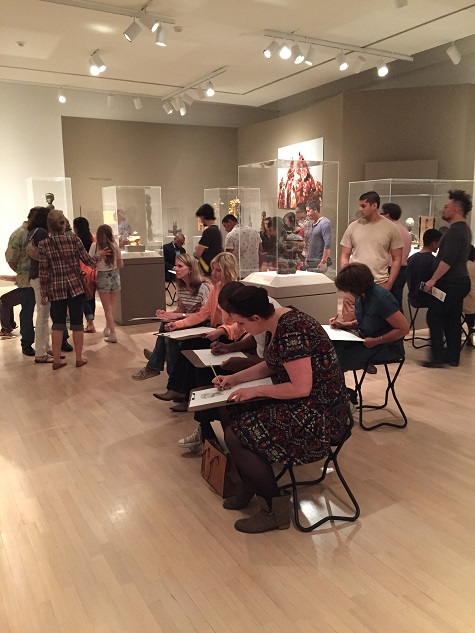
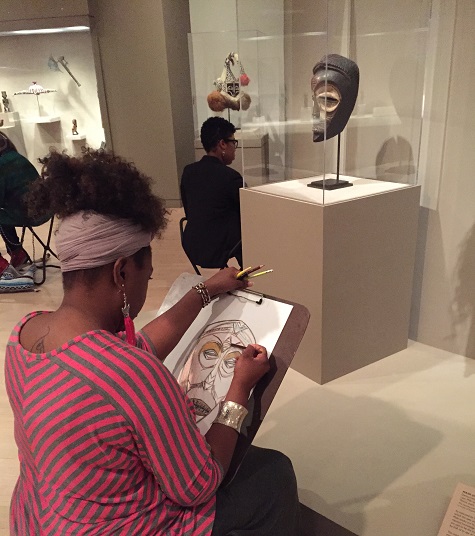
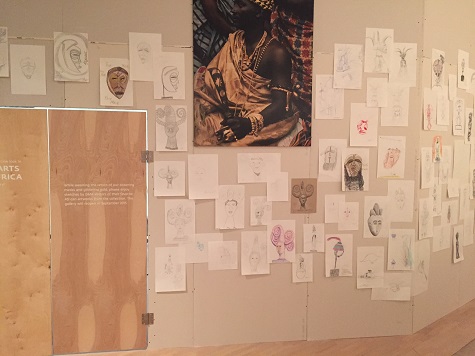
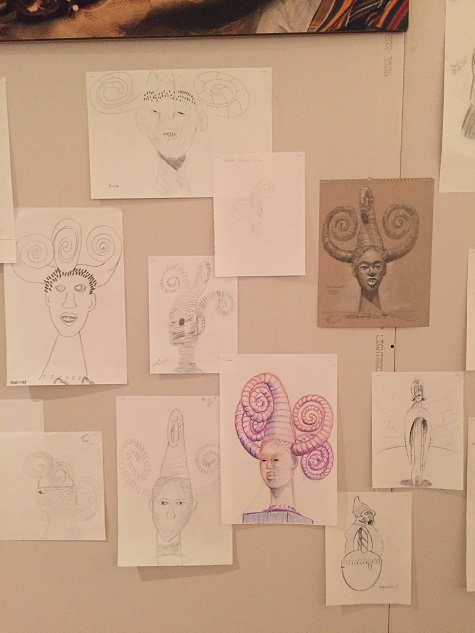
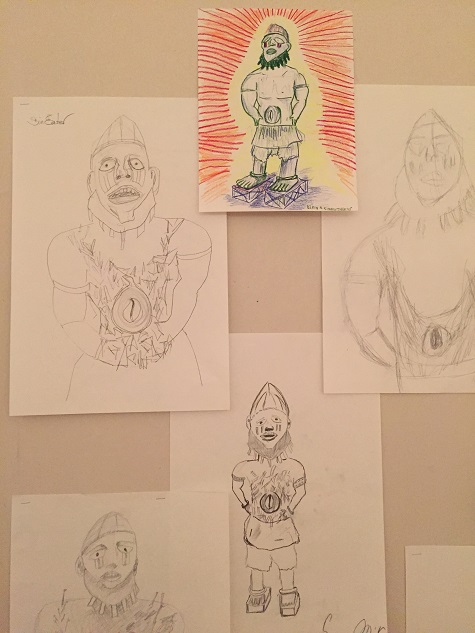
Just before the Arts of Africa gallery closed for reinstallation in May, the DMA invited the public to a Late Night African Art Sketching Party. Over 100 sketches of visitors’ favorite African artworks were gathered during the party. It was an opportunity to tap into the creativity and perspectives of DMA visitors. Sketching is a fun way to slow down, look closely, and discover something new about an artwork.

Visitors’ drawings are on view on a temporary wall on Level 3 in the Museum. Come for a visit before August 30 to see this installation of sketches and experience the DMA’s African art collection as seen through the eyes of another.

Nicole Stutzman Forbes is the Chair of Learning Initiatives and Dallas Museum of Art League Director of Education at the DMA.

Cool Down with Pop

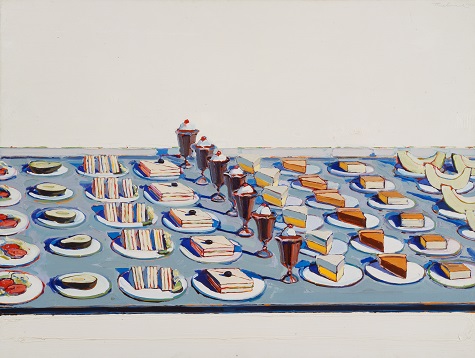
Not only is July National Ice Cream Month, but yesterday ice cream had an entire day dedicated to its wonderfulness. During the Dallas summers, we certainly love cool treats, which has us thinking of cooler weather and a colorful exhibition opening this fall at the DMA, International Pop. So, in honor of this month dedicated to the coolest dessert there is, we’re highlighting Wayne Thiebaud’s Salads, Sandwiches, and Desserts. You can see this work at the DMA beginning October 11, 2015.

Wayne Thiebaud, Salads, Sandwiches, and Desserts, 1962, oil on canvas, Sheldon Museum of Art, University of Nebraska–Lincoln, NAA–Thomas C. Woods Memorial © Wayne Thiebaud/Licensed by VAGA, New York, NY

Wayne Thiebaud, Salads, Sandwiches, and Desserts, 1962, oil on canvas, Sheldon Museum of Art, University of Nebraska–Lincoln, NAA–Thomas C. Woods Memorial, © Wayne Thiebaud/Licensed by VAGA, New York, NY

Kimberly Daniell is the Manager of Communications and Public Affairs at the DMA.

Museum Murder Solved!

Tonight we completed our fourth annual Museum Murder Mystery Game. This year, Victory was found dead just before Late Night began. Visitors searched the galleries for the body and integrated the suspects to determine who did it, with what object, and in which gallery. Below is the news report from their findings.

Museum Murder Solved!
Isabelle Lemonnier Confesses

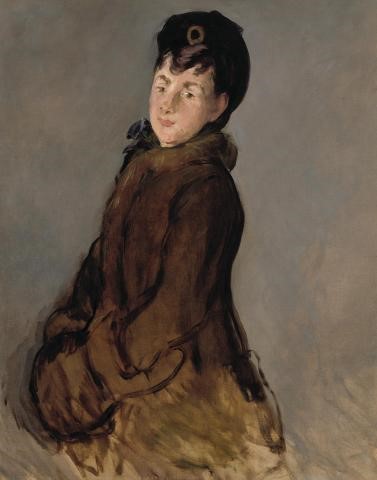
Edouard Manet, Portrait of Isabelle Lemonnier with a Muff, c. 1879, oil on canvas, Dallas Museum of Art, gift of Mr. and Mrs. Algur H. Meadows and the Meadows Foundation, Incorporated, 1978.1

Edouard Manet, Portrait of Isabelle Lemonnier with a Muff, c. 1879, oil on canvas, Dallas Museum of Art, gift of Mr. and Mrs. Algur H. Meadows and the Meadows Foundation, Incorporated, 1978.1

 17 JULY – Chaos has reigned for the past few hours here at the Dallas Museum of Art. Following the violent death of Victory, a prominent (and notoriously annoying) member of the collection, staff and visitors conducted an intensive inquiry. Lily Davenport, summer intern and chief investigator, explained that “we interviewed every artwork under suspicion for Victory’s murder, and checked on almost all of the potential weapons on display in the Museum.” In the end, one of those suspects broke down and confessed, under close questioning regarding the timing of her walk home.

Isabelle Lemonnier admitted to strangling Victory with an Etruscan composite necklace in the Indonesian Art Gallery. An unrepentant Isabelle reportedly remarked during her interrogation, “It was easy. I let everyone think I had taken Lady in a Red Hat up to her portrait, when really I just circled around to the third floor, by way of the Barrel Vault. The necklace looked as though it would fit in my muff, so I took it out of its case in the Ancient Mediterranean Gallery and went up to the Indonesian section to wait for Victory. I got her from behind as she came through the door—I doubt she ever even saw me.”

When this reporter asked about her motive, Isabelle cited Victory’s “disruptive and obnoxious” behavior and her own longstanding envy of the other artwork’s vocal self-confidence. Said the killer, “She always acted like she was so much better than me, than all of us. And the self-promotion never really let up. So it was just the icing on the cake when she interrupted Buddha’s meditation session to ask about dealing with envious friends. I knew she was talking about me, and it made me so angry!”

Museum staff did not comment on Isabelle’s eventual fate, as artwork-on-artwork violence is comparatively rare, and little judicial precedent exists. “It’s much more common for human visitors to pose a threat to the art,” said an investigator from the curatorial department who wishes to remain nameless. “I don’t even know where to begin writing this incident report.”


Lily Davenport is the Summer Intern for Adult Programming at the DMA


Archives

Categories