Posts Tagged 'Dallas Museum of Art'


After Hours

Have you ever wondered what museum curators do to relax and unwind at the end of their day? For Olivier Meslay, the DMA’s Associate Director of Curatorial Affairs, one of his favorite things is to look through online versions of auction house and gallery catalogs. What seems like a bit of a “busman’s holiday” worked to our advantage a few months ago.
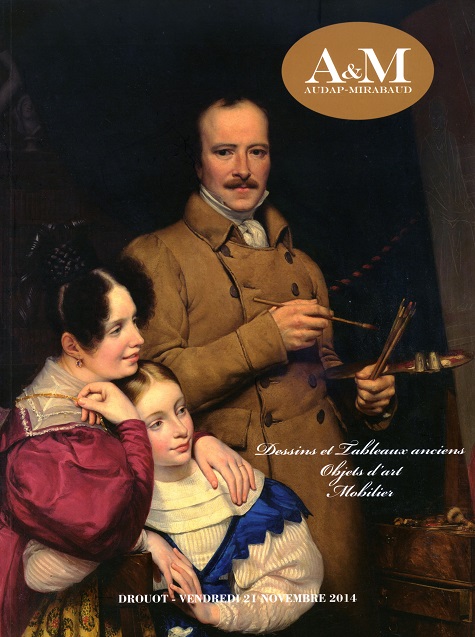
Cover to Audap & Mirabaud’s catalog for 21 November 2014 auction

Cover of Audap & Mirabaud’s catalog for November 21, 2014, auction

It all started on a stormy night early last November when he clicked on the website for the Parisian auction house Audap & Mirabaud. On their homepage was the lovely self-portrait by Paul Claude-Michel Carpentier (1787-1877), a lesser-known French painter, sculptor, and engraver who had exhibited at the Salon between 1817 and 1838.

The painting that caught Olivier’s attention is signed and dated 1833, and Carpentier exhibited it at the Salon the following year. For some time, the DMA had been seeking to purchase a large-scale 19th-century Salon portrait, and this one fit the bill. It was to be auctioned in Paris on November 21, and, as it happened, Olivier would be in France on the day of the sale, but not in Paris. Luckily, he had plans to be in the glorious city a few days beforehand and found an occasion to examine the painting.
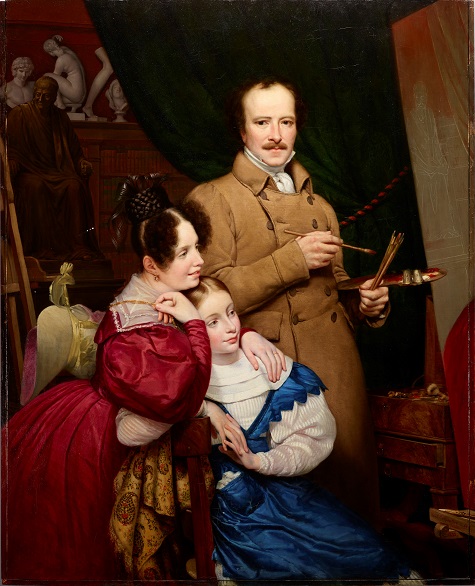
Paul Claude-Michel Carpentier, Self-portrait of the artist and his family in his studio, 1833, oil on canvas, Dallas Museum of Art, Foundation for the Arts Collection, Mrs. John B. O'Hara Fund, 2014.38.FA

Paul Claude-Michel Carpentier, Self-portrait of the artist and his family in his studio, 1833, oil on canvas, Dallas Museum of Art, Foundation for the Arts Collection, Mrs. John B. O’Hara Fund, 2014.38.FA

It was as impressive as he had hoped, and so he registered to bid. The only remaining problem was that at the precise time of the sale he was to be at a conference in a city four hours away. About mid-morning on November 21, he discreetly slipped out of his meeting for a few minutes to bid by telephone on the artwork. To our great fortune, he was the high bidder. All of his maneuverings were worthwhile.

When he returned to Paris a few days later, to his great surprise, he learned from an agent with Audap & Mirabaud that a small, fully realized preliminary drawing of the portrait had become available. He bought it on the spot.
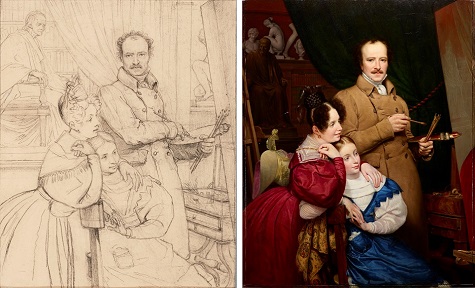
(left) Study for “Self-Portrait of the Artist and his Family in his Studio,” c. 1833, pencil on paper, private collection (right) Paul Claude-Michel Carpentier, Self-portrait of the artist and his family in his studio, 1833, oil on canvas, Dallas Museum of Art, Foundation for the Arts Collection, Mrs. John B. O'Hara Fund, 2014.38.FA

(left) Study for Self-portrait of the artist and his family in his studio, c. 1833, pencil on paper, Dallas Museum of Art, Foundation for the Arts Collection, gift of Olivier Meslay, 2015.20.FA; (right) Paul Claude-Michel Carpentier, Self-portrait of the artist and his family in his studio, 1833, oil on canvas, Dallas Museum of Art, Foundation for the Arts Collection, Mrs. John B. O’Hara Fund, 2014.38.FA

Having the opportunity to place a highly detailed drawing next to the executed painting is quite rare. It provides us with the chance to delve into the artist’s creative process and study any last-minute compositional changes made between the two works. In this case, we learn that in the completed painting, Carpentier rearranged the sculptures in the background, while in the foreground he added the yellow and red paisley shawl draped over the back of the chair on which his daughter,r wearing a blue dress, rests her arm.

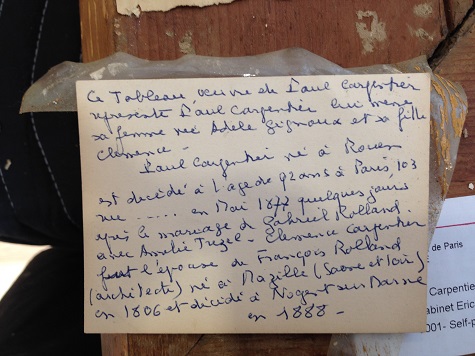
Another exciting aspect of these purchases is that it presented us with an opportunity to learn about Carpentier’s life. One of the most immediate revelations happened shortly after the painting arrived at the DMA. Much to our surprise, we discovered a small slip of paper affixed to the back of the frame. On the very old sheet were handwritten details (in French, of course) about Carpentier; his wife, Adèle; and daughter Clémence.
Note

Slip of paper affixed to upper rail of the back of the frame with details of the artist’s immediate family and descendants.

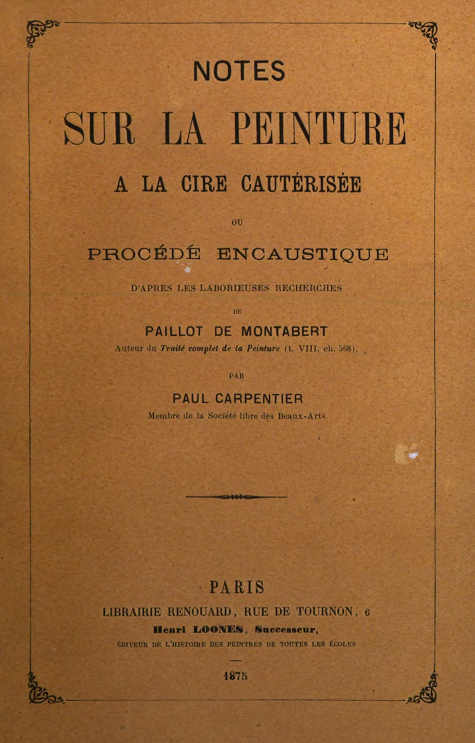
As our research about Carpentier progressed, we unearthed some very intriguing discoveries. While he was quite active in the Society des Beaux-Arts, advocating for various artistic mutual aid societies, he was also an accomplished theoretician and technician of encaustic painting. The ancient process of adding pigment to melted beeswax, which dates back to antiquity, fascinated Carpentier throughout his lifetime and culminated in his authoring a detailed treatise about the technique that artists still consult today.
Notes en cire

Cover of Notes sur la peinture: a la cire cautérisée procédé encaustique by Paul Carpentier

Most interestingly, we discovered that one of his closest friends was Louis-Jacques-Mandé Daguerre (1787-1851), the French artist and photographer recognized for inventing the eponymous process of photography. As a testament to their mutual admiration, Carpentier made a painting and bust of his good friend, but more importantly, in 1855 he wrote a monograph about Daguerre that to this day remains the single greatest firsthand contemporary account on the birth of photography.

Knowing more about Carpentier, and turning back to his self-portrait, we see that in it he brought together people and things that held an important place in his life. While we discovered valuable information about the painting and artist, we also learned that we all gain when our Associate Director of Curatorial Affairs relaxes at the end of a busy day by surfing the Web. Visit the newly conserved painting in the DMA’s Level 2 European Art Galleries, included in free general admission, today!

Martha MacLeod is the Assistant to the Associate Director of Curatorial Affairs and Curatorial Administrative Assistant for the European and American Art Department at the DMA.
An Unlucky Month

For the fourth year in a row, we have heard rumors that at our next Late Night on Friday, July 18, another mysterious murder will take place at the DMA! It seems like July is an unlucky month for works of art in our collection.

Last year, over two thousand visitors participated in our Museum Murder Mystery Game during Late Night! If you were one of those super sleuths, you found out that it was Emma in a Purple Dress who killed Queen Semiramis in the Chinese galleries with the Bird macaroni knife from the American galleries.

And while Emma in a Purple Dress was brought to justice, we will need your help to once again uncover the dastardly goings on at the DMA.

It will be up to our visitors to solve this fourth Museum Murder Mystery by figuring out who the murderer is, the weapon he or she used, and the room where the murder took place.

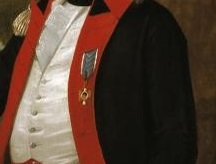
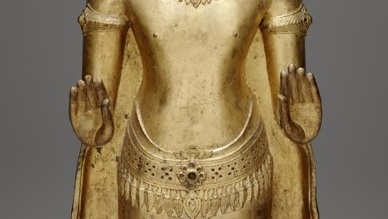
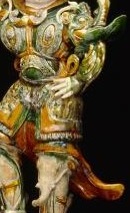
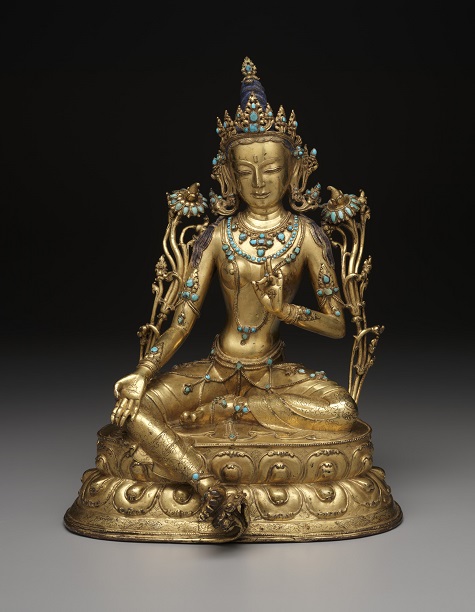
For one night only, the seven works suspected of the murder will come to life and answer your questions. Without revealing who the suspects are, as they are innocent until proven guilty, these photos will give you a clue to their identities.


In addition to the Museum Murder Mystery Game, there will be a lot more mysterious and fun things to do during the Late Night; be sure to check out the full schedule of events.


Stacey Lizotte is Head of Adult Programming and Multimedia Services at the DMA.

Let’s Play Favorites

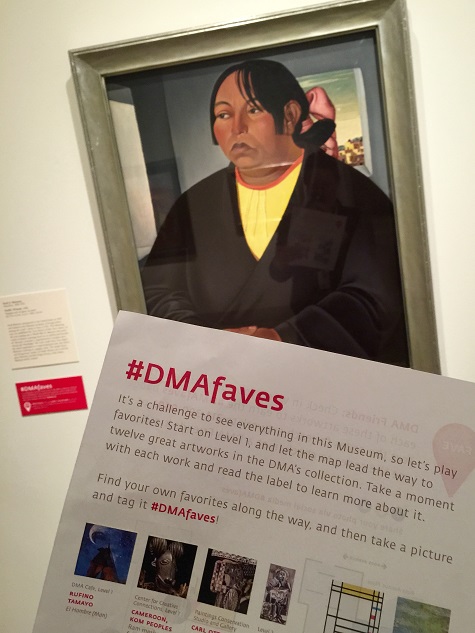
There’s a lot to see in the DMA’s collection, so this summer we made it easy for you to view a selection of our highlights. From ancient to contemporary, from paintings to masks to sculptures, our #DMAfaves will have you exploring every floor of the Museum. Grab a #DMAfaves self-guided tour at the Visitor Services Desk and hunt for our twelve #DMAfaves throughout the DMA.

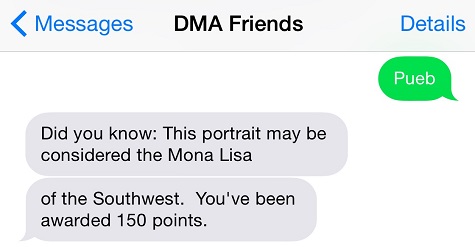
Earn Friends points by checking in each time you find one of our #DMAfaves in the galleries. In addition to points, you’ll also receive a fact about every piece of art you find. Not familiar with our Friends program? Find out more here.

Friends Fact Pueblo Woman with Guide

Earn the #DMAfaves Friends badge by finding all twelve!


DMAfaves_71


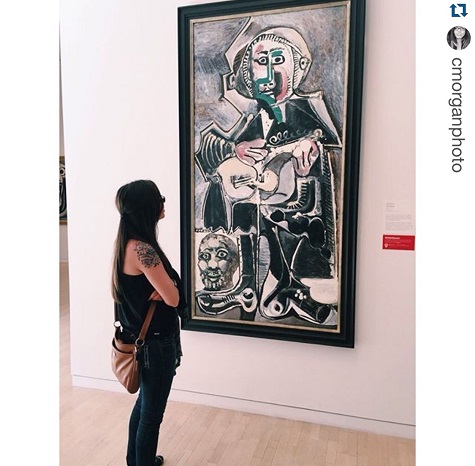
We want to know your favorite pieces in our collection too! Take photos of your own faves, tag them with #DMAfaves, and post them to social media. We’ll share your pictures on our Facebook, Twitter, and Instagram accounts all summer long.


Paige Weaver is Marketing Manager at the DMA.

The Signs They Are A-Changin’: Bilingual Museum Signage

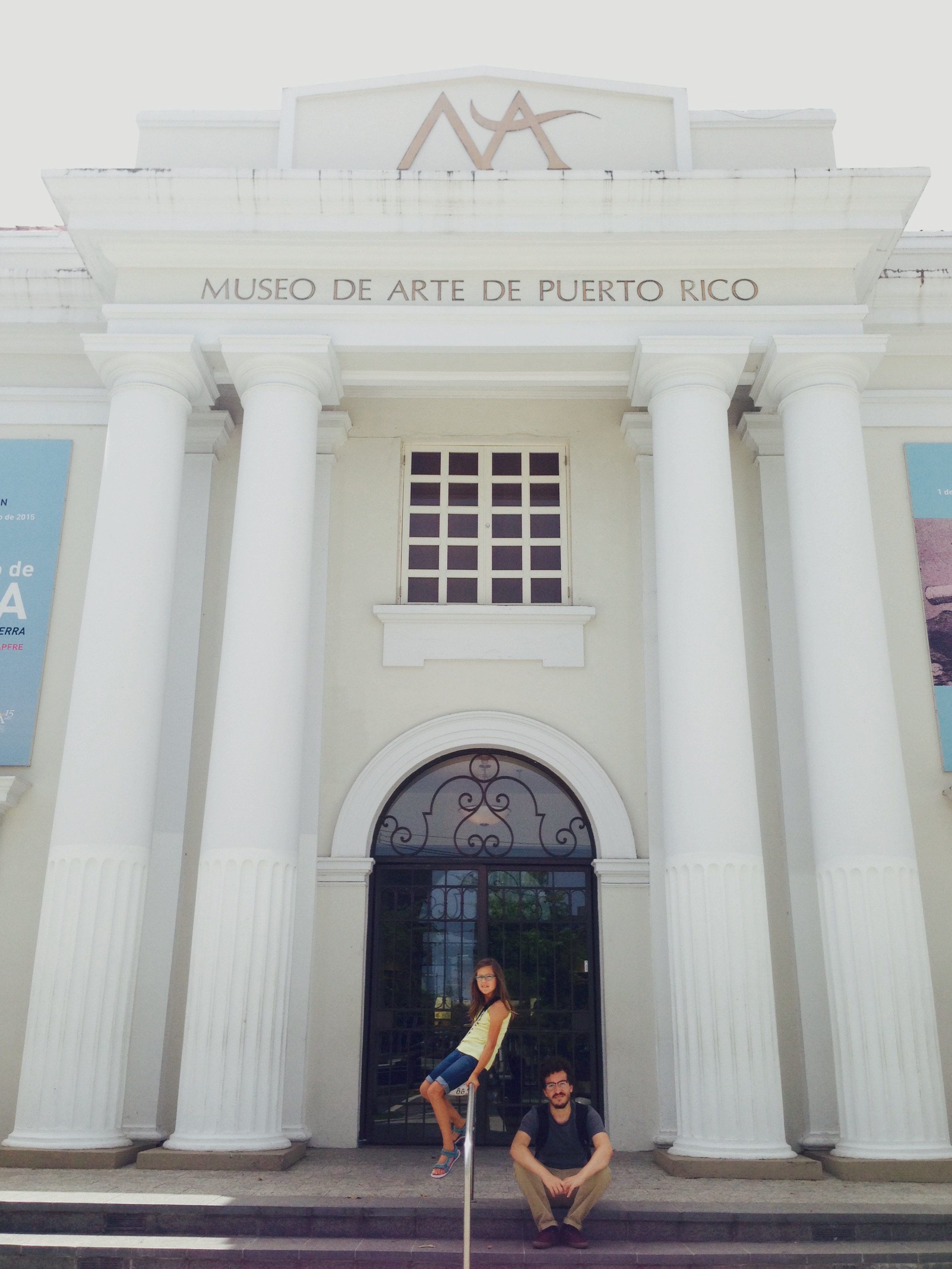
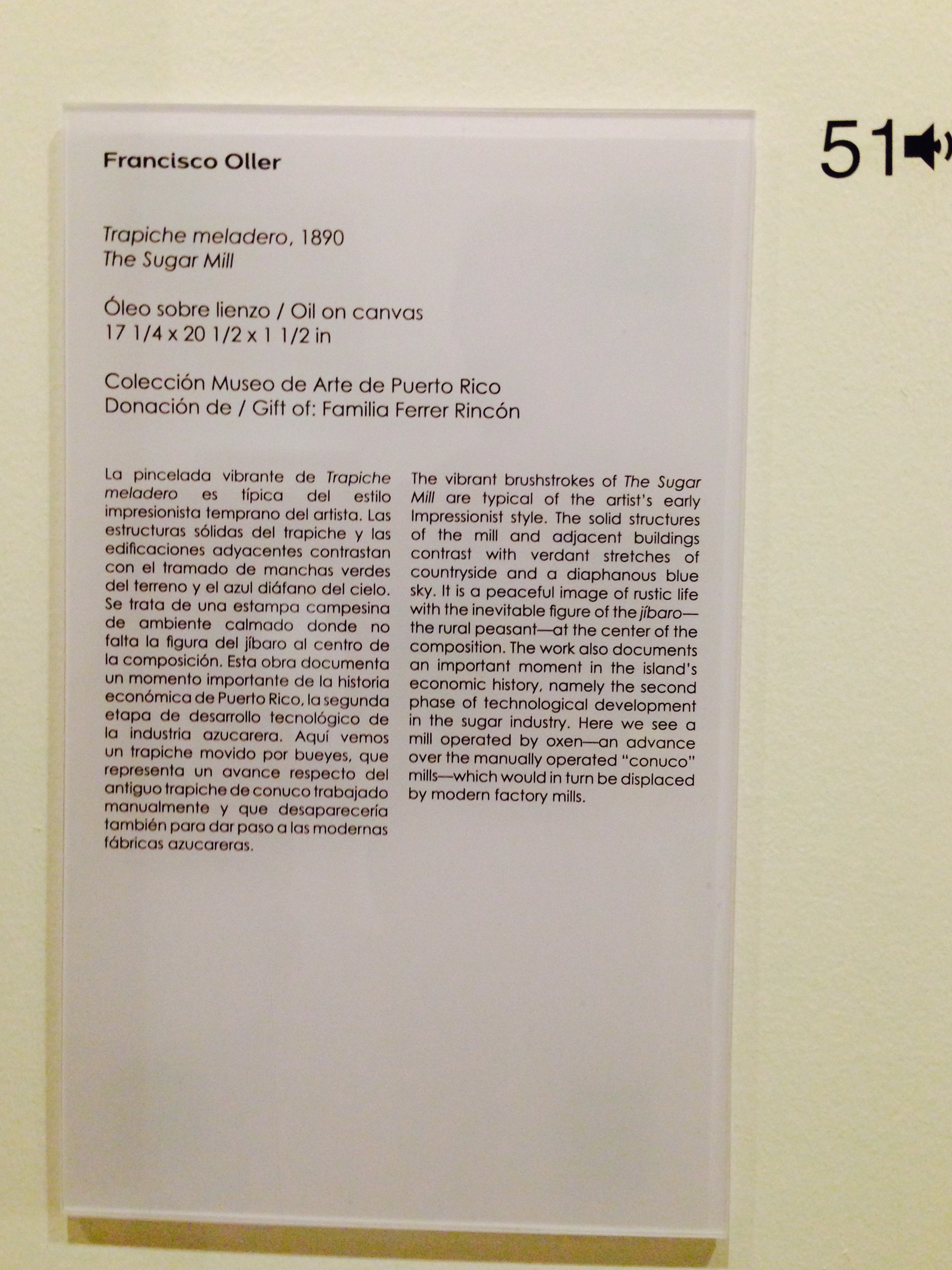
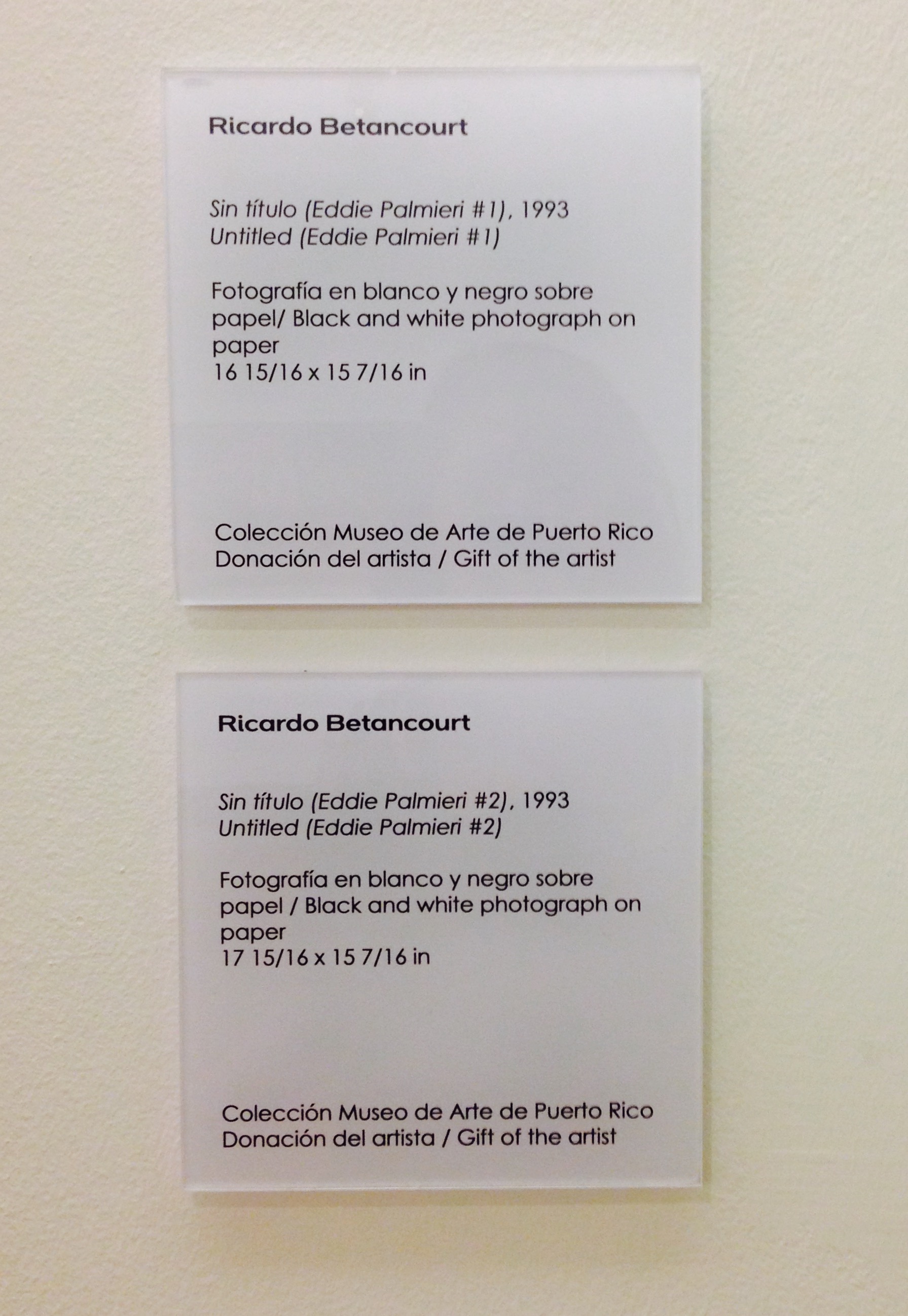
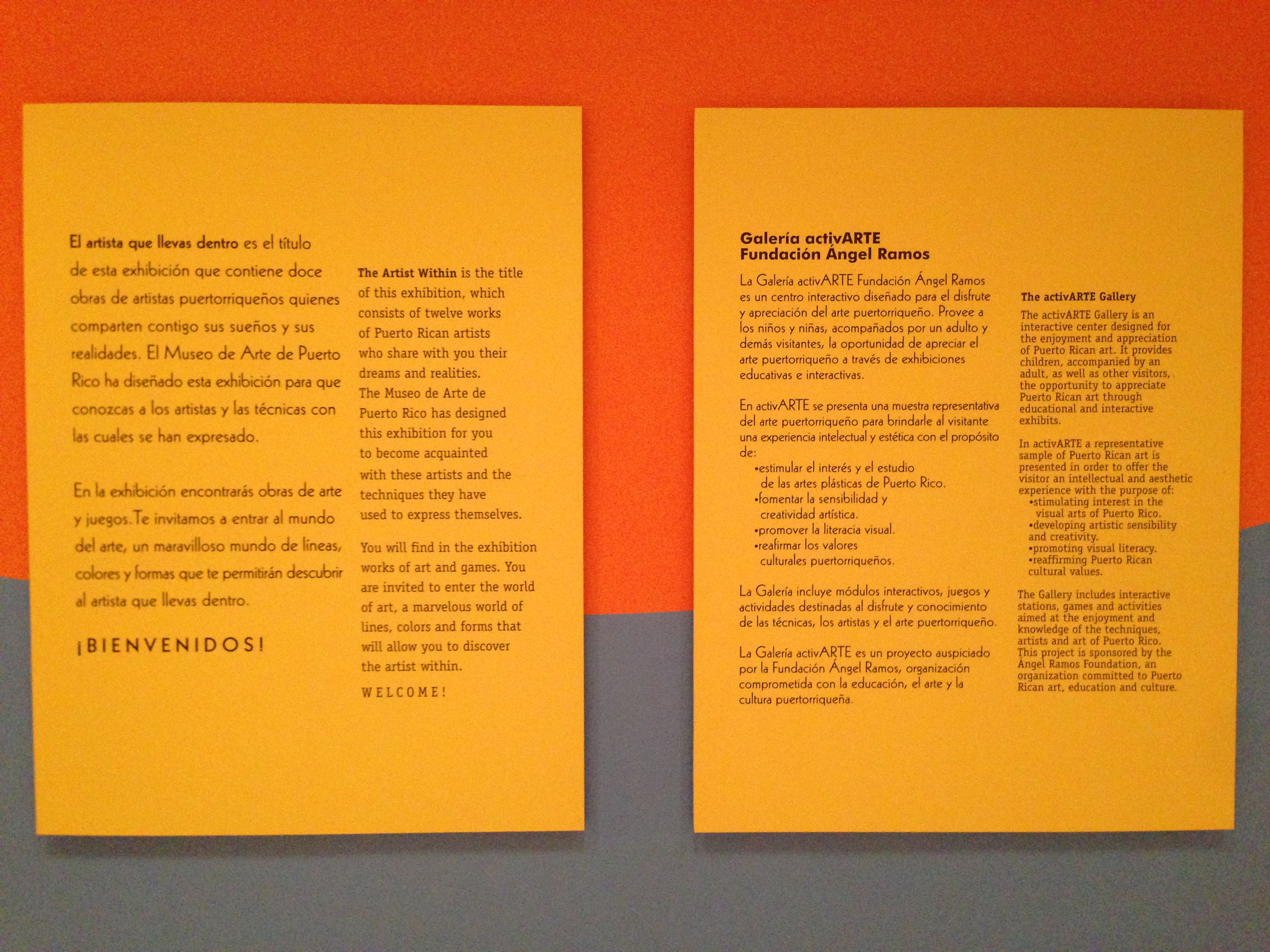
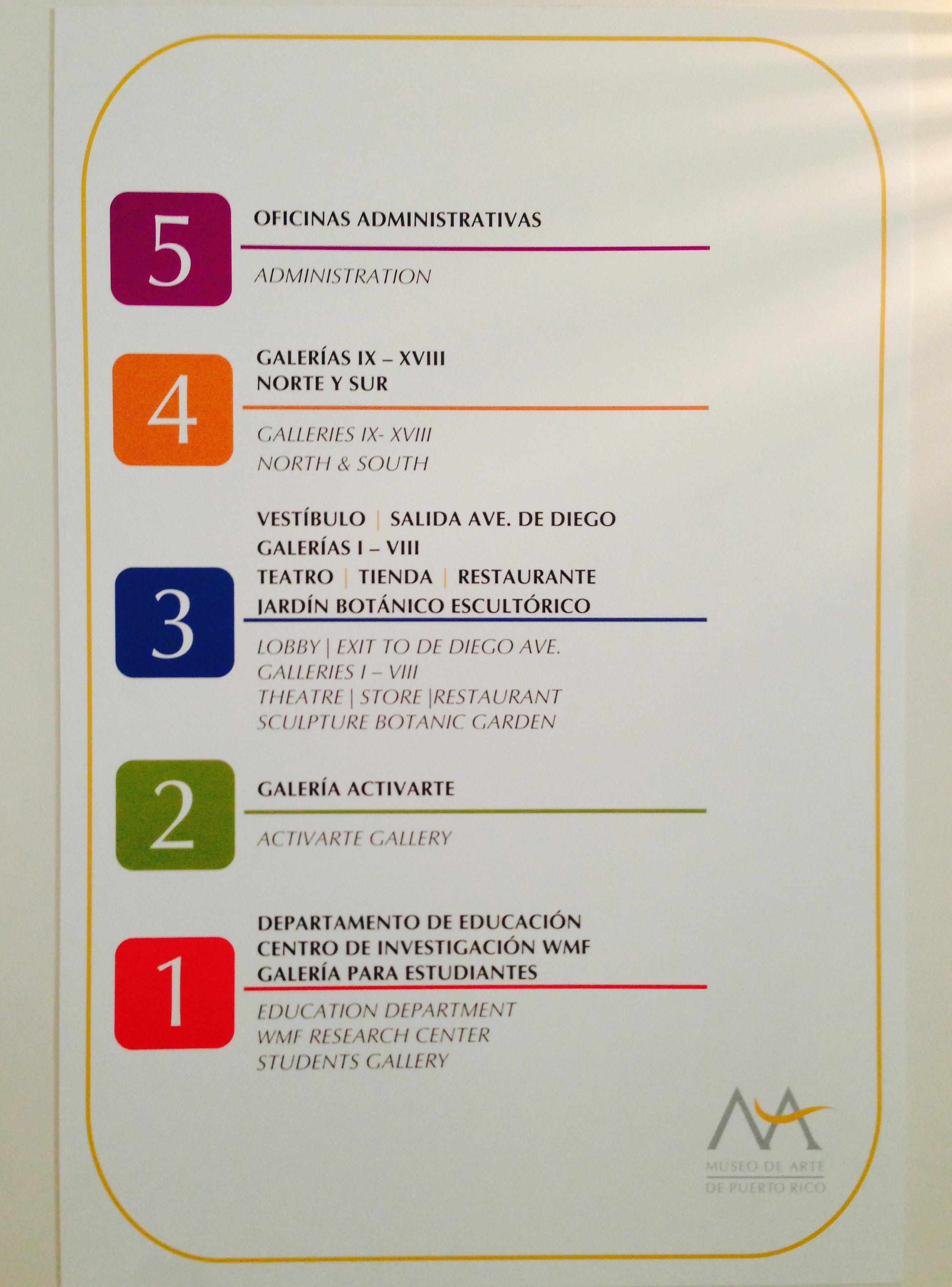
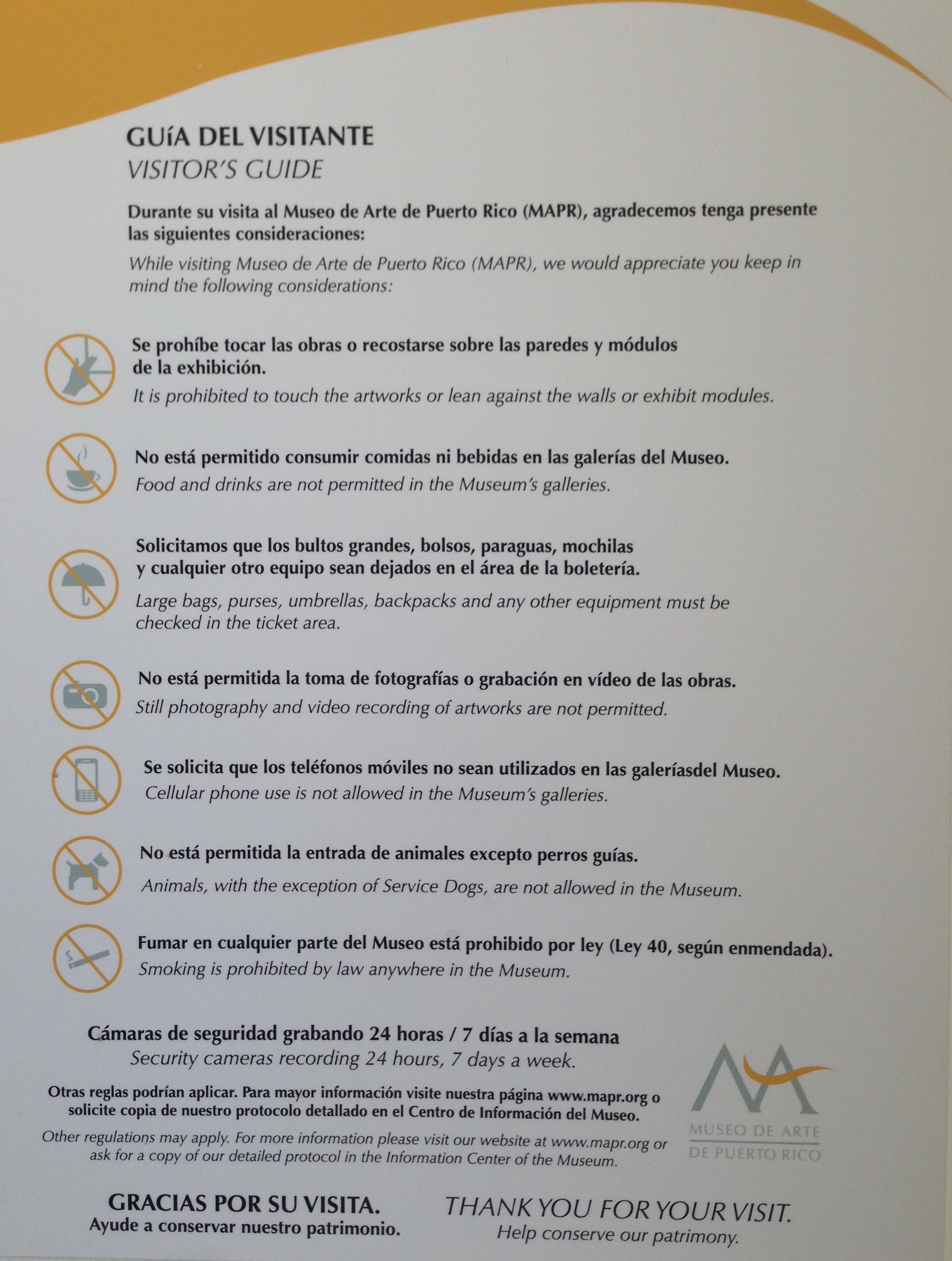
FullSizeRenderLast week, while vacationing in San Juan with my family, we stopped by the Museo de Arte de Puerto Rico. When I travel to a new city, I always like to visit the museums to see their collections and learn about their educational initiatives. Puerto Rico is a US Territory, but it’s quite a different place than any of the fifty states. Though my family is bilingual, I’m a non-Spanish speaker, so I was pleased to learn that Puerto Rico is bilingual. Many residents speak both Spanish and English and, to my delight, all of the museum signage was bilingual! As a museum educator who has been involved in making signage more accessible, it was amazing to walk in and find that everything from the museum map to the artwork labels were in both Spanish and English. (Click on the images below to enlarge.)
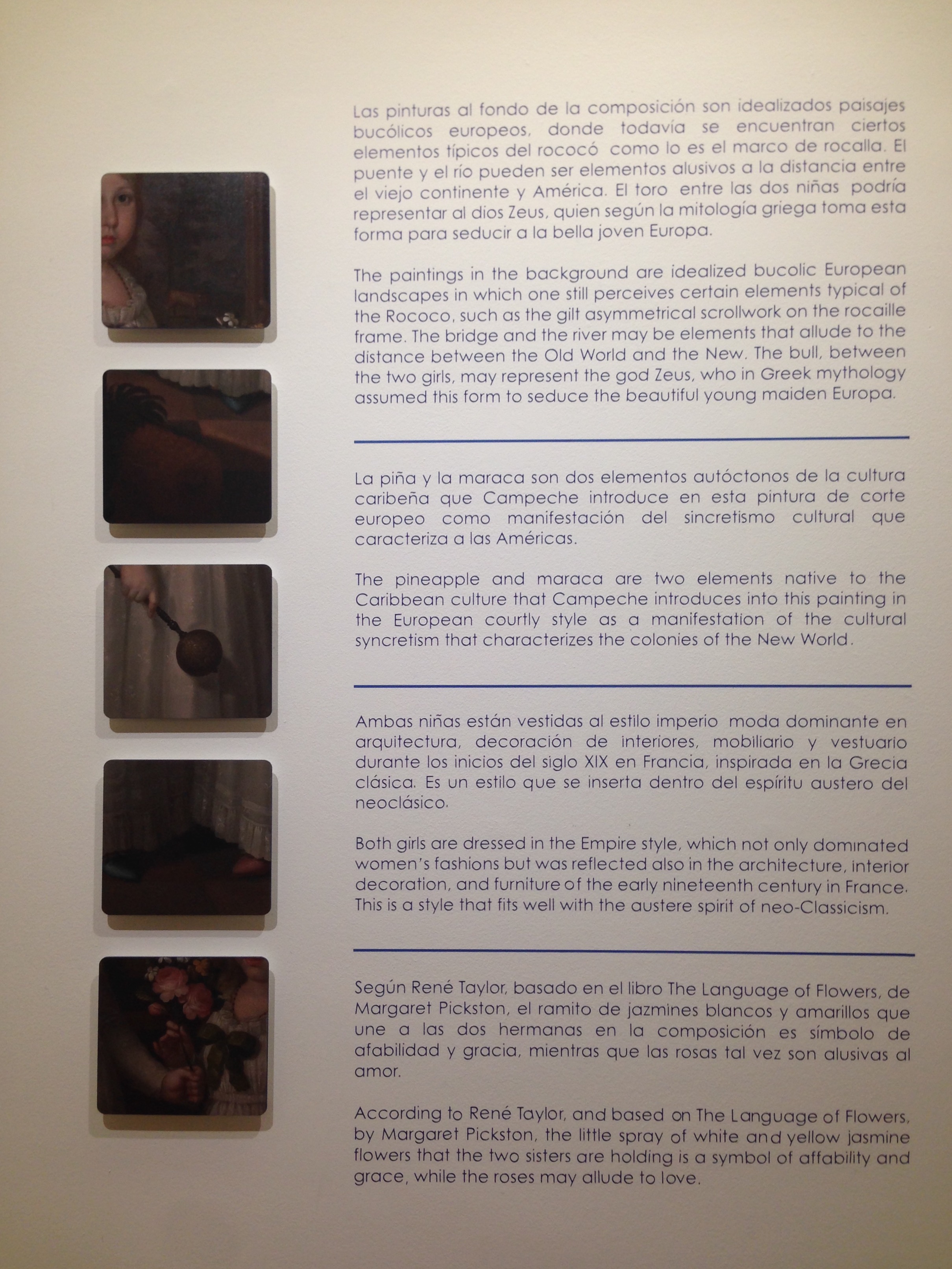
 

Last year Steve Yalowitz wrote a guest post on Nina Simon’s blog about the significance of bilingual signage. As co-author of the Bilingual Exhibit Research Initiative, which strove to better understand bilingual labels from the visitor perspective, Yalowitz offered these three points as significant findings:

  1. Code-switching – We found lots of evidence of effortless switching back-and-forth between English and Spanish….The power of bilingual text is that it’s bilingual – it provides access in two languages, and code switching lets you understand and express yourself from two different perspectives, with two sets of vocabulary.

  2. Facilitation – We researched intergenerational groups, so it’s not surprising that many of the adults saw their role as facilitator as essential to their own and the group’s success in the exhibition….With Spanish labels available, adults were able to facilitate, guiding the conversations and interactions, showing their children, grandchildren, nieces and nephews where to focus and how to interact. Adults who were previously dependent on their children could now take the lead as confident facilitators.

  3. Emotional reaction – This study found that the presence of bilingual interpretation had a profound emotional effect on the groups. Groups said they enjoyed the visit more, felt more valued by the institution, and many said having bilingual interpretation changed how they felt about the institution.
When I read Yalowitz’s article last year, it opened my eyes to the experiences of non-English speakers in museums with English only text. But the experience was made even more tangible as an English speaker visiting the Museo de Arte de Puerto Rico. Had the text only been in Spanish, I would have had to ask my daughter or significant other to translate for me. This would not have been impossible, but rather inconvenient. If I stopped to look closely at a work of art that they were not interested in, I would have to call them back and interrupt their experience to get assistance understanding the label. Having bilingual text allowed me to take on the role of facilitator, reading the label and prompting my daughter with questions, and allowed my family to switch between Spanish and English comfortably. Furthermore, going beyond bilingual label text and providing bilingual directional signage was significant as well: we were each able to easily and equally participate in the entire museum experience.

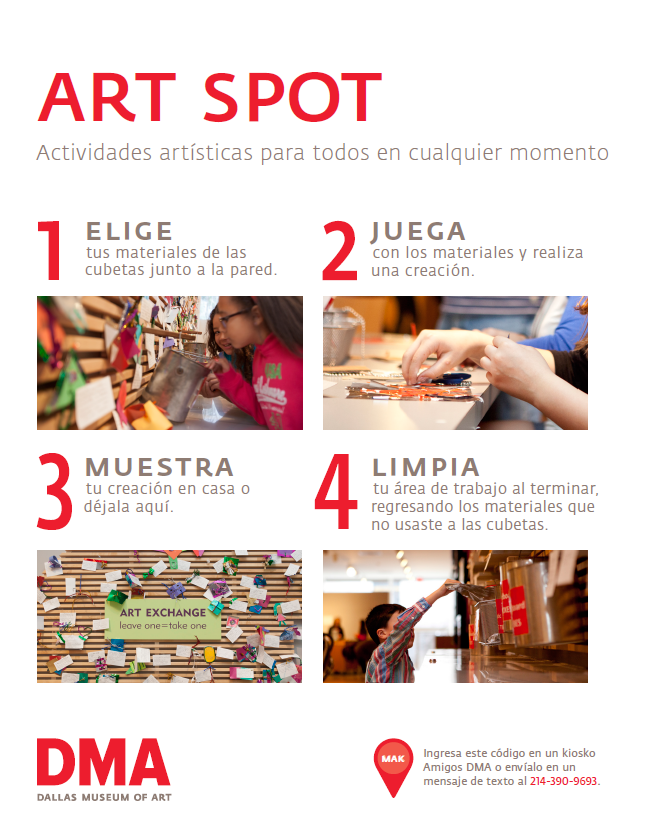
Over the last few years, the Center for Creative Connections (C3) has begun to incorporate bilingual text and voices in a variety of ways. This initiative began soon after the DMA moved to free general admission. With this change in our admission policy, our overall number of visitors and the diversity of those visitors increased. The need for accessible signage for Spanish speakers was apparent, so in late 2012 we started to test out the use of bilingual prompts at the C3 Art Spot.

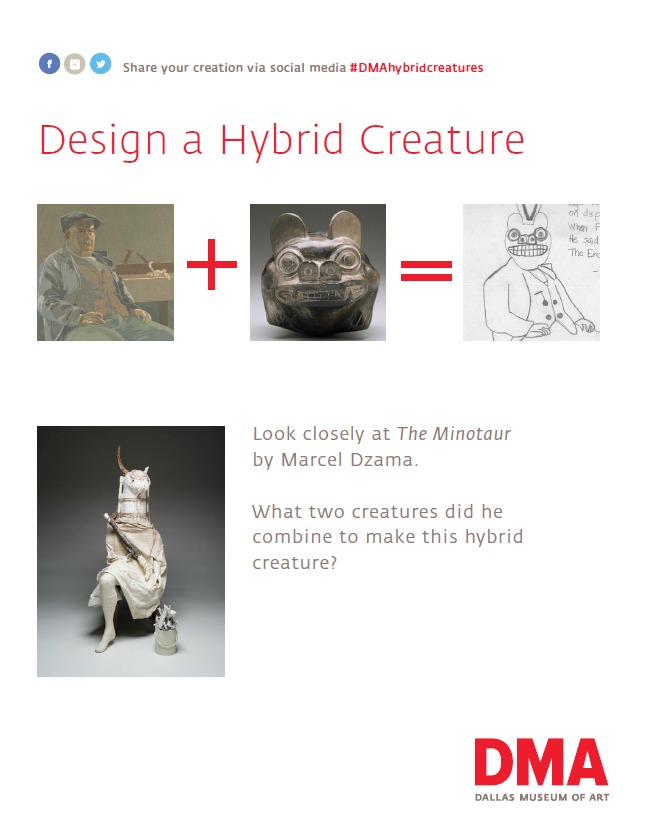
This was the perfect place to start because it is one of the busiest spaces in the Center for Creative Connections. It was also easy to begin using bilingual text in these kinds of prompts because these signs typically change more often and are easier to alter than more permanent wall signage. In 2014, we began to use bilingual activity prompts in the main C3 Gallery as well. This is a prompt for an activity where visitors use a light box and reproductions of works of art from the Museum’s collection to create hybrid creatures.

These small steps have been leading up to a bigger change. This year when we installed our Community at LARGE project, both English and Spanish text was included not only in the table prompt, but also on the wall text.

IMG_7413

As we continue to install new works of art in the Center for Creative Connections, our hope is to integrate bilingual text throughout the space.

Jessica Fuentes
C3 Gallery Manager

Mrs. International

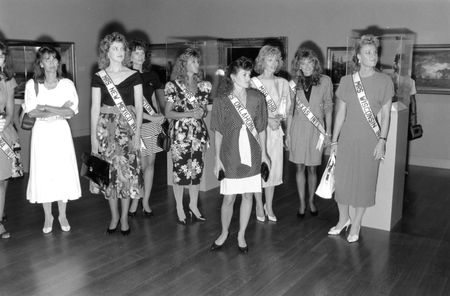
Mrs. International 1989 contestants visit the DMA.

Mrs. International 1989 contestants visit the DMA.

I was searching the archives for a fun photo to share and decided on the above. Unfortunately, like many photos in the archives, it was essentially unidentified, because in this case, I discovered that the photo was misidentified.

The caption on the back of the photo reads “Mrs. America #18 1980.” I tried to find some additional context by using the The Dallas Morning News archives, something along the lines of ‘Mrs. America contestants visit museum,’ or even ‘Mrs. America pageant held in Dallas,’ but there was nothing. A search for the history of the Mrs. America pageant showed that it was held in Las Vegas, so a visit to the DMA seemed highly unlikely. Then, with both the pageant and date now in question, I took a closer look at the titles on the sashes, and searched for “Mrs. Texas International.”

I was now fairly certain that the women in the photo were contestants in the Mrs. International pageant, which was also licensed as Mrs. USA, but I still didn’t have a date. I started to search the states visible on the sashes of the  Mrs. International pageant participants in hopes of identifying one of them to determine the date. Luckily for me, the Mrs. Ohio website came through and included past winners with photos. I was able to identify Mrs. Ohio as 1989 winner Ruth Coffman, thus providing the date for the photo.

In addition to an amusing image, this became a fun way to demonstrate just one of the many types of things I do in the DMA Archives.

Hillary Bober is the Archivist for the Dallas Museum of Art.

Stars and Stripes

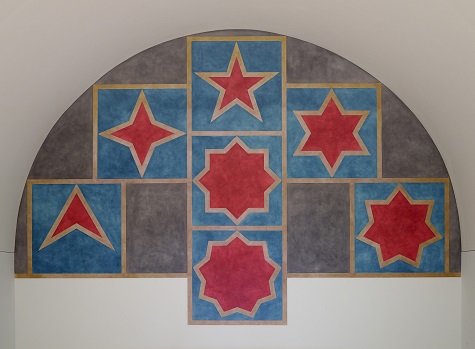
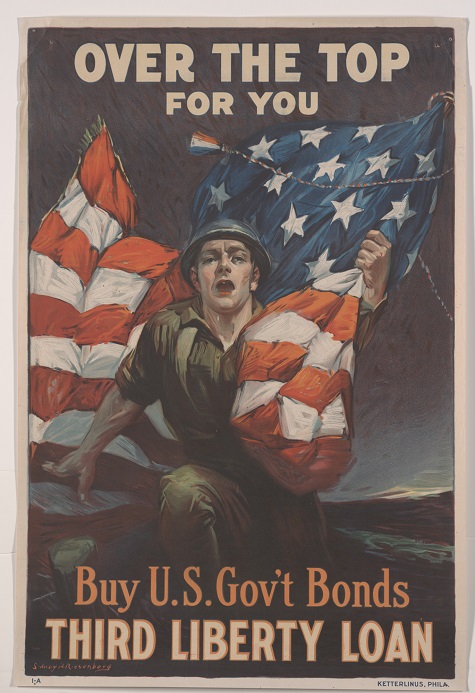
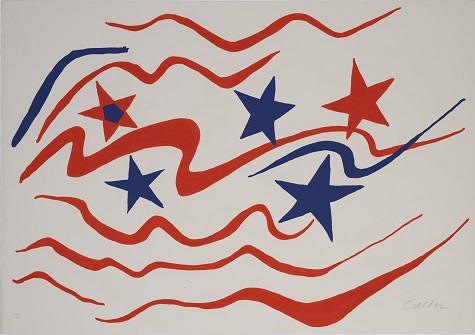
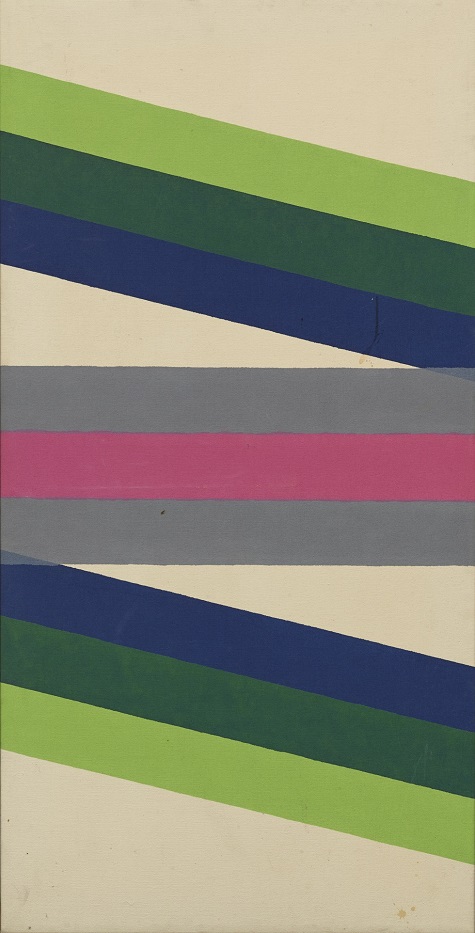
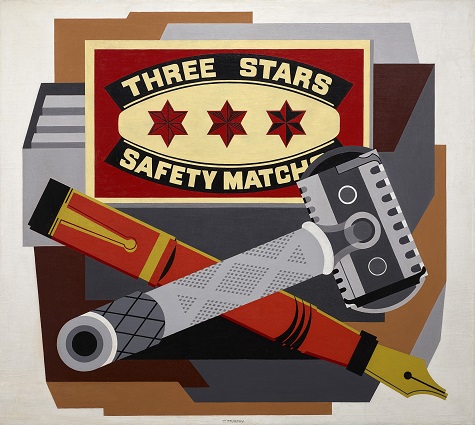
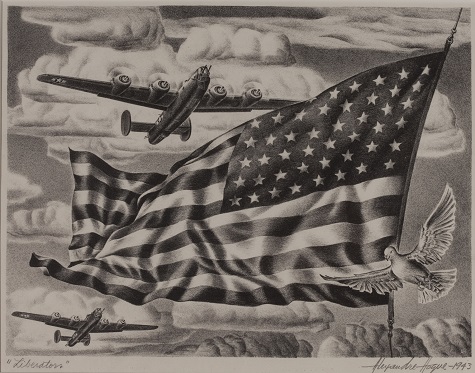
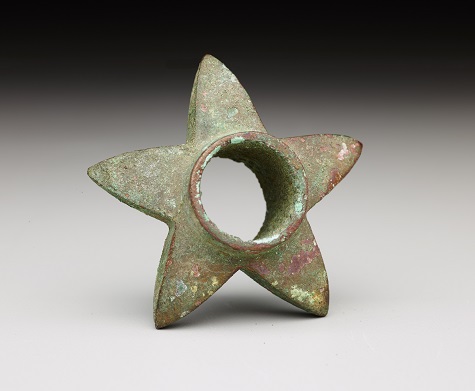
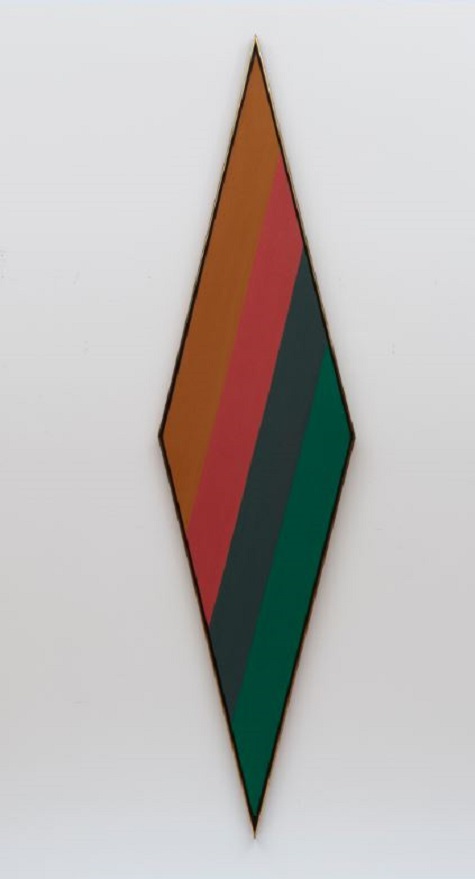
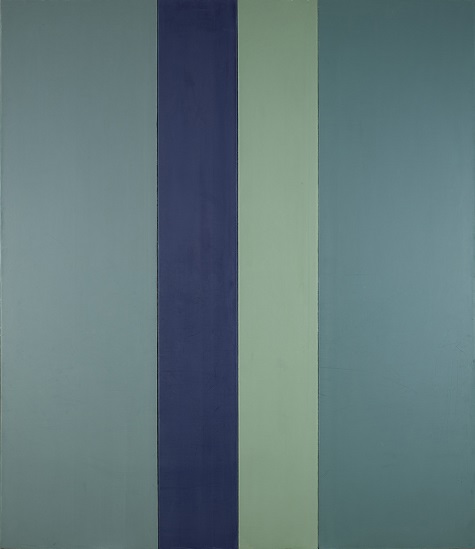
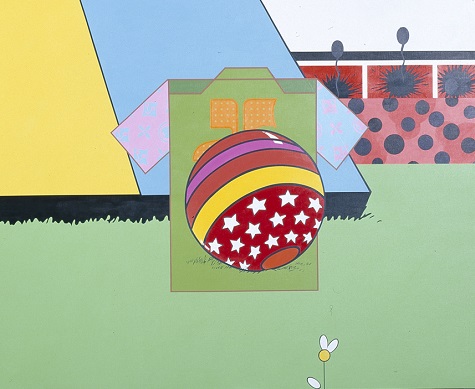
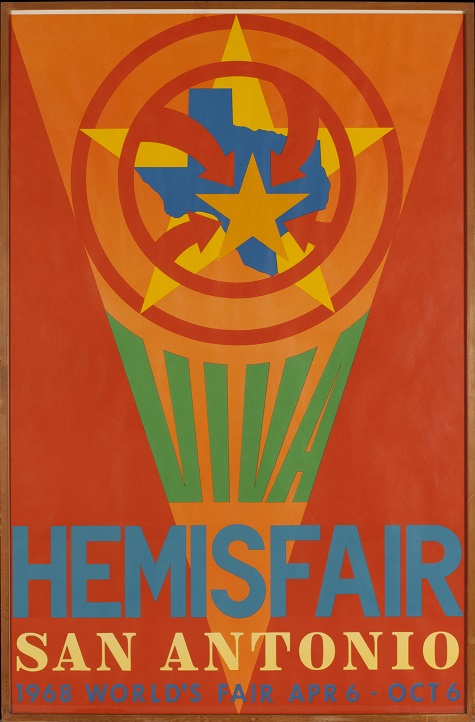
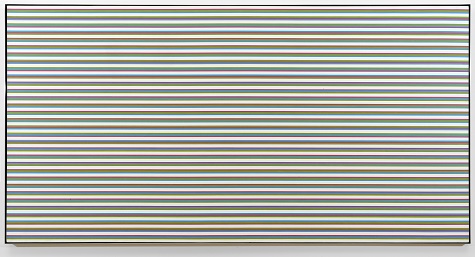
This fourth of July we are celebrating the stars and stripes in the DMA collection. The DMA is open tomorrow, July 4th, and the entire weekend, so come explore the collection for free!


Kimberly Daniell is the Manager of Communications and Public Affairs

Bittersweet Farewell

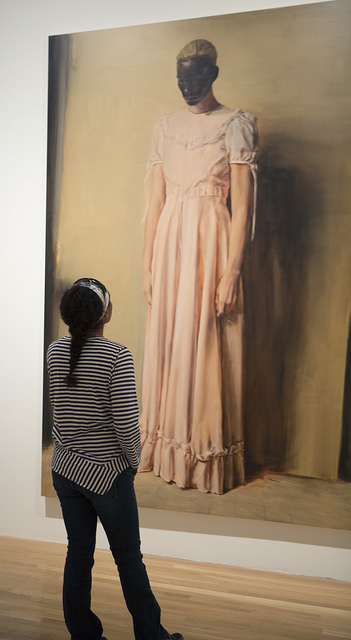
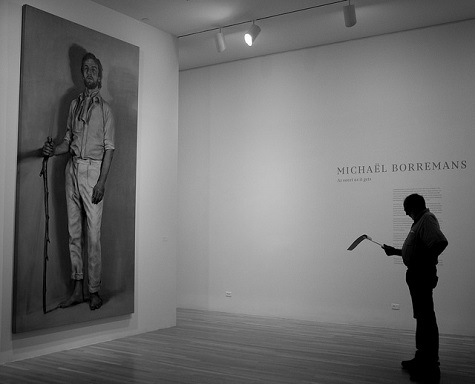
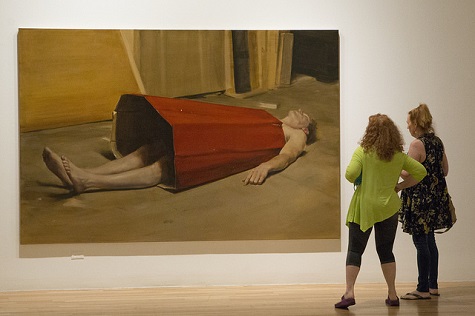
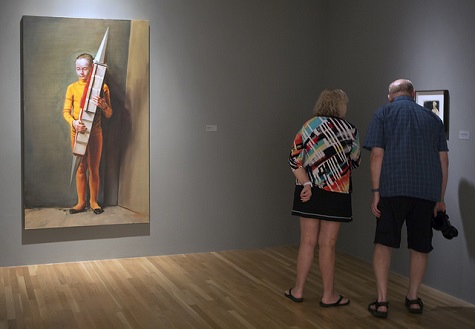
Artist Michaël Borremans at the opening of Michaël Borremans: As sweet as it gets, March 2015

Artist Michaël Borremans at the opening of Michaël Borremans: As sweet as it gets, March 2015

It is hard to believe it was almost four months ago that Michaël Borremans was at the Museum to open his internationally traveling exhibition co-organized by the DMA. The DMA is the last venue for the tour and the exhibition is now in its final six days. Don’t miss your chance to see Michaël Borremans: As sweet as it gets, on view at the DMA through Sunday, July 5.


Kimberly Daniell is the Manager of Communications and Public Affairs at the DMA

#LoveWins

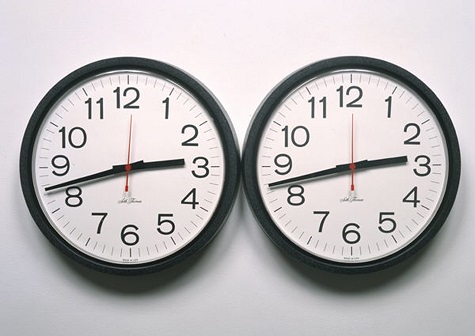
In commemoration of today’s decision we wanted to share Félix González-Torres’s work in the DMA collection Untitled (Perfect Lovers).

The date of this work corresponds to the time during which Félix González-Torres’s partner, Ross Laycock, was ill, and it embodies the tension that comes from two people living side-by-side as life moves forward to its ultimate destination. González-Torres comments: “Time is something that scares me . . . or used to. This piece I made with the two clocks was the scariest thing I have ever done. I wanted to face it. I wanted those two clocks right in front of me, ticking.”

Félix González-Torres, Untitled (Perfect Lovers), 1987-1990, wall clocks, Dallas Museum of Art, fractional gift of The Rachofsky Collection © The Felix Gonzalez-Torres Foundation, courtesy of Andrea Rosen Gallery, New York

Félix González-Torres, Untitled (Perfect Lovers), 1987-1990, wall clocks, Dallas Museum of Art, fractional gift of The Rachofsky Collection © The Felix Gonzalez-Torres Foundation, courtesy of Andrea Rosen Gallery, New York

Kimberly Daniell is the Manager of Communications and Public Affairs at the DMA

Weaving in the Andes

For thousands of years, artists in the Andean region of South America have been weaving beautiful and complex textiles—an extremely labor intensive process as well as an important form of artistic expression. Beyond serving as protection from the arduous cold of the highlands and the intense sun of the Andean coast, textiles played important roles in ritual, political, and social life and functioned as a marker of social identity for both the living and the dead. Because it took so much time and effort to produce a textile, wearing a highly decorative tunic, for example, conveyed the wearer’s social prestige. Today, we are surrounded by textiles—from the upholstery of our living room sofas to our clothes and bed sheets. But most of today’s textiles were created in mass and for the masses.

3a

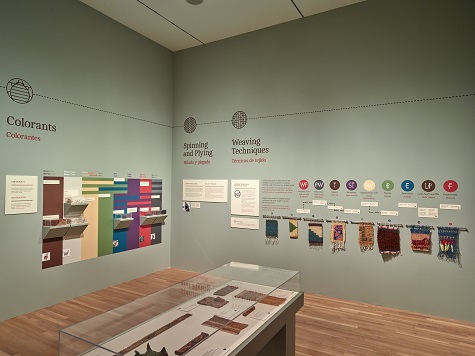
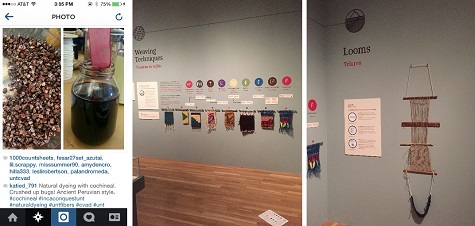
One of the goals of Inca: Conquests of the Andes—on view until November 15, 2015—is to emphasize that each of the textiles in the exhibition was laboriously and thoughtfully created by hand. So, we designed a space within its galleries to illustrate the step-by-step process of making a textile, from the shearing of a camelid for natural hair or the picking of raw cotton, to the many specific ways that fibers can be woven together to produce a textile.

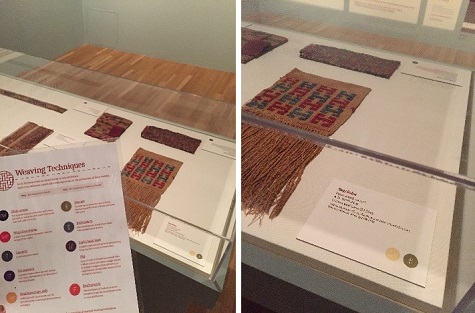
We were thrilled to collaborate on this project with University of North Texas professor Lesli Robertson and the awesome students in her class Topics in Fiber: Community, Culture, and Art. To kick it off, the class visited the DMA’s textile storage and examined fragments representing a variety of weaving techniques for inspiration. Then, they returned to campus and got busy creating enlarged samples of the weaving techniques, using extra strong and thick cording and string so that visitors can touch and feel the nuanced differences between the various techniques. The students experimented with natural dyes like indigo and cochineal (a parasitic insect) to produce bright colors, mirroring the Andean artists in the exhibition. They also produced a backstrap loom—a small, portable loom popular in the Andes that is attached around the weaver’s back and anchored to a tree or other high post. Be sure to check out the students’ photodocumentation of their project on Instagram. They tagged all of their photos and video with #IncaConquestUNT.

1a


Better yet, visit the Inca exhibition and explore the sample wall to learn about the intricate weaving processes used by the artists represented in the exhibition. When you enter, grab a Weaving Techniques guide from the holder. The colorful round icons on labels indicate the predominant weaving technique used for that artwork. Look for differences in the techniques in the artwork galleries, but try to feel the difference in the Weaving in the Andes space.
2a


Andrea Severin Goins is the Interpretation Manager at the DMA.


Dad’s Day at the DMA

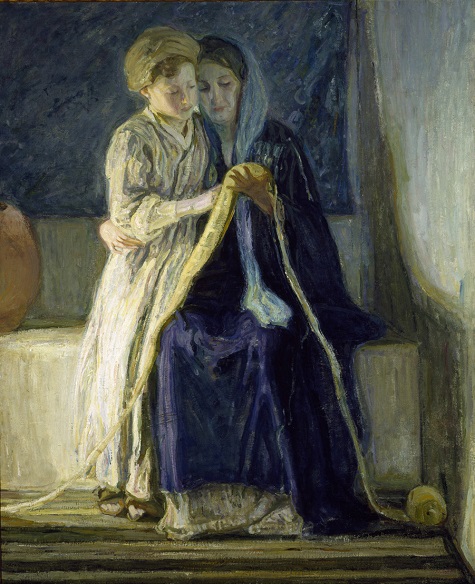
Henry Ossawa Tanner, Christ and His Mother Studying the Scriptures, c. 1909, oil on canvasm Dallas Museum of Art, Deaccession Funds 1986.9

Henry Ossawa Tanner, Christ and His Mother Studying the Scriptures, c. 1909, oil on canvas, Dallas Museum of Art, Deaccession Funds, 1986.9

In honor of Fathers’ Day, we are showcasing artist Henry Ossawa Tanner’s tender rendering of his wife and son, whom he used as models for Christ and His Mother Studying the Scriptures. In addition to this painting in the DMA’s collection, another, later version is in the Des Moines Art Center. The two were based on inscribed photographs taken by Tanner of his Swedish-born wife, Jessie, and their son, Jesse; the photographs are now housed in the Tanner Papers collection at the Smithsonian’s Archives of American Art.

(Image: Jessie Olssen Tanner and Jesse Ossawa Tanner posing for Henry Ossawa Tanner’s painting of Christ and his mother studying the scriptures, not after 1910. aaa.si.edu/)

Tanner painted a portrait of his own father, African Methodist Episcopal bishop Benjamin Tucker Tanner (1897), now in the Baltimore Museum of Art. The Tanner family lived primarily in France, where the artist had settled in the 19th century to escape racial discrimination in America. The artist’s last years were devoted to the care and recovery of his only son, who had a nervous breakdown following his graduation from Cambridge. Jesse Tanner went on to become a successful petroleum engineer, and in the 1950s he wrote a manuscript, The Life and Works of Henry O. Tanner, dedicated to his father.

Visit Tanner’s painting, on view in the DMA’s Level 4 galleries and included in free general admission, this weekend to celebrate the dad in your life.

Reagan Duplisea is the Associate Registrar at the DMA.


Archives

Categories