Posts Tagged 'Dallas Museum of Art'


Black and White: Pollock’s Breakthrough Paintings

Artifacts, the DMA Member magazine,  invited Jackson Pollock’s nephew Jason McCoy to share his thoughts on his uncle’s work on the eve of the DMA’s exclusive presentation of Jackson Pollock: Blind Spots, which opens on Friday, November 20. We hope you are as delighted by his article as we were to publish it.

Breakthrough: Pollock’s Black Paintings
By Jason McCoy
Original publish date: Artifacts Fall 2015
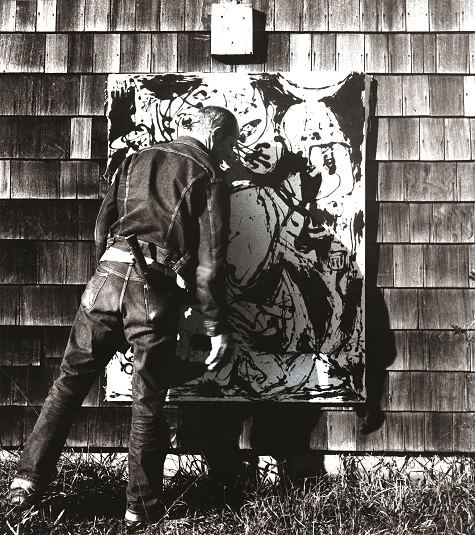
Jackson Pollock, n.d. Photograph by Hans Namuth, Courtesy Center for Creative Photography, University of Arizona © 1991 Hans Namuth Estate

Jackson Pollock, n.d.
Photograph by Hans Namuth, Courtesy Center for Creative Photography, University of Arizona © 1991 Hans Namuth Estate

When DMA curator Gavin Delahunty first talked to me about his dream of organizing an exhibition of Jackson Pollock’s so-called Black and White paintings, I was of course intrigued but thought to myself “good luck.” It is notoriously difficult to organize any Pollock show, and I knew the paintings were scattered all over the world. But the good luck seems now to be ours—Gavin has pulled it all off and we have been given the great good fortune to be able to view the largest assemblage of these works together, ever. Jackson Pollock is one of the most recognizable names in modern art, but we generally associate the name not with a single image of a specific painting but rather with the idea of paintings that consist of masses of fine lines, skeined across the picture’s surface in seeming confusion.

I appreciate that the Blind Spots exhibition will present an additional view of Pollock’s oeuvre, the paintings that followed the so-called pourings. These paintings were yet another breakthrough for Jackson Pollock, because here he was able to convey the certainty and discipline of works that, for the most part, were made in one session. There is a clarity to the paintings, a minimalism and a simplicity that make it all look so easy and pre-ordained. Not so, of course, but what is revealed is a master’s ability to get it right the first time, and so let the paintings stand for themselves. They are a powerful, fascinating lot, crowned with one of my personal favorite paintings of all, Portrait and a Dream, a longtime resident of Dallas.

Blind Spots will enable all of us to reevaluate the breadth and depth of Pollock’s accomplishments. It will illuminate that there was most often a figurative element in all of Pollock’s paintings, as images of man or beast are easy to recognize in Pollock’s first gestures on the plane. We can recall a comment he made to this effect, that in these paintings the “figure is coming through.” Such recognizable forms in fact caused consternation with certain modernist critics at the time, who did not care to acknowledge less than fully abstract painting as being modern.

Blind Spots will also include examples of Pollock’s interest in scale. In 1951, with the help of his brother, Sanford McCoy, he chose six paintings not at all similar in size to be used in a suite of serigraphs, a selection of which are exhibited in this exhibition. With a computer today, this type of curiosity might seem obvious, but this was not the case sixty-five years ago.

Had Pollock stopped after his “drip paintings” of the late 1940s he would certainly still have his place in history. Rather, his creative drive was such that it continued to evolve in unexpected ways and cover new ground, as Blind Spots reveals, accentuating that Pollock’s gift was much more than one-dimensional.
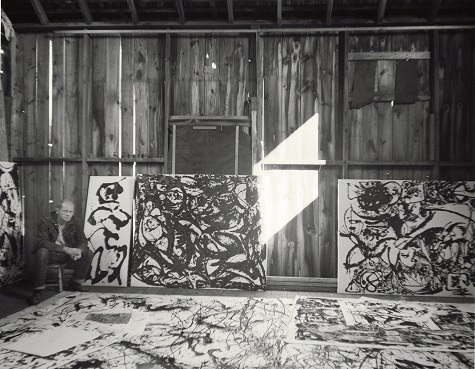
Untitled, n.d., Photograph by Hans Namuth, Courtesy Center for Creative Photography, University of Arizona © 1991 Hans Namuth Estate

Untitled, n.d., Photograph by Hans Namuth, Courtesy Center for Creative Photography, University of Arizona
© 1991 Hans Namuth Estate

–Jason McCoy is President of Jason McCoy Gallery in New York.

For more stories like the one above, all of which were created exclusively for Artifacts, visit DMA.org/members

(image: Jackson Pollock, Portrait and a Dream, 1953, oil and enamel on canvas, Dallas Museum of Art, Gift of Mr. and Mrs. Algur H. Meadows and the Meadows Foundation, Incorporated © 2015 The Pollock-Krasner Foundation / Artists Rights Society (ARS), New York)
Fashion on Flora Street

One of the many things I’ve enjoyed since joining the DMA Intern Class of 2016 is working with Booker T. Washington seniors to develop their own projects for community engagement at the DMA. A few times a week, the students walk down the street to visit the Museum. We’ve been discussing different learning styles and how to appeal to all the diverse learners that visit museums. While assisting students with their projects is my main focus during their visits to the DMA, I cannot help but also pay special attention to their fashion choices. From week to week, each student’s individual style has inspired me.

So for today’s post, I wanted to highlight some pieces in the DMA’s collection that feature elements of these students’ style. Maybe they will inspire you too!

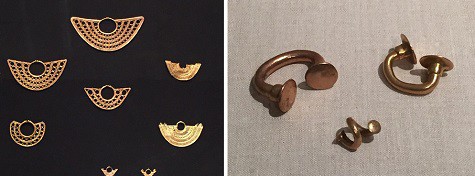
From the stage to the runway, septum rings have moved beyond counterculture to mainstream fashion.
IMG_8252
Find these nose rings at the DMA on Level 4 in the Ancient American galleries.

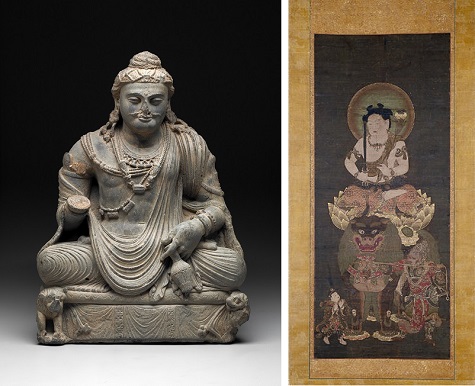
Carefully taut buns, messy half-up top knots, and lots of little Bantu knots—this unisex hair trend can be styled in so many different ways. Like it or knot, buns are here to stay.

PG_2009_46
For top knot inspiration, look to Bodhisattva in the South Asian gallery and Monju (Manjusri) in the Japanese gallery, both on Level 3.

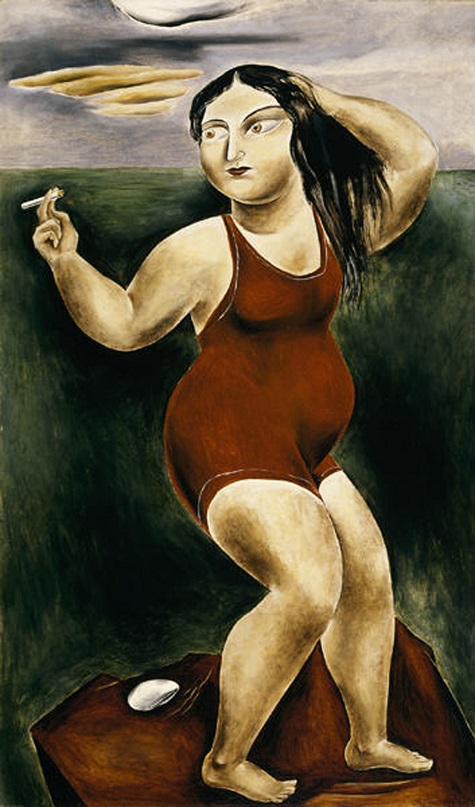
One-piece swimsuits and leotards have been back for a few years now. But with some of the Booker T. girls, I’ve noticed them as daily wear with skirts and sweaters or even cut-off shorts and a flannel shirt wrapped around the waist.

1988_22
This Bather in a one-piece carries off the look with some attitude. She’s a music video waiting to happen. Catch her on Level 4 in the American galleries.

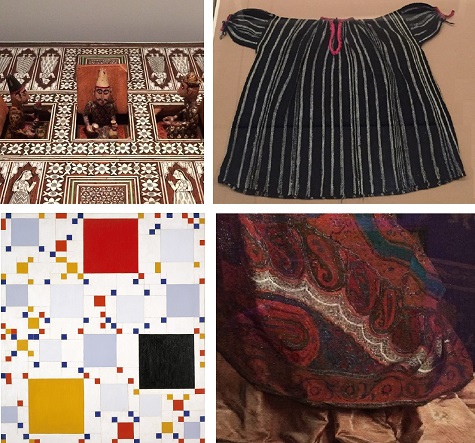
Men’s patterned shirts mirror many of the patterns in our permanent collection. Some of the young men at Booker T. have been seen sporting stripes and floral prints on their button downs. The DMA is home to many intricate textiles as well as paintings that feature patterns that may inspire your own style.

4

You can see these three men in patterned shirts in the folding backgammon board in the Level 3 South Asian galleries; the shirt for the figure of a saint is found on the Level 4 outside the Ancient American galleries; and Leon Polk Smith’s asymmetrical work Homage to Victory Boogie Woogie #1 is in the American galleries on Level 4. The paisley pattern is a detail of Alfred Stevens’ The Visit, found on Level 2 in the European galleries.

Stop by the DMA soon for your next style inspiration.

Whitney Sirois is the McDermott Graduate Intern for Gallery and Community Teaching at the DMA.

Images: Group of nose and ear ornaments, Columbia, Sinú, c. A.D. 500-1550, gold, Dallas Museum of Art, The Nora and John Wise Collection, gift of Mr. and Mrs. Jake L. Hamon, the Eugene McDermott Family, Mr. and Mrs. Algur H. Meadows and the Meadows Foundation, Incorporated, and Mr. and Mrs. John D. Murchison 1976.W.451-454, 456-458,460; Nose ornaments, Columbia, Sinú, c. A.D. 1000-1550, gold, Dallas Museum of Art, The Nora and John Wise Collection, gift of Mr. and Mrs. Jake L. Hamon, the Eugene McDermott Family, Mr. and Mrs. Algur H. Meadows and the Meadows Foundation, Incorporated, and Mr. and Mrs. John D. Murchison 1976.W.468, 810, 605; Maitreya, India, Kushan period, 2nd–3rd century, schist, Intended bequest of David T. Owsley; Monju (Manjusri), Japan, Nanbokucho, 1336-1392, ink, color, and gold on silk, Dallas Museum of Art, Dallas Art Association Purchase, 1970.8; Yasuo Kuniyoshi, Bather with Cigarette, 1924, oil on canvas, Dallas Museum of Art, Dallas Art Association Purchase Fund, Deaccession Funds/City of Dallas (by exchange) in honor of Dr. Steven A. Nash, 1988.22; Folding backgammon board, India, Mughal period, 19th century, wood, ivory, cord, and inlay, Intended bequest of David T. Owsley; Shirt for the figure of a saint, Guatemala, Kaqchikel Maya, c. 1910-1930, cotton and silk, Dallas Museum of Art, anonymous gift, 2008.194; Leon Polk Smith, Homage to Victory Boogie Woogie #1, 1946, oil on canvas, Dallas Museum of Art, DMA League Purchase Fund, 2000.391; Alfred Stevens, The Visit, before 1869, oil on canvas, Dallas Museum of Art, gift of the Pauline Allen Gill Foundation, 1997.112

Me Want Art: Cookie Monster’s DMA Birthday

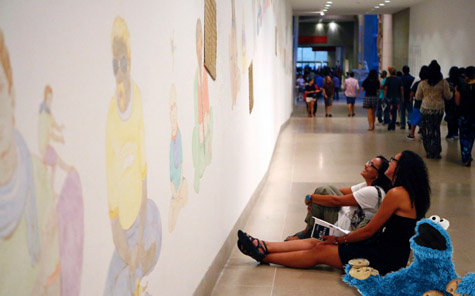
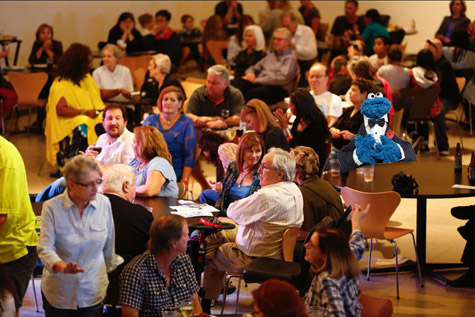
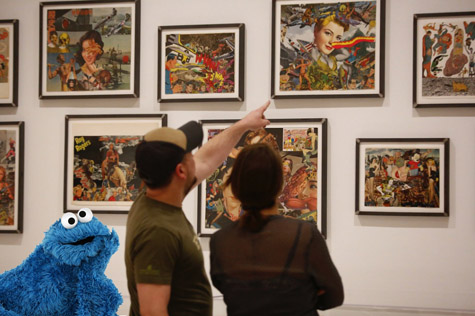
In order to celebrate the birthday of Sesame Street’s iconic Cookie Monster, Uncrated decided to go a little further with our imagination.

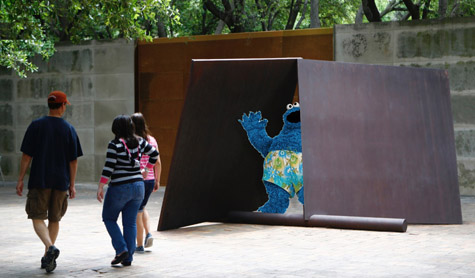
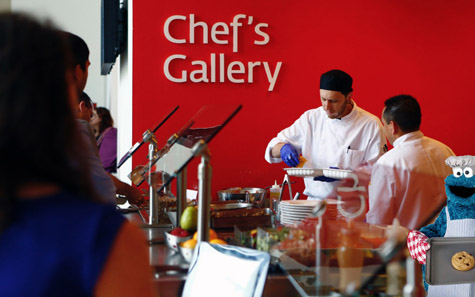
What would it be like if Cookie Monster stopped by the Museum? Would he try and serve up his tasty confections to guests at the Cafe? Or would he blend in and wait for the rest of the Sesame Street gang in the atrium?

Here’s how we think Cookie Monster would spend a day at the DMA.

Cookie5 Cookie4 Cookie3 Cookie2 Cookie1

Gregory Castillo is the Multimedia Producer at the DMA 

Haunting Opera

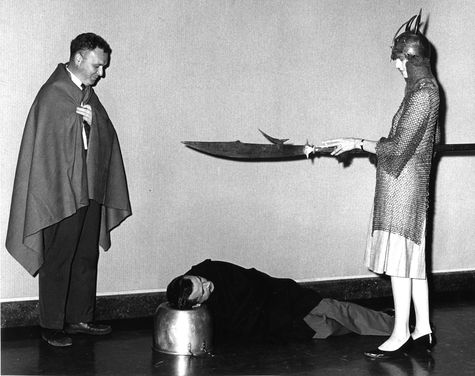
We were digging through the archives and found the photo below. The back states “‘The Sacrifice’ DMFA comic opera 1962 (Aug).” We don’t know the full history of this photo but we thought it was a fitting image for Halloween. We hope your holiday is perhaps less eventful than this trio’s in the 1960s.

“The Sacrifice” DMFA comic opera 1962 (Aug) L to R: Gene Mitchell, John Lunsford, Jerry Jane Smith

“The Sacrifice” DMFA comic opera 1962 (Aug); left to right: Gene Mitchell, John Lunsford, Jerry Jane Smith


Red Hot

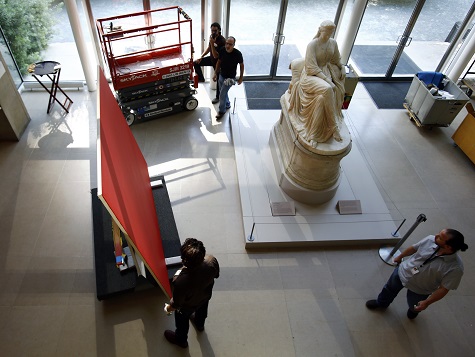
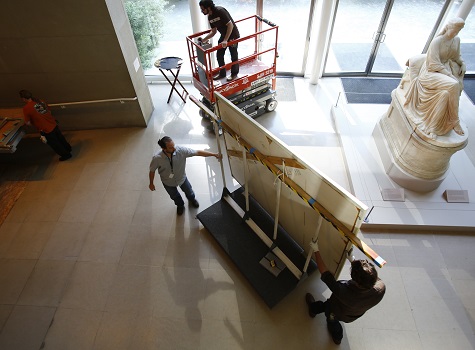
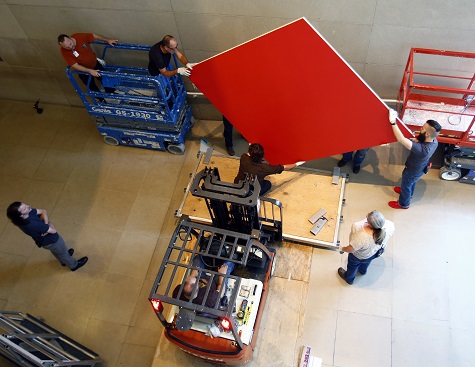
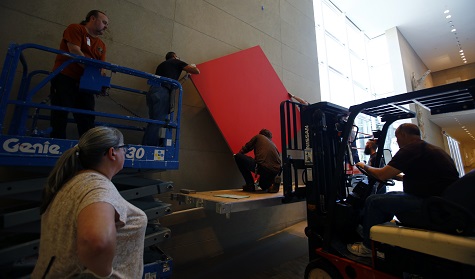
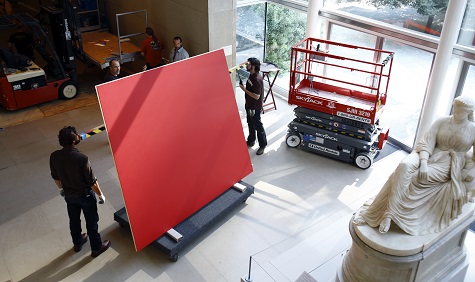
This past weekend the annual TWO x TWO for AIDS and Art benefit dinner and contemporary art auction raised a record $8.3 million! In commemoration of the event, which supports the DMA’s contemporary art acquisitions fund and amfAR’s AIDS research efforts, and in recognition of Ellsworth Kelly, this year’s honored artist, we installed the artist’s work Red Panel, which entered the DMA’s collection in 1985. You can view this work in the Museum’s Concourse on your next visit, and then stop by Untitled , which was commissioned for the Museum’s Sculpture Garden.

The Wise Llama…part 2

The Wise Llama is one of my favorite posts that I have done for Uncrated. So, when I found more photos of the handsome Sir Lancelot while I was processing the John and Nora Wise Papers in the DMA Archives, I knew I had to share.

John and Nora Wise Papers, DMA Archives

John and Nora Wise Papers, DMA Archives

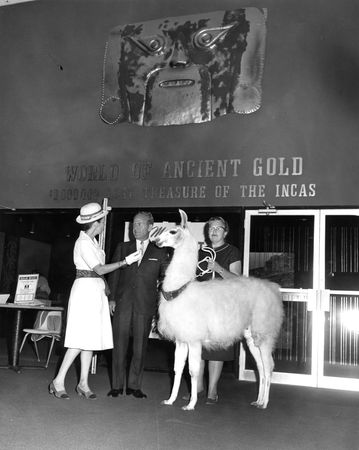
Here is Sir Lancelot, a pure white llama, promoting John Wise’s exhibition World of Ancient Gold at the 1964 New York World’s Fair. Nora Wise is behind Sir Lancelot, holding his reins.

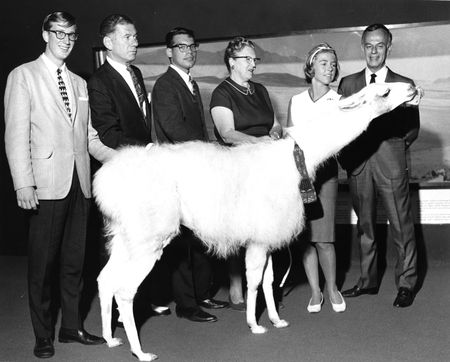
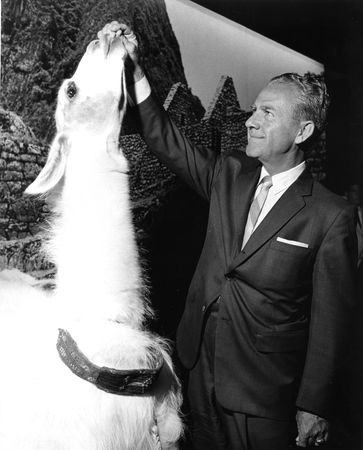
The following two photos show Sir Lancelot enjoying treats and showing off his John Wise Ltd. accessory while posing for photos during his day at the Fair.

Fair Pictures International Corp. #190-2 John and Nora Wise Papers, DMA Archives

Fair Pictures International Corp. #190-2
John and Nora Wise Papers, DMA Archives

Fair Pictures International Corp. #190-4 John and Nora Wise Papers, DMA Archives

Fair Pictures International Corp. #190-4
John and Nora Wise Papers, DMA Archives

Sir Lancelot is by far the cutest llama in the archives . . . OK he is the only one, but he’s still adorable.

Hillary Bober is the Archivist at the Dallas Museum of Art.

Late Night Knock Out

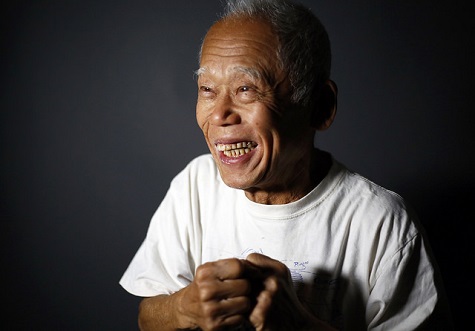
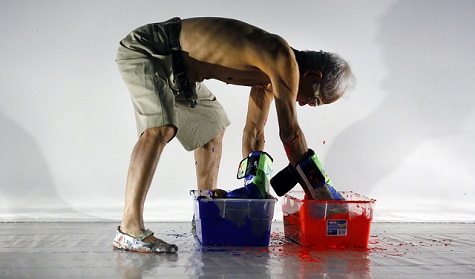
Ushio Shinohara

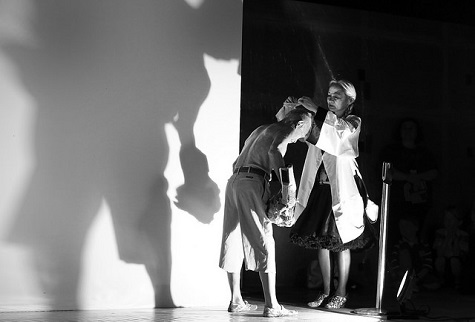
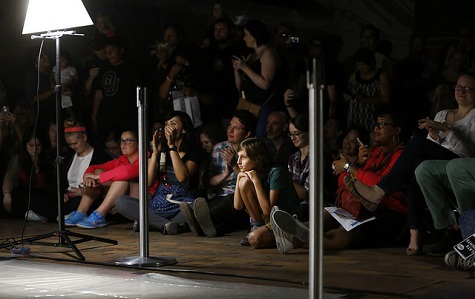
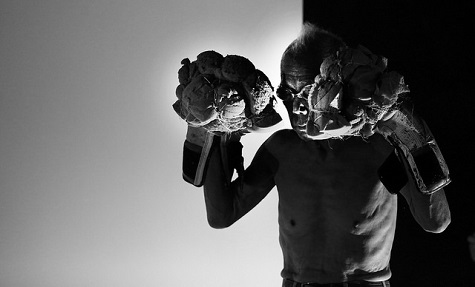
This past Friday, artist Ushio Shinohara entered the artistic ring to create one of his Boxing Paintings out on the Museum’s Ross Avenue Plaza as part of our Late Night celebrating the opening of International Pop. Late Night visitors were able to experience his interactive painting style in which he uses paint-soaked sponges attached to boxing gloves to create his unique brand of action painting. If you missed Friday’s artist performance, you still have a chance to view four works by Shinohara in the International Pop exhibition on view through January 17, 2016.

22318407381_4473c3441e_z22119216500_b78100b452_z  21686193113_3941047093_z22119214770_5512ecace9_z 21686186183_784c00b54f_z   22120390929_02b4f9f190_z22317807261_cc72b49017_z


[youtube https://www.youtube.com/watch?v=IiNKab5RaZQ&w=560&h=315]

Kimberly Daniell is the Manager of Communications and Public Affairs at the DMA.

Texas-Sized Tea with Friends

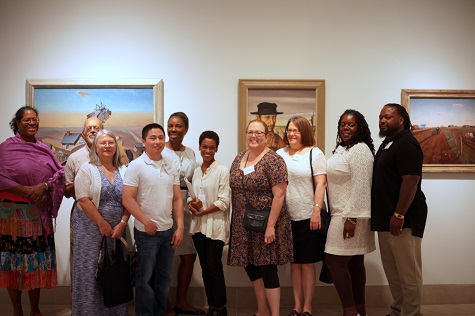
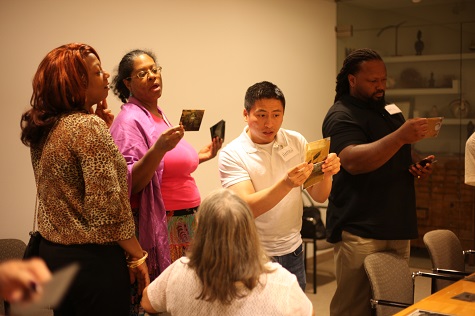
In September, a group of DMA Friends joined us for an exclusive and new DMA Friends rewards event: Tea Time, Deep in the Heart of Texas. We began our afternoon getting to know each other over Texas-inspired light refreshments which included sweet tea and lemonade paired with mini jalapeño cornbread muffins and mini buttermilk biscuits, baked fresh especially for us by the wonderful staff of the DMA Cafe.

Dallas Museum of Art_DMA Friends Tea Time, Deep in the Heart of Texas (9)_September 2015_Courtesy of Dallas Museum of Art

We learned interesting tidbits about each other, such as what artwork from the DMA collection Friends wanted to take home.  The Icebergs was the clear winner,  yet another Friend wanted to jump into The Ocean’s Bounty: Undersea Windows by Louis Comfort Tiffany!

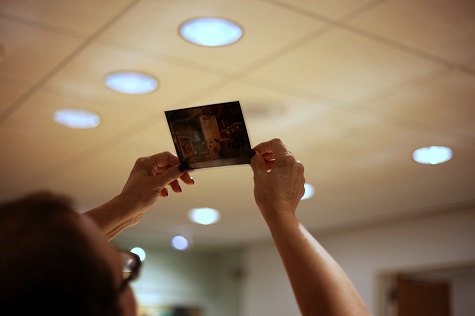
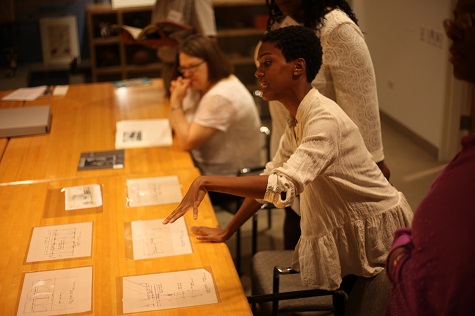
Next, we ventured up to the Dozier study room, a meeting space named after and honoring Texas artists Velma and Otis Dozier. Rae Pleasant, the Museum’s  Research Associate for Early Texas Art, showed us objects in the collection that we might not ordinarily see as they are displayed in cases inside the DMA offices.

The “Tea Time, Deep in the Heart of Texas” reward gives DMA Friends a fun social interaction combined with a new way to engage with art. We heard interesting facts, perused archival material and shared personal reactions to the artworks in Dozier as well as in the Museum galleries. Best of all, we deepened and expanded our circle of art Friends!

Start saving your points now and be on the look out for a new tea time with a new theme at the beginning of the new year.

Tanya Miller is the Friends Community Manager at the DMA

Creativity Matters

Creativity_Matters_09_2015_GC064

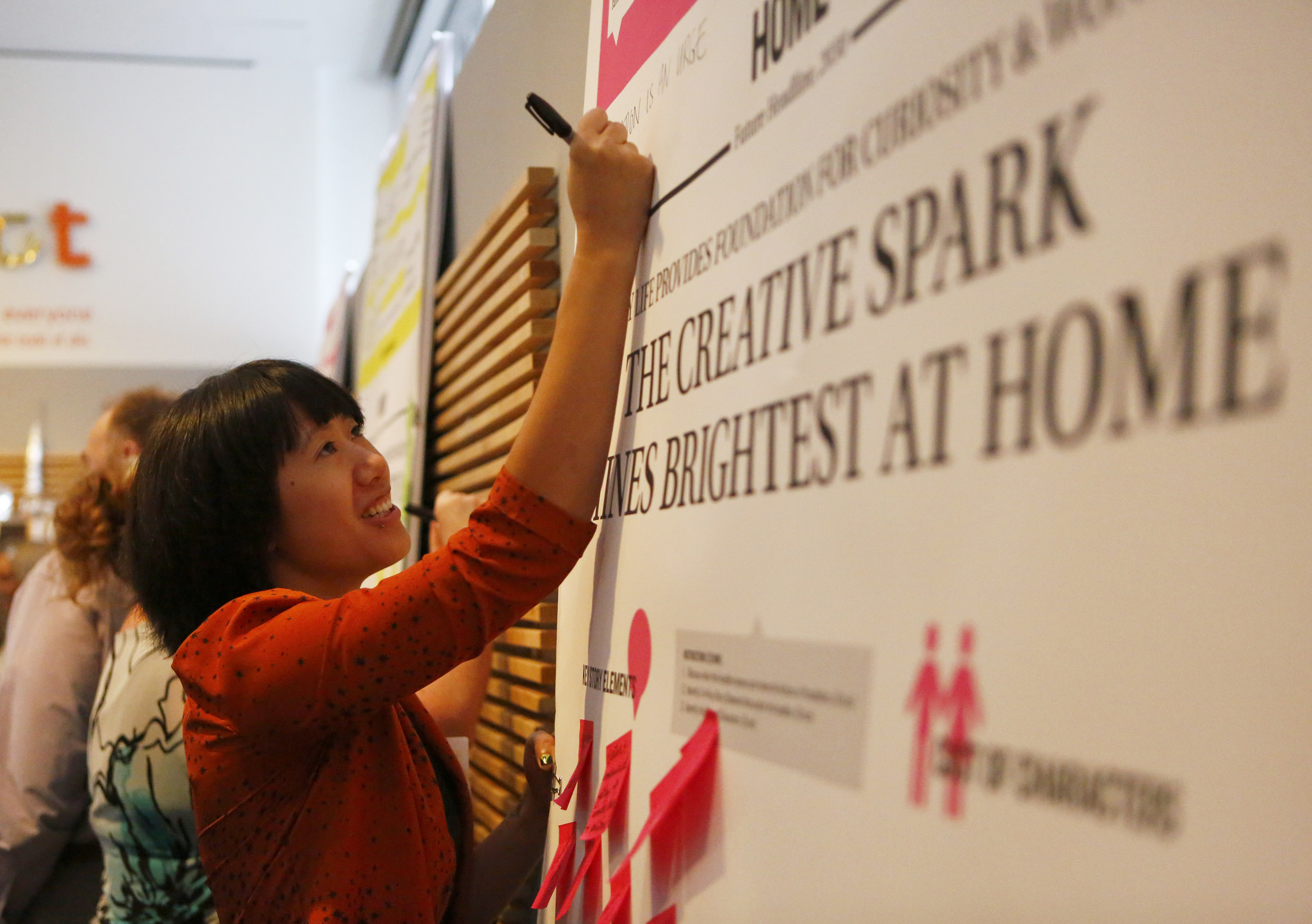
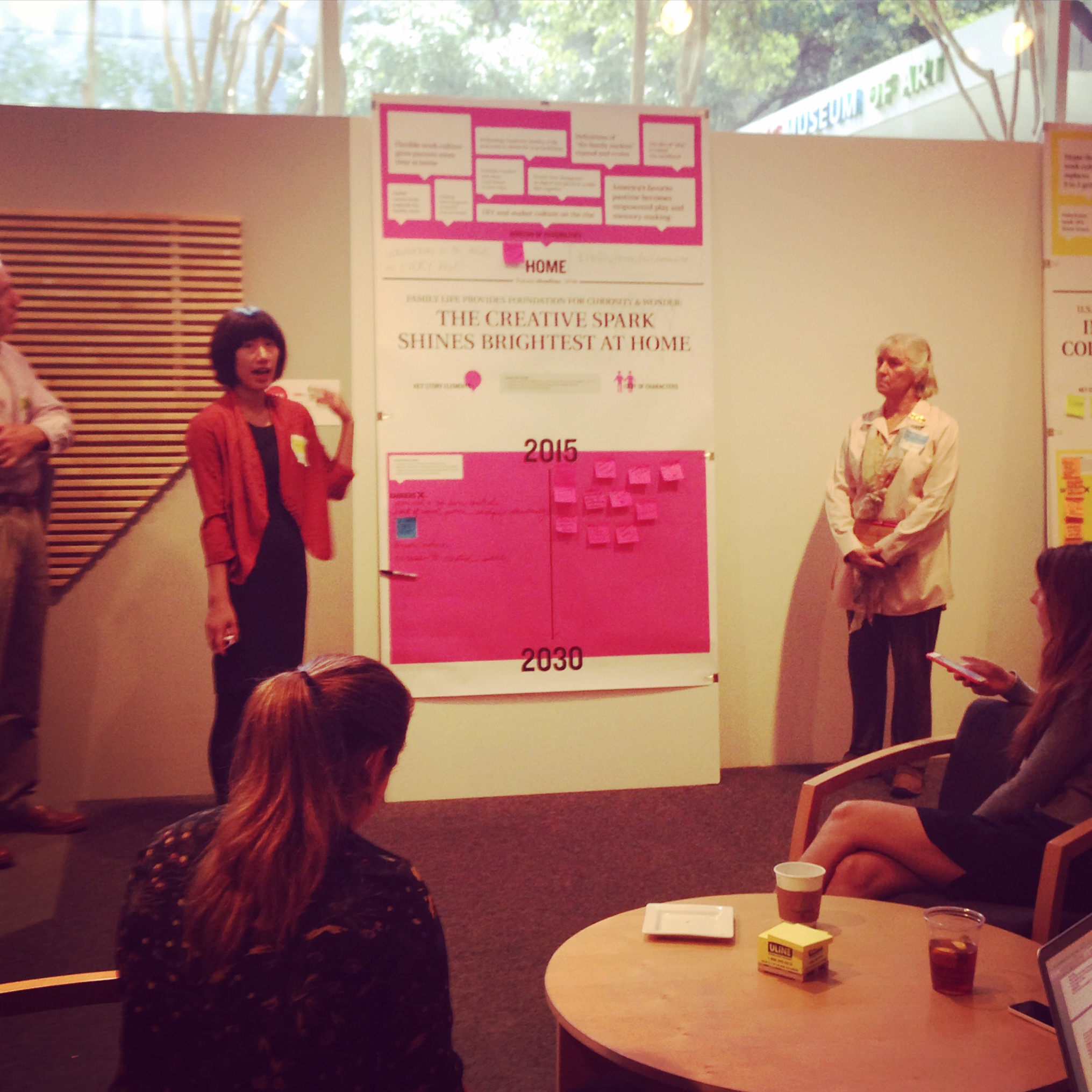
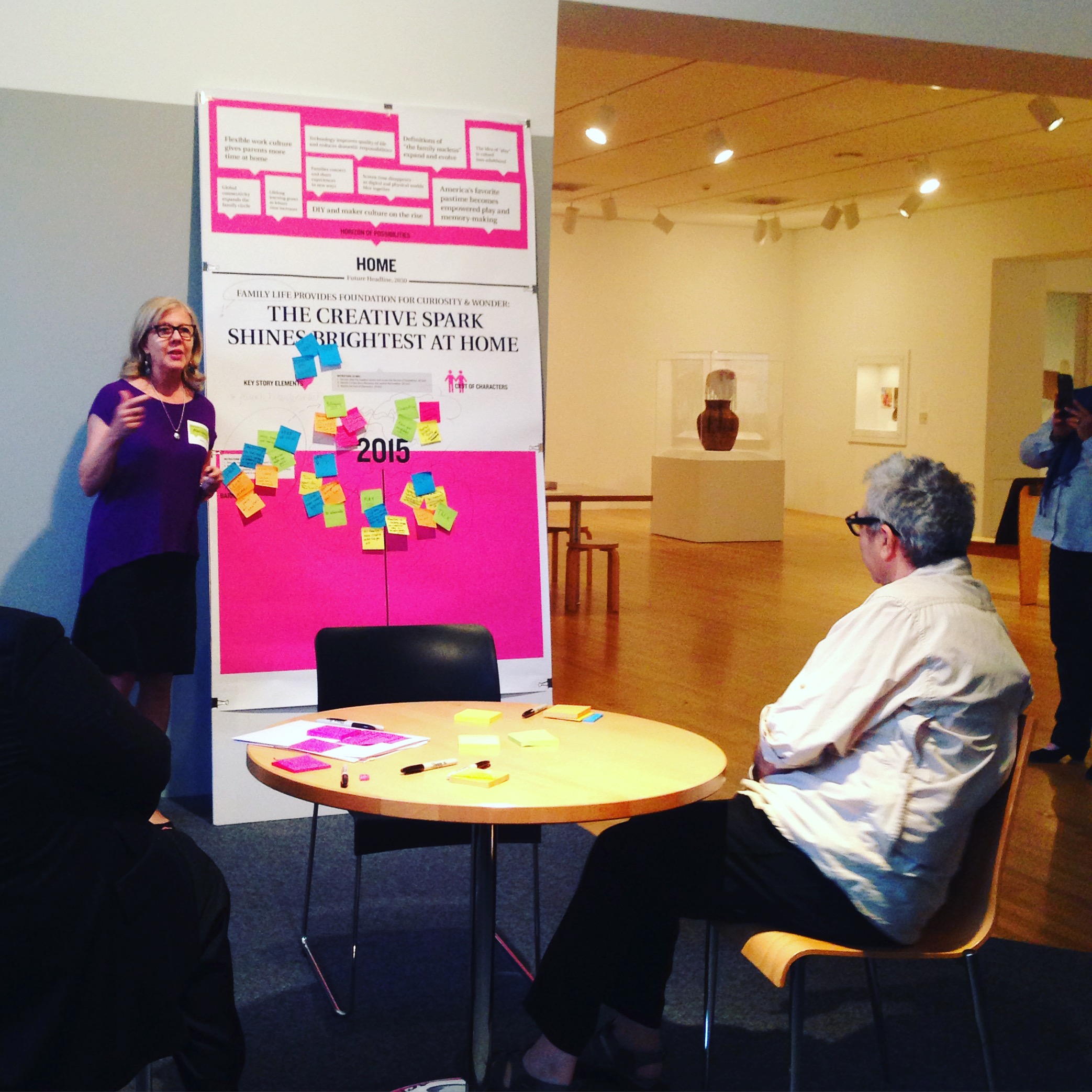
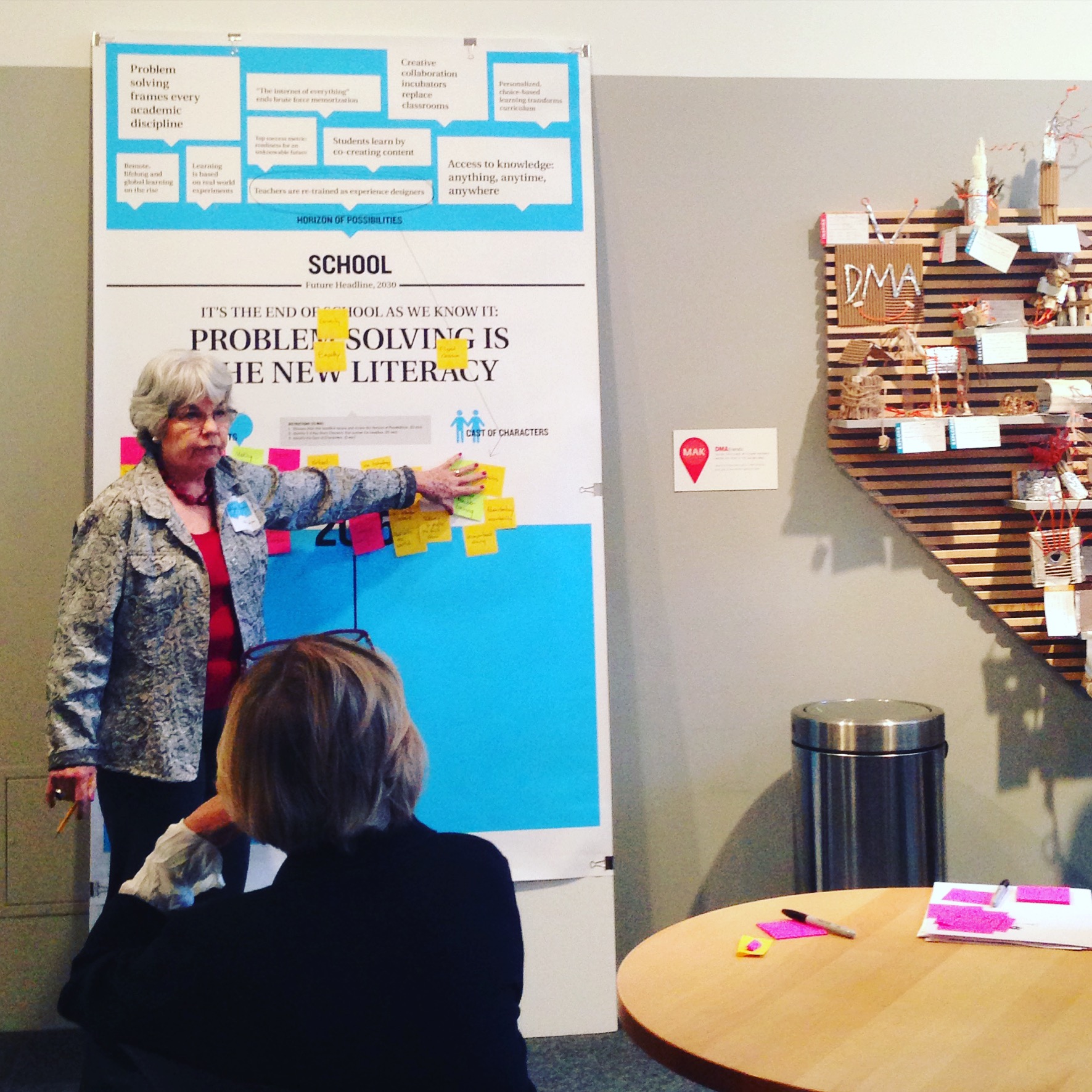
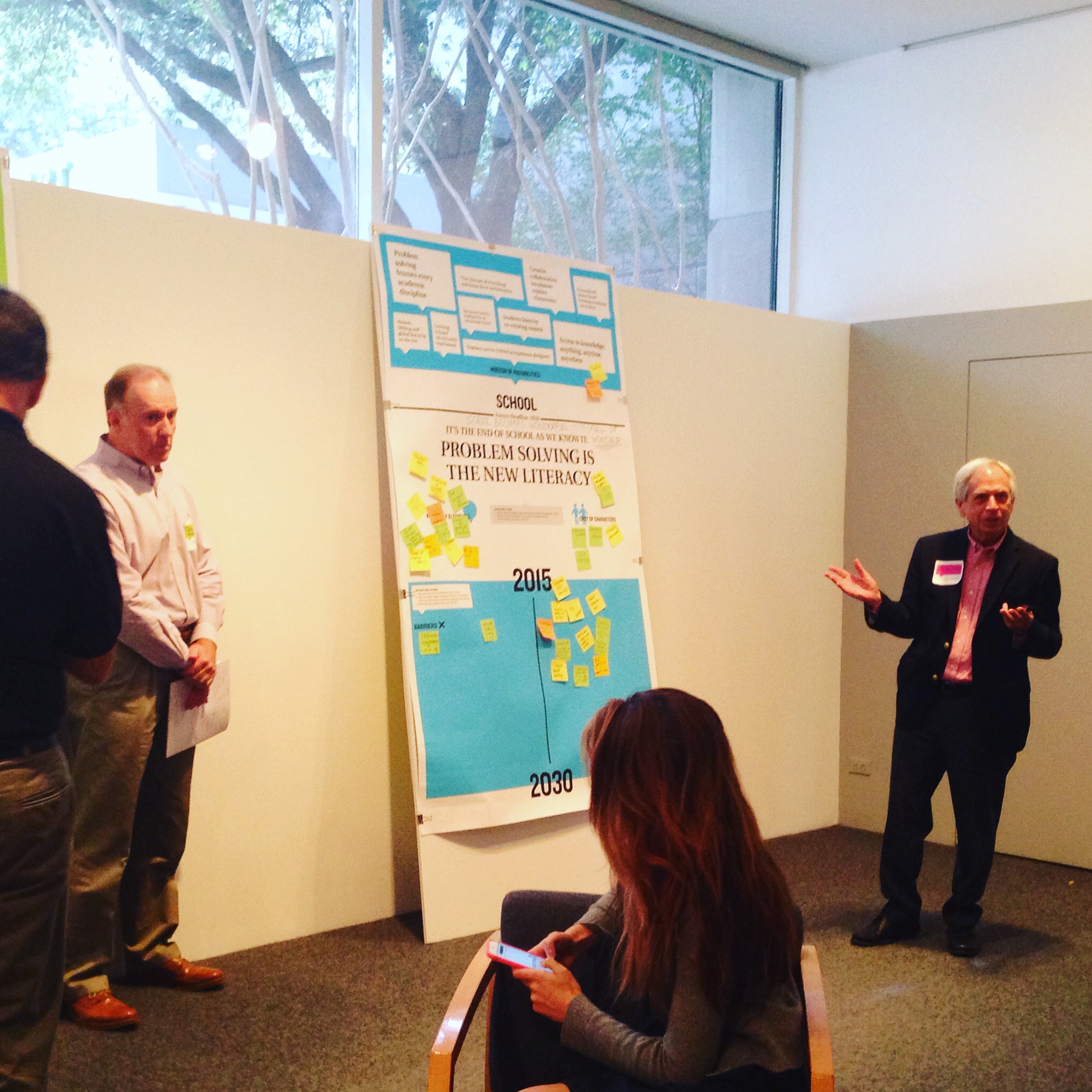
Because the Dallas Museum of Art is closed to the public on Mondays, those days are often strangely quiet without the buzz of school children and families in the Center for Creative Connections (C3). However, on Monday, October 5, C3 was brimming with energy from some of the creative educators, artists, and community organizers that make Dallas great. Earlier this year we were approached by the Sam Francis Foundation to be one of three organizations across the country to host a roundtable event focused on the Future of Creativity.

In 2014, the Sam Francis Foundation set out to start a national conversation about the importance of creativity in learning, and they called this initiative Creativity Matters: The Campaign for Creativity in Learning. The first year they partnered with Project Zero at the Harvard Graduate School of Education, and brought together leaders throughout the field in conversations across the United States (at LACMA, The Met, The Isabella Stewart Gardner Museum, and The Exploratorium). These first conversations were centered around two questions:

What does creativity look like?

Where and how does creativity thrive?

Following their 2014 roundtables, the Sam Francis Foundation compiled their findings in this report.

This fall, the Sam Francis Foundation continued the conversation with a set of roundtables at the Museum of Contemporary Art in Chicago, The Smithsonian Institution in Washington D.C., and the Dallas Museum of Art.  These Future of Creativity discussions sought to understand the role creativity will play in the future and the changes needed to prepare students for what that world might look like. Considering the future of creativity in our homes, workplaces, schools, and neighborhoods, our conversations were sparked by these questions:

In twenty years how will creativity shape the world we live in?

How will creativity inform our decision-making?

What new conditions will be needed to unleash creativity?

If we were building a “creativity tool-kit” for future generations – what tactics, methods, and advice would we include?

It was truly remarkable to have so many Dallas leaders, artists, and educators (many of whom we have worked with closely in the past) together in the Center for Creative Connections. The conversations were dynamic, engaging, and inspirational.

Yet, these roundtables are just part of the beginning stage for a grander plan involving community building, the creation of programs, and a public awareness campaign in support of the future of creativity.

creativity-matters.2015-projects.sff-logo.revised_3_25

In the end, I will leave you with some of my favorite quotes from the day.  Some are specific to creativity, and others are general gems to keep in mind.

Jessica Fuentes
C3 Gallery Manager


V.I.B. Visit to the DMA

Two week’s ago we had a special visitor at the DMA, the great godson of Gerald Murphy! The Museum’s education blog, DMA Canvas, shared his visit and snapped a few photos of 11-month-old Vance in front of his great godfather’s work Watch.

Gerald Murphy was described as “the progenitor of Pop Art” in a New York Times review of the exhibition Making it New, which the DMA presented in in 2008. His two works in the colelction serve as a precursuer to those works on view in International Pop, now open and on view through Janaury 17, 2016.


Archives

Categories