Archive Page 192

I Want My DMA TV

DMA TV image

A recent addition to the Museum’s Web site is DMA TV, www.DallasMuseumofArt.tv.  This site stores a variety of multimedia content, like podcasts and videos, that relate to works of art in the Museum’s collection and special exhibitions, as well as public programs and community projects.   I am continually surprised by the treasure trove of information that is available and found a few gemstones that I think you might like as well.  

Interviews

Videos

Podcasts

Just recently, more interviews with artists, dancers, musicians, actors, and scholars have been added to DMA TV in relationship to the new exhibition All the World’s a Stage:  Celebrating Performance in the Visual Arts.  This site is growing by leaps and bounds!

Happy watching and listening!

Until next time…

Jenny Marvel

Manager of Learning Partnerships with Schools

Gallery Conversation Tomorrow Night

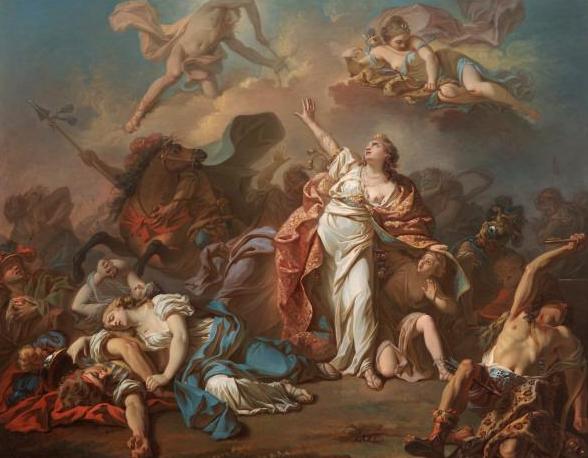
Apollo and Diana Attacking the Children of Niobe by Jacques-Louis David

Apollo and Diana Attacking the Children of Niobe by Jacques-Louis David

The Abduction of Europa by Jean Baptiste Marie Pierre

The Abduction of Europa by Jean Baptiste Marie Pierre


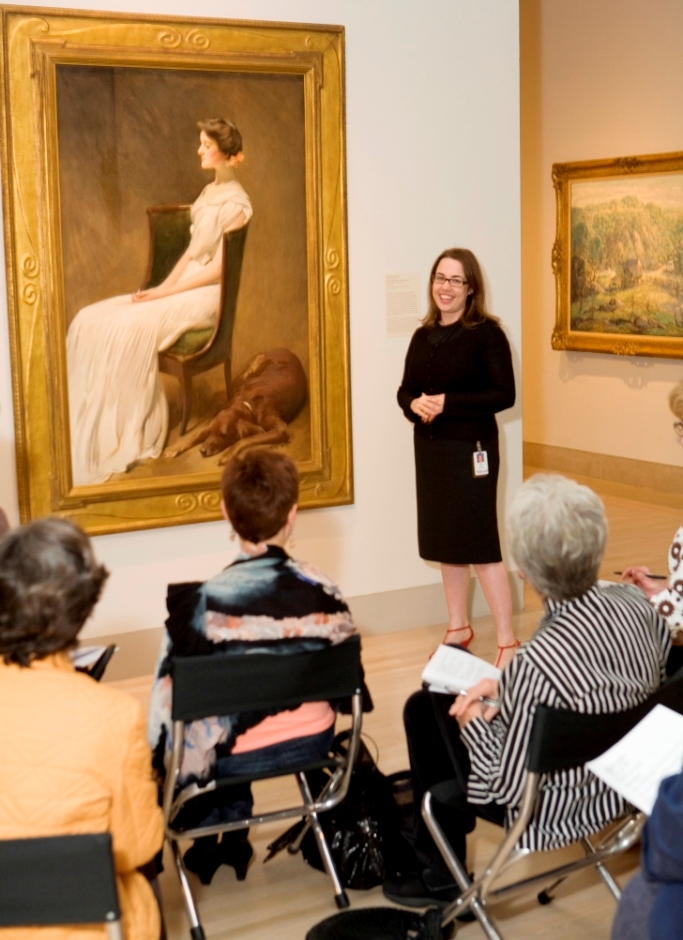
Do you have plans for tomorrow night, Thursday, October 8?  If not, I hope you will join me for a gallery conversation at 7:00 p.m.  All educators are welcome, and the program is free.

This will be our second Thursday Evening Program for Teachers, which is a new series of monthly programs for educators.  We’ll be discussing two paintings in our collection of 18th century French art: The Abduction of Europa by Jean Baptiste Marie Pierre and a new acquisition by Jacques-Louis David, Apollo and Diana Attacking the Children of Niobe.

The program starts at 7:00 p.m., and we will meet in the Atrium Café.  Arrive early and listen to live Jazz in the Atrium.  Tables will be reserved starting at 6:30 for a “Teachers Lounge.”  Food and drink are available for purchase in the Café…bring a friend and make an evening of it. 

Hope to see you there!

Molly Kysar
Head of Teaching Programs


The Beat Goes On

A few weeks ago, I gave a Gallery Talk at the DMA that made connections between Abstract Expressionism and the Beat Generation.  I graduated from the University of Michigan with a degree in Art History as well as English, so I am always looking for ways to make literary connections in our galleries.  Jackson Pollock’s Cathedral is one of my favorite paintings in our collection, and it provides the perfect comparison for the writings of the Beat Generation. 

The Beats believe in spontaneity and writing what is on your mind—an “undisturbed flow,” as Jack Kerouac called it.  Part I of Allen Ginsberg’s Howl, an iconic work of Beat literature, is one long run-on sentence.  Ginsberg uses commas and semicolons to punctuate stanzas, but a period does not appear until the very end of Part I.  The Beats also felt that an author should write in the moment and shouldn’t worry about grammar or punctuation (see Jack Kerouac’s The Essentials of Spontaneous Prose, 1959).  Kerouac’s first draft of On the Road was written over the course of three weeks, and in the end looked like one massive paragraph.  He didn’t think about punctuation or line breaks—he just let his words flow.  

So what does all of this have to do with Jackson Pollock?  Just as the Beats were letting words and ideas spontaneously stream onto paper, Jackson Pollock allowed paint to flow from his brush onto canvas.  His gestures draw our eye across—and right up to the edges—of the canvas, and we can imagine how he moved his arm and body through the picture plane.  There is a fantastic quote from Pollock that really illustrates just how similar his technique was with the Beat philosophy of writing: 

“When I am in my painting, I’m not aware of what I’m doing.  It is only after a sort of ‘get acquainted’ period that I see what I have been about.  I have no fear of making changes, destroying the image, etc., because the painting has a life of its own.  I try to let it come through.  It is only when I lose contact with the painting that the result is a mess.  Otherwise there is pure harmony, an easy give and take, and the painting comes out well.” ~Jackson Pollock, My Painting, 1947-1948.

Pollock painted “in the moment,” and his lines and gestures come together to create one unified masterpiece.  It’s also interesting to note another link between Pollock and the Beats–Cathedral was titled by another Beat poet: Frank O’Hara.  O’Hara described the painting in this way: “Cathedral is brilliant, clear, incisive, public—its brightness and its linear speed protect and signify, like the façade of a religious edifice…”
 
 I’m looking forward to continuing to explore interdisciplinary (especially literary) connections in the DMA’s collection and sharing these connections with our docents—and with student groups.  Are there other interdisciplinary connections that you make in your classrooms using the DMA’s collection?  If so, I would love to hear about them!       


Shannon Karol                                                                                                                                                                                                                         Tour Coordinator

Go van Gogh van, out and about!

Go van Gogh van

Today marks the end of our first month of Go van Gogh programs for the 2009-10 school year, and Go van Gogh volunteers and staff are excited to be back in the classrooms! 

The Go van Gogh program, in its 31st year, serves elementary schools within Dallas city limits, bringing interactive conversations about works of art and art-making activities to over fifteen thousand students annually. The Go van Gogh van is out and about four days a week; at a different school with a different program each day. We have a great variety of programs for the 2009-10 school year.  Among them, Lights, Camera, Action!, a new addition inspired by the All the World’s a Stage exhibition that involves students in role-playing and creative movement activities.  

Today, the Go van Gogh team is at a South Dallas elementary school, and volunteers are visiting third grade classrooms with one of my favorite programs: Stories in Art.  We are capturing student responses to the morning’s program and are posting them to Twitter, so check back to hear what students have to say.

Visit our web site  to learn more about the Go van Gogh programs we are offering this year. We hope to be visiting your classrooms soon!

Amy Copeland

Coordinator of Learning Partnerships with Schools and the Community

Welcome Back, Students!

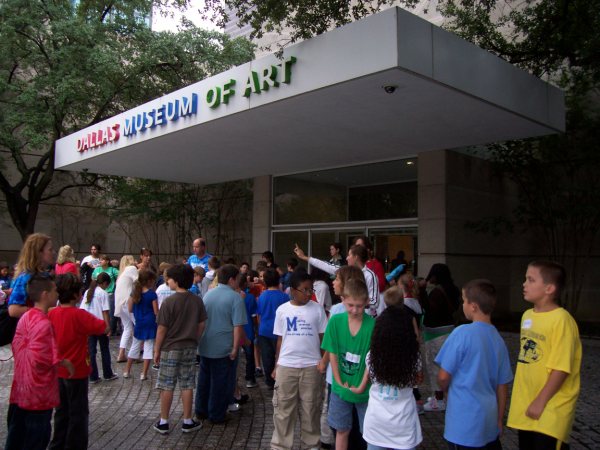
This past Tuesday, September 22nd, was our first day of school tours for the 2009-2010 school year.  I always look forward to the first day of tours—it’s my version of the first day of school.  Our first visitors were 4th graders from McKinney ISD, and they braved the rain and cooler temperatures to visit the DMA for an A Looking Journey tour.

Students waiting to enter the DMA

Students waiting to enter the DMA

 Our A Looking Journey tour allows students to travel the world without ever leaving the Dallas Museum of Art.  The teacher who scheduled this tour requested that all students see Frederic Edwin Church’s The Icebergs and Vincent van Gogh’s Sheaves of Wheat, two stars of our American and European collections respectively.  I also overheard one student asking her docent if they would have a chance to see the mummy.  She was excited to be at the Museum, and the mummy was at the top of her list of things to see while she was here.* 

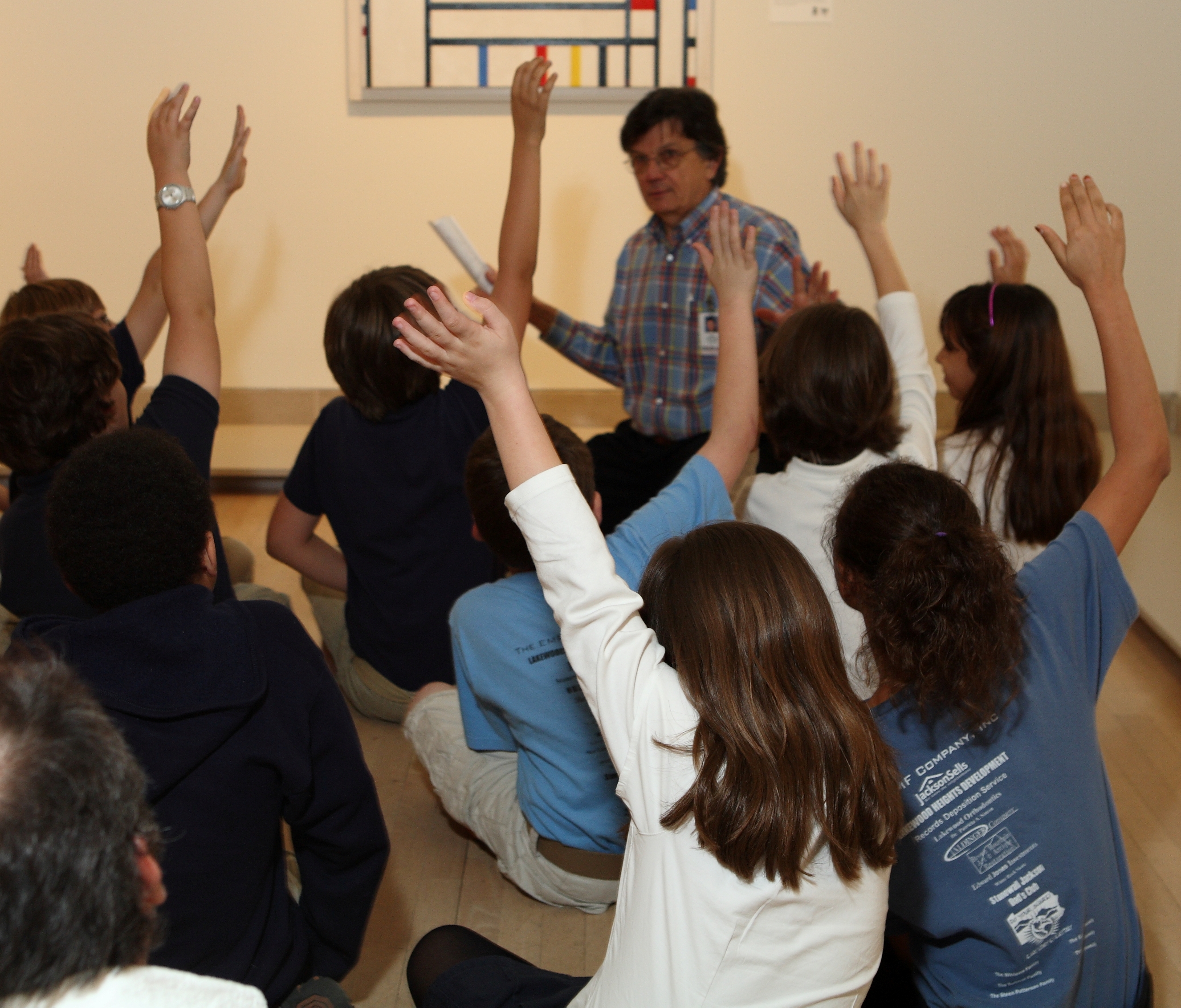
It’s also great to have our docents back at the Museum, ready to tour.  I was talking with one of our docents on Tuesday who was giving her first tour after having been away last year.  She really missed being with students in the galleries, and couldn’t wait to take those 4th graders on their Looking Journey.  I’m giving an A Looking Journey tour myself today, and I am looking forward to hearing what insights my 4th graders will bring to our tour.  I always learn something new from students in the galleries, and that is why I love my job so much!  And yes, I will be including the mummy on my tour…

 Shannon Karol                                                                                                                                                                                                                         Tour Coordinator

*The mummy is on loan and currently on view in Crossroads: Where Cultures Connect.  Lent by Bridwell Library, Perkins School of Theology, Southern Methodist University, Dallas, Texas.

Gearing up for Tours

We’re definitely back in the swing of things here at the DMA, now that the new school year is well under way. Last Monday we had our first docent training of the semester, and we welcomed back almost 100 experienced docents as well as a class of 21 new docents.  Dr. Anne Bromberg, The Cecil and Ida Green Curator of Ancient and Asian Art, led our training on the new exhibition All the World’s a Stage

Our docents are rigorously trained volunteers who attend training at the Museum every Monday during the school year from 9:45 a.m. until 2:30 p.m.  These wonderful volunteers lead tours of our collection and special exhibitions for tens of thousands of K-12 students each year. We are all looking forward to these school tours starting again todocent trainingday!


Molly Kysar
Head of Teaching Programs

Getting to Know a Work of Art

Currently I am working on teaching materials for the All the World’s a Stage: Celebrating Performance in the Visual Arts exhibition.  Education staff creates online resources for the works in our collection as well as for special exhibitions.  One of my favorite aspects of writing and creating resources is getting to know a work of art on a more personal level.  Usually my research includes looking closely at the work of art, reading about the artwork and artist in the Museum’s object file (a file full of history about the object), and gathering information online and in books about the artist, culture, or the work of art.   

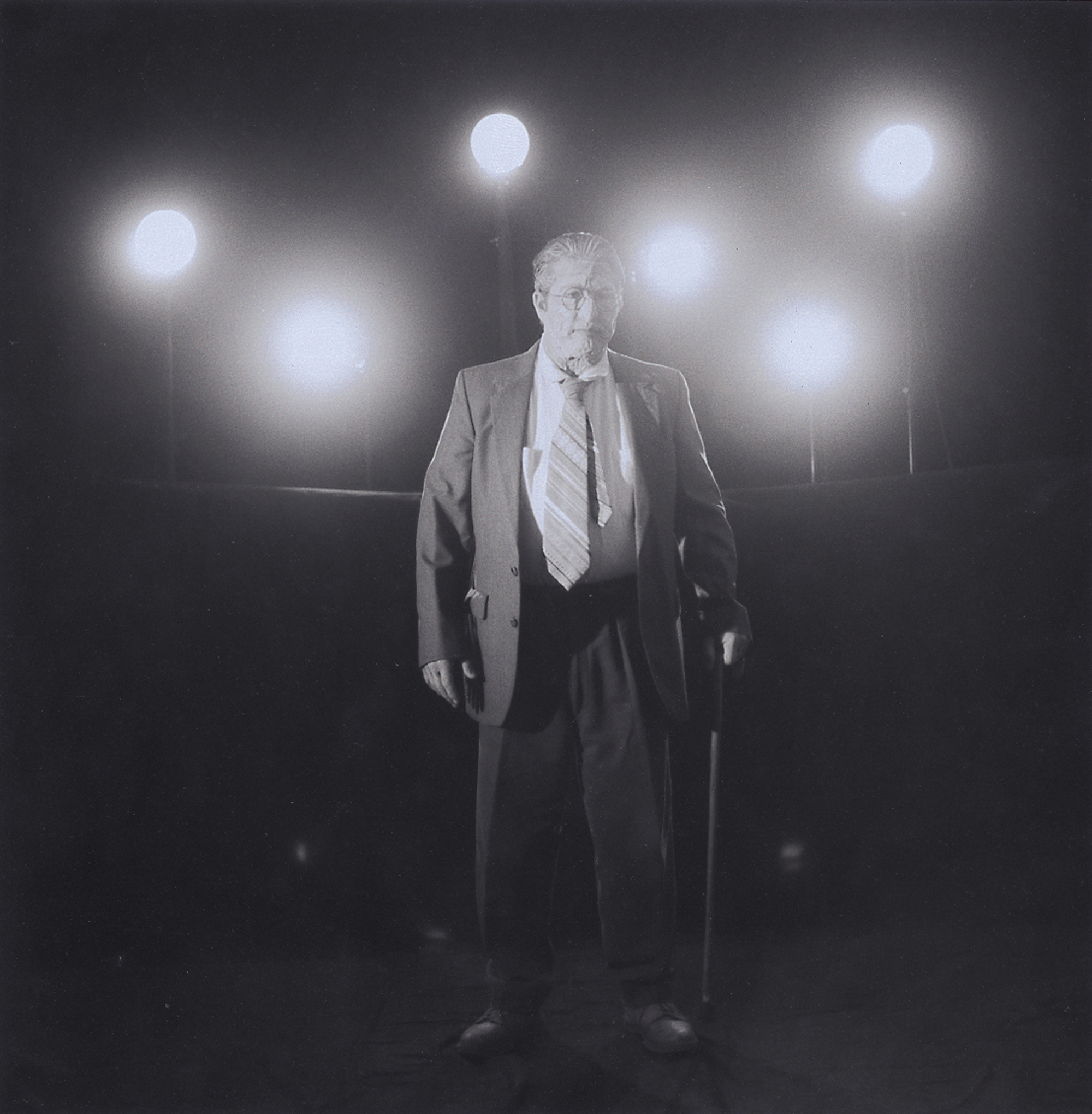
After the completion of the teaching materials, I often come away with one or two favorite works of art.  Although there are many shining stars in All the World’s a Stage, Nic Nicosia’s Act #9 stands out for several reasons.  

Nic Nicosia, Act #9, 1995

Nic Nicosia, Act #9, 1995

The idea that life is divided into multiple stages, from childhood to adulthood, might be translated into the chapters, or acts, of someone’s life.   The man in Act #9 appears as an old man – nearer to the conclusion of his life rather than the beginning.   This man, Nic Nicosia, the artist who made this work, stands on a stage.  By putting on makeup to appear older, he felt that he “became” the character.   It seems like he is facing an audience and delivering a monologue much like Willy Loman in Death of a Salesman. 

Without getting too philosophical, it is interesting to consider that we are all actors on the stage of life and we all have different roles to play.  There is no doubt that art is powerful and can have strong impact on how you see the world.  

Look forward to the launch of the All the World’s a Stage teaching materials in the next few weeks.

Until next time…

 Jenny Marvel

 Manager of Learning Partnerships with Schools

Welcome New McDermott Interns!

DSC00948 ii

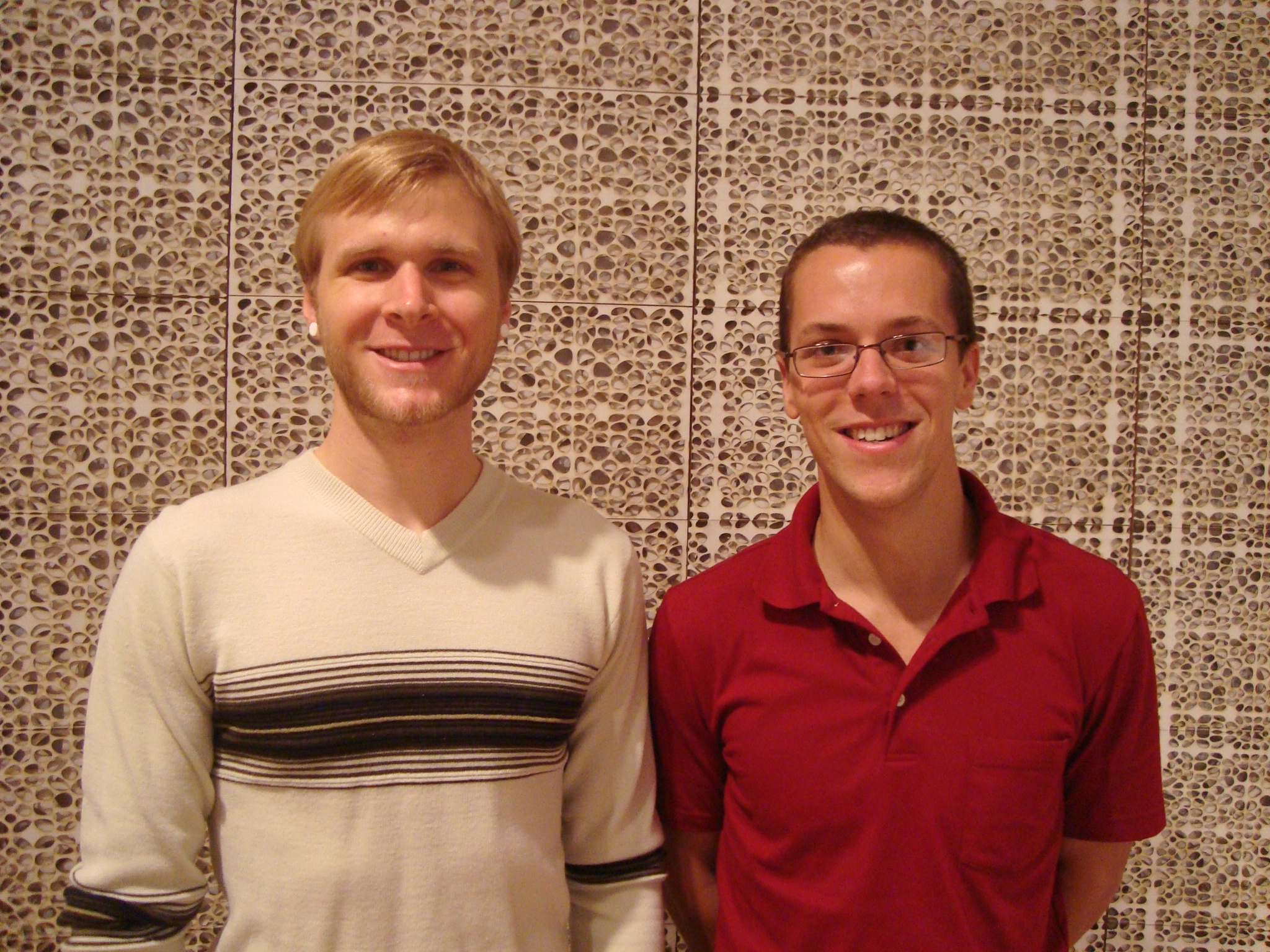
Introducing…Logan Acton and Justin Greenlee!  Logan and Justin joined the K-12 Education team one week ago today as the 2009-2010 McDermott Interns.  Did you know the DMA annually offers eight curatorial and education internships? The Eugene McDermott Education Fund makes these highly competitive positions possible.  McDermott Interns work full-time at the Museum for nine months helping to shape our exhibitions and programs, as well as share them with our visitors.  We couldn’t survive without them!

Logan Acton (on the left) is the Graduate McDermott Intern for Teaching Programs.  He is completing an MA in Aesthetic Studies at The University of Texas at Dallas and holds a BA in Art & Performance from UT Dallas as well.  Logan has been a familiar face around the DMA as he participated in several semesters of a collaborative honors seminar held at the Museum and taught by DMA staff and UT Dallas faculty.

Justin Greenlee (on the right) is the McDermott Intern for Learning Partnerships with Schools and the Community.  He graduated from Kenyon College with a BA in Art History and English.  New to Texas, Justin spent a semester abroad at the Institute at the Palazzo Rucellai in Florence studying art history, and he has extensive experience as a tennis instructor at camps throughout the country.

As I mentioned above, Logan and Justin have only been roaming the Museum for one week.  I put them on the spot somewhat when I asked them which collection areas they most looked forward to spending more time exploring. Justin said the Asian art is his pick.  This will match well with a cluster of Asian Studies courses he took in college! Logan first said everything, then narrowed it down to the African galleries. He’s an artist who loves to sketch and the African works offer opportunities for line work and seeing space in new ways.  Once they settle in a bit more, the interns will join the blog as regular voices sharing their experiences throughout the next nine months. Welcome Logan and Justin!

Nicole Stutzman

Director of Learning Partnerships with Schools and the Community

A Sneak Peek Behind the Curtain

Last week, our new special exhibition was unveiled to the public.  All the World’s a Stage brings together works of art in our collection that deal with the idea of performance.  Performance is a key theme at the DMA this year, as we get ready to welcome a new neighbor to the Arts District: the Dallas Center for the Performing Arts.

 All the World’s a Stage is an exciting exhibition because it brings so many of our favorite works of art together in one place.  You usually never see Shiva Nataraja and Romare Bearden’s Soul Three side-by-side, but they’re only one gallery apart from now until February.

Yoruba Egungun

Yoruba Egungun costume

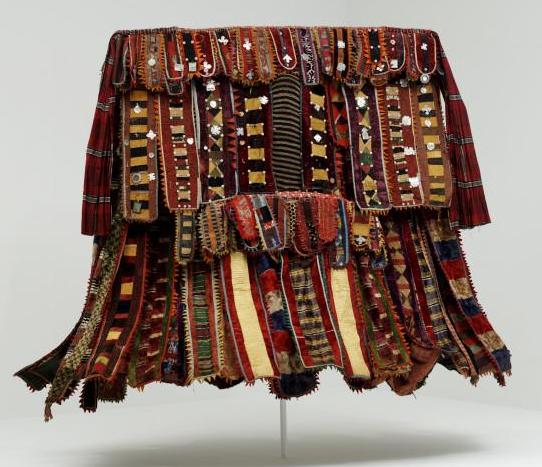
I’m especially excited that our Yoruba Egungun costume from Nigeria is back on display.  This is one of my favorite works of art in our collection.  Its multiple layers of cloth were added year after year by family members, and it is fun to imagine who added them and why.  This costume is used during a ceremony to honor ancestors—quite different from how we honor our ancestors.  The Egungun ceremony includes singing and drumming, and the Egungun twirls through the crowd like a whirlwind.  It’s definitely a spectacle for the senses, and one I hope to see in person some day!

We’re offering a variety of programs for teachers and students relating to the theme of performance this year, including docent-guided tours of the exhibition.  I hope you’ll attend one of these programs so we can share the excitement of this exhibition with your students.

Shannon Karol                                                                                                                                                                                                                         Tour Coordinator

Community Connection: What happens when you combine textiles with concrete?

Welcome to the first “Community Connection” blog post!  My name is Melissa Nelson, and I’m the Manager of Learning Partnerships with the Community at the DMA.  Each month, I will interview a creative member of our community and feature their responses here in a series of posts called “Community Connection”.

Meet Lesli Robertson, our first Visiting Artist with the Museum’s Center for Creative Connections.  I caught up with Lesli bright and early last week, as she was enjoying the cool weather before her day got started.

What first made you want to become an artist?

I think it made sense, and it was something that was part of my nature and my world.  Making helped me understand things, either about the world or myself.  I didn’t have any art classes in elementary school, and in high school the emphasis of looking at artists didn’t get that much better.  It wasn’t until college that I started seeing what it really was about – making art, creating art, throughout history to contemporary use.  It wasn’t until then that I figured out I was an artist.

How would you describe your creative process?

I use textile-based media; I think they have the potential for communication.  My work depends on where I’m at, what I’m thinking about, what’s going on.  It’s very intuitive, though I make conscious decisions on material, form, how things are installed.  Part of the process is looking at where you’ve come from as an artist and where you’re going.  The body of work I’m now working on is a reaction to the past three years of writing, research, and studio work.  It is a comment on the evolution of my artwork.  The materials I use stay the same – I started working with textile-based media and concrete five to six years ago and I love those materials. They have so much content to them and apply so well to what I want to do, formally and conceptually.

Apart from creating things, what do you do?

I love working on projects with the community and looking for different opportunities for collaborations.  For example, last semester I worked with the biology department at University of North Texas (Lesli is an adjunct professor of fibers at UNT’s College of Visual Arts and Design).  I am also conducting research in Uganda and writing an article on contemporary bark cloth artists.  I have to almost limit what I do – it is all informative but can pile up real easily.

What handmade possession do you most cherish?

I’m most proud of a handmade mat from Uganda that I bought from an artisan.  It is gorgeous.  It is hand-plaited in narrow strips about two inches wide, which are then stitched together, and cut into a mat of about three feet by seven feet.  What’s so gorgeous is that the artisans work with two tones of color.  When everything gets stitched together, it makes a pattern and it’s beautiful.  It’s one of those things that you covet, and I’m glad I have it, so I don’t have to covet it anymore.

Please describe the work you’re currently doing with the Dallas Museum of Art.

I’m working on a community collaborative project.  I’m asking the community to make small concrete collages that I’m weaving into small strips, which I’m using for an art installation in the Museum’s Center for Creative Connections.  The idea is to work with the diverse communities that the DMA works with, and having an artwork that shows each individual that makes up this larger community.  I’m going out and working with groups, and inviting people in the Museum to contribute also.  The installation relates to the Materials and Meanings exhibition in the Center for Creative Connections, and the idea that materials can mean something to the person making the work of art.  I ask the participants to choose materials that represent them to include in their individual collages.

To meet Lesli in person, join us for our first Thursday Evening Program for Teachers on September 10 at 7:00 p.m.  Participation is free and advance registration is not required.

The Ice House Cultural Center summer camp students, Dallas ISD Talented and Gifted elementary students, Cathedral Guadalupe, and Booker T. Washington teachers are just a few of the groups Lesli is working with from July through October.  Make sure you check out Lesli’s installation in the Center for Creative Connections, starting January 2010.

Melissa Nelson

Manager of Learning Partnerships with the Community

Archives

Categories