Archive for the 'Exhibitions' Category


What Hopper Saw

The opening of the much-anticipated exhibition Hopper Drawing: A Painter’s Process is just around the corner. Organized by Curator of Drawings Carter E. Foster of the Whitney Museum of American Art, New York, the show had a very successful run there before coming to Dallas. Shortly before the show’s opening here, we were fortunate to sit down with Carter for a quick Q&A to learn a bit more about the exhibition.
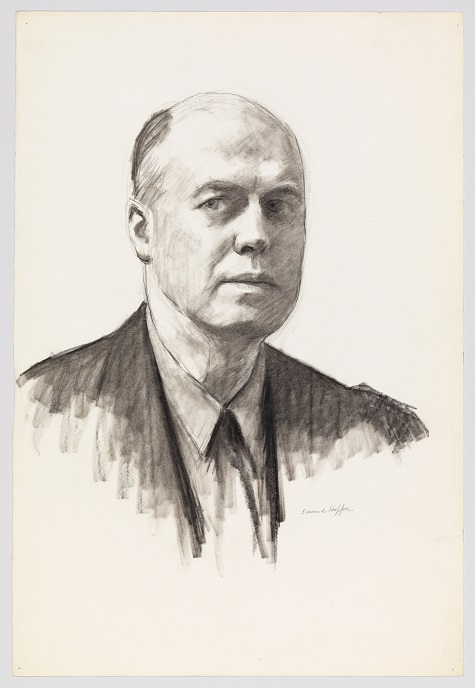
Edward Hopper, Self-Portrait, 1945, fabricated chalk and charcoal on paper, Whitney Museum of American Art, New York; Josephine N. Hopper Bequest 70.287, © Heirs of Josephine N. Hopper, licensed by Whitney Museum of American Art, N.Y.

Edward Hopper, Self-Portrait, 1945, fabricated chalk and charcoal on paper, Whitney Museum of American Art, New York; Josephine N. Hopper Bequest 70.287, © Heirs of Josephine N. Hopper, licensed by Whitney Museum of American Art, N.Y.

In what regard did Hopper hold his drawings? Simply as a means to an end? Or more?
Hopper actually tended to belittle his drawings when asked about them. During his lifetime, he somewhat reluctantly shared them with others when they inquired about his drawings. He most definitely considered himself first and foremost a painter, and his drawings were the means through which he worked out his ideas for paintings. But he also seems to have done them for his own private satisfaction, as many artists do, as a way to keep his hand and eye honed.
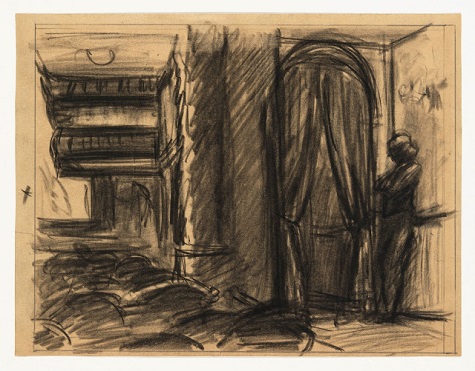
 Study for New York Movie, 1938 or 1939, fabricated chalk on paper, Whitney Museum of American Art. Image courtesy of gwen-photoblog.blogspot.com

Study for New York Movie, 1938 or 1939, fabricated chalk on paper, Whitney Museum of American Art. Image courtesy of gwen-photoblog.blogspot.com


Do you have a favorite drawing,or suite of drawings that have a particular appeal? And, why?
There are many, but I especially love the close-up bust-length study for New York Movie, in which Hopper features just the slightest winsome half-smile on the face of the usherette (in this case, his wife, Jo, who posed for him). The technique of this drawing is just amazing, with a variety of textures and great subtlety in the play of light across her face.

Did you have any preconceived notions that were overturned by what you learned during your research?
No. When I do research I try to let the material lead the way. Research is about asking the right questions, rather than having pre-formed ideas.

How did you discover some of New York’s buildings in Hopper’s drawings?
Mainly by looking at the incredible collection of photographs from the 1930s commissioned by the Local History division of the New York Public Library. They are all online and searchable by street location. Very useful! Also, the collection of “Subway construction photographs” at the New York Historical Society was an important source of images of a vanished New York City.

How did your idea for this exhibition develop?
Since I’m curator of drawings, and half of our drawing collection is works by Edward Hopper, it made perfect sense to propose an exhibition. I was lucky to be able to delve in so deeply.
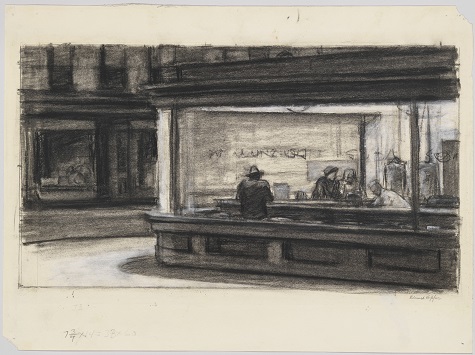
Edward Hopper, Study for Nighthawks, 1942, fabricated chalk and charcoal on paper, Whitney Museum of American Art, New York; purchase and gift of Josephine N. Hopper by exchange 2011.65, © Heirs of Josephine N. Hopper, licensed by the Whitney Museum of American Art, N.Y.

Edward Hopper, Study for Nighthawks, 1942, fabricated chalk and charcoal on paper, Whitney Museum of American Art, New York; purchase and gift of Josephine N. Hopper by exchange 2011.65, © Heirs of Josephine N. Hopper, licensed by the Whitney Museum of American Art, N.Y.

What new discoveries about Hopper’s drawing process did you make in the course of working on this exhibition?
The heart of this exhibition is examining what Hopper saw, what he drew, and what he painted in order to understand better his artistic process. I think the research, in particular on Nighthawks and New York Movie, helped us elucidate more clearly than ever before the way Hopper tweaked and tinkered with reality to get to his uncanny, often strange, and ultimately universal imagery of the human condition and the self in the world.

Martha MacLeod is the curatorial administrative assistant for the European and American Art Department at the DMA.
A Colorful Anniversary

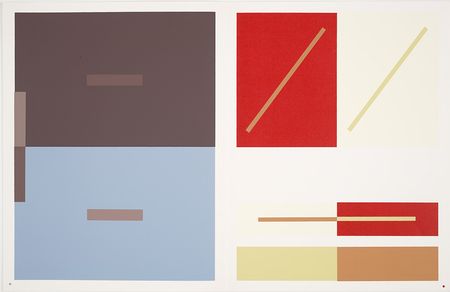
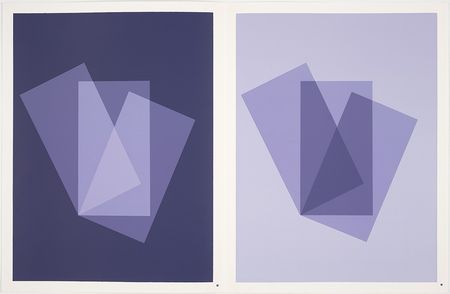
Josef Albers "The Interaction of Color" Plate XI

Josef Albers, The Interaction of Color, Plate XI

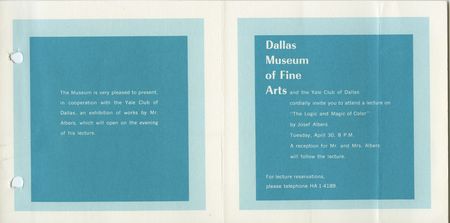
In 1963, the Dallas Museum of Fine Arts celebrated the publication of Josef Albers’ The Interaction of Color with an exhibition of the portfolio and 22 Albers paintings from the Sidney Janis Gallery in New York. Albers attended the opening of the exhibition and gave a lecture on his theories of color.

Invitation to Josef Albers lecture at the DMFA,

Invitation to Josef Albers’ lecture “The Logic and Magic of Color” at the DMFA on April 30, 1963

According to Albers, the portfolio “shows a new way of teaching color, of studying color . . . to make our eyes sensitive to the wonders of color interaction.”

Josef Albers "The Interaction of Color" Plate VII

Josef Albers, The Interaction of Color, Plate VII

The Interaction of Color has never gone out of print and remains influential among teachers, artists, and designers. Yale University Press has even developed a popular app, available here.

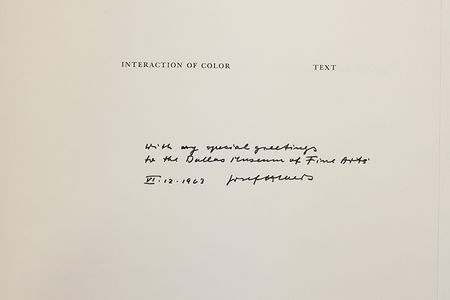
The Mayer Library at the DMA has in its collection the portfolio, which Albers presented in 1963, inscribed “with my special greetings to the Dallas Museum of Fine Arts.”

Inscription to the Dallas Museum of Fine Arts  from Josef Albers in "Interaction of Color"

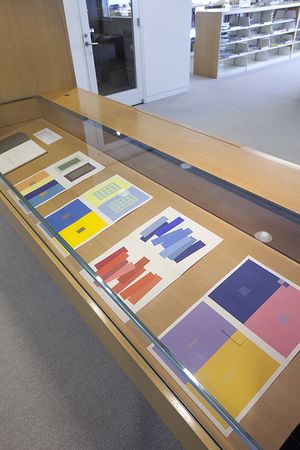
Several silkscreen color plates from the portfolio are currently on display in the Mayer Library.

ALI_03

Selected plates from The Interaction of Color on view in the Mayer Library

Mary Leonard is the librarian at the Dallas Museum of Art.

#DMAGiveMore

DSC_0800
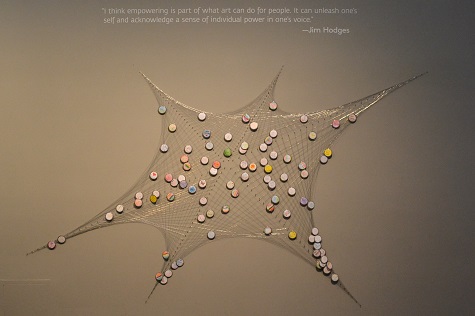
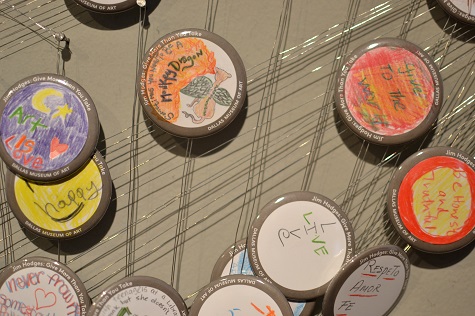
The Center for Creative Connections (C3) has taken the Jim Hodges exhibition title, Give More Than You Take, as a call to action. Hodges gave the exhibition this title after reflecting on what it means to be an artist and have a voice in our community. Inspired by this idea of the power of our individual voices, we are offering visitors a chance to consider how they might use their voices in creative and positive ways.

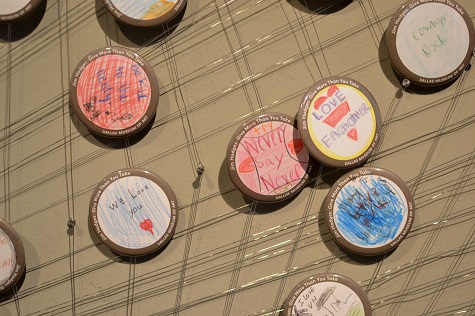
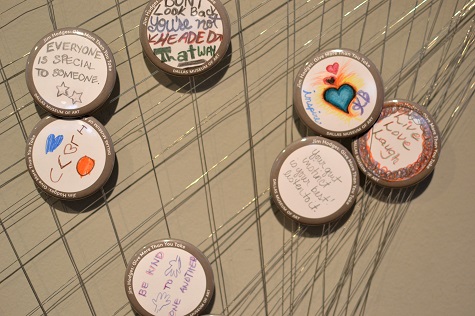
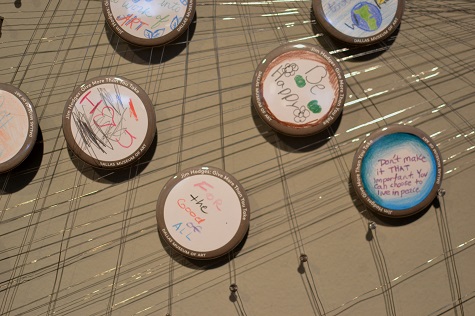
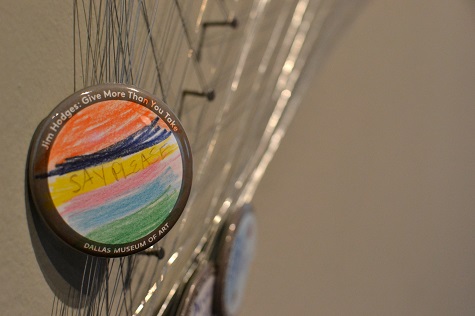
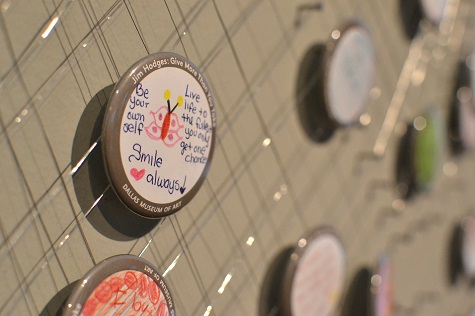
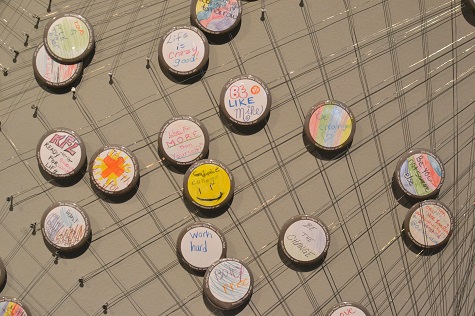
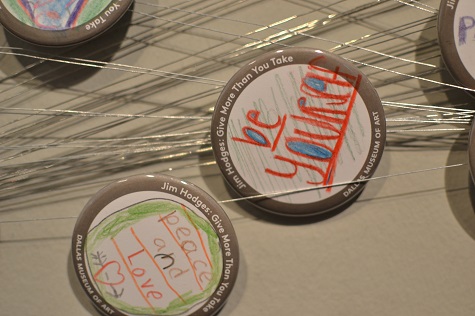
Throughout the run of the exhibition Jim Hodges: Give More Than You Take, we are hosting a Community Exchange in C3. You can make a button with a personal, positive motto that you want to share with the community. Then leave the button you create on our Community Exchange wall and take someone else’s button from the wall.

Wear the button you take out into the community to share a positive message. Document your button’s journey by tagging photos with #DMAGiveMore (check out our #DMAGiveMore on the DMA’s Instagram).

Want to truly give more than you take? Make a positive gesture by giving your new button away to someone else.
DSC_0072

Jessica Fuentes is the C3 gallery coordinator at the DMA.
Hocus Pocus

Halloween is just around the corner and it has us seeing haunting references in works at the DMA and treats throughout the Museum’s galleries. Tell us which works cause you to have a hair-raising Museum visit.

coffee, seasonal fruit, root vegetables, and “Selected Poems”

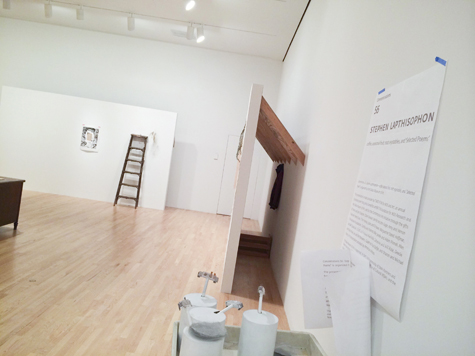
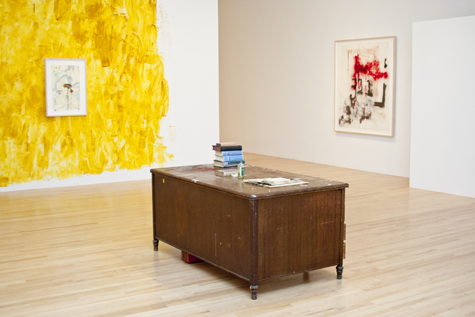
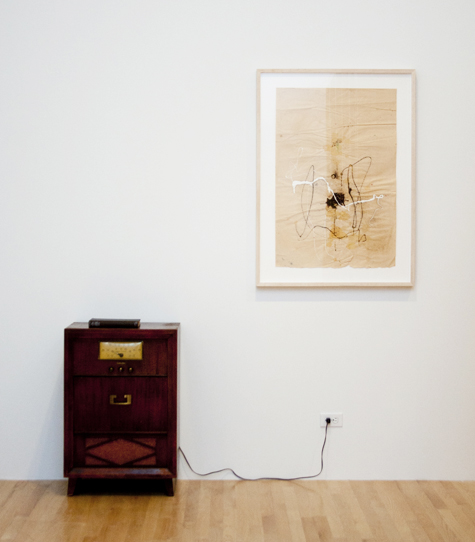
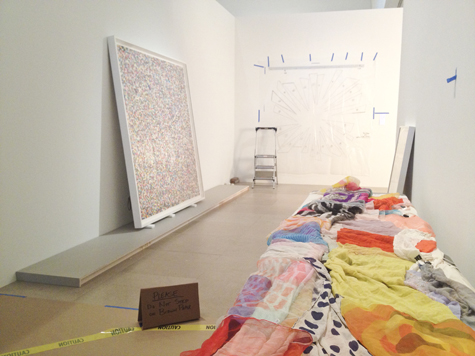
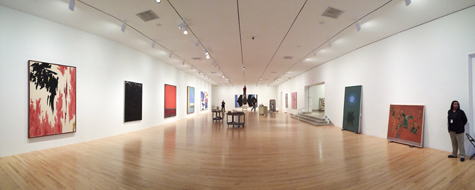
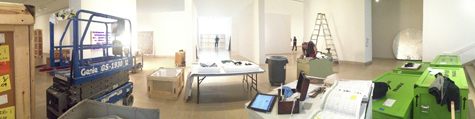
How do you install coffee, seasonal fruit, root vegetables, and “Selected Poems”? Below, get a sneak peek, including a look at works from the DMA’s contemporary collection, before the opening of Concentrations 56: Stephen Lapthisophon—coffee, seasonal fruit, root vegetables, and “Selected Poems” on Sunday.

f

14

15

a

e

Artist Talk: Jim Hodges

With quiet determination, artist Jim Hodges has, over the past twenty-five years, produced one of the most affective bodies of sculpture, drawing, and installation of any artist of his generation. Jim Hodges: Give More Than You Take brings together works in all media–from modest objects to room-sized installations that engage the viewer in sensory experiences–to fully reveal the breadth and complexity of Hodges’ inventive vision.

Comprising over eighty objects produced from 1987 through the present, the exhibition also includes works never before seen in the United States, along with a major new piece, Untitled (one day it all comes true), created especially for this exhibition.

I’m proud to have worked so closely with Jim Hodges and Olga Viso, executive director of the Walker Art Center, to bring this remarkable exhibition to fruition, and I invite you to be among the first to see it at its US premiere in Dallas, before it travels to Minneapolis, Boston, and Los Angeles. Please join me in the Horchow Auditorium for a conversation with Jim Hodges tomorrow evening, October 3, at 7:30 p.m., and join us for a sneak peek on Saturday, October 5, a day before the exhibition opening.

[youtube=http://www.youtube.com/watch?v=vIdx_cHxrSA&w=560&h=315]

Jeffrey Grove is the senior curator of special projects & research at the DMA.
Getting Ready to Give More

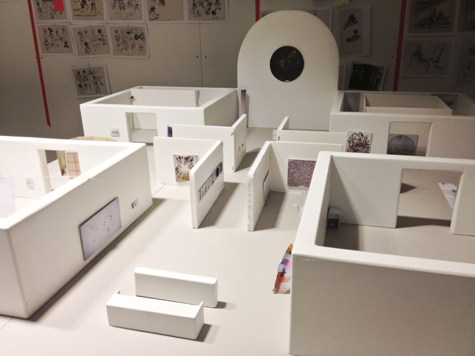
We have just under two weeks until we open the U.S. premiere of a major traveling exhibition, Jim Hodges: Give More Than You Take . The exhibition is an exciting one not only because it is the first comprehensive retrospective of Hodge’s career in the U.S. but also because it is co-organized by the Museum and the DMA’s senior curator of special projects & research, Jeffrey Grove.

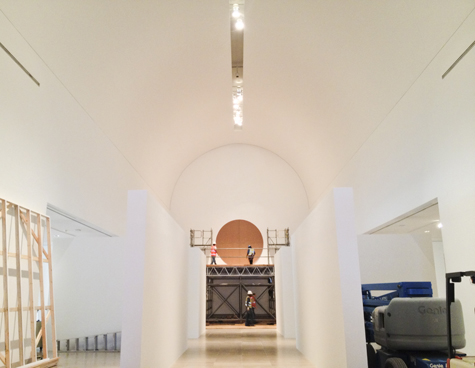
The nearly eighty works on display in the exhibition consist of hundreds of items, from brass chains to denim, from napkins to head scarves, from silk flowers to light bulbs. If you passed by the DMA’s Barrel Vault during a recent visit, you may have seen some of the detailed installation, which began in early September. Get an up-close look at the installation below, and mark your calendars to meet Jim Hodges on October 3 during a special Artist Talk at the DMA!

1

2

3

4

5

6

.7

Frozen in History

We are in the final two weeks of the DMA-organized exhibition Hotel Texas: An Art Exhibition for the President and Mrs. John F. Kennedy, but there is still time for you to visit this free exhibition and learn more from historians. This Thursday at 7:30 p.m., Dr. David Lubin, author of Shooting Kennedy: JFK and the Culture of Images and Charlotte C. Weber Professor of Art at Wake Forest University, will examine iconic photos of the Kennedys’ visit to Texas and discuss his book. Below, learn more about the history of the installation in Suite 850 from Hotel Texas catalogue contributor Scott Barker.

[youtube=http://www.youtube.com/watch?v=GZ5ADYDCczo&w=560&h=315]

Kimberly Daniell is the public relations manager at the DMA, and Ted Forbes is the interactive media developer at the DMA.
Audio Tours 21st-Century Style

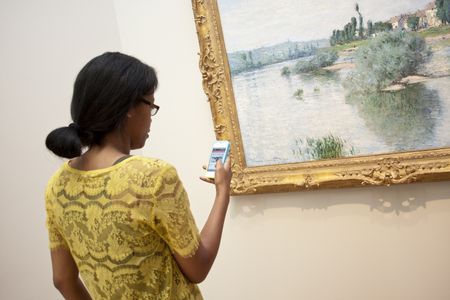
Audio tours have been part of the Museum world for a while, but now you no longer need a shoulder strap when exploring the DMA’s collection. Visitors to the DMA can use their web-enabled devices to access information about the collection, including video interviews, images, geographical information, and responses from the community through the DMA smARTphone tours. Some special exhibitions even have a free smARTphone tour. Right now, discover oral histories tied to Hotel Texas: An Art Exhibition for the President and Mrs. John F. Kennedy (on view through September 15, 2013), and this October you can learn more about the Jim Hodges: Give More Than You Take exhibition from artist Jim Hodges and co-organizing curator Jeffrey Grove, senior curator of special projects & research at the Dallas Museum of Art.

Visitors using audio tour, circa 1960s [Photography by Pat Magruder]

Visitors using audio tour, circa 1960s
[Photography by Pat Magruder]

Visitor using smARTphone tour, 2012

Visitor using smARTphone tour, 2012

Hillary Bober is the Digital Archivist at the Dallas Museum of Art.

Defining Beauty

Body_Beautiful_Installation_2013_36

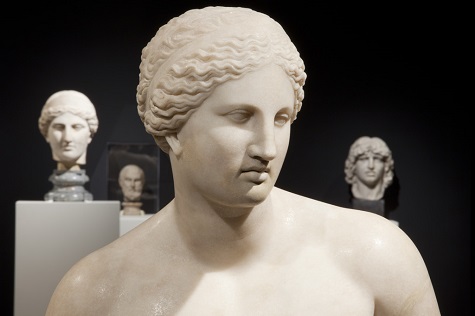
As you may know, The Body Beautiful in Ancient Greece: Masterworks from the British Museum, featuring key works from the collection of Greek and Greco-Roman masterpieces at the British Museum, is currently on display at the DMA. This exhibition, on view through October 6, highlights many representations of the human body and invites us to consider how beauty is defined. Greeks believed that one’s physical, outward appearance was a reflection of one’s inner character—if one was outwardly beautiful, one must also be inwardly virtuous. The body was of utmost importance, and the physical was strongly linked to the moral in Greek minds and culture.
Marble statue of discus thrower (diskobolos), Roman period, second century AD, after a lost Greek original of about 450–440 BC, from the villa of the emperor Hadrian at Tivoli, Italy, GR 1805,0703.43 (Sculpture 250) AN 396999, © The Trustees of the British Museum (2013). All rights reserved.

Marble statue of a discus thrower (diskobolos), Roman period, 2nd century AD, after a lost Greek original of about 450–440 BC, from the villa of the emperor Hadrian at Tivoli, Italy, © The Trustees of the British Museum (2013). All rights reserved.

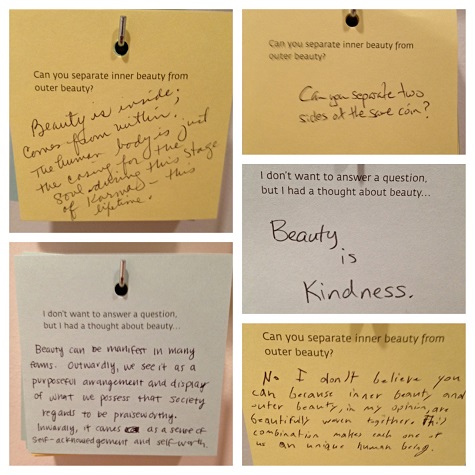
Now, almost two thousand years later, how much have our ideas about beauty changed? Looking at the stunning Diskobolos, do you believe that physical beauty reflects virtue? Or do you think that inner and outer beauty are independent of one another? And how much are your ideas about beauty a product of the culture in which you live? Because the DMA believes that art should spark further thought and discussion, at the end of The Body Beautiful exhibition we created a visitor response wall, where visitors can share their thoughts about beauty after experiencing the exhibition. The response wall consists of two different cards that visitors may choose to fill out—one asks, “Can you separate inner beauty from outer beauty?” and the other reads, “I don’t want to answer a question, but I had a thought about beauty…”

1

As you can see, we’ve gotten some excellent, insightful, and varied comments! We’re keeping track of them, and we’d love for you to respond as well. This month, receive a $4 discount on an exhibition ticket when you purchase online prior to your visit!

Elizabeth Layman is a summer intern at the DMA with Adult Programs and Arts & Letters Live.


Archives

Categories