Archive Page 26


Alles Gute Zum Geburtstag Käthe Kollwitz

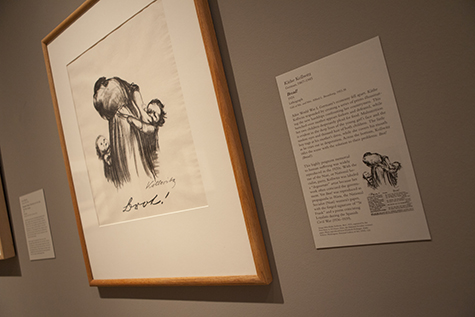
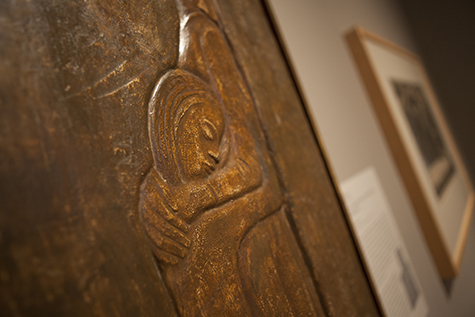
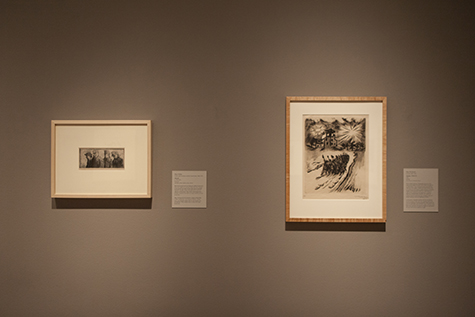
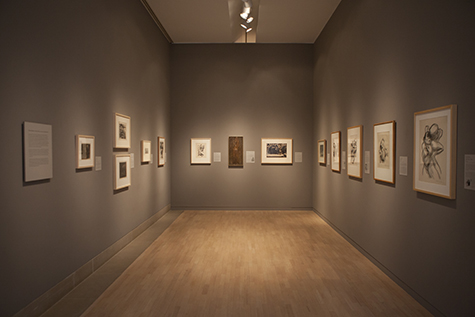
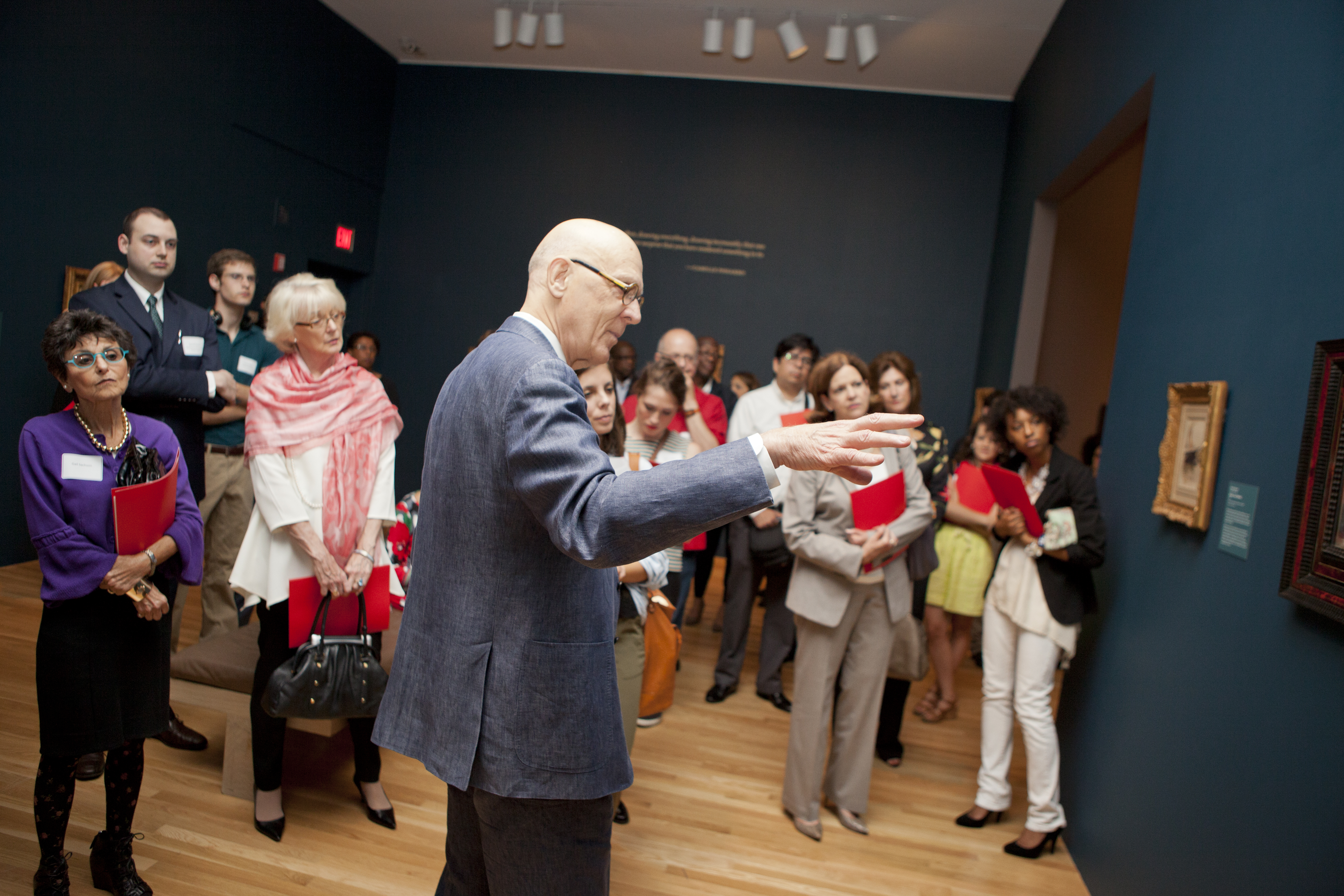
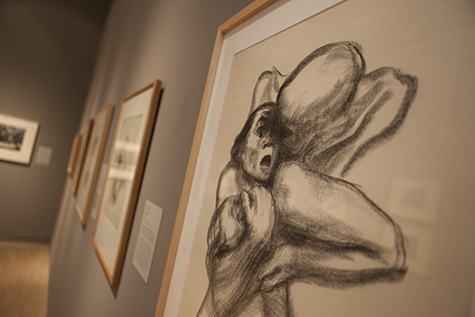
Popular throughout Europe and the United States during her career, German artist Käthe Kollwitz (1867-1945) captured images of life and the tragedy of war during the first half of the 20th century. Commemorate Kollwitz’s July 8 birthday with a visit to the free focus exhibition Käthe Kollwitz: A Social Activist in the Era of World War I in the Museum’s European Art Gallery on Level 2.


IMG_9211041


IMG_9213042


IMG_9220043


IMG_9225044


IMG_9226045


Kimberly Daniell is Manager of Communications and Public Affairs at the DMA.

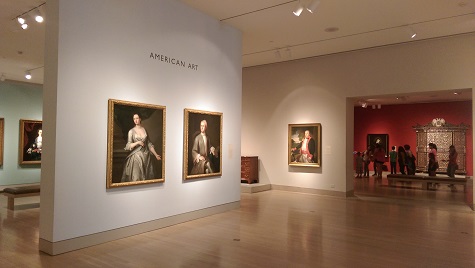
DMA Snapshot: American Portraits

2014-06-14 15.14.42

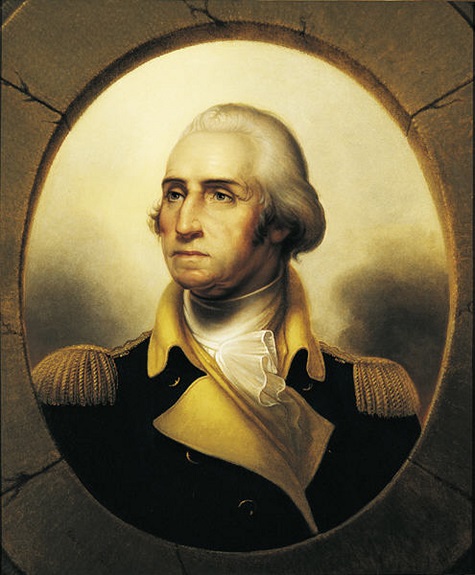
Sometimes visitors will ask me what they should see if they don’t have much time to spend in the galleries. Generally, I like to tailor my suggestions to the visitors’ preference for a particular style of art, but sometimes I just really like to show off a few of my favorites. One of the sections that I like to visit is the wonderful (and impressive) portrait collection on Level 4 in the American Art Galleries. During a quick visit  you can see celebrities such as George Washington, whose portrait was painted in 1795 by Rembrandt Peale when the artist was only seventeen years old. It wasn’t until 1823 that Peale decided to improve on the original painting.

Rembrandt Peale, George Washington, c. 1850, oil on canvas, Dallas Museum of Art, The Karl and Esther Hoblitzelle Collection, gift of the Hoblitzelle Foundation

Rembrandt Peale, George Washington, c. 1850, oil on canvas, Dallas Museum of Art, The Karl and Esther Hoblitzelle Collection, gift of the Hoblitzelle Foundation

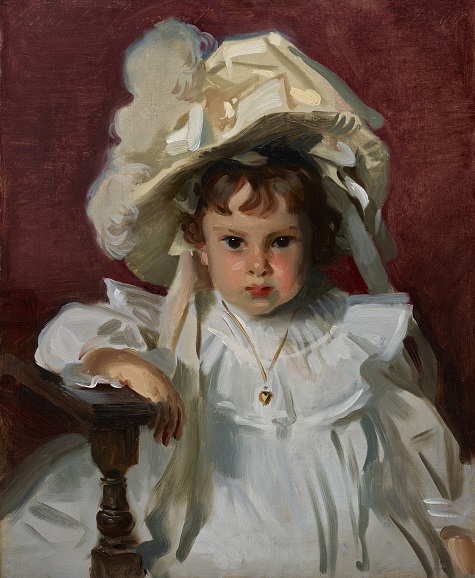
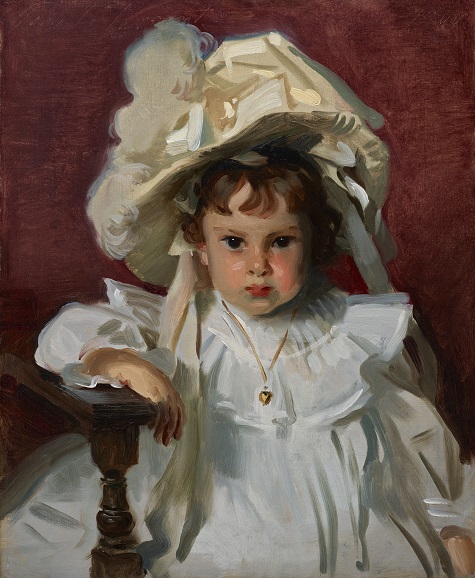
The sitter in John Singer Sargent’s Dorothy was the granddaughter of one of Sargent’s first American patrons, George Millar Williamson. Dorothy was selected to be a part of the Art Everywhere US campaign to celebrate American history and culture nationwide. Be on the lookout for her on outdoor displays this August.

John Singer Sargent, Dorothy, 1900, oil on canvas, Dallas Museum of Art, gift of the Leland Fikes Foundation, Inc.

John Singer Sargent, Dorothy, 1900, oil on canvas, Dallas Museum of Art, gift of the Leland Fikes Foundation, Inc.

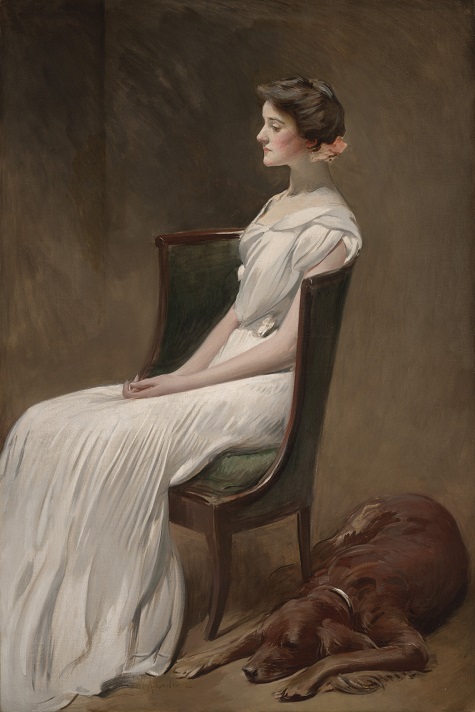
You don’t want to miss the beautiful portrait of Theodore Roosevelt’s first cousin, Miss Dorothy Quincy Roosevelt (later Mrs. Langdon Geer).This portrait is stunning and perfectly exemplifies the practices of John White Alexander that put him on the map, not just as a portrait artists but also as a muralist and illustrator.

John White Alexander, Miss Dorothy Quincy Roosevelt (later Mrs. Langdon Geer), 1901-1902, oil on canvas, Dallas Museum of Art, gift of the Pauline Allen Gill Foundation in memory of Pauline Gill Sullivan

John White Alexander, Miss Dorothy Quincy Roosevelt (later Mrs. Langdon Geer), 1901-1902, oil on canvas, Dallas Museum of Art, gift of the Pauline Allen Gill Foundation in memory of Pauline Gill Sullivan

The American Art Gallery features the finest portraits and decorative arts from the 18th and 19th centuries that America had to offer and is a definite must-see. If you’re yearning for more information, visit the DMA.mobi tour to learn interesting facts about more works in the collection, like John Singleton Copley’s portraits Woodbury Langdon and Sarah Sherburne Langdon. Then don’t forget to check in to the DMA Friends program to get your points!

Maegan Hoffman is Assistant Manager of the DMA Partners Program at the DMA.

What Our Staff Is Viewing

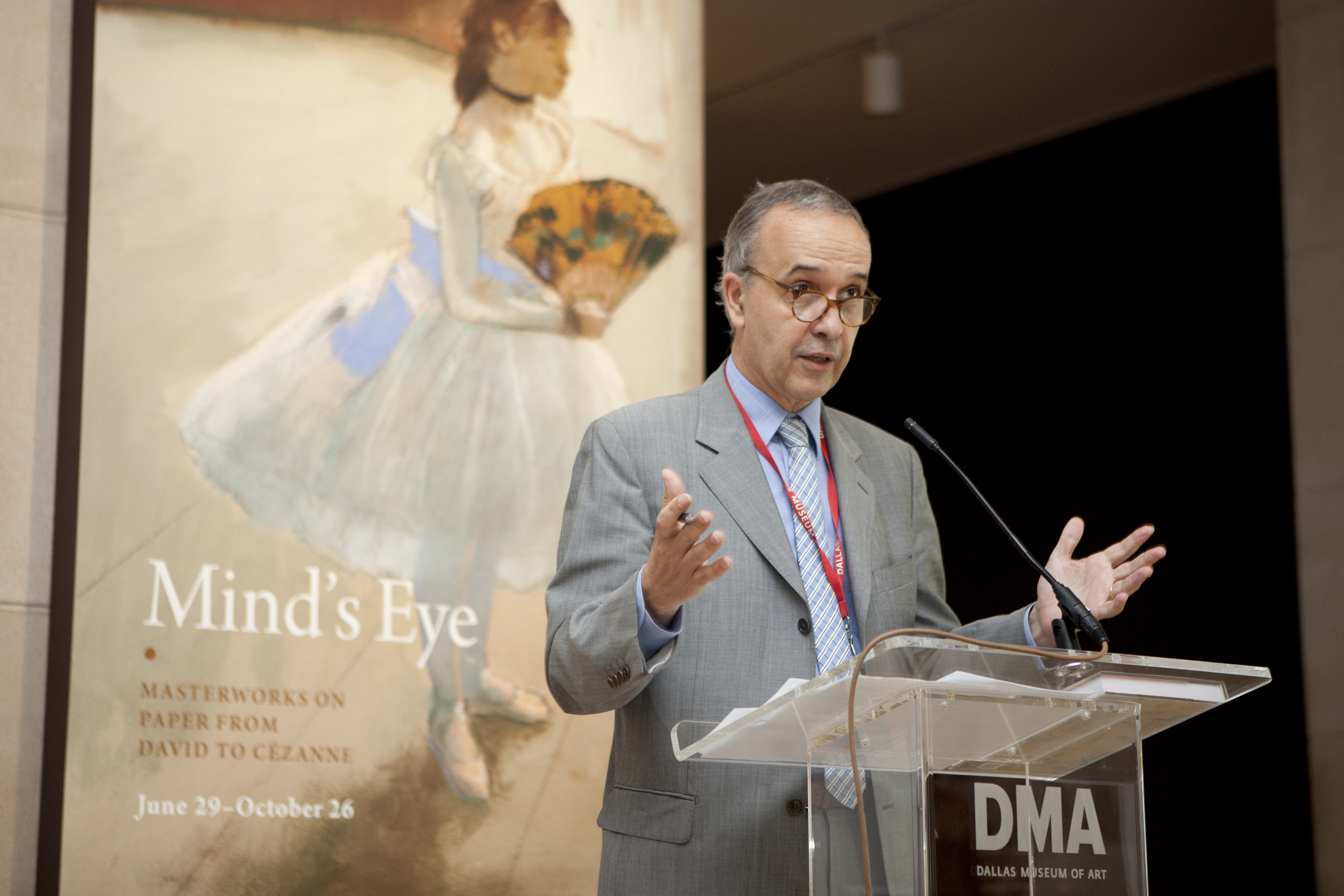
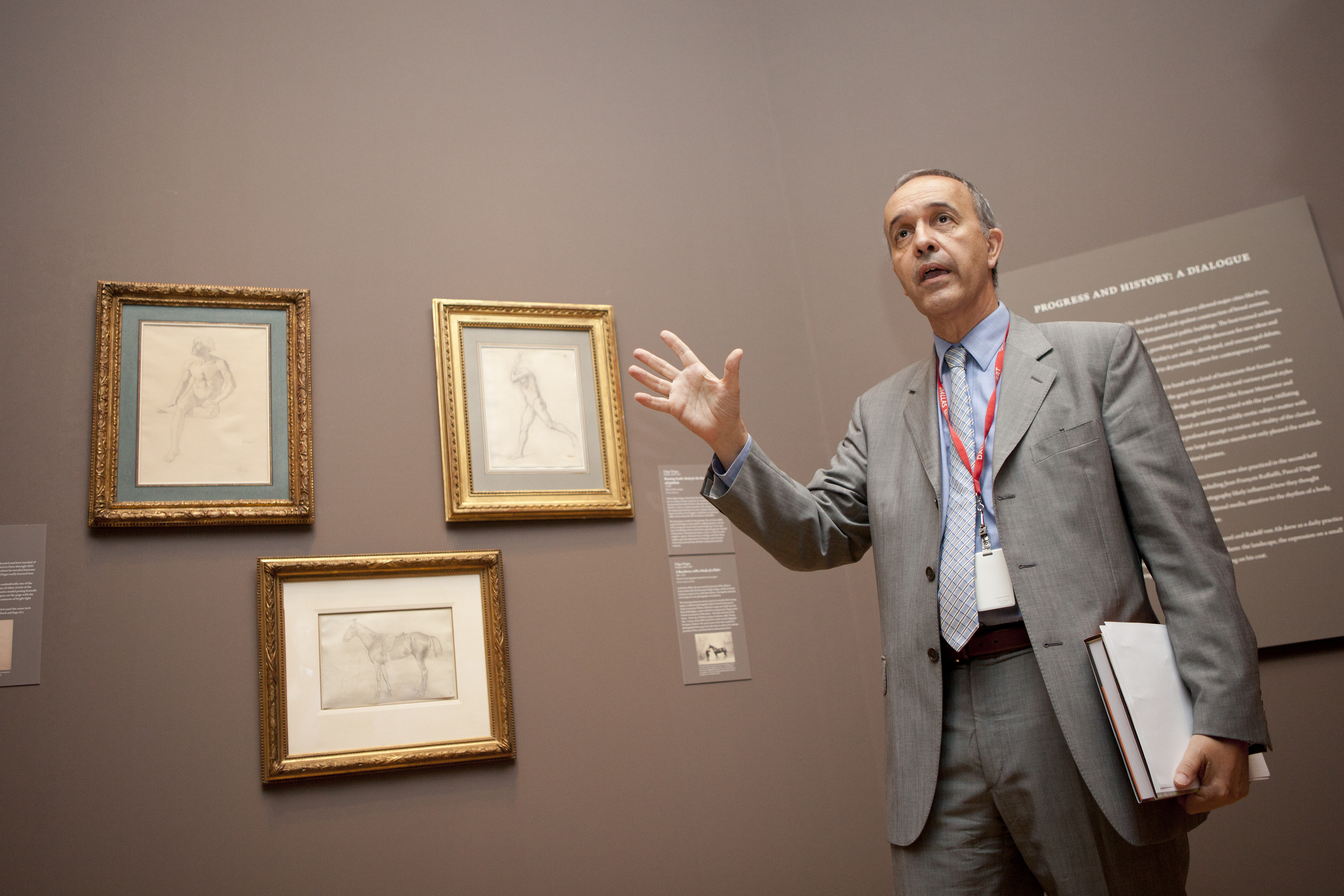
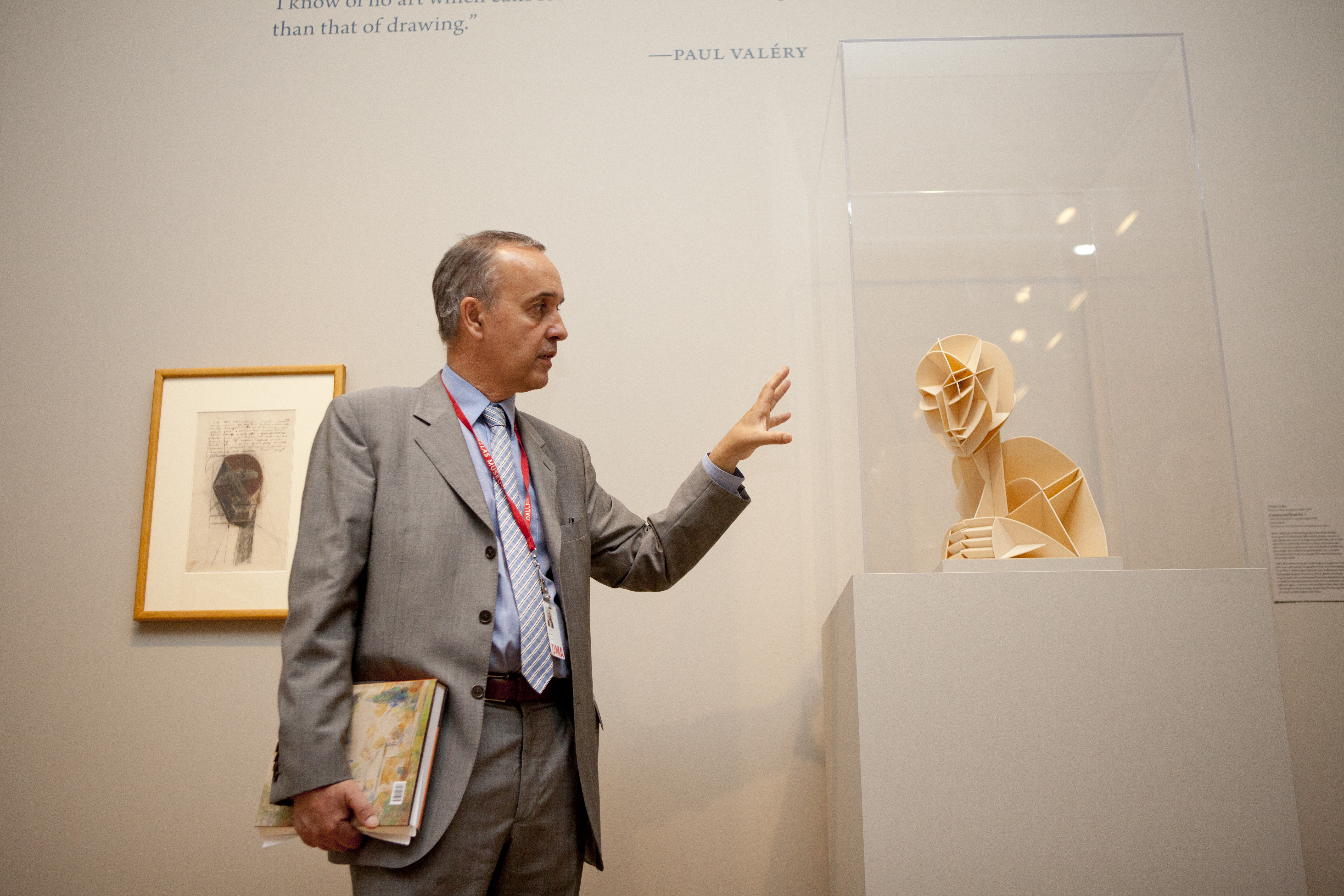
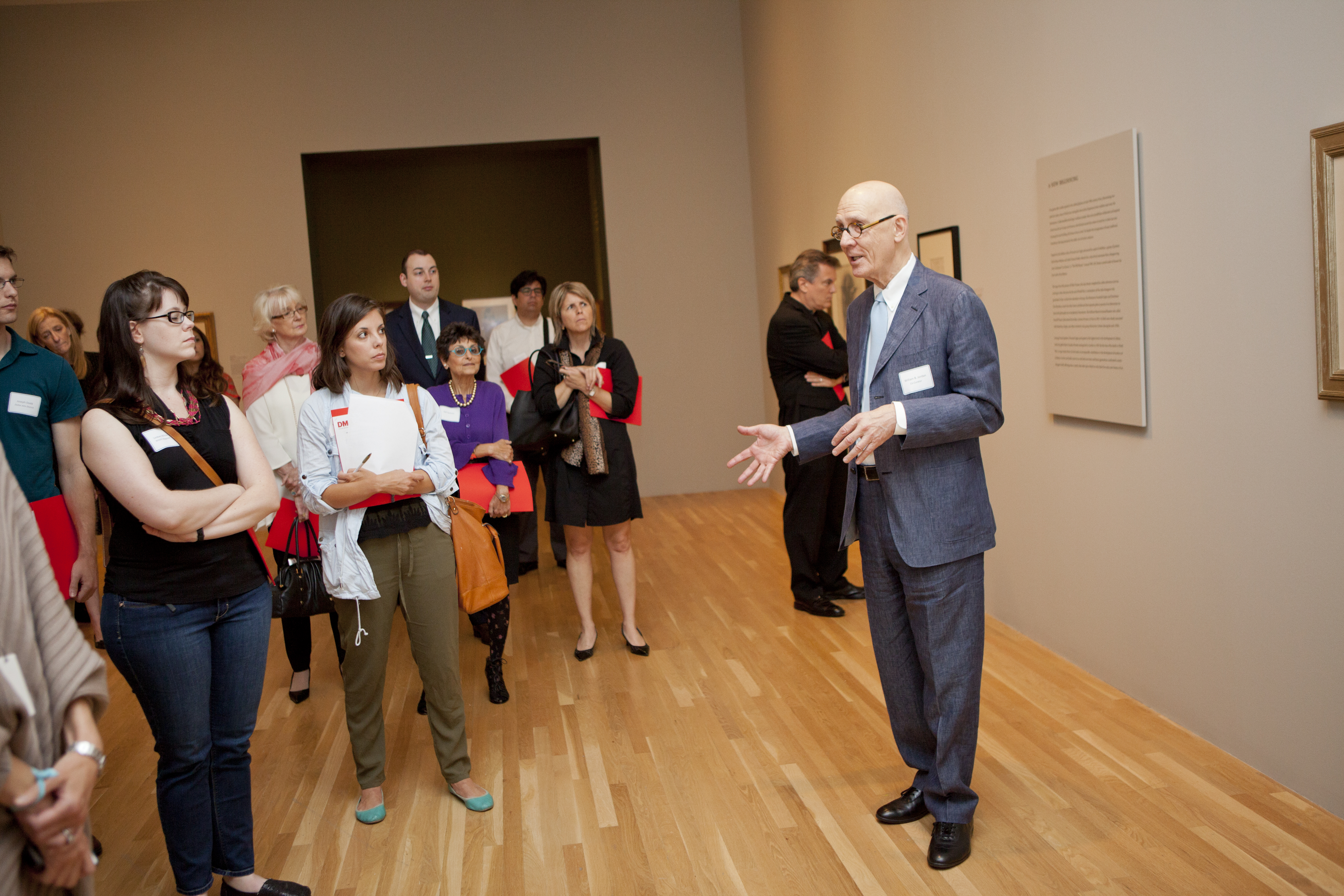
Last week, DMA staff got a chance to preview our newest special exhibition, Mind’s Eye: Masterworks on Paper from David to Cézanne, with co-curators Olivier Meslay and Bill Jordan. Because of their delicate nature, many of these works on paper by Delacroix, Degas, Cézanne, van Gogh, Manet, Schiele, Mondrian, Picasso, and more than sixty others are rarely on view. We’re open all week—including July 4—so stop by for what may be a once-in-a-lifetime opportunity to see them.

EP-41_06_21_2014_AG_033

EP-41_06_21_2014_AG_034

EP-41_06_21_2014_AG_037

EP-41_06_21_2014_AG_035 EP-41_06_21_2014_AG_036

Photography by Adam Gingrich, DMA Digital Media Specialist.


DMA Art Will Be Everywhere

The votes are in, the results have been tallied, and the Art Everywhere US works have been chosen! The voting was so close that fifty-eight works of art made the cut (including ten works from the DMA) and will be reproduced on billboards, bus shelters, subway platforms, and more this August. Be on the lookout for The Icebergs or Dorothy on your commute and stop by the DMA to visit the works in person.

Kimberly Daniell is the Manager of Communications and Public Affairs at the DMA

Dad’s Day

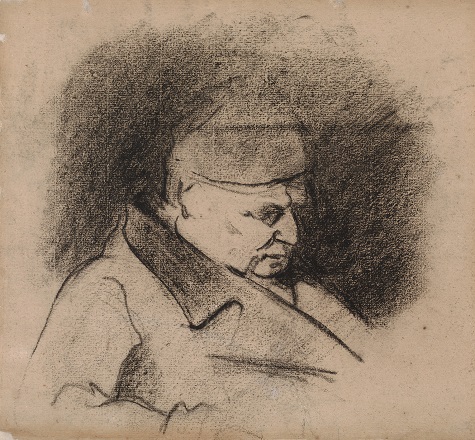
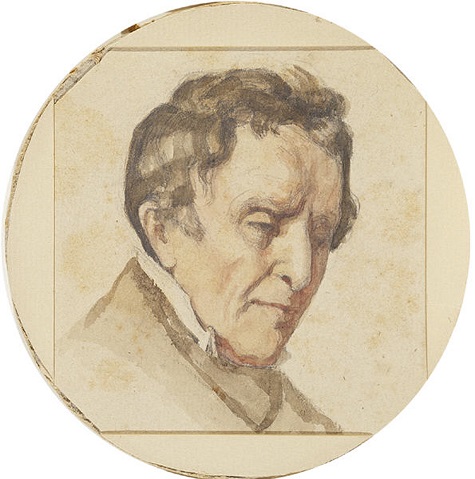
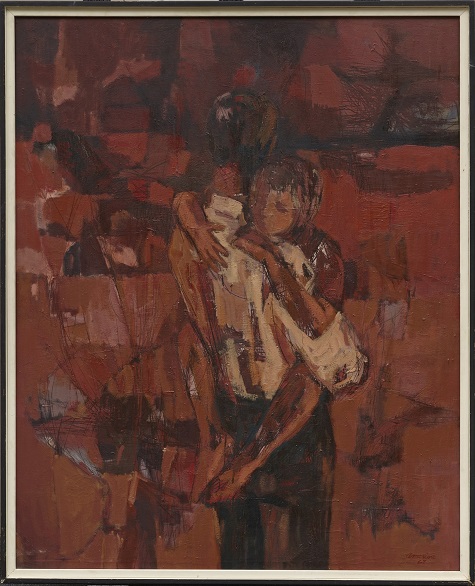
One day isn’t enough to celebrate dads, or the fathers found in the DMA collection. Artists have shown their appreciation for their old man by capturing him in paint and pen and below are a few examples from the Museum’s collection.

Paul Cezanne, Portrait of the Artist's Father, 1868-1873, charcoal, Dallas Museum of Art, The Wendy and Emery Reves Collection

Paul Cezanne, Portrait of the Artist’s Father, 1868-1873, charcoal, Dallas Museum of Art, The Wendy and Emery Reves Collection

Gustave Courbet, Portrait of Regis Courbet, the Artist's Father, 1848-1849, watercolor and pencil on wove paper, Dallas Museum of Art, The Wendy and Emery Reves Collection

Gustave Courbet, Portrait of Regis Courbet, the Artist’s Father, 1848-1849, watercolor and pencil on wove paper, Dallas Museum of Art, The Wendy and Emery Reves Collection

Wayne V. Amerine, Father and Child, 1962, oil on canvas, Dallas Museum of Art, Art Museum League Purchase Prize, 33rd Annual Dallas County Exhibition of Painting, Drawing and Sculpture, 1962

Wayne V. Amerine, Father and Child, 1962, oil on canvas, Dallas Museum of Art, Art Museum League Purchase Prize, 33rd Annual Dallas County Exhibition of Painting, Drawing and Sculpture, 1962

Sculpture for the Body – Art Smith at the DMA

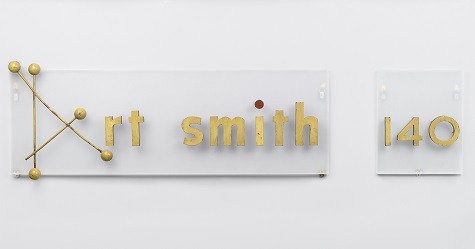
Art Smith , Untitled, 1948-1979, wood, paint, copper, Brooklyn Museum, Gift of Charles L. Russell, 2007.61.36a-m

Art Smith , Untitled, 1948-1979, wood, paint, copper, Brooklyn Museum, Gift of Charles L. Russell, 2007.61.36a-m

This week we are putting the finishing touches on the DMA’s presentation of the exhibition From the Village to Vogue: The Modernist Jewelry of Art Smith. Highlighting a pioneer of late 20th-century jewelry design whose work represents the progressive modernist impulse of “sculpture for the body,” the installation is both dramatic in appearance and revealing in what it contains. This collection, which also features examples of works by Smith’s contemporaries, is drawn from the collection of the Brooklyn Museum, which received a major gift of the artist’s work in 2007. While we are thrilled to host this exhibition of a leading American jewelry artist, our interest in having From the Village to Vogue appear at the DMA was also to note the larger importance of this medium and reflect upon the DMA’s interest in expanding our jewelry holdings. Just as fashion boldly entered our galleries through the 2011 presentation of The Fashion World of Jean Paul Gaultier: From the Sidewalk to the Catwalk, this year we will not only feature the work of Art Smith but also, excitingly, make plans for future exhibitions of jewelry and other design arts.
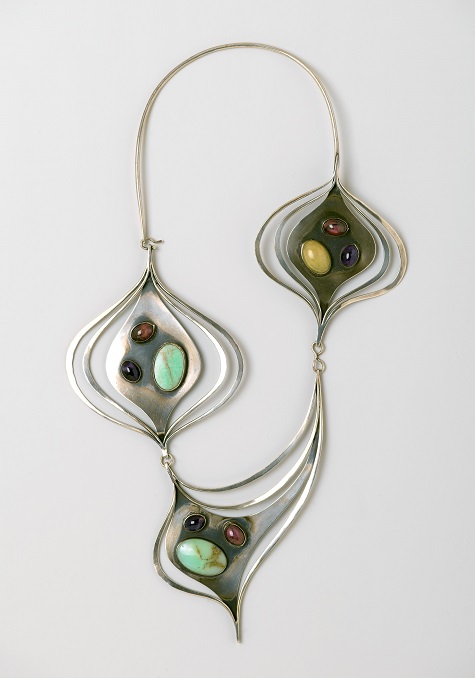
Art Smith, Ellington Necklace, circa 1962, silver, turquoise, amethyst, prase, rhodonite, Brooklyn Museum, Gift of Charles L. Russell, 2007.61.4

Art Smith, “Ellington” Necklace, c. 1962, silver, amethyst, chrysoprase, rhodonite, green quartz, Brooklyn Museum, Gift of Charles L. Russell, 2007.61.4

Beyond the realm of curators and collectors of modernist studio jewelry, Art Smith’s work is often unfamiliar, yet his impact and those of his contemporaries in the decades following World War II helped shape a new American movement in both design and craft. Drawing from the trend toward abstraction in painting and sculpture, Smith and other designer-craftspeople experimented with highly stylized forms, particularly the biomorphic imagery that characterized the work of sculptors such as Isamu Noguchi and, notably, Alexander Calder. Unlike other sculptors who may have occasionally produced jewelry, Calder’s passion for the medium appeared at least equal to that for his more widely known large-scale mobiles and stabiles. Like Calder, Smith reveled in the whirling organic line: bent wirework that was complemented by flattened ovoid forms, semiprecious stones, and richly finished patinas. Unlike so-called “high-style” jewelry, faceted gemstones and highly polished precious metals were typically set aside in preference for subdued materials and more direct fabrication techniques that were undoubtedly less labor intensive, but also ones that provided more visceral results by reflecting the hands of the artist as an immediate, personal expression. What could be more perfect for the medium of jewelry, which is, like other elements of fashion, an equally personal manifestation of the wearer’s preferences? And they were indeed artists in keeping with the spirit of the times; the modern sculpture, painting, and rhythmic vibrancy of jazz that Smith admired certainly echo throughout the punctuated, gestural lines, which form a type of visual play in his richly syncopated designs. You may notice this almost immediately upon entering the darkly colored main gallery, which features Smith’s work. Even in static display, each piece seems to dance with a particular life of its own.
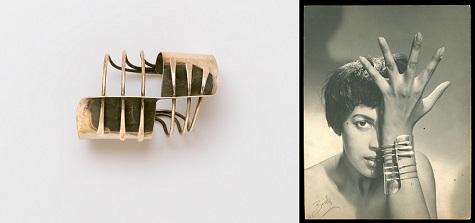
(left) Art Smith, "Modern Cuff" Bracelet, designed circa 1948, silver, Brooklyn Museum, Gift of Charles L. Russell, 2007.61.15; (right) Peter Basch, Model Wearing Art Smith's "Modern Cuff" Bracelet, circa 1948, black-and-white photograph, Courtesy of Brooklyn Museum

(left) Art Smith, “Modern Cuff” Bracelet, designed c. 1948, silver, Brooklyn Museum, Gift of Charles L. Russell, 2007.61.15; (right) Peter Basch, Model Wearing Art Smith’s “Modern Cuff” Bracelet, c. 1948, black-and-white photograph, Courtesy of Brooklyn Museum

As you might expect, it is always exciting for the many hands and minds that make such exhibitions possible at the DMA to delve into a new arena as we are doing now with modern jewelry. From interpretation to design, each of our exhibitions requires hundreds of hours of brainstorming, logistical planning, and creative input, all with the hope that whatever subject we bring you will be offered in a way you will find compelling or even thrilling. As a curator, communicating facts is only one part of my job; sharing my enthusiasm for looking, learning, and celebrating the diverse creative achievements of the visual world is, at heart, what I and all of my colleagues at the DMA do every day. We hope you will find From the Village to Vogue: The Modernist Jewelry of Art Smith and our new jewelry endeavors just as exciting as we do!

Kevin Tucker is The Margot B. Perot Senior Curator of Decorative Arts and Design at the DMA.
Hypnotized by O’Keeffe

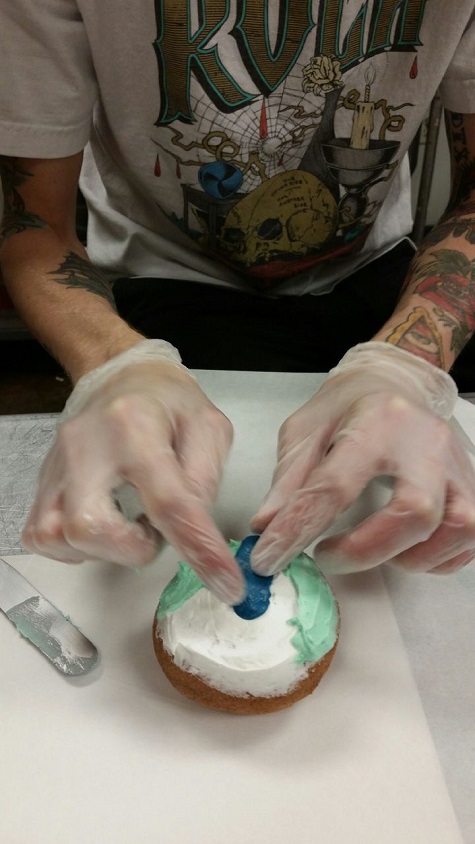
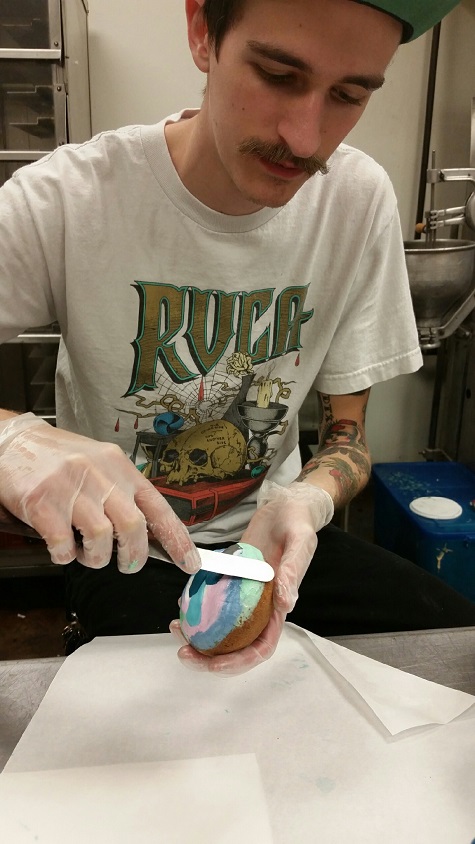
Friday is the most magical day of the year, well at least to some of the DMA staff and those in the doughnut business. Friday, June 6, is National Doughnut Day, and the DMA and Hypnotic Donuts teamed up to celebrate this tasty holiday in an artistic way. James and Amy, the owners of the North Texas doughnut store, took inspiration from the DMA’s collection and created an O’Keeffe-inspired masterpiece in frosting. We had a chance to visit with them after a gallery walk-through to spur their creative and culinary juices.

okeeffedonut

What is it about the DMA’s Georgia O’Keeffe Grey Blue & Black – Pink Circle that made you think it would make a great doughnut?
First, the shape was perfect; it had multiple circular dimensions. Next, we love the painting itself. It is very iconic and memorable.

Tell us what ingredients went into making the O’Keeffe doughnut?
We started with a base cake doughnut and then made a frosting and divided it into multiple colors and flavors. The doughnut was designed by Trevor Powers of Hypnotic Donuts. The blue is a blueberry, the pink is a light strawberry, and the green and white are both neutral.

Where there any other works in the collection that screamed “perfect doughnut” to you?
There are a lot of amazing pieces at the DMA. One thing we realized is there is a reason the works are at the DMA. These are true masterpieces and we found they are hard to duplicate, especially in doughnut form! But to answer the question, we also really liked The Icebergs and the warrior headdresses.

How long have you been making doughnut creations?
We started making doughnuts in 2010.

3-6-2014 002

What are you most excited about for National Doughnut Day this Friday?
The people that jump on board and celebrate with us. Our life is doughnuts and it is cool to have a day that celebrates something we work with for a living. We love our community, city, and, of course, doughnuts, so we have some very special things in place to bring it all together.

How can people get a peek at the Hypnotic Doughnut “DMA masterpiece”?
Like all fine works of art, they truly take time. We originally had this great plan to sell the doughnut at our store and even at the DMA; however, after the time it took to make, the fact that June 6 is already going to be a busy day, and since we will not make any doughnuts the day before, the DMA doughnut will be just like at a museum: “on display only.” We will proudly display the O’Keeffe in our glass doughnut display case for all to see. At the end of the day, we will think of something special to do with it.

Head to Hypnotic Donuts this Friday in East Dallas to see the O’Keeffe doughnut, and stop by the DMA to see the painting that inspired the sweet masterpiece.

Image: Georgia O'Keeffe, Grey Blue & Black—Pink Circle, 1929, oil on canvas, Dallas Museum of Art, gift of The Georgia O'Keeffe Foundation © The Georgia O'Keeffe Foundation / Artists Rights Society (ARS), New York

Kimberly Daniell is the Manager of Communications and Public Affairs at the DMA.
Cities, Culture, and 170 Museum Directors in the House

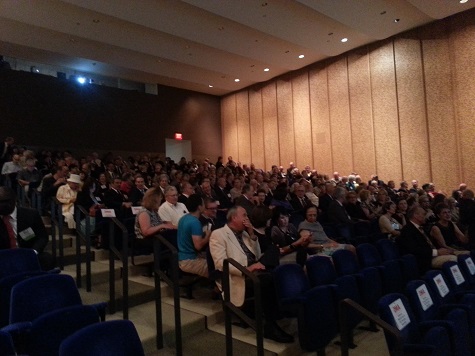
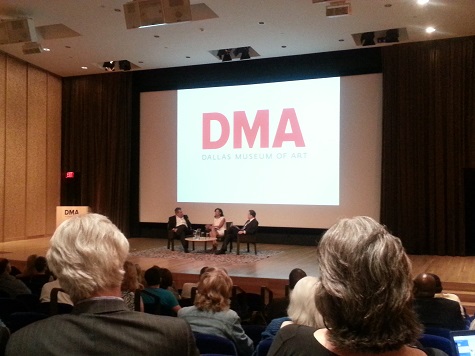
The DMA was excited to host yesterday’s public program “Cities & Cultural Investment: A Snapshot.” Joining us for it were our special guests—170 museum directors from the U.S., Mexico, and Canada.

20140601_172557 20140601_181757

Smartphone Learning Lab

As part of our partnership with our neighbor Booker T. Washington High School for the Performing and Visual Arts, DMA educators co-teach Learning Lab, a class for seniors in the visual arts cluster. This group of bright and talented young artists walks down Flora Street to the Museum about fifty times during the academic year. Besides spending quality time with, discussing, and responding to works of art in the DMA’s collection and special exhibitions, this year the students also had the opportunity to meet artists Jim Hodges and Stephen Lapthisophon and ask them questions about their DMA exhibitions.

For their final project, pairs of students capped off a great year of projects and discussions by creating smartphone stops for a work of art of their choosing in the exhibition Never Enough: Recent Acquisitions of Contemporary Art. They were given the option of producing a three-minute audio recording or video for their chosen work. They were asked to design their audio or video clip to either facilitate a visitor’s understanding through contextual information about the artist and his/her work, or to provide visitors with an alternative perspective or interpretation through which to view the work. They were also encouraged to exercise their creativity.

All of the pairs’ submissions were fantastic. Below are two smartphone stops created by the students:

This smartphone stop is a video inspired by Will Benedict’s 1 800 Bad Drug.

Will Benedict, 1 800 Bad Drug, 2013, gouache on board and canvas, aluminum frame with glass, Dallas Museum of Art, DMA/amfAR Benefit Auction Fund

Will Benedict, 1 800 Bad Drug, 2013, gouache on board and canvas, aluminum frame with glass, Dallas Museum of Art, DMA/amfAR Benefit Auction Fund, (c) Will Benedict

[youtube https://www.youtube.com/watch?v=KzAMJHmgdKc]

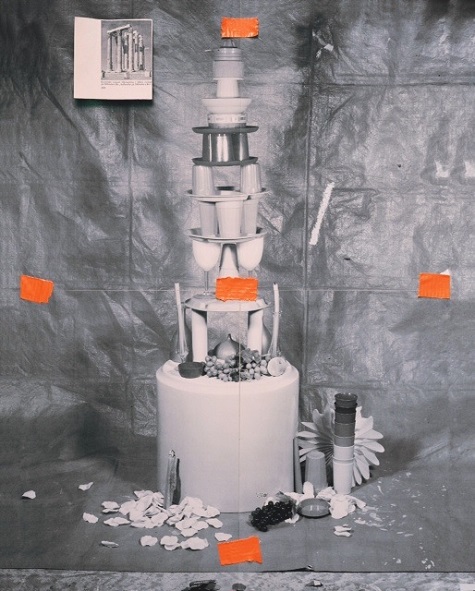
This smartphone stop is an audio clip related to Sara Cwynar’s Corinthian Temple (Plastic Cups).

Sara Cwynar, Corinthian Temple (Plastic Cups), 2012, chromogenic print, mounted on Dibond, framed, Dallas Museum of Art, Susan Mead Contemporary Art Fund

Sara Cwynar, Corinthian Temple (Plastic Cups), 2012, chromogenic print, mounted on Dibond, Dallas Museum of Art, Susan Mead Contemporary Art Fund, (c) Sara Cwnar

Thanks to the BTWHSPVA Learning Lab students for a wonderful year and congratulations on graduation!

Andrea Severin Goins is the Interpretation Manager at the DMA.

Memorial Day Picnic

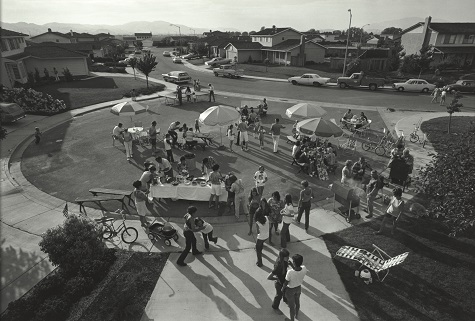
Happy Memorial Day from the DMA! We hope your day is full of barbequed chicken, corn on the cob, potato salad, green salad, macaroni salad, and watermelon like this Bill Owen photograph in the DMA’s collection.
Bill Owens, This is our second annual Fourth of July block party. This year thirty-three families came for beer, barbequed chicken, corn on the cob, potato salad, green salad, macaroni salad, and watermelon. After eating and drinking we staged our parade and fireworks., 1971, gelatin silver print, Dallas Museum of Art, Lay Family Acquisition Fund

Bill Owens, This is our second annual Fourth of July block party. This year thirty-three families came for beer, barbequed chicken, corn on the cob, potato salad, green salad, macaroni salad, and watermelon. After eating and drinking we staged our parade and fireworks., 1971, gelatin silver print, Dallas Museum of Art, Lay Family Acquisition Fund, (c) Bill Owens


Archives

Categories