Archive Page 54


Intern Project: Artworks for Me & My World

Last month, Jessica and I introduced you to Me & My World, a program specifically designed for first grade students. There are two versions of the program, one created for tours in the museum and another developed for classroom visits. Although Jessica and I will be doing a lot of collaborating, she will be primarily focusing on the docent-led tour, while I will be working on the Go van Gogh classroom experience.
.

Our first step in the Me & My World revision process was to select new works of art for each program. Go van Gogh is a sixty-minute program that is broken up into two equal parts of looking at works of art and then making works of art. With half an hour to look closely and discuss the art, there is just enough time to have quality experiences with four artworks. With thousands to choose from within the collection, picking just four is no easy task. When teaching in the classroom, we bring reproductions of artworks to be projected onto a screen; as a result, visibility can become an issue. For example, paintings that are really dark usually won’t project well, and sculptures with a lot of detail or incising can be washed out and difficult to see. Besides keeping all of these basic logistical challenges in mind, it was also really important to find works specifically ideal for engaging first-graders.

We started by seeking the advice of volunteers, docents, and education staff for their insights from past experiences. This resulted in a lot of great ideas, almost too many! To further narrow down our selections, we developed two main criteria to focus on: themes and teaching opportunities. In an effort to make the programs well-rounded with a variety of diverse topics, we categorized the artworks by themes, such as family or sports. These themes are meant to be easy for first-graders to relate to, so they can develop personal connections with the works. Then, by using the DISD curriculum for first grade, we created a general list of possible teaching opportunities that could be addressed through looking at art. Finally, we chose works that clearly matched some of those teaching goals and also fit into one of the themes.

With the thoughtful suggestions of our department, volunteers, and docents, as well as the criteria Jessica and I created, I was able to narrow down my search to seven final works of art to begin testing for Go van Gogh. I provided two examples below.

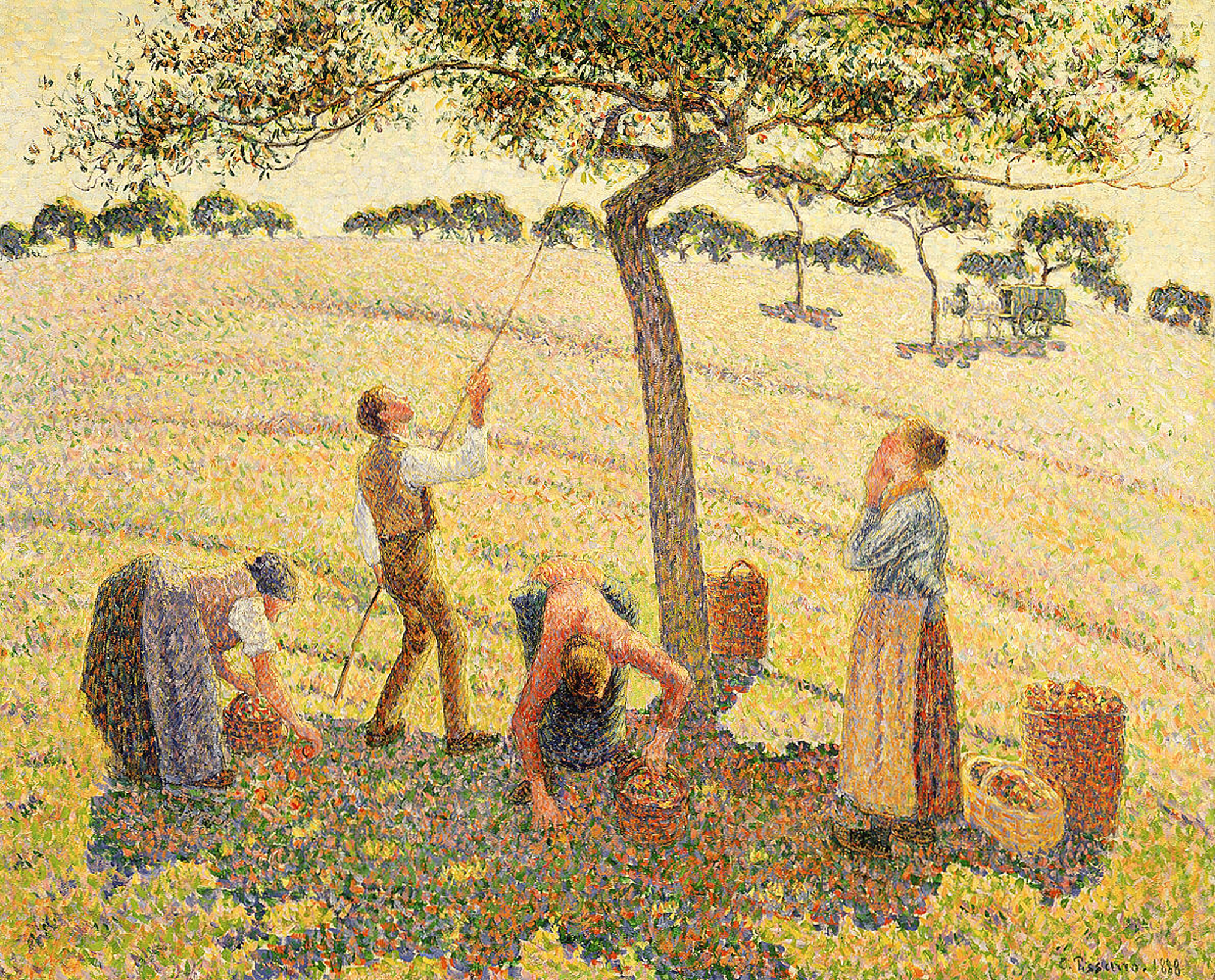
Apple Harvest, Camille Pissarro, 1888, oil on canvas, Dallas Museum of Art, Munger Fund

Theme: Family/Teamwork

Teaching Moments

  • Look at brushstrokes/dots of paint
  • Count the people
  • Name the colors
  • Discuss the weather/seasons

Personal Connections

  • Teamwork – helping family or working with other students at school
  • Fruit/food
  • Outdoor activities

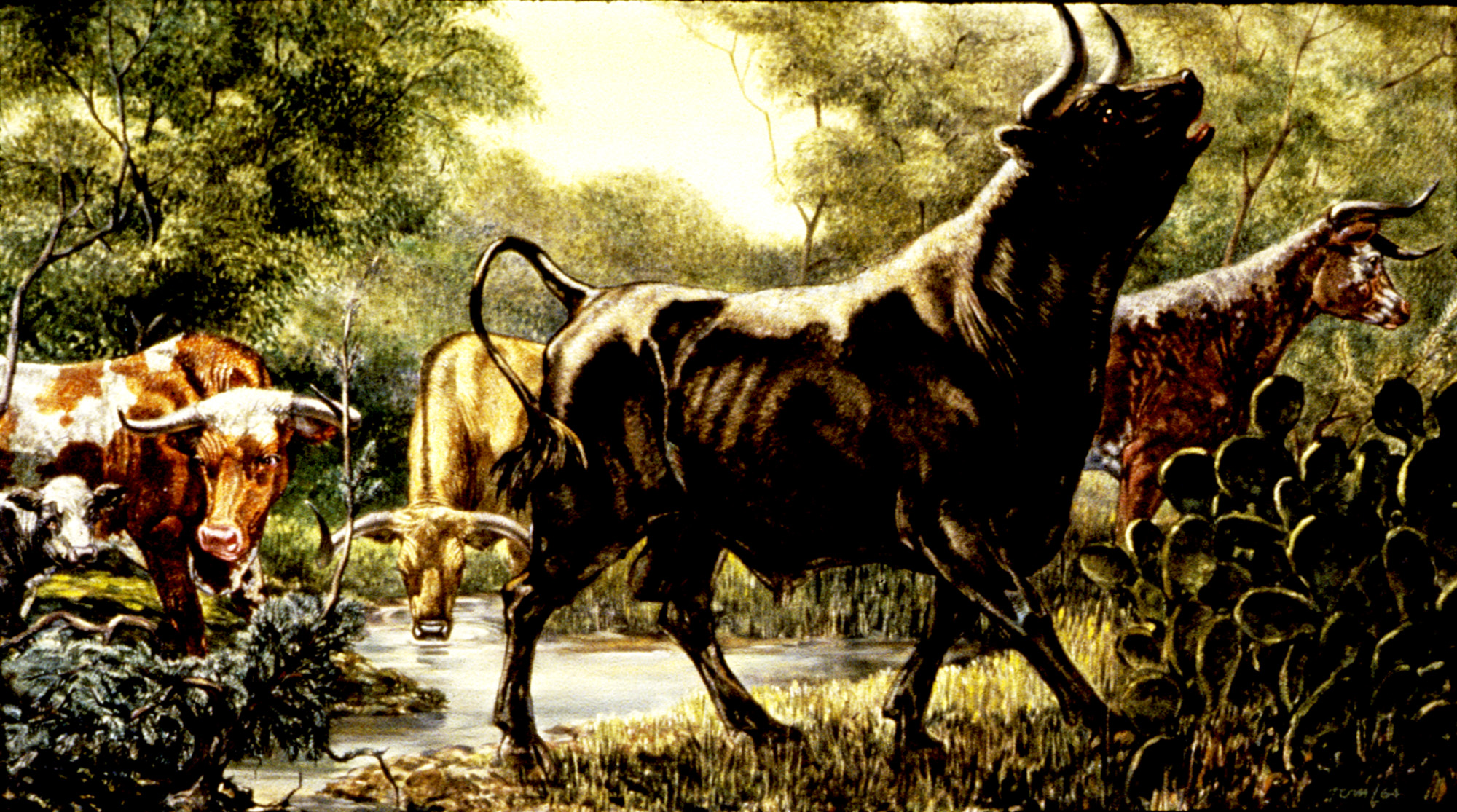
Wild Cattle of South Texas: Ancestors of the Longhorns, Tom Lea, 1945-1946, oil on canvas covered masonite, Dallas Museum of Art, gift of Life Magazine

Theme: Natural World/Texas

Teaching Moments

  • Discuss and count longhorns – native to Texas
  • Look at landscape – cactus, stream, plush green trees and grass
  • Talk about weather/seasons

Personal Connections

  • Texas
  • Animals
  • Outdoors

In preparation for testing these artworks with first-graders, I will need to develop guidelines for conversation and activities that incorporate various learning styles. If you have had any memorable experiences with activities or conversation starters related to these themes, please share them in the comments section below!

Hannah Burney
McDermott Education Intern for Teaching Programs and Partnerships

Friday Photos: Designing Exhibitions Workshop

Last Saturday, a dozen teachers explored exhibition design in a half-day teacher workshop, slipping in and out of the galleries before the crowds waiting for one last look at The Fashion World of Jean Paul Gaultier: From the Sidewalk to the Catwalk.  We were thrilled to have Jessica Harden, DMA Exhibition Design Coordinator, take us through various galleries she had designed. As we looked at the work, she enlightened us on the effect of design elements on visitor experience. It was especially exciting to hear Jessica explain her creative process for the Gaultier exhibition, which is full of imaginative elements, such as a satin-tufted display case and graffiti-filled walls!

The teachers spent the second part of the day designing mini exhibitions of works in the DMA’s collection. They considered lighting, wall color, interactive components, mood, and object and visitor safety, pinning their layouts and ideas to project boards. The teachers ended the day by sharing how their chosen design elements expressed the focus of their exhibitions. Here’s the breakdown of our Exhibition Re-design Project.

Enjoy these photos that capture some of our fun morning. Thanks to all the teachers who joined us on Saturday!

[slideshow]

Andrea Severin

Coordinator of Teaching Programs

Touring Totes Tutorial

Last month, Melissa and I made touring tote bags for Hannah and Jessica to thank them for all of their hard work thus far as our interns.  I also made a bag for Loryn, who probably spends more time than anyone touring in the galleries.  Melissa and I both sew, so we set aside an evening to whip up the tote bags for everyone.  Of course, after we saw the finished products, we wanted to make them for ourselves, too!

Below is a tutorial to make your own DMA Teaching Programs touring tote bag.  I have included photographs for many of the steps — sometimes it’s easier to follow the photos than the words on a sewing tutorial.

Materials needed:

  • 1/2 yard of fabric for the bag exterior
  • 1/2 yard of fabric for the lining
  • 1 yard of fusible interfacing
  • 1 1/2 yards of webbing (for the straps)
  • Basic sewing supplies (sewing machine, thread, pins, and a hand-stitching needle)

Step One: Cut two rectangles measuring 22 inches by 17 inches from your exterior fabric AND from your lining fabric.  You’ll also need to cut two 22 x 17 rectangles from your fusible interfacing.

Step Two: Iron the fusible interfacing to the wrong side of your lining fabric.  This will give your tote bag some stability and make it sturdy for carrying paper, pencils, books, etc.

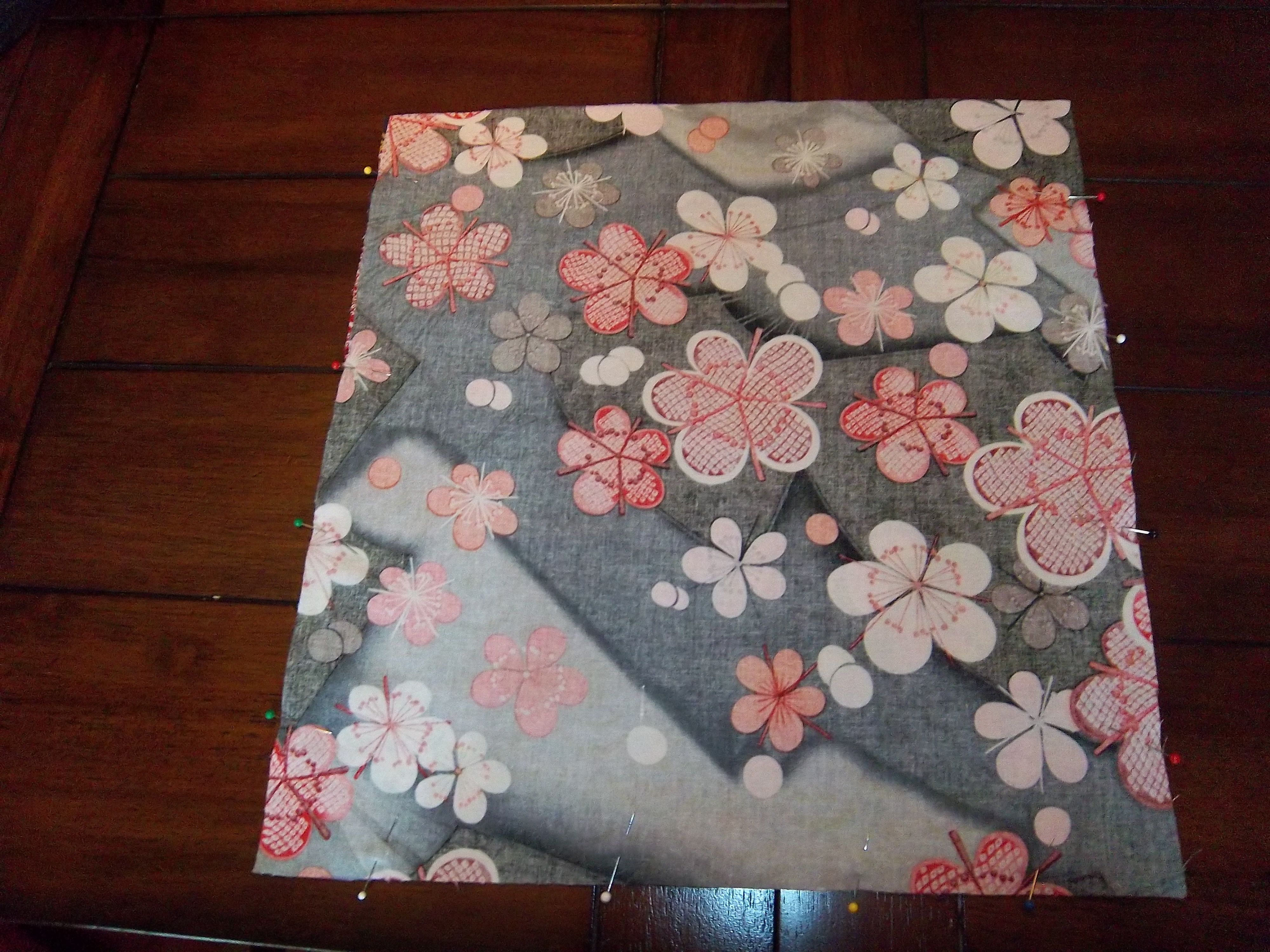
Step Three: With the right sides facing each other, pin your two exterior panels together along the side seams and along the bottom.  You’ll leave the top open.  Stitch together using a 1/2 inch seam allowance.

Step Four: Repeat step three with your lining fabric.  However, you will need to leave a five or six inch gap in the middle of your lining — this will allow you to turn your bag right-side-out at the end.  (I like to use red pins on either side of my gap as a visual reminder to stop my sewing and leave a space.)

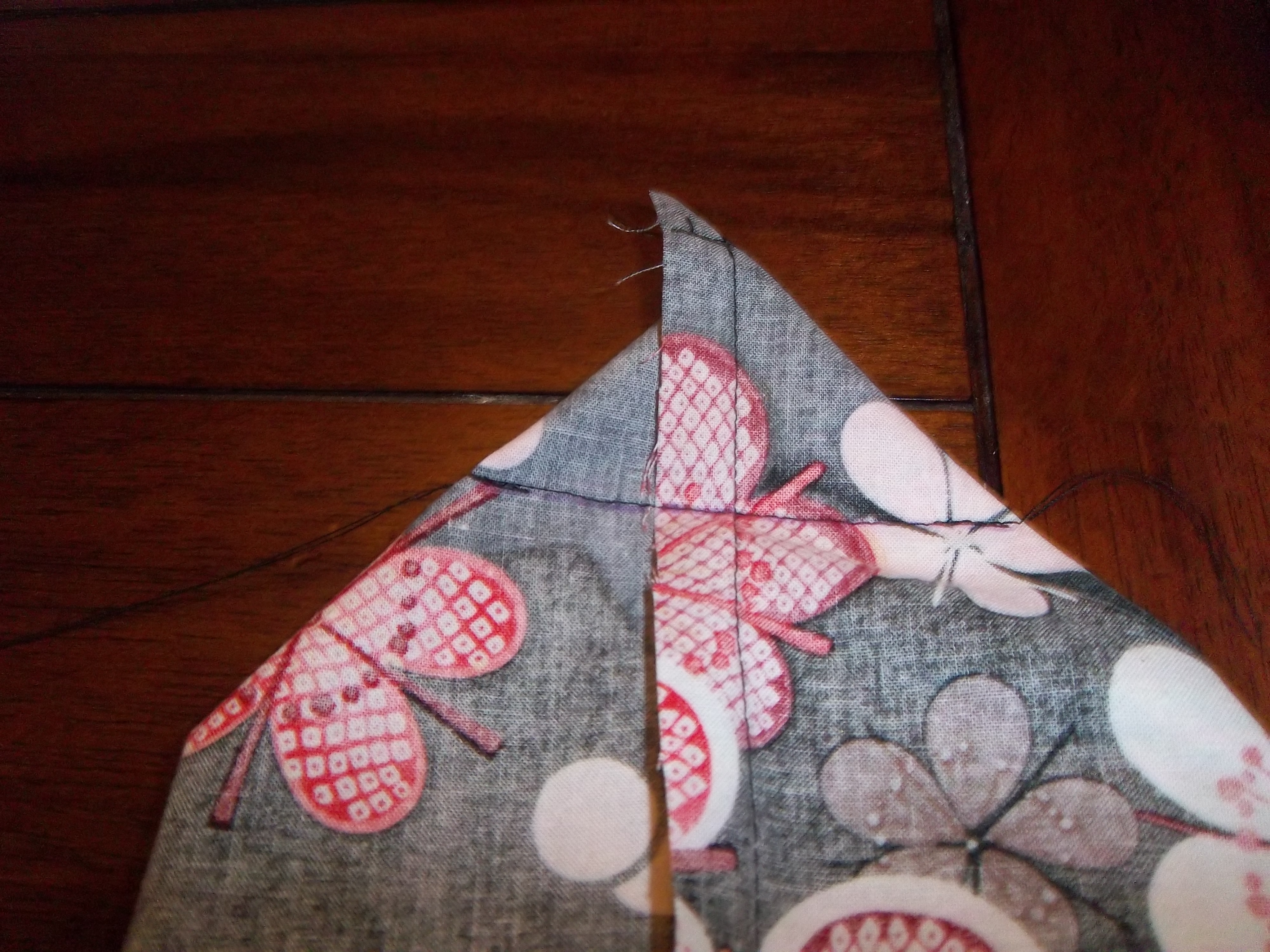
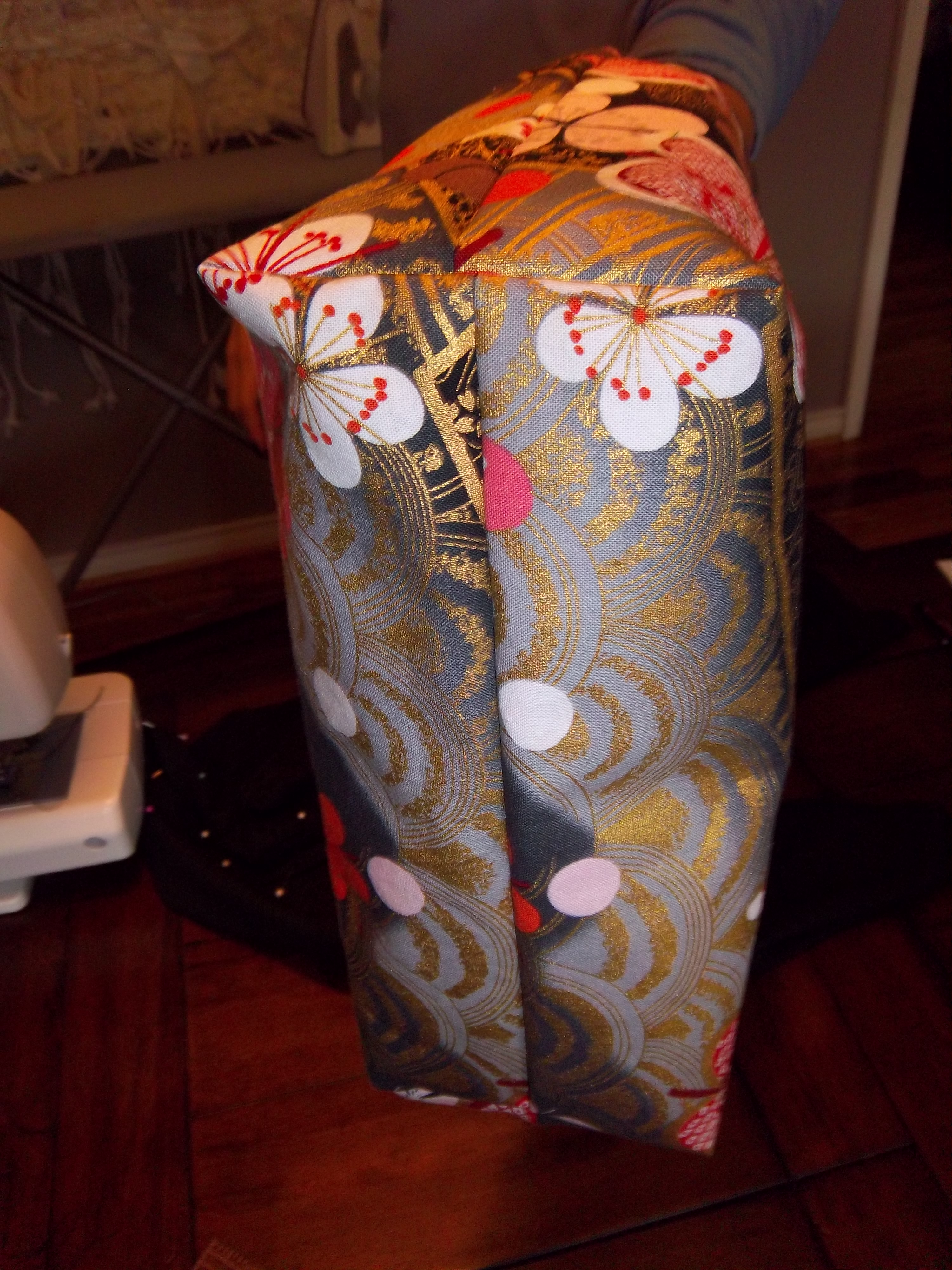
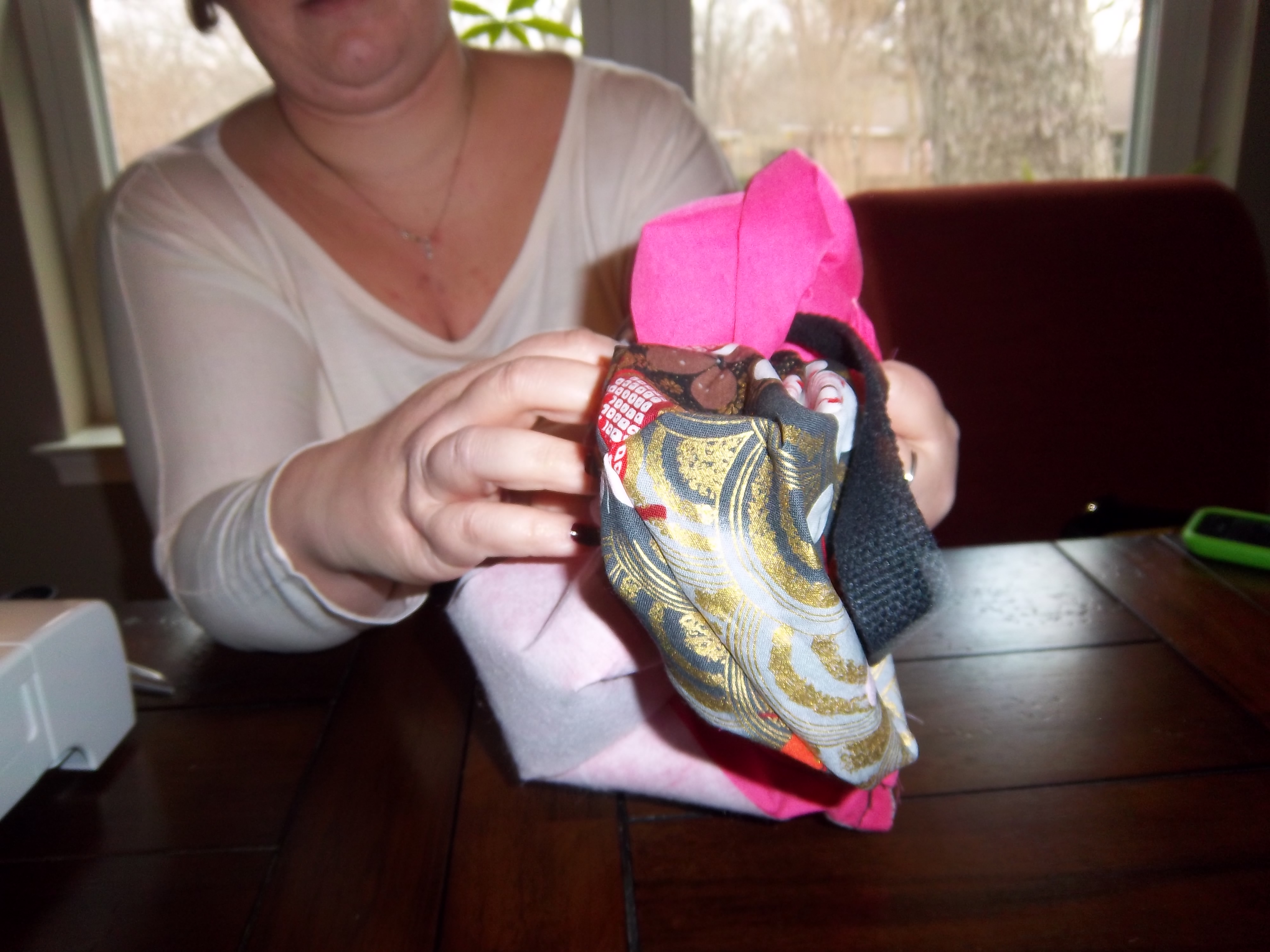
Step Five: On your bag exterior, measure and mark a line on each side seam three inches from the bottom of the bag; this will help you square the corners of the tote.  Put your hand inside the bag and pull the corner out, turning it into a triangle.  Stitch a horizontal line across the triangle where you made your pen mark.  After you’re done, cut the triangle off to eliminate any bulk from your corners (be sure not to cut too close to the seam).  You’ll follow this step on each of the bottom corners of the exterior and lining of your bag.

This is how the bottom of your bag will look once you box the corners

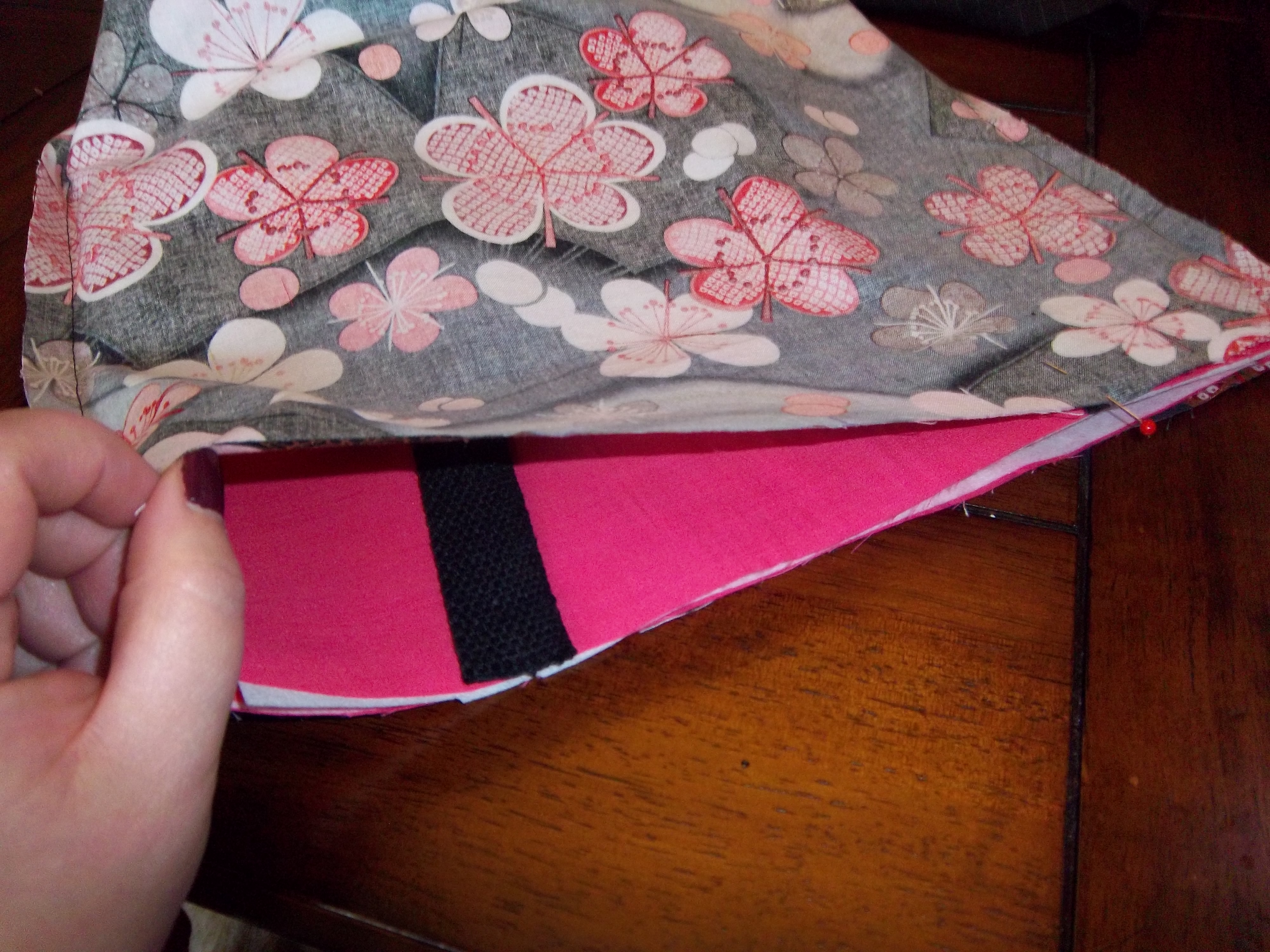
Step Six: It’s time to attach your straps to the bag.  Take your 1 1/2 yards of webbing and cut it in half, leaving your 3/4 yard for each strap.  Find the center point of your exterior bag.  Mark two lines four inches on either side of that center point and pin your handles in place.  You’ll want to pin the handle to the right side of your lining fabric.

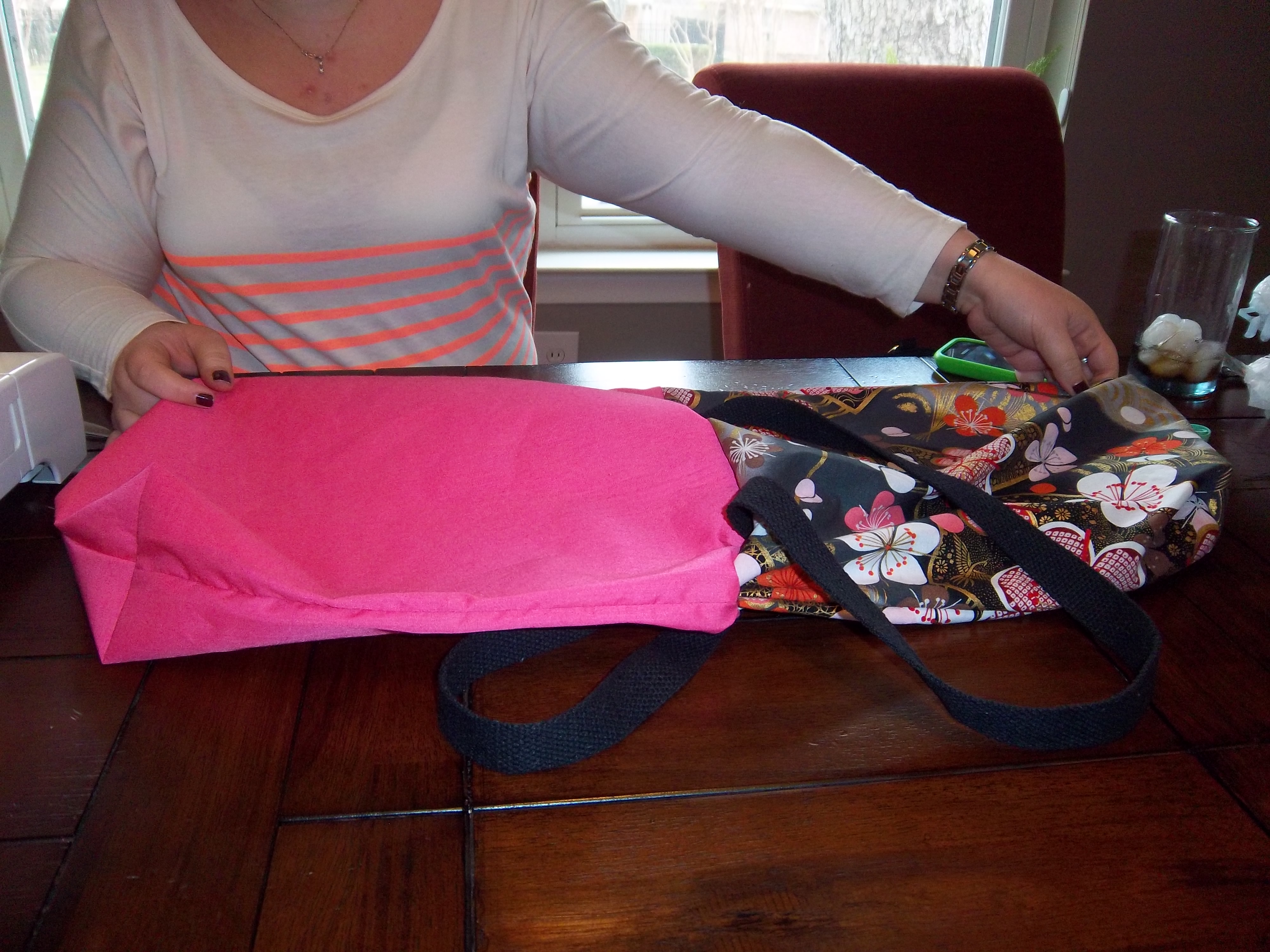
Step Seven:  Make sure your exterior fabric is facing right-side in.  Turn your lining fabric right-side out and insert into the exterior tote pocket.  Be sure that your side seams are matched up.  Pin both pieces together all the way around (make sure you include the handles in your pinning).  Using a 1/2 inch seam allowance, stitch all the way around your bag.  I recommend going back and sewing a second time over your handles–this will help reinforce the handles and keep them from pulling out of the tote.

Step Eight: Find the hole that you left in your lining fabric.  This is how you’re going to turn your bag right-side out.  Pull the entire bag, including the handles, through that gap.

Step Nine: Tuck your lining fabric into the exterior of the tote bag.  You’ll want to be sure that your corners are nice and square, too.  Once everything is in place, you might decide that you want to topstitch your tote to give it a finished look.

Step Ten: Use a needle and thread to stitch the hole in the bottom of your tote bag closed.  Once that’s finished, you’re ready to go.

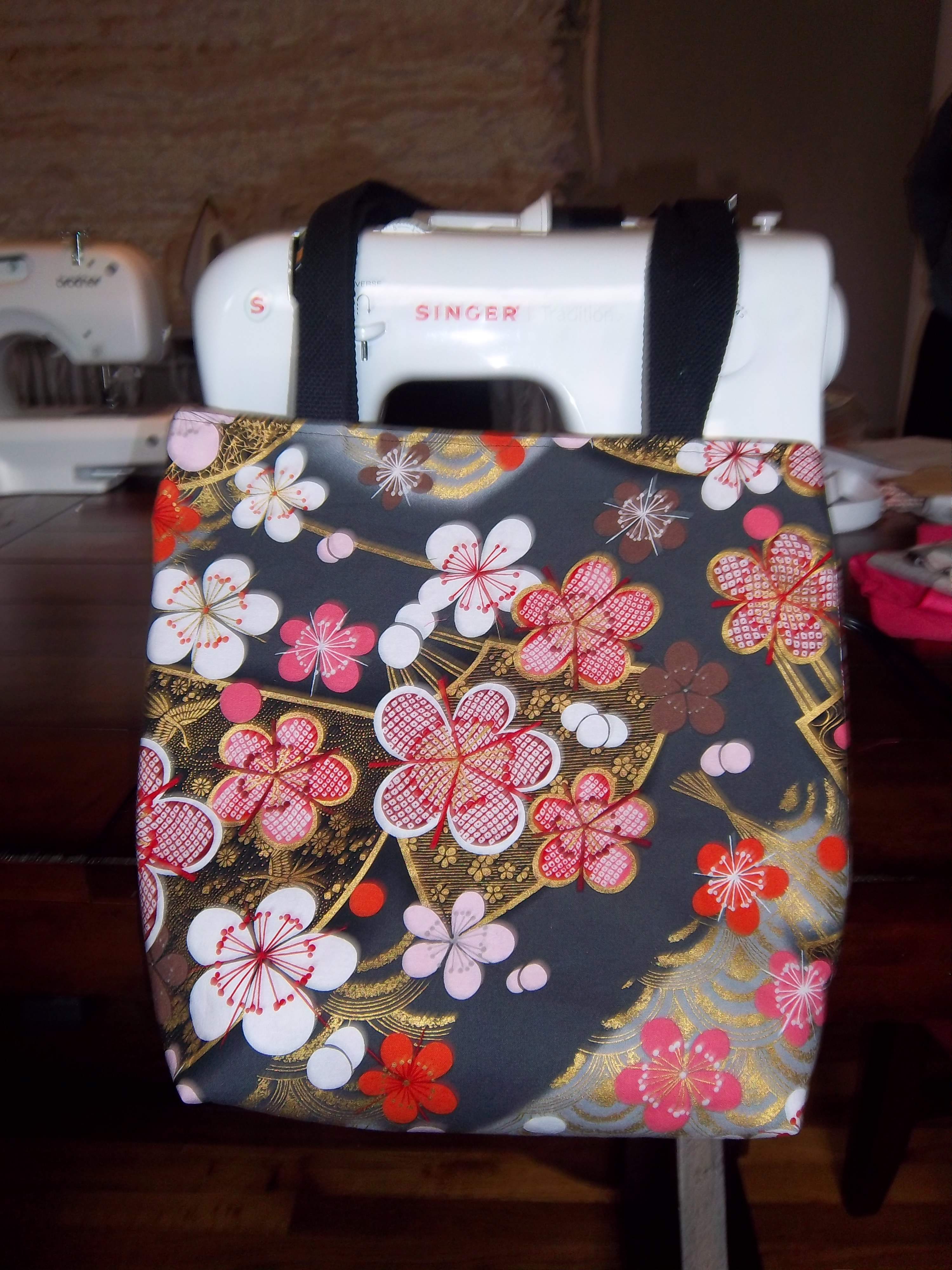
Here we are with our finished touring totes.  They’re sew cute!

Shannon Karol
Manager of Docent Programs and Gallery Teaching

How it's Made: Etruscan Jewelry

Welcome to the introductory blog of the “How it’s Made” series.  In this series, I aim to shed some light on the technical methods of how objects in our collection were created and to gather a greater appreciation for art-making in general. 

Coming from a metalsmithing background, I wanted to start this series with precious  metal objects.  I selected Etruscan jewelry because I have such admiration for how beautifully designed and how well-crafted these metal objects are.  While studying metalsmithing at the University of North Texas, I had the opportunity to learn several of the same techniques the Etruscans used, but with the convenience of modern tools and technology.

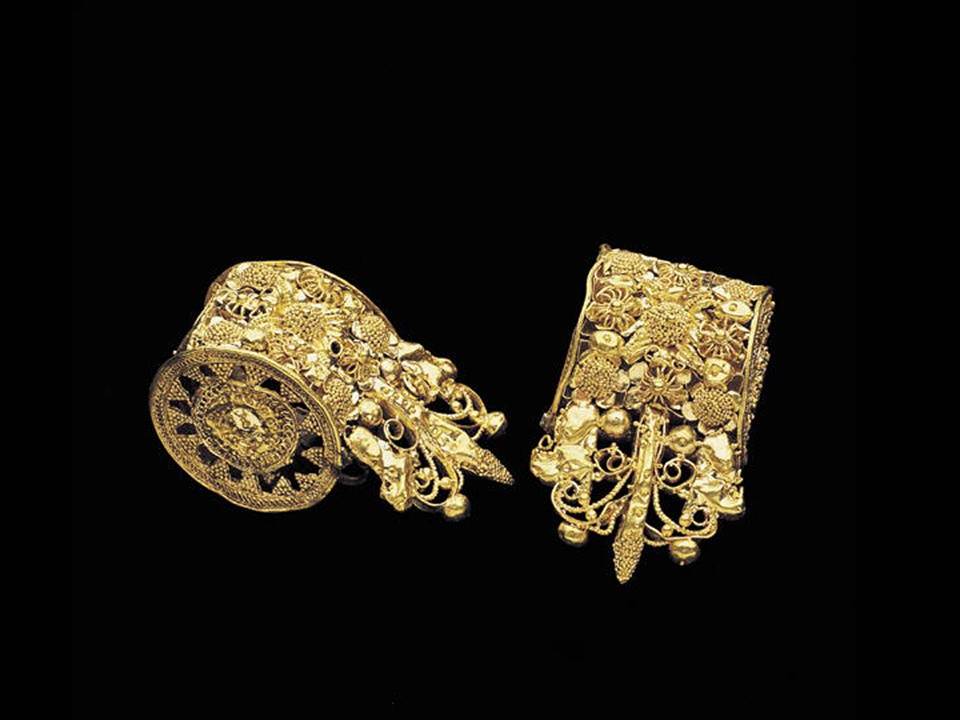
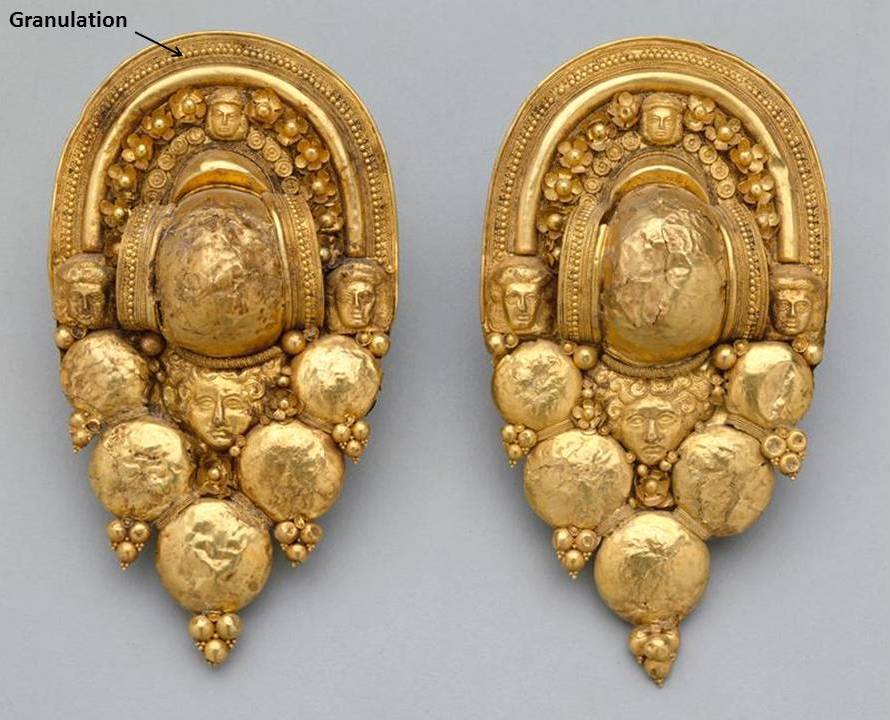
Pair of "a bauletto" type earrings, Etruscan, 6th-early 5th centuries B.C., Museum League Purchase Funds, The Eugene and Margaret McDermott Art Fund, Inc., and Cecil H. and Ida M. Green in honor of Virginia Lucas Nick

Who were the Etruscans?

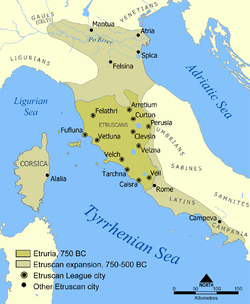
Early inhabitants of Italy, the Etruscans settled in the northern region of Rome in the late eighth century B.C., and can trace their heritage by name in modern-day Tuscany.  The Etruscans succeeded the Villanovan culture, a civilization that established early foreign trade and was adept in creating bronze jewelry. The influx of Greek colonization in Italy aided in the transition from Villanovan to Etruscan culture, which thrived until Roman imperialism succeeded around 200 B.C.


Etruscan territory

What Makes Etruscan Jewelry Interesting?

Today, it’s no mystery why jewelers love to use gold.  Gold is a very easy metal to work with; it’s malleable (which means it’s easy to shape and form), there is less clean up after soldering, and it doesn’t tarnish over time.  So, why is Etruscan gold so amazing?  This ancient civilization manipulated metals and implemented tedious applications without the modern convenience of a torch and other fancy tools is pretty incredible.  It amazes me that such delicate pieces could be fused together by controlling an open flame instead of a pressure-controlled torch. 

Take granulation, for example.  Granulation derives from the Latin word granum, meaning “grain,” and it describes the method of fusing small granules to a base.  This ancient technique is a hallmark of Etruscan jewelry and requires a lot of meticulous preparation. 

Pair of Funerary Earrings, Etruscan, 4th-3rd Century B.C., gift of Mr. and Mrs. Cecil H. Green

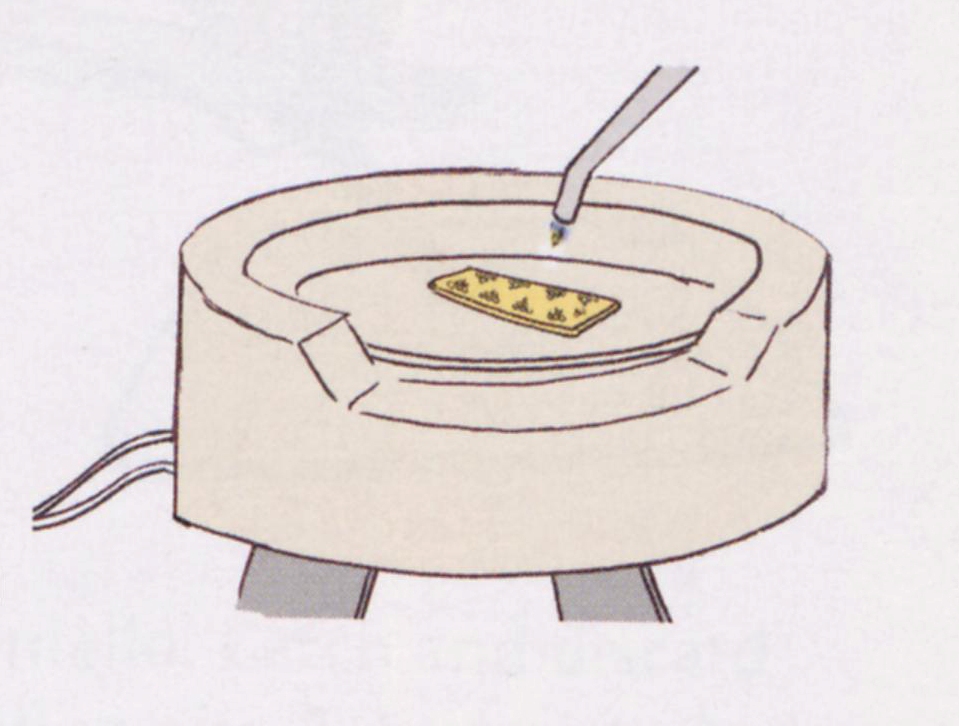
In order to make the granules, Etruscans would place gold dust or very small clippings of metal into a crucible.  In order to keep the granules from clumping together and melting into one giant granule, they placed layers of charcoal between the clippings, and then heated them to their melting point.  At that point, the metal dust or clipping will roll itself into a little ball and create a granule.

Modern granulation technique, courtesy of "The Complete Metalsmith" by Tim McCreight

Modern granulation technique, courtesy of "The Complete Metalsmith" by Tim McCreight

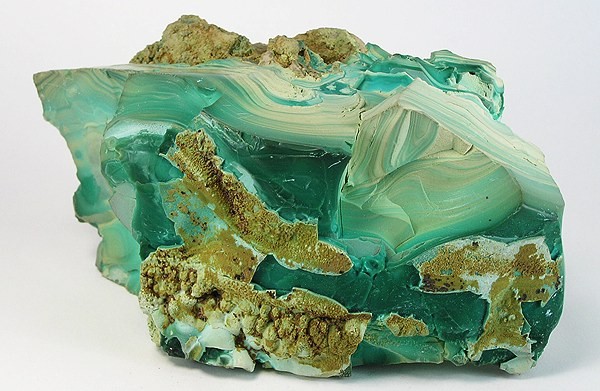
Once you have your tiny granules, you have to then position them and fuse them to a base.  Today, metalsmiths use ready-made flux and solder to join granules on a base.  According to Jochem Wolters in his essay “The Ancient Craft of Granulation: A Re-Assessment of Established Concepts,” adhesive non-metallic solders such as the gem chrysokolla (which literally translates to “gold glue”) or any other copper-bearing compounds were the solder of choice for the Etruscans. 

Chrysokolla, a gem used for non-metallic solder

If you’ve never soldered before, and you’re having a hard time visualizing this, think of a peanut butter sandwich.  You have two surfaces that need to be fused together.  Think of the base and the granule as the two slices of bread, and the solder as the peanut butter; without it, the two surfaces cannot fuse.  Once you have your solder and granules in place, you place your object over an open charcoal fire and heat it evenly.  Amazing!

It’s important to note that the Etruscans didn’t reinvent the wheel in terms of metalsmithing techniques, for many of the methods they are recognized for (such as granulation, filigree, chasing, and repoussé) were borrowed from neighboring cultures.  The true reason Etruscan jewelry stands out is because of the ancient metalsmiths’ technical skill and amazing ability to manipulate gold with precision.  I can attest that even with modern tools, it is difficult to execute many of the techniques that were used in the 6th and 7th centuries B.C. 

I hope you find Etruscan jewelry as riveting as I do, and if you have any questions about other works from our collection, please feel free to post your questions in the comments area. 

Happy making,

Loryn Leonard
Coordinator of Museum Visits

Resources:

  • Barbara Deppert-Lippitz, Ancient Gold Jewelry at the Dallas Museum of Art, (Washington: University of Washington 1996), 31-57. 
  • Tim McCreight, The Complete Metalsmith: Professional Edition, (Davis Publications: February 2004).
  • Jochem Wolters,”The Ancient Craft of Granulation: A Re-Assessment of Established Concepts,” Gold Bulletin, Vol. 14, Number 3, 119-129. 

Friday Photos: Face to Face

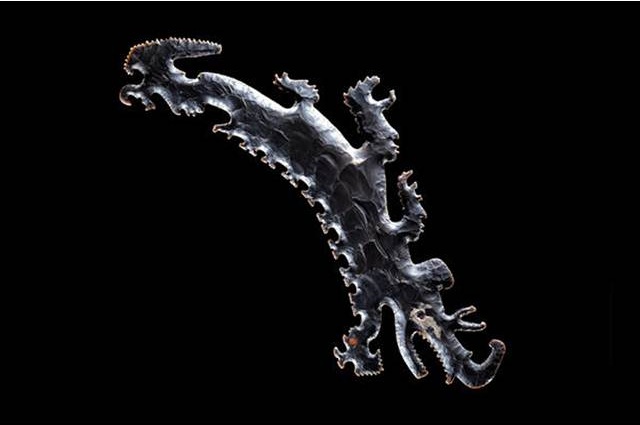
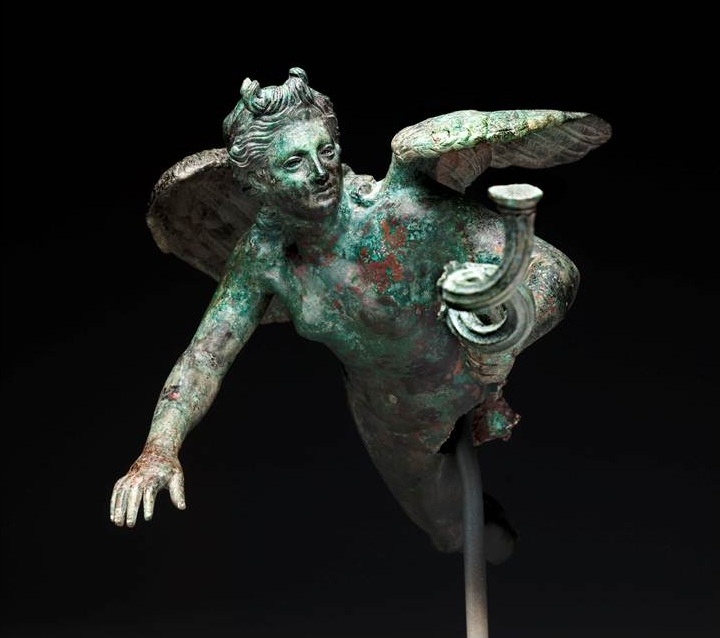
I am very excited to announce that this Sunday, February 12th is the opening of Face to Face: International Art at the DMA. This exhibition, comprised entirely of works of art from the DMA collection, honors and celebrates the contributions of our generous donors. As a result of their kind philanthropy, the DMA has grown into a diverse international collection. If you are a frequent visitor of the Museum, some or maybe even all of these artworks might be familiar to you, but their intriguing and unusual display design will have you looking at them in all new ways. The works of art will be presented in pairs of two, each coming from a different culture that share some kind of commonality. Through close looking and the guidance of thoughtful label text, the discovery of similarities between two seemingly dissimilar objects will provide a new perspective on the collection. An example of one of these provocative pairings is below.

What do you notice about these two pieces? What kind of connections can you make between them? Why might they be shown together?

Eccentric flint depicting a crocodile canoe with passengers, Mexico or Guatemala: Maya culture, Late Classic period, c. A.D. 600–900, The Eugene and Margaret McDermott Art Fund, Inc., in honor of Mrs. Alex Spence, 1983.45.McD

Eros lamp holder, Greek, perhaps from Asia Minor, Hellenistic period, early 1st century B.C., bronze, The Eugene and Margaret McDermott Art Fund, Inc., in honor of Anne Bromberg’s 30th anniversary with the Dallas Museum of Art, 2005.12.a–b.McD

Stumped? Come to the exhibition to find out more about these and many other works of art!

Hannah Burney
McDermott Education Intern for Teaching Programs and Partnerships

Community Connection: Oil and Cotton

Every six months or so, our department gets away for a day-long retreat.  It’s an opportunity for us to reflect, look ahead, and spend time together outside of our typical work spaces.  We’ve been fortunate to hold two of these retreats at Oil and Cotton, a creative space in Oak Cliff that offers a variety of multidisciplinary art classes, workshops, and camps.  Opened in September 2010, the space is managed by Shannon Driscoll and Kayli House Cusick.

How did you get started?

Shannon:  Kayli and I met during a volunteer project in our neighborhood called The Better Block. The project took an area of the neighborhood, where Oil and Cotton is now located, and made temporary changes to the block that we felt as a community would make it more pedestrian-friendly.  We met at one of the first meetings, where we both raised our hands and said we were interested in doing a pop-up art studio for the community.

After that, Kayli and I started planning, and we created Rock, Paper, Scissors.  We used a warehouse on Seventh Street, asked for donated materials from friends and family, and set up a base of volunteers for two days during the Oak Cliff Art Crawl.  We set up a long, long table full of art supplies and materials, and had volunteers lead people through creative projects, from collage to stenciling to drawing and painting.  All the volunteers were artists or had different creative backgrounds from Oak Cliff and beyond.  The space was packed with crowds for the entire weekend.  It was really wonderful to see people of all ages and backgrounds and from different parts of the neighborhood and of Dallas, sitting together and making things side by side.

After the festival, people in the community approached us and said they didn’t want us to stop what we were doing.  The gentleman who owned the warehouse had a building that came up for rent, and we talked to him and decided to go for it.  Kayli and I both come from art-related backgrounds, and we brought our experiences as artists and educators to what we’re doing.
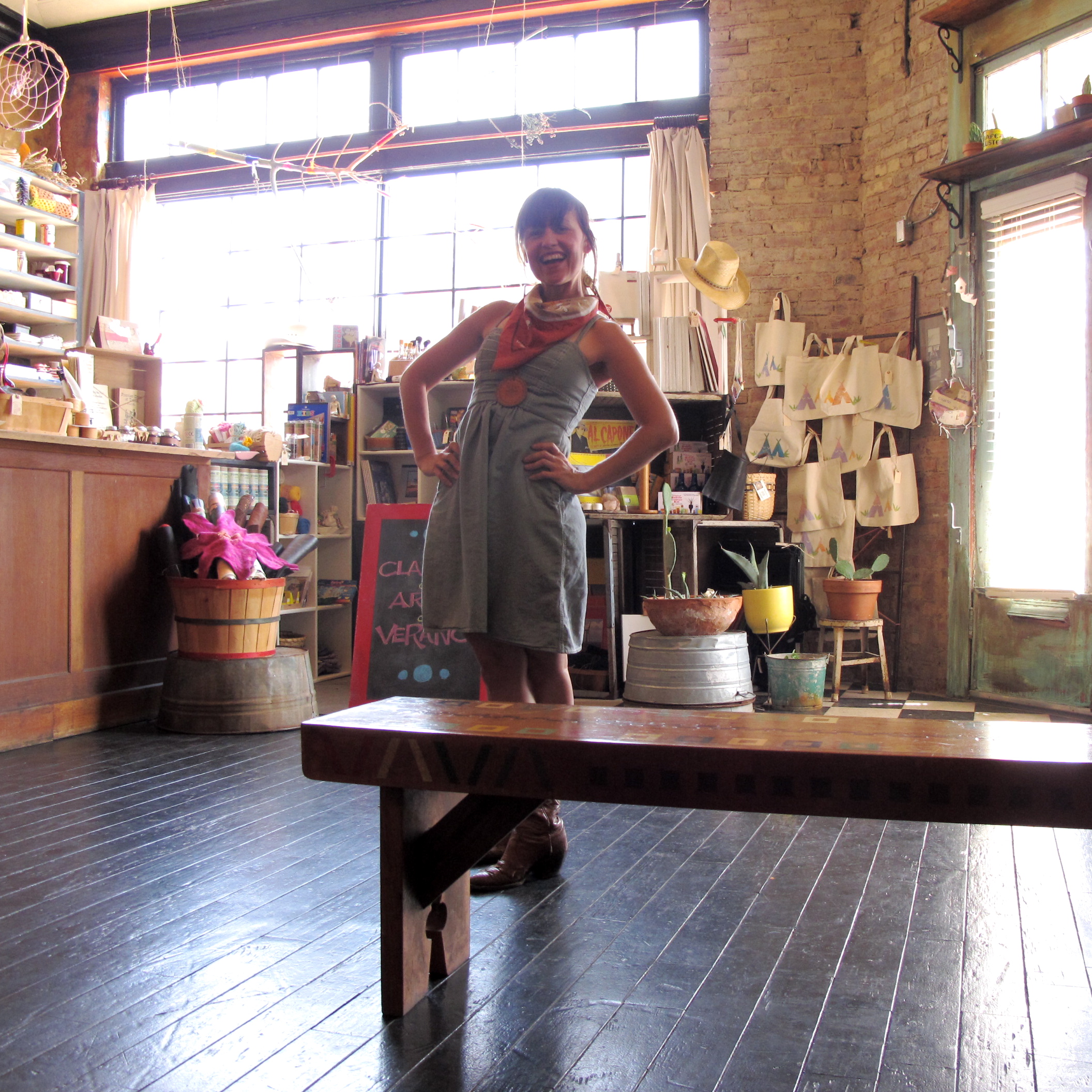
Shannon Driscoll, co-owner and instructor at Oil and Cotton

What did you do before opening Oil and Cotton?

Shannon:  I had a private conservation practice – I’m an art conservator.  I had also been teaching classes on the side at my studio and at the Dallas County Jail with Resolana – I’m a board member for Resolana as well.

Kayli:  I wrote curriculum for my mother, who had a business for about twelve years off and on. It was something we did as a family growing up; she was an art teacher, and she made elementary art curriculum for Coppell ISD.  When she opened a business with my sister, I was a music composer at UNT, and it ended up being the perfect fit.  I also taught piano lessons privately out of my house forever and ever.  Then I had a child; when I met Shannon, my daughter was two, and that’s what I was doing.  I had always had the idea on my backburner, if I could ever figure out how to combine all the loves I had, and have a work environment my child could be in, I could do everything I love to do.  It all came together when I met Shannon and she said, of course we can do that.

What has the community response been to Oil and Cotton?

Shannon:  It has been wonderful.  A day hasn’t gone by when someone has not come in to ask how they could help us or how they could donate materials to us or asked us for another class that we’re not offering.  People feel involved in what we’re doing; they’ve seen us grow from something very small to something more permanent and a part of their neighborhood.  I think that’s exciting for people.  They feel invested in what we’re doing, and they want to help us.  We wouldn’t have been able to do what we’ve done in this amount of time without their help.  People have donated a box of white tiles, which we used to create backsplash for the sink; corks; fabric; paper… we always find a way to use what we’re given.  We’ve had people come to us and say, “I have this idea for a project, and I want to see it happen”.  For example, an architect led a two-week architecture workshop for teens, and they created a deck for us.  All the materials were donated, and architects came and talked to the teens everyday.  We’ve had the most amazing, talented interns that support our education outreach, and we’ve had teachers who help select children in the neighborhood who might not be able to afford classes here, and we give them scholarships.  We rely on these neighborhood teachers to send us people who need help, and who will benefit from coming to Oil and Cotton.
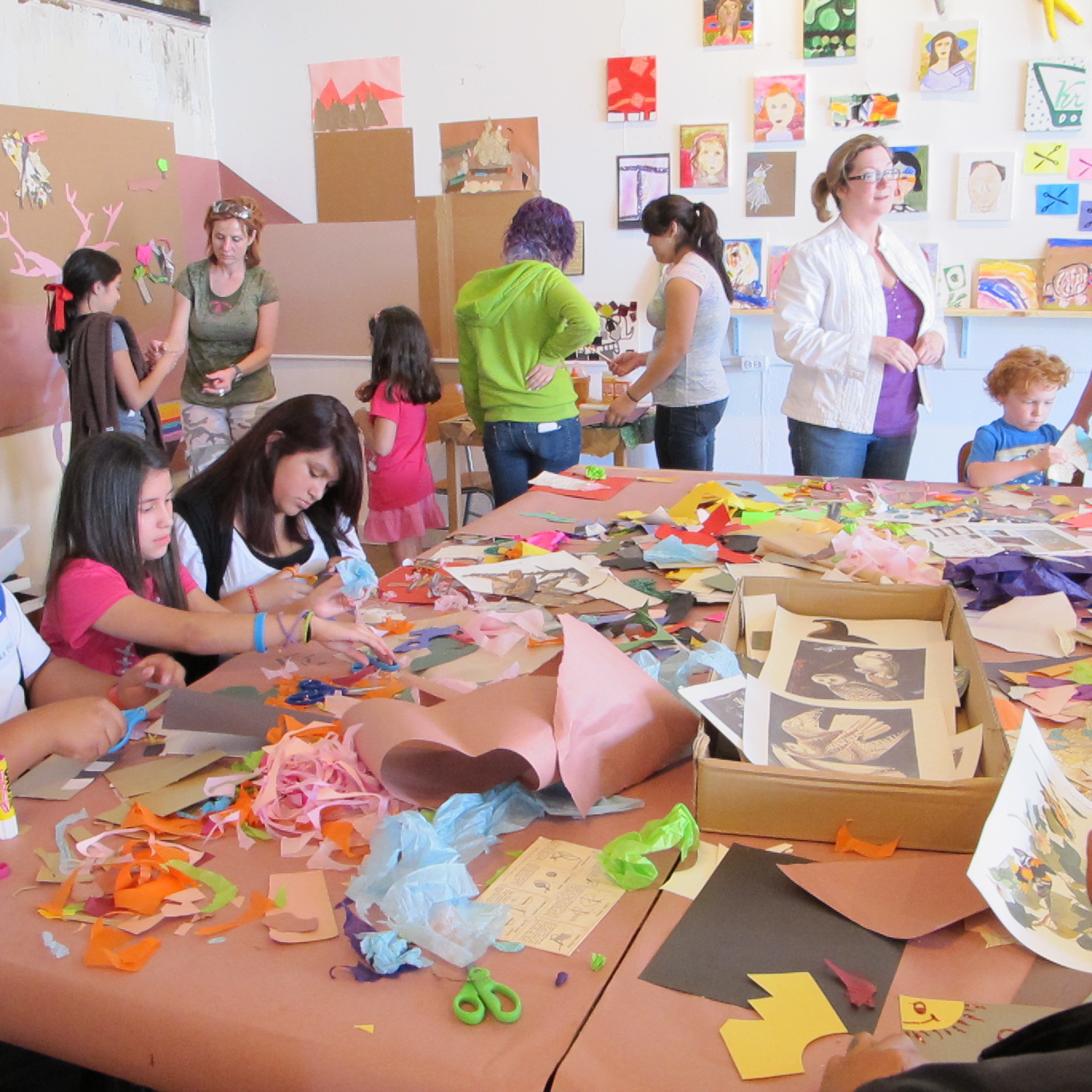
A community collage was part of a free open house and student exhibition

What has been your most successful or fun class?

Kayli:  For me, it’s songwriting camp.  I got to work with other musicians – I worked with David Daniels, who is a touring indie rock musician; Floramay Holliday, a touring country music singer; and Mikal Beth Hughey, a jack-of-all-trades who plays in some bands locally and teaches piano and voice in her studio at The Kessler Theater.  It was a weeklong summer camp.  The kids came in and formed bands; they collaborated to write a song together, rehearsed it like crazy, recorded it, made a CD, and had a performance at the end of the camp.  They had to come up with merchandise and think about the visual aspects of what they were doing, in the form of a band t-shirt, poster, and CD cover.  We had a photographer take pictures of them for their CD’s.  It was just awesome fun for me as a musician; I got to learn from other musicians how they approach writing.  We occupied the whole space, with kids rehearsing in every room as loud as they could be.  The kids could be themselves without a lot of adult interference.

We also got to work with the DMA on the Mark Bradford exhibition.  That was very special – I am a big fan of his work.  We were part of a meeting with people from Oak Cliff to bring some Oak Cliff blood into the situation.  We volunteered to work with Nicole and have our teen class to do this interactive project during a Late Night.  That was really fun.  What I liked about that was all the ages and different people; we had senior citizens to little kids, and it was a lot like Rock, Paper, Scissors.  Everyone brought something different to it.  By the end of the night, the teens were destroying the project and making little sculptures out of it.  It was originally a weaving, and it became sculptural.
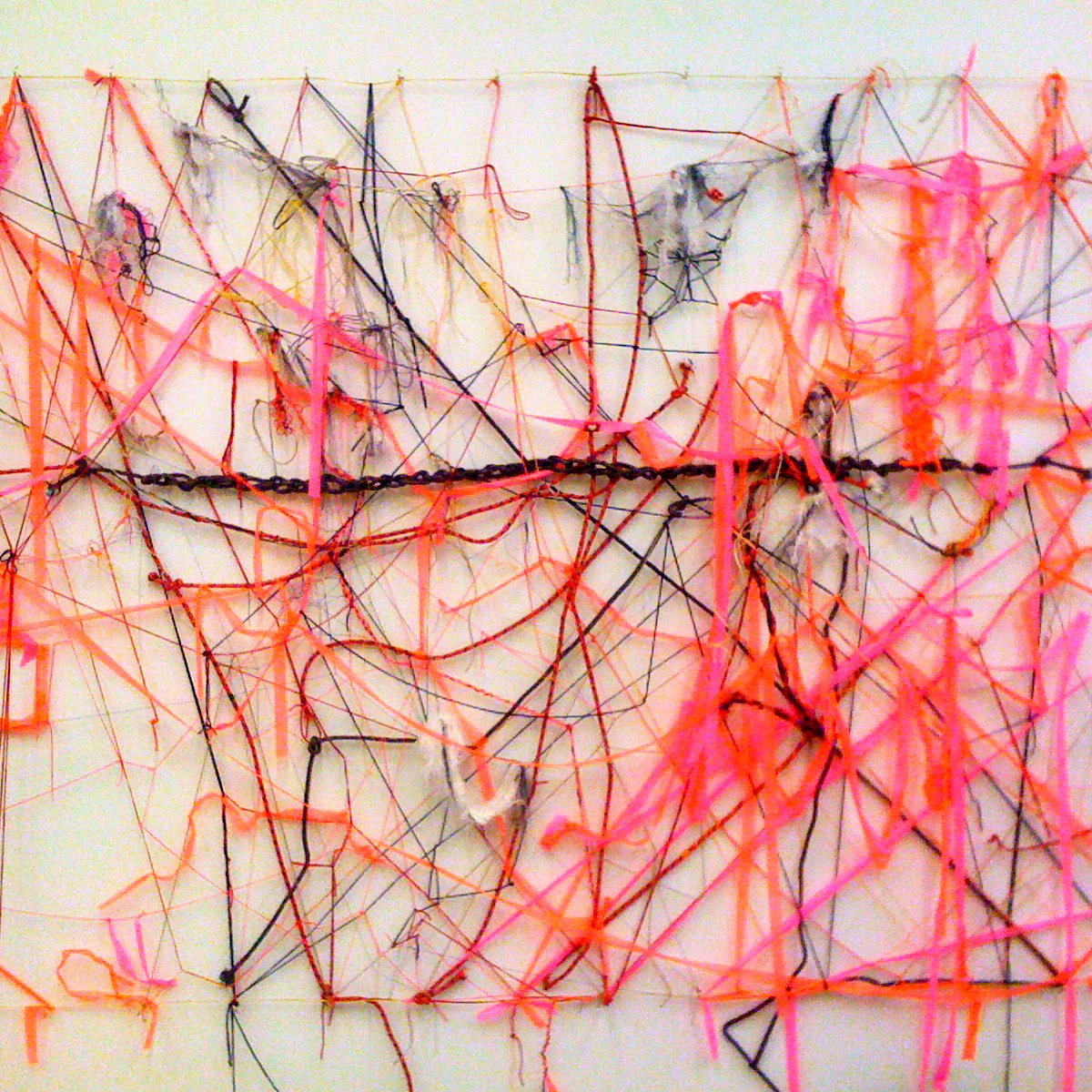
Oil and Cotton Mark Bradford Late Night project

Has anything surprised you since the opening of Oil and Cotton?

Kayli:  The amount of generosity people have shown in our community, and the enthusiasm of the art community here to try and make Dallas good.  The amount of interns and volunteers we get because they want to see us succeed and want to be a part of it.  People understand this is art in social practice, that we’re making this happen for real.  It’s been a surprise to us that something that is natural for us to be doing makes people think “Oh hey, I can do my thing and survive.  If I don’t spend too much money and work my tail off, I can survive”.   It helps to have the support of our neighborhood, and we could never have made it without that support.  People offer to paint walls, dig the dirt in back of the building.  My mother also gave us a ton of furniture and art supplies.

What is one of your most treasured handmade possessions?

Shannon:  I am a collector of art, and art has always been a part of my life.  My dad is a junker; I grew up going to yard sales, estate sales, and junk shops with him in Baltimore, so I’ve collected things over the years.  I’ve got a collection of drawings that a little girl made from 1908. She must have done them in her classroom, because there is a drawing of the back of the head of the child sitting in front of her.  There is also a drawing of a doll she titled “Mr. Eat-a-Pie”.  They are beautiful pencil drawings, and she watercolored some of them as well.  She made a little portfolio for them that says 1908 along with her name.

Kayli:  A little woodblock that was my grandmother’s.  She was an Okie, and she had an amazing collection of all kinds of Native American things.  She had this little tiny wood block, around five by seven inches, with mustard yellow paint remnants on it.  I’ve always wanted to do something with it.  It has a sort of a tesellation or radial design with teepees and geometric shapes that come out from the center.  It looks like an old lino; you can see all the different colors used to print it, like red and green under the yellow.  You know it was used a lot, but you don’t know what for.  It says “20 cents” really big on the back.
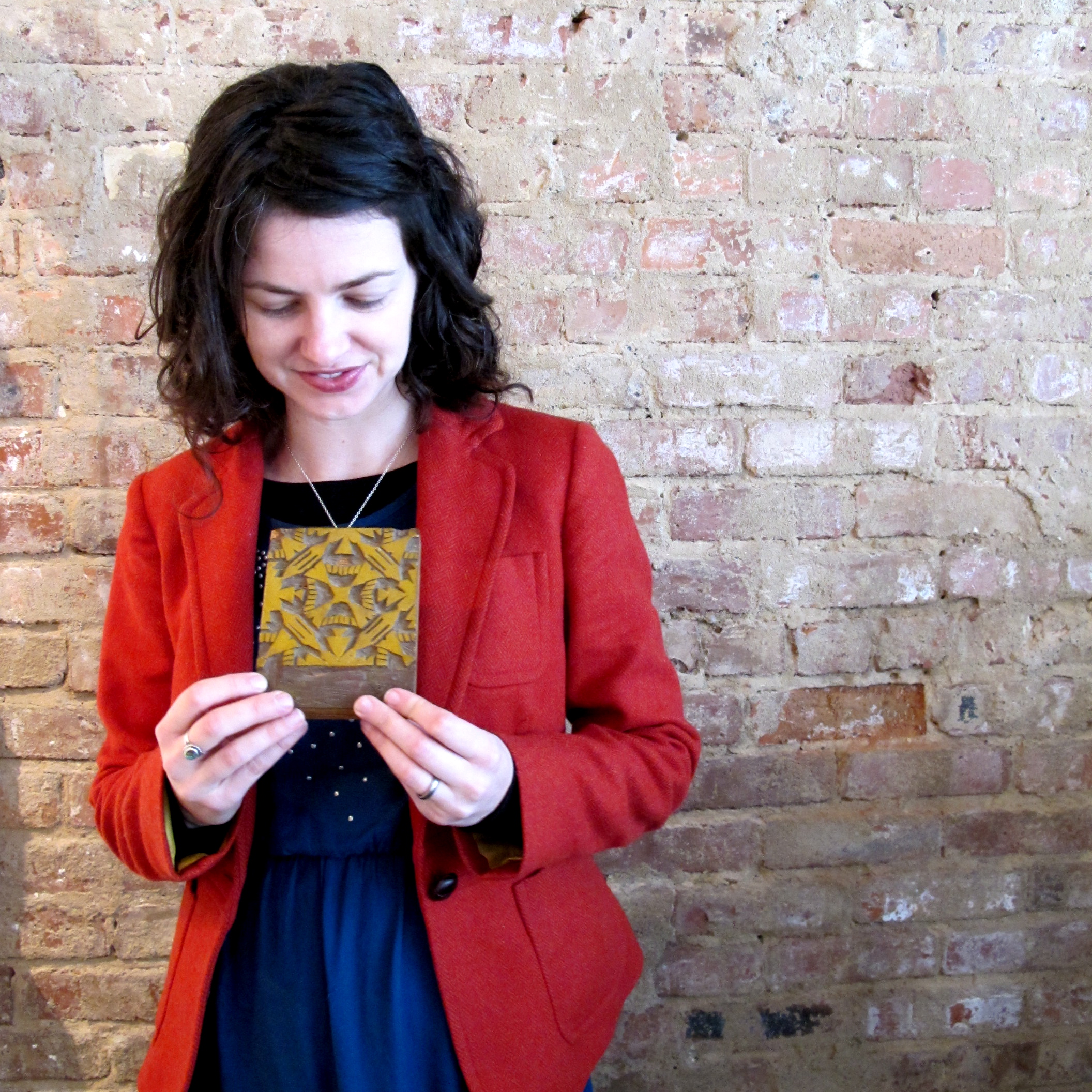
Kayli House Cusick, co-owner and instructor at Oil and Cotton, and her grandmother's woodblock

Kayli:  We would love to see more teachers getting together here.  We’d love for people to know that if they have a group and want to do a special technique workshop, we’ll either teach it ourselves or find someone else to teach it.  This is great space for retreats.  (*Editor’s note: we agree!)

Melissa Nelson
Manager of Teaching in the Community
What to Expect on a Docent-Guided Tour

A few months ago, Loryn shared her tips for making the most of a self-guided visit to the DMA.  I thought I would weigh in today with a summary of what to expect when you schedule a docent-guided tour at the Museum.  We offer docent-guided tours Tuesday-Friday at 10:00 a.m., 11:00 a.m., 12:00 p.m., and 1:00 p.m., and all requests for docent-guided tours must be submitted at least three weeks in advance.

Let’s say you’ve submitted your request and received your confirmation letter from Loryn.  What happens once you actually arrive at the DMA?

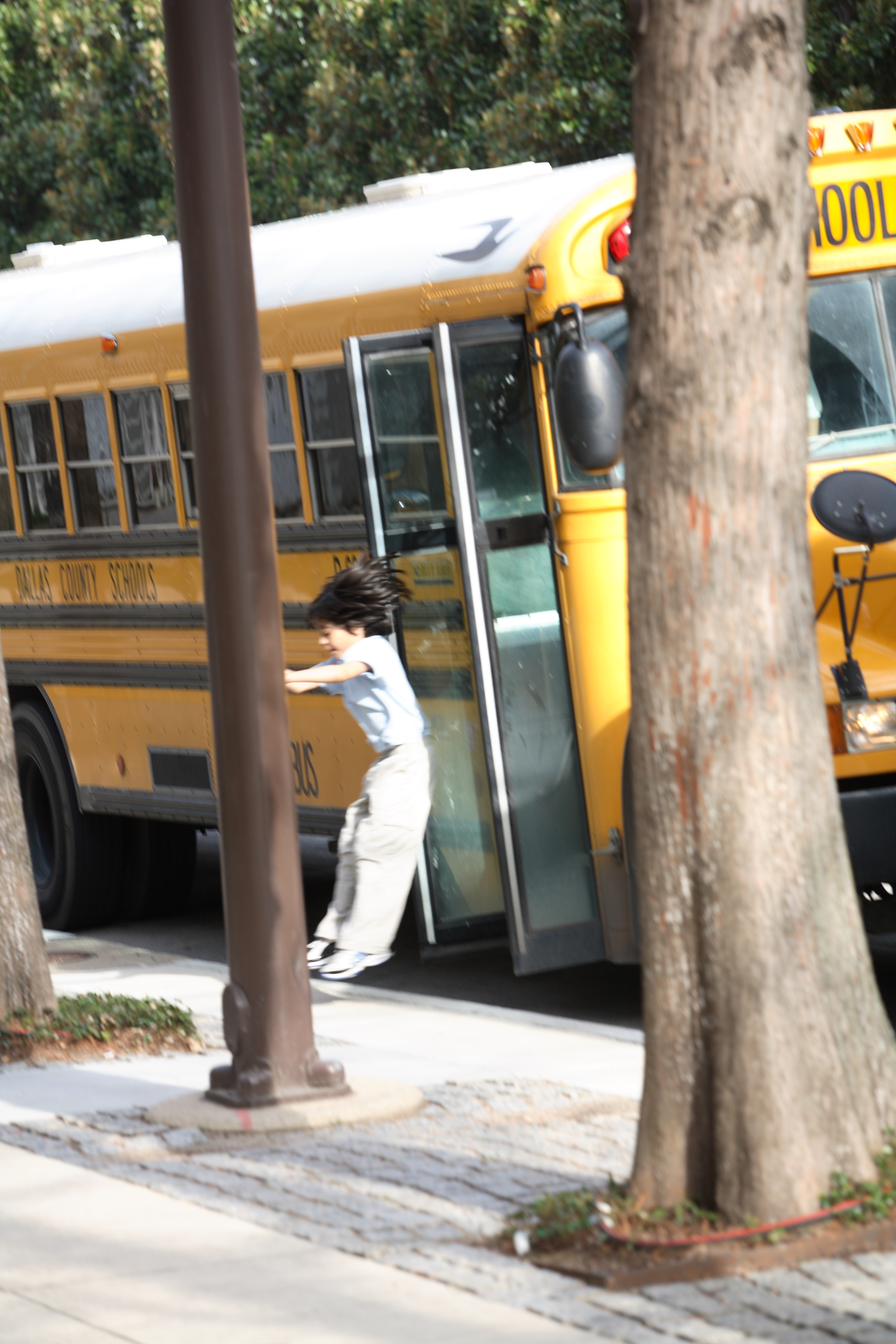
An excited 4th grader hops off the bus

First, you’ll be greeted by one of our fabulous docents.  This docent will chat with you to make sure that you’re broken up into smaller groups (we assign one docent for every fifteen students), and s/he will match you up with the docents for your tour.  Once your tour is under way, you should expect to see five to six works of art in a one hour tour.  We emphasize quality  over quantity–we believe your students will gain more from in-depth experiences with a limited number of works than they would from trying to see twenty works of art in one hour.  If you would like your students to see more paintings and sculptures while they are here, consider scheduling a self-guided visit after your tour.  That’s a great way for your students to be able to go back and look at works of art that are most interesting to them.

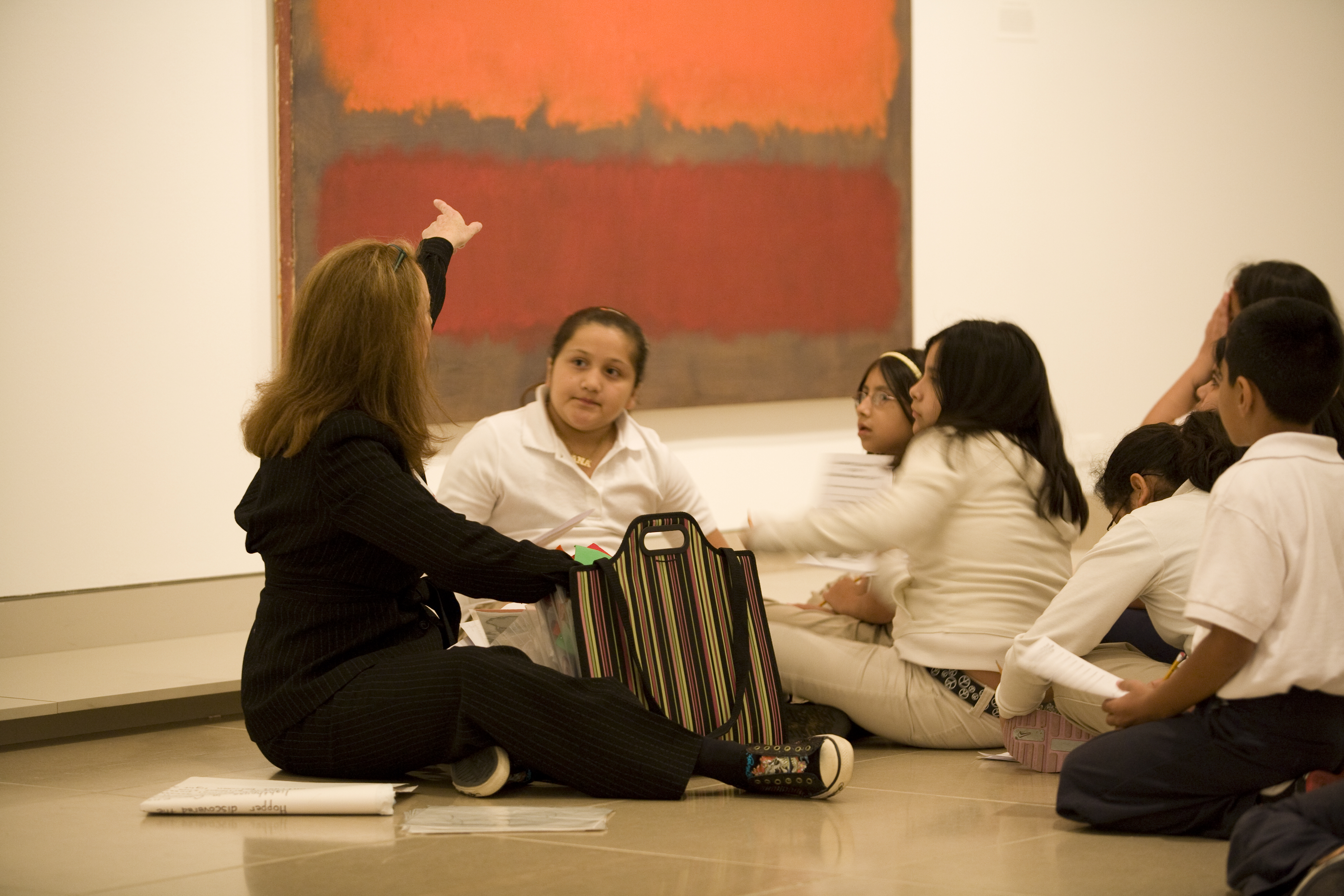
Discussing Mark Rothko's Orange, Red, and Red

Three years ago, we created a program goal for K-12 docent-guided tours.  Our goal states:

  • On docent-guided tours, students will experience the Museum as a comfortable place to visit and return to, discover that works of art are relevant to their lives, and begin to see their world in a fresh way.

How does that happen in the galleries?  First off, your docents will welcome you to the Museum and learn a little bit about your group and what you have been studying.  They’ll discuss the guidelines for a Museum visit, and also present a theme for your tour.  At each stop, they will ask your students to look closely at the work of art.  They might use open-ended questions to ask the group what they see, and they’ll hopefully ask them to share visual evidence for their ideas.  We use questions and conversations to encourage closely looking, rather than a lecture-based teaching method.

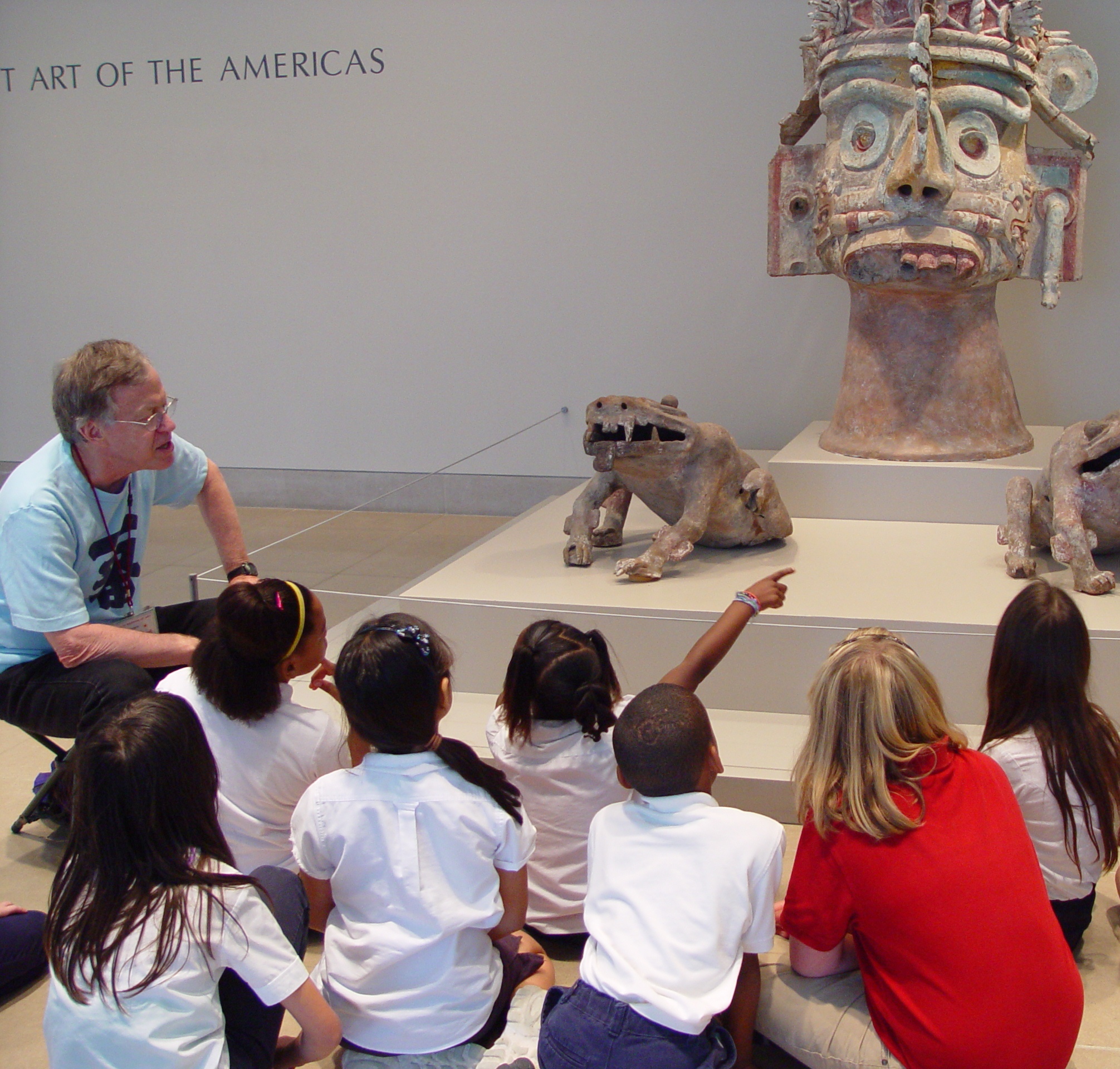
A docent helps students look for clues that tell us about Tlaloc

We also know that everyone learns in different ways, and docents are encouraged to think about addressing multiple learning styles over the course of their tour.  Your students might be asked to write a short poem, act out a pose or gesture, or even sketch in the galleries.  Each of these activities focuses their attention and allows them to look closely to make sense of the works of art in the Museum.

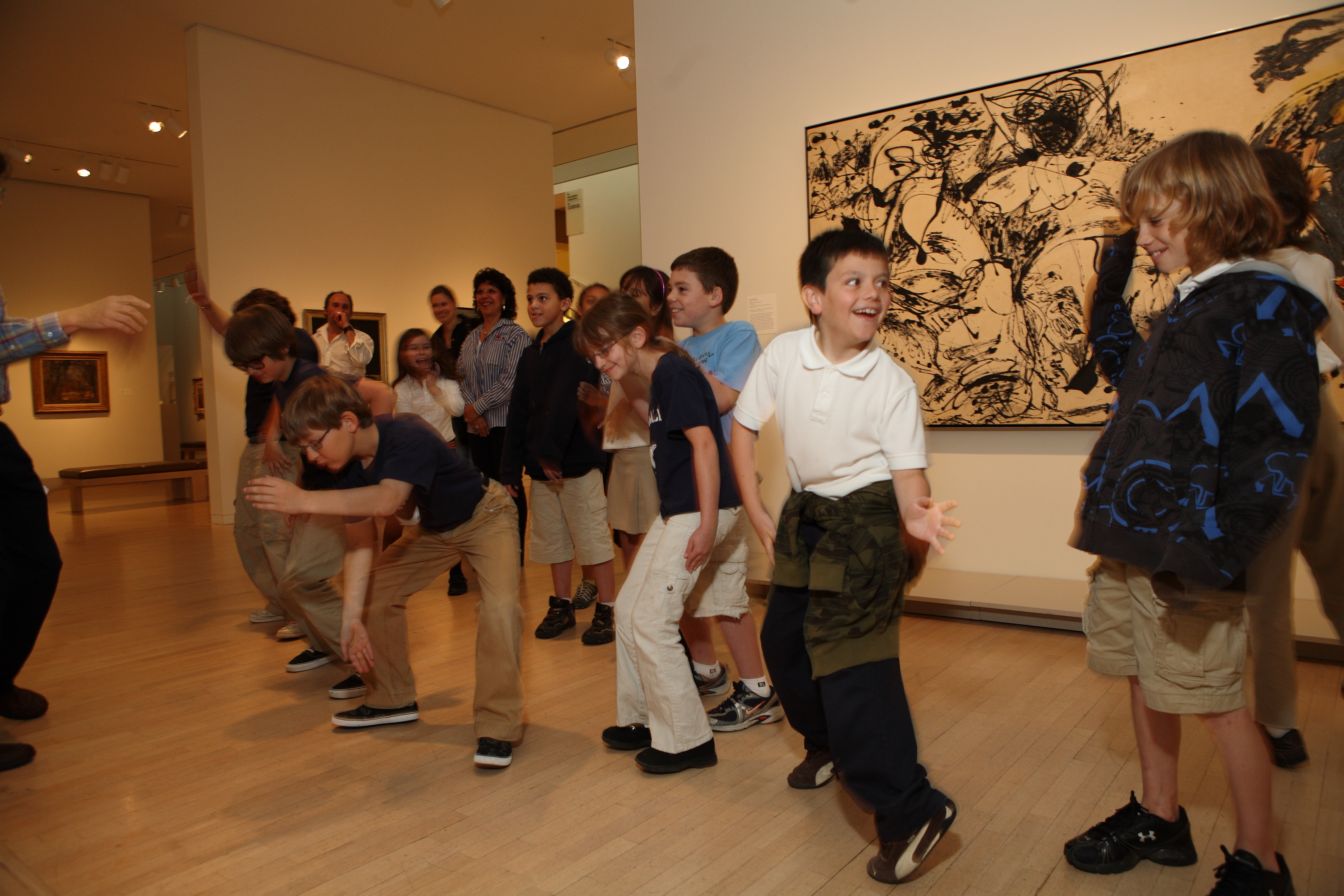
Students move their bodies like the lines in a painting

We want students to begin to experience a sense of wonder while they are at the Museum, and that can happen in many ways on a docent-guided tour.  Some students experience wonder the minute they step through the door and see the Barrel Vault space for the first time.  Others ask questions about works of art, make connections between works of art, or say things like “I never knew that.”  One way that docents can help facilitate that sense of wonder is by giving students time to look and reflect on their own.  And of course, listening and responding positively to your students’ ideas is a great way to promote that sense of wonder, as well!

Students are asked to arrange colors in response to an abstract painting.

The final element of a docent-guided tour at the DMA is helping students see that works of art–whether they were made 2,000 years ago or two years ago–are relevant to their lives today.  How is a bed made in 1844 similar to the beds we sleep in?  What is different about it?  What type of bed would you love to have in your house?  These are just some of the questions docents might ask students when discussing this work of art in our galleries.  We want students to make a personal connection while they are at the Museum, and it is our hope that these connections will turn your students into lifelong Museum goers.

We end all of our tours by inviting students to come back to the DMA often.  I hope that this gives you a sense of what happens on a typical docent-guided tours, and that you’ll bring your students to visit us soon!

Shannon Karol
Manager of Docent Programs and Gallery Teaching

Friday Photos: Welcome Andrea!

Andrea Vargas Severin, Coordinator of Teaching Programs

We would like to introduce you to Andrea Vargas Severin, our new colleague and friend.  As the newest member of the Teaching Programs and Partnerships team in the Education Division, Andrea will be responsible for various details related to our work with teacher audiences, including professional development workshops, teacher in-services, and the educator e-newsletter.  You can expect to see her out and about before too long, providing tours to visitors of all ages and coordinating several partnership programs.  She will also be a key member of the team that writes web-based teaching materials.

Andrea has a Masters of Art in Art Education with an emphasis on Museum Studies from the University of Texas at Austin and received her Bachelor of Arts degree in the History of Art and Studio Art from Vanderbilt University.  Her previous experiences at the Frist Center for the Visual Arts, the Richmond National Battlefield Park, and Mexic-Arte Museum will bring a fresh perspective to our work.  We are delighted to have her as a colleague.

Look for Andrea’s first post on this blog soon!  If you’d like to learn a little more about Andrea, you can visit the Authors page.  And if you’d like to meet her in person, come join us for the upcoming Designing Exhibitions Teacher Workshop on February 11.

Nicole Stutzman
Director of Teaching Programs and Partnerships

Community Connection: STEAM, not STEM

Meet Nicholas Okafor, a high school senior with big ideas about the future of education and organizer of the upcoming STEAM Through Education Festival at Townview Magnet Center.
Tell us a little about yourself.
I am a senior at TAG Townview. I like TAG because it is more liberal in comparison to other magnet schools. TAG shows you different careers and exposes you to different subjects, as opposed to having a concentration or focused view on your education. You gain a broader sense of careers to choose from.

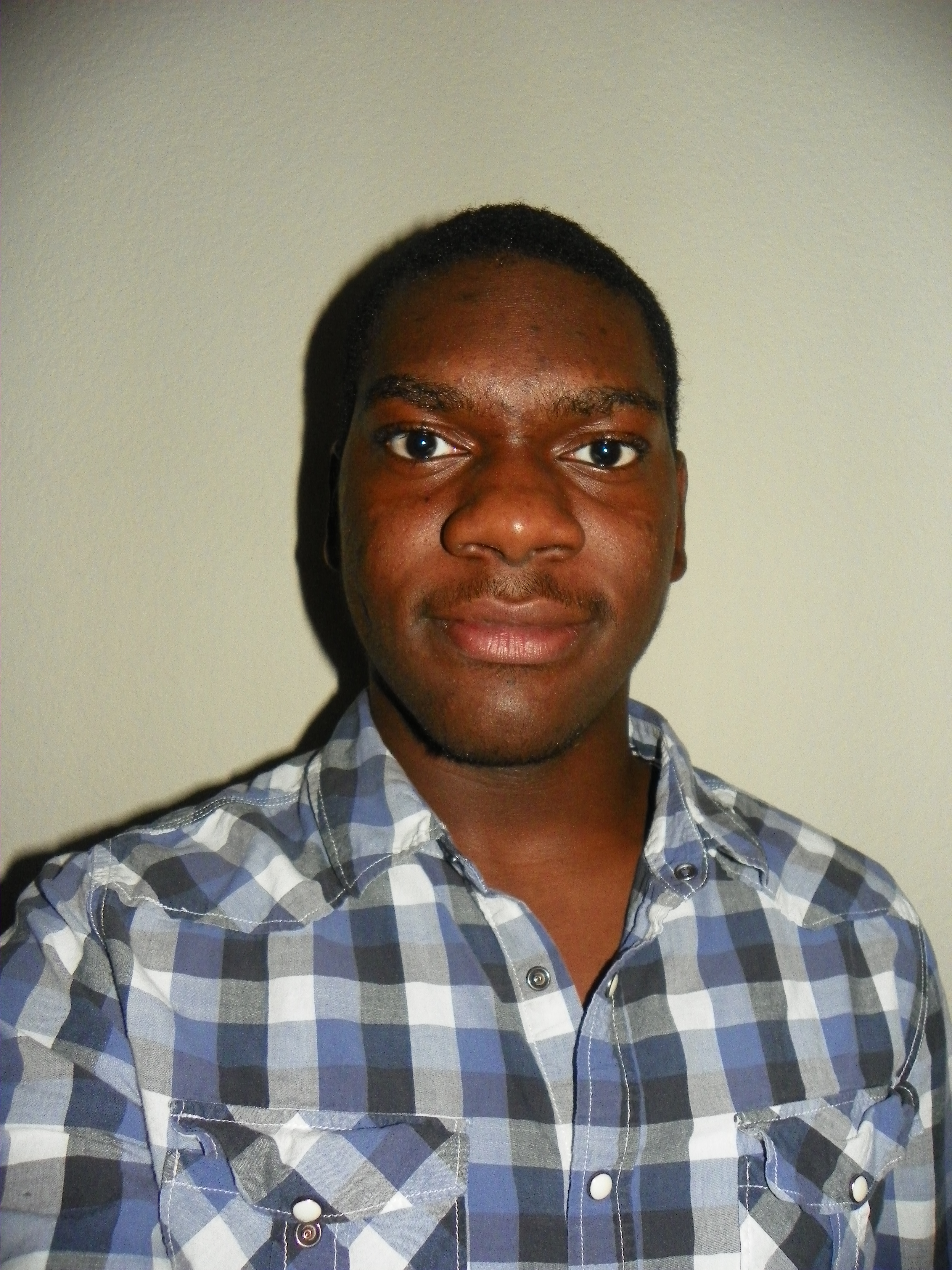
Nicholas Okafor

How did you get involved in organizing this festival?
It started last year, when I was a junior. I applied to the Bezos Scholars Program @ The Aspen Institute. The Scholars Program funds a trip for twelve juniors nationwide, with accompanying educators, to the Aspen Ideas Festival. I heard a speaker from the Rhode Island School of Design speak about STEAM (Science, Technology, Engineering, Art, Mathematics), and how he saw it as the future of education. The Scholars Program encourages the students to come back and hold Local Ideas Festivals about a topic they feel needs to be addressed in their community.

What do you hope to achieve with the festival? What can participants expect?
I hope to broaden the minds of my community. What I’ve seen is a constant push toward STEM (Science, Technology, Engineering, Mathematics), with the arts being ignored. What I want to do is show my community that you shouldn’t focus on one or the other, but instead incorporate both into STEAM. So many times in history these ideas have blended together: the Renaissance is a perfect example of that.

For this festival, we want to break any previous misconceptions that art and STEM cannot be mixed. We want to show how art can be implemented through science for students, parents, and educators. There will be a short presentation at the beginning, followed by a keynote speaker. The senior class is sponsoring a donation lunch, then participants will go into breakout sessions for students, parents, and educators. The student session is geared at breaking misconceptions and opening their eyes to STEAM careers. The educator session is geared at teachers working together to show how they can implement art in their curriculum. The parent session shows why STEAM is important for the child, as well as STEAM activities their child may be able to participate in.

Do you do anything creative?
Since I started high school, I’ve been very active in theater, and I’m currently President of the International Thespian Society. My two passions are theater and physics. Even with that, I can see STEAM there; not only are there physical aspects of theater such as lighting and stage, but there is the theatricality of physics and how you can take a simple motion and turn it into a very complex, inside-out problem.

Nicholas and friends from TAG Townview's fall 2011 production Reduced Shakespeare

Where do you see yourself in ten years?
I’m still trying to figure that out. At the moment, I’m focused on college. I’ve been accepted to Texas A&M and MIT, and I’m waiting for a few others to respond. I definitely want to study Engineering for my Bachelor’s degree, and hopefully double major in something like Design, which could help me explore engineering further. Just the other day in Psychology, I learned about functional fixedness, when we no longer see objects for what they are. For example, we see a coffee can, but we can also see that it can be so many different things. Studying Design with Engineering could have the same impact on me.

One concept stressed in the Aspen Ideas Festival is the path of the social entrepreneur.  A social entrepreneur finds a problem in the community or on a global level and tries to address it. By combining Engineering and Design, I can help address problems. Hopefully, I’ll be helping people in ten years, whether in my town or across the globe.

The STEAM Through Education Festival takes place February 25 from 10:00 a.m. to 2:30 p.m. at Townview Magnet Center, 1201 E. 8th Street, Dallas, 75203.  For more information or to register, please visit the festival web site or contact Nicholas at nrokafor@yahoo.com.

Melissa Nelson
Manager of Teaching in the Community
Late Night Diva-Off

Last Friday, the Museum packed in a very full house for the Late Night celebration of The Fashion World of Jean Paul Gaultier: From the Sidewalk to the Catwalk. The night’s special event, Divas of Gaultier Costume Contest, was kicked off with a fabulous Madonna tribute performance by Chris America, who got the festive audience singing and dancing. The competition featured eleven Madonna contestants and twenty Lady Gagas who put together creative and outrageous Diva ensembles. But they weren’t the only ones! Many of the visitors also took the opportunity to wear fashion from the wilder side of their wardrobe. After each contestant modeled his or her outfit, the finalists were revealed. The victors included Lady Gaga holding a teacup, as well  as a real-life mother-daughter pair stylishly dressed as Madonna and her daughter Lourdes. To wrap up the event, Chris America reappeared to award the grand prize of a hundred dollar gift certificate for the Museum store and a Jean Paul Gaultier catalogue to the winner, Lady Gaga. With her slow and deliberate strut, and edgy animalistic poses, this fierce contestant truly embodied Lady Gaga herself.

Photos from this fun and fashion-filled Friday are below, I hope you enjoy them as much as I enjoyed taking them!

[slideshow]

If you were to dress up for a Diva contest, who would you want to be and what would you wear? Please share your response in the comments below.

Hannah Burney
McDermott Intern for Teaching Programs and Partnerships


Archives

Categories