Archive Page 45


Friday Photos: Tea Time!

While I am definitely a tea drinker year round, there’s nothing I love more about fall and winter than curling up on the couch with a nice hot cup of tea… now if only our Texas weather would cooperate and cool down a bit!

Tea began its journey in China, travelled to Japan, India and Britain, and from there it was carried to countries around the world.  With its discovery placed around 2730 BC, the history of tea is steeped (get it?) in cultural relevance from the beautiful zen Japanese tea ceremony to the refined class of the English afternoon tea.  And with the recent election, we cannot forget the role that tea played in the rebellious Boston Tea Party!

Luckily, the Dallas Museum of Art has a fantastic collection of tea sets and related works of art to help me get in a cozy state of mind, regardless of the weather!

[slideshow]

Featured artworks:

  • Jean-Emile Puiforcat, Tea and coffee service, c. 1925, Dalals Museum of Art, the Patsy Lacy Griffith Collection, gift of Patsy Lacy Griffith by exchange
  • Étienne-Henri Le Guay (gilder), Sèvres Porcelain Factory (manufacturer), Tea service (déjeuner),1789, Dallas Museum of Art, gift of Michael L. Rosenberg
  • Reuben Haley (designer, Fulper-Stangl Pottery (manufacturer), “Square Modern” tea service, 1925, Dallas Museum of Art, gift of Sidney and George Perutz in honor of Kevin W. Tucker
  • James Abbott McNeill Whistler, Afternoon Tea, 1895, Dallas Museum of Art, Foundation for the Arts, The Alfred and Juanita Bromberg Collection, bequest of Juanita K. Bromberg
  • Harold Stabler (designer), Adie Brothers, Ltd. (manufacturer), Tea service, Dallas Museum of Art, The Karl and Esther Hoblitzelle Collection, gift of the Hoblitzelle Foundation by exchange
  • Thomas Wilkinson and Sons (manufacturer), “Pelican Ware” tea service, 1885, Dallas Museum of Art, anonymous gift
  • Michael Graves (designer), Fratelli Alessi (manufacturer), Tea and coffee service (from the “Piazza” series), 1980, Dallas Museum of Art, DMA/amfAR Benefit Auction Fund
  • Margarete Heymann-Marks (designer), Hael Workshops for Artistic Ceramics (manufacturer), Tea service, c. 1930, Dallas Museum of Art, 20th-Century Design Fund
  • Nicholas Krushenick, Boston Tea Party, 1975, Dallas Museum of Art, gift of Michael L. Rosenberg
  • John C. Moore (designer), Mulford, Wendell & Co (manufacturer), Tea and coffee service, c. 1851, Dallas Museum of Art, gift of T. Peter Townsend and Joanna Townsend
  • Antonio Pineda, Tea set, c. 1960, Dallas Museum of Art, 20th-Century Design Fund
  • Tea stand with cover and bowl, Tibet, 18th century, Dallas Museum of Art, gift of Alta Brenner in memory of her daughter Andrea Bernice Brenner-McMullen

Pilar Wong
McDermott Intern for Community Teaching

Welcome to the Neighborhood!

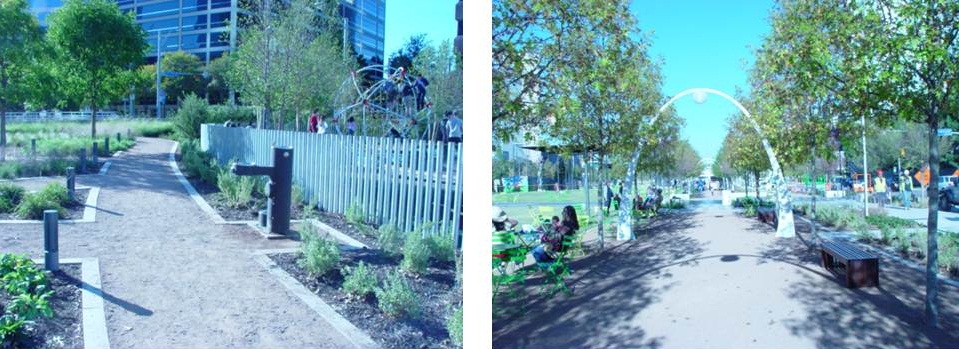
It’s another gorgeous sunny day in November here in Dallas. This warm and temperate fall weather could not have been more perfect for the recent opening of the new Klyde Warren Park right across the street from the Dallas Museum of Art. Just two weeks ago, this new urban green space celebrated it’s grand opening with over fifty free programs and a whopping 44,000 excited visitors. The DMA also participated in the lively festivities, offering outdoor art-making workshops and even a re-enactment of the ancient Maya ballgame in connection with our exhibition The Legacy of the Plumed Serpent in Ancient Mexico. The park continues to provide free daily programs, and has already become a populated community space beloved by the locals.

This 5.2 acre deck park features a children’s playground, a gated dog park, putting greens, ping-pong tables, a reading area, and plenty of open green grass to play or picnic on. With something for absolutely everyone, the park brings people together from all walks of life.

.
If you’re taking advantage of this wonderful weather and want to explore some of the DMA’s outdoor spaces, we have a couple beautiful spots for you to check out as well. For a tranquil stroll surrounded by trees, waterfalls, and life size sculptures, I highly reccomend heading out to the Sculpture Garden: it’s the perfect place to find inspiration or relaxation.

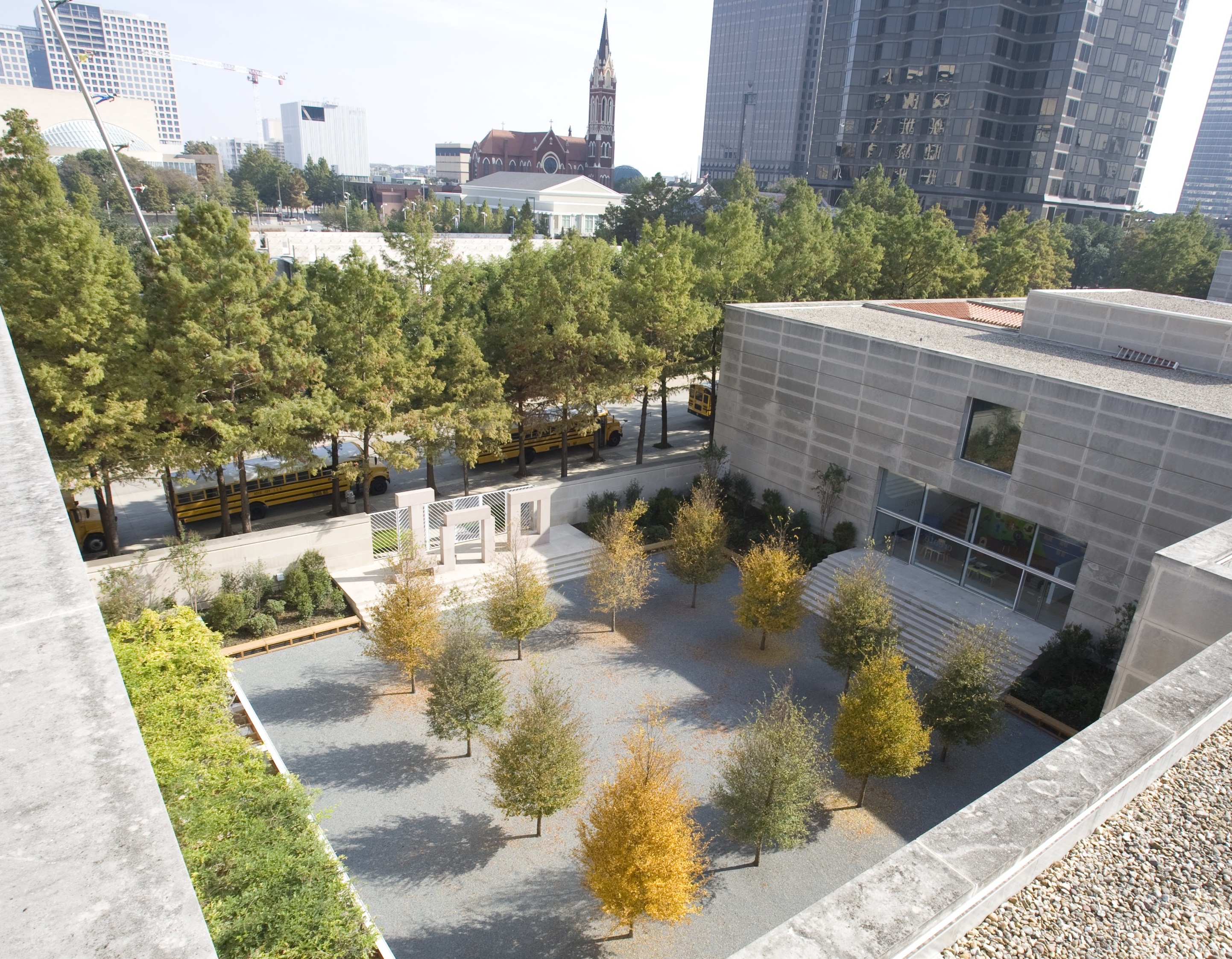
The Fleischner Courtyard is another great outdoor space to enjoy some sun or shade.

.
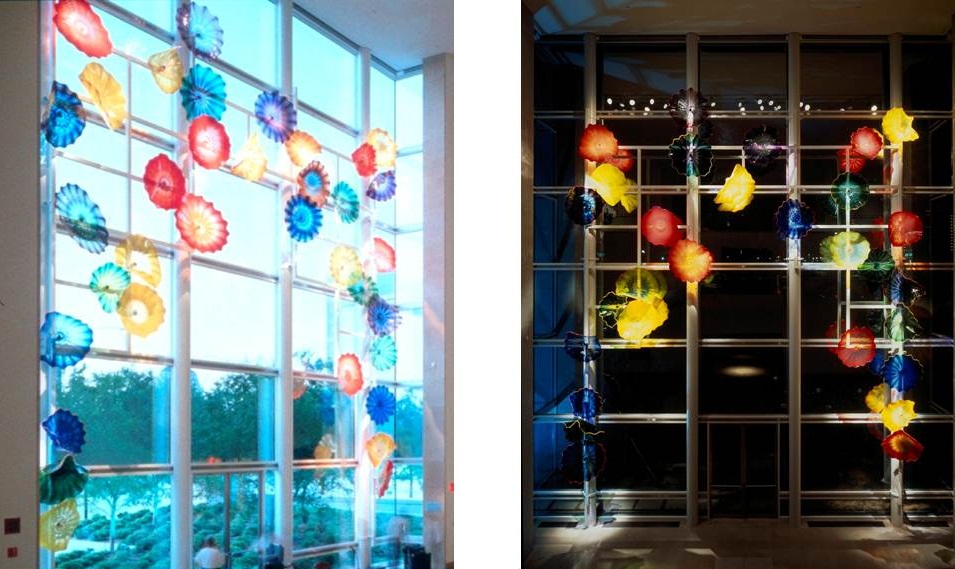
There are a few special areas of the museum where the archituecture allows for the exterior and interior space to interact, creating a sense of the natural world from the inside. One of my favorite such places is the Atrium Cafe, where colorful glass Chihuly flowers float in the frame of the floor-to-ceiling window. With the colors made vibrant by sunlight and romantic by moonlight, it’s a breath-taking sight at any time of the day.

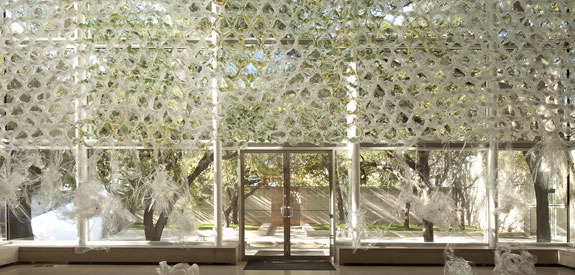
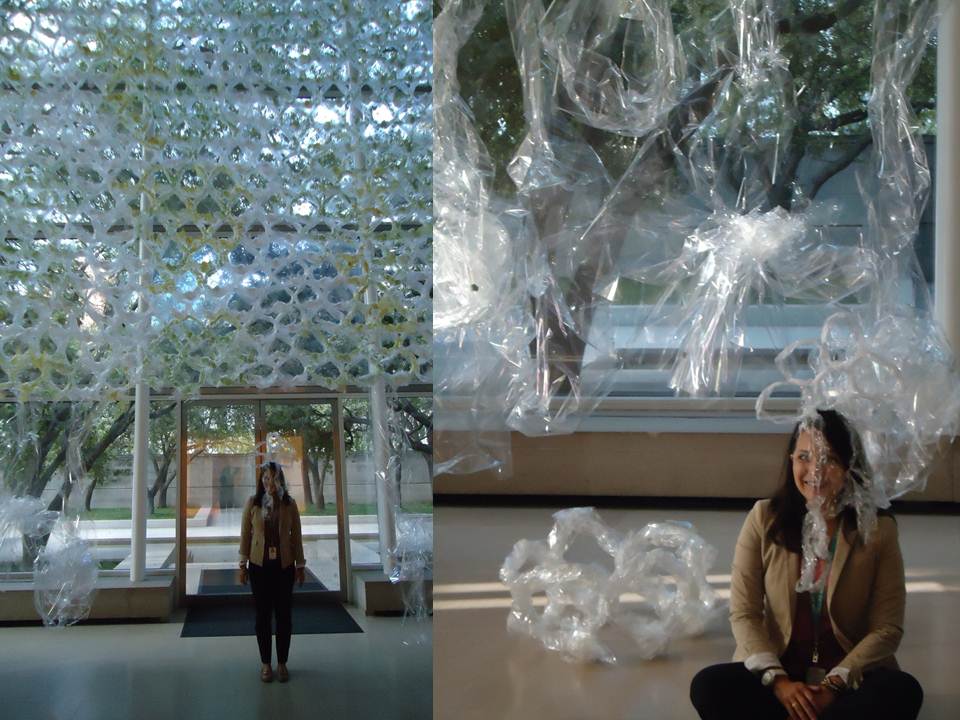
The recent Karla Black installation titled Necessity seems to also create a similar relationship between man-made objects and nature. Cascading down from the ceiling in front of the glass doors to the Sculpture Garden, the cellophane of this large-scale sculpture catches the natural light and produces a sparkling, rippling effect much like a stream or waterfall. The holes in the sculpture and translucent material allow for glimpses of the trees and nature just beyond the doors of the artwork. While standing in the concourse it’s easy to feel as if you’re transported to an outdoor oasis.

.

I hope you all enjoy this weather while it lasts- you now know where I go to soak up the sun!

Hannah Burney
Community Teaching Programs Assistant

Artworks used:

  • Dale Chihuly, Hart Window, 1995, Dallas Museum of Art, gift of Linda and Mitch Hart
  • Karla Black, Necessity, 2012, Courtesy Stuart Shave/Modern Art, London and Galerie Gisele Captain, Cologne

Greek Heroes at the DMA

Every time I give a tour, there is usually one student who asks if we have any works at the DMA that show Percy Jackson or Poseidon.  I began to wonder if our docents were hearing similar questions.  I also began to wonder if any of our docents actually knew who Percy Jackson is.  I’m always trying to think of new ways to help docents connect with the students on their tours, so I recommended that they read Rick Riordan‘s The Lightning Thief (Percy Jackson and the Olympians Book One) for their book club. I fell in love with this book three years ago, and enjoy referencing it on tours.  Students are able to recognize images of the gods based on the descriptions they have read in Rick Riordan’s books.  They’re falling in love with Greek mythology, and we have lots of great artworks that can bring Percy’s world to life at the DMA!

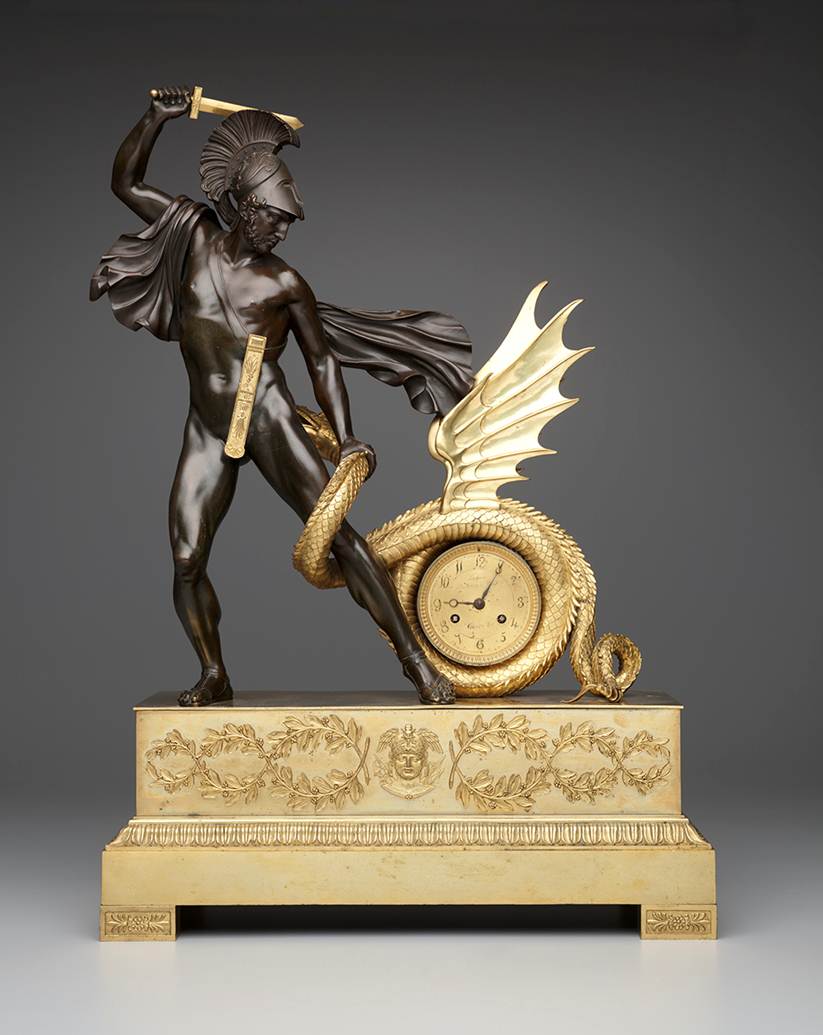
Pierre-Victore Ledure’s Mantle Clock with Figure of Perseus show us not Perseus Jackson, but the Greek hero Perseus.  In Greek mythology, Perseus, the son of Zeus and Danae, was the hero who beheaded the Gorgon Medusa.  Although Percy Jackson also beheaded Medusa, he was the son of Poseidon.  In this mantle clock, we see Perseus about to slay a serpent with wings.  According to one myth, the Ethiopian princess Andromeda was chained to a rock near the sea in an effort to appease the sea nymphs, who were offended that Andromeda’s mother declared that she was more beautiful than them.  Andromeda was to be sacrificed to a sea serpent sent by Poseidon.  Perseus happened to be flying by on his winged horse, Pegasus, and he slipped on Hades’ Helm of Darkness and was able to slay the sea serpent.  Perseus went on to marry Andromeda and is considered one of the first heroes of Greek mythology.

Pierre-Victore Ledure, Mantle Clock with Figure of Perseus, early 19th century, Lent by David T. Owsley, 156.1994.51

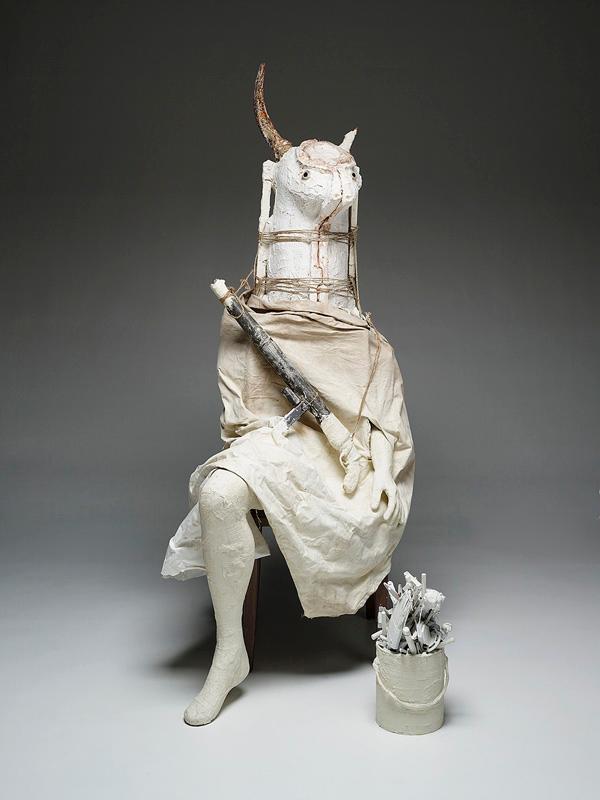
When Percy Jackson arrives at Camp Half-Blood, the first creature he faces is the Minotaur.  The Minotaur has the body of a man, but the head of a bull, and is one of the most ferocious creatures in Greek mythology.  Contemporary artist Marcel Dzama created his own sculptural representation of The Minotaur in 2008.  Dzama’s Minotaur is even missing one of his horns–you might remember that the Minotaur’s horn was one of Percy’s most prized possessions.

Marcel Dzama, The Minotaur, 2008, Dallas Museum of Art, DMA/amFAR Benefit Auction Fund, 2008.43.2.A-E, © Marcel Dzama

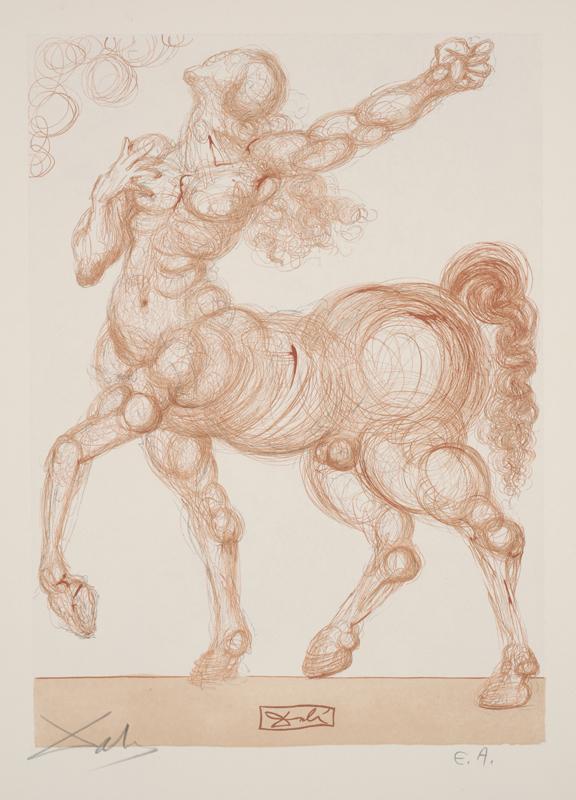
Once he arrives at Camp Half-Blood, Percy learns that his favorite teacher, Mr. Brunner, is actually a centaur named Chiron.  Centaurs are creatures that are part human, part horse, and Chiron was considered to be the superior centaur.  He was intelligent, civilized, and kind.  Chiron taught many of the most famous Greek heroes, including Heracles, Jason, Achilles, and Perseus.  Salvador Dalí created this illustration of a centaur when he was illustrating Dante’s Divine Comedy.

Salvador Dali, Canto 25–The Centaur, c. 1960, Dallas Museum of Art, gift of Lois and Howard B. Wolf, 1996.219.25, © 2008 Salvador Dalí, Gala-Salvador Dalí Foundation/Artists Rights Society (ARS), New York

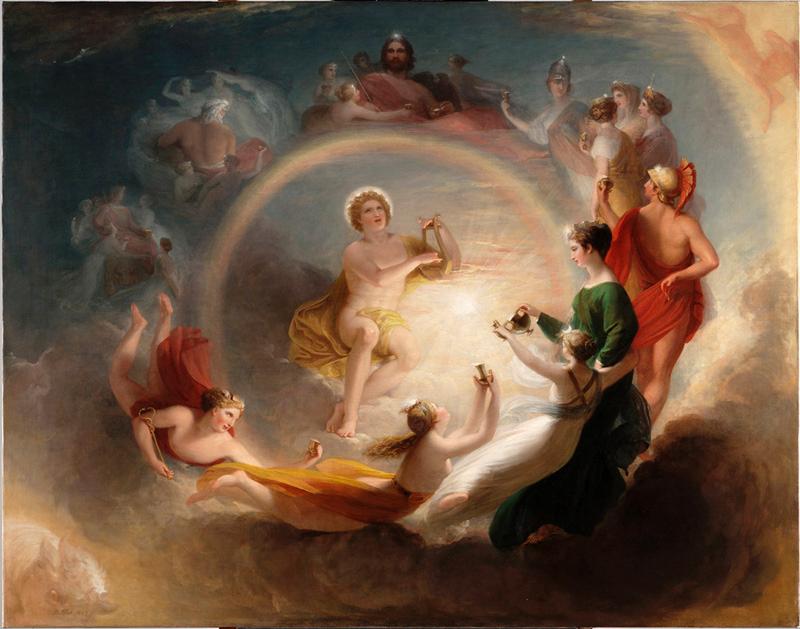
During Percy’s adventures, he has run-ins with many of the major gods, the Olympians who reside on Mt. Olympus.  In ancient times, Mt. Olympus was located in Greece.  In the 21st century, Mt. Olympus is located in New York City–on the 600th floor of the Empire State Building!  One of my favorite works in the DMA’s collection shows the Olympians surrounding the figure of Apollo.  One of our docents told me yesterday that she had a group of students ask her to stop in front of this painting because they wanted to try to identify all of the gods.  Moving clockwise around the painting we see: Zeus, the king of the gods, at the top; Athena is to the right wearing her battle helmet; Ares is behind her, also dressed for battle; we recognize Artemis because of the crescent moon in her hair; beautiful Aphrodite wears a golden dress; Hermes carries his caduceus staff; Hera is shown enthroned, as the queen of the gods should be; and Poseidon is shown as an old, bearded man.  What I can’t figure out, though, is who the woman in the green dress might be.  She’s fully clothed, and there appears to be a building or fortress on top of her head.  Do you have any thoughts as to who she might represent?

Benjamin West, Apollo’s Enchantment, 1807, Dallas Museum of Art, gift of Mrs. Robert A. Beyers, 1963.167

These are just a few of the wonderful works of art in our collection that relate to Greek mythology and the world of Percy Jackson.  I hope you’ll come explore the galleries and find more connections of your own.

Shannon Karol
Manager of Docent Programs and Gallery Teaching

Friday Photos: Here Comes Election Day

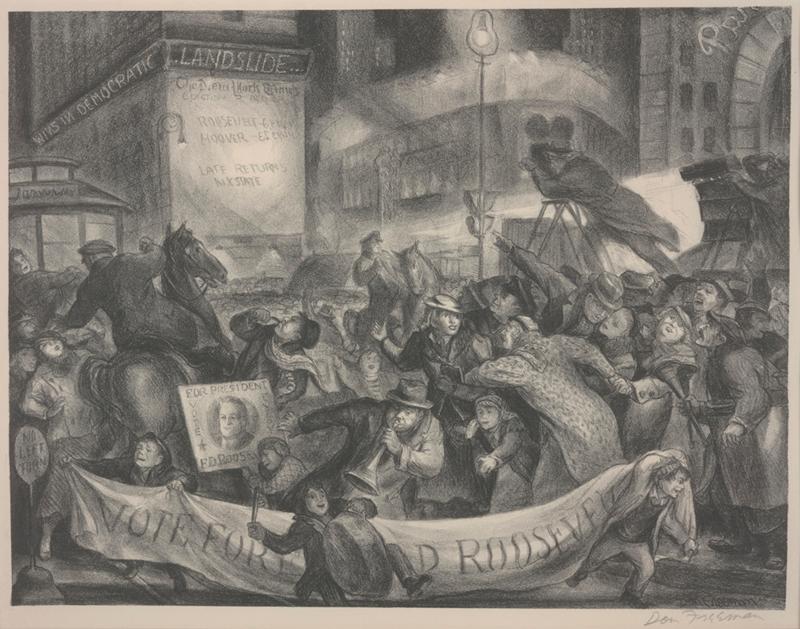
Donald Freeman, Election, c. 1933-1934, Dallas Museum of Art, gift of the Public Works of Art Project

With the election fast approaching, I wanted to share some presidential and election-related works from the collection in the hopes of inspiring you to exercise your civil right to vote.

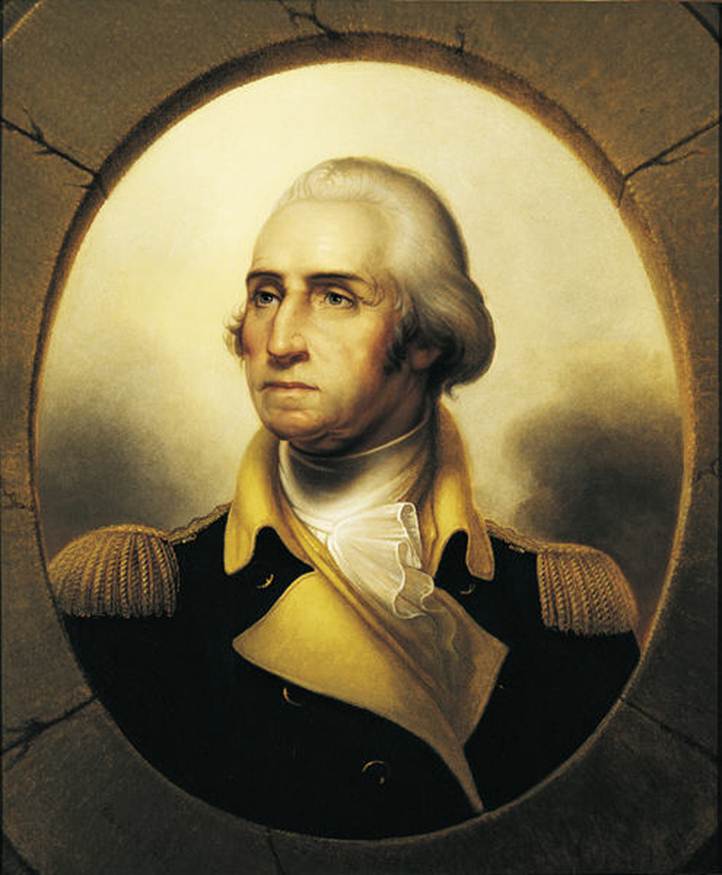
Rembrandt Peale, George Washington, c. 1850, Dallas Museum of Art, The Karl and Esther Hoblitzelle Collection, gift of the Hoblitzelle Foundation

Rembrandt Peale painted this portrait when he was just seventeen years old, stating that the anticipation of the appointment with George Washington made him so nervous that he “could scarcely mix [his] colors.” The composition seen today is actually a revision of the original painting done nearly thirty years later.

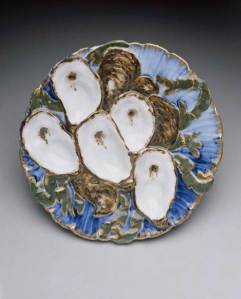
Theodore R. Davis (designer), Oyster plate, designed 1879, Dallas Museum of Art, the Charles R. Masling and John E. Furen Collection, gift of Mr. and Mrs. William Rubin, the Arthur A. Everts Co., and Arthur and Marie Berger by exchange

During his term from 1877 to 1881, Rutherford B. Hayes was served oysters on this Thomas R. Davis design. To see what is in the White House currently, check out Google Art’s 360-view here.

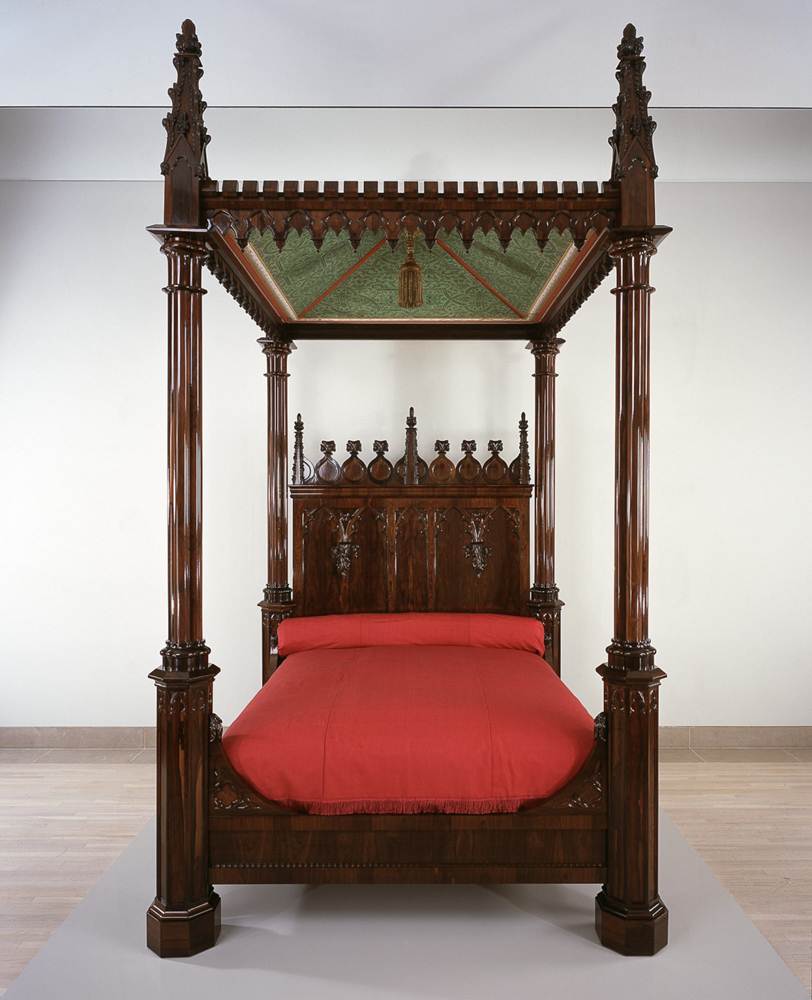
Crawford Riddell, Bed, c. 1844, Dallas Museum of Art, gift of three anonymous donors, Friends of the Decorative Arts Fund, General Acquisition Fund, Discretionary Decorative Arts Fund, and the Boshell Family Foundation

This Gothic revival style bed was commissioned as part of a suite of bedroom furniture for presidential candidate Henry Clay in anticipation of his term in the White House. Eventually losing to Andrew Jackson, Clay was forced to sell the piece to someone who had a room large enough to house this thirteen foot tall bed.

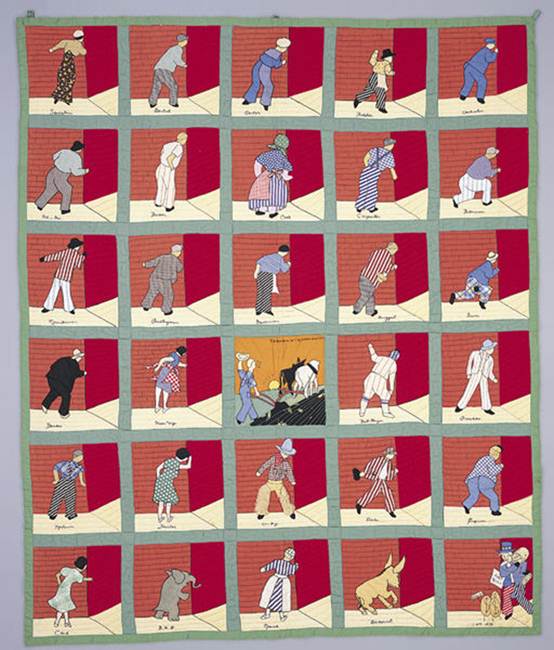
Fanny B. Shaw, “Prosperity is Just Around the Corner,” 1930-1932, Dallas Museum of Art, anonymous gift

Fannie B. Shaw’s optimistic quilt was inspired by the prosperity promised by President Herbert Hoover: “Every time you picked up the paper or heard the radio he would talk about good times around the corner. He would make it sound so good. I wondered if I could make a picture of what he said and what he meant. I went to bed one night and couldn’t get it off my mind.” Here’s to optimism then and now!

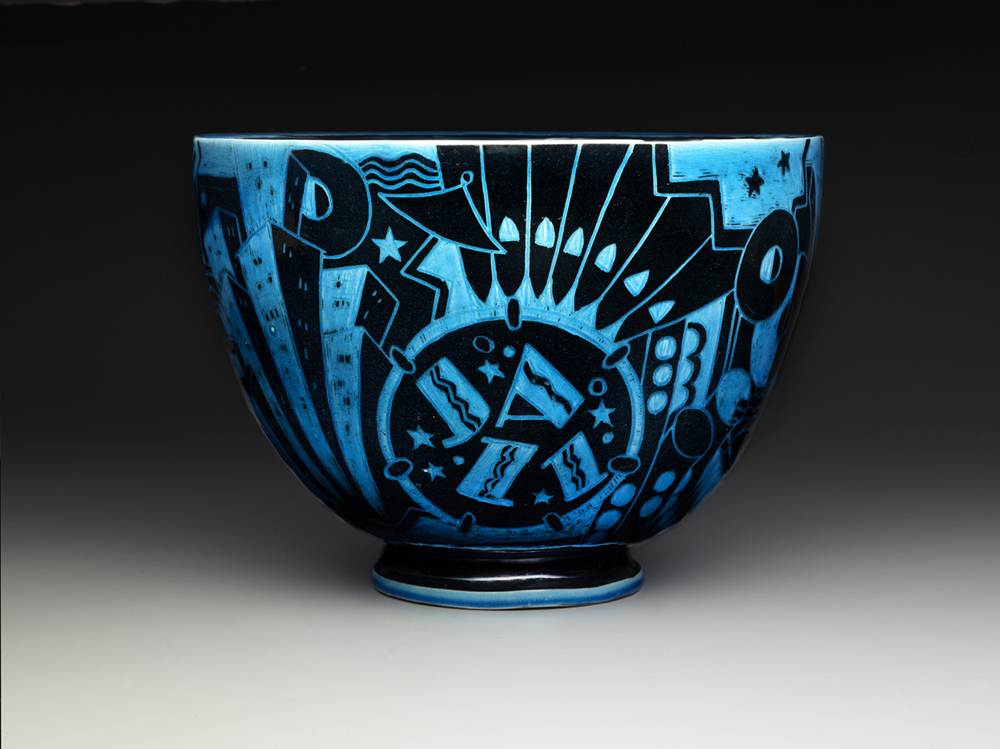
Viktor Schreckengost (designer), Jazz Bowl, c. 1930-1931, Dallas Museum of Art, The Patsy Lacy Griffith Collection, gift of Patsy Lacy Griffith by exchange

The first “Jazz Bowl” came about when Eleanor and Franklin D. Roosevelt commissioned Cowan pottery to create a work that evoked New York. Viktor Schreckengost’s design captures what the artist called “that funny blue light in New York in 1931 when Cab Calloway’s band was playing.”

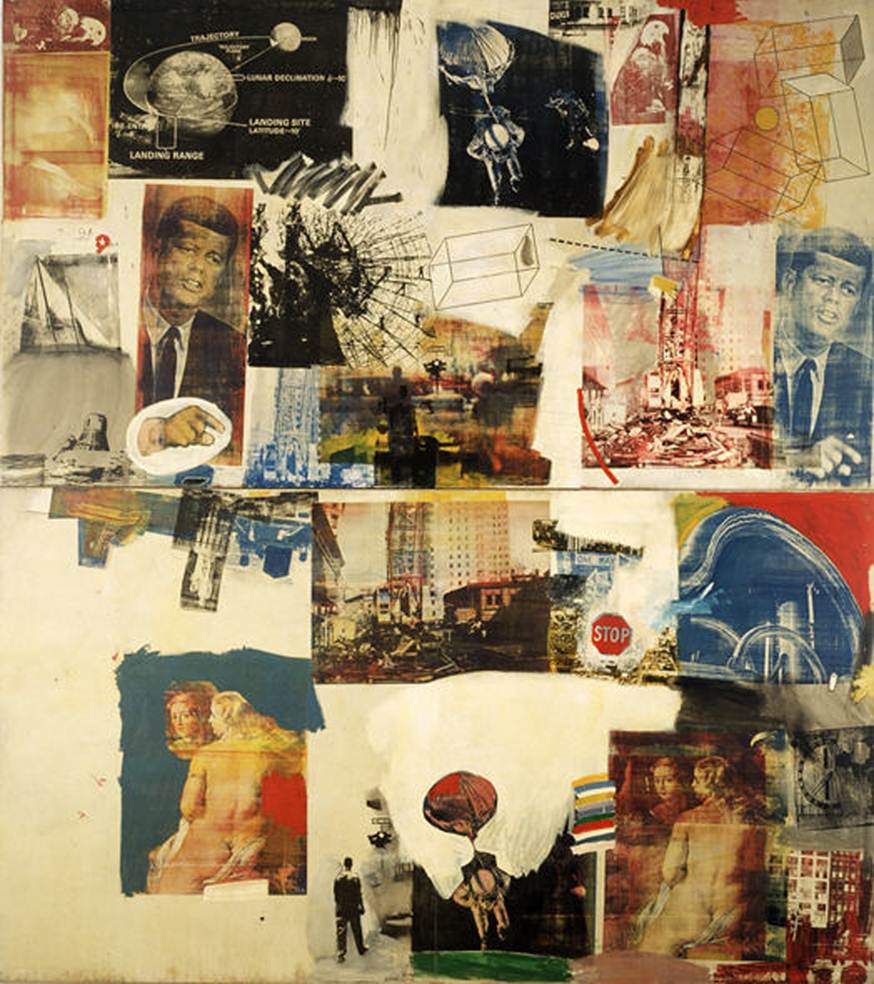
Robert Rauschenberg, Skyway, 1964, Dallas Museum of Art, The Roberta Coke Camp Fund, The 500, Inc., Mr. and Mrs. Mark Shepherd, Jr., and General Acquisitions

Here, Robert Rauschenberg has combined everyday images of President John F. Kennedy, space capsules, an American eagle, construction sites, urban scenes, and diagrams of the earth and moon from outer space to reflect 1960s America. These found images he has incorporated with art-historical references and his own freely applied strokes of paint.

In a similar vein, the DMA will be commemorating the 50th anniversary of the assassination of John F. Kennedy by bringing together the works of art installed in the president’s suite at the Hotel Texas during his fateful trip in 1963. Hotel Texas: An Art Exhibition for the President and Mrs. John F. Kennedy will open on May 26, 2013. Keep a look out.

Don’t forget to vote next Tuesday, November 6.

Alex Vargo
McDermott Intern for Gallery Teaching

Reading the Cards: Part 2

This post is the second in a larger series finding connections between the ever-mystical tarot cards and the extraordinary collection of the Dallas Museum of Art.  Head over to the first post for an introduction and a quick look at three card-art comparisons.

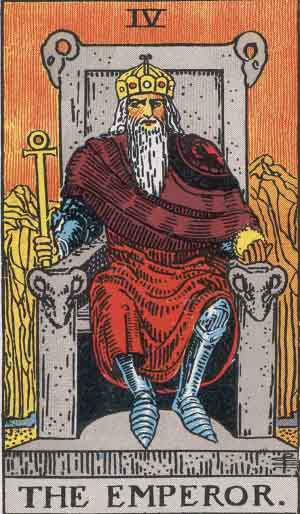
The Emperor is the fourth trump card within the major arcana.  He is often depicted sitting on a throne and holding a scepter and shield.  The tarot Emperor is considered the absolute ruler of the world and represents the desire to control one’s surroundings.

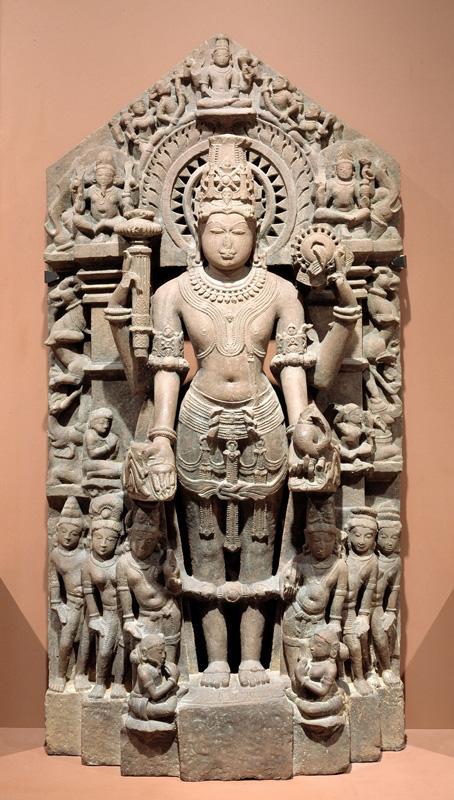
Vishnu and attendants, c. 1026 AD, Dallas Museum of Art, gift of Mrs. John Leddy Jones

Richly jeweled as a king would be, Vishnu can be identified in this relief by his traditional attributes: a mace, conch shell, sun wheel (chakra), and beads.  He is shown as a calm, upright figure surrounded by his heavenly court and divine kingdom.  As the Preserver to Shiva’s destruction, Vishnu is the bringer of blessings and prosperity to his followers.


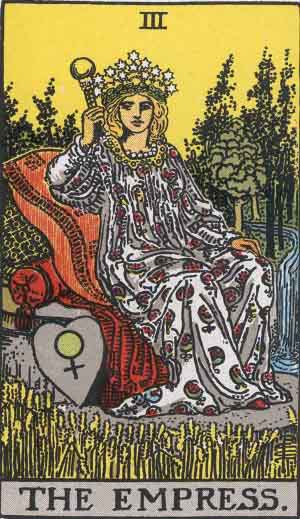
The Empress is the third major arcana card in a tarot deck.  The Empress holds a scepter representing her power over life, wears a twelve-starred crown asserting her dominance over the year, and sits on a throne amidst a field of grain showcasing her control over growing things.  Occasionally shown pregnant, the Empress represents creation and abundance.

Madonna and Child, early 15th century, Dallas Museum of Art, Munger Fund

Crowned as the Queen of Heaven, Mary sways gracefully as she supports her son Jesus.  Prophetic in nature, the sculpture displays Mary’s distress resulting from her foreknowledge of her son’s fate.  This portrayal of the Virgin and Child exemplifies Mary’s role as mother and Jesus’ role as savior.


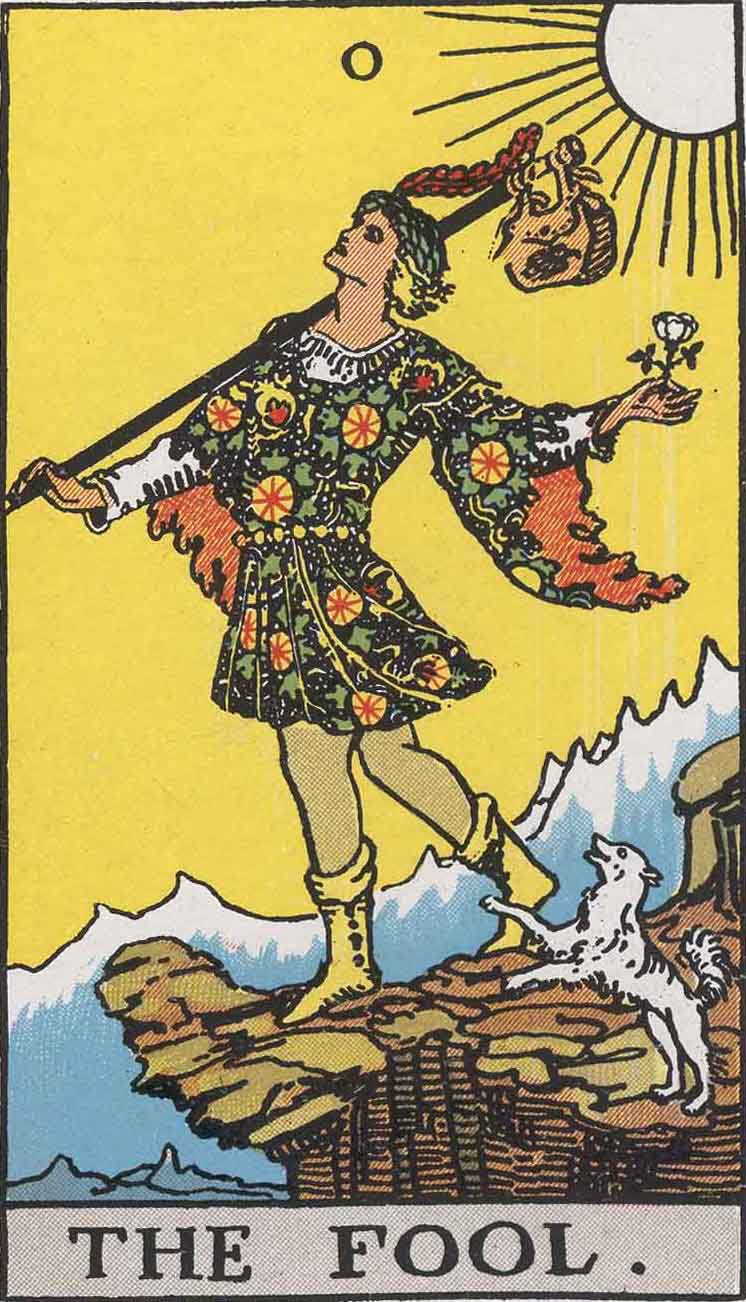
The Fool is normally unnumbered, though occasionally represented as zero in the major arcana.  He represents the search for experience and a childlike wonder at the workings of the world.  The Fool is often accompanied by a dog representing the distractions of the “real world.”  Standing at the edge of a cliff, the Fool is oblivious to danger and recklessly seeks out adventure.

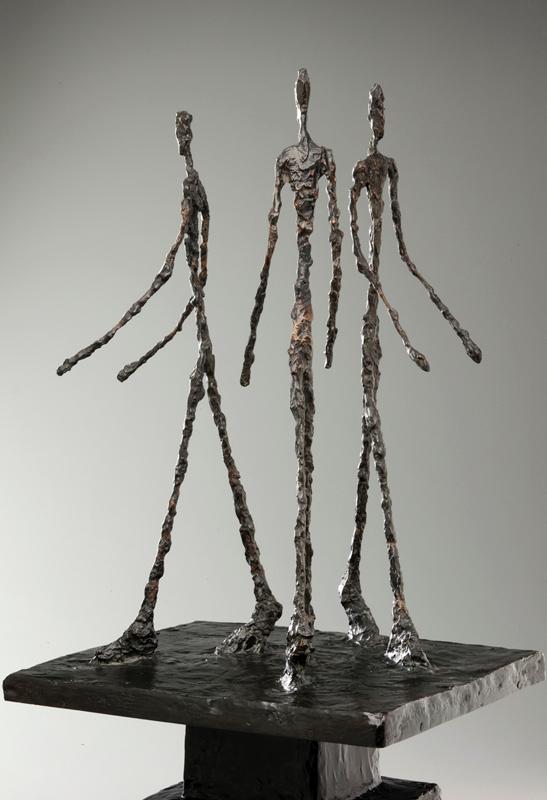
Alberto Giacometti, Three Men Walking, 1948-1949, Dallas Museum of Art, Foundation for the Arts Collection, gift of Mr. and Mrs. Stanley Marcus

Artist Alberto Giacometti said that he sculpted figures as people actually looked to him.  Stick-like in nature, the three bronze figures wander dangerously close to the edge of an elevated platform.  Each faces a different direction as if eager to seek out his or her own adventure.


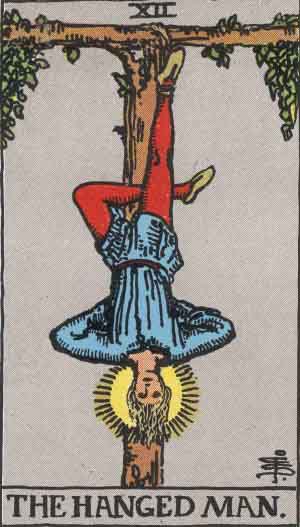
The Hanged Man is the twelfth trump card in a tarot deck.  Depicted as a man suspended from a tree, the Hanged Man’s symbolism often points to the crucifixion of Christ, Osiris in Egyptian mythology, Mithras in Ancient Persian mythology, and Odin in Norse mythology.  The Hanged Man card and these archetypal stories all allude to the destruction of self bringing life to humanity.

Octavio Medellín, El Ahorcado (The Hanged One), c. 1942, Dallas Museum of Art, Kiest Memorial Purchase Prize, Fourteenth Annual Dallas Allied Arts Exhibition, 1943

Raised amidst the ravages of the Mexican Civil War, Octavio Medellí drew much of his inspiration from the Maya-Toltec cultures.  El Ahorcado (The Hanged One) is thought to symbolize Mexico’s effort to free itself from centuries of colonial subjugation and its struggle to find its own democratic path.


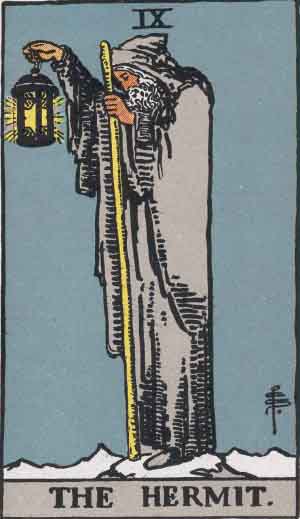
The Hermit is the ninth major arcana card.  He is shown as an elderly man carrying a staff in one hand and a lit lantern in the other- both signs of wisdom and knowledge.  Sparse in design, the card’s background is mostly sky with the lower portion depicting a wasteland and mountain range in the distance.  The Hermit has already learned the lessons of life throughout his journey and represents a shamanistic hero.

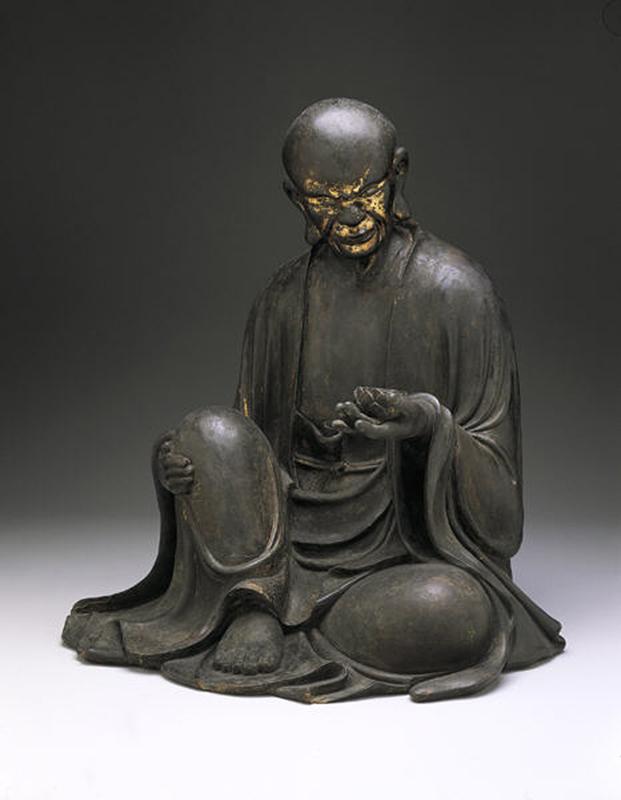
Portrait of an Arhat, 13th century, Dallas Museum of Art, the Roberta Coke Camp Fund, and Lillian B. Clark

Contemplating a lotus flower, this monk represents an arhat.  Arhats were holy men who were originally disciples of the Buddha.  Though they achieved extraordinary spiritual levels, arhats put off their own enlightenment in the pursuit of helping others.

My next post will look at the Hierophant, the High Priestess, Judgment, Justice, and the Lovers!

Pilar Wong

McDermott Intern for Community Teaching
Costumes from the Collection

Every year I struggle to think of a creative new Halloween costume to wear. Oftentimes the month somehow escapes me and I end up recycling one of my old costumes: a cat, witch, or something with a mask. However, this year I realized that inspiration is all around me in the DMA galleries. As I wandered through the Museum this month, I was flooded with images of myself as a fierce Hindu goddess with multiple arms, an affluent Asante chief covered with gold, or even a mummy wrapped in linen. Excited by all the endless possibilities, I decided to ask my fellow authors which artwork they would choose to base a Halloween costume on.

Amanda Batson

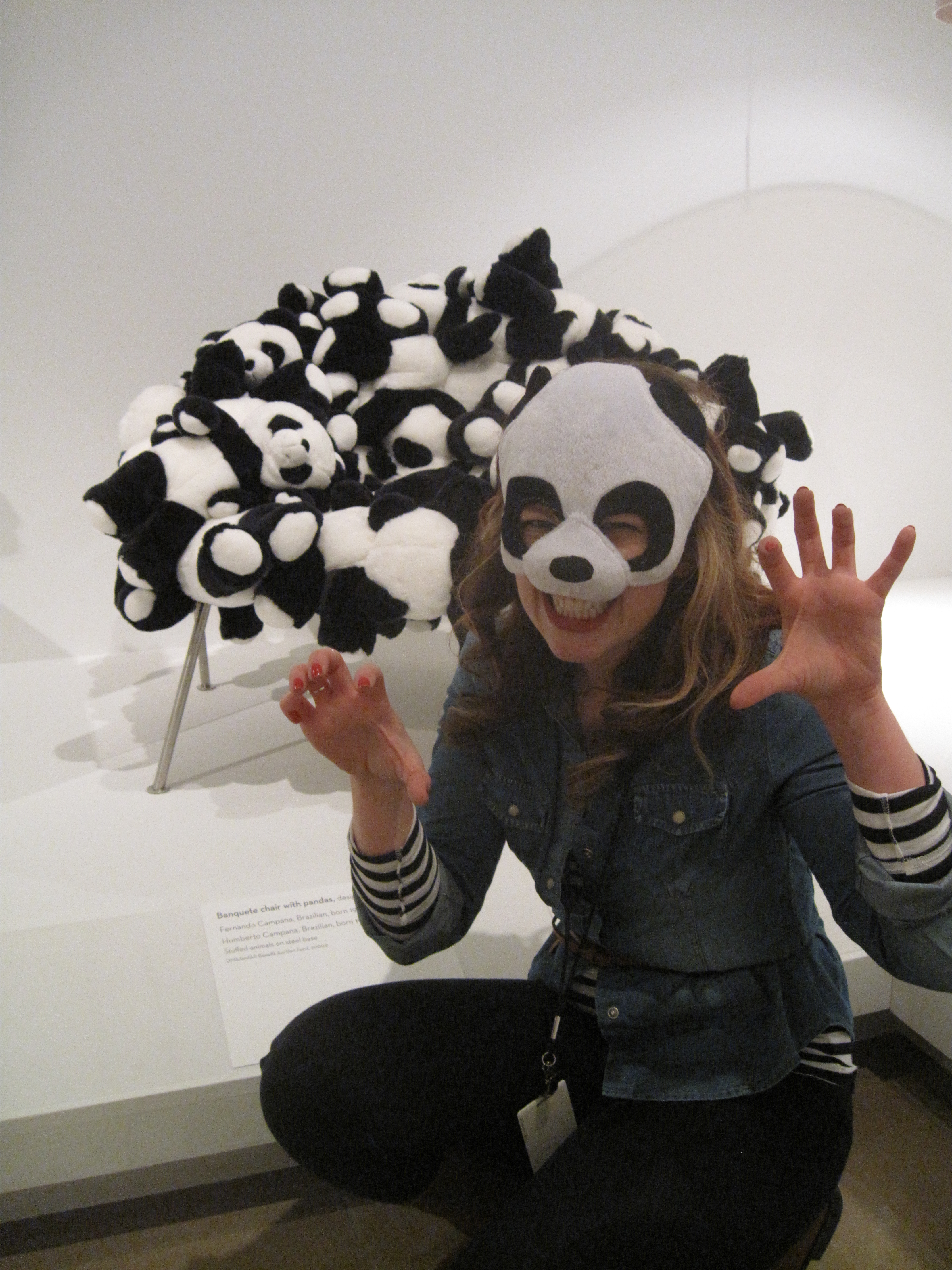
“Amanda Panda” drew her inspiration for a Halloween costume from the Banquete chair with pandas.
.

Jessica Fuentes

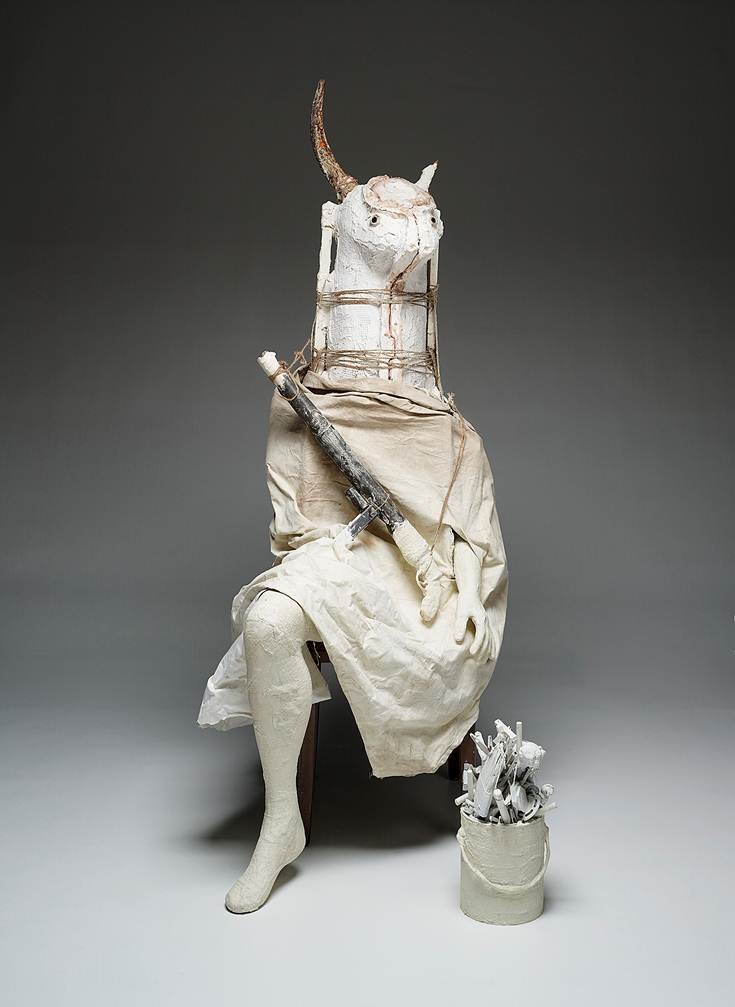
“I would be Marcel Dzama’s The Minotaur. The sculpture already lends itself to a costume as there appears to be a person underneath the Minotaur’s mask-like head and the white cloth.  I like that the Minotaur should be a scary creature, but it looks defeated as it is portrayed here, with one horn, one arm, and one leg.  I also like that the artist includes the artist tools, paint brushes in a can, I think it would be fun to walk around as this character with all of the accessories.”
.

Andrea Severin

Andrea created a headpiece inspired by our new Karla Black installation.
.

Artie

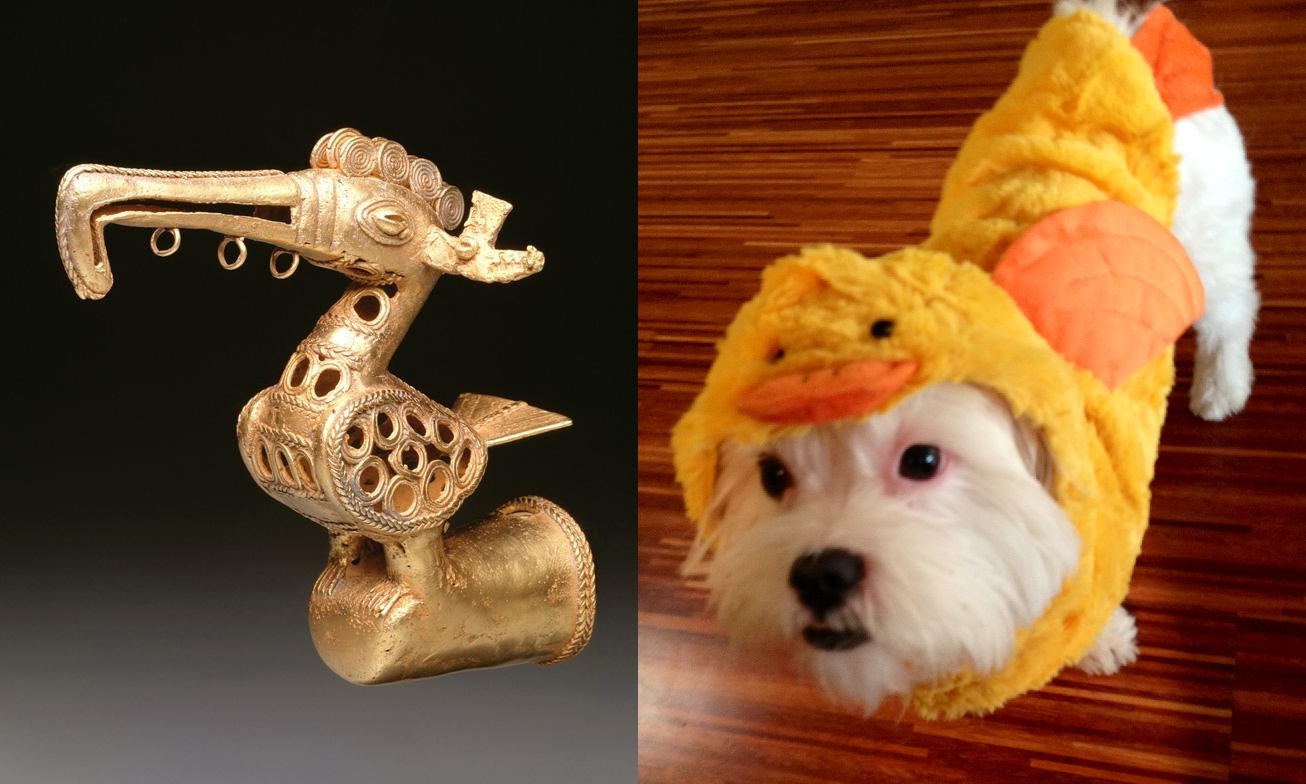
Andrea’s adorable dog Artie also wanted to dress up!
.

Hannah Burney

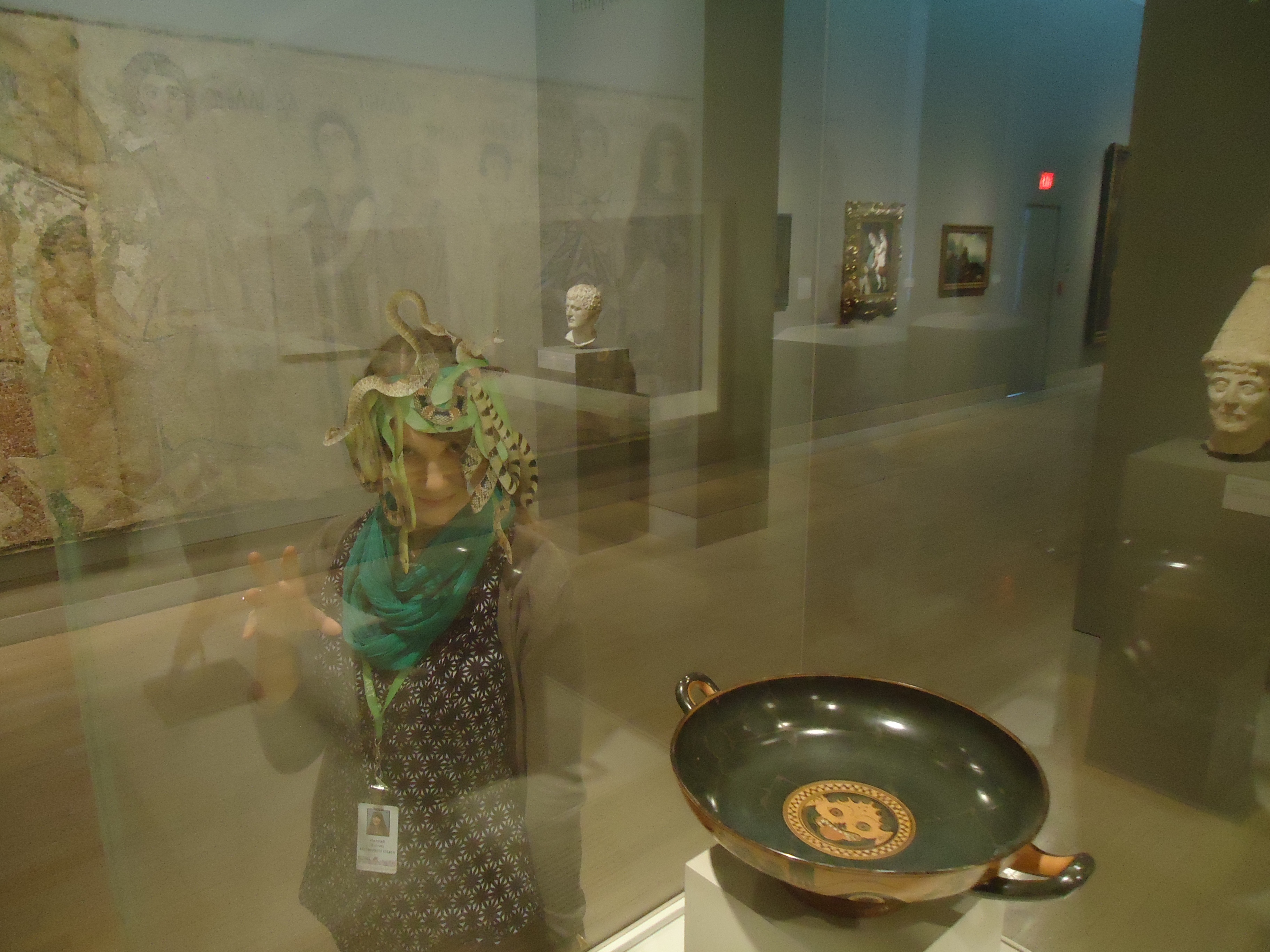
As for me, I decided to base my costume on the spooky gorgon head featured on the inside of this Black-figure kylix. In Greek mythology gorgons are treacherous female creatures that have snakes for hair and can turn anyone who looks them in the eye to stone.

Hannah Burney
Community Teaching Programs Assistant

Artworks used:

  • Banquete chair with pandas, Fernando Campana and Humberto Campana, 2006, stuffed animals on steel base, Dallas Museum of Art, DMA/amfAR Benefit Auction Fund
  • Bird-form finial, Zenú culture, South America, Colombia, c. A.D. 500-1500, gold, Dallas Museum of Art, The Nora and John Wise Collection, gift of Mr. and Mrs. Jake L. Hamon, the Eugene McDermott Family, Mr. and Mrs. Algur H. Meadows and the Meadows Foundation, and Mr. and Mrs. John D. Murchison
  • Black-figure kylix, Greek, Attic, 6th century B.C., ceramic, Dallas Museum of Art, gift of Mr. and Mrs. Cecil H. Green
  • Necessity, Karla Black, 2012, cellophane, sellotape, paint, body moisturisers and cosmetics, Courtesy Stuart Shave/Modern Art, London and Galerie Gisele Captain, Cologne
  • The Minotaur, Marcel Dzama, 2008, plaster, gauze, rope, fabric, chair, bucket, and paintbrushes, Dallas Museum of Art, DMA/amfAR Benefit Auction Fund

Teaching for Creativity: Questioning Coloring Books

Perhaps you enjoyed coloring books as a child or have coloring books around your home for your children. Creativity specialist and University of Texas at Dallas professor, Magdalaena Grohman, provides insight into the creative value of coloring books and ideas for enriching the coloring experience.

As a psychologist and a mom of two, I have an unrelenting tendency to look for games, toys, and activities that teach children to think and communicate, that develop imagination, and that shape creativity and multiple intelligences. And recently, coloring books have caught my attention.

For the past couple years my two sons, ages 6 and almost 4 years old, have been bringing coloring sheets home. I’ve been thinking: What do coloring books teach our children? What is their educational value?

For starters, the act of filling in the color within boundaries plays an important role in the development of hand-eye coordination, a crucial component in mastering handwriting. I’m afraid, however, that’s about it. How so? Well, let’s look at the most accessible coloring books you can buy in a supermarket. Most of them include outlines of  popular movie and book characters. If a child is familiar with a given character, it may significantly restrict the color palette. Spiderman, for example, will most likely be red, blue and black. There are even more restrictive activity books, in which a specific color pigment is already embedded in the pages and ready to use. Just dip a brush in water and you’re good to go. How convenient! Not only does a child remain clean (so do walls and floors), she doesn’t have to think what colors need to be used. At the very least, coloring books reinforce mindless copying and schematic color use.

So, shall we throw them away? Well, here’s a caveat. Children do like coloring, and—let’s admit it—it is a perfect activity to keep them busy so we can catch up with chores or steal 10 minutes to pause and think.

But, if you have some time to sit down with your children and play with them, I suggest you try the following fun activities with your ordinary coloring book:

  • Use an atypical color scheme (Spiderman is yellow, pink and green) and discuss the character “wearing” different colors
  • Add different elements to the picture
  • Change a given outline into something completely different and give it funny titles
  • Glue small pieces of torn magazine pages within the outline

Thank you, Dr. Grohman for your ideas!

Dr. Grohman leads Think Creatively! workshops in the Center for Creative Connections on the first Thursday of every month.

Andrea V. Severin
Interpretation Specialist

What’s your (learning) style?

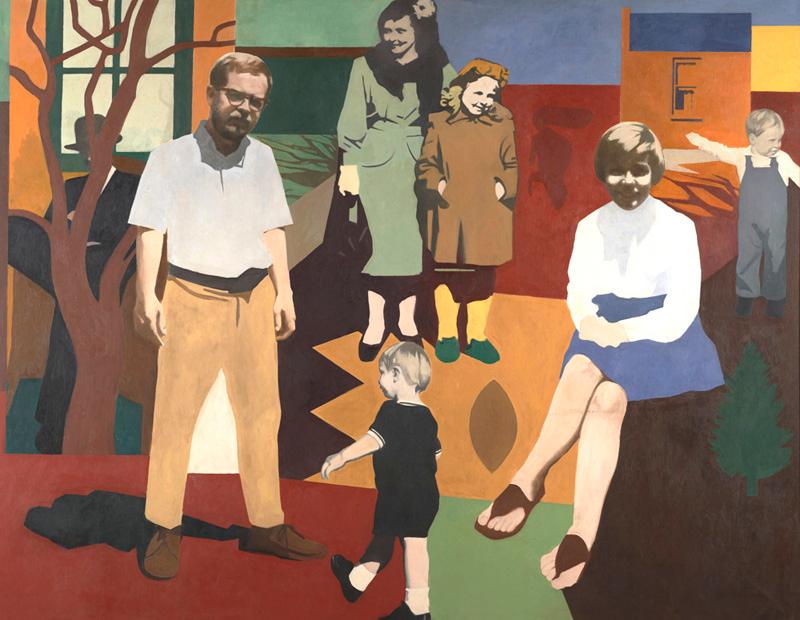
Roger Winter, Self-Portrait with Family, 1969, Dallas Museum of Art, gift of Mr. and Mrs. George J. Perutz

At an Education staff meeting last month, each branch of the department took time to examine their programs through the lens of different learning styles and categorizations. We considered John Falk’s different kinds of visitors, such as the Explorer and the Facilitator; we examined Howard Gardner’s Nine Multiple Intelligences, such as Bodily/Kinesthetic Intelligence and Linguistic Intelligence; and finally, we reviewed Bernice McCarthy’s 4-MAT Learning Styles.

In fact, each staff member took a short test to determine which of the four McCarthy categories best described their learning style. As it turns out, analytic learners are the most common among DMA Educators. These learners, myself included, are fact seekers and especially good at creating concepts and models. They are motivated by the goals of self-satisfaction and intellectual recognition.

The analytic learners were closely followed by dynamic learners. Dynamic learners, such as our Manager of Go van Gogh Programs, Amy Copeland, are interested in hidden possibilities, self-discovery, and potential. They enjoy making things happen by taking risks and by being flexible and enthusiastic.

McDermott Intern for Community Teaching, Pilar Wong, falls under the next most common style: common sense learners. Practical and factual, these learners love to figure out how things work. They tend to enjoy problem solving and hands-on experiences.

Lastly, we have the imaginative learners. These learners, like Community Teaching Programs Assistant, Hannah Burney, are reflective and innovative. They learn from their own experiences and by listening to and sharing ideas with others. They are idea people.

Try out the McCarthy Learning Styles quiz, and tell us, what’s your learning style?

Alex Vargo
McDermott Intern for Gallery Teaching

Urban Armor: Elements of Art and Skateboard

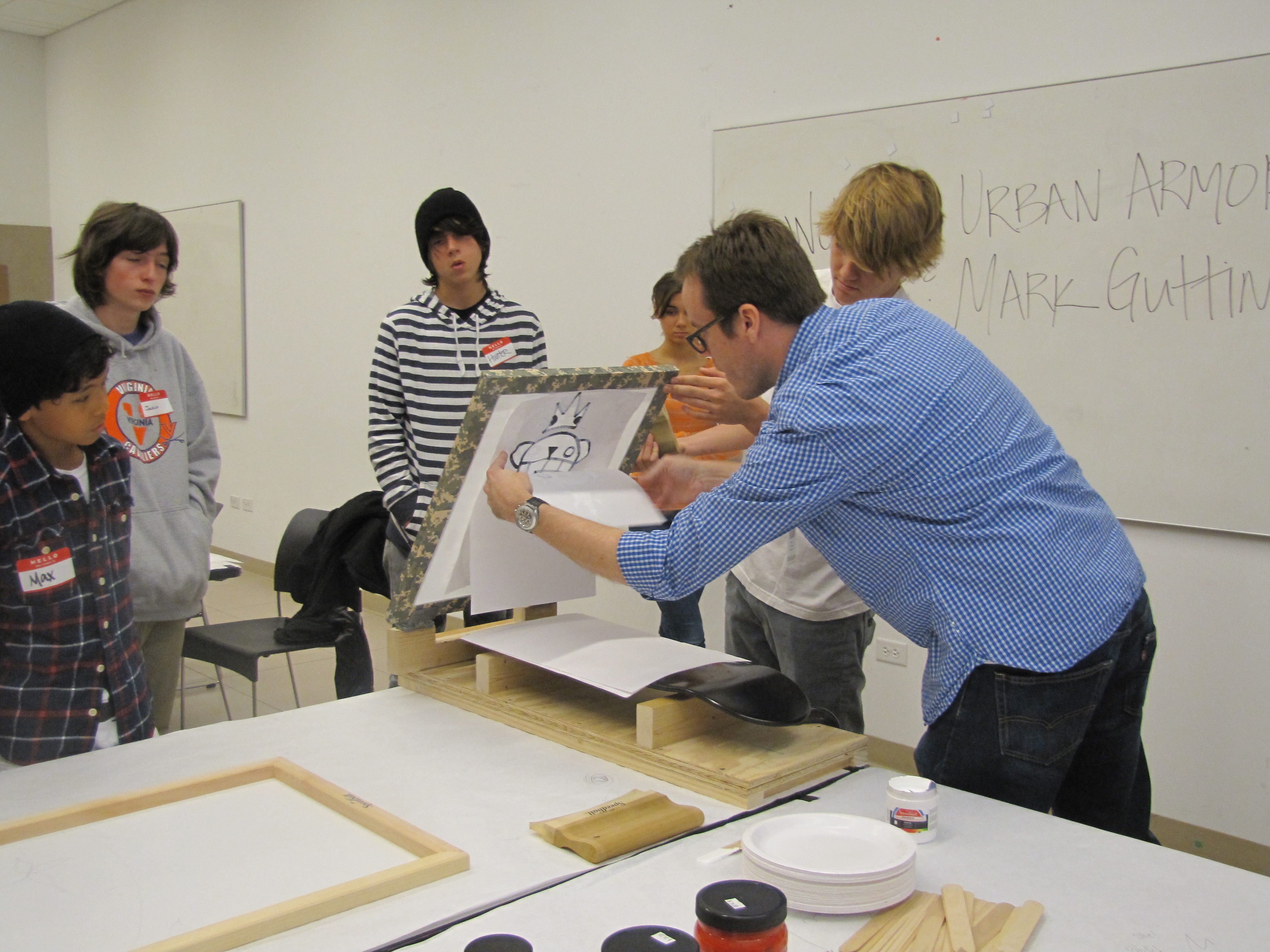
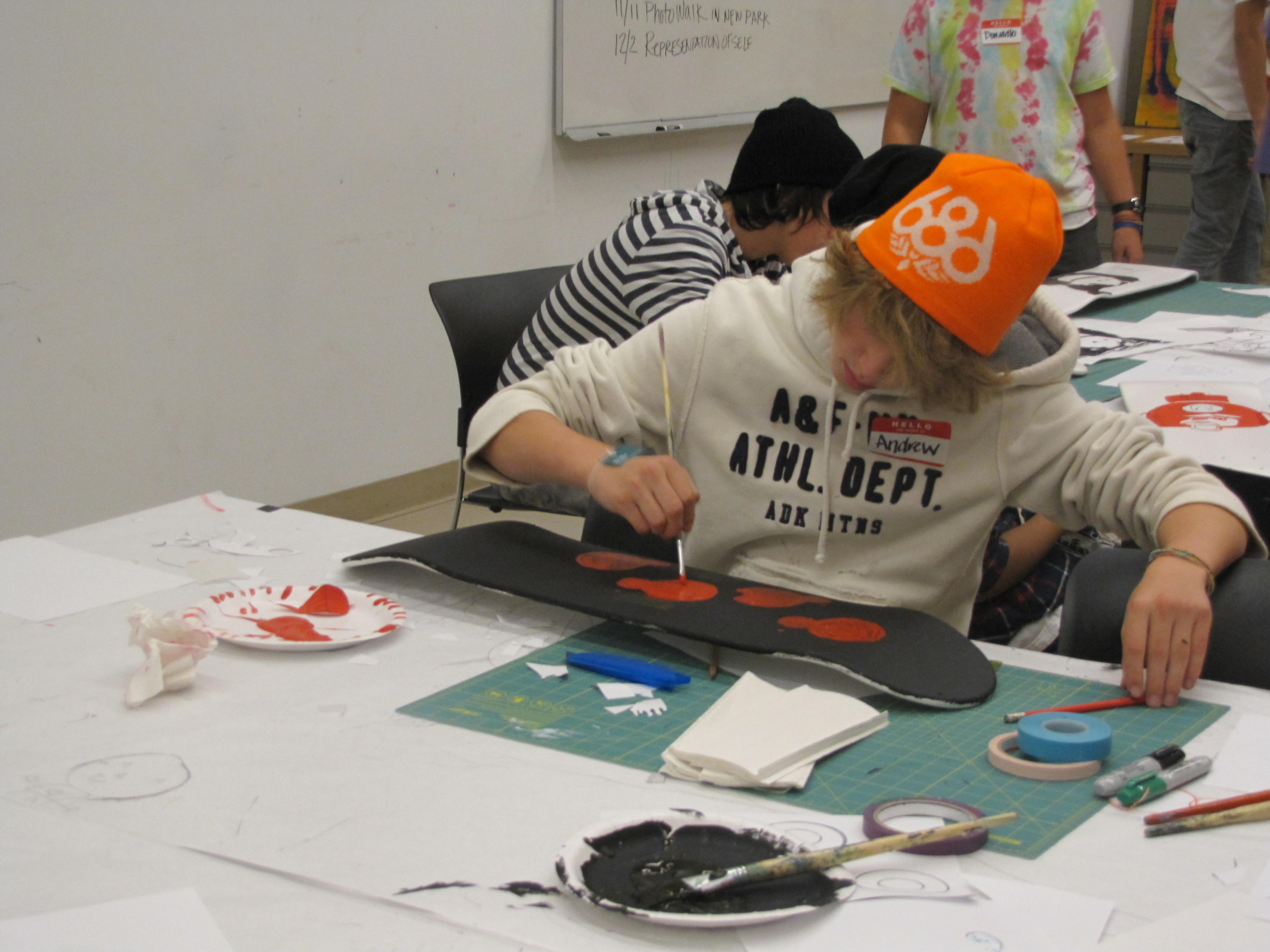
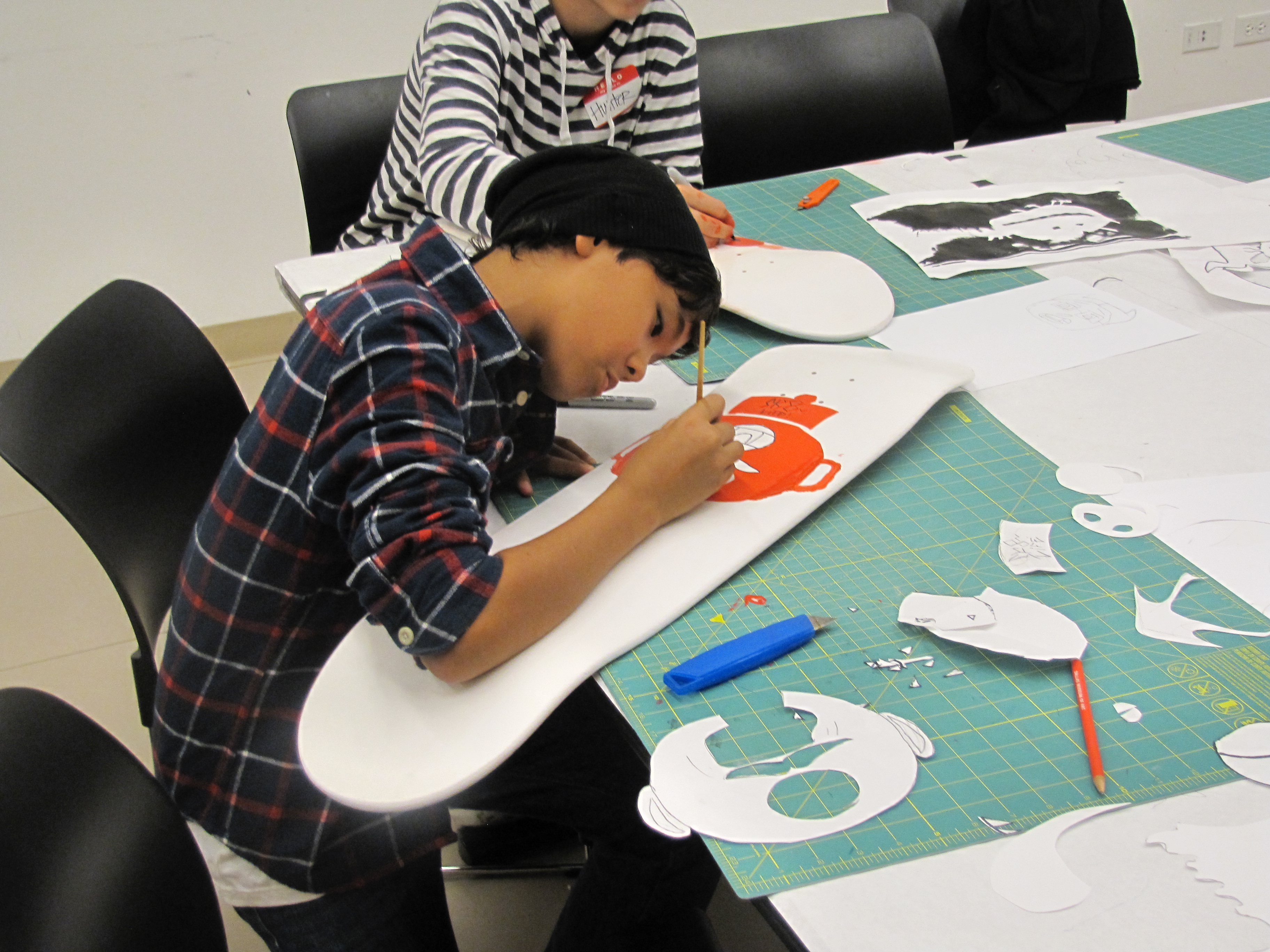
The DMA’s tween/teen program Urban Armor seeks to integrate works of art, rich group discussion, and art making with an over-arching theme of identity so that students can find relevance and practical application to their lives. This exclusive tween/teen program kicked off the new school year with an awesome class, led by art educator and artist Mark Gutting. The workshop emphasized the elements of art and principles of design in our contemporary collection in order to inspire ideas for students to use in their work—their very own skate deck! The students created custom designs, symbols, and logos and were able to screenprint these designs on the back of a skateboard. While working with him, I gained some great insight on who he is as a teacher and a student. Check out my interview with Mr. Gutting below:

What is your background and why did you decide to become a teacher?

Mark Gutting: “Drawing fills my heart with joy.  I think it started with a doodle in childhood and has kept growing since.  Ten years ago, teaching became a logical direction. Teaching art presents a daily opportunity to share that joy.”

What were you like as a teen?

MG: “I’m sure that I was like any other teen–trying to stand out while fitting in. High school is when I first began to develop a style of my own. The funny thing is, I kept it hidden, like it was some big secret.  I didn’t want anyone to steal my style before I fully developed it!”

What about working with our Urban Armor teen group appeals to you?

MG: “The program’s focus on identity.  I’m not sure there is a more apt theme to being a teenager.  Creativity in any form is a wonderful avenue to discovering one’s identity.”

Is there a difference between teaching students in the museum and in the classroom?

MG: “In my experience, students are students; however, the museum presents a situation that can never be duplicated in the classroom–the gallery walk.  To wind through the galleries, sketching a pattern from a textile, a bead from a necklace, a tool mark from a sculpture, and a brush stroke from a painting, is to mainline inspiration.”

What was the goal of the program on Sunday?

MG: “As an educator, teaching the fundamentals of any subject is vital to building a base of knowledge.  Getting students inspired to learn–while having fun–is no easy task.  There are a multitude of art fundamentals found in skateboard deck art: line, shape, form, pattern, balance, positive and negative space, spatial organization, an endless list really.  I wanted to present the Urban Armor group with a unique project–screen printing a skateboard–while incorporating those fundamental concepts.”

Why skate decks?

MG: “I loved skateboarding as a teen.  The movement–the freedom of it–mesmerized me.  Since I was never good at skating, the deck art became my focus.  I spent many hours drawing my last name into some skull-infested graphics.  Back then, the concept of screen printing was future talk–complete science fiction to me.  I simply wanted to present the Urban Armor group with an opportunity I never had–to screen print an actual skateboard deck.”

What was your fondest memory of this class?

MG: “Getting to see the Urban Armor group experience the process of printing actual skateboard decks was a joy.  Hopefully, some of them will want to build their own screen printing rigs in their parents’ garages and crank out original works of art.  Everyone has to start somewhere!”

Why do you like working at the DMA?

MG: “The programs offered to students at the DMA are instilling a deep love for art and creating a new generation of museum patrons.  Who knows?  Maybe even the next Picasso.”

To find out more about Urban Armor and upcoming workshops please visit the website.

Amanda Batson
Program Coordinator for the Center for Creative Connections

Reading the Cards: Part 1

On a recent trip to New York, I finally had my cards read by a psychic–something that I’ve always wanted to have done!  As she was telling me about a tall, dark, stranger in my future I couldn’t help but notice the vibrant, graphic nature of her card deck. With their flat color planes, Romanesque figures, and dramatic styling, the cards each told a specific portion of the larger tale.

While tarot cards were originally used throughout Europe to play card games, they have become associated in modern culture with mysticism and magic. The deck is divided into two sections: the minor arcana and major arcana. The former is very similar to a modern deck of cards with four suits consisting of ten pip (numbered 2 through 10) and four court cards. The major arcana cards are those most often associated with tarot divination.

This post is my first in a series that will make connections between individual tarot cards and artworks in the DMA’s collection. I’ll share works from our collection that are reminiscent of a card’s imagery or of the card’s meaning in divination practices.

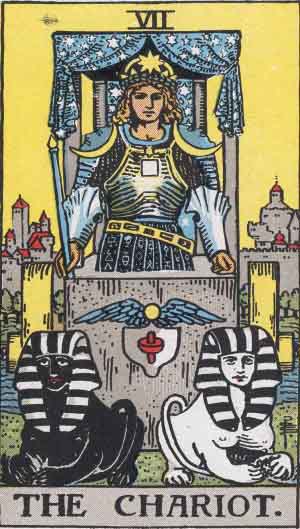
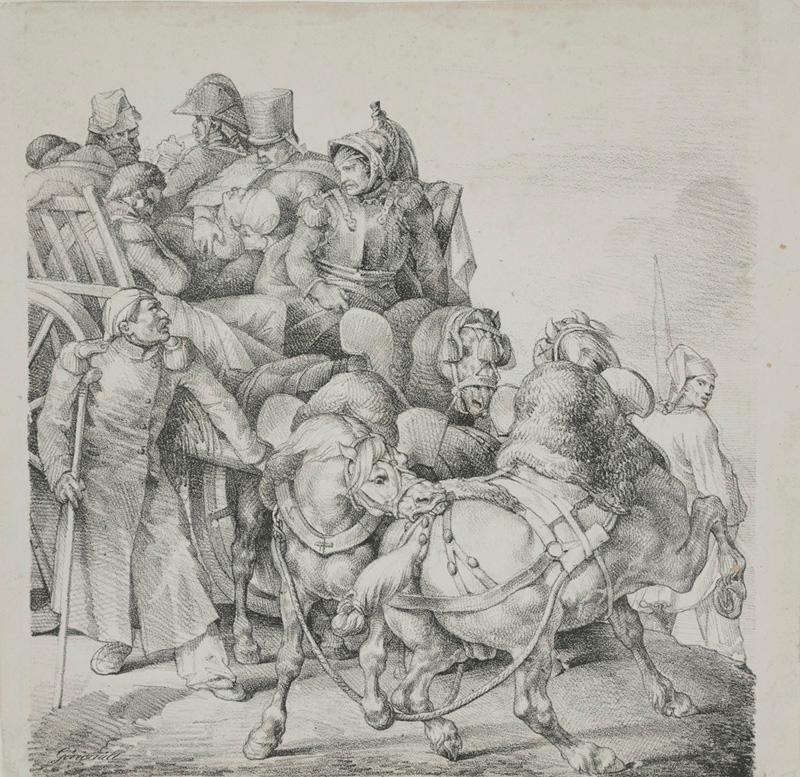
The Chariot is the seventh trump or major arcana card. The card normally depicts a royal figure in a chariot being pulled by horses or sphinxes–one black and one white. A sign of an external battle of wills, the white and black horses often pull in different directions. In a tarot spread, the card can refer to current obstacles or successes in overcoming life’s challenges.

Théodore Géricault, Horse-drawn Cart Full of Wounded Soldiers (Chariot Chargé de Soldats Blessés), 1818, Dallas Museum of Art, Juanity K. Bromberg Memorial Fund and gift of an anonymous donor

This lithograph not only depicts a horse-drawn carriage, but it also exemplifies many of the qualities of the chariot card. Fatigued and wounded soldiers are clearly returning from battle, perhaps even a losing battle. The horses are pulling in so many directions that they are tangling their harnesses and fighting with each other.

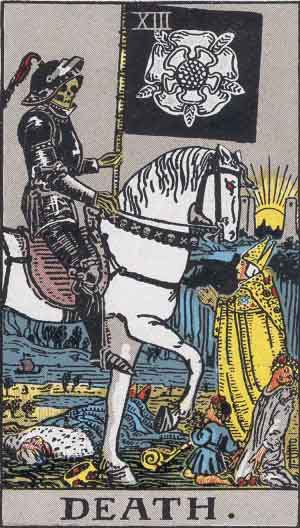
Death is the thirteenth major arcana card in a tarot deck. Death is depicted by a skeleton riding a horse and is often shown surrounded by dead and dying people. Despite its name, the card does not represent actual death. Instead, it usually signifies an ending of an era or relationship.

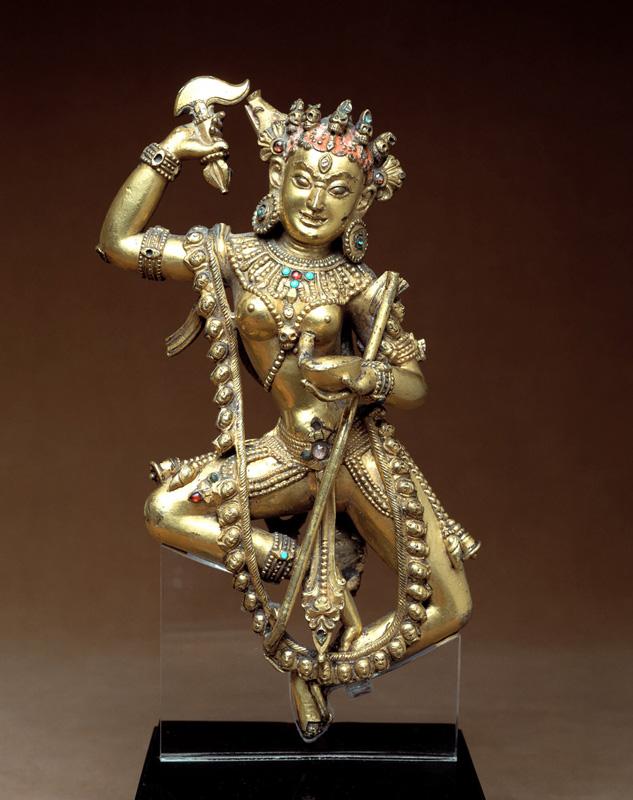
Dakini Vajravarahi, c. A.D. 1600, Dallas Museum of Art, Foundation for the Arts Collection, gift of the Virginia C. and Flyd C. Ramsey Fund of Communities Foundation of Texas, Inc.

Adorned with a necklace of skulls and carrying an executioner’s ax, this dakini, a Buddhist female deity, represents the violent aspects of existence. She also embodies the cycle of life, death, and rebirth which celebrates death as a bringer of life.

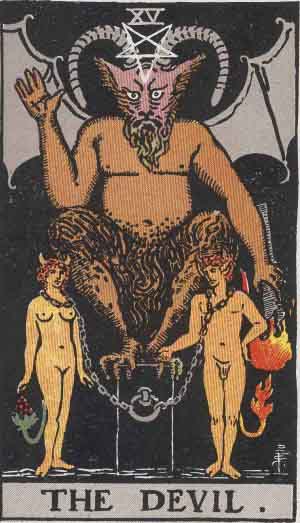
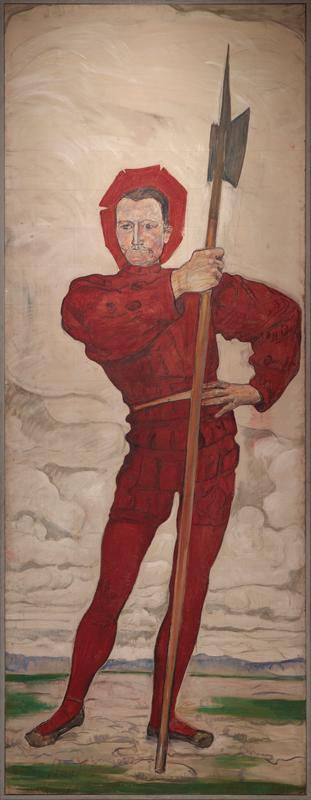
The Devil is the fifteenth major arcana card. Tarot images of the Devil show him as a satyr-like creature sitting above or on two humans. If selected during a card reading, the Devil represents self-bondage or barriers to leading a full life. Often, these obstacles are interpreted as vices such as materialism, lust, egotism, etc.

Ferdinand Hodler, The Halberdier, 1895, Dallas Museum of Art, Foundation for the Arts Collection, Mrs. John B. O’Hara Fund and gift of Nona and Richard Barrett

While Ferdinand Hodler’s The Halberdier actually depicts a Swiss soldier, this image seemed like the perfect choice to represent the Devil. Clothed in a traditional red costume and holding a spiked battle-axe, the soldier evokes several connotations we hold concerning the Devil.

Stay tuned for my next post, which will look at the Emperor, the Empress, the Fool, the Hanged Man, and the Hermit.

Pilar Wong
McDermott Intern for Community Teaching


Archives

Categories