Archive Page 46


Fall is (finally) in the air!

It has technically been fall for almost three weeks, and it is just now starting to feel like it. Temperatures in the 70s, presidential debates, brisk winds, sweaters, switching from iced coffee back to regular, lovely fall colors and, of course, a smattering of new DMA exhibitions.

Here are some works from the collection to get you in the autumnal spirit.

[slideshow]

Works featured:

  • Florence E. McClung, Autumn, 1959, Dallas Museum of Art, gift of Florence E. McClung
  • Lynda Benglis, Odalisque (Hey, Hey Frankenthaler), 1969, Dallas Museum of Art, DMA/amfAR Benefit Auction Fund
  • Philip Russell, Autumn Landscape, 1957, Dallas Museum of Art, Leon A. Harris, Sr. Memorial Purchase Prize, 9th Southwestern Exhibition of Prints and Drawings, 1958
  • Marsden Hartley, Mountains, No. 19, 1930, Dallas Museum of Art, The Eugene and Margaret McDermott Art Fund, Inc.
  • Zaha Hadid, Tea and Coffee Set, Designed 1996, Executed 2002, Dallas Museum of Art, gift of Deedie and Rusty Rose in honor of Lela Rose and Catherine Rose
  • Mark Rothko, Orange, Red and Red, 1962, Dallas Museum of Art, gift of Mr. and Mrs. Algur H. Meadows and the Meadows Foundation, Incorporated
  • Everett Spruce, Autumn Landscape, 1955, Dallas Museum of Art, Dallas Art Association purchase, The Seventeenth Annual Exhibition of Texas Painting and Sculpture, 1955
  • John T. Curran (designer), Tiffany and Company (manufacturer), “Aztec” tête-à-tête coffee service, Dallas Museum of Art, anonymous gift and Discretionary Decorative Arts Fund
  • Myron Stout, Untitled, 1950, Dallas Museum of Art, General Acquisitions Fund
  • Henri Fantin-Latour, Fall Flowers, 1863, Dallas Museum of Art, gift of Mr. and Mrs. James H. Clark
  • Navajo people, Eye-Dazzler Blanket, c. 1880-1900, Dallas Museum of Art, Textile Purchase Fund

Alex Vargo

McDermott Intern for Gallery Teaching

The Personal Response Tour

Last spring, I learned about something called the “Personal Response” tour while attending the NAEA convention.  One of my colleagues at the Memphis Brooks Museum of Art said that they use the Personal Response tour as a team-building exercise with staff.  It also provides opportunities to slow down, look closely, and reflect.  We used the Personal Response tour during docent training this week to get our docents to slow down and reflect on their own relationships to works of art in the DMA collection. Docents tour with the same group of people each week, so they were divided into groups based on their touring day.  In this way, it helped them get to know each other a bit better, too.

The Personal Response tour was formulated by Ray Williams, who is now at the Blanton Museum of Art at the University of Texas.  During this tour, docents were asked to select a card that contained an open-ended prompt to guide their time in the galleries.  I took some of the prompts from an article written by Ray Williams* and composed ten additional prompts for docents.  They were given time to explore the galleries and select the work of art that, for them, was the best response to their prompt.  After selecting a work of art, docents spent ten minutes jotting down their thoughts and reactions to their prompt.  After ten minutes had passed, we came back together and everyone shared their response with the group.  I was amazed by how open our docents were to this experience, and also how thoughtful their responses were.  Below are just a few of their selections:

Prompt: Find a work of art that reminds you of something from your past…What are the connections?
One docent had to take piano lessons when she was little and did not enjoy them.  She felt that the young person in At the Piano is obviously disinterested in playing the piano, and that was her attitude when she had to practice, too.  But now she wishes that she had spent more time practicing and had really learned to play the piano.  She has a piano in her home today and still wishes she knew how to play it.
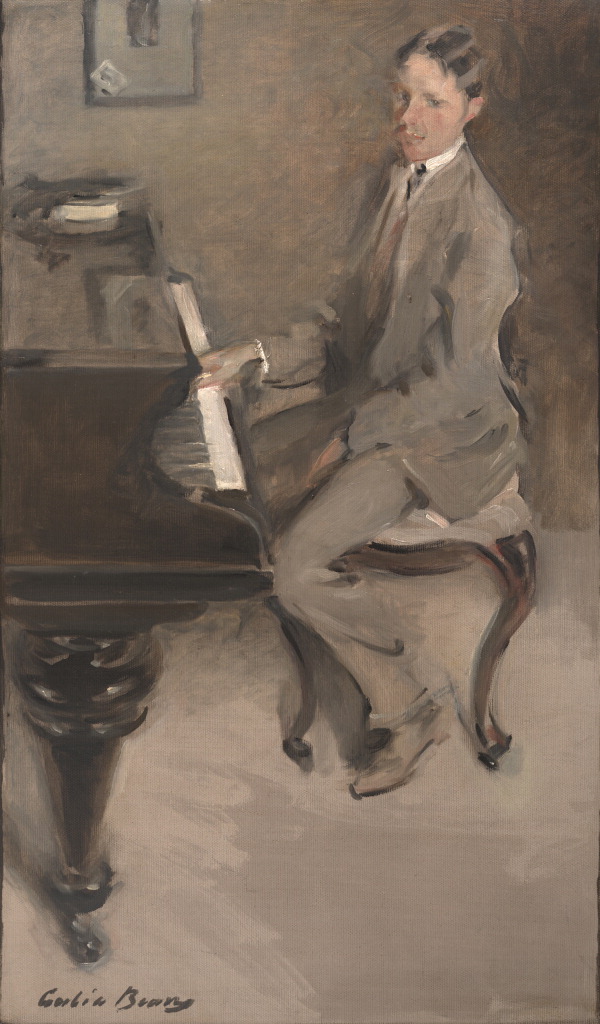
Cecilia Beaux, At the Piano, c. 1890, Graham Williford Foundation for American Art, 145.1994.3

Prompt: Find a work of art that embodies some aspect of peace.
One of the docents selected a shroud or ceremonial hanging (sekomandi) from Indonesia.  The shroud was owned throughout someone’s life and was then used to bury them following their death.  The docent felt that the shroud conveyed a message that “everything will be okay, because you’re joining all of your ancestors.”
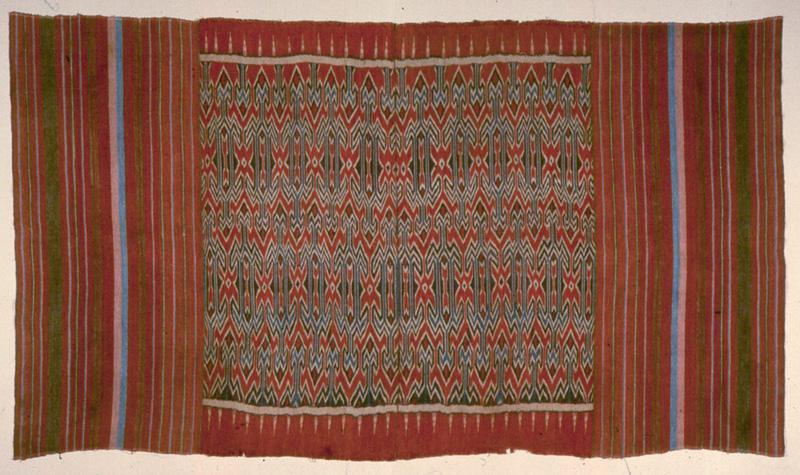
Shroud or ceremonial hanging (sekomandi), Toraja people, Indonesia, probably late 19th century, Dallas Museum of Art, the Steven G. Alpert Collection of Indonesian Textiles, gift of the McDermott Foundation, 1983.126

Prompt: Find a work of art that reminds you of childhood.  What resonates with you?  What elements of childhood do you wish were still a part of your life?
The Beach at Trouville reminded one docent of spending her summer vacations at a family home in Ogunquit, Maine, visiting her grandmother. She fondly remembers the beautiful beaches, like the one in the painting. She and her husband still have a house in Maine, but it is not near a beautiful beach like the one from her childhood.
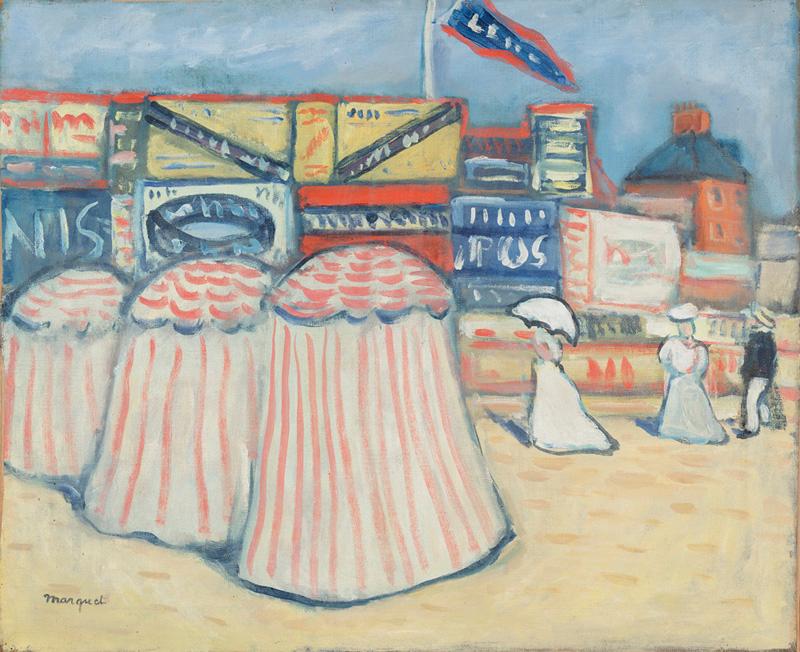
Albert Marquet, The Beach at Trouville, c. 1906, Dallas Museum of Art, gift of the Meadows Foundation Incorporated, 1981.121, © Albert Marquet Estate/Artists Rights Society (ARS), New York/ADAGP, Paris

Prompt: Select a work of art to take on a date.  Where would you go?  What would you do?  What would you discuss?
Andrea’s Response: I would like to go on a date with The Bugler because 1) his ability to play the bugle so well indicates at least some level of intelligence; 2) he is decently attractive and well-dressed; and 3) if the dinner conversation starts to wane, he can just play me some tunes.
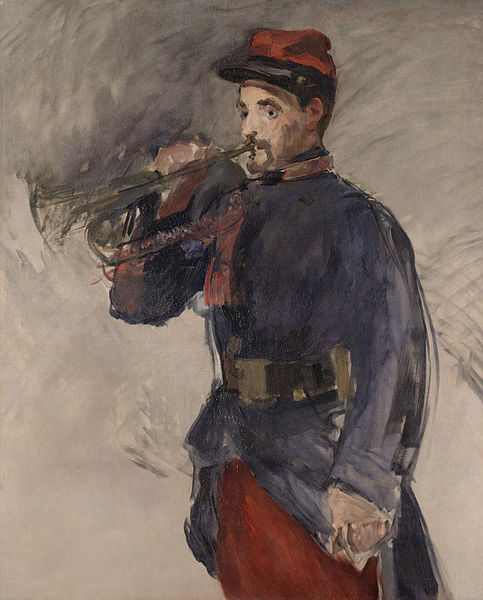
Edouard Manet, The Bugler (Le Clarion), 1882, Lent by the Pauline Allen Gill Foundation, 57.2006.8

Prompt: Select a work of art that you would like to hang above your sofa.  Why?  What would visitors to your home learn about you?
My Response: I would select the sword ornament in the form of a lion.  I’m a Leo, so I associate with the lion in that we’re proud and protective of those we love. But I also think this lion has a huge smile on his face, and I like to laugh and be playful, too.
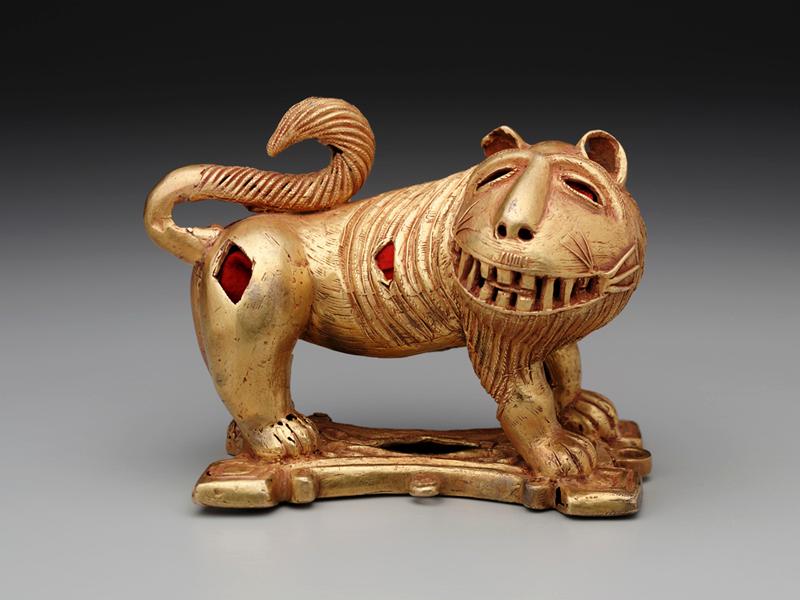
Sword ornament in the form of a lion, Asante people, Ghana, c. mid-20th century, Dallas Museum of Art, The Eugene and Margaret McDermott Art Fund, Inc., 2010.2.McD

I’m going to pose one final prompt for all of you–what work of art from the DMA collection embodies, for you, pure joy?  Why?  I can’t wait to read your responses!

Shannon Karol
Manager of Docent Programs and Gallery Teaching

*Ray Williams, “Honoring the Personal Response: A Strategy for Serving the Public Hunger for Connection,” Journal of Museum Education, Volume 35, Number 1, Spring 2010, pp. 93-101.
Teaching for Creativity: Exquisite Corpse

At last week’s Go van Gogh training session, we decided to get everyone’s creative juices flowing with a fun warm-up exercise.  Volunteers got the chance to spend some time exploring works of art they had never seen before through a group writing exercise. During this experience, volunteers each contributed one line of a poem without knowing what the others had written. This collaborative technique was originally created by Surrealist artists interested in incorporating elements of chance into artistic expression. Known by the Surrealists as Exquisite Corpse, this activity can be done as a narrative or drawing game with several people contributing to one poem or artwork. After participating in a written version of this exercise, the volunteers were eager to learn more about the artworks they had written about. Their genuine enthusiasm and sense of wonder made me think that this could be a great way for students to get excited by works of art as well. I hope you will try it out with your students! Here’s how:

1.  Create at least one template with five lines of writing prompts. These are the prompts that we used for three different templates:

  • Noun, two adjectives, three words ending in “ing,” phrase, noun
  • One word, two words, three words, four words, one word
  • Two syllables, four syllables, six syllables, eight syllables, two syllables

2.  Divide into groups of four or five and take a few moments to look closely at a work of art (each group should look at a different artwork)

3.  Provide each participant with one template and a pencil to start

4.  Fill in the first line and then fold it so that your written response is hidden from view

5.  Pass the template to your neighbor

6.  Fill in the next line on the template passed to you, fold it, and pass again

7.  Continue these steps until all the templates have been filled out. At the end of this exercise, each participant should have a completed narrative that they can unfold and read aloud to the other writers. After reading all the templates, each small group should choose one to share with the larger group.

Here are some collaborative narratives that Go van Gogh volunteers wrote:

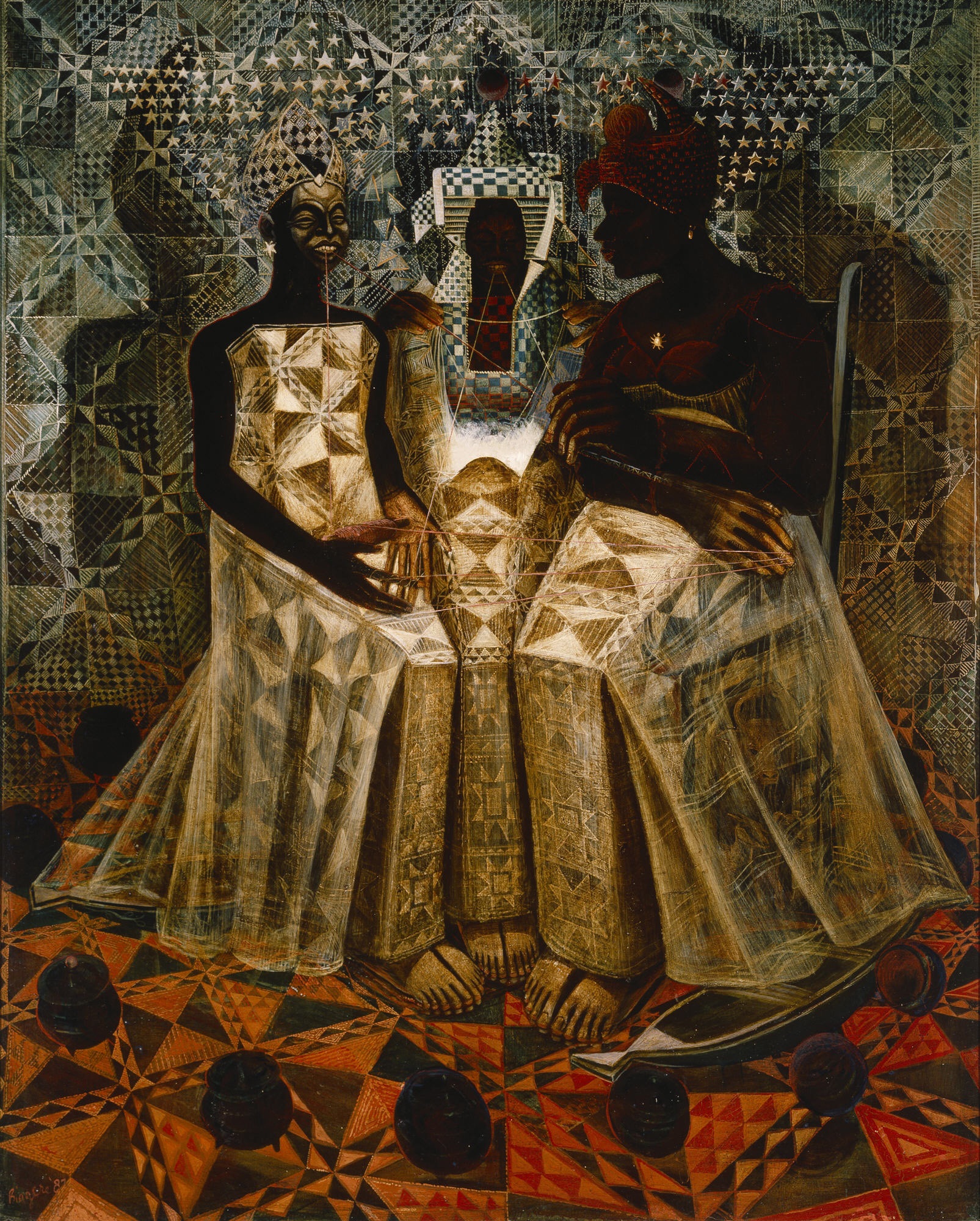
Starry Crown, John Thomas Biggers, 1987, Dallas Museum of Art, Museum League Purchase Fund

Gorgeous

Traditional

Ladies talking quilt

Stars, hats, hands, feet, toes, fingers, shine

Perfect

.

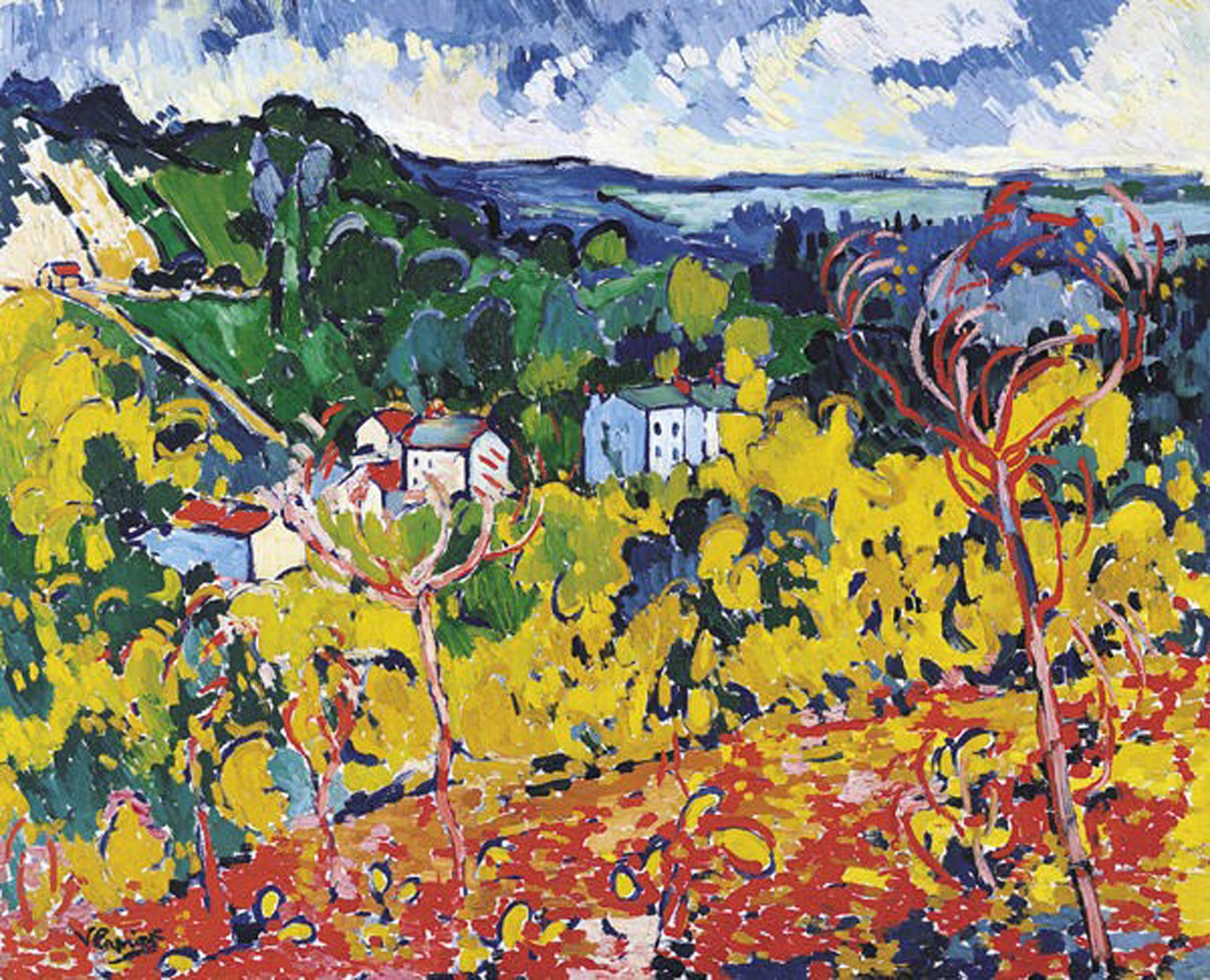
Bougival, Maurice de Vlaminck, 1905, Dallas Museum of Art, The Wendy and Emery Reves Collection

A fall day in Europe

Landscape of a village

Peaceful

Sunflowers and seawater

Apples

.

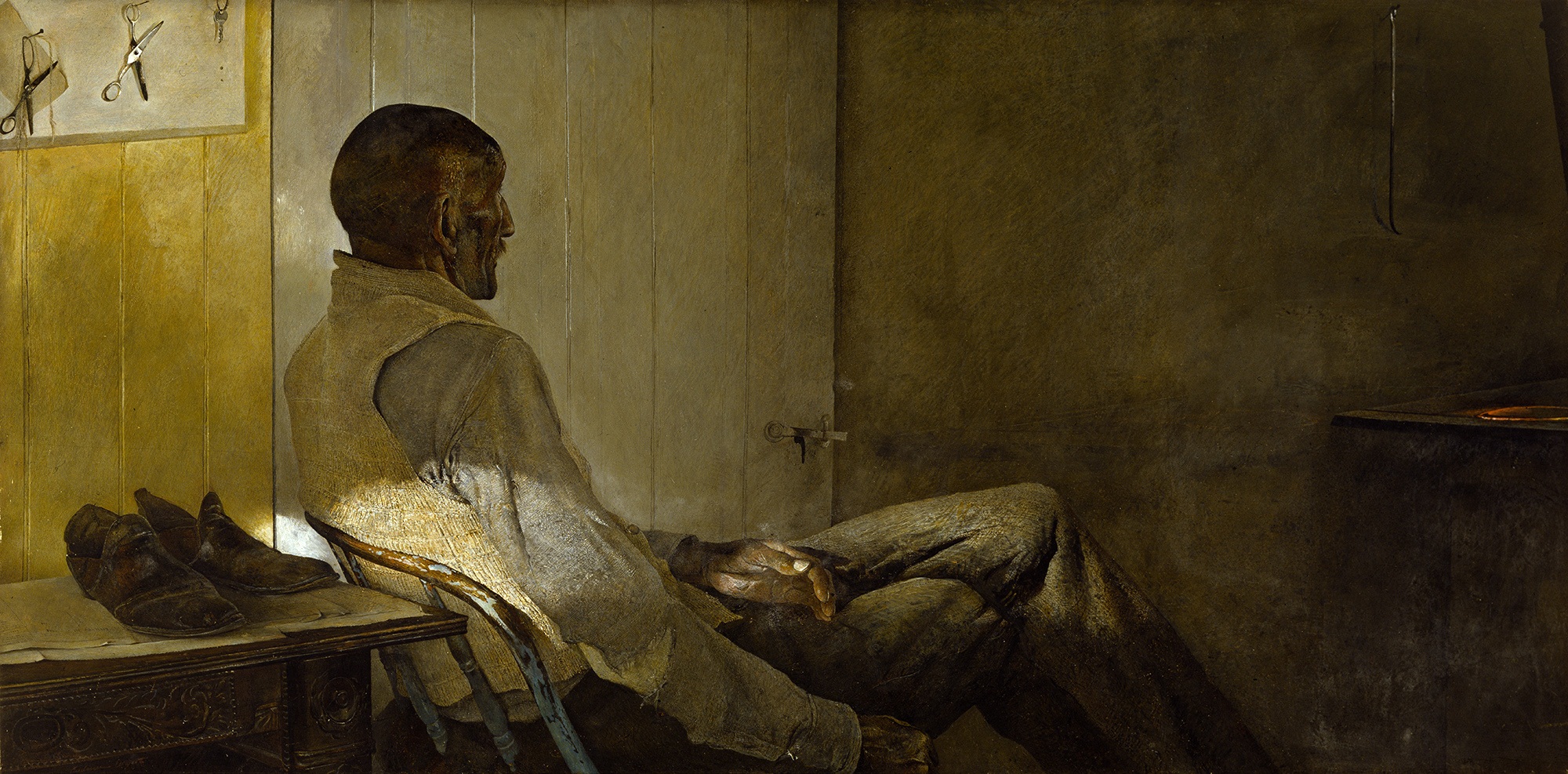
That Gentleman, Andrew Wyeth, 1960, Dallas Museum of Art, Dallas Art Association Purchase

Somber

Serious, somber

Sitting, relaxing, contemplating

Why is he so sad?

Man

.

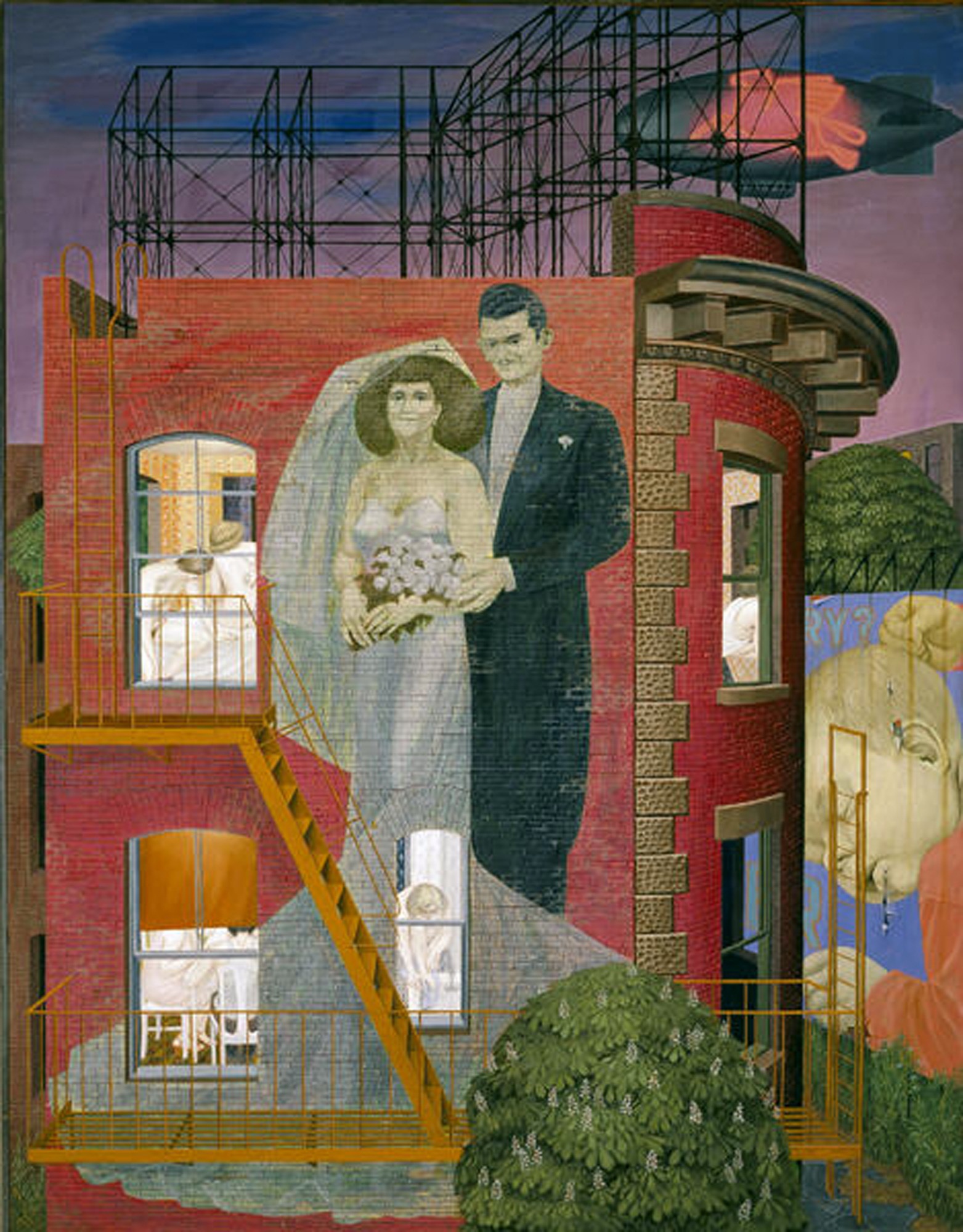
June Night, Henry Koerner, 1948-1949, Dallas Museum of Art, Foundation for the Arts Collection, gift of Joshua L. Logan

Colorful

Everyday, wedding

Marrying, dreaming, loving

A busy art building

Hope

I hope you all have as much fun with this as we did!

Hannah Burney
Community Teaching Programs Assistant

Friday Photos: Bovine Bonanza

As a new Texas transplant, I have been trying to immerse myself in Dallas culture as much as possible.  I went to the State Fair and tried every fried food imaginable; I experienced the Ft. Worth Stockyards and the weekly rodeo (not a fan of calf roping); and I have already developed an obsession for sweet tea!

Luckily for me, the Dallas Museum of Art has an excellent collection of artwork by local Texan artists—a great opportunity for both newbies like me and old hats in the community to learn more about Dallas and the broader Texas art scene.

One prominent theme in Texan artworks is the ever-presence of cows! Cattle driving and trailing played a huge role in the history of north Texas and the animals remain an important cultural marker for the entire state.

Cows are not only prominent in Texan art, but bovines can also be found aplenty in our Asian collection reflecting the place of honor they hold in Hinduism.  Nandi, the bull often seen in Hindu art, serves as the mount of one of the principle Hindu deities, Shiva.  Not simply a means of transportation for Shiva, Nandi is also a primary god on his own and Shiva’s foremost disciple.

While Texans and Hindus revere cows in extremely different manners, each has found them important enough to include in their artwork, which, to me, illustrates an exciting cross-cultural connection!

[slideshow]

Artworks shown:

  • George Grosz, Cattle, 1952-1953, Dallas Museum of Art, gift of A. Harris and Company in memory of Leon A. Harris, Sr.
  • Clara McDonald Williamson, Get Along Little Dogies, 1945, Dallas Museum of Art, Ted Dealey Purchase Prize, Seventeenth Annual Dallas Allied Arts Exhibition, 1946
  • Otis Dozier, Wild Cow Milking Contest, 1941, Dallas Museum of Art, gift of The Dozier Foundation
  • Tom Lea, Wild Cattle of South Texas: Ancestors of the Longhorns, 1945-1946, Dallas Museum of Art, gift of Life Magazine
  • Shiva Nataraja, Chola dynasty, 11th century, Dallas Museum of Art, gift of Mrs. Eugene McDermott, the Hamon Charitable Foundation, and an anonymous donor in honor of David T. Owsley, with additional funding from The Cecil and Ida Green Foundation and the Cecil and Ida Green Acquisition Fund
  • Nandi bull, c. 13th century, Dallas Museum of Art, the Cecil and Ida Green Acquisition Fund and gift of David T. Owsley via the Alvin and Lucy Owsley Foundation
  • Humped bull (zebu, or Bos Indicus), 3rd millennium B.C., Dallas Museum of art, gift of David T. Owsley via the Alvin and Lucy Owsley Foundation

Pilar Wong
McDermott Intern for Community Teaching

Collection Connections: War Horse

Recently I enjoyed a fantastic performance of War Horse over at our Arts District neighbor, the Winspear. I was completely blown away by the horse puppets, created by the South African Handspring Puppet Company. Classifying them as puppets, however, does not seem to do them justice. The beautiful craftsmanship of the puppets along with the expertise of the puppeteers magically breathed life into horse protagonist Joey and his other horse and animal companions. (I was highly entertained by Joey’s hysterically energetic goose friend.)

What I found most amazing was how the puppets, puppet artists, and actors were able to so powerfully communicate the strength of an animal-human bond. I was so moved by the relationship between Joey and his owner Albert that I teared up throughout much of the play!

I wanted to explore how works of art in the DMA’s collection could similarly convey the potential of human and animal relationships. I thought of the following works:

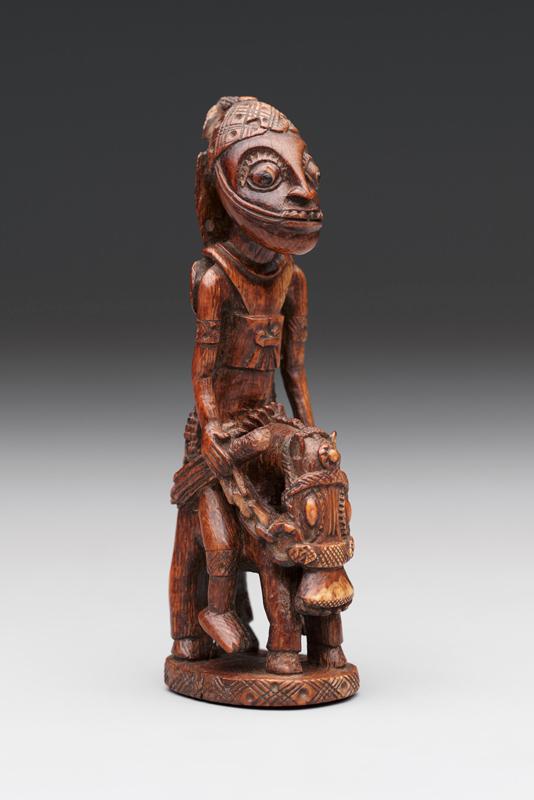
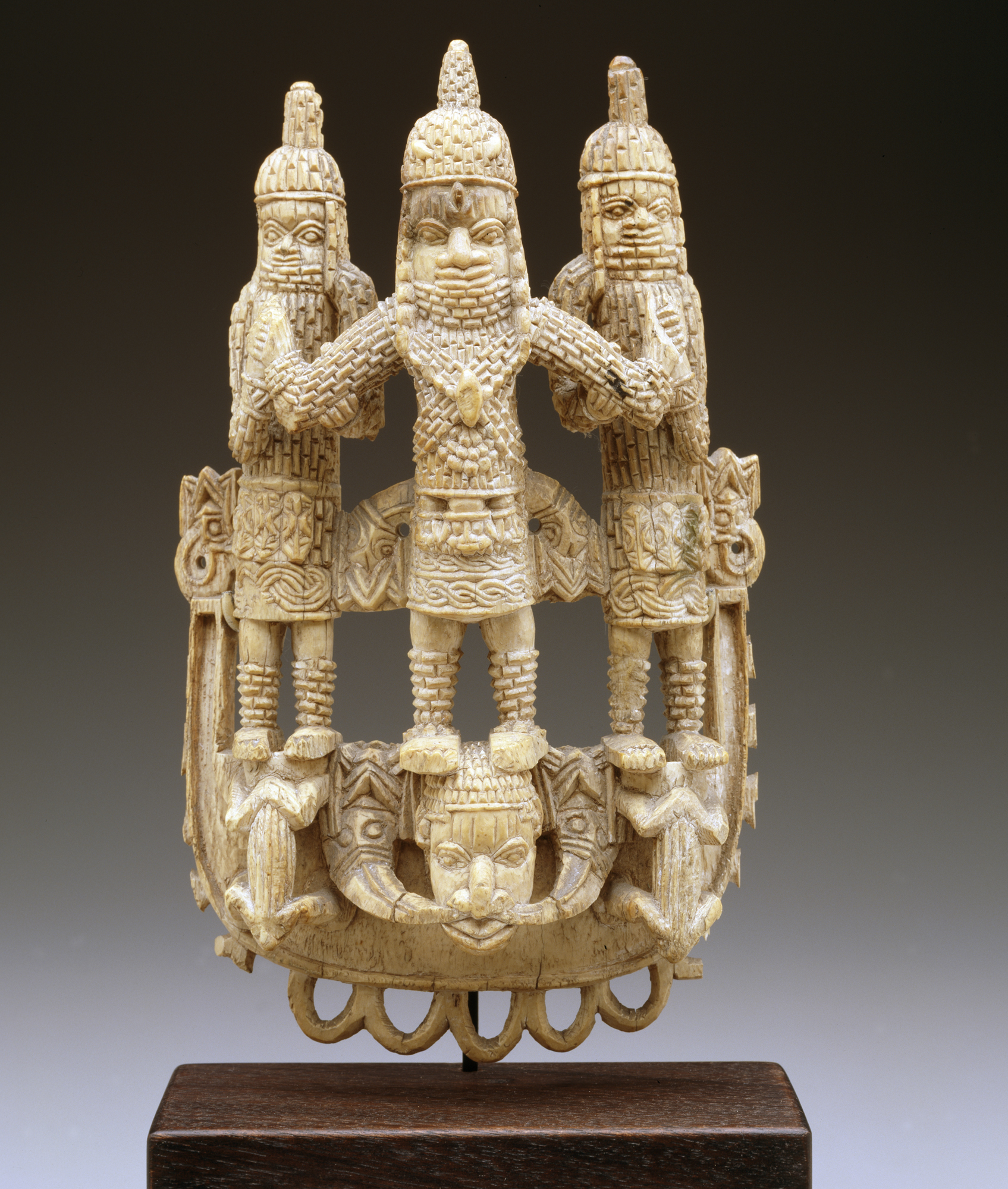
This small ivory sculpture from the Yoruba peoples of Nigeria presents a man with the most important import: the domestic horse. Horses were introduced to Africa via Asian conquerors in Egypt between 1640 and 1532 BC. Because of their speed, strength, and ability to lift a rider taller than any standing man, horses symbolized power and prestige to the Yoruba.

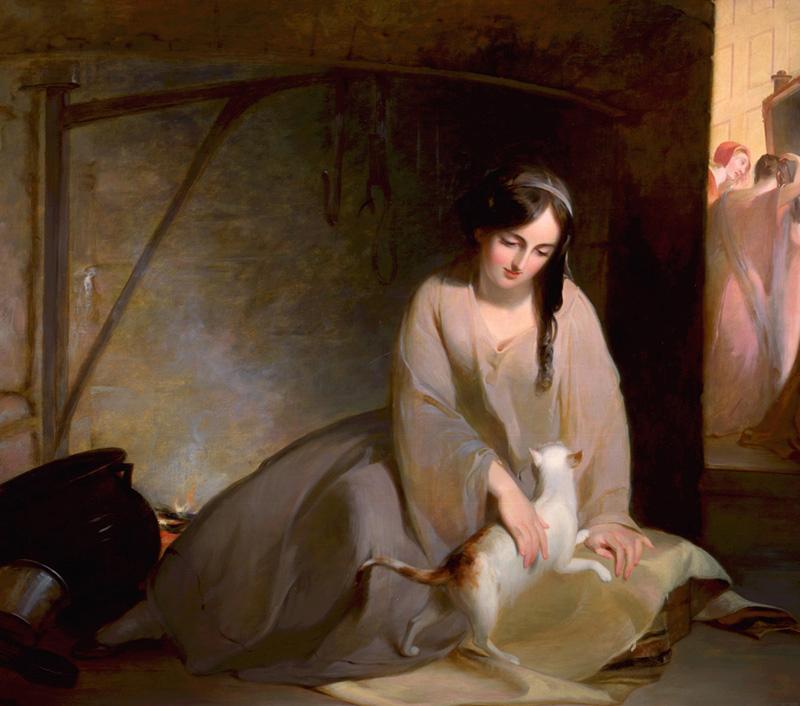
In this nineteenth-century painting, Cinderella and her pet cat gaze lovingly into each other’s eyes. As pets are the best listeners, I would imagine she is venting about her mean stepsisters, who vainly admire themselves in the mirror behind her.

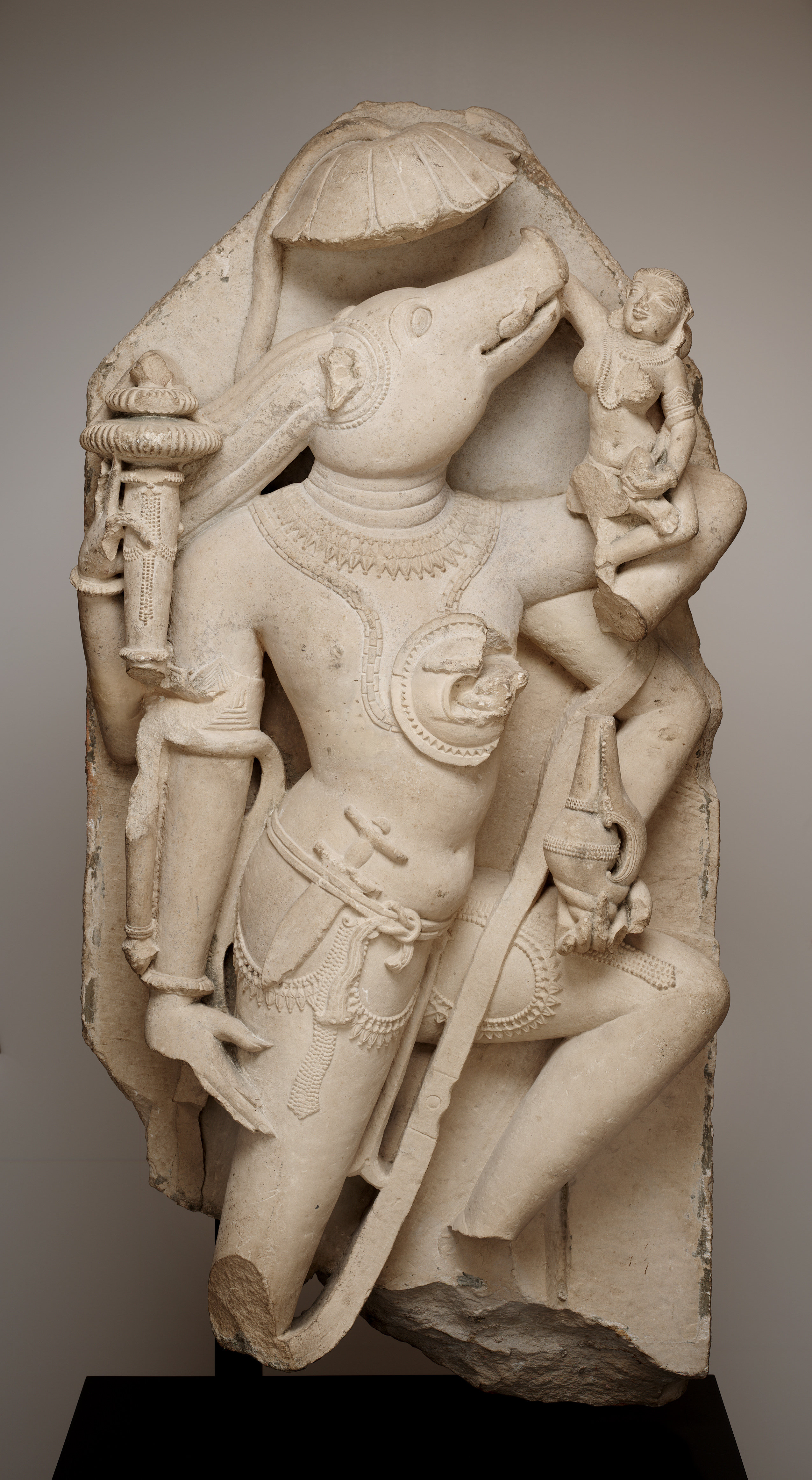
In this sculpture, the Hindu god Vishnu appears as a man with a wild boar head.  The earth goddess, whom he just saved from a demon, sits on his shoulder and embraces his snout.

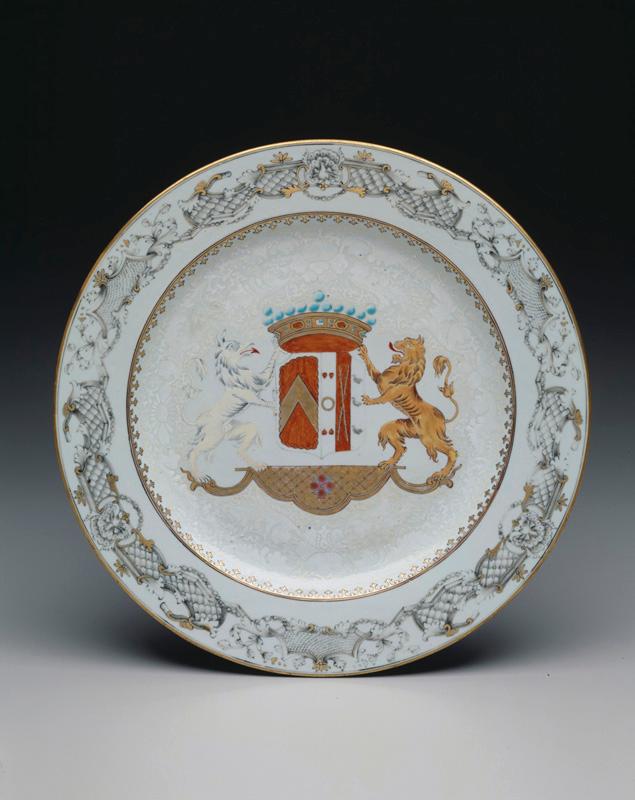
Coats of arms often included representations of animals. Throughout history, humans have admired certain characteristics of animals and used animal imagery to symbolize human values. Think of a courageous lion or a wise old owl…

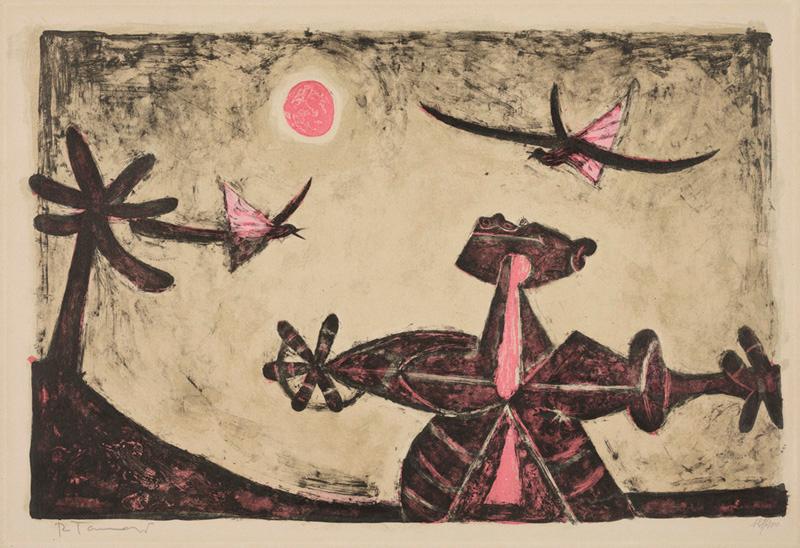
Here a man stands with open arms, locking eyes with two birds. The stylistic similarities between man and bird suggest man’s undeniable connection to the animal and natural world.

Artworks shown:

  • Horse-and-rider figure (elesin Shango), 17th to 18th century, Dallas Museum of Art, The Eugene and Margaret McDermott Art Fund, Inc.
  • Thomas Sully, Cinderella at the Kitchen Fire, 1843, Dallas Museum of Art, gift of the Pauline Allen Gill Foundation
  • Vishnu as Varaha, 10th century, Dallas Museum of Art, gift of David T. Owsley via the Alvin and Lucy Owsley Foundation and the Alconda-Owsley Foundation, E.E. Fogelson and Greer Garson Fogelson Fund, General Acquisitions Fund, Wendover Fund, and gift of Alta Brenner in memory of her daughter Andrea Bernice Brenner-McMullen
  • Plate with coat of arms, c. 1740, Dallas Museum of Art, The Wendy and Emery Reves Collection
  • Rufino Tamayo, Bird Watcher, 1950, Dallas Museum of Art, Collection of Robert Harville Bishop, gift of Eugene H. Bishop

Signing off,

Andrea V. Severin
Coordinator of Teaching Programs

Silent Disco DMA-style

Our recent September Late Night was full of programming firsts.  We spent the night texting works of art (that texted back). Docents were on-hand to be “checked-out” for a range of customized mini-tours.  Visitors, taking inspiration from selected artworks, struck poses in front of our green screen—the resulting photos of which we are stitching together into several videos soon to be available on Flickr.

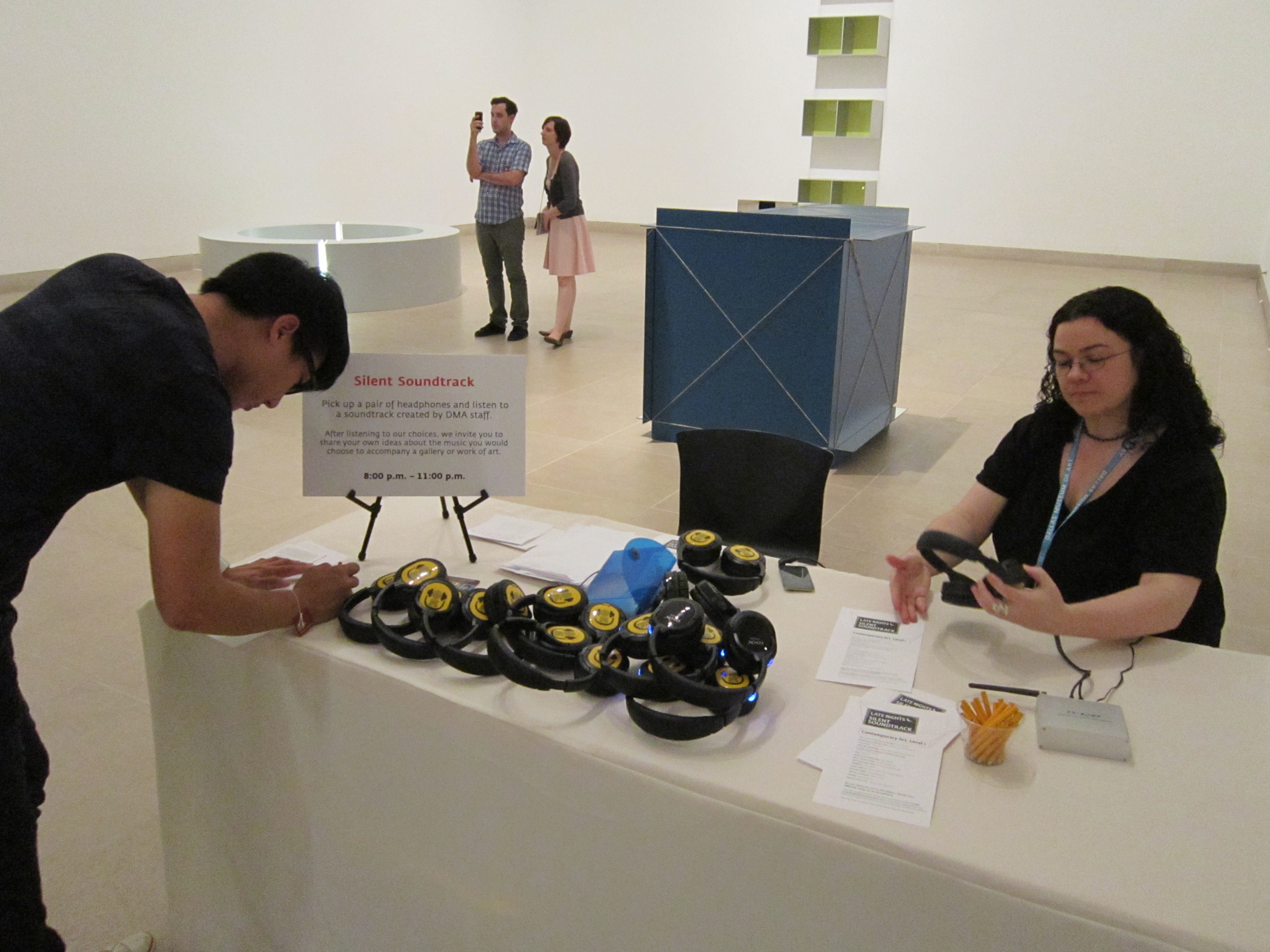
My favorite experiment of the evening was by far our silent disco-inspired program called Silent Soundtrack, which brought music into the galleries via wireless headphones.  We partnered with Austin Silent Disco who brought crates of headphones and everything we needed in the way of technology to broadcast iPod playlists via radio signal.

Headphones had three channels for three separate soundtracks, each tailored to a different floor in the Museum.  Staff from across several departments–Education, Curatorial, and Design–collaborated to create track lists.  Selections were inspired by artworks and exhibitions, some loosely and others more literally.  Below are our soundtracks and some of the artworks that inspired them, and below that, feedback from visitors.  What music would inspire you in our galleries?


Contemporary Art, Level 1

  • The Times They Are A-Changin’, Bob Dylan
  • Beginning to See the Light, Velvet Underground
  • Hot Butter, Popcorn
  • Help Me Somebody, Brian Eno and David Byrne
  • Crayola Doesn’t Make a Color For Your Eyes, Kristin Andreassen
  • Kids, MGMT
  • Walk on the Wild Side, Lou Reed
  • Born, Never Asked, Laurie Anderson
  • Get Off of My Cloud, The Rolling Stones
  • Shadows, Warpaint
  • Come with Us, Brian Eno and David Byrne
  • Ecstatic Shock, Squarepusher
  • The Sun is Down!, Yoko Ono
  • Animal, Miike Snow
  • Born in the U.S.A., Bruce Springsteen


European Art, Level 2

  • Ce Ju, Yelle
  • Reflet, Paris Combo
  • Hands, The Ting Tings
  • Et Moi, Et Moi, Et Moi, Jacques Dutronc
  •  Colourless Colour, La Roux
  • Let It Fall, Lykke Li
  • L’appareil à Sous, Brigitte Bardot
  • J’arrive pas à Vivre, Maido Project
  • Midnight City, M83
  • Tgv, Housse De Racket
  • Dancing on My Own, Robyn
  • Elevator, Minitel Rose
  • The Golden Age, The Asteroids Galaxy Tour
  • Liar, Dragonette
  • Les Dalton, Joe Dassin


African Art, Level 3

  • Gbada, Bandani
  • Mbube (Wimoweh), Ladysmith Black Mambazo
  • Diamonds on the Soles of Her Shoes, Paul Simon
  • Sanfene Foli, Mamadou Diabaté
  • Baxabene Oxamu, Miriam Makeba
  • Masigiye’bo, The Soweto Gospel Choir
  • Nakatiye (Meje), Oboto Sukume
  • Zombie, Fela Kuti & Afrika 70
  • Tulinesangala, Béla Fleck
  • Gitari Na Congo, Bakia Pierre
  • New Africa, Youssou N’Dour
  • Baba, Salif Keïta
  • Youne, Dobet Gnahore
  • Sopeak (Begging), Staff Benda Bilili
  • Sénégal Fast Food, Amadou & Mariam

Level 1 made the art seem to evolve.  Watching progression happen as music went on.

Today I thought I was in for another hum-drum museum trip until I met headphone lady… I wish I had themed headphones for everywhere.

What a great idea to incorporate another art form while strolling around!  Would like this more often–or maybe I’ll try my own music.

Artworks shown:

  • Anytown USA, Jack Pierson, 2000, Dallas Museum of Art, gift of the Junior Associates, 2004.10.a-i, © Jack Pierson
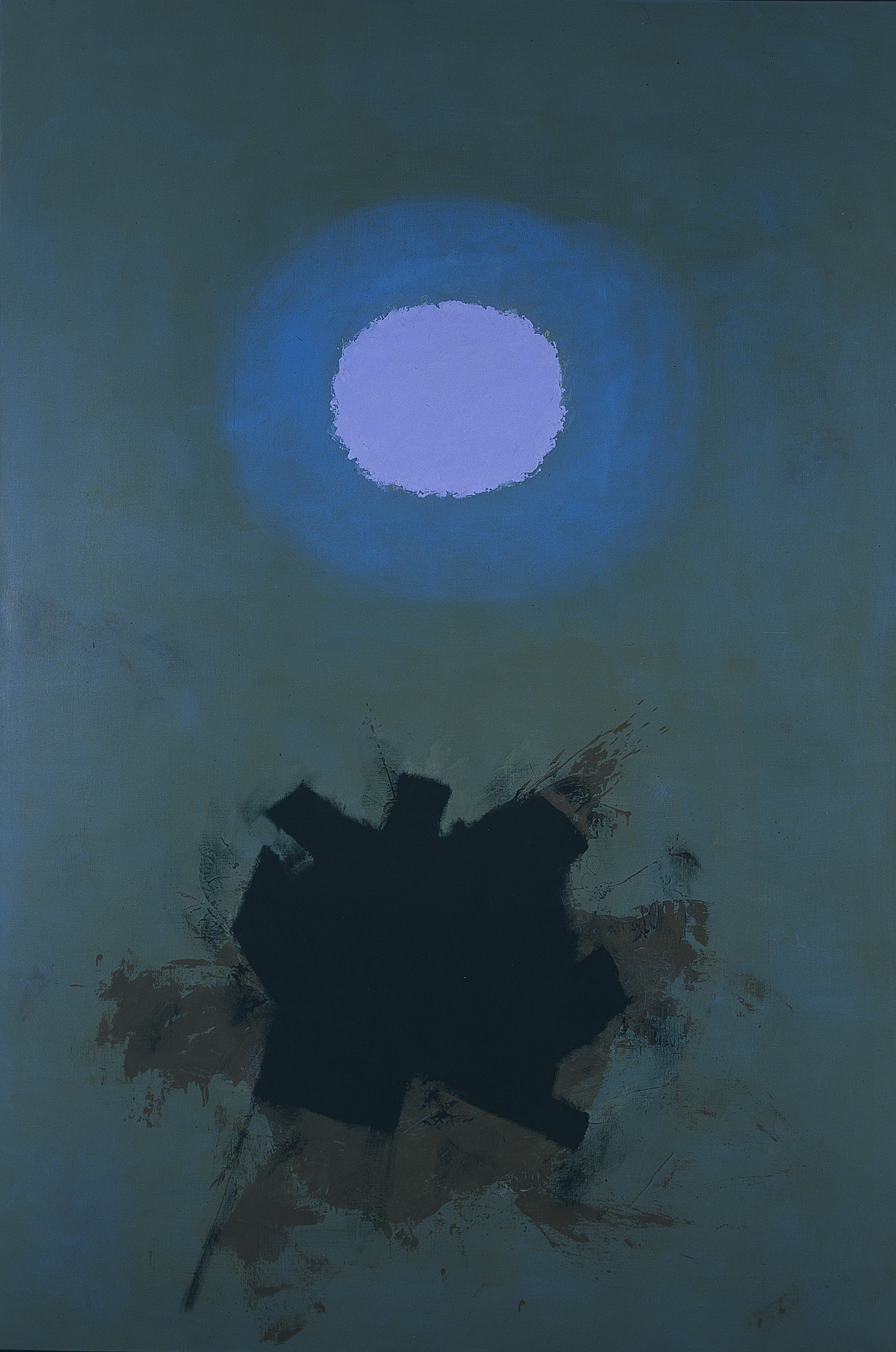
  • Orb, Adolph Gottlieb, 1964, Dallas Museum of Art, Dallas Art Association Purchase
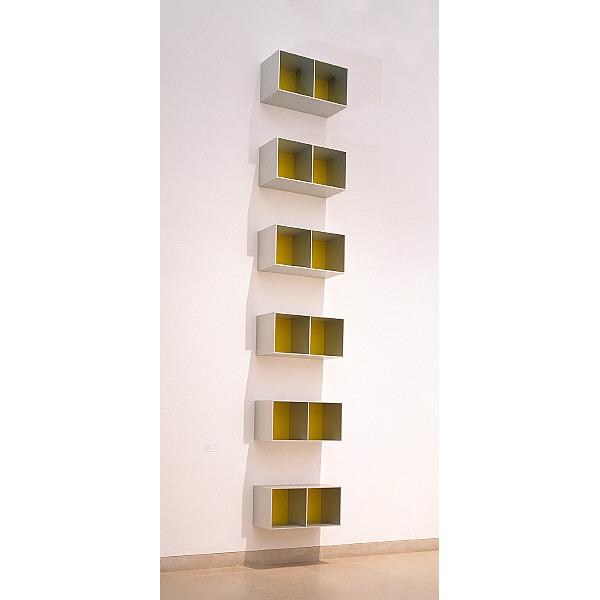
  • Untitled, Donald Judd, 1988, Dallas Museum of Art, Museum League Purchase Fund, General Acquisitions Fund, H. Harold Wineburgh Fund and gift of an anonymous donor
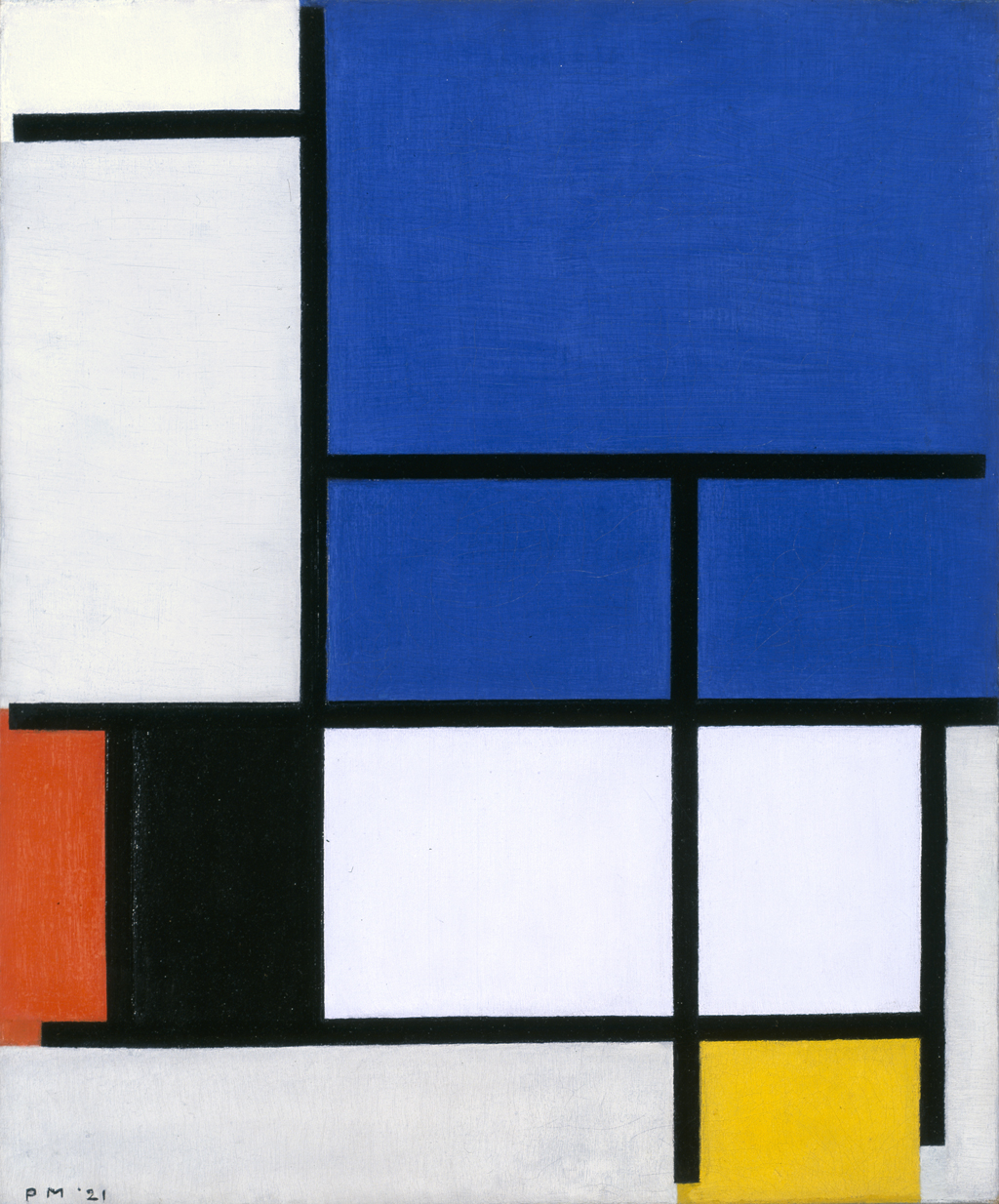
  • Composition with Large Blue Plane, Red, Black, Yellow, and Gray, Piet Mondrian, 1921, Dallas Museum of Art, Foundation for the Arts Collection, gift of Mrs. James H. Clark
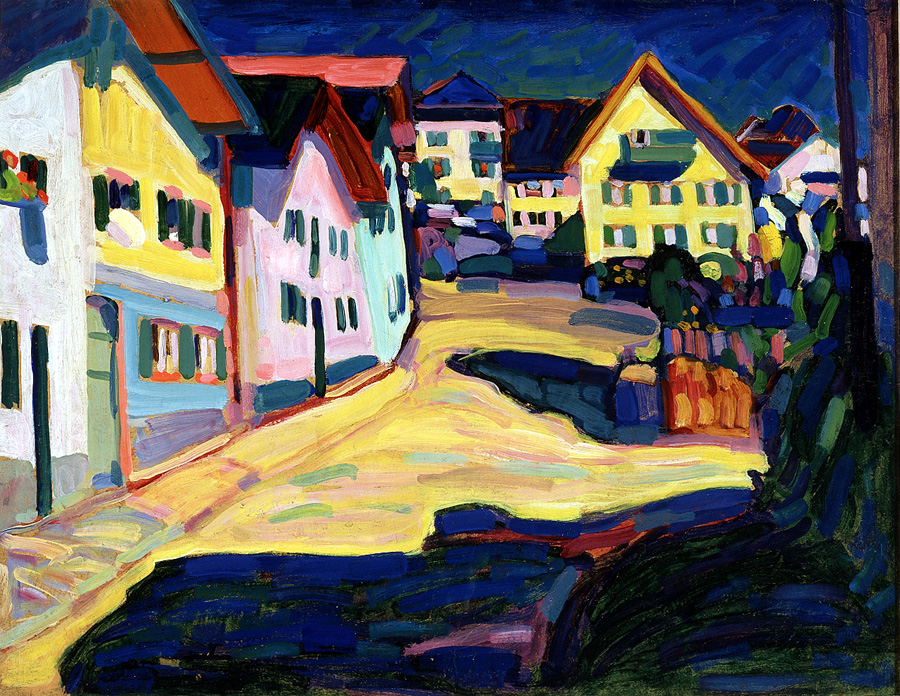
  • Murnau, Burggrabenstrasse 1, 1908, Wassily Kandinsky, 1908, Dallas Museum of Art, Dallas Art Association Purchase
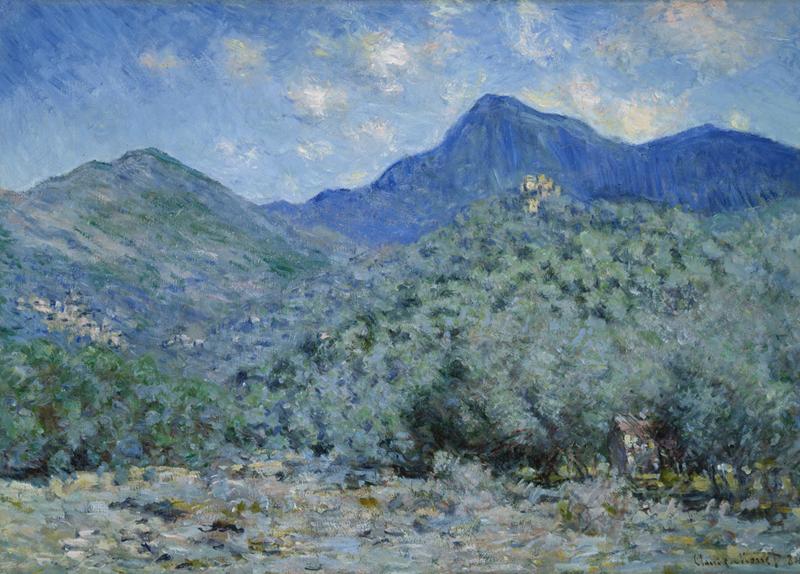
  • Valle Buona, Near Bordighera, Claude Monet, 1884, Dallas Museum of Art, gift of the Meadows Foundation Incorporated
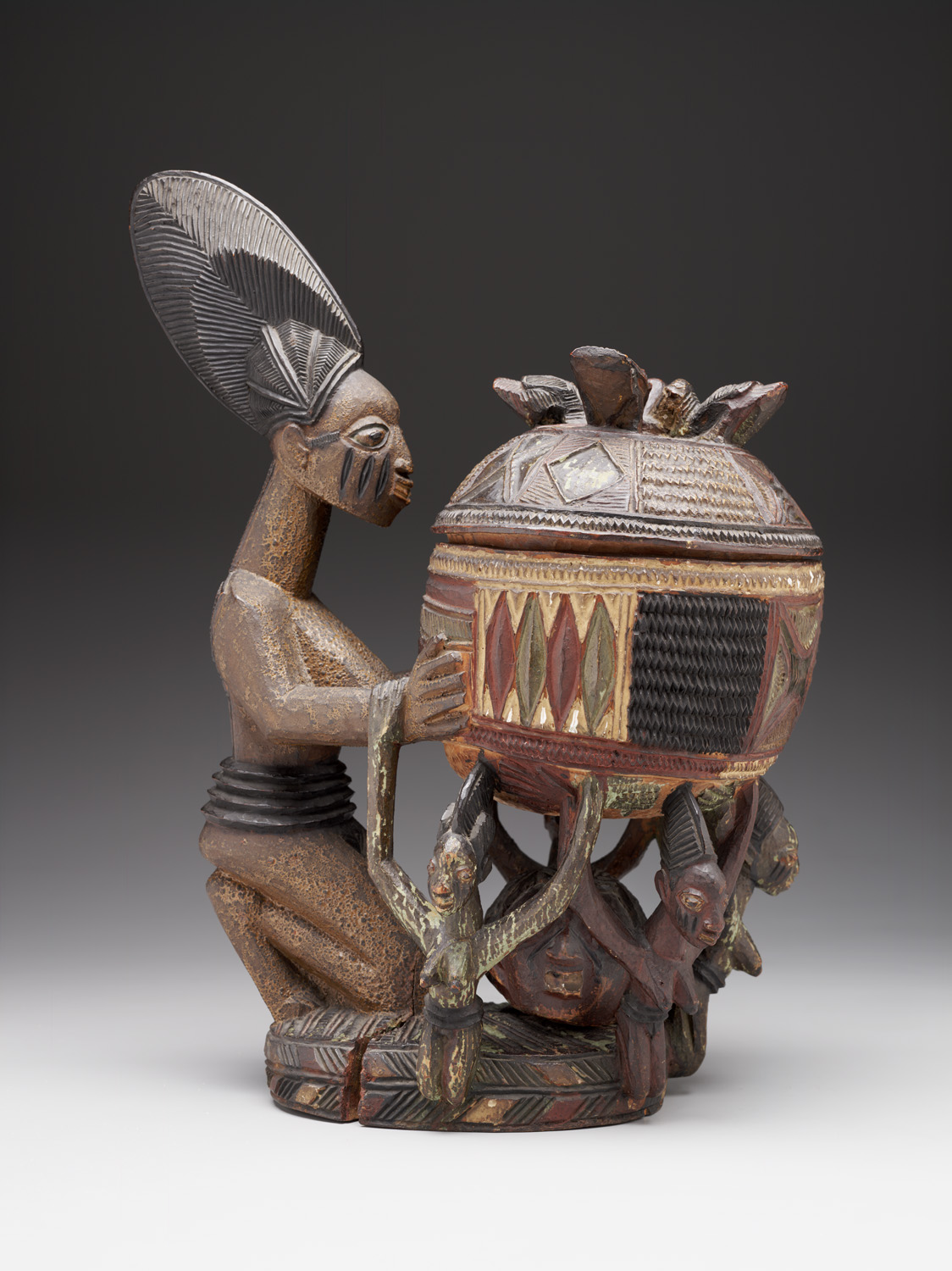
  • Kneeling female figure with bowl (olumeye), Olowe of Ise, c. 1910 to c. 1938, Dallas Museum of Art, The Eugene and Margaret McDermott Art Fund, Inc.
  • Waist pendant, 18th century, Dallas Museum of Art, The Eugene and Margaret McDermott Art Fund, Inc.
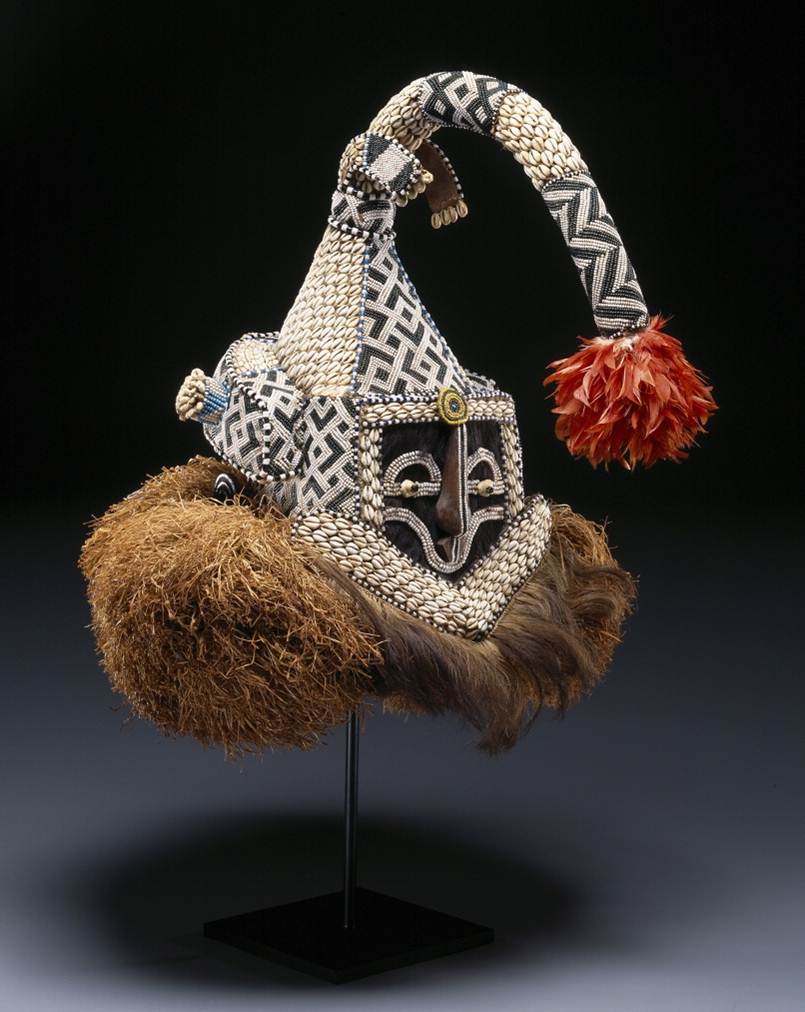
  • Helmet mask (mukenga), mid-20th century, Dallas Museum of Art, gift in honor of Peter Hanszen Lynch and Cristina Martha Frances Lynch

Amy Copeland
Coordinator of Go van Gogh Outreach

Friday Photos: Welcome, Elijah!

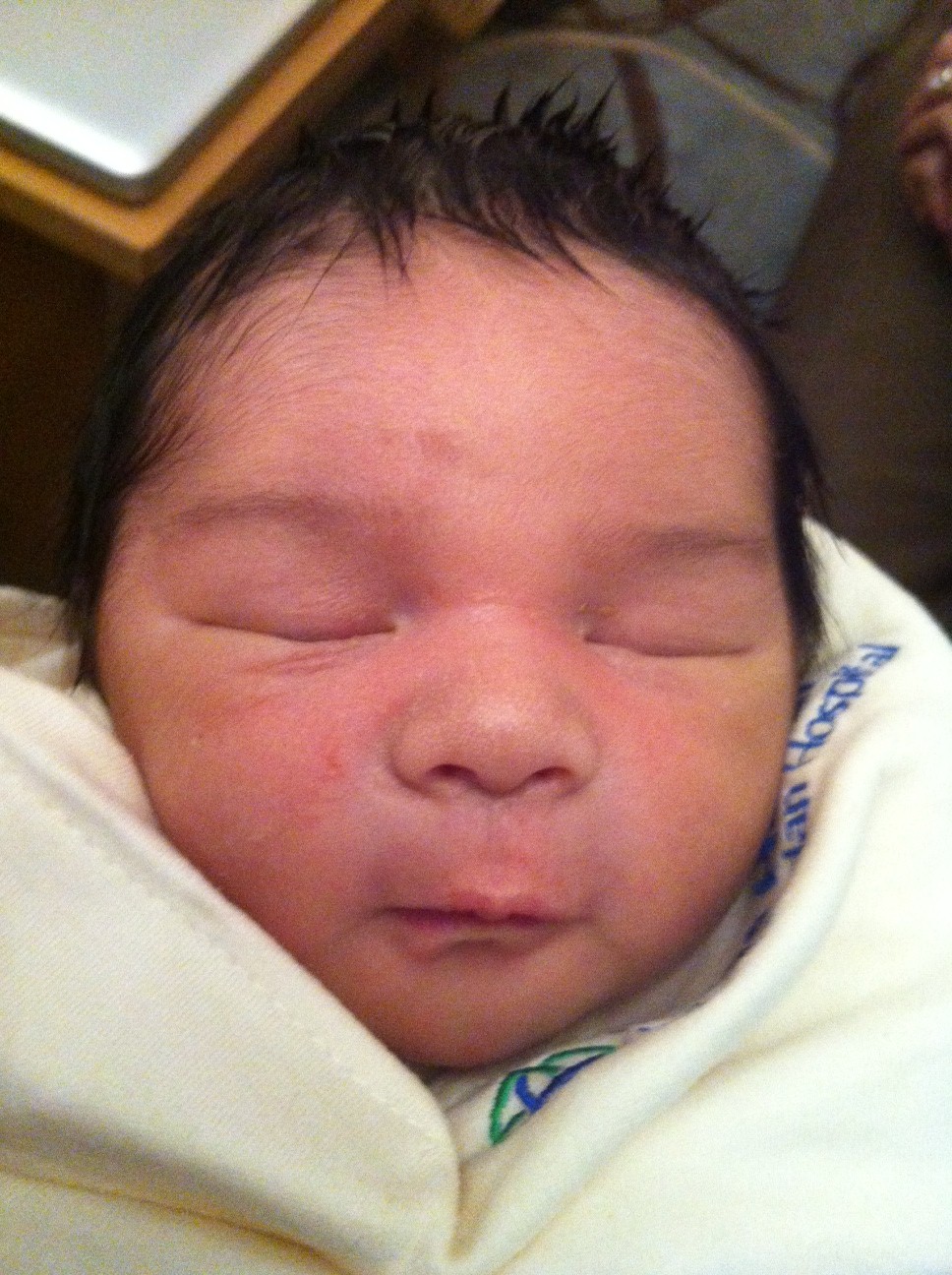
Are you winking at us Eli?

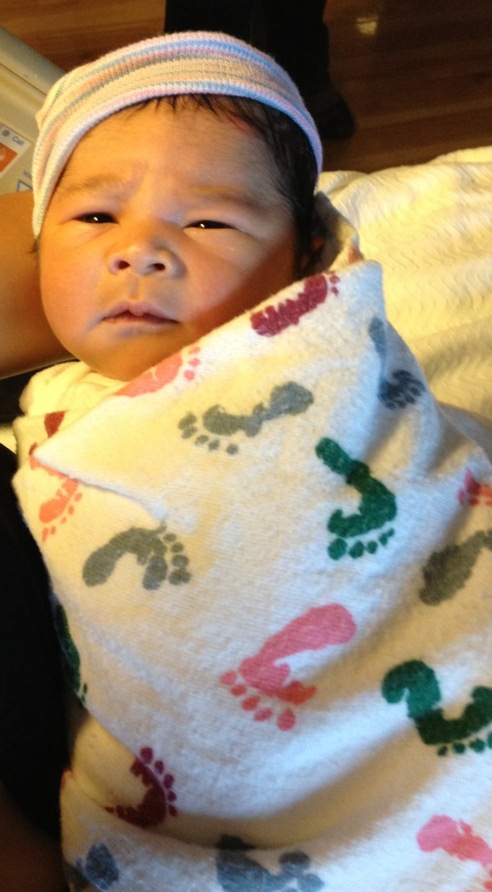
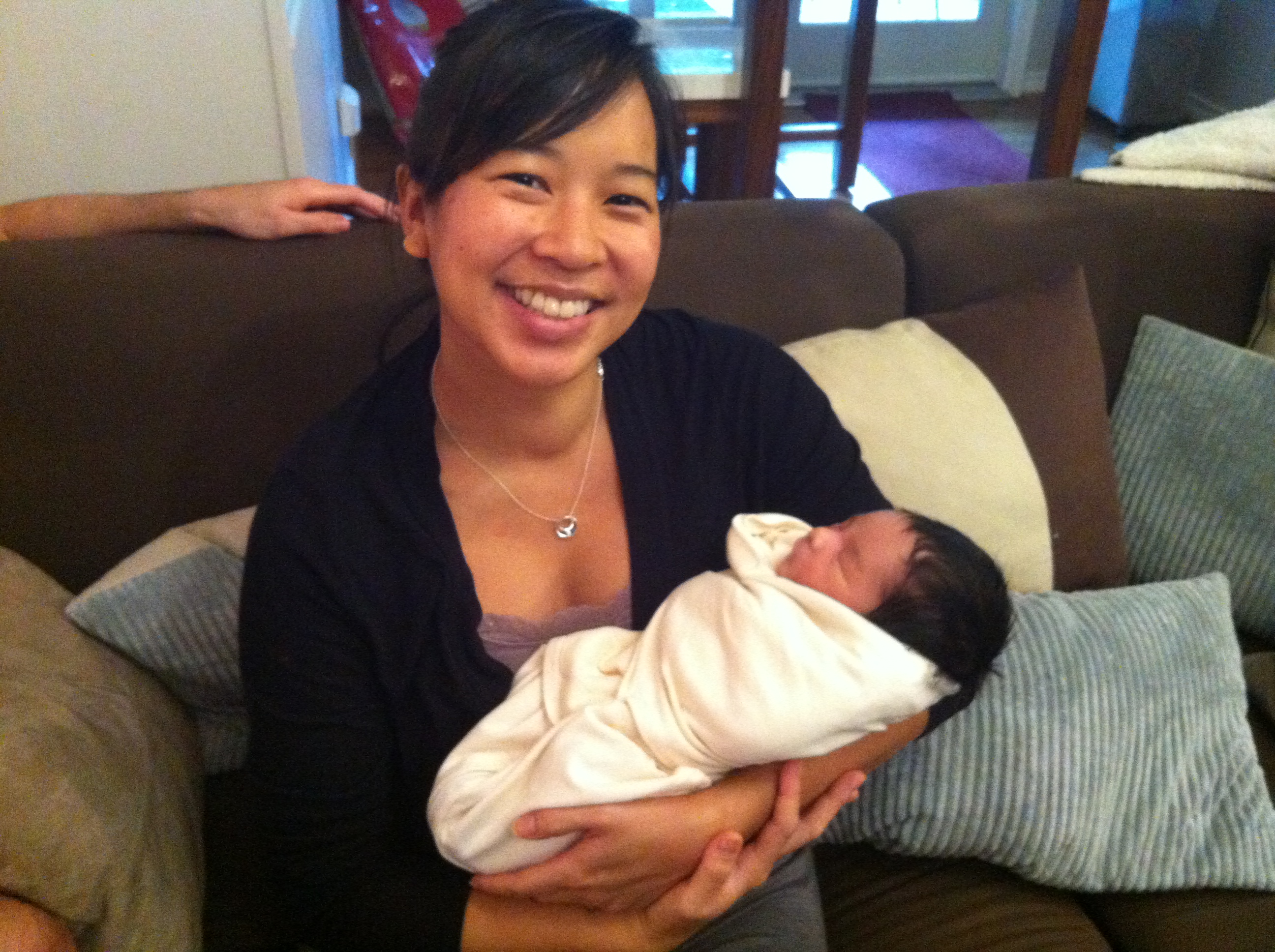
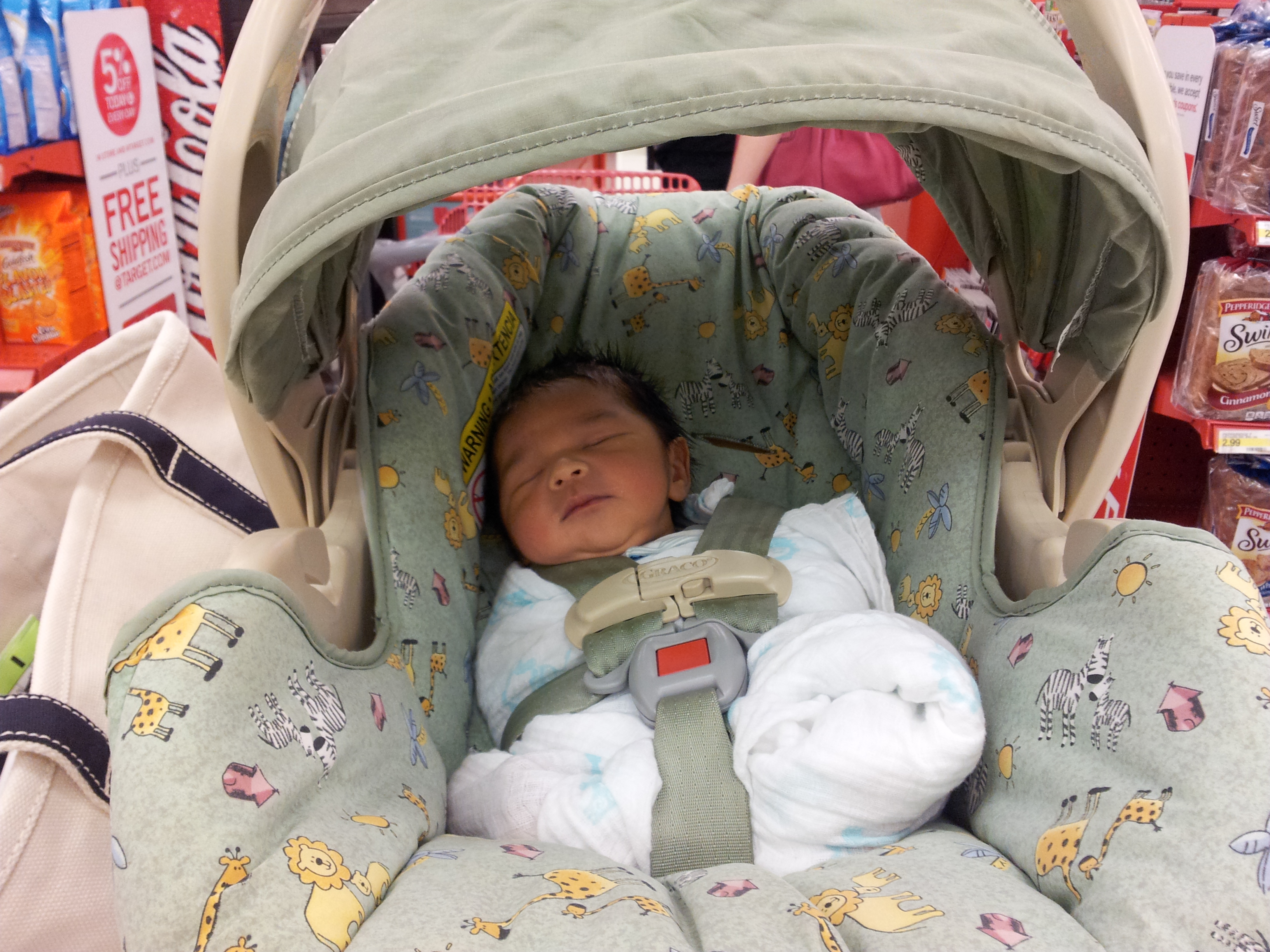
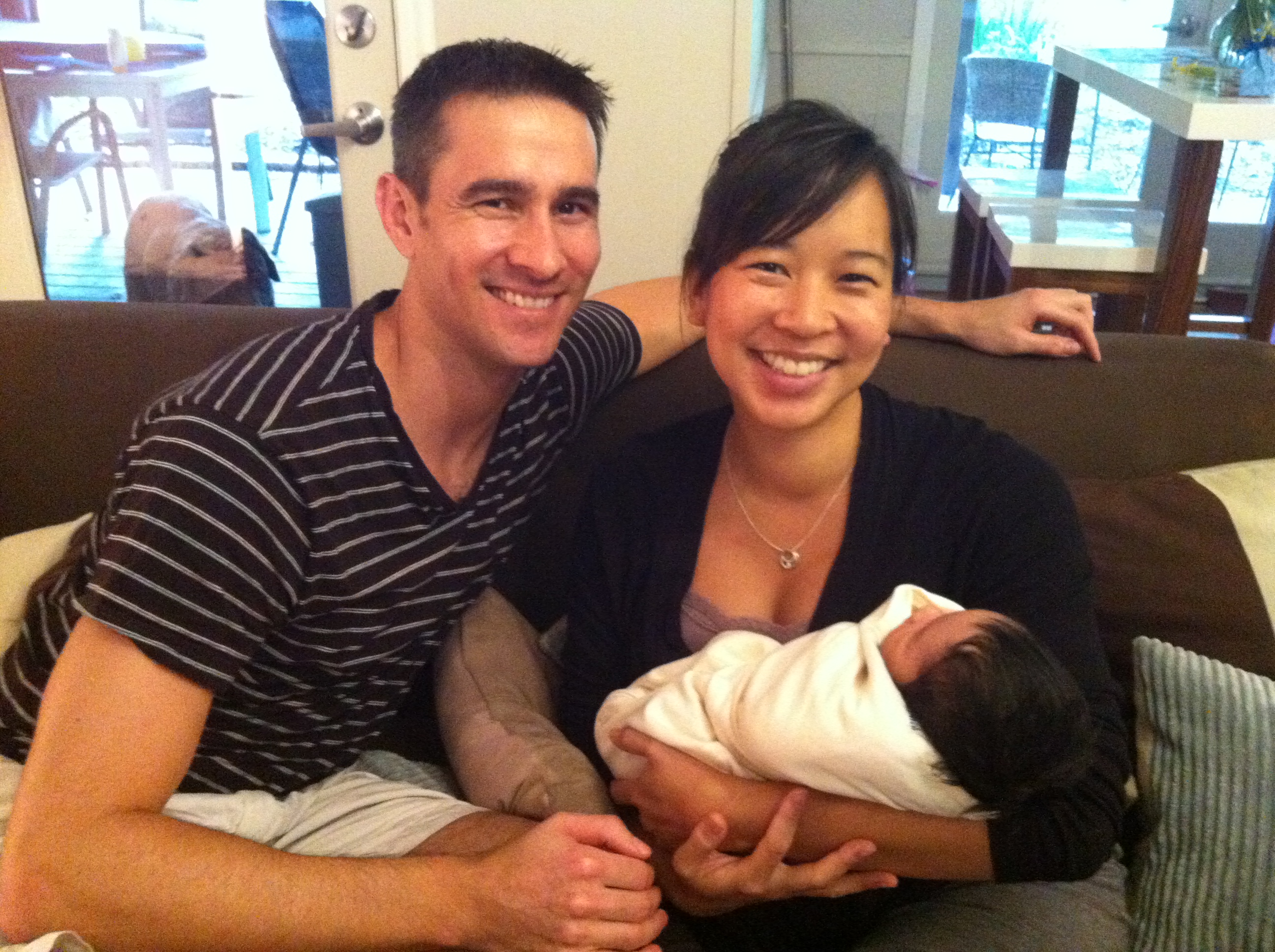
I feel most privileged to introduce you to Mr. Elijah Nelson Gonzales, the youngest member of the DMA family!  Melissa and her husband welcomed healthy little Eli into the world on Monday, September 10.  We think he’s about the cutest thing ever – don’t you agree?

Mommy and Eli

Eli’s first trip to Target!

Hey buddy.

A beautiful family

Congratulations Melissa!  We’re missing you while you’re away from the office (and the blog), and we look forward to seeing you soon.  Bring Eli by the DMA any time you want – the world of art is waiting for him…

Nicole Stutzman
Chair of Learning Initiatives and Dallas Museum of Art League Director of Education

The Man with the Top Hat

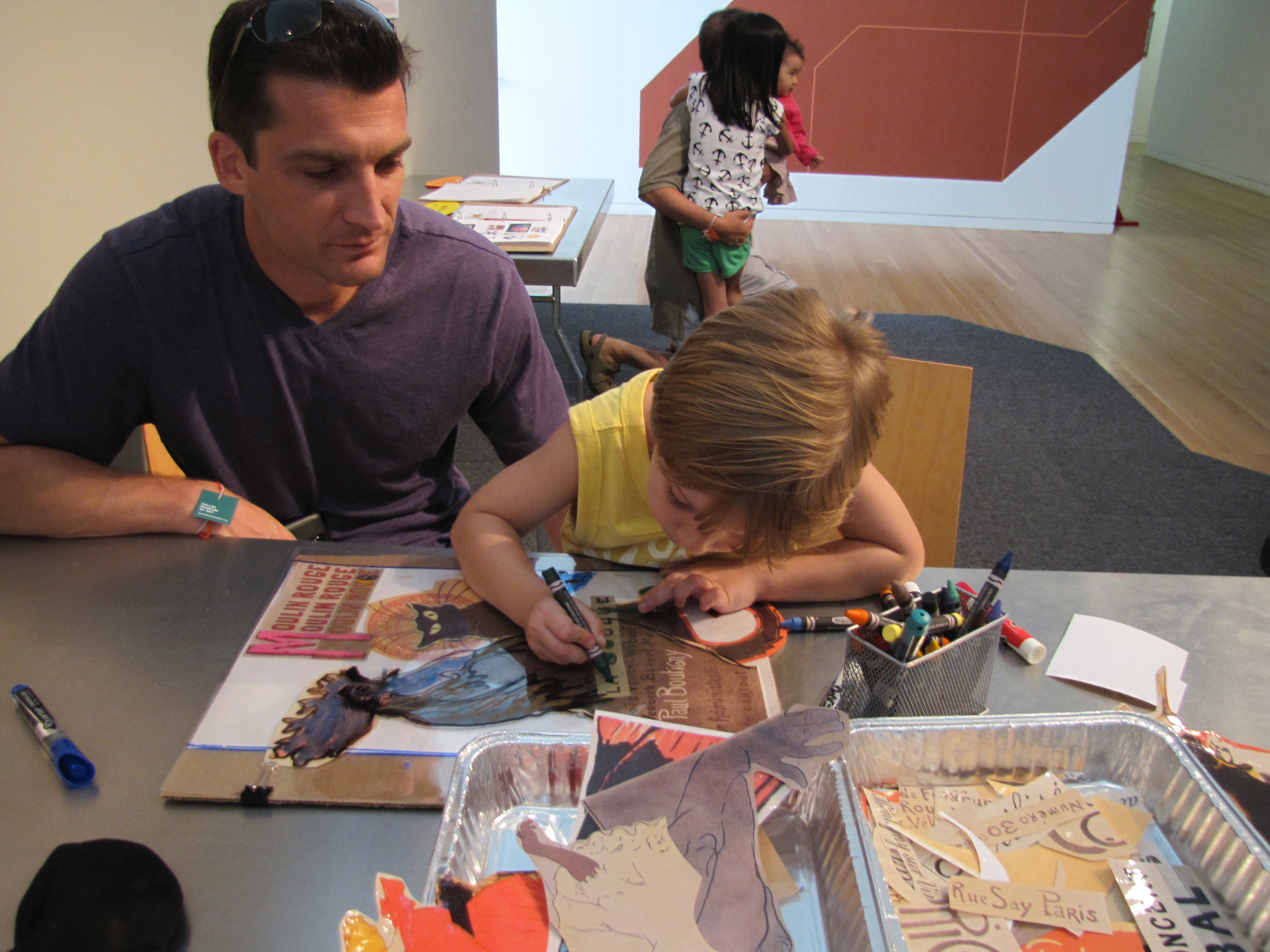
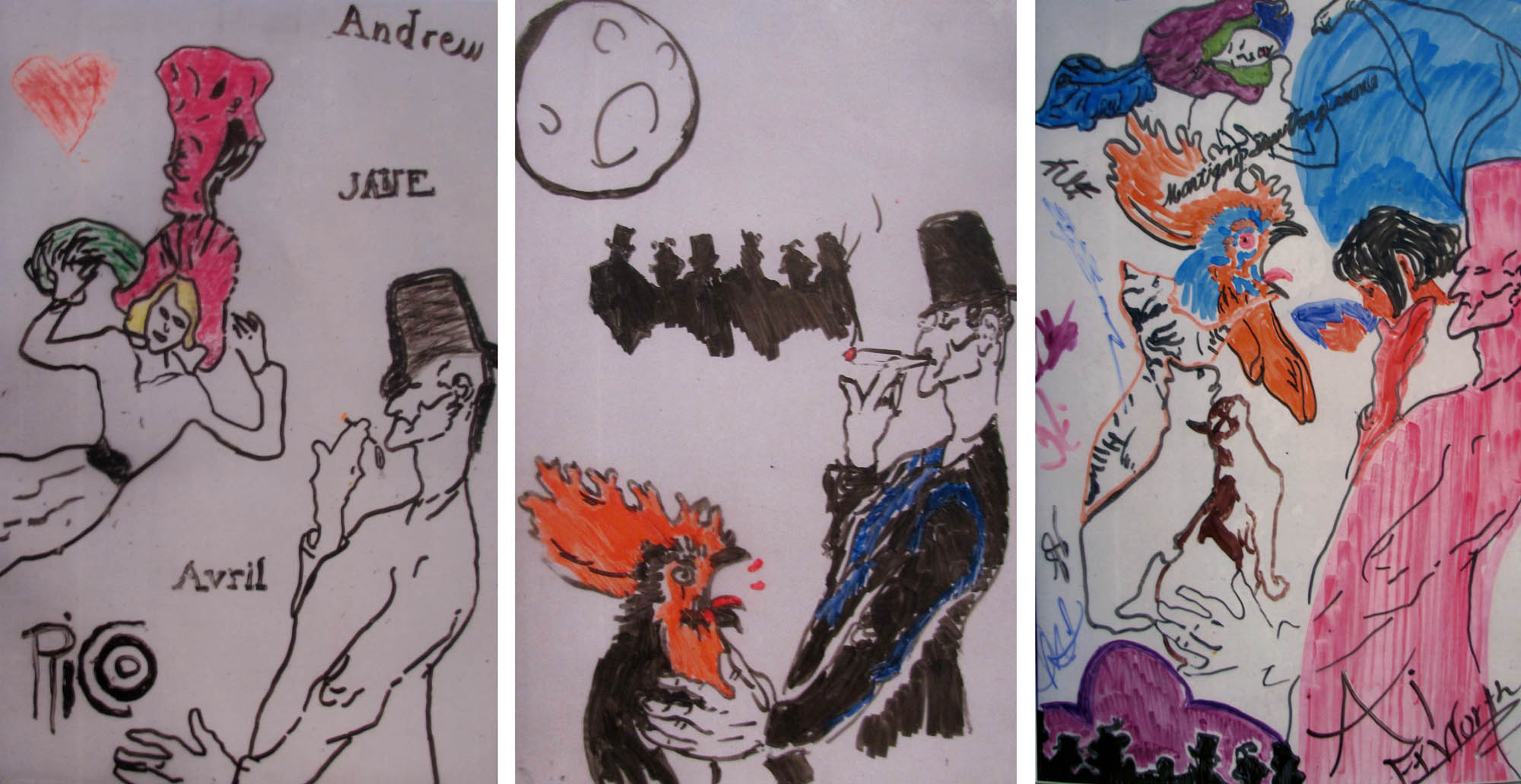
In preparation for the upcoming exhibition Posters of Paris: Toulouse-Lautrec and His Contemporaries, the Center for Creative Connections staff has been prototyping a new interactive art-making activity.  Inspired by poster-making at the Denver Art Museum, we are including a hands-on poster-making space in the exhibition.  Our current prototype activity has a limited array of characters which our visitors can choose and combine to create their own poster; but as you can see, creativity still flourishes.  Though each of these three posters below uses the man with the top hat in a similar placement in the composition, the context in which he is placed is quite different.

On the left is an 8-year-old boy’s romantic combination of the man with the top hat (with a slender cigarette) and Jane Avril.  In the middle, a young man has replaced that slender cigarette with a hefty cigar.  All of the romance is gone with the shadowy figures in the background looking on as the man with the top hat strangles a poor rooster.  Pictured on the right is a collaborative piece created by a group of women from the Art Institute of Fort Worth.  Each woman took a turn adding to the composition in what ended up as a playful hodge-podge.

Swing by the Dallas Museum of Art from October 14 – January 20 to see Posters of Paris and create your own poster!  What will you do with the man with the top hat?

Jessica Nelson
C3 Gallery Coordinator

Welcome Back Volunteers!

Earlier this month Go van Gogh staff welcomed back the returning volunteers for our first training session of the year. We kicked off the day with an artist personality quiz, revealing our artist dopplegangers from the collection. As someone who has always walked to the beat of her own drum, it was no surprise that I turned out to be a Georgia O’Keeffe. Looking around the room, I noticed a good mix of rebelious Jackson Pollocks, bold and brilliant Pablo Picassos, calm and tranquil Claude Monets, and unique and inquisitive Frank Gehrys.

The rest of the day was primarily spent playing a trivia game that Melissa, Amy, and I created based on the Arts of Mexico Go van Gogh program. Picassos, O’Keeffes, Monets, Pollocks, and Gehrys were all mixed together into teams to compete against each other for the honorable title of Trivia Game Winner. With a variety of questions from true-false to multiple choice, teams had to race against the clock to form their answer before time ran out. However, not all the questions were so straight forward; the game also featured difficult bonus questions and hands-on teaching challenges that warranted extra points. Getting the players on their feet, a teaching challenge could ask the team to pose as a work of art in a frozen tableau, solve a puzzle, or lead an activity from the program as if they were teaching in a classroom. To catch a glimpse of all the fun, check out the slideshow below.

[slideshow]

At the end of the day, volunteers took the time to reflect on the session. Here’s how many of them described the day:

  • Lots of good high energy
  • A good refresher to the program
  • Engaging and fun, loved the game!

Teachers, don’t forget to schedule a Go van Gogh classroom visit (or two, or three…) this school year.

Hannah Burney
Community Teaching Programs Assistant

Re-visiting Anytown USA

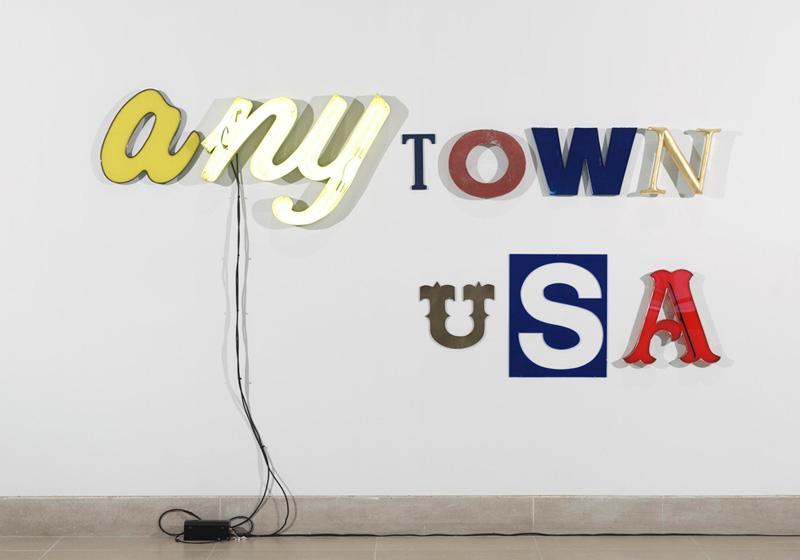
Last month, I shared teacher responses to the following prompt for the artwork Anytown USA by Jack Pierson:

The letters that make up this sculpture come from a variety of places. Imagine that each of the letters came from signage on buildings in Anytown USA.  Select one letter and write a description of the business you think used that letter in its signage.  Remember, your response must be inspired by the look and feel of the font/letter you select.

Anytown USA, Jack Pierson, 2000, Dallas Museum of Art, gift of the Junior Associates, 2004.10.a-i, © Jack Pierson

I repeated this same exercise with our docents this week, and their responses were equally as clever and creative.  Below are descriptions for some of the businesses that the DMA docents think populate Anytown USA.

A is for Nan’s Diner, which has been around since the 1950s.  The booths and stools are covered in yellow vinyl, and the diner is known for their breakfast menu.  The A may also be from a sign for Carvel’s Ice Cream Shop, whose interior is decorated in primary colors.  The whole store smells like hot fudge and cotton candy.
NY is for New York Bagels, a shop that’s open all night and is a favorite late night hangout.  NY may also represent the New York Pantyhose Company, because the NY in this work of art comes in a pair–just like pantyhose!
T is for the Small Town News, a local newspaper that reports on weddings, births, and everything that’s happening at the schools.  It might also stand for the Texaco gas station, which is still a full-service station.
O is from the sign of the John Silk Feed Store, which caters to farmers and ranchers.  The employees are “good ol’ boys” and the store smells like hay, fertilizer, and cedar shavings.  The O might also be from the sign of the Apothecary Shoppe, which had served the town for 60 years until it was forced to close because of a big chain store.
W may be from the sign of the family-owned Main Street Hardware Store.  The store is cluttered, but they carry specialized products that you can’t find at other stores.  The W might also belong to the Washateria, which is filled with the whir of washers and dryers.

U is for the Final Rest Undertakers, a quiet space decorated with muted colors.  Past customers might say, “He looks so natural, but it costs so much.”  On the other end of the spectrum, U might also be from the sign of a saloon/boarding house.  A loud and crude place, there’s a player piano in the corner and women wander the lobby wearing only their petticoats.
S is for the General Store, whose owners know everyone in town.  The stores sells everything you could ever need, and there’s also a large pickle barrel in the corner.  The S could also be part of the sign for a soda fountain, which is the favorite hangout of all of the teenagers in Anytown USA.
A is part of the sign for the local baseball stadium, which houses a minor league team.  It gives the town a sense of sophistication and makes it feel like maybe it’s a larger town than it actually is.  The A could also be from the local Anheuser-Busch distributor, the town’s largest employer.

Without a doubt, the answers for that final A were unanimous in all four groups of docents who participated in this exercise.  What is it about that font that screams baseball and/or beer?

Many of the docents commented on the sense of nostalgia that their responses held.  I’m looking forward to trying this activity with students to find out if Anytown becomes more modern when it’s examined from their point-of-view.

Shannon Karol
Manager of Docent Programs and Gallery Teaching


Archives

Categories