Archive Page 42


Reading the Cards: Part 5

This is the fifth and final post in a larger series finding connections between the ever-mystical tarot cards and the extraordinary collection of the Dallas Museum of Art. Head over to the first, second, third, and fourth posts for an introduction and earlier connections.

Temperance

Temperance is the fourteenth trump card in a traditional Tarot desk.  Representing the cardinal virtue of temperance, the winged figure pours water from one chalice to another diluting the unseen wine.  This, as well as the stance of one foot on land and one in water, symbolizes balance and moderation in one’s life.
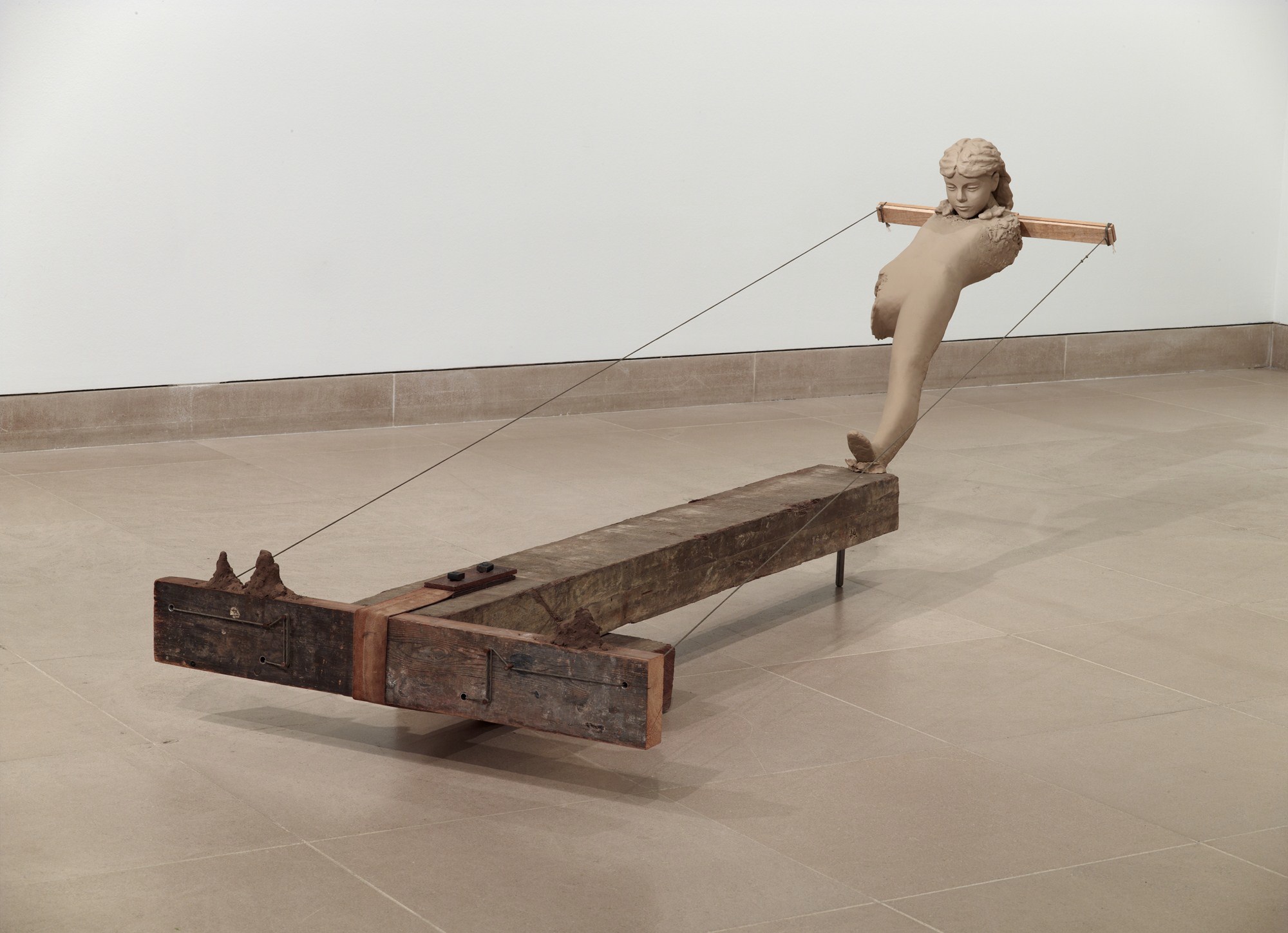
Mark Manders, Composition with Three New Piles of Sand, 2010, Dallas Museum of Art, DMA/amfAR Benefit Auction Fund

Mark Manders, Composition with Three New Piles of Sand, 2010, Dallas Museum of Art, DMA/amfAR Benefit Auction Fund

Leaning backwards, the one-limbed figure in this piece remains perfectly balanced with the assistance of taut ropes.  While the figure does not express general comfort, its expression is distinctly calm.  As the figure is in control of its balanced stance, it accurately represents the equilibrium of temperance.
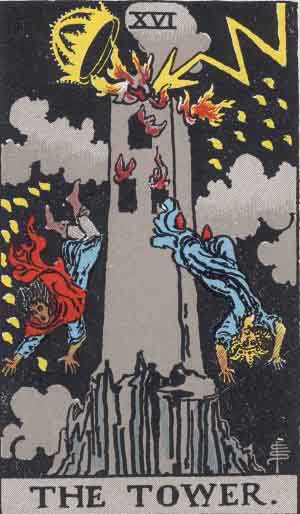
Tower

The Tower is the sixteenth of the Major Arcana cards.  Considered an ill omen, the image shows two people falling or fleeing from a burning building.  Thought to refer to the biblical story of the Tower of Babel, the Tower symbolizes looming failure, ruin and catastrophe.
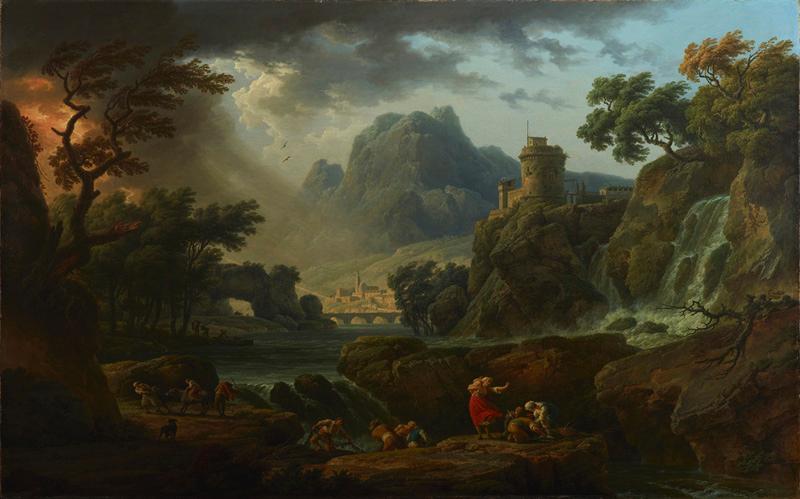
Claude-Joseph Vernet, A Mountain Landscape with an Approaching Storm, 1775, Dallas Museum of Art, Foundation for the Arts Collection, Mrs. John B. O'Hara Fund

Claude-Joseph Vernet, A Mountain Landscape with an Approaching Storm, 1775, Dallas Museum of Art, Foundation for the Arts Collection, Mrs. John B. O’Hara Fund

Claude-Joseph Vernet’s monumental landscape captures the terror associated with the destructive power of natural disasters.  Amidst the ominous clouds, craggy coast, and wind-whipped trees, anxious workers struggle to find sanctuary far from the violent storm’s path.
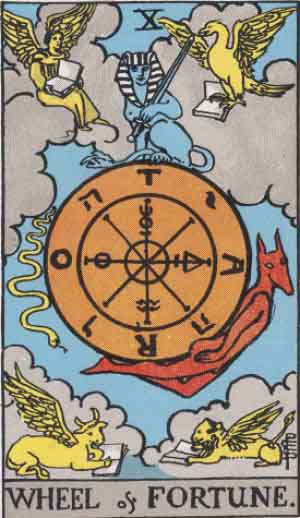
Wheel of Fortune

The Wheel of Fortune is the tenth trump card.  Depicting a six- or eight-spoked wheel crested by a sphinx, the Wheel of Fortune card is inscribed with the symbols for the four elements: Earth, Air, Fire, and Water.  Also visible are the letters T-A-R-O with reference to the card deck or R-O-T-A, the Latin word for wheel.  The Wheel of Fortune signifies a turning point in one’s life and often represents destiny and the cycles of life.
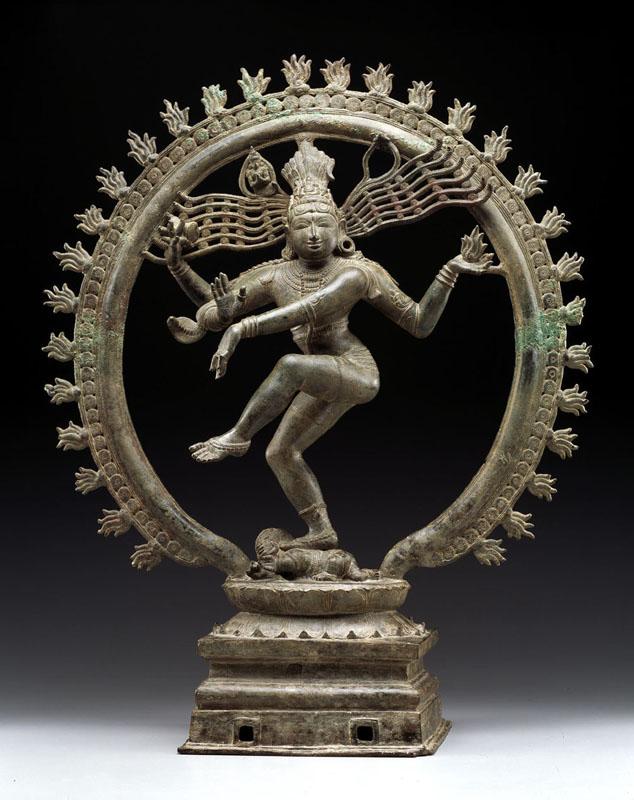
Shiva Nataraja, 11th century, Dallas Museum of Art, gift of Mrs. Eugene McDermott, the Hamon Charitable Foundation, and an annonymous donor in honor of David T. Owsley, with additional funding from The Cecil and Ida Green Foundation and the Cecil and Ida Green Acquisition Fund

Shiva Nataraja, 11th century, Dallas Museum of Art, gift of Mrs. Eugene McDermott, the Hamon Charitable Foundation, and an annonymous donor in honor of David T. Owsley, with additional funding from The Cecil and Ida Green Foundation and the Cecil and Ida Green Acquisition Fund

Deity of creation, destruction, and rebirth, the Hindu god Shiva is shown as Shiva Nataraja, the Divine Dancer.  In this form, Shiva embodies the energy of the entire cosmos and, surrounded by flames, dances the rhythm of the universe.  The precise positioning of his hands promise release from the endless wheel of rebirth.

World

The World is the final card in the major arcana.  Surrounding an untarnished nude woman, figures referenced in the Book of Revelation are depicted in each corner, including a lion, a calf, a beast with the face of a man, and an eagle.  These figures also signify the classic four elements in astrology: Leo, Taurus, Aquarius, and Scorpio.  The World represents completeness, accomplishment, and wholeness.
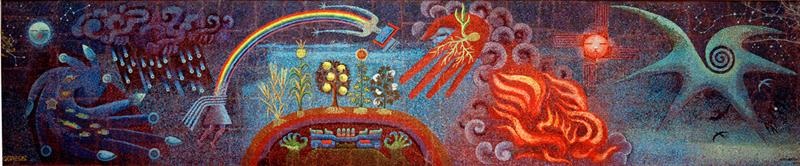
Miguel Covarrubias, Genesis, the Gift of Life, 1954, City of Dallas, Gift of Peter and Waldo Stewart and Stewart Company, 1992

Miguel Covarrubias, Genesis, the Gift of Life, 1954, City of Dallas, Gift of Peter and Waldo Stewart and Stewart Company, 1992

Inspired by a budding acorn, Miguel Covarrubias created the 12-foot tall and 60-foot long mural Genesis, the Gift of Life.  Saturated with creation stories, the mural explores the beauty of the earth and the life it sustains.

I have greatly enjoyed researching for and writing my Reading the Cards series.  I have learned a great deal and hope you have as well!

Pilar Wong
McDermott Intern for Community Teaching
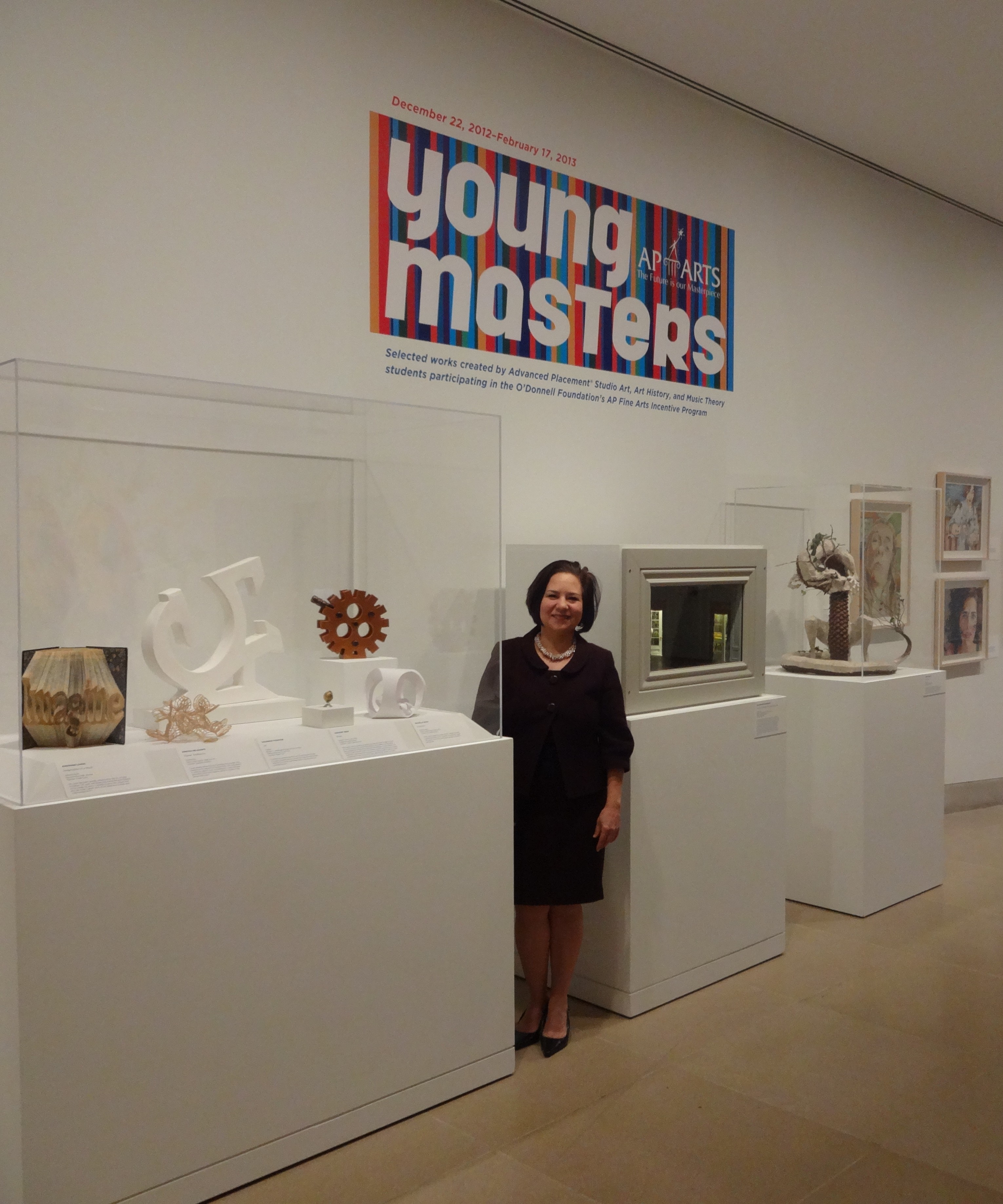
Young Masters at the DMA

MT Young MastersIf you haven’t had the chance to view the fantastic artworks in the Young Masters exhibition, be sure to stop by before the exhibition closes on February 17, 2013. This annual exhibition is organized in partnership with the O’Donnell Foundation’s incentive program, Create Schools of Excellence in Fine Arts Education, and recognizes the artistic achievements of students and teachers in Dallas area schools. This year, 56 works of art were selected for the exhibition out of 620 works submitted for consideration.

I had the chance to interview Maria Teresa G. Pedroche, Head of Community Engagement here at the DMA, about her role in co-curating the studio art selections and organizing the overall exhibition.

What is the history of the O’Donnell Foundation Advanced Placement Arts Incentive Program with the DMA?

Since 1995, the O’Donnell Foundation and the Dallas Museum of Art have generously sponsored Young Masters. Young Masters celebrates the creativity and skill of each grant program: AP Art History, AP Music Theory and AP Studio Art. Integrating all three disciplines at this prestigious event highlights and reinforces the interconnectedness of the arts.

How are student artworks chosen to be featured in the exhibition? 

Participating AP Fine Arts students are invited to submit the following works:

    • AP Art History – an original essay in response to a work in the DMA’s permanent collection
    • AP Music Theory – an original four minute composition
    • AP Studio Art – an original two-dimensional or three-dimensional art work

The final works and award winners for each program are selected by a panel of artists, art historians, and musicians.

 What is your favorite part about working on this exhibition?

For the past 13 years I have seen students exhibit strength and diversity within a broad range of styles and expressions; their autobiographical statements express their thoughts with clarity and elegance. During the Late Night in January, students were interviewed by Nancy Churnin of the Dallas Morning News before visitors voted for their favorite works in the exhibition. It was enriching for visitors to have the opportunity to talk with students in the gallery. The Young Masters exhibition inspires both children and adults!

Who picks the first, second, and third prize artworks? When will we know which works are chosen?

The final works and award winners for each program were selected by a panel of artists, art historians, and musicians. They included:

  • Dr. Susan Bakewell, Adjunct Assistant Professor of Art History at University College, University of Southern Maine, and former College Board AP Ar History Chief Reader
  • Erin Cluley, Exhibitions and Public Relations Manager at the Dallas Contemporary
  • Dr. Blaise Ferrandino, Associate Professor of Music Theory and Composition at Texas Christian University and College Board AP Music Theory Consultant and Reader
  • Dr. Robert Frank, Associate Professor of Composition and Theory at Southern Methodist University
  • Erin Hannigan, Principal Oboe of the Dallas Symphony Orchestra, Adjunct Associate Professor of Oboe at Southern Methodist University
  • Paul Jeanes, Foundation Faculty at Maryland Institute College of Art and College Board AP Studio Art Exam Table Leader
  • Martha MacLeod, Curatorial Administrative Assistant for European and American Art at the Dallas Museum of Art
  • Maria Teresa G. Pedroche, Head of Community Engagement at the Dallas Museum of Art
  • Charissa N. Terranova, Assistant Professor of Aesthetic Studies at The University of Texas at Dallas

Young Masters and their teachers were honored tonight at an awards ceremony held at the Dallas Museum of Art. Here are the winners:

Image

AP Art History

1st Place: Benjamin Lee from Plano Senior High School
2nd Place: Stephanie Chen from Plano Senior High School
3rd Place: Conner Frew from McKinney Boyd High School
Honorable Mention: Macy Huang from Plano Senior High School

Visit the Young Masters AP Art History Gallery

AP Music Theory
1st Place: Trey Strickland from Plano East High School
2nd Place: Joshua Choe from Creekview High School
3rd  Place: Dylan Hunn from Plano West Senior High School
Honorable Mention: Josh Sniderman from Booker T. Washington High School for the Performing and Visual Arts
Honorable Mention: Chase Dobson from Booker T. Washington High School for the Performing and Visual Arts     

Visit the Young Masters AP Music Theory Gallery

AP Studio Art

1st Place: Samuel Hersh from Plano Senior High School
2nd Place: Mackenzie Miller from Lovejoy High School
3rd Place: Sungkeun Kim from Creekview High School
Honorable Mention: Audrey Allen from McKinney Boyd High School
Honorable Mention: Anna Fields from Richland High School
Honorable Mention: Larissa Logelfo from McKinney Boyd High School
Honorable Mention: Lea Menaul from Booker T. Washington High School for the Performing and Visual Arts      
Honorable Mention: Hayley Parsa from Booker T. Washington High School for the Performing and Visual Arts 
Honorable Mention: Lauren Ussery from Coppell High School

Visit the Young Masters AP Studio Art Gallery

ImageWhat is the People’s Choice Award?

The Young Masters Exhibition Awards Ceremony reminds me of the Academy Awards. Three years ago I suggested we add the People’s Choice Award and invited visitors to vote for their favorite work in the exhibition. The response has been rewarding–visitor’s voices count and students appreciate the feedback.

The upcoming Late Night on February 15–our first with free admission–will showcase students in the exhibition from 7-9pm. You can vote for your favorite work of art during Late Night from 6-9pm and check apstrategiesarts.org after February 18 to see which work earned the People’s Choice Award.

How has the inclusion of works by AP Music Theory and AP Art History in the exhibition changed the overall exhibition experience?

Visitors experience Young Masters in a whole new way through our smARTphone tour at www.DMA.mobi.  Everyone enjoys hearing original music compositions and essay readings by students featured in Young Masters.  Including Art History essays and Music Theory compositions strengthens the exhibition.

For more information on Young Masters, check out Guide Live and the Arts Blog of the Dallas Morning News.

Thanks to the O’Donnell Foundation! We congratulate the artists on their accomplishments and acknowledge their dedicated teachers for motivating students to reach their full potential. The arts are the soul of the community helping to reflect and promote the city’s history and the community’s cultural diversity: past, present, and evolving.  It is an honor to work with the O’Donnell Foundation. We are grateful to Edith and Peter O’Donnell for their generous support, along with their dedicated staff, especially AP Arts Director Deborah Moore for her creative leadership on this program that builds confidence and self-esteem and inspires students and teachers to reach to the highest level in the arts.

Amanda Blake
Head of Family, Access, and School Experiences

Friday Photos: On a Smaller Scale

Not everything is bigger in Texas! The DMA’s collection contains works that range in size from the miniscule, such as the gold Veraguas Armadillo Ornament that takes up approximately .5 square inches, to the very large, like Claes Oldenburg and Coosje van Bruggen’s Stake Hitch which stands at over 53 feet. This Friday Photos post is meant to draw attention to works in the collection that are often overlooked because of their size. I’d venture a guess that the smallest work in the DMA is somewhere in the collection of African beads, Mesoamerican gold ornaments, or Greek jewelry.

Click on the images below to find out their exact dimensions. You might be surprised…

Can you find these tiny pieces in the Museum? Or better yet, can you find something even smaller?

Artworks shown:

  • Africa, Democratic Republic of the Congo, Pende Peoples, Pendant Mask (Gikhokho), late-19th or early-20th century, Dallas Museum of Art, The Clark and Frances Stillman Collection of Congo Sculpture, gift of Eugene and Margaret McDermott.
  • Mixtec, Bell in Form of Human Head, AD 1100-1500, Dallas Museum of Art, gift of Mr. and Mrs. Eugene McDermott, the McDermott Foundation, and Mr. and Mrs. Algur H. Meadows and the Meadows Foundation, Incorporated.
  • Khmer Empire, Buddhist Trinity, 12th-13th century, Intended bequest of David T. Owsley.
  • Dorothea Margaret Tanning, Jeux d’Enfants, 1942, Lent by private collection.
  • Veraguas Culture, Pendant: Jaguar, AD 800-1200, Dallas Museum of Art, The Nora and John Wise Collection, gift of Mr. and Mrs. Jake L. Hamon, the Eugene McDermott Family, Mr. and Mrs. Algur H. Meadows and the Meadows Foundation, and Mr. and Mrs. John D. Murchison.
  • Giovanni Corvaja (designer), “The Golden Fleece” ring, 2008, Dallas Museum of Art, gift of Deedie Rose.
  • Greek, Pair of Earrings with Female Figure, late-4th century BC, Dallas Museum of Art, Museum League Purchase Funds, The Eugene and Margaret McDermott Art Fund, Inc., and Cecil H. and Ida M. Green in honor of Virginia Lucas Nick.
  • Malia Jensen, Unmade Bed (Duvet with Squares), 2006, Collection of Marguerite Steed Hoffman.
  • Henry Moore, Small Animal, 1980, Dallas Museum of Art, Foundation for the Arts Collection, bequest of Margaret Ann Bolinger.
  • Africa, Kongo Peoples, Standing Figure (Nkisi), 19th-20th century, Dallas Museum of Art, The Clark and Frances Stillman Collection of Congo Sculpture, gift of Eugene and Margaret McDermott.
  • Greek, Attic, Standing Figure, mid-5th century BC, Dallas Museum of Art, on loan from the Ola Brockles Estate.
  • Japan, Meiji Period, Vase, 1890-1910, The John R. Young Collection, lent by John R. Young.

Alex Vargo
McDermott Intern for Gallery Teaching

Teen Learning Lab

dma_logo[2]Perot-Logo


The DMA, in partnership with the Perot Museum of Nature and Science, is a proud recipient of a 2013 IMLS Learning Labs in Libraries and Museums Grant! This grant is for the planning and design of a joint, media-based Learning Lab for middle and high school students to collaborate, create, and connect with peers, experts, and mentors in an environment that is comfortable, social, and cutting edge. One of only twelve projects to receive funding this year, ours will examine the question, “Where do art and science intersect?”

The most exciting part is that the entire project–from its design to its programs–will largely be teen-generated. In addition to getting feedback from local teens, a teen council will be formed that will work directly with Museum staff to shape a more specific vision and plan for the Lab. It will be especially interesting to hear the specific aspects of art and science teens want to explore.

The Learning Lab will be informed by research on teen participation in new media such as the concept of HOMAGO (Hanging Out, Messing Around, Geeking Out). So not only will teens be able to participate in programs centered around issues that interest them, they will also be able to experiment, tinker, and learn on their own using state of the art media tools in the areas of audio, film/video, drawing, photography, communication/writing, and design.

Urban Armor 1

All of this represents an exciting shift in the way we think about our audiences and it’s our hope that the Lab truly gives teens a sense of ownership in the DMA and the Perot. Having them generate their own content instead of participating in what we think they want is a concept that’s at once scary and exhilarating; but above all, it’s one that’s long overdue.

The Learning Lab Team is just beginning the planning phase of the project, so we will post updates as our ideas grow and develop. In the meantime, check out the Chicago Public Library’s YOUmedia, an amazing Learning Lab example. And tell us what you think–where do art and science connect? What types of programs involving the two would you want to see?

JC
C3 Program Coordinator

Anytime Activities: Family Fun Tote Bags

Anytime_ToteBags_edu21

Family Fun Tote Bags

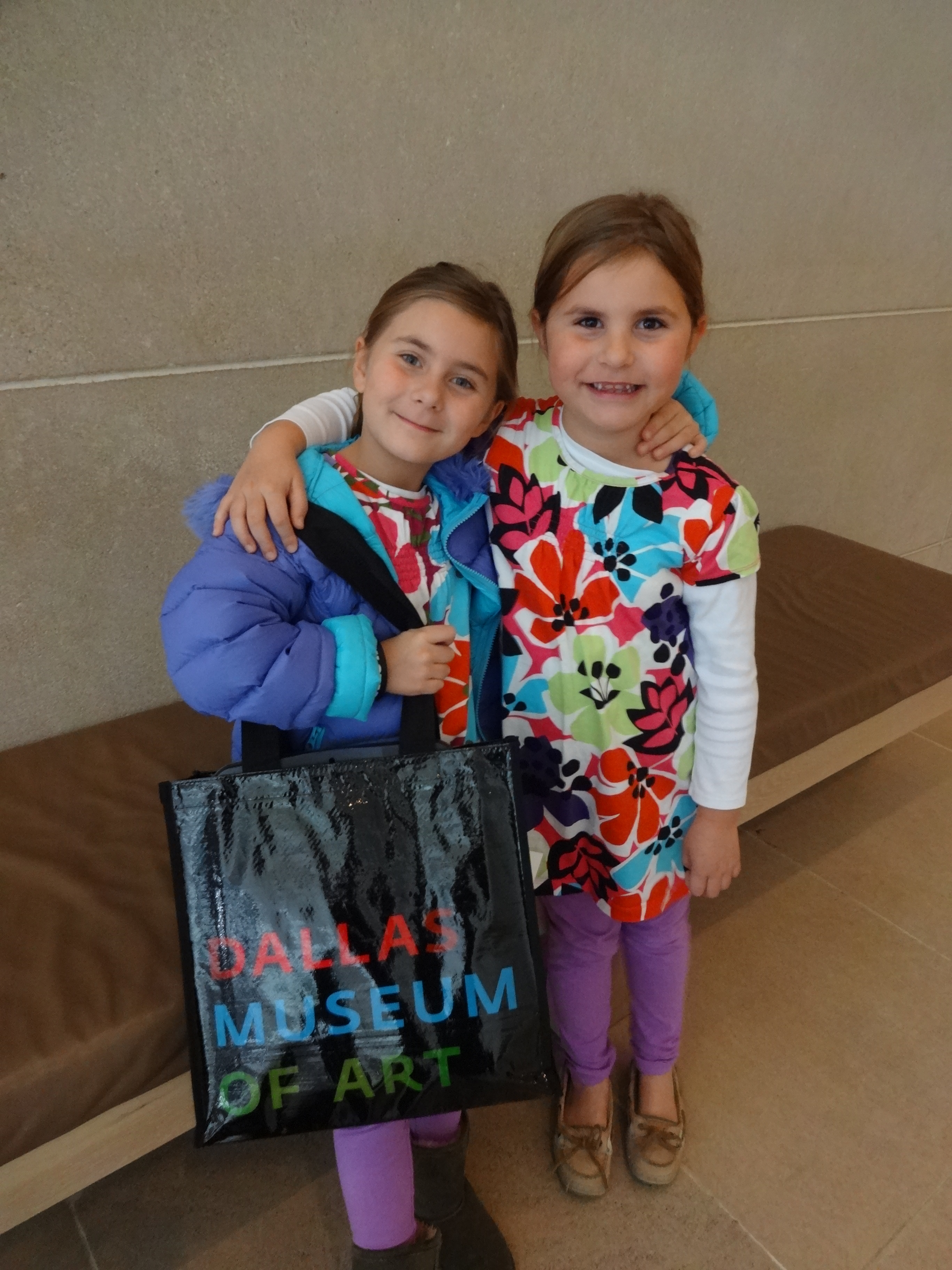
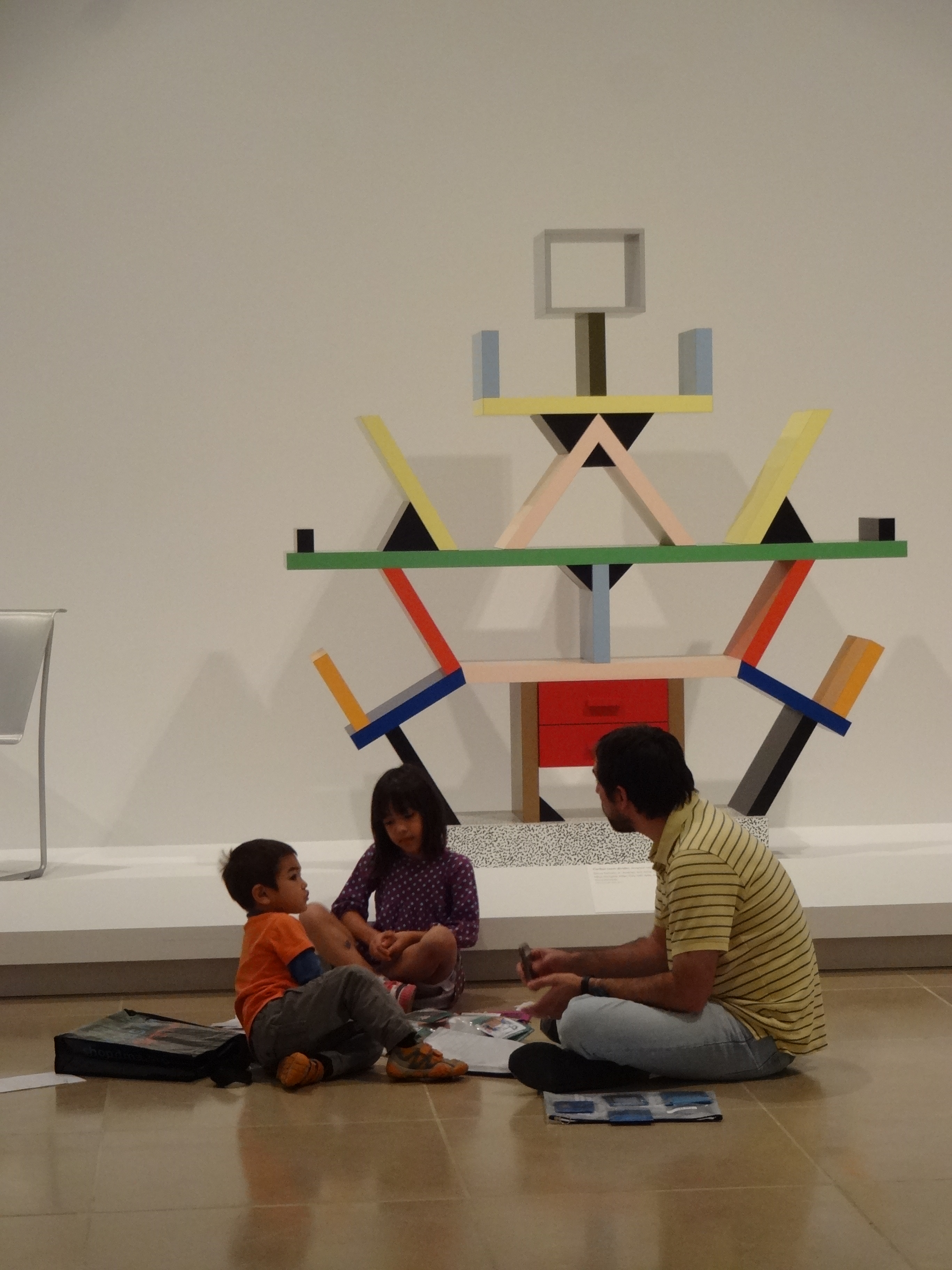
As part of the DMA’s return to free general admission, the Education Division is creating a host of activities that can be utilized by visitors anytime the Museum is open.  The Family Fun Tote Bag is an anytime activity we are particularly excited about and eager to share with families.

Each tote bag is centered around a specific theme, like Color or The 5 Senses, and is filled with a variety of collaborative activities that are appropriate for children of all ages.  Activities fall under four categories–Write, Make, Talk, and Play–and therefore support diverse learning styles and cater to personal interests.

WRITE – Visitors interested in observation and reflection while in the galleries are invited to…

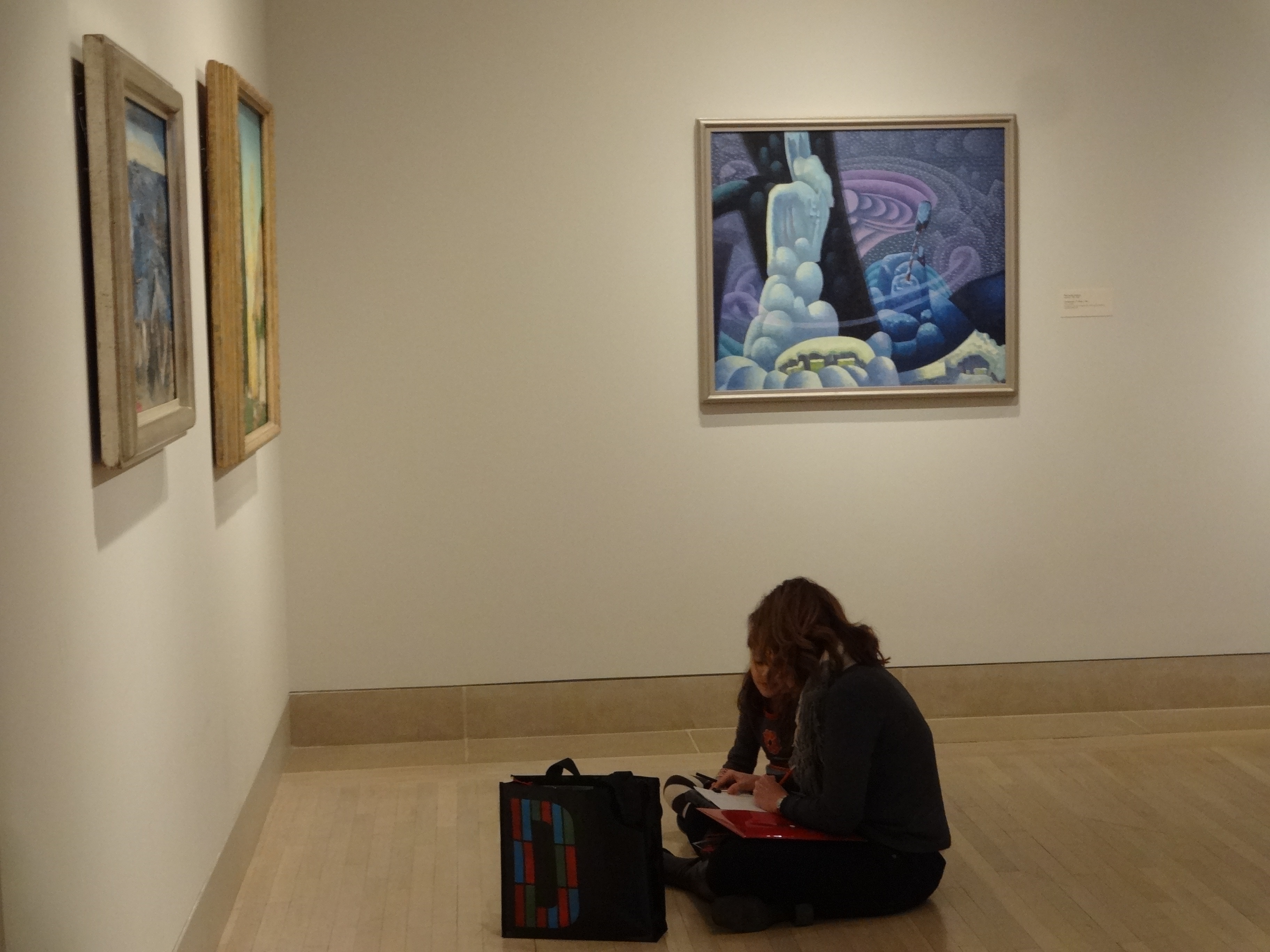
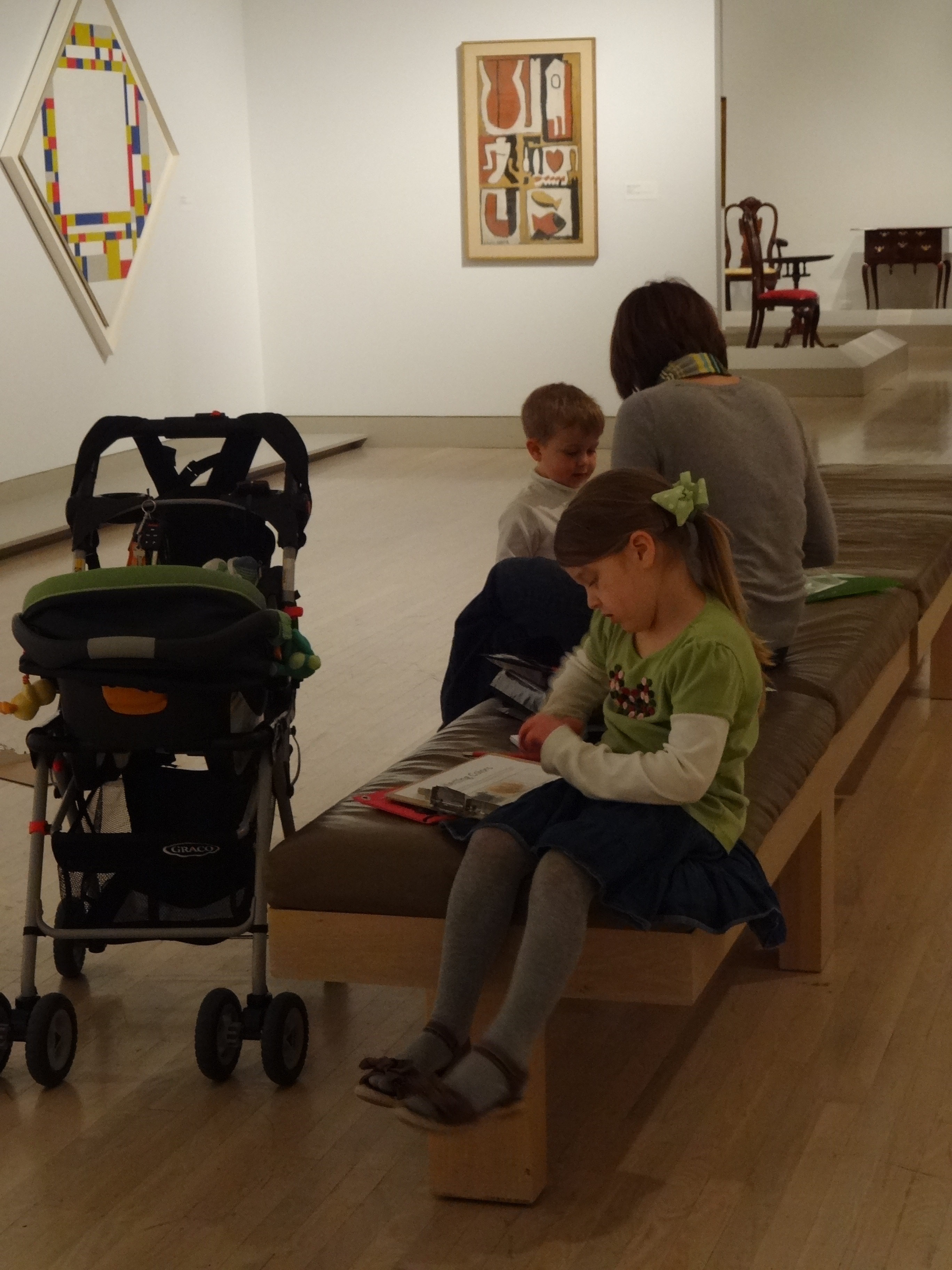
Family completing a writing activity in the American Art gallery.

Family completing a writing activity in the American Art gallery.

– Use their senses to write a poem about what they see in an artwork.

– Generate a Mad-Lib using sensory adjectives.

– Compose a postcard to a friend about a work of art.

– Create a narrative based on a work of art using story dice.


MAKE – For the family members eager for hands-on activities the tote bag encourages…

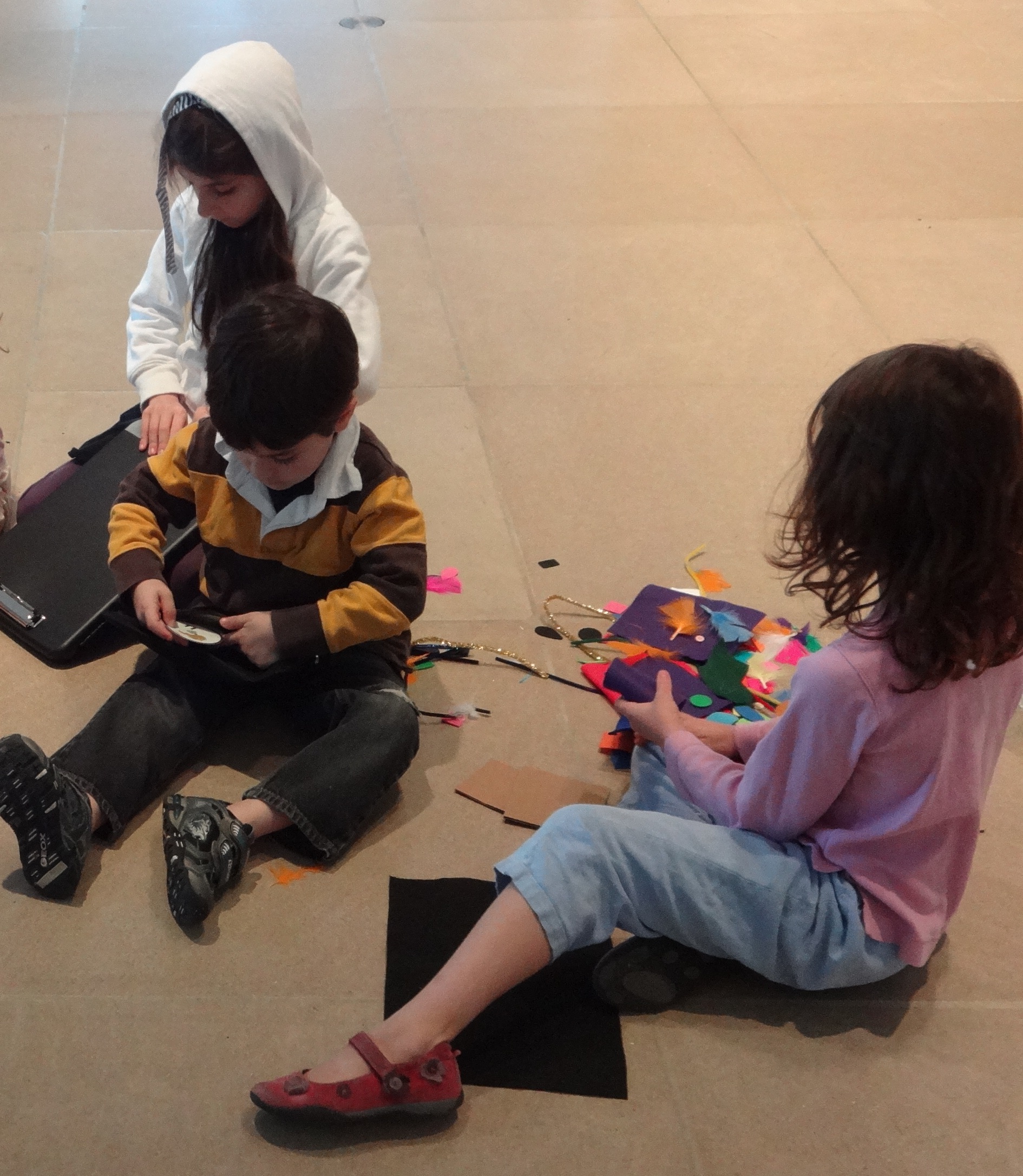
Creating with the Materials Grab Bag

– Sketching a work of art with mixed-up, wacky colors!

– Creating a 3-dimensional illustration by drawing on a styrofoam sheet.

– Using a viewfinder to focus on and sketch specific details of an artwork.

– Producing a unique, site-specific work of art in the galleries using the Materials Grab Bag.


TALK – Enthusiasts of discussion-based activities will enjoy…

Color mixing activity

Color mixing activity

– Working as a family to talk about a work of art using as many movement words as possible.

– Searching for a favorite color in at least three different works of art and explaining what you like about each.

– Using adjectives and sensory details to describe a work of art to a family member that has been blindfolded.

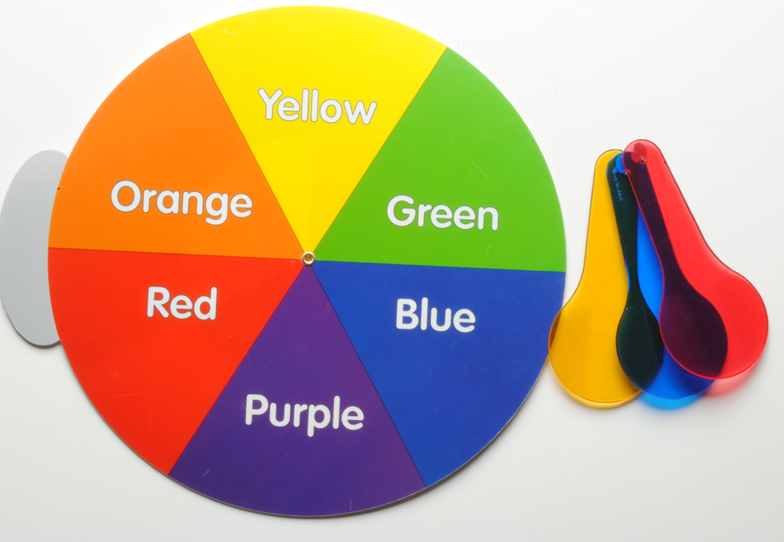
– Experimenting with mixing colors together using the color paddles, and describing what you see.

PLAY – Families with active learners will enjoy…

Playing a game in the galleries

Playing a game in the galleries

– Playing the card game Memory, with a colorful twist!

– Testing one another with brainteasers.

– Staging a game of charades inspired by the surrounding works of art.

– Following their noses to find a work of art that matches a smell jar from the bag.


The beauty of the Family Fun Tote Bags is each individual family member can design their own museum experience based on personal interest!  Families can explore works of art together by participating in collective games and writing activities.  Or, for more individualized learning, each member can choose and perform a different activity while still sharing the same space.

Working on separate Tote Bag activities

Working on separate Tote Bag activities

Exploring new activities together


The Family Fun Tote Bags are still in the testing phase, but they should be available soon for visitors to check out in the Center for Creative Connections–so keep an eye out for them on your next visit to the Museum!

Danielle Schulz
Teaching Specialist

Thank You for Being a Friend!

It’s official–the DMA is now offering free general admission for all Museum visitors.  Our doors opened at 11:00 a.m. yesterday morning and over 2,000 visitors of all ages helped us celebrate the return of free general admission.

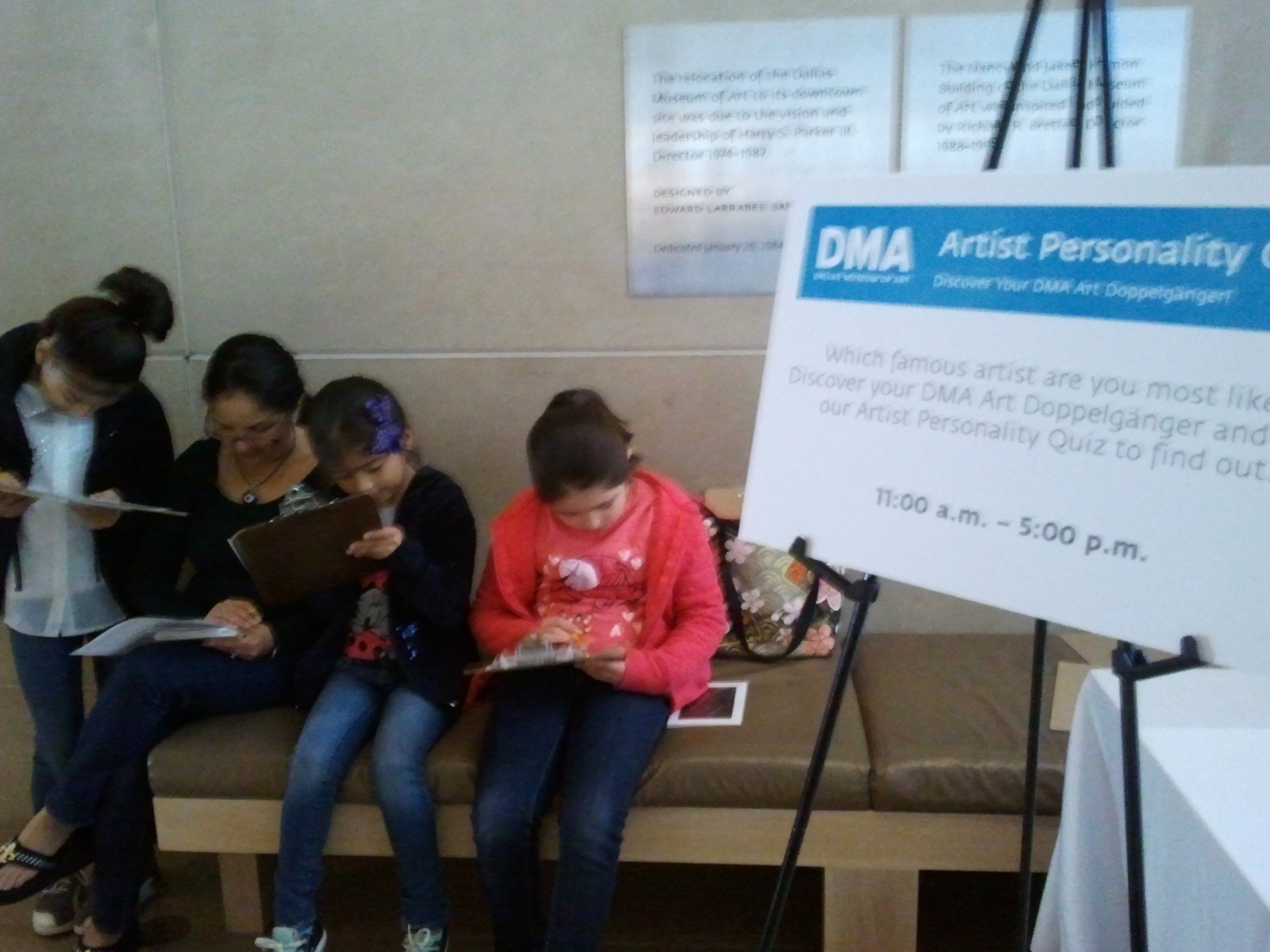
A family takes our quiz to discover who their artist "twin" is

A family takes our quiz to discover who their artist “twin” is

For the first time, we are also offering a free membership program called DMA  Friends.  Anyone over the age of 13 can join the DMA Friends program at no charge.  Visitor participation and recognition are the central tenets of DMA Friends.  As visitors engage with and contribute to our Museum community, they will earn credit as part of a personal rewards system.  By visiting the Museum, participating in a teacher workshop, viewing an exhibition, or attending a lecture, you will earn points and badges that can be redeemed for rewards.  Rewards range from free tickets to DMA special exhibitions to access to exclusive experiences at the Museum.

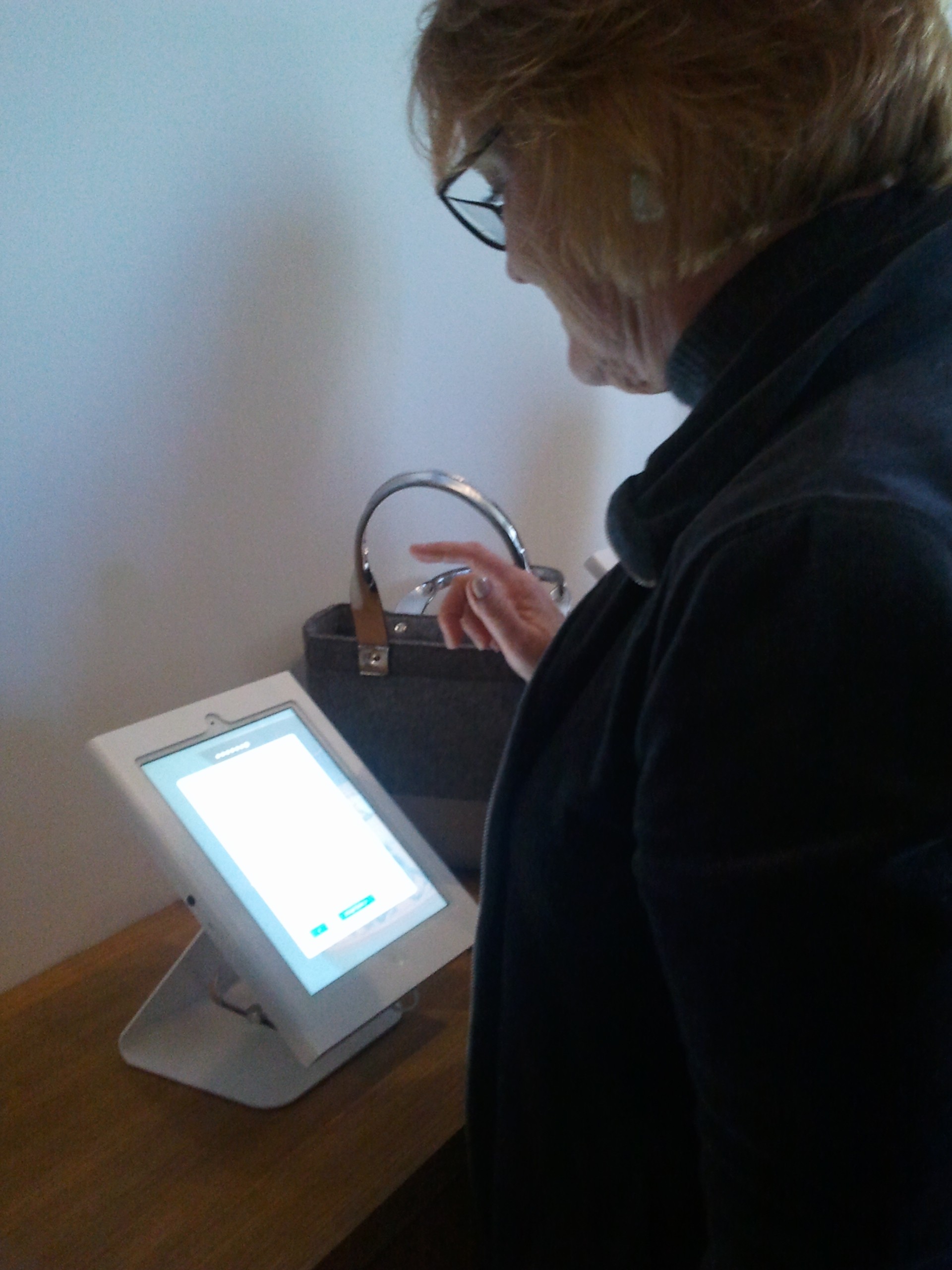
A visitor enrolls in the DMA Friends program

A visitor enrolls in the DMA Friends program

Through DMA Friends, our staff can gain insights into the different ways our visitors are engaging with the Museum.  We can refine and adjust our programming in response to the feedback visitors give us–we’re positioning our visitors at the center of the Museum’s activities.

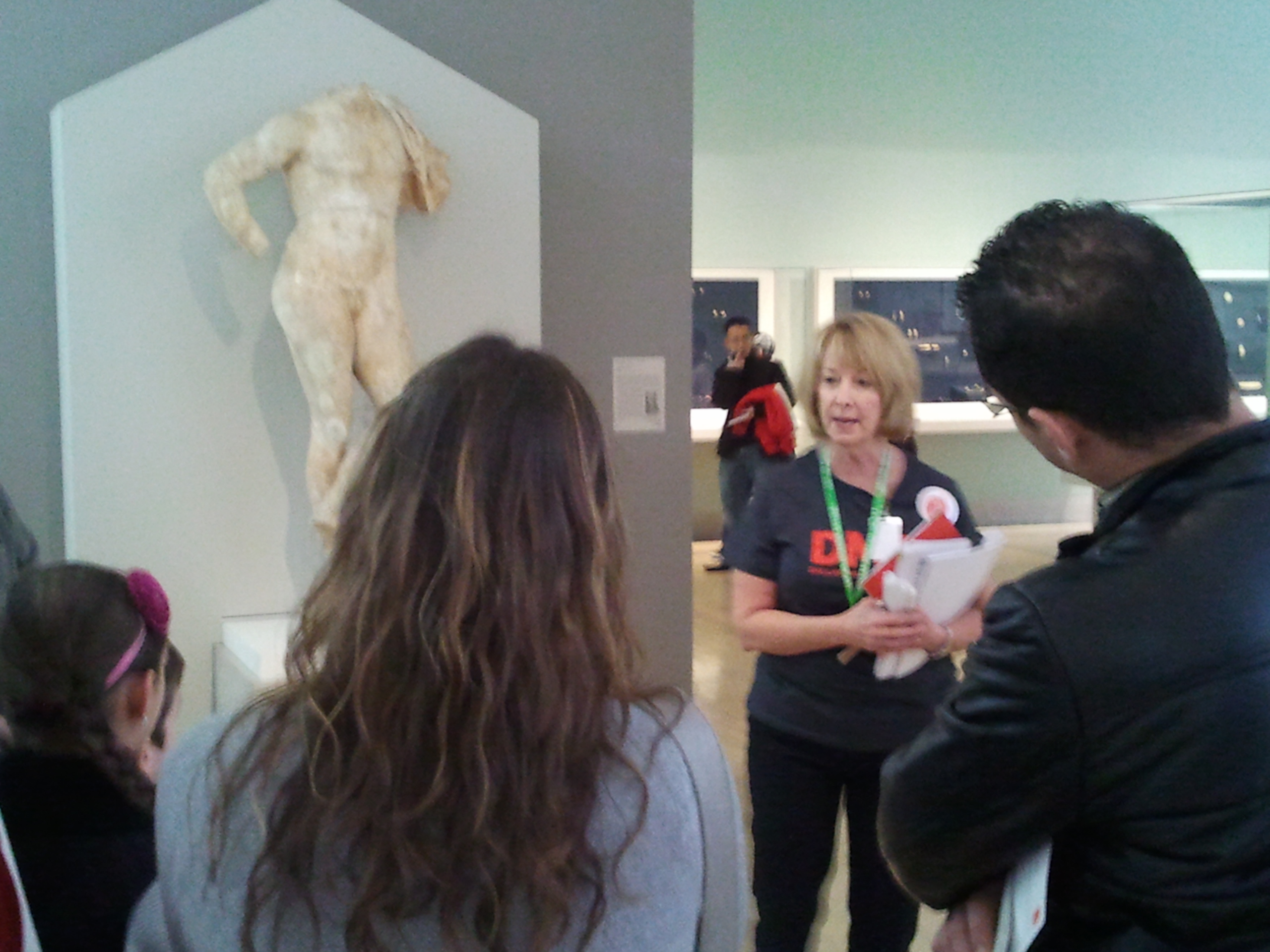
Docent Susan Bondy leads the Grand Tour in our European galleries

Docent Susan Bondy leads the Grand Tour in our European galleries

I’m really excited to be a part of the DMA community as we make this transition into the next phase of our history.  By offering free general admission, we’re demonstrating that we really are everyone’s Museum.  At the end of tours, we always invite students to come back to the Museum so they can keep exploring.  By offering free general admission, we’re making it much easier to accept that invitation!

Shannon Karol
Manager of Docent and Teacher Programs

Friday Photos: A Birthday Adventure

Today is my BIRTHDAY!

Untitled (Sam!)

Untitled (Sam!)

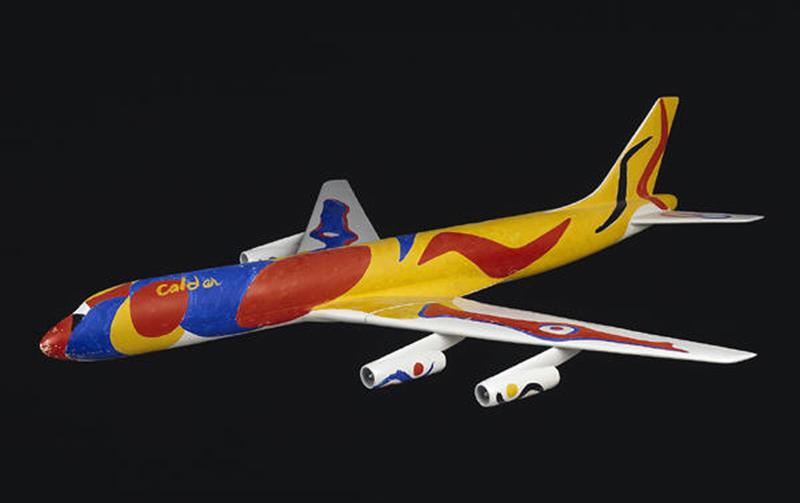
To celebrate, I will be FLYING

Model for Flying Colors

Model for Flying Colors

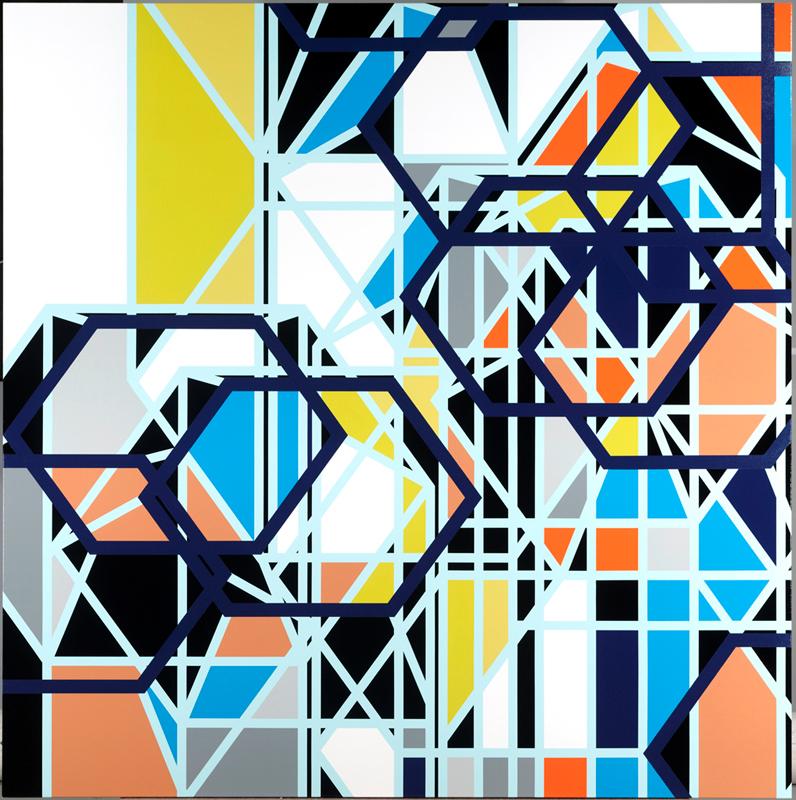
to LOS ANGELES

The Endeavor (Los Angeles)

The Endeavor (Los Angeles)

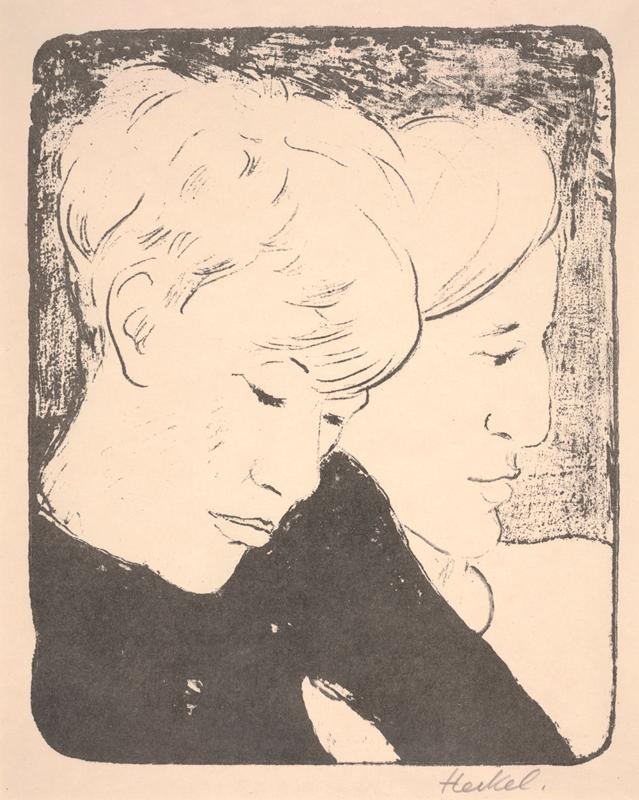
where I will get to see my SISTER

Siblings (Geschwister)

Siblings (Geschwister)

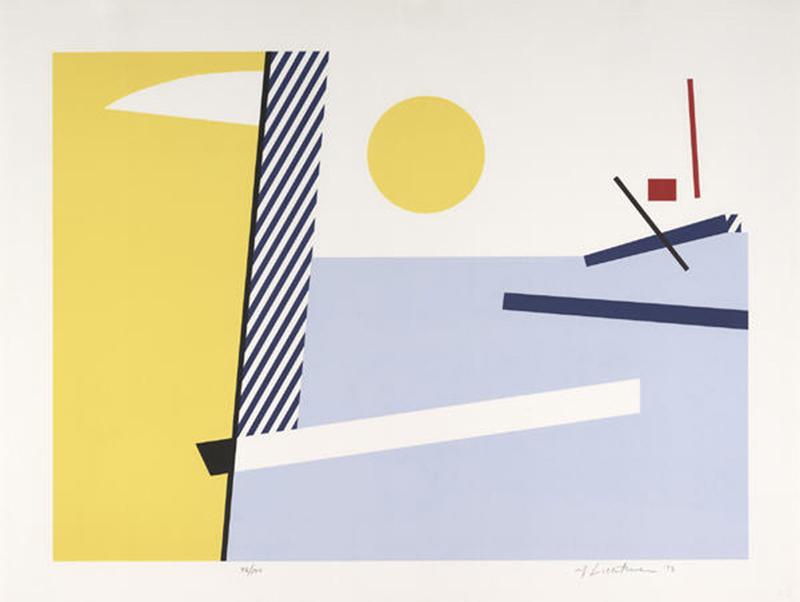
and visit California BEACHES.

Bull Heads III

Bull Heads III

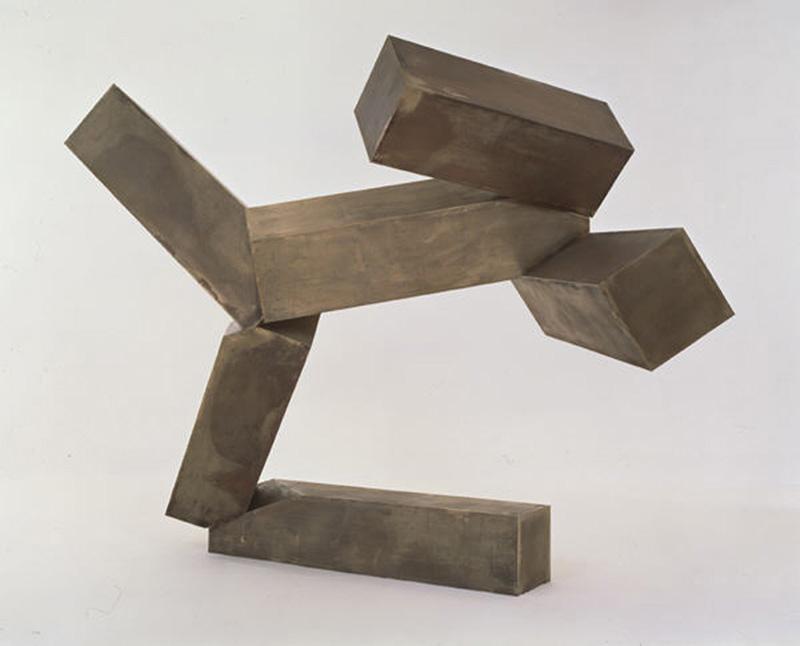
We will also be RUNNING a half-marathon

Untitled

Untitled

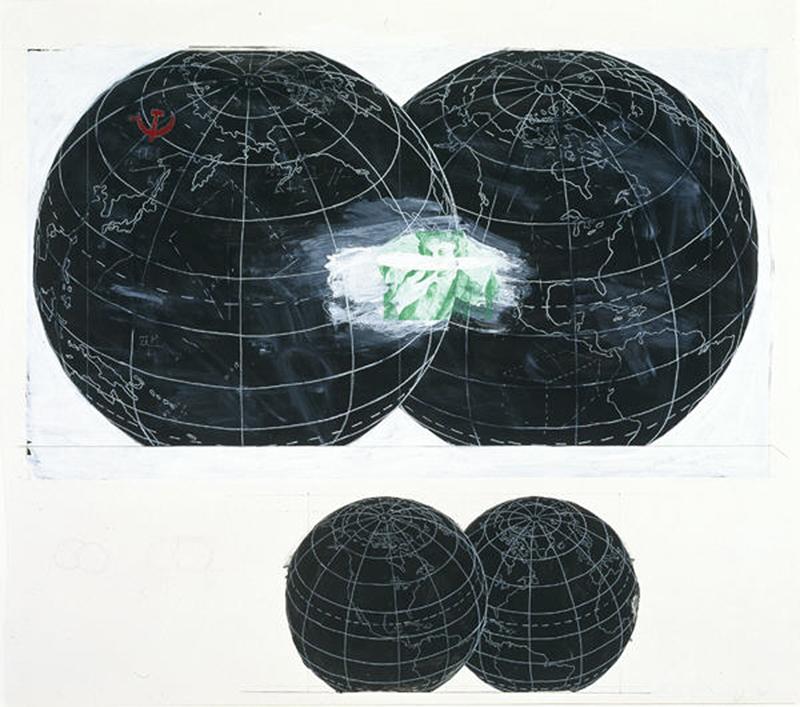
through DisneyLand—the happiest place on EARTH!

Study for "Worlds Collide"

Study for “Worlds Collide”

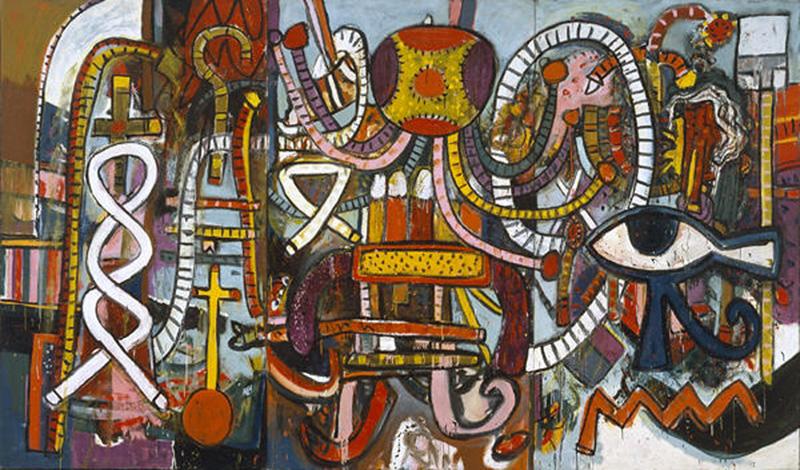
I can’t wait to ride all of the ROLLER COASTERS

Egyptian Triptych

Egyptian Triptych

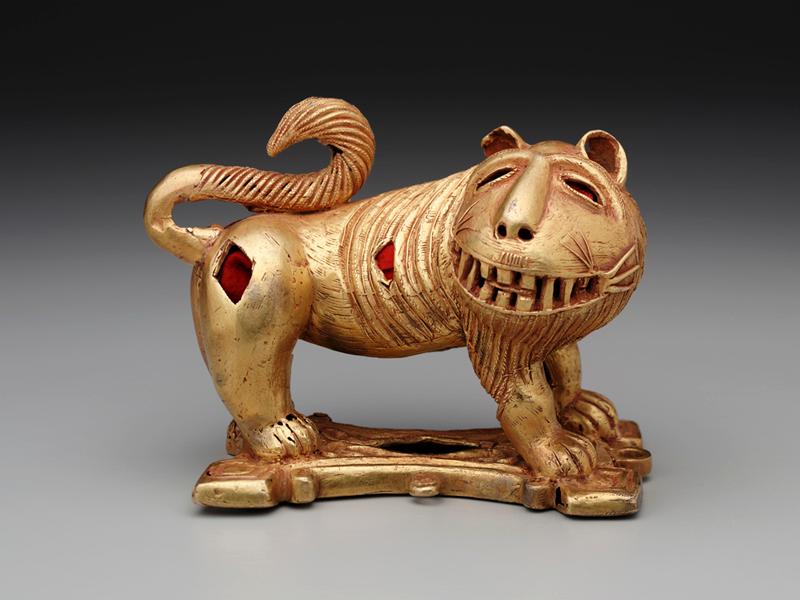
and see my favorite characters from the LION King

Sword ornament in the form of a lion

Sword ornament in the form of a lion

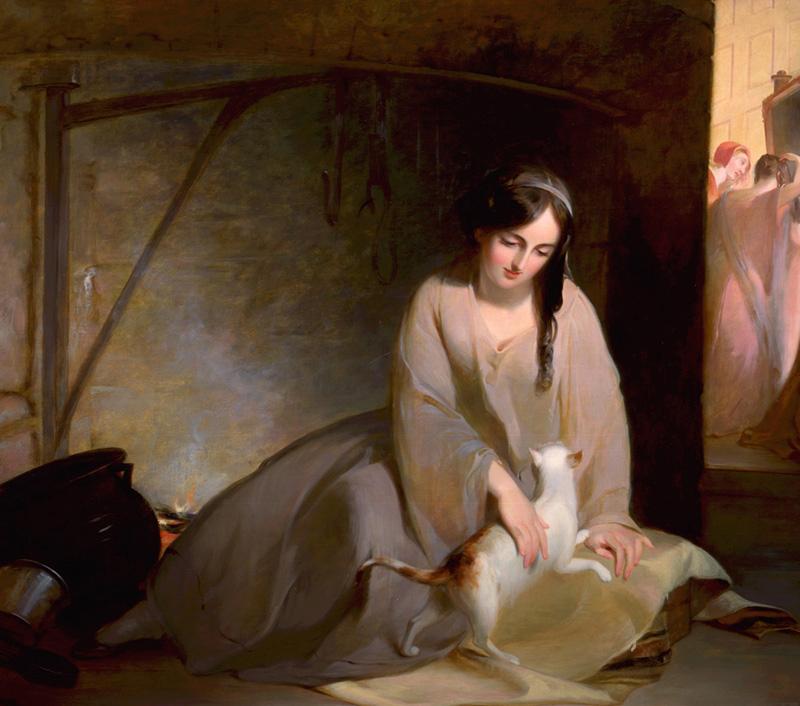
and CINDERELLA!

Cinderella at the Kitchen Fire

Cinderella at the Kitchen Fire

Artworks Shown:

  • Nic Nicosia, Untitled (Sam!), 1986, Dallas Museum of Art, gift of Meisel Photochrome Corporation
  • Alexander Calder, Model for Flying Colors, 1973, Dallas Museum of Art, gift of Braniff International in memory of Eugene McDermott
  • Sarah Morris, The Endeavor (Los Angeles), 2005, Dallas Museum of Art, DMA/amfAR Benefit Auction Fund
  • Erich Heckel, Siblings (Geschwister), 1929, Dallas Museum of Art, Foundation for the Arts Collection, gift of Mr. and Mrs. Alfred L. Bromberg
  • Roy Lichtenstein, Bull Heads III, 1973, Dallas Museum of Art, gift of The 500, Inc.
  • Joel Shapiro, Untitled, 1991, Dallas Museum of Art, fractional gift of The Rachofsky Collection
  • Vernon Fisher, Study for “Worlds Collide”, 1988, Dallas Museum of Art, gift of Dorace Fichtenbaum
  • Alan Davie, Egyptian Triptych, 1965, Dallas Museum of Art, Foundation for the Arts Collection, anonymous gift
  • Sword ornament in the form of a lion, mid-20th century, Dallas Museum of Art, The Eugene and Margaret McDermott Art Fund, Inc.
  • Thomas Sully, Cinderella at the Kitchen Fire, 1843, Dallas Museum of Art, gift of the Pauline Allen Gill Foundation

Pilar Wong
McDermott Intern for Community Teaching

Tiny Thumbs at the Dallas Museum of Art

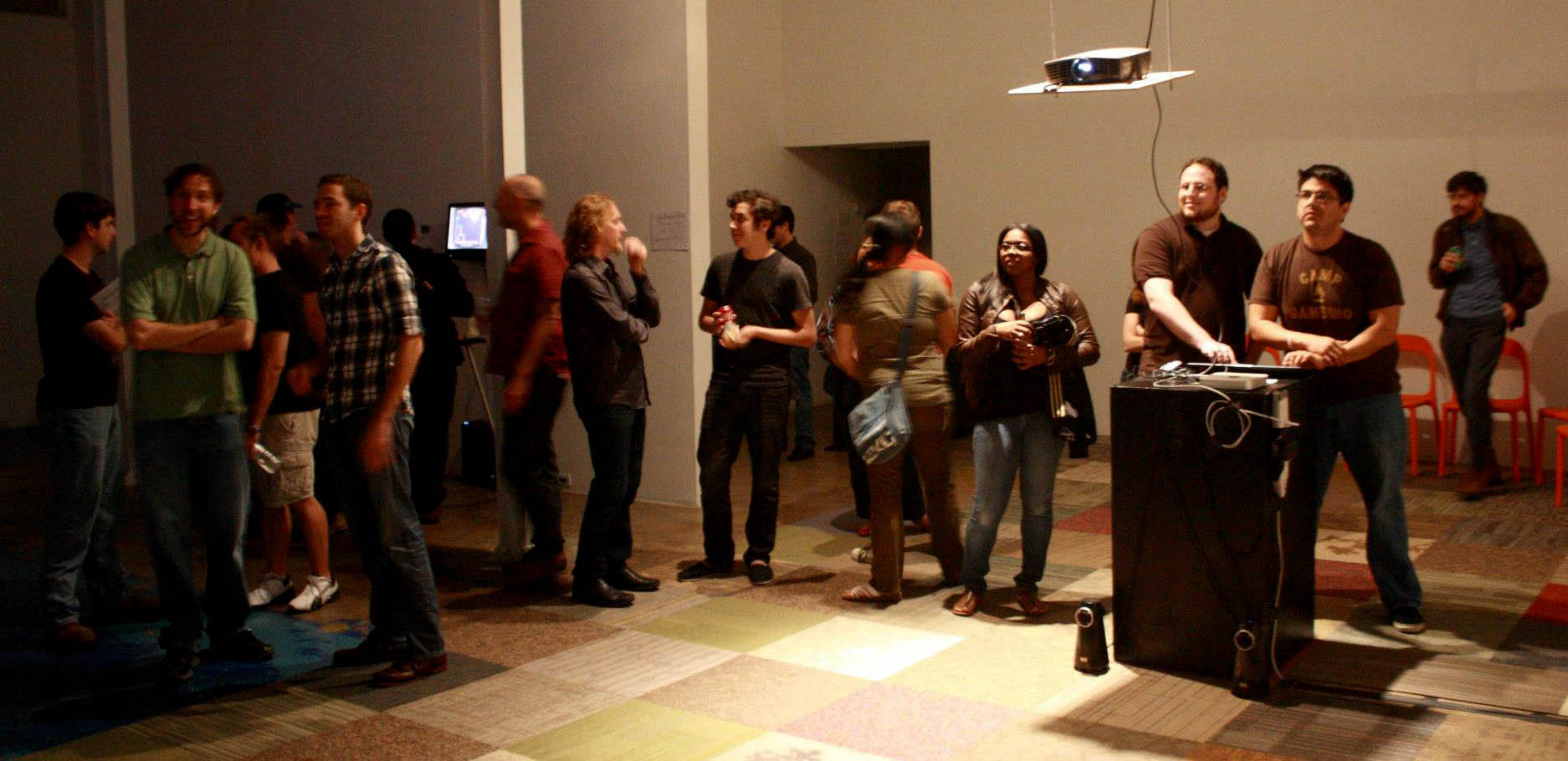
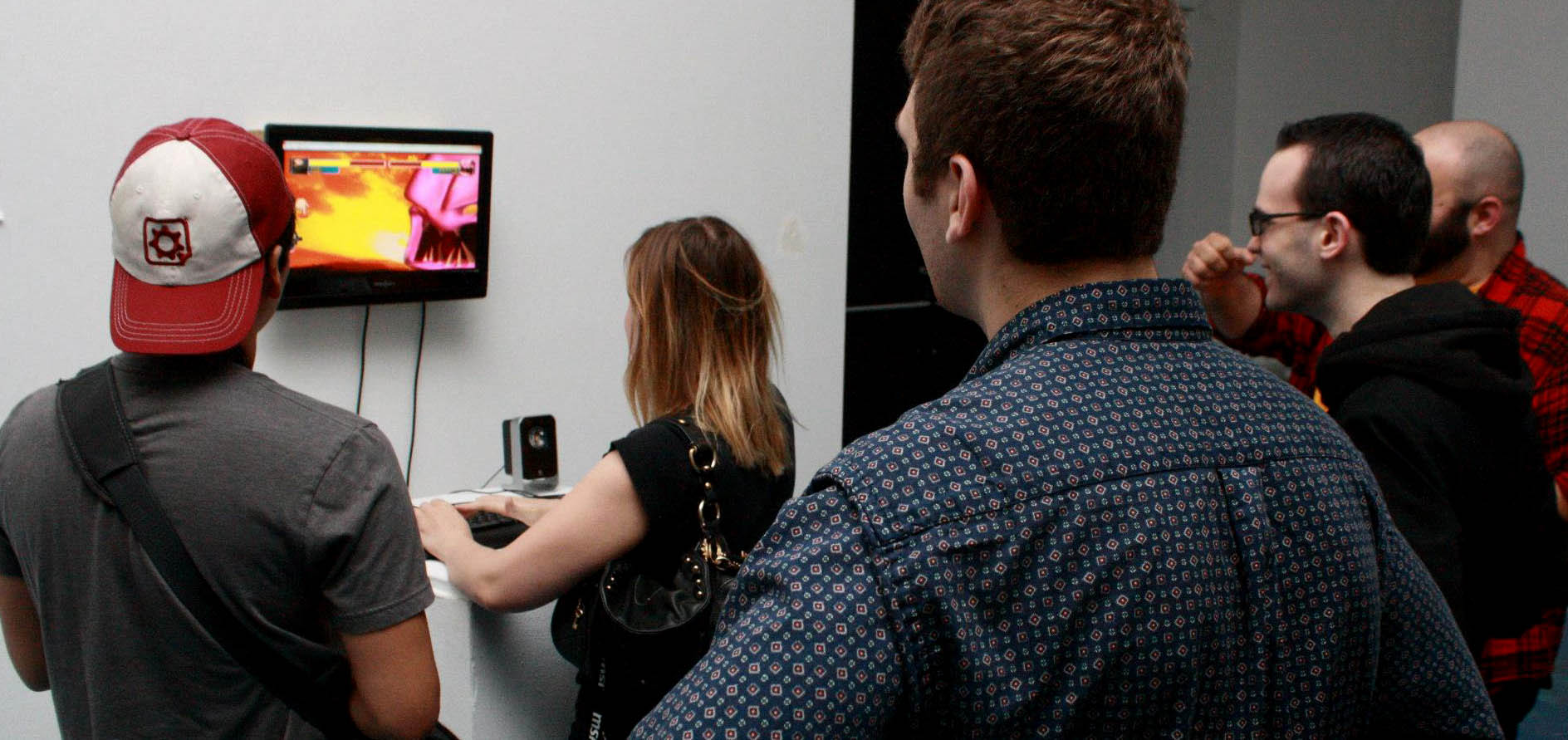
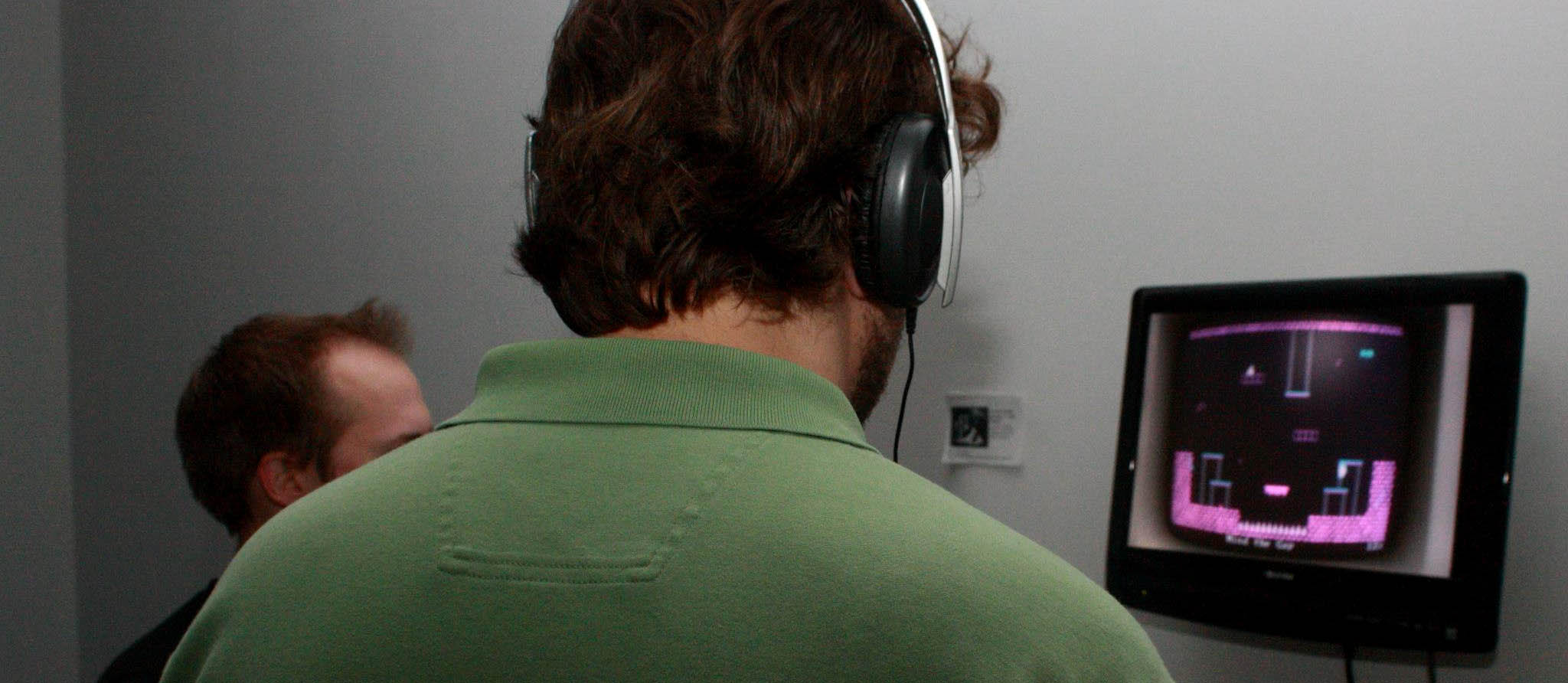
According to the Tiny Thumbs Facebook page, “Tiny Thumbs is a new organization looking to build up awareness for the indie game scene and showcase some of the best talent out there through pop-up arcades/art shows.”  In anticipation of their upcoming pop-up arcade at the DMA’s Late Night tomorrow night, I virtually sat down with Robert Frye, UT Dallas Ph.D. candidate and co-founder/co-curator of Tiny Thumbs.  As is probably most fitting, our interview took place over a series of emails:

image from "Tiny Thumbs: Breaking Out"photo credit: EbonSoul Photos

image from “Tiny Thumbs: Breaking Out”
photo credit: EbonSoul Photos

I found this great description of Tiny Thumbs on your Facebook account and I think that sums up “what” Tiny Thumbs is really nicely, but my next thought is, how did Tiny Thumbs come to fruition?

The idea of Tiny Thumbs came about as[co-founder] Kyle [Kondas] was teaching a class I was involved in called “Games and Gallery Art” where we really sought to tackle the idea of how to show games in an artistic space and what is gained from doing so. We were both inspired by the work of similar shows like Baby Castles – and the idea that we really had a desire to get people off of their computers for a bit and really connect with people, and not just gamers, but we really felt like independent designers could learn so much from talking with people outside of their current circles.

In your Tiny Thumbs description, it specifically mentions the “indie game scene.” Why are indie games important?

I’ve always seen indie games as the ‘art house’ of videogames, it’s the place where people can push the boundaries of interesting design and art and help to get to the core of what makes a game a game. Of course, not all indie games have such a lofty goal, but they still give the reigns of creation to a greater variety of people and that can only lend a larger amount of voices to the field. I think it’s the ability for ANYONE to make a game, for interesting ideas and experience to show up and change how I feel and view games on a weekly basis that makes me love indie games so much. It’s people, making games because there is a spirit inside them that drives them to do it. People who HAVE to create games, made for a community that is passionate to play them.

1

image from “Tiny Thumbs: Breaking Out”
photo credit: EbonSoul Photos

Other than being under the “indie game” umbrella, is there anything else that connects the content that you choose for your shows?

Not really! For our first few shows we wanted to take games of exceptional quality and bring them out of the “one person, one computer” context that they were sitting in. Our goal was to help spread the word in Dallas that there was a place for games of quality to be shown. Now in the future we would love to do themed shows, but for now we are picking games of interest and quality to start a dialogue and really find out what Dallas needs from our show.

Recently there have been a surge of articles asking whether video games are art. MoMA has added video games to their permanent collection, and the Smithsonian has created an exhibition about the evolution of video games as an art form, which is scheduled for a two and a half year tour around the United States. Assuming that you are on the “yes” side of the debate, can you tell me more about why you feel this way?

Are games art? Haha, this is a deceptively difficult question, as you really have to nail down why the question is being asked, what kind of information is trying to be achieved – do I think that games have the potential to have strong artistic statement? Yes. Do I think that games can have aesthetic properties that can inspire and enthrall? Very much so. Often when the question is asked, it seems to me that the real question that is trying to be asked is “can we take games seriously” and for that question I would say emphatically yes. We’ve only just begun to understand how interaction can change the stories and experience that we craft, and what games really mean to people. Video games have only been around for about 50 years (give or take) but in that time we have gone for dots moving along a screen to games like Journey which have breath taking vistas. So are games art? Perhaps, but more importantly – games NEED artists and art viewers to help them become the fullest experiences they can be.

4

image from “Tiny Thumbs: Breaking Out”
photo credit: EbonSoul Photos

Looking forward, what’s next for Tiny Thumbs?

So many things! We are currently in talks for at least two more future shows this year and are excited to have many more events in the future. If everything goes right, we would love to have a monthly show – traveling around venues in Dallas, sampling the flavors of this city and hopefully making the show something that the city can be proud of!

Stop by tomorrow night for Late Night at the DMA.  Kyle Kondas and Robert Frye’s Tiny Thumbs video arcade will be available for you to play and observe from 8pm – 11pm in the Center for Creative Connections’ Tech Lab.

Jessica Fuentes
C3 Gallery Coordinator

Theater, Play, and Creativity

Thursday evening the Center for Creative Connections was filled with thirty playful, divergent thinkers who were asked to have fun and break rules. These adults were attending a once a month program called Think Creatively taught by Dr. Magdalena Grohman and guest performer Harold Steward from the South Dallas Cultural Center.  During one portion of the evening, visitors engaged in playful theatrical activities that were developed from Steward’s theatrical background and knowledge of the practice known as Theater of the Oppressed.

During the 1970’s, Brazilian activist and actor Augusto Boal was the driving force for the creation of this theatrical practice. The goal of Boal was to use theater as a way to promote social change. Boal took inspiration from educator and theorist Paulo Freire, who is well known for his work Pedagogy of the Oppressed. In this revolutionary text, Freire argues that education should allow those who are oppressed to recapture their sense of humanity and overcome their sense of oppression. However, that oppressed person must play an active role in their own freedom. Inspired by the critical pedagogy of Freire, Boal believed that through the dialogue and interaction between actor and audience, people could free themselves; the actors and audience become active explorers and transformers of their own realities with the help of a facilitator. Theater of the Oppressed is about dialogue, playing and learning with one another to create change.

Image

As I watched Steward act as the facilitator, I was encouraged by the freedom that the participants seemed to gain with each passing moment. He had the visitors stand back to back; he then called out directions for each of them to follow. Placing one’s head to another’s hip, or positioning a knee to an elbow was really a sight to see.

After this warm-up, Steward and I demonstrated an activity together. I was directed to make a movement and was not allowed to stop moving until Harold said, “What are you doing, Amanda?” I was not allowed to respond with what my action was, but instead I had to say what I wanted him to act out. I called out the action, “Running a marathon,” and he pretended he was running the race of a lifetime. After, the visitors were roaring in laughter and running around the room, engaging in this activity. Steward had them stop and then broke all the rules that he just taught them. The pairs had to create their own guidelines and interpretations to the last activity. One pair decided that they were only allowed to sing to each other, another group determined that all of their activities to act out had to be represented in mime.

The visitors responded to the process and indicated that participating in these Theater of the Oppressed exercises was difficult for them at first because they had to overcome their initial hesitations to move, play, and be free without fear—but once they let go of all that was holding them back (or oppressing them), they were able to experience liberation and freedom from restraint.

Image

Here is another Theater of the Oppressed activity created by Augusto Boal that you can try with your friends!

The Name and Gesture Game:
The group will stand in a circle. The facilitator introduces themselves and creates a physical gesture. The whole group repeats the name and gesture. The process occurs until everyone has said their own name and preformed a gesture. Then, this process is repeated but without the name. Anyone who wishes takes a step forward and the rest of the group must say the name and preform the gesture.

I hope you’ll join us in C3 soon!

Amanda Batson
C3 Program Coordinator

Friday Photos: Leading Ladies

On this day in 1935, Amelia Earhart left Honolulu for a 2,400 mile trans-Pacific flight to Oakland, CA. She was the first person to complete that flight solo. To celebrate the anniversary of this flight, I wanted to highlight some female ground-breakers in our collection:

  • Georgia O’Keeffe’s artistic career began with a series of abstract charcoal drawings, which were some of the most radical artworks of their time.
  • Lee Krasner is one of the only female artists associated with Abstract Expressionism, despite constant overshadow by her fellow artist husband Jackson Pollock.
  • Berthe Morisot was the first woman to exhibit with the Impressionists.
  • The innovative photography of Cindy Sherman, who serves as both the photographer and model, challenges and questions the role of women in society and art.
  • The first work by a 20th century Mexican artist to be purchased by the Louvre Museum in Paris was a self-portrait painted by Frida Kahlo.

Artworks shown:

  • Georgia O’Keeffe, Bare Tree Trunks with Snow, 1946, Dallas Museum of Art, Dallas Art Association Purchase
  • Lee Krasner, Pollination, 1968, Dallas Museum of Art, Gift of Mr. and Mrs. Algur H. Meadows and the Meadows Foundation, Incorporated
  • Berthe Morisot, Winter (Woman with a Muff), 1880, Dallas Museum of Art, gift of the Meadows Foundation Incorporated
  • Cindy Sherman, Untitled, 1981, Dallas Museum of Art, General Acquisitions Fund
  • Frida Kahlo, Itzicuintli Dog with Me, c. 1938, Lent by private collection

Andrea V. Severin
Interpretation Specialist


Archives

Categories