Archive Page 35


Meet the New McDermott Interns!

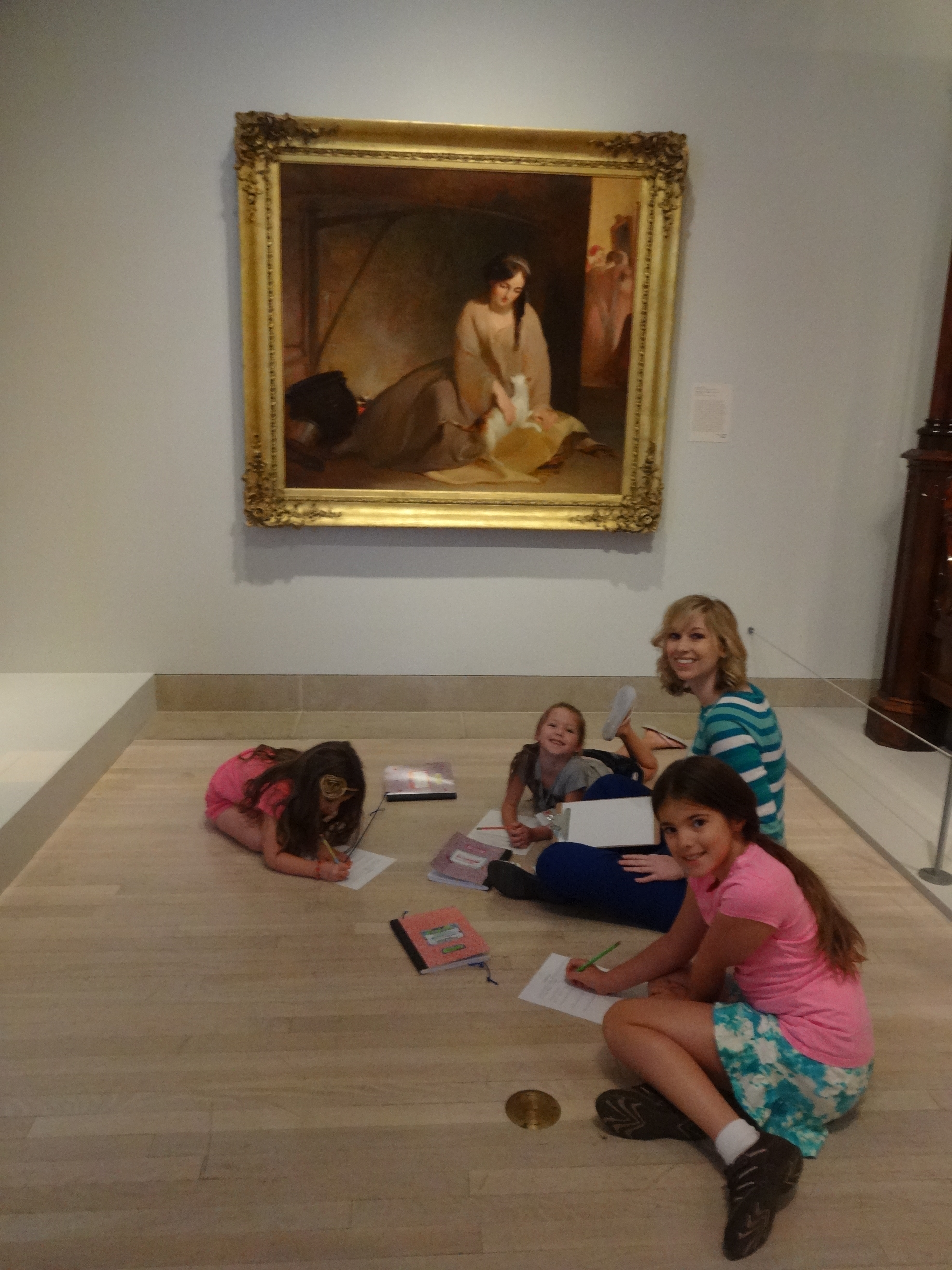
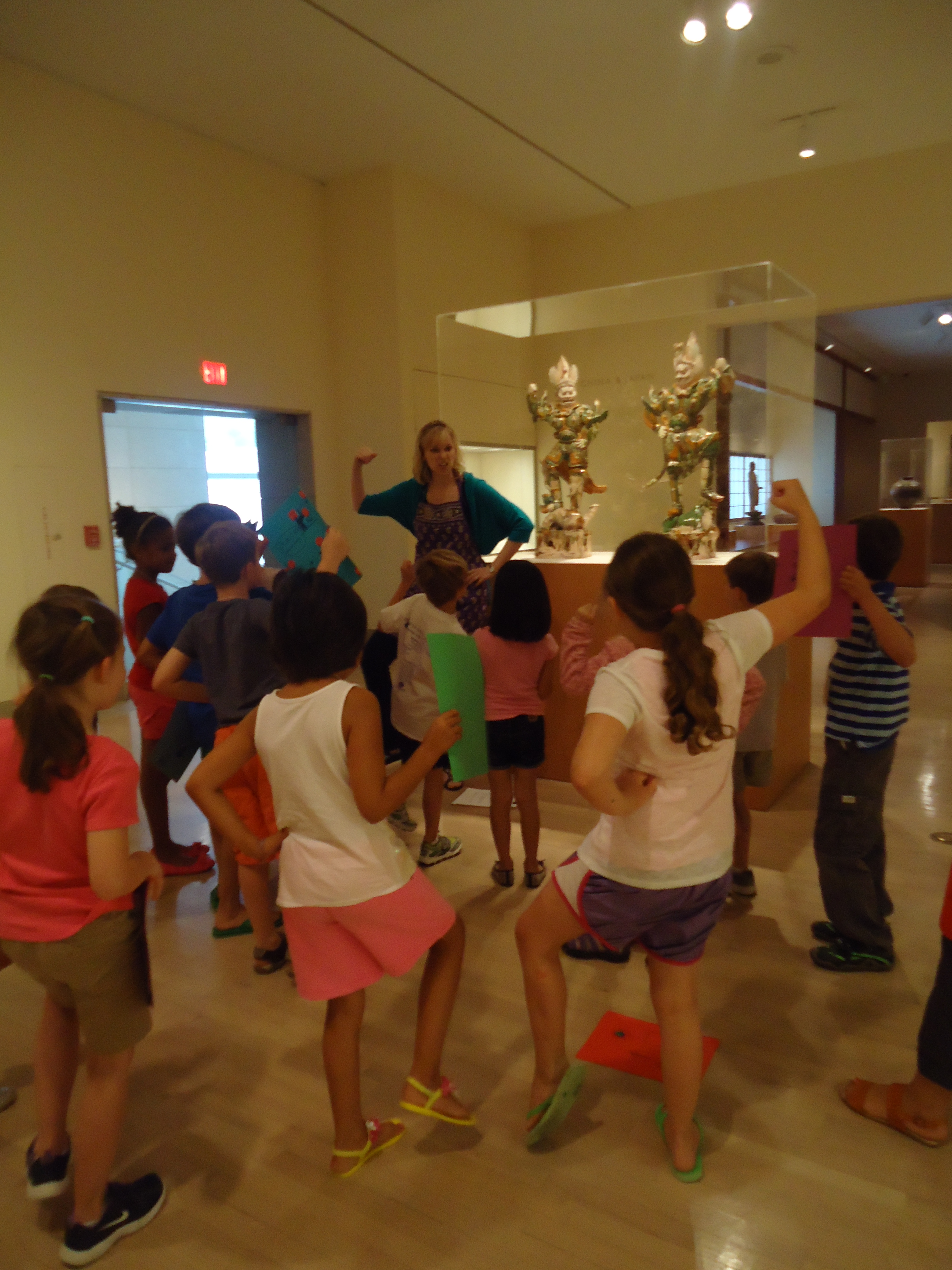
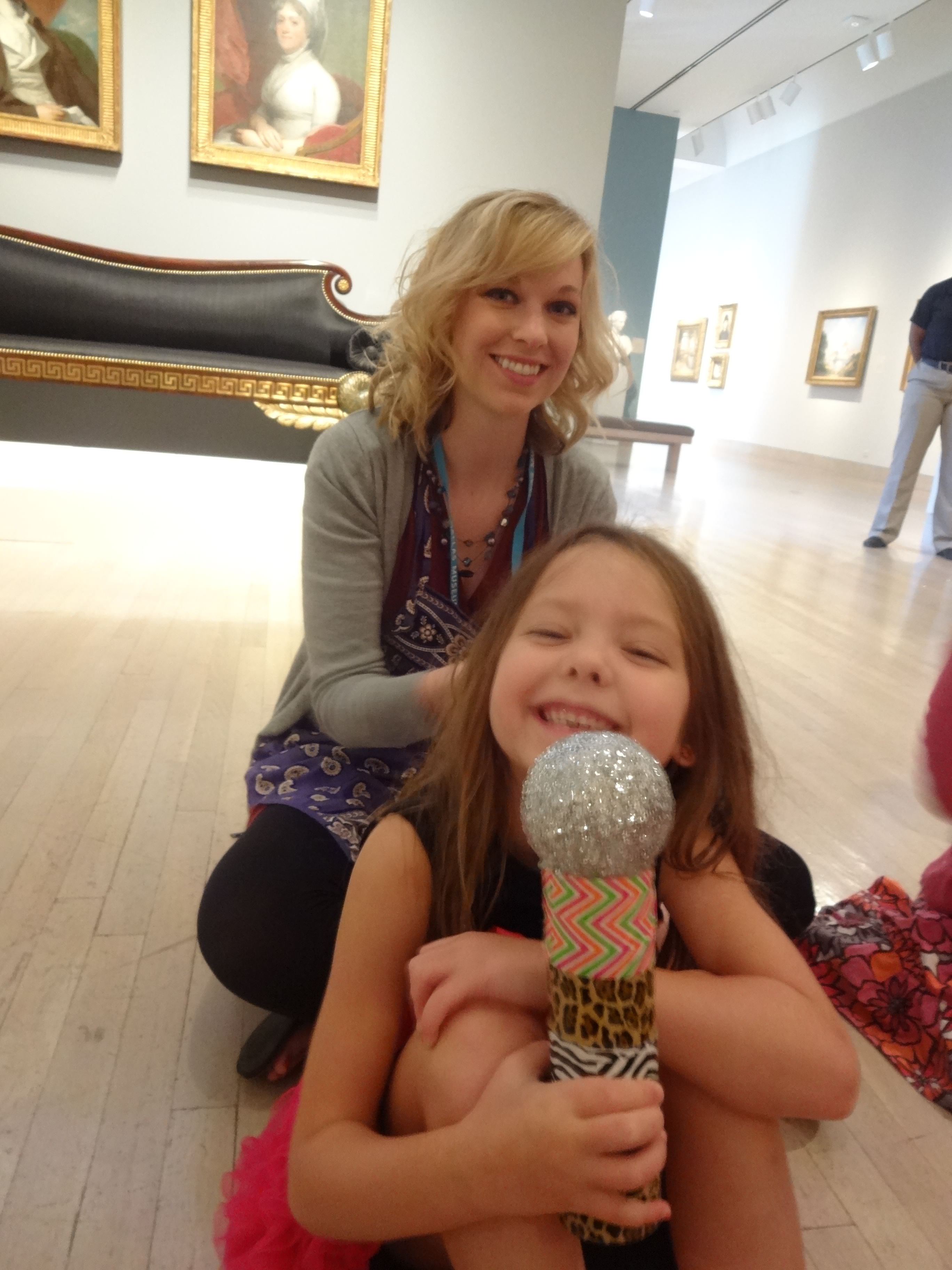
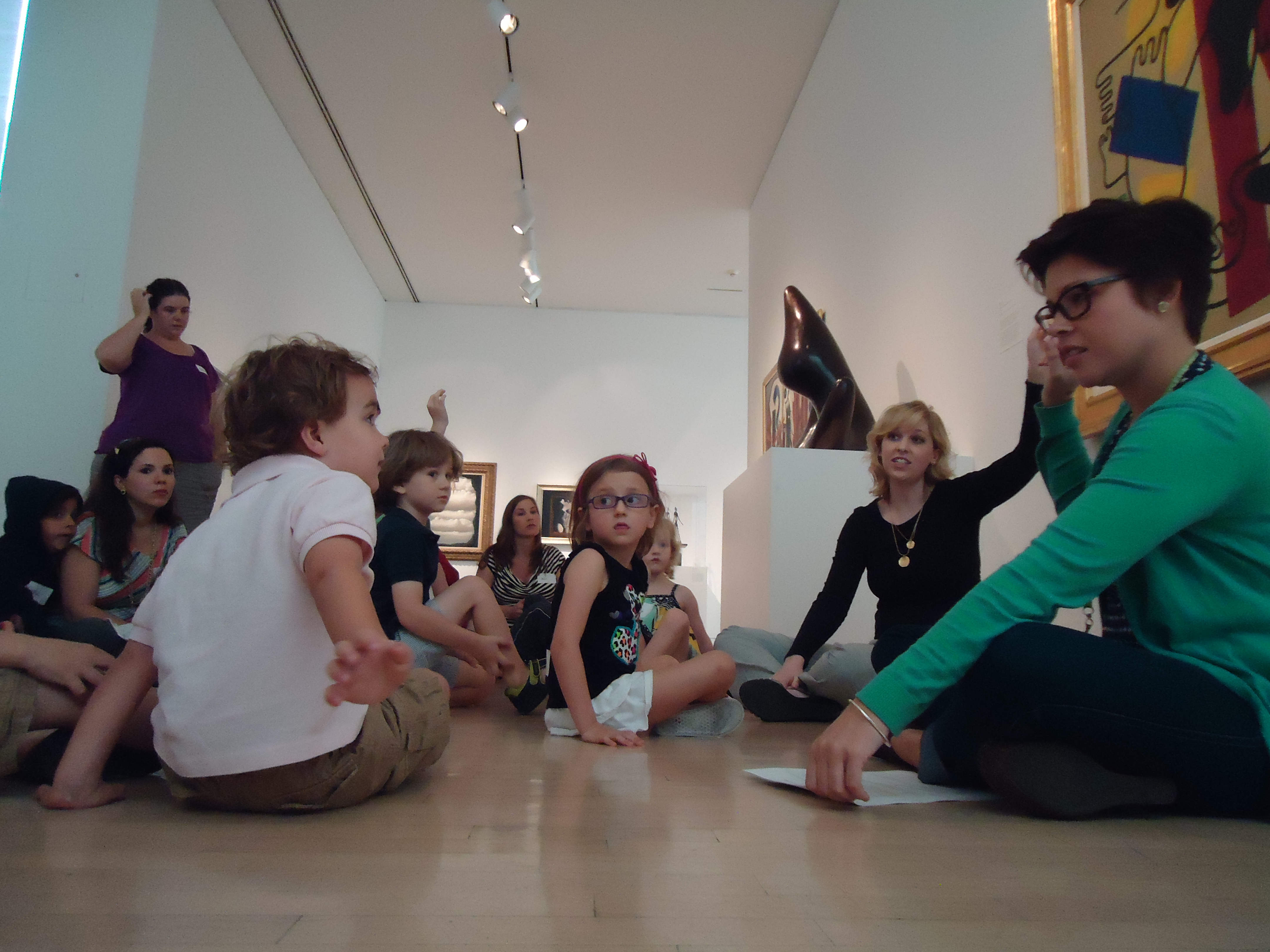
September brings the beginning of the new school year, (somewhat) cooler weather, and–most exciting of all–the new batch of McDermott Interns! As part of the Education and Curatorial Divisions, the McDermott Interns gain valuable experience while exploring museum work here at the DMA. The Education division is happy to introduce three fresh new faces to our blog-o-sphere: Amy Elms, McDermott Education Intern for Visitor Engagement; Hayley Prihoda, McDermott Education Intern for Gallery and Community Teaching; and Amelia Wood, McDermott Education Intern for Family and Access Teaching.  These lovely ladies will be writing many posts throughout the coming year so we wanted to give them a fitting introduction!

Amy Elms
McDermott Education Intern for Visitor Engagement
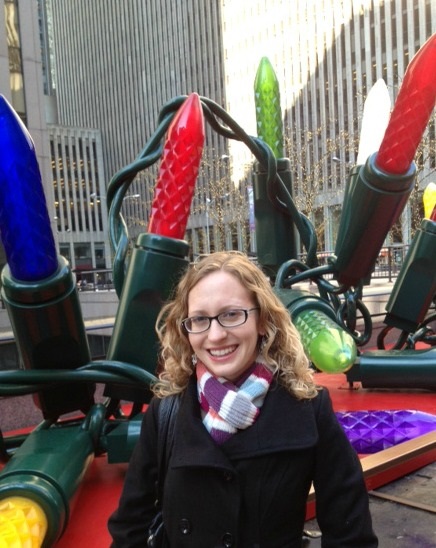
amy

I earned a BS in Communication Studies from the University of Texas at Austin and an M.Ed. in Culture & Curriculum focusing on Art Education & Visual Culture from Texas A&M University. Besides interning at the Austin Children’s Museum and Artpace San Antonio, I spent the past two years regularly volunteering with the Harry Ransom Center on the University of Texas at Austin campus. I love to explore the outdoors, especially hiking and swimming. I have a newly discovered love of stand-up paddle boarding, and want to take a rock climbing class in the future!

Which area of the DMA’s collection are you most excited about exploring? 
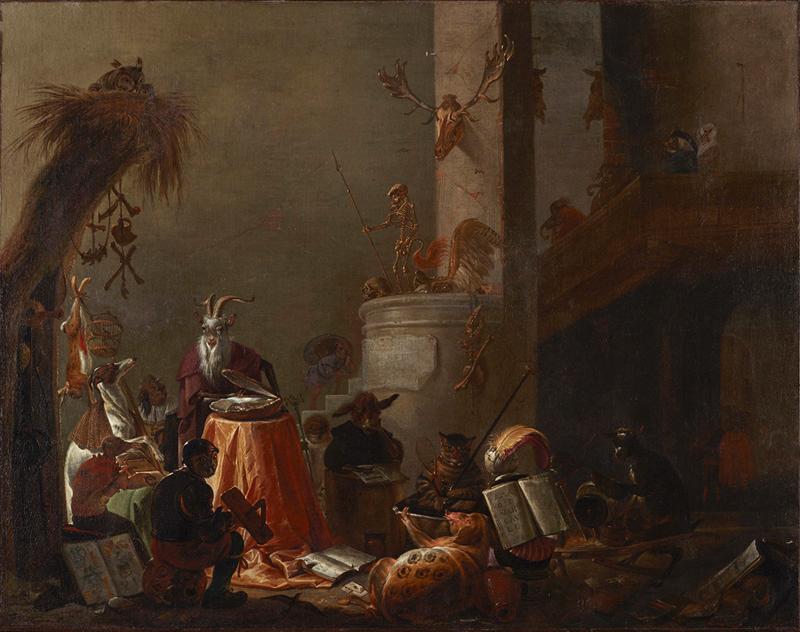
Cornelis Saftleven, College of Animals, 1655

The DMA’s Asian art collection dates all the way back to the 2nd century and I am amazed by the intricate details that are still so evident in each work of art, whether it’s a sculpture or a woodblock print. While exploring the museum’s galleries recently, I also came across Cornelis Saftleven’s College of Animals and loved the humor and symbolism of the painting. I want to learn more about the meaning behind each one of the animals represented in Saftleven’s work.

Which program or area of the Museum are you most interested in learning about? 

I’m definitely excited to learn more about the Center for Creative Connections since this learning environment will be the focus of my internship. I’m a huge supporter of museums that create innovative, interactive programs to encourage visitors to become more connected with exhibition materials. C3 offers programs and activities to people of all ages and explores ways of using technology to create a more immersive, memorable experience for visitors.

What features of Dallas do you want to experience during your time here?

Besides exploring all of the museums that DFW has to offer, I also really want to visit the Dallas World Aquarium and the Dallas Arboretum & Botanical Garden, I’ve heard that both places are a must-see during my time here!

Hayley Prihoda
McDermott Education Intern for Gallery and Community Teaching
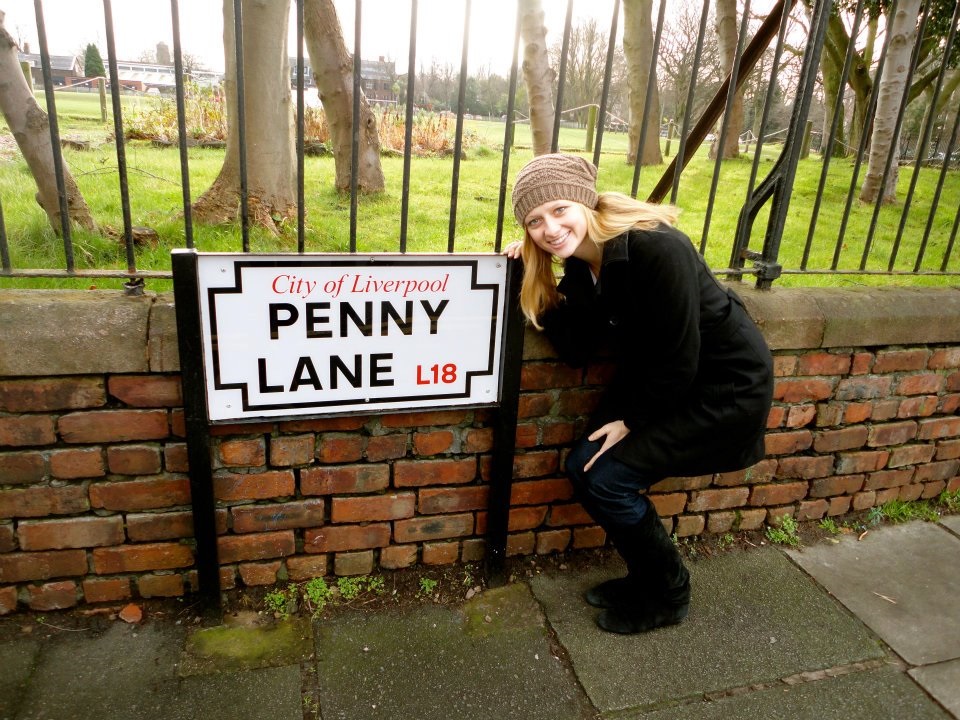
Hayley

I was raised in Cary, Illinois, a northwest suburb of Chicago. My mom was a stay-at-home mom when I was growing up and persistently, even sometimes to my sister’s and my dismay, brought us to museums, art galleries, musicals, and cultural events. At the time, I didn’t know how much this early exposure to the art world was going to direct my future interests and career aspirations. In the spring of 2012, I studied abroad in London and had the amazing opportunity to intern at the Royal Academy of Arts. After this experience, my aspiration to work in an art museum was solidified. I graduated from Indiana University with a BA in history and minor in art history this past May and spent the last two months as an intern at the National Gallery of Art.
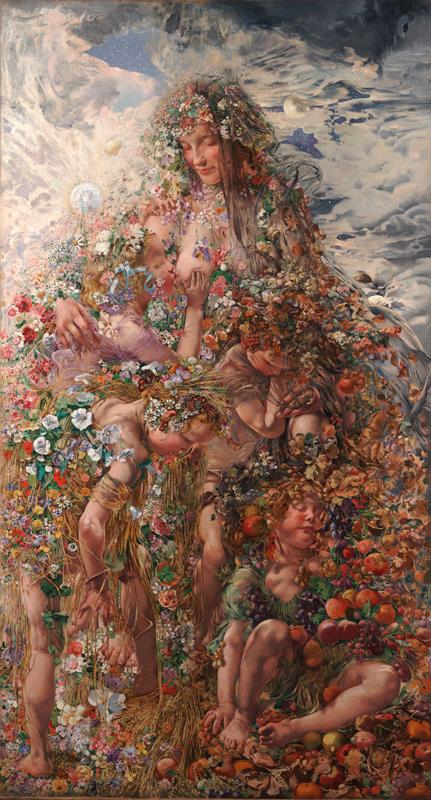
Léon Frédéric, Nature or Abundance, 1897

Which area of the DMA’s collection are you most excited about exploring? 

I am very excited to spend time with the European and American art collections. One of the pieces that first caught my eye in the collection was Léon Frédéric’s Nature or Abundance. I like the colors and intricate details of the work but, most of all, I like the implications of this piece as a statement on the industrialization of the late 19th century. I really enjoy placing works of art in their historical context and using this background as a platform for studying the piece.

Which program or area of the Museum are you most interested in learning about? 

I am very excited to work with the docent program this year. Having spent only one day with the docents thus far, I am already inspired by their passion for the DMA and the pride and enthusiasm they have for their position. I just hope that I can teach them as much as I know they will teach me!

What features of Dallas do you want to experience during your time here?

Being brand-new to Texas, I am really looking forward to embracing all that this area has to offer! Fall is my favorite season and I have heard that October is an especially fun month in Dallas, so I hope to attend the Lamar Street Festival, The Aurora Project, and Index Fest 2, all in the same weekend!  And I am also hoping to fit in a Dallas Cowboys game and a trip to the Texas State Fair! I feel very grateful to have landed this position at the Dallas Museum of Art and greatly look forward to what the next 9 months have in store!

Amelia Wood
McDermott Education Intern for Family and Access Teaching
amelia

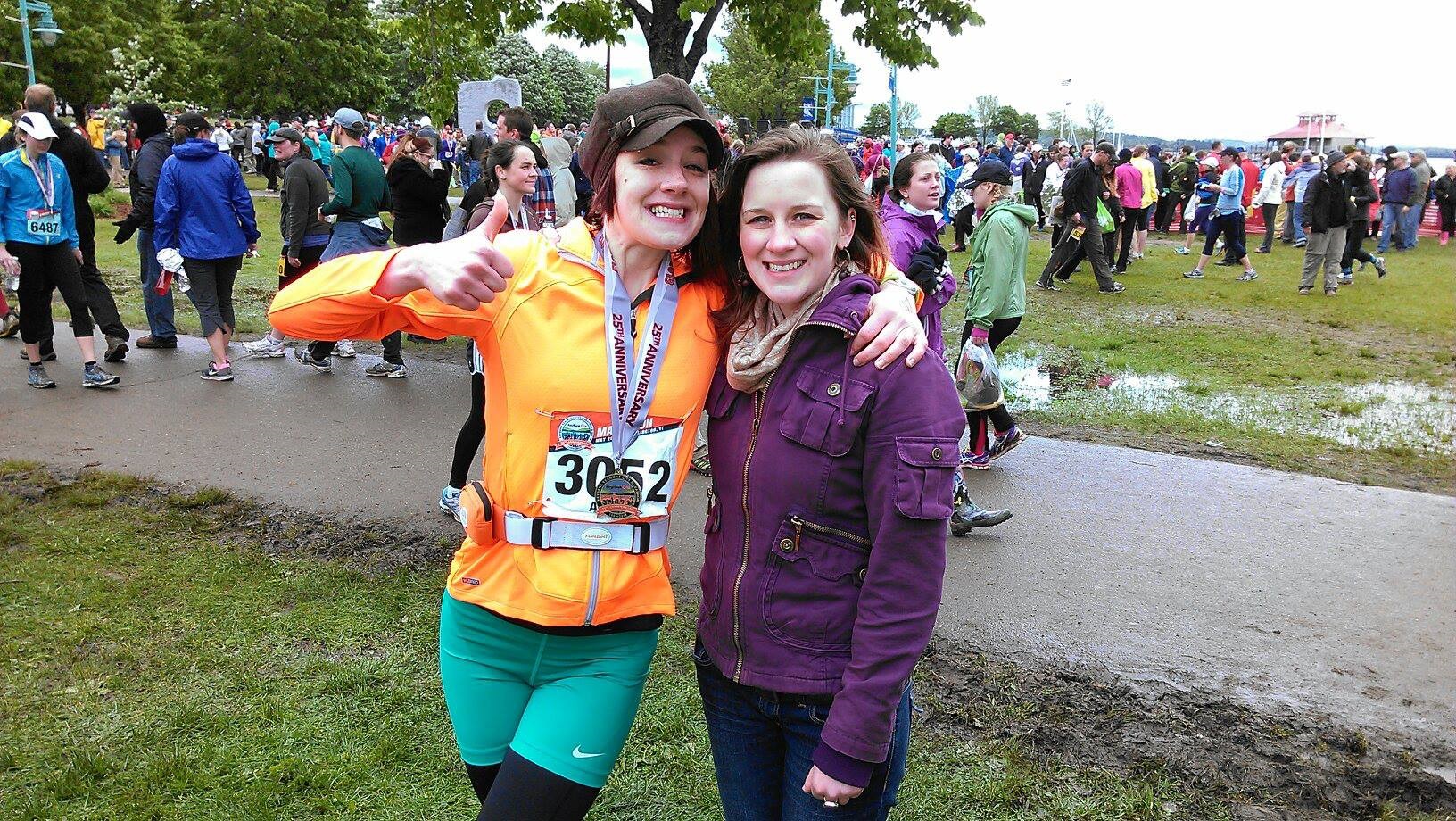
I grew up in North Adams, a small town tucked away in the valleys of western Massachusetts. The opening of Massachusetts Museum of Contemporary Art in 1999 not only transformed my hometown but sparked my interest in arts education. I graduated from Massachusetts College of Liberal Arts with a BA in Fine and Performing Arts in 2006. After college, I embarked on a career in early childhood education in Burlington, VT, where I took part in the Vermont Child Care Apprenticeship Program. I returned home in 2010 and continued my work in early learning as a toddler teacher at the Williams College Children’s Center. During my final year at the children’s center, I designed a bridge program that organized visits for the center’s preschool and school age children to the Williams College Museum of Art (WCMA). In 2012, I joined the fantastic team at WCMA as the Coordinator of Education Programs and found my calling.

Which area of the DMA’s collection are you most excited about exploring? 
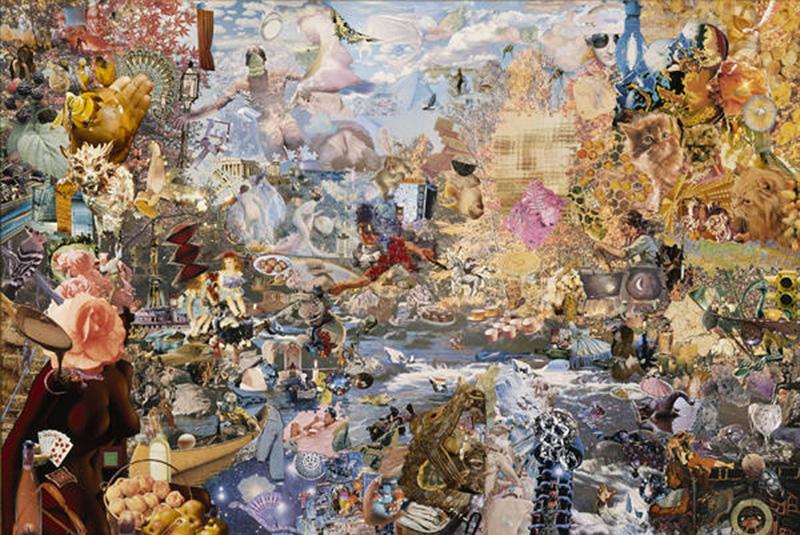
Jess, Arkadia’s Last Resort; or, Fête Champêtre Up Mnemosyne Creek, 1976

I’ve recently gotten back into collaging, so I am most excited by the collage and assemblage artists in the DMA’s contemporary art collection. I’d be thrilled to spend some time with any of the works by Joseph Cornell, Louise Nevelson, Robert Rauschenberg, and Jean Tinguely. And I was  psyched to discover that the DMA owns Arkadia’s Last Resort; or, Fête Champêtre Up Mnemosyne Creek by Jess, who is one of my recent artist inspirations.

Which program or area of the Museum are you most interested in learning about?

During my internship, I’m looking forward to working with children of all ages in the Museum’s early learning classes, family and access events, and Late Night programs. I’m also interested in working with the Go van Gogh school and outreach program, as well as the hands on art-making experiences offered in C3.

What features of Dallas do you want to experience during your time here?

Because I’m new to Dallas–and to city life in general–I’ve enjoyed taking in the sights and sounds of my new home. The Dallas Arts District is an area of interest to me and I look forward to delving into Dallas’ vast arts community in the coming months. I’m also an avid runner, and am training for the Dallas Marathon in December, so I look forward to exploring the downtown area during my long runs.

Special thanks to Amy, Hayley and Amelia for the illuminating information. Keep an eye out for all the great posts and programs these ladies will be sharing with us throughout the year!

Artworks shown:

  • Cornelis Saftleven, College of Animals, 1655,  Dallas Museum of Art, The Karl and Esther Hoblitzelle Collection, gift of the Hoblitzelle Foundation
  • Léon Frédéric, Nature or Abundance, 1897, Dallas Museum of Art, Foundation for the Arts Collection, Mrs. John B. O’Hara Fund
  • Jess, Arkadia’s Last Resort; or, Fête Champêtre Up Mnemosyne Creek, 1976, Dallas Museum of Art, General Acquisitions Fund

Danielle Schulz
Teaching Specialist
Make This: Vinyl Toy Mini-Amp

munny

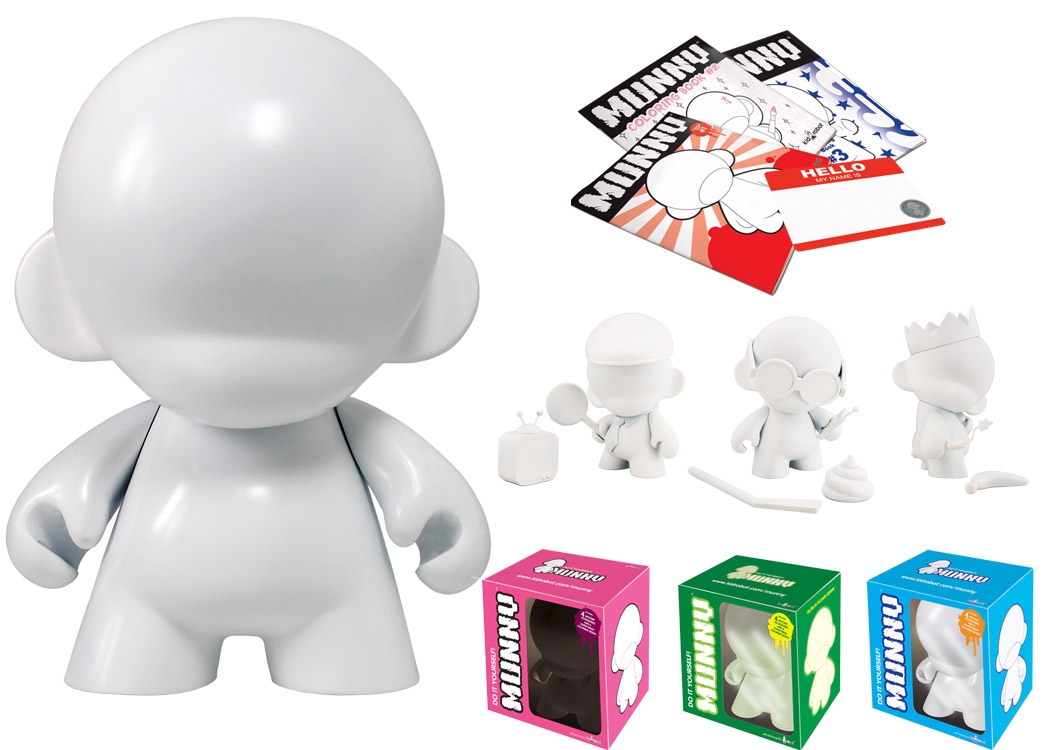
I’m a big urban vinyl toy collector, and I especially love Kidrobot’s Munny line. If you’re not familiar with them, Munnys are customizable figures that are totally suited to makers and DIY-lovers alike. I’ve been tinkering with a few examples to show at this month’s vinyl toy-themed Urban Armor teen workshop with Mark Gutting and came up with both a fun and utilitarian Munny project that I hope you enjoy!

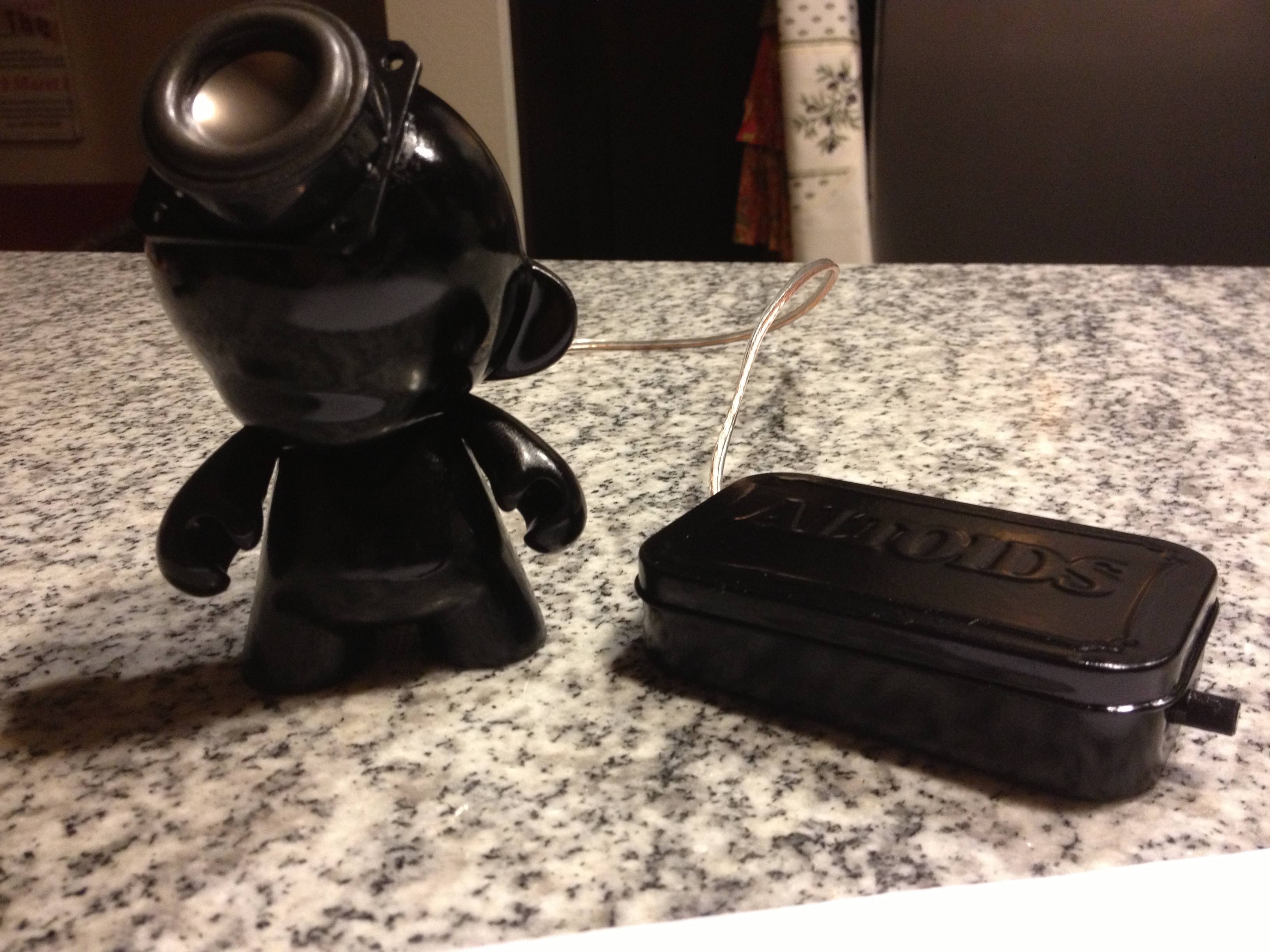
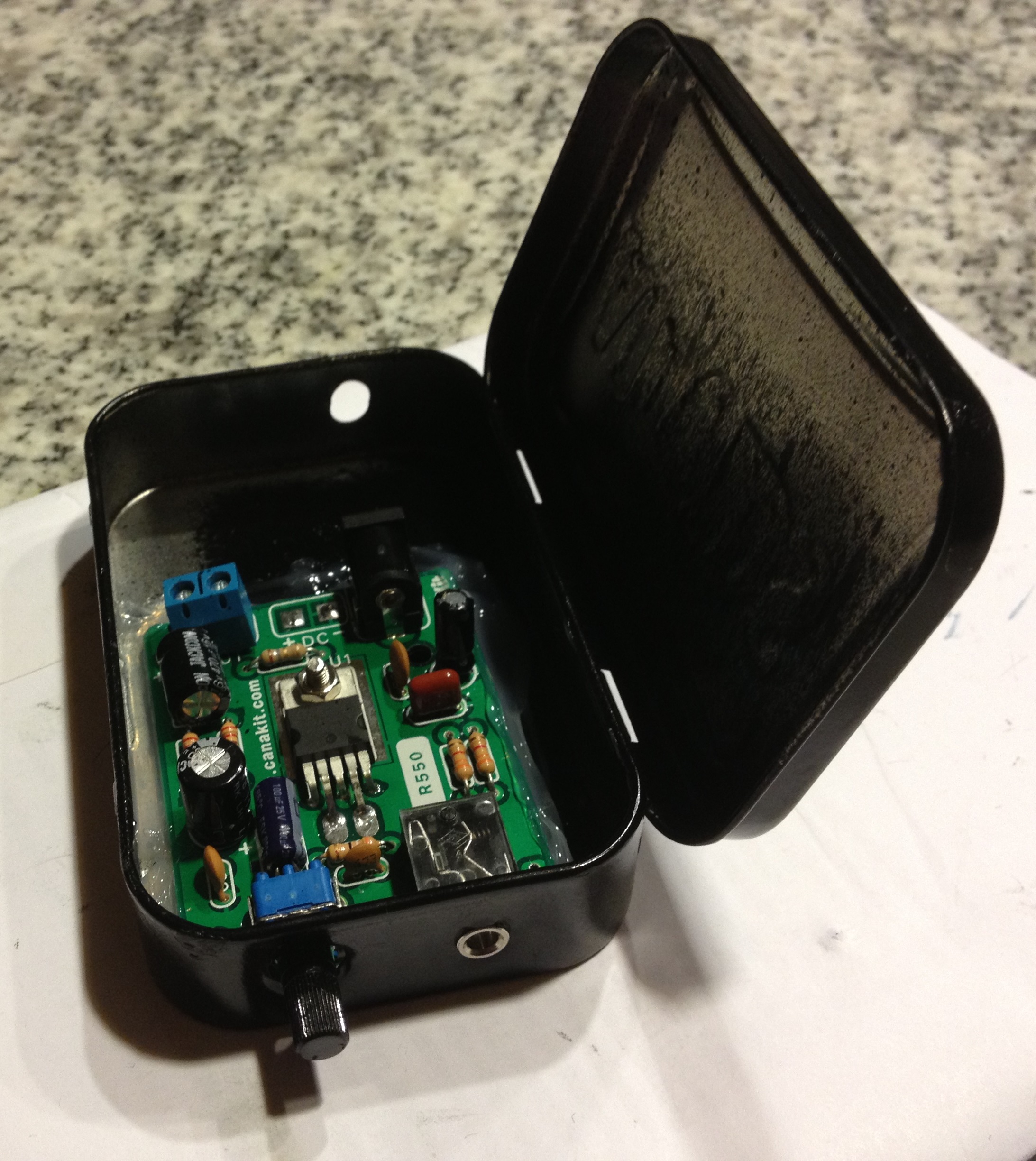
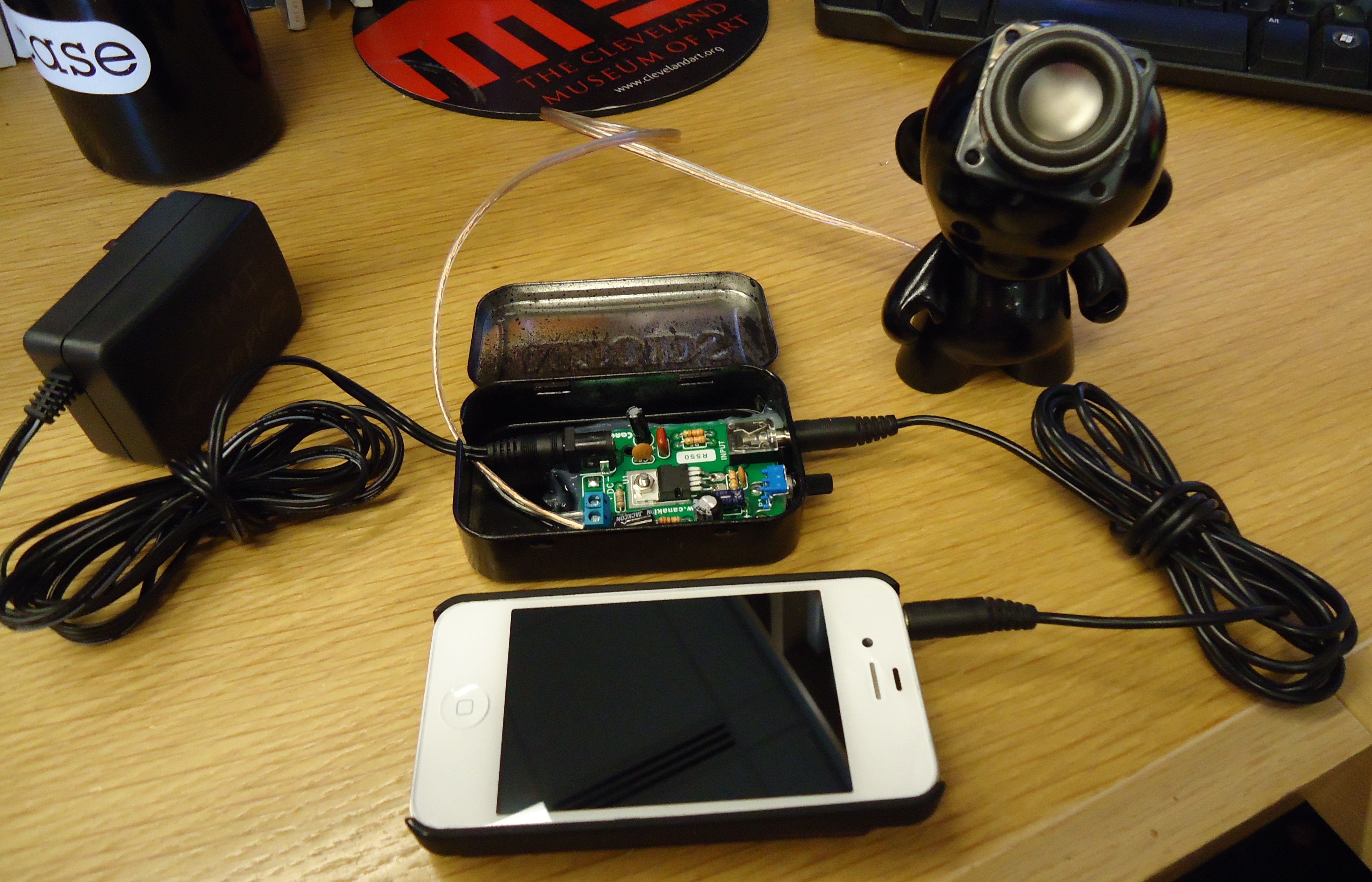
One of the coolest things about Munnys is that you can pretty much turn them into anything you want with the right materials. You can find terrific instructions on how to turn a Munny into a speaker, so I thought I’d combine that idea with an Altoids mini-amp project that I was recently working on to create a Munny mini-amp for an MP3 player or smartphone. What’s nice about it is that the amp provides a little more juice for your music than the speaker alone, and since they are separate components, you can make more Munny speakers and interchange them with the amp. You can also use the amp with most any type of MP3 gadget!

IMG_1112

This is definitely a more intermediate to advanced-level project for ages 13 and up that would be perfect to do over a weekend. You’ll also need a few specialized tools and basic knowledge of circuits and soldering.

What you need:

  • Munny mini-figure
  • Mini speaker: This can be scavenged from an old pair of computer speakers, etc. I used a 1½” speaker to fit the figure’s head
  • Exacto knife
  • Pencil
  • Spray paint (make sure to get one that works on metal and plastic)
  • Altoids tin
  • Mini amp components: I used Canakit’s 5W kit
  • Speaker wire
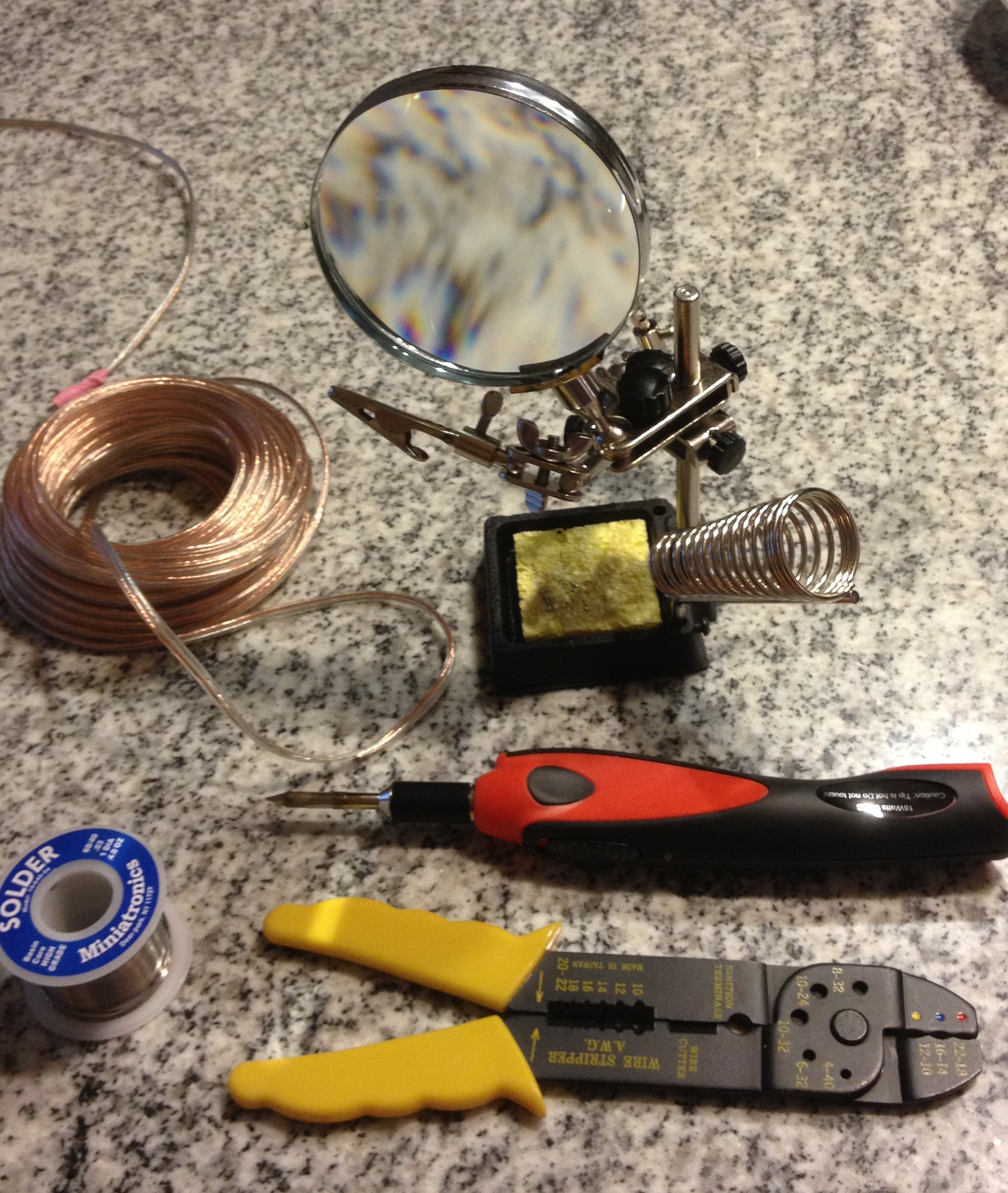
  • Soldering iron and solder
  • Hair dryer
  • Single hole punch
  • Tin snips
  • Batting
  • Silicone glue or caulk
  • 9-volt adapter
  • Male to male audio cable
Some of the tools you will need

Some of the tools you will need

Step 1: Clean Your Munny

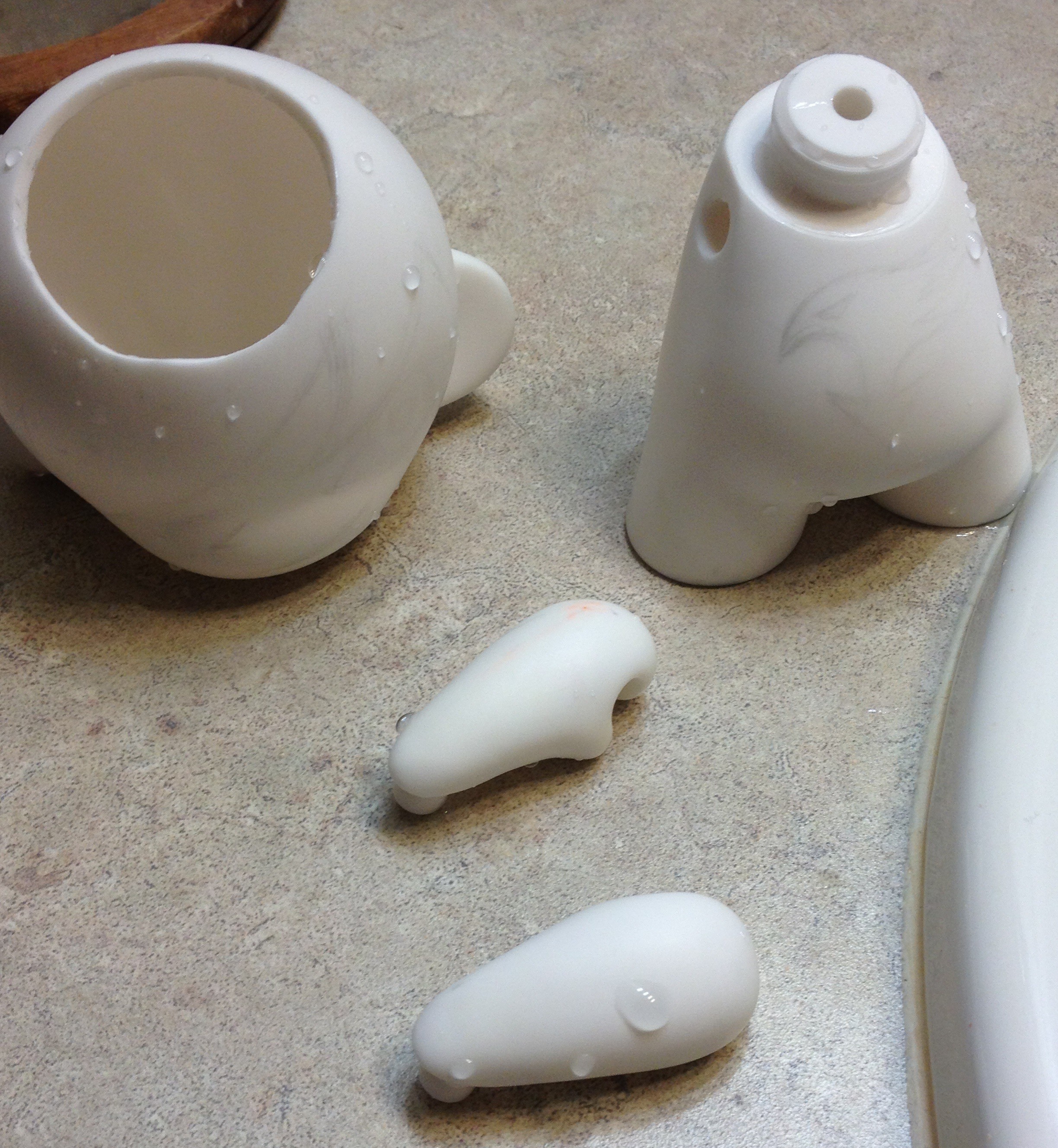
Carefully take apart your mini-figure and give it a nice bath using mild soap to remove any oils, residues, etc.

IMG_1092

Step 2: Cut a hole for the speaker and cable

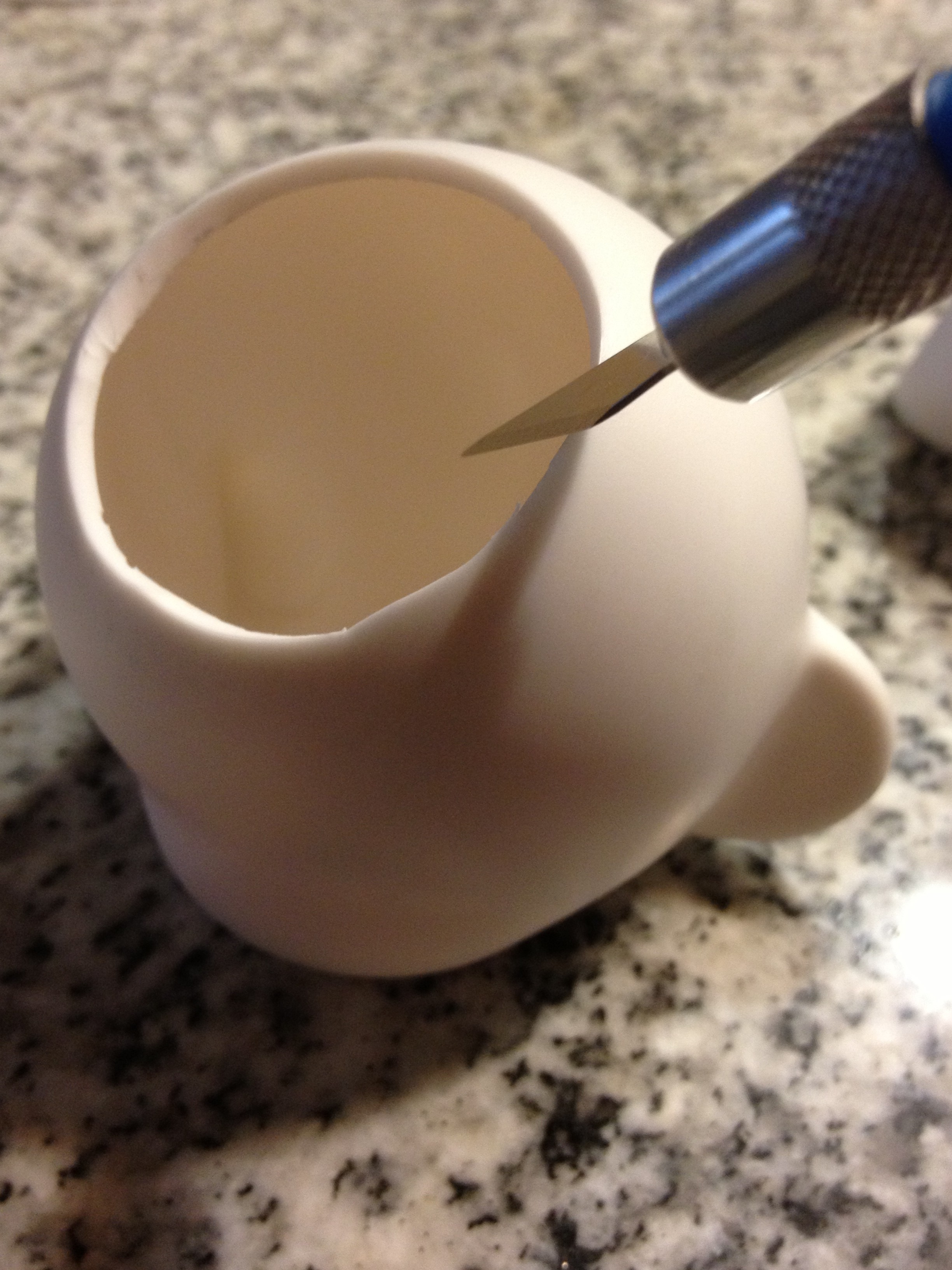
Using your speaker as a guide, mark a hole on the face of your Munny in pencil. Gently heat the vinyl with your hair dryer, making sure not to let it melt or warp. Cut the hole out with the exacto knife–be VERY careful because the warm vinyl cuts really easily. Test the fit with your speaker and cut away more material as needed.

IMG_1097

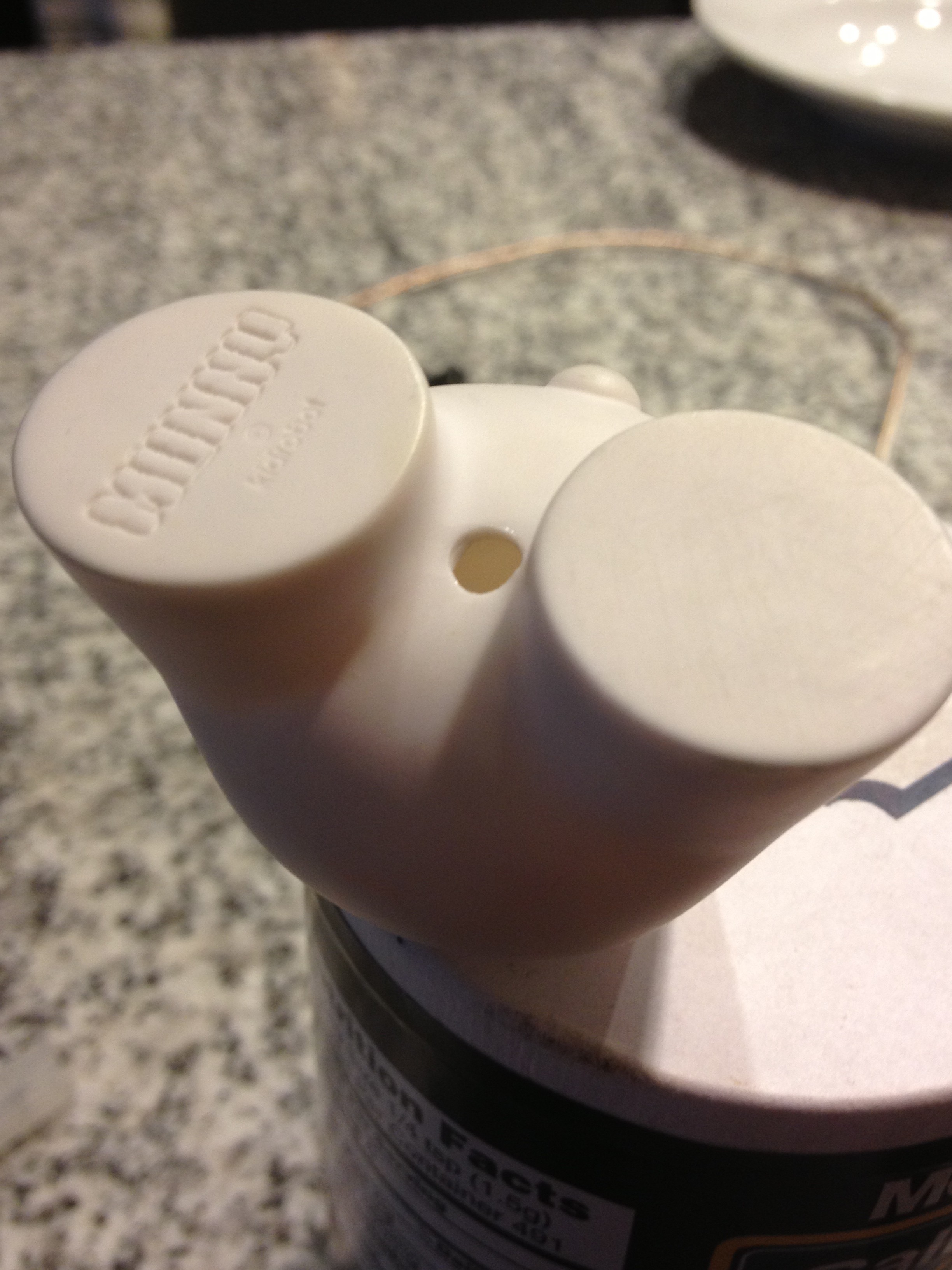
Use your knife (or a cordless drill, if you have one) to make a hole at the bottom of your figure’s body for the speaker cable to pass through.

IMG_1096

Step 3: Paint your figure

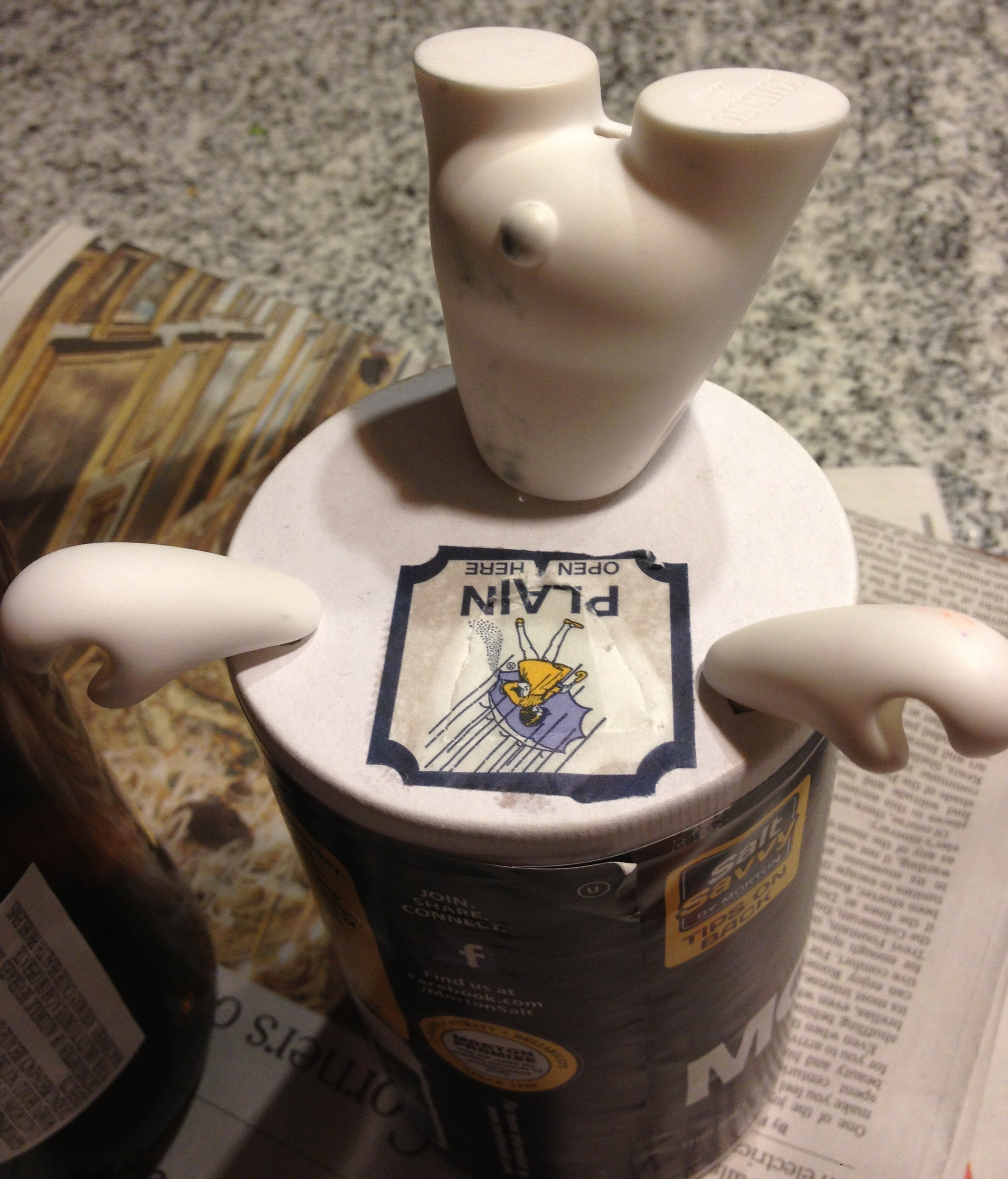
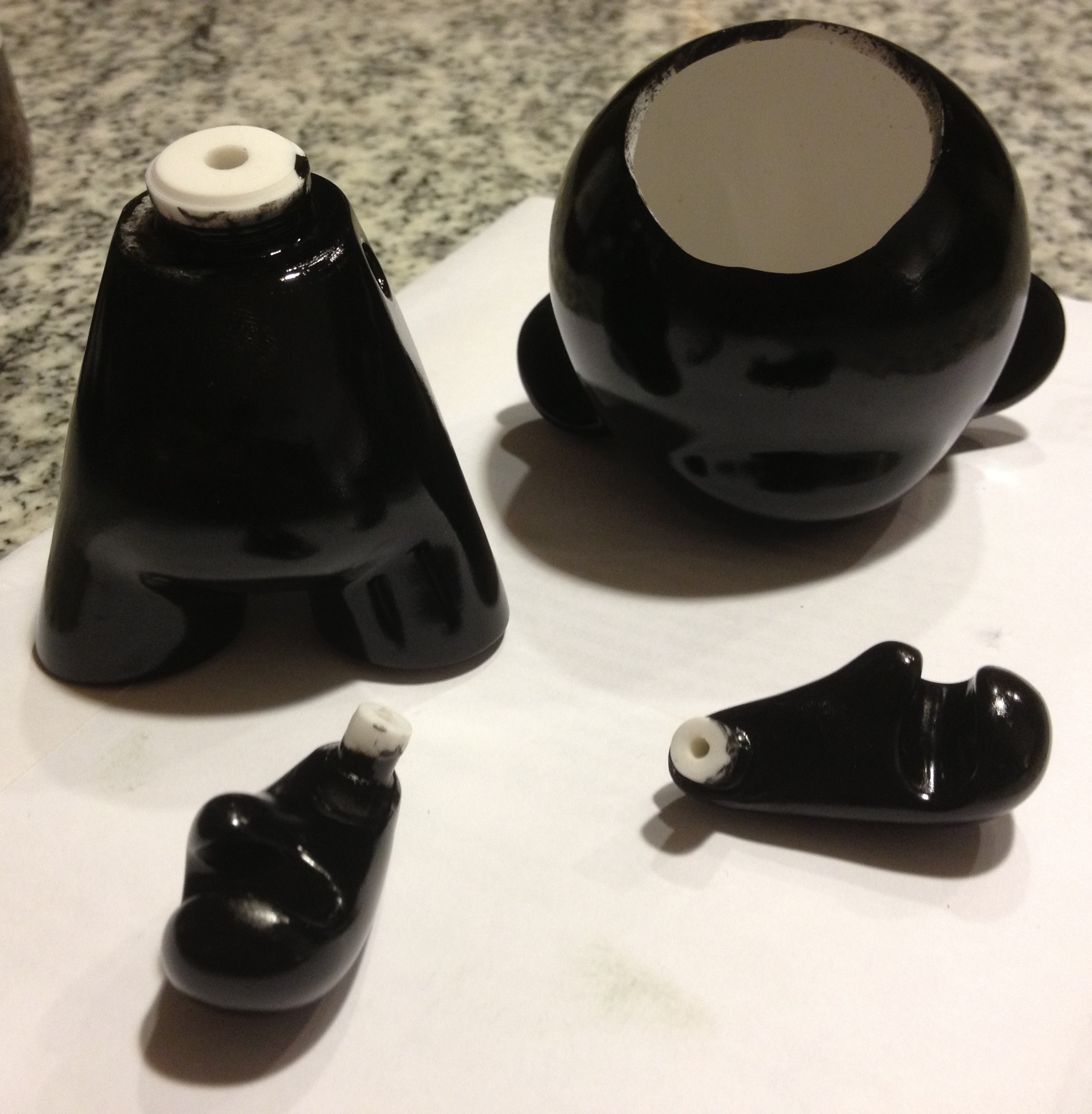
To make things easier, mount all of the vinyl parts on a styrofoam cup or something similar (I used a bottle and empty salt container) to spray paint. Take everything outside and give them a couple of nice, even coats. I gave the Altoids tin (which will be the housing for the amp) a coat as well, but it’s up to you.

IMG_1099

IMG_1100

Step 4: Get your electronics set up

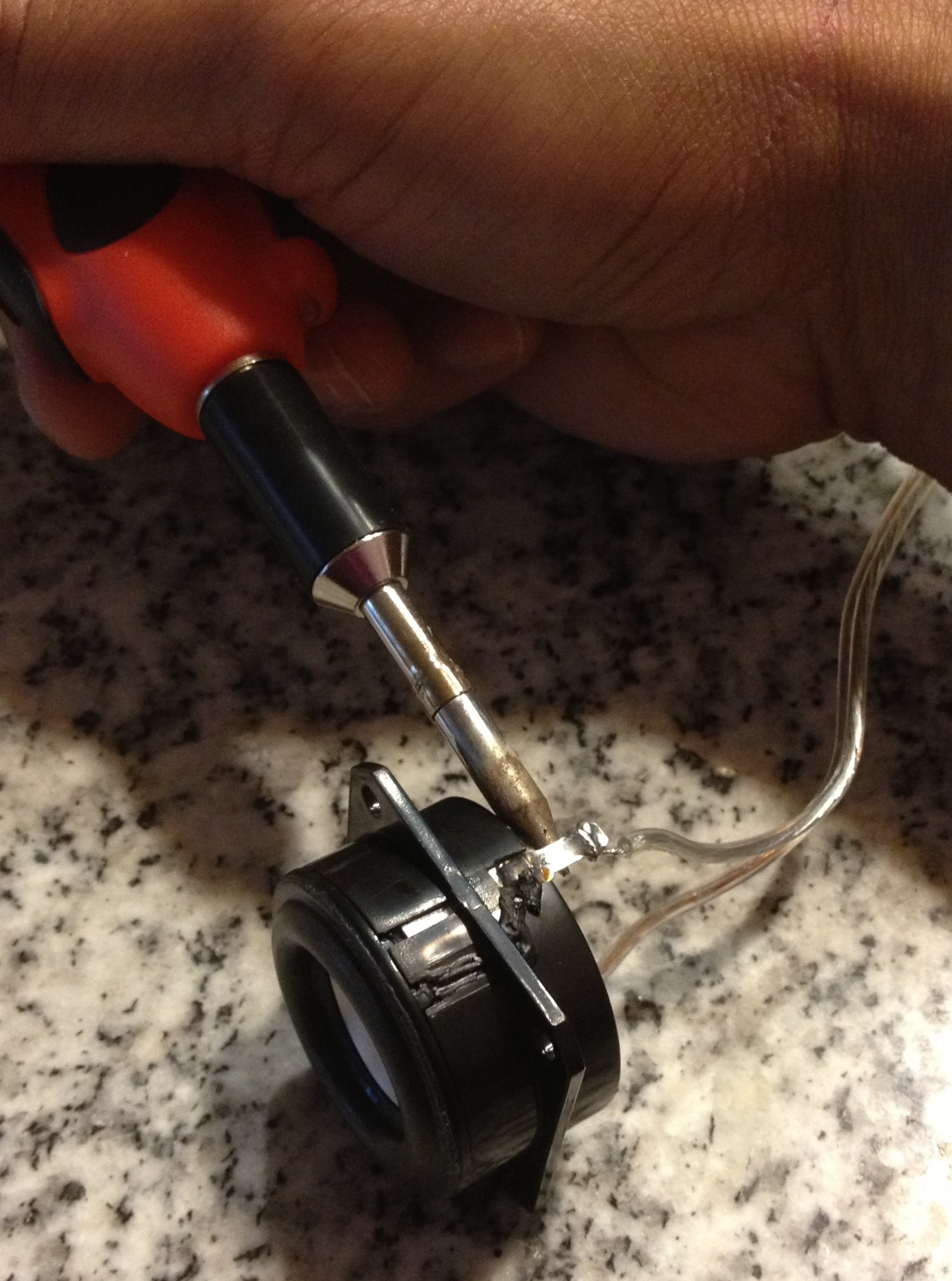
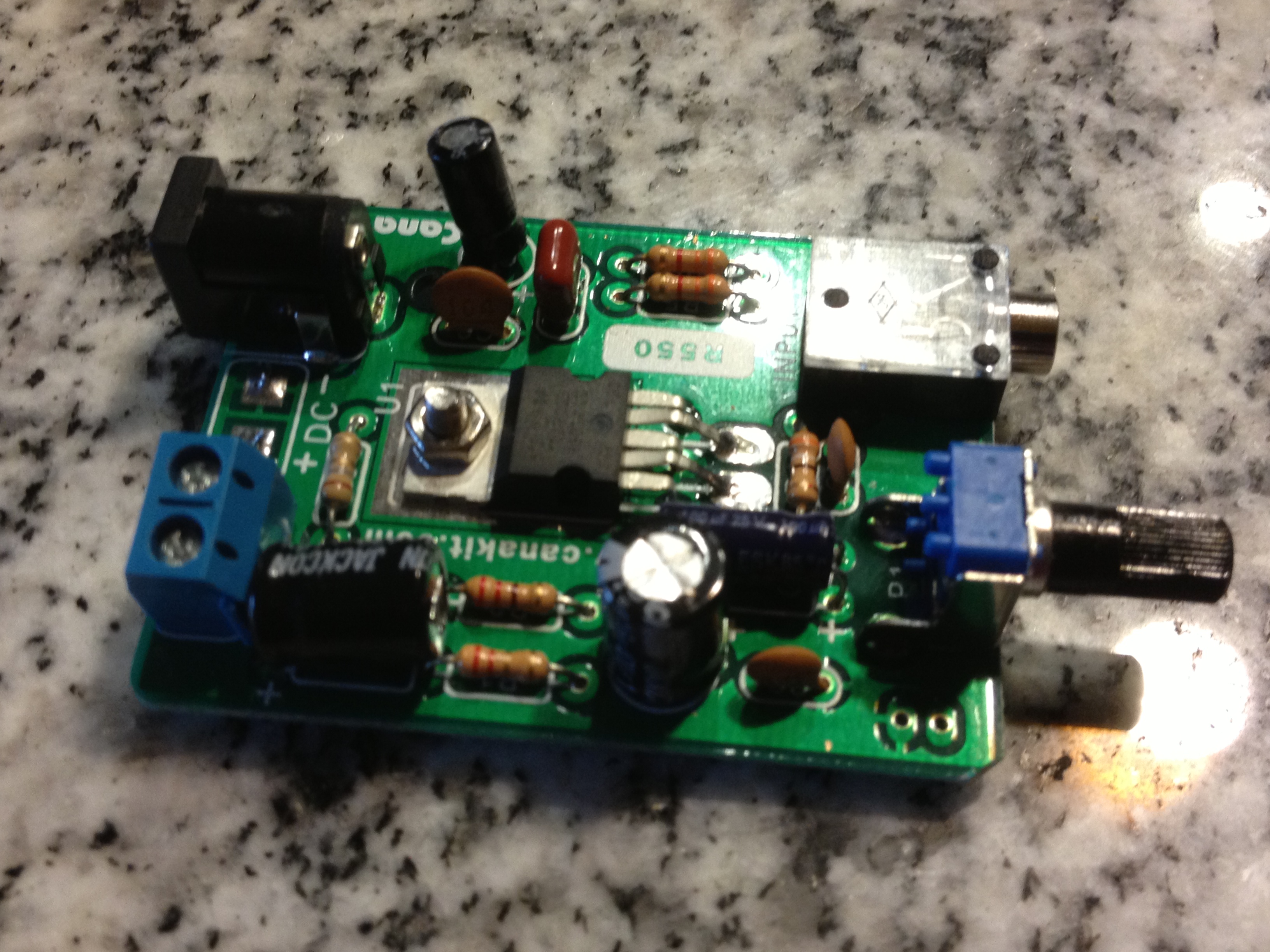
Now’s the time to make sure all of your electronic components are ready to go. Solder wires onto your speaker terminals and put together the amp components. I won’t list all of the steps here, but if you are using the kit I mentioned above, it comes with a great set of assembly instructions.

IMG_1095

Soldering wire to the speaker terminals

IMG_1093

The assembled amp kit

Step 5: Assemble the Munny speaker

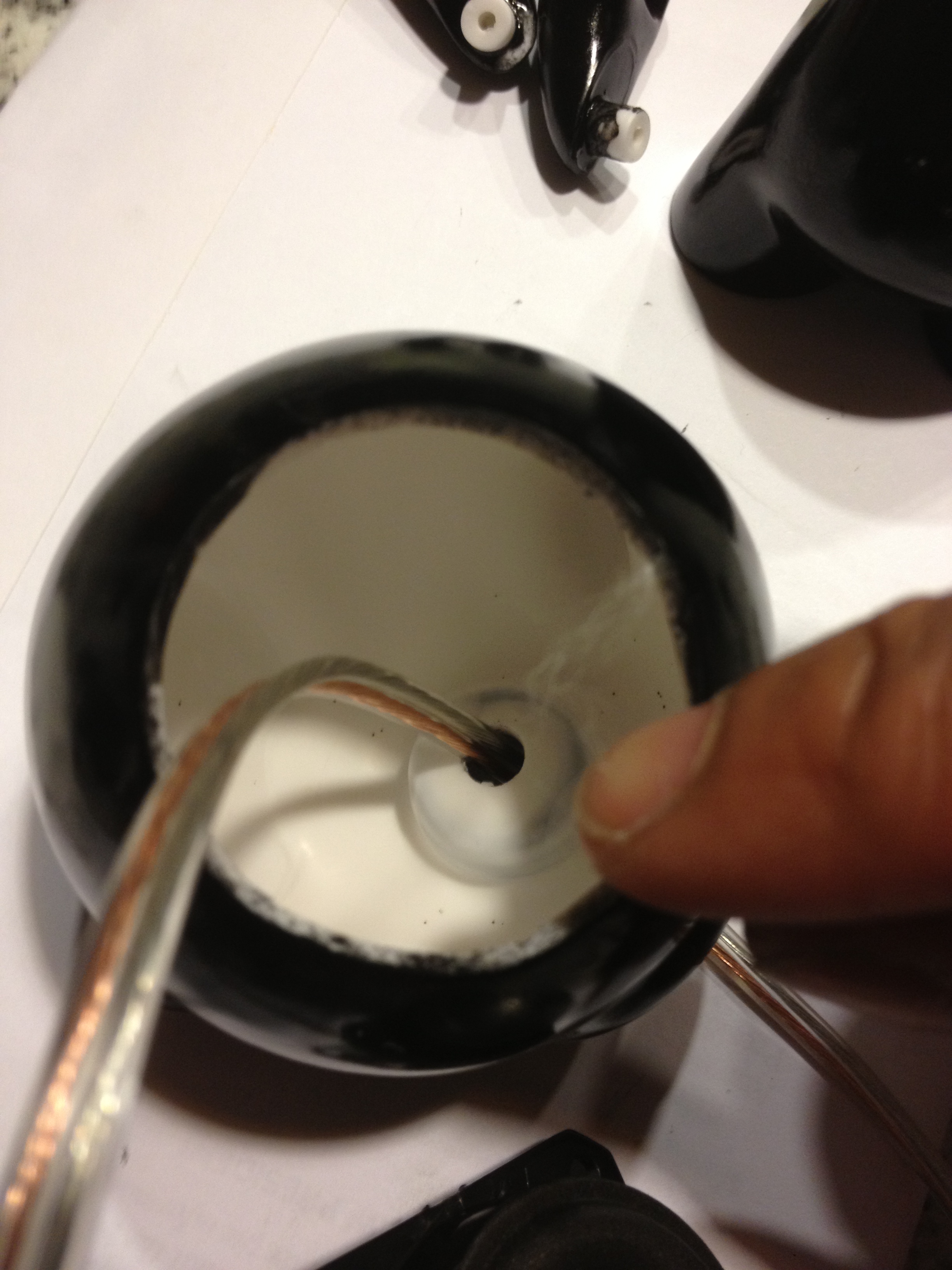
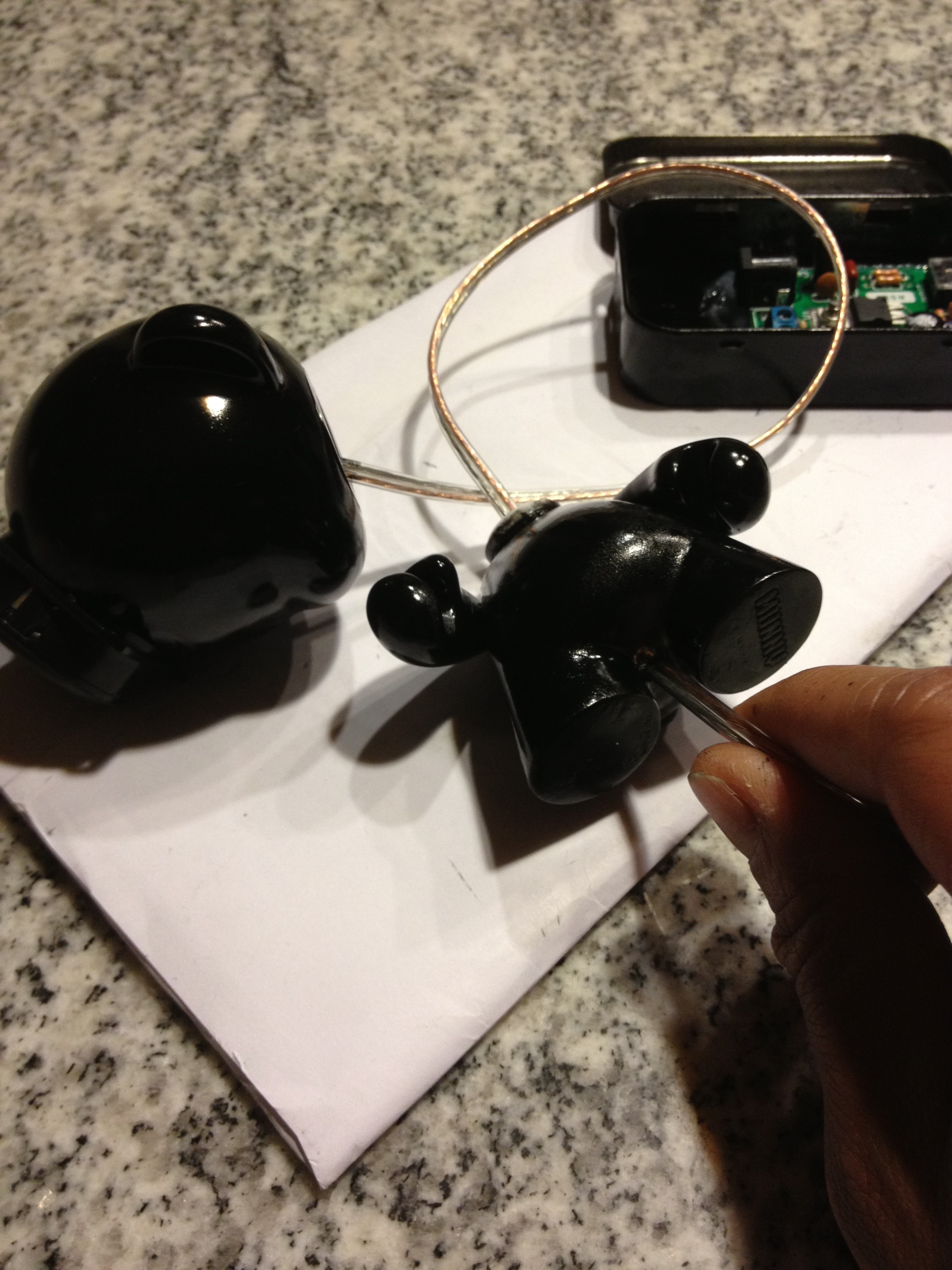
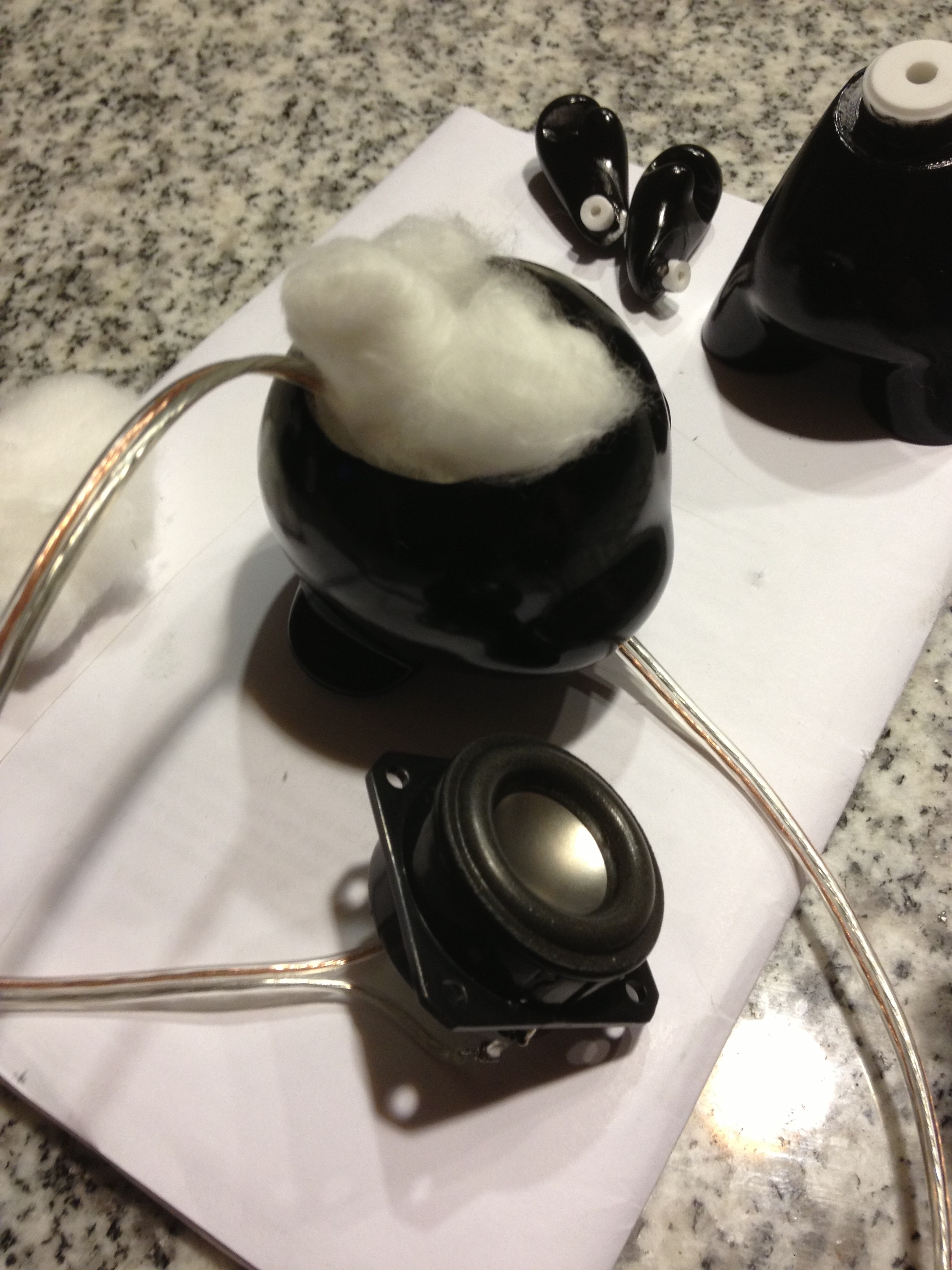
Thread the speaker wire through the bottom of the figure’s head, into the hole at the body’s neck, then out through the hole you drilled at the bottom of the body. Fill the head cavity with batting and then pop the speaker into the hole.

IMG_1101

IMG_1107

IMG_1102

Now put all of the parts to your figure back together:

IMG_1109

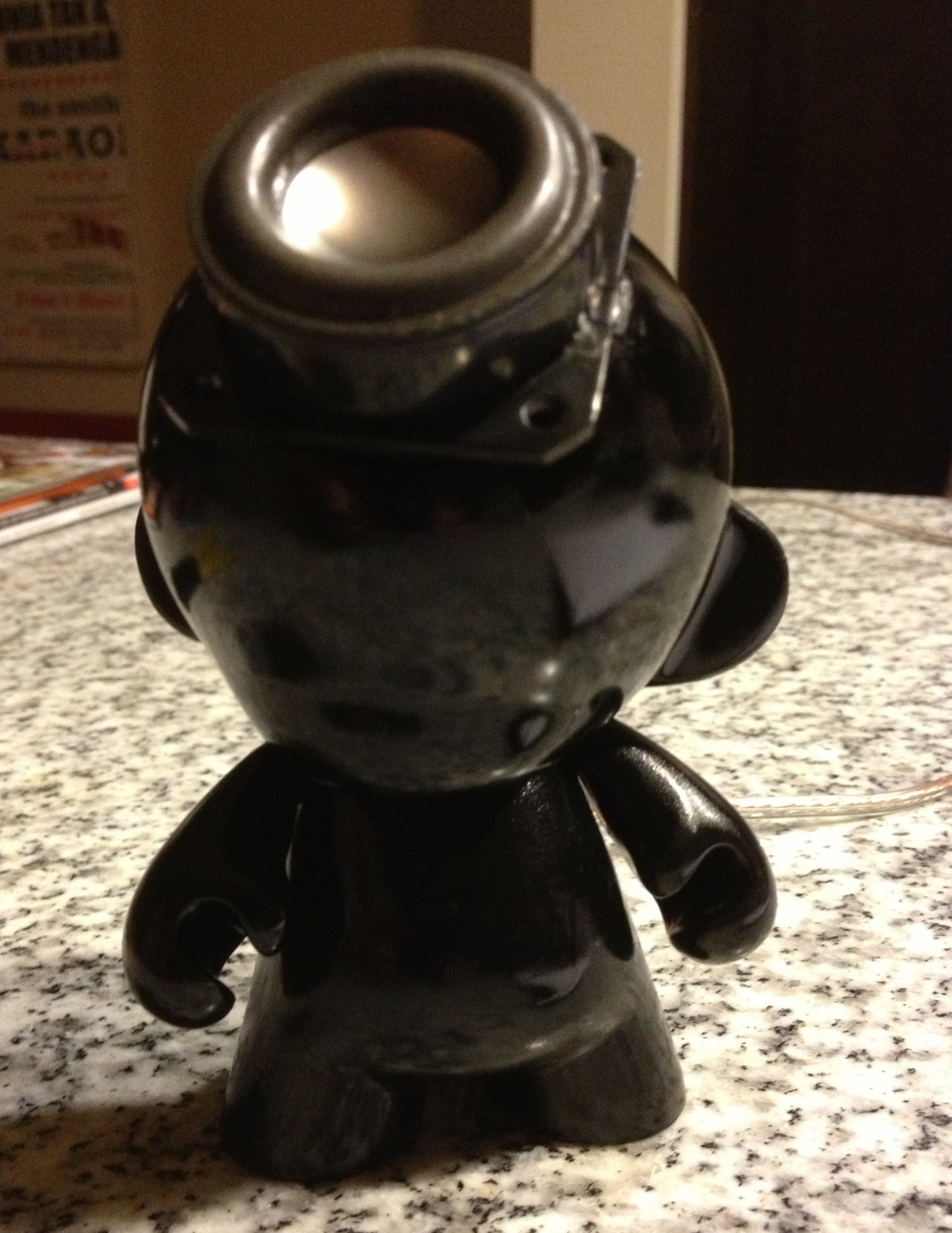
The finished Munny speaker

Step 6: Assemble the amp

Use the hole punch to make holes in the Altoids tin to accommodate the volume knob and input jacks for the amp kit. Mount the circuit board in place with the silicone caulk.

IMG_1110

Assembled amp with access to volume knob, audio input, and adapter

Step 7: Plug everything in

Plug the amp into the power adapter, insert the speaker wires into the appropriate terminals, and the audio cable into the input jack. Plug the other end of the audio cable into your MP3 player or other device, adjust the volume of the amp, and crank out some tunes–the sound is actually pretty impressive!

There are multiple ways you can adapt this project, based on the components you have available. For instance, you could power the amp using a 9V battery instead of an adapter. If you come up with any mods or Munny projects of your own, feel free to email me your pics!

JC Bigornia
C3 Program Coordinator

Friday Photos: Old School

Even though I’ve been out of school for a while now, back-to-school season is always one of my favorites. Aisles of shiny new school supplies in the stores, boxes of crayons with perfectly sharpened tips, stacks of books in lockers, the excitement of seeing friends and teachers–to me, it all brings a sense of anticipation and possibility to the world.

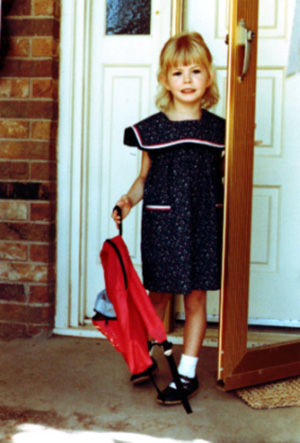
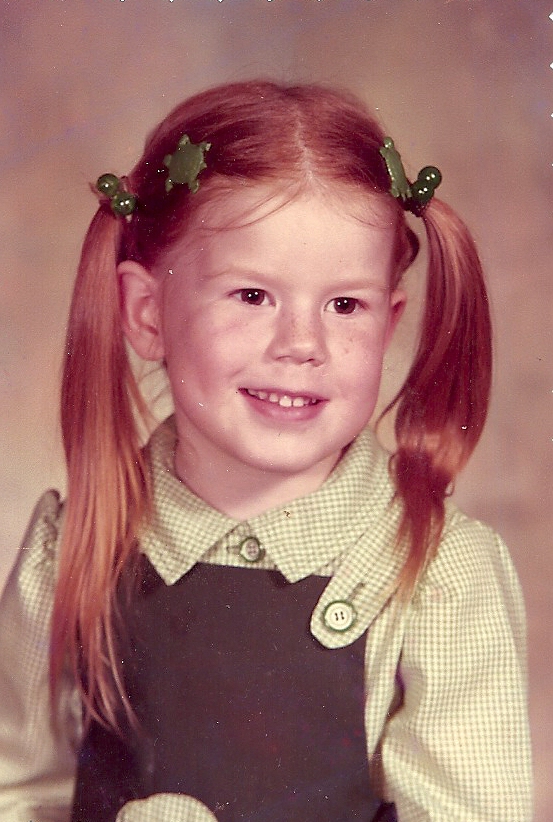
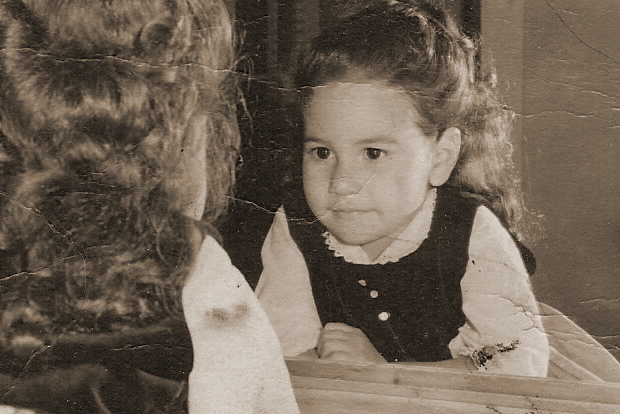
For today’s edition of Friday Photos, I thought we’d go back in time and catch a glimpse of some of our Education staff in their back-to-school glory. Can you find a familiar face?

Wishing everyone a successful school year!

Leah Hanson
Manager of Early Learning Programs

What Does Fun Look Like at the DMA?

I have written posts in the past about our goals for docent-guided tours at the DMA. Our current goal statement was written five years ago, and I think it’s in need of a few updates. It states that we want students to feel comfortable at the Museum, as well as to begin to see their world in a fresh way. What does that mean, and how can we measure whether that happens on our tours?

4th_Grade_Tours_11_2012_032

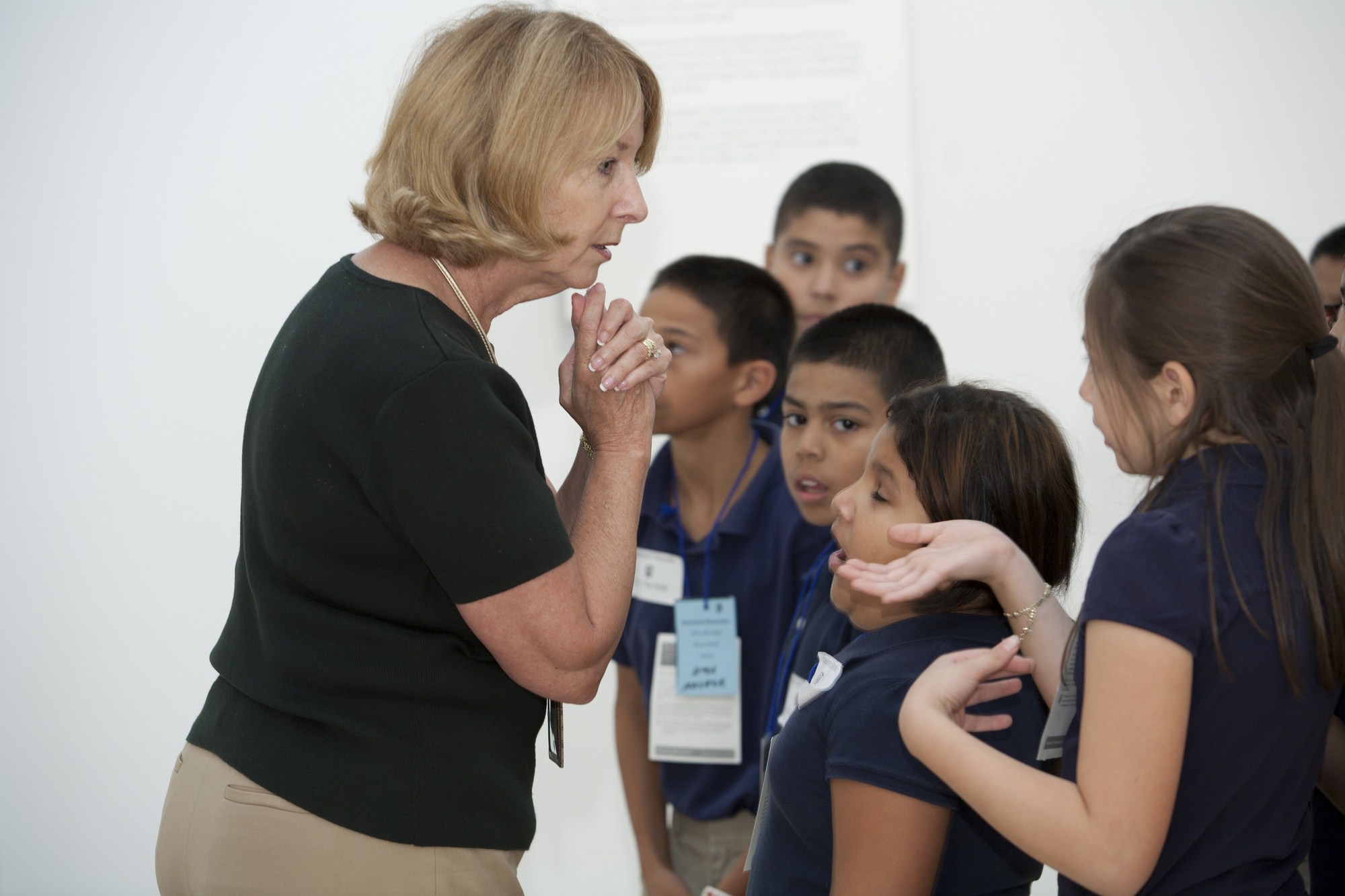
Over the summer, I met with small groups of docents to begin redefining our goal for tours. These docents were asked “What are your motivations and desires when planning a tour for the DMA’s visitors?” Their answers were thoughtful and really demonstrate their passion for the work that they do at the DMA.

  • My hope is that they will learn how to “look” in a museum setting and that they will want to return or visit other museums.
  • My biggest goal is to get the students to want to come back and to leave with vivid memories of what they saw.
  • My biggest hope is that even one child sees an object that excites them and makes them want to see more.
  • I want them to leave with more questions than they had when they came in so that they will be eager to come back and enjoy what this museum has to offer.
  • I want the students to feel comfortable, be inspired and amazed, learn a few things, and have fun!
  • My motivation is to share objects that are special to me so that I can bring genuine excitement to them.

4th_Grade_Tours_11_2012_105

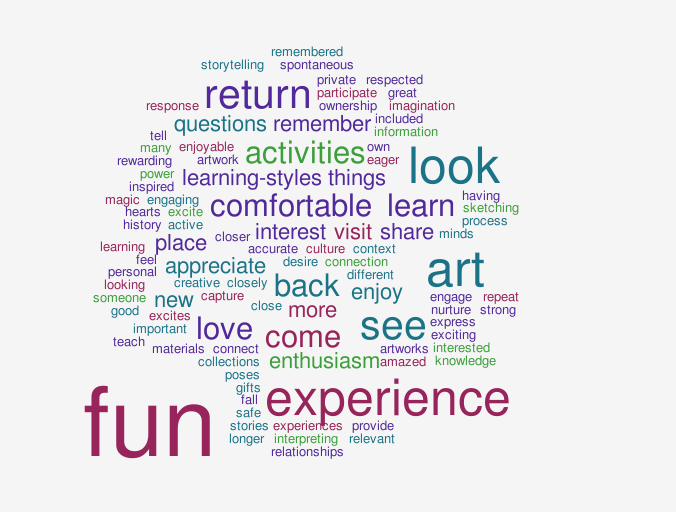
I plugged the docents’ responses into Wordle in order to easily see what words popped up repeatedly. In a word cloud, the size of a word corresponds with the number of times it was entered into Wordle. From this word cloud, it’s obvious that a “fun experience” is the top motivation for our docents when planning tours.

Docent Goal Word Cloud

As a group, the docents and I are now trying to unpack the word “fun.” Just what does a fun experience at the DMA look like? How do we know that students are having fun in our galleries? Do sketching and inventing stories about a work of art lead to a fun experience? Is laughter our best indicator that students are enjoying their tour? These are just some of the questions that we are pondering as we begin our new training year.

StudentVisits_ShannonKarol_02_27_2009_072

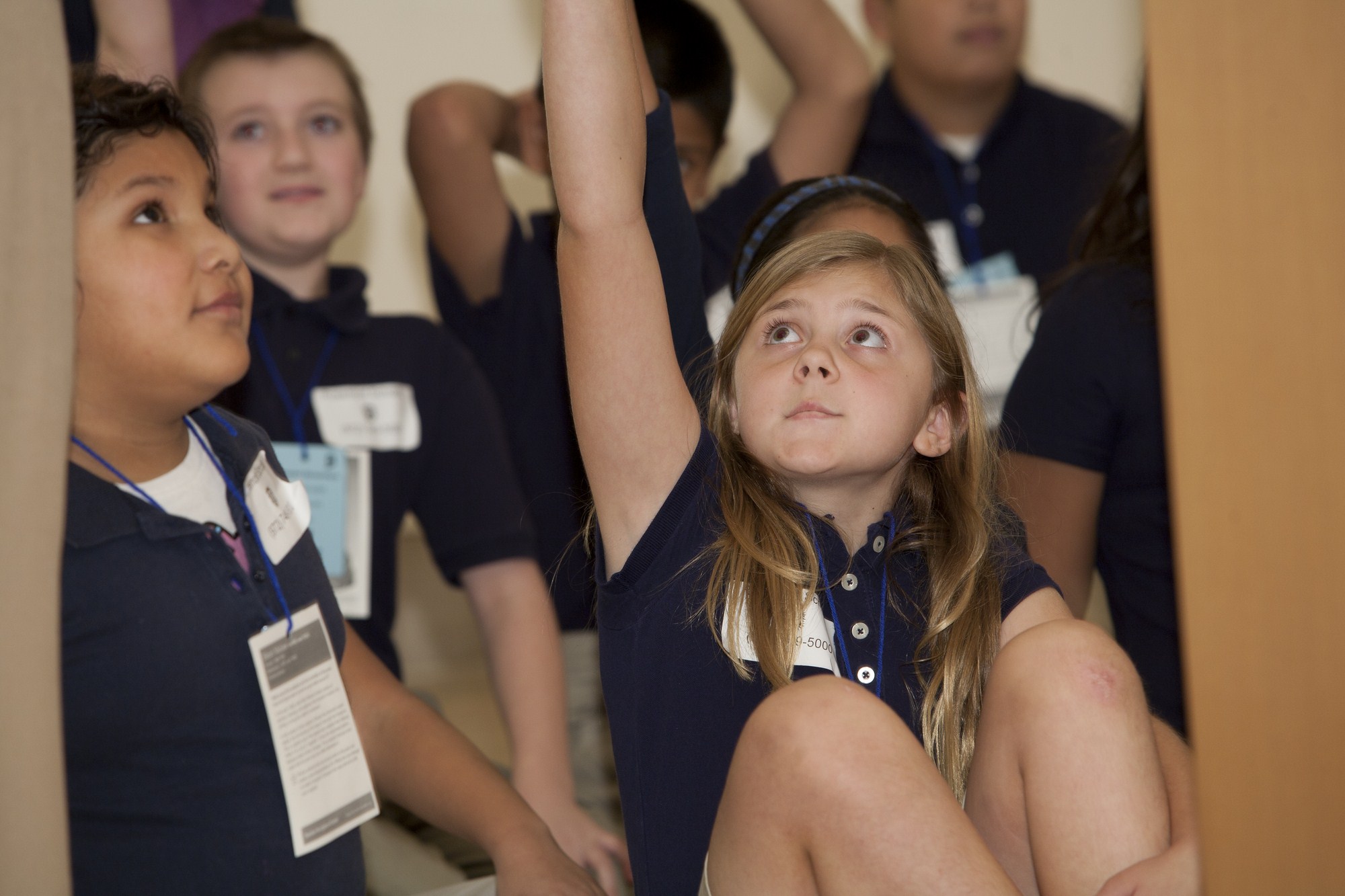
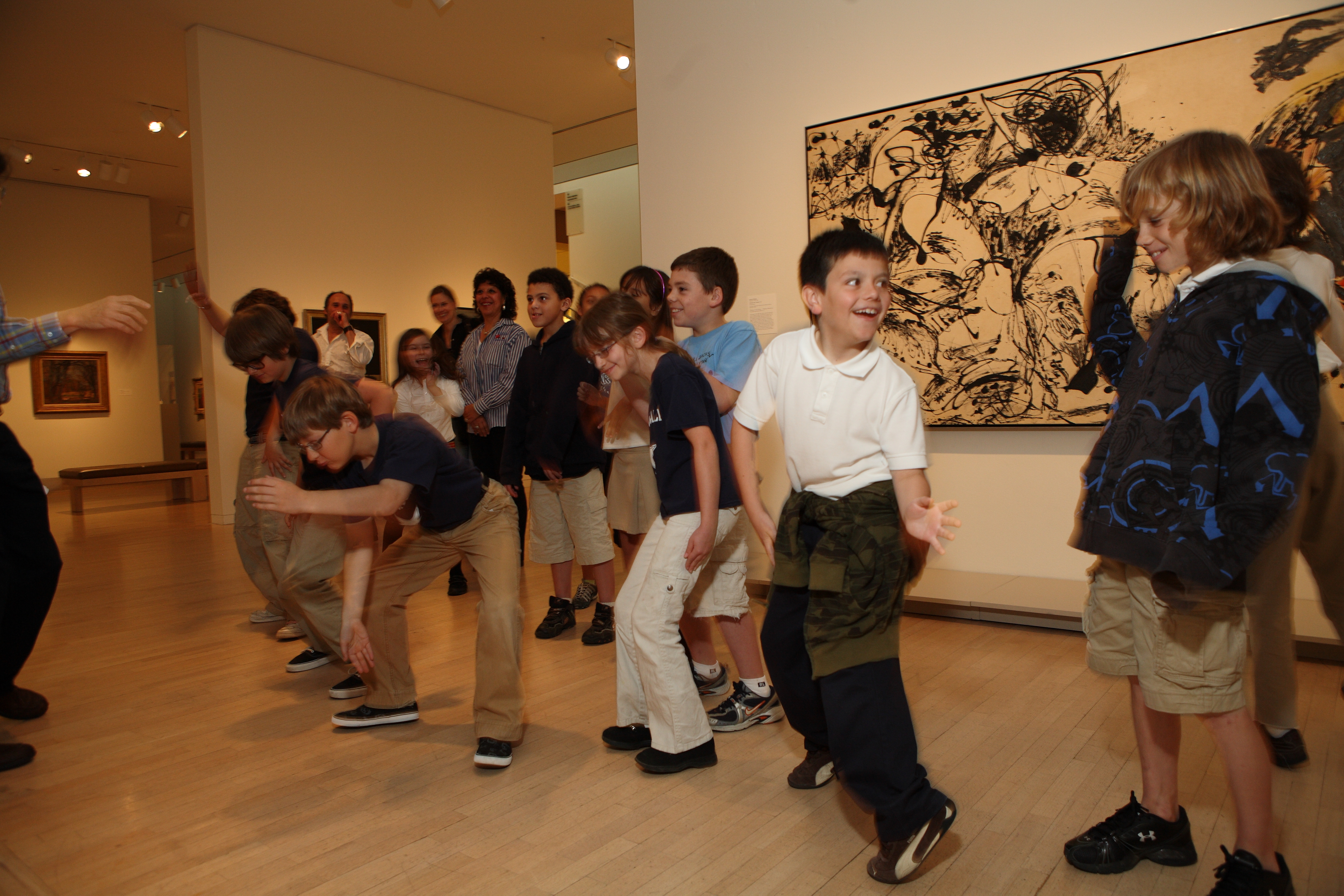
These kiddos certainly appear to be having fun on their tour

Now it’s your turn to weigh in. I would love to have your insight as we move forward with revising our goal for docent-guided tours. How do you know that your students (or children) are having fun at the DMA? What have been some of their favorite experiences here? If you’re a teacher, I am also curious to know what your motivations are when you schedule a field trip to the DMA. It will be interesting to see how your motivations overlap with those of our docents.

Please add your comments below or feel free to email me. I look forward to hearing your thoughts on having fun at the DMA!

Shannon Karol
Manager of Docent and Teacher Programs

Go van Gogh-ing on a Colorful Classroom Adventure

The newest Go van Gogh program involves two things that are deeply exciting in my book: expanding outreach to a new audience and getting messy with paint!

Color My World is a one-hour outreach experience for elementary students in Special Education classrooms. The program was developed by Head of Family, Access, and School Experiences Amanda Blake, and it takes the best of what we do in Museum Access programs—creating multi-sensory activities for a range of abilities—and brings it out to schools.

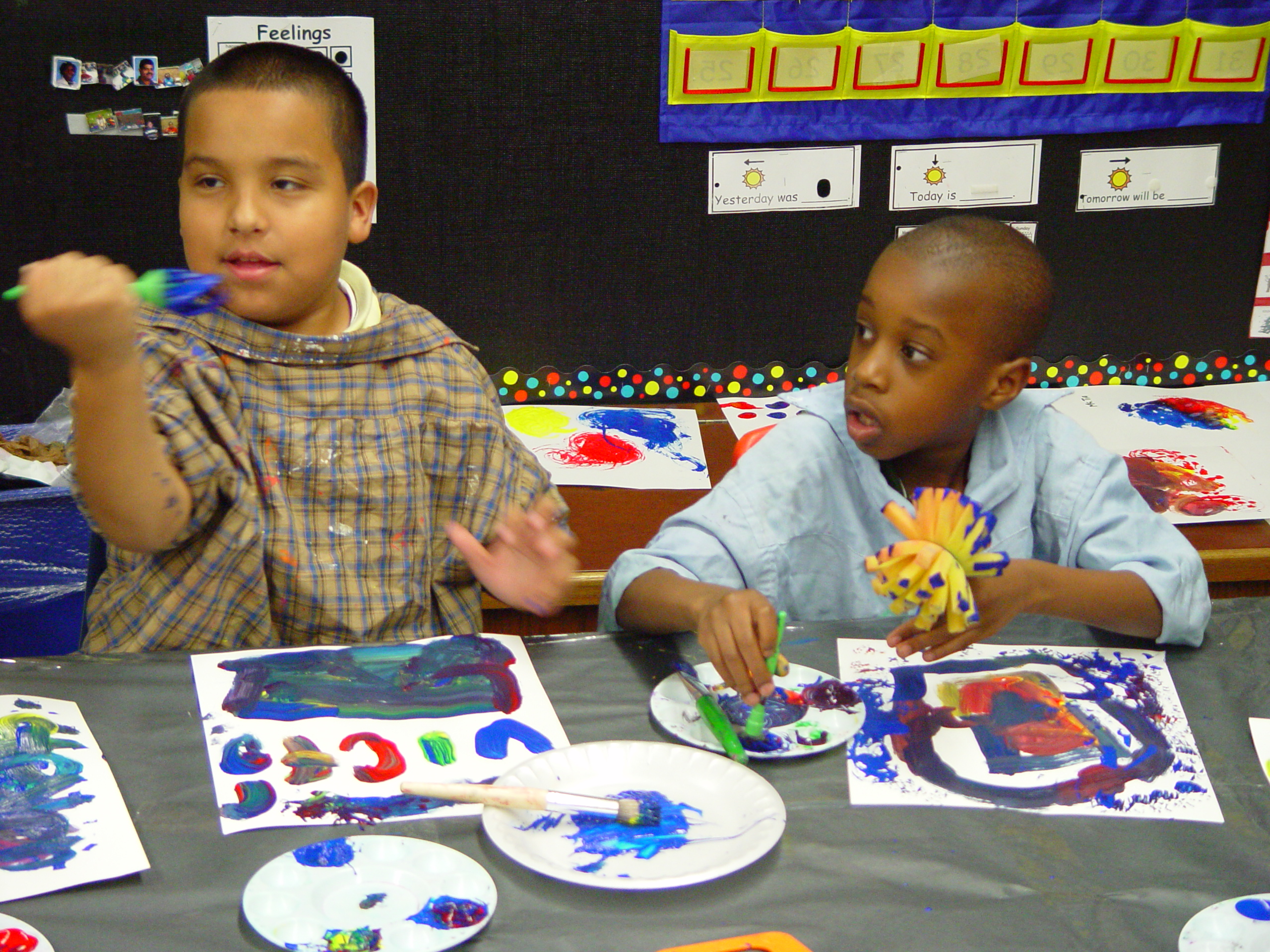
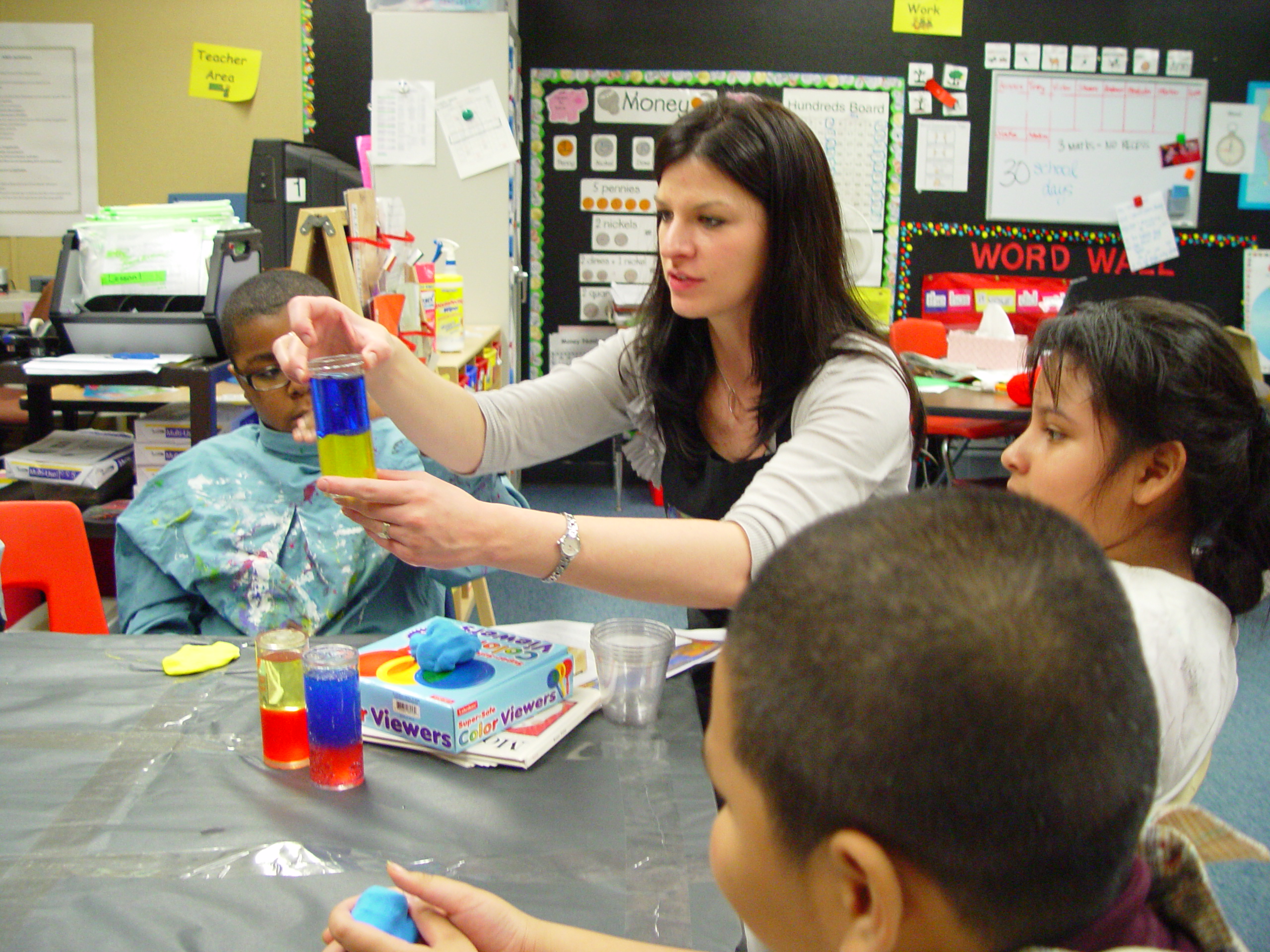
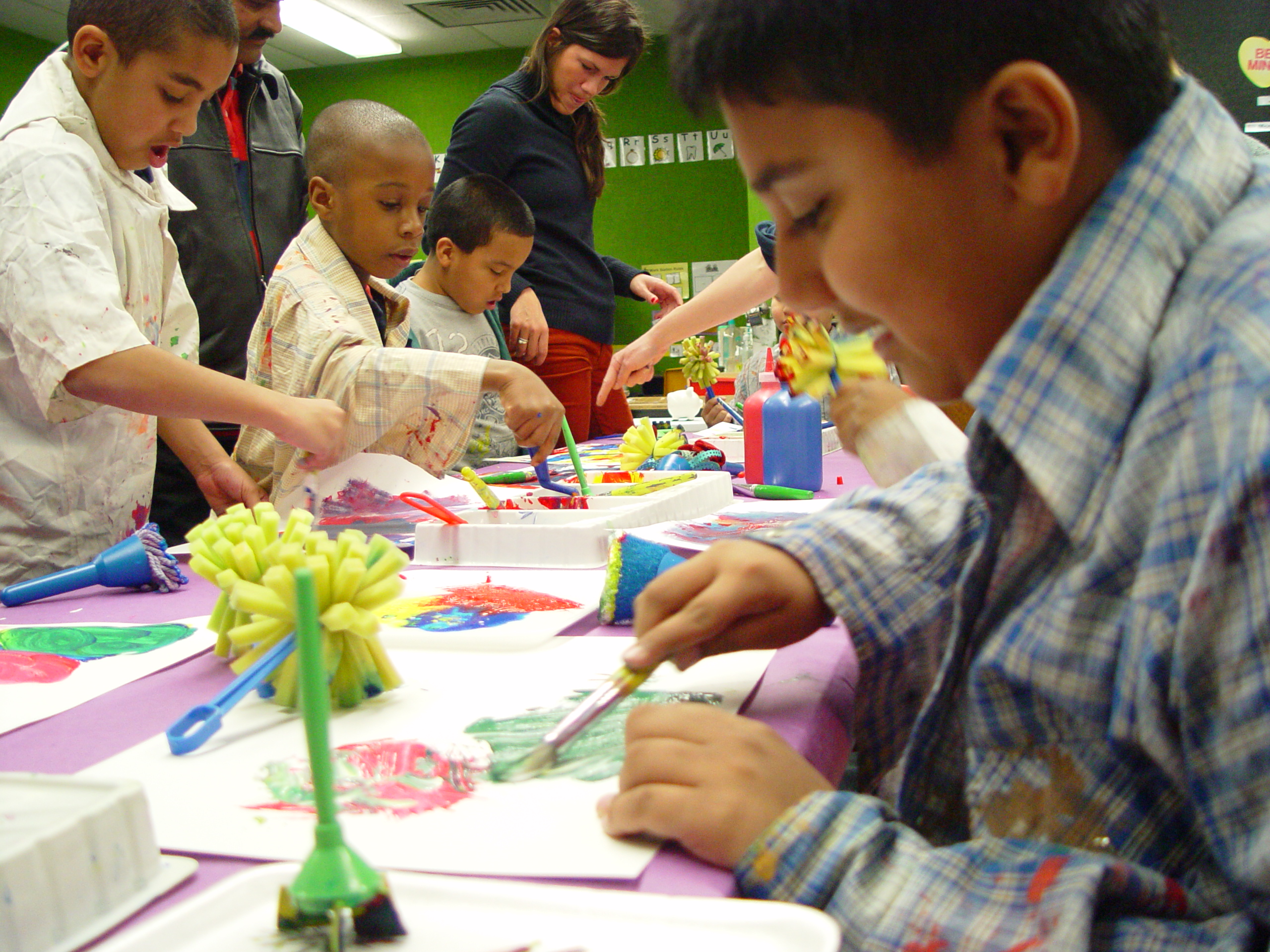
Color My World is a colorful adventure in a variety of media. Students listen to a story, watch color-mixing experiments, discuss the color wheel, and paint two artworks using a variety of ordinary (and extraordinary!) painting tools. We explore and take inspiration for our color-mixing and painting techniques from artworks in the Museum’s collection.

Color My World is offered to mixed-age Special Education classes within Dallas city limits. Programs take place on selected Monday afternoons and may begin at or after 1:00 p.m. If you are interested in requesting a program for your Special Education classroom, please email me.

And then grab a smock, ready your palette, and let’s get to painting!

Amy Copeland
Manager of Go van Gogh and Community Teaching Programs

Friday Photos: Lights Out

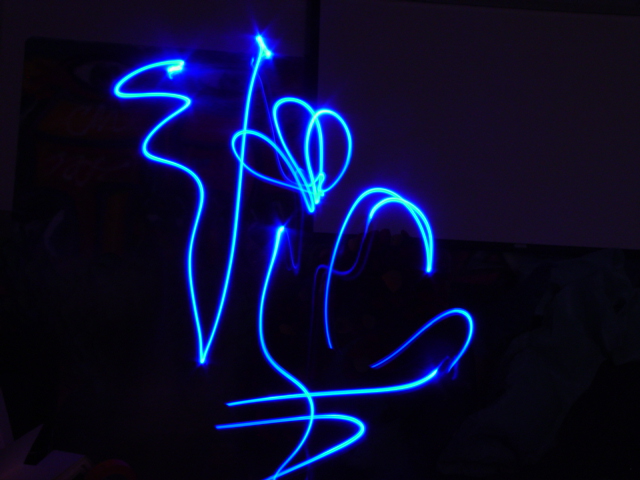
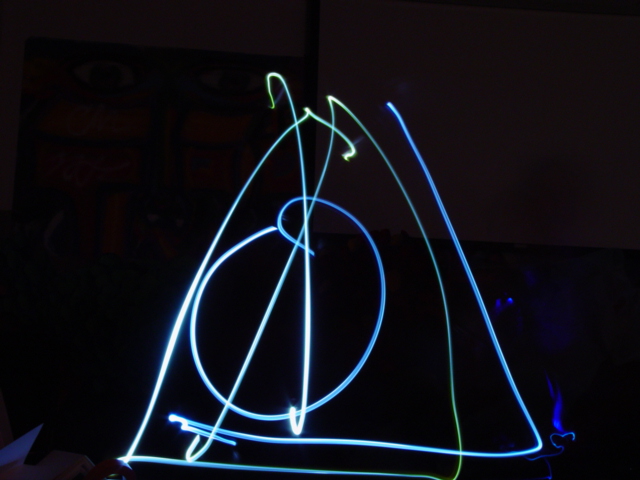
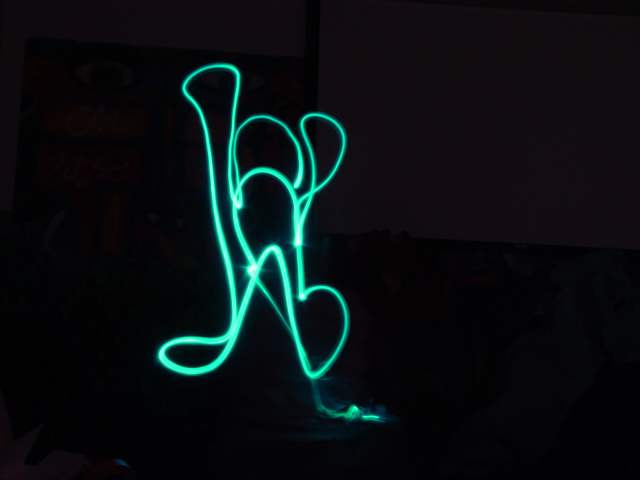
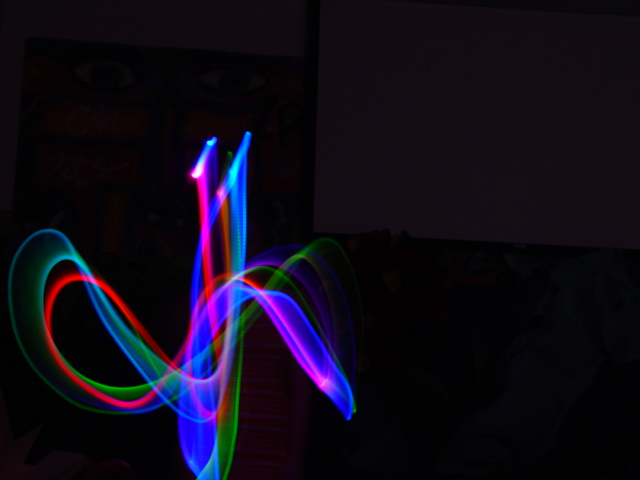
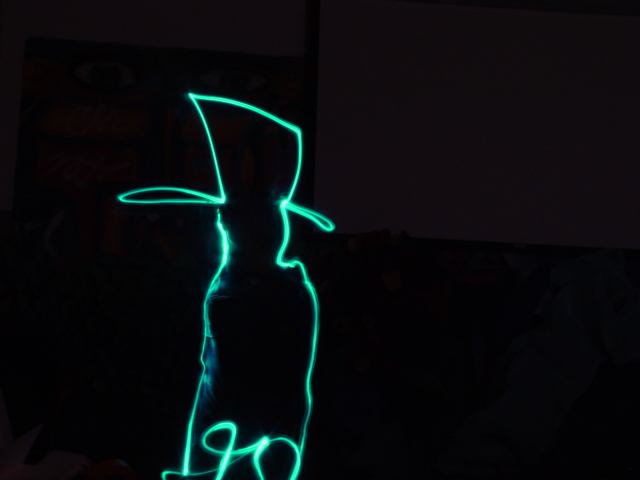
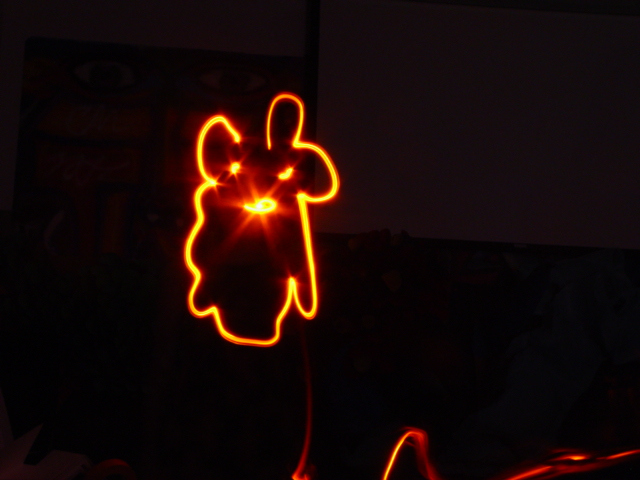
This summer, we were fortunate to have 52 fabulous Teen Docents helping us with tours, story time, Late Nights, and Summer Art Camps.  From mid-June to mid-August, our Teen Docents volunteered 751 hours of their time at the DMA!  We truly couldn’t present our summer programs without them!

We celebrated the end of the Teen Docent season last Friday with an ice cream social and a little light graffiti.  Some of their excellent light designs are below.

Thank you to all of our Teen Docents for a great summer!

Shannon Karol
Manager of Docent and Teacher Programs

Community Connection: Make Art with Purpose

When you hear the words social change, what comes to mind? Some people think of government and politics, others think of social activists. When Janeil Engelstad envisions social change, her definition includes collaboration, working across disciplines, flexibility, and trust. Janeil is the Founding Director of Make Art with Purpose, “an organization and virtual resource center for creative projects that are shaping and transforming our world in positive ways.” These projects will be showcased during MAP 2013, a festival and exhibition occurring during October and November 2013 in the DFW Metroplex.

JaneilEngelstad_Promo_2013

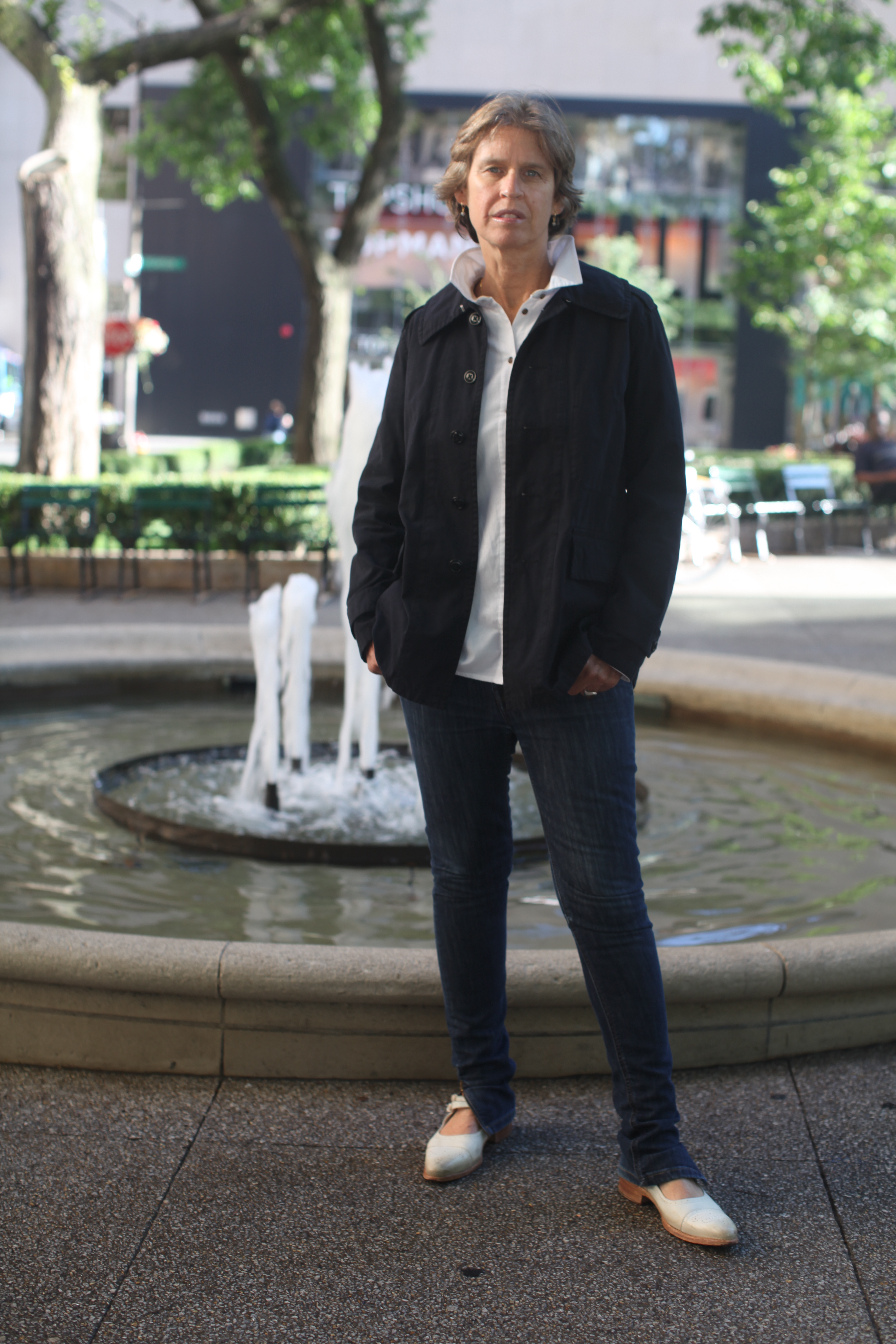
Janeil Engelstad, Founding Director of Make Art with Purpose

What inspired you to begin your work with MAP?

MAP grew out of my own creative practice, working with communities and addressing social and environmental concerns for the past two decades. Beyond that, I saw a need for a grass-roots organization that promotes the work of artists and organizations who are doing this work internationally and also acts as a connector for these artists, groups, and people from other disciplines (such as scientists and community activists) who could come together through or via MAP to collaborate on a project.

What do you hope to accomplish with the festival this fall?

Producing MAP 2013 Dallas, my initial hope was to bring a handful of national and international artists, talk to local cultural, community, and civic organizations, and see what kind of impact we could have if we came together to produce projects that address concerns that are relevant both locally and globally, such as immigration and climate change. I also hoped, with this initial beginning of reaching out and bringing in, that a spark would be lit that would inspire people to come aboard and address their own needs and concerns. That has been successful beyond my wildest dreams. Local artists and organizations who have never worked this way are seeing this as an opportunity to engage their community and talk about issues that are import to Dallas, and that is inspiring – that organizations and artists are wanting to engage in a civic conversation. Additionally, there are legacy projects that leave something behind, which create something that is longer lasting than a conversation. Some examples are the DMA project, building a new garden at the Trinity River Audubon Center, and a new seating area within a natural dye garden at UNT.

Describe your project with the DMA.

This project grew out of several conversations with Susan Diachisin about the possibility of collaborating with the Center for Creative Connections. During this time, the DMA was in the process of rewriting its mission statement and returning to free general admission. This dovetails with a central part of MAP’s mission to provide access to cultural programs for communities that are often marginalized for one reason or another. Thinking about how we could bring our experience and knowledge together to create something new, I came to the idea of inviting community members to create a guide to the Museum.

During Translating Culture…Community Voices at the DMA, twelve members of the Dallas chapter of Avance spent nine two-hour sessions at the DMA, during which they learned about the Museum’s collections and wrote their personal interpretations and connections about an artwork of their choice to be included in a printed tour for visitors in Spanish and English.

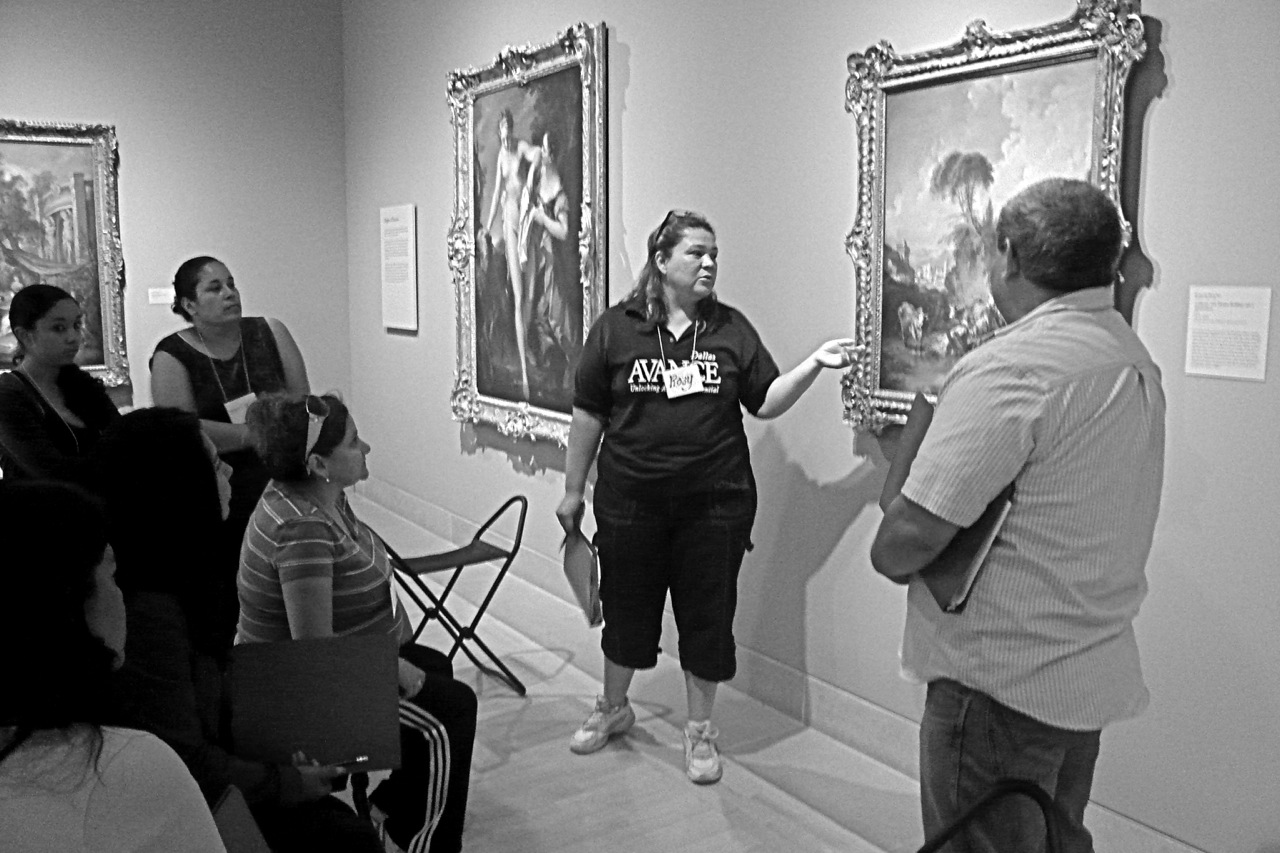
Rosy shares her insights about an 18th-century European painting during a group exercise early in the program.

Rosy shares her insights about an 18th-century European painting during a group exercise early in the program.

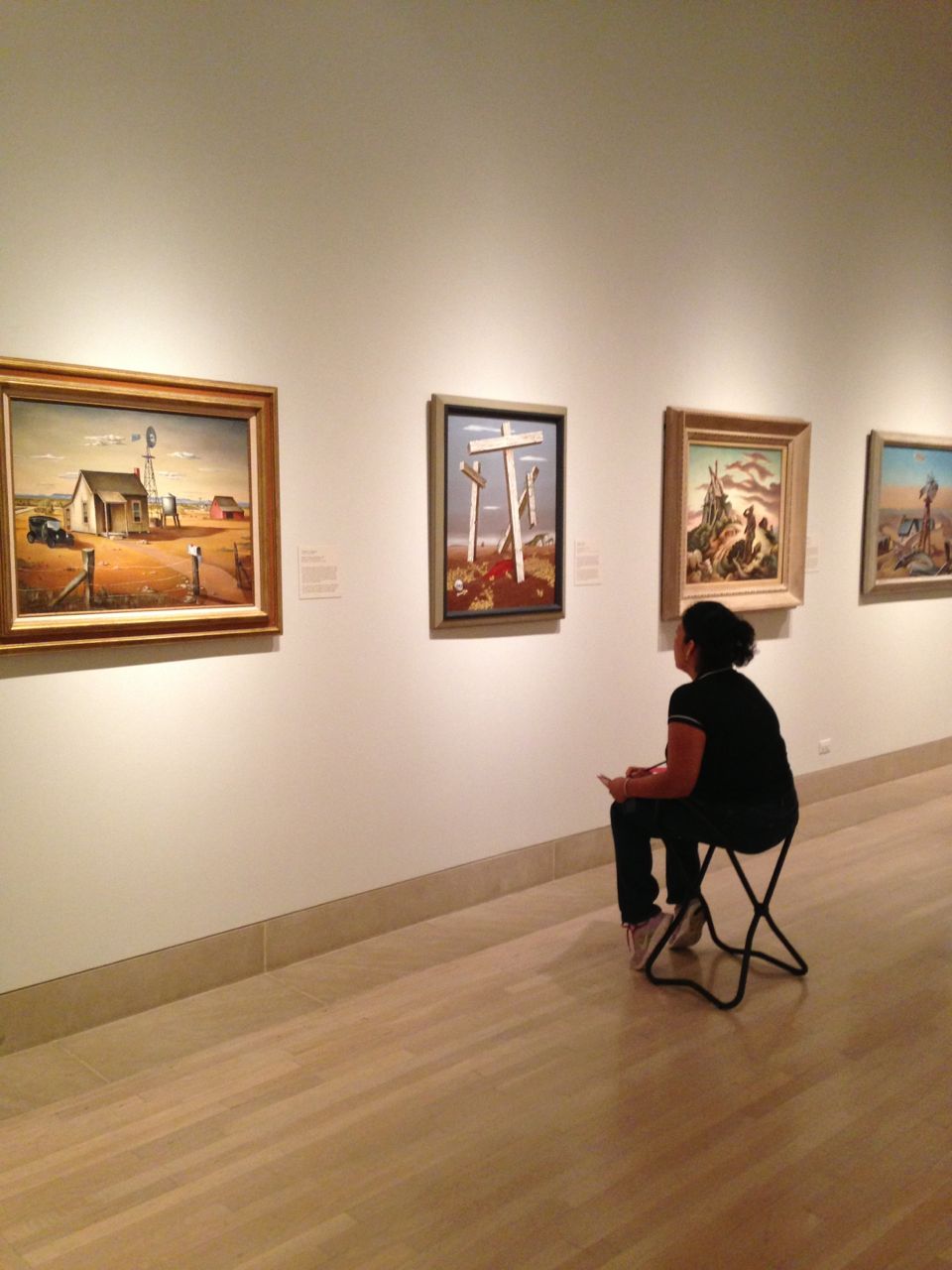
Bety contemplates a 20th-century American painting she has selected for the tour.

Bety contemplates a 20th-century American painting she has selected for the tour.

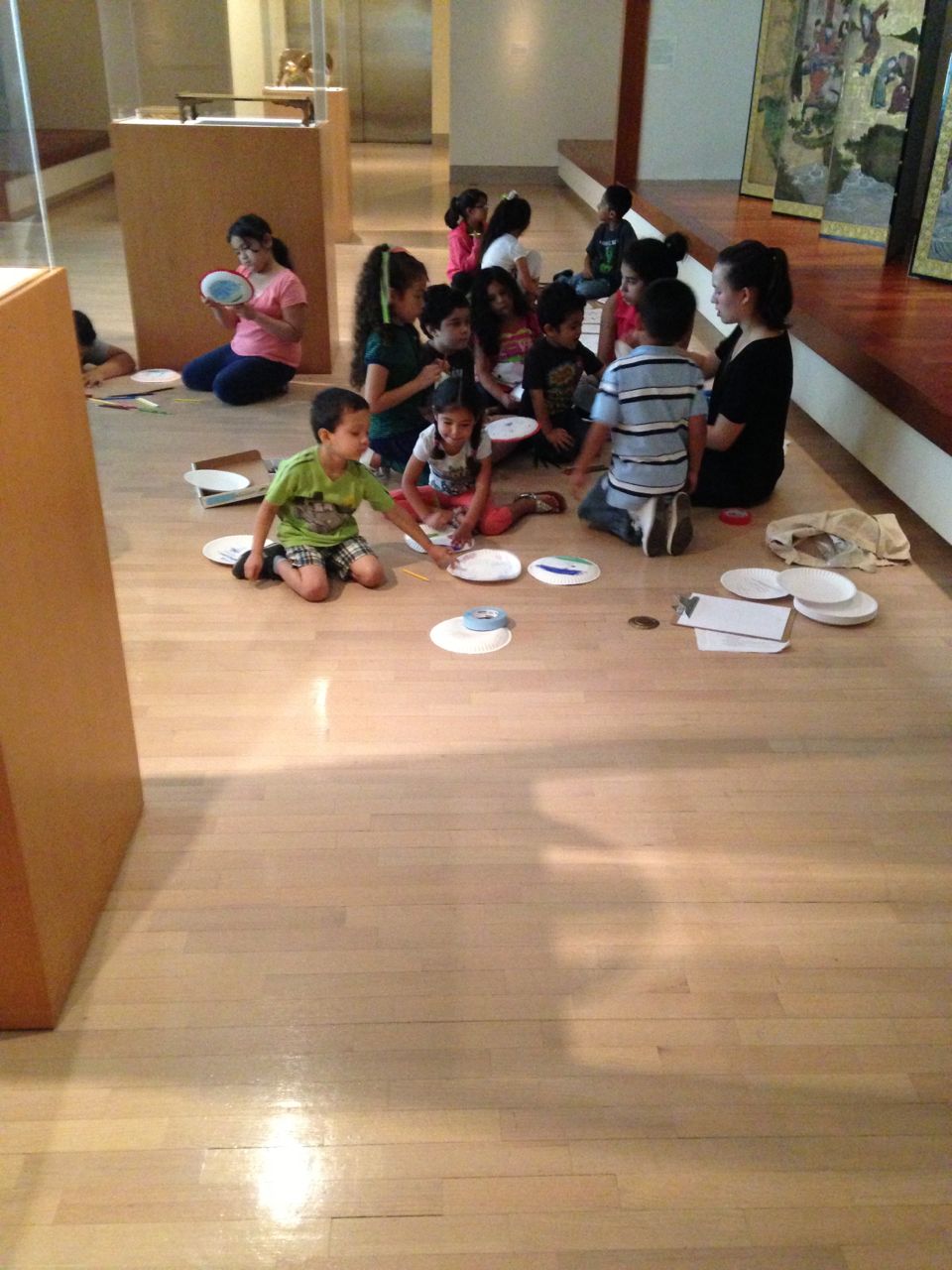
Participants were invited to bring their children, who made art projects in the Museum galleries with DMA and MAP staff.

Participants were invited to bring their children, who made art projects in the Museum galleries with DMA and MAP staff.

How do you tap into your own creativity?

It’s not a conscious thing I do; rather, it ignites when I am swimming…or I could be meditating. If I know I need to come up with a creative idea or solution for something and the seed is planted, after a day or two it will evolve. It comes from a combination of my life experiences, my teachers, my collaborators, Spirit and all the things that inspire me.

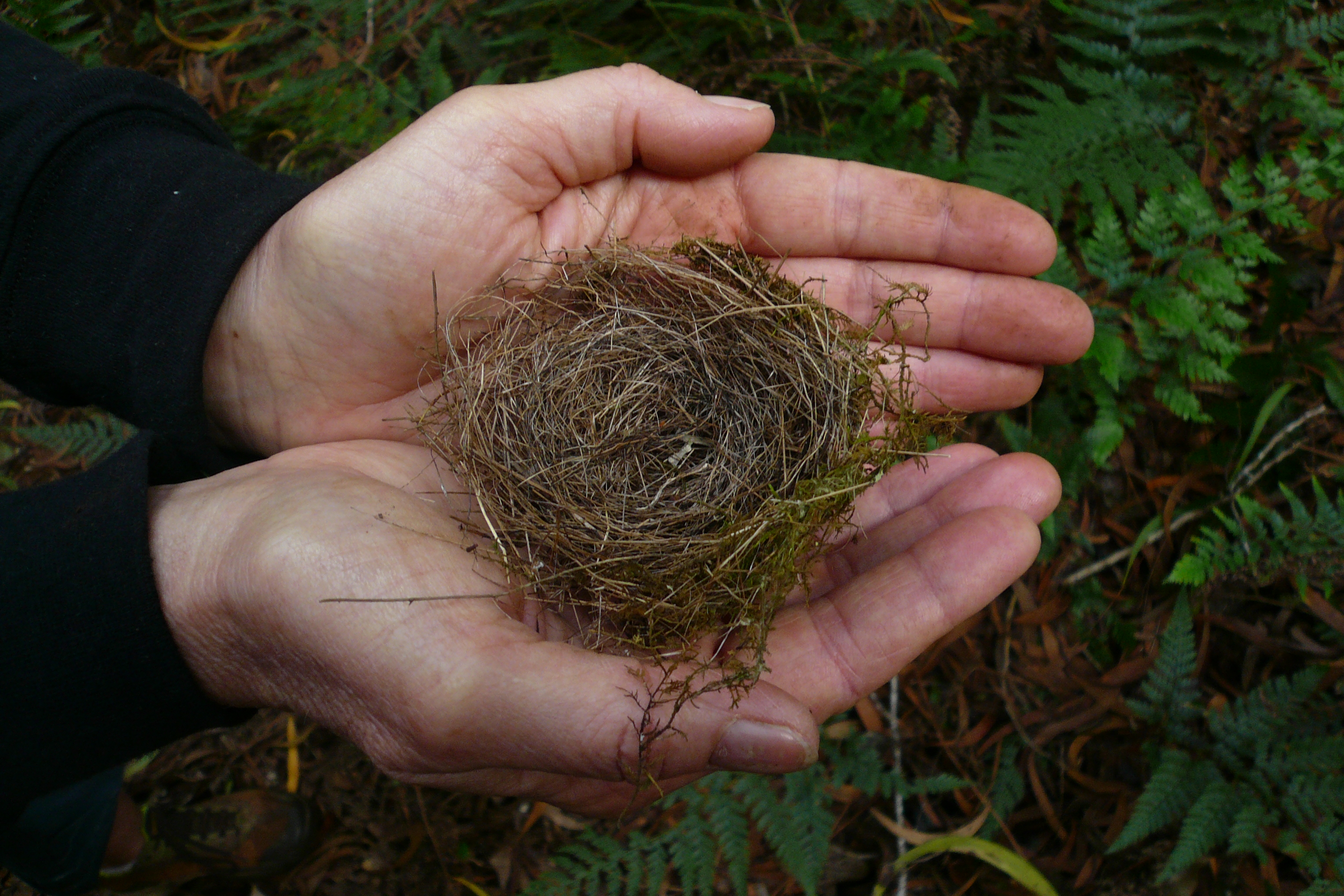
Janeil collects items from nature – such as bird nests that she discovers on the ground – by photographing the item in her hands.

Janeil collects items from nature – such as bird nests that she discovers on the ground – by photographing the item in her hands.

What will you do after the festival?

Immediately after the festival, I am working on a project in collaboration with MIT where I’m guest-producing the winter, on-line issue of ARTMargins, which will include a main article in the print edition, linking these two platforms for the first time in the history of the publication. The issue focuses on Eastern European art, ecology, and sustainability. Next year, I’m starting work on something called the Mobile Ecology Art Lab, which is a MAP project that is a retrofitted shipping container that will go around the world and be used as a platform to produce MAP environmental projects: a sort of art center, community house, and school all in one unfolding, portable structure.

For more information about MAP’s great variety of projects, visit www.makeartwithpurpose.net.

Melissa Gonzales
The Center for Creative Connections Gallery Manager

Friday Photos: Back to School

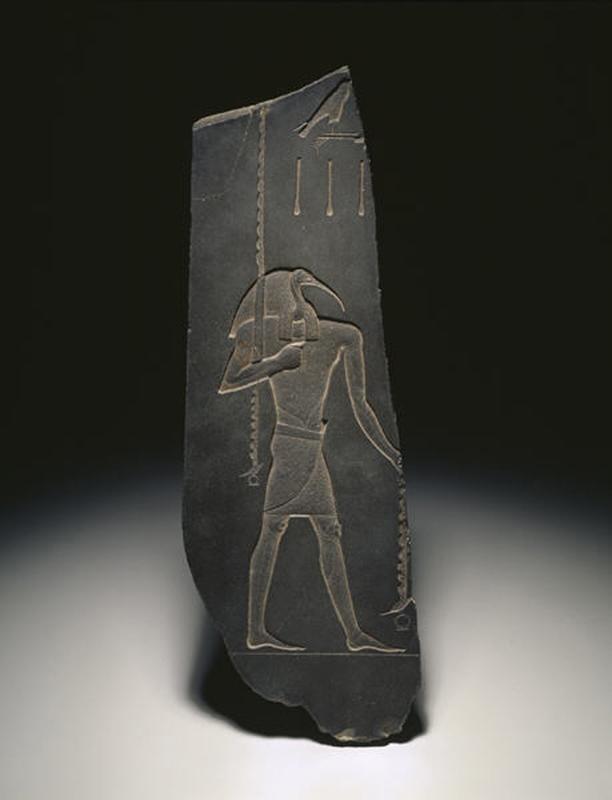
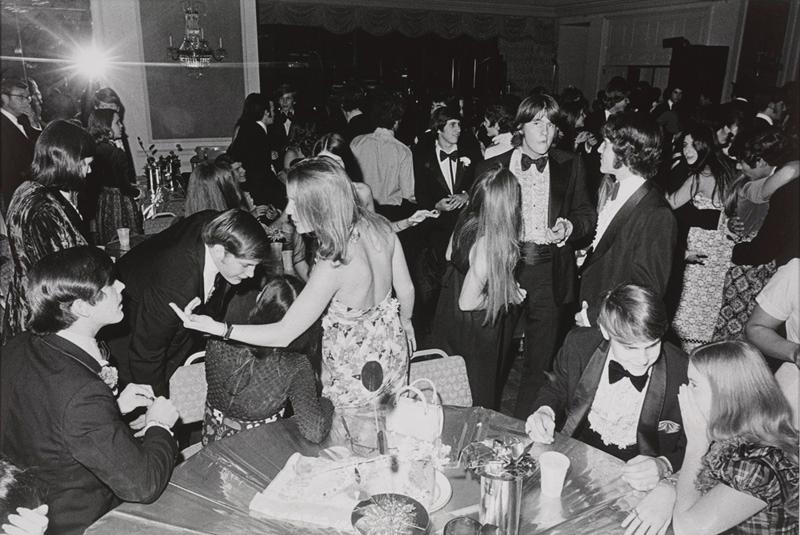
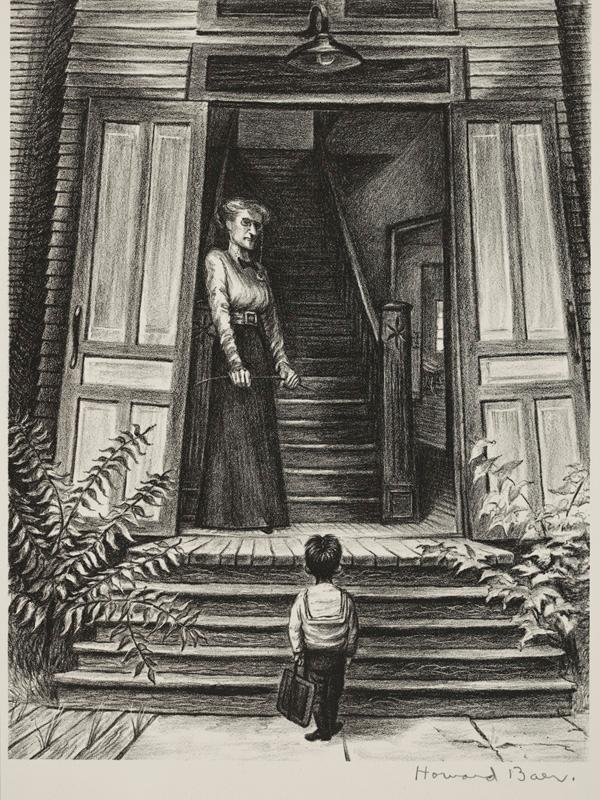
The start of the new school year is upon us! It’s an exciting time for kids, adults and educators alike, so what better way to commemorate this time of year than by highlighting works of art from the DMA’s collection that have a scholastic connection. Peruse these works of art and think about how they relate to your memories of school. Do they inspire excitement? Dread? Nostalgia? Click on the images to learn more.

Artworks shown:

  • Olin Herman Travis, Country School House, n.d., Dallas Museum of Art, gift of A. H. Belo Corporation and The Dallas Morning News
  • Thoth, God of Learning and Patron of Scribes, Egyptian, 663-525 B.C.,  Dallas Museum of Art, gift of Elsa von Seggern
  • Geoff Winningham, High School Prom, 1973, Dallas Museum of Art, gift of Prestonwood National Bank
  • Pottier & Stymus Manufacturing Company, Library Table, 1865, Dallas Museum of Art, gift of the 1992 Silver Supper and an anonymous donor in honor of Charles L. Venable
  • Howard Baer, My First Day at School, n.d., Dallas Museum of Art, Foundation for the Arts, The Alfred and Juanita Bromberg Collection, bequest of Juanita K. Bromberg
  • Larry Brown, Untitled #8, 1986,  Dallas Museum of Art, gift of Mr. and Mrs. I. C. Deal

Danielle Schulz
Teaching Specialist
Calling All Gumshoes!

Kids need to use problem solving skills on a daily basis, both at home and in the classroom. What better way to harness these skills than with some sleuthing in the Dallas Museum of Art galleries? Creative problem solving can be fun for both you and your child. Just think of what you can discover alongside your junior detective!
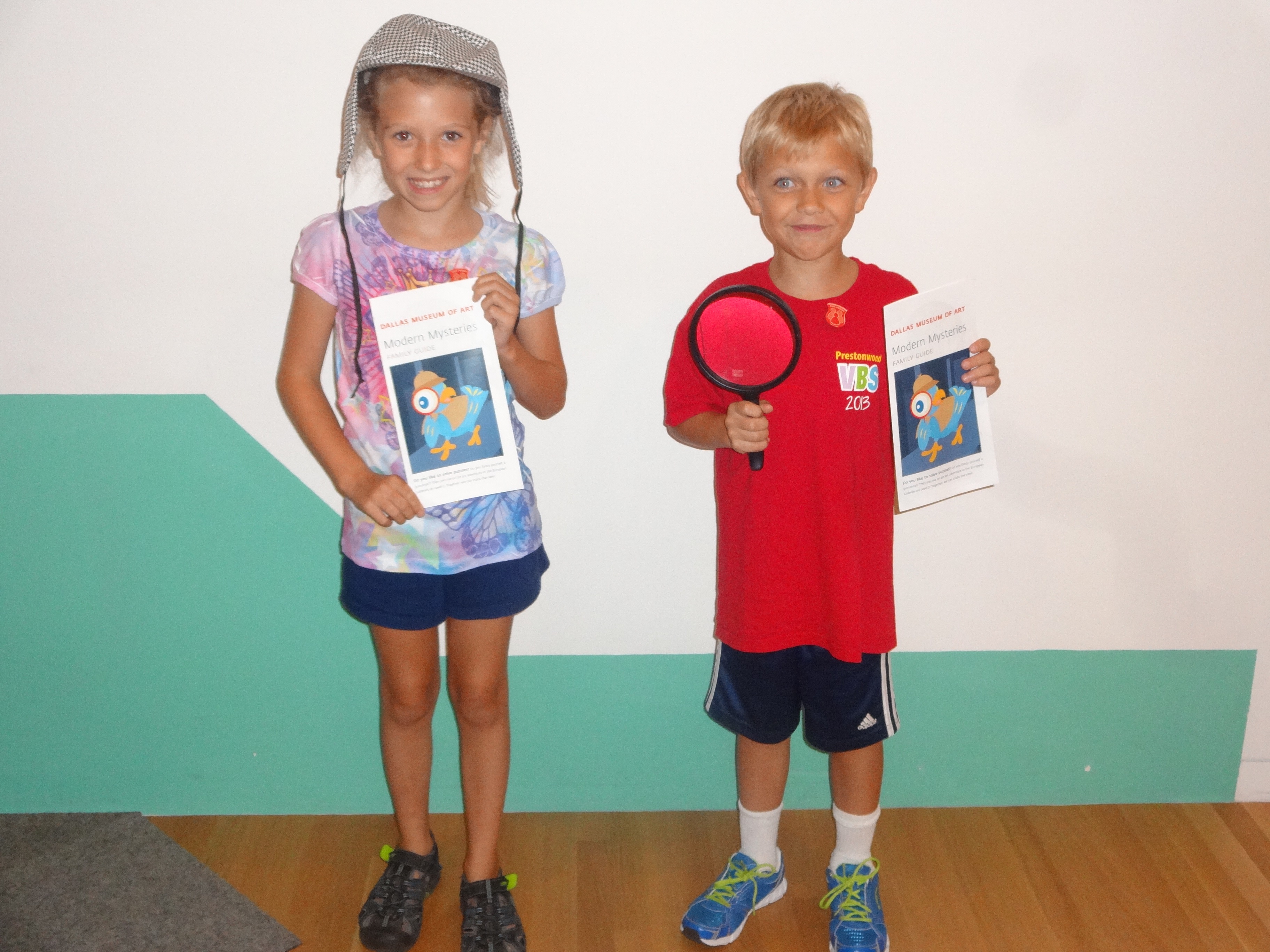
Develop into a problem-solving duo with the Modern Mysteries family guide, available in the Center for Creative Connections. Your little gumshoe will discover works of art in the galleries using careful observation, problem solving, and analysis of their findings–the same tools and techniques that real detectives use!

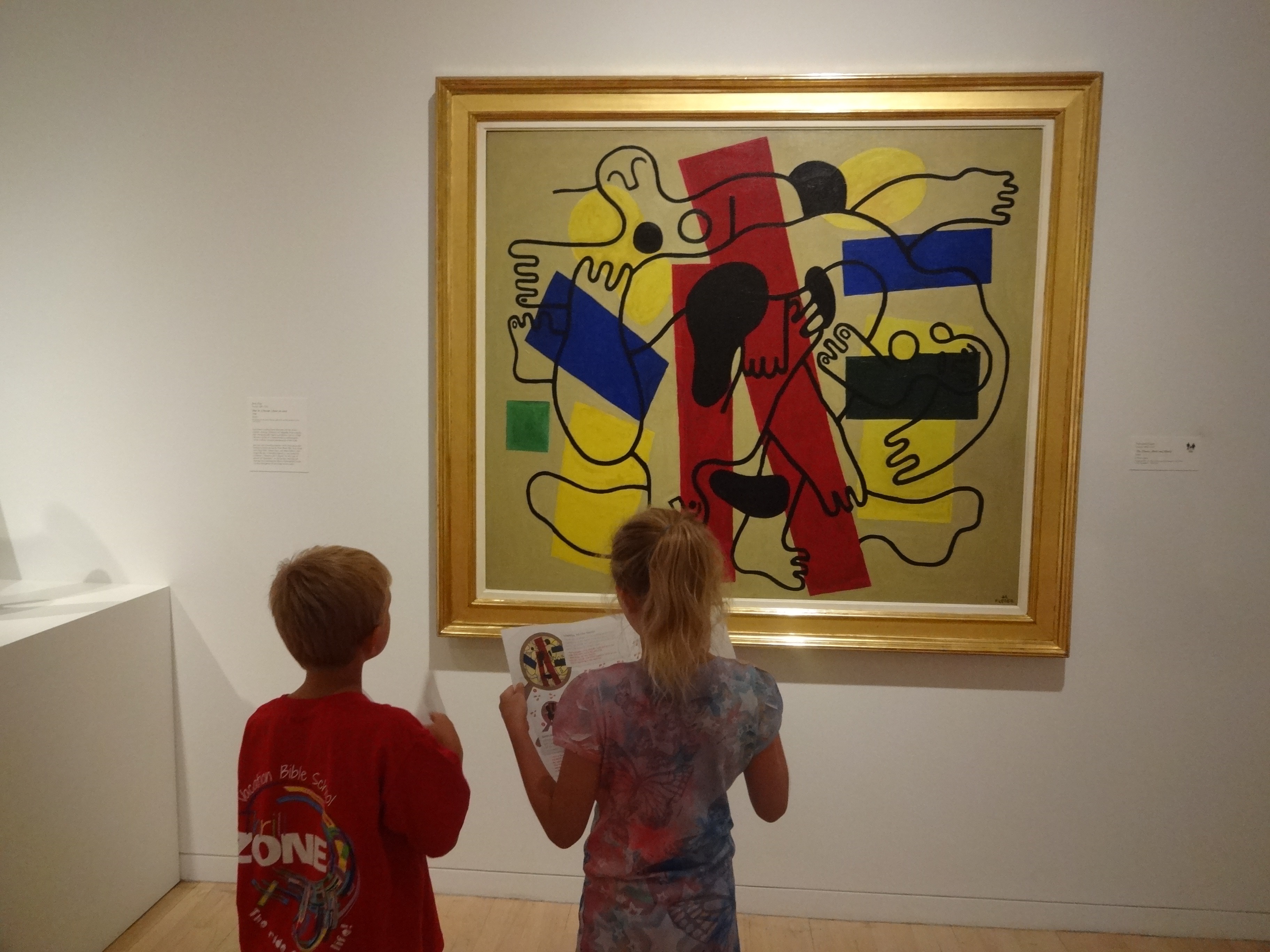
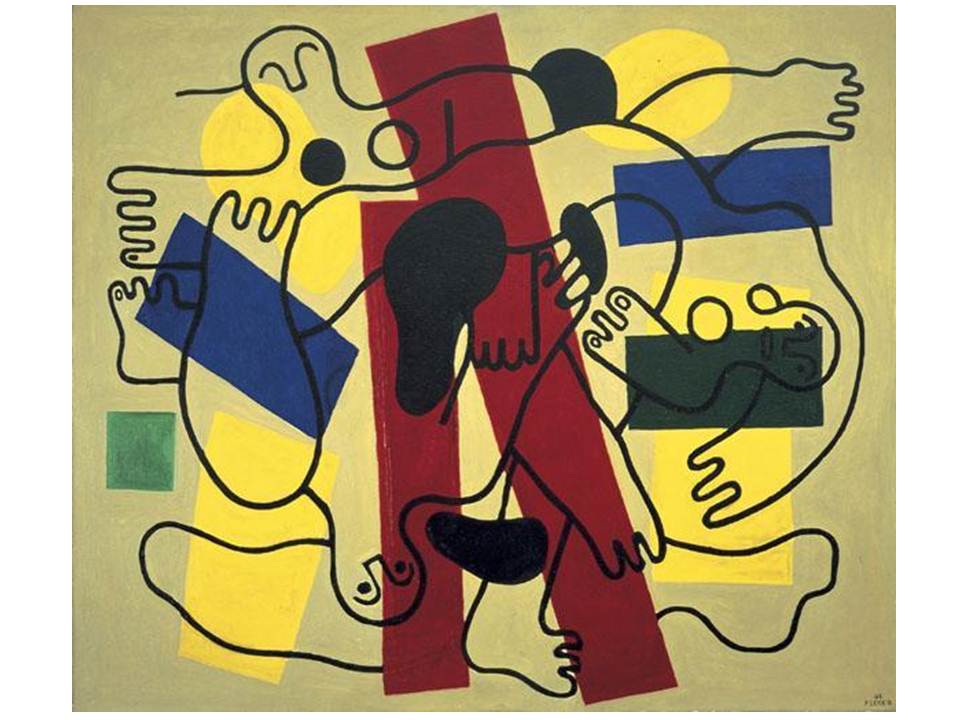
For example, the elements of design are the building blocks used to create a work of art. Some of the elements are LINE, COLOR, and SHAPE. Let’s investigate these elements at work in The Divers by Fernand Leger.

  • Find a squiggly, curvy, straight, rigid, and wavy LINE.
  • How many COLORS are in this painting?
  • What SHAPES can you identify?
  • Now that you’ve discovered these details, what do you think is happening in this painting?

juniordetective


There are many other mysteries to uncover in the European galleries with the Modern Mysteries family guide. And families who are part of DMA Friends can earn their Junior Detective Badge once their sleuthing is complete. So throw on your detective cap and polish your magnifying glass to embark on an art adventure here at the Dallas Museum of Art!

DSC06701

Emily Wiskera
Graduate Education Intern

Friday Photos: Until Next Time!

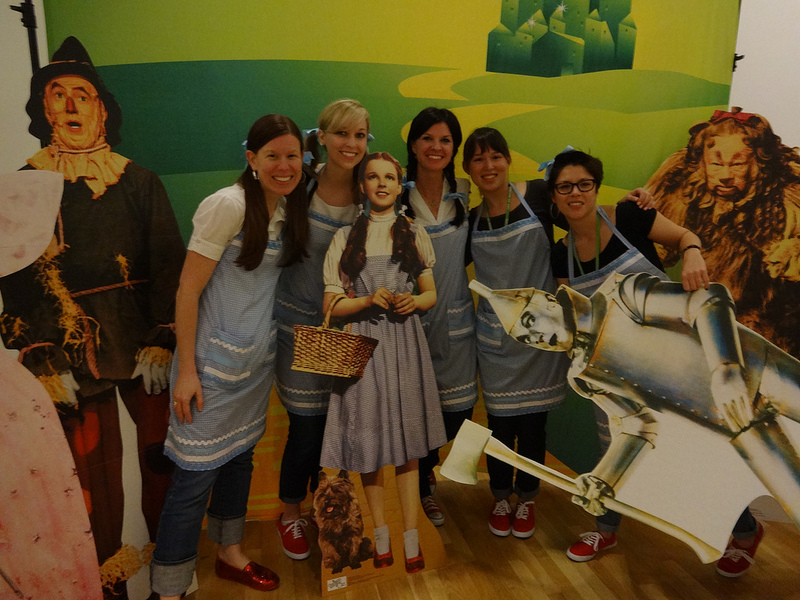
Wow! I cannot believe my time as a McDermott Intern is over! I would like to thank the Eugene McDermott Education Fund for providing this incredible opportunity. Through this experience, I have come to value the creative and fast-paced environment of museum education. I am especially gratefully for the opportunities to teach a summer art camp and test the Art Babies program. I may have to start my own children’s book collection because I enjoyed Story Time in the Galleries so much! It has been a pleasure to learn from and work with such dedicated educators at the DMA. Thank you to the Family, Access, and Schools Team for your patience and support, you ladies do an amazing job!

Here are a few of my favorite photos from the internship.

Holly York
McDermott Intern for Family Experiences


Archives

Categories