Archive Page 30


Getting Schooled at the DMA

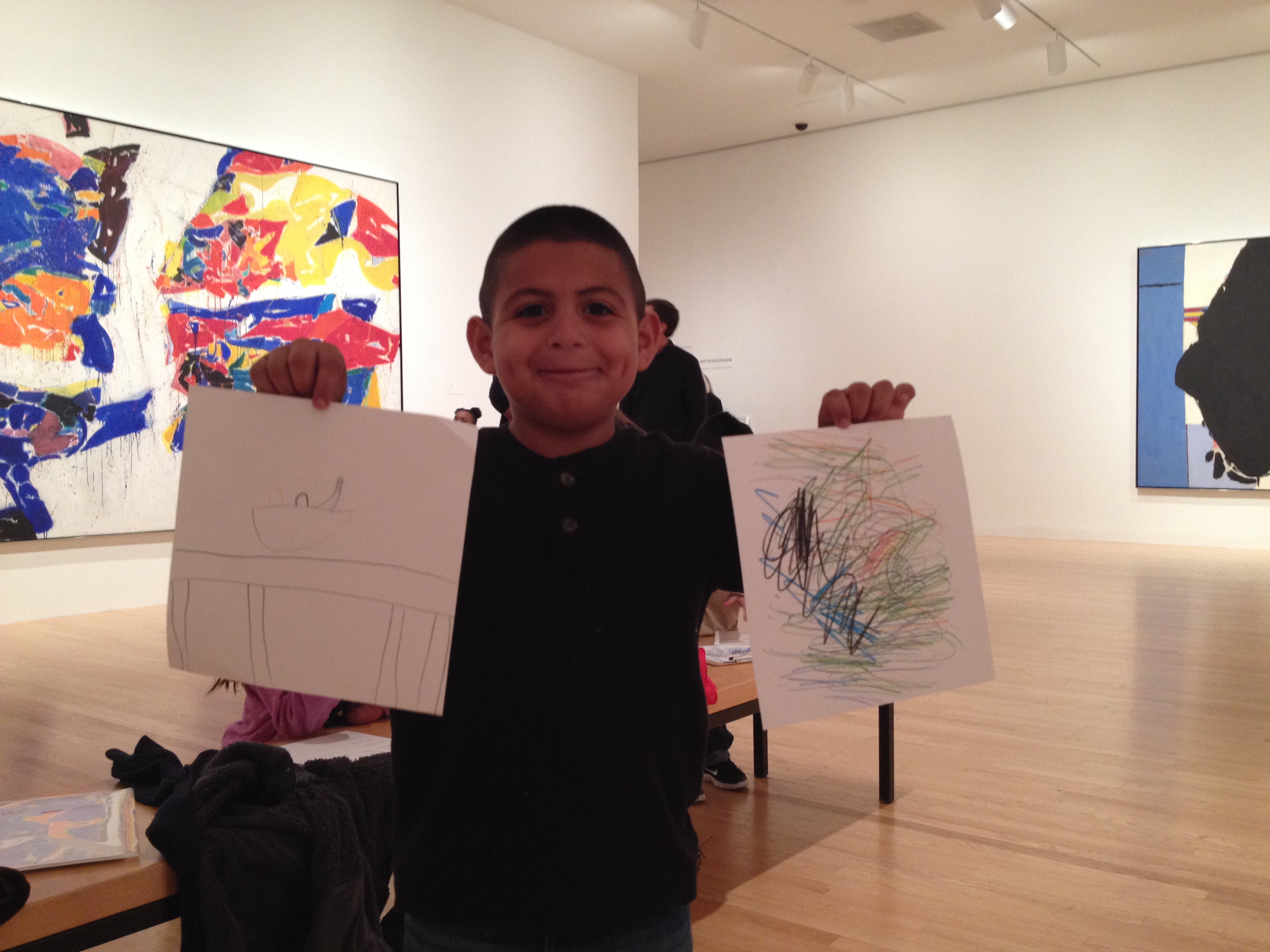
Over the next couple of months, as you’re wandering down the concourse of the DMA, you may notice an eclectic mixture of vibrantly colorful paintings, intricate sculptures, detailed music compositions, and even essays on display just outside the Center for Creative Connections. That’s because our 16th annual Young Masters exhibition is underway!

The Young Masters exhibition is the product of a collaboration between the Dallas Museum of Art, AP Arts Strategies and the O’Donnell Foundation, in which Dallas area high school students who are completing AP Art History, Music Theory or Studio Art courses are invited to submit work to be chosen for display. A whopping 732 works were submitted for this year’s exhibition and from those, 60 final works of art were chosen.

045new

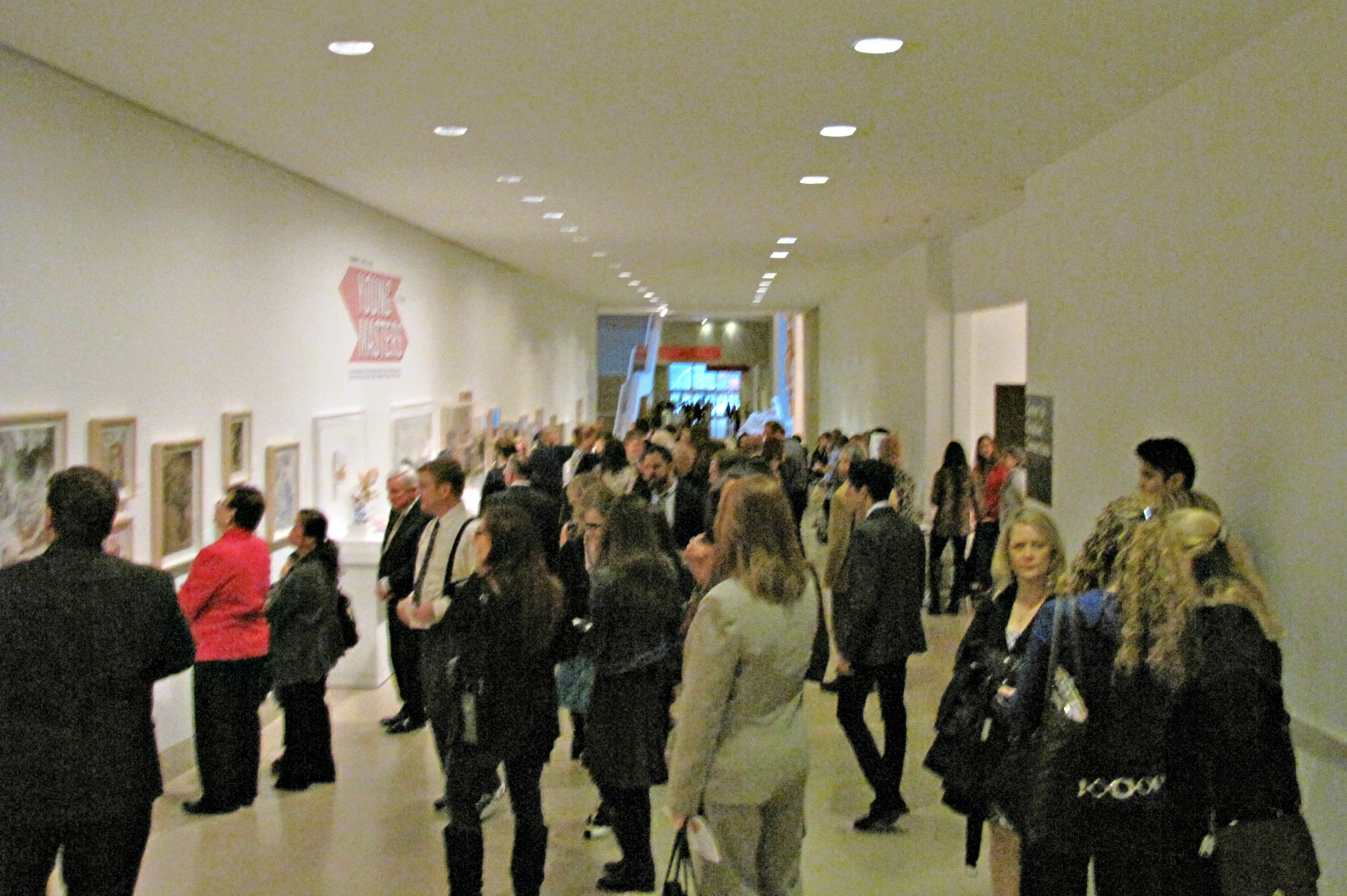
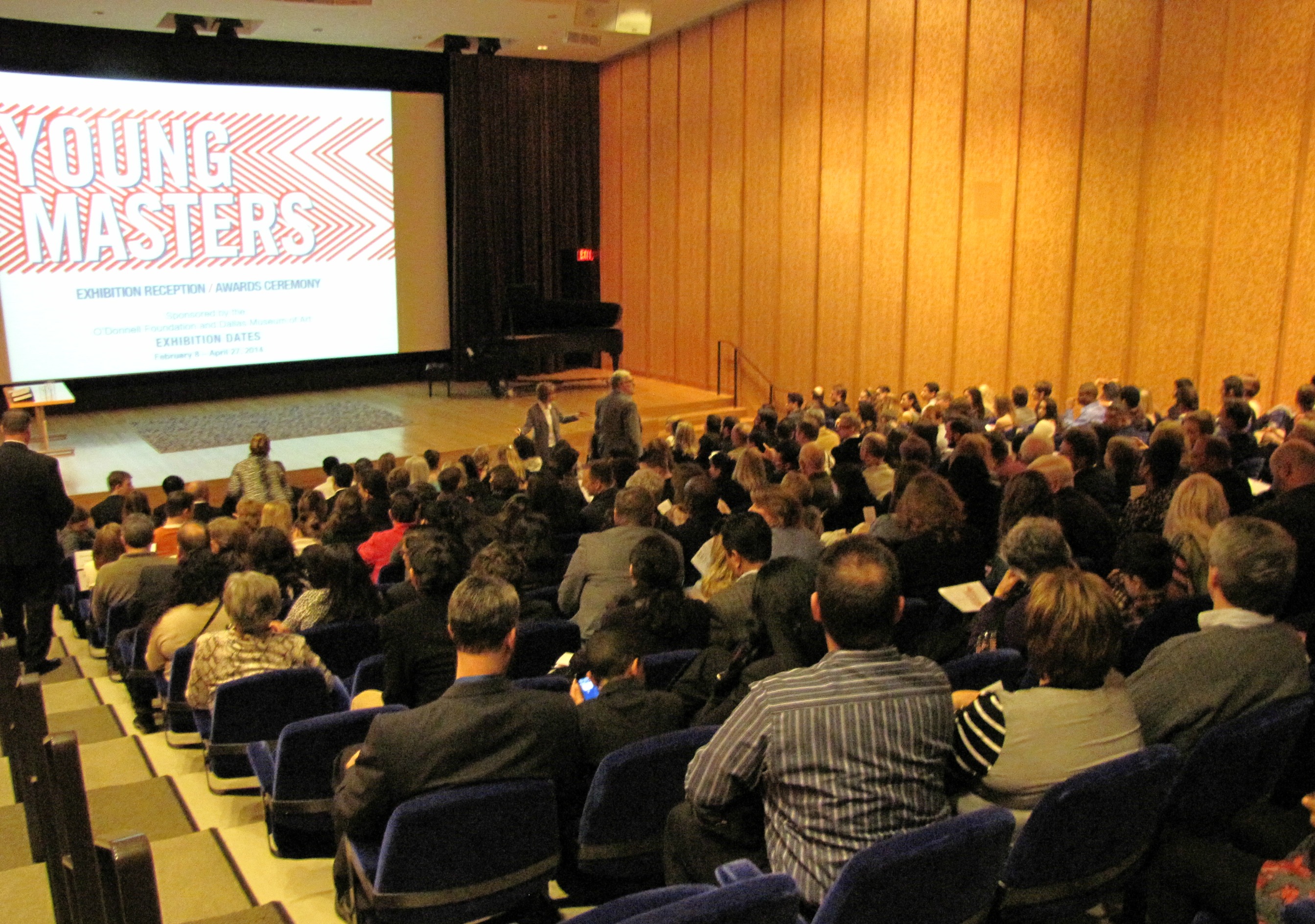
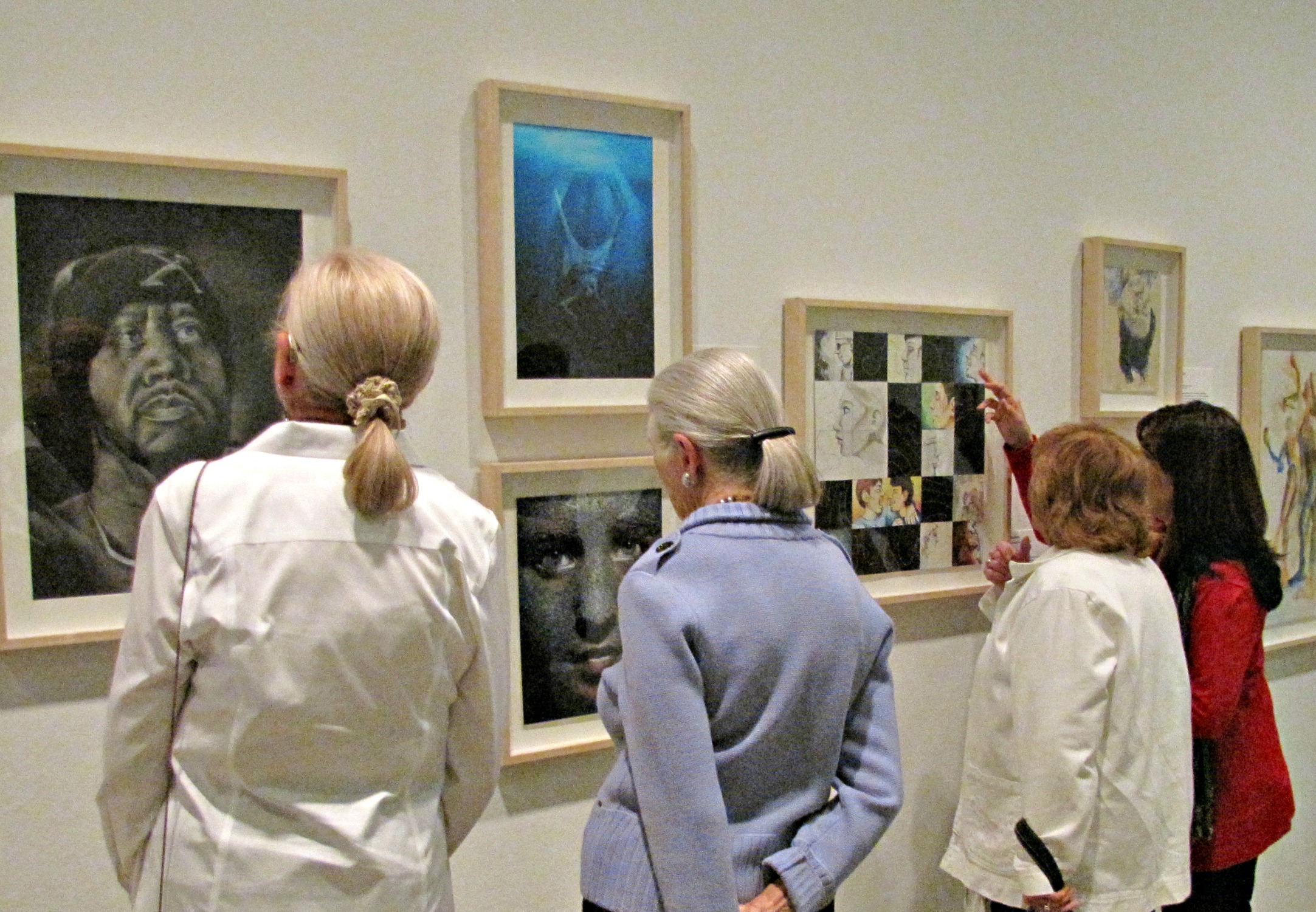
Tuesday night marked the DMA’s annual Young Masters Reception and Award Ceremony in which members of the Dallas community came together to recognize and celebrate the talent of this year’s selected students. The night began with family, friends, students, and teachers crowding into the concourse to take photographs with the selected works of art.

073new

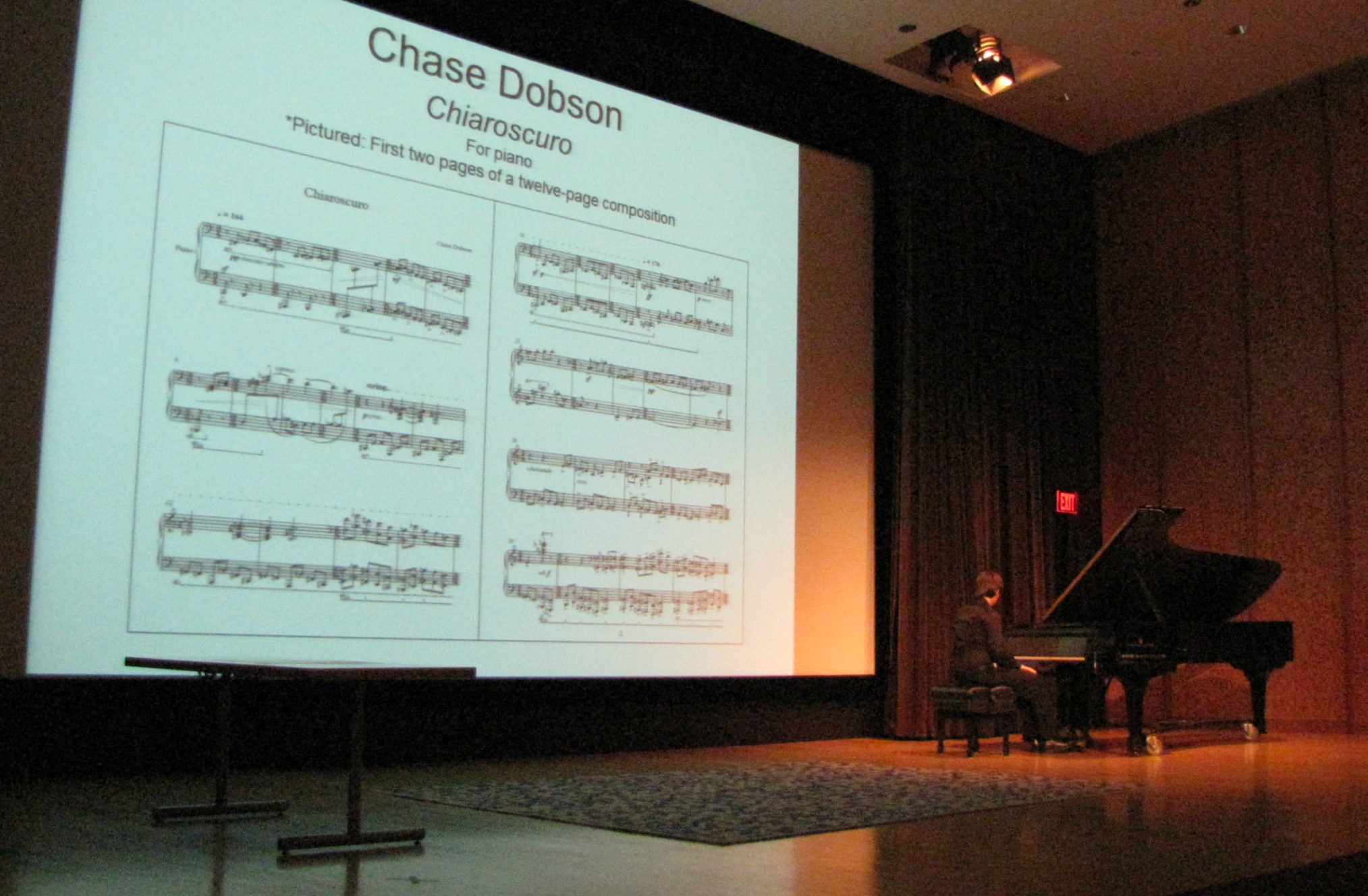
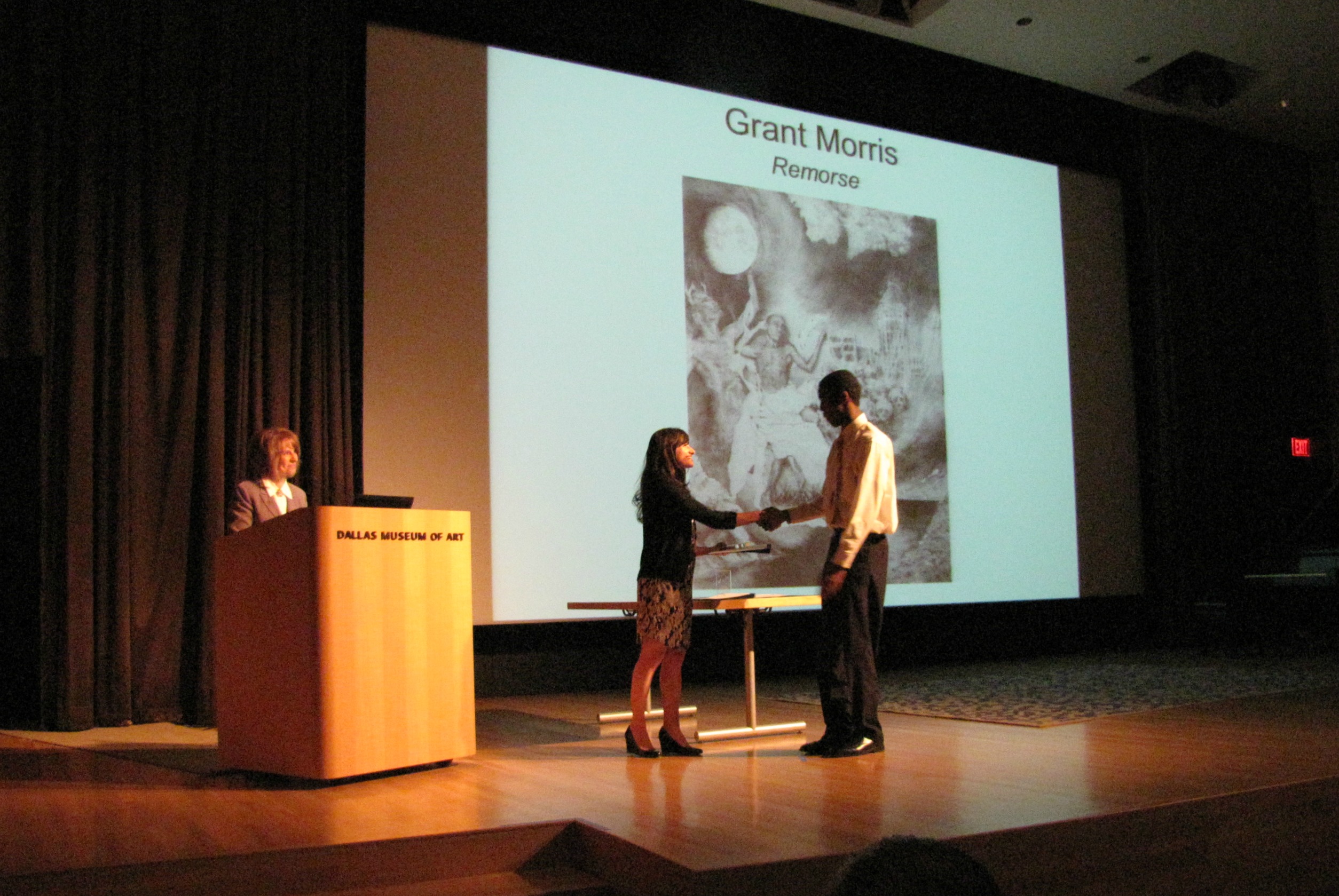
The celebratory photographs and mingling were followed by everyone making their way into Horchow Auditorium to recognize each individual student and reveal a selected nineteen students who received top honors in the exhibition. Ceremony attendees heard a reading of the top selected essay, listened to a beautiful performance of the top selected music composition, and learned more about the artistic process and inspiration behind the top selected works of studio art.

091new

181new

175new

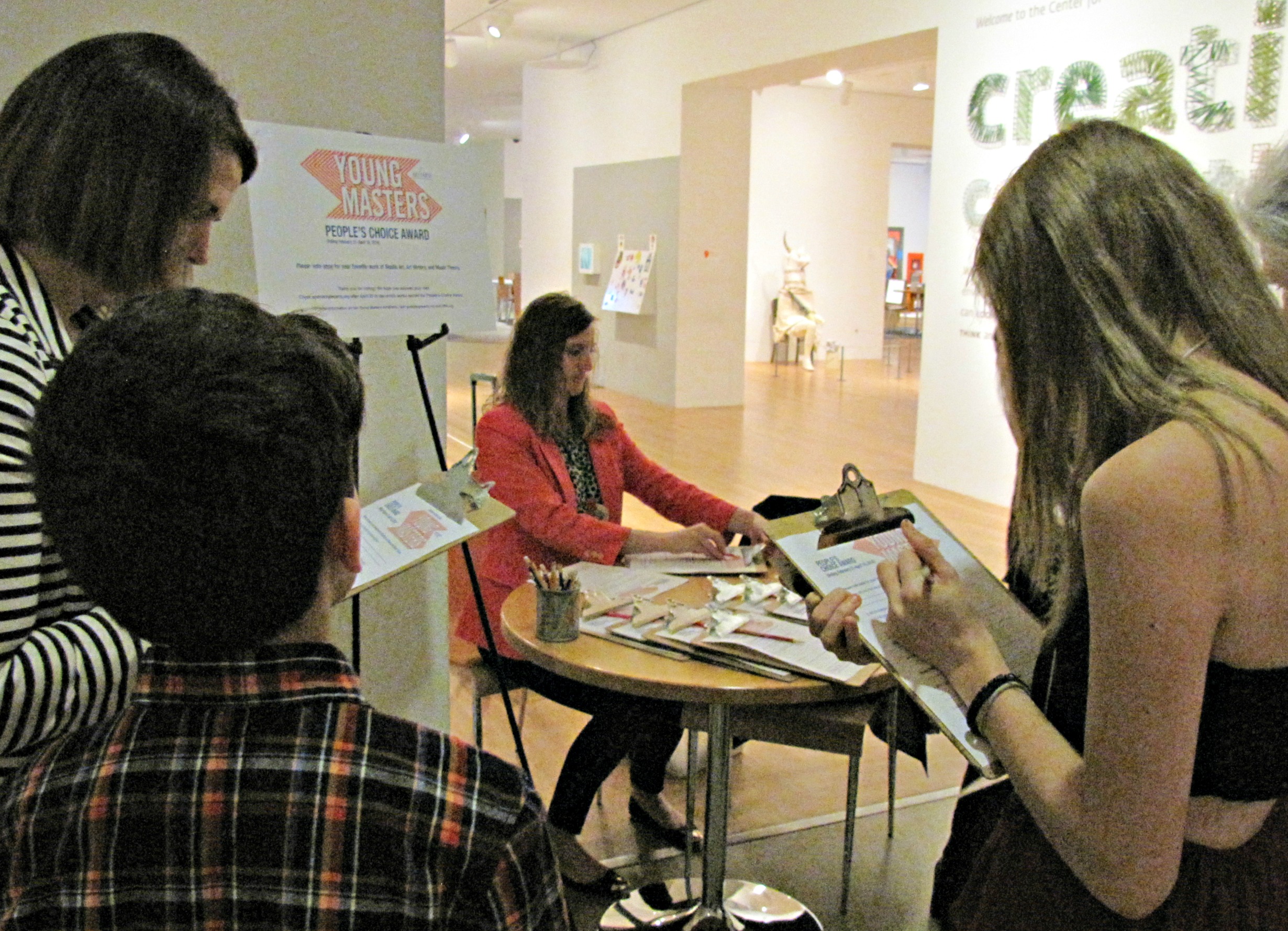
Though most awards have been announced, there are still ways that you can get involved with the exhibition. During March and April Late Nights, be on the look out for staff or volunteers who will be handing out People’s Choice Award fliers for you to cast your vote in any of the three exhibition categories. You can also learn more about selected works from the exhibition at the March and April Late Nights when students are interviewed here at the DMA.

052new

Amy Elms
McDermott Intern for Visitor Engagement

Love is in the air….or in Hoffman

photo 1

If you are a frequent guest at DMA Late Nights on the third Friday of every month, you may be familiar with interesting riddles like this one:

Love is in the air or bitterness abounds, whatever you may be feeling there is healing in sound! Join us for this melodic Creativity Challenge about love and hate!

[vimeo 87408857 w=500 h=375]

MVI 0450 from A Batson on Vimeo.

These kinds of poems and rhymes are all part of a program called Creativity Challenge which occurs throughout the year and during Late Nights. Visitors sign up to participate as part of a team–equipped with a team name, like The Flaming Chinchillas–to compete in an on-the-spot challenge to create something unique based on a work of art. [vimeo 87408856 w=500 h=375]

MVI 0458 from A Batson on Vimeo.

Many times the challenges engage a variety of learning styles in order to have visitors view art in a new and different way. Occasionally visitors will dance, sing, write, act, build, etc. within the challenge. They work with others in a team that allows them to build on each other’s strengths, resulting in a dynamic show at the end of their challenge. [vimeo 87408861 w=500 h=375]

MVI 0457 from A Batson on Vimeo.

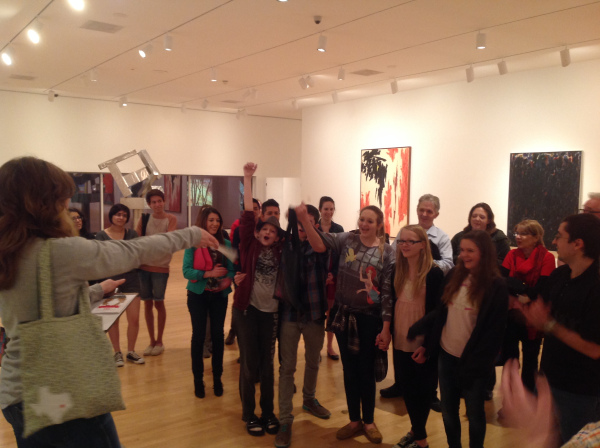
This past Friday evening, February 21, 2014, ten teams of challengers faced off to create a musical instrument and original composition about a work of art in the DMA’s contemporary collection.  The teams then had to create and perform in front of the sixty people who attended! The composition was to be a love song or a song of complete disgust to an assigned work of art. Coming off the heels of Valentine’s day–I thought this challenge would be appropriate! Check out some of these incredible interpretations!

[vimeo 87408863 w=500 h=375]

MVI 0448 from A Batson on Vimeo.

Creativity Challenge in the Hoffman Gallery

Creativity Challenge in the Hoffman Gallery

Are you up to the challenge? Join me and the other teams next Late Night on March 21st, 2014, for a Creativity Challenge that will be sure to entice your taste buds!

Amanda Batson
C3 Program Coordinator

Friday Photos: Adventures in Chicago

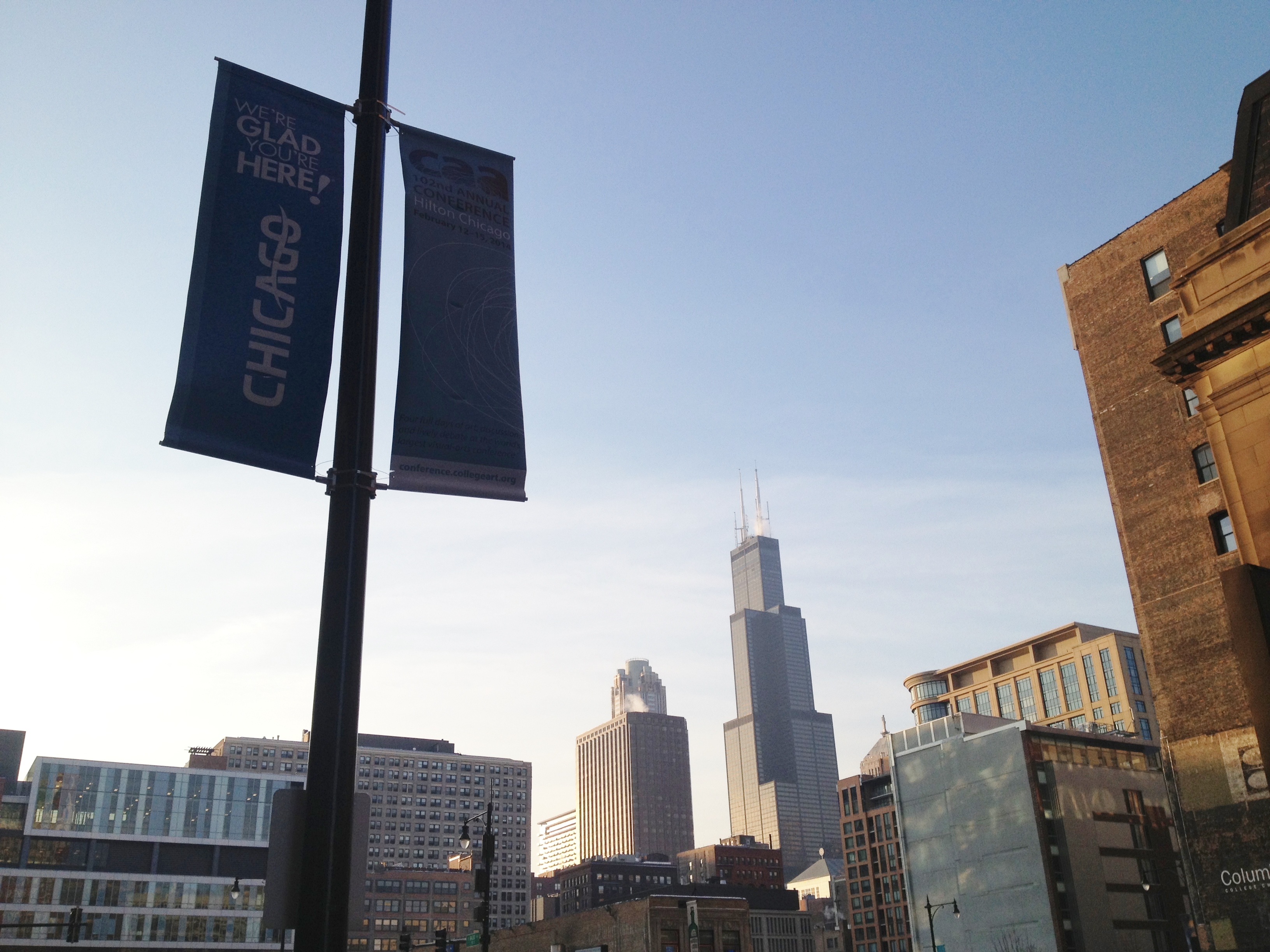
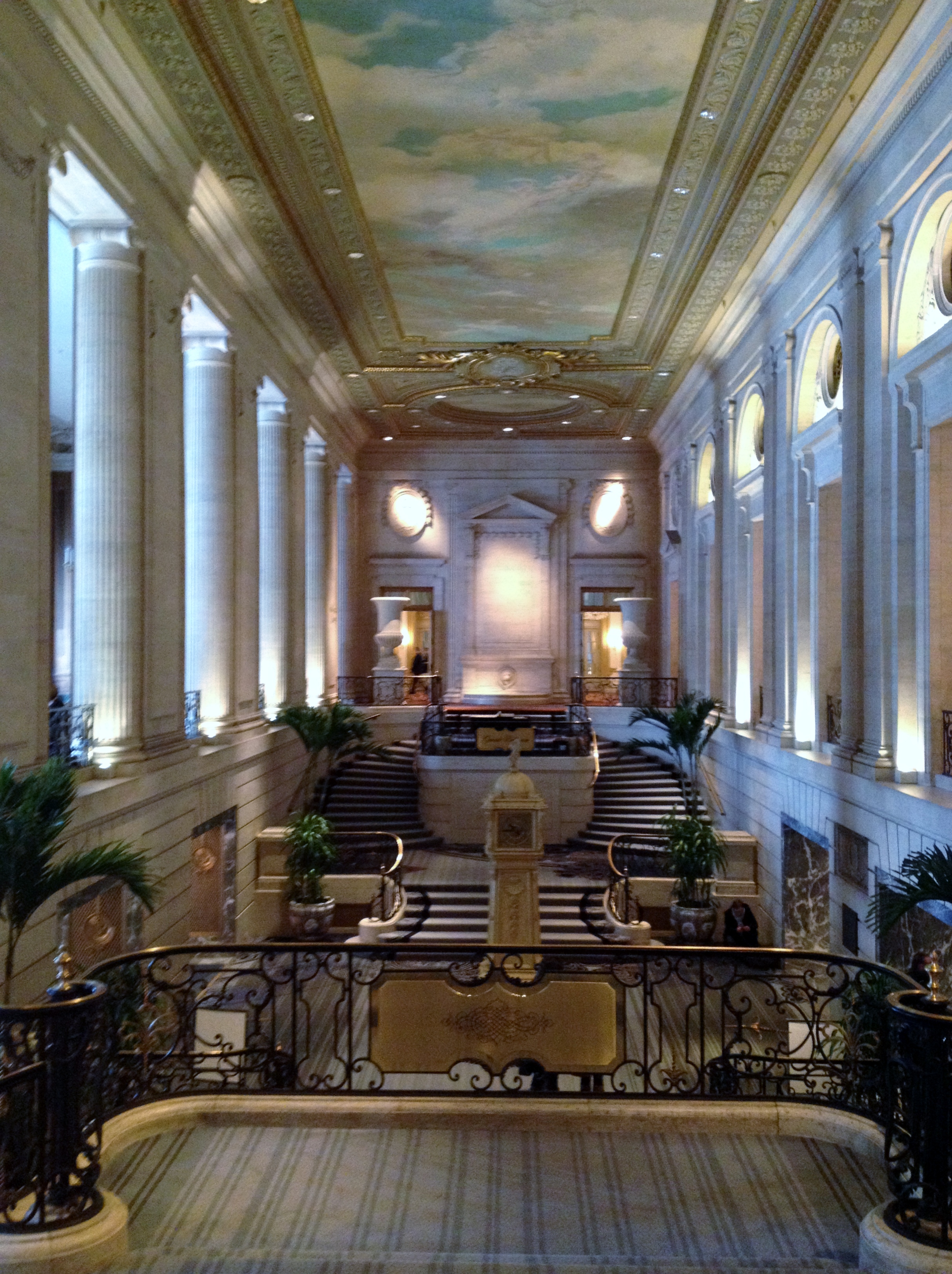
Thanks to the support of the DMA and the Eugene McDermott Foundation, this past week two of my fellow McDermott Interns and I had the opportunity to attend the College Art Association Conference in Chicago. Having never before attended a conference of this magnitude, I was not sure what to expect when we arrived at the Hilton Chicago early Wednesday morning. The pictures below capture a few of my favorite moments from the conference, including the architecture of the Hilton, my favorite lecture series, and the Chicago skyline covered in a soft, white snow. Enjoy!

The hotel was packed with art historians, museum educators, professors, and curators rushing to attend their first session of the conference. I was immediately impressed with the variety of attendees, diversity of the sessions offered, and the grandeur of our location. The Hilton Chicago was breathtaking and I was happy to wander the halls of this beautiful building, originally opened in 1927. The lobby featured Roman columns, a vaulted ceiling, and a grand staircase.

IMG_2263

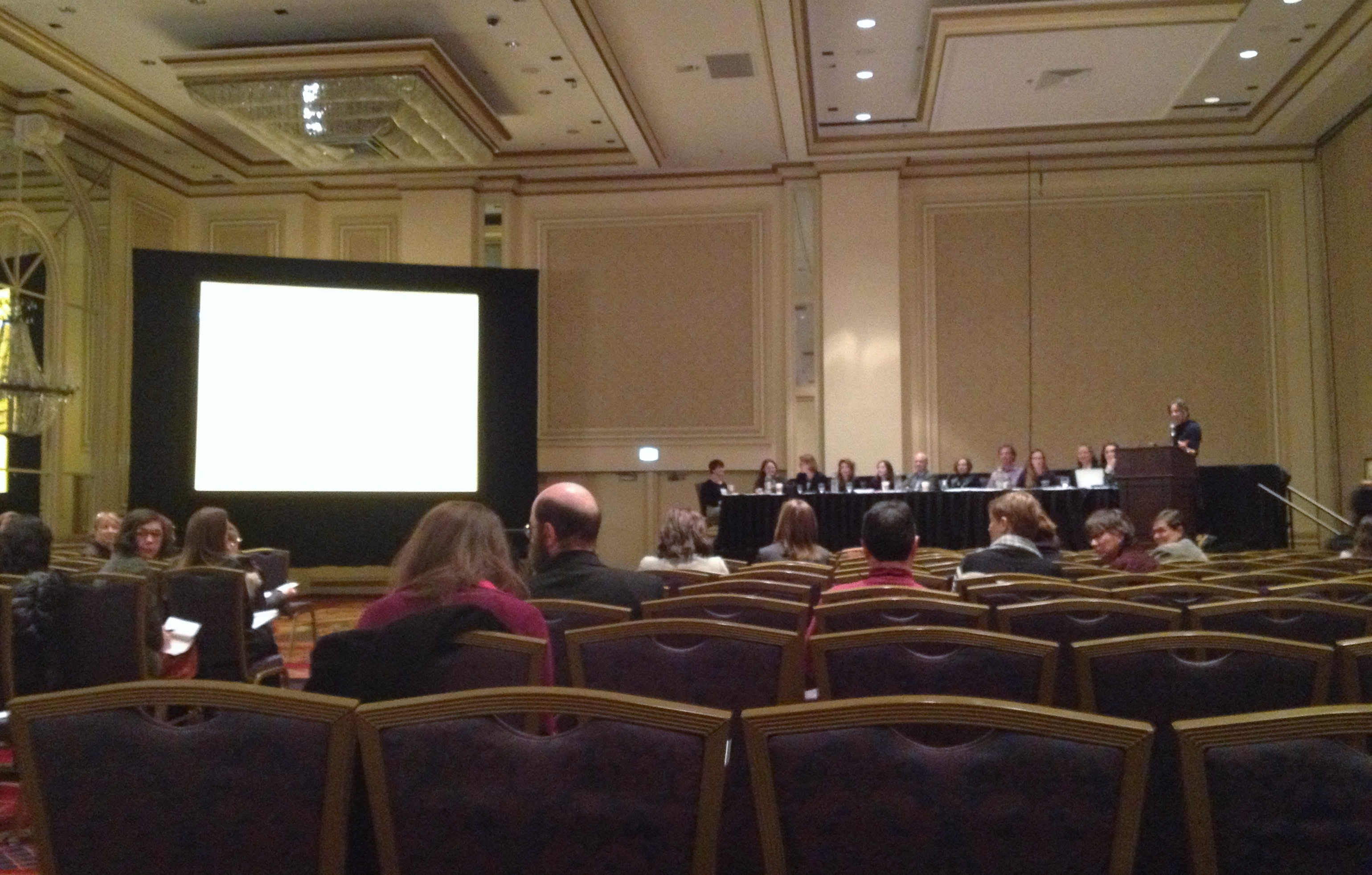
I took this photograph during the question and answer session that followed one of my favorite presentations, called “Finding Common Ground: Academics, Artists, and Museums.” It included presentations by colleagues from various academic and cultural institutions across the country.

IMG_2280

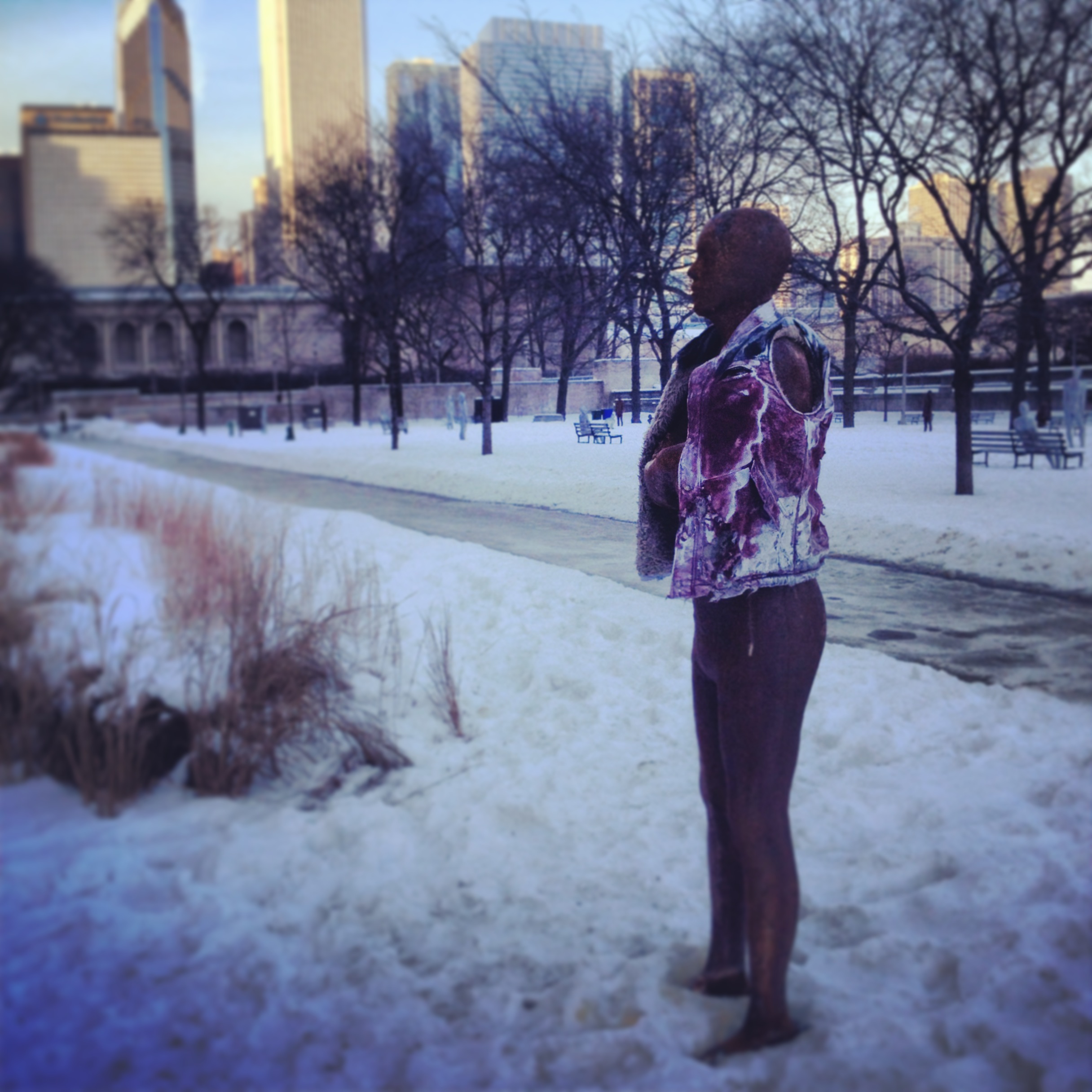
Just outside the Art Institute of Chicago, someone had decided to help a few statues stay warm with winter vests and scarves. It was a great example of the Chicago community interacting with the city’s public art installations.

IMG_2279

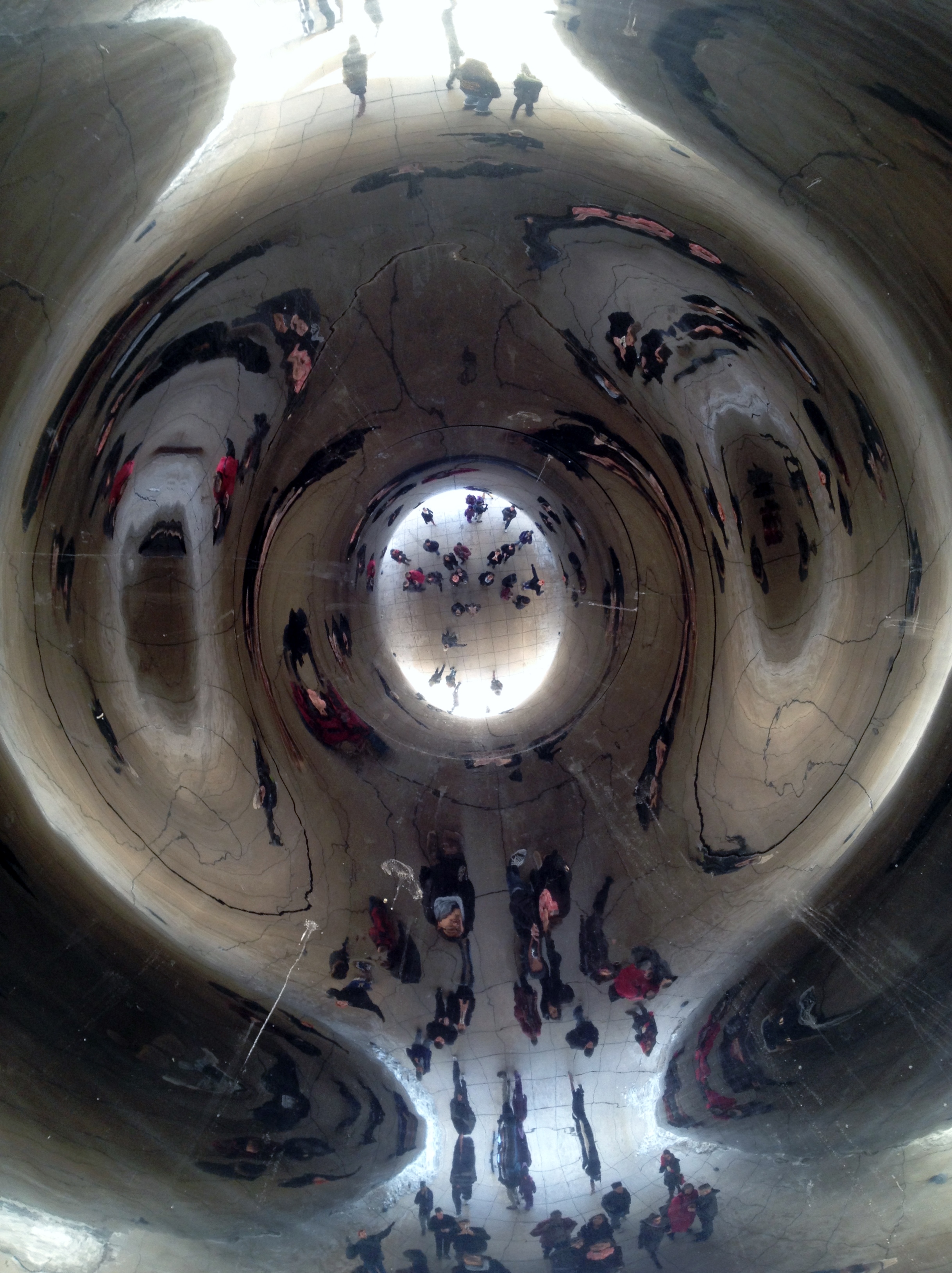
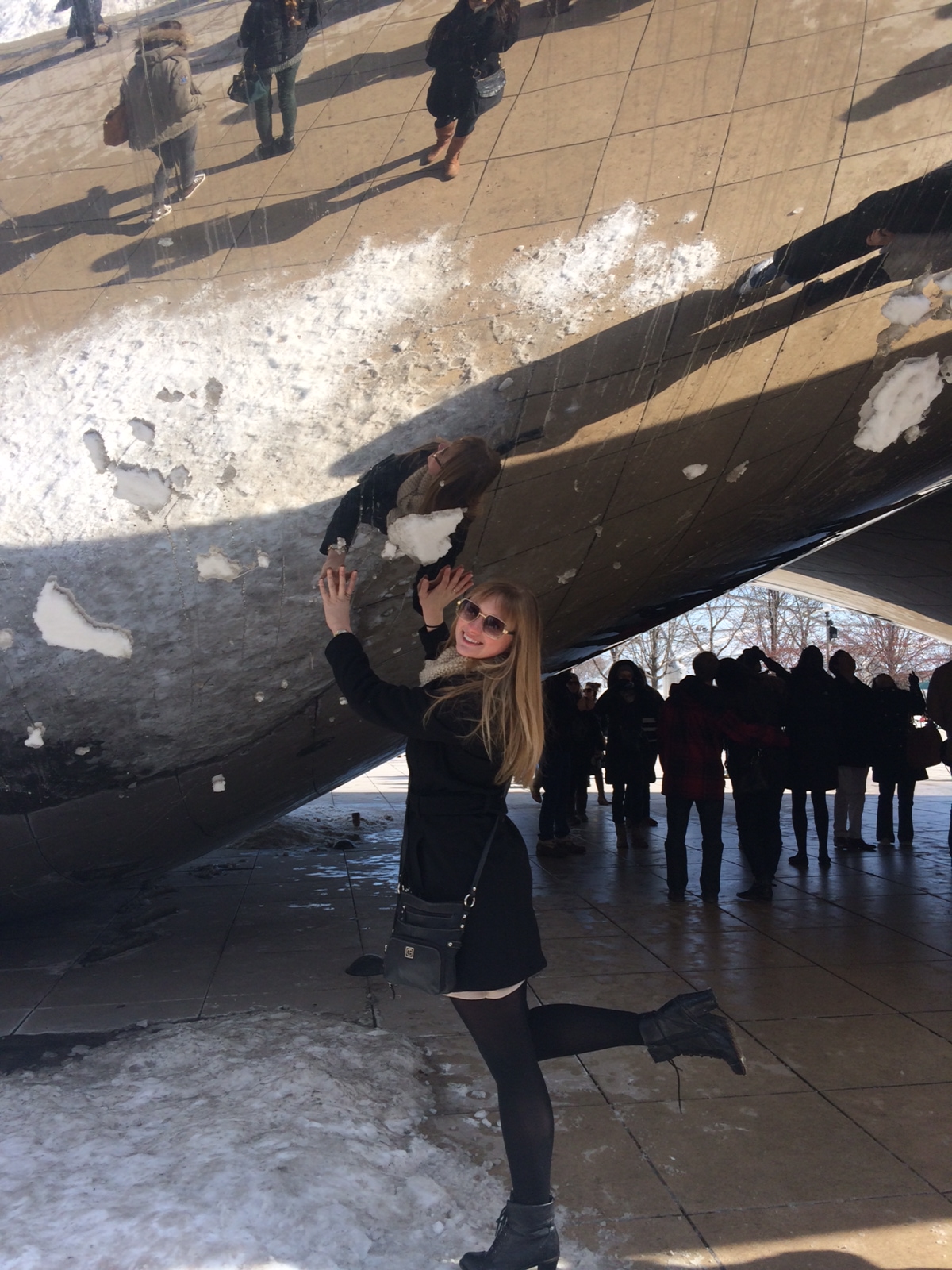
Millennium Park in downtown Chicago features fantastic public art like Cloud Gate, aka the Bean. No matter how many times I visit this sculpture, I always enjoy the experience. Fun fact: when you stand in the center, your image is reversed on the ceiling and your reflection can be found all around the interior. Next time you visit, try to count how many times you can find your reflection!

As a native Chicagoan, it was wonderful to go home and explore the city through the eyes of a tourist! At the end of the week, however, I was ready to return to the sunny, 70 degree weather here in Dallas. 🙂

Hayley Prihoda
McDermott Intern for Gallery and Community Teaching

Bringing Artworks into Focus in the Most Delightful Way

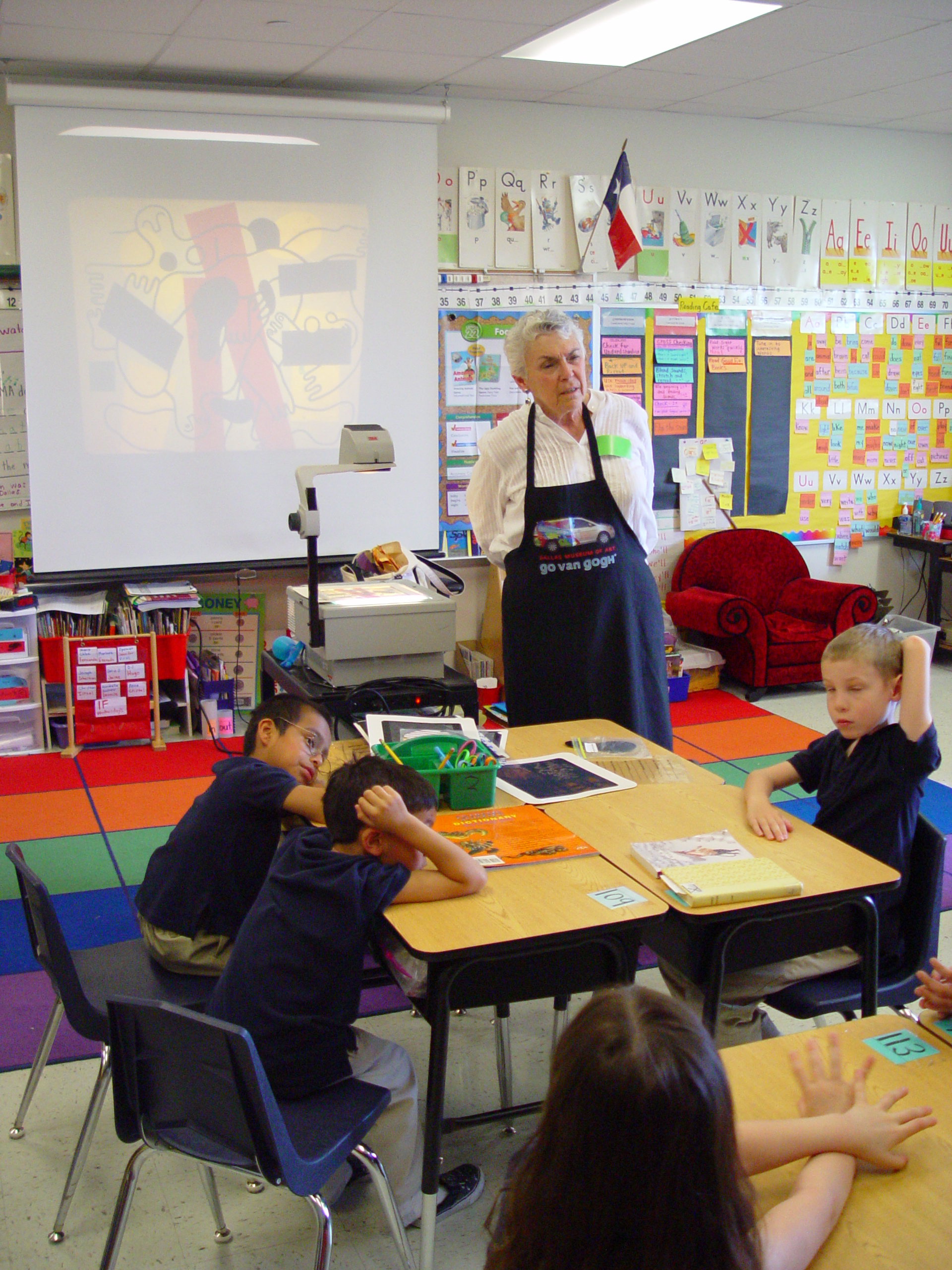
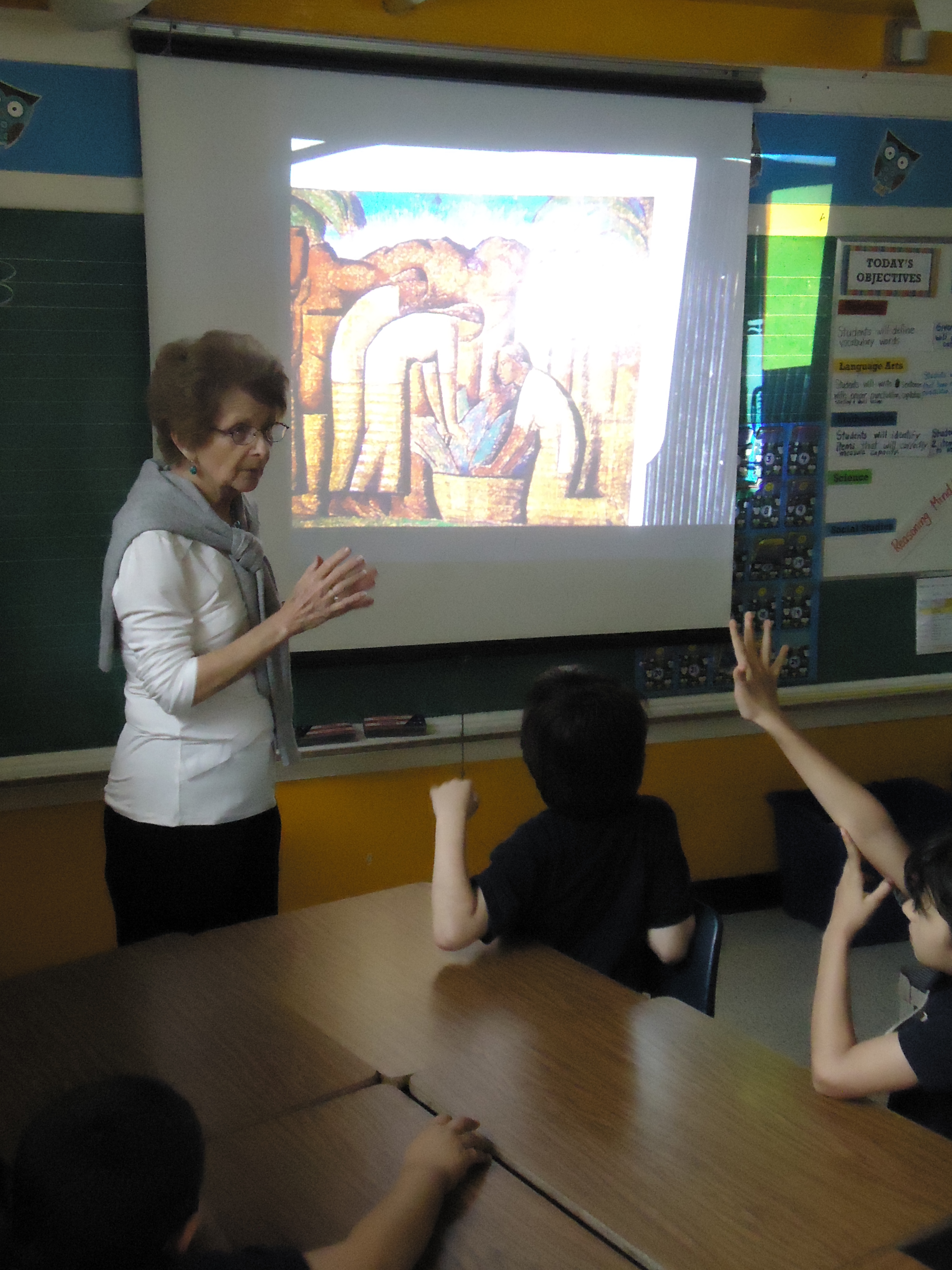
I like to think of our Go van Gogh volunteers as the Mary Poppinses of Dallas elementary schools. They’re the special guest bearing a big bag full of magical things (art supplies! stories of Museum treasures!) that promise fun, adventure, and, when you least expect it, a lesson or two. Our volunteers also happen to have cheery dispositions, so the comparison works well on several levels. In a perfectly Poppins world, we could reach into our magical outreach bags during programs and pull out real DMA artworks, large and small, bringing the Museum right into the classroom. Until we figure out how to work that final bit of enchantment, we travel to classrooms with the next best thing—reproductions of artworks and the masterful storytelling needed to bring these artworks to life.

Over the years, our bags have been filled with reproductions of all kinds. First there were large posters of artworks to roll up and carry, then we traveled with the heavy hum and whir of slide projectors, and more recently we slipped sets of bright, colorful overhead transparencies into our bags. These reproductions came in all shapes and sizes, but each allowed us to show with clarity and accuracy, the beauty of our Museum’s treasures to students who had never seen them before.

Our latest method of magic involves paper images of artworks that we project using document cameras available in classrooms. When the quirks and glitches of this classroom technology left us projecting artworks in the least delightful way, we decided it was time to fill our bags with newer things—iPads and projectors. With the great ideas and lots of hard work, DMA colleagues Danielle, Amanda, Nicole, Ted, and our friends, Emily, Shannon, Bernardo, and I spent last summer writing a proposal for the Sprint Local Grant Program and pouring our best ideas into a video to convince The Sprint Foundation that all we needed was some wind in our kite (and the help of a generous Mr. Banks) to leap into the 21st century and get back our classroom magic.

The storyboard for our video submission

The storyboard for our video submission

Late last year, Sprint gave us the happy ending we were hoping for (we’re your biggest fans, Sprint!), and we are in the process of purchasing iPads for our outreach programs. This means that the next time we teach our Arts of Mexico curriculum, we can point to a well-projected, sharply-focused image of the Mask of Tlaloc and explore precious, tiny pieces of turquoise that form a delicate mosaic. We can zoom in and in and in again on the sixty foot mural, Genesis, The Gift of Life, discussing fine details usually reserved for Museum visits and having much richer discussions for it.

We’ll finally have the tools to unpack the best quality artwork images from our magical outreach bags—images that will spark great conversation and moments of wonder, like museum experiences with real artworks do. We’ll be as close to the real Mary Poppins as we can get (I draw the line at flying into classrooms!!), and that’s pretty exciting.

Amy Copeland
Manager of Go van Gogh and Community Teaching Programs

Arturo’s Magical Mail

As a child, I loved receiving letters. Each time I heard the mailman walk up my front steps, I would anxiously wait for my parents to empty the mailbox. As they rifled through bills, I prayed that there would be something with my name on it, whether it be a postcard, magazine, or even a piece of junk mail. Mail was magical to me, and I enjoyed thinking about it traveling from a foreign place to my doorstop with my name on it.

Later in life, I revisited mail as an early childhood educator. Through several mail based projects in my toddler classroom, I found that mail was indeed ‘magical’ for children in the way that it connects home, school, and other landmarks in a child’s world, promotes self expression, and creates links to people and places in other parts of the world.

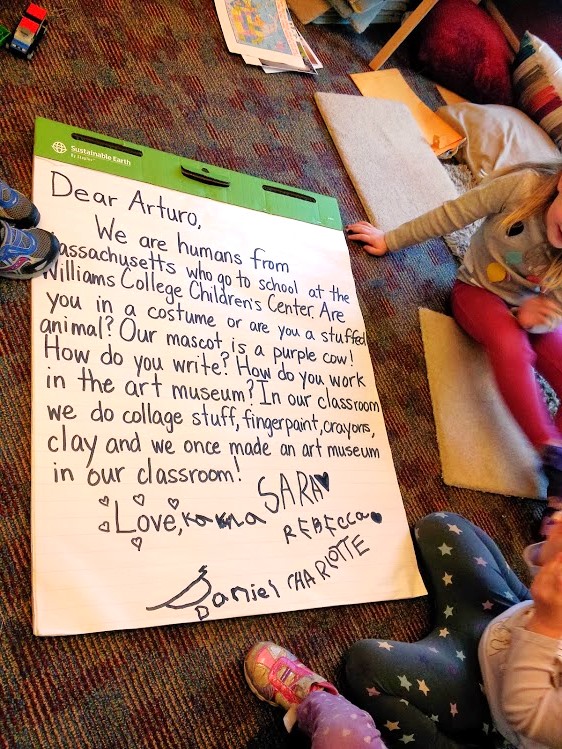
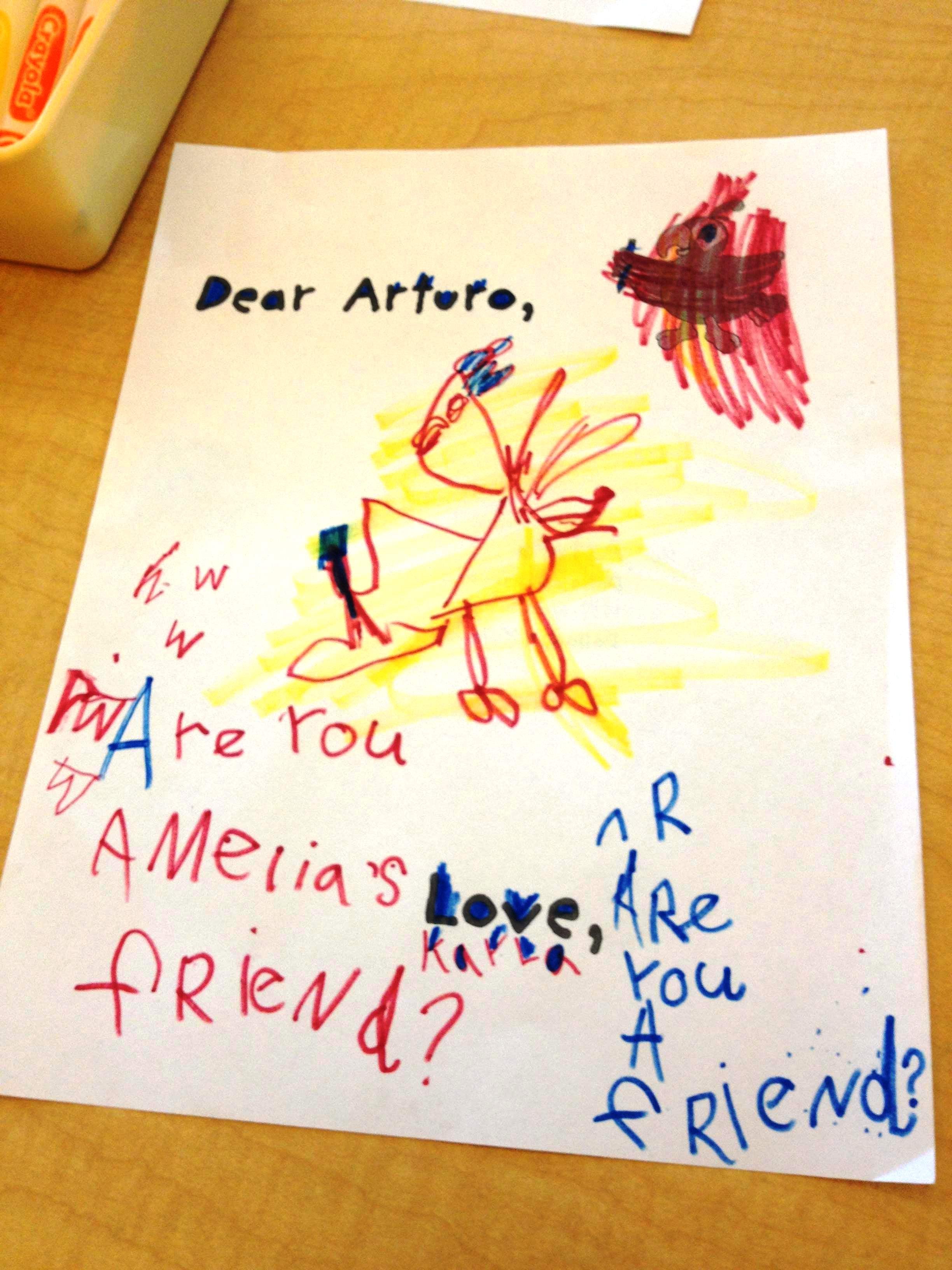
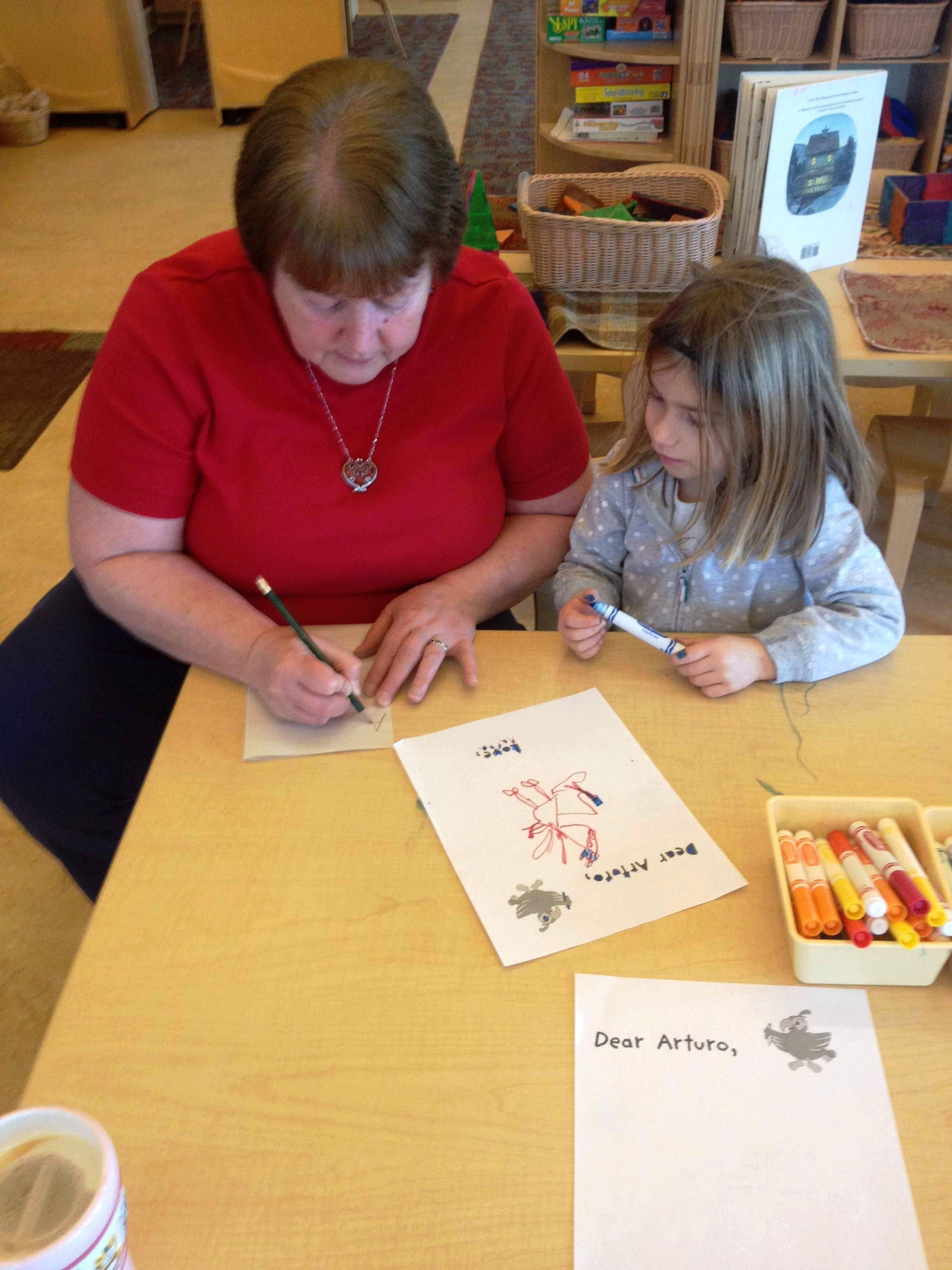
It isn’t surprising that one of the highlights of my internship at the DMA has been responding to letters children write to Arturo, the DMA’s loveable toucan mascot. When children visit Arturo’s Nest, our hands-on early learning space located in C3, they are invited to write a letter and leave it in Arturo’s mailbox. Over the past six months, I have thoroughly enjoyed receiving these letters, which feature drawings and share excitement about art and experiences at the DMA. Many children are also very curious about Arturo and his nest and ask questions that require me to come up with some creative responses. I’ve included a few of my favorite questions to Arturo below.

Dear Arturo,

Who made this place? Wut are you doing this week?

Dear Arturo,

I love art Where is your bathroom and how do you go?

Dear Arturo,

I play in your nest a lot and your babies don’t come out of your eggs. Are the babies coming?

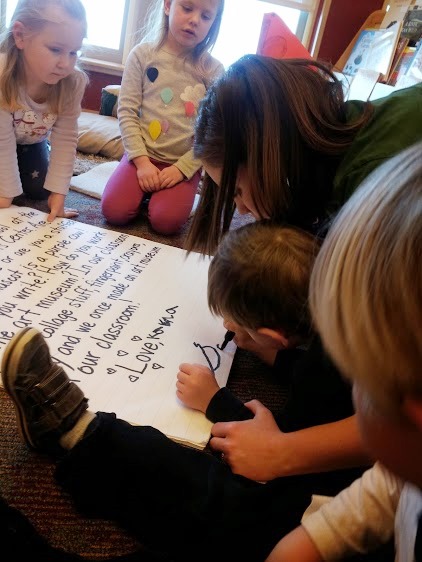
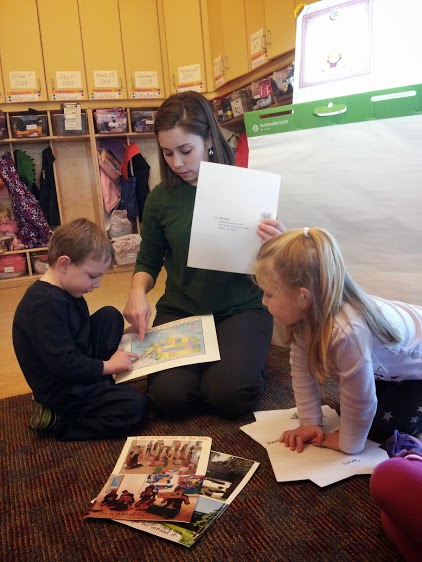
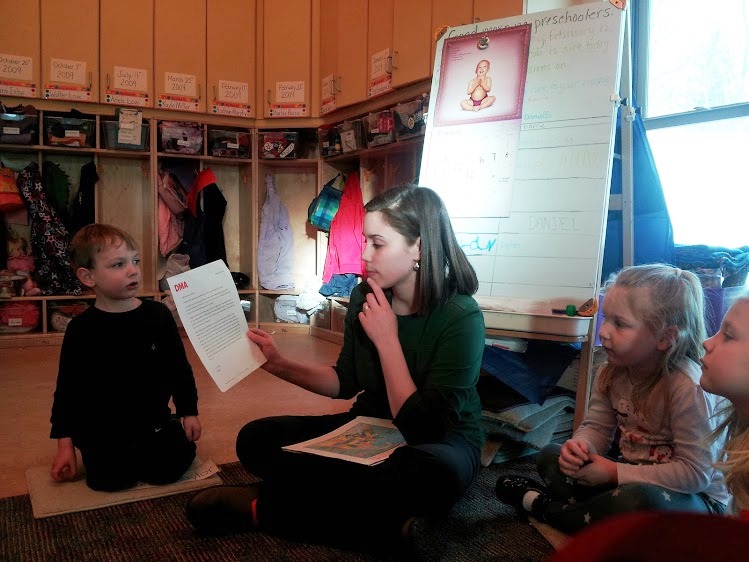
As I responded to these letters, I loved imagining the excitement as children discovered a response from Arturo in their mailbox. I decided to share this excitement with children back at home and created a mail exchange between Arturo and the children’s center where I used to work in Massachusetts. As an introduction, I sent my past students (now big preschoolers!) a letter introducing my new friend Arturo. I also included pictures from my trip to Texas, the DMA, and some silly shots of Arturo and I playing in the nest.

I was delighted to hear back from the children’s center last week and enjoyed reading the children’s questions. I look forward to continuing the mail exchange with my past students and also visiting with them during my trip home this spring.

Stay tuned for more updates about Arturo’s magical mail!

Amelia Wood
McDermott Intern for Family and Access Teaching

Make This: Adventures in Casting

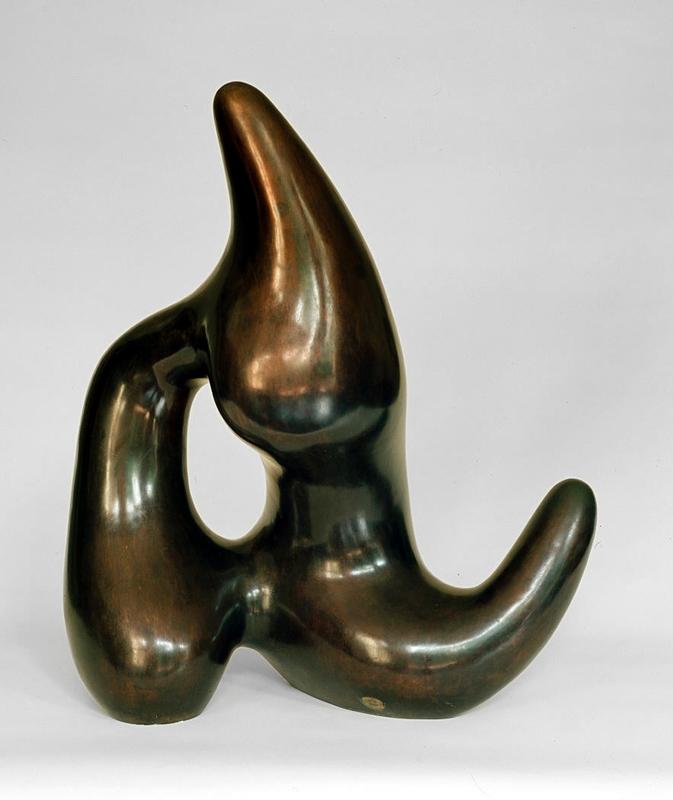
Jean Arp, "Star in a Dream (Astre en Reve)", 1958, Dallas Museum of Art, Foundation for the Arts Collection, gift of Mr. and Mrs. James H. Clark, (c) Artists Rights Society (ARS), New York/VG Bild-Kunst, Bonn

Jean Arp, Star in a Dream (Astre en Reve), 1958, Dallas Museum of Art, Foundation for the Arts Collection, gift of Mr. and Mrs. James H. Clark, (c) Artists Rights Society (ARS), New York/VG Bild-Kunst, Bonn

In talking with teens about what they’d like to do for upcoming classes, casting was a popular idea that I loved but had no idea how to execute. A metals casting class (see Star in a Dream, above) would be fantastic yet totally unfeasible, so I looked for alternative materials and methods that we could try. Over the past several months, I’ve been researching different techniques to meet the following needs: the project to be cost effective (i.e. cheap); the mold had to set within 45 minutes; the process had to be uncomplicated; and the results had to be pretty cool.

I finally settled on a pretty easy way of making silicone molds from inexpensive, household materials. There are many great online tutorials on how to do this, but I chose to adapt this one. Unfortunately, this silicone mold isn’t pourable, but it sets fast and is really easy to make. Alternatively, you could easily use a self-setting rubber medium like Sugru to make the mold if you’re not concerned about set time. I’m using Mod Melts as the casting material for this project to make things easier, but you could experiment with other things like resin, etc. As with any project, make sure your work area is well-ventilated and observe the safety precautions on the material labels.

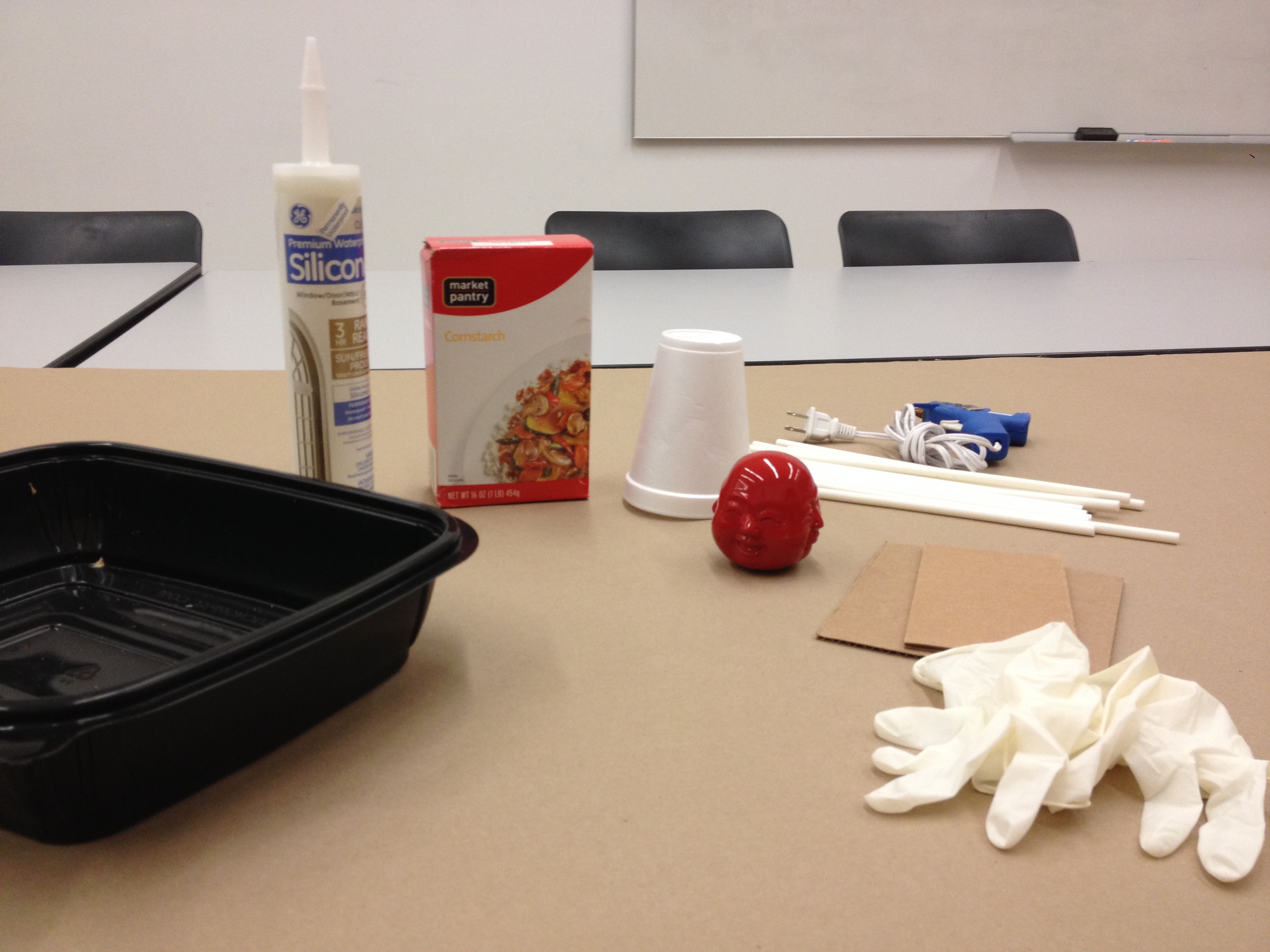
What you need (this should yield 1-2 small, 2″-4″ castings):

  • Tube of 100% silicone caulk and caulk gun (VERY important that it’s 100% silicone)
  • Cornstarch
  • Latex gloves
  • Styrofoam cup
  • Disposable plastic tray
  • Non-stick cooking spray
  • Mod Melts and hot glue gun
  • A small object to mold (you could make your own using modelling clay, etc.) that will fit into the Styrofoam cup
IMG_1510

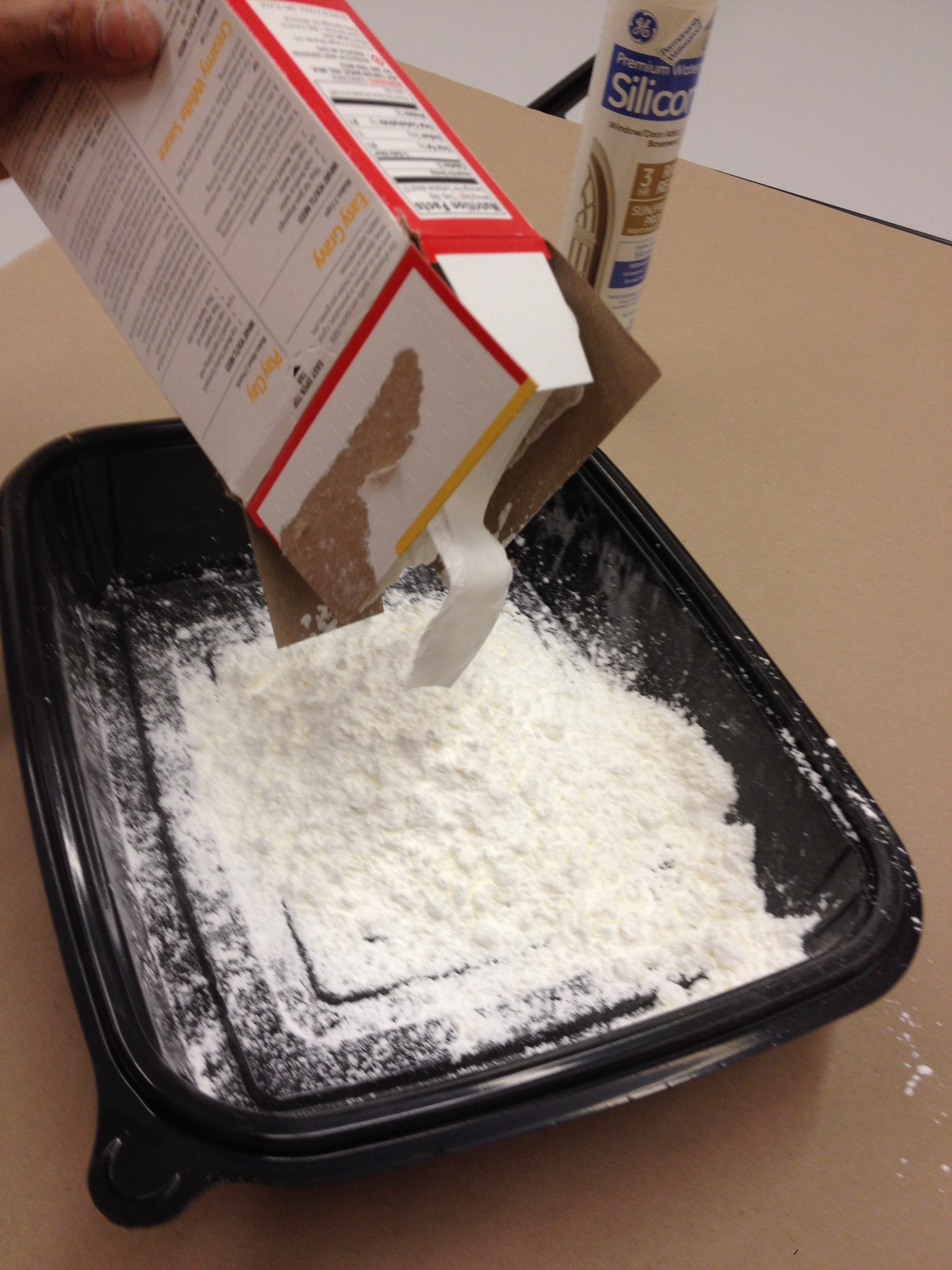
Step 1:

Don your gloves and pour a generous amount of cornstarch along the bottom of your plastic tray. Cut the tip off of the tube of caulk and load it into the caulk gun.
IMG_1511

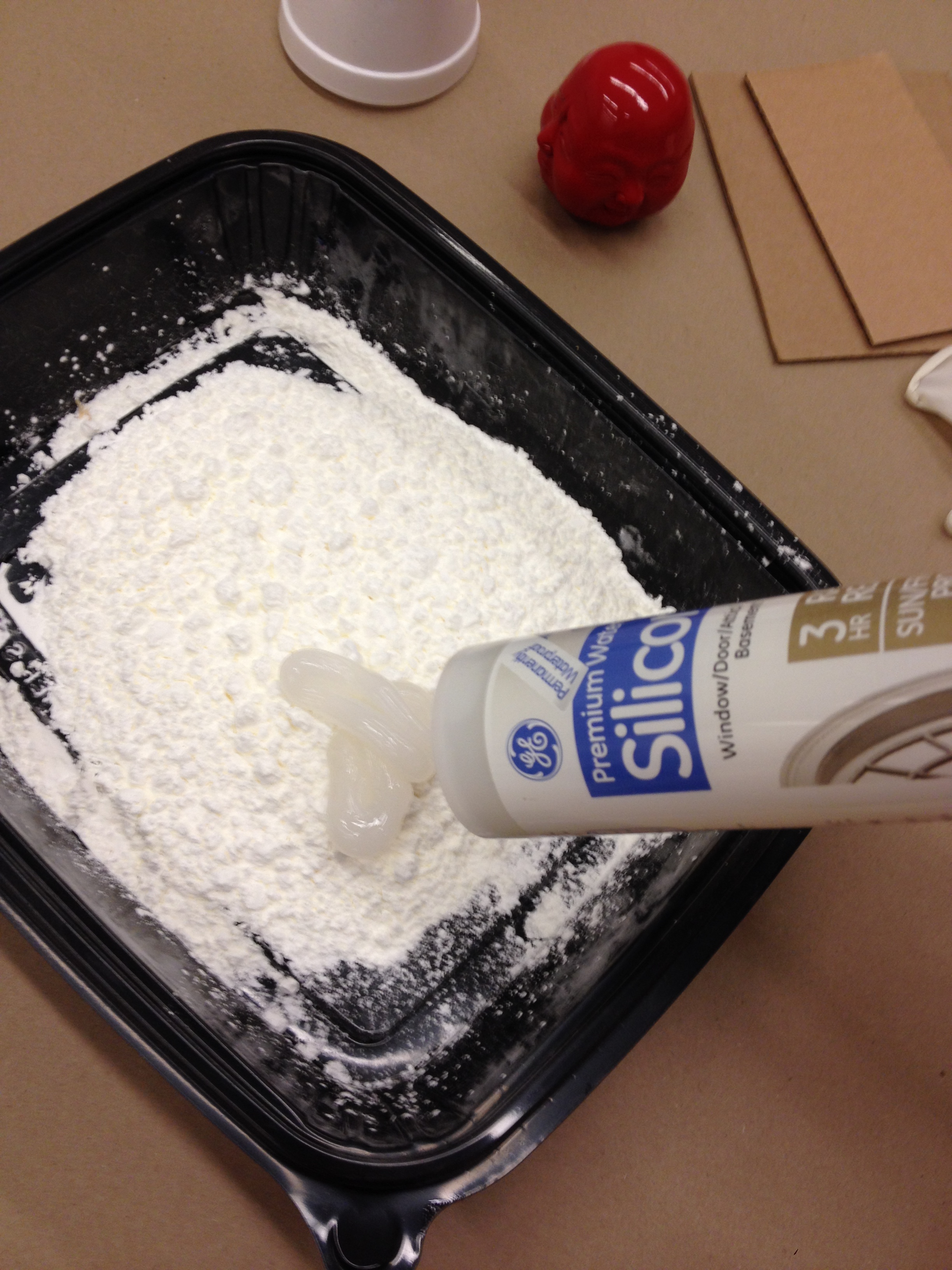
Step 2:

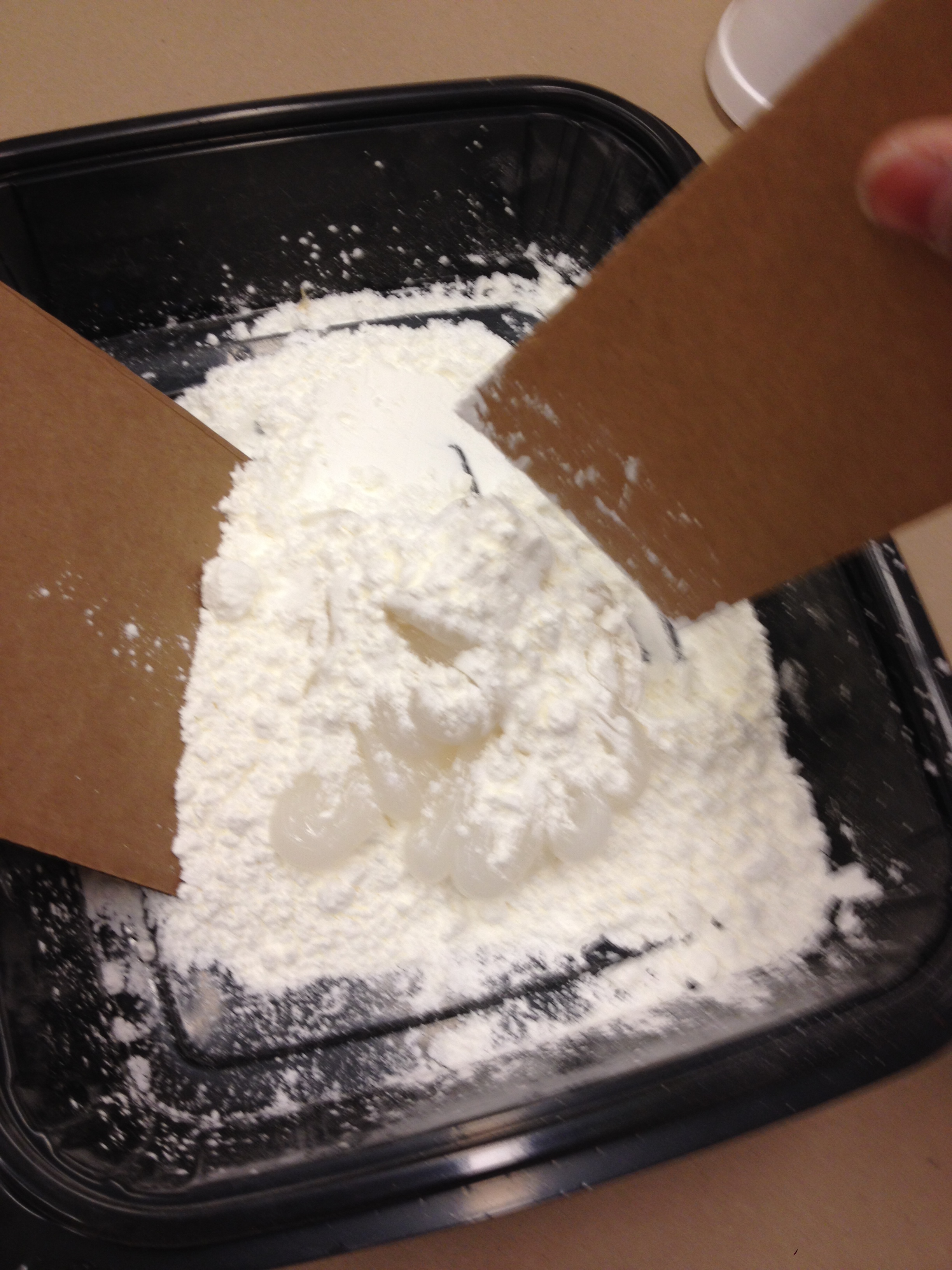
Squeeze the entire tube of caulk into the tray full of cornstarch. Begin incorporating the cornstarch into the caulk until it starts to form a loose ball. I used two pieces of scrap cardboard to toss everything together until it became a paste, then used my hands. Add more cornstarch as needed. I ended up using about 12 oz. of cornstarch.
IMG_1512

IMG_1513

Step 3:

Continue kneading cornstarch into the silicone ball until it reaches a putty-like consistency and is no longer sticky to the touch.
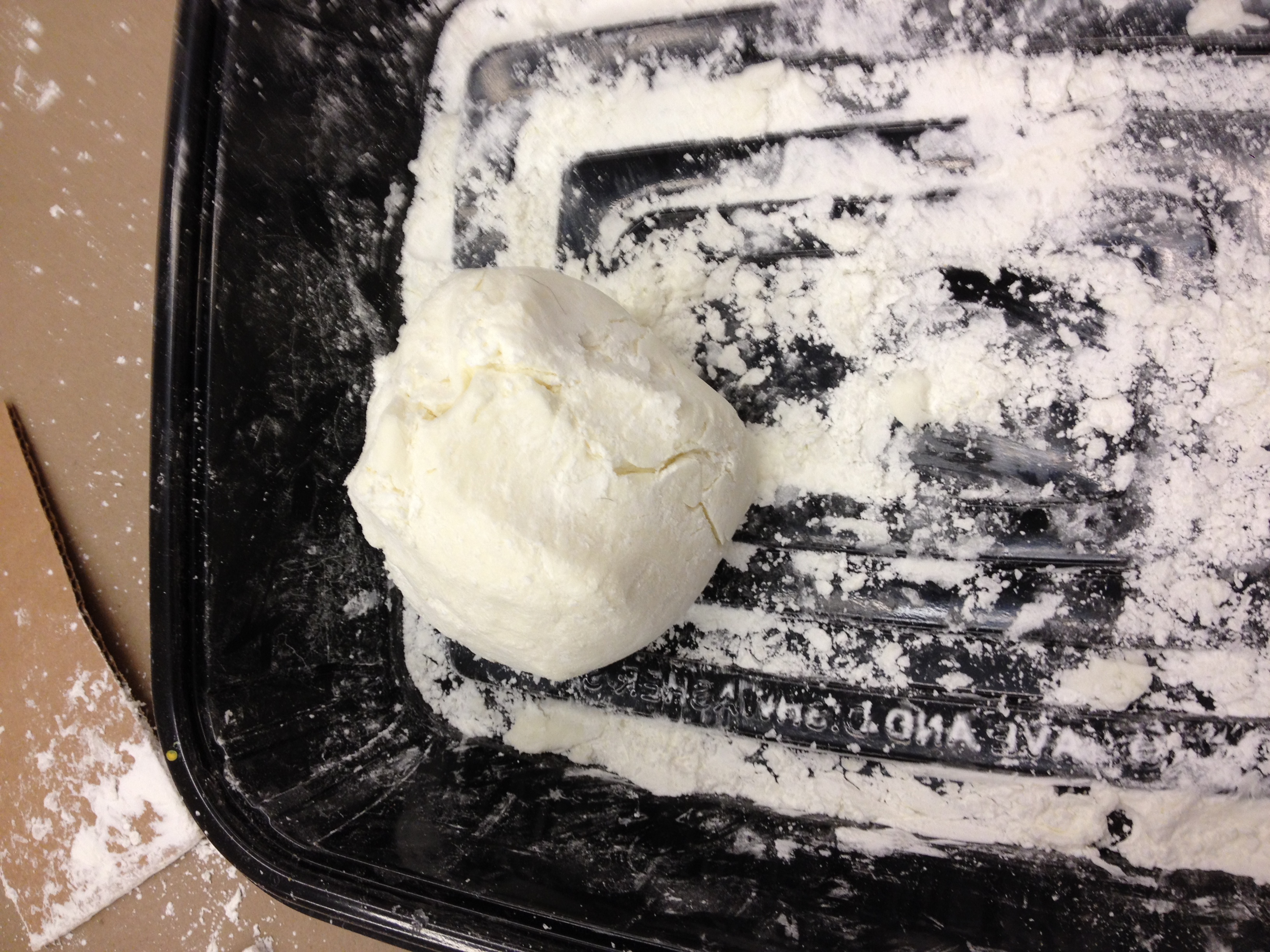
IMG_1515

Step 4: 

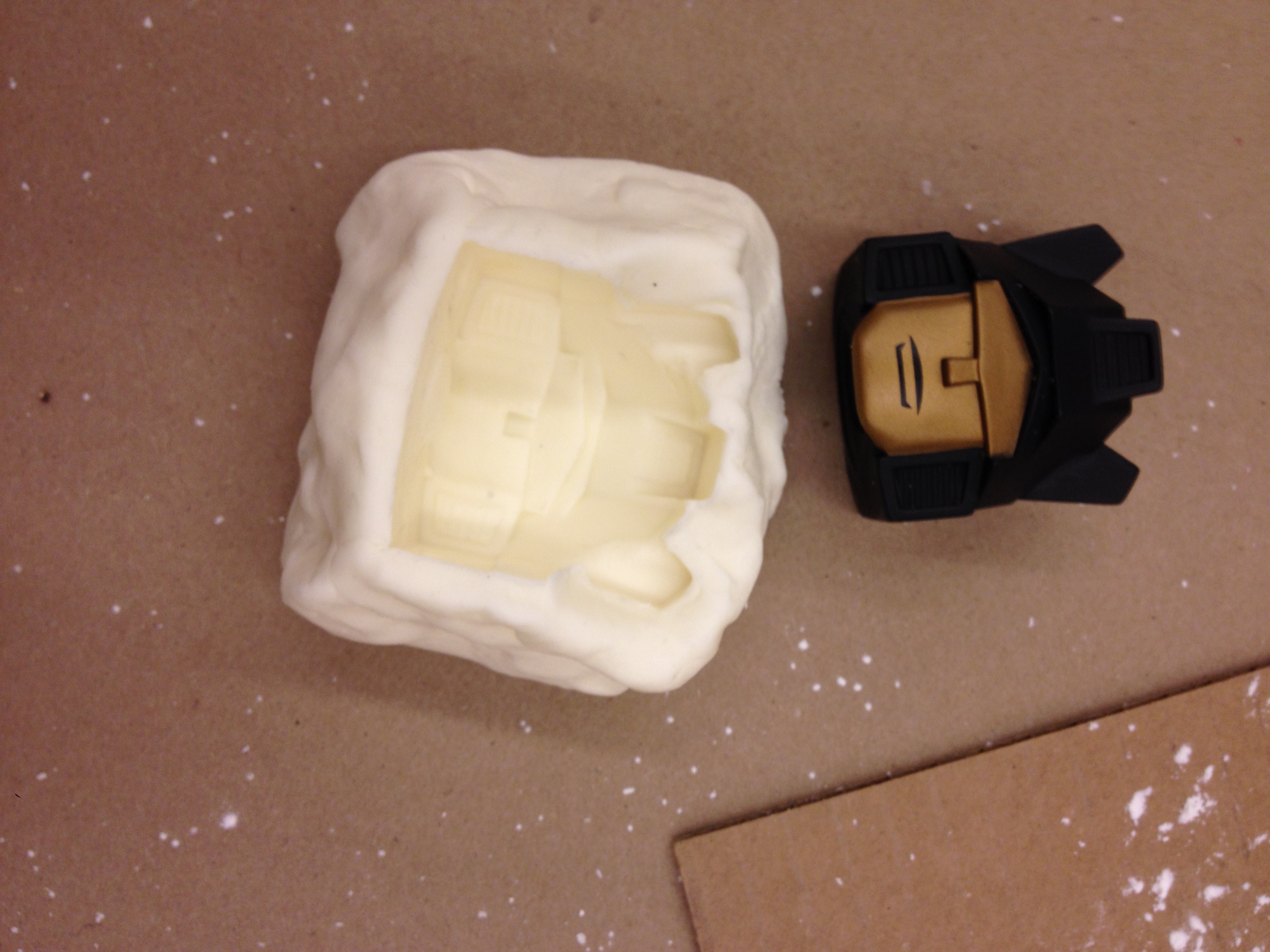
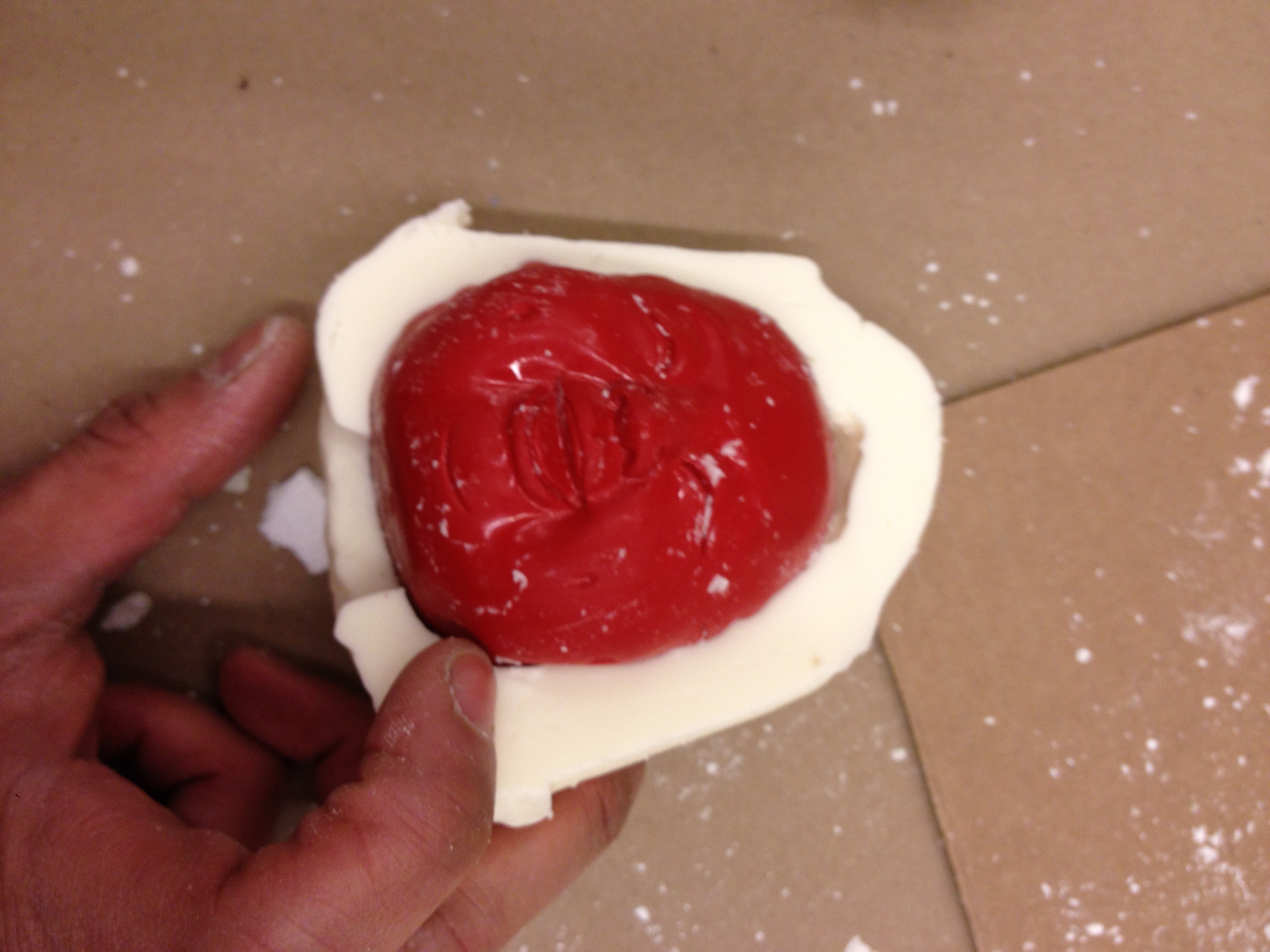
Press the silicone firmly around your object to make your mold. For best results, use an object with a simple shape that doesn’t have a lot of holes where the silicone could get trapped. Press the mold with the object inside into the Styrofoam cup and leave it to set. (Notice that I’ve left a small hole at the top of the mold where I will pour in the Mod Melts.) I had enough material to cast my object and to make a small, secondary mold.
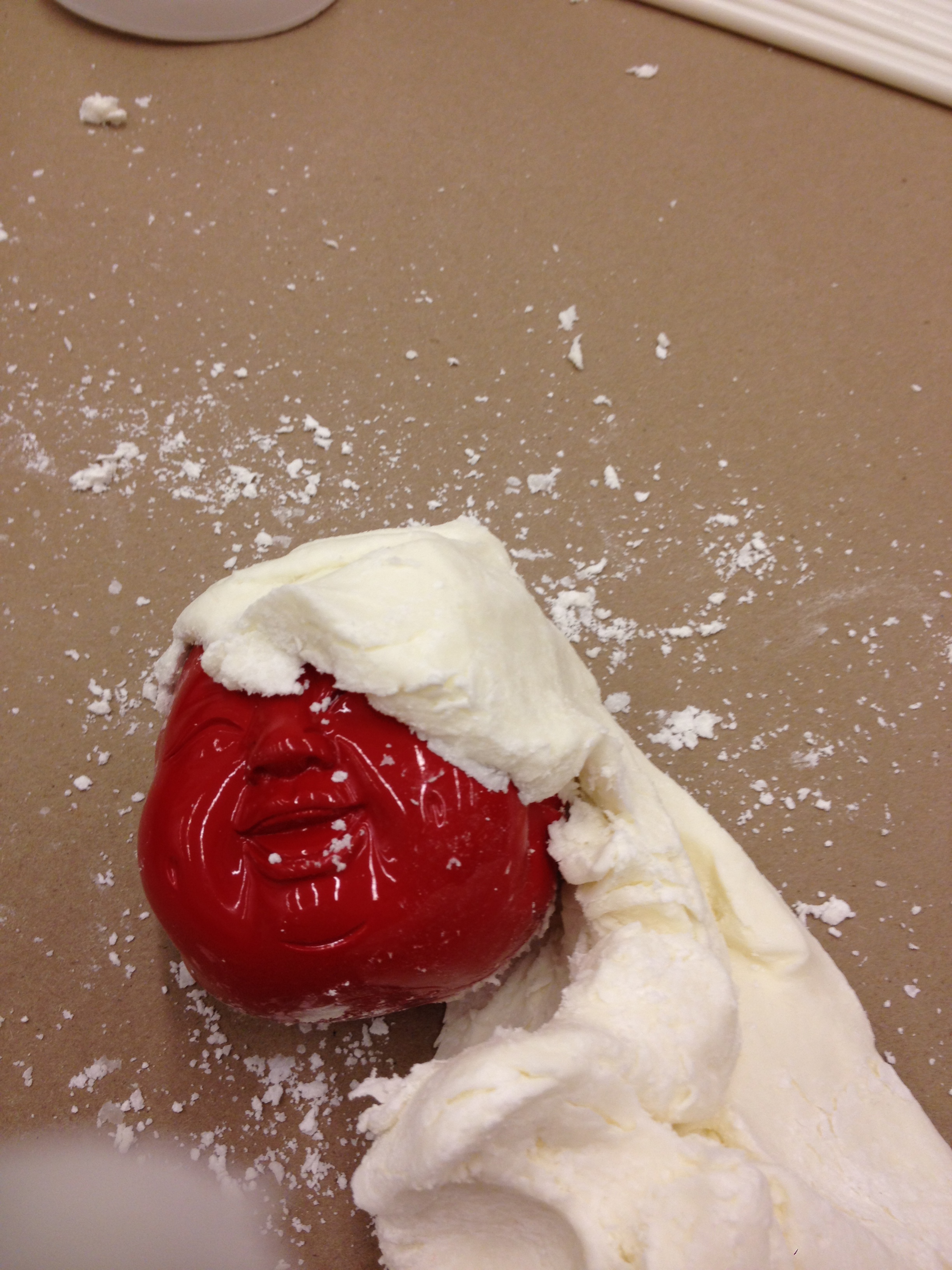
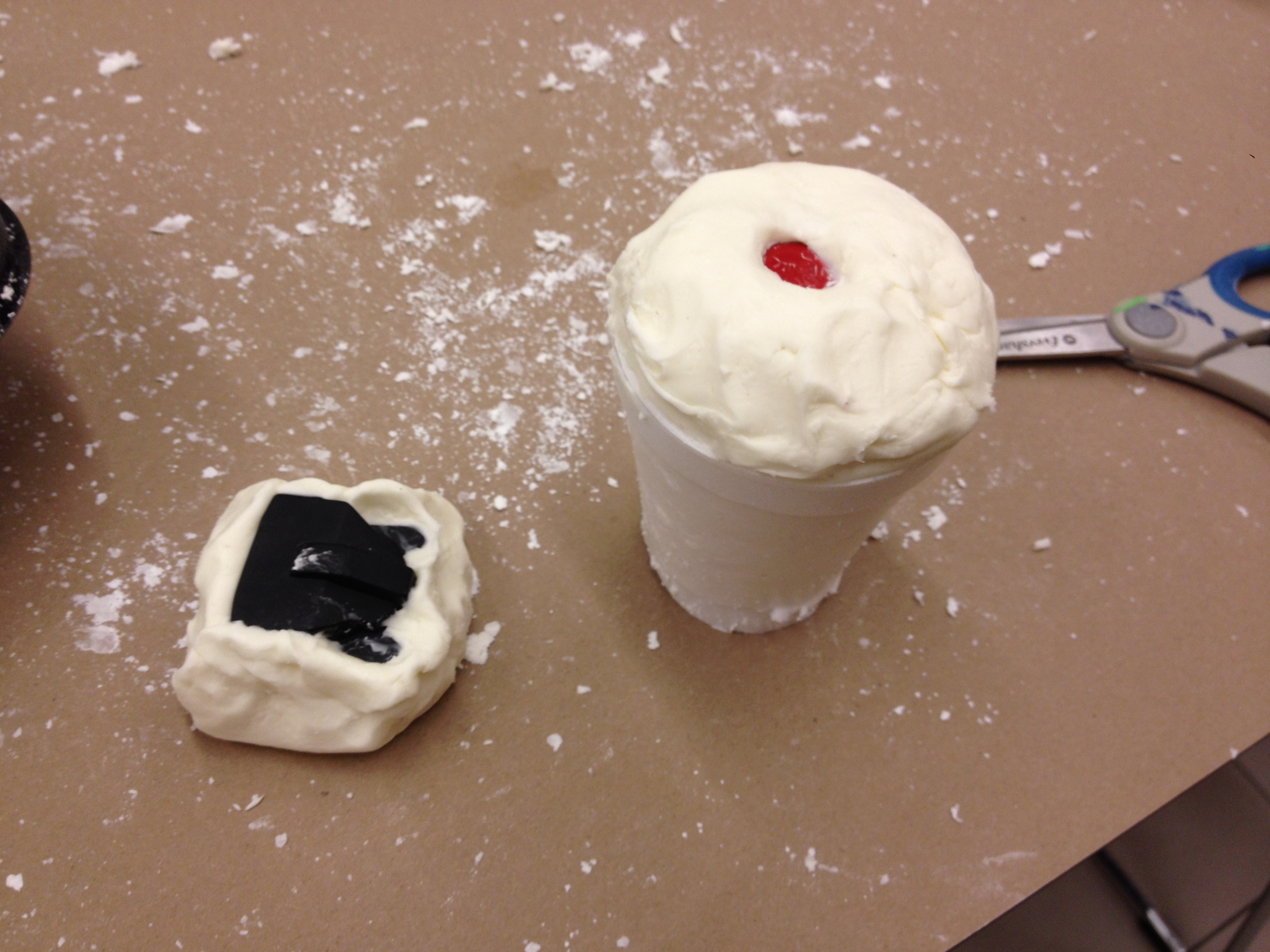
IMG_1516

IMG_1517

Step 5: 

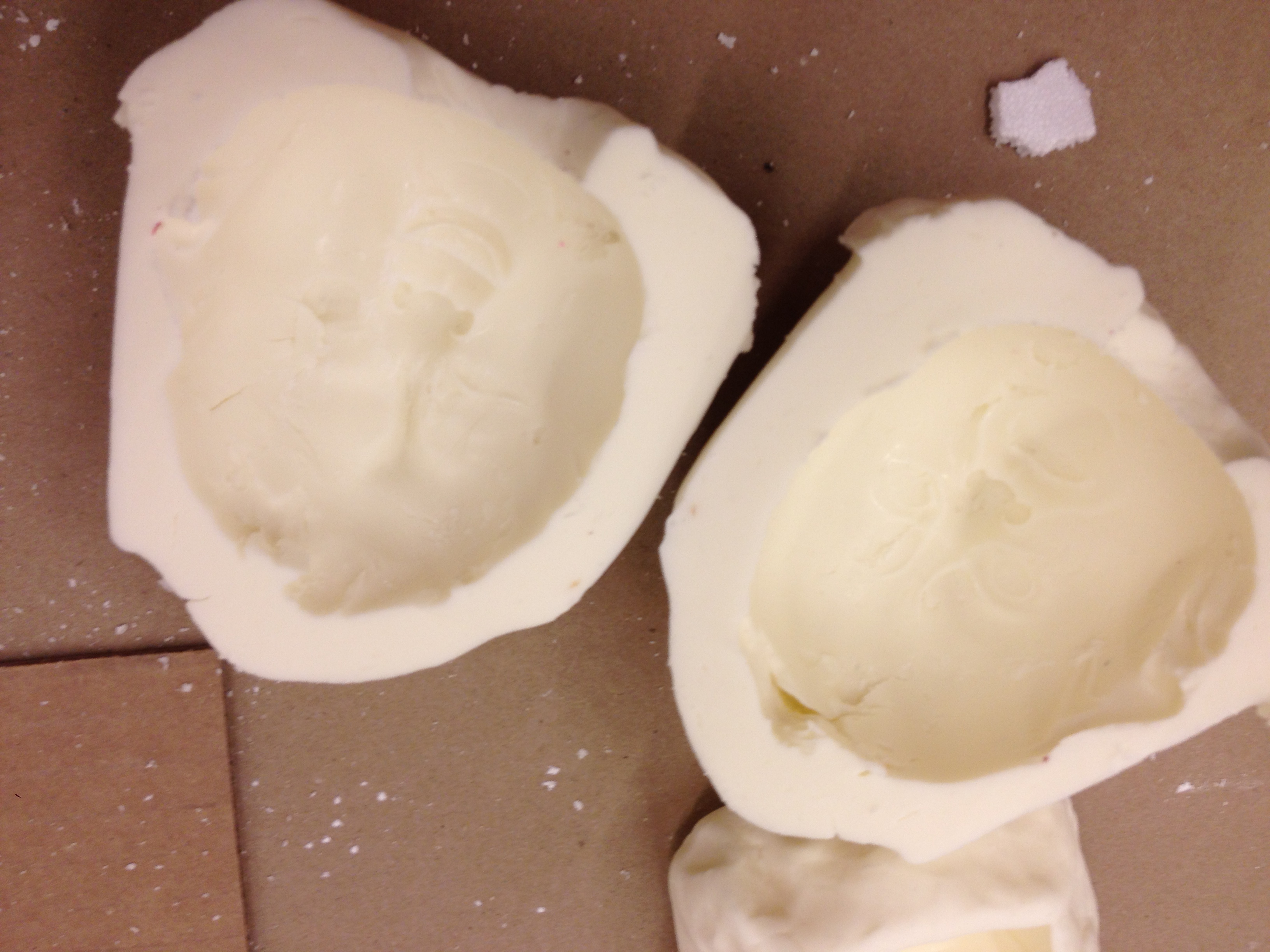
Check the mold after about 45 minutes–if it has completely set, you should be able to slide it out of the cup. Gently remove the object, taking care not to tear the mold. (You may need to carefully cut the silicone to make a two-part mold in order to do this.) You can see in my bigger mold some sections where I ran into trouble with air bubbles. To avoid that next time, I will have to press more firmly into those sections and give my mold a little more time to set.
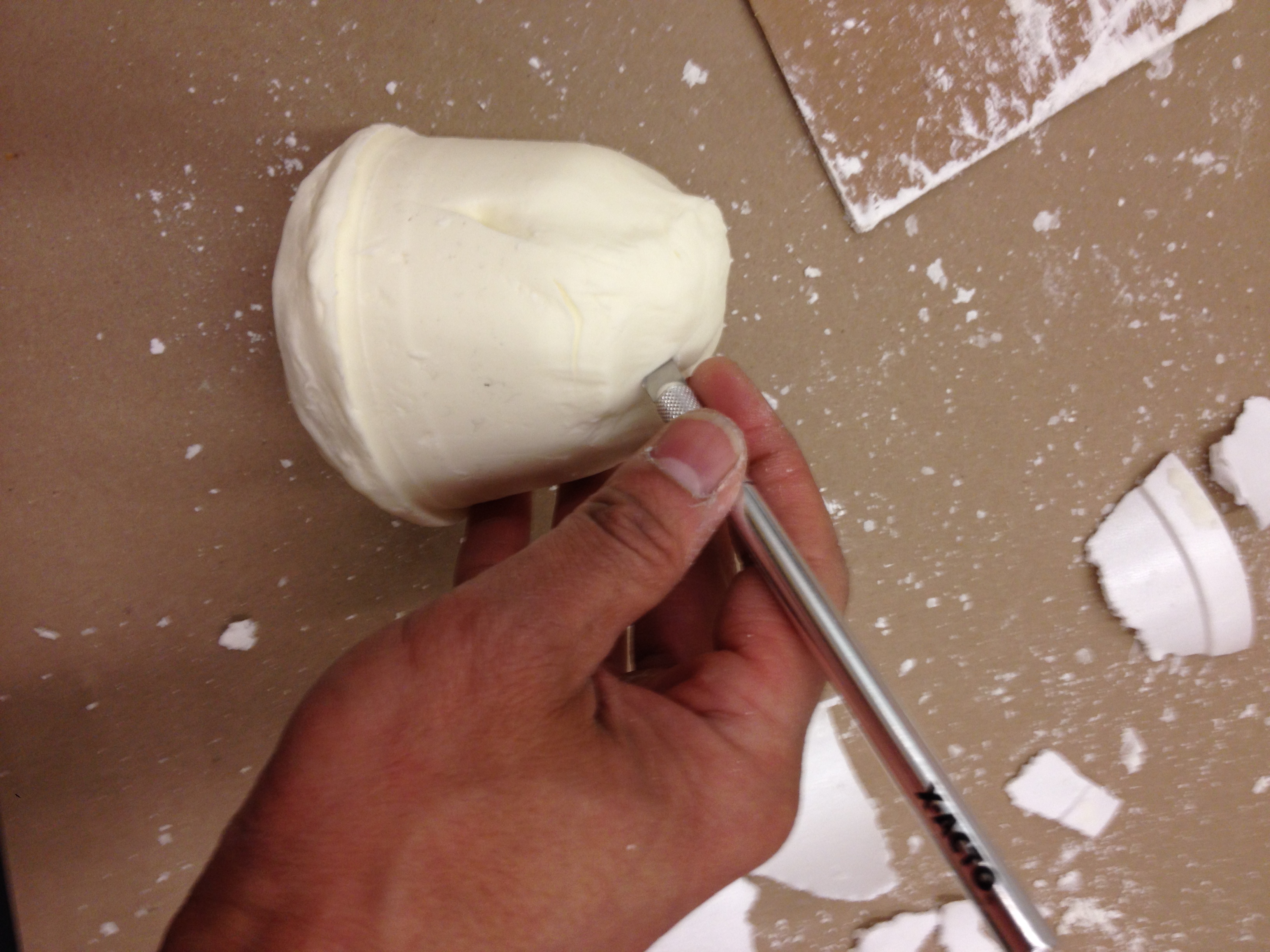
IMG_1520

IMG_1521

IMG_1522

IMG_1519

Step 6:

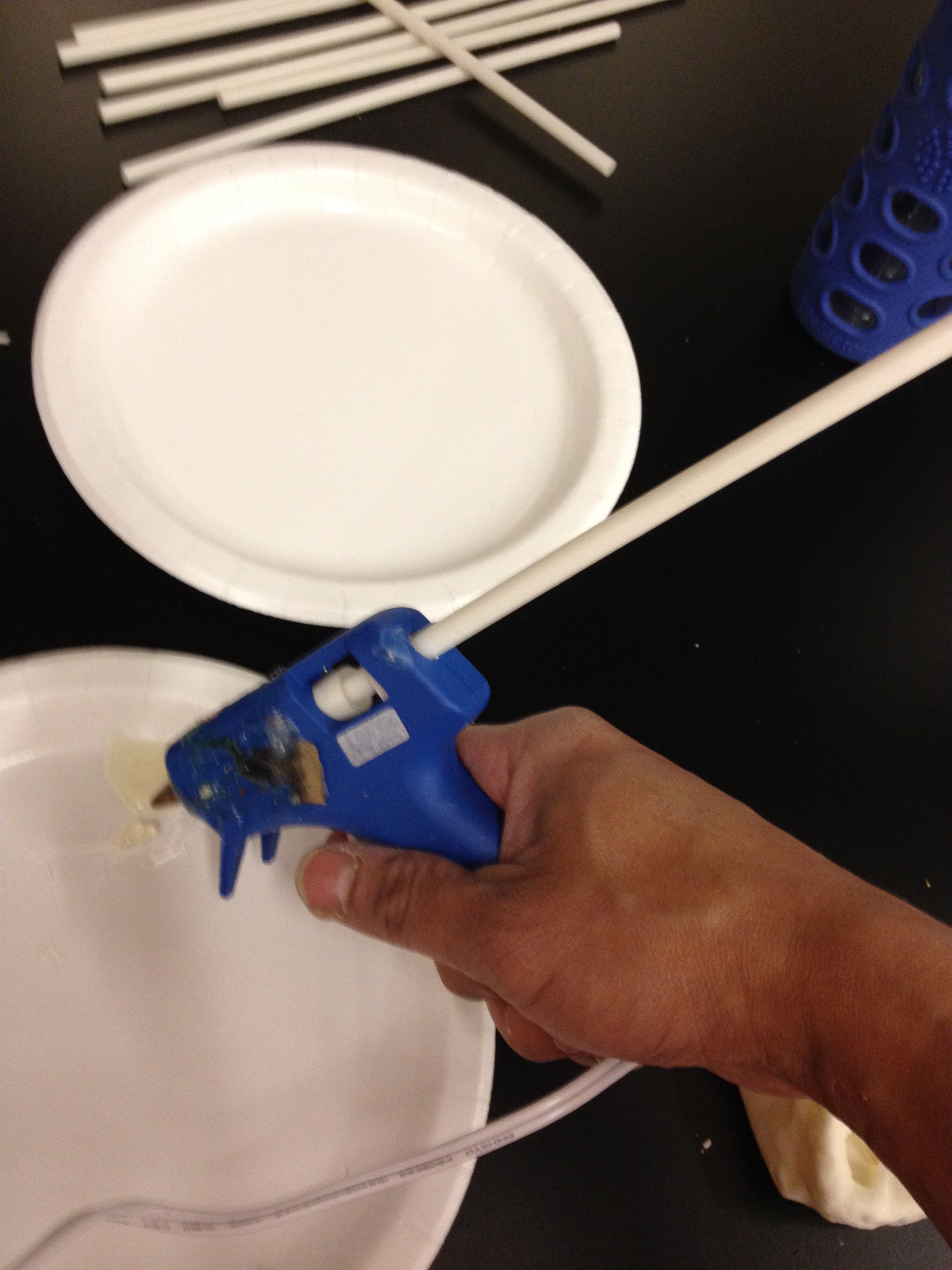
Spray the inside of your mold with non-stick spray (optional) and put it back in the Styrofoam cup. Heat your glue gun and load it with the Mod Podge Melts. For the sake of time, I will only cast the smaller mold that I made but I’ll post images of the larger cast on our Flickr page!

Step 7:

When hot, squeeze the Mod Melts into the mold. Once you’ve filled it, give the mold a gentle tap to help any air bubbles settle. Leave it to set.

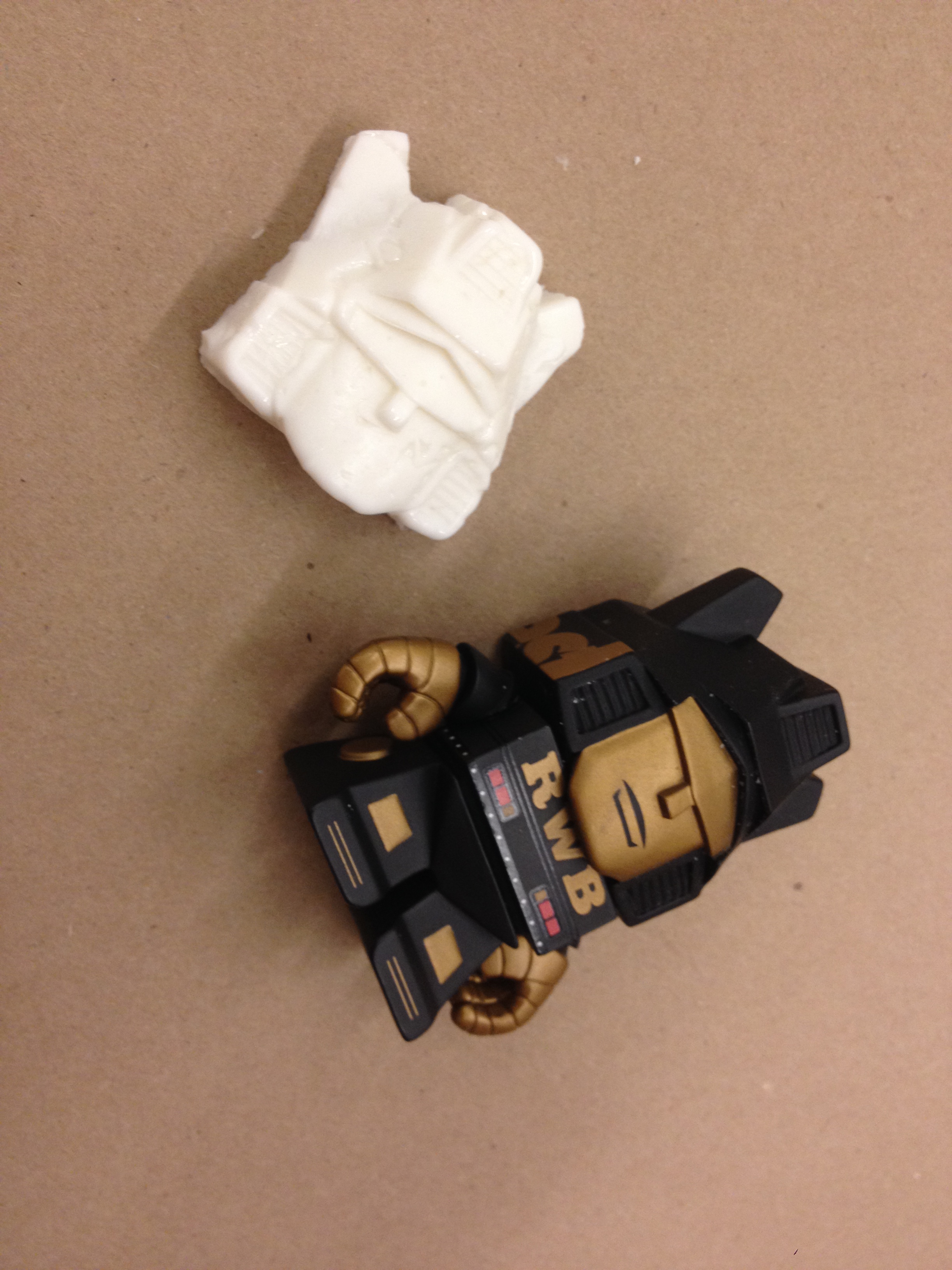
Once your casting is cool, take it out of the mold. Your results may vary, but don’t worry–if the mold is still intact, you could reuse it to make another casting. And the nice thing about Mod Melts is that afterwards, you can paint your project or draw on it with Sharpie markers, etc.
IMG_1523

IMG_1524

If you know of an interested teen, have them check out our March Urban Armor workshop–we’ll be doing a similar activity but casting in plastic!

Make and be happy!

JC Bigornia
C3 Program Coordinator
Friday Photos: Festival Fun

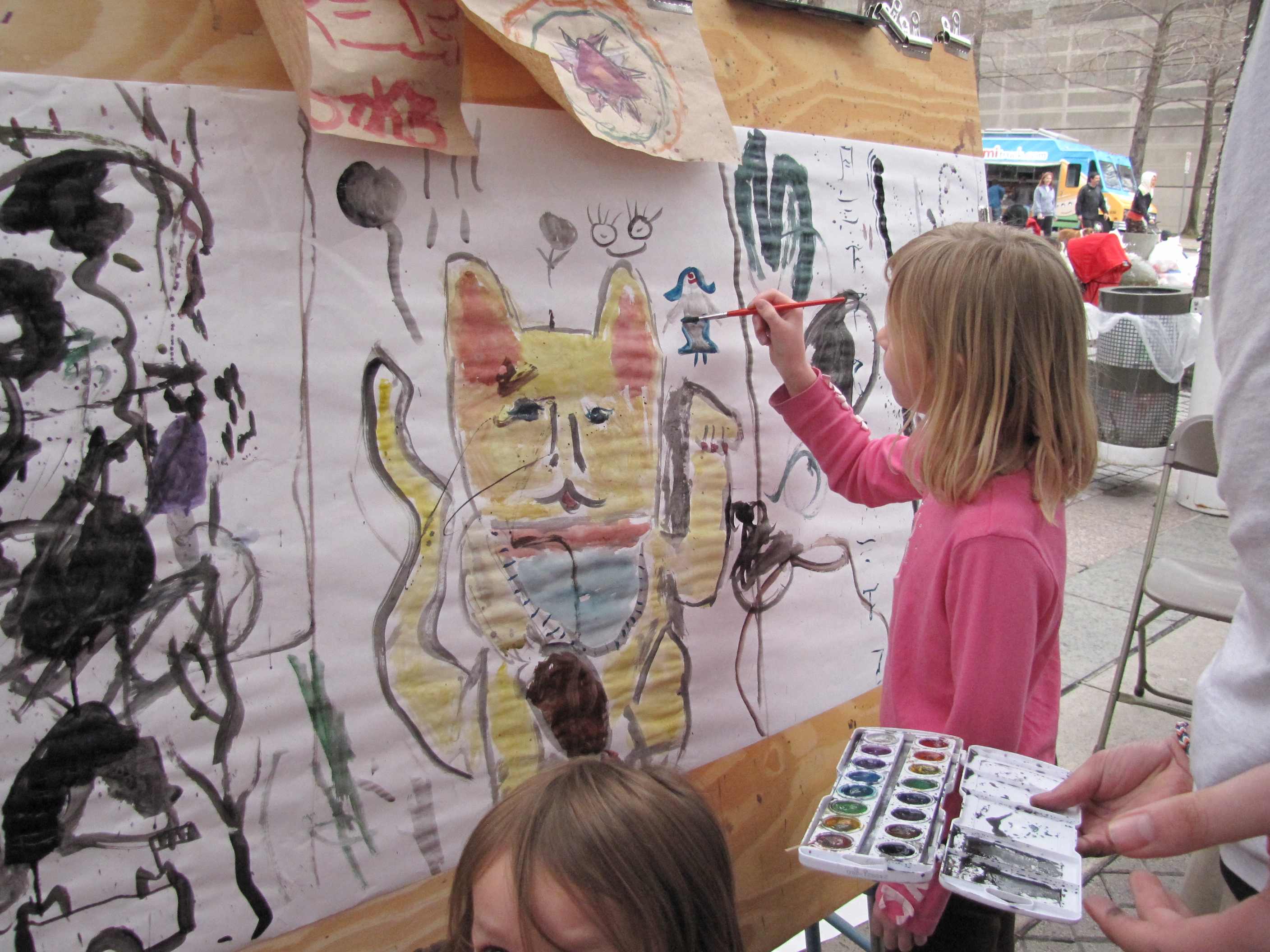
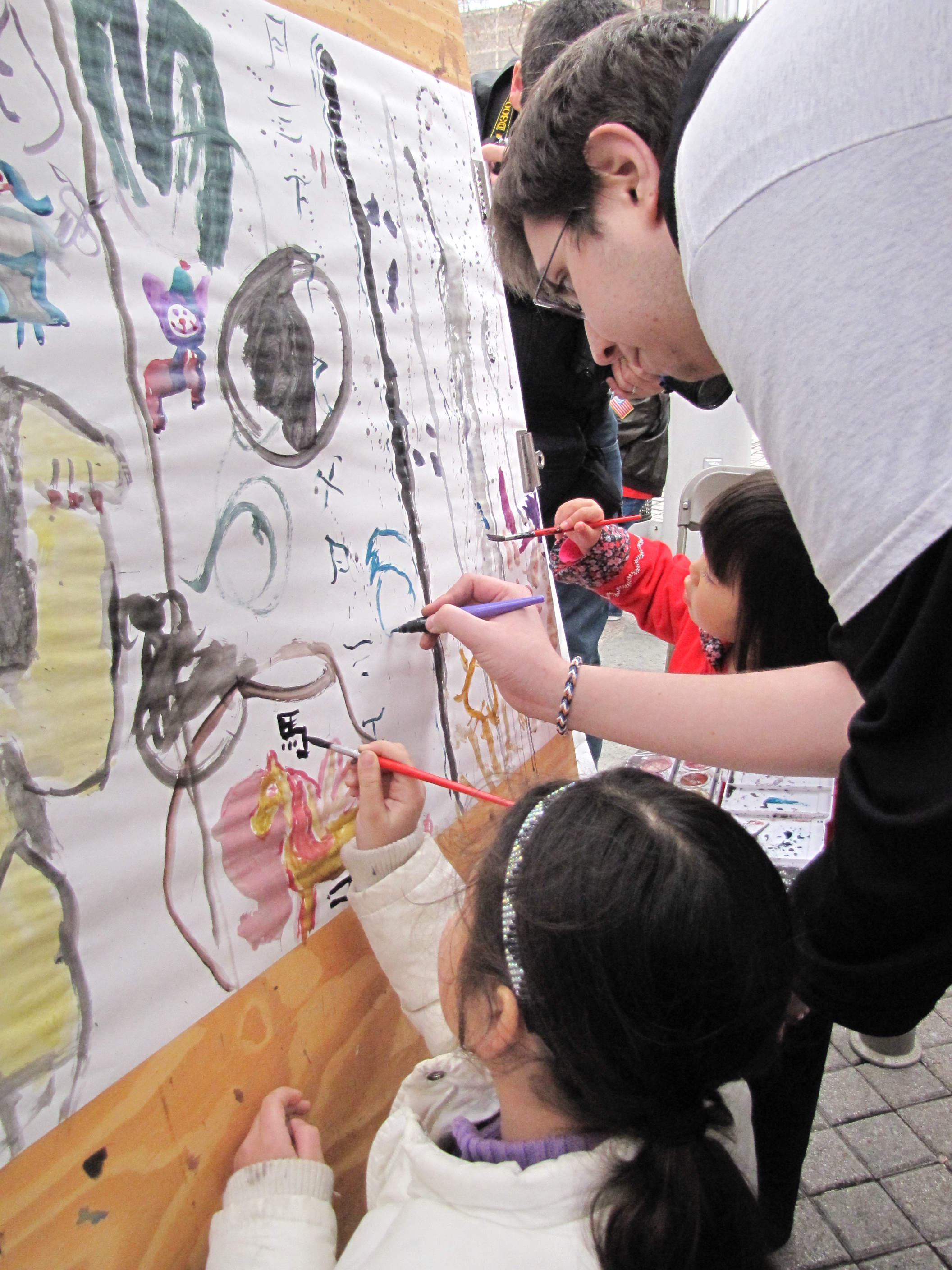
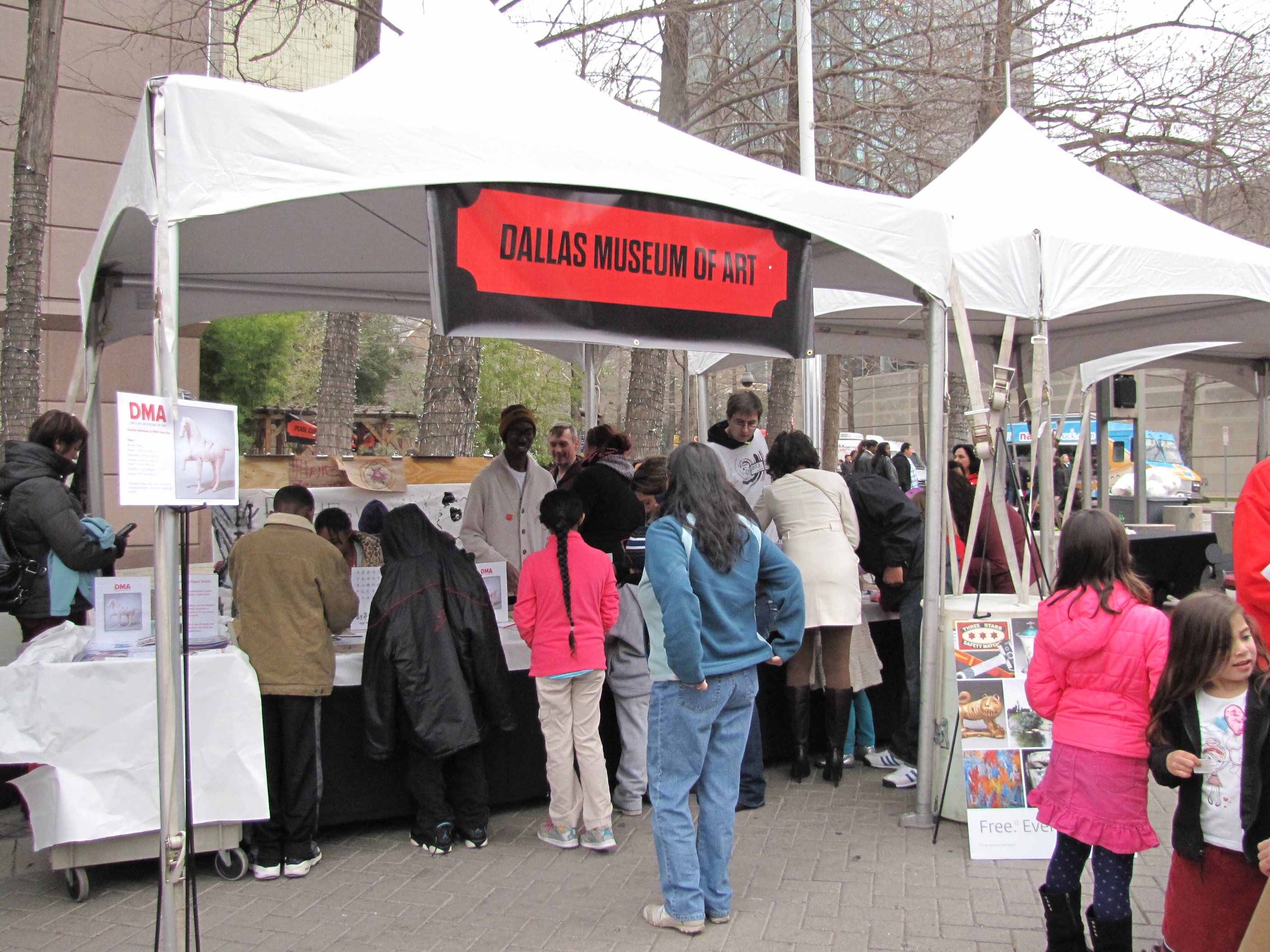
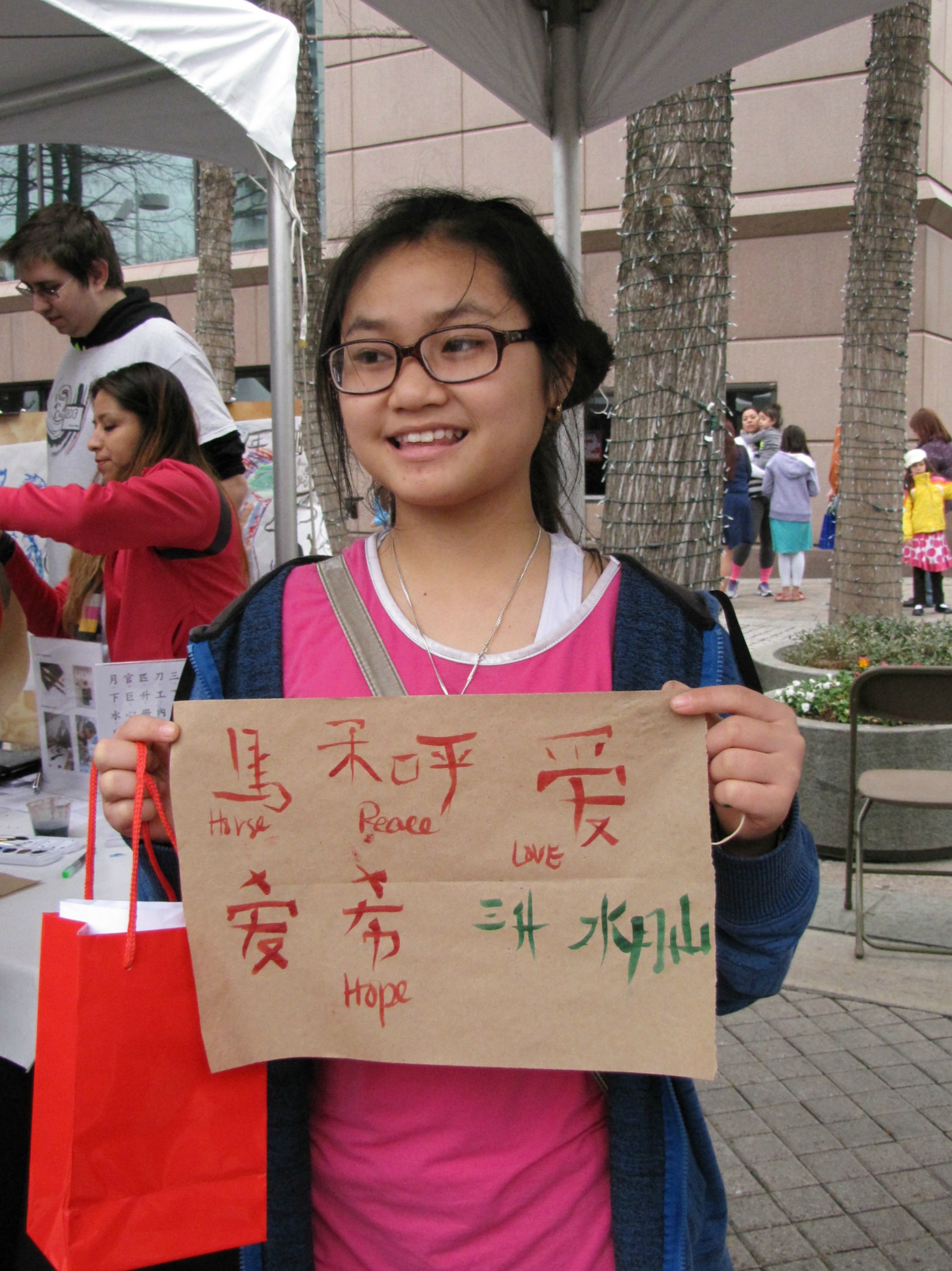
Every time you visit the DMA, you’ll discover exciting ways to become involved with the Museum’s collection, whether taking part in a Twitter Treasure Hunt on Late Nights, going on an interactive tour during First Tuesdays, or creating your own work of art in Studio Creations. But did you know you can also find ways to get connected with the DMA outside of the Museum’s walls?

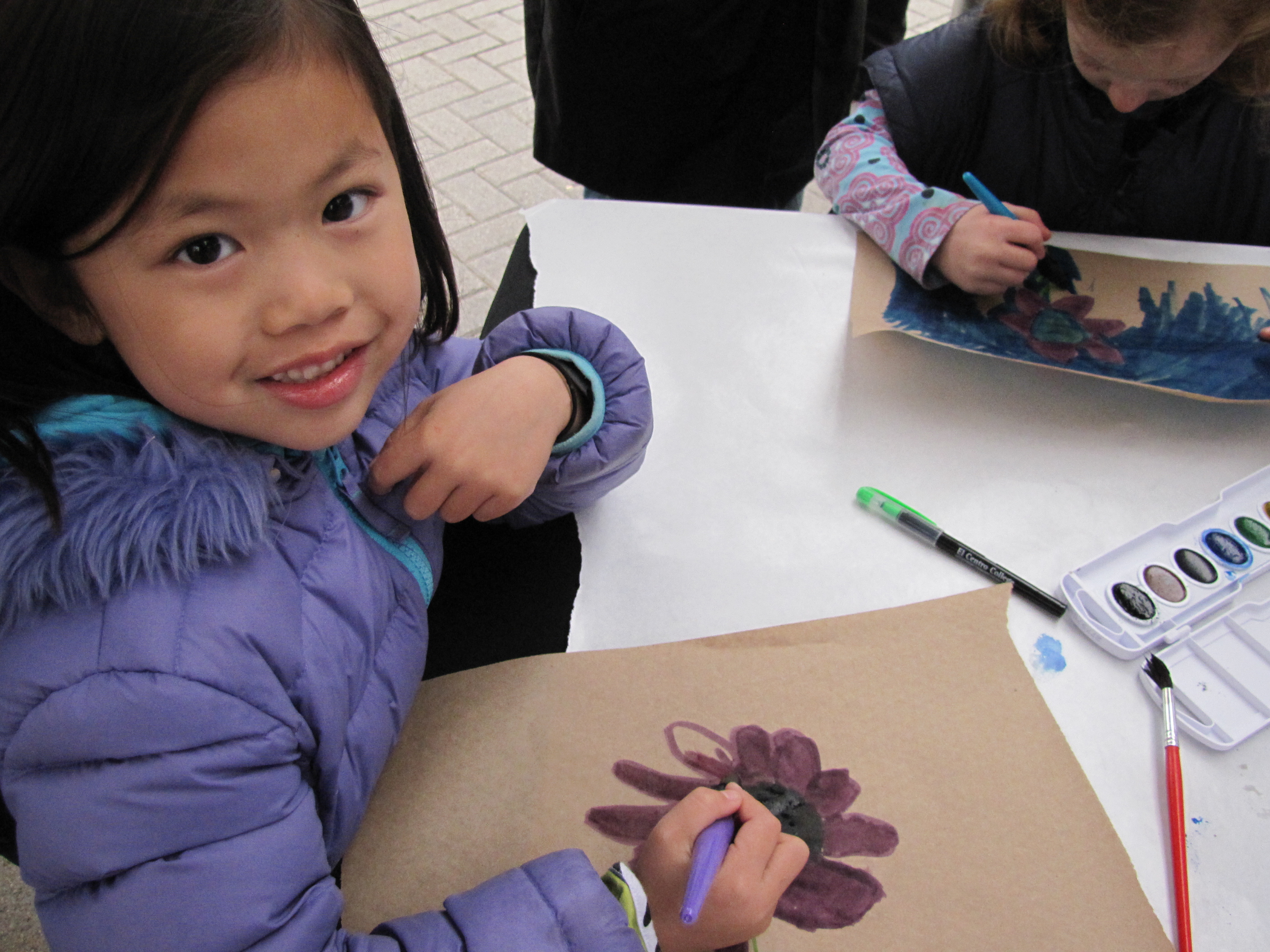
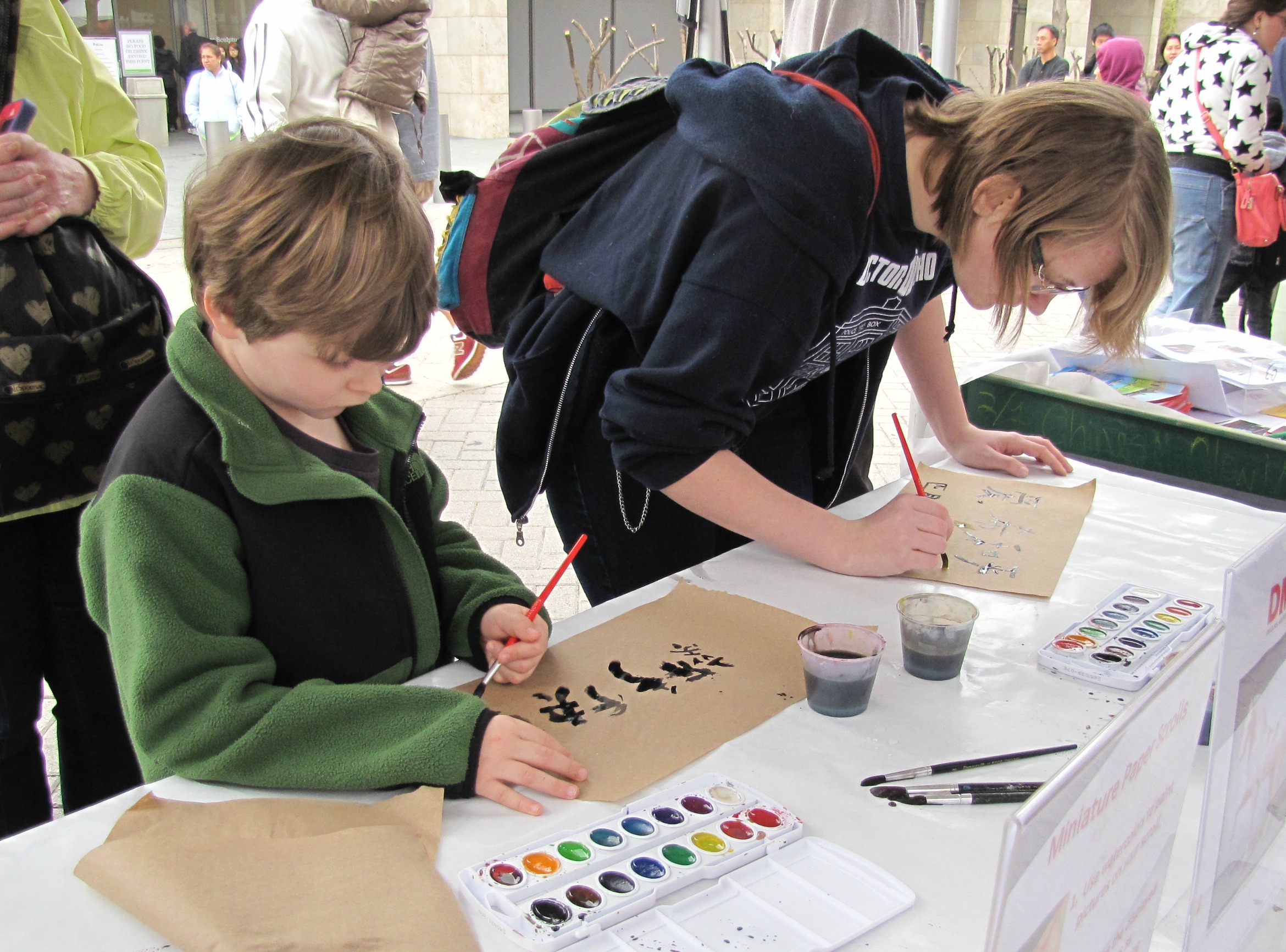
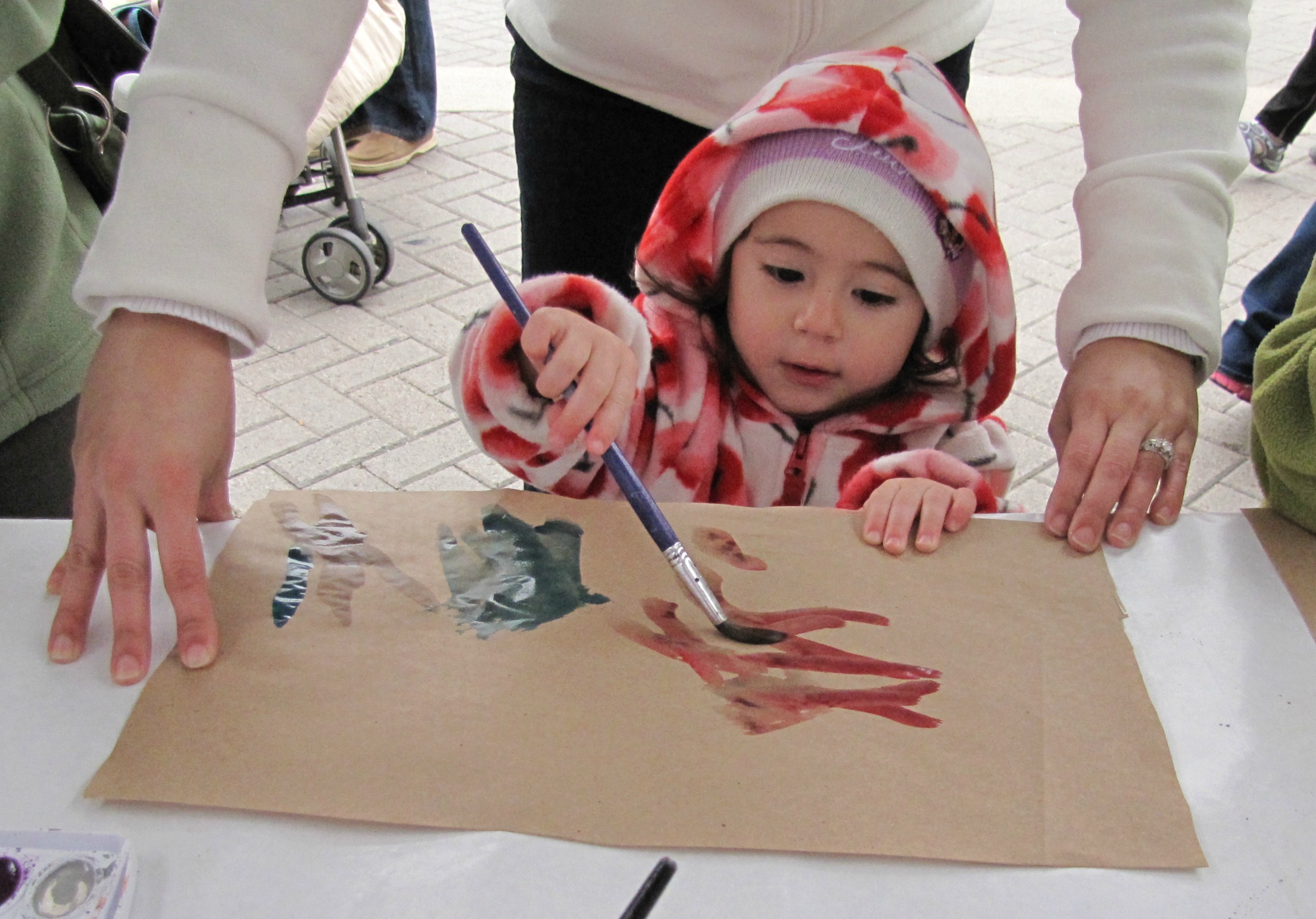
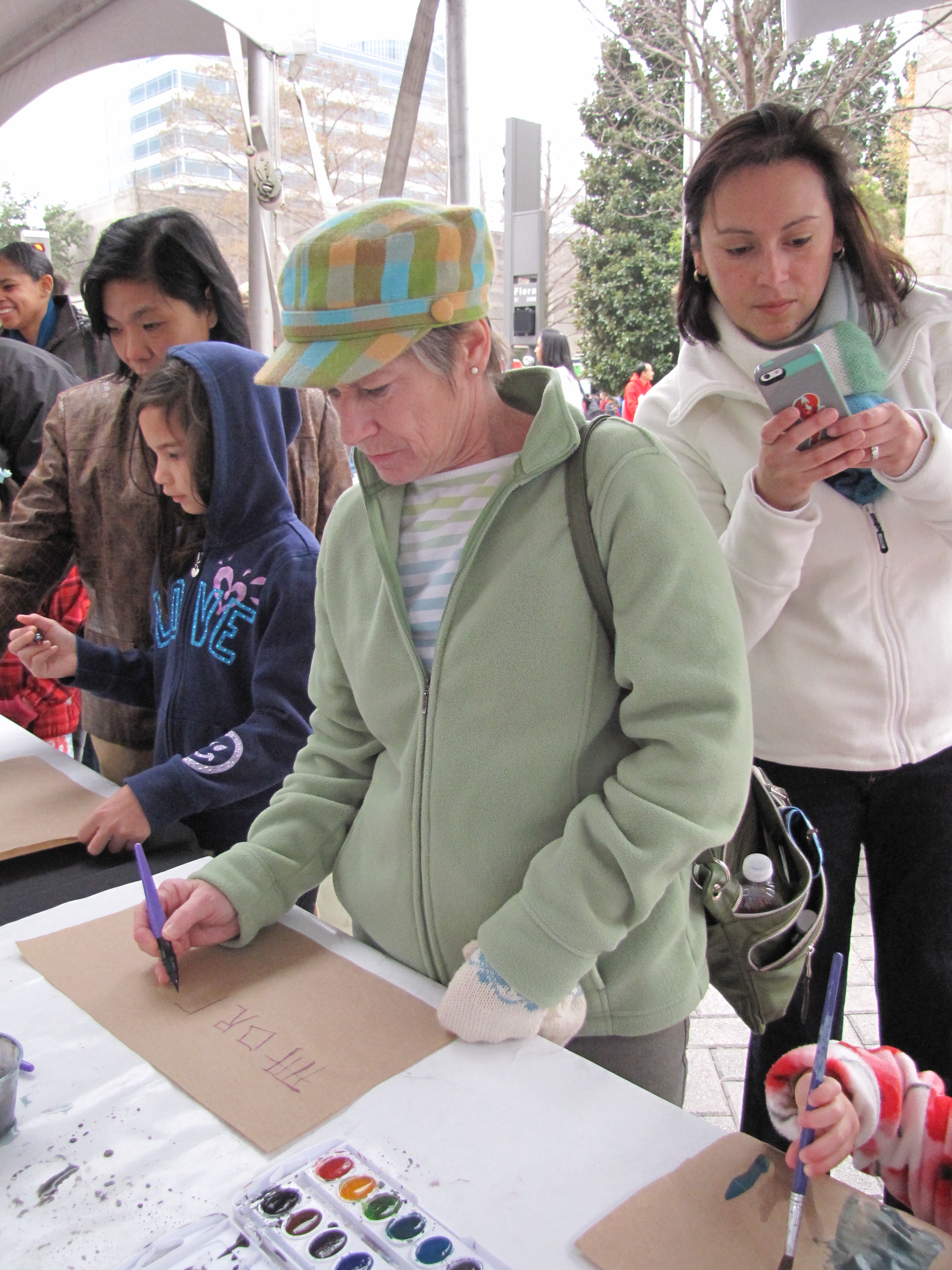
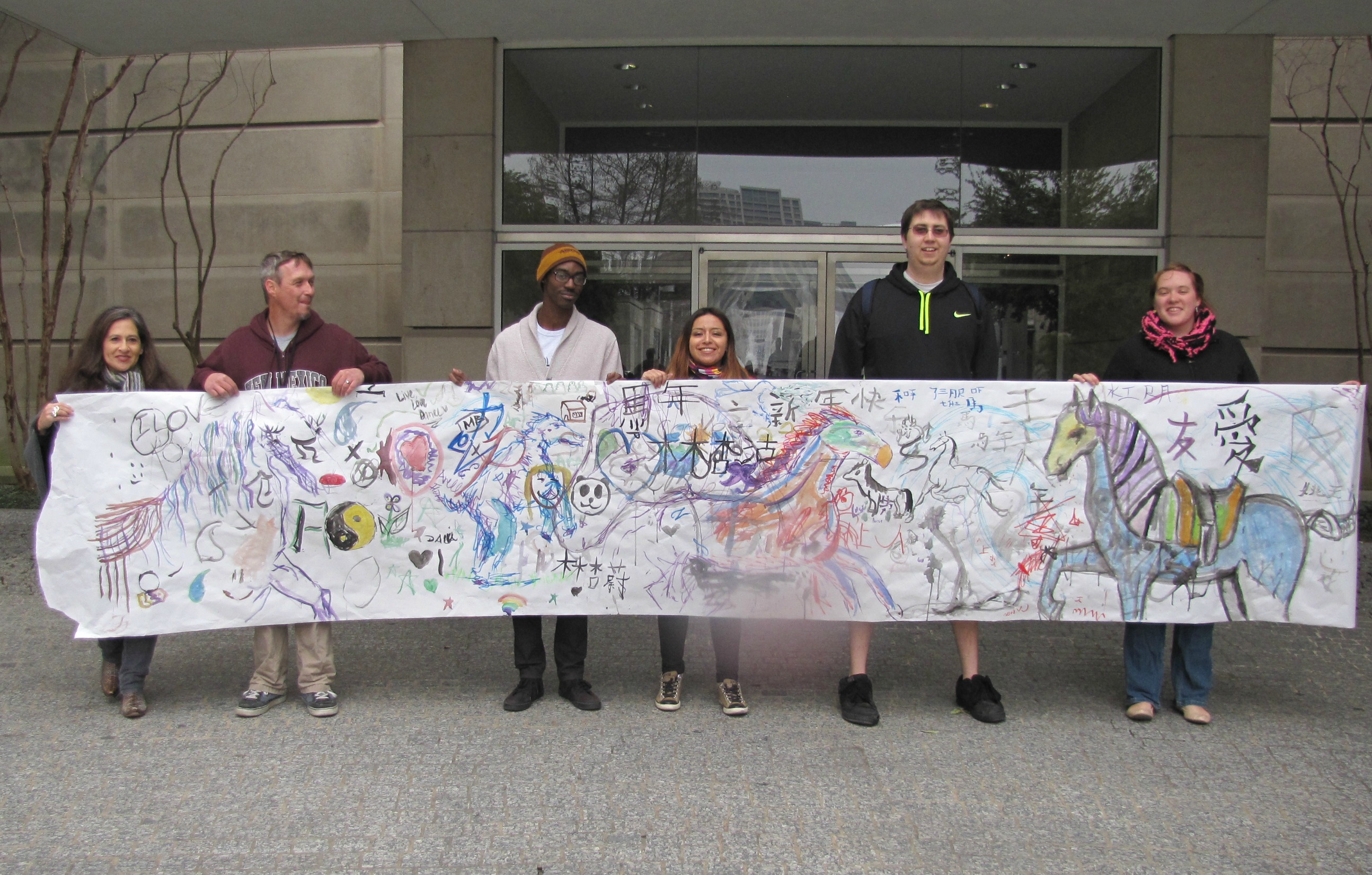
Last weekend, the DMA participated in the Crow Collection’s annual Chinese New Year Festival, an event filled with Asian-inspired music, dancing, and of course, art. Not only did the DMA contribute a booth to the lively festival, but we also collaborated with members of El Centro College’s Visual Arts Club to create an engaging experience for visitors. The art club students came up with two wonderful art-making activities–miniature scrolls and a community painting–and drew in more than 600 participants!

Check out photos from the event and keep an eye out for us as we participate in the Art + Science Festival on Saturday, April 12!

Amy Elms
McDermott Intern for Visitor Engagement
Totes Awesome! Art To Go Family Bags

Around this time last year, I gave a sneak peek into an exciting new anytime activity that our Education team was testing. After much preparation, redesign, and enthusiasm over the past year, the DMA is now premiering the Art To Go Family Tote Bags for free and public use! Beginning this week, visitors can check out these special totes at the Visitor Services desk and enhance their Museum experience by engaging in a variety of creative activities.
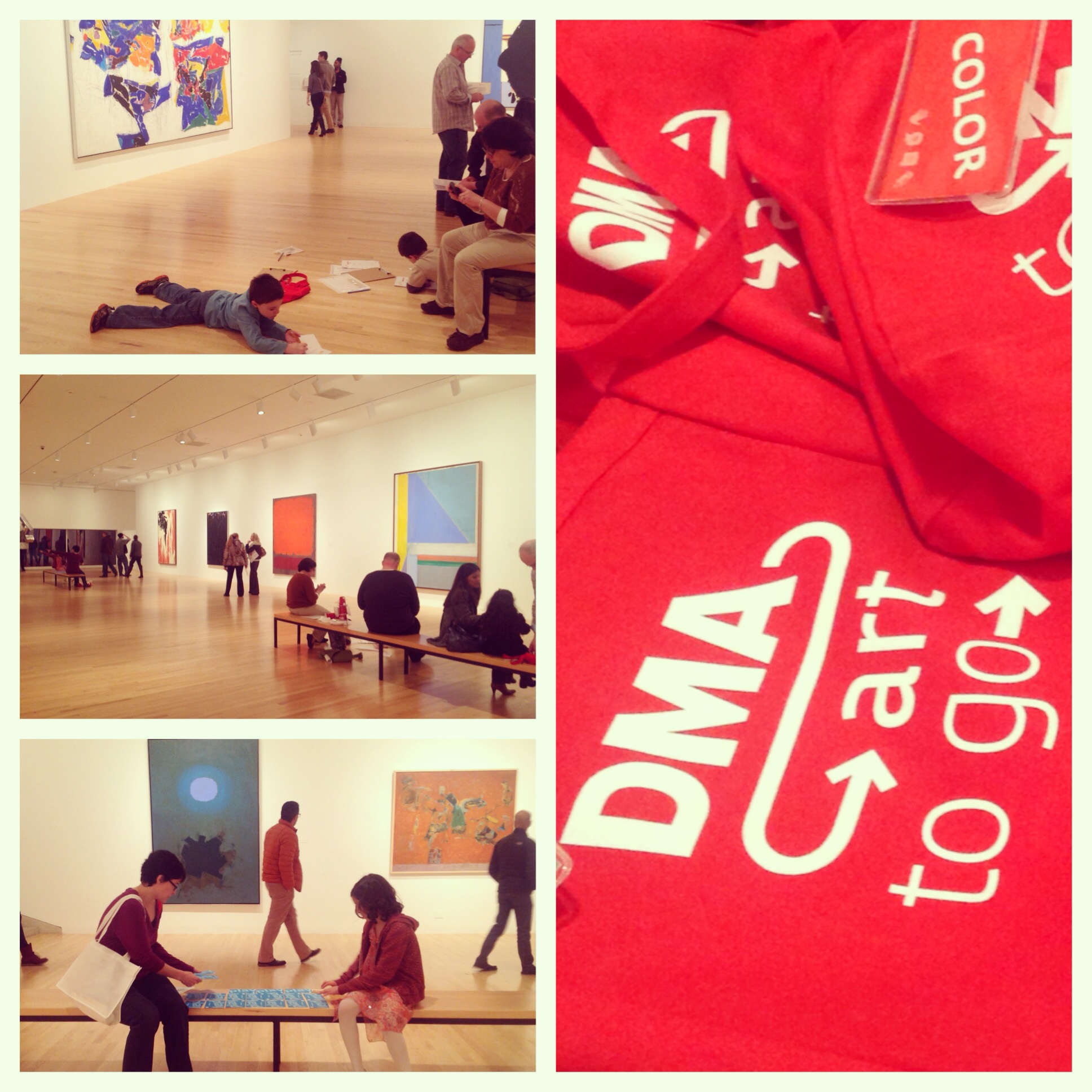
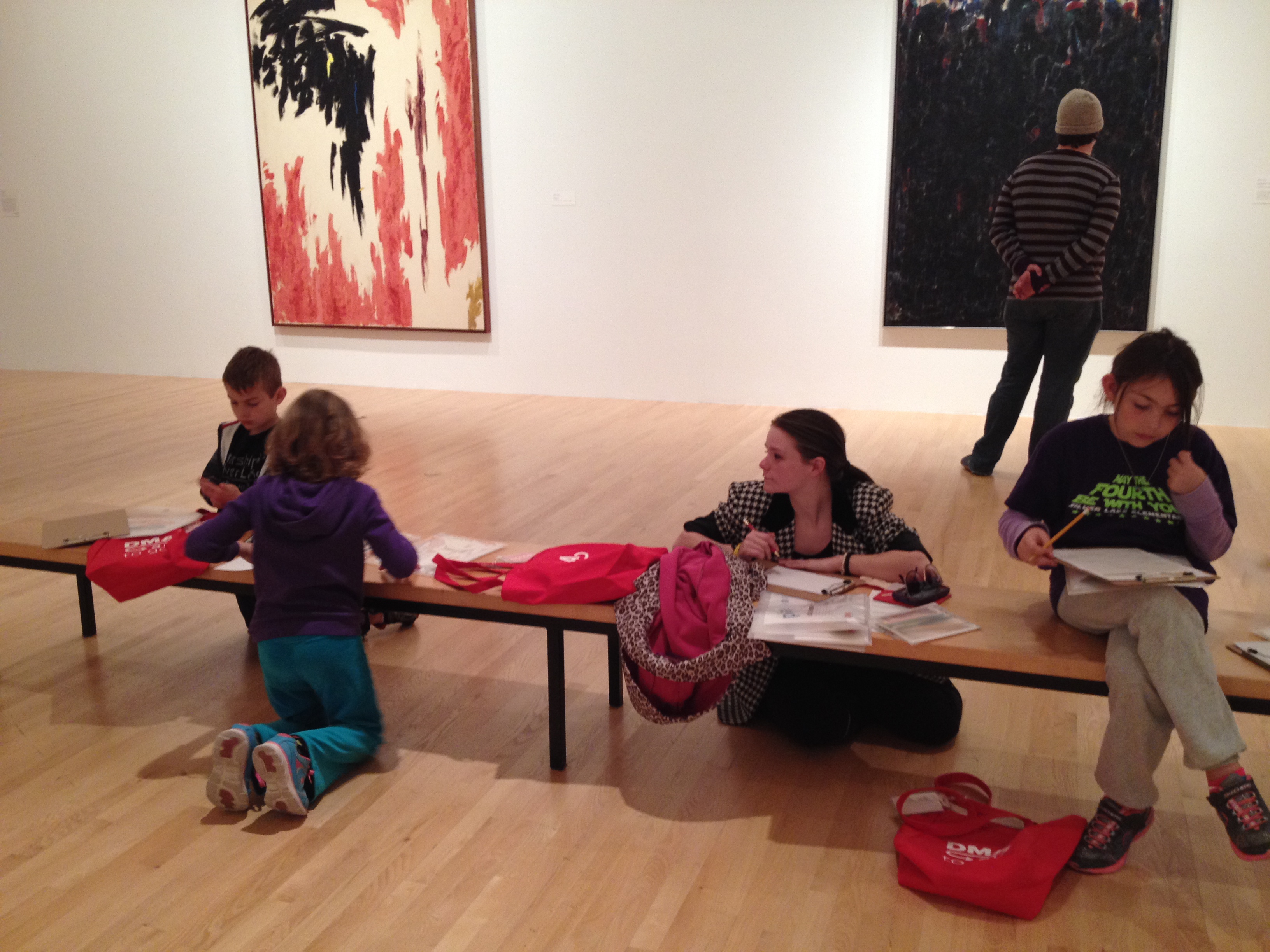
Each Art To Go bag is centered around a particular theme, the first of which are Color and the Senses. The corresponding activities within each bag are general enough to be used with any work of art in the DMA galleries, so the possibilities are endless. The tote bag activities cater to diverse learning styles, encouraging visitors to design their own Museum experience by deciding whether they want to Write, Make, Talk, or Play.

With Art To Go bags, family members can use their imaginations to discover the different scents and aromas present in an Abstract Expressionist painting, or perhaps use their bodies to clap, stomp, snap, whistle and sing to create a soundscape for a Buddhist sculpture. Children can write a postcard to a family member describing their visit to the Museum using all of their senses, or use a viewfinder to focus in and sketch a single section of a French Impressionist painting. The great news is that activities and bag themes will change periodically, so families can create and enjoy new educational and artistic adventures each time they visit!
toteally_family-300x300

Art To Go Family Tote Bags are designed to be creative catalysts, encouraging families to spend more time in the galleries both connecting with works of art and connecting with each other. We invite you to take one of our activity bags along on your next (or very first) visit to the DMA! Bags will be available for free check out at the Visitor Services desk during regular Museum hours. And DMA Friends who complete activities from both bags can earn the Tote-ally Family Badge!

Danielle Schulz
Teaching Specialist

Happy Chinese New Year

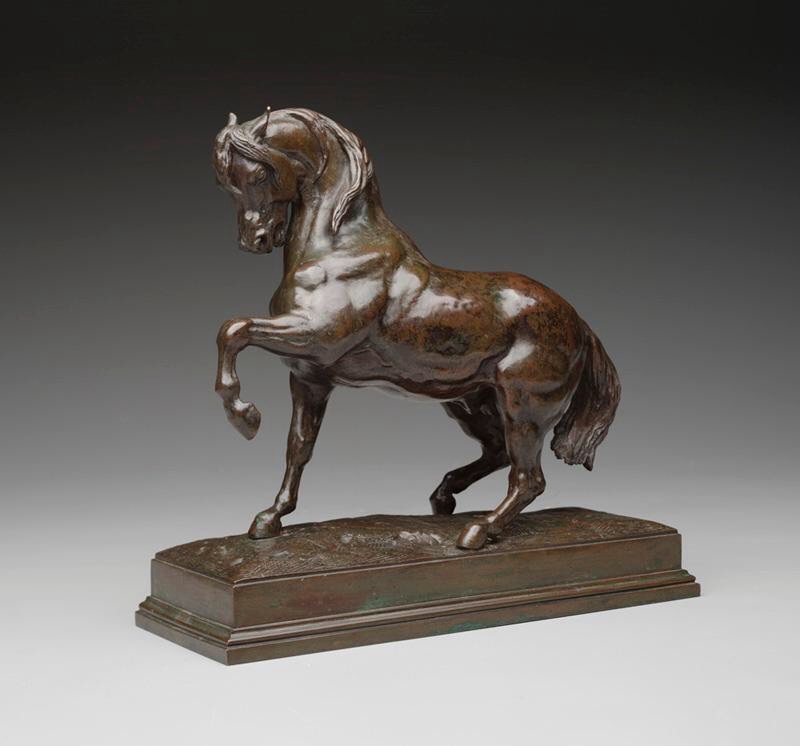
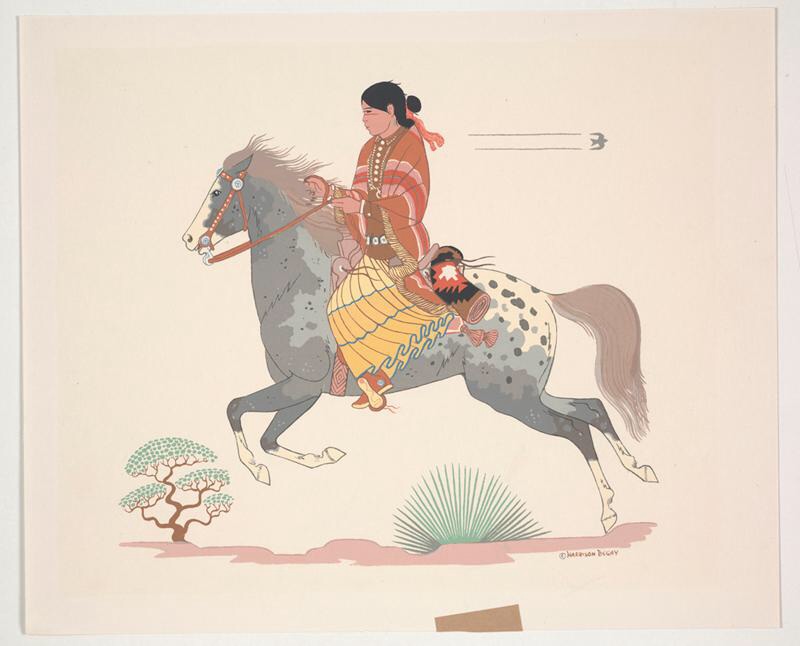
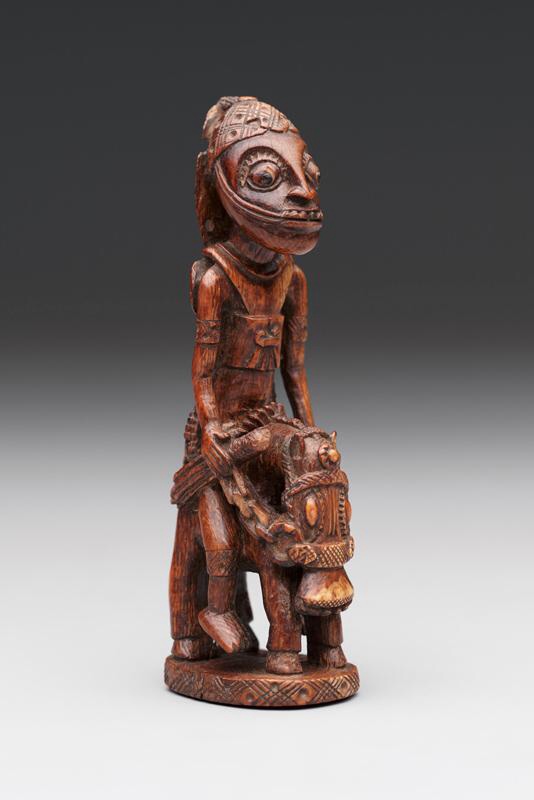
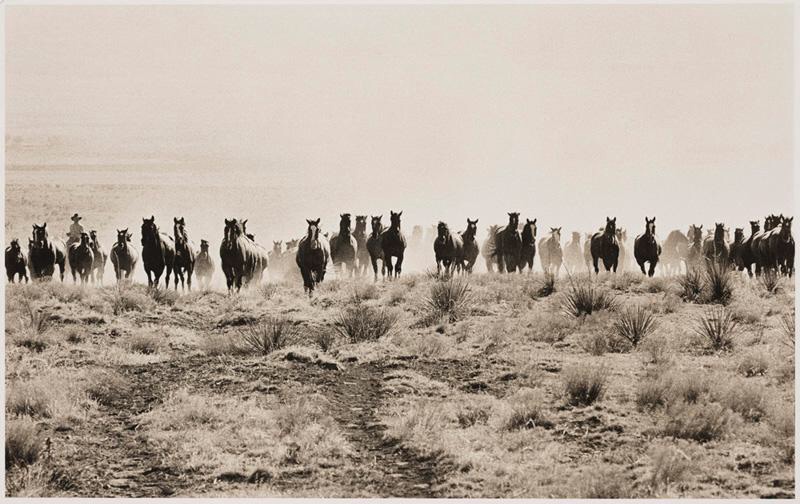
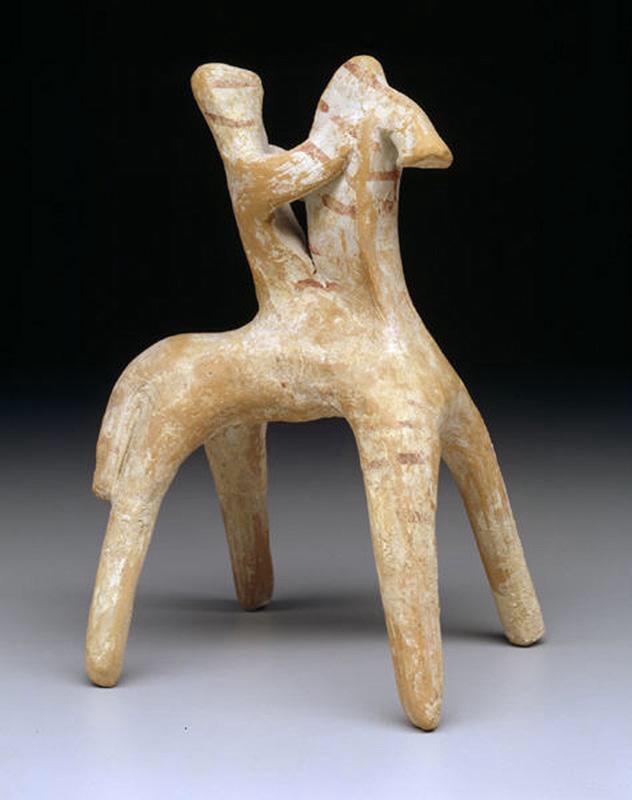
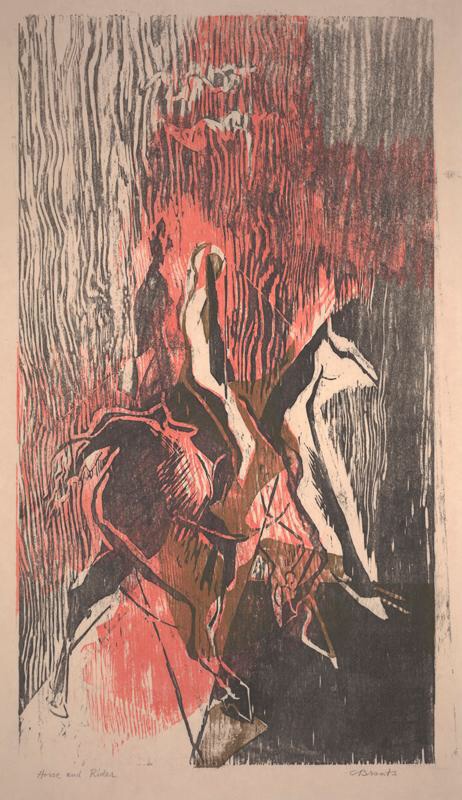
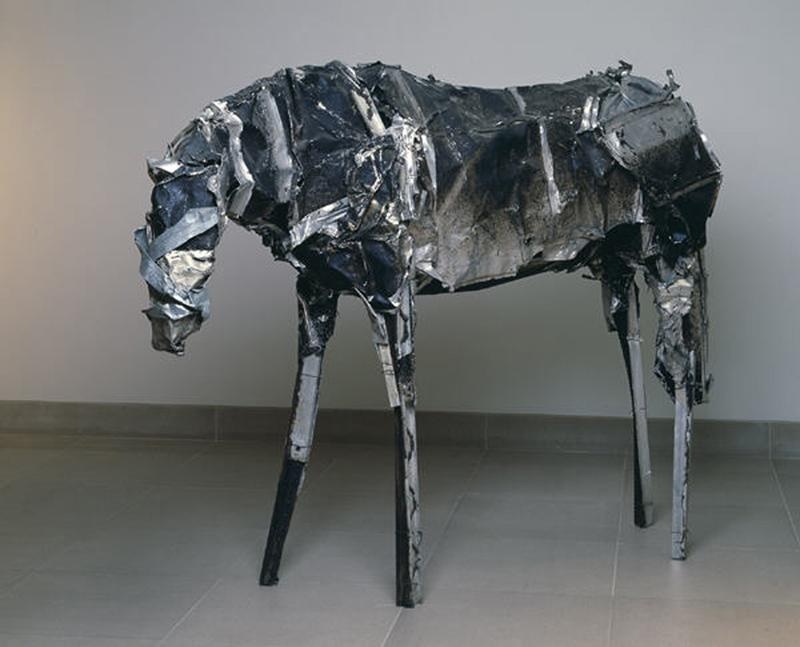
Today is the start of Chinese New Year, or Lunar New Year. Traditionally, this day marks the beginning of the plowing and sowing season, but this festive holiday also celebrates new life. All over the world, people are celebrating the Incoming Year of the Horse. So we rounded up some of our own horse artworks to kick off the Lunar New Year. Come visit our fabulous fillies tomorrow and then join in the celebration at the Crow Collection’s annual Chinese New Year Festival!

Artworks shown:

    • Antoine–Louis Barye, Turkish Horse, c. 1838, Dallas Museum of Art, Foundation for the Arts Collection, Mrs. John B. O’Hara Fund
    • Polo horse tomb figure, China, 618-907 A.D., Dallas Museum of Art, gift of Mr. and Mrs. Arthur Rothwell
    • Harrison Begay, Indian Woman on Horse, 1952, Dallas Museum of Art, Dallas Art Association Purchase
    • Horse-and-rider figure (elesin Shango), Yoruba peoples, Africa, Nigeria, Owo, 17th to 18th century, Dallas Museum of Art, The Eugene and Margaret McDermott Art Fund, Inc.
    • Bank Langmore, Horse Silhouette, Bell Ranch, New Mexico, 1974, Dallas Museum of Art, gift of Paul Brauchle
    • Horse and rider, Boeotia, Greek, 6th century B.C., Dallas Museum of Art, Foundation for the Arts Collection, gift of Mr. and Mrs. James H. Clark
    • Cynthia Brants, Horse and Rider, n.d., Dallas Museum of Art, Creative Arts Guild fund, Seventh Southwestern Exhibition of Prints and Drawings, 1957
    • Deborah Butterfield, Horse #6-82, 1982, Dallas Museum of Art, Foundation for the Arts Collection, Edward S. Marcus Fund
    • Anthony Gross, Horse Bath, 1954, Dallas Museum of Art, gift of Mr. and Mrs. Alfred L. Bromberg

Andrea Severin Goins
Interpretation Specialist

Get Immersed in Contemporary Art

Have you ever wondered how it would feel to create a painting over eight feet tall and almost seven feet wide? If so, stop by our newest Pop-up Art Spot in the Contemporary gallery and get immersed in Richard Diebenkorn‘s Ocean Park No. 29. Visitors of all ages are invited to assemble a life-size puzzle of this painting with large pieces of felt. Just be ready to get physical as you bend over, stretch, and reach as far as you can to put it together!

This Pop-up Art Spot engages other senses, too: use your sense of touch (unusual in an art museum!) as you explore the texture of oil paint on small canvas samples or pair different scents with the colorful paintings around you.

Below is our upcoming schedule for the Pop-up Art Spot. We change locations from week to week, so be sure to visit us between February 11-16 to engage your senses!

    January 28-February 2: fourth floor landing, Modern American gallery
    February 4-9: third floor, Indonesian gallery
    February 11-16: first floor, Contemporary gallery

P.S. – This Pop-up Art Spot was created by our wonderful intern Tyler Rutledge, who was featured in a blog post last month.

Melissa Gonzales
C3 Gallery Manager


Archives

Categories