Archive Page 15


Hop on Pop!

IMG_7960

All kinds of good things are POPping up here at the DMA with the opening of the new exhibition International Pop. The Barrel Vault is filled with bright colors, oversized paintings, familiar faces, and works of art that will make you smile. Why not hop on Pop at home too? I’ve rounded up some of my favorite children’s books to introduce our youngest visitors to the art and artists who POP!

IMG_7943

Toddlers

Two beautiful and fun concept books perfect for the toddler crew are Pop Warhol’s Top by Julie Appel and Amy Guglielmo and Counting with Wayne Thiebaud by Susan Goldman Rubin. Pop Warhol’s Top mixes together the best of touch & feel books with works by famous Pop artists. Tots can pretend to pull the lettuce off a Claes Oldenburg soft sculpture, touch the eyelashes on one of Andy Warhol’s famous Marilyn Monroe pieces, or tap the beat for an exuberant Keith Haring painting. Rubin’s Counting with Wayne Thiebaud will have little ones asking for “more, please!” as they use Thibeaud’s luscious dessert paintings to count from one to ten.

IMG_7947

Preschool

Pre-readers will POP till they drop as they work their way through the alphabet in Rachel Isadora’s ABC POP! Isadora takes inspiration from Pop artists to depict everyday objects in a Pop art sensibility. A is for airplane and Z is for zoom, and everything in between is illustrated with comic strip word bubbles, close-ups, boldly drawn lines, and lots of dots. Uncle Andy’s Cats by James Warhola introduces emerging readers to Andy Warhol through the eyes of his nephew James and tells the true story of the 20+ kittens Warhol had running through his New York townhouse, all with the name of Sam! Children will love trying to find all the kittens on each page, and also see glimpses of some of Warhol’s most famous works tucked away in the illustrations.

IMG_7954

Elementary

Susan Goldman Rubin highlights some of the most famous American Pop artists–Roy Lichtenstein, Andy Warhol, and Wayne Thiebaud–in three beautifully illustrated biographies for young readers. Wham!: The Art & Life of Roy Lichtenstein introduces readers to Roy as a boy who loved to draw and invent machines who grew up to be an artist that found inspiration in comic books. Andy Warhol: Pop Art Painter traces Andy’s journey from a commercial artist to a world-wide sensation who made his name by painting one of his favorite meals as a child–soup! Delicious: The Art & Life of Wayne Thiebaud weaves together the artist’s memories from childhood and mouth-watering reproductions of Thiebaud’s dessert paintings to create a balanced view of the artist’s varied career. All three volumes give readers a peek “behind the canvas” to gain a better understanding of these men as real people.

After you’ve made your way through these POPular books, we hope you’ll POP in and see the International Pop exhibit for yourself!

Leah Hanson
Manager of Early Learning Programs

Lessons Learned from a Kid Whisperer

Last summer, resident kid whisperer, Leah Hanson, asked me to step in to teach one of her Toddler Art classes. I had observed Leah’s Early Learning programs in the past and thought it would be a cinch. After all, Leah made it look easy!

Her classes were like the scene of Edward Hicks’ The Peacable Kingdom. Teaching her class would be a breeze! Right?

Edward Hicks, The Peaceable Kingdom, c. 1846-1847, Dallas Museum of Art, The Art Museum League Fund

…WRONG!

There was nothing “peaceable” about the scene that ensued. In fact, it much more closely resembled Michelangelo’s Torment of Saint Anthony, on view at the Kimbell Art Museum in Fort Worth.

Deeply humbled by the experience, I returned to Leah’s classes to watch with a much more observant eye. While she made the classes look easy, Leah was carefully employing mindful techniques to help her class go smoothly.

Here’s what I learned:

Don’t just give the rules, explain them

20570562335_17259ed750_k

Any child who has ever taken a class with Leah is ready to tell you, “We have oils in our skin that are good for us, but bad for the art. That’s why we don’t touch the art!” Give the agency of rules to the child by asking them to help you be the protector of the art.


Keep your cool

20570553865_b06ebcc0c4_k

With a group of excited children, it can be tempting to raise your voice level to be heard over them. This is a downward spiral. As you get louder, the kids will also get louder and pretty soon you will be at a full cacophony. Instead, lower your voice until you’re in a whisper. The kiddos will quiet down to hear your “secret” information.


Speak their language

20382532338_945b3330cd_k

Think back. Way back. Remember when your teacher would tell you to fold your paper “hotdog style” or sit “crisscross applesauce” and you knew exactly what she meant? Especially with toddlers, it’s important to know that you are being understood, not just heard. Don’t know kid lingo? Befriend an elementary school teacher to teach you the ropes!

 
Ask about it

20382566758_1c962bbcb5_k

Instead of trying to interpret a child’s artwork on your own (and risk misinterpreting it!), ask them to tell you about their work of art. You will be amazed by what you find out!


Play isn’t a bad word

20561601762_b67f868b23_k

Museums are often thought of as solemn places, where education takes precedent over entertainment. But at the DMA, we believe that play is important too! Cognitive research has revealed that play is the central device for exploring and learning, developing new skills, and making connections with others. Playing thoughtfully with children will also help nurture their natural curiosity and creativity. 

Be specific in your praise

19947971764_93b3964bbb_k

Instead of saying, “That’s a great painting” try to take a closer look at the child’s artwork and find a specific quality to praise, such as “I love how you combined straight lines and zig zag lines in your painting”. This will encourage you to look more closely at the artwork and the child will appreciate your attentive eye.


I returned to the Early Learning programs with these tips and tricks and was amazed at how well the next class went. Practice Leah’s approach and you, too, will be kid whispering in no time!

Emily Wiskera
McDermott Intern for Family and Access Teaching

Creativity Matters

Creativity_Matters_09_2015_GC064

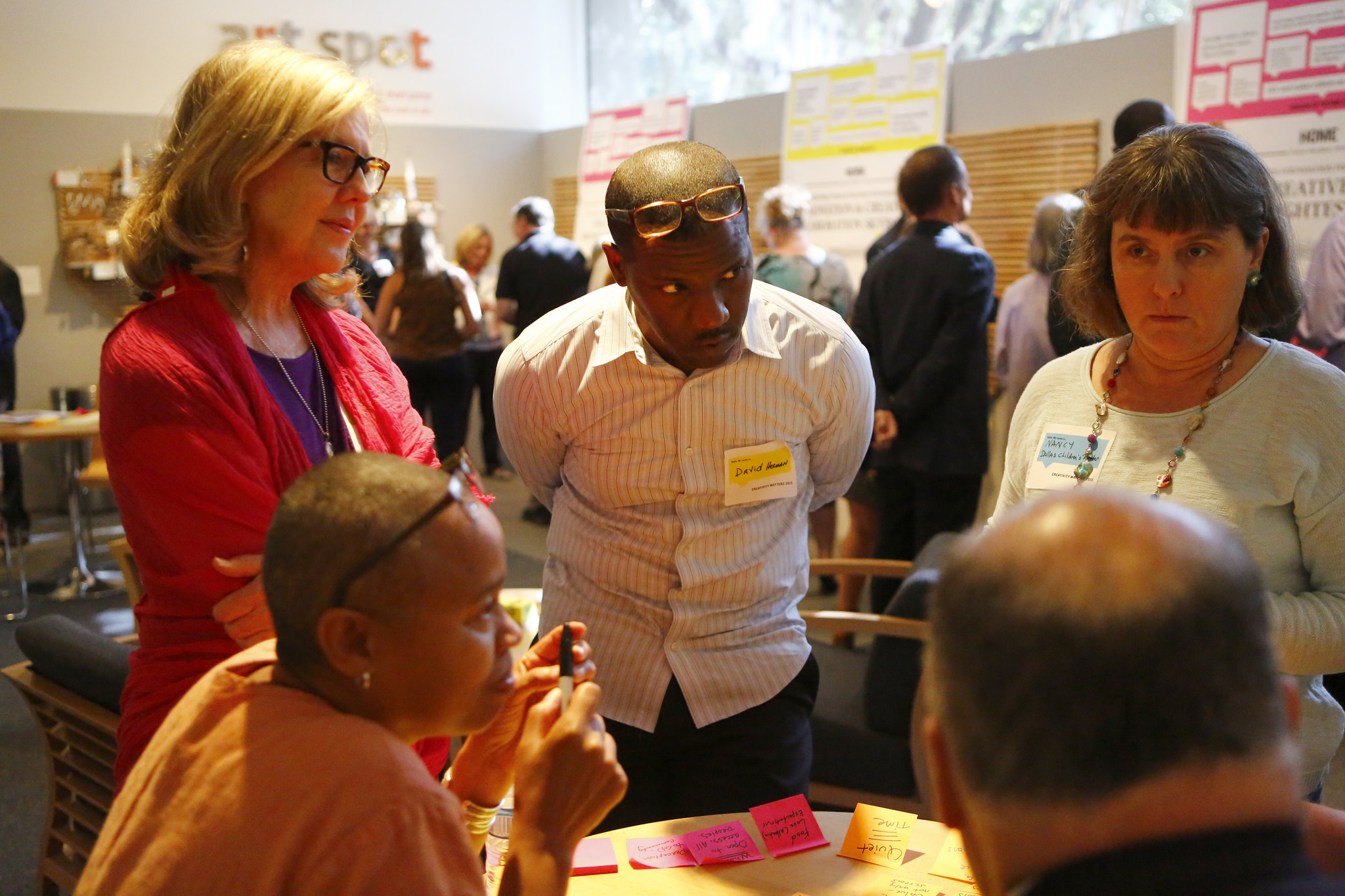
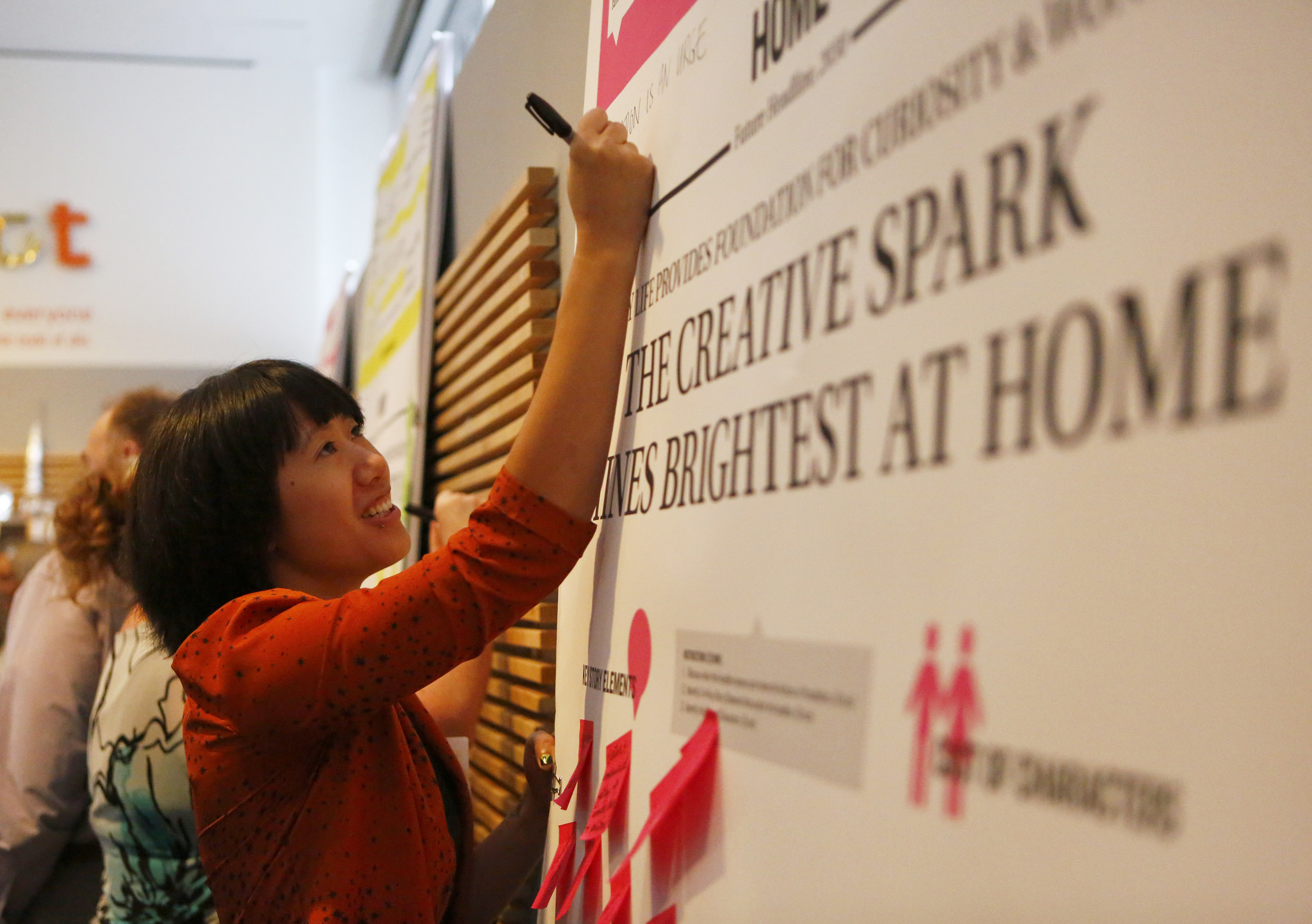
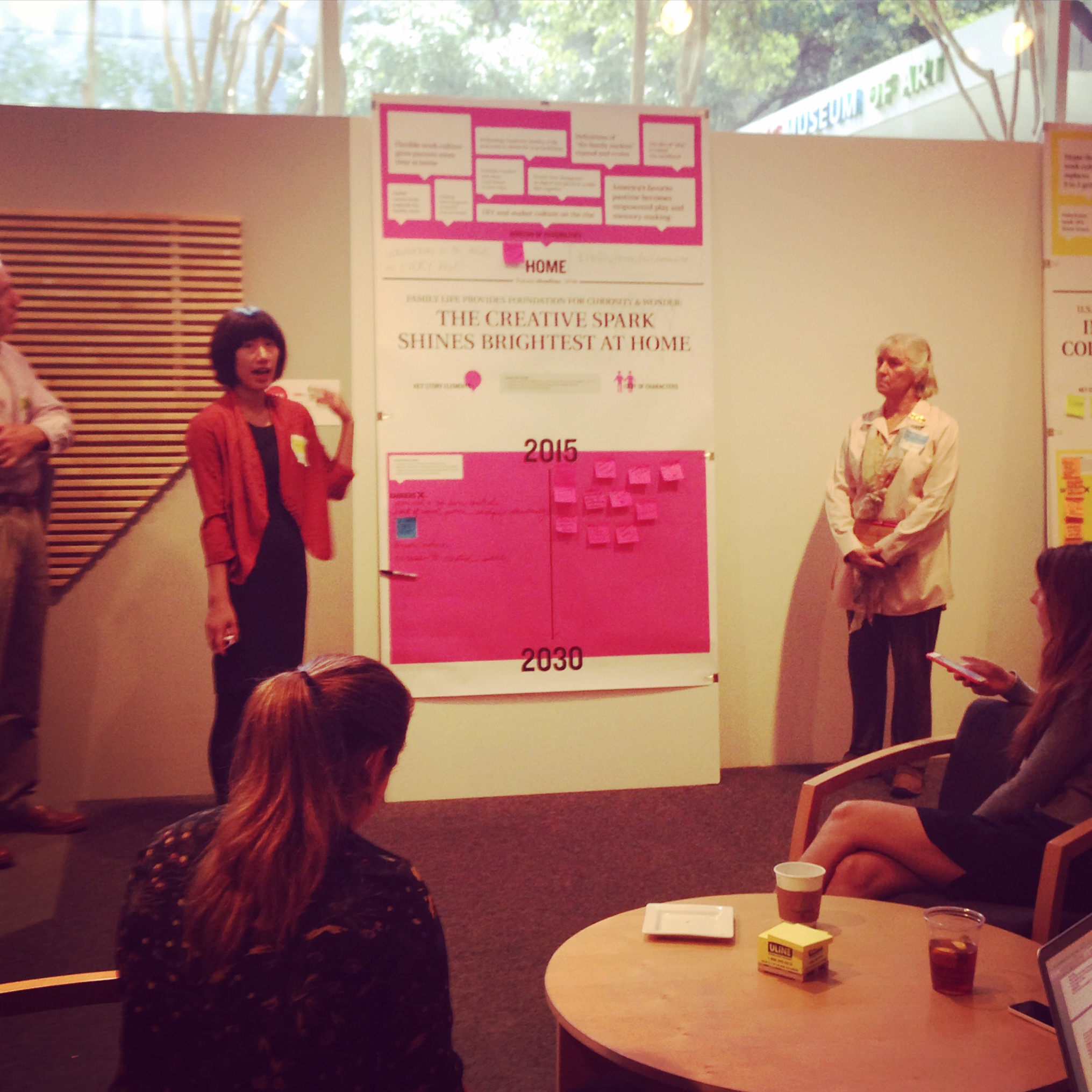
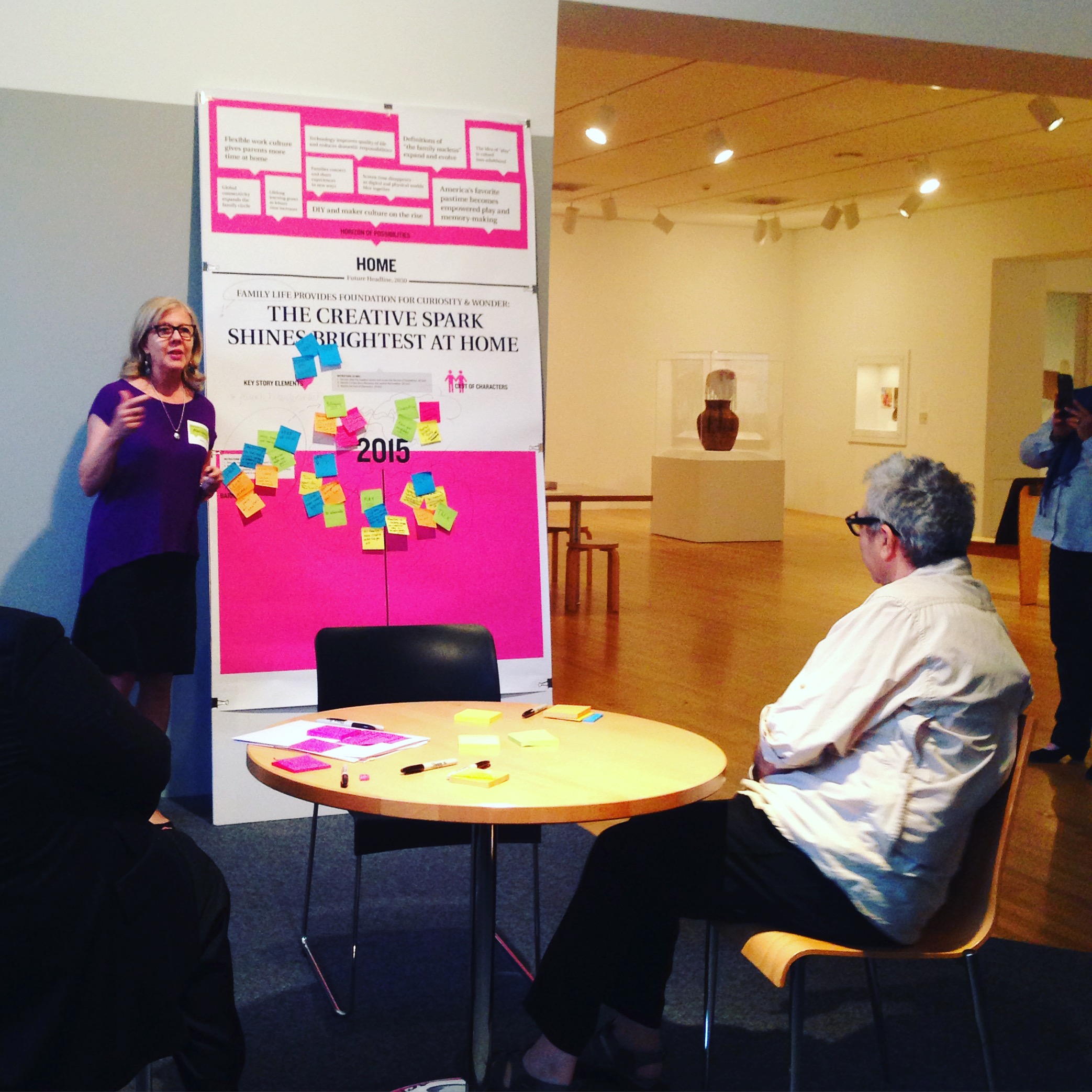
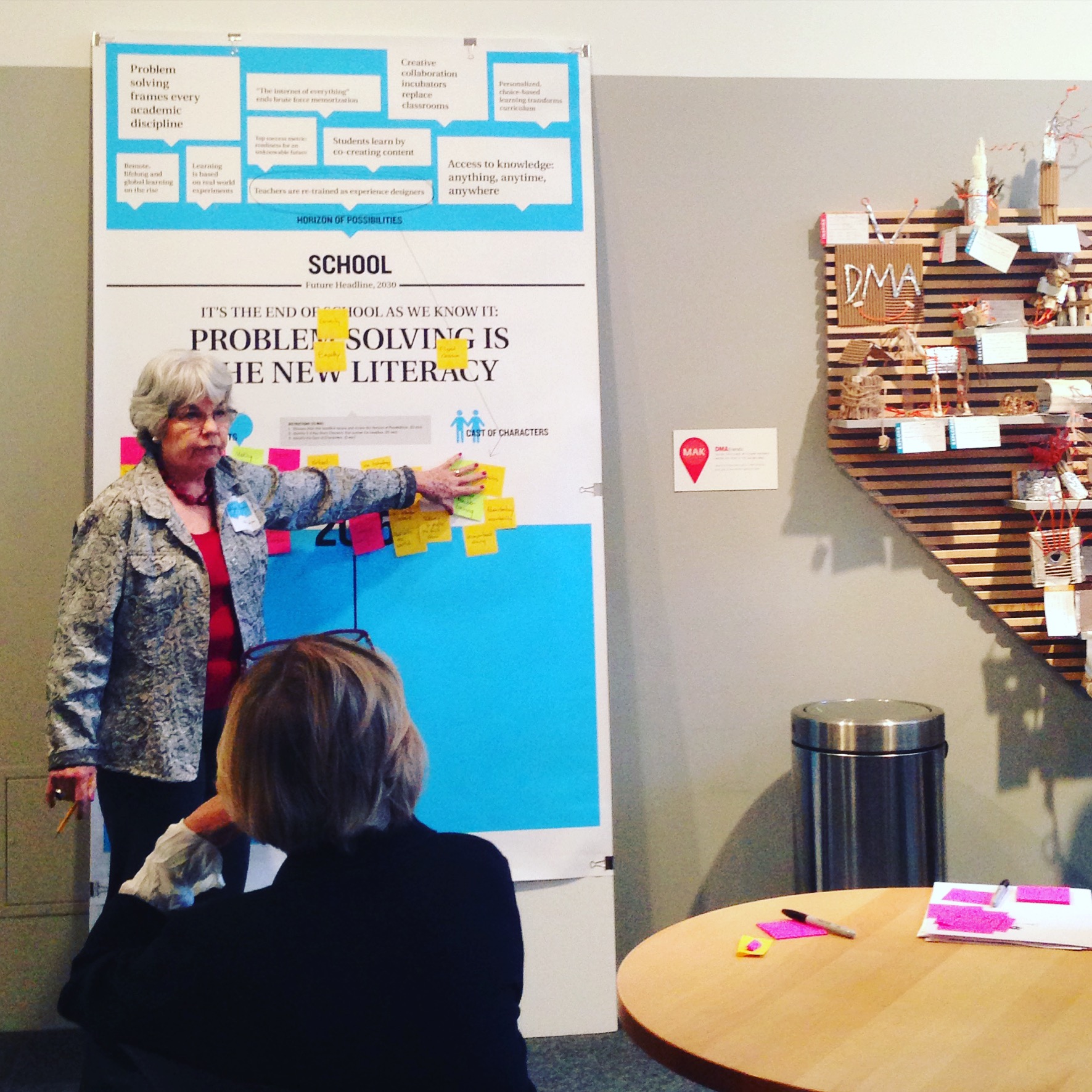
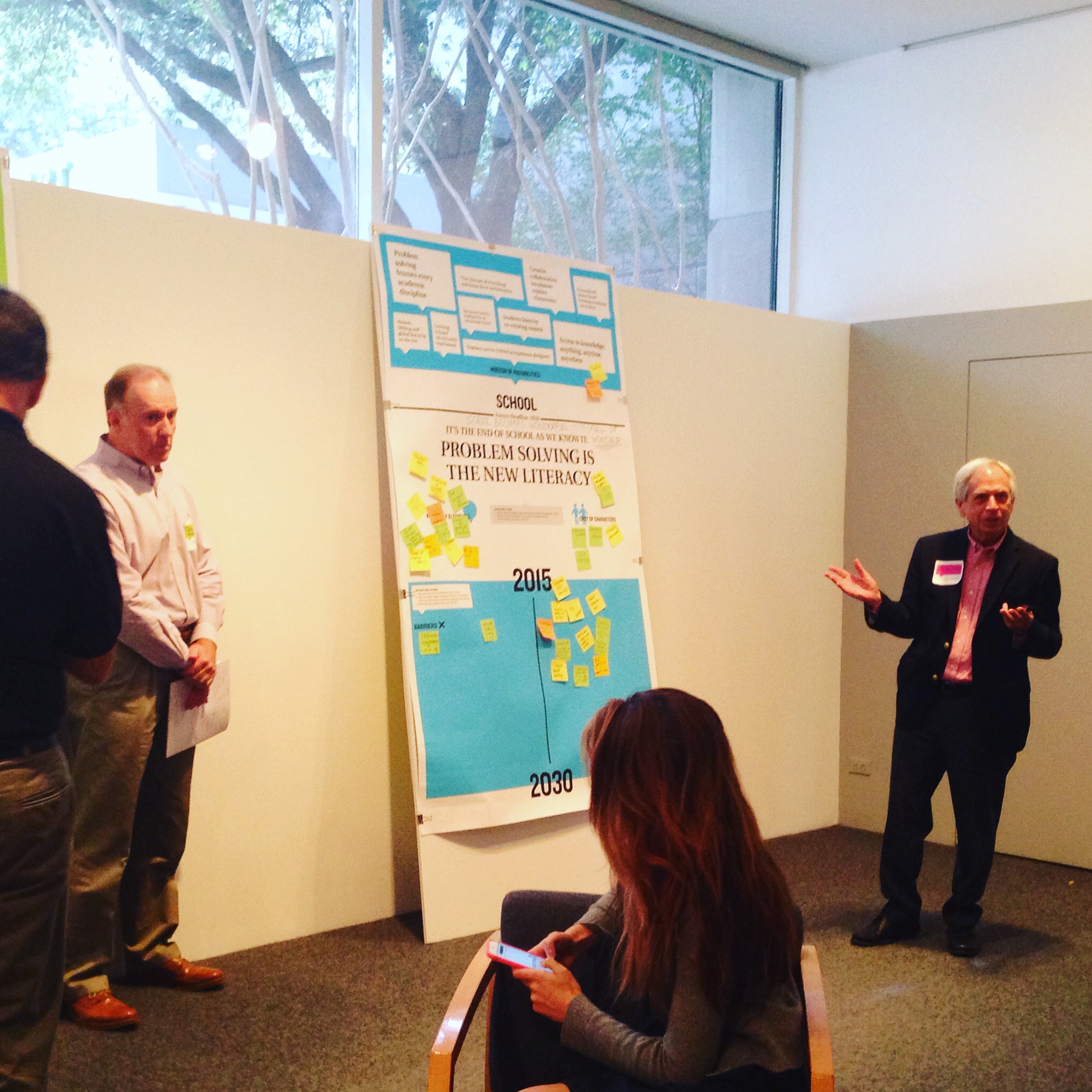
Because the Dallas Museum of Art is closed to the public on Mondays, those days are often strangely quiet without the buzz of school children and families in the Center for Creative Connections (C3). However, on Monday, October 5, C3 was brimming with energy from some of the creative educators, artists, and community organizers that make Dallas great. Earlier this year we were approached by the Sam Francis Foundation to be one of three organizations across the country to host a roundtable event focused on the Future of Creativity.

In 2014, the Sam Francis Foundation set out to start a national conversation about the importance of creativity in learning, and they called this initiative Creativity Matters: The Campaign for Creativity in Learning. The first year they partnered with Project Zero at the Harvard Graduate School of Education, and brought together leaders throughout the field in conversations across the United States (at LACMA, The Met, The Isabella Stewart Gardner Museum, and The Exploratorium). These first conversations were centered around two questions:

What does creativity look like?

Where and how does creativity thrive?

Following their 2014 roundtables, the Sam Francis Foundation compiled their findings in this report.

This fall, the Sam Francis Foundation continued the conversation with a set of roundtables at the Museum of Contemporary Art in Chicago, The Smithsonian Institution in Washington D.C., and the Dallas Museum of Art.  These Future of Creativity discussions sought to understand the role creativity will play in the future and the changes needed to prepare students for what that world might look like. Considering the future of creativity in our homes, workplaces, schools, and neighborhoods, our conversations were sparked by these questions:

In twenty years how will creativity shape the world we live in?

How will creativity inform our decision-making?

What new conditions will be needed to unleash creativity?

If we were building a “creativity tool-kit” for future generations – what tactics, methods, and advice would we include?

It was truly remarkable to have so many Dallas leaders, artists, and educators (many of whom we have worked with closely in the past) together in the Center for Creative Connections. The conversations were dynamic, engaging, and inspirational.

Yet, these roundtables are just part of the beginning stage for a grander plan involving community building, the creation of programs, and a public awareness campaign in support of the future of creativity.

creativity-matters.2015-projects.sff-logo.revised_3_25

In the end, I will leave you with some of my favorite quotes from the day.  Some are specific to creativity, and others are general gems to keep in mind.

Jessica Fuentes
C3 Gallery Manager


Staff Spotlight: Tom Jungerberg

We were deeply saddened to learn of the passing of our friend and colleague, Tom. Our thoughts and prayers are with our friends at the Nasher and with Tom’s family during this time. We wanted to share this post in his remembrance.

Green Tara at the DMA

As the new Manager of Docent and Teacher Programs, my first few weeks at the DMA have flown by in a busy, joyous blur. Everyday seems filled to the brim as I acclimate to my new role and learn as much as I can from my new colleagues and our fabulous docent team. In the midst of this whirlwind of activity, I find myself coming back to the Asian Art collections again and again to visit a familiar face— Green Tara, a beloved female Bodhisattva central to Tibetan Buddhism.

Green Tara, Tibet, 18th century, Gilt copper alloy and turquoise, Dallas Museum of Art, the Cecil and Ida Green Acquisition Fund

Green Tara, Tibet, 18th century, Gilt copper alloy and turquoise, Dallas Museum of Art, the Cecil and Ida Green Acquisition Fund

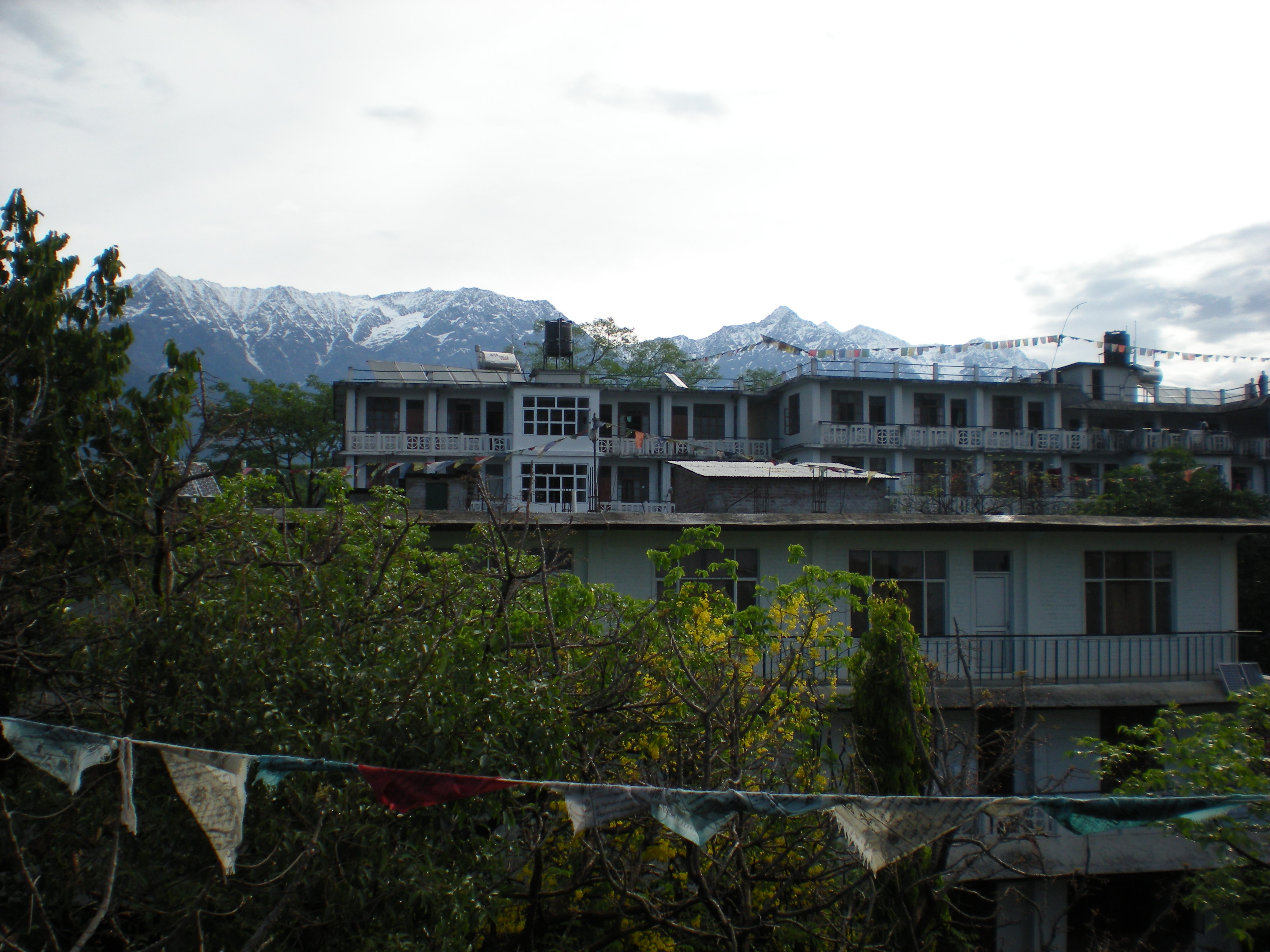
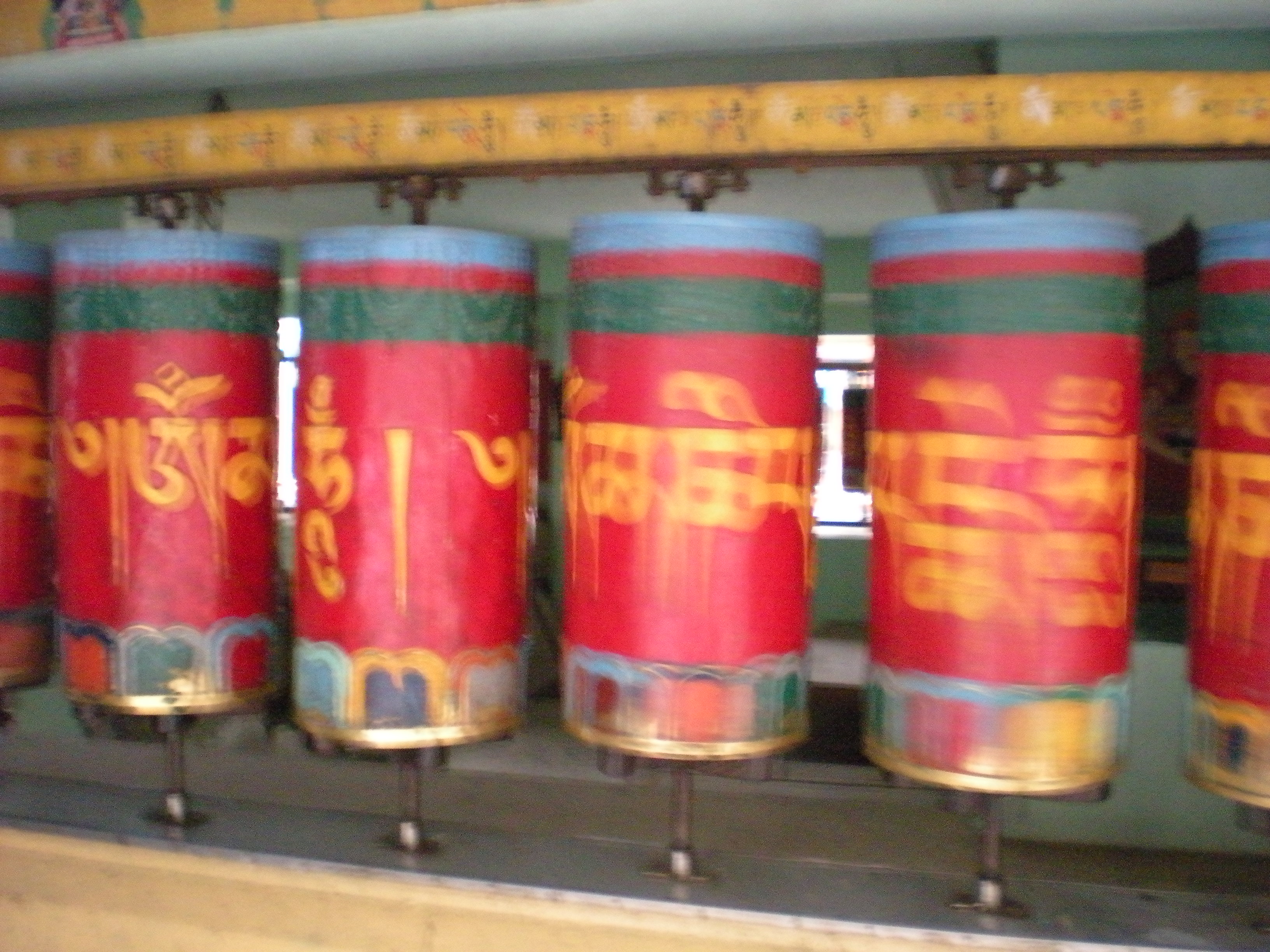
In the summer of 2008, I had the opportunity to study Buddhist philosophy and Tibetan history and culture at the College for Higher Tibetan Studies in Himachal Pradesh, India through Miami University’s Anthropology Department. Each morning before breakfast, my fellow students and I would wipe the sleep from our eyes and make our way to temple to practice meditation with our teacher, Geshe Kalsang Damdul la, a monk and scholar with an advanced degree in Tibetan Buddhism. Geshe la taught us the value of cultivating resilience and mindfulness through meditation. I can still picture him chuckling and asking us, “What good is being a genius if you don’t know how to live a quality life? I appeal to you, practice!”

As we embarked on our practice, Geshe la instructed us that one possibility was to direct our meditation towards a deity. He suggested Green Tara, a much-loved female Bodhisattva distinguished by her emerald green skin, maternal compassion, and constant readiness to protect her devotees from physical and mental misfortune.

On our last day, one of my monk friends pressed a printed Green Tara card into my hand and told me, via a translator, that I should keep her with me always for protection. She has been with me ever since, tucked safely in my wallet.

The DMA’s exquisite 18th century Green Tara sits on her lotus throne with her right leg extended, ever-ready to leap to the aide of the suffering. Her hand gestures, or mudras, symbolize protection and boon granting. Shining gilt copper alloy flecked with cool turquoise stand in for the Bodhisattva’s characteristic emerald skin. What I love most about Green Tara is the delicate suggestion of tension in her lithe figure—she’s at once in a state of perfect calm and ready to spring into action.

Visiting Green Tara brings me back to the stillness of those early mornings spent in meditation, and reminds me of the sense of ease and wellbeing we experienced chanting the Bodhisattvas’s mantra together with Geshe la. Om Tare Tuttare Ture Svaha.

Lindsay O’Connor
Manager of Docent and Teacher Programs

Danielle’s Superlatives

Today we are saying goodbye to a dear colleague and friend. Danielle Schulz joined the Education department three years ago and has charmed us all with her wit, dedication to excellent teaching, and bubbly personality. She is moving on to a new position at the Denver Art Museum, so we want to send her off with happy memories of all that she has accomplished here. And since she has spent the majority of her time in one classroom or another, we thought it only fitting to say goodbye with the best kind of school farewell we know–the yearbook Most Likely Awards.

Danielle’s Superlatives

MM Care Facility

Most Likely to Put the Able in Abilities

From using pool noodles with participants in wheelchairs to mimic movements in paintings, to cross-stitching astrological signs with visitors with Alzheimer’s disease, Danielle always went above and beyond to find an extraordinary way to connect to those with special needs. Danielle has a gift for listening and relating to visitors of all abilities and uses her talent to figure out how best to teach about artworks.

D and the van

Most Likely to Outsmart Little Rascals

While teaching an outreach lesson at a local school for the Go van Gogh program, Danielle led a discussion with elementary students about the different materials artists use to create art. With a little boy sense of humor, one student offered up “poop” as a suggestion, to which Danielle deftly replied, “Some artists do use refuse to create art” without missing a beat!

Amazon shopping cart

Most Unusual Amazon Shopping Cart

As the lead staff for coordinating the daily come-and-go for our busy summer art camps, Danielle supervised summer interns, set up studios for teachers, emailed parents, made parking arrangements, and all kinds of less-than-glamorous tasks that make summer camps smooth sailing. And oh the supplies–no matter what crazy material a teacher throws at her, Danielle can find it. Hundreds of plastic bags? Check. Toy motors? No problem. Lamp shades? Done. If you judge her by her Amazon shopping cart, you’ll know that this is one crazy, creative, out-of-the-box-thinking girl.

Art Babies

Most Likely to Go the Extra Mile

Danielle is a phenomenal teacher, whether she’s performing for a group of babies, leading a group of high school students through the galleries, or having a conversation with a senior group from a care facility. She always goes the extra mile, searching for ways to really connect with visitors, considering their needs, and adding in her trademark sense of humor. I’ve seen her perform the role of “Dragon King” for Art Babies class, wear a taco costume for a Late Night superhero tour, and bring in a treasured quilt from home for an access program–all in the name of helping visitors enjoy their experiences with art.

D Acting

Most Likely to Make an Award-Worthy Cameo in a Whimsical Grant Video

Did we mention she acts? Several years ago, Go van Gogh went for a BIG opportunity that required us to make a short video selling our wonderful outreach program. Knowing that we needed to reeeally stand out to compete, we worked the whimsical angle, and Danielle spent an afternoon excitedly jumping out from behind artworks on camera. I don’t know how many times she jumped out from behind Nandi the Bull in our South East Asian galleries, but I do know by the time we were ready to submit our video, we had a fantastic (and definitely whimsical) representation of our program. The video went on to earn us $10,000. Without Danielle’s acting skills, teaching prowess, and overall great ideas and energy, we wouldn’t have had a shot. Someone get this woman an agent!

D and chagall edited

Most Likely to Soar as High as the Stars

Danielle’s passion for teaching with works of art and her love of people will propel her as high as her dreams will fly, and we wish her the best of luck at the Denver Art Museum.

We are going to miss Danielle more than we can say, but are so excited for the new adventure that awaits her in the Colorado mountains.

Leah Hanson
Manager of Early Learning Programs

V.I.B. Visit to the DMA

VIB 1

We had a Very Important Baby visit the Museum today! Eleven-month old Vance Douglas Lancaster Van Daele took a stroll through the galleries this morning with his father Vance, and graciously agreed to strike a pose for us. Besides his adorable smile and cheerful personality, what makes baby Vance so very important? Well he just so happens to be the great godson of artist Gerald Murphy!

VIB 3

Baby Vance’s family first met Laura Donnelly, Murphy’s granddaughter, through Deborah Rothschild, curator of the critically acclaimed exhibition Making It New: The Art and Style of Sara and Gerald Murphy, which was on view at the DMA when I first started working here in 2008.

VIB 2

Our little celebrity wasn’t too concerned with famous names as we spent time in front of Murphy’s painting Watch. He solemnly gazed at the painting, then took off crawling around the gallery with delighted squeals. I like to think Gerald Murphy would approve of Vance’s joyful approach to art and life!

Baby Vance has been a super tourist while his family has been in town, visiting the Perot Museum of Nature and Science, the Dallas Zoo, and the Modern Art Museum of Fort Worth. He loves looking at art, his favorite book is Chicka Chicka Boom Boom, and he’s a regular at his local library.

VIB 4

We were totally charmed by our V.I.B. and hope he comes back to see us again soon!

Leah Hanson
Manager of Early Learning Programs

Friday Photos: Back to Nature

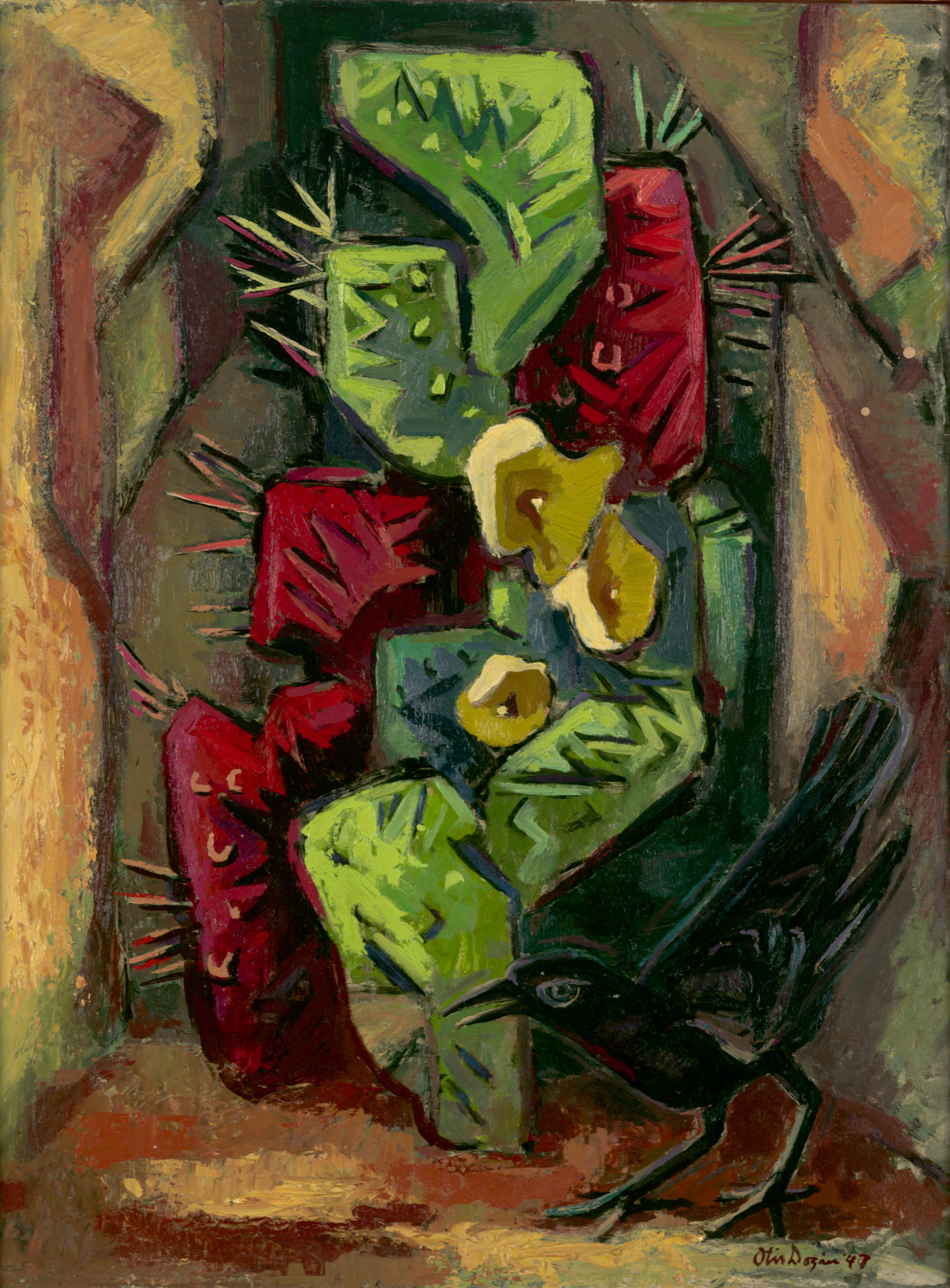
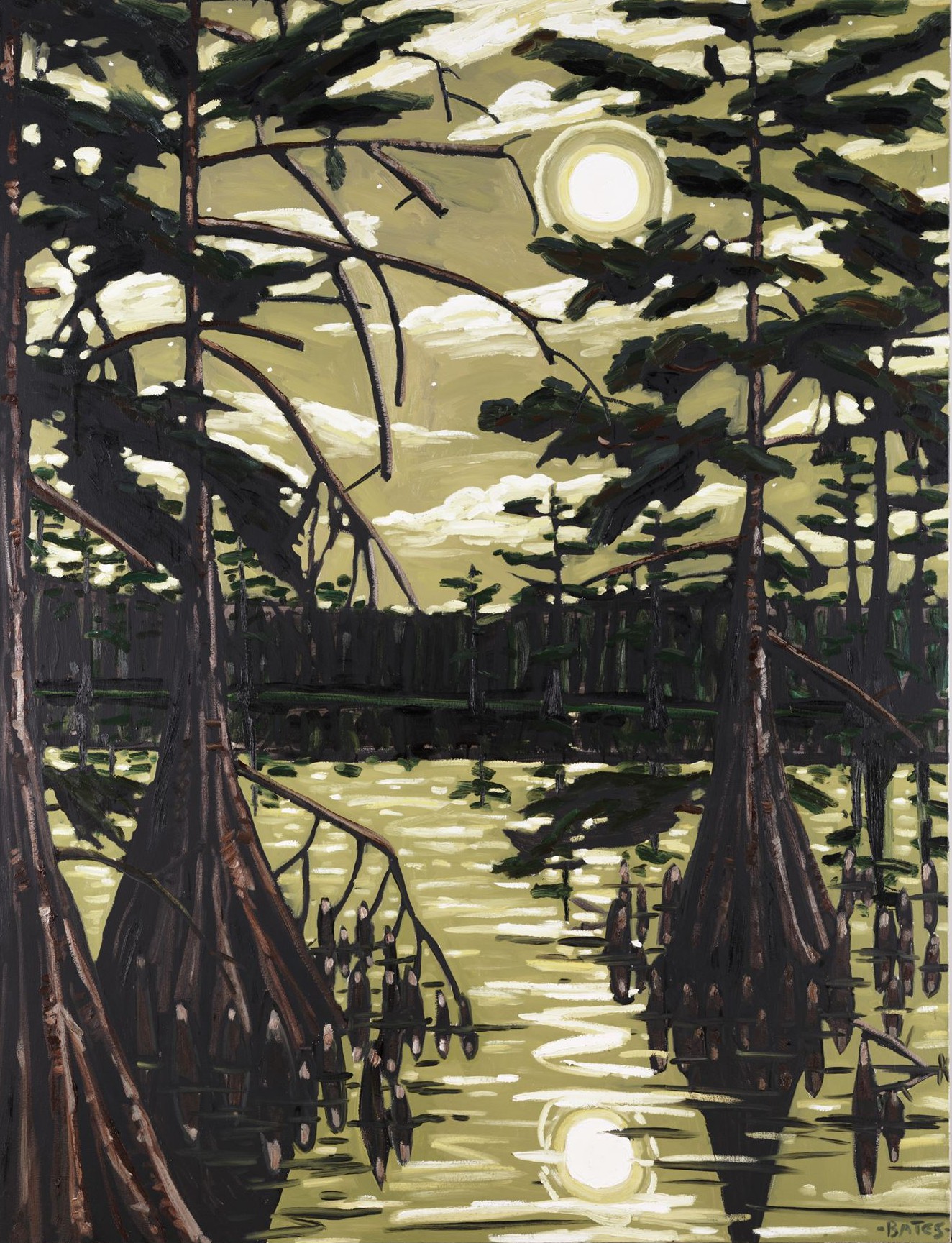
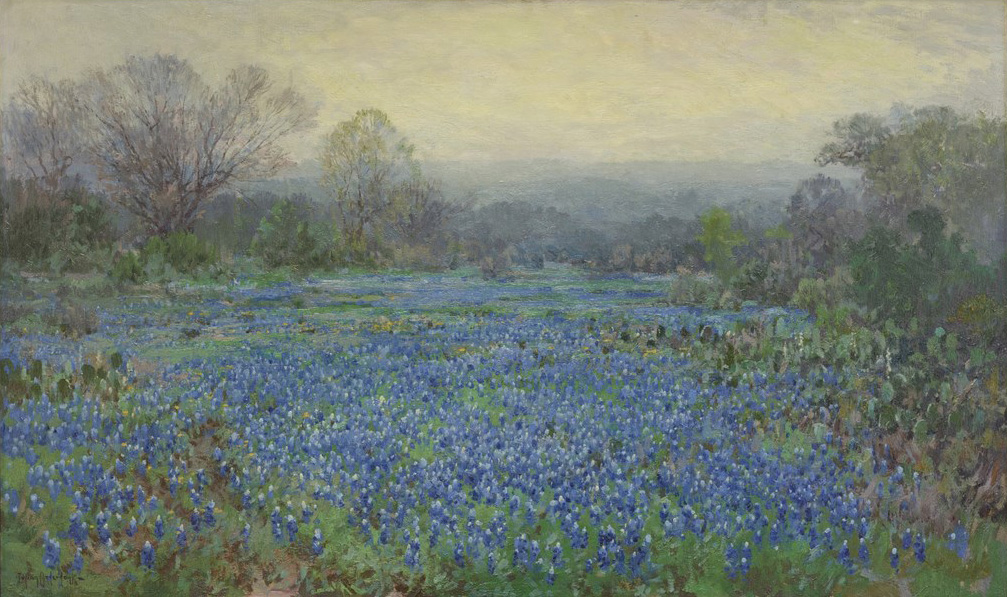
With the summer heat subsiding, it’s time to get back to nature and truly enjoy the scenery. Get out this fall and capture some beautiful Texas landscapes, then submit your photographs of the great outdoors to our Flickr Group DMA Back to Nature to have your images displayed at the Center for Creative Connections #DMAdigitalspot.

[wpvideo 3CmvAIaI]


Need some inspiration? Take a look at these Texas-centric works of art from our collection:

Click here for more information on how to submit your images to the #DMAdigitalspot.

Jessica Fuentes
C3 Gallery Manager

(Unexpected) Art from Across the Pond

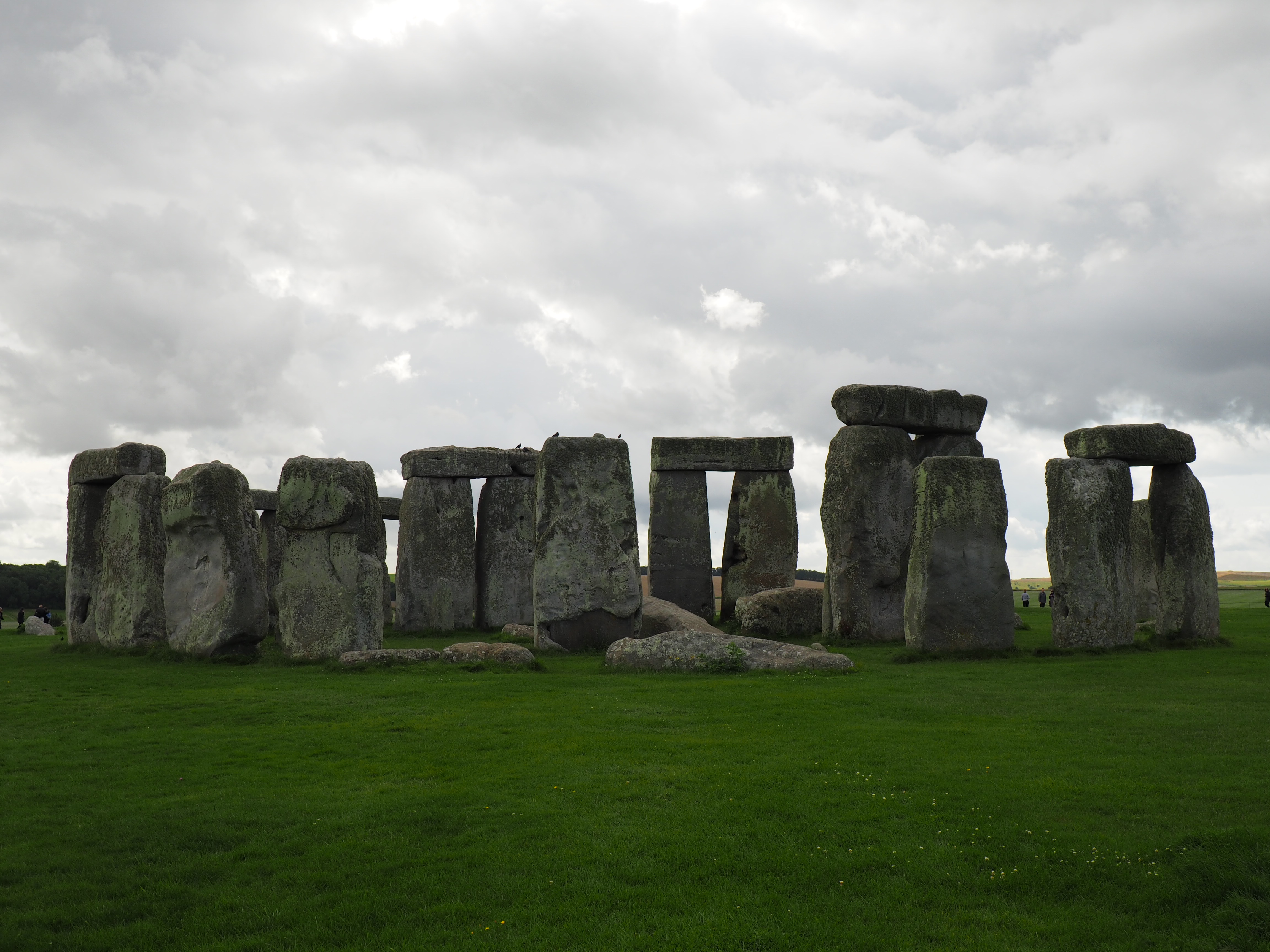
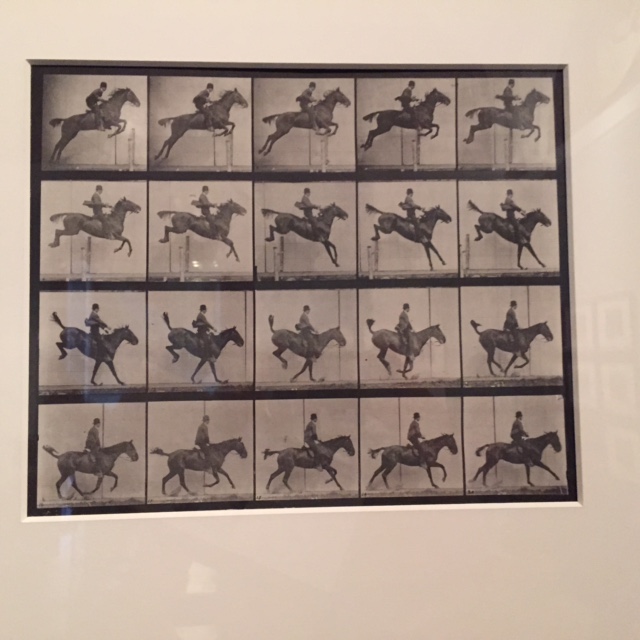
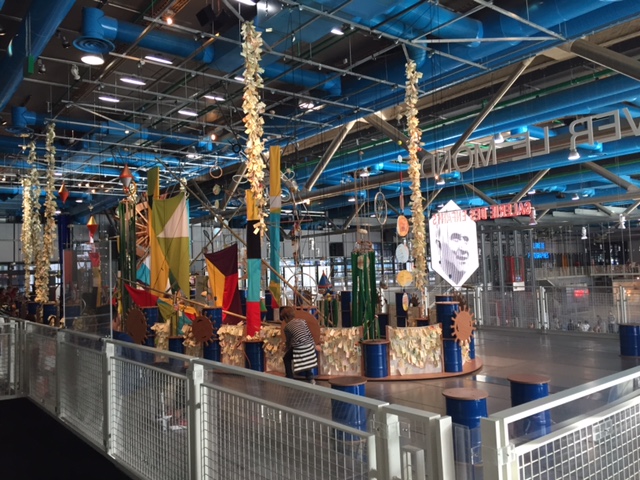
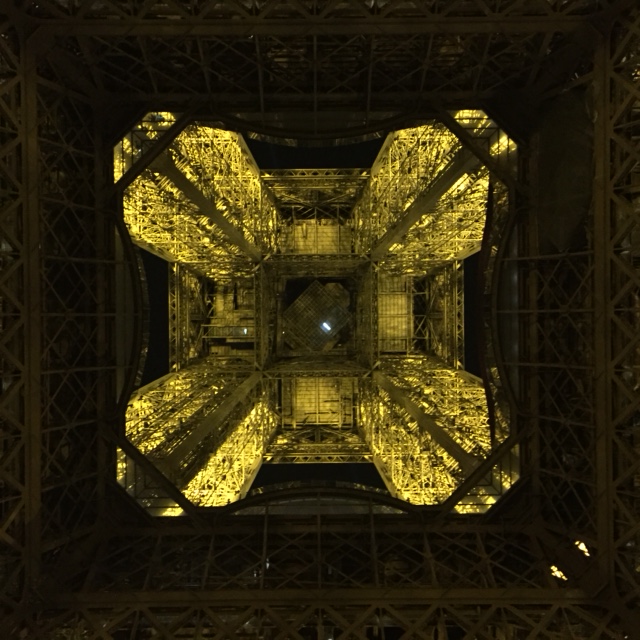
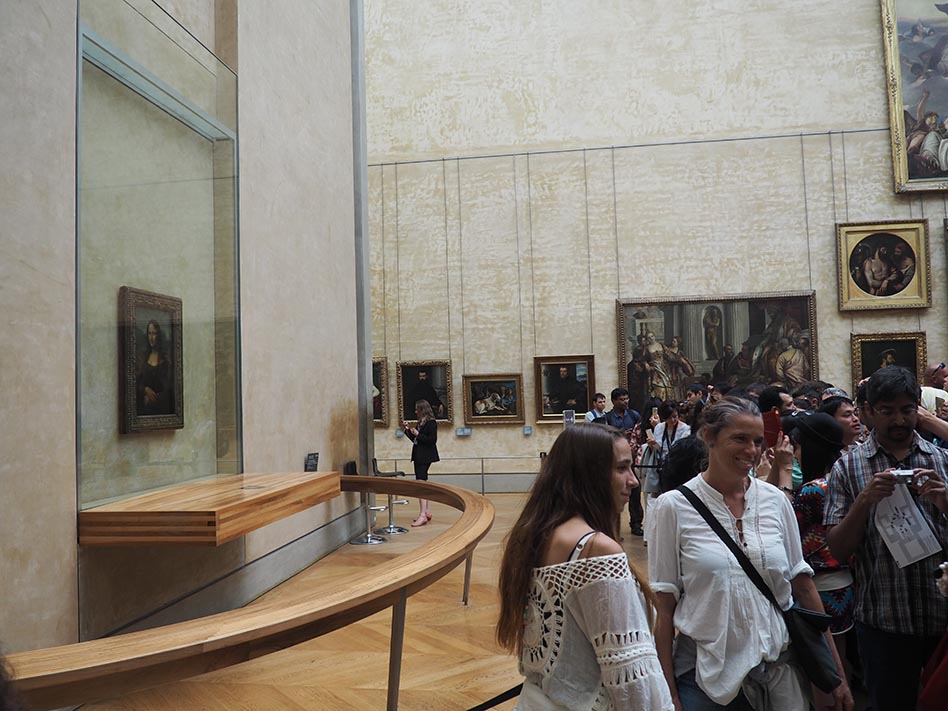
In late August, I was lucky enough to spend time exploring the art and culture of London and Paris. As a museum educator, my main goal (of course) was to fit in as many museum and cultural site visits as possible–and I tried my best! While I was mesmerized by the popular artistic highlights of these cities–who doesn’t treasure seeing a Da Vinci first-hand??–for this post I wanted to share some images that were particularly special to me, as they showcase some overlooked sites and scenes from these fascinating cities.

*For more information on Thomas Thwaites’ project (which is fascinating!) click here.  

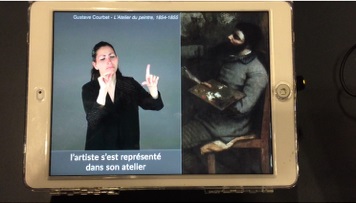
Perhaps my favorite art educational gem from the entire trip was stumbling upon the Musee D’Orsay‘s crowdfunding restoration project of Gustave Courbet’s The Painter’s Studio. The artwork is being restored on-site in the Museum’s exhibition space and visitors can view the progress in-person over many months, and through various interactive technologies. The most exciting technological component, in my opinion, was a French Sign Language (LSF) interpreted description of the conservation work–fascinating and accessible!FSL

As with most trips overseas, mine was much too short and there were many, many things still left unseen. It was a magical trip and an unforgettable experience, which caused me to stop and think about the unexpected treasures that can be found on visits to popular and familiar places–and I hope you will too!

Danielle Schulz
Teaching Specialist

Open Looks in the Paint, All Day (and Late Night)

DMA’s got game. And that game is basketball.

This Late Night, we’re teaming up with the Dallas Mavericks to put a sports-themed spin on our regular Late Night programming. And in a nod to both our encyclopedic collection and the Mavs always-international team roster, the evening will also have a global focus. One of the many activities featured tomorrow is our new ‘Round the World self-guided tour.

Self-guided tours are bite-sized: they focus on four to five artworks each, packaging our wonderfully expansive collection into short, themed looking adventures. Self-guides include facts about artworks you can’t find on gallery labels. They provide artwork images and gallery locations, getting you to the right space in the Museum, but letting you wander just enough that you get that fun I-just-found-something-on-a-scavenger-hunt sort of feeling when you find yourself right in front of the artwork. Self-guides are cheeky and fun, and in the case of ‘Round the World, chock-full of sometimes veiled and other times blatant Mavs/basketball references that some of us here (ahem!) are pretty jazzed about.

So if you’d like to see an artwork that’s nothin’ but net, explore a small exhibition devoted to the DMA’s Big German (he’s a 16th century print-maker), or see two objects that could fit in courtside at a Mavs game, pick up our ‘Round the World self-guided tour at the Visitor Services Desk tomorrow night.

And if you can’t make it to Late Night, ‘Round the World and our many bite-sized tours of the collection can be found in downloadable pdf versions on our website.

Amy Copeland
Manager of Go van Gogh and Community Teaching Programs & MFFL


Archives
Categories