Posts Tagged 'Dallas Museum of Art'


Plumed Preview

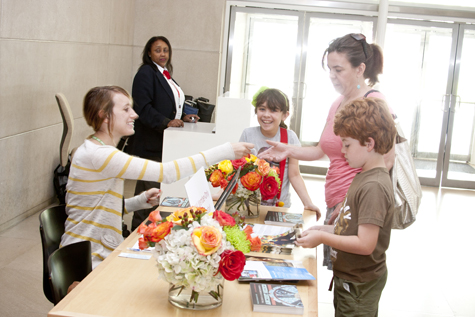
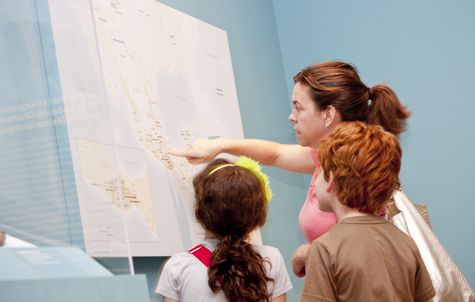
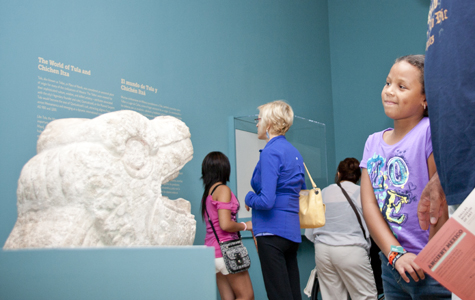
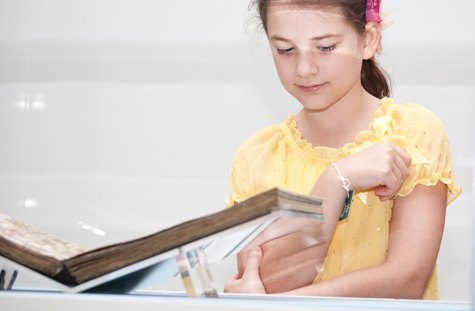
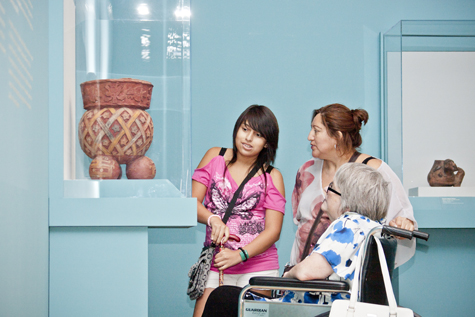
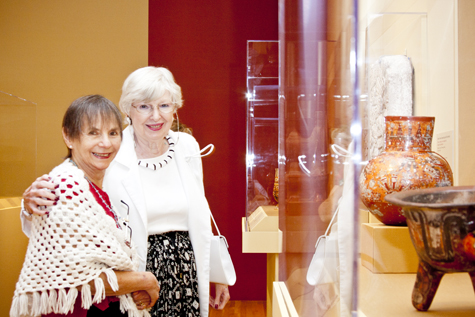
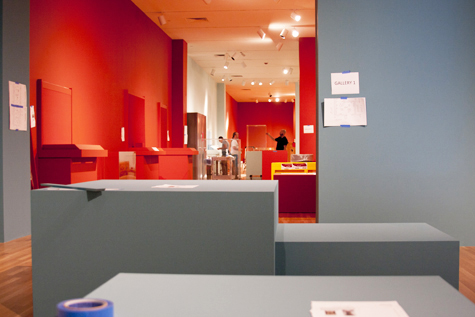
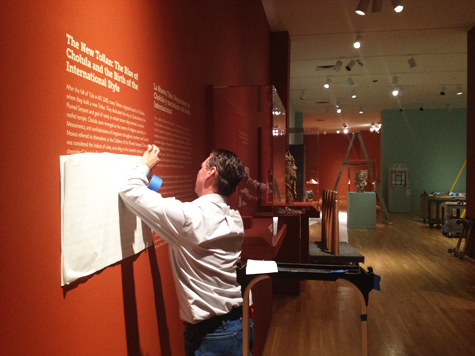
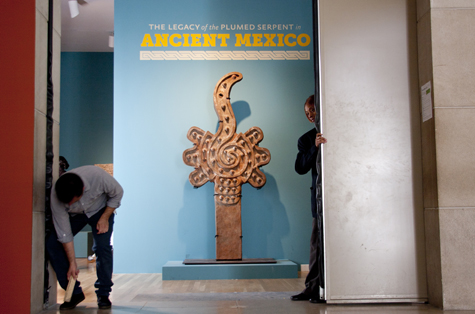
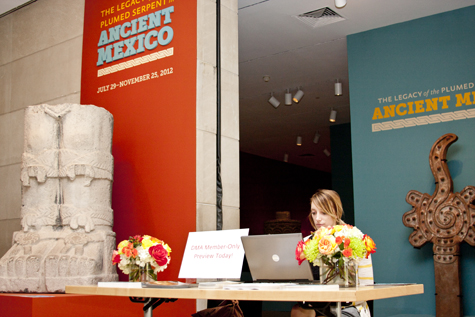
DMA members are able to preview exhibitions before the official openings and this past week our members were able to get a sneak peek at the new exhibition The Legacy of the Plumed Serpent in Ancient Mexico. Below are a few photos from the preview days, be sure to visit the exhibition now through November 25.

Photography by Adam Gingrich, the Marketing Administrative Assistant at the Dallas Museum of Art

Community Connection: Free Association

The current Community Partner Response Installation in the Center for Creative Connections invites visitors to contemplate space in relation to the African American experience.  Titled Free Association and designed by artists associated with the South Dallas Cultural Center, the installation provides a variety of experiences that include sound, poetry, media, and movement while exploring the notion of limitations of space.
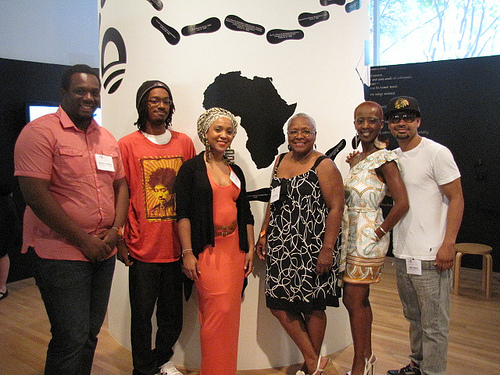
South Dallas Cultural Artists. From left: Harold Steward, Patrick Washington, Ava Wilson, Vicki Meek, Michelle Gibson, Malik Dillard.

Collaborators on this project and their areas of expertise include Malik Dillard, media; Michelle Gibson, dance; Vicki Meek, visual; Harold Steward, theater; Patrick Washington, media; and Ava Wilson, poetry.  Read their perspectives on the installation below, along with their free association responses to the words community, creativity, and art.  

Vicki – What was your vision for this project?  Free Association was created around the concept of limited space and how such limitations can either contain you or spur you to stretch beyond them. The general idea was to explore the history of African Americans within the context of this concept, paying close attention to how African Americans have used creativity to transcend societal constrictions. The more specific idea was to explore the performing, visual, literary & media arts as means of expressing the transcendence of limitations.

Inspired by the installation title Free Association, what is the FIRST word or phrase that comes to mind when you read the following terms?

Community = Essential
Creativity = Boundless
Art = Life 

Harold – How did you integrate theater with the other components of the installation?
More than theater, I was working with some of the components of performance studies. In particular, I wanted to look at the ways in which people naturally operate in “open space” and how that differs when space is confined. One of the many attributes of people of African descent is that we have historically found ways to work within the confines forced upon us when we are taken outside of the continent of Africa, and held on to some cultural traditions while creating new ones in very limited physical and sociological spaces.  The guiding question I had was, “What cultural practices and survival techniques did descendants of Africa keep or create once they arrived on the American shore, and where do they intersect?” The workshop that I offered in conjunction with the installation used Theater of the Oppressed games to cause the participants to be conscience of things that they feel, hear, and see, and the effect these things have on the individual or groups of people when they go unrecognized.

Community = Web- to destroy the community you destroy the web, to build a community you build the web
Creativity = Kuumba –The Kwanzaa principles that demands that we leave our community better than we found it
Art = Knowing what beauty to keep and what issues to call out

Ava – How did you connect poetry to the ideas of free association and space?
The written word is very powerful.  Through the use of several literary devices – metaphor, allusion, symbolism, etc. –  tethered specifically by imagery, I wanted to allow the reader to visualize what enslavement may have been like.  I wanted to create a “free association”, if you will, for the reader.  As for space, I wanted the taut nature of the language and the use of references to shape and dimension to show the vastness of the universe and in the African world in contrast to the narrowness that was the dungeons, slave ships, and realities that the African faced in the west.

Community = Family
Creativity = Spirituality
Art = Life

Patrick – How did you use media to enhance the installation?
We used digital photography, streaming video feed, and an electronic music production program to enhance our installation.

Community =  UNITY
Creativity = ART
Art = LIFE

Malik – How did the use of media enhance the installation? I feel that the media side of the installation creates interaction and gives a great visual for dance instruction.

Community = People coming together
Creativity = Music/Art
Art = Dance/Spoken Word/ Music

Explore Free Association and your own creative responses in the Center for Creative Connections through October 12.

Melissa Nelson
Manager of Teaching in the Community
Going for Gold

If you’re anything like me, you will be spending the next few weeks glued to your television watching the 2012 Summer Olympics. The Olympic Games has this incredible ability to put our regular day-to-day life on hold in a way that no other event can. It is a time-honored event that has survived depressions, recessions, international conflicts, and wars and for two weeks every two years the many people in our world come together to celebrate their countries’ athletic abilities and successes while displaying enthusiastic patriotism that tends to dissipate in the weeks following the Closing Ceremonies.

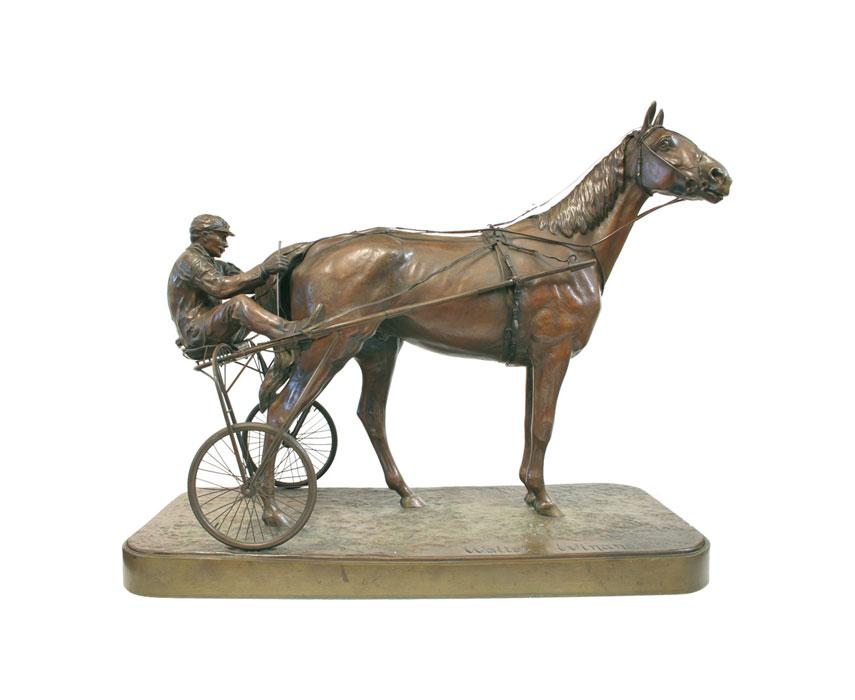
The Olympic Games is more than an international sporting event, however, since its inception, it has celebrated the arts as well. In the early years of the modern Games there was a regular art competition component. According to the founder, French Baron, Pierre de Coubertin, the ideal Olympians were men who were “educated in both mind and body” and he desired to combine both art and sport in the Olympic Games. From 1912 to 1952, medals were awarded for works of art inspired by sport in the categories of architecture, literature, music, painting, and sculpture. Only two competitors in those forty years achieved Olympic medals in both sport and art competitions, including American, Walter W. Winans for his sculpture, An American Trotter.

Walter Winans, “An American Trotter,” 1912, bronze, Collection: Idrottsmuseet i Malmö, Sweden.

The 1948 Summer Olympics in London marked the final year for the Olympic art competitions. The juried competitions ended because the participating artists were considered to be professionals, while Olympic athletes were required to be amateurs.

Although the medal events were abandoned, the Olympic Games still have an artistic component today through the Cultural Olympiad. This summer’s Games include extensive cultural offerings across the British Isles with the London 2012 Festival. Spectators at the games will also find themselves surrounded by art of all kinds; the Olympic Park has integrated a diverse range of commissioned art pieces into the British architecture and engineering of the Park.

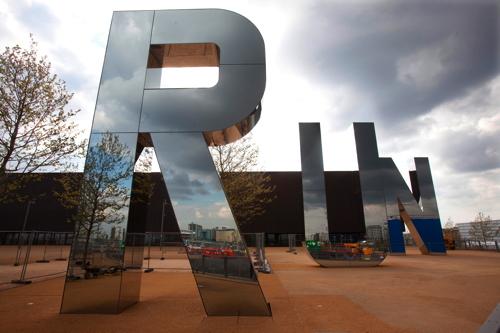
Monica Bonvicini, “Run,” 2012, glass and stainless steel, London.

During the day, the letters of Monica Bonvicini’s Run act as mirrors, reflecting visitors and their surroundings. At night, they become transparent and glow thanks to internal LED lights. To view all of the commissioned pieces, visit Art in the Park’s page.

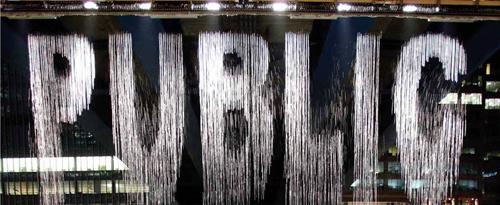
My favorite of the pieces is Julius Popp’s “bit.fall” waterfall installation.  Placed under a bridge over the Waterworks River, the waterfall uses a sophisticated pump system that recycles water from the river into the water sculpture.

Julius Popp, “bit.fall,” 2012, temporary installation in the Olympic Park.

Using software developed by Popp, the waterfall creates a continuous cascade of words that are widely used in live news feeds. One of the neat things about this technology is that the words are constantly changing.  No day is like the last.  The end result is a beautiful and spectacular visual experience. To get a better grasp on this work I consulted a short documentary on Popp. See it here on YouTube. 

After the Closing Ceremony on August 12, keep the Olympic spirit strong by reading Chris Cleave’s new novel, Gold. The bestselling author of Little Bee, Cleave’s new book focuses on two athletes and how they traverse the shifting sands of ambition, loyalty, and love on the eve of their last Olympics. On Tuesday, October 9, Chris Cleave will be appearing at the Dallas Museum of Art in a special Arts & Letters Live event. For more information and to purchase tickets, please visit our website.

Hayley Dyer is the Audience Relations Coordinator for Programming at the Dallas Museum of Art.

Seldom Scene: Scaled Down

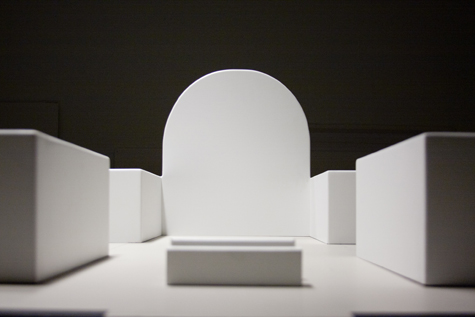
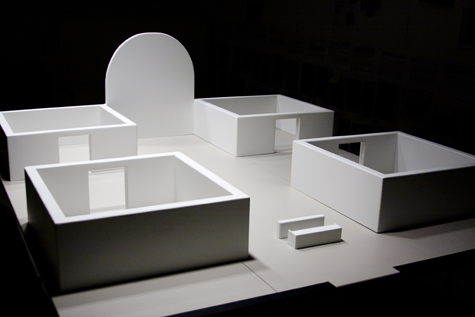
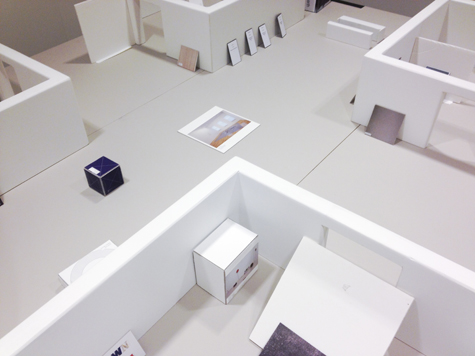
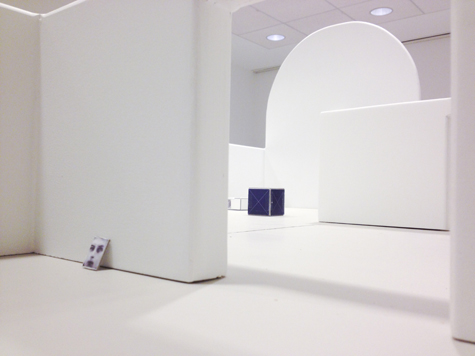
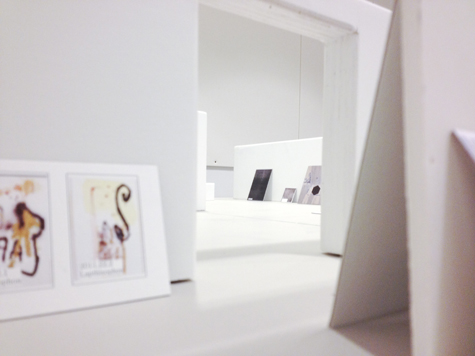
The new DMA exhibition Variations on Theme: Contemporary Art 1950s–Present explores themes and ideas that drive an artists’ creative process. With this concept in mind, the Contemporary Art Department thought it would be the perfect opportunity to share one way that curators tap into their own creative processes when developing a new exhibition – by using a scale model. Curators use scale models much like they would a doll house, to rationalize the gallery space in accordance with the placement of the art objects. Variations on Theme is installed in the gallery spaces known as the Barrel Vault and Quadrant Galleries, which are roughly 11,500 square feet. DMA carpenter Dennis Bishop constructed a wooden model of these galleries with a scale of 1:24 (one half-inch equals one foot). The objects in Variations on Theme are of various sizes and mediums and are complicated to install, so in order to visualize how certain works might look next to one another DMA exhibitions intern Jasmine Shevell created maquettes of each work that are proportional to the scale model of the exhibition space. Once each object is set into place, the design model is shared with our talented exhibitions team, registrar, and preparators, who bring the curator’s model to life!
Variations on Theme is on view at the Dallas Museum of Art until January 27, 2013.

Meg Smith is a Curatorial Administrative Assistant at the Dallas Museum of Art. Photography is by Adam Gingrich, the Marketing Administrative Assistant at the Dallas Museum of Art.

Texas Late Night

Howdy, y’all! This past Friday, the DMA showed folks a rootin’ tootin’ good time at our Late Night celebration of the Flower of the Prairie: George Grosz in Dallas exhibition. With a theme as big as Texas, you can bet that there was lots to do here at the Museum. With live folk bands playing in the Atrium Cafe and in the galleries, visitors could hear old-time, toe-tapping, traditional Texas music almost anywhere they went. Adult crowds could be seen gathering for tours of the exhibition and  surrounding the watercolor demonstrations led by artist Scott Winterrowd. Lectures, talks, and films throughout the night also kept the adults scurrying from one program to the next. Families had a rip-roaring time in the Center for Creative Connections studio constructing their own Dallas building to contribute to a three-dimensional city skyline. Also in C3, kids created Texas-inspired bandanas and participated in Yoga for Kids. To get a peek at all the festivities, check out the slide show below.
.

[slideshow]

.
One of my favorite moments from the night was bumping into a family I had taught during a Go van Gogh Summer Library Program. When I stumbled upon them, they were in C3 doing yoga and discussing what kind of building they would create in the studio. They excitedly told me all about going into the Flower of the Prairie: George Grosz in Dallas exhibition to see all of the works of art we had talked about during the Impressions of Dallas library program. “They know everything!” the kid’s impressed dad exclaimed. It is always a joy to see familiar faces in the Museum. To learn a little more about the Go van Gogh Library Program, check out Amy’s blog post from last week. Every participant receives a free family pass, which you could use at the next Late Night on August 17.

What was your favorite moment from the Late Night?

Hannah Burney
Go van Gogh Programs Assistant

Seldom Scene: Load Three Tons and What Do You Get?

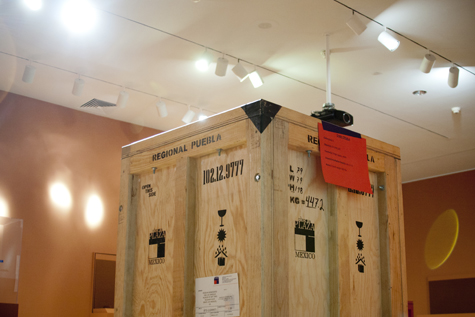
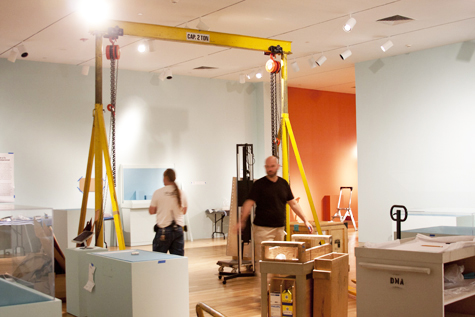
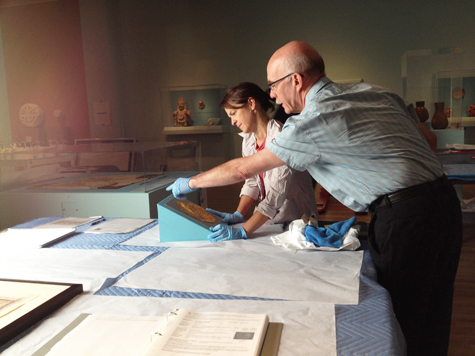
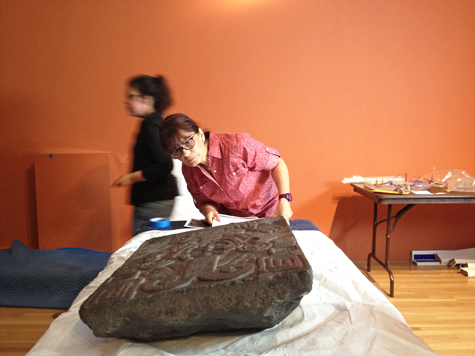
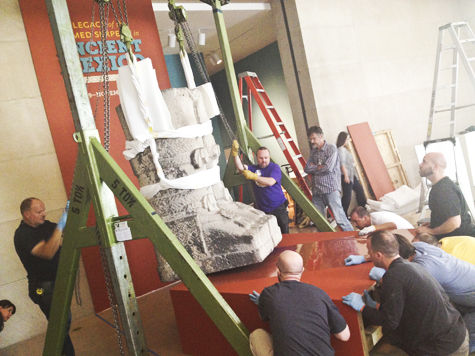
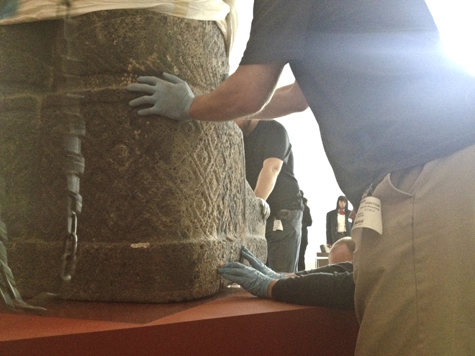
We have been receiving and unpacking crates for a couple of weeks in preparation for the opening of The Legacy of the Plumed Serpent in Ancient Mexico on Sunday, July 29. This exhibition contains a number of works weighing hundreds of pounds, including a sculpture of sandaled feet weighing more than three tons, so we brought in some extra equipment and helping hands to assist in the installation process, which you can see below. Join us this Saturday, July 28, for a free sneak peek of the exhibition (normally $14) during the WFAA Family First Day from 11:00 a.m. until 5:00 p.m.

Photography by Adam Gingrich, Administrative Assistant for Marketing and Communications

Caravaggio, Crime, and Conservation

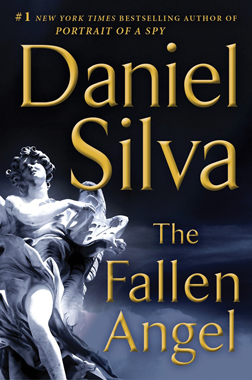
Here at the Dallas Museum of Art, the month of July has turned into a celebration of art conservation.  On July 1, Mark Leonard began his tenure at the DMA as Chief Conservator. Mark began his career as a restorer at the Metropolitan Museum of Art before heading west to the J. Paul Getty Museum, where he worked for twenty-six years. This Saturday, in conjunction with an Arts & Letters Live event, Mark will meet visitors in the galleries and discuss upcoming restoration work for Jean Baptiste Marie Pierre’s The Abduction of Europa. At 7:30 p.m., author Daniel Silva will be in conversation with Maxwell L. Anderson, The Eugene McDermott Director of the DMA, discussing his new book, The Fallen Angel. Silva is a celebrated “spy fiction ace,” and is known for his hero, Gabriel Allon. Gabriel has a longtime, on-again off-again relationship with Israel’s secret intelligence service, but he also happens to be one of the world’s finest restorers of old master paintings.
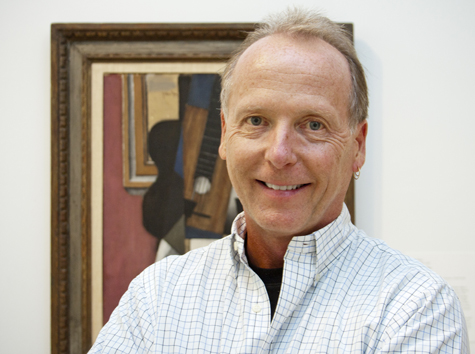
Mark Leonard, Chief Conservator at the Dallas Museum of Art

The Dallas Morning News has said that “in Gabriel Allon, Silva has created a credible secret agent with skills that would make James Bond weep.” Our very own Chief Conservator, Mark Leonard, also has a unique perspective that sets him apart from others in his field: He is an artist as well as a conservator.

Mark, as an artist, do you think you approach your work differently than your contemporaries? How has your work as a conservator affected your work as an artist?
Every artist approaches his work differently. By working with great works of art, from the old masters to contemporary artists, I’ve been able to learn from their work. Not every artist gets this opportunity!

Gabriel Allon is an art restorer by day and a spy and assassin by night. Mark, tell us about your night job as a painter.
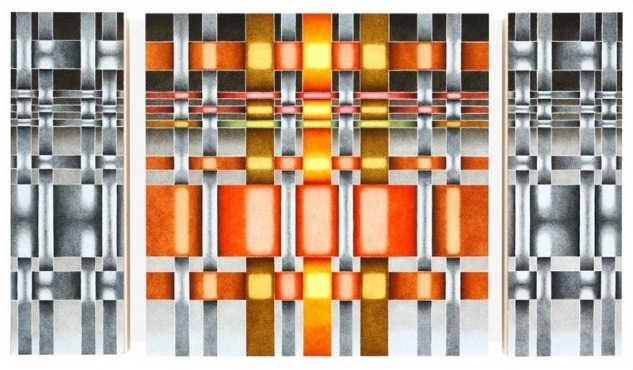
For a while in my career, working with a brush in my hand every day, conserving someone else’s work was enough for me. About four or five years ago, I became aware that while I loved restoring paintings, it was really a blank panel that I wanted on my easel. In a series of geometric abstractions, I wanted to explore the theme of love and loss. If you have ever loved, you have experienced loss–the two are interwoven. That’s how I began working on this particular motif. In December of this year, an exhibition of my work inspired by John Constable’s “Cloud Studies” will be on display–side-by-side with the Constables–at the Yale Center for British Art.

Mark Leonard, “Triptych III,” March 2011, gouache and synthetic resin on panel, Private Collection, Austin, Texas

In Silva’s new novel, Gabriel Allon is sent to the Vatican to restore a Caravaggio masterpiece. Mark, in all of your experiences, can you tell us about a particularly challenging project you’ve worked on?
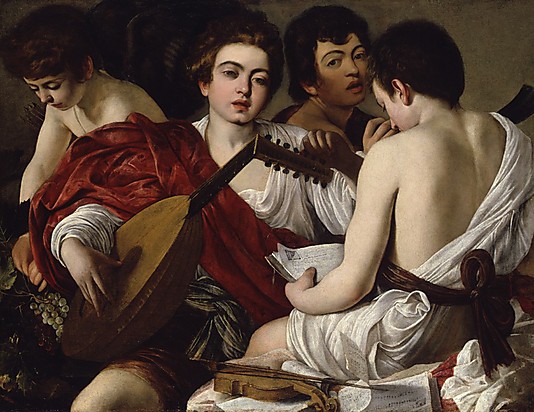
[He chuckles.] That would have to be a Caravaggio I worked on at the Met. “The Musicians” was heavily damaged. It took about six to eight months to bring it back to life. Restoring a painting could take as little as an afternoon to as long as several years.

Caravaggio (Michelangelo Merisi), “The Musicians,” c. 1595, oil on canvas, The Metropolitan Museum of Art, Rogers Fund, 1952, 52.81, Image courtesy metmuseum.org

What are some of your upcoming plans for the DMA’s collection?  Is there any spy work in your near future?
The Museum is very excited about its plans to build a new paintings conservation studio. We are carefully planning for it to include a public space; we want to be able to share the work that we are doing with our visitors. In the meantime, I am planning on spending the next year really getting to know our collection. [He laughs.] I don’t think there is any spy work in my future here. He’ll leave that to Gabriel Allon.

For more information on Saturday’s event with Daniel Silva, please visit our website. For tickets and to register for the tour, call 214-922-1818.

Hayley Dyer is the Audience Relations Coordinator at the Dallas Museum of Art.

Impressions of Dallas: Then and Now

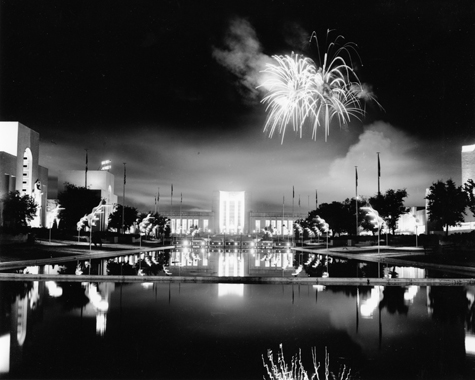
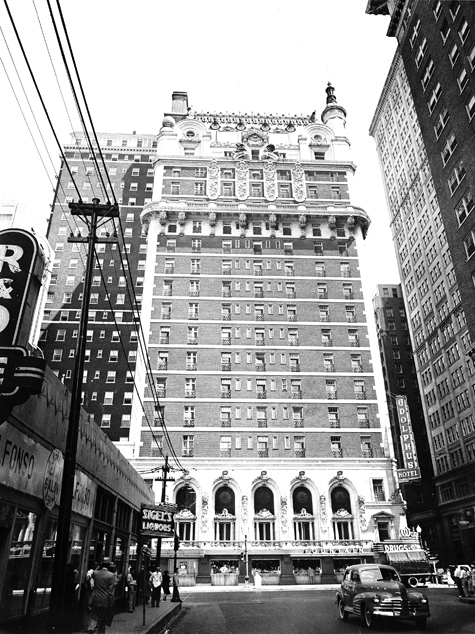
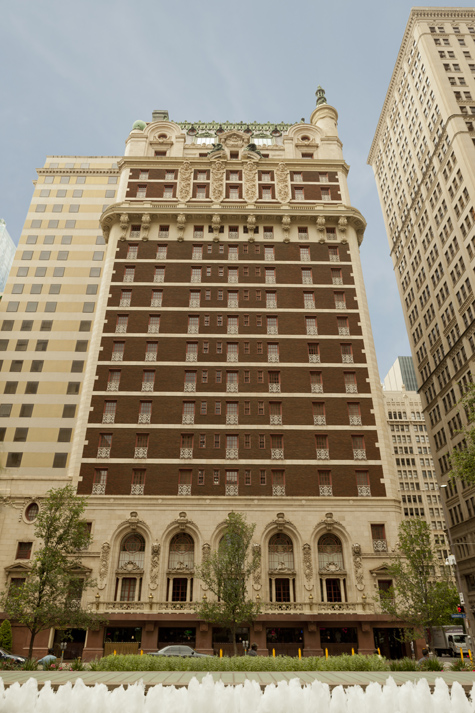
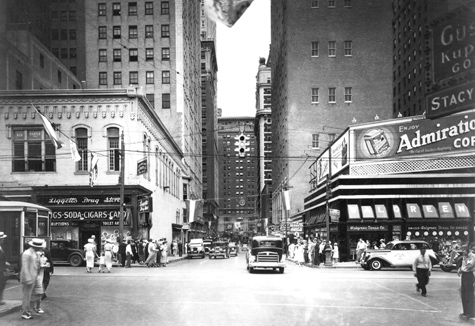
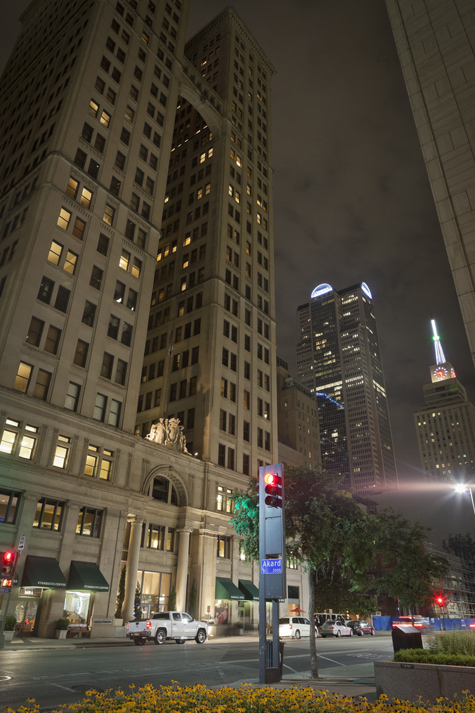
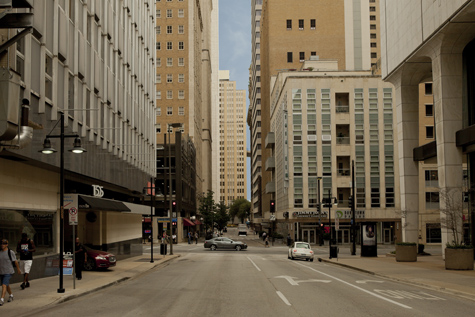
Flower of the Prairie: George Grosz in Dallas allows you to compare the Dallas we live in today with the Dallas of 1952. Below are a few images of familiar landmarks from then and now. See more in our first e-catalogue, available as a free iPad app.

Fair Park Esplanade at night with State Fair, October 21, 1950. County, Squire Haskins Photography Collection, The University of Texas at Arlington Library, Arlington, Texas. AR447-11-37.

Fair Park, 2012, Dallas Museum of Art

Adolphus Hotel, 1954, Hayes Collection, Texas/Dallas History and Archives Division, Dallas Public Library. PA76-1/17625

Adolphus Hotel, 2012, Dallas Museum of Art

Pegasus atop the Magnolia Building, 1927. Bud Biggs Collection, Texas/Dallas History and Archives Division, Dallas Public Library. PA84-9/212.

The Magnolia Building, 2012, Dallas Museum of Art

Akard Canyon, 1940, Dallas Municipal Archives

Akard Canyon, 2012, Dallas Museum of Art

Friday Photos: Summer Inspirations

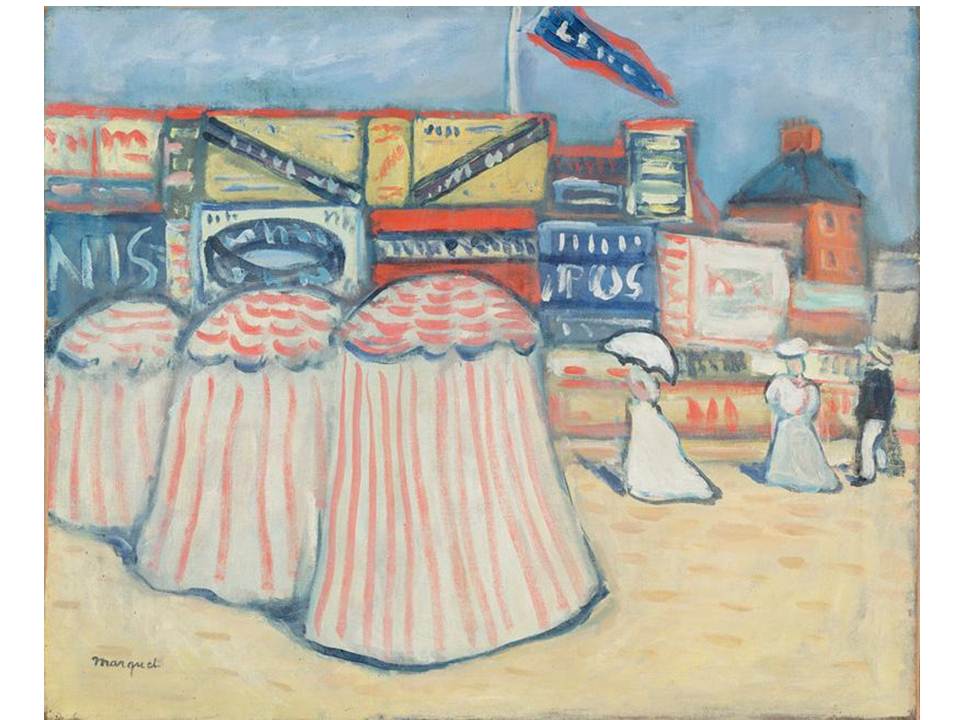
If you haven’t already, you should take the advice of my colleague Hannah and Vacay at the DMA.  Not only are there family-friendly experiences to uncover, there are lots of works of art to inspire your summer vacation.  For example:

Soak up some sun on the beach.

Albert Marquet, The Beach at Trouville, c. 1906, Dallas Museum of Art, gift of the Meadows Foundation Incorporated

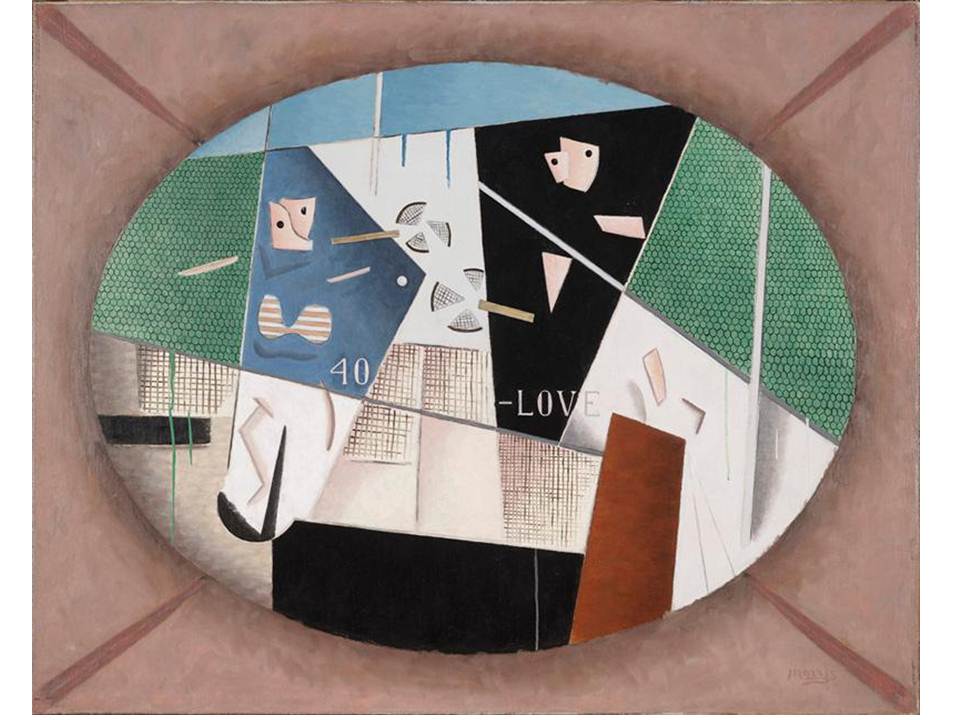
Spend the afternoon playing tennis.

George L.K. Morris, Mixed Doubles, c.1948, Dallas Museum of Art, gift of David T. Owsley via the Alvin and Lucy Owsley and Alconda-Owsley Foundations

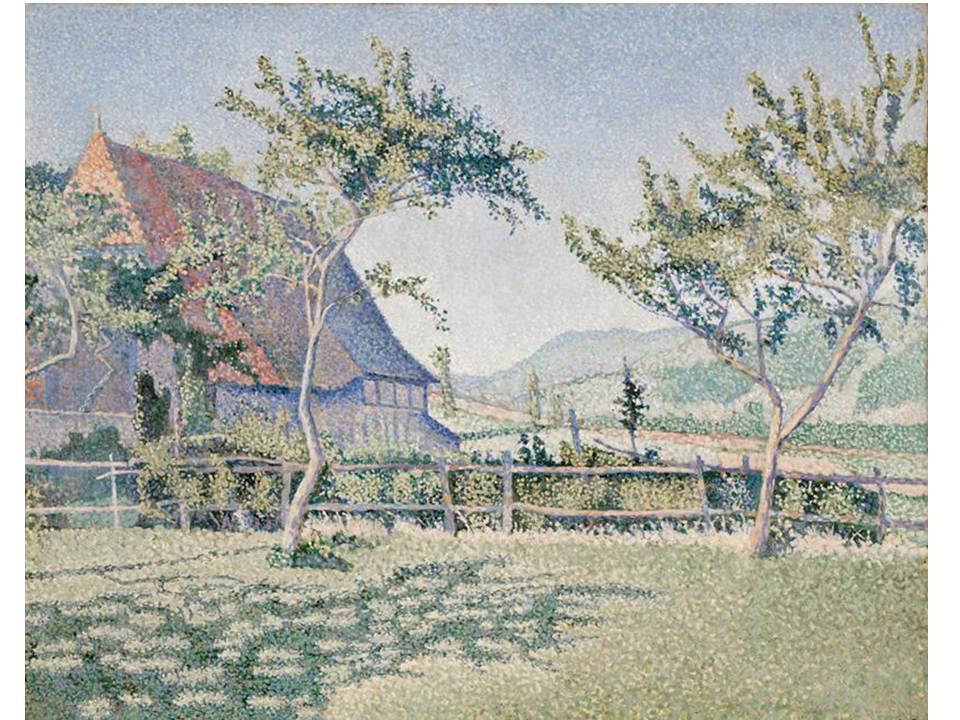
Paint en plein air in France.

Paul Signac, Comblat-le-Chateau, the Meadow (Le Pre), Opus 161, June-July 1887, Dallas Museum of Art, The Eugene and Margaret McDermott Art Fund, Inc., in honor of Bonnie Pitman

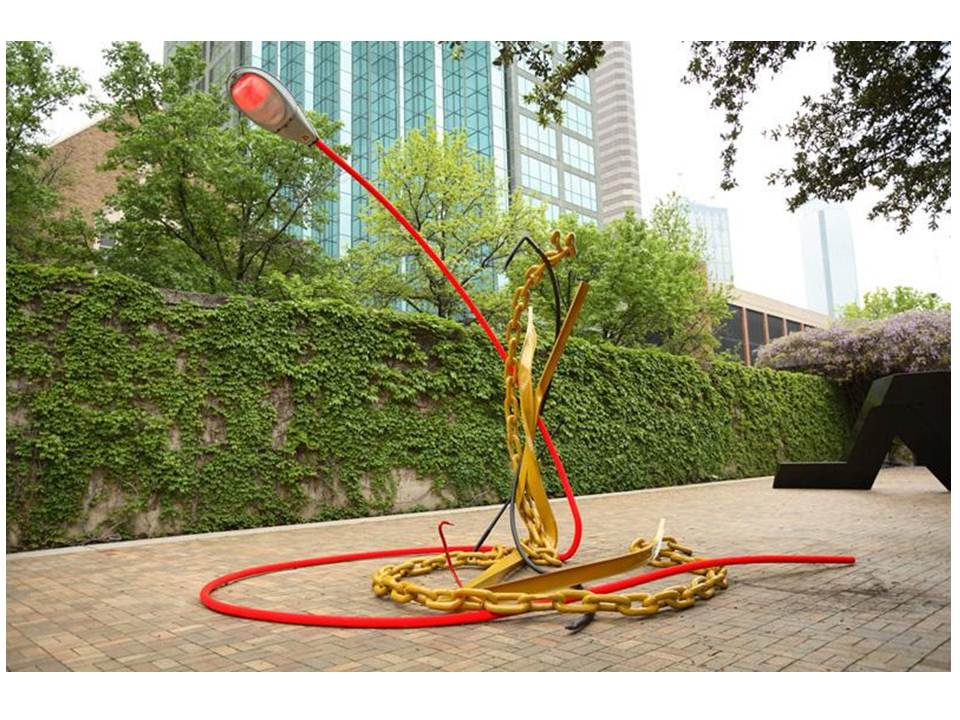
Do some gardening…but beware of those pesky garden snakes.

Mark Handforth, Dallas Snake, 2007, Dallas Museum of Art, DMA/amfAR Benefit Auction Fund and Lay Family Acquisition Fund

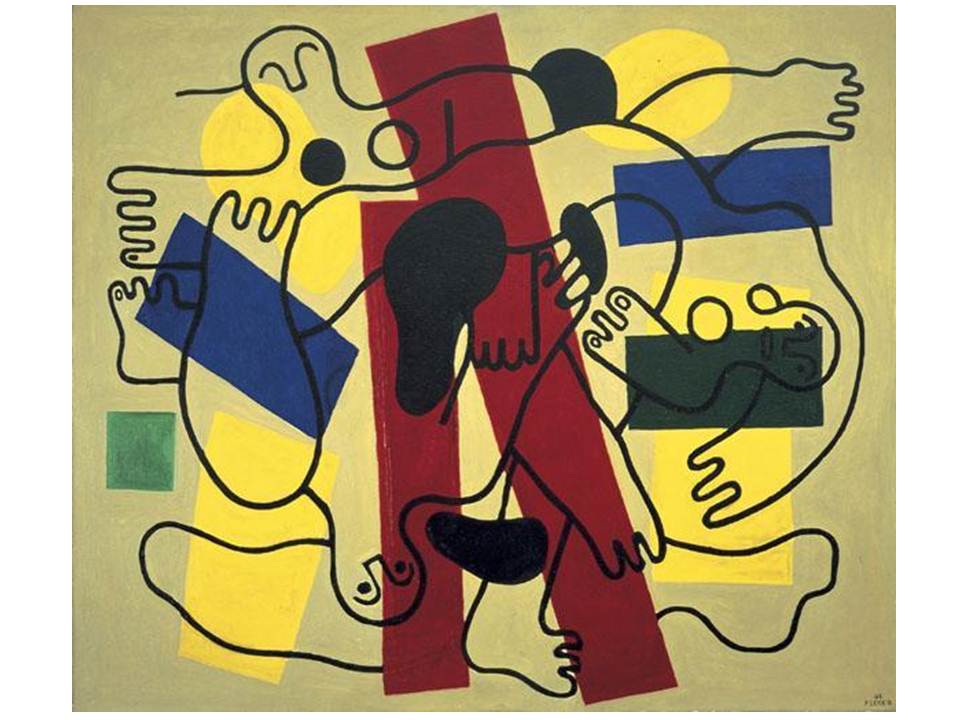
And when the heat becomes too much to bear, go swimming.

Fernand Leger, The Divers (Red and Black), 1942, Dallas Museum of Art, Foundation for the Arts Collection, gift of the James H. and Lillian Clark Foundation

Enjoy the rest of your summer!

Loryn Leonard
Coordinator of Museum Visits

Off the Wall: BOOM

In our Center for Creative Connections we ask visitors to reflect on their responses to the spaces they encounter in art, as well as those they encounter in their everyday life.

For one work of art specifically, Lee Bontecou’s Untitled, we ask visitors to respond to one of three prompts:

  • To me, sharing space with this work of art feels like…
  • The words or pictures that come to mind when I look at this work of art are…
  • If this work of art was part of something larger, describe what it would be.

Untitled (35), Lee Bontecou, 1961

We have gotten a lot of great responses from visitors and want to share a few with you. Once a month we will have an “Off the Wall” post featuring three responses left by visitors.

Next time you are in the Center for Creative Connections add your contribution to the wall and maybe you will see it on Uncrated!


Archives

Categories