Posts Tagged 'Center for Creative Connections'


Make Your Own Festive Holiday Ornaments!

Winter has always been my favorite season—it brings back cozy memories of home and the holidays. Growing up in Ohio, I loved how decorated homes would transform our neighborhood into a bright, festive place. Set against a background of snow, it was like a living Norman Rockwell painting.

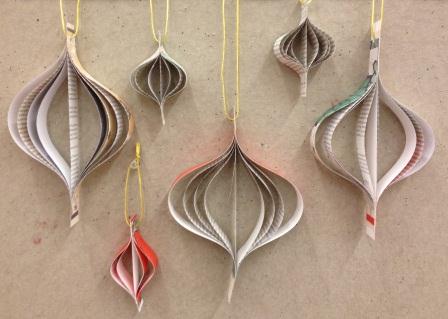
To help rekindle that holiday spirit, here is a simple and fun way for you and your family to create ornaments together out of recycled materials from around your home!

Materials:
• Paper (patterned or construction paper, old drawings, book pages, posters, etc.)
• Scissors
• Hole puncher
• Ribbon, string, or yarn
• Stapler and staples
• Rotary trimmer or paper cutter (optional)

Instructions:
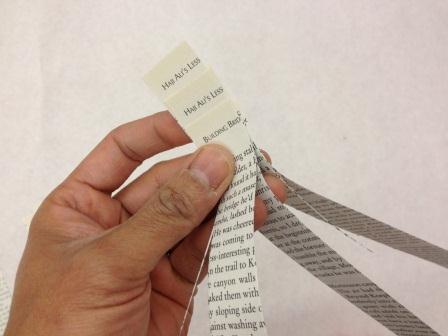
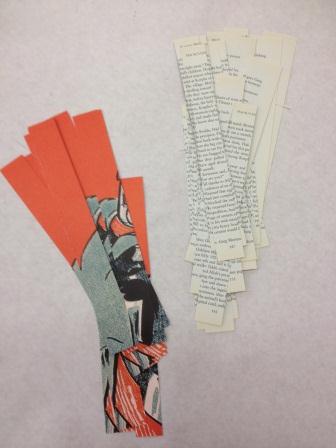
1. Using your rotary trimmer, cut the paper into strips; they can be any size you like as long as all the strips are the same (for reference, I used 1”x8” strips). If you don’t have a rotary trimmer cut the strips by hand using your scissors.

Materials

2. Stack an odd number of strips on top of each other—I find that seven to nine work best.
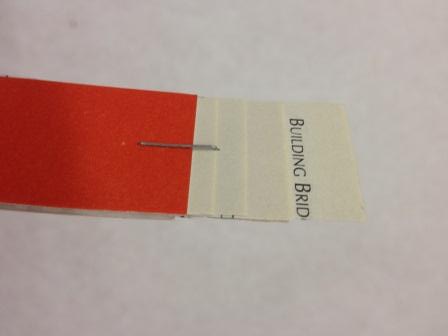
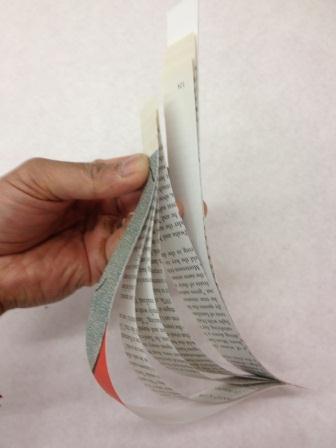
3. Find the top of the middle strip and stagger the rest of the strips stacked on top of and underneath it to create a pyramid shape. Staple the stack together to secure it.

Stacking

Stapling

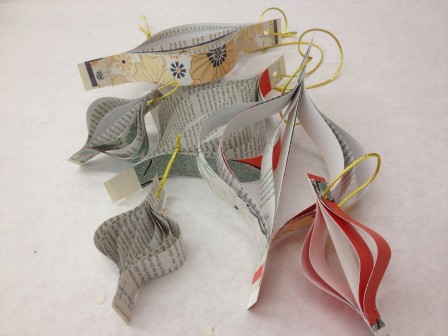
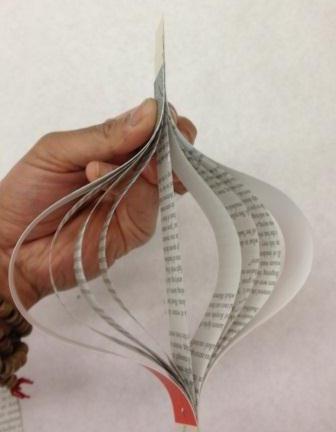
4. Repeat the process at the other end of the ornament. The strips of paper will fan out, leaving you with a spire-like shape.

Bottom

Finished

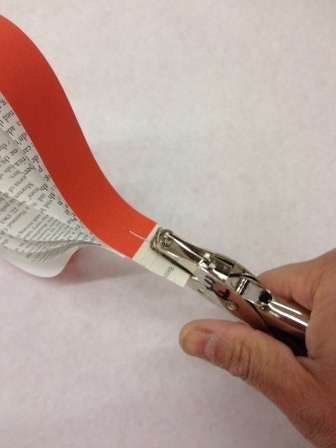
5. To hang your ornament, punch a hole at one end and string a ribbon through it.

Punching Holes

Try using different colors combinations when you stack your strips of paper. Also, increasing or decreasing the distance that you stagger the strips will change the shape of your ornament. Experiment with different supplies to further embellish your ornaments such as glitter, paper edgers, or shape punches!

Group shot

Hanging

Have fun creating and have a happy holiday season!

JC Bigornia
C3 Program Coordinator

Friday Photos: Drawing with Light

8245745662_cb52b5115e_o

photo

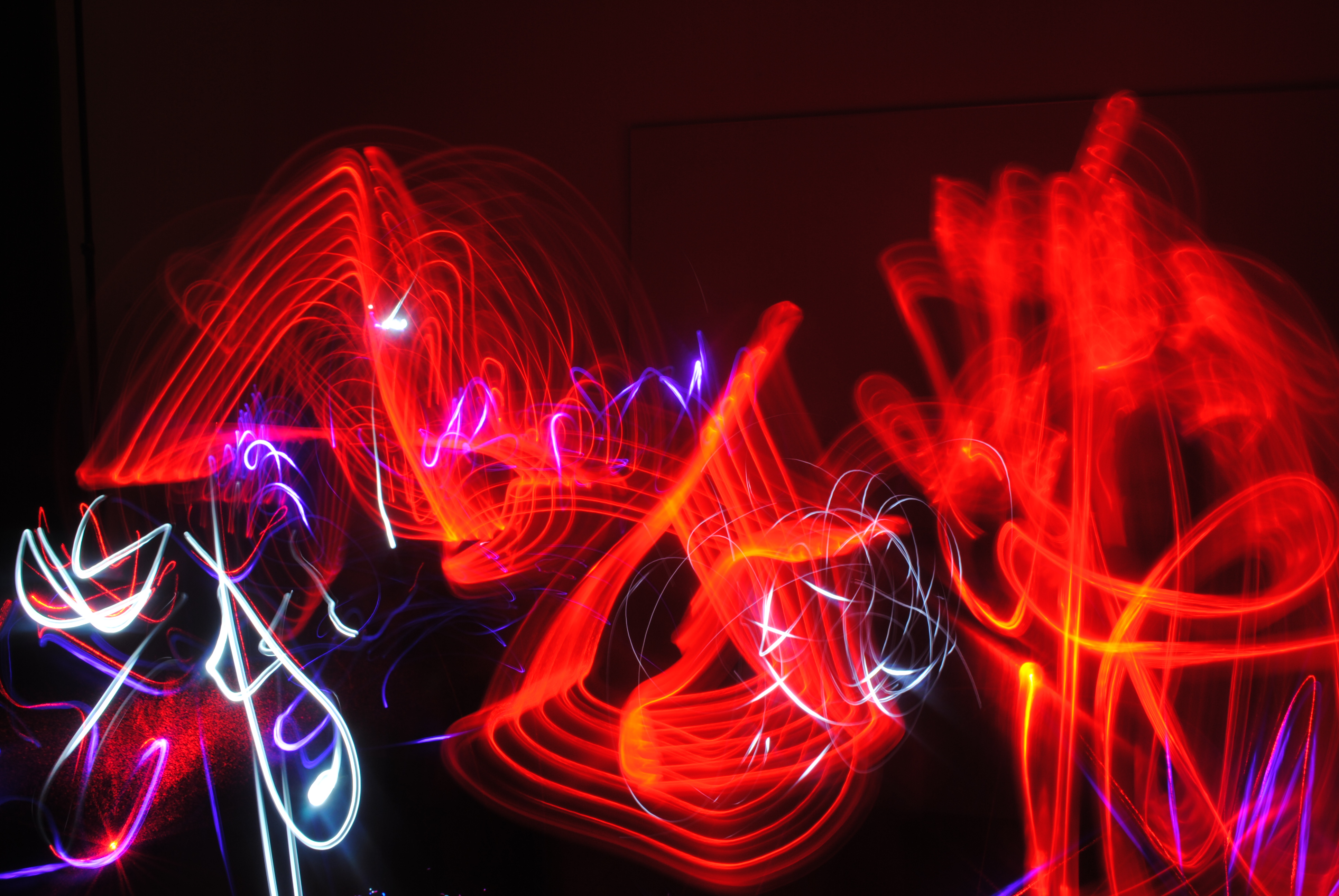
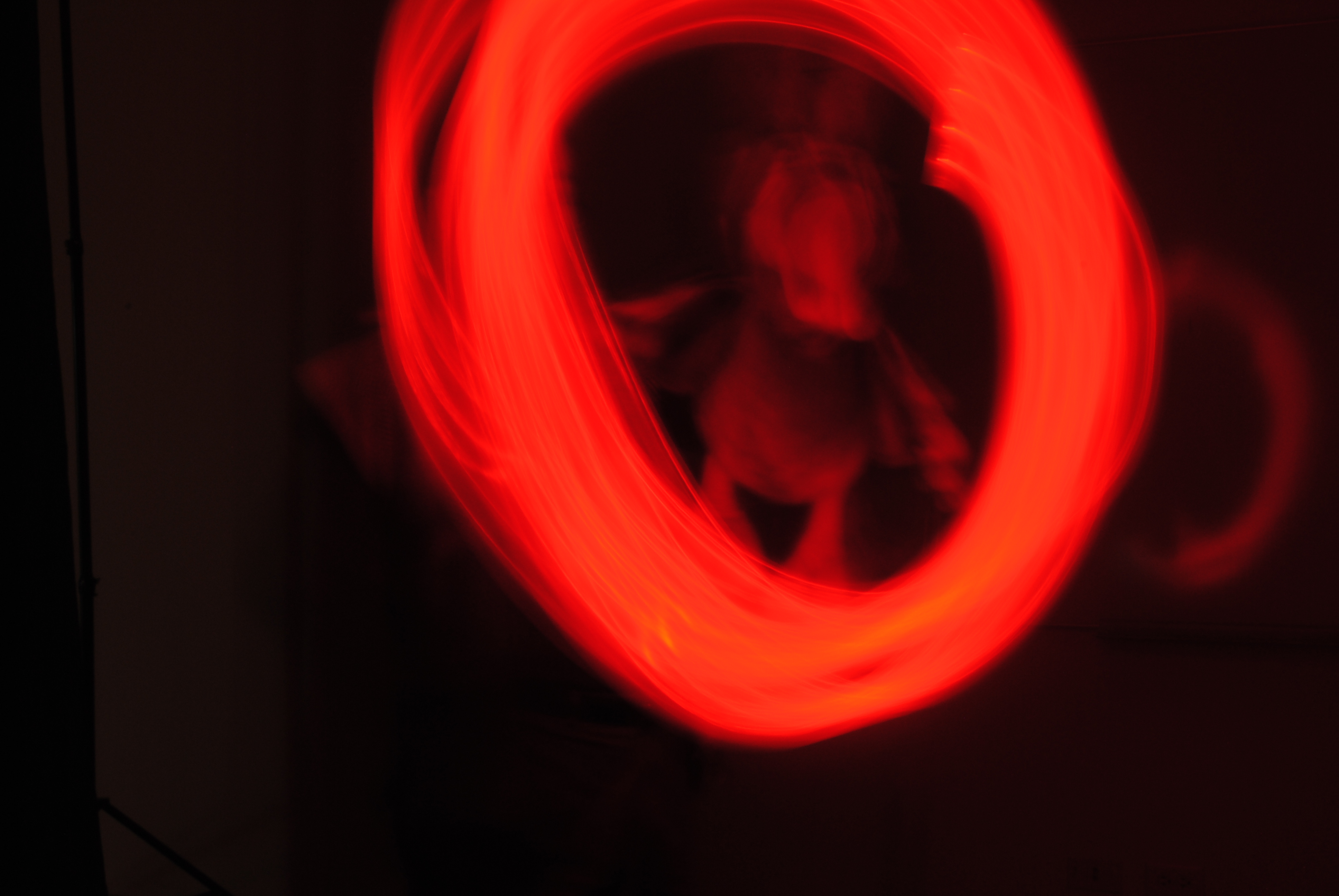
The theme for December’s First Tuesday program was City of Light, inspired by one of the Dallas Museum of Art’s current exhibitions, Posters of Paris: Toulouse-Lautrec and His Contemporaries. One of the exciting activities offered was Drawing with Light.  Families experimented with flashlights, laser pointers, and traffic wands to create a drawing in the air with light. The drawings were created using digital SLR cameras set on 15 second exposure time, which enabled all of the movements to be captured. All of the photographs taken during this activity were posted to the Center for Creative Connections’ Flickr account.  The activity was a great success and even Arturo, the Museum’s family mascot, took part!

Arturo making his own drawing with light!

Arturo making his own drawing with light!

Danielle Schulz
McDermott Intern for Family Experiences

canvas: a blank slate of possibilities

Welcome to Canvas! We are so excited to announce that we are merging the DMA’s family blog with the DMA’s educator blog – what better way to canvass new ideas on a blank canvas? Whether you are a teacher, parent, grandparent, artist, or just all around fan of the DMA, we hope that this newly merged blog will quench your thirst for knowledge and creativity. From week to week, we will have posts highlighting fun things to do at the Museum, studio insights, interdisciplinary ideas, and inspirations from works of art in our galleries.

Canvas now features even more DMA authors! Check out the author page to meet some of our new writers. Staff from the Center for Creative Connections (C3) will post monthly with details about visitor interactions in C3, cool teen programs, artist workshops for adults, and gallery insights. Interpretation staff will share exciting ways that visitors are connecting with works of art and all of the ways that interpretation merges with audiences of all ages. Staff who work closely with families will share ways to connect kids to art, nifty art activities for kids, and artsy ways to make connections to holidays, kid-friendly books, and even the weather! But don’t worry, you’ll still find all of the creative and resourceful ideas geared towards students and teachers that this blog has always had (including a monthly art recipe from our resident baker, Sarah).

We hope that by joining forces, Education Staff here at the DMA can bring you even more ways to celebrate the power of art!

Amanda Blake
Head of Family, Access, and School Experiences

Coming Soon: The New C3

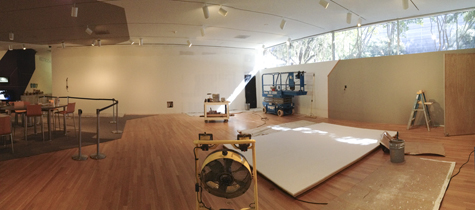
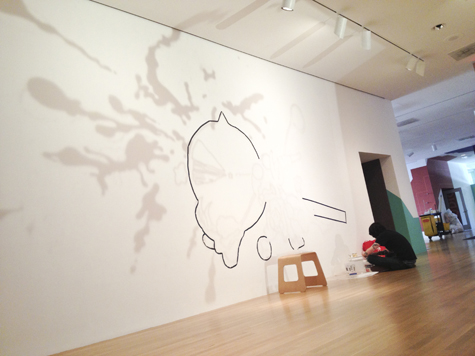
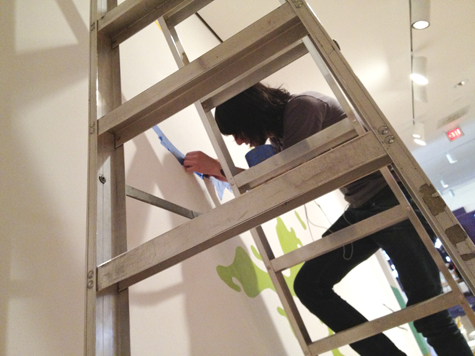
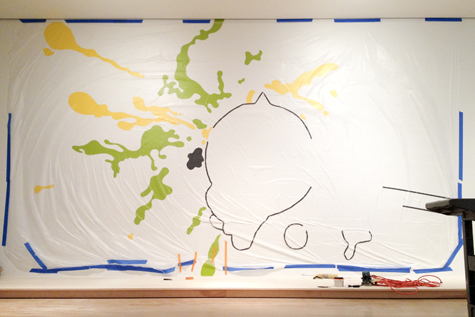
There are some changes taking place in the DMA’s Center for Creative Connections. We have expanded our “making” space in C3 to include a work of art to inspire creation, and we are enlarging the area to allow room for more visitors. We have recently added a new staff pick, and we are in the process of installing the Urban Armor Street Art Camp panels in the Tech Lab and Young Learners Gallery. We’re also changing out the monitor wall images with visitor photo contributions. DMA staff has been preparing the walls in C3 for the installation of a piece by John Hernandez called Hi-C Avenger. We are thrilled to announce that Hernandez will be teaching workshops in C3 this January!

Amanda Batson is the Program Coordinator for the Center for Creative Connections at the Dallas Museum of Art.

Teaching for Creativity: Questioning Coloring Books

Perhaps you enjoyed coloring books as a child or have coloring books around your home for your children. Creativity specialist and University of Texas at Dallas professor, Magdalaena Grohman, provides insight into the creative value of coloring books and ideas for enriching the coloring experience.

As a psychologist and a mom of two, I have an unrelenting tendency to look for games, toys, and activities that teach children to think and communicate, that develop imagination, and that shape creativity and multiple intelligences. And recently, coloring books have caught my attention.

For the past couple years my two sons, ages 6 and almost 4 years old, have been bringing coloring sheets home. I’ve been thinking: What do coloring books teach our children? What is their educational value?

For starters, the act of filling in the color within boundaries plays an important role in the development of hand-eye coordination, a crucial component in mastering handwriting. I’m afraid, however, that’s about it. How so? Well, let’s look at the most accessible coloring books you can buy in a supermarket. Most of them include outlines of  popular movie and book characters. If a child is familiar with a given character, it may significantly restrict the color palette. Spiderman, for example, will most likely be red, blue and black. There are even more restrictive activity books, in which a specific color pigment is already embedded in the pages and ready to use. Just dip a brush in water and you’re good to go. How convenient! Not only does a child remain clean (so do walls and floors), she doesn’t have to think what colors need to be used. At the very least, coloring books reinforce mindless copying and schematic color use.

So, shall we throw them away? Well, here’s a caveat. Children do like coloring, and—let’s admit it—it is a perfect activity to keep them busy so we can catch up with chores or steal 10 minutes to pause and think.

But, if you have some time to sit down with your children and play with them, I suggest you try the following fun activities with your ordinary coloring book:

  • Use an atypical color scheme (Spiderman is yellow, pink and green) and discuss the character “wearing” different colors
  • Add different elements to the picture
  • Change a given outline into something completely different and give it funny titles
  • Glue small pieces of torn magazine pages within the outline

Thank you, Dr. Grohman for your ideas!

Dr. Grohman leads Think Creatively! workshops in the Center for Creative Connections on the first Thursday of every month.

Andrea V. Severin
Interpretation Specialist

Off the Wall: Where Does It End?

In our Center for Creative Connections we ask visitors to reflect on their responses to the spaces they encounter in art, as well as those they encounter in their everyday life.

For one work of art specifically, Lee Bontecou’s Untitled, we ask visitors to respond to one of three prompts:

  • To me, sharing space with this work of art feels like…
  • The words or pictures that come to mind when I look at this work of art are…
  • If this work of art was part of something larger, describe what it would be.

Untitled (35), Lee Bontecou, 1961

We have gotten a lot of great responses from visitors and want to share a few with you. Once a month we will have an “Off the Wall” post featuring three responses left by visitors.

Next time you are in the Center for Creative Connections add your contribution to the wall and maybe you will see it on Uncrated!

Urban Armor: Elements of Art and Skateboard

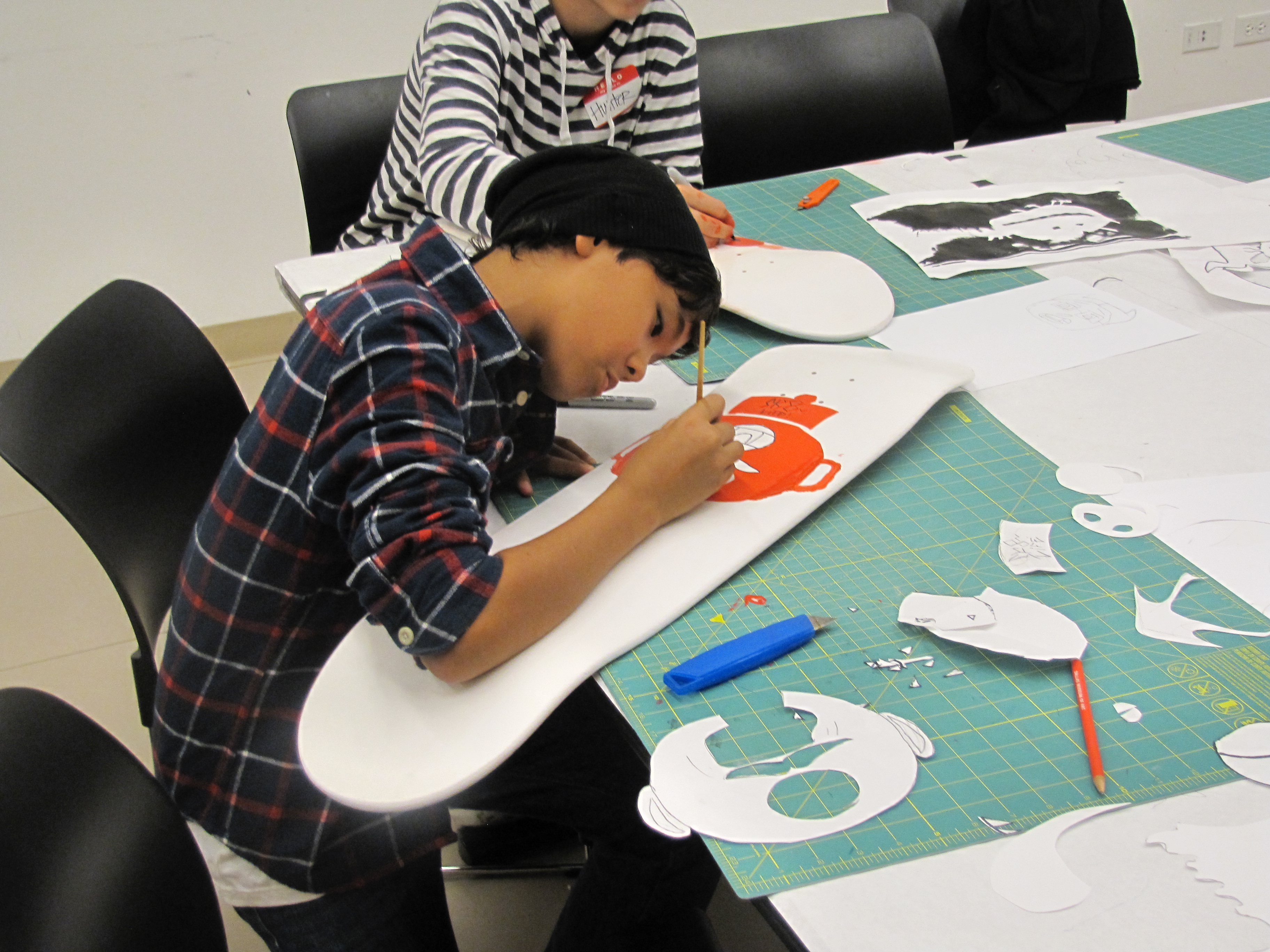
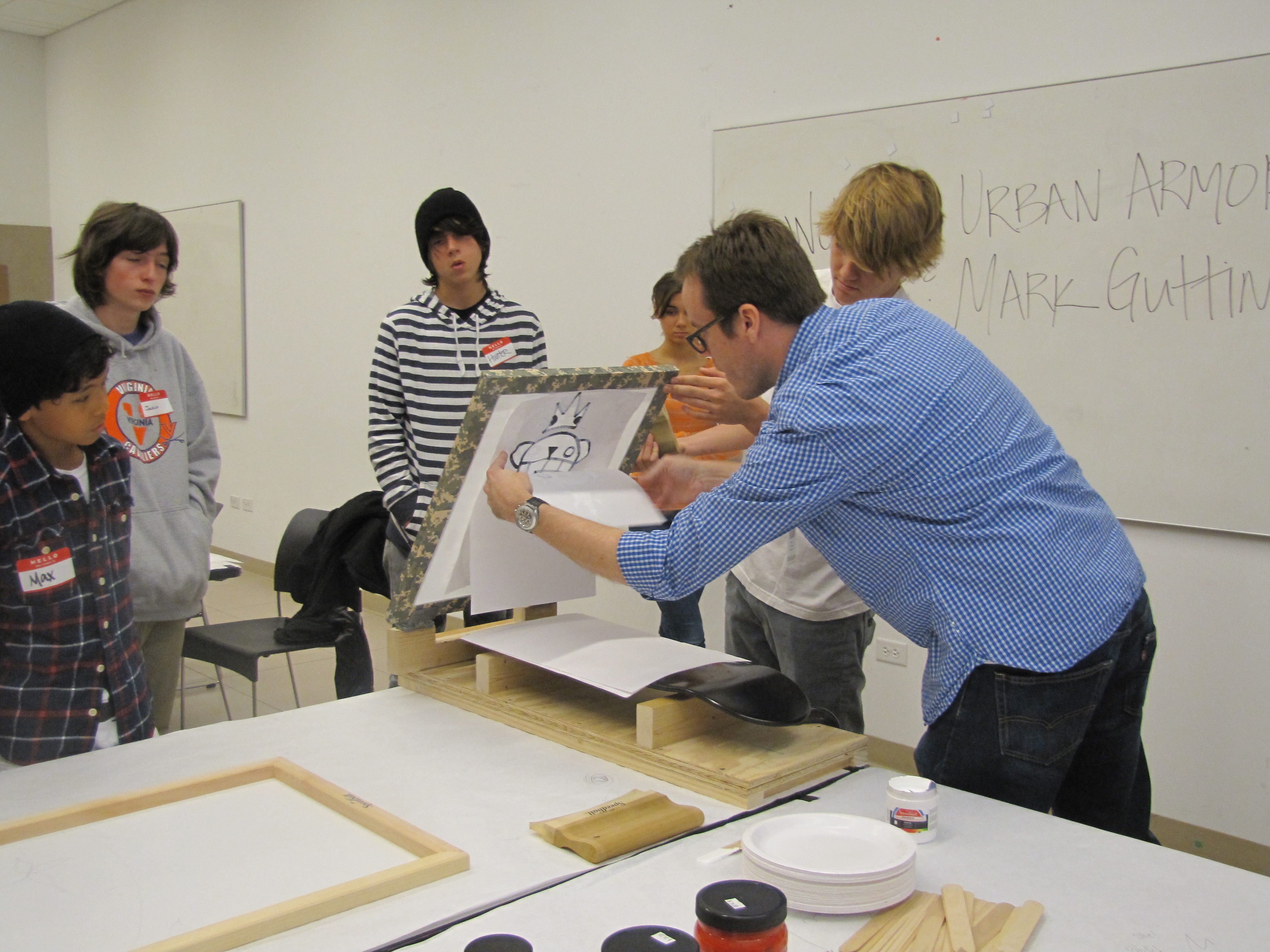
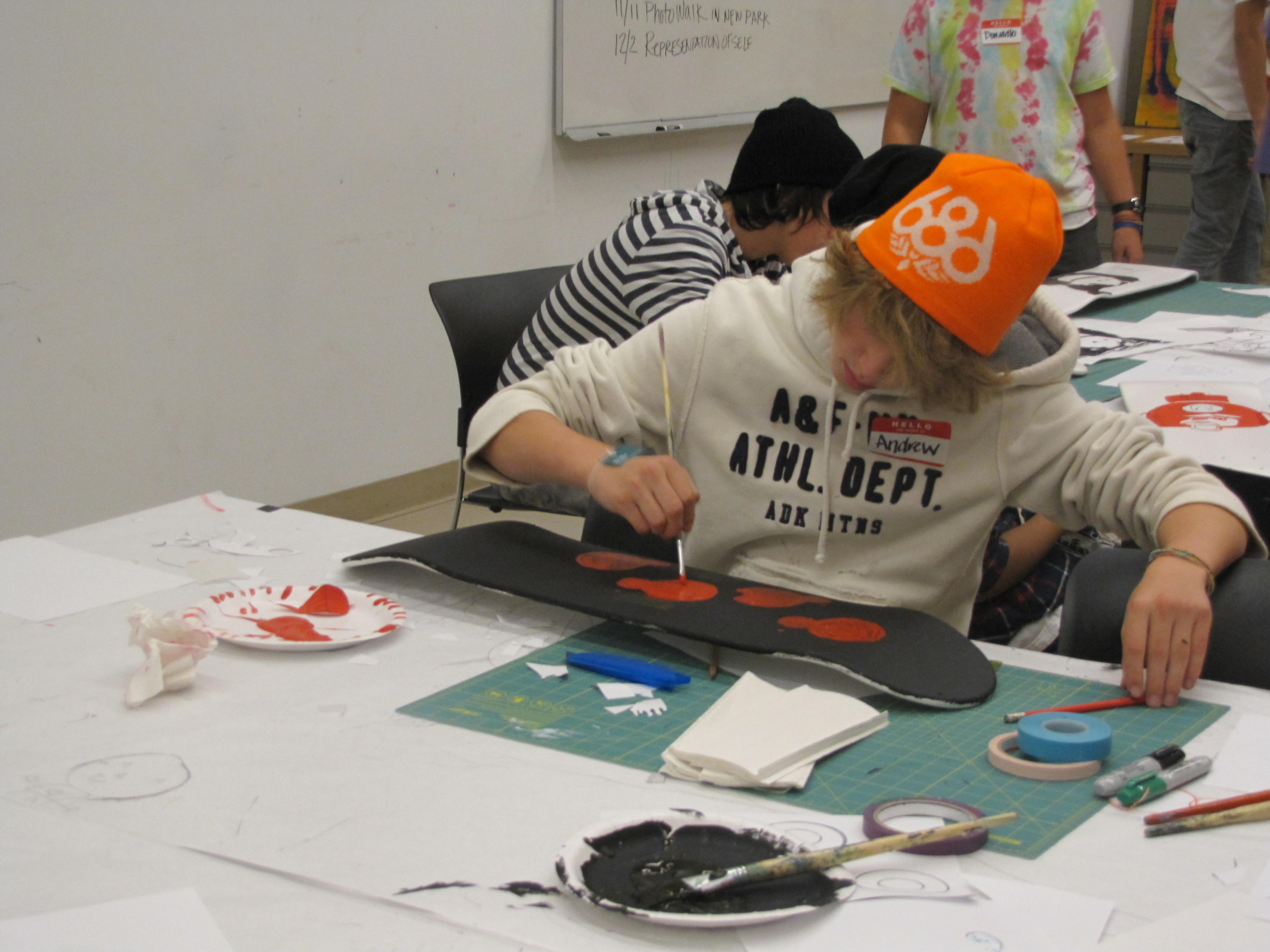
The DMA’s tween/teen program Urban Armor seeks to integrate works of art, rich group discussion, and art making with an over-arching theme of identity so that students can find relevance and practical application to their lives. This exclusive tween/teen program kicked off the new school year with an awesome class, led by art educator and artist Mark Gutting. The workshop emphasized the elements of art and principles of design in our contemporary collection in order to inspire ideas for students to use in their work—their very own skate deck! The students created custom designs, symbols, and logos and were able to screenprint these designs on the back of a skateboard. While working with him, I gained some great insight on who he is as a teacher and a student. Check out my interview with Mr. Gutting below:

What is your background and why did you decide to become a teacher?

Mark Gutting: “Drawing fills my heart with joy.  I think it started with a doodle in childhood and has kept growing since.  Ten years ago, teaching became a logical direction. Teaching art presents a daily opportunity to share that joy.”

What were you like as a teen?

MG: “I’m sure that I was like any other teen–trying to stand out while fitting in. High school is when I first began to develop a style of my own. The funny thing is, I kept it hidden, like it was some big secret.  I didn’t want anyone to steal my style before I fully developed it!”

What about working with our Urban Armor teen group appeals to you?

MG: “The program’s focus on identity.  I’m not sure there is a more apt theme to being a teenager.  Creativity in any form is a wonderful avenue to discovering one’s identity.”

Is there a difference between teaching students in the museum and in the classroom?

MG: “In my experience, students are students; however, the museum presents a situation that can never be duplicated in the classroom–the gallery walk.  To wind through the galleries, sketching a pattern from a textile, a bead from a necklace, a tool mark from a sculpture, and a brush stroke from a painting, is to mainline inspiration.”
What was the goal of the program on Sunday?

MG: “As an educator, teaching the fundamentals of any subject is vital to building a base of knowledge.  Getting students inspired to learn–while having fun–is no easy task.  There are a multitude of art fundamentals found in skateboard deck art: line, shape, form, pattern, balance, positive and negative space, spatial organization, an endless list really.  I wanted to present the Urban Armor group with a unique project–screen printing a skateboard–while incorporating those fundamental concepts.”

Why skate decks?

MG: “I loved skateboarding as a teen.  The movement–the freedom of it–mesmerized me.  Since I was never good at skating, the deck art became my focus.  I spent many hours drawing my last name into some skull-infested graphics.  Back then, the concept of screen printing was future talk–complete science fiction to me.  I simply wanted to present the Urban Armor group with an opportunity I never had–to screen print an actual skateboard deck.”

What was your fondest memory of this class?

MG: “Getting to see the Urban Armor group experience the process of printing actual skateboard decks was a joy.  Hopefully, some of them will want to build their own screen printing rigs in their parents’ garages and crank out original works of art.  Everyone has to start somewhere!”

Why do you like working at the DMA?

MG: “The programs offered to students at the DMA are instilling a deep love for art and creating a new generation of museum patrons.  Who knows?  Maybe even the next Picasso.”

To find out more about Urban Armor and upcoming workshops please visit the website.

Amanda Batson
Program Coordinator for the Center for Creative Connections
The Man with the Top Hat

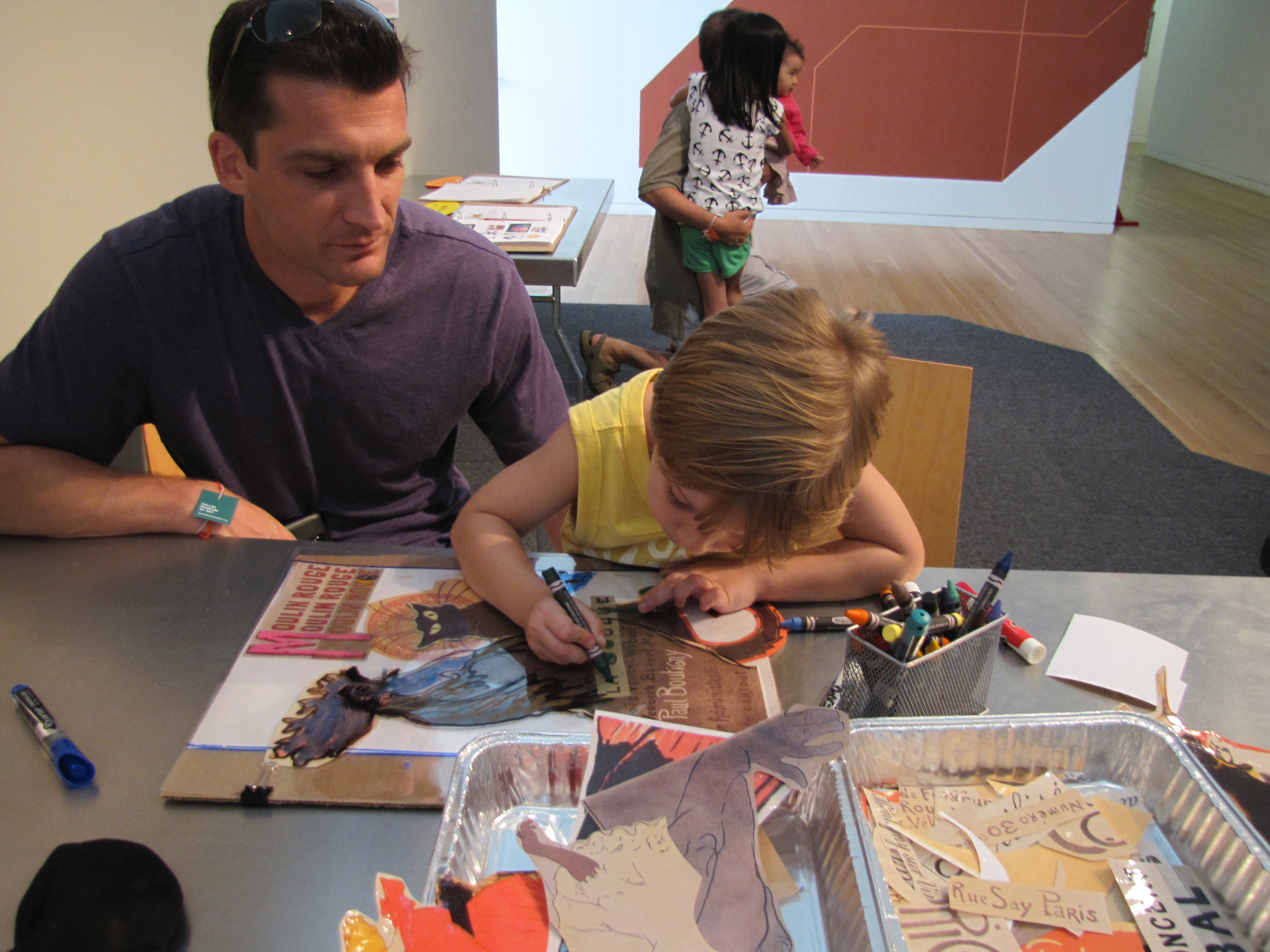
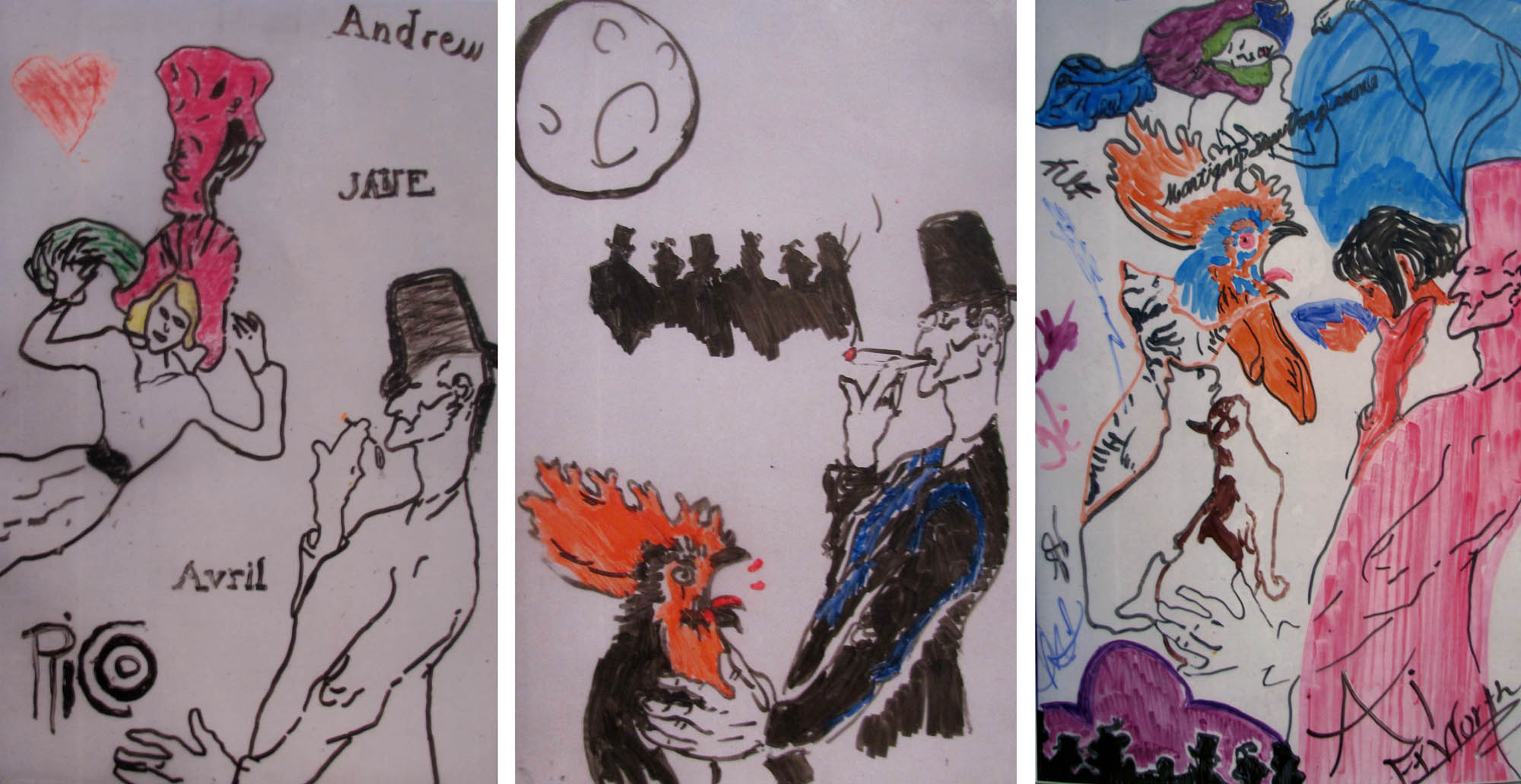
In preparation for the upcoming exhibition Posters of Paris: Toulouse-Lautrec and His Contemporaries, the Center for Creative Connections staff has been prototyping a new interactive art-making activity.  Inspired by poster-making at the Denver Art Museum, we are including a hands-on poster-making space in the exhibition.  Our current prototype activity has a limited array of characters which our visitors can choose and combine to create their own poster; but as you can see, creativity still flourishes.  Though each of these three posters below uses the man with the top hat in a similar placement in the composition, the context in which he is placed is quite different.
On the left is an 8-year-old boy’s romantic combination of the man with the top hat (with a slender cigarette) and Jane Avril.  In the middle, a young man has replaced that slender cigarette with a hefty cigar.  All of the romance is gone with the shadowy figures in the background looking on as the man with the top hat strangles a poor rooster.  Pictured on the right is a collaborative piece created by a group of women from the Art Institute of Fort Worth.  Each woman took a turn adding to the composition in what ended up as a playful hodge-podge.

Swing by the Dallas Museum of Art from October 14 – January 20 to see Posters of Paris and create your own poster!  What will you do with the man with the top hat?

Jessica Nelson
C3 Gallery Coordinator

Off the Wall: Joyfull

In our Center for Creative Connections we ask visitors to reflect on their responses to the spaces they encounter in art, as well as those they encounter in their everyday life.

For one work of art specifically, Lee Bontecou’s Untitled, we ask visitors to respond to one of three prompts:

  • To me, sharing space with this work of art feels like…
  • The words or pictures that come to mind when I look at this work of art are…
  • If this work of art was part of something larger, describe what it would be.

Untitled (35), Lee Bontecou, 1961

We have gotten a lot of great responses from visitors and want to share a few with you. Once a month we will have an “Off the Wall” post featuring three responses left by visitors.

Next time you are in the Center for Creative Connections add your contribution to the wall and maybe you will see it on Uncrated!
Off the Wall: Audrey Hepburn

In our Center for Creative Connections we ask visitors to reflect on their responses to the spaces they encounter in art, as well as those they encounter in their everyday life.

For one work of art specifically, Lee Bontecou’s Untitled, we ask visitors to respond to one of three prompts:

    • To me, sharing space with this work of art feels like…
    • The words or pictures that come to mind when I look at this work of art are…
    • If this work of art was part of something larger, describe what it would be.

Untitled (35), Lee Bontecou, 1961

We have gotten a lot of great responses from visitors and want to share a few with you. Once a month we will have an “Off the Wall” post featuring three responses left by visitors.

Next time you are in the Center for Creative Connections add your contribution to the wall and maybe you will see it on Uncrated!

Archives

Categories