Archive Page 55

Friday Photos: Look Who’s Back!

DSC04888

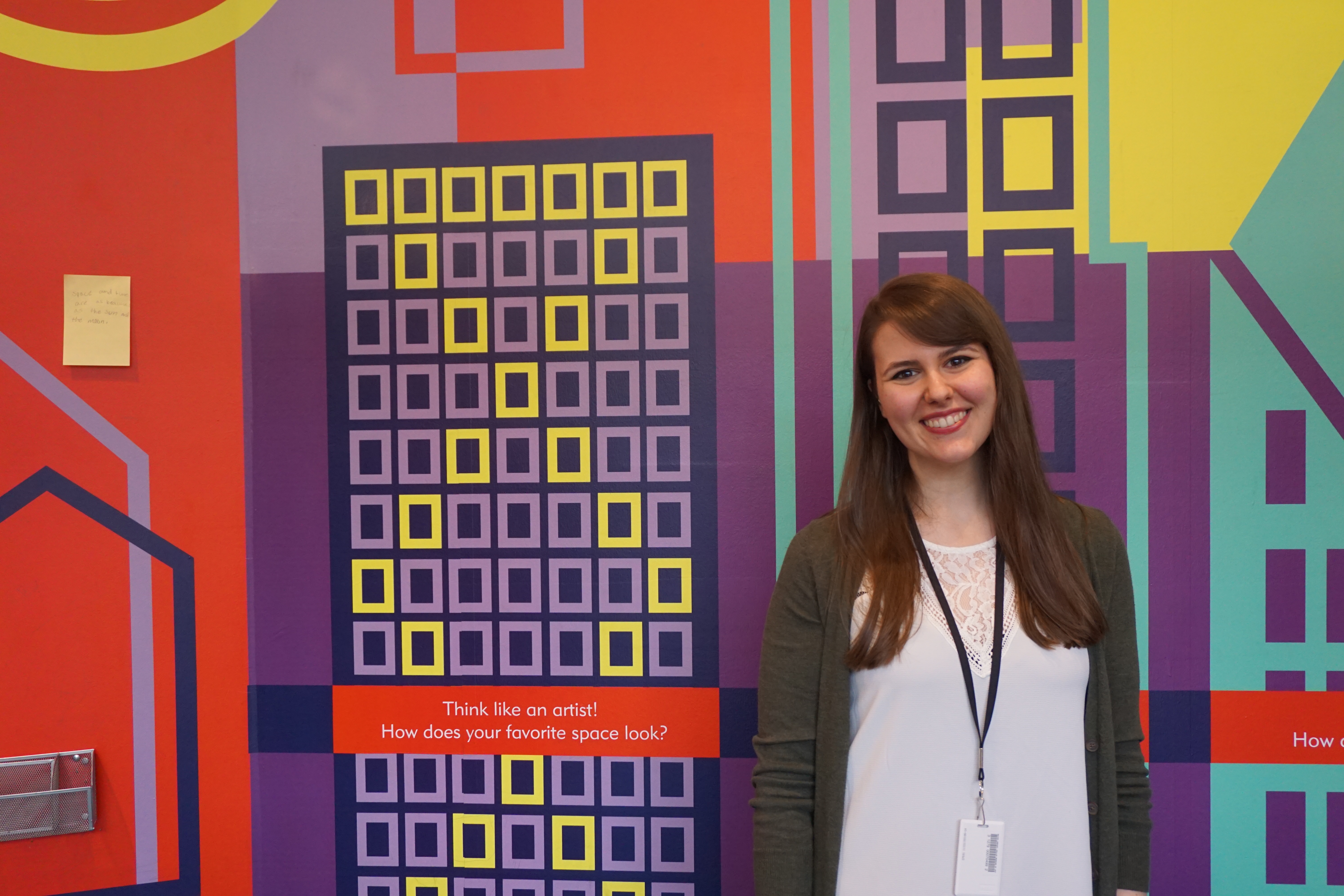
If you’re a regular reader of our blog, you probably recognize this face! Jennifer Sheppard was the McDermott Intern for Family and Access Programs for 2014-2015 (applications for this fall’s McDermott Internship close next week! #shamelessplug), and quickly won our hearts over with her quick wit, excellent teaching, and thoughtful work. It’s always sad for us to say goodbye to our interns as they go on to new adventures, but this month we managed to get one back!

Jennifer has joined the Education team as our new Teaching Specialist and has jumped right back into the thick of things. She’s been out driving the Go van Gogh van, teaching lessons to preschoolers in the gallery, facilitating conversations with visitors attending our access programs, and adding a cheerful smile to our office.

What is she most excited about in her new position? “How do you say EVERYTHING?” (that’s a direct quote, folks!)

Welcome back, Jennifer!

Leah Hanson
Manager of Early Learning Programs

Ten Times Dwight Schrute Was Your Spirit Animal

Sage Life Lessons and Wisdom from the Duke of Dunder Mifflin Himself

In anticipation of Rainn Wilson’s visit to the DMA on March 19 as part of our 25th anniversary season of Arts & Letters Live, we’ve pulled together a list of ten times our favorite obnoxious beet farmer just “got us,” with a little visual help from art in our collection. For you Jim and Pam types out there, I apologize, but let’s be honest, our pre-coffee selves will always belong to this mustard shirt-wearing maven.

Calculating Speed…
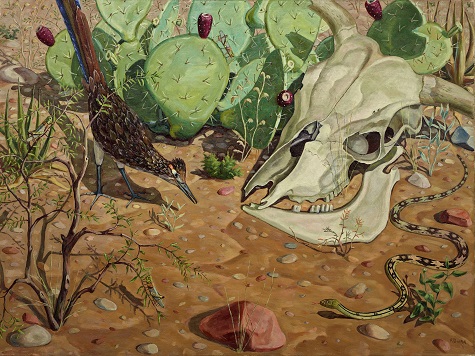
Fred Darge, Survival of the Fittest, c. 1941, oil on canvas, Dallas Museum of Art, anonymous gift 1944.13

Fred Darge, Survival of the Fittest, c. 1941, oil on canvas, Dallas Museum of Art, anonymous gift, 1944.13

“I am fast. To give you a reference point, I am somewhere between a snake and a mongoose . . . and a panther.”  

Brain Power…
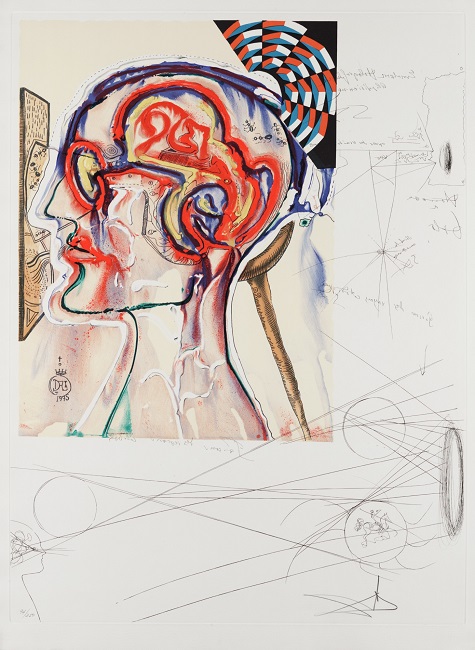
Salvador Dalí, Spectacles with Holograms and Computers for Seeing Imagined Objects, 1976, Etching, Drypoint, Lithograph, Silkscreen, and Collage, Dallas Museum of Art, gift of Lois and Howard B. Wolf © 2008 Salvador Dalí, Gala-Salvador Dalí Foundation/Artists Rights Society (ARS), New York

Salvador Dalí, Spectacles with Holograms and Computers for Seeing Imagined Objects, 1976, etching, drypoint, lithograph, silkscreen, and collage, Dallas Museum of Art, gift of Lois and Howard B. Wolf, 1998.6.1, © 2008 Salvador Dalí, Gala-Salvador Dalí Foundation/Artists Rights Society (ARS), New York

“Through concentration, I can raise and lower my cholesterol at will.”  

Healthcare…
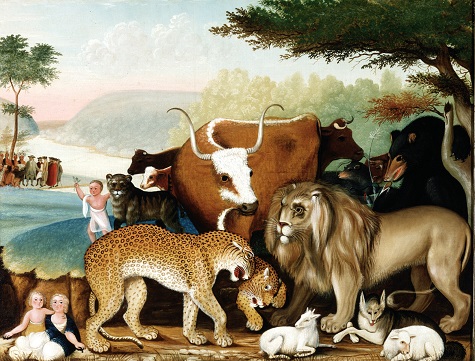
Edward Hicks , The Peaceable Kingdom, c. 1846-1847, oil on canvas, Dallas Museum of Art, The Art Museum League Fund 1973.5

Edward Hicks, The Peaceable Kingdom, c. 1846-47, oil on canvas, Dallas Museum of Art, The Art Museum League Fund, 1973.5

“In the wild, there is no healthcare. Healthcare is “Oh, I broke my leg!” A lion comes and eats you, you’re dead. Well, I’m not dead, I’m the lion, you’re dead!”

Flu Season…
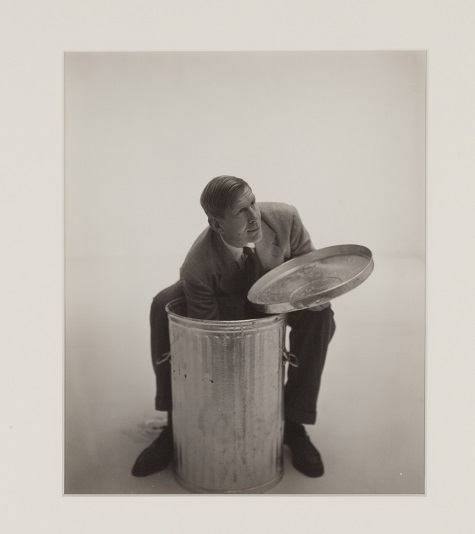
George Platt Lynes, W. H. Auden Reaching into Garbage Can, 1947, gelatin silver print, Dallas Museum of Art, gift of William B. Jordan and Robert Brownlee 2000.375

George Platt Lynes, W. H. Auden Reaching into Garbage Can, 1947, gelatin silver print, Dallas Museum of Art, gift of William B. Jordan and Robert Brownlee, 2000.375

“The principle is sound. To avoid illness, expose yourself to germs, enabling your immune system to develop antibodies. I don’t know why everyone doesn’t do this. . . . Maybe they have something against living forever.”

Water Cooler Gossip…
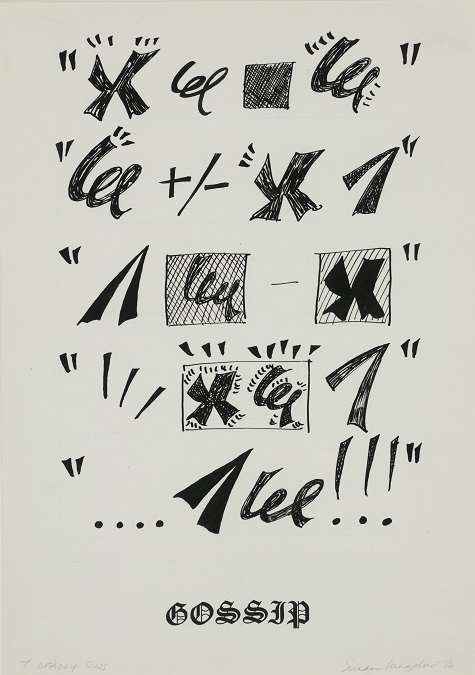
Susan Magilow, Seven Deadly Sins: Gossip, 1986, ink on paper, Dallas Museum of Art, anonymous gift 1989.126.6

Susan Magilow, Seven Deadly Sins: Gossip, 1986, ink on paper, Dallas Museum of Art, anonymous gift, 1989.126.6

“It’s a real shame because studies have shown that more information gets passed through water cooler gossip than through official memos. Which puts me at a disadvantage because I bring my own water to work.”

Stress Management…
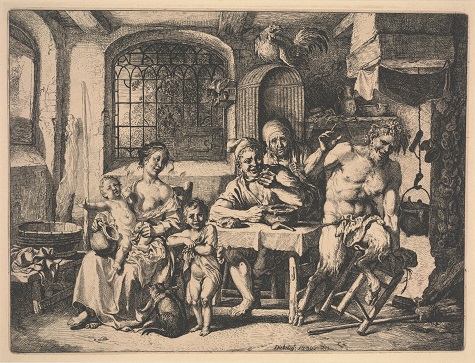
Christian Wilhelm Ernst Dietrich, The Satyr in the House of the Peasants, 1739, etching, Dallas Museum of Art, gift of Carnegie Inc. 1940.48

Christian Wilhelm Ernst Dietrich, The Satyr in the House of the Peasants, 1739, etching, Dallas Museum of Art, gift of Carnegie Inc., 1940.48

“Nothing stresses me out. Except having to seek the approval of my inferiors.” 

Dealing with Crowds…
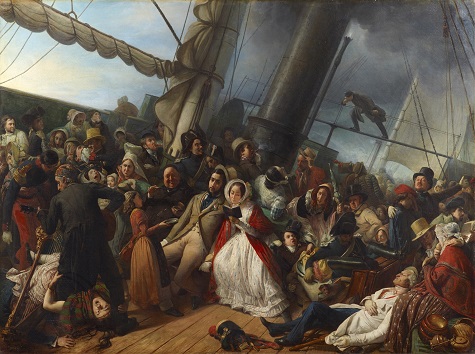
François–Auguste Biard, Seasickness on an English Corvette, 1857, oil on canvas, Dallas Museum of Art, gift of J.E.R. Chilton 2011.27

François-Auguste Biard, Seasickness on an English Corvette, 1857, oil on canvas, Dallas Museum of Art, gift of J. E. R. Chilton, 2011.27

“Why are all these people here? There are too many people on this earth. We need a new plague.”

 The “R” Sound…
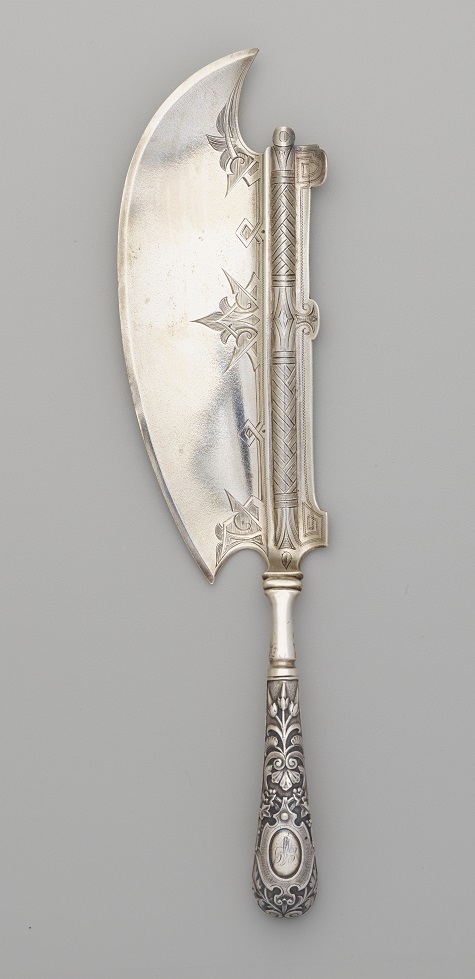
Fish knife, c. 1870, silver, Dallas Museum of Art, The V. Stephen Vaughan Collection, gift of the 1991 Silver Supper 1992.7.10.1

Fish knife, c. 1870, silver, Dallas Museum of Art, The V. Stephen Vaughan Collection, gift of the 1991 Silver Supper, 1992.7.10.1

“No, I disagree. “R” is one of the most menacing of sounds. That’s why they call it murder not ‘muckduck.’”  

Utopia…
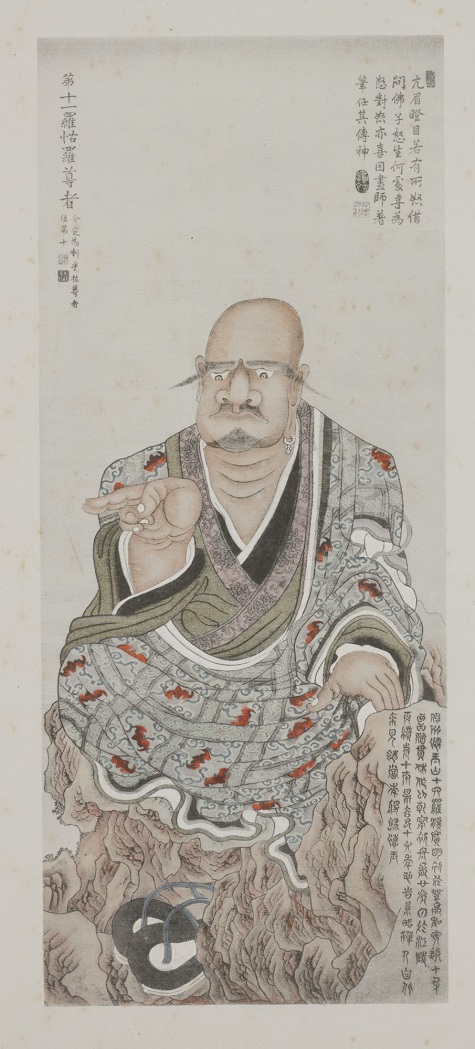
From Paintings in Old Imperial Palace, n.d., hand-colored etching, Dallas Museum of Art, gift of Mrs. B. Hopkins 1964.44.9

From Paintings in Old Imperial Palace, n.d., hand-colored etching, Dallas Museum of Art, gift of Mrs. B. Hopkins, 1964.44.9

“In an ideal world, I would have all ten fingers on my left hand so my right hand could just be a fist for punching.”  

Paying Attention…
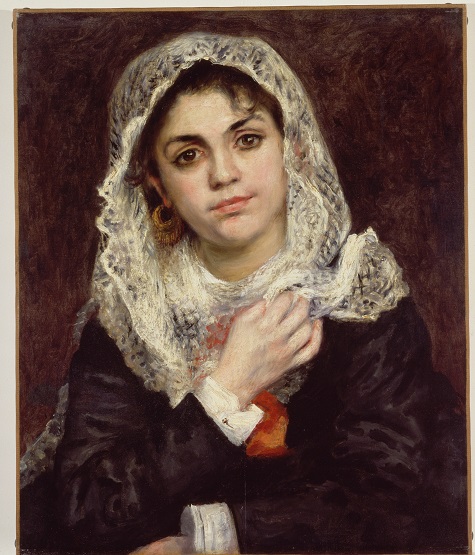
Pierre-Auguste Renoir, Lise in a White Shawl, c. 1872, oil on canvas, Dallas Museum of Art, The Wendy and Emery Reves Collection 1985.R.58

Pierre-Auguste Renoir, Lise in a White Shawl, c. 1872, oil on canvas, Dallas Museum of Art, The Wendy and Emery Reves Collection, 1985.R.58

“You couldn’t handle my undivided attention.”  

Julie Henley is the Communications and Marketing Coordinator at the DMA.


Friday Photos: Visitor Exvotos

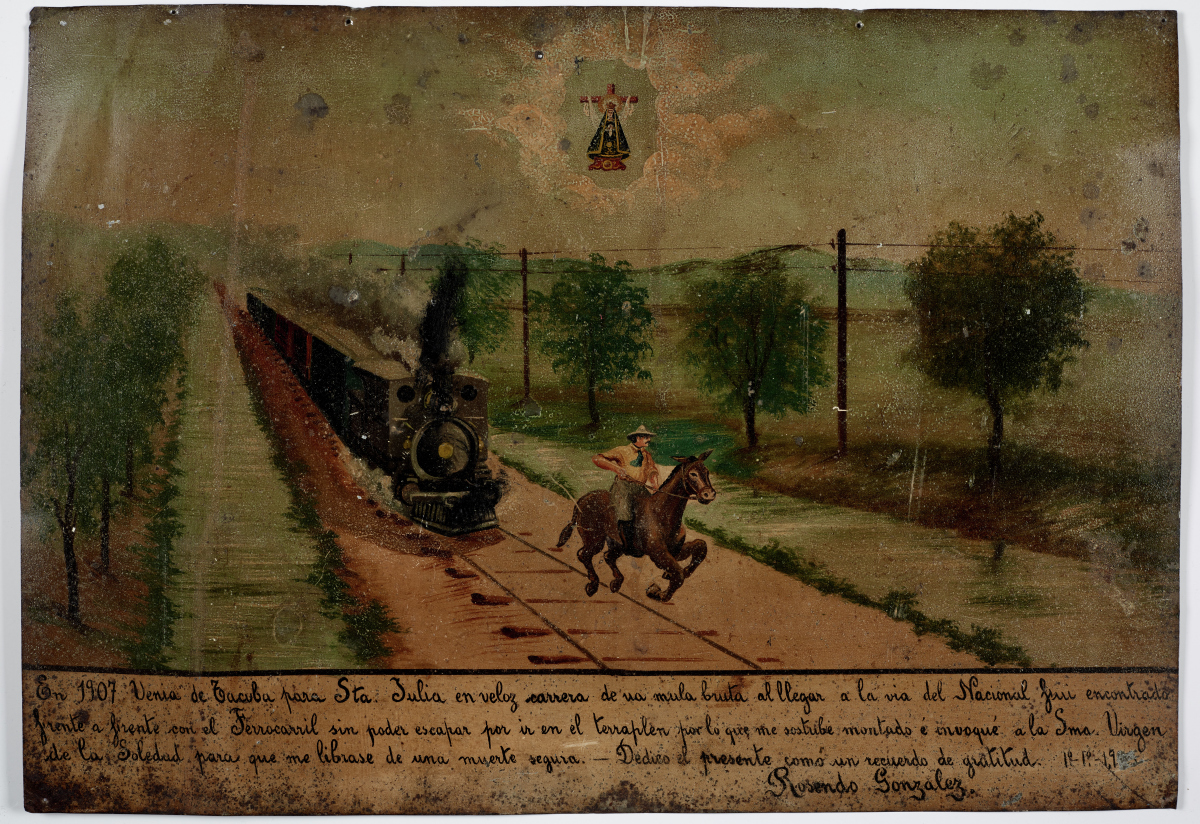
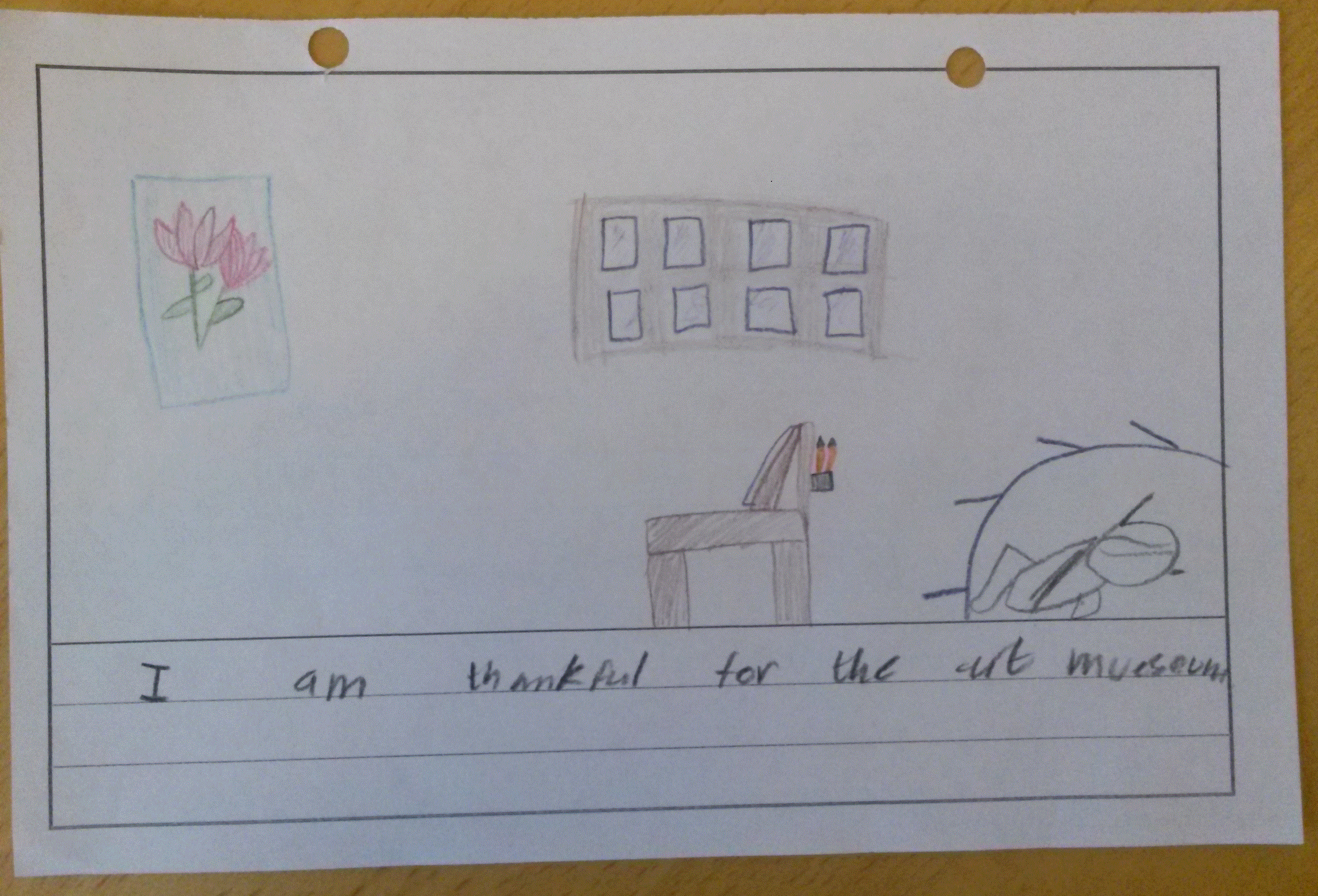
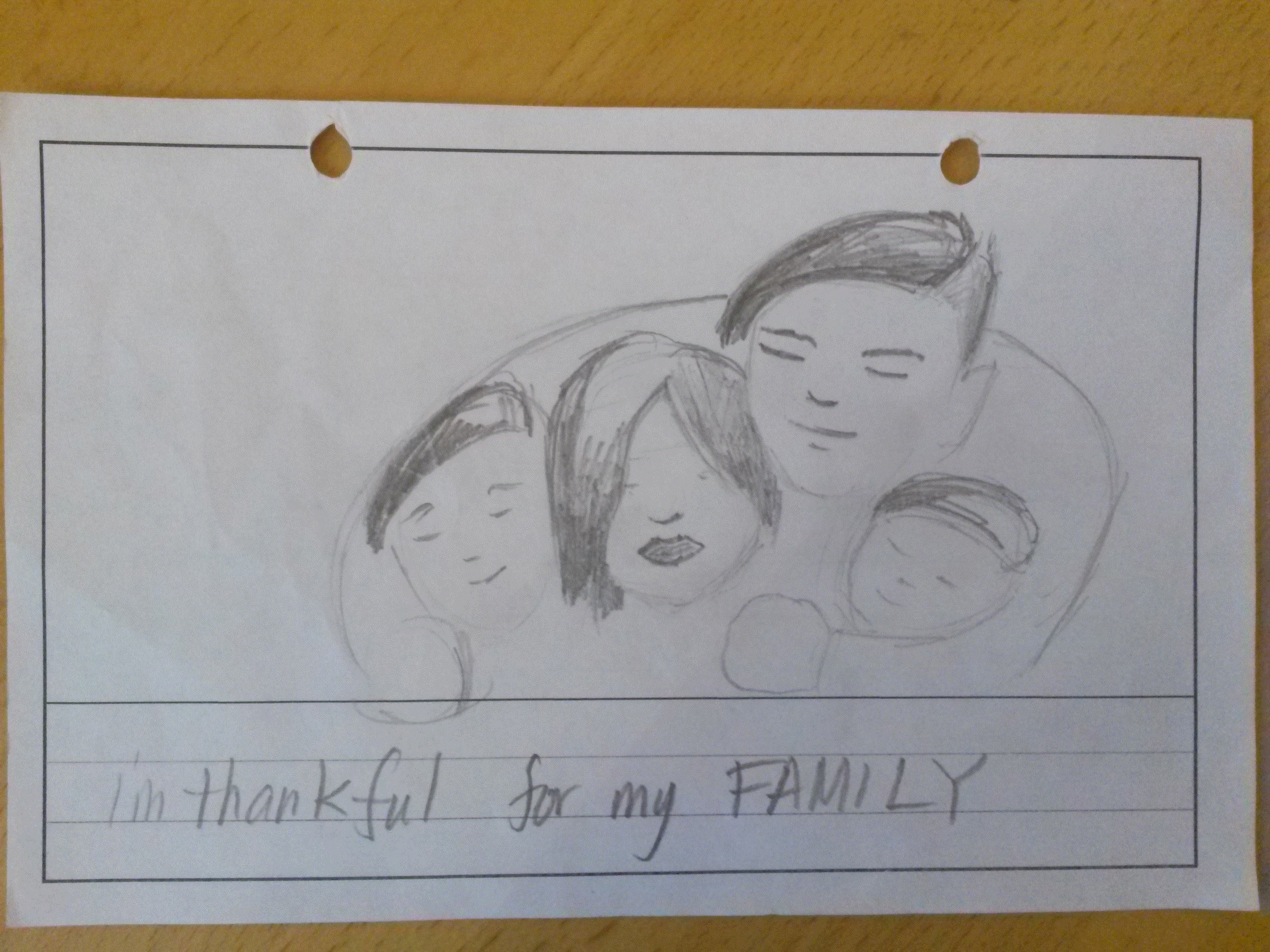
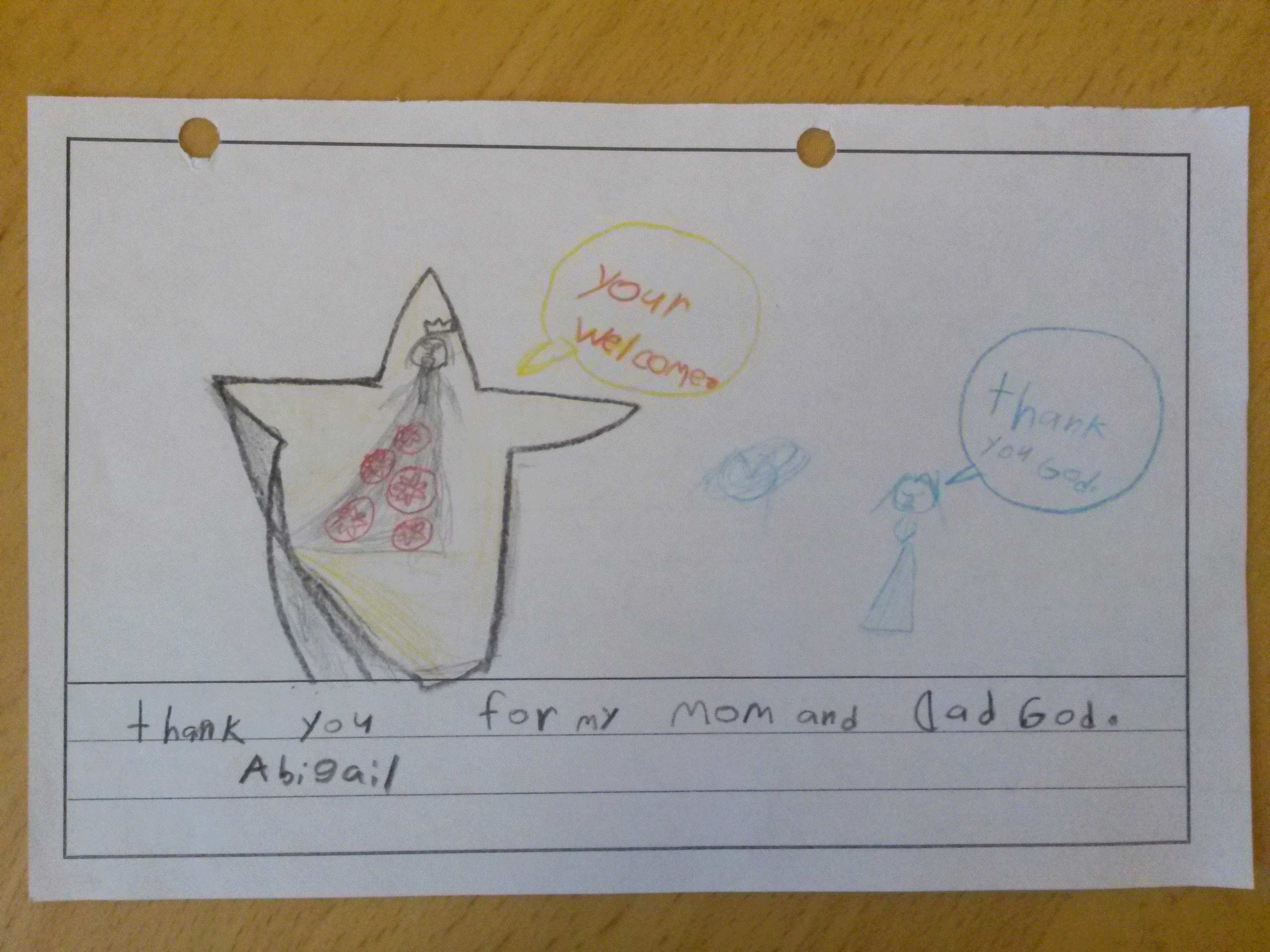
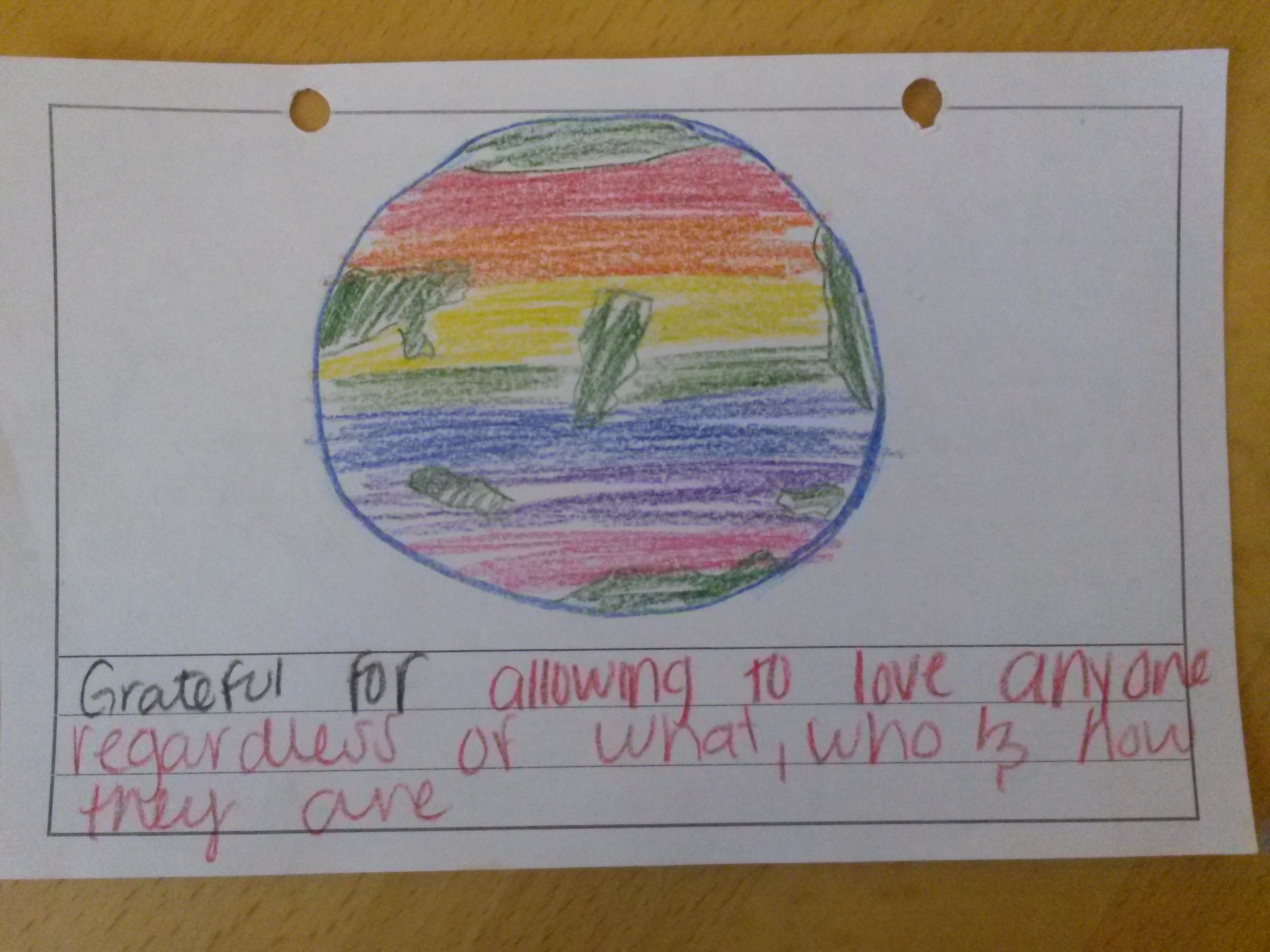
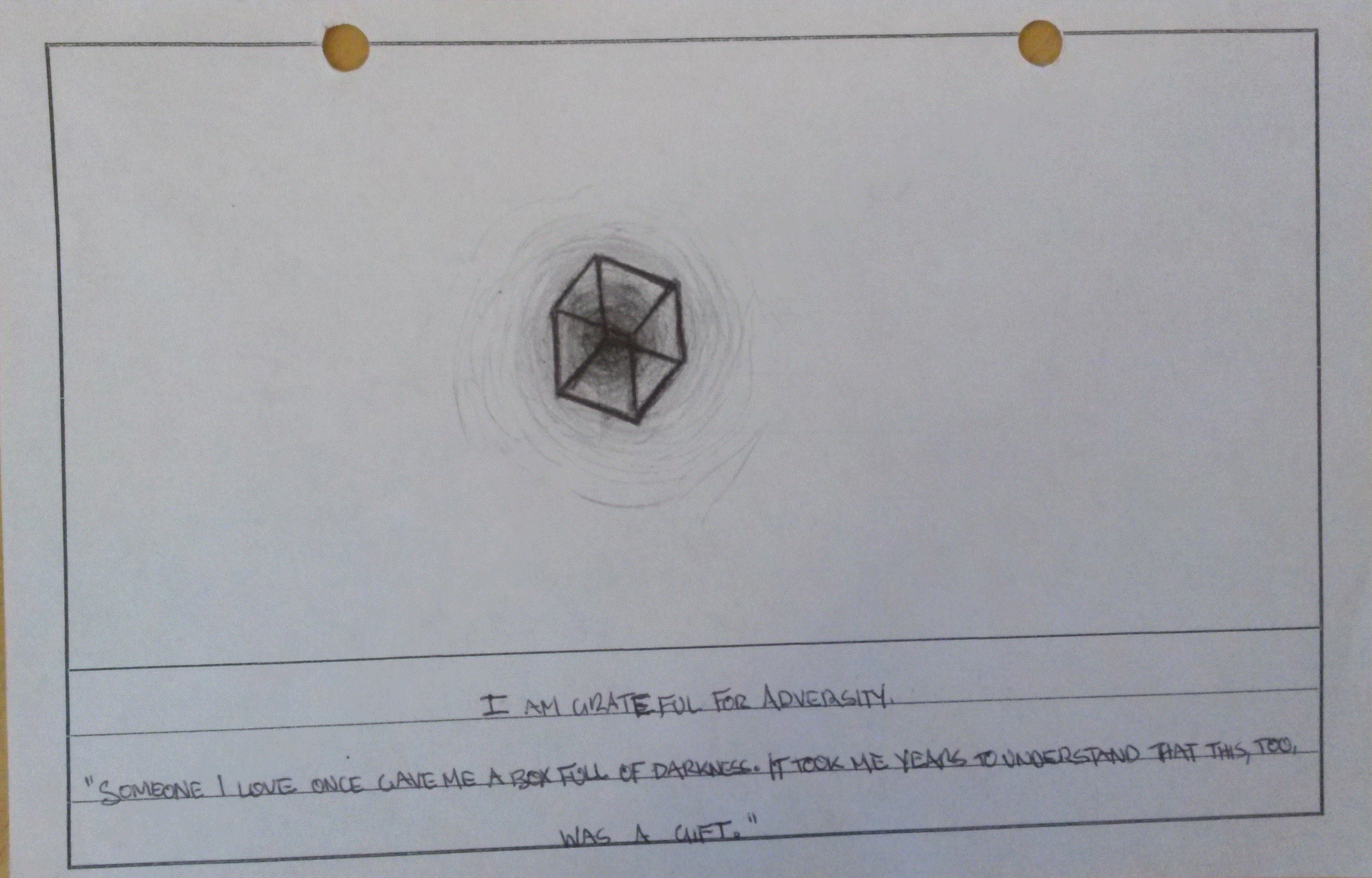
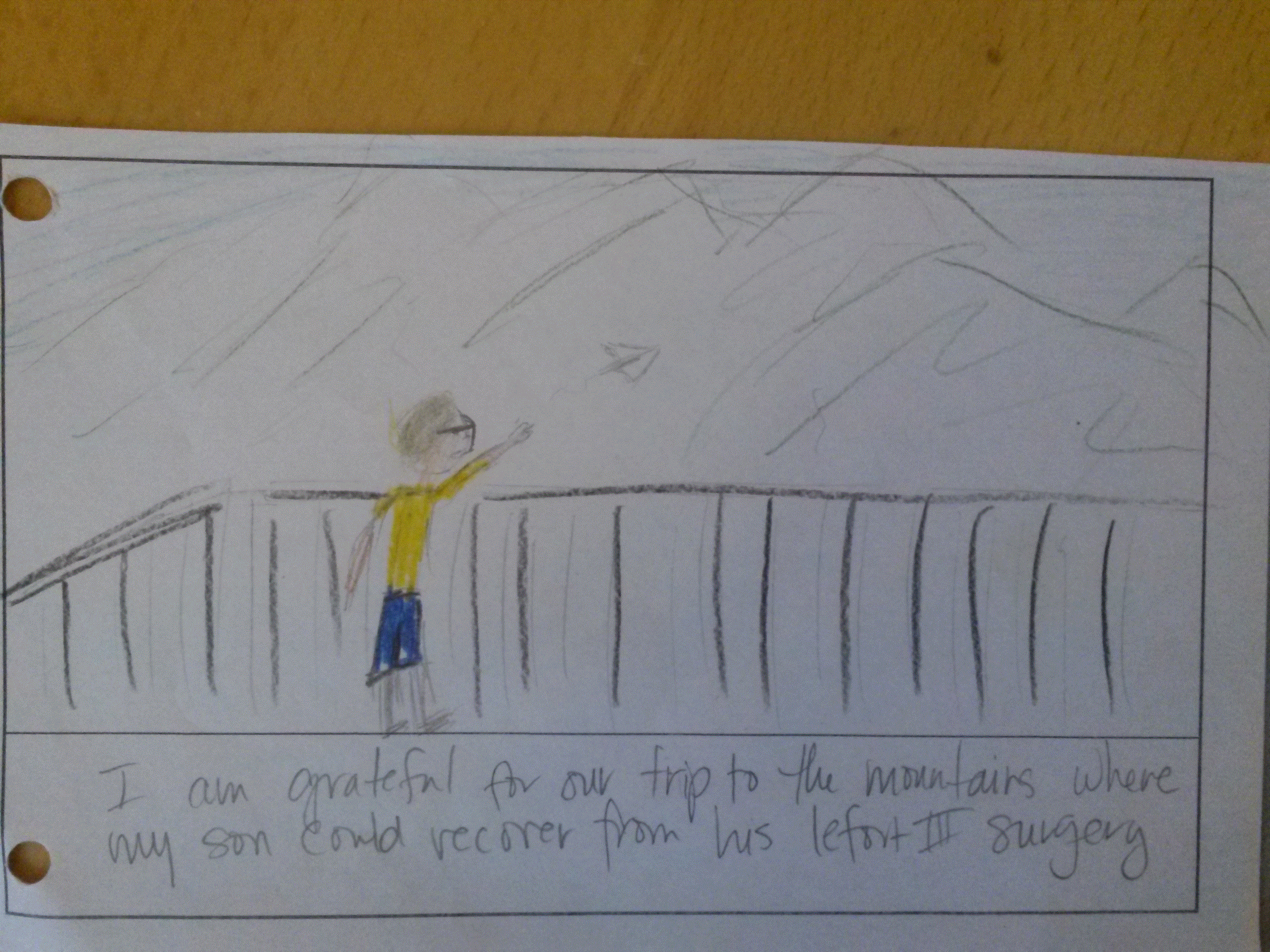
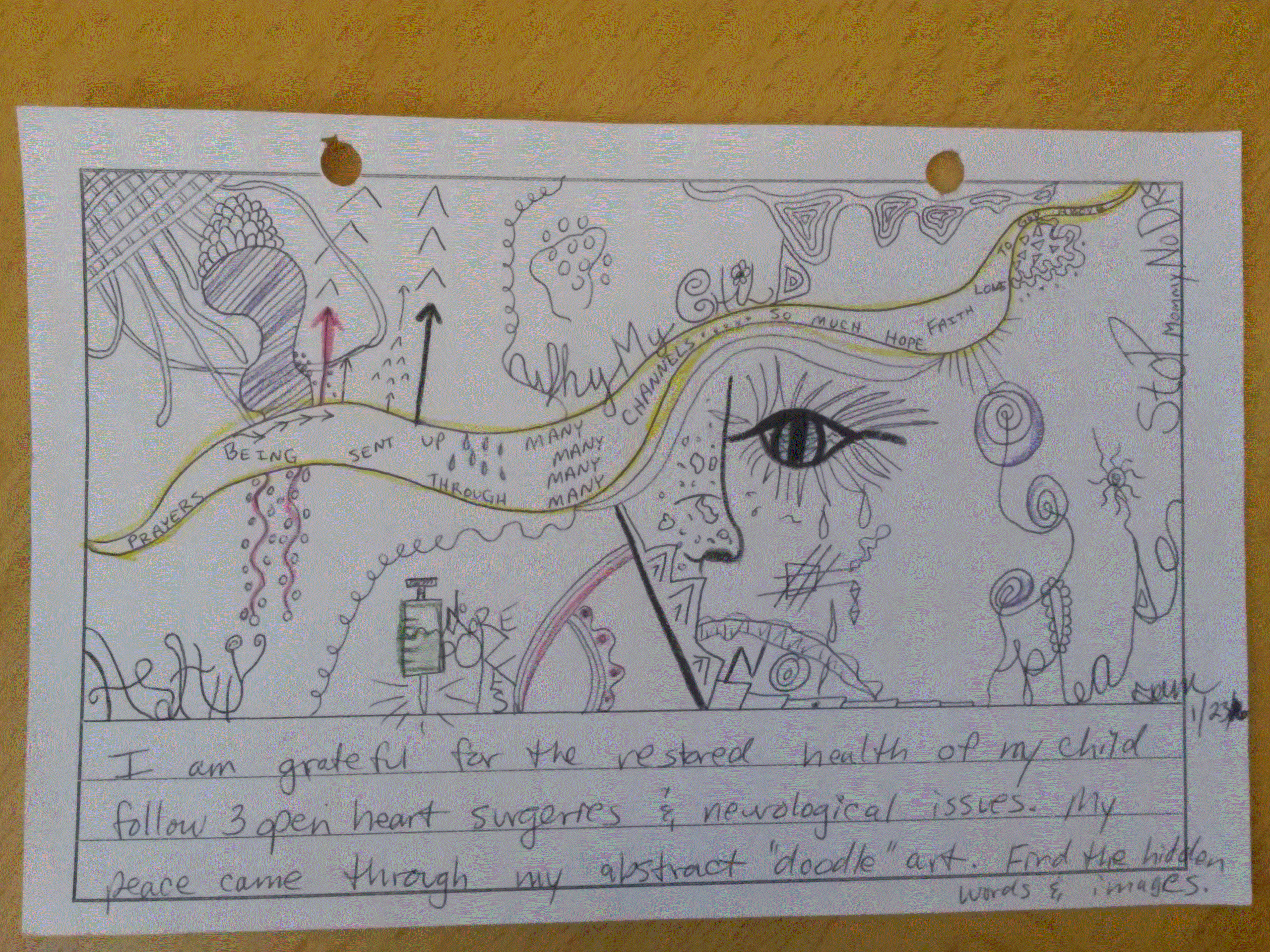
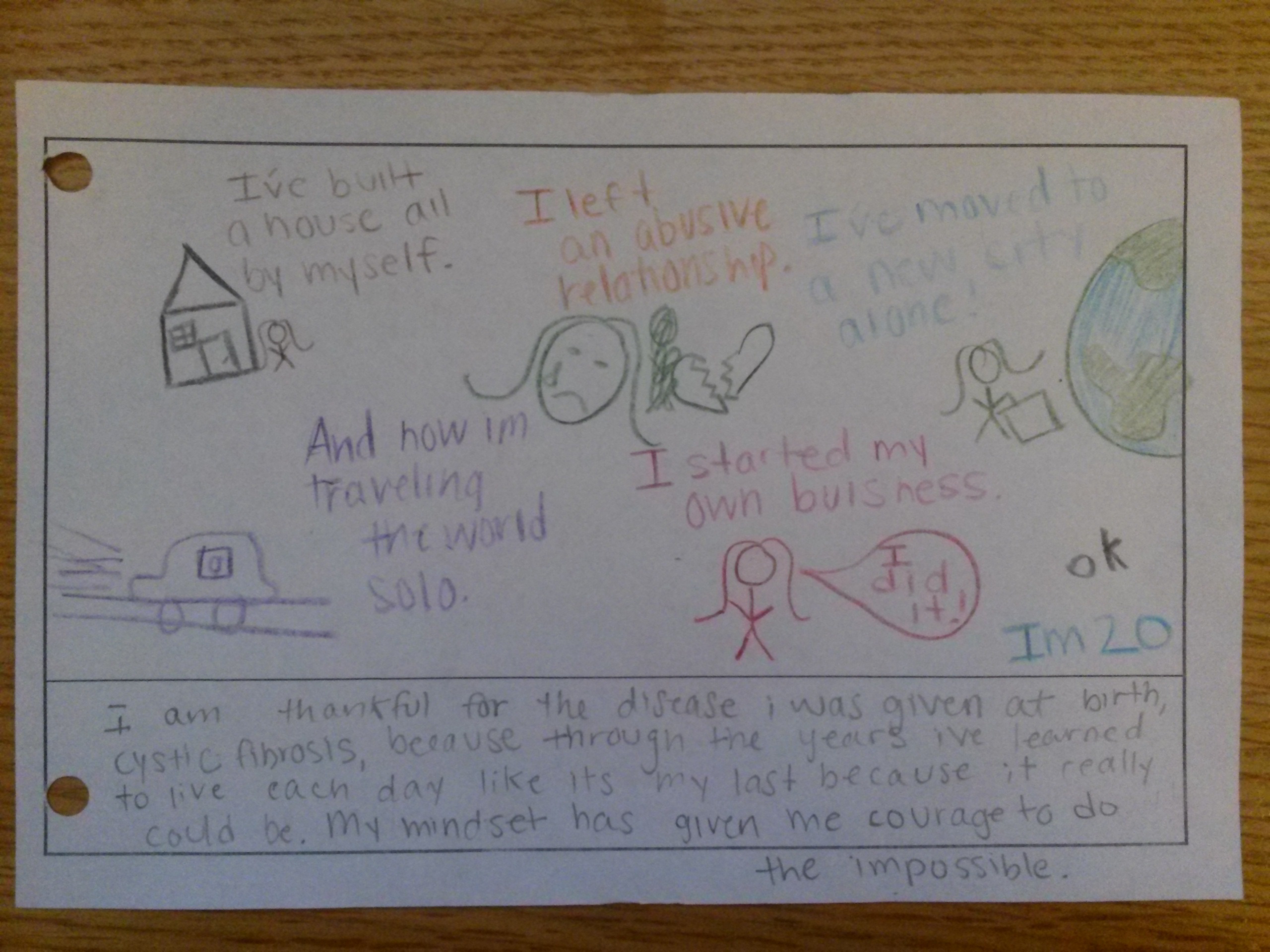
Made with inexpensive materials like tin or sheet metal, exvotos are devotional paintings offered in gratitude by everyday people. Individuals who experienced everyday miracles–being cured of an illness or saved from an accident–expressed their gratitude by creating an exvoto composed of both a visual and written description of their experience.

Retablo Dedicated by Rosendo Gonzalez, January 1, 1907, Dallas Museum of Art, gift of Mr. and Mrs. Stanley Marcus Foundation

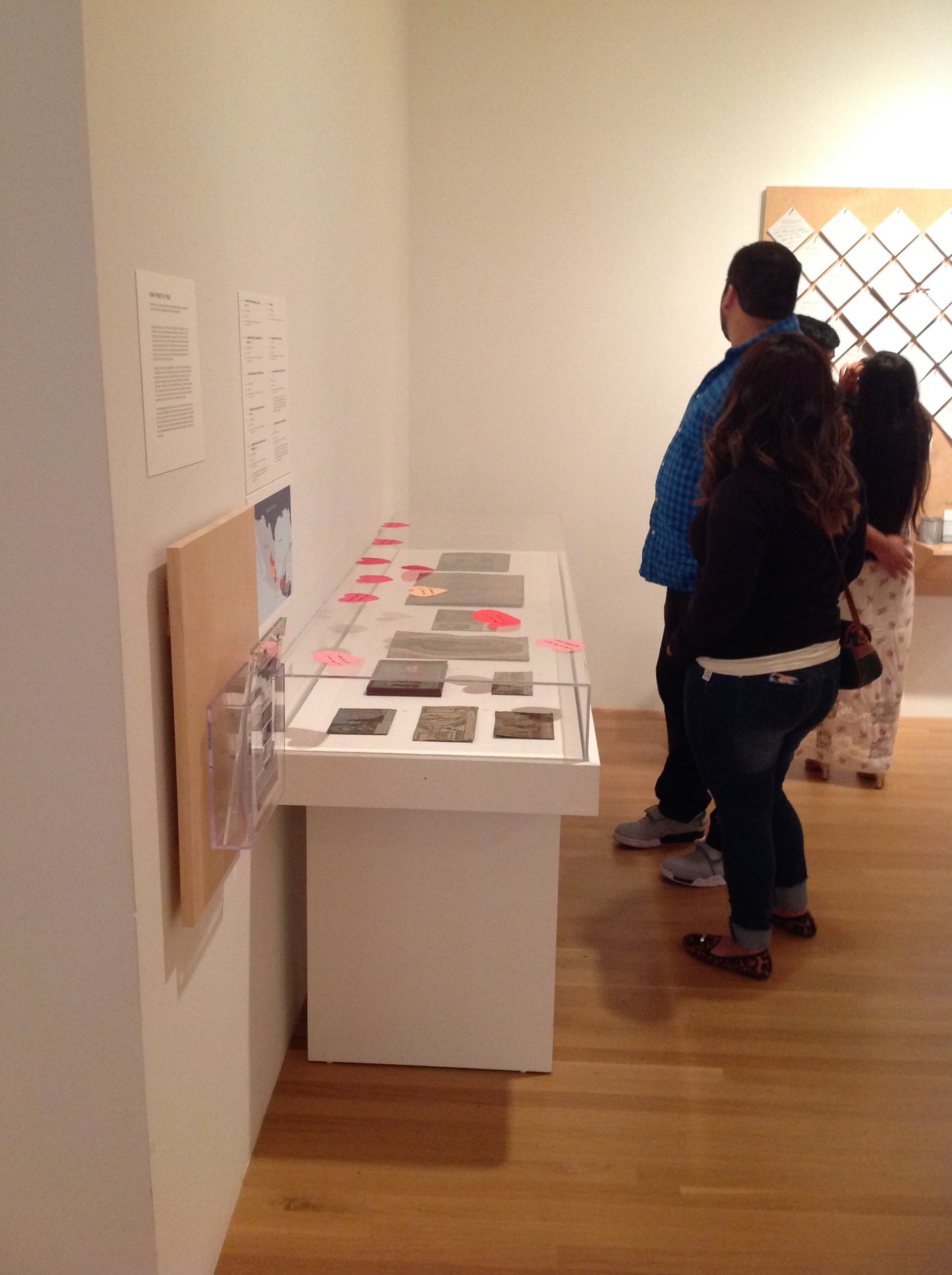
After the Center for Creative Connections installed eight exvotos from Mexico as part of Maria Teresa Pedroche’s Staff Point of View, we invited visitors to reflect on their personal experiences and prayers by creating their own exvoto in the Interactive Gallery. Visitors can take their creation home with them or add it to C3’s collection of visitor exvotos by placing it in a binder for others to read.

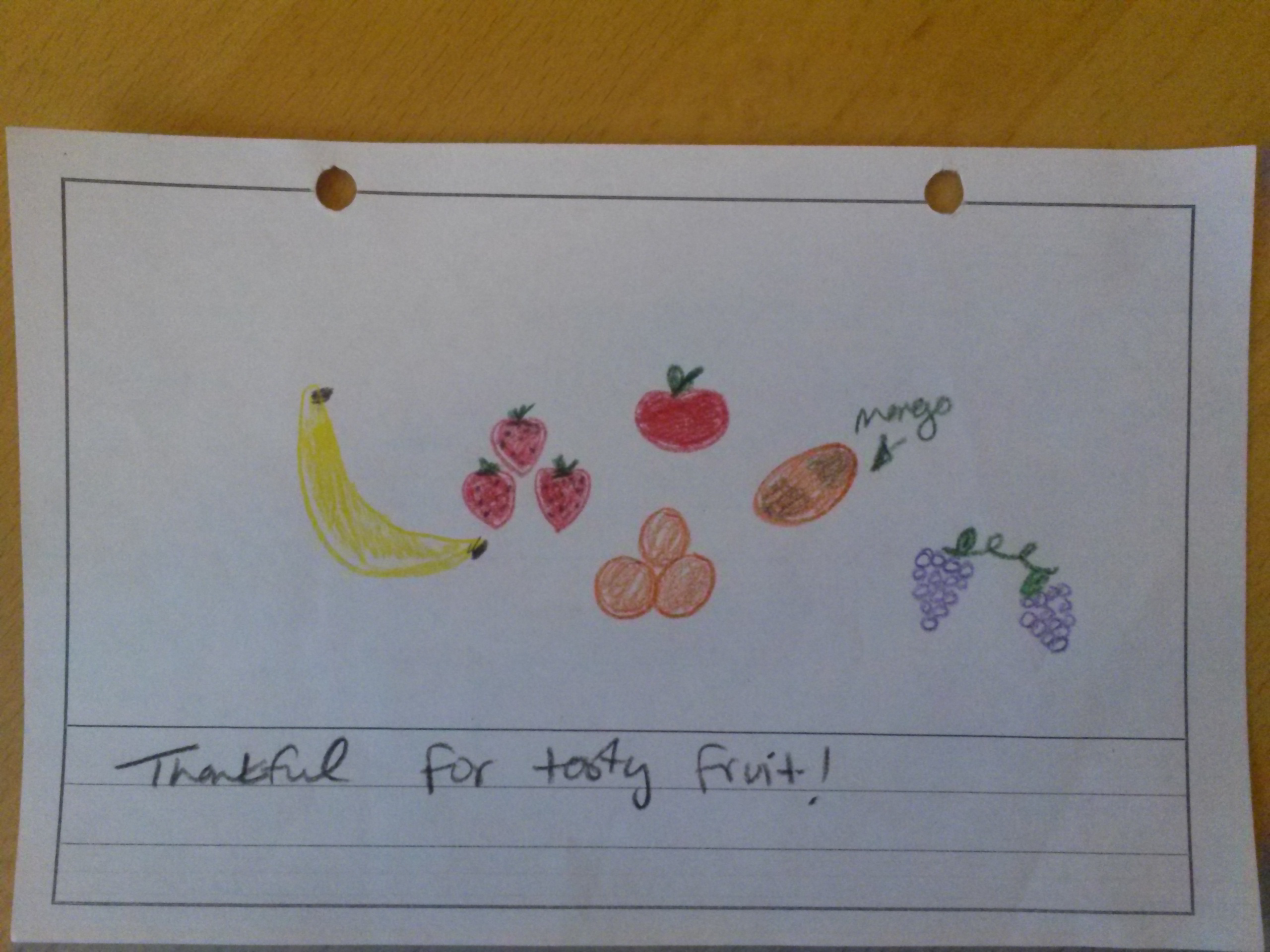
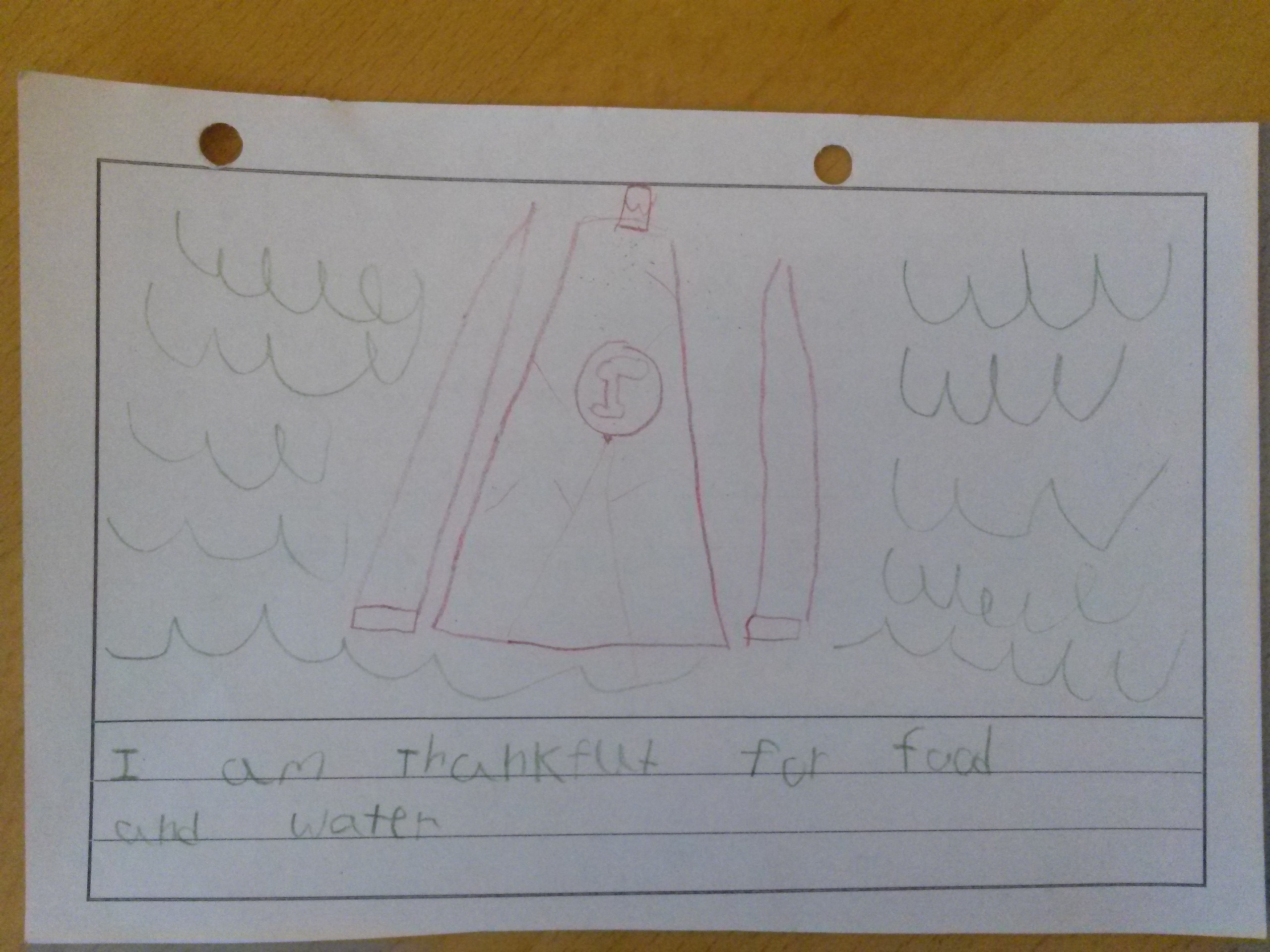
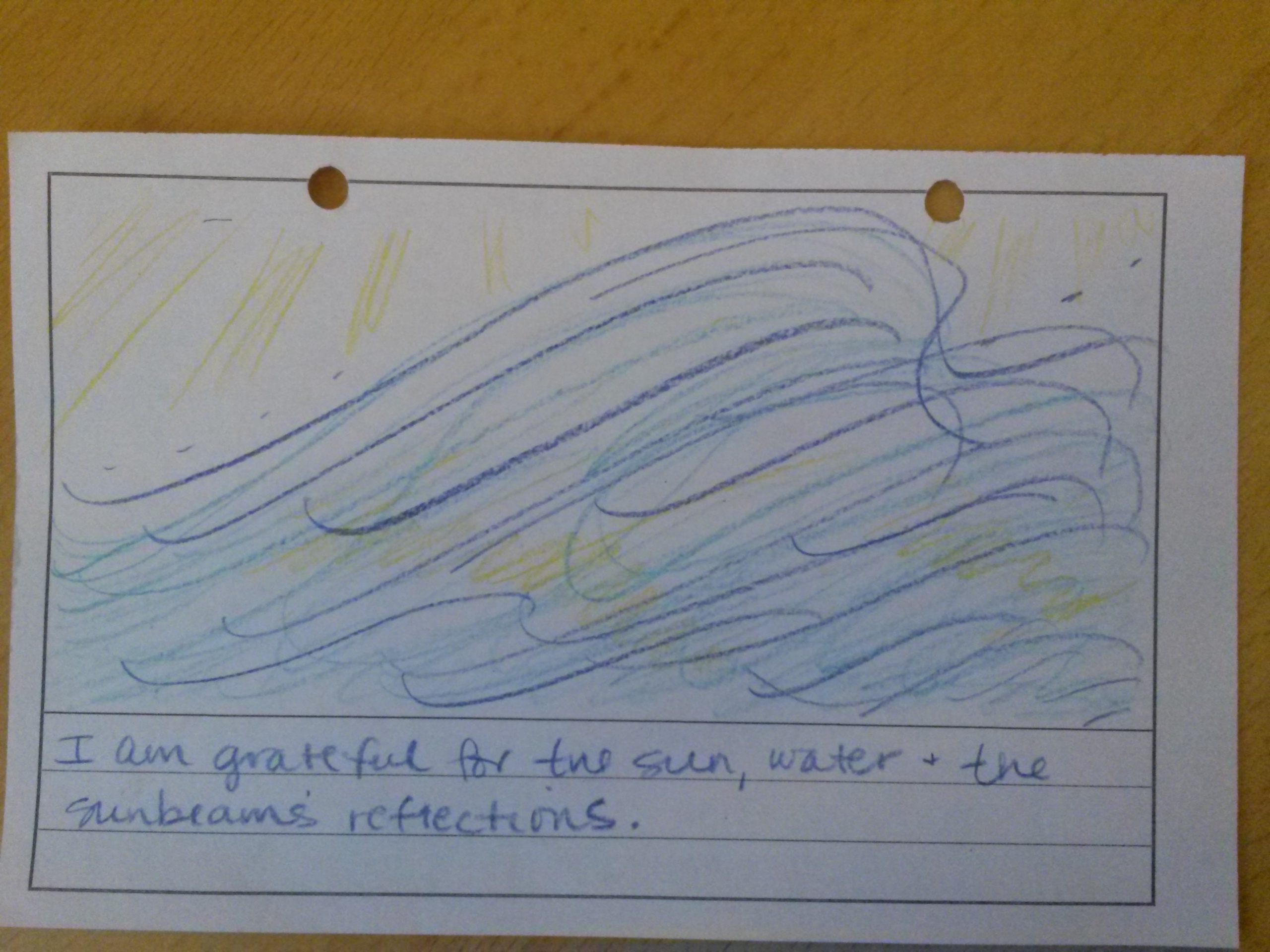
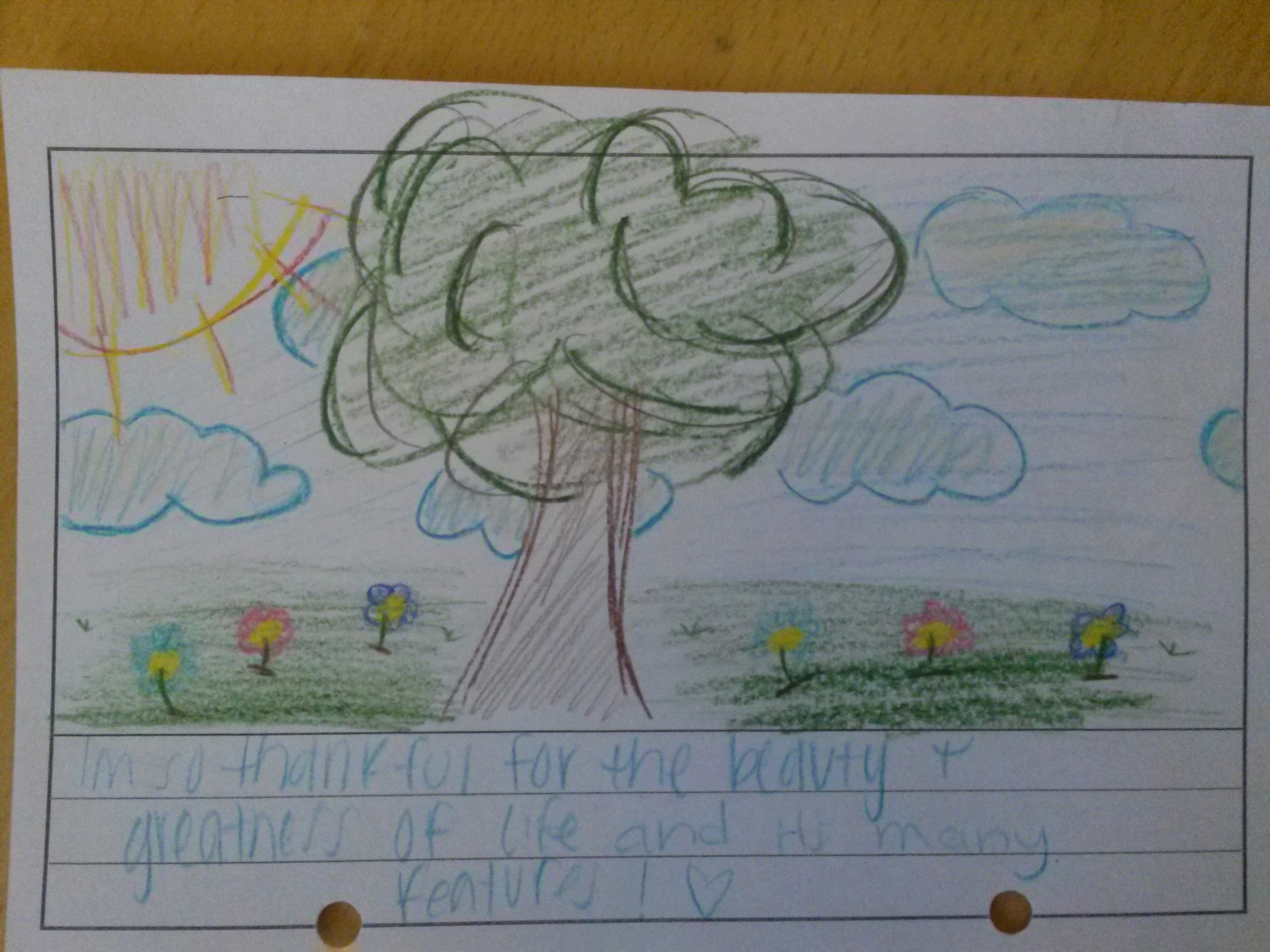
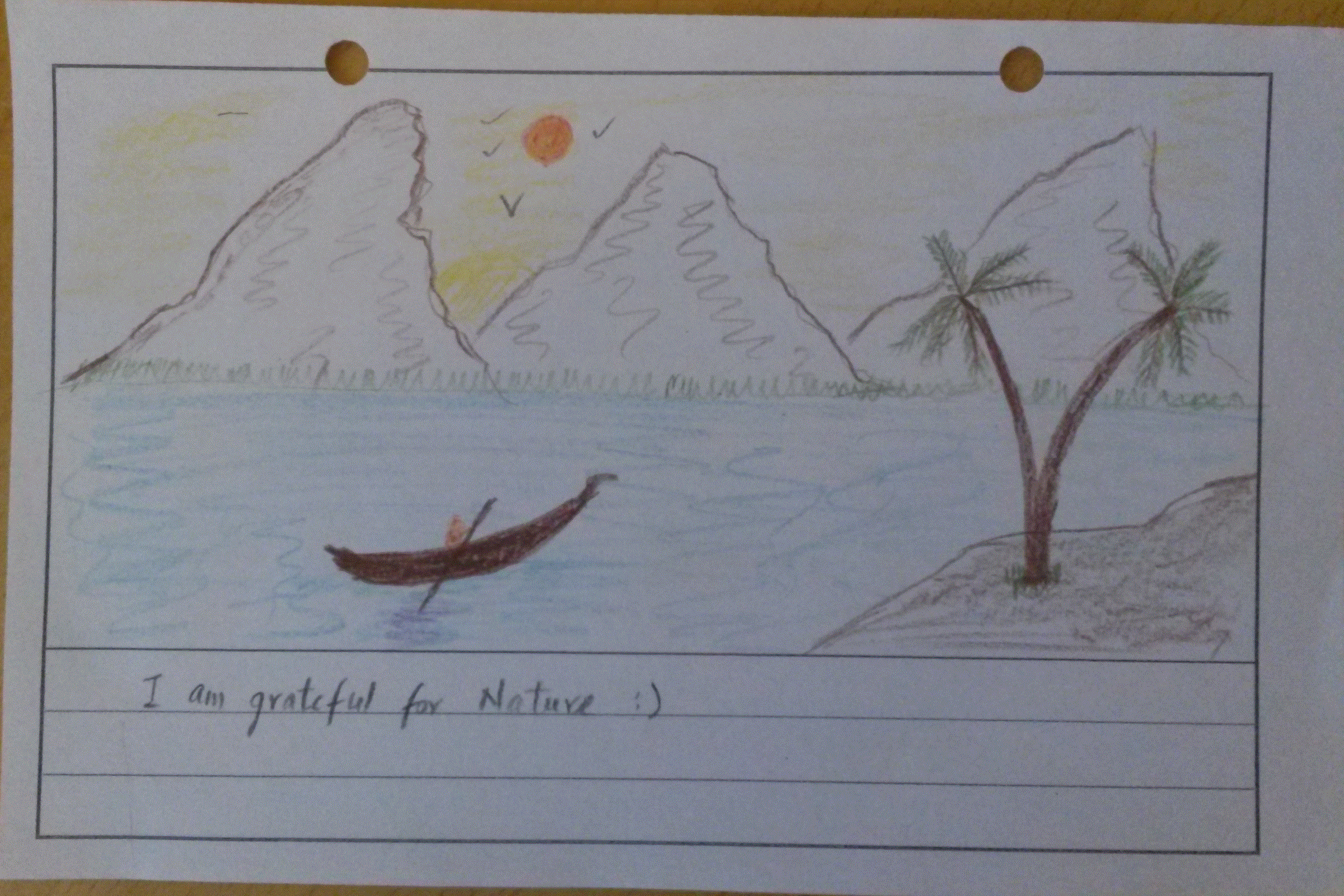
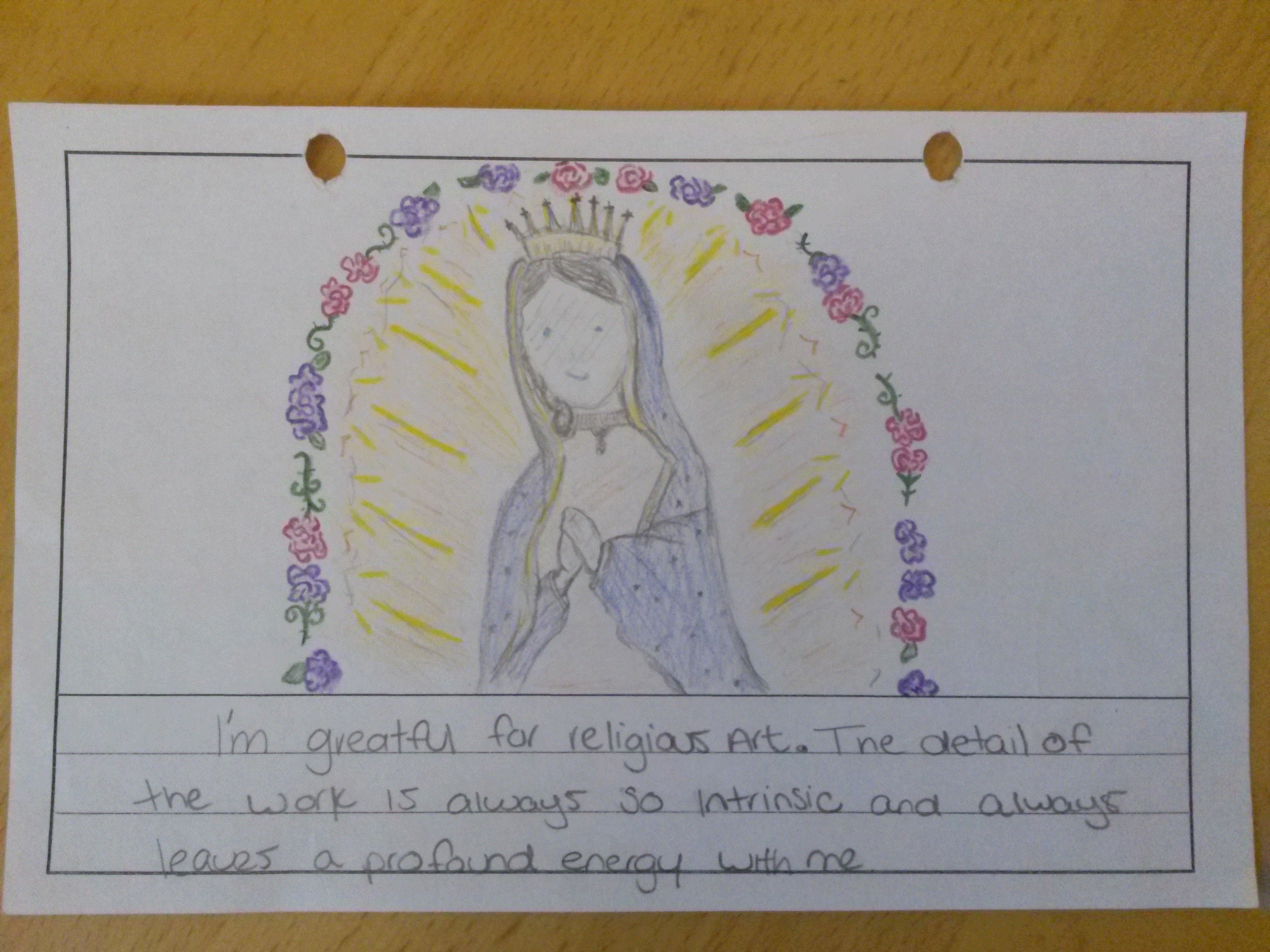
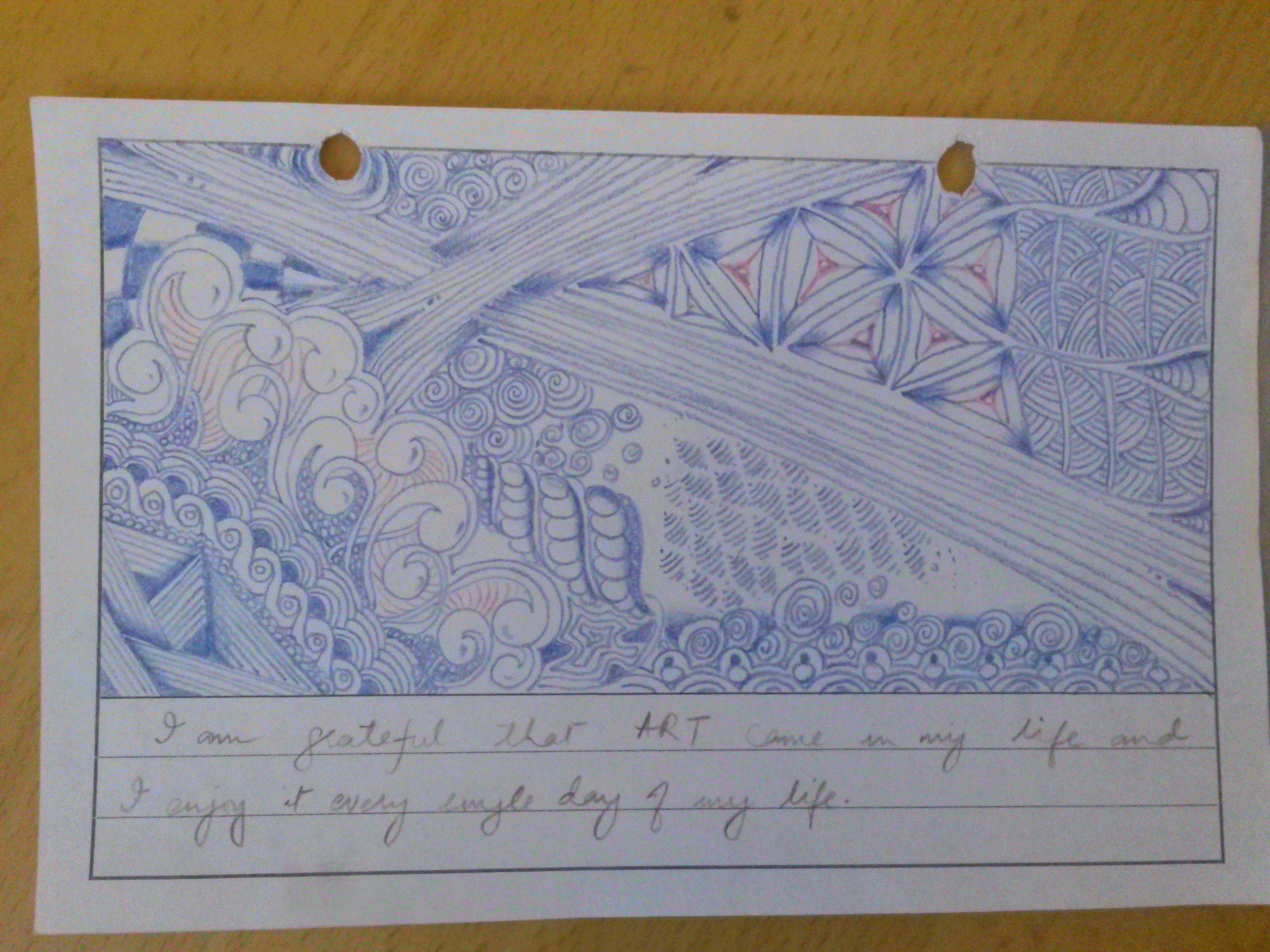
Since we first launched this activity in December 2015, hundreds of visitors have made exvotos expressing gratitude for their family members, their smartphones, their pets, their city, their schools–the list could go on and on! Take a look at a few of the recurring themes that we’ve found in some of our visitors’ exvotos:

Food

Nature

Art

Personal Relationships

Obstacles

What are you grateful for? Create your own exvoto the next time you drop by the Center for Creative Connections, and share your creation on Twitter or Instagram using #DMAexvoto.

Paulina Lopez
McDermott Graduate Intern for Visitor Engagement

The Answers She Gives

In honor of Employee Appreciation Day on Friday, March 4, we asked Writer-in-Residence Kendra Greene to share one of the stories she’s been collecting at the DMA. The following is from her conversation with Genet Mamuye, Visitor Services Representative:
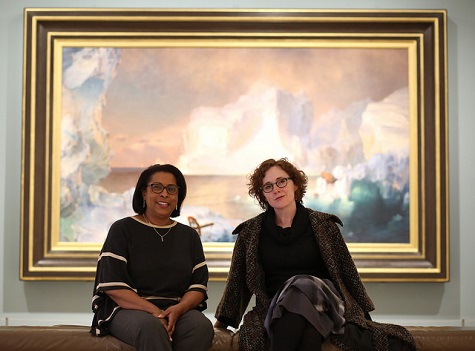
Genet Mamuye and Kendra Greene in front of one of Genet's favorite spots, The Icebergs.

Genet Mamuye and Kendra Greene in one of Genet’s favorite spots, in front of The Icebergs.

On a slow day, Genet Mamuye talks to hundreds of people. There are little kids and people in their nineties and first-timers and non-English speakers. There are regulars who come almost every day and there are people who don’t know where to start. There are people who ask where to eat downtown and how to get their art on the walls and is there anything for sale? What should I see?

Genet started with the DMA 23 years ago, and spent her first nine years as a gallery attendant. In the early 2000s, she moved to the Visitor Services Desk, where you’ll find her now. There was a time when she only saw big crowds when there were big exhibitions, but now she sees more people than ever.

Visitors are always asking Genet what her favorite thing is at the Museum. That’s where they want to start. But the short answer is: She doesn’t have one. Sure, she walks the DMA two or three times a week to see if anything is new. She also keeps up with the cultural goings on in the area so she can answer the questions that have nothing to do with the Museum she represents. She believes the main thing is to ensure whoever walks in has a good experience. Which is to say, she wants to give an answer, but what she really wants is for visitors to connect with the things that matter to them. She knows people who swoon for contemporary work can’t be sent anywhere else. She finds it’s a safe bet that children and families will fall in love with Egypt on the third floor. If you announce you only have fifteen minutes for your visit and time’s a-ticking, you’ll be sent to the Reves Collection on Level 3. And when Genet asks you on your way out how it went, chances are you’ll thank her.

Once, years ago, a young man asked his father to go to the Museum. It was the young man’s birthday. The pair was from out of town. The young man adored Ellsworth Kelly, and only when they arrived did he realize there was an exhibition of Kelly’s work. What luck! The young man and his father asked Genet about it, and were crestfallen to realize the installation wasn’t quite done, the show not quite yet open. They had come so far, and they wouldn’t be back in time to see it.

It was at that moment that Mr. Kelly’s car pulled up. They could see it through the glass doors. Genet quietly noted the arrival to the young man and his father, and left it at that. Mr. Kelly was so gracious, so nice. He took that young man on a private tour of the not yet open show. The young man was overjoyed, and even now thinking about it, Genet brings her hand to her heart.

Working with the public, in Genet’s view, means you have to be open to learn. You have to be respectful and you have to be positive. Certainly, you can’t assume. There are people that wander past three times, obviously lost, and you have to find the way to approach them. Visitors come back on later visits and remember Genet. But, as she says, “It’s not just me. All my coworkers are really good. We have to be. We open our doors for everybody.”

A. Kendra Greene is The Center for Creative Connections Visiting Artist at the DMA.

Leaping for Leap Day

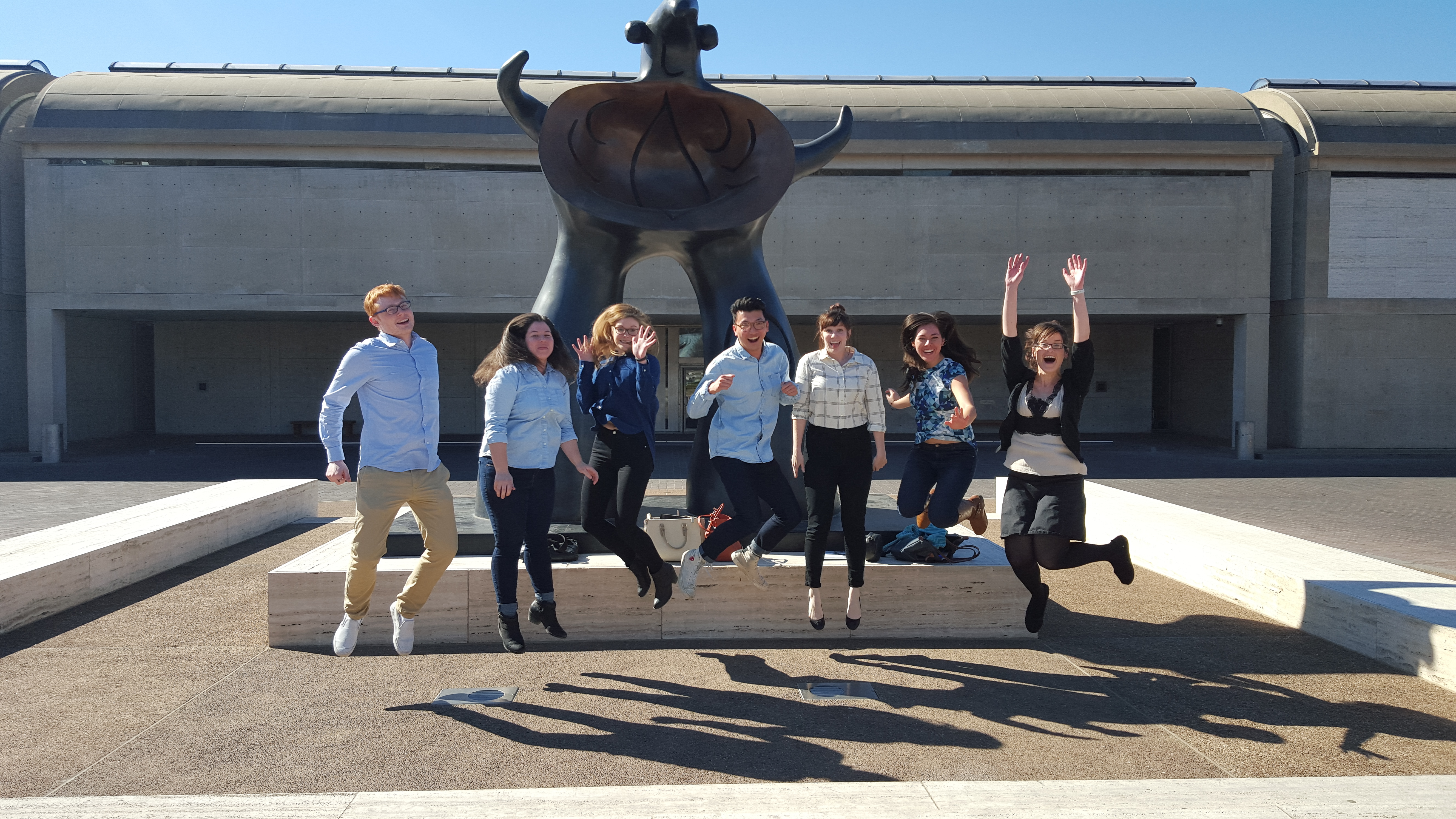
Leapin’ lizards! Some of the McDermott Interns celebrated Leap Day by putting a little spring in our step, following the footsteps of past interns and staff inspired by Jumping in Art Museums…

Source: Leaping for Leap Day

Leaping for Leap Day

Leapin’ lizards! Some of the McDermott Interns celebrated Leap Day by putting a little spring in our step, following the footsteps of past interns and staff inspired by Jumping in Art Museums. You don’t need to wait another four years to join the fun–the next time you stop by the Museum, take your own jumping photos (from a safe distance of course!) and share them on Twitter or Instagram!

CAM02059

Reaching for the stars in front of Rufino Tamayo’s El hombre (Man).

CAM02062

It was just a hop, skip and a jump to Robert Rauschenberg’s Skyway.

CAM02064

Our love for Barbara Hepworth’s Sea Form (Atlantic) grew by leaps and bounds.

CAM02066

One small step for man, one giant leap for Mark Di Suvero’s Ave.

20160212_141524

Jumping for joy in front of the Kimbell Art Museum.

We came to get down, we came to get down, so come to the Museum and jump around!

Arworks shown:

  • Rufino Tamayo, El Hombre (Man), 1953, Dallas Museum of Art, Dallas Art Association commission, Neiman-Marcus Company Exposition Funds
  • Rober Rauschenberg, Skyway, 1964, Dallas Museum of Art, The Roberta Coke Camp Fund, The 500, Inc., Mr. and Mrs. Mark Shepherd, Jr. and General Acquisitions Fund, © Rauschenberg Estate/Licensed by VAGA, New York
  • Barbara Hepworth, Sea Form (Atlantic), 1964, Dallas Museum of Art, gift of Mr. and Mrs. James H. Clark, © Alan Bowness, Estate of Barbara Hepworth
  • Mark Di Suvero, Ave, 1973, Dallas Museum of Art, Irvin L. and Meryl P. Levy Endowment Fund, © Mark DiSuvero

Paulina Lopez
McDermott Graduate Intern for Visitor Engagement

Whitney Sirois
McDermott Graduate Intern for Gallery and Community Teaching

Emily Wiskera
McDermott Graduate Intern for Family and Access Teaching

Six Years in Russia with Madame Vigée-Lebrun

Last week, the Metropolitan Museum of Art in New York opened an exhibition dedicated to Elisabeth Louise Vigée-Lebrun, the 18th-century painter and favorite portraitist of Queen Marie-Antoinette. This exhibition, Vigée Le Brun: Woman Artist in Revolutionary France , brings together eighty paintings and pastels produced over the course of the artist’s career. It is the first retrospective and only the second exhibition dedicated to this important artist. But you don’t have to travel all the way to the Big Apple to see one of her paintings. The DMA is fortunate to have a portrait by Vigée-Lebrun hanging in our European Galleries on Level 2 as part of the Michael L. Rosenberg Collection.

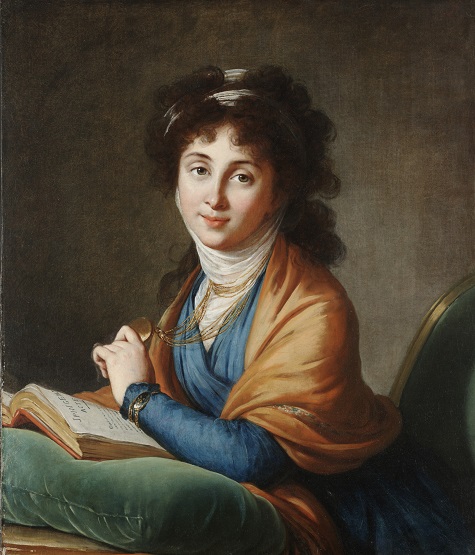
Elisabeth Vigée-Lebrun, Portrait of Madame Nakharovna, née Hitrova, 1799, oil on canvas, Dallas Museum of Art, The Michael L. Rosenberg Collection, 29.2004.13

Elisabeth Vigée-Lebrun, Portrait of Madame Nakharovna, née Hitrova, 1799, oil on canvas, Dallas Museum of Art, The Michael L. Rosenberg Collection, 29.2004.13

Portrait of Madame Nakharovna, née Hitrova, painted in 1799, depicts a member of the Russian nobility. She is portrayed as a wealthy and educated woman, reading the play Iphigenia by Racine in French and wearing fashionable clothing and jewelry. The artist accentuates the translucent fabric of her scarf and the gold strands of Madame Nakharovna’s necklace as they catch the light. She creates a sense of spontaneity and interaction with the sitter, who seems to respond to our presence.

Because of her close association with Marie-Antoinette and the French monarchy, Vigée-Lebrun left France during the Revolution and spent six years in Russia, living in exile in St. Petersburg and Moscow. She was very successful in Russia as a portrait painter to the imperial family and the Russian nobility. She found many clients, such as Madame Nakharovna, eager to be painted by the favorite portraitist of the late queen of France.

Beyond success as an artist, Vigée-Lebrun seemed to have found, in the distant lands of Russia, the kind of life she had enjoyed in Paris. In her memoirs she wrote, “Every evening I went out. There were innumerable balls, concerts, and theatrical performances, and I thoroughly enjoyed these gatherings, where I found all the urbanity, all the grace of French company. It seemed as though good taste had made a jump with both feet from Paris to St. Petersburg.”

But the allure of Russian society didn’t stop her from lamenting the frigid winters: “I am perhaps the only person, who not suspecting how cold it was, ever took it into my head to pay a visit when the thermometer was at eighteen. . . . Everyone wears velvet, fur-lined boots in his carriage, and cloaks lined heavily with fur.”

So bundle up and come to the DMA to see Portrait of Madame Nakharovna by Elisabeth Vigée-Lebrun.

Franny Brock is the Dedo and Barron Kidd McDermott Graduate Intern for European Art at the DMA.

Teacher Resources: Full STEAM Ahead!

We’ve all heard about the  importance of STEM–science, technology, engineering, and math–to our education system in a technology-focused world, but what about the creative thinking that goes hand-in-hand with these subjects? With this in mind, the Rhode Island School of Design began a push to include art, transforming STEM to STEAM. As an educator, you can find many great STEAM resources here at the Dallas Museum of Art!

For several years, DMA Education Staff and our group of STEAM Docents have been working together to develop and test STEAM tours and activities for multiple three-hour long visits by eighth grade students from Irma Rangel Young Women’s Leadership School. Themes for their visits include Art and Innovation, Design, Engineering, Conservation, and Nature and Art.

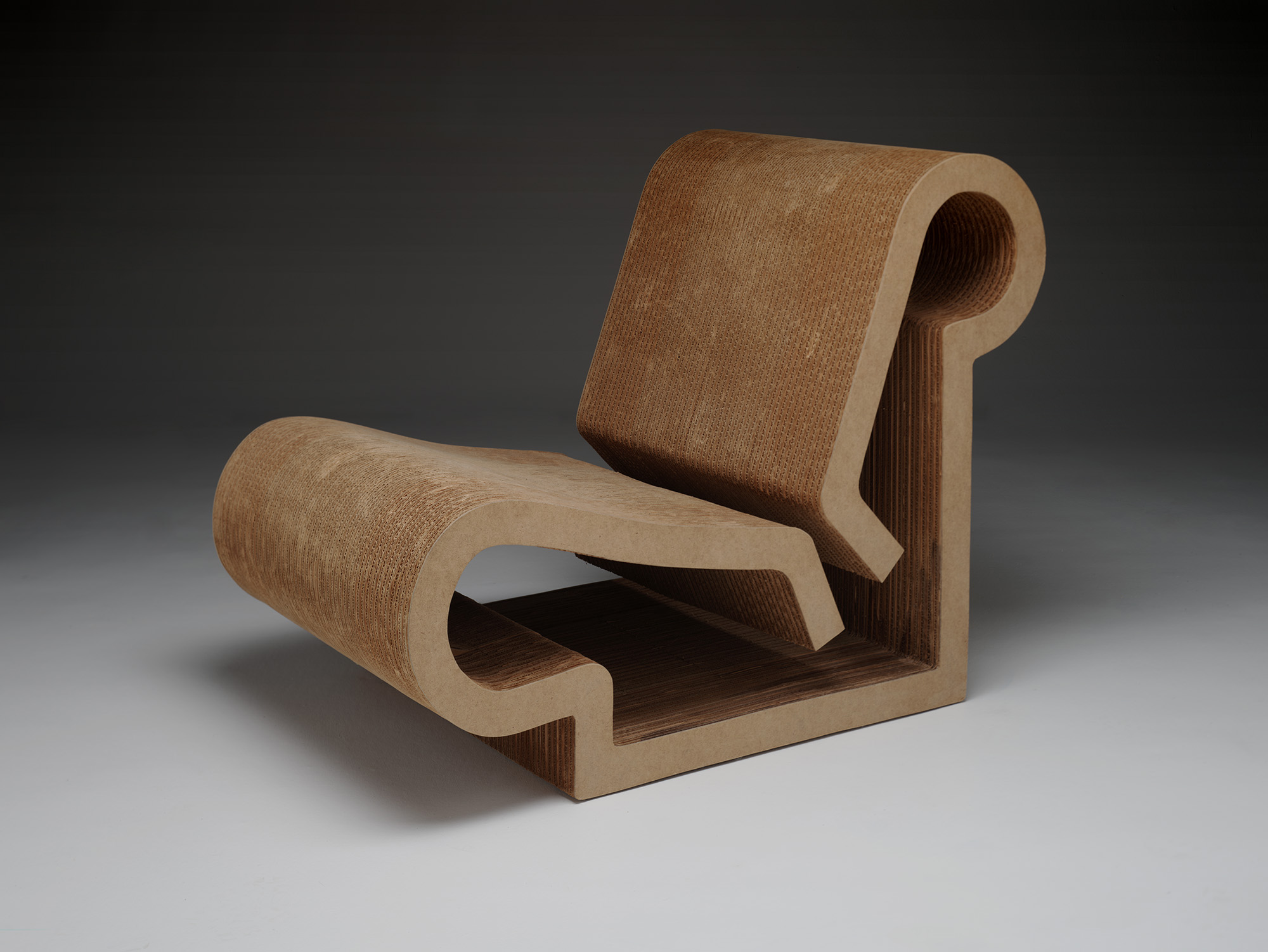
"Easy Edges" chair

Frank O. Gehry, “Easy Edges” chair, 1971, Dallas Museum of Art, 20th-Century Design Fund

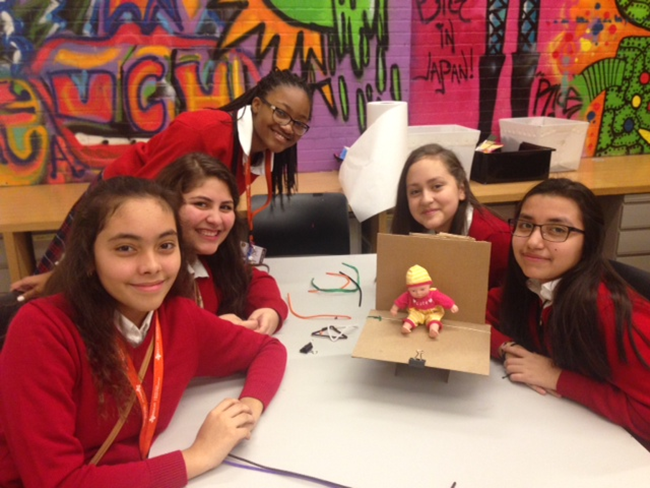
The objective of their time at the Museum is to emphasize the connections between art, science, technology, engineering and math, especially in how artists and scientists invoke similar practices and ideas. One of their visits explores the innovative design of Frank Gehry’s “Easy Edges” chair. Students learned how Gehry layered corrugated cardboard to a two inch thickness to create an object that is aesthetically pleasing while still maintaining the ability to support considerable weight.

Rangel students creating a cardboard chair that can hold the weight of a doll inspired by Frank Gehry's Easy Edges chair. The catch? No glue or tape!

Rangel students creating a cardboard chair that can hold the weight of a doll, inspired by Frank Gehry’s “Easy Edges” chair. The catch? No glue or tape!

Two of our amazing STEAM docents, Susan Behrendt and Susan Fisk, asked their Rangel students the following question to see what they had learned about STEAM:

How does ART relate to STEM (Science, Technology, Engineering, Mathematics)? How do they relate to you?

Art relates to STEM because as you think and make the art you have to think about all of the things in STEM. Carefully analyzing the piece and including those things make it more eye catching. They relate to me because the art makes a study. – Genesis, May 2014

Art relates to STEM because we use it everywhere and it’s used to describe some of the events in history. Because of art we know far past back in history. We have to know all of these subjects for a good education. – Gallea, May 2014

Art is in everything. An example is geometry. Geometry incorporates art, science, and math. Another example is architecture. Architecture uses art, math, and engineering. It relates to me because I want to be an architect. – Isabella, May 2014

This spring, we lead our first STEAM in-service training for 170 art teachers from Fort Worth ISD, and released a comprehensive STEAM guide to our docent team. You can schedule a docent-guided tour or a teacher in-service yourself, and come explore the many connections between art and STEM here at the Museum!

Lindsay O’Connor
Manager of Docent and Teacher Programs

TAC-kling the Future

IMG_2634

The Teen Advisory Council (or TAC for short!) was created to extend engagement and involve the teen perspective in creating new artistic experiences for visitors. We currently have fourteen members: Shirui, Won, Mo, Emma, Nathen, Carson, Maddi, Christina, Bethany, Taylor, Claire, Nikki, Riya, and me, Jierui. Our mentor, Jessica Thompson, is the Manager of Teen and Gallery Programs at the DMA.

Founded in 2014, the TAC has been involved in a variety of endeavors at first with JC Bigornia at the helm. On our first project, we partnered with the Perot Museum of Nature and Science and artist Brittany Ransom to create a window panel mural celebrating the fusion of the arts and sciences. The mural featured a tableau of microscopic views of everyday objects.
img_1599

Our next stop was a partnership with Big Thought through their City of Learning program with the goal of preventing summer education loss. In a series of Turn Up events, our booth created a My Dallas Is… board (inspired by the Before I Die Wall) to better understand our fellow residents’ perspectives on our city. Later, Eliel Jones, a former McDermott intern, engaged us in his Experiments on Public Space project. The resulting Alternative Signage performance art piece used cardboard signs to break the barriers between the public and the Museum.

17954128786_475653f076_z

The June 2015 Late Night marked our biggest involvement with the Museum as we planned tours, haiku slams, scavenger hunts, speaker talks, and other superhero themed activities. Lastly, our most recent January Late Night Creations workshop with Jessica returned to our interest in the intersection of the arts and sciences. We used LED lights in conjunction with batteries to illuminate beloved works of art from the DMA’s permanent collection.

IMG_2644.JPG

So what’s in store for the TAC? Your next chance to hear from us–after reading our lovely introduction to the blogosphere–is at our February Late Night Creations workshop entitled Rest On Your Laurels on February 19th. Join us as we celebrate your individual virtues and vices in the spirit of Classical tradition! We are also in the process of planning a teen workshop and other programs in the community. Although we may be relatively young, we are excited to add our mark to the vibrant canvas of the DMA!

Until next time!

Jierui Fang
Teen Advisory Council member

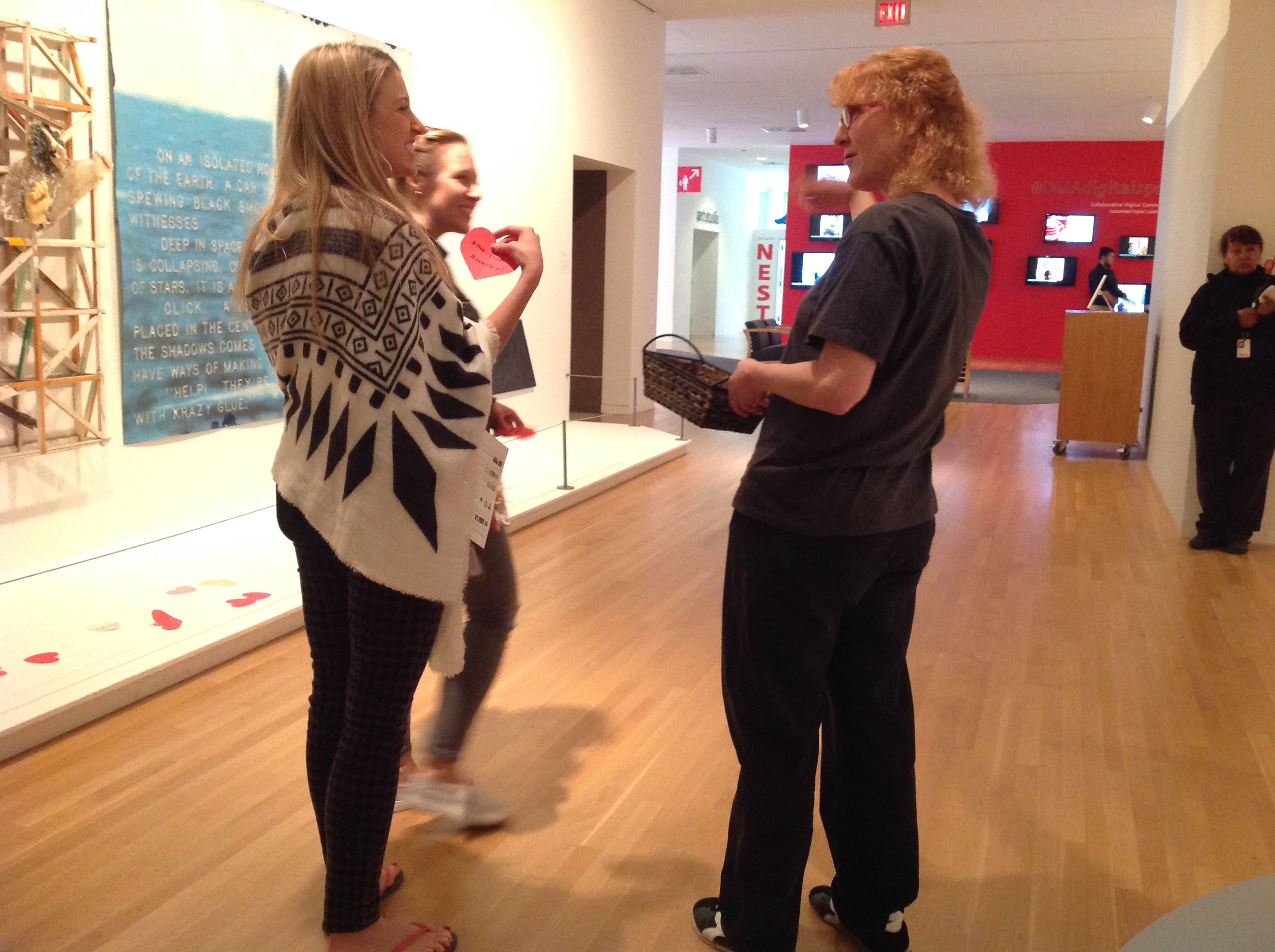
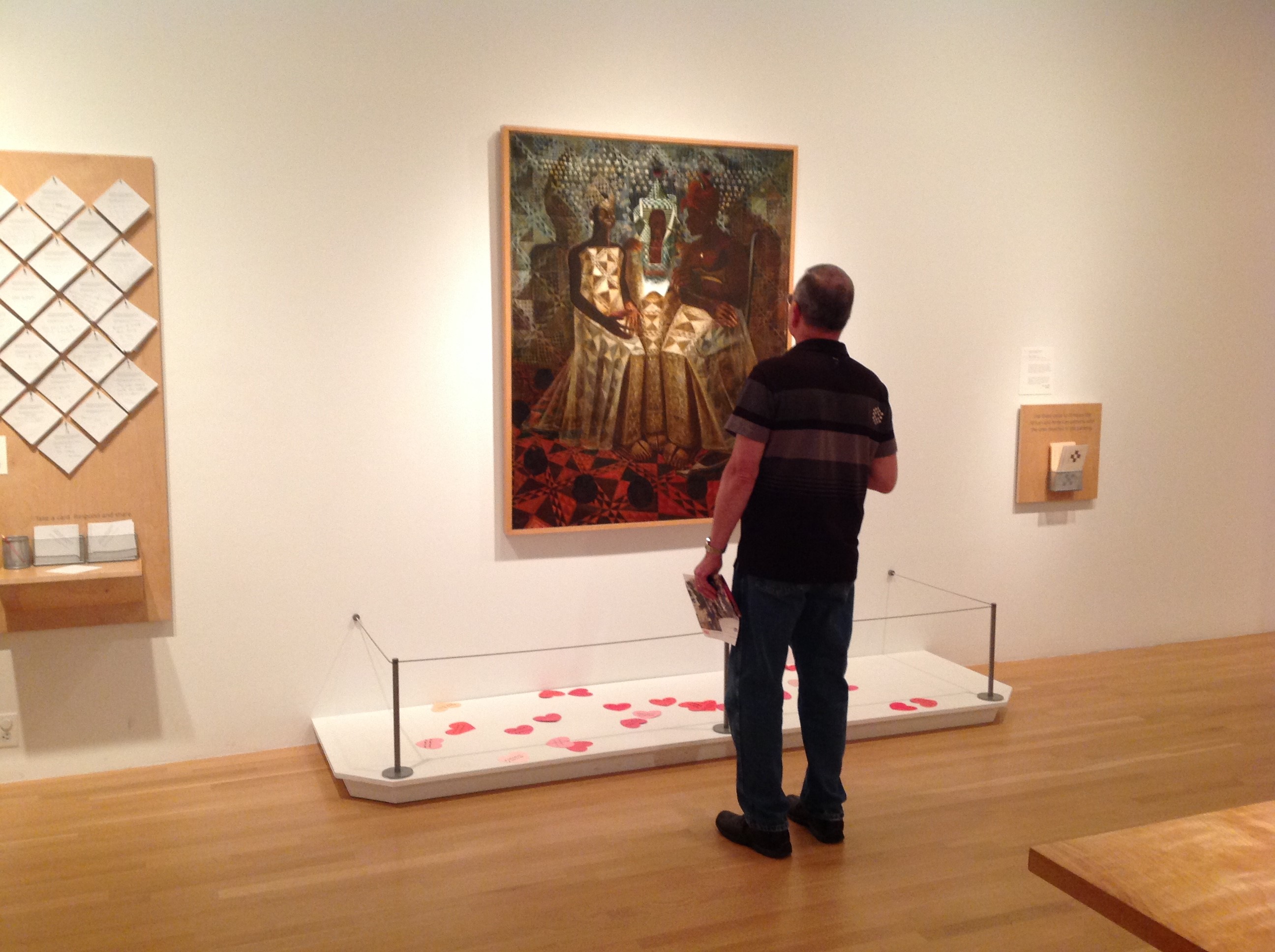
#HeartsForArt

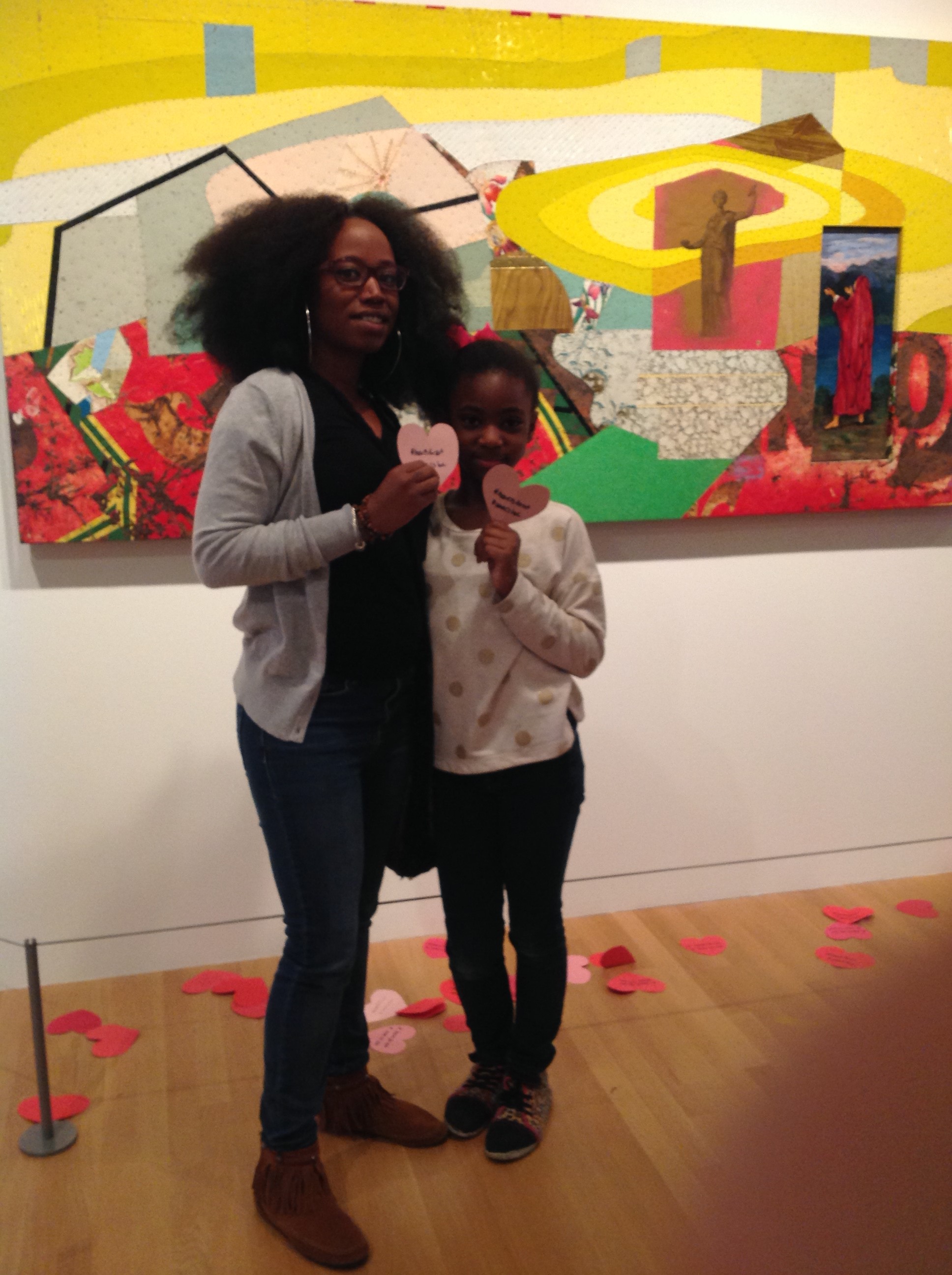
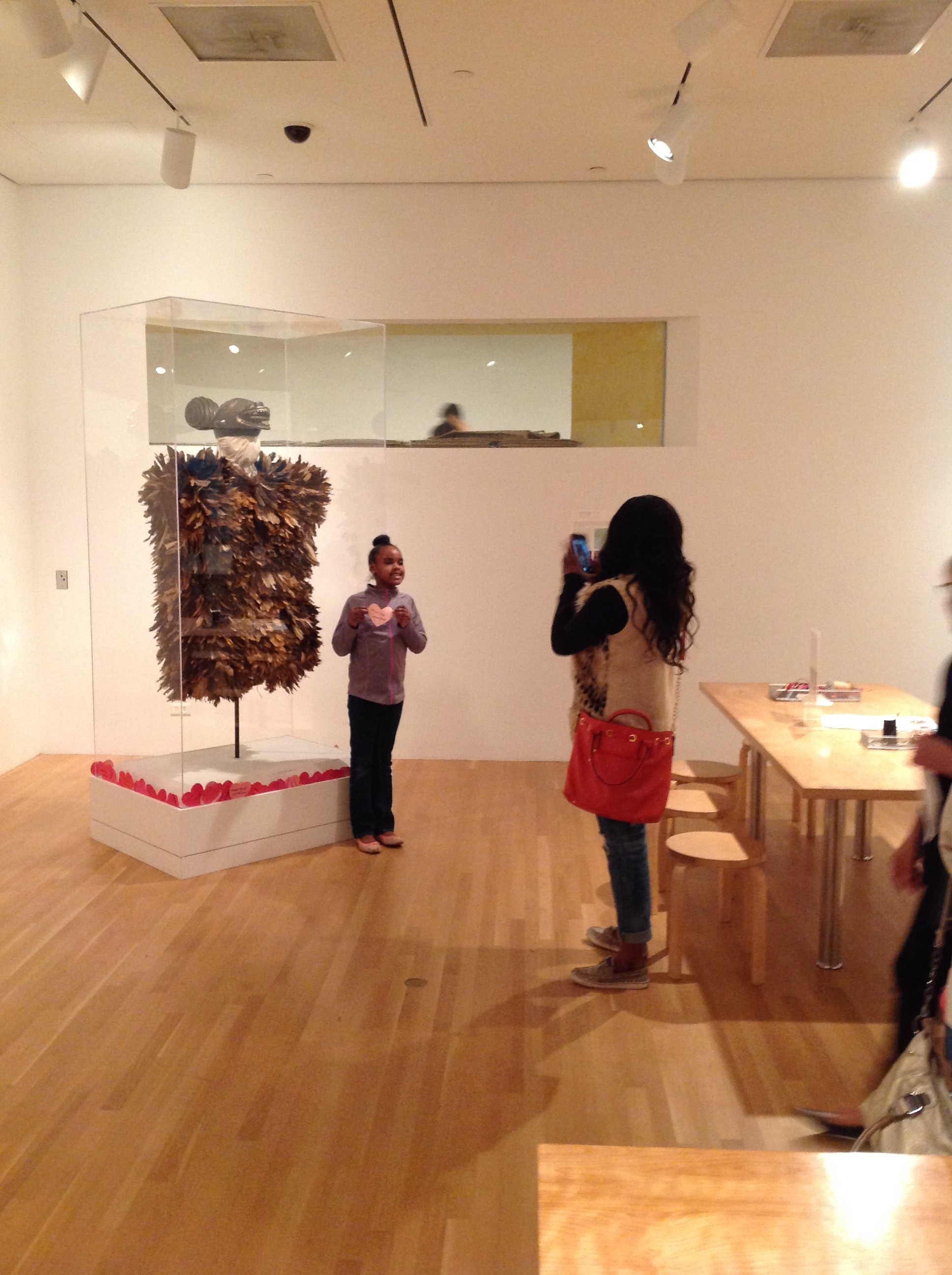
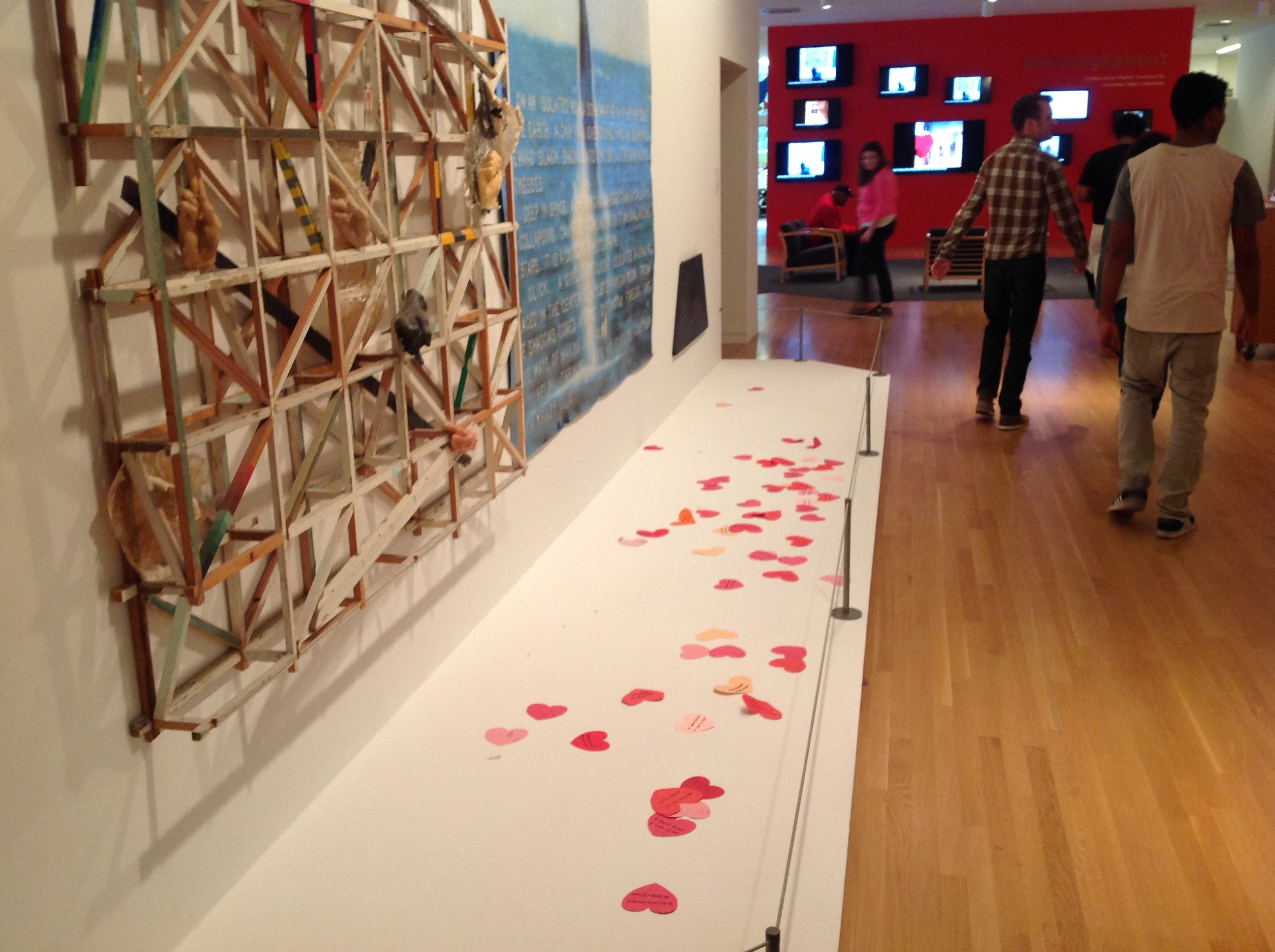
Love is in the air at the DMA! This Valentine’s weekend, DMA visitors shared their love for a favorite work of art in The Center for Creative Connections (C3) by participating in #HeartsForArt. Museums across the country invited visitors to place a paper heart on the floor in front of their most beloved work of art, then spread the love by photographing their art crushes and sharing them on Instagram or Twitter. At C3, visitors who tagged their photos with #HeartsForArt #DMAC3love were able to see favorite artworks on the #DMAdigitalspot wall of monitors.

Which are the most beloved DMA works of art in C3? We tallied up all of the #heartsforart time on Valentine’s Day to find that visitors have a soft spot for the DMA’s contemporary pieces. Jack Piersen’s Anytown USA (2000) was the most treasured artwork of the weekend, coming in at 106 hearts. The runners-up for Most-Loved artworks in C3 were Red and Yellow, Black and White (1982) by Vernon Fisher at 61 hearts, and Marcel Dzama’s The Minotaur (2008) at 58 hearts.

Paulina Lopez is the McDermott Graduate Intern for Visitor Engagement at the DMA


Archives

Categories