“Once upon a time” is one of my favorite phrases—it almost always precedes a magical beginning, the possibility of slightly harrowing adventures, a lesson or two learned, new friends, and a “happily ever after.” I’m not afraid to admit, I’m a sucker for any ole fairy tale!
As we’ve been exploring Art and Nature in the Middle Agesover the past few months, I’ve found plenty of fairy tale inspiration in the art. From stained glass windows I imagine would have fit in just fine in Sleeping Beauty’s castle to beautifully illustrated manuscripts that Belle would surely be found reading in the library, this medieval art has the same fairy tale magic as the stories.
Are you a fairy tale fan too? Even after we say goodbye to Art and Nature, there are still plenty works of art in the DMA’s collection that speak to a fairy-tale loving heart. To find the perfect match for your inner fairy tale hero, take our quiz here!
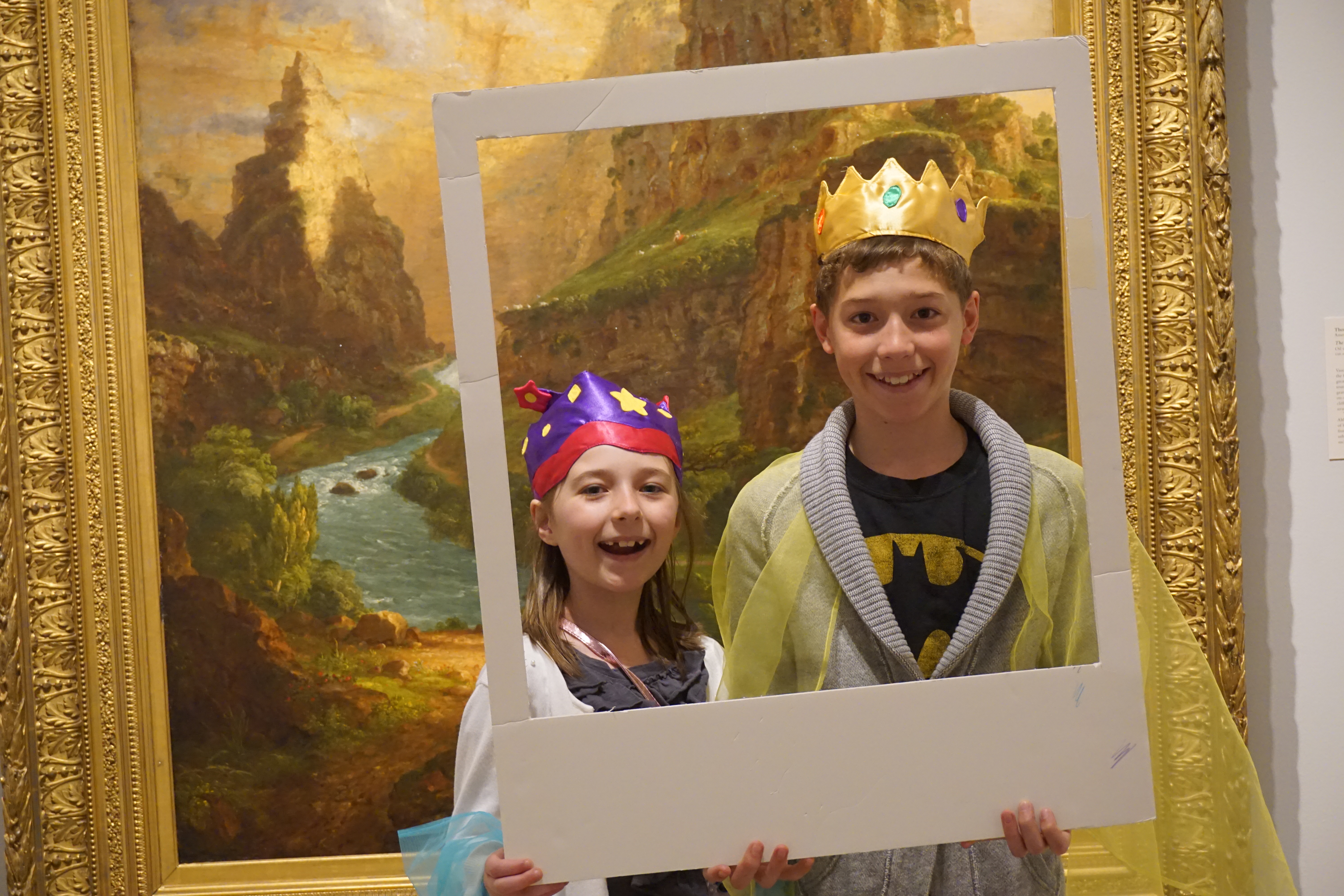
And be sure to come to this Friday’s Late Night, which will be filled with medieval magic and fairy tale wonder!
Leah Hanson
Manager of Family and Early Learning Programs
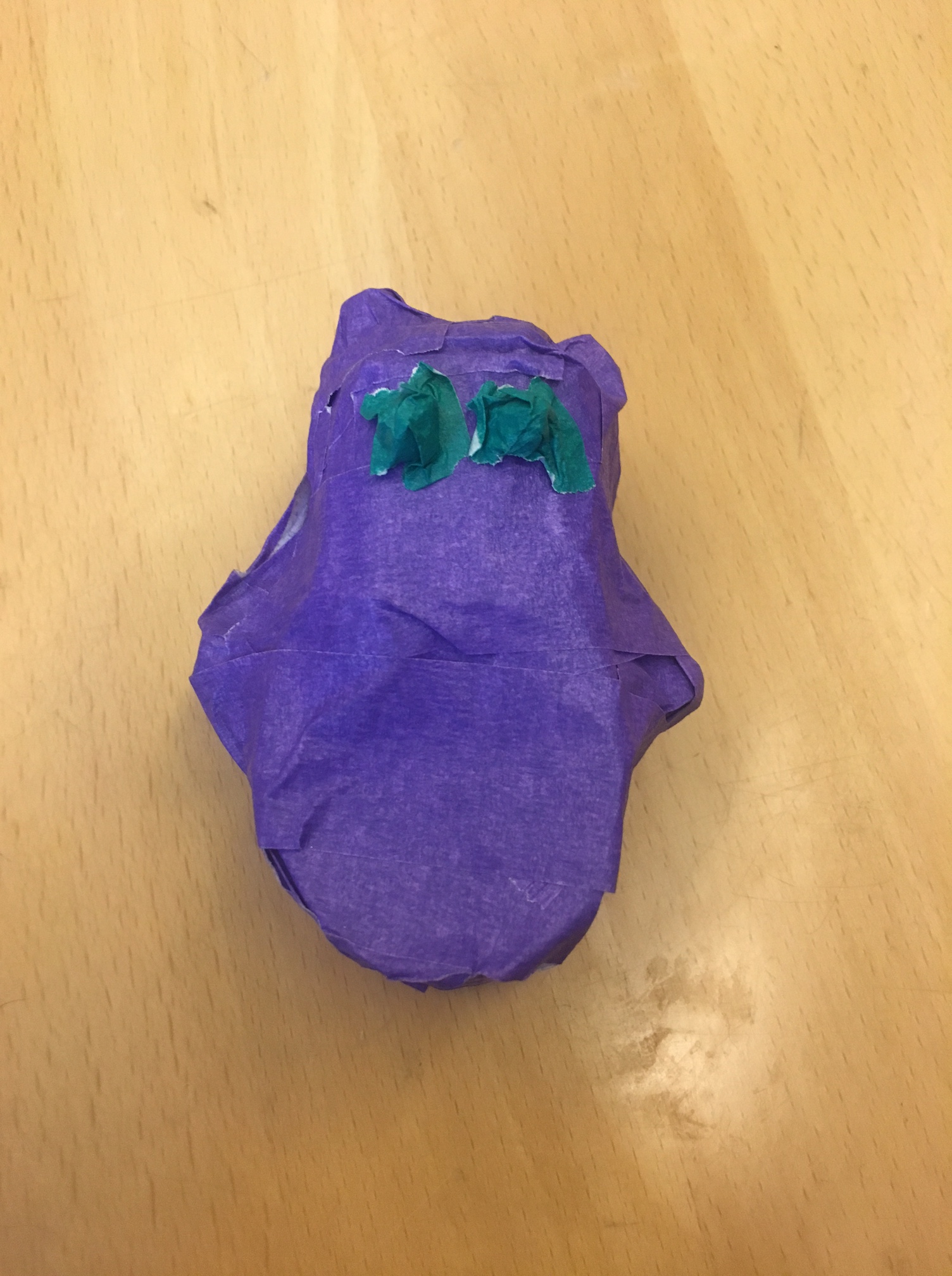
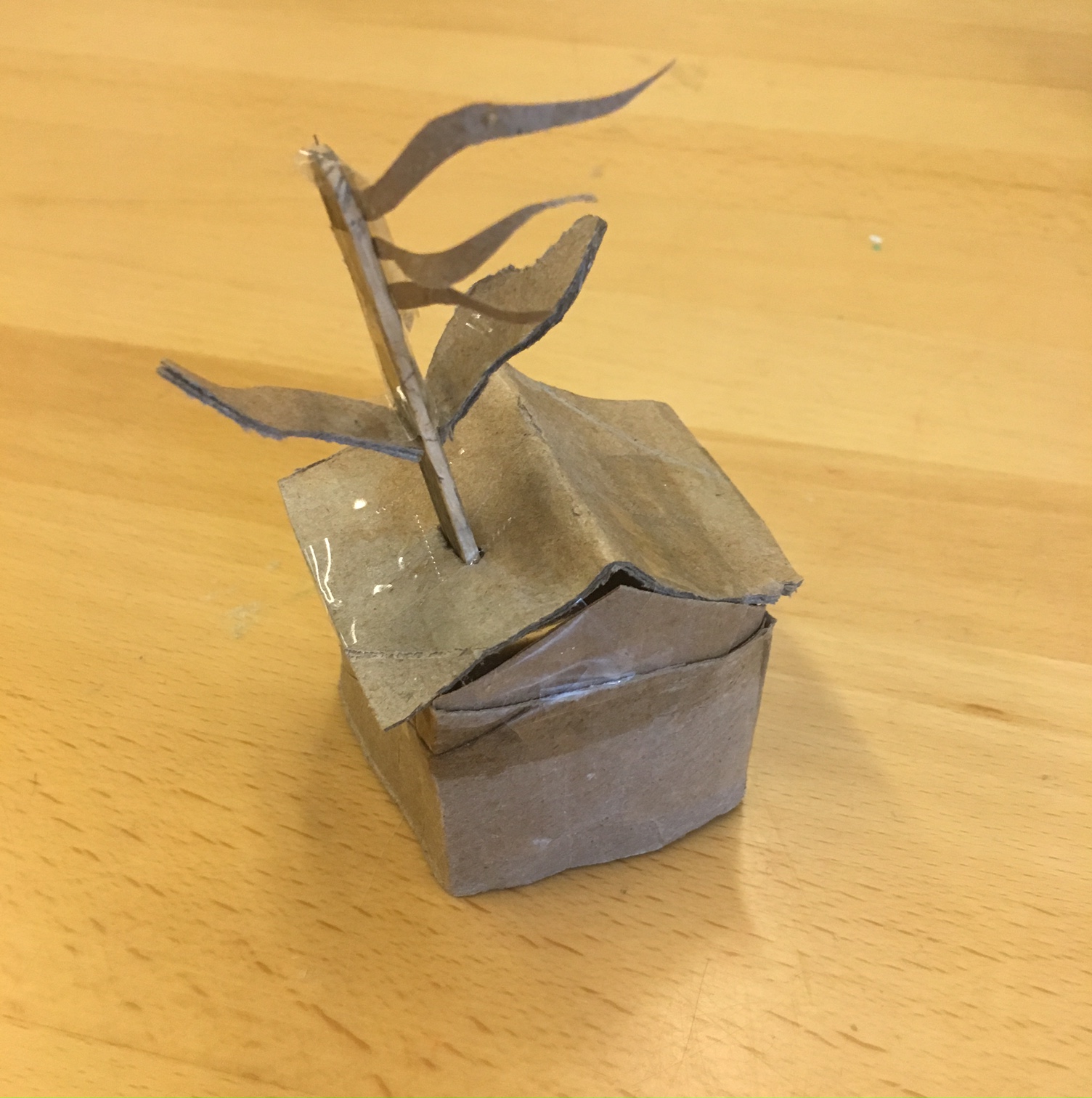
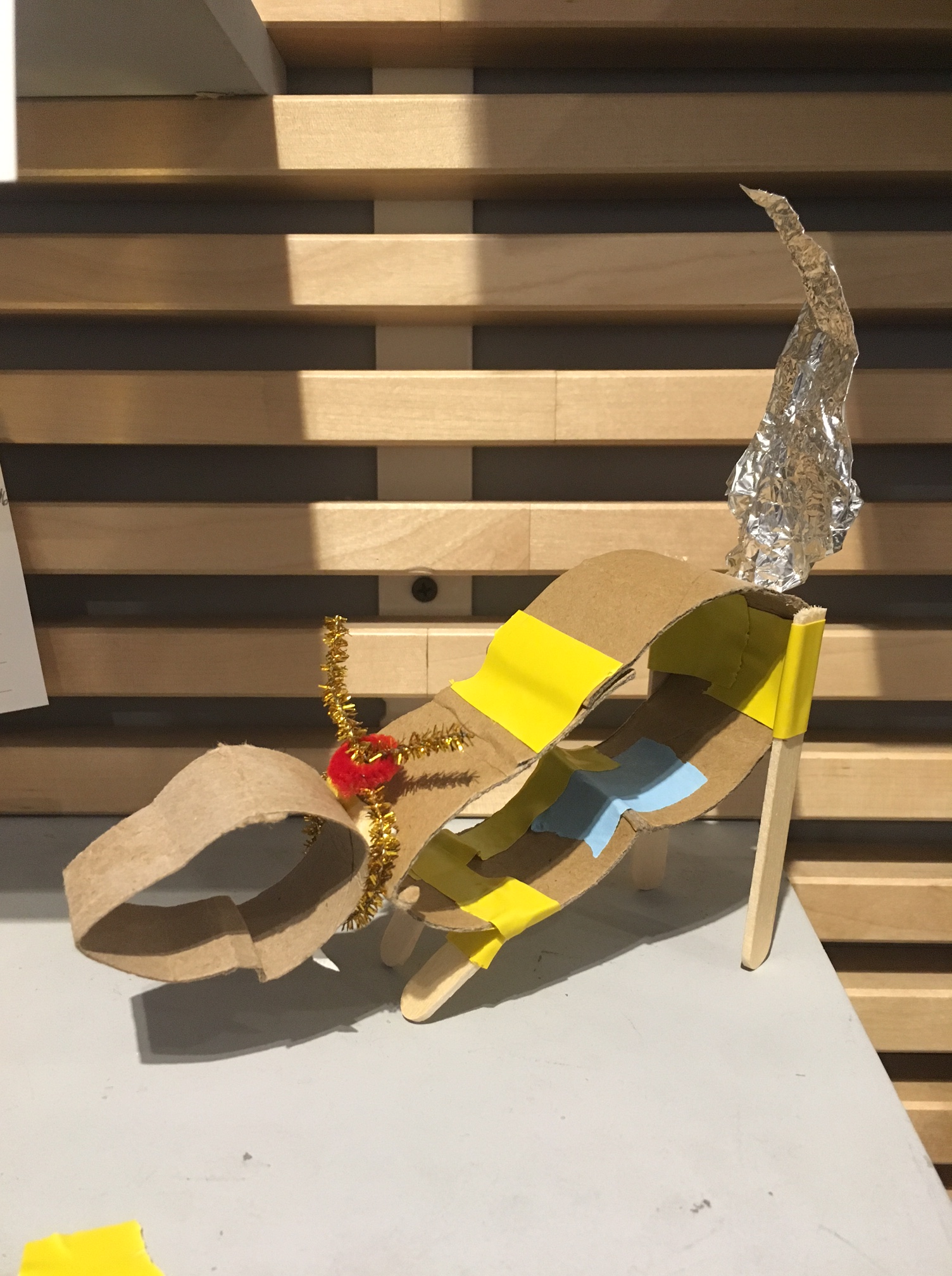
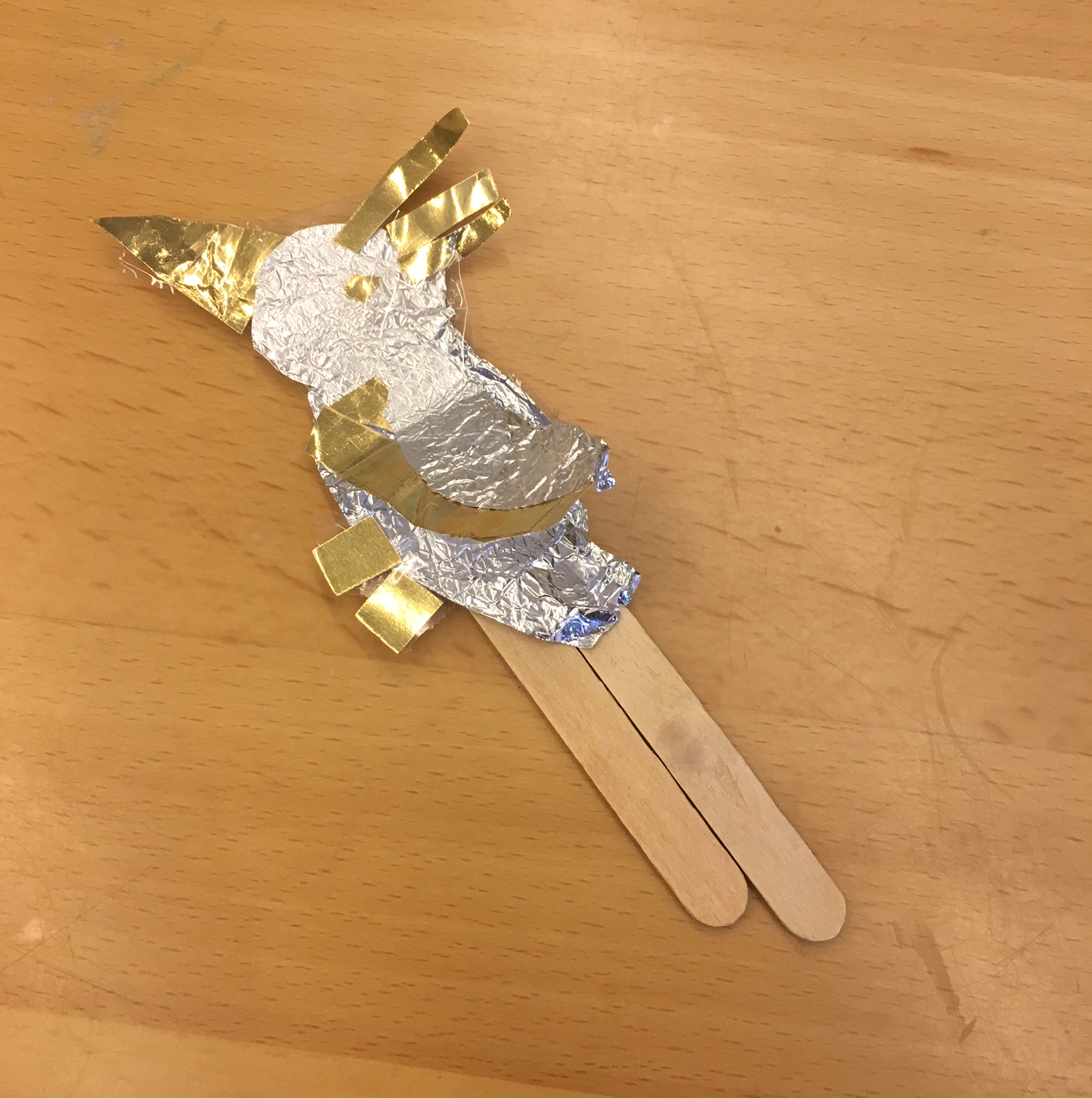
Over the last few months, we’ve been mixing up all kinds of fun and recyclable materials for visitors to create with at the Art Spot in the Center for Creative Connections. When selecting materials, we carefully consider the broad range of artworks from the DMA’s collection featured in the cases amongst the creation tables. Having a variety of styles, influences, and cultures reflected in these works will in turn help inspire unique creations (or re-creations!) from visitors of all ages. From cardboard tubes and popsicle sticks to colorful masking tape and aluminum foil, there are endless ways to be inspired! Check out some of our recent visitor creations inspired by the works of art currently on view:
Inspired by Owl effigy, artist unknown, 20th century
Inspired by Jim Lowe, The Single Mother at 3:00 A.M., 1980
Inspired by Comb, artist unknown, c. 1900
Inspired by Cat Bird, Clifton Barr, 1952
Hello, Arturo!
Next time you’re in C3, sit at the Art Spot for a little while and consider how you can transform these ordinary materials into something extraordinary.
Kerry Butcher
Center for Creative Connections Coordinator
This week we will open the doors to México 1900–1950: Diego Rivera, Frida Kahlo, José Clemente Orozco, and the Avant-Garde, but work on the exhibition began weeks ago. Exhibition designers Jessica Harden and Skye Malish-Olson shared insight into the process of creating the gallery spaces that serve as home for the works of art during special exhibitions.
Jessica Harden: A lot of the work that Skye and I do is to plan for movement of people and objects and really take into account the overall visitor experience and how people interact with and participate in the exhibition.
Skye Malish-Olson: The planning process definitely varies from project to project. I think the most fun for us is always the color and graphics and how that comes together with the objects.
JH: One of the first steps of working on an exhibition for us as designers is to talk through the checklist (the list of works of art that will be included in an exhibition) with the curators and to understand which objects are the most important. We can then take that information and use that to our benefit in the design.
SMO: We’re also typically working with a lot of different eras, and lots of times we’ll start with a kind of mood board or just different visual references to give us a starting place, for color, and for how to portray objects in a way that tells a story.
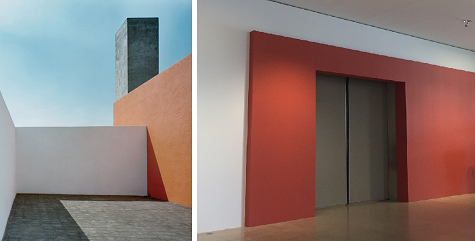
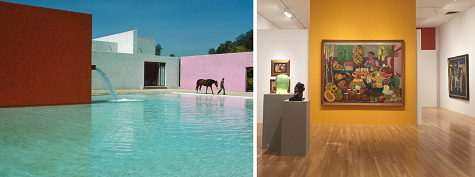
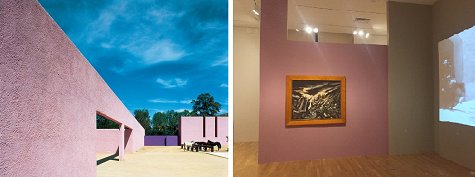
Image: Luis Barragán’s San Cristóbal stables in Mexico City, 1960s. Credit René Burri/Magnum Photos
JH:With México 1900–1950, we worked off of a lot of the plans and designs that were developed for the presentation in Paris. This informed in many ways how we wanted to treat the checklist and some of the spaces, but then we had to take into consideration or own space and our own audience, so we made a lot of adjustments. The 10,000-square-foot exhibition is showcased in two separate spaces, a first during my time at the DMA. The exhibition begins on Level 4 in what has typically showcased works from the DMA’s permanent collection, and then continues on Level 1 in one of our main temporary exhibition spaces.
I met the challenge of a disconnected space with a visually strong and contextually relevant inspiration: the work of Mexican modernist architect Luis Barragán, known for his combination of strong, vivid color with clean, modernist forms. Applied in our México 1900-1950 galleries, these colors and forms, offset from the DMA’s existing architecture, assert the entrances and designated areas of the exhibition. The paint application and dynamic forms help lead visitors through a space that is dense with powerful works of art, without feeling claustrophobic. Bright colored panels of wall frame and highlight the sumptuous color of a number of paintings, while creating visually fresh and exciting lines of sight as one moves through the space. An additional benefit is the way these colors work with the existing architecture and wood and limestone finishes, as Barragán was also known for his use of raw materials. From the big picture down to the smallest detail, the exhibition designer’s task is to facilitate an aesthetic experience from the exhibition content that is greater than the sum of its parts. SMO: I am really excited about the scale and color in the México 1900–1950 exhibition. It is definitely a rare treat and we’re using all of our space and multiple galleries to house these really large and amazing works. I think having our space activated in this way will be really exciting for our visitors.
It’s spring time, which means that the Learning Lab is back in session. The Dallas Museum of Art has partnered with Booker T. Washington HSVPA since 2011, providing an ‘ideas class’ for junior and senior year students. This year, students are working on an arsenal of professional writing to grow their careers as artists. By the end of the semester, students will have their first artist statements, resumes, personal essays, and curated portfolios ready to submit to colleges and opportunities beyond high school.
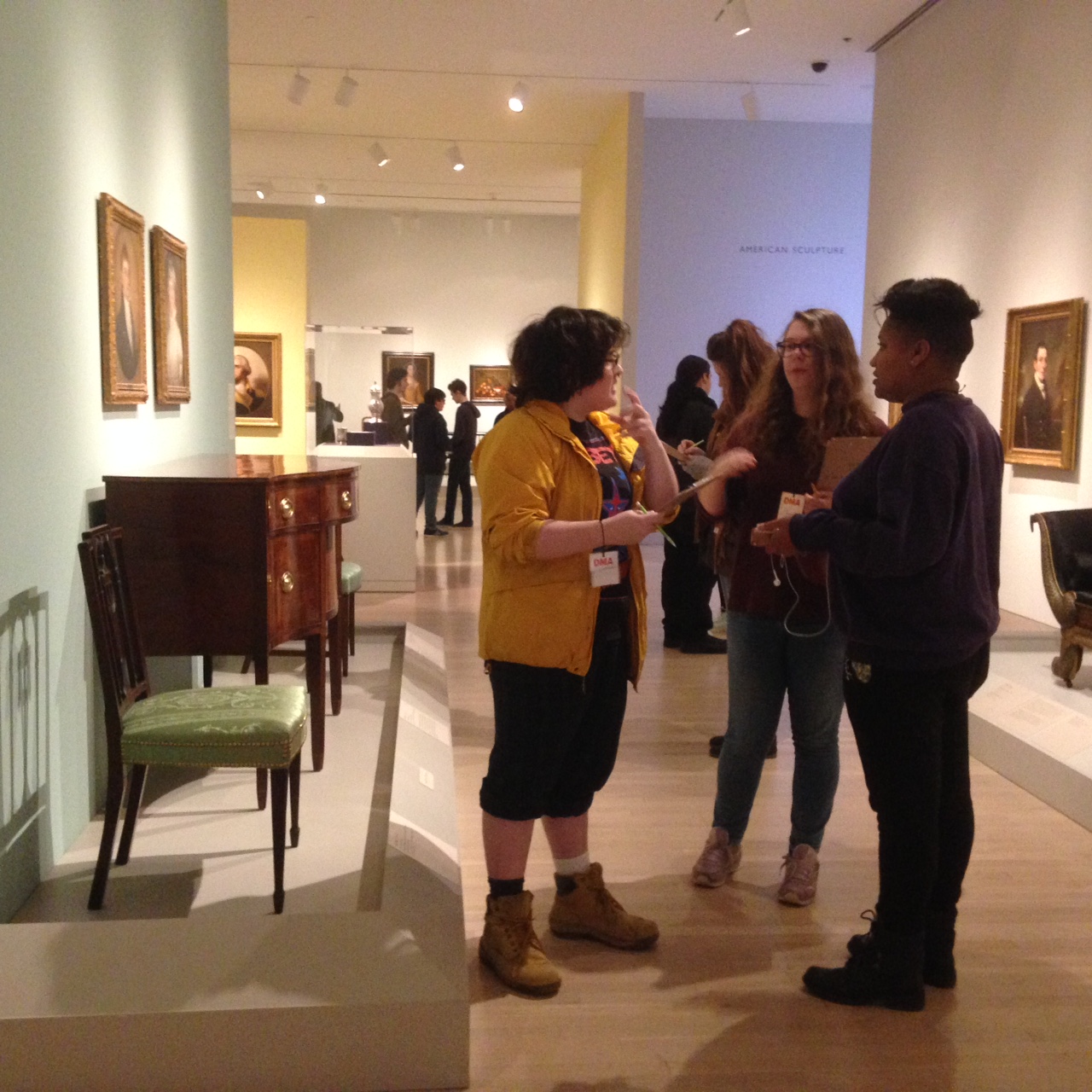
For people who interact with the world primarily through visual means, expressing yourself through words is easier said than done. We’ve taken advantage of the Learning Lab’s time in the Museum to get them thinking and verbalizing their thoughts about art in nontraditional ways. However, these activities aren’t just for artists—anyone can use them in the galleries! Here’s a game for you to try next time you visit the DMA.
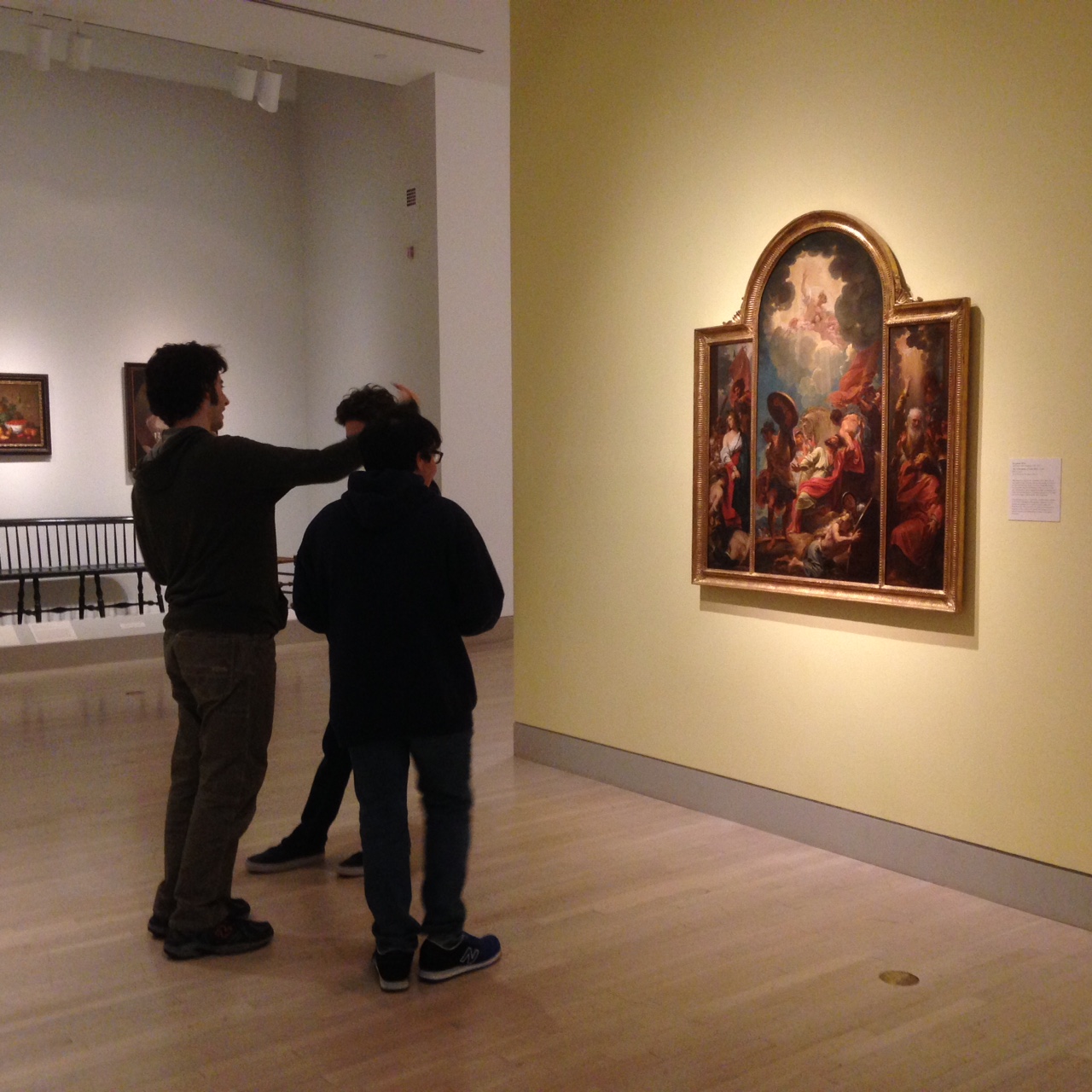
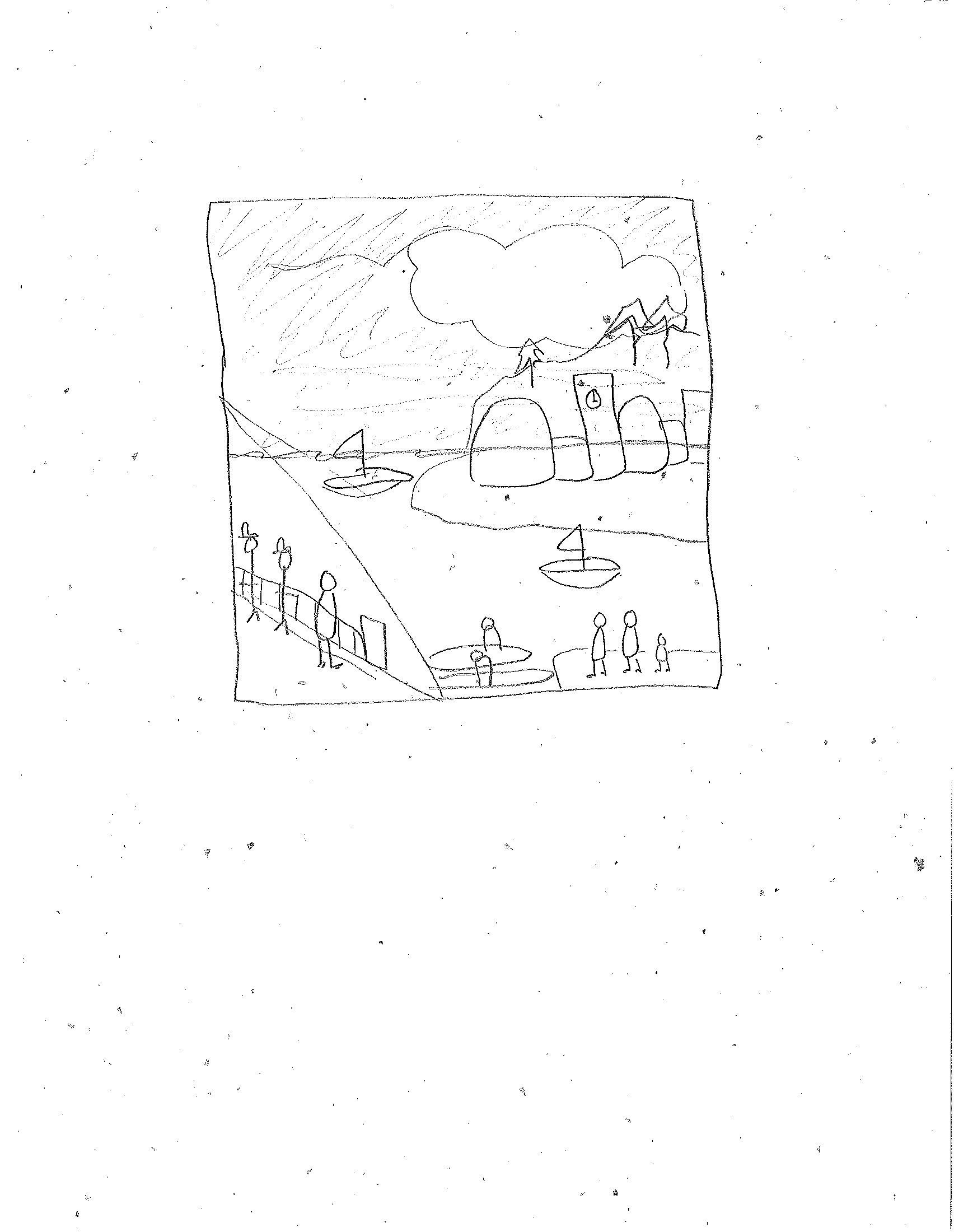
This gallery game is a favorite here at the Museum! All you need is paper, a pencil, a friend, and your vocabulary to get started. Before walking into a gallery, choose which person will be the drawer, and which person will be the describer.
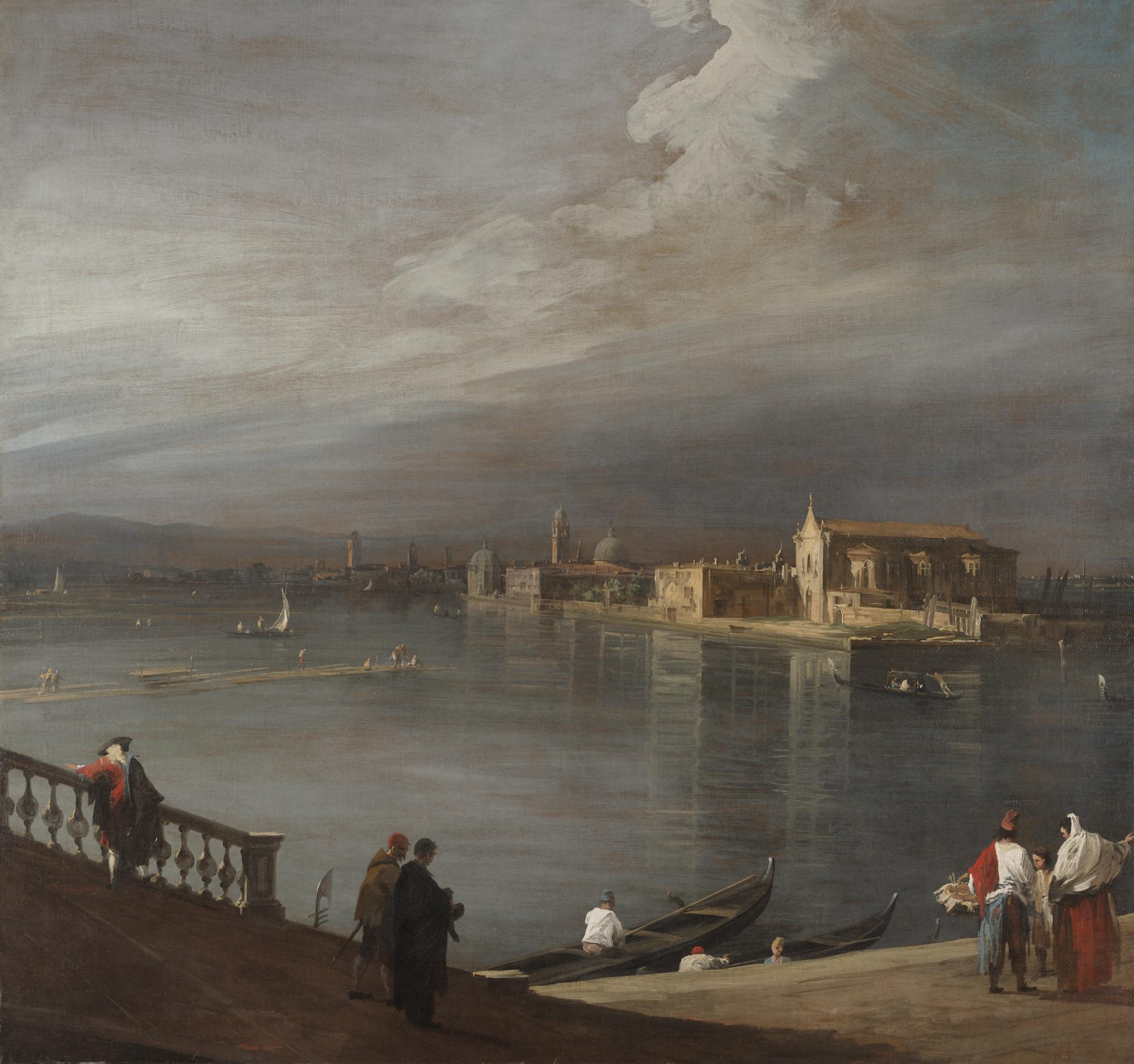
The describer will choose a work of art in the gallery to describe, while the drawer, back turned toward the artwork, illustrates their partner’s description. The describer should be as specific as possible! Think about what you’re seeing: is it a portrait or a landscape? A bed or a chair? Is the tree at the top or the bottom of the painting?
Once the describer is finished, the drawer will turn around to compare their drawing to the real work of art. This activity often has funny results, but it also tests your powers of interpretation! As a describer, how well were you able to describe the work of art in front of you? Is there anything you missed or something you could have described in different terms?
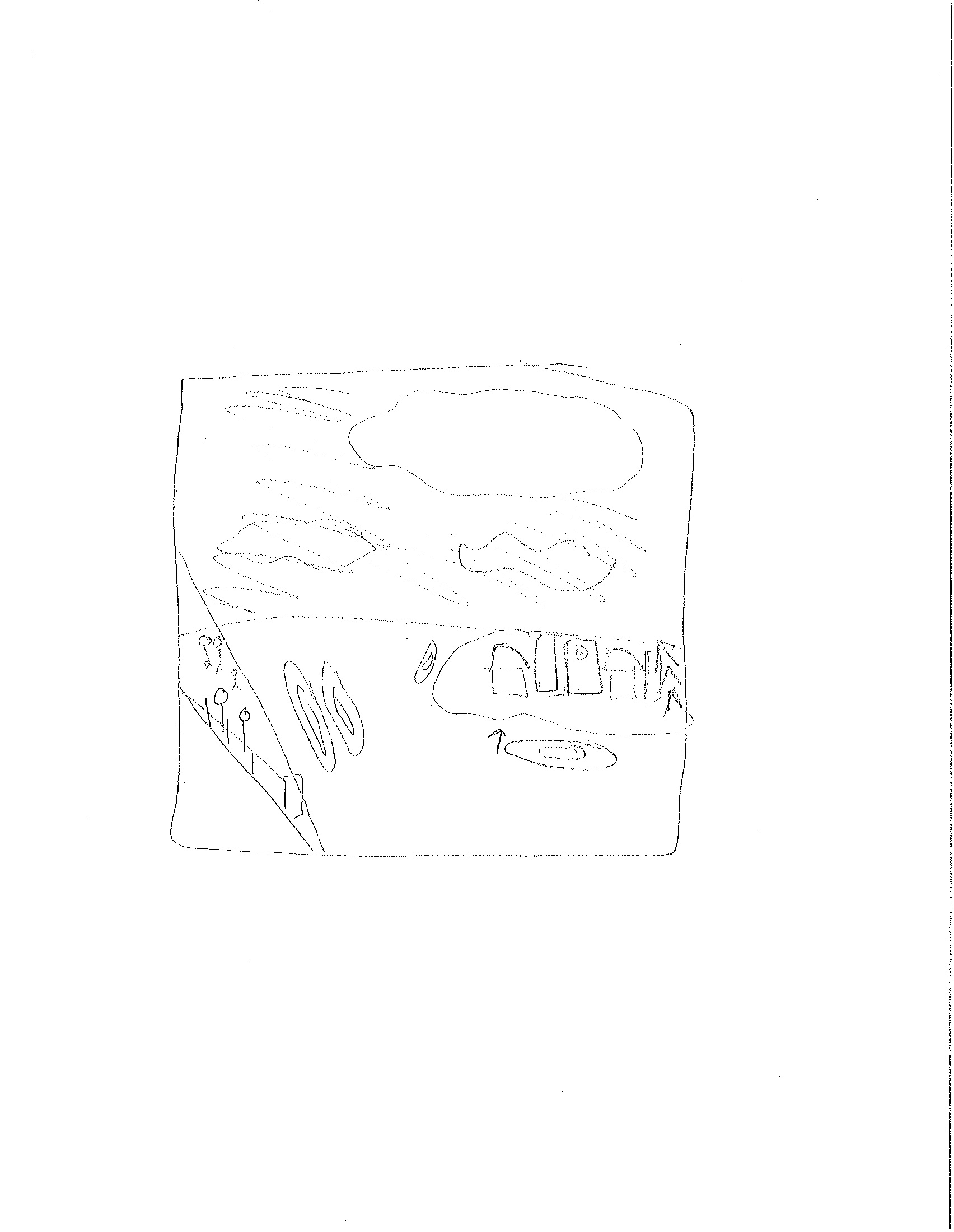
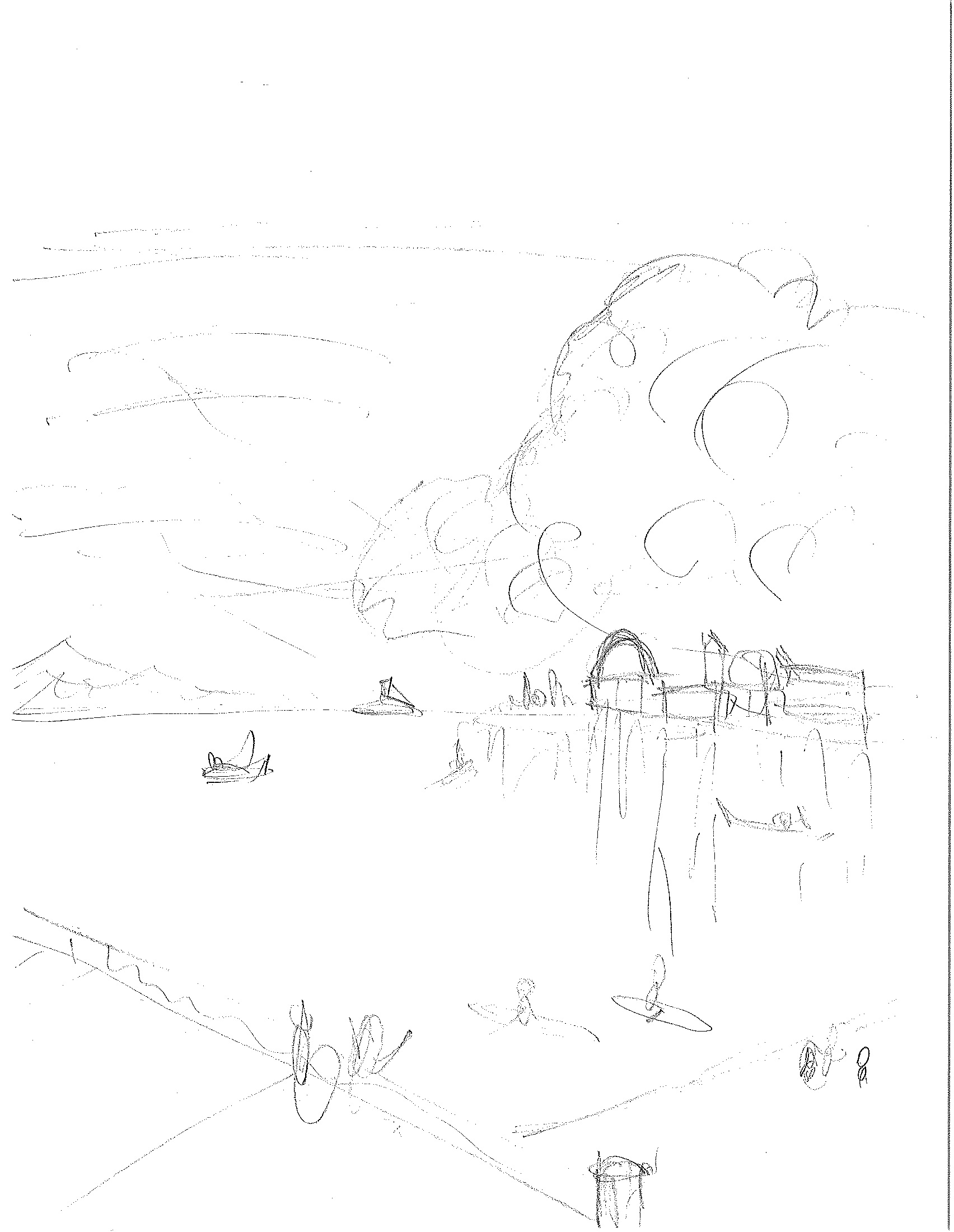
As the drawer, what kind of information would you need to more accurately represent the work of art described to you? Did you need information about expression, location, or pose? Sharing feedback with each other expands your art vocabulary and your visual literacy. For both artists and art appreciators, this is a great exercise in expanding your visual literacy! Check out some more examples below:
Canaletto, San Cristoforo, San Michele, and Murano from the Fondamenta Nuove, Venice, 1722–1723, Dallas Museum of Art, Foundation for the Arts Collection, Mrs. John B. O’Hara Fund
And don’t miss student work from Booker T. Washington and other DFW High Schools at Young Masters, open through April 16.
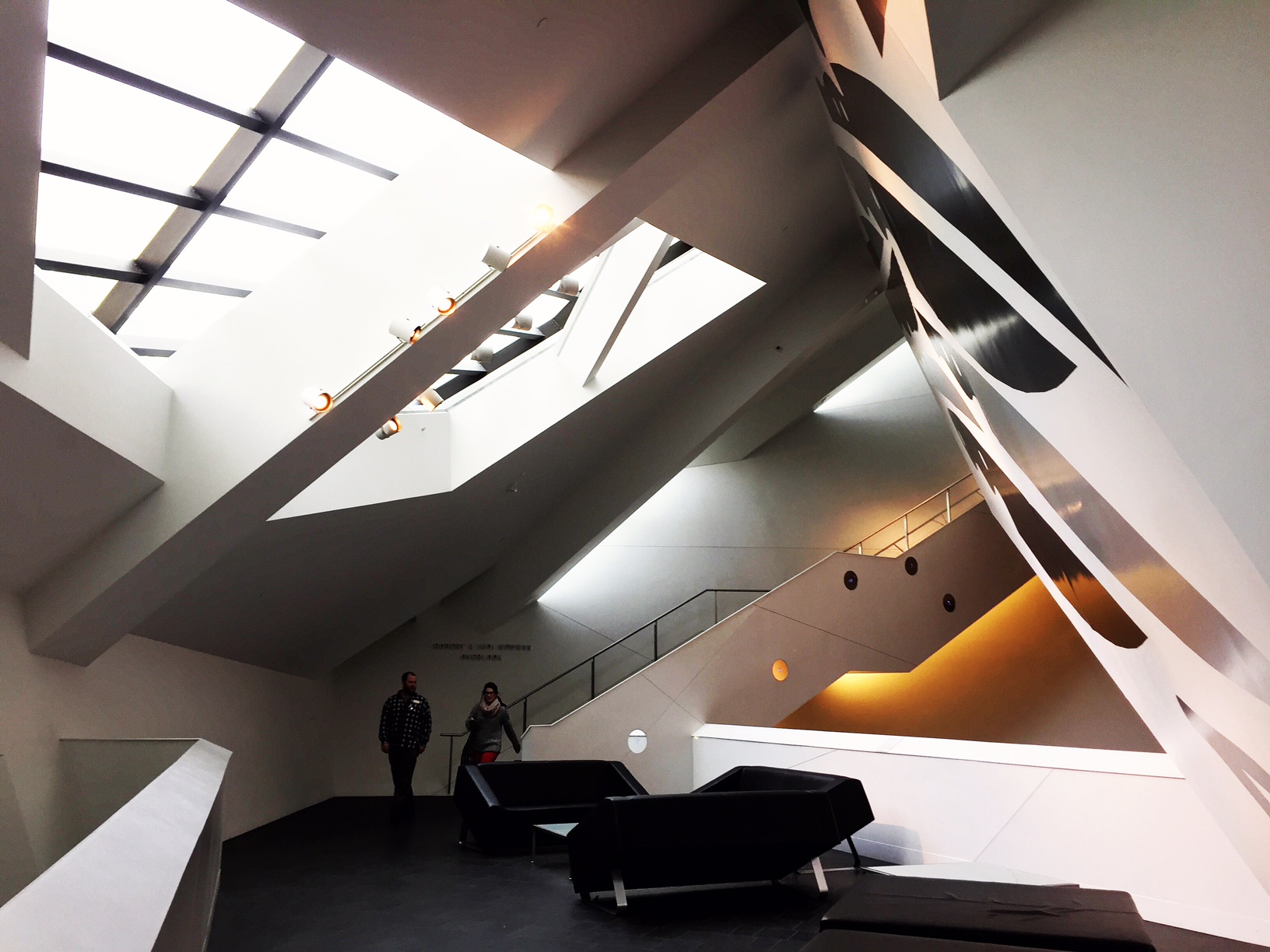
Each of the McDermott Interns here at the DMA have the opportunity to participate in an approved professional development opportunity. In early February, I took a trip up to Denver to learn from their Education staff and observe some of their Access Programs. I also connected with Access Gallery, a smaller local nonprofit. I had never been to Colorado and was blown away by both the geographical beauty and the warm welcome I received from each of the museum and art professionals with whom I was able to speak.
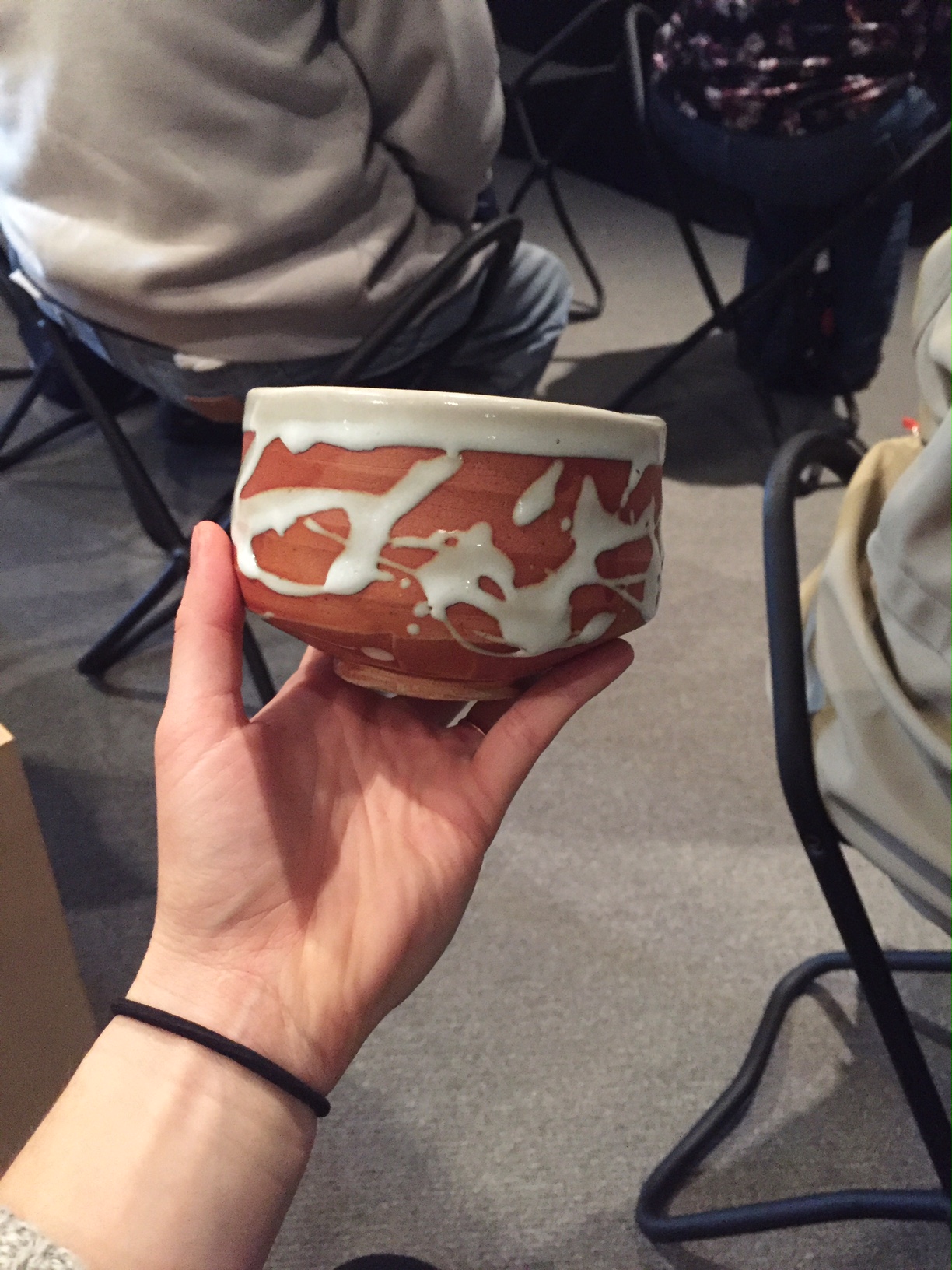
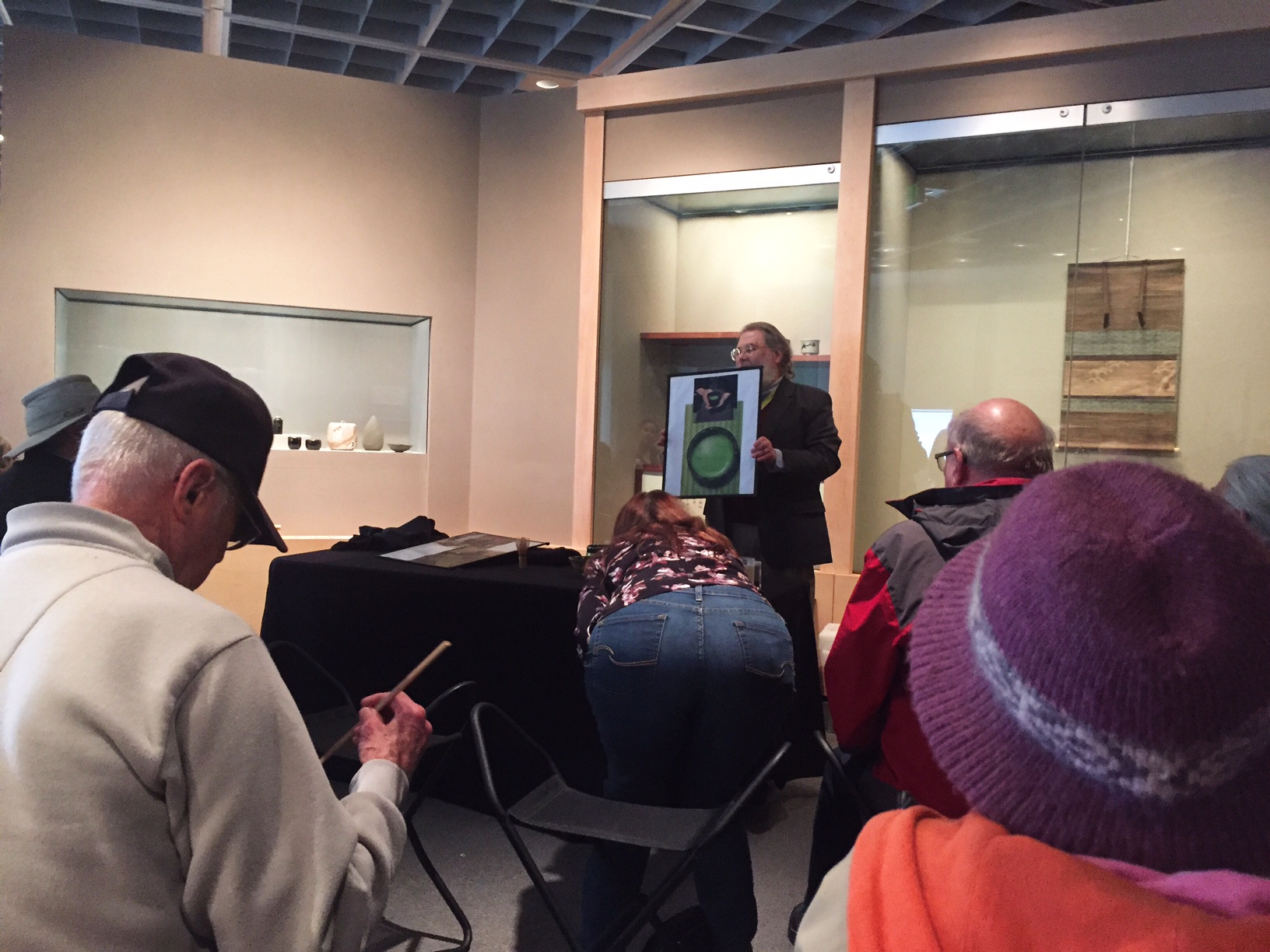
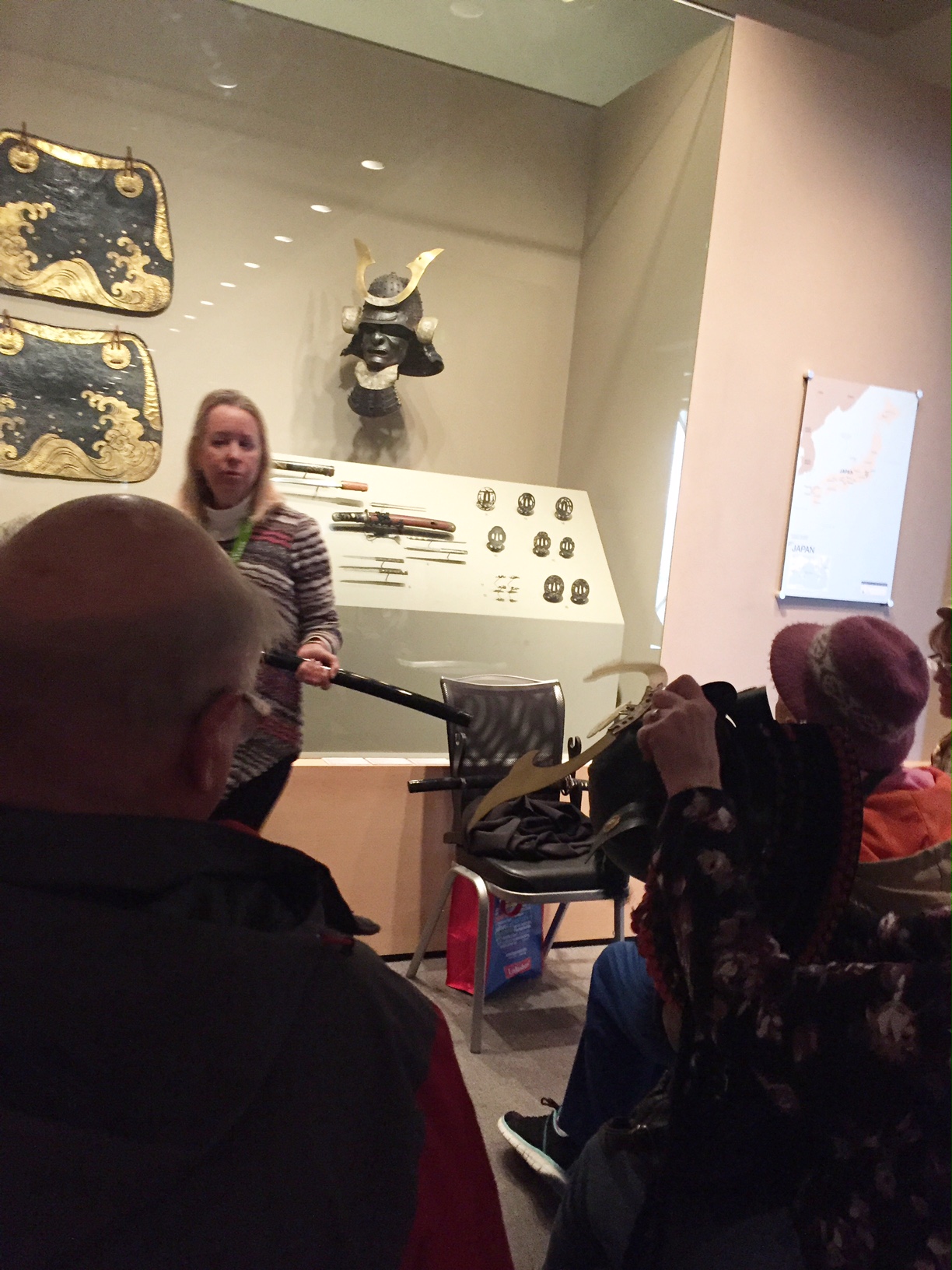
On my first full day, I met up with three different members of the Education Department at the Denver Art Museum, then observed their Art and About Tour, which is similar to the Dallas Museum of Art’s Meaningful Moments program that serves individuals with early stage dementia and their family members or caregivers. On this tour, we went to the Japanese art galleries and learned about Japanese tea ceremonies and Samurai.
Here are some photo highlights from my trip!
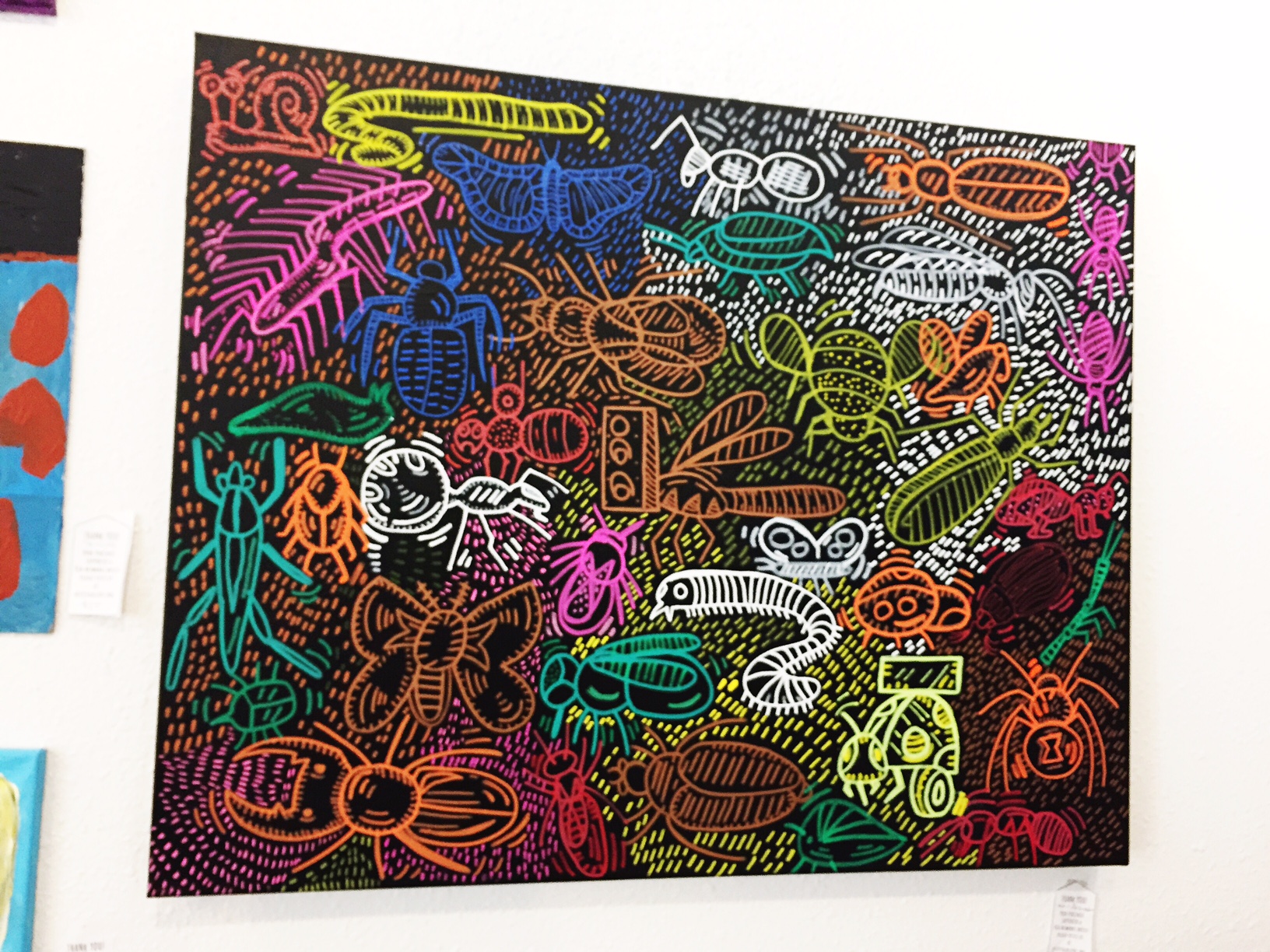
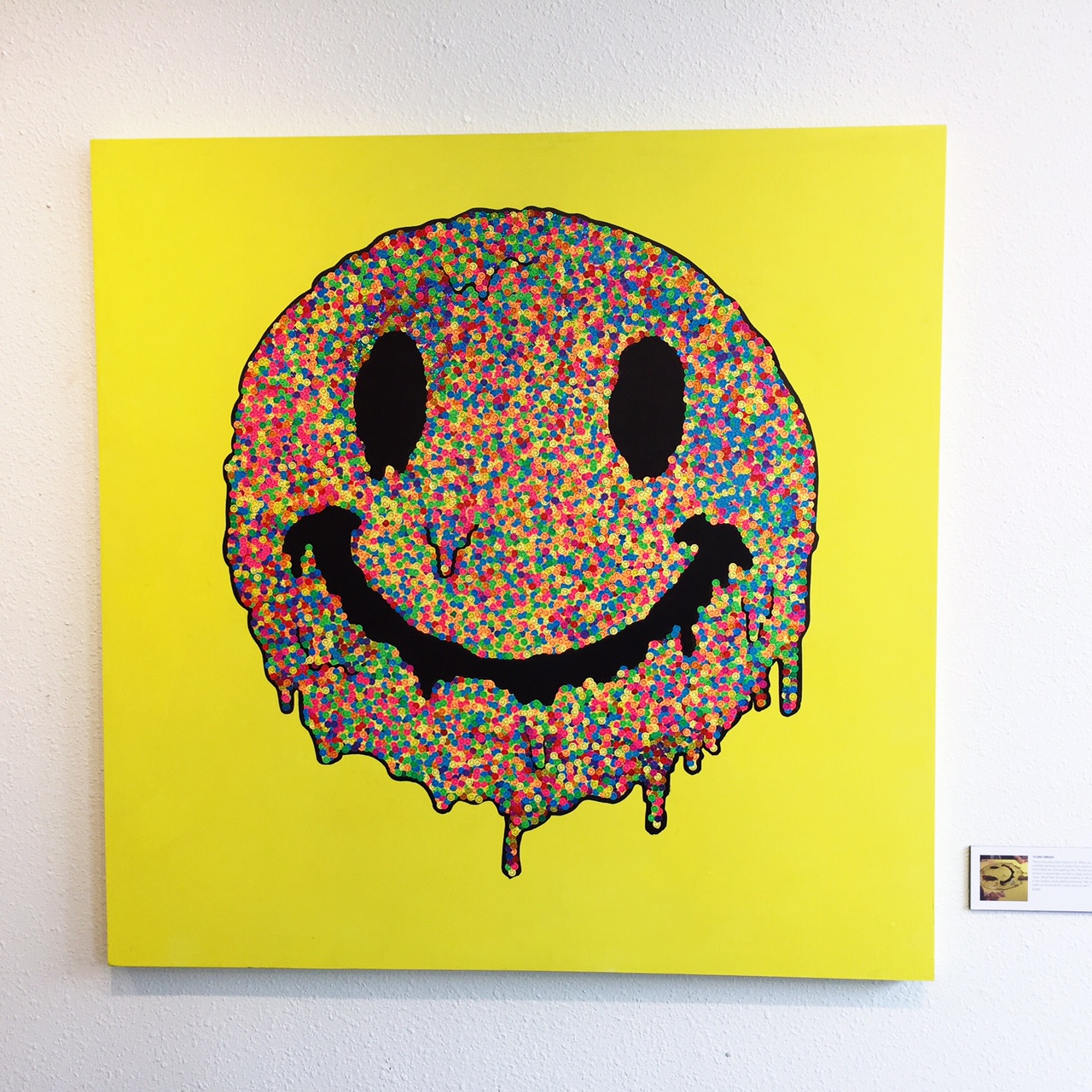
On day two, I met with the Director of the Access Gallery, who gave me a tour of their space and of their current gallery show, Stick’em Up Chuck, a show of artwork made out of donated stickers.
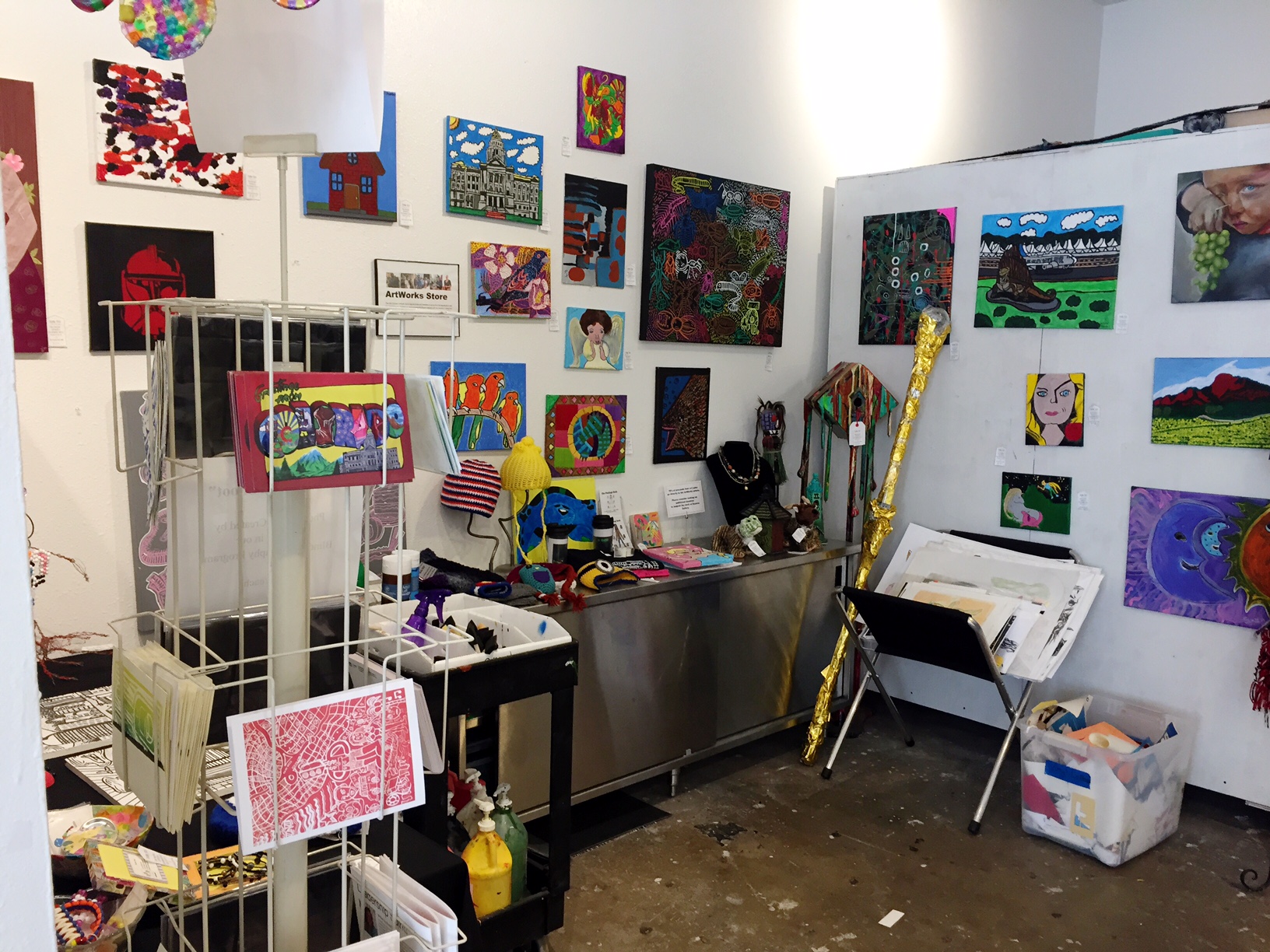
Take a peek at some of the students’ artworks, their work space, and one of the pieces hanging in Stick’em up Chuck!
The Access Gallery is a drop-in style art-making space where teens and young adults can learn about art, develop their skills, and gain economic opportunity. The students all have a chance to sell their individual art pieces in the gallery’s store, as well as contribute to the larger pieces that are on sale as part of the current gallery show. Through these opportunities, mentally or physically disabled students who may not be able to hold a traditional job gain access to valuable skills like teamwork, time management, and listening to a boss.
As a growing museum professional, this trip was truly enlightening and I’m so grateful to have gotten to experience the incredible programming going on in Denver!
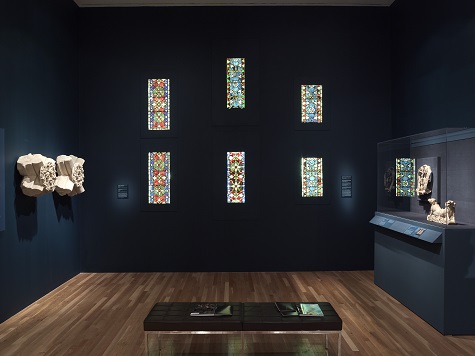
We are in the final two weeks of Art and Nature in the Middle Ages and to celebrate we are sharing insight from stain glass artist Judith Schaechter modern experience with the medium featured in the Winter 2017 issue of Artifacts.
Installation views
Art and Nature in the Middle Ages explores medieval works in a variety of media, including beautiful examples of stained glass. This particular art form was perfected during the Middle Ages, and little has changed in the practice of making stained glass in the ensuing centuries. While this once fairly common medium is not widely used by contemporary artists, Philadelphia-based artist Judith Schaechter is known for her work in stained glass. Artifacts asked her why she is drawn to working in this medium and what similarities she sees between modern stained glass works and those created in the Middle Ages.
Stained glass reached its peak in the 12th century and it’s been downhill since then. Perhaps stained glass is an odd medium to choose if one wishes to participate in the world of contemporary fine art, and, indeed, it is! Yet, I found it altogether irresistible.
Although I went to art school to study painting, I knew almost instantly when I tried stained glass that it was what I wanted to pursue for the rest of my life. Why? I felt “in sync” with glass. When I was a painter, I painted fast and furiously, and ultimately threw everything out. This didn’t happen with glass because it was so labor intensive. By the time I managed to do something to the glass, I had developed feelings of attachment and was hardly going to throw it away.
I found the beauty of stained glass to be the perfect counterpoint to ugly and difficult subjects. Although the figures I work with are supposed to be ordinary people doing ordinary things, I see them as having much in common with the old medieval windows of saints and martyrs. They seem to be caught in a transitional moment when despair becomes hope or darkness becomes inspiration. They seem poised between the threshold of everyday reality and epiphany,
caught between tragedy and comedy.
My work is centered on the idea of transforming the wretched into the beautiful—say, unspeakable grief, unbearable sentimentality, or nerve-wracking ambivalence—and representing it in such away that it is inviting and safe to contemplate and captivating to look at. I am at one with those who believe art is a way of feeling one’s feelings in a deeper, more poignant way.
Medieval windows sought to confer inspiration and enlightenment on those who saw them. Beholding a stained glass window can enable, encourage. and literally enact the process of being filled with light. It sounds like some kind of preternatural phenomenon, but it’s a physical fact. While one is busy identifying and empathizing with the image, one also experiences physically the warming, filling sensations of light. It’s so persuasive not because the pictures are convincing narratives but because the colors are overwhelming and the light is sublime—and, by golly, it’s coming from inside you, it’s part of you.
Judith Schaechter has lived and worked in Philadelphia since graduating in 1983 with a BFA from the Rhode Island School of Design Glass Program. Her work is in the collection of the Metropolitan Museum of Ar t, the Victoria and Albert Museum, the Hermitage, the Philadelphia Museum of Art, the Corning Museum of Glass, the Renwick Galler y of the Smithsonian Institution, and numerous other public and private collections.
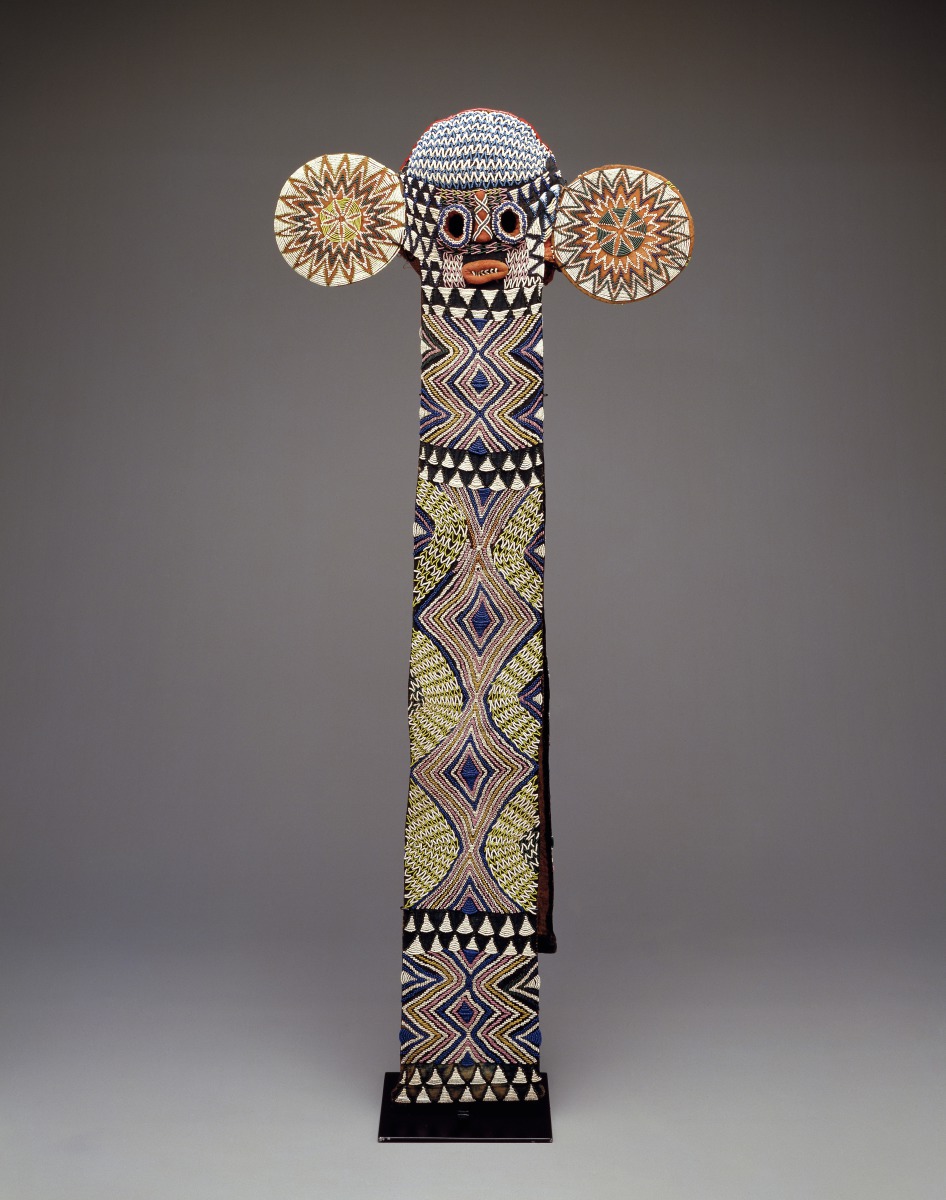
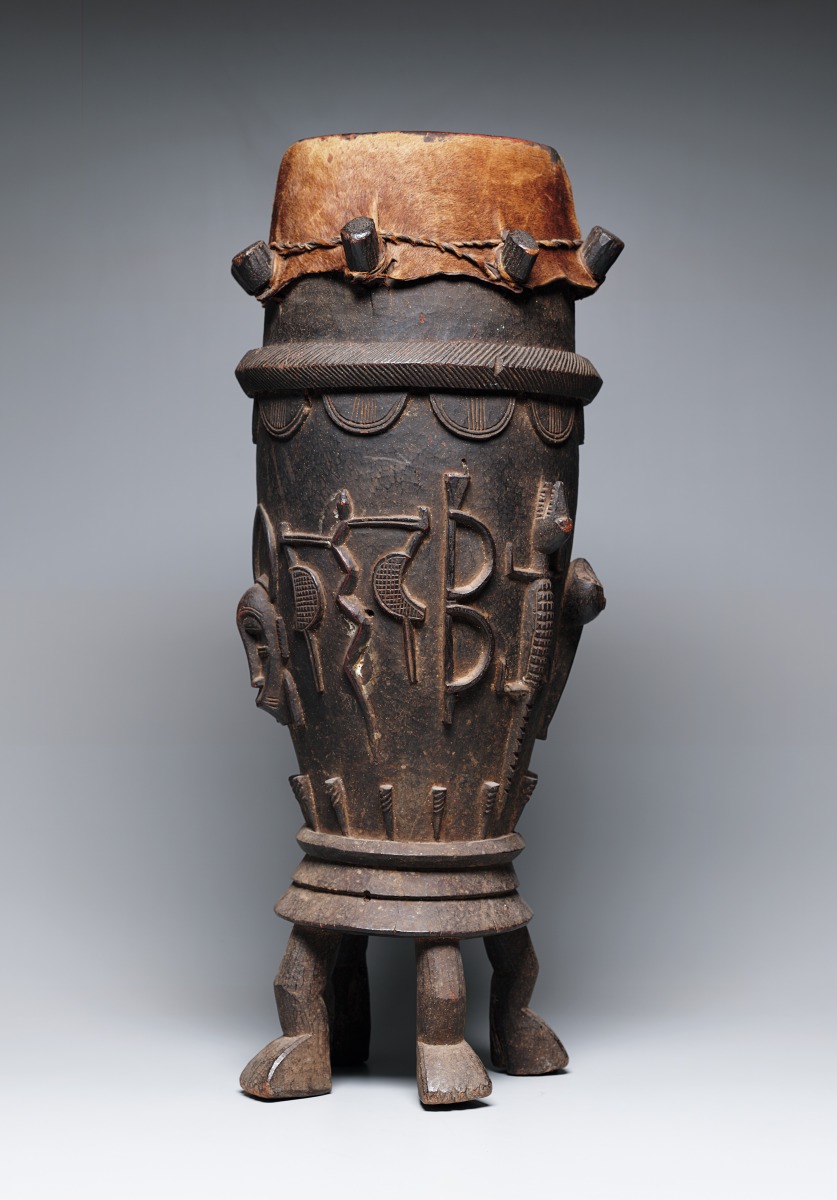
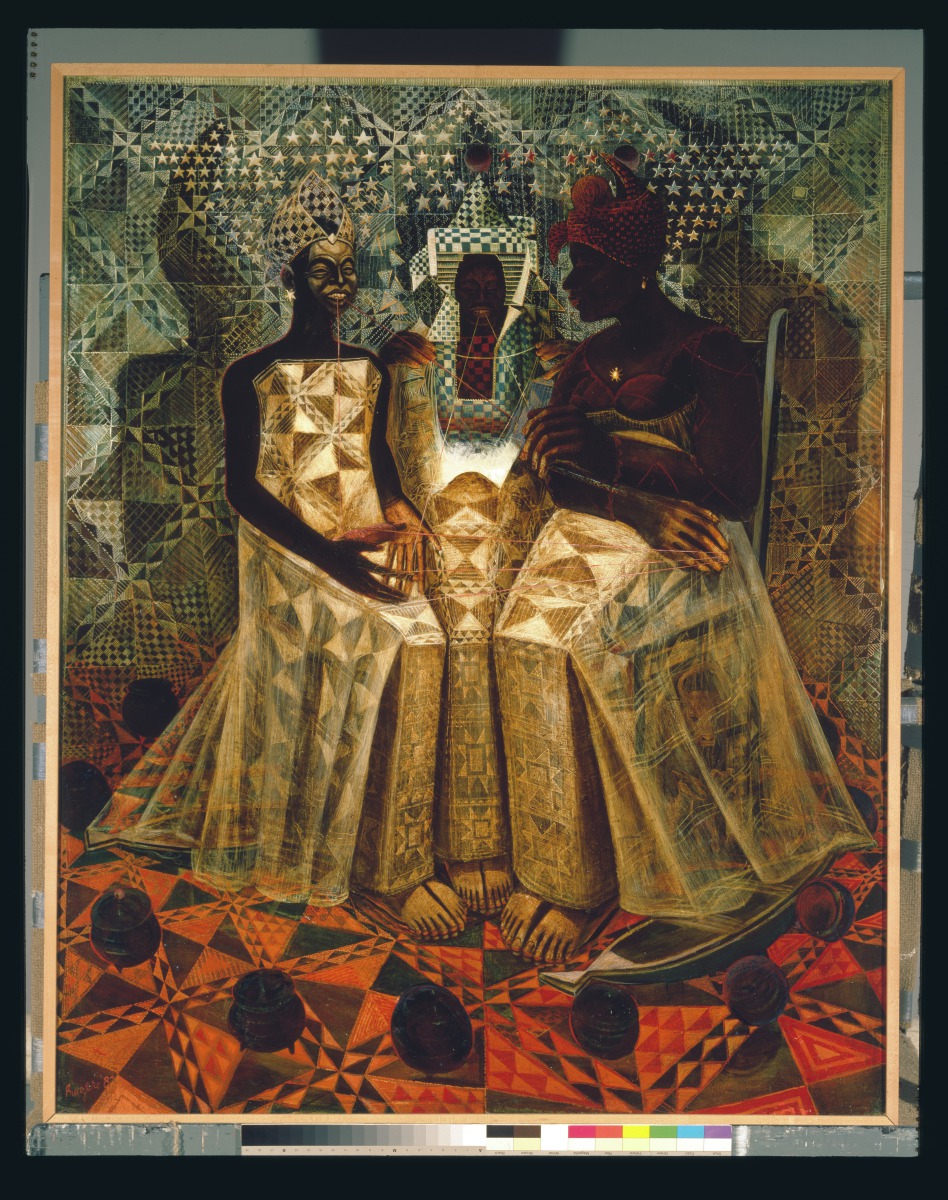
During the month of February, we’ve been celebrating the legacy, contributions and culture of black persons through our Go van Gogh outreach program, African and African-American Art. With the help of our wonderful volunteers, elementary school children across Dallas have learned about two works of art that were made in Africa and two works of art that were made in the United States by African-American artists.
Elephant Mask (mbap mteng), Africa, Cameroon, Bamilehe peoples, c. 1920-1930, Dallas Museum of Art, Textile Purchase Fund
Drum, Cote d’Ivoire (Ivory Coast), Senufo peoples, 20th century, Dallas Museum of Art, Foundation for the Arts Collection, gift of Mr. and Mrs. Stanley Marcus
This African mask and drum are currently on view in the Museum’s 3rd floor Arts of Africa gallery. Come by for a closer look!
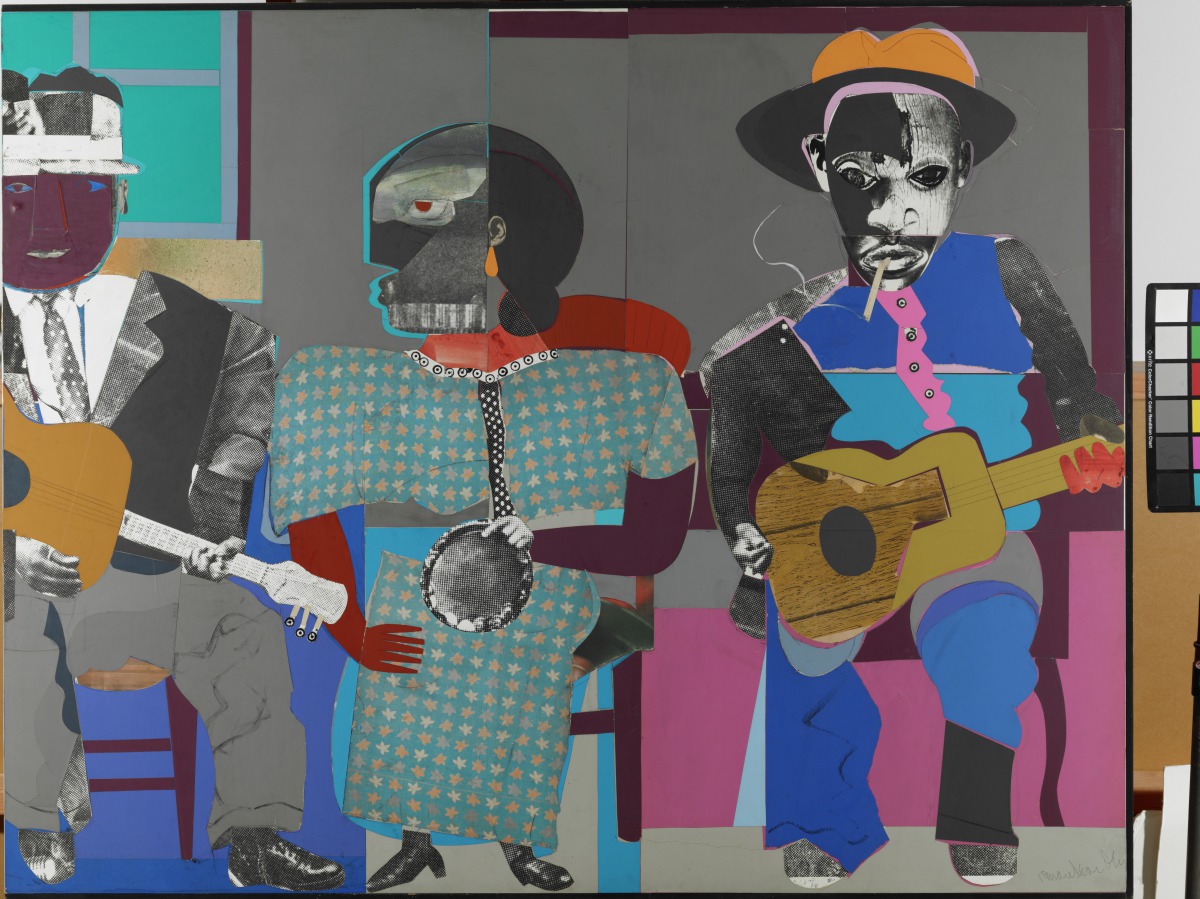
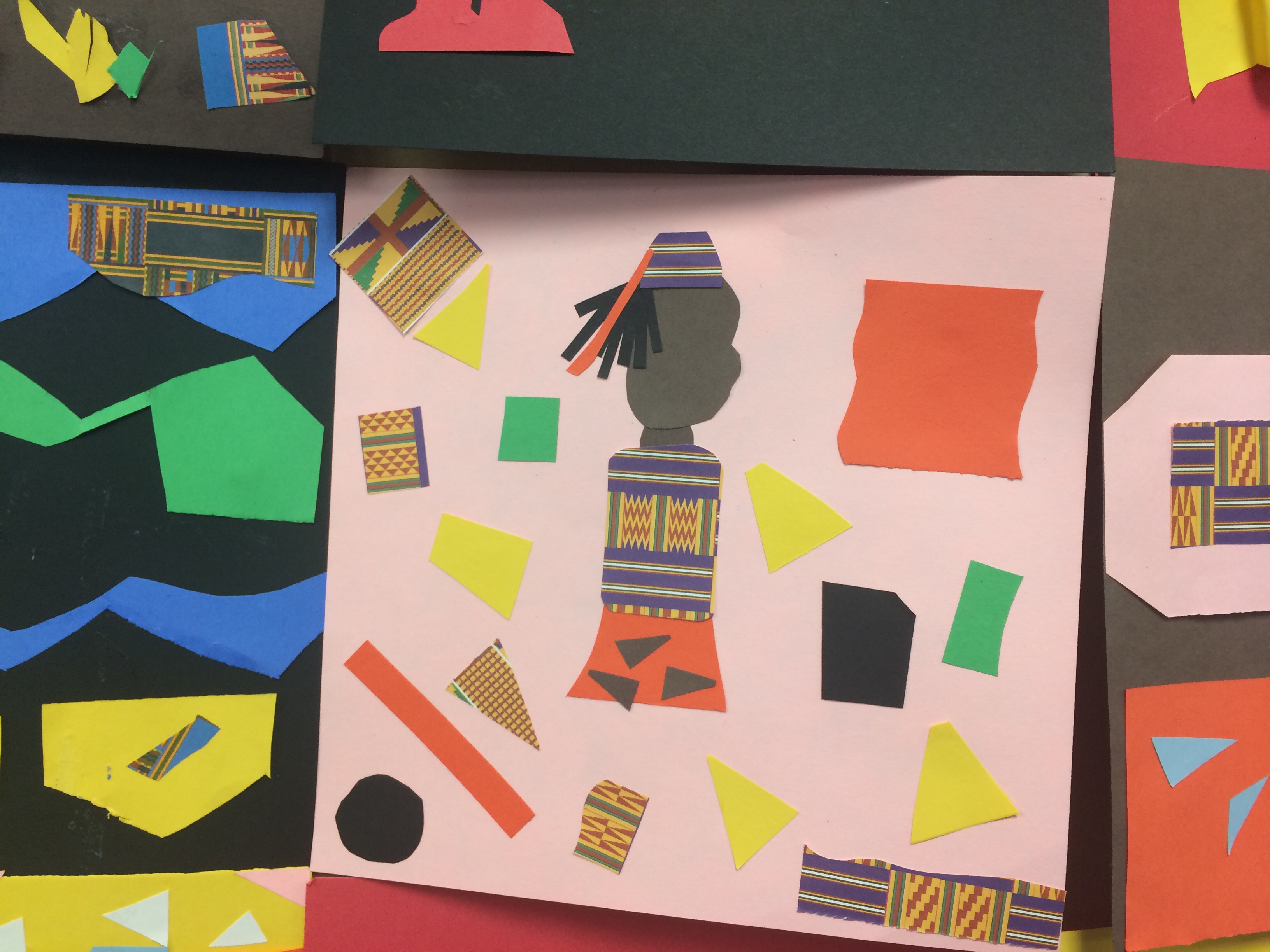
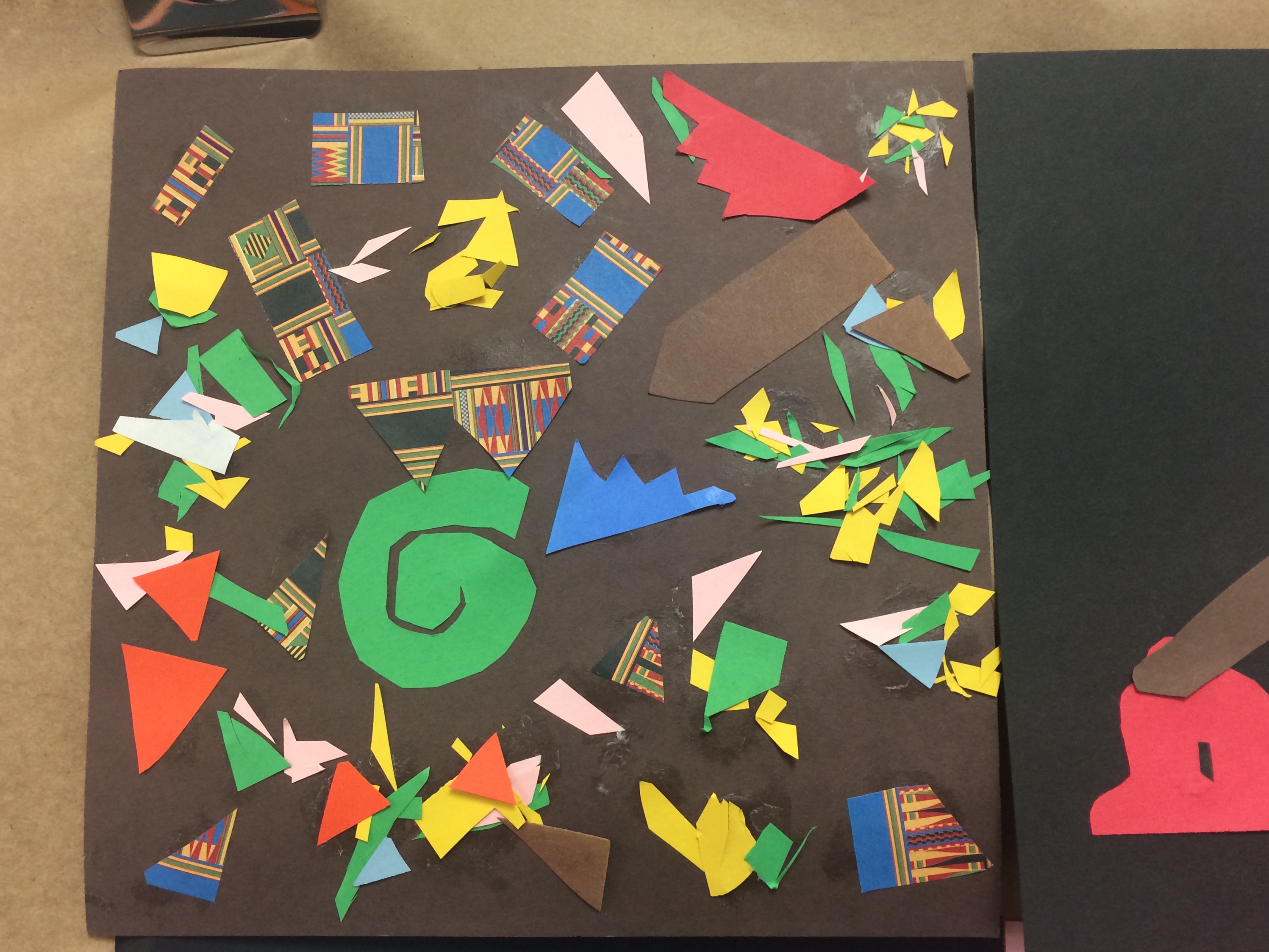
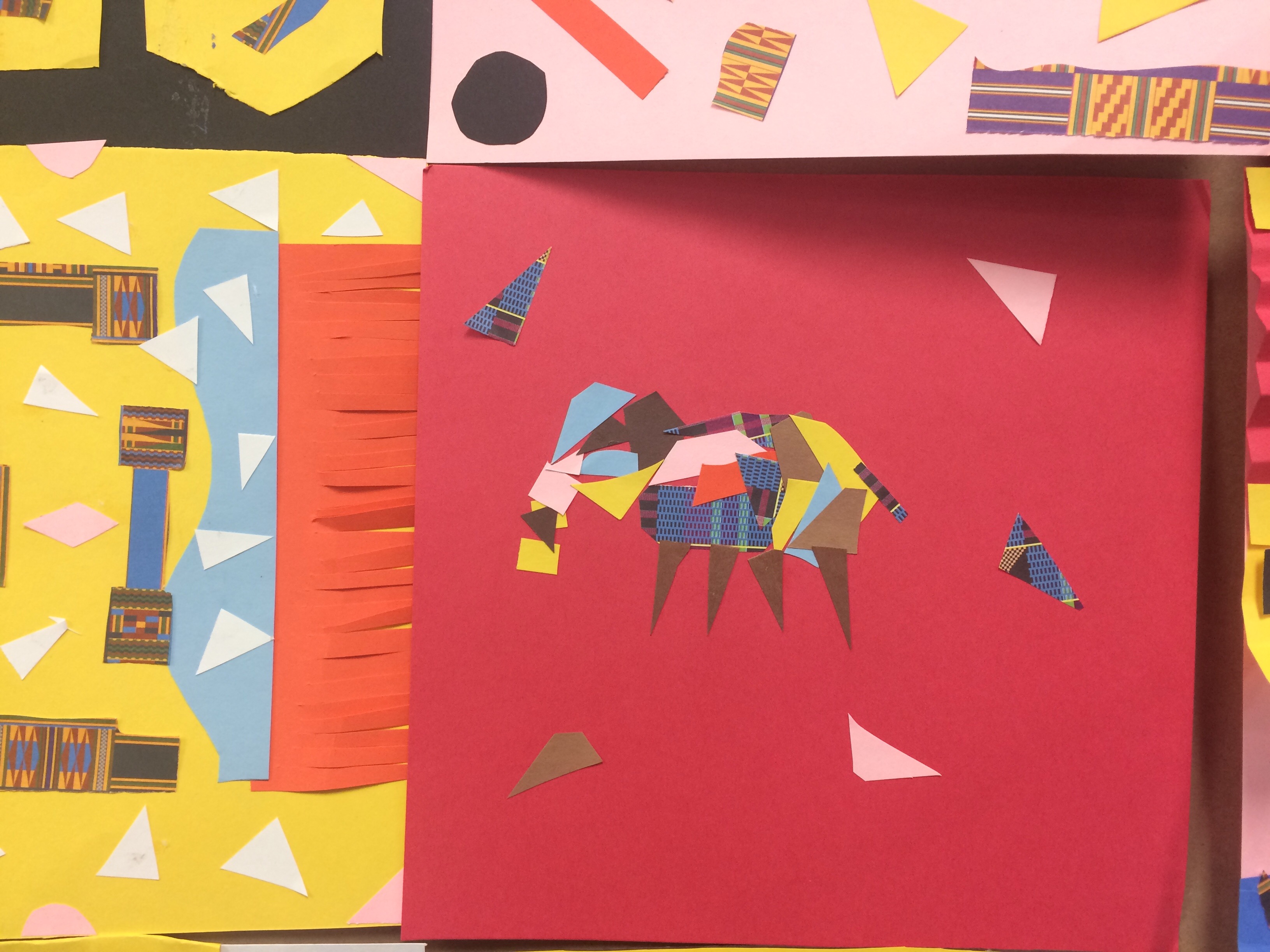
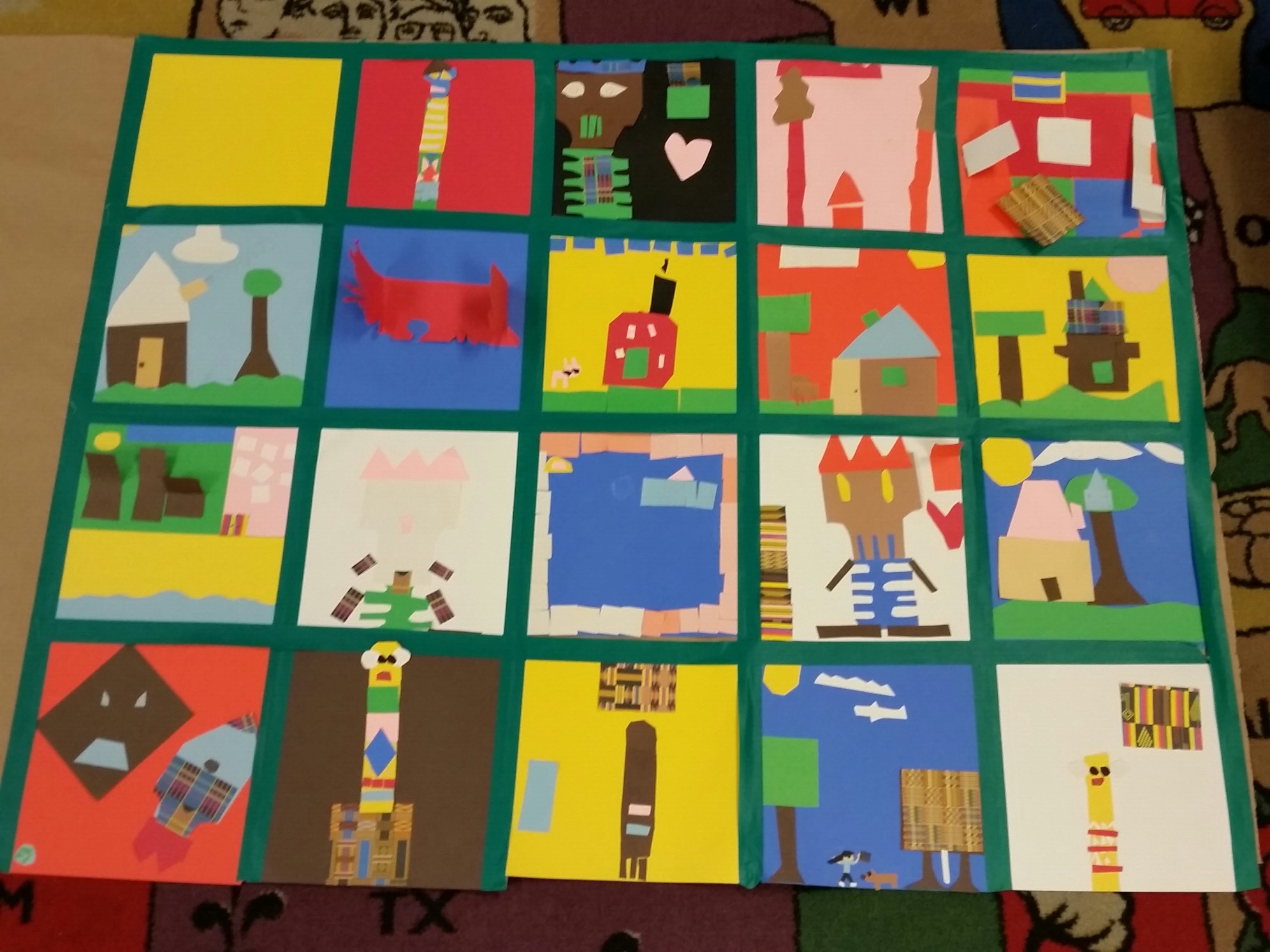
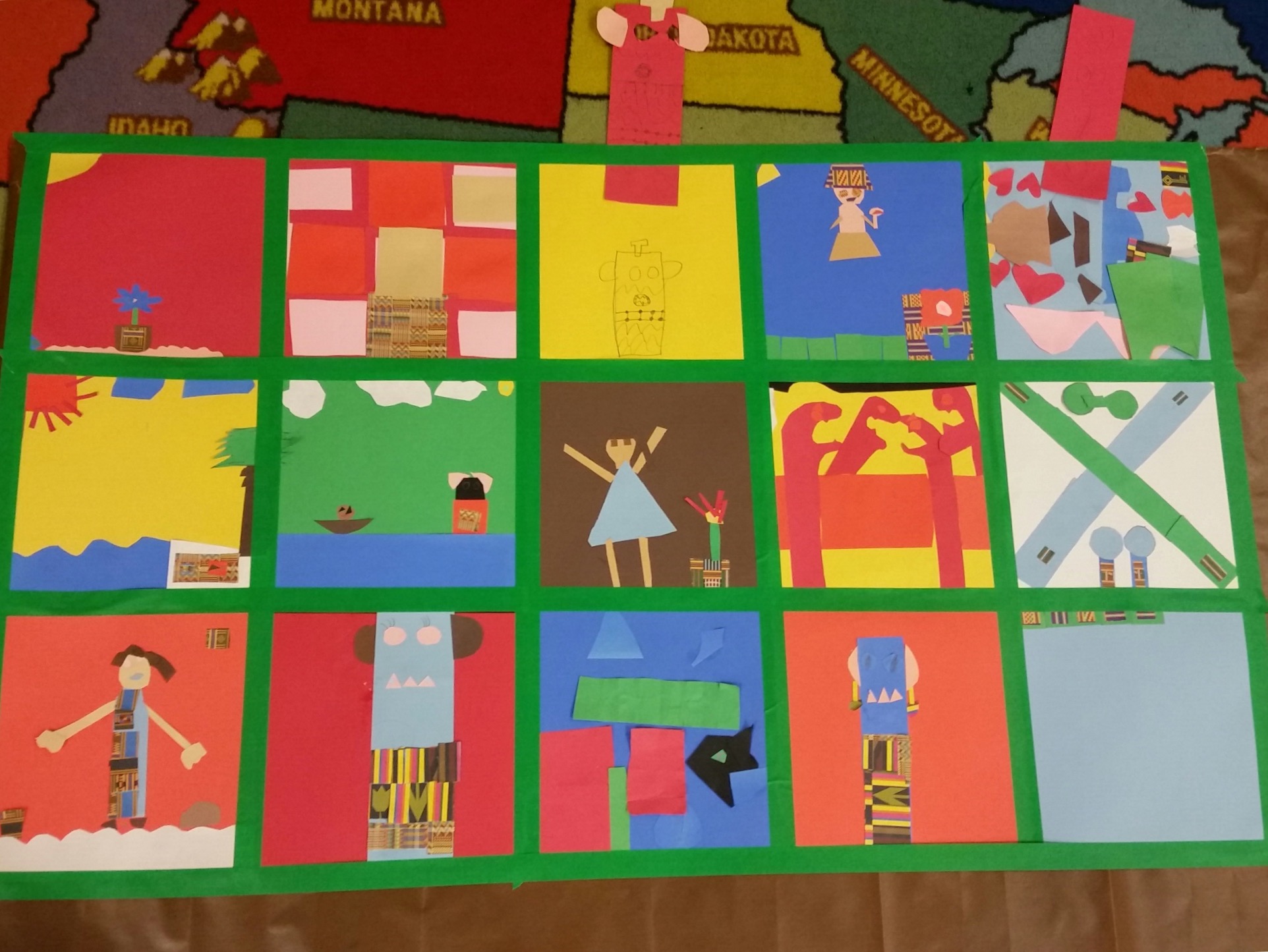
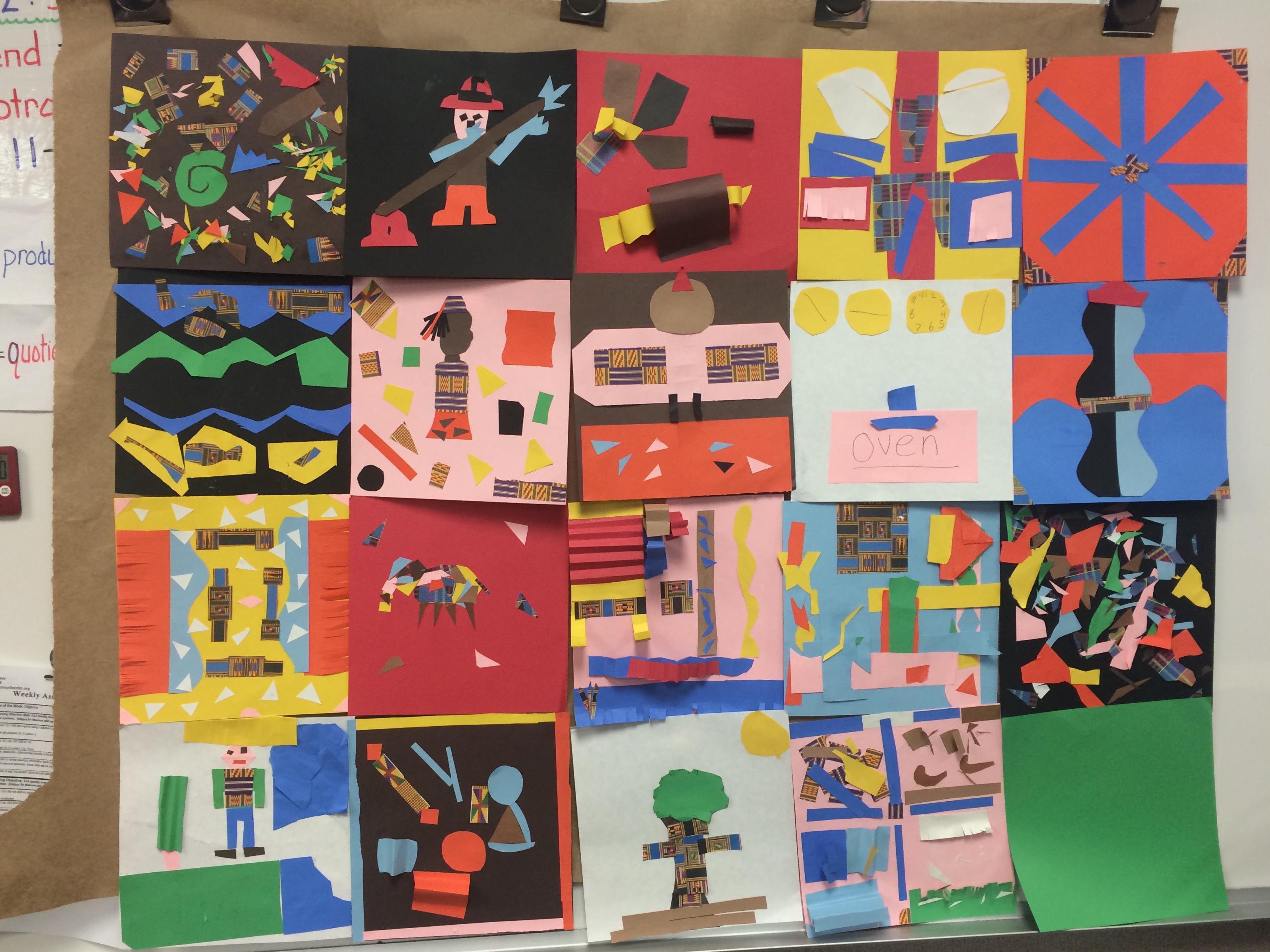
Inspired by the collage of Romare Bearden’s Soul Three and the community quilt within John Bigger’s Starry Crown, the students created their very own works of art:
Each “quilt” square holds symbols and images inspired by African and African-American art, as well as the cultural identities of the artistic kiddos. Happy Black History Month!
Angela Medrano
McDermott Intern of Gallery and Community Teaching
Think back to your favorite scene in a movie. Was it action packed? Romantic? Full of suspense? Chances are that the music—the film’s score—helped create the mood of the scene.
Now think about your favorite work of art. How would you describe its mood or feeling? How did the artist convey that mood? When we describe the mood of a work of art, we typically think about visual elements like color, the quality of the brushstrokes, and composition. But sometimes, even with a work of art, music can enhance your experience.
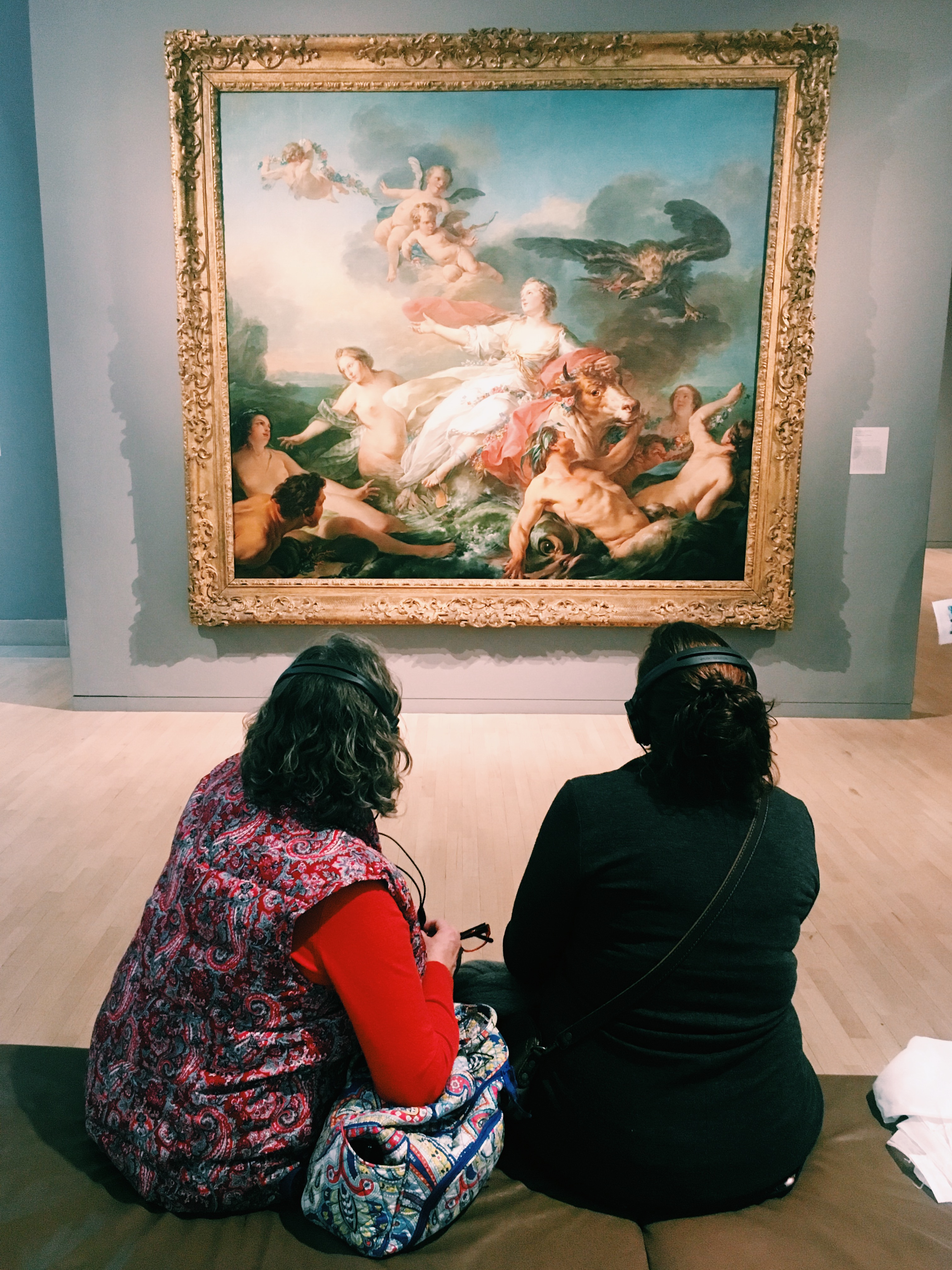
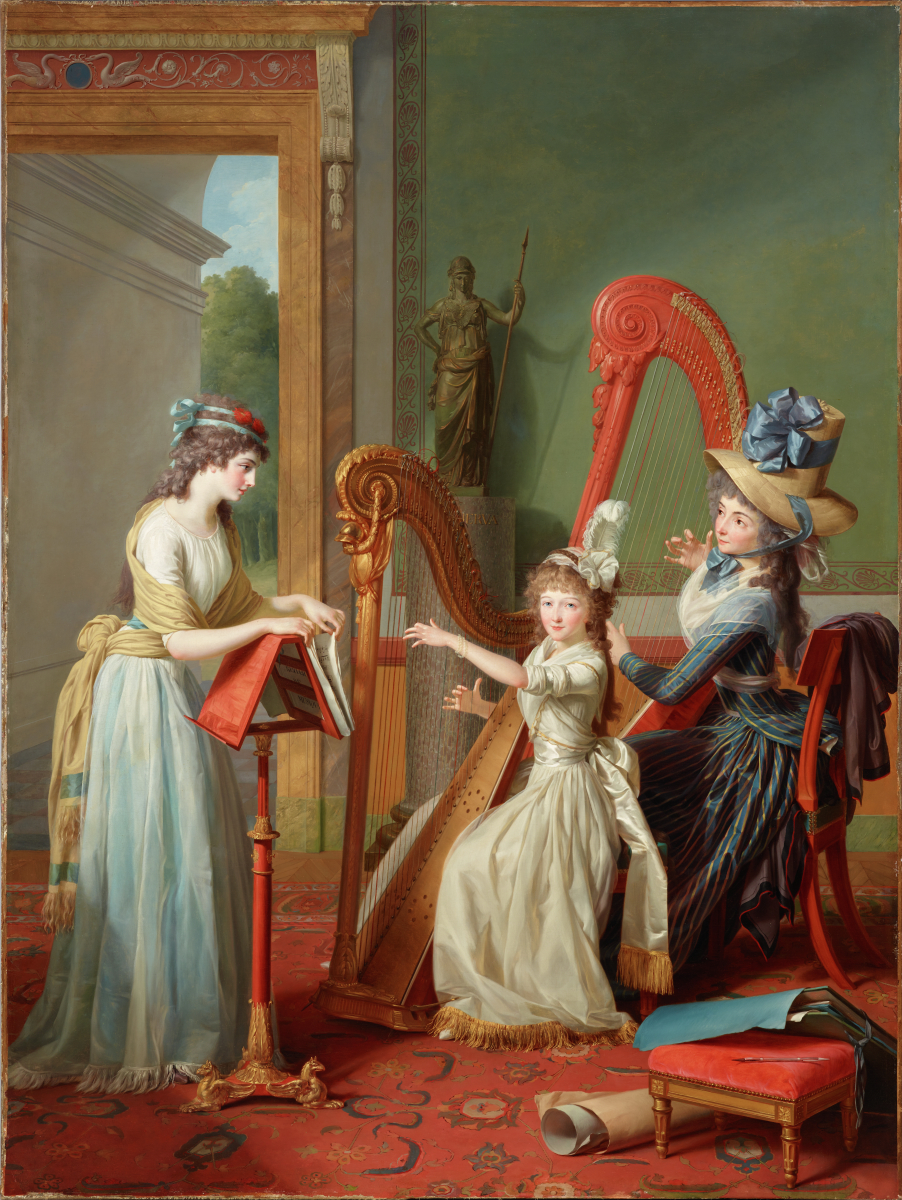
We recently paired up with two local musicians, Clint Niosi and Claire Hecko, and invited them to imagine one minute “film scores” for a handful of works of art in the 18th Century European Gallery. Meet the musicians, learn about their process, and hear a sample of their work below.
Tell us about yourselves-in 50 words or less.
Clint Niosi: I’m a songwriter, film score composer, and audio engineer from Fort Worth. I also work as a Digital Technology Specialist for the Art + Art History Department at UT Arlington.
Claire Hecko:INFP, musician, composer, picture maker, seamstress, cat lover and motorcycle enthusiast, among other things. My primary instruments are viola and bass. I like long walks in the desert and good manners.
How would you describe your process of creating a “score” for a work of art?
Clint Niosi: While I wasn’t really sure how to approach it initially, I ended up using basically the same process I would have used for a film score. I try to find the emotional core of the scene and use the music to help move the story forward. Once I feel like I’ve found the mood I add or take away layers until it feels right with the picture.
Claire Hecko: I have very little education in music theory, so I’m not entirely sure how to best describe my process. I consider the feelings I want to embody in a piece and try to determine how to best represent them musically. Often, this entails picking up an instrument and just playing around on it until I come up with something that will serve as a foundation for the piece. From there, I begin adding layers to build a complete composition.
Were there any challenges?
Clint Niosi: Yes there were. Creating a modern composition outside the historical milieu in which the paintings are set seemed very daunting. Also, the limited duration of the format (one minute per piece) was an additional challenge. Some of the paintings have very complex stories and complicated emotions to convey. Ultimately I just dove in and had fun with it.
Claire Hecko: My biggest challenge was creating the “score” for The Harp Lesson by Jean Antoine Theodore Giroust – I had many ideas, but no access to (or training to play) a harp. Thankfully, technology allowed me to replicate the sound of a harp on a laptop.
What did you enjoy most about this opportunity?
Clint Niosi: It was such a treat to have a chance to collaborate with the DMA. I’m an art enthusiast and a long time fan of the DMA’s permanent collection. The chance to dive into something like this is something I will always remember. It was a learning experience.
Claire Hecko: My degree is in Art History, a subject close to my heart. The opportunity to represent a work of art through music was very exciting for me!
Stop by the Pop-Up Art Spot this Saturday to check out an iPod and listen to the “film scores” composed and recorded by Clint Niosi and Claire Hecko.
Jessica Fuentes
Manager of Gallery Interpretation and the Center for Creative Connections
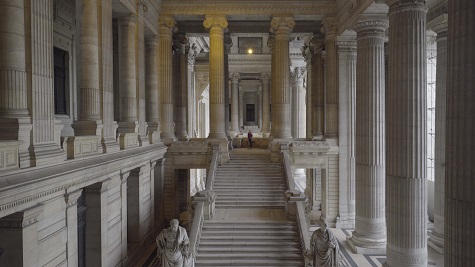
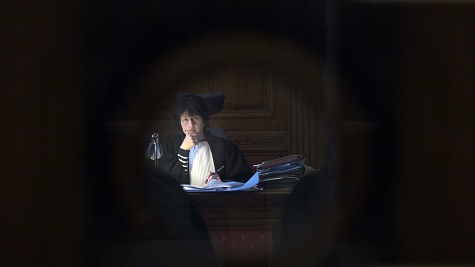
London-based artist Carey Young’s new video Palais de Justiceis a cinematic glimpse into the Brussels courthouse of the same name. The video begins with a lone man walking down a vast staircase. Hands in the pockets of his track pants, he appears far more casual than the 19th–century architecture that surrounds him. Over time, the video shifts from distant shots of people walking through the interiors to more intimate views of female judges at work. Observing them through smudged portholes in courtroom doors, the camera captures the judges in moments of authoritative posturing during trials: they stroke their chins, remove their glasses, and gaze across the room deep in thought.
The women we see through the portholes are, in fact, actual judges and not actors. Young shot Palais de Justice “guerilla” style for three weeks over a period of two years, catching the daily activities that occurred throughout the building. She did not begin the project with a preplanned narrative but instead pieced her footage together afterwards to form a more poetic picture of the courthouse. Young especially wanted to highlight the presence of the female judges to subvert common assumptions about who holds the power of law. Rather than seeing men in charge, we see only women occupying these prestigious societal roles.
In a brief conversation, Young explained to me that Palais de Justice marks an artistic departure for her. While her work often takes the form of conceptual text, performance, and photography, the video is much more metaphorical and dreamlike. Young further explained that she wanted the video to highlight the intent of the architect to express the “sublime scale of the law.” This is apparent in how Young has installed the work inside the gallery: the projection takes up an entire wall and, as a result, immerses the viewer. Surrounded by a soundtrack of vocal echoes and footsteps playing alongside the video footage, one sees the landmark building itself as another character among the judges and courthouse visitors.
The Palais de Justice was designed by architect Joseph Poelaert in celebration of Belgium’s independence from the Netherlands. A massive structure—over 200,000 square feet with 27 large courtrooms—it remains one of the largest courthouses in Europe. For Young, the monumental qualities of the building made it a perfect case study for her ongoing meditations on the performative nature of law. The architectural elements, especially the oculi through which we gaze, draw attention to our own roles as witnesses to the law in action. It makes us think not only about the institution of law but also about who has the power to exercise it.
With this in mind, Palais de Justice makes me think about how buildings shape our attitudes and behaviors. How does architecture command this kind of power? Does the architecture of a courthouse differ from, for instance, that of an art museum? What might a courthouse of the future look like?
These are only a few of the questions that Young’s powerful video raises. See it yourself at the DMA, along with other new and existing works by Carey Young, in Carey Young: The New Architecture, now through April 9.
Kelly Filreis is the McDermott Graduate Intern for Contemporary Art at the DMA.
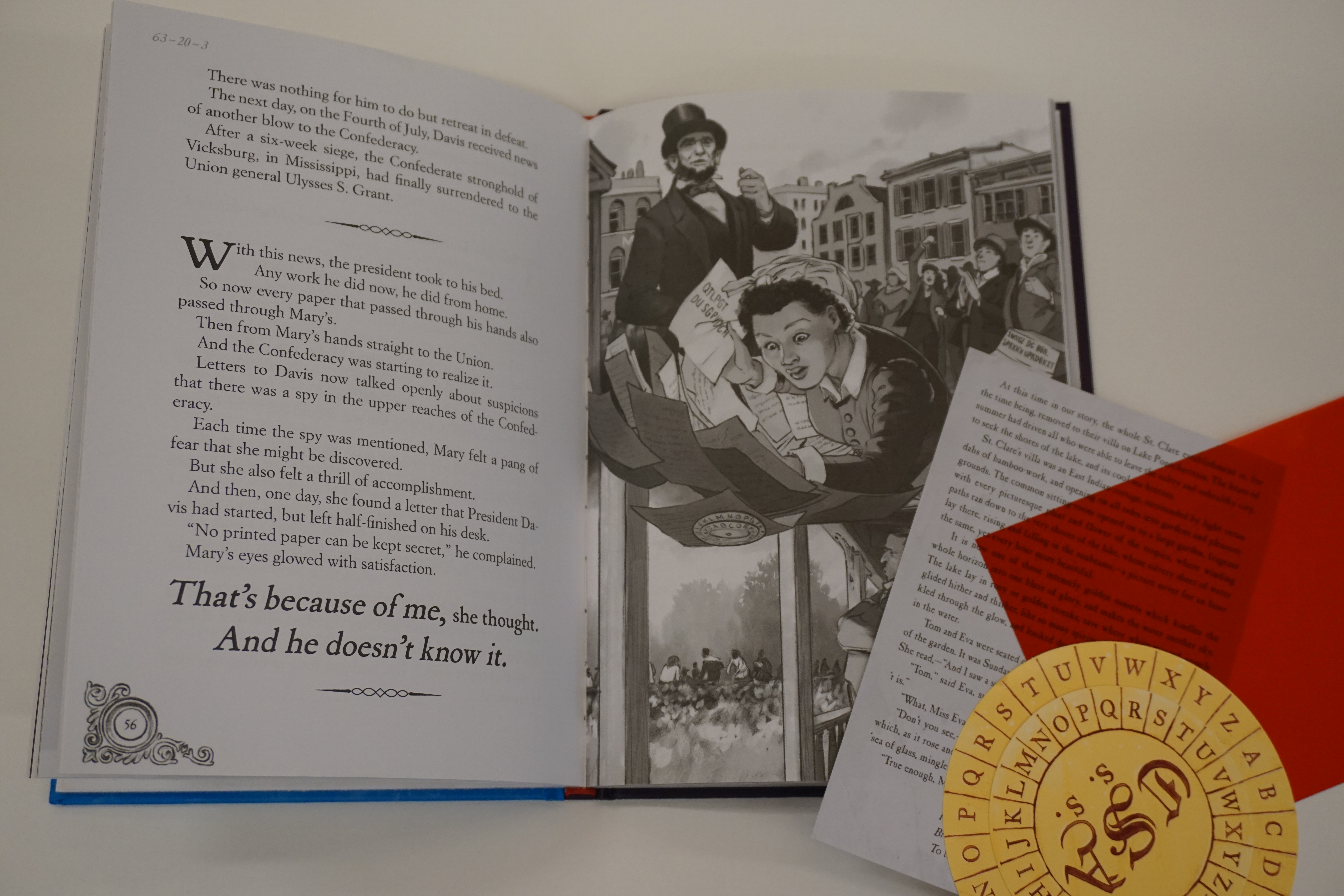
It’s April 1861, and Virginia has just seceded from the Union. Mary Bowser, a former slave, is recruited for a life-changing and dangerous mission—to act as a spy in the Confederate White House. Joining the staff as a maid, Mary finds herself in a position to smuggle out the secrets she finds on President Jefferson Davis’ desk. Hiding information in dress linings, passing secrets through the baker, sending coded messages using laundry hanging in the window—Mary’s life as a spy has all the elements of a suspenseful action movie!
Join us next Tuesday, February 28, when the acclaimed acting troupe The Story Pirates present Spy on History LIVE! and bring Mary’s story to life. The Story Pirates’ shows are interactive, engaging, and sneakily educational—and this one is like enrolling in Spycraft 101. The audience will learn spy techniques during the show (similar to the ones Mary used) to crack the mystery-within-a-mystery.
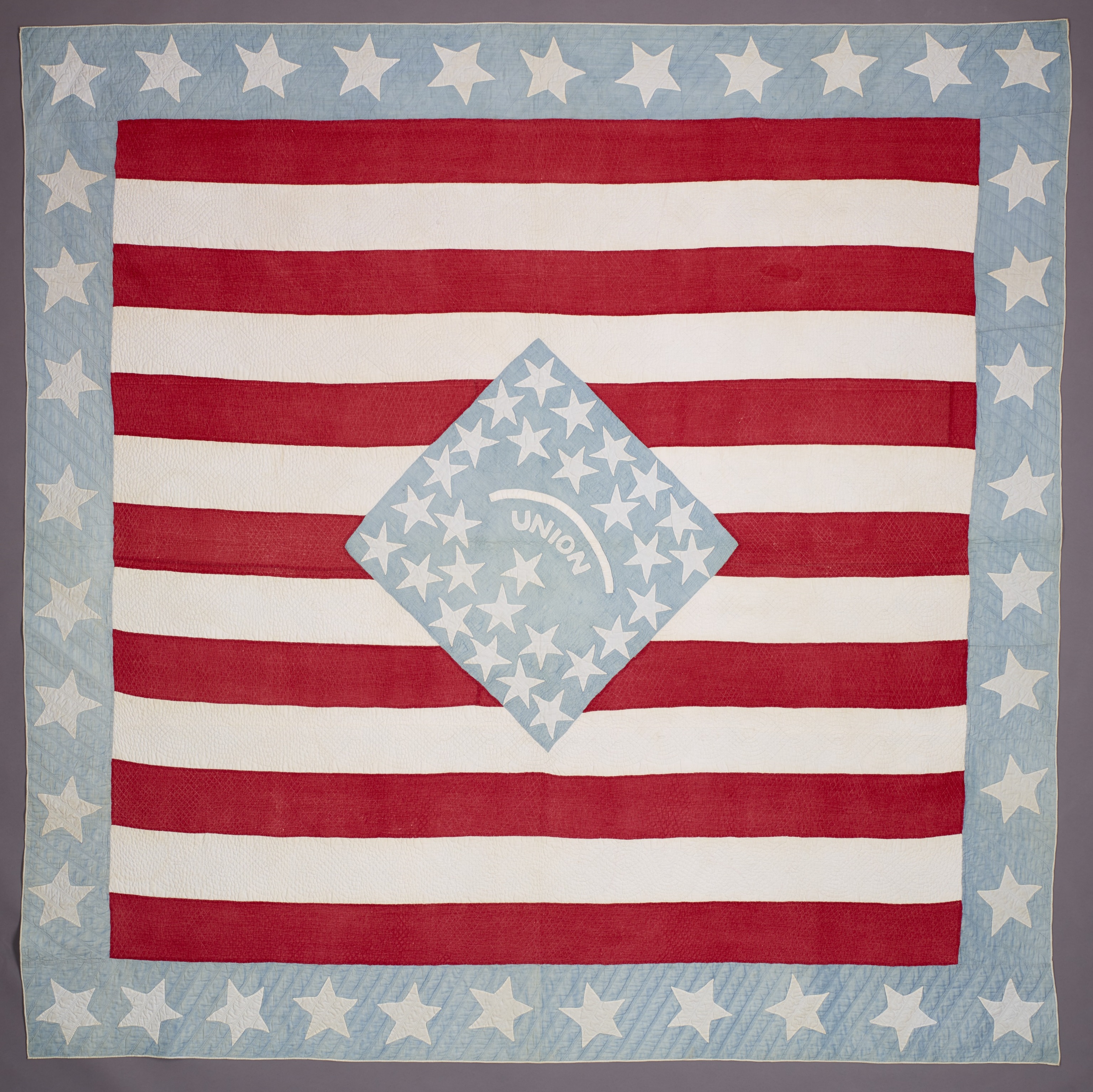
If Mary were alive today, I’d love to take her on a special tour of the Museum’s collection, showing her objects that might have a deeply personal meaning for her.
Quilt, maker unknown, c. 1860-1865, Appliqued cotton, Dallas Museum of Art, anonymous gift
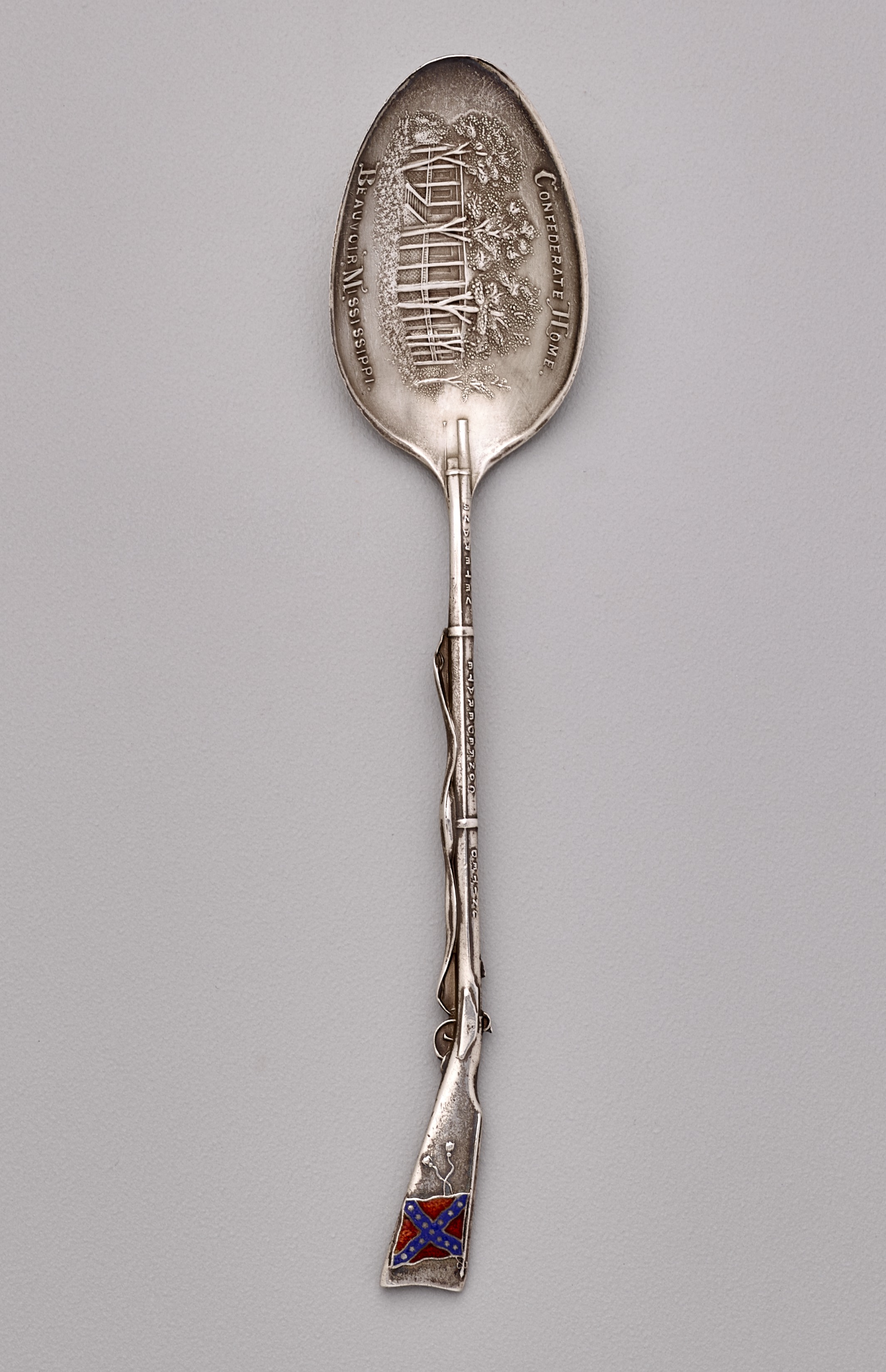
Souvenir spoon, c. 1900, silver stamped, Dallas Museum of Art, gift of Margaret Tremblay
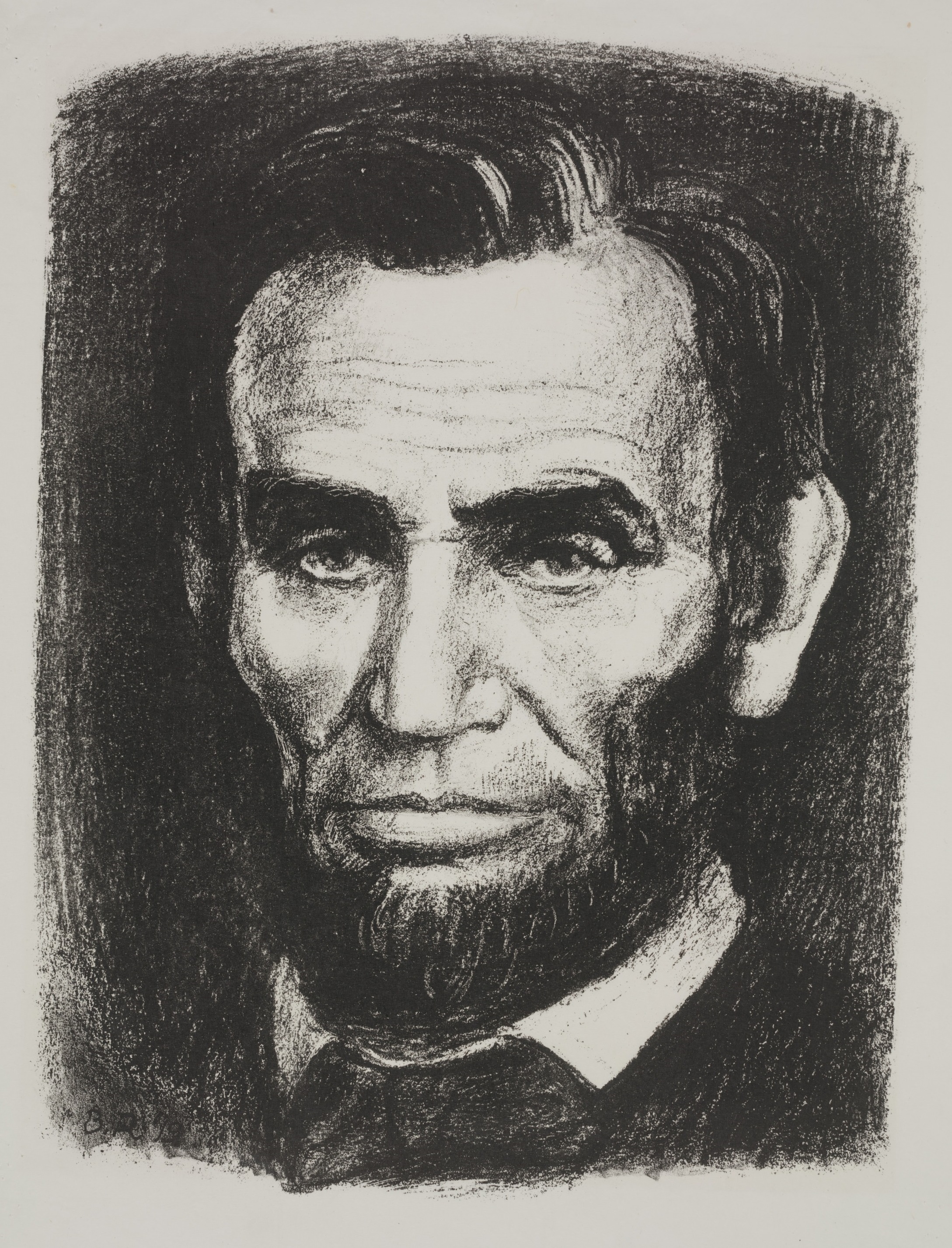
Lincoln, Boardman Robinson, 1937, Lithograph, Dallas Museum of Art, gift of the artist
After the show, you can pick up a copy of the new children’s book Mary Bowser and the Civil War Spy Ringto learn even more about Mary’s life and practice your new spy skills.
Reserve your FREE tickets to Spy on History LIVE! here.
Leah Hanson
Manager of Family and Early Learning Programs





 Clint Niosi: