Archive Page 162

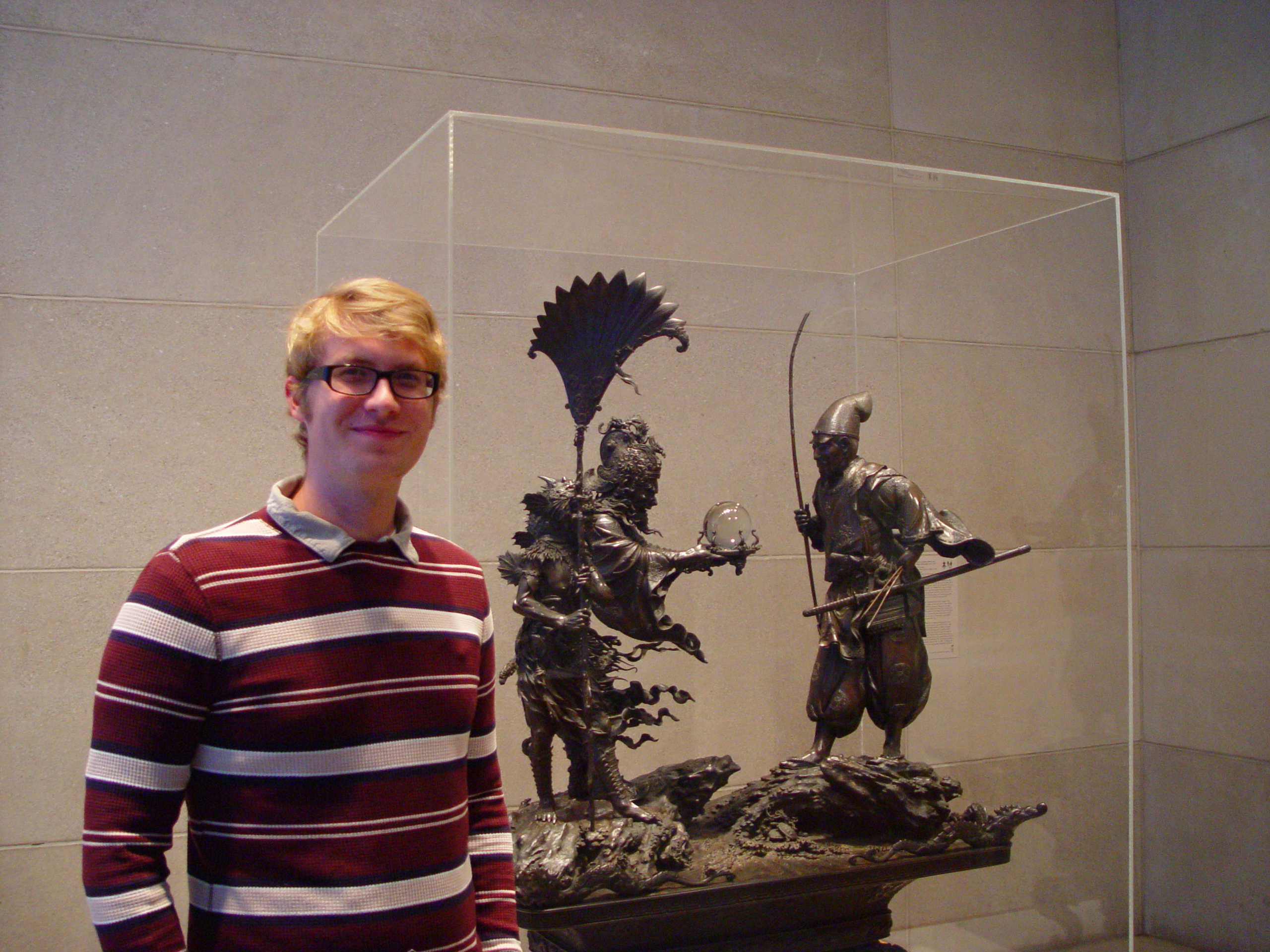
Staff Spotlight: Tom Jungerberg

Over the past two years, we’ve shared with you our exciting work with teachers related to Connect: Teachers, Technology and Art, a project supported by an IMLS grant.  This funding made possible a grant coordinator position that assists with various tasks related to the grant.   Tom Jungerberg quickly fit in with our department, and helped tilt the very uneven ratio of male to female staff ever-so-slightly in the opposite direction.
Could you trace the path that has brought you to the DMA?

I have Bachelor’s degrees from Florida State University in art history and English, and a Master’s degree from Boston University in English.  I’m originally from Florida and I lived there for two years prior to moving to Dallas. I worked at University of South Florida as a visiting assistant professor teaching composition, mostly, and expository writing.

My girlfriend began teaching at UNT Dallas last August, and that’s what brought me here. When I got here, I was excited to see an opening for the IMLS grant coordinator position since it seemed so suitable to my skill set. 

What is your role with the IMLS grant?

I serve as the liaison between Nicole and Jenny and the teachers – I correspond with teachers and coordinate meetings with them.  I write and edit some of the new online teaching resources.  I also participate in meetings, during which we discuss how we’ll approach the artwork as we develop materials and the steps we’ll need to follow to complete the project.

What has been the most interesting aspect of your work here?

I’ve really enjoyed everything, but it’s been especially interesting to observe teachers in the classroom. It’s great to see how people take the materials we’re preparing and apply them to their own curricula and lesson plans.  I appreciate being able to see the final outcome of these things that we’re making, and to see the different ways they’ll be used when they go public.

How do you spend your free time?

I just bought a house, so that takes a lot of my free time.  It was built in 1895, and legend has that it was built by one of the founders of TCU.  I also raise chickens, and I have a garden which I’m pretty excited about since it’s the growing season.  Yellow and green squash are coming in right now; I have also planted tomatoes, tomatillos, peppers, spinach, some lettuce, bok choy, peas, and green beans.

Where do you see yourself in five years?

That’s hard, as this job is ending in September.  I enjoyed my time at University of South Florida, so I’d like to teach.  I think teaching, but if you ask me tomorrow, I don’t know.

We’ve invited Tom to be a guest blogger; look for posts written by him in the coming months.

Melissa Nelson
Manager of Teaching in the Community

Autism Awareness at the DMA: A Father’s Perspective

[slideshow]

Four times a year we host an Autism Awareness Family Celebration at the Museum for children with autism and their families. Families have fun together at this special event in the Museum’s Center for Creative Connections for two hours before the Museum opens to the public.

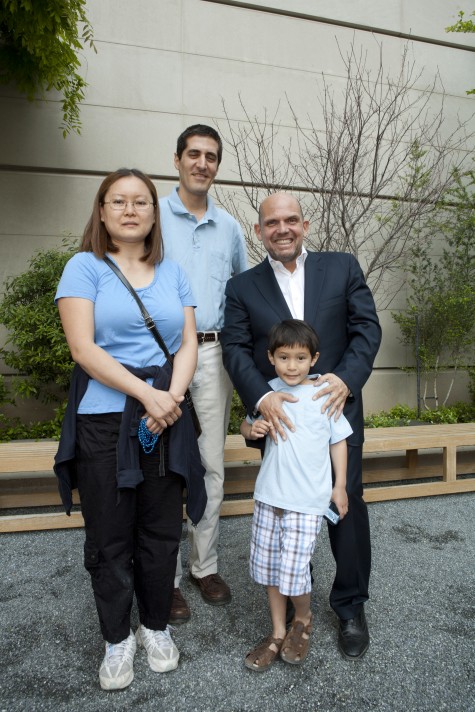
In April, we recognized Autism Awareness month with an April 2 Autism Awareness Family Celebration in collaboration with the Dallas Symphony Orchestra. The morning event focused on music as Jaap van Zweden, Music Director of the Dallas Symphony Orchestra, and his wife, Aaltje van Zweden-van Buuren joined us. A Dallas Symphony Orchestra string quintet performed, and Jaap van Zweden talked about movement as he waved a colorful streamer in the air along with children. Aaltje van Zweden-van Buuren shared a compelling story about her family’s experience using music therapy with her son, an individual with autism.

I had the joy of talking with an enthusiastic and involved father at our recent event; Denny Singh is clearly his son’s number one fan.

Denny and Sohan

What three words would you use to describe your family?
After my son’s diagnosis:  strongER, as in “what doesn’t kill you makes you . . . “; closER, as in redefining the word “love” and spending more time together; and MORE appreciative of what many take for granted, like our son playing with a friend.

What types of activities does your family enjoy together?
Shopping while letting my son take photos of stores (his current obsession), visiting museums and the aquarium and zoo, going to water parks, and hanging out with his beloved cousins.

What is unique about your son?
His quirky, outgoing personality (e.g., asking people about their rings and jewelry), his grasp of technology and working a smartphone better than his parents, his empathy and ability to care, and his effort to overcome challenges and inspire us to be better people while guiding us on this unexpected journey.

What do you like most about the Autism Awareness Family Celebrations? 
To borrow from a Visa commercial:
Admission to the Autism Awareness Family Celebrations: Free
Additional expenses like supplies for crafts and fun activities: Free
Creating a safe environment where families and their children are welcomed, supported, and valued: PRICELESS

Have the events changed your perception about visiting an art museum with your family?
The events have empowered our family to be more involved in the community and not be afraid of activities or environments because of autism. And just as important as the event are the tickets given to families for a follow-up visit to the DMA any other day like any other family.

The most recent Autism Awareness Family Celebration was focused on music. What is the role of music in your family? 
Music plays an important role in our family, especially for our son. He loves music and all instruments, which he knows by heart (confusing a clarinet with a bass clarinet is a no-no!). While riding in the car, he asks to listen to a specific CD over and over again. Other parents tell me this isn’t just an autism thing, although his memorizing eighteen songs by number is! For those with autism, music has been shown to teach language and improve overall functioning.

Sohan and his family meet Jaap van Zweden

Do you have any advice about visiting museums for other parents who have a child with autism?
JUST GO!!! Regardless of your child’s “level of functioning,” he or she deserves the opportunity to experience the beauty and culture of the arts. As communities become more inclusive and welcoming, it is our duty as parents to take our children out into them. Take it slow at first to make a visit a positive experience for all. Most of all, remember, “a journey of a thousand miles begins with a single step.”

I eagerly look forward to seeing you at the next Autism Awareness Family Celebration at the DMA!

Denny, Su Chen, and Sohan with Jaap van Zweden

Amanda Blake is Manager of Family Experiences and Access Programs.

Educator Resources: Five Outside Online Resources

Several weeks ago for parts one and two of our Educator Resources series, I wrote about three wonderful DMA online resources and field trip grant opportunities.  For the third installment of our series, we wanted to introduce to you five phenomenal online resources from other arts institutions

1. Metropolitan Museum of Art Heilbrunn Timeline of Art History

The Heilbrunn Timeline, produced by Metropolitan Museum of Art curators and education staff, presents maps, timelines, thematic essays, works of art, and indexes from prehistory to the present day.  Launched in 2000, the Timeline continues to expand in scope and depth and reflect the most up-to-date scholarship.

2. ArtsConnectEd

ArtsConnectEd, a joint venture between the Minneapolis Institute of Arts and the Walker Art Center, provides two key features: “Art Finder” and “Art Collector.”  Art Finder offers textual, audio, video, and interactive resources regarding works of art from the two collections, while Art Collector allows users to save and customize resources through comments, tags, and ratings. 

3. Art 21

Art21 produces Art: 21: Art in the Twenty-First Century, an Emmy-nominated PBS series that highlights contemporary art and artists, in addition to books, online resources, and public programs.  The mission of Art21 is to create a living history of contemporary art by presenting contemporary artists discussing their work in their own words.  This is done in hopes of ultimately increasing the accessibility and knowledge of contemporary art. 

Artists represented in our galleries at the Museum such as John Baldessari, Trenton Doyle Handcock, and Bruce Nauman have been featured in past series.

4. MoMA’s Modern Teachers

Modern Teachers is an online resource offered by the Museum of Modern Art in New York City.  The site provides educator guides, lessons, and images related to the Museum’s collection.  These resources span modern art of the 1880s, including Post-Impressionism and Symbolism, to recent 21st-century works.

5. ArtBabble

ArtBabble is an initiative of the Indianapolis Museum of Art that showcases video content from a variety of arts institutions, such as the Art Institute of Chicago, Asian Art Museum of San Francisco, and the Museum of Arts and Design, among others.

Enjoy exploring these resources, and please share in the comments below any additional resources you find useful when teaching about art in your classroom!

Ashley Bruckbauer
McDermott Intern for Teacher Programs and Resources

Seldom Scene: @Art Ball

Saturday we hosted the Art Ball, our annual black-tie gala. Below is a peek at the preparations for this very special evening.

[slideshow]

Friday Photo Post: The Royal Wedding

Royal weddings happen once in a lifetime. From the flowers, the wedding dress, and the cake, everyone wants to know the special day’s details. They have become so popular that millions of people watch them on television and purchase memorabilia. Items made to commemorate the wedding of Prince William and Catherine Middleton include dishware, a replica royal engagement ring, PEZ dispensers, and even a Catherine Middleton doll! With the excitement surrounding today’s royal wedding, the Friday photo post focuses on works of art in the collection that include couples and objects made for royalty.

[slideshow]

Amy Wolf
Coordinator of Gallery Teaching

Community Connection: Combining Two Passions

One of the great things about working with volunteers is the opportunity to meet people with a wide range of interests, experiences, and passions.  Last fall, I interviewed Deborah Harvey, one of our Go van Gogh volunteers.  I am pleased to introduce Jennifer McNabb, another Go van Gogh volunteer, who has managed to combine two of her passions through our outreach program.  
 
Tell us a little about yourself.

I’m British, and I’ve been in the U.S. for twenty years, in Dallas for nineteen years.  I’m a longtime visitor to the DMA.   When my work situation opened up seven years ago, I was looking for a way to volunteer in the arts.  I have a background in community arts from the 1980’s in England, when I helped set up and run a group studio for artists called Red Herring Studios.  We took over derelict buildings that were to be demolished, converted the buildings to studio spaces, and had an exhibition space too.  Red Herring put visual arts on the map in Brighton and has given birth to other fabulous organizations like Fabrica.  

Jennifer with her father and sister at Chesworth Studios in West Sussex, England.

What do you like most about Dallas?

I think what I like most about Dallas is the very vivid cultural life here.  We have great museums (the Nasher Sculpture Center, the DMA, The Crow Collection of Asian Art), and I love the way the Arts District has been developing with the AT&T Performing Arts Center and the expansion of Booker T. Washington High School.  I don’t come from a place where you have zoning; in London, these places are all in different parts. Also, I love the fact that Ft. Worth is just a few miles away with another bunch of fabulous museums. Although Dallas is a town that tends to be on the map business-wise, it is also on the map culturally.  I live in Oak Cliff, so it’s very easy to get to these places.

Tell us about your relationship with the DMA.

I started out by coming to your office and asking what I can do to volunteer with the DMA.  At the time, I couldn’t give the amount of time necessary for the docent program, but I did like the idea of the Go van Gogh program.  I have a background in teaching, and I thought it would be nice to get back into the classroom.  I like that the DMA has this type of in-reach and does such a good job at taking art into the classroom, getting kids excited about it, and hopefully encouraging teachers to take kids to the museum more.  Teaching is something I feel passionate about along with the visual arts – I come from a family of artists and I like the fact that I can go into the classroom and do all the fun stuff, and the kids love me for it. 

I’d been doing Go van Gogh for three or four years when a friend said to me one day, “You should come to this meeting about Resolana and get involved with this organization that provides programming for incarcerated women.”  I am also passionate about prison reform.  When I saw the creativity workshops they did, I thought yes, this combines two things I feel strongly about.  I got involved almost immediately.  After I had been to the jail a few times, I spoke with you and Amy about the possibility of the DMA doing something in partnership with Resolana.  I was looking for ways I could take the DMA into the jail, and you suggested trying some of the programs we teach in the schools. 

Jennifer leads the Arts of Mexico Go van Gogh program with Resolana participants.

What are the greatest benefits and challenges to presenting Resolana programs?

I was very aware I was teaching a different population, but in some respects they’re kind of similar.  Being in the jail frees them up, and they are very good about trying anything you suggest.  They don’t have self-editing about what is right and what is wrong in a class setting.  The women are willing to try most things; I don’t get the same resistance I might get from sixth-grade students.  The difference is, these are adults, and I didn’t want to make them feel I was doing baby stuff with them.  I had to adapt the programs because certain supplies are not allowed in the jail.  I also tried to get the discussion portion much more pitched toward their level.  I would not lead too much, and tried to give them space.  I am also in the Master of Liberal Studies program at SMU, and I took a class with Carmen Smith, who worked at the DMA for twelve years before working at the Meadows Museum.  I learned a number of techniques for talking about art with groups of people that museum educators use and started to use some of those techniques.  What I learned about in class went straight to the jail, and I saw a remarkable difference in the quality of the discussions. 

What is capturing your time and attention at the moment?

I’m always reading something fascinating, but work right now is capturing a lot time and attention.  We now have a pod in the jail dedicated to women interested in attending Resolana classes – they all live together.  It means we have doubled the number of women we see every week, so I’m trying to increase our number of volunteers as quickly as I can.  I am also trying to develop a program to train volunteers, using Go van Gogh as a model.  The Meadows Museum has donated their studio for training sessions. That takes up a lot of my time.

My other big passion is learning. I get to take classes in all kinds of things in the Liberal Studies program. I’m knee-deep in anthropology at the moment, and I’m writing a paper about systems of value in the U.S. and in the western world in general, and how that compares to other value systems when looking at works of art.

Melissa Nelson
Manager of Teaching in the Community
Fit for a Prince (and His Future Princess)

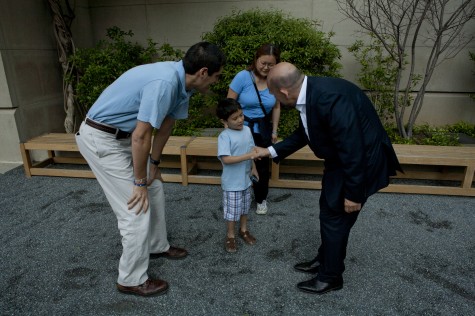
Millions of people around the world will watch as Prince William marries Catherine Middleton on Friday in Westminster Abbey, but only 1,900 lucky guests received invitations to attend the service, including members of the British Royal Family, religious leaders from the Church of England and other faiths, and international dignitaries. Did you receive that coveted gilded invitation from the Queen and need something special to wear to the wedding of the century? Let the DMA’s collections offer some wardrobe inspiration . . .

Etruscan, Pair of bauletto earrings, 6th century B.C., gold, Dallas Museum of Art, gift of Mr. and Mrs. James H. Clark

No Royal Wedding outfit would be complete without glittering jewelry, and these ancient Etruscan earrings (from the 6th century B.C.) would complement a smart spring suit or frock. Known as bauletto (or “little bag”) for their cylindrical shape, these earrings originally would have been suspended on hooks. Each earring is decorated with an elaborate floral motif, created by fine gold filigree wire and tiny gold globules.

Yotoco period, Headdress ornament with heads flanked by crested crocodiles, c. A.D. 1-700 (?), gold, Dallas Museum of Art, The Nora and John Wise Collection, gift of Mr. and Mrs. Jake L. Hamon, the Eugene McDermott Family, Mr. and Mrs. Algur H. Meadows and the Meadows Foundation, and Mr. and Mrs. John D. Murchison

This extravagant headdress would have been only one component of ceremonial regalia worn by men in the Calima region of Colombia about 2,000 years ago. Imagine the gleaming image of a wedding guest outfitted from head to toe in gold – including ear ornaments, pectorals, bracelets, and anklets. This ornament probably would have been attached to a cloth headdress, like a turban, and its gold dangles produced a soft ringing as the wearer moved.

Charles Willson Peale, “Rachel Leeds Kerr”, 1790, oil on canvas, Dallas Museum of Art, gift of the Pauline Allen Gill Foundation

Both Catherine Middleton and her future grandmother-in-law, Queen Elizabeth II, are well known for their shared taste in glamorous hats (compare their recent looks and vote on your favorite here). Whether the bride will wear a hat, tiara, or flowers on her wedding day remains a secret, but we can surely expect a parade of fanciful millinery from the guests at Westminster Abbey. This elaborate hat must have been a favorite of Mrs. Rachel Leeds Kerr, as she wore it when sitting for her portrait by leading American artist Charles Willson Peale in 1790. Wearing this sumptuous topper would signify Mrs. Kerr’s wealth, fashionable taste, and high social status—just as a fabulous hat does today.

Abraham Portal, Huntingdon wine cistern, 1761-1762, silver, Dallas Museum of Art, gift of Mrs. Patricia D. Beck

Guests to the Royal Wedding have more to think about than clothes, jewelry, and accessories; a wedding gift for William and Catherine is an equally important consideration. Silver serving pieces are often cherished wedding gifts for any bride and groom, but buying for royal couples demands something truly special, such as the monumental Huntingdon wine cistern. In fact, this magnificent piece was used to hold ice and chill wine in the home of Frances Hastings, Earl of Huntingdon, who was appointed to the cabinet of the King of England in the late 18th century. Weighing more than eighty pounds (empty!), it would be the perfect centerpiece at any royal party. If we could, we would fill it with bottles of champagne to toast William and Catherine on their wedding day.

Cheers!

Lisa Kays is Manager of Adult Programming at the Dallas Museum of Art.

Seldom Scene: Fancy Dancing

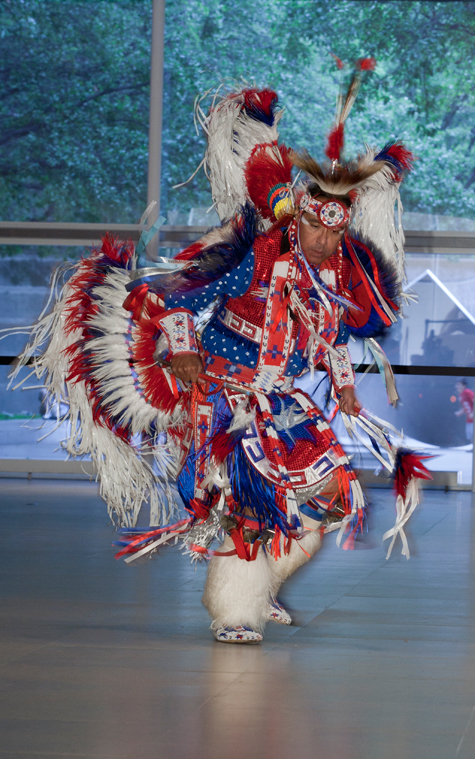
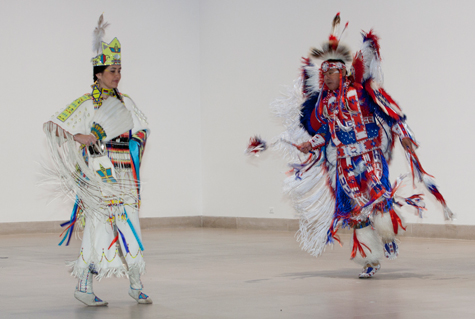
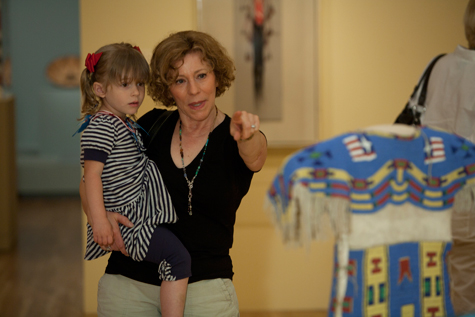
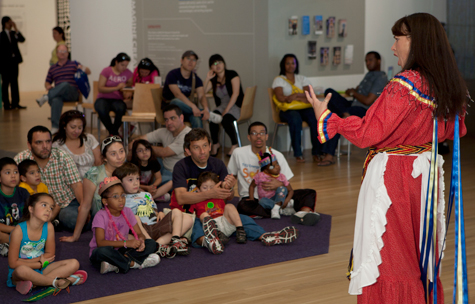
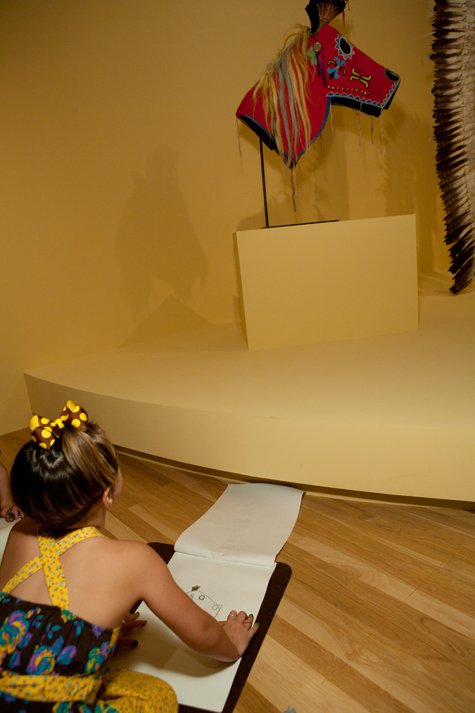
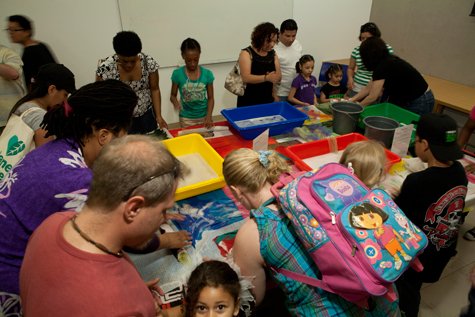
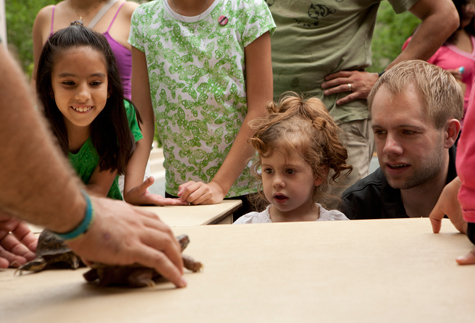
On Saturday we welcomed hundreds of visitors to our Art of the American Indians Family Celebration, a day of fun activities, performances featuring the Oklahoma Fancy Dancers, art, tours, and a special sneak peek of the exhibition Art of the American Indians: The Thaw Collection. Below are a few pictures from the day. Join us on Friday, May 20, to celebrate this exhibition during Late Night.

Photos by Chad Redmon, Photographer at the Dallas Museum of Art.

Gustav Stickley and Frank Lloyd Wright in Dallas

Last Monday, our theme for docent training was “a morning of architecture in Dallas.”  I invited Katherine Seale, director of Preservation Dallas, to speak with the docents about the influence of the Arts and Crafts movement in Dallas. 
 
As director of Preservation Dallas, Katherine has firsthand knowledge of all the historic homes in Dallas. The Arts and Crafts movement hit Dallas later than on the East and West coasts, but there are many excellent examples of Stickley-esque Craftsman homes in East Dallas. 
 
Katherine spoke about Swiss Avenue and the Munger Place neighborhood, both of which I was familiar with already.  To me, the most fascinating part of Katherine’s presentation was about a neighborhood in Oak Cliff called Winnetka Heights.  Winnetka Heights is, according to Katherine, the most Arts and Crafts neighborhood in Dallas.  Craftsman bungalows–one-story homes made of wood with low-pitched roofs and exposed joinings– line the streets of this neighborhood.  I’m already planning a weekend outing to view these homes.
 
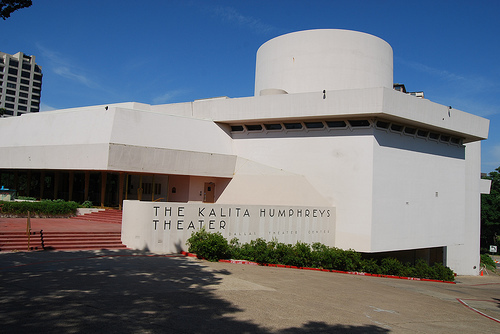
Following Katherine’s presentation, architect Ann Abernathy spoke about Frank Lloyd Wright in Dallas.  Yes, the DMA currently has an exhibition of his prints: Line and Form: Frank Lloyd Wright and the Wasmuth Portfolio.  But did you know that Wright was the architect for the Kalita Humphreys Theater?  

Frank Lloyd Wright's Kalita Humphreys Theater

Ann is the perfect person to speak about Frank Lloyd Wright, because she was the project lead for the renovation of Wright’s Oak Park home and studio.  She has also been named the project lead for the renovation of the Kalita Humphreys Theater.  This gives her the unique distinction of having worked on projects that were created at the beginning and end of Wright’s career.

The plan for the Kalita Humphreys Theater came from a 1914 theater plan that was designed by Wright but never built.  When he was asked to design a building for the Dallas Theater Center, Wright agreed, but only if he could use his 1914 plan.  What many people may not know is that the Kalita is one of the last buildings constructed by Wright–he began work on it in 1955 when he was eighty-eight years old, and it was completed after his death in 1959.

As anyone who has visited the Kalita Humphreys Theater knows, it is situated on a hillside over Turtle Creek.  The building is constructed from reinforced concrete, and is considered to have wonderful acoustics.  This comes from Wright’s own interest in the science and theory of acoustics.  The theater also features a revolving stage.  My favorite element of the theater is how the audience wraps around the stage.  Every performance at the theater feels like an intimate gathering.

Katherine and Ann’s presentations have opened my eyes to a new way of looking at buildings in Dallas.  I encourage you to spend Mother’s Day weekend at the DMA to learn more about Wright and Stickley.  Examine the drawings in Line and Form: Frank Lloyd Wright and the Wasmuth Portfolio and spend time marvelling at the beauty of Craftsman designs during the closing weekend of Gustav Stickley and the American Arts and Crafts Movement.

Shannon Karol
Manager of Docent Programs and Gallery Teaching

Artfully Green


Reduce, reuse, and recycle. As Earth Day rolls around, we’re reminded of our impact on the environment. But what are we doing at the Dallas Museum of Art to be green? Uncrated went on a search to find out.

Each year, over half a million visitors step through the Museum’s doors, and our large building is 500,000 square feet, taking up two city blocks in downtown Dallas. Our global collections span over 24,000 works of art, and we produce an average of eighteen exhibitions each year. We have an underground parking garage, a cafe, a store, and over two hundred employees.

With this large footprint, we were excited to find out about some long-standing practices and a few new ones that the DMA is using to reduce its impact on the environment:

  • Three years ago, The City of Dallas and the DMA retrofitted the building’s entire energy management systems in order enhance energy efficiency. Efforts included replacing our boiler and chillers, adding eco-friendly light bulbs, low flow toilets and water fixtures throughout the museum. As a result, utility consumption has been reduced over 50%.
  •  The Museum has a water management system throughout the building. It is a smart system with rain sensors for our hardscape and landscaping.
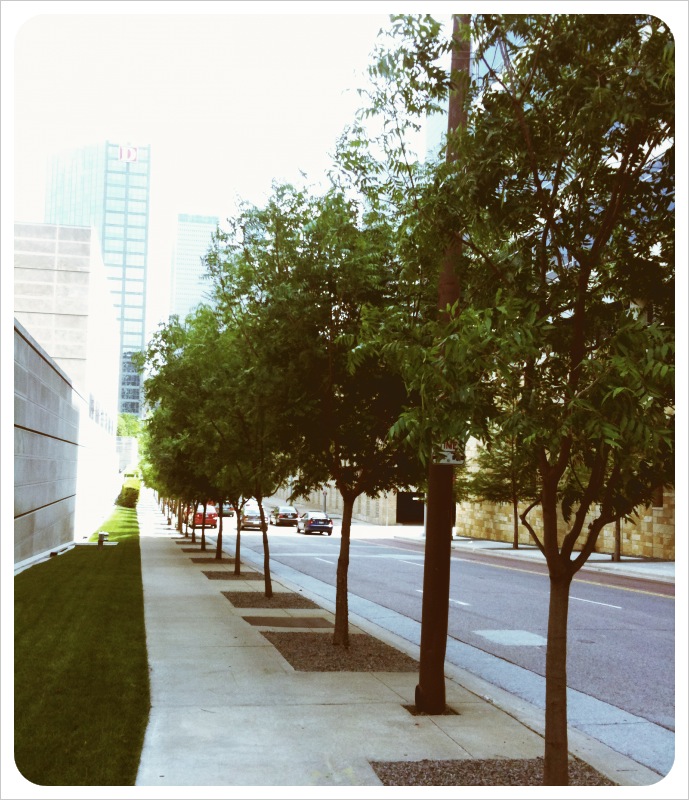
  •  We added healthier, more drought-tolerant trees along the Museum bordering St. Paul Street.
  •  All chemicals and cleaning agents used at the DMA are eco-friendly.
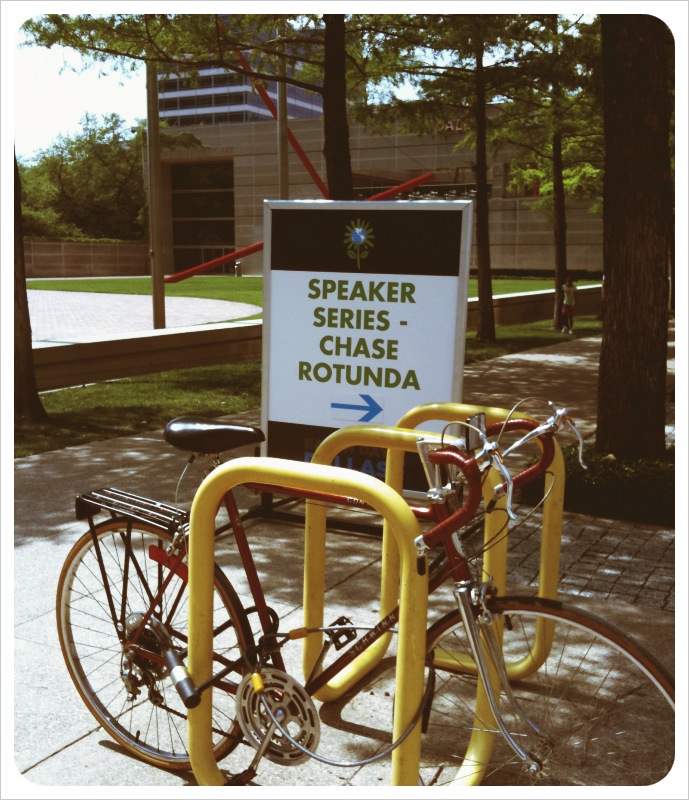
  •  DMA employees are offered a discount to ride the DART system to work. There is a bicycle rack located on Ross Avenue Plaza.
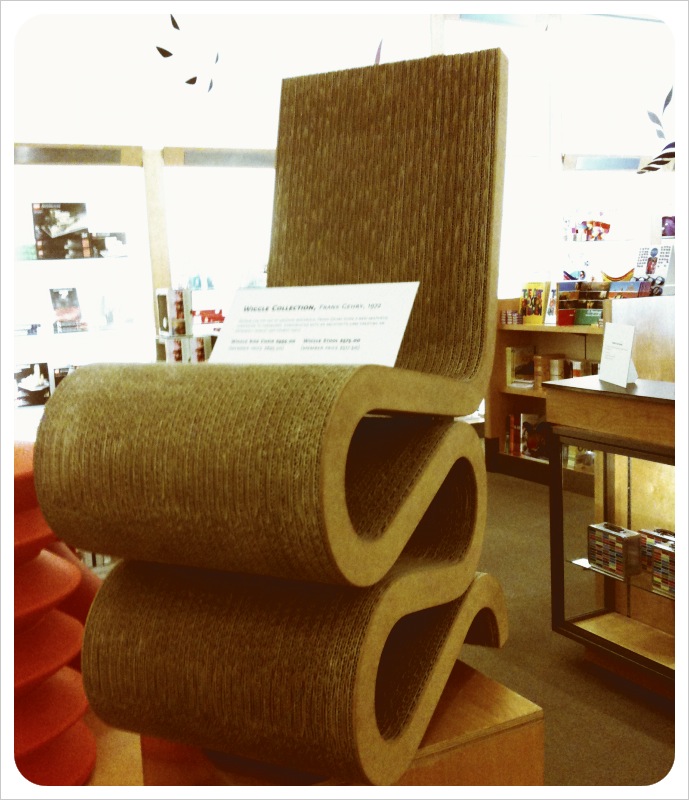
  •  When layouts of our galleries are changed for new exhibitions, we reuse studs and building materials. All crates and art packing materials are reused and/or recycled.
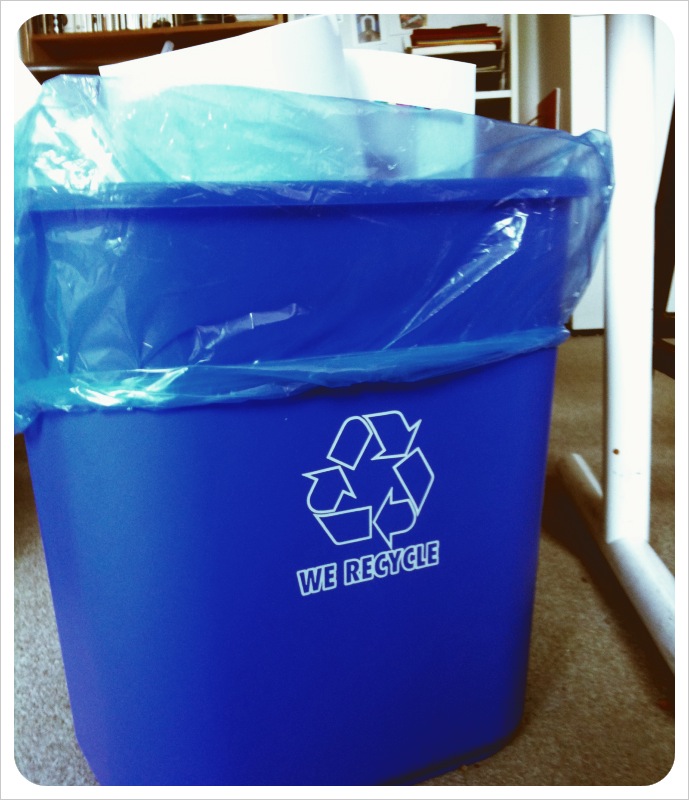
  •  The DMA participates in a recycling program with the City of Dallas. The profits the City makes are sent into the general fund for City programs such as Park and Recreation projects and Fire Department equipment.
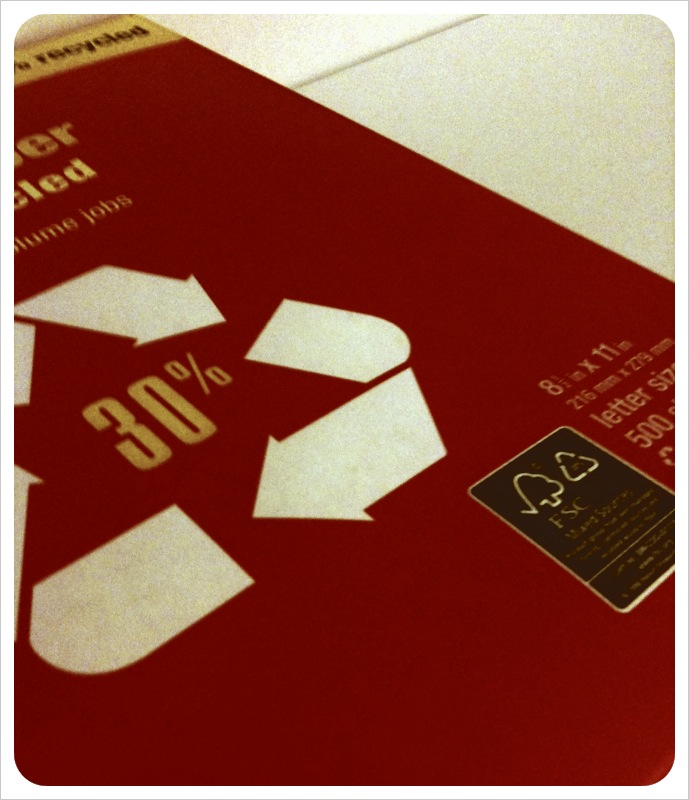
  •  All copy paper used at the Museum has a minimum of 30% post-consumer waste content.
  •  All of the printed materials produced by our Creative Services team are printed on Forest Stewardship Council (FSC)-certified paper, using an FSC-certified paper distributor, and 95% of the commercial printing (100% local) that the Museum does uses an FSC-certified printer.
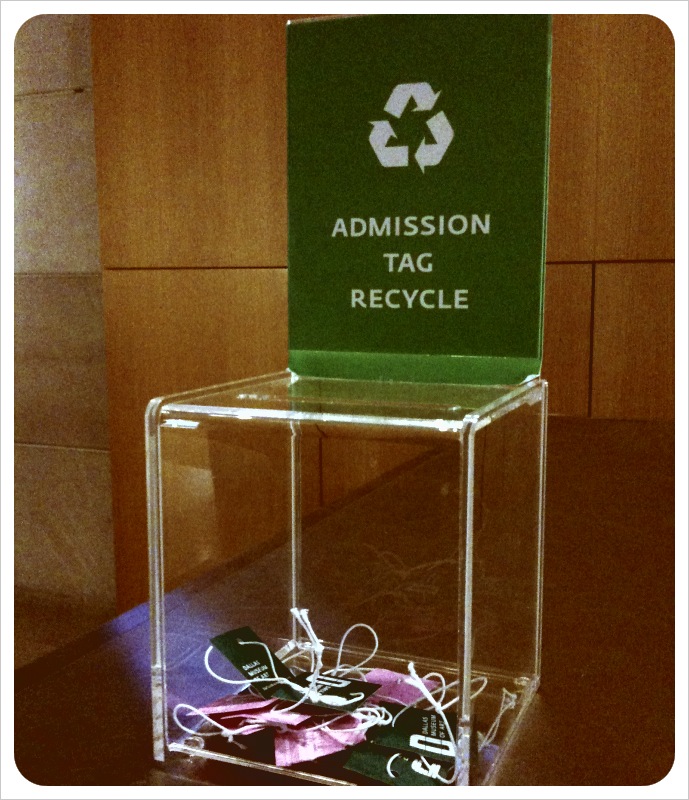
  •  The admission tags that visitors receive when they visit the DMA are collected and reused. Look for boxes at the Visitor Services Desk to recycle your tag when leaving.
  •  The Museum Store features products from many local artists and craftsman and also has a wide variety of eco-friendly products.
  • Our cafe uses compostable or biodegradable disposable containers and recycles all plastic, glass bottles, paper, cardboard, wine corks, and cooking oils. This summer, we will begin working with a food composting company.
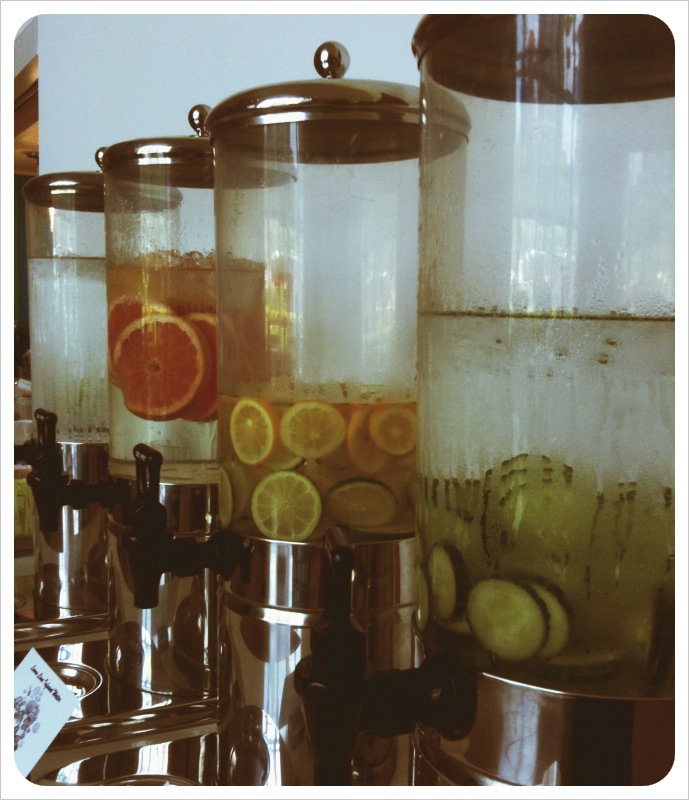
  •  The cafe menu consists of locally purchased organic produce, sourcing through local vendors within a two hundred-mile radius. Soon, the cafe will implement new infused water stations and glass-bottled waters, phasing out plastic-bottled water.

The DMA is working with the U.S. Green Building Council to achieve Leadership in Energy and Environmental Design (LEED) certification for these efforts. We hope to have our designation by August 2011.

For a selection of works on view at the Museum that incorporate recycled materials, visit our sister blog, We Art Family, for their Earth Day post. And for eco-friendly activities, emerging green technology, and thought-provoking ways to think, work, and live green in Dallas, join us today and tomorrow in the downtown Dallas Arts District for the free Earth Day Dallas Festival (the DMA will have FREE admission on Saturday, April 23, 2011!). To reduce your carbon footprint, ride DART to Pearl Station and walk to the Arts District.

Happy EARTH Day!

Mandy Engleman is the Director of Creative Services at the Dallas Museum of Art


Archives

Categories