Archive Page 163

Trade before Planes, Trains and Automobiles

Have you ever wondered how goods and services, such as spices, fabrics, and art, traveled from one part of the world to another before the use of planes, trains, and automobiles?  The Silk Road provides a great insight for understanding early trading among different countries. It is the most well-known trading route of ancient Chinese civilization that was used during the first millennium B.C.E through the middle of the second millennium C.E under the Han Dynasty. The Silk Road was a transcontinental network of land and sea trade routes that spread across Eurasia from the Mediterranean to China and Japan. Domesticated horses and cattle as well as marine vessels were used as transportation to carry such goods and services along these routes.

Dr. Anne Bromberg, The Cecil and Ida Green Curator of Ancient and Asian Art, organized The Silk Road, an installation which illustrates how this great route of trading developed.  This exhibition also describes the spread of religions from India to Central Asia during this time. One of the greatest benefits of the Silk Road that Dr. Bromberg wanted to emphasize was the spread of agriculture. Animals not only provided transportation, but they also provided food and a mechanism for cultivating crops.
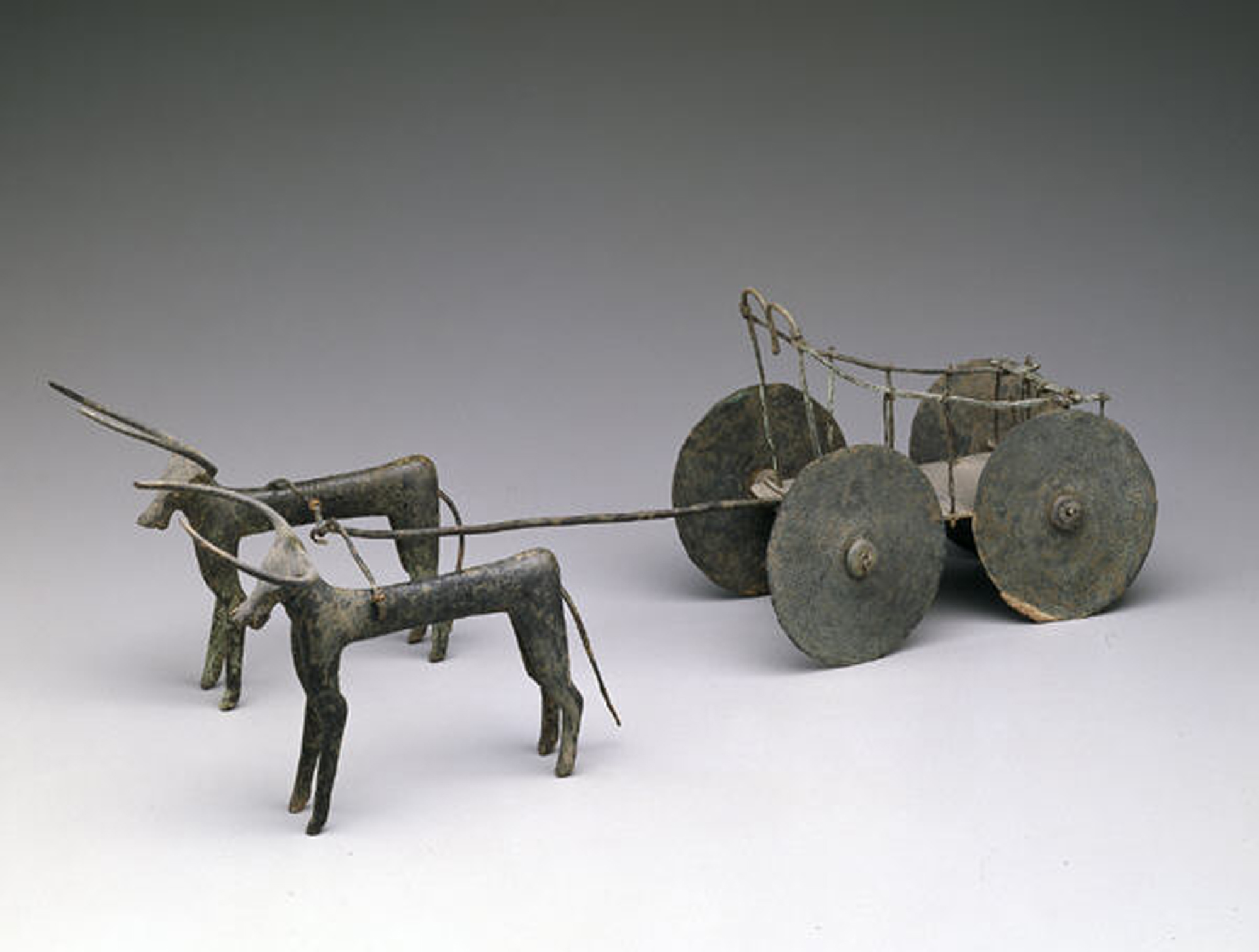
                    

 Oxen and Cart, 2000-1800 B.C., Bronze
Dallas Museum of Art, Irvin L. and Meryl P. Levy Endowment Fund

A great deal of Near Eastern art similar to the Oxen and Cart traveled along the Silk Road. The Proto-Hittites were devoted to animals, which were vital to hunting and farming. Objects such as the Oxen and Cart were perhaps used as an offering to be left in a shrine, sacred caches or tomb. In addition,  the Oxen and Cart symbolizes the distinct moment when domesticated horses or cattle were first used as powered transportation on land.

The Silk Road provides a great opportunity to discuss with students the benefits and consequences of trading among different cultures. I’ve added a list of books and websites that will help you introduce the Silk Road to your students. These books and more can be found at the Dallas Public Library or the Museum’s Mayer Library.

Books:
Stories From The Silk Road by Cherry Gilchrist and Nilesh Mistry
The Silk Route: 7,000 Miles of History by John S. Major and Stephen Fieser
Mapping the Silk Road and Beyond by Kenneth Nebenzahl
Adventures on the Ancient Silk Road by Priscilla Galloway and Dawn Hunter
Silk Road: Monks, Warriors & Merchants by Luce Boulnois and Helen Loveday

Websites:
the Silk Road project:
http://www.silkroadproject.org/tabid/177/defaul.aspx

Silk Road Seattle:
http://depts.washington.edu/silkroad/

Enjoy,
Karen A. Colbert
Teaching Programs Intern

Designing Stickley

Hello, everyone! DMA resident exhibition designer Jessica Harden here to give you a short and sweet behind-the-scenes snapshot of where some of our inspiration for exhibition design comes from. The Gustav Stickley exhibition was fun to work on because I had lots of great resources, including original photographs and The Craftsman catalogues, which Stickley published with drawings of many of his architectural and interior designs and finishes . . .

as well as records of popular colors of the time. We chose paint colors for the exhibition based on the Sherwin-Williams Arts & Crafts palette. BTW, drawing up plans for the exhibition is also part of my job . . .

as is producing construction drawings.

But back to inspiration and resources—this is a photograph of a model dining room created to show Stickley’s furniture in 1903.

. . . and this is our gallery at the DMA that we designed and built to replicate the original.

In fact, if you look around the Gustav Stickley exhibition galleries, you might notice a number of details that were inspired by Stickley’s original designs. Here, we were inspired by how Stickley used interior cut-outs to define spaces and create interesting thresholds to transition from one room to the next.

We also took inspiration from Stickley’s use of simple trim work on walls to help us define spaces and create a more residential environment for the exhibition. This included using a cap rail to imply a lower ceiling height in our 14-foot-high exhibition galleries.

And just to have a little fun, we took a few chances to let visitors discover glimpses of upcoming galleries and objects along the way.

Even some of the smallest details of the exhibition were inspired by Stickley. Here you can see that the mount for this lamp was modeled after drawings from Stickley interiors and was fabricated by our extremely talented preparators and carpentry staff. They even made new heads for the screws to match the originals!

Gustav Stickley and the American Arts & Crafts Movement is on view at the Dallas Museum of Art until May 8, when it will travel to San Diego to open on June 18.

Jessica Harden is Exhibition Design Coordinator at the Dallas Museum of Art.

20/20 at the DMA

We have reached 20,000 fans and followers on Facebook and Twitter! To thank every one of you we are offering 20% off adult general admission and 20% off new memberships*  from 11:00 a.m. until 9:00 p.m. on Thursday, April 21, 2011. Just tell the Visitor Services Desk, or visit the Membership desk on Level 1, that you follow the DMA on Facebook or Twitter to get your 20% discount.

* not available with any other offer

First grade's smartest artists

[slideshow]Last month, four volunteers and I piled into the Go van Gogh van and drove south of downtown to Rosemont Primary, a DISD PK-2 school in Oak Cliff.

While Rosemont Primary is just one of the many campuses we visit with the Go van Gogh outreach program, we have a special relationship with their first grade teachers.  Each year, we visit the first grade at Rosemont, presenting multiple programs in all eight classrooms and getting to know the students during our many visits.  Through the years, the first graders at Rosemont have played a larger role in the Go van Gogh program than they might realize; Go van Gogh staff often takes newly-developed curricula into their classrooms.  We test questions, gauge response during activities, and (most importantly) make sure that we’ve packaged an experience that’s fun, engaging, and relevant for the students.  Go van Gogh staff is grateful to our first grade friends at Rosemont for the smart observations, unexpected answers, and funny moments that have helped us refine curricula, ensuring that our programs are solid.

Needless to say, we were pretty excited to return to Rosemont last month with the Me & My World programMe & My World introduces first graders to people and places in art through stories and clues.  The program features four artworks, and our conversations range from talking about families while looking at Mary Cassatt’s Sleepy Baby to thinking about heroes while looking at our Greek Gold Wreath.  Students create an art activity inspired by another artwork in the program, Fernand Leger’s The Divers, drawing a picture on transparency film with a Sharpie, and layering it on top of a bright collage of shapes.

Photos from our fun morning at Rosemont, featuring the little artists and their creations, are above.

Enjoy!

Amy Copeland
Coordinator of Go van Gogh Outreach

Seldom Scene: Readying the Show

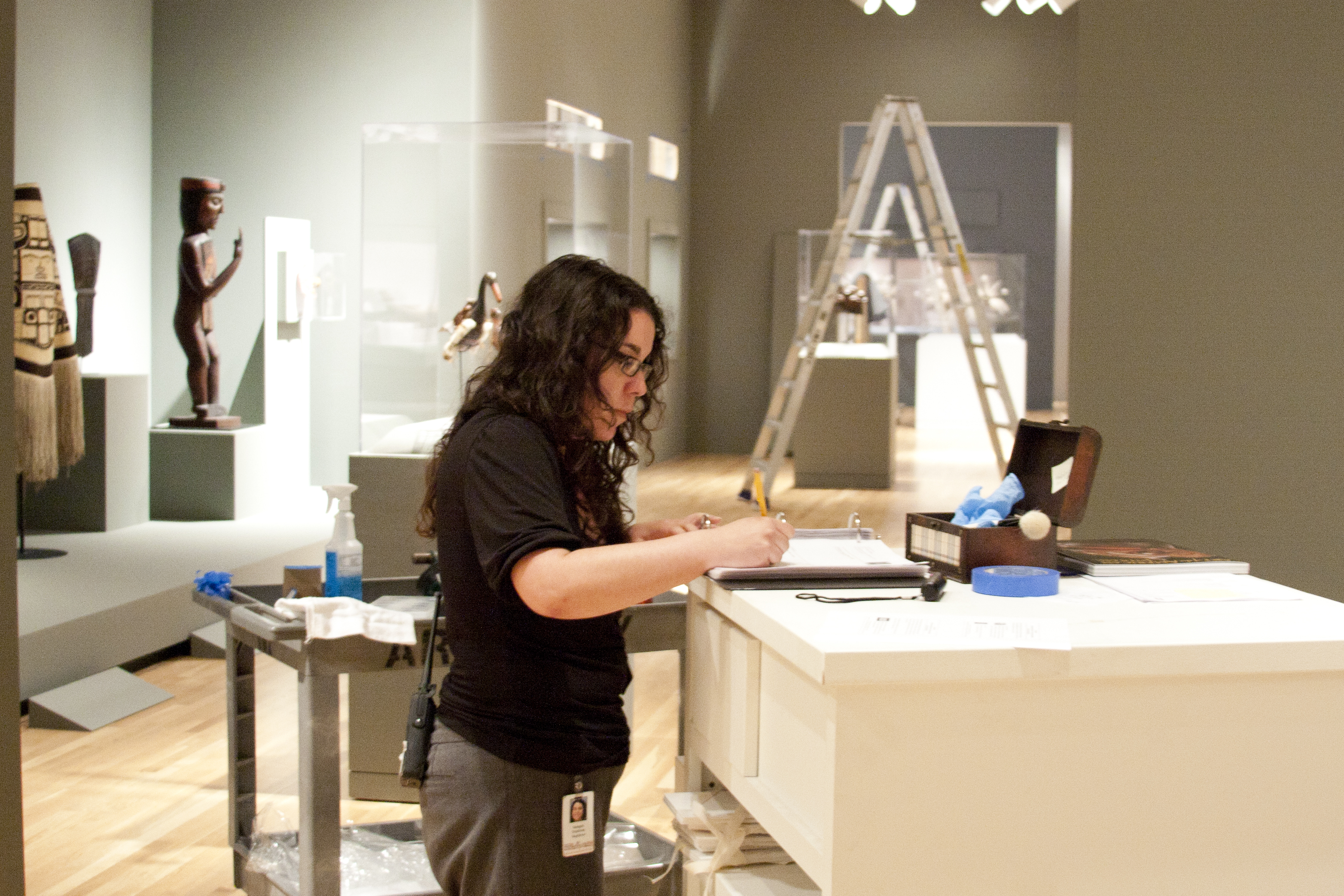
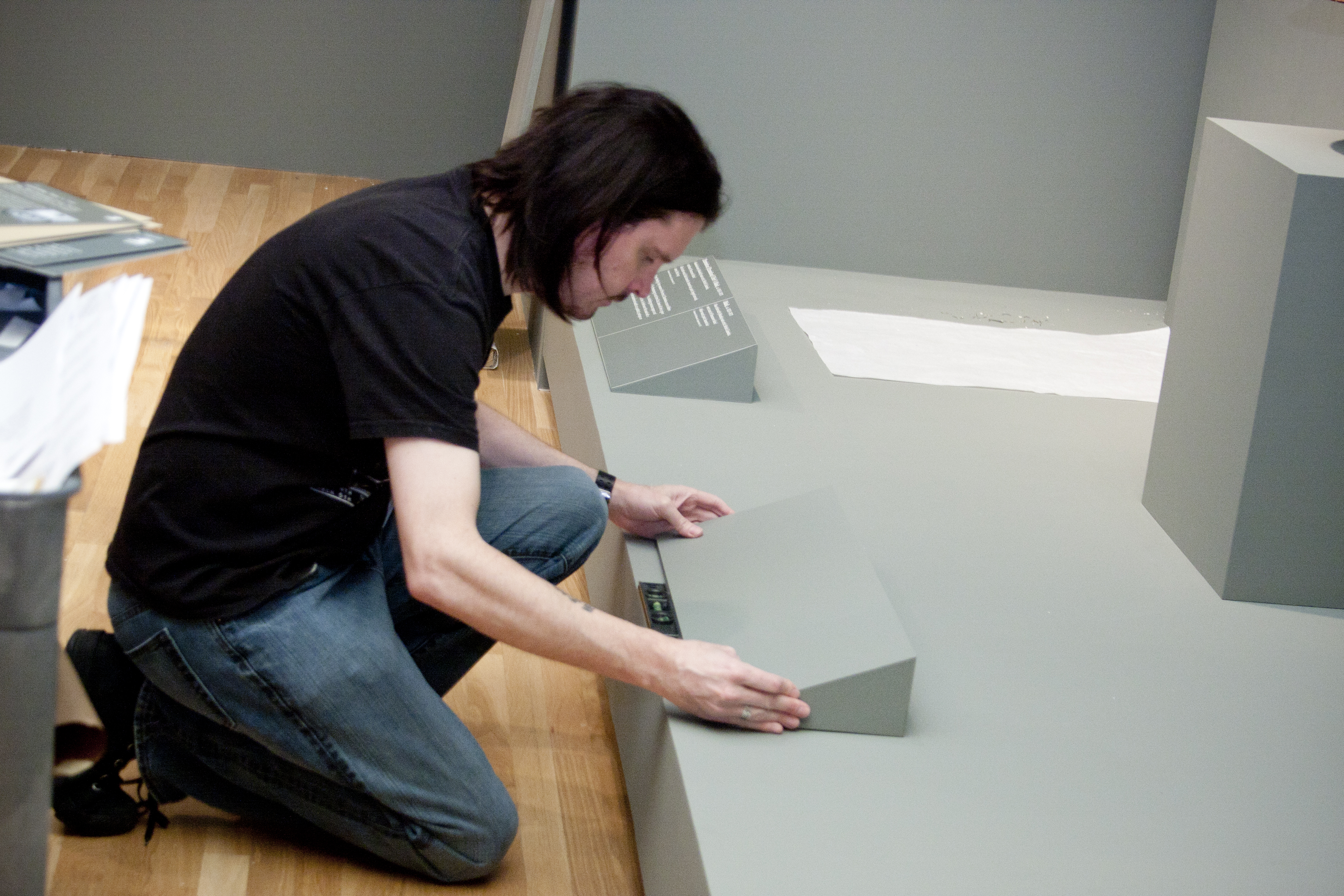
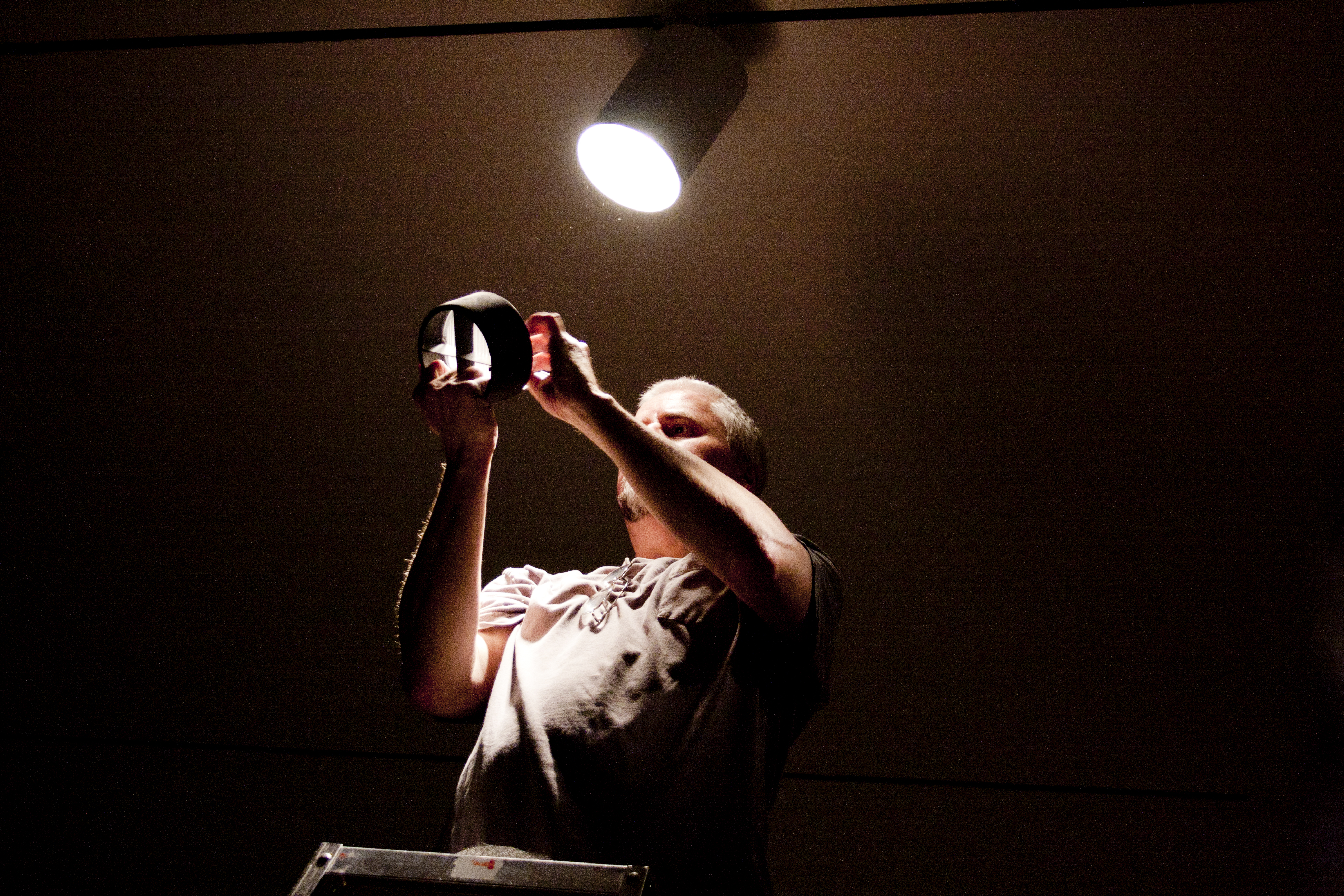
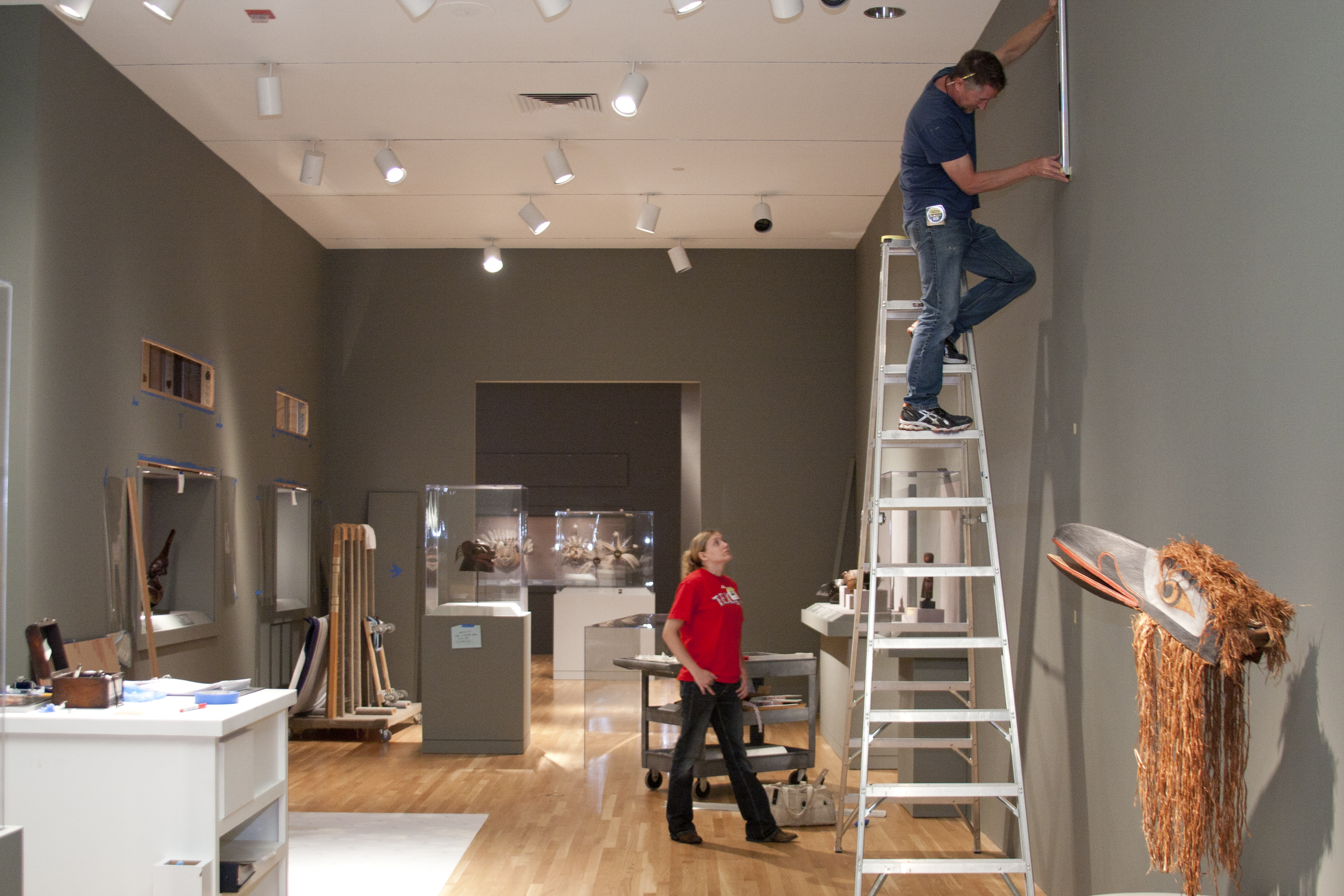
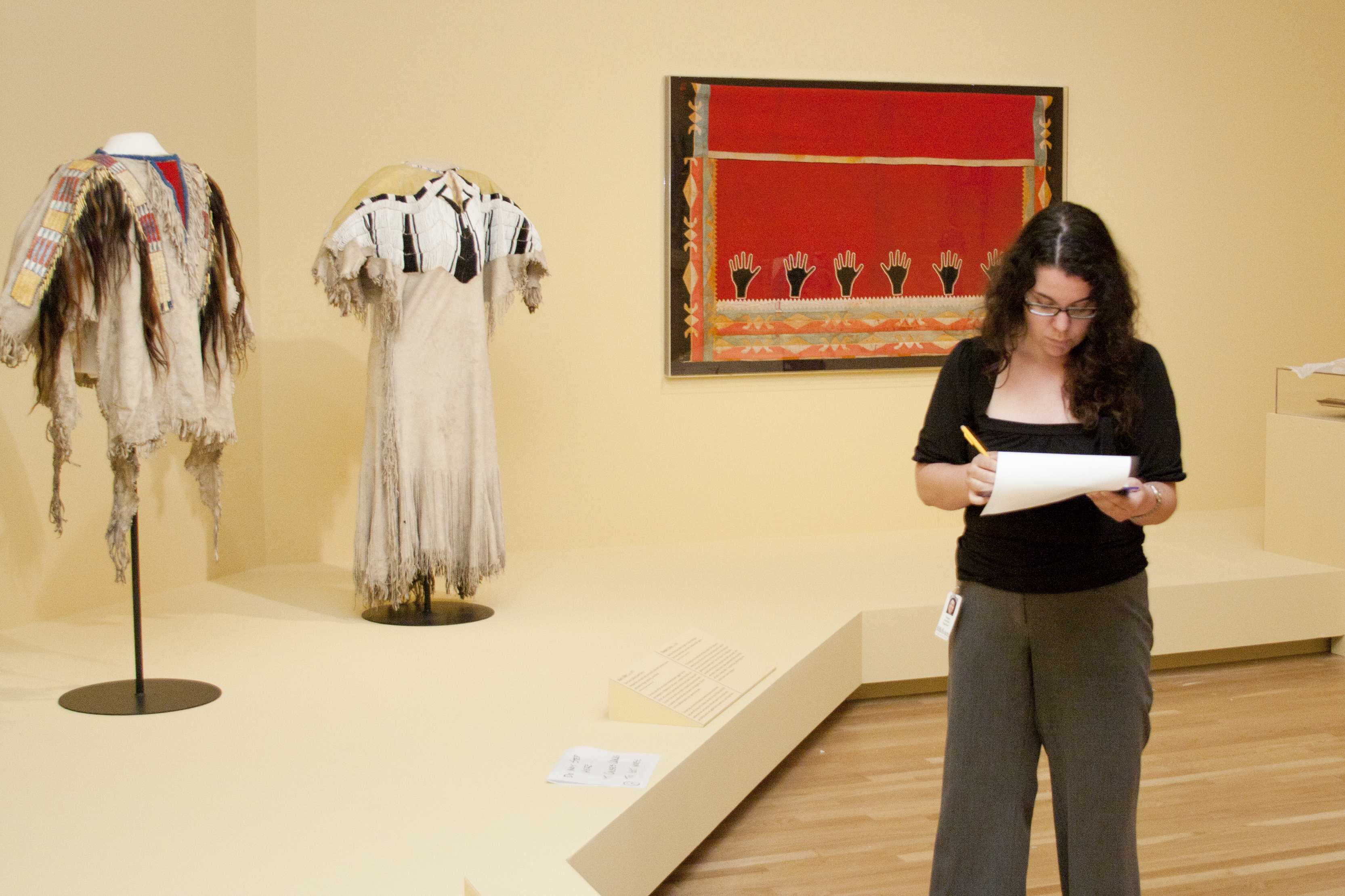
Uncrated went behind the scenes in our Chilton Galleries last week to capture the installation of our newest exhibition, Art of the American Indians: The Thaw Collection, which opens this weekend.

Photography by Adam Gingrich, Marketing Assistant, Dallas Museum of Art

Riding That Train

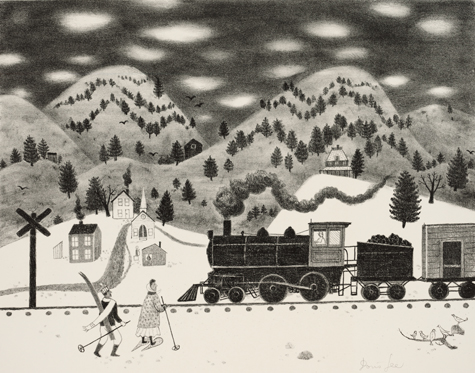
'Afternoon Train' (1944) by Doris Lee, a print in the DMA collection.

While famous songs about trains by Gladys Knight, the Grateful Dead, or Bob Marley* might not exactly bring to mind Dallas’s DART system, a quick, easy, and scenic trip to the Museum by light rail or trolley does offer much to sing about.  The DMA is a short walk from DART’s St. Paul Station, and the McKinney Avenue Trolley lets off visitors right at our front door.

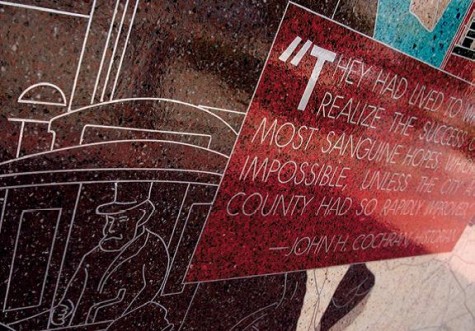
Every day, more than 220,000 passengers ride trains, light rail, and buses to move across our city. Whether they’re on their way to the DMA and the Arts District or to another destination, everyone who rides DART encounters works of art. Through the Station Art & Design Program, local artists are commissioned to envision the design concept and theme for every DART station and to lead teams consisting of architects, engineers, designers, and contractors to create unique installations and environments at each stop. In addition to site-specific works of art—including mosaics, sculpture, and photography—the artists also design structural and functional elements like columns, pavers, and windscreens unique to each station.

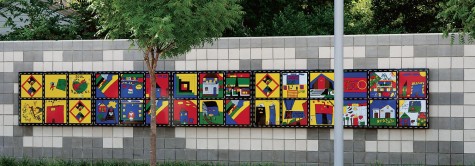
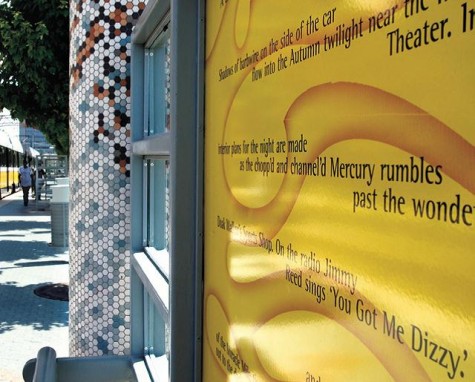
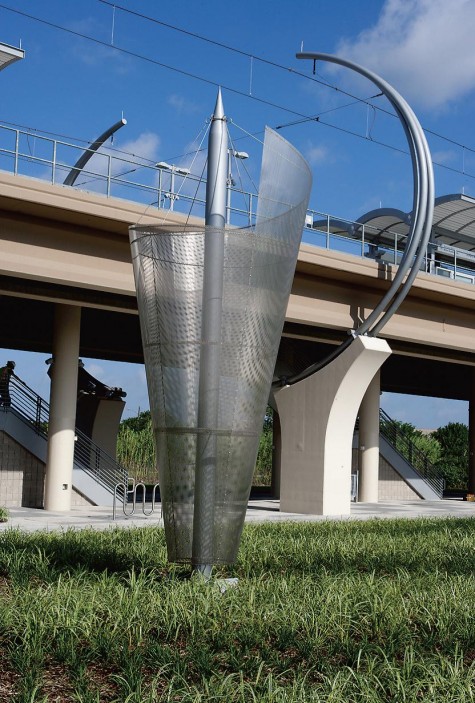
Hatcher Station. Artist: Vicki Meek. Image: Courtesy DART

Lovers Lane Station. Design Artist: Pamela Nelson. Photo: Courtesy DART

Southwestern Medical District/Parkland Station. Artist: Susan Kae Grant. Image: Courtesy DART

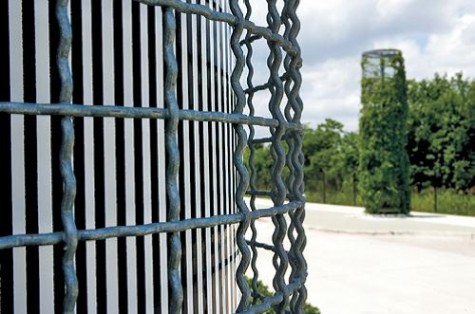
If you travel through one of DART’s fifty-five stations, look for the work of some well-known members of Dallas’s artistic community, such as Benito Huerta, Vicki Meek, Susan Kae Grant, and Pamela Nelson, among many others. You might also encounter works by artists who are represented in the DMA’s collections. Tom Orr and Frances Bagley, for example, were individually commissioned by DART for several stations. Orr was the station artist at DART’s Bush Turnpike Station, which is surrounded by both a large freeway as well as open, green space. To respond to the location of the station, he designed large steel and wire columns that were planted with vines to create large-scale topiaries.

Tom Orr's Installation at the Bush Turnpike Station. Image: Courtesy DART

Frances Bagley served as the station artist for Union Station, Convention Center Station, and Cedars Station (all along the Blue and Red DART lines); on each project, Bagley collaborated with other artists to create installations that reflect the particular site of each station.

In 2009 Bagley and Orr collaborated on a gallery-scaled installation that was included in the DMA’s special exhibition Performance/Art. The piece was based on the pair’s design for the Dallas Opera’s 2006 production of Verdi’s Nabucco. The installation recalled the setting for the opera’s biblical story and portrayed the artists’ interpretation of the Euphrates riverbank, the idol of Baal, and the Hanging Garden of Babylon.

Mural Detail from Union Station. Image: courtesy DART

Tom Orr and Frances Bagley's Installation in the DMA's "Performance/Art" exhibition.

Take advantage of this great spring weather and DART to the art . . . but don’t forget to explore the works of art along the way. Use DART’s guides to learn more.

* Take a look at this list of one writer’s Top Ten Train Songs.

Lisa Kays is Manager of Adult Programming at the Dallas Museum of Art

Friday Videos: Nightlife at the DMA

Did you know that the Dallas Museum of Art is an exciting place to spend your Thursday nights?  Thursday evenings at the Museum are filled with live jazz music in the cafe and artist encounteers in the Center for Creative Connections.  Teachers and students receive free admission from 5:00 to 9:00 p.m. each Thursday with a valid school I.D.  Did you also know that the DMA has its own YouTube channel featuring a brand new video all about Thursday Night Live at the Museum? 

[youtube=http://www.youtube.com/watch?v=2vgBJBWFJA0]

A second video has just been released all about Late Nights at the DMA.  On the third Friday of each month, the Museum stays open until midnight.  In my opinion, this is the best time to be at the Museum–the whole building pulses with energy and excitement!  From live performances to lectures to art-making activities, there are experiences that everyone will enjoy.  In fact, tonight is the April Late Night, so watch the video below and then head down to the DMA for a night of art and fun!

[youtube=http://www.youtube.com/watch?v=XkZK-A0fxFs]

Shannon Karol
Manager of Docent Programs and Gallery Teaching

Revealing Spirits: The Art of Indonesia

My colleague Amy Copeland and I recently led a teaching session focused on a few works of art in the Dallas Museum of Art’s amazing Indonesian collections. Our session in the galleries highlighted an expressive ancestral couple and a beautifully carved door with mythical creatures, emphasizing ways to look closely as well as explore geography and belief systems through objects from Indonesia.

Spirits abound in Indonesia.  A mysterious energy animates the entire universe. Human beings and animals, trees and plants, the ancestral dead, stones, man-made objects, even traditional houses — all share in this vital force.  Man has been inspired to give many of these spirits tangible form, to make the unseen visible.

Dallas Museum of Art wall text

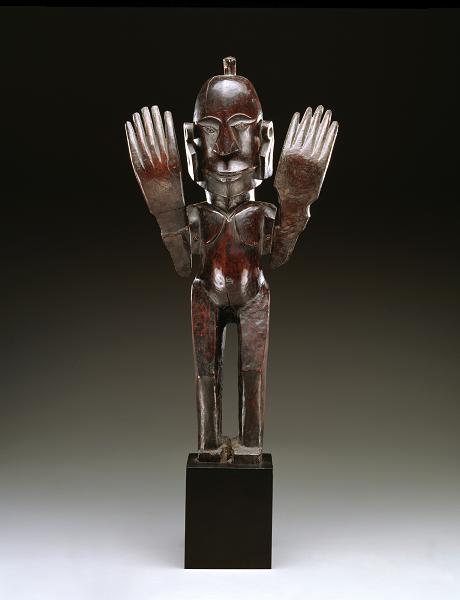
Female ancestor figure, Toba Batak people, Sumatra, Indonesia, 19th century or earlier, wood, Dallas Museum of Art, the Eugene and Margaret McDermott Art Fund, Inc.

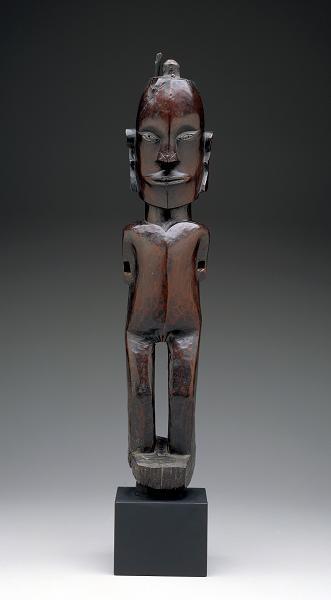
Male ancestor figure, Toba Batak people, Sumatra, Indonesia, 19th century or earlier, wood, Dallas Museum of Art, the Eugene and Margaret McDermott Art Fund, Inc.

This male and female pair represents an ancestral couple from the Toba Batak peoples on the island of Sumatra.  The two objects were originally bound together with a third object and kept out of sight in the uppermost region of the house inhabited by the Batak lineage founder.  This region of the house was a space the Batak associated with the upperworld, where gods and ancestors reside.  Only a privileged few were ever allowed to view or touch these powerful ancestors who both protected as well as carried the potential to inflict harm. What I love about this couple are their expressive qualities.  Look closely at their faces — the eyes, the noses, and the mouths.  Next, notice their posture. Both have knees bent slightly and their backs held in a certain way.  Viewing these in the galleries is best so that you can walk all the way around them. Finally, perhaps what attracts our eye most are the large hands of the female. The male once had separately carved hands as well.  You can see the rectangular slots on either side where his hands were once attached.  The hands on the female are up, with palms turned inward.  This gesture expresses the Batak greeting of “Horas”, or hello.

Door with protective symbols, Kayan people, East Kalimantan, Indonesia, c. 1850-1900, wood, brass, and shell, Dallas Museum of Art, the Roberta Coke Camp Fund

The Kayan people of East Kalimantan in Indonesia live in longhouses, which can be very large structures that rise from the ground on stilts.  The longhouse is a series of contiguous, individual spaces connected by a common verandah.  The organization of the spaces in the longhouse is similar to the American concept of apartment structures.  Each space houses a family, so a longhouse is the residence for many people.  This wooden door was either as the main door to the longhouse or as the door to the individual space of the chief. The animal symbols carved on the door protected inhabitants from evil spirits and intruders.  Look closely for animal forms on the door.  The white, shell circles contrast sharply with the dark wood.    These circles are the eyes of the protective, mythical creature called the aso, a form resembling both a dog and a dragon.

In addition to looking at objects in the galleries, Amy and I shared some general information about Indonesia during the session that help us begin to know and connect with this far away location.

  • Indonesia is the largest archipelago in the world!  It consists of thousands of islands.
  • According to Google Maps, it is 9,200 miles between Dallas, Texas and the East Kalimantan in Indonesia.
  • A plane ride to Indonesia would last sixteen to eighteen hours!
  • Many islands in Indonesia have been known throughout history for the spices, such as nutmeg, and natural medicines, such as camphor, found there.
  • Several delicious coffees originate from Indonesia.  Sumatran coffee from the island of Sumatra is one of my favorites.

Nicole Stutzman
Director of Teaching Programs and Partnerships

Teen Docents: It's a Family Affair

This summer, we celebrate the tenth anniversary of the DMA Teen Docent program!  Over the course of the last ten years, we have noticed that a lot of our new applicants have older siblings who were also teen docents.  There are even a few teen docents whose moms are DMA docents during the school year.  I’m going to turn the spotlight on two teen docents who are sisters, and who also happen to be my cousins.  For us, the teen docent program really is a family affair.

Leah is currently a junior, and this will be her third summer as a teen docent. 

Leah, what was your best tour experience from last summer?
My best teen docent experience from last summer was a tour for a group of girls who were in second, third, and fourth grade.  They really got into the tour, and we had a great time talking, sketching, and playing games inspired by works of art in the galleries.

What are the benefits (in your opinion) of being a teen docent?
Being a teen docent, you get service hours in a fun way.  You get to talk with kids, teach them about art, and meet other teens who have the same interests as you. It is also a great way to build up confidence in leadership and public speaking, as there will never be anyone quite as opinionated as a group of 20 little kids…

Abby will be a freshman in the fall, and this will be her first summer as a teen docent.

Abby, why do you want to join the teen docent program?
I was inspired to become a teen docent after going on a tour of the DMA with Shannon.  I also want to serve the community by educating young children about art.  I want to keep art alive in this community.

What are you most looking forward to when you become a teen docent?
I am looking forward to talking with kids about artworks at the DMA. I also look forward to giving tours with my older sister. I enjoy art, so getting to instill the same love for art into young visitors will be very rewarding for me.

Abby, Shannon, and Leah--three Karols with a connection to the teen docent program

This will be my second year leading the teen docent program.  I’m so excited to reconnect with our great volunteers and to welcome a new class of docents to the program.  Teachers, if you have students (grades 9-12) who you think would make great teen docents, we would love for them to apply.  Please email me (SKarol@DallasMuseumofArt.org) to request an application.

Shannon Karol
Manager of Docent Programs and Gallery Teaching

Seldom Scene: Checks and Balances

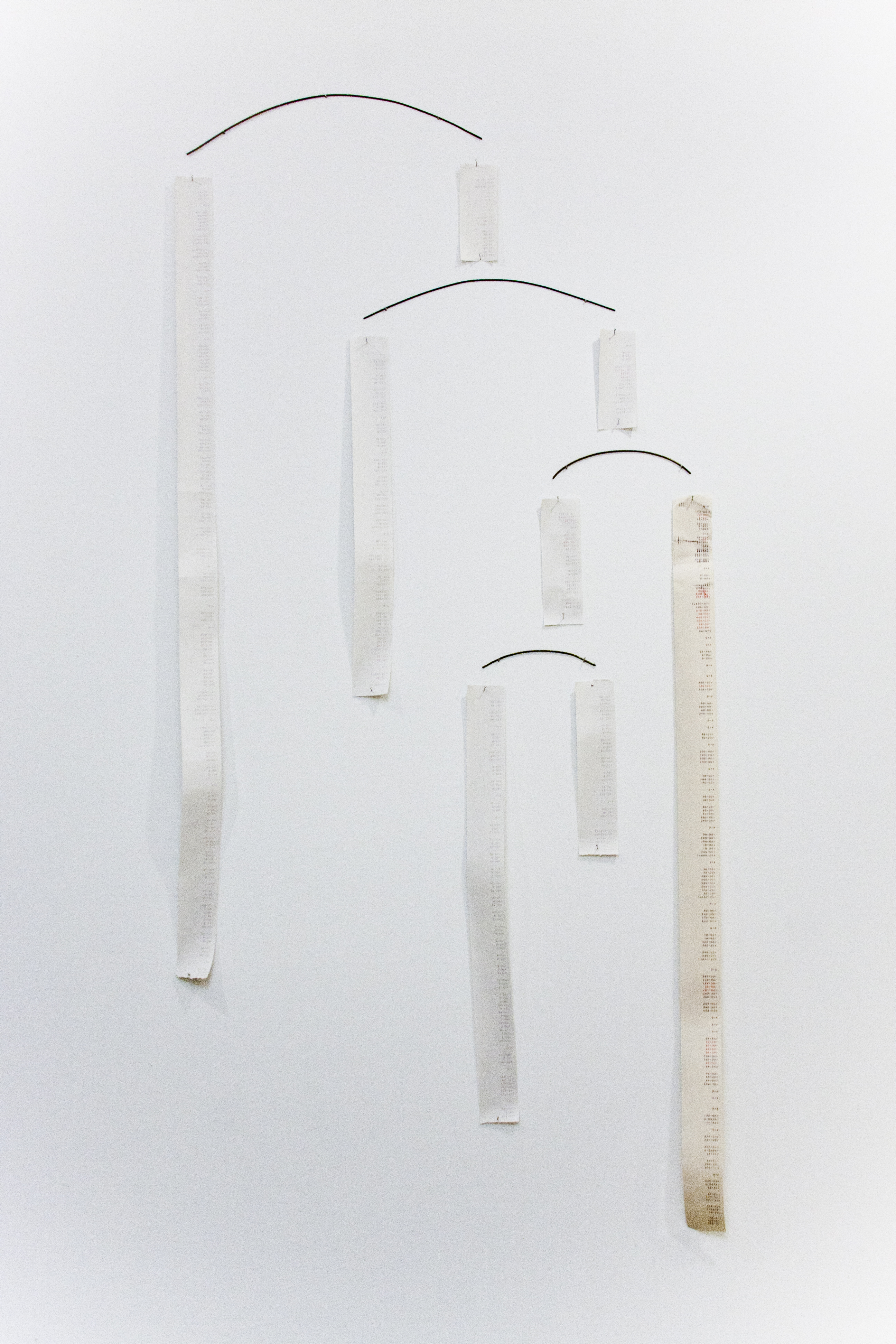
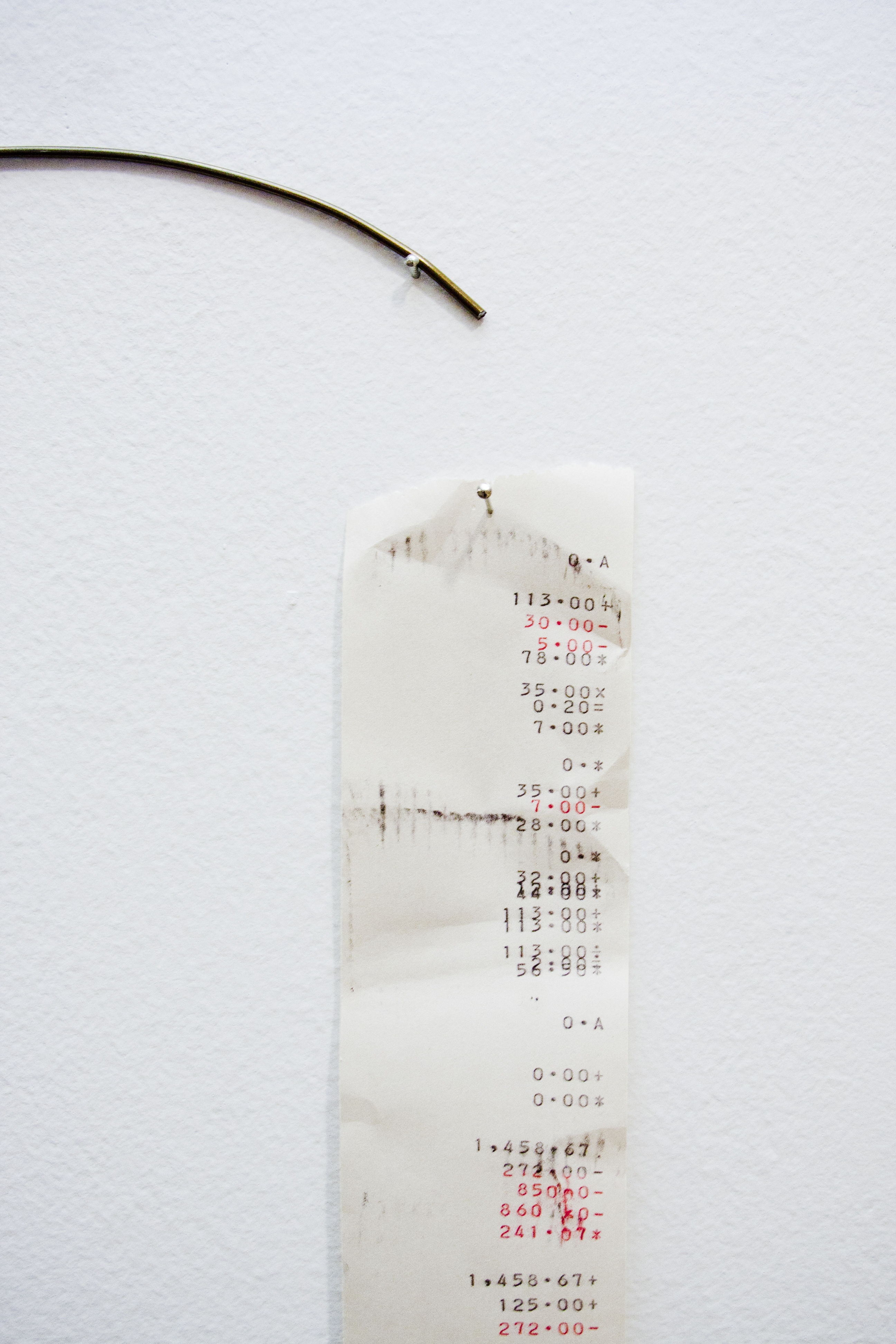
Do you have everything ready for Uncle Sam on April 18? We think this work by DMA staff member Robert Ramirez—our accounts payable coordinator—sums up the task. You might have seen it on view during our recent exhibition Insourced: Works by Dallas Museum of Art Staff exhibition.

Robert Ramirez, My Love to Rinna, 2010


Archives

Categories