Archive for the 'Art & Teaching' Category


Gather Round Ya'll…

My colleague, Holly Harrison, Administrative Assistant for European and American Art, recently reinstalled the 4th floor Texas landing, bringing together artworks about cowpokes, gunslingers, and a cowgirl or two for Cowboys: On the Range Between Art and Life. The installation, which includes paintings, photographs, and works on paper, invites us to imagine life on the range and to consider our often-romantic ideas about cowboys.  Featured are photographs by Geoff Winningham, Laura Wilson, and Erwin E. Smith, and paintings by Frank Reaugh and Perry Nichols.
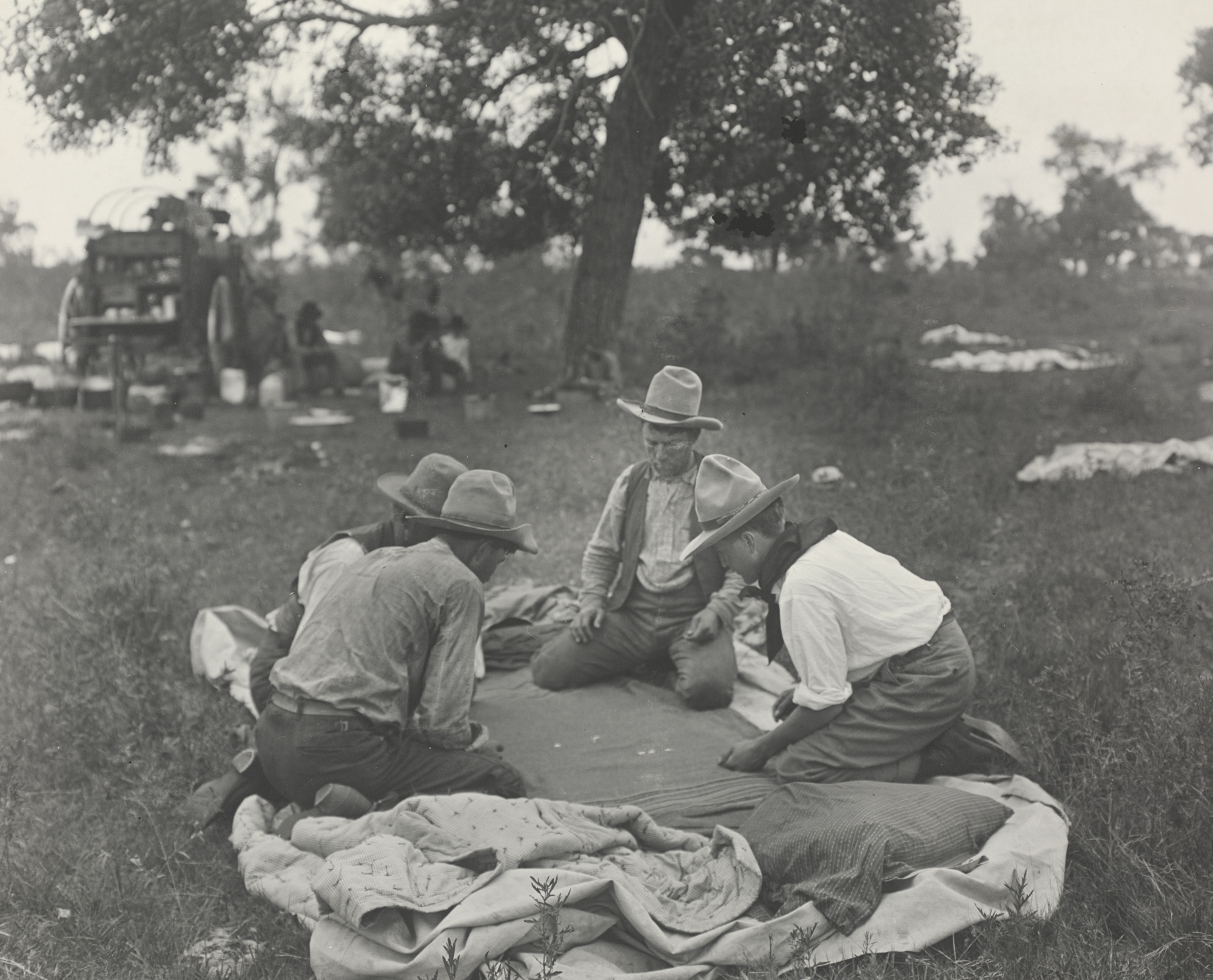
Erwin E. Smith, Four Cowpunchers Shooting Craps on a Saddle Blanket in Roundup Camp, JA Ranch, Texas, 1908
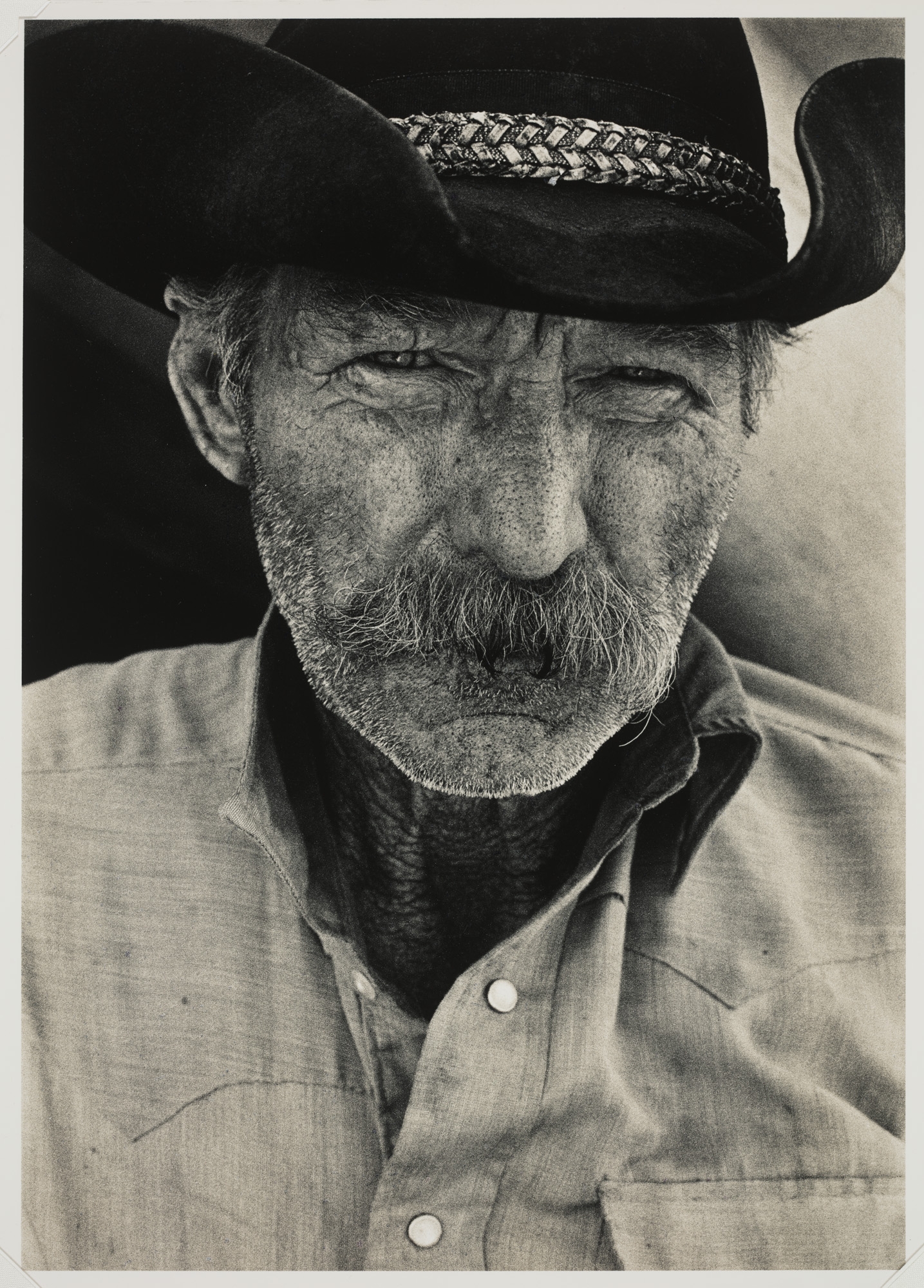
Bank Langmore, Portrait of Old Cowboy Vern Torrance, Padlocks Ranch, Montana, 1974

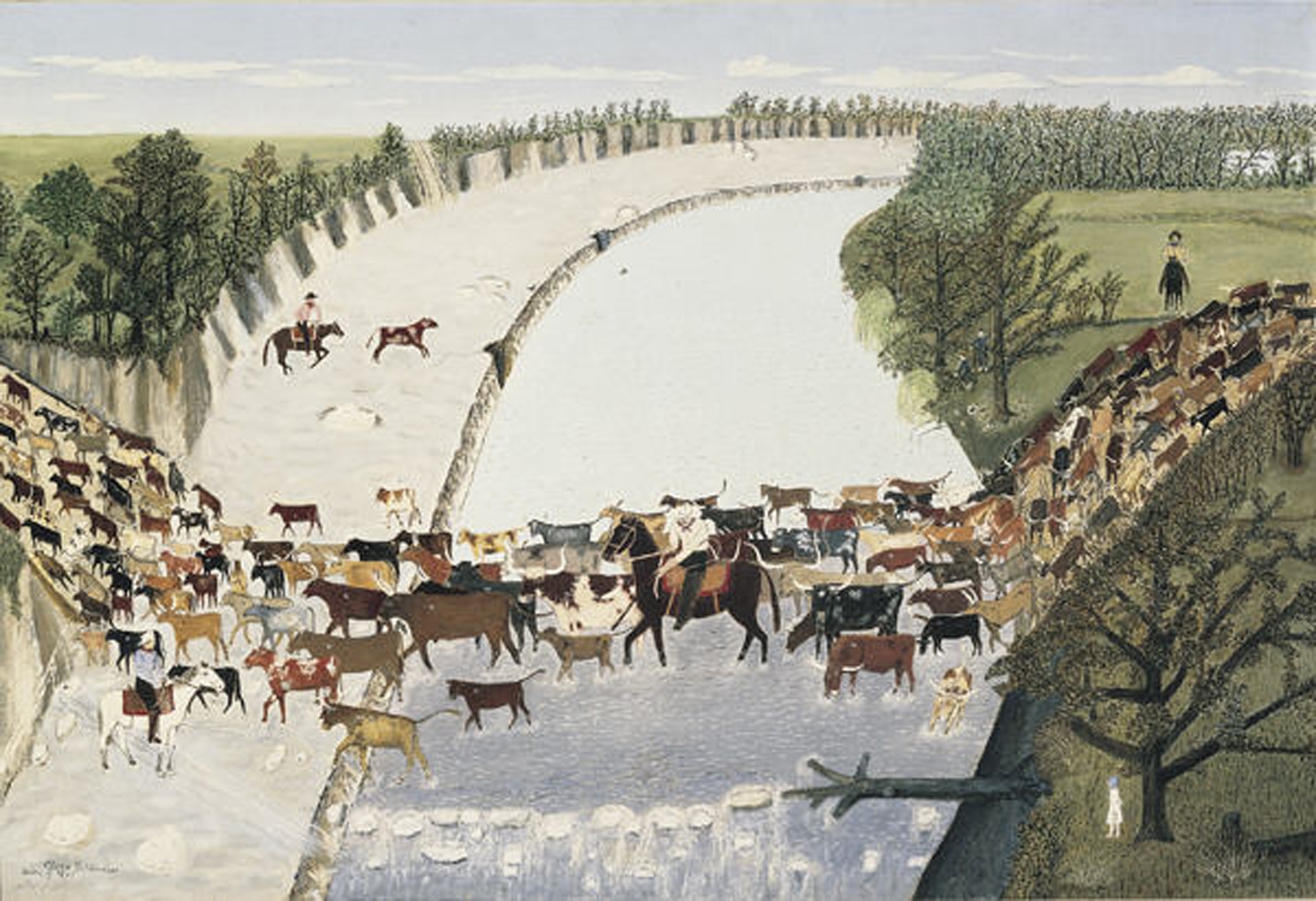
One of my favorite works is Clara McDonald Williamson’s Get Along Little Dogies.  Williamson’s painting is a childhood memory of growing up in Iredell, Texas—a stopover on the Chisholm Trail.  The artist, in a white dress and blue bonnet, watches from a distance as cowboys drive a herd of longhorns across the Bosque River, heading north to Kansas.   
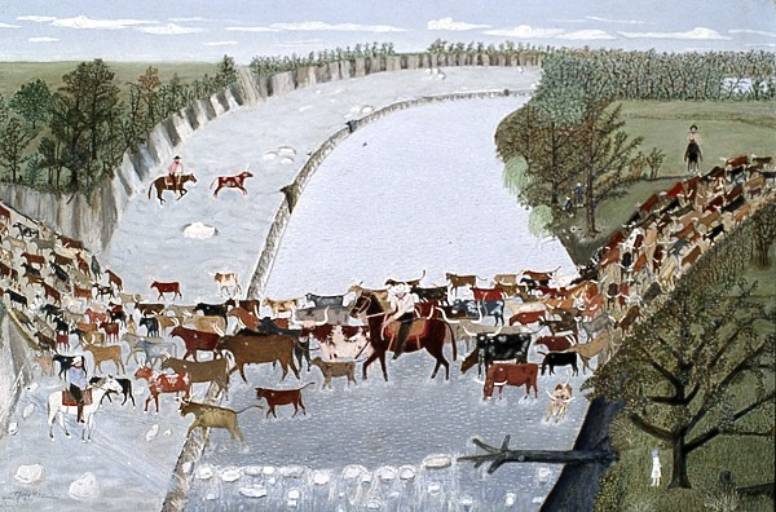
Clara McDonald Williamson, Get Along Little Dogies, 1945

Get Along Little Dogies is one of four paintings featured in the Go van Gogh outreach program for 4th graders, Art of the Lone Star State.  The program highlights the diverse landscape of Texas and key events in its history— from the devastation of a Dust Bowl-ravaged Panhandle in the 1930s to the lush beauty of fields of Hill Country bluebonnets.  After discussing these places, students create mixed media collages of their favorite Texas place. 

Below is a collage example I made, inspired by a favorite Texas memory–the week I spent on ranchland just outside Mexia, Texas with some real cowboys.  I didn’t quite earn my spurs on that trip (cows are a tough bunch to reason with!), but I did appreciate the hard-work and beauty of life on the range—something you definitely take away from the new installation…

Make a resolution to come see it, and have a Happy New Year, ya’ll!

Amy Copeland
Coordinator of Learning Partnerships with Schools and the Community
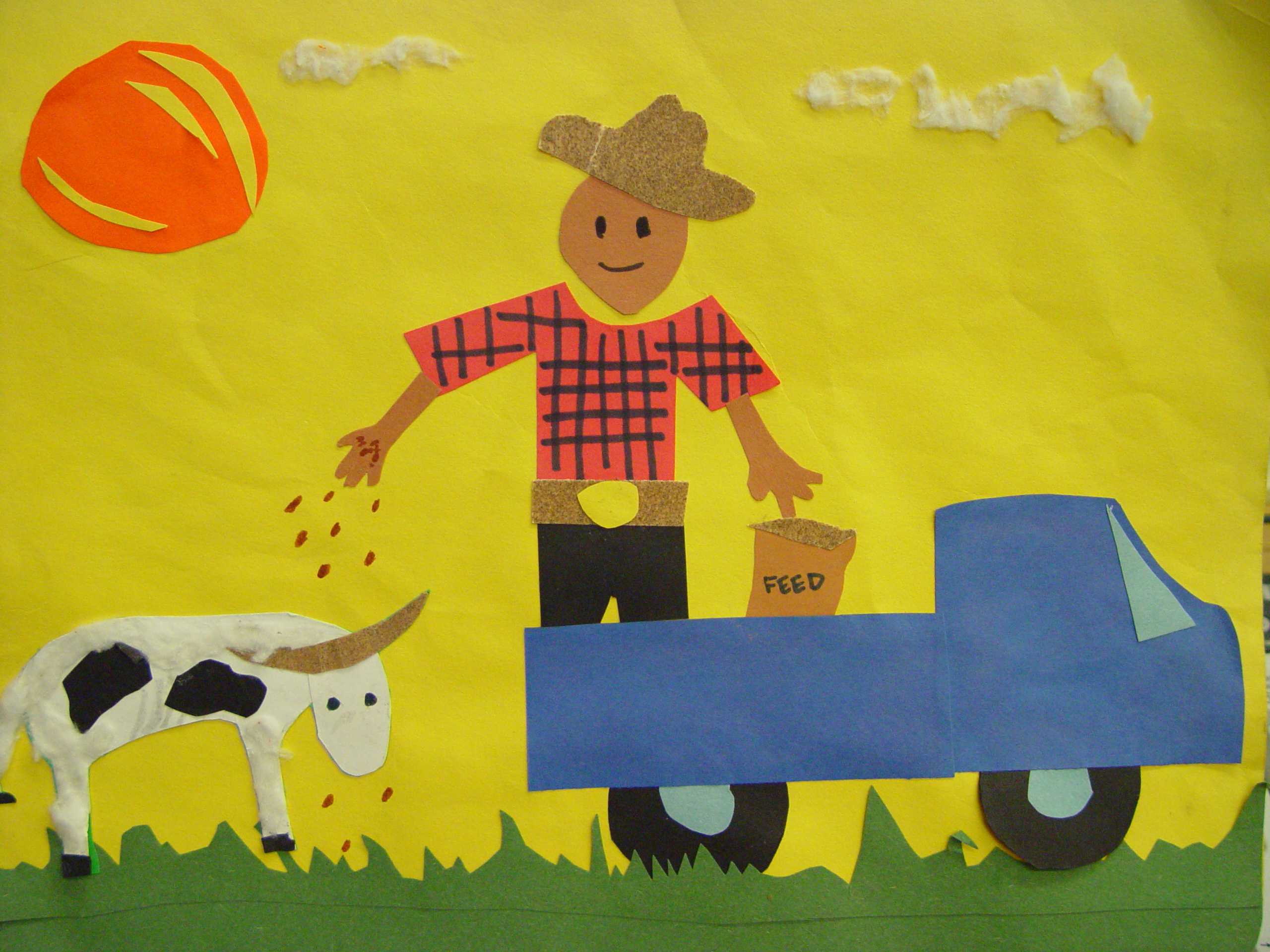
on the range!
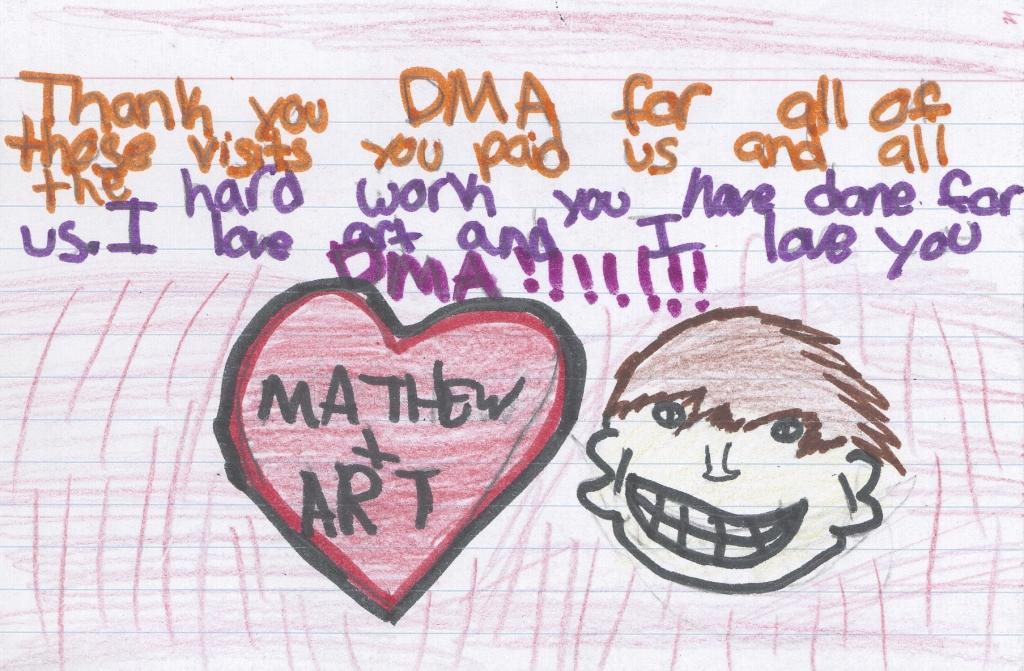
Thank you, Medrano Elementary Fourth Graders!

Every once in a while, a teacher will take advantage of our Go van Gogh programs and schedule everything that is possible for his/her students.  This is the case with the fourth grade teachers at Esperanza “Hope” Medrano Elementary, a Dallas ISD school. 

Over a three month period, we visited Medrano Elementary fourth graders four times with four different Go van Gogh programs.  As a result, Go van Gogh volunteers and staff established a unique relationship with a mixture of people at Medrano Elementary.  Their front staff recognized us and welcomed us warmly when we arrived at the school.  We looked forward to our visits, because the students are bright, engaged, and enthusiastic.  The teachers are always prepared and helpful as well.  Because of our familiarity with the school, we piloted a new program with one of the fourth grade classrooms, during which we received great feedback from both the teacher and the students.

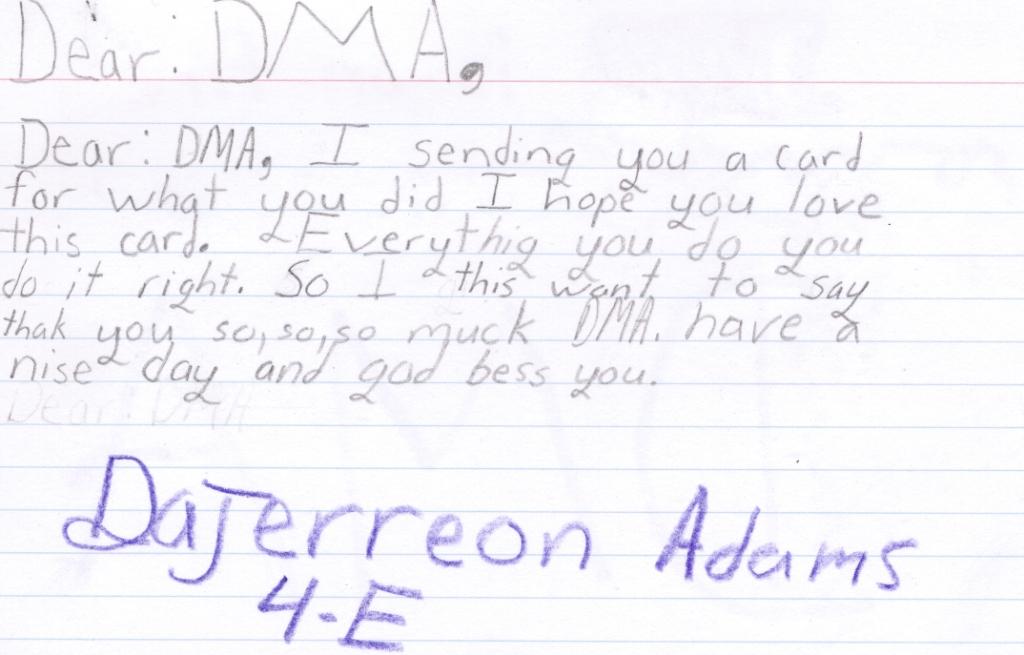
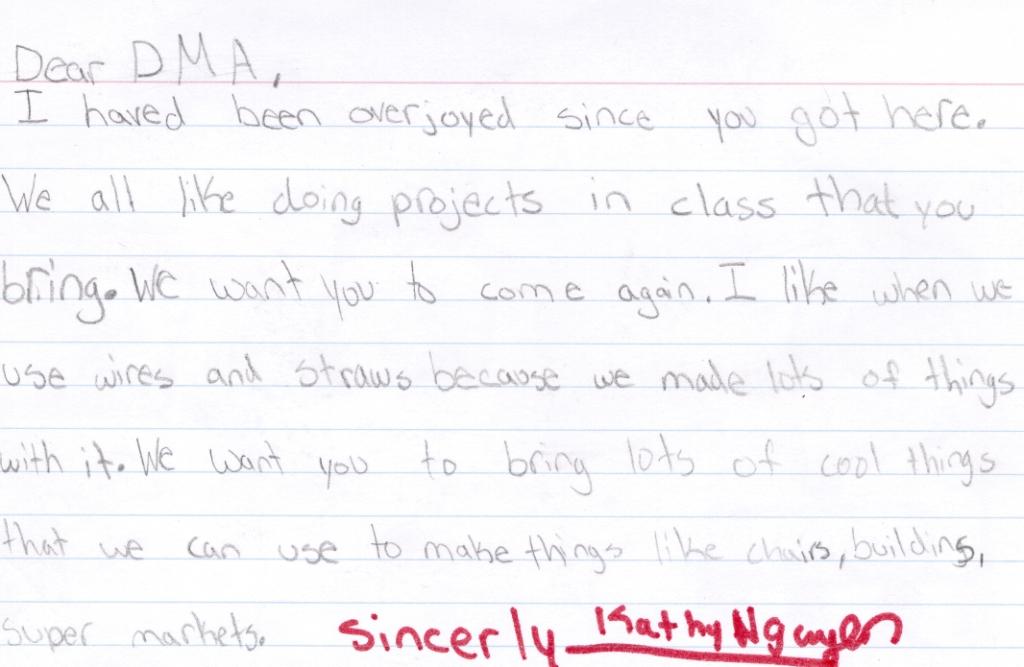
Our final visit to the Medrano Elementary fourth graders was in mid-November.  Last week, we were surprised and delighted by an envelope full of thank-you letters written and illustrated by the students.  Below are a few highlights. 

Melissa Nelson
Manager of Learning Partnerships with the Community


Thursday Evening Program for Teachers: DIY@DMA

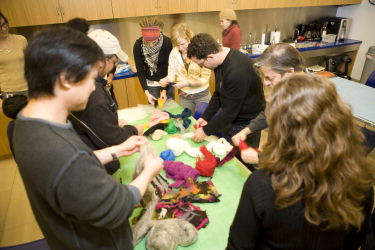
Our Thursday Evening Program for Teachers this month was DIY@DMA, a program offered through the DMA’s Center for Creative Connections.  We joined artist Lizzy Wetzel to learn about felting wool, a process she uses in her own artwork.

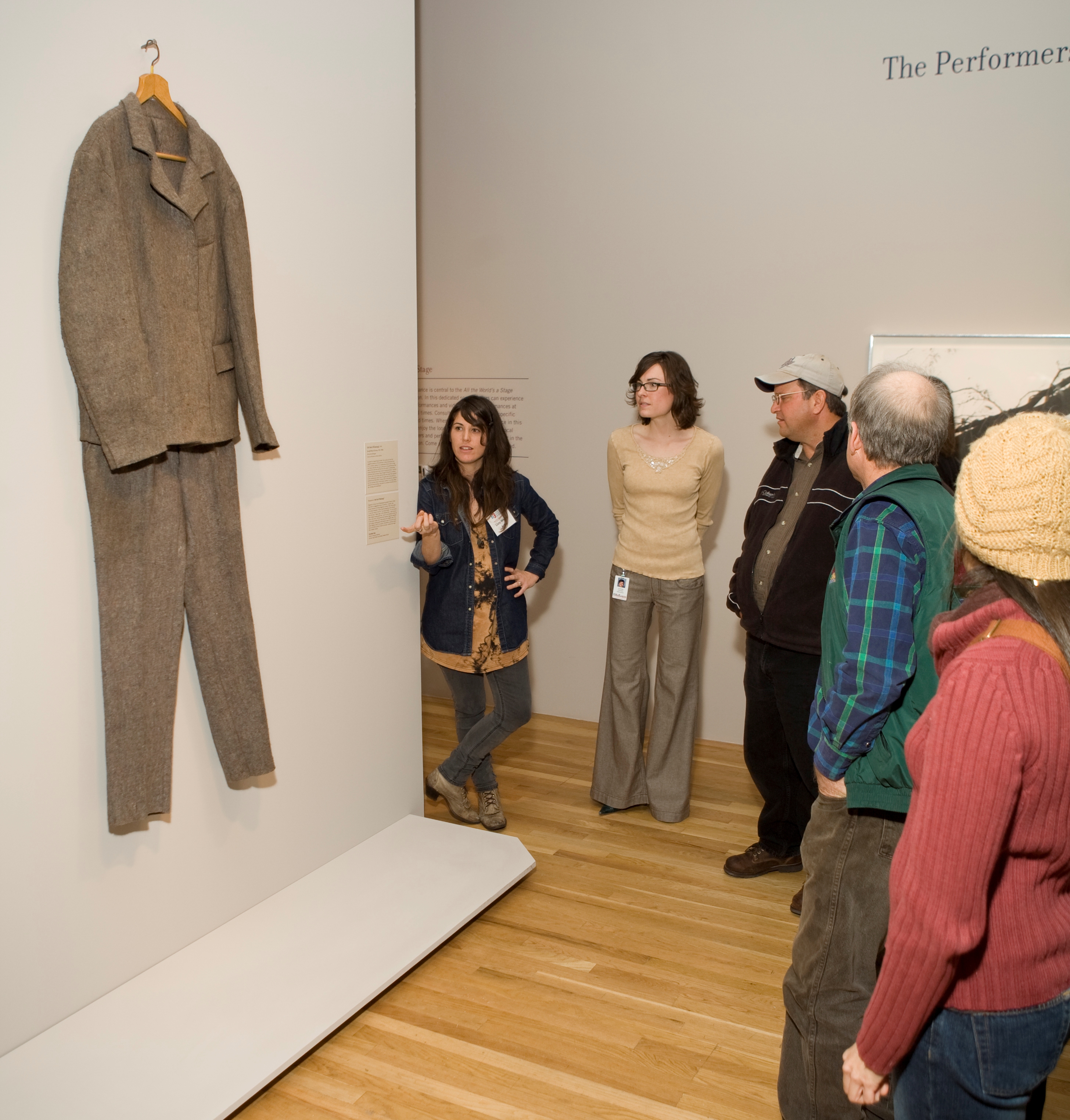
After hearing Lizzy talk about her art-making, we went to the All the World’s a Stage exhibition to see Joseph Beuys’ Felt Suit (Filzanzug), which is made of felt.  We returned to the Studio and tried our hand at turning merino wool roving into felt.

Our Thursday Evening Program for Teachers features a different program each month and is included in general admission.  I hope that you will join us on January 14 at 6:30 p.m. for the Tech Lab: Open Lab program, led by artist Kevin Todora, during which we will experiment with making collages using digital photography and Adobe Photoshop software.

Molly Kysar
Head of Teaching Programs

Ordinary –> Extraordinary

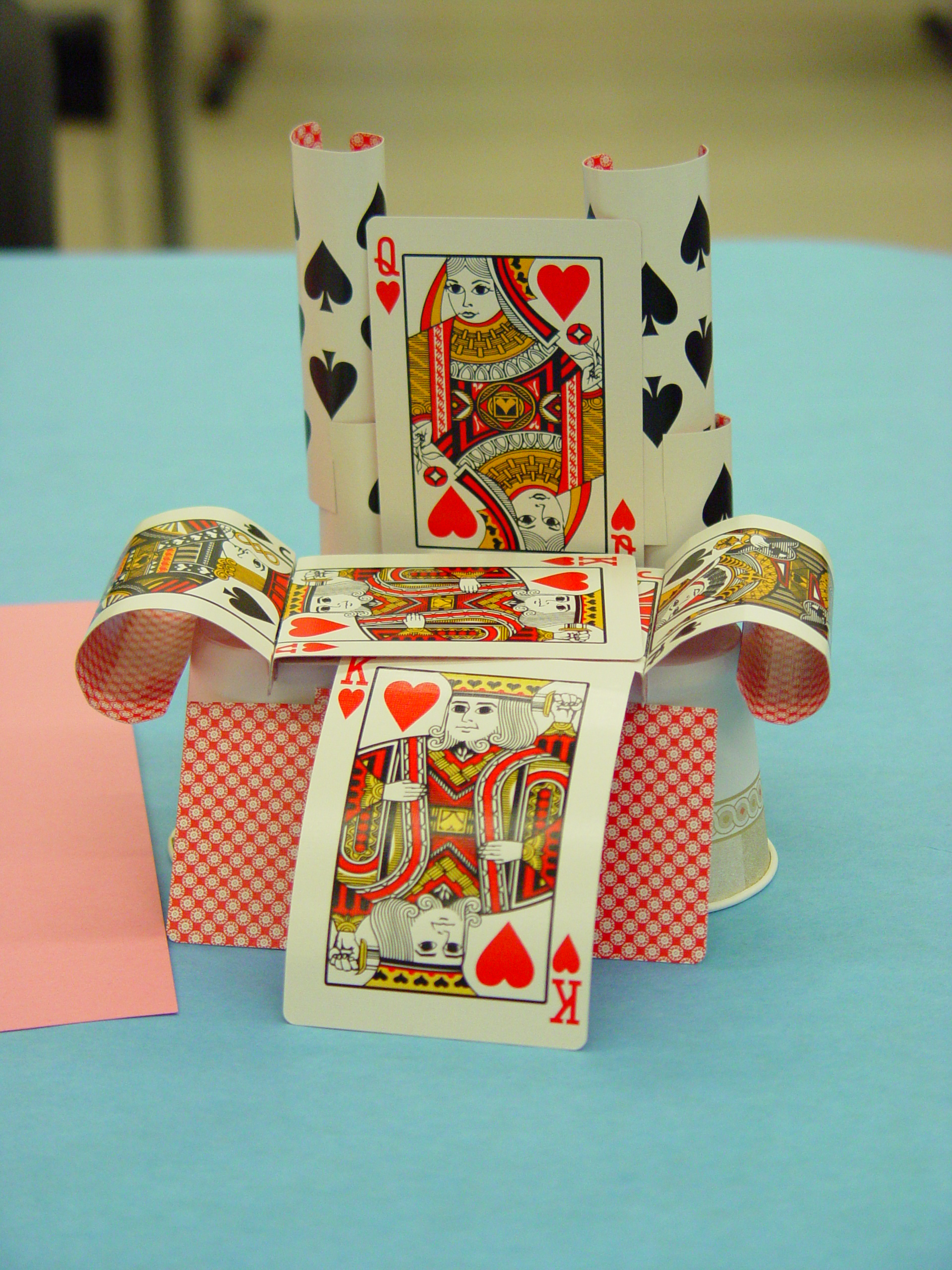
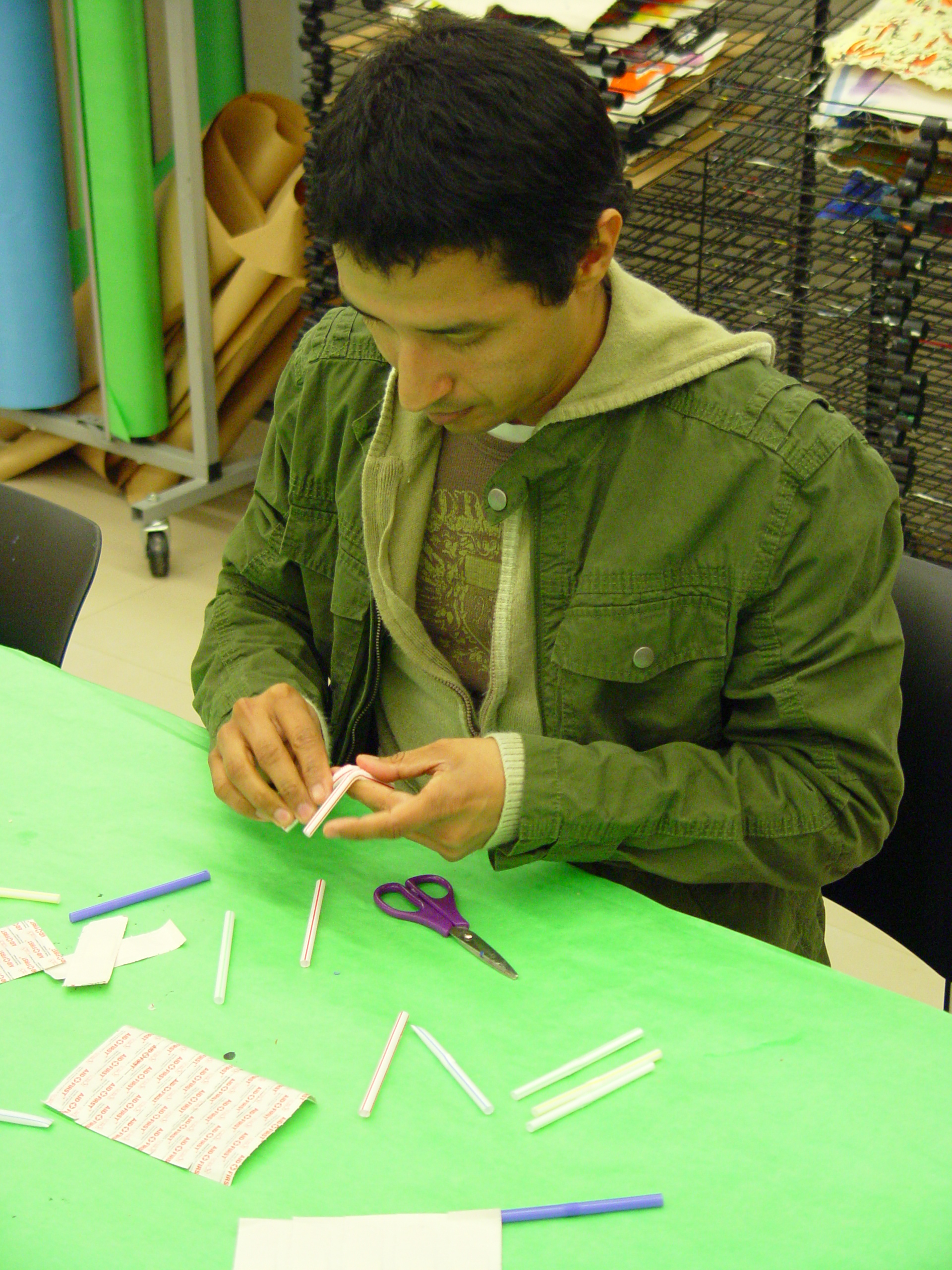
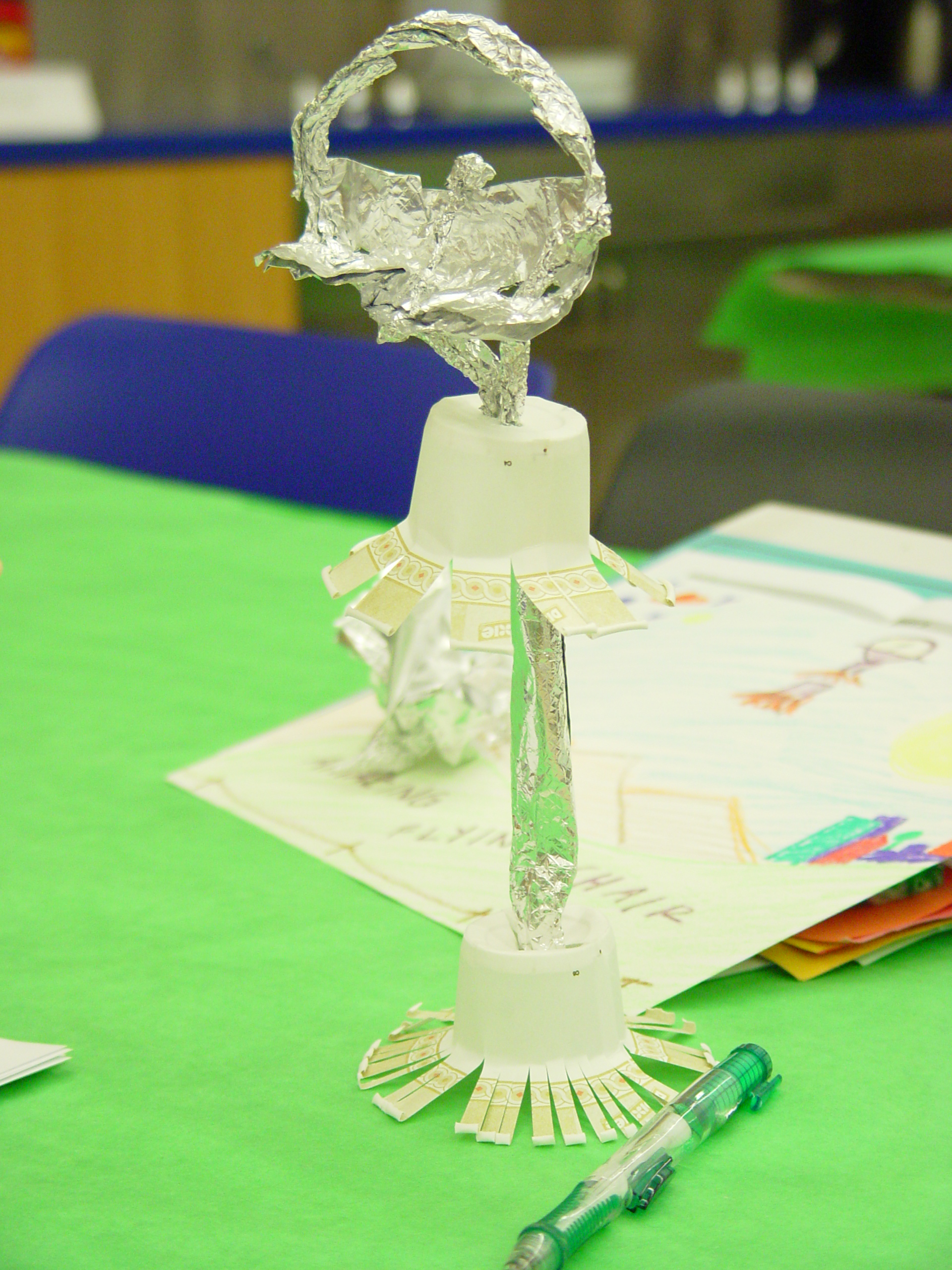
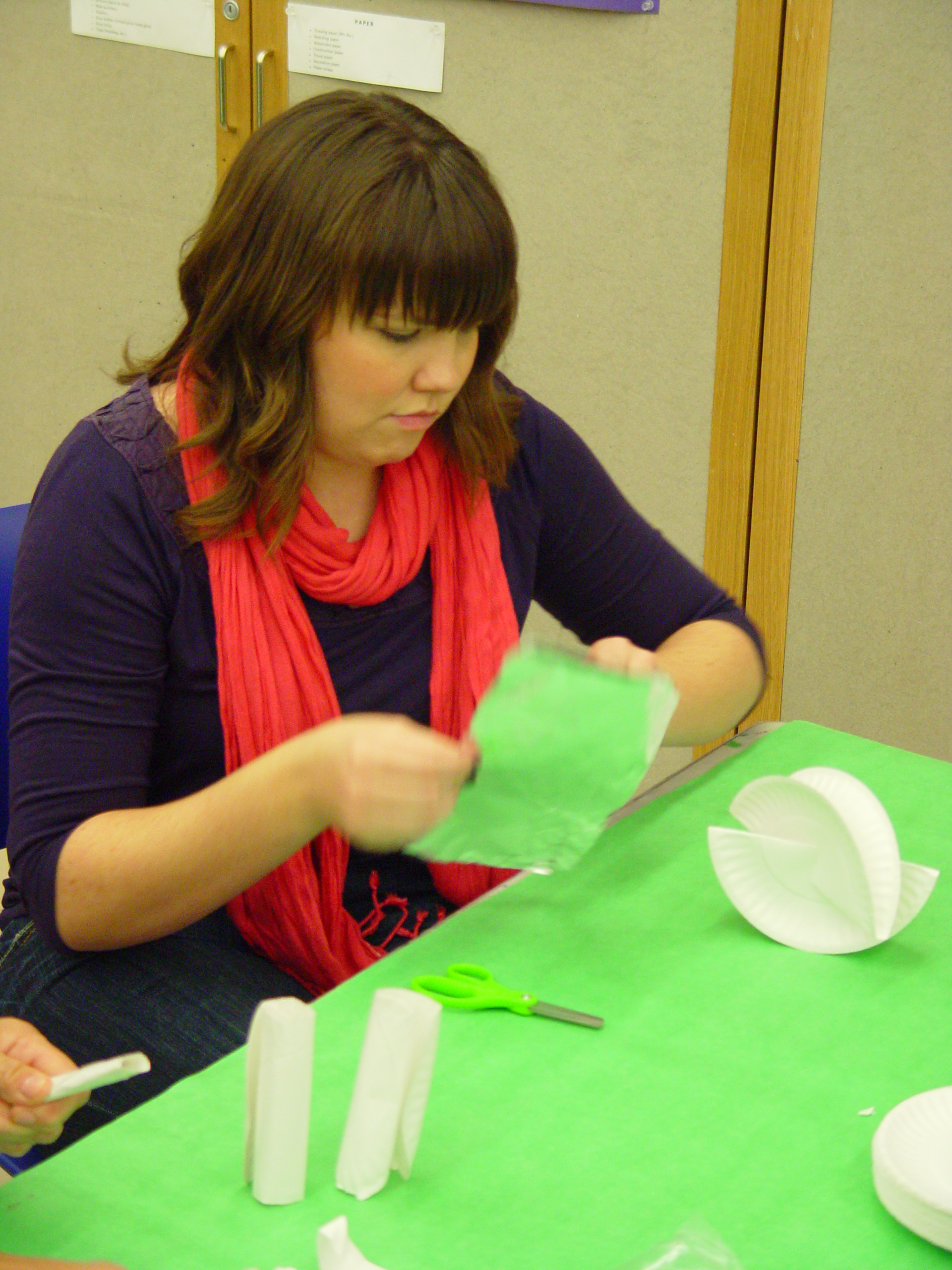
Last Friday, Go van Gogh outreach volunteers found artistic inspiration in everyday objects.  Volunteers were being trained for the Go van Gogh Creative Connections program Ordinary –> Extraordinary, which asks participants to look at familiar objects with fresh eyes, using the ordinary to construct something extraordinary.  Volunteers combined band-aids, drinking straws, paper plates and dryer sheets in creative ways to make small chair sculptures. The program is inspired by two Rachofsky-owned sculptures made by Tom Friedman—one made of straws, the other made of sugar cubes.  Check out the volunteer’s extraordinary creations below!

Amy Copeland
Coordinator of Learning Partnerships with Schools and the Community

Community Connection: Contemporary Art and a Beluga Whale

Thomas Feulmer is the Director of Educational Programming at The Rachofsky House and is a regular collaborator with the DMA.  We always look forward to his fresh ideas and perceptive insights related to works of art and artists.

Describe your work at The Rachofsky House.  What is your favorite part of your job?

As Director of Educational Programming, I do anything involving schools or the public having any interaction with the Rachofsky House.  My favorite part of my job is being around the works of art and being around original objects.  I also like the creative element of having to improvise in front of groups and having to think on your feet.

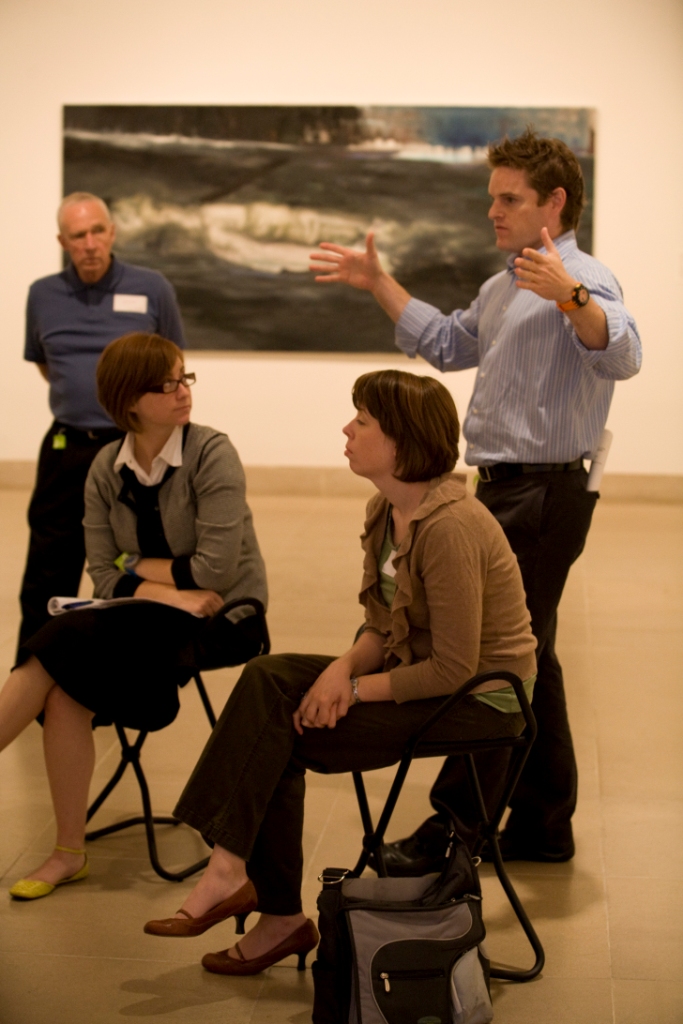
Thomas talks about a work of art at the 2009 Museum Forum for Teachers.

 Tell us about your relationship with the DMA.

I work collaboratively with Molly Kysar on Programs for Teachers based on Contemporary Art. I’ve also worked with Nicole Stutzman on the Travis Academy Program.  The UT Southwestern Medical School class “The Art of Observation”, led by DMA docents Margaret Anne Cullum and Joanna Pistenmaa, visit The Rachofsky House once during the semester.  I also participate in the development of some programs and exhibitions, in part by talking about artists and artworks that are in both the Rachofsky Collection and the DMA collections or are on loan to the DMA. 

 If you could take home any work of art from the Rachofsky Collection, what would you choose?

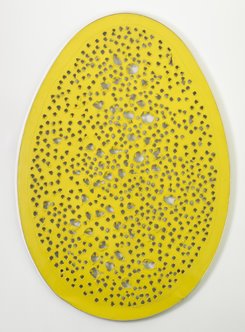
Lucio Fontana, Concetto Spaziale, La Fine di Dio, 1964

One of the first things that comes to mind is the Lucio Fontana piece Concetto Spaziale, La Fine di Dio.  It’s one of the works that every time I stand in front of it, I think it’s incredible.  When I’m looking at that piece, I feel like I’m looking at a real, sincere thing that is about exploring and is about a rich and deep thinking on the artists’s part. 

 How would you describe your personal work as an artist?

Most of my work looks at relationships: relationships between people, and more recently, relationships between people and animals.  It is also about how intimacy is managed and expressed and how desire and attraction are managed and expressed.  One of the big themes in my recent show is about my relationship with a beluga whale.  I like the notion that most people have a desire to have a pure relationship with an animal and we project a lot of our purist ideas about love and desire onto animals because they seem so unguarded, I guess. I love that we project all those purist things onto animals, but, to have an experience with a beluga whale it had to happen at Sea World, which is a big place.  The whale is trained and follows commands, and ultimately the experience is all controlled – which, in a way, is how all interactions are.  See Thomas’s recent work at New Work by Rebecca Carter and Thomas Feulmer, open December 5-20, 2009 at 500X.

Does your job have an impact on your own work as an artist?

Yes, because I can come into contact with so much art and I feel like I get such a great sampling of contemporary ideas and contemporary culture.  It’s like constant research for how to create meaning or visual culture in the contemporary world.

Meet Thomas during our two-part January Teacher Workshop on Contemporary Art, which takes place at the Dallas Museum of Art and The Rachofsky House.

Melissa Nelson
Manager of Learning Partnerships with the Community

TAG, You're It!

One of the DMA’s longest running partnerships is with Dallas ISD’s Talented and Gifted (TAG) program.  For the past 21 years, 4th – 6th grade students explore works of art from all times and places through interactive experiences like dramatic interpretation, debate, writing, and sketching.  Since 2000, each visit focuses on a BIG Idea question like “How is a work of art powerful?,” “How is place important?, ”How is perspective used in works of art?,” and “What do works of art tell us about the past, present, and future?”   These open-ended questions support a variety of answers which may relate to students’ life experiences and prior knowledge.

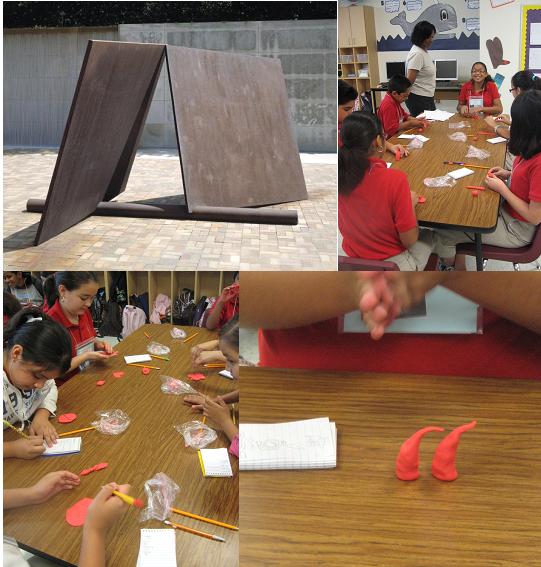
Students from Botello Elementary create verb sculptures using words (i.e. symmetry) that Richard Serra may have used to create his sculptures. They looked Richard Serra's "Untitled" for inspiration.

This year, like the many years before, has been fantastic!  There are 20 schools participating in this four-visit program with two Museum visits and two classroom visits.  Each of these visits lasts for 2 hours and are led by docents and Museum staff.  The TAG teachers commit to having the same 20-25 students participate in the program and it is exciting to see the student’s growth with each visit as they think critically and share creative answers to these BIG Idea questions.

The fall semester began in the classroom with “What does it mean to be an art investigator?,” which focused on looking closely and investigating visual clues in portraits and landscapes, creating verb-inspired sculptures using modeling material, and making connections between music and Claude-Joseph Vernet’s painting, Mountain Landscape with Approaching Storm.

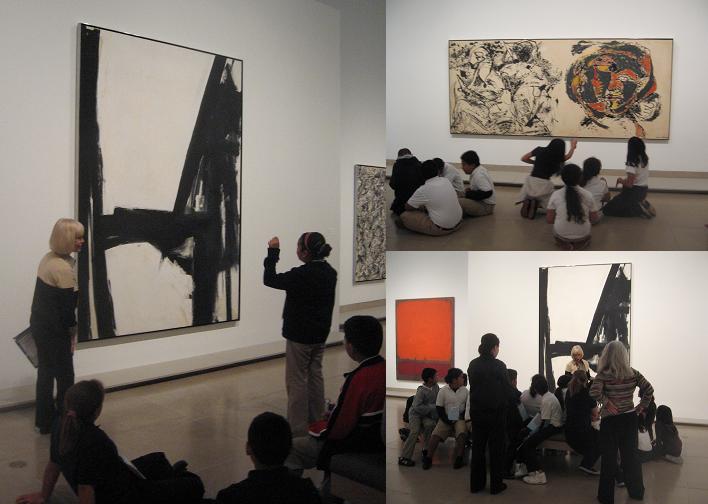
Students from Reinhardt Elementary used their arms and hands to mimic similar gestures expressed in Jackson Pollock's "Portrait and a Dream" and Franz Kline's "Slate Cross."

During Visit 2, students considered the question “How are emotions and gestures expressed in works of art?” as they posed like figures in works of art featured in the All the World’s a Stage exhibition, explored the expressive and emotive qualities of line and color, and created a sequence of events based on contemporary photography by artists, Charlie White and Gregory Crewdson.

The BIG Ideas for the final two visits are “What are ways cultures can influence each other?” and “What are the connections between art, music, dance, and theater?”   Be sure to look for an update about the TAG Museum program when I blog about the visits later in the spring!

Until next time…

Jenny Marvel
Manager of Learning Partnerships with Schools

Artist is the New Astronaut

During the past few months I’ve had the opportunity to visit classrooms throughout the Dallas Independent School District, teaching 1st-6th graders about works of art in the DMA’s collection.  Educational outreach programs like Go van Gogh and the museum’s Talented and Gifted (TAG) program reach hundreds of kids each month, and so far I’ve met some great kids with some great art insights.  Here are a few stories from my first months at the museum:
 
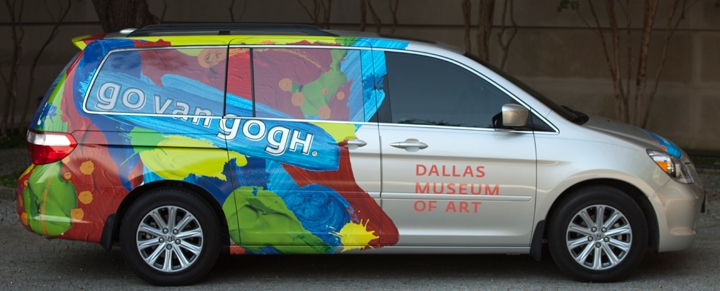
Last week I was out in the community visiting David G. Burnet Elementary School.  I was teaching a Go van Gogh program called Art of the Lone Star State to a group of excited fourth graders.  We had just finished looking at four works of art by Texas artists.  To wrap up, I asked, “What was your favorite work of art that you saw today?”  One student raised his hand, looked out the window, and pointed to the Go van Gogh van parked in the school parking lot—“THAT!” he said.  Is the van art?  This budding artist seemed to think so.
"Get Along Little Dogies," from Art of the Lone Star State

Art with Four Legs

The Go van Gogh van

Art with Four Wheels

A few days ago I was walking through the hallways of Felix Botello Elementary carrying my Go van Gogh bag, and I heard a student whisper to his friend, “It’s the museum man!”  As I passed by, he slapped me a high-five.  Walking into the classroom, another student excitedly shouted, “It’s an artist!”  As it turns out, they were the artists that day; they made extraordinary model chairs out of ordinary materials like straws and tin foil.

Yesterday I visited James B. Bonham Elementary, teaching a Go van Gogh program called Creative Connections: Ordinary to Extraordinary.  I asked one student how his art project was coming along— “This is the best day of my life!” he said.  Another student said, “When I grow up, I want to be an artist!”  I’m glad to see that artist is the new astronaut.

If you’re a teacher or a parent and I’ve mentioned your school, let us know.  We’d love to hear from you.  As more stories come in, I’ll keep you updated.

Justin Greenlee

Learning Partnerships Intern

JGreenlee@DallasMuseumofArt.org

Community Connection: Write to be Heard, the Power of Spoken Word

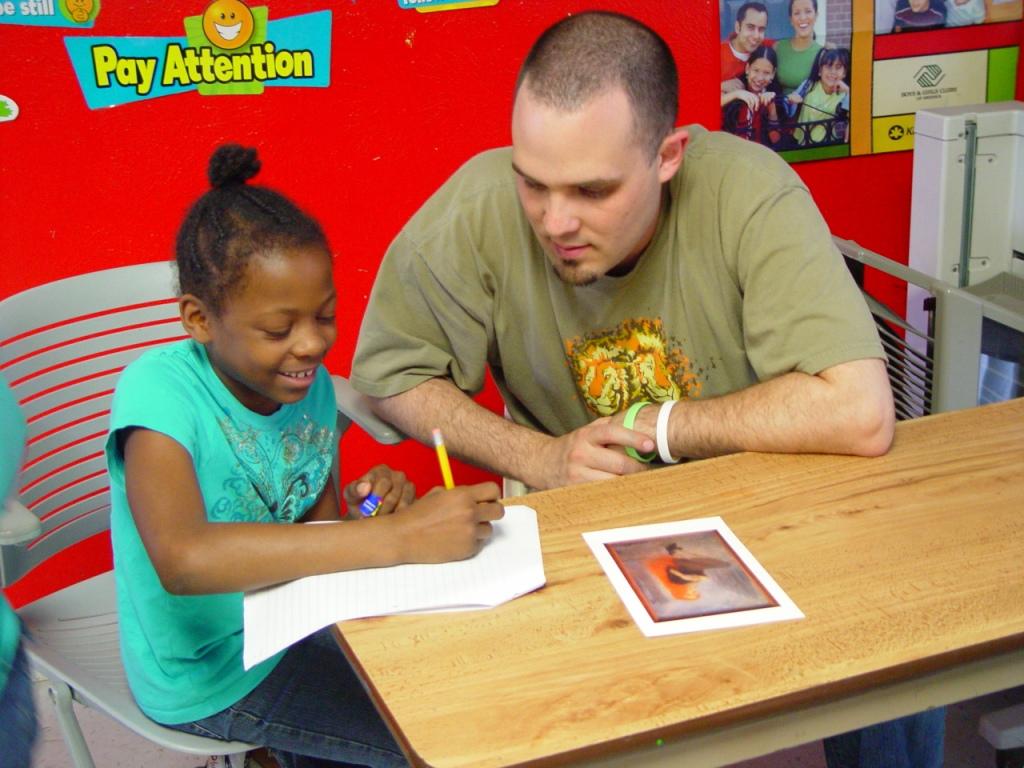
During the 2008-09 school year, we partnered with Spoken Word artist Will Richey for our afterschool program.  Will led weekly workshops at YMCA’s and Boys & Girls Clubs throughout the Metroplex.  Students were encouraged to write original poetry inspired by their lives and by artworks from the Museum.  The afterschool program concluded with performances by the students at their branches, a reception at the Museum, and a book of poems by all program participants.  For about four months, Will and I saw each other or spoke almost daily.  Afterward, we both became busy with different projects, so it was a treat to catch up with him over lunch.

Will Richey

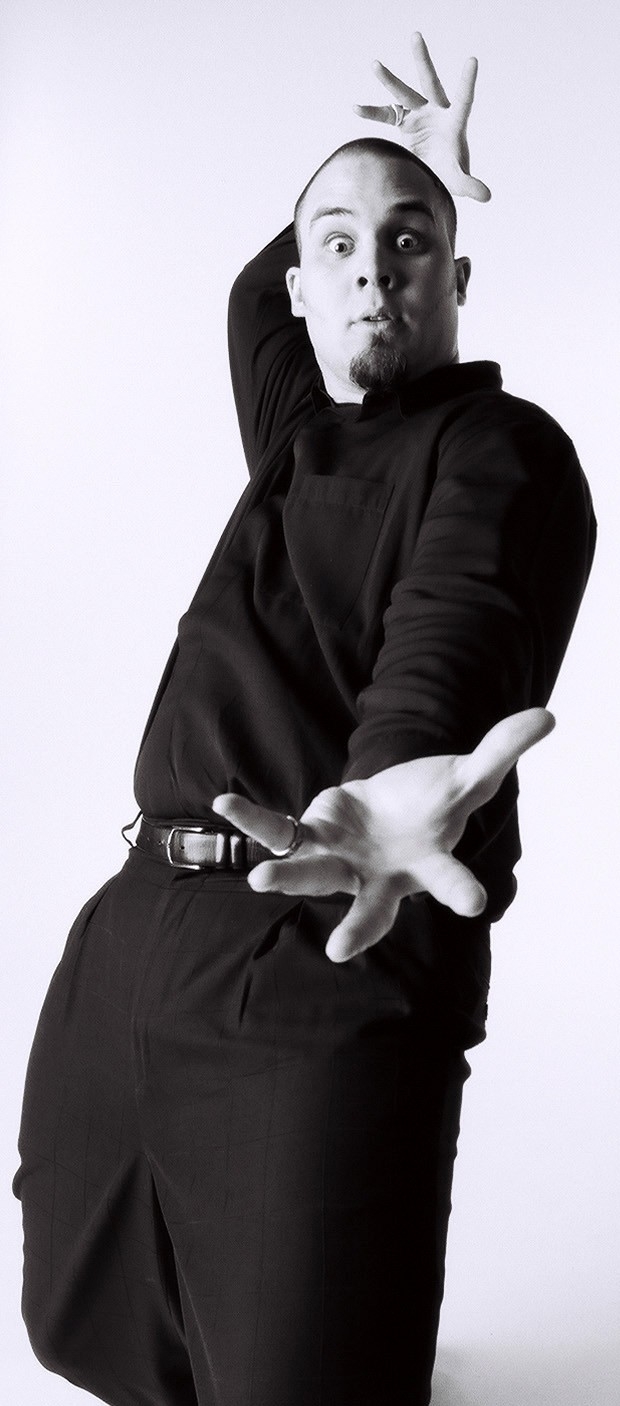
The animated Will Richey

What first made you want to become an artist?

The artistic side is my mom’s influence.  She had me in art and piano lessons as a child.  My first love was basketball, and that seemed to get in the way of my art.  As an adult, I’ve reconnected with my creative, artistic spirit.  I feel it honors my mom to be well-rounded.  She is Puerto Rican, and the arts are a very strong part of that culture.  My mother wanted to instill that in me, so I have an appreciation for different types of art – dance, music, performance, visual art, and poetry.

Tell us about Journeyman Ink.

Journeyman Ink. is a way of connecting my personal life and journey with my desire to transcend and connect cultures, creeds, and races through creative expression.  In the fall of 2001, I walked the Camino de Santiago de Compostela, a 500 mile walking pilgrimmage across northwest Spain.  This experience taught me that life is more about the journey than the destination.  Ever since then, I’ve tried to make the most of every day.  That’s what we’re trying to do with Journeyman Ink.  Through Spoken Word performances, creative art workshops, and speaking opportunities, we try to encourage people of all ages to embrace life as a journey.  Look for more information at www.JourneymanInk.com in 2010.

Describe your approach to teaching Spoken Word to students.

The best way I can answer this question is with the first four lines of a new piece:

     It’s not about poetry, it’s about personal connection
     It’s not about writing, it’s about self-expression
     It’s not about reading aloud, it’s about taking pride in your name
     It’s not about performing for the crowd, but realizing we’re all the same

Of course, Spoken Word is about all of these things, but my philosophy is that I am a facilitator.  I am not there to impose my craft on someone.  I’m there to draw out the interests, the personality, the dreams of the kids.

Will works with a student at Westlake Village Boys & Girls Club.

Will works with a student at Westlake Village Boys & Girls Club.

 What serves as inspiration for your work?

I’m very inspired by the human story.  I try to help people understand we have so much more in common than we are different.  We have so many barriers (religion, academic achievement, economic status) that get in the way, but the bottom line is we are all connected.  We all share the human experience. 

Could you write a short poem about today’s lunch?  (No pressure!)

Today is an opportunity – a joyous moment
     Shared over good food and conversation
Reminiscing over magical collaborations
     And answering questions with purpose.
Blessed with friendship and creativity
     Connecting the DMA with young artists
Realizing we have nothing more than today
     To smile and let our light shine!

Will signed his impromptu poem, which was written on the back of a to-do list.  I hung it with pride next to my desk.

Melissa Nelson
Manager of Learning Partnerships with the Community

Connect: Teachers, Technology, and Art

Our work on a new grant project, Connect: Teachers, Technology, and Art, has officially begun!  Through the Institute for Museum and Library Services (IMLS) and their Museums for America grant program, the DMA was awarded $150,000 in October 2009 to begin redesigning online teaching materials.  Over the course of the next two years, we will work to create five new dynamic, web-based resource units that present the wealth of our collections in African and South Asian art.  How will we do it?  Thoughtfully, by connecting these three things:

Teachers: Results from a 2007 evaluation with 450 teachers, which focused on how teachers learn and teach with art, will inform the initial selection and organization of artwork images and information.  Staff will also collaborate closely with twenty teachers, who will help design and test the new teaching resources in their classrooms.  How do you currently use the Museum’s online teaching materials?  We welcome your comments!

Technology: Digital images, video, and audio, similar to those on DMAtv, will enliven the resources by providing extended information about works of art and cultures.  Imagine all of this packaged into custom units that are easy for teachers to access, search, and share with students.

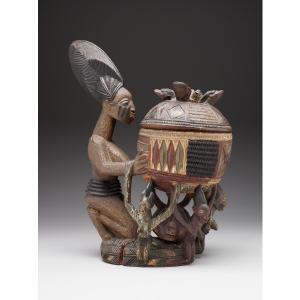
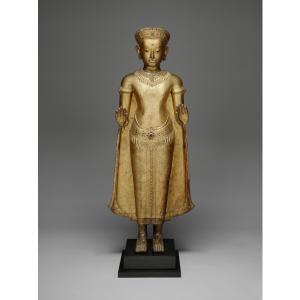
Art: Works of art from Africa and South Asia will be the focus for the five new resource units.  The units will reflect recent curatorial scholarship and upcoming catalogue publications for both collections.  They will also highlight artworks recently added to the collection, such as the olumeye from Nigeria and the Buddha Sakyamuni from Thailand.

2004_16_MCD~01

Kneeling female figure with bowl (olumeye)

2006_21

Buddha Sakyamuni

Grant work to tackle over the next two months includes taking inventory of great images, information, video, and audio content related to the African and South Asian artworks, as well as selecting ten teachers to begin collaborating with staff.  If you would like to hear more about the grant, please feel free to email us.  Also look for future progress reports on the Connect project here on the blog or delivered via the Educator Newsletter.

Nicole Stutzman
Director of Learning Partnerships with Schools and the Community
nstutzman@DallasMuseumofArt.org

Jenny Marvel
Manager of Learning Partnerships with Schools
jmarvel@DallasMuseumofArt.org

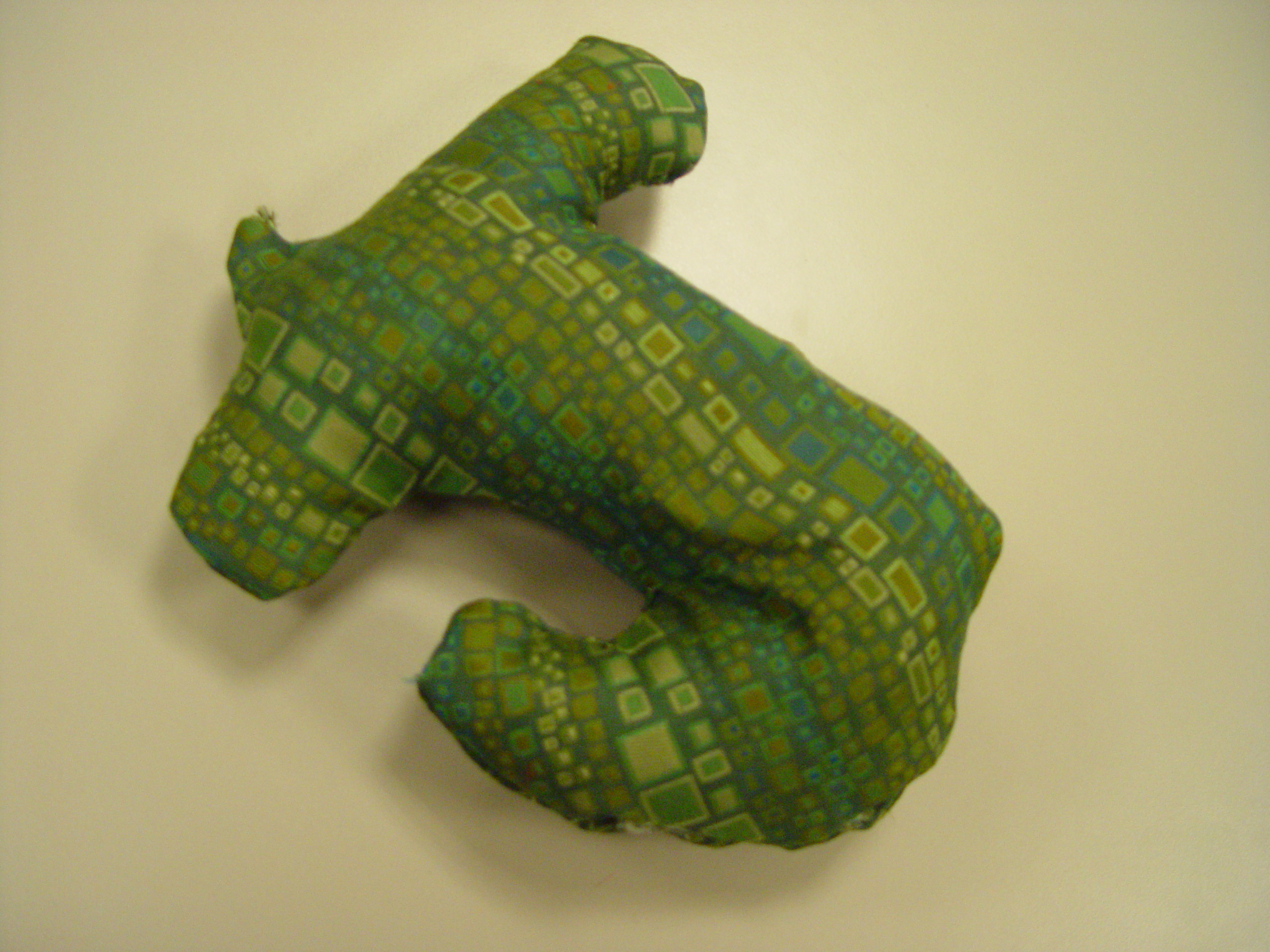
Is it a slug? The letter "j"? A prehistoric sea creature?

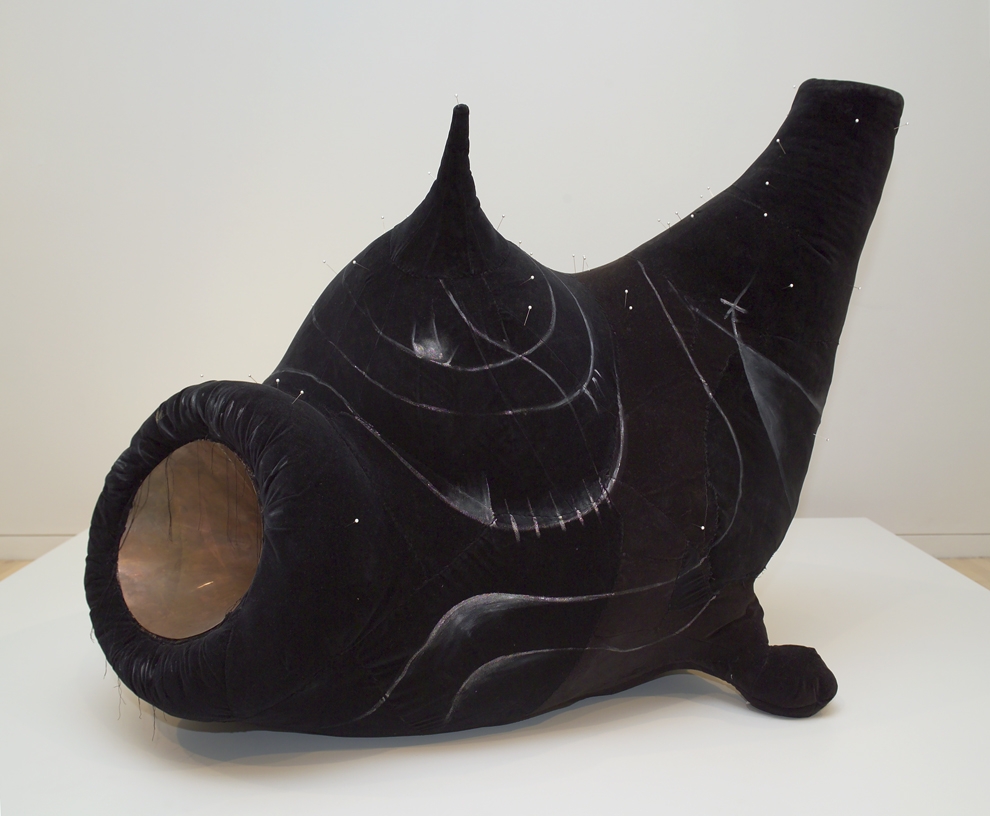
Dorothea Tanning’s Pincushion to Serve as Fetish has inspired me to create a soft sculpture project for our afterschool program.  All it took was some cool fabric, a stapler, polyester stuffing, and a hot glue gun.

What does it look like to you?

I tested the project first and made an example before introducing it to the students. What does it look like to you?

The students were really excited about their fabric choices.

The students were really excited about their fabric choices.

Pincushion to Serve as Fetish, Dorothea Tanning, 1979

Inspiration for the project. See Pincushion to Serve as Fetish in the Center for Creative Connections.


Archives

Categories