Archive for the 'Art & Teaching' Category


Kids Say the Darndest Things!

I spy with my little eye…children at the museum!

On any given day, there are always programs being offered for our younger museum visitors. During the week, you can often spot them in lively school groups engaging in interactive docent tours. And don’t be surprised if their enthusiasm can be heard from the hallways as they participate in exciting art activities in the Center for Creative Connections. Our programs also go beyond the museum and into the community, bringing art to the classroom with Go van Gogh. These are just a few examples of the many ways the folks here at the DMA are facilitating fun learning experiences that encourage participation and self-expression. But don’t take it from me! Our young participants really say it best. Below are some of their candid comments from the 2011 – 2012 school year.
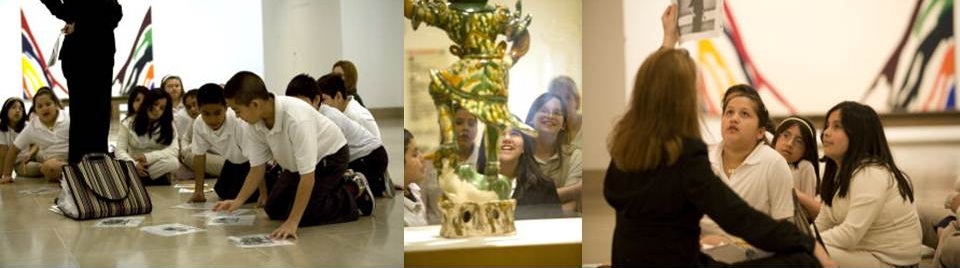
Docent Tours

  • “These paintings look weird to me,” a puzzled 4th-grade girl commented while walking through the Impressionist gallery.
  • “Wouldn’t you like to drink out of these amazing cups?” a docent asked about a group of gold Peruvian mugs. “Uh, if I cleaned them first,” replied a 4th-grade boy.
  • A 4th-grade boy noticed a Peruvian Mask with copper covered eye holes and mused, “I wonder how many times the guy wearing that ran into the wall?”
  • “Even if you are a leader, you still need help,” reasoned a 4th-grade boy when asked to interpret the proverb expressed by an African sculpture.
  • After an hour long tour, these 4th-graders still wanted more, as expressed by this excited girl who asked, “What else are we going to see? Are we going to see the really really really big artworks now?!” Referring to the Mark Bradford work they had passed by on the way in.

Center for Creative Connections

  • “They always make us paint with crazy things!” said a young girl in reaction to painting with kitchen tools in an Arturo’s Art & Me class.
  • “I thought it was going to be a person, but it turned out to be a ballerina,” explained an eight-year-old girl about her finished artwork.
  • A nine-year-old girl titled her art piece Man Gives Flowers and reflected that, while she made it, she thought of “romantic love.”
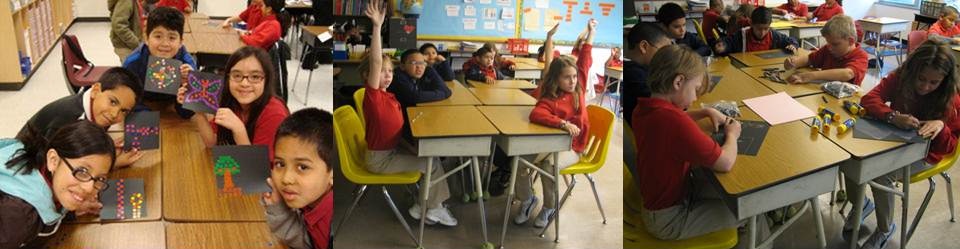
Go van Gogh Classroom Programs

  • “Hi, I am from the Dallas Museum of Art!” announced the volunteer. “Really?! Yessss. I LOVE art!!” exclaimed an enthusiastic 2nd-grade girl.
  • “Make the minutes last! Make the next two minutes an hour!” declared a 5th-grade boy after being told that only five minutes remained.
  • “Wow,” a 4th-grade boy said of the hat he was making, “mine is turning out reeeeally neat.”
  • “I have no idea what I am doing. I just went wild on it,” laughed a 4th-grade boy about his art project.

If you have any memorable museum moments with kids, please share them in the comments section!

Hannah Burney

McDermott Education Intern for Teaching Programs and Partnerships
Urban Armor: Urban Art

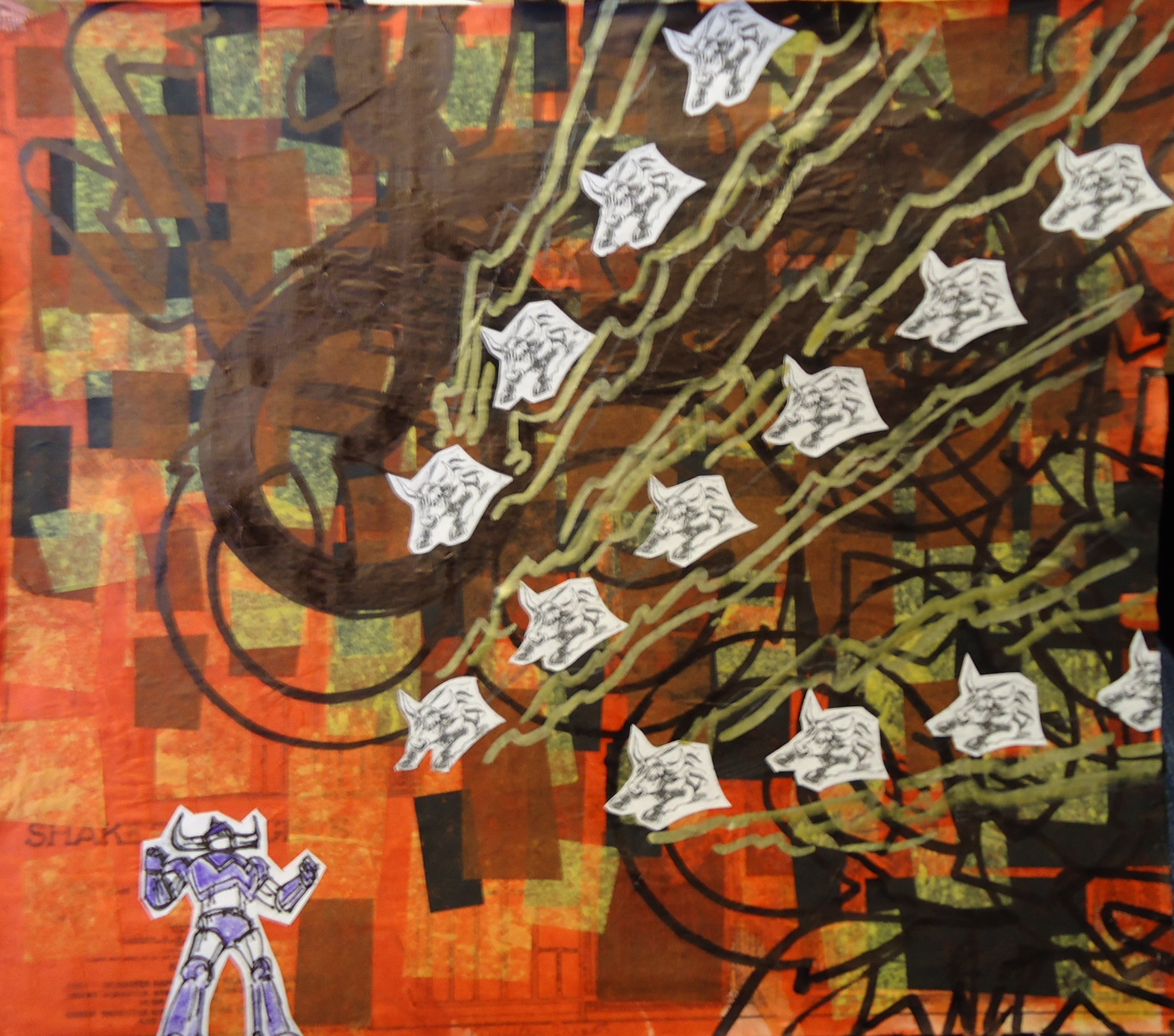
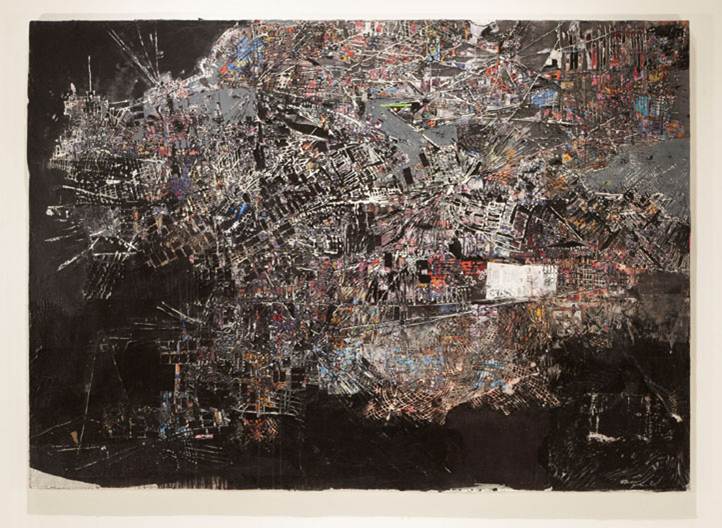
Urban Armor is a program for tweens and teens focusing on building identity through discussion and artmaking. This month, we’re offering a graffiti workshop inspired by the Mark Bradford  exhibition.  We’ll look at several works in this incredible show, and talk about the relationship between place and identity on both a personal and communal level.

Mark Bradford, A Truly Rich Man Is One Whose Children Run into His Arms Even When His Hands Are Empty, 2008, Collection of Marguerite Steed Hoffman

What has me excited about this workshop is the opportunity to discuss with participants the idea that not only are we influenced by our environment, we in turn leave our mark on the spaces we inhabit through our presence and actions. For teens, I think this desire to make someplace your own is particularly strong—from their rooms at home, lockers at school, to their personal space (how they dress, for example). This connection between place and identity is fundamental not only to Mark Bradford’s work but to street art as well, which is something we’ll explore during the workshop. Teens will also  have the chance to talk about their own reactions to Bradford’s work in terms of his materials and his use of layers.

Participants will then have the opportunity to make a work of graffiti art using a wide variety of materials that focus on their individual creative strengths.  Some may feel more comfortable with  drawing, others with collage, etc. Regardless of the medium they choose, we’ll emphasize the notion of self-expression through the use of layers. They’ll learn how to make their own stencils and how these can be used to create patterns through repetition in their artwork as well as a way of personalizing their own stuff at home after the workshop.

My sample, Training Wheels/Bull Market, shows layering and stencil processes

Urban Art will be offered Friday, October 21 from 9:30-11:30 p.m. and Saturday, October 29 from 1:00-3:00 p.m.  The October 29 workshop is currently full, and registration is encouraged for the October 21 workshop (drop-ins will be welcome but space is limited and on a first-come, first-served basis).  All supplies will be provided, and the program is free with paid admission to the Museum.

JC Bigornia
Coordinator of Family Experiences

Einstein's Dreams of the DMA

If you’re a follower of the DMA Educator Blog, then you’ve read about our Staff Reading Group.  Last Friday, our reading group combined a work of fiction with works from the collection in an engaging and provocative conversation.

Melissa selected five excerpts from Einstein’s Dreams by Alan Lightman.*  The novel imagines what Einstein may have been dreaming about during the time that he was developing the theory of relativity.  Our instructions from Melissa were simple: read the  excerpts, each of which offers a definition of time, and select one work of art from the collection to illustrate that definition.  This idea was first introduced by Amy in a blog post over the summer.

Six staff members participated in the conversation, and we were shocked when we learned that we had each responded to the same excerpt: 14 April 1905.  In this chapter, time is defined in the following way: “Suppose time is a circle, bending back on itself.  The world repeats itself, precisely, endlessly” (Lightman, 6).

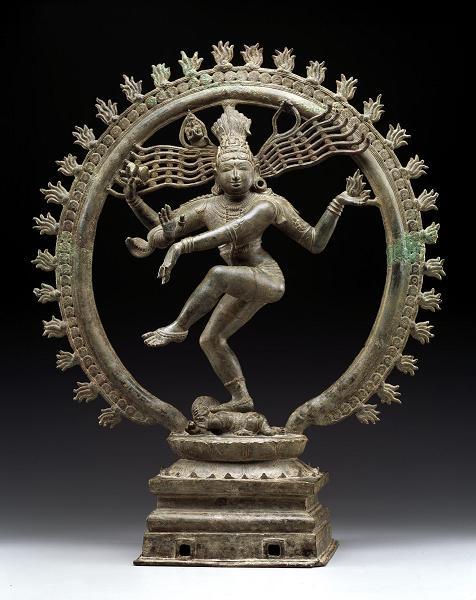
Both Hannah and Melissa selected Shiva Nataraja as the art equivalent of time as a circle.  Shiva is the Hindu deity of creation, destruction, and rebirth, and in this sculpture he dances out the rhythm of the universe.

Shiva Nataraja, India, 11th century, Dallas Museum of Art, gift of Mrs. Eugene McDermott, the Hamon Charitable Foundation, and an anonymous donor in honor of David T. Owsley, with additional funding from The Cecil and Ida Green Foundation and the Cecil and Ida Green Acquisition Fund

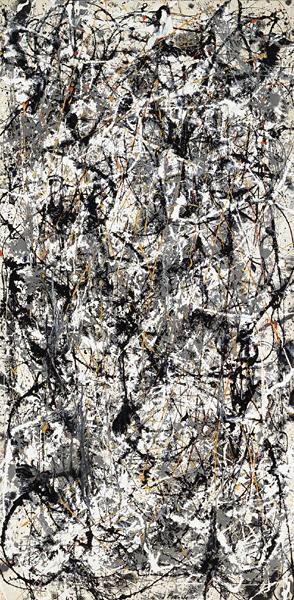
Our part-time intern, Mary Nangah, thought Jackson Pollock’s Cathedral best represented this concept of time.  It’s difficult to identify and starting and ending point for each line.  Time is also represented through the repetition of color and line on the canvas.

Jackson Pollock, Cathedral, 1947, Dallas Museum of Art, gift of Mr. and Mrs. Bernard J. Reis

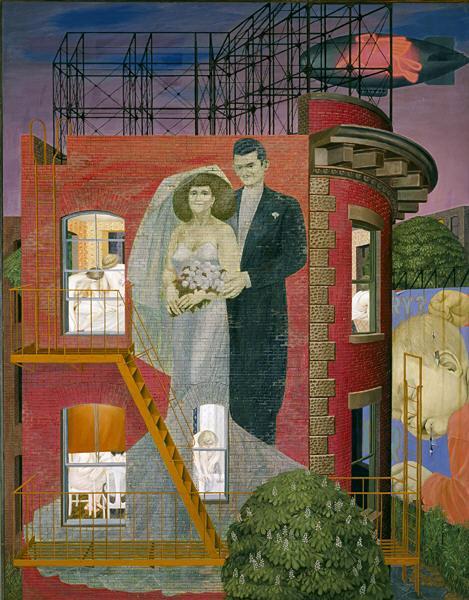
Jessica selected Harry Koerner’s June Night, which shows an intimate view of an apartment complex.  Jessica felt that these vignettes could happen any time, anywhere.  The images of the bride and groom, as well as the baby, also reminded her of the cycle of life.  The final line of this excerpt reads “For in each town, late at night, the vacant streets and balconies fill up with their moans” (Lightman, 9).  Jessica could imagine hearing sorrowful moans on the fire escape of this painting.

Henry Koerner, June Night, 1948-1949, Dallas Museum of Art, Foundation for the Arts Collection, gift of Joshua L. Logan

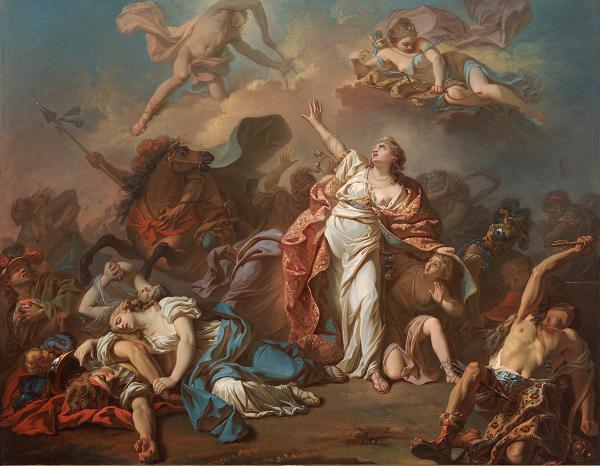
My selection was Apollo and Diana Attacking the Children of Niobe by Jacques-Louis David.  I was especially struck by the last paragraph of the reading, which was about people with unhappy lives who realize that they cannot change their actions and their mistakes will be repeated over and over again.  Here, Niobe pleads with Apollo and Diana to spare the last of her fourteen children from death.  She is being punished for her pride after boasting that her children were more beautiful and strong than Apollo and Diana.  Her final punishment comes when she is turned into a sculpture, forced to mourn for eternity.

Jacques-Louis David, Apollo and Diana Attacking the Children of Niobe, 1772, Dallas Museum of Art, Foundation for the Arts Collection, Mrs. John B. O'Hara Fund in honor of Dr. Dorothy Kosinski

If you were going to select one work of art from the DMA’s collection to represent time as a circle, what work would you choose?  I look forward to reading your responses in the comments!

Shannon Karol
Manager of Docent Programs and Gallery Teaching

*Alan Lightman, Einstein’s Dreams, New York: Vintage Books, 1993.

Art and Games and Docents

A few months ago, Tom Russotti contacted Nicole to see if the DMA might want to partner with him on any projects.  Tom is the founder of the Institute for Aesthletics, and is also an artist-in-residence at the CentralTrak Gallery.  Much of Tom’s work combines art with game playing, and I was eager to have him lead a session for our docents that might help them incorporate games into their tours.

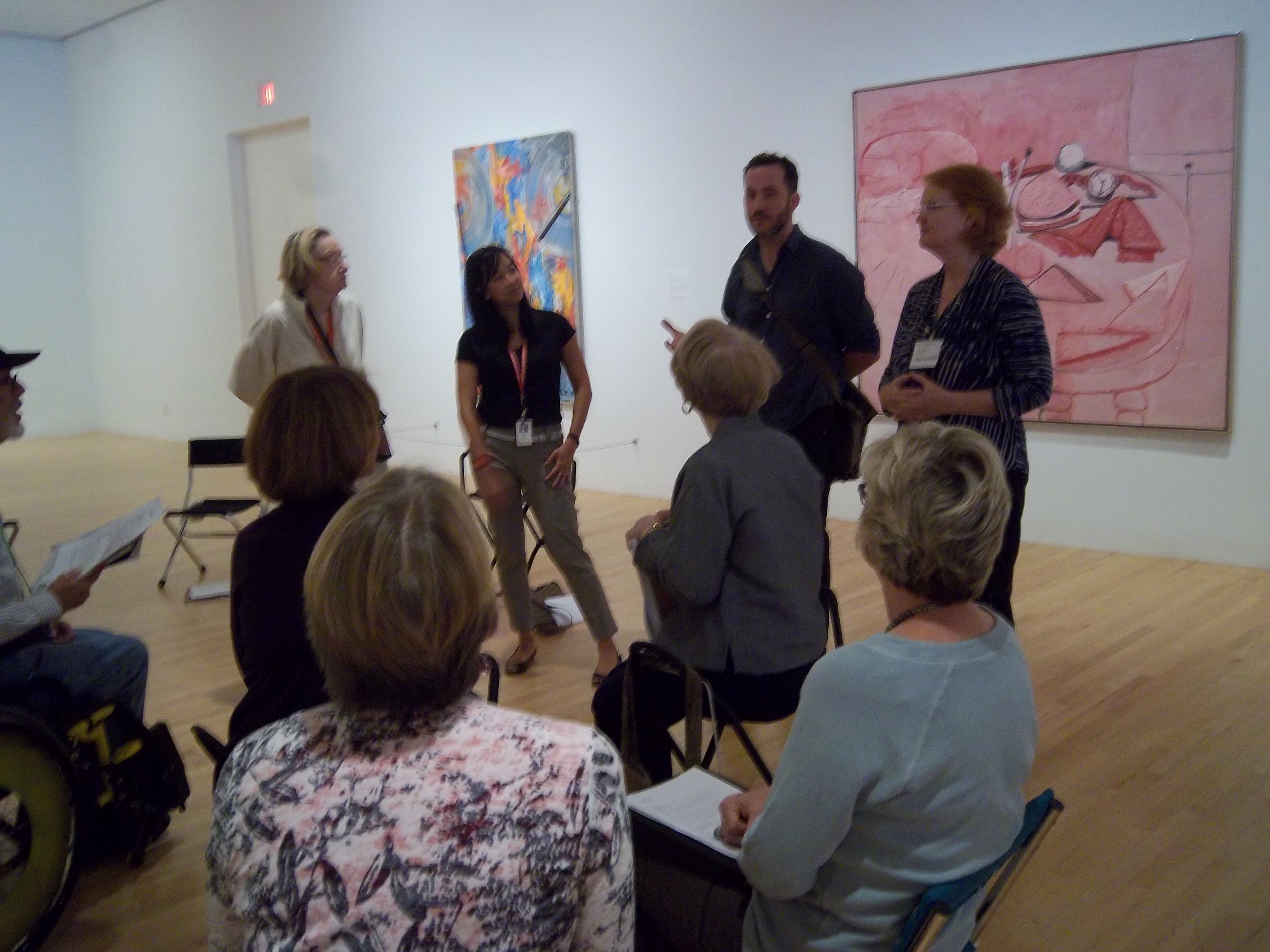
Artist Tom Russotti talks with a small group of docents in the contemporary gallery

Tom began his session by telling the docents about his projects, including his upcoming CIncArt exhibition at CentralTrak.  He also spoke about why games matter, and it’s not just because they’re fun.  Games are experiential and allow us to learn by doing.  They provide a structure for learning but don’t cause us to feel pressured to participate or come up with a “right” answer.  Games are also social and enable us to interact with works of art and with each other.

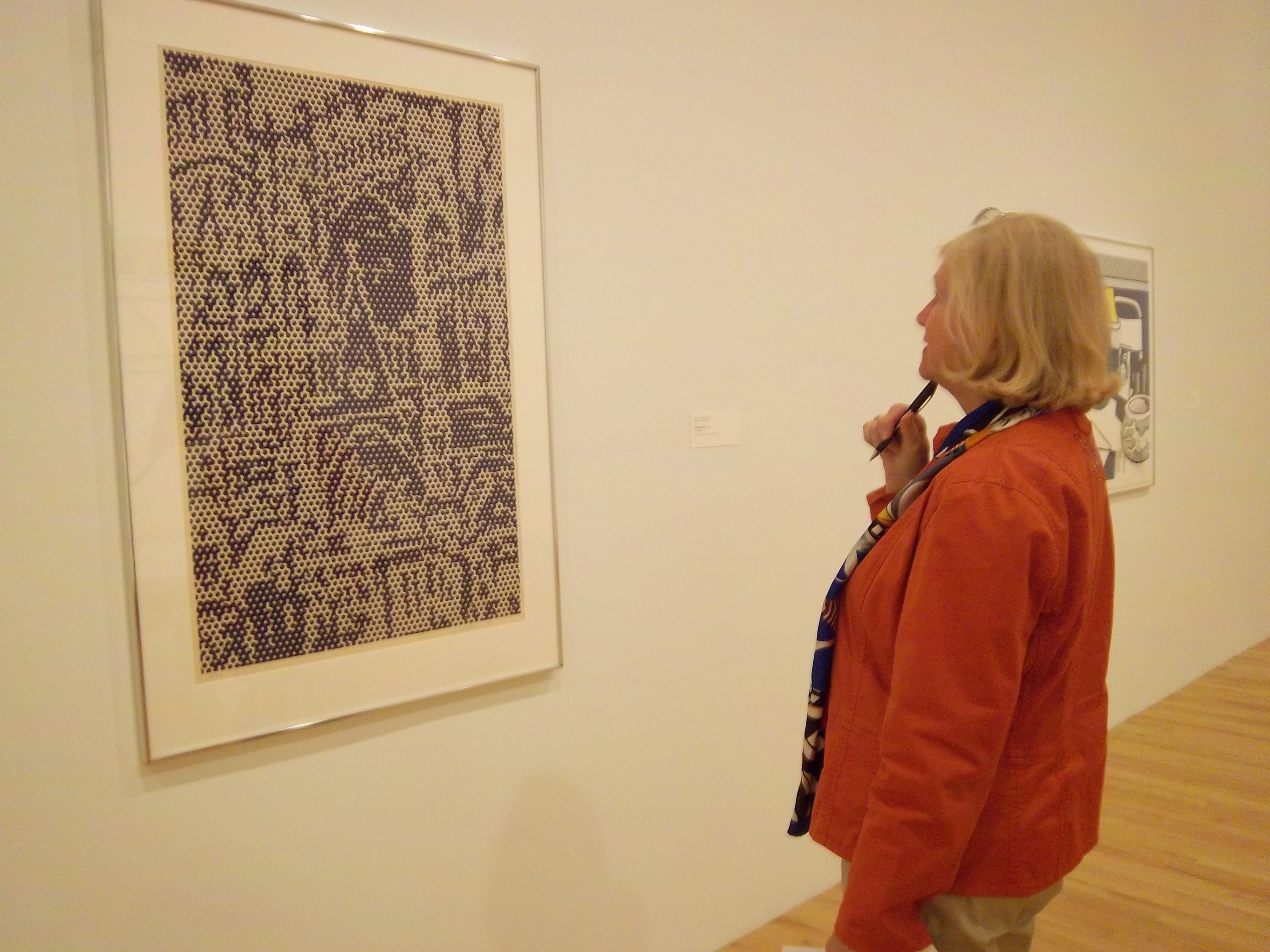
Docent Carol Placido ponders whether this Lichtenstein print matches her state of mind while playing Muse

We also spent time in the galleries playing four games that Tom created for the docents.  The games included:

  • Emotikonst, which asked docents to write down their emotional responses to a work of art on a piece of paper.  They then switched papers with another docent, who had to figure out which work of art was being described.
  • Action! allowed docents to select one Abstract Expressionist painting and use movement to re-create how that painting was made.
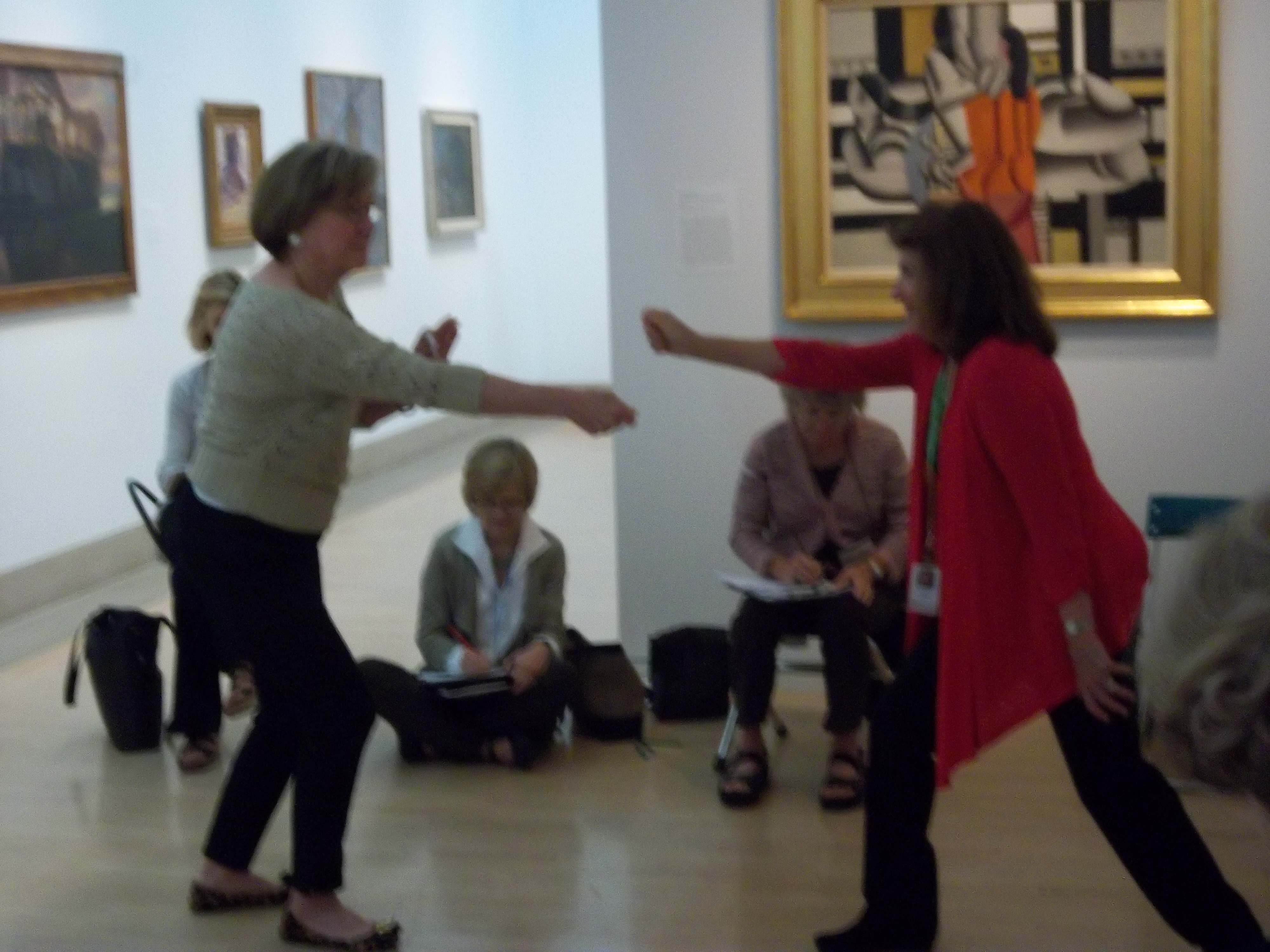
  • The Cubism Game called for one or two docents to pose like a sculpture while the rest of the group sketched them.  The group was told to sketch the “sculpture” from as many viewpoints as possible to illustrate the different perspectives one sees in a Cubist painting.
  • Muse asked docents to respond to a set of questions and prompts to identify how they were feeling at that exact moment.  They then selected a work of art that described their present state of mind.

Docents Pat Altschuler and Susan Behrendt pose like a sculpture during the Cubism Game

Each of Tom’s games had a defined goal and set of rules that went along with it.  Docents, like students, sometimes have a hard time following rules.  And as the old saying goes, rules are meant to be broken.  Many of the groups altered the rules to create new variations of Tom’s original games.  Tom encouraged the docents to give him feedback on his games, and he plans  to use their feedback to made additional tweaks to each of the games.

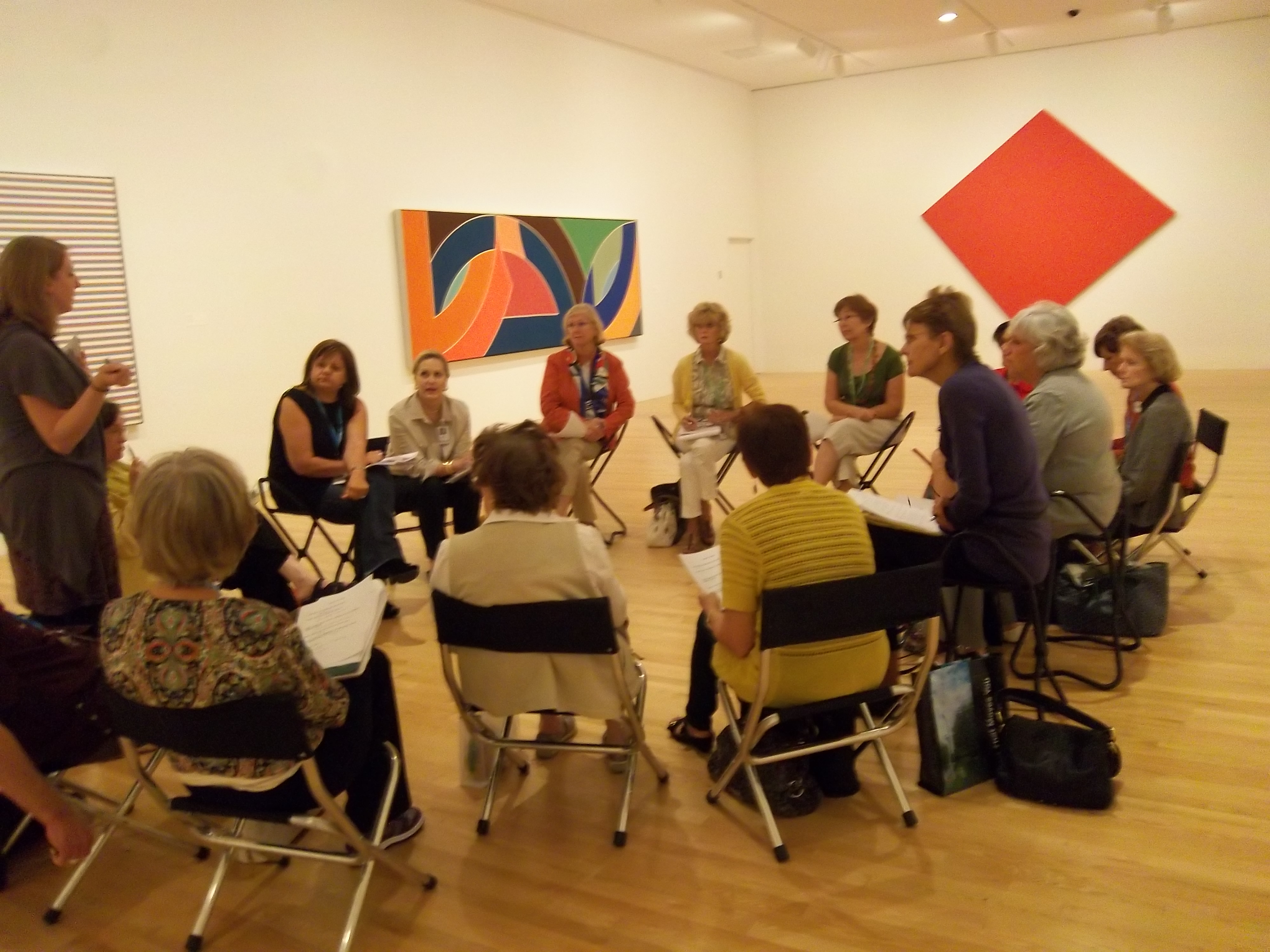
Docents brainstorm ideas for a new game that can be played in the galleries

Towards the end of training, docents were given an opportunity to invent games of their own using a set of guidelines that Tom provided.  Some of the guidelines included creating a game that was easy to learn but hard to master, designing games for the site in which they will be played, relating games to works of art, and creating cooperative games – everyone participates, and everyone wins.    Our docents came up with really great sparks for games, and I’m looking forward to working with Tom and the docents to flesh out their ideas.

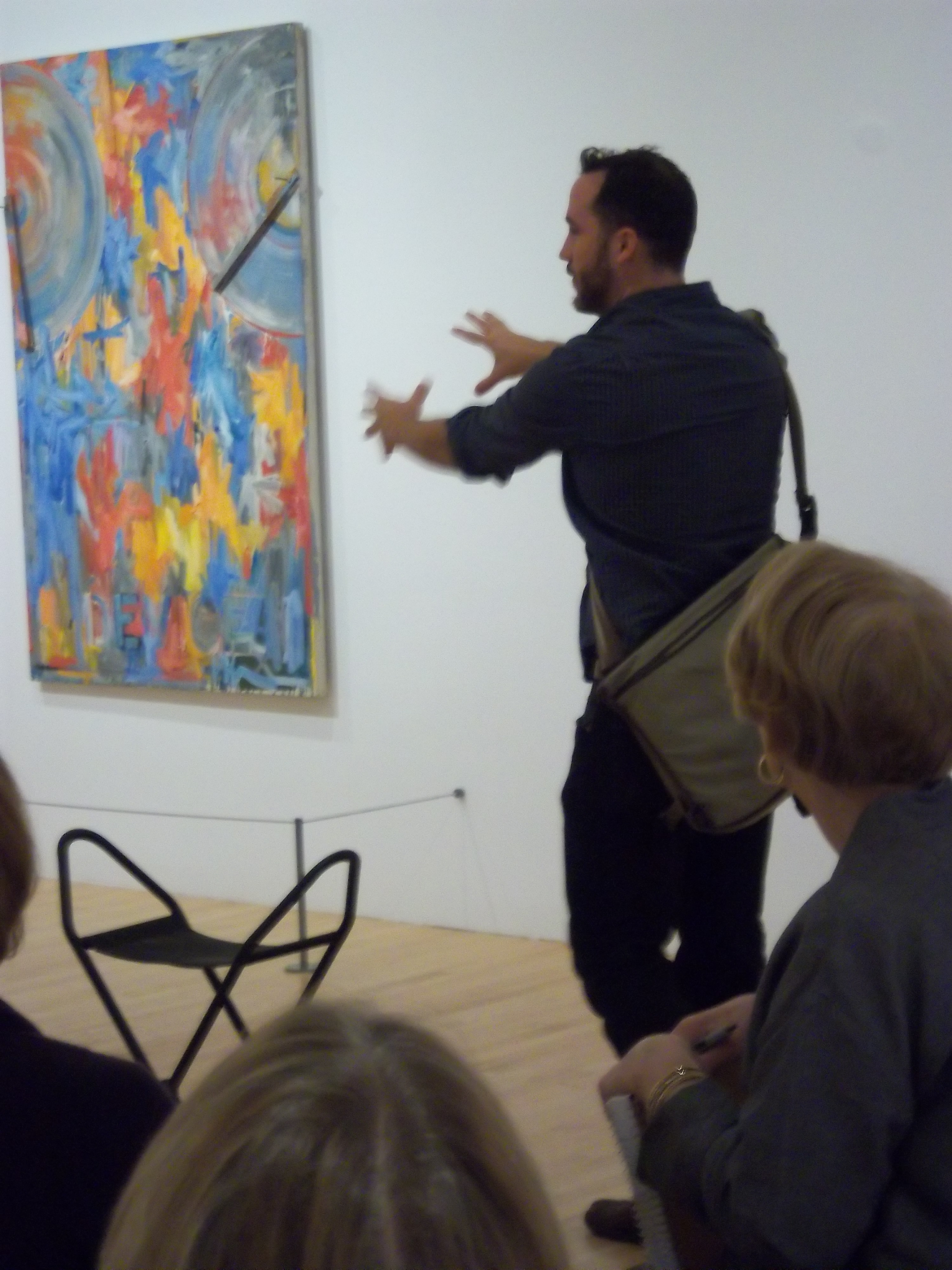
Tom Russotti talks with docents in front of Device by Jasper Johns

If you would like to have an opportunity to experience the world of art and games with Tom Russotti, I encourage you to sign up for the Art & Games teacher workshop on November 12.  Teachers will play games that Tom has created, but you will also have an opportunity to invent a game of your own.  Our docents loved learning from Tom, and I’m sure that you will, too!

Shannon Karol
Manager of Docent Programs and Gallery Teaching

Meet Our New Go van Gogh Volunteers

So far this month, we have introduced you to our new docents and our new interns.  I am happy to feature another group of friendly faces this week – our new Go van Gogh volunteers.  We have fifteen new volunteers this year, which may be our largest class in the past ten years.  I am excited about the range of backgrounds, experiences, and interests this enthusiastic group brings with them.

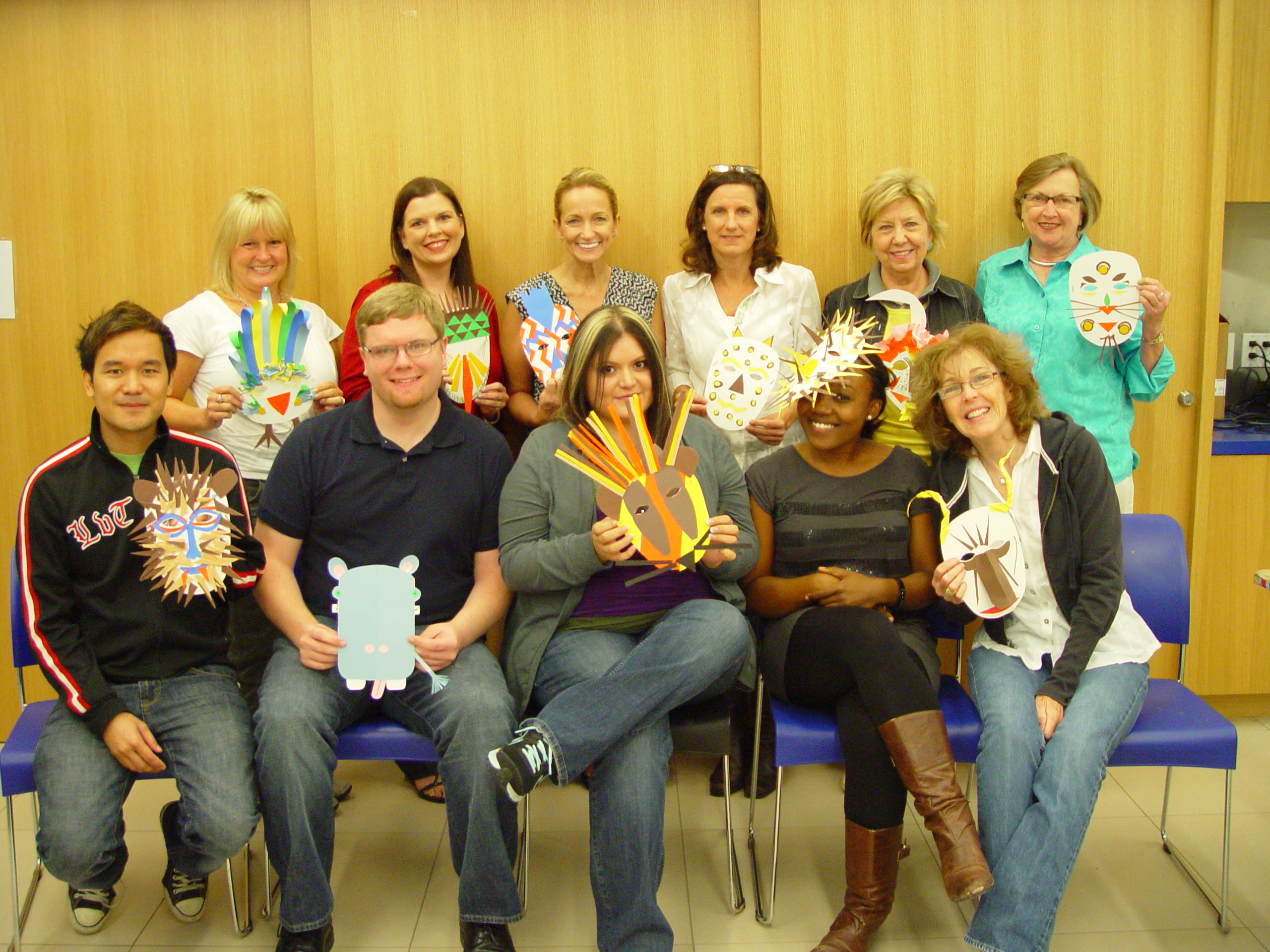
The volunteers show off their creations during their training for the African Masks and Headwear program .

Below are some fun facts about our volunteers starting with the bottom row, left to right:

  • In addition to having a Nursing degree, Gio also loves to paint and has produced more than 100 drawings and paintings in his free time.
  • Stephen’s passion for art and design, as well as his belief that volunteering makes a positive impact on the community, inspired him to volunteer along with his girlfriend…
  • …Dorly, who comes to us with a degree in Art and Performance, which will definitely come in handy in the classroom.
  • Mary is currently pursuing a PhD in Art Education at UNT and was also an education intern at the Rachofsky House this past summer (where I met her, and recruited her after she kindly encouraged me during a challenging studio art activity).
  • Michele also has a Nursing degree, and has pursued a great many other things including designing jewelry that has been sold nationwide, making a teaching video for developing countries, and writing a feature article for a major magazine.

Top row, from left to right:

  • Pam owned a window treatment business in the NYC tri-state area before recently moving a stone’s-throw distance to the DMA.
  • Sarah is part of a ceramics co-op that provides opportunities to join other artists in creative pursuits.  She originally became interested in Go van Gogh ten years ago and decided this was the year to join the program!
  • Sandy recently moved to Dallas from the Houston area after teaching language arts for fifteen years, during which she often incorporated works of art into her students’ assignments.
  • Jennie was recruited by two friends who are Go van Gogh volunteers and told her how much they loved the program.
  • Doris also recently moved from Houston, where she gained extensive art education experience in Houston ISD and museum education experience as a docent at the Museum of Fine Arts, Houston.
  • Barbara retired earlier this year after a career in Occupational Therapy, and one of her three goals for post-retirement is “finding ways to give back to the local, national, and/or world communities through volunteerism”.

Not pictured here:

  • Cristina is fortunate to work at a company that encourages volunteering, and will adjust her work schedule to accommodate her love of children and desire to “share with them the joy and excitement of art”.
  • Recently retired from Dealey Montessori, Dennis is finding his schedule to be full of his favorite pursuits, which include acting and playing chess.
  • Erin earned a degree in Studio Art and has experience in painting, sculpture, printmaking, pottery, and graphic design.  Like Cristina, Erin works full time and is adapting her schedule to volunteer with Go van Gogh.
  • Jane served as a docent at the Milwaukee Art Museum and Baltimore Museum of Art, and also led art appreciation classes in her children’s classrooms as a parent volunteer.
  • Laura has a degree in fibers and printmaking and has worked with homeschool students to make costumes and stage props.

Be on the lookout for these volunteers as they begin teaching in Dallas classrooms over the coming months!

Melissa Nelson
Manager of Teaching in the Community

DMA Teacher Workshops: Top Ten Reasons to Attend

10.  Experience something new.

9.  Spend time in special exhibitions.

8.  Share and learn new strategies for teaching and learning with art.

7.  Collect CPE hours.

6.  Explore ideas across cultures and times.

5.  Connect with DMA staff, visiting artists, and scholars.

4.  Gather with educators and dive into rich conversations.

3.  Participate in creative thinking and making.

2.  Take long and close looks at works of art.

1.  See art, teaching, and life in a fresh way.

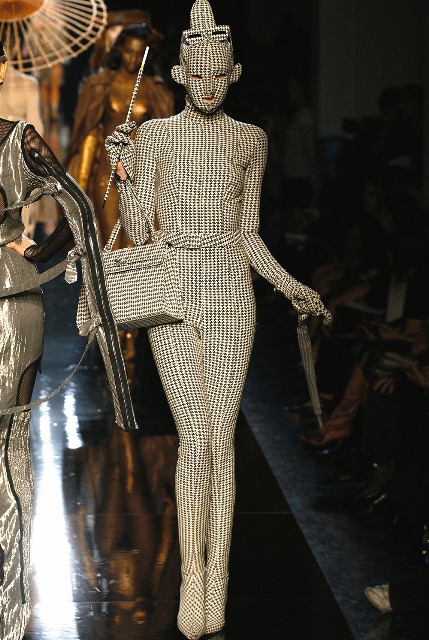
French Cancan collection, women’s prêt-à-porter, fall/winter 1991-1992, © P. Stable/Jean Paul Gaultier

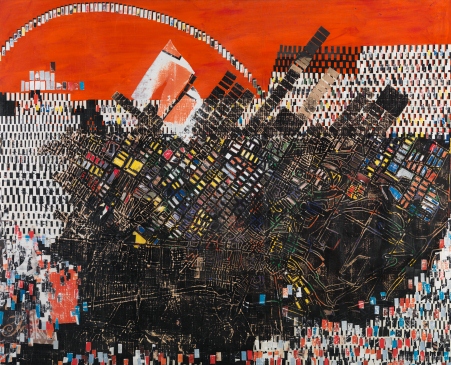
Scorched Earth, 2006, Mark Bradford, billboard paper, photomechanical reproductions, acrylic gel medium, carbon paper, acrylic paint, bleach, and additional mixed media on canvas, 94 1/2 x 118 inches, collection of Dennis and Debra Scholl, photo: Bruce M. White

Whether it’s your first or fifty-first workshop, we invite you to join us for several teacher workshops occurring this Fall and Winter at the Dallas Museum of Art.  Each workshop begins with an introduction, creative warm-up, and browse of resources.  Gallery experiences include sketching, writing, independent reflection, and group discussion with peer educators, artists, and experts.  K-12 teachers of all disciplines are welcome!

Join us on Saturday, October 22 for Layered Materials, Layered Meanings: Mark Bradford to take a close look at the work of L.A.-based artist Mark Bradford.  Artist Tom Russotti will lead an Art & Games workshop on Saturday, November 12, emphasizing play, problem-solving, and games in relationship to works of art.  Spend a full day exploring Art & Fashion in the exhibition The Fashion World of Jean Paul Gaultier and throughout the DMA collections.  Teachers may register for workshops online.

Visit the DMA this Friday, September 16 for the monthly Late Night.  Educators receive half-price admission ($5) after 5:00 p.m. on September 16 when they show their school I.D.  Drop by the Educator Resource table, talk with staff about upcoming teacher programs, and win door prizes.

Nicole Stutzman
Director of Teaching Programs and Resources

More Clips Than A Barber Shop (Audio Clips, That Is)

If you’ve been by the Museum’s offices in the past few weeks, you might have seen me crouched over a laptop in a corner with headphones like two giant beetles over my ears. Why, you ask? I’ve been sorting through audio files from the DMA’s extensive catalog of lectures and interviews. Many of these audio files come from gallery talks and docent training sessions led by DMA staff members and guest lecturers. The experience has been illuminating. Every speaker brings thoughtful, entertaining, and challenging new ways to look at the art. So this week, I thought I might share a few of my favorite audio files which will be appearing in the new teaching resources this fall.

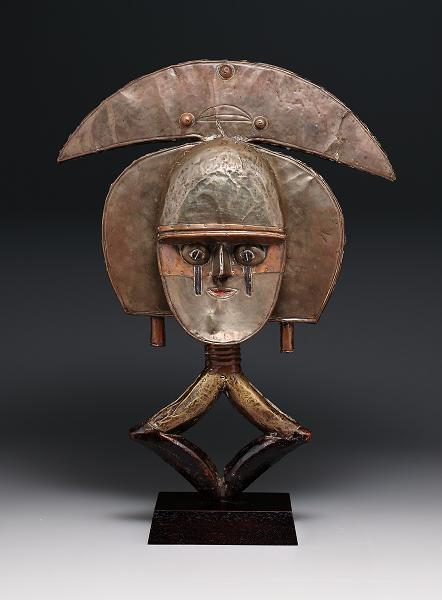
This first file comes from our very own Shannon Karol. In this file, extracted from her talk In Praise and Thanksgiving, she discusses the Janus reliquary guardian figure from the Kota peoples of Gabon (pictured below).

Janus reliquary guardian figure, late 19th or early 20th century, Dallas Museum of Art, The Eugene and Margaret McDermott Art Fund, Inc.

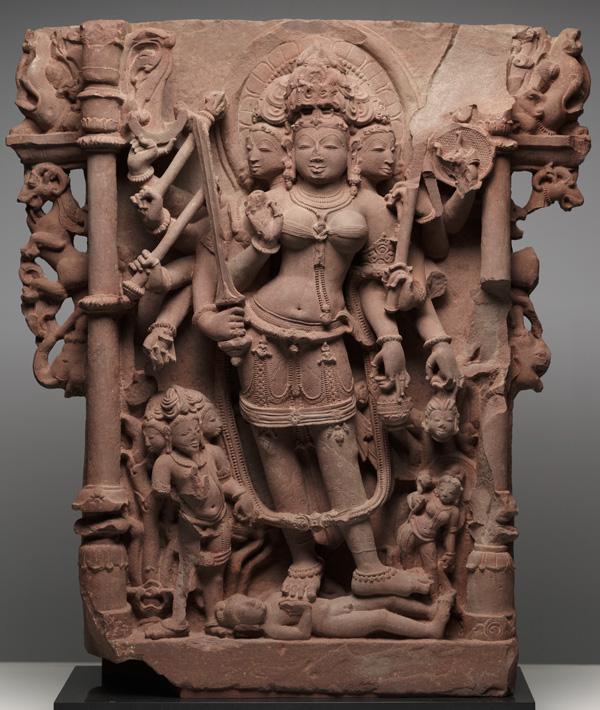
During the lecture Heaven on Earth: Hindu Temples and Their Sculptures, Darielle Mason describes the origins of the Hindu temple. Below is an image of the Hindu goddess Durga from our collection.

Durga, 11th century, Dallas Museum of Art, gift of the Junior Associates

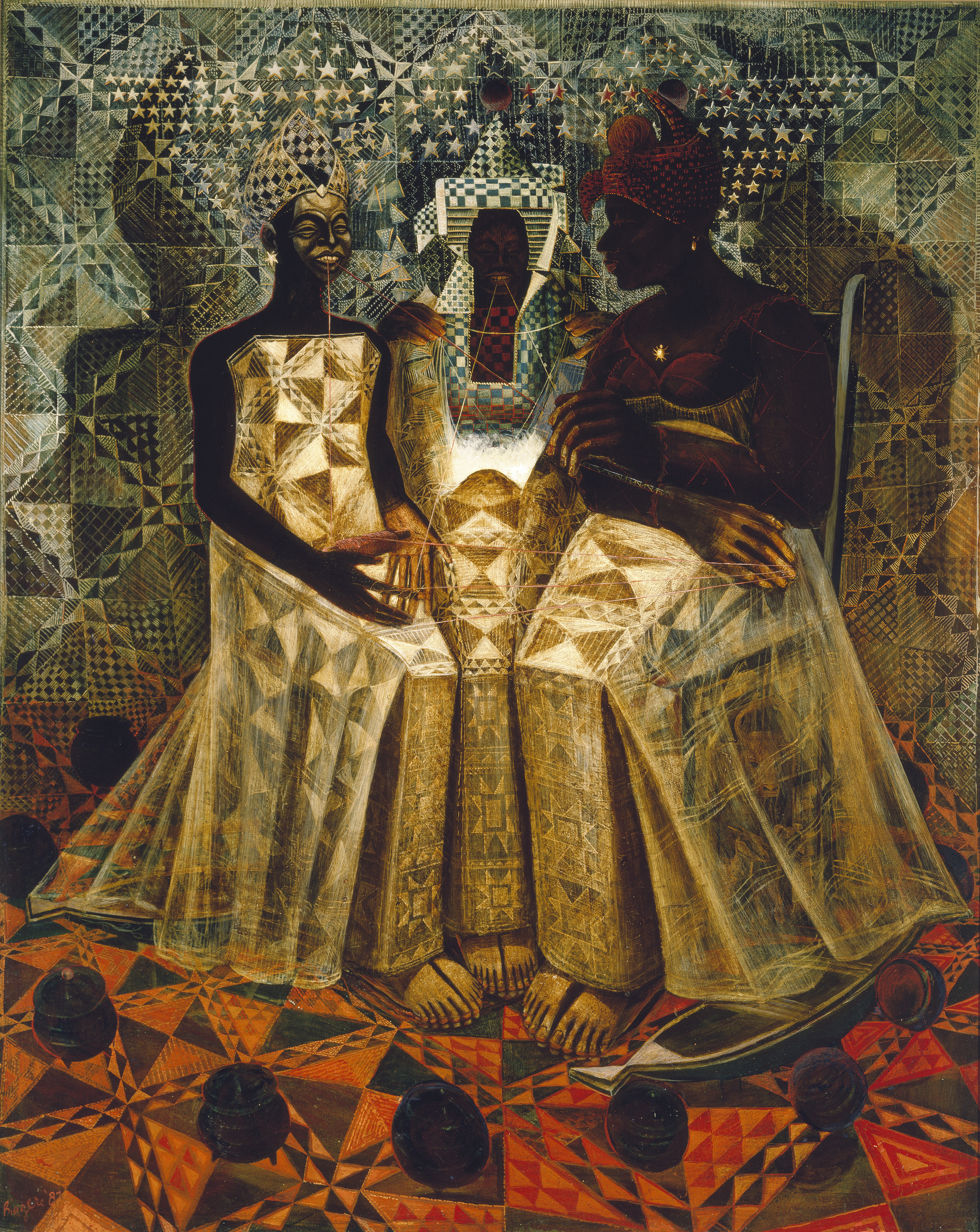
Finally, this audio file, extracted from a conversation between DMA curator Roslyn Walker and Phillip Collins, gives a brief biography of the artist John Biggers, and included a story about Biggers’ history with the DMA. Below is John Biggers’ painting Starry Crown.

John Biggers, Starry Crown, 1987, Dallas Museum of Art, Museum League

All of the works in this post will be featured in the new teaching materials, and these are only a few of the many audio files that will be available for streaming. You will also find video files, contextual images, maps, and other media when the materials debut this fall. Stay tuned to the Educators Blog for the official announcement of the materials’ debut.

Tom Jungerberg

IMLS Grant Coordinator

Friday Photos: Teacher Workshops

Last week, we finished up a great summer series of professional development workshops for K-12 educators.  Thank you to everyone who joined us for cool experiences (temperature and otherwise) and stimulating discussions in the DMA galleries.  Here are a few photo highlights and teacher reflections from the summer workshops.

[slideshow]

“Conversations that arise from looking at the various art is, to me, the most significant aspect of workshops like these.”

“The activities helped us examine pieces in a way we might not do on our own.  It also gave us ideas for classroom activities….”

“The experience was even better than I anticipated.  Unlike most professional development, the focus is on providing good teachers with tools to bring out the best in their students.”

At DMA Teacher Workshops, educators have fun, learn something new, share ideas, and collect CPE hours for each workshop.  In October, professional development workshops will begin again and we invite you to join us for the following.

  • Layered Materials, Layered Meanings: Mark BradfordSaturday, October 22
  • Art and Games with Artist Tom Russotti — Saturday, November 12
  • Art and Fashion — Saturday, December 3
Visit Programs for Teachers on the DMA Web site for more information.

Nicole Stutzman

Director of Teaching Programs and Partnerships
Photowalking with Ted Forbes

Last Friday, as part of 9×9, the DMA hosted a Photowalk with staff member and photographer Ted Forbes.  Over a dozen visitors attended, myself included.  Ted began with a brief talk about photographing people and their environment, showing us portraits taken by world-renowned portrait photographer Arnold Newman (who photographed John F. Kennedy, Piet Mondrian, Pablo Picasso, Marilyn Monroe, and many others).  Then, we were set loose in the second floor European galleries.  What were our directions? “Go out and shoot portraits!” Ted said.

The Photowalk experience was very hands-on experience.   Ted gave us the freedom to wander the European galleries and take pictures of Photowalk participants, strangers we encountered, and works of art around us.  As I walked around the second floor, I tried to keep in mind the concepts of negative space, people and their environment, and the commonly used “rule of thirds” when framing my shots.

Taking pictures of people in specific poses proved to be a bit challenging in the galleries, so I began to look for ways to incorporate people into my pictures while focusing on the artwork as my main subject.  I also played with reflections in windows and looking through panels of glass.  Concentrating on reflections of people against works of art as well as reflections of the artwork itself led to some intriguing images.

After we took pictures in the European galleries, we went back to the Tech Lab in C3 to look at each other’s pictures.  It was fun seeing other people’s pictures, because everyone took the instructions and captured images in completely different ways and styles, with unique perspectives.

Here are some of my favorite pictures from the Photowalk, as well as some shots I captured of participants photographing one another!

[slideshow]

Leala Rosen
Teachings Program Summer Intern

Leala Rosen is a sophomore at Hendrix College in Conway, Arkansas. She is studying sociology/anthropology and art history. As a summer intern for the Teachings Program department of the DMA, she worked with Go van Gogh outreach programs and led museum tours.

Extra! Extra! Special Go van Gogh program for fifth grade classrooms

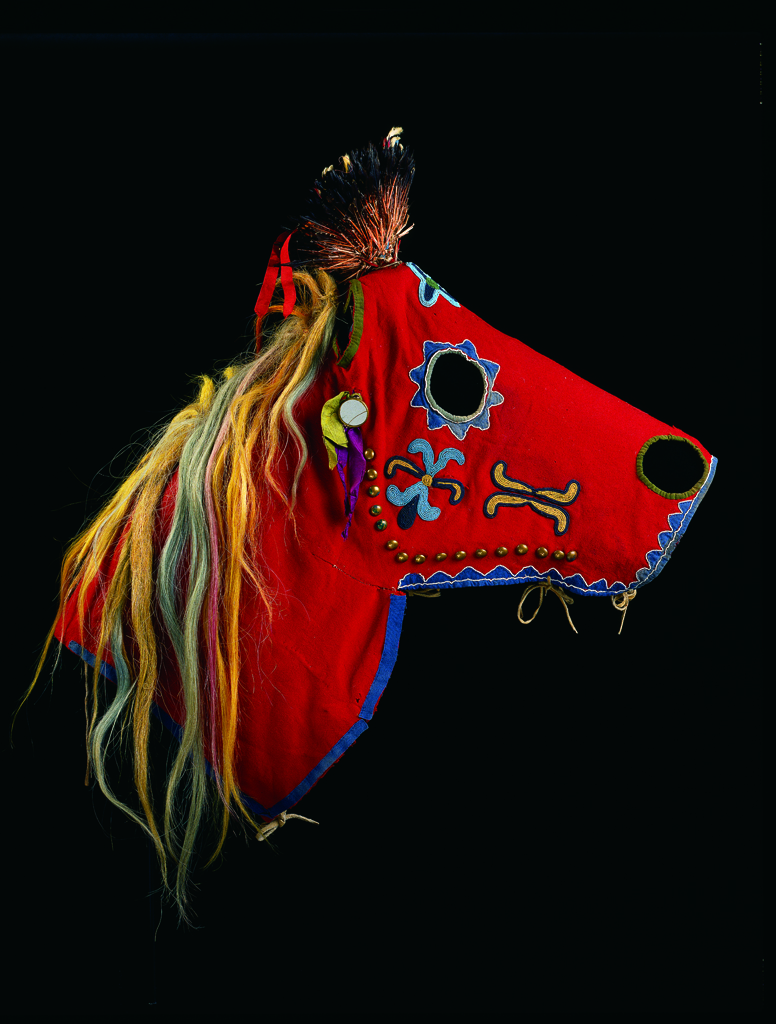
This year, Go van Gogh is offering a special program exclusively to fifth grade classrooms during the month of September.  Art of the American Indians is inspired by our special exhibition Art of the American Indians: The Thaw Collection, on view until September 4.  We are excited to offer a program with such strong ties to the fifth grade Social Studies emphasis on  American history.

Horse Mask, c. 1875-1900, Nez Perce or Cayuse, Idaho, Oregon, or Eastern Washington, Thaw Collection, Fennimore Art Museum, photograph by John Bigelow Taylor

Since the exhibition closes soon, we’re extending this offer from September 19-29 only.  Request your program now using our online request form!

Melissa Nelson
Manager of Teaching in the Community


Archives

Categories