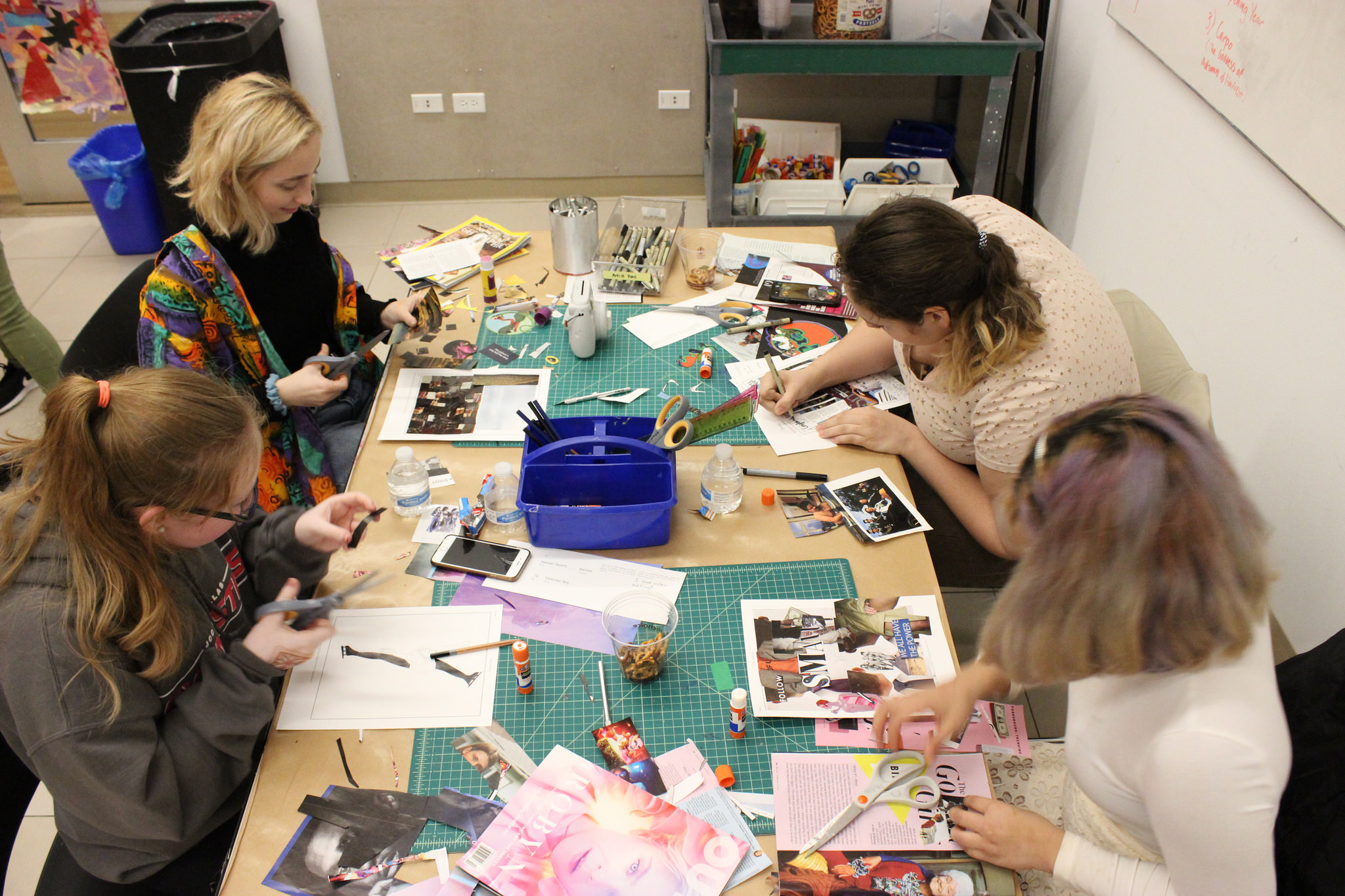
You asked—we answered! After many requests for more drop-in art making in our Art Studio, we were excited to launch the Open Studio program in January, and crossed our fingers that families would show up. And you did! More than 1,400 visitors have stopped by the studio since we opened the doors in January, and we are thrilled to see so many artists of ALL ages making and creating. So what could be better than gluing and painting and drawing to your heart’s content? How about having local artists join in the fun?
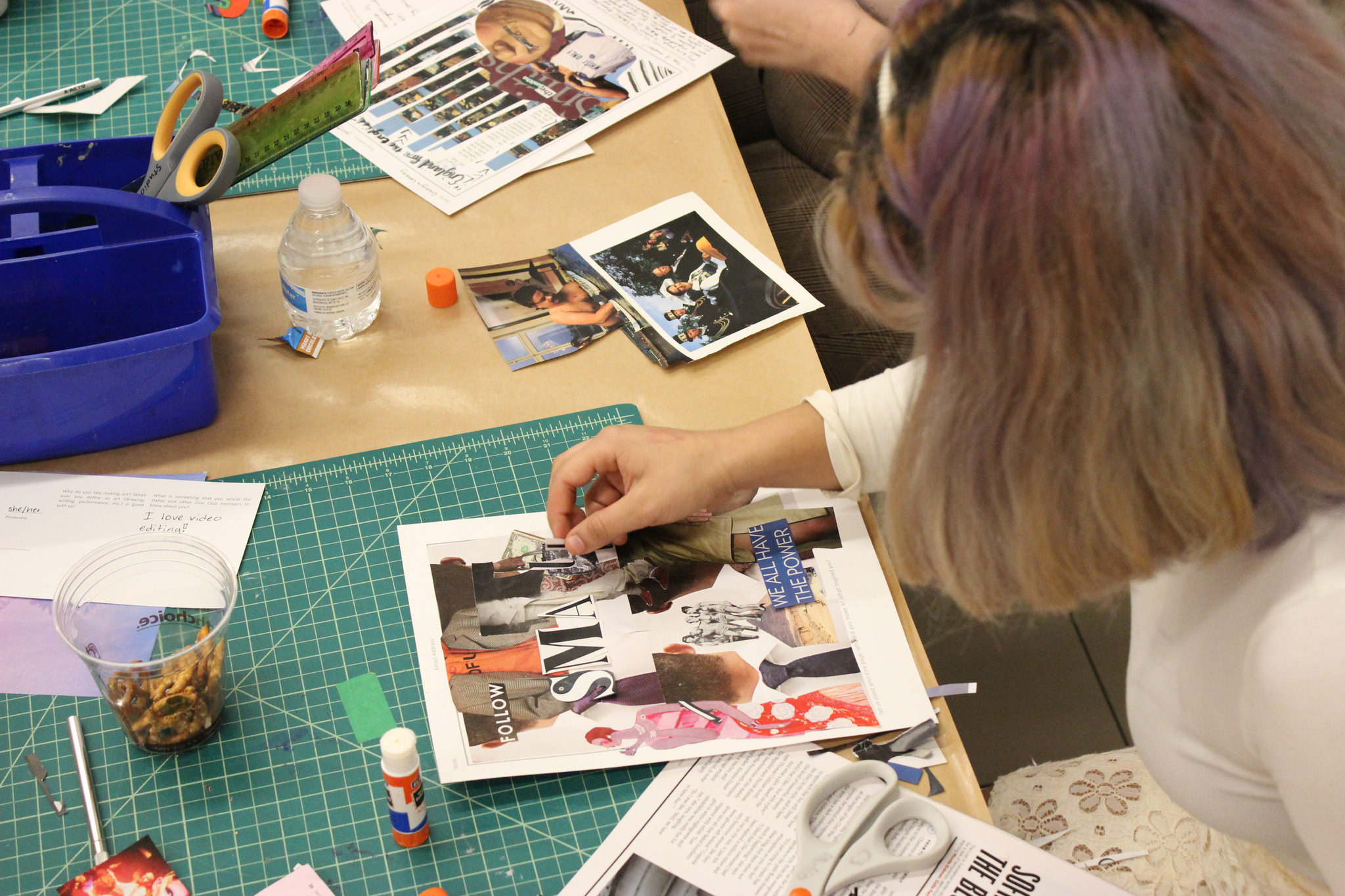
The March Open Studio project is designed by local artist Raul Rodriguez, a photographer, publisher, and zine-maker from Fort Worth. His publishing company, Deep Red Press, helps Texas artists express their art through print, digital, and other formats across the United States. For the March Open Studio program, he designed a mini zine project, explaining, “I like zines because they can be easily made and they have no limits on the content, medium, or voice. Everyone can voice themselves with a zine!”
Mini Zines
In planning the project, Rodriguez was drawn to the art featured in the Women Artists in Europe from the Monarchy to Modernism exhibition, which presents work by women artists who broke the traditional rules of the time. One of the works in the exhibition is a book titled A Little’s Duck’s Nest . . . of Bad Words by Olga Vladimirovna Rozanova (Russian, 1886–1918), which includes images of art not intended to be displayed on walls or replicated. Rozanova combined poems and narratives with abstract drawings to express her emotions and thoughts in the hand-colored book. Rodriguez notes, “With just a few materials and disciplines, [women artists] counteracted discrimination and made work for the Cubist, Expressionist and modern art movements of their time.”
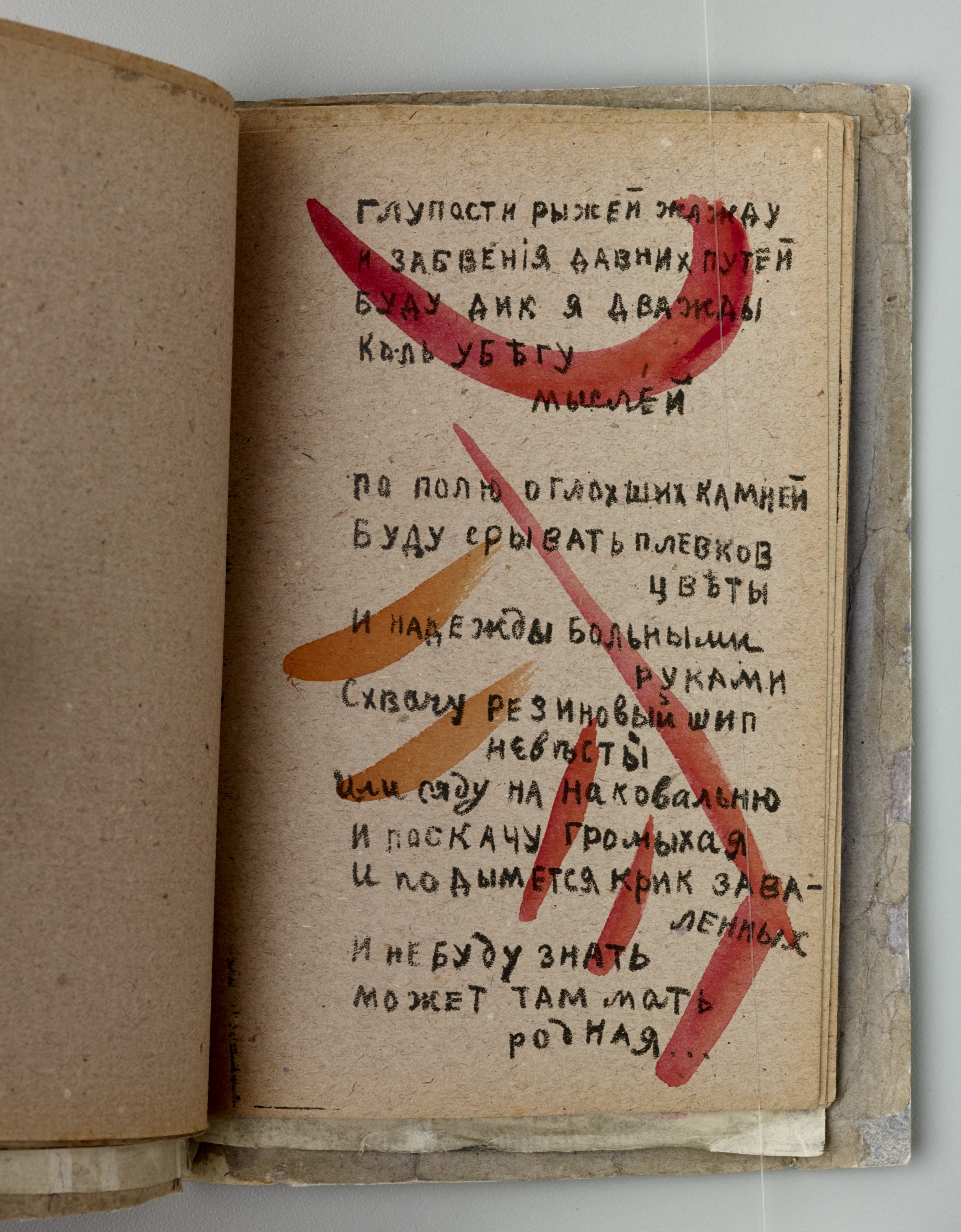
Olga Vladimirovna Rozanova and Alexei Eliseevich Kruchenykh, A Little Duck’s Nest . . . of Bad Words, 1913, letterpress cover and hand-colored lithographs on paper, Dallas Museum of Art, gift of Natalie H. (Schatzie) and George T. Lee, Jr., in honor of Olivier Meslay, 2012.61.1
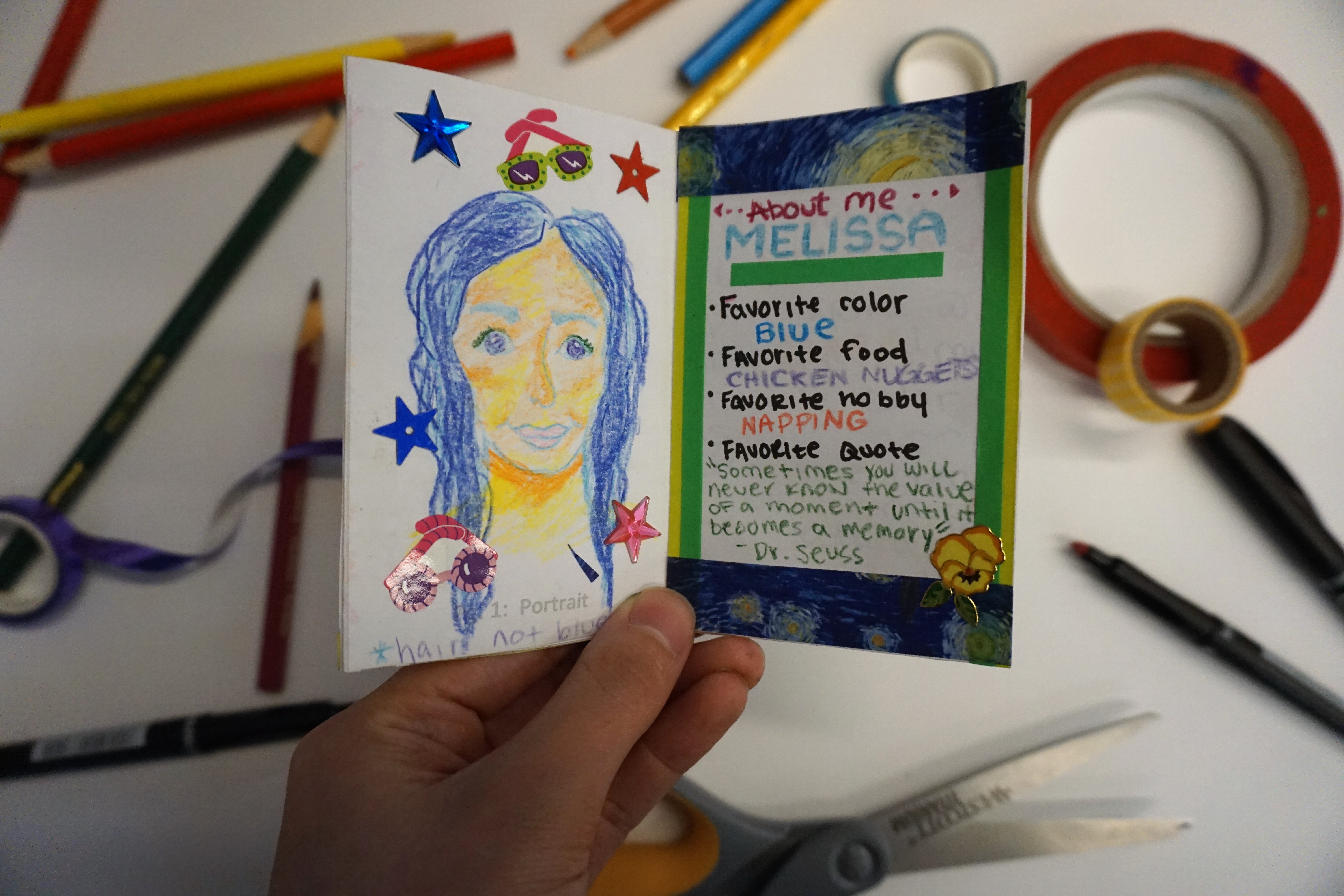
Creating a zine is easy and fun. Most zines don’t have specific narratives—instead, they are more like art magazines, with each page its own work of art; however, I made sure each page had a personal connection. I had a great time working on my zine, from making an “about me” page, to creating a still-life drawing based on something I saw on my desk. It was very therapeutic.
Engaging with your child
This is a great project for friends and families to do as a group, but also alone as an individual. When engaging with your child, think of a topic that interests him or her and design a page inspired by that topic. If your child is crazy about transportation, make a page all about things that go. Or choose a favorite family memory and have everyone in the family design a page that captures their favorite moments and create a family zine! Challenge older children to use mixed media like magazines or newspapers and create poems or stories to make their zine.
Possible topics to consider:
- Self-portraits or portraits of family members
- All about me
- My favorite place (landscape)
- My favorite things (still life)
Fun fact
You may wonder, “How are you supposed to pronounce zine?” and the answer is pretty simple (but I still say it wrong!). It’s like maga-“zine” or “zeen.” No matter how you pronounce it, we hope to see you here at the DMA for Open Studio!
Upcoming dates
Saturday, March 2
Sunday, March 3
Saturday, March 16
Sunday, March 17
Time: Noon–4:00 p.m.
Melissa Brito is the Teaching Specialist for Family and Access Programs at the DMA.

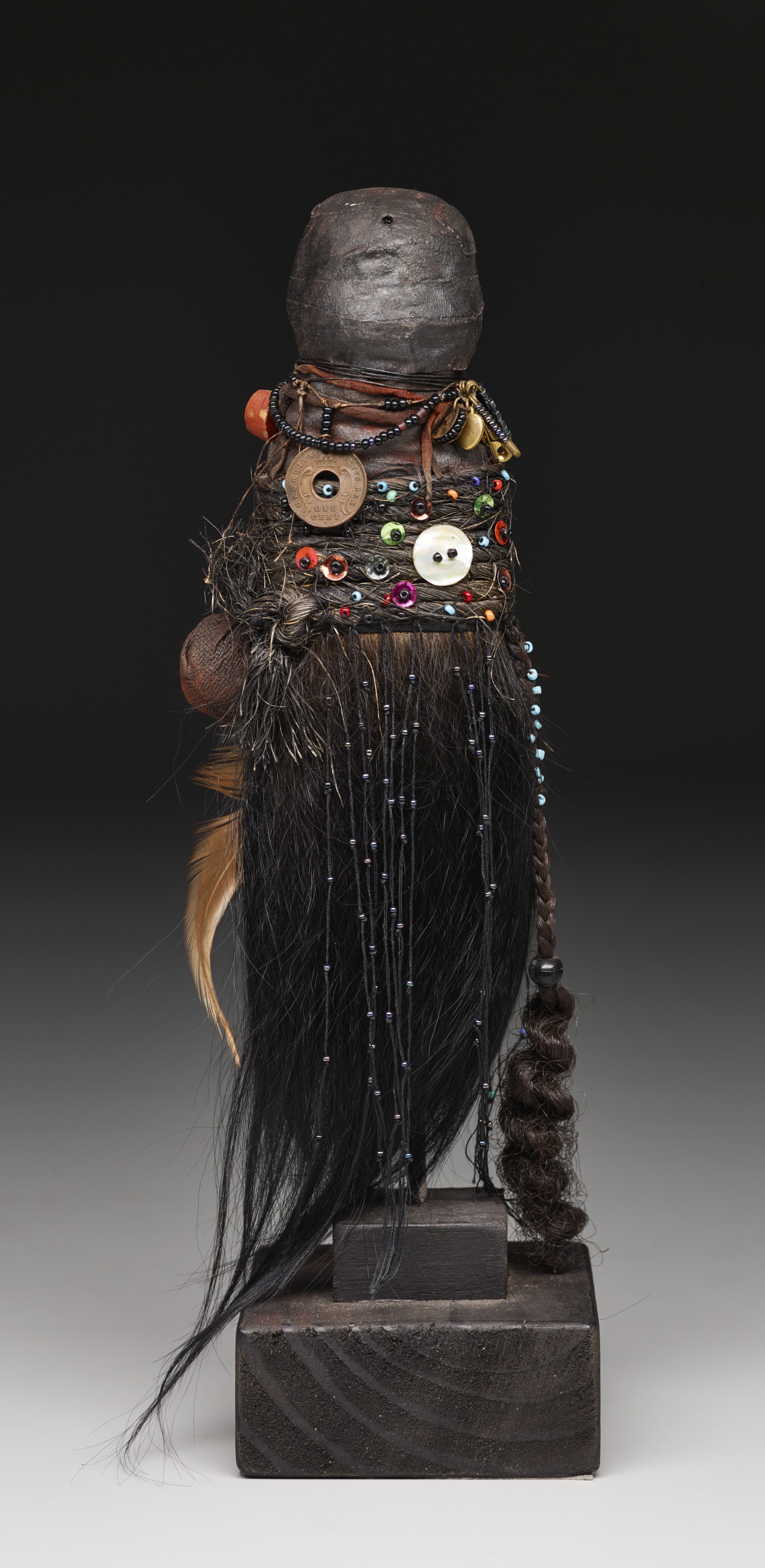 Renee Stout, Fetish #1, 1987, monkey hair, nails, beads, cowrie shells, and coins, Dallas Museum of Art, gift of Roslyn and Brooks Fitch, Gary Houston, Pamela Ice, Sharon and Lazette Jackson, Maureen McKenna, Aaronetta and Joseph Pierce, Matilda and Hugh Robinson, and Rosalyn Story in honor of Virginia Wardlaw, 1989.128, © Renee Stout, Washington, D.C.
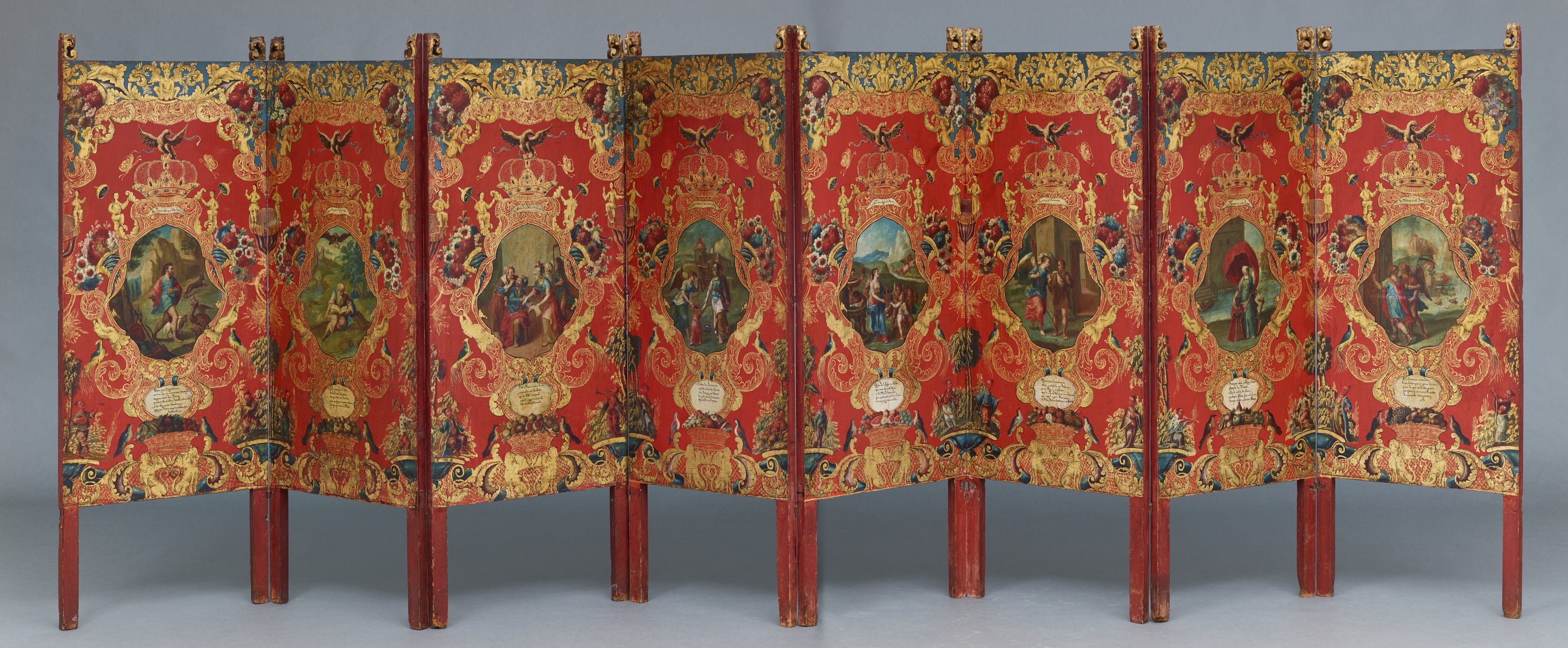 Screen, Mexico, Mexico City, c. 1740–60, oil on canvas, pine, and gilding, Dallas Museum of Art, gift of the Stanley and Linda Marcus Foundation, 1993.74.a-b
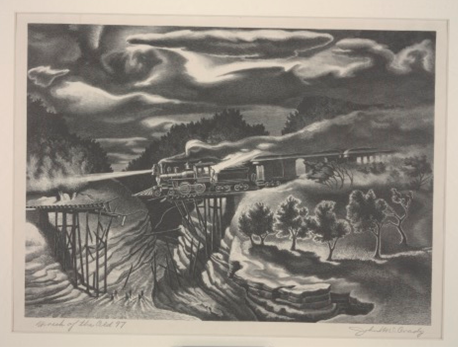 John McCrady, Wreck of the Old 97, date unknown, lithograph, Dallas Museum of Art, Dallas Art Association Purchase, 1948.6
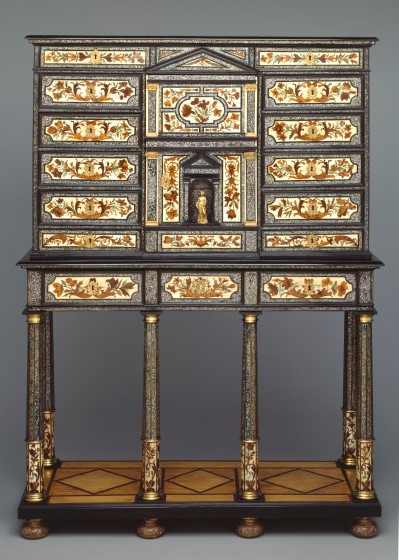 Cabinet on stand, Pierre Gole, Paris (?), France, 1660–80, wood, ivory, tortoiseshell, shell, and gilt bronze, Dallas Museum of Art, The Wendy and Emery Reves Collection, 1985.R.573.a-c
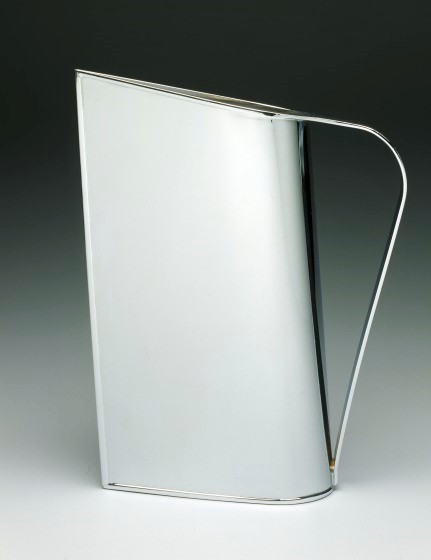 Normandie shape pitcher, Peter Muller-Munk, Rome, New York, 1935, chrome-plated brass, Dallas Museum of Art, 20th Century Design Fund, 1996.27
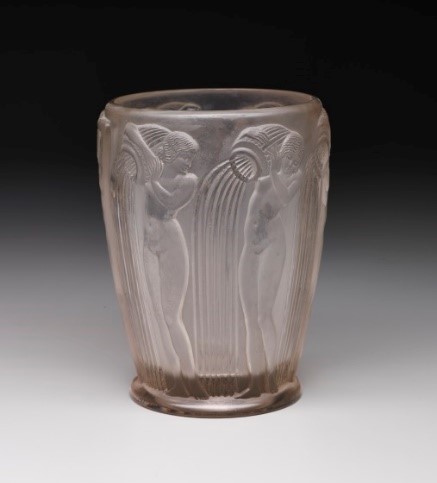 Danaides vase, René Jules Lalique, Lalique et Cie, Cristallerie, Wingen-sur-Moder, France, c. 1926, molded glass, Dallas Museum of Art, gift of Mr. and Mrs. Michael Steinberg, 2004.48.5
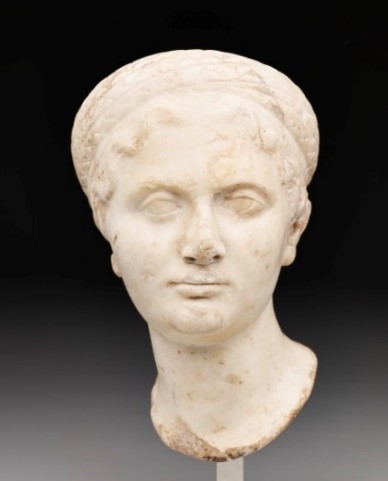 Portrait head of a young woman, Roman, 2nd century CE, marble,
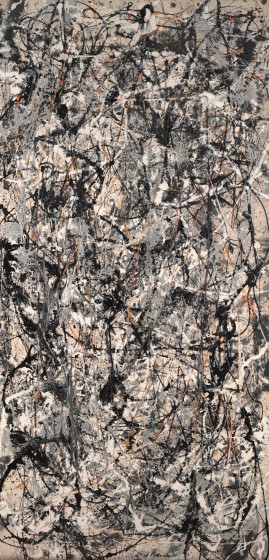 Jackson Pollock, Cathedral, 1947, enamel and aluminum paint on canvas,
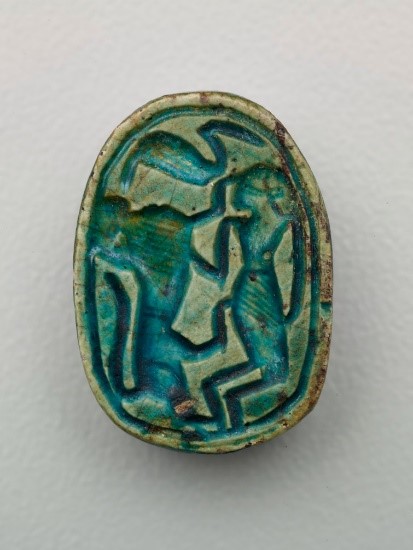 Scarab, Egyptian, 1785–1550 BCE, faience, Dallas Museum of Art, given in memory of Jerry L. Abramson by his estate, 2009.25.4


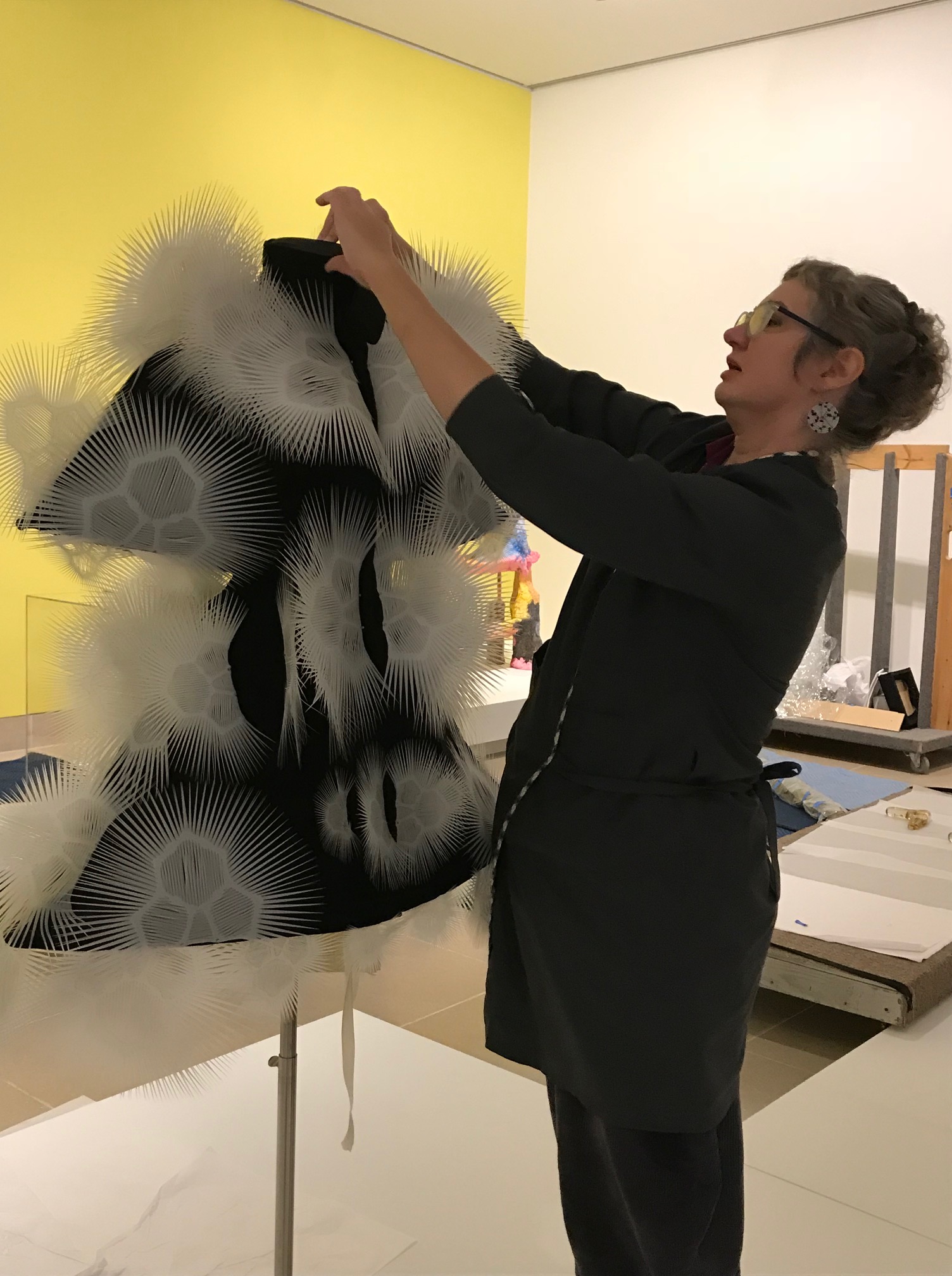 Objects Conservator Fran Baas adjusts the laser-cut polyester lace on Iris van Herpen’s Voltage Dress.
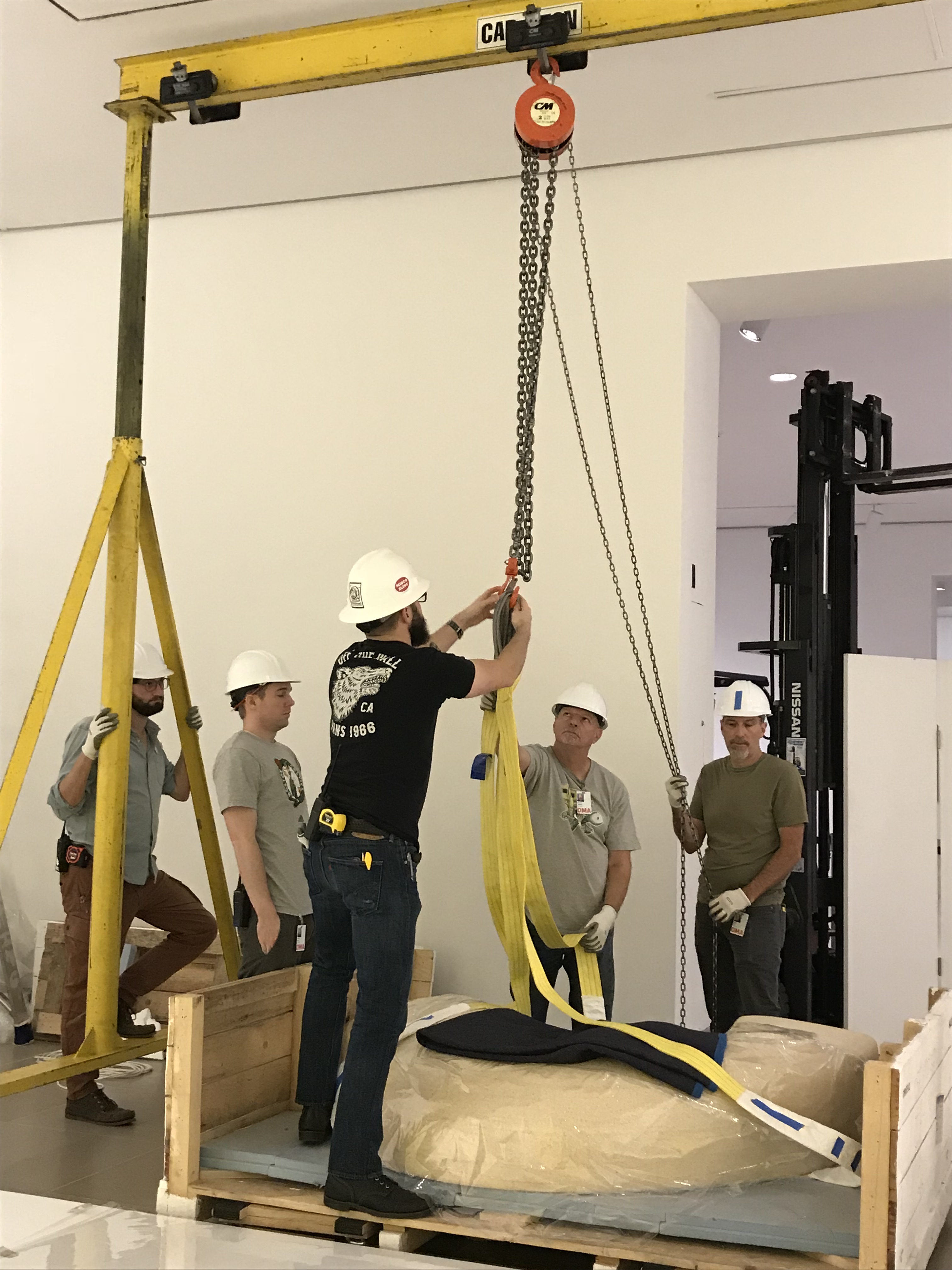 A team of preparators works on lowering the two pieces of Najla El Zein’s Seduction onto the platform. Each piece of the sculpture weighs approximately 1,500 pounds and needs to be moved with a gantry crane. The lower stone was placed first, and then the upper stone had to be carefully lowered onto it.
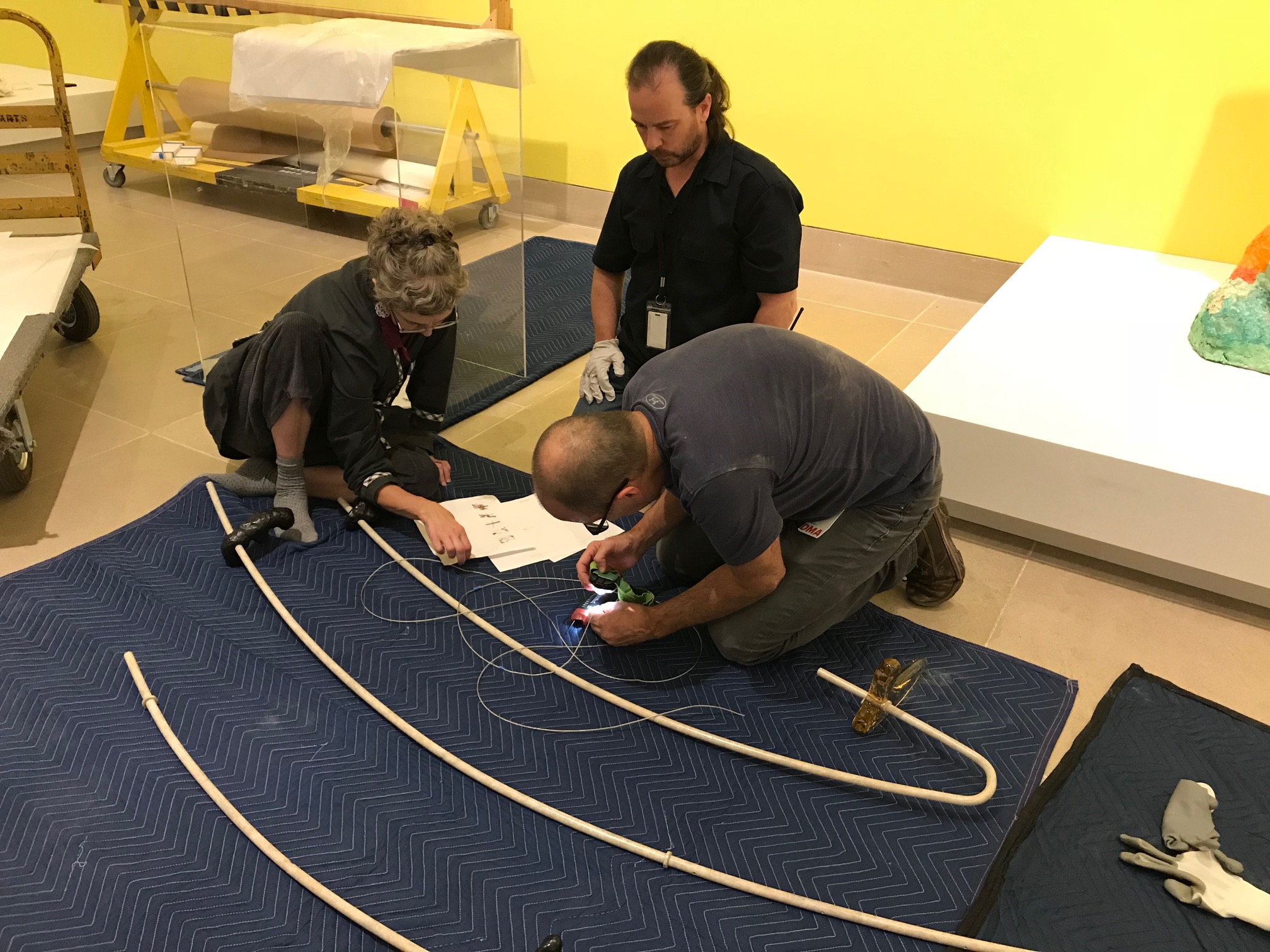 Fran Baas, Lance Lander, and Mike Hill review the instructions for assembling Faye Toogood’s Tools for Life Mobile 2. Because the components of the mobile are heavy, the team had to know exactly what to do to minimize unnecessary handling.
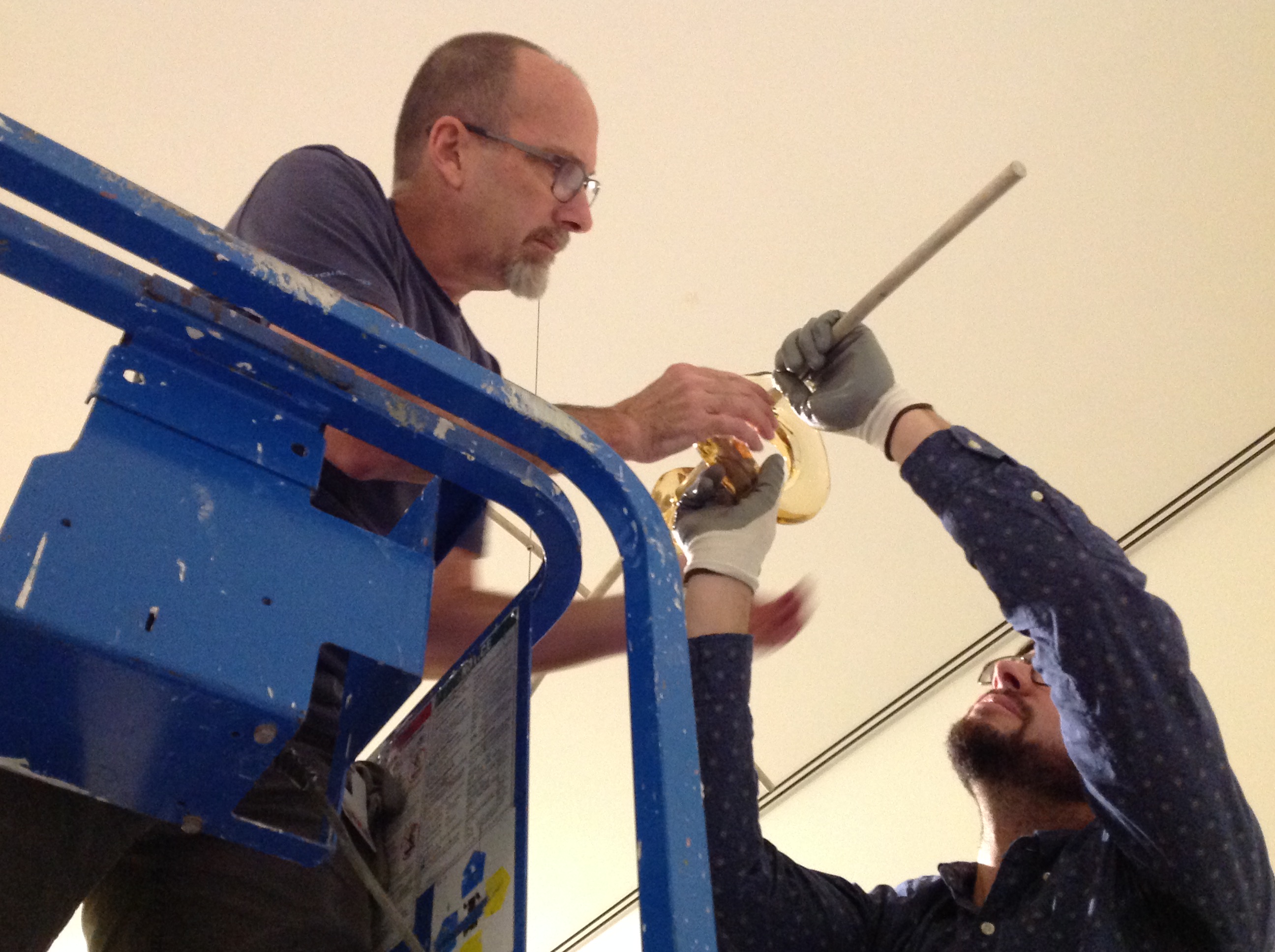 Mike Hill and John Lendvay work to assemble Tools for Life Mobile 2 as it hangs from the ceiling.
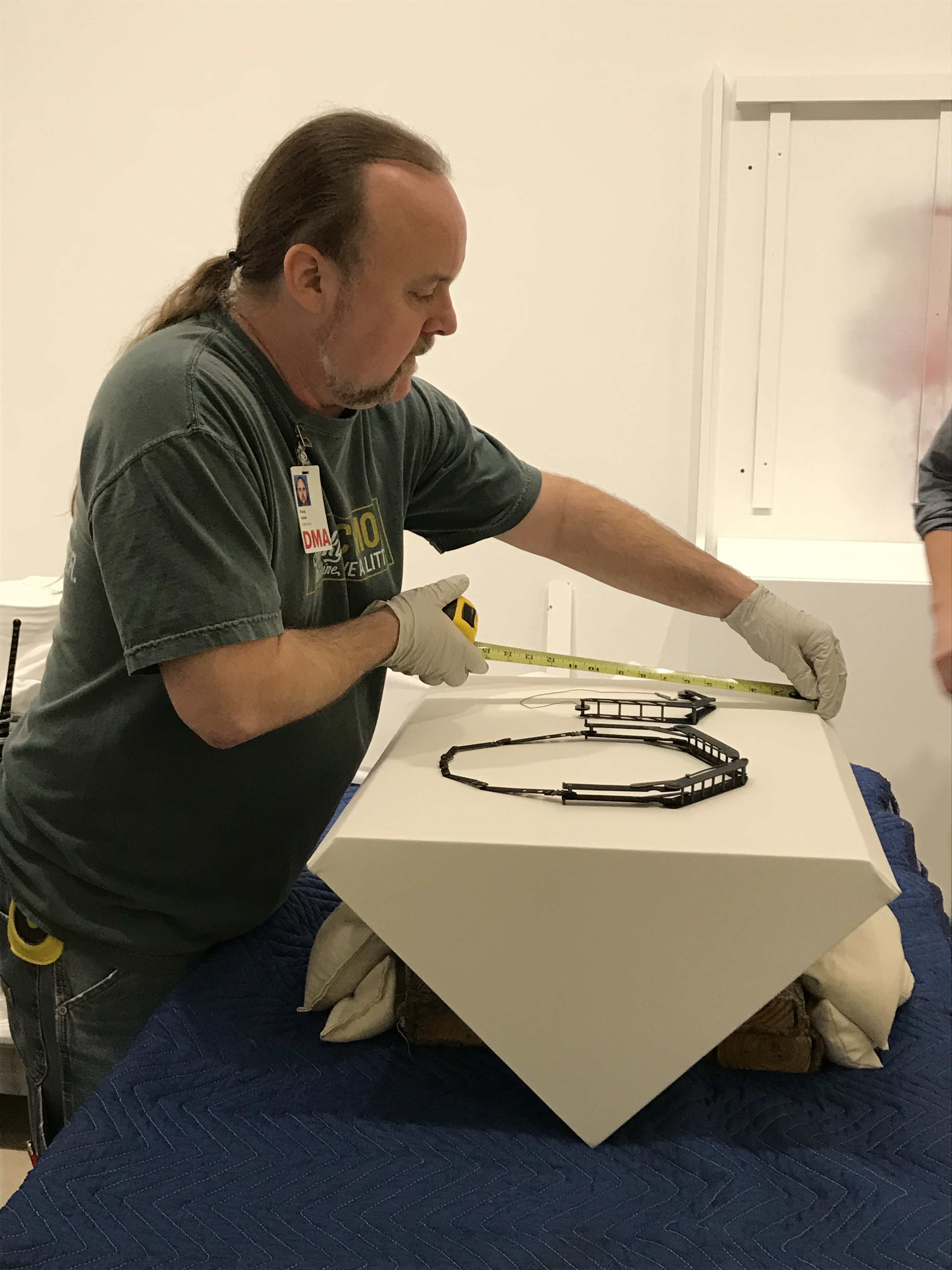 Doug Velek takes measurements for the two pieces of jewelry by Katie Collins. Prior to installing the work, the preparators made the wedges and lifts used to display the jewelry in the exhibition. After confirming that the necklaces were centered on the wedge, preparators used pins to secure them in place.
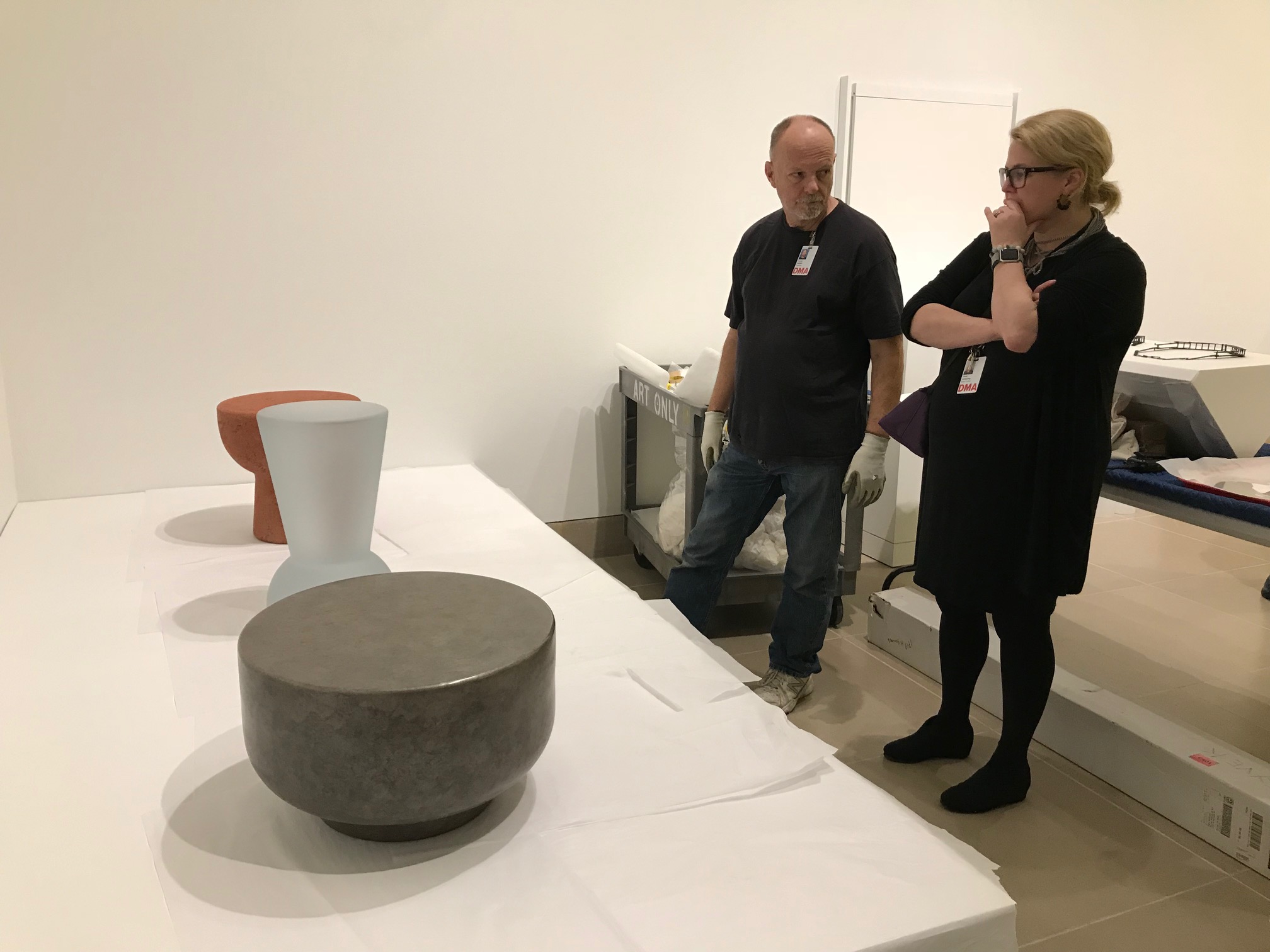 Curator Sarah Schleuning and preparator Russell Sublette discuss the placement of the three stools by Faye Toogood.