Archive for 2012


Pick Our Main Stage Act

September’s Late Night theme is “iMuseum,” where you can use technology to explore the DMA and participate in new, experimental, and interactive programs. We also want you to pick our September Main Stage Act by voting for your favorite performance from our Be Our Main Stage Act contest. The winner will be announced next week.

And the finalists are (click here to cast your vote):

Daniel Hart

Veronica Lopez
http://youtu.be/LlMfTtstY9o
Jon Meyer

J. D. Whittenburg

Little Birds

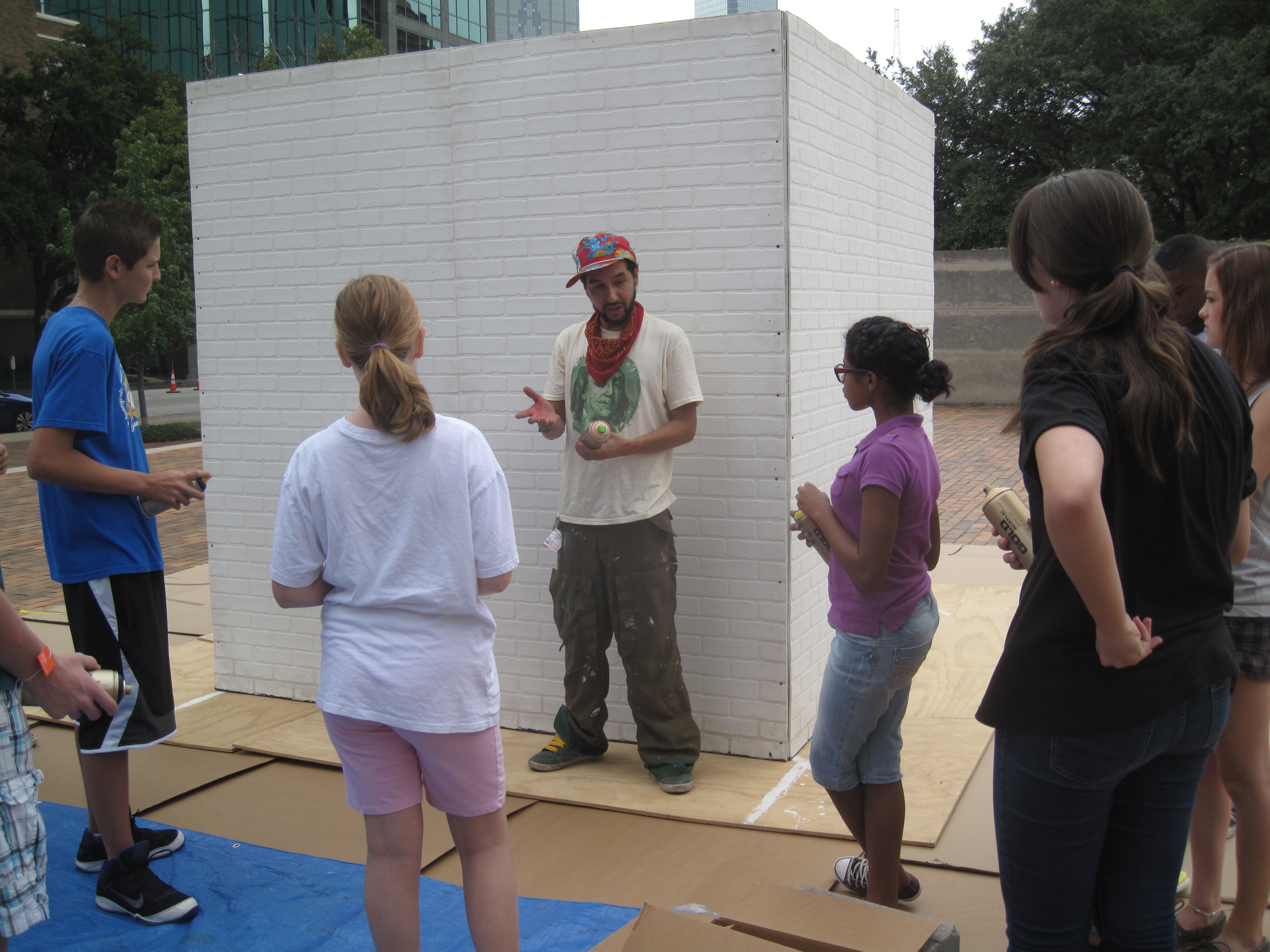
Urban Armor Street Art Camp with Isaac Davies

Guest Artist Isaac Daniel Davies

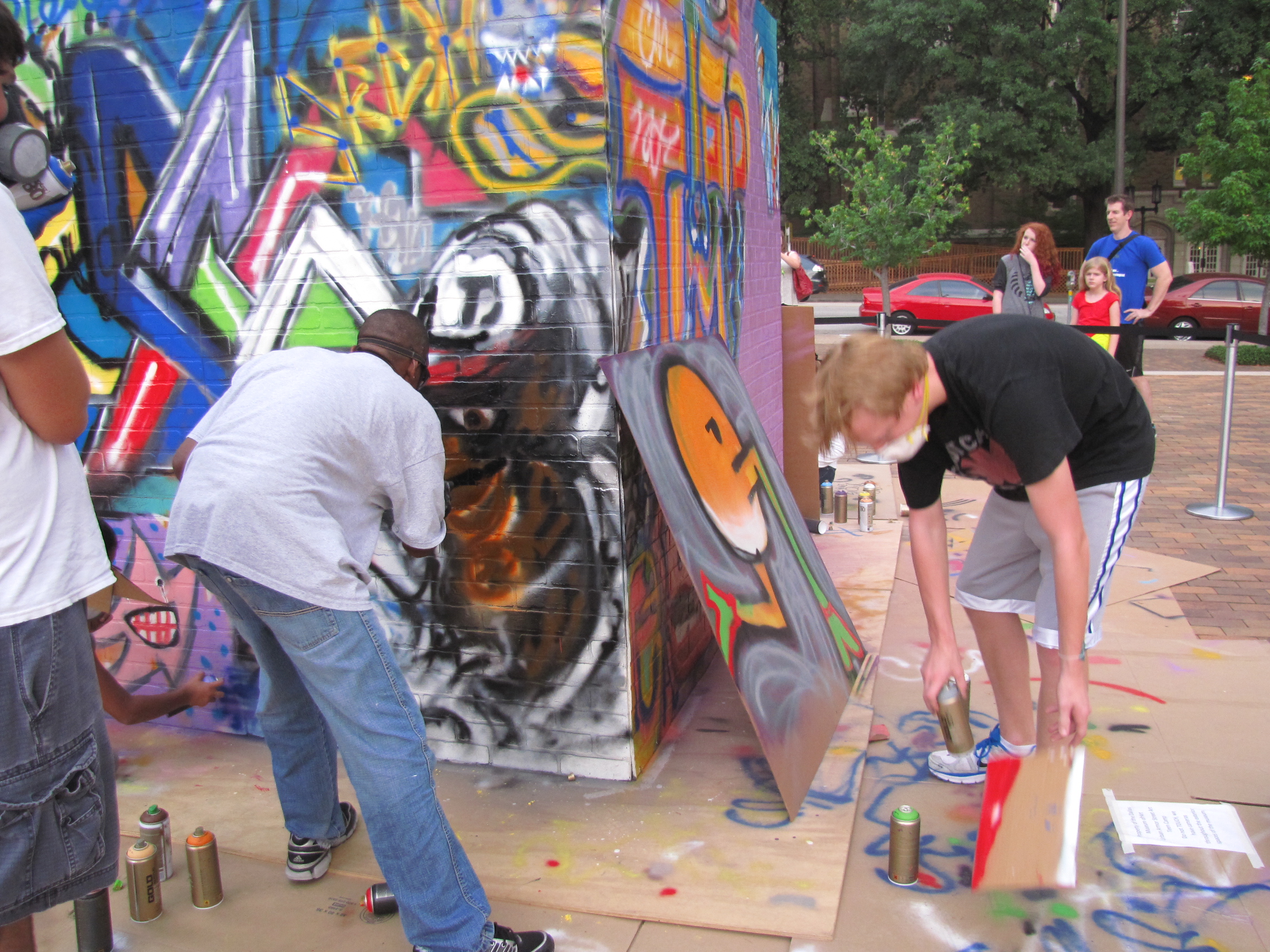
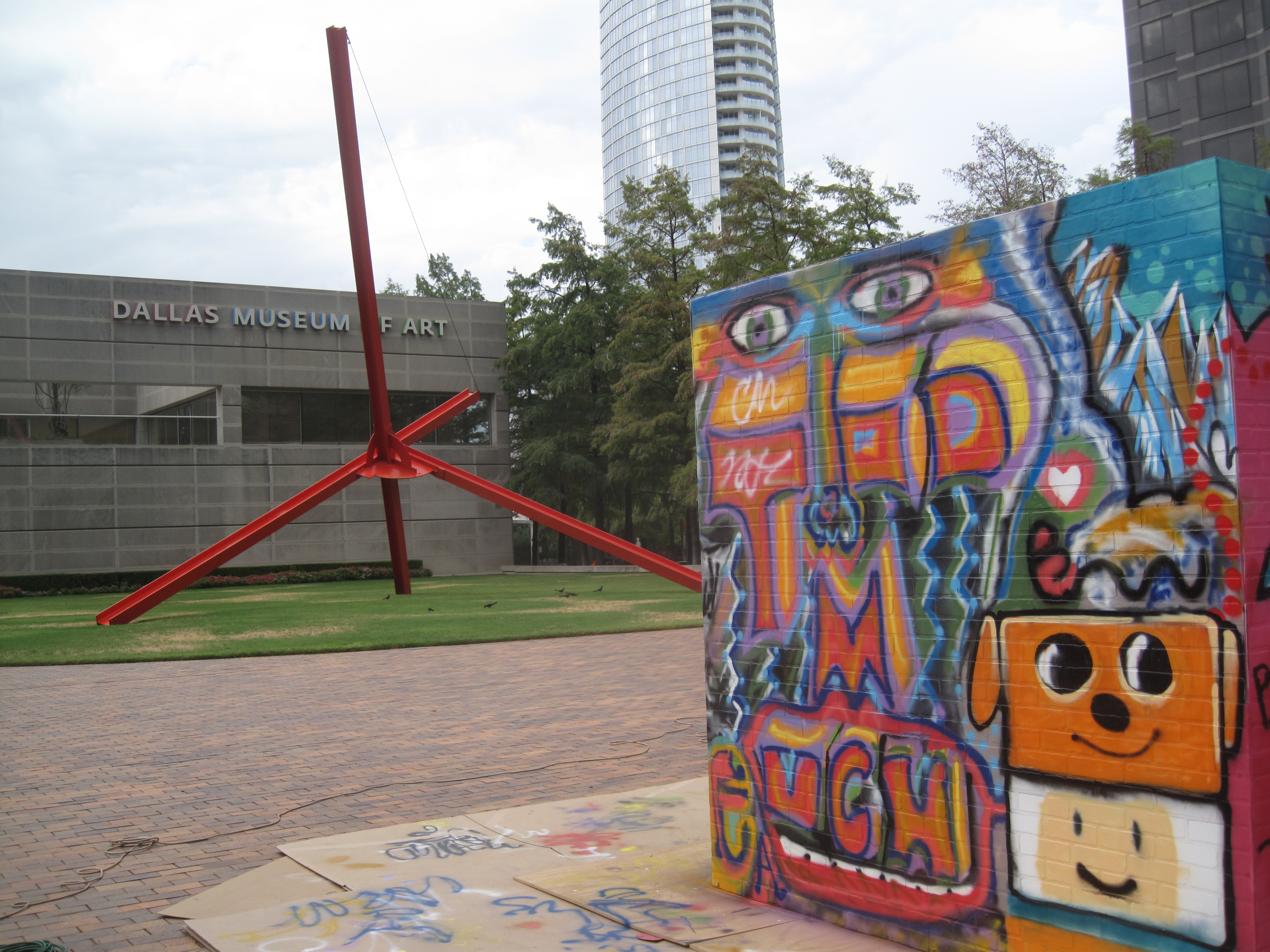
Urban Armor is the Dallas Museum of Art’s unique program for tweens and teens.  These photos highlight the first summer camp  for this age group focused on identity through street art.

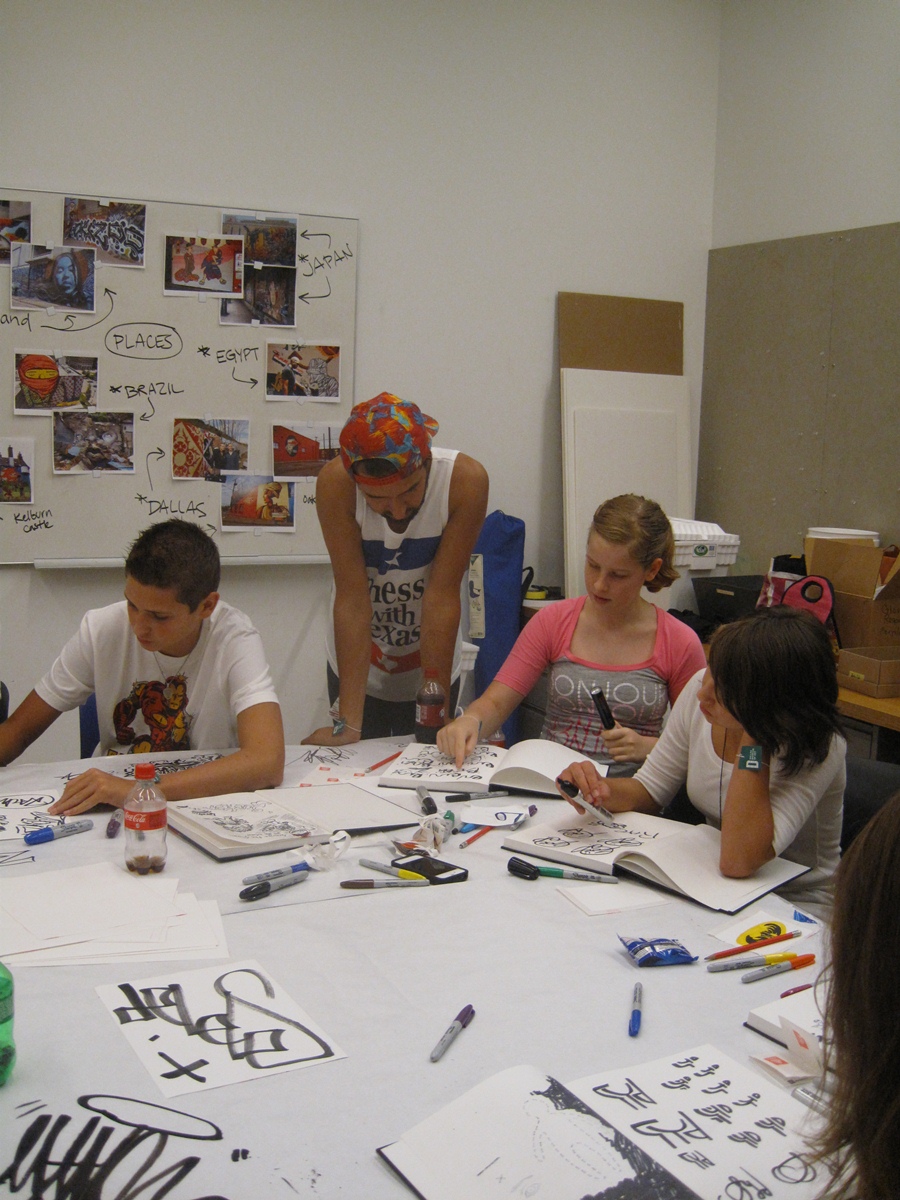
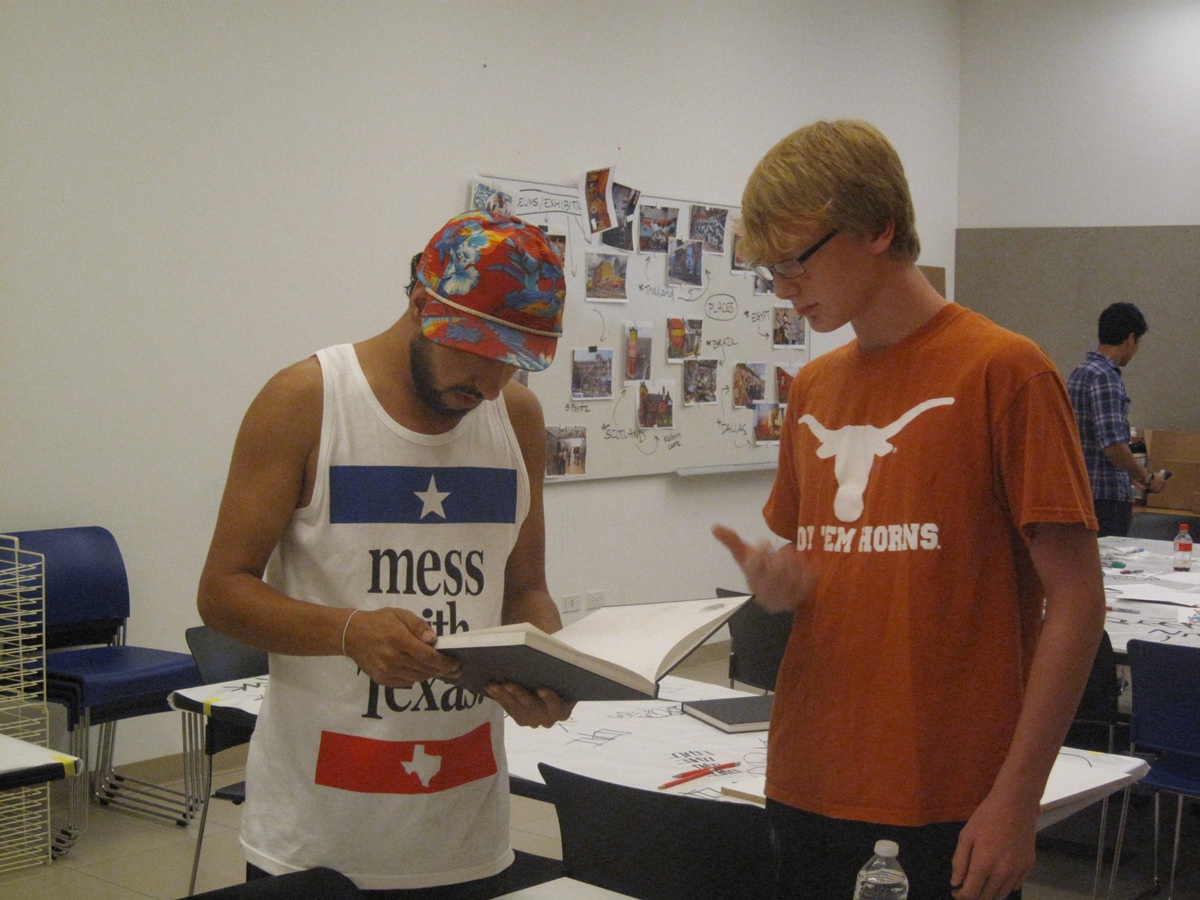
During this camp, students developed new ways to express themselves with the assistance of our Urban Armor teachers Amanda Batson, JC Bigornia and guest artist Isaac Davies.

Teens Working

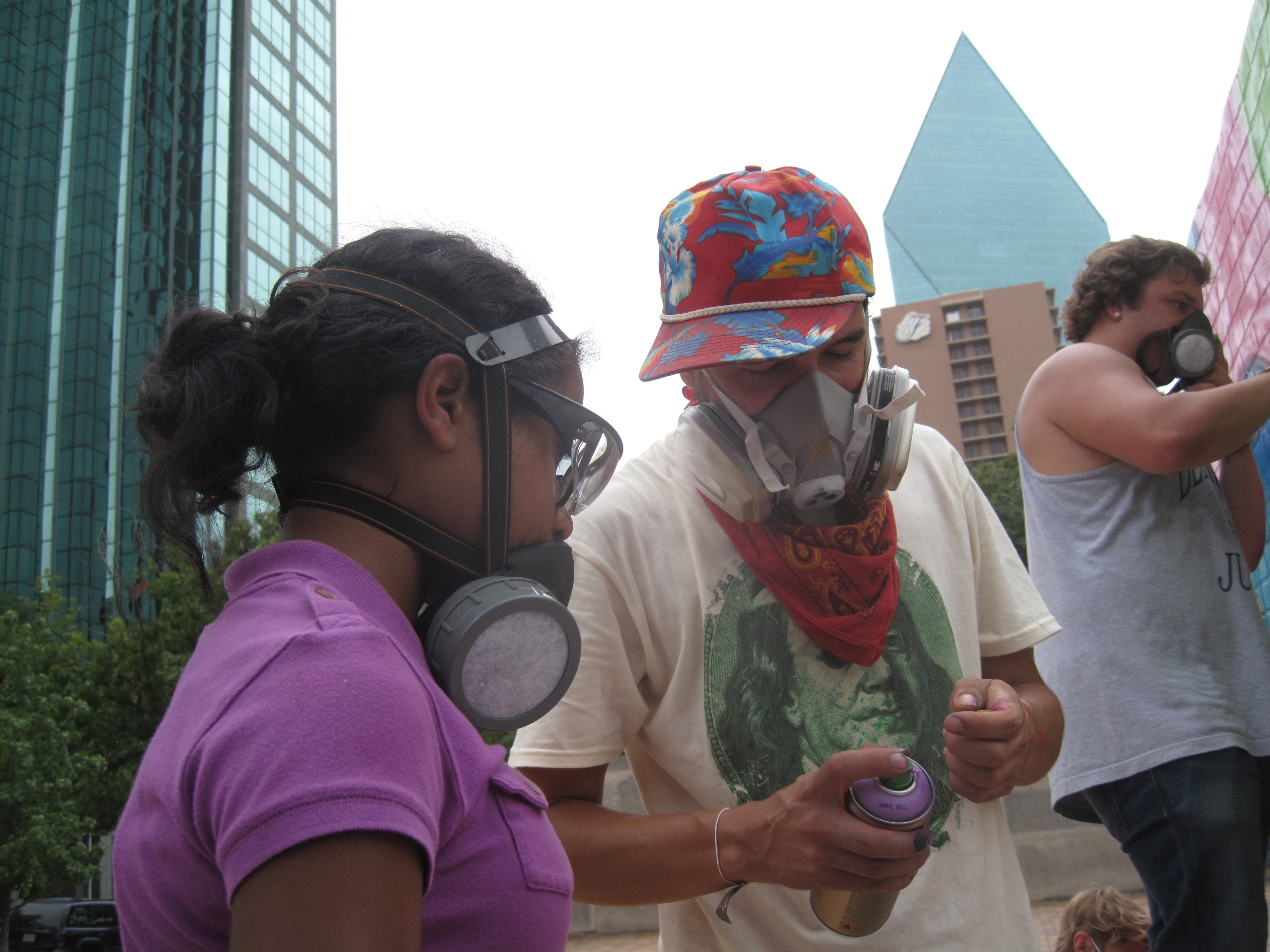
Isaac Daniel Davies and Urban Armor student

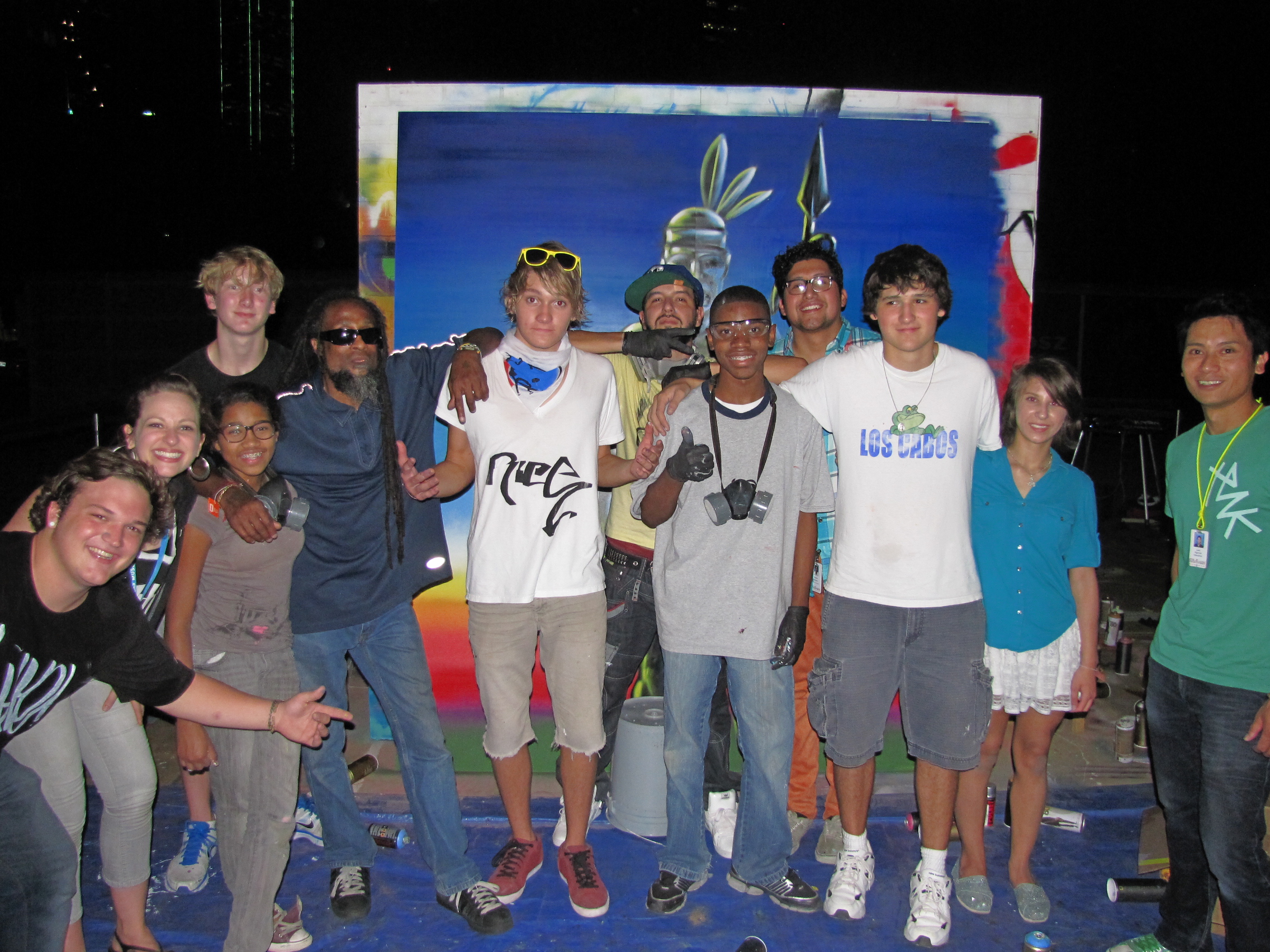
Late Night Camp Demo with Isaac Daniel Davies, Anthony Gonzales,  DJ EZ Eddie D, Amanda Batson, JC Bigornia, and Urban Armor students

Completed

For upcoming Urban Armor programs, please visit our website.

Amanda Batson
C3 Program Coordinator

Focus on: Nobuo Sekine

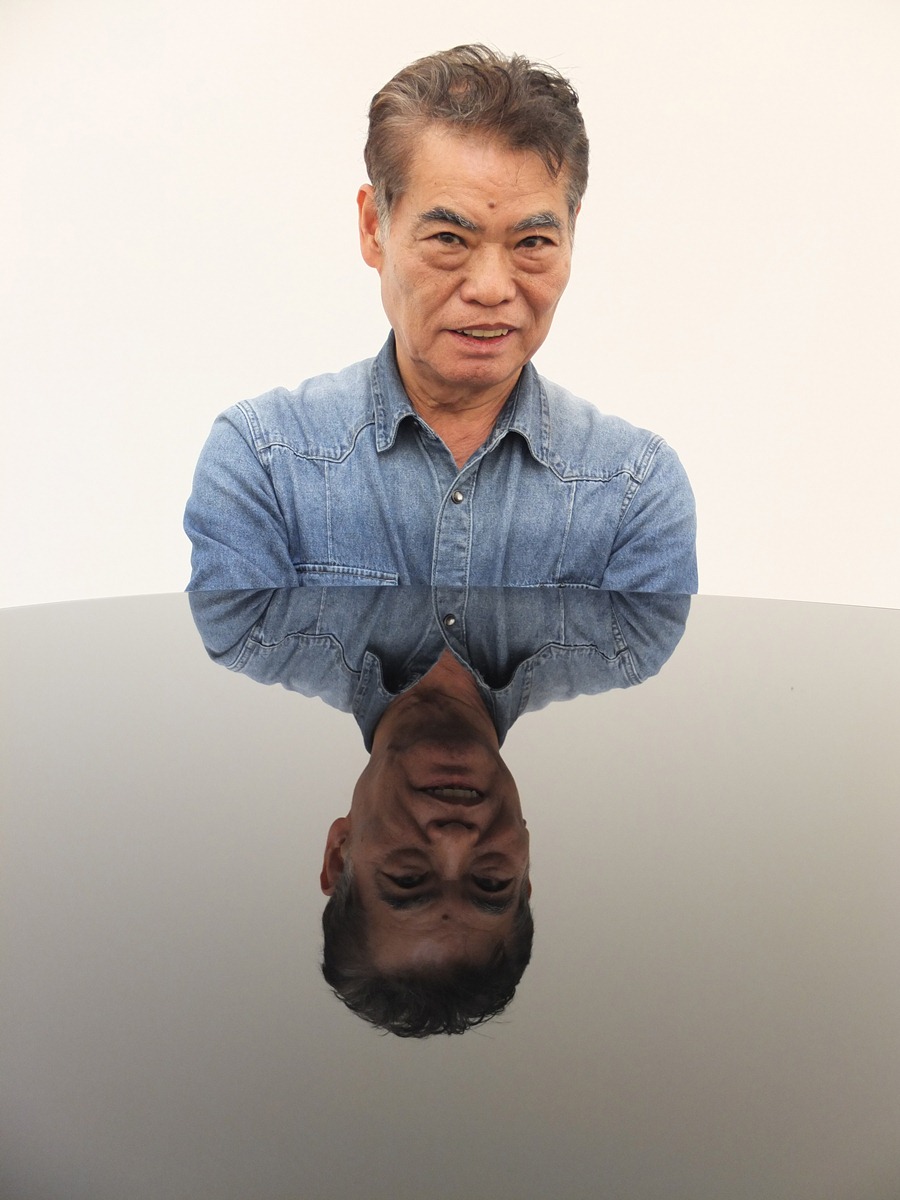
For the past few months, Japanese sculptor Nobuo Sekine’s (b. 1942) works have been on view in the Marguerite and Robert Hoffman Galleries. For those of you who haven’t seen them yet, or are still wondering what these works are all about, this blog post is for you.
Phase No. 10 (1968), Phase of Nothingness-Water (1969/2005), and Phase of Nothingness-Cloth and Stone (1970/1994) were originally created in the late 1960s, and what they have in common is the word “phase” in their title. In order to understand these works better, let’s first talk briefly about global art trends in the late 1960s and then explore the idea of “phase” that so interested Sekine.

In the early 1960s, artists such as Richard Serra, Donald Judd, and Robert Morris made a clear shift away from the gestural quality of abstract expressionism (Jackson Pollock) and embraced a more minimal aesthetic. Minimalist art was intended to discard the emotionality of the past along with all non-essential formal elements related to the art object. The resulting work took shape as hard-edge geometric volumes created with industrial materials that showed little-to-no evidence of the artist’s hand in its making. As minimal sculpture evolved, artists in the late 1960s began moving outside the white cube of the gallery and museum space to create large-scale outdoor works that used the earth itself as the medium. Known as Land Art, this movement was closely associated with the work of Robert Smithson, Michael Heitzer, and others. It is within this transitional moment between minimalism and Land Art that the work of Sekine Nobuo and the Mono-ha movement in Japan came into being.
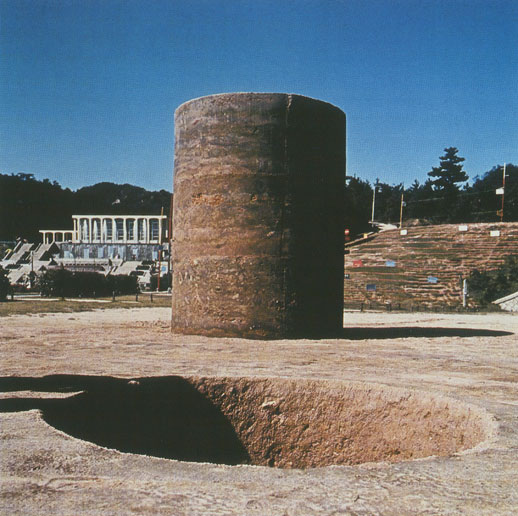
Phase Mother Earth (1968/2012) (Photo courtesy of artspacetokyo.com)

The term Mono-ha (meaning “School of Things”) encompassed a variety of different forms and approaches, but at its core the short-lived movement explored the encounter between natural and industrial objects. Using natural materials such as stone, wood, and cotton in their unadulterated states, in conjunction with wire, light bulbs, glass, and steel plates, the work of Mono-ha artists presented objects “just as they are,” with the hope of bridging the gap between the human mind and the material world.

The tenets of Mono-ha are most clearly embodied in Nobuo Sekine’s famous outdoor sculpture Phase Mother Earth (1968/2012). Often cited as the beginning of the Mono-ha movement, Sekine’s sculpture consists of a 2.2 meter-tall cylinder of earth positioned beside a hole of the exact same dimensions. While clearly in dialogue with other American and European Land Art of the time, the modest scale of Sekine’s work invites the viewer to experience the earth simply as earth rather than as a grand artistic gesture writ large across the landscape.
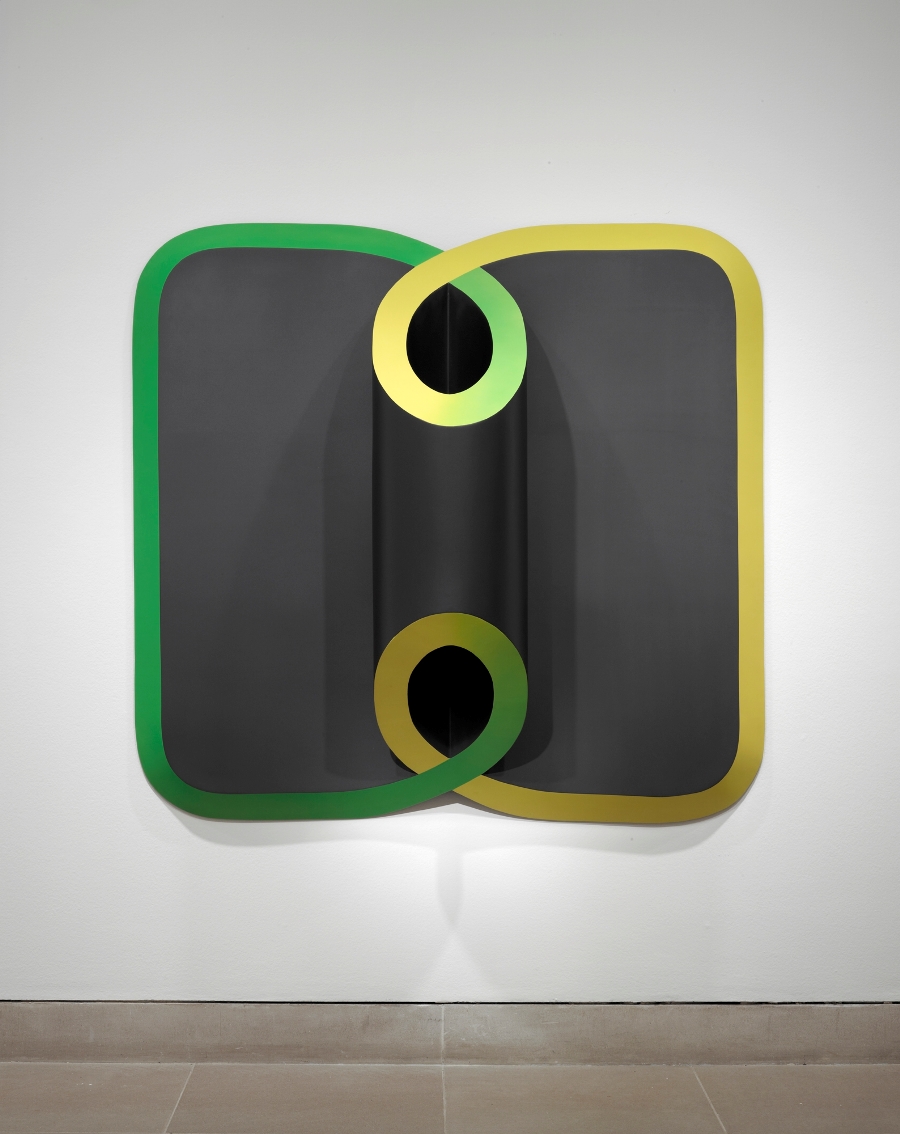
Phase No. 10, Nobuo Sekine, 1968, Steel, lacquer, and paint, The Rachofsky Collection and the Dallas Museum of Art through the DMA/amfAR Benefit Auction Fund

Sekine’s Phase-Mother Earth is closely related to the artist’s previous sculptures exploring the mathematical field of topology. Topology is a field of spatial geometry in which space and materials are considered malleable and can undergo countless transformations from one “phase” (state) to another without adding or subtracting from the original form/materials. In Sekine’s words, “a certain form can be transformed continually by methods such as twisting, stretching, condensing, until it is transformed into another.” This idea of manipulating form and space can be seen in Sekine’s work Phase No. 10 (1968) currently on view at the DMA. This wall-mounted sculpture closely resembles a Mobius strip, and when viewed head-on it appears to be a flat, curvilinear design, but when viewed at an angle the sculpture juts out from the wall, creating an optical illusion.
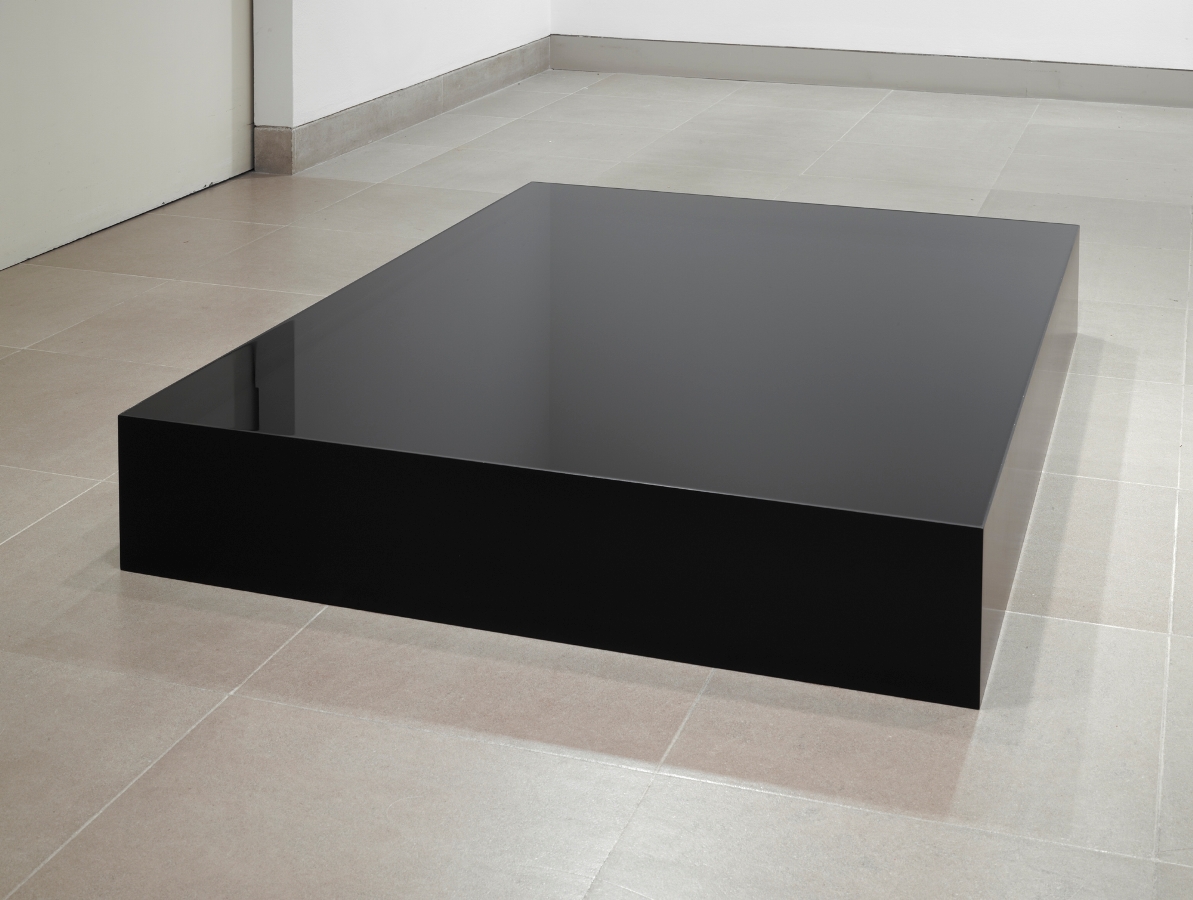
Phase of Nothingness—Water, Nobuo Sekine, 1969/2005, Steel, lacquer, and water, Dallas Museum of Art, DMA/amfAR Benefit Auction Fund

The work Phase of Nothingness—Water (1968) continues Sekine’s engagement with topology. To illustrate these ideas, the artist juxtaposed two equivalent shapes—a cylinder and a rectangle—both containing the same volume of water. At first glance, it doesn’t appear that the shallow rectangular tank and the tall cylindrical tank both hold the exact same amount of water. Similar to his earlier outdoor sculpture Phase—Mother Earth, this work attempts to depict a sense of equivalence and emphasizes the continuity of form and material. These two shapes are not meant to be seen as opposites but as equals. As Sekine explains, “[T]he mass of the universe neither increases nor decreases. This is the universe of eternal sameness. When one becomes aware of this, then the futility of modern concepts of creation can be realized.”

I hope this blog helps explain some of the fascinating (and at times complicated) ideas that inform Sekine’s sculpture. The exhibition closes Sunday, so plan your visit to the DMA before it’s too late!

Gabriel Ritter is The Nancy and Tim Hanley Assistant Curator of Contemporary Art at the Dallas Museum of Art.

Top Ten List of New and Upcoming Programs and Events

  1. iMuseum 2.0 Late Night:  Our September 21st Late Night is a not-to-miss night of new, experimental, and interactive programs.  Among them are a Choose Your Own Adventure tour and your chance to text a work of art with your questions.
  2. New acquisitions on viewCurrent exhibition Variations on Theme: Contemporary Art 1950s-Present features more than a dozen of the Museum’s 2011 and 2012 new acquisitions.  Check out online versions of the Museum’s Annual Reports and What’s New to keep up with our recent acquisitions, and then come see them at the Museum.
  3. Art-making in Posters of Paris. An art-making area in the upcoming Posters of Paris: Toulouse-Lautrec and His Contemporaries exhibition will provide visitors with everything they need to create their own artistic poster.  Leave a copy of your creation at the Museum (to be posted on a wall in the exhibition), and take the real thing home for the fridge!
  4. Staff Art, Staff Selections.  Visit in November to see an exhibition with artworks created by staff members.  Also on view in the Center for Creative Connections is our Personal Point of View series where a Museum staffer is invited to select and respond to an artwork for the main gallery space.
  5. Book Talk.  A book club-style event, Book Talk brings together Museum members (Sustainer level and above) for exhibition-inspired book discussions, exclusive lectures and tours, and author meet & greets.
  6. Klyde Warren Park Opening & Art Beyond Sight.  On Saturday, October 27th and Sunday, October 28th, the DMA takes art-making activities into Klyde Warren Park for their grand opening.  In honor of Art Beyond Sight Awareness month, we are focusing on experiencing art with senses other than vision. Sketch a nature scene, and then use scented paint to create your scene based on how it might smell.
  7. Karla Black: Concentrations 55:  As part of Concentrations—a series of project-based solo exhibitions by emerging artists— artist Karla Black will transform our Hoffman galleries with a sculptural installation.
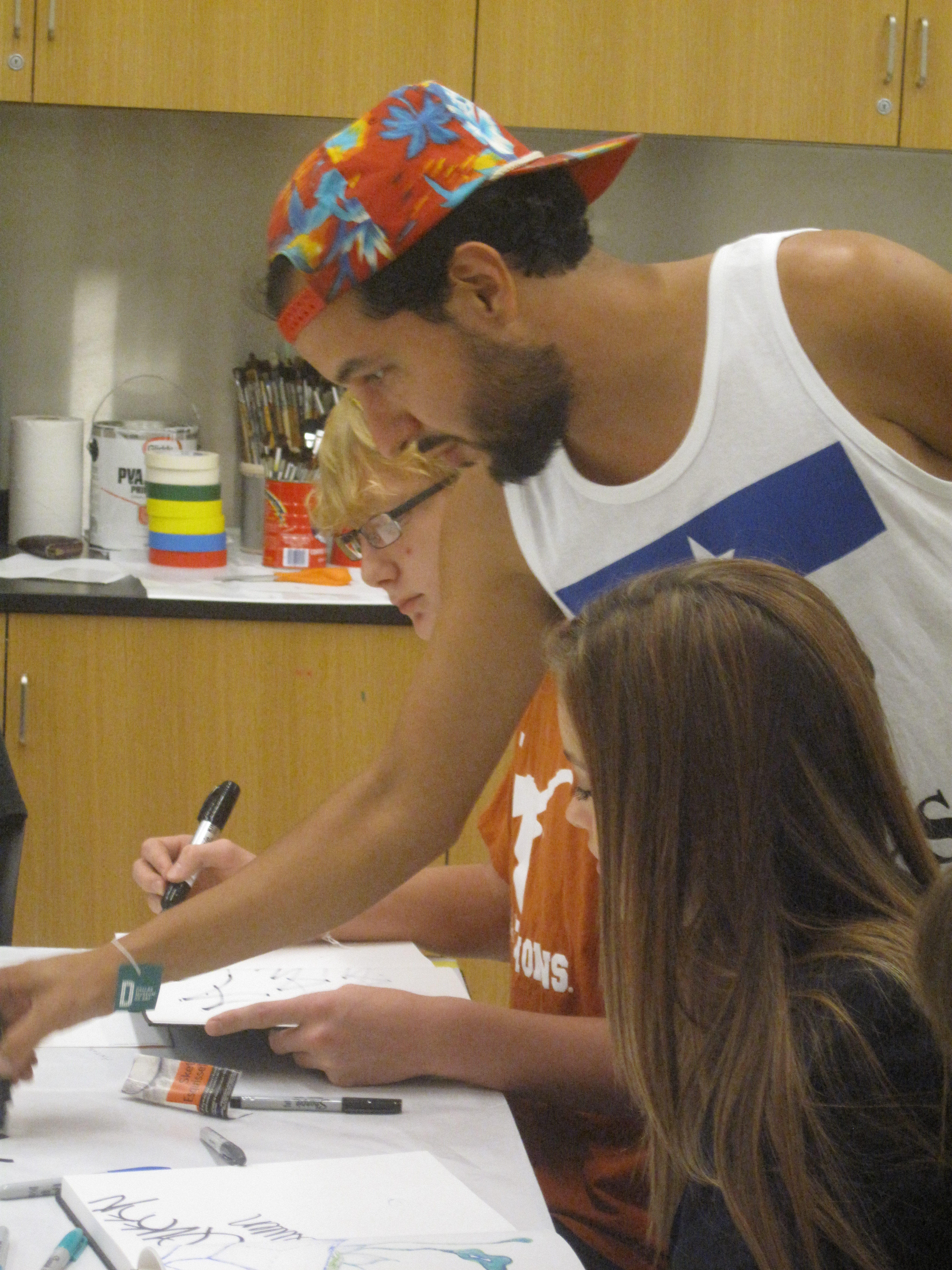
  8. Urban Armor: Programs for Teens & Tweens.  As someone who discovered her love of art as a teenager, I’m pretty excited about the new suite of programs we offered are offer for a teen/tween audience. Urban Armor recently wrapped up a two-day graffiti project with a local artist and will kick off its Open Lab program this Sunday, August 26th, from 1:00-3:00pm.
  9. Arts & Letters Live presents Chris Cleave. On Tuesday, October 9th, the New York Times bestselling author of Little Bee will discuss his newest novel.  Chris Cleave’s Gold is a tale of friendship between two female cyclists and how they traverse the shifting sands of ambition, loyalty, and love on the eve of their last Olympics.
  10. Thinking Creatively Workshops.  I’m cheating a little with this one; it isn’t new to us, it’s just a great program. Starting September 13th, creativity expert Dr. Magdalena Grohman will lead a monthly Thursday evening Thinking Creatively workshop. The experience will begin with creative thinking exercises and conclude with a making activity that builds on ideas generated during the exercises. Workshops will be held on October 11th, November 8th, and December 6th, all from 6:30 p.m.-8:30 p.m. in the Center for Creative Connections.  To get a taste of what you can expect, check out our Teaching for Creativity series; many featured activities are inspired by Dr. Grohman’s past workshops.

Amy Copeland
Coordinator of Go van Gogh Outreach

Marty Grosz Does the DMA

Flower of the Prairie: George Grosz in Dallas closed yesterday after three months on view. Earlier this month, George Grosz’s son musician Marty Grosz joined us for a special gallery talk with exhibition curator Dr. Heather MacDonald. Below are some images from his visit, and you can listen to the talk online. Even though the exhibition is closed, you can still take George Grosz home with you with our free e-catalogue.

Photography by Adam Gingrich, Marketing Administrative Assistant at the Dallas Museum of Art

Urban Armor: Meet. Relate. Investigate.

Urban Armor is the Dallas Museum of Art’s unique, ongoing program for tweens and teens that offers students a chance to meet, relate, and investigate the world around them. Classes are designed in a way that the concept of identity is the heartbeat of each workshop. Urban Armor classes serve teens, who represent an often underserved age group in museums and are at a critical age of self-discovery.

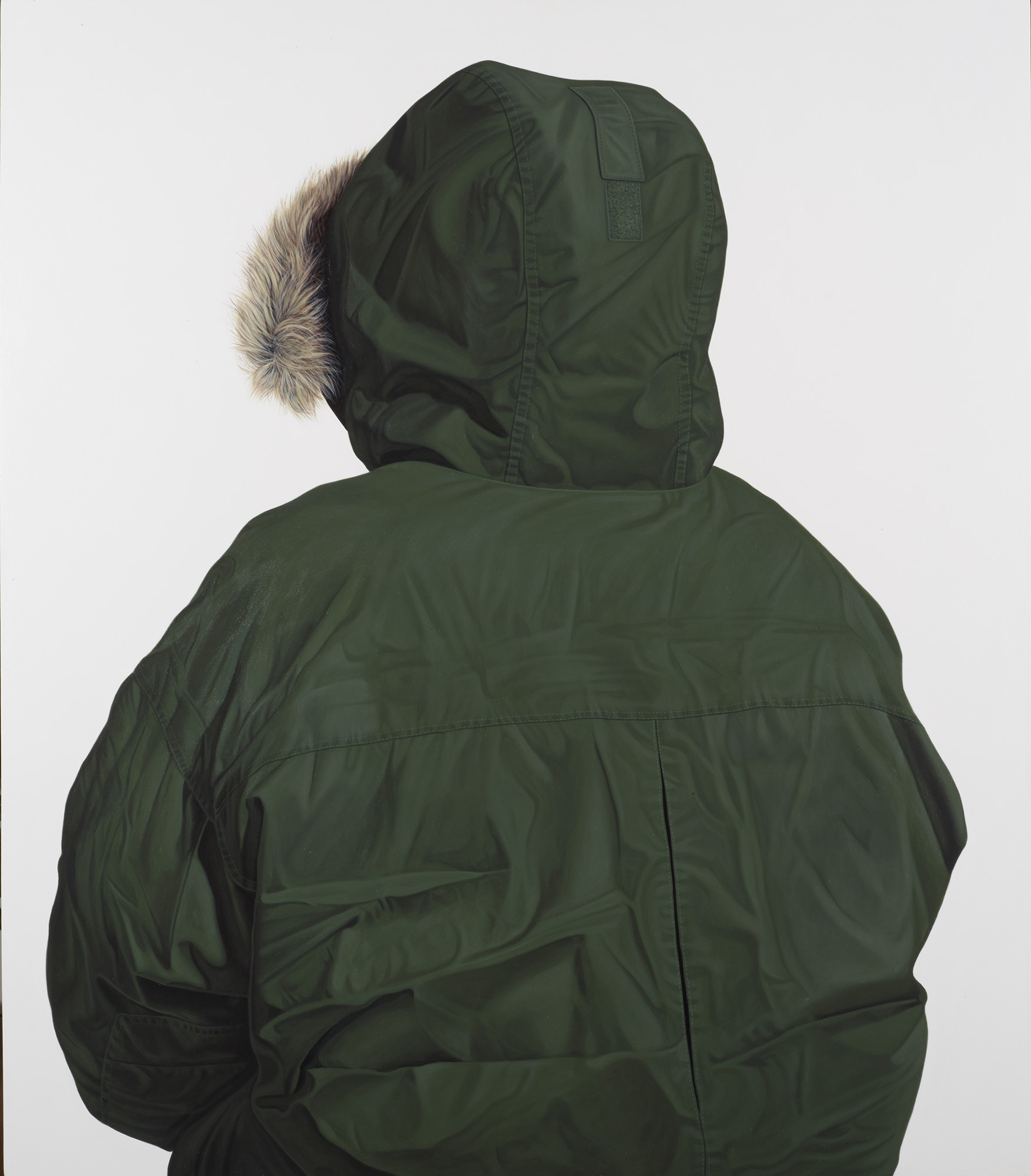
Untitled #21, Karel Funk, 2006, Acrylic on panel, Overall: 31 x 27 in. (78.74 x 68.58 cm), The Rachofsky Collection and the Dallas Museum of Art through the DMA/amfAR Benefit Auction Fund, 2010.28

Each workshop is built around the concept of identity. The name Urban Armor is inspired by the Karel Funk painting Untitled #21, currently on view in Variations on Theme: Contemporary Art 1950s-Present, and the notion that we clothe ourselves in physical layers of clothing to protect us in a literal sense against the elements but also as a metaphorical means of protection. It could be to guard ourselves against the scrutiny of others, attempting to fit in, or wanting acceptance. In a similar way, the different faces we present to others depending on the environment can be seen as figurative armor to serve the same purpose. Who are we underneath these layers? That question drives us to help support teens through the program and to facilitate transformative experiences with art that allow for personal expression. They also learn new techniques, meet artists and DMA staff, and develop social bonds through their interactions with each other.

Teens participating in Urban Armor Street Art Camp with Isaac Davies

This year, Urban Armor launched its first exclusive teen summer camp in an effort to provide teens with a way to enhance their world and the space around them. Students encountered new forms of expression with the assistance of our Urban Armor teachers and guest artist Isaac Davies. They contributed to a large community “piece” on Ross Avenue Plaza, worked on their personal expression and self-statements in their sketchbooks and on their own painted panels, and explored how artists express themes of identity and space in artworks throughout the DMA’s collection.

Street Art Camp with Isaac Davies

Regardless of diverse opinions about street art, everyone can agree that it is a public way people are communicating or expressing themselves in our city. It is common now to see a tag, sticker, mural, or art bomb on any given street of Dallas. With heavy influences from artists like Keith Haring, Jean Michel Basquiat, Shepard Fairy, Banksy, and the many unnamed artists on every wall in town—it is important to recognize street art’s strong influence on our culture. For today’s generation, this is a prevalent force in their lives and a heavy part of their visual culture.

Watch participants from the summer camp Urban Armor: Street Art Camp and guest artist Isaac Davies as they demonstrate learned techniques from their camp experience tonight during Late Night at 7:00 p.m.

Amanda Batson is the Program Coordinator for the Center for Creative Connections and JC Bigornia is the Coordinator of Family Experiences.

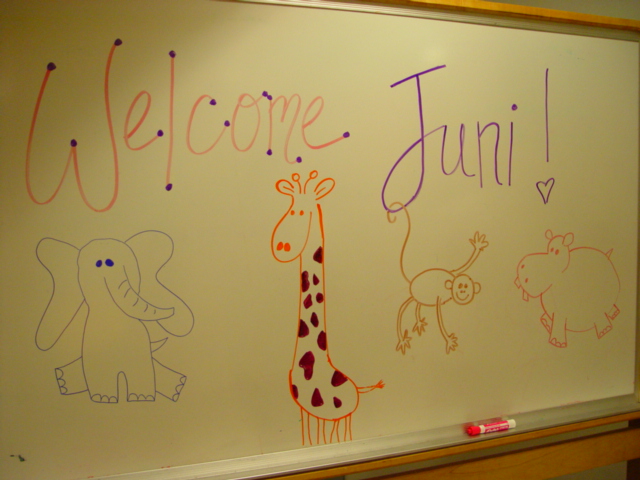
Friday Photos: Welcome, Juniper!

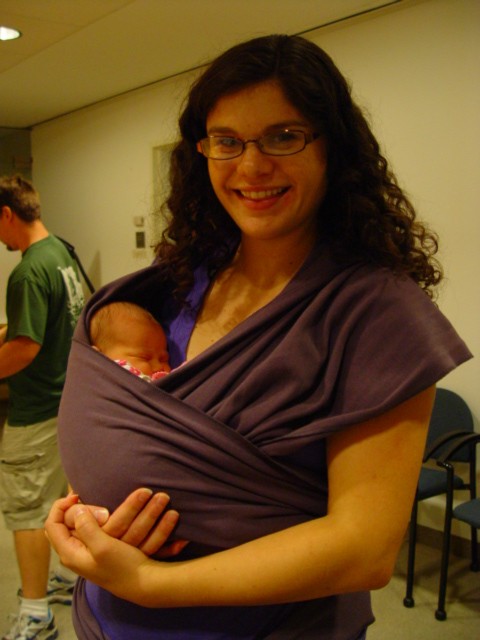
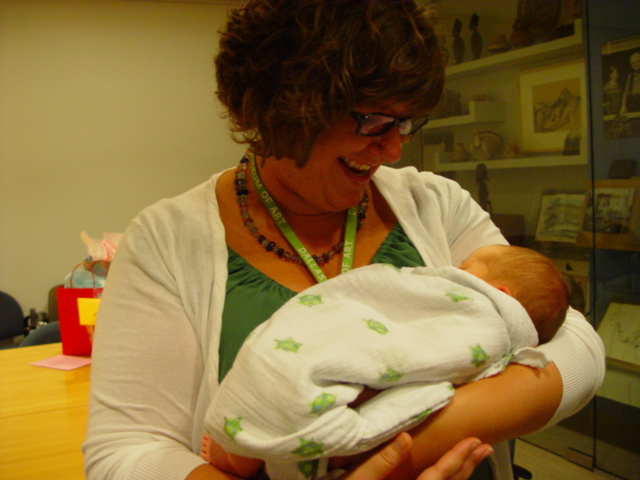
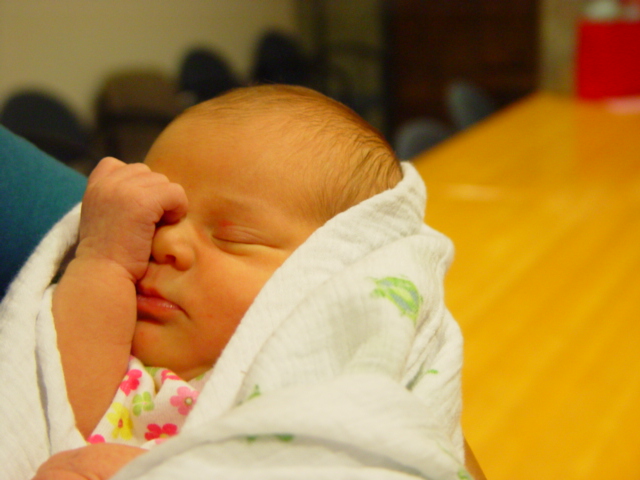
Mommy and baby Juni

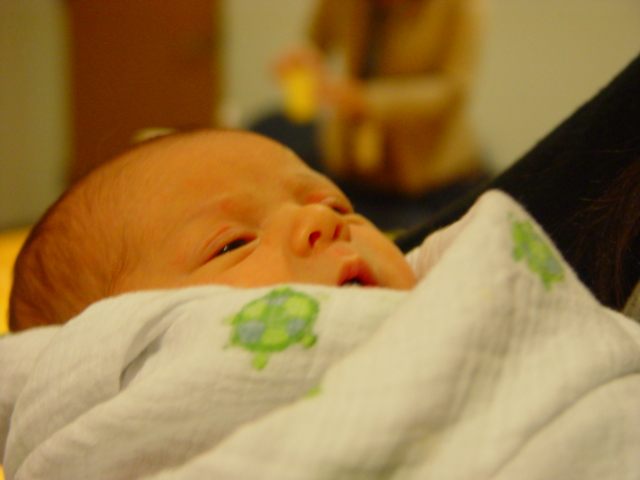
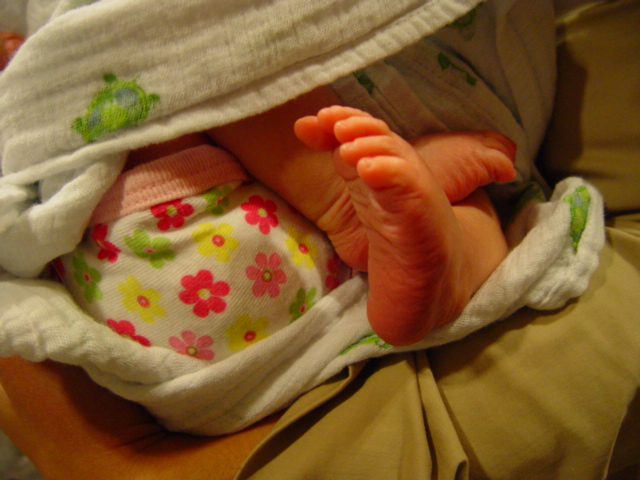
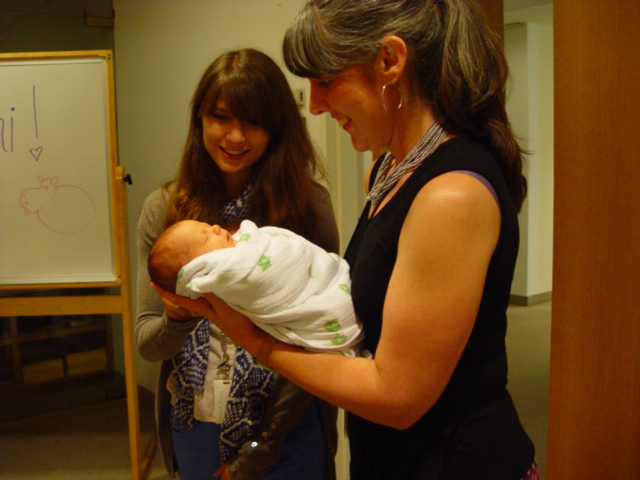
We are delighted to welcome little Juniper Leonard to the DMA community!  Juni made her debut Monday, August 6.  Loryn and baby are happy and healthy, and we were thrilled to have them visit the DMA last week.

Shannon and Juni

Hannah, Nicole, and little Juni

With the arrival of Juni comes a change to our department: Loryn has resigned from her position as the DMA’s Coordinator of Museum Visits in order to take a teaching job at Howard Junior High in Waxahachie ISD.  Her new job will leave her with a one-mile commute to work, rather than a thirty-mile commute to the DMA.

Loryn began working at the DMA in June of 2011 and scheduled Museum visits for over 50,000 students during her time here.  On top of that, she also coordinated the schedules of the DMA’s 120 docents.  She has been invaluable to our department, and we will all miss her when she leaves.  Help us wish Loryn and Juni well in the exciting months to come!

Melissa Nelson
Manager of Teaching in the Community

Teaching for Creativity: A Conversation Between Artworks

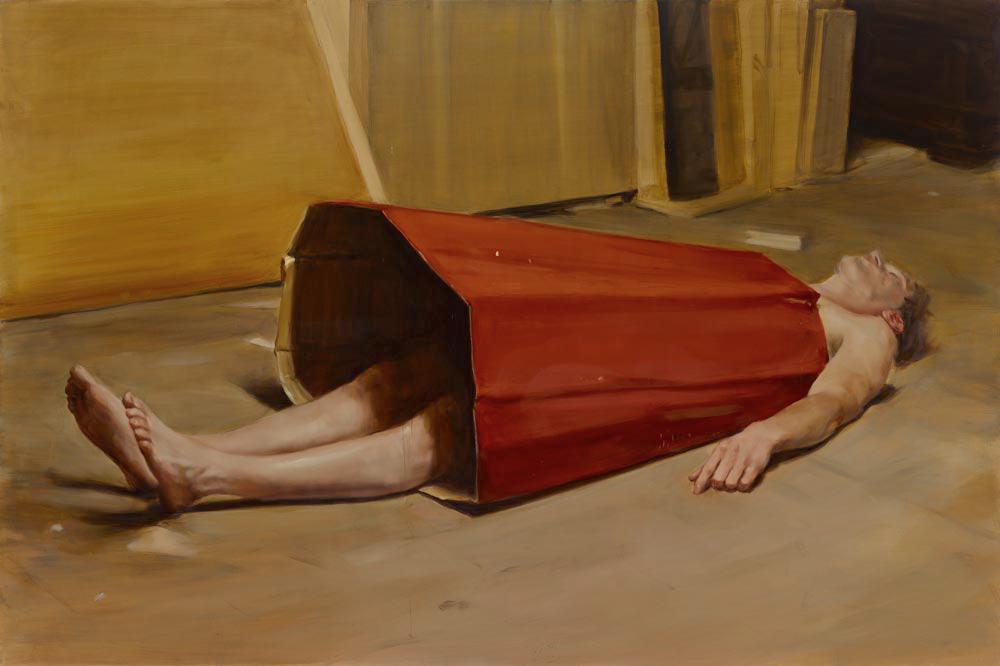
Have you read Shannon’s post about our gallery experience with ­­­Anytown, USA during Museum Forum for Teachers? After we imagined businesses, shops, and restaurants inspired by typography, we moved into a gallery in Variations on Theme with figural works of art. In this fun, creatively-charged gallery experience, we projected character traits and narratives onto the ambiguous figures.

To warm up, we created scribble characters and characterized one as a large group. Then, small groups of four or five people turned their attention to the artworks in the gallery. Each group chose two figures to explore and characterize. Then, each group wrote a short piece of dialogue between the two figures. To add a little challenge, each group randomly chose one line of dialogue to incorporate. Though it may seem counterintuitive, limitations within a lesson actually inspire more creativity than a completely open assignment.

These dialogue lines included:

  • What is that smell?
  • You are never going to believe what just happened…
  • I have never been so embarrassed.
  • No, I’m not kidding.
  • Tell me it isn’t permanent!
  • Did you get dressed in the dark?
  • Happy birthday!
  • I tried everything I could…
  • What’s on your face?
  • I heard it on TV…
  • I’m telling you…it won’t work.

Most of the groups’ conversations between artworks were light-hearted and humorous. However, each conversation was diverse with rich characterization. I really enjoy experiences when art-viewers combine what they see visually with their own experiences and ideas to create unique interpretations.

It would fun to tweak the creative twist for a classroom experience. Instead of incorporating a specific line of dialogue, try assigning the students a specific historical era or geographic location to research as a setting for a conversation between two artworks. Or, ask the students to create conversations between a figure in a work of art and a historical or literary figure. One of our Museum Forum participants suggested that students research artists and write hypothetical conversations based on what they discover of those artists.

What might a conversation look like between these two figures?

Andrea V. Severin
Coordinator of Teaching Programs

The Wise Llama

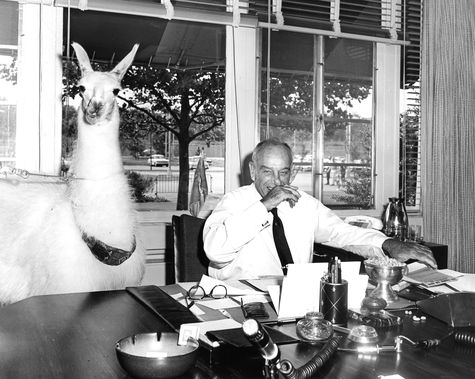
What do a llama and an urban planner have in common? Not much actually, but they did briefly share an office.

This photo depicts the day that Nora Wise brought Sir Lancelot, a pure white llama, wearing a textile from John Wise Ltd. around its neck, to the office of Robert Moses, New York City urban planner. Sadly, it is unknown why Nora took a llama to visit the urban planner, but it looks like he found the gesture quite amusing.

The image is from the John and Nora Wise Papers.

Update: Robert Moses was the President of the 1964-1965 World’s Fair, so it makes more sense that he would be visited by Sir Lancelot, during the llama’s day at the Fair.

Hillary Bober is the Digital Archivist at the Dallas Museum of Art.
Friday Photos: Artistic Gymnastics

After two weeks of exciting competition, the London 2012 Summer Olympics will end this weekend with the Closing Ceremony on Sunday. Gymnastics was one of my favorite sports this year and Team USA’s Fierce Five certainly did not disappoint, bringing home five medals, three of them gold.

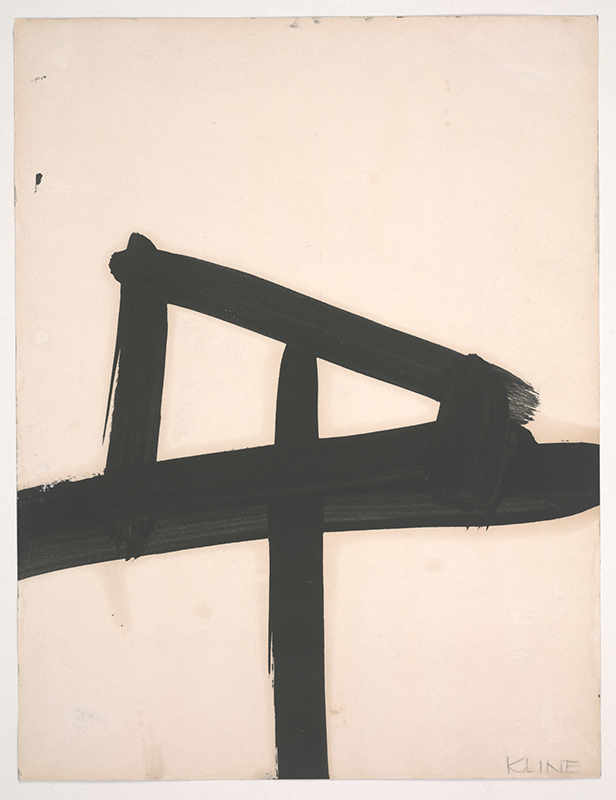
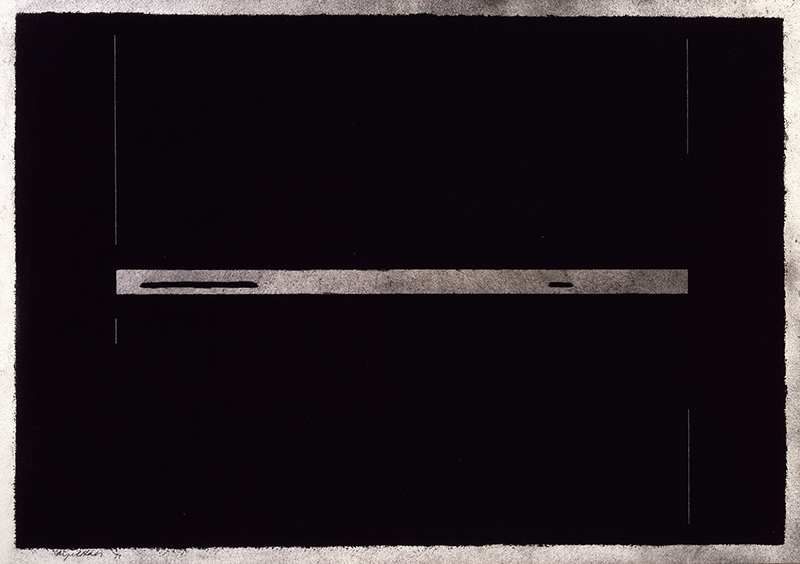
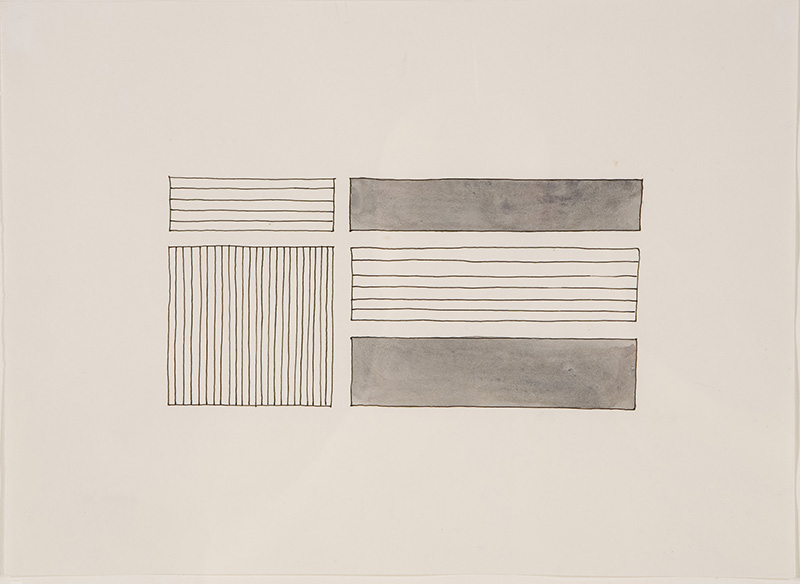
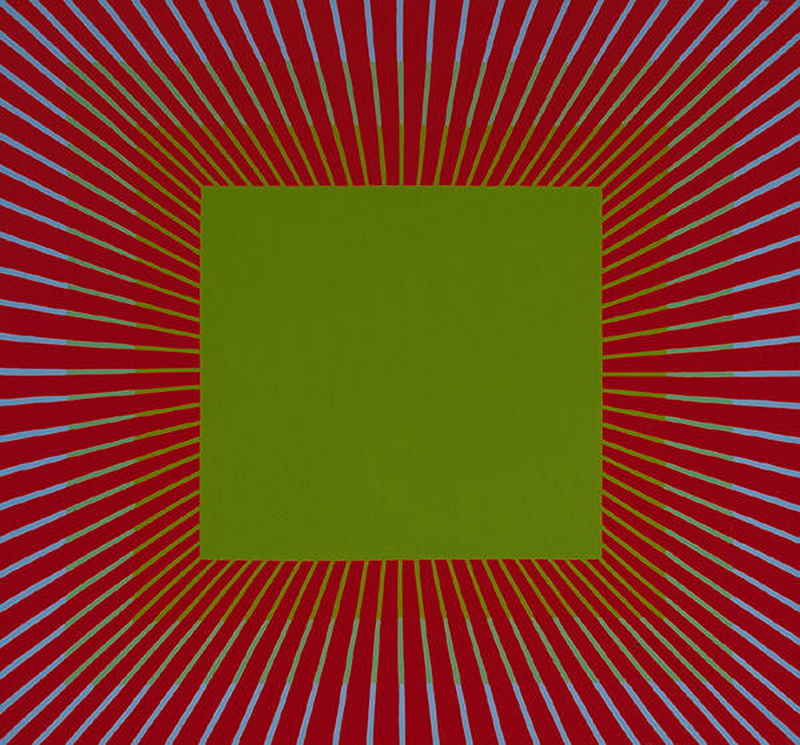
Five fierce artworks from our contemporary collection—interestingly enough, all Untitled—remind me of this graceful sport.

The vault:

Untitled, Franz Kline, 1959, Dallas Museum of Art, Foundation for the Arts Collection, gift of George T. and Natalie H. (Schatzie) Lee

The balance beam:

Untitled, Nigel Hall, 1973, Dallas Museum of Art, Bryan Williams Fund

The uneven bars:

Untitled, Carlo Guaita, 1988, Dallas Museum of Art, gift of Mr. and Mrs. I. C. Deal

The floor exercise:

Untitled, Richard Anuszkiewicz, n.d, Dallas Museum of Art, Foundation for the Arts Collection, gift of Mr. and Mrs. Duncan E. Boeckman

A gymnast in the midst of her routine:

Untitled, Joel Shapiro, 1981-1984, Dallas Museum of Art, gift of Exxon Corporation

What artworks remind you of the Olympics?

If you’re not ready for the Olympic spirit to end just yet, you’ll want to get tickets for Arts & Letters Live on October 9. Chris Cleave will discuss his new novel Gold, which centers on two athletes at their last Olympic Games, London 2012.

Sarah Coffey
Assistant to the Chair of Learning Initiatives


Archives

Categories