Posts Tagged 'Dallas Museum of Art'


Friday Photos: Teacher Workshops

Last week, we finished up a great summer series of professional development workshops for K-12 educators.  Thank you to everyone who joined us for cool experiences (temperature and otherwise) and stimulating discussions in the DMA galleries.  Here are a few photo highlights and teacher reflections from the summer workshops.

[slideshow]

“Conversations that arise from looking at the various art is, to me, the most significant aspect of workshops like these.”

“The activities helped us examine pieces in a way we might not do on our own.  It also gave us ideas for classroom activities….”

“The experience was even better than I anticipated.  Unlike most professional development, the focus is on providing good teachers with tools to bring out the best in their students.”

At DMA Teacher Workshops, educators have fun, learn something new, share ideas, and collect CPE hours for each workshop.  In October, professional development workshops will begin again and we invite you to join us for the following.

  • Layered Materials, Layered Meanings: Mark BradfordSaturday, October 22
  • Art and Games with Artist Tom Russotti — Saturday, November 12
  • Art and Fashion — Saturday, December 3
Visit Programs for Teachers on the DMA Web site for more information.

Nicole Stutzman

Director of Teaching Programs and Partnerships

Staff Profile: Prepping Up

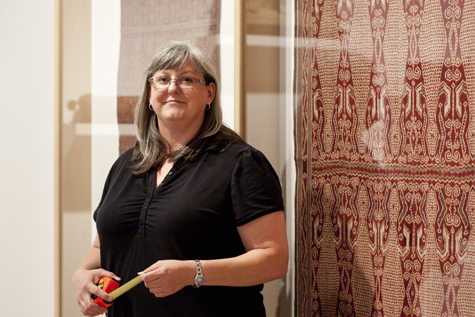
Uncrated tracked down Preparator, Mary Nicolett, to talk about her job at the Museum. Mary is a key member of the installation team and is known for her keen eye and attention to detail.

Describe your job in 50 words or less.
My official title is “Preparator, Logistics Facilitator,” which is a fancy way of saying that when I am not busy as a preparator moving, installing or taking care of the art, that I am ordering supplies or tools in preparation for the teams’ upcoming tasks.

What might an average day entail?
My days and weeks vary, depending upon what installation we are working on.  I may be moving works in storage, building archival boxes for delicate items, researching the newest drills, touch-up painting the walls, or installing an intricate or obsessive artwork.  There are always the deliveries and pick-ups that interrupt the flow of the day, but I am lucky that I get to uncrate works of art, which sometimes makes me the first person in the building that gets to see something new! Only one thing is consistent in my day: the coffee during our afternoon break.

How would you describe the best part of your job and its biggest challenges?
I am continually learning. My coworkers have a wide variety of talents, and both the exhibitions and collections departments work wonderfully together as a team. I learn something new during most installations. The variety of artworks that enter the building vary in age, material and construction and thus their needs differ. This diversity continually specifies what techniques or care are needed in order to preserve the works, keeping us on our toes.

Growing up, what type of career did you envision yourself in? Did you think you’d work in an art museum?
I was too busy being a kid to think about a career, but I was very influenced by my father who worked as an architectural draftsman and took some evening terracotta studio courses from Octavio Medellin. My ease in math, geometry and spatial relationships steered me towards a degree in sculpture, but even then I did not think about working at a museum.

What is your favorite work in the DMA collection?
That is a tough question, as the answer probably changes with my moods!  The lovely Indonesian textiles from the Sarawak area, with their wealth of history, intricacy of detail, and process of dying the wefts prior to weaving are inspirational to me. I have continual fondness for the graceful serenity of the Henry Moore maquettes. But, I have to admit, my first week at the museum I just HAD to see Tom Wesselmann’s Mouth #11, as I remember it from an elementary school tour, when the DMA was at Fair Park.

Is there a past exhibition that stands out in your mind as a favorite or is there a particular upcoming show you’re looking forward to seeing?
The J. M. W. Turner exhibition was fantastic! The layout and gallery design with the moldings created a perfect environment for his works. I like contemporary art more than landscapes and port scenes, but his paintings continually stopped me in my tracks while doing my duties. The upcoming Jean Paul Gaultier exhibit has many challenges for us ahead, and our designer, curator and exhibition team are still in the process of deciding all the intricate details that go into such a show. With this being our first big “fashion” exhibition, I look forward to dressing the mannequins and getting an up-close view of the pieces, some of which are more like strange sculptural forms than clothing.

Seldom Scene: A Tip of the Hat

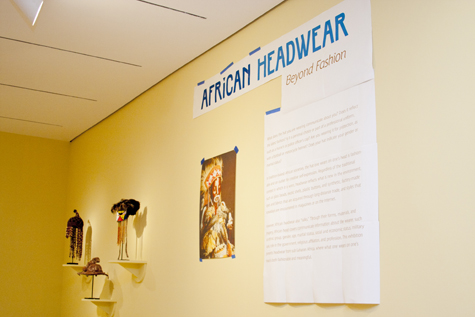
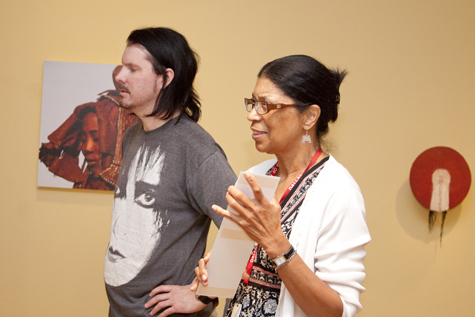
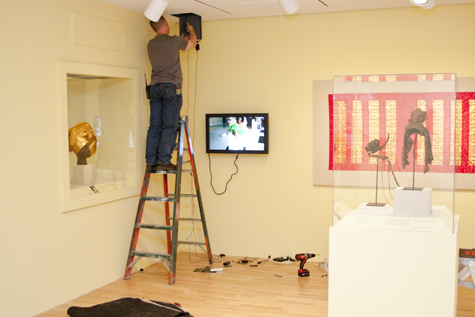
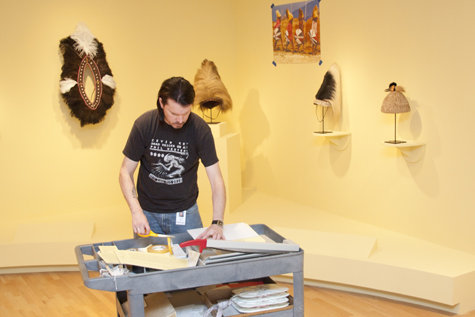
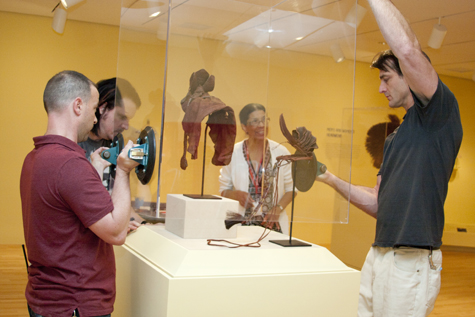
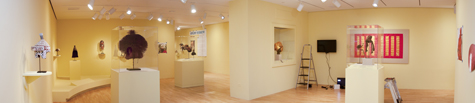
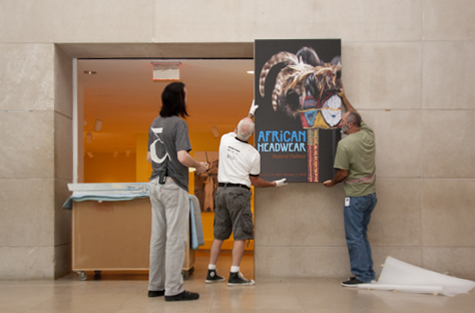
African Headwear: Beyond Fashion opened yesterday and will be on view through January 1, 2012. The exhibition celebrates the artistry of African decorative design and initiates us into the world of fashion a few months before we host Jean Paul Gaultier: From the Sidewalk to the Catwalk. Below are a few images showing the preparation that went into creating the African Headwear exhibition.

Extra! Extra! Special Go van Gogh program for fifth grade classrooms

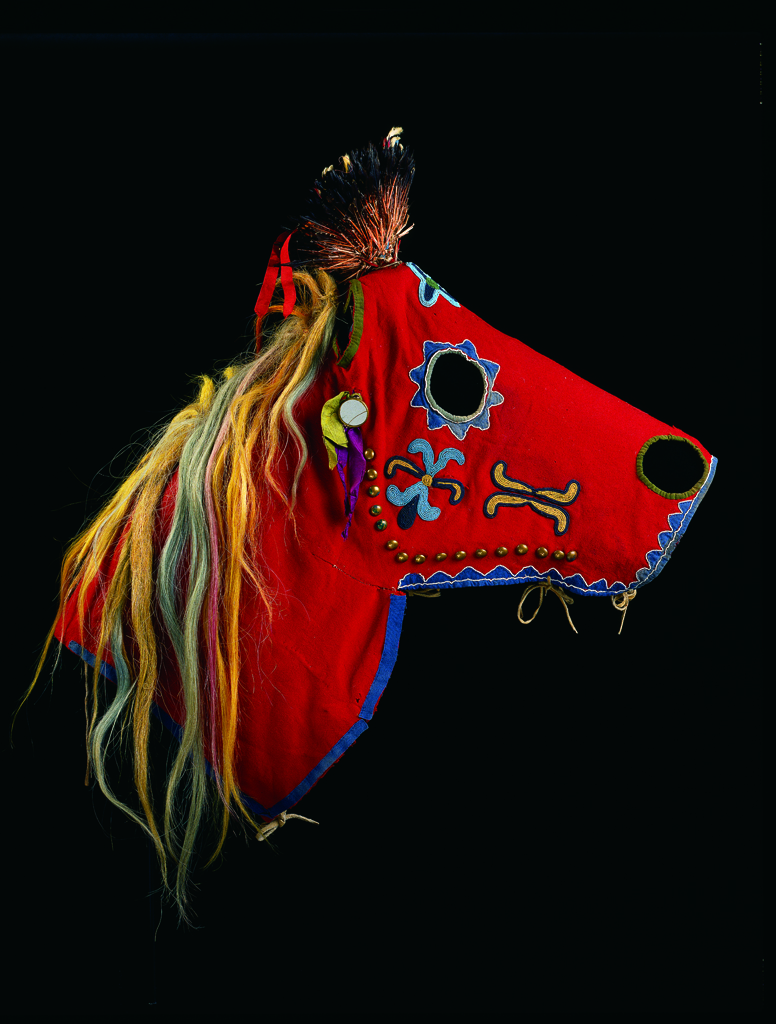
This year, Go van Gogh is offering a special program exclusively to fifth grade classrooms during the month of September.  Art of the American Indians is inspired by our special exhibition Art of the American Indians: The Thaw Collection, on view until September 4.  We are excited to offer a program with such strong ties to the fifth grade Social Studies emphasis on  American history.

Horse Mask, c. 1875-1900, Nez Perce or Cayuse, Idaho, Oregon, or Eastern Washington, Thaw Collection, Fennimore Art Museum, photograph by John Bigelow Taylor

Since the exhibition closes soon, we’re extending this offer from September 19-29 only.  Request your program now using our online request form!

Melissa Nelson
Manager of Teaching in the Community

Meet Monsieur le Directeur de Transition

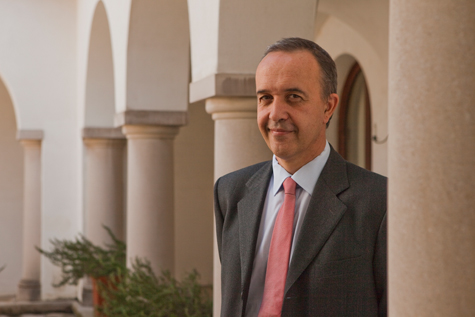
Late in the summer of 2009, when Olivier Meslay joined the DMA as the Senior Curator of European and American Art, he never imagined that two years later he would be the Interim Director. Yet, that is exactly what he was asked to be when Bonnie Pitman stepped down earlier this year. Honored by the appointment, Olivier gladly accepted this important responsibility.

Admired for his accomplishments as a curator, scholar, and professor, as well as for his humor and kindness, Olivier is the perfect person to lead the DMA during this transitional time, because, as they say in Texas, “this is not his first rodeo.” Before joining the DMA’s curatorial staff, he spent sixteen years at the Musée du Louvre. His credentials include graduating from some of the finest educational institutions in France, including the Institut National du Patrimoine, (the French State School for Curators), the Ecole du Louvre (where he was also a professor from 1997 to 2006), and the Sorbonne. Yet, Olivier is quite familiar with American museums; from 2000 through 2001 he was a fellow at the renowned Clark Art Institute in Williamstown, Massachusetts.

During his career at the Louvre, he held a number of senior positions, including curator of British, American, and Spanish painting. He curated several exhibitions, such as the innovative “Louvre Atlanta” project, a three-year collaboration with the High Museum of Art that presented seven shows drawn from the Louvre’s collections that attracted more than one million visitors. Other exhibitions over the course of his career reflect his expertise in British, Spanish, and American Art. A few of the most notable are William Hogarth, American Artists and the Louvre, and La collection de Sir Edmund Davis. He also played a pivotal role developing databases on the Louvre website that provide public access to the entire catalogue of American and British art in French museums. Beginning in 2006, he served as Chief Curator of Louvre Lens, a satellite of the noted Paris museum under development in northern France.

Olivier remained there until 2009, when he moved to Texas to assume his role as the DMA’s Senior Curator of European and American Art. Since leading that division, he curated José Guadalupe Posada: The Birth of Mexican Modernism, and, reflecting his eagerness to embrace his new home, Texas Sculpture. Olivier also spearheaded a complete reinstallation and reconfiguration of the Museum’s European galleries. Thanks to a recently completed project, of which he is most proud, almost the entire collection of the DMA is now available for viewing on our website. Olivier recognizes that this herculean effort came to fruition through the extraordinary efforts of many of his colleagues. His innovative spirit and dynamic leadership quickly made a difference at the DMA. Those qualities will help him lead us through the months ahead. In his spare time, Olivier, his wife, and their two sons have traveled to cities throughout our state, including Paris (Texas not France), El Paso, Laredo, Amarillo, and Midland. This thoughtful, intelligent Frenchman has not forgotten his heritage, but he has developed a keen interest in his new hometown. He has a deep appreciation for everything in Dallas, from its people, to its food, and, of course, its art museum.

Martha MacLeod is the Curatorial Administrative Assistant in the European and American Art Department at the Dallas Museum of Art.
Joyeux Anniversaire Coco Chanel

You may know that one of the most popular areas of the Museum is the Reves Collection, housed on our third level in a partial re-creation of the Villa La Pausa, the home of Wendy and Emery Reves in the south of France.

But what you may not know is that La Pausa was formerly owned by the designer Coco Chanel and was originally built for her in 1927. Wendy and Emery Reves bought it in the early fifties, and for almost eighty years the villa welcomed high-profile guests such as the Duke of Westminster, Luchino Visconti, Jean Cocteau, Greta Garbo, the Duke and Duchess of Windsor, Somerset Maugham, and Graham Sutherland.

In honor of Chanel’s birthday on Friday (she would have been 128), we gathered a few photos to share of Chanel’s life at La Pausa.

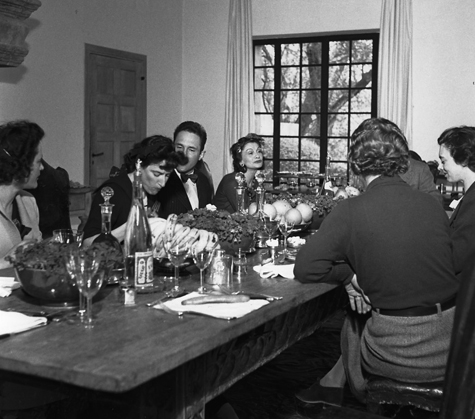
Coco Chanel at La Pausa, 1938

Coco Chanel (in front of window) in the dining room at La Pausa, 1938

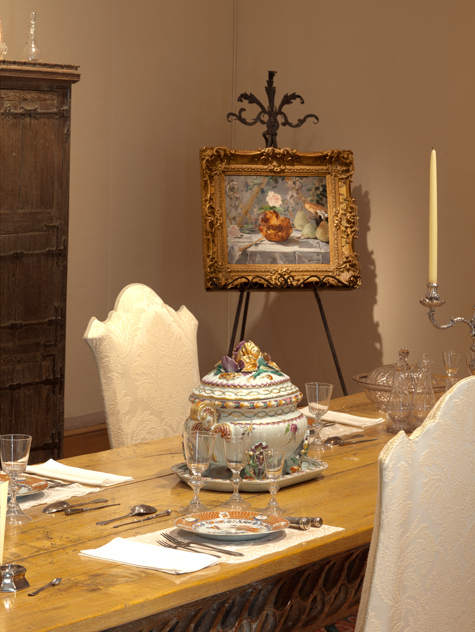
The La Pausa dining room in the Reves Collection

Friday Photos: Provocative Comparisons Part Three

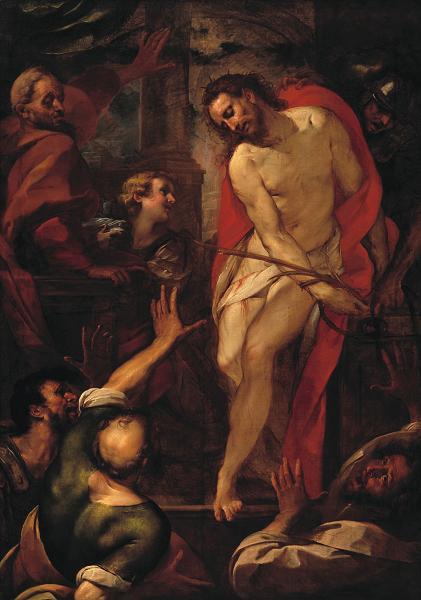
Ecce Homo, c. 1615-1620, Giulio Cesare Procaccini (Italian, 1574-1625), Oil on canvas, Dallas Museum of Art, Gift of Mr. and Mrs. Algur H. Meadows and the Meadows Foundation, Incorporated

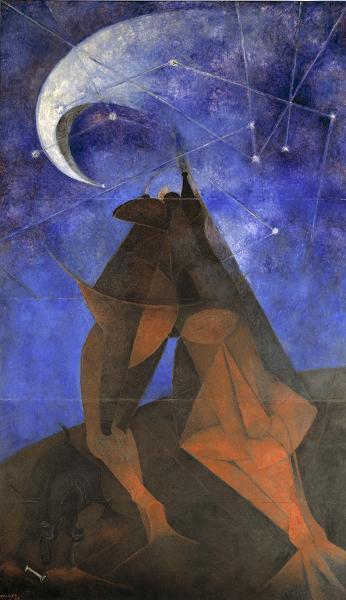
El Hombre, 1953, Rufino Tamayo (Mexican, 1899-1991), Vinyl with pigment on panel, Dallas Museum of Art, Dallas Art Association commission, Neiman-Marcus Company Exposition Funds

This is the final post in our photo series focused on Provocative Comparisons.  My experiences looking at these two paintings with out-of-town visitors led to powerful conversations about scale, the male figure, religion and beliefs, color, composition, and aspirations.  We wondered about the impact of these works on those who experienced them originally, shortly after their initial creation, and compared our thoughts on this to our own reactions as 21st century viewers.  I invite you to take a long look at Rufino Tamayo’s El Hombre and Procaccini’s Ecce Homo.  What do you see?  What do you think about?  What relationships between the two, if any, resonate with you?

Nicole Stutzman
Director of Teaching Programs and Partnerships

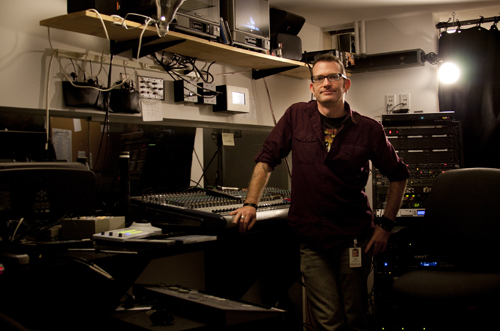
Staff Profile: In the Sound Booth

Uncrated tracked down Corbett Sparks, one of the DMA’s multimedia technicians, to talk about his job at the Museum. Corbett can frequently be spotted behind the sound board during Thursday Night Live and Late Nights in the Atrium and is also the “great Oz” in the Horchow Auditorium control booth.

Describe your job in fifty words or less.
I am a multimedia technician, which means I take care of any audio/video needs that come up at the Museum. I am also in charge of editing and cataloguing all recorded audio.

What might an average day entail?
I really don’t have average days—I don’t even have a regular schedule! The only consistent part of my week is Thursday night, where I run sound for jazz (Thursday Night Live). I also take care of all the atrium performances for Late Nights on the third Friday of every month. Other days I might be setting up a laptop and projector for a meeting or running the sound and light boards for a lecture in the Horchow Auditorium.

How would you describe the best part of your job and its biggest challenges?
Meeting the artists and performers that come through here and making sure their lecture/show goes off the way they want is my favorite part of this job. I am a people-pleaser and enjoy exceeding their expectations. My biggest challenge might be dealing with all the people that get me confused with the other tech, JD. We kind of look alike.

Growing up, what type of career did you envision yourself in? Did you think you’d work in an art museum?
I always knew I would work in a creative field. When I was younger, I wanted to either be a fine artist or movie director. That being said, I still don’t know if I am grown up yet.

What is your favorite work in the Museum’s collections?
Bill Viola’s, The Crossing. He was an early inspiration for me as an artist. My first introduction to his work was actually at the DMA. That piece was called The Sleep of Reason:

“A black-and-white monitor on a wooden chest shows a close-up view of a person sleeping. At random intervals, the lights cut out and the room is plunged into total darkness. Large color moving images momentarily appear on three walls and a loud disturbing sound of moaning and roaring fills the space — fires burn out of control through city buildings, fierce attack dogs lunge at the camera, violent ocean waves crash into shore, a provoked owl flies into a bright light. Just as suddenly, the images vanish, the lights come back on, and the room returns to normal.

This piece opened my high school eyes to what art could be—not just paintings and sculpture, but concepts and the use of technology to get those ideas across.

Is there a past exhibition that stands out in your mind as a favorite, or is there a particular upcoming show you’re looking forward to seeing?
I really enjoyed Fast Forward. I am also definitely looking forward to the Jean Paul Gaultier exhibition. I am intrigued by the use of the “Tony Ousler”-ish  projections on the mannequins and the general atmosphere surrounding them. Looks like fun!

Teen Docent Program: Loads of Fun

Every summer something special happens at the DMA.  High school students from around the DFW area lend us their free time to participate in our annual Teen Docent program.  Celebrating ten years of summer fun, the Teen Docent Program offers an invaluable experience for teenagers, ages 14-18, to learn about art, sharpen their speaking skills, and interact with younger students in the galleries.

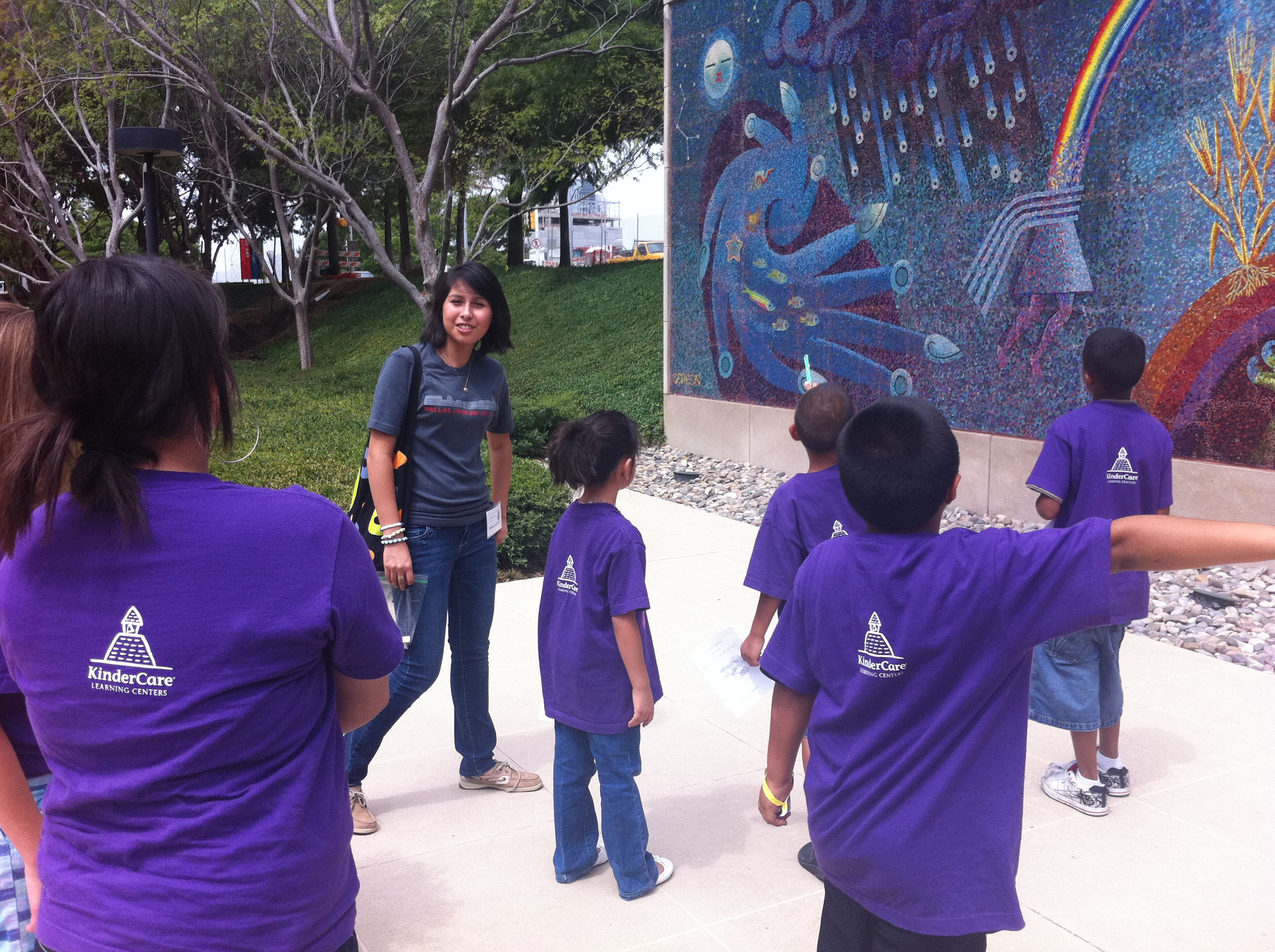
Teen docent Jennifer Mayen discussing Miguel Covarrubias's "Genesis: The Gift of Life"

This summer we have eleven returning students and thirteen fresh faces, and it’s easy to spot all of them in their official “uniform,” which includes a gray Dallas Museum of Art t-shirt and a Teen Docent badge. 

Most often you’ll find them around the Museum carrying a docent bag full of fun supplies and guiding a group of students on an Animal Safari or A Looking Journey tour.  Other times, you may see them helping out on weekends with Family Experiences programming like Studio Creations and Collections Connections, or pitching in with program hits like First Tuesday or Late Nights.

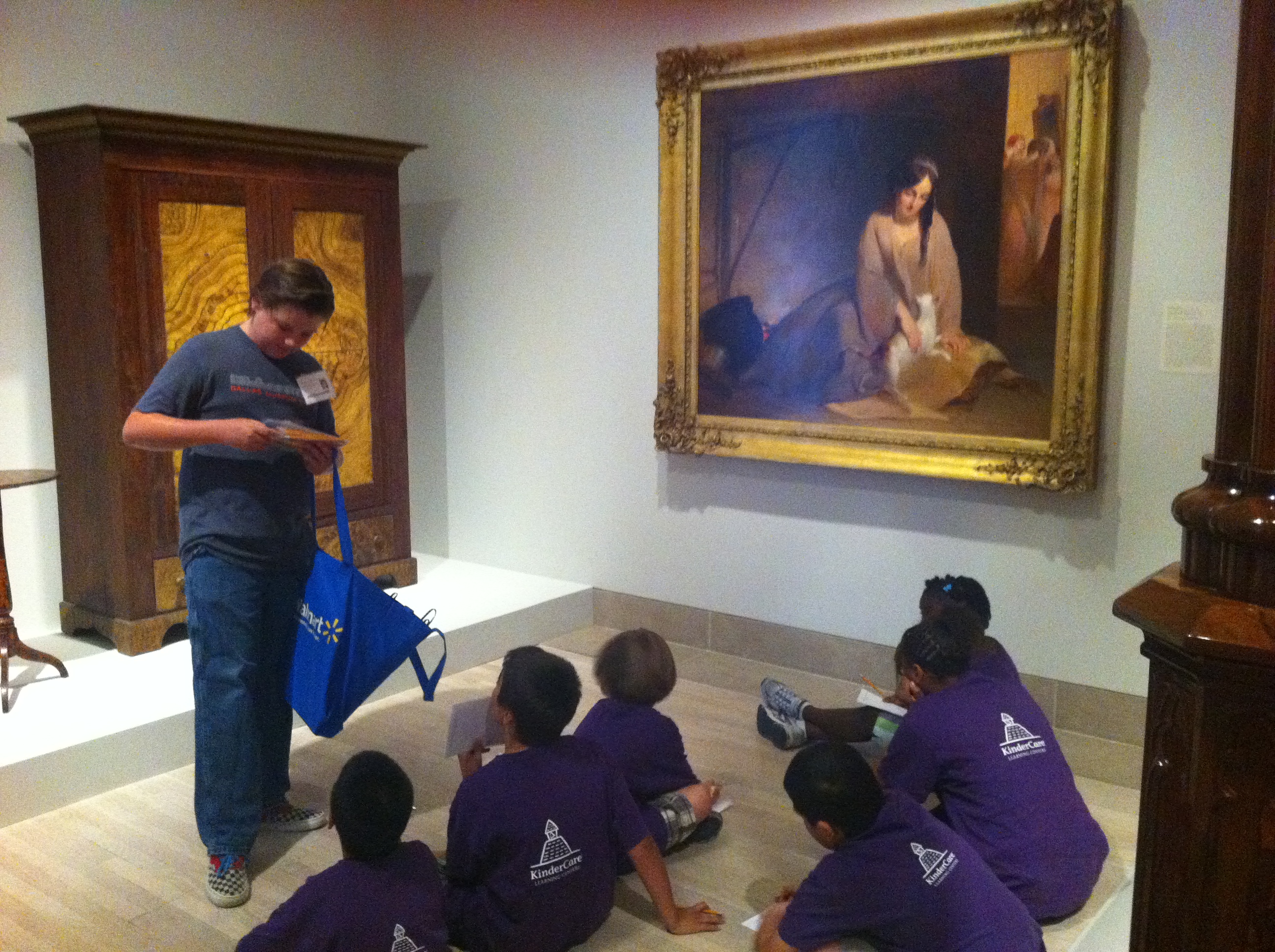
Teen docent Tennessee Bonner handing out supplies

I asked one our new teen docents, Tennessee Bonner, why he wanted to join the program. “The reason I joined the docent program was the fact that I would be able to help the museum and I would have fun doing it.”

What a great answer!  Teen docents are not only summer tour lifesavers, but they help create a fun, learning environment for younger audiences.  It is the teenagers’ willingness to learn about the Museum and share their enthusiasm with younger students that makes this program work.   

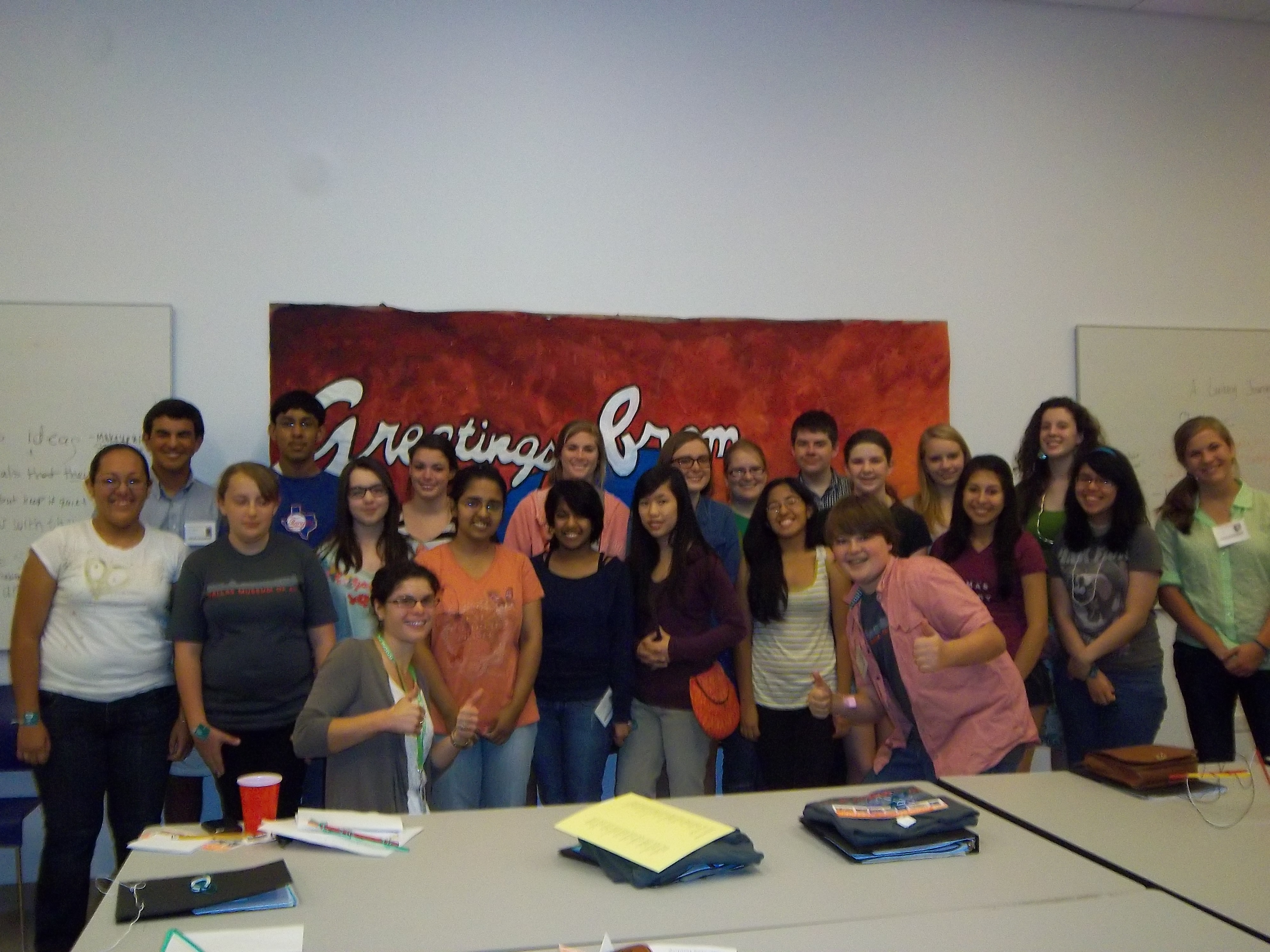
2011 Teen Docents

For the past ten years, the Teen Docent Program has become an integral part of our summer programming.  I commend all the volunteers that have donated hours of their cherished summer time, and I hope to see many of them next summer.

Loryn Leonard
Coordinator of Museum Visits

Remembering Nancy Hamon

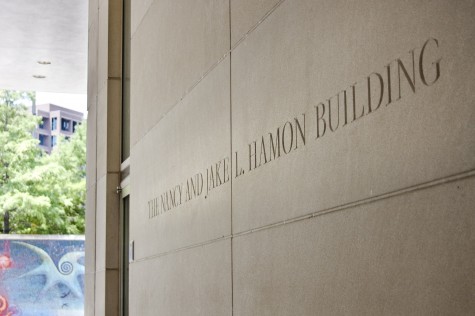
Nancy Hamon was an extraordinary benefactor of our city’s most important cultural and educational institutions, and she was a beloved member of our Dallas Museum of Art family for more than 50 years. Her support touched all aspects of the Museum and helped the DMA grow into the institution of international prominence that it is today. Her legacy lives on, in particular, through the DMA’s Hamon Building, which contributes greatly to the life and personality of our Museum and the City. Nancy’s “joie de vivre,” style, and panache defined her life and her tremendous philanthropy.

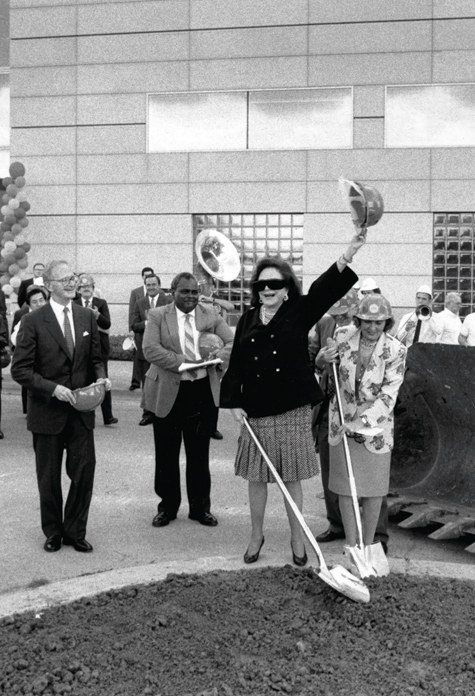
Nancy Hamon and Dallas Mayor Annette Strauss use special shovels to break ground in 1991 for the Museum’s new Nancy and Jake L. Hamon Building. Standing by are Chairman Irvin Levy and Dr. John W, Tatum, Sr., pastor of the St. Paul United Methodist Church, who gave a blessing on the occasion.


Archives

Categories