Posts Tagged 'Center for Creative Connections'


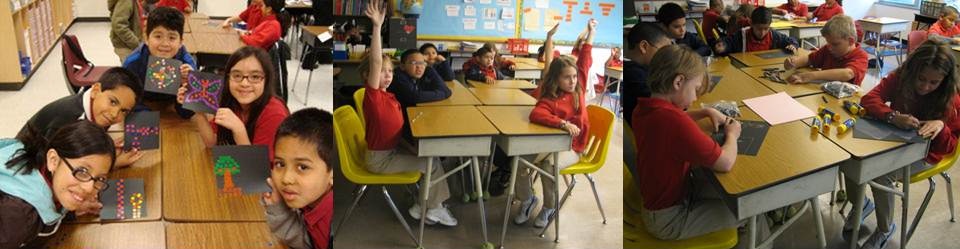
2012 Summer Seminar for Teachers

2011 Summer Seminar Participants

Imagine yourself among a group of educators — spirited, inspiring, trusting, supportive, and innovative — all focused on creativity and the nurturing of students. Now imagine this group immersed in the creative environment and resources of the Dallas Museum of Art for one full week.  This is the Summer Seminar experience for teachers at the DMA, and we’ll be hosting the 2012 Seminar June 11-15.  We invite you to join us!

Teaching for Creativity reached beyond my expectations by exploring how to consider attitudes, ideas, and associations I may have discarded or not considered before this class.  – 2011 participant

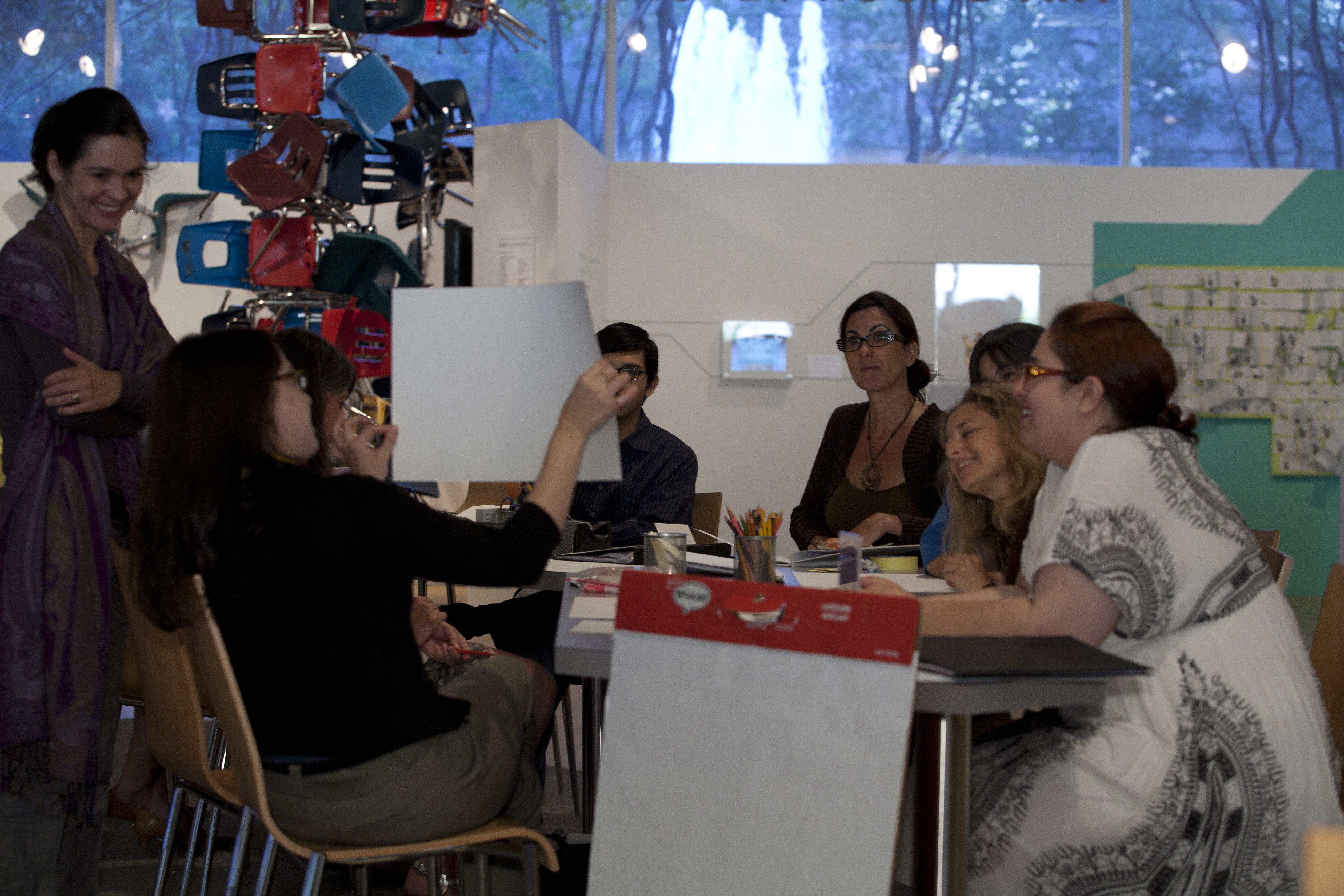
Designed for teachers of all grade levels and subjects, Summer Seminar: Teaching for Creativity explores education and creativity through experiences in the DMA’s galleries and Center for Creative Connections. The course references creativity from a variety of perspectives, and participants engage in readings about creativity from various authors, including Robert Sternberg, Michele and Robert Root-Bernstein, and Mihaly Csikszentmihalyi. Through conversations and workshops centered on creative attitudes and thinking, the Seminar supports teaching skills and approaches that foster imagination, curiosity, an open mind, and a natural drive for creating in students. UT Dallas professor Magdalena Grohman and DMA staff lead workshops and gallery experiences.  Participants reflect on and further develop their own creativity, as well as focus on how to teach for creativity.

I will use the tools in order to push myself further with my projects, rather than staying in [a] comfort zone.  – 2011 participant

This definitely helped me tap into more creative thinking. The exercises and activities were very helpful.  – 2011 participant
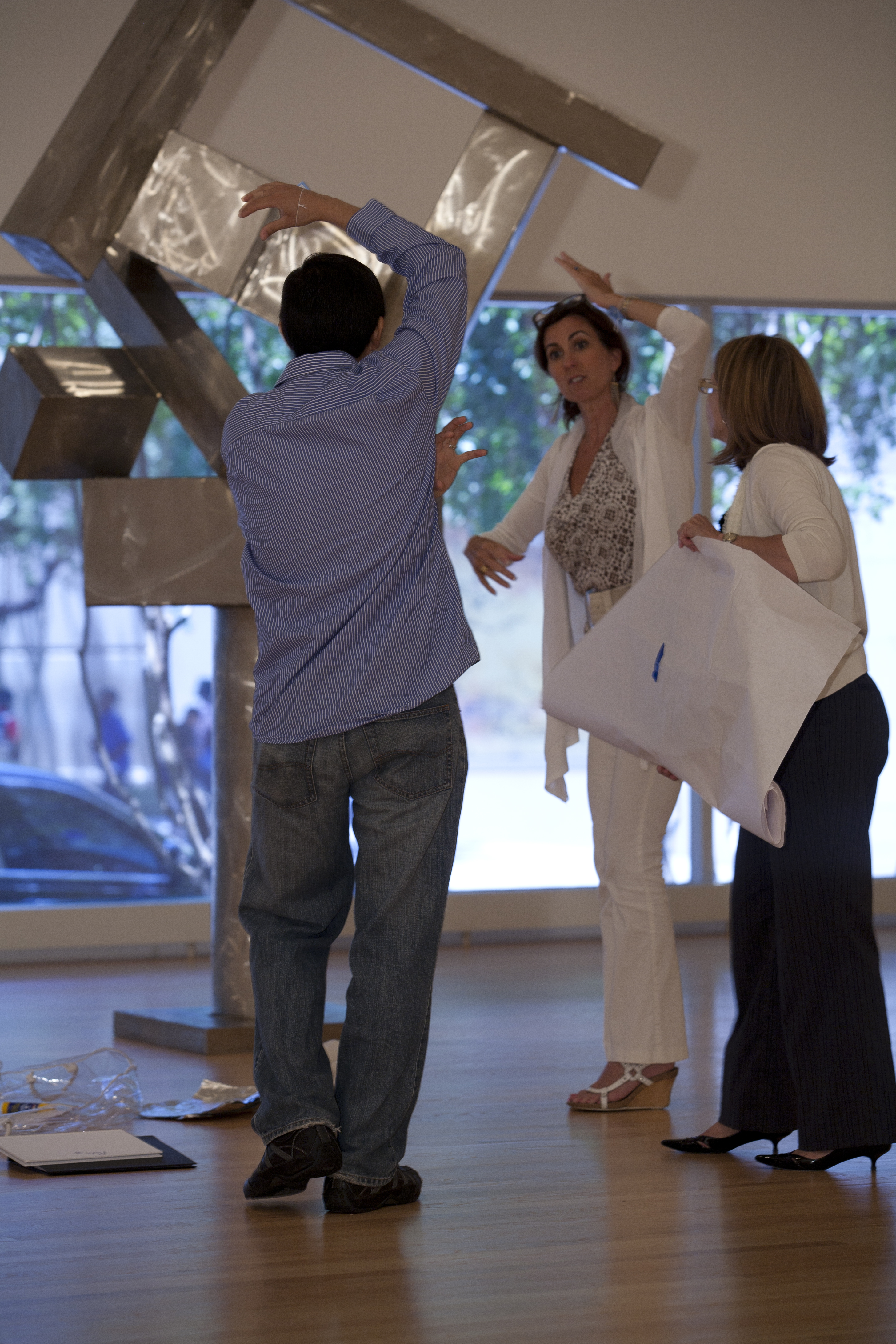
2011 Summer Seminar gallery experience

Throughout the Seminar, the DMA galleries serve as a kind of laboratory space, in which we consider the creative process and relate creative thinking techniques to specific works of art. In-depth experiences with art cultivate our abilities to observe, envision, express, explore, engage, and understand  in the arts and other disciplines. Through these experiences, we may become more persistent, flexible thinkers, better problem explorers and problem solvers—overall, more creative beings.

Unlike most professional development, the focus is not on ‘making a better teacher’ but on providing good teachers with better tools to bring out the best in their students.      – 2011 participant

The one-week Summer Seminar experience serves as a catalyst for an extended relationship between participating educators and the DMA as we continue the dialogue about education and creativity throughout the academic year.  This blog is one venue for the continued dialogue — view posts from a series titled Teaching for Creativity to learn more and hear about the creative journeys of several educators in the classroom.  The blog post this Thursday will feature 2011 Summer Seminar participant, Lorraine Gachelin.

Registration for the 2012 Summer Seminar: Teaching for Creativity is currently open. For more information, please contact Andrea Severin at aseverin@DallasMuseumofArt.org.

Nicole Stutzman
Director of Teaching Programs and Partnerships

Off the Wall: Garbage Disposal

In our Center for Creative Connections we ask visitors to reflect on their responses to the spaces they encounter in art, as well as those they encounter in their everyday life.

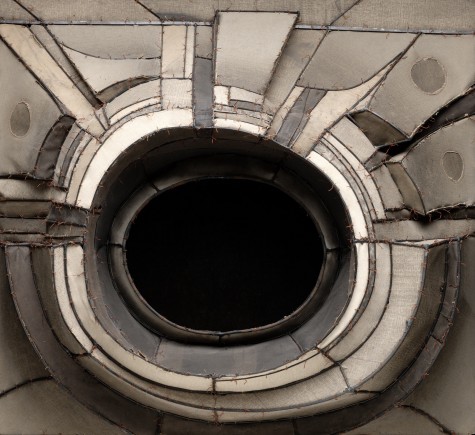
For one work of art specifically, Lee Bontecou’s Untitled, we ask visitors to respond to one of three prompts:

    • To me, sharing space with this work of art feels like…
    • The words or pictures that come to mind when I look at this work of art are…
    • If this work of art was part of something larger, describe what it would be.

Untitled (35), Lee Bontecou, 1961

We have gotten a lot of great responses from visitors and want to share a few with you. Once a month we will have an “Off the Wall” post featuring three responses left by visitors.

Next time you are in the Center for Creative Connections add your contribution to the wall and maybe you will see it on Uncrated!

Off the Wall: I Don’t Like the Color Grey

In our Center for Creative Connections we ask visitors to reflect on their responses to the spaces they encounter in art, as well as those they encounter in their everyday life.

For one work of art specifically, Lee Bontecou’s Untitled, we ask visitors to respond to one of three prompts:

  • To me, sharing space with this work of art feels like…
  • The words or pictures that come to mind when I look at this work of art are…
  • If this work of art was part of something larger, describe what it would be.

Untitled (35), Lee Bontecou, 1961, Dallas Museum of Art, Foundation for the Arts Collection, gift of an anonymous foundation

We have gotten a lot of great responses from visitors and want to share a few with you. Once a month we will have an “Off the Wall” post featuring three responses left by visitors.

Next time you are in the Center for Creative Connections add your contribution to the wall and maybe you will see it on Uncrated!

Community Connection: Accumulation Project

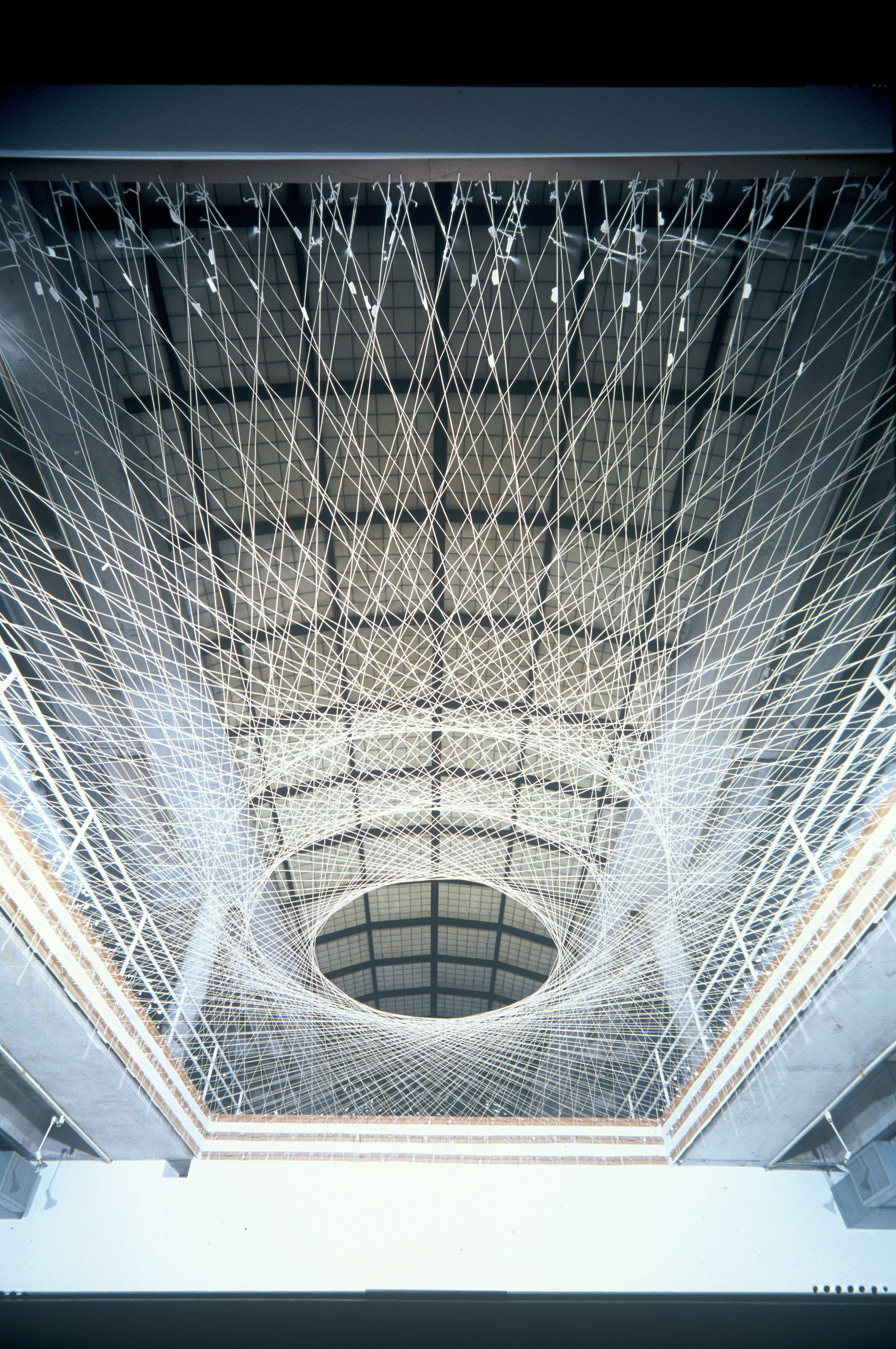
What’s 2,490 feet long, made of paper, and on view at the DMA?  Hint: visit the current Community Partner Response Installation titled Accumulation Project, by Annette Lawrence, Professor of Drawing and Painting at UNT.  Over eleven months, visitors of all ages contributed to Accumulation Project during workshops led by Annette during her time as a C3 Visiting Artist.  She also invited staff from various DMA departments to help with the installation in the days leading up to its unveiling.

Do you typically invite people to help you install your work?

In different contexts, I have students or volunteers or preparators or whoever works at the gallery, museum, etc. help with installation.  I work more often with staff than with the public. For the DMA, part of the project was with the public, during workshops for people of all ages.  Often, the adults were more interested in the idea of creating a long line of paper than the children were.  Some kids got into it, depending on their personality.  At the time of installation, we were in a time crunch and invited DMA staff to help, and I was really happy with the response.  It was a pleasure working with everyone, and it seemed like it gave folks a break from their regular work. There was a great energy about pitching in.  Once everyone was there, the installation was finished quickly.

The help of other people can cut the installation time in half.  At the MFA Houston Glassell School of Art, l had one guy working with me consistently, and people coming in and out through the day to install Theory.  That took us six days.  Usually when someone starts working with me, they start to own the piece: they’re committed and want to see it finished.  In this case, my helper wasn’t an artist; he was the maintenance guy, and he had time to help.

Theory, Annette Lawrence, 2003, installation at the Glassell School of Art, Houston, TX

What do you enjoy about teaching college students?

Mainly, I enjoy the process of discovering things with them.  It depends on the level of class.  In beginning classes, students are introduced to materials and are figuring out how to use them.  After that, students pursue things that interest them, and I point them towards resources.  I often find I am learning with them as they explore different processes.  Lately, there has mostly been more interest in paint than anything else, but at times it veers off in other directions like installation work or sound.  Photography has also been incorporated into work as well as lots of mixed media while students are finding their own way.

You spoke at the DMA earlier this year about your work at Cowboys Stadium.  What was your initial reaction to the request for a commissioned work of art at the Stadium?

Lisa Brown of Dunn and Brown Contemporary loaded the conversation with artists who had already said yes – Mel Bochner, Laurence Weiner, Matthew Ritchie and Olafur Eliasson – she was kind of setting me up.  I said “Oh well, OK I guess I’ll do it.”  I studied Mel Bochner and Lawrence Weiner as an undergraduate student, and I was pretty excited about being in a collection that they were in.  Meeting them in real life – in the context of a celebration for the Cowboys Stadium Art Program – I could not have imagined that.

It was an odd request; a contemporary art collection at a professional sports stadium had not been done before.  I wasn’t opposed.  I was excited and interested in seeing the work happen, but it is a little bit ironic considering my interest in sports (or lack thereof) that the one permanent installation of my work is in a football stadium.

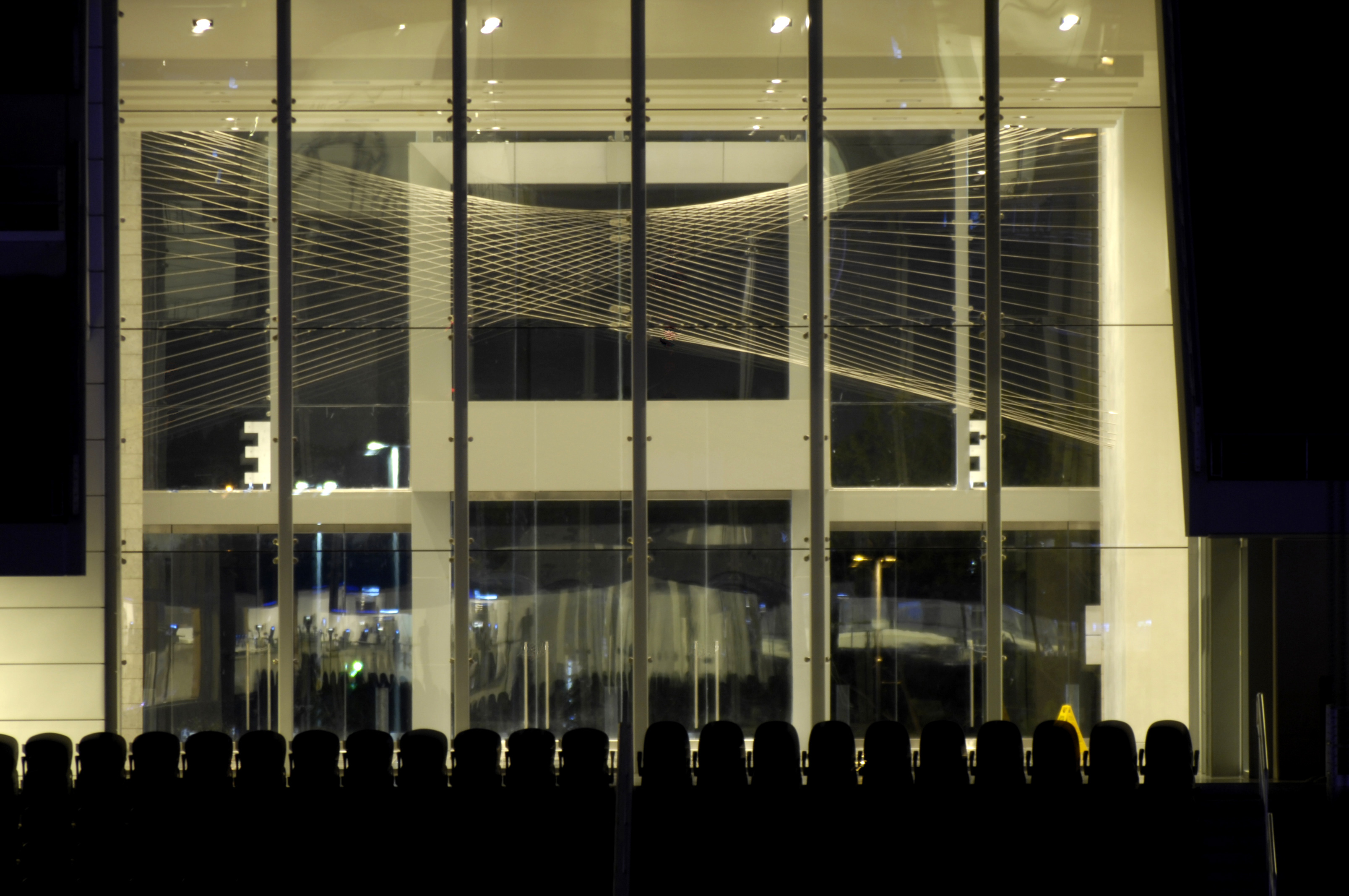
I designed the piece based on the space I was given, one of the main entryways.  In the interest of relating the piece to football, I looked up a glossary of football terms on Google.  As soon as I saw the words “Coin Toss”, I knew it was the right title.  It just fit, beyond the shape of the piece – a circle moving in space – but it also goes with the start of game, and the artwork’s placement in the entryway.  The Jones’s response to the title was so positive, and it was part of the enthusiasm for the work.

Coin Toss, Annette Lawrence, 2009, Cowboys Stadium, Arlington TX

Apart from creating things, what do you do?

Look at other people’s creations, mostly.  Looking at art, films, theater, dance, music, and all the arts take up most of my time.  Visiting friends and family is high priority, where we often talk about art.  If it’s with friends, we generally have art conversations.  With family, it can be anything.

What is your favorite holiday tradition?

Just visiting and being with good friends and family. I’m not interested in Christmas hype, but I like how things slow down a little bit and everyone is observing that this is time to spend with people you care about.  I alternate between doing Christmas or not doing Christmas.  This is a not year – we’re just not really doing it.  We’ll probably send out greetings to friends and families around New Year’s – after Christmas.  Last year, we sent a fun video, so we’re thinking about what we will do this year.  Whatever we send will be homemade.

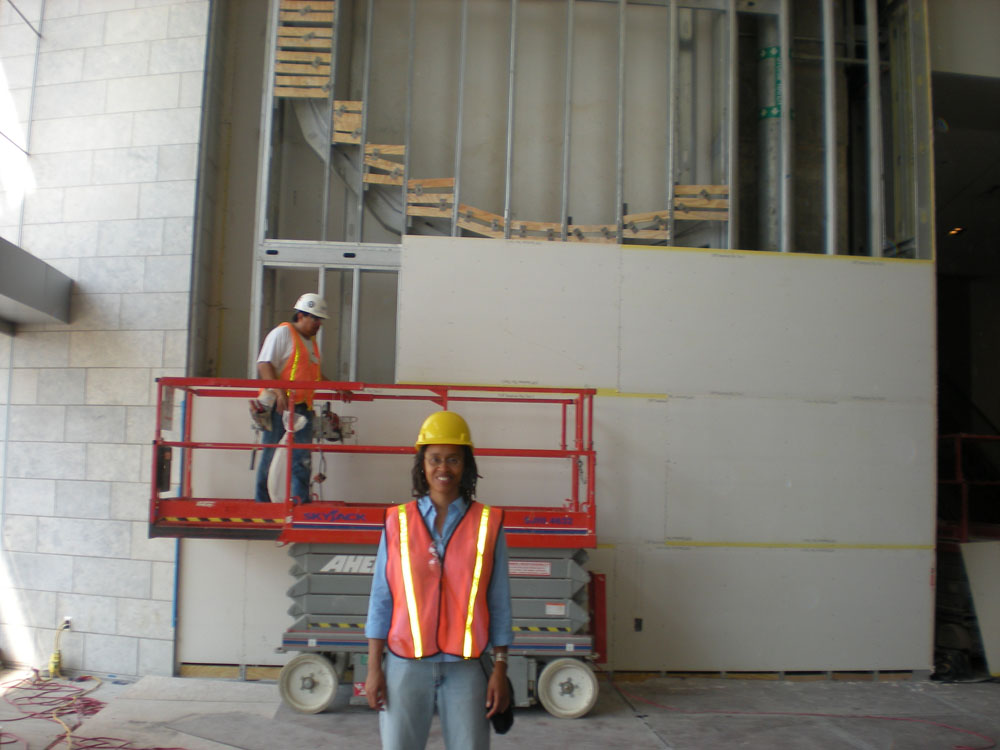
Installing at Cowboys Stadium

Accumulation Project is on view in the Center for Creative Connections through May 2012.

Melissa Nelson
Manager of Teaching in the Community

Seldom Scene: Hodges, Albers, and Lawrence. Oh My!

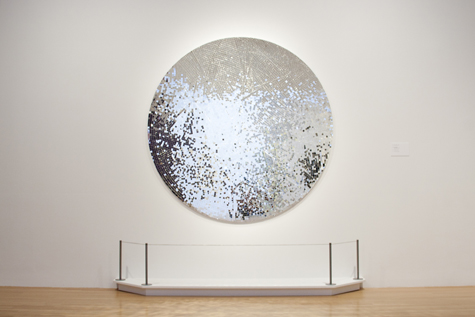
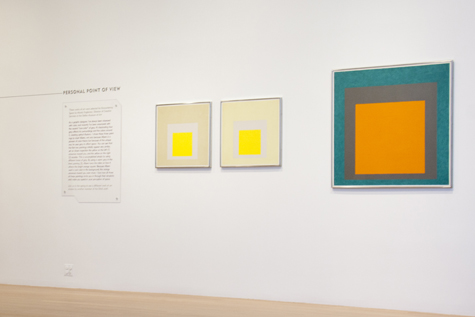
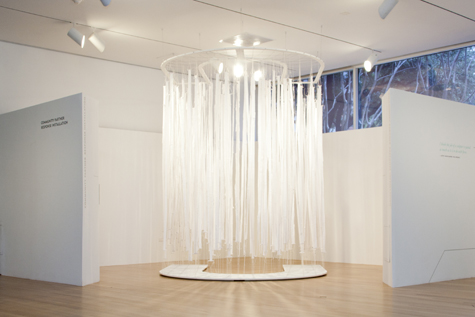
You may have noticed something shiny and new in the entrance to the Center for Creative Connections (C3). In November, the C3’s Encountering Space exhibition experienced a few art rotations, including the installation of Jim Hodges’ Great Event, three works by Josef Albers, and Annette Lawrence’s Accumulation Project. See the new works, and the new film in the C3 Theater by Frank & Kristin Lee Dufour, for free tomorrow during First Tuesday, when general admission is free from 11:00 a.m. until 5:00 p.m.

Kids Say the Darndest Things!

I spy with my little eye…children at the museum!

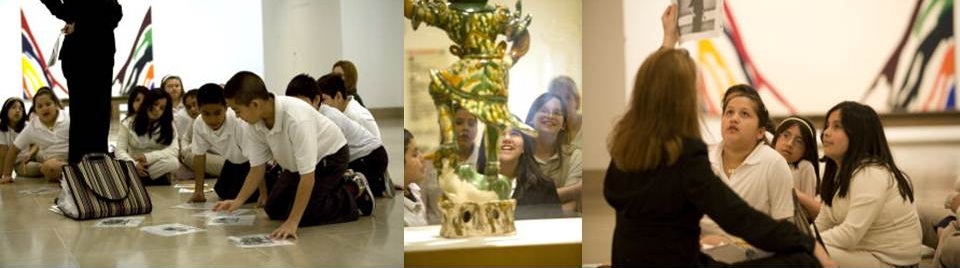
On any given day, there are always programs being offered for our younger museum visitors. During the week, you can often spot them in lively school groups engaging in interactive docent tours. And don’t be surprised if their enthusiasm can be heard from the hallways as they participate in exciting art activities in the Center for Creative Connections. Our programs also go beyond the museum and into the community, bringing art to the classroom with Go van Gogh. These are just a few examples of the many ways the folks here at the DMA are facilitating fun learning experiences that encourage participation and self-expression. But don’t take it from me! Our young participants really say it best. Below are some of their candid comments from the 2011 – 2012 school year.

Docent Tours

  • “These paintings look weird to me,” a puzzled 4th-grade girl commented while walking through the Impressionist gallery.
  • “Wouldn’t you like to drink out of these amazing cups?” a docent asked about a group of gold Peruvian mugs. “Uh, if I cleaned them first,” replied a 4th-grade boy.
  • A 4th-grade boy noticed a Peruvian Mask with copper covered eye holes and mused, “I wonder how many times the guy wearing that ran into the wall?”
  • “Even if you are a leader, you still need help,” reasoned a 4th-grade boy when asked to interpret the proverb expressed by an African sculpture.
  • After an hour long tour, these 4th-graders still wanted more, as expressed by this excited girl who asked, “What else are we going to see? Are we going to see the really really really big artworks now?!” Referring to the Mark Bradford work they had passed by on the way in.

Center for Creative Connections

  • “They always make us paint with crazy things!” said a young girl in reaction to painting with kitchen tools in an Arturo’s Art & Me class.
  • “I thought it was going to be a person, but it turned out to be a ballerina,” explained an eight-year-old girl about her finished artwork.
  • A nine-year-old girl titled her art piece Man Gives Flowers and reflected that, while she made it, she thought of “romantic love.”

Go van Gogh Classroom Programs

  • “Hi, I am from the Dallas Museum of Art!” announced the volunteer. “Really?! Yessss. I LOVE art!!” exclaimed an enthusiastic 2nd-grade girl.
  • “Make the minutes last! Make the next two minutes an hour!” declared a 5th-grade boy after being told that only five minutes remained.
  • “Wow,” a 4th-grade boy said of the hat he was making, “mine is turning out reeeeally neat.”
  • “I have no idea what I am doing. I just went wild on it,” laughed a 4th-grade boy about his art project.

If you have any memorable museum moments with kids, please share them in the comments section!

Hannah Burney

McDermott Education Intern for Teaching Programs and Partnerships

Off the Wall: Alternate Universe

In our Center for Creative Connections we ask visitors to reflect on their responses to the spaces they encounter in art, as well as those they encounter in their everyday life.

For one work of art specifically, Lee Bontecou’s Untitled, we ask visitors to respond to one of three prompts:

  • To me, sharing space with this work of art feels like…
  • The words or pictures that come to mind when I look at this work of art are…
  • If this work of art was part of something larger, describe what it would be.

    Untitled (35), Lee Bontecou, 1961, Dallas Museum of Art, Foundation for the Arts Collection, gift of an anonymous foundation

We have gotten a lot of great responses from visitors and want to share a few with you. Once a month we will have an “Off the Wall” post featuring three responses left by visitors.

Next time you are in the Center for Creative Connections add your contribution to the wall and maybe you will see it on Uncrated!

Dallas Museum of Art’s C3: A Space To Channel Your Creative Energy

The Dallas Museum of Art’s Center for Creative Connections is a unique, hands-on space for museum visitors of all age. C3 gives Dallas creatives of all ages a place to learn about art and develop their own creativity in a fun, interactive environment. Find out more about C3 in the video below.

[youtube=http://www.youtube.com/watch?v=_G4VuwtfON4]

Teaching for Creativity: Chairs, Frank Gehry, and Combinatorial Thinking

Time to nurture your creativity!  Try this fun activity involving associative and combinatorial thinking by yourself or with a friend.

Step 1: Draw a chair. (any chair that comes to your mind)
Step 2: Interview this chair that you have drawn.  What questions would you ask this chair?
Step 3: Imagine this chair that you’ve drawn has a GIANT ego.  Look a second time at the interview questions you wrote.  Which of the questions best fit an egotistical chair?
Step 4: Place the word “chair” in the middle of a piece of paper.   Build a chain of associations, starting with chair.  For instance: chair – leg – foot – walk – path – journey.  Get it?  Each word in the chain is an association with the word before it.  Try to make one, two, or three more chains of association.  Let your mind open up and flow with ideas!
Step 5: Circle the last word in each of your chains.  For instance, I would circle the word “journey” in my chain above.
Step 6: Test your combinatorial thinking abilities.  Take one of the circled words (example: journey) and combine it with chair.  The goal is to make something new through the combination of two words/ideas.  In this example, we are combining JOURNEY + CHAIR to create something new, and maybe even improved.  What new associations, ideas, and creations can emerge from mixing together two seemingly different ideas?
Step 7: Draw the new object or idea that you created from the two words.  Write an advertising slogan or jingle for this new product.

[slideshow]

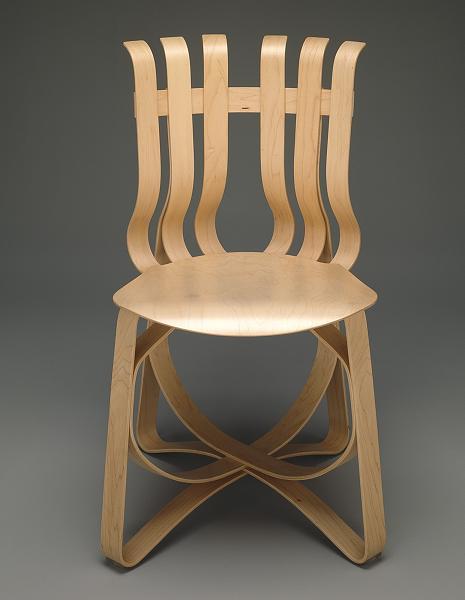
Last night, I got my creativity on by participating in the DMA’s Thursday evening C3 Artistic Encounters program with creativity expert Dr. Magdalena Grohman and architect Peter Goldstein.  After Magda led us through the thinking and drawing exercise presented above, Peter shared with us some provocative connections to the work of Pritzker Prize-winning architect Frank Gehry through a PowerPoint of Gehry’s ideas, drawings, chair designs, and architectural structures.  Encouraging us to think about “collisions of spaces,” “forms crashing together,” and “the space between” when viewing Gehry’s work, Peter also highlighted an example of combinatorial thinking in Gehry’s work.  Bentwood chairs created by Gehry are an exploration of forms inspired by bushel baskets.  Gehry even took it a step further, adding notions of hockey and the flow of players’ movements on the ice to the combination of ideas reflected in these chairs.  CHAIR + BUSHEL BASKET + HOCKEY = “HAT TRICK” SIDE CHAIR

"Hat Trick" side chair, Frank Gehry (American, born 1929), designed 1992, manufactured by Knoll International, wood and bentwood, Dallas Museum of Art, Gift of the Knoll Group

A viewing of Sculpting Space: 299 Chairs was next on the agenda.  This installation of chair clusters, created by Peter’s architecture students at Skyline High School in Dallas ISD, invited a long look for collisions of spaces and forms.  Just as he asked his students to think about the space between, Peter asked us to explore spatial intersections through sketching exercises emphasizing loose, flowing lines.

Throughout September, join us for more spatial explorations of art and architecture on Thursday evenings with  C3 Artistic Encounters.  Peter Goldstein will be back on September 15, and his Skyline High School colleague Tom Cox will be the visiting artist on September 8 and 22.  These programs, which are FREE with paid admission, occur on Thursdays from 6:30 – 8:30 p.m.  And guess what?  Educators receive FREE general admission to the DMA on Thursday evenings when they show their school ID at the visitor services desk.  What are you waiting for?  It’s time to get your creativity on!

Nicole Stutzman
Director of Teaching Programs and Partnerships


Creativity: My first encounters and my first discoveries

Magdalena Grohman leading a class in the Center for Creative Connections

Magdalena Grohman is a creativity expert who spends the occasional Thursday evening at the DMA helping inspire visitors participating in Thursday Night Live’s Artistic Encounters. But how did Magdalena discover her own creativity? She shared that journey with us below.

I received one of my very first lessons about creativity in elementary school. I was made to believe that creativity was only for those artistically or musically talented. You were born with it or you were not. I did not possess these talents, but at the same time I enjoyed writing in my diary, sketching (especially different layouts and arrangements for my dream room), creating collages, and so on. But that wasn’t considered creative. Only art, only music, and only if you were naturally talented.

The cracks in this belief system started to appear in high school when I met students and teachers who encouraged creative expression through other domains such as dance, movement, and theater. Suddenly, I realized I could express myself, share my state of mind, tell a story, and provoke others to think in new, creative ways. The true breakthrough came when a group of professors from Jagiellonian University in Krakow came to my high school to lead a workshop that taught creative thinking. With the workshops came a new wave of thinking about creativity and my first and foremost discovery about it: creativity was in everyone and could be enhanced.

This meant you could be CREATIVE in any number of ways, be it telling stories, designing birthday cards, finding new ways to teach, writing a song, formulating hypotheses, communicating diagnosis . . . the list goes on. This also meant that you could nurture creative potential at any stage in life. “But,” the professors warned, “You need to put some work into it.” What they meant was that creativity could be honed and developed by shaping core attitudes about creativity such as open-mindedness, self-discipline, and perseverance.

So, the first step to increase your creative potential is to liberate yourself from any belief system that is detrimental to creativity. The second step is to nurture positive attitudes toward creativity. These include (according to creativity researchers and educators) sticking to your creative endeavor no matter what and being open-minded, observant, curious, and self-disciplined. With this in mind, you will see that the next steps are much, much easier.

Take the next step tomorrow night when Magdalena will lead Thursday Night Live Artistic Encounters: Think Creatively with Tom Cox and Peter Goldstein at 6:30 p.m. in the Center for Creative Connections.

Shelagh Jessop is the Center for Creative Connections Coordinator at the Dallas Museum of Art


Archives

Categories