Archive for the 'Uncategorized' Category


Expanded for DMA Members: Reopening Excitement!

Our recent reopening has stirred up great excitement, especially among DMA staff, who are thrilled to be able to welcome you back to your city’s museum! We asked a group of DMA curators to tell us what they are most excited about as the Dallas Museum of Art opens its doors. Read what they had to say.

Dr. Heather Ecker, The Marguerite S. Hoffman and Thomas W. Lentz Curator of Islamic and Medieval Art
One of the joys of working with the Keir Collection is making new discoveries—sitting down with a manuscript or picking up a work in ceramic always feels like an adventure. A scribal note or a design can speak quite directly across geography and time.
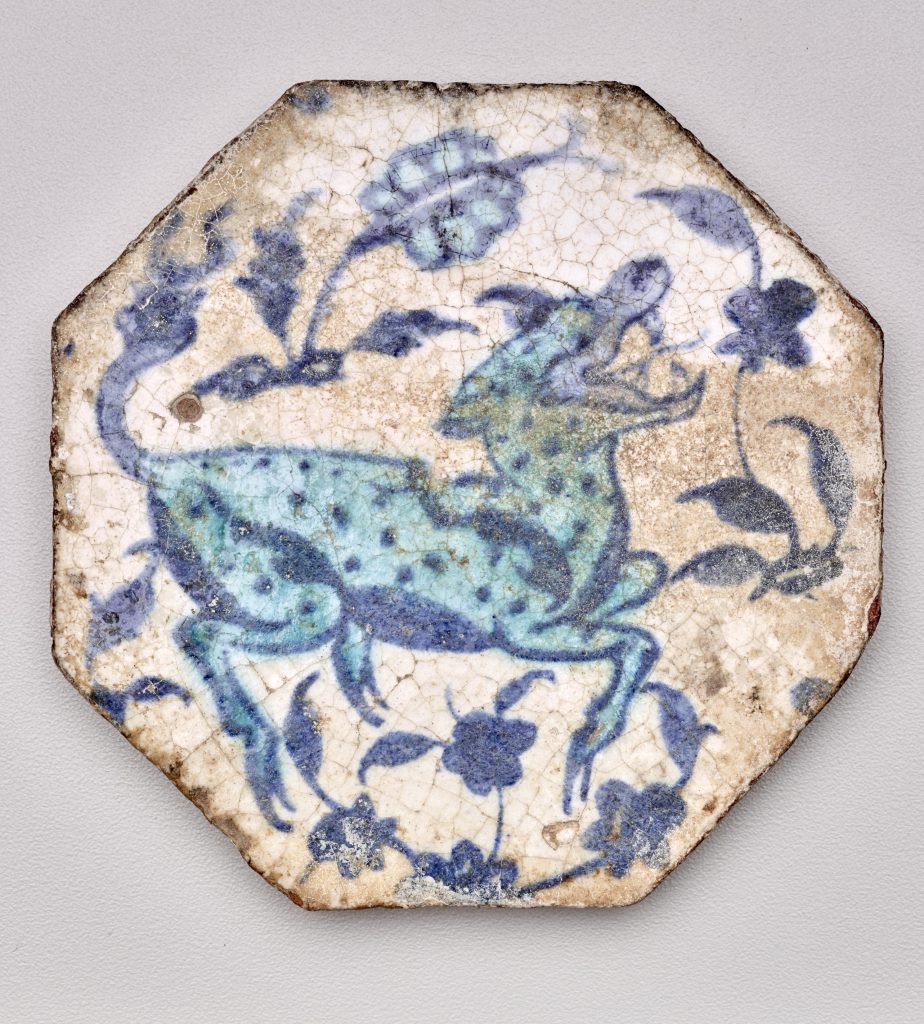
Tile, unknown artist, 15th century, red clay with painting in blue and turquoise on a white slip under a transparent glaze, The Keir Collection of Islamic Art on loan to the Dallas Museum of Art, K.1.2014.893.1

Julien Domercq, The Lillian and James H. Clark Assistant Curator of European Art
I am thrilled to be able to see real works of art again, and for visitors to be able to enjoy them firsthand in the galleries. There’s just nothing like being able to lose yourself in looking closely at brushstrokes of paint.
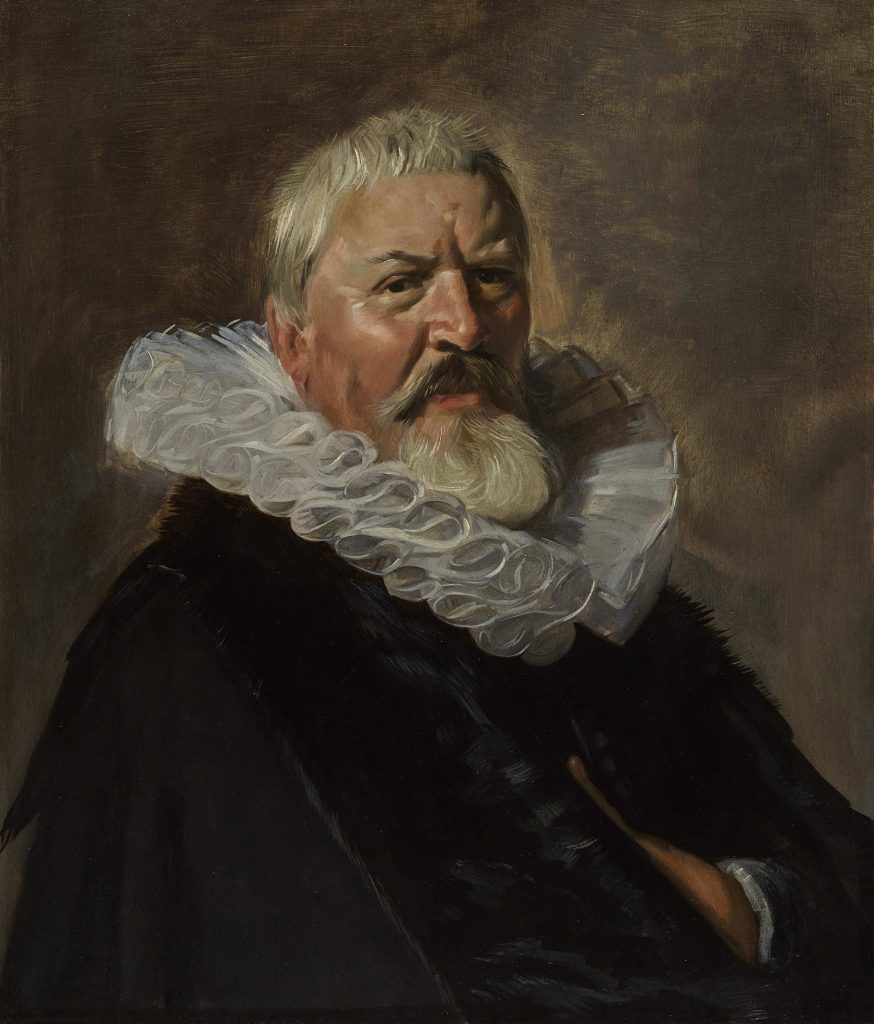
Frans Hals, Portrait of Pieter Jacobsz. Olycan, 1629–30, oil on panel, Private Collection, Courtesy of David Koetser Gallery, Zurich

Dr. Vivian Li, The Lupe Murchison Curator of Contemporary Art
I love seeing once again Miguel Covarrubias’s Genesis, The Gift of Life, an iconic Museum landmark that has become woven into the fabric of Dallas. Countless families, friends, and young ladies in their spectacular quinceañera dresses have captured beautiful memories in front of it.
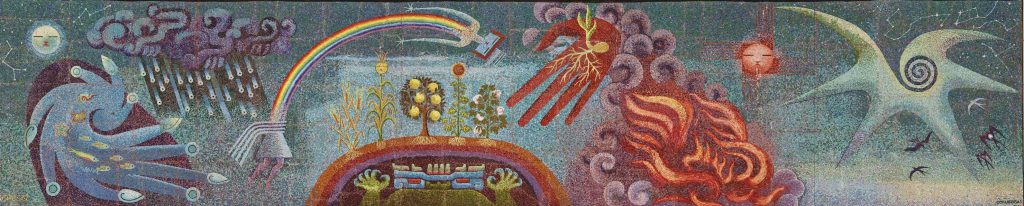
Miguel Covarrubias, Genesis, The Gift of Life, about 1954, tempera on cardboard laid on panel, Dallas Museum of Art, gift of Jorge Baldor, 2019.60

Dr. Anna Katherine Brodbeck, Hoffman Family Senior Curator of Contemporary Art
I am excited to return to For a Dreamer of Houses, an exhibition that was installed but never opened to the public before August 14. The Rubber Pencil Devil installation has a three-hour video, so that’s where I hang out during breaks.
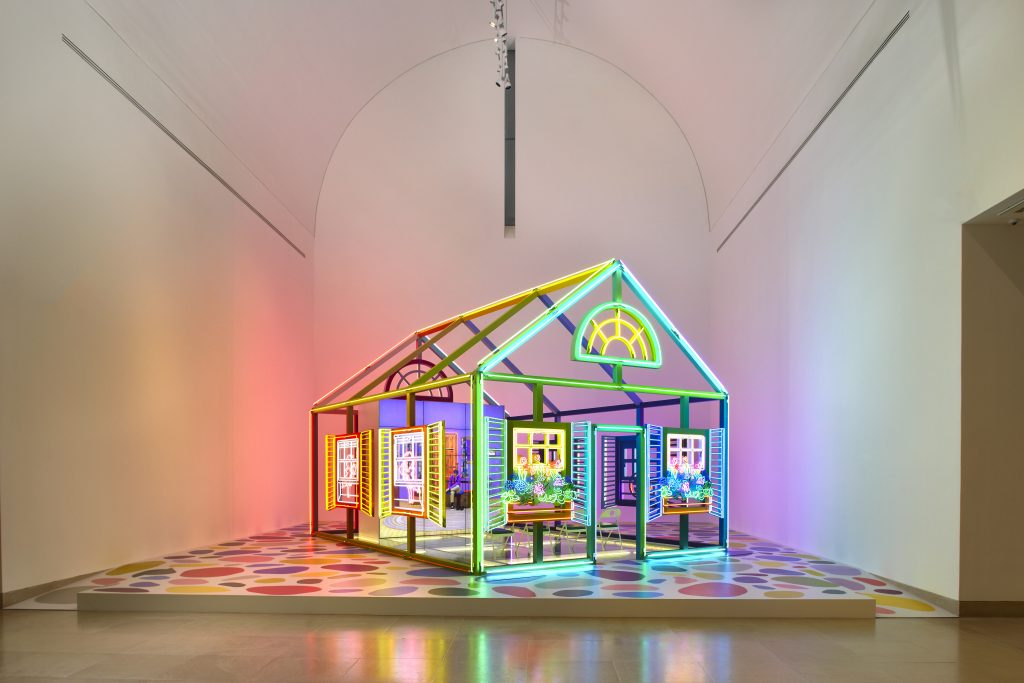
Alex Da Corte, Rubber Pencil Devil, 2018, glass, aluminum, vinyl, velvet, neon, Plexiglas, folding chairs, monitors, high-res digital video, color, and sound, Dallas Museum of Art, TWO x TWO for AIDS and Art Fund, 2019.59. Photo by John Smith.

Dr. Nicole R. Myers, The Barbara Thomas Lemmon Senior Curator of European Art
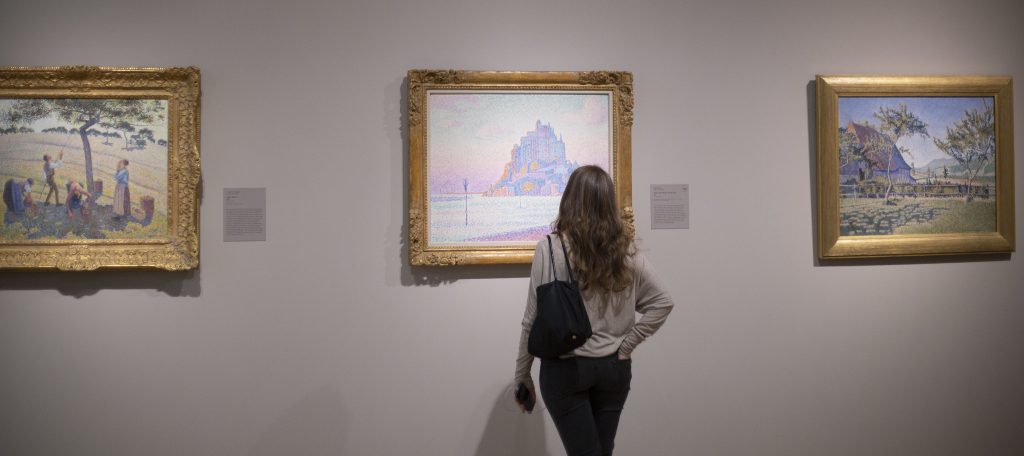
Among the things I’ve missed most are seeing and hearing visitors’ excitement as they explore the galleries and linger in front of objects that speak to them. It’s great to see that the Museum has come back to life.
Exclusive for DMA Members: Dr. Michelle Rich, The Ellen and Harry S. Parker III Assistant Curator of the Arts of the Americas
We are organizing a reinstallation, so I’m excited to be back in the galleries! Seeing in person the beautiful and culturally significant works inspires me to devise how to share new, relevant, and ethically responsible object life histories.
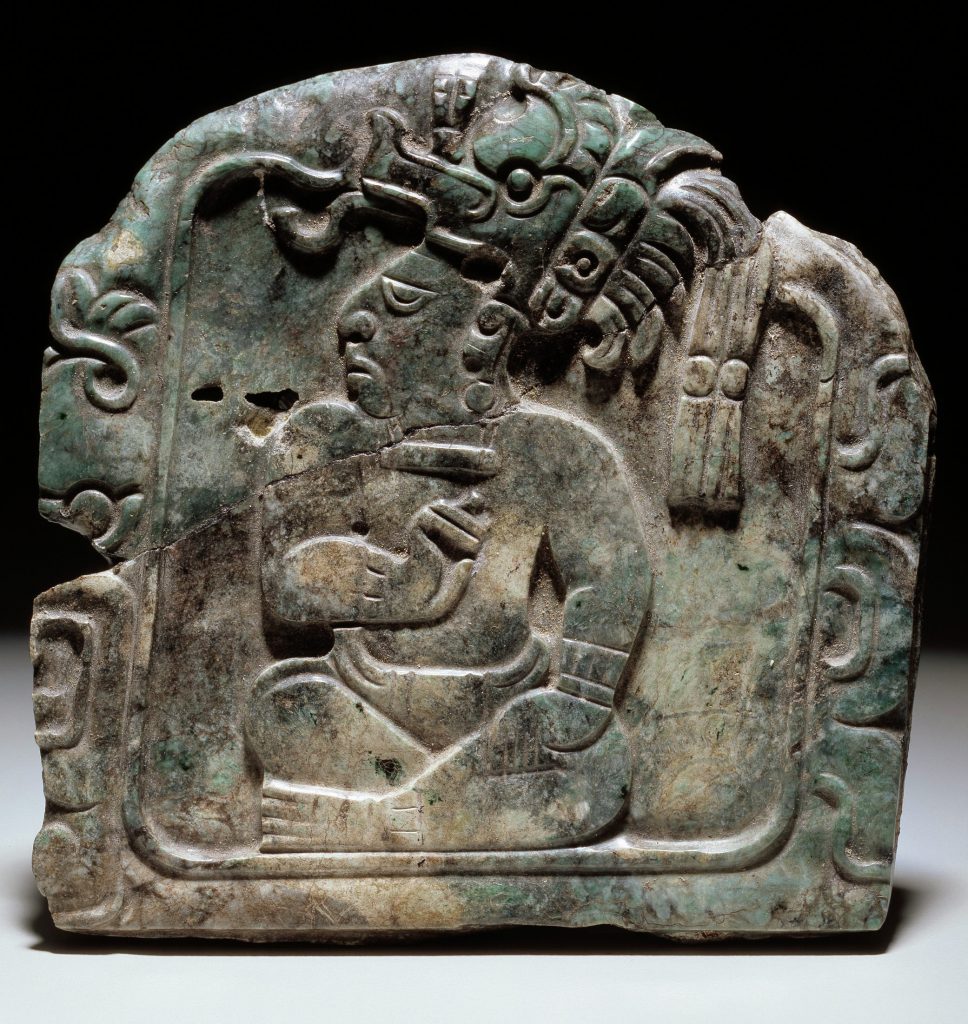
Pendant depicting a seated lord, Maya,
600–900 CE, jadeite, Dallas Museum of Art, gift of Mr. and Mrs. Eugene McDermott and the Eugene McDermott Foundation and Mr. and Mrs. Algur H. Meadows and the Meadows Foundation, Incorporated, 1973.41

Exclusive for DMA Members: Sue Canterbury, The Pauline Gill Sullivan Curator of American Art
The work I’ve missed the most is The Icebergs by Frederic Church. It has it all: a rich display of color that, when combined with the painting’s size and the scale of interior forms, is absolutely operatic in its impact. That’s all topped off with the ripping good yarn behind its rediscovery and acquisition back in 1979.
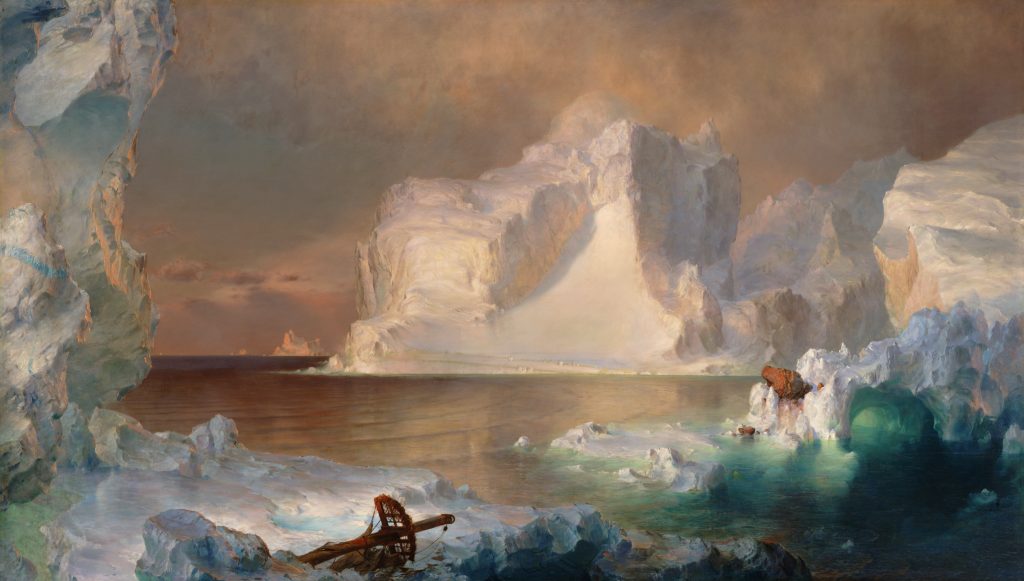
Frederic Edwin Church, The Icebergs, 1861, oil on canvas, Dallas Museum of Art, gift of Norma and Lamar Hunt, 1979.28

Plan your visit to enjoy all of these wonderful art experiences and more! DMA Members can reserve timed tickets, including free tickets to the special exhibition For a Dreamer of Houses, at tickets.DMA.org. We can’t wait to see you back at the Museum!
Artworks Aplenty

This week the DMA’s beloved Late Night program turns sixteen! In celebration of each year the program has been around, let’s take a look at artworks that were added to the permanent collection during those years—they are also currently on display, so be sure to keep a lookout for them when you’re here for Late Night!
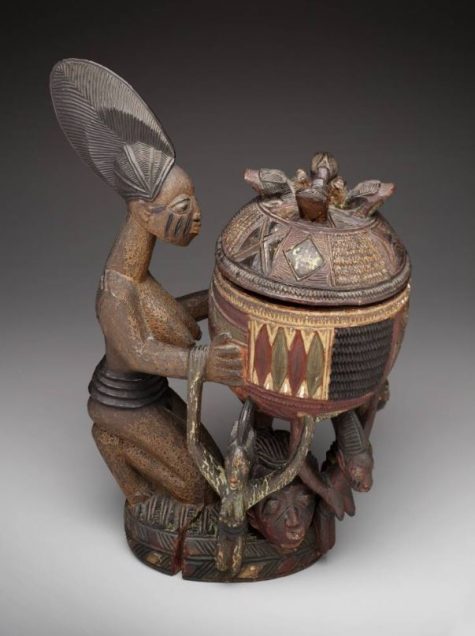
2004

Olowe of Ise, Kneeling female figure with bowl (olumeye), Nigeria, c. 1910-c. 1938, wood, pigment, and paint, Dallas Museum of Art, The Eugene and Margaret McDermott Art Fund, Inc., 2004.16.McD

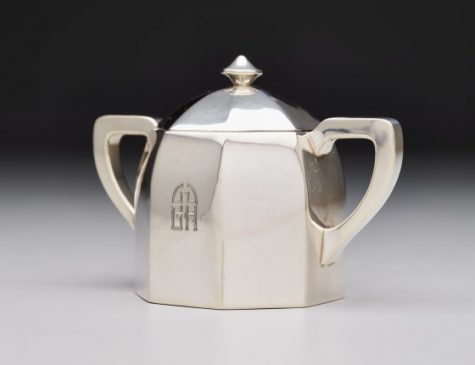
2005

Sugar bowl, Lebolt & Co., Chicago, Illinois, c. 1915, silver, Dallas Museum of Art, gift of Marguerite and Robert K. Hoffman in honor of Nancy Hamon, 2005.51.5.a-b

2006

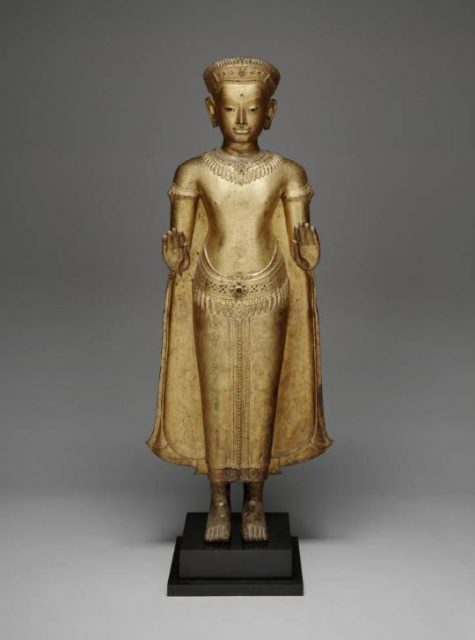
Buddha Sakyamuni, Thailand, Khmer, c. 13th century, gilded bronze, Dallas Museum of Art, gift of David T. Owsley via the Alvin and Lucy Owsley Foundation, the Cecil and Ida Green Acquisition Fund, and Bromberg Family Wendover Fund, 2006.21

2007

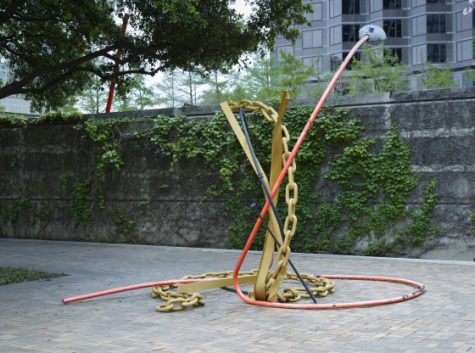
Mark Handforth, Dallas Snake, 2007, steel, aluminum, and glass lamp head, Dallas Museum of Art, TWO x TWO for AIDS and Art Fund and Lay Family Acquisition Fund, 2007.39

2008

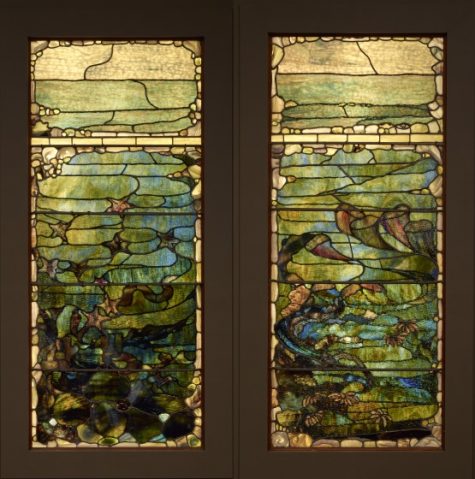
Window with Sea Anemone (“Summer”), Louis Comfort Tiffany (designer), Tiffany Glass and Decorating Company (manufacturer), New York, New York, c. 1885-95, glass, lead, iron, and wooden frame (original), Dallas Museum of Art, The Eugene and Margaret McDermott Art Fund, Inc., 2008.21.1.McD

2009

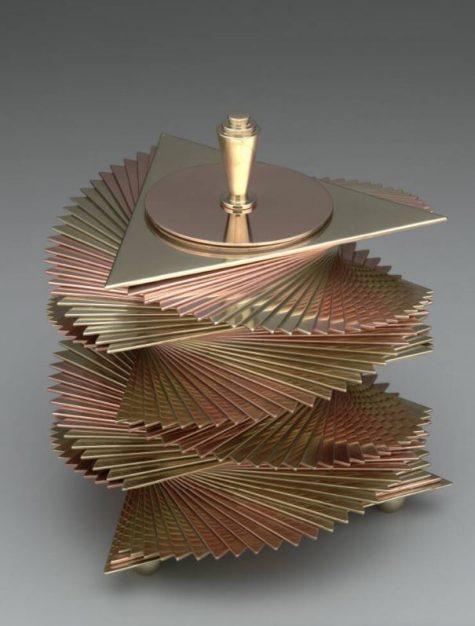
Box, John Nicholas Otar (designer), c. 1933, copper and brass, Dallas Museum of Art, Discretionary Decorative Arts Fund, 2009.7.a-b

2010

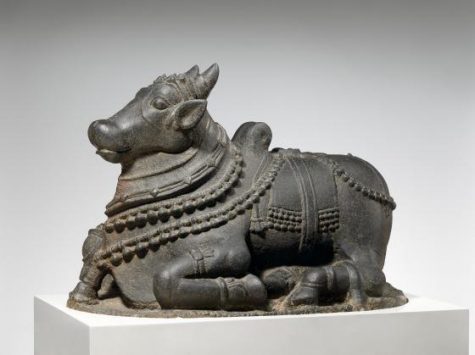
Nandi, India, c. 13th century, granite, Dallas Museum of Art, the Cecil and Ida Green Acquisition Fund and gift of David T. Owsley via the Alvin and Lucy Owsley Foundation, 2010.6

2011

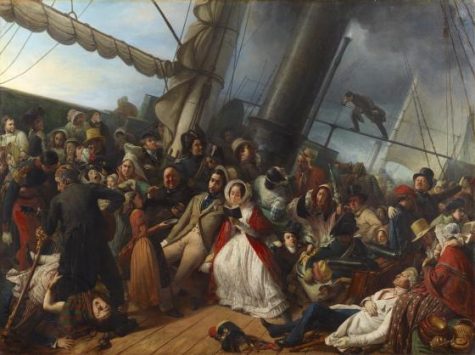
François-Auguste Biard, Seasickness on an English Corvette, 1857, oil on canvas, Dallas Museum of Art, gift of J. E. R. Chilton, 2011.27

2012

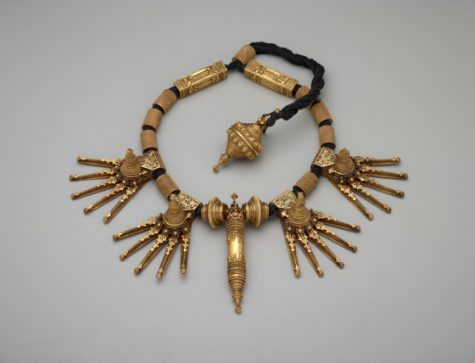
Marriage necklace, India, Tamil Nadu, late 19th century, gold, Dallas Museum of Art, gift of David T. Owsley honoring Dr. Anne Bromberg via the Alvin and Lucy Owsley Foundation and the Cecil and Ida Green Acquisition Fund, 2012.46

2013

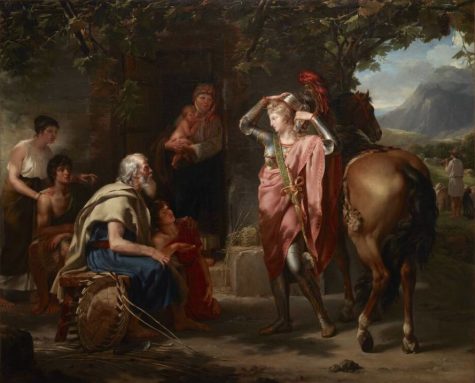
Guillaume Lethière, Erminia and the Shepherds, 1795, oil on canvas, Dallas Museum of Art, Foundation for the Arts Collection, Mrs. John B. O’Hara Fund, 2013.1.FA

2014

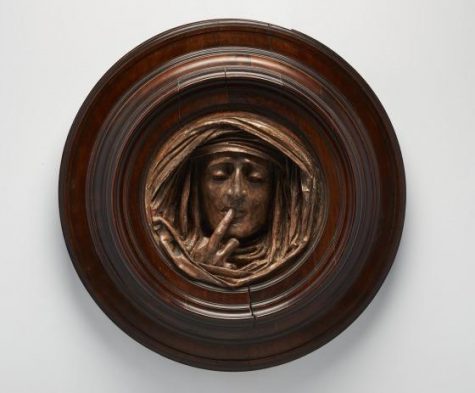
Antoine-Augustin Préault, Silence, c. 1842, patinated plaster, Dallas Museum of Art, The Mr. and Mrs. George A. Shutt Fund and General Acquisitions Fund, 2014.10

2015

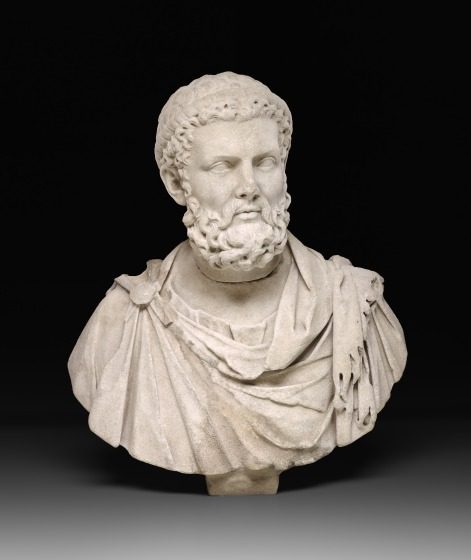
Bust of Herakles, Roman, Lambert Sigisbert Adam (restorer), 1st century-2nd century CE, marble, Dallas Museum of Art, the Cecil and Ida Green Acquisition Fund, gift of David T. Owsley via the Alvin and Lucy Owsley Foundation, and Bromberg Family Wendover Fund, 2015.31

2016

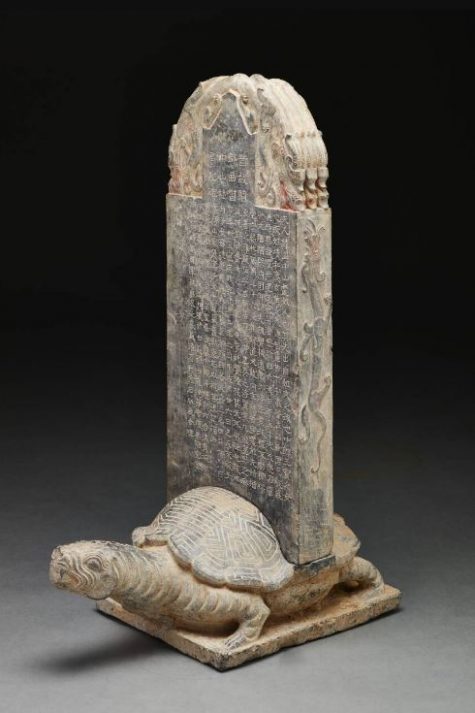
Tomb plaque marker on a tortoise base, China, c. 219-c. 316 CE, limestone, Dallas Museum of Art, the Cecil and Ida Green Acquisition Fund, 2016.33.a-b

2017

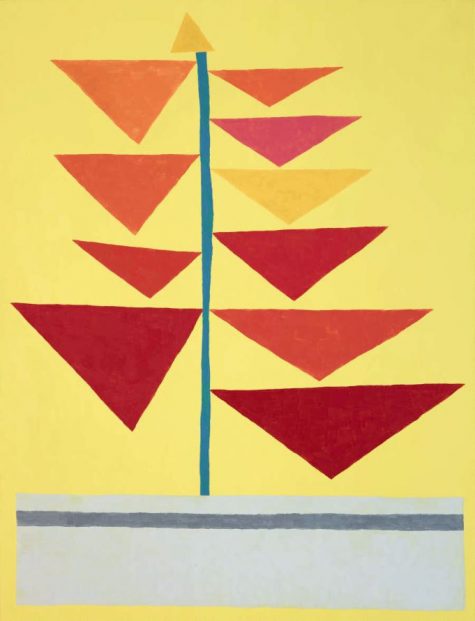
Jonas Wood, Untitled (Big Yellow One), 2010, oil on linen, Dallas Museum of Art, gift of Vernon and Amy Faulconer, 2017.45.2, © Jonas Wood

2018

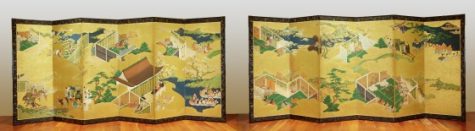
Pair of six-panel folding screens depicting “The Tale of Genji,” Japan, Kano School, 16th-17th century, ink and color on paper, Dallas Museum of Art, gift of David T. Owsley via the Alvin and Lucy Owsley Foundation, Bromberg Family Wendover Fund, and the Cecil and Ida Green Acquisition Fund, 2018.21.1-2

Valerie Chang is the McDermott Intern for Adult Programming at the DMA.

Studio Doors Are Open—Come On In!

Calling all weekend crafters, makers, tinkerers, and artists! The DMA’s Art Studio is opening its doors to one and all starting in January 2019. On the first and third weekend of every month, drop by and give your creativity a workout with a hands-on art-making project for the entire family. Whether you prefer to wield a paintbrush or squish some clay, we’ll have something to inspire your inner artist. Materials and projects will switch up every month, and DMA staff will be on hand to demonstrate techniques and share fun facts about art and artists in the DMA’s collection.

In January we’re kicking off Open Studio by making landscape monotypes inspired by the exhibition Ida O’Keeffe: Escaping Georgia’s Shadow. We’ll supply the paint and paper—you bring the fun!

Open Studio 1

Open Studio is available for FREE on the first and third Saturday and Sunday of the month from noon to 4:00 p.m. All supplies are provided, and no registration or ticket is required.

Leah Hanson is the Director of Family, Youth, and School Programs at the DMA.

PRIDE

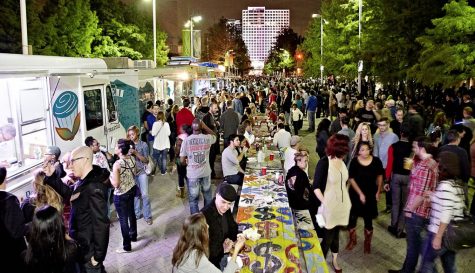
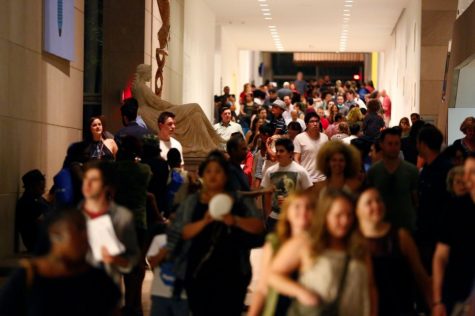
To celebrate National Pride Month, our Late Night on Friday, June 15, will feature a variety of groups and performers from the DFW LGBTQ community. This Late Night is also part of the annual Summer Block Party, and the Dallas Arts District is joining the celebration of Pride month with outdoor festivities.

We knew we wanted to involve local community members in the planning of the event, so we asked representatives from DFW LGBTQ groups to help us brainstorm program ideas. Our team was excited and energized by their enthusiasm and support of the event, and after several months of planning we put together this full schedule of events.

We are welcoming back performers from The Rose Room (who were last here in 2012) as well as featuring new performers and groups, including Chris Chism, Flexible Grey Theatre, and Verdigris Ensemble. We also wanted to make sure we featured some of Dallas’s LGBTQ history, so Robert Emery and cast members from Uptown Players will perform stories collected from the LGBTQ community. Following that, there will be a talk looking at the overall history of LGBTQ art in America with art historian Tara Burk. And, for the first time, there will be a Kiki Ball at the DMA!

Throughout the night, DMA staff will also highlight the following LGBTQ artists in our collection:

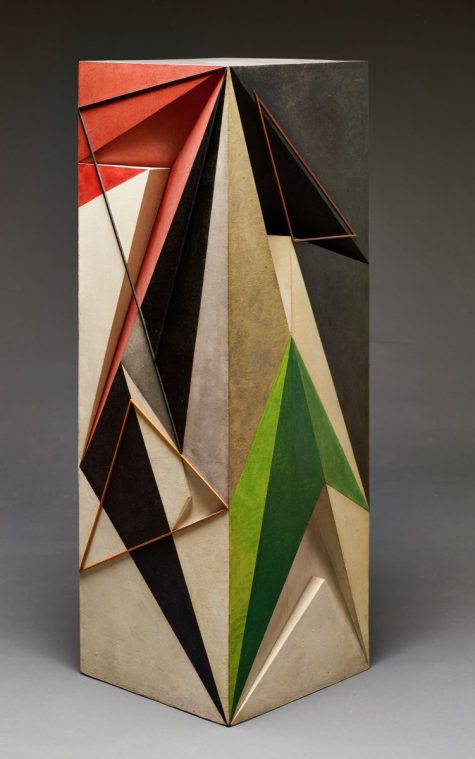
Anton Prinner

Anton Prinner, Large Column, 1933, wood and paint, Dallas Museum of Art, The Eugene and Margaret McDermott Art Fund, Inc., 1996.148.McD

Ellsworth Kelly

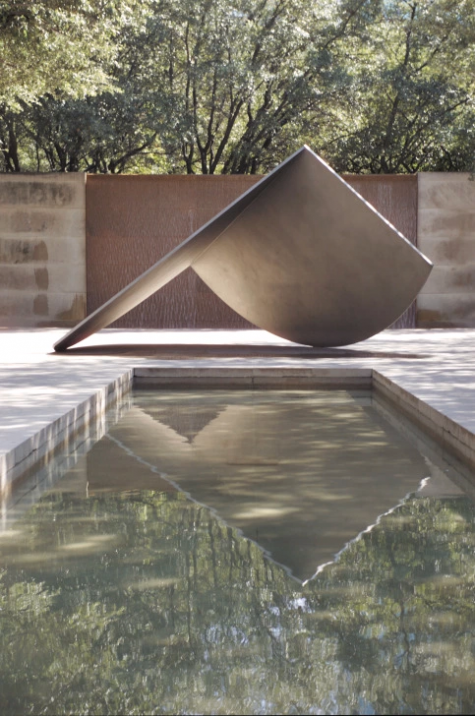
Ellsworth Kelly, Untitled, 1982–83, stainless steel, Dallas Museum of Art, commission made possible through funds donated by Michael J. Collins and matching grants from The 500, Inc., and the 1982 Tiffany & Company benefit opening, 1983.56

Anne Whitney

Anne Whitney, Lady Godiva, c. 1861–64, marble, Dallas Museum of Art, gift of Dr. Alessandra Comini in memory of Dr. Eleanor Tufts, who discovered the Massachusetts-backyard whereabouts of this long-forgotten statue and brought it to Dallas, 2011.8

Félix Gonzáles-Torres

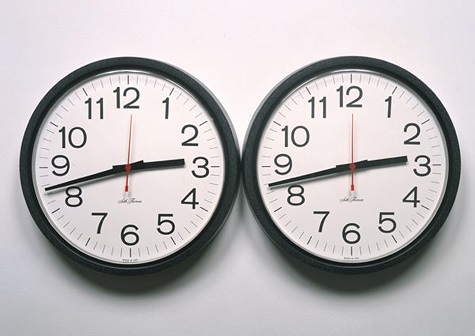
Félix González-Torres, Untitled (Perfect Lovers), 1987–90, wall clocks, Dallas Museum of Art, fractional gift of The Rachofsky Collection, © The Félix González-Torres Foundation, courtesy of Andrea Rosen Gallery, New York, 2001.342.a–b

Marsden Hartley

Marsden Hartley, Mountains, no. 19, 1930, oil on board, Dallas Museum of Art, The Eugene and Margaret McDermott Art Fund, Inc., 2008.24.McD

With all that’s in store, we hope you join the summer crowds and don’t miss out on a fun-filled night in downtown Dallas!

We would like to thank the following community groups for their help in planning the Pride Late Night:

Abounding Prosperity
Arttitude
Cathedral of Hope
City of Dallas Office of Cultural Affairs
Coalition for Aging LGBT 
The Dallas Arts District 
Dallas Voice 
Downtown Dallas Inc.
Flexible Grey Theatre
GALA, Gay and Lesbian Alliance of North Texas
LULAC Rainbow Council
OnBrand Productions
The Resource Center
The Rose Room
Turtle Creek Chorale 
Uptown Players 
Verdigris Ensemble


Stacey Lizotte is the DMA League Director of Adult Programs at the DMA.

Farewell to Florals

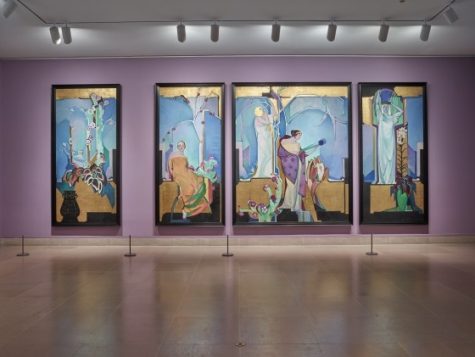
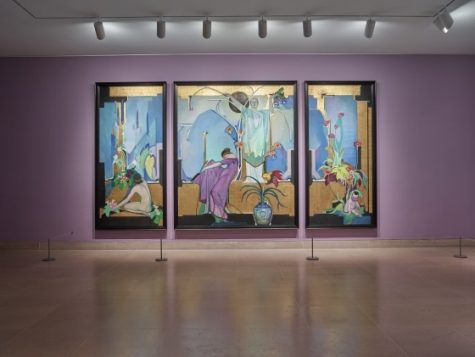
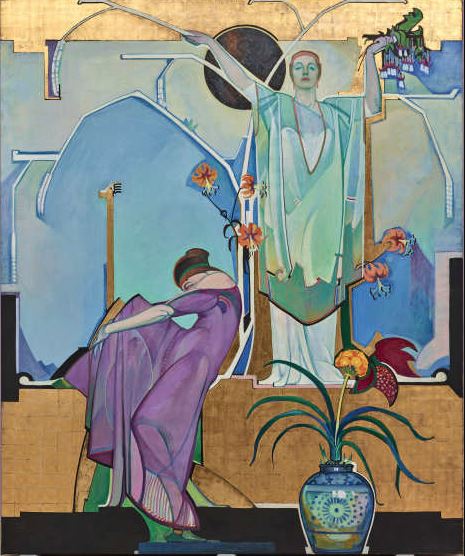
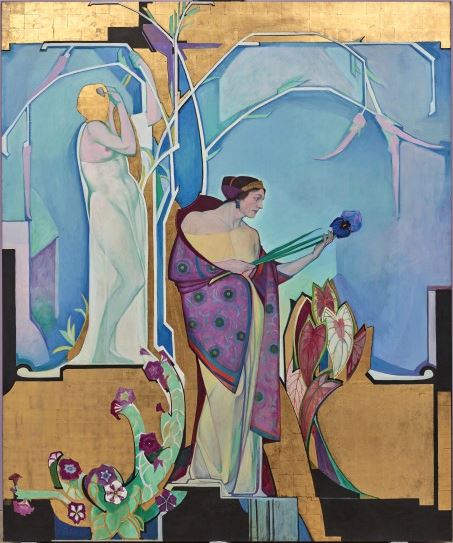
For the past several months, the Rachofsky Quadrant Gallery on the Museum’s first level has been occupied by seven large paintings spanning half the gallery, nearly floor to ceiling. Installed on a lilac-colored wall, the framed canvases contain figures posed with flowers, rendered in eye-catching pastel hues, and surrounded by alternating sections of black and gold leaf.

These paintings are Edward Steichen’s In Exaltation of Flowers, a commissioned series that the artist completed in 1914 for the home of New York financier Eugene Meyer and his wife, Agnes. Never installed in the space for which they were created, the majority of the panels were kept in storage for the past century. Last summer, the DMA’s conservation team unrolled the canvases, stretched and framed them, and completed conservation treatment so the series could go on tour. Newly conserved and reunited in one exhibition, In Exaltation of Flowers is a time capsule of Edward Steichen’s life and the lives of his close friends on the eve of World War I.

On Thursday, April 26, from 6:00 to 8:00 p.m., we will say goodbye to In Exaltation of Flowers with a soiree that will include a complimentary reception with drinks and small bites inspired by the paintings, a tour about flower symbolism with Dallas Arboretum VP of Gardens Dave Forehand, and a talk by art historian Dr. Jessica Murphy.

Reception
6:00 p.m., Check in at Will Call, Horchow Auditorium, Level 1
Arrive early for a complimentary reception featuring beer, wine, and small bites inspired by In Exaltation of Flowers and Edward Steichen’s French country garden. Hors d’oeuvres will include:

FRESH PEA AND MINT SHOOTER
butter-poached shrimp and hibiscus crema

DRIED FIG AND BRIE CROSTADA
balsamic glaze

GRILLED QUAIL AND SUNDRIED CHERRY SALAD
chive crepes and saffron aioli

ROASTED RED & GOLDEN BEETS WITH TEXAS GOAT CHEESE
arugula and orange-tarragon dressing

PARSLEY CHICKEN IN PHYLLO
romesco sauce

ROSE AND WHITE CHOCOLATE MOUSSE
candied rose petals and toasted almonds

Tour: In Exaltation of Flowers
6:30 p.m., Meet at the Flora Street Visitor Services Desk, Level 1
Edward Steichen was an avid gardener who exhibited his celebrated delphiniums in New York’s Museum of Modern Art. For Steichen and much of society at this time, flowers were more than just beautiful objects; they took on human character traits and the giving or receiving of flowers served as a kind of subtle language. Each of the sitters for In Exaltation of Flowers is paired with specific flowers that relate to their personalities or the nicknames given to them within their friend group. Join Dave Forehand of the Dallas Arboretum for a tour of In Exaltation of Flowers focusing on the types of flowers Steichen included in his paintings and what they might have communicated to a viewer in 1914.

Exhibition Talk: Murals from a “Magic Garden”: Edward Steichen’s “In Exaltation of Flowers”
7:00 p.m., Horchow Auditorium, Level 1
In Exaltation of Flowers captures a very particular moment in Edward Steichen’s career, in the history of art, and in the lives of a circle of friends on the eve of the World War I. A very personal project for the artist, the murals include portraits of close friends, either painted from life or from photographs, alongside flowers inspired by his garden at the French country home where he hosted lively parties. Steichen’s careful portrayal of his subjects reveals the nuances of their personalities and relationships within the social group. Best remembered as a photographer, Steichen had a somewhat rocky relationship with painting and ultimately destroyed much of his painted work. His approach to this series shows a nod toward the Symbolist movement, with its emphasis on flatness, invariable color, and in some sections abandonment of realism. Jessica Murphy, Brooklyn Museum’s Manager of Digital Engagement, will bring to life these and other stories behind Edward Steichen’s murals and the people who inspired them.

Don’t miss your chance to spend an evening in 1914 with Edward Steichen and his closest friends before In Exaltation of Flowers leaves the DMA in early May. For more information, visit DMA.org or click here to purchase a $5 ticket.

Jessie Carrillo is Manager of Adult Programs at the DMA.


Colors of Kente

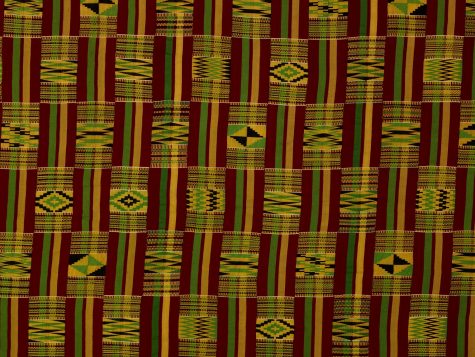
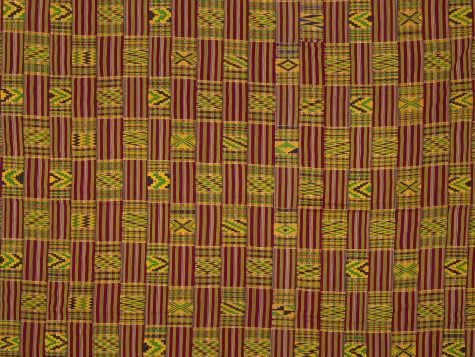
Alongside the gold ornamentation, furniture, and weaponry, one of the other art forms in the new exhibition The Power of Gold: Asante Royal Regalia from Ghana is kente cloth. The cloth is made from weaving thin strips of woven fabric together to create large blanket-size pieces. You can see in the photo below how detailed the vertical strips can be, and how colorful the patterns are. Once all of the thin strips are created, they will turn into the kente pattern like the ones you see below. Both of these kente textiles will be on view in the exhibition.

Detail of a man’s kente, Oyokoman pattern, Ghana, Asante peoples, c. 1920–1930, Ssilk, Dallas Museum of Art, Textile Purchase Fund, 2015.12

Kente, Ghana, Asante peoples, c. 1925, silk and dye, Dallas Museum of Art, African Collection Fund, 2006.45

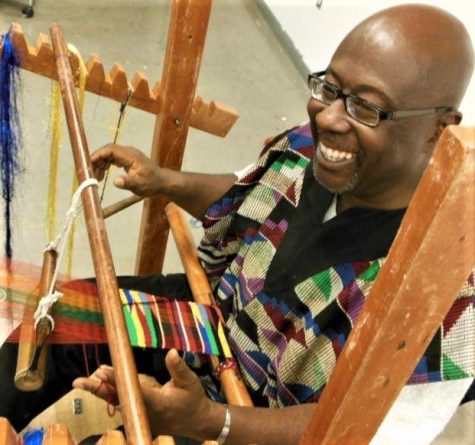
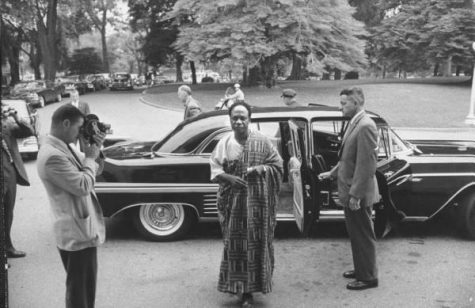
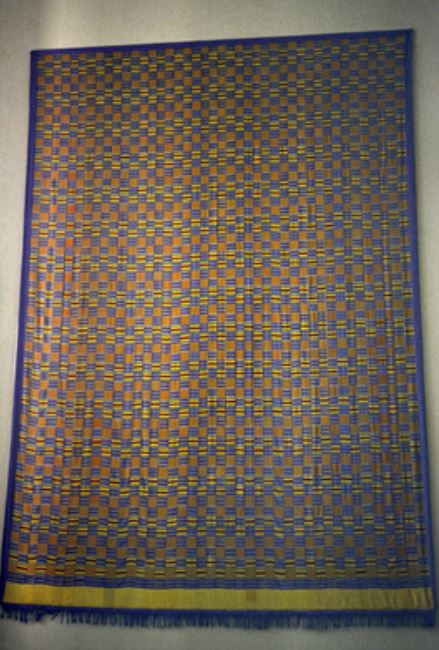
To learn more about the kente cloths that will be shown in the exhibition, we invited world-renowned kente weaver Kwasi Asare to be a part of our April Late Night and an Adult Workshop. Kwasi Asare is part of a lineage of kente weavers who played an enormous role in the popularity and visibility of the traditional cloth in Ghana. His father, A. E. Asare, created the kente worn by the president of Ghana, Kwame Nkrumah, in 1957 for his official portrait and visits to the United States. This gained worldwide attention because Ghana had just become the first independent country in sub-Saharan Africa. A. E. Asare also weaved a kente for the United Nations General Assembly in the 1960s. Kwasi Asare, following in his father’s footsteps, weaved a kente to replace the old and fraying version his father had made, which now hangs in the UN building. Kwasi Asare called his kente Adwene Asa, meaning “consensus has been reached.” The Adwena Asa stands as an emblem of diplomacy, peace, and compassion and as an aspirational symbol for all the world’s delegates who gather there. Kwasi Asare will be demonstrating his weaving and leading a tour of the kente cloths in the exhibition during Late Night on Friday, April 20.

Kwasi Asare weaving on his large loom

Prime Minister of Ghana Kwame Nkrumah arriving at the White House, Washington, DC, US, July 1958

Adwene Asa, Kwasi Asare’s kente cloth that hangs in the United Nations General Assembly Building

The last three images are taken with permission from Kwasi Asare’s website.

Katie Cooke is Manager of Adult Programs at the DMA.

New faces and places in C3

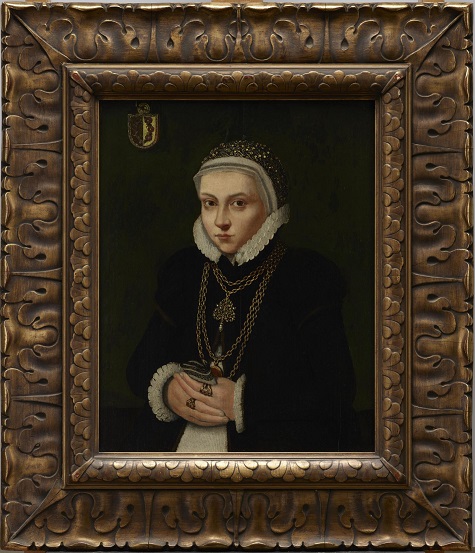
Portrait of a Woman, 16th century, oil on panel, Dallas Museum of Art, gift of Chester Dale 1963.173

The walls of C3 were hung with a few new artworks last week. The 16th century German painting, Portrait of a Woman now resides near the Community Choice chalkboard. The oil on panel depiction acts as a useful illustration of what typically comes to mind as a “traditional” portrait.

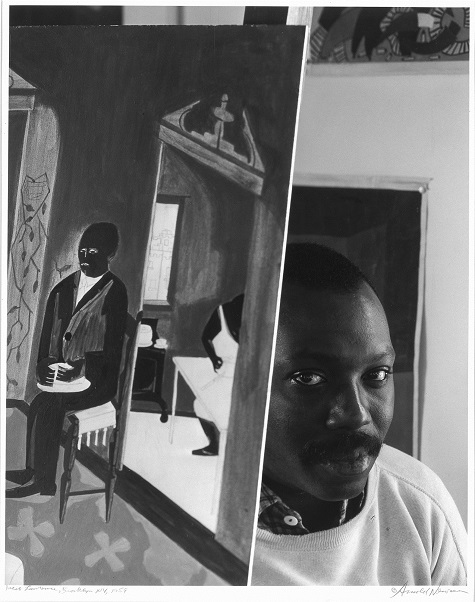
Arnold Newman, Jacob Lawrence with “The Visitors”, 1959, gelatin silver print, Dallas Museum of Art, the Jolesch Acquisition Fund 2001.259

Her unemotional gaze and detailed attire make a striking contrast with the three works installed on another wall of this gallery. These include two images by cameramen recognized for their ability to convey their subjects’ emotional as well as professional identities. In these works, the cameras captured artists Jacob Lawrence and Georgia O’Keeffe.

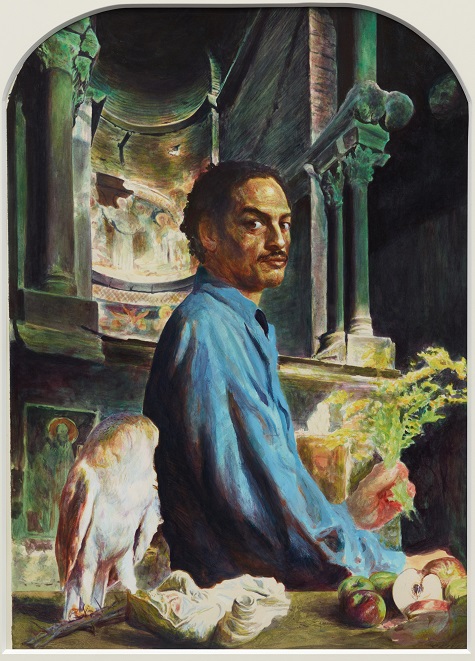
Kermit Oliver, Autoritratto, 1993, acrylic on paper, Dallas Museum of Art, The Barrett Collection, Dallas, Texas 2007.53.34 © Kermit Oliver

The third addition to the gallery of portraits is the lone example of self-representation in the room. Kermit Oliver’s 1993 depiction of himself includes a variety of animals, plants, and architecture arranged into one of his signature “painted collages.”

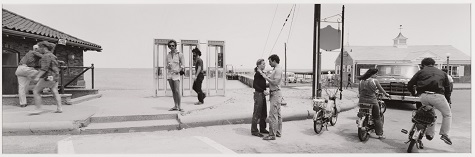
David Avison, Oak Bluff, Martha’s Vineyard, 1978, gelatin silver print, Dallas Museum of Art, General Acquisitions Fund 1980.13

On the Communication through Narrative wall there are now two examples of Garry Winogrand’s street photography and a panoramic scene of Martha’s Vineyard produced by one of Winogrand’s former students, David Avison. Like the photos that were previously displayed in this space, the appearance of casual snapshots and indeterminate activities can act as a creative launchpad for visitors to compose their own imagined narratives at a nearby table.

Please drop by to see the new faces and places on view in the C3 galleries!

Emily Schiller is the Head of Interpretation at the DMA

Artist Interview: xtine and Sabrina

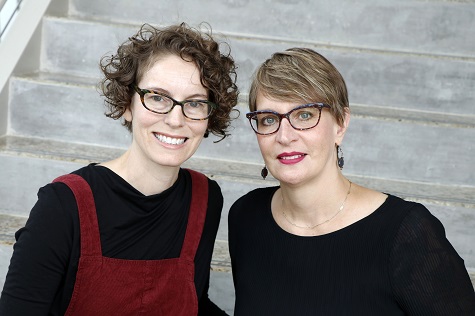
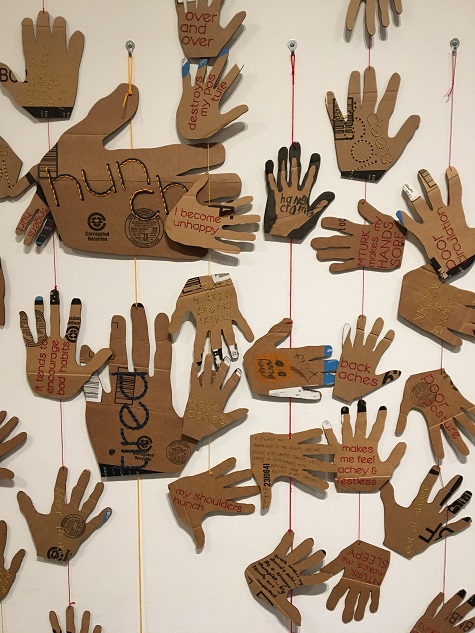
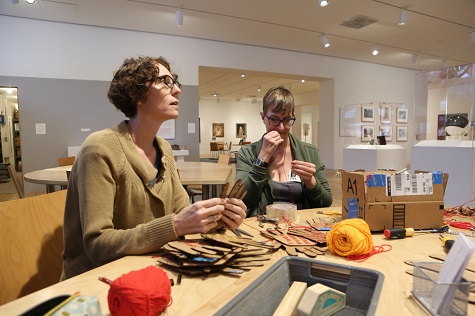
This fall the Center for Creative Connections invited C3 Visiting Artists xtine burrough and Sabrina Starnaman to design in-gallery activities inspired by unattributed works of art in the DMA’s collection. Meet xtine and Sabrina here and learn more about their thoughtful installation and activities designed to engage a larger conversation about labor.

Tell us about yourselves.
We met in fall 2016 at the University of Texas at Dallas, where we discovered a shared passion for embodiment, literature, and workers’ rights. We became fast friends and quickly set forth to merge xtine’s interventions on crowdsourcing platforms with Sabrina’s expertise in literature, history, and labor.

What motivated you to apply to the C3 Visiting Artist Project?
xtine delivered a talk about her project, Mechanical Olympics, in the C3 Theater during Fall 2015. While at the DMA, she saw that the Center provided a space for connecting the Dallas community with local artists who could leverage the educational team at the Museum to bring engaging art to diverse audiences through interactive media formats. This was a good fit for the type of exhibition that she and Starnaman wanted to create for The Laboring Self.

Tell us how the idea of your project originated.
The Laboring Self grew out of a pilot project, Digital Korl Woman, that we developed in Sabrina’s class “Studies in Women’s Literature: Rebels and Reformers” at the University of Texas at Dallas in spring 2017. Sabrina was teaching Rebecca Harding Davis’s 1861 novella Life in the Iron Mills in class, a book about unregulated labor in a steel mill, and we saw the potential for parallels between critical issues in labor across the centuries.

We initiated an exploratory collaboration in which we asked Sabrina’s students to create a participatory project much like the one we present in the C3 space. First, students hired virtual workers to interpret a section of Life in the Iron Mills by submitting selfies to reflect the feelings that the steel worker character expressed in a sculpture he made out of waste products from the industrial processes. These pictures were then used as inspiration for  a 3-D cardboard sculpture. Finally, the students chose parts of Davis’s book that they found important and layered them on the sculpture.

We were invited to share this project and the process at a number of academic conferences, and now an article about it is forthcoming in Transformations: The Journal of Inclusive Scholarship and Pedagogy.

The Laboring Self, which centers on reproductions of human hands—workers are “hired hands” after all—grew naturally from our classroom experience and continues to evolve in ways we find exciting and will be working on for some time. We document our ongoing projects on our website, Visible Women.

What do you hope visitors will take away from your project?
We hope that visitors will see a connection between the detrimental impacts of unregulated labor in the 19th and the 21st centuries. While contemporary digital and crowdsourced work seems different from the industrial labor that became common in the 19th century, there are many parallels. For instance, workers who enter evolving industries have few protections. Laborers in the 19th century were ultimately able to address some of the exploitative and dangerous conditions in their workplace, but today’s crowdsourced laborers have few mechanisms to voice their concerns.

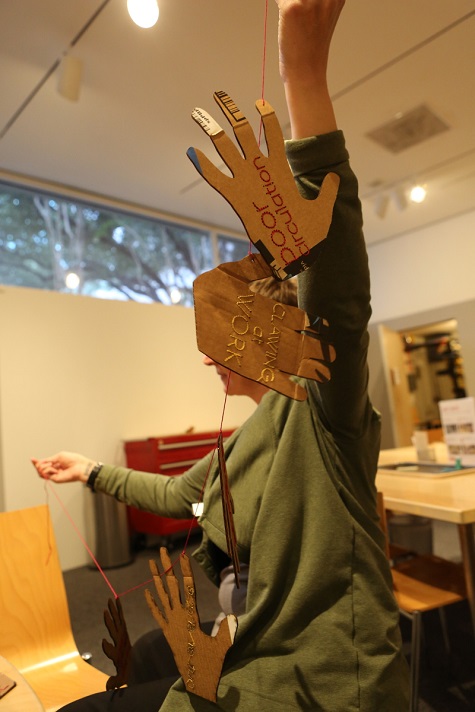
It is important to us that visitors to C3 have a chance to reflect on their own work experiences and how it affects their bodies. Those who are, have, or will work are as much a part of the project as the digital laborers who provided their hands and thoughts for the installation. Through the interactive aspects of our project—all of which involve using hands and words—we ask visitors to create their own “hired hands.”

hands

What have you enjoyed most about this experience?
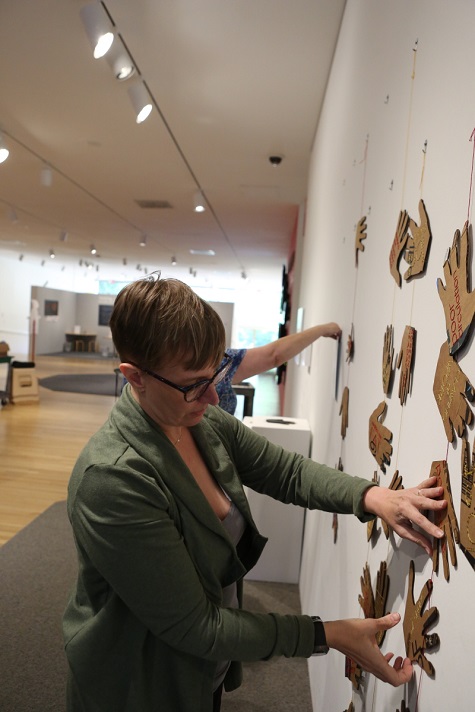
We love the process! It is an honor to be able to realize our vision in a space that includes participants from so many different communities. While we are excited to bring our families to the tables, trace our hands, our kids’ and spouse’s hands, and make rock-rubbings of the literary quotes on a Sunday afternoon, the journey is the most enjoyable part of the experience. From the day we sat together struggling with how much we would pay the workers on the Mechanical Turk website to the day we created and hung strands of hands on the wall of the C3 space, we learned a lot about ourselves and the world we live in, while making something that engages the community where we live and work.

Visit the Center for Creative Connections through December to participate in activities and contribute your own responses to xtine and Sabrina’s The Laboring Self installation.

Join us for a reception in the Center for Creative Connections on October 26 and mingle with C3 Visiting Artists xtine burrough and Sabrina Starnaman in C3 from 7:00 to 9:00 p.m.

Kerry Butcher is the Center for Creative Connections Coordinator at the DMA.

The Light and the Dark

Today is World Alzheimer’s Day and in recognition of this day which brings awareness to this disease, we are sharing a post by one of our DMA Meaningful Moments participants.

From Pickets to Picnics

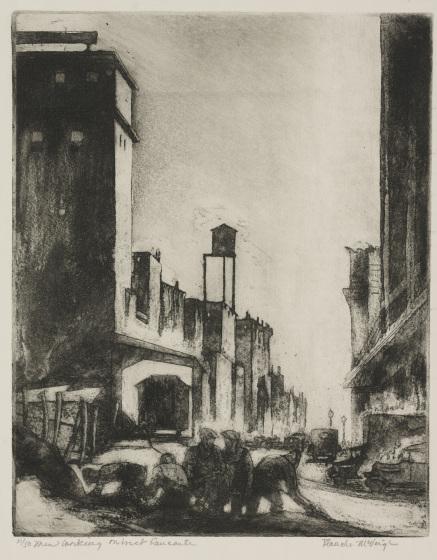
The late 1800s were a pretty dismal time for the American worker. People often worked more than 12 hours a day just to get by! It was then, at the height of the Industrial Revolution, that the first “Labor Day” took place. On September 5, 1882, more than 10,000 fed-up employees took to the streets of New York to rally against poor conditions and unfair wages.

Men Working on West Lancaster


Blanche McVeigh, Men Working on West Lancaster, c. 1933–34, aquatint, Dallas Museum of Art, gift of the Public Works of Art Project

Since then, the “working man’s” holiday has been celebrated on the first Monday in September, although it did not become a federal holiday until 1894! Today, Labor Day symbolizes the end of summer and new beginnings for most Americans, but let us not forget those workers that came before us to fight for the safe and sanitary conditions we enjoy today.

newbeach

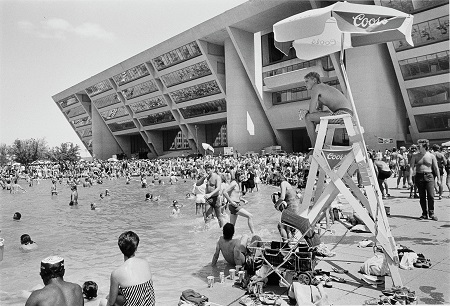
Lynn Lennon, Beach Party, Dallas City Hall, 1984, gelatin silver print, Dallas Museum of Art, Mr. and Mrs. Homer B. Jester Fund, © 1984 Lynn Lennon

The DMA is closed today, but you can enjoy free general admission every day during Museum hours (Tuesday-Sunday, 11:00 a.m.–5:00 p.m.; Thursday, 11:00 a.m.–9:00 p.m.; third Fridays, 11:00 a.m.–midnight). Have a safe and wonderful holiday!


Archives

Categories