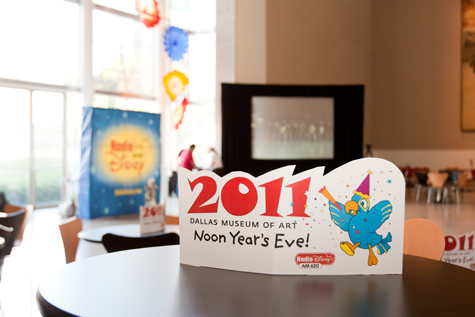
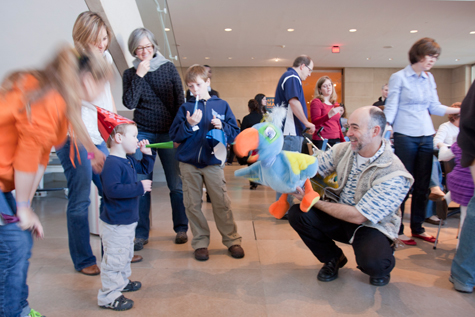
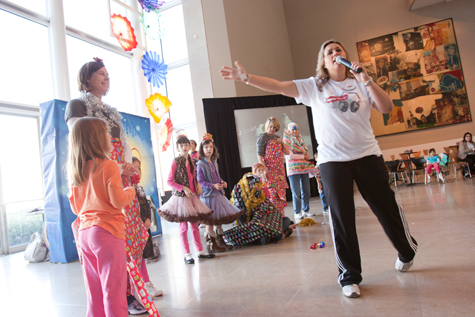
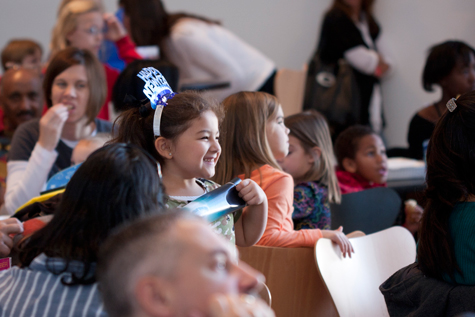
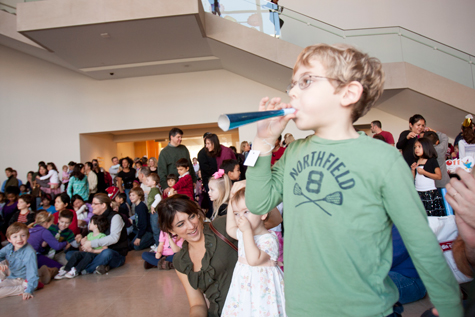
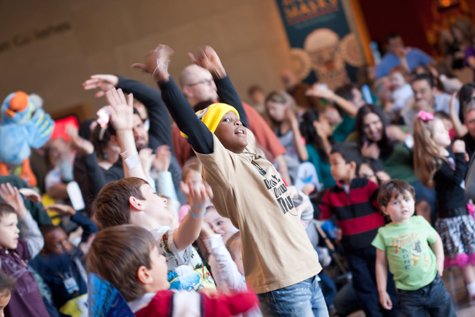
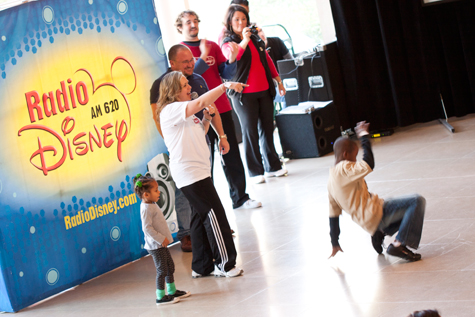
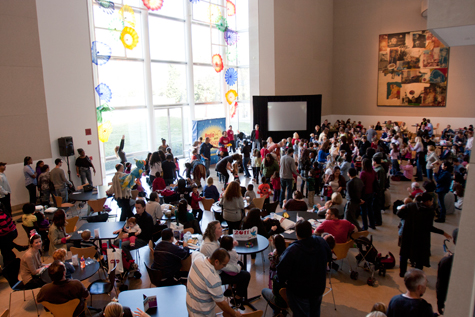
We celebrate the arrival of 2011 a bit earlier than most during the second annual Noon Year’s Eve with Radio Disney and over 4,200 visitors joined us. Families enjoyed a morning filled with games, give-aways, art, and a countdown to the new year at 12:00 p.m. We had to share some of our favorite moments from that day with you on Uncrated, enjoy!
Archive for the 'Education' Category
Seldom Scene: Noon Year’s Eve
Published January 10, 2011 Education 1 CommentTags: Art, Dallas Museum of Art, Family, Noon Year's Eve, Radio Disney



The Ball Drops
Published December 29, 2010 Arts & Letters Live , Center for Creative Connections , Education , First Tuesday , Late Nights ClosedTags: Dallas Museum of Art, Jeff Kinney, Jill Foley, New Year’s Eve, Noon Year’s Eve, The Grinch, The Mourners
The DMA and Radio Disney are teaming up again this year for Noon Year’s Eve on December 31, the perfect way to ring in the New Year if your bedtime is a bit before midnight. The Museum will open at 10:00 am to kick off the three hours of celebration. There will be music and games led by Radio Disney DJ Tera Beal and prizes aimed at visitors ages 6 and under. Everyone is invited to join in on the countdown for when the clock strikes noon. The DMA is also offering a prize for parents and other grown-ups who come, $5 admission and $5 parking in the DMA garage from 10:00 am – 2:00 pm (visitors ages 12 and under are always free at the DMA).
[slideshow]
Inspired by the New Year’s countdown — and the impressive Times Square crystal ball — we created a top ten countdown (without any scientific data or specific parameters) of the past year at the DMA.
10. Turning 107 in January and kicking off a year of great Late Nights at the Museum.
9. The month long celebration of the Arts District, Art in October, with two free admission days to the Nasher Sculpture Center, The Crow Collection of Asian Art, and the Dallas Museum of Art with multiple family programs.
8. Welcoming the DMA-organized exhibition The Mourners from our sister city of Dijon, France in October with an opening weekend featuring a Mourner on stilts and five French chefs.
7. The summer gave us two months of the inspiring and cozy The Living Room installation made of recycled cardboard by artist Jill Foley.
6. Celebrating the bicentennial of Mexico’s independence with nine months of events and two exhibitions featuring Mexican art.
5. September brought the opening of the new C3 exhibition Encountering Space with new works of arts from the DMA collection, a space bar, and a new Arturo’s Nest.
4. Inviting a special guest, The Grinch, to close out a great year of exciting First Tuesdays.
3. Jeff Kinney, author of the popular Diary of a Wimpy Kid, made an appearance as part of the BooksmART series of Arts & Letters Live in April.
2. Launching our quarterly Autism Awareness Family Celebrations in April inviting children with autism and their families to explore C3 and participate in activities an hour before the Museum opened.
1. Our amazing visitors! More than 500,000 of you visited our many exhibitions and programs throughout 2010, we can’t wait to get started on 2011.
2010 also brought the launch of Uncrated. Thank you dear readers and Happy New Year.
Seldom Scene: The Grinch Visits
Published December 20, 2010 Behind-the-Scenes , Education , First Tuesday 1 CommentTags: AT&T Performing Arts Center, Dallas Museum of Art, First Tuesday, Grinch, Holidays, Staff
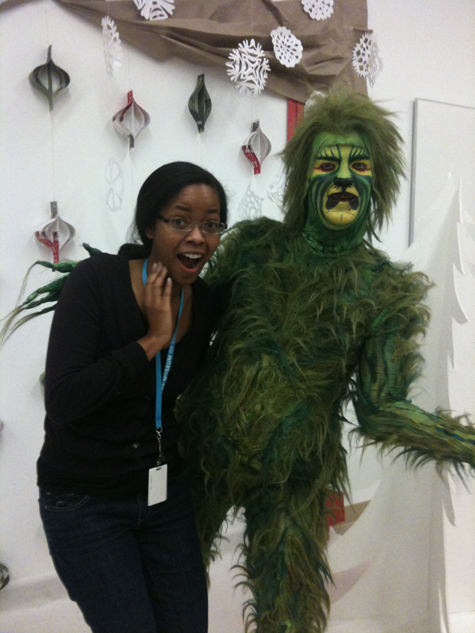
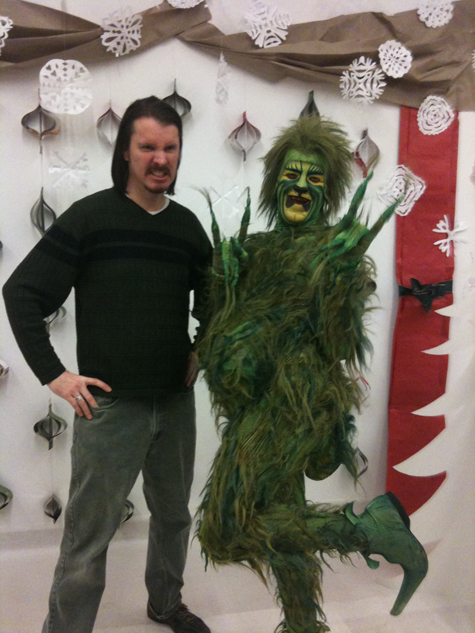
On the first Tuesday of every month, admission to the DMA is free, and we have special activities for our youngest visitors until 3:00 p.m. On December 7, we had a special guest in C3, the Grinch (before his heart grew three sizes in one day). He stopped by from the AT&T Performing Arts Center, where Dr. Seuss’ How the Grinch Stole Christmas! The Musical was opening later that night. DMA staff members could not pass up this photo opportunity.


The Art (and Archaeology) of Good Cheer
Published December 7, 2010 Education ClosedTags: Archaeology, Beer, education, Lecture, Programs, Wine
Known as the “Indiana Jones of Ancient Ales, Wines, and Extreme Beverages,” Dr. Patrick McGovern is a world-renowned expert on the origins of ancient fermented drinks and a leader in the emerging field of biomolecular archaeology. On Thursday evening, he will present the history of wine in a lecture entitled Uncorking the Past, part of the Museum’s Boshell Family Lecture Series on Archaeology. Dr. McGovern tells us more about his unique archaeological research.

Dr. McGovern in his laboratory, examining a 3000-year-old millet wine, which was preserved inside a tightly lidded bronze vessel from a Chinese tomb. Photo: Penn Museum.
You oversee the Biomolecular Archaeology Laboratory for Cuisine, Fermented Beverages, and Health at the University of Pennsylvania’s Museum of Archaeology – a leader in this cutting-edge field. What type of research do you conduct at the lab?
The Biomolecular Archaeology Laboratory has been at the forefront of the revolution in uncovering the organic underpinnings of our species on this planet. We analyze ancient fermented beverages, foods, perfumes, dyes (such as Royal Purple), and other organics, which could only be imagined from ancient writings, using highly sensitive instruments in the laboratory (infrared spectrometry, gas and liquid chromatography, mass spectrometry, etc.). Molecular archaeology promises to open up whole new chapters relating to our human ancestry and genetic development, cuisine, medical practice, and other crafts over the past two million or more years.
Where do you find evidence of ancient food and drink, and what tools and technologies do you use to analyze that evidence?
Pottery, which is virtually indestructible and goes back to between 5000 and 13,000 B.C. in various parts of the world, absorbs ancient organics and is crucial to our research. By using organic solvents, we “tease out” the ancient organics, and then go to work with our battery of scientific instruments. Sometimes we work directly from residues, either deposited inside vessels of various materials or deposited elsewhere (e.g., on bones, textiles, etc.).
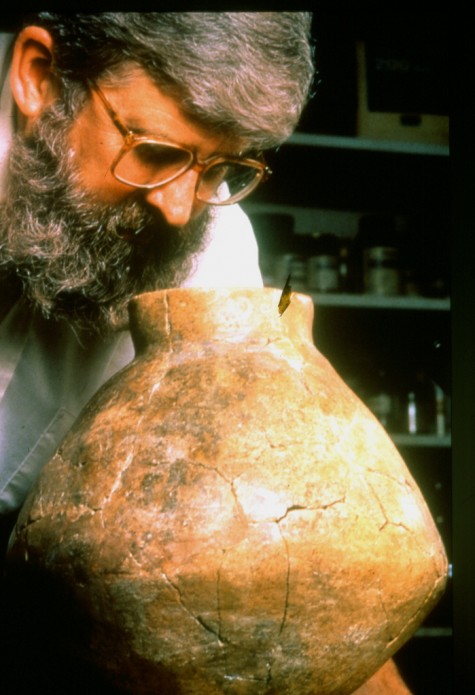
Dr. McGovern peers into a wine jar dating to 5400 - 5000 B.C. Photo: courtesy of the University of Pennsylvania Museum of Archaeology and Anthropology
In the course of your work, what has been your most surprising discovery?
There have been many, but the discovery of Royal Purple and the earliest resinated wine from Iran (circa 5400 B.C.) are two highlights.
Your academic background is varied, and you have degrees in both chemistry and archaeology. How did you become interested in the history of fermented beverages?
It was very serendipitous. As I moved from inorganic to organic chemical analysis of archaeological materials, we were successful in first detecting Royal Purple, a highly stable compound that had been preserved for over 3,000 years. This gave us the confidence to move on to wine, beer, and other materials. Grape wine was first, and came about when an associate, Virginia Badler, showed us shards of large jars from an early Iranian site (Godin Tepe) with residues inside that she believed to be wine deposits. She proved to be right, and the rest is history.
After the lecture on Thursday, we will have the opportunity to sample wines from Burgundy, as well as an artisan beer called Midas Touch. Please tell us about the beer, which was inspired by analysis you did on objects found in the tomb of the legendary King Midas.
It all started over fifty years ago with a tomb, the Midas Tumulus, in central Turkey at the ancient site of Gordion, which was excavated by the Penn Museum in 1957. Within that tomb, buried deep down in the center of a large mound, excavators found the body of a 60- to 65-year-old male, who had died normally. He lay on a thick pile of blue- and purple-dyed textiles, the colors of royalty in the ancient Near East. The excavators had found what would become one of the most spectacular archaeological discoveries of the 20th century – they had located what has since been identified as the tomb of Gordion’s most famous son, King Midas.
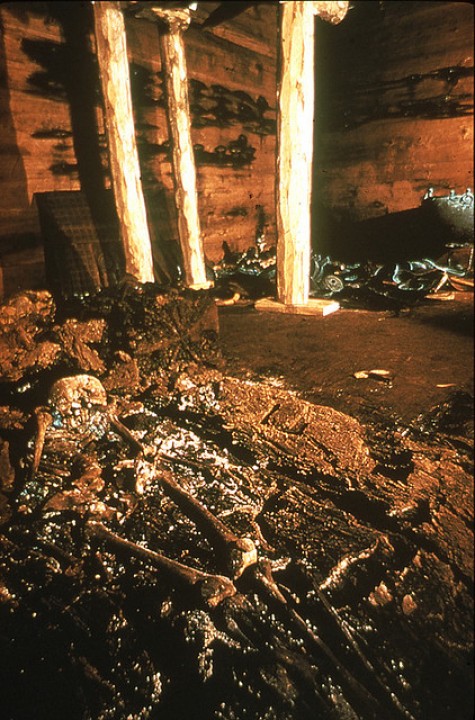
“King Midas” laid out in state on piles of purple- and blue-dyed textiles inside his coffin, from the northwest, with the large bronze drinking set in the background. Photo: courtesy of the Gordion Project, University of Pennsylvania Museum of Archaeology and Anthropology
Inside the tomb, surrounding the body, were 157 bronze vessels, including large vats, jugs, and drinking bowls that had been used in the final farewell dinner for the king outside the tomb. The body was then lowered into the tomb, along with the remains of the food and drink, to sustain him for eternity.
Surprising, none of the 157 drinking vessels were made of gold. Where then was the gold if this was the burial of Midas with the legendary golden touch? In fact, the bronze vessels, once the bronze corrosion was removed, gleamed just like the precious metal. The real gold, as far as I was concerned, was what these vessels contained – the remains of an ancient beverage, which was intensely yellow, just like gold. Chemical analyses of the residues – teasing out the ancient molecules – provided the answer: the beverage was a highly unusual mixture of grape wine, barley beer, and honey mead.
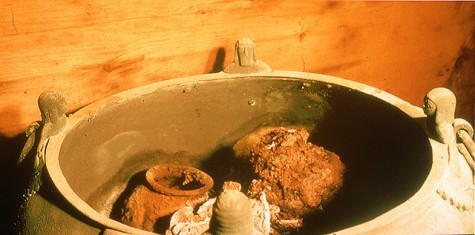
Jars filled with the spicy stew, served at the funerary feast of King Midas, can be seen inside one of the large vats. They were placed there after the fermented beverage, which they initially contained, had been served at the funerary banquet. These “left-overs” might have been intended for sustenance for the king in the afterlife. Photo: courtesy of the Gordion Project, University of Pennsylvania Museum of Archaeology and Anthropology
You may cringe at the thought of mixing together wine, bee,r and mead, as I did originally. That’s when I got the idea to do some experimental archaeology. In essence, this means trying to replicate the ancient method by taking the clues we have and trying out various scenarios in the present. In the process, you hope to learn more about how the ancient beverage was made. To speed things up, I also decided to have a competition among microbrewers to try to reverse-engineer and see if it was even possible to make something drinkable from such a weird concoction of ingredients. Soon, experimental brews started arriving on my doorstep for me to taste – not a bad job, if you can get it, but not all the entries were that tasty.
Sam Calagione of Dogfish Head Brewery ultimately triumphed. The beverage has since gone from one triumph to the next. Dogfish is the fastest growing microbrewery in the country, and “Midas Touch” has become its most awarded beverage.
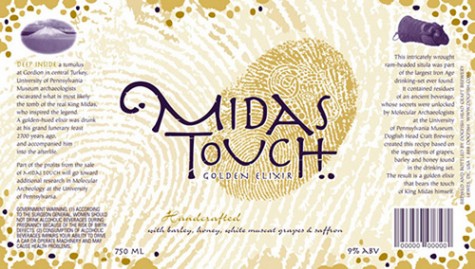
Original Dogfish Head Brewery label for Midas Touch beer. Photo: courtesy of Dogfish Head Brewery
Be sure to watch Dr. McGovern and the team from Dogfish Head Brewery on The Discovery Channel’s Brew Masters, which chronicles their travels around the world searching for exotic ingredients and discovering ancient techniques to produce their award-winning beers.
Patrick E. McGovern is Scientific Director of the Biomolecular Archaeology Laboratory for Cuisine, Fermented Beverages, and Health at the University of Pennsylvania Museum. His books include Ancient Wine: The Search for the Origins of Viniculture and Uncorking the Past: The Quest for Wine, Beer, and Other Alcoholic Beverages. His research on the origins of alcoholic beverages has been featured in Time, the New York Times, the New Yorker, Nature, and numerous other publications.
Do-It-Yourself Stickley
Published December 3, 2010 Decorative Art and Design , Education , Exhibitions ClosedTags: American Arts and Crafts Movement, DIY, Gustav Stickley
“When we come to make things ourselves . . . we should not only find more pleasure in making them but we shall take more pleasure in possessing them.” —Gustav Stickley, The Craftsman, March 1905
Early 20th-century designer and businessman Gustav Stickley believed in the do-it-yourself movement. His magazine, The Craftsman, provided readers with step-by-step instructions on making household objects such as side tables, clocks, embroidered pillows, and even birdhouses.
In just a few months, the Dallas Museum of Art will host the exhibition Gustav Stickley and the American Arts & Crafts Movement. We’re inviting people to produce objects inspired by Stickley’s designs, document their process, and share their experience with the DMA. These videos and photographs will be displayed in the exhibition’s education space. Our deadline is January 5. Learn more about the DIY Stickley project on the DMA website.
A few weeks ago, my husband, John, and I thought it would be fun to take up Stickley’s challenge and make one of his simpler designs with our kids, Aiden and Rowan.
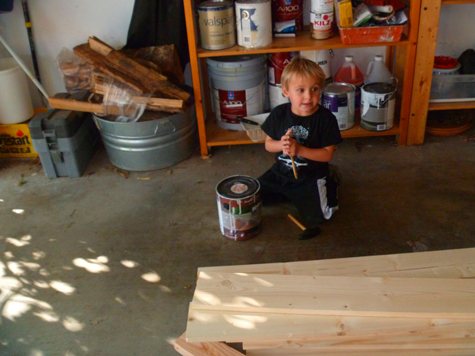
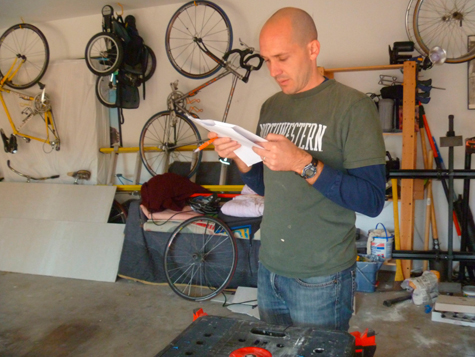 After some debate, we decided to make the doghouse for our two dogs, Sampson and Beasley.


Building the structure moved along pretty quickly thanks to John and Aiden. By the end of day one, we had framed the structure and attached the walls and floors.
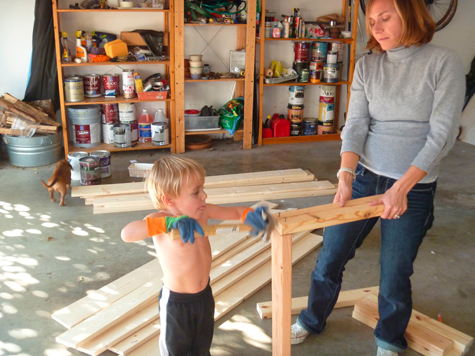
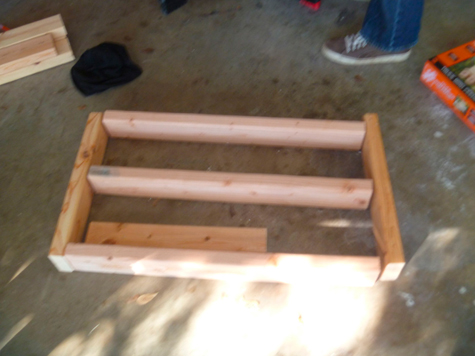
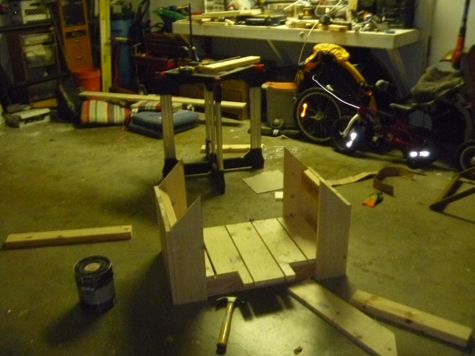
Day two included attaching the roof, painting, and trying to get the dogs to go inside the doghouse.
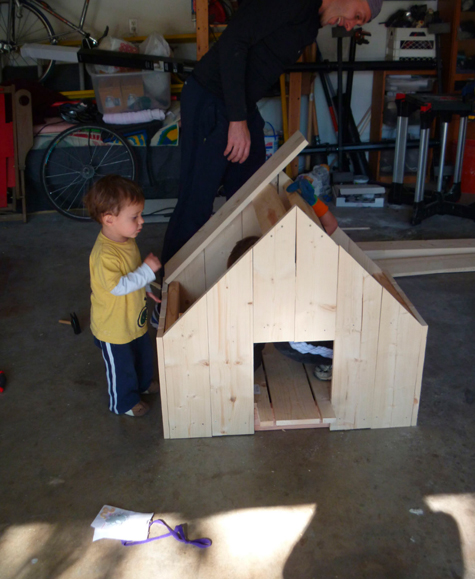
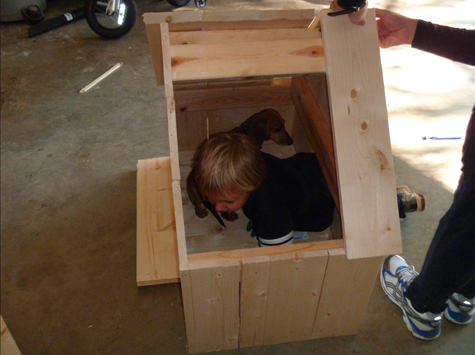 Apart from adjusting the measurements and the paint, we stayed close to Stickley’s original design. This was a fun weekend project for our family and a great way to make Stickley’s designs come to life in the 21st century.
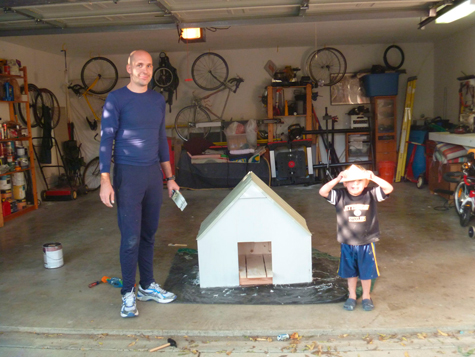
Gustav Stickley and the American Arts & Crafts Movement will be on view at the Dallas Museum of Art from February 13 through May 8, 2011. To learn more about the do-it-yourself Stickley project and discover how you can participate, visit the DMA website.
Guest blogger Laura Bruck was formerly Manager of Gallery Interpretation at the Dallas Museum of Art and is currently an education consultant.
A Foot in the Door
Published October 16, 2010 Curatorial , Education 1 CommentTags: Curatorial, education, Interns, internship, McDermott Internship program, museum career
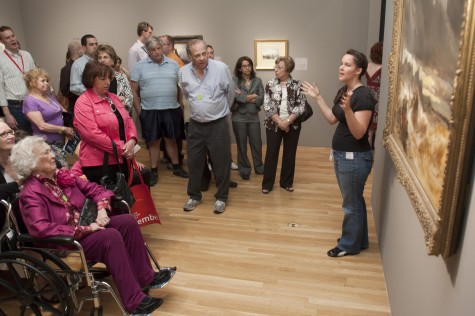
2009 - 2010 McDermott Intern Stacie Jackson leads a tour of "The Lens of Impressionism"
What do Madeleine Albright, Frank Lloyd Wright, Sylvia Plath, and Conan O’Brien have in common? They all started on their career paths as interns, just as many museum curators and educators do. Internships offer invaluable opportunities to try a potential profession on for size; for those who wish to explore a career in museum work, internships provide a great way to gain firsthand experience and insights.
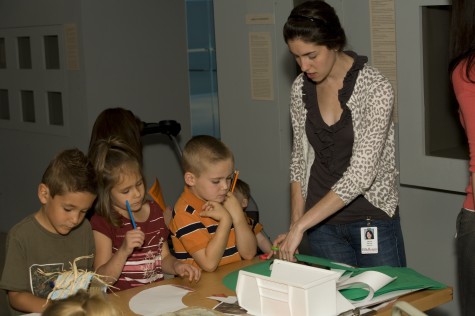
Leticia Salinas, 2009 - 2010 McDermott Intern for Family Experiences, leads a family workshop in the galleries.
Over one hundred people have participated in the Dallas Museum of Art’s McDermott Internship program since its inception, including many current DMA staff members as well as colleagues working at other institutions in Dallas, throughout Texas, and across the country. Each year, eight interns work closely with the Museum’s curators and educators on a variety of projects, including doing research for upcoming installations or exhibitions; writing labels, catalogue entries, and other materials; and developing and facilitating programs for Museum visitors of all ages.
The program was founded in honor of Eugene McDermott, who had a passion for learning and the arts, and the interns have the remarkable opportunity to visit with Margaret McDermott to inaugurate their internship year. Our current interns recently had lunch with Mrs. McDermott, and she encouraged them to “work hard, learn a lot, and have fun” during their nine months at the DMA and in Dallas.
Shannon Karol worked with Dr. Roslyn A. Walker, Senior Curator of the Arts of Africa, the Americas, and the Pacific and The Margaret McDermott Curator of African Art, as a McDermott Curatorial Intern in 2005–2006, and she returned to the DMA as Coordinator of Museum Visits in 2007. I asked Shannon about her experience as a McDermott Intern, and she said:
The best part of being a McDermott Intern is that you are truly a member of the DMA staff. Even though I was a Curatorial Intern, I was able to collaborate with staff members in the Collections and Education departments on projects and installations. I also love the sense of camaraderie that you feel as a McDermott Intern. My fellow interns from that year are still some of my closest friends!
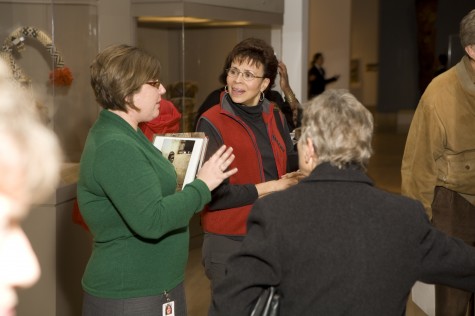
Shannon leads a tour of "All the World's a Stage"
Logan Acton worked with the Teaching Programs staff last year as a McDermott Education Intern, and he accepted a permanent position as Assistant to the Director of Education this summer. Logan said, “As an intern, I was able to explore the Museum’s collections and share my growing knowledge of them, and particularly my passion for contemporary art, with students and other visitors.” You can read more from Shannon and Logan on the DMA Educator Blog.
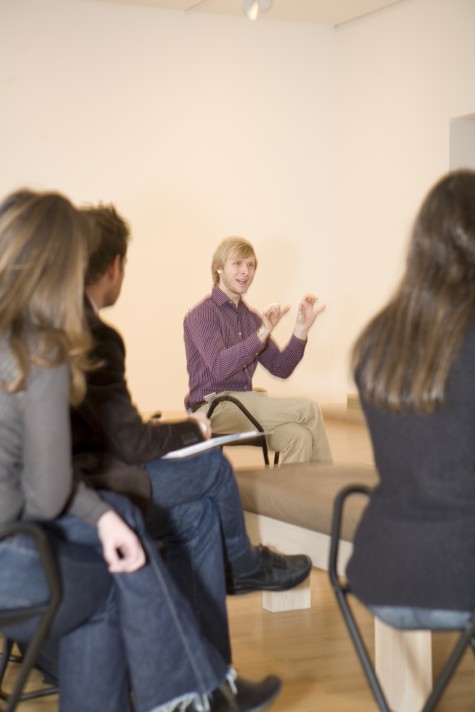
Logan discusses contemporary art at a Teacher Workshop.
Eight new McDermott Interns began their nine-month tenure at the DMA in September, and they will all contribute to Uncrated in the months to come. We look forward to sharing their experiences and insights about life and work at the DMA. You can join the interns, along with other members of the DMA staff, to explore the Museum’s collections and exhibitions during weekly gallery talks on Wednesdays at 12:15 p.m.
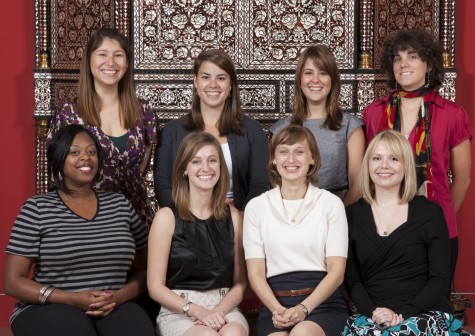
Welcome to the 2010 - 2011 McDermott Interns!
Lisa Kays is the Manager of Adult Programming at the Dallas Museum of Art
Let’s Celebrate the Arts
Published October 8, 2010 Art Beyond Sight , Art in October ClosedTags: Art Beyond Sight, Art in October, chefs, Dallas Arts District, Dijon, food, France, Mourners
On Saturday we were excited to launch Art in October in the Dallas Arts District with a free admission day of activities and even an exhibition sneak peek.
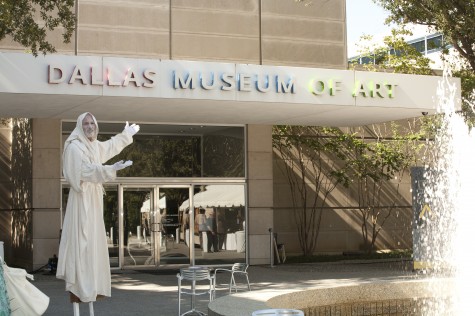
Art in October
There are so many wonderful cultural events happening every day in Dallas, and especially in the Arts District, that we need a month to celebrate them all! Here at the DMA we hosted a delegation from Dallas’s “Sister City,” Dijon, France–five Michelin-starred chefs and one sommelier–outside our Flora Street Entrance.
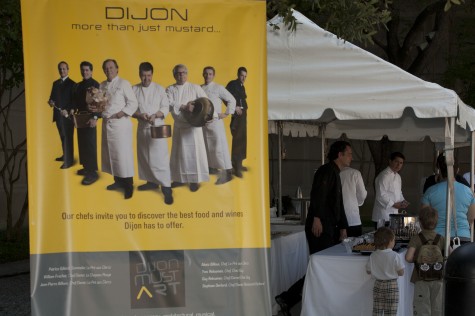
Chefs from Dijon shared some amazing dishes with visitors.

Some delicious French food prepared by our visiting chefs from Dijon.
For four hours they prepared and offered samples of food and wine from Burgundy, the land of The Mourners.
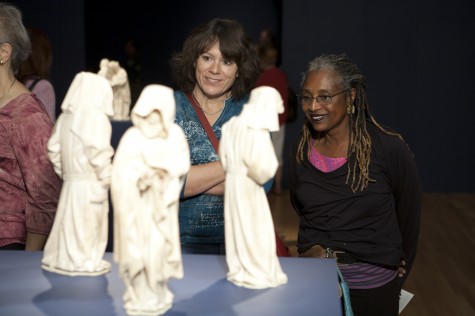
Visitors enjoying a free sneak peak at "The Mourners"
Inside, we had performances throughout the day, including spoken word pieces by Booker T. Washington students, flash mob dances, and an appearance by the Plano Senior High Chamber Singers in full medieval dress (see them again on the October 15 Late Night).
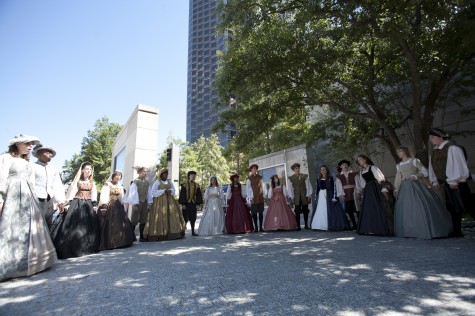
The Plano Senior High Chamber Singers
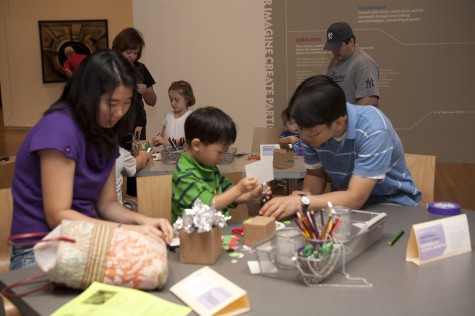
Masterpieces in the works at the Space Bar in C3
Your Museum staff happily joined in on the fun, even grabbing a few bites of escargot panini along with our more than 4,500 weekend visitors. We can’t wait for the rest of the Art in October celebration!
Encountering Space in the New C3
Published October 5, 2010 Behind-the-Scenes , Education , Exhibitions , Go van Gogh ClosedTags: C3, Center for Creative Connections, Encountering Space, National Museum Day, opening day, space
Amy Copeland is the Coordinator of the Museum’s Go van Gogh outreach program to local elementary schools and a frequent blogger on the DMA Educator Blog. She has graciously agreed to share some of her experiences with the new exhibition in our Center for Creative Connections, aka C3. Last Saturday, more than 3,000 visitors helped us celebrate the opening of Encountering Space in the completely reconfigured C3 on National Museum Day. Stop by during Art in October, a monthlong celebration of the Dallas Arts District, for a chance to experience Encountering Space for yourself.
And now, here’s Amy . . .
One of my favorite things to do is poke around the Museum when exhibitions are being installed. I like seeing the bare walls pre-installation, and then watching as they get painted, and the vitrines begin to appear in the galleries, and objects are brought into the space, bringing it to life. I usually only catch glimpses of this process, but I’ve had a fun last few weeks walking through the Center for Creative Connections every day during the construction of the new Encountering Space exhibition. (My office is at the back of the space–lucky me!)
Below are pictures from the installation and a few from the opening day celebration last Saturday. They show just a fraction of this incredibly dynamic space, so I hope you’ll come explore it for yourself.
[slideshow]
Amy Copeland is the Coordinator of the Dallas Museum Art’s Go van Gogh outreach program
Finger Painting
Published September 28, 2010 Art Beyond Sight , Behind-the-Scenes , Education 2 CommentsTags: Art Beyond Dight, Artists, education
Imagine visiting the Dallas Museum of Art to see your favorite painting by Claude Monet or Jackson Pollock. Now imagine how you might experience those works without your vision. How would you “see” them? That’s exactly what I did at a workshop with artist John Bramblitt, and this is what visitors to the Museum’s Center for Creative Connections will have a chance to experience in October when John rejoins us as the Artist of the Month.
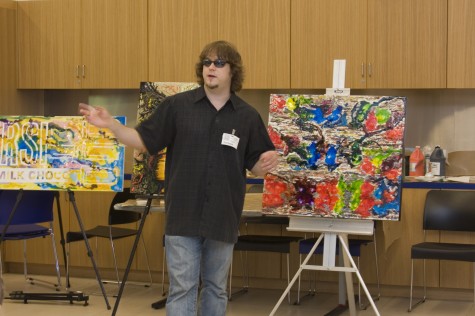
John as our guest artist during a summer camp this year.
October is Art Beyond Sight Awareness Month, organized by Art Education for the Blind to make art and culture a part of life for adults and children affected by sight loss. At the DMA, we’re planning some cool programs for kids and adults with vision impairment, but we’ll also repeat a family workshop that I took with John that shows how we can make art using our other senses.
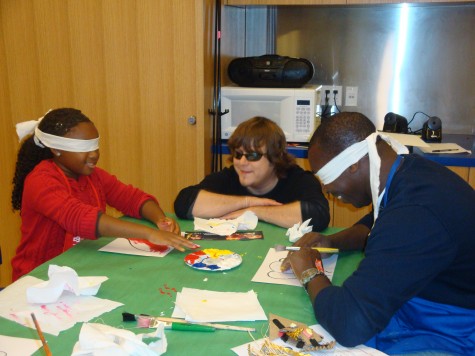
John leading a family workshop last October.
Always passionate about art, John didn’t begin to paint until he lost his sight almost ten years ago while in his late 20s. His work is intensely personal, taken from real people and events in his life. And his art-making workshops are unique, spanning the gap between beginning and professional artists, and including adaptive techniques for people with disabilities.
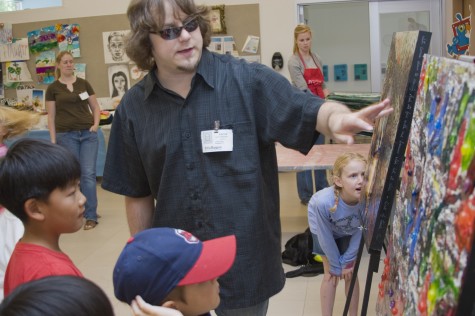
DMA campers learning more about John's method for sightless painting.
He’s developed a method of sightless painting that centers on the textures of paint in order to distinguish the color of it. When I worked with him, we mixed flour into the red paint, birdseed into the yellow, and sand into the white, and added nothing to the blue. We put on a blindfold and were asked to imagine what we would be painting, to “see” it first in our mind’s eye. Then, touching the colors and using our fingers, we painted.
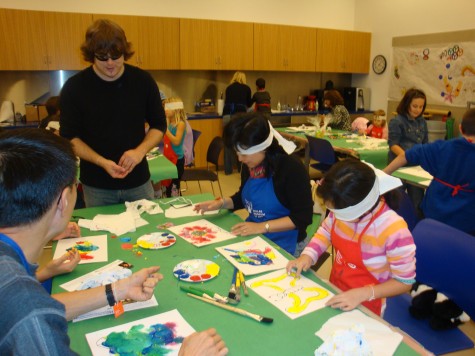
The texture of the paint lets the families know what color they are using.
This workshop, and many more exciting hands-on activities with John, will be held at the Museum during October. For more information, visit http://www.dm-art.org/Family/AccessPrograms/index.htm . To learn more about John Bramblitt, visit www.bramblitt.net.
Amanda Blake is Manager of Family Experiences and Access Programs at the Dallas Museum of Art
Late Nights: Celebrating Mexico’s Bicentennial til the Midnight Hour
Published September 16, 2010 Education , Exhibitions , Late Nights ClosedTags: Brainstorming, Late Nights, Programs
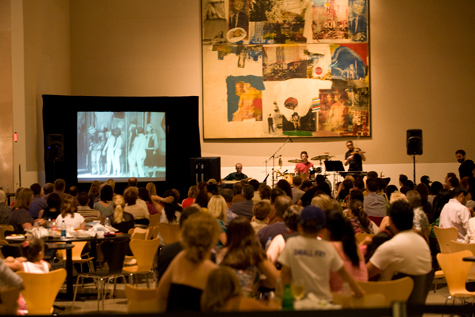


Late Nights at the Dallas Museum of Art take place on the third Friday of every month (except December) and can bring up to 5,000 visitors to the Museum in just one evening. With eleven Late Nights to plan each year, we are constantly brainstorming program ideas and themes.
The process starts with coming up with a theme for each Late Night month. These are usually decided a year in advance by looking at our upcoming exhibitions, works of art in our collection, or other special events and occasions like the Museum’s annual birthday celebration in January.
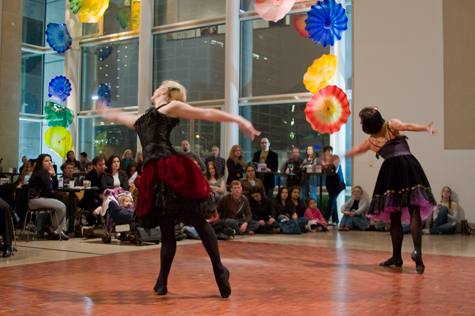
We have three Late Nights left in 2010 and each one will celebrate a different exhibition on view this fall. The next one, on September 17, focuses on our México 200 exhibitions: José Guadalupe Posada: The Birth of Mexican Modernism and Tierra y Gente: Modern Mexican Works on Paper. These two exhibits, which showcase Mexico’s long tradition of exquisite artistry, were planned as a way to commemorate the Mexican bicentennial.
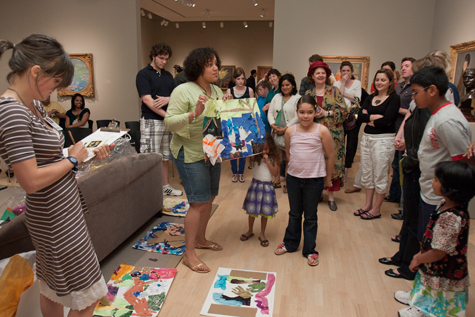
Once the themes of each Late Night are chosen, the programming team decides which performers, speakers, and programs to schedule, making sure there is a mix of live music and performances, lectures, tours, films, family activities, Tech Lab programs, and other special events. Through our own research, recommendations from colleagues, and old-fashioned word-of-mouth, we choose the Late Night performers and speakers who we feel tie into the main theme of the evening while also offering something new and interesting for our visitors to experience. These special guests come from all across Texas, often from across the country, and once in a while, from abroad.
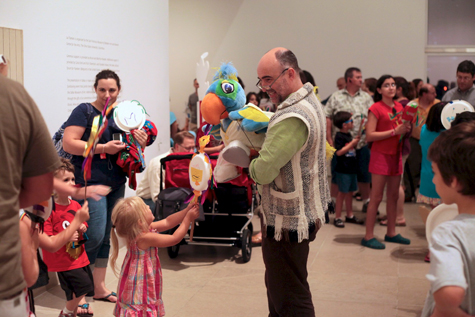
We also collaborate with other organizations in our North Texas community to present joint programs at Late Night. In September the acclaimed Mexican poet Homero Aridjis will be at the Museum to give a reading in both English and Spanish. This program is hosted in partnership with the Center for Translation Studies at UT Dallas.
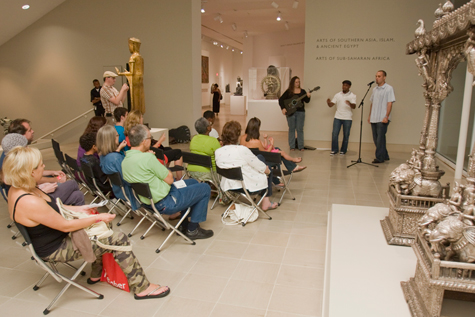
We’ve just finished deciding on our themes for the 2011 Late Nights, and while we’ll keep them a secret for now, we hope to see you at one or maybe even all of them!
Stacey Lizotte is Head of Adult Programming and Multimedia Services.