Archive for the 'Collections' Category


Splish Splash – Escaping the Texas Heat

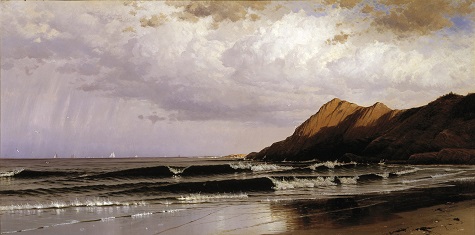
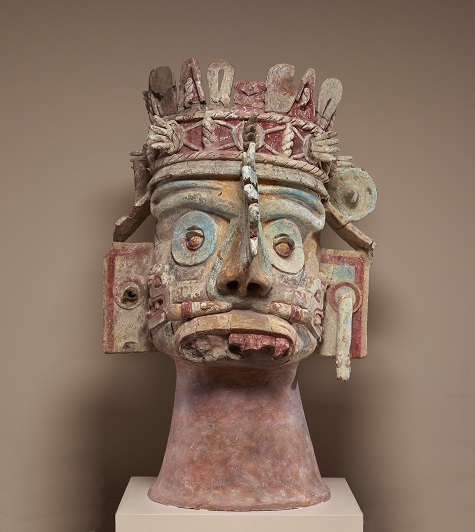
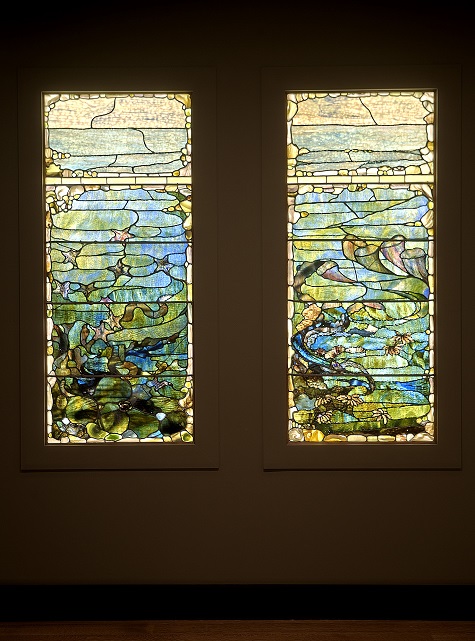
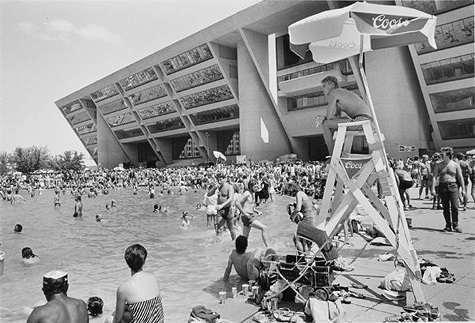
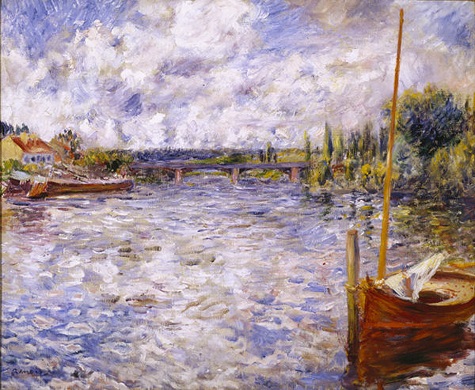
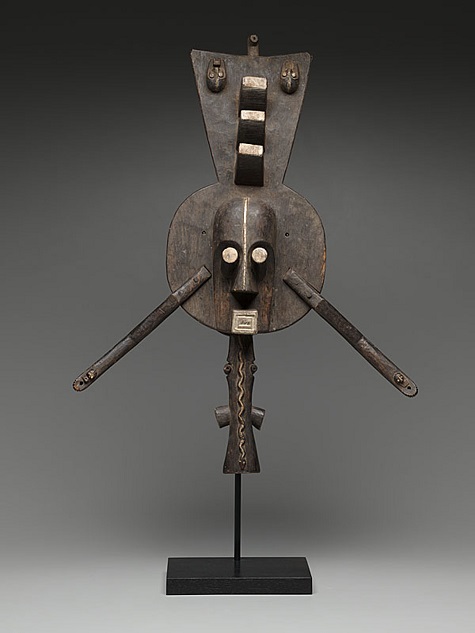
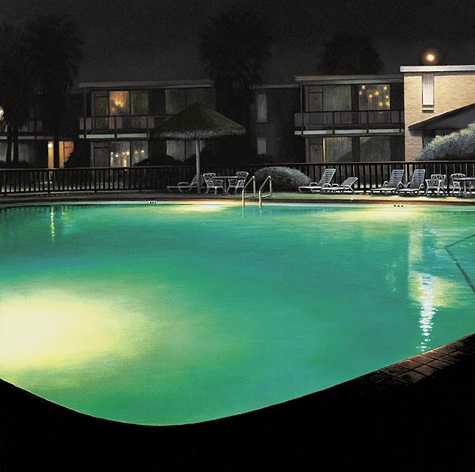
With multiple days of triple-digit temps, we are feeling the heat right with you. So we pooled together works in the collection that really make a splash. Take a refreshing dip into our DMA waters below, find even more on our Pinterest page, and stop by the Museum to escape the heat. We keep it a cool 72 degrees inside; the AC’s even included in free general admission.

Kimberly Daniell is the Public Relations Manager at the DMA and Hayley Dyer is the Audience Relations Coordinator for Programming

Moving Day: Tamayo’s El Hombre Finds a New Home

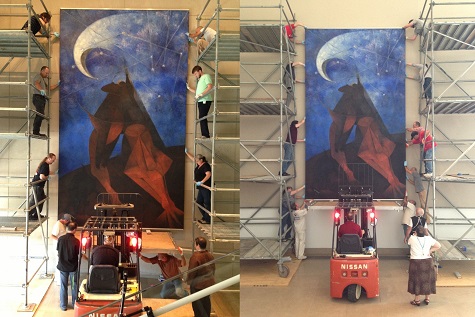
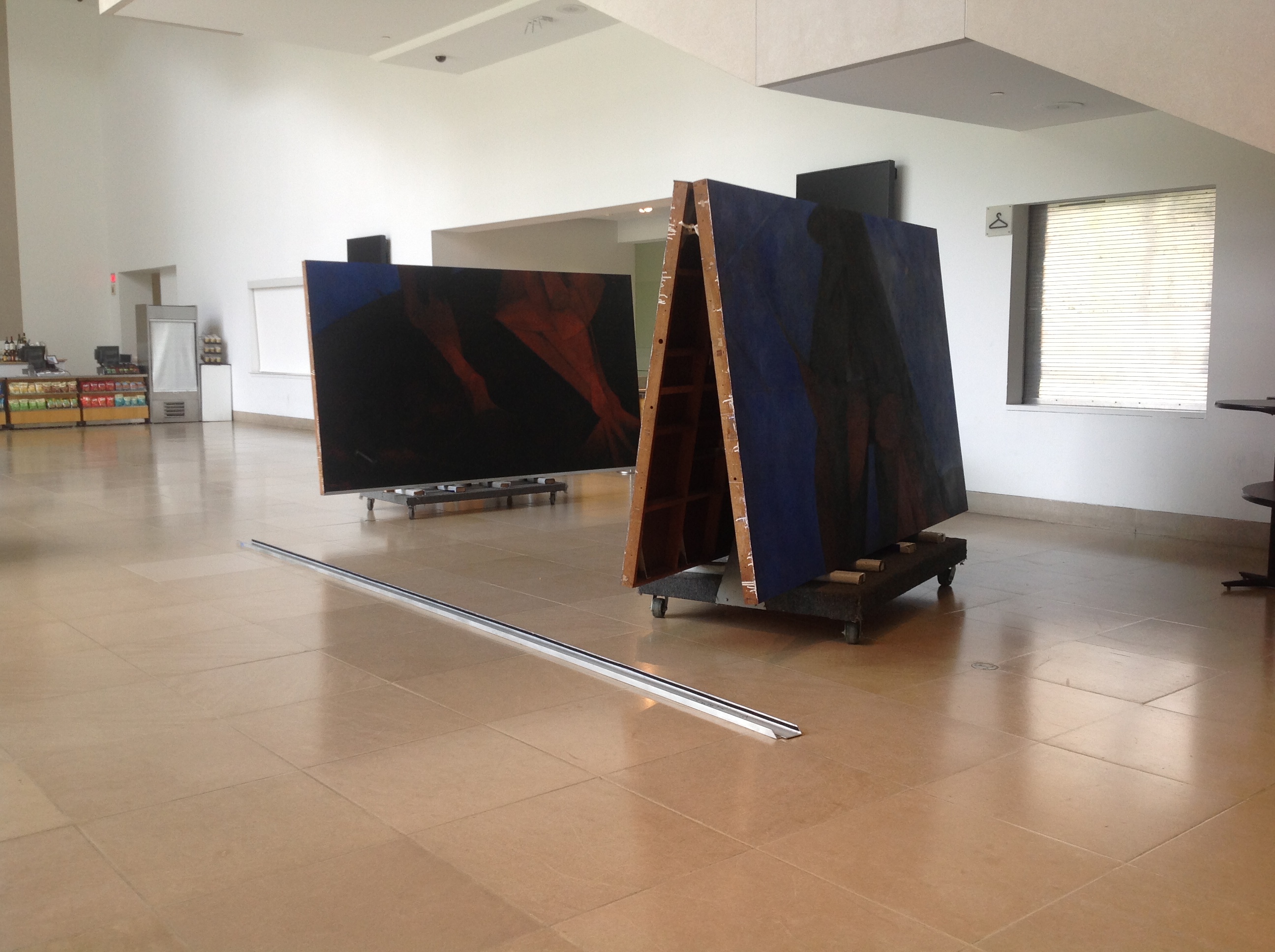
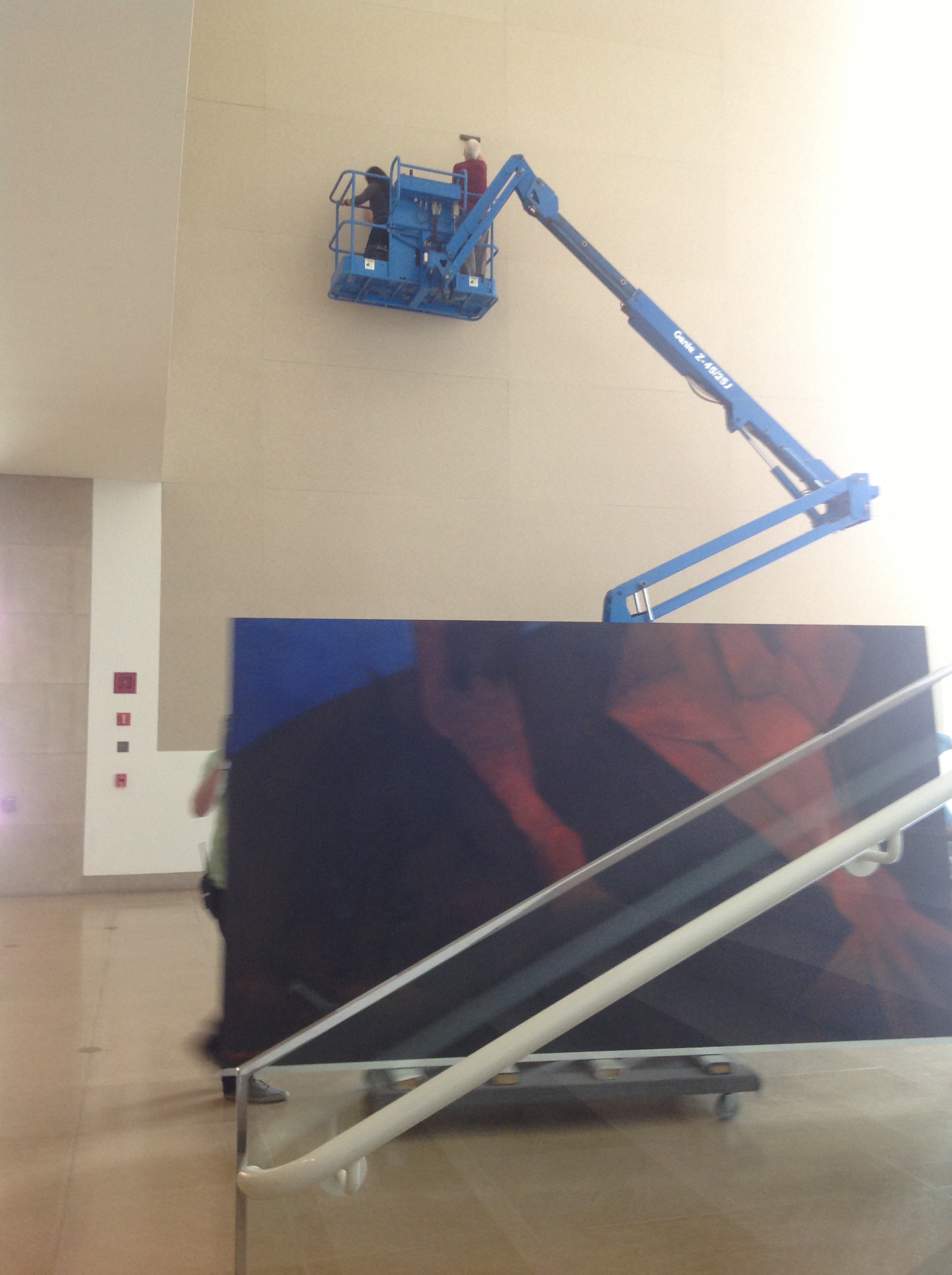
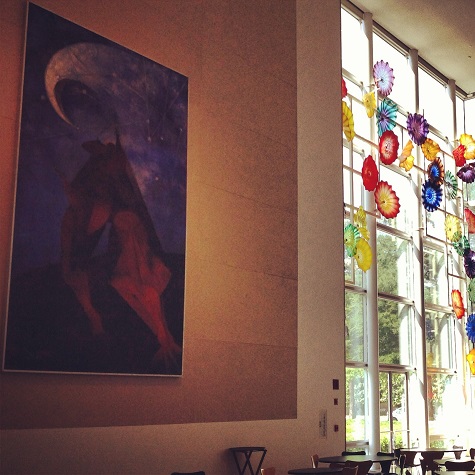
After many years at the Museum’s Ross Avenue Entrance, Rufino Tamayo’s iconic mural El Hombre (Man) is returning to the Atrium, where it was first hung when the Museum’s Hamon Building opened in 1993.

Rufino Tamayo’s El Hombre (Man) being de-installed from the Ross Avenue entrance (left) and the rehanging in the DMA Atrium (right).

Rufino Tamayo’s El Hombre (Man) being de-installed from the Ross Avenue Entrance (left) and the rehanging in the  Atrium (right).

Tamayo, born of Zapotec heritage in Oaxaca, Mexico, was one of the most prominent Mexican artists of the mid-1900s, and a contemporary of Rivera, Siqueiros, and Orozco. His mural has long been viewed as one of the DMA’s most important works. The tumultuous story behind it, however, inspires further appreciation.

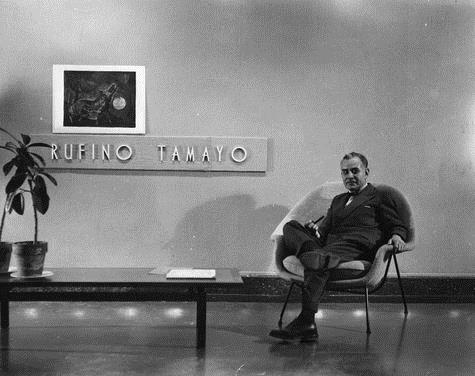
Rufino Tamayo

Rufino Tamayo at the Dallas Museum of Fine Arts, 1950s. Dallas Museum of Art Archives

Rufino Tamayo was a good friend of Stanley Marcus, then the president of the Dallas Art Association. In 1951, while on a trip to Amarillo, Tamayo and his wife, Olga, planned to drive to Dallas to visit the Marcus family, letting them know that they would arrive at 5:30 that evening. At 10:30 that night the Tamayos finally arrived, looking disheveled and disillusioned. When Marcus asked them about the delay, Tamayo told him about a car accident they were involved in, in which a local from Amarillo driving a pickup truck ran into them from behind. When the police arrived, it was determined that Tamayo was at fault for the accident, despite his claims and that the evidence suggested otherwise. Because of this unsettling experience, Tamayo told Marcus he would never produce art for the United States. By coincidence, Marcus had for some time wanted to secure Mexican art for the Museum to showcase the significant cultural contributions of the country’s artists, and he offered to commission a large-scale mural from Tamayo. Despite the Museum having only enough funds  to pay one-third the normal price of his work, Tamayo accepted the commission as “a real gift of the heart from Mr. Tamayo to the museum.” He chose to focus his subject on the aspirations and potential of mankind.

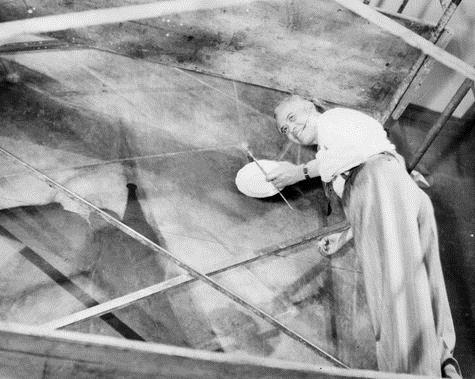
Tamayo painting El Hombre (Man)

Rufino Tamayo at work, 1950s. Dallas Museum of Art Archives

When Tamayo completed El Hombre in the summer of 1952, he briefly showed it in Mexico City before shipping it by train to Dallas. Months later, however, the painting still had not arrived at the Museum. The search for the missing mural went on for over a year, when finally the stationmaster from a train station on the Mexico-Texas border called Marcus to inform him that they had found a large package addressed to him. The boxcar that the package had been traveling in had been shunted off the track on a spur, and had been sitting out in the elements all year*. Fortunately, when the mural finally arrived in Dallas in September 1953, it was found to be in surprisingly good condition, and El Hombre was put in a place of honor so that every visitor to the Museum would see Tamayo’s depiction of Mexican culture.

El Hombre (Man), comprised of three panels, in transit to its new home.

El Hombre (Man), which comprises three panels, in transit to its new home.

DMA staff vacuuming the Atrium wall in preparation for Tamayo’s painting.

DMA staff vacuuming the Atrium wall in preparation for Tamayo’s painting.

This week, on its journey down the Concourse to the Atrium, Tamayo’s El Hombre traveled much more safely this time around. Be sure to stop by the Atrium on your next visit to see this iconic work for free.

El Hombre (Man) in the DMA Atrium

El Hombre (Man) in the DMA Atrium

[youtube=http://www.youtube.com/watch?v=Gs1_c2Nr0rQ&w=560&h=315]

* [update August 2017] The source of this story is an oral history with Stanley Marcus, interviewed by Director Jay Gates October 27, 1994. However, documentation of the arrival of El Hombre at the Museum shows that the painting was only delayed by three and a half weeks, likely by flooding in areas along the railway. El Hombre was shown in Mexico City in August 1953, shipped from Mexico on August 17, 1953 and arrived in Dallas on September 9, 1953.

Jasmine Shevell is the Exhibitions & Publications Intern at the DMA.

From Sea to Shining Sea

In celebration of the Fourth of July, we thought it might be fun to spotlight some of the great American artworks in our collection that have been created in the 237 years since our nation’s founding.

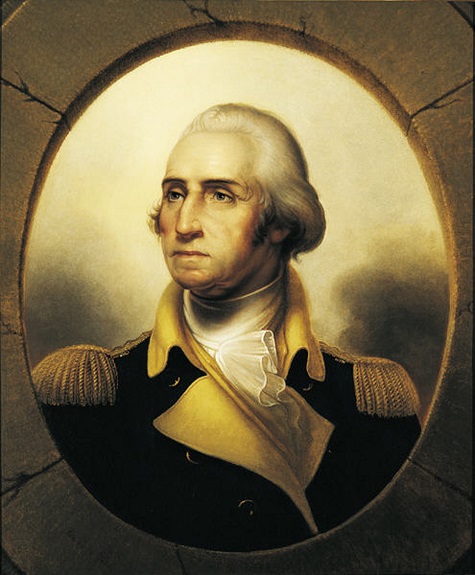
Rembrandt Peale, George Washington, c. 1850, oil on canvas, Dallas Museum of Art, The Karl and Esther Hoblitzelle Collection, gift of the Hoblitzelle Foundation

Rembrandt Peale, George Washington, c. 1850, oil on canvas, Dallas Museum of Art, The Karl and Esther Hoblitzelle Collection, gift of the Hoblitzelle Foundation

What better way to start than with the Father of Our Country? This portrait, completed fifty-one years after Washington’s death, was created by an artist who had met George Washington on several occasions. His first encounter with the president occurred when Rembrandt Peale was just seventeen years old. He painted a portrait of the president that would serve as the inspiration for countless additional portraits over the years. Peale shows Washington in his later years, perhaps reflecting back on his time as a surveyor, general, and president. When you visit the galleries, you might compare this painting with Jean-Antoine Houdon’s bust of George Washington, which is located right around the corner. Which one do you think is a more accurate likeness?

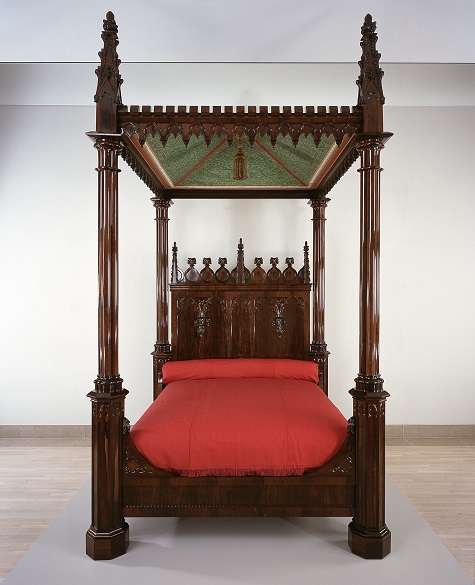
Crawford Riddell, Bed, c. 1844, Brazilian rosewood, tulip poplar, and yellow pine, Dallas Museum of Art, gift of three anonymous donors, Friends of the Decorative Arts Fund, General Acquisitions Fund, Discretionary Decorative Arts Fund, and the Boshell Family Foundation

Crawford Riddell, Bedstead, c. 1844, Brazilian rosewood, tulip poplar, yellow pine, and polychromed textile, Dallas Museum of Art, gift of three anonymous donors, Friends of the Decorative Arts Fund, General Acquisitions Fund, Discretionary Decorative Arts Fund, and the Boshell Family Foundation

It’s impossible to lead a tour through our galleries without stopping at the Gothic bedstead. As beautiful as this work of art is, I think its history is even more fascinating. This bed was commissioned by a group of Whig party supporters who were convinced that Henry Clay was finally going to win an election and become President of the United States. Unfortunately for those eager supporters, Clay lost the 1844 election to James K. Polk, and the bed never made its way into the White House. It’s always fun to hear from our visitors who they think might have slept in a bed this grand.

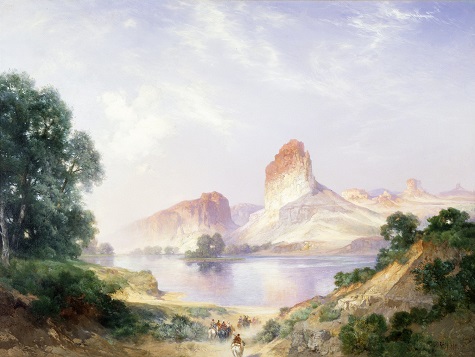
Thomas Moran, An Indian Paradise (Green River, Wyoming), 1911, oil on canvas, Dallas Museum of Art, Munger Fund

Thomas Moran, An Indian Paradise (Green River, Wyoming), 1911, oil on canvas, Dallas Museum of Art, Munger Fund

In the late 19th and early 20th centuries, American artists headed West to explore new territories in the United States. Many of them were captivated by the natural beauty of the landscape—especially areas like the Grand Canyon, Yellowstone and Yosemite Parks. These artists began to think of such awe-inspiring locations as our cathedrals and monuments. By capturing their beauty and grandeur on canvas, they celebrated the landscapes that make our country unique. What natural wonders are your favorite American landscapes?

Our collection provides many wonderful primary sources that relate to key events in American history. We hope that you’ll come visit them in person on July 4—the DMA will be open (with FREE general admission) from 11:00 a.m. until 5:00 p.m.

Shannon Karol is the Manager of Docent and Teacher Programs at the DMA.

Reclining Nymph Gets a New Name

You may have heard that we recently reattributed a Baroque sculpture in the Wendy and Emery Reves Collection to the artist Giovanni Bonazza. Here’s an interview with Olivier Meslay, associate director of curatorial affairs at the DMA, explaining how he discovered the true artist of Reclining Nymph:

[youtube http://www.youtube.com/watch?v=YNc_m3gkjK8]

For additional information on the sculpture and its reattribution, you can read the full press release here or see the work up close, and for free, on view in The Wendy and Emery Reves Collection on Level 3.

DMA’s Cinderella Inspires New Show

In honor of Thomas Sully’s birthday on June 19, we sat down with William Keyse Rudolph, the DMA’s former Associate Curator of American Art. Now the Milwaukee Art Museum’s Dudley J. Godfrey, Jr. Curator of American Art and Decorative Arts, William is currently organizing a retrospective exhibition of the artist. Sully (1783–1872) was born into a theatrical family in England but made a career in America, capturing in paint many of the leading actors and actresses of the time. The exhibition will feature many of these portraits as well as his “fancy pictures”–paintings made for mass appeal, with literary, artistic, and/or imaginary subjects. While at the DMA, William acquired Cinderella at the Kitchen Fire for the collection; the painting will be featured in the traveling exhibition and accompanying catalogue.
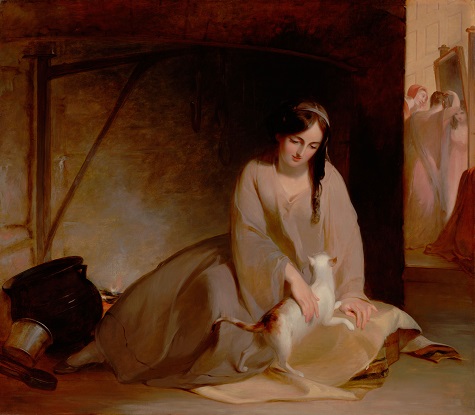
Thomas Sully, Cinderella at the Kitchen Fire, 1843, oil on canvas, Dallas Museum of Art, gift of the Pauline Allen Gill Foundation

Thomas Sully, Cinderella at the Kitchen Fire, 1843, oil on canvas, Dallas Museum of Art, gift of the Pauline Allen Gill Foundation

1. You were quoted in Art and Antiques magazine as saying that the DMA’s Cinderella at the Kitchen Fire took your breath away the first time you saw it. Why is this? Why do you consider this work Sully’s “finest fancy picture”?

For one thing, the picture is bigger than you expect. It’s nearly four feet by five feet. It was hanging on the wall of an art dealer’s office, surrounded by books, clutter, papers–and it just jumped out at me, even with all that distraction. It’s a beautifully painted, delicate picture, full of all sorts of grays and pinks that never reproduce well, but that are knock-out in person. And to be honest, it has this great big wonderful orange and white cat frolicking with Cinderella almost right at front and center. At that time, I had an orange and white cat, so the die was cast. I had to love it! And to be fair, former DMA director Jack Lane’s first words upon seeing an image of the painting were “Look at that cat!” He’s a cat person, too. We were also very fortunate that Mrs. Pauline Gill Sullivan, who had been a great benefactor of the DMA, saw the painting when we brought it to the Museum on approval and very graciously agreed to fund its acquisition. Besides having her own fine collection of European and American art, Mrs. Sullivan had a wonderful track record of making acquisitions available to the Museum, such as the commanding 18th-century portrait by Ralph Earl and a really dreamy late 19th-century Frank Duveneck painting of a woman in a red hat, so I was grateful that she responded so well to a big fairytale scene, which was out of her comfort zone in terms of the artist, size, and subject matter.

2. Did you have an interest in Sully and his paintings prior to this acquisition?

Yes. I had lived, worked, and gone to graduate school in Philadelphia for ten years before coming to the DMA, so I was well aware of Sully. He is so closely linked with the city of Philadelphia, where he worked for about sixty years, that it is almost impossible to spend time in Philly and not run into his work in virtually every cultural institution, from museums to libraries and hospitals.

3. How does it make you feel knowing that a key acquisition you made while working at the DMA will now be featured in Milwaukee’s exhibition and catalogue? Was it difficult to leave Cinderella behind?

I am, of course, thrilled! Cinderella at the Kitchen Fire actually gave birth to the show. After I acquired the work, my colleague Carol Eaton Soltis (a curator at the Philadelphia Museum of Art) and I began to talk about why this work was so interesting, which led to us proposing a show at the DMA that examined Sully’s total career: portraits as well as fancy pictures like this one. That show, which we began working on in 2005, was originally scheduled for 2009-2010 but ultimately didn’t happen due to timing and other issues. So we are really happy that years later the idea for the show was able to travel with me to Milwaukee and can now finally be seen here and then at the San Antonio Museum of Art. And yes, it was very difficult to leave Cinderella behind. You never, ever forget your first acquisition, and she was mine. I have missed her every day since I left the DMA, and I’m ridiculously excited to have her back with me for a brief time. If you ask gallery attendants at the DMA who remember me, they will tell you I used to go talk to her in the galleries. So my team here has been warned about that! I will probably burst into tears when she comes out of her crate and I see her again.

4. Since Sully also specialized in portraiture, is there any evidence that the figure of Cinderella was based on a real person?

Carol Soltis and I are convinced that the model for Sully was his daughter Rosalie, who posed for many of his works, several of which will also be in the show. She was a very talented painter herself, who died young.

5. Cinderella was painted when Sully was 60 years old. In your opinion, did it bring him the success and attention he hoped for in his later years? Did it help him attract new clients?

Yes and no. Sully hoped to sell the painting much faster than he did. He exhibited it several times in the Northeast and it was made into an engraving, but it took a few years to actually sell to a collector. One of the fascinating stories of this exhibition is how the fancy pictures like Cinderella functioned for Sully as a way to try to counteract the effects of economic crises on the portraiture market. Works like Cinderella were attempts to keep himself in front of the public, which he hoped would both result in sales of the subject pictures and remind clients that he could still turn it on when he wanted to.

6. A later version of Cinderella was (at least at one time) in the collection of Thomas Sully, Jr., of Naples, Florida. Is he a descendant of the painter? Did you ever track down this painting and will it be part of the exhibition and/or catalogue?

He is a descendant. I’ve seen an old reproduction of this picture, and I actually suspect it was the work of one of Sully’s grown children, whom he trained as artists. For that reason, I’ve never really worried about tracing it, as the DMA has the best one. What I’d be curious to see someday is another version of Cinderella done later that apparently shows her with the fairy godmother, but that one is completely obscure and only listed in Sully’s register. If anyone knows where it is, I would love to see it!

7. Do you know yet which works in the exhibition will be installed near the DMA’s Cinderella?

I don’t know exactly where the painting will go in the gallery, but it will be part of a section devoted to Sully’s fancy pictures. So she will live near an amazing picture of Little Nell Asleep in the Curiosity Shop from the Free Library of Philadelphia, which is based on Charles Dickens; and a gigantic, dramatic painting based on a scene from the early American novel The Pilot by James Fenimore Cooper that we’re borrowing from the Birmingham Museum of Art in Alabama. All three of them will be stunning together, and all were painted around the same time.

Thomas Sully: Painted Performance will be on view at the Milwaukee Art Museum October 11, 2013-January 5, 2014, and then at the San Antonio Museum of Art February 7-May 11, 2014. I hope some of the DMA’s visitors who love this painting will come see the show in one of these places to help celebrate this important painter and this really beautiful picture that the DMA family has been so quick to adopt as a favorite. And thank you to Sue Canterbury, Maxwell L.  Anderson, and all the DMA family for making her available for loan.

Reagan Duplisea is the Associate Registrar, Exhibitions at the DMA.
Off the Walls: Erminia and the Shepherds

The DMA’s galleries house art from around the world, and each work has a story. Olivier Meslay, the Associate Director of Curatorial Affairs and Barbara Thomas Lemmon Curator of European Art at the Dallas Museum of Art, shares insight about the recent acquisition Erminia and the Shepherds, by Guillaume Guillon Lethière. After you learn about the artist and the history of the painting, visit the work on Level 2 for free!

[youtube http://www.youtube.com/watch?v=1vYPk1dKg2c]

Swelling Seas

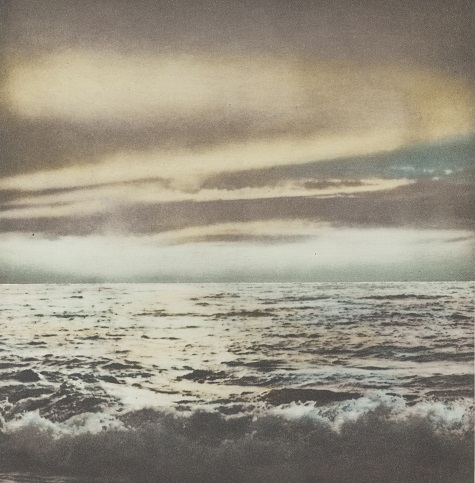
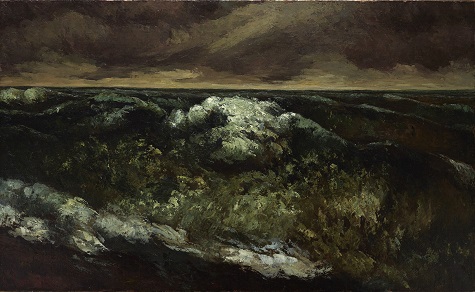
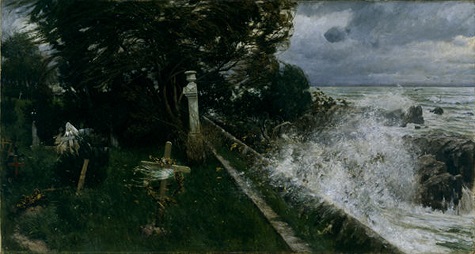
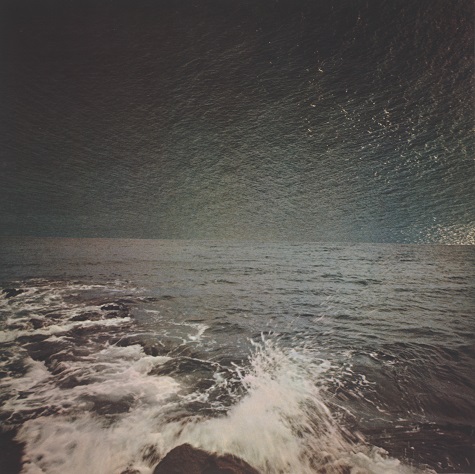
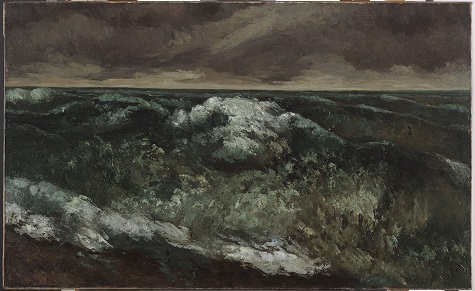
Not for the faint of heart, Neil Gaiman’s forthcoming novel, The Ocean at the End of the Lane, is wondrous, imaginative, and, at times, deeply scary. We found some frightening and powerful images of the sea in our collection that we thought were appropriate for Gaiman’s upcoming DMA Arts & Letters Live event on June 24, 2013, at the Majestic Theatre. Gaiman has announced that this will be his final U.S. tour, and as of today there are fewer than 100 tickets left to his talk and book signing! Visit the DMA’s website for more information and to buy tickets.

Adolf Hiremy-Hirschl, Seaside Cemetery (Seefriedhof), 1897, oil on canvas, Dallas Museum of Art, gift of J.E.R. Chilton

Adolf Hiremy-Hirschl, Seaside Cemetery, 1897, oil on canvas, Dallas Museum of Art, gift of J.E.R. Chilton

Gerhard Richter, Kunstverein, Richard Bacht, Margreff, Sea (Meer), 1972, yellow, red, blue, and black offset print on white lightweight cardboard, cellophaned and fixed on white lightweight cardboard, Dallas Museum of Art, Dallas Museum of Art League Fund, Roberta Coke Camp Fund, General Acquisitions Fund, DMA/amfAR Benefit Auction Fund, and the Contemporary Art Fund: Gift of Mr. and Mrs. Vernon E. Faulconer, Mr. and Mrs. Bryant M. Hanley, Jr., Marguerite and Robert K. Hoffman, Howard E. Rachofsky, Deedie and Rusty Rose, Gayle and Paul Stoffel, and two anonymous donors

Gerhard Richter, Kunstverein, Richard Bacht, Margreff, Sea, 1972, yellow, red, blue, and black offset print on white lightweight cardboard, cellophaned and fixed on white lightweight cardboard, Dallas Museum of Art, Dallas Museum of Art League Fund, Roberta Coke Camp Fund, General Acquisitions Fund, DMA/amfAR Benefit Auction Fund, and the Contemporary Art Fund: Gift of Mr. and Mrs. Vernon E. Faulconer, Mr. and Mrs. Bryant M. Hanley, Jr., Marguerite and Robert K. Hoffman, Howard E. Rachofsky, Deedie and Rusty Rose, Gayle and Paul Stoffel, and two anonymous donors

Gustave Courbet, The Wave, c. 1869-1870, oil on canvas, Dallas Museum of Art, gift of H.J. Rudick in memory of Arthur L. Kramer

Gustave Courbet, The Wave, c. 1869-70, oil on canvas, Dallas Museum of Art, gift of H.J. Rudick in memory of Arthur L. Kramer

Hayley Dyer is the Audience Relations Coordinator for Programming and Education at the DMA.

DMA Athletes in Training

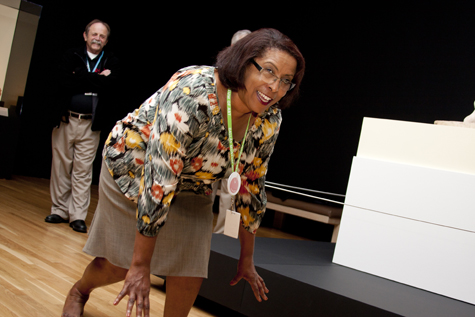
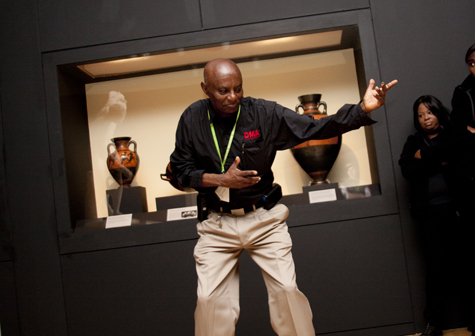
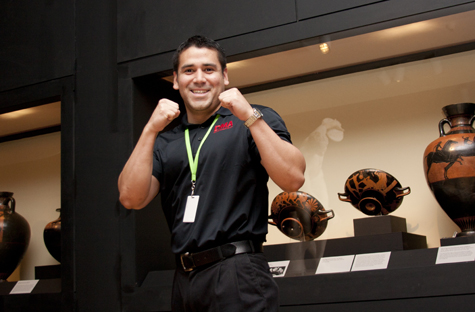
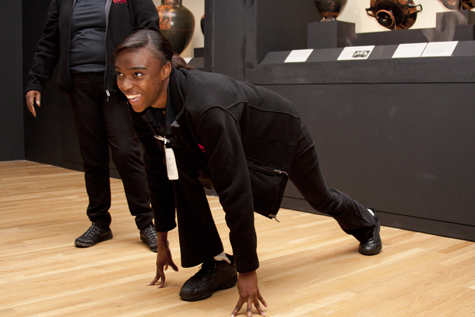
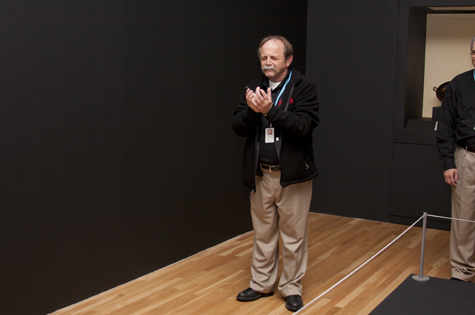
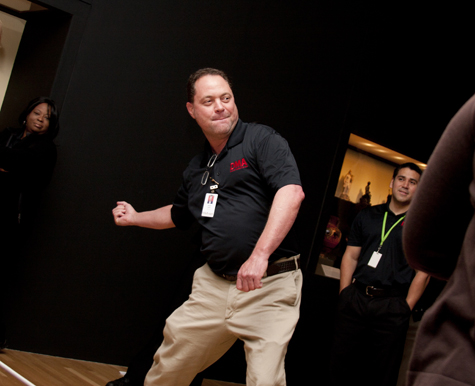
One of my favorite parts of my job is that I get to spend one morning every month talking with our fantastic Gallery Attendants about works in the collection. So far, we have discussed European art, shared Personal Responses to works in the collection, written Facebook profiles for photos in the Cindy Sherman exhibition, and compared three vastly different works in our American collection. Last week, we spent time in The Body Beautiful in Ancient Greece: Masterworks from the British Museum.

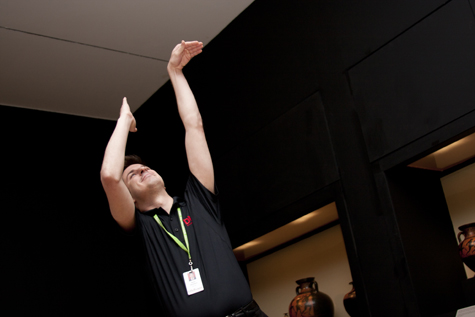
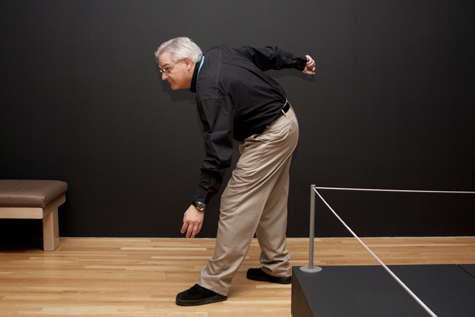
After looking at the discus thrower, the Gallery Attendants were asked to divide into teams of two. Each team had to select a sport and strike a pose that epitomizes an athlete participating in that sport. The rest of us had to guess which sporting event they were re-creating. Their poses were creative, clever, and funny, and we couldn’t resist sharing them with you!

Shannon Karol is the Manager of Docent and Teacher Programs at the DMA.
Hello, Summer!

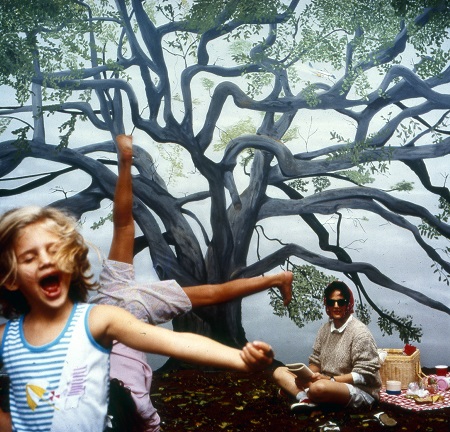
Memorial Day marks the beginning of summer. Enjoy a fun, free (and cool) summer at the DMA with free general admission every day during Museum hours and free activities every week. Check the DMA’s website in the coming weeks for details!

Nic Nicosia, Vacation, 1986, cibachrome photograph, Dallas Museum of Art, gift of Meisel Photochrome Corporation

Nic Nicosia, Vacation, 1986, Cibachrome photograph, Dallas Museum of Art, gift of Meisel Photochrome Corporation

DallasSITES from a Dallas Transplant

How do you navigate your way in a new city’s art community? That became my challenge when I moved from Philadelphia to Dallas in September 2012 to become the new McDermott Curatorial Intern for Contemporary Art. Of course, I did my research: numerous Google searches helped me make a page-long list of contemporary art venues I wanted to visit during my internship. But assisting on the DMA’s newest exhibition, DallasSITES: Charting Contemporary Art, 1963 to Present, was what really taught me about Dallas’s artistic legacy.

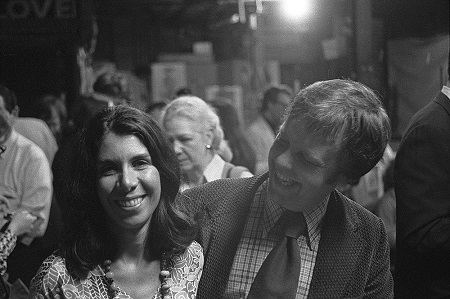
Two members the Dallas art scenes who have been influential for decades: Janet Kutner and Paul Rogers Harris c.1960s, Courtesy of Paul Rogers Harris, Dallas, TX

Two members of the Dallas art scene who have been influential for decades: Janet Kutner and Paul Rogers Harris, c.1960s, Courtesy of Paul Rogers Harris, Dallas, TX

I’ve spent the past nine months combing through archives, researching galleries, and learning about the evolution of the Dallas art scene. The exhibition, consisting mainly of ephemera from the past fifty years, will illustrate how dynamic the art community of North Texas has been. As a recent transplant, this project became my personal crash course. This history lesson served me well.

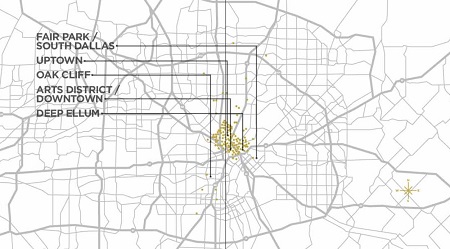
Map of Dallas, Courtesy of Swoon the Studio, Dallas, TX

Map of Dallas, Courtesy of Swoon the Studio, Dallas, TX

Dallas itself is a large city, and over the years the art scene has concentrated in different neighborhoods. Artists were extremely active in Fair Park and Uptown during the 1960s and 70s. With the establishment of the Arts District in the 80s, many art-related activities migrated to downtown. Deep Ellum became a serious locus for the arts in the 80s as well. Today, many galleries and institutions have relocated to the Design District. Interestingly, artist activity continued in all of these neighborhoods even when the larger cultural trends shifted. Meanwhile, universities produce interesting programs and bring important artists to visit and work in North Texas. The ephemera on view in DallasSITES reflect these events.

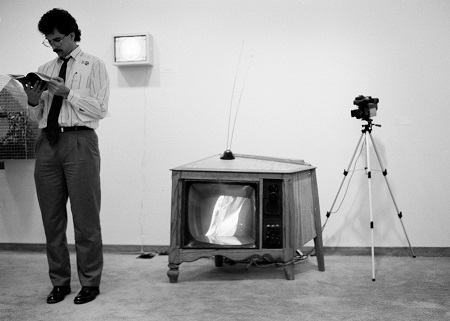
A visitor at the 1989 Dallas VideoFest, Courtesy of the DMA Archives

A visitor at the 1989 Dallas VideoFest, Courtesy of the DMA Archives

Some fun facts learned from this project:
Q: What is the oldest continuously running gallery in Dallas? A: Valley House Gallery & Sculpture Garden, established in 1955. Q: What is the oldest and largest video festival in the United States? A: Dallas’s own VideoFest! First held in 1986 at the Dallas Museum of Art, it provides a platform for experimental video art and Texas artists.

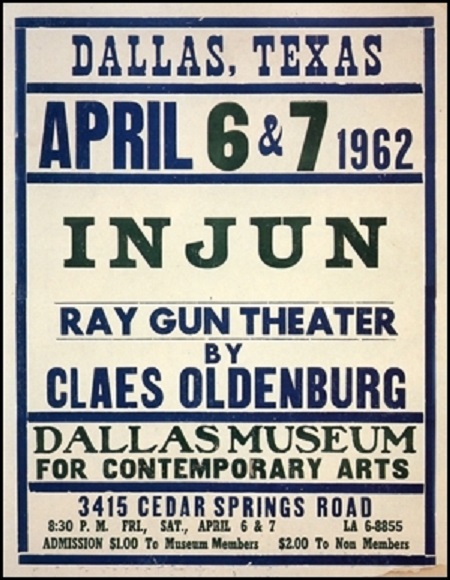
Claes Oldenburg, Poster for Injun Happening at the Dallas Museum for Contemporary Arts, April 6-7, 1962

Claes Oldenburg, poster for Injun happening at the Dallas Museum for Contemporary Arts, April 6-7, 1962

Claes Oldenburg is an iconic artist of the pop art movement, but did you know that in 1962 he staged one of his famous “happenings” in Dallas? Injun became a two-day collaboration with local artists at the Dallas Museum for Contemporary Arts (which merged with the Dallas Museum of Fine Arts in 1963 to form the Dallas Museum of Art). That was a fun discovery! Oldenburg’s relationship with Dallas has continued for several decades. Further, I discovered that one of my favorite artists, Oliver Herring, participated in a 1997 group show called Termite Terrace at Angstrom Gallery in Dallas’s Fair Park neighborhood. When DallasSITES opens, visitors will truly see how active this community has been. One of the best parts of contemporary art is the opportunity to meet artists and other art lovers at openings and talks. Each month, there are dozens of exhibition openings, artist talks, and panels that keep Dallas exciting. There are established museums, commercial galleries, and temporary spaces ranging from empty storefronts to an artist’s living room. Artists from across the United States and even internationally are showing in nearby spaces, while the roster of local talent continues to grow.

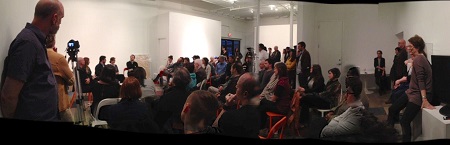
Dallas’ art scene in action: A packed house at CentralTrak for its NEXT TOPIC series panel, “Creating an Art Community/Scene” on May 2, 2013, Courtesy of Sally Glass and CentralTrak, Dallas, TX

Dallas’s art scene in action: A packed house at CentralTrak for its NEXT TOPIC series panel “Creating an Art Community/Scene” on May 2, 2013, Courtesy of Sally Glass and CentralTrak, Dallas, TX

When you see all the ephemera in DallasSITES presented in one room, the cultural wealth of this city becomes readily apparent. On May 26, you, too, can experience a crash course of your own for free!

Alexander Unkovic is the McDermott Curatorial Intern for Contemporary Art at the DMA.

Archives

Categories