Archive for the 'Behind-the-Scenes' Category


Getting Ready to Give More

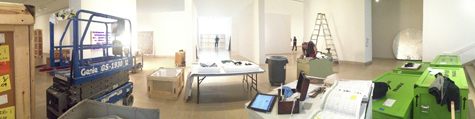
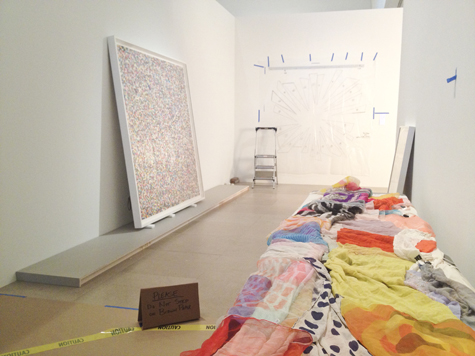
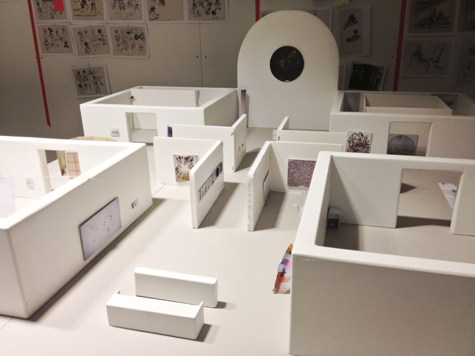
We have just under two weeks until we open the U.S. premiere of a major traveling exhibition, Jim Hodges: Give More Than You Take . The exhibition is an exciting one not only because it is the first comprehensive retrospective of Hodge’s career in the U.S. but also because it is co-organized by the Museum and the DMA’s senior curator of special projects & research, Jeffrey Grove.

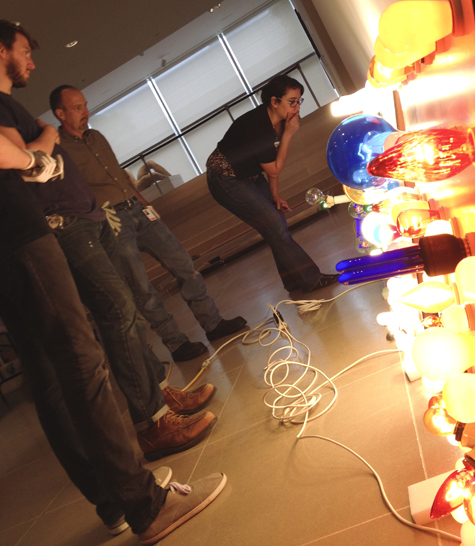
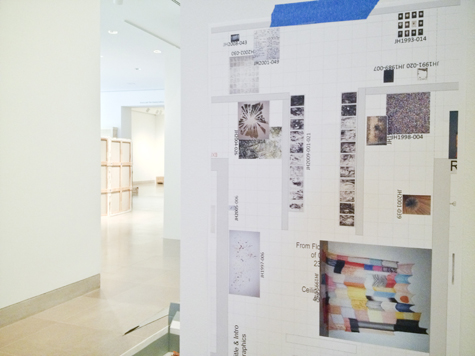
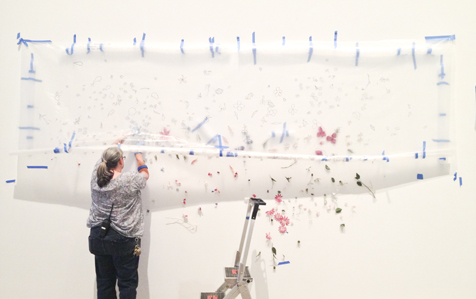
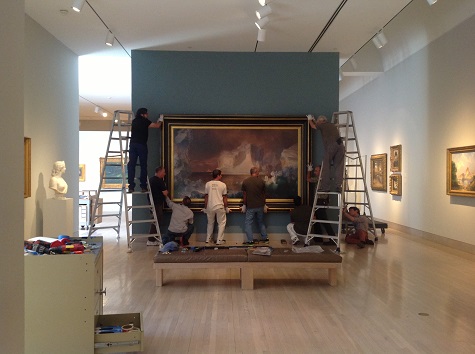
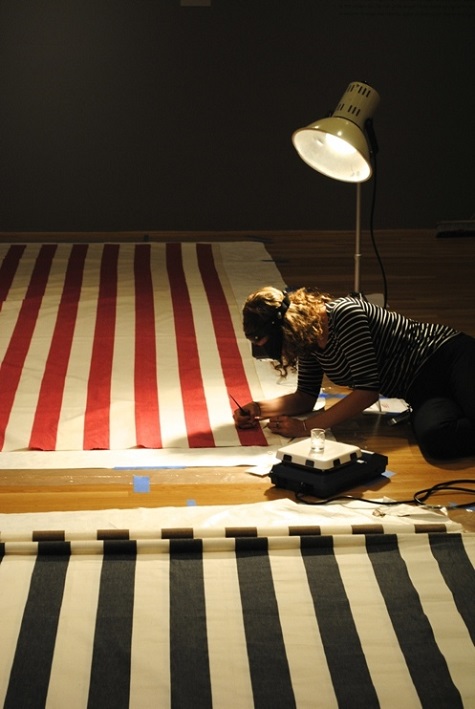
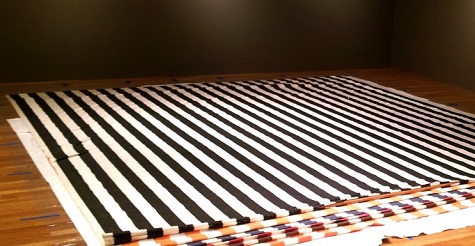
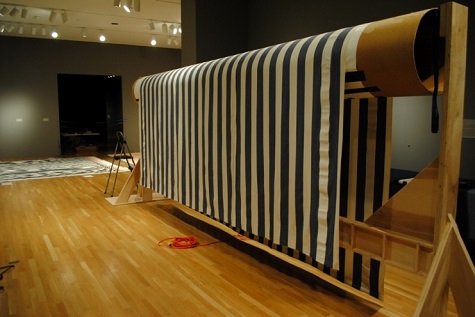
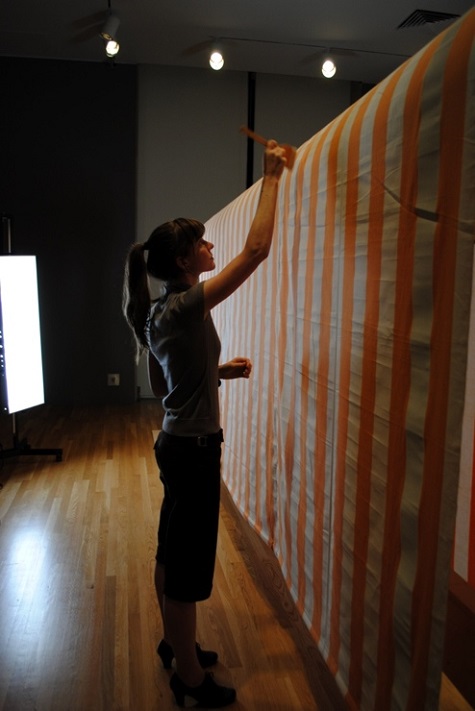
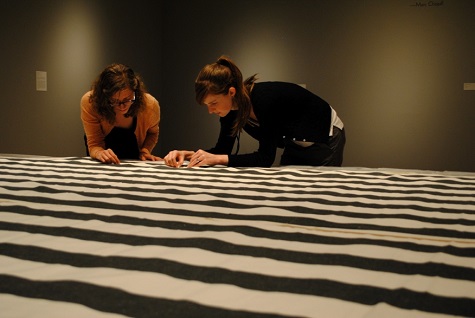
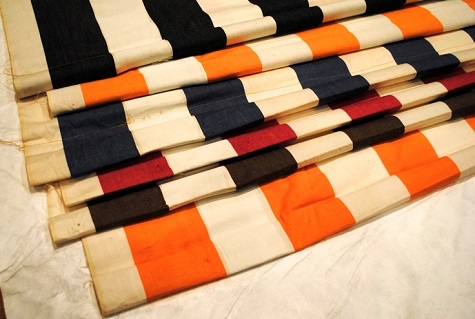
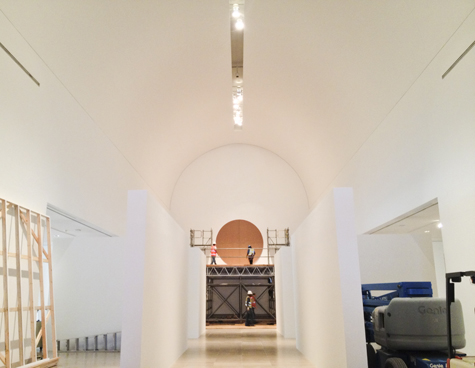
The nearly eighty works on display in the exhibition consist of hundreds of items, from brass chains to denim, from napkins to head scarves, from silk flowers to light bulbs. If you passed by the DMA’s Barrel Vault during a recent visit, you may have seen some of the detailed installation, which began in early September. Get an up-close look at the installation below, and mark your calendars to meet Jim Hodges on October 3 during a special Artist Talk at the DMA!

1

2

3

4

5

6

.7

Visiting the Far East with a DMA Awards to Artists Winner

The 2013 Otis and Velma Davis Dozier Travel Grant recipient, Matthew Bourbon, writes about his art and how he will use the DMA travel grant to visit Japan and conduct research for his painting practice.

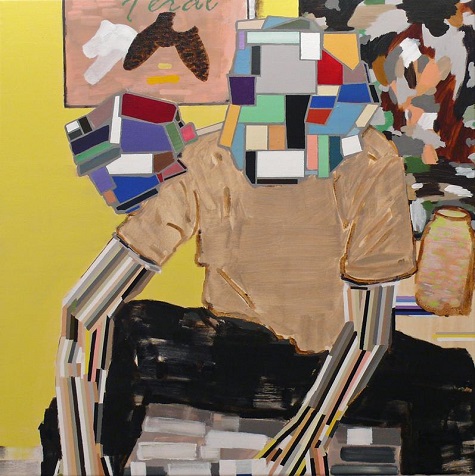
Matthew Bourbon, Of Two Minds, 2013

Matthew Bourbon, Of Two Minds, 2013

In order to construct my paintings, I am always on the prowl for something I deem useful to my artistic endeavor. I am an image hunter. In fact, I collect all manner of visual information, sorting items into books and office files (or when I’m less organized, into mounds of paper fragments sitting on my studio floor).

This diverse material is the generative spark that serves as building blocks from which my painted vignettes are born. The “research” material I use is essential to how I function as an artist, because everything I create involves altering and reconfiguring the sources I adopt, replacing the original intent of the imagery with my own set of concerns.

Painting, for me, is a process of gathering, adjustment, refinement, and editing. My paintings are the remainder of this process, revealing the many decisions I make about facture—the accumulated details of how I alter and invent form, color, and pattern, as well as abrogate easy interpretations of subject.

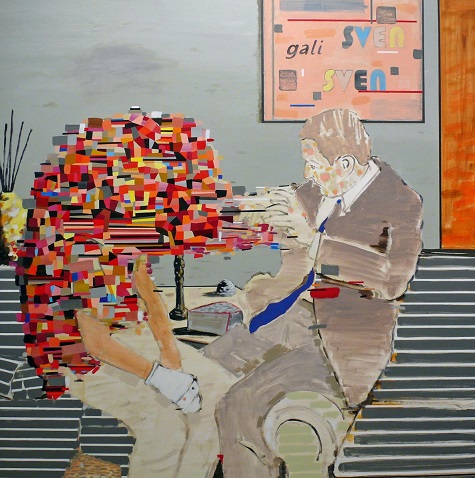
Matthew Bourbon, Made Up Your Mind, 2012

Matthew Bourbon, Made Up Your Mind, 2012

When I was awarded the Dozier Travel Grant for Artists, I was thrilled, because I knew I could go on a long-desired fact-finding mission. For many years, I have been driven to combine Western and Eastern notions of painting. Thankfully, I have been to Europe, and I am steeped in the painted histories of artists like Giotto, Fra Angelico, Piero Della Francesca, and Masaccio. I have not, however, been to Asia. Yet, I have yearned to study the masterpieces housed throughout China, Thailand, and, in particular, in Japanese museums. Feeling rather obsessed with my painting investigations, I need to deepen my understanding of the often compressed and shallow spaces created within great Eastern painting. In the spring of 2014, I will visit the preeminent art collections of Tokyo and Kyoto, with an eye to reverse-engineer screen paintings, woodblock printmaking, and the myriad abstract patterns found within traditional textile design. The Otis and Velma Davis Dozier Travel Grant will allow me to decipher and absorb firsthand information, some of it planned and some of it happenstance. As travel always seems filled with what we intend to do and what spontaneously unravels, how my experiences in Japan will change and enrich my painting is unknown—but change is certain.

I am immensely thankful that the DMA has enabled me to make this trip and fulfill what feels like the necessary and inevitable next step in the development of my art.

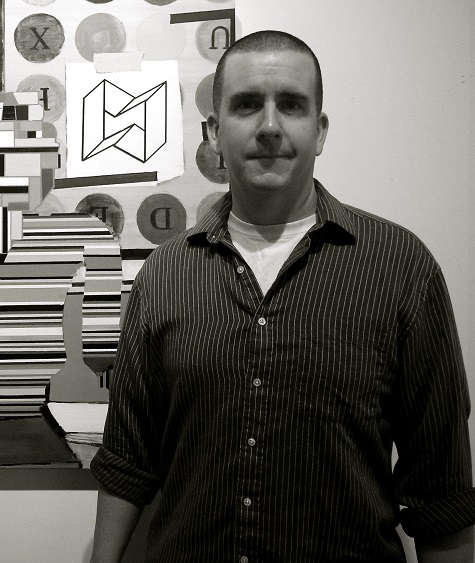
Matthew Bourbon

Matthew Bourbon

Matthew Bourbon is an associate professor of art at the College of Visual Arts and Design at the University of North Texas. His work is currently on view at the Texas Biennial at Blue Star Contemporary in San Antonio and at Kenise Barnes Fine Arts in Larchmont, New York. To learn more about his art, visit his website.

We are now accepting applications for the 2014 Awards to Artists, visit the DMA’s website for additional information and to apply.

Iceberg, Straight Ahead!

ice

This week we celebrate a homecoming at the DMA. Frederic Church’s The Icebergs is now back on view after almost a year on tour with the exhibition The Civil War and American Art. Watch the painting’s journey from its travel crate back to the DMA’s American Art Galleries in the video below, and join us for our free lunchtime Gallery Talk at 12:15 p.m. on  Wednesday, September 18, with DMA curator Sue Canterbury to welcome home The Icebergs!

[youtube=http://www.youtube.com/watch?v=3PvTuE00nEc&w=420&h=315]

Kimberly Daniell is the PR manager at the DMA.

McDermott Interns: Where Are They Now?

Each September, the DMA welcomes a new class of McDermott Interns, thanks to the generous support of the Eugene McDermott Education Fund. During their brief nine months at the Museum, the McDermott Interns contribute to numerous projects, from exhibitions to tours to programming and beyond. Their hard work helps make the Museum the dynamic place we know and love!

But what happens after the internship is complete? For some, the stars align and we are able to welcome them into full-time positions here at the Museum. In fact, we have nine previous McDermott Interns, myself included, currently on staff. Others move on to different adventures across the country. I checked in with some of our recent McDermott graduates to see where life has led them.
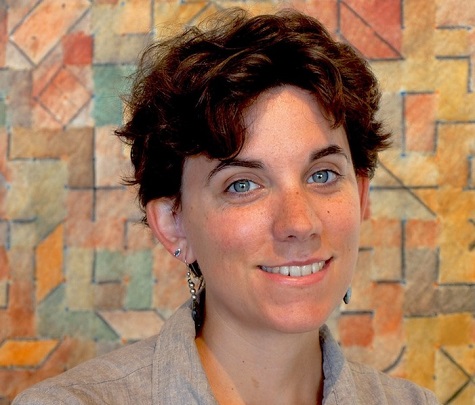
OLYMPUS DIGITAL CAMERA

Sara Woodbury
McDermott Graduate Curatorial Intern for European and American Art, 2010-2011

My post-McDermott career so far has taken me both east and west. From June 2011 to June 2013, I served as curatorial fellow at the Shelburne Museum in Vermont, a wonderfully eclectic museum with holdings that include American folk art, impressionist paintings, and a landlocked steamboat. When I wasn’t working on exhibits, I experimented with printmaking at a community studio, an interest that developed out of a works on paper exhibit I curated at the DMA. In July 2013, I relocated to Roswell, New Mexico, where I am now the curator of collections and exhibitions at the Roswell Museum and Art Center. Though I’ve only been here a few weeks, I’m happy to be back out west, and am looking forward to the challenges and opportunities of my new position.
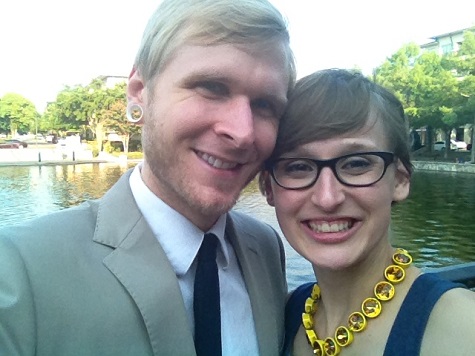
Stefanie Logan
Stefanie Kae Dlugosz
McDermott Curatorial Intern for Decorative Art, 2010-2011

After leaving the DMA, I worked as the project assistant at the Nelson-Atkins Museum of Art on the traveling exhibition Inventing the Modern World: Decorative Arts at the World’s Fairs 1851-1939, co-organized with the Carnegie Museum of Art. In August 2012, I began a graduate program at Indiana University, Bloomington, and am looking forward to completing my MA in art history next spring. I also currently serve as a graduate assistant at the Indiana University Art Museum.

Logan Acton
McDermott Education Intern for Teaching Programs, 2009-2010

From 2010 to 2011, I held a position at the DMA as assistant to the director of education, which also allowed me to help with activities for the 2010 McDermott Intern class. In July 2011, I moved to Missouri to study sculpture at the Kansas City Art Institute. I’m currently pursuing a studio practice as a visual artist there and am planning to apply for MFA programs soon. I met Stefanie at the DMA during her McDermott Internship and in October 2012 I asked her to marry me. She accepted and we are currently planning our wedding!
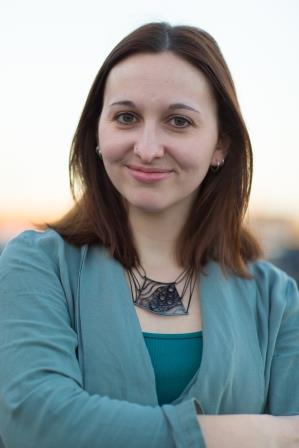
Wendy Earle headshot
Wendy Earle
McDermott Graduate Curatorial Intern for Ancient American Art, 2011-2012

I have been really busy in my position as curator of collections and exhibitions at the Museum of the Southwest in Midland, where I have been since May 2012. It’s great working at a multidisciplinary institution that combines an art museum, children’s museum, planetarium, and historic home into one. I am the entire curatorial department, so I get to do a little bit of everything, including picking up artwork from different states, designing exhibitions, creating interpretive activities, giving gallery talks, and writing grants. We are installing or deinstalling exhibitions almost every month. In the past, I only worked with the art of long-dead civilizations, but now I get to work with lots of exciting contemporary artists—a fun new challenge.
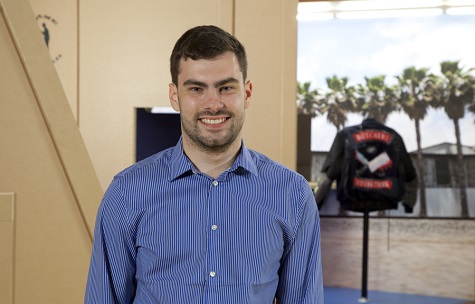
Alec
Alexander Unkovic
McDermott Curatorial Intern for Contemporary Art, 2012-2013

In July 2013, I moved back to Philadelphia and started my new job as the administrative and publicity coordinator at The Fabric Workshop and Museum. I am now creating the content for FWM’s social media (Facebook: /fabricworkshop, and Twitter: @fabricworkshop), and I work on publicity and community outreach initiatives. Additionally, my duties at FWM include helping with exhibition budgets, publications, and checklists, coordinating museum openings and events, and maintaining travel arrangements. Being a McDermott Intern definitely helped prepare me for this job. I’m really enjoying myself here, but I sure do miss Dallas and the DMA!

Our newest class of McDermott Interns began last week. During your next visit to the DMA, keep an eye out for Alexa Hayes, Amelia Wood, Amy Elms, Amy Kaczmarek, Hayley Prihoda, Madeleine Fitzgerald, Michael Hartman, and Temple Shipley. We get the pleasure of working with them for the next several months, and we can’t wait to see where they’ll go from here!
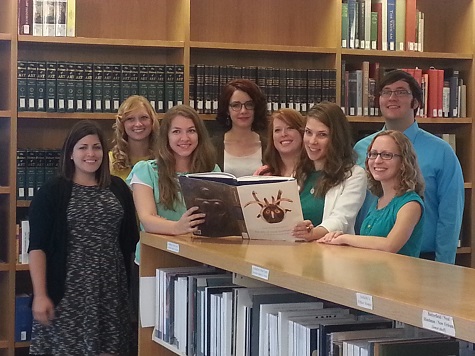
2013/2014 McDermott Interns

2013/2014 McDermott Interns

P.S. If you’re interested in becoming a McDermott Intern next year, check our website in January 2014 for the application!

Sarah Coffey is the assistant to the chair of learning initiatives and former McDermott Education Intern for Adult Programming at the DMA.
Rewarding DMA Friends

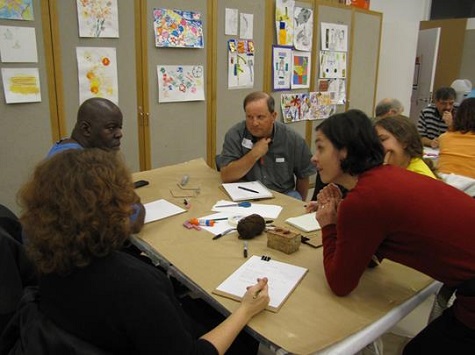
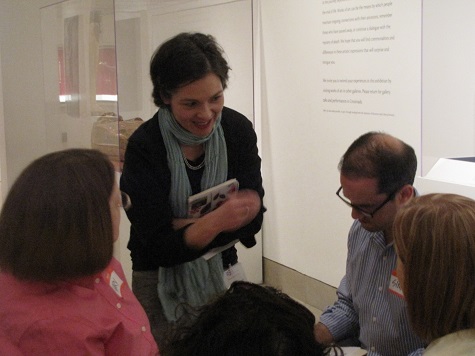
Longtime Center for Creative Connections (C3) visitor and volunteer Mary Burkhead claimed a DMA Friends reward for six of her friends to attend a small-group artist-led art-making session. Mary was one of our first DMA Friends, joining on January 21, the official “opening day” of the program. Mary and I brainstormed about possibilities for this specialized workshop, and she requested a private Think Creatively workshop with Magdalena Grohman, Ph.D., in C3. Mary loves attending the Thursday night adult workshops and was eager to have a special class just for her and the friends that she has made over the past year in the workshops. Read the interview with Mary Burkhead below. I hope she inspires you to keep collecting your DMA Friends points!

Dr. Magdalena Grohman and class in discussion

Dr. Magdalena Grohman and class in discussion

How long have you been coming to the DMA?
Since I moved to Dallas in the mid-80s.

How many DMA Friends badges have you earned?
Oh, gosh, lots! Some more than once. I hate to admit it, but I’m rather greedy about them. I’m still disappointed that I didn’t get the last code needed for the special Neil Gaiman badge. But I did get the special JFK badge!

What is your favorite way to collect points?
By seeing and doing wonderful things in the Museum, of course! Seriously, you earn badges by doing what you already love to do: going to special exhibitions, exploring the galleries, attending workshops, lectures, and special events.

Think Creatively presentation by visitor

Think Creatively presentation by visitor

Why were you interested in claiming the “Small Group Art-Making Session in C3” reward?
I frequently attend the creativity workshops and the Artistic Encounters workshops. I encourage everyone to try them. I always have a wonderful time, and learn a lot. And I’ve met so many wonderful, fun, interesting people. I just loved the idea of having a special session with some of these new friends.

What is your favorite thing to do or see at the DMA?
Well, I have lots of favorites, and I hate to be limited. And the DMA is not limited! One of my favorite artworks is The Icebergs. I will be very glad to see it again when it returns home this month. But there are many other pieces that I also love. I love the workshops, of course. That’s why I selected it for my reward. I also love the Arts & Letters Live programs. I love how the DMA brings together many different types of art. And then there is Late Night! I could go on forever.

Dr. Magdalena Grohman and visitors responding to works of art

Dr. Magdalena Grohman and visitors responding to works of art

How did you choose the people that were going to participate with you in the workshop?
With great difficulty! I wanted everyone who had ever attended a workshop to come, but of course, that’s not possible. So I selected a group of folks who participate frequently and who interact well. That’s important for a group learning experience. Not to mention,  they are all fun, wonderful people!

Visitor in thought

Visitor in thought

What do you value the most at the DMA?
I think the most wonderful thing about the DMA is that it is available to everyone. Art is so important to individual people and to the whole community. I’ve talked to so many people at the Museum who are having fun, experiencing new things, and exploring the possibilities of art. I love that. It’s exciting to talk to people who have come for the first time, or the first time in a long time. It’s nice to talk to out-of-towners who think our DMA is great!

Do you recall a favorite moment at the DMA?
There are so many. But one wonderful moment was being in the Museum late at night–I think it was close to midnight–on the 100th anniversary. There were so many people there, and they were all having so much fun! I’m so glad that led to the monthly Late Nights.

Are you also a DMA Partner in addition to being a DMA Friend? 
I am a Partner, and I also have memberships in several other  local museums. Financially supporting the DMA is a great value for entertainment and education, and also for our community.

Two participants writing to music

Participants writing to music

Amanda Batson is the C3 program coordinator at the DMA.

Frozen in History

We are in the final two weeks of the DMA-organized exhibition Hotel Texas: An Art Exhibition for the President and Mrs. John F. Kennedy, but there is still time for you to visit this free exhibition and learn more from historians. This Thursday at 7:30 p.m., Dr. David Lubin, author of Shooting Kennedy: JFK and the Culture of Images and Charlotte C. Weber Professor of Art at Wake Forest University, will examine iconic photos of the Kennedys’ visit to Texas and discuss his book. Below, learn more about the history of the installation in Suite 850 from Hotel Texas catalogue contributor Scott Barker.

[youtube=http://www.youtube.com/watch?v=GZ5ADYDCczo&w=560&h=315]

Kimberly Daniell is the public relations manager at the DMA, and Ted Forbes is the interactive media developer at the DMA.
Go van Gogh, Past to Present

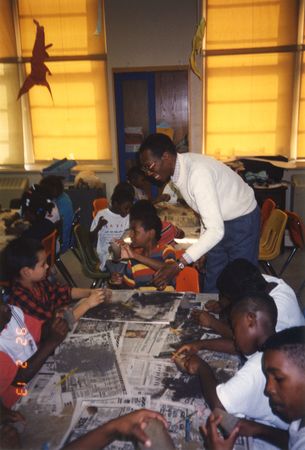
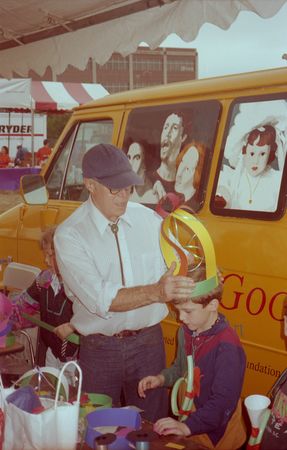
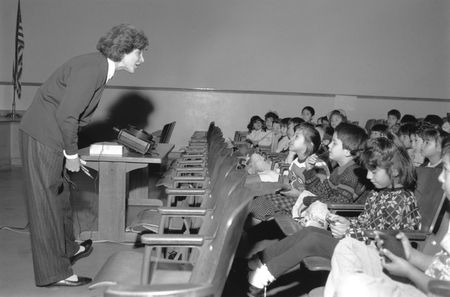
Go van Gogh, the DMA’s elementary school outreach program, is celebrating its 35th anniversary this year. Before we pack up the Go van Gogh van and head out to schools across the city, we thought it would be fun to take a look through all thirty-five years of the program.

Go_Van_Go_1992

1992 Go van Gogh program led by DMA educator Phil Collins

Below are a few fun facts about Go van Gogh through the years.

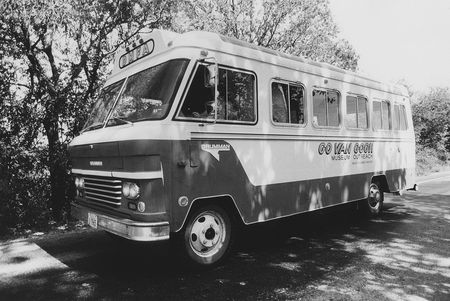
The first Go van Gogh van was actually a bus!

Go_Van_Go_1978

First Go van Gogh vehicle, 1978

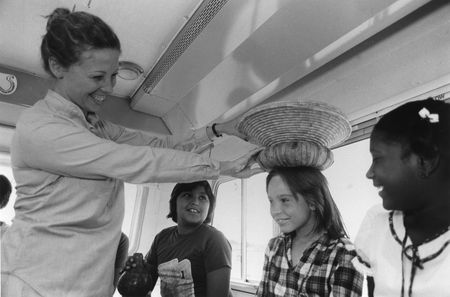
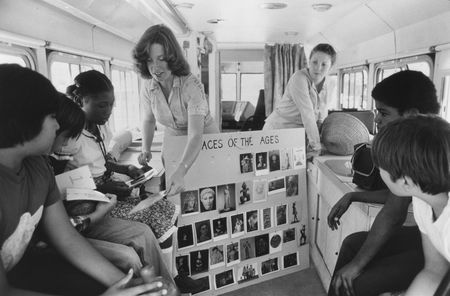
When the program began at the then Dallas Museum of Fine Arts in Fair Park in 1978, school outreach presentations could be given in classrooms or on the Museum Outreach bus itself.

Go_Van_Go_1979_Outreach_002

DMFA teaching staff member Roberta Mathew conducting an outreach program in the Go van Gogh bus in fall 1979

Go_Van_Go_1979_Outreach_001

DMFA education staffers Susan Geyer and Roberta Mathews conducting an outreach program aboard the Go van Gogh bus in fall 1979

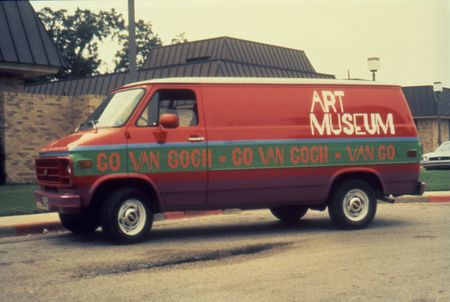
Go van Gogh vans (and buses) have always been easy to spot on the freeway.

Go_Van_Go_1981

Go van Gogh van in 1981

Go_Van_Go_c1988_001

Go van Gogh van, c. 1988

Go_Van_Go_c1988_002

Go van Gogh program, c. 1988

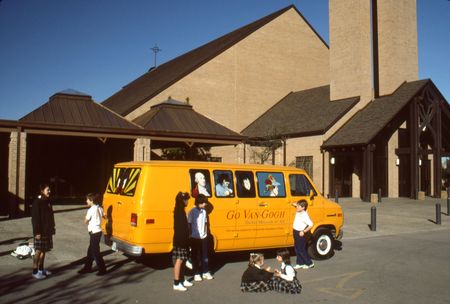
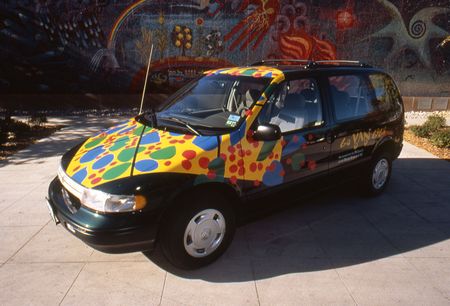
Bright and colorful, Go van Gogh vans often feature artworks from the Museum’s collection in painted or vinyl designs. The Go van Gogh van from the late 1990s included a design from Henri Matisse’s Ivy in Flower.

Go_Van_Go_1990s_002

Go van Gogh van in the 1990s

Go van Gogh van

Today’s Go van Gogh van

Go van Gogh programs have always included a visual presentation of artworks from the Museum.

Go_Van_Go_Outreach_004

Go van Gogh program using a slide projector, 1980s or 1990s

Through the years, we’ve made many updates in the technology we use to bring these artworks to life. What began with projectors and large printed posters led to overhead transparencies and laminated images.

GvG MT Reilly Elementary, 4th grade

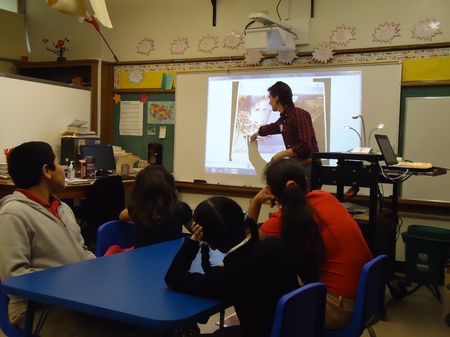
Go van Gogh program with 4th graders at Reilly Elementary School

Later this school year, Go van Gogh will go digital: using iPads and projectors to bring images of artworks to life in the classroom.

Looking ahead to fall, we are excited to unveil a new facet of Go van Gogh outreach–a program designed for Special Education classrooms called Color My World. To learn more about the program, visit our website.

Amy Copeland is the Manager of Go van Gogh and Community Teaching Programs at the DMA.
Open Office: Preparators

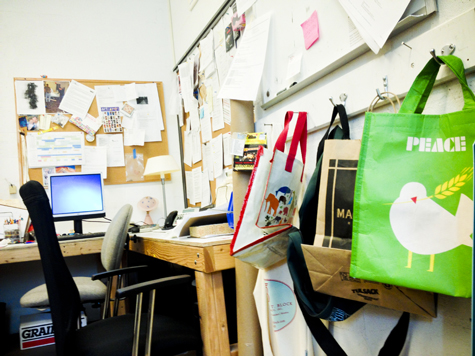
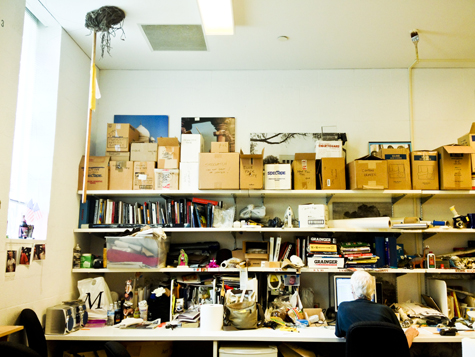
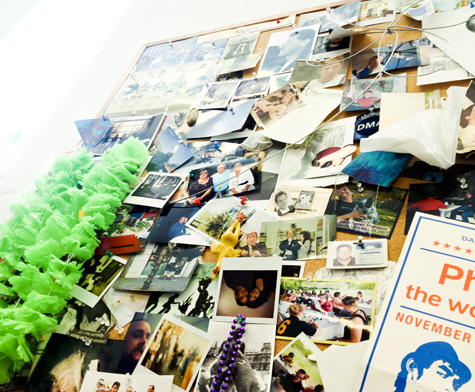
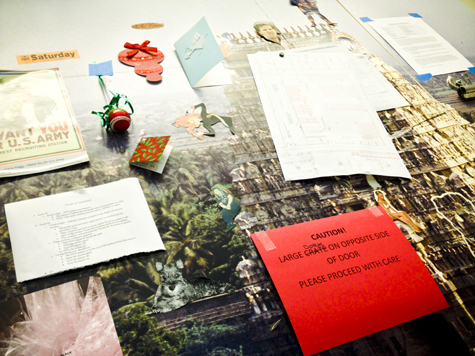
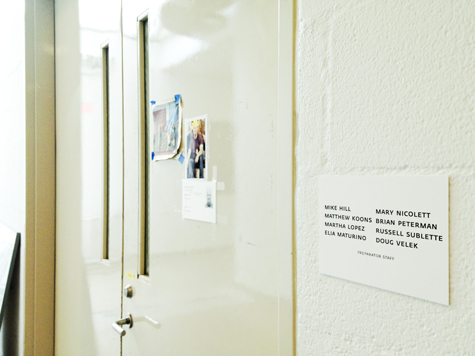
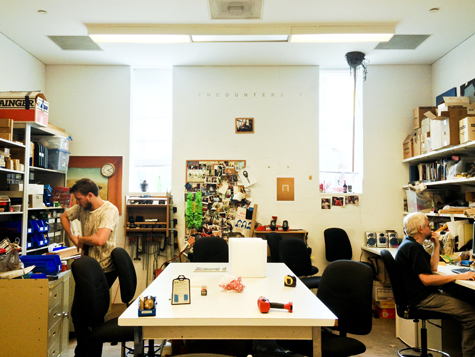
The preparators at the Museum assist in the unpacking of all the art that enters the DMA and ensure that it is handled, stored, and installed in the safest manner possible. Eight people share this office space, with two shared computers. On most days we are only in here during lunches, breaks, and an occasional meeting, so this becomes more of a holding space for our tools, fasteners, touch-up paints, and assorted specialty jigs. The large central table serves as a workspace for covering decks and lifts, as well as being our lunch table. The bulletin board is nicknamed our “wall of shame,” holding photographs and collages of a variety of subjects. As we are always on the go, jumping from one project to another very quickly, this place rarely gets organized, but we always manage to find that one necessary specialty thing-a-ma-bob when it is needed.

1

2

3

4

5

6

Mary Nicolett is a preparator at the DMA

Summer Conservation at the DMA: Treatment of Sanction of the Museum by Daniel Buren

If you’ve visited the DMA lately, you may have been wondering what is going on behind the closed doors of the Chilton Galleries, the same galleries that held the recent Chagall: Beyond Color exhibition. The galleries have been transformed into a temporary conservation workspace, where we have been busily working on a massive installation artwork by Daniel Buren.

Daniel Buren in 1995. (Image courtesy of Wikimedia Commons.)

Daniel Buren in 1995 (Image courtesy of Wikimedia Commons)

Daniel Buren (b. 1938) has been creating dynamic public installations since the early 1970s. His conceptual artwork challenged the traditional formats at the time and frequently combined modern pieces with historical architecture. Now Buren’s large striped artworks are recognized instantly across Europe, earning him revered status in his native France.

Sanction of the Museum being unrolled for the first time at the DMA.
Sanction of the Museum being unrolled for the first time at the DMA

The DMA recently acquired Buren’s 1973 Sanction of the Museum, which consists of six enormous panels of cotton fabric with alternating white and colored vertical stripes. Each panel bears two stripes of white acrylic paint applied to both the front and back of the fabric at the far left and right edges. The panels will hang from the ceiling near the Ross Avenue Entrance (at the south end of the Museum’s main Concourse) like a series of banners that can sway slightly in the air. They will lead the way upstairs to the new Conservation Studio, where Museum visitors will soon have a window into the often-unseen world of art conservation.

Conservation Interns Diana Hartman and Jessica Ford steaming one of the large canvas panels

Conservation interns Diana Hartman and Jessica Ford steaming one of the large canvas panels

As conservation interns, our job was to stabilize and restore visual integrity to the canvas panels. They had been rolled up in storage since the artwork’s last installation in 1989, prior to their acquisition by the DMA last year. This is good in that the artwork hasn’t seen a lot of wear or fading from UV, but because it was rolled improperly a number of minor damages were incurred. (If you’re curious about how to properly care for your paintings, here is a good place to start!) The most pressing issues we encountered were the extreme creases and wrinkles that marred the artwork’s stoic appearance. We also found numerous small stains and tears.

side by side

Before performing any treatment on the artwork itself, we made mock-ups and conducted tests to decide on the best option. In conservation practice, a “less is more” approach is always best, using minimal interference and always using reversible materials. In this particular case, we successfully steamed away most of the wrinkles in the fabric and reduced the most severe creases under custom weights. Small tears were mended with thread-by-thread reweaving and custom-made patches. Soft vinyl erasers and cellulose pulp poultices were used to reduce scuffs and dirt.

hole

After an intense eight weeks of preparation, installation is now underway! We are thrilled to have been a part of the team that helped bring this important contemporary artwork to Dallas. This conservation treatment is just the start of many more exciting projects that will be taking place on public view in the new Conservation Studio when it opens this fall. Be sure to check out Sanction of the Museum the next time you visit the DMA!

Diana Hartman and Jessica Ford are art conservation interns working with Chief Conservator Mark Leonard at the DMA this summer. Diana is a conservation technician at Winterthur Museum, and Jessica is a graduate fellow in paintings conservation at Winterthur/University of Delaware.

Arts & Letters Live By-the-Numbers

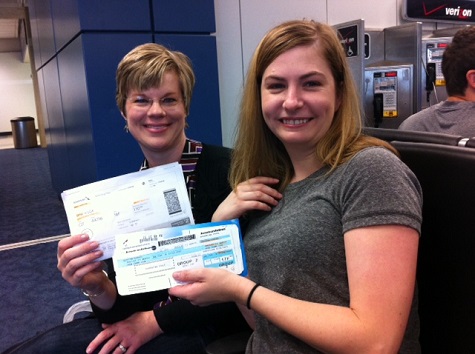
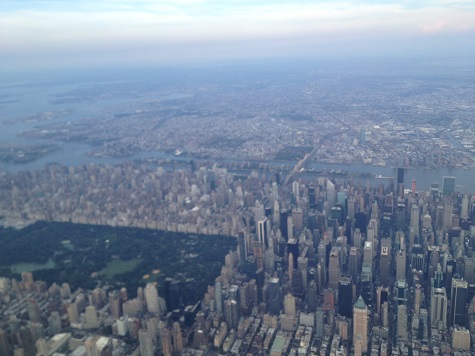
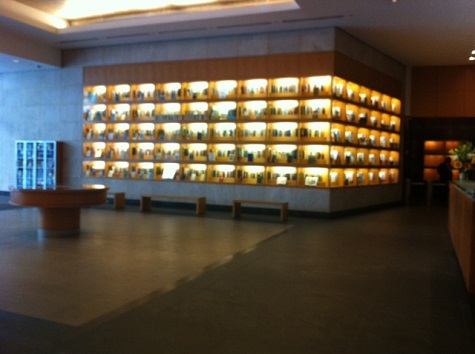
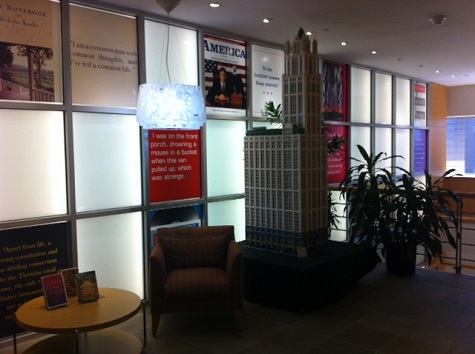
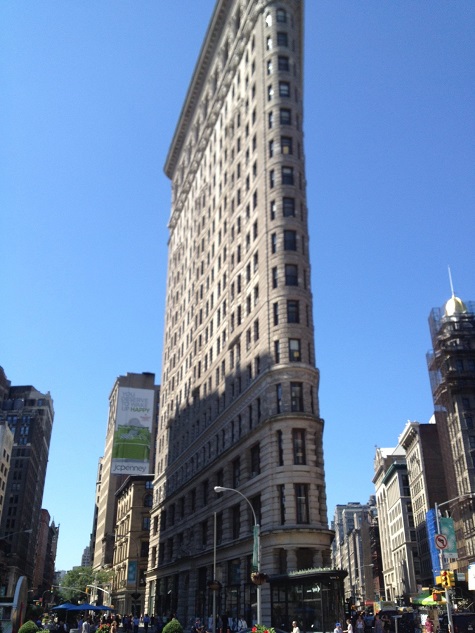
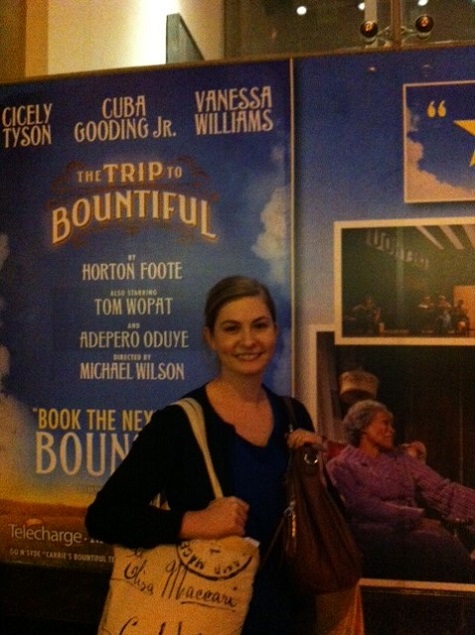
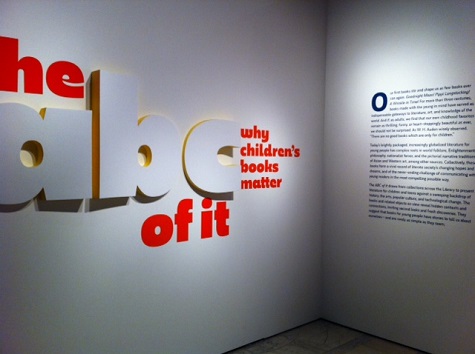
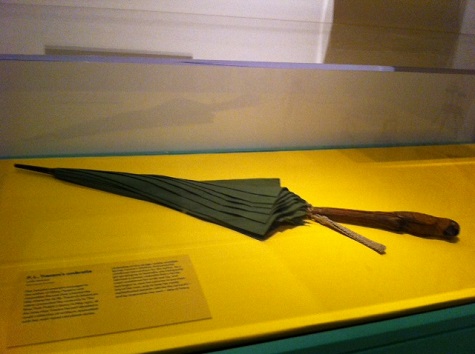
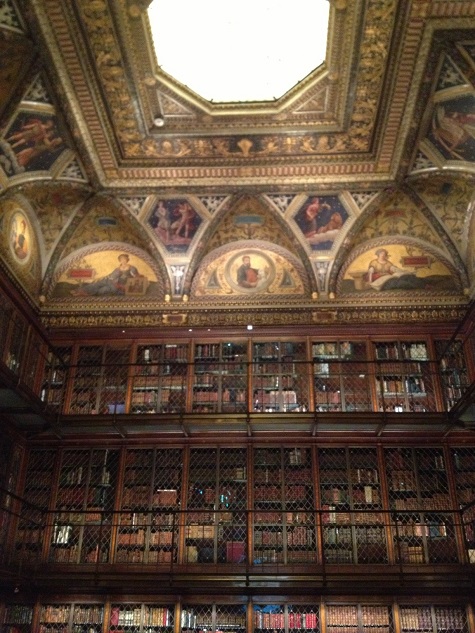
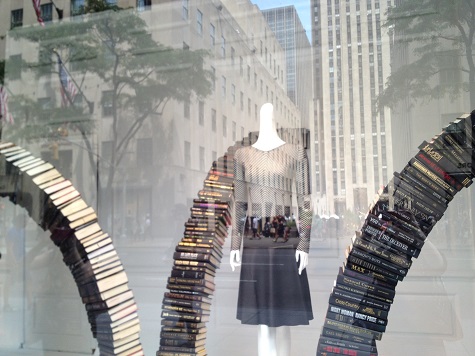
Each July, I travel to New York City with Carolyn Bess, the DMA’s director of programming and Arts & Letters Live, to meet with publicists at all the major publishing houses. We get a sneak peek at which authors will have new books out during the Arts & Letters Live season and who will be touring to promote their book. Arts & Letters Live relies heavily on author tours to create the best possible season line-up. Once we return from New York, we sift through our notes and prioritize a wish list of authors for the upcoming season. This past week, we were in New York for this annual planning trip. It is always a complete whirlwind. Here is a by-the-numbers look at this year’s Arts & Letters Live season planning trip (along with a few photos from our journey):
2 tickets to New York
5 days
30 meetings with
50 publicists
97 pages of notes
380+ books pitched
1 unforgettable season (check the DMA’s website this fall for the season announcement!)

Katie Hutton is the Program Manager of Arts & Letters Live at the DMA.

Archives

Categories