Archive for the 'Behind-the-Scenes' Category


Pint-Size Sous Chefs

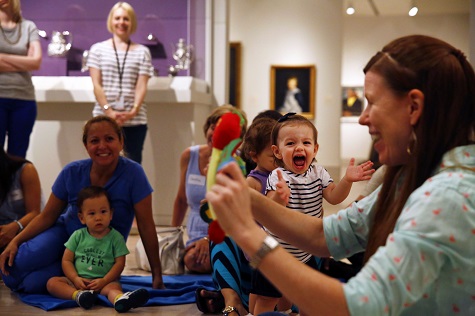
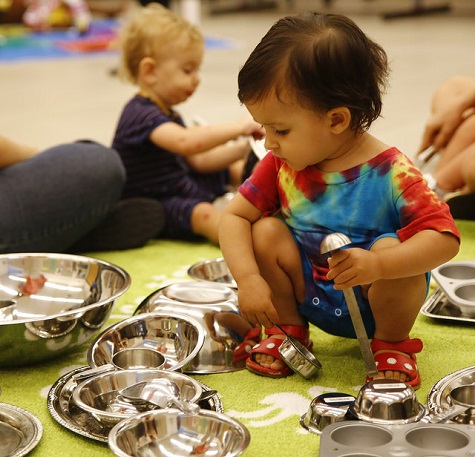
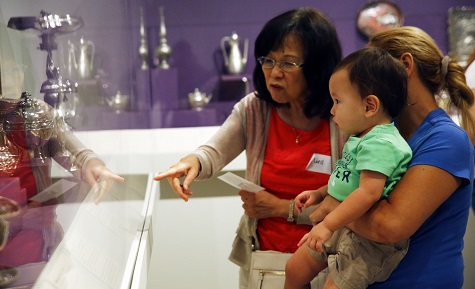
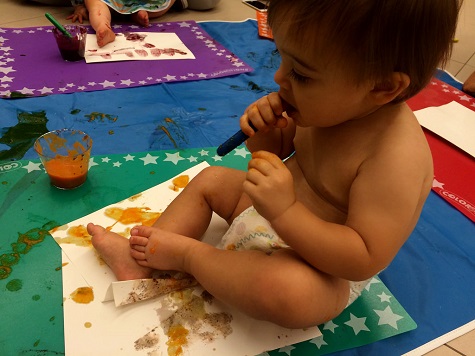
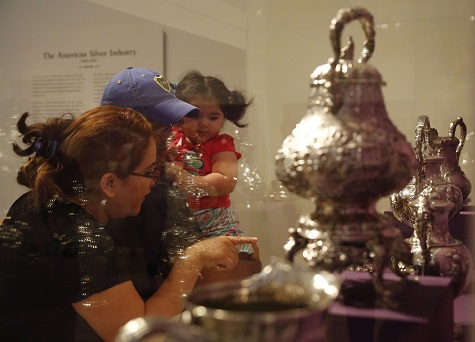
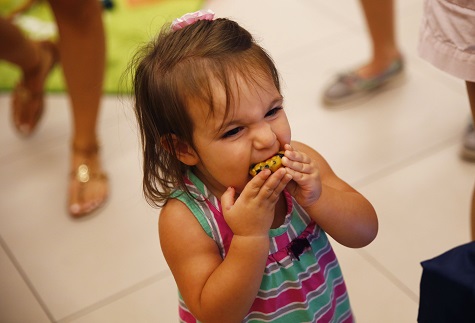
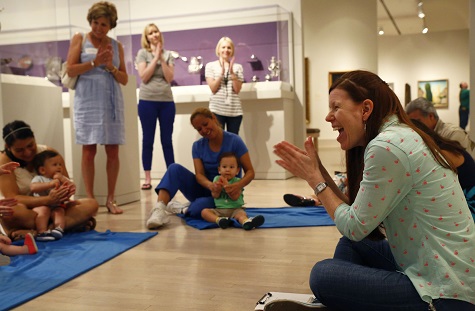
During this month’s Art Babies, our mini museum-goers joined a hungry caterpillar at an imaginary dinner party to explore the sense of taste. Armed with their very own—Museum staff approved!—silver spoons, they goo-ed and gah-ed over the shiny silver serveware on Level 4. Their appetites primed with art, we then headed to the Art Studio, which was transformed into a smorgasbord of color, texture, and even flavor! Our petite Picassos used vibrant food puree “paint” to create their own masterpieces, taste-testing encouraged. Class ended with a colorful, baby-approved snack of blueberry carrot oat mini muffins, which you can try out at home:

Blueberry Carrot Oat Mini Muffins
20438306986_fd529afecc_k
1 cup rolled oats
½ cup whole wheat flour
½ cup all-purpose flour
1 tsp baking powder
½ tsp baking soda
½ tsp salt
2 eggs, room temperature
½ cup sugar
6 oz vanilla Greek yogurt, room temperature
½ cup carrot puree
1 tbsp vegetable oil
2 tsp vanilla
1 cup fresh blueberries

Preheat oven to 375° F.

Line mini muffin pan with paper liners or spray with non-stick cooking spray. In large mixing bowl, stir together oats, both flours, baking powder, baking soda, and salt. In medium bowl, whisk eggs and sugar until pale and frothy. Add yogurt, carrot puree, vegetable oil, and vanilla, whisking until fully combined and smooth. Add carrot mixture to flour mixture and stir with rubber spatula until flour is mostly incorporated. Gently fold blueberries into batter with a few revolutions, just enough to incorporate remaining flour and distribute berries evenly throughout.

Divide batter into muffin cups, using a tablespoon scoop to fill them almost to the top. Bake about 10 minutes, or until a toothpick inserted in the center comes out clean. Note: A regular muffin pan can be used instead, increasing the baking time to 20 minutes.

Tickets for our fall classes go on sale September 3—we hope to see you then!

Sarah Coffey is the Education Coordinator at the DMA.

Our Portal Into Publishing

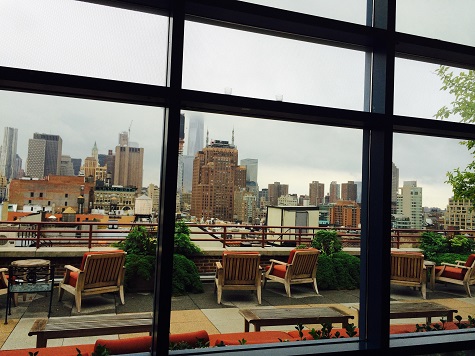
View from Macmillan Children's Publishing Group located in the famous Flatiron Bldg

View from Macmillan Children’s Publishing Group located in the famous Flatiron Building

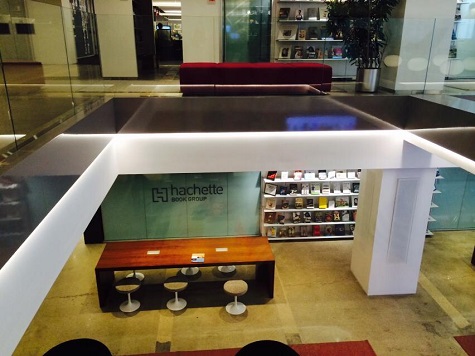
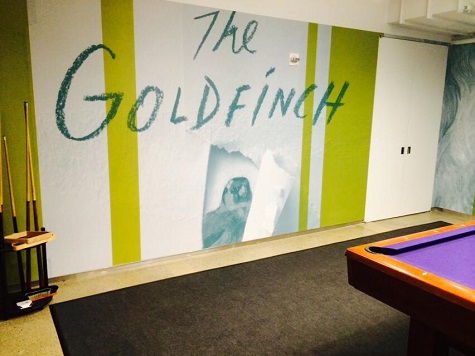
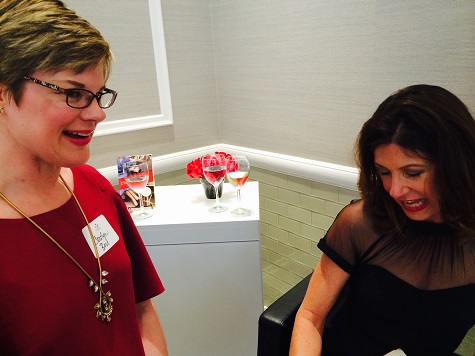
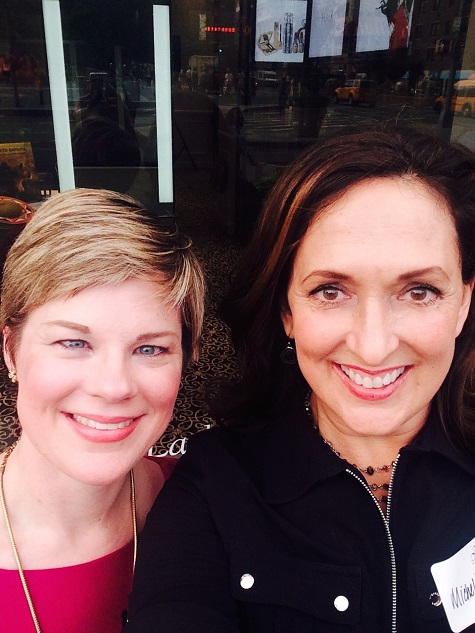
The annual DMA Arts & Letters Live planning trip to New York provides the foundation for each season of the DMA’s literary and performing arts series. During more than 30 meetings in five days at the end of July, Carolyn Bess and I learned which authors are generating a lot of buzz for their new books, and who will be on tour during our 25th anniversary season. These meetings provide a portal into the publishing world not yet revealed to the media or to the public. Here begins the dialogue regarding the authors and books publishers want to catapult into public conversation. We share statistics and successes from our recent events as we attempt to woo such “wish list” writers as Donna Tartt, Bill Bryson, and Nick Hornby. Authors often tour to a predetermined number of cities and only for a short time following their book release date, so there can be significant competition when it comes to securing them for Arts & Letters Live. We seek to balance the type of books, speakers, and performances we feature in each season to construct a mix of literary and historical fiction, poetry, memoir, nonfiction, pop culture, and emerging authors.

Though our meeting schedule certainly kept us busy, we managed to squeeze a few excellent cultural outings into our visit. The Tony Award-winning Broadway musical adaptation of Alison Bechdel’s acclaimed illustrated memoir Fun Home: A Family Tragicomic was excellent and would fit nicely into our Artful Musings category (if only Alison weren’t in such high demand these days!). We enjoyed seeing Gerald Murphy’s Cocktail on view in the glorious new Renzo Piano building of the Whitney Museum of American Art as we look forward to hosting Liza Klaussmann tomorrow night at the DMA for her new fictional account of Sara and Gerald Murphy in Villa America. On a Friday evening visit to the Metropolitan Museum of Art, we joined the Museum Hack tour for what their brochure terms “a highly interactive, subversive, fun, non-traditional museum tour.” Their strategy did not disappoint. During our three-hour tour, we learned obscure and whimsical tidbits about a select number of pieces in the Met’s collection and wandered the galleries after hours, inciting childhood fantasies of spending the night in the Met like Claudia in E. L. Konigsburg’s iconic novel, The Mixed Up Files of Mrs. Basil E. Frankweiler.

One of the things that impressed me most during these meetings was the number of times publishers commented on the excellent reputation of the Dallas Museum of Art and Arts & Letters Live. After working on events with publicists all year via phone and e-mail, it is gratifying to meet with them in person and to hear how much they appreciate the quality of events that we host at the DMA. The professional relationships built and fostered during this New York trip are a key component to Arts & Letters Live’s success.

Michelle Witcher is the Program Manager, Arts & Letters Live, at the DMA.

Moore on the Move

Photos showing the North Entrance of the museum prior to the start of renovation efforts.

The North Entrance of the Museum prior to the start of renovation efforts.

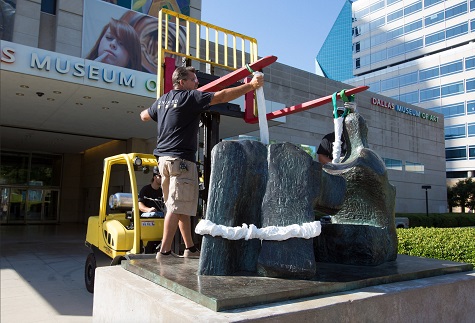
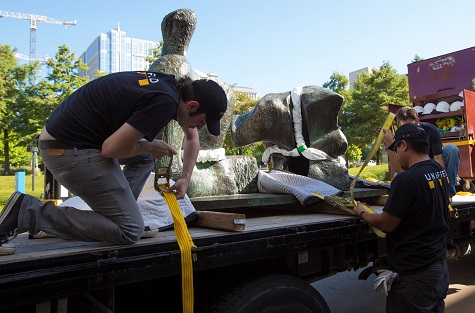
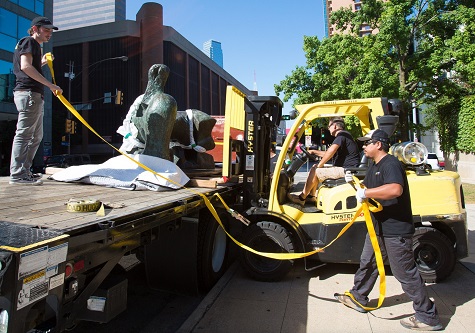
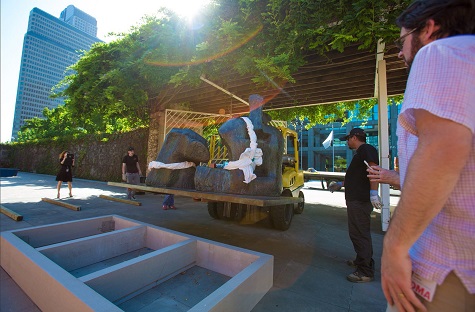
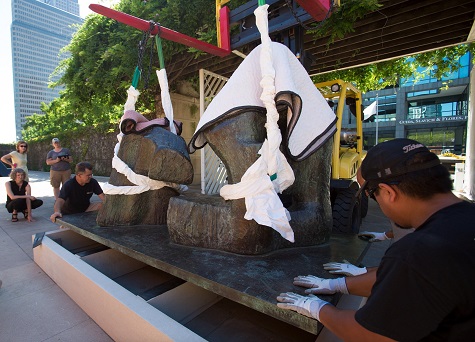
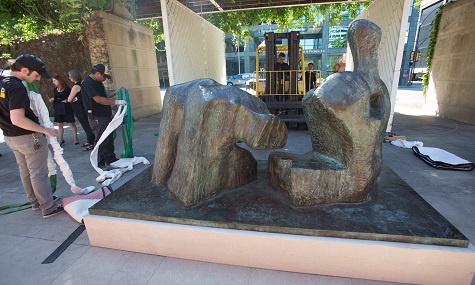
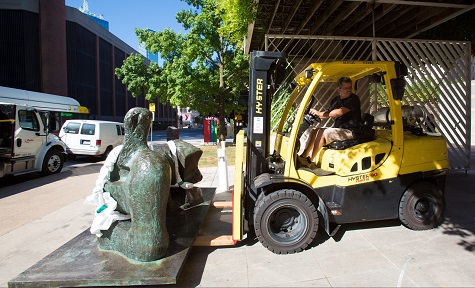
Henry Moore’s Two Piece Reclining Figure, No. 3 has greeted visitors at the Museum’s North Entrance for many years. Last week, Moore’s sculpture moved to a new home on the south side of the building, where it will welcome visitors into the Sculpture Garden. The move involved a lot of planning, and many precautions were in place to move the 2,200-pound bronze sculpture. Follow the sculpture’s journey below:

Museum Murder Solved!

Tonight we completed our fourth annual Museum Murder Mystery Game. This year, Victory was found dead just before Late Night began. Visitors searched the galleries for the body and integrated the suspects to determine who did it, with what object, and in which gallery. Below is the news report from their findings.

Museum Murder Solved!
Isabelle Lemonnier Confesses

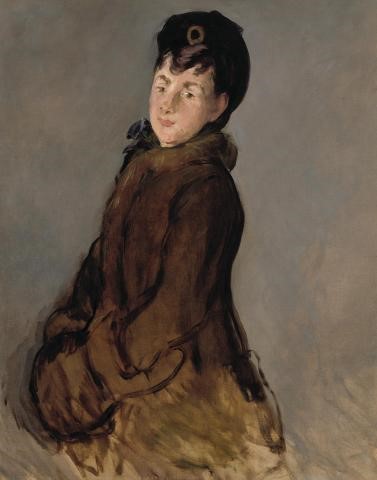
Edouard Manet, Portrait of Isabelle Lemonnier with a Muff, c. 1879, oil on canvas, Dallas Museum of Art, gift of Mr. and Mrs. Algur H. Meadows and the Meadows Foundation, Incorporated, 1978.1

Edouard Manet, Portrait of Isabelle Lemonnier with a Muff, c. 1879, oil on canvas, Dallas Museum of Art, gift of Mr. and Mrs. Algur H. Meadows and the Meadows Foundation, Incorporated, 1978.1

 17 JULY – Chaos has reigned for the past few hours here at the Dallas Museum of Art. Following the violent death of Victory, a prominent (and notoriously annoying) member of the collection, staff and visitors conducted an intensive inquiry. Lily Davenport, summer intern and chief investigator, explained that “we interviewed every artwork under suspicion for Victory’s murder, and checked on almost all of the potential weapons on display in the Museum.” In the end, one of those suspects broke down and confessed, under close questioning regarding the timing of her walk home.

Isabelle Lemonnier admitted to strangling Victory with an Etruscan composite necklace in the Indonesian Art Gallery. An unrepentant Isabelle reportedly remarked during her interrogation, “It was easy. I let everyone think I had taken Lady in a Red Hat up to her portrait, when really I just circled around to the third floor, by way of the Barrel Vault. The necklace looked as though it would fit in my muff, so I took it out of its case in the Ancient Mediterranean Gallery and went up to the Indonesian section to wait for Victory. I got her from behind as she came through the door—I doubt she ever even saw me.”

When this reporter asked about her motive, Isabelle cited Victory’s “disruptive and obnoxious” behavior and her own longstanding envy of the other artwork’s vocal self-confidence. Said the killer, “She always acted like she was so much better than me, than all of us. And the self-promotion never really let up. So it was just the icing on the cake when she interrupted Buddha’s meditation session to ask about dealing with envious friends. I knew she was talking about me, and it made me so angry!”

Museum staff did not comment on Isabelle’s eventual fate, as artwork-on-artwork violence is comparatively rare, and little judicial precedent exists. “It’s much more common for human visitors to pose a threat to the art,” said an investigator from the curatorial department who wishes to remain nameless. “I don’t even know where to begin writing this incident report.”


Lily Davenport is the Summer Intern for Adult Programming at the DMA

CosPlaying at the DMA

19565093100_9c6146e1c3_z

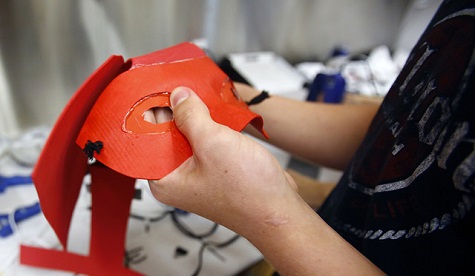
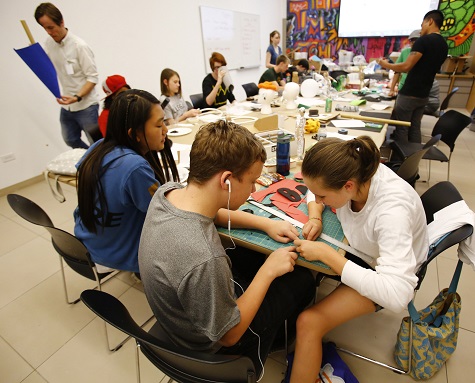
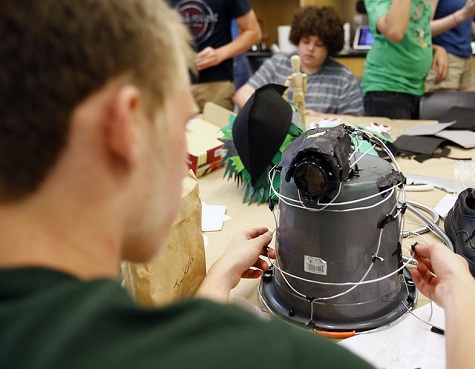
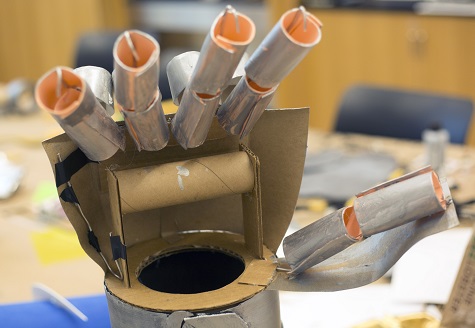
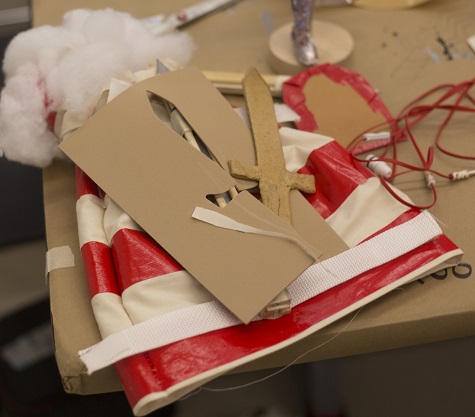
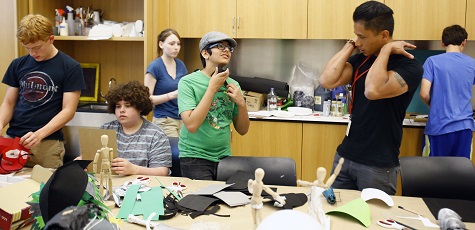
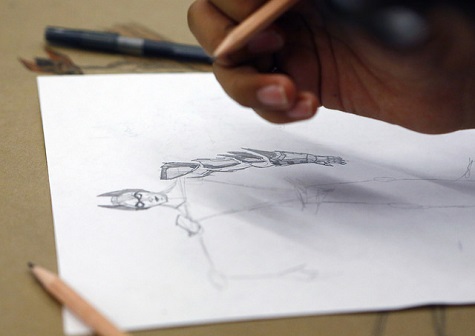
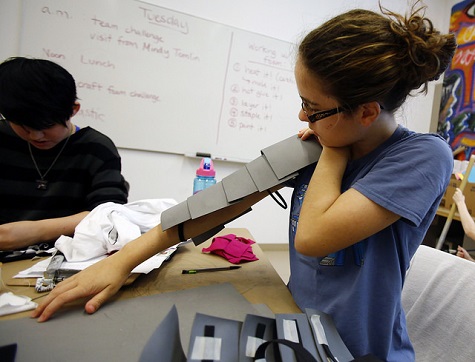
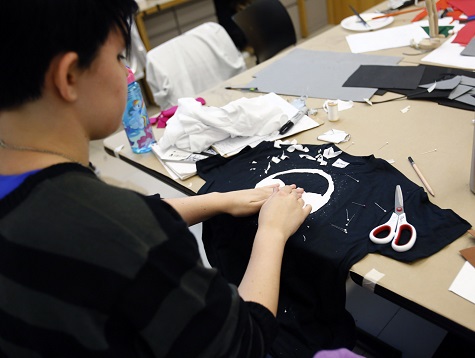
This week, teens have been experimenting and creating through group and solo challenges during our Urban Armor: Cosplay Challenge Camp. Each challenge allows this group to learn new concepts and construction techniques to use in their final costume design which they showcased this afternoon in the Museum galleries. Inspired by last year’s Zombie Camp, this year’s group was visited daily by experts from various professions that they may want to pursue like film and fashion. One of the returning campers from last year, a student at Booker T. Washington, said “this (the Urban Armor camp) is the only camp that I sign up for every year because it’s so awesome. I love it.”

So if you’re in the DMA galleries this afternoon, don’t be surprised if you run into a superhero or two.


19592036978_cfb3c2492d_z

After Hours

Have you ever wondered what museum curators do to relax and unwind at the end of their day? For Olivier Meslay, the DMA’s Associate Director of Curatorial Affairs, one of his favorite things is to look through online versions of auction house and gallery catalogs. What seems like a bit of a “busman’s holiday” worked to our advantage a few months ago.
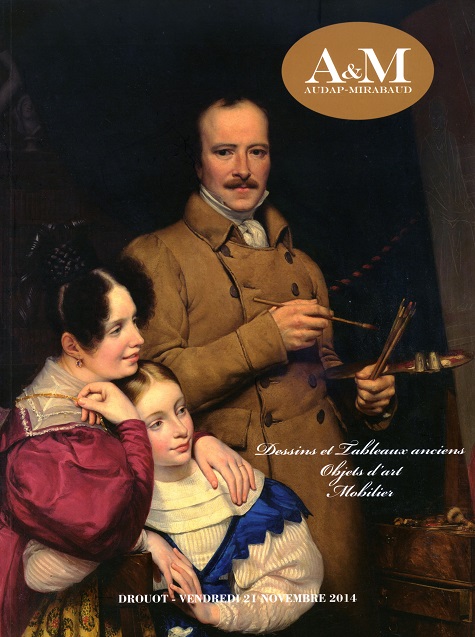
Cover to Audap & Mirabaud’s catalog for 21 November 2014 auction

Cover of Audap & Mirabaud’s catalog for November 21, 2014, auction

It all started on a stormy night early last November when he clicked on the website for the Parisian auction house Audap & Mirabaud. On their homepage was the lovely self-portrait by Paul Claude-Michel Carpentier (1787-1877), a lesser-known French painter, sculptor, and engraver who had exhibited at the Salon between 1817 and 1838.

The painting that caught Olivier’s attention is signed and dated 1833, and Carpentier exhibited it at the Salon the following year. For some time, the DMA had been seeking to purchase a large-scale 19th-century Salon portrait, and this one fit the bill. It was to be auctioned in Paris on November 21, and, as it happened, Olivier would be in France on the day of the sale, but not in Paris. Luckily, he had plans to be in the glorious city a few days beforehand and found an occasion to examine the painting.
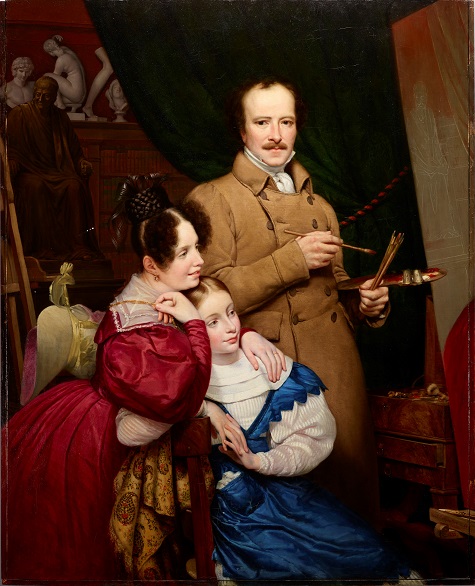
Paul Claude-Michel Carpentier, Self-portrait of the artist and his family in his studio, 1833, oil on canvas, Dallas Museum of Art, Foundation for the Arts Collection, Mrs. John B. O'Hara Fund, 2014.38.FA

Paul Claude-Michel Carpentier, Self-portrait of the artist and his family in his studio, 1833, oil on canvas, Dallas Museum of Art, Foundation for the Arts Collection, Mrs. John B. O’Hara Fund, 2014.38.FA

It was as impressive as he had hoped, and so he registered to bid. The only remaining problem was that at the precise time of the sale he was to be at a conference in a city four hours away. About mid-morning on November 21, he discreetly slipped out of his meeting for a few minutes to bid by telephone on the artwork. To our great fortune, he was the high bidder. All of his maneuverings were worthwhile.

When he returned to Paris a few days later, to his great surprise, he learned from an agent with Audap & Mirabaud that a small, fully realized preliminary drawing of the portrait had become available. He bought it on the spot.
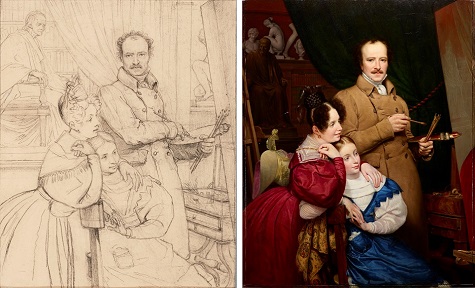
(left) Study for “Self-Portrait of the Artist and his Family in his Studio,” c. 1833, pencil on paper, private collection (right) Paul Claude-Michel Carpentier, Self-portrait of the artist and his family in his studio, 1833, oil on canvas, Dallas Museum of Art, Foundation for the Arts Collection, Mrs. John B. O'Hara Fund, 2014.38.FA

(left) Study for Self-portrait of the artist and his family in his studio, c. 1833, pencil on paper, Dallas Museum of Art, Foundation for the Arts Collection, gift of Olivier Meslay, 2015.20.FA; (right) Paul Claude-Michel Carpentier, Self-portrait of the artist and his family in his studio, 1833, oil on canvas, Dallas Museum of Art, Foundation for the Arts Collection, Mrs. John B. O’Hara Fund, 2014.38.FA

Having the opportunity to place a highly detailed drawing next to the executed painting is quite rare. It provides us with the chance to delve into the artist’s creative process and study any last-minute compositional changes made between the two works. In this case, we learn that in the completed painting, Carpentier rearranged the sculptures in the background, while in the foreground he added the yellow and red paisley shawl draped over the back of the chair on which his daughter,r wearing a blue dress, rests her arm.

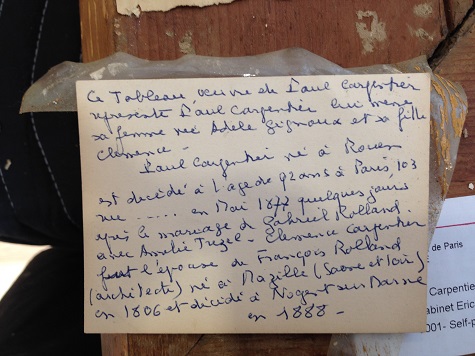
Another exciting aspect of these purchases is that it presented us with an opportunity to learn about Carpentier’s life. One of the most immediate revelations happened shortly after the painting arrived at the DMA. Much to our surprise, we discovered a small slip of paper affixed to the back of the frame. On the very old sheet were handwritten details (in French, of course) about Carpentier; his wife, Adèle; and daughter Clémence.
Note

Slip of paper affixed to upper rail of the back of the frame with details of the artist’s immediate family and descendants.

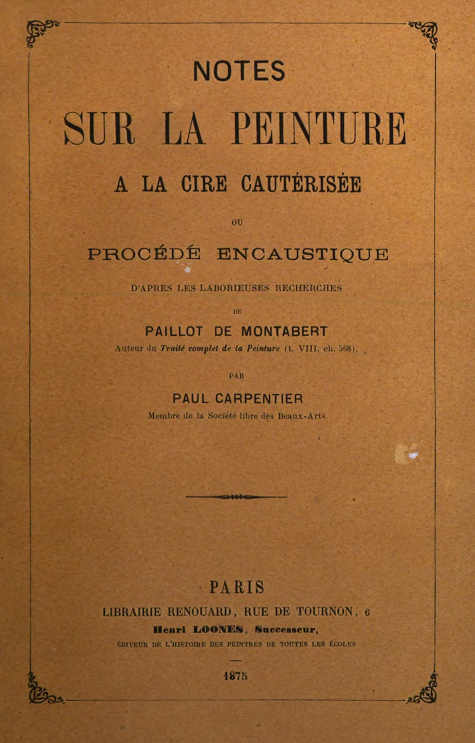
As our research about Carpentier progressed, we unearthed some very intriguing discoveries. While he was quite active in the Society des Beaux-Arts, advocating for various artistic mutual aid societies, he was also an accomplished theoretician and technician of encaustic painting. The ancient process of adding pigment to melted beeswax, which dates back to antiquity, fascinated Carpentier throughout his lifetime and culminated in his authoring a detailed treatise about the technique that artists still consult today.
Notes en cire

Cover of Notes sur la peinture: a la cire cautérisée procédé encaustique by Paul Carpentier

Most interestingly, we discovered that one of his closest friends was Louis-Jacques-Mandé Daguerre (1787-1851), the French artist and photographer recognized for inventing the eponymous process of photography. As a testament to their mutual admiration, Carpentier made a painting and bust of his good friend, but more importantly, in 1855 he wrote a monograph about Daguerre that to this day remains the single greatest firsthand contemporary account on the birth of photography.

Knowing more about Carpentier, and turning back to his self-portrait, we see that in it he brought together people and things that held an important place in his life. While we discovered valuable information about the painting and artist, we also learned that we all gain when our Associate Director of Curatorial Affairs relaxes at the end of a busy day by surfing the Web. Visit the newly conserved painting in the DMA’s Level 2 European Art Galleries, included in free general admission, today!

Martha MacLeod is the Assistant to the Associate Director of Curatorial Affairs and Curatorial Administrative Assistant for the European and American Art Department at the DMA.
Weaving in the Andes

For thousands of years, artists in the Andean region of South America have been weaving beautiful and complex textiles—an extremely labor intensive process as well as an important form of artistic expression. Beyond serving as protection from the arduous cold of the highlands and the intense sun of the Andean coast, textiles played important roles in ritual, political, and social life and functioned as a marker of social identity for both the living and the dead. Because it took so much time and effort to produce a textile, wearing a highly decorative tunic, for example, conveyed the wearer’s social prestige. Today, we are surrounded by textiles—from the upholstery of our living room sofas to our clothes and bed sheets. But most of today’s textiles were created in mass and for the masses.

3a

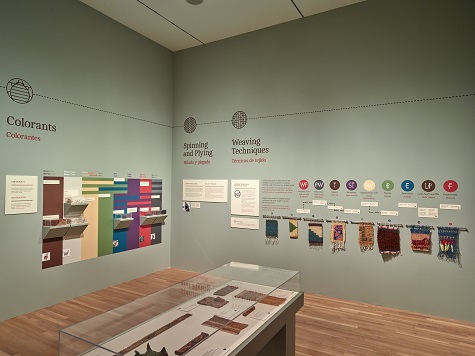
One of the goals of Inca: Conquests of the Andes—on view until November 15, 2015—is to emphasize that each of the textiles in the exhibition was laboriously and thoughtfully created by hand. So, we designed a space within its galleries to illustrate the step-by-step process of making a textile, from the shearing of a camelid for natural hair or the picking of raw cotton, to the many specific ways that fibers can be woven together to produce a textile.

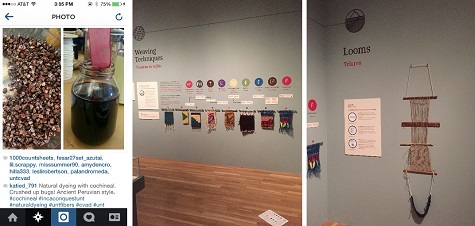
We were thrilled to collaborate on this project with University of North Texas professor Lesli Robertson and the awesome students in her class Topics in Fiber: Community, Culture, and Art. To kick it off, the class visited the DMA’s textile storage and examined fragments representing a variety of weaving techniques for inspiration. Then, they returned to campus and got busy creating enlarged samples of the weaving techniques, using extra strong and thick cording and string so that visitors can touch and feel the nuanced differences between the various techniques. The students experimented with natural dyes like indigo and cochineal (a parasitic insect) to produce bright colors, mirroring the Andean artists in the exhibition. They also produced a backstrap loom—a small, portable loom popular in the Andes that is attached around the weaver’s back and anchored to a tree or other high post. Be sure to check out the students’ photodocumentation of their project on Instagram. They tagged all of their photos and video with #IncaConquestUNT.

1a


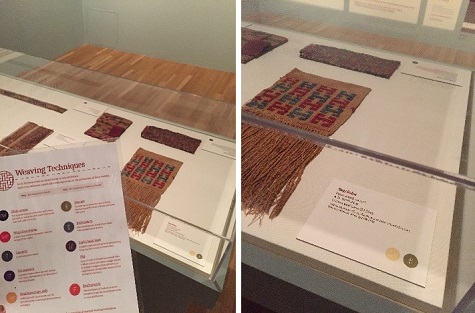
Better yet, visit the Inca exhibition and explore the sample wall to learn about the intricate weaving processes used by the artists represented in the exhibition. When you enter, grab a Weaving Techniques guide from the holder. The colorful round icons on labels indicate the predominant weaving technique used for that artwork. Look for differences in the techniques in the artwork galleries, but try to feel the difference in the Weaving in the Andes space.

2a


Andrea Severin Goins is the Interpretation Manager at the DMA.


A Soft Touch

14415297286_1b3a104a6e_k

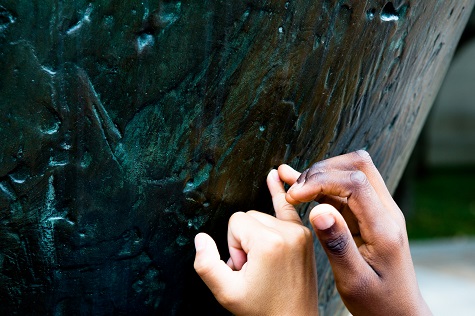
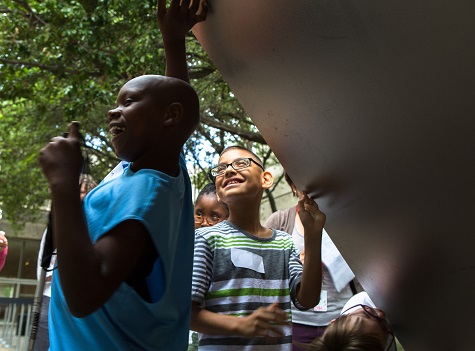
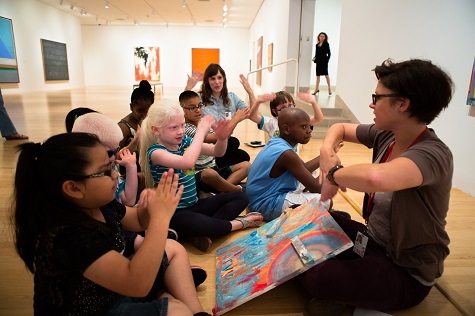
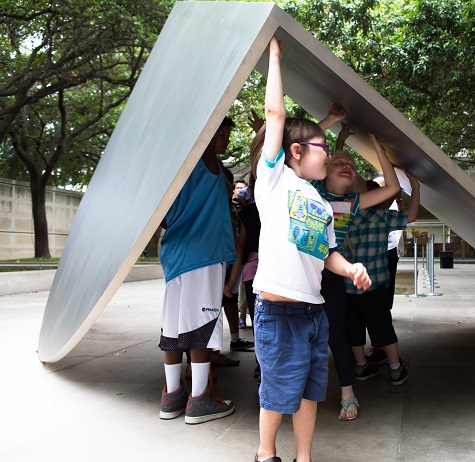
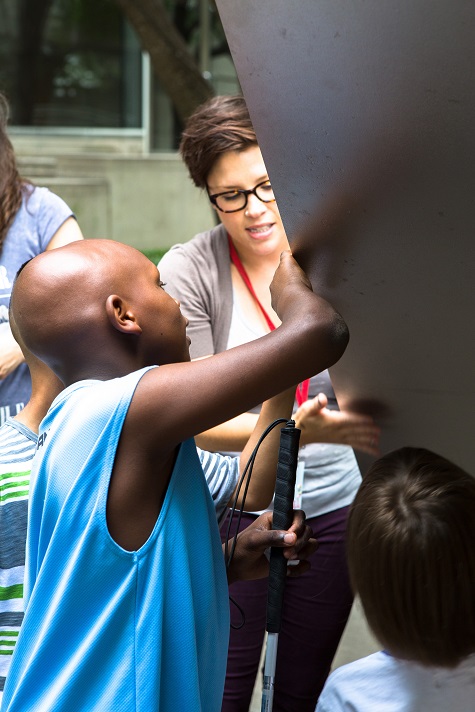
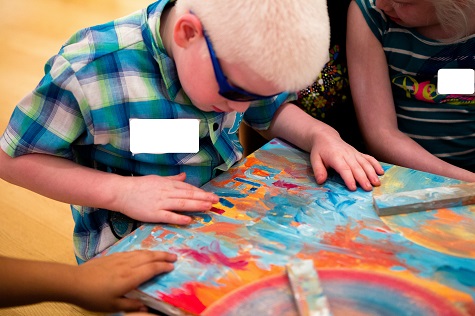
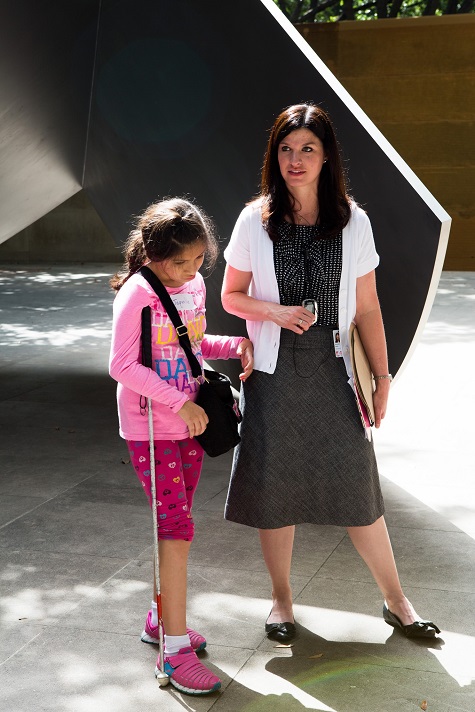
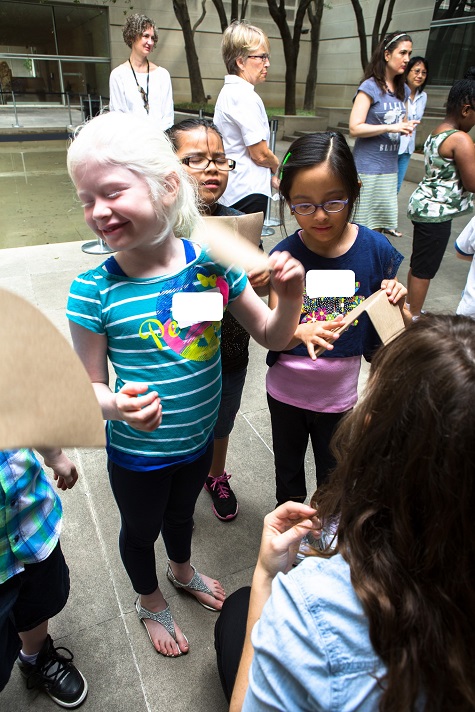
This evening, in advance of our special DMA Arts & Letters Live event with Rebecca Alexander, who will discuss her memoir about losing her vision and hearing due to a rare genetic disease, we will host our first Touch Tour for adults in the Museum’s Sculpture Garden. Last summer, the DMA hosted a similar tour for a group of children with visual impairment; you can explore photos from the event below and learn more about the history here.

Tonight, artist John Bramblitt will lead participants to three works of art and then discuss his process as an artist who happens to be blind. The all-inclusive tour for those attending the Arts & Letters Live event (those with full vision will be given blindfolds for the tour) begins at 6:15 p.m. Visit DMA.org for additional information about tonight’s program and to purchase tickets.

Amanda Blake is the Head of Family, Access, and School Experiences at the DMA. 
Off to Art Camp

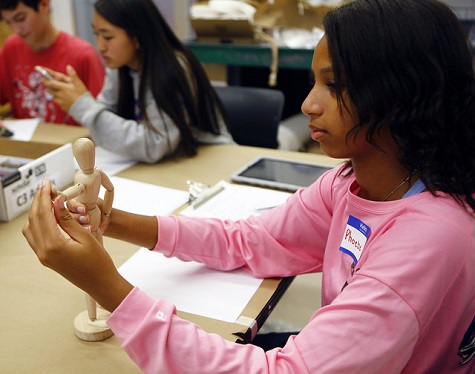
The end of the school year marks the beginning of the DMA’s summer camp program, where each week campers make friends while exploring works of art in the collection and making their own art in the C3 studios. Yesterday we welcomed a fun and energetic group for our first two Summer Art Camps of 2015: New World Kids and Paint, Print, and Pattern.
3

2

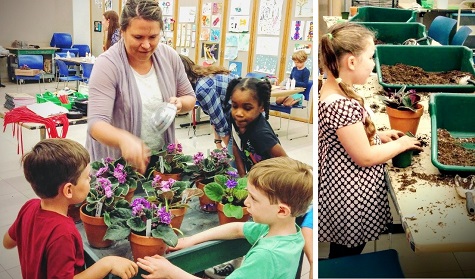
On the first day of New World Kids, campers got to work with plants . . . and get their hands dirty while doing so!
5

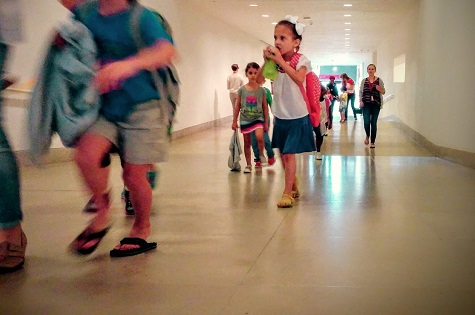
It was a fun day, and the campers were excited to show their families the plants and other activities they had worked on.

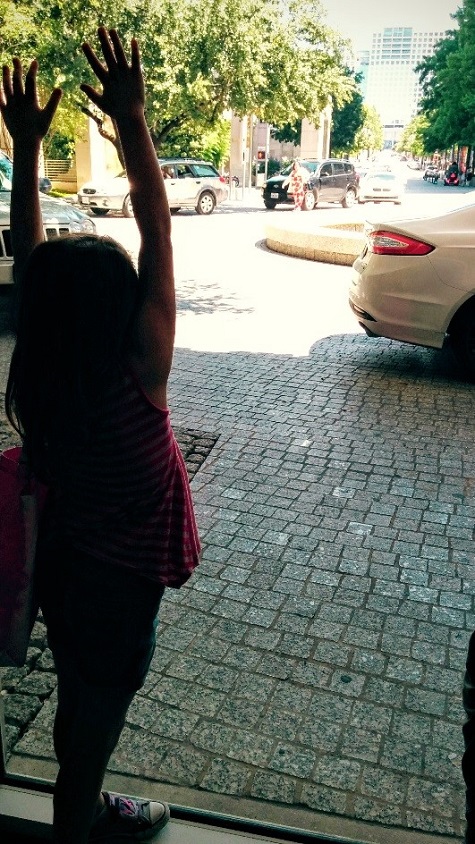
Some of the campers were, admittedly, a little excited to see their families at pick-up…
1
Although all our camps are fully booked, if you would like to see a list of the types of summer camps we offer, for ages ranging from 4 to 19, visit our website, DMA.org.

Josh Rose is the Manager of Docent and Teacher Programs at the DMA.
Golden Glaze

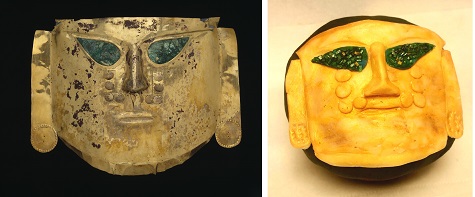
Today is one of the tastiest holidays all year, National Doughnut Day. Last year, we had so much fun seeing one of our paintings transformed into a ring of delicious art that we teamed up with Hypnotic Donuts for round two. James, the owner of the popular North Texas doughnut shop, and his head designer, Chrysta, explored the four floors of art in the Museum and were drawn to our pre-Columbian gallery and the gold Sicán ceremonial mask.

donut pic

Chrysta sculpted the fondant by hand and made each individual piece of the ceremonial mask.The pieces were then assembled and painted gold, and darker color was added for shadowing. For the eyes, she died the fondant an emerald hue and rolled it in sprinkles. The “paint” was created by mixing food coloring, sprinkles, and sugars.

This pastry fit for the gallery walls will be “on view only” at Hypnotic Donuts today during business hours. Head to Hypnotic Donuts in East Dallas to see the artistic doughnut, and stop by the DMA to see the work that inspired this year’s sweet masterpiece.

Kimberly Daniell is the Manager of Communications and Public Affairs at the DMA.

Archives

Categories