Archive for the 'Art & Teaching' Category


Welcome Back Volunteers!

Earlier this month Go van Gogh staff welcomed back the returning volunteers for our first training session of the year. We kicked off the day with an artist personality quiz, revealing our artist dopplegangers from the collection. As someone who has always walked to the beat of her own drum, it was no surprise that I turned out to be a Georgia O’Keeffe. Looking around the room, I noticed a good mix of rebelious Jackson Pollocks, bold and brilliant Pablo Picassos, calm and tranquil Claude Monets, and unique and inquisitive Frank Gehrys.

The rest of the day was primarily spent playing a trivia game that Melissa, Amy, and I created based on the Arts of Mexico Go van Gogh program. Picassos, O’Keeffes, Monets, Pollocks, and Gehrys were all mixed together into teams to compete against each other for the honorable title of Trivia Game Winner. With a variety of questions from true-false to multiple choice, teams had to race against the clock to form their answer before time ran out. However, not all the questions were so straight forward; the game also featured difficult bonus questions and hands-on teaching challenges that warranted extra points. Getting the players on their feet, a teaching challenge could ask the team to pose as a work of art in a frozen tableau, solve a puzzle, or lead an activity from the program as if they were teaching in a classroom. To catch a glimpse of all the fun, check out the slideshow below.

[slideshow]

At the end of the day, volunteers took the time to reflect on the session. Here’s how many of them described the day:

  • Lots of good high energy
  • A good refresher to the program
  • Engaging and fun, loved the game!

Teachers, don’t forget to schedule a Go van Gogh classroom visit (or two, or three…) this school year.

Hannah Burney
Community Teaching Programs Assistant

Re-visiting Anytown USA

Last month, I shared teacher responses to the following prompt for the artwork Anytown USA by Jack Pierson:

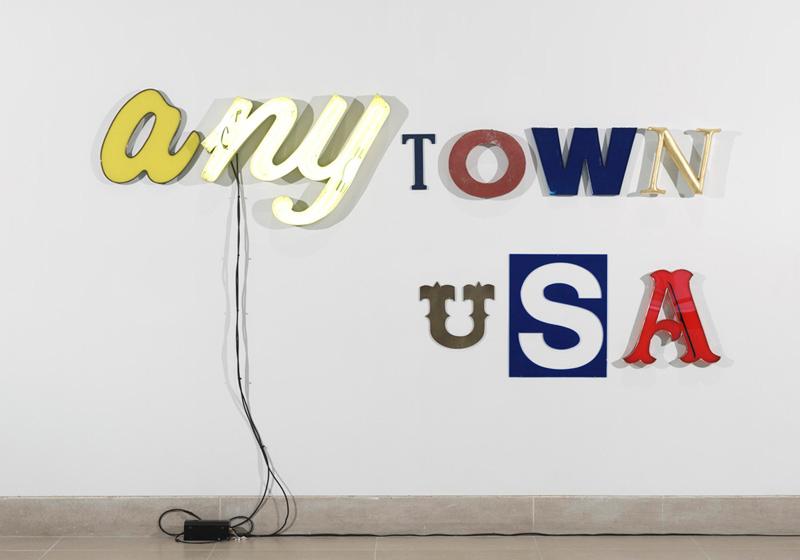
The letters that make up this sculpture come from a variety of places. Imagine that each of the letters came from signage on buildings in Anytown USA.  Select one letter and write a description of the business you think used that letter in its signage.  Remember, your response must be inspired by the look and feel of the font/letter you select.

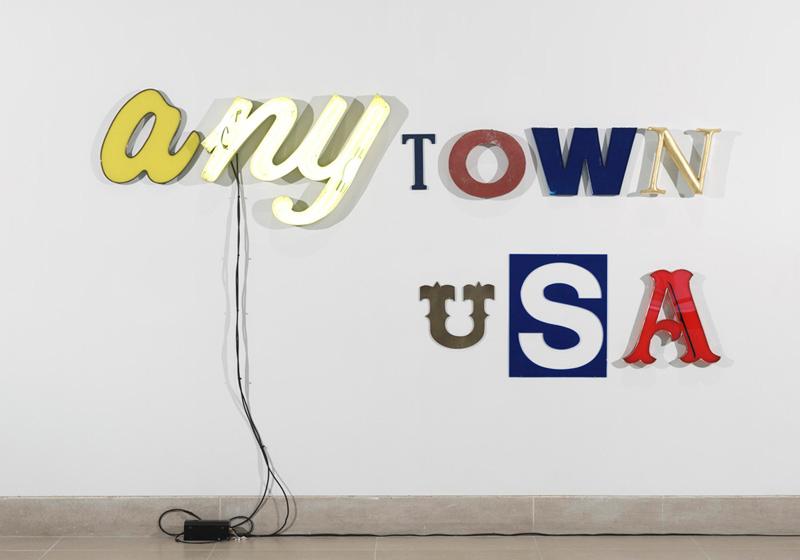
Anytown USA, Jack Pierson, 2000, Dallas Museum of Art, gift of the Junior Associates, 2004.10.a-i, © Jack Pierson

I repeated this same exercise with our docents this week, and their responses were equally as clever and creative.  Below are descriptions for some of the businesses that the DMA docents think populate Anytown USA.

A is for Nan’s Diner, which has been around since the 1950s.  The booths and stools are covered in yellow vinyl, and the diner is known for their breakfast menu.  The A may also be from a sign for Carvel’s Ice Cream Shop, whose interior is decorated in primary colors.  The whole store smells like hot fudge and cotton candy.
NY is for New York Bagels, a shop that’s open all night and is a favorite late night hangout.  NY may also represent the New York Pantyhose Company, because the NY in this work of art comes in a pair–just like pantyhose!
T is for the Small Town News, a local newspaper that reports on weddings, births, and everything that’s happening at the schools.  It might also stand for the Texaco gas station, which is still a full-service station.
O is from the sign of the John Silk Feed Store, which caters to farmers and ranchers.  The employees are “good ol’ boys” and the store smells like hay, fertilizer, and cedar shavings.  The O might also be from the sign of the Apothecary Shoppe, which had served the town for 60 years until it was forced to close because of a big chain store.
W may be from the sign of the family-owned Main Street Hardware Store.  The store is cluttered, but they carry specialized products that you can’t find at other stores.  The W might also belong to the Washateria, which is filled with the whir of washers and dryers.

U is for the Final Rest Undertakers, a quiet space decorated with muted colors.  Past customers might say, “He looks so natural, but it costs so much.”  On the other end of the spectrum, U might also be from the sign of a saloon/boarding house.  A loud and crude place, there’s a player piano in the corner and women wander the lobby wearing only their petticoats.
S is for the General Store, whose owners know everyone in town.  The stores sells everything you could ever need, and there’s also a large pickle barrel in the corner.  The S could also be part of the sign for a soda fountain, which is the favorite hangout of all of the teenagers in Anytown USA.
A is part of the sign for the local baseball stadium, which houses a minor league team.  It gives the town a sense of sophistication and makes it feel like maybe it’s a larger town than it actually is.  The A could also be from the local Anheuser-Busch distributor, the town’s largest employer.

Without a doubt, the answers for that final A were unanimous in all four groups of docents who participated in this exercise.  What is it about that font that screams baseball and/or beer?

Many of the docents commented on the sense of nostalgia that their responses held.  I’m looking forward to trying this activity with students to find out if Anytown becomes more modern when it’s examined from their point-of-view.

Shannon Karol
Manager of Docent Programs and Gallery Teaching

Visit the Museum Without Leaving Your Classroom!

Image

Self-portrait collages created by 2nd grade students at Green Elementary during a Searching for Faces Go van Gogh program

Calling all teachers!  Do your students like experimenting with art materials and exploring artworks from other times and places?  As you begin to plan your school year, we hope you’ll consider inviting the Dallas Museum of Art to your classroom for a Go van Gogh outreach program.  Here are some reasons we think Go van Gogh is a great way to spend a morning:

You can…

  • Visit the Museum without leaving your classroom!  Go van Gogh brings images of artworks from the Museum for interactive conversations.
  • Make an artwork to take home.  Go van Gogh brings all the supplies your class will need to make a take-home art project.
  • Connect to your curriculum.  Go van Gogh programs are geared for specific grade levels, and often dove-tail with subjects students are already learning.
  • Travel around the world.  Go van Gogh programs feature art from Africa, Mexico, Japan, and other far-off places.
  • Get a free pass.  Each student who participates in the Go van Gogh program receives a free family pass to visit the Museum.

Some quick facts about Go van Gogh:

  • Programs are offered to 1st-6th grade classrooms at schools within Dallas city limits.
  • Go van Gogh is free-of-charge!
  • Scheduling is first-come, first-served.  There is no limit to the number of programs you can schedule.

Visit our website to learn more about Go van Gogh program offerings and to schedule a program for your classroom.

We hope to visit your classrooms this school year!

Amy Copeland
Coordinator of Go van Gogh Outreach

What is Art?: Word Cloud Excercise

Today during Learning Lab, juniors at Booker T. Washington High School for the Performing and Visual Arts  explored Variations on Theme: Contemporary Art 1950s—Present. But before we dove into the artwork on the walls and our responses to it, we considered our preconceived ideas about the definitions, classifications, and limitations associated with the term art.

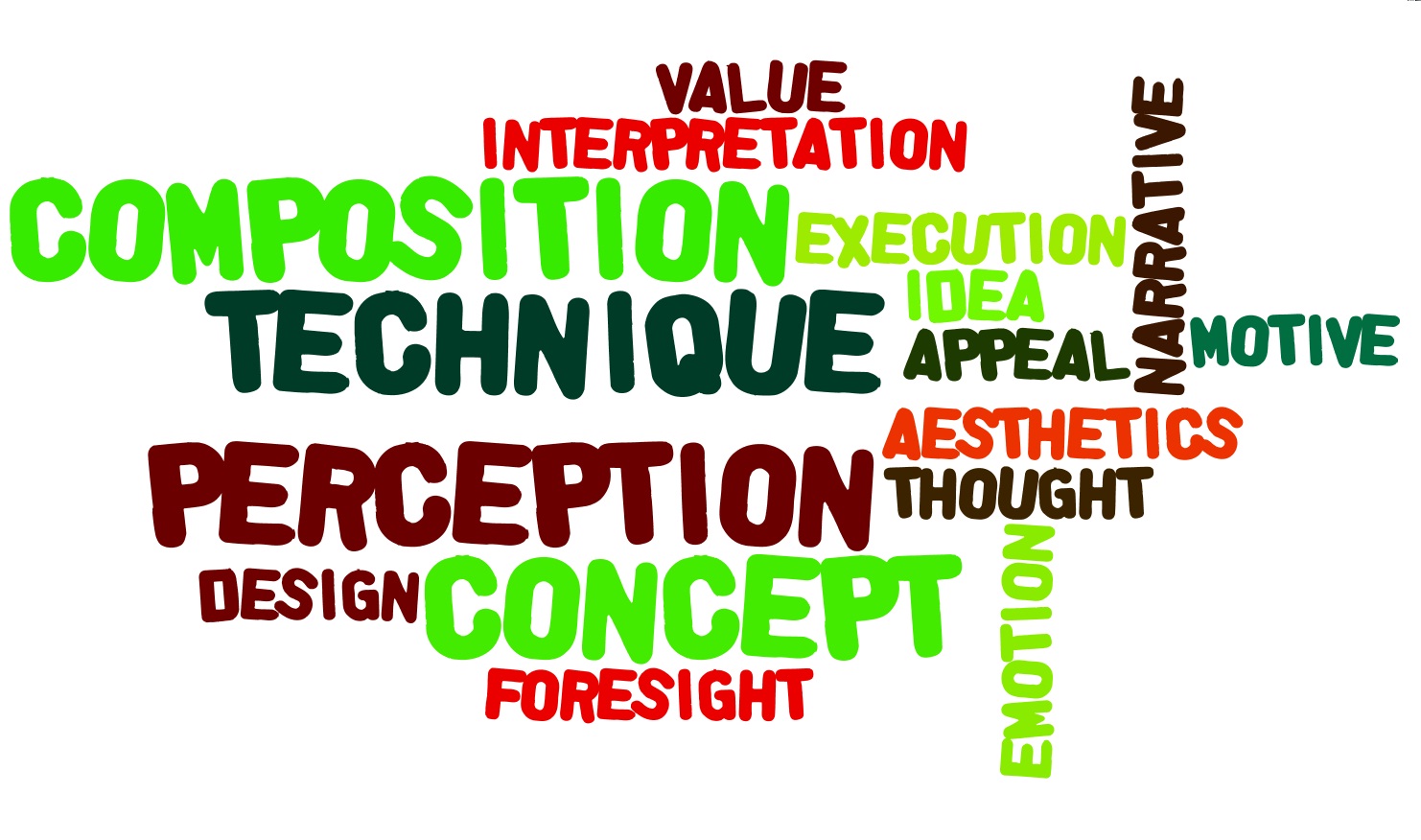
In small groups, the students defined art in five words. I used Wordle to create a word cloud with their definitions. (Wordle is a wonderful classroom resource for visually presenting textual content.) The larger, bolder words were words that multiple groups used to define art.

Composition, technique, perception, and concept stand out. Other words like value, design, and aesthetics relate to an artwork’s composition or visual elements. I loved that the students included words that reference an artist’s conceptual process, such as idea, foresight, thought, and motive. 

How do you define art?

Andrea V. Severin
Coordinator of Teaching Programs

Community Connection: Booker T. Washington Learning Lab

Being a part of the Dallas Arts District has its distinct advantages. One advantage is being located within walking distance of other arts institutions, making it easier to develop close and in-depth partnerships. For instance, we have just started the second year of our Learning Lab partnership with Booker T. Washington High School for the Performing and Visual Arts. In this partnership, DMA Education staff work with Visual Arts teachers to lead experiences and projects at the DMA and at the school (the school also partners in this way with the Dallas Theater Center and the Dallas Symphony Orchestra).

This year, Andrea and Shannon are working with Krystal Read and Leslie Eames and their junior portfolio classes.

Krystal Read

Describe this class and what you envision your students doing throughout the year.

Krystal: It’s a great opportunity since it’s taught by both a school instructor and museum educator, and students will be learning about different aspects of the art world. So, we’ll cover things like aesthetics, museum practices, and a little bit of contemporary art.  A lot of what they’ll be doing in class at school is preparing for their portfolio and getting career-ready.  I think the museum helps expose them to that type of professionalism.

Leslie: It is kind of a dual class, with two parts combined together.  One part is preparing the students for their senior year by writing resumes, making a portfolio, and all the things that come with being a senior at Booker T., such as a senior show and a portfolio day with visiting colleges.  We’re also preparing students who might want to go right into the workforce by showing them what the world has to offer them as artists.  The other half of our class is Learning Lab and working with the DMA and Shannon Karol.  Shannon visited our classroom earlier this week, and the excitement level was astounding. The students are very excited to learn about the behind-the-scenes preparation for exhibits.  Many don’t realize that you’re often not just an artist; you’re also a critic and a curator.

Leslie Eames with Gary Pierce Jr. and her son Madden

What are you most excited about or looking forward to in this partnership?

Krystal: I’m most excited about the interactive experiences and that so much of our class is taking place outside of the classroom.  I’m organizing an opportunity for them to possibly do an earth-friendly installation at Klyde Warren Park.  The students are doing something different in this class; a lot have a more classical, traditional training in art, so we’re forcing them to step outside the box.

For me, it’s also so exciting because I started off in museum education and I wanted to do more teaching.  I’m excited that those paths have finally crossed back over and somehow synced back together.

Leslie: I am excited that I get to learn as much as the students about the DMA.  I had no idea that I would be teaching this class, or that it existed.  As I met with my supervisor before school started, we went over course expectations and I just couldn’t believe what an awesome job I had and that I get to learn with the students.

What was a highlight of your summer vacation? 

Krystal: This past summer, I was overwhelmed with weddings, and I’m getting married myself. We’ve gone to so many weddings in the past few months.  We went to Houston for a wedding, and the next morning we went to The Breakfast Klub, a soul food brunch café that was amazing.  Breakfast is my favorite meal; I just love it.  As silly as it sounds, I was so excited about having good food.

Leslie: The highlight of my summer was taking a month off between my last job and this job and spending that month with my five-year-old son, which is something I’ve never been able to do.  He didn’t know what summer was; I’ve had him in Montessori up until now, so he didn’t know people had summers off.  We took a train ride to Oklahoma and a couple of different road trips, and made sure we had all the summer fun we could have.  We both learned we have summer vacation every year to look forward to.

Look for future blog posts about the fun and exciting experiences we’ll share with these students and teachers throughout the 2012-13 school year!

Melissa Nelson
Manager of Teaching in the Community
Time to Ring in the New School Year

Last week, Go van Gogh staff and volunteers celebrated the upcoming new school year at our annual welcome back party. Generously hosted by Go van Gogh volunteer Deborah Harvey, the lively group gathered at her home for coffee, snacks, mingling and a very special private art tour. Growing up, the love of art was infectious in Deborah’s family and collecting became a beloved family tradition. Today, she has an impressive collection of exquisite original works. Deborah guided us through her home with charisma and charm relating fun facts and anecdotes about each piece. Check out pictures from the festive event in the slideshow below.

[slideshow]

I still can’t believe that summer is already coming to an end. I guess it’s true what they say, time flies when you’re having fun! But before we all get swept up into fall, I’d like to take a moment to celebrate some of the successes of this busy, yet fun, summer.

While school was out for the summer, Go van Gogh staff and volunteers traveled all over the city, bringing interactive art programs to your neighborhood libraries, YMCAs, and Boys & Girls Clubs. Through the Go van Gogh Summer Library Program we taught at over fifty venues with a staggering total of 1,393 participants. Although library programs are recommended for ages five-twelve, anyone is welcome and encouraged to participate. Reflecting back, many volunteers have expressed how much they enjoyed interacting with entire families that included children as well as parents. Receiving positive feedback from parents, volunteers, and librarians has been a highlight of this year’s program. I have provided just a couple of these such comments below.

May Shen, Children’s Librarian at Arcadia Park Branch Librar, wrote:

The children were engaged in the museum artwork, made good observations, and had a lot of fun with their own creations.  I was thrilled to see how involved the parents were as well!”

Karen Wyll, a Go van Gogh volunteer shared:

The parents were very complimentary and so pleased to be there.  Both programs were a very positive experience for everyone, I think.”

It’s been a wonderful summer, and I look forward to a fantastic new school year.

Hannah Burney
Community Teaching Programs Assistant

Urban Armor Street Art Camp with Isaac Davies

Guest Artist Isaac Daniel Davies

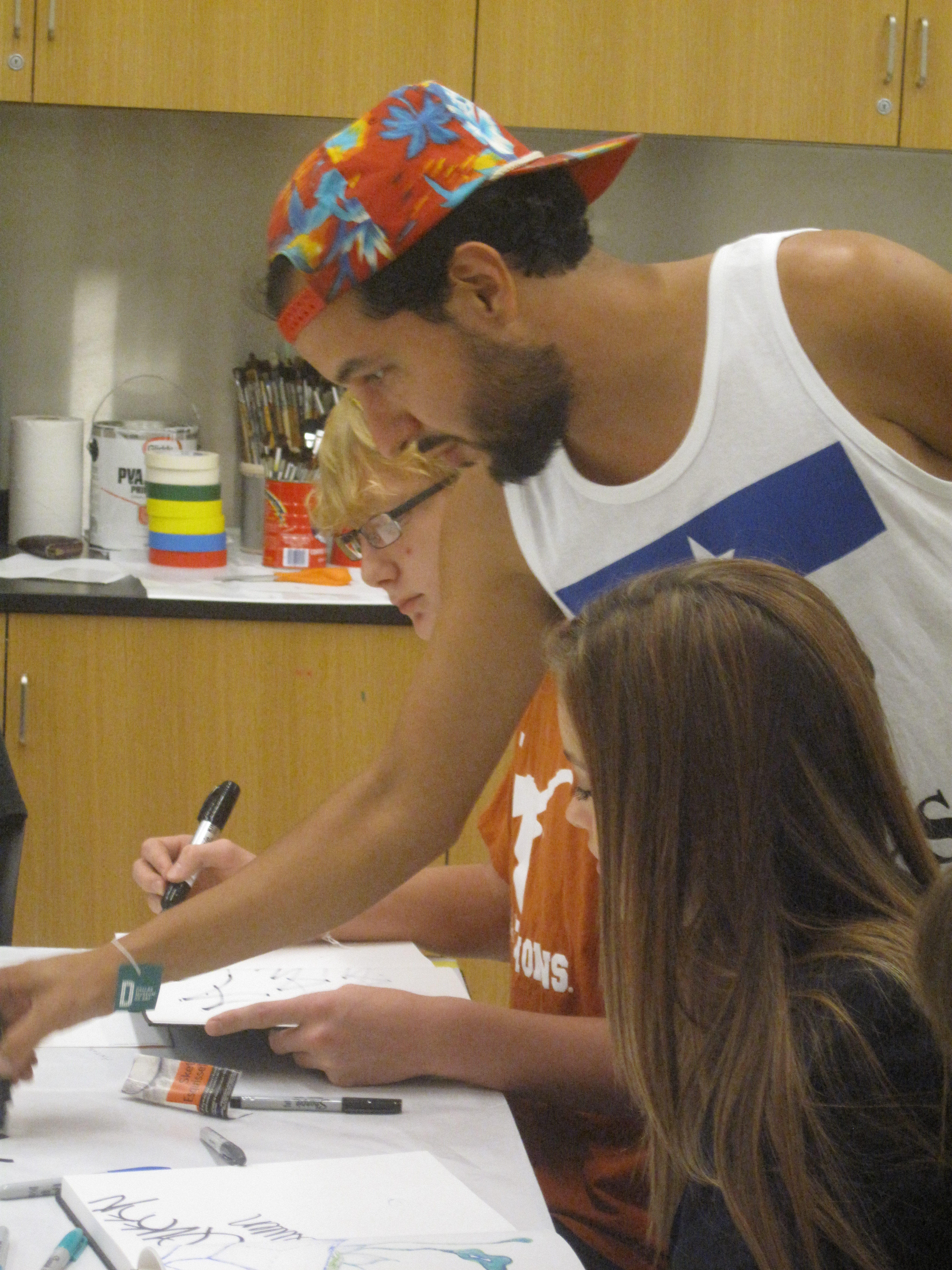
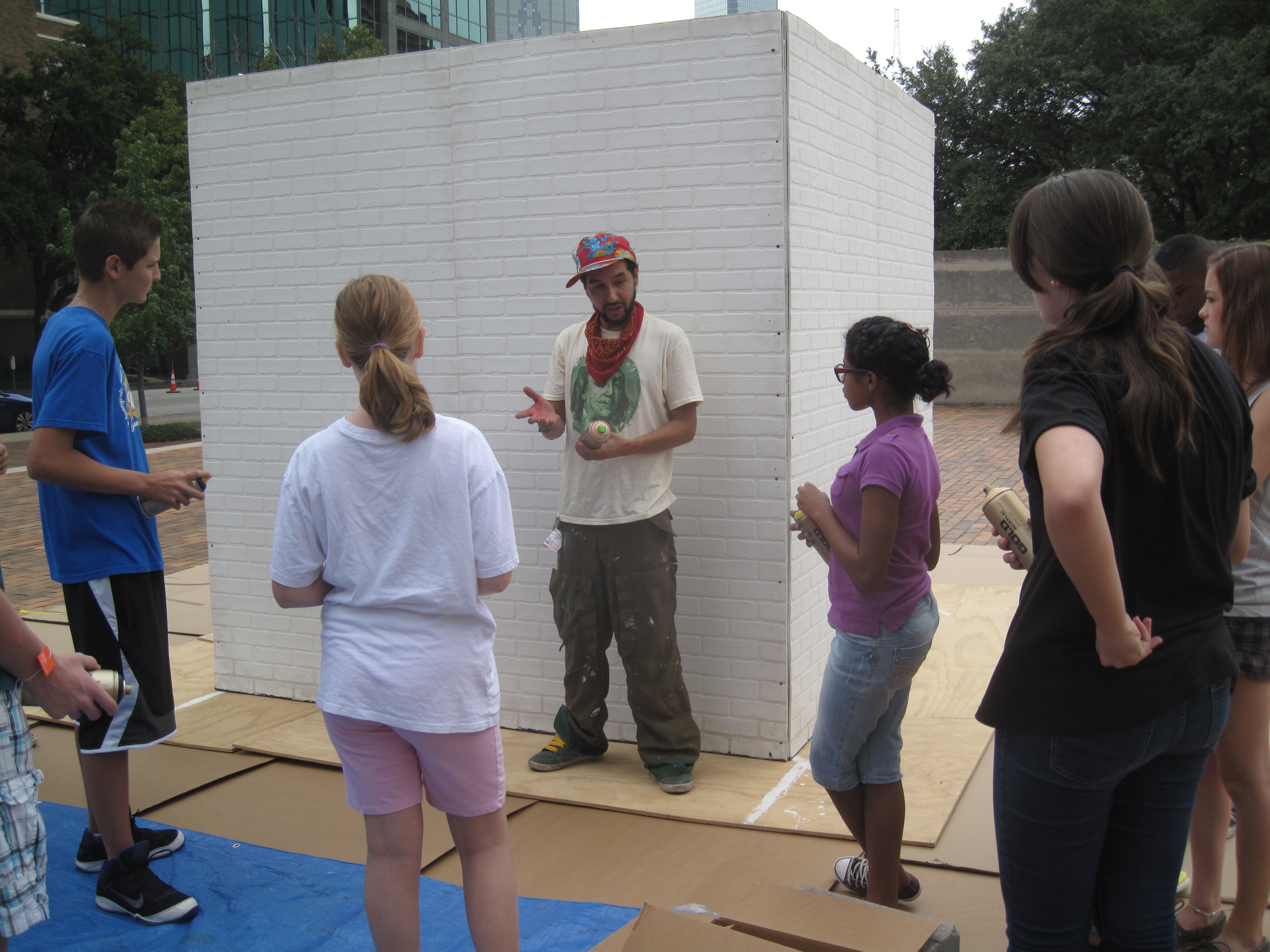
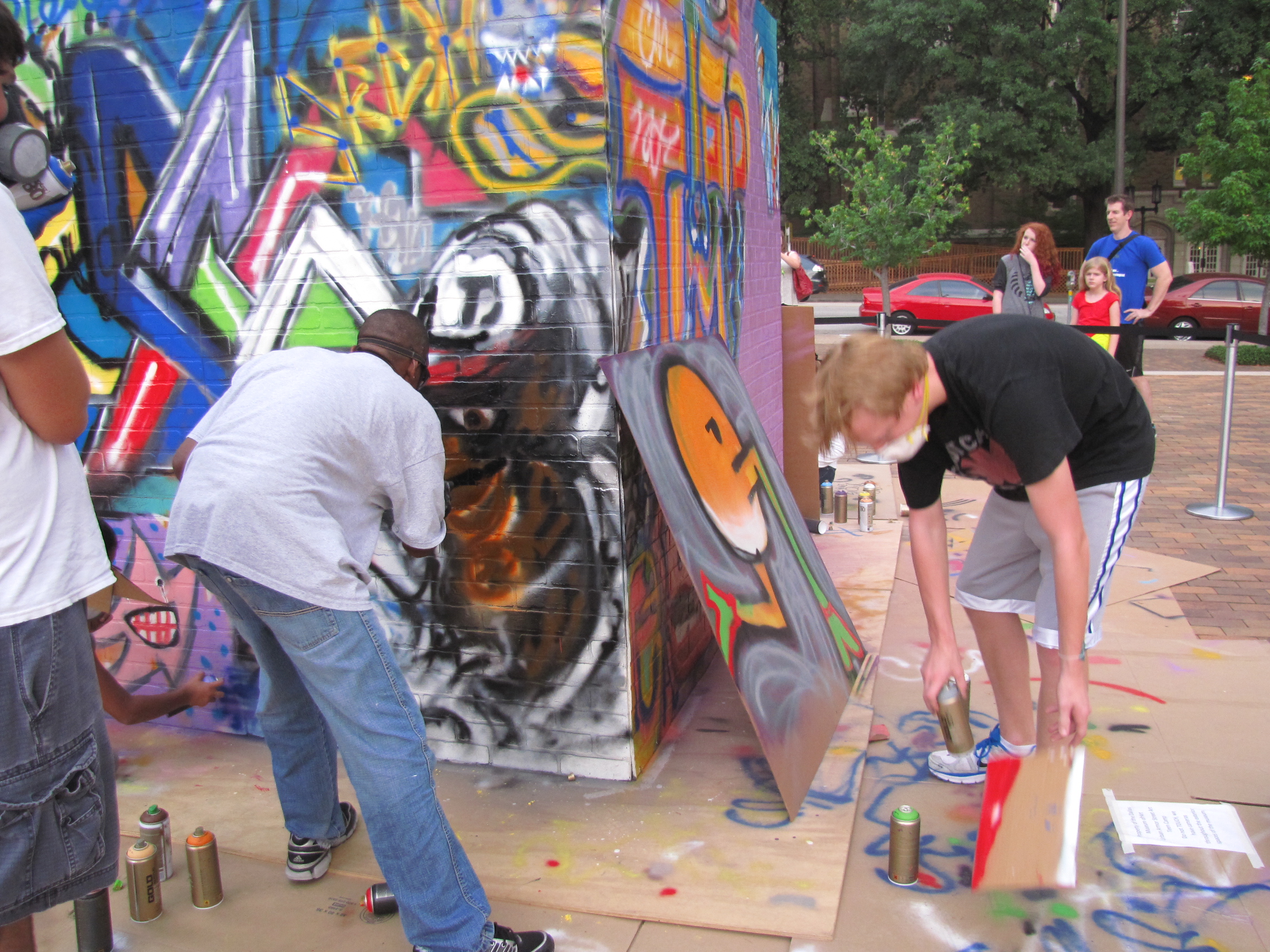
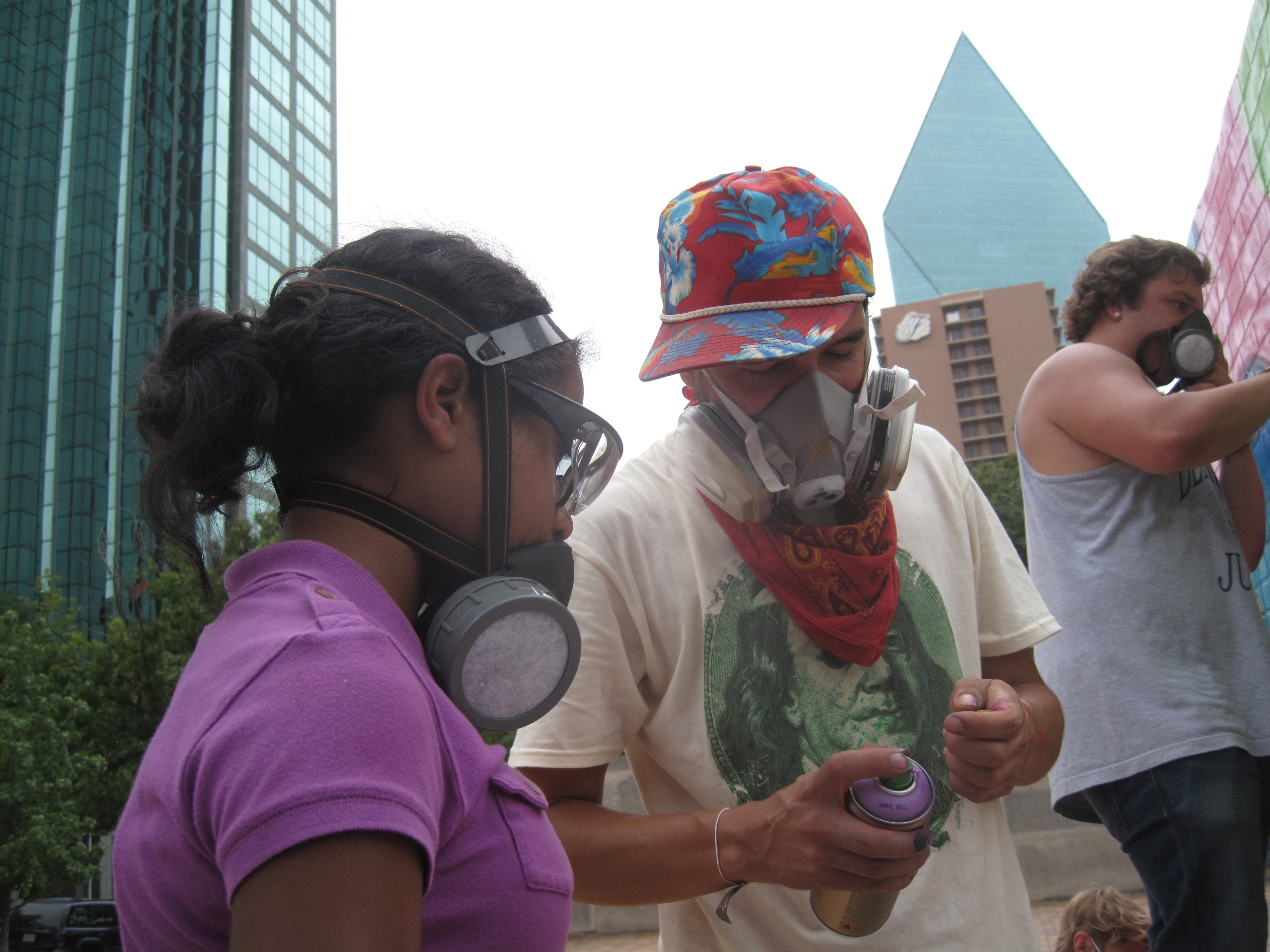
Urban Armor is the Dallas Museum of Art’s unique program for tweens and teens.  These photos highlight the first summer camp  for this age group focused on identity through street art.

During this camp, students developed new ways to express themselves with the assistance of our Urban Armor teachers Amanda Batson, JC Bigornia and guest artist Isaac Davies.

Teens Working

Isaac Daniel Davies and Urban Armor student

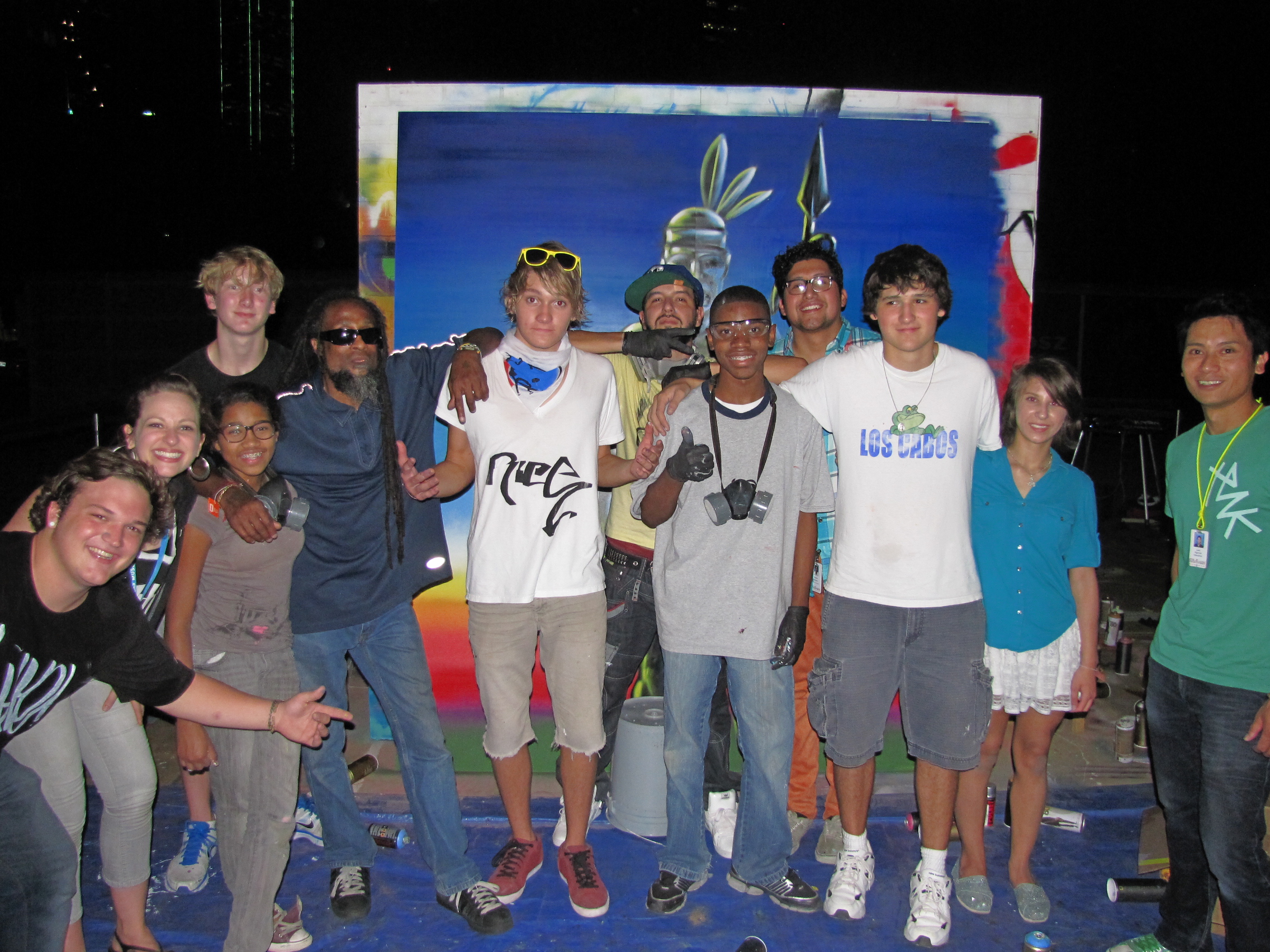
Late Night Camp Demo with Isaac Daniel Davies, Anthony Gonzales,  DJ EZ Eddie D, Amanda Batson, JC Bigornia, and Urban Armor students

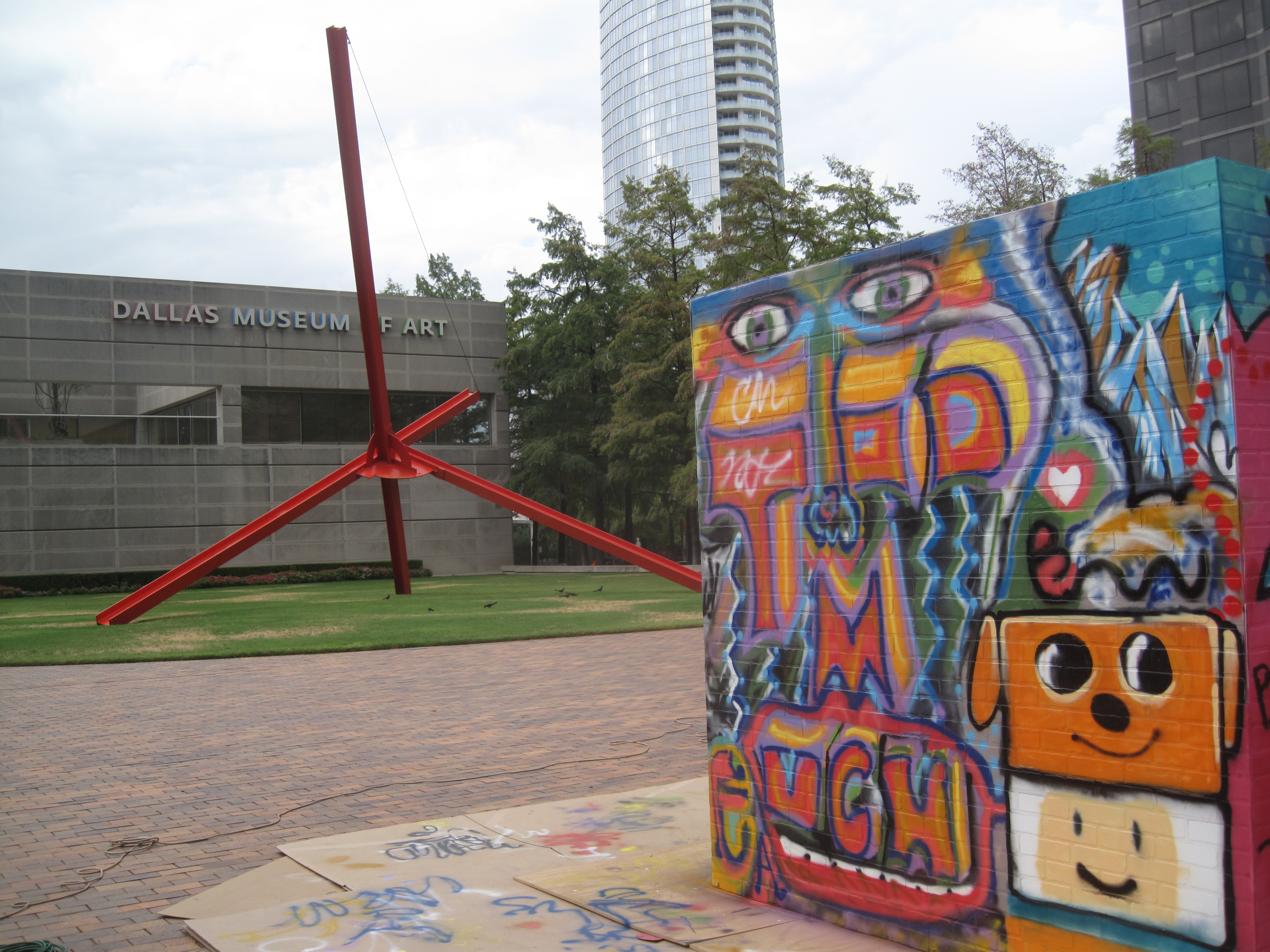
Completed

For upcoming Urban Armor programs, please visit our website.

Amanda Batson
C3 Program Coordinator

Teaching for Creativity: A Conversation Between Artworks

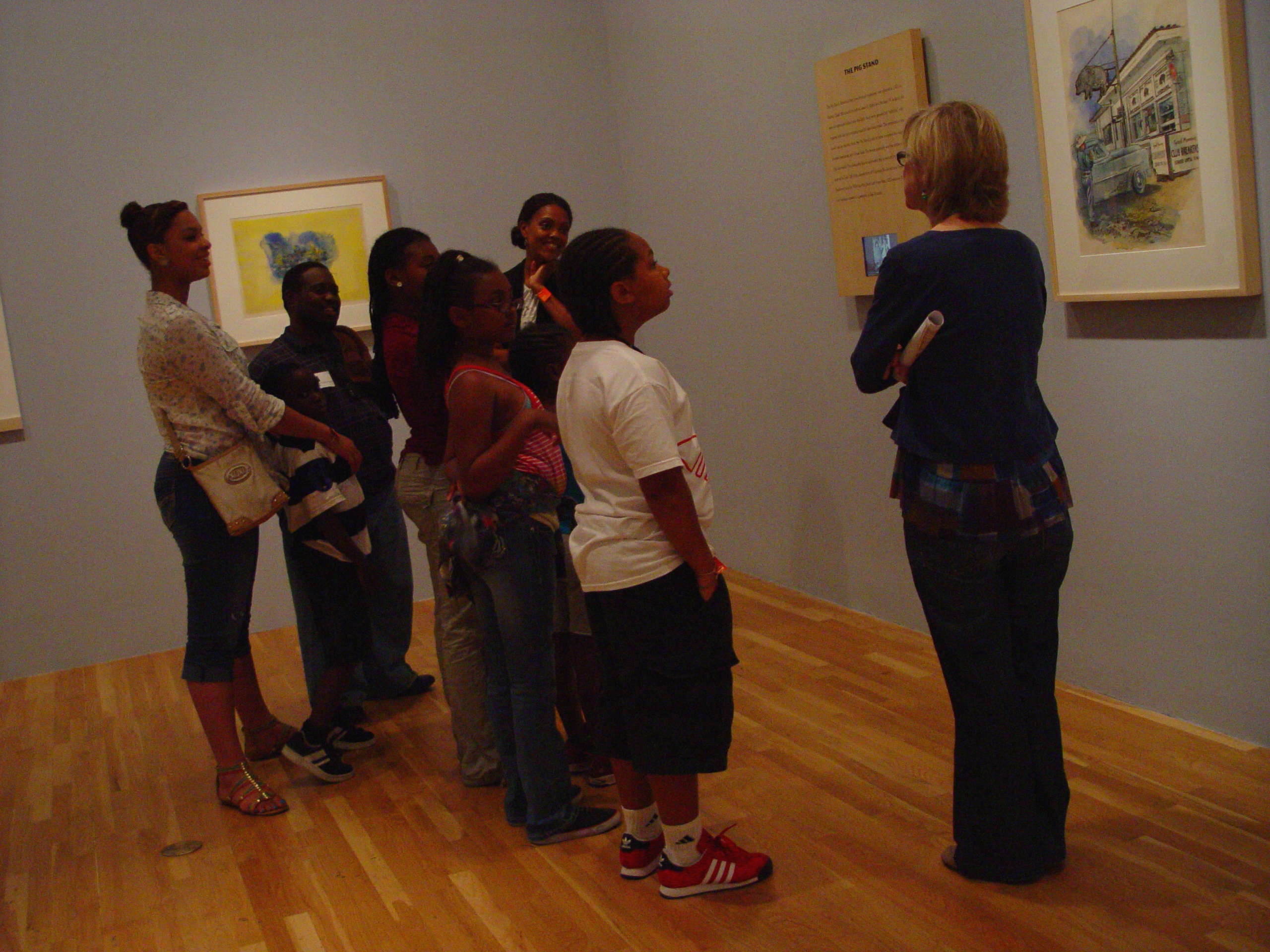
Have you read Shannon’s post about our gallery experience with ­­­Anytown, USA during Museum Forum for Teachers? After we imagined businesses, shops, and restaurants inspired by typography, we moved into a gallery in Variations on Theme with figural works of art. In this fun, creatively-charged gallery experience, we projected character traits and narratives onto the ambiguous figures.

To warm up, we created scribble characters and characterized one as a large group. Then, small groups of four or five people turned their attention to the artworks in the gallery. Each group chose two figures to explore and characterize. Then, each group wrote a short piece of dialogue between the two figures. To add a little challenge, each group randomly chose one line of dialogue to incorporate. Though it may seem counterintuitive, limitations within a lesson actually inspire more creativity than a completely open assignment.

These dialogue lines included:

  • What is that smell?
  • You are never going to believe what just happened…
  • I have never been so embarrassed.
  • No, I’m not kidding.
  • Tell me it isn’t permanent!
  • Did you get dressed in the dark?
  • Happy birthday!
  • I tried everything I could…
  • What’s on your face?
  • I heard it on TV…
  • I’m telling you…it won’t work.

Most of the groups’ conversations between artworks were light-hearted and humorous. However, each conversation was diverse with rich characterization. I really enjoy experiences when art-viewers combine what they see visually with their own experiences and ideas to create unique interpretations.

It would fun to tweak the creative twist for a classroom experience. Instead of incorporating a specific line of dialogue, try assigning the students a specific historical era or geographic location to research as a setting for a conversation between two artworks. Or, ask the students to create conversations between a figure in a work of art and a historical or literary figure. One of our Museum Forum participants suggested that students research artists and write hypothetical conversations based on what they discover of those artists.

What might a conversation look like between these two figures?

Andrea V. Severin
Coordinator of Teaching Programs

Destination: Anytown USA

Our annual Museum Forum for Teachers has come and gone, and this year was another rousing success.  Twenty-two teachers participated in the week-long program, and spent a full day at each of the following Museums: The Rachofsky House, the Nasher Sculpture Center, the Modern Art Museum of Fort Worth, the Kimbell Art Museum, and of course the DMA.

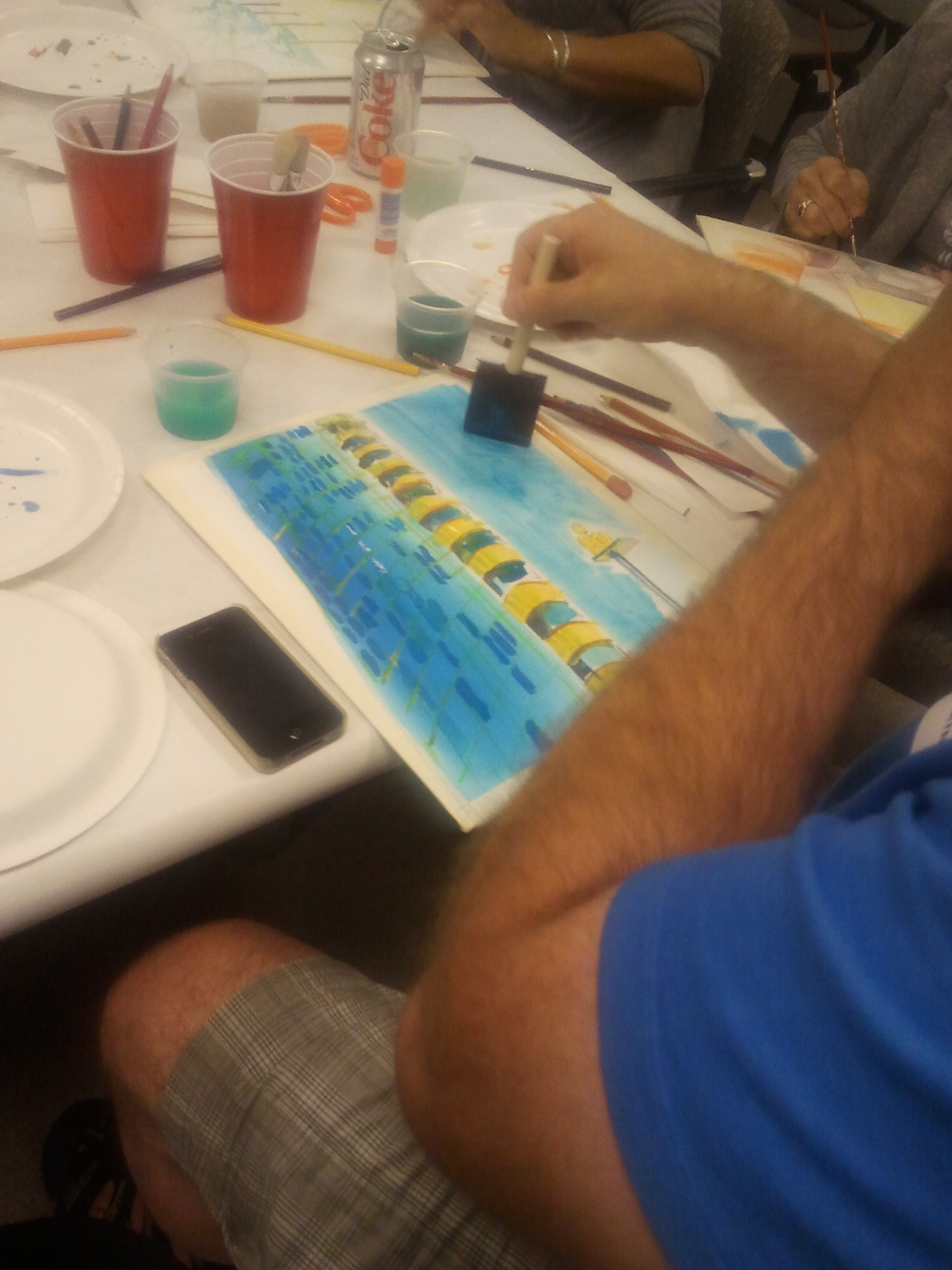
During their time at the DMA, the teachers went on a walking tour of the Arts District before spending time in Flower of the Prairie: George Grosz in Dallas.  Both of these experiences led to their afternoon art project: creating a watercolor painting of their impression of Dallas.

One teacher’s watercolor showed the Nasher Sculpture Center and Museum Tower.

Teachers were also able to spend time in a brand new installation, Variations on Theme: Contemporary Art 1950s–Present.  While we were in the exhibition, we focused on the themes of the figure, vanitas, and place.  The idea of place was one of our key themes for the day, and we spent quite a bit of time looking at Jack Pierson’s Anytown USA.

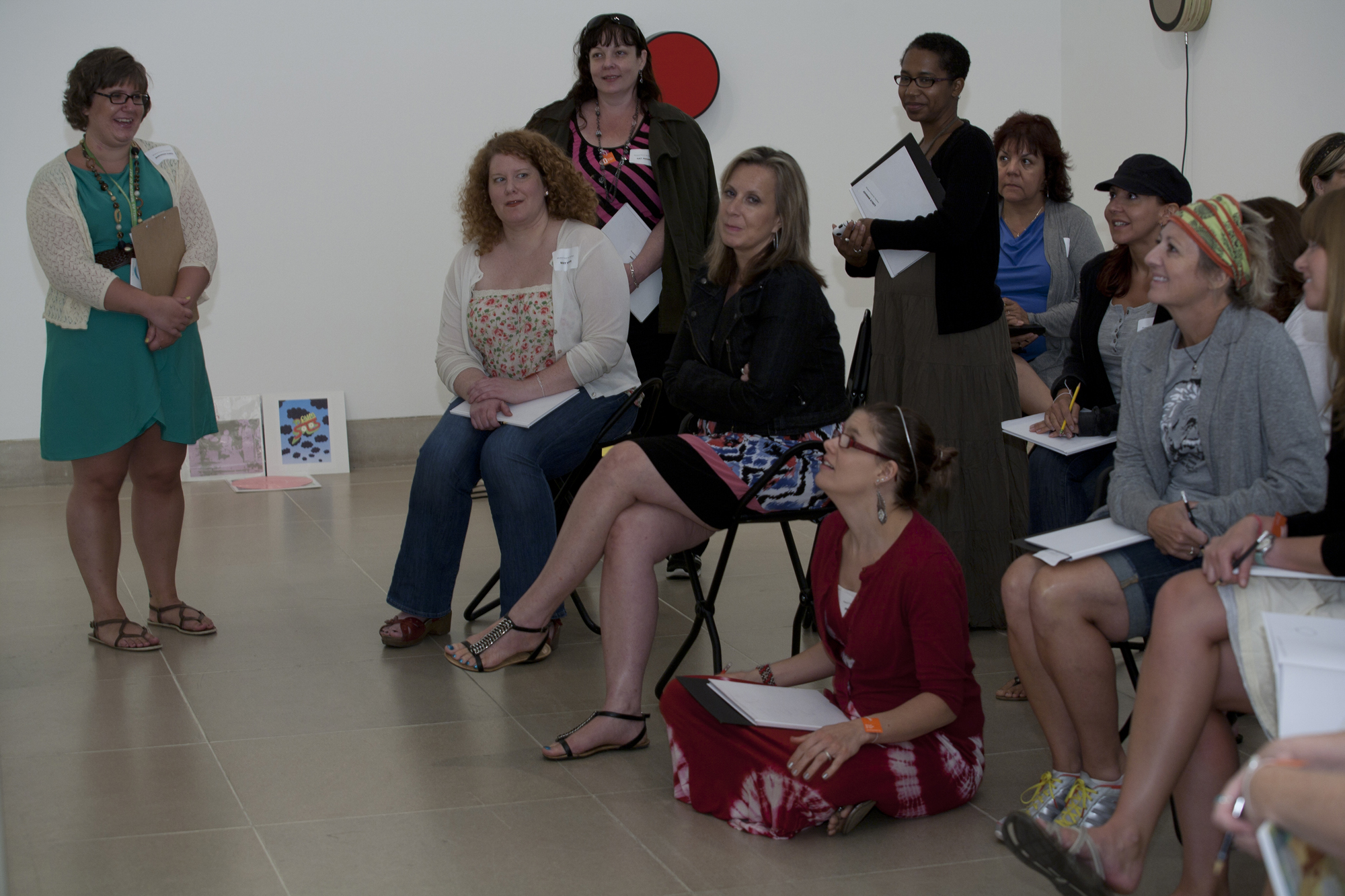
Talking with teachers during the 2012 Museum Forum for Teachers

I always love when Anytown USA is on view.  There’s something nostalgic about it, and I always wonder just where “Anytown” might be.  The general consensus among the teachers was that Anytown was a small town that probably looked a lot like Mayberry.  As we looked at the artwork, the teachers were given the following prompt:

The letters that make up this sculpture come from a variety of places. Imagine that each of the letters came from signage on buildings in Anytown USA.  Select one letter and write a description of the business you think used that letter in its signage.  Remember, your response must be inspired by the look and feel of the font/letter you select.

Jack Pierson, Anytown USA, 2000, Dallas Museum of Art, gift of the Junior Associates, 2004.10.A-I, © Jack Pierson

Based on the teacher’s responses, it sounds like Anytown USA would be a wonderful place to live!  Here are some of their ideas:

NY: A coffee shop where everyone goes to hang out.  Every town has to have a coffee shop.  Or,  a deli run by a transplant from New York.  All of the sandwiches are named after local celebrities.
T: An antique or curio store, and all of the employees are eclectic, just like the goods they sell.
O: A donut shop where grandparents spend weekend mornings with their grandkids.  A city is defined by its donut shops.  Or, it’s an old gas station that is practical, functional, but a little bit dirty.  They don’t care about the aesthetics of their business, they just want to get the job done.
W: This W looks very commercial and slick, like it came from a Walden Books.  Or, it could be from a Woolworth’s Five and Dime.
N: A feminine upscale hotel, or maybe a newspaper printing office.  Or, maybe it’s for a fine art framing shop that has a Thomas Kinkade painting hanging in the window.

U: This belongs to a Western store called “Boot Country.”
S: This S looks universal and simple–it belongs to a store called Supermart that sells everything.
A: This could be part of the sign of a ball park.  Or, it’s the sign for a bar called BAR that’s full of smoke and beer, but is a place to escape.

Surprisingly, none of the teachers selected to write about the first yellow A.  What type of business do you think that A might represent?  I would love to hear your ideas!

Shannon Karol
Manager of Docent Programs and Gallery Teaching

Friday Photos: South Dallas Cultural Center Family Night

Tuesday’s blog post highlighted our partnership with artists associated with the South Dallas Cultural Center.  However, this was not our first time to work with the Center.  For the past eight years, we have worked with students from the Center during the five-week Summer Arts at the Center program in a variety of ways.  Students view works of art in the DMA’s collections or special exhibitions that relate to the rotating program theme as a part of projects like online presentations created by teens and watercolor drawings with first-third graders.

A newer aspect of this annual partnership is the South Dallas Cultural Center Family Night at the DMA.  This is the second year that Thriving Minds generously provided buses to transport families from the Center to the DMA for an evening of exploring the galleries and artmaking.

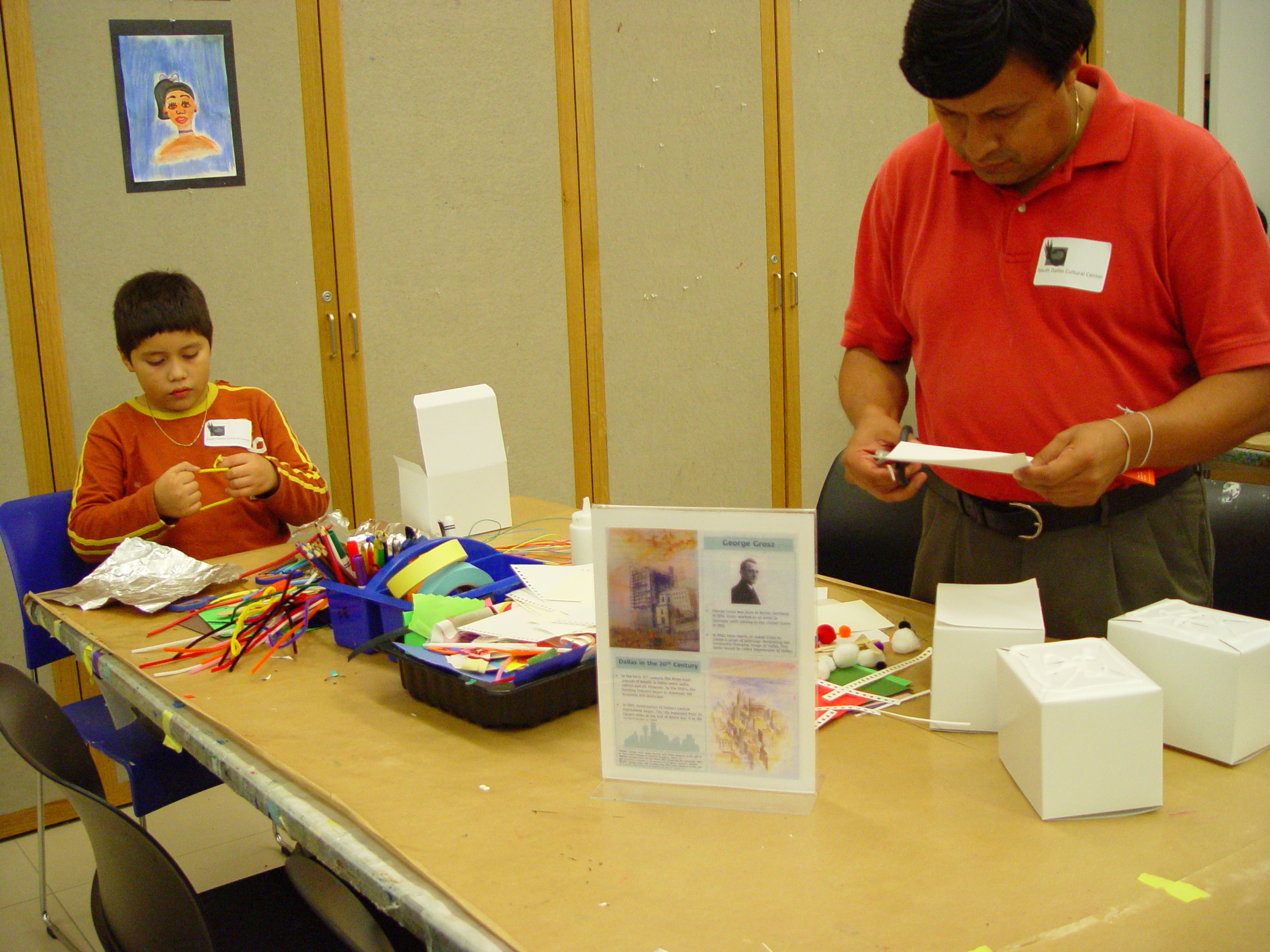
Docents lead families in a tour of the Flower of the Prairie: George Grosz in Dallas exhibition.

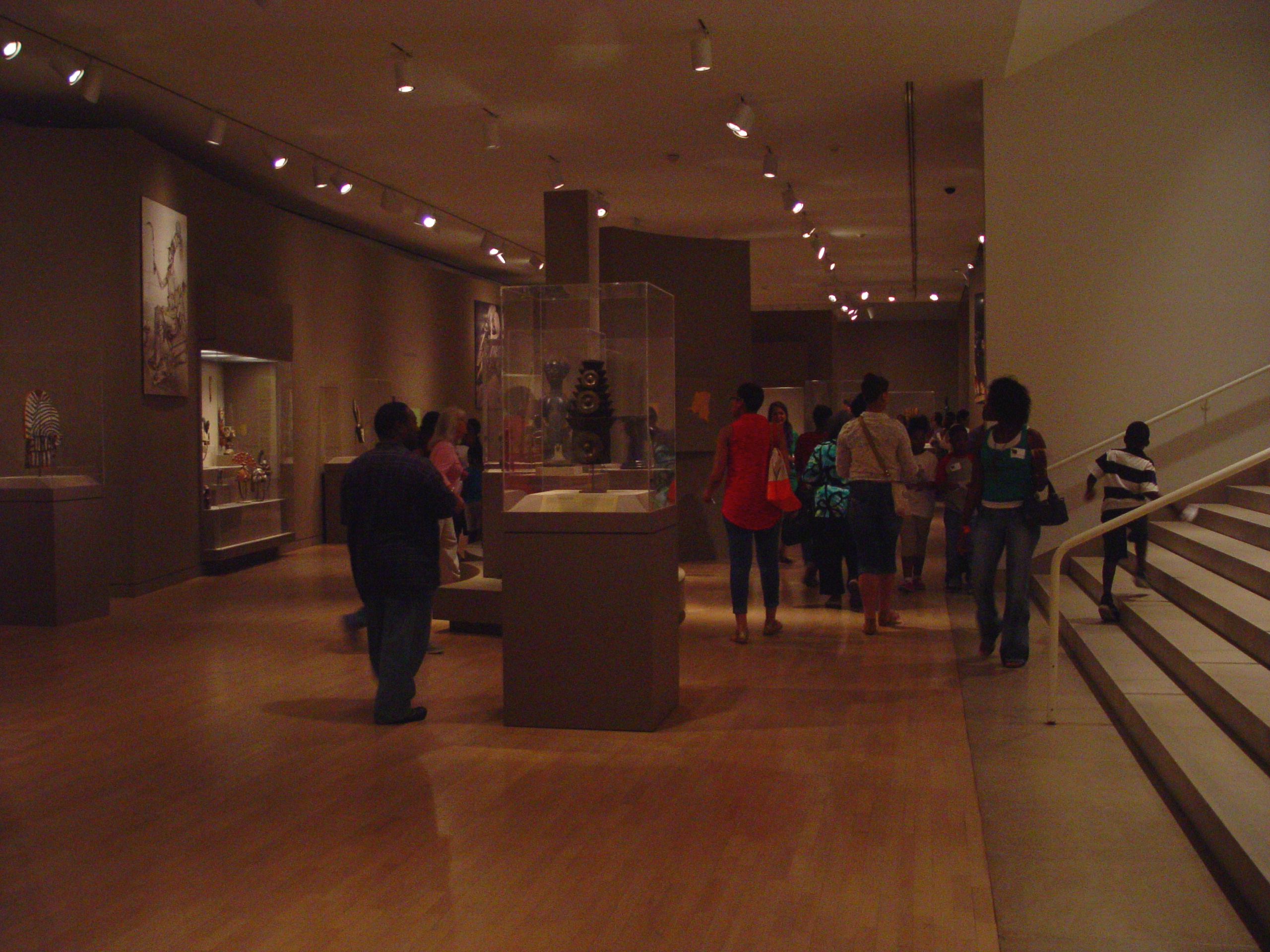
Families work together to find patterns in a scavenger hunt of the African galleries.

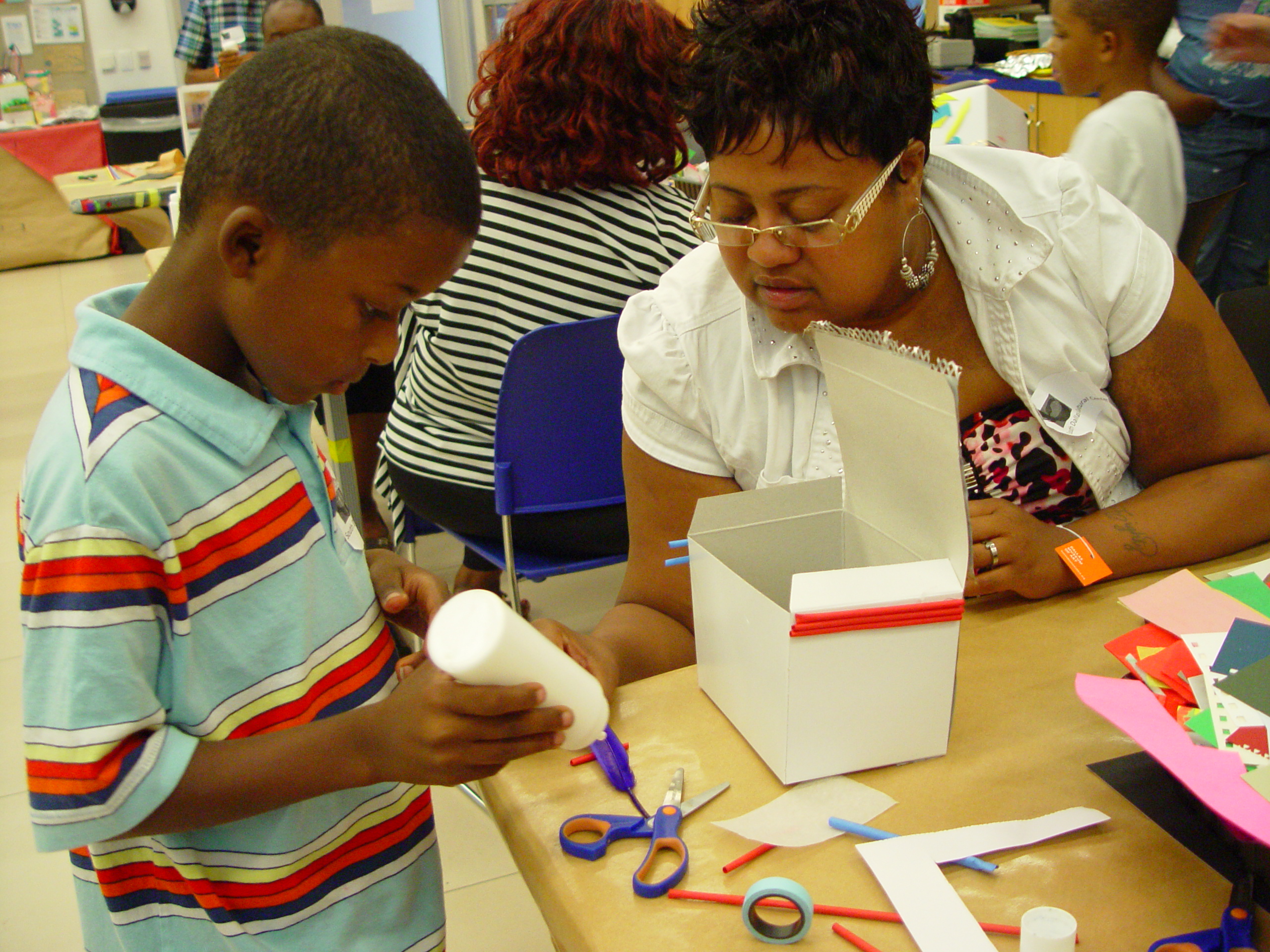
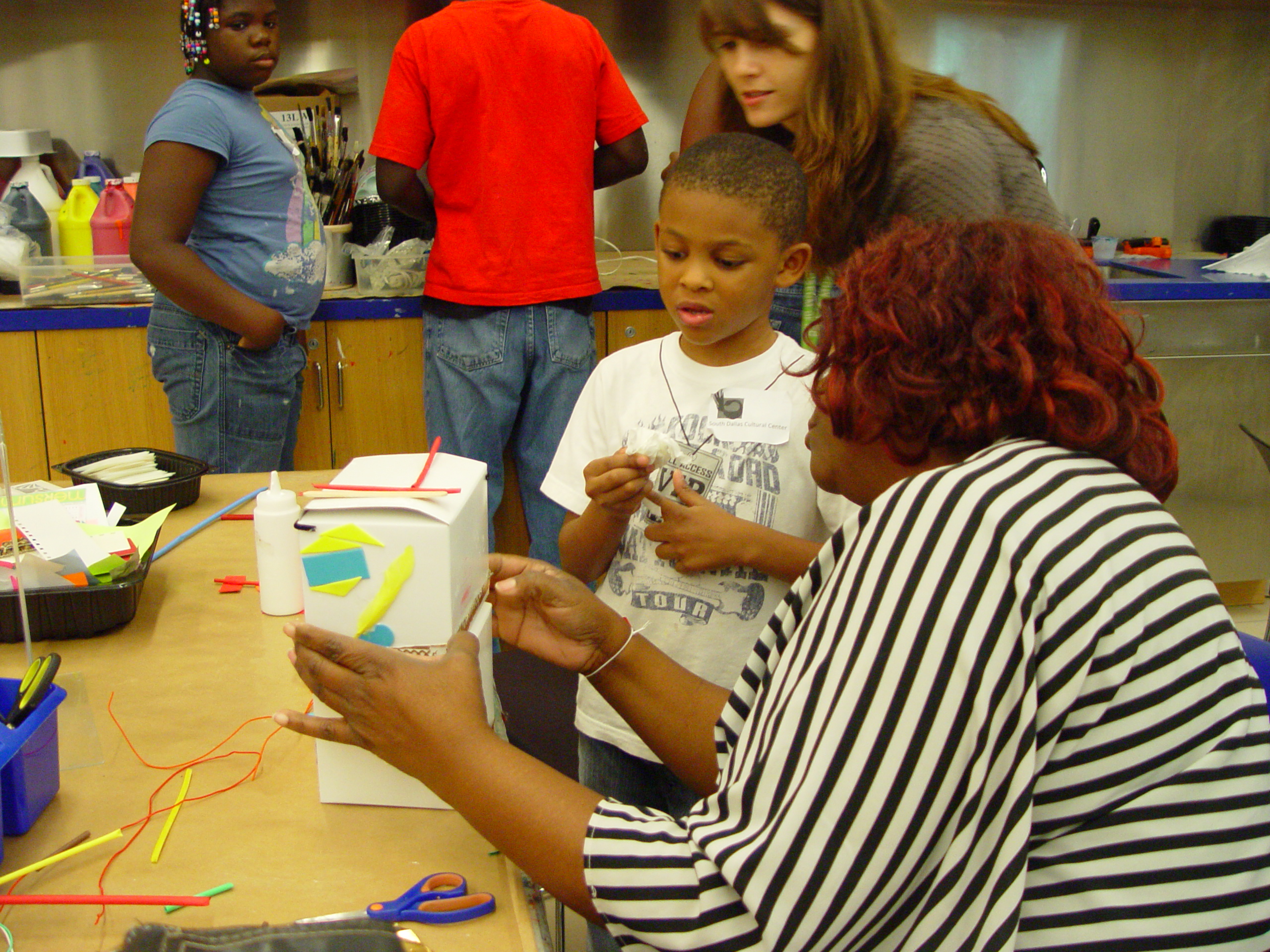
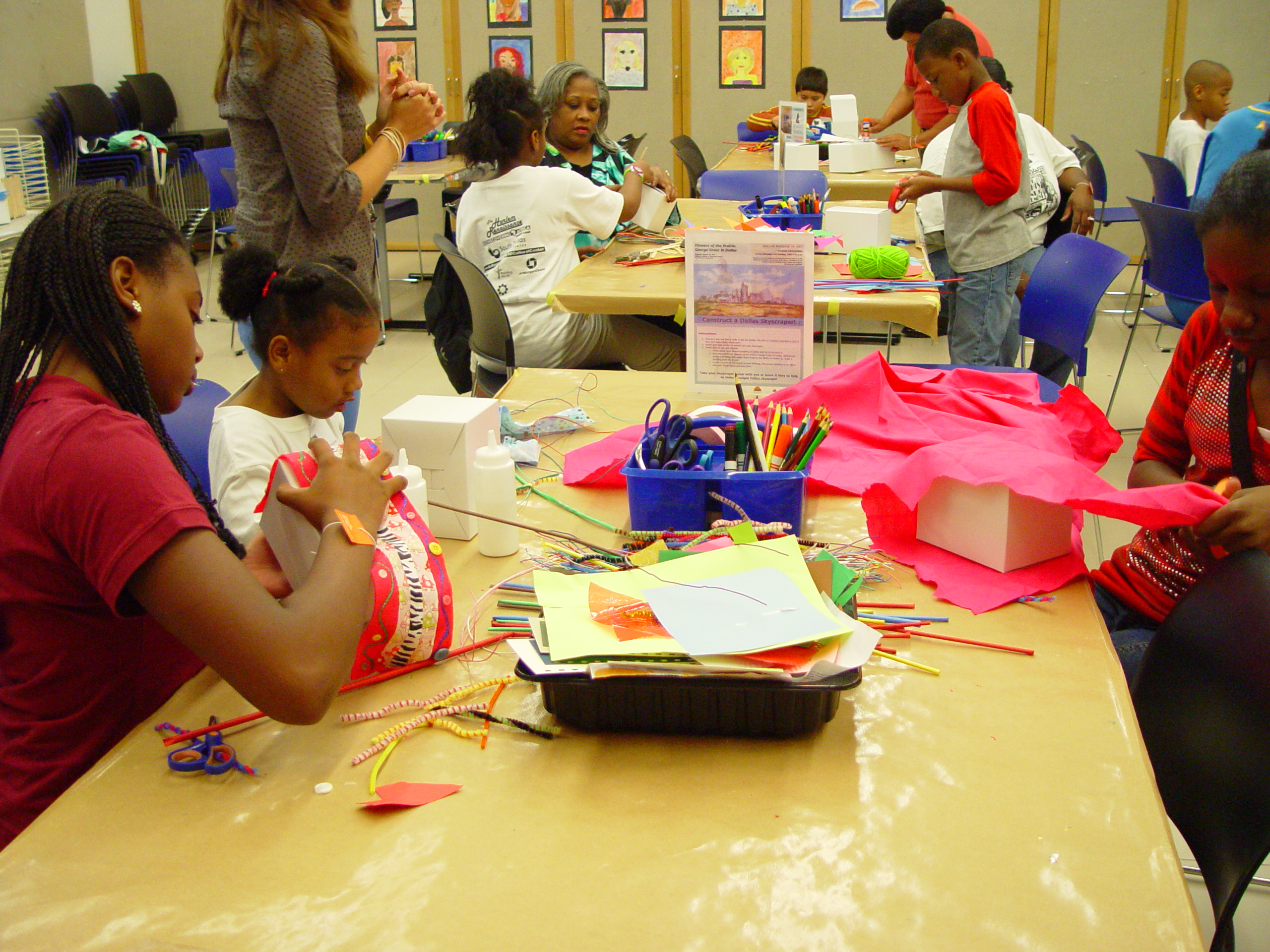
Families create buildings inspired by paintings in the George Grosz exhibition using cardboard boxes and other fun materials.

The Family Night was a great opportunity for students to see the actual works of art that they discussed with DMA staff using color printouts at the Center, and they were excited to share with their parents and siblings what they had learned about these artworks.  We are especially grateful to include families in our annual summer partnership with the Center in these special evenings, and thank the Center and Thriving Minds for making them possible!

Melissa Nelson
Manager of Teaching in the Community


Archives

Categories