Archive for the 'Art & Teaching' Category


Happy New Year!

Happy New Year and welcome to 2013! With a fresh year comes new resolutions for many people, and whether you are the type to keep your goals for just a week or to strictly adhere to them for an entire year, why not let the DMA help out?

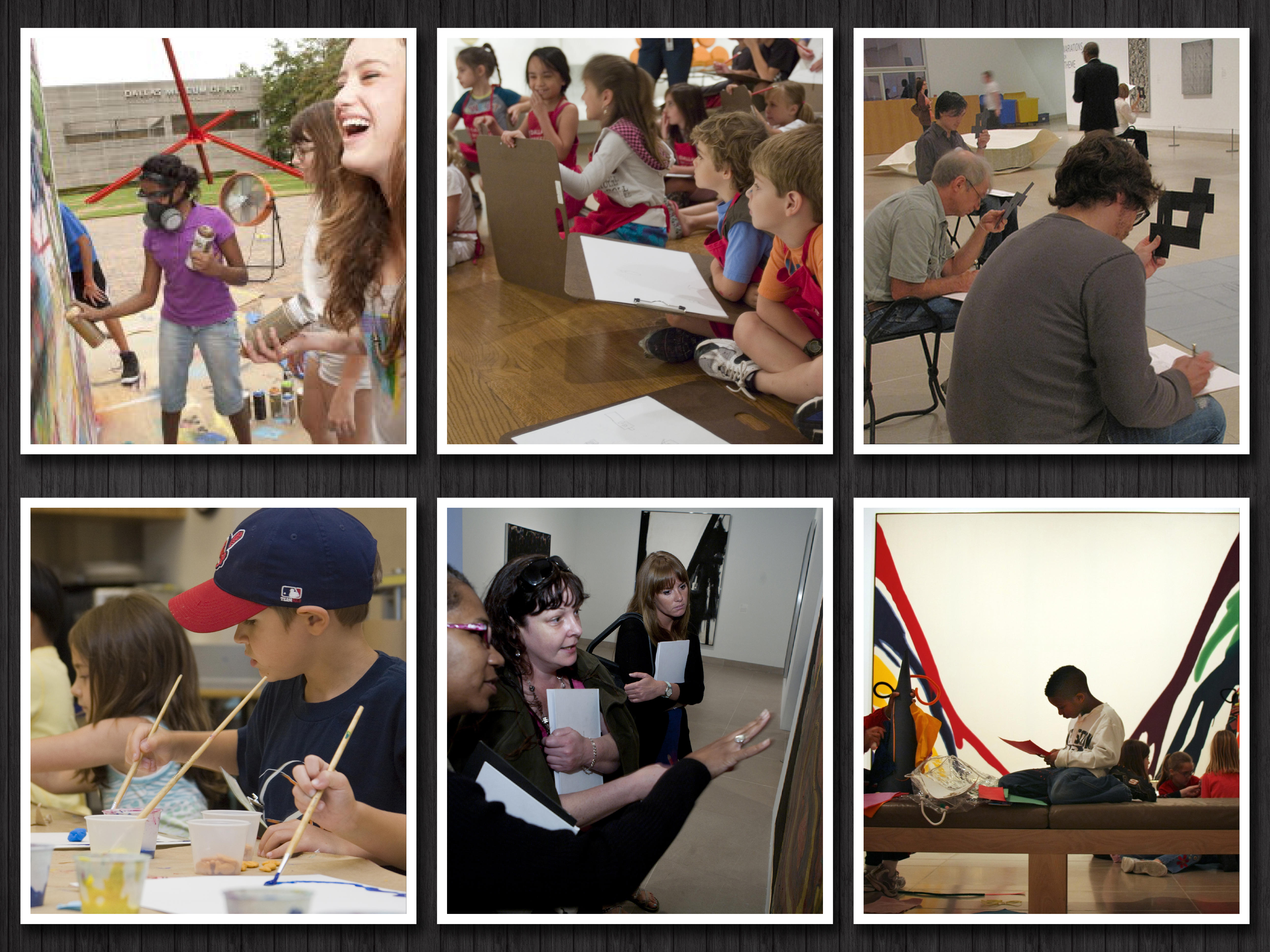
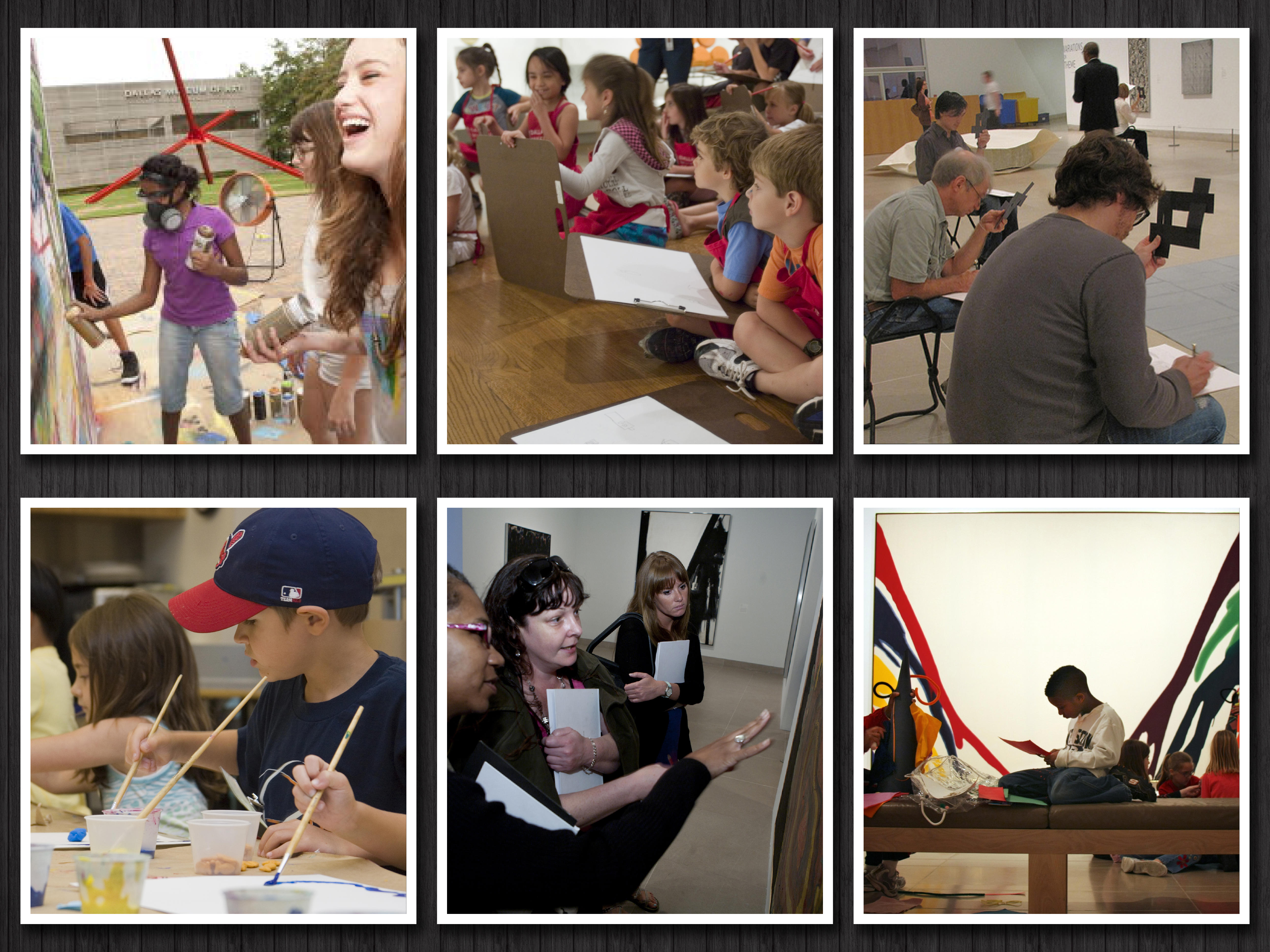
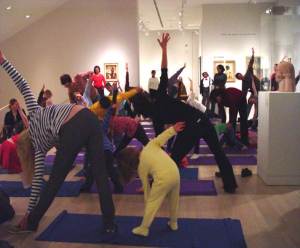
Be healthy! A popular resolution is to be healthy, which may include getting fit by visiting the gym more often or even taking the stairs instead of the elevator. The DMA is agreat place to master stairs. Did you know that the Museum has over 120 stairs?  Or, bring the family to bend and twist during our Yoga for Kids during Late Night at the DMA.

Climb up and down the stiarcase near the Atrium Cafe a few times - there are 62 stairs here!

Climb up and down the staircase near the Atrium Cafe a few times – there are 62 stairs here!

Families enjoy yoga in the galleries

Families enjoy yoga in the galleries

Save money Budgeting and spending less is often a top resolution – especially after the spending frenzy that usually takes place around the holidays. A visit to downtown Dallas might make you think of reaching for your wallet, but in a few short weeks, both general admission and membership will be FREE at the DMA!

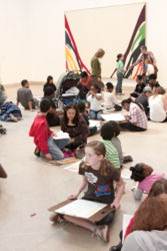
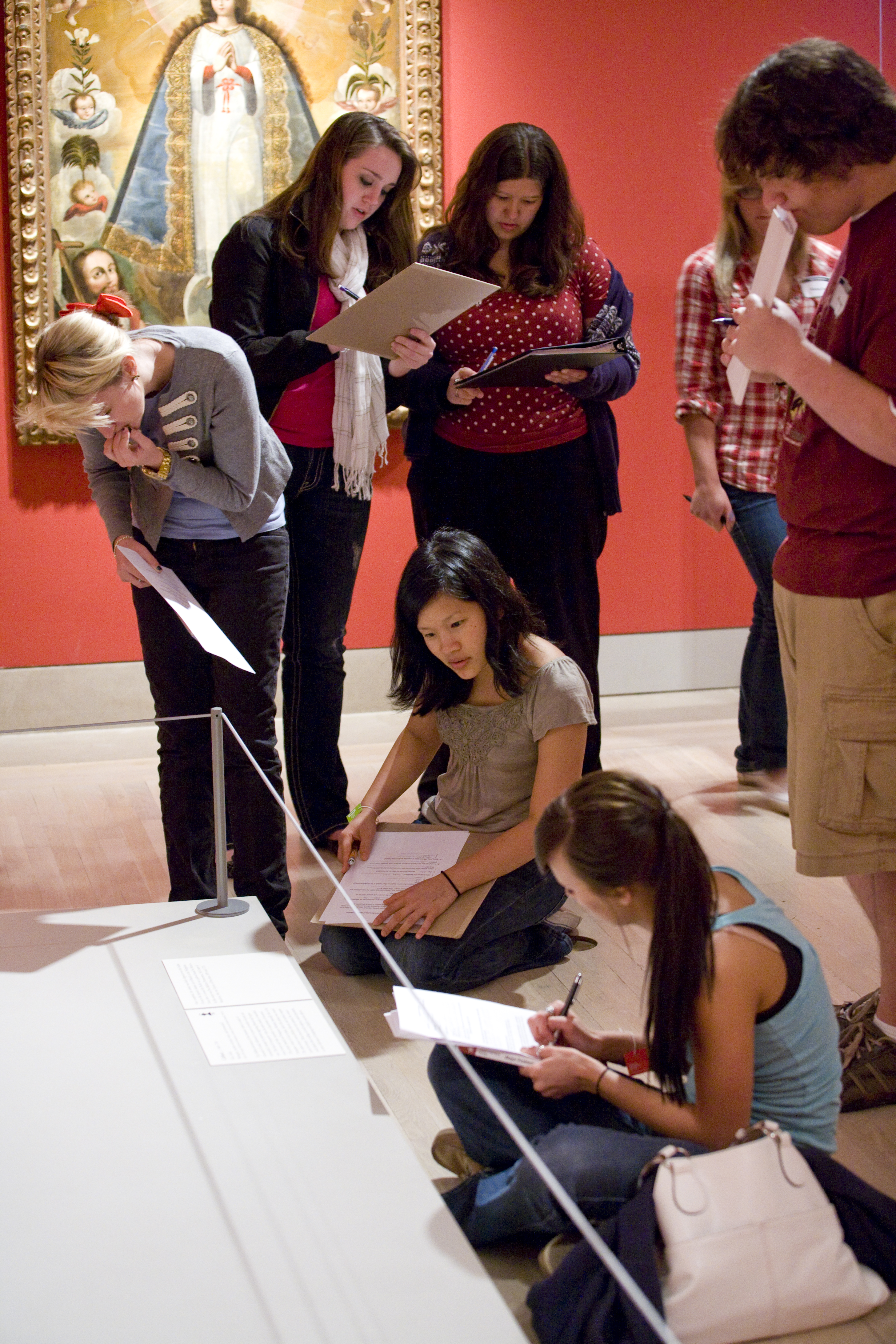
Sketching in the Galleries - one of the many things you can enjoy for free after January 21!

Sketching in the Galleries – one of the many things you can enjoy for free after January 21!

Learn something new Expand your horizons and learn all kinds of cool things at the Museum. Learning a foreign language? Visit Posters of Paris: Toulouse-Lautrec and His Contemporaries to discover how many new French words you can pick up. Attend an Arts and Letters Live event and hear an award-winning author to expand your literary expertise. Pick up an artistic skill in the Studio with a hands-on experience during a C3 Artistic Encounter. You can even meet and interact with artists in a variety of DMA programs!

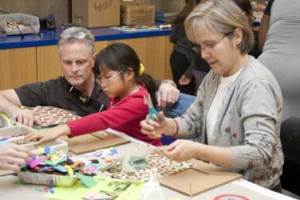
Visitors exploring art materials in the Studio

Visitors exploring art materials in the Studio.

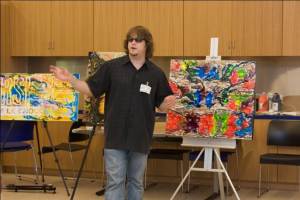
Artist John Bramblitt talks about his artwork during an Art Beyond Sight access program.

Artist John Bramblitt talks about his artwork during an Art Beyond Sight access program.

Spend more time with family and friends Spend time with family and friends while learning about works of art in the galleries and you might even learn some new about one another! Have a date night at the Museum during Jazz in the Atrium on a Thursday evening or bring the whole family and enjoy a wide variety of experiences during a Late Night at the Dallas Museum of Art.

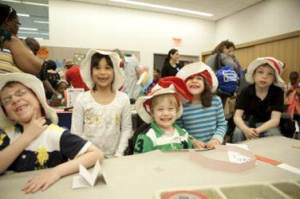
Fun times during Late Night Studio Creations!

Fun times during Late Night Studio Creations!

Whatever your resolutions might be, having fun is one resolution that should be on everyone’s New Year list. Take time to enjoy life and appreciate the beauty around you! Happy New Year!

Amanda Blake

Head of Family, Access, and School Experiences

John Hernandez in C3

DSC_9752crop

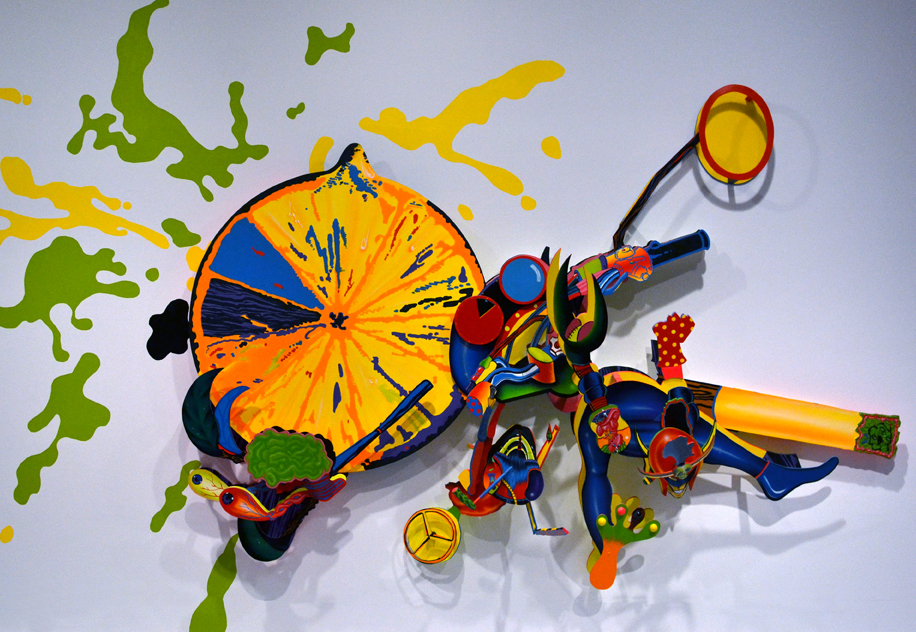
Have you stopped by the Center for Creative Connections lately?  If the answer is no, then add it to your “to do” list because you won’t want to miss this exciting new work of art in the entryway.  John Hernandez’s bright and energetic piece, HI-C Avenger was recently installed along with an interactive component.

First, a little background on the art and artist.  John Hernandez is a San Antonio based artist who has ties to the North Texas region.  Hernandez received his MFA from the University of North Texas where he studied under Vernon Fisher.  Can you see the influence Fisher might have had on his student?

“When you have a teacher like Vernon Fisher and his paintings are like black and white… I just wanted to go to the extreme, I started doing these wild colors,” Hernandez said during an interview with David Rubin.

Hernandez references a wide array of influences ranging from popular culture (movies, comics, toys, and commercials) to biology and nature (plants, animals, and body parts).  He describes his process as both spontaneous and deliberate as he morphs appropriated images together to form a collage and then builds a three dimensional model to figure out the structure.  What references can you find in HI-C Avenger?

C3_Installation_11_2012_003_edit copy

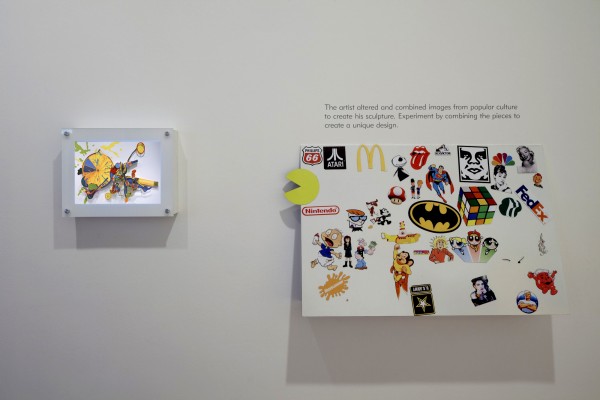
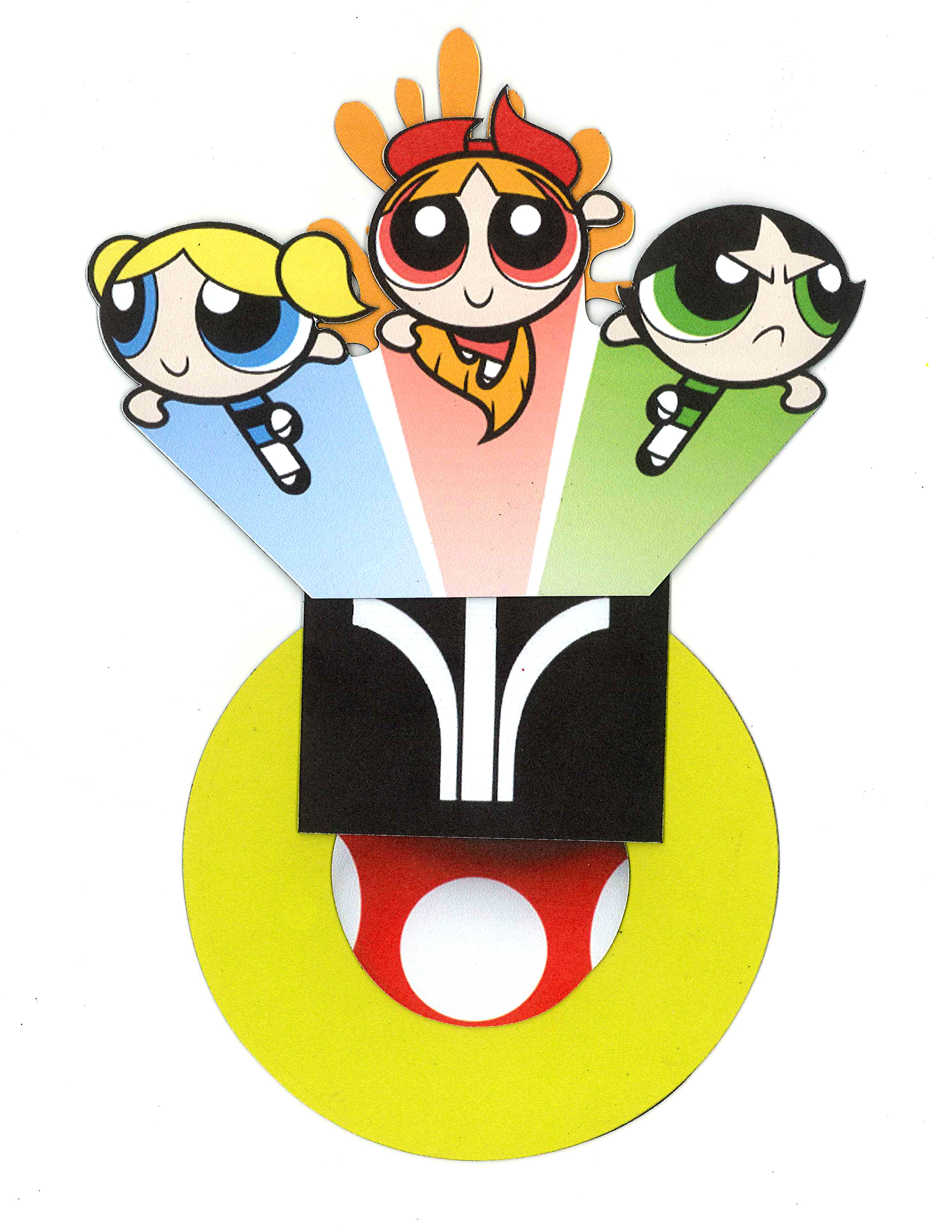
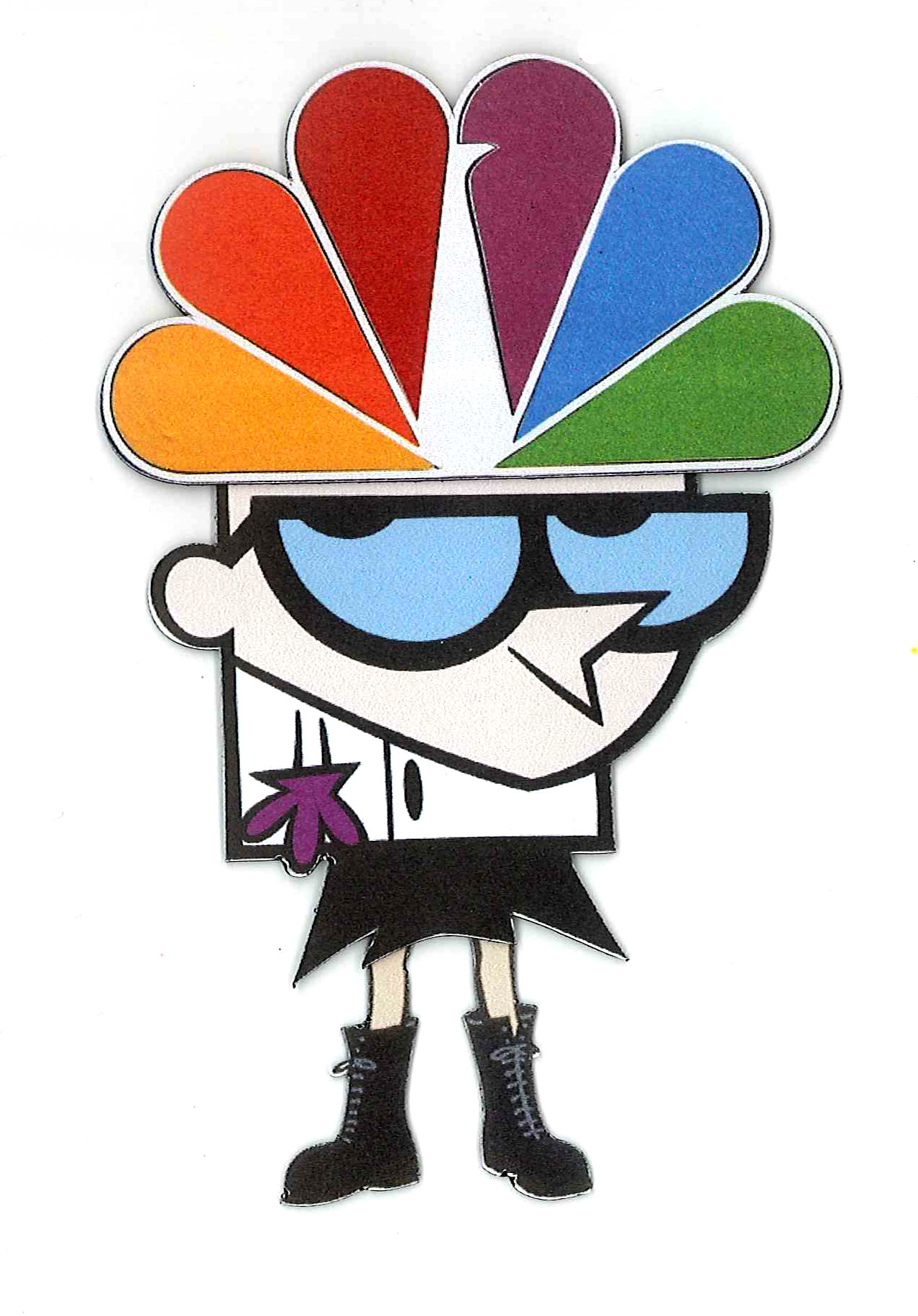
The interactive component that we have designed to supplement this work of art is two-fold.  There is a short video that plays clips and still images of some of the direct references that inspired HI-C Avenger.  Alongside this is a magnetic board filled with pop culture icons from the past and present.  Visitors can arrange the magnets, layering and combining them to create their own Hernandez-inspired creation.

Come by, see the new work, and play a while!

HernandezSample1 HernandezSample2 HernandezSample3

Also, mark your calendars for these upcoming opportunities to participate in a workshop led by John Hernandez:

Thursday, January 17, 6:30-8:30 p.m.,
Join guest artist John Hernandez as he takes us beyond collage into a mutated experience in reality. Hear about Hernandez’s work, while constructing a unique morphed creation of your own.

Late Night Creations with artist John Hernandez
6:30 p.m., 7:45 p.m., and 9:00 p.m., Art Studio, Center for Creative Connections (C3)
Join us for a special workshop with guest artist John Hernandez.  John will talk about his creative process and then guide participants in constructing sculptures using toys and other found objects.

Jessica Fuentes
C3 Gallery Coordinator

Collection Connections: Jekyll & Hyde

What I like most about the story of Jekyll & Hyde is the timeless theme of duality—the two-fold, dichotomous nature of all things. It’s a story in which the good (Dr. Jeykll) and the evil (Mr. Hyde) within one human being are constantly at odds with one another.  Last week at the Winspear, I watched Jekyll and Hyde the Musical and thought about the idea of duality in the visual arts.

Duality refers to a whole that is composed of two opposing or opposite parts. While Jekyll and Hyde references the duality of good and evil, artists in our collection present varying kinds of dualities:

Light and Dark
Image

Big and Small
Image

Male and Female
Image

Organic and Geometric
Image

Natural and Manmade
Image

Reality and Dreams
Image


I challenge you to post a comment with an example of a work of art that presents some kind of duality!

Andrea V. Severin
Interpretation Specialist

Artworks shown:

  • Jackson Pollock, Cathedral, 1947, Dallas Museum of Art, gift of Mr. and Mrs. Bernard J. Reis
  • Tom Friedman, Untitled (big/small figure), 2004, The Rachofsky Collection and the Dallas Museum of Art through the DMA/amfAR Benefit Auction Fund
  • Male and female ancestor figures, Indonesia, North Sumatra, Lake Toba Region, Toba Batak People, Dallas Museum of Art, The Eugene and Margaret McDermott Art Fund, Inc.
  • Constantin Brancusi, Beginning of the World, c. 1920, Dallas Museum of Art, Foundation for the Arts Collection, gift of Mr. and Mrs. James H. Clark
  • Robert Smithson, Mirrors and Shelly Sand, 1969-1970, Dallas Museum of Art, gift of an anonymous donor; the Vin and Caren Prothro Foundation; an anonymous donor in memory of Vin Prothro and in honor of his cherished grandchildren, Lillian Lee Clark and Annabel Caren Clark; The Eugene McDermott Foundation; Dr. and Mrs. Mark L. Lemmon; American Consolidated Media; Bear/Hunter; and donors to the C. Vincent Prothro Memorial Fund
  • René Magritte, Persian Letters, 1958, Dallas Museum of Art, gift of J.B. Adoue, III

canvas: a blank slate of possibilities

Welcome to Canvas! We are so excited to announce that we are merging the DMA’s family blog with the DMA’s educator blog – what better way to canvass new ideas on a blank canvas? Whether you are a teacher, parent, grandparent, artist, or just all around fan of the DMA, we hope that this newly merged blog will quench your thirst for knowledge and creativity. From week to week, we will have posts highlighting fun things to do at the Museum, studio insights, interdisciplinary ideas, and inspirations from works of art in our galleries.

Canvas now features even more DMA authors! Check out the author page to meet some of our new writers. Staff from the Center for Creative Connections (C3) will post monthly with details about visitor interactions in C3, cool teen programs, artist workshops for adults, and gallery insights. Interpretation staff will share exciting ways that visitors are connecting with works of art and all of the ways that interpretation merges with audiences of all ages. Staff who work closely with families will share ways to connect kids to art, nifty art activities for kids, and artsy ways to make connections to holidays, kid-friendly books, and even the weather! But don’t worry, you’ll still find all of the creative and resourceful ideas geared towards students and teachers that this blog has always had (including a monthly art recipe from our resident baker, Sarah).

We hope that by joining forces, Education Staff here at the DMA can bring you even more ways to celebrate the power of art!

Amanda Blake
Head of Family, Access, and School Experiences

Thanksgivingtime

I always look forward to Thanksgiving, as it kicks off my favorite time of year. I also love spending the day watching parades and eating delicious food with my family and friends, while acknowledging the people and things for which I am grateful. (I am thankful for so many things this Thanksgiving!) What I really look forward to each year, however, is indulging in one specific dish…

This poem is titled after my favorite Thanksgiving food. Can you guess the title (and my favorite dish)?

The potato that ate all its carrots,

can see in the dark like a mole,

its eyes the scars

from centuries of shovels, tines.

May spelled backwards

because it hates the light,

pawing its way, padding along,

there in the catacombs.

The poem is titled Yam by Bruce Guernsey.

I found this poem and many others through a great poetry resource: The Poetry Foundation website. A  sorting feature helps users browse through poems by poet, subject, occasion, or even holiday!

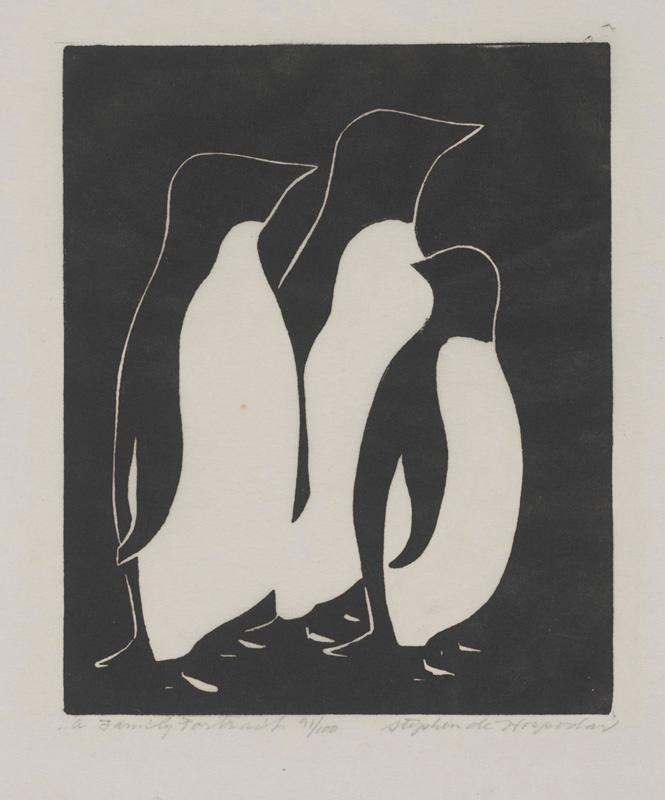
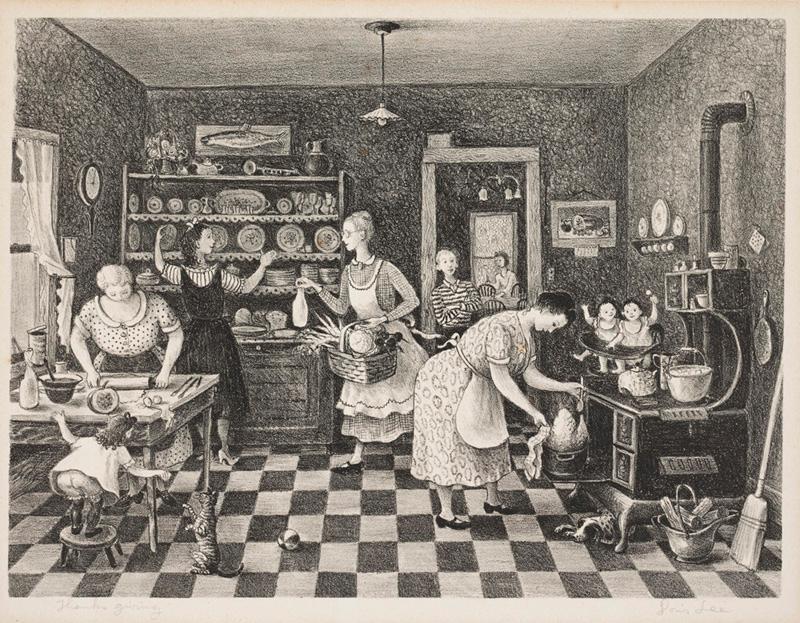
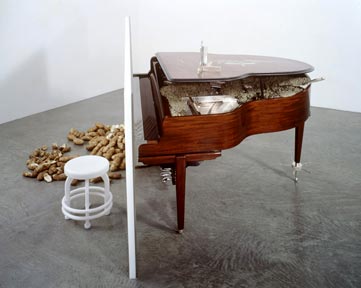
Poetry can be a great vehicle to connect with artworks. Take the following stanza from John Greenleaf Whittier’s poem, The Pumpkin. Think of a work of art that resonates with the poem. Why did you make that association?

Ah! on Thanksgiving day, when from East and from West,
From North and from South come the pilgrim and guest,
When the gray-haired New Englander sees round his board
The old broken links of affection restored,
When the care-wearied man seeks his mother once more,
And the worn matron smiles where the girl smiled before,
What moistens the lip and what brightens the eye?
What calls back the past, like the rich Pumpkin pie?

Here are some works of art that I associated with Whittier’s stanza.

Happy Thanksgiving!

Andrea V. Severin
Interpretation Specialist

Artworks shown:

  • Matthew Barney, The Cloud Club, 2002, Mason and Hamlin Symetrigrand piano with stainless steel, silver, white mother-of-pearl, gold lip mother-of-pearl, black lip mother-of-pearl, green abalone, quartersawn Honduras mahogany, lacewood, walnut, ash burl, redwood burl, madrone burl, and Chilean laurel marquetry; internally lubricated plastic; potatoes; concrete, and sterling silver, Dallas Museum of Art, Contemporary Art Fund: Gift of Arlene and John Dayton, Mr. and Mrs. Vernon E. Faulconer, Mr. and Mrs. Bryant M. Hanley, Jr., Marguerite and Robert K. Hoffman, Cindy and Howard Rachofsky, Deedie and Rusty Rose, Gayle and Paul Stoffel, and three anonymous donors; DMA/amfAR Benefit Auction Fund; and Roberta Coke Camp Fund
  • Stephen De Hospodar, Family Portrait, 1932, Linoleum cut, Dallas Museum of Art, gift of the artist
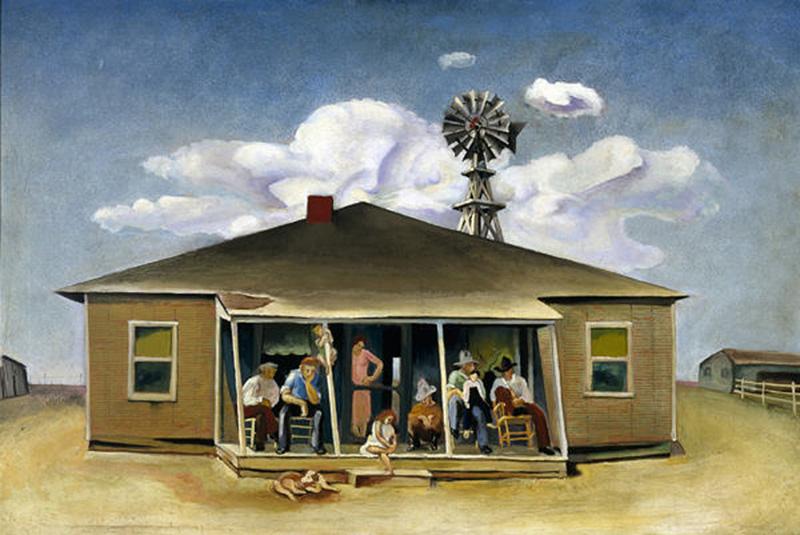
  • Russel Vernon Hunter, Sunday after Dinner, 1943, Oil on masonite, Dallas Museum of Art, Dallas Art Association Purchase
  • Doris Lee, Thanksgiving, 1942, Lithograph, Dallas Museum of Art, Foundation for the Arts, The Alfred and Juanita Bromberg Collection, bequest of Juanita K. Bromberg
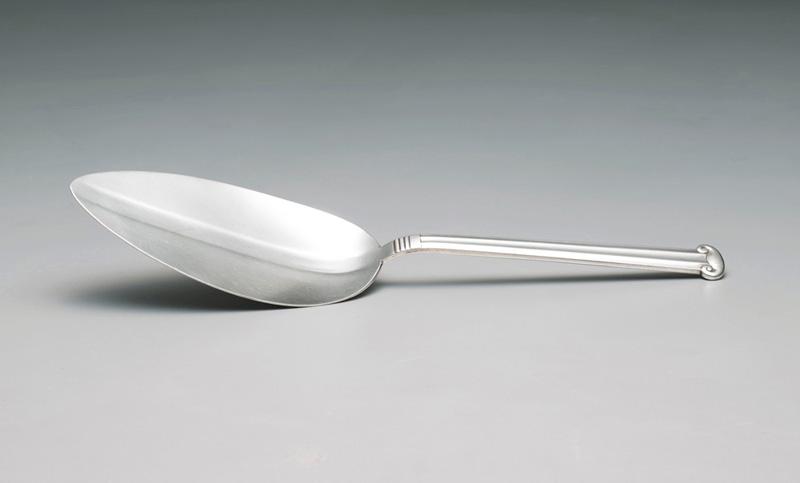
  • William S. Warren (designer), “Vogue” pie server, 1935, Wallace Silversmiths (manufacturer), Dallas Museum of Art, The Jewel Stern American Silver Collection, gift of Jewel Stern

Getting Inside the Teenage Brain

Last month, Shannon and our colleagues at the Nasher Sculpture Center decided to bring together our respective teen groups so they could get to know each other.  The DMA Teen Docents met with the Nasher’s Student Advisory Board for an evening of art-making, food, and conversation.  Our main conversation point centered on things docents should (and shouldn’t) say or do on high school tours.  Our docents often have a hard time connecting with our teenage visitors, so we thought that sharing advice in the teens’ own words would be the first step in helping our docents feel more comfortable with these groups in the galleries.  Some of the comments that resonated with docents were:

  • I really don’t like when docents treat you like children or assume that you don’t know anything and are very momish around students.
  • Make it not just guiding us around like sheep, but know really interesting facts about that artist, the time period, the technique, or that specific work of art.  Like what makes it really cool or unique and why does it deserve to be at the Museum.
  • Show respect towards the artist and be open-minded about the work.
  • Pay attention to your group.  If they’re not engaged or interested, move on so they don’t zone out for the rest of the tour.
  • Make it cool and interactive and not just looking at the works of art.

A group of teens in the DMA’s galleries

Our docents also read an article written by a 15 year-old titled Why Museums Suck.  Howard Hwang visited six museums in Los Angeles and shared his frank opinions about what made each Museum so terrible.  Hwang isn’t shy about voicing his distaste for art museums, labeling them as boring, places for “old people,” and even describing docents as “answering machines.”   His opinions brought a bit of levity to our discussion, but a lot of his comments really did hit home with our docents.  How can we connect with someone who hates old, boring art and is most concerned with what he’ll buy for lunch?

We talked a lot about how we can make make teenagers feel comfortable in the Museum, and we agreed that a tone of mutual respect needs to be set at the very beginning of a tour.  Many docents felt that we need to set up the expectation that the students will be engaged in the tour, but also that they’ll have fun while they’re at the Museum.  One docent mentioned that we need to “pop the bubble of pretention” and remind students that we’re all looking at works of art and learning together.  Docent-guided tours are not intended to be lectures–as Hwang put it, that type of tour “is like being in a locked room with Oprah talking constantly.”  Instead, tours should be conversations with docents and students both contributing to the dialogue and moving the conversation forward.  By helping students feel comfortable and welcome, they’re more likely to want to engage in these discussions.

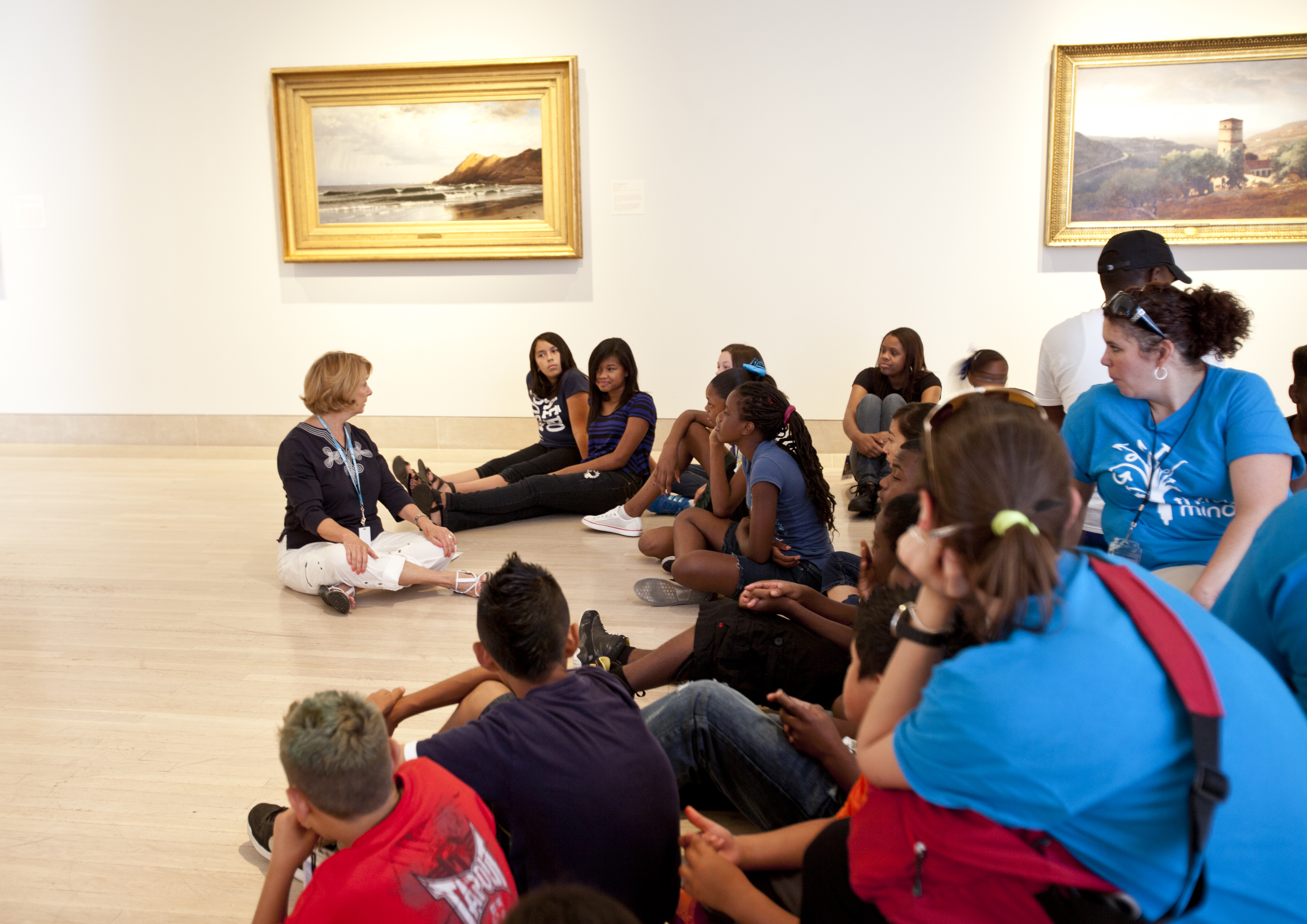
A DMA Docent discusses American art on a guided tour

Another of Hwang’s directives to museums was decidedly simple: “You have to make it hands-on and interactive.”  At the DMA, the Center For Creative Connections (C3) is answering this call, and cultivating an interactive space where visitors can look, touch, listen, read, make and talk about art.  C3 endeavors to inspire and engage audiences through unique programming, like our Urban Armor workshops.  This distinctive program for tweens and teens offers students a chance to meet, relate, and investigate themselves and the world around them.  Classes are designed in a way that the concept of identity is the heartbeat of each workshop.  Teenagers are at a critical age of self-discovery, so each Urban Armor workshop is designed to promote decision-making, critical thinking skills, and self-determination.

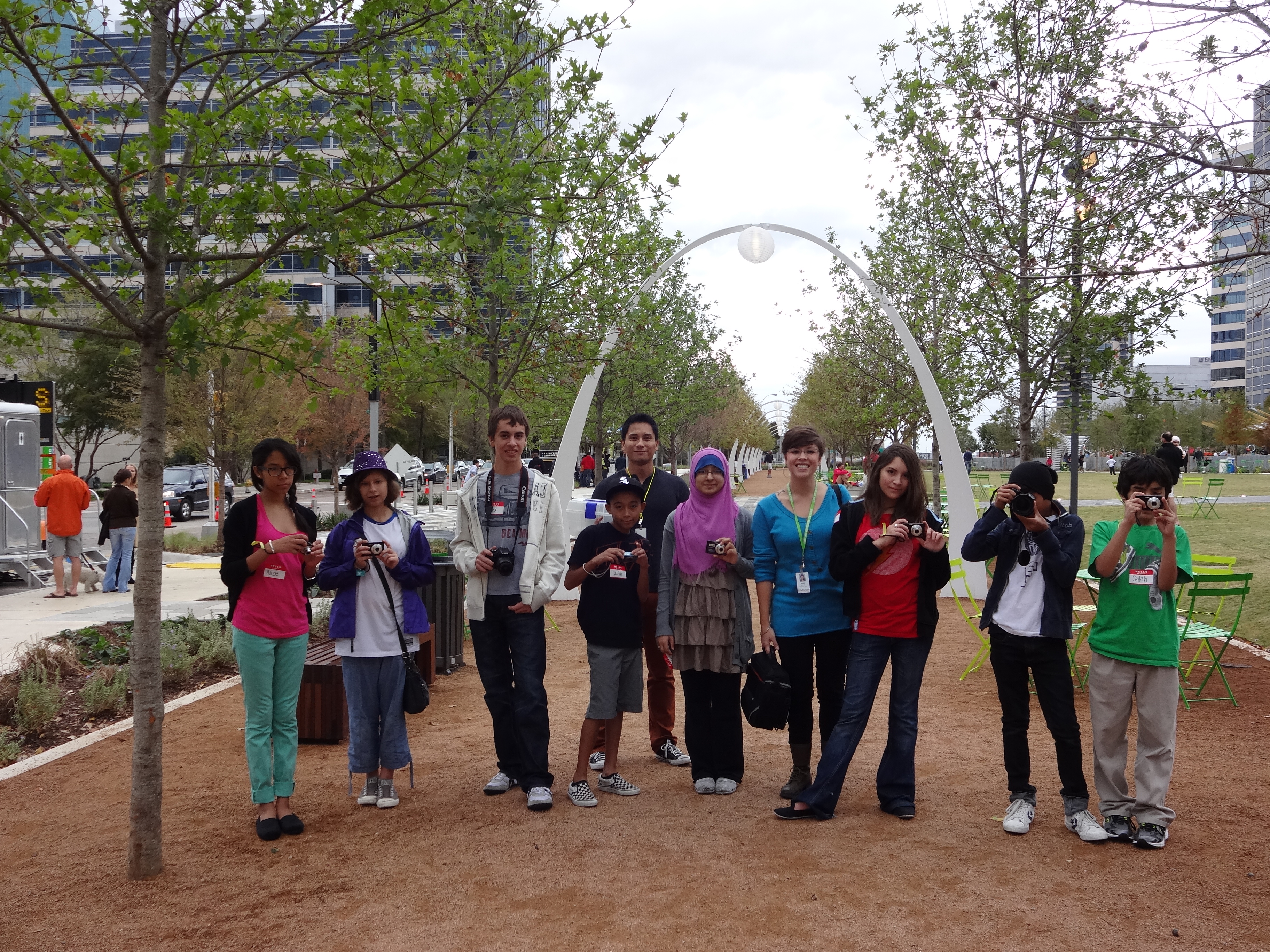
A photograph from the most recent Urban Armor workshop at Klyde Warren Park

This past Sunday, Urban Armor took teens on a photography walk through Klyde Warren Park.  The workshop focused on using positive and negative space in environmental photography, and encouraged students to reflect on the individual choices they make when taking a photograph.  Armed with a camera, each participant explored the Park on their own, with DMA staff acting as facilitators.  This time of autonomous art-making is a central component of each Urban Armor workshop.  The final portion of class was dedicated to discussing what each student had captured during their photo walk.  It was important to encourage the teens to reflect upon and discuss the individual decisions made during each photograph, so that their individual choices could be linked to tangible outcomes.  Each student’s collection of photographs was uploaded to the DMA’s Flickr account, where they are able to view their own and other’s images, and share with the public.  The most exciting outcome of the workshop will come a few weeks from now, as each student enters his or her photographs into the C3 Encountering Space photography exhibition.  Teens have an opportunity to see their artwork publicly displayed in the C3 space!

The Urban Armor participants in Klyde Warren Park

At the DMA, we are working to cultivate spaces and programs that engage teens and involve them in the Museum.  Maybe teens like Howard Hwang would think differently about museums if they could see their artwork hanging on the wall.  We are also continuing to work with our docents to provide tips to better engage with teens on tours.  For now, we’re going to turn the conversation over to you.  If you’re a teacher, what tricks do you use to get teens talking about art?  If you’re a teen, what would you like to see happen at the DMA that might make you want to spend more time here?  We look forward to your responses!

Shannon Karol
Manager of Docent Programs and Gallery Teaching

Danielle Schulz
McDermott Intern for Family Experiences

Special thanks to Amanda Batson and J.C. Bigornia.

Greek Heroes at the DMA

Every time I give a tour, there is usually one student who asks if we have any works at the DMA that show Percy Jackson or Poseidon.  I began to wonder if our docents were hearing similar questions.  I also began to wonder if any of our docents actually knew who Percy Jackson is.  I’m always trying to think of new ways to help docents connect with the students on their tours, so I recommended that they read Rick Riordan‘s The Lightning Thief (Percy Jackson and the Olympians Book One) for their book club. I fell in love with this book three years ago, and enjoy referencing it on tours.  Students are able to recognize images of the gods based on the descriptions they have read in Rick Riordan’s books.  They’re falling in love with Greek mythology, and we have lots of great artworks that can bring Percy’s world to life at the DMA!

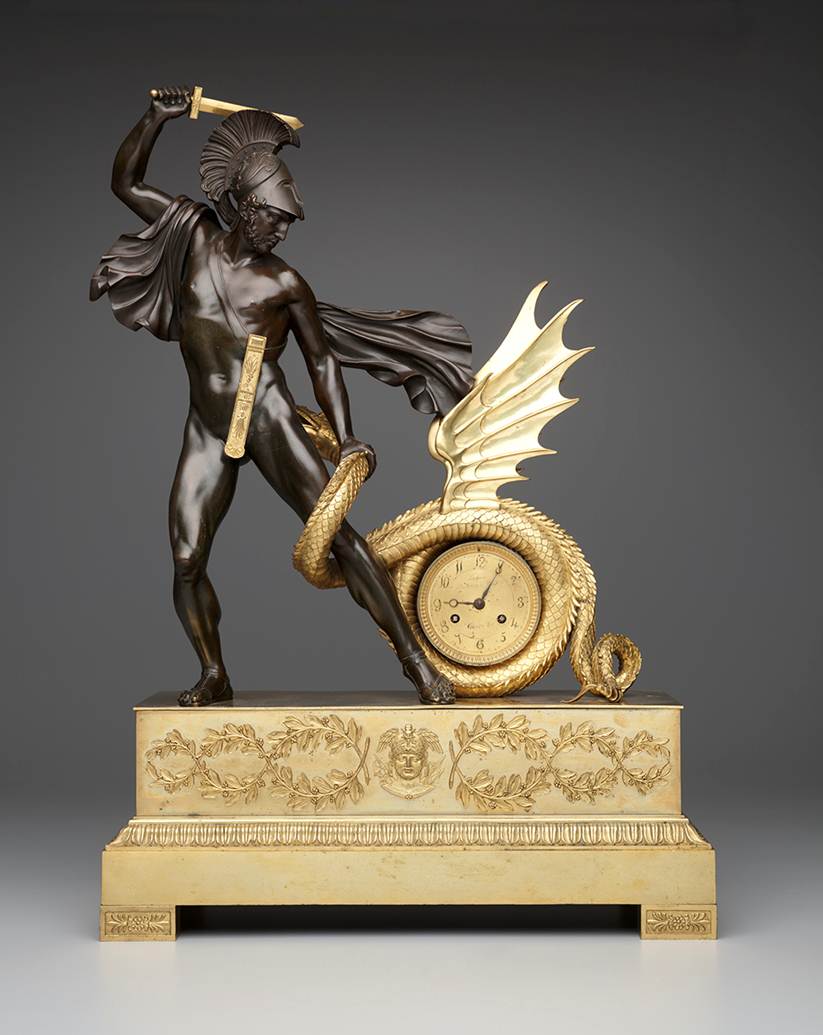
Pierre-Victore Ledure’s Mantle Clock with Figure of Perseus show us not Perseus Jackson, but the Greek hero Perseus.  In Greek mythology, Perseus, the son of Zeus and Danae, was the hero who beheaded the Gorgon Medusa.  Although Percy Jackson also beheaded Medusa, he was the son of Poseidon.  In this mantle clock, we see Perseus about to slay a serpent with wings.  According to one myth, the Ethiopian princess Andromeda was chained to a rock near the sea in an effort to appease the sea nymphs, who were offended that Andromeda’s mother declared that she was more beautiful than them.  Andromeda was to be sacrificed to a sea serpent sent by Poseidon.  Perseus happened to be flying by on his winged horse, Pegasus, and he slipped on Hades’ Helm of Darkness and was able to slay the sea serpent.  Perseus went on to marry Andromeda and is considered one of the first heroes of Greek mythology.

Pierre-Victore Ledure, Mantle Clock with Figure of Perseus, early 19th century, Lent by David T. Owsley, 156.1994.51

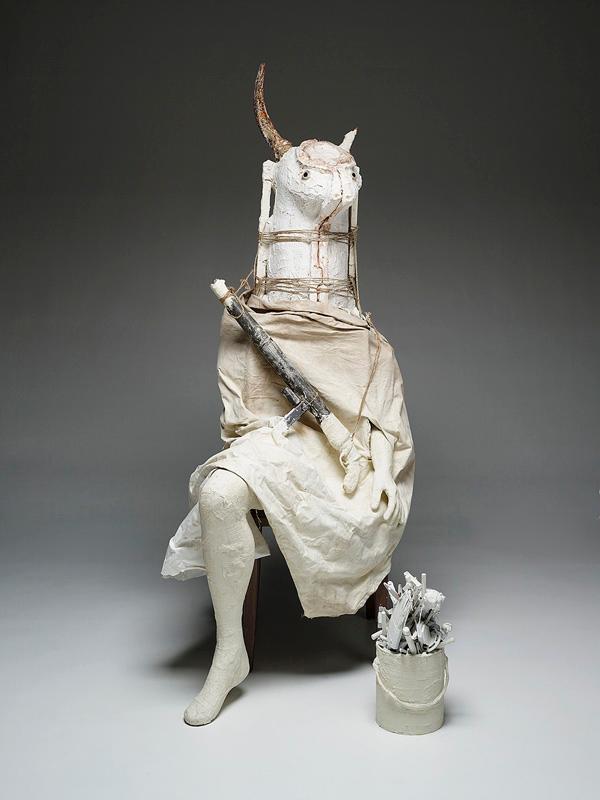
When Percy Jackson arrives at Camp Half-Blood, the first creature he faces is the Minotaur.  The Minotaur has the body of a man, but the head of a bull, and is one of the most ferocious creatures in Greek mythology.  Contemporary artist Marcel Dzama created his own sculptural representation of The Minotaur in 2008.  Dzama’s Minotaur is even missing one of his horns–you might remember that the Minotaur’s horn was one of Percy’s most prized possessions.

Marcel Dzama, The Minotaur, 2008, Dallas Museum of Art, DMA/amFAR Benefit Auction Fund, 2008.43.2.A-E, © Marcel Dzama

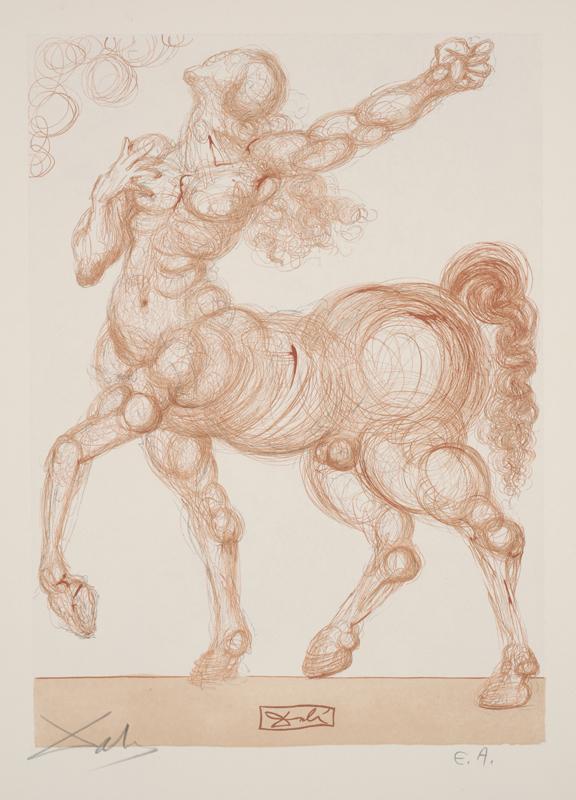
Once he arrives at Camp Half-Blood, Percy learns that his favorite teacher, Mr. Brunner, is actually a centaur named Chiron.  Centaurs are creatures that are part human, part horse, and Chiron was considered to be the superior centaur.  He was intelligent, civilized, and kind.  Chiron taught many of the most famous Greek heroes, including Heracles, Jason, Achilles, and Perseus.  Salvador Dalí created this illustration of a centaur when he was illustrating Dante’s Divine Comedy.

Salvador Dali, Canto 25–The Centaur, c. 1960, Dallas Museum of Art, gift of Lois and Howard B. Wolf, 1996.219.25, © 2008 Salvador Dalí, Gala-Salvador Dalí Foundation/Artists Rights Society (ARS), New York

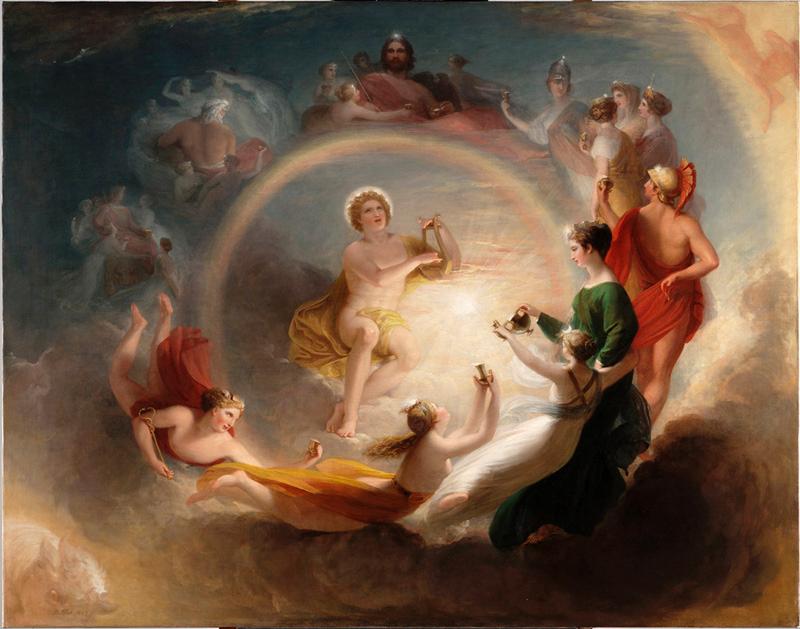
During Percy’s adventures, he has run-ins with many of the major gods, the Olympians who reside on Mt. Olympus.  In ancient times, Mt. Olympus was located in Greece.  In the 21st century, Mt. Olympus is located in New York City–on the 600th floor of the Empire State Building!  One of my favorite works in the DMA’s collection shows the Olympians surrounding the figure of Apollo.  One of our docents told me yesterday that she had a group of students ask her to stop in front of this painting because they wanted to try to identify all of the gods.  Moving clockwise around the painting we see: Zeus, the king of the gods, at the top; Athena is to the right wearing her battle helmet; Ares is behind her, also dressed for battle; we recognize Artemis because of the crescent moon in her hair; beautiful Aphrodite wears a golden dress; Hermes carries his caduceus staff; Hera is shown enthroned, as the queen of the gods should be; and Poseidon is shown as an old, bearded man.  What I can’t figure out, though, is who the woman in the green dress might be.  She’s fully clothed, and there appears to be a building or fortress on top of her head.  Do you have any thoughts as to who she might represent?

Benjamin West, Apollo’s Enchantment, 1807, Dallas Museum of Art, gift of Mrs. Robert A. Beyers, 1963.167

These are just a few of the wonderful works of art in our collection that relate to Greek mythology and the world of Percy Jackson.  I hope you’ll come explore the galleries and find more connections of your own.

Shannon Karol
Manager of Docent Programs and Gallery Teaching

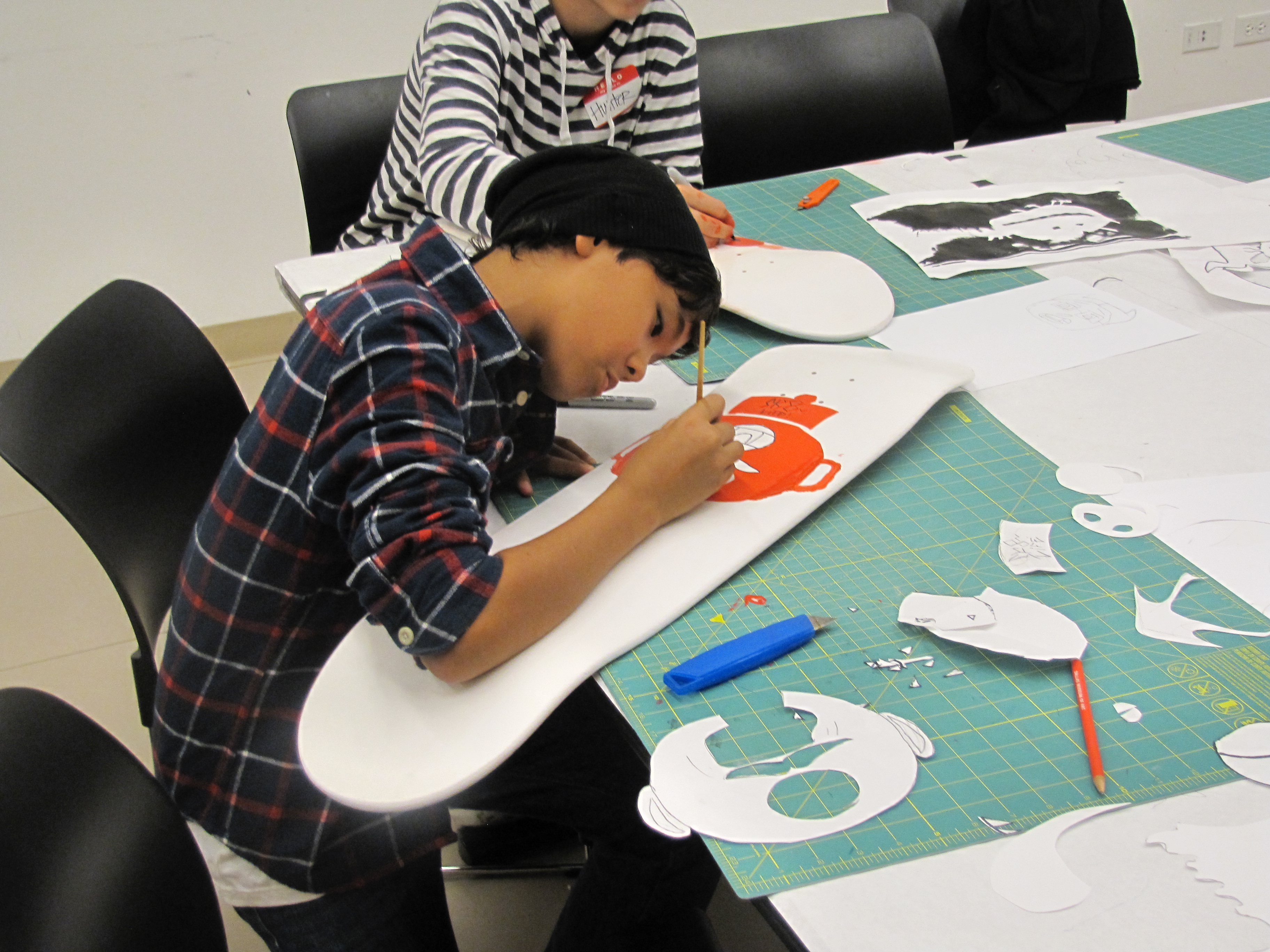
Urban Armor: Elements of Art and Skateboard

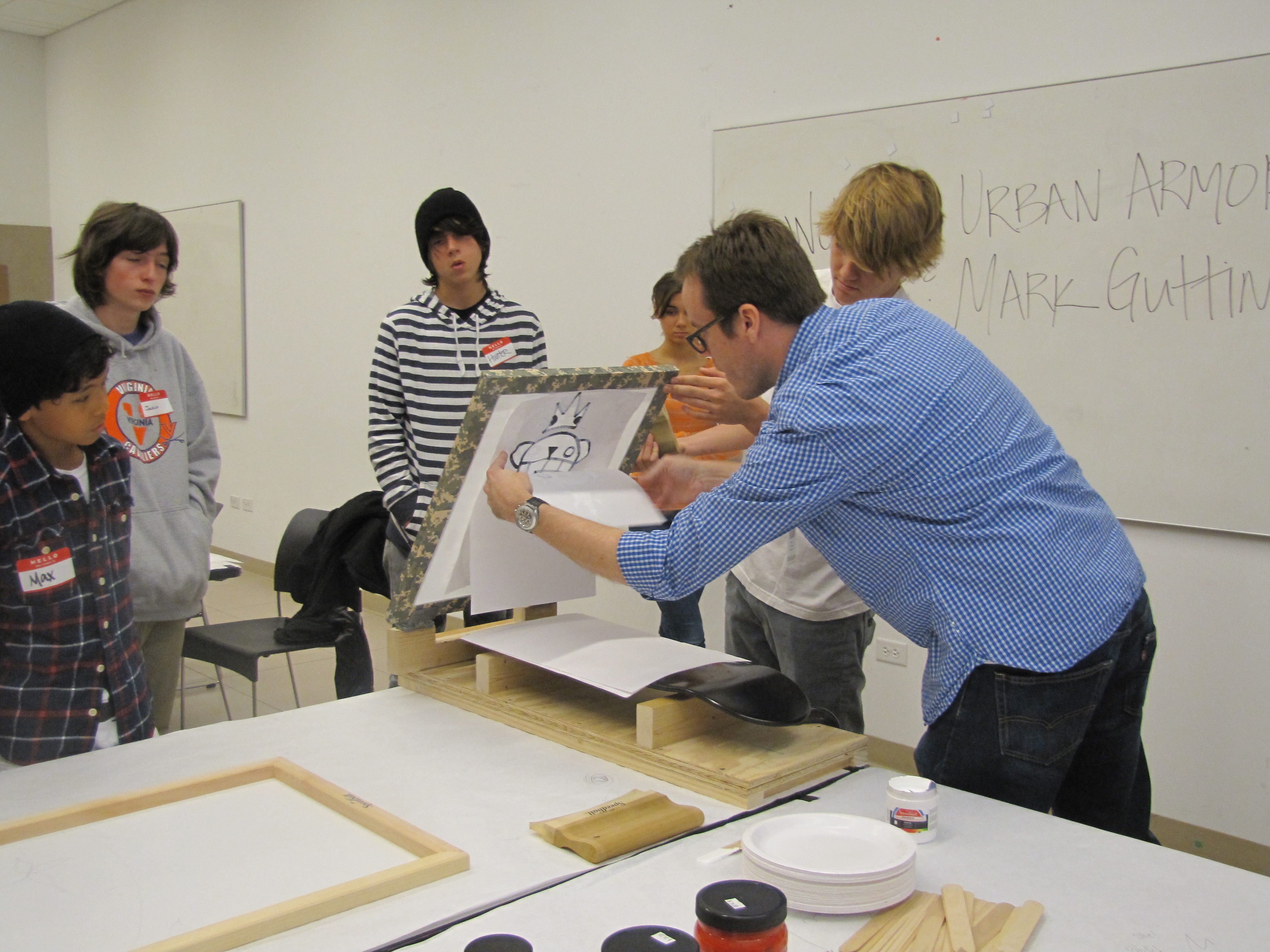
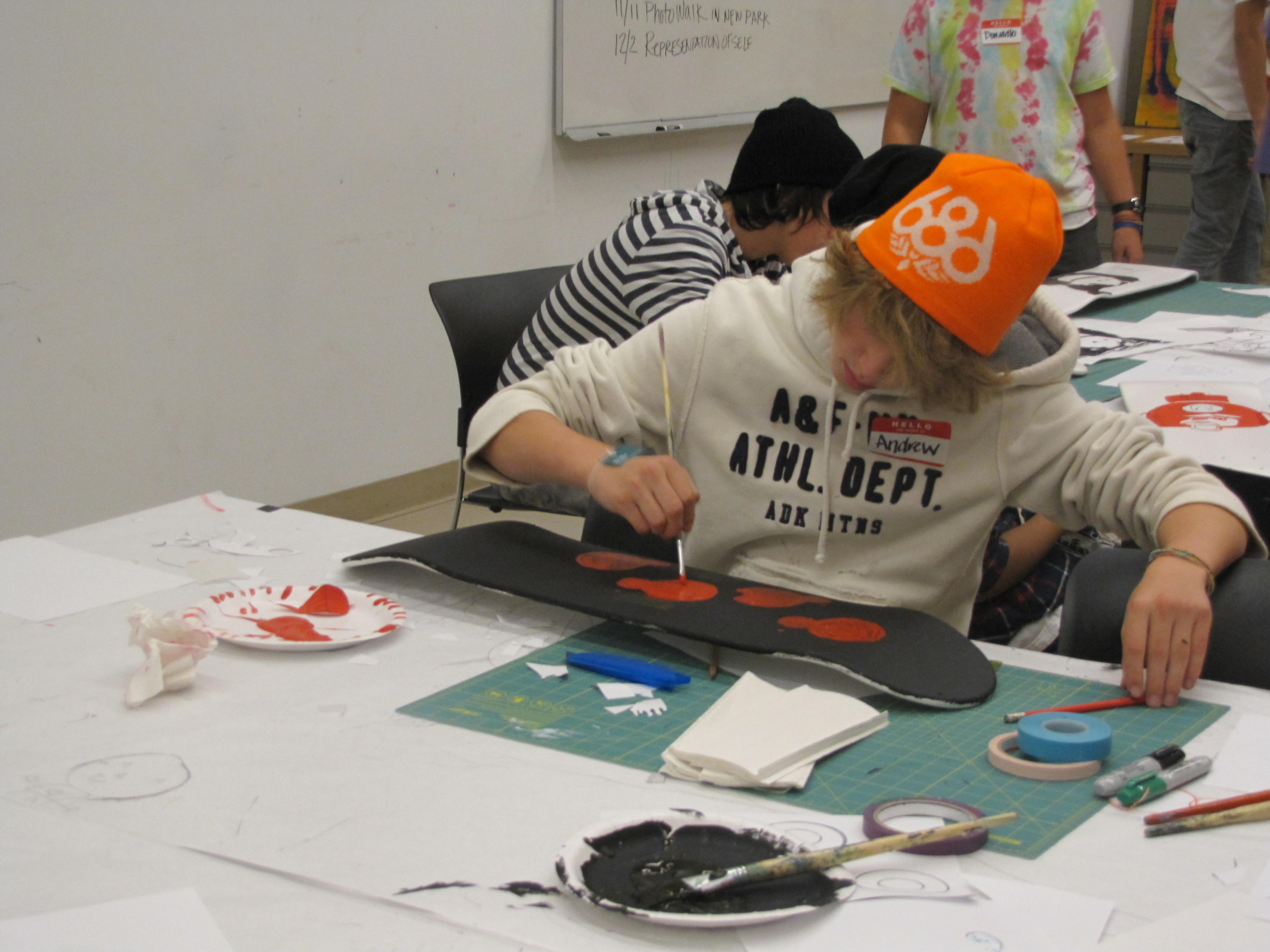
The DMA’s tween/teen program Urban Armor seeks to integrate works of art, rich group discussion, and art making with an over-arching theme of identity so that students can find relevance and practical application to their lives. This exclusive tween/teen program kicked off the new school year with an awesome class, led by art educator and artist Mark Gutting. The workshop emphasized the elements of art and principles of design in our contemporary collection in order to inspire ideas for students to use in their work—their very own skate deck! The students created custom designs, symbols, and logos and were able to screenprint these designs on the back of a skateboard. While working with him, I gained some great insight on who he is as a teacher and a student. Check out my interview with Mr. Gutting below:

What is your background and why did you decide to become a teacher?

Mark Gutting: “Drawing fills my heart with joy.  I think it started with a doodle in childhood and has kept growing since.  Ten years ago, teaching became a logical direction. Teaching art presents a daily opportunity to share that joy.”

What were you like as a teen?

MG: “I’m sure that I was like any other teen–trying to stand out while fitting in. High school is when I first began to develop a style of my own. The funny thing is, I kept it hidden, like it was some big secret.  I didn’t want anyone to steal my style before I fully developed it!”

What about working with our Urban Armor teen group appeals to you?

MG: “The program’s focus on identity.  I’m not sure there is a more apt theme to being a teenager.  Creativity in any form is a wonderful avenue to discovering one’s identity.”

Is there a difference between teaching students in the museum and in the classroom?

MG: “In my experience, students are students; however, the museum presents a situation that can never be duplicated in the classroom–the gallery walk.  To wind through the galleries, sketching a pattern from a textile, a bead from a necklace, a tool mark from a sculpture, and a brush stroke from a painting, is to mainline inspiration.”

What was the goal of the program on Sunday?

MG: “As an educator, teaching the fundamentals of any subject is vital to building a base of knowledge.  Getting students inspired to learn–while having fun–is no easy task.  There are a multitude of art fundamentals found in skateboard deck art: line, shape, form, pattern, balance, positive and negative space, spatial organization, an endless list really.  I wanted to present the Urban Armor group with a unique project–screen printing a skateboard–while incorporating those fundamental concepts.”

Why skate decks?

MG: “I loved skateboarding as a teen.  The movement–the freedom of it–mesmerized me.  Since I was never good at skating, the deck art became my focus.  I spent many hours drawing my last name into some skull-infested graphics.  Back then, the concept of screen printing was future talk–complete science fiction to me.  I simply wanted to present the Urban Armor group with an opportunity I never had–to screen print an actual skateboard deck.”

What was your fondest memory of this class?

MG: “Getting to see the Urban Armor group experience the process of printing actual skateboard decks was a joy.  Hopefully, some of them will want to build their own screen printing rigs in their parents’ garages and crank out original works of art.  Everyone has to start somewhere!”

Why do you like working at the DMA?

MG: “The programs offered to students at the DMA are instilling a deep love for art and creating a new generation of museum patrons.  Who knows?  Maybe even the next Picasso.”

To find out more about Urban Armor and upcoming workshops please visit the website.

Amanda Batson
Program Coordinator for the Center for Creative Connections

The Personal Response Tour

Last spring, I learned about something called the “Personal Response” tour while attending the NAEA convention.  One of my colleagues at the Memphis Brooks Museum of Art said that they use the Personal Response tour as a team-building exercise with staff.  It also provides opportunities to slow down, look closely, and reflect.  We used the Personal Response tour during docent training this week to get our docents to slow down and reflect on their own relationships to works of art in the DMA collection. Docents tour with the same group of people each week, so they were divided into groups based on their touring day.  In this way, it helped them get to know each other a bit better, too.

The Personal Response tour was formulated by Ray Williams, who is now at the Blanton Museum of Art at the University of Texas.  During this tour, docents were asked to select a card that contained an open-ended prompt to guide their time in the galleries.  I took some of the prompts from an article written by Ray Williams* and composed ten additional prompts for docents.  They were given time to explore the galleries and select the work of art that, for them, was the best response to their prompt.  After selecting a work of art, docents spent ten minutes jotting down their thoughts and reactions to their prompt.  After ten minutes had passed, we came back together and everyone shared their response with the group.  I was amazed by how open our docents were to this experience, and also how thoughtful their responses were.  Below are just a few of their selections:

Prompt: Find a work of art that reminds you of something from your past…What are the connections?
One docent had to take piano lessons when she was little and did not enjoy them.  She felt that the young person in At the Piano is obviously disinterested in playing the piano, and that was her attitude when she had to practice, too.  But now she wishes that she had spent more time practicing and had really learned to play the piano.  She has a piano in her home today and still wishes she knew how to play it.
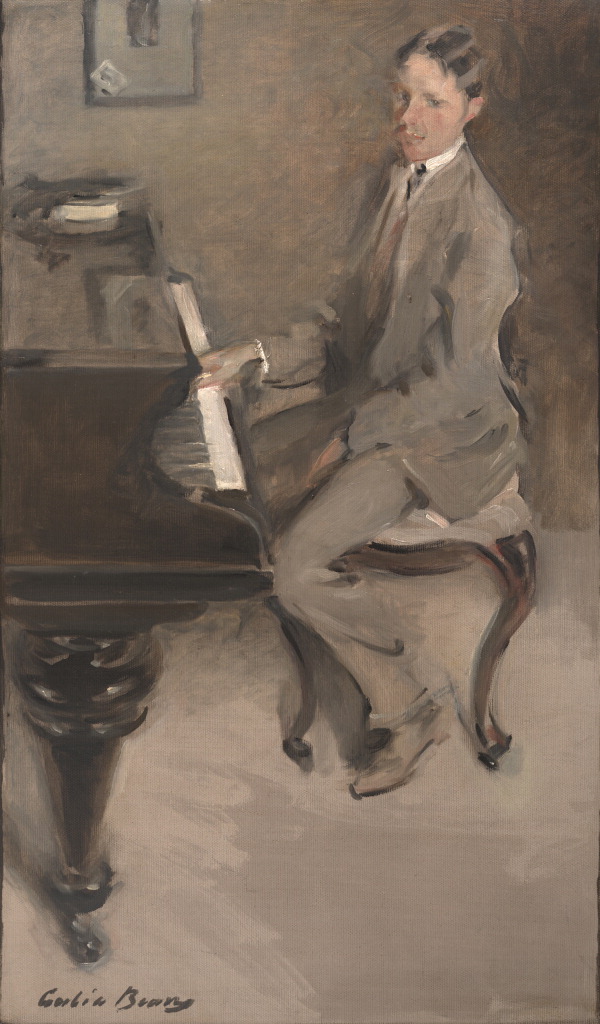
Cecilia Beaux, At the Piano, c. 1890, Graham Williford Foundation for American Art, 145.1994.3

Prompt: Find a work of art that embodies some aspect of peace.
One of the docents selected a shroud or ceremonial hanging (sekomandi) from Indonesia.  The shroud was owned throughout someone’s life and was then used to bury them following their death.  The docent felt that the shroud conveyed a message that “everything will be okay, because you’re joining all of your ancestors.”
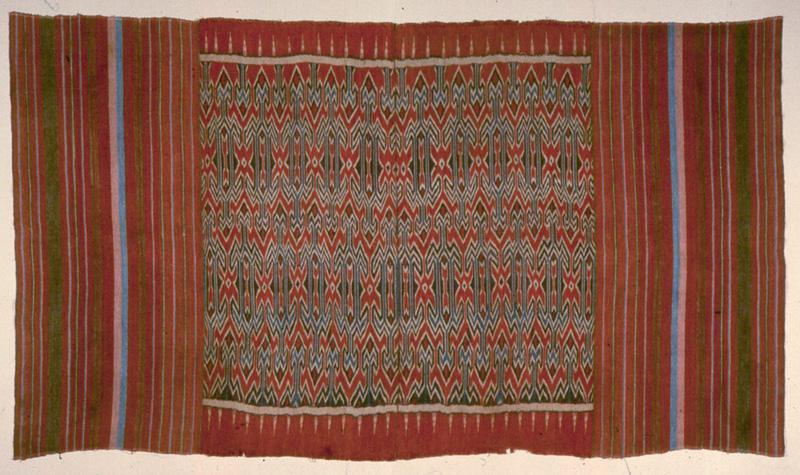
Shroud or ceremonial hanging (sekomandi), Toraja people, Indonesia, probably late 19th century, Dallas Museum of Art, the Steven G. Alpert Collection of Indonesian Textiles, gift of the McDermott Foundation, 1983.126

Prompt: Find a work of art that reminds you of childhood.  What resonates with you?  What elements of childhood do you wish were still a part of your life?
The Beach at Trouville reminded one docent of spending her summer vacations at a family home in Ogunquit, Maine, visiting her grandmother. She fondly remembers the beautiful beaches, like the one in the painting. She and her husband still have a house in Maine, but it is not near a beautiful beach like the one from her childhood.
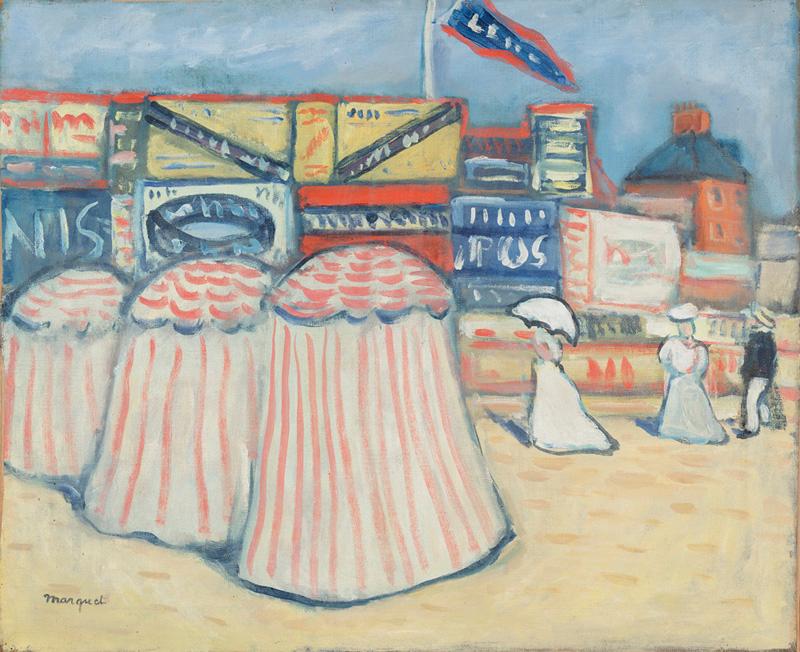
Albert Marquet, The Beach at Trouville, c. 1906, Dallas Museum of Art, gift of the Meadows Foundation Incorporated, 1981.121, © Albert Marquet Estate/Artists Rights Society (ARS), New York/ADAGP, Paris

Prompt: Select a work of art to take on a date.  Where would you go?  What would you do?  What would you discuss?
Andrea’s Response: I would like to go on a date with The Bugler because 1) his ability to play the bugle so well indicates at least some level of intelligence; 2) he is decently attractive and well-dressed; and 3) if the dinner conversation starts to wane, he can just play me some tunes.
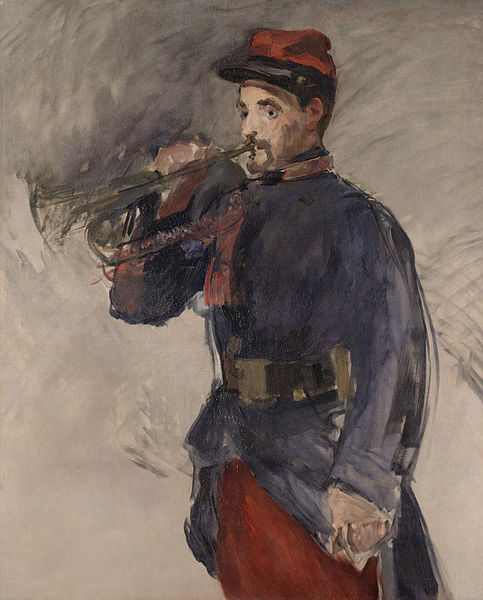
Edouard Manet, The Bugler (Le Clarion), 1882, Lent by the Pauline Allen Gill Foundation, 57.2006.8

Prompt: Select a work of art that you would like to hang above your sofa.  Why?  What would visitors to your home learn about you?
My Response: I would select the sword ornament in the form of a lion.  I’m a Leo, so I associate with the lion in that we’re proud and protective of those we love. But I also think this lion has a huge smile on his face, and I like to laugh and be playful, too.
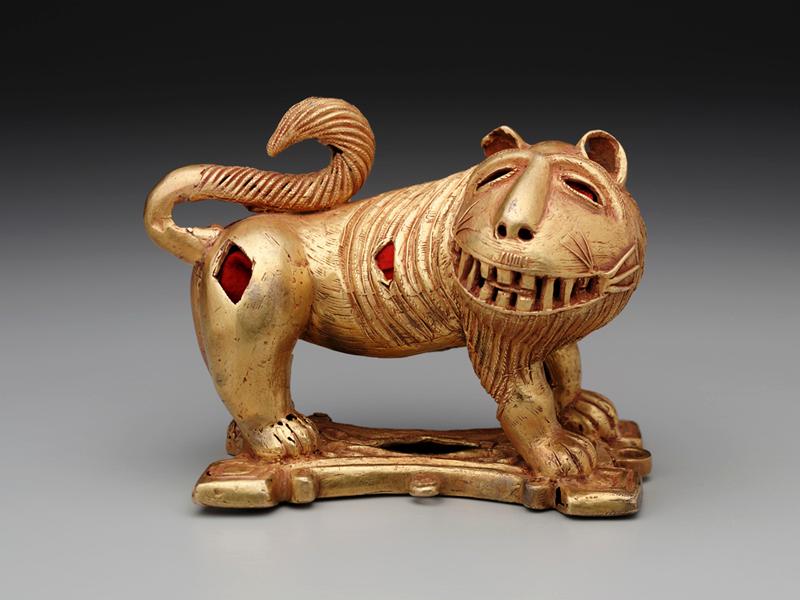
Sword ornament in the form of a lion, Asante people, Ghana, c. mid-20th century, Dallas Museum of Art, The Eugene and Margaret McDermott Art Fund, Inc., 2010.2.McD

I’m going to pose one final prompt for all of you–what work of art from the DMA collection embodies, for you, pure joy?  Why?  I can’t wait to read your responses!

Shannon Karol
Manager of Docent Programs and Gallery Teaching

*Ray Williams, “Honoring the Personal Response: A Strategy for Serving the Public Hunger for Connection,” Journal of Museum Education, Volume 35, Number 1, Spring 2010, pp. 93-101.
Teaching for Creativity: Exquisite Corpse

At last week’s Go van Gogh training session, we decided to get everyone’s creative juices flowing with a fun warm-up exercise.  Volunteers got the chance to spend some time exploring works of art they had never seen before through a group writing exercise. During this experience, volunteers each contributed one line of a poem without knowing what the others had written. This collaborative technique was originally created by Surrealist artists interested in incorporating elements of chance into artistic expression. Known by the Surrealists as Exquisite Corpse, this activity can be done as a narrative or drawing game with several people contributing to one poem or artwork. After participating in a written version of this exercise, the volunteers were eager to learn more about the artworks they had written about. Their genuine enthusiasm and sense of wonder made me think that this could be a great way for students to get excited by works of art as well. I hope you will try it out with your students! Here’s how:

1.  Create at least one template with five lines of writing prompts. These are the prompts that we used for three different templates:

  • Noun, two adjectives, three words ending in “ing,” phrase, noun
  • One word, two words, three words, four words, one word
  • Two syllables, four syllables, six syllables, eight syllables, two syllables

2.  Divide into groups of four or five and take a few moments to look closely at a work of art (each group should look at a different artwork)

3.  Provide each participant with one template and a pencil to start

4.  Fill in the first line and then fold it so that your written response is hidden from view

5.  Pass the template to your neighbor

6.  Fill in the next line on the template passed to you, fold it, and pass again

7.  Continue these steps until all the templates have been filled out. At the end of this exercise, each participant should have a completed narrative that they can unfold and read aloud to the other writers. After reading all the templates, each small group should choose one to share with the larger group.

Here are some collaborative narratives that Go van Gogh volunteers wrote:

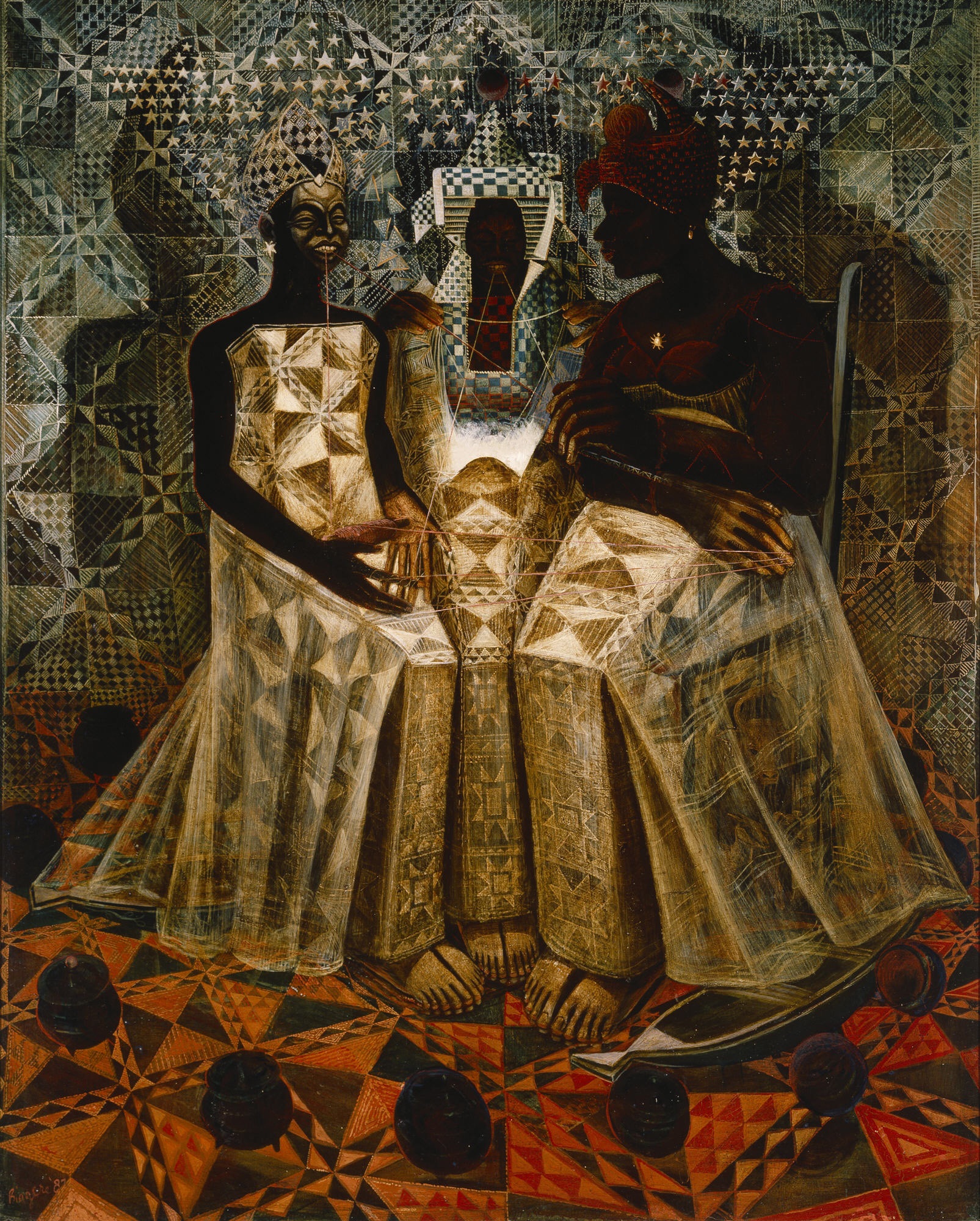
Starry Crown, John Thomas Biggers, 1987, Dallas Museum of Art, Museum League Purchase Fund

Gorgeous

Traditional

Ladies talking quilt

Stars, hats, hands, feet, toes, fingers, shine

Perfect

.

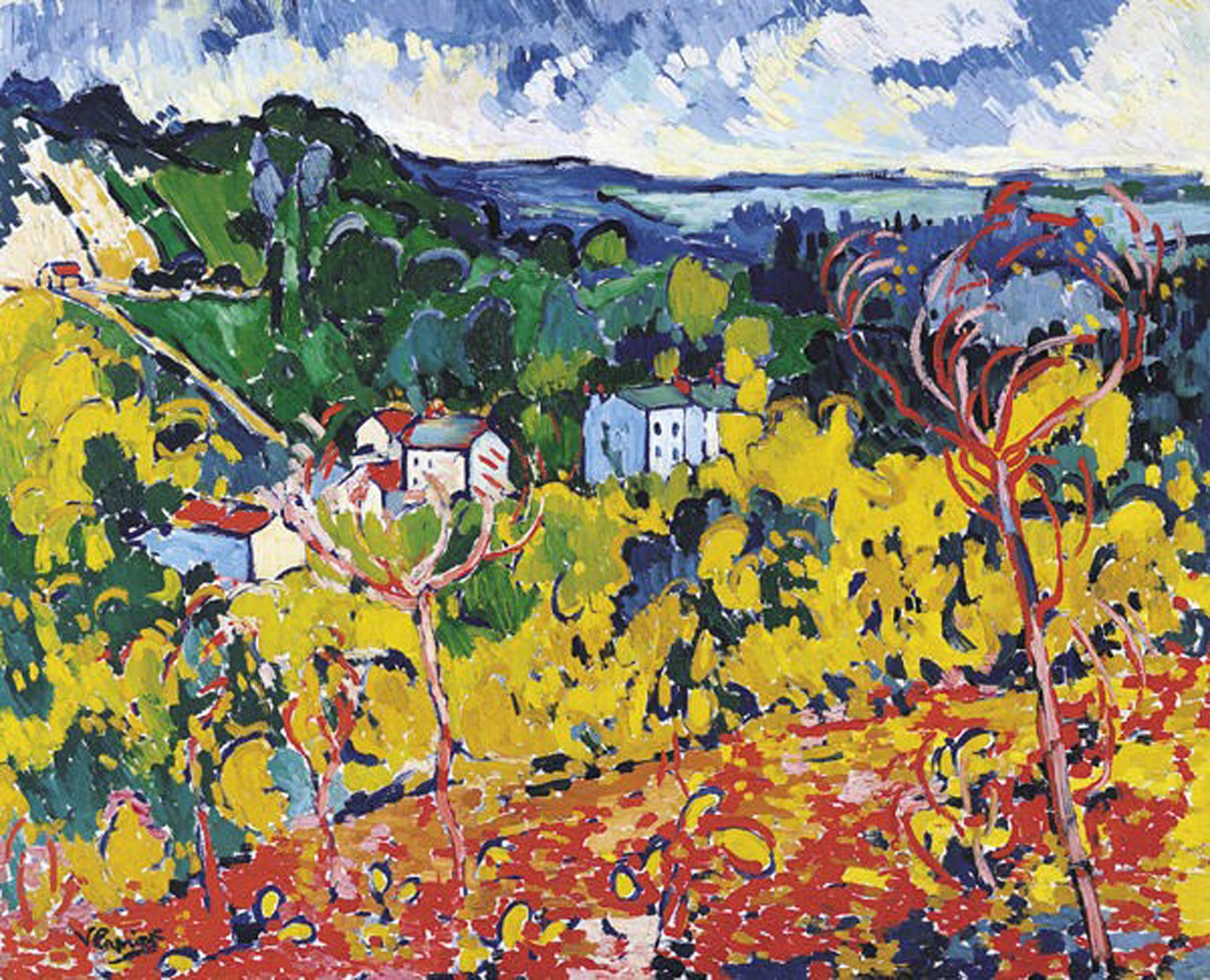
Bougival, Maurice de Vlaminck, 1905, Dallas Museum of Art, The Wendy and Emery Reves Collection

A fall day in Europe

Landscape of a village

Peaceful

Sunflowers and seawater

Apples

.

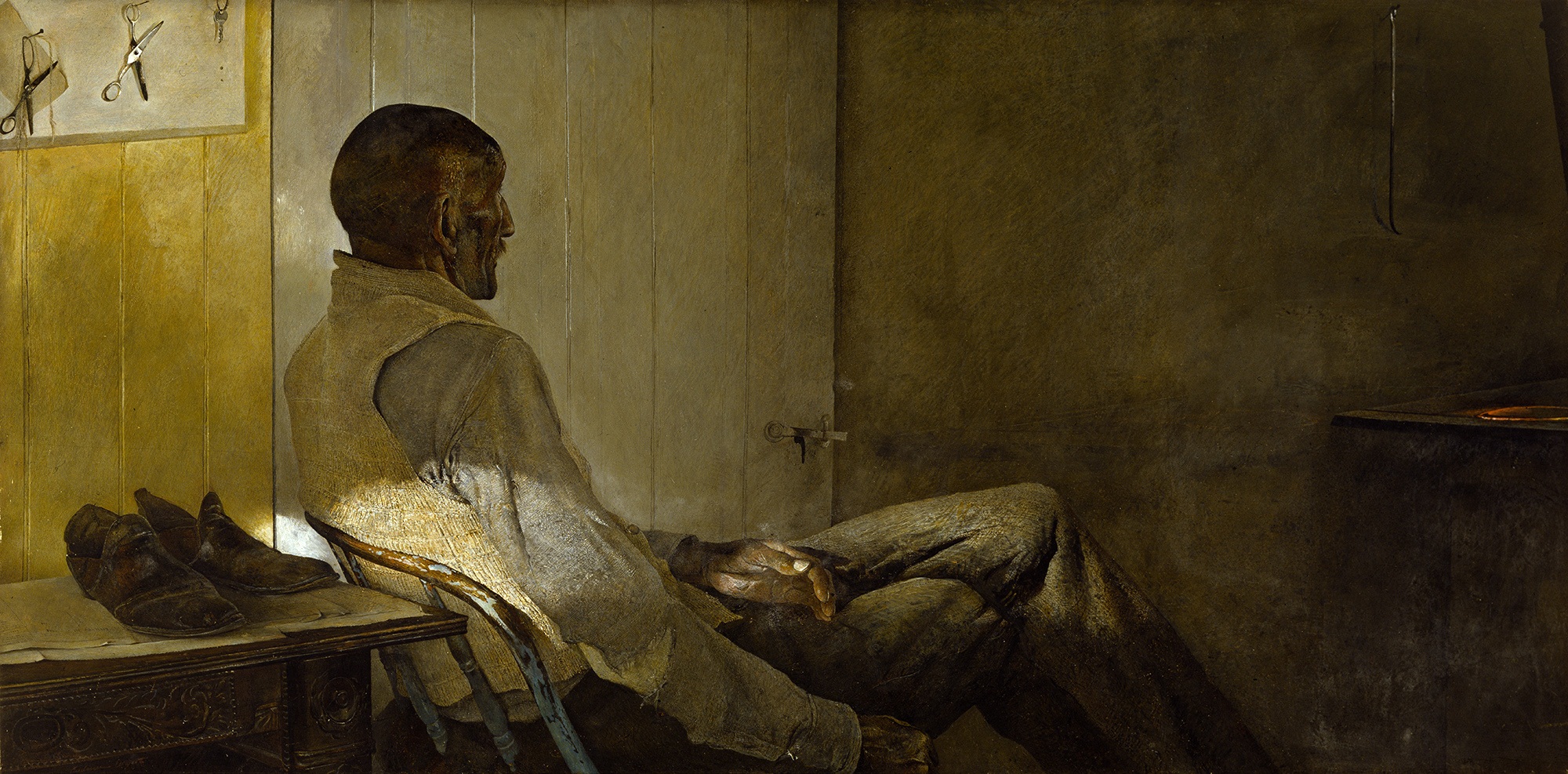
That Gentleman, Andrew Wyeth, 1960, Dallas Museum of Art, Dallas Art Association Purchase

Somber

Serious, somber

Sitting, relaxing, contemplating

Why is he so sad?

Man

.

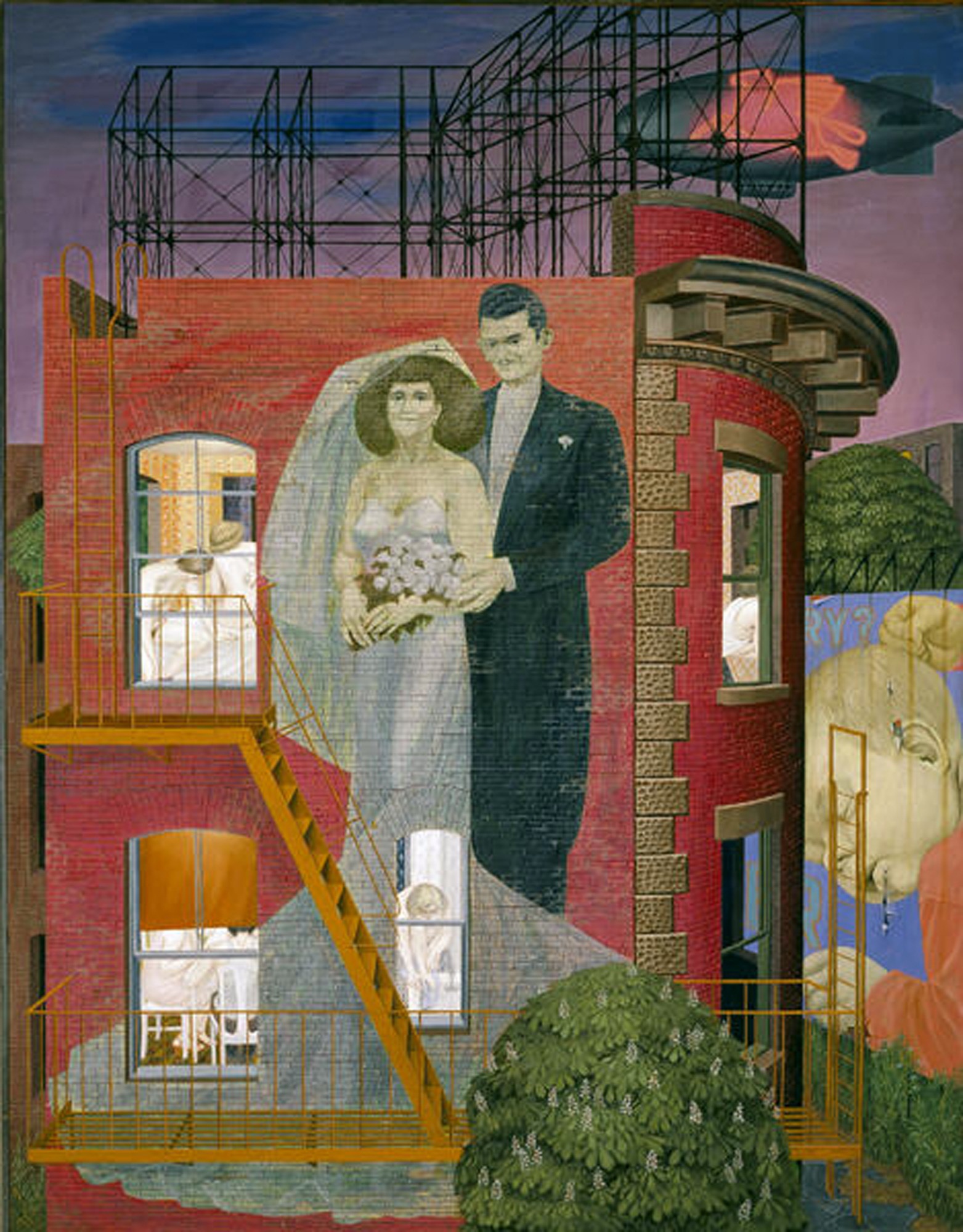
June Night, Henry Koerner, 1948-1949, Dallas Museum of Art, Foundation for the Arts Collection, gift of Joshua L. Logan

Colorful

Everyday, wedding

Marrying, dreaming, loving

A busy art building

Hope

I hope you all have as much fun with this as we did!

Hannah Burney
Community Teaching Programs Assistant


Archives

Categories