Archive for the 'Art & Teaching' Category


Bringing Artworks into Focus in the Most Delightful Way

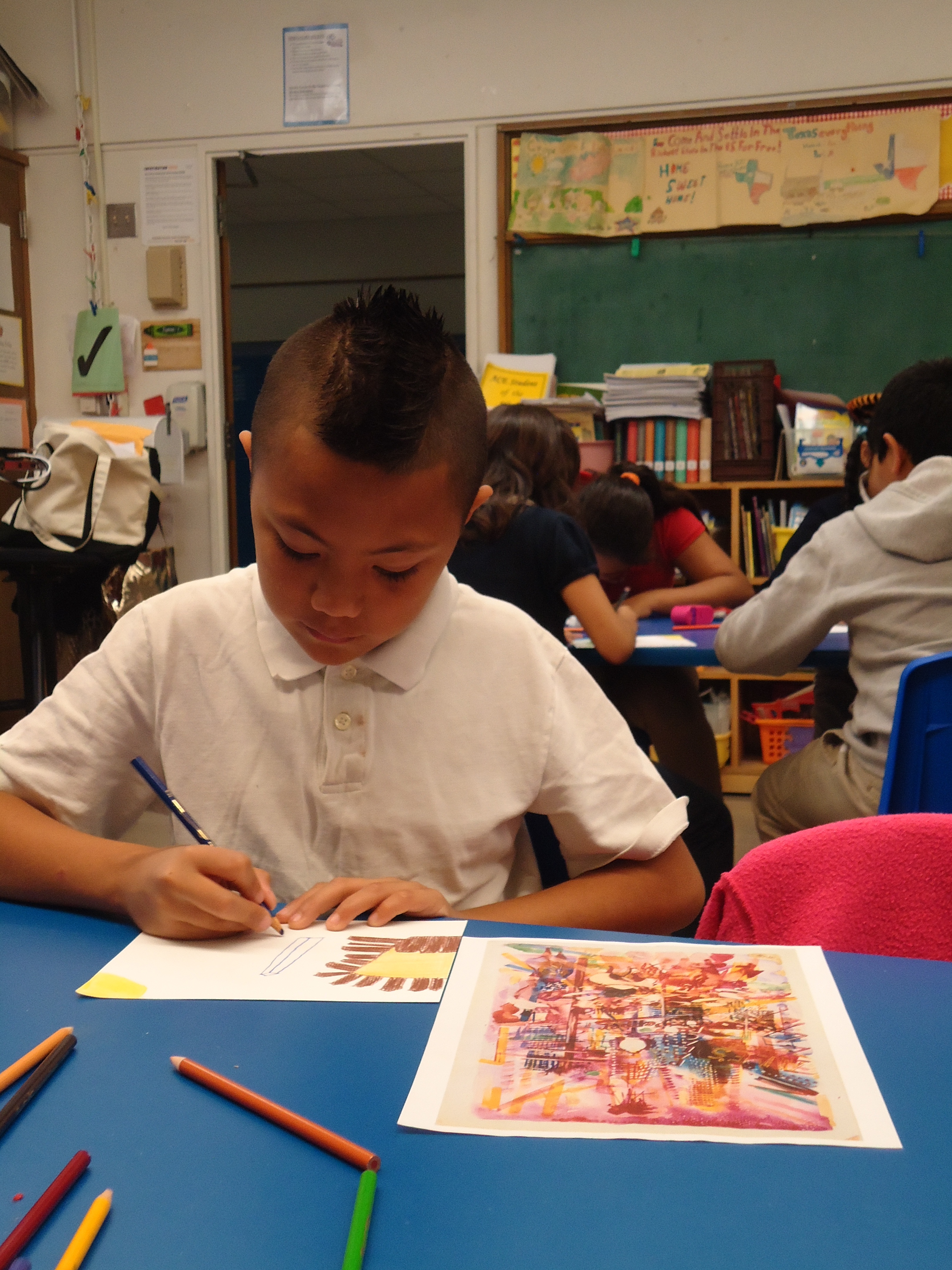
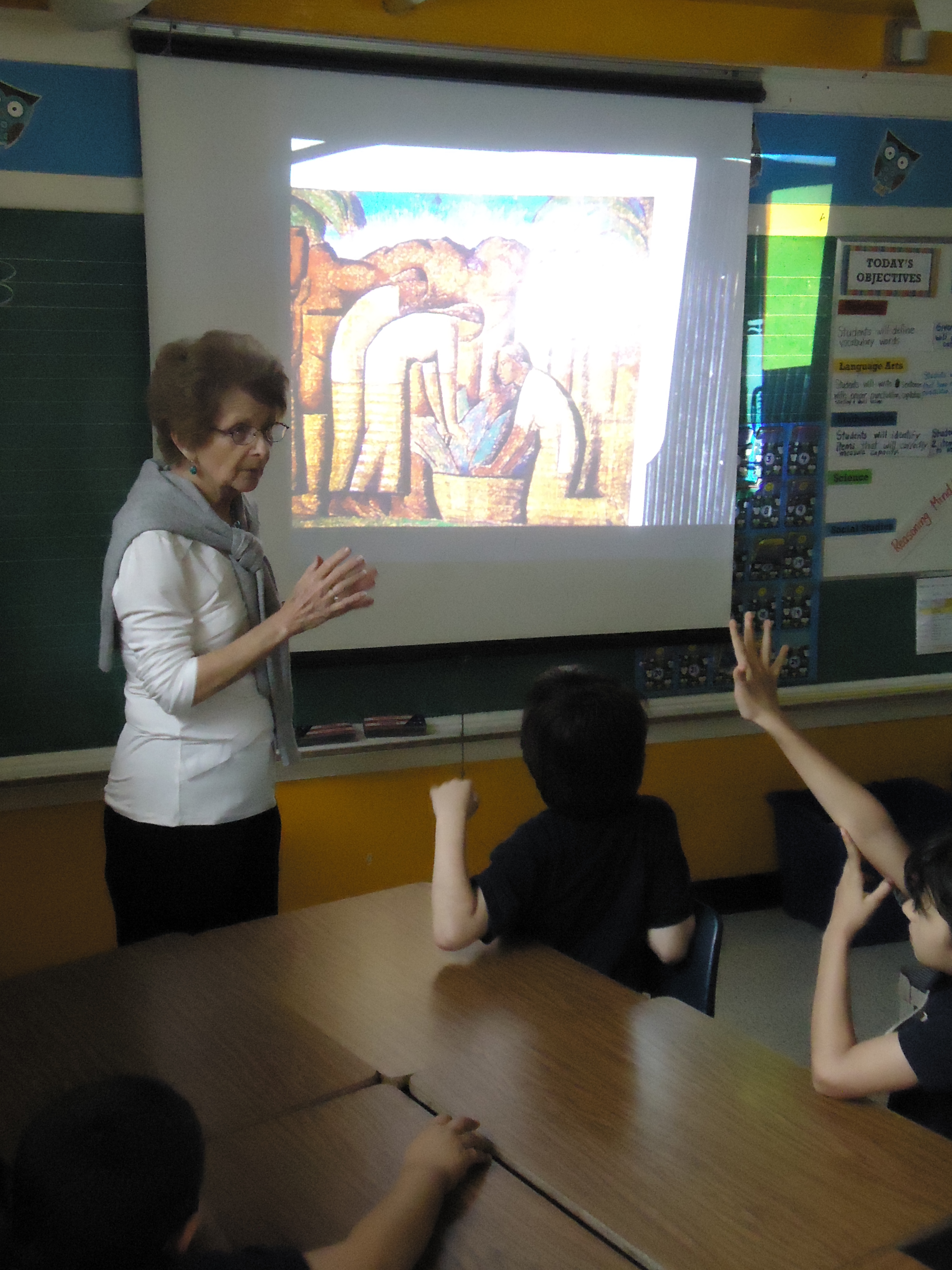
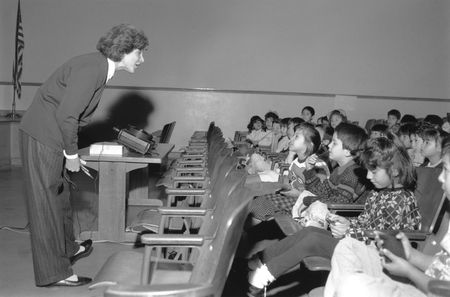
I like to think of our Go van Gogh volunteers as the Mary Poppinses of Dallas elementary schools. They’re the special guest bearing a big bag full of magical things (art supplies! stories of Museum treasures!) that promise fun, adventure, and, when you least expect it, a lesson or two. Our volunteers also happen to have cheery dispositions, so the comparison works well on several levels. In a perfectly Poppins world, we could reach into our magical outreach bags during programs and pull out real DMA artworks, large and small, bringing the Museum right into the classroom. Until we figure out how to work that final bit of enchantment, we travel to classrooms with the next best thing—reproductions of artworks and the masterful storytelling needed to bring these artworks to life.

Over the years, our bags have been filled with reproductions of all kinds. First there were large posters of artworks to roll up and carry, then we traveled with the heavy hum and whir of slide projectors, and more recently we slipped sets of bright, colorful overhead transparencies into our bags. These reproductions came in all shapes and sizes, but each allowed us to show with clarity and accuracy, the beauty of our Museum’s treasures to students who had never seen them before.
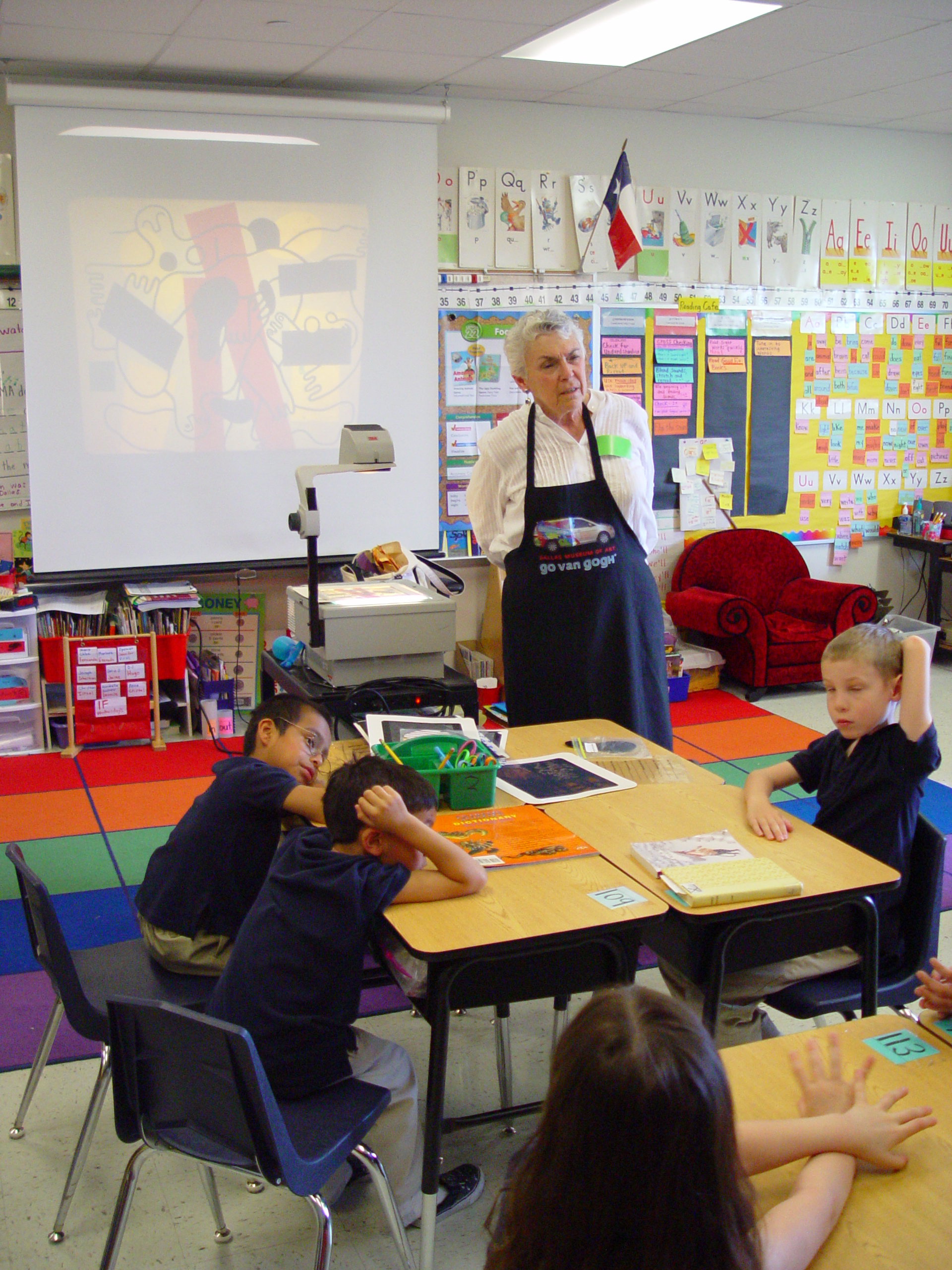
Our latest method of magic involves paper images of artworks that we project using document cameras available in classrooms. When the quirks and glitches of this classroom technology left us projecting artworks in the least delightful way, we decided it was time to fill our bags with newer things—iPads and projectors. With the great ideas and lots of hard work, DMA colleagues Danielle, Amanda, Nicole, Ted, and our friends, Emily, Shannon, Bernardo, and I spent last summer writing a proposal for the Sprint Local Grant Program and pouring our best ideas into a video to convince The Sprint Foundation that all we needed was some wind in our kite (and the help of a generous Mr. Banks) to leap into the 21st century and get back our classroom magic.

The storyboard for our video submission

The storyboard for our video submission

Late last year, Sprint gave us the happy ending we were hoping for (we’re your biggest fans, Sprint!), and we are in the process of purchasing iPads for our outreach programs. This means that the next time we teach our Arts of Mexico curriculum, we can point to a well-projected, sharply-focused image of the Mask of Tlaloc and explore precious, tiny pieces of turquoise that form a delicate mosaic. We can zoom in and in and in again on the sixty foot mural, Genesis, The Gift of Life, discussing fine details usually reserved for Museum visits and having much richer discussions for it.

We’ll finally have the tools to unpack the best quality artwork images from our magical outreach bags—images that will spark great conversation and moments of wonder, like museum experiences with real artworks do. We’ll be as close to the real Mary Poppins as we can get (I draw the line at flying into classrooms!!), and that’s pretty exciting.

Amy Copeland
Manager of Go van Gogh and Community Teaching Programs
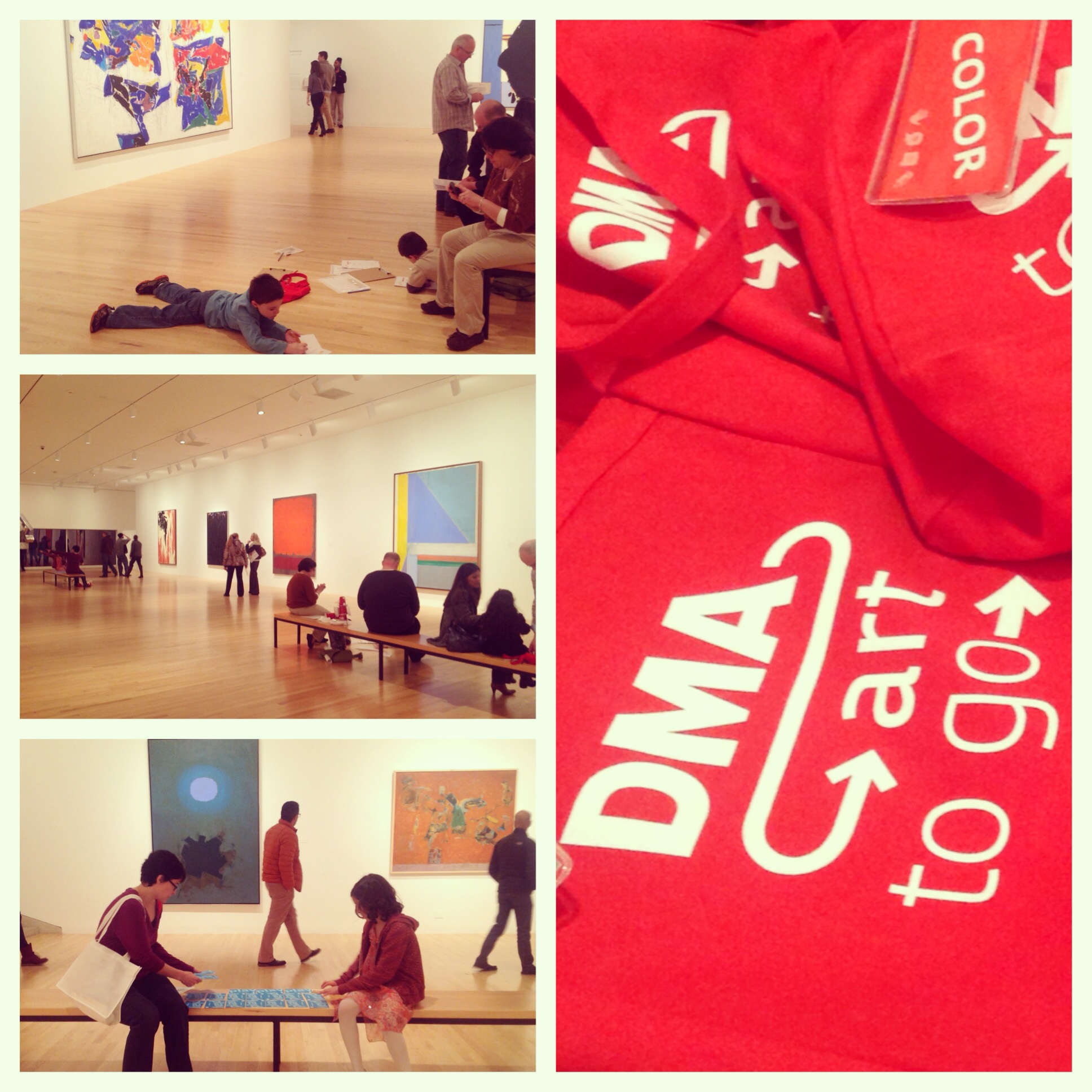
Totes Awesome! Art To Go Family Bags

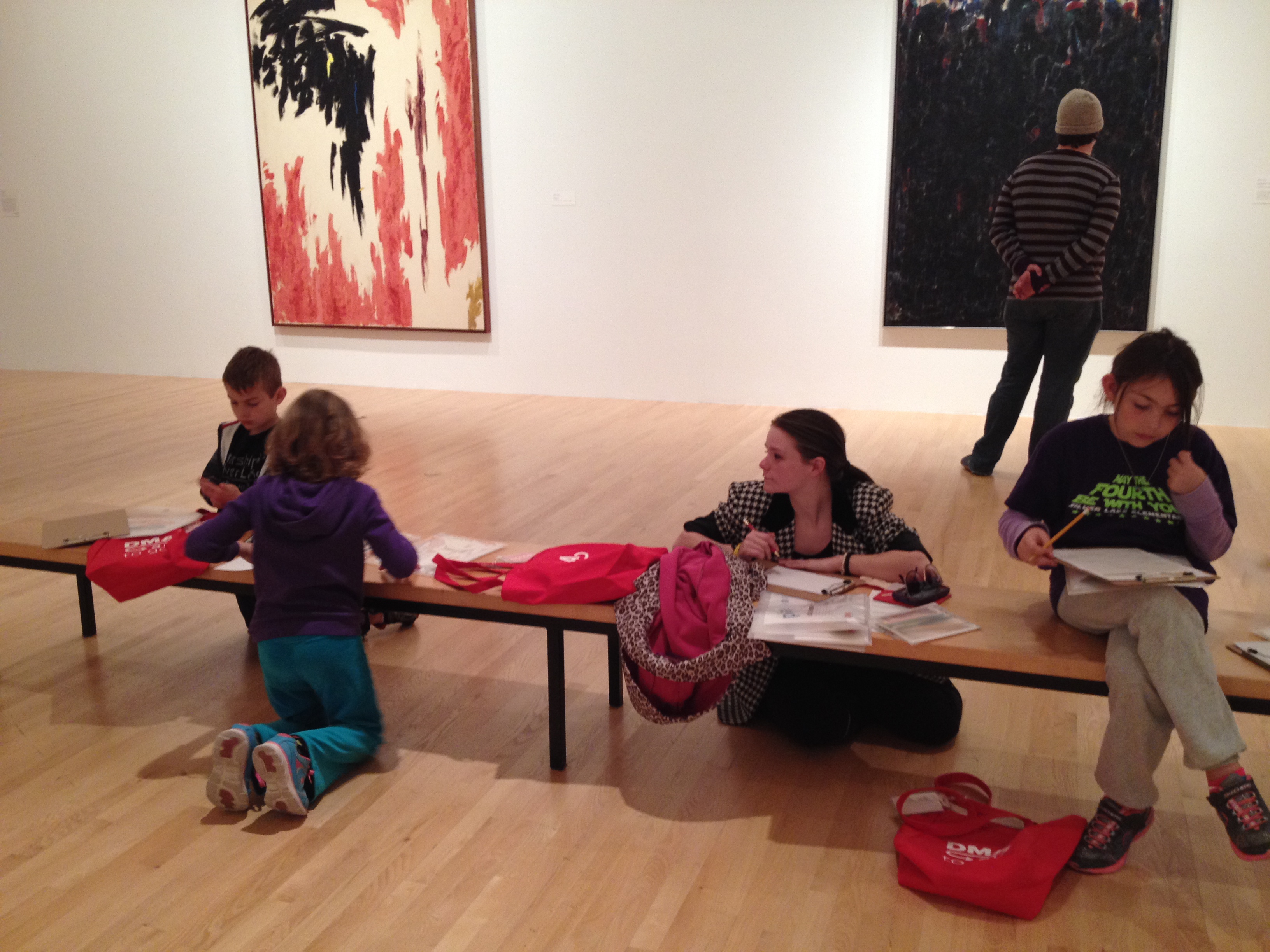
Around this time last year, I gave a sneak peek into an exciting new anytime activity that our Education team was testing. After much preparation, redesign, and enthusiasm over the past year, the DMA is now premiering the Art To Go Family Tote Bags for free and public use! Beginning this week, visitors can check out these special totes at the Visitor Services desk and enhance their Museum experience by engaging in a variety of creative activities.

Each Art To Go bag is centered around a particular theme, the first of which are Color and the Senses. The corresponding activities within each bag are general enough to be used with any work of art in the DMA galleries, so the possibilities are endless. The tote bag activities cater to diverse learning styles, encouraging visitors to design their own Museum experience by deciding whether they want to Write, Make, Talk, or Play.

With Art To Go bags, family members can use their imaginations to discover the different scents and aromas present in an Abstract Expressionist painting, or perhaps use their bodies to clap, stomp, snap, whistle and sing to create a soundscape for a Buddhist sculpture. Children can write a postcard to a family member describing their visit to the Museum using all of their senses, or use a viewfinder to focus in and sketch a single section of a French Impressionist painting. The great news is that activities and bag themes will change periodically, so families can create and enjoy new educational and artistic adventures each time they visit!
toteally_family-300x300

Art To Go Family Tote Bags are designed to be creative catalysts, encouraging families to spend more time in the galleries both connecting with works of art and connecting with each other. We invite you to take one of our activity bags along on your next (or very first) visit to the DMA! Bags will be available for free check out at the Visitor Services desk during regular Museum hours. And DMA Friends who complete activities from both bags can earn the Tote-ally Family Badge!

Danielle Schulz
Teaching Specialist

Get Immersed in Contemporary Art

Have you ever wondered how it would feel to create a painting over eight feet tall and almost seven feet wide? If so, stop by our newest Pop-up Art Spot in the Contemporary gallery and get immersed in Richard Diebenkorn‘s Ocean Park No. 29. Visitors of all ages are invited to assemble a life-size puzzle of this painting with large pieces of felt. Just be ready to get physical as you bend over, stretch, and reach as far as you can to put it together!

This Pop-up Art Spot engages other senses, too: use your sense of touch (unusual in an art museum!) as you explore the texture of oil paint on small canvas samples or pair different scents with the colorful paintings around you.

Below is our upcoming schedule for the Pop-up Art Spot. We change locations from week to week, so be sure to visit us between February 11-16 to engage your senses!

    January 28-February 2: fourth floor landing, Modern American gallery
    February 4-9: third floor, Indonesian gallery
    February 11-16: first floor, Contemporary gallery

P.S. – This Pop-up Art Spot was created by our wonderful intern Tyler Rutledge, who was featured in a blog post last month.

Melissa Gonzales
C3 Gallery Manager

Friday Photos: Contemporary Kids

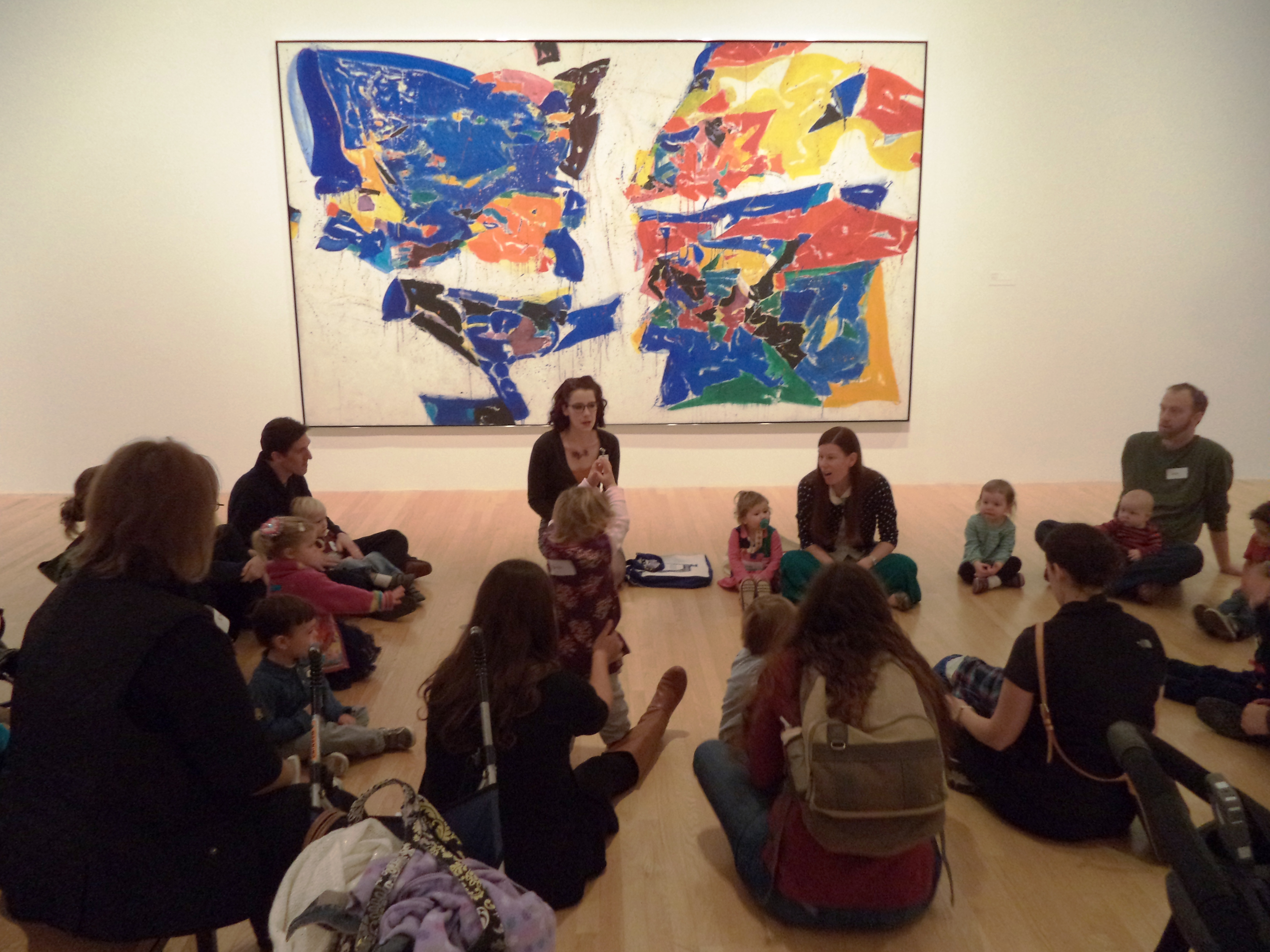
Throughout the month of January, our Early Learning program participants have enjoyed spending time with contemporary art here at the DMA.

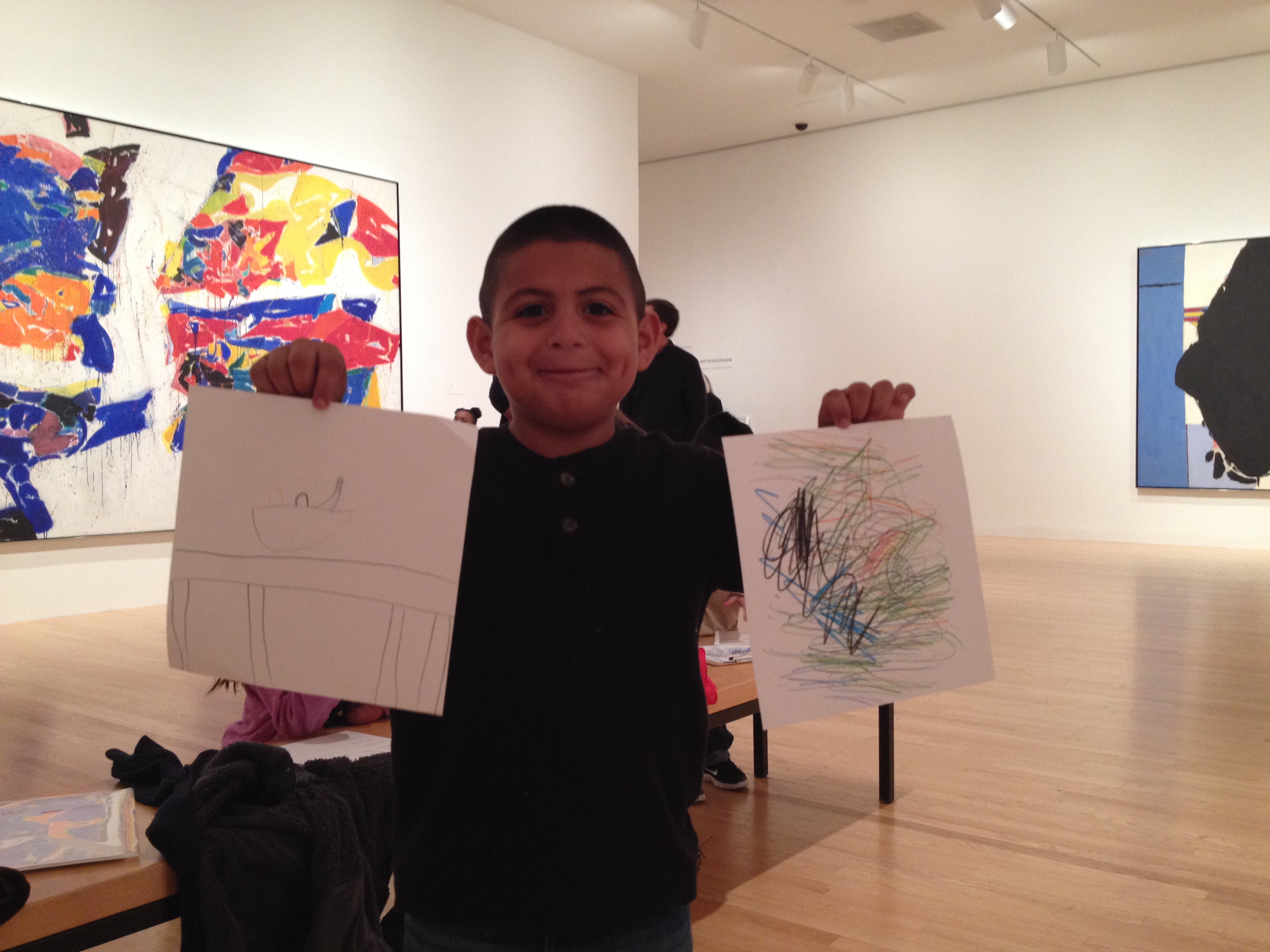
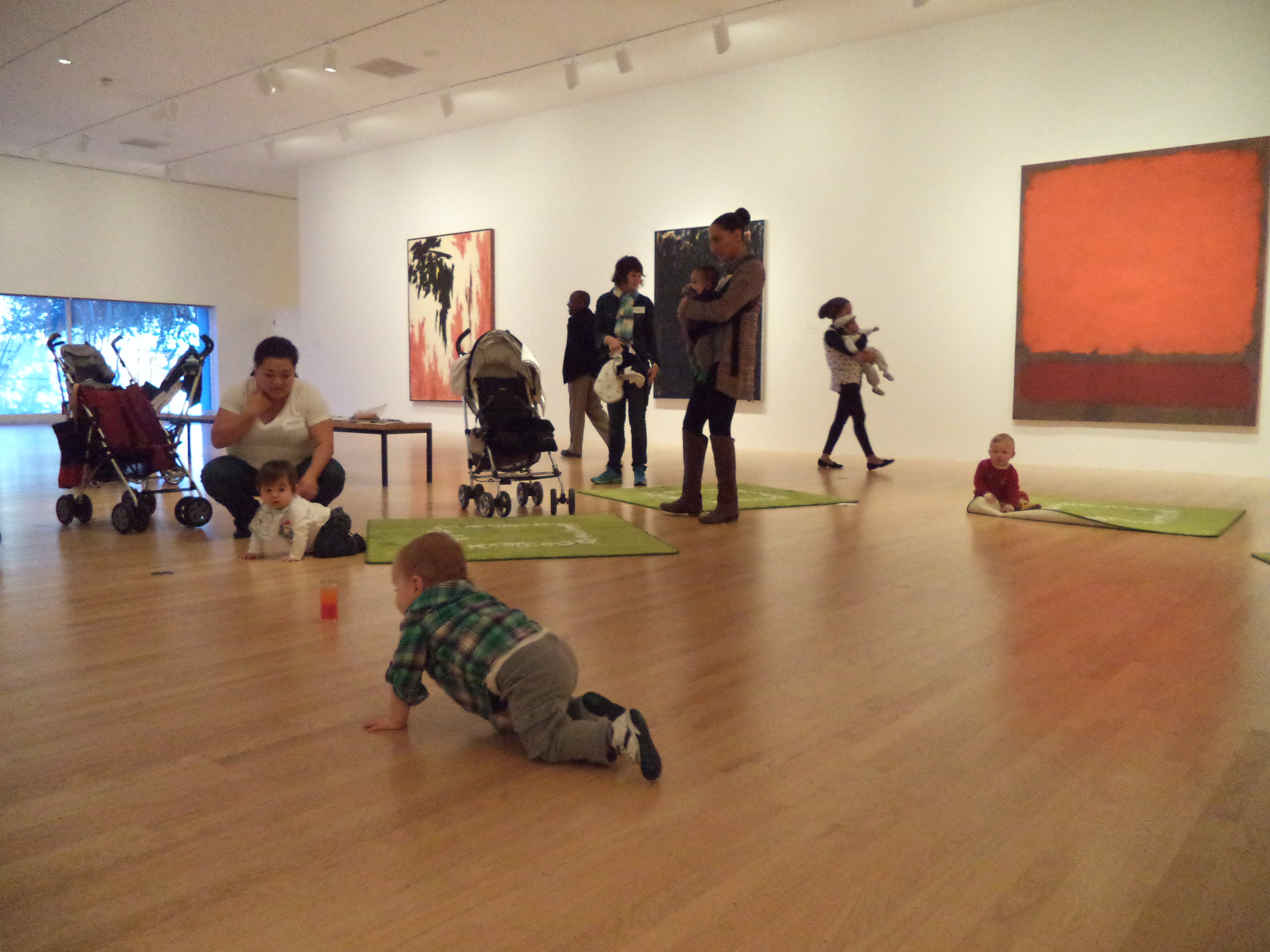
January’s Toddler Art class focused on the colors found in Sam Francis’ breathtaking Emblem. The toddlers had a blast pretending to mix and splatter paint onto the giant canvas!

We also celebrated a successful launch of the DMA’s newest class, Art Babies, designed for children 0-24 months and their caregivers.

Amelia Wood
McDermott Intern for Family and Access Teaching

Artworks shown:

  • Mark Rothko, Orange, Red, and Red, 1962, Dallas Museum of Art, gift of Mr. and Mrs. Algur H. Meadows and the Meadows Foundation, Incorporated
  • Sam Francis, Emblem, 1959, Dallas Museum of Art, gift of the Meadows Foundation, Incorporated
  • Sam Francis, Untitled (Black Clouds), 1952, Dallas Museum of Art, gift of Mr. and Mrs. Algur H. Meadows and the Meadows Foundation, Incorporated, by exchange
  • Adolph Gottlieb, Orb, 1964, Dallas Museum of Art, Dallas Art Association Purchase
  • Ashville Gorky, Untitled, 1943- 1948, Dallas Museum of Art, Dallas Art Association Purchase, Contemporary Arts Council Fund
  • Clyfford Still, Untitled, 1964,  Dallas Museum of Art, gift of the Meadows Foundation, Incorporated
  • Richard Diebenkorn, Ocean Park No. 29, 1970, Dallas Museum of Art, gift of the Meadows Foundation, Incorporated

Counting Down to the Caldecott

For children’s book lovers, January is the month when we wait in anticipation to hear who will win the Caldecott Award. We’ve spent the year oohing and ahhing over gorgeous illustrations, delighting in quirky characters and being filled with wonder as yet another story reaches The End. Several of this year’s contenders are books that I think would feel right at home here at the DMA, both because of the quality of their illustrations and the power of their stories.

In Mr. Tiger Goes Wild by Peter Brown, Mr. Tiger is quite the respectable, gentlemanly tiger. His top hat and bow tie are endearingly dapper, and his manners are every mother’s dream. But that is all about to change when Mr. Tiger has a wild idea. Brown’s watercolor and gouache illustrations perfectly capture Mr. Tiger’s journey from the orderly, precise city to his walk on the wild side in the jungle. When I read the book, I immediately thought of Henri Rousseau’s vivid jungle scenes and the sneaky tiger on a Japanese scroll here at the DMA. Can you imagine this tiger in a suit and tie?

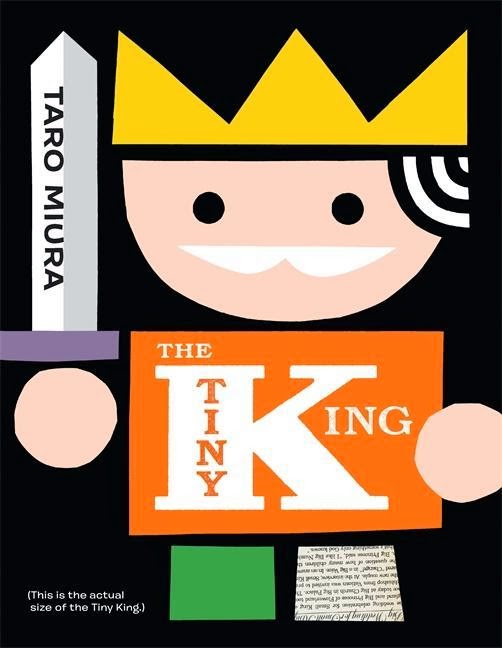
The Tiny King has a huge army, a massive castle, and all the things a person could wish for. But he is very, very lonely. When he meets a big princess, and asks her to be his Queen, his life gets noisier, more crowded, and definitely more happy—bigger in every way! Taro Miura creates bold, colorful illustrations that remind you how simple shapes and a lot of imagination add up to memorable visual images. Pair this book with a close look at some of the Abstract Expressionist paintings on view at the DMA, and you can have your own shape-filled adventure. To see more of Miura’s amazing illustrations, visit Carter Higgins’ blog Design of the Picture Book (one of my favorites).

What can you do with a piece of chalk? Create an entire world! Reminiscent of Harold and the Purple Crayon, Journey’s heroine uses red chalk to draw a door to another world. She creates a hot air balloon, a magic carpet, and a bicycle to help her get around, and the illustrations beg you to look closer and closer as she explores this new place. When she loses her chalk, it seems like all is lost, until she gets some help from a surprising place. Aaron Becker’s watercolors make you feel like you’ve jumped into a painting, and reminded me of Claude-Joseph Vernet’s A Mountain Landscape with Approaching Storm. With an interrupted picnic in the foreground and a shiny castle in the background, you wish you could just walk around this mountain landscape and experience the frantic activity as the storm draws closer. Journey would work well as a classroom warm-up to practice close-looking, storytelling, and searching for contextual clues before a visit to see the Vernet at the museum. (To see a video demonstrating how the illustrations for Journey were created, visit the author’s website).

Duncan’s crayons have gone on strike and instead of an afternoon spent coloring, he faces a pile of complaint letters. Yellow and orange are arguing over what color the sun really is, blue is worn out from coloring water, white is feeling neglected, and the beige crayon worries that he is only ever a stand-in for the brown crayon. Duncan’s colorful solution for soothing everyone’s frazzled nerves shows some stellar out-of-the-(crayon)-box thinking. The Day the Crayons Quit by Drew Daywalt is just as entertaining for kids as it is for adults, and makes you wonder what your crayons would say if they could talk. Oliver Jeffers’ whimsical illustrations bring the crayons to life and offer the perfect way to start a conversation about the surprising ways artists use color in their work. You can meet artist Oliver Jeffers here at the DMA on February 9th as part of the Arts & Letters Live BooksmART series. Learn more about the program and reserve your free tickets here.

Do you have a favorite picture book that you hope will walk away with the Caldecott next week?

Leah Hanson
Manager of Early Learning Programs
Organizing Your New Year

Organizing a museum art studio that is used by an entire education department can be truly difficult. It’s important to create a system for everyone to follow in order to avoid a chaotic mess of clutter and confusion! I’ve recently been dubbed the “Studio Fairy” and have been making it my New Year’s goal to implement a workable organization system that everyone in our Department can use.

Turn over a New Leaf in the New Year:

There is no possible way that everyone will understand your method without some gentle reminders. Make labels for everything! Every box, container, or project. Typed is more legible.

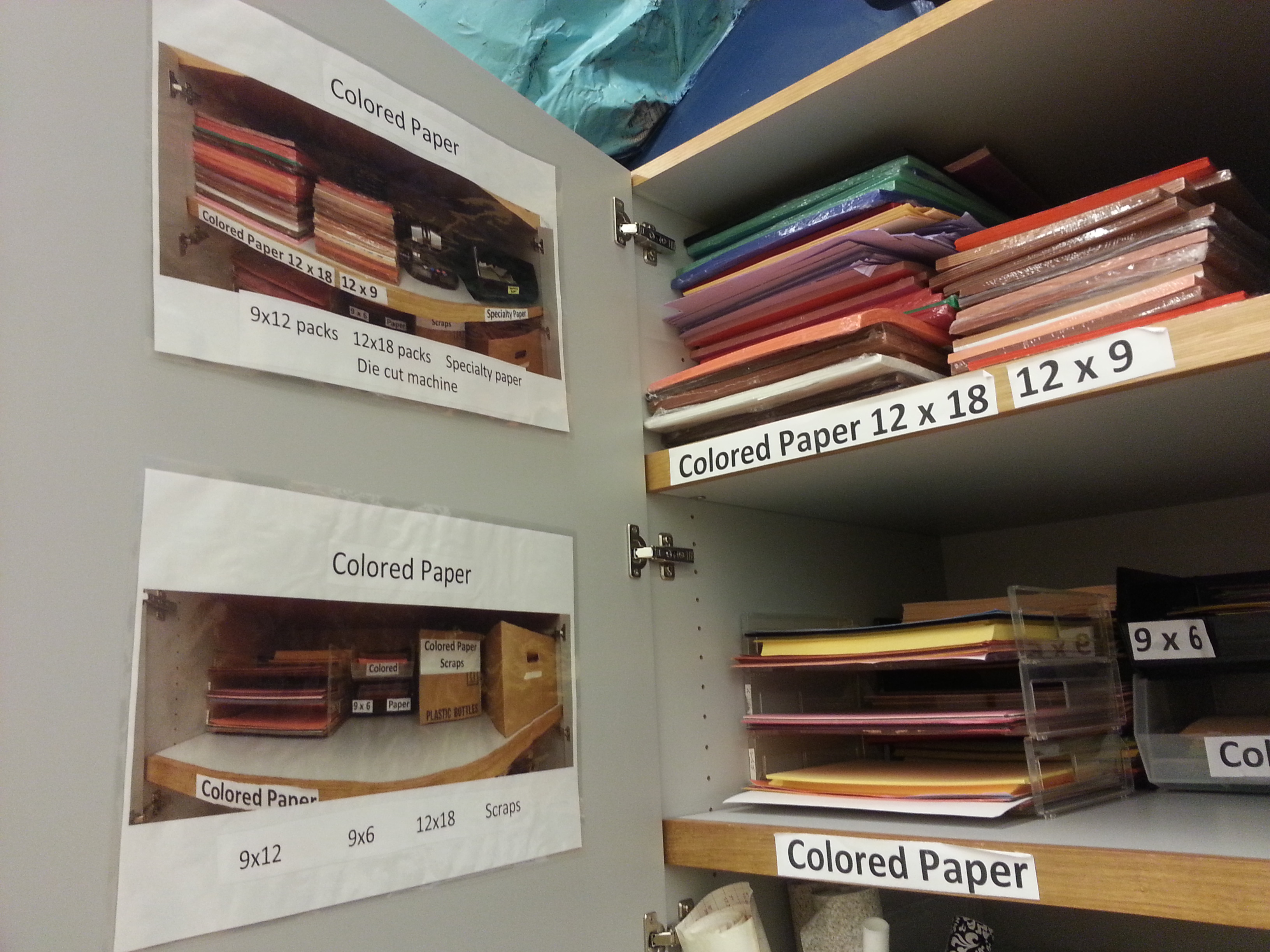
Label your cabinets!

Label your cabinets!

Pictures of where items belong inside cabinets are a great way for everyone to keep the studio organized.

Everyone knows where everything goes!

Everyone knows where everything goes!

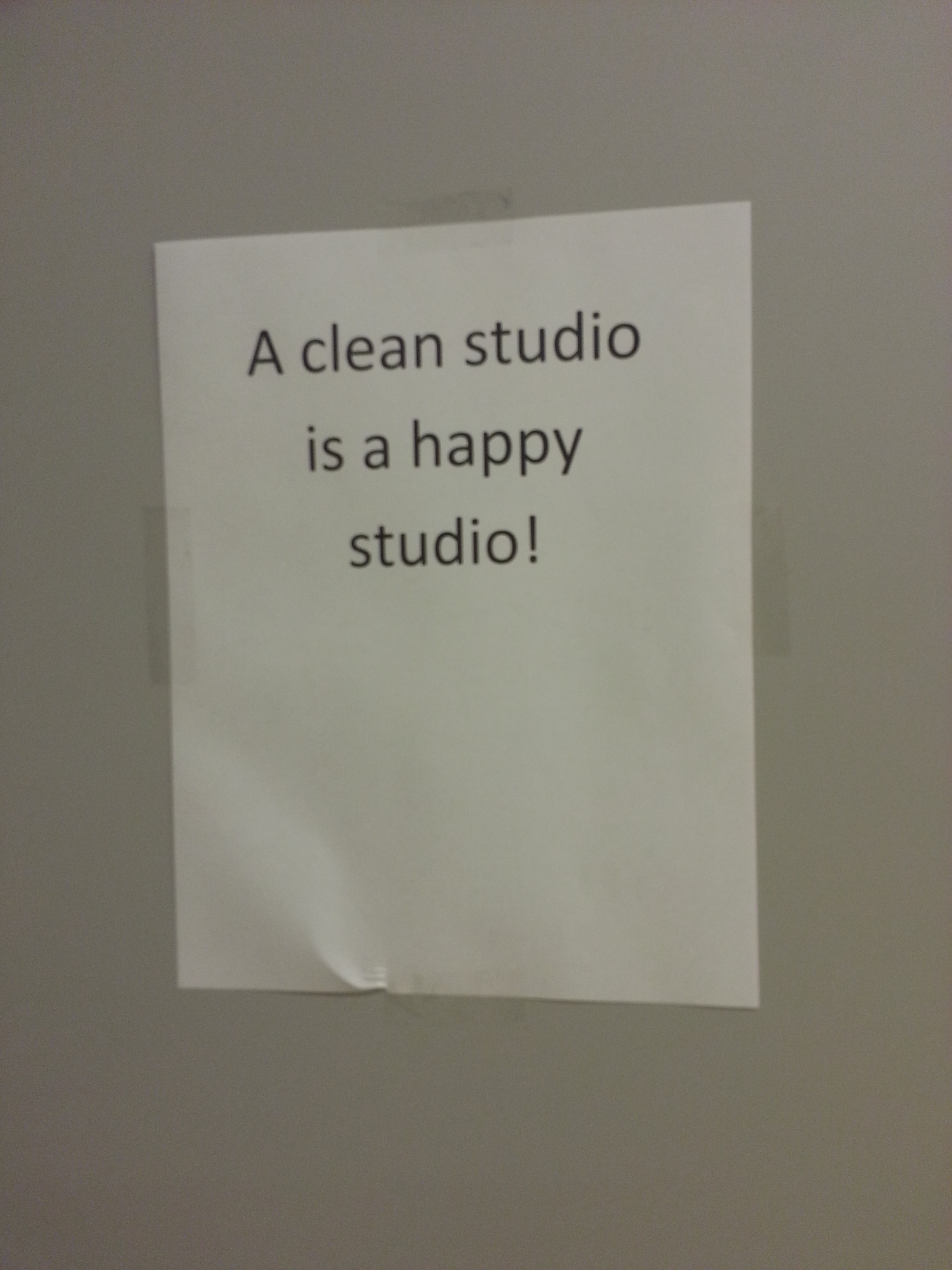
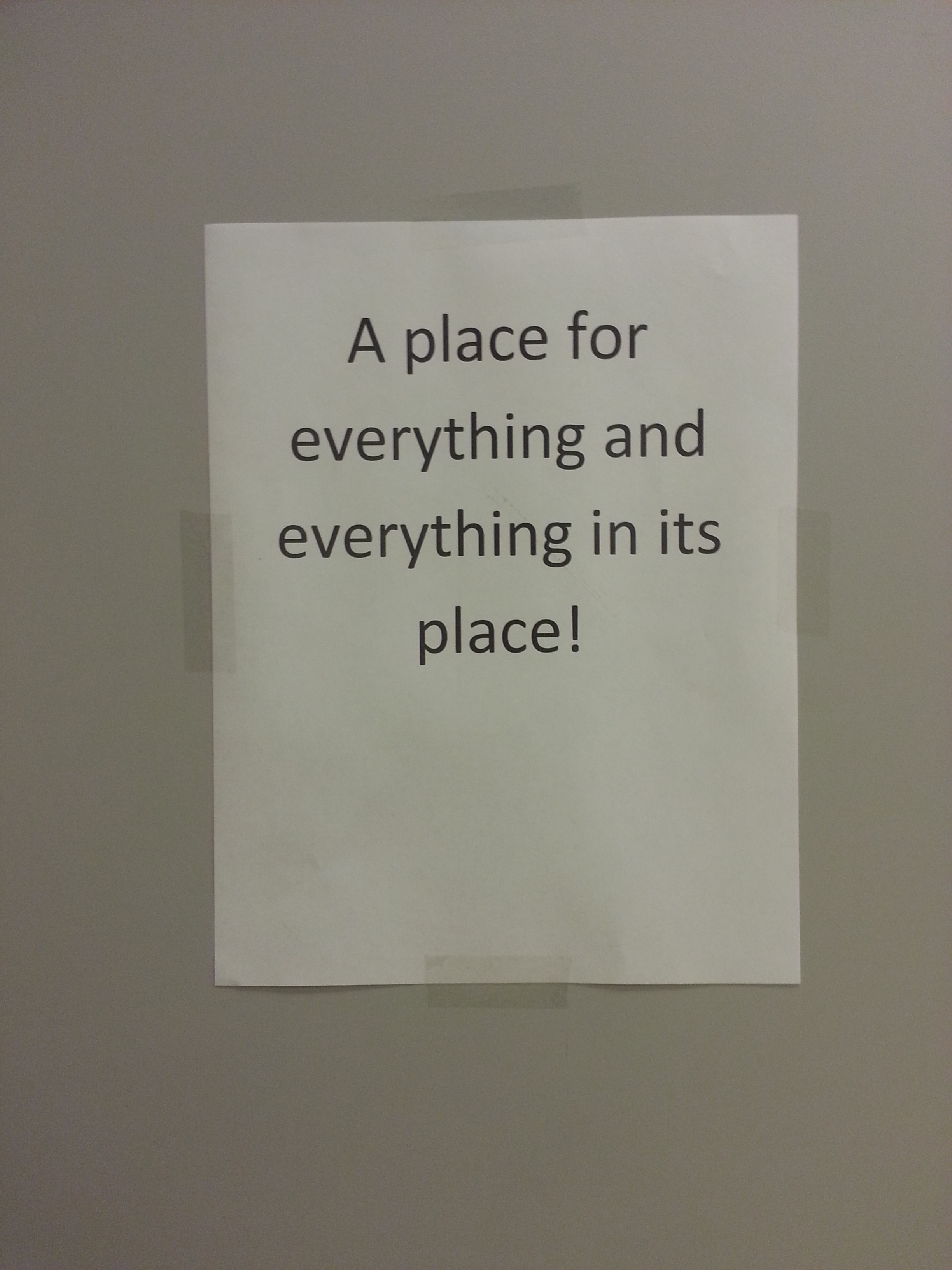
Kind reminders never hurt. Tack up a few clever sayings around the studio to help.

Doesn't hurt to have reminders?

Doesn’t hurt to have reminders

Commit to sticking with it! Like exercise, to get the desired organized results you have to stick with it! And as we all know it is easier to do when everyone is on the same page. Be committed to staying clean and organized this new year! Build time in your schedule each day to place materials back in their nice, cozy home.

Sharing Solutions:

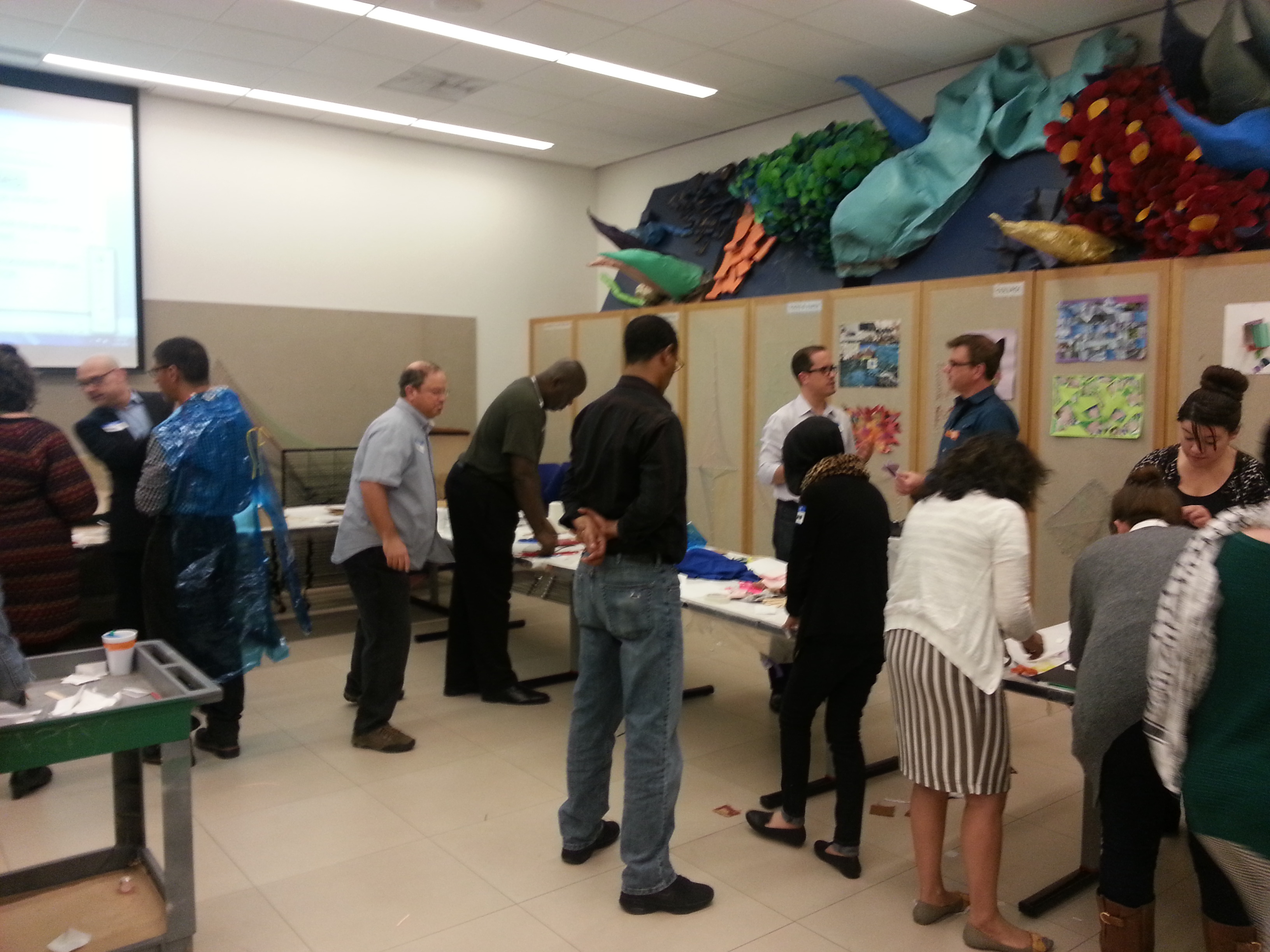
Countless individuals use the C3 Art Studio throughout the week, hosting over thirty programs a month in our space. It was imperative to find a solution for when we need to prepare materials for a workshop. In the past, materials would wander off, be put away randomly or even be thrown out because no one knew what belonged to a particular program and what didn’t. JC Bigornia and I decided we would put an end to the confusion, so we spray-painted our rolling carts with chalkboard paint. Now, staff can write the program and date on the cart and stash their materials safely. If the program has passed, our staff puts all the materials back in their proper place and erases what is written on the cart.

That Darn Emotional Attachment:

Most people attach deep meaning to projects that they’ve spent hours creating and developing. A lot of us are also hoarders to some degree and don’t want to let go of something we may “need” along the way. We can easily be consumed with stuff and become trapped under the weight of sentimentality. I’m not saying be less sensitive—but now with the rise in technology we can easily archive our prized activities, samples, and creations with the click of a camera, or wave of a portable scanner wand (this is on my wish list)! Keep digital folders (backed up), create a Flikr account and say goodbye!

Look at our active studio

Look at our active studio

Evaluate Need:

There are times when you just have to purge. When tackling a cleaning project or when you are faced with lack of space, you must evaluate what you have. Is it really important to hold on to that never-ending supply of half used scraps of ______ (insert item here)?  When the C3 staff did a major clean-out of our basement and art studio we had to make sure we only kept things that served a purpose. Frankly, we had to remove what did not because we were running out of space for the things we did in fact need. We had to ask ourselves the following questions, which are good rules to live by:

  • Have I saved this past its life expectancy—or does it smell?
  • Does it work? Will it ever?
  • Will we really use this?
  • Can it be recycled or upcycled?
  • Can it be documented and disposed of?
  • Will it benefit someone in need? Can this be donated to a local school, community group or a thrift store to be used and loved again?

Stop making excuses for keeping things that you will no longer use!

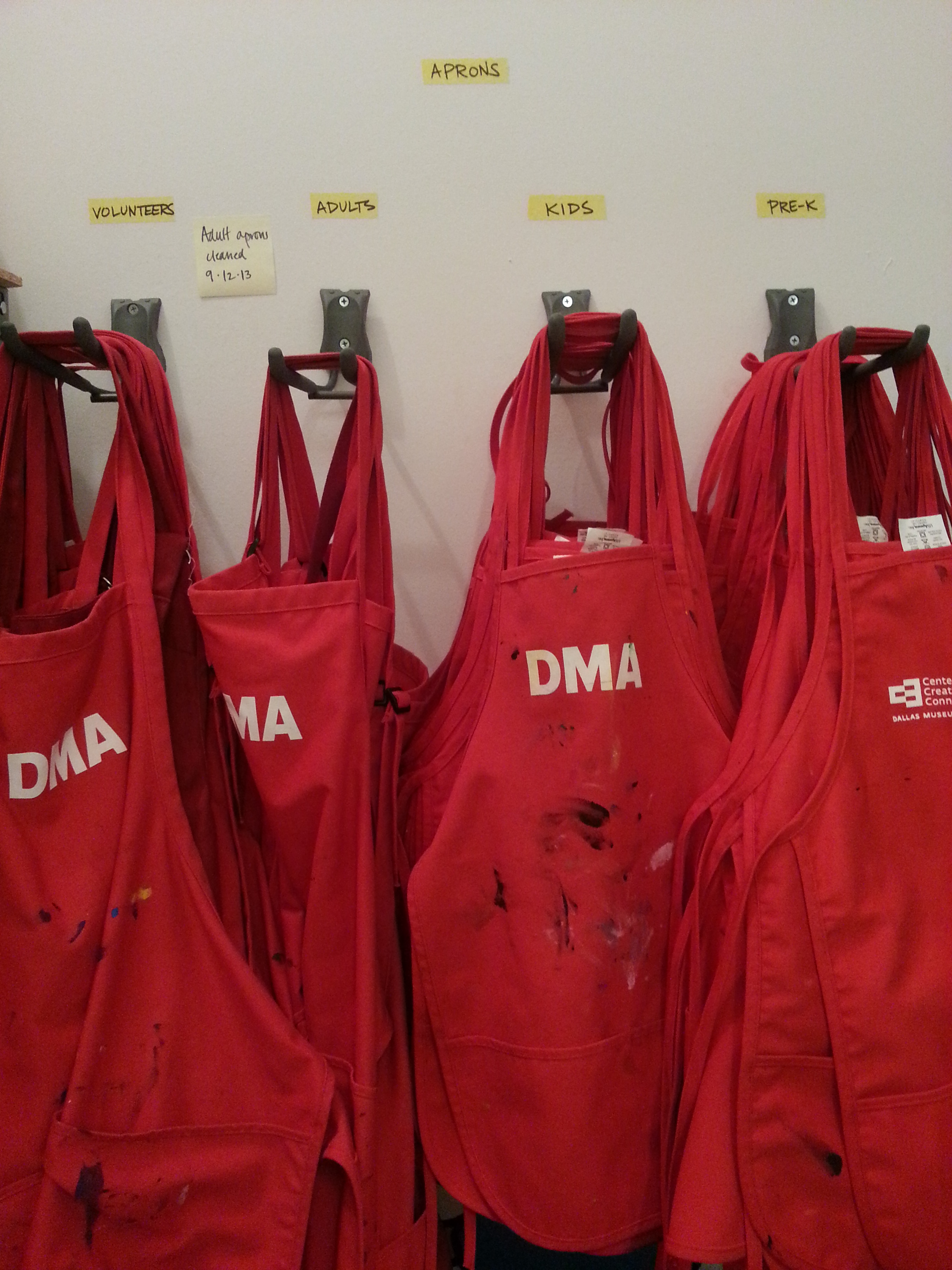
Hang up your aprons so that they are easy to grab when inspiration strikes!

Hang up your aprons so that they are easy to grab when inspiration strikes!

Your Work-Space:

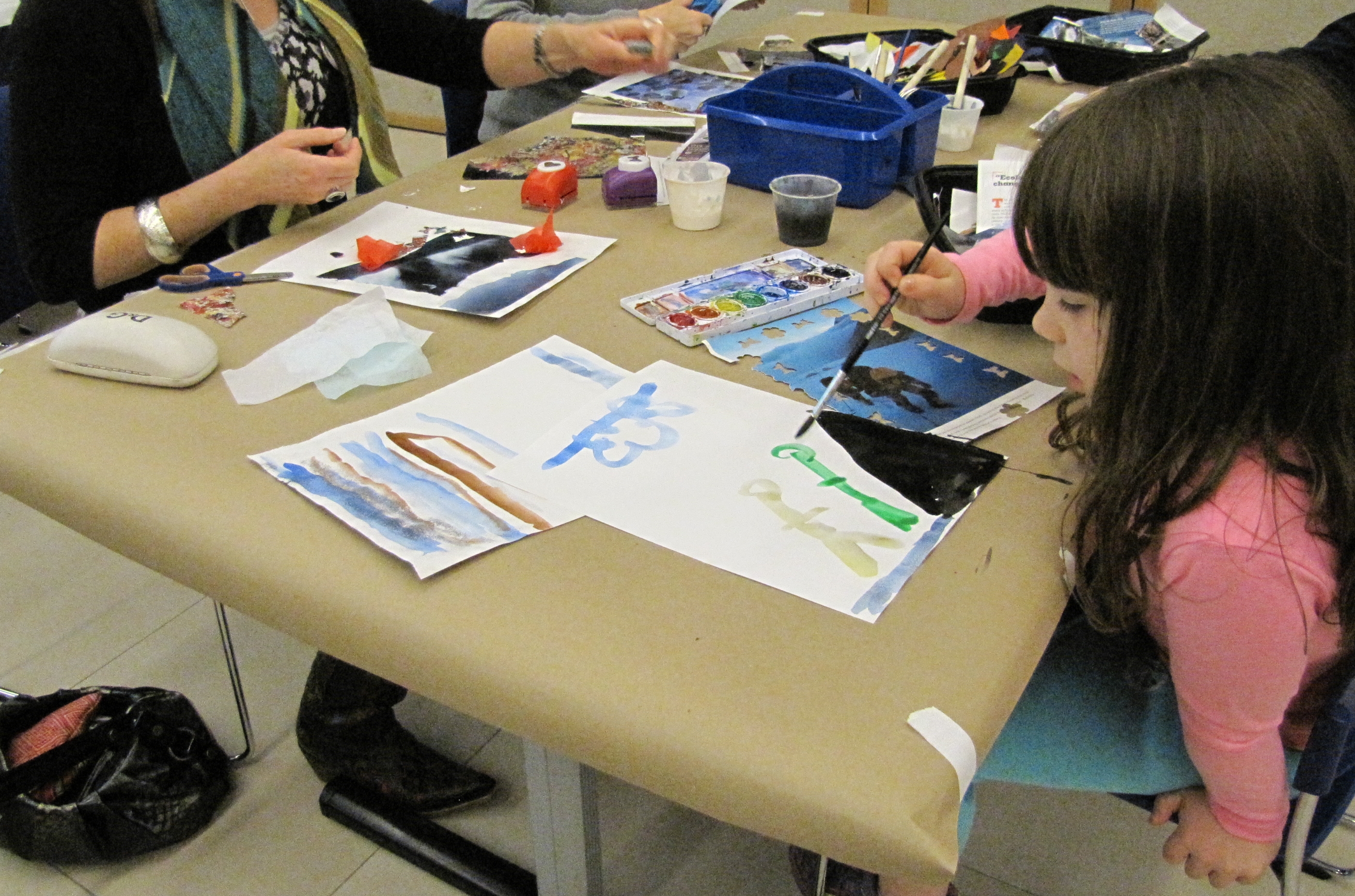
It is very important for those using your space to have a clean work-space and a comfortable, welcoming environment in which to work. The art studio is a place that is supposed to provide people with a feeling of security, as if it was their own studio. Art is very much a product of it’s environment and if the environment is able to inspire, people are more likely to conceive creative thoughts and create rich works of art. We have to maintain a great environment for everyone who enters the space!

Say goodbye to your ways of old! Wishing you luck staying organized in 2014! Remember, it’s about progress, not about perfection!

Politeness goes a long way.

Products That Never Fail and Guiding Resources:

  • Clear storage boxes that are the size of a shoe box from The Container Store (or Dollar Store) are perfect for seeing beads and baubles!
  • We store program supplies under a canvas-lined table in High-Density Polythylene Mail bins. But I do warn you: don’t take these from the post office!  These bins are great to store program supplies, easy to stack, and very durable!
  • I also really enjoy Packaways Storage Bins, which are plastic bins that collapse, have a wipe-off label and come in fantastic bright colors!
  • Laminating machines and label makers help when creating signs for supplies! It always helps to type up the names of the items so there is no confusion—and it’s pleasing to the eye!
  • Buy a few extension cord holders. It will save you hours of untangling time!
  • We also use craft caddies to keep supplies organized for a variety of programming. These handy, stackable storage options keep things like glue, crayons, scissors and sequins nice and neat!
  • Watch this great video from the founder of  the Art of Education website.
  • Peruse these top twenty-five organizing blogs in your down time.
  • Reach this article: Broome, J. L. (2013). A case study in classroom managment and school involvement: Designing an artroom for effective learning. ArtEducation66(3), 39-46.
Craft Caddies at work!

Craft Caddies at work!

We would love to hear your ideas! Send me pictures of your work-space and give us your fantastic tips. Happy New Year and stay tuned for more organization in 2014!

Amanda Batson
C3 Program Coordinator

So Long, Farewell…

For the past six-and-a-half years, the Dallas Museum of Art has been my home. I have often referred to my office as my “apartment,” and my co-workers have come to feel like my family. But sometimes, you need to move away from home and on to something new, and now is that time for me. I have accepted a position as the Assistant Director of Interpretive Programming at the Cincinnati Art Museum, and December 9th will be my last day at the DMA.

It’s very bittersweet to be leaving a place (and people) that I love. But my new job will present opportunities to plan programs for visitors of all ages–from toddlers to adults–and I’m looking forward to broadening my knowledge of Museum Education through this new position. And I’ll be a lot closer to my family in Michigan, which will be wonderful.

As I reflect back on my time in Dallas, it’s tough to narrow down my favorite DMA memories. I’m not sure what I’ll miss most!

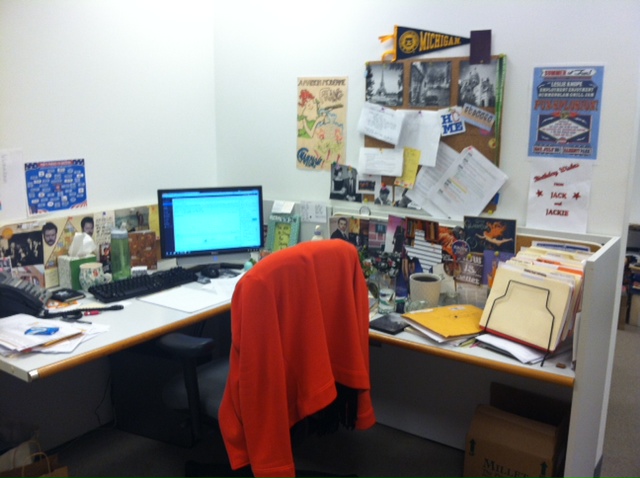
Maybe my desk–but a lot of these things will be moving to Ohio with me.

photo (7)

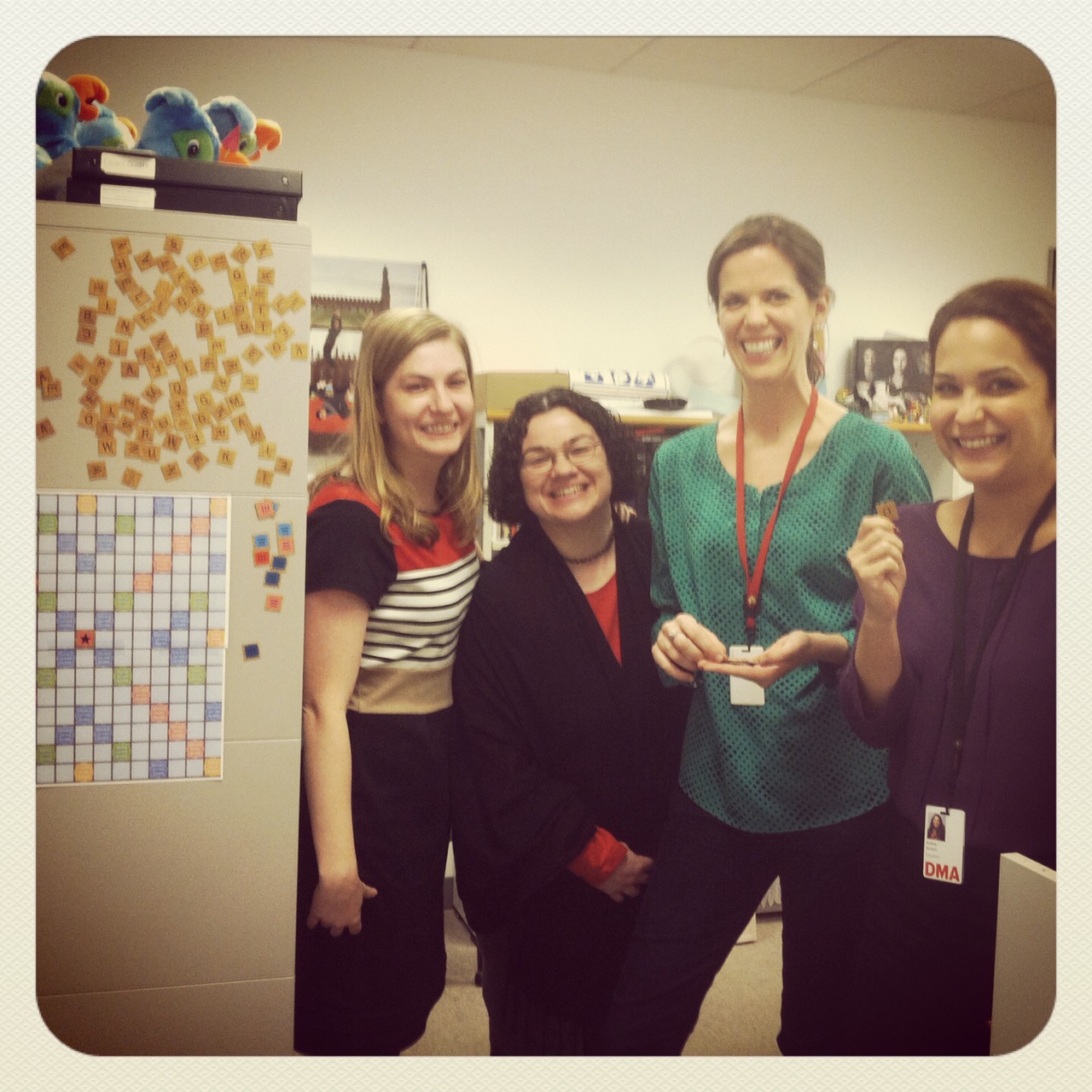
Or maybe the Scrabble game that has been occurring on my file cabinet for the past year.

photo (6)

I’ll certainly miss our docents, whose passion and dedication to the DMA continues to amaze and inspire me.

spring 2013 469

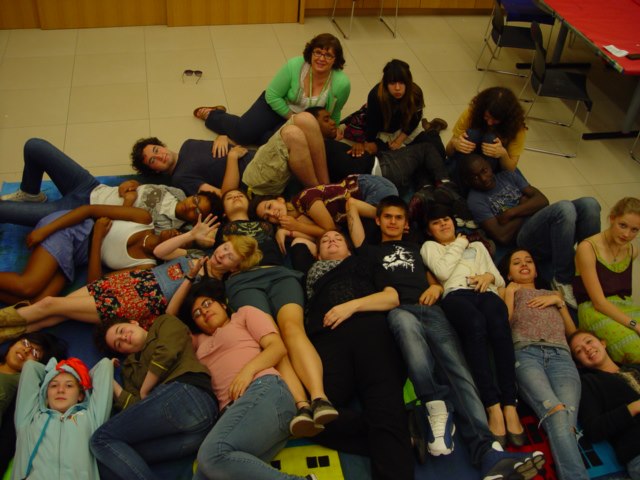
And I will most definitely miss the clever and talented students of Booker T. Washington High School for the Performing and Visual Arts. My time with them has been one of the highlights.

935264_10101414450571659_1771636690_n

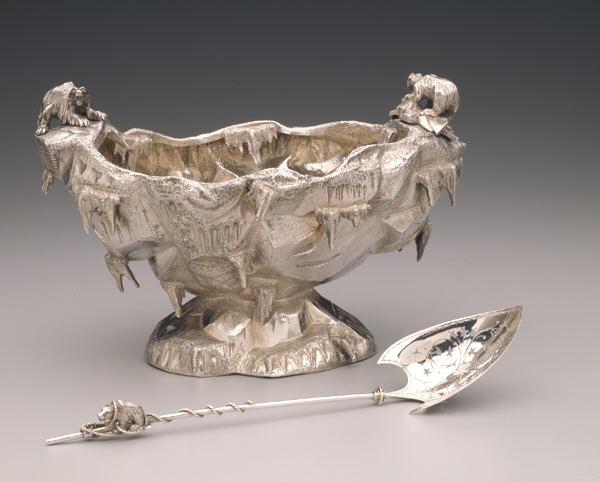
I’ll miss the DMA’s amazing collection, including The Icebergs.  We all jumped for joy when it returned to the galleries earlier this year.

photo 1 (2)

And most of all, I will miss the DMA Education department. They have taught me everything I know about being a Museum Educator, and they’re not just my colleagues. They are my dearest friends. I’ll especially miss our retreats and off-site meetings–we know how to have fun while getting work done!

photo (8)

Thank you to everyone who has made my time at the DMA so memorable–from students to teachers and from the docents to my colleagues. I will miss everyone very much, but hope to see y’all again soon!

Shannon Karol
Manager of Docent and Teacher Programs
Docents in Motion

The DMA has over 100 docents who lead tours for visitors of all ages. Our docents are here every Monday for training from 10:00 a.m.-12:00 p.m. Their training sessions are led by the DMA’s curators as well as outside speakers, and topics include both our permanent collection and special exhibitions. Some of our docents have been part of the docent family for 43 years, while others have been with us for only three months.

I have the pleasure of spending every Monday afternoon with our fifteen funny, smart, and dedicated new docents. Since September, the new docents have been learning how to teach with works of art. Each week, we immerse ourselves in the DMA collection with experiences ranging from how to look at a painting to imagining a text message exchange between two portraits.

This week, the new docents had their first introduction to our American galleries. I divided the docents into 3 groups and each group was assigned to a landscape painting. Their task was to recreate the painting using only their bodies. My ambitious group went one better–they created sound and movements, too!  I couldn’t resist sharing the videos I filmed of their performances.

Annette, Charlie, Debi, Evan, and Lauren did an interpretive dance for Georgia O’Keeffe’s Gray Blue & Black-Pink Circle.

[vimeo http://vimeo.com/79801650]
 
Barbara, David, Devika, and Felix animated Marsden Hartley’s Mountains, no. 19.

[vimeo http://vimeo.com/79805731]
 
Ali, Art, Flo, and Stephanie re-interpreted Frederic Church’s The Icebergs.

[vimeo http://vimeo.com/79805935]
 
The next time you’re in the DMA galleries, try to create your own tableau vivant for one of our masterpieces.

Shannon Karol
Manager of Docent and Teacher Programs
Come to the DMA and Play!

The C3 adults are at it again and this time they didn’t spare one ounce of fun! C3 offers a variety of programming for adults on Thursdays, when our visitors have the opportunity to have hands-on experiences with art and artists, be social, and experiment with materials. Think Creatively, one of our popular programs, allows visitors to dig deeper into certain aspects of creative thinking.
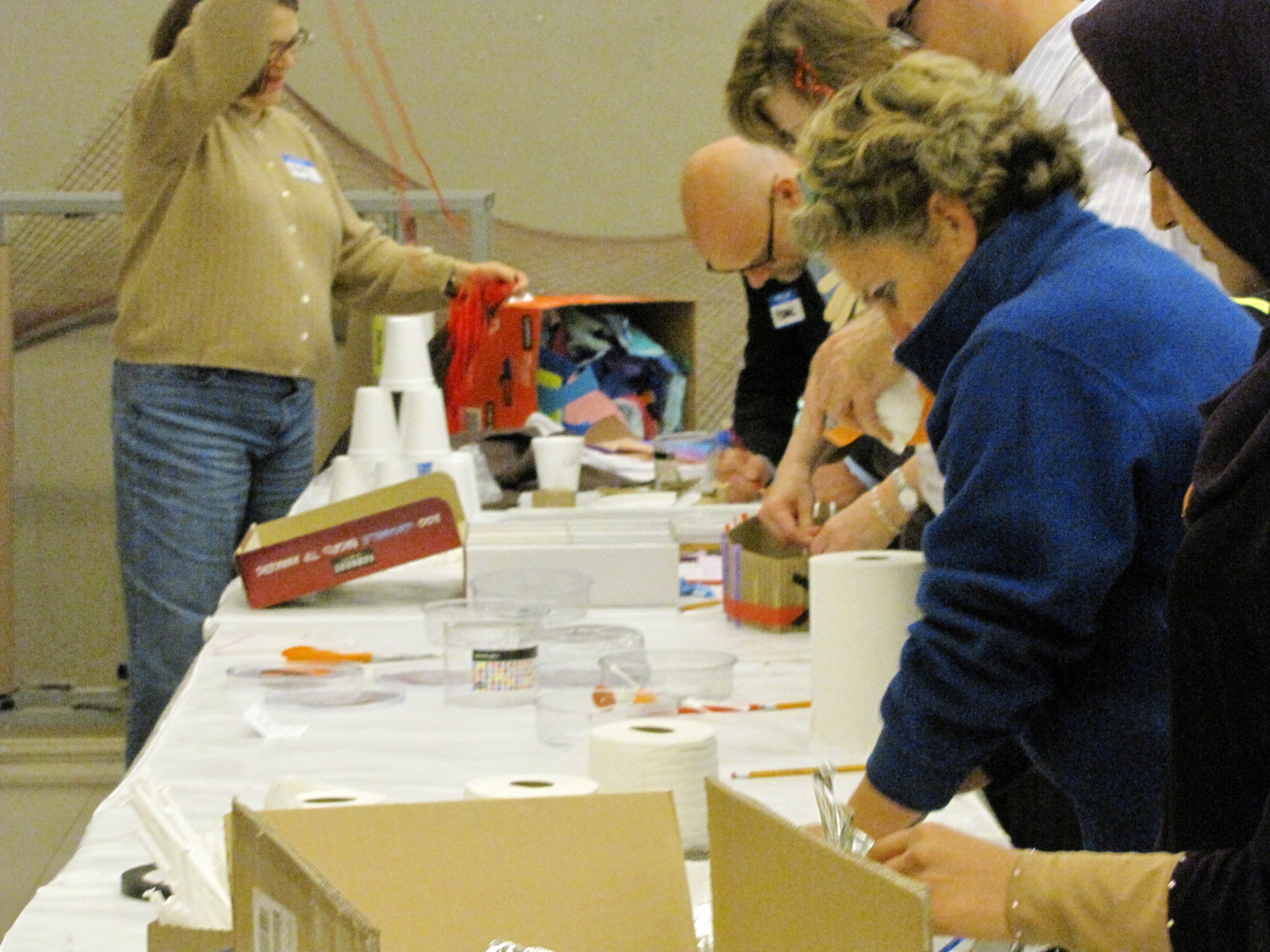
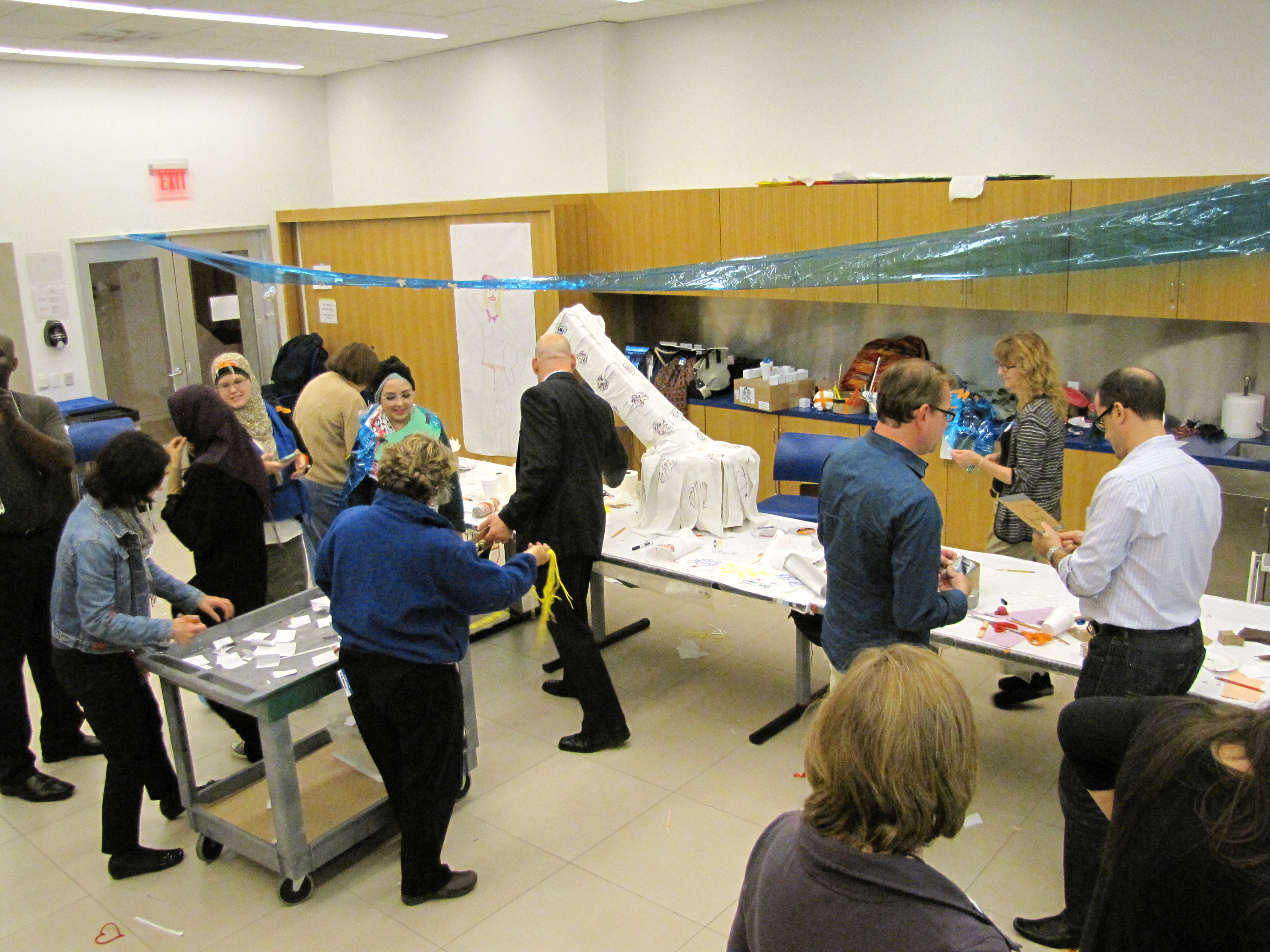
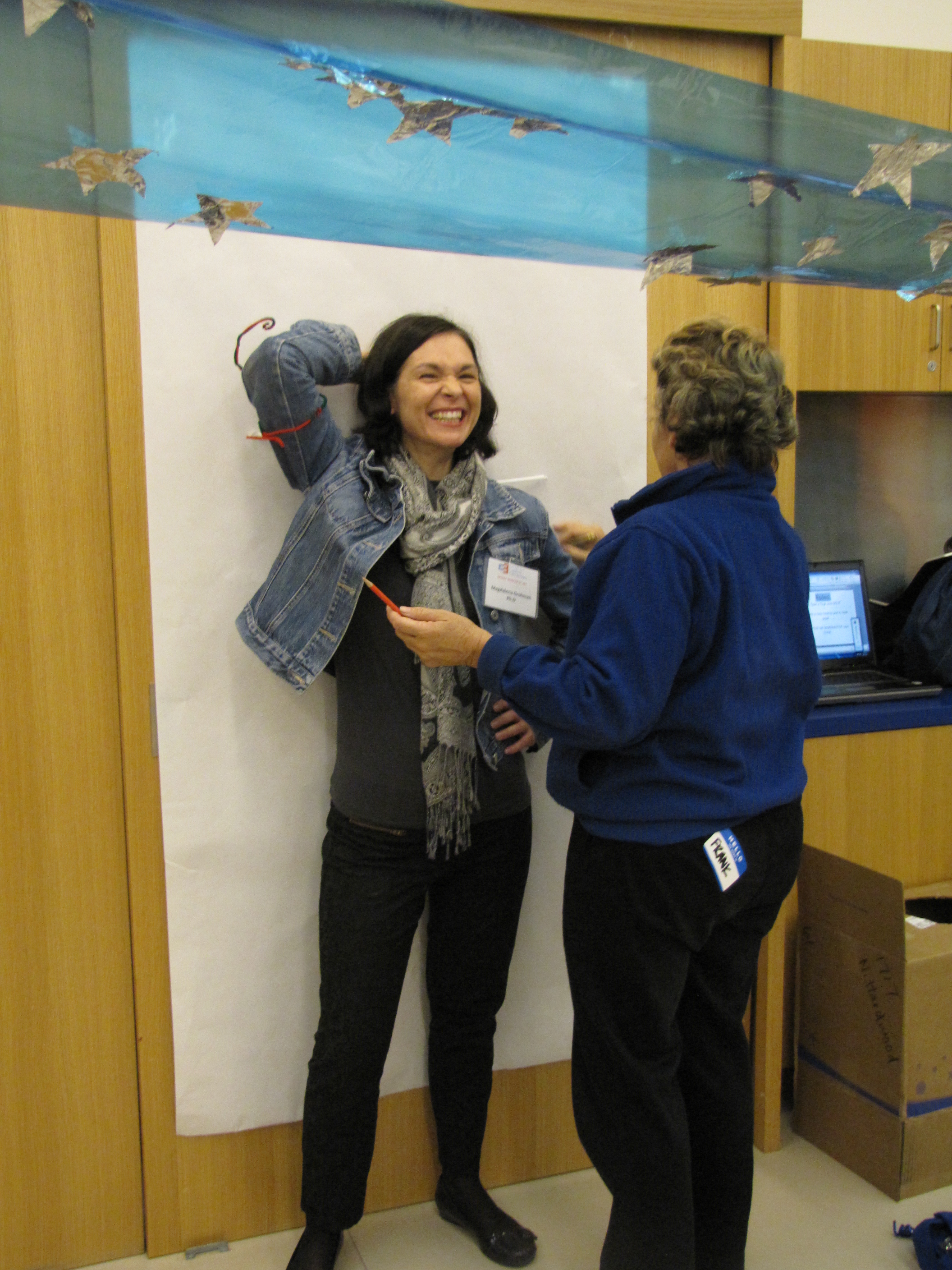
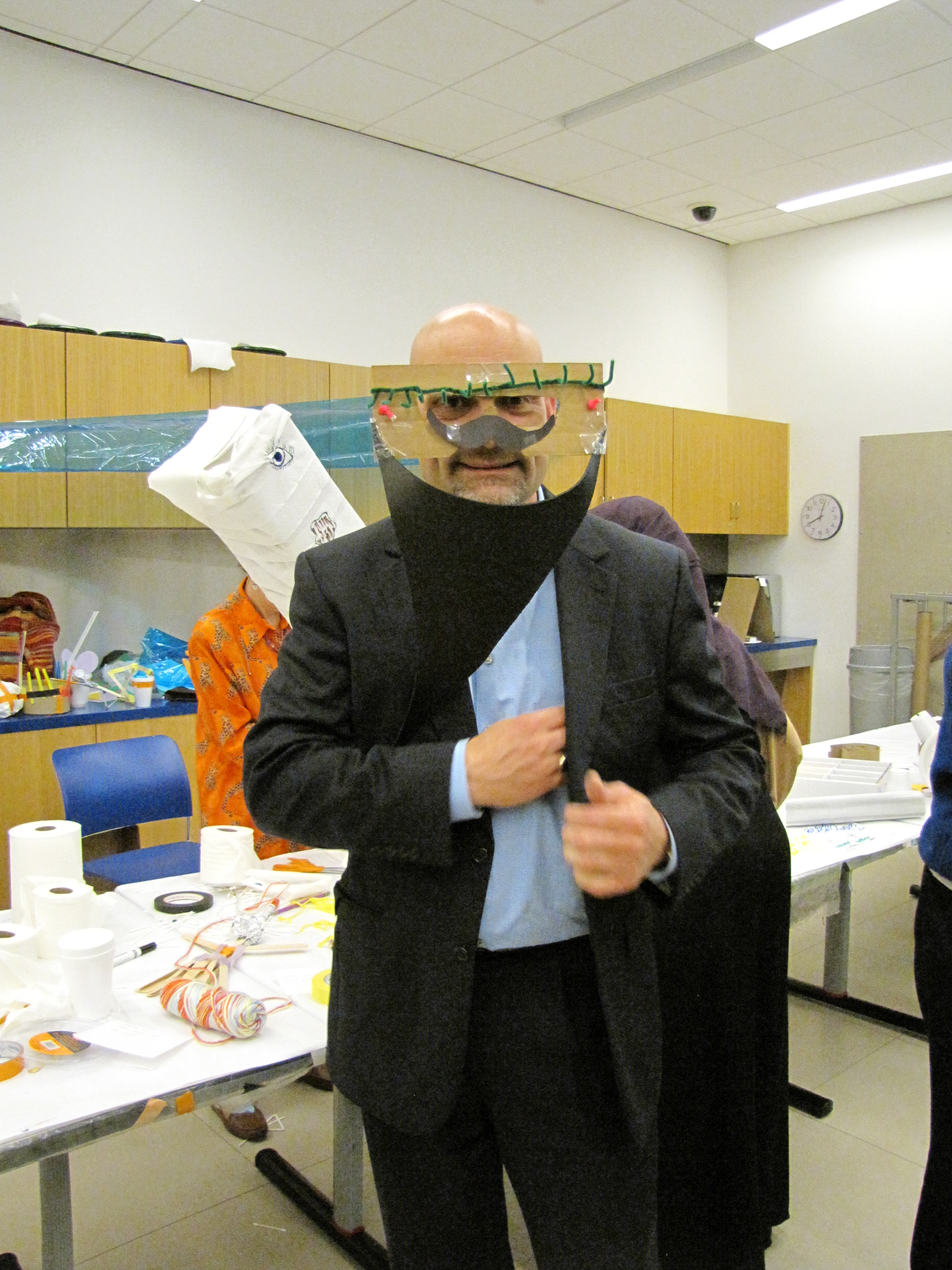
Think Creatively on November 7 was designed around the theme of play and how it helps adults enhance their thinking and learning. Dr. Magdalena Grohman and I decided to ask our participants to step out of their comfort zone and participate in a TASK party. TASK parties, originally designed by artist Oliver Herring, are improvised events with loose structure and minimal rules.
 
[vimeo http://vimeo.com/79215067]
 
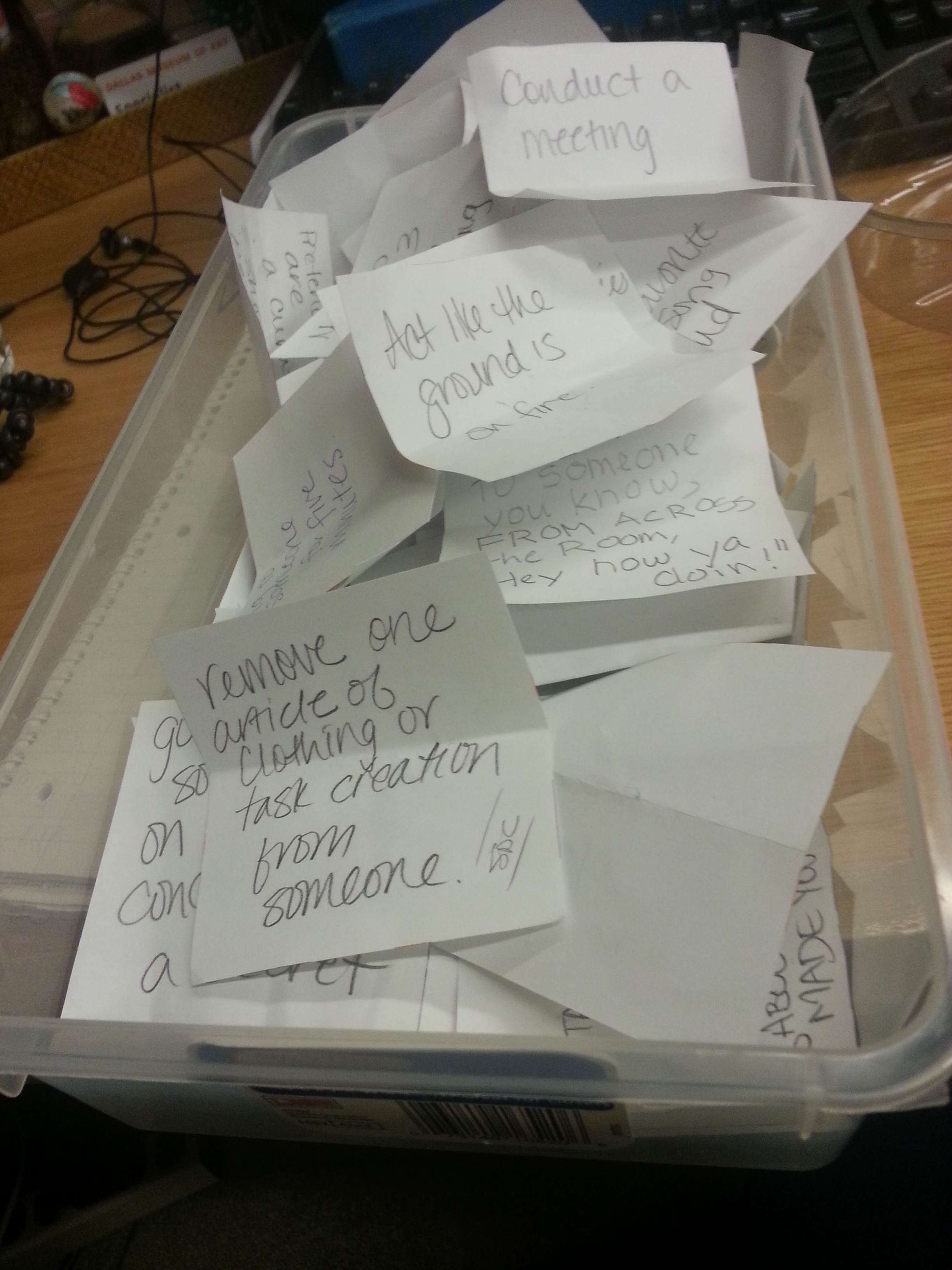
We set up the C3 Studio in a way that would promote playful experimentation, fun, and artful self expression. Varieties of materials were placed on worktables around the studio: paper, boxes, tape, sticks, and even toilet paper! The rules were simple: take a TASK from the TASK pool in the center of the room and do what it says. Then when a TASK is completed, write a new TASK and put it into the pool and get another one. Simple as that!

There were a set amount of tasks already created with an intent to promote play and participation from the same perspective as Mildred Parten. Parten studied social play in children and suggested that there are six types of play:

  • Unoccupied play: the child is relatively stationary and appears to be performing random movements with no apparent purpose. A relatively infrequent style of play.
  • Solitary play: the child is completely engrossed in playing and does not seem to notice other children. Most often seen in children between 2 and 3 years-old.
  • Onlooker play: the child takes an interest in other children’s play but does not join in. May ask questions or just talk to other children, but the main activity is simply to watch.
  • Parallel play: the child mimics other children’s play but doesn’t actively engage with them. For example, they may use the same toy.
  • Associative play: children are now more interested in each other rather than the toys they are using. This is the first category that involves strong social interaction between children while they play.
  • Cooperative play: some organization enters children’s play, for example the playing has some goal and children often adopt roles and act as a group.

We knew that anything could happen—and it sure did!

Task Pool

Task Pool

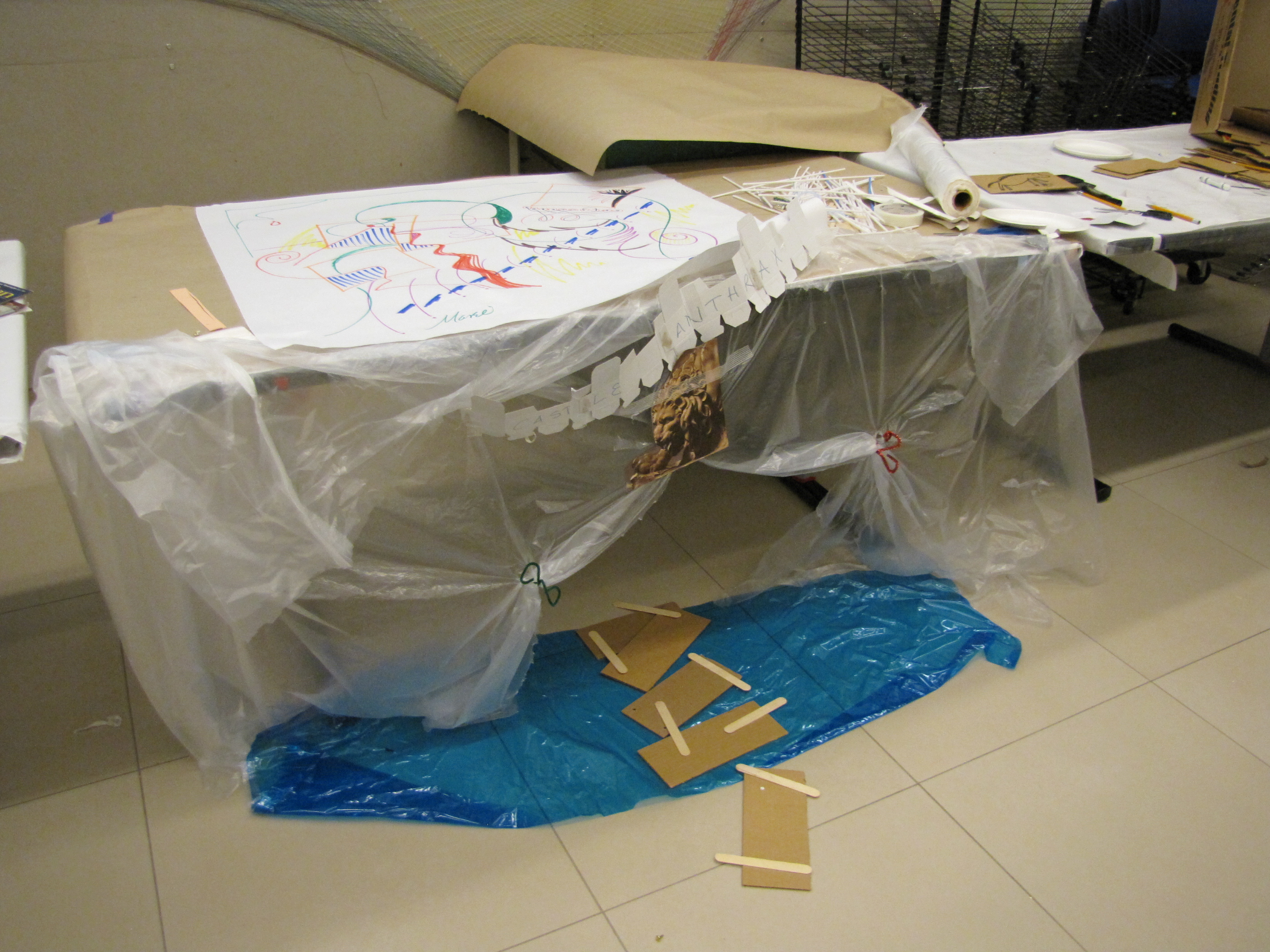
Task: Build a fort for a cat

Task: Build a fort for a cat

Task: Tell someone in the museum a secret

Task: Tell someone in the museum a secret

Working away!

Working away!

Visitors at play

Visitors at play

Task: Draw a portrait

Task: Draw a portrait

Task: Create a Mask

Task: Create a Mask

Don’t miss our next Think Creatively workshop on December 5, 2013. If you are reading this post and are interested in attending for 50% off–click here and enter the special code: CANVAS.

Amanda Batson
C3 Program Coordinator

UA Maker Club

???????????????????????????????

What do you get when you put art and technology together? The UA Maker Club! A mash up between led workshop and open studio, the Maker Club combines traditional art supplies with tech-based materials and asks participants to explore the resulting possibilities. It’s a place for people to experiment, make mistakes, and have fun through tinkering. The Maker Club is also a place where collaboration rules: everyone can share their knowledge and learn from each other–students and staff alike! Because we (the staff) are not experts ourselves, it’s a great opportunity for us all to exchange ideas and gain new skills.

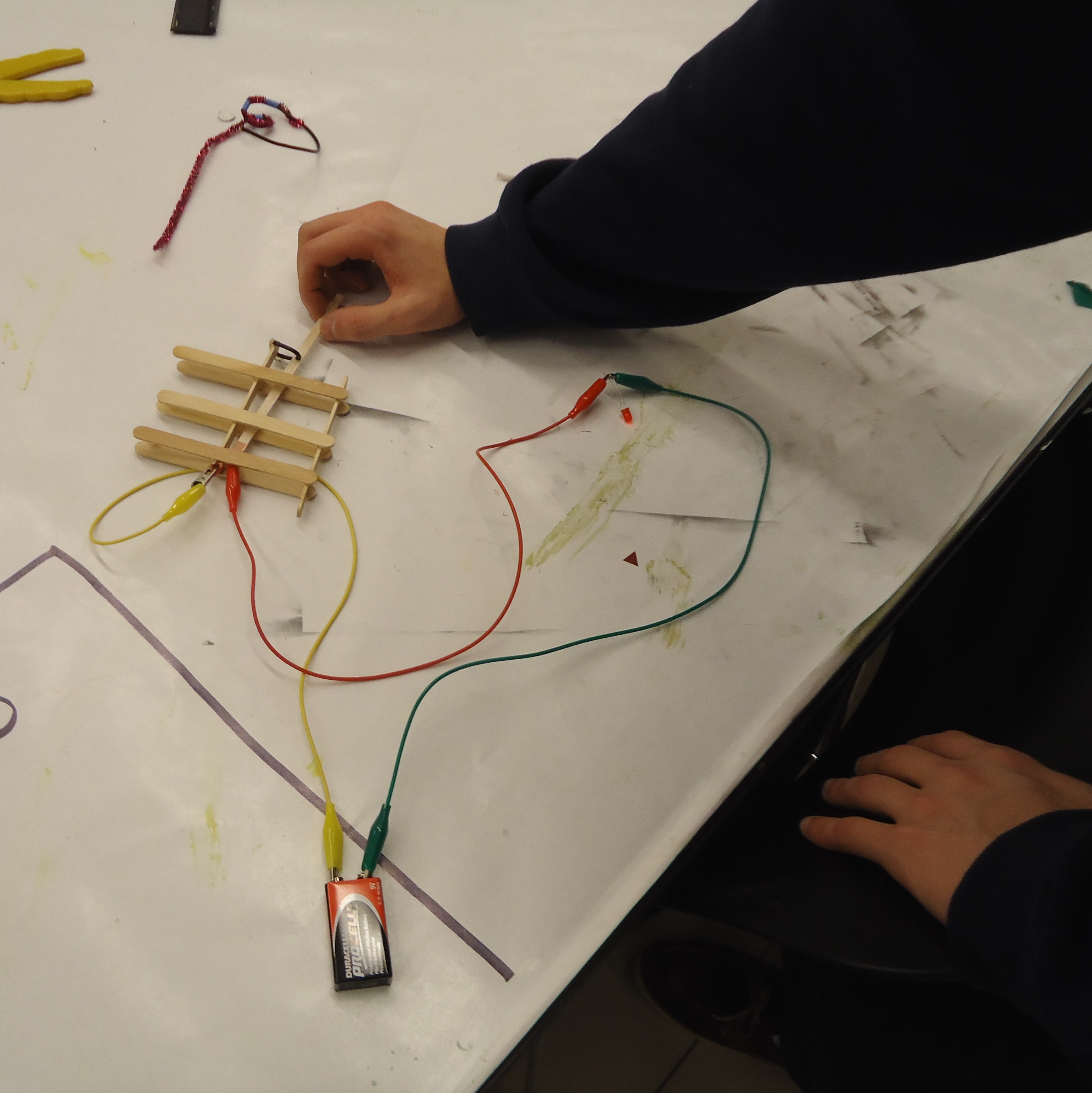
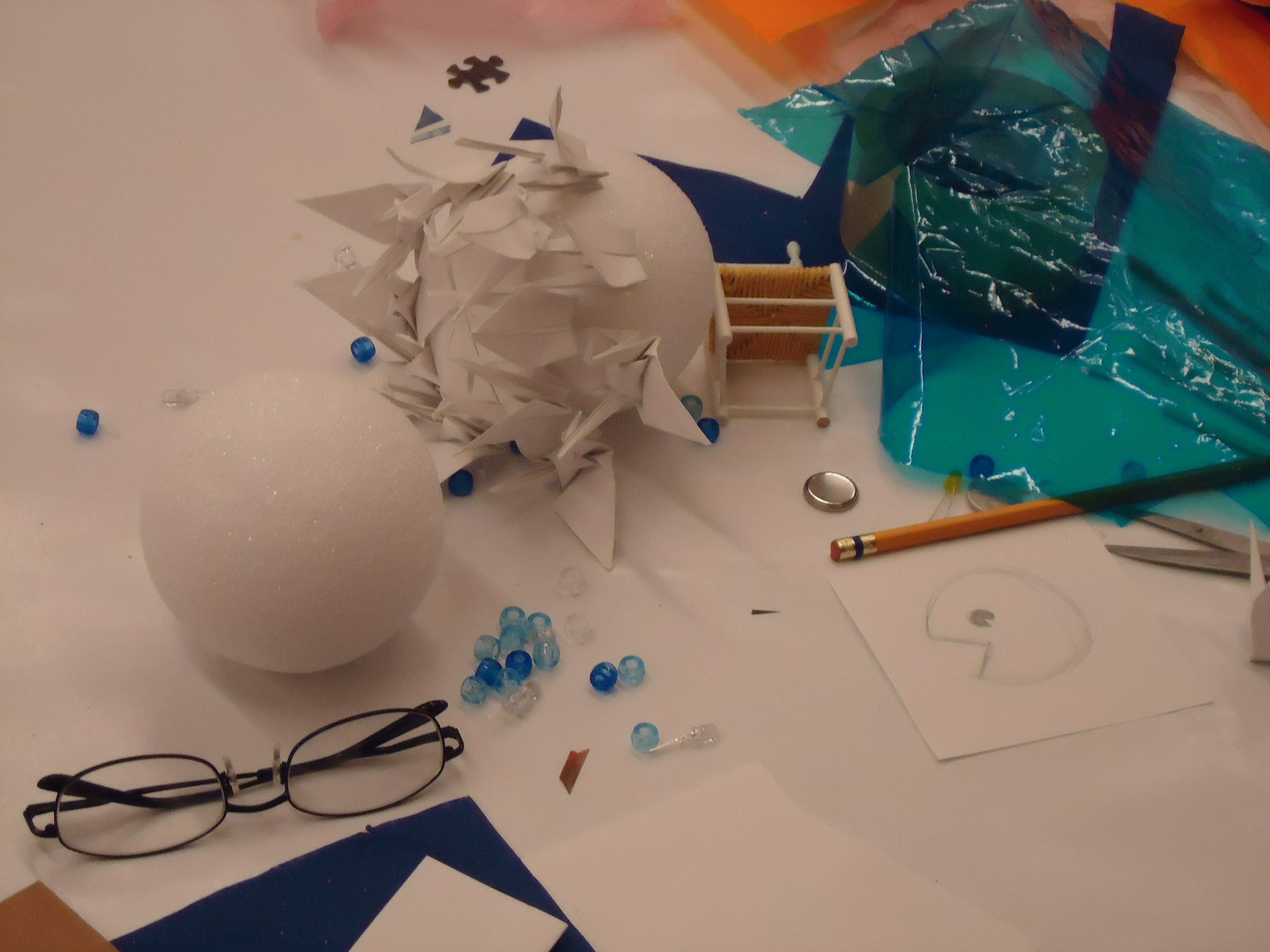
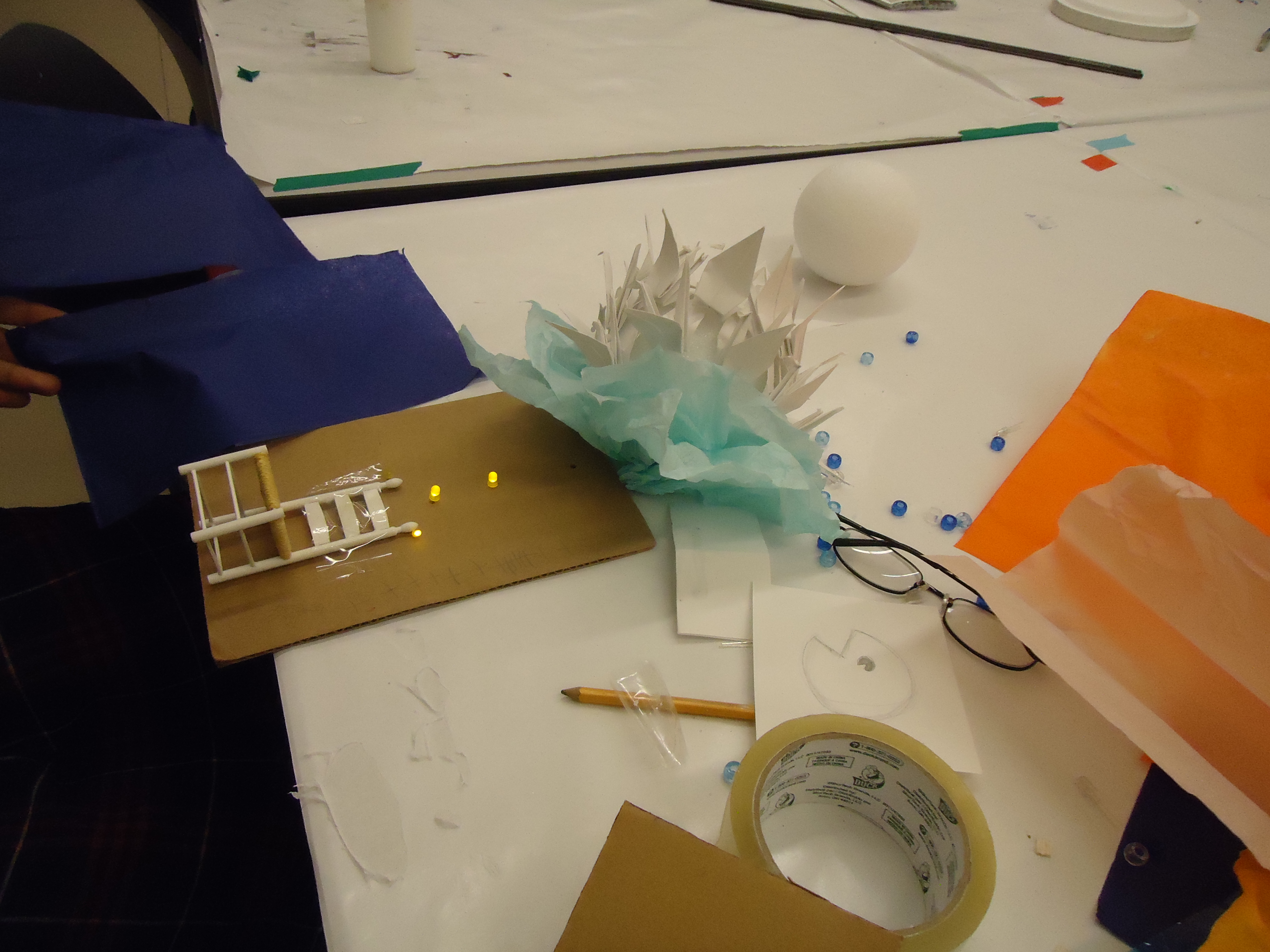
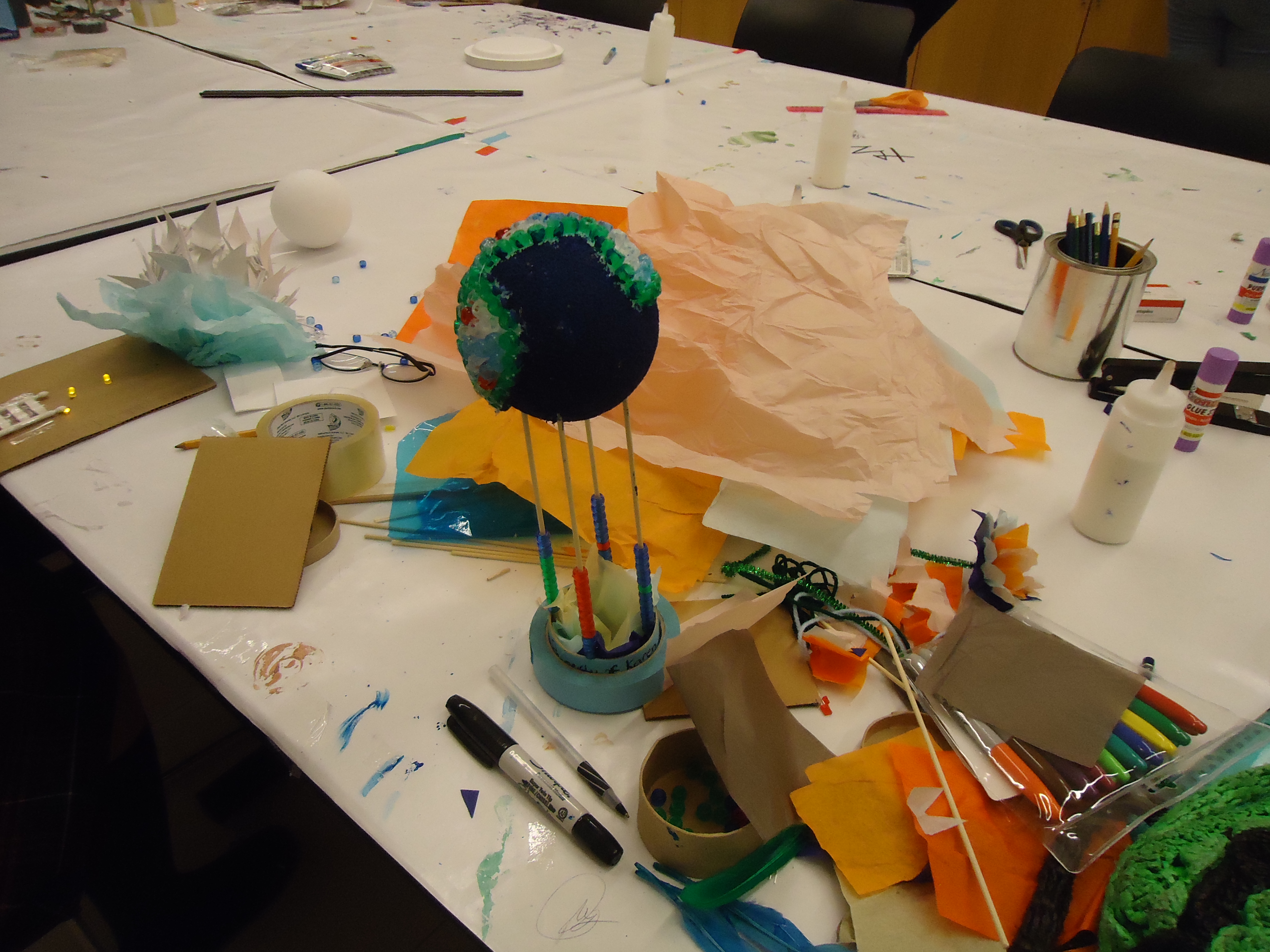
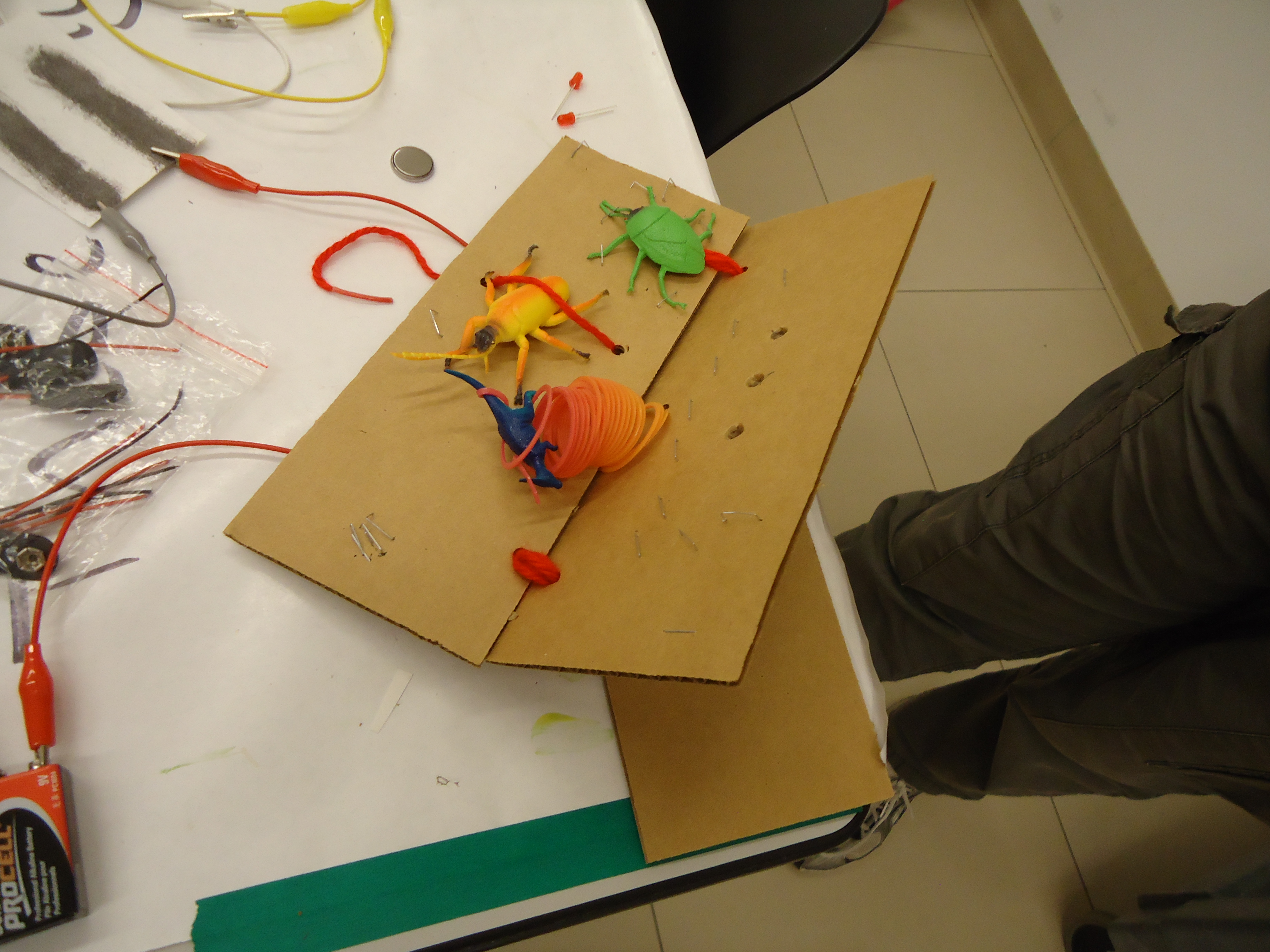
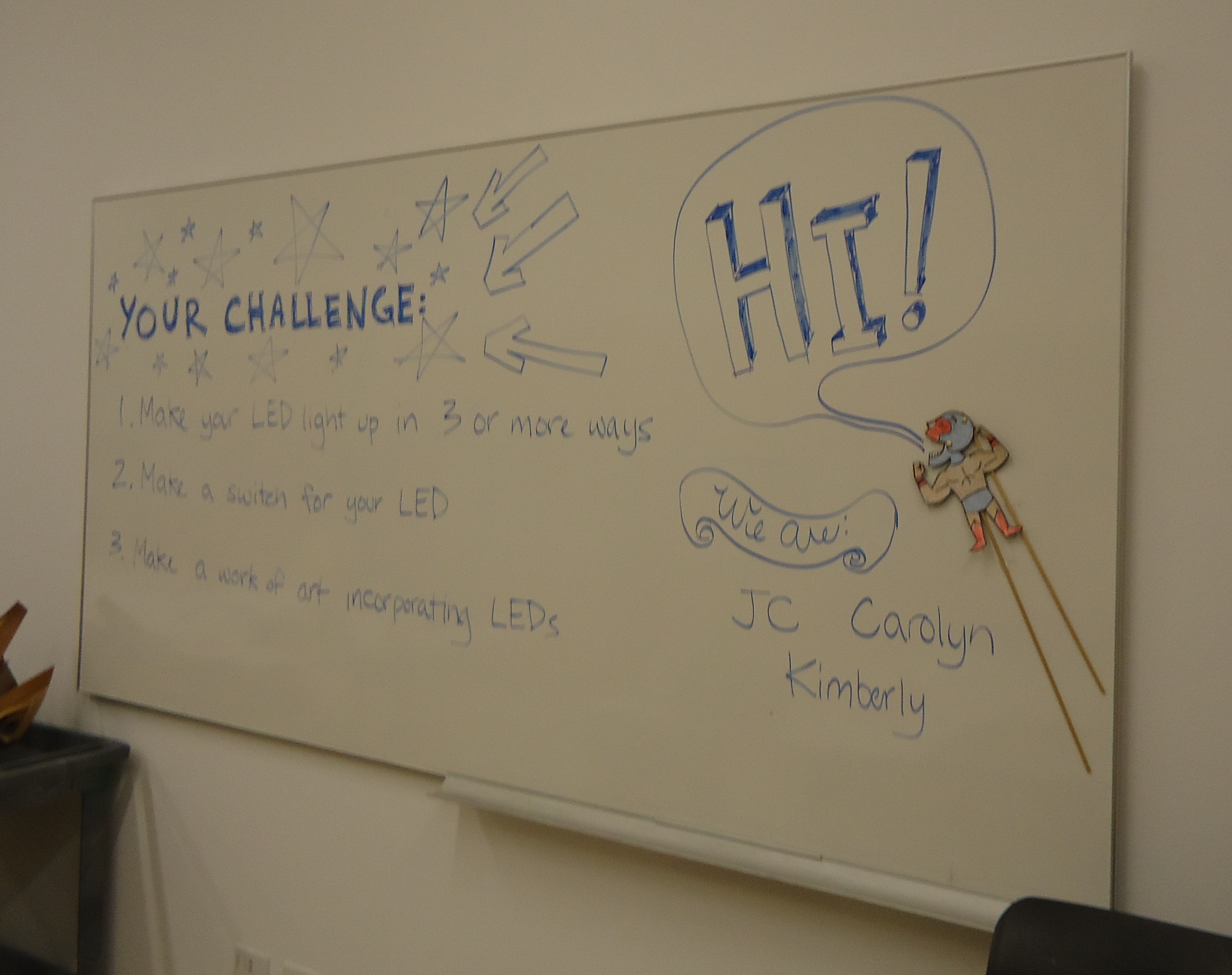
For our very first meet up last Thursday, students explored simple circuits through the use of mini LEDs. Through a series of challenges, teens learned how to light up their LEDs using a variety of conductive materials: copper tape, wire, foil, graphite, and conductive tape. They then had to come up with various ways of making their lights turn on and off by constructing a switch. Finally, they were to create a work of art that incorporated LEDs in some way. We had a great group of teens with a wide range of interests–art, science, even robotics. As you can see, all of the creations were unique and varied:

Take two: Jared made this incredible switch for his LED after shorting out his first one 🙂

DSC04710

A shot of Pamela’s elaborately constructed diorama–in progress

DSC04717

A second shot showing her LEDs

DSC04716

Holy Light-Brite, Batman! Rosa’s fantastic globe

DSC04715

Preparing to add some twinkling lights to Lugosi’s sculpture

The UA Maker Club meets every month and is open to anyone between the ages of 13-19. No prior experience is necessary and all materials are provided. Drop in to this month’s workshop on November 21 to make glow-in-the-dark clothing and accessories using electroluminescent wire and screen printing ink!

Glow_Stix__Does_a_body_good_by_realdaguru

JC Bigornia
C3 Program Coordinator


Archives

Categories