Archive Page 67


Reader Pick: Love in the DMA's Collection

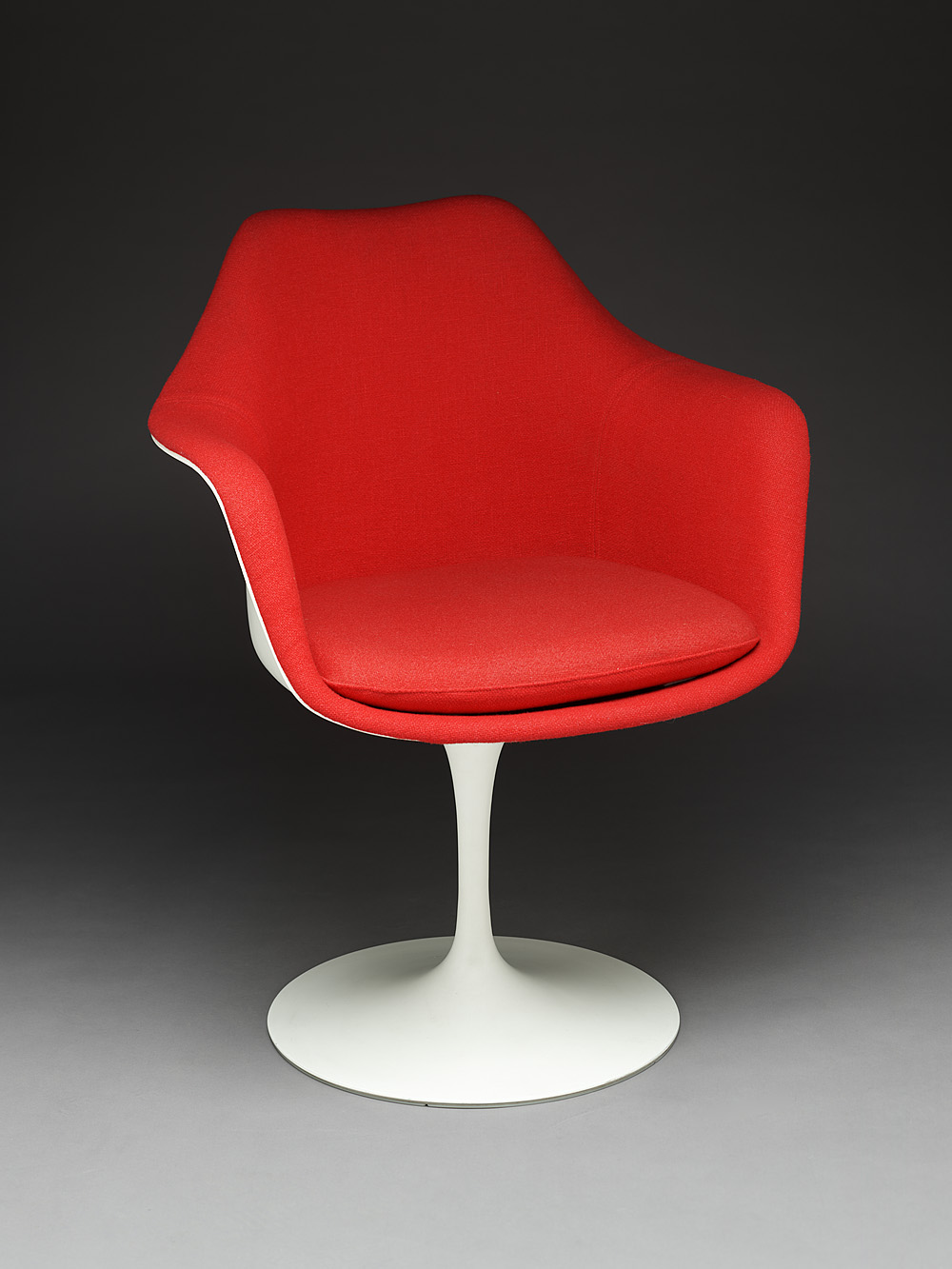
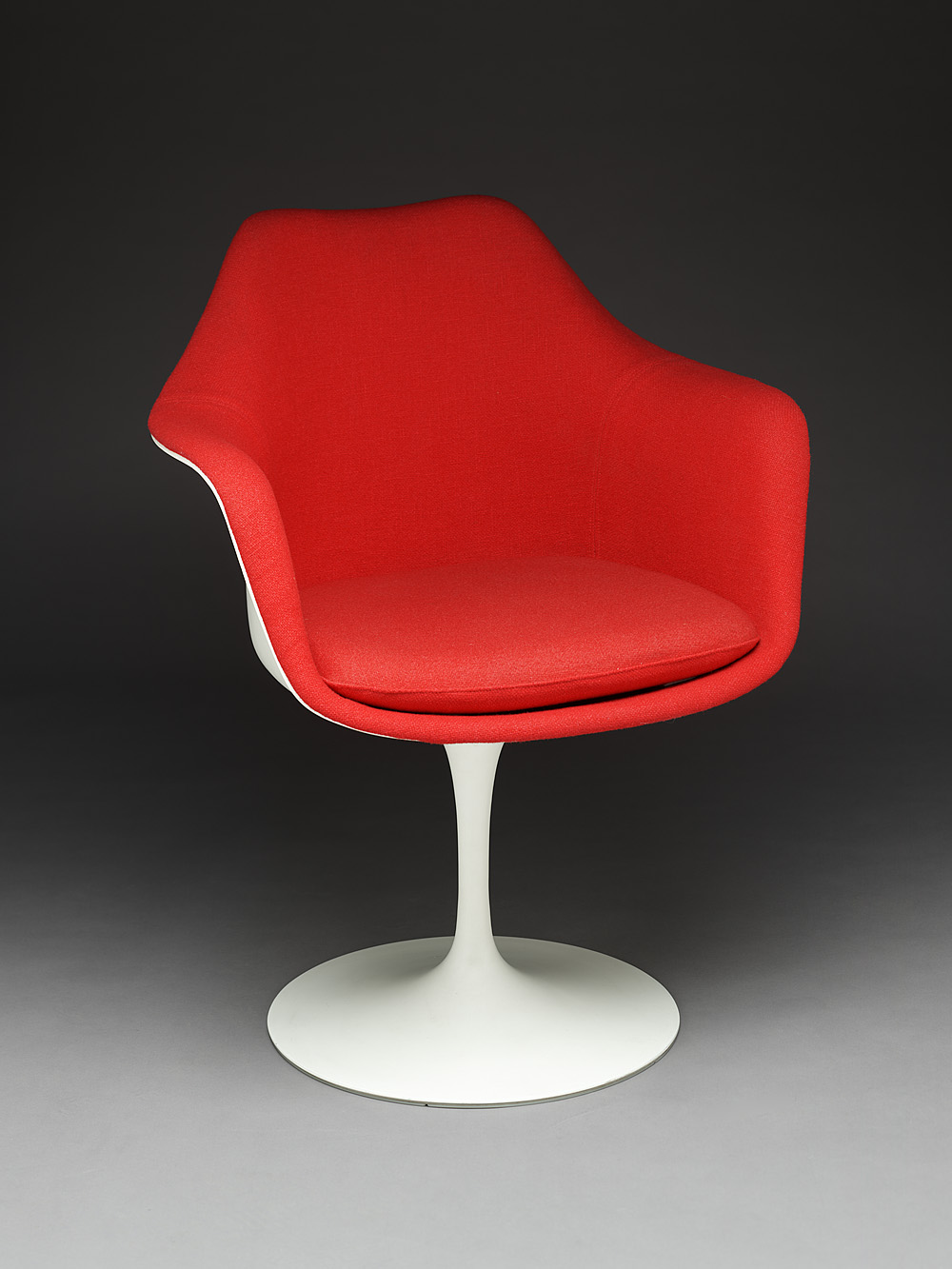
Eero Saarinen, Tulip Chair, c. 1980, Gift of Knoll International

The time has come to announce the winner of the Reader Pick from February 14. Drum roll please! The work of art with the most votes is The Tulip Chair, by Eero Saarinen. Thank you to all who voted. We hope next time to have even more votes for the reader pick!

Amy Wolf
Coordinator of Gallery Teaching

Friday Photos: Mystery Artwork

Last Friday, I presented clues to the first mystery artwork. I hope you enjoyed searching online or visiting the museum to find the answer.
 
The mystery artwork is…….
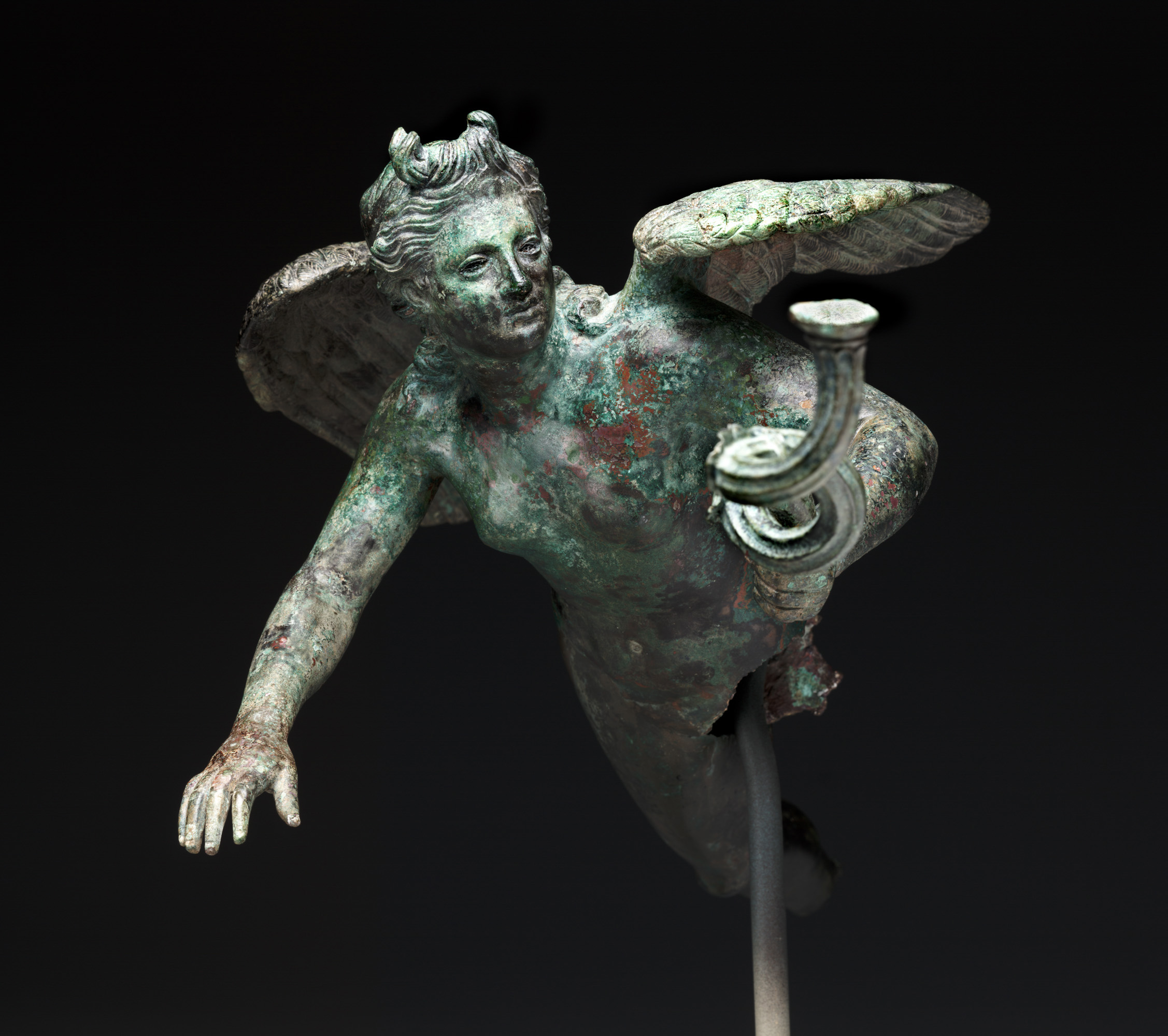
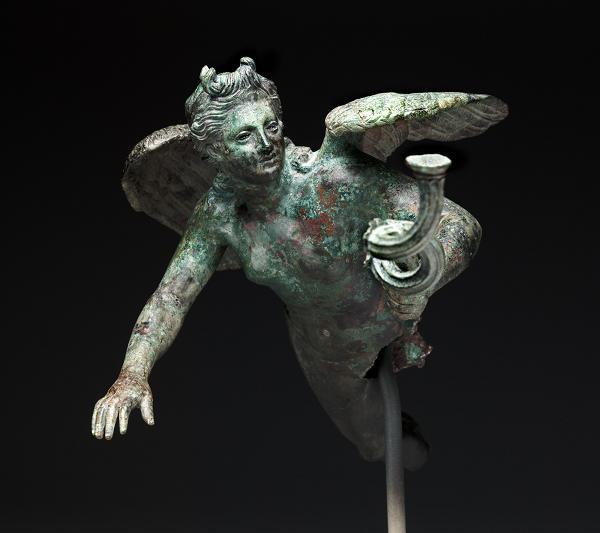
Eros lamp holder

Date: early 1st century B.C.
Dimensions: Height: 22 1/4 in. (56.515 cm)
Medium: Bronze
Dallas Museum of Art, The Eugene and Margaret McDermott Art Fund, Inc., in honor of Anne Bromberg’s 30th anniversary with the Dallas Museum of Art.  

Click here to learn more about the Eros lamp holder.

I present to you the second mystery artwork.

Take a closer look and you will see coils of fiber and metal hooked together.

Mystery Artwork #2

  1. I increase in size from top to bottom.
  2. I can only be worn by chiefs.
  3. I can also be seen with a wavy-edged scepter.
  4. My name means to sing.
  5. The presence of metal disks signifies wealth and prestige.

What am I?

You have one week to guess! Click on collections and begin your search. We also invite you to join us tonight as we celebrate our romance-inspired Late Night event.

Best Wishes,
Karen A. Colbert
Teaching Programs Intern

Staff Reading Group Update

It’s been a while since we blogged about our Staff Reading Group

January’s reading group featured several special guests.  We were joined by colleagues from the Crow Collection of Asian Art, the Nasher Sculpture Center, and the Rachofsky House for a conversation led by Nina Simon.  Nina is an independent experience designer, author of The Participatory Museum, and author of the Museum 2.0 blog which also appears as a column in Museum magazine. 

Nina selected our reading: a keynote address from the 2008 Australia Council Arts Marketing Summit, given by US philanthropy expert Diane Ragsdale, and titled: “Surviving the culture change.”   Ragsdale’s address (to greatly simplify) challenges arts organizations to adapt and to rethink their audience—what they need (and what they might not know they need), and how we can engage them in order to stay relevant.

The reading was provocative and timely, and led our group to consider behaviors and attitudes of museum visitors and to reflect on our own tendencies as museum-goers.  Why is it that we only go to concerts, museums, or the zoo once in a while if we really enjoyed the experience?  How can we make museum-going a habit—something we integrate in our lives, like an exercise class?  One of the great ideas that came from our session was that we think of going to museums/concerts/etc. like we do going to yoga—an activity that’s regularly on our calendars and prioritized in our lives. 

Ragsdale, in suggesting ways arts organizations can change in response to questions like these, shares truly inspiring examples of progressive, visitor-centered programming already in place in museums around the world.  Here at the DMA, we are pushing on our own ideas of ways to adapt programs to further visitor involvement.  We are currently in the process of refreshing Late Nights with the help of visitor voices and museum-world consultants—Nina, among them.  So look for new and exciting things to come!

And in the meantime, check out Nina’s blog to read more about great programs and experiences happening in museums.

Amy Copeland
Coordinator of Go van Gogh Outreach

Artist Spotlight: Emile Bernard

I recently had the pleasure of speaking with our docents about two paintings within the collection by 19th-century, French artist Emile Bernard (1868-1941).  Both of these works feature Breton women (from the region of Brittany in France) in traditional festival attire.  In the late-19th century, the villages of Brittany, like many other rural sites outside Paris, had become the center of various artist colonies.  The most well-documented of these sites is the city of Pont-Aven, which between 1886 and 1894 became the stomping ground of notable artists such as Paul Gauguin, Paul Serusier, and Emile Bernard.  This cast of characters, along with an international array of artists from countries such as Holland, Belgium, Switzerland, became known as the Pont-Aven School and triumphed a pared-down aesthetic that departed from the naturalism of Impressionism and emphasized a synthesis of the impressions of nature and abstract forms that underlined emotional experience. 

[slideshow]

Brittany was fertile ground for the Pont-Aven School artists because of its association with an exotic aesthetic that played up the primitivism of the picturesque peasants and overlooked the industrial developments and spread of Parisian taste and sophistication to the not-so-remote villages.  In this sense, what the artists left out–factories, commericalism, and modern advancements–become just as much the subject of the work as what they included.

Bernard first visited Brittany in 1886 and would return to the region the next four summers.  In 1888, he worked closely with Paul Gauguin, and together they launched the Synthesist style that characterized much of the work coming out of Pont-Aven.  Bernard was inspired by Medieval cloisonne, or the technique of applying enamel partitions within stained glass.  He and Gauguin, like many artists of the period, also looked to Japanese prints for inspiration and a means to rejuvenate the European style. 

The two DMA paintings by Bernard are dated 1891 and 1892 by the artist in the lower right-hand corner of the canvases next to his signature.  In 1893, he left for a ten-year soujourn in Egypt and would not return to Brittany until 1910 for a brief stay and 1939-1940 for an extended stay the year before his death.

“Othering” is the act of creating an uneven power hierarchy through the myth of a binary of “us” and “them.”  This serves tp emphasize the percieved weaknesses of “them,” or the marginalized society, as a means of underlining the superiority and right to power of “us.”

These works of art can be used with students at the Museum or in the classroom.  They are a great jumping off point to think about exoticism and its role in art.  Exoticism is typically associated with well-known works by Orientalist painters such as Jean-Auguste Dominique Ingres and primitivists like Paul Gauguin.  The Pont-Aven School works embody similar ideas of “othering,” except that the exotic projections take place within France and become a sort of internal othering.   What other examples of othering, based on gender, race, ethnicity, religion, etc. can you think of in art and popular visual culture?

Ashley Bruckbauer
McDermott Intern for Teacher Programs and Resources

Reader Pick: Love in the DMA's Collection

February is a month known for love. To celebrate love in the DMA’s collections, I would like you, the reader, to choose a work of art that best exemplifies love from the below objects. After selecting a work of art, leave a comment as to how you think it relates to love. Next Tuesday, I will let you know which work of art received the most votes. Let the voting begin!

Amy Wolf
Coordinator of Gallery Teaching

Friday Photos: Mystery Artwork

Dallas Museum of Art educators want to introduce a new way of helping you look at and learn about the works of art in our collection. Throughout February, we will present a mystery artwork and give you five clues to help you search our online collection for the answer. You will get one week to search before we reveal the big mystery. So buddy-up with a partner or go searching on your own and get ready to explore our collection. We also invite you to visit the Museum and search in the galleries. Admission is free during our African Masks Family Celebration, or you may want to search during our  romance-inspired Late Night.

In honor of Valentine’s Day I want to show you some love. Here are some clues to help you find the artwork I’m thinking of……

Mystery Artwork

  1. I’m made of bronze for strength and durability. Some might say, it’s a sign of our enduring love.
  2. I’m part of an ancient story of love and attraction.
  3. I’m the son of the goddess of love.
  4. I’m used to shine light in dark places.
  5. I was recovered from an ancient shipwreck near the town of Mahdia on the coast of Tunisia.

What Am I?

Here are a few tips to get you started:

  • Click on Collections to begin your search.
  • Post the name of the artwork in our comments section.

Best Wishes,
Karen A. Colbert
Teaching Programs Intern

Staff Spotlight: Shannon Karol

Usually, I interview artists, educators, and community partners with whom we partner in various programs.  This month, I’m turning the spotlight on our own Shannon Karol.  Shannon has worked at the DMA since 2005, with the exception of a short stint back in her home state of Michigan.

Tell us about your history with the DMA.

I first came to the Museum in 2005 as a McDermott Graduate Curatorial Intern, and I worked with Dr. Roslyn Walker, our Curator of African art.  A big part of my intern responsibilities was working with scholars to gain permission to use their contextual photos in our catalog of the African collection.  I did a bit of background research for the catalog, too.

I went away for a year to work at the Kresge Art Museum at Michigan State University, and returned to the DMA in August 2007 as Tour Coordinator.

Just last month, I was promoted to Manager of Docent Teaching and Gallery Interpretation.  I’m now responsible for the Museum’s 108 docents, which includes training and helping them learn best practices for teaching in the galleries.  I’ll also continue to work with some of our partner schools and school districts on their annual museum visits.

To what part of your new position are you most looking forward?

The most immediate thing I’m looking forward to is representing the Museum at the Super Bowl on Sunday.  I’ll be there to talk about connections between the Cowboys Stadium Art Program and our Big New Field exhibition.

I’m also looking forward to training a new docent class and helping them get excited and prepared to be in the galleries with our student visitors.
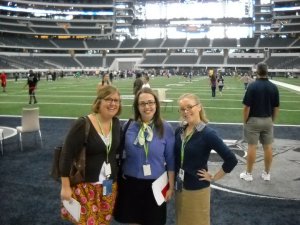
On the field at Cowboys Stadium last fall with Molly and Amy

What do you miss most about Michigan?  What do you like most about Texas?

I miss my family the most.  But I do not miss the snow.

What I like most about Texas is having a part of my family here and spending time with my three  teenage cousins, two of whom are teen docents.  I also love the Texas weather when it’s seventy degrees and sunny in January.

What do you do in your free time?

I sew.  I enjoy making purses and skirts, and I’m currently working on a dress that I plan to wear in Paris when I visit for the first time this summer.

How does your love for teaching with works of art extend outside the DMA?

Once a year, when I go home to visit my family in Michigan, I go to school with my sister to talk with her third-grade students about art.  We look at images of famous works of art, including paintings from the DMA collection.  I have them make up stories, write poems and tell me about what they see.  We end the day with a “Pollock-ing” activity, which involves dipping marbles in paint and rolling them around in a baking tray lined with paper.  Then, the kids make their own Andy Warhol-inspired self portraits.  My sister takes black and white photographs of the students, and we give them highlighters to color in their portraits.
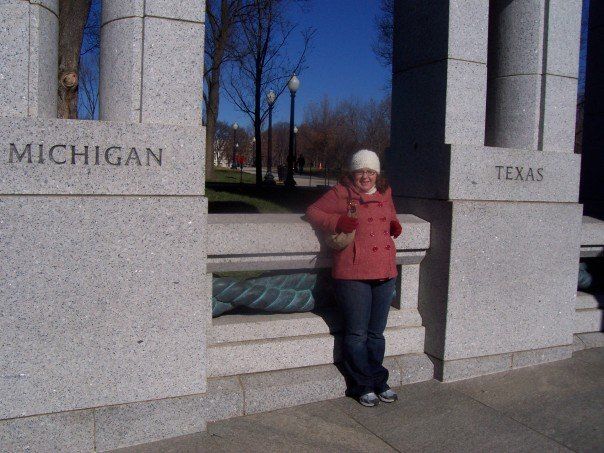
Shannon stands between the pillars of her two “home states” at the World War II Memorial in D.C.

Melissa Nelson
Manager of Teaching in the Community
Community Connection: 1 month, 56 tours, and 4,300 fifth-graders

For the past four years, Garland ISD has committed to bringing every fifth-grade student to the DMA for a one-hour docent-guided visit.  Such an endeavor requires an extensive amount of time, resources, and coordination of staff, teachers, students, and docents.  This impressive undertaking is possible thanks to Brenda Hass, Fine Arts Coordinator for Garland ISD.

What is your role with Garland ISD?

I am the Fine Arts Coordinator; I work with our K-12 art and theater program and our elementary music program.

Describe your relationship with the DMA.

I began working with the DMA when I was in another school district and learned about the tour program.  When I came to Garland, one of the things I set in motion right away was to make an arrangement for all fifth-graders to come to the DMA for tours that align with social studies TEKS.  It’s been a great relationship.

How, and why, do you manage such a large task?

We do it because we feel it’s important.  Many children wouldn’t have the experience of coming to an art museum if we didn’t provide it.  The majority of our forty-seven elementary schools are considered Title 1 and are located in lower socioeconomic areas.  Whatever the students’ backgrounds are, we want to them have the opportunity to visit.  We choose to put our money and our time here.


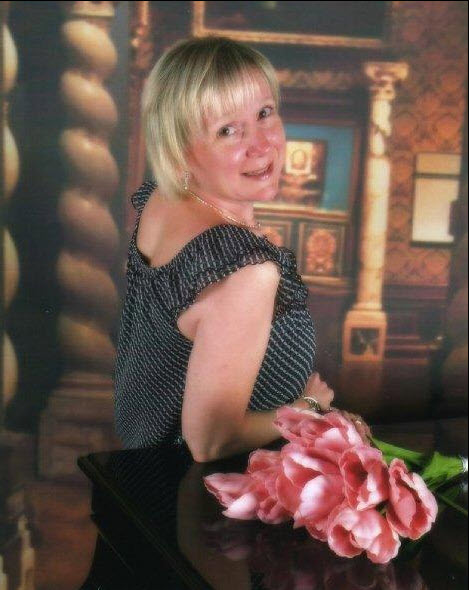
Brenda is also a talented piano player.

What is the most memorable thing that has happened during these tours?

Every year after our DMA tours in January, I always receive an email from a classroom teacher who had never visited before, wanting me to know what an amazing experience it was for his/her children and thanking me for providing the transportation.  I think a lot of people who didn’t get to visit museums as a child don’t go to museums as adults.  But once they have an opportunity, they don’t want to miss it.

What is your favorite part of your job?

Being with children.  If it’s theater, watching them perform in a show.  With art, I may be helping them organize exhibitions of their work.  In music, I’m watching a program or working with our children’s chorus.  Whatever role we have in administration, we have to continue being around the children.  That’s what keeps us fresh and keeps us on the cutting edge of education. 

Also, I am passionate about making sure our students have a museum experience.  I think that everybody, child or adult, should do the same.

Melissa Nelson
Manager of Teaching in the Community
Community Connection: Thriving Minds

The DMA partners with Thriving Minds, a city-wide initiative to provide arts and cultural experiences for Dallas students, in the offering of an extended arts program during after school hours.  We have partnered with Thriving Minds and their umbrella organization Big Thought in several ways over many years.  The after school program is our newest partnership, which has become my focus during the past two years.  I am fortunate to work closely with Creative Specialist Laura Orange on this program: we share an excitement and enthusiasm for serving students during after school hours with programs that are educational, meaningful, and most importantly, fun.

Tell us a bit about your background and how you came to your position at Big Thought.

When I was in my early twenties, I studied with a professional company that had connections with the Paris school of Marcel Marceau.  We became the United States version of that company.  The man I studied with supported himself by being a resident artist for the state of Ohio, and he trained me on how to make a living by putting together a show and getting involved with various state arts commissions.  I ended up here in Texas in the early 80’s when Young Audiences was forming.  Young Audiences wanted a mime company, and they asked me to create one their second year.  I spent years performing through schools, doing residences and other work through Junior Players and Dallas Children’s Theater, and along the way I learned about arts administration.  As Young Audiences developed, they realized they needed in-house arts administration staff and brought me on board – that was probably ten years ago.  Young Audiences grew into Big Thought and extended into afterschool programming.  I was the representative here for 21st Century programming and was able to connect organizations with afterschool programs.  Now we staff programs at schools, and I realize I’ve almost come full circle.

What advice would you give to artists who are interested in teaching school children?

Don’t take yourself too seriously.  You’ve got to enjoy children and enjoy the journey they’ll take you.  Sometimes, something will happen that can be a really brilliant idea if you’re not stuck on what you want to do.  Some of my best adventures happened when something didn’t work right, and I decided let’s try this and see what happens?  It became a lot more fun.   

You have a performance background.  How do works of art connect with your approach toward teaching?

Works of art can be very inspirational.  From the mime background, every picture tells  a story, and there’s movement and everything.  We’ve physically recreated works of art in performances with our bodies.  You can also do a movement exercise where you take a still picture, and ask students what do you want to be in it?  A blade of glass, a tree, birds flying, part of a hill…if we were to unfreeze it, what are the little movements that would happen?   What sounds would it make?  Students can use these things to understand line, form, and shape of physical bodies.  Since mime is abstract, there is a lot to connect with abstract paintings, too.

If you could be doing anything else, what would it be?

Probably sitting on the beach and watching the ocean.

What is your favorite holiday tradition?

Our annual drive home to my parents’ house is usually pretty funny.  We rent a minivan and I call it “Operation Little Miss Sunshine”.  Me, my brother, my husband, my dogs, and whatever we can stuff in the van drive to Mississippi and back together.

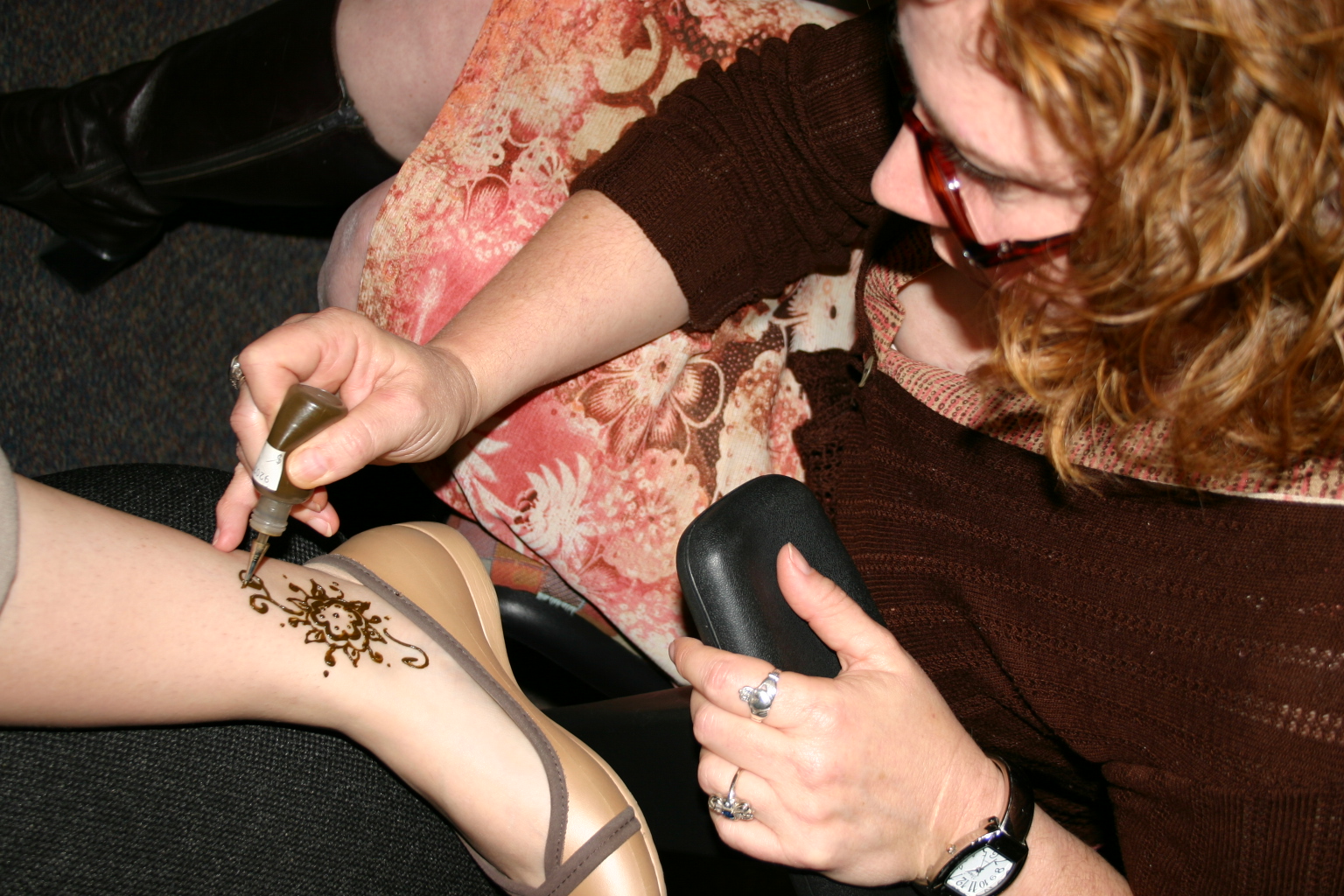
Laura paints a henna tattoo on a colleague.

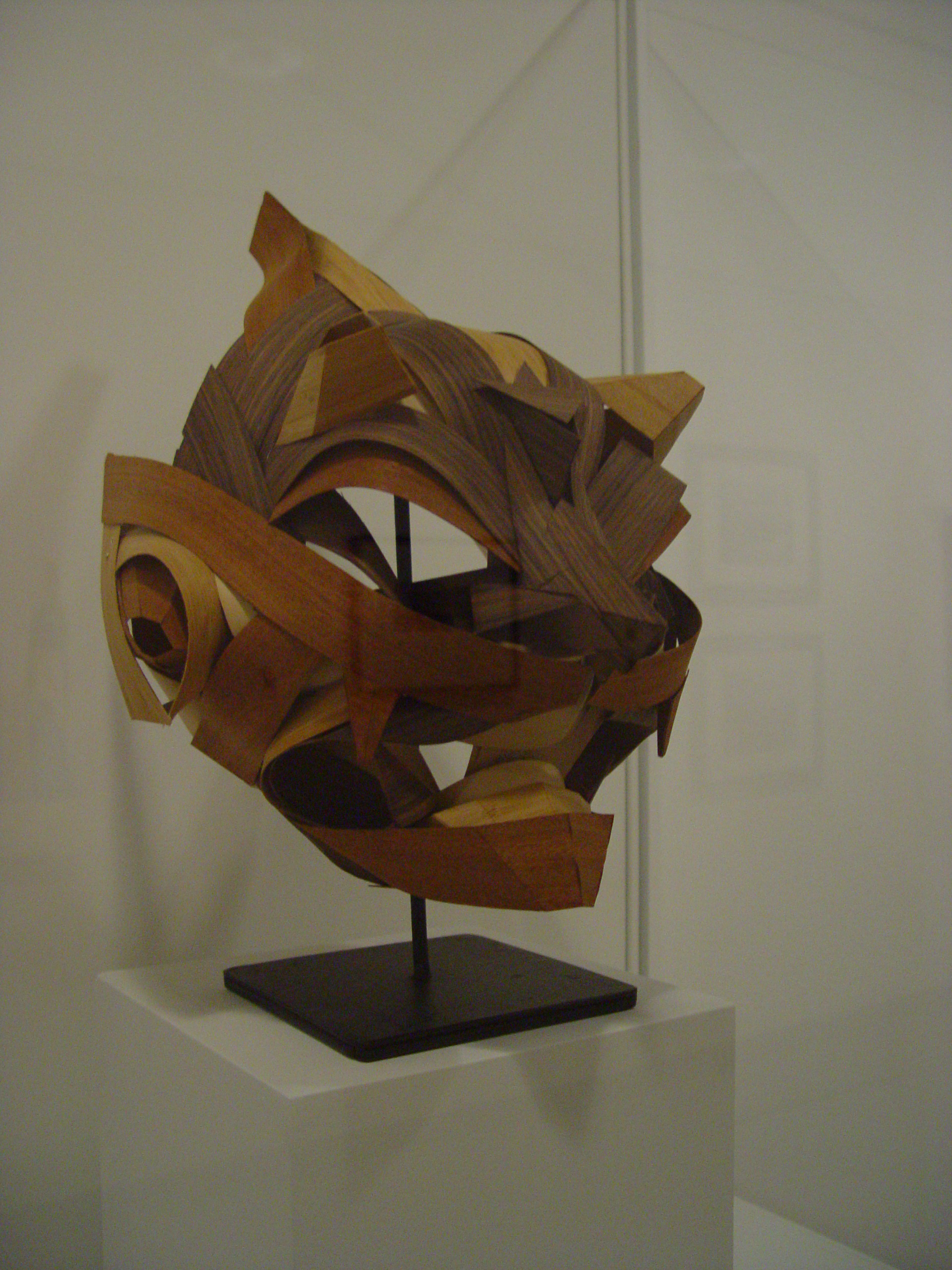
Insourced: Works by Dallas Museum of Art Staff

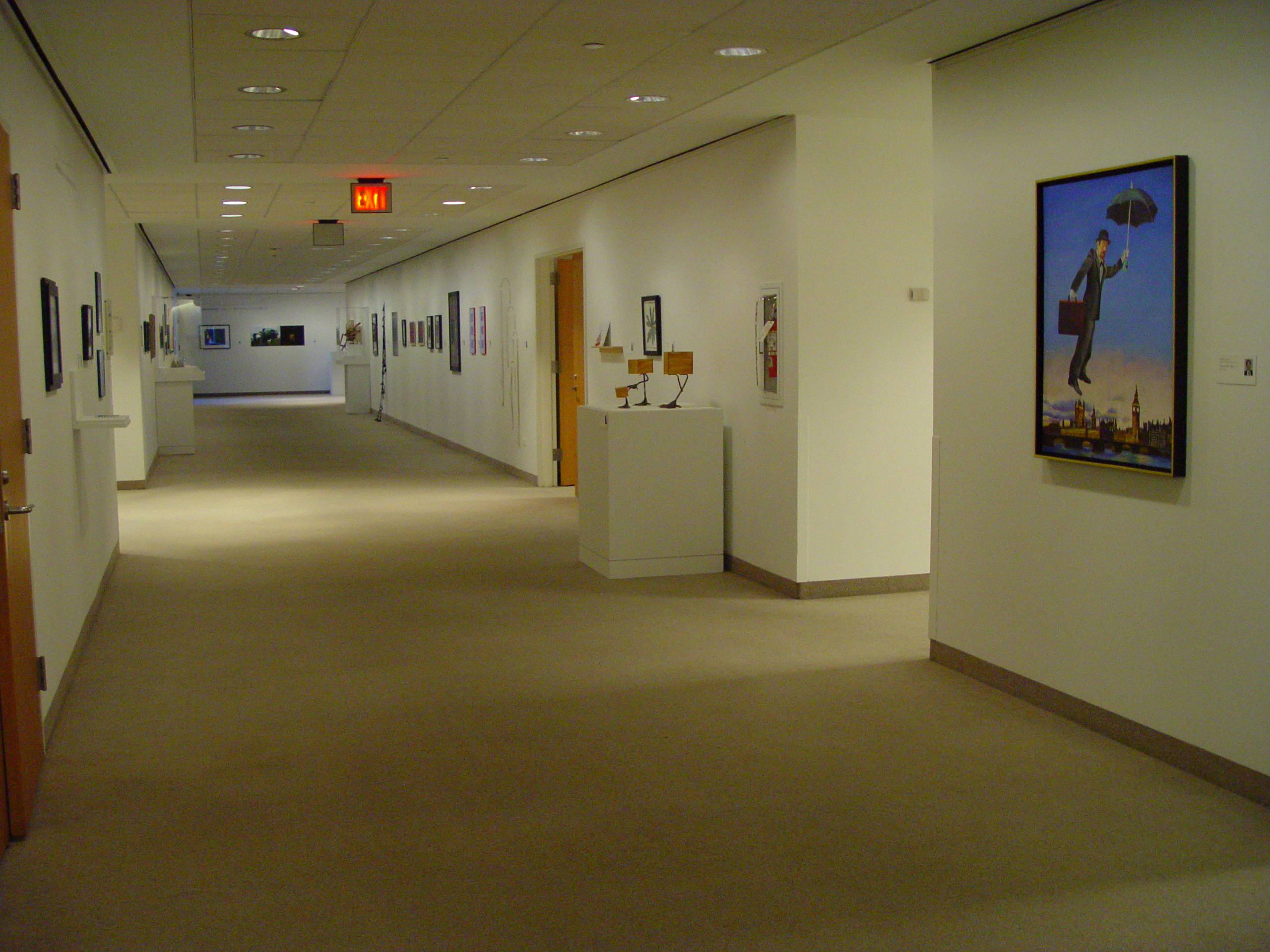
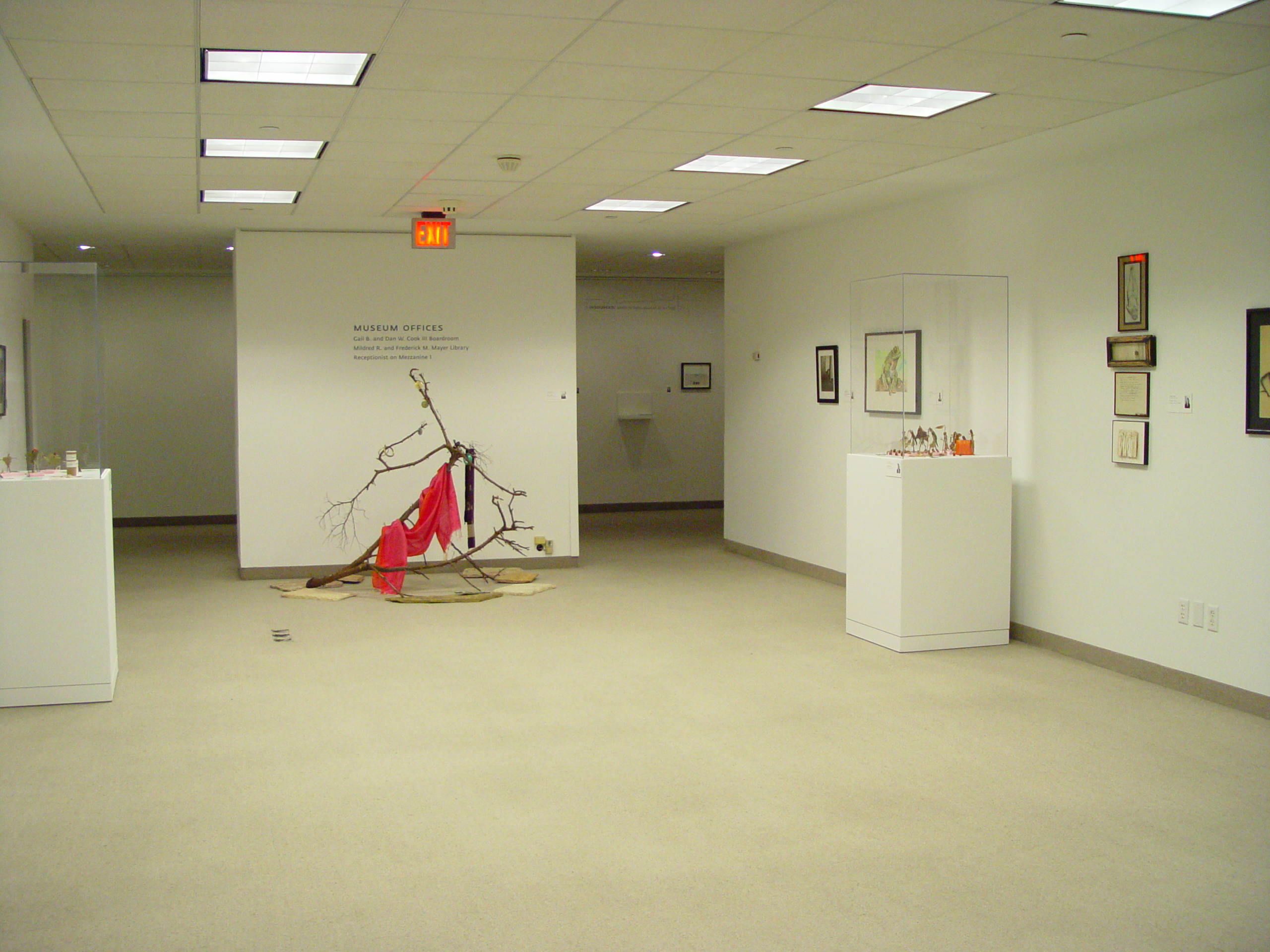
Every two years, DMA staff are invited to showcase their artistic talents.  Below are some things that make Insourced: Works by Dallas Museum of Art Staff a unique exhibition:
  • It features sixty-eight works of art submitted by forty-three DMA employees.
  • Submissions came from a variety of departments, which include Accounting, Collections Management, Curatorial, Development and Membership, Education, Exhibitions, Information Technology, Libraries and Imaging Services, Marketing,  and Security and Operations.
  • Artwork labels include a photograph of the artist, his/her position title at the DMA, and the number of years he/she has worked here.
  • The exhibition lets us see a new and, at times, previously unknown side of our colleagues.

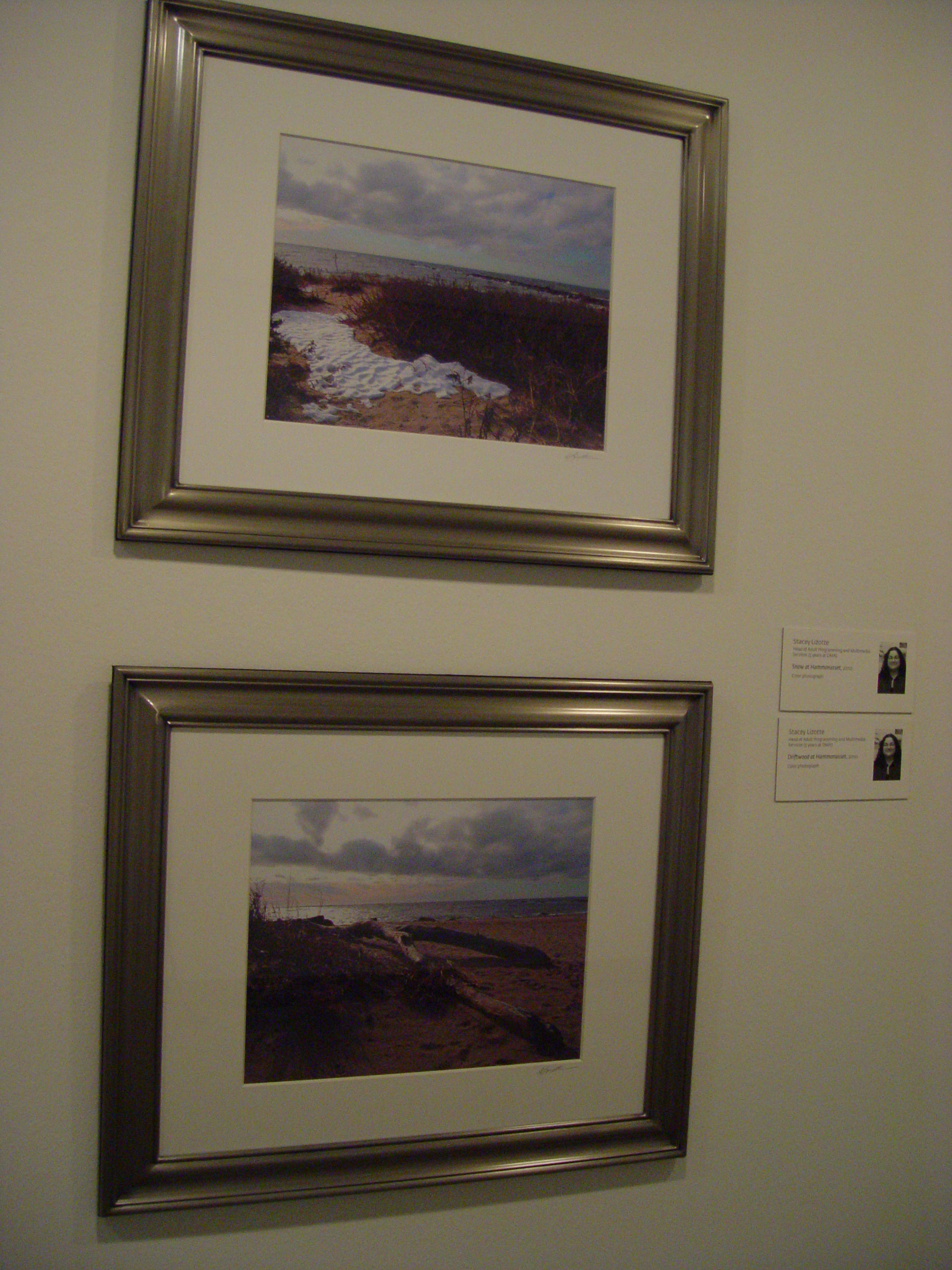
Below are images of the overall exhibition and a few artworks by DMA educators.  View Insourced: Works by Dallas Museum of Art staff on Mezzanine 2 next to the Mildred R. and Frederick M. Mayer Library through March 13, 2011.

Melissa Nelson
Manager of Teaching in the Community
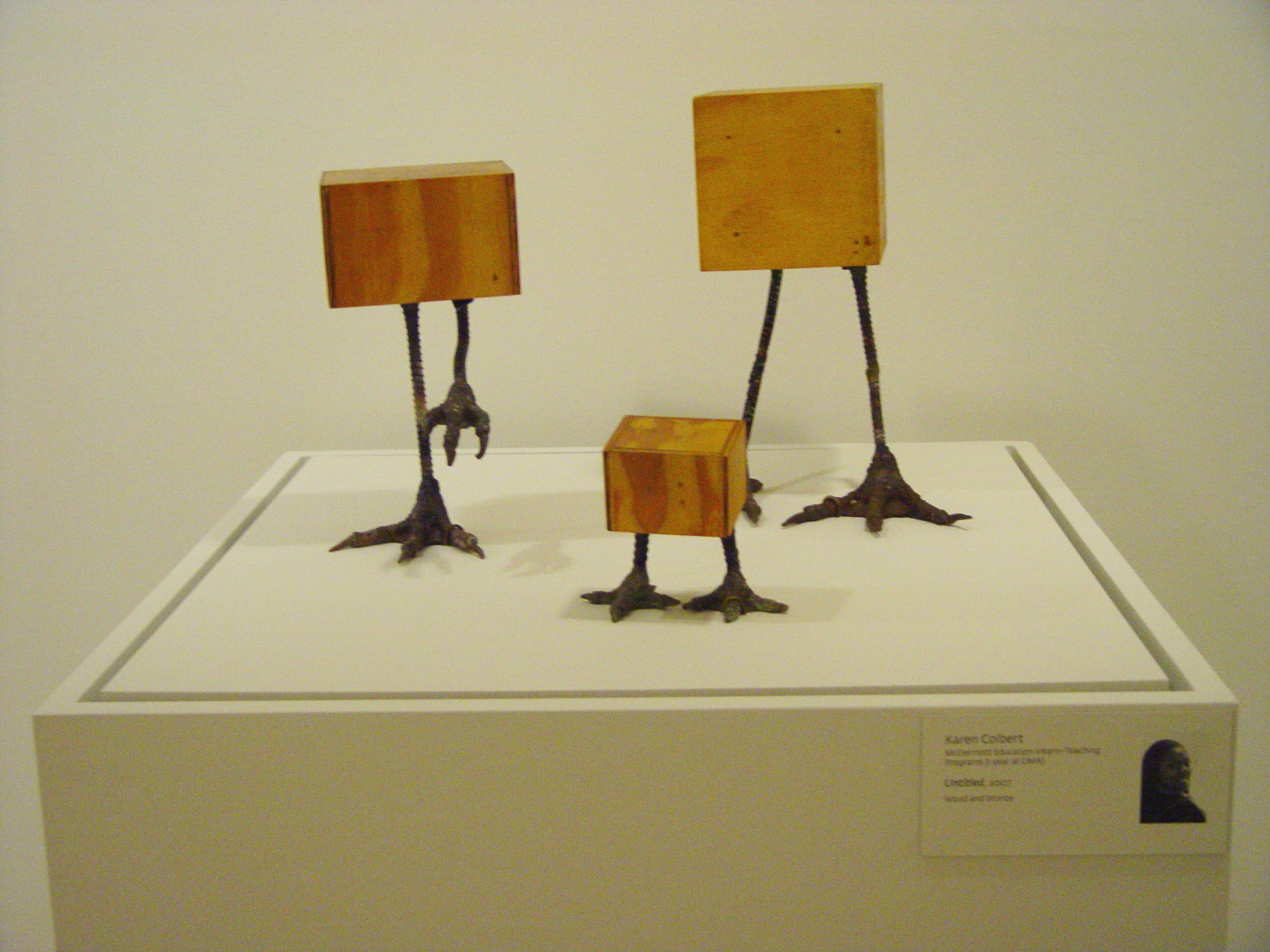
One of two submissions by Teaching Programs McDermott Intern, Karen Colbert.

Untitled/Bring Back My Saturday Morning by J.C. Bigornia, Coordinator of Family Experiences

Snow at Hammonasset and Drfitwood at Hammonasset by Stacey Lizotte, Head of Adult Programming and Multimedia Services


Archives

Categories