Archive Page 66


Teaching with Art from the Himalayas and Southeast Asia

Fellow Teaching Programs Intern Ashley Bruckbauer and I, recently led a docent training session that highlighted six objects from the Himalayas and Southeast Asia.  We wanted to familiarize docents with objects from these areas, discuss teaching strategies for works with religious significance, as well as consider overarching themes within the Asian collection that would encourage students to make connections within their own lives.          

Ashley started the training session talking about the Silk Road Trade Route and how it introduced Buddhism into different regions of Asia. Buddhism originated in India and is based on the teachings of Prince Siddhartha, who became known as the Buddha, or Enlightened One. He taught that all life is suffering, but renouncing desires and the self can lead to a state of enlightenment beyond both suffering and existence. Buddhism is no longer as widely practiced in India but has spread to Southeast Asia, Central Asia, and the Far East through missionary activity. Today, it is one of the world’s largest religions.         

We then had docents look at and discuss the six works of art. These objects inspired the two themes for our docent training: Opulent Buddhas and Ferocious Protectors.

 1. Opulent Buddhas
The objects presented under this theme were the Buddha Sakyamuni, Manjusri, and the Buddha Muchalinda. These objects represented three examples of Buddha figures heavily adorned with lavish materials.  What can we learn from these objects, sculpted in opulent materials? Buddhists consider gold the supreme color, which is why many of their images are gilded. Bronze figures are sometimes coated with another metal before gilding. Gem-encrusted, gilded statues would have been created to inspire meditation among the monks in a Buddhist monastery. It also symbolizes the spiritual wealth of the Buddha.

  • The Buddha Sakyamuni is shown standing in his princely clothing. He is wearing a robe or Sanghati, with a jeweled belt, collar and crown. He also has a jeweled inlay urna or third eye, on his forehead as well.  His hand gesture, or mudra, symbolizes protection, meaning “fear not.”
  • Manjusri is the bodhisattva of divine wisdom. He is considered to be the founder of Buddhist culture. He is always shown as a youthful crowned prince. He carries traditional emblems: the Buddhist scriptures on a lotus flower and the sword that cuts ignorance.  His left hand is raised in a gesture of teaching. His sweet and placid character embodies peaceful consolation.
  • The Buddha Muchalinda represents a moment in the Buddha’s enlightenment. The Buddha was sitting under a tree in deep meditation, when rising waters were sent by a demon to drown him. The Naga or serpent king, came from beneath the earth, raised the Buddha above the rising waters on his snake coils and protected him with his seven cobra heads.

 [slideshow]

 2. Ferocious Protectors
The second group of objects discussed were the Guardian Snow Lions, Rearing Lion, and the Dharmapala Lhamo.  Ferocious animals and wrathful deities have symbolic significance and are an important decorative element in Buddhist art. Why might it have been necessary for these objects to appear frightening? Fierce sculptures such as these are made to adorn  the Buddha’s throne and protect the Buddhist law and scriptures.

  • These Guardian Snow Lions are shown heavily ornamented with a jeweled crown and decorative chains as well as elaboration of bodily features, such as the curls in the mane, tail and leg fur. Flames of wisdom, which represent light or transformation, flare up from the shoulders and the head. Their ferocity is shown by their large sharp fangs, powerful claws and brawny build. The lions would have guarded entrances of temples and demarcated sacred grounds. They also protect against evil spirits and are depicted in Buddhist art supporting the Buddha’s throne.
  • A figure like the Rearing Lion would have supported the exterior base of temples, lintels, thrones, pedestals or platforms. The details of the face, such as the squared mouth and the treatment of the eyebrows with a relief-design between eyes, are associated with the royal temple of Koh Ker. Koh Ker was the capital of the Khmer Empire during the 10th century. The Khmer Empire is now present-day Cambodia.
  • The Dharmapala Lhamo is one of eight Dharmapalas or Great Protectors of the Buddhist law and scriptures. She is typically illustrated as a bloodthirsty and terrifying character riding a mule or donkey and adorned with a crown of skulls, garland of decapitated heads, and a human skin worn as a cape. She also has flaming hair, bulging eyes and a corpse in her mouth. The goddess rides through a sea of blood accompanied by two hybrid female deities.  She would be used by monks for meditation, helping to transform anger and energy into creative energy needed to achieve enlightenment.

Karen A. Colbert
Teaching Programs Intern

Buddha Sakyamuni, Khmer Empire (Thailand), 13th century, Dallas Museum of Art, gift of David T. Owsley via the Alvin and Lucy Owsley Foundation, Cecil and Ida Green Acquisition Fund, and Wendover Fund
Manjusri, Nepal or Tibet, 18th century, Dallas Museum of Art, bequest of Mrs. E.R. Brown
Buddha Muchalinda, Khmer Empire (Cambodia), Dallas Museum of Art, Cecil and Ida Green Acquisition Fund
Guardian Snow Lions, Nepal, Kathmandu Valley, 1875, Gift of David T. Owsley via Alvin and Lucy Owsley Foundation
Rearing Lion, Cambodia: Koh Ker period, 10th century, Dallas Museum of Art, Dallas Art Association Purchase, The Museum League Fund
Dharmapala Lhamo, Tibet, 18th century AD, Dallas Museum of Art, gift of David T. Owsley through Alconda-Owsley Foundation

What does art smell like?

This past Wednesday my colleague Hadly Clark and I took advantage of our great Spring Break crowds and tried an impromptu gallery experiment.   We spent time in Re-Seeing the Contemporary: Selected from the Collection exhibition, asking visitors to look at four artworks with us and to think deeply…with their noses!

For part one of our experiment, we asked participants:  If this artwork had a scent, what do you think it would smell like?  Why?   As someone who likes thinking with her nose, I had fun hearing visitor responses and considering how their creative associations helped me see familiar artworks in fresh ways.  Below are responses inspired by one of our stops, Robert Irwin’s Untitled:

Robert Irwin, Untitled, 1968-69, Fractional gift of The Rachofsky Collection, 2001.345

  • Coconut & banana, because it’s round
  • Money
  • Disinfectant, something very clean.  It reminds me of adventures of Buck Rogers.
  • Nothing!
  • Mint or toothpaste; it’s clear and transparent
  • It smells really clean, like clean linen or spring lilies

The slideshow below includes all four featured artworks, images of participants, and a few responses for another one of our stops, Mark Rothko’s Orange, Red and Red.   After the slideshow, Hadly explains part two of the experiment and some great opportunities to join in on other experiment-like experiences here at the DMA…

[slideshow]

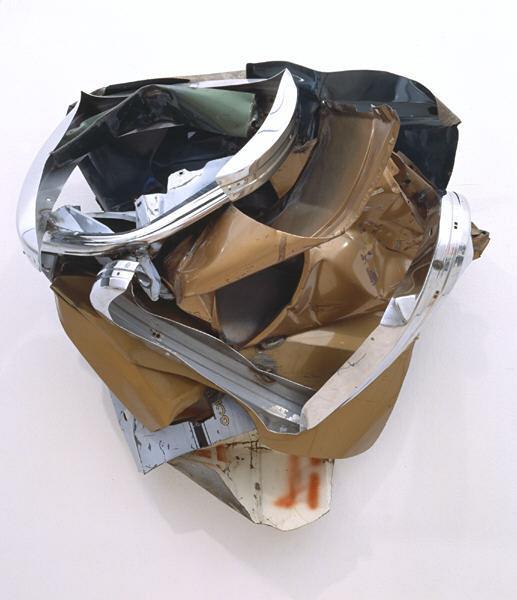
The second half of our sensory experiment encouraged participants to actively engage their sense of smell.  We provided nine samples of scents tucked secretively inside cardboard boxes with conveniently located holes for ventilation.  Boxes held a variety of scents such as Ivory soap, leather, and cinnamon.  After smelling each box, participants selected their own “scent match” or a scent they associated closest with the work of art, and shared why that scent was evocative of the work.   Here are some scent matches inspired by John Chamberlain’s Dancing Duke:

John Chamberlain, Dancing Duke, 1974, Gift of Dr. and Mrs. Harold J. Joseph in honor of Mr. and Mrs. Max Walen, 1975.69

  • Scent match #3 (peach tea) because, it smells bad! (This visitor thought of sweat and things that smell bad when he looked at the artwork, so he picked the scent he liked least).
  • Scent match #8 (leather) because it reminded me of my car
  • Scent match #9 (Clorox wipe) because it smells like paint
  • Scent match #4 (grass) because it smells green

Each week, the Center for Creative Connections (C3) hosts similar experimental, hands-on, artist-led workshops for adults. From 6:30 – 8:30 p.m. every Thursday evening, join C3 staff and a guest artist to explore what inspires them, play with new unexpected materials, or learn different techniques that can be applied to your work during a C3 Artist Encounter.

In the meantime, we’d love to hear what you smell when you look at Untitled or Dancing Duke.

Amy Copeland
Coordinator of Go van Gogh Outreach

Hadly Clark
Center for Creative Connections Coordinator

Photo Post: St. Patrick's Day

[slideshow]Saint Patrick’s Day was named after Saint Patrick, one of the most recognized patron saints of Ireland. Originally, the color associated with Saint Patrick was blue. Over time, the color green and its association with Saint Patrick’s Day grew. Green shamrocks and hats were worn in Saint Patrick’s Day festivities as early as the seventeenth century and continue to be used today. To celebrate Saint Patty’s Day, I included works from across the DMA’s  Collection with the color green.  Enjoy!

Amy Wolf
Coordinator of Gallery Teaching

Ordinary to Extraordinary: A Short Story about Chairs

“Success in your career begins in an ordinary classroom, in an ordinary chair.”
— Diana Maldonado, grade 11, Skyline High School (DISD)


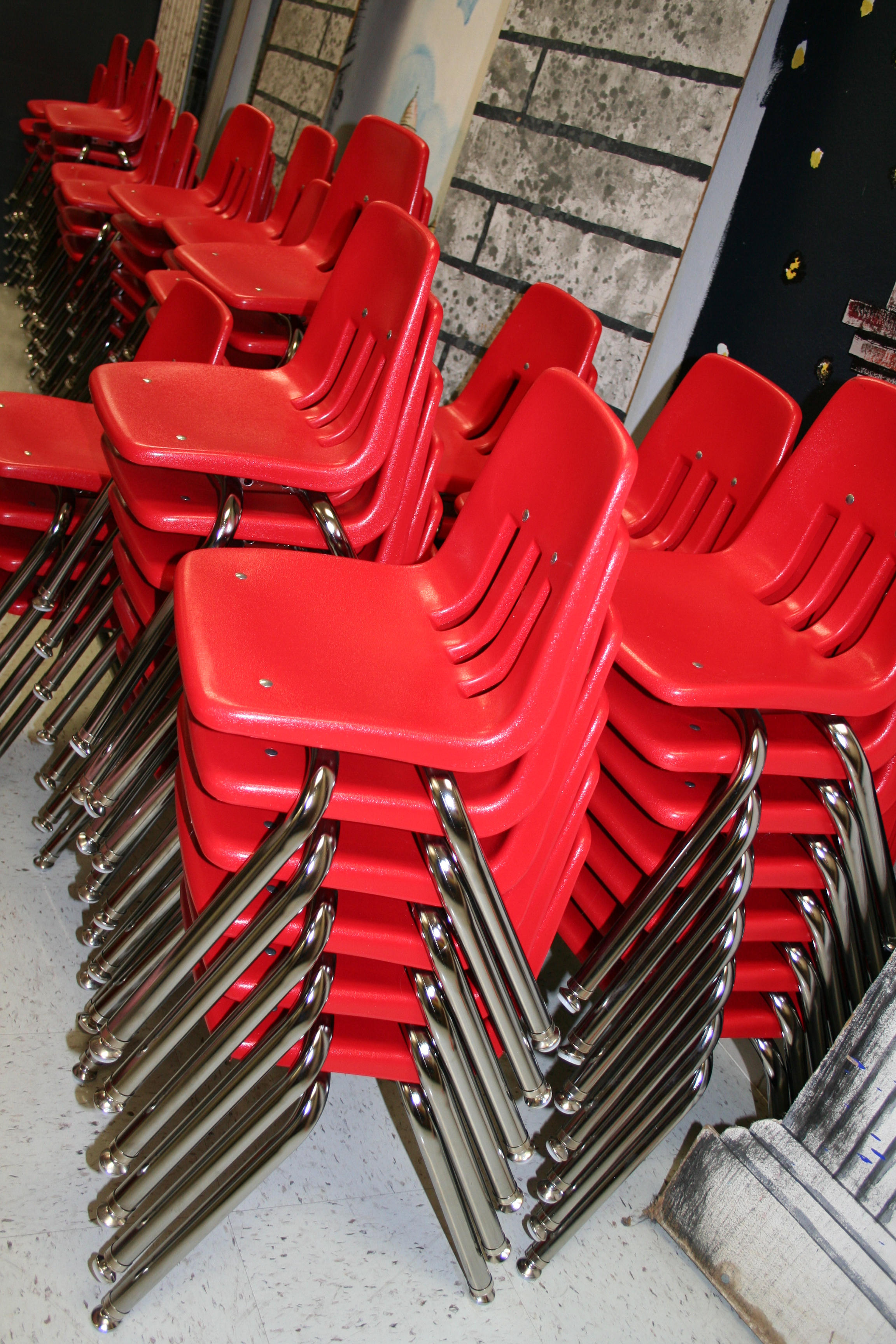
Standard-issue classroom chairs

It is a good thing to see the world from a different point of view every now and then.  We can stand and walk in someone else’s shoes, but what is it like to sit in someone else’s chair? What if the seat of this chair rises only fourteen inches above the ground?  I recently had the opportunity to take a seat in these small-size chairs while visiting pre-K and kindergarten classrooms at Dealey Montessori, Medrano Elementary, and Urban Park Elementary in DISD. Two 11th grade students from Skyline High School, Yvonne and Lauren, joined me during the visits to interview several young students who sit in fourteen-inch chairs every day at school.

For me, sitting in one of these chairs is a little bit magical.  The world is scaled down and tiny – chalkboards hang at a lower level, tables are shorter, and objects on the lowest bookshelf (which seem to require a further reach) are more colorful and interesting.  The chair-sitting experience  may also be magical for the students who sit in these small chairs every day as they get used to going to school, learn to write, and make new friends. Chairs are an important part of the school day.  They are a place to sit and rest, but also a place to participate in important and creative work.  Students shared with Lauren, Yvonne, and me various examples of the work they do in their chairs:

  • learning to read books
  • making a lion mask
  • practicing writing letters and words
  • drawing butterflies, ice cream cones, and hearts
  • singing with friends
  • painting
  • counting numbers

[slideshow]

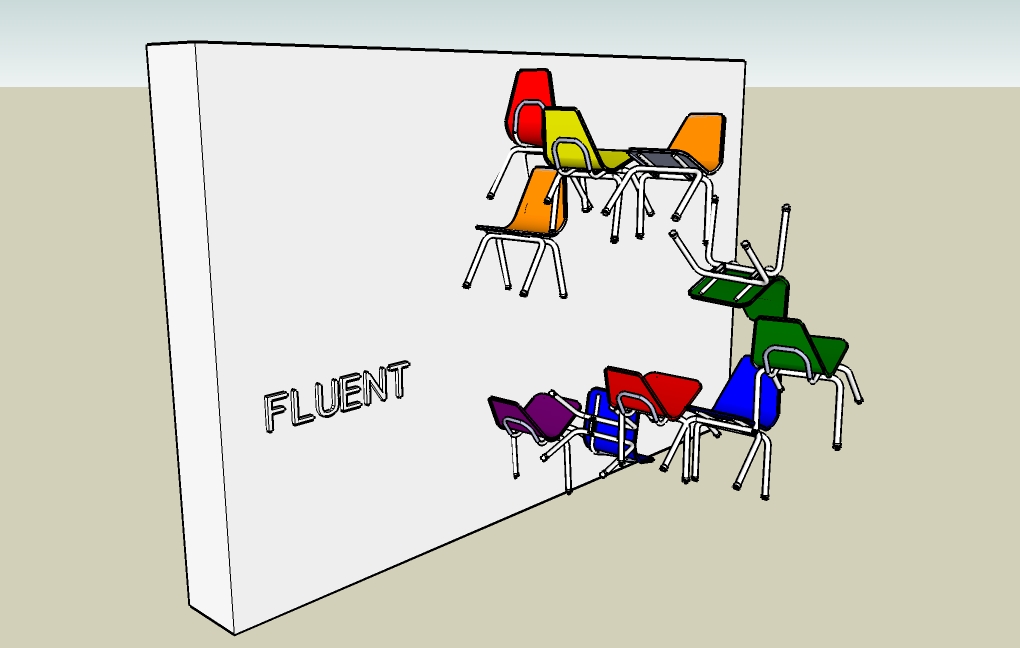
Our visits to schools are part of a larger partnership project between the Dallas Museum of Art and the Architecture Cluster at Skyline High School.  Lauren and Yvonne are just two among more than eighty Skyline Architecture Cluster students who created an amazing installation now on view in the Center for Creative Connections.  The installation, Sculpting Space: 299 Chairs, features fourteen-inch, standard-issue classroom chairs in all colors as the primary material.  The Skyline students have transformed ordinary chairs into extraordinary chair assemblages that sculpt the space of one gallery.  Museum visitors move through the space, walking under and around clusters of chairs.  Look for more information in the coming weeks about Skyline’s unique installation on the blog Uncrated.

Google Sketch-Up model for a chair assemblage that reflects the spatial concept, "fluent"

Early in the partnership project, Skyline students and their teachers, Peter Goldstein and Tom Cox, had the brilliant idea to get “used” chairs from three DISD elementary schools.  They were interested in chairs with stories to tell — marked-up with years of scratches and crayon scribbles.  The DMA purchased hundreds of new chairs, and then Skyline students swapped the new chairs for old chairs at Dealey, Medrano, and Urban Park.  As part of the process, the elementary school students were invited to draw their chairs, write about them, and think about all of the many things they do while seated in the classroom.  Video interviews with pre-K and kindergarten students about their chairs are included with the DMA installation.   Special thanks to the teachers, students, and staff at Dealey Montessori, Medrano Elementary, and Urban Park in DISD for being a part of this wonderful partnership!

“The one true connection we have made was with the chairs and when we were little kids.  They bring back memories of our childhood.  We also have a connection to the students who once sat in these chairs where they did their work, and colored and painted.”
Luis Garcia, grade 10, Skyline High School (DISD)


Nicole Stutzman
Director of Teaching Programs and Partnerships


Friday Photo Post: Remember the Alamo!

For today’s Friday photo post, I am focusing on a  special subject- the Alamo. As an avid lover of Texas history, I traveled to San Antonio over the weekend to celebrate the 175th anniversary of the Battle of the Alamo. While inside the famous shrine, I viewed a painting of David Crockett, which made me think of related works of art in the DMA’s Collection. I included these below along with pictures of my travels. I hope you enjoy them!

[slideshow]

Amy Wolf
Coordinator of Gallery Teaching

Playful Looking

What if the goal in looking at an artwork during a gallery experience wasn’t to learn everything about the object, or to arrive at “right ideas” about its meaning? 

Interpretive Play, one of my favorite models of gallery teaching, is based on this idea.  During an Interpretive Play experience, groups of visitors are guided by educators to look closely and make observations, “playing” with various possible interpretations and ideas about the artwork. Educators summarize, repeat, and connect visitor observations, weaving information into the conversation only as it is relevant to the group’s responses.  The goal of the experience is to provide an opportunity for visitors to look, think, and wonder together, coming to a shared and unique understanding of the artwork.

Two of our wonderful interns, Jackie Lincoln, McDermott Education Intern for Family Experiences, and Haley Berkman, McDermott Curatorial Intern for Contemporary Art, led a gallery talk last Wednesday in the current Re-Seeing the Contemporary: Selected from the Collection based in Interpretive Play.   They had a large group of participants and facilitated some meaty, dynamic conversations.  Jackie, a frequent blogger on the We Art Family! The DMA Family blog has graciously agreed to share her insights about the gallery talk with us.

See Jackie’s comments below the slideshow of gallery photos and featured artworks.

[slideshow]

Haley and I are both planners by nature, so we spent a couple of weeks preparing for our gallery talk.  We tried to prepare for all scenarios, leaving nothing up to chance.

We started our discussion with the painting Portrait and a Dream by Jackson Pollock, thinking that visitors might feel more comfortable discussing a work by an artist who might be more familiar to them. It was about two minutes into this discussion that I realized that the content of the conversation was largely out of mine and Haley’s control, and that it was up to the visitors to determine the course of the talk. It was a frightening moment for me, acknowledging that something that we spent so much time preparing for was in the hands of other people, but then, I took a deep breath and started to listen to what visitors were saying about the works of art. Many of the participants made observations about the works that Haley and I had not noticed before or brought up ideas or associations that we would have come up with on our own. I found that by listening to others’ ideas, I was gaining greater insight into the works, and I hope that the participants felt the same way.

Leading a group through an interpretive play exercise was much harder than I thought it was going to be, but it was also very rewarding. It was challenging guiding people through a new kind of gallery experience—an experience where they are actively participating instead of passively receiving information. Creating an environment where everyone feels comfortable sharing their observations and then finding a way to connect those (sometimes conflicting) observations is not an easy task for the facilitator. It was also challenging deciding when was the appropriate time to step away from a work or move on to a new topic or idea. However, I feel like with practice that many of these issues could be ameliorated.

Overall, this act should enhance their experience with a work of art and will hopefully make it more meaningful to them.  It was interesting and inspiring to me that a single piece of artwork can mean so many different things to so many people, and I definitely plan on incorporating this technique into more of my classes in the future!

Jackie Lincoln
McDermott Intern for Family Experiences

Amy Copeland
Coordinator of Go van Gogh Outreach

Educator Resources: Three Excellent Online Resources from the DMA

As educators, we know you all are always looking for fantastic resources to benefit both you and your students in and outside the classroom.  However, these resources can be hard to come by, especially if you don’t know where to look.

So, we are beginning a series on Educator Resources to highlight some of the materials and opportunities available to you and your students.  This month, we will begin by talking about various online resources available through the Museum and accessible on our main web site

1. Teaching Materials

Under the “Educators” tab of the main website, select “Teaching Resources” and then “Teaching Materials.”  This portion of our website offers over thirty FREE downloadable “packets” of information, organized by theme, age level, or collection.  Some examples include Silver in America, A Looking Journey (4th grade), and Arts of the Americas.  These packets include introductory information, images of art objects, and classroom activities, along with bibliographies and printable materials. 

This portion of our online offerings is currently in a period of transition.  Through an Institute of Museum and Library Services (IMLS) grant, to be discussed here later this month by Nicole, the materials are being revamped to better suit teacher needs.  As we begin to add new and updated materials, the original materials and packets will still be online for your use.

2. Collections Online

Another fantastic resource to be found on the Museum web site are the Collections Online or Search Collections features.  Several of our staff are working tirelessly to present the over 20,000 objects within the DMA collection to online audiences.  Currently, over 6,300 works have been added to the online database and are searchable through the website.  When viewing these objects online, users have access to images, basic object information, and notes from the curators.  Objects can be sorted by collection area (i.e. African, Asian, etc.), artist, and object name.  Users can also create a FREE eMuseum account to group and save images in customizable packets.

3. DMA TV

Finally from the main website, you can access DMA TV.  This resource includes both videos and podcasts created by the Museum, ranging from interviews with curators and artists (i.e. this video interview with painter Luc Tuymans) to recordings of past lectures (i.e. Yale University Anthropology Professor, Michael D. Coe’s presentation: The True History of Chocolate). 

We hope that you will take the time to explore the many wonderful online resources the DMA has to offer and find ways to incorporate them into your lesson preparation or classroom teaching.  Don’t forget to check back in the coming months for posts about other educator resources, including online resources from other institutions, area adult learning opportunities, and local and national grants.

If you have any additional tips for your fellow educators, please leave a comment below!

Ashley Bruckbauer
McDermott Intern for Teaching Programs and Resources

Friday Photos: Mystery Artwork

The Dallas Museum of Art education staff would like to thank you for participating in our Friday Photos: Mystery Artwork series. Our final artwork is……

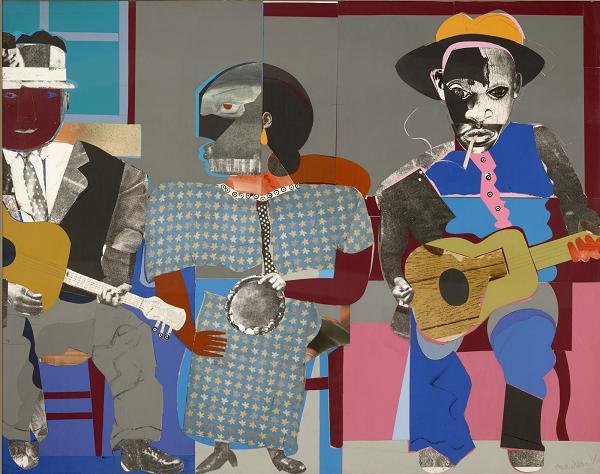
Romare Bearden, Soul Three, 1968

Dallas Museum of Art, General Acquisitions Fund and Roberta Coke Camp Fund
Dimensions: Framed dimensions: 57 x 69 x 3 in. (144.78 cm x 1 m 75.26 cm x 7.62 cm) Image dimensions: 44 x 55 1/2 in. (111.76 x 140.97 cm)
Medium: Paper and fabric collage on board

Learn more about Soul Three.
 
We encourage you to visit and explore our galleries. Please visit our web site to learn about the programs and events we offer for visitors of all ages.
 
Thanks,
Karen A. Colbert
Teaching Programs Intern

Coming Soon: The Thaw Collection

It has been nearly twenty years since the Dallas Museum of Art hosted an exhibition of Native American art.  All of that will change on April 24th when Art of the American Indians: The Thaw Collection opens.  The exhibition features 135 works of art collected by Eugene and Clare Thaw, whose collection now resides at the Fennimore Art Museum in Cooperstown, New York.

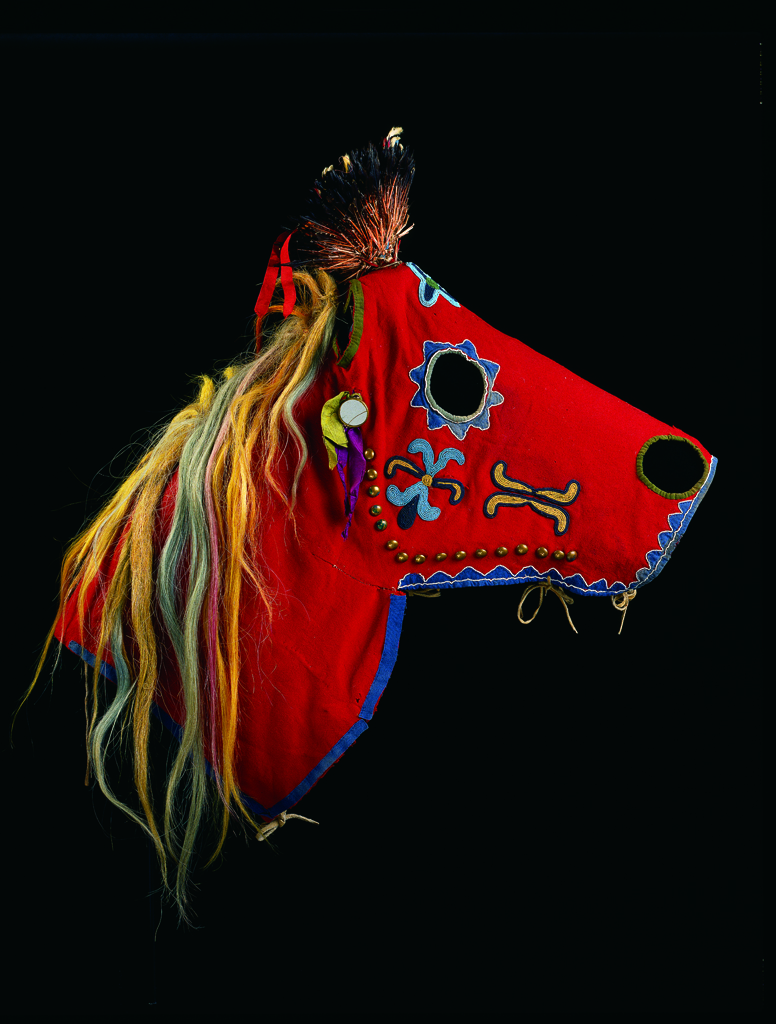
Art of the American Indians: The Thaw Collection will be arranged by geographic region, and will include works of art from the Northwest Coast, Woodlands, Plains, Southwest, Arctic, California, and Great Basin regions.  One of the artworks I am most excited to see in person is a horse mask made by the Nez Perce people.  I am intrigued by the bright colors and intricate beadwork designs, and I can’t wait to include the horse mask on our summer tours.  I’m also looking forward to learning more about the DMA’s collection of American Indian art through connections with the Thaw collection.

Horse Mask, c. 1875-1900, Nez Perce or Cayuse, Idaho, Oregon, or Eastern Washington, Thaw Collection, Fennimore Art Museum, photograph by John Bigelow Taylor

We have a very limited number of docent-guided visits to the exhibition available in the month of May.  If you are interested in bringing your students to see the exhibition before the end of the school year, submit an Online Visit Request Form today!   Students receive free admission to the exhibition when a visit is scheduled at least three weeks in advance.  We will include the exhibition on our summer tours and are creating a Go van Gogh Summer Library Program around the exhibition.  We look forward to sharing Art of the American Indians: The Thaw Collection with you and your students this spring!

Shannon Karol
Manager of Docent Programs and Gallery Teaching

Friday Photos: Mystery Artwork

We have come to our second mystery artwork. Drumroll please, the answer is…. 


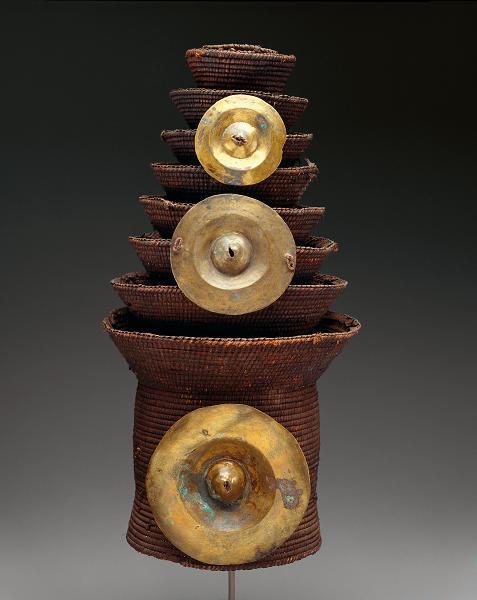
Tiered hat with brass discs (botolo)

 Date: 20th century
Dimensions: Overall: 25 x 10 x 9 3/4 in. (63.5 x 25.4 x 24.76 cm)
Medium: Coiled basketry (palm splints and fiber) and brass discs
Geographic location: Africa, Democratic Republic of the Congo
Culture: Ekonda peoples
Dallas Museum of Art, gift of the Friends of African and African-American Art

Learn more about the Tiered hat with brass discs (botolo)
 
In celebration of Black History Month, I present you with…

Mystery Artwork #3

 1. We were made from mixed media.
2. We were inspired by childhood memories.
3. Our creator was one of the great collage artists of the 20th century.
4.We are two-dimensional.
5. Our facial features resemble African masks.

What’s our name?

Start in  collections and begin your search.

Best Wishes,
Karen A. Colbert
Teaching Programs Intern


Archives

Categories